Tag Archives: Water

Travel Guide: Hoi An

This is the third and final post in a series of three about my travels with my dad over October break. You can read the introduction to the trip here, and my posts about Bangkok and Hanoi here and here, respectively.

The last four days of our travels found us in beautiful Hoi An, which is located in central Vietnam. Hoi An is often under water at this time of year, a fact unknown to me until we arrived. Our travels there could have been really disappointing, but we were lucky enough not to see any rain over the course of the week. As a result of the threat of weather, however, Hoi An was largely empty of tourists.

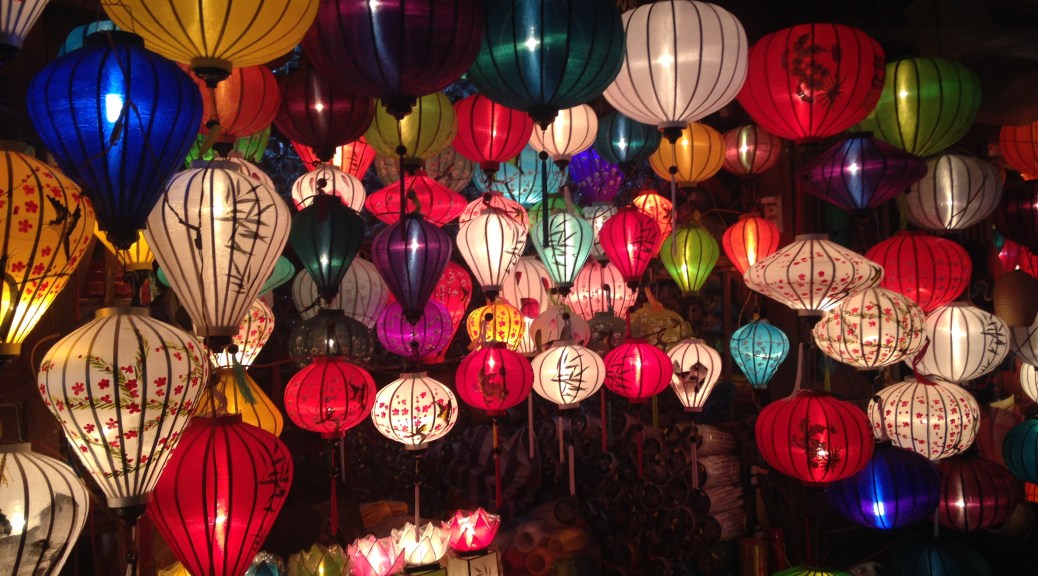
To get to quaint, sleepy Hoi An, located on the Thu Bon River, we flew into nearby Da Nang airport and hopped into a taxi for about 45 minutes. Everyone I’ve ever spoken to about Hoi An loves it (I ran into four of my friends there!), and after a walk through the tiny Ancient Town it was easy to see why. Not only is it full of old assembly halls, houses, and shops, but lanterns light up the entire town in the evening. I took the following pictures throughout our time in Hoi An:

In addition to being a nice place by itself, Hoi An is also a wonderful base for half-day trips to historical and interesting sites nearby. We took two separate trips out of Hoi An during our time there; the first was to My Son, an ancient Hindu temple site and burial ground for Cham kings dating to the fourth century. The complex must have been massive in its heyday, but much of it was destroyed by American bombs during the Vietnam War. There are very clearly marked walking paths because of unexploded ordnances all around the site, another wartime souvenir. Dad and I visited My Son as part of a tour with a very informative guide; he pointed out weathered motifs and symbols carved into the stone that we probably would have missed without him.

Along with about half of our tour group, we chose to take a boat along the Thu Bon River to return to Hoi An. The boat afforded us wonderful views of the river and of rural life on its banks.

Along the way to Hoi An, we stopped on Cam Kim Island, a village known for its traditional crafts.
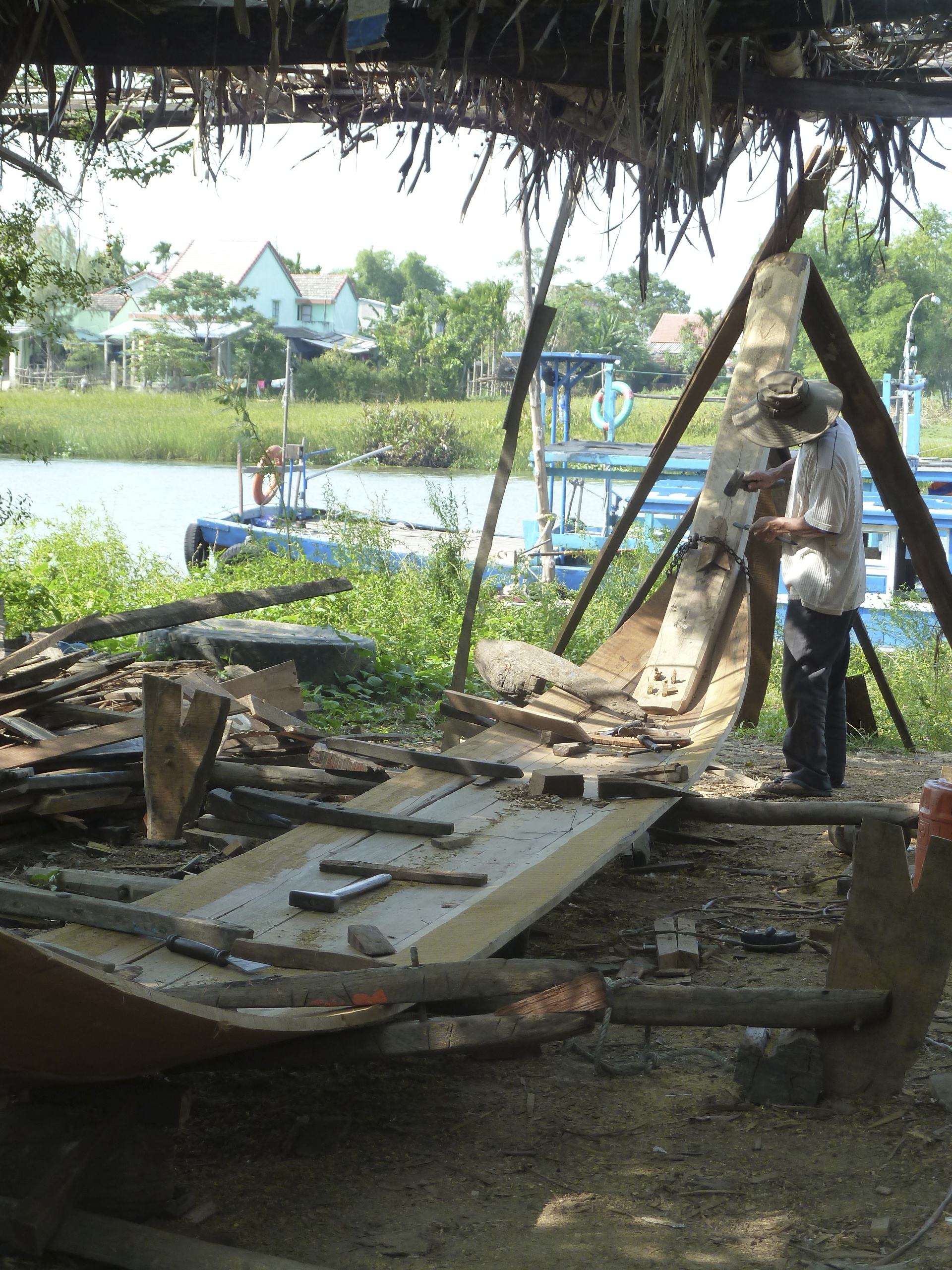
Now that I've seen this, I wonder how non-traditional boats and ships are made?
Now that I’ve seen this, I wonder how non-traditional boats and ships are made?
I thought it was really neat that the carver drew the pattern on the wood. Somehow, it had never occurred to me that artists do that.
Somehow, it had never occurred to me that artists draw their patterns before starting to carve.

Vietnam’s Marble Mountains, located in nearby Da Nang, was our destination the following morning. The Marble Mountains are exactly what they sound like – jutting hills of marble that are no longer quarried because they’d disappear. We took the elevator to Thuy Son, the highest peak, and then made our way down, exploring the Buddhist pagodas, Hindu temples, and various shrines and altars that dot the site.

There are also caves on the mountains, including Tang Chan Cave, which contains a few altars and statues. What is truly spectacular about the cave, however, is the sunlight streaming through large holes in its top. When the light is just right, it casts a gorgeous, unearthly light on the altars.

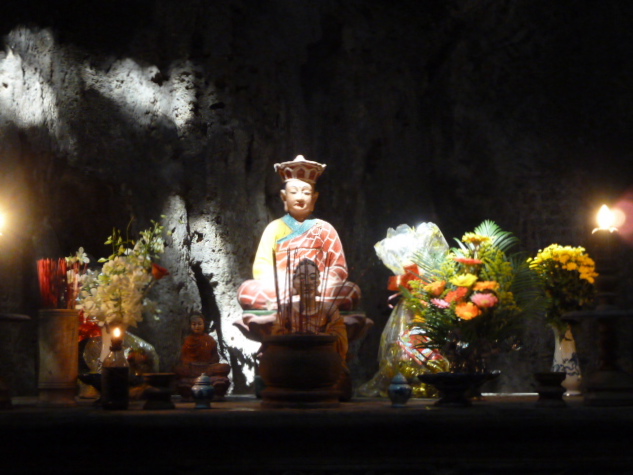
Cave shrine

Sunlight

In the afternoon, we wandered around Hoi An’s Ancient Town to take advantage of the ticket scheme that allows access to five historical sites within the town. The ticket is required to visit the vast majority of assembly halls, historic homes, and even some museums, so we saved it for our last afternoon when we knew we’d have the longest amount of daylight in town. We visited the Phuoc Kien Assembly hall, which started as a pagoda and later became a temple for one of Hoi An’s Chinese groups. It is home to an altar to the Goddess of the Sea, which I thought was really interesting. There was also an altar shaped like a boat, which was beautiful. I love learning about groups of people, their livelihoods, and their values through religious art and artifacts. What a way to gain insight into the soul.
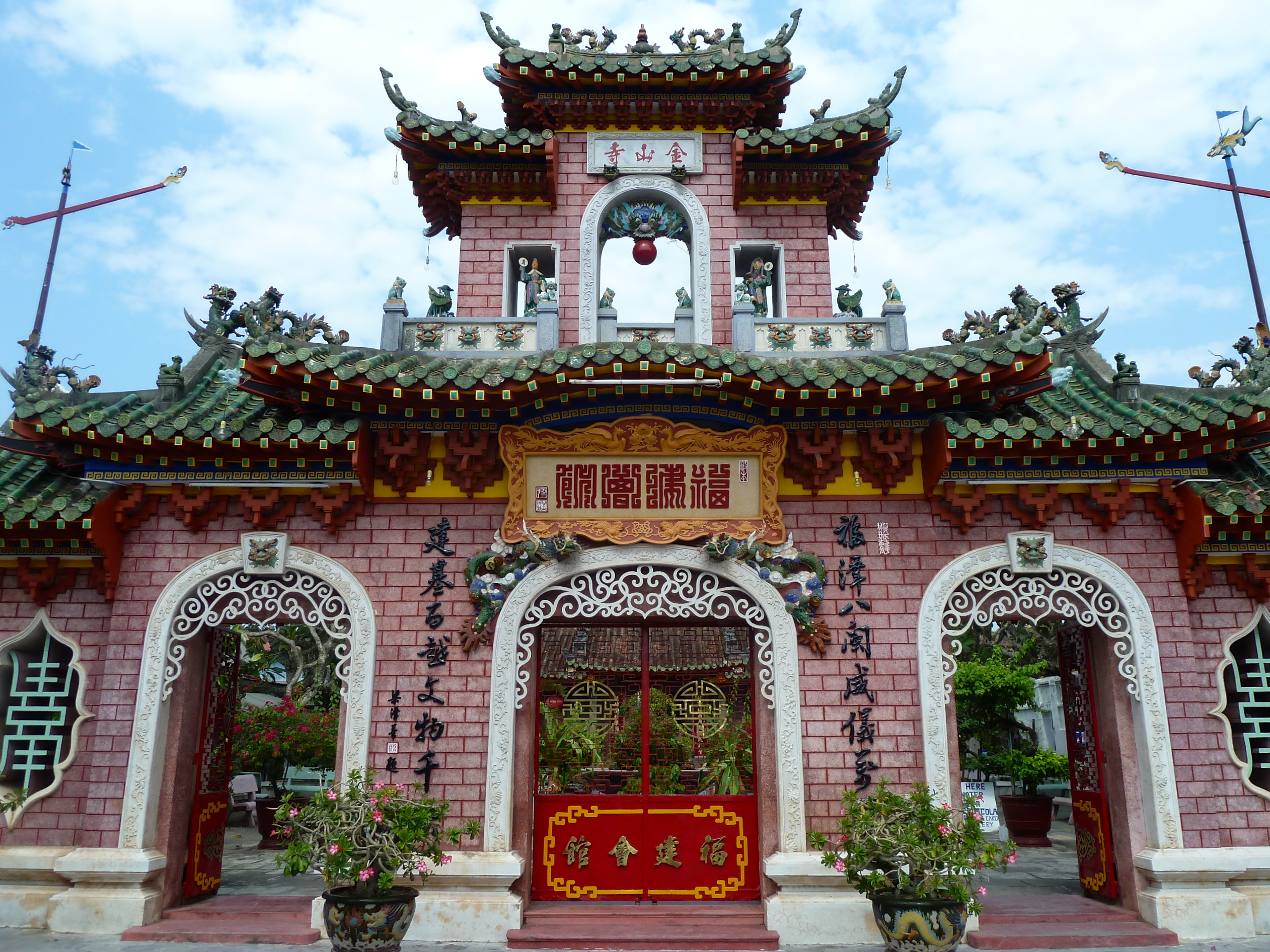
Phuoc Kien Assembly Hall

Along with our ticket scheme wanderings was a very brief stop at the Museum of Folk Culture, which was interesting largely because the door of the museum was open, all the lights were off, and there was no one inside but us and another equally confused tourist.

The Tan Ky House, on the other hand, was interesting in itself.
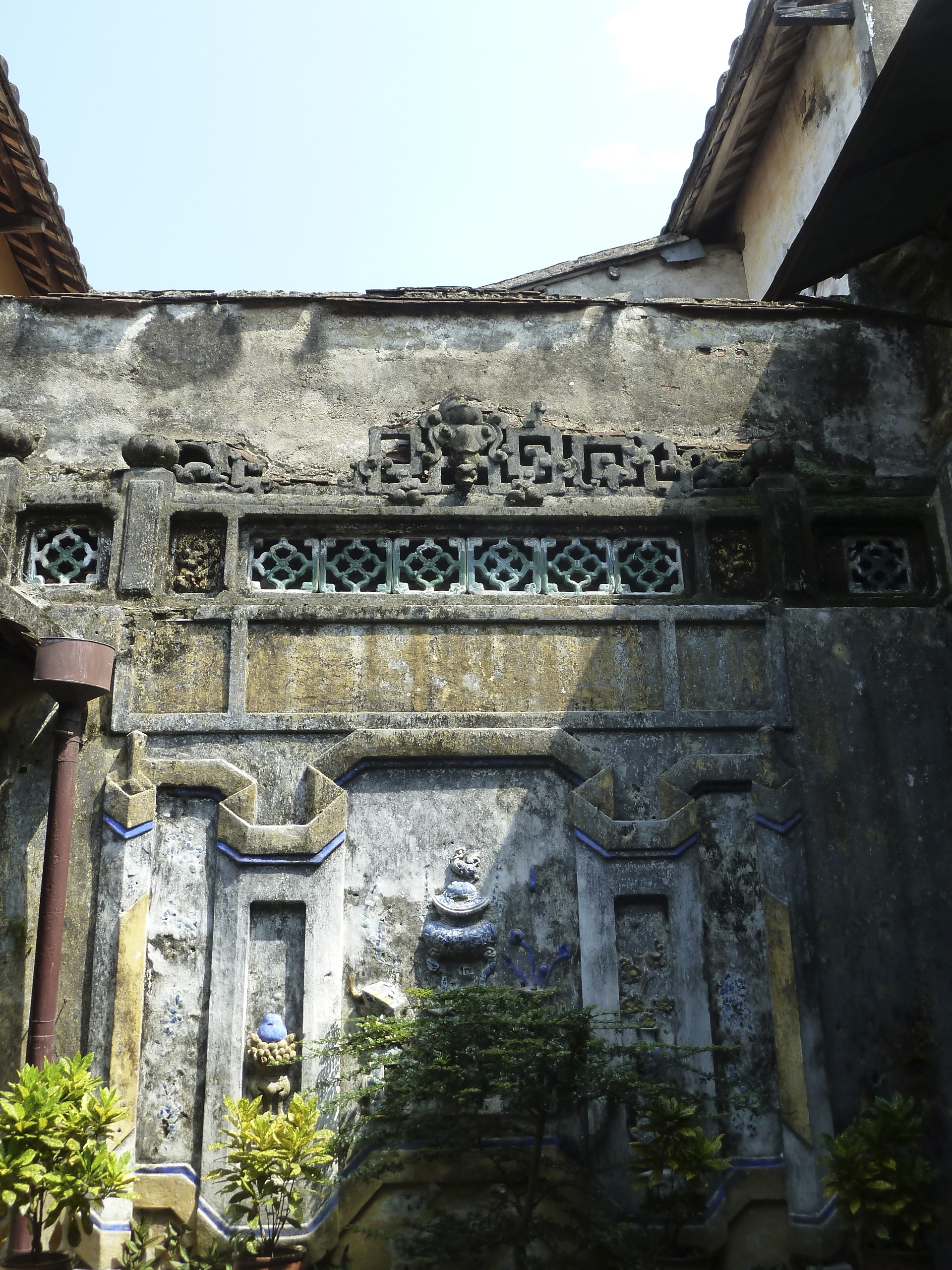
Courtyard of the Tan Ky House

The Tan Ky House is a shop house dating from the late eighteenth century that incorporated Vietnamese, Chinese, and Japanese architectural styles. I admit, I didn’t know that so many ethnic groups and nationalities call Hoi An home, and have a place in the city’s history as a trading port.

The most interesting stop on our somewhat guided wander was the Handicraft Workshop where we saw a performance of traditional music and dance. By far my favorite part was a musical piece that I can best describe as ancient jazz. A musician who would have been a saxophone player in a western jazz group played a sort of double-bow violin that didn’t seem to be made of anything but strings and a small wooden base. He had a solo in the middle of the piece that was creative, innovative, and playful; I couldn’t understand how such an unassuming instrument even made sounds, let alone such music!

Neither of us were ready to leave Hoi An early Sunday morning. I, at least, have a mental list of things I want to do when I return, which I hopefully will. There is now a direct flight from Singapore to Hoi An, so it is certainly a possibility.

Japanese Covered Bridge

Dad and I had an unbelievable time during our ten days of travel together. I am so glad to have shared such a wonderful experience with him. We both learned a lot over the course of our trip and I’m already looking forward to the next one!
Travel Guide: Hanoi

This is the second post in a series of three about my travels with my dad over October break. You can read about the introduction to that trip here, the first post about our time in Bangkok here, and the final post about our trip to Hoi An here.

This was my second time in Vietnam. Last spring I went to Ho Chi Minh City for the weekend, which was my first experience traveling alone. It was especially fun returning to Vietnam (though don’t get me wrong, Hanoi and Ho Chi Minh are as different as the US and the Soviet Union during the Cold War) with someone who had never been there before. Dad particularly got a kick out of the traffic.

But I’m getting ahead of myself.

To get you oriented, here is a gallery of photos from around Hanoi’s Old Quarter, which is where we were staying. Do note my fascination with the vendors who carry their wares on their shoulders. For every one of those, there are probably 3-5 who push little carts containing hot food that they cook right in front of you. I took these pictures over the course of the four days we were in Hanoi:

On the afternoon of our arrival, we started walking the perimeter of Hoan Kiem Lake, a walk that we never completely finished. We continued the walk on the last night that we were there. It seemed like everyone in Hanoi was around the lake that night, which was really pretty because the lake and surrounding buildings were all lit up! People were parking their motorcycles in designated areas, doing karaoke in public, meeting friends, walking dogs, and enjoying ice cream. It reminded me a lot of growing up near the Erie Canal, actually.

Hoan Kiem Lake by day
Thap Rua, or Turtle Tower, which is no longer accessible to the public
Path around Hoan Kiem Lake by night, with a view of the edge of the Old Quarter

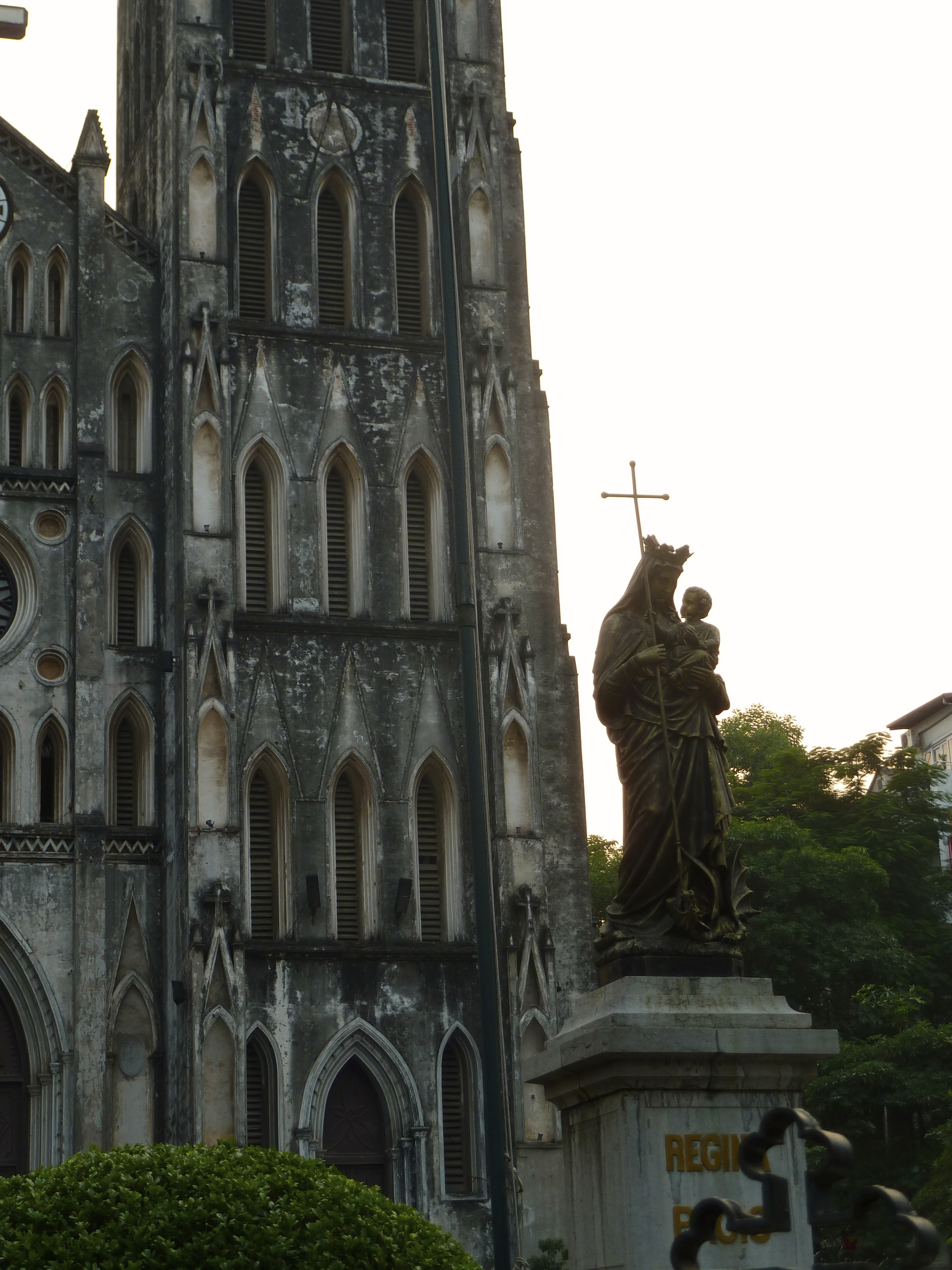
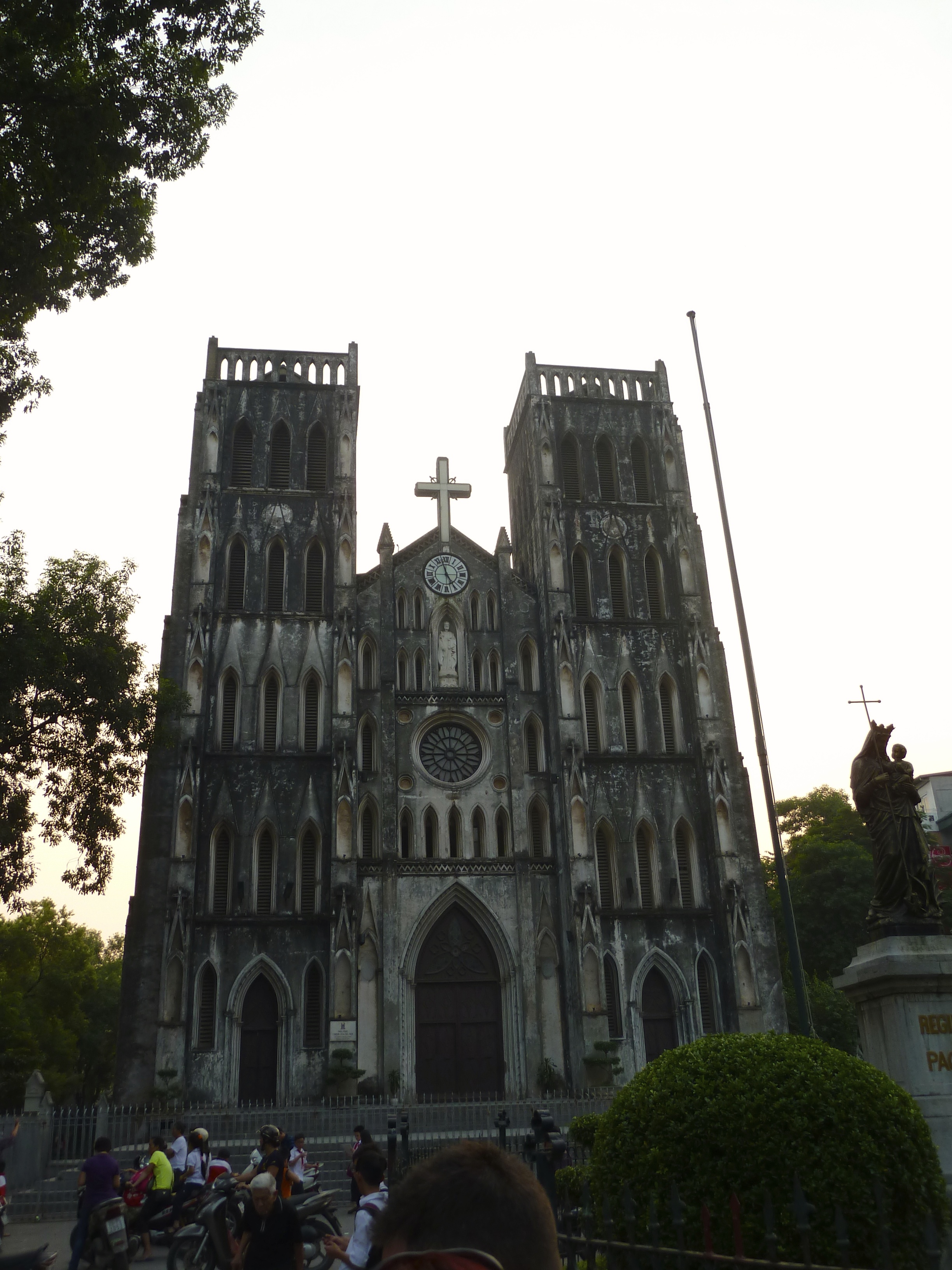
After wandering through the Old Quarter to get a feel for where we were, and to learn how to cross the streets (hint: look both ways and then just start walking), we made our way to St. Joseph’s Cathedral. The cathedral was built during the era of French rule in Vietnam and remains open for services. We also ran into one of my students here!

Cathedral
French architecture, no matter where in the world, is French architecture
Wall behind the cathedral

St. Joseph's Cathedral

In stark contrast to St. Joseph’s Cathedral, our next stop was Chua Ba Da, the Stone Lady Pagoda, which is now the headquarters of the Municipal Buddhist Association.

Chua Ba Da

Dad was pretty done with pagodas by this point, but I managed to squeeze in Den Ngoc Son, the Temple of the Jade Mound, the next day. It sits in the middle of Hoan Kiem Lake and we had to cross the red lacquered Huc Bridge to get there.

For much of the day, we canvassed the French Quarter, which reminded me much more of Ho Chi Minh City. There were the wide boulevards with trees, plazas, and grand colonial buildings like the Opera House.

Opera House

The French Quarter also contained quite a few posh stores that would not be out of place in Paris, but were rather incongruous in the middle of Hanoi. I loved the street food stands and restaurants that set up right underneath the awnings of designers like Longchamp.

Longchamp, meet Hanoi

Over the course of the day, we visited the Museum of Vietnamese Revolution to learn about Vietnam’s revolutionary history, starting from the uprisings against French rule in the late nineteenth century. The museum contained fairly comprehensive coverage of the Vietnam War (or America’s War, as it’s known there) but with a distinctly different propaganda slant than what I’m used to seeing. As a social studies teacher, I’m familiar with the Vietnamese side to the war, and actually teach about the war using a translated excerpt from a Vietnamese textbook. My Ho Chi Minh City trip last spring further helped me understand the Vietnamese perspective, which I was glad to revisit.

We also really enjoyed the Vietnamese Women’s Museum, which I highly recommend. Not only is it interesting to find an entire museum dedicated to women, but it was fascinating to learn about the very influential role women played in Vietnam’s revolutionary and independence struggles. There was quite a large exhibit on female guerrillas post-World War II. I didn’t know anything about that, so it was a great learning opportunity! Vietnamese women were imprisoned, tortured, executed, and awarded the nation’s top honors for their role fighting the French and the Americans. There’s even a special award for being one of the Heroic Mothers of Vietnam. Who knew? The Vietnamese Women’s Museum also contained exhibits on clothing of specific ethnic groups, traditional marriage, childbearing customs, and religious practices, but the exhibits about female fighters were the most compelling for me.

Following lunch at a vegetarian restaurant at the end of an alleyway, we headed to Hoa Lo Prison, or the Hanoi Hilton.

The prison was built by the French in 1896 for Vietnamese rebels, but became famous in the US after the war because pf the American POWs, including Senator John McCain, who were held there. POWs tell stories of torture; the museum exhibits discuss ways the French tortured the Vietnamese, and then contain photos of American POWs playing basketball and decorating Christmas trees. Rather heavy dose of propaganda, I believe.

Something I enjoyed while simply walking around Hanoi was reading signs. Sometimes the names are adorably blunt, sometime they’re translated into fractured English, and sometimes they’re translated in ways that are just plain confusing. Rebecca’s Collection of Amusing English Signs in Hanoi is as follows:

The next day we hired a guide and driver to take us a little ways outside the city. Our first stop was Tran Quoc Pagoda, located in the middle of Hanoi’s West Lake. It’s home to a cutting of a bodhi tree from India, supposedly the tree under which Siddhartha Gautama achieved nirvana and became Buddha, and was a gift from an Indian leader to a Vietnamese leader.

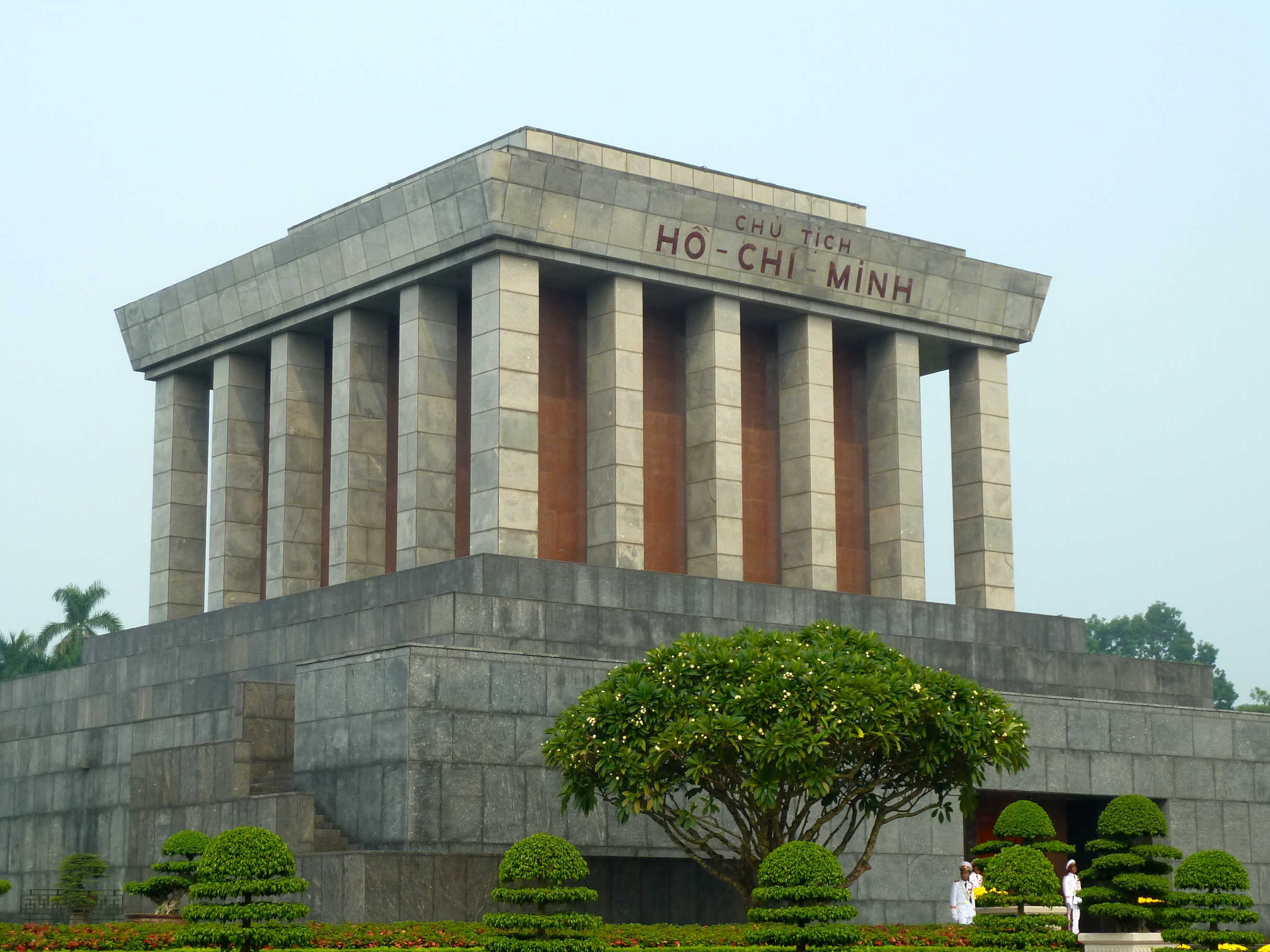
Nearby is Ho Chi Minh’s Mausoleum, which we could only see from the outside because it was closed for maintenance, which is an annual occurrence.

Ho Chi Minh's Mausoleum

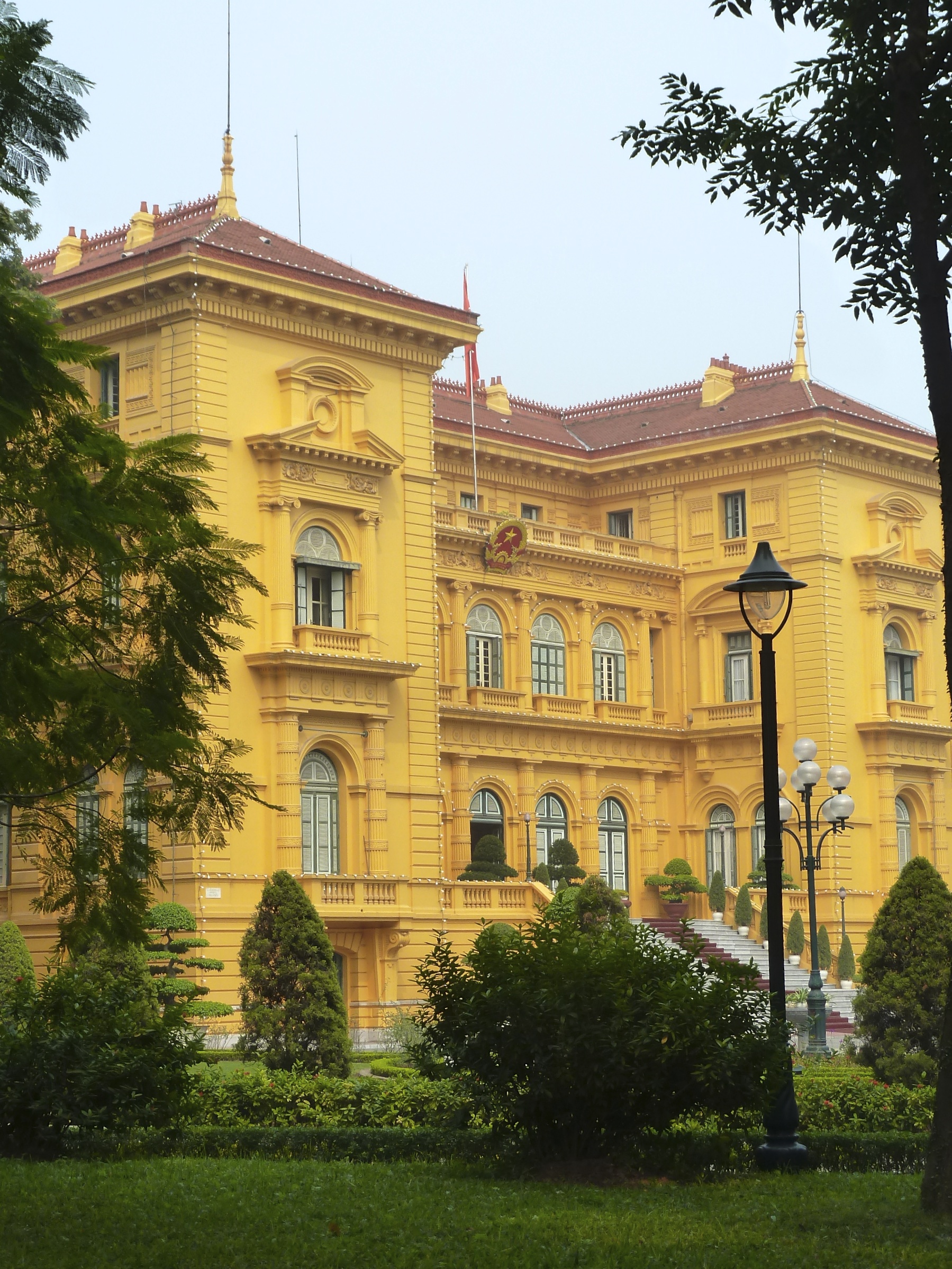
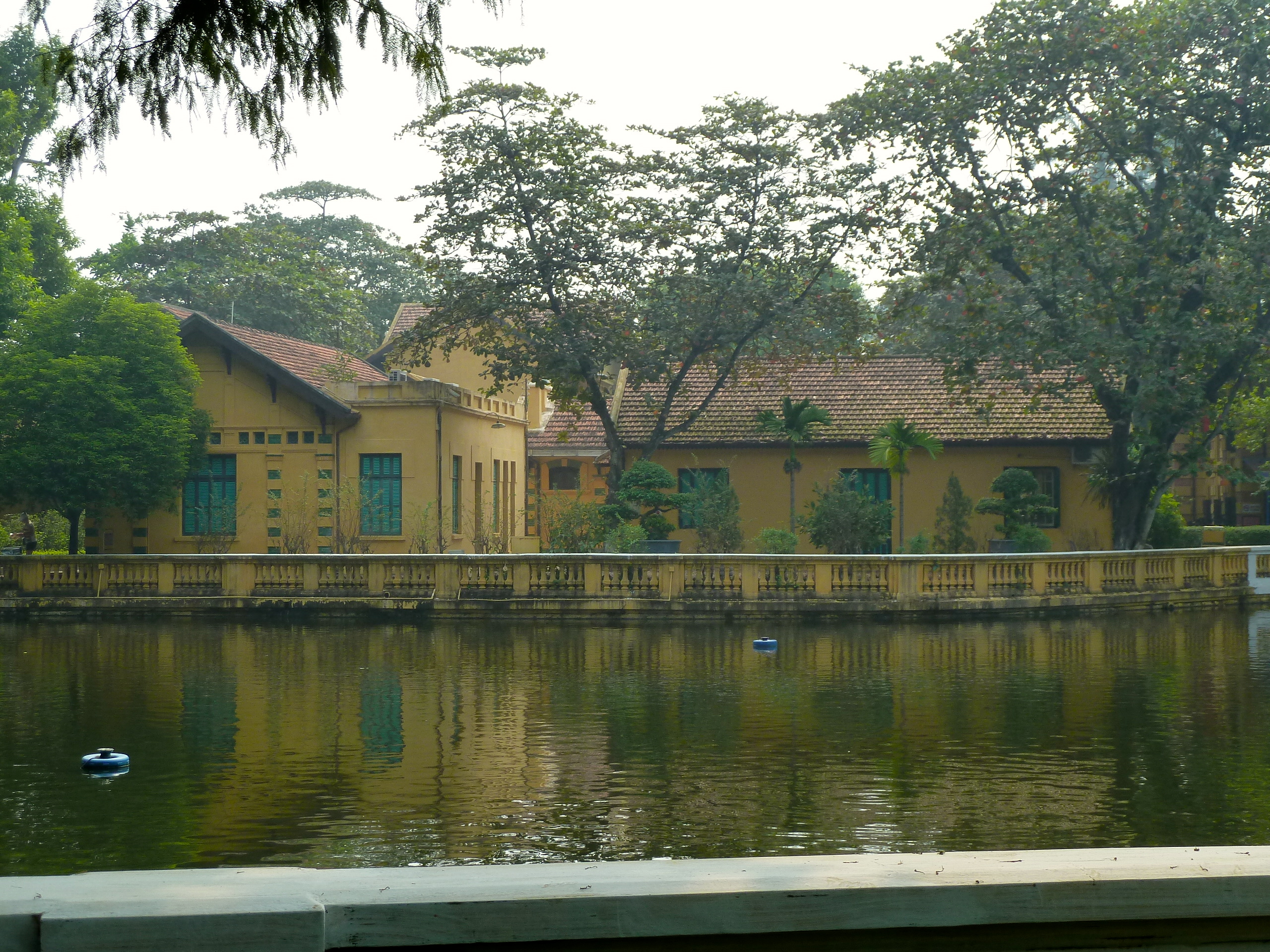
We were able to walk around the modest home that Ho built for himself across the road from the ostentatious Presidential Palace built by the French. It’s an interesting commentary on colonialism that Ho chose to live in the simple house and use the Palace as a government office.

French Presidential Palace . . .
. . . Ho's Humble House
. . . Ho’s Humble House

After a quick stop at the One Pillar Pagoda, designed to look like a lotus when seen from the sky (though I obviously couldn’t get a picture from that angle), we made our way to a workshop where we learned how traditional lacquerware is made. There is a processing of painting, rubbing off, painting, rubbing off, etc. layers and layers to form a base, and then a similar process at the end to even out and seal the lacquer. What I most enjoyed was learning about the decorations.

Naturally, we had to buy some art! Then it was time for the Museum of Ethnology, where we learned about Vietnam’s 54 ethnic groups. There were examples of tools, clothing, and jewellery, as well detailed descriptions (and videos!) of marriages, funerals, and religious rights and rituals. Behind the museum were traditional houses belonging to specific ethnic groups that had been moved to the museum site for the purpose of preservation and education. Excellent information about the houses themselves and the groups that live in them accompanied each.

Finally, we visited the Temple of Literature, Vietnam’s oldest university. It was built in 1070 and is no longer used today, except as a historical site. University students also visit to take pictures upon graduation.

University students eating lunch while waiting for their turn with the photographer. The traditional outfits are rented for the occasion; I asked.

What I liked about the Temple of Literature is that it was originally a center for Confucian learning, so it contains a shrine to Confucius. Each of the four gates symbolized students’ passing of the four examinations necessary for graduation. As always with pagodas, each animal and motif is symbolic, in this case often for good luck and prosperity.

Our four days and three nights in Hanoi were wonderful. The food is spectacular, the sites are beautiful, and the city itself has so many nooks and crannies to explore. Now that I’ve been to the north and south of Vietnam, though not in a truly comprehensive way, I feel as if I have a real understanding of Vietnam’s diversity. As in many places, the north and south are hardly recognizable as part of the same country. The amount that I learn each time I travel is what keeps me coming back for more.

Flag of Vietnam

Travel Guide: Chiang Mai

Thanks to Singapore’s elections on Friday, we had a three-day weekend! I hadn’t been out of Singapore since arriving at the end of July, which means I’d been in the same city for about seven weeks. When’s the last time that happened? The haze coming up to Singapore from Indonesia meant, and continues to mean, that we haven’t seen the sun in a couple weeks (and can hardly see clearly at all, for that matter), the kids have been cooped up inside during break times in a space not large enough to accommodate all of them, the air constantly smells like something’s burning (because it is . . . thanks, Indonesian palm oil companies . . .), and just breathing has become a chore. All in all, a great weekend to get out of Singapore.

Before I left Malaysia, I knew I wanted to visit Chiang Mai. Mitch and I had a whirlwind of a weekend in Bangkok about a year ago (here is the blog post about that) and I haven’t made it back to Thailand since. This weekend’s visit to Chiang Mai, because of the day off on Friday, gave me ample time to explore not only the city, but also an elephant reserve nearby. The 400 photos I took on this trip (no kidding) basically fall into two categories: temples and elephants. I have done my best to sift through the photos and I’ve tried really hard not to saturate this blog post with too many images of the same thing. Enjoy! And if you want more pictures, let me know. I have them.

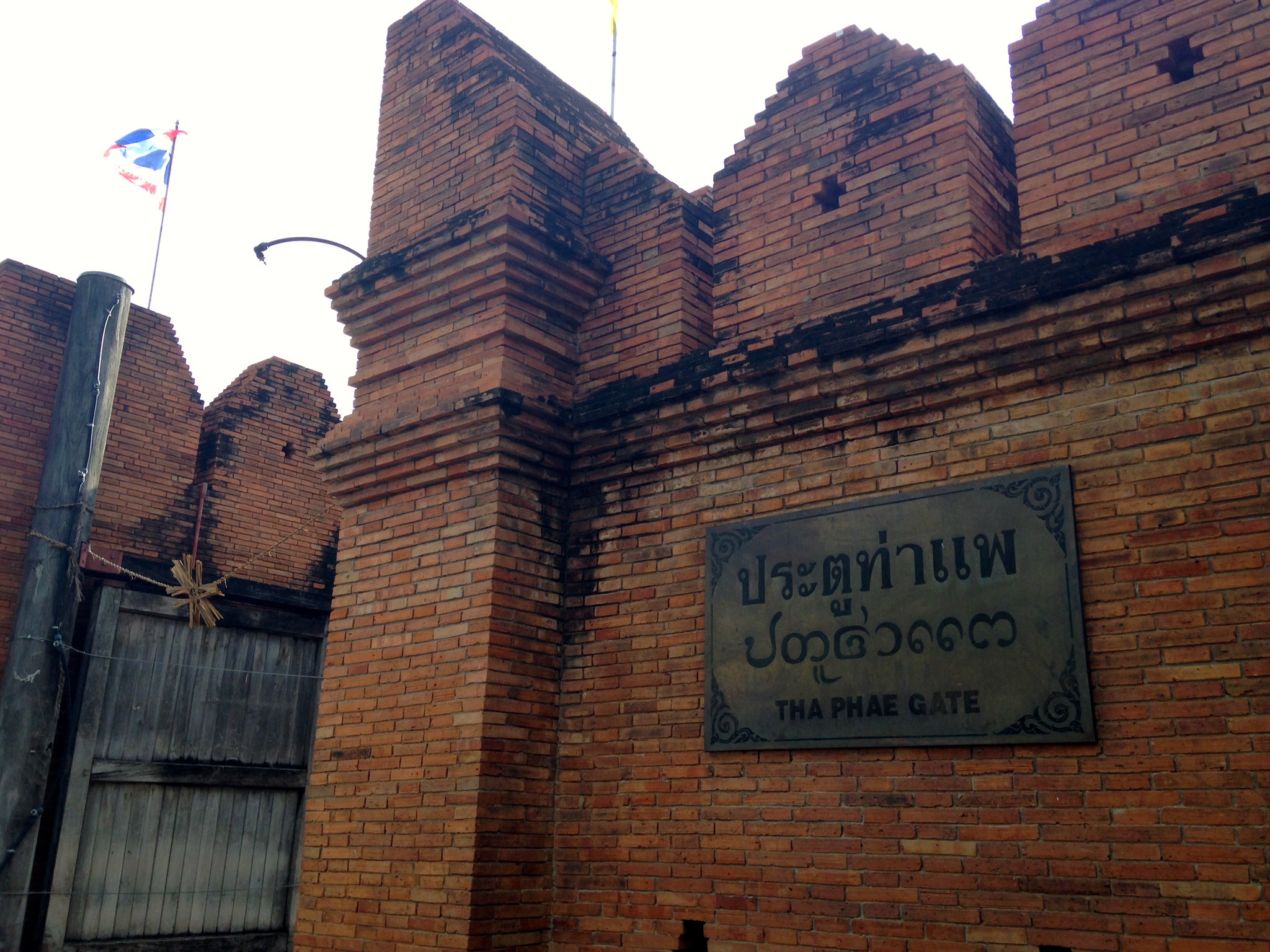
Firstly, orientation. Chiang Mai is located in northern Thailand, which means there was sun, clean air, and mountains. The old city is surrounded by a moat (Chiang Mai dates to the 12th century) and there’s access through a couple gates.

The main gate into/out of the old city of Chiang Mai

Much of Chiang Mai is made up of clusters of multi-story buildings with businesses on the bottom and who knows what on the upper floors. More than a few were brightly colored, like these:

Colorful buildings 1 Colorful buildings 2

I also spotted a few examples of colorful graffiti. It amuses me that there are words presumably written in English, but I still can’t read them. This is also the case with graffiti that I’ve seen and photographed in English-speaking countries, so I suppose it isn’t a surprise.

Graffiti 1 Graffiti 2

The shrines that dot Chiang Mai were no less colorful. In every city I’ve been to in Asia, it’s normal to find shrines outside, inside, on street corners, in parking lots, inside business, near homes. I loved the motorcycle parked right next to this one:

Shrine on the street

After dropping my trusty purple duffel bag at the hotel (since I was traveling alone, I figured I’d treat myself), my first stop was just down the street to the Lanna Folklife Museum, where I learned about the Lanna kingdom of ancient Thailand and their distinct culture. It took me about an hour to go through the whole thing, and I highly recommend it for a historical overview, especially if you’re unfamiliar with Buddhism.

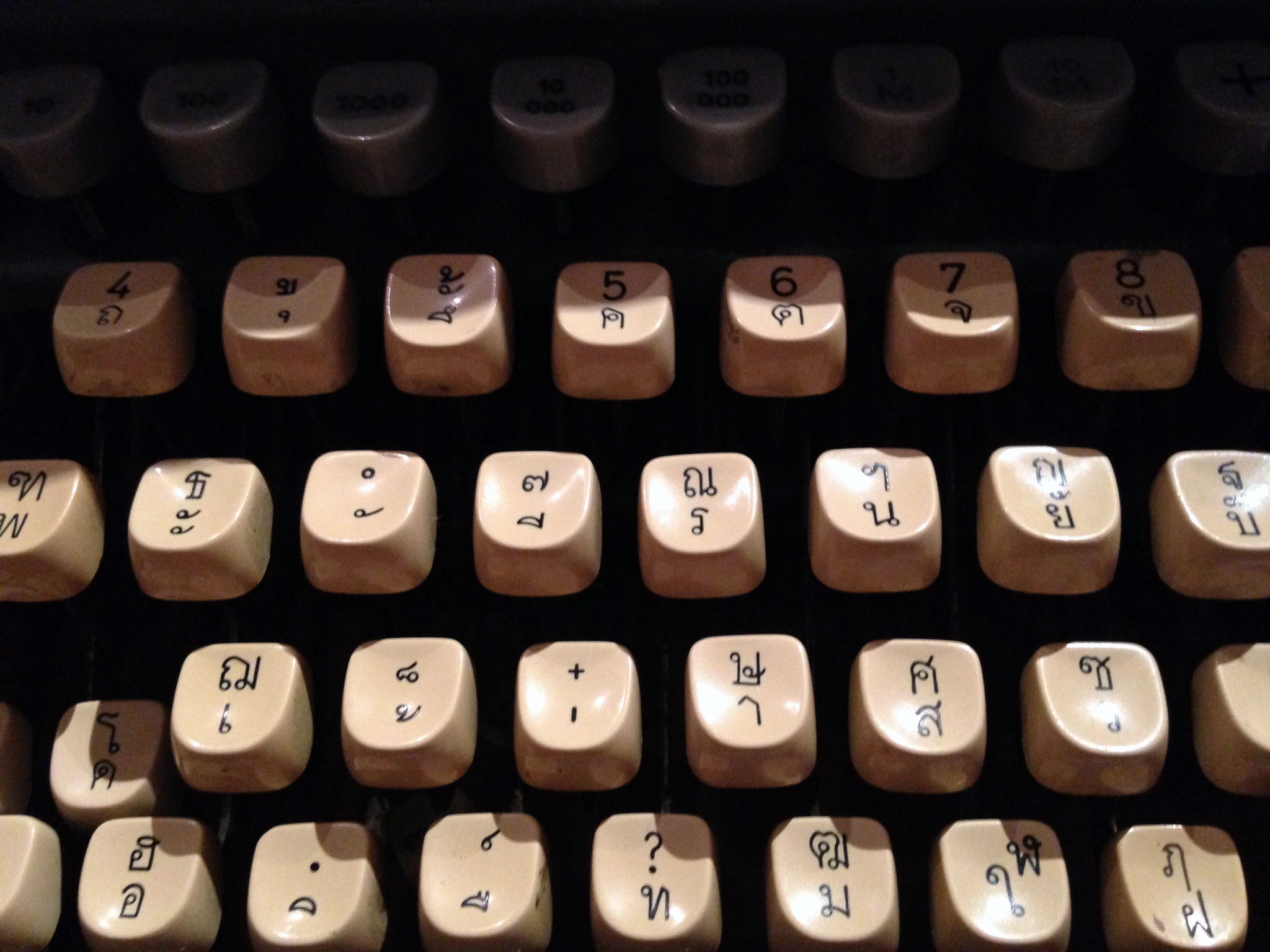
I took a picture of exactly one artifact at the museum:

How cool is this?!
How cool is this?!

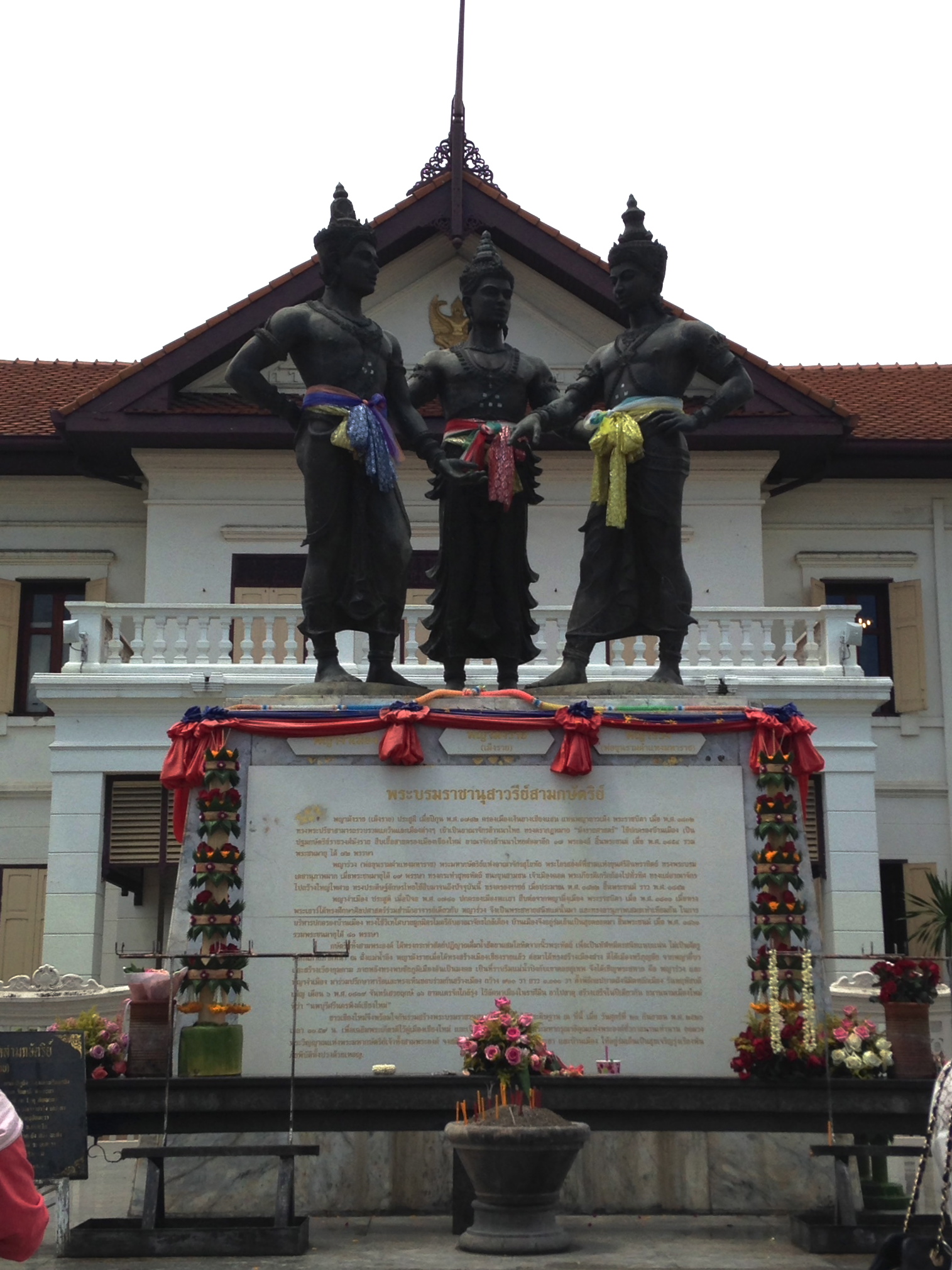
Just across the street is the Three Kings Monument, which I could see from my hotel.

Three Kings Monument

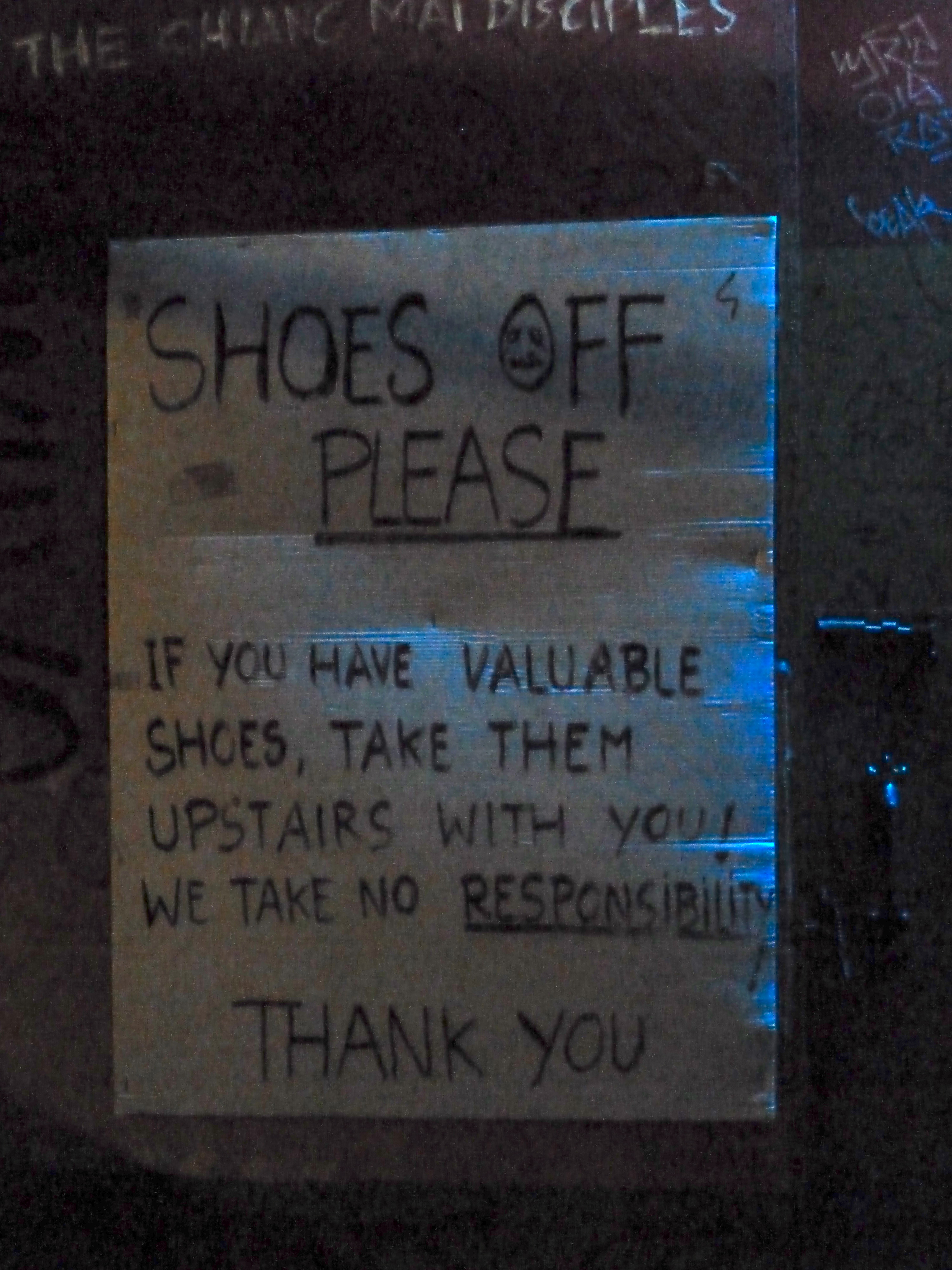
After getting my bearings (and getting slightly lost on the way) I began my tour of Chiang Mai’s temples. For the most part, I have no idea which of the dozens of temples I saw. It doesn’t matter because they’re all just names to me. I went inside many of them, leaving my shoes with the others at the entrance. Thailand is understandably strict about respectful attire when entering temples (explicit signs indicate in many languages and many pictures indicate what is and is not acceptable). There’s often nothing to borrow from friendly devotees at the entrance because the temples are simply open to the public for prayer. I have a few dresses and skirts that cover my knees; I keep a light scarf for my shoulders in my bag at all times when traveling in Asia. You never know when it will come in handy!

The gallery of photos below comes from two days of walking through Chiang Mai and popping in and out of temples. I did a lot more of this than I think I would have if I were traveling with a buddy. But since I wasn’t, I did a lot of meandering (read: getting lost) and meandering means finding temples.

Just a quick comment on the temple in the photos below. I’ve seen a lot of temples in my travels, but never one made of wood. It honestly reminded me more of Norway’s stave churches than of a Buddhist temple.

IMG_0355 IMG_0359

And to compare, here’s a stave church in Norway:

Not a temple! A stave church!

I tend to write a lot when I spend time alone, and time alone while traveling is no exception. I also pause for more tea and coffee breaks than I would otherwise, perhaps because I spend less time lingering over meals. In Chiang Mai, though, my break beverage alternated between iced coffee and Thai iced tea, which is quite possibly the most delicious of beverages.

Case in point.
Case in point.

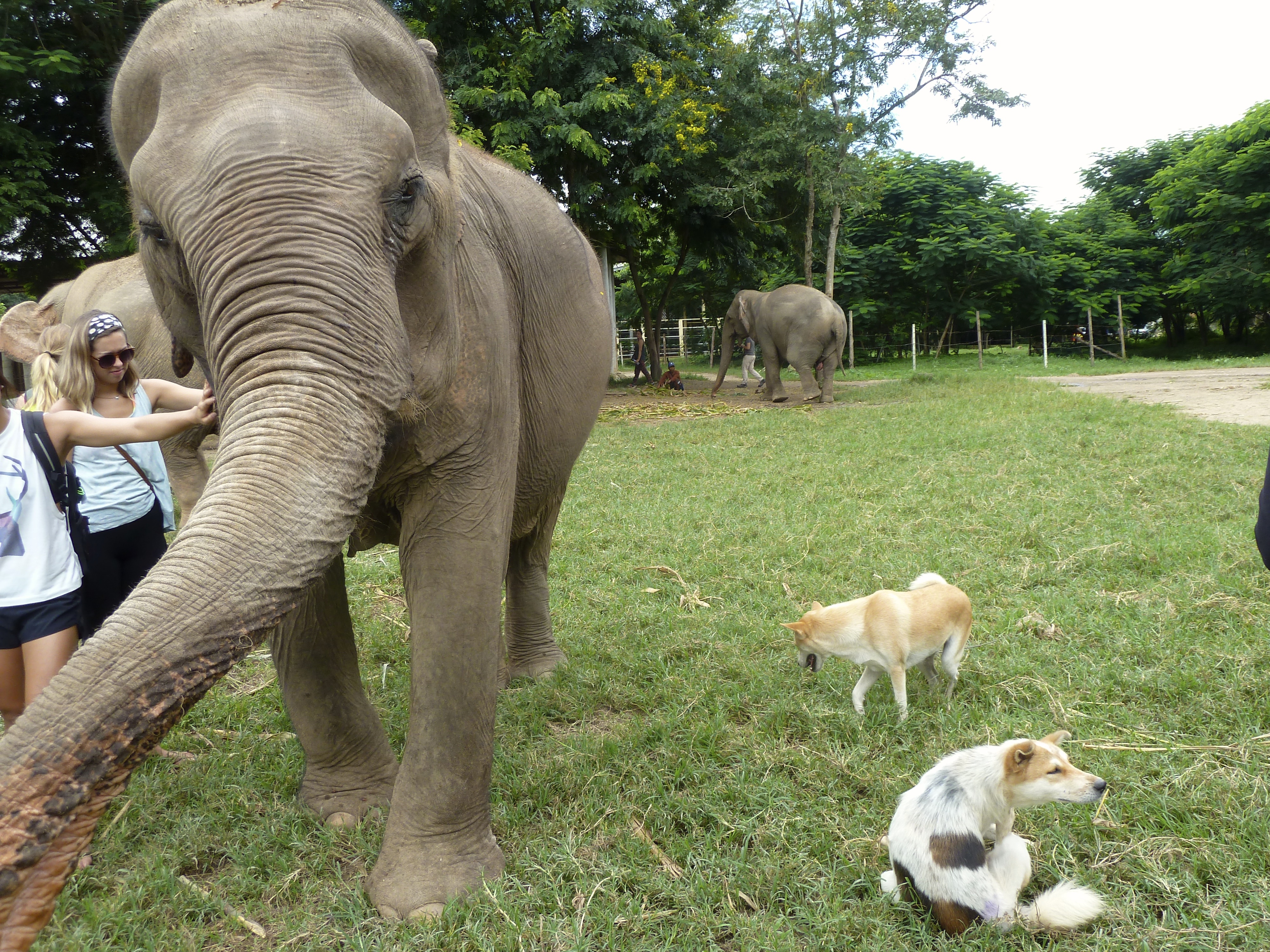
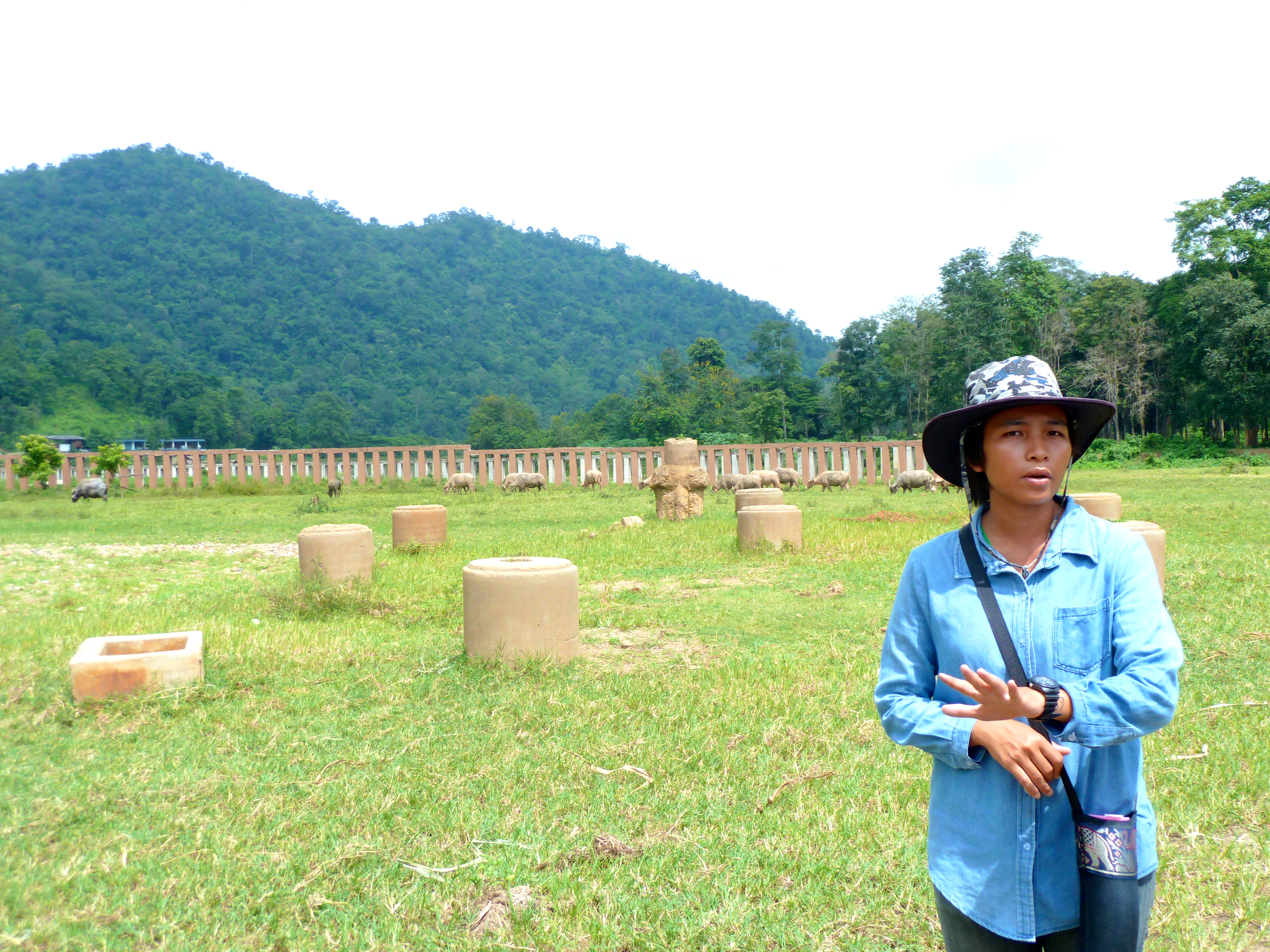
Based on a recommendation from a friend, I chose Elephant Nature Park for Saturday’s all-day trip to visit elephants. The park is a reserve for 70+ elephants who range in age from babies to about 80 years old. Some of the elephants were brought to the park when they got too old to work or when industries using them were shut down, but most of them were rescued from logging operations, circuses, and street performances. Our guide, Pur, told us about each of the elephants that we met. She was incredibly knowledgeable about each elephant’s story as well as how its current family group formed. It is amazing how elephants, much like people, form families.

While most of the day was devoted to watching them interact, we got to feed and bathe the elephants, too! Pur allowed us to pet some of the gentle giants but kept us away from the ones the she called “not nice.” Every so often, the elephants would get upset or agitated and the mahouts (handlers) would shout at the visitors to get out of the way. Over the course of the day, Pur also told us about the various injuries and abuses that many have endured. More than a few elephants were blind and had misshaped or deformed limbs from stepping on landmines. There was also a gallery at the reserve devoted to photos of elephants before and after surgery and rehabilitation.

In addition to elephants, Elephant Nature Park is also home to over 400 dogs and cats, many of which are up for adoption. Most of the dogs, at least, were strays in Bangkok once upon a time. They followed the elephants around as they pleased and were constantly looking for love from visitors. The park itself is staffed by about 200 people; this week, about 70 of those were volunteers. It was a wonderful day, complete with transit to and from the park and a delicious vegetarian lunch. I can’t say enough good things about supporting this organization.

And then there’s the fact that Elephant Nature Park is simply beautiful. It was a marvelous change of pace (and air quality) from hazy Singapore.

One of my favorite parts of traveling is meeting people. I’m still in touch with someone Mitch and I met in Langkawi about a year ago. That was our very first Southeast Asian trip!

People tend to meet through shared experiences, and Elephant Nature Park was no exception. Two girls and I made plans to meet up to visit the Night Bazar and go for dinner. We ate at a food court, which was cheap and delicious. While there, I couldn’t help but notice the sign below, which reminded me that the world has a long way to go. Travellers with disabilities will most certainly encounter difficulties when visiting Asia.

Upside: They have recognized that people in wheelchairs go out in public. Downside: Sigh. We're getting there.
Upside: They have recognized that people in wheelchairs go out in public.
Downside: Sigh. We’re getting there.

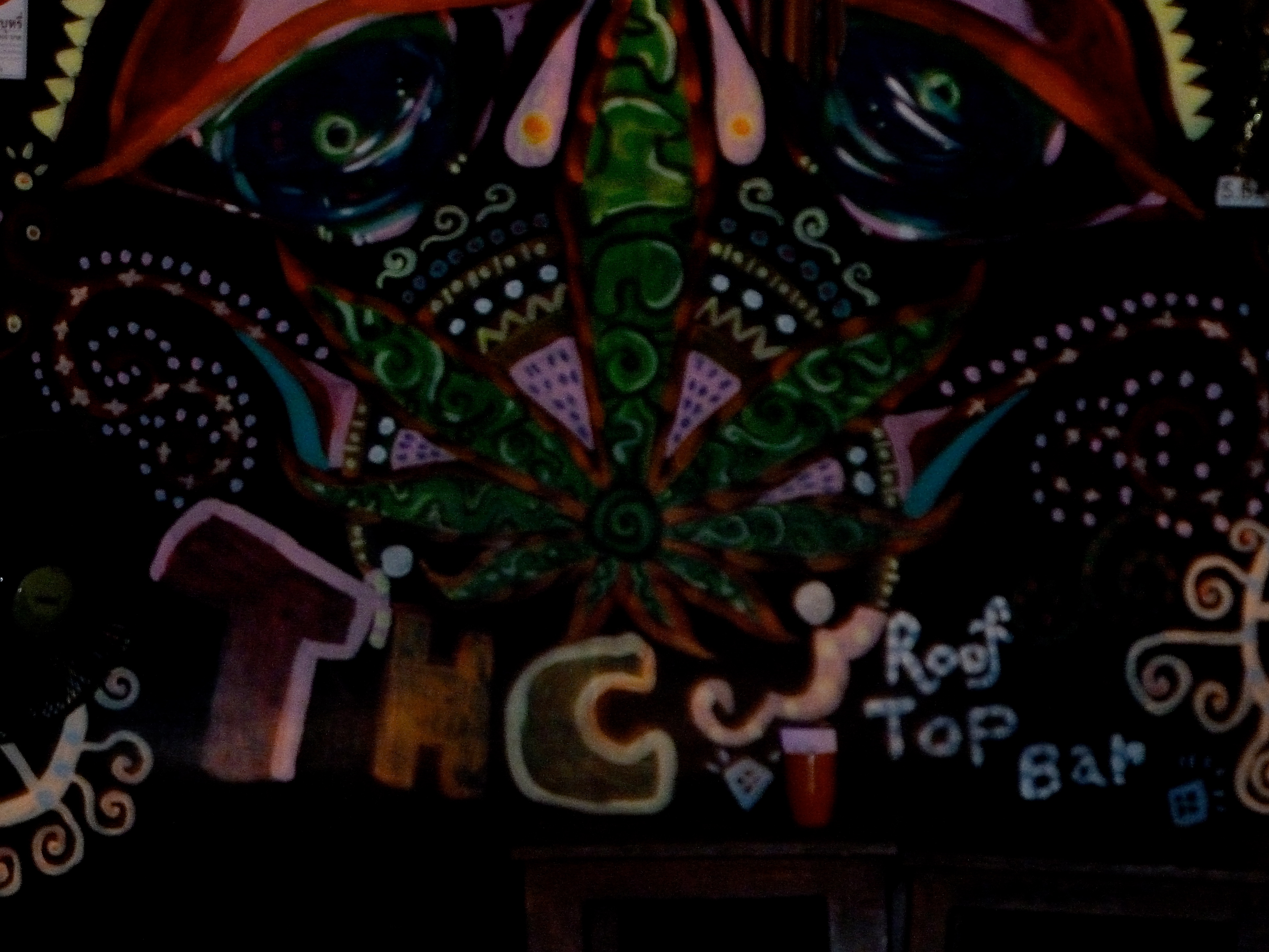
After the Night Bazar, when we were done looking through the regular tourist trap kitsch that feature at many markets, we went out to a very chill rooftop bar with a rasta vibe. I wasn’t exactly sure what that meant when I heard about it, but the decor clarified very succinctly.

Please don't be surprised at the name. Asia doesn't do subtlety very well.
Please don’t be surprised at the name. Asia doesn’t do subtlety very well.

P1050294 P1050298

The highlight of Sunday, my last day in Chiang Mai, was a river cruise along the Ping River. It was a dreary day but the wonderful people of the Scorpion Tailed River Cruise (basically the Sam Patch of Chiang Mai!) were very gracious and gave me a private tour! The ancient Thai man who acted as the tour guide is also, I suspect, the owner of the entire operation. Part of the tour included time off the boat to taste tropical fruits and smell local herbs in his garden. The experience was expensive by Thai standards but a really nice way to learn about Chiang Mai’s history from (literally) a very different angle.

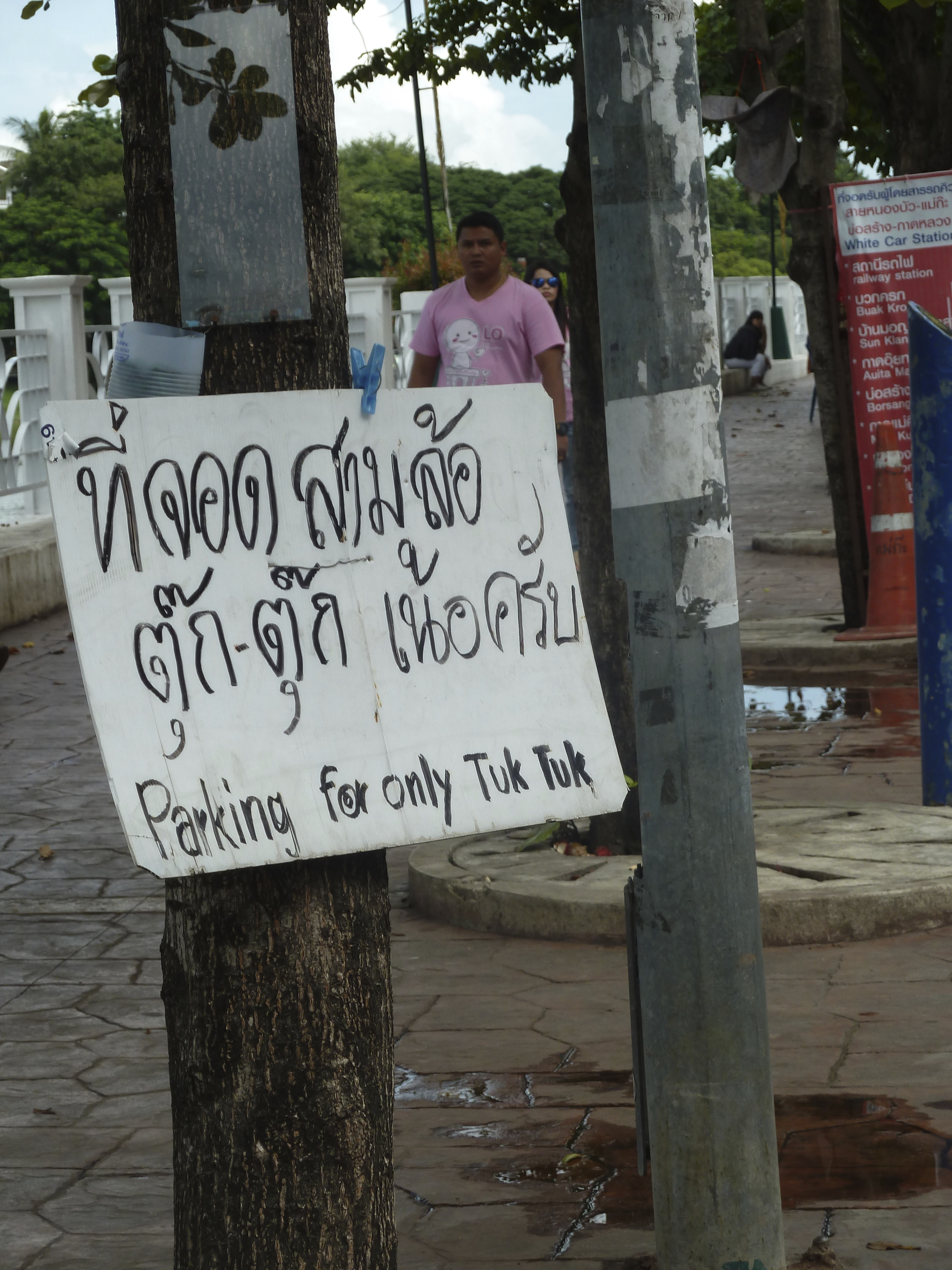
River travel used to be the way people got around. That has changed, but there are no metered taxis in Chiang Mai. The best way to get from point A to point B without a private car is by a red sorng-tau-oo, basically a shared taxi, or tuk tuk, a private taxi.

Tuk tuk

Thanks, Chiang Mai! Thailand, see you again in a month!