My relationship with social enterprises started with a school trip to Cambodia a little over a year ago. Since then, I’ve actively sought out good causes and ways to support them. If I’m buying a book or getting a cup of coffee, two beloved activities, I might as well do some good in the process! That’s why I headed to Housing Works Bookstore Cafe – used books, coffee, and a good cause. I loved it even before I opened the door.
According to their website,
Housing Works is a healing community of people living with and affected by HIV/AIDS. Our mission is to end the dual crises of homelessness and AIDS through relentless advocacy, the provision of lifesaving services, and entrepreneurial businesses that sustain our efforts.
Housing Works has been around since 1990 and opened their first thrift stores as social enterprises in 1995. They provide housing, healthcare, job training, and legal aid to homeless and low-income New Yorkers with HIV/AIDS and provide education and advocacy on these issues.
I added my contact information to the sign-up list for volunteers, so maybe something will come of that!
I have three books still on hold at the library and have been hoping they’d come in before we leave on our trip to Israel so I could take one with me because my Kindle has been misbehaving. As much as I love my Kindle and most forms for technology, real books don’t break. You open them and read. Simple. My library holds are still on hold, however, so I was forced to buy two books at Housing Works. Poor me. I started both of them while sitting in the café. Born to Be Goodby Dacher Keltner will be coming with me to Israel but Christopher Hitchens’ The Portable Atheist is staying home. It just seems wrong to flaunt my personal exploration on a faith-based institution’s religious trip to the Holy Land.
Because of the trip, I’ll be on a blogging hiatus for the next two and some weeks. (And I clearly felt the need to make up for that in advance by publishing three posts in three days.) Expect an explosion of photos when I’m back! In the meantime, I invite you to go find a good cause. And read a book or two. If you need somewhere to start, here are some suggestions. Happy reading!
Without music, life would be a mistake. – Friedrich Nietzsche
The first image that comes to mind when I think “opera” is a scene in Anastasia, the animated film that came out in 1997. Anastasia gets all dressed up in pearls and a floor-length gown and watches the opera from a luxury box through a pair of gold binoculars. Since then, opera has meant elegance, finery, glamor, culture.
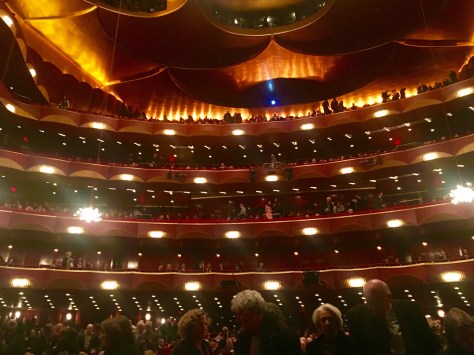
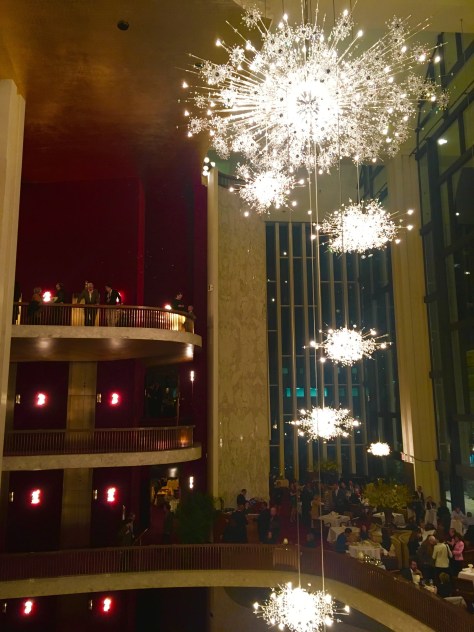
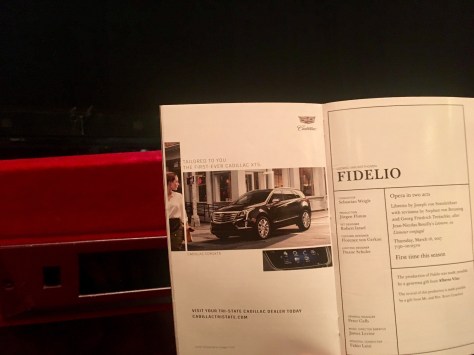
On Thursday, a colleague took me to the Met for a performance of Beethoven’s only opera, Fidelio. While it didn’t involve a floor-length gown or gold binoculars, it was absolutely stunning and also changed my schema of opera.
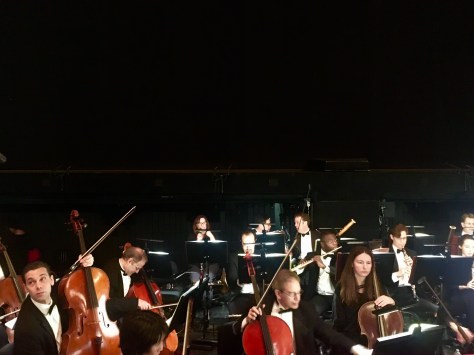
My coworker neglected to mention that her season tickets are in the front row. This gave me a view of the orchestra that I’ve never had, which was fascinating in itself. During intermission, for example, the musicians chatted to each other, took pictures, sent text messages, and suddenly became regular people. Other than a few small live music venues, I’ve never been close enough to a stage to watch orchestral musicians perform. To say that music is alive is to underestimate the role of the people who bring it to life.
I grew up listening to many of the Classical Kids cassette tapes – Beethoven Lives Upstairs, Mozart’s Magic Fantasy, Vivaldi’s Ring of Mystery, Tchaikovsky Discovers America, Mr. Bach Comes to Call were often our choice of car music. (Barenaked Ladies and Smash Mouth took over for a while after that, but I think we had CDs by then.) As soon as the Fidelio overture began, it was like being at a Beethoven concert. My knowledge of music theory is unfortunately limited and I can’t actually describe what “being at a Beethoven concert” sounds like, but I recognized him immediately.
The singers, of course, were equally amazing. Their voices were so big and so full of every emotion, making them instantly relatable and making the story easy to follow. I likely had a huge smile on my face the whole time. Live performance always has that impact on me.
Overall, the opera was far more approachable than I had expected. On the back of each seat is a small screen that you can choose to turn on to view the subtitles for everything being sung onstage. For Fidelio, the available languages were German (the language of the opera), English, and Spanish. The words are red on black screens that are constructed in such a way that it is very difficult to see the screen of the people next to you. Having the captions on is not at all distracting while also allowing the audience to follow tradition and watch the opera without translation.
There was something in Fidelio for everyone – unrequited love, ambition, crime, marital fidelity, revolutionary undertones. Opera is definitely an experience that I want to have again, which is feasible considering tickets at the Met start at about $30 for the highest section in the auditorium. Again, approachable. Who knew?
In addition to the opera, I was really interested in the audience. My coworker had told me to expect everything from tuxedos with tails to jeans and backpacks. She was not exaggerating. I saw multiple people who were clearly tourists and backpackers in the city for a few days, and multiple people who have clearly attended opera for decades and embrace all the glamor that opera has always had. My favorite by far was a couple in our row who were well into their advanced years and epitomized fabulous. He sported a tuxedo with a patterned cummerbund matching his bowtie and pocket square, and she wore a velvet pantsuit with a spangly rhinestone front and no back with a white feathered fedora. They were beautiful.
As far as cultural experiences go, I’m trying to do as much as I can for my time here in New York. I’ve been to live music venues, Broadway shows, comedy clubs, and now the opera. I haven’t seen a dance performance here so that’s next on the list.
Music expresses that which cannot be said and on which it is impossible to be silent. – Victor Hugo
And then my eighth graders asked some questions and I realized I was missing an opportunity to explore the complexity of what it means to be a woman and educator in today’s world.
As my students noticed, I did not participate in A Day Without a Woman on Wednesday, March 8. I did not participate in the demonstrations in New York City. Instead, I went to work.
This lack of participation is a sharp contrast to my activism in the Women’s March back in January, and my students were curious about it. Many of my eighth graders read this blog (and ask me about it in class when they’re supposed to be working on other things) so this post is for and because of them.
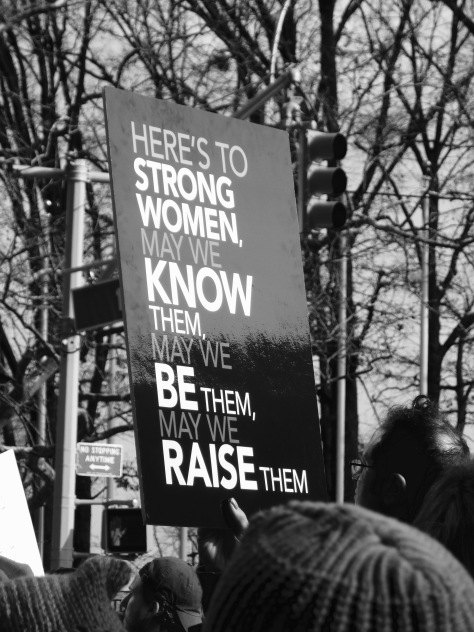
My favorite sign from the Women’s March in January
The Question
A number of my students come from households that talk politics. Some of them come to class echoing their parents’ conservative or liberal views, others come with questions, and still others want to be involved in the conversation but don’t know where to start. I don’t openly discuss my political views with my students, but I’m also not completely closed off when political questions intersect with deeply held personal views.
On Thursday, March 9, the day after International Women’s Day, two young women who usually present very different political narratives quietly and separately asked me, “Why were you here yesterday? I was expecting you’d be at a protest.”
I was surprised because I hadn’t even considered skipping school to demonstrate or protest. My identity as an educator is such that I feel a sense of moral responsibility in being there for my students to guide their learning. That is what I tried to convey in my answer to both of those young women on Thursday.
The Answer
That’s a really good question. The way I see it, my job is to make sure that you’re learning. I know that I can best do that when I am here helping you learn and guiding you along. When I’m not here, I have to leave that task to someone else. Yes, someone else can do it, but I know what my goals are for you and I know what I’m doing to help you reach those goals. My not being here is potentially harmful to your learning. So, to be the best teacher I can be, it’s important to me to be here with you.
I understand why some women made the choice to protest. I understand why it’s important to show the country what happens when women are silenced and shoved aside. But I think that an alternative way to demonstrate that is to be here with you and talk about it. So I support those women who didn’t go to work. I support their decision to make their absence felt. It just doesn’t fit with my job right now. I have a different agenda, which is to do what’s right for you.
The girls nodded. Both expressed their surprise and understanding. One of them told me she respected that decision.
In truth, the more I think about it, it’s far more complicated than that.
The Challenge
The challenge for me is to “talk the talk and walk the walk”. It’s all well and good to say that I support women who took time off work, either paid or unpaid, to stand in solidarity with other women on Wednesday. However, I did not take time off work. I did not physically stand in solidarity with women. Do my actions speak louder than my words? If so, do my words of support still count?
If I want to be a role model for my students and do what is right, am I obligated to stand up on behalf of women and join them in protest? Or is sticking to my beliefs about education modeling in itself?
I’m not sure.
I could be giving myself far too much credit as essential to my students’ learning. I know they could have gotten through a day without me and that the day would not have been a loss. So maybe I’m not as important as I think I am, and maybe I could have had a greater impact missing school and joining a protest.
Similarly, there are definitely things I could have done in class on Wednesday to draw attention to A Day Without a Woman. I could have addressed it explicitly and discussed the history of women’s protest with my students. I could have asked if they knew anyone participating. I could have pulled opinion pieces and even footage of protests and demonstrations and we could have had a class discussion on the purpose and effectiveness of protests.
Picking a Side
In truth, I didn’t think about it. Perhaps I should have. Perhaps this was a lost opportunity and my students and I all missed a valuable learning experience. Perhaps this was not simply a matter of another day at school.
Unfortunately, I think that’s all too common in schools. I think we often miss valuable learning experiences because we’re tied to other priorities, whether those are selected for us or by us. I don’t know if I made the right choice in going to work. I don’t know if I made the right choice in spending the day on “normal curriculum” instead of digging into protest in America or wage inequality or women’s issues around the world.
I do know that I’m walking a line between political and personal identities and I’m having trouble finding a bridge. I feel like I’m coming from two almost opposing camps and I don’t always know where they should intersect.
On Wednesday, I chose to go to work and do my job because I felt like it was the best thing I could do for the young people under my care. Yes, there are others who care for them. But I can only control what I do and the messages that I send. It was more important for me to stand by my promise to be present with my students than it was to embrace my role as a woman and skip school that day. At this point, all I can do is recognize that choice for what it is and perhaps consider what other options I might have in the future.
Eighth graders, you ask good questions. Keep doing that.
Photos, travels, musings, and ideas on education by someone trying to make the world a better and more peaceful place






 By Rebecca Michelle