Tag Archives: Nature

Travel Guide: The Harz

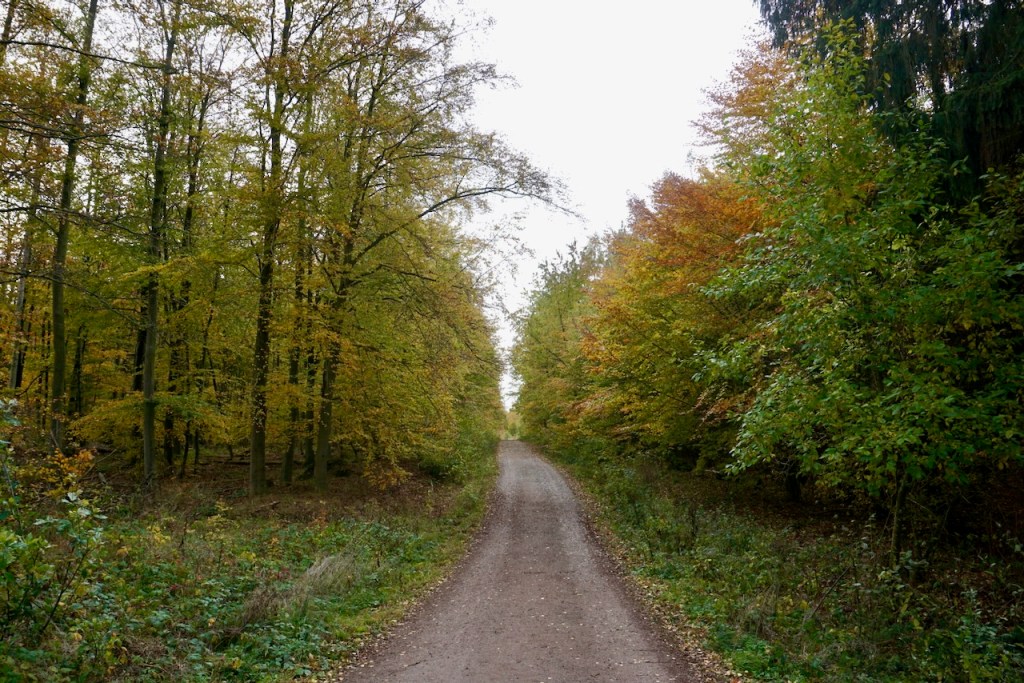
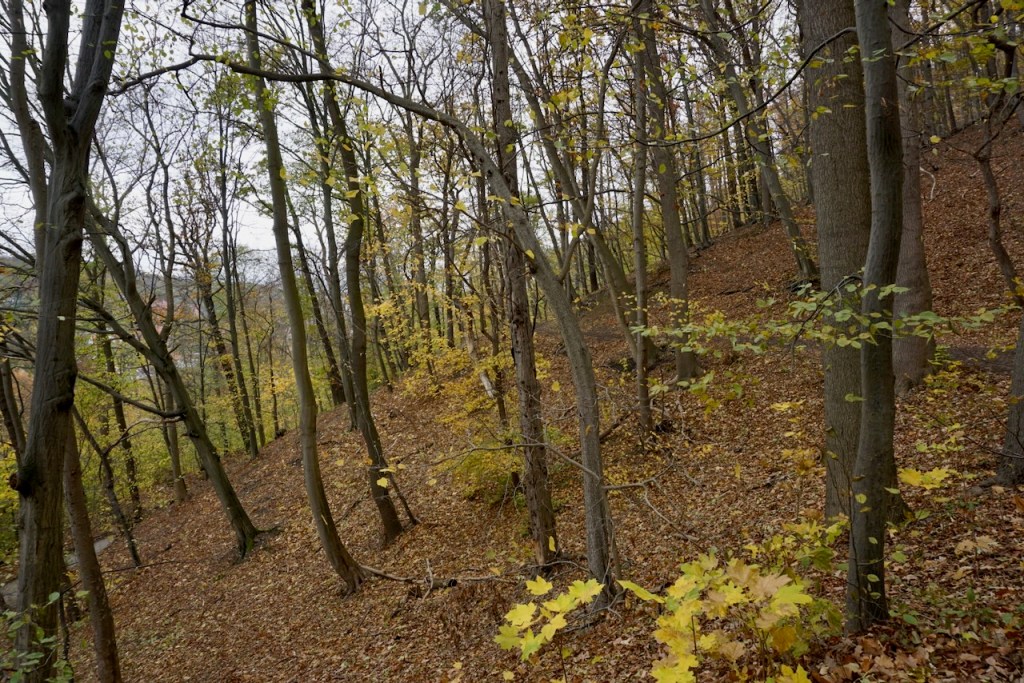
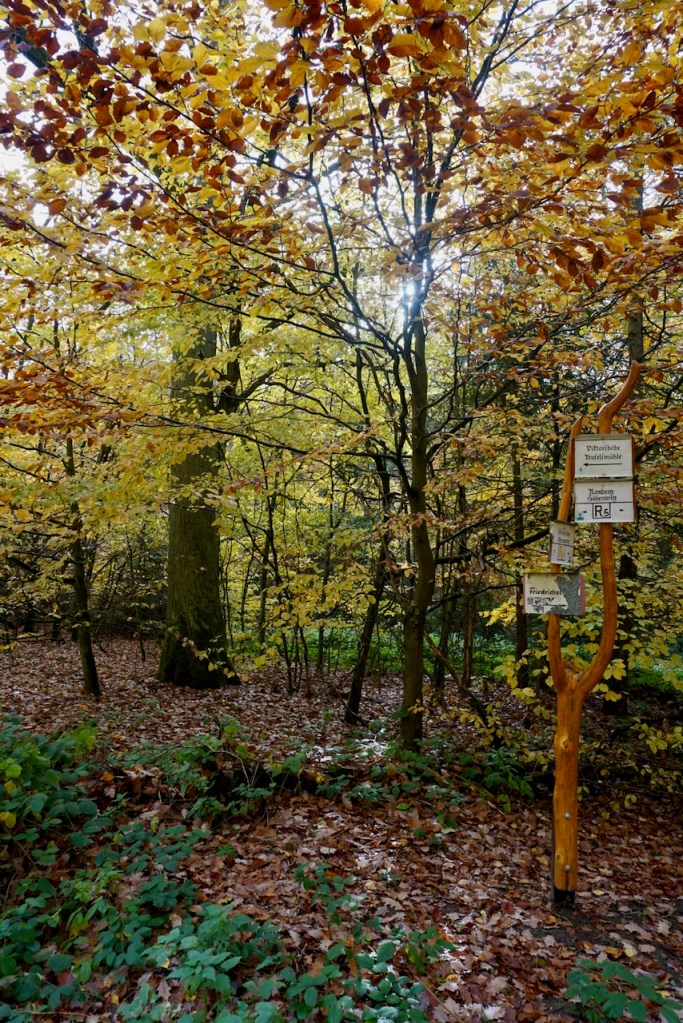
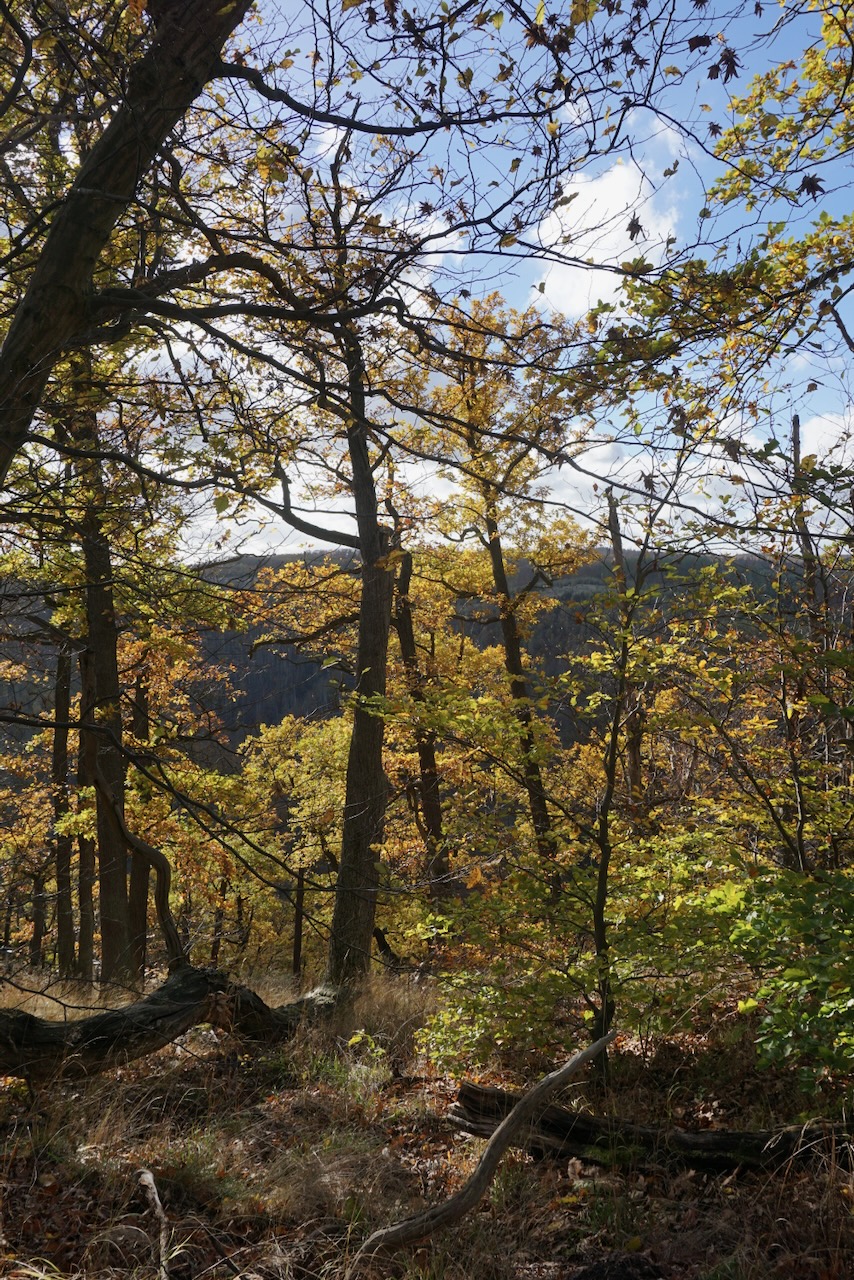
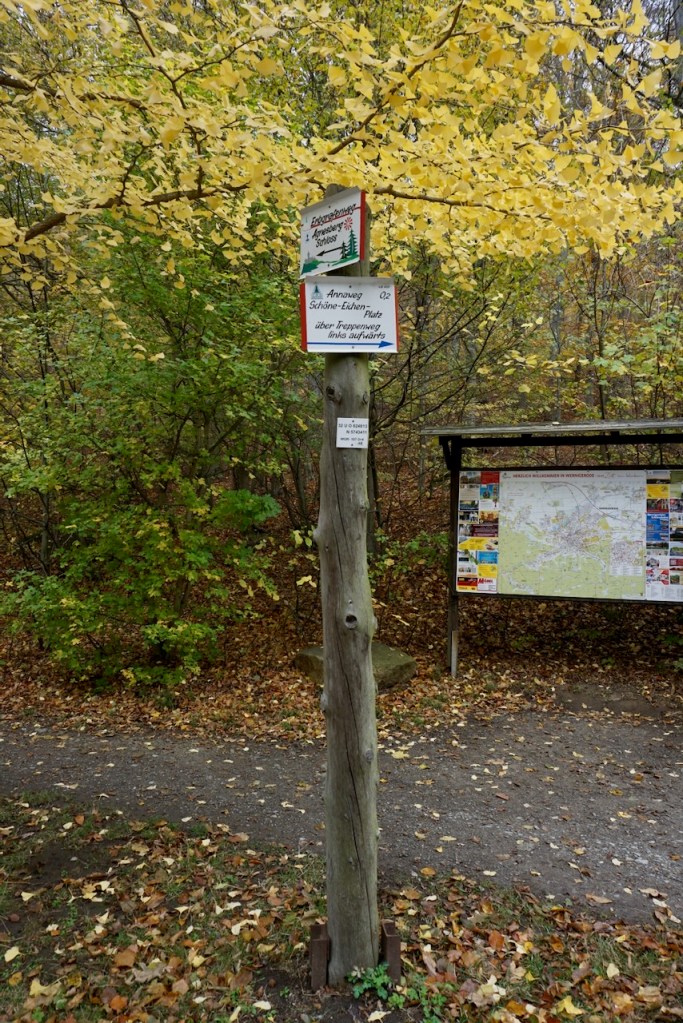
For our first holiday as a family of three, we packed the car to the gills with baby gear and drove a few hours to the middle of the woods. We followed a “forest vehicles only” road to reach the former Prussian hunting lodge where we had booked an apartment for a few days, about seven kilometers from the town of Thale. It was late afternoon on a sunny fall day when we arrived, and we were immediately charmed. From our window, we could see the Brocken, the highest peak in the region with an elevation just over 1,100 meters.

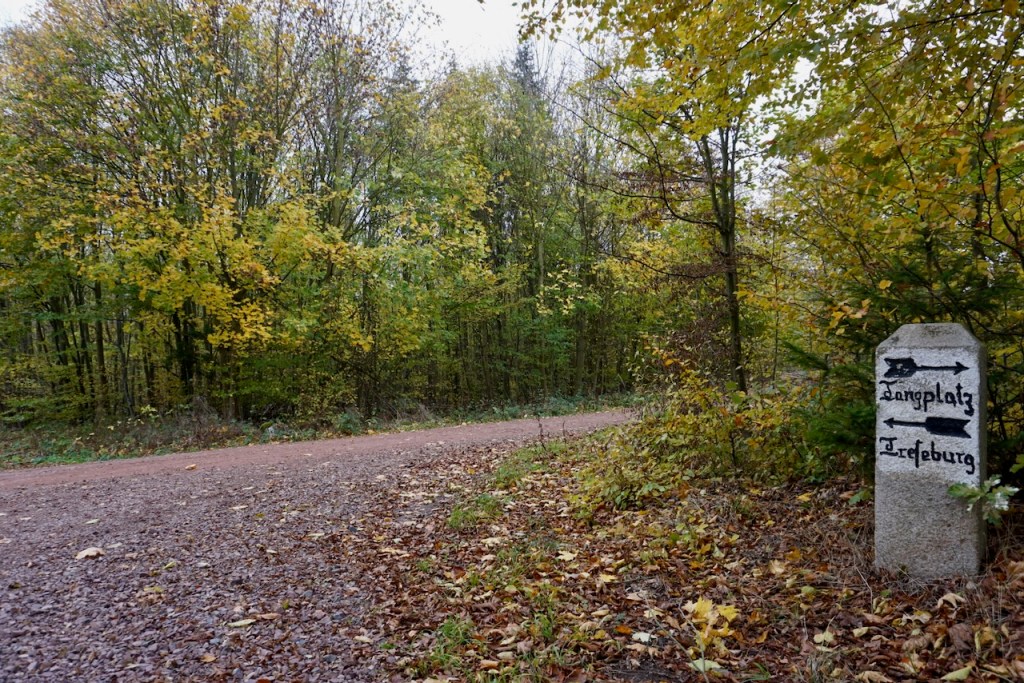
The Harz is a mountainous, heavily wooded area in north-central Germany, and it contains folklore of witches. That forests are mystical and magical is a common belief and understanding in Germany, and it is in the Harz that the witches used to gather. The route to the very famous Hexentanzplatz (Witches’ Dance Floor) was a signposted walk just outside our door, and that was our destination the following day.
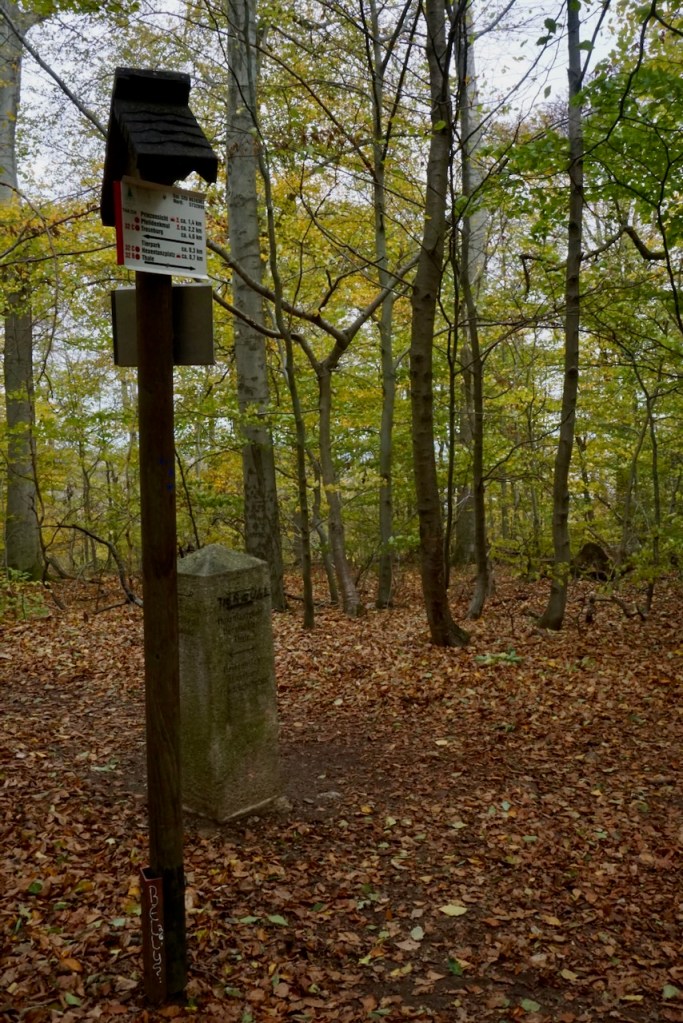
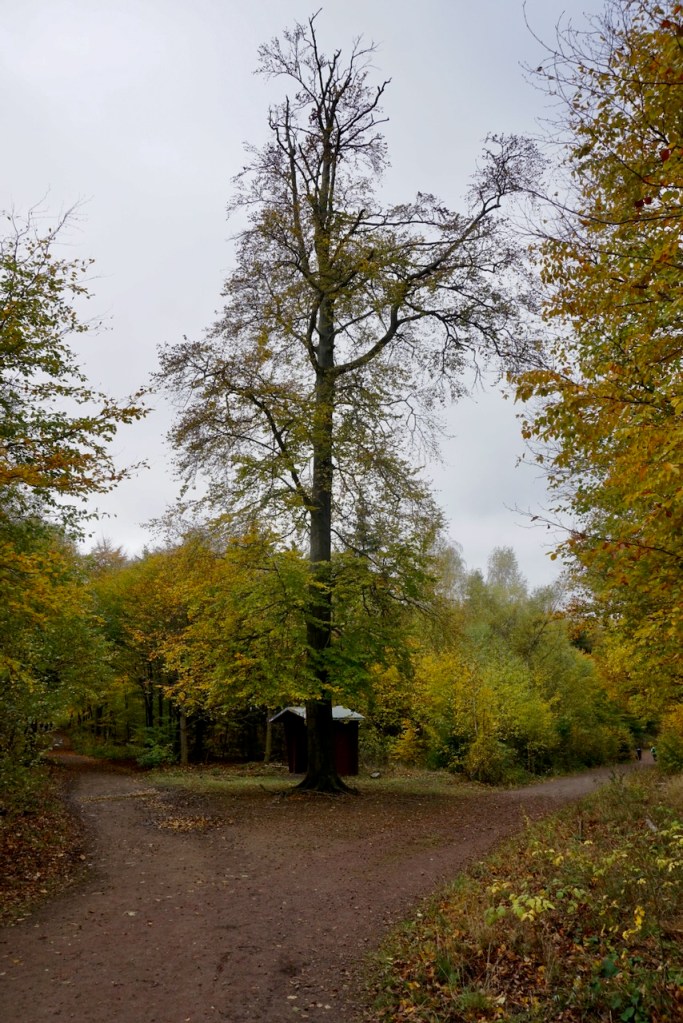
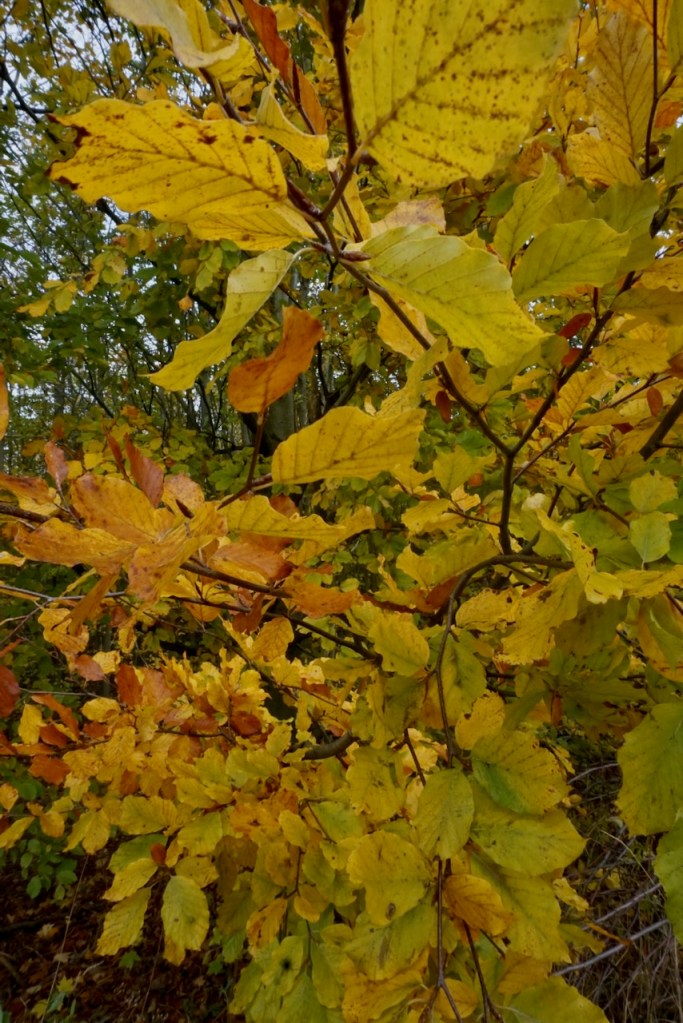
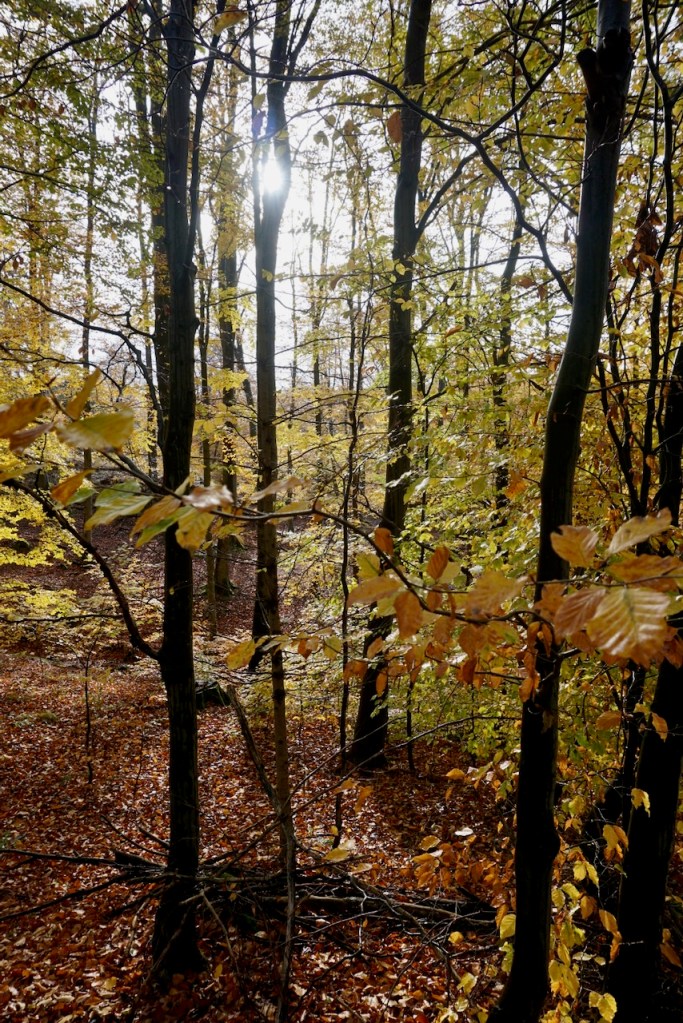
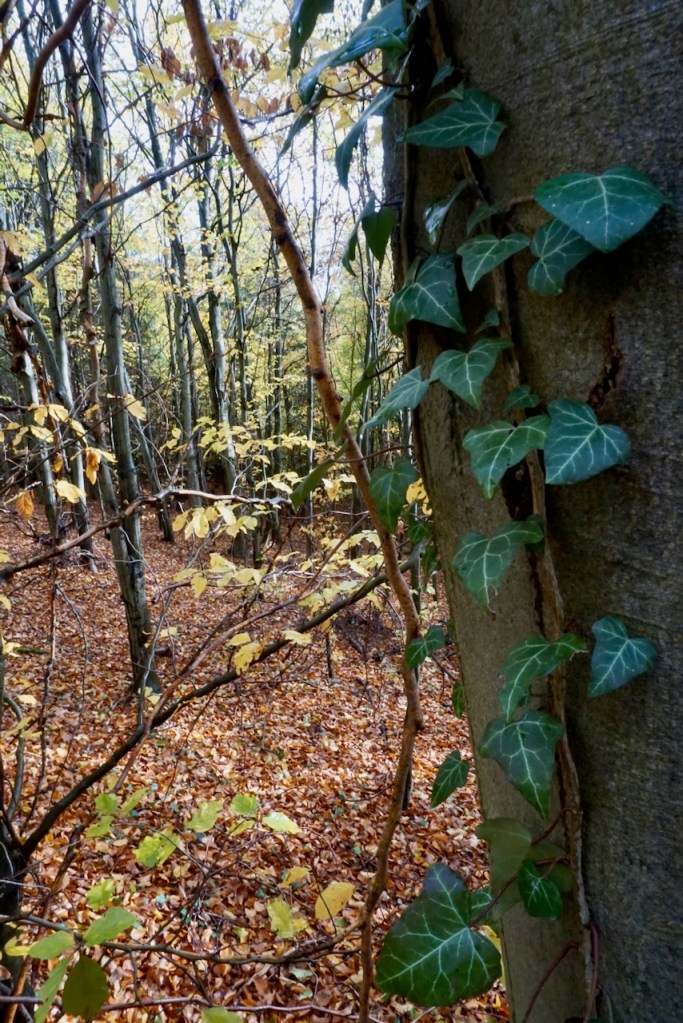
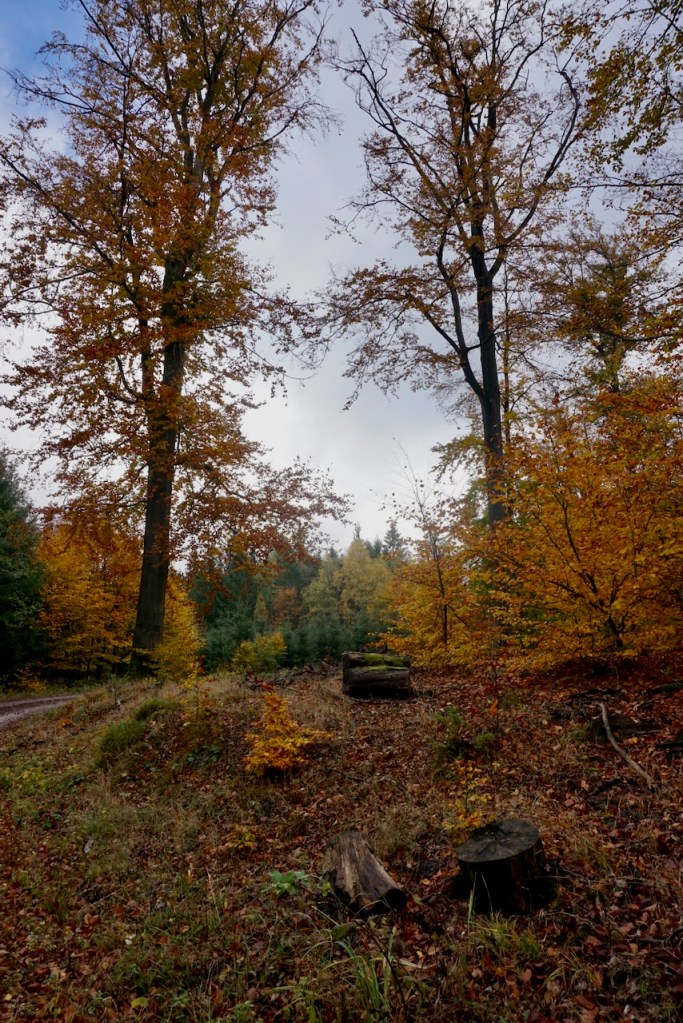
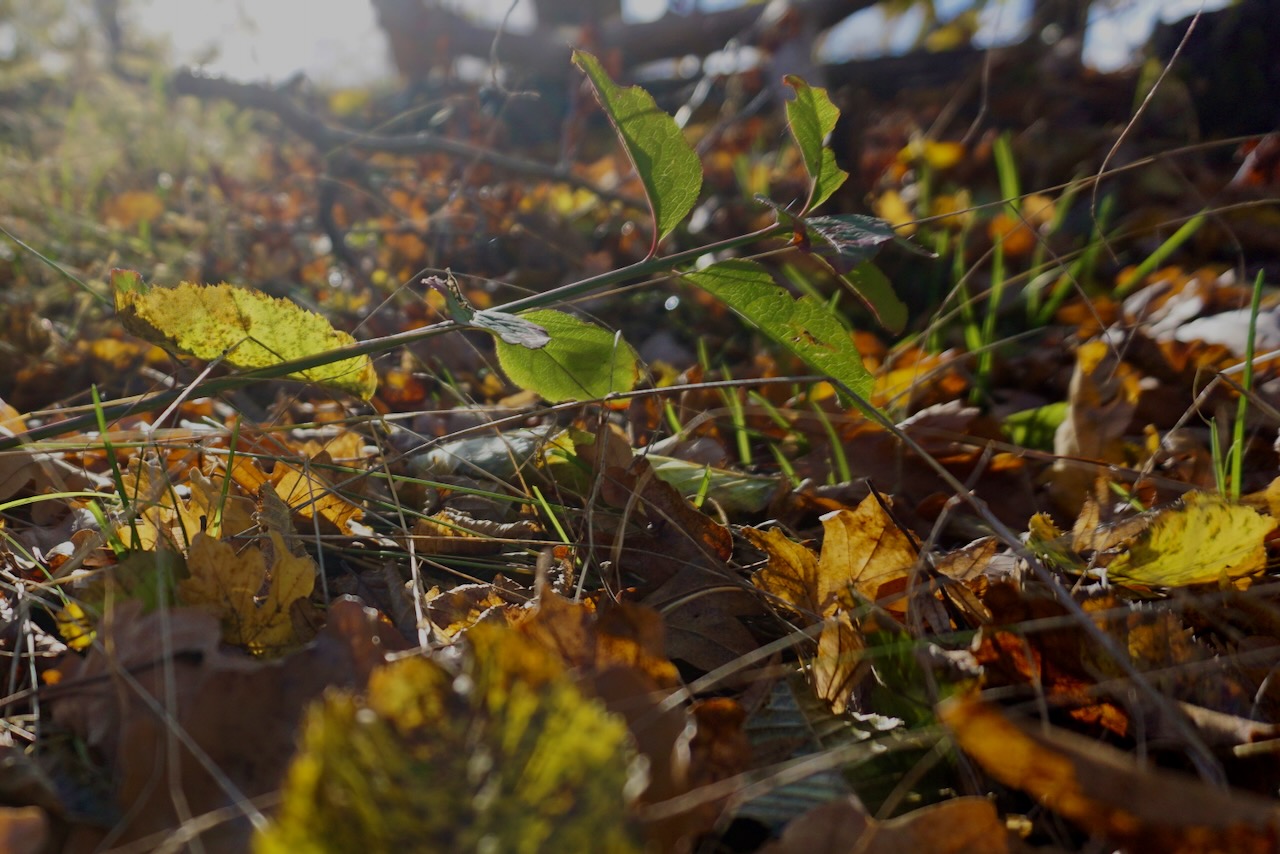
I love the outdoors at all times of year, but fall is particularly wonderful. The leaves take on a life of their own, the ground crunches underfoot, and the air contains a crispness that quickens the heart. An apple eaten under a fall sky tastes more apple-y than one eaten at home.

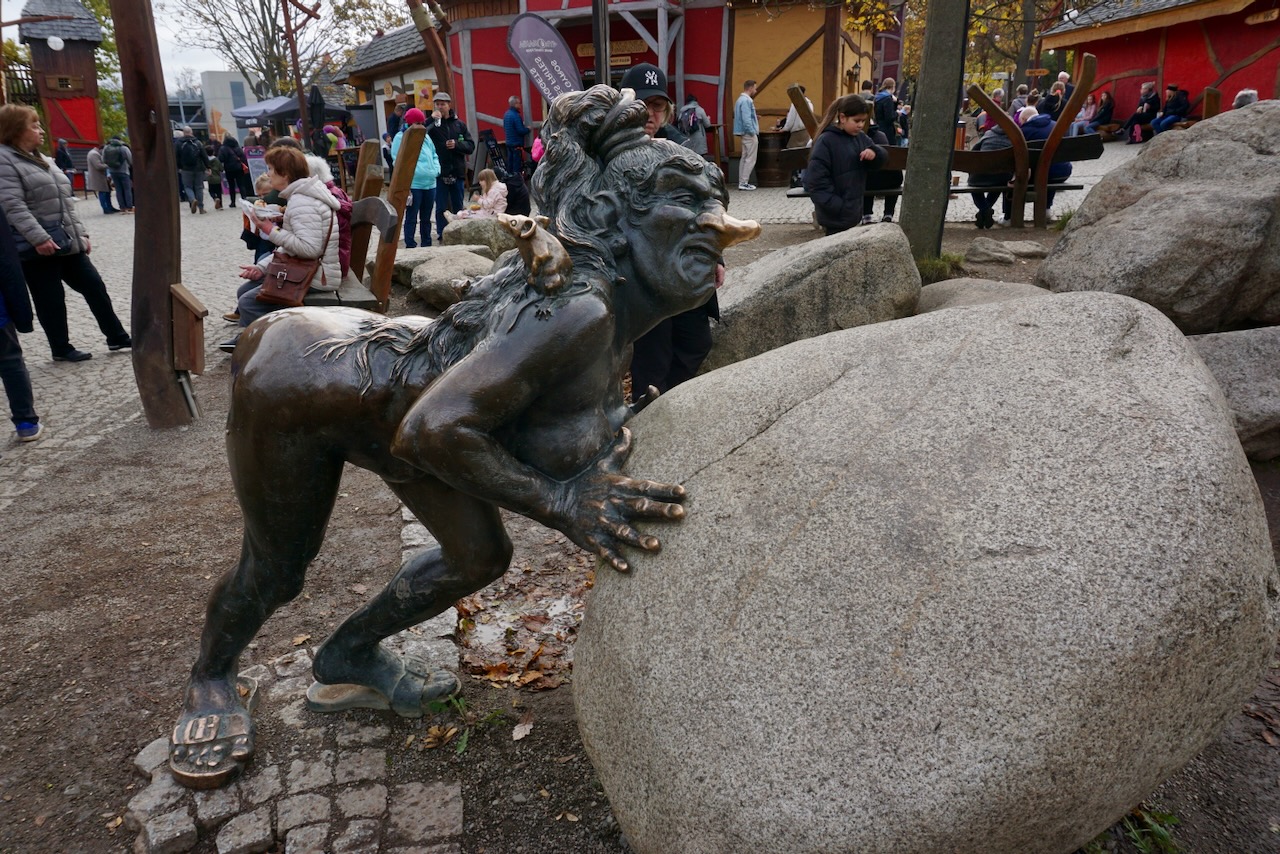
Hexentanzplatz, unsurprisingly in the modern world, now includes what is effectively a themed amusement park. It is rather cutely done and we will need to return with our daughter when she’s older. (And so we can buy matching “Witch in Training” t-shirts.)
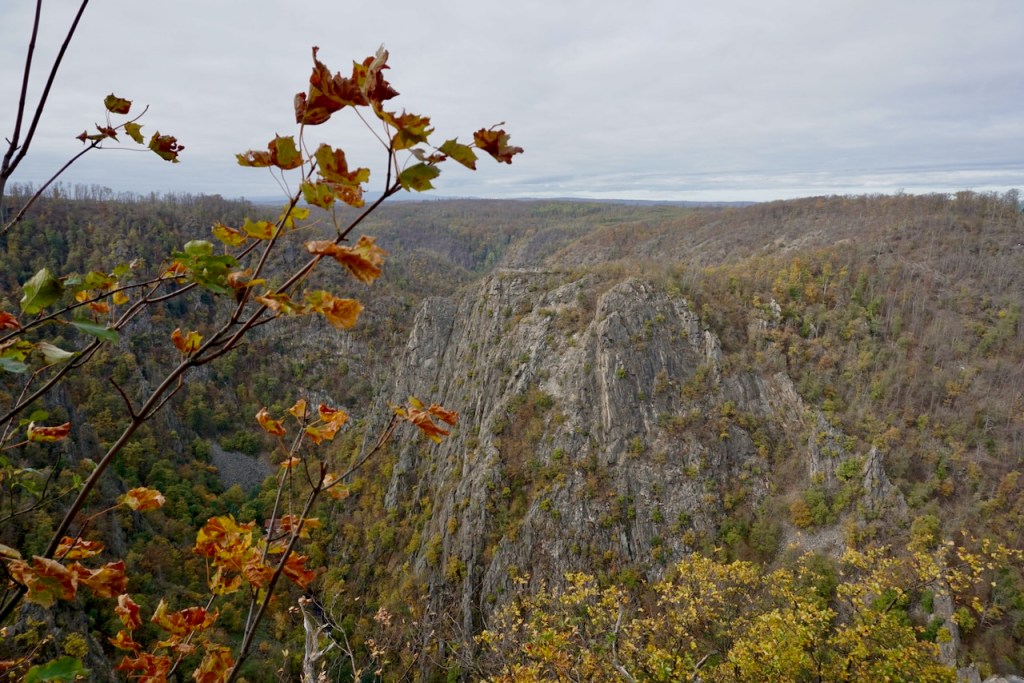
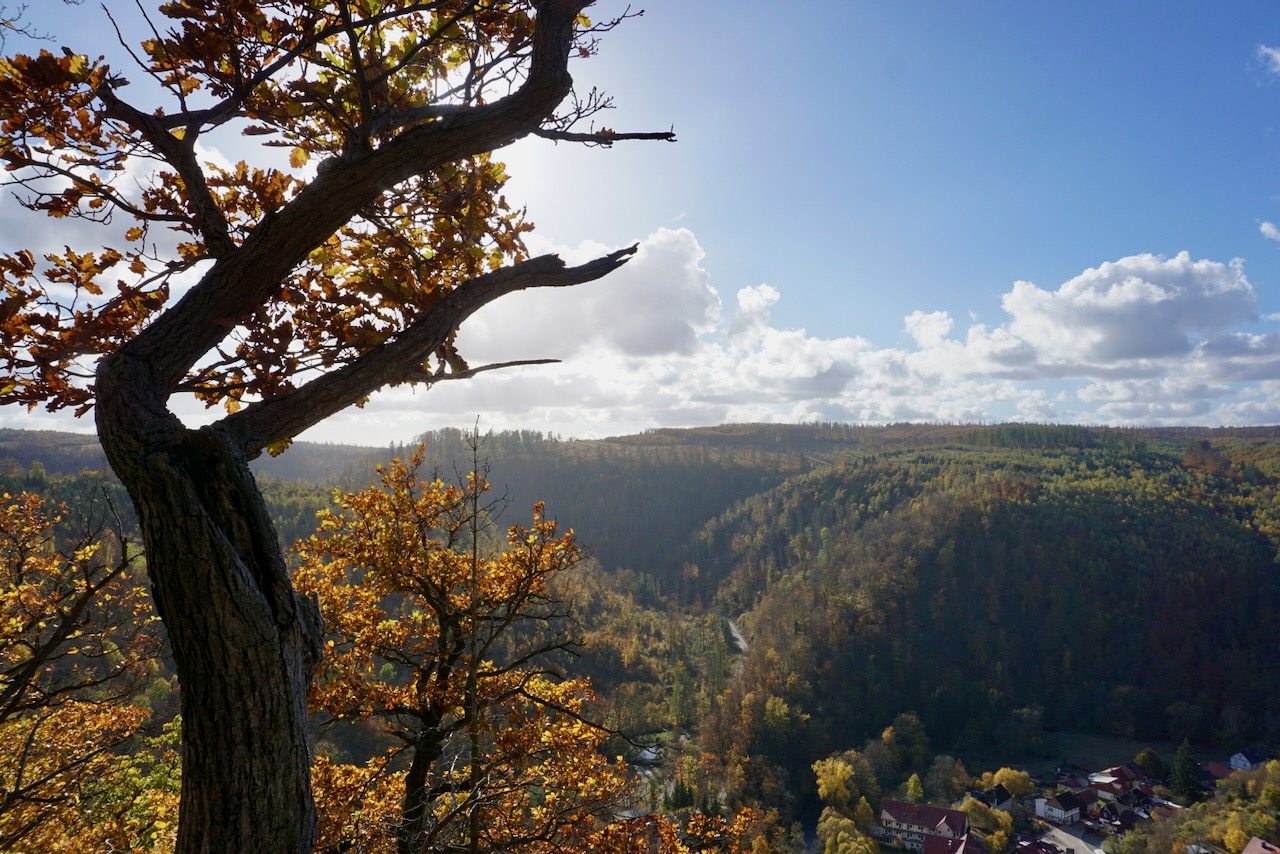
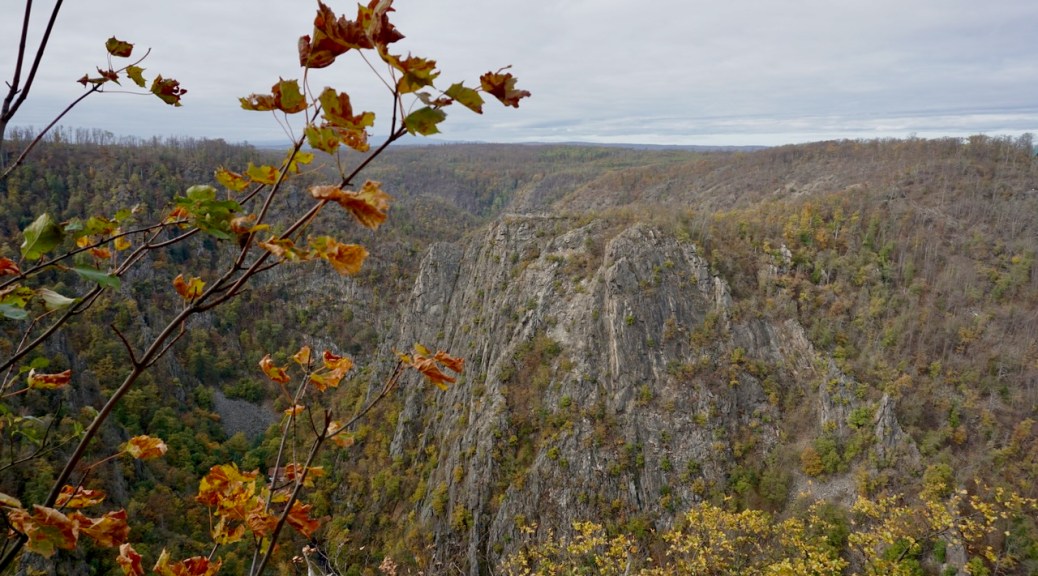
But one only needs to move a few meters away to the lookout point packed with people to see the real attraction, and perhaps the real reason the witches chose to gather here. From the plateau where we stood, where they danced, one can see the forests opening up and hear the cliffs calling.
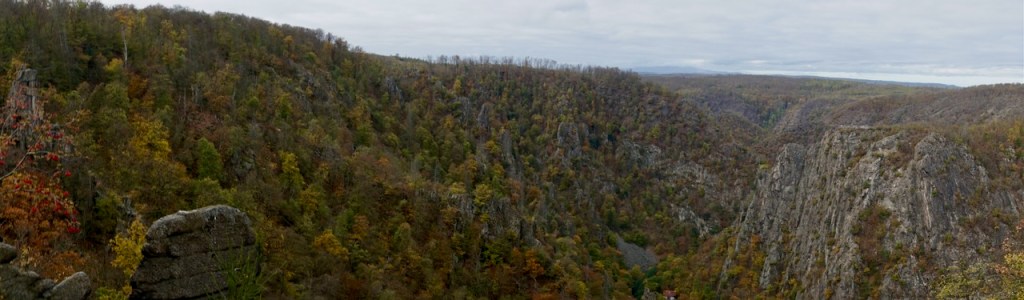
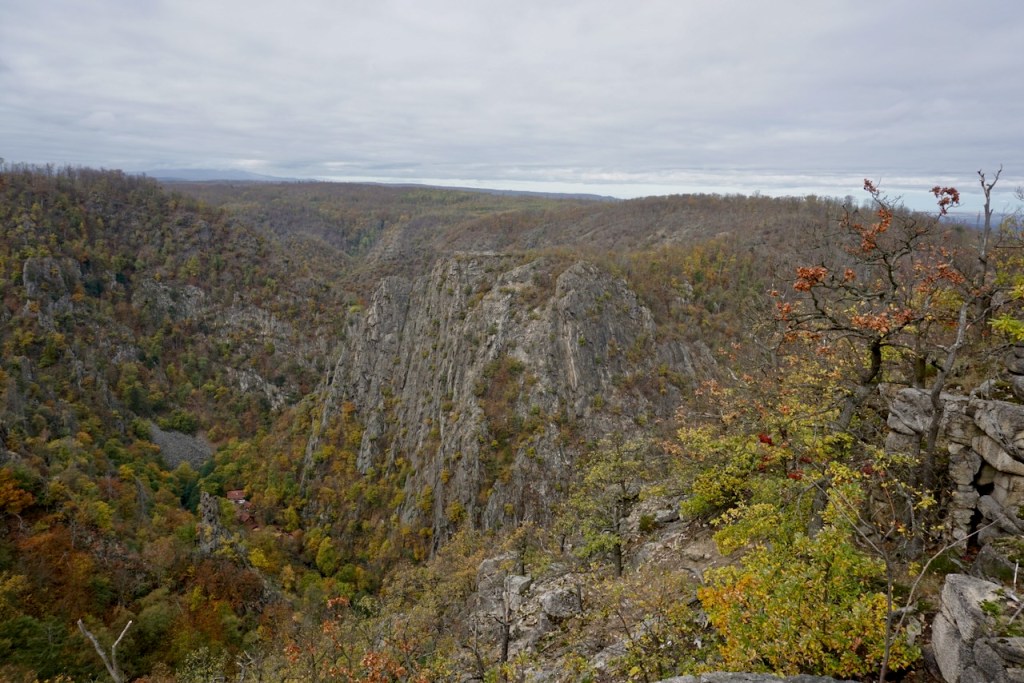
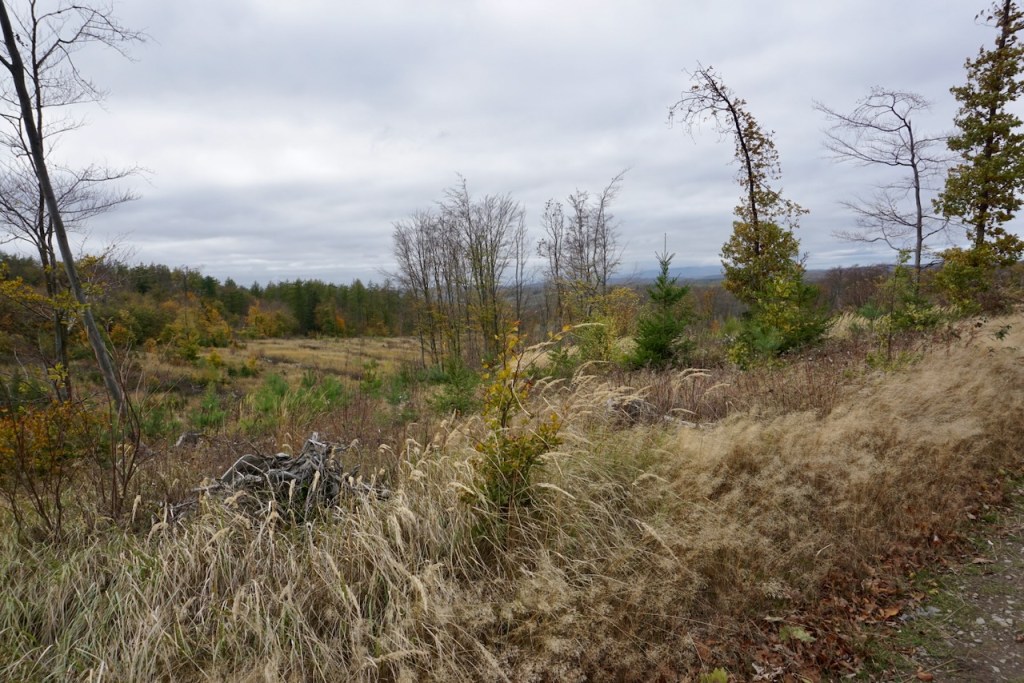
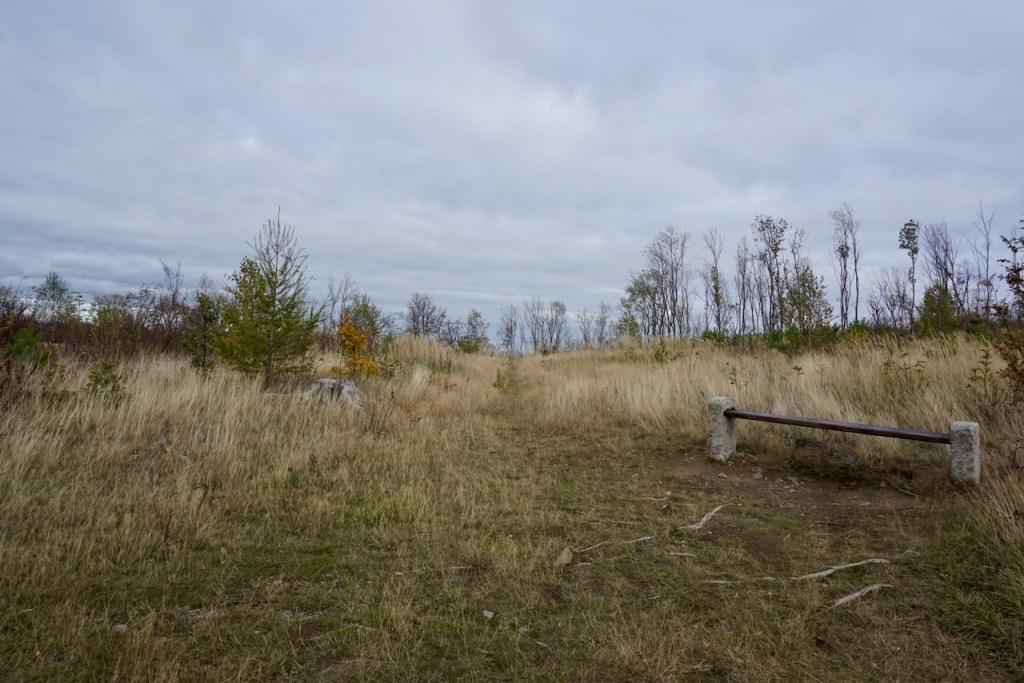
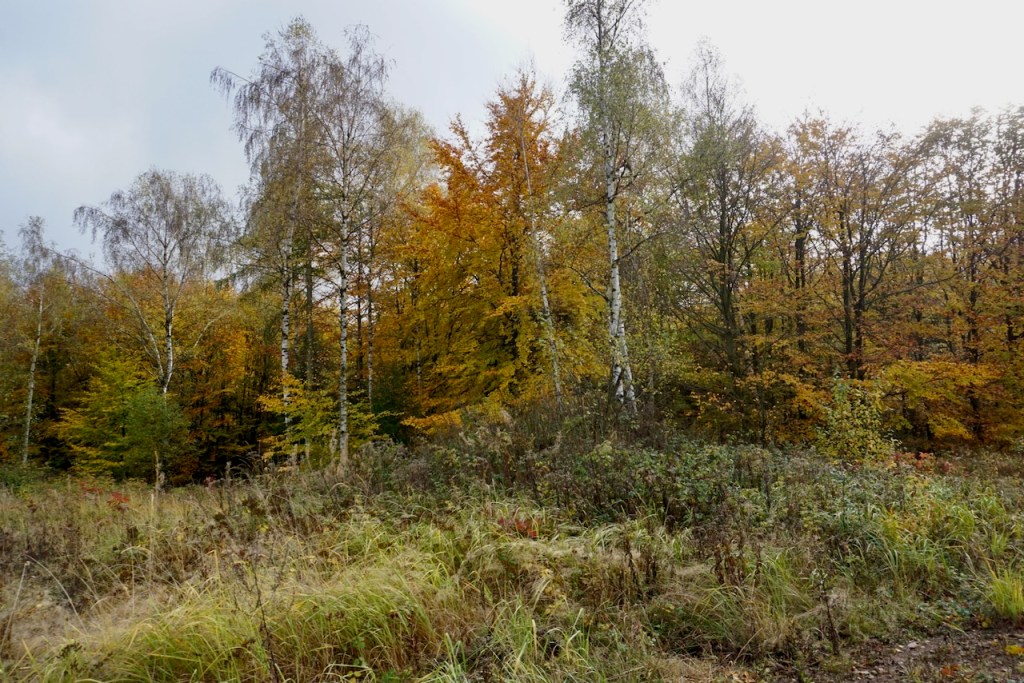
After settling ourselves on a fallen tree stem to feed the baby her lunch, we took a few turns along a path that landed us in a grassland on another plateau. The wind picked up significantly as the shelter of the trees faded away.
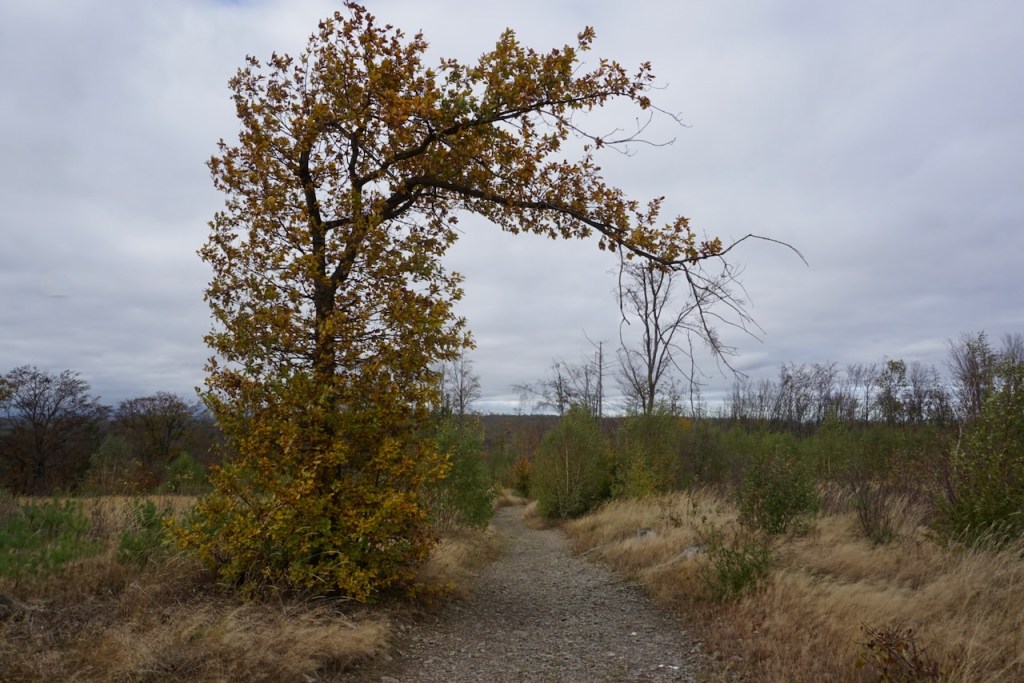
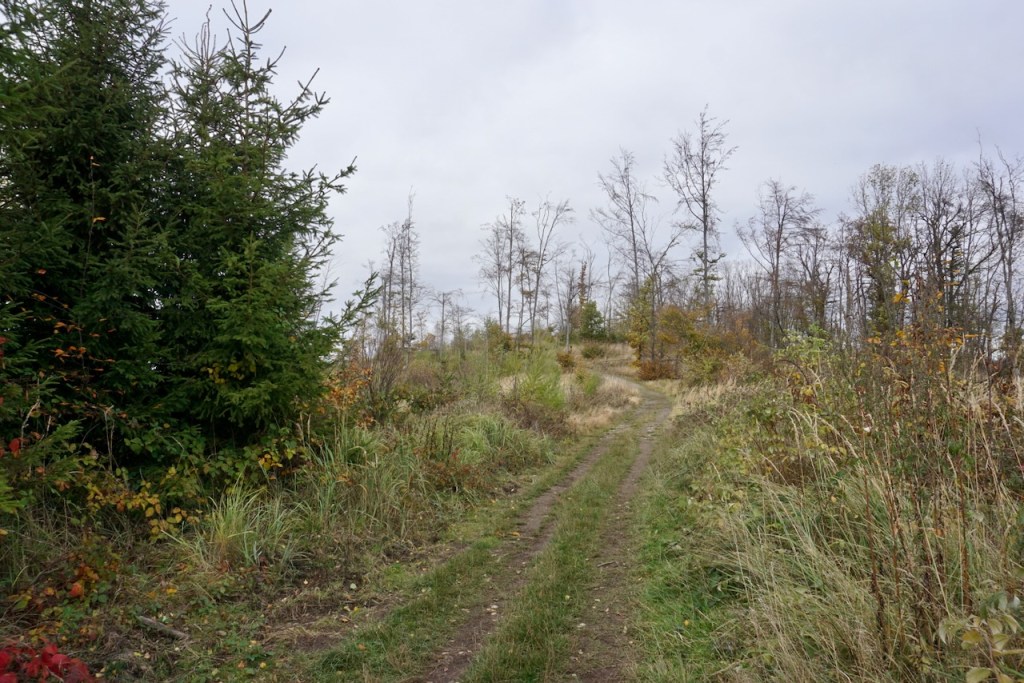
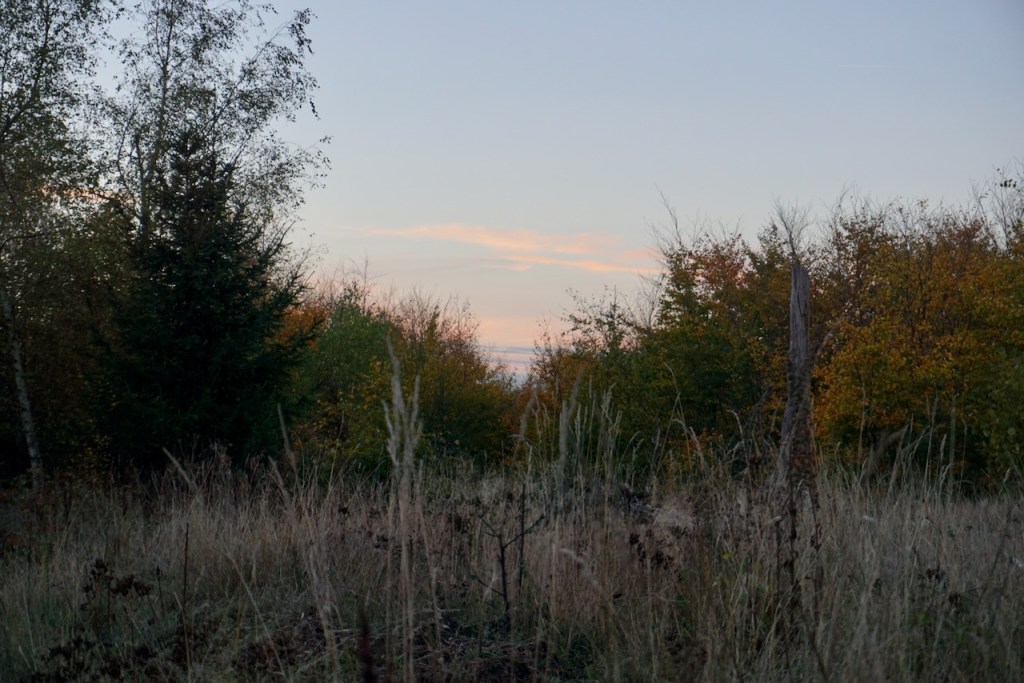
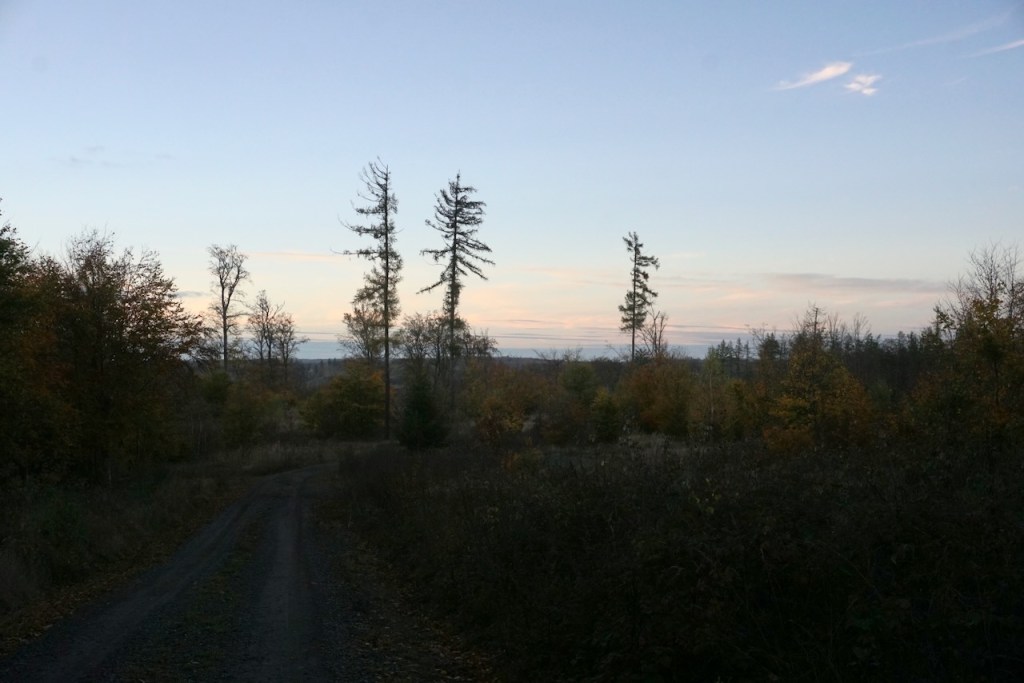
Conscious of how long our daughter had been in her stroller, we headed back to the apartment to let her roll around, stretch her little legs, and attempt to crawl, or at least propel herself forward. When it was time for her last nap of the day, we packed her into the snuggly and went for a stroll in the gathering twilight. There was nothing around us but the woods.
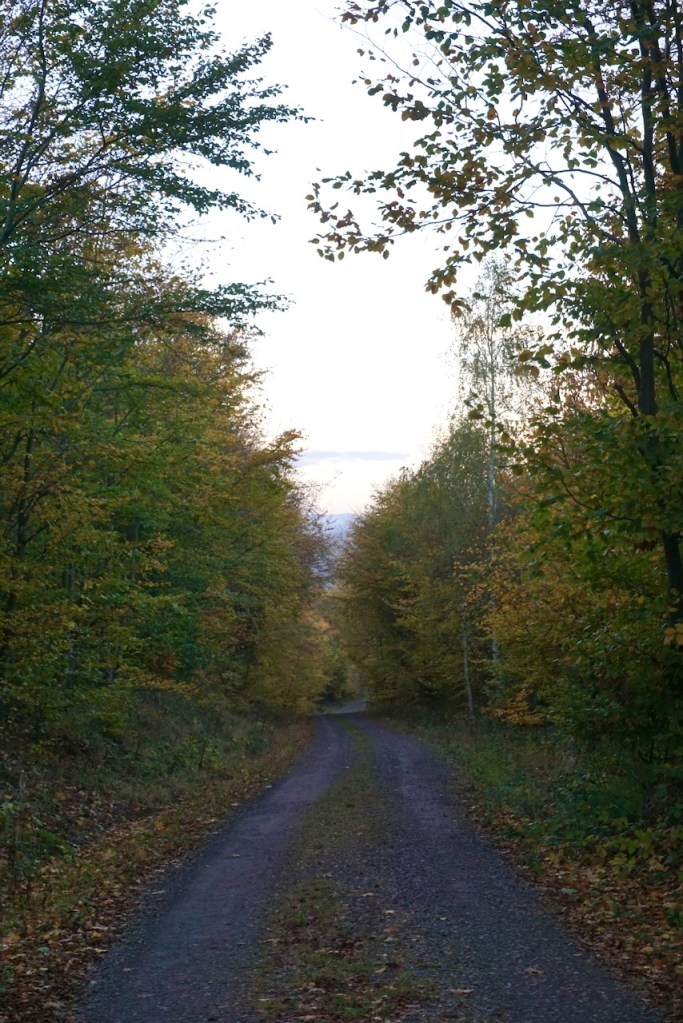
The next morning, we woke to clouds drifting over the forest outside our window.
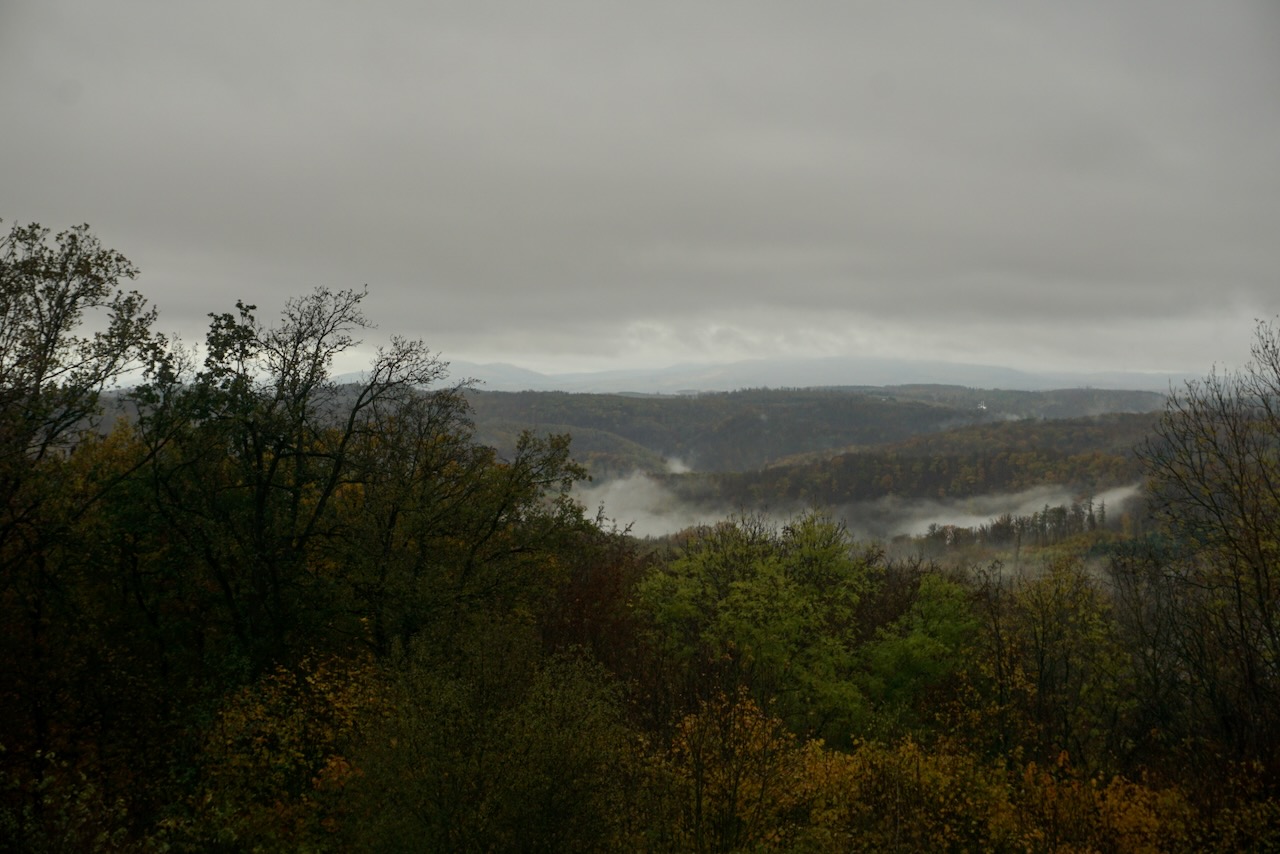
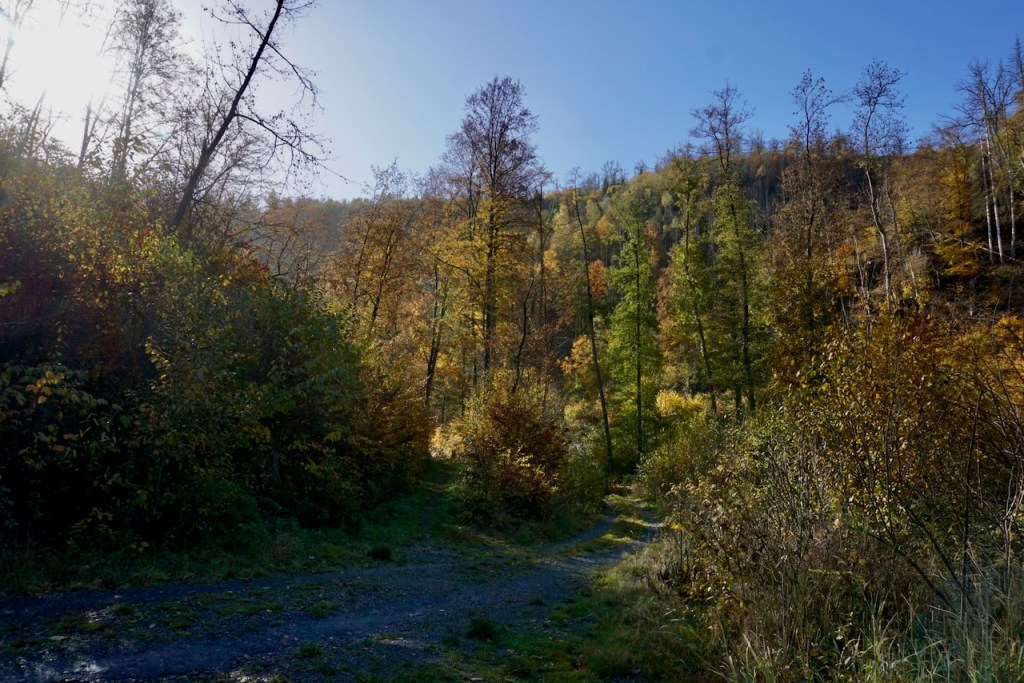
To our pleasant surprise, the sun rose and painted the forest and hills with a fresh palette of colour.
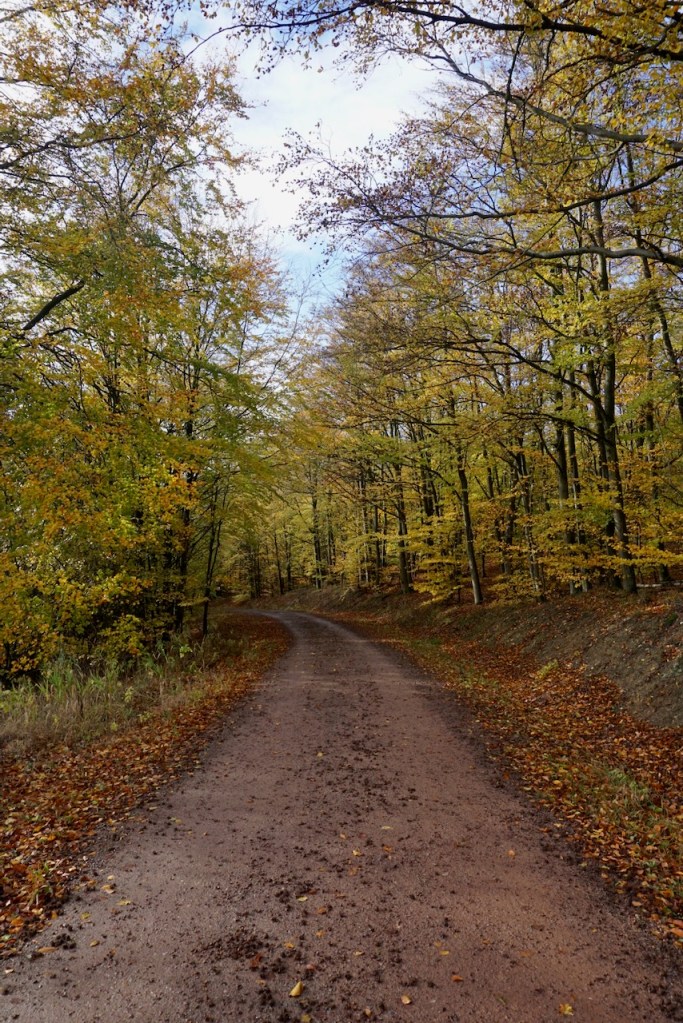
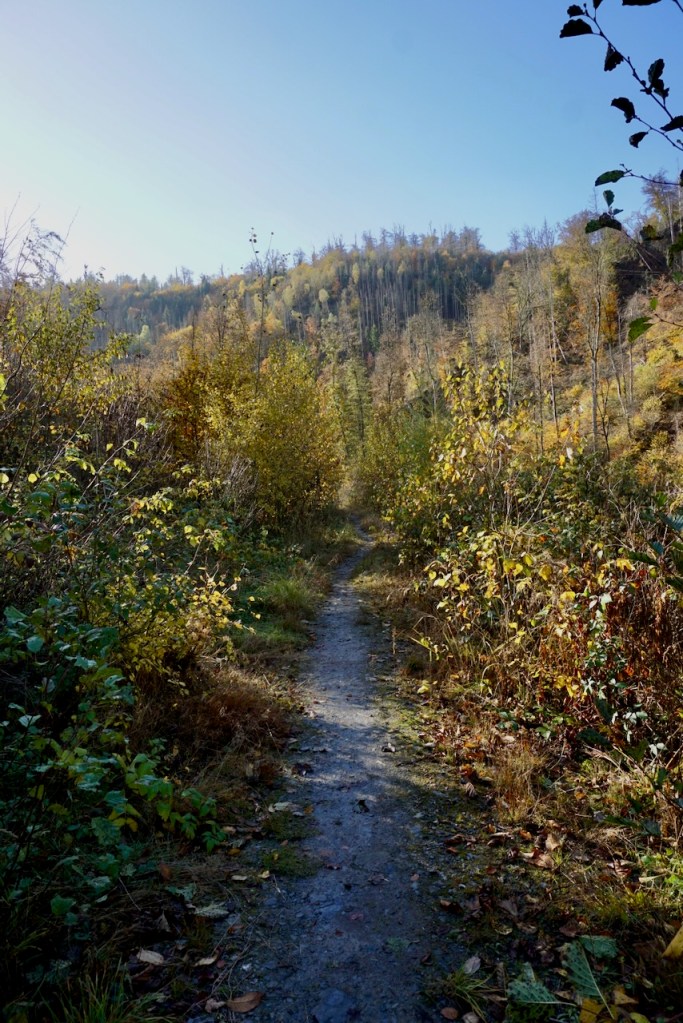
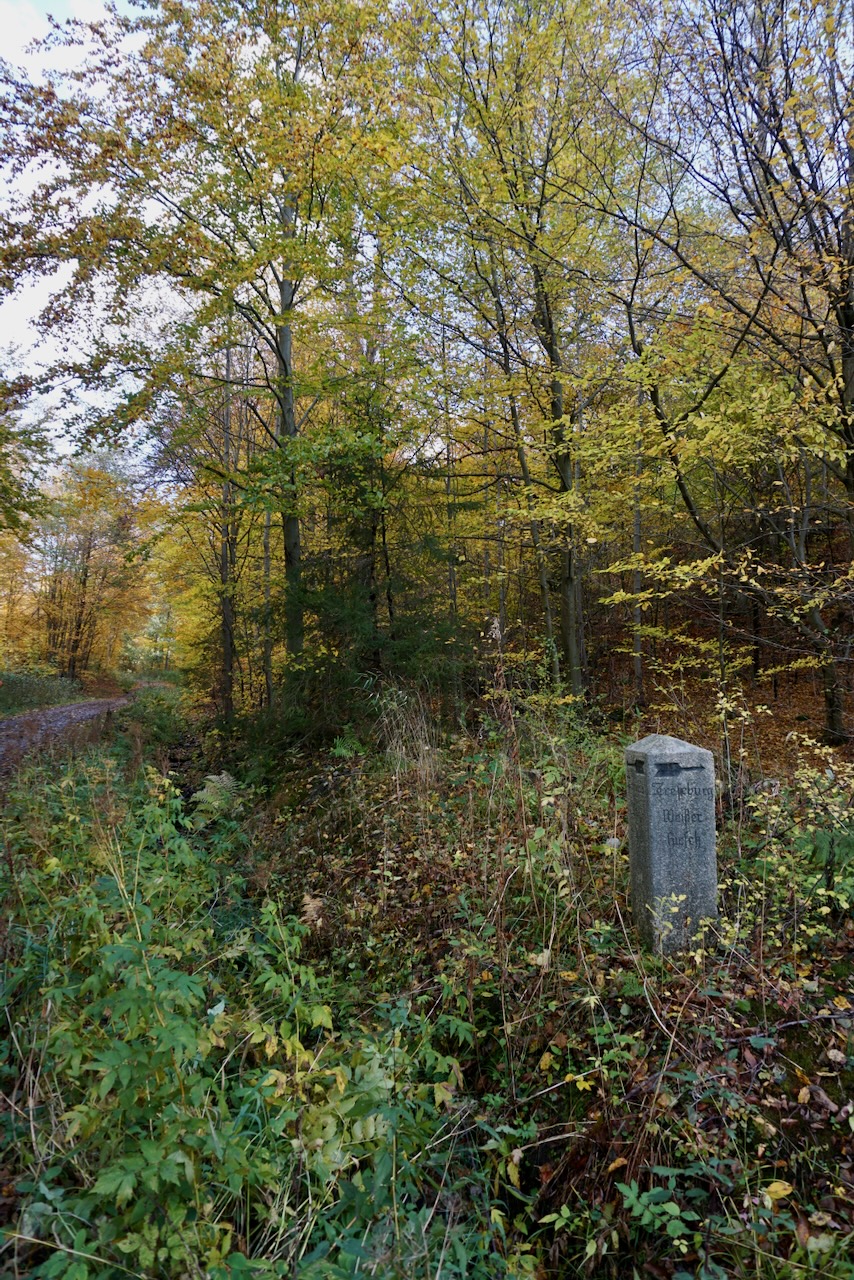
Delighting in the sun, we headed in the other direction toward Treseburg, a path that took us along a steep decline toward the river below. The town itself was shut tight for the season and full of so many hotels, pensions, and holiday apartments that we wondered whether enough visitors still come to the area to fill them. At least at one time, Treseburg must have had quite the reputation as a holiday destination.
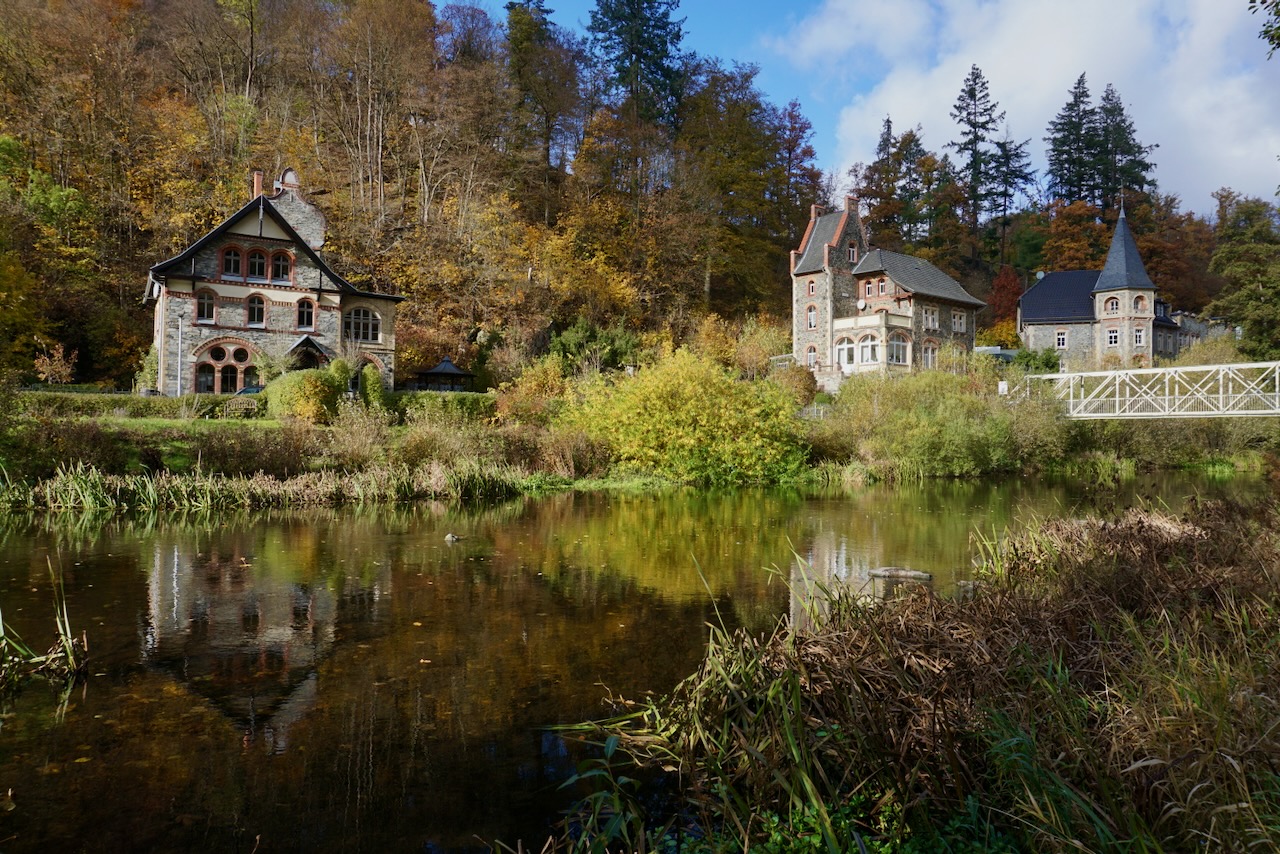
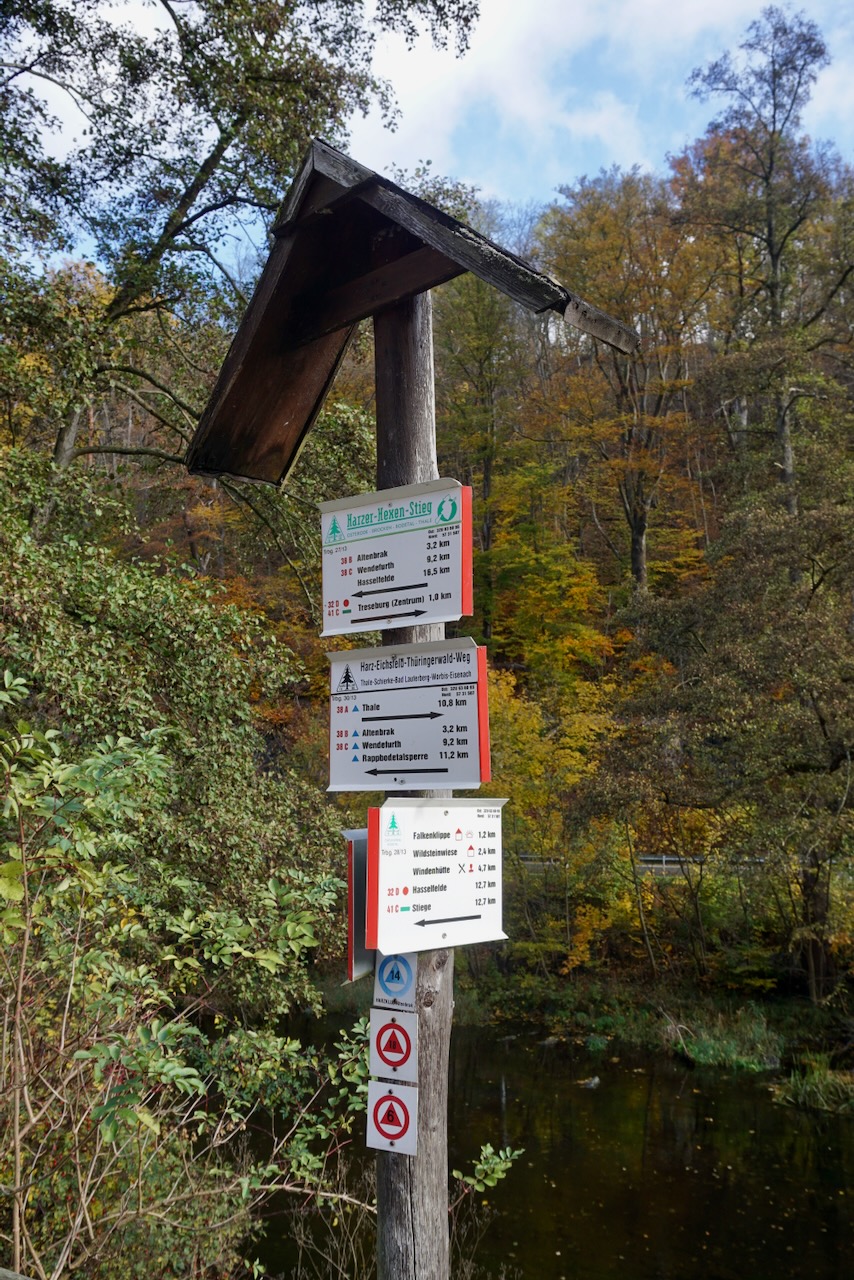
Having walked the length of the one proper street in town, we followed the river back the way we’d come, slowly shedding layers for the climb uphill, which included moving aside the three fallen trees that we encountered on the way down.
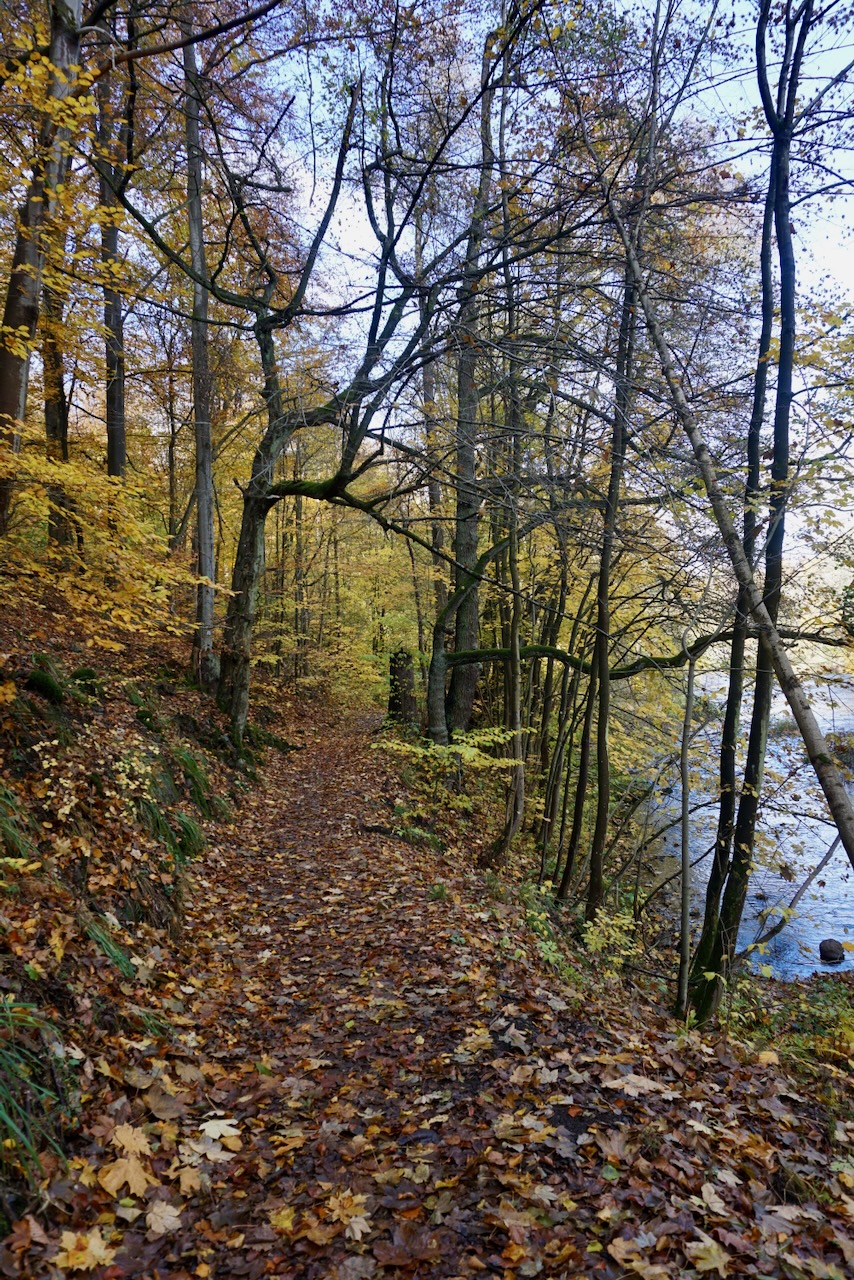
By the time we reached the top of the hill, our sweet girl had had enough and wanted out of her stroller. We stopped for lunch and a stretch at a conveniently placed picnic table before making our way to a nearby lookout point.
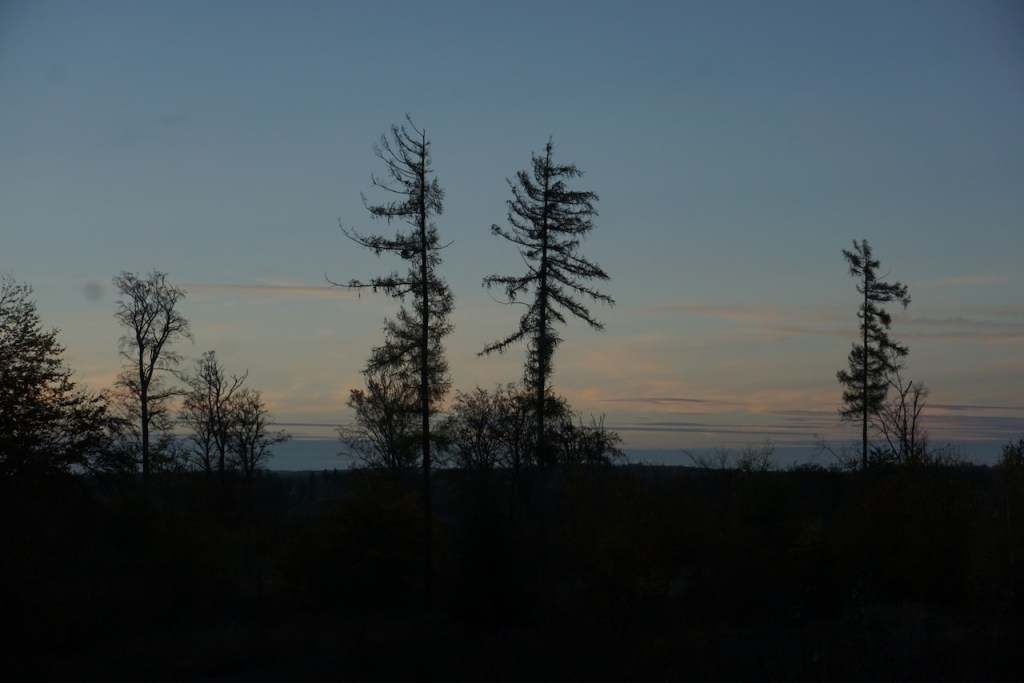
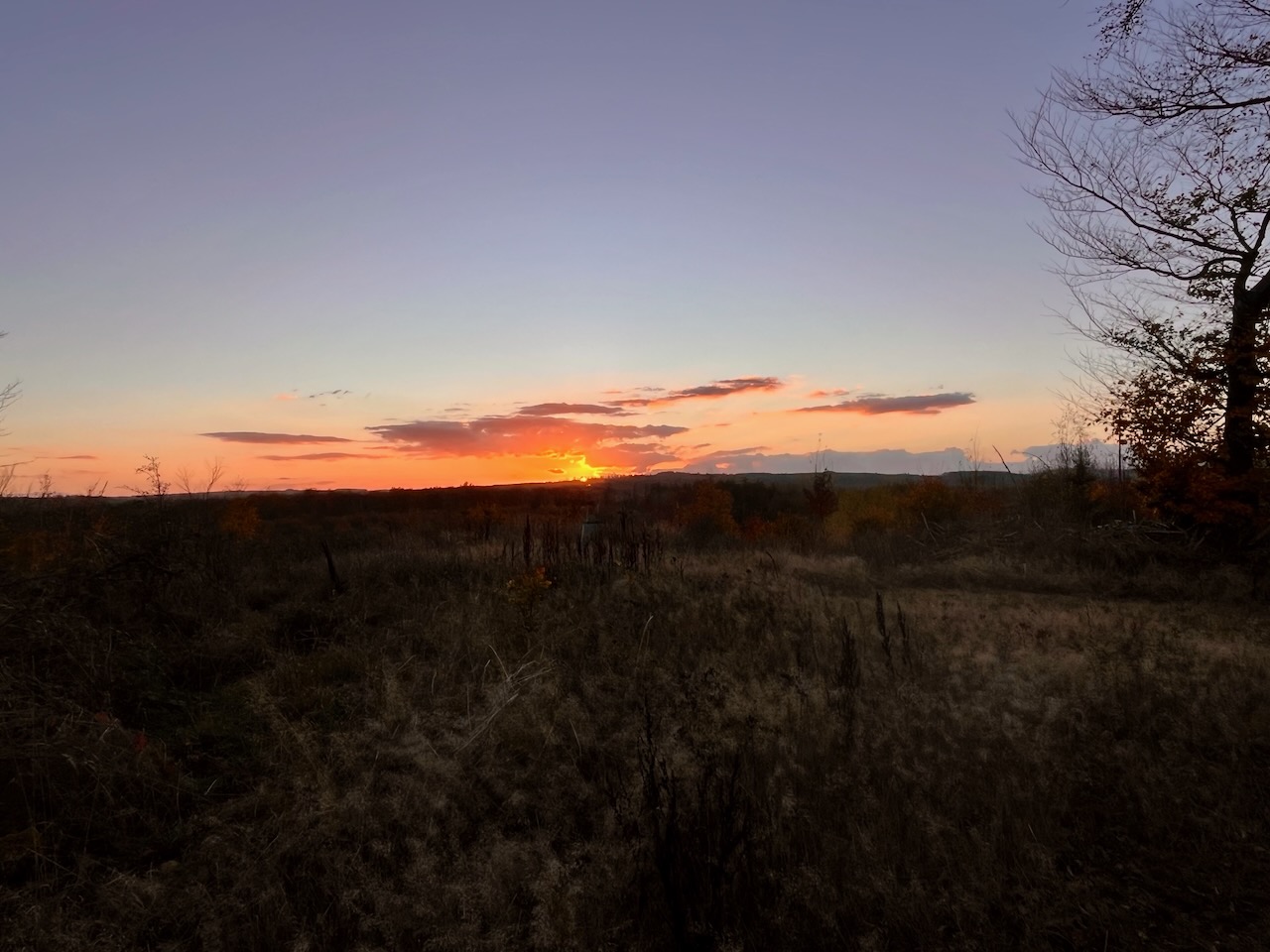
Late that afternoon, we walked in the direction of the setting sun over a grassland on the other side of the forest from where we’d been the previous evening.
And on the way back, we found the witch’s home we’d been expecting.
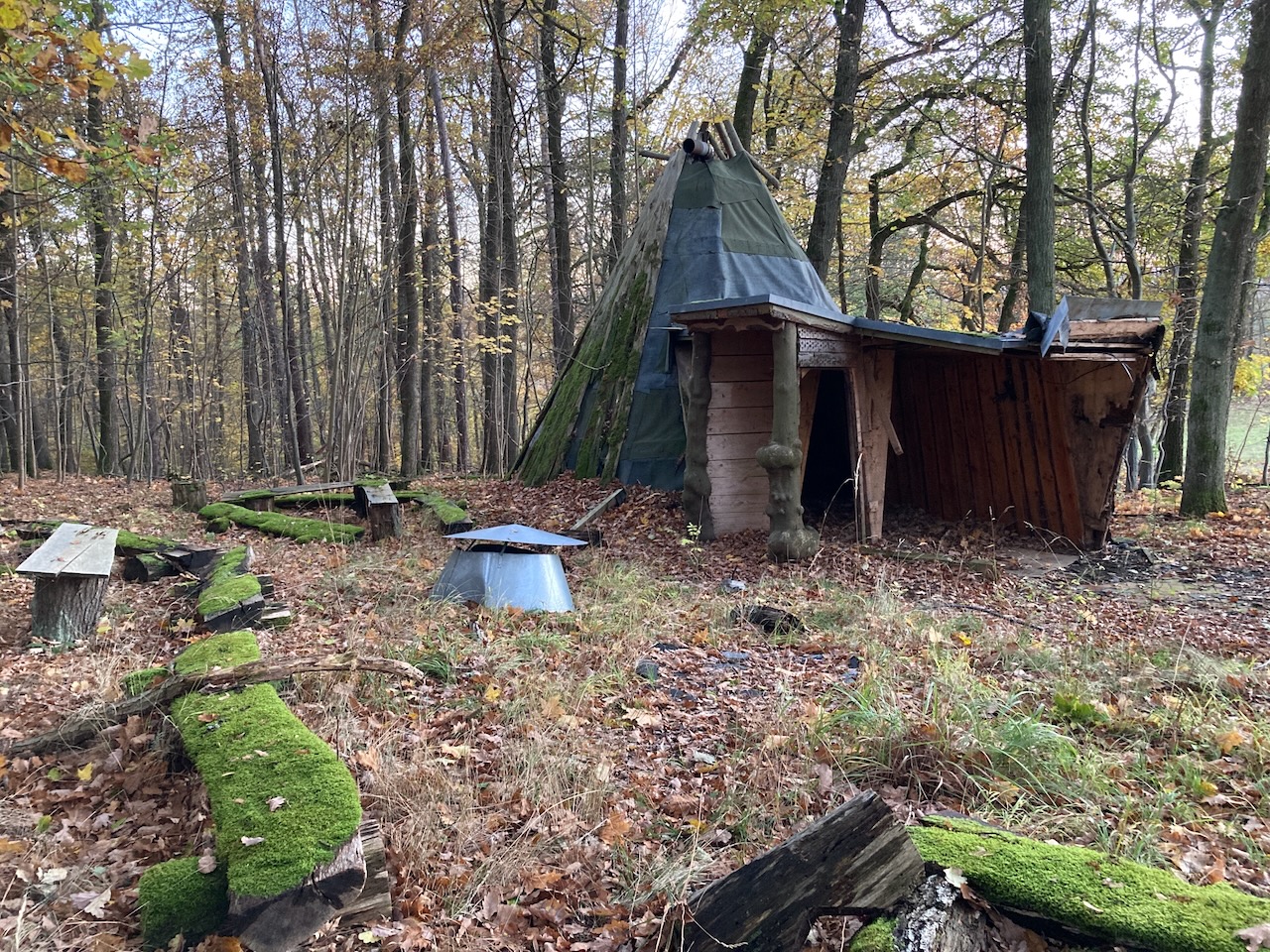
We waved at the blackbird that landed on a high branch just across the way; the witch was clearly watching.

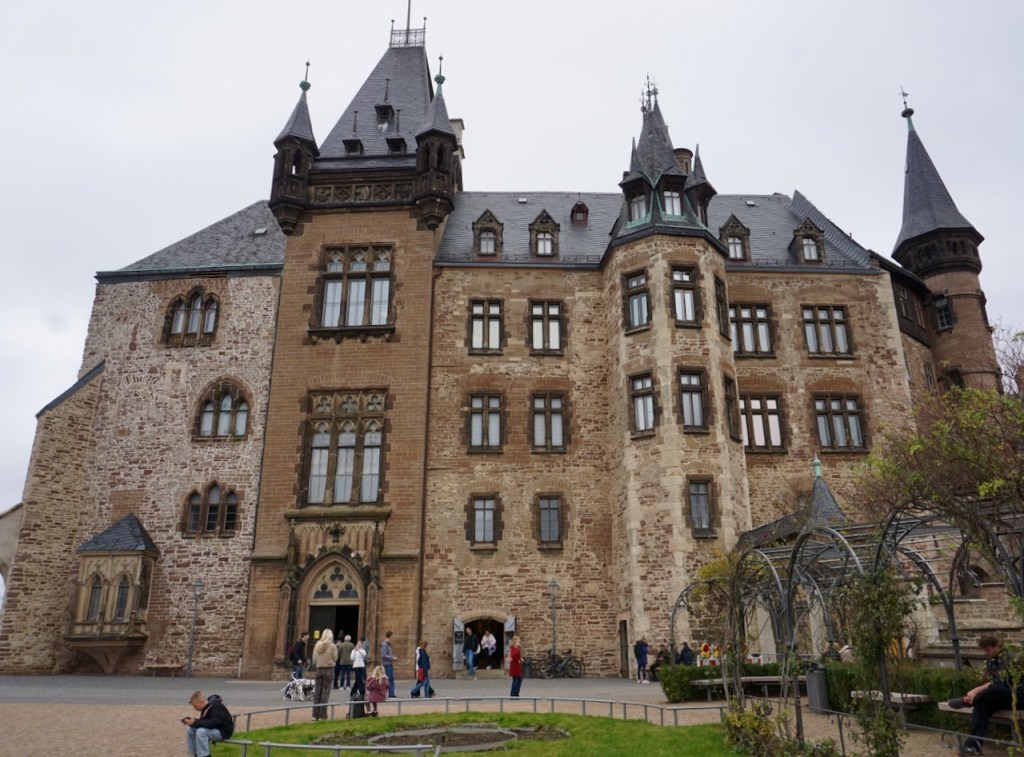
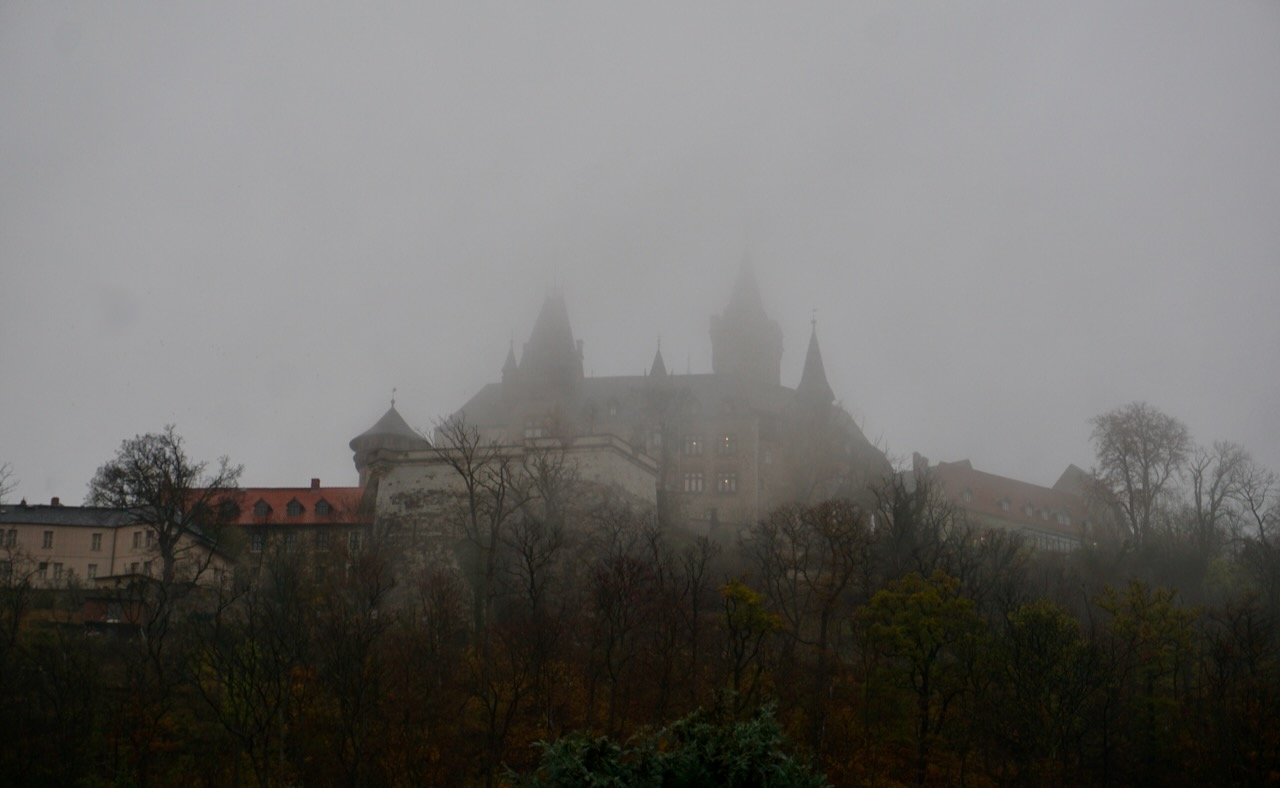
The following day, the last full day of our trip, we drove 40 minutes to Wernigerode, a town whose castle built in the hills overlooking the town was visible long before we reached it. We walked through a wildlife park where we saw lynx, owls, and silver foxes in a natural habitat, and then followed the path through the forest and up the hill to the castle.
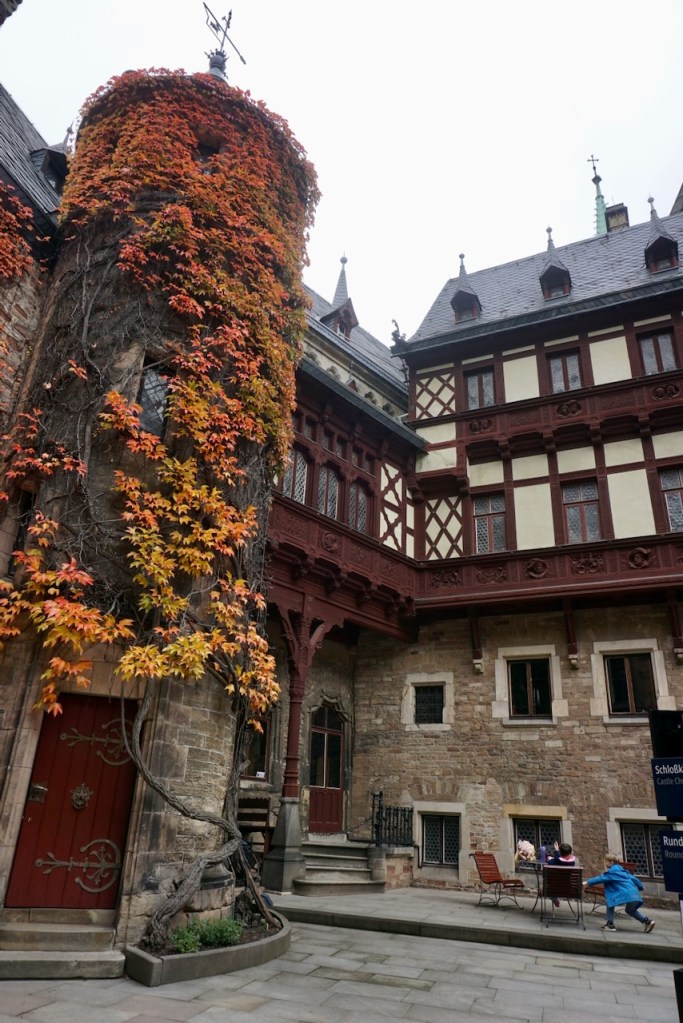
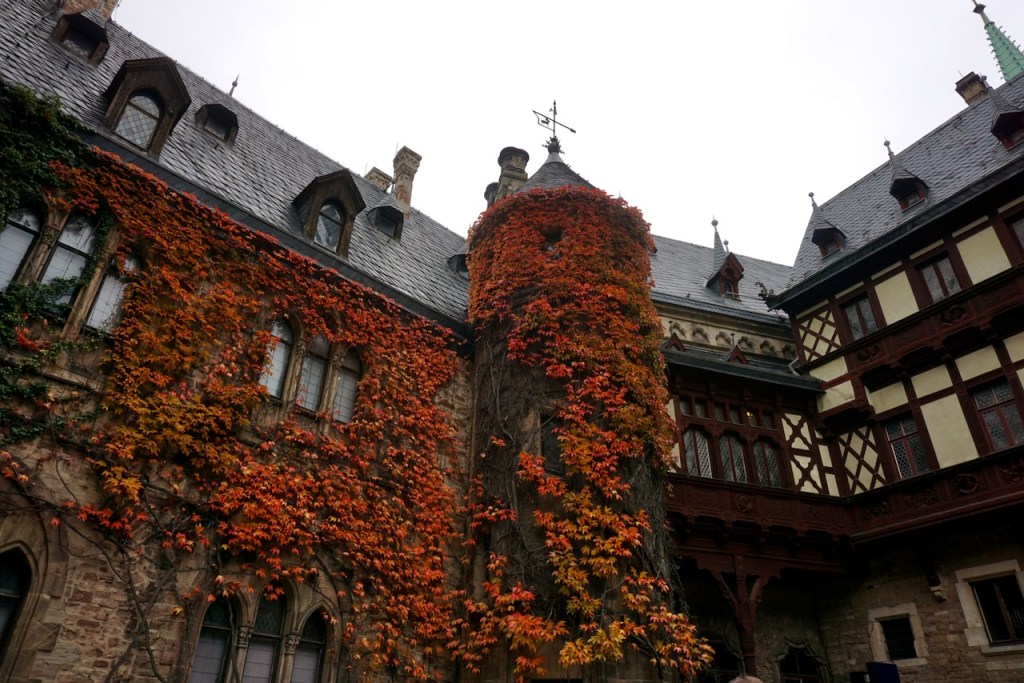
We hadn’t been expecting anything like it, hadn’t known that the local count ultimately became Vice-Chancellor of the German Empire and Deputy Prime Minister of Prussia, leading to visits to the castle from Emperor Wilhelm I. The vastness of the former fortress and sheer splendour of its rooms were not allowed to be photographed , but fit for royalty. And this in a town neither of us had ever heard of.
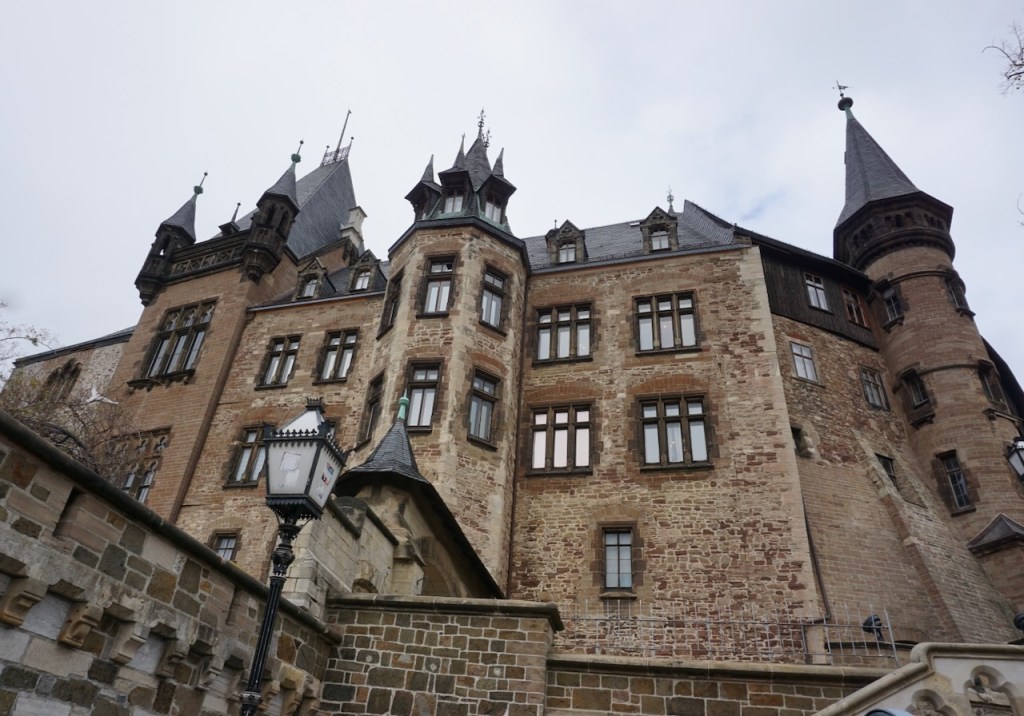
As always, one can quickly understand why castles and fortresses the world over are located where they are. The majesty of a castle does no good if it is kept a secret.
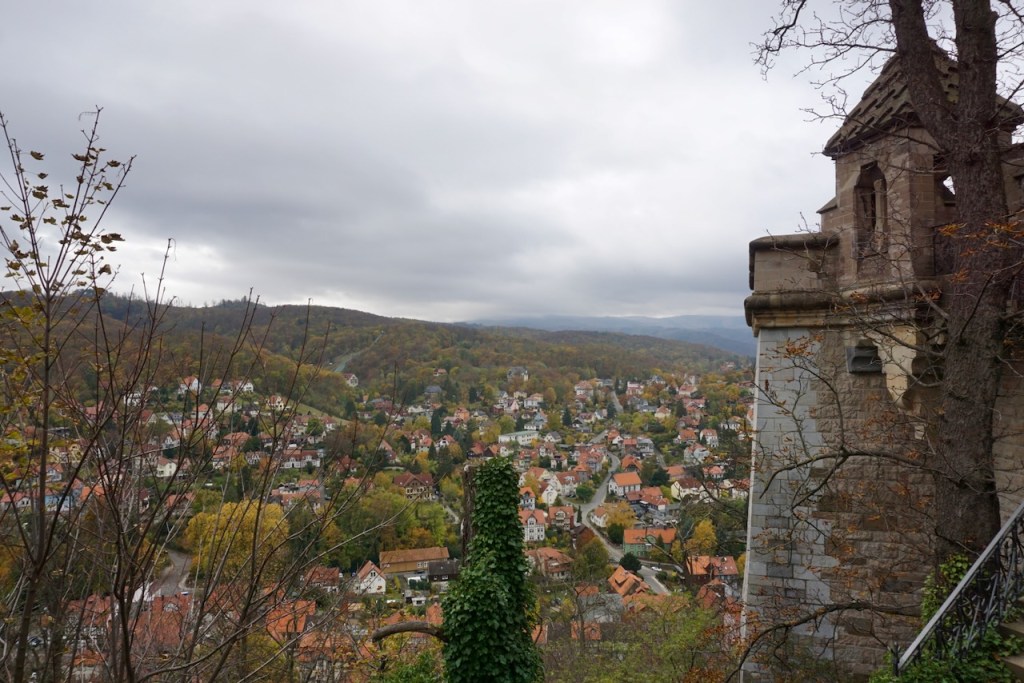
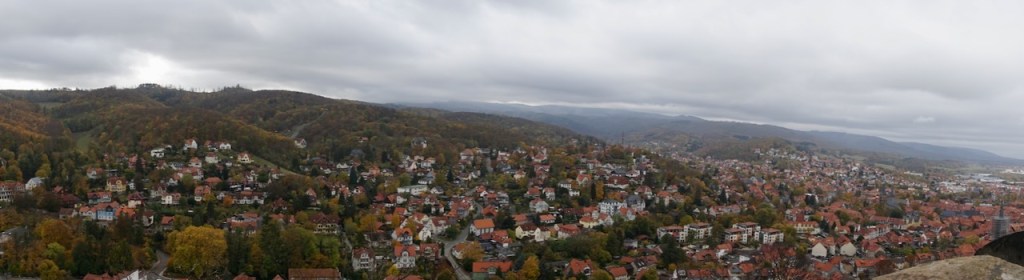
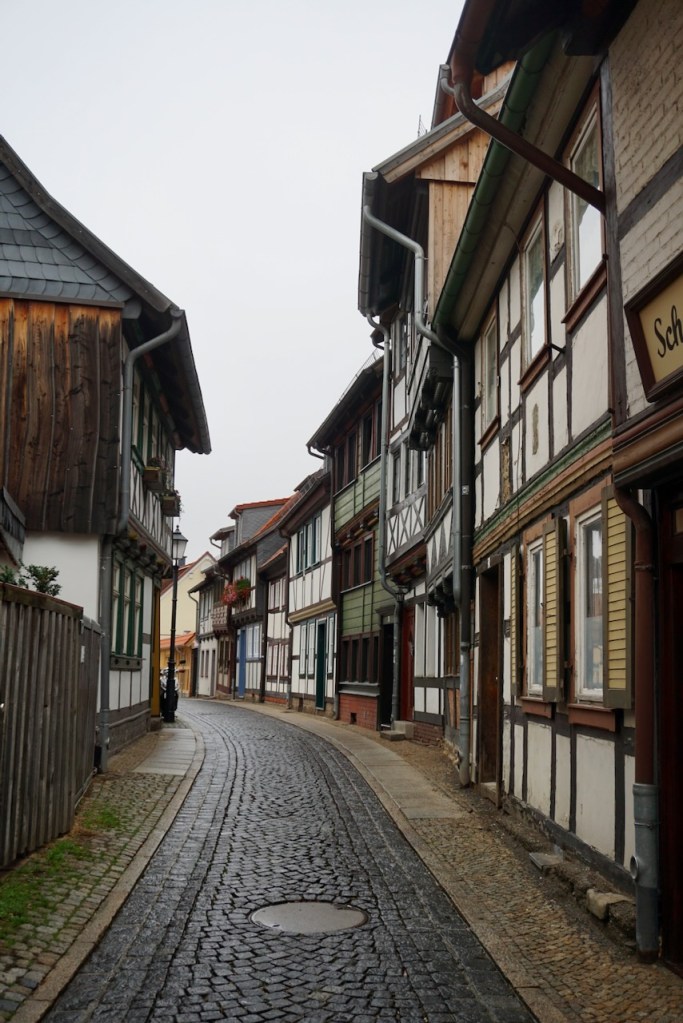
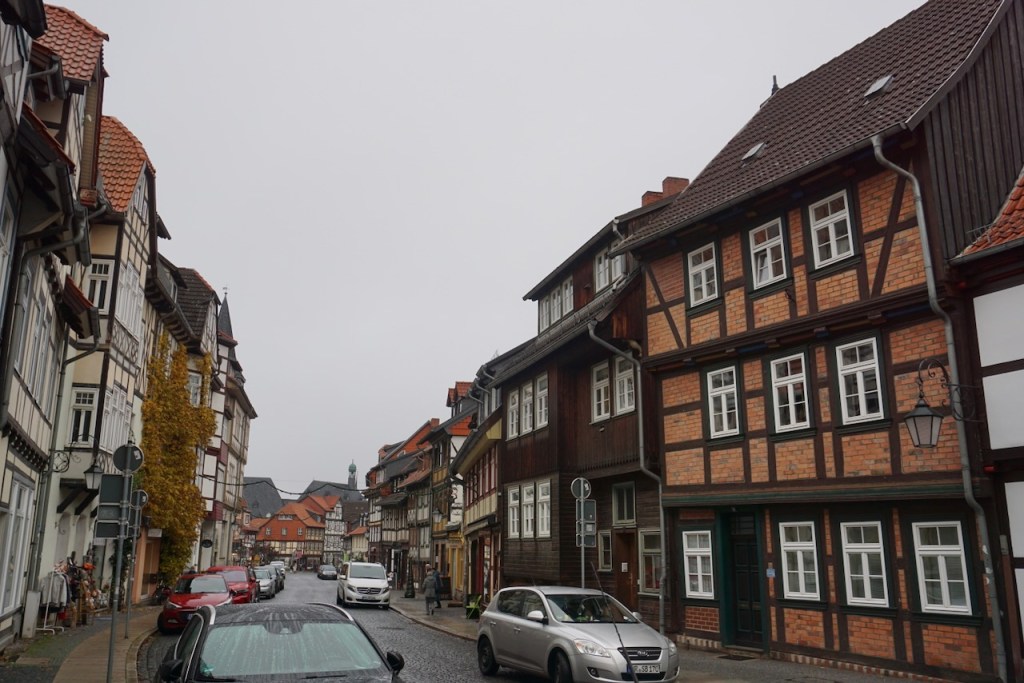
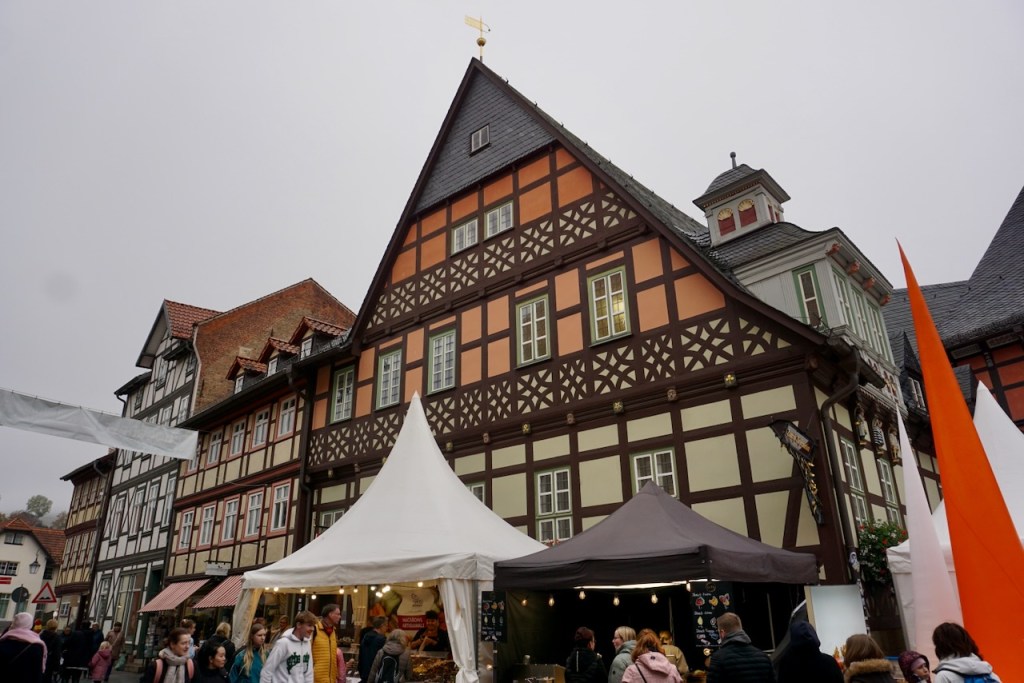
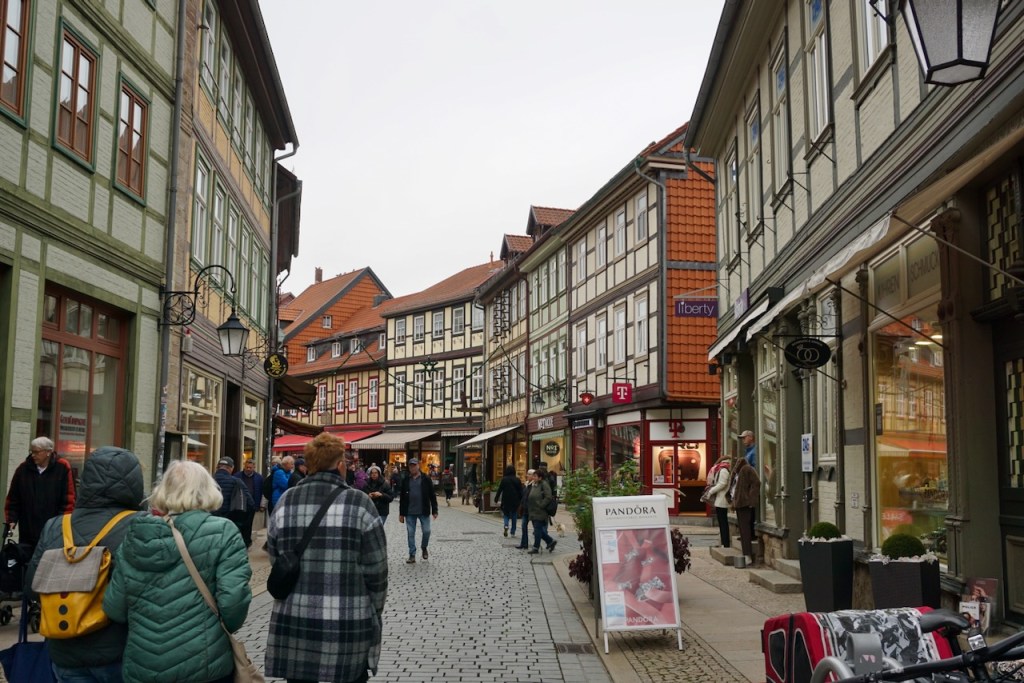
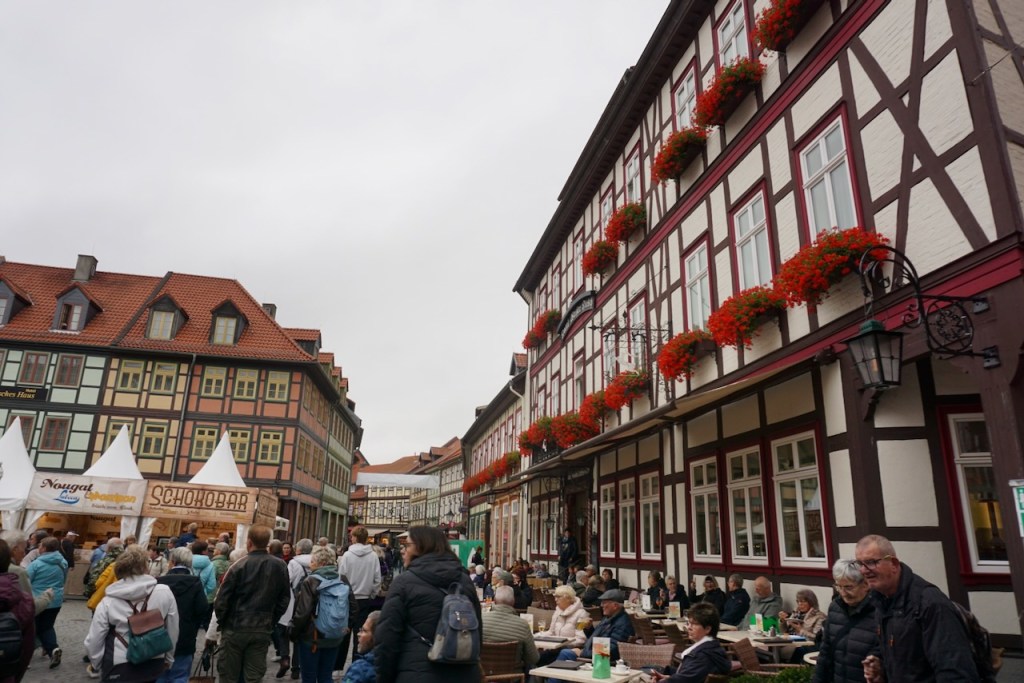
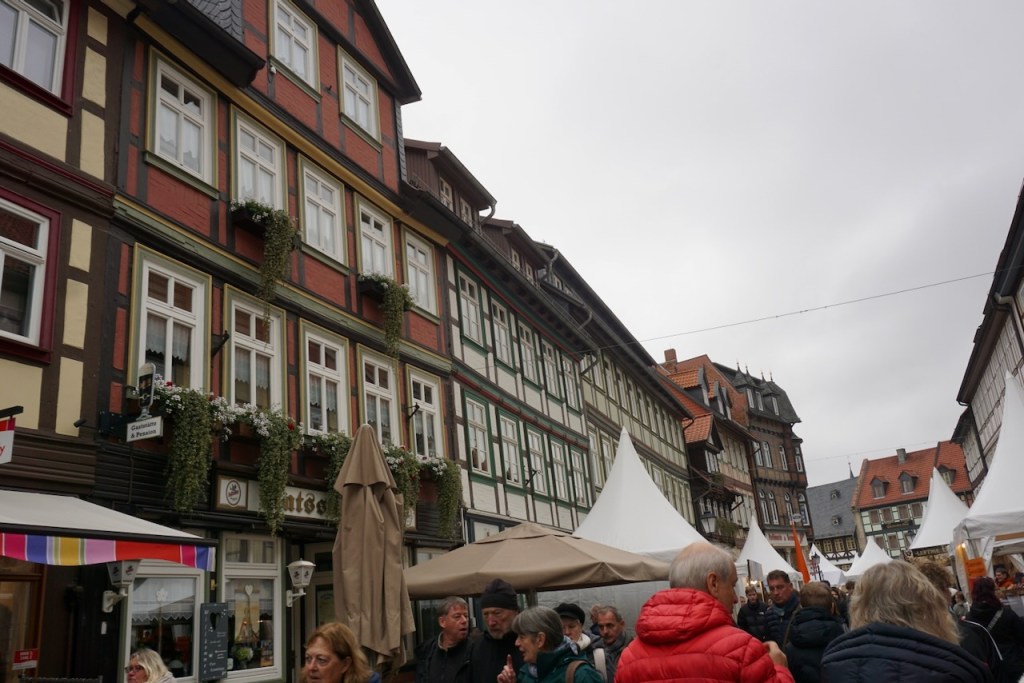
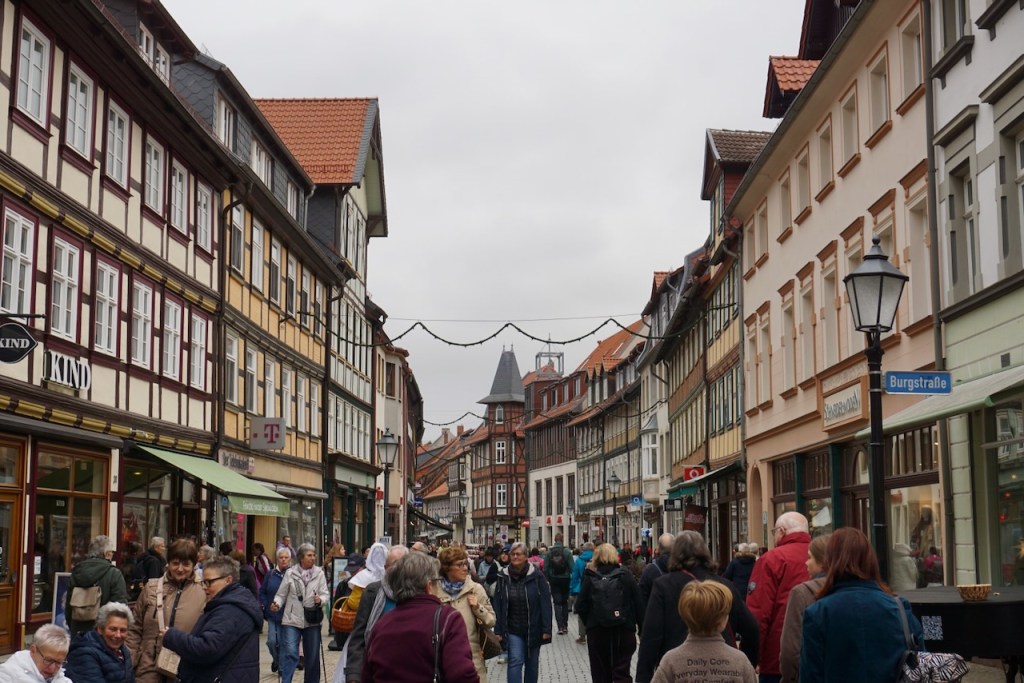
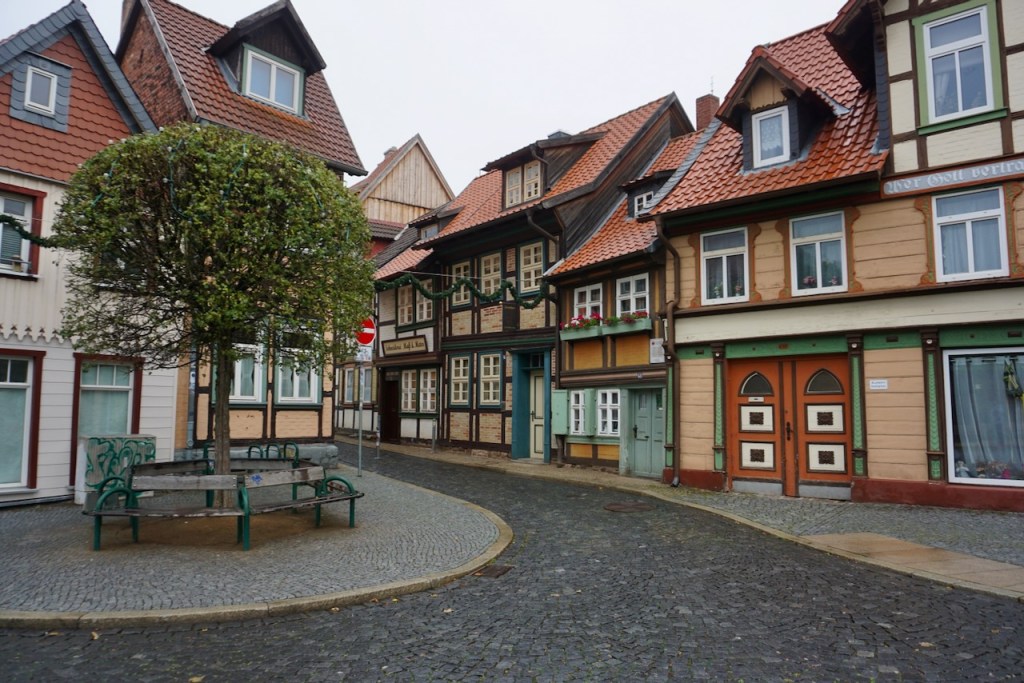
Wernigerode is also known for its beautifully preserved and restored half-timber houses, making the old town a joy to visit. There was a chocolate festival in town when we were there, making photography somewhat challenging, but the accompaniment of a delicious hot chocolate on a rainy afternoon was very welcome.
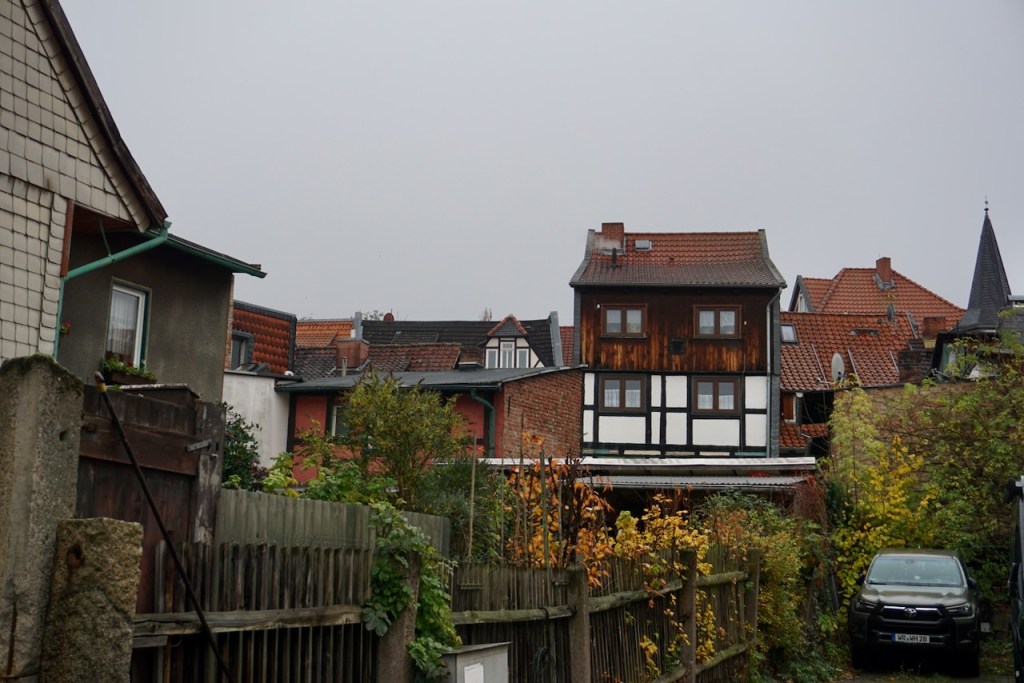
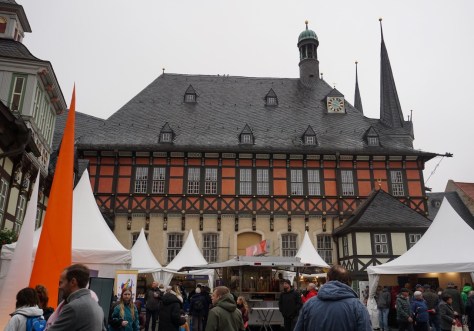
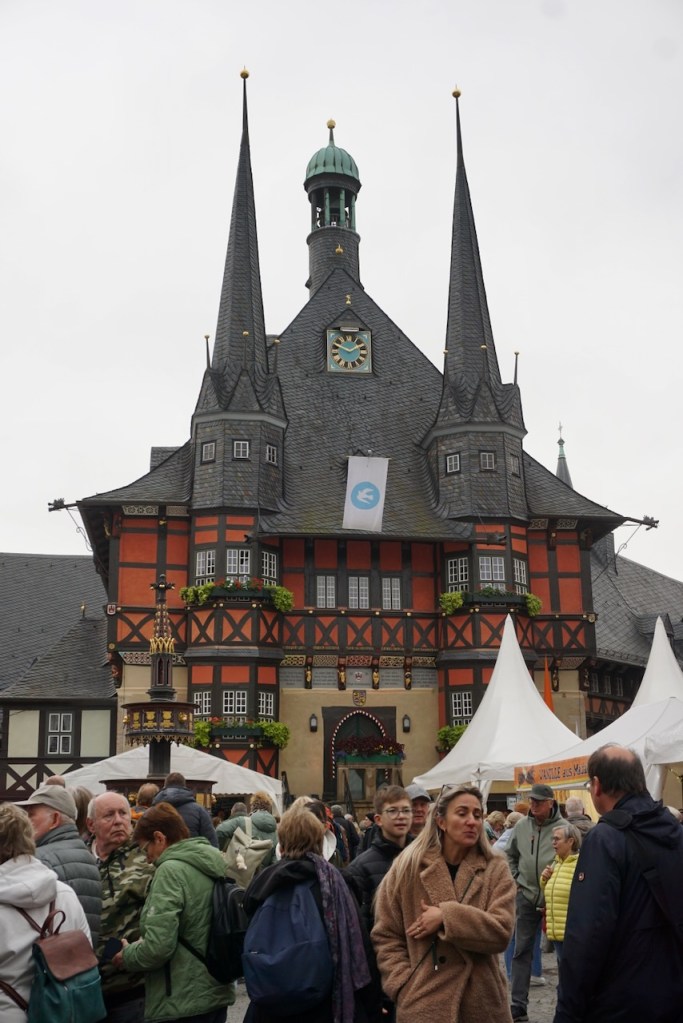
The town hall is a particularly famous and beautiful building . . .
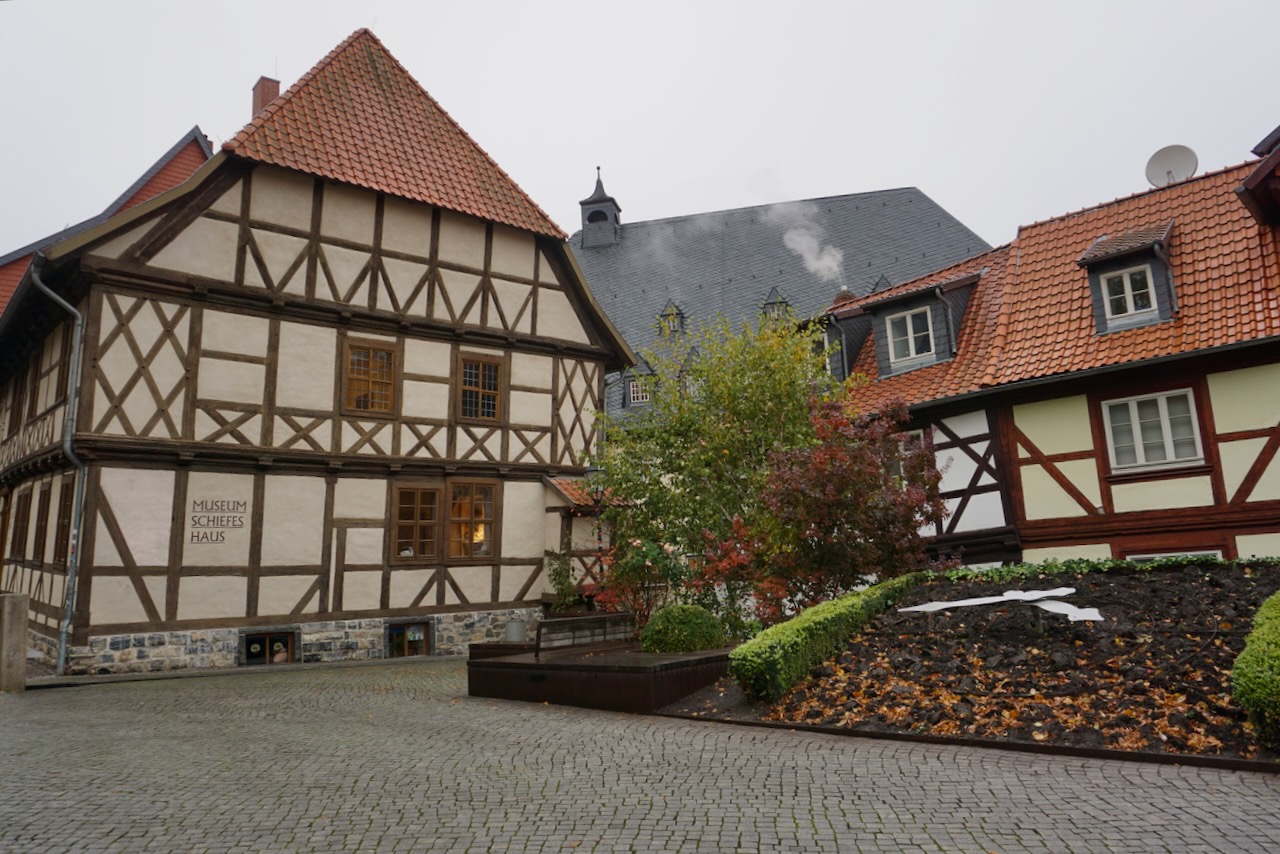
. . . there is a museum dedicated to the most crooked house . . .
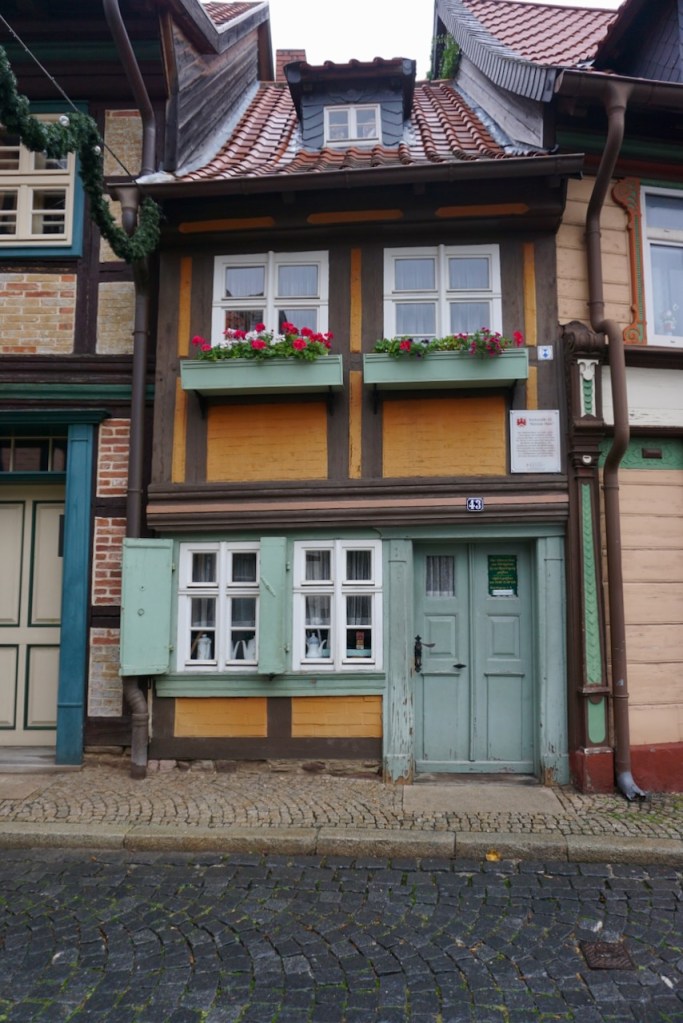
. . . and we sought out the smallest house in town, built in 1792 and lived in until 1976.
Twilight began to gather as we walked back to the car, and our baby, as patient as she had been all day, was more than ready to move around freely. I sang to her for the last 28 minutes of the drive as the cloudy night fell around us.
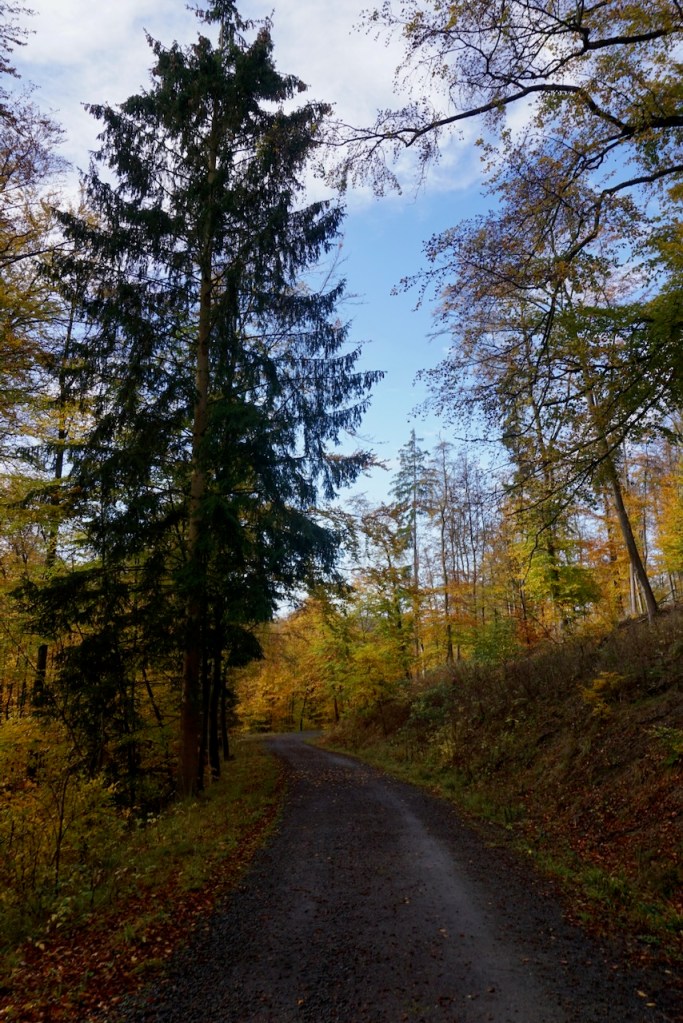
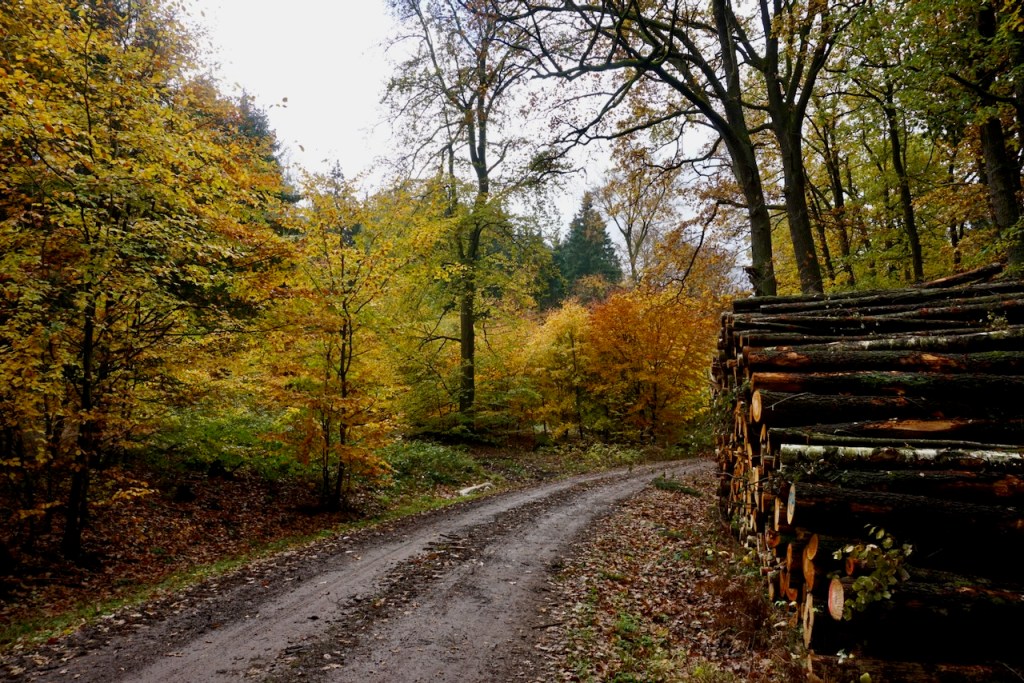
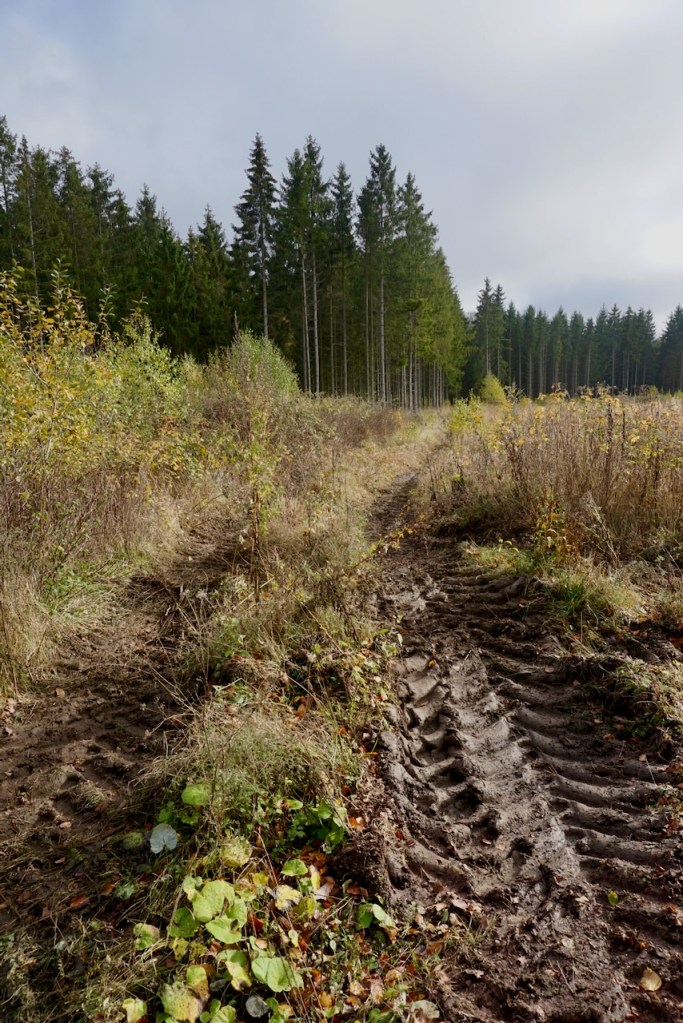
The following morning, we packed the car in preparation for our drive home. Before getting on the road, however, we set out on one last walk, this time in a forest used for logging, which is a major industry in the area and in much of Germany.
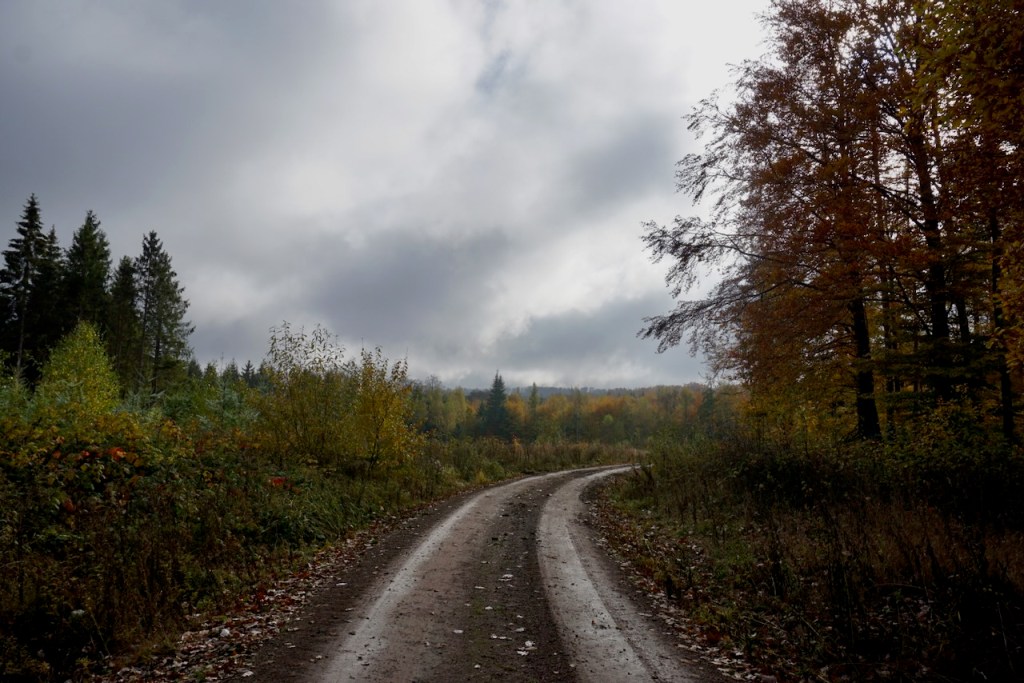
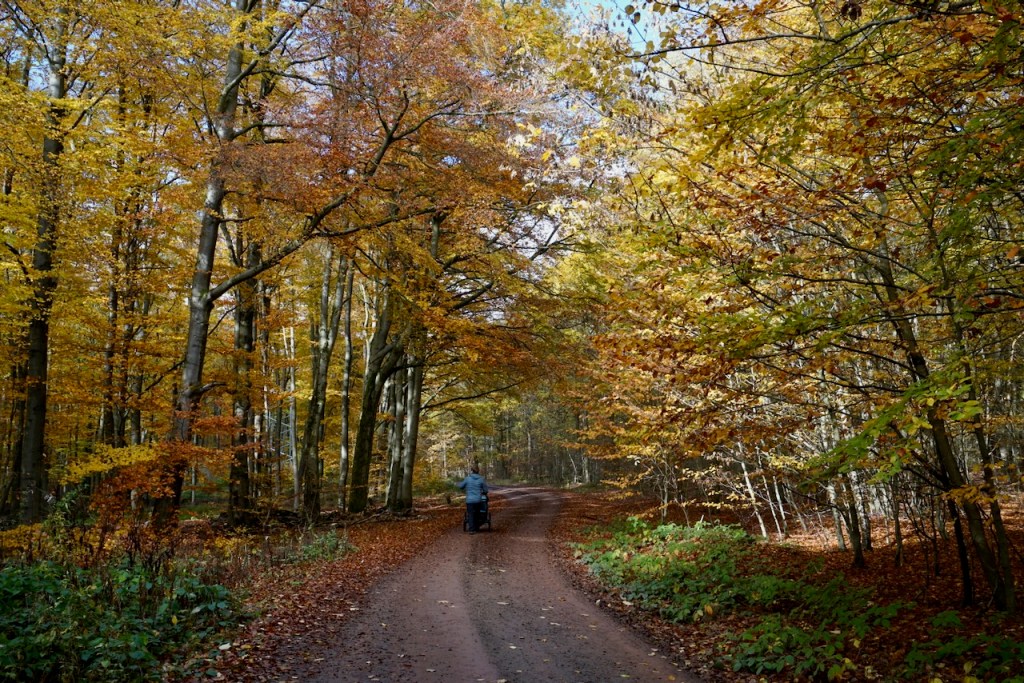
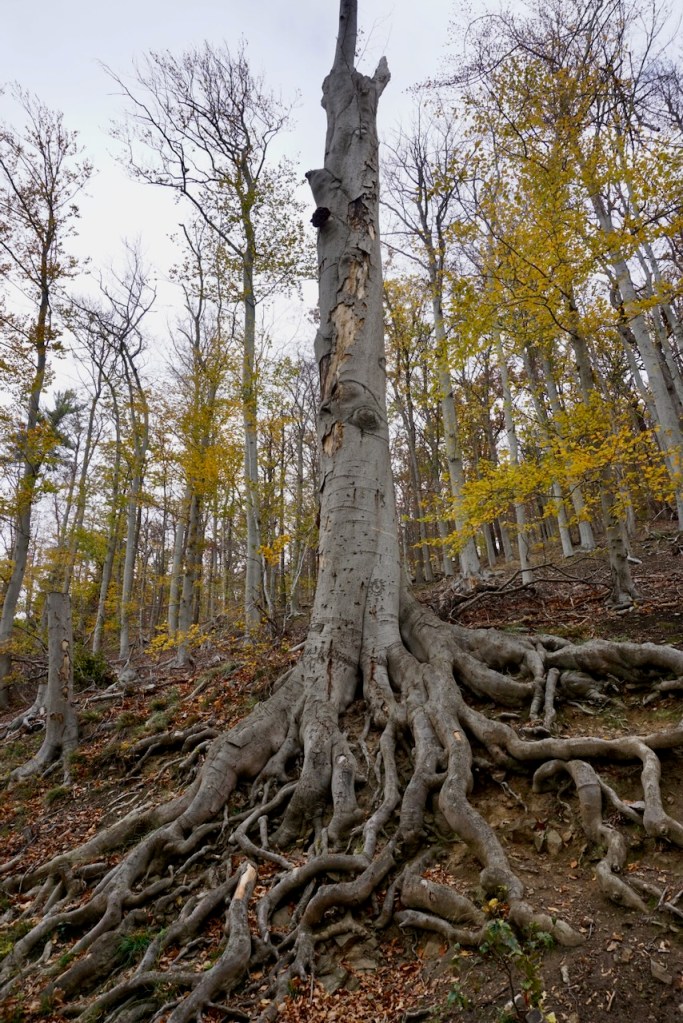
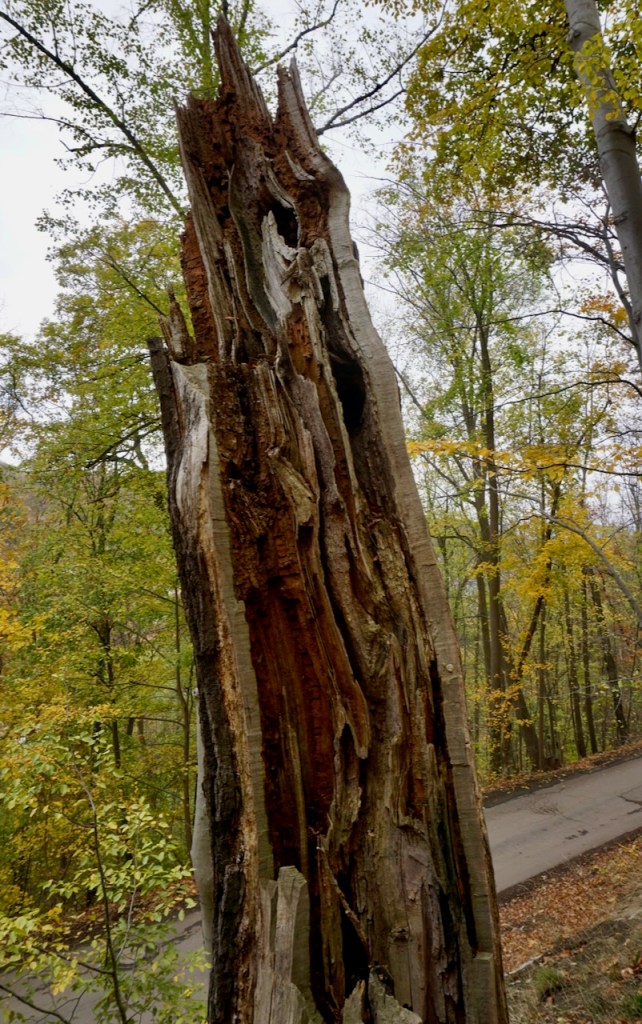
I know this, I understand this, I recognize the reliance on wood in daily life, and I am always sad to see it. There are healthier ways to log a forest than to destroy the ground, as was the case here, but there was also evidence of fresh planting, of some diversity of tree species. It could have been better (and more expensively) done, but it also could have been a lot worse.

Forests are historically worshipped in Germany, with many traditions relating to nature and to trees, but the nature and trees are also taken to support and maintain a society. And then someone sponsors a bench, and I find the contradiction compelling.
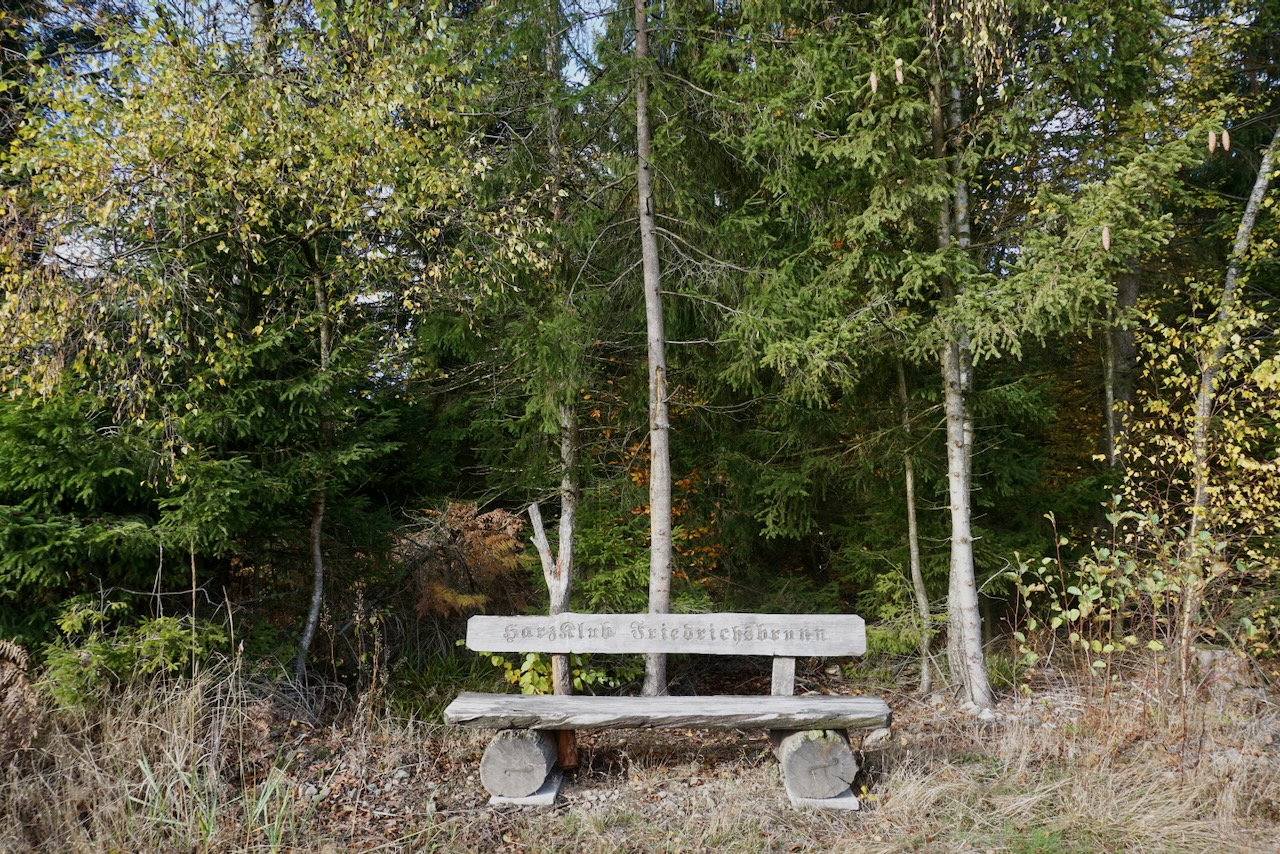
Sit a while. Think a while.

We returned to the car to find a flat tire, drove on the rim five kilometers down the hill to a mechanic, and thanked our lucky stars that it was only five kilometers and that it was Friday afternoon rather than the weekend.

Maybe the forest was magical. Maybe the witches were watching. I don’t see why not.
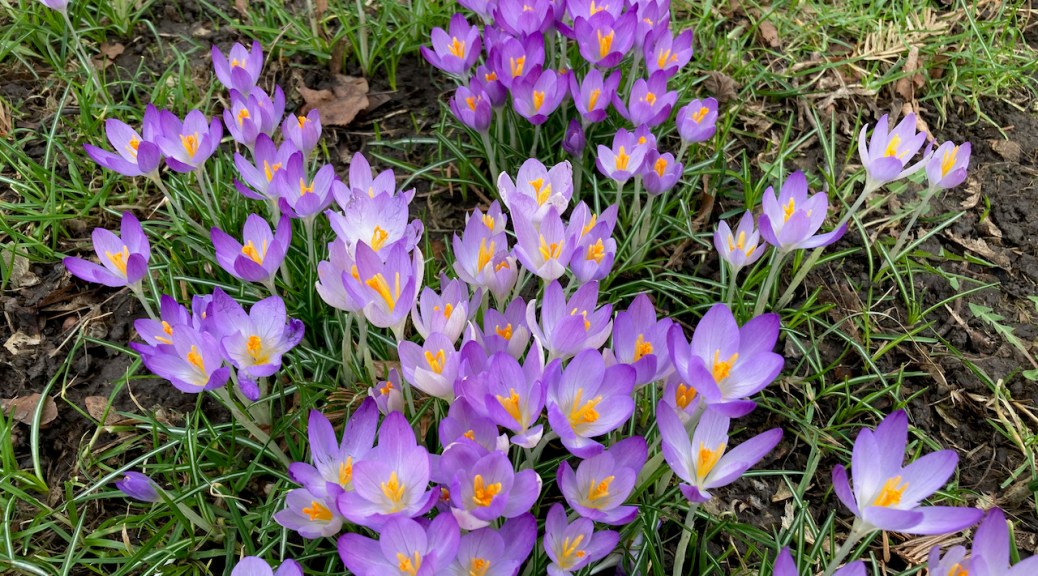
Springtime

Time seems to be passing extraordinarily quickly. Maybe it’s that my baby changes every day and is growing out of her clothes. Just a couple days ago I thought a pair of pajamas would soon be too small and then, changing her in the middle of the night, determined that they were, as of that moment, too small.

Or maybe it’s the nature of spring, how it feels like it will never arrive and then is suddenly here in full bloom. I’ve just packed away my heavier between-the-seasons jacket and am fairly confident I won’t need to take it out again (have I now jinxed it?).

People say that time speeds up as you get older, which makes sense – there’s more life and experience to look back on. People also say that babyhood and childhood are gone in the blink of an eye. It ruffles my feathers a little to admit that many of the things people say about infants, specifically in terms of the first feelings and weeks and moments (I’m not yet at a point where I can attest to anything else), have turned out to be accurate.

Spring is a lovely time and I find it even more special now. A new person is blossoming as nature comes back to life. I will cherish both, rush neither, and try to gracefully accept what we all know to be true: To every thing, there is a season.

Weimar, Germany – February 2024

Travel Guide: Madeira

Funchal

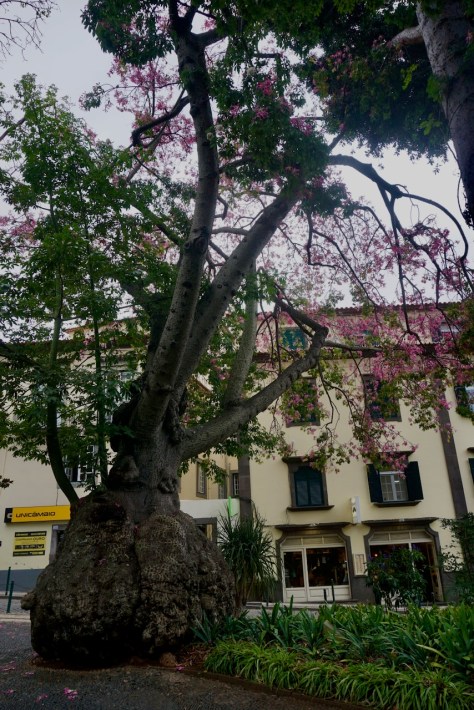
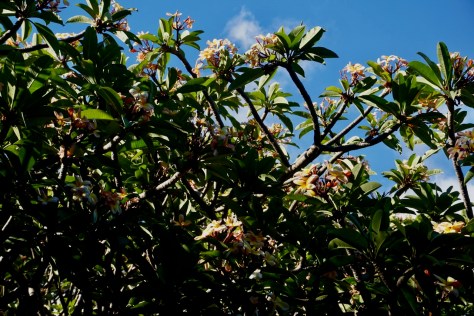
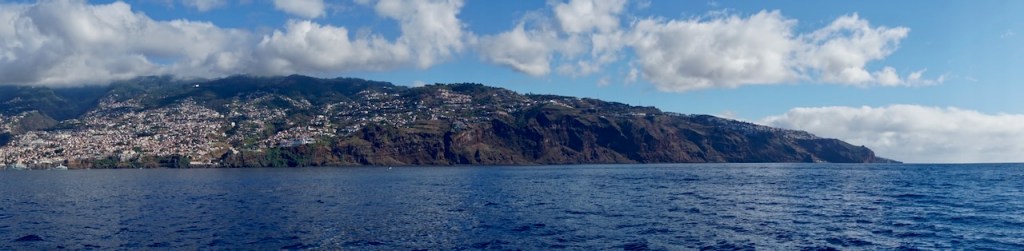
Madeira is a Portuguese island off the coast of Morocco, and I knew little else about it when my partner and I decided to spend a week there. For reasons that immediately became apparent upon our arrival in the capital, Funchal, the island is known as the “Flower Island”.

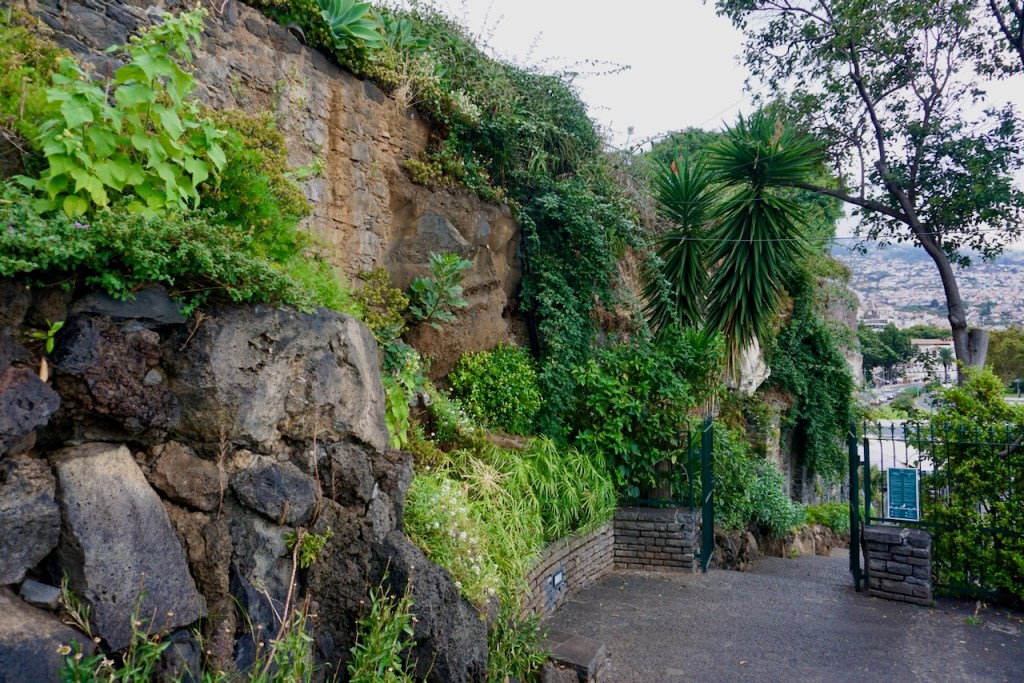
The temperature on Madeira remains constant year-round and the island is full of microclimates, which was the most amazing part of our trip. The vegetation and foliage are more diverse there than anything we’d ever seen in a similarly-sized area, and the landscape was made up of different worlds.

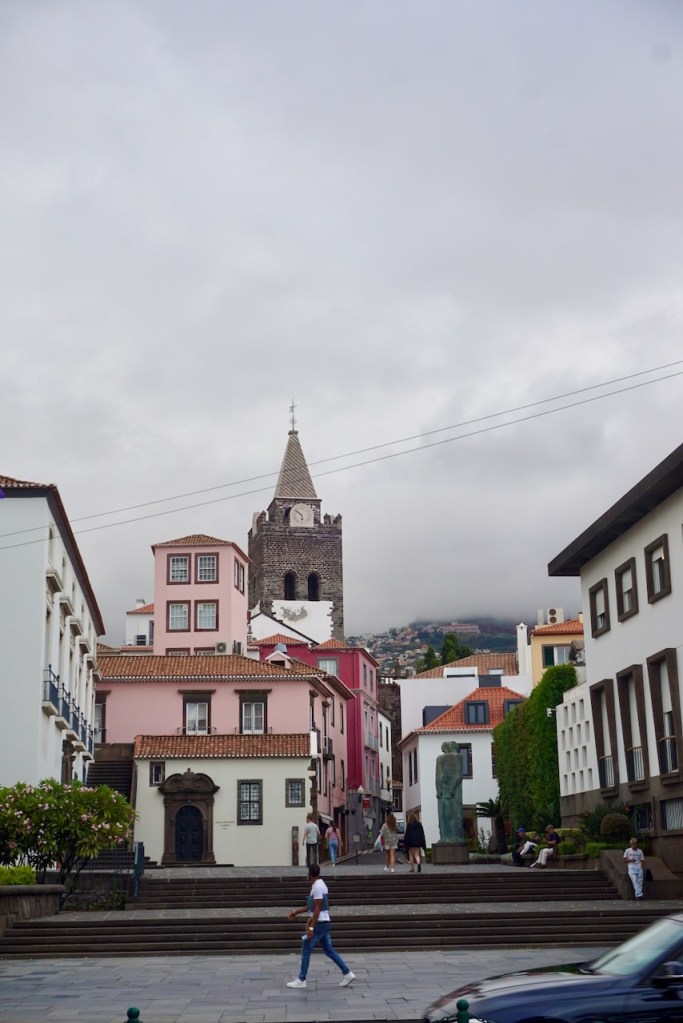
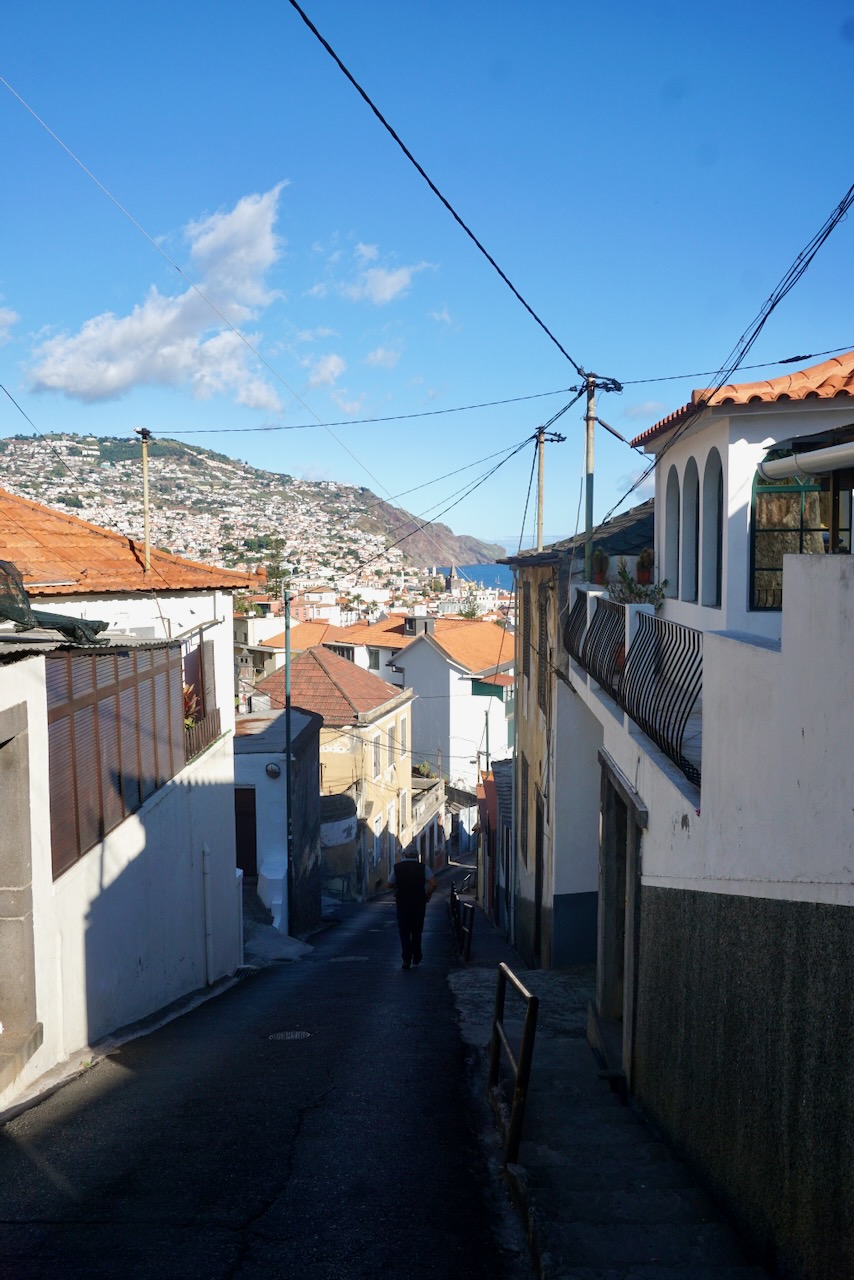
In Funchal, we delighted in old buildings lining winding streets . . .

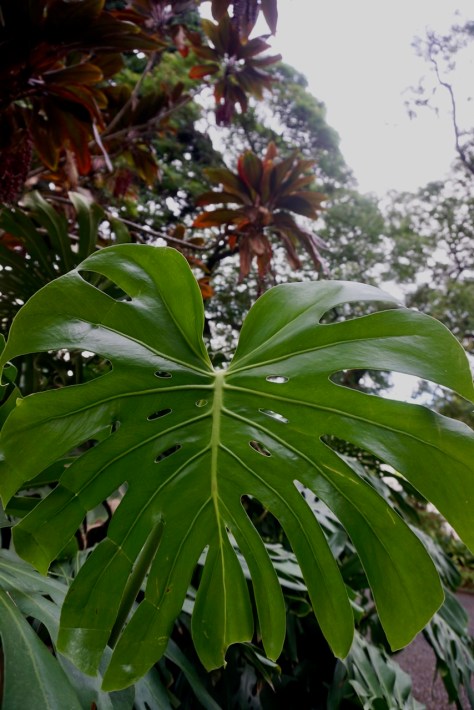
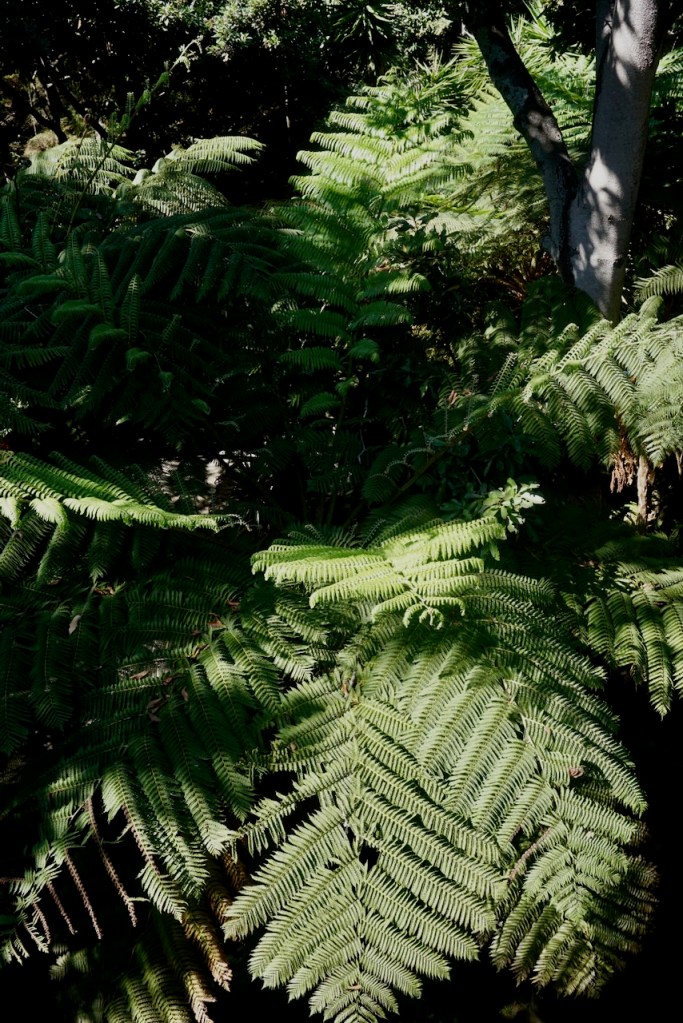
. . . the botanical gardens in the centre of town, which contained tropical species I haven’t seen since living in Singapore . . .

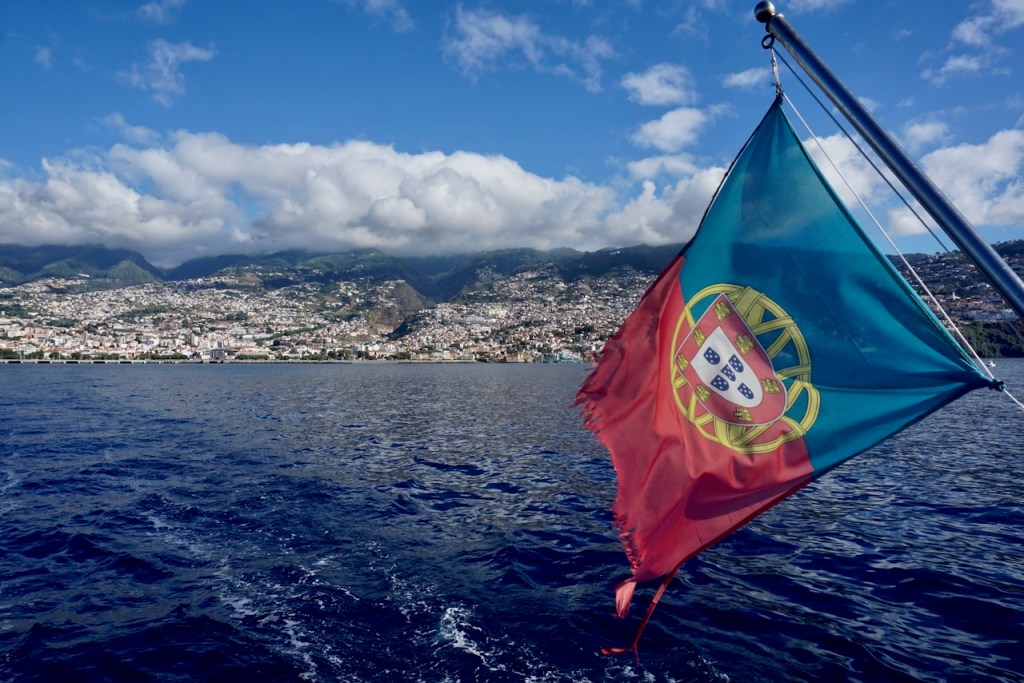
. . . and proximity to the harbour. . . .

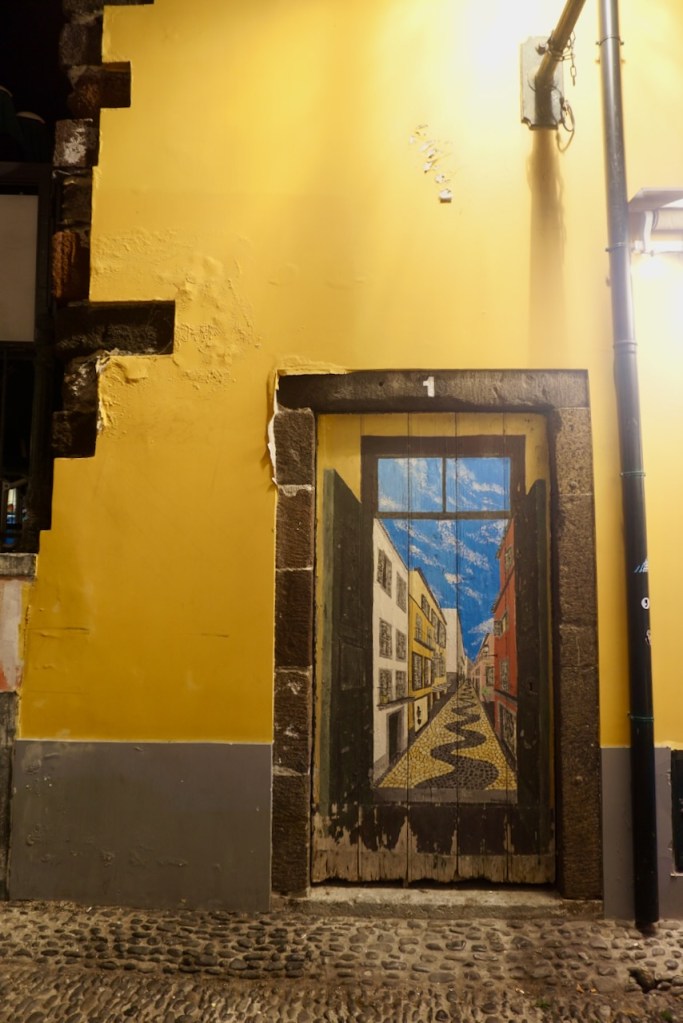
Funchal also has an excellent street art scene in the Zona Velha, the old part of town that used to be comprised of fishermen’s cottages and is now made up of buzzing restaurants and shops.

Unbeknownst to us before our arrival, dolphin and whale watching tours were on offer, and we were happy to participate. Once a pod is spotted, the boat is only allowed to spend 10 minutes there so as not to overwhelm the animals, which we appreciated. We saw several groups of pilot whales, which are common in the area.

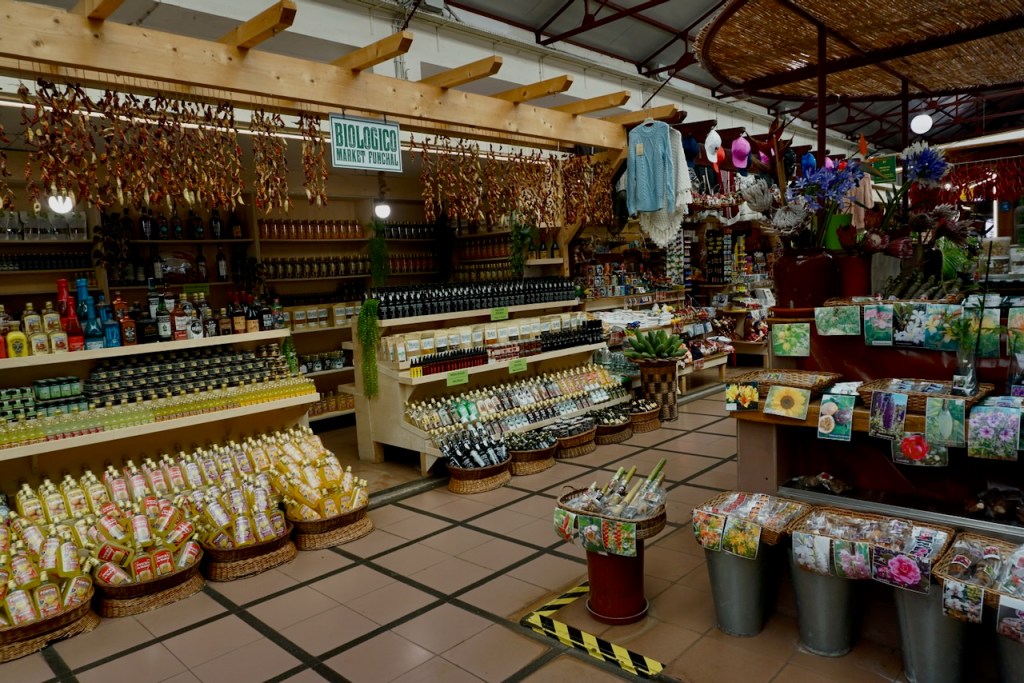
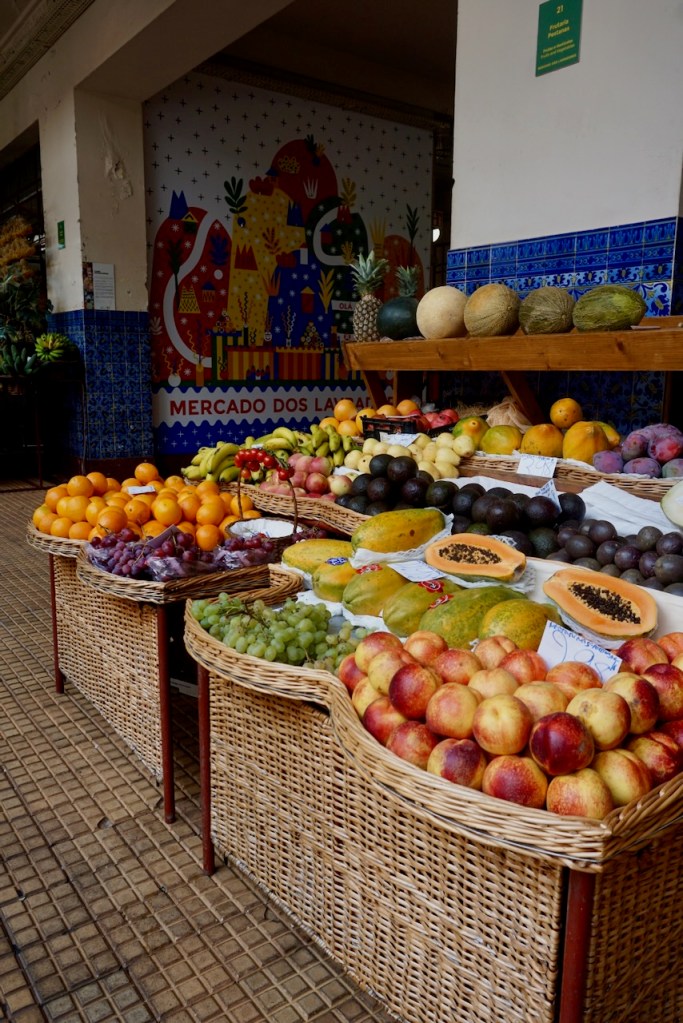
That afternoon, we visited the Mercado dos Lavradores, which seemed more touristy than we would have liked. A salesperson gave us tastes of the seven different species of passion fruits that grow on Madeira and we bought one each. A few items that we hadn’t selected ended up in our bag, as well, and we certainly paid for them. However, everything really did taste as good as it looked.

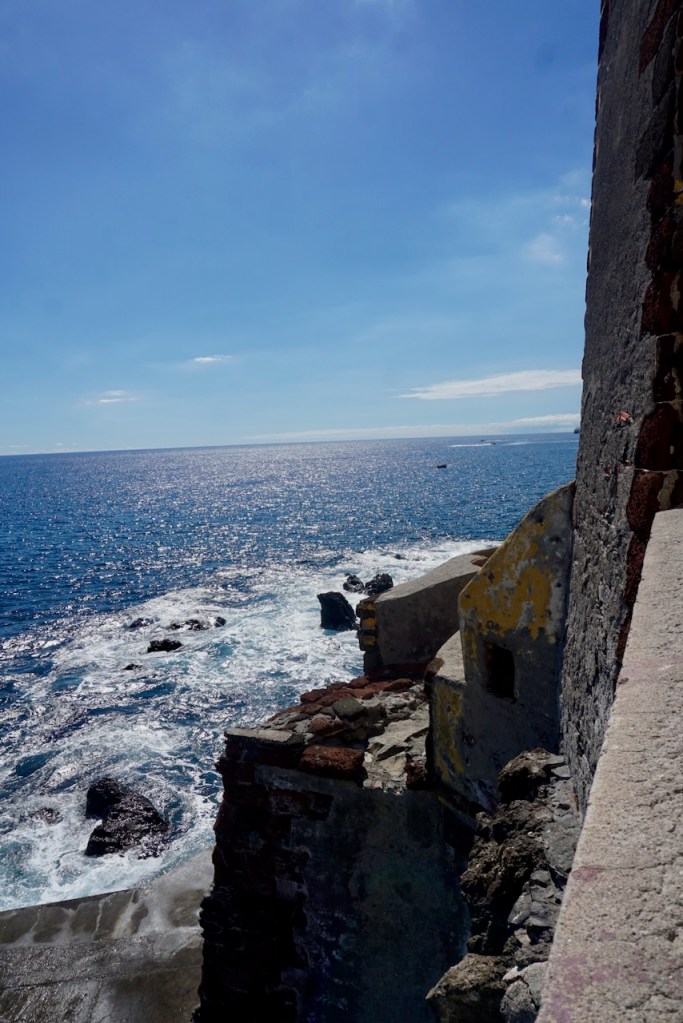
Interested in the views from lookout points, we walked through Forte de São Tiago later that day, the yellow paint striking against the blue sky.

The steepness of the island is hard to understate, and this is something we didn’t fully understand or appreciate until we rented a car later on, but we were beginning to get an idea.

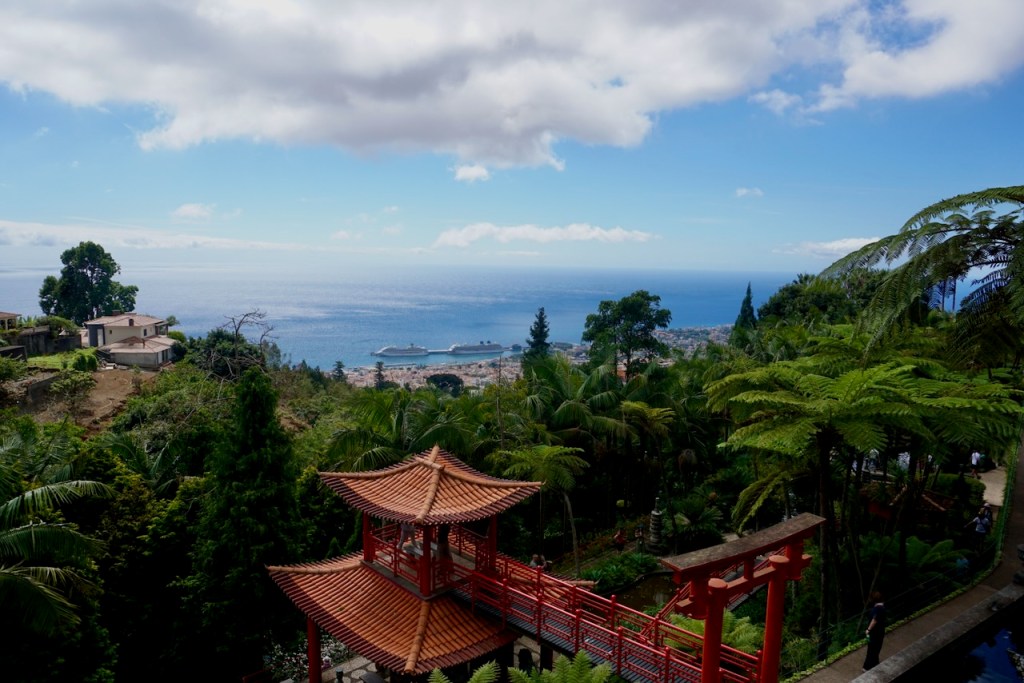
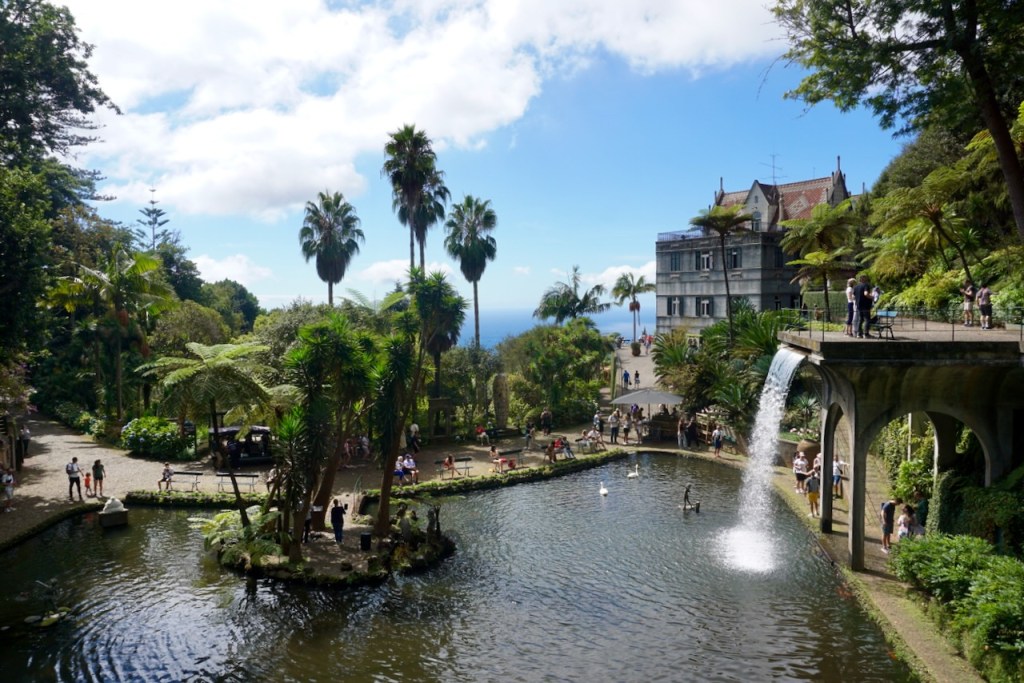
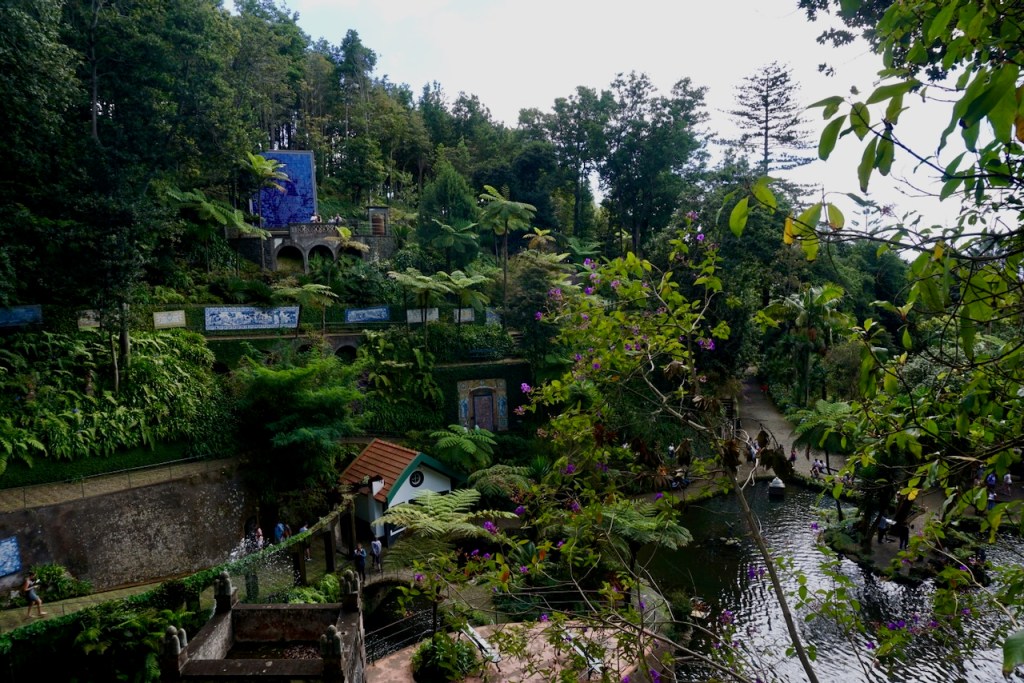
The following day, we took a cable car up to the Monte Palace Tropical Garden, giving us an excellent perspective on the elevation of Funchal. The air was noticeably cooler than at sea level, and we were fascinated by the hundreds of plants from all over the world that looked completely at home. In the centre of the gardens was a lake with a small stage and live music. It was relaxing, idyllic, and a wonderful oasis away from the bustle of city life, even on an island.

The Monte Church, located just around the corner, stands at 598 meters, and the view down to sea level was impressive.

Traditionally, one descends from the palace into the city by way of the Carreiros do Monte, essentially a wicker basket sled guided from the rear by two porters. Nowadays, the ride is only two kilometers (we walked the rest of the way) and we enjoyed every minute of it.

Machico

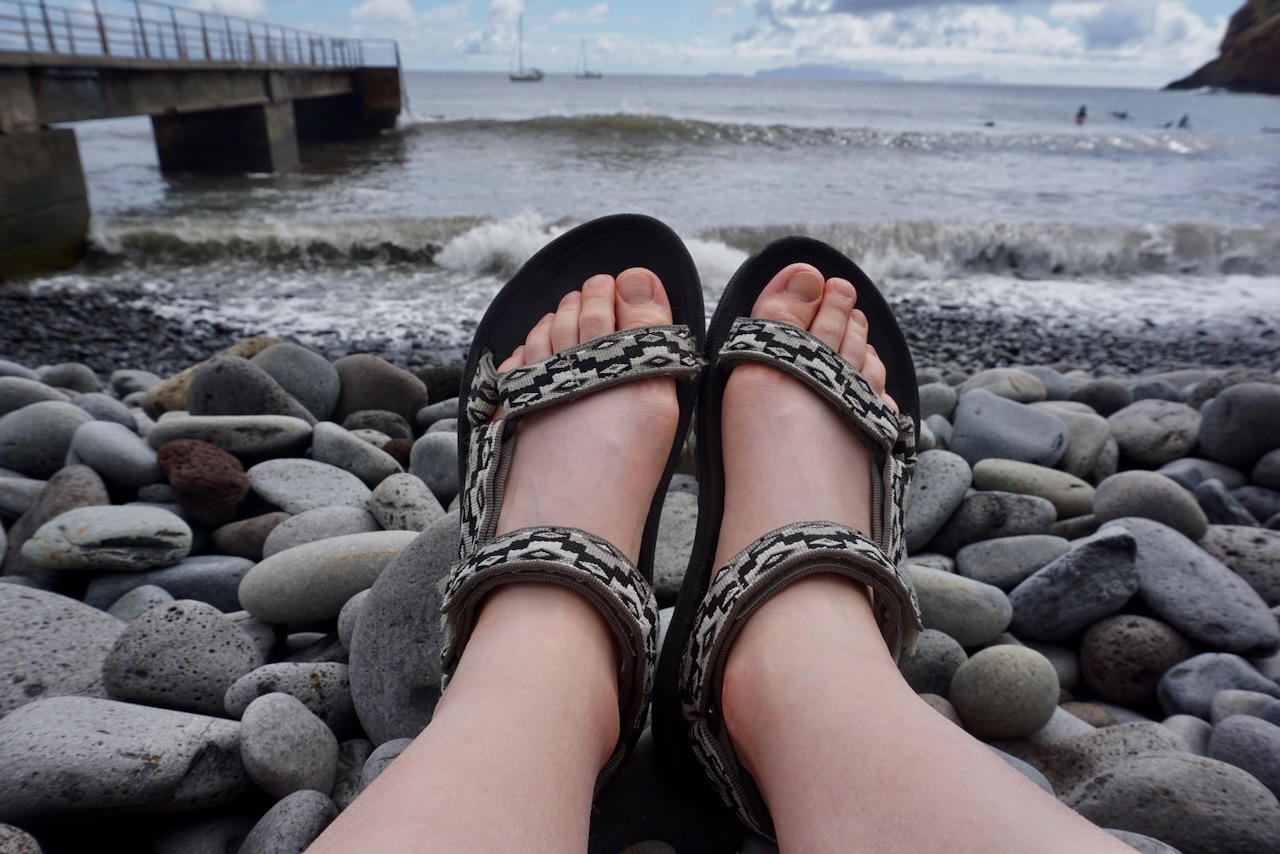
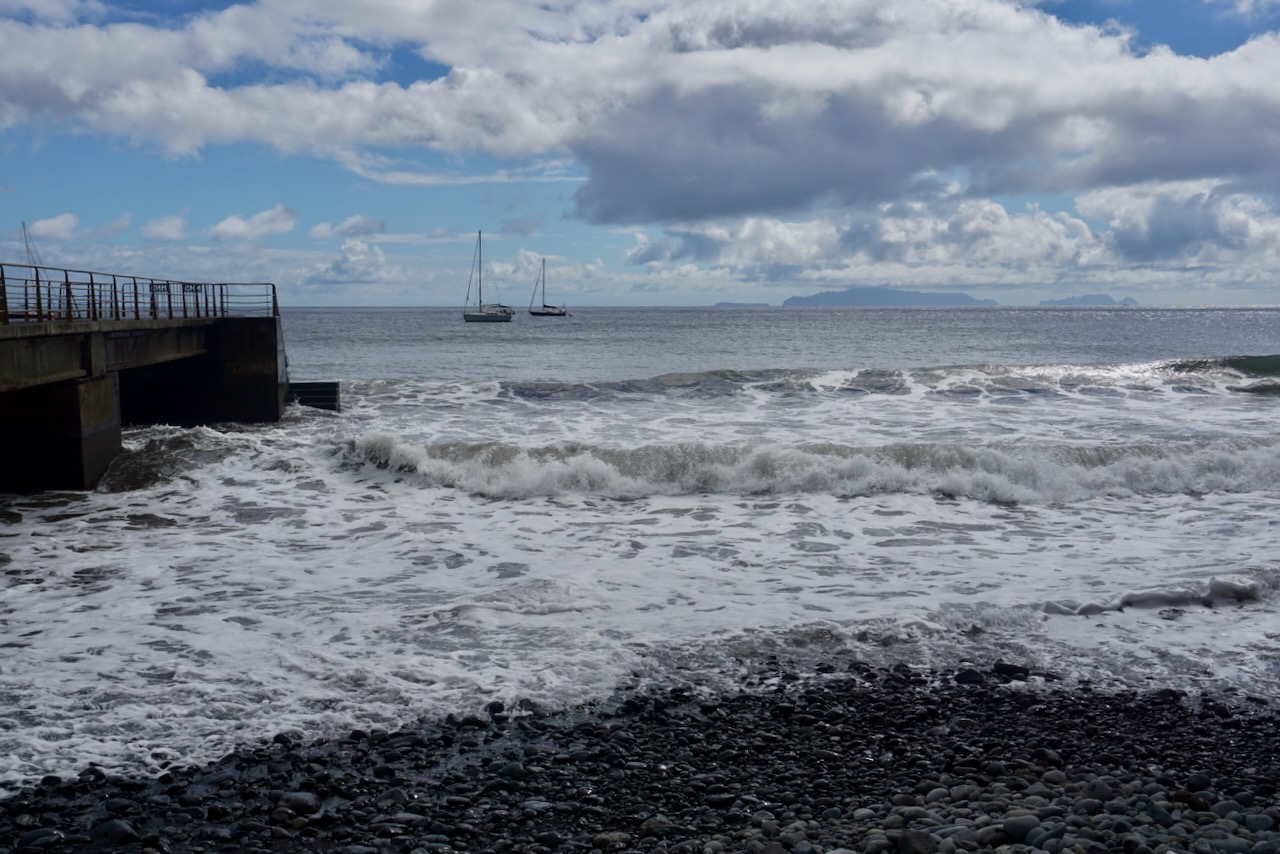
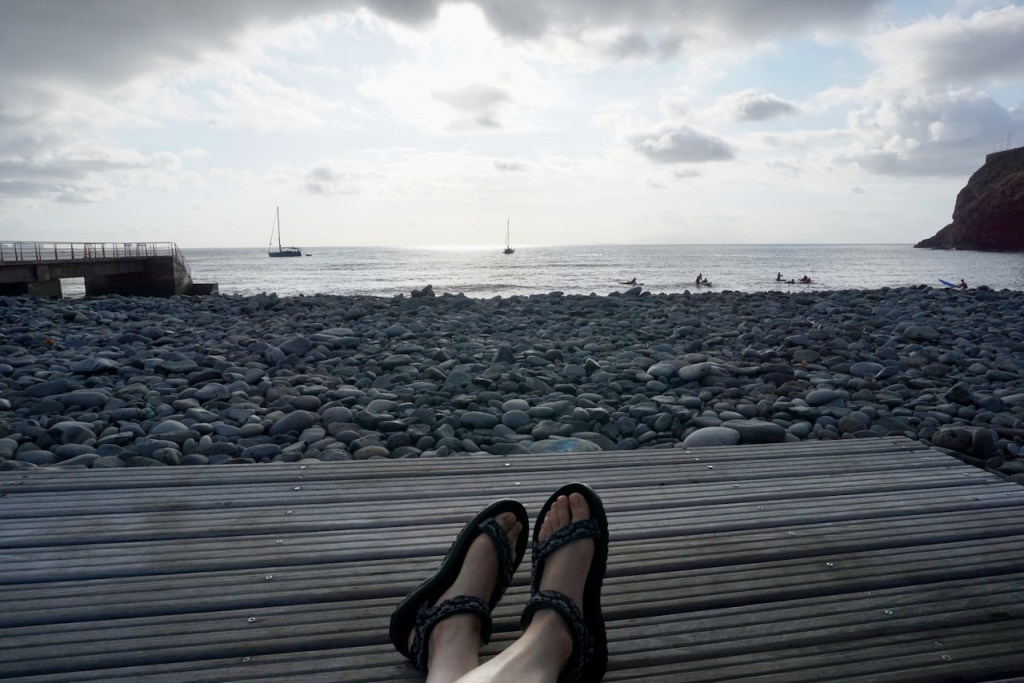
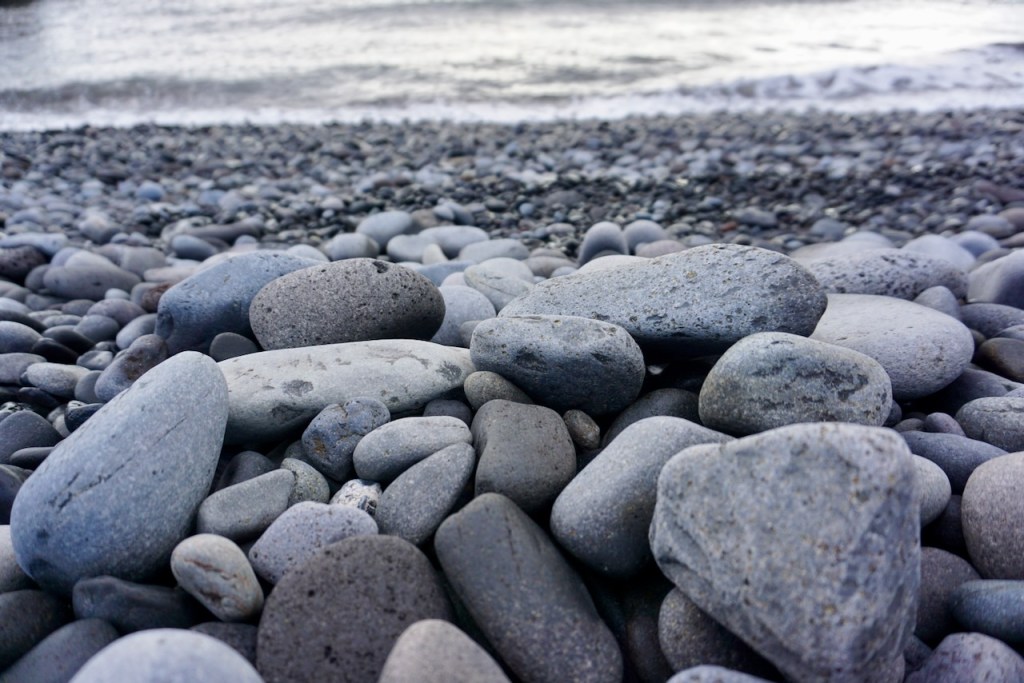
The following morning, we took the bus to the airport to pick up our rental car, and then headed down the road to the beach town of Machico, which we had chosen due to its proximity to the hiking trails for which Madeira is famous. We arrived to weather significantly cooler than what we had experienced in Funchal, though the two locations are only 25 kilometers apart along the coast. In recognition of the slower pace and change of atmosphere, we made ourselves comfortable on the rocky beach and just watched the waves.

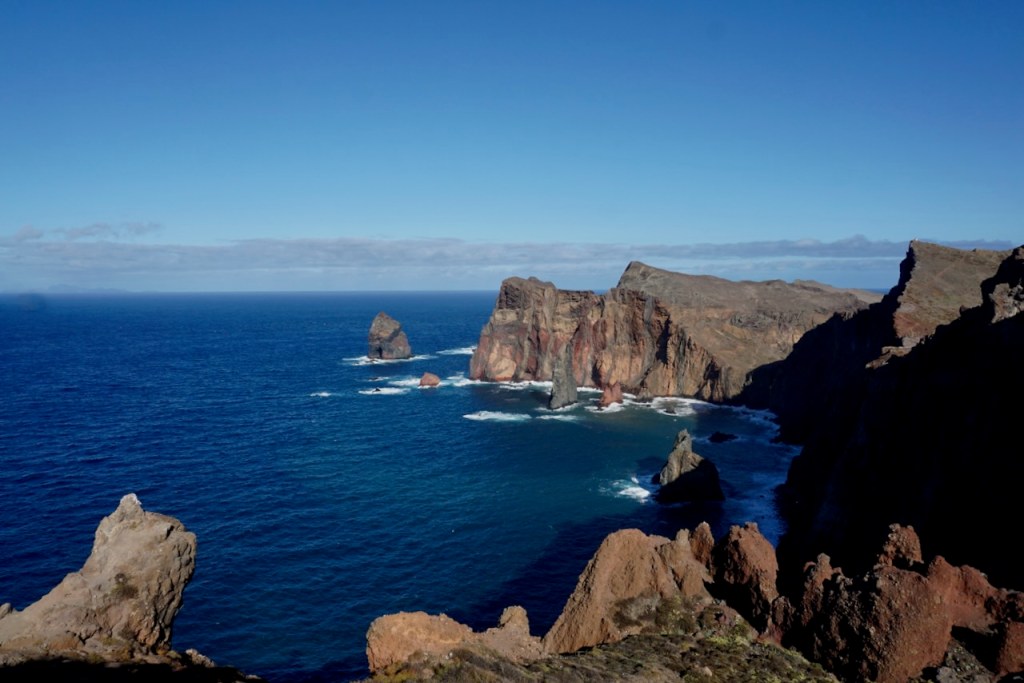
That afternoon, we drove out to a lookout point on the eastern end of the island, gradually gaining elevation on narrow, twisting roads. The landscape changed from tropical trees and flowers, to cacti and beach grasses, to red earth with scrubby brush.

We walked along the edges of cliffs looking out into the sea, clearly in the shape of the caldera left behind from the volcano that created Madeira Island.

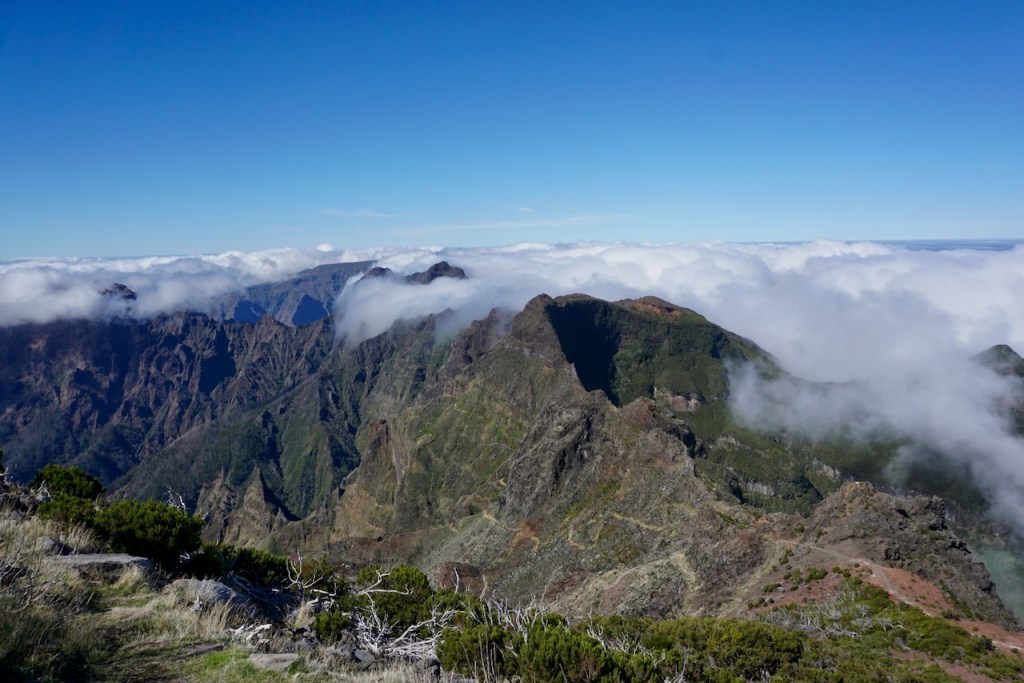
The next morning, we took what was probably the wildest drive of the trip, climbing serpentines for about 1300 meters from where we began at sea level. We wanted to hike up to Pico Ruivo, the highest point of Madeira Island at 1862 meters.

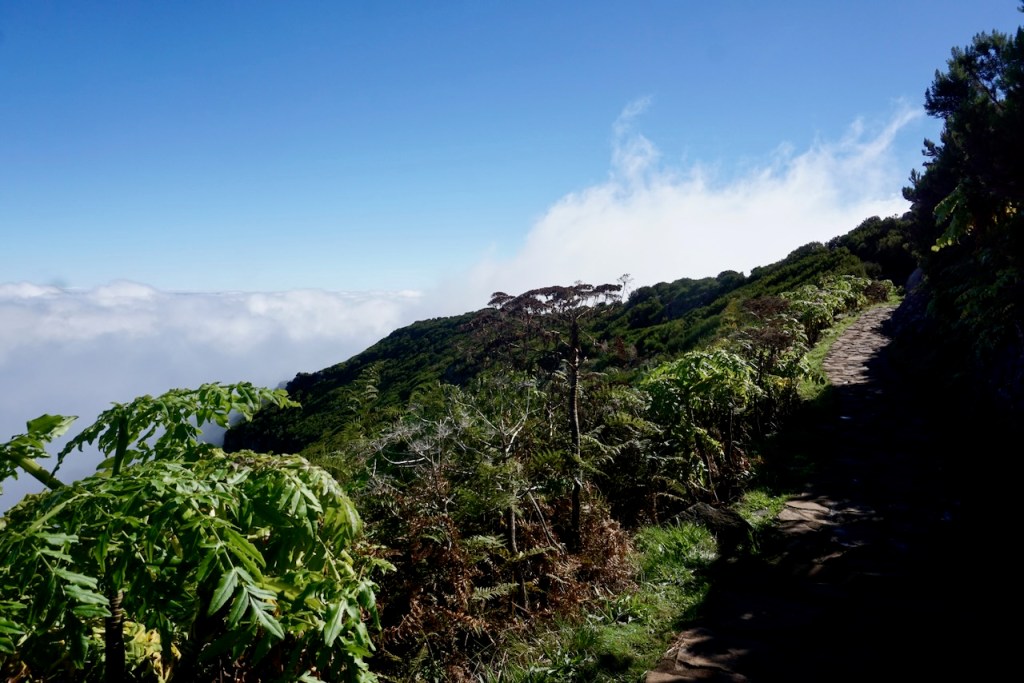
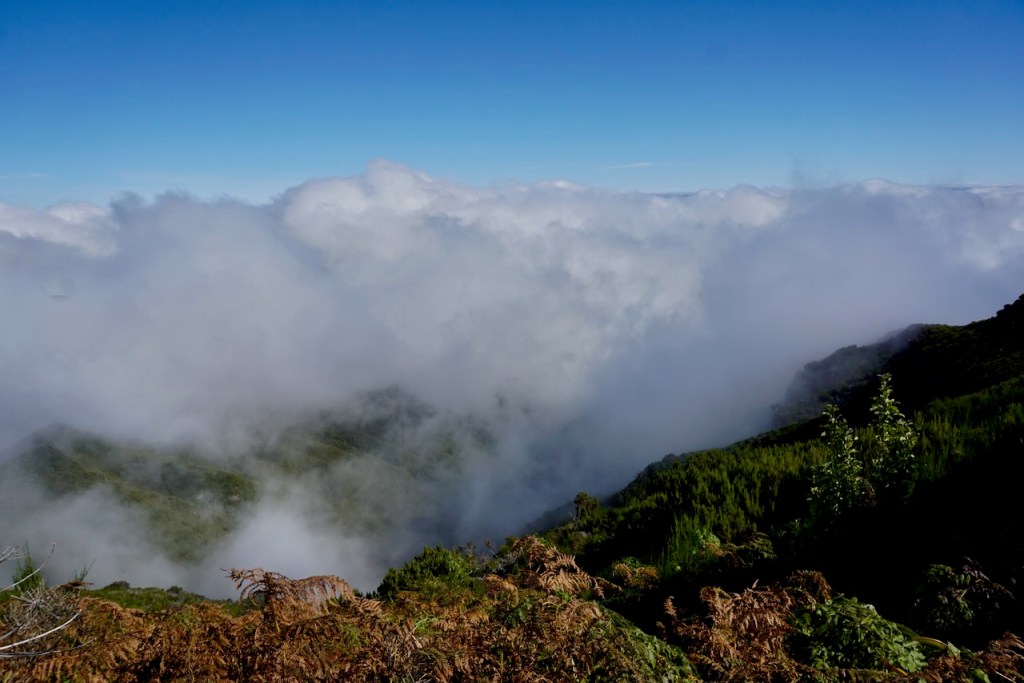
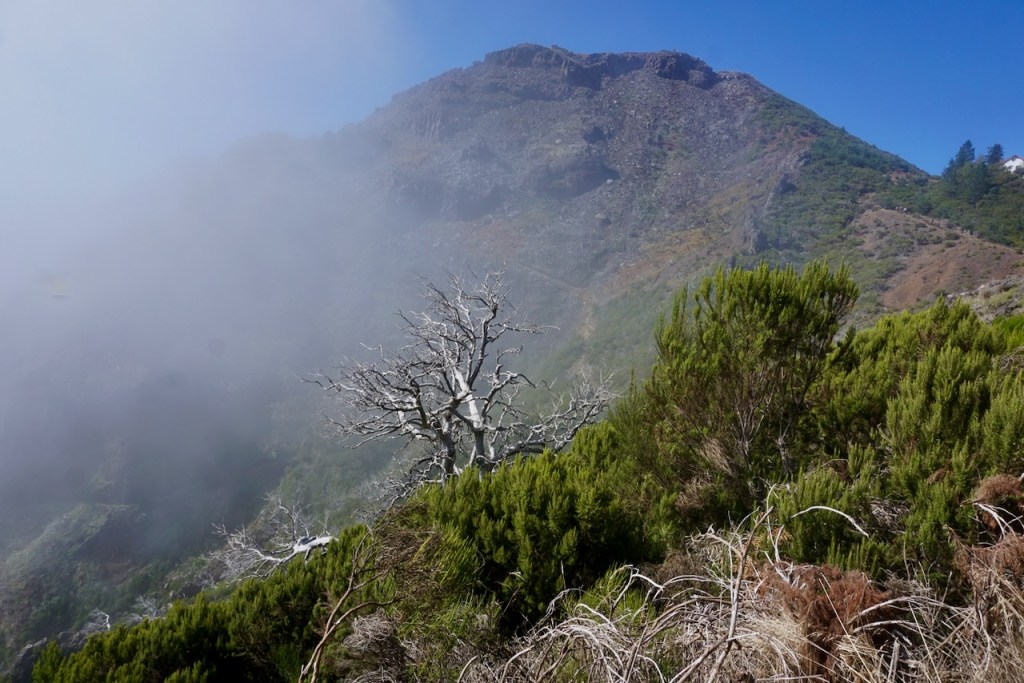
At just under three kilometers, the trail is straightforward though steep, and it winds through an incredibly diverse landscape. We started in terrain that was almost sub-alpine, mist in the cold air . . .

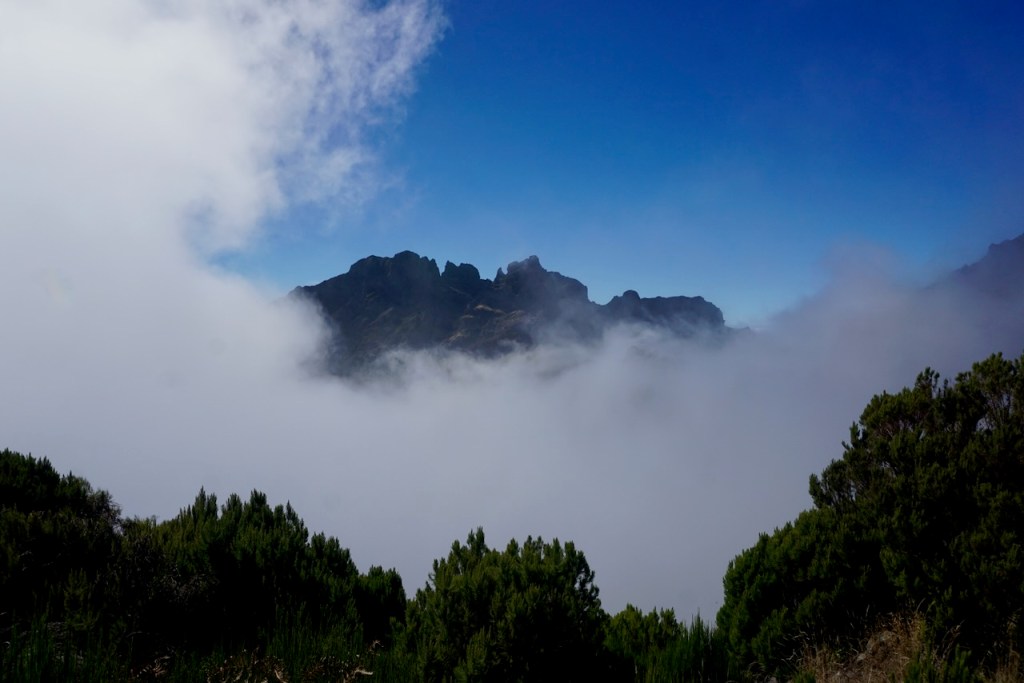
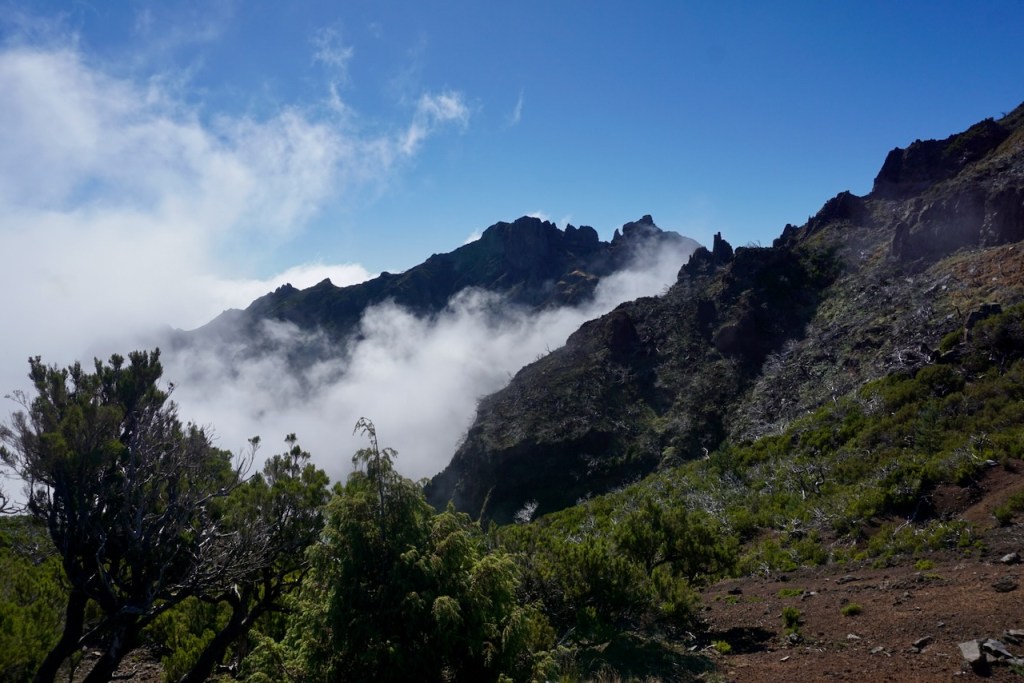
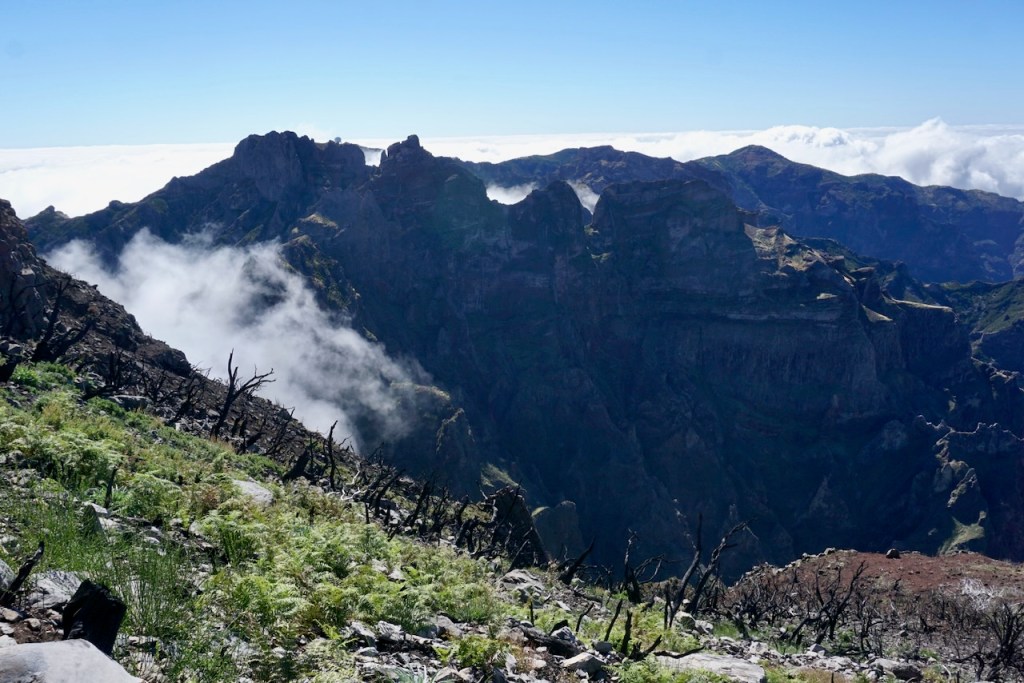
. . . climbed through and above the clouds . . .

. . . and ended on the south side of the peak in a dry, scrubby landscape with signs of fire damage. . . .

By the time we got to the summit, I was very aware of my pregnant and rapidly changing body. I had needed to go more slowly than usual to regulate my breathing, and I tried to skirt the stairs that caused my stomach muscles to engage, resulting in cramps that are best avoided. But there’s also a feeling of confidence that comes from being pregnant in such terrain (I wasn’t the only one, either!) and I enjoyed that very much.

Upon returning to the car, having thoroughly enjoyed the hike and wanting to explore more of the island, we drove about five minutes back down the road and again into the clouds. Pulling over when we could, we walked the easy, flat trail from Queimadas to Pico das Pedras. In sharp contrast to the morning, this trail took us through a rainforest. It had been cold and sunny on the summit, but we needed a jacket for the rainforest.

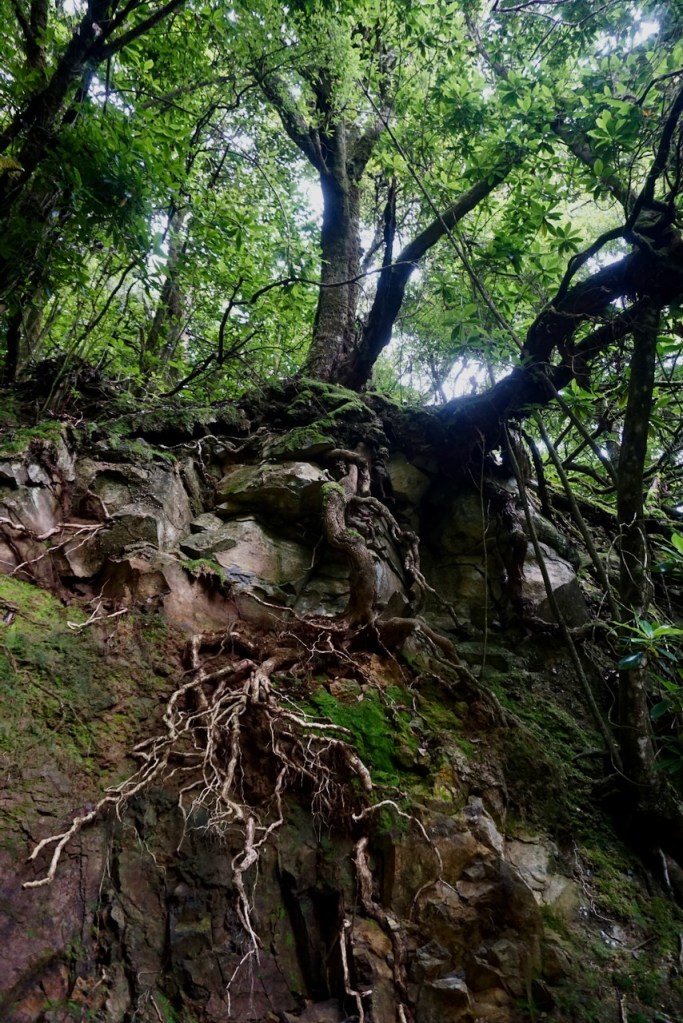
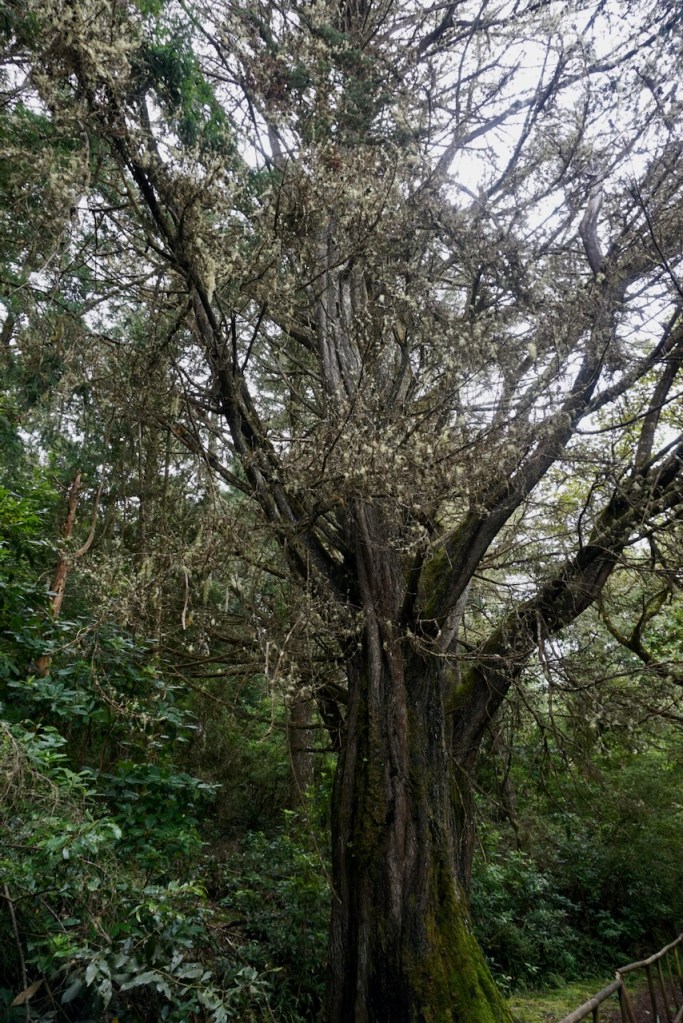
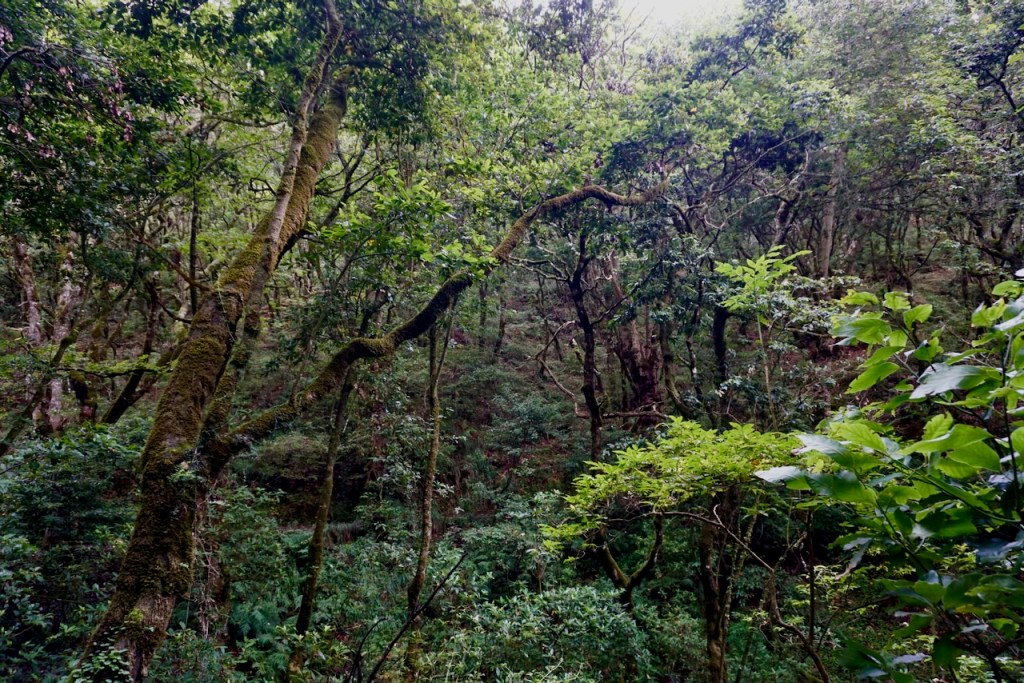
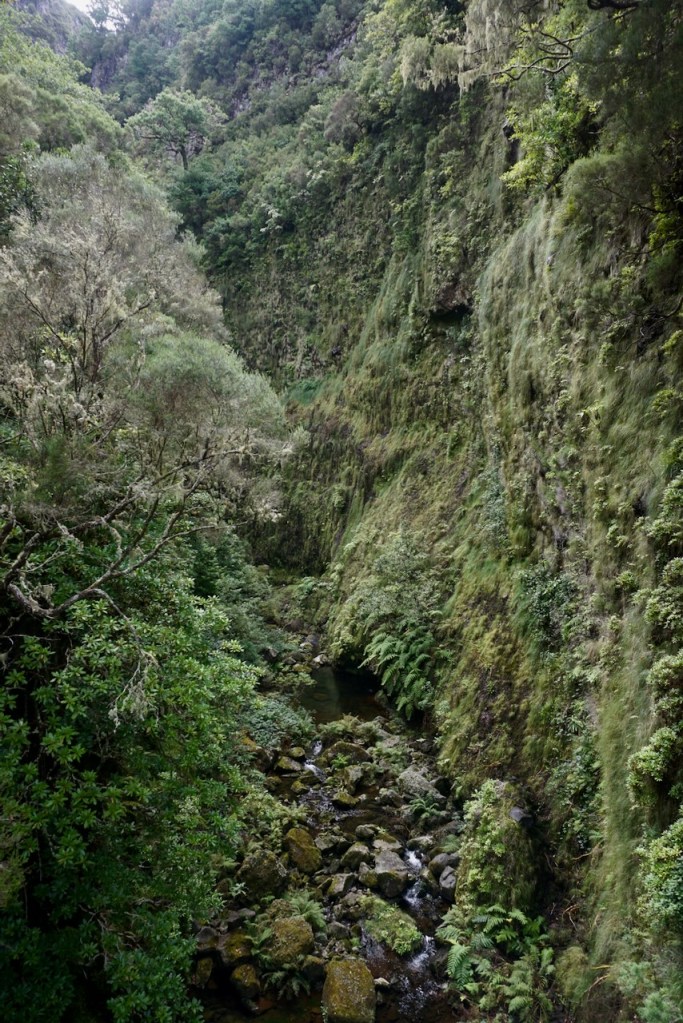
And what a forest. Moss hanging in clumps from old, gnarled trees; water running below us and along the sides of the path; ferns everywhere. We walked mostly in silence, smelling the muddy earth and the effortlessly lush vegetation, marvelling at finding ourselves in yet another climate zone.

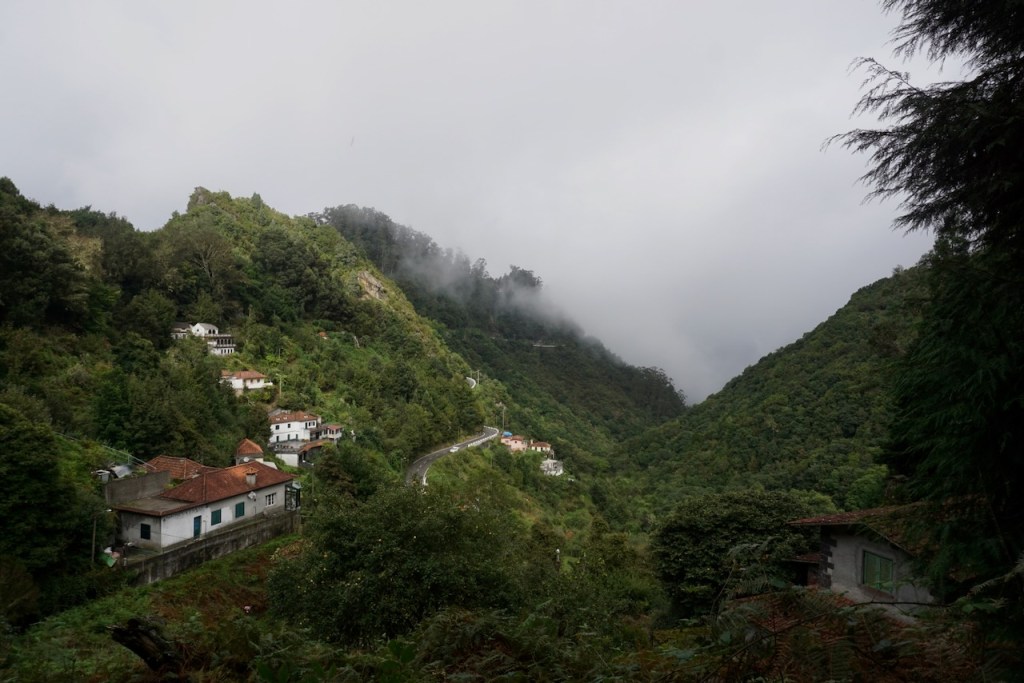
From there, another winding, twisting drive took us yet higher into the cliffs to the short walk named for its outlook point, Vereda dos Balcões. We were in a cloud forest at that point, walking along the side of a cliff that looked down into one of the many villages dotting the landscape.

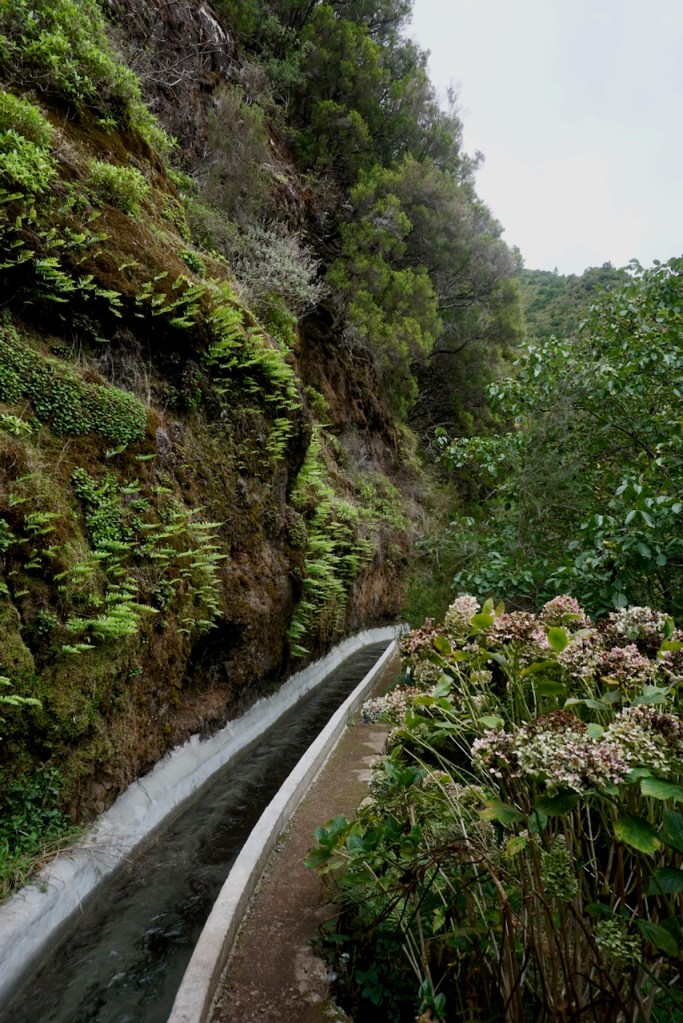
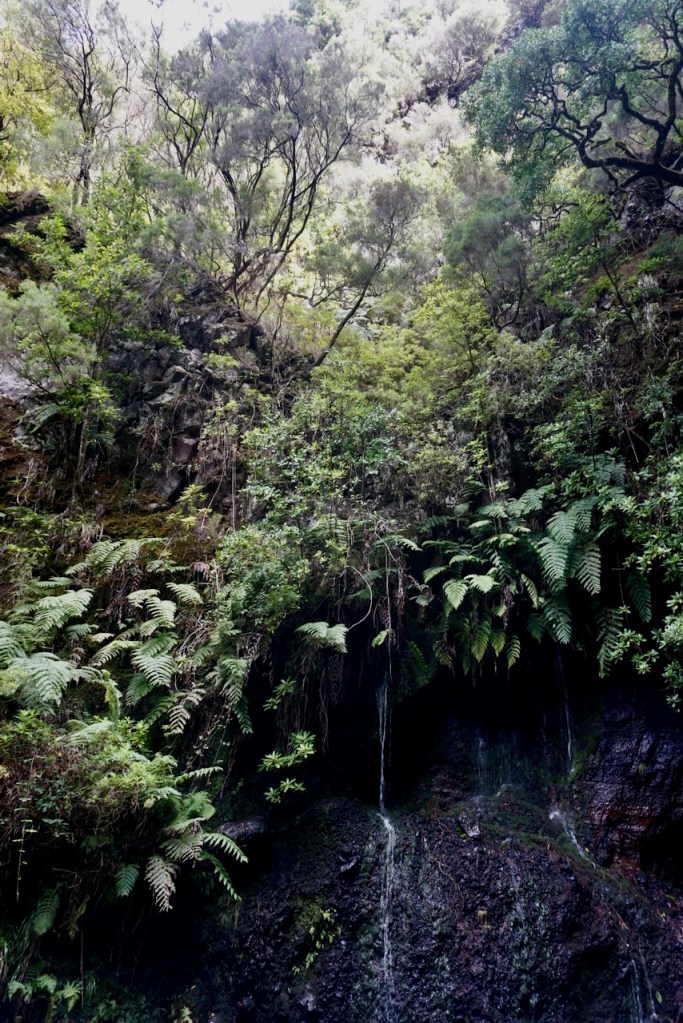
After our explorations of the east side of the island, we drove out the next day towards the centre to hike the Levada das 25 Fontes, a trail named for its 25 waterfalls. The easy walk led downhill from where we parked, and its status as one of Madeira’s most famous walks was immediately apparent from the number of people following the trail. We had to look for stillness here, which we managed to find.

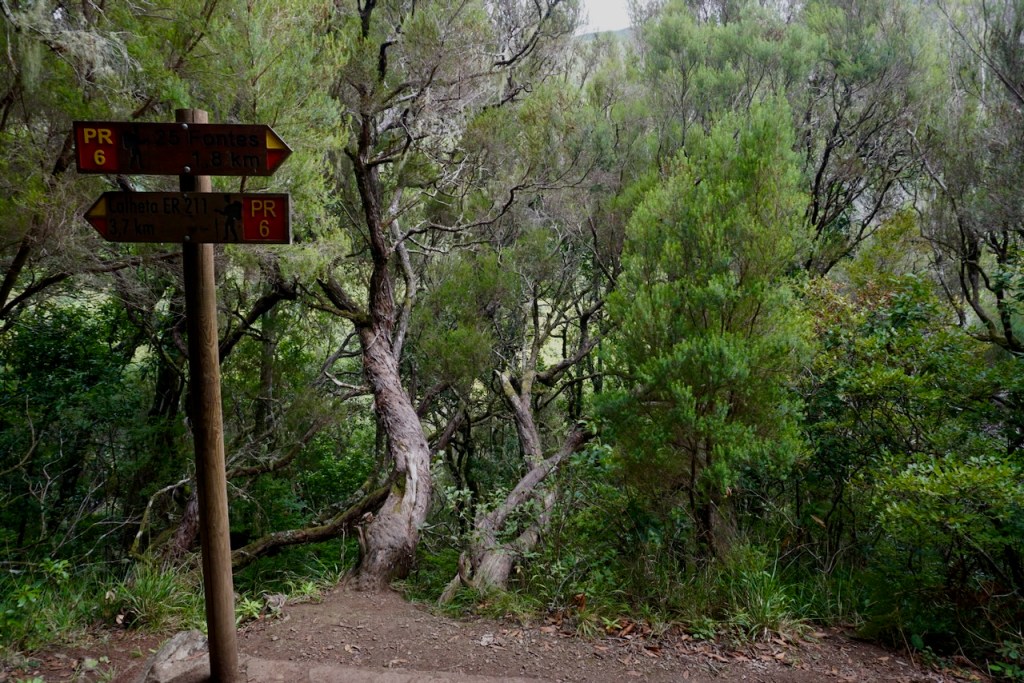
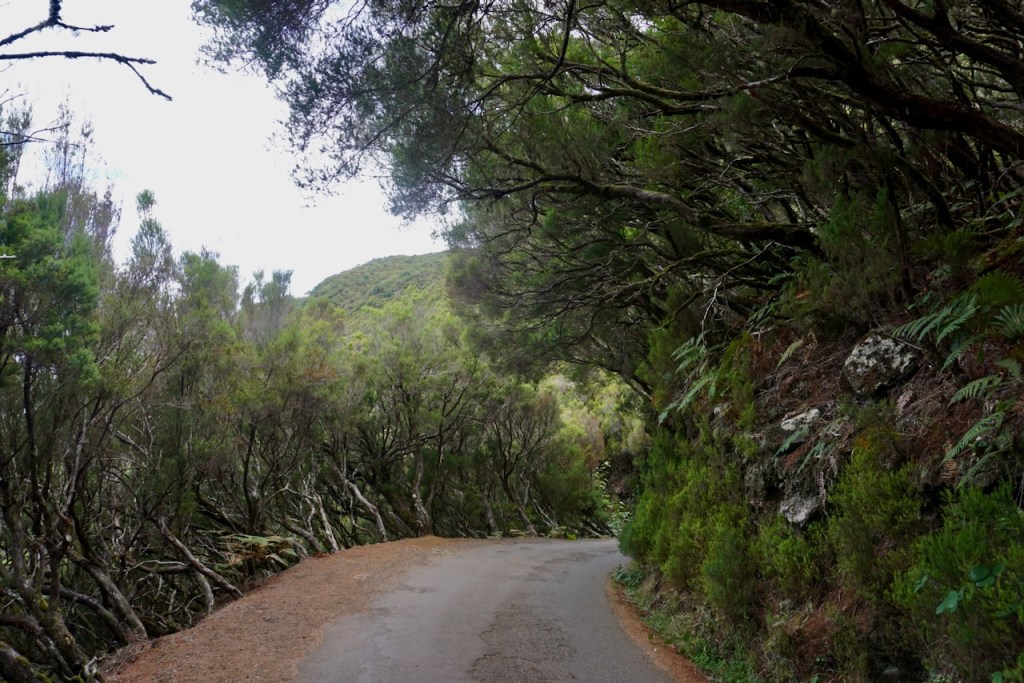
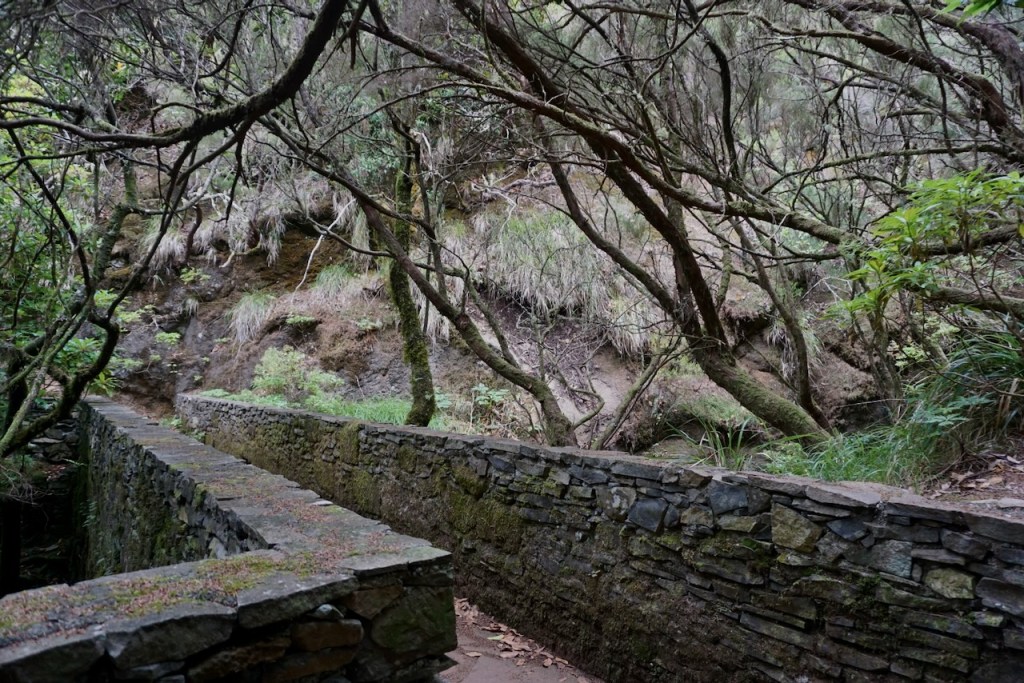
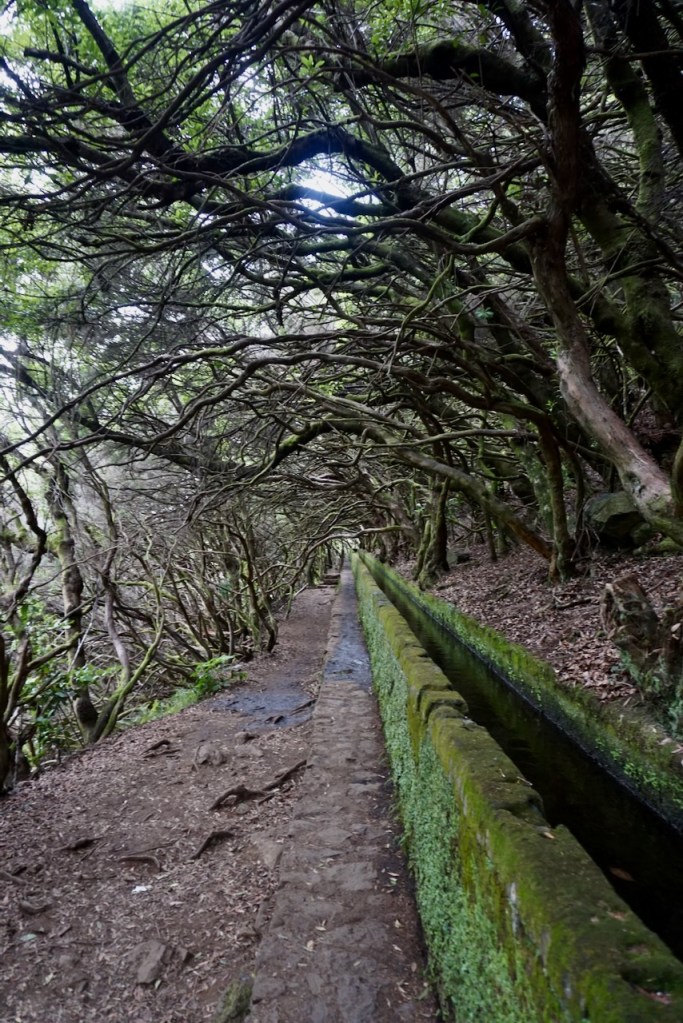
And then, ready for stillness to find us, we followed a trail turnoff that would take us back to the car in a slightly different direction than the out-and-back that we knew most people would follow. Alongside Spanish moss, trees with low-hanging branches, and irrigation canals, we found ourselves exactly where we wanted to be – entirely alone.

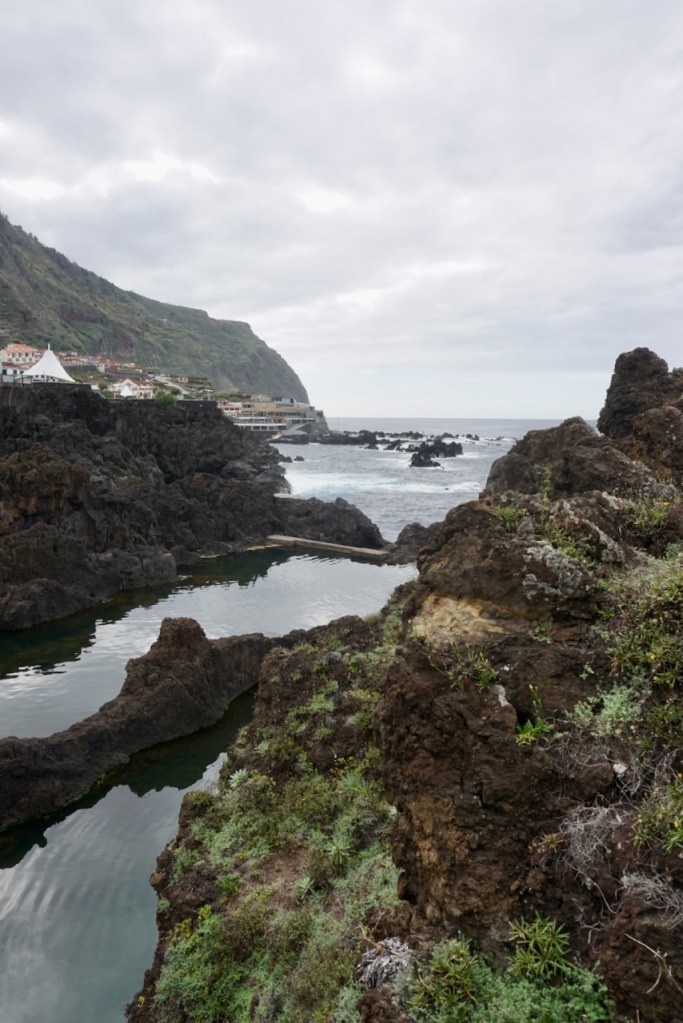
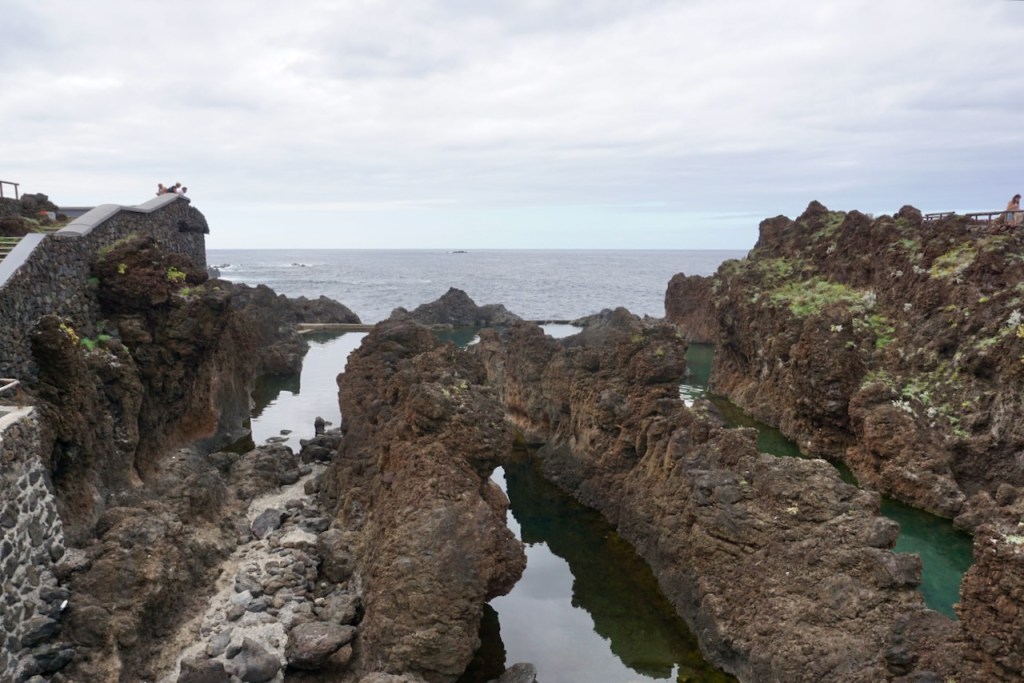
From there, we continued our drive to Porto Moniz, the northwestern most point of the island. We walked along the water and gazed down into the natural pools created by the ocean.

The drive back to Machico completed our circuit of the island, which had left us in awe of the diversity we had experienced. We have both had the fortune to see a few places in the world, and neither of us had been anywhere quite like this.

The next morning, our last full day on Madeira, I settled myself on the rocky beach while my partner took a surf lesson . . .

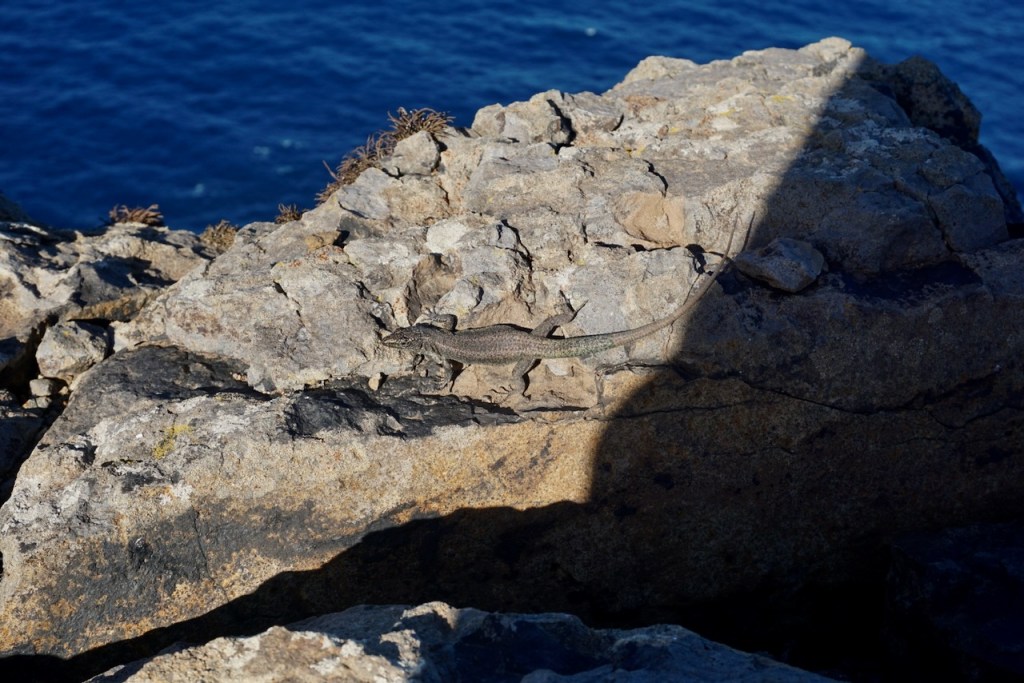
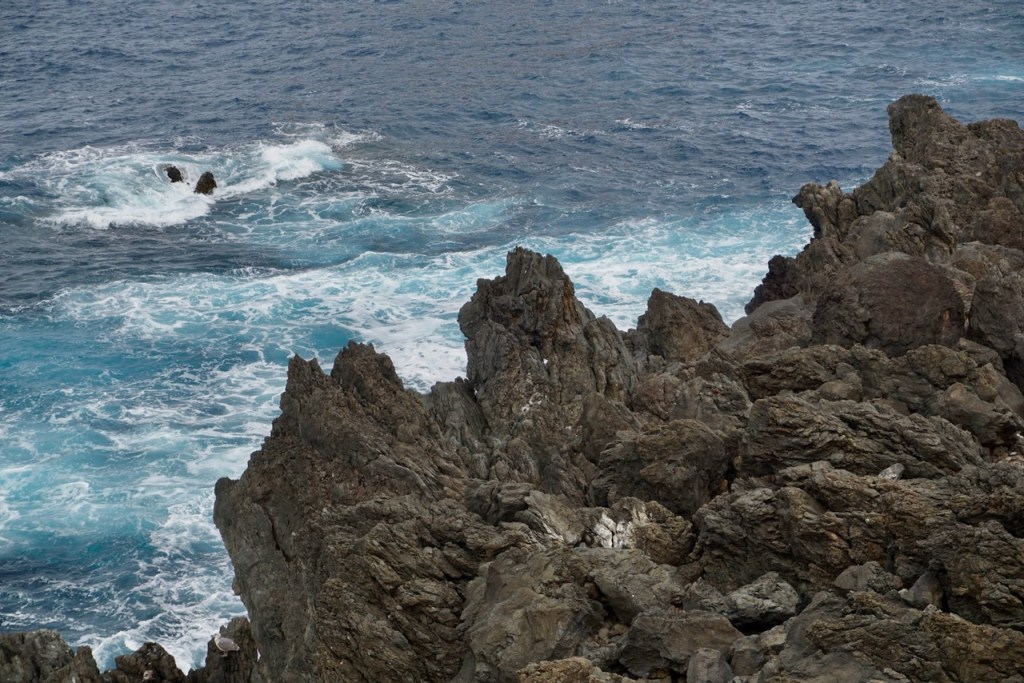
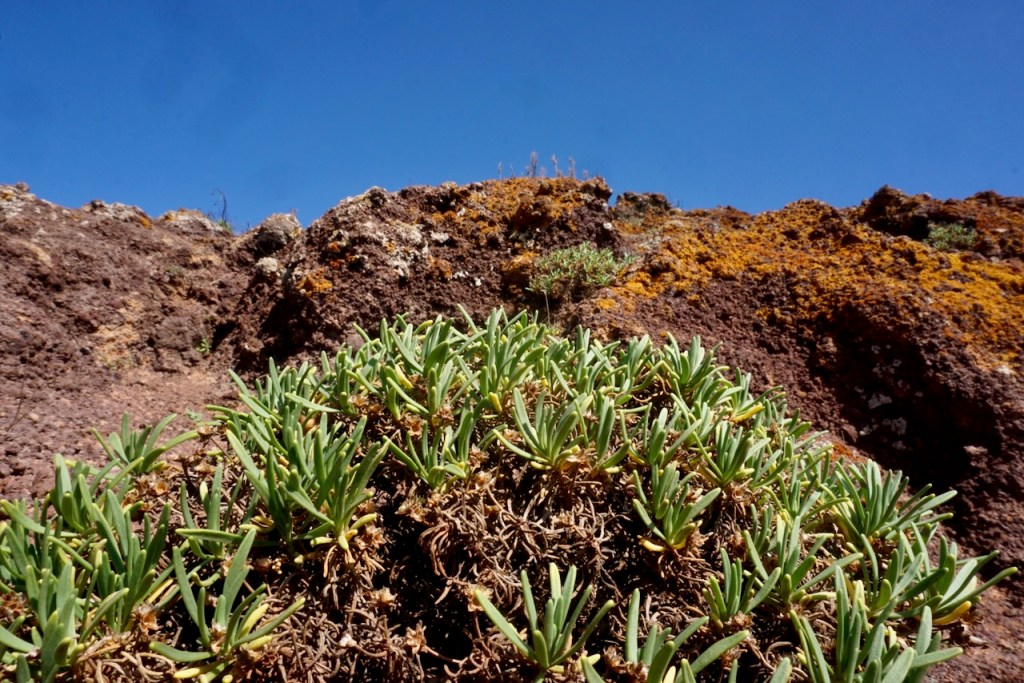
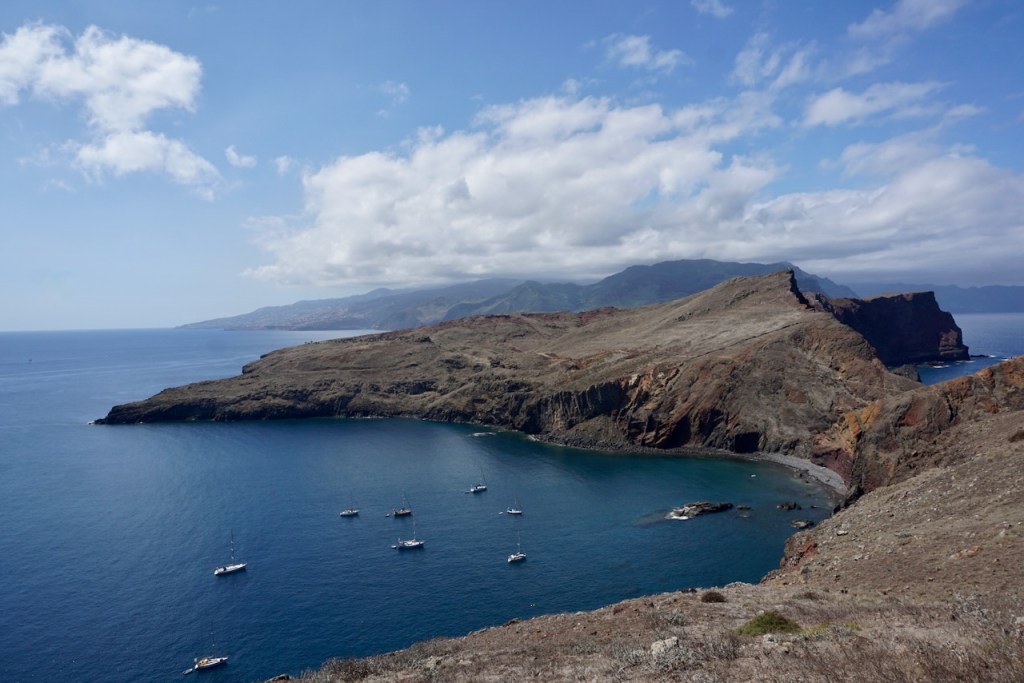
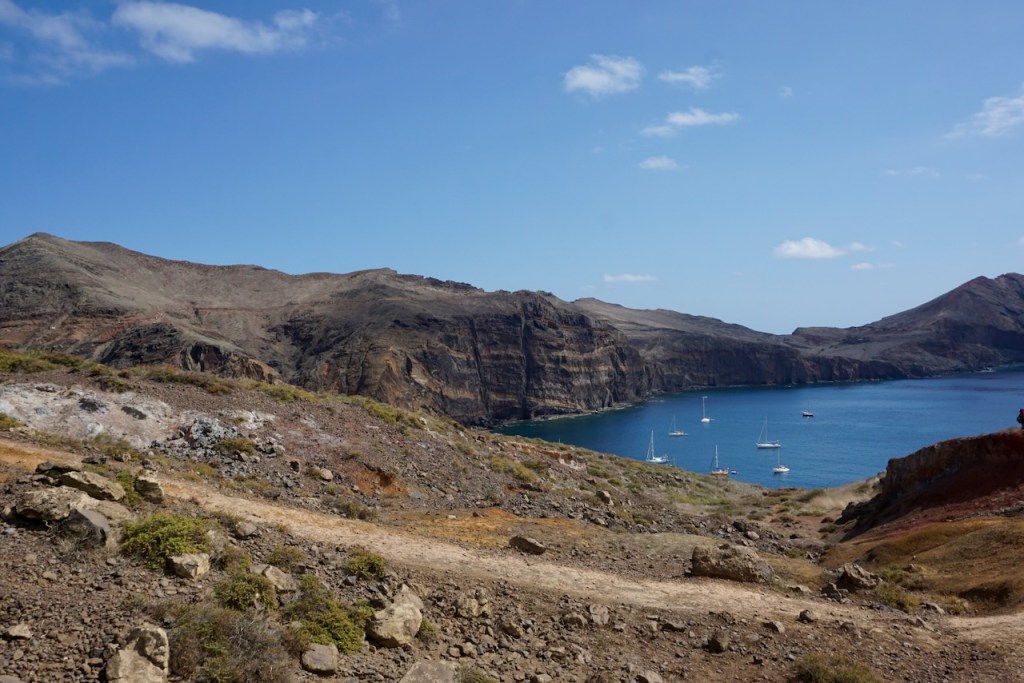
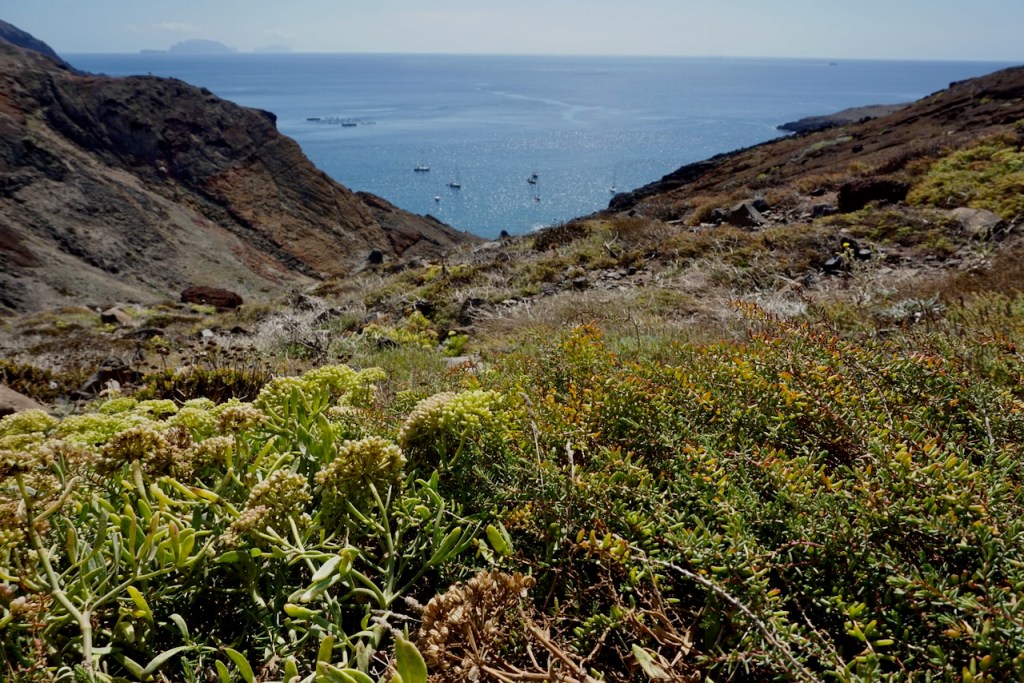
. . . and we spent the afternoon hiking the Vereda da Ponta de São Lourenço, the trail on the eastern end of the island that reaches the highest peak in that area. This time, we walked through desert and along sea cliffs, and were almost always in sight of the ocean. Every so often, a particularly spectacular rock formation came into view, and we just had to stop and take in the colours.

The sun made this walk strenuous because there was absolutely zero shade, but the rocky paths themselves were gentle enough with a relaxed variety of ascents and descents. And like we had seen literally everywhere in Madeira, there were snacks and drinks on offer (upon return, of course!) from multiple food trucks in the parking lot.

Returning to our favourite restaurant for yet another delicious meal of fish (locally caught) and vegetables (locally grown), we toasted a local beer and a local juice to the week we had experienced. We had seen plenty of families underway on Madeira and smiled at the thought of being there with our little one. It is hopefully not our last time on this beautiful island, and we departed early the next morning with beach air in our noses and the sunrise in our eyes. One cannot ask for more than that.