All posts by Rebecca Michelle

Educator, traveler, reader, blogger. Loves learning, black coffee, and friendly people.

Lazy Morning

The French press isn’t yet empty so we sit and linger a while longer, doing one thing at a time. Coffee first and then onto other things for the day. Warm rolls and butter and jam and cheese on weekend mornings, just because we can, and I find that my body has adjusted to eating that way; I find myself looking forward to it.

It’s rather different from how I was through many years of being on my own, different from the habits formed back when I used to go running, preferably in the mornings when I could. Back then, and since then, mornings were a time to do as much as possible so that the rest of the day was free for everything else. The best light comes through the windows in the morning, the air is fresh, and there’s a pregnant expectation of what the day might bring. I used to set an alarm on weekend mornings to greet all of that, but lately I’ve found that I don’t sleep in anymore. Lingering over breakfast on a weekend morning is a natural part of the day.

Years ago, we used to visit our favourite diner on a Saturday or Sunday, placing our orders of coffee, omelettes, and potatoes wherever we decided the coffee was best or the potatoes crispiest or the service fastest. We were in and out, often after waiting in the obligatory line (always a good sign), having eaten enough to tide us over until dinner. We sought out diners in different parts of town and compared them to each other, once driving all the way across town to wait in a line and be told that we could request modifications to the menu (I wanted two eggs, like in my go-to diner, instead of the standard three), but the kitchen staff probably wouldn’t listen. We loved every moment of that experience.

It’s a different time, a different pace, and a different partnership now.

Almost a year ago I took you to a diner, an old favourite, almost unchanged except for the prices. Cash payments only in a country that runs on credit, coffee as ever nostalgic and a little burnt (a taste I miss until I have it again, and then I stop myself after three refills), plentiful plates of combinations that matched what you’ve seen on television. And then another diner and another where, finally, “What can I get you, sweetheart?” and I grinned at the look on your face. Sometimes real life is just like the movies.

The bakery bag of tomorrow’s rolls is in the oven. And after we’ve finished our coffee, it’ll be time to live in the day.

Strangers Without Phones

I took a German language exam yesterday and had an experience similar to that of my own students, who are currently sitting exams, upon entering the room. My phone was collected, put into a pouch with my name on it, and then locked away until the exam was over and I left the building. The interesting aspect of this is that there was a long break between the written and oral parts of the exam, long enough that we were allowed to go out for lunch, and devices were not returned during this time. There were some signs of distress among my fellow test-takers when the announcement was made but, having read the regulations that arrived by mail two weeks ago, I was neither bothered nor surprised. A Margaret Atwood paperback was waiting in the break room.

As luck would have it, my name was last on the list for the oral component of the exam, a full three and a half hours after completing the written portion. Every twenty minutes, another pair of candidates left the waiting area, ultimately leaving the building through a back door. As we waited, we did what I suppose is natural in situations where other diversions are minimal: We talked.

I tend to be on the quiet side in large groups, and I sat with my book until someone identified that I was listening and directed a question at me. I must admit, the remaining time passed far more quickly as I joined in the lively conversation of German language learners. We shared what we were doing in Germany, how we had gotten there, how life now compared to wherever we came from, how long we’d been learning German. Casual small talk, really, but interesting considering the variety of nationalities, cultural and linguistic backgrounds, and work and life experiences of the people in the room. Everyone had something brand new to say and, as a doctoral student in the group pointed out, it is pretty easy to be myopic about our own experiences. There were, after all, many ways of getting to Germany.

There was also the fact, commented on by many, that likely no one would have exchanged any words at all had we had access to our phones. This had been the case upon arrival that morning, at which time I noticed that I seemed to be one of three who had brought other reading materials, a sure sign that life without a device is impossible for many to imagine. As it turned out, the time without a phone to get to know others really was a window into a very diverse group that I otherwise never would have encountered; aside from learning the same language, we have precious little in common that would naturally bring us into the same room.

My current thesis about the state of society, which I find increasingly stressful, egoistic, small-minded, oblivious, and fearful, to include just a few adjectives, is that the individual worlds that technology has created for each us have led to a wider world in which people are skeptical of each other because they do not know each other. They are stressed because they do not see people around them, anxious because they are living in a world that is too bright, too fast, and too anonymous. When we do not raise our eyes to others, we lose the need to fit into the norms of a society, leading to behaviours that are egocentric and, frankly, often obnoxious, equally disinterested in others as unaware that others are even there. This then leads to artificial worlds where everyone thinks the same way and everyone who doesn’t is shut out in their own little world, and the easiest way to keep people there is to create a false sense of security in the familiarity developed by personalized algorithms.

Therefore, it is no wonder that some people in the room yesterday clearly panicked when they learned they would not have access to their phones for a few hours. It is no wonder that some individuals chose to remain outside the group, pacing the hallway alone instead. But I think it is a very positive sign of what lies deep in humanity that the majority of us gathered around a table and got to know each other.

My town has recently installed a box of toys to share in a favourite field in the park. There are table tennis racquets, skipping ropes, large hoops, all the pieces for Vikinger Schach (a beloved German lawn game), and other toys made of wood in the box, a sign taped to the inside lid stating the box’s contents and the rules, which are simple: Use what you’d like and bring it back. Because the norm of trust is there, people behave accordingly. I think there’s a great deal in people, and biology supports this, that makes us want to be together, want to feel connected to each other. This is what made the pandemic so hard, isn’t it? And have we forgotten that already?

I have a poster in my classroom that quotes Hanna Holborn Gray: “Education should not be intended to make people comfortable; it is meant to make them think.” Being uncomfortable and working through that is what allows us to learn, and I think this is absolutely true of getting outside of our own bubbles and seeing the world with different eyes. It is this that then opens us to others, to new ideas and perspectives. The recognition that others experience the world differently provides new possibilities for how we understand the world, and then new ways of walking in it.

I think the fact that we have buried ourselves in technology, that we let something that is not real become our reality, has made us too used to what is easy, what is familiar, what we like. Losing contact with the many, many aspects of the world that are unfamiliar turns us away from each other and deeper into ourselves. This might be easy, but I also find it sad. Anyone who has observed children knows that humans are naturally curious, and I think it is critical to cultivate that. I am grateful to live in a town with a box of toys in the park, and grateful for the women who pulled me gently out of my book yesterday so that I, too, could spend some time in the real world.

And on the train ride home, the book stayed in my bag and I just looked around. Why not?

May Exams

Inside, students are revising between exam papers, the common area full of laptops, notebooks, and nervous chatter.

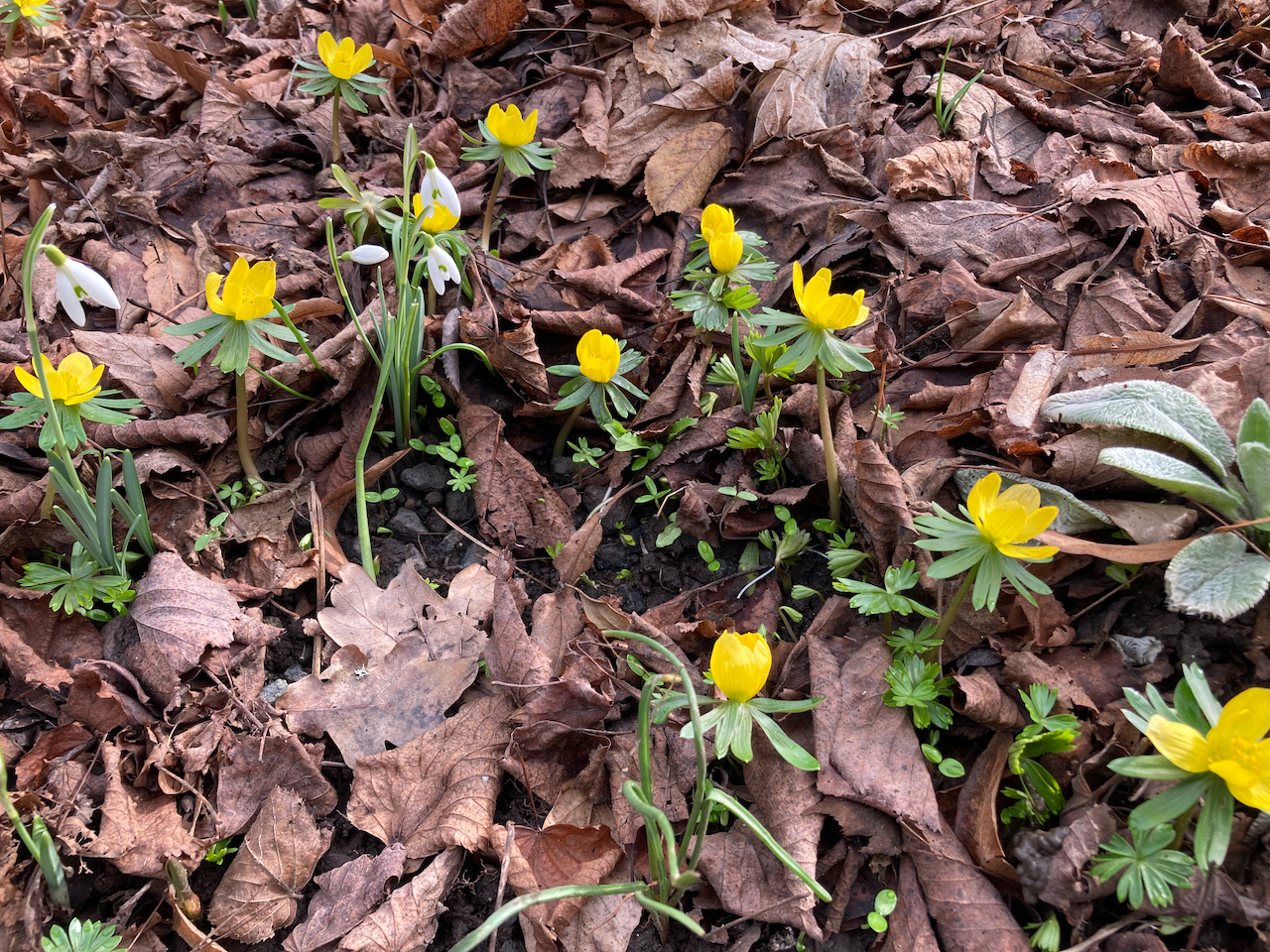
Outside, trees that bloomed in early April only to have their blossoms freeze overnight fight for their lives, flowers and leaves black but still clinging.

Over lunch, we talked about the idea that as people live longer, childhood has extended. In many ways, this is a good thing: It is no longer expected for children to leave school and go off to work at 12 or 14, nor that everyone is partnered and married in their early 20s. In other ways, perhaps not such a good thing: An extension of childhood seems to have translated to less conformity to social norms, many of which have to do with respect for others. I believe social media is at fault here for creating alternate realities that fit each user. Why, I imagine a user thinking-without-thinking in the brief moments that the real world intrudes, should I have to fit myself into anything at all?


It’s May and our grade 12 exams have already begun, with grade 10 exams following next week. Some aspects of my students’ school experience still match mine from many years ago, but there are also ways my students learn that could not be more different. The fact that students, unprompted, refer to “learning how you learn” indicates that some shift has taken place.

Considering how much of our daily experiences in the world are curated for us – think about music recommendations, subscription-based news alerts, personal feeds, and explore pages – I think it’s worth noting that the school exam experience worldwide is very similar. All students who take exams from a certain exam board go through the same process. All schools are obligated to fulfill the same requirements. Everyone opens their results on the same day. As a student, I knew this to be the case, but it always thrilled me when, upon meeting new people, conversation turned to our experiences in classes and with teachers. I was surprised to learn how different our daily experiences were, only having encountered my own. And somehow, we all had ended up at the same place.

Through many years working with students, I have learned that it is not the work that I put into preparing them for exams, but rather the work that students put into preparing themselves that matters. I spend very little time these days, and sometimes none at all, going over course material; after all, students have spent two years on course content and have access to whatever they need to review. Rather, exam preparation in my classroom takes the form of prepared activities in which students are actively doing something and I wait to answer questions that arise. It might be easy to listen to a teacher talk, but the work is in the thinking, and my students understand that I am not going to do this part for them.

They understand, too, that exams are not a measure of their worth as a person, but rather a step that certain elements of society has decided is necessary in order to get them from point A to point B. One aspect of German society that I really like is that almost everyone does some sort of internship during secondary school, and that there are many vocational pathways of how to become a productive member of society; sitting exams that allow entrance to university is neither expected nor required. So when my students say, “But what if . . . ?” it’s easy to point to other options. In Germany, only about a third of people hold a university degree simply because it is not required for the vast majority of career possibilities.

Wherever young people end up and whatever they happen to do, I hope they are happy and fulfilled. I hope they chase the dreams that make them feel whole, and I hope they give themselves enough time to figure out what those dreams are. I hope they have opportunities to learn from success and failure, to stand tall after standing up again. And if they remember anything from their time in school, I hope it’s about the world around them, about appreciation of others, about what it means to be a good friend. They’ll figure out the rest as it comes.


Outside, the air deepens with the feeling that spring is, actually, here to stay this time.

Inside, students approach their tests with a mix of quiet confidence and anxiety, an understanding that they’ve spent two years learning and now need to prove it.

A former student came in for a chat the other day, and I smiled when she said she hardly thinks about high school anymore because it’s just not relevant. A year ago, she was one of the students waiting quietly with blue or black pens and sharpened pencils before taking her assigned seat in the exam rooms. What a difference a year makes.