All posts by Rebecca Michelle

Educator, traveler, reader, blogger. Loves learning, black coffee, and friendly people.

Time

I know little about Einstein and relativity and understand even less.

I know that time is relative in the colloquial sense for it seems to speed up or slow down based on how busy, anxious, excited we are.

Time is cooperative based on our expectations and experiences, which has nothing to do with time itself.

Time has gone faster since I’ve gotten older because there’s more to look back upon, as well as greater consideration of what is to come.

Time is a construct of minutes, hours, days, calendar pages. Time is sunrise and sunset, too early or too late or not long enough.

Right now, time is waiting. And time will continue when the waiting ends. Time is an indicator of the present rather than a means to mark the past or future.

I know I set my watch back six hours when I landed here and in just under a week I’ll set it forward again. Time will not have changed.

It is I, instead, who have changed.

Lake Bled, Slovenia – January 2020

I Saw

Some news came from home earlier this week, the kind of news that you start to expect at a certain point but are still caught utterly unprepared when it comes.

And I’ve been away a long time.


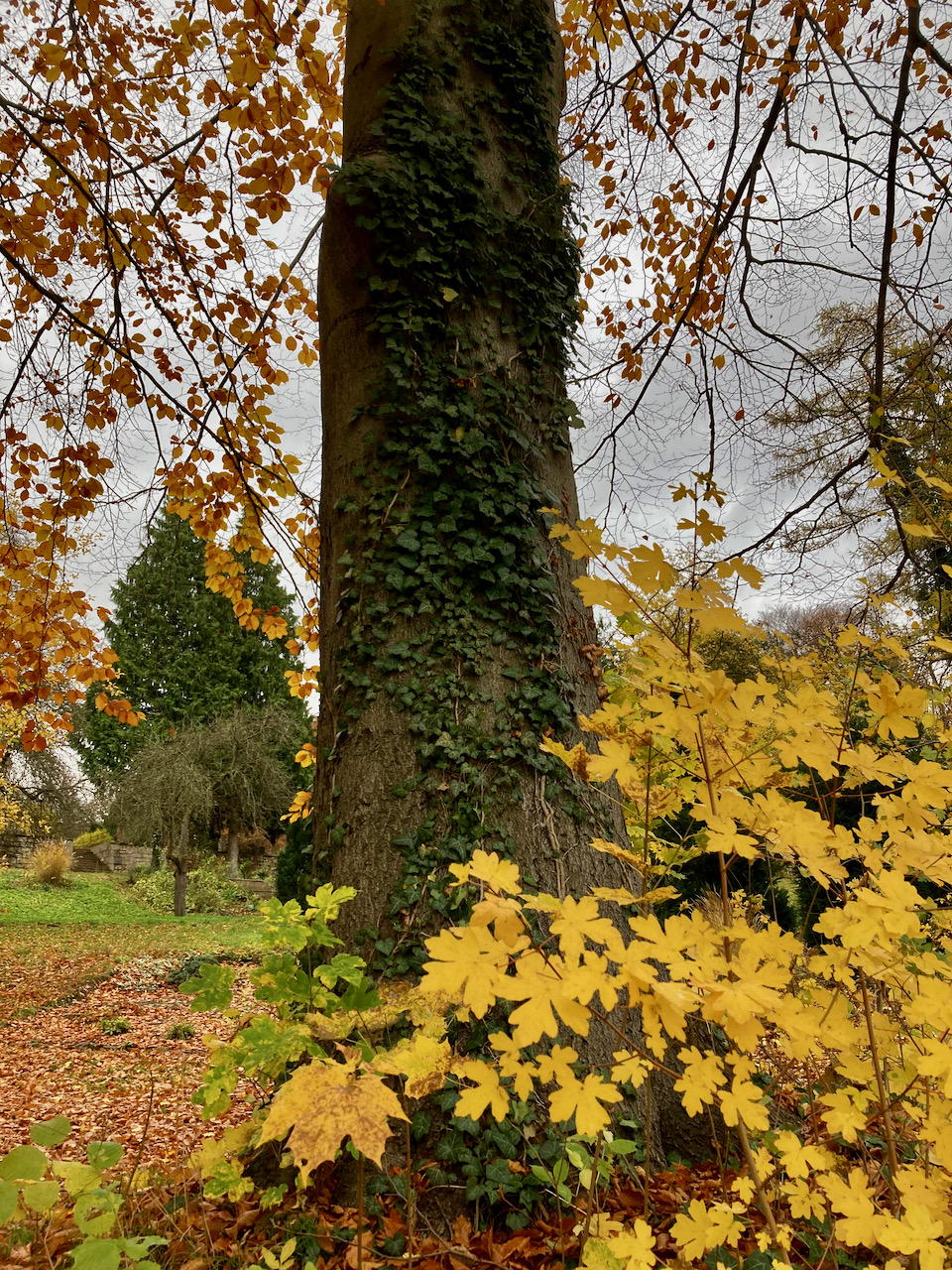
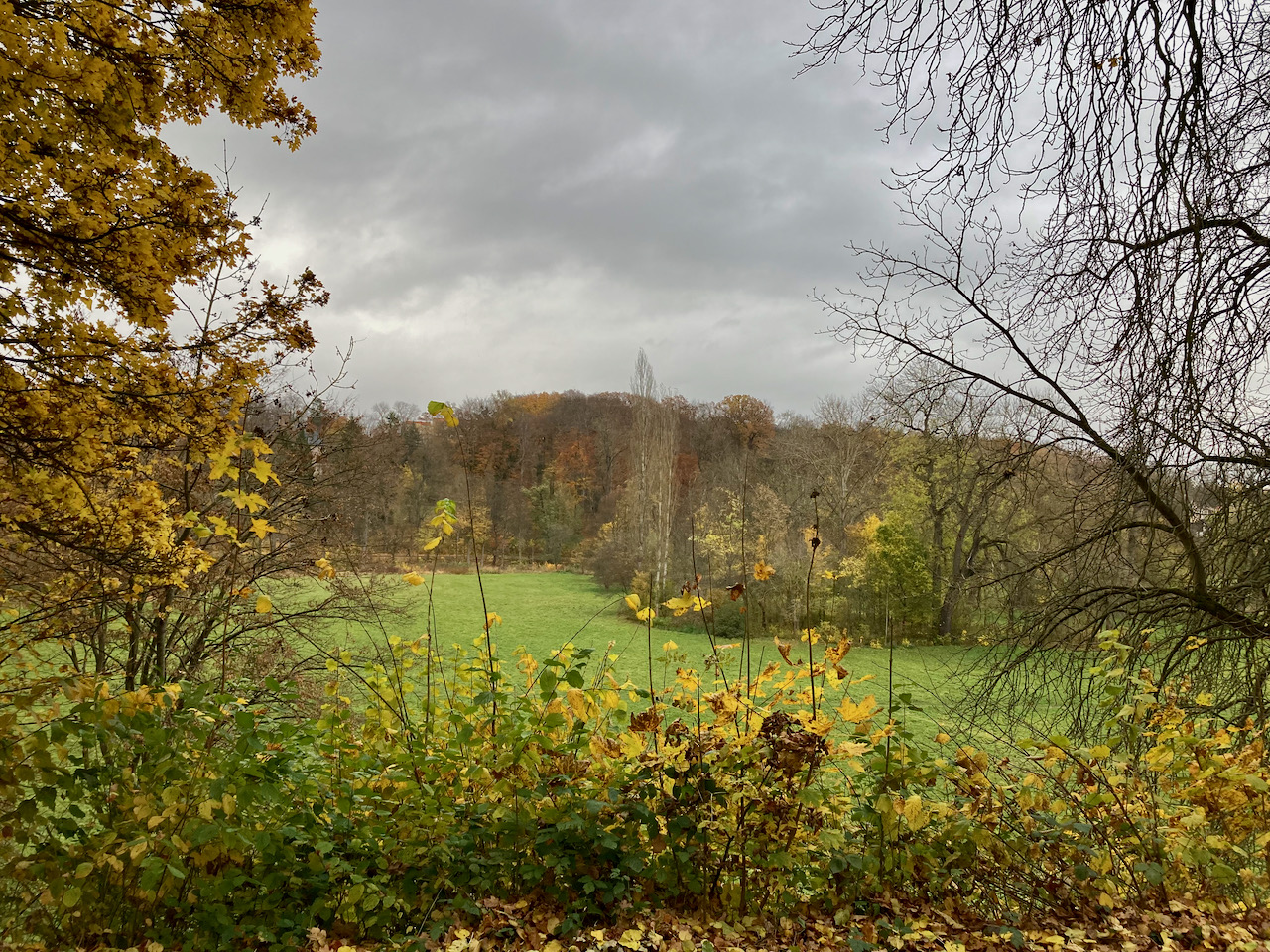
We had a storm last night that was more wind than rain. The wind persisted throughout the day but the sun came out in full force this morning. The leaves turned gold and sparkled. A friend and I have been tracking the colour changes in a certain tree and almost all the green is gone now. There was so much green on Monday.

The sun came out this morning, and so did a rainbow.

I don’t believe in signs, but I also don’t not believe in signs. A roommate in university told me she saw ghosts at the end of my bed. I shrugged. Maybe she did. I have enough of them, though I didn’t know it at the time.

I don’t believe in signs, but this morning I saw a rainbow.

I saw a rainbow, and when I opened the window to take a photo for a friend, it slowly faded away. I laughed, put down the camera, and looked up again. There it was.

Call it a sign, if you’d like. I’ll take it. Regardless, it was a reminder to look, and appreciate, and breathe.

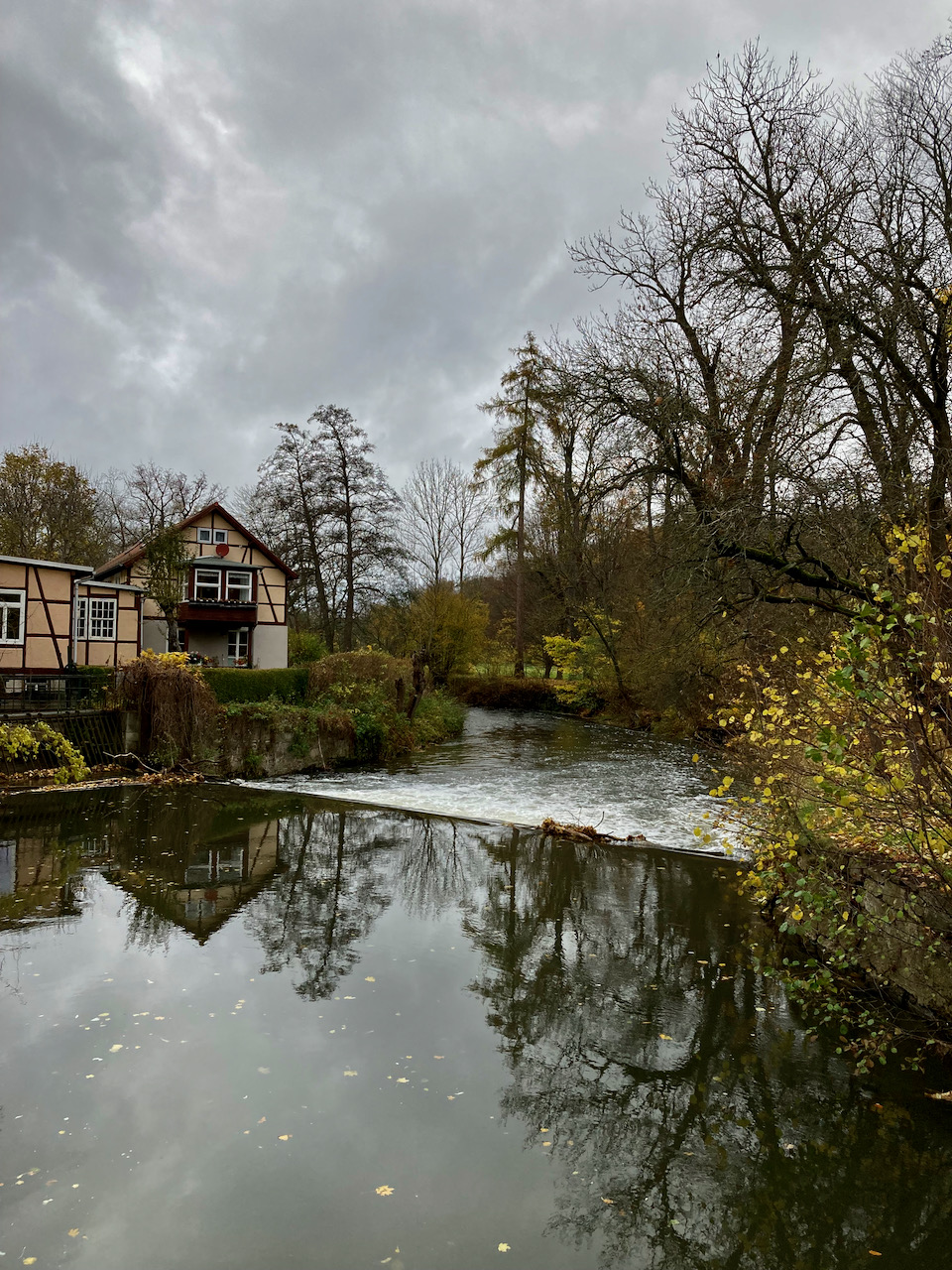
Weimar, Germany – October 2021

Language in Schools

I find myself with time to write, which either means I haven’t been doing enough physical activity or I have settled into some sort of routine. I suspect a bit of both, and likely the role of additional confounding variables. Time to write is also time to think, and I’ve been thinking a lot about language.

As I try to learn German, which first became a project back in January, I have found that my other languages are disappearing. I can understand most of what I read in French (my phone is in French and it’s still easier for me to read food labels and assembly instructions in French rather than German when the option presents itself) but I can’t think in French at all. I can’t find words, construct ideas, form sentences. I can read or listen and understand, but I can’t communicate.

The situation with Hebrew is worse. I started learning Hebrew in kindergarten and kept it up through high school, but never had an intuitive grasp on the language. Unfortunately, we were taught Hebrew in English. (I’ve been learning German in German and that has made a huge difference.) Very recently, for example, I met an Israeli man on a tour of Munich. He tried speaking to me in Hebrew and again, I couldn’t respond. I knew what I wanted to say in German, but that was the best I could do. Instead, we spoke English.

It is equal parts fascinating and frustrating.

This has me thinking about how we use language in international schools, and I have made different observations here than in both Malaysia and Singapore.

In Malaysia, English was the lingua franca for my students, all of whom spoke some degree of English and learned Mandarin and Malay in school. With few exceptions, they spoke Mandarin, Malay, or Tamil at home, and/or previously attended schools that functioned in any of the four languages. English is the default for mixed groups in Malaysia, certainly by educated people, and so it was at school. No questions asked.

It surprises a lot of people to learn that Singapore functions first and foremost in English. English is the language of schools, business, and government. There are special programs that operate in Mandarin, Tamil, and Malay, but otherwise these are language and literature classes within English schools. Many Singaporeans, however, do not speak English at home. There is a generational difference in Singapore between Mandarin speakers and speakers of other Chinese languages, notably Hokkien, and everybody else. The majority of the population is of Chinese descent and one can get by in that community without using English. It also helps that anything provided by the government, including the public transportation system, is available in all four languages.

Since my students in Singapore came from around 75 countries, English was their common language, as well. Danau Tanu’s wonderful book on international schools addresses the ways in which students group themselves by facility with language, and this could not have been more obvious in the environment of my school. Without getting into the social politics here, there was a clear divide between those comfortable in English and those who were not. That Singapore itself lives in English meant that obviously school would, too, with obvious exceptions among specific groups.

It is different in a small town in Germany where life outside of school is only in German. With merely a handful of exceptions, my students are German and that is the language they speak among themselves. I’ve been told of only one teacher who insists upon the use of English during her literature classes. My students are kind enough to switch to English when they want me to understand their discussions, at which point I can provide feedback. It’s also a great way for me to get to know them. Otherwise, my eavesdropping is limited to the little German I can understand.

I have thought a lot about this: Do I require students to share, collaborate, and discuss amongst themselves in English so I can be part of this element of the learning process? Or do I provide an opportunity for them to clarify, explain, and understand in the language that is clearly more comfortable for many of them? (I should say here, all of them have excellent academic fluency in English, whether they believe it or not.)

By contrast, in Singapore there were always a group or two of students who did not speak English while working in small groups. And I never asked them to switch to English because I recognized how difficult, tiring, and intimidating it was to be in their position. One difference is that in Singapore, I was working with much larger classes and I couldn’t possibly be part of every small-group task. Here, the class sizes are such that I could be. So who would benefit from a shift in the social norms of the classroom?

It’s a confronting question because it means I need to think about my role as an educator. Who am I in a classroom, and what does it mean to support the young people that I work with? They know something significant that I cannot currently access, and that is not a place I have been in before. Making decisions in this environment requires different considerations, and I find myself taking both sides of the argument.

At the moment, my goal is to learn German. At this point, while I understand some of what my students say, I better understand body language, facial expressions, tone of voice, and typical teenage behaviour. Importantly, though, learning German will give me entry to the culture that I am living in. I am lucky to have found a group of German friends through climbing and while all of them speak better English than I speak German, they are happy and patient when I try, and quick to point out simple errors. And so I do try, though I’m a lot quieter than I might otherwise be, and I get lost in loud places where people talk extremely quickly with grammatical constructions that don’t appear in textbooks. I’ve learned to ask for help, but someone usually translates into my ear before I need to. Body language. Facial expressions. Sometimes it’s just important to be there.

As for my students, I enjoy working with them regardless of language. I have a different appreciation for what it means to really live in another language than I did before moving here, and greater admiration for young people whose experiences put them at crossroads. After a lifetime of learning a language in school, it’s a joy to finally use it not because I want to, but because I need to.

Learn a language and you’ll avoid a war. – Arabic proverb