All posts by Rebecca Michelle

Educator, traveler, reader, blogger. Loves learning, black coffee, and friendly people.

Before the First Day of School

I don’t know how other jobs work. When you start a new job, do you have time to ease in? Are there people around who can set aside their own tasks to walk you through things you don’t know? Are you joining a team with a defined role, or are you a new member of a group defining your own role?

I don’t know how other jobs work.

I just know that every time a new teaching job begins, it’s like starting from the first day all over again. “How are you doing?” people keep asking me. This will be my eleventh year teaching and the best I can say is, “I’m doing.” The sympathetic nods and kind smiles I receive in response indicate that my state of managed overwhelm is not unexpected.

Perhaps teaching is unique in the sense that you have a finite amount of time to prepare for everything, after which everything you do will have an impact on the life of a young person. I don’t mean to make myself sound more important than I am; after all, many, many things impact all of us every day and I possess no powers of divination with which to determine what is or is not ultimately relevant. Rather, it seems that the need to be good at your job has different stakes.

But again, I don’t know how other jobs work.

I do know that it always feels like this upon joining a new school. And to some degree, at the start of a new school year. In which other jobs does the entire staff use a week to prepare before beginning? It’s a bit like the performing arts, actually. Everything needs to be ready before day one and then, despite even years of rehearsal, so much seems to come down to improv – what do these particular young people need on this particular day? Making that series of decisions at the very moment they arise is both an art form and a science, one that is honed over time, and one that fades into the background when we prepare in the abstract.

Our students start on Wednesday and it feels a bit like I’m missing the forest for the trees. Much of what I’m preparing right now might be irrelevant once I meet them, yet I can’t meet them without having done this preparation. My agonizing about the loss of a piece of technology that has been at the centre of half my teaching career, while requiring me to rethink, reframe, and readjust, might very well have no impact on these students at all. I am spending my time trying to figure out new unit planners, new locations for resources, new policies, and new classroom arrangements, all of which are invisible when the students arrive but which lay the groundwork for the system to run.

And when the students arrive, I remember how it feels to educate, to learn, to inquire, to build community with young people. I remember that I’m not only competent at my job but good at it, and that every day with students brings me more joy than any school day without them.

I don’t know how other jobs work.

I don’t know if other people wake up in the middle of the night with visions of how to redo something they’ve already considered done. I don’t know the questions people in other jobs ask themselves.

In my 100 hours with these students this year, what kind of person do I want to help them become?

We need the prep work and time because we need a solid foundation. These are people we are shaping. Of course, we educators are just a small part of raising these young people; there are a plethora of other factors over which we have no control. But we have a wonderful opportunity to do some good and all young people deserve that.

Travel Guide: Leipzig

Many years ago, so many that I don’t remember quite when it started, I fantasized about moving to Europe and travelling around by train. Each time I have had the opportunity to sit on a train with a book in my hands and watch the world go by, I have smiled at the hopes and dreams we have when we are young. And then, this time, it happened: I have moved to Europe and I was travelling by train.

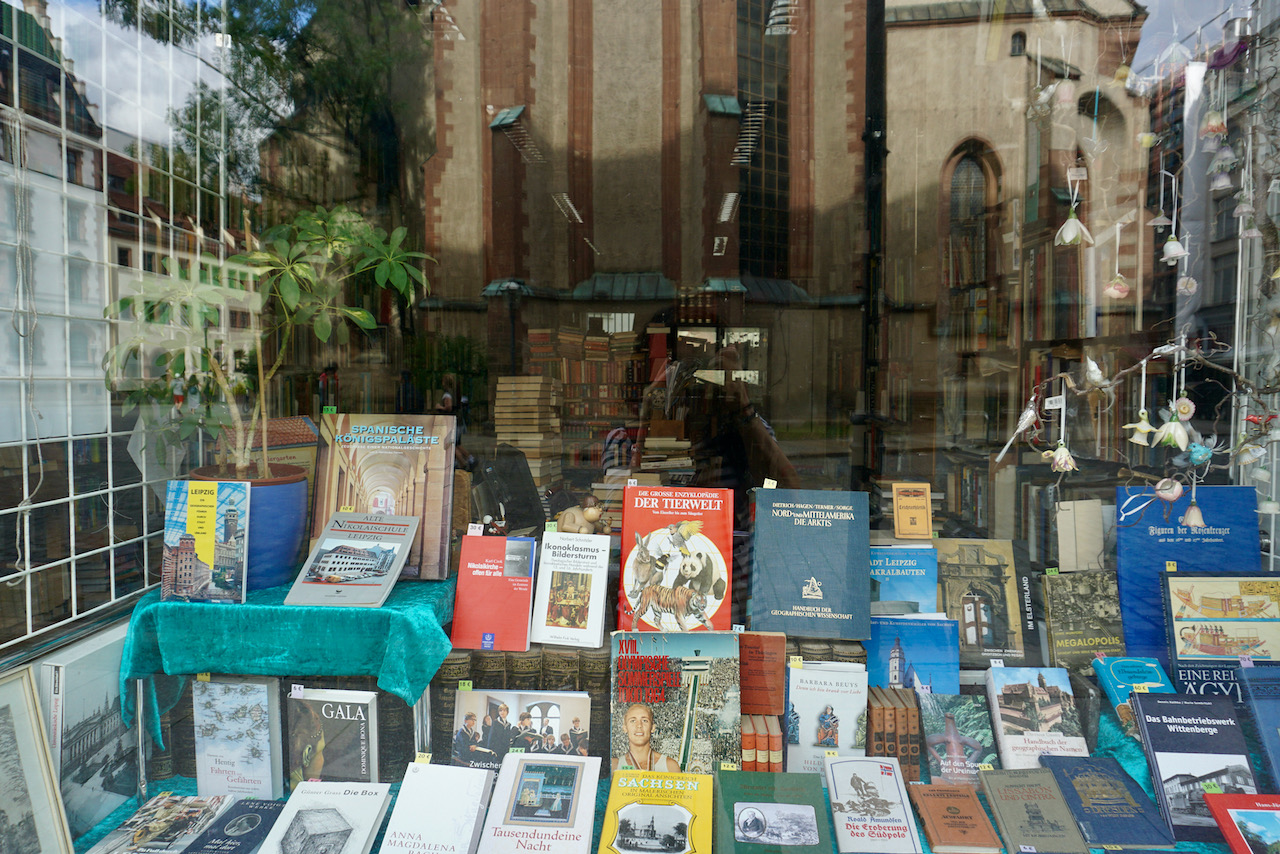
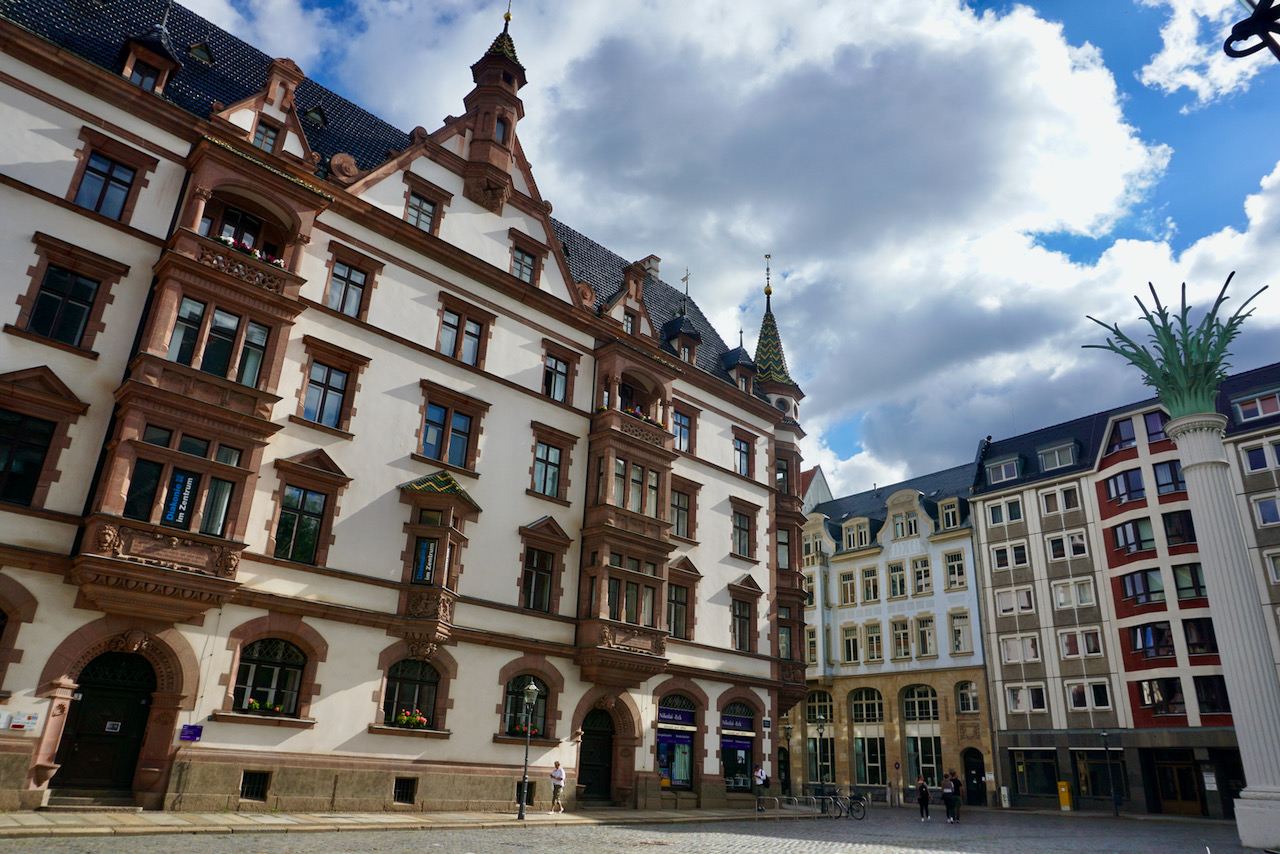
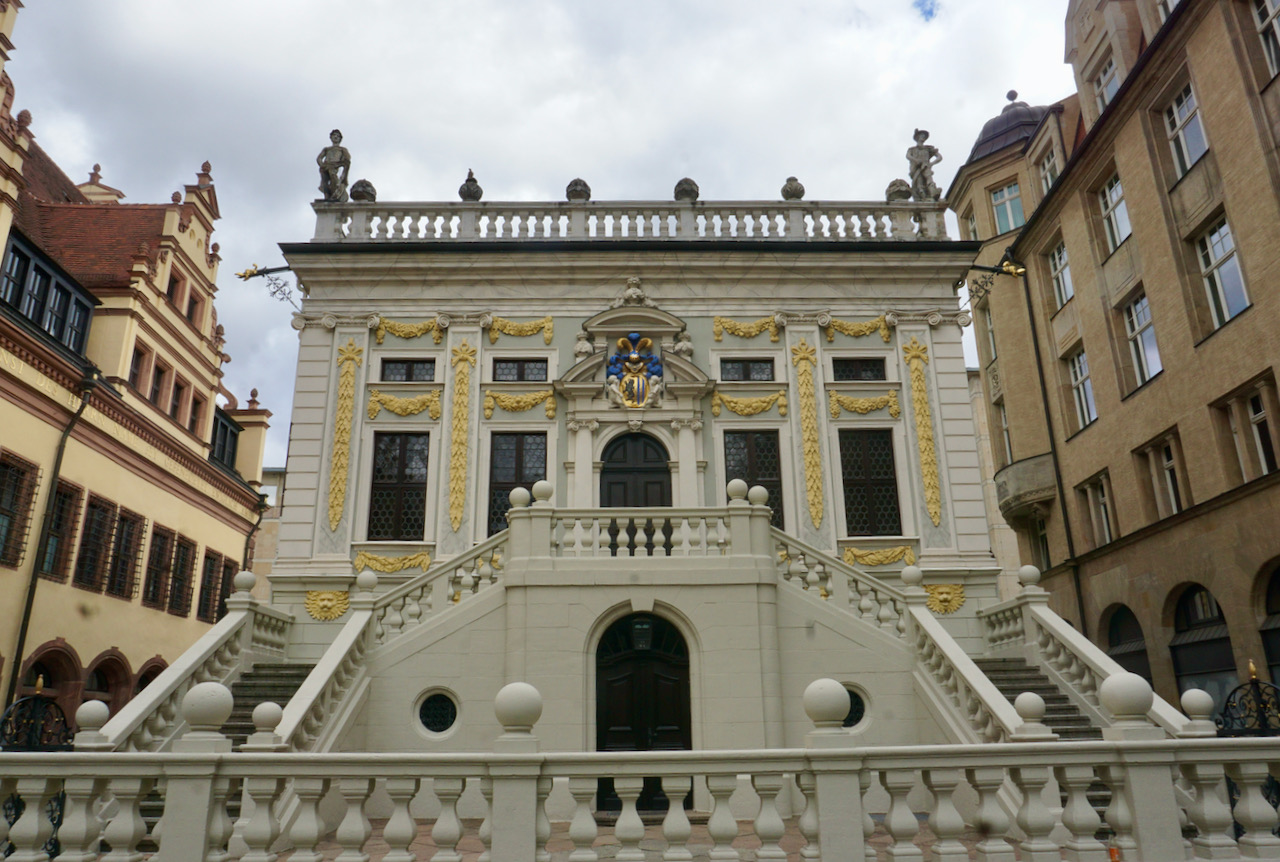
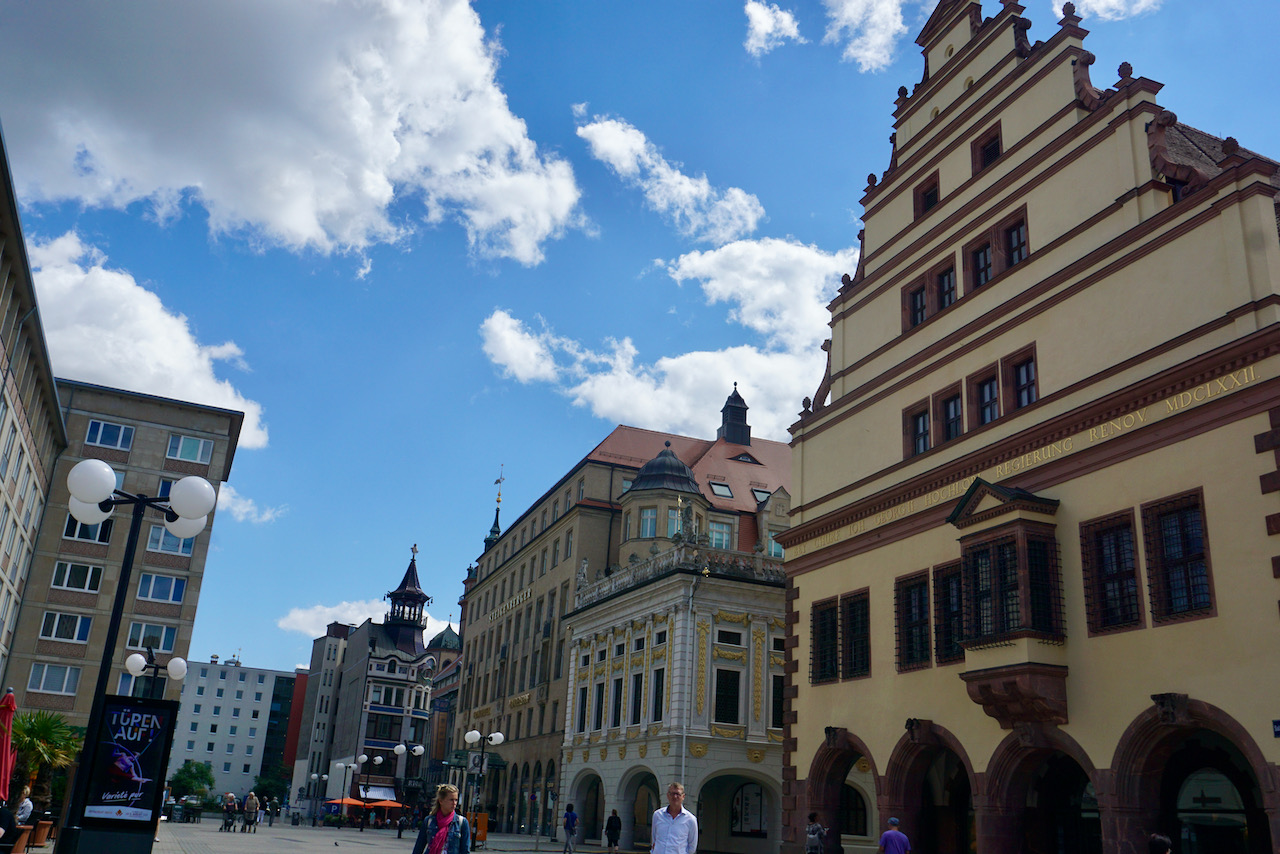
Located in the state of Saxony, Leipzig was first known as a merchant town in the Middle Ages. It later became the centre of East German life after the Second World War, and is now a home for history and culture, telling a story a thousand years old. It’s an hour and twenty minutes from Weimar on the regional train (no changes) and slightly faster with the ICE train (but there’s a change in Erfurt). A city of 600,000 people, Leipzig made for a nice change of pace and far broader food choices.

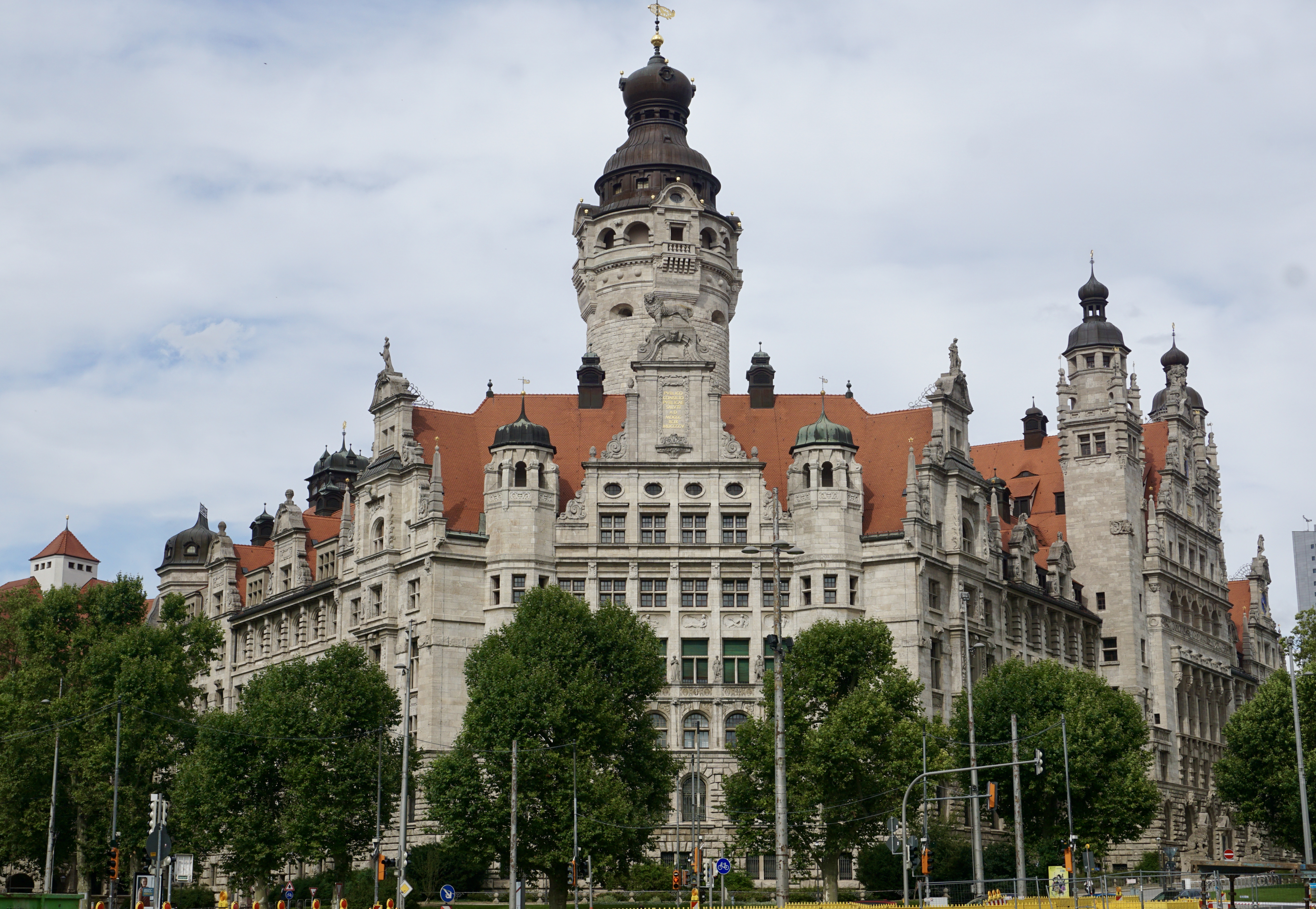
I left early and arrived just after 9am, which gave me time to get a coffee and something to eat before joining the free walking tour (I have so many good things to say about this in so many cities). It’s always a pleasure to wander, but wandering becomes something different when you know what you’re seeing. I will not relay the history of Leipzig here, but I will say that much of the old town has been reconstructed because two-thirds of it was destroyed during the war.

Leipzig University is a good example of the story architecture can tell. There was once a church here, the Paulinerkirche, which was destroyed in 1968. The reconstruction pays homage to what was while honouring the different values university communities often hold today.

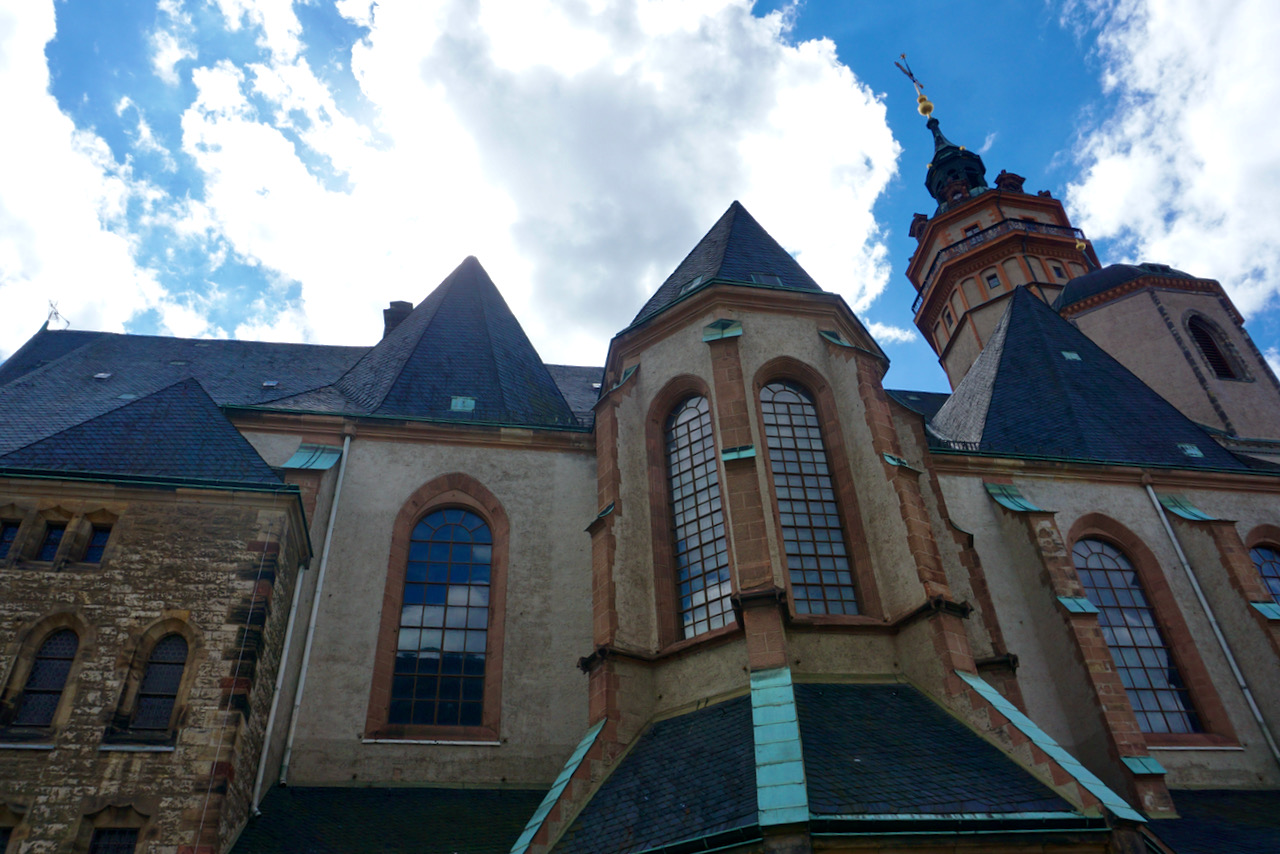
Another prominent church is Nikolaikirche, which I came across on my own before our tour guide explained Leipzig’s experience as part of the German Democratic Republic (former East Germany). It made my heart soar when I first saw it, and even more so when I learned that this church was the site of the peace marches that signaled the end of communism and the beginning of a new era of life and politics. I have a great appreciation for any religious community that stands for what it preaches – justice, peace, and a better world for us all.

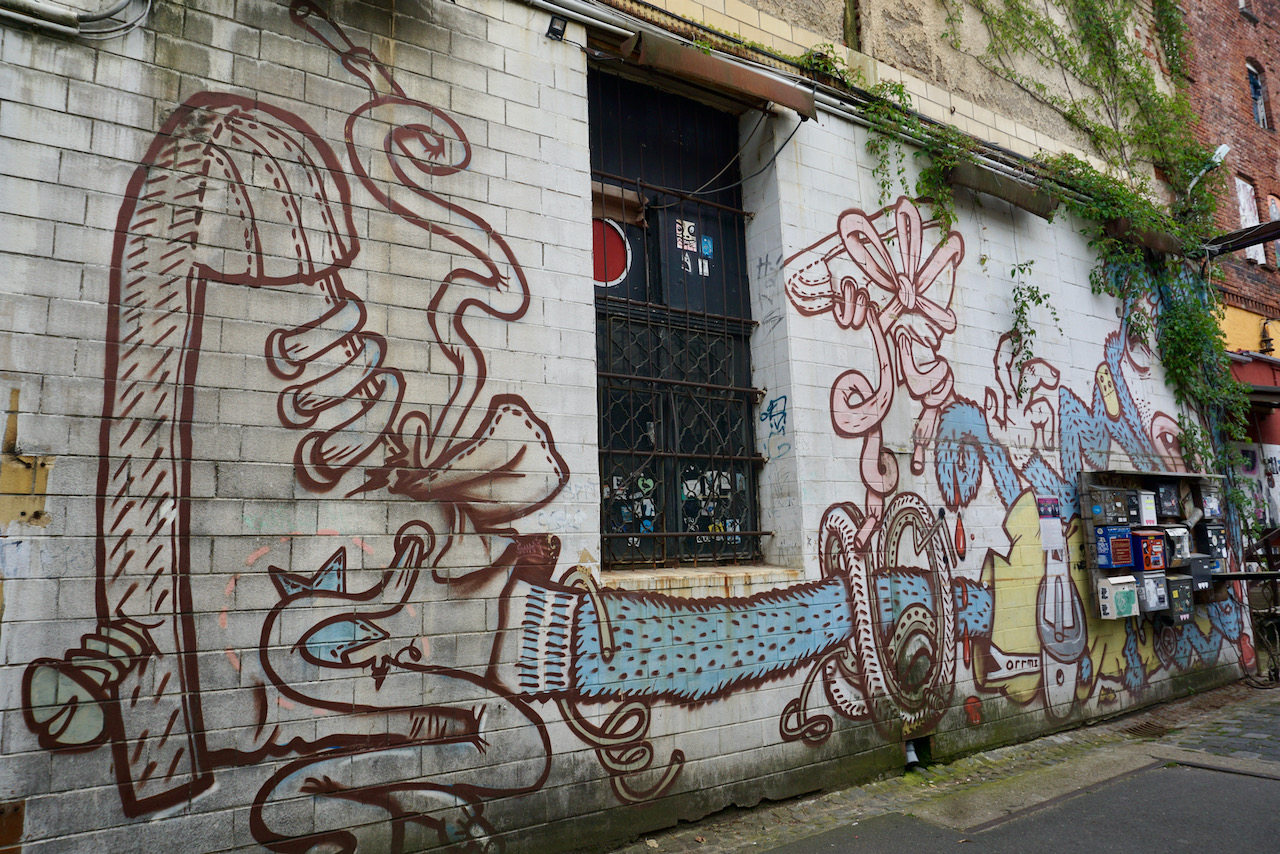
This mural tells the story better than I can:

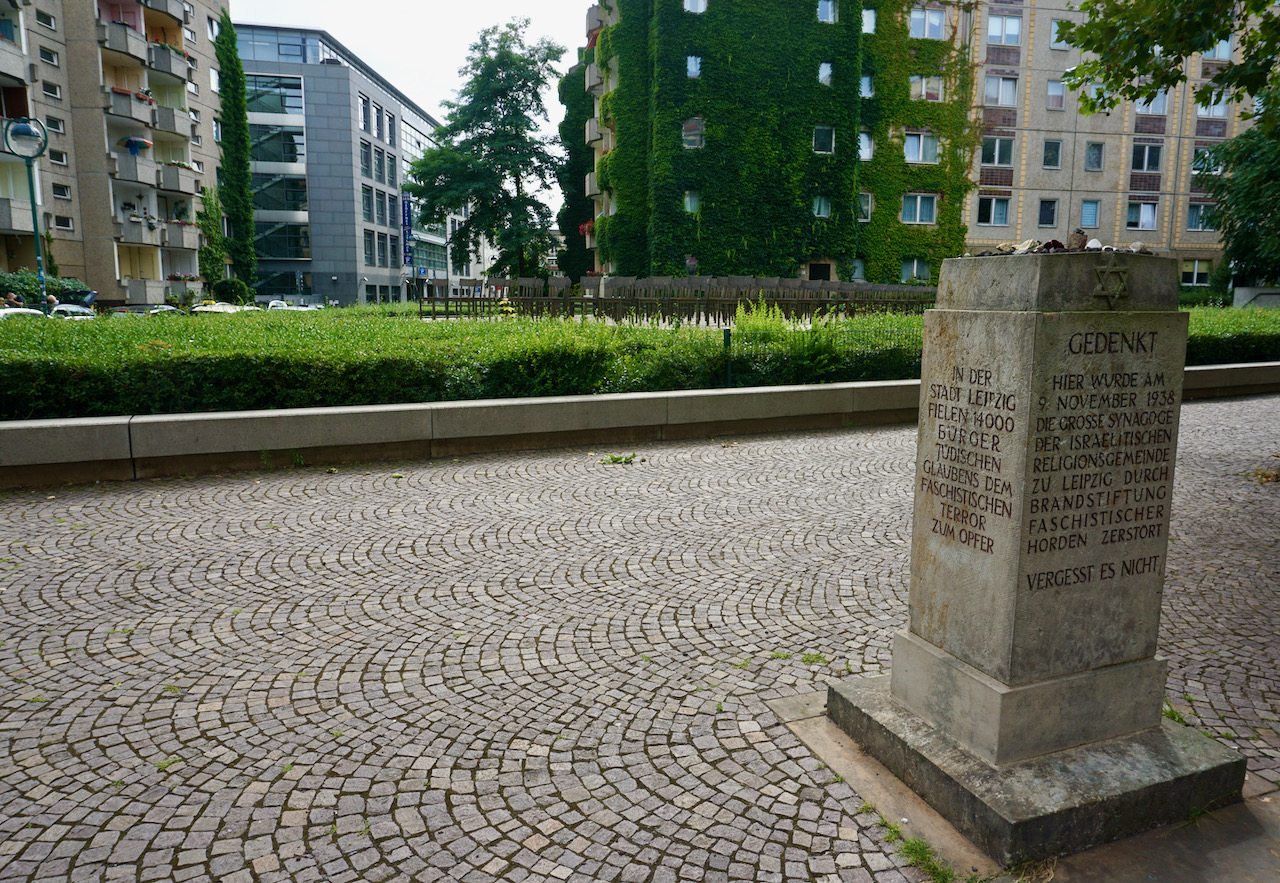
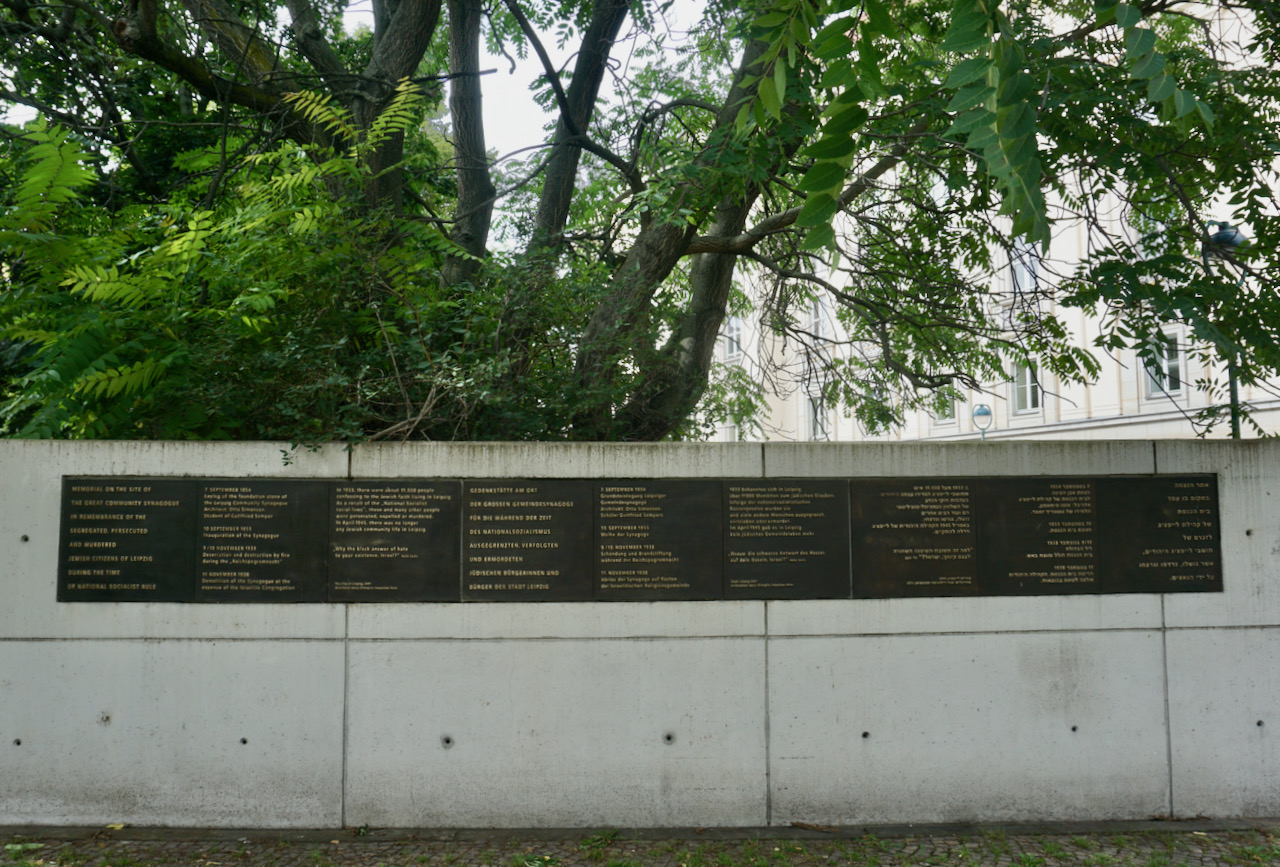
Through a discussion with the tour guide, I learned that Leipzig has the largest Jewish community in central Germany and that there is also a tour of Leipzig’s Jewish history. I will have to return for this because it’s only offered once a month, so in the meantime I walked over to the Holocaust memorial. Situated on the site of the old synagogue, this memorial brought to mind not masses, but individuals. The modern restaurants and apartment buildings surrounding it demonstrate what I continue to find the most fascinating aspect of humanity – the world turns and life goes on.

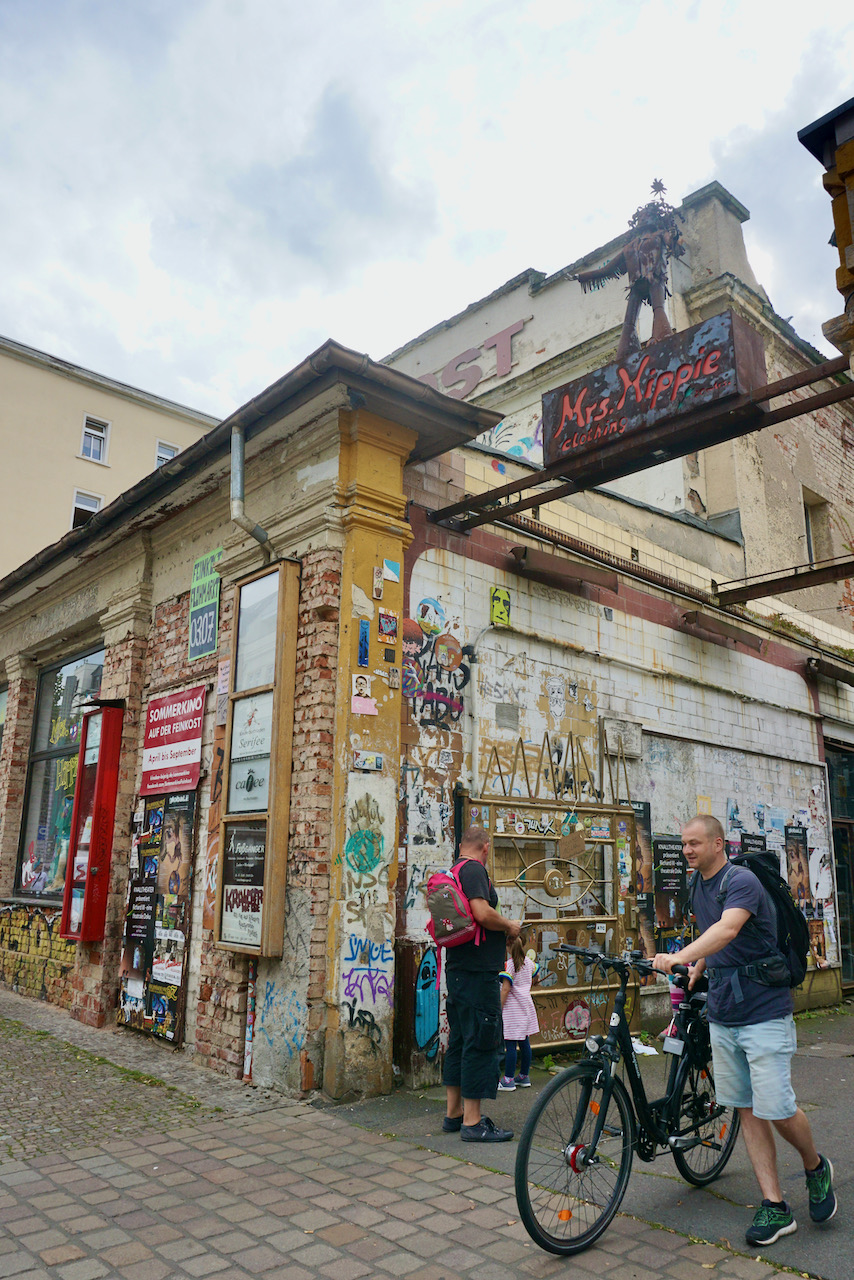
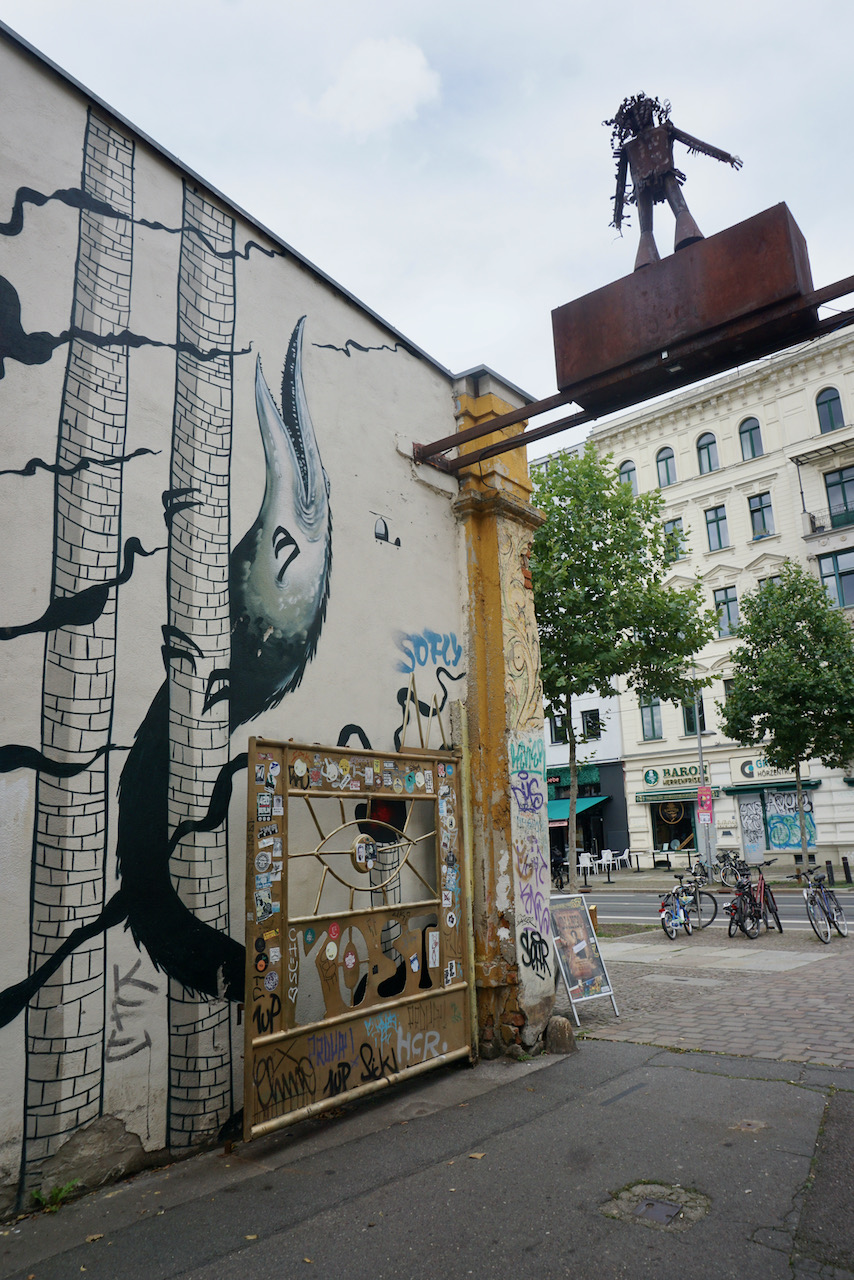
Later in the afternoon, I walked south into a neighbourhood called KarLi, nicknamed for its main street. It did not surprise me that this is where many students live. Students have a way of developing areas to suit them, or perhaps it is the neighbourhoods themselves that have called students there. I currently live in a student neighbourhood and while my annoyance at their penchant for late hours is a clear reminder that I have left that world behind, I am grateful for the positivity, energy, and spirit that comes from being young and imaginative. These are, after all, the people who make the world go round.
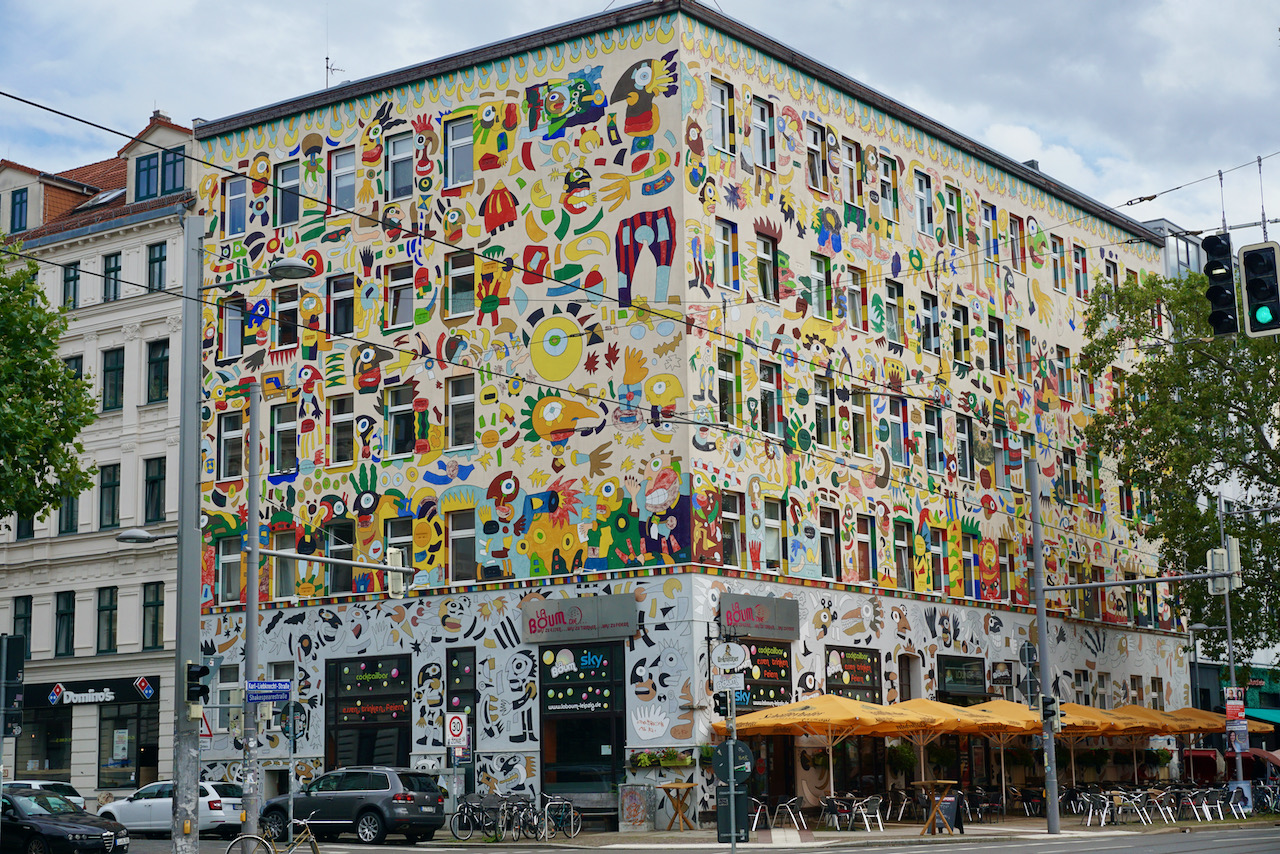
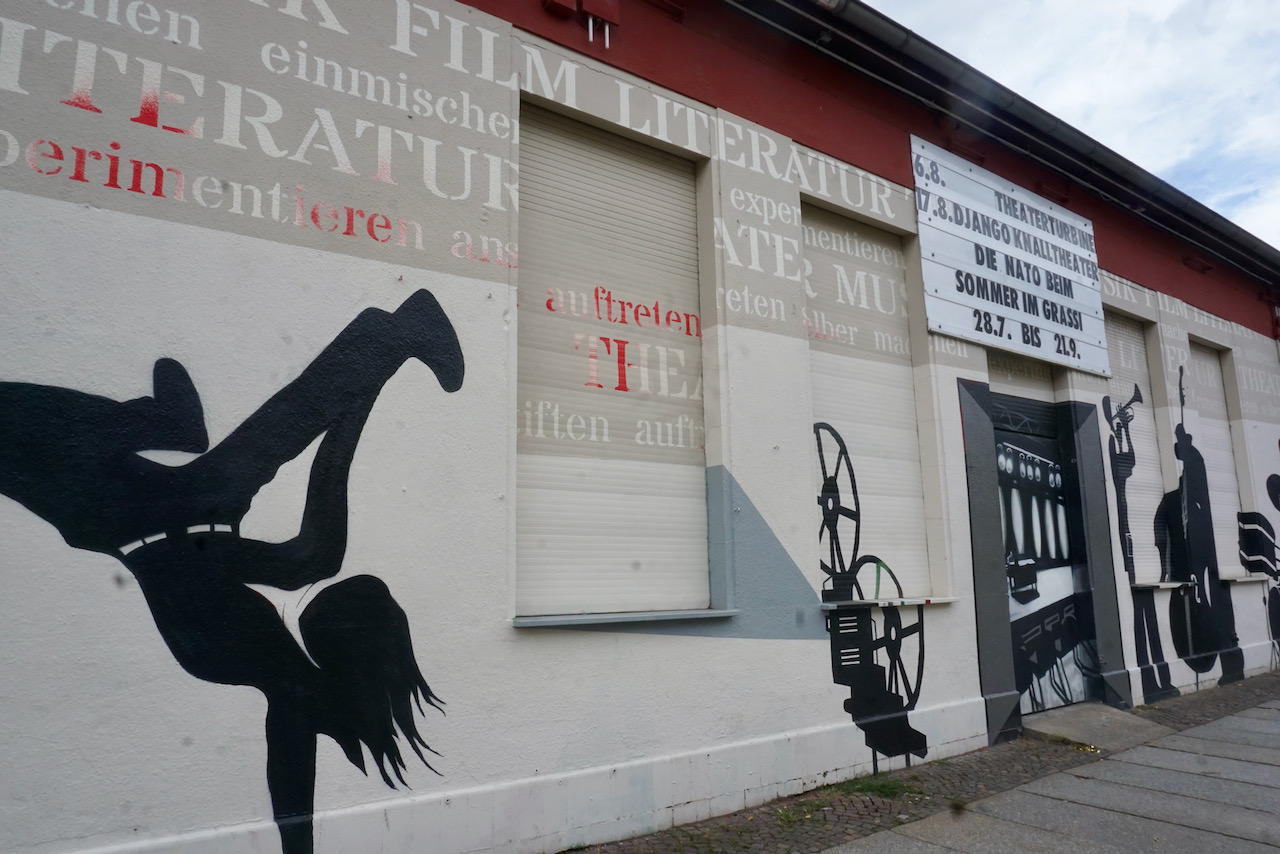
I saw many examples of activism throughout Leipzig and that was heartening. There’s a lot to be active about right now, and while I’m aware that actions speak far louder than words, most actions begin as words. Even a whisper is better than standing idly on the sidelines.

My time in Leipzig lasted just over 24 hours. I was glad to be around more people, hear more languages, and taste different food. I appreciated the time in a new place, the ease of travel, and the excitement of learning something new. Leipzig is just down the road and there’s a literary festival in March – I suspect I’ll be back.

Jewish in Germany

I can count the number of times I’ve cried during prayer. Before Friday night, that number was one. At a Yom HaShoah (Holocaust Remembrance Day) event when I was in college, we said the mourners’ prayer aloud, which I had never done before. The mourners’ prayer is recited by those people Judaism strictly defines as mourners, and then only under certain pre-conditions. To say this prayer was to move our remembrance in a direction I had not been before and have never forgotten. Until Friday night, that was the only time I’d cried during prayer.

Last Friday, I went to Erfurt, the city (population 214,000) nearest my small town (population 65,000). Erfurt is home to the only synagogue in the state of Thuringia. The presence of police were the first clue that I was in the right place, and it was only then that I noticed the Hebrew words and large Jewish star above the door. A couple was sitting in the park across the quiet street, the man wearing a kippah (or yarmulke if you prefer, though that spelling has never made any sense to me).

I sat on a nearby bench and waited. When they got up, I followed them inside. I gave my name and some general information to the elderly security guard who clearly knew everyone who was expected that evening; their names were on a list in front of him and he crossed them off as each one arrived. He pointed me towards the rabbi, with whom I’d exchanged emails the previous week. We talked for a moment and then he offered me a siddur (prayer book) with translations in German or in Russian. I’d been told that most of Erfurt’s Jewish community is comprised of Russians who left Russia around the time it became Russia. The small Jewish day school I attended as a child was much larger in the mid-nineties for the same reason.

In the few minutes before services were due to begin, elderly men talked to one another, some in German and some in Russian, others switching back and forth. One man read a Russian newspaper. The few women chose seats in one of the two reserved sections and some of them smiled at me. I wondered at the worlds these people have seen, to have come from wherever they came from, and the forces of the universe that brought them here, to the most unassuming shul I’ve ever been in. Three white walls, one blue wall, decorated windows, large wooden benches, the Ark where the Torahs are kept, the Ner Tamid (Eternal Light) that I always take a moment to look at where it hangs, as always, above the Ark.

The rabbi told me he’d announce the page numbers and he did, in German and then in Russian. But I didn’t need the announcements. It seemed like no one did. There’s a regulars crowd at every shul and this was clearly it. All of the prayers were said in the order that I know, as they always are. The beauty of Ashkenazi Judaism is that I knew all the variations of all the tunes, as well. I knew this to be true as soon as the first page was announced and the singing began.

And I knew some other truths, as well, as soon as I started to cry.* The tears surprised me, and the welling in my throat while writing this has surprised me.

Had you told me, at any prior point in my life, that I would be in a shul in Germany davening Kabbalat Shabbat, praying to welcome the Sabbath, I would have laughed. Had you told me that I would be in a shul here in Germany davening Kabbalat Shabbat and that the first moment of prayer would have brought tears from a reservoir I didn’t know I had, I would have given it a moment’s thought, looked for the place these tears came from, and concluded that it didn’t exist.

I would have been wrong.

When I spoke to the rabbi after the service, he understood what I was trying to say. He filled in “here in Germany” before I got to it.

Yes, here in Germany.

Before I moved here, my mum lamented that it had to be here, Germany. My sister had only good things to say about her travels and my brother had only the opposite. My grandparents likely had opinions but kept those opinions to themselves. My surname is German, as I keep being told. My family is not. It takes so little time to explain that here, far less time than it has taken anywhere else. I am living in a town that has tiny historical signs across the street from buildings that Hitler built, both to educate and inform and to prevent bad actors from demanding these places. I am living in a town that has a park dedicated to witnesses of the Holocaust and that’s all that each massive portrait of an elderly man or woman says: Zeuge. Zeugin.

Yes, here in Germany.

Knowing this, I stood in shul and, during the first moments of prayer for the second time in my life, I cried.

*Just to paint a picture that will properly capture this moment in time: I was crying while trying to sing and I was wearing a medical mask, as required indoors in Germany during the Covid-19 pandemic that has now stretched on for a year and a half with no sign of letting up. This left me reluctant to remove the mask to wipe my eyes and blow my nose lest I look ill. I was a guest, after all! I thought of comic strips and couldn’t help but laugh inwardly.