Category Archives: Germany

Stumbling Stones

Several weeks back, I looked over the notes I took years ago as my grandmothers regaled me with stories of our extended family history. I looked over the family tree that my grandmother’s cousin, who I’ve never met, had painstakingly put together, complete with full names and the dates and locations of births, marriages, and deaths. Somehow, the story feels different on this side of the world.

One evening heading home from climbing, an American friend asked how my family had responded when I said I was moving to Germany.

Later, a German friend told me he had been wondering that, too, but as a German, never would have asked. He walked with me through town and pointed out buildings the Nazis had built and used as offices. A small sign, so nondescript that it’s easy to miss, explains it. No fanfare.

It took several weeks of lessons before my German teacher told me she had been afraid to ask about my family history after learning my name for the first time.

My history students and I are studying the period of European diplomacy between the World Wars and it hasn’t yet come up that I’m Jewish. It might. What is obvious is the depth of understanding these young people have about propaganda, hate speech, power, victimization. They do not take today’s world for granted because they know what it cost.

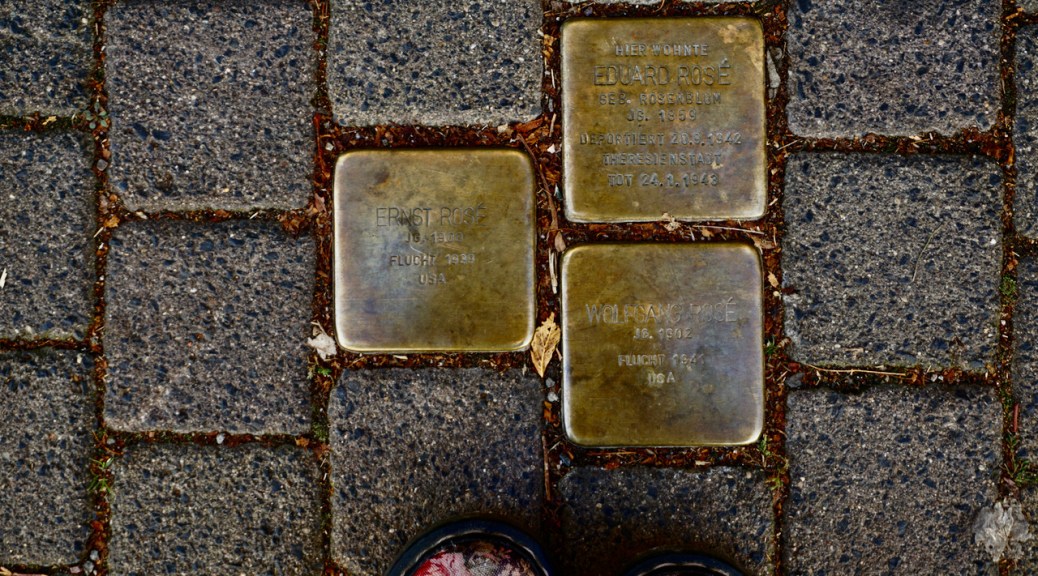
Yesterday I photographed the first stumbling stones that I saw when I arrived here. Before I knew what they were. Before I knew how they got there.

Hier wohnte. Here lived.
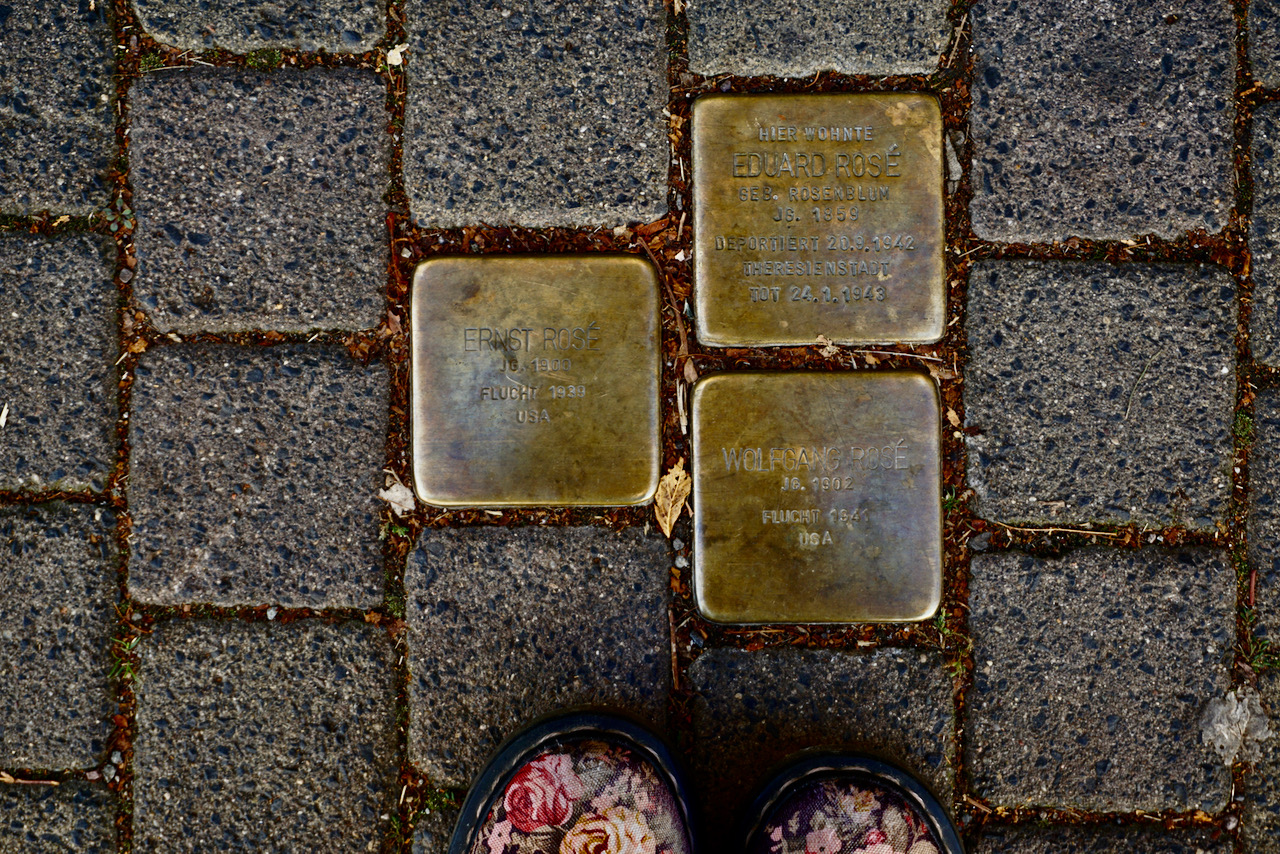
Here lived.

Hier wohnte.

As a memorial, the stumbling stones, or Stolpersteine, are not without controversy. (Is there such a thing as remembrance without controversy?) As of December 2019, 75,000 Stolpersteine had been placed in Germany and they are in other countries, too. But not everyone agrees that accidentally tripping over a stone and then recognizing its significance, even if it forces you to kneel before the victim, is dignified. I can appreciate the disagreement because it means that people care. They care enough to argue about the best way to honour lives taken.

It is one thing to be steeped in history. It is another thing entirely to learn from it.

Do you not know that a man is not dead while his name is still spoken? – Terry Pratchett, Going Postal

Zwiebelmarkt

Before accepting a job in Weimar, Germany, I looked it up on Wiki Travel. (I didn’t do this until after moving to Seremban, Malaysia and, well, if the only thing Wiki Travel has to say is that your town is near the airport, I wouldn’t suggest moving there.) I knew the basics of Weimar – home to the Weimar Republic, after all – and there were a variety of other mentions that caught my eye, one of which was the Onion Market. When I arrived, locals and expats alike told me, “Let’s just hope the Onion Market is on this year.”

A few changes due to Covid notwithstanding (no Queen of the Onion Festival, no pre-dawn opening, only four stages with live music instead of ten, a manageable number of visitors rather than the 250,000 that usually flock to this town of 65,000) it was!

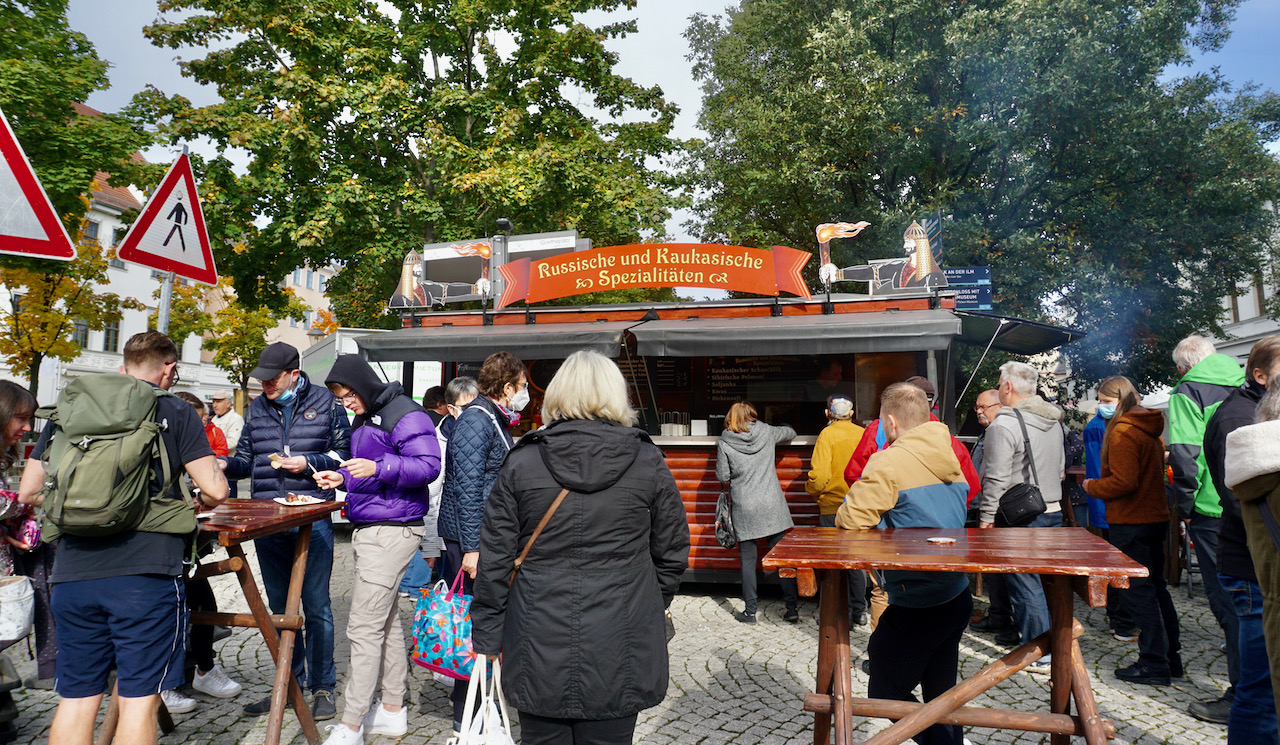
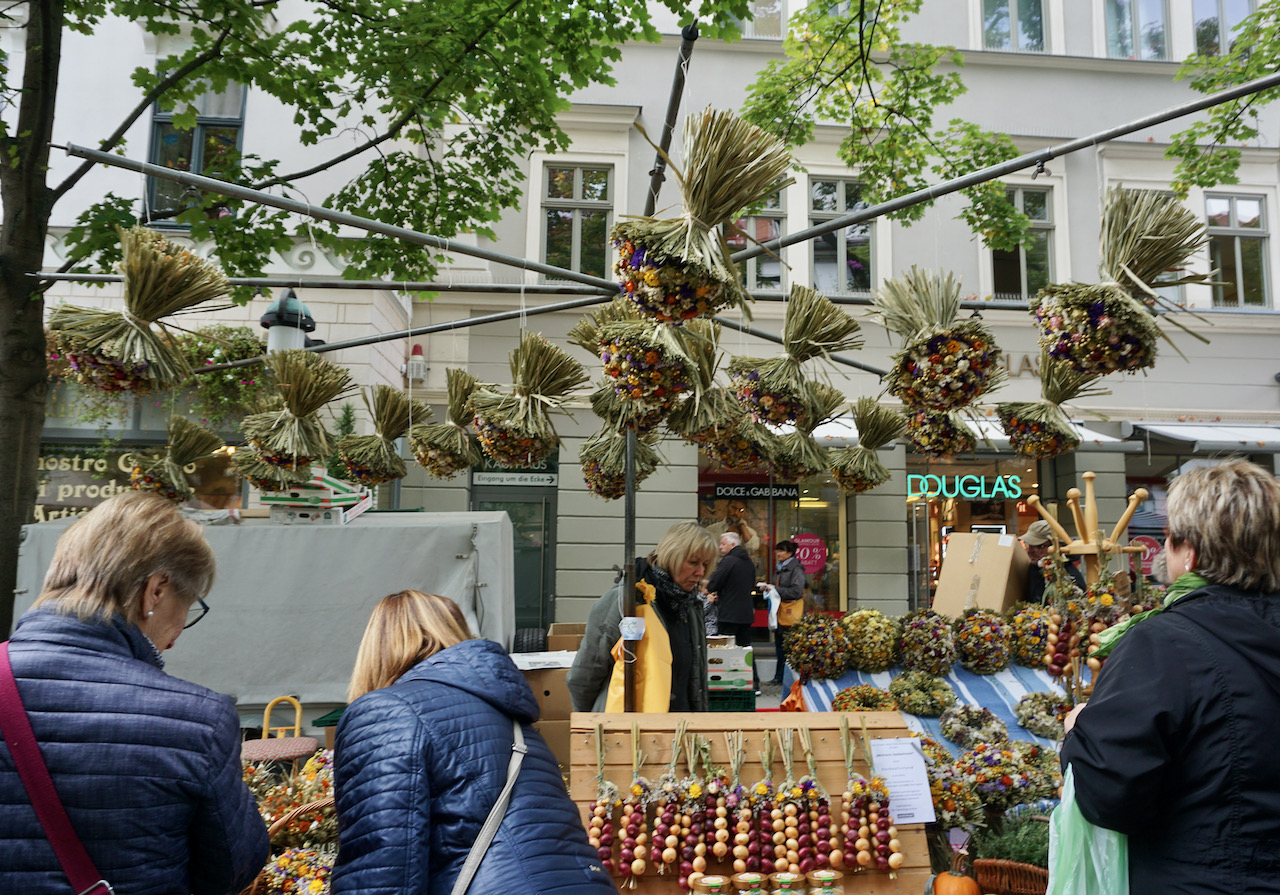
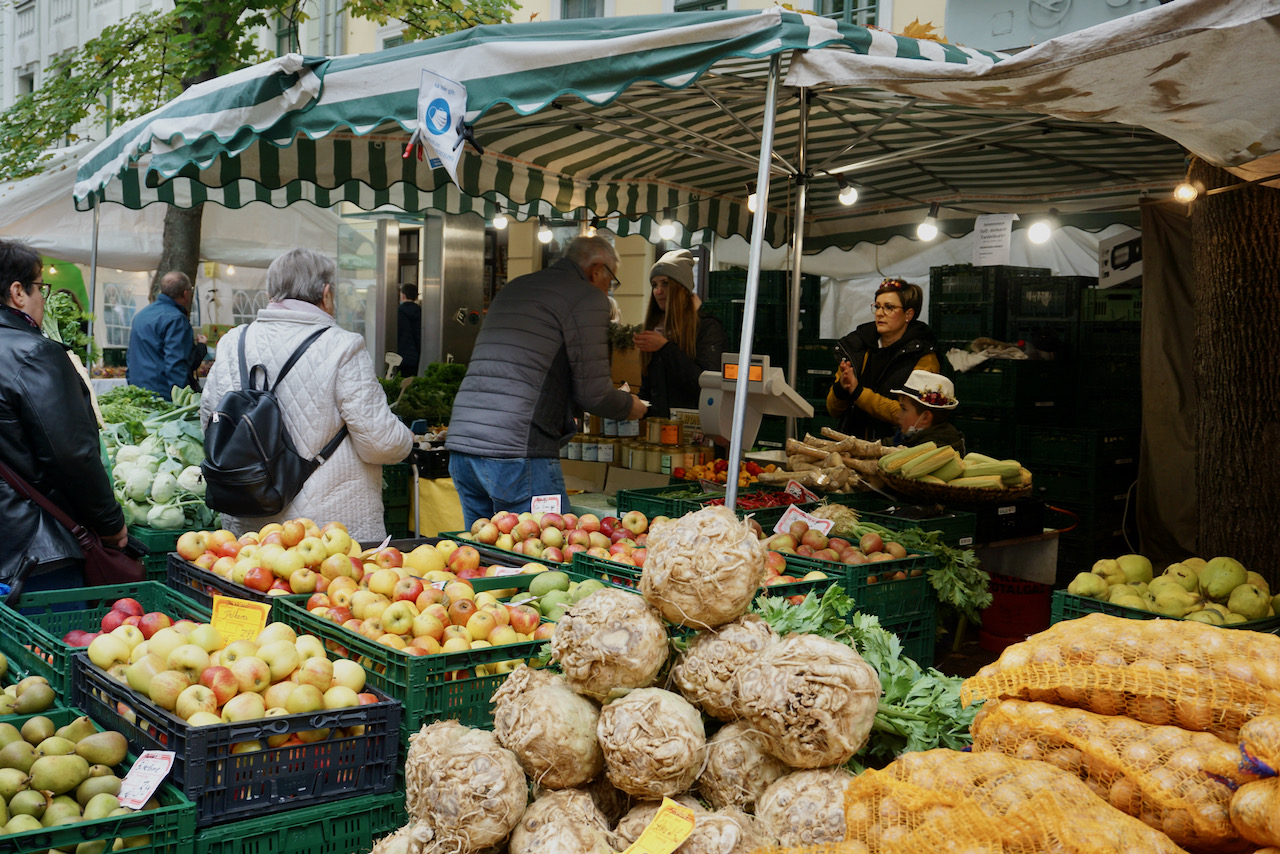
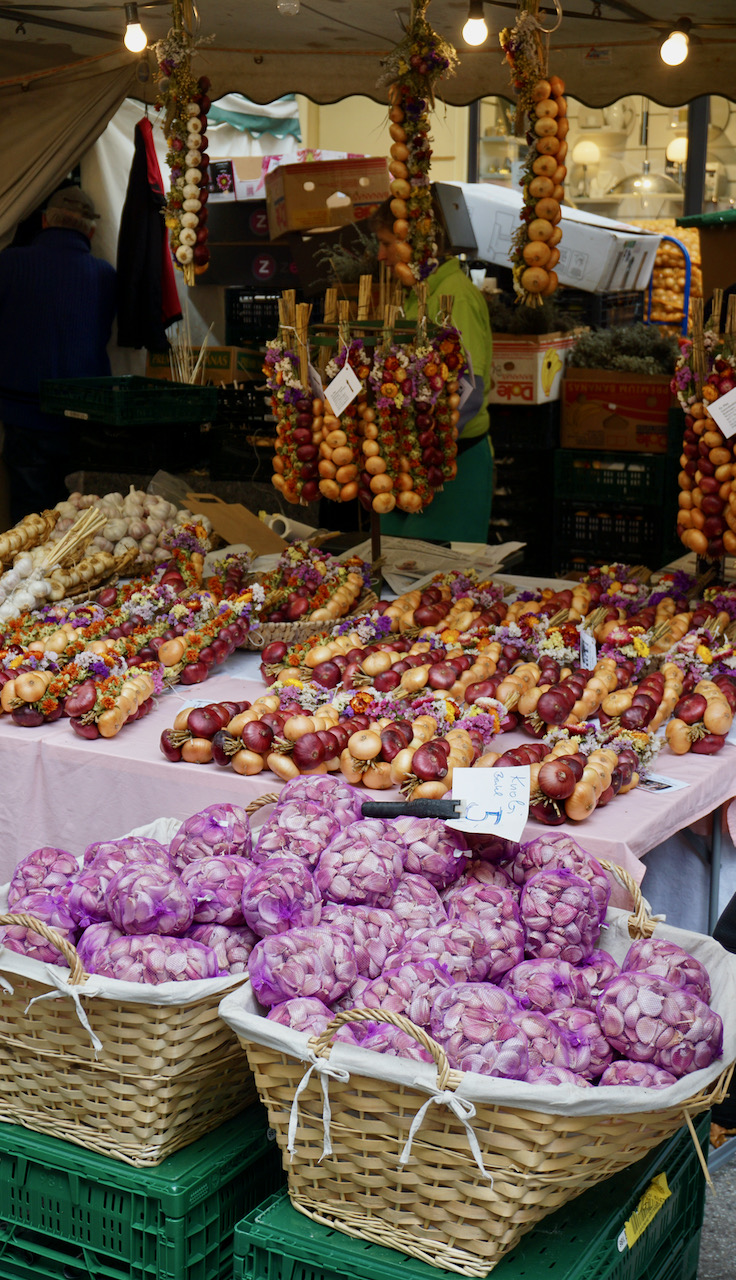
Zwiebelmarkt was part food festival . . .

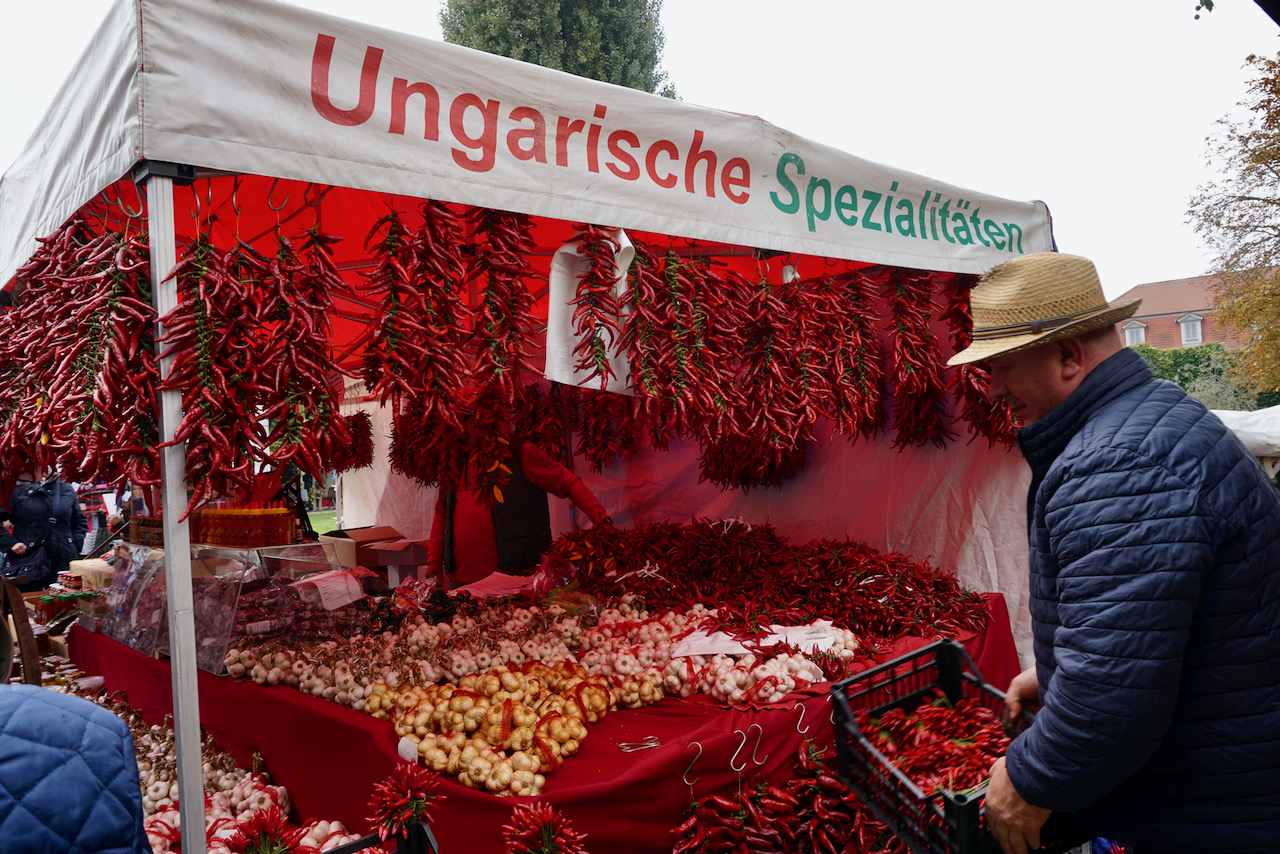
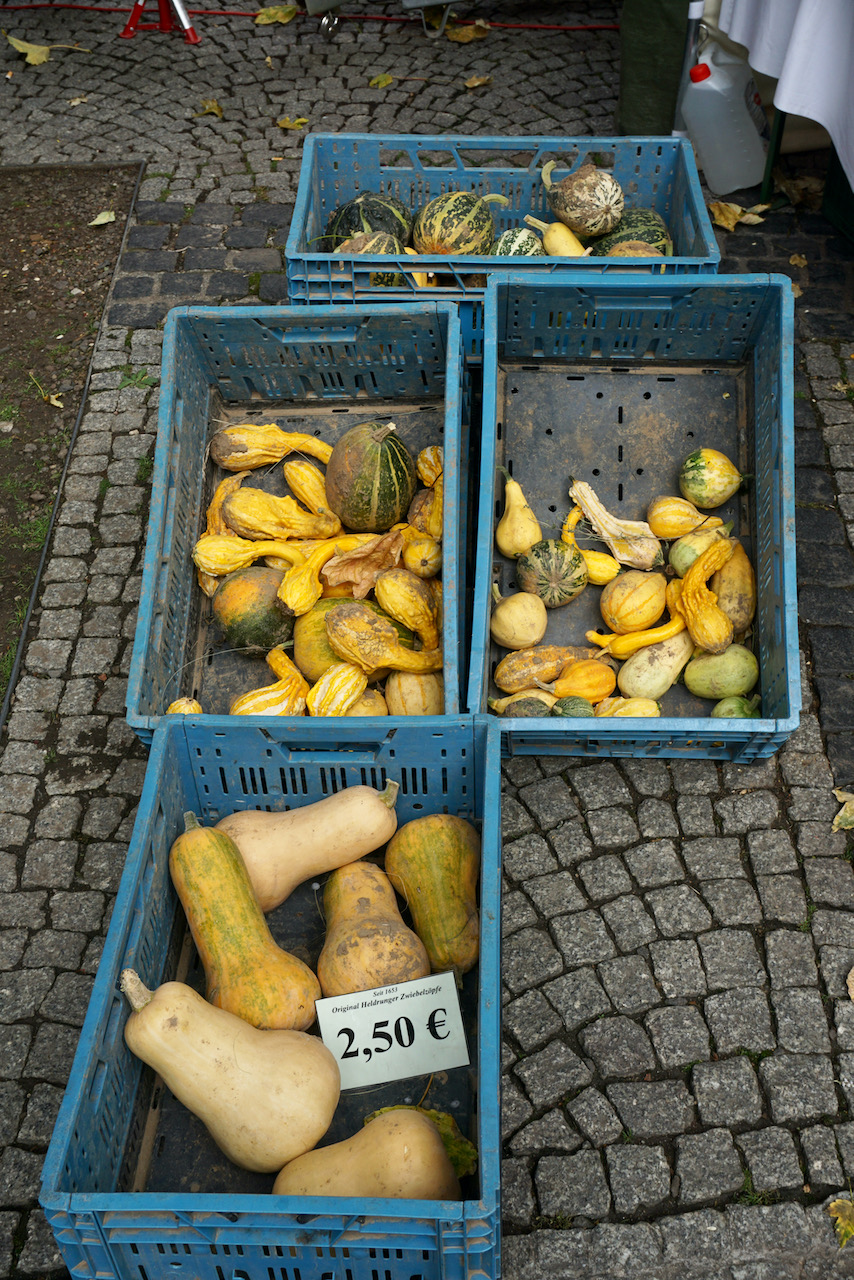
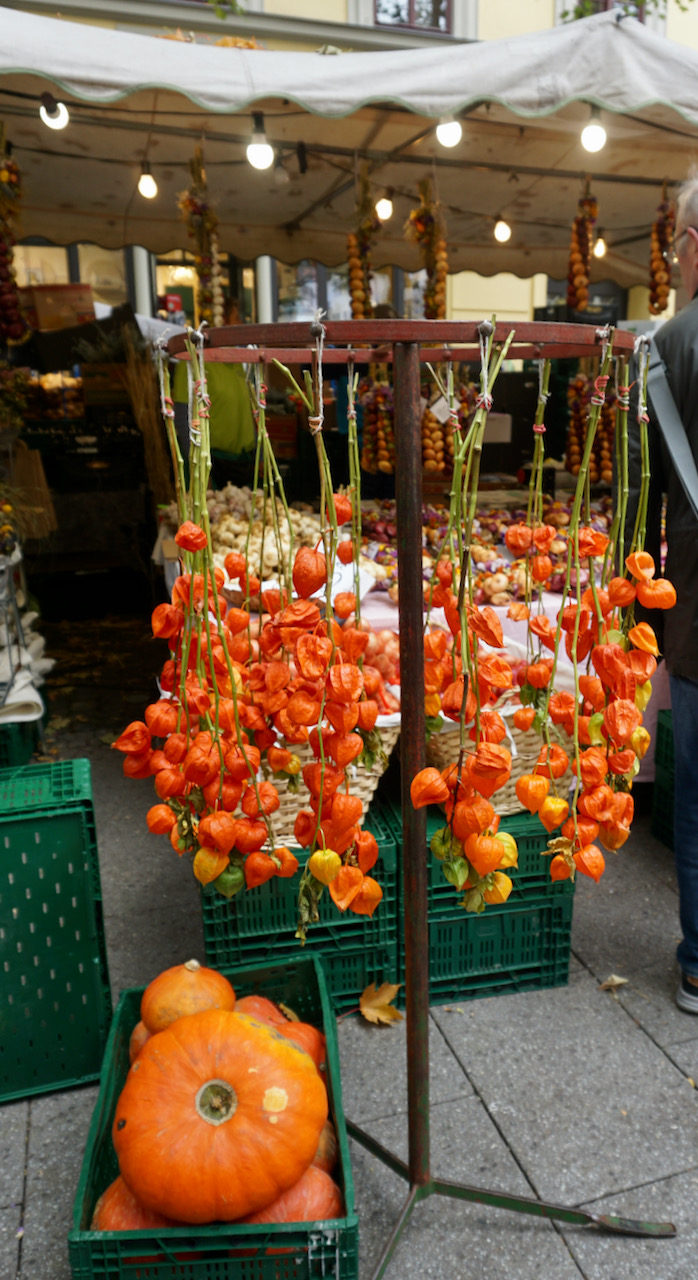
. . . and part harvest festival (I made my way to several farm stalls before it got too busy) with specific attention given to onions, which I will never see the same way again.

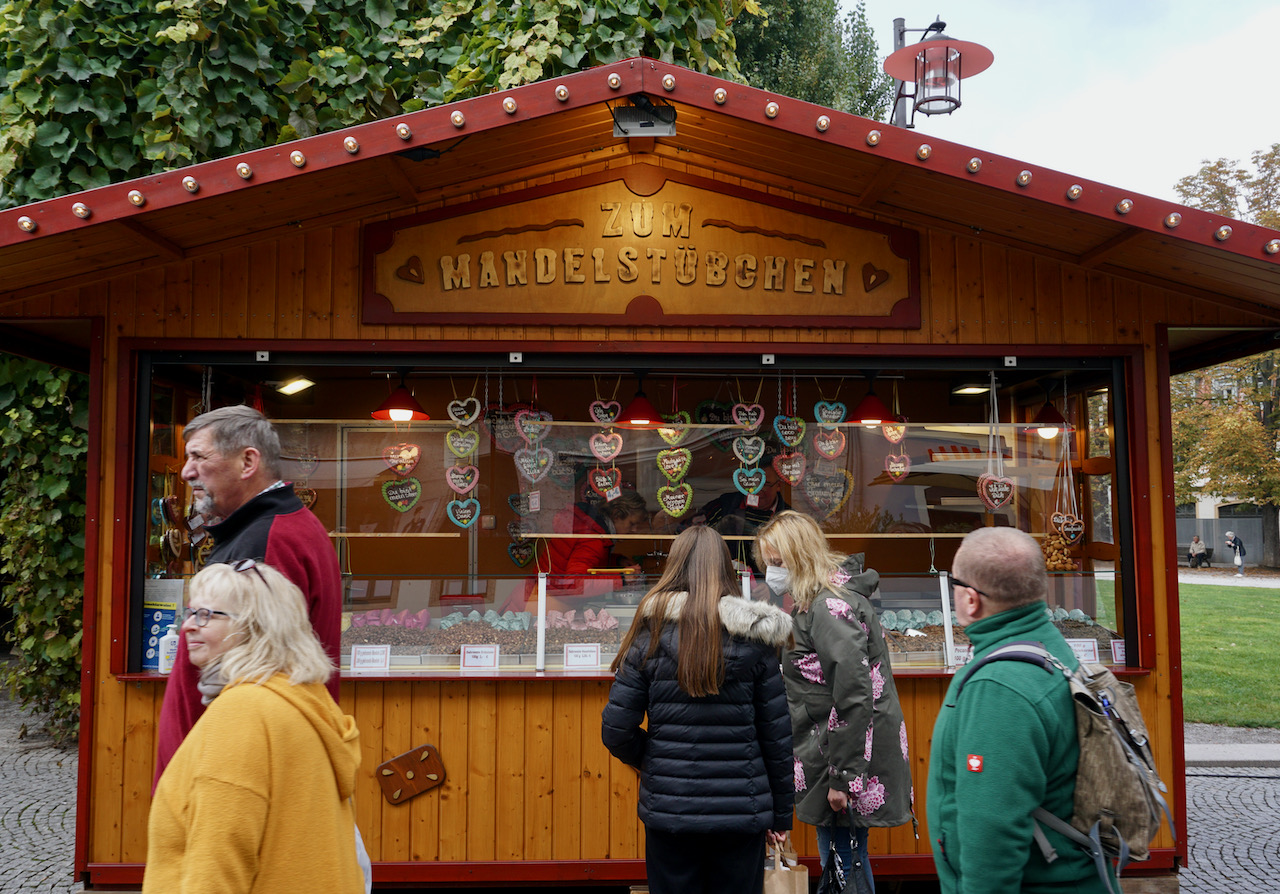
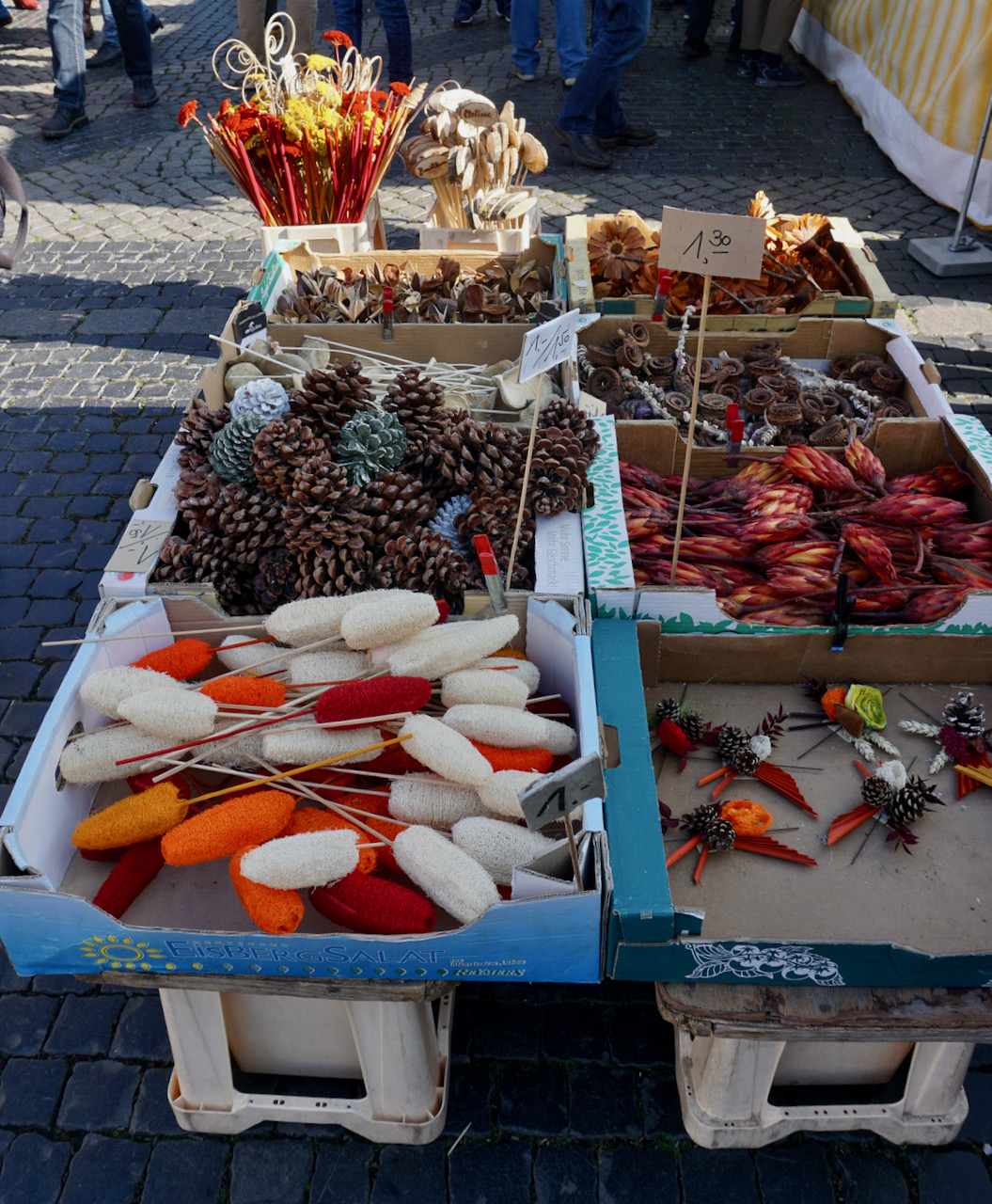
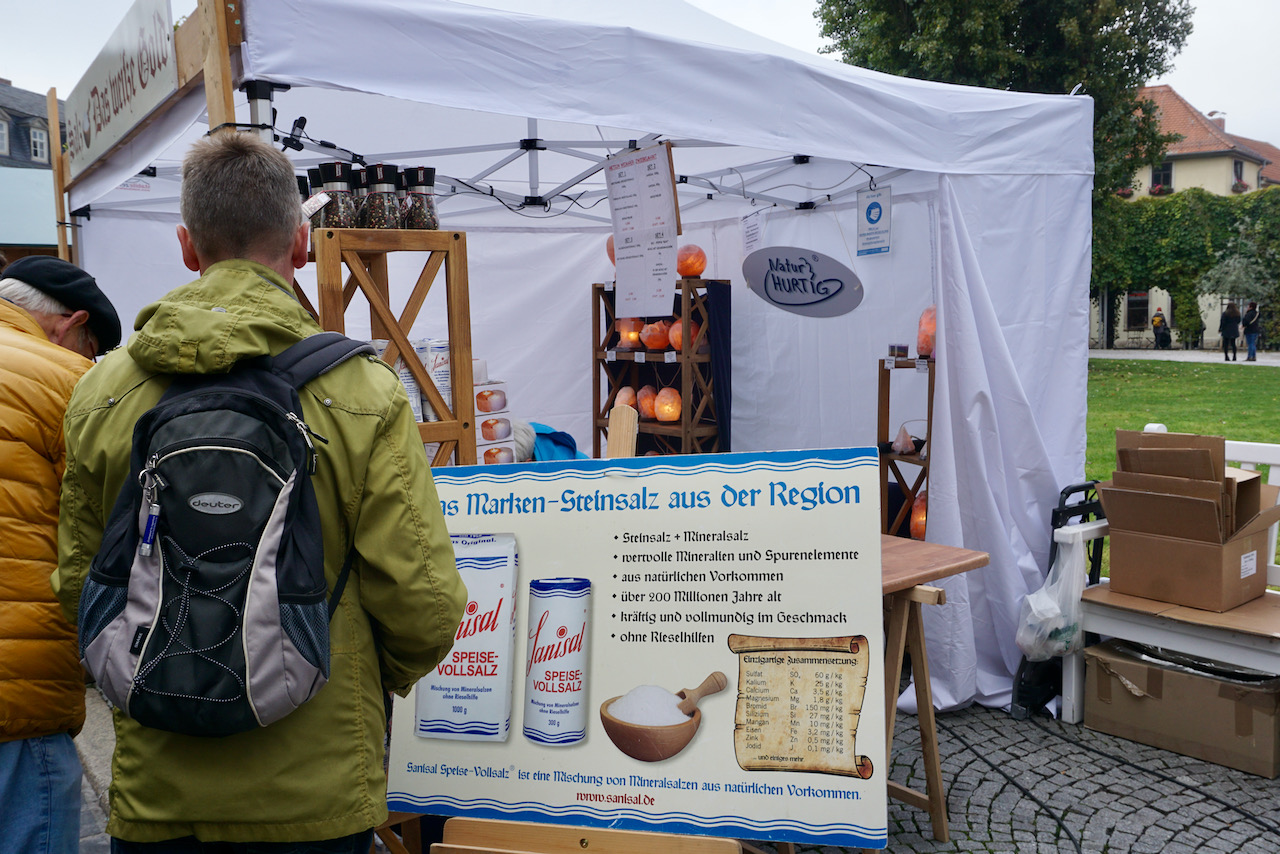
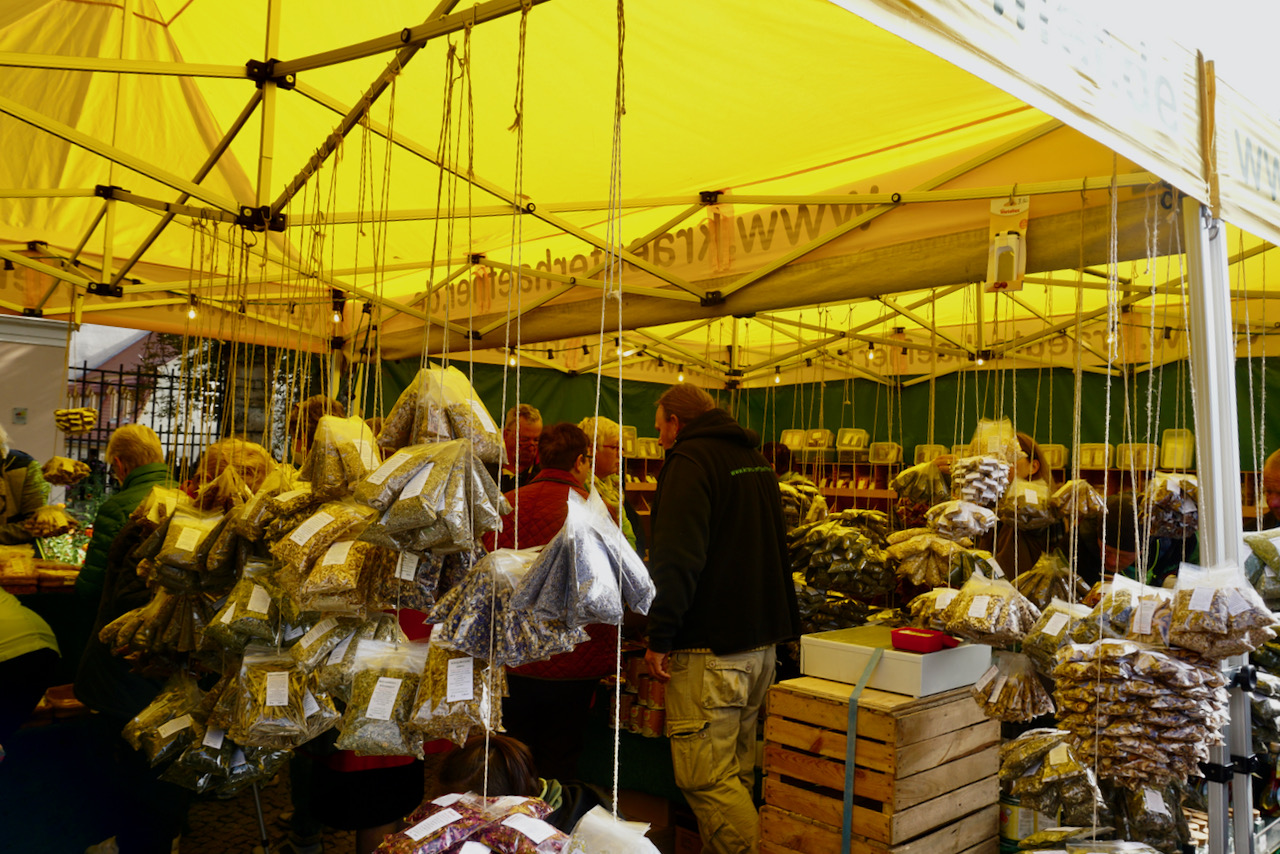
There were opportunities to buy onion-themed gifts and other household items (my contributions to the regional economy include a bouquet of dried flowers and a couple packs of spices) . . .

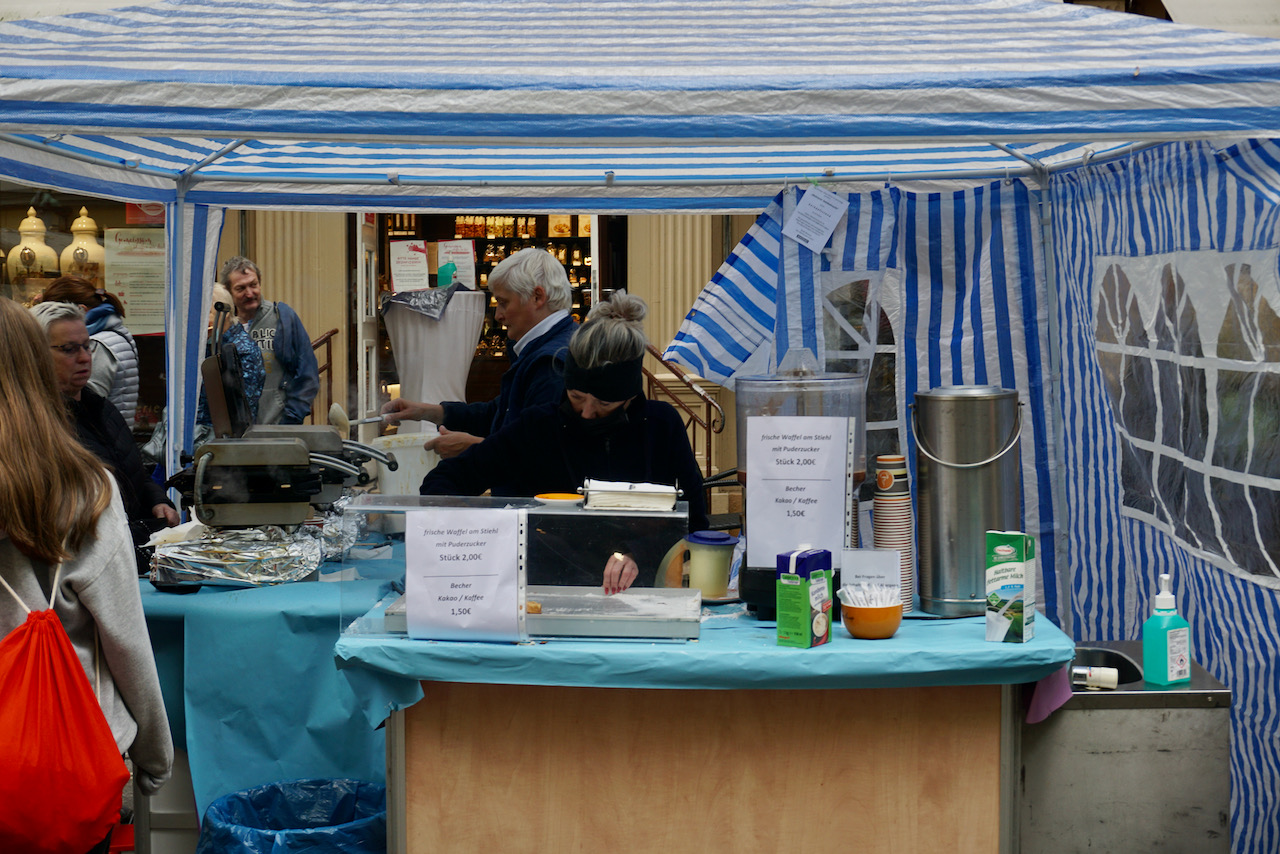
. . . and opportunities to sample onion-based foods. I can vouch for Zwiebelkuchen (onion cake) and Zwiebelsuppe (onion soup).

There were performances, too, of both the musical and circus variety, as well as a special carnival area for children, which was not too far from the medieval fair where some really fun bands played.

“Why did you choose Weimar?” a Weimar native asked as we drank beer and wine, sang along to Incubus and Radiohead covers, and used her sky app to find Jupiter and Saturn.

Many reasons. I can’t honestly say that onions were taken into consideration, but I’m glad they have become part of this experience.

Don’t stop your bike with your chin

Oops. The road was wet and I came off my bike. Split my chin open. Spent about four hours at the hospital getting seen, stitched, CT’ed for the pain in my jaw, and seen again. Not the way I planned to spend my Tuesday night!

But I learned a few things worth noting:

  1. People here are kind in an emergency. Two of my colleagues were very close by, one in a car and another on a bike, and they both stopped immediately to help. One found a pack of emergency tissues in my backpack and brought my bike back to school for safekeeping. The other put me in her car, called the school, and drove me to see our nurse. The nurse took one look at me and shouted to another colleague, who drove me to the hospital.
  2. While we were doing some sidewalk first aid to stop the blood dripping from my chin onto my jacket, dress, and tights, several strangers asked if we needed help. Two were children on bikes and two more were pedestrians who went out of their way to come over to us. This was heartwarming and I thanked those who I could.
  3. Figuring out medical care in another language is difficult. I was at the hospital for around four hours and I spoke broken German almost the whole time. The doctor had taken a Medical English course, she told me, though we communicated mostly in German unless it was obvious that I was lost. It took some gesturing and explaining from the doctor, and guesswork on my part, but I knew what was going to happen before it happened. All in all, the experience was frustrating and tiring for me, but it worked out okay. I was struck by how difficult and scary it must be for immigrants to any country, especially those with no language skills, to communicate in a crisis. I was near tears and I wasn’t even in a crisis! Sitting in the wrong waiting room and staring at the wrong door was a moment of deep understanding, and I will not forget it.

In my frustration, I wrote to a few friends and received encouragement, offers of help, and commiseration in response. “Approach it all like a writer,” one wise woman suggested. And so I have.