This is the first in a series of three posts chronicling my October break trip with my dad. You can read my introduction to that trip here and you can read about my first trip to Bangkok here. The destinations that followed, Hanoi and Hoi An, can be found here and here.
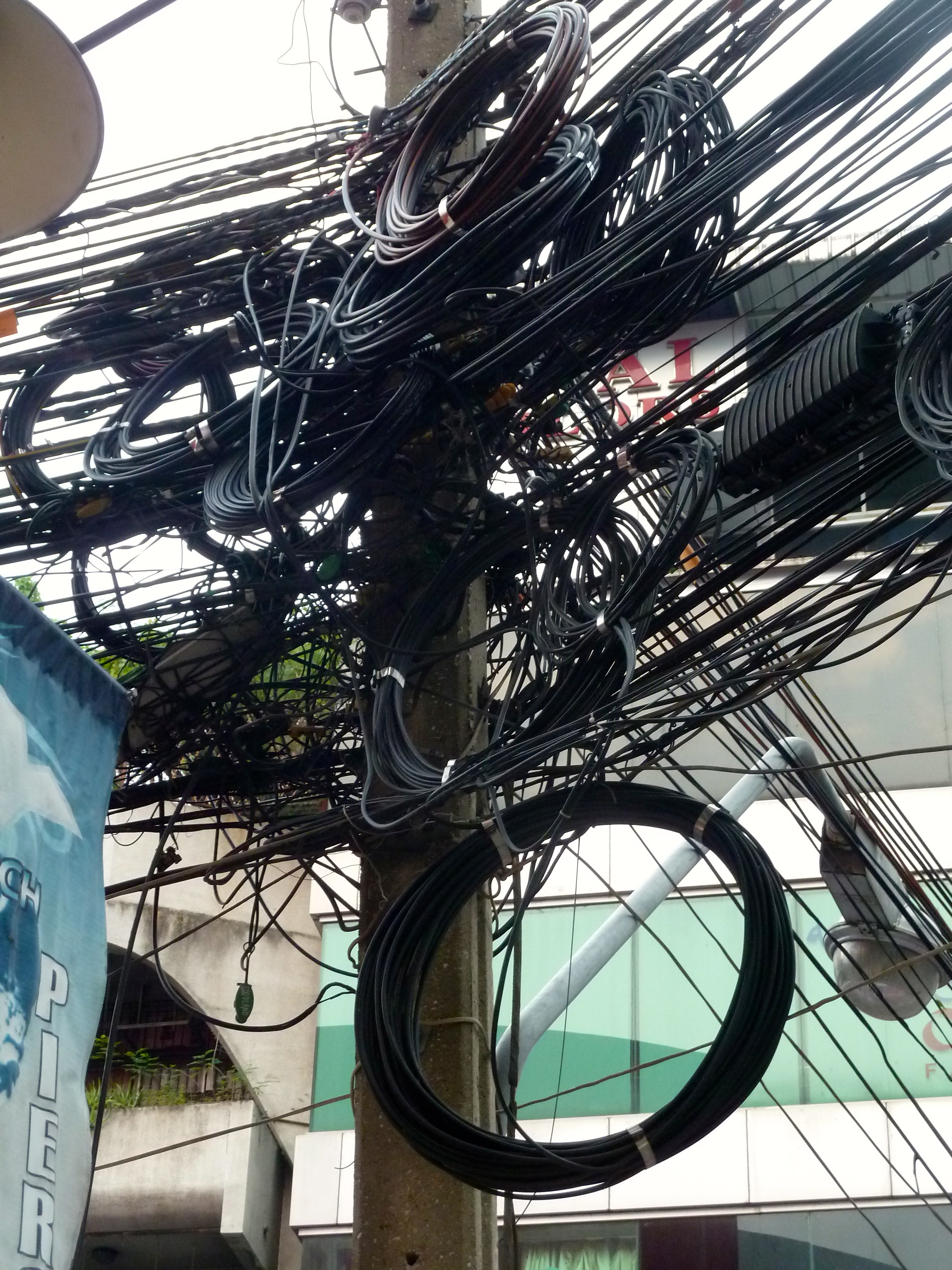
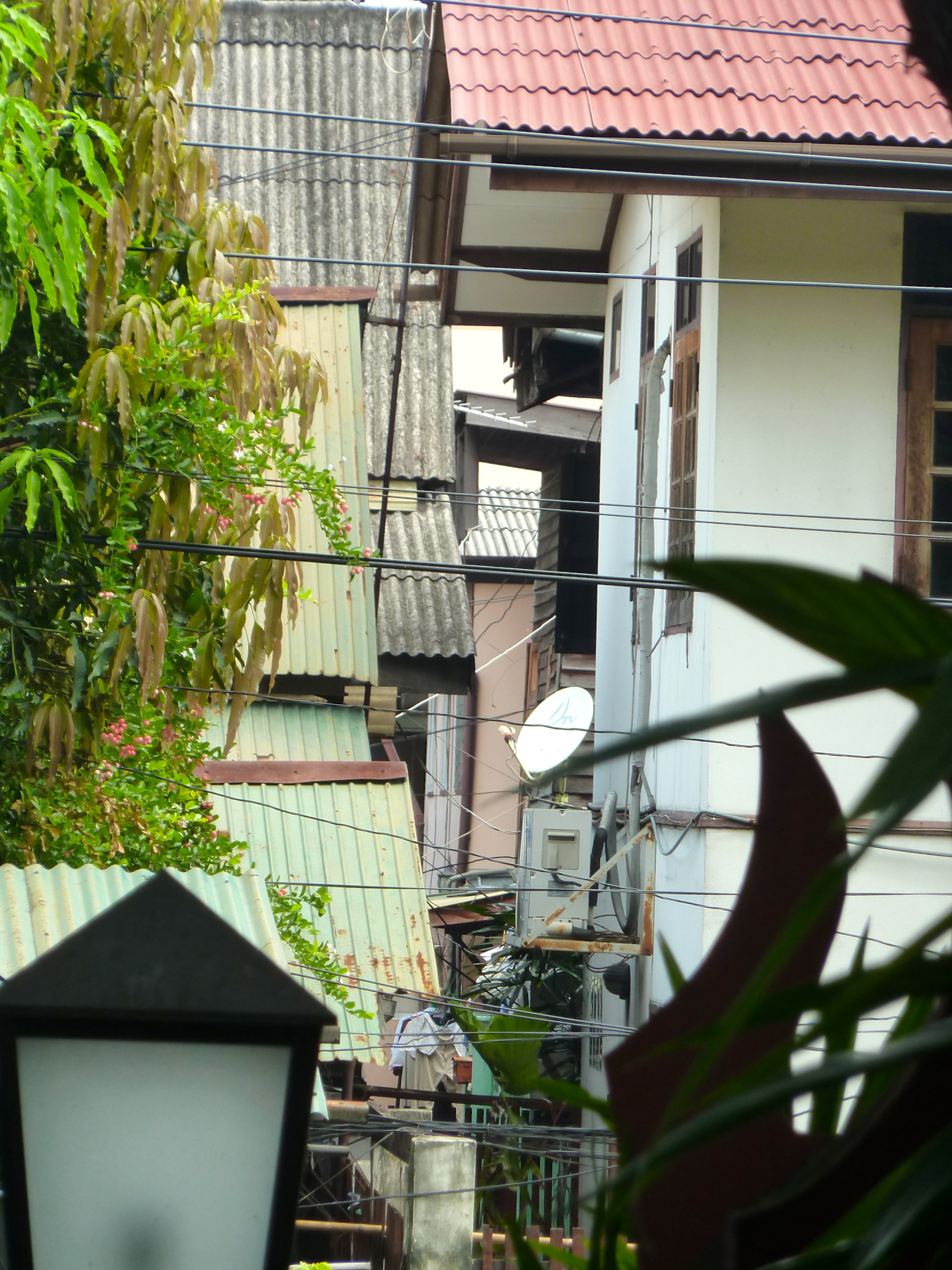
Thailand’s idea of how to wire a city. I couldn’t stop taking pictures of these the first time I was there!
We landed in Bangkok late Friday night and were up at and it early the next morning. Our first stop was Wat Pho, which is a beautiful temple complex. Dad struggled a bit with the heat, but he persevered admirably. My guidebook (Lonely Planet’s Discover Thailand) had a really good walking tour, so we simply followed that. I liked Wat Pho a lot because each temple was different. There were shaded areas throughout the complex, which also made it very pleasant to walk around.
We took a small water taxi to get to Wat Arun, which is an experience I think everyone should have.
And then we arrived at Wat Pho:
After a delicious lunch of pad thai, green curry, and Thai iced tea, my Thai favorites, we crossed the street to visit the Grand Palace. Mitch and I were in Bangkok a year ago, as I mentioned, but it was fun to go back and see it all through my dad’s eyes this time. Now that I’m used to certain aspects of life in Asia, and certainly now that I’m used to traveling in Asia, I’ve somewhat lost track of what used to make me uncomfortable or strike me as new or different. I revisited all of that during my weekend in Bangkok with my father.
I did warn Dad that he’d have to don a pair of elephant pants over his shorts to be allowed access to the Grand Palace. He was skeptical, but elephants pants suited him. The Grand Palace itself is only used today for ceremonial functions, but visitors are are restricted to viewing from the outside. The temples on the palace grounds, however, are what make the site spectacular:
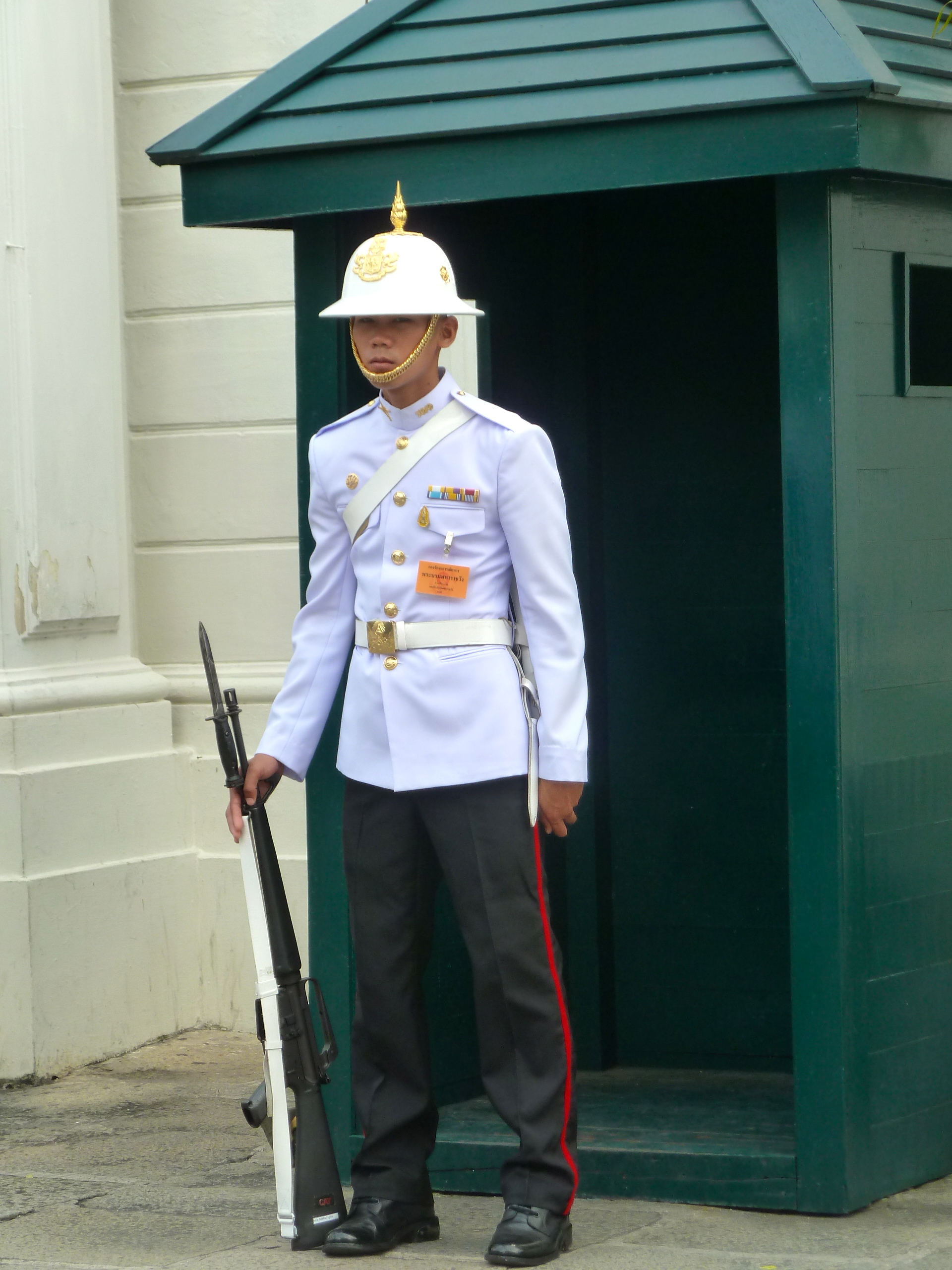
No palace is complete without a guard:
Why are silly hats a guard requirement?
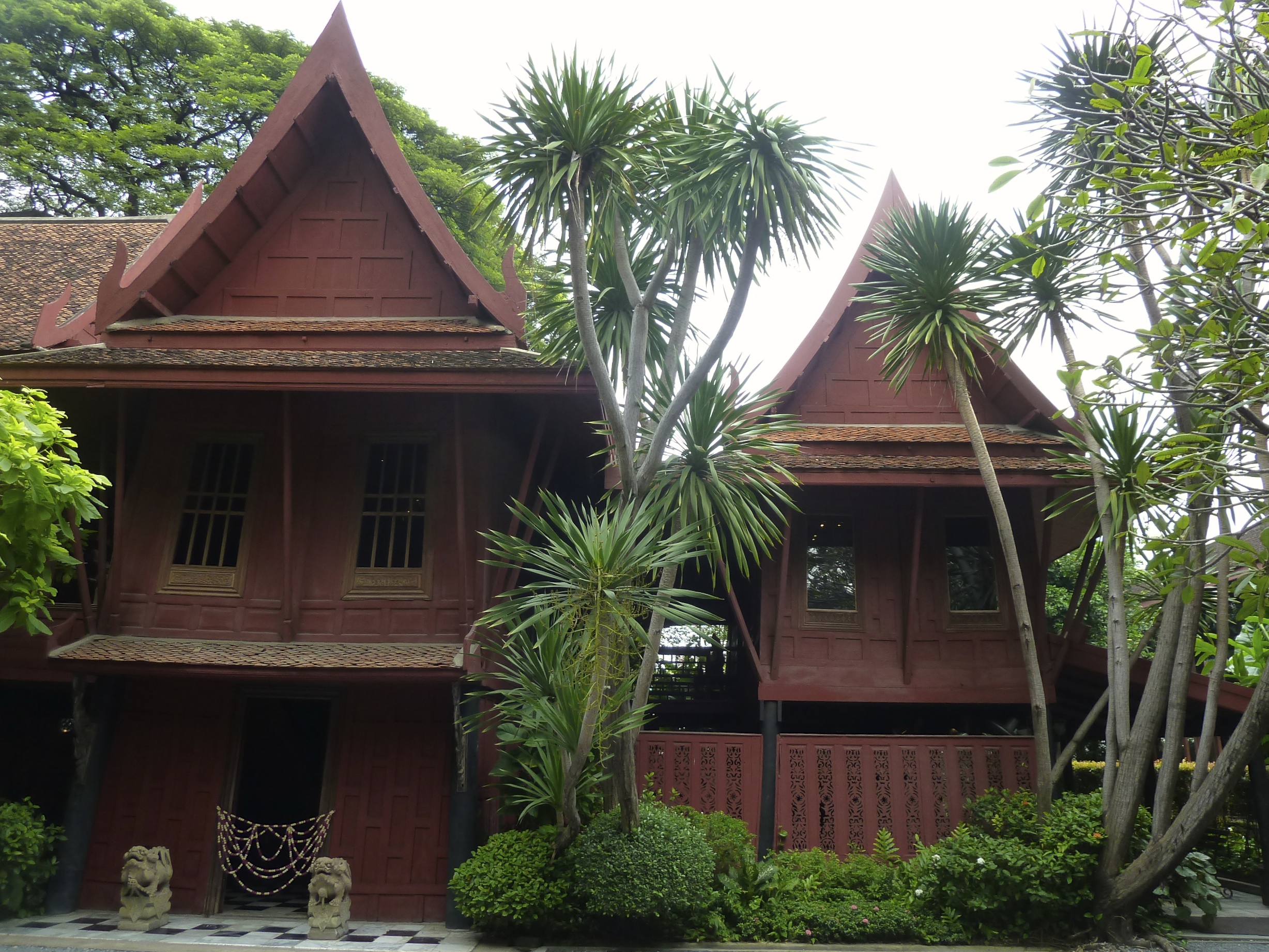
The next day we visited the Jim Thompson House, which was a new spot for me. Jim Thompson made his home in Bangkok after years of working in Thailand for the Office of Strategic Services, a forerunner to the CIA. He is responsible for turning Thailand’s silk production into an international industry and his house, which includes a rather impressive collection of Asian art, is now a museum. Photos are only allowed outside of the house:
Jim Thompson House
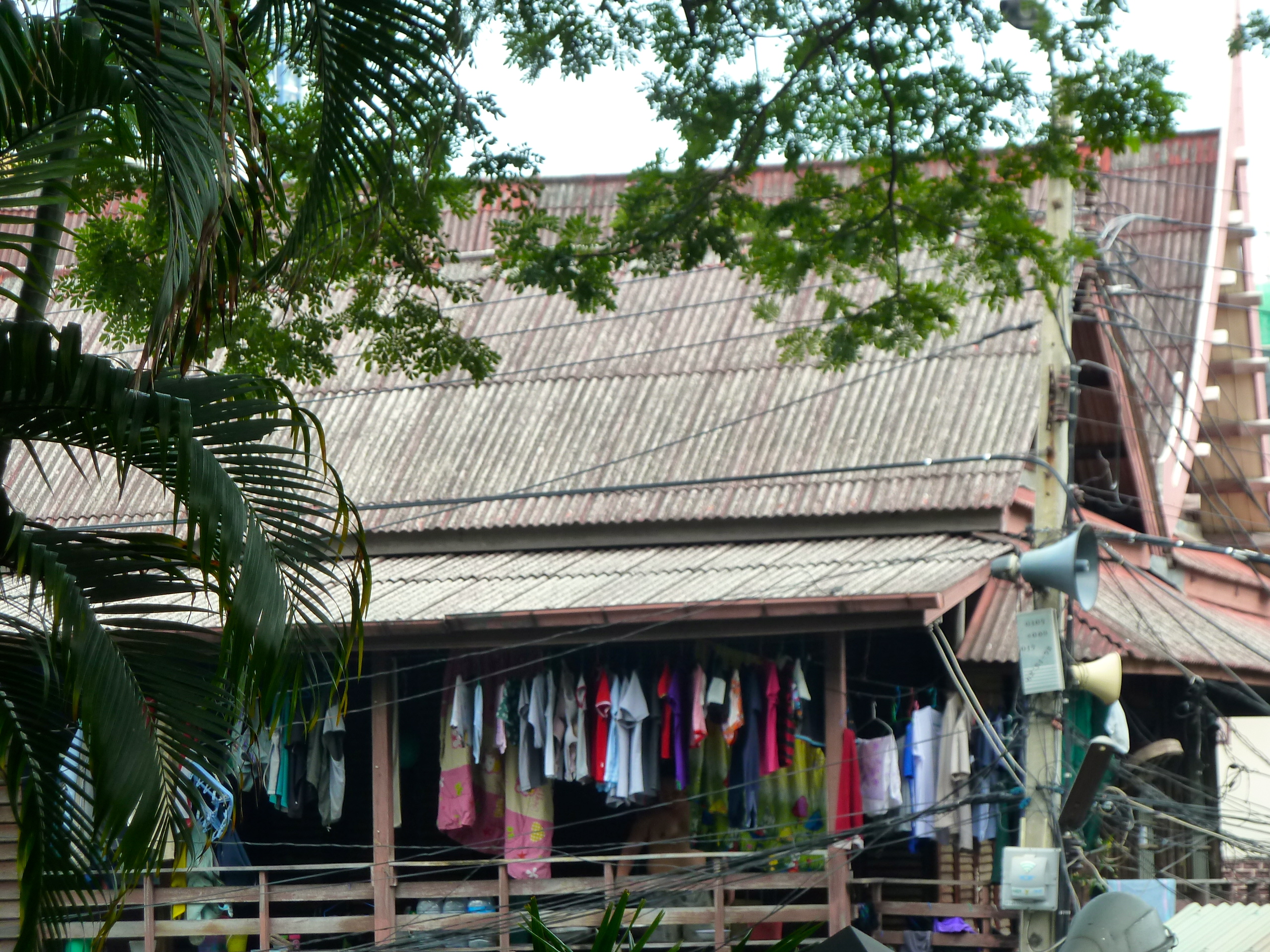
While I appreciated the guided tour and learning about Thompson’s art collection, which was unlike most art that I’ve seen because I’ve mostly seen art around Europe, I also really enjoyed the views from the house’s windows. They provide an insight into real life in Bangkok. I do expect the scenery was a bit different when Jim Thompson moved into his house, however.
Finally, I was glad for the opportunity to revisit Chatuchak Weekend Market. We were actually shopping for souvenirs this time and got a lot better at bargaining each time we did it. Learning from mine and Mitch’s past mistakes, Dad and I went to the market hungry and tried some tasty food. Live and learn, right?
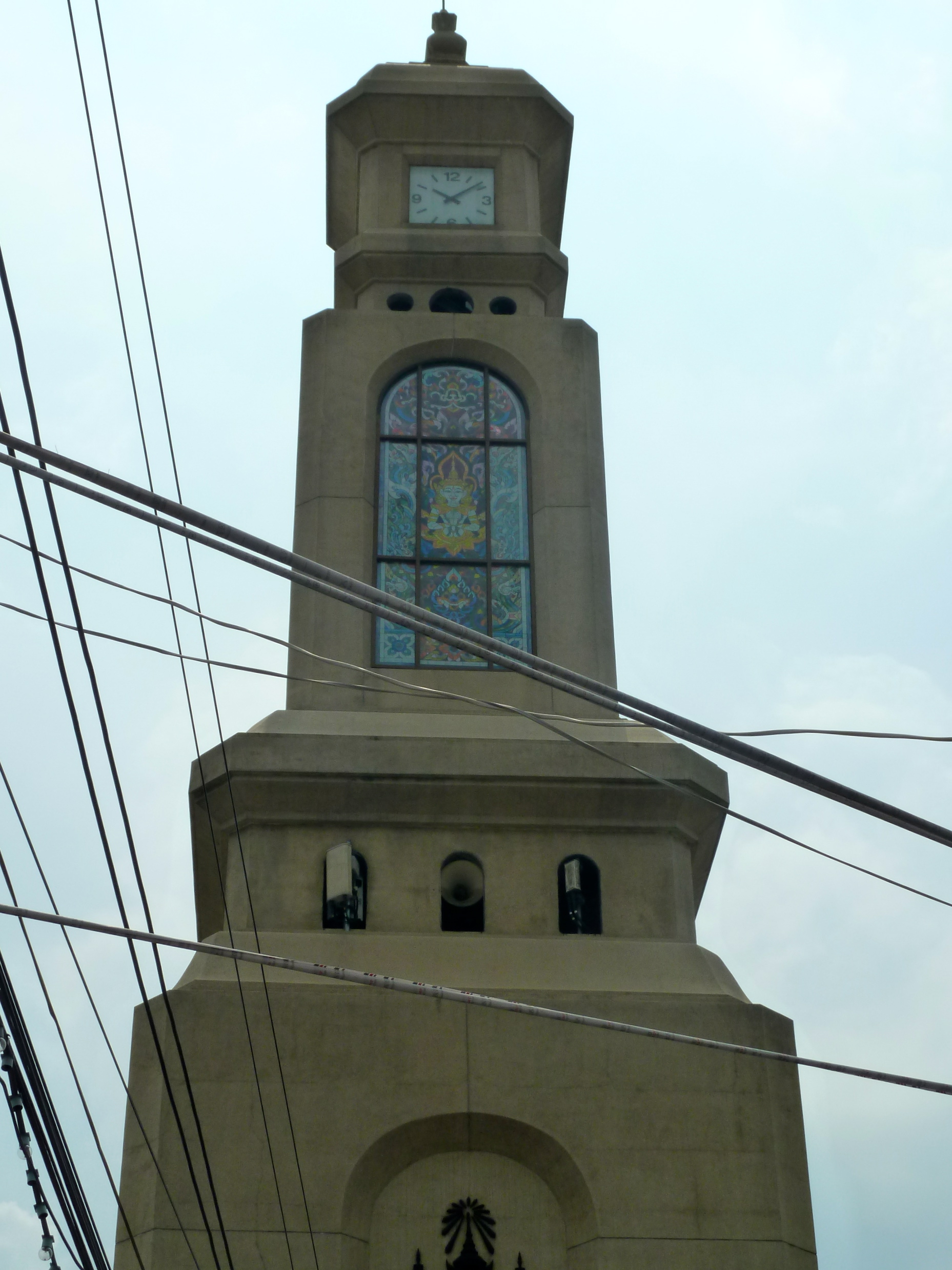
The clock tower at Chatuchak Weekend Market. Not only is it iconic, but it’s also a useful orientation tool.Exterior of Chatuchak Weekend Market. My interiors photos couldn’t possible capture the size and scope of this operation, but the exterior should give you an idea of the resourcefulness of many of the vendors.
Since I’d been to Bangkok before, I took the fewest number of photos while we were here. We stayed from late Friday night to early Monday morning, which was more than enough. Bangkok is loud, busy, smelly, chaotic, and a wonderful experience. I’ve now been twice and I’m glad; the first time let me see the city and the second time let me take a closer look because I was no longer surprised by what I saw. A very good friend is spending a couple days in Bangkok next month and I can’t wait to hear his thoughts about it!
Thanks to Singapore’s elections on Friday, we had a three-day weekend! I hadn’t been out of Singapore since arriving at the end of July, which means I’d been in the same city for about seven weeks. When’s the last time that happened? The haze coming up to Singapore from Indonesia meant, and continues to mean, that we haven’t seen the sun in a couple weeks (and can hardly see clearly at all, for that matter), the kids have been cooped up inside during break times in a space not large enough to accommodate all of them, the air constantly smells like something’s burning (because it is . . . thanks, Indonesian palm oil companies . . .), and just breathing has become a chore. All in all, a great weekend to get out of Singapore.
Before I left Malaysia, I knew I wanted to visit Chiang Mai. Mitch and I had a whirlwind of a weekend in Bangkok about a year ago (here is the blog post about that) and I haven’t made it back to Thailand since. This weekend’s visit to Chiang Mai, because of the day off on Friday, gave me ample time to explore not only the city, but also an elephant reserve nearby. The 400 photos I took on this trip (no kidding) basically fall into two categories: temples and elephants. I have done my best to sift through the photos and I’ve tried really hard not to saturate this blog post with too many images of the same thing. Enjoy! And if you want more pictures, let me know. I have them.
Firstly, orientation. Chiang Mai is located in northern Thailand, which means there was sun, clean air, and mountains. The old city is surrounded by a moat (Chiang Mai dates to the 12th century) and there’s access through a couple gates.
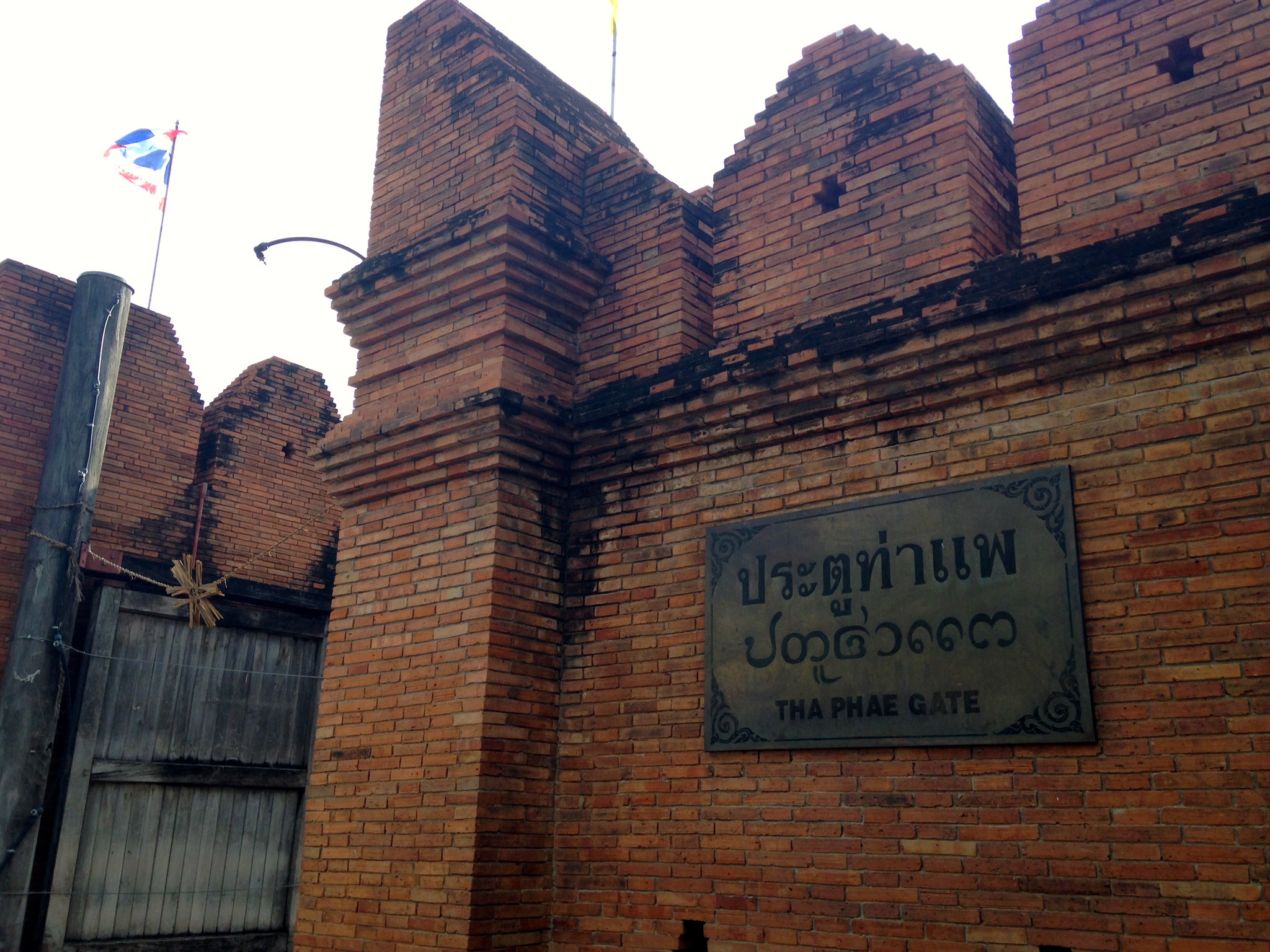
The main gate into/out of the old city of Chiang Mai
Much of Chiang Mai is made up of clusters of multi-story buildings with businesses on the bottom and who knows what on the upper floors. More than a few were brightly colored, like these:
I also spotted a few examples of colorful graffiti. It amuses me that there are words presumably written in English, but I still can’t read them. This is also the case with graffiti that I’ve seen and photographed in English-speaking countries, so I suppose it isn’t a surprise.
The shrines that dot Chiang Mai were no less colorful. In every city I’ve been to in Asia, it’s normal to find shrines outside, inside, on street corners, in parking lots, inside business, near homes. I loved the motorcycle parked right next to this one:
After dropping my trusty purple duffel bag at the hotel (since I was traveling alone, I figured I’d treat myself), my first stop was just down the street to the Lanna Folklife Museum, where I learned about the Lanna kingdom of ancient Thailand and their distinct culture. It took me about an hour to go through the whole thing, and I highly recommend it for a historical overview, especially if you’re unfamiliar with Buddhism.
I took a picture of exactly one artifact at the museum:
How cool is this?!
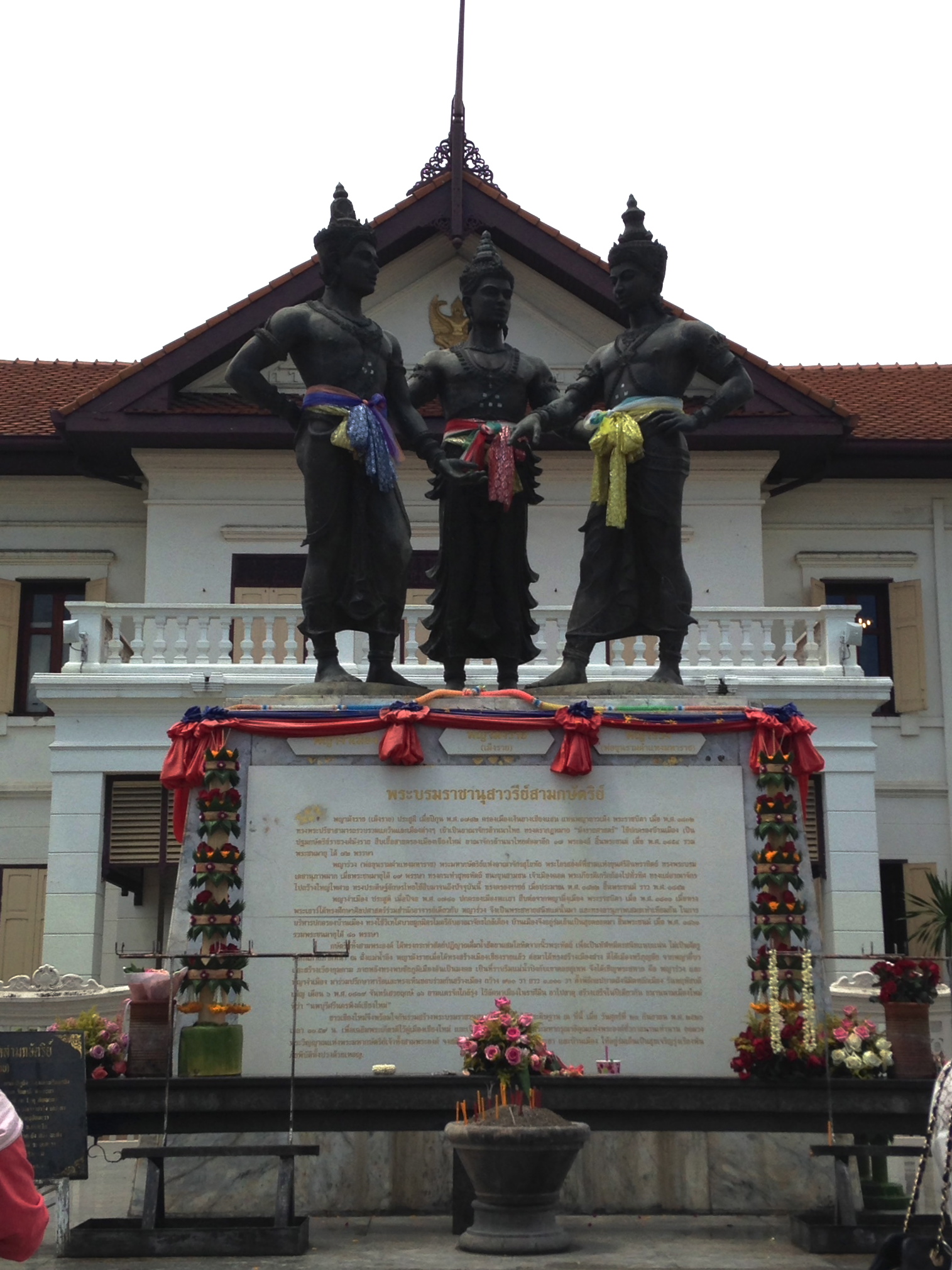
Just across the street is the Three Kings Monument, which I could see from my hotel.
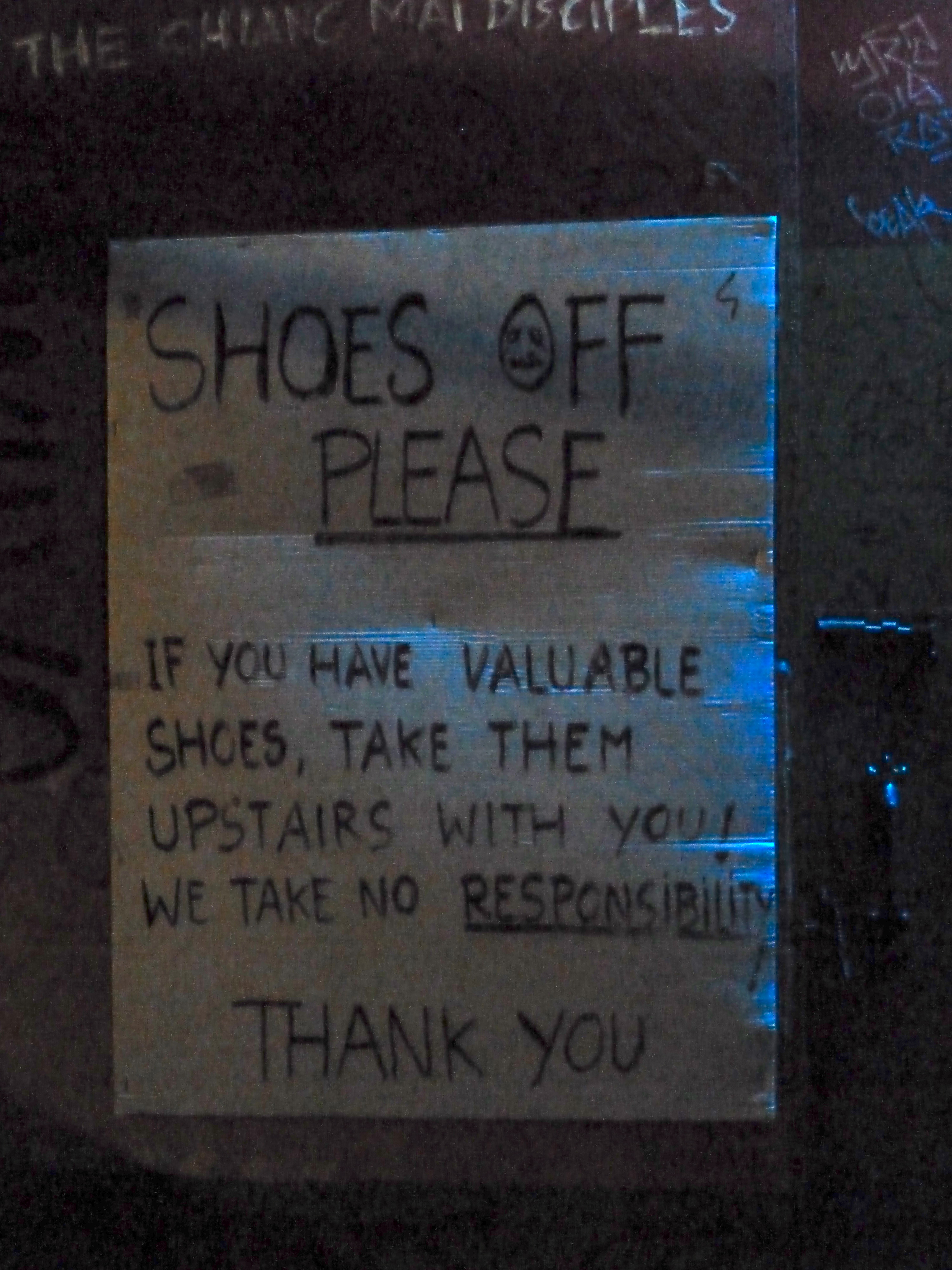
After getting my bearings (and getting slightly lost on the way) I began my tour of Chiang Mai’s temples. For the most part, I have no idea which of the dozens of temples I saw. It doesn’t matter because they’re all just names to me. I went inside many of them, leaving my shoes with the others at the entrance. Thailand is understandably strict about respectful attire when entering temples (explicit signs indicate in many languages and many pictures indicate what is and is not acceptable). There’s often nothing to borrow from friendly devotees at the entrance because the temples are simply open to the public for prayer. I have a few dresses and skirts that cover my knees; I keep a light scarf for my shoulders in my bag at all times when traveling in Asia. You never know when it will come in handy!
The gallery of photos below comes from two days of walking through Chiang Mai and popping in and out of temples. I did a lot more of this than I think I would have if I were traveling with a buddy. But since I wasn’t, I did a lot of meandering (read: getting lost) and meandering means finding temples.
Beautiful temple that came out of no where when I was lost. The style is very Chinese, but the sign is in Thai.
Inside the very famous Wat Phra Sing
These monks were at prayer when I visited this temple, so I didn’t go inside
Wat Prah Singh is famous for its Buddhas, but also for its murals
Part of a shrine in front of a temple
All temples have boxes asking for donations. Often, the specific cause is listed on the box – some temples have MANY boxes.
Wat Prah Singh is famous for its Buddhas, but also for its murals
This was part of a monument just sitting on a street corner
All temples have bells that monks ring during prayer
Just a quick comment on the temple in the photos below. I’ve seen a lot of temples in my travels, but never one made of wood. It honestly reminded me more of Norway’s stave churches than of a Buddhist temple.
And to compare, here’s a stave church in Norway:
Not a temple! A stave church!
I tend to write a lot when I spend time alone, and time alone while traveling is no exception. I also pause for more tea and coffee breaks than I would otherwise, perhaps because I spend less time lingering over meals. In Chiang Mai, though, my break beverage alternated between iced coffee and Thai iced tea, which is quite possibly the most delicious of beverages.
Case in point.
Based on a recommendation from a friend, I chose Elephant Nature Park for Saturday’s all-day trip to visit elephants. The park is a reserve for 70+ elephants who range in age from babies to about 80 years old. Some of the elephants were brought to the park when they got too old to work or when industries using them were shut down, but most of them were rescued from logging operations, circuses, and street performances. Our guide, Pur, told us about each of the elephants that we met. She was incredibly knowledgeable about each elephant’s story as well as how its current family group formed. It is amazing how elephants, much like people, form families.
While most of the day was devoted to watching them interact, we got to feed and bathe the elephants, too! Pur allowed us to pet some of the gentle giants but kept us away from the ones the she called “not nice.” Every so often, the elephants would get upset or agitated and the mahouts (handlers) would shout at the visitors to get out of the way. Over the course of the day, Pur also told us about the various injuries and abuses that many have endured. More than a few elephants were blind and had misshaped or deformed limbs from stepping on landmines. There was also a gallery at the reserve devoted to photos of elephants before and after surgery and rehabilitation.
Probably my favorite shot of the day
Elephants walk in lines just like in all the movies!
In the end, we all just want to play in the water
Elephants eat fruit completely whole, rind and peel and all
Yes, elephants really do blow water out of their trunks
This elephant has a flower in her earring to cover up a bullet hole
These elephants got into a fight that included some running across the river
There were baby elephants, too!
Most of an elephant’s day is spent eating; each eats about 300 kilos of food!
They were definitely posing for the cameras at this point
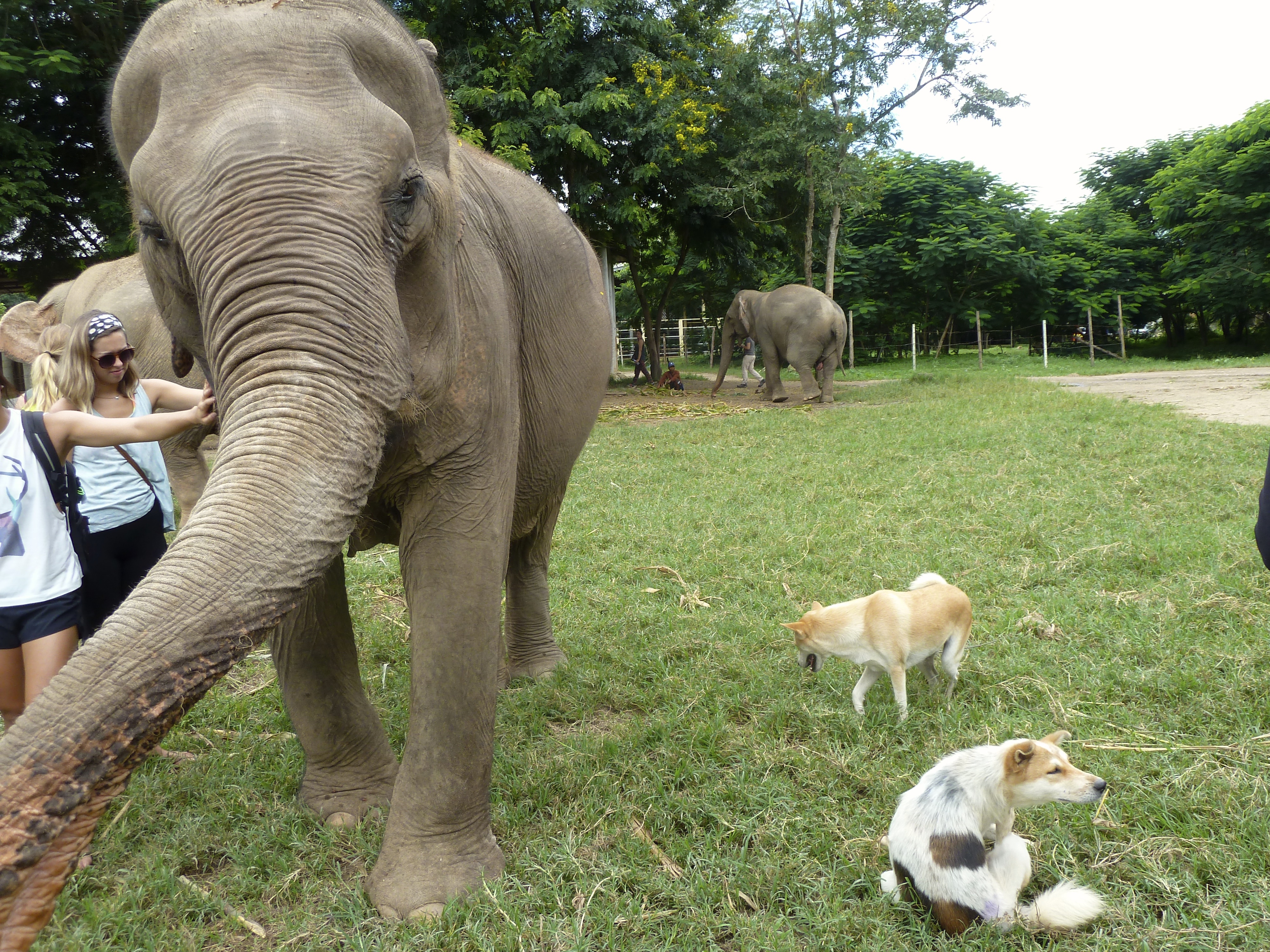
In addition to elephants, Elephant Nature Park is also home to over 400 dogs and cats, many of which are up for adoption. Most of the dogs, at least, were strays in Bangkok once upon a time. They followed the elephants around as they pleased and were constantly looking for love from visitors. The park itself is staffed by about 200 people; this week, about 70 of those were volunteers. It was a wonderful day, complete with transit to and from the park and a delicious vegetarian lunch. I can’t say enough good things about supporting this organization.
The mahouts gave almost as much love to the dogs as to the elephants
Elephants and dogs are buddies
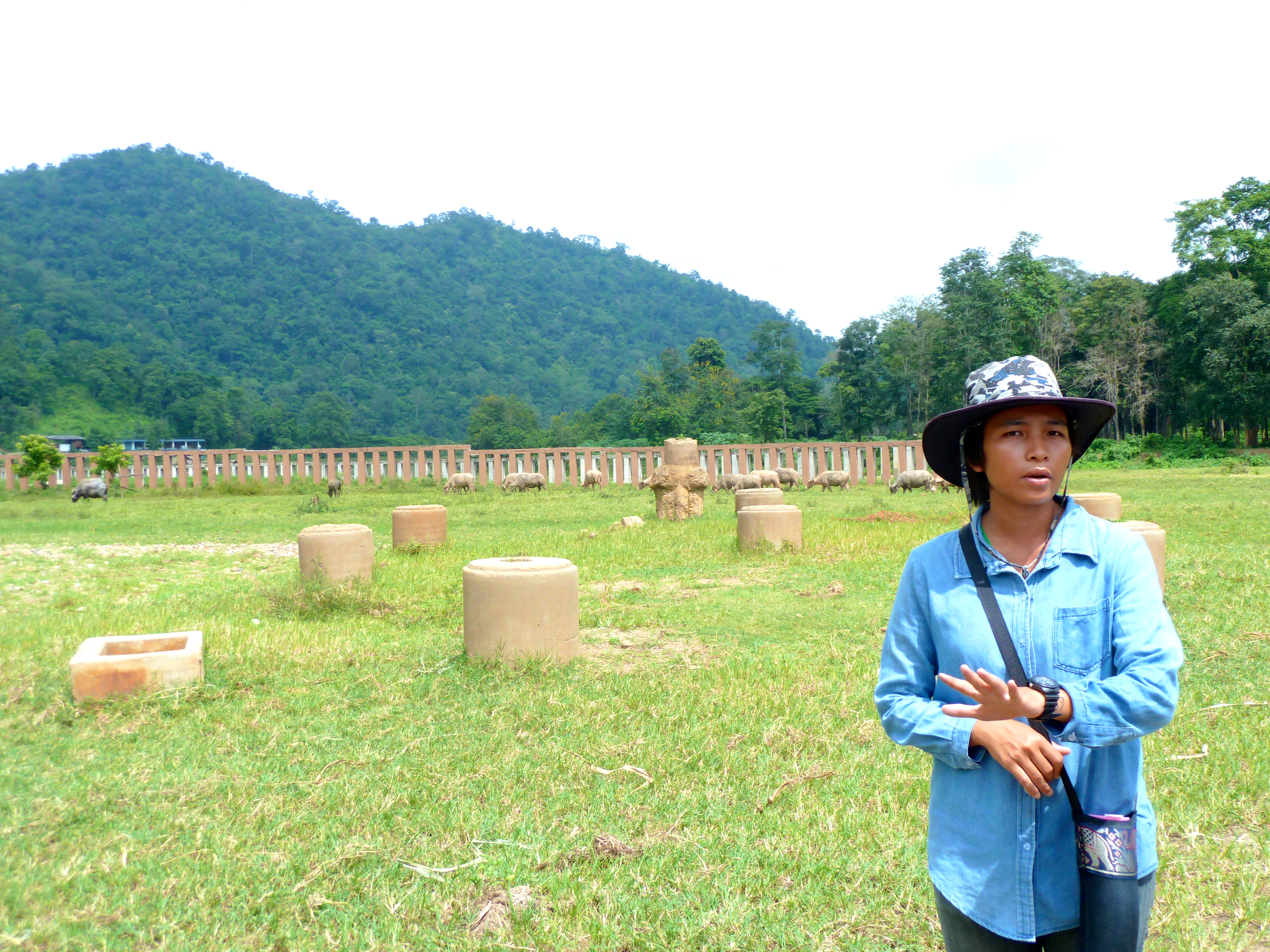
Pur, my guide for the day
And then there’s the fact that Elephant Nature Park is simply beautiful. It was a marvelous change of pace (and air quality) from hazy Singapore.
One of my favorite parts of traveling is meeting people. I’m still in touch with someone Mitch and I met in Langkawi about a year ago. That was our very first Southeast Asian trip!
People tend to meet through shared experiences, and Elephant Nature Park was no exception. Two girls and I made plans to meet up to visit the Night Bazar and go for dinner. We ate at a food court, which was cheap and delicious. While there, I couldn’t help but notice the sign below, which reminded me that the world has a long way to go. Travellers with disabilities will most certainly encounter difficulties when visiting Asia.
Upside: They have recognized that people in wheelchairs go out in public. Downside: Sigh. We’re getting there.
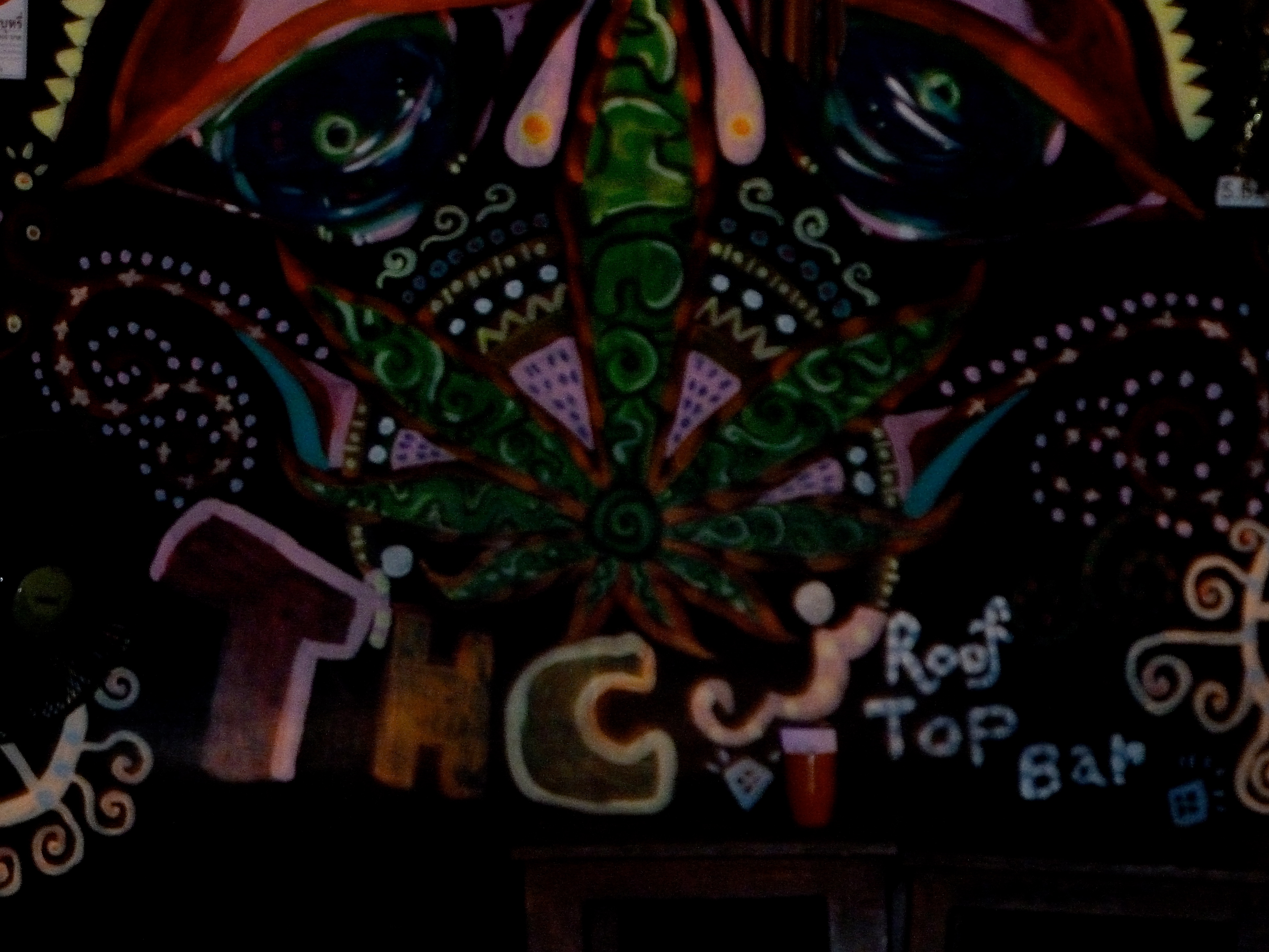
After the Night Bazar, when we were done looking through the regular tourist trap kitsch that feature at many markets, we went out to a very chill rooftop bar with a rasta vibe. I wasn’t exactly sure what that meant when I heard about it, but the decor clarified very succinctly.
Please don’t be surprised at the name. Asia doesn’t do subtlety very well.
The highlight of Sunday, my last day in Chiang Mai, was a river cruise along the Ping River. It was a dreary day but the wonderful people of the Scorpion Tailed River Cruise (basically the Sam Patchof Chiang Mai!) were very gracious and gave me a private tour! The ancient Thai man who acted as the tour guide is also, I suspect, the owner of the entire operation. Part of the tour included time off the boat to taste tropical fruits and smell local herbs in his garden. The experience was expensive by Thai standards but a really nice way to learn about Chiang Mai’s history from (literally) a very different angle.
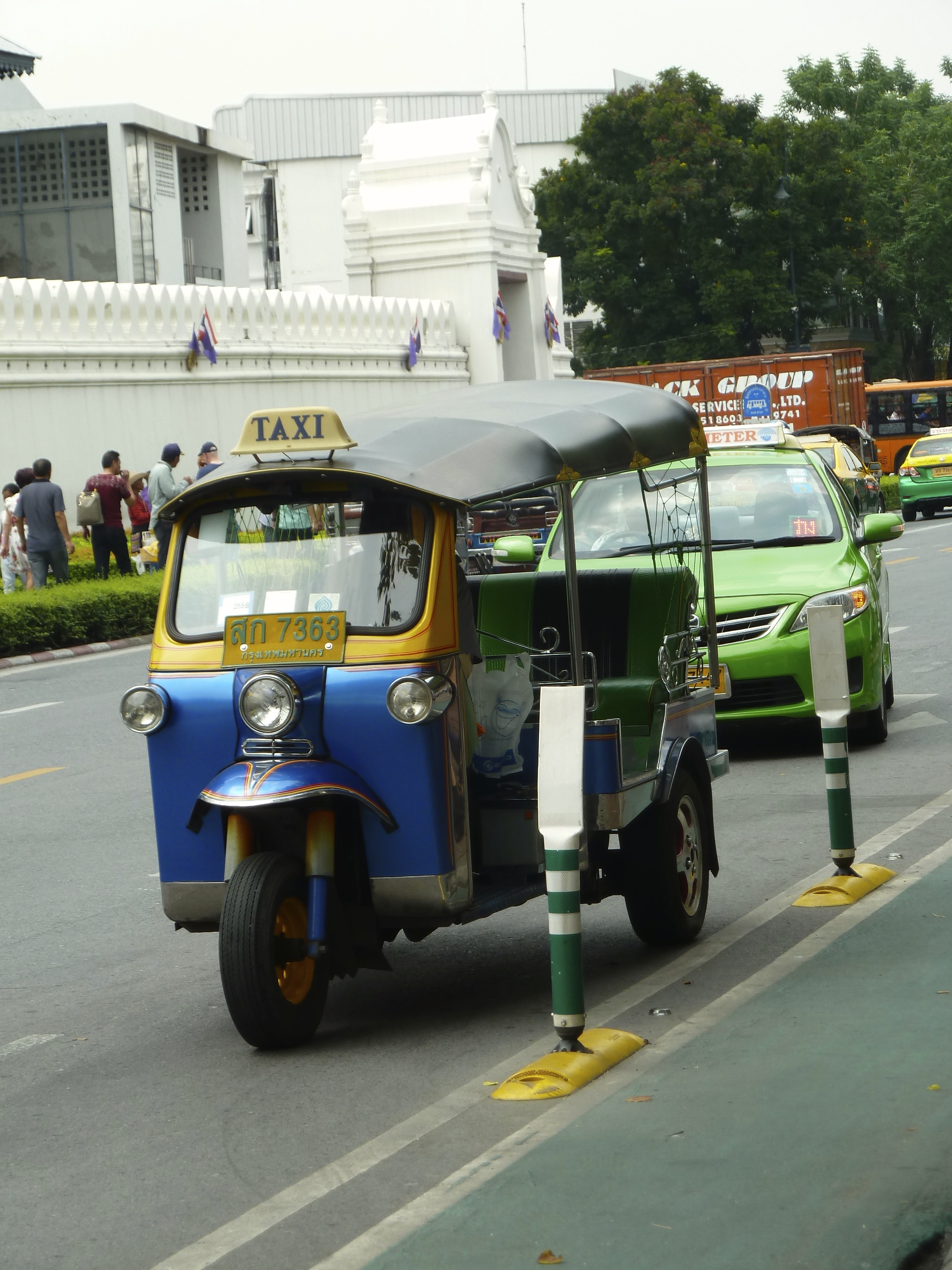
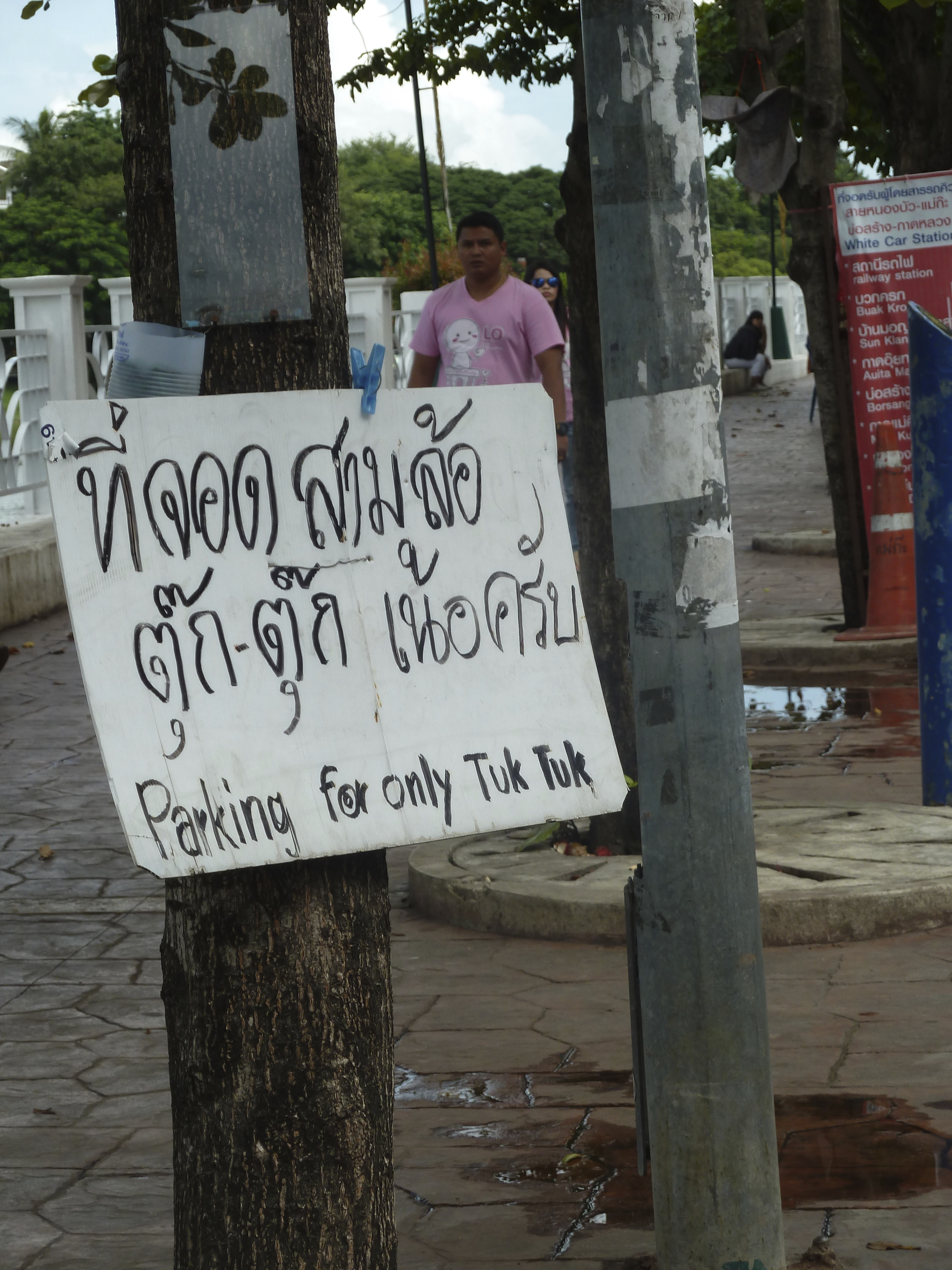
River travel used to be the way people got around. That has changed, but there are no metered taxis in Chiang Mai. The best way to get from point A to point B without a private car is by a red sorng-tau-oo, basically a shared taxi, or tuk tuk, a private taxi.
Thanks, Chiang Mai! Thailand, see you again in a month!
This trip was my first solo travel experience. We didn’t plan it that way, but Mitch wasn’t able to come at the last minute so I made the trip to Vietnam by myself. I am not a person who does well alone; I’ve written about that before. I am not a person who travels to foreign countries alone. But, this weekend, I became a person who can do that and do it well. This whole Malaysia experience has taught me that I’m a lot braver and more adventurous than I thought I was. To be quite honest, I have to be grateful to Malaysia for helping me grow into a stronger, more independent woman.
And onto the trip!
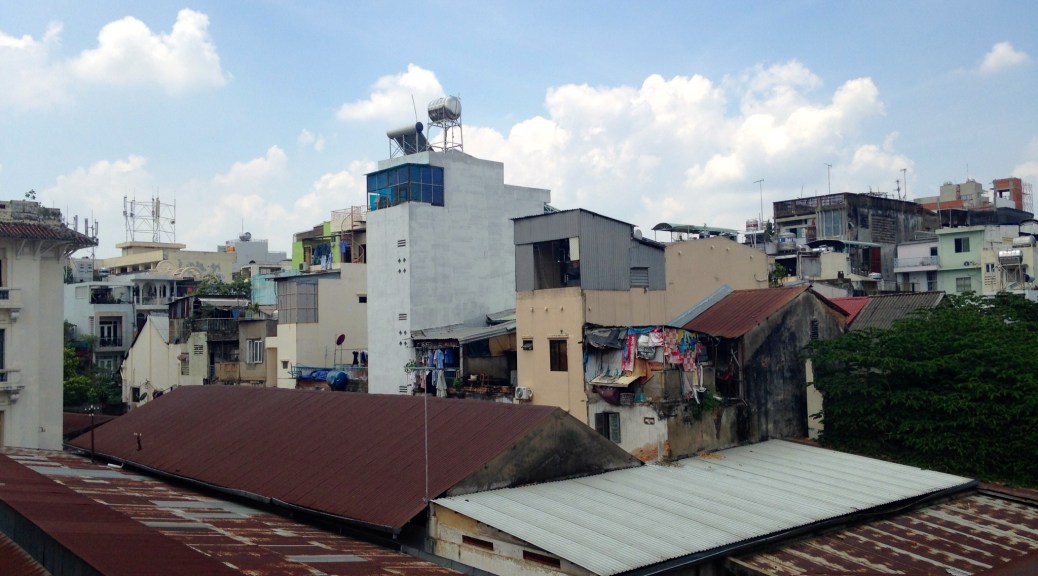
I absolutely loved Ho Chi Minh City, still better known as Saigon. (The airport code is SGN – how cool is that?!) The French influence in Ho Chi Minh, and in District 1 in particular, is obvious everywhere, from tree-lined boulevards with sidewalks and numerous public parks to a plethora of cafes. Anywhere with coffee culture holds a special place in my heart. There are aspects of Ho Chi Minh City, too, that make it distinctly Asian – more people have motorcycles than cars, traffic lights are in short supply, and when stuck in traffic, many bikers prefer to ride on the sidewalks. The gallery below contains general shots of the city. Then, I’ll get into specifics about what I saw.
My first stop was the War Remnants Museum, formerly known as the Museum of American War Crimes, which tells you basically everything you need to know about the museum’s bias and perspective. Since I’m an American History teacher, I can’t say that anything in the museum surprised me, but it was very interesting to see the Vietnam War (they don’t name the war in English, but multiple museums referred to it as the “war against US aggression”) presented from the other side. I took pictures of a few exhibit explanations and quotations posted on the walls to share with my students the next time I teach the war. (Sorry, not going to display those here – shoot me a message if you’re interested.)
Independence Palace, also known as Reunification Palace, was my next stop. I have to admit that I was less than thorough in my exploration due to stifling heat, oppressive humidity, and lack of air conditioning. Since I’m much more used to the architecture of old European palaces, it was interesting to see a modern palace. My photos of the interior didn’t come out very well because I wasn’t using the flash, but I did get some decent shots of the coolest part of the palace, which was the bunker in the basement. The bunker acted as a command center during the war and was completely equipped for people to stay for extended periods of time. The old radio equipment (ironically supplied by the US when Ngo Dinh Diem was in power) was fascinating.
The Central Post Office is famous for its interior (old French maps, phone booths) and is a popular spot to take wedding photos! The massive portrait of Uncle Ho (so called by numerous posters around the city and explanations in museums) surprised me.
Saigon Notre-Dame Basilica, built by the French in 1880, is located on the same square as the post office. Most of it was closed to visitors and reserved for people praying, which I really liked. Again, no flash so not the best photos.
To see the Saigon River, I walked down a wonderful street called Dong Khoi. While in that area, I had a cup of coffee (one of many) and window shopped in all the little boutiques. I returned to that area Saturday night for dinner and drinks. I didn’t see the river by night, but I saw it as the sun was beginning to set.
By night, I did see . . .
The Opera HousePeople’s Committee Hall (not sure what this does or is supposed to do and my guidebook didn’t have anything to say about it)
Sunday morning I went to Ben Thanh Market. The chaos and odor of Asian wet markets no longer surprises me, and I am no longer rattled by vendors constantly calling after visitors to purchase this or that. Instead, I simply enjoyed the people-watching and the coffee.
I also ventured to the Fine Arts Museum, intriguing because I have no experience with Asian art. Interestingly, the museum was un-air conditioned and very few of the pieces were protected by glass. I don’t know anything about art conservation, but I can’t imagine that’s good for the art. The Ho Chi Minh City Museum was also excellent. This is where I found a collection of actual artifacts from the Vietnam War. The War Remnants Museum told its story in photos, but this is where newspapers, uniforms, weapons, official documents, old uniforms, and ingenious objects like a boat with a false bottom are housed.
Despite all that I saw and did, I can’t say I really feel that I experienced Vietnam. When Mitch and I were in Bangkok in November, I thought I understood how people in Thailand really live. I don’t have the same feeling about Saigon, or Ho Chi Minh City, or whatever you want to call it. All of my exploring took place in District 1, which I know is incredibly Western and the most frequented by tourists. Next time, I’d love to take a boat up the Mekong River to see fishing villages (friends did this and their photos were wonderful), I want to see the pagodas in Chinatown, and I really want to go to Hanoi. Obviously, there’s a lot out there; hopefully I’ll get to see and learn more!
Safe travels!
Photos, travels, musings, and ideas on education by someone trying to make the world a better and more peaceful place

















 By Rebecca Michelle