An Outside/Inside Look at German Politics

We had elections in Germany on Sunday and I went with my partner to vote. I waited on the playground of the school, hoping that my presence there counted as doing my part for democracy. Political discussions have remained at the forefront of many conversations between friends and colleagues, so I thought I’d summarize for those interested in, but not following, German politics.

In short, the results were unsurprising. The conservative Christian Democratic Union (CDU) won with the far-right Alternative for Germany (AfD) coming in second and sweeping the East, where I live. The Social Democrats (SPD), coming in third with the worst showing in modern history, are the most-likely coalition partner for the CDU because all parties have unequivocally ruled out working with the AfD. Two parties, the libertarian Free Democrats (FDP) and the new quasi-communist BSW, did not cross the 5% hurdle necessary to sit in the Bundestag (Parliament), but the Greens and Left will be represented, leading to a Bundestag comprised of five parties.

The current political task, while the old Parliament continues the business of governing, is building a governing coalition, which takes as long as it takes. The CDU has announced hopes to have a coalition by mid-April, but the conditions must first be discussed, debated, and agreed upon between the parties, which takes time. From a good English news source, the process is here. As noted in this article, even though a CDU/SPD coalition is the only sensible option, it still has to happen. And we’re not there yet.

The difficulty lies in the fact that the CDU and SPD are very different parties, which is why the SPD didn’t invite the CDU into a coalition after winning the 2021 elections. (That the FDP was there instead, along with the Greens, directly led to the failure of the coalition and the need for new elections.) Conservatives and social democrats tend to stand on opposite sides of moderate, and Germany is no exception. Like other states with social welfare systems, Germany’s right-of-centre is definitely left of American right-of-centre, but that also places the left-of-centre further to the left. As a result, there are significant differences in values and political programs that need to be addressed, and the discussion of what to do with the “debt brake” will most certainly play a role. Yet, a Grand Coalition is the only sensible option because these are two historic parties who aim to preserve democracy. Together, they have a majority, and it’s easier to govern with fewer coalition partners, as the recent failure of the “Traffic Light” SPD/FDP/Greens shows us.

However, the AfD will say that the choice for a Grand Coalition does not reflect the will of the people because the AfD received more votes than the SPD. They will continue to vote against everything that anyone else supports (evidence here, though only in German) because their goal is to destroy regardless of a political campaign to rebuild.

This is why the CDU and SPD need to put aside their differences and rebuild. Understandably, voters leaning towards different parties identified different issues of importance (informative diagrams, though only in German), meaning that the two parties need to attend to a vast swath of concerns in order for the people to feel that politicians have heard them. If they cannot, the AfD will be even stronger by 2029 and democracy will be at risk.

The question of why those from East and West Germany voted so differently (scroll to the middle of the page for a map) is important and relevant. The answer is not to demonize the East as being backward and provincial, but rather to think about the last 30 years of history. A reunified Germany was not an economically equal Germany and we are still feeling the effects of this today. This article addresses the economic, social, and cultural transitions after the fall of the Berlin Wall that, in many ways, dismantles former East Germany and left its people, their skills, and their education behind.

In my analysis, and I am not unique here, this leaves one choice. The choice is to think of the good of the collective rather than the goals of a single party. This is the choice because life needs to improve for all of us in order to protect the democracy and the country that we live in. Germany is not the United States and this gives Germany an opportunity to forge a different path, one more closely tied to the EU, which needs the support of its member states more than ever. Eighty percent of Germans, represented by a historic (since reunification in 1990) high 82.5% of those eligible to vote, voted against the AfD. They voted for democracy and for Europe and for the future.

As a freshly-minted permanent resident, I have chosen to be part of this society and yet have no say in it. So here it is: It is my hope that the CDU and SPD see the necessity of working in a strong partnership to bring this country back together. The alternative would let Germany drift further down a path that threatens to erode what this country claims to stand for.

The people have spoken. And now we need the politicians to do the same.

Spring Cleaning

After multiple days this week of riding to work when the weather was a very fresh -10°C, the thermometer reached 13° yesterday and was even slightly warmer today. Suddenly, there’s spring, or at least the beginnings of it. The warmth and slightly overcast sky made for excellent weather to engage in the spring cleaning task that I enjoy more than I would like to admit: cleaning my bike.

Please understand, there are right and wrong ways to clean a bike and I’m fairly certain that I do everything pretty close to the wrong way. There are tools one can buy, of course, and the toothbrush method probably does a bit of harm alongside the good, but it works for me. We have a stand that I could use to save myself the bending and crouching, but that involves taking the other bike off the stand, where it lives during the winter, and securing the heavier bike that is ridden daily. Q-tips are probably not a recommended tool by any bike shop, but they are remarkably effective, even if I’m constantly wishing they could do the job just a little bit better. The chain would be cleaner given the proper tool, but there we are again with the tools.

It’s fair to say I do a mediocre job with my sponges and dish cloth, but the bike rides much more smoothly when I’m done. And my back recovers after a bit of stretching. It’s remarkable how much grime accumulates in the winter. I clean my bike much more regularly in warm weather, which is probably why the first spring cleaning is always such a shock. But it’s also the cleaning that is the most immediately noticeable.

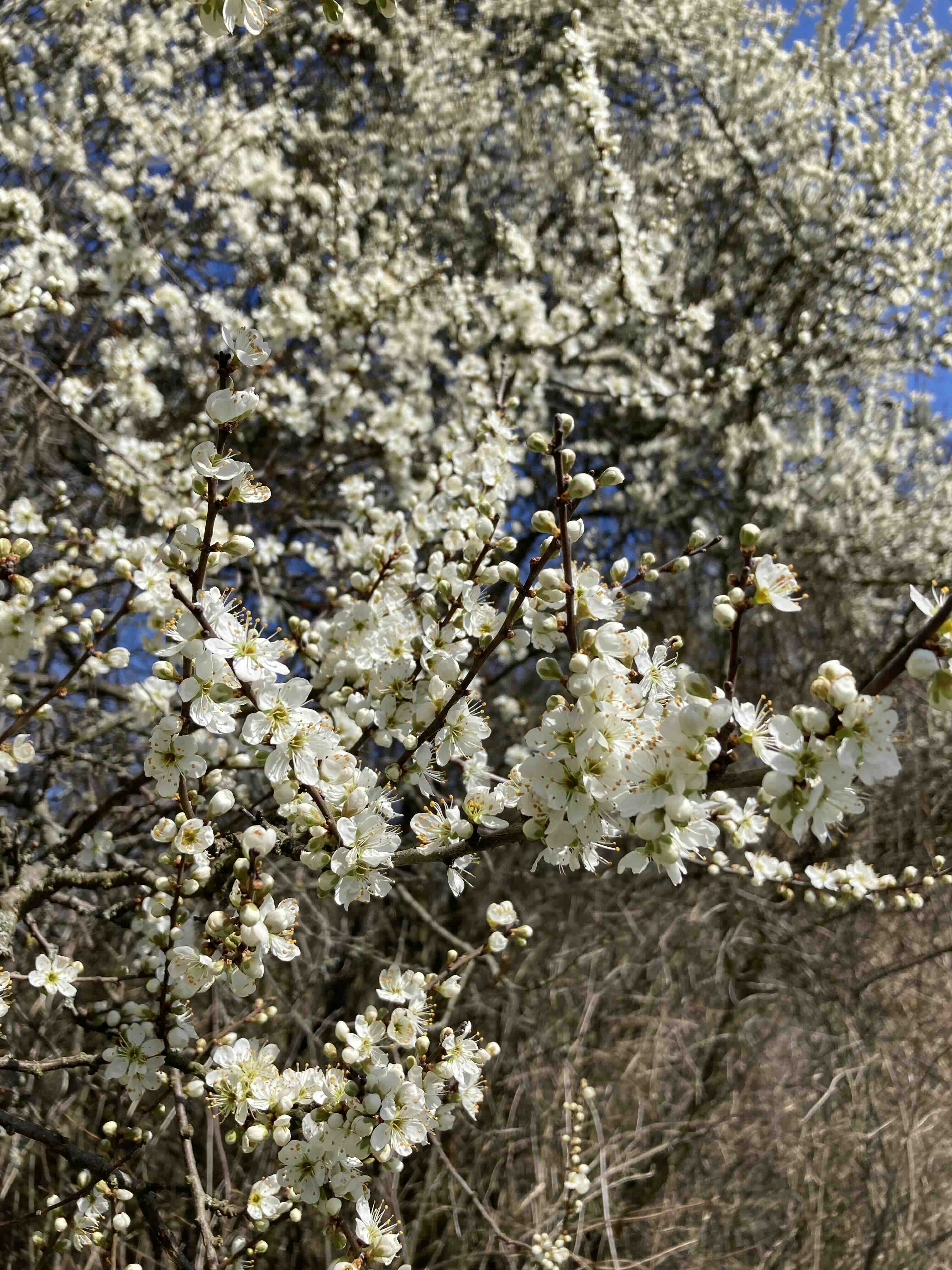
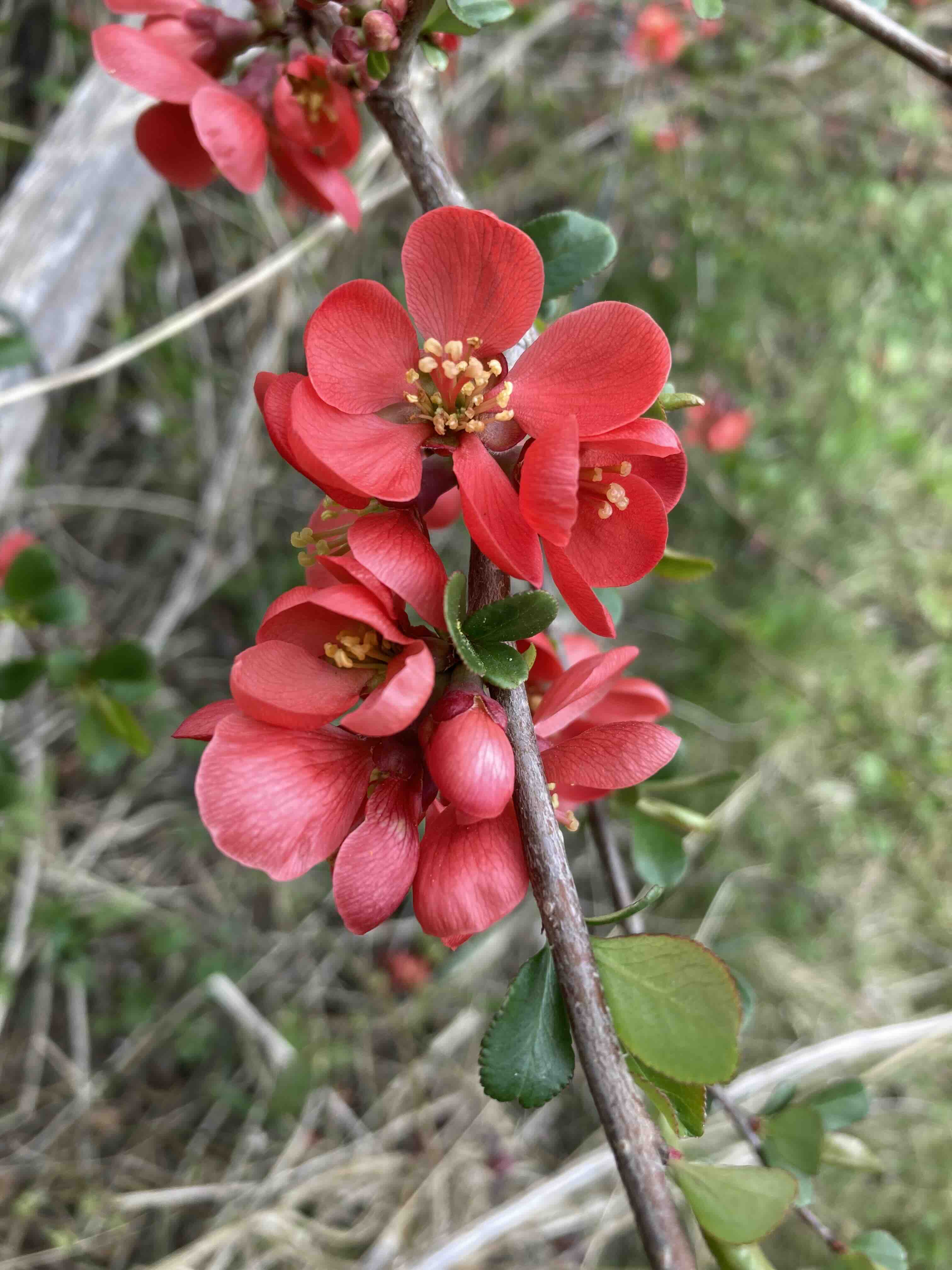
Just like the first little flowers.

Here to Stay

After a brief wait in line, clutching my residency documents and the letter that had called me there, I handed over my old papers and was handed my permanent residency card from the local Foreigners’ Office..

Now, regardless of job and work status, I’m allowed to stay. It means I’m allowed to change jobs or be out of work. It means that my partner and I can qualify for a mortgage, which every bank had previously denied us on the basis of my status here.

But there are rules. I had to sign a document acknowledging that my stay in Germany will be terminated in the event of crimes committed, and that I cannot be outside of Germany for more than six months at a time.

But mostly, it means life can happen and I can stay.

Shiny new card in hand, I called my partner in the middle of the day, gleeful. His smile came through the phone along with congratulatory wishes from his colleagues. The relief that washed over me when I walked out of the office was a surprise, if only because I had already celebrated upon receiving the acknowledgement by mail.

It’s a big thing, actually. Life can happen and I can stay.

So how does one become a permanent resident in Germany? The process has been simplified and revised recently, but it differs based on one’s status in the first place. I came here with a job based on qualifications completed outside of Germany that are recognized by the German government. In order to become a permanent resident I needed to:

  • Complete the application form
  • Provide a passport photo
  • Be fingerprinted
  • Prove that I had paid into the government pension fund for three years
  • Prove that I was covered by German health insurance
  • Provide the lease for my apartment
  • Provide my employment contract, which needed to be unlimited rather than contract
  • Provide statements of my salary and taxes paid for the last six months
  • Pass at least the German B1 language test
  • Pass either the citizenship test or the integration course, which concludes with a test

Fundamentally, I had to prove that I had integrated into German society and would not be a burden on the state.

As with many things bureaucratic, I found that the easiest way forward was to make an appointment at the Foreigners’ Office and ask about the necessary requirements rather than combing through legalese online. Doing so put me in contact with the employee with whom I emailed back and forth as I put together the paperwork, some of which required contacting various German agencies. Anecdotally, it seems that my process went much more quickly than that of others I know, and I chalk that up to having sat in the office with the person doing the job.

I also cannot understate the importance of knowing the language. Not only is all bureaucratic business at the Foreigners’ Office conducted in German, but the paperwork explaining the required paperwork is also provided in German. My language skills are far below understanding German legalese, but I was able to talk with a real person and get clear answers.

But more than paperwork and the security of being able to lead my life here, applying for and receiving permanent residency means that I’m somewhere that I want to stay. I have built a life here, made friends, and found my person. It makes me laugh to recall that I decided to move here, a decision made five years ago this month, because my town has a climbing hall that I could see on Google Maps. Expect the unexpected, as they say.

Welcome home, my partner said.

Photos, travels, musings, and ideas on education by someone trying to make the world a better and more peaceful place