Tag Archives: Architecture

Travel Guide: Bamberg

Bamberg is located in a region of Bayern (Bavaria) called Franken (Franconia), and the regional slang and cuisine are Fränkisch rather than Bayrisch. I was pleasantly surprised to find that Fränkisch slang really is slang – the people generally spoke Hoch Deutsch (High German) and I could understand the accent. (This was hardly the case when I visited Munich, for example, where Bayrisch is really the local language. And rest assured, I have equal problems when people speak Thüringisch from here in Thuringia. An ongoing pattern when I learn a new German slang word is to clarify whether the word is Hoch Deutsch or Thüringisch; the distinction is important for my sometime-in-the-future German language test.)

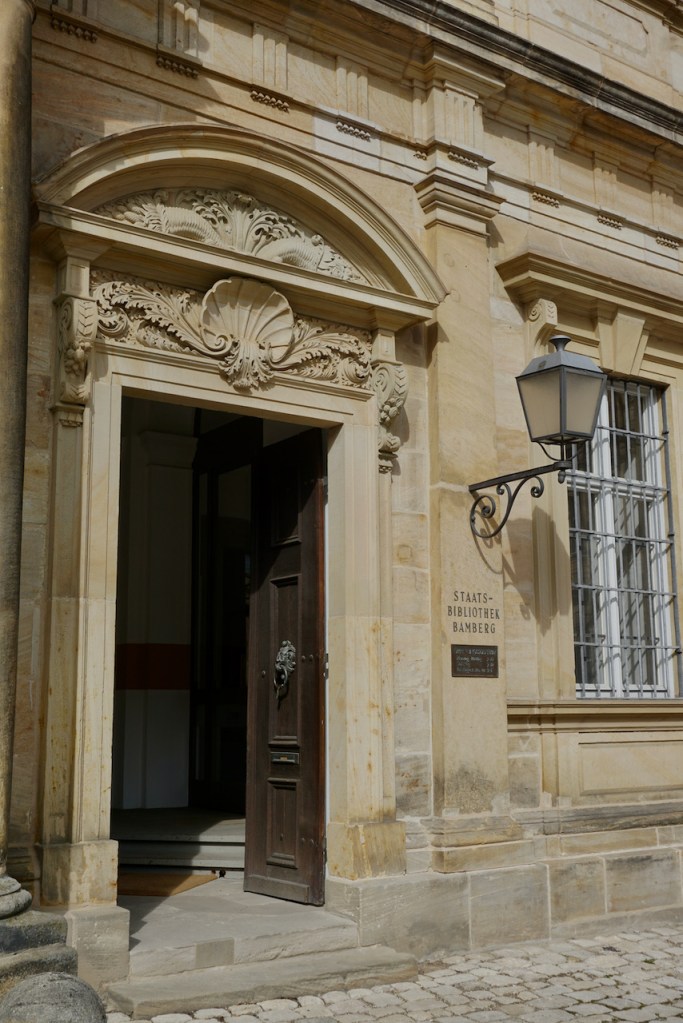
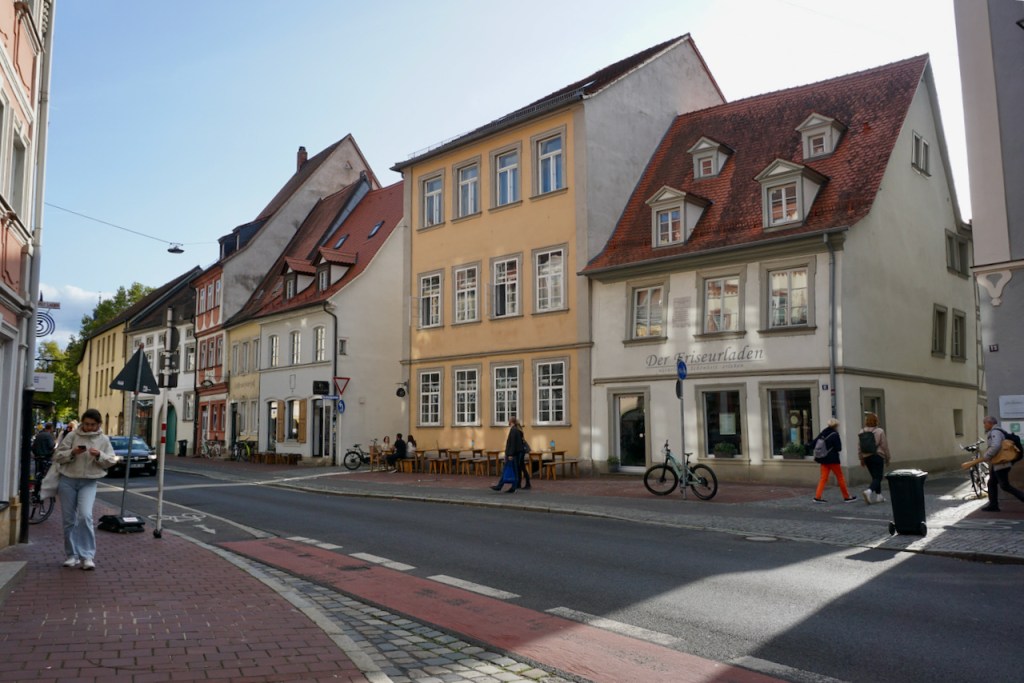
These stark regional differences make travelling even a couple hours away feel much farther, and it’s a lot of fun to hear difference forms of language, taste local beers, and experience local culture. We spent two nights in Bamberg and were delighted by what we found. The population is just a little larger than that of Weimar, but the town sprawls across seven hills. We spent our time in the old town and new old town on the opposite side of the river, going everywhere by foot, and we were pleased to see really excellent bicycle infrastructure everywhere. There were bike lanes and bike parking areas on every road, as well as pay parking in areas that would be free by us. And it definitely seemed like the population got the message! The number of people on bikes was correspondingly greater than I have seen in other German cities.

One element that makes Bamberg really special is its location where the Regnitz and Main rivers meet. There are canals that have been built to link the rivers and bridges to carry pedestrian, bicycle, and car traffic, so you’re never far from the water.

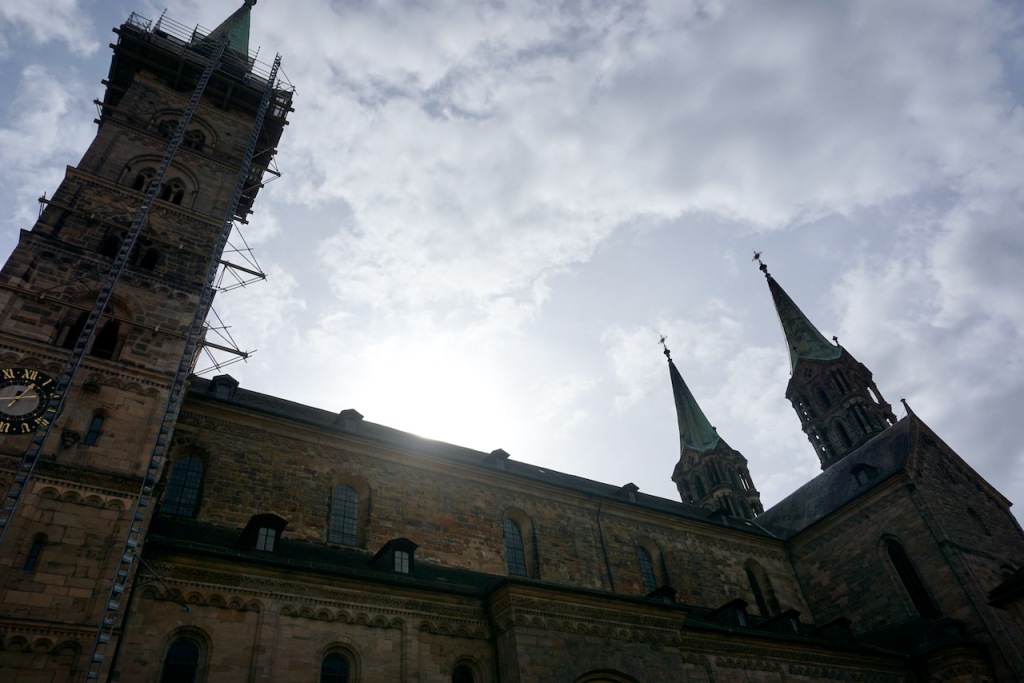
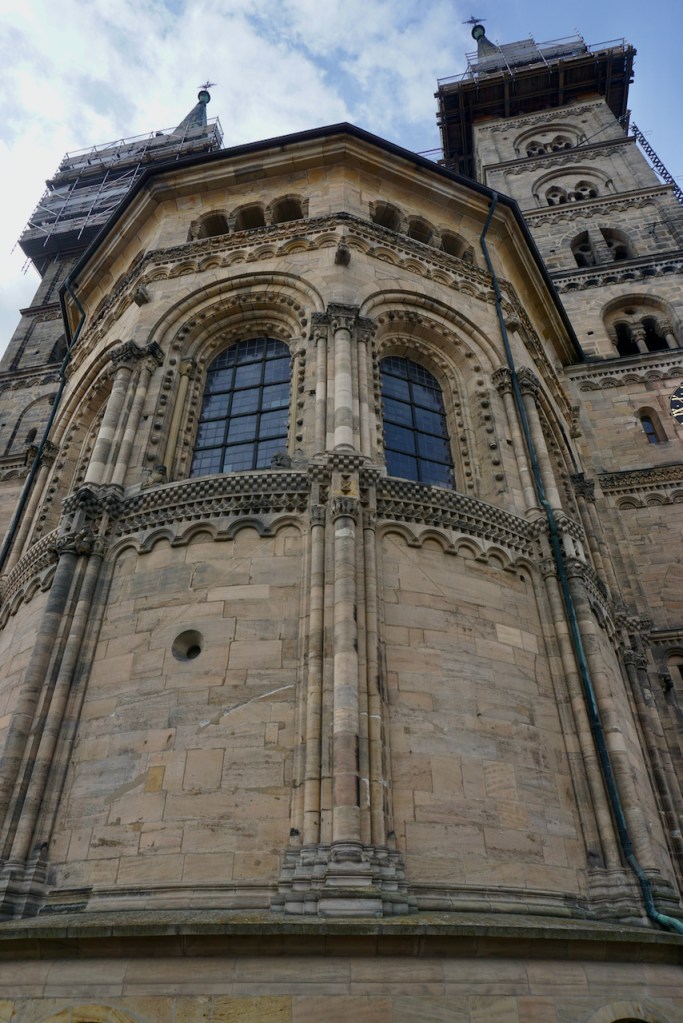
It didn’t take long to assess the wealth of this city, extending back hundreds of years. Each of Bamberg’s seven hills has a church, and Bamberg is host to a cathedral and monastery.

The old Rathaus, or town hall, is the highly decorated signal that one has entered the old town, and we photographed it at various times of day from different angles to play with the light.

We essentially stumbled into the courtyard of the old palace . . .

. . . just after a look at the city from the garden of the new.

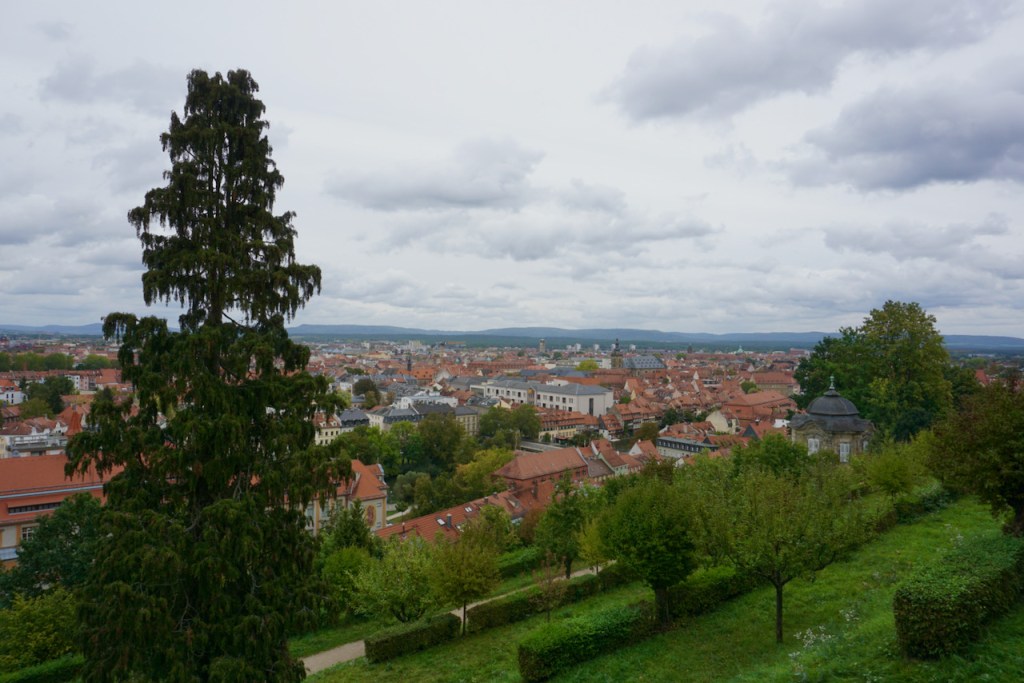
As always, we climbed to the highest point, this time at the monastery that towered above everything, and looked down. The red rooftops all over Germany never fail to put me right back into a child’s storybook.

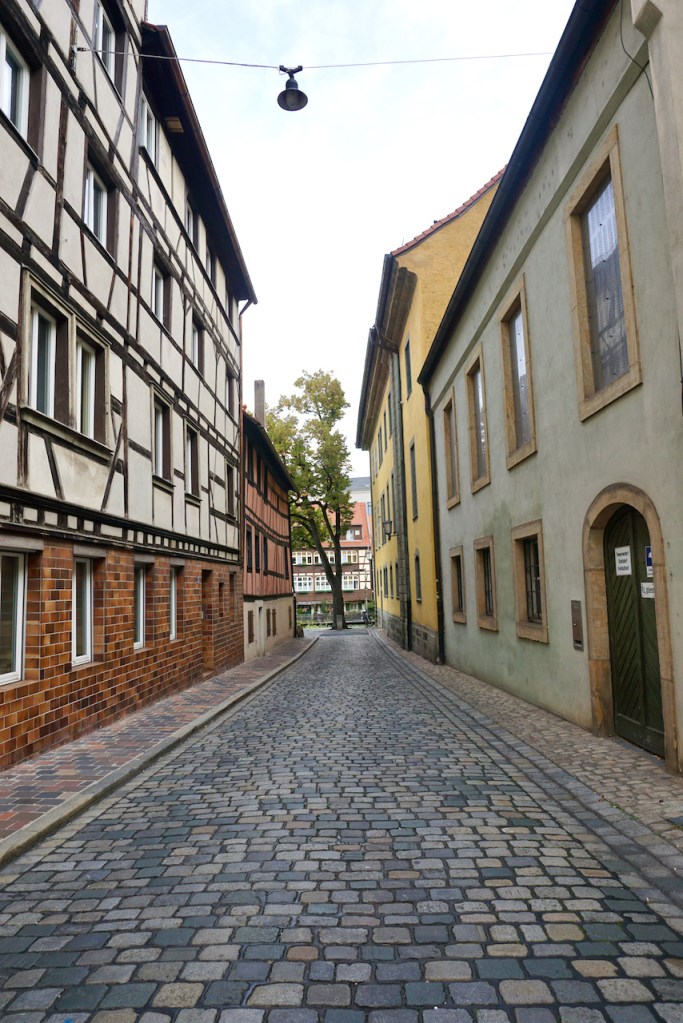
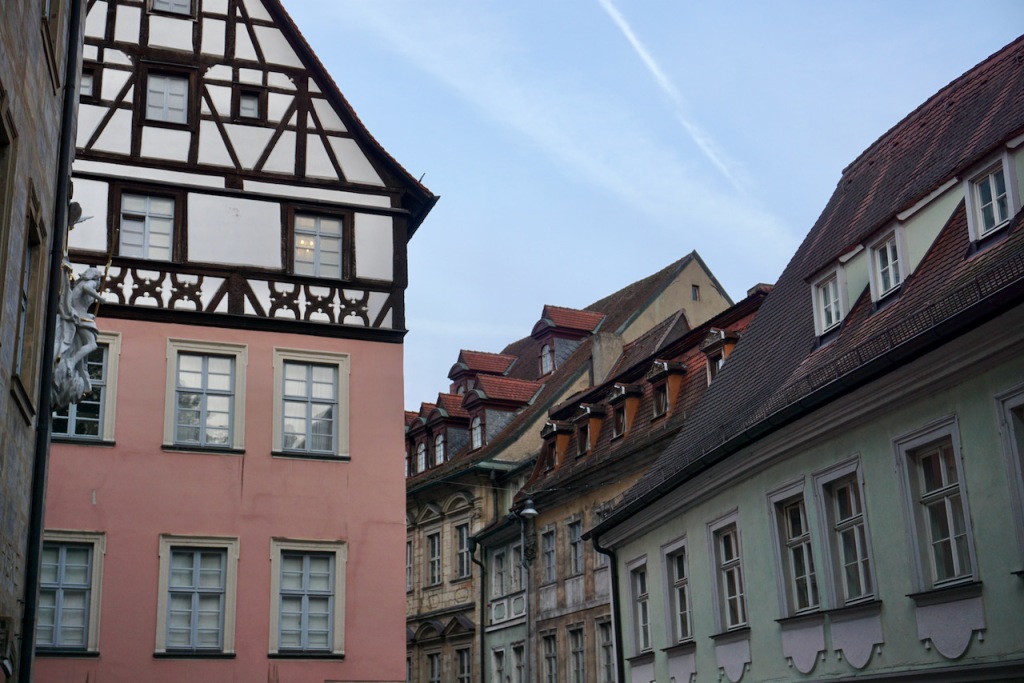
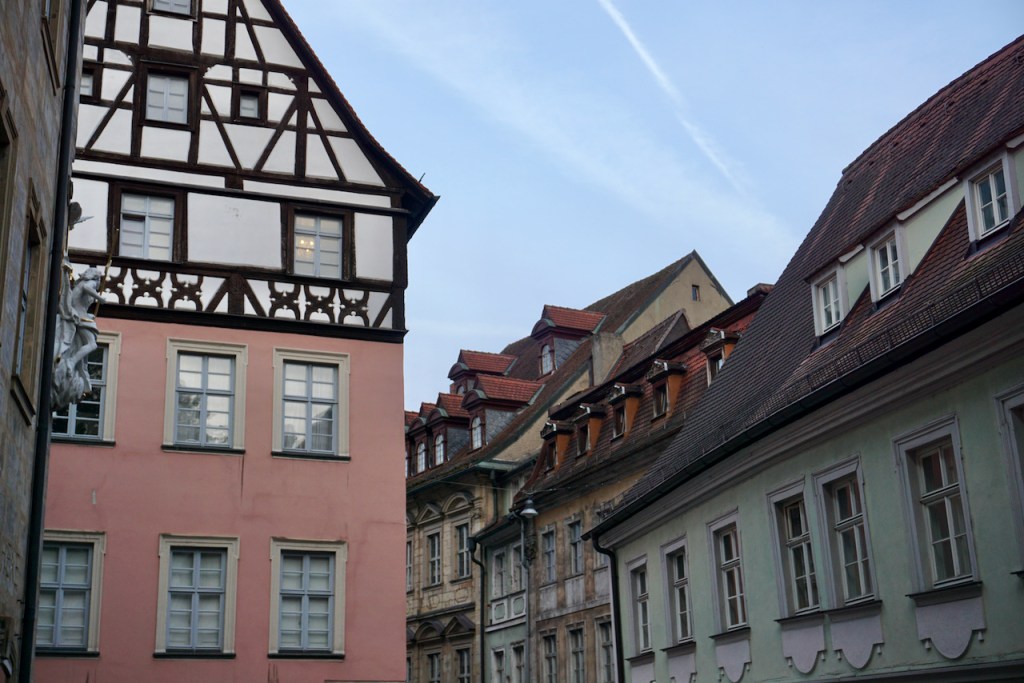
Another aspect of Bamberg that I really liked were the tiny alleyways that twisted into each other, occasionally broken up by the large squares that characterize many European cities. The buildings were ornate and detailed, another sign that this was a city that controlled trade and therefore amassed wealth.

Bamberg is known for its beer and Frankisch beer is distinct in multiple ways. Rauchbier, or smoked beer, is really only found there (it can stay, as far as I’m concerned) and the beer styles are somehow crisper in both colour and taste. Each pub is a brewer of its own beer and some have been operating since the 1400s. We visited the beer museum up at the monastery to learn more, and this is clearly a history that runs deep.

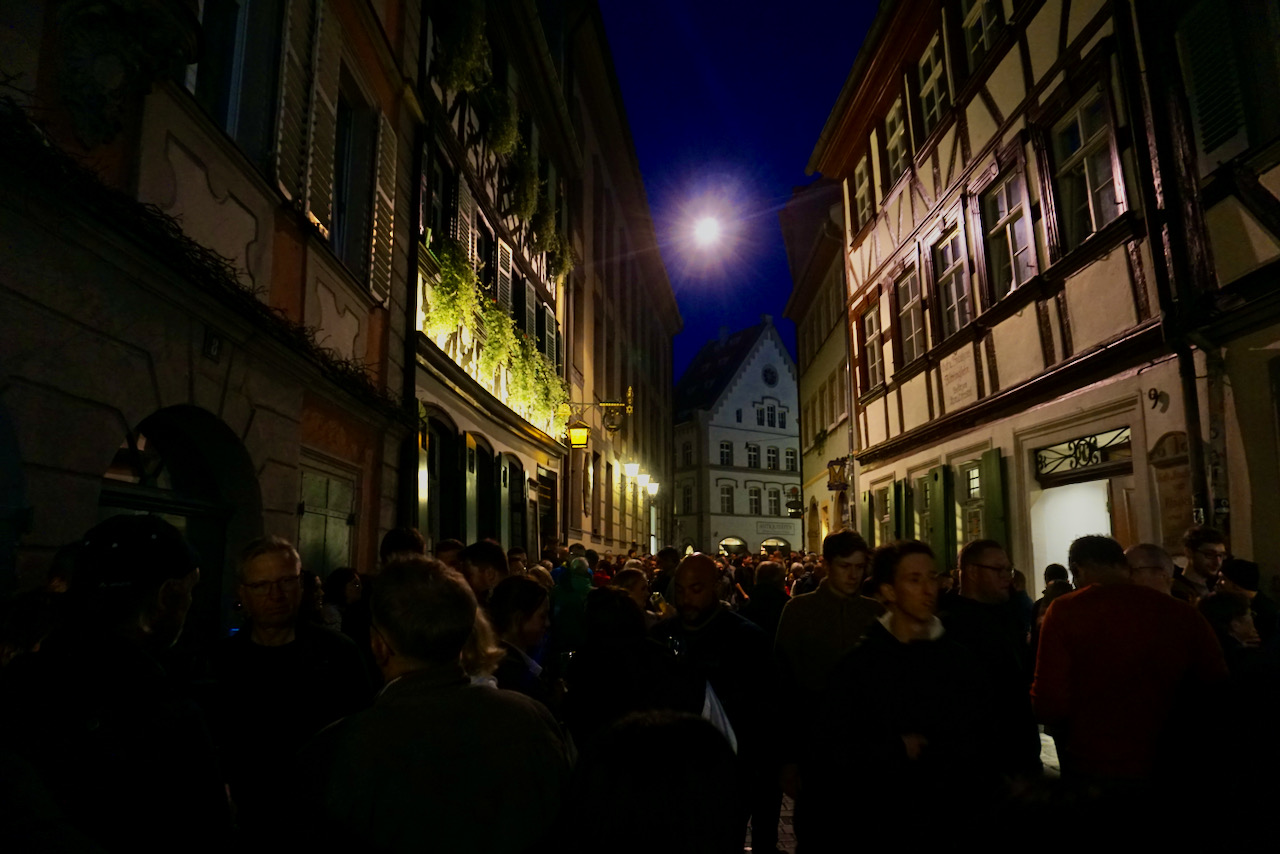
Additionally, a local tradition is the Stehbier, or standing beer. You walk into a brewery/pub/bar/restaurant and order a beer (or wine) to go. You pay the deposit on your glass and walk out into the street. The atmosphere was festive, though the environment was clearly entirely normal for the locals. By us, people bring bottles of beer and wine to the park. In Bamberg, you stand in the streets closed to cars. After all, taking part in the local culture is an essental part of travelling.
After two nights in a medieval town full of breweries, bookshops (I really couldn’t help myself), good food, and cheerful people, we drove about 20 minutes outside of town to climb in the famed Frankenjura. There are many reasons why this is one of the most popular climbing areas in the world, and climbing on the limestone there was a new experience. We’ll be back – after all, there’s climbing and beer.

Travel Guide: Budapest

I recently had the opportunity to travel to Budapest for work, an opportunity I relished not only as a chance to learn something new, but also as a chance to spend some time in a new place. As it turned out, I learned far more than I had hoped at the training, though it got in the way of my exploring. There is a lot to see in Budapest, which is already two cities rather than one, and my glance across the surface left me with a longer list than I had when I arrived.

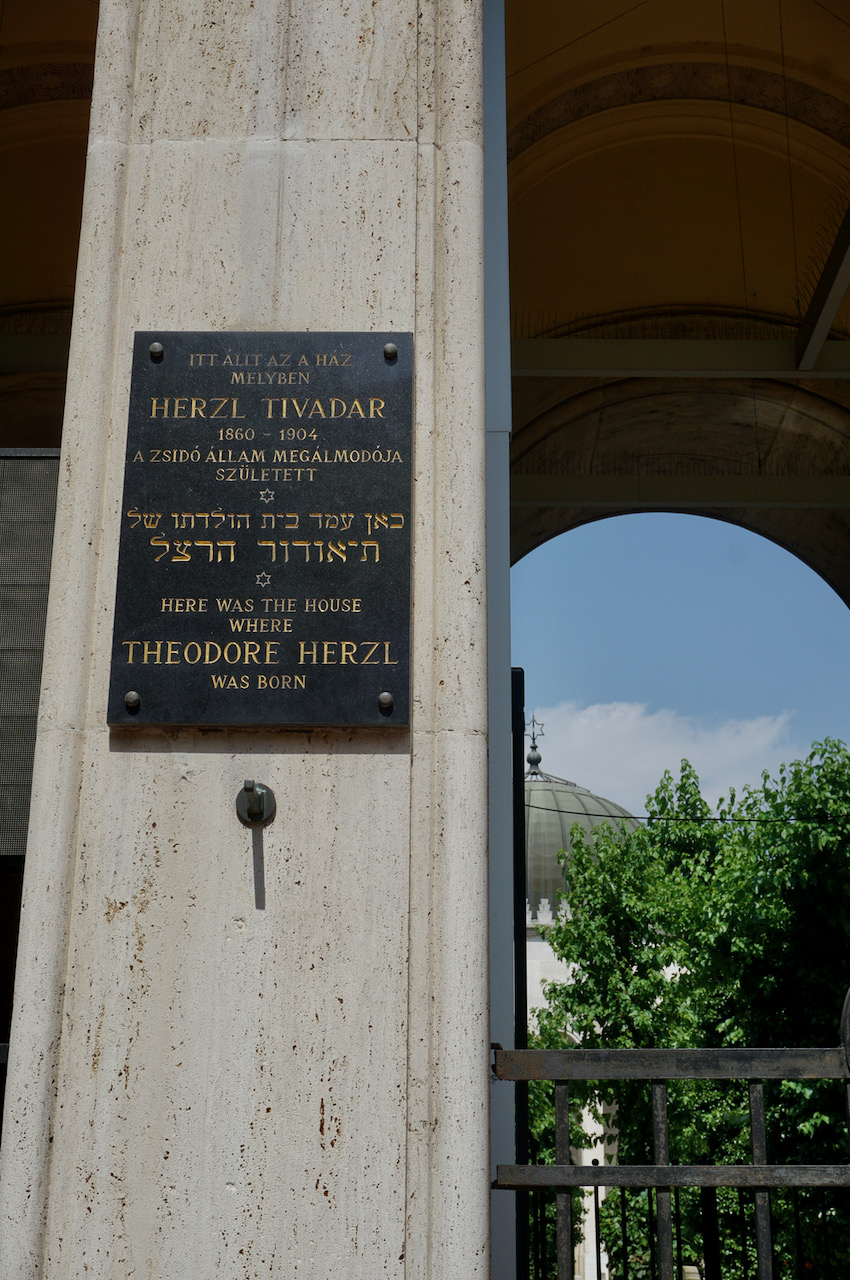
After deciding I liked Budapest upon first seeing one of its many street bookstalls, I stood in front of Europe’s largest synagogue, completed in 1859. It surprised me that Dohány Street Synagogue is located in a country that is 99% Christian, according to my tour guide, in a city with restaurants serving food from all over the world, and that’s something I love about visiting new places.

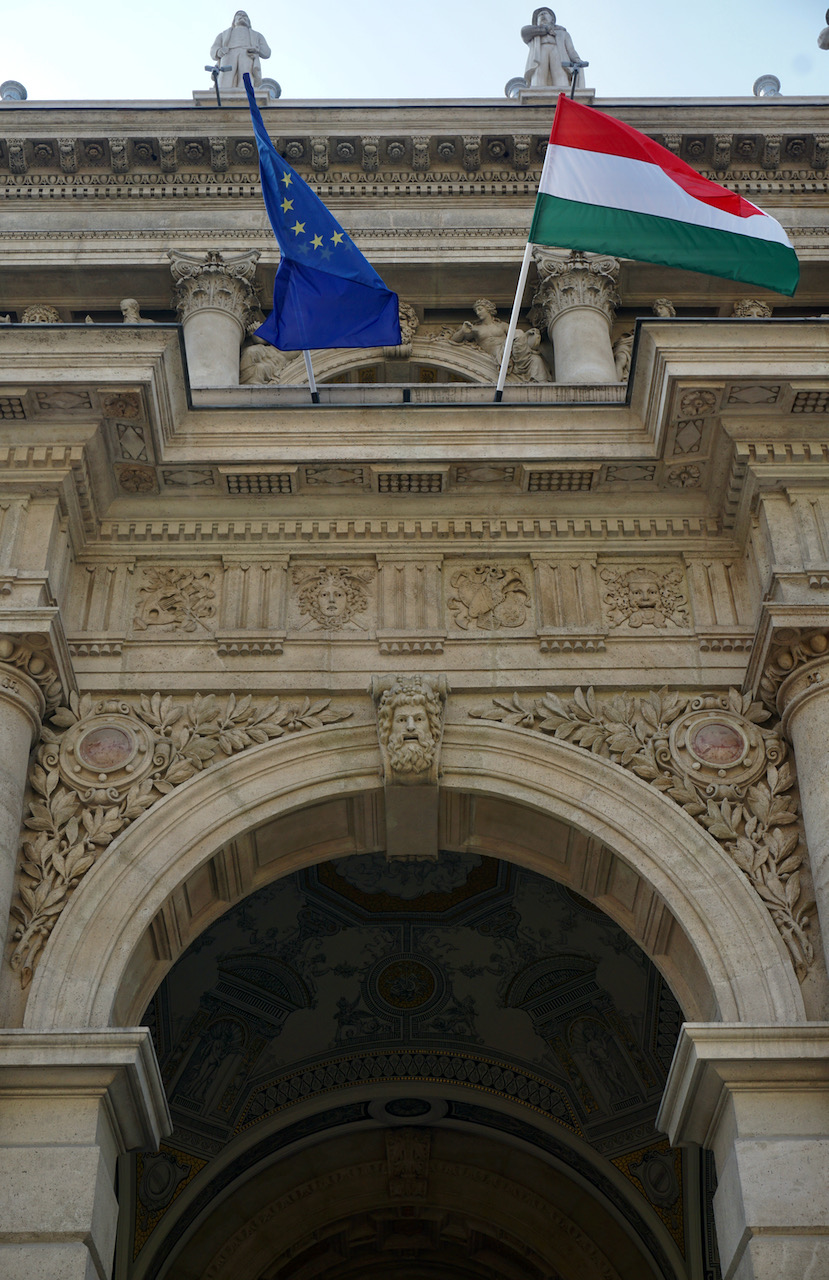
I was staying on the Pest side of the Danube and that’s where I took a walking tour the afternoon of my arrival, always my favourite way to see a city and learn its history. We saw the landmarks Budapest is known for, such as Europe’s largest Parliament . . .

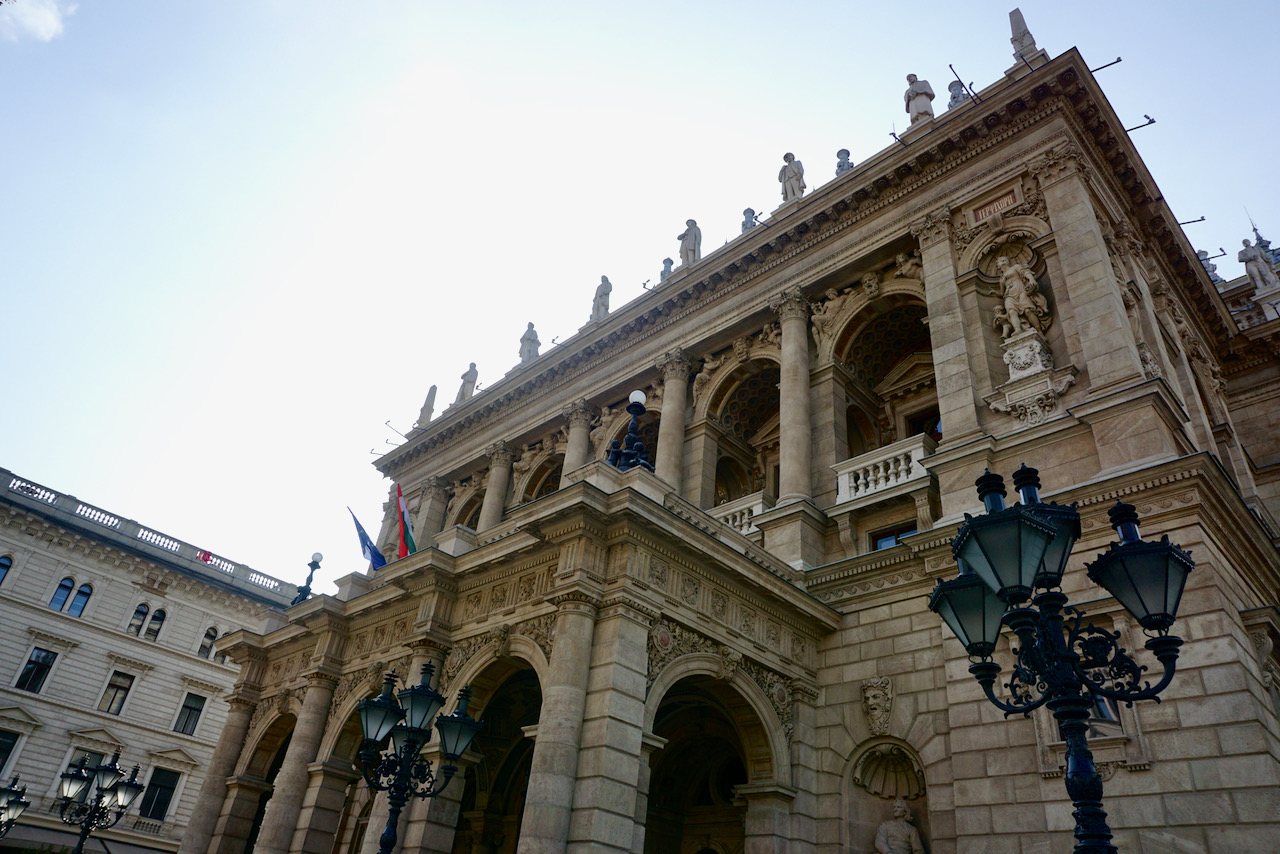
. . . the Hungarian State Opera . . .

 . . . St. Stephen’s Basilica . . .

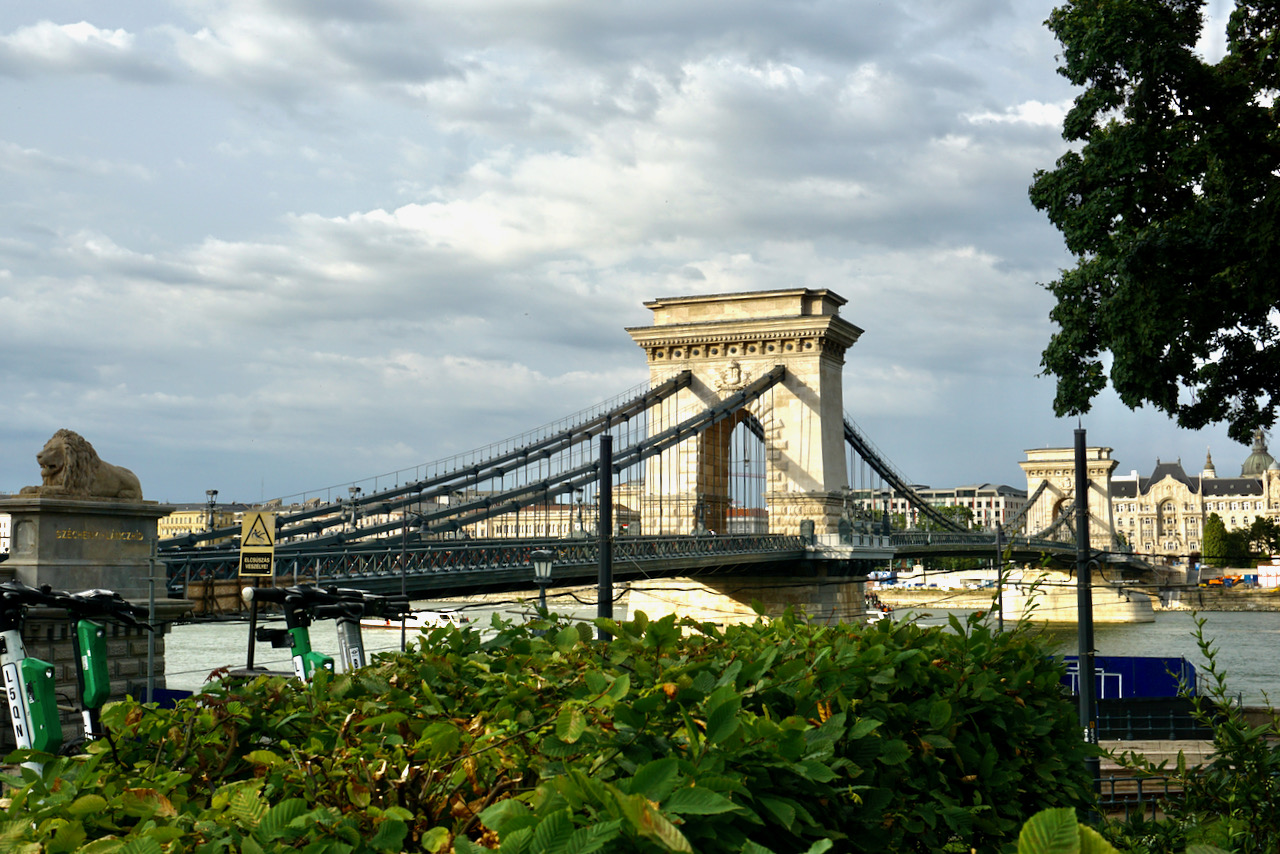
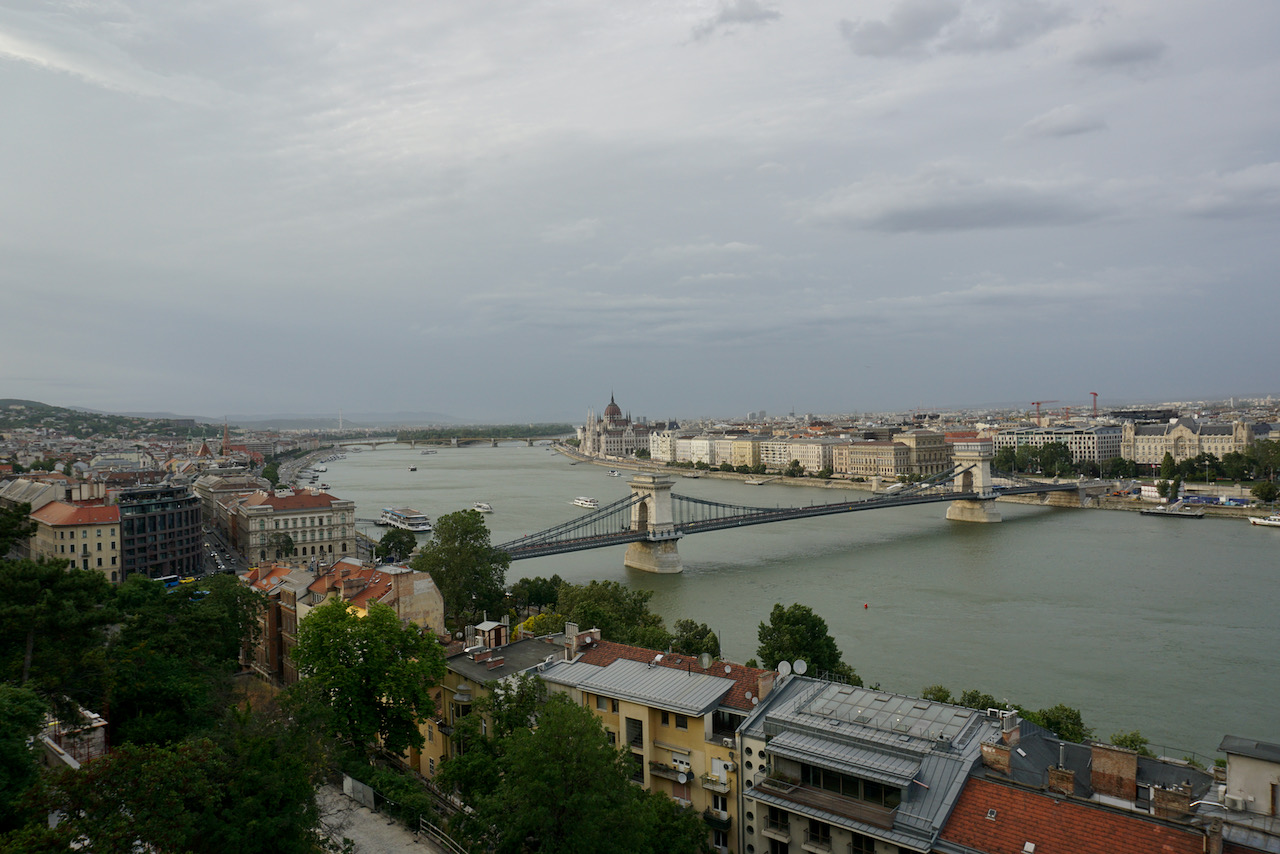
. . . the Danube River and Széchenyi Chain Bridge (unfortunately closed to pedestrians due to construction) . . .

. . . and walked through a few of the parks that are an important part of local life.

It was on the walking tour that I learned about the monument that went up overnight in 2014, an attempt to change the narrative of Hungary’s role in World War II. The counter-monument placed by the people of Budapest aimed to rewrite that wrong.

It came as a surprise that history was being rewritten in a city with a memorial called Shoes on the Danube Bank, commemorating the 3,500 people told to remove their shoes before being executed and their bodies thrown into the river during the Arrow Cross terror of 1944-1945. 

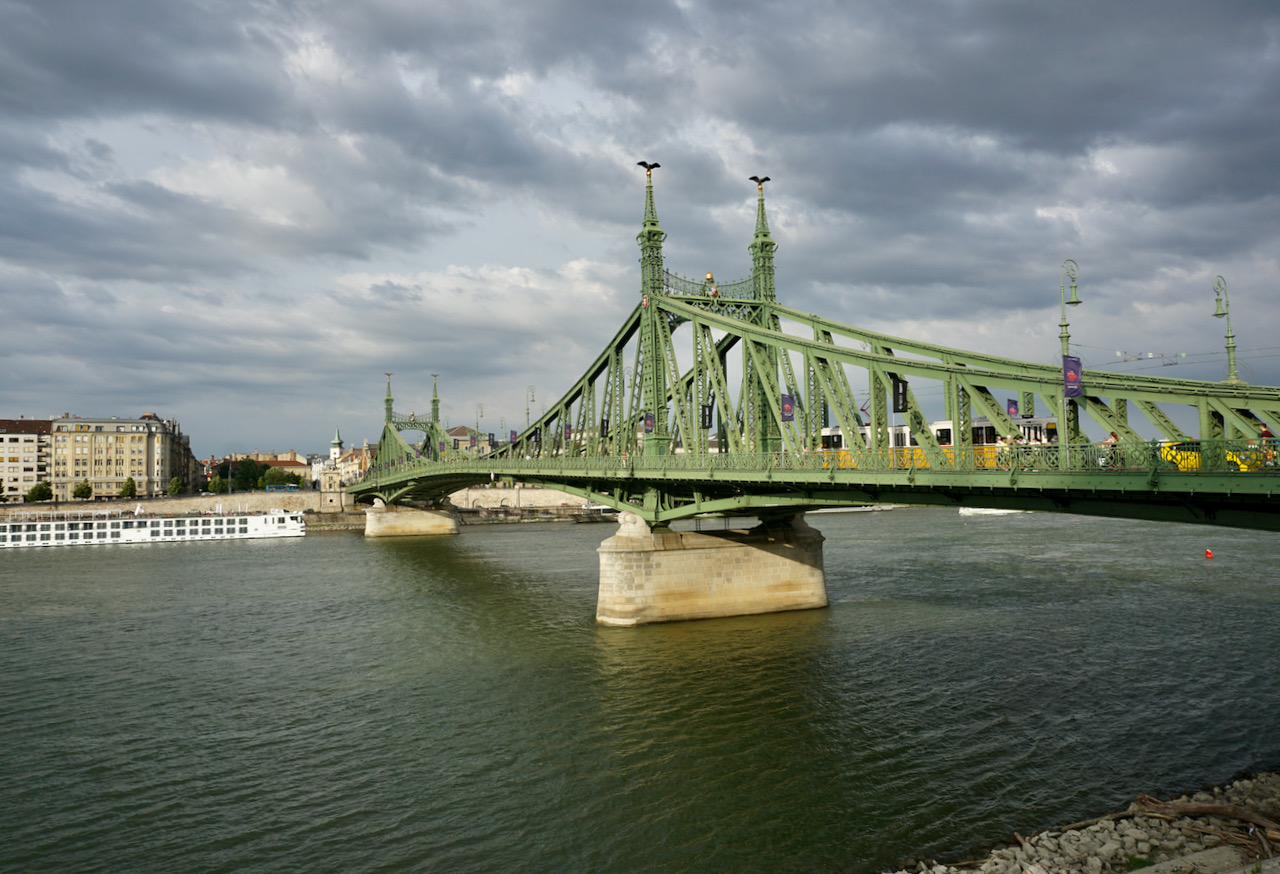
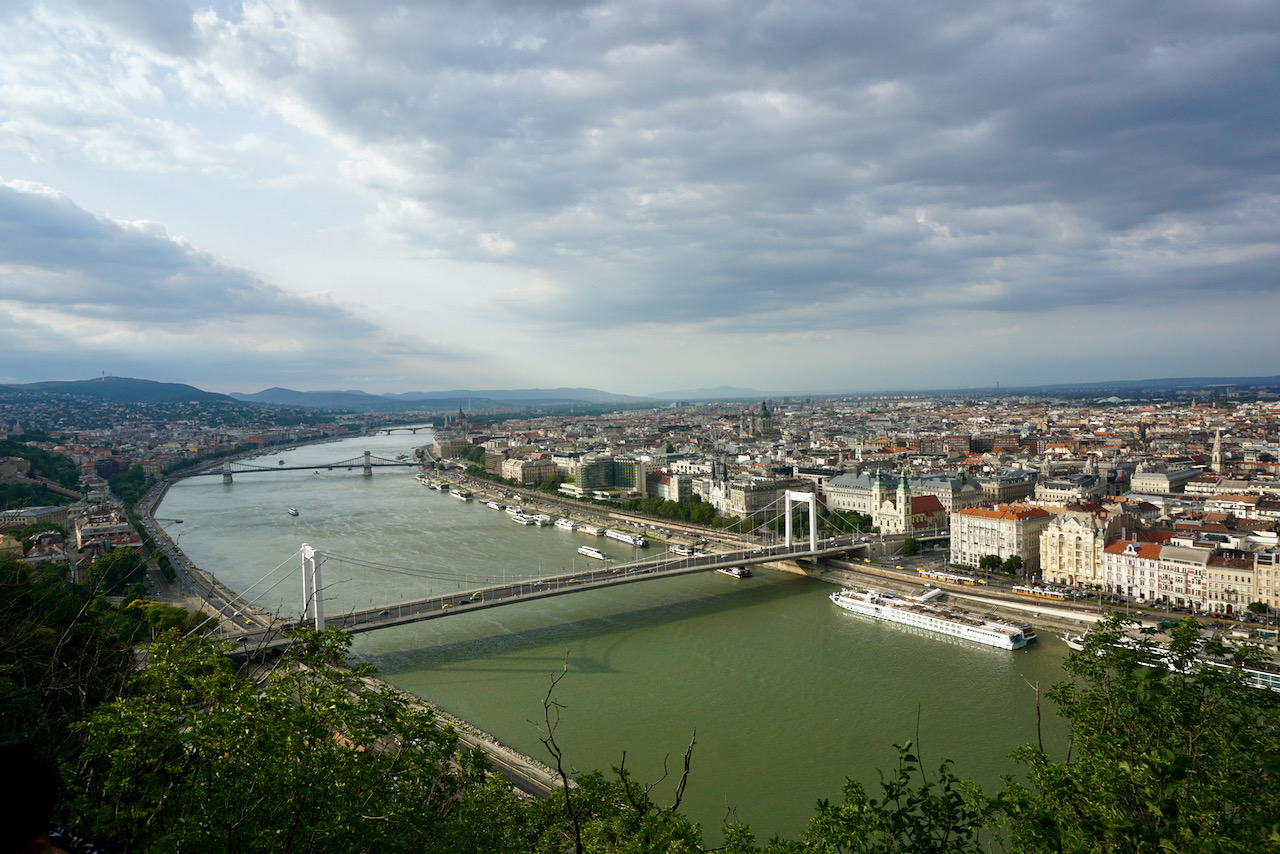
This memorial is on the Pest side of the Danube and, with eyes towards Buda on the other side, I headed over to do what I always try to do in a new place: Find the highest point and look down. In Budapest, this meant crossing the bridge to Buda and walking up to the Citadel.

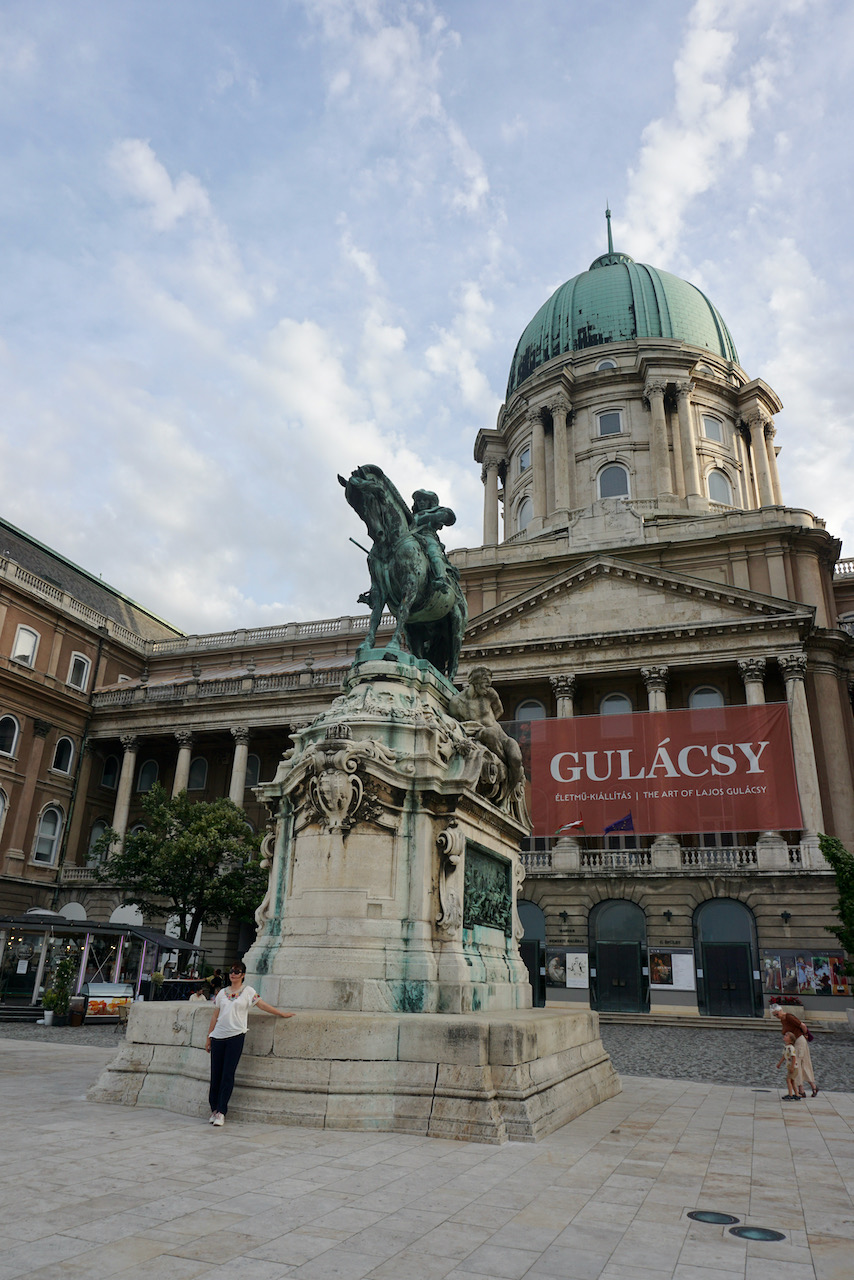
Once in Buda, I walked along the Danube, marvelling at the force of the wind that cooled the air that had been steamy and humid when I arrived the day before. I went up to Buda Castle and looked down again.

I left by bus when it began to get dark. There was so much more to see.

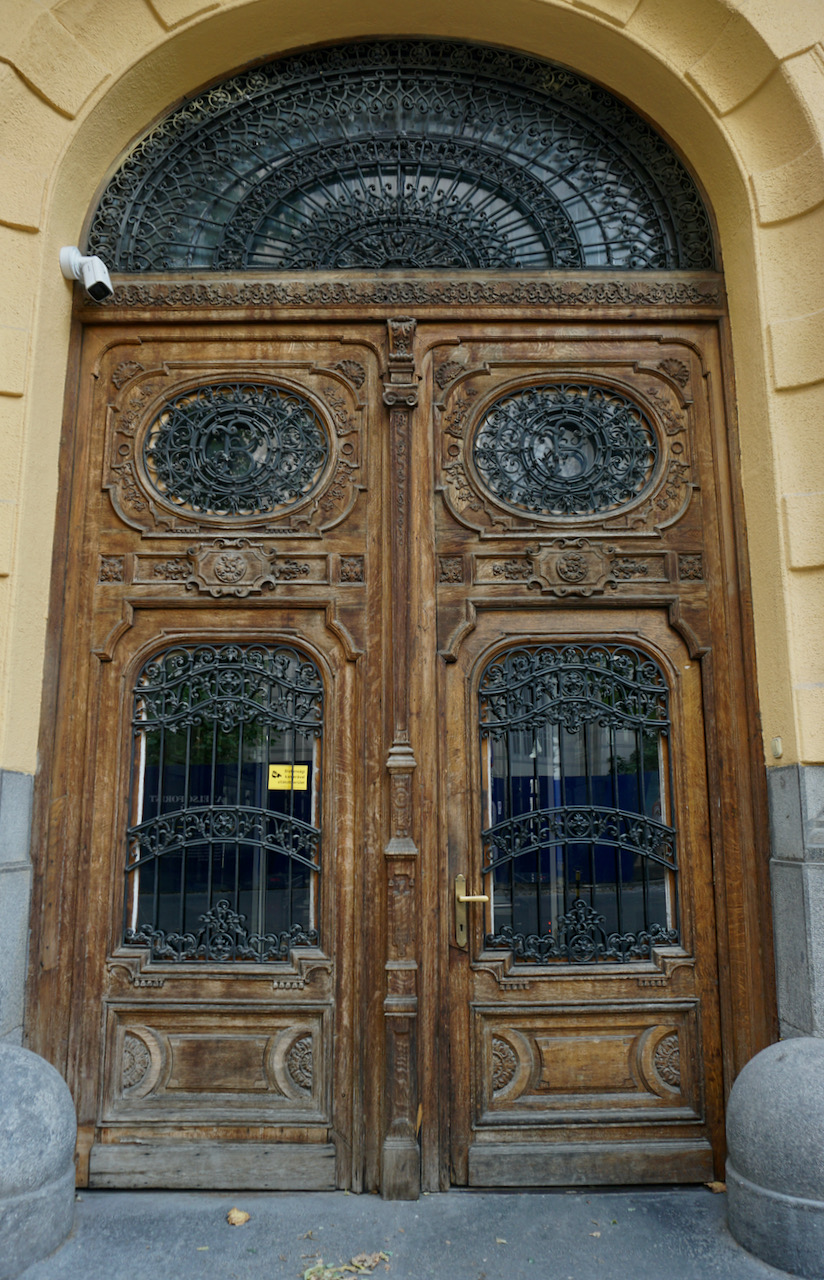
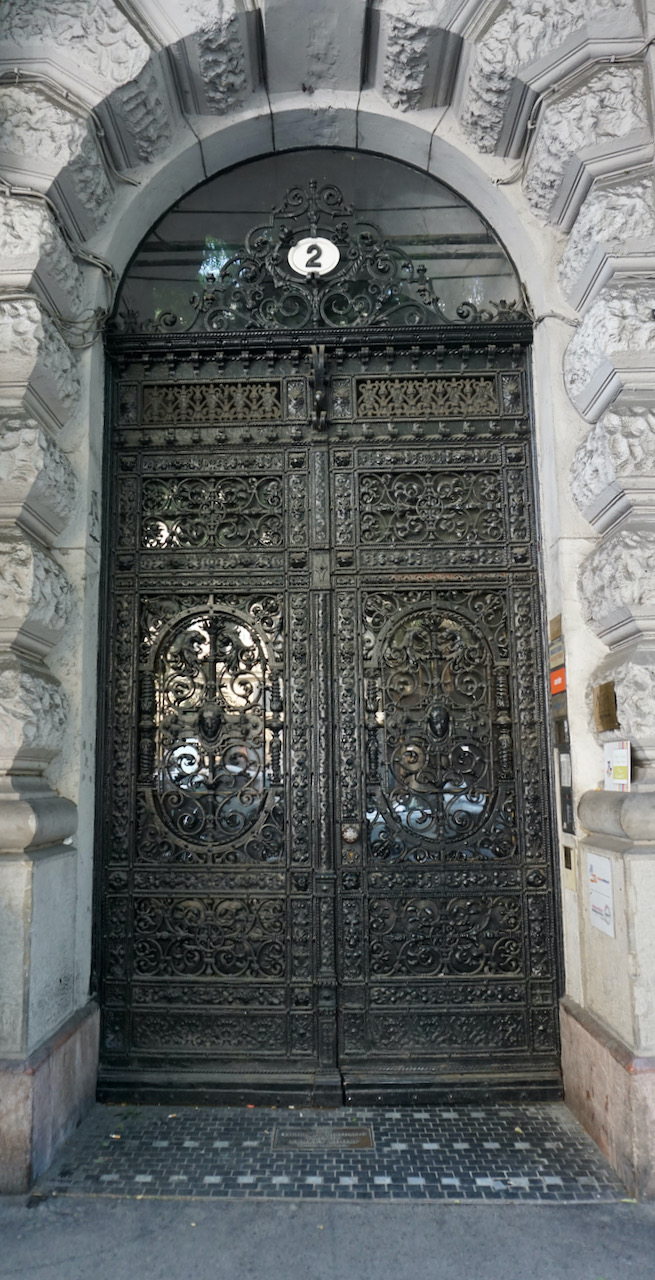
With the time I had outside of the training, other wandering was an exploration of ornate doors . . .

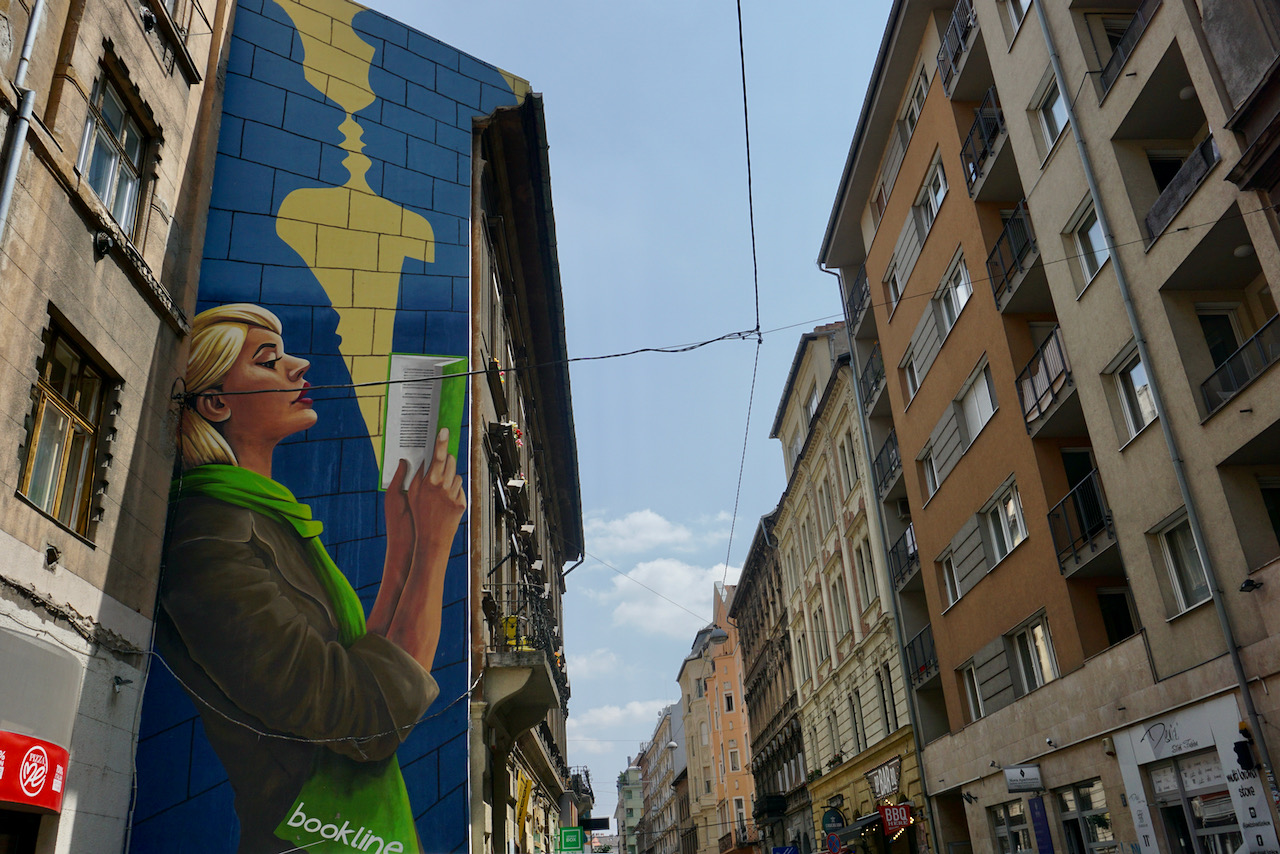
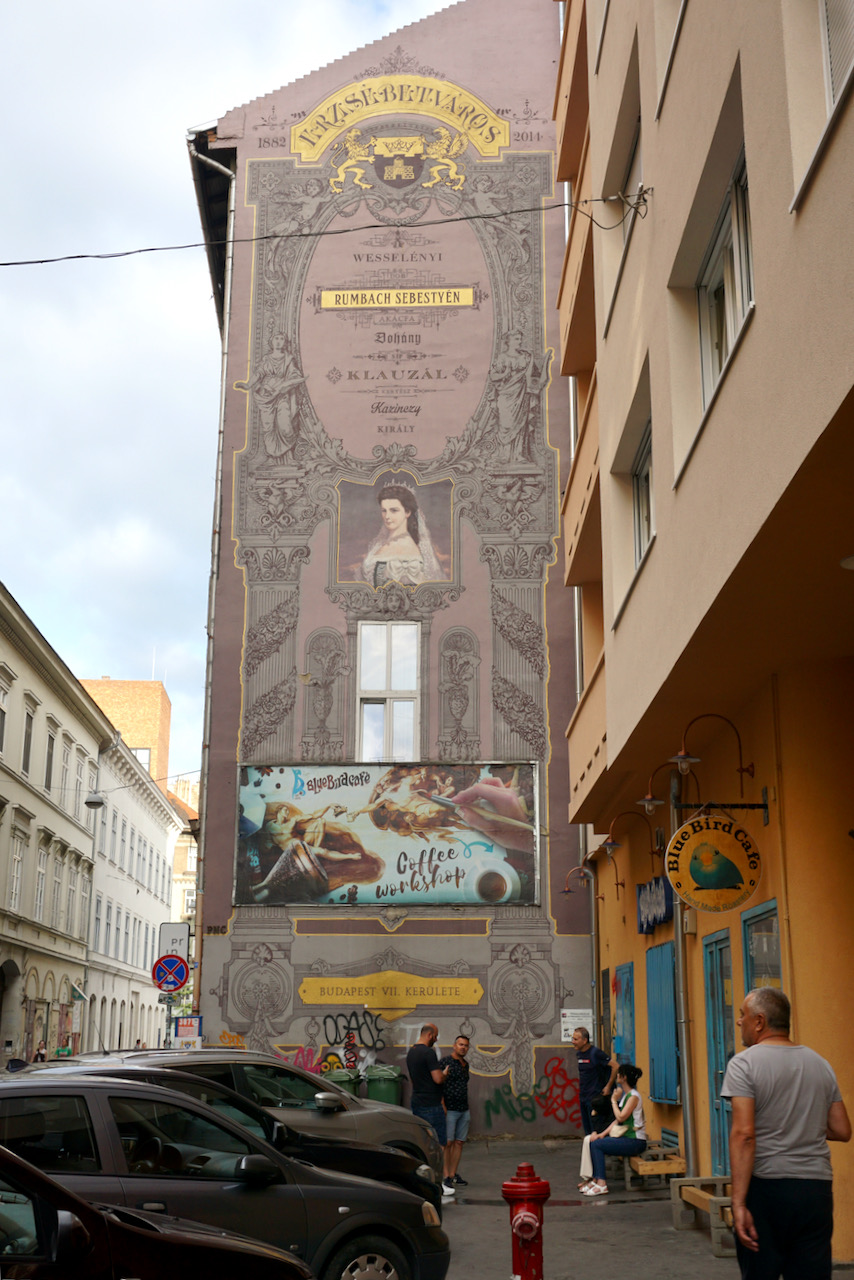
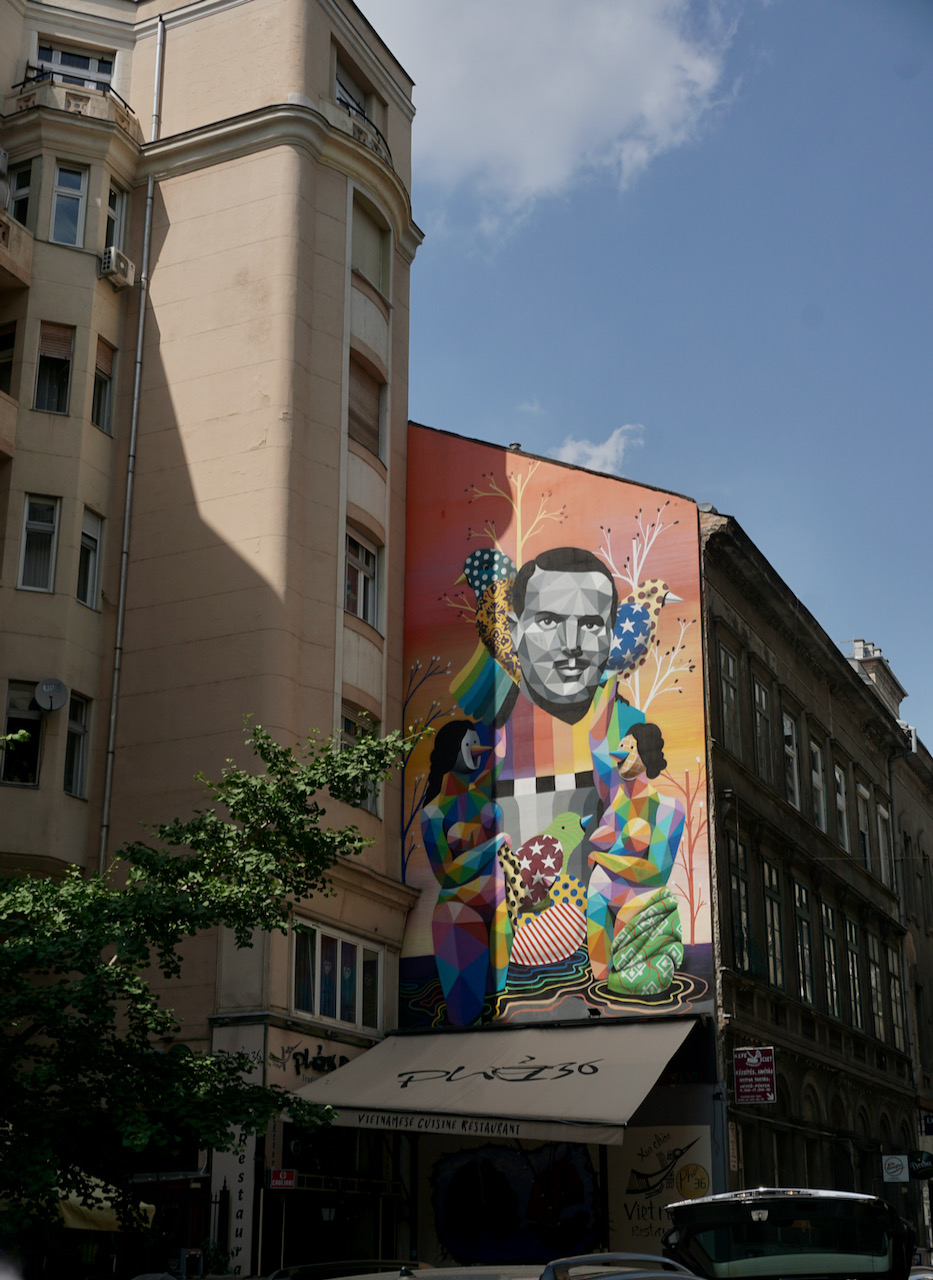
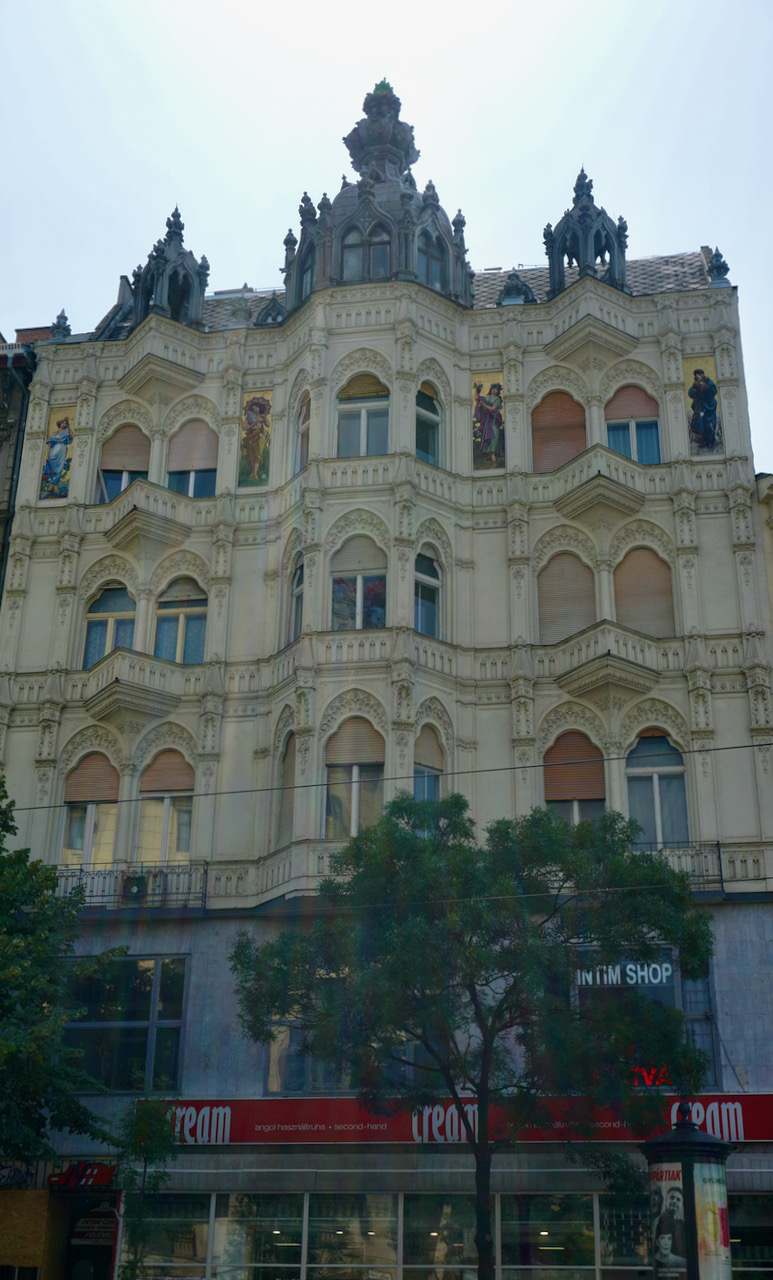
. . . murals . . .

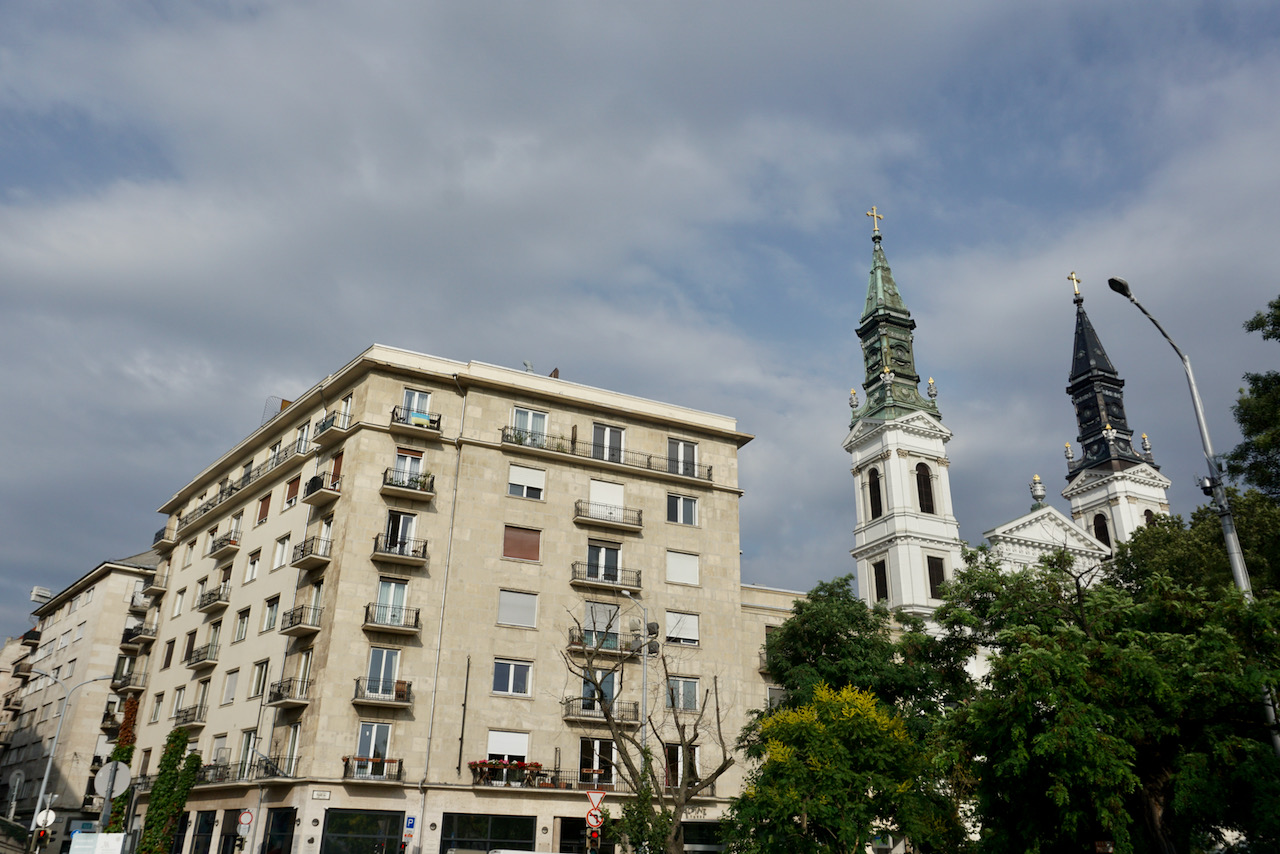
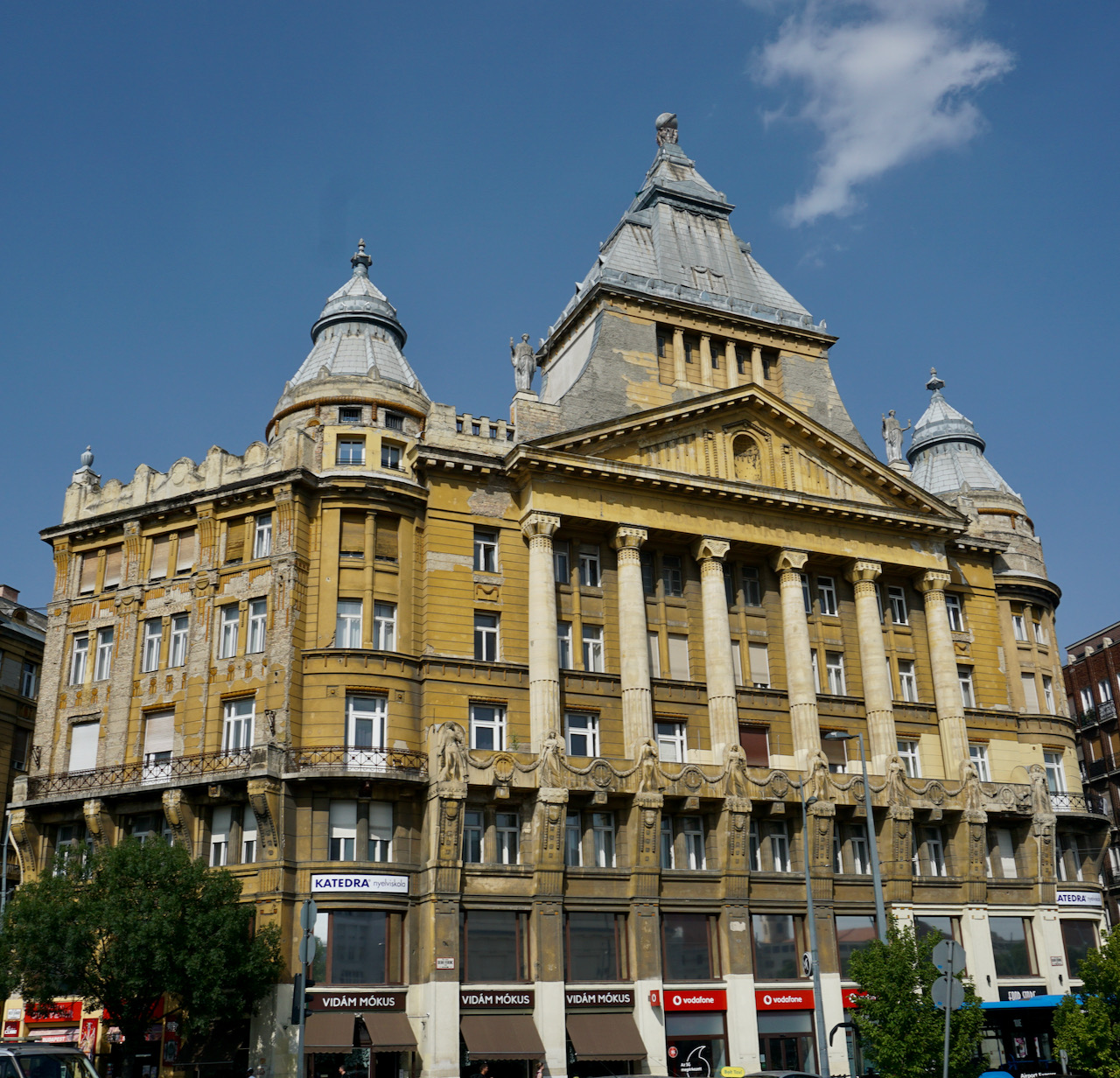
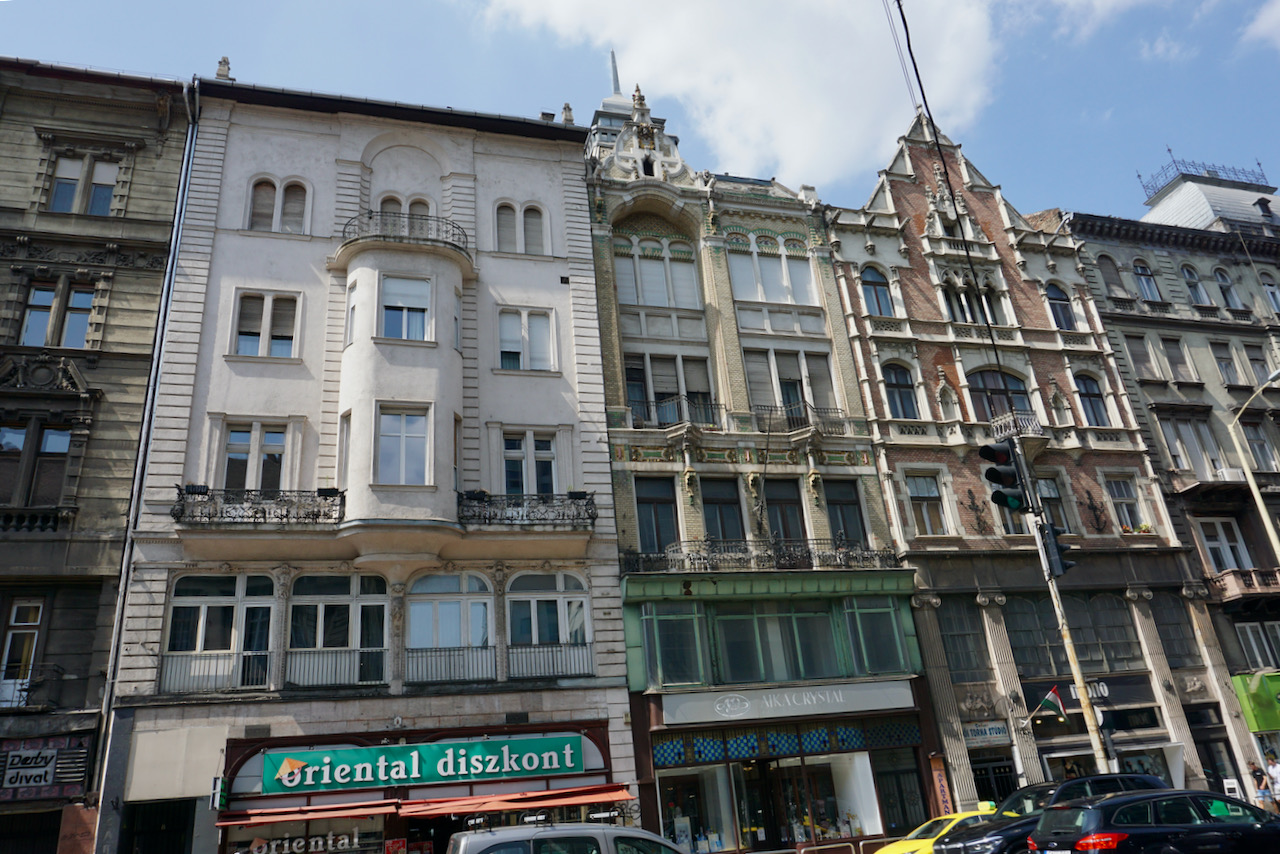
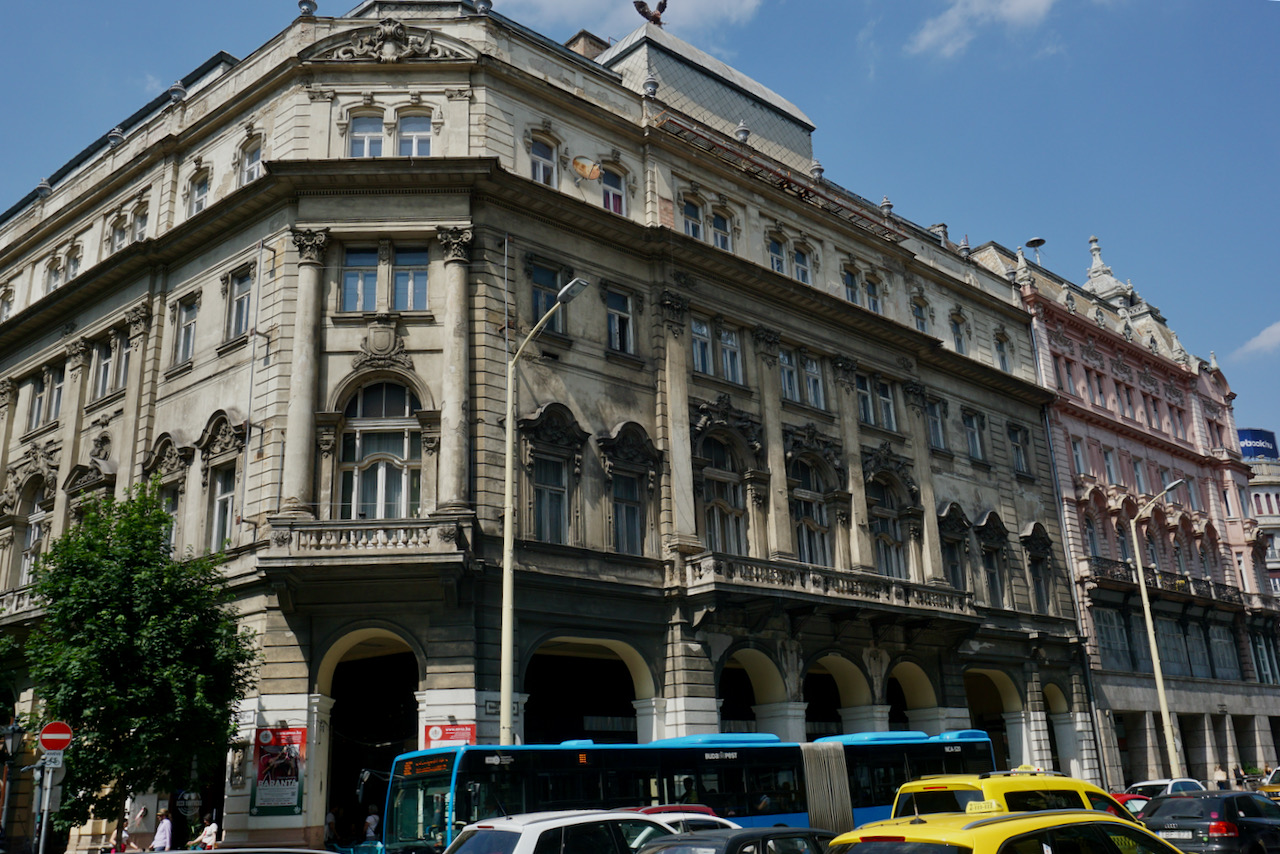
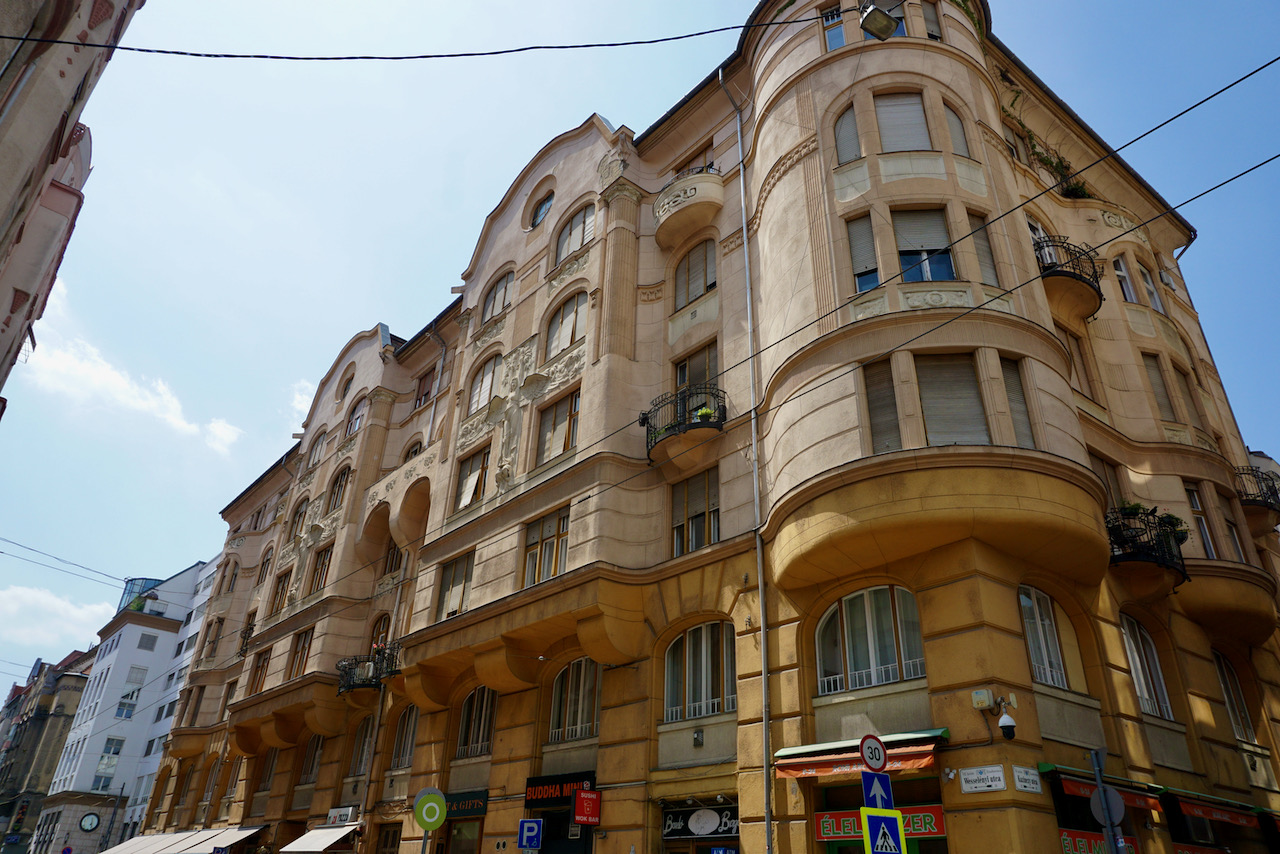
. . . and buildings that I liked for their appearance, a mix of architecture from before the wars, the Soviet period, and the time since.

I walked along Andrássy Avenue to its end at Heroes’ Square . . . 

. . . and came upon Vajdahunyad Castle, build in 1896 to mark the millennium of Hungary’s beginning as a modern state; it’s an art museum today, one of many in Budapest.

Making mental lists of what I still wanted to discover, it was time to go. I left Budapest having tried new foods, made plans for a new role at school, and learned to greet, thank, and bid farewell in Hungarian. As always when travelling, I left with more than I had when I arrived, and I left grateful for the opportunity to be there.

Travel Guide: Split and Hvar

After two nights in Zagreb and an afternoon in Plitvice Lakes National Park, my parents and I drove through beautiful mountains and the sort of scrubbed bush that seems to come right out of rock. The best word to describe the sky, I wrote in my journal later, was the German word diesig, which can mean both misty and hazy, but has none of the negative connotation of haze. The sun peeked through but to say it was sunny would be misleading. It was a beautiful drive and I was glad to be behind the wheel.

We arrived in Split in the dark and the air tasted like the sea.

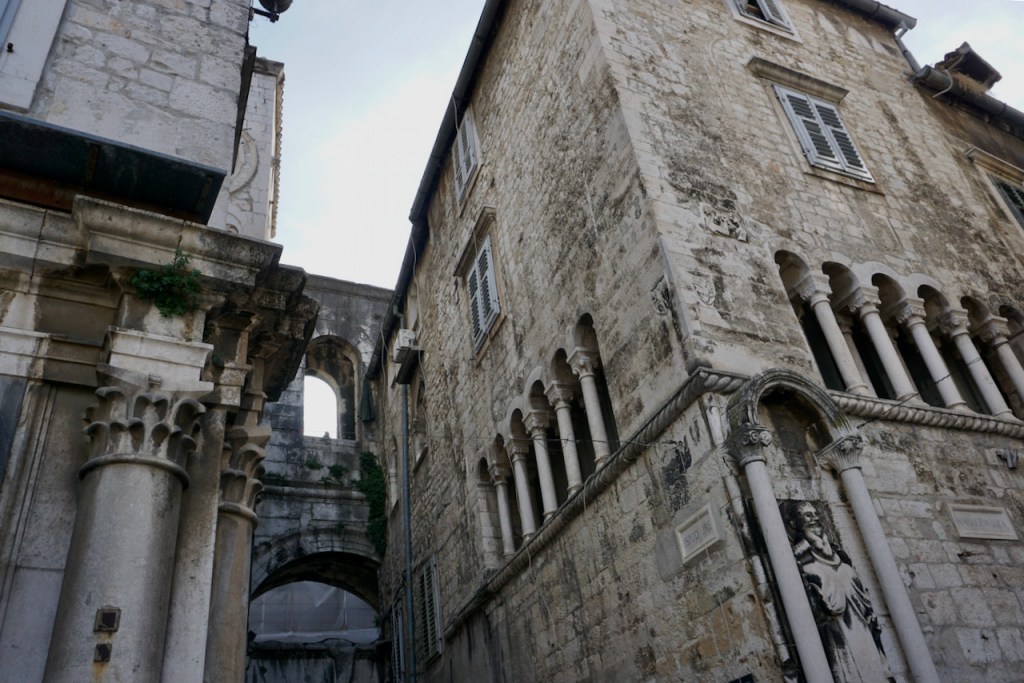
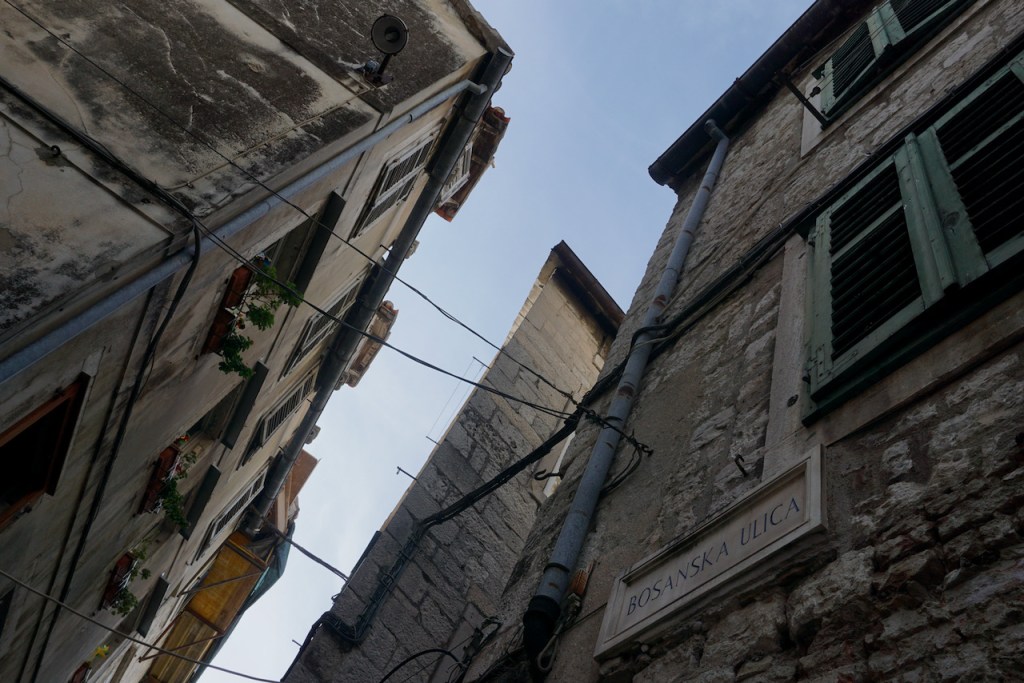
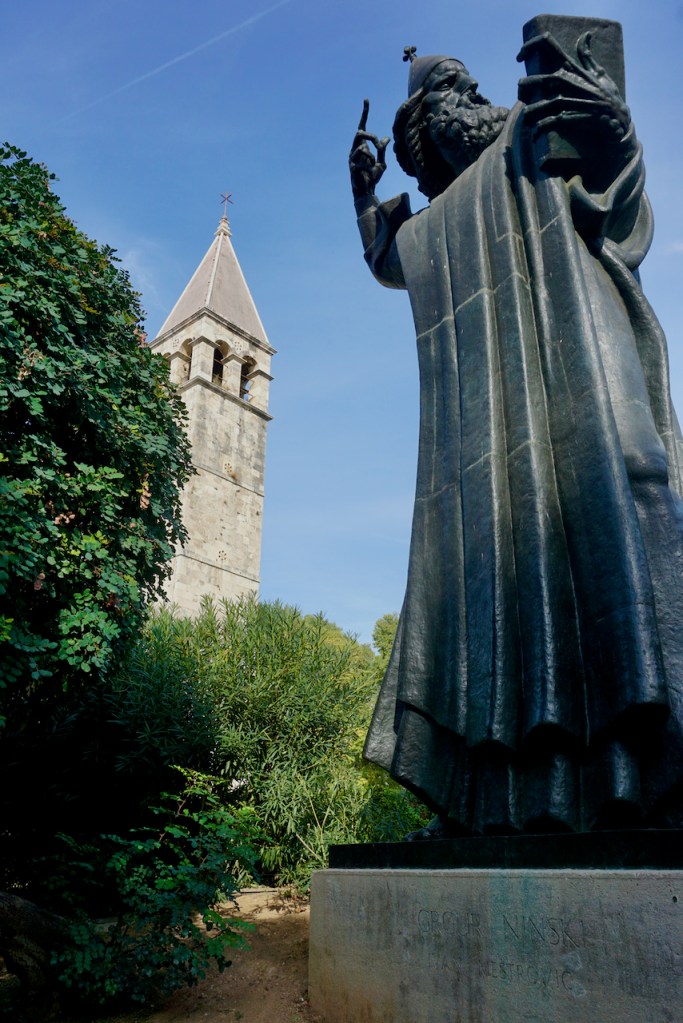
The following morning we took a walking tour that gave us a brief introduction to Split’s old town and taught us a great deal about Split’s history from the time of the Roman Empire. This is where I began to understand the role of the Balkans as a crossroads through Europe. It seemed to me that Croatia has been historically disregarded as the playground of empires, even as empires rely on its strategic location for conquest and safe passage. This was clearly seen in Split, a city that has traded hands time and again throughout the course of history.

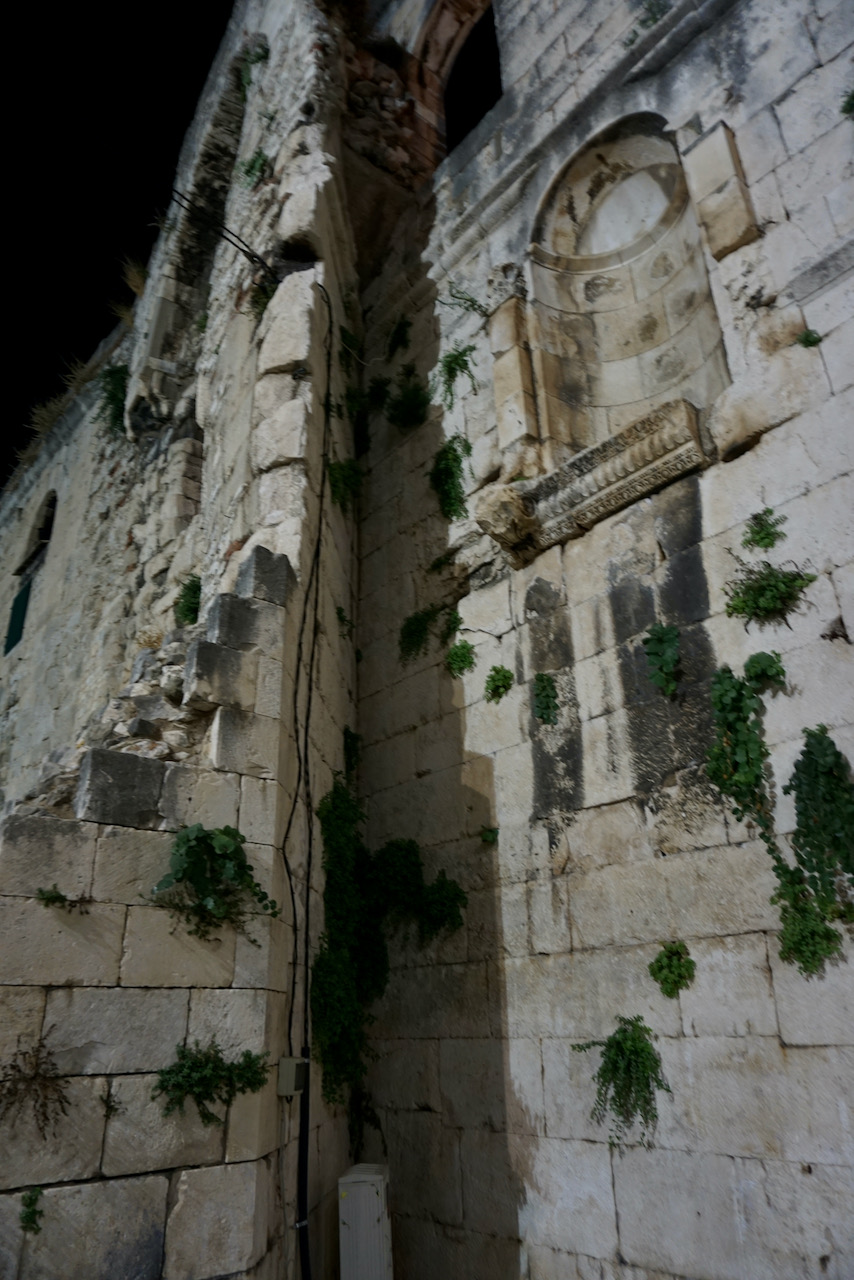
I would have thought that the enormity of Diocletian’s palace and the ancient Cardo, the trade corridor still running under Split’s streets, make this city, a UNESCO World Heritage site, one of deep interest for archaeologists and historians. However, as the guide explained, UNESCO is interested in new finds. Split and its heritage might be beautiful, but are not new finds.

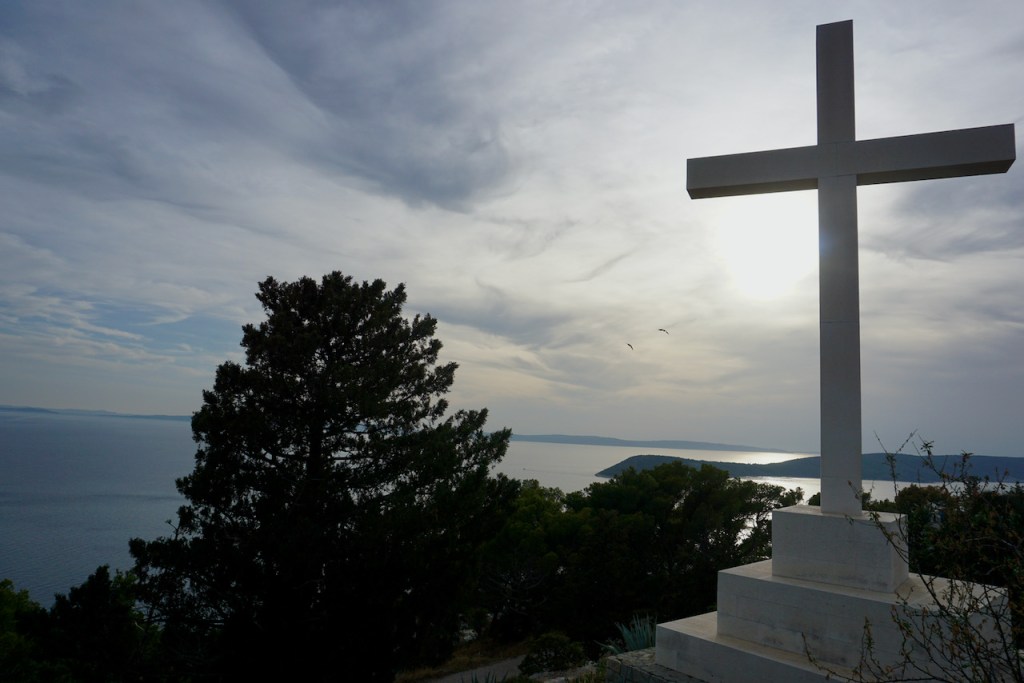
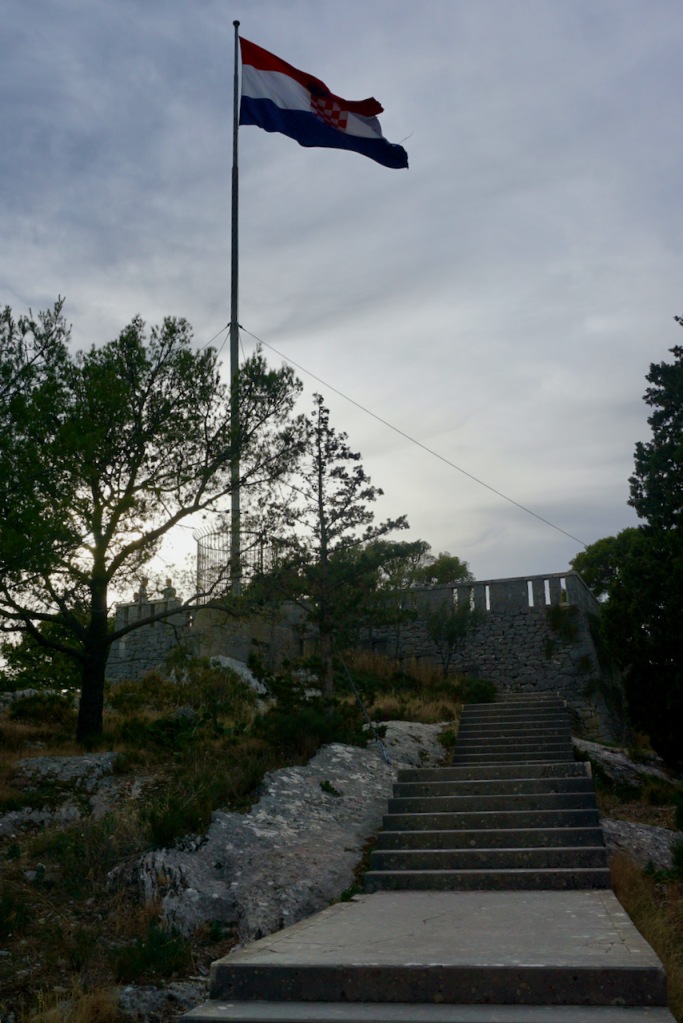
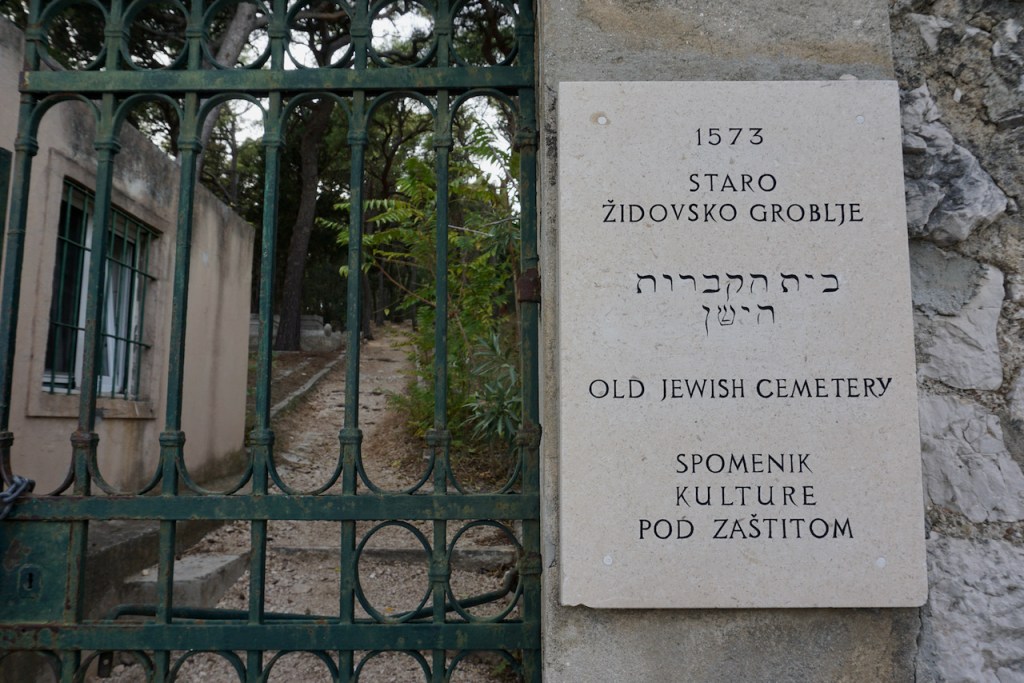
After a walk to get our bearings, we spent the afternoon following the path up Marjan Hill to reach the highest point in Split and look down on the city from below. Interestingly enough, we found an old Jewish cemetery on the way.

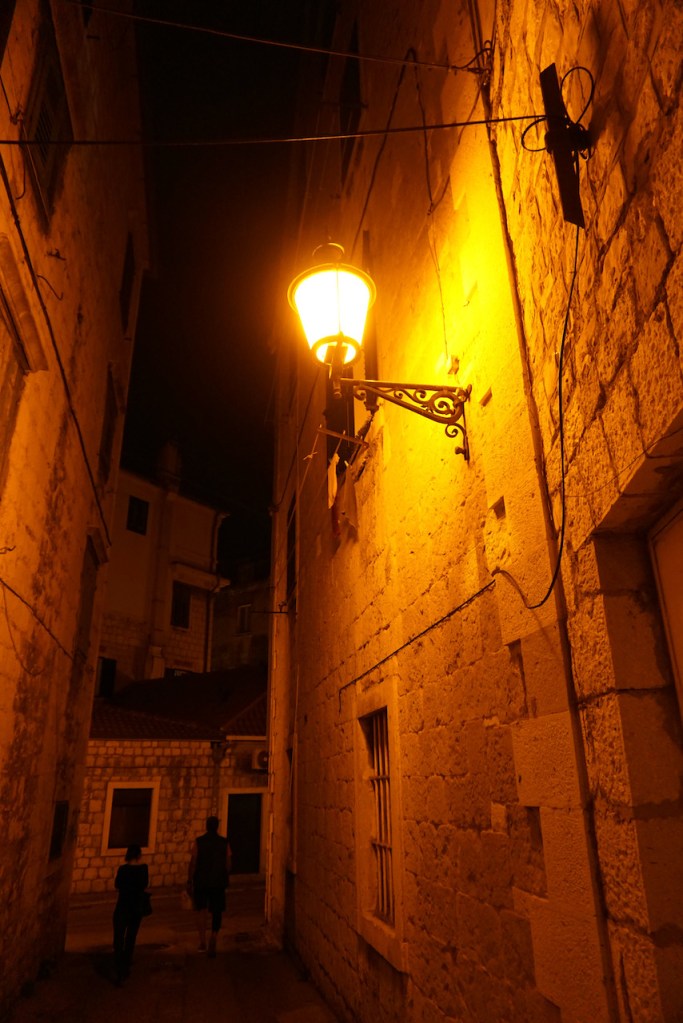
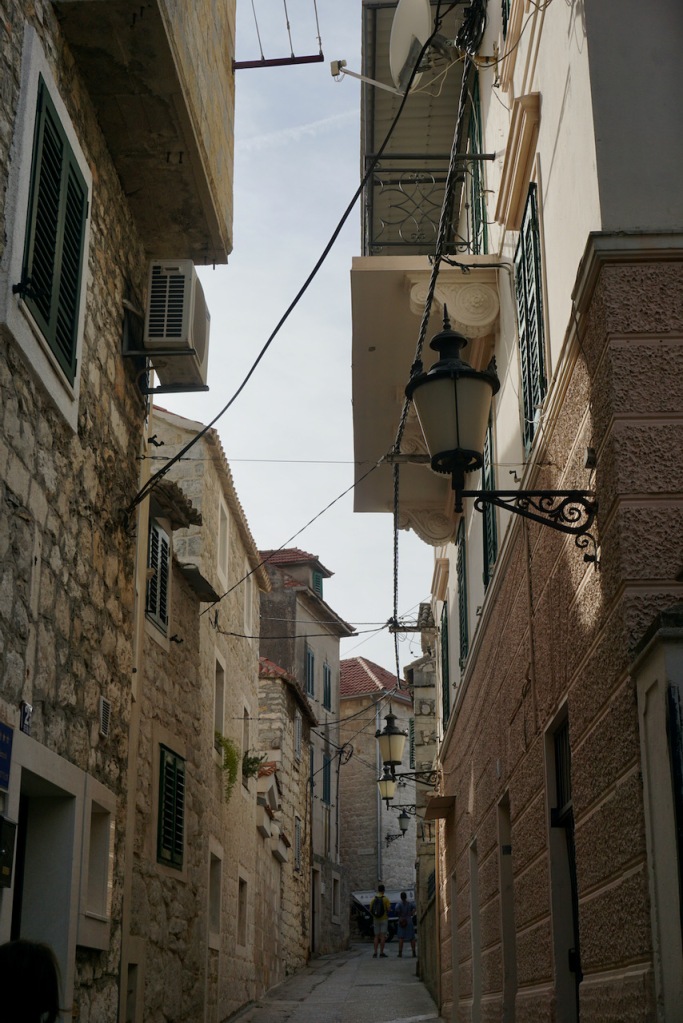
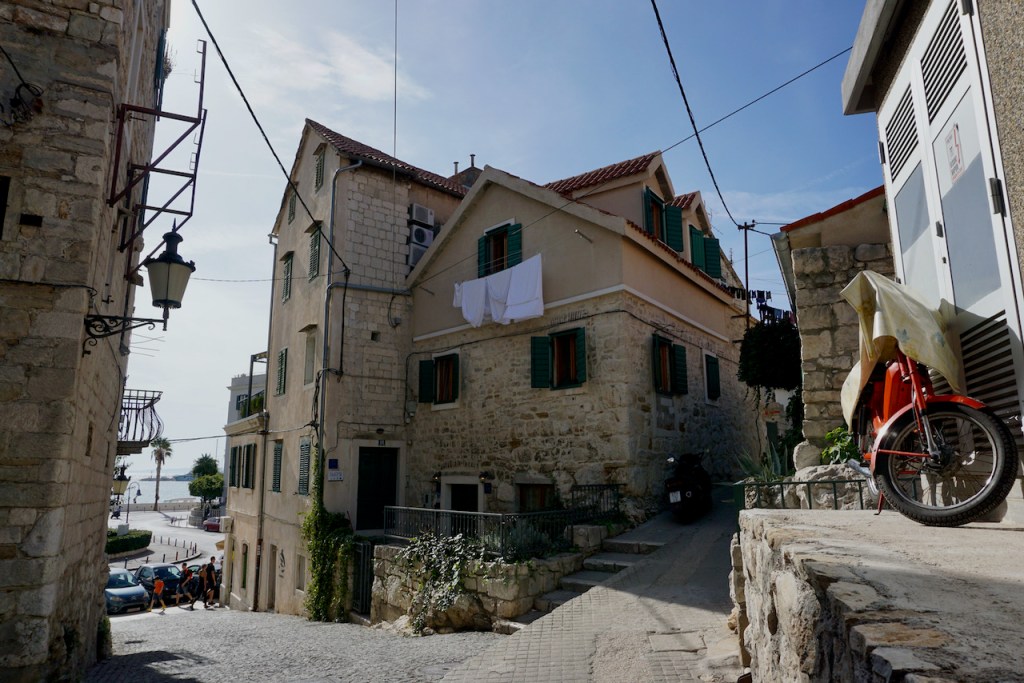
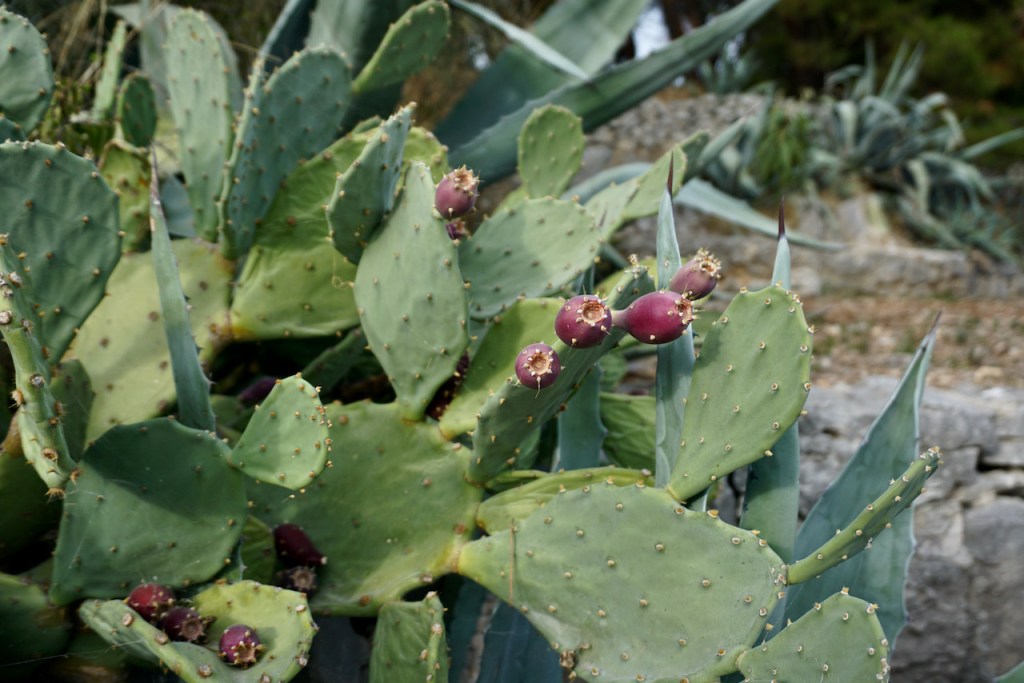
I found that I could not get enough of the landscape. The white stone gave me shivers when I touched it; there were plants, trees, and cacti that I had never seen before; water was visible from everywhere above; mountains visible from every angle. The polished stone of the streets and buildings shone in sunlight and moonlight, and caper bushes were growing on the palace walls. The stories the stone could tell.

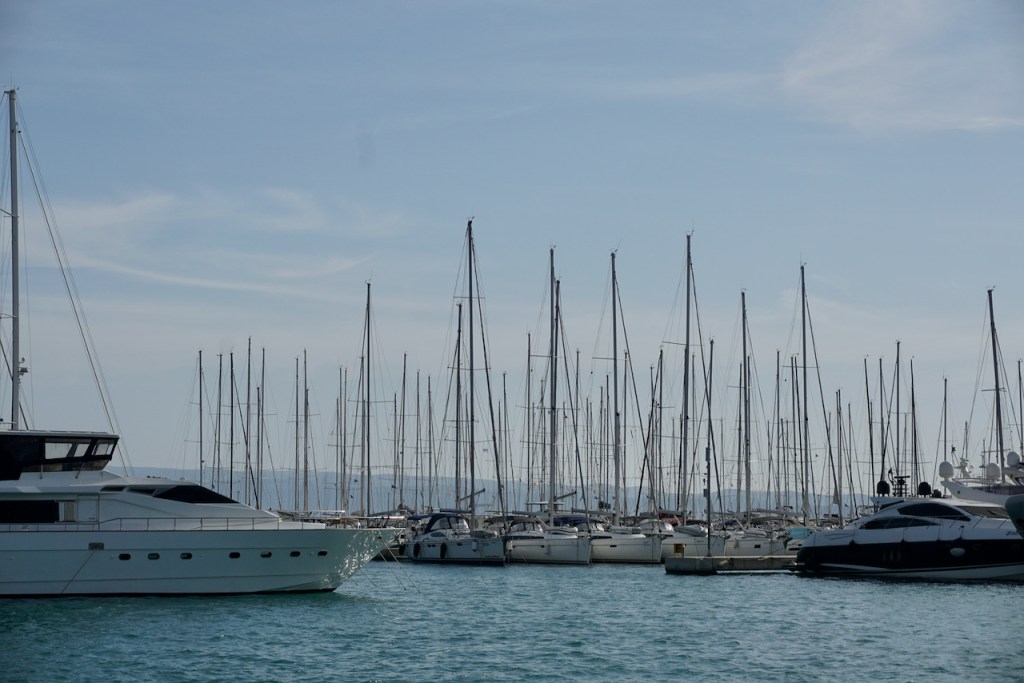
And of course, no ancient city of great trading status would be complete without a port.

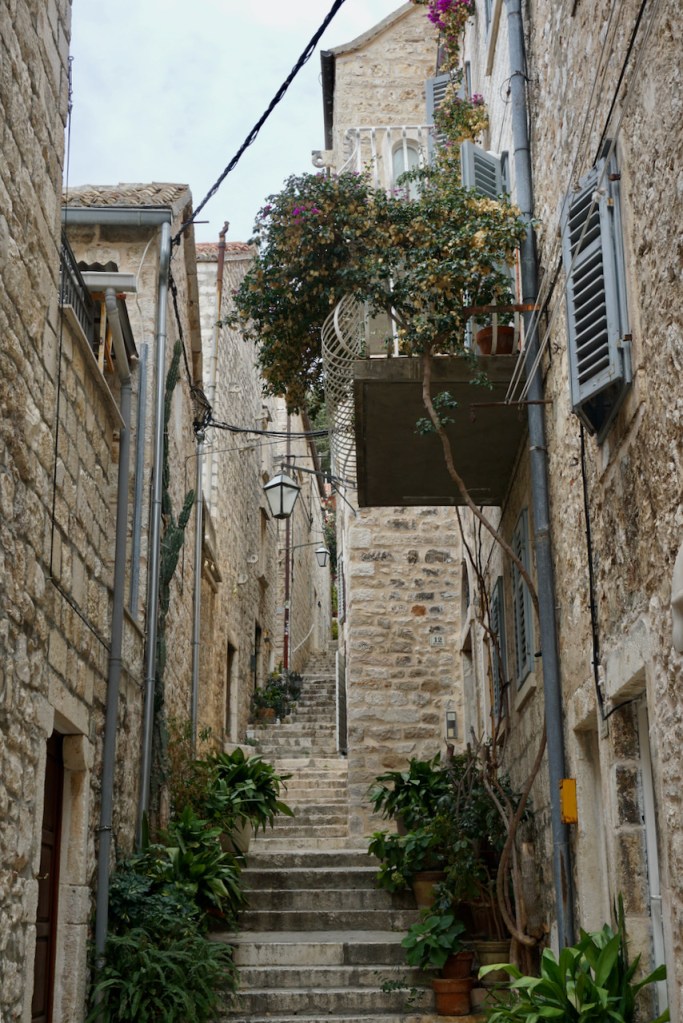
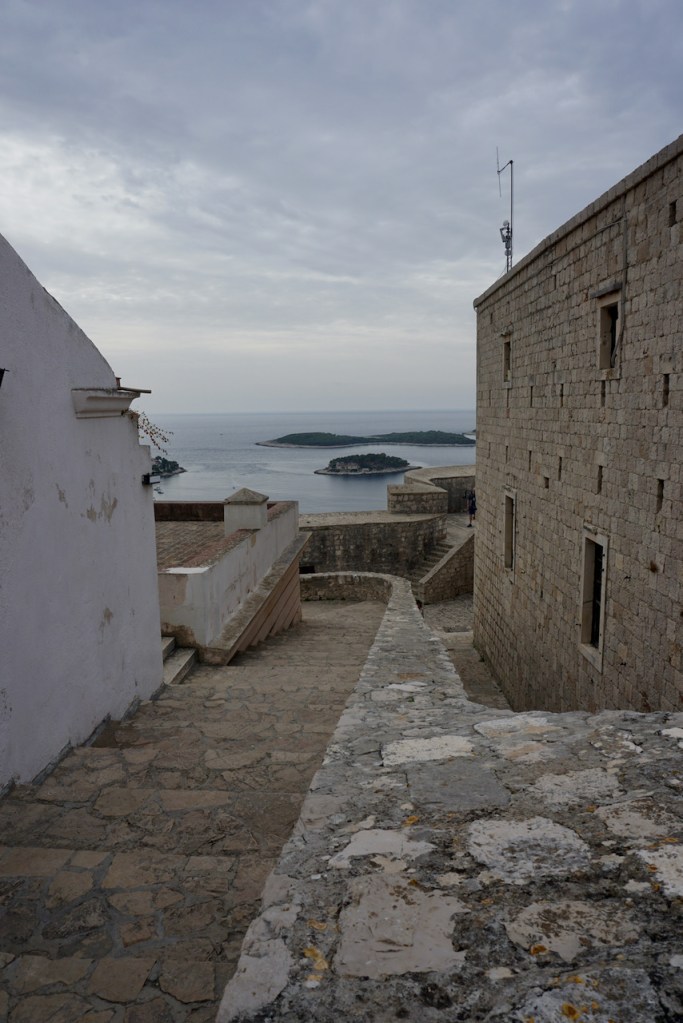
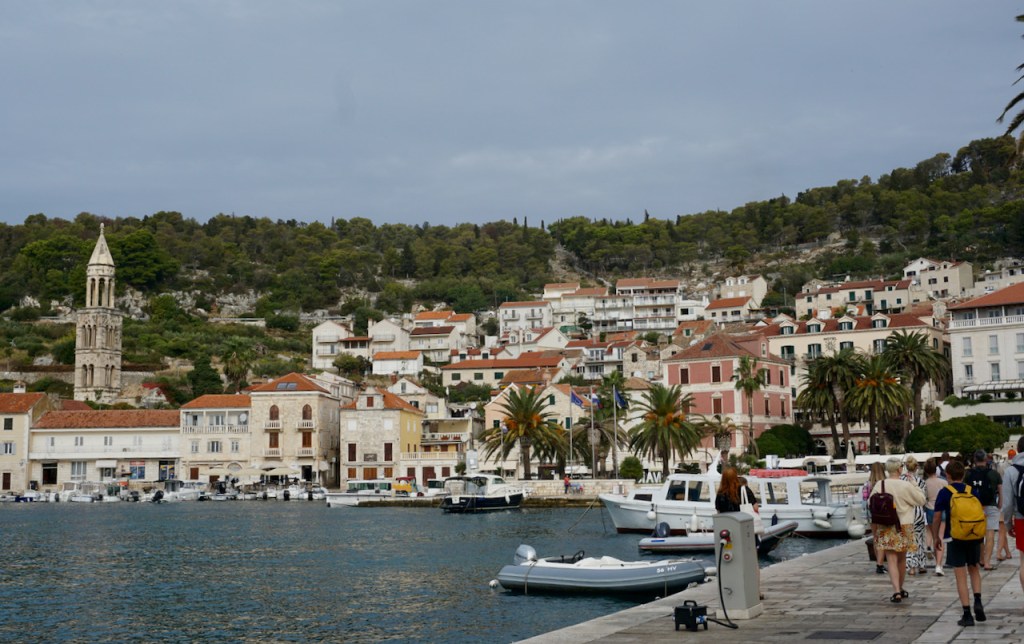
For our last day in Dalmatia, we took a ferry an hour away to the island of Hvar. We walked up to the fortress overlooking the Adriatic and the town below and then along the harbour in the opposite direction, following paths that twisted and turned around trees and white stone.
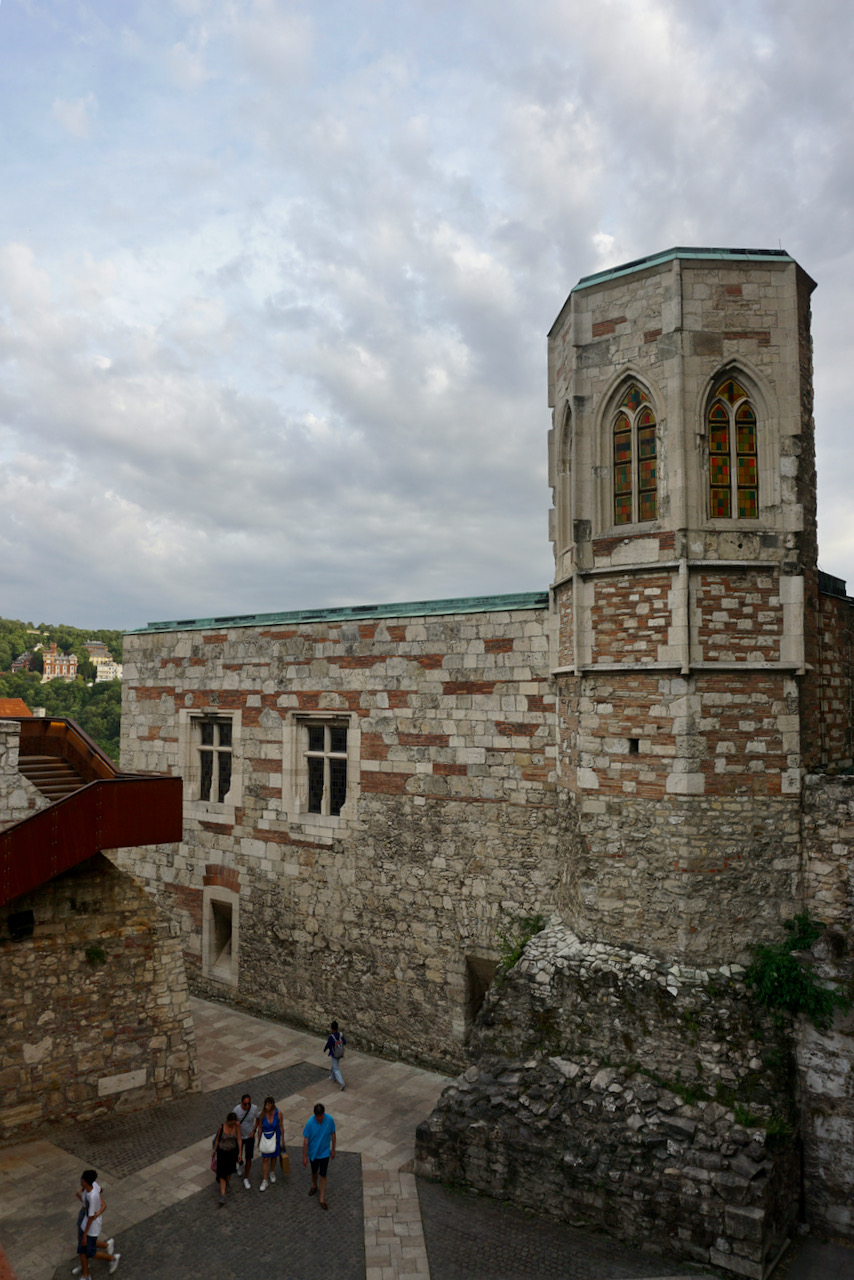
From what we saw in our short time there, we were in a very peaceful place. Pristine and windy, twisting streets leading to gardens and alleys, paths winding through parks. It was just a really lovely atmosphere, one that I imagine gets very quiet when the tourists are gone for the winter (though that’s not to say the locals mind the break).
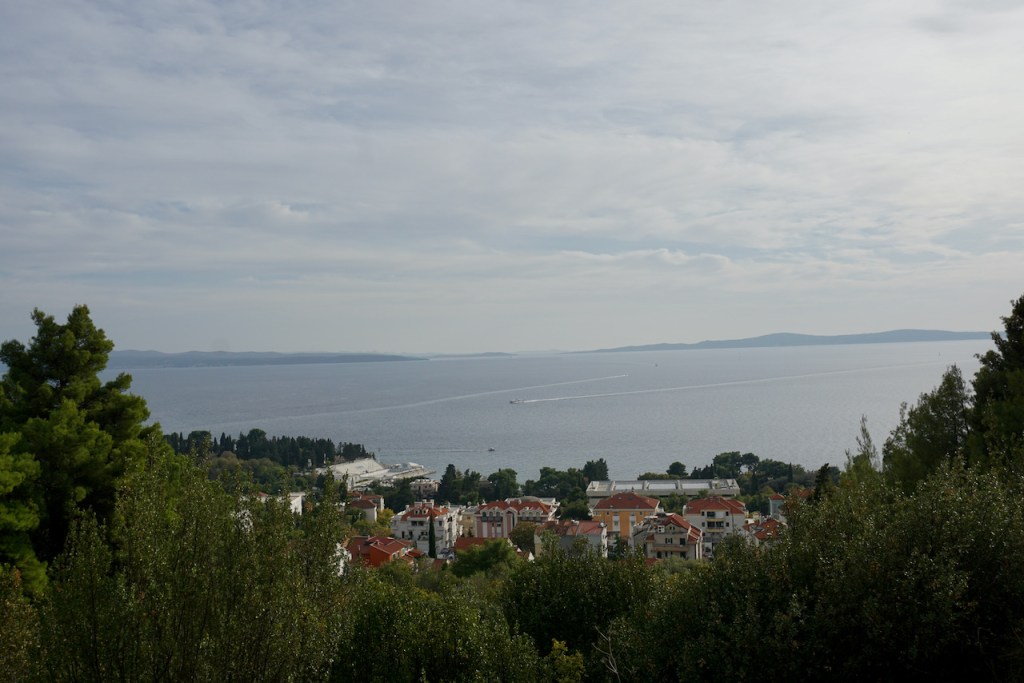
Rather than walking back along Split’s waterfront when we returned, we walked in the opposite direction towards the beaches, and I put my feet into the Adriatic for the first time. I love new bodies of water and this one was warmer than expected. We sat and watched the sky until the sun set.

And then from there we would head further south along the coastal road to our last destination – Dubrovnik.