Tag Archives: Art

Travel Guide: Yogyakarta

Yogyakarta, also known as Jogja because it’s easier to say (according to the local guide who answered my question about that), is located on the Indonesian island of Java. It’s the only Javanese city still ruled by a monarch and is home to Indonesia’s best universities. A large student population, special government status, and a unique heritage and culture make Jogja a lovely place to spend a long weekend. I’ve been wanting to visit for some time and I was really glad to finally have the opportunity to do so.

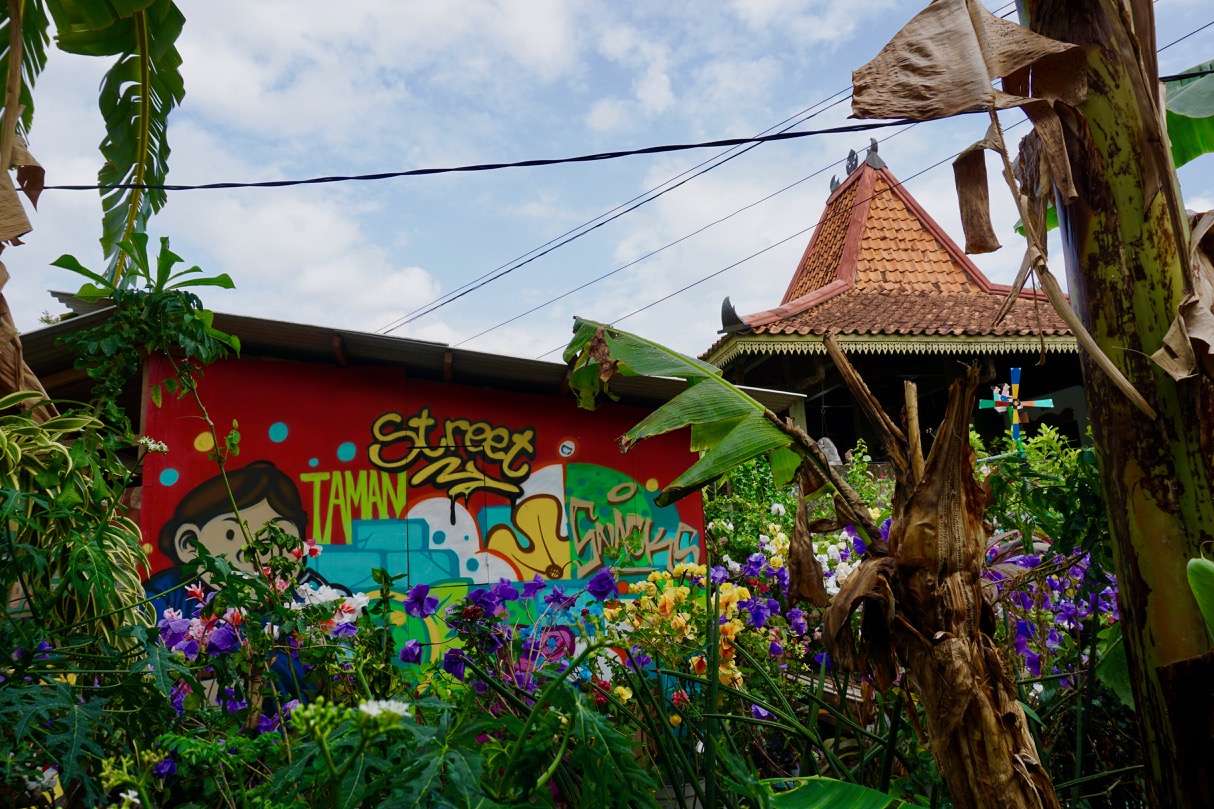
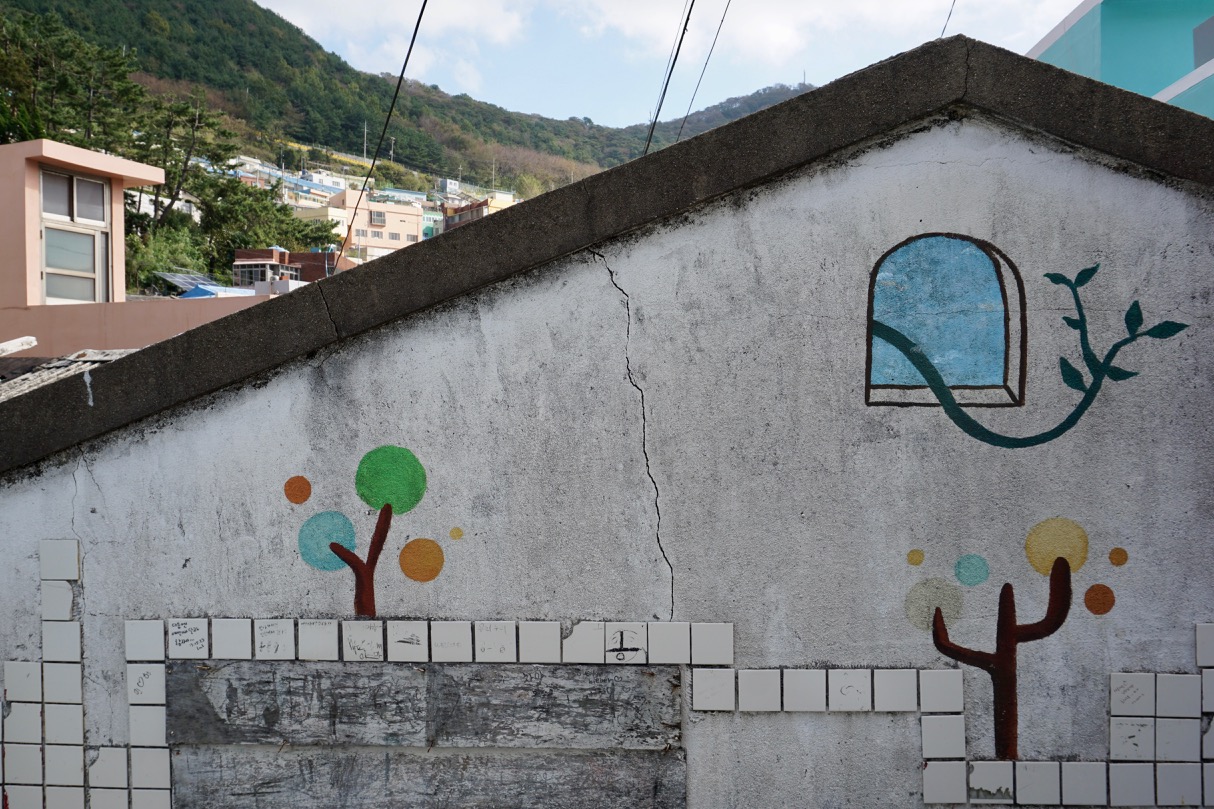
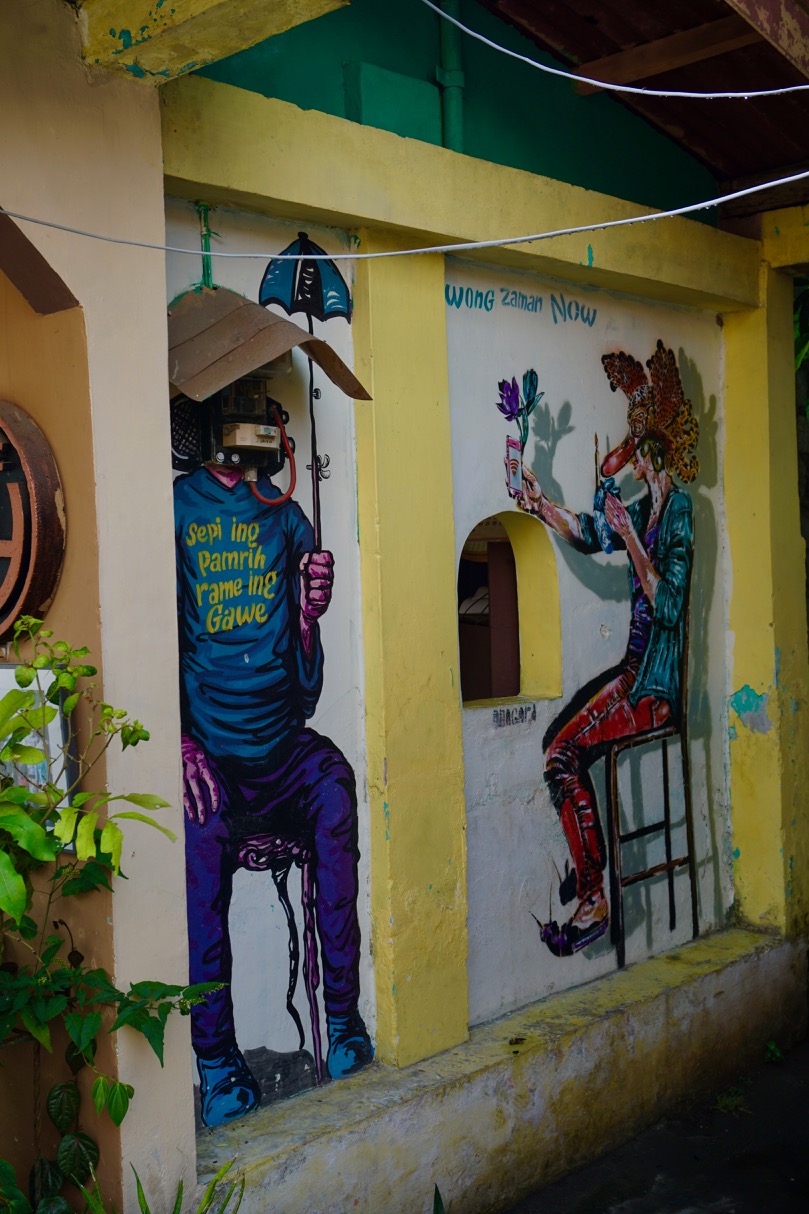
We arrived early in the afternoon and started off with a walk to get our bearings. Jogja is bright, sunny, and hot and we were happy to take the suggestions of a few locals who stopped us to chat. They sent us to a couple batik art galleries and told us about cultural events taking place over the weekend. As we walked, we saw quite a few murals, which is always a highlight for me.
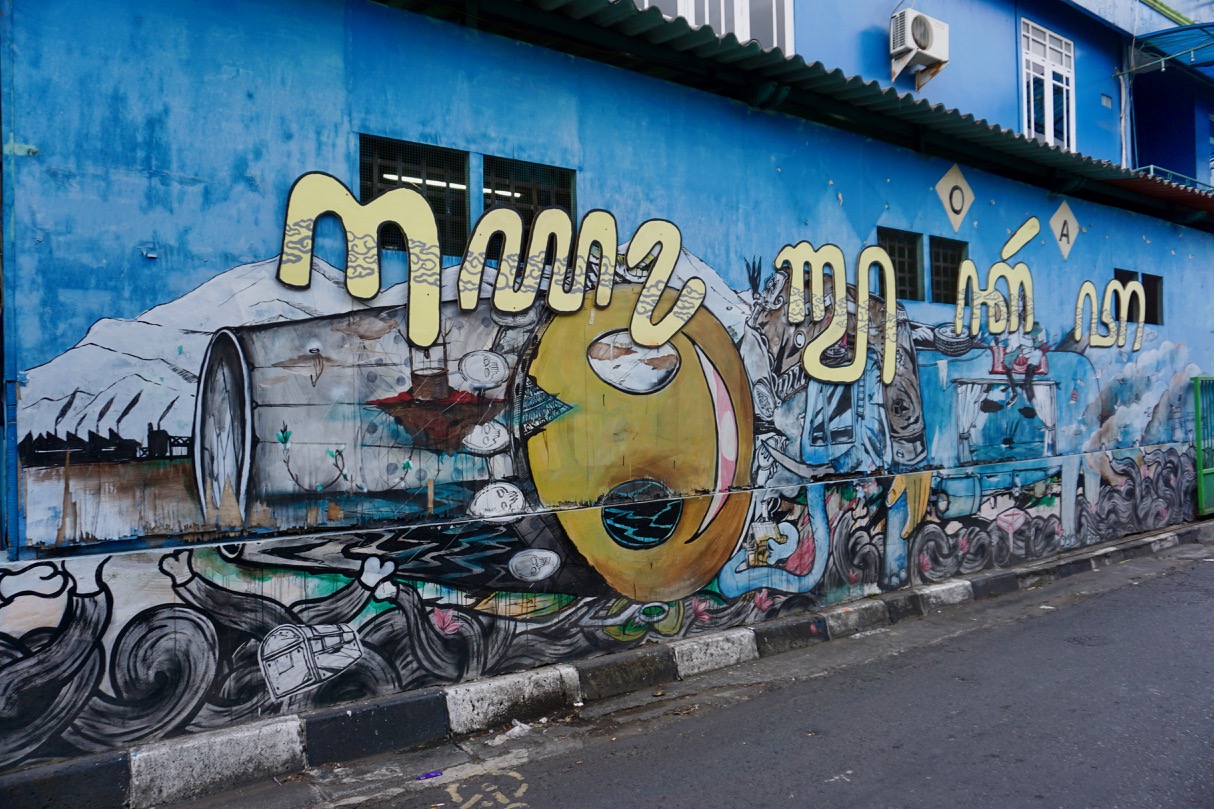
We walked along Jalan Malioboro, a very busy central street lined with shops and street sellers selling souvenirs and batik clothing. It was entirely too hot and overwhelming to be there during the day and we decided to go back in the evening. Jalan Malioboro is very tourist-oriented and the real local markets, which we saw by car the next day, are located a few streets over.

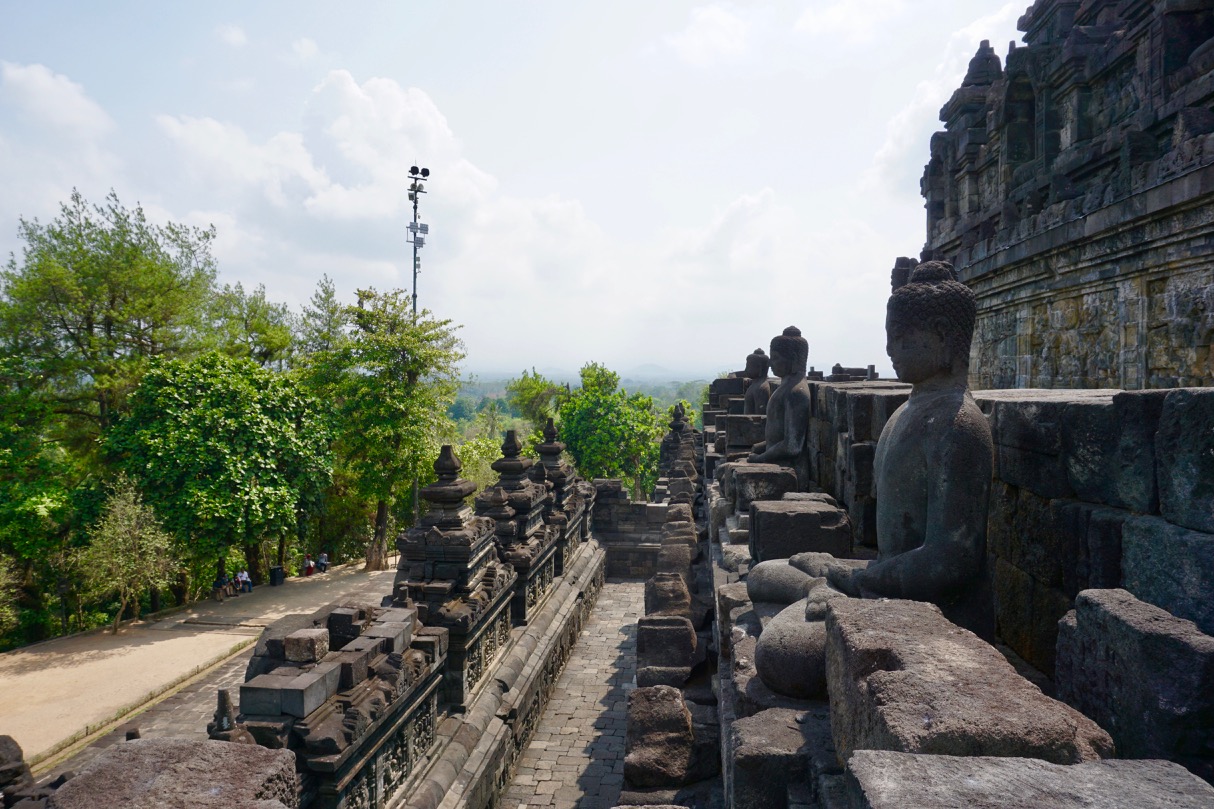
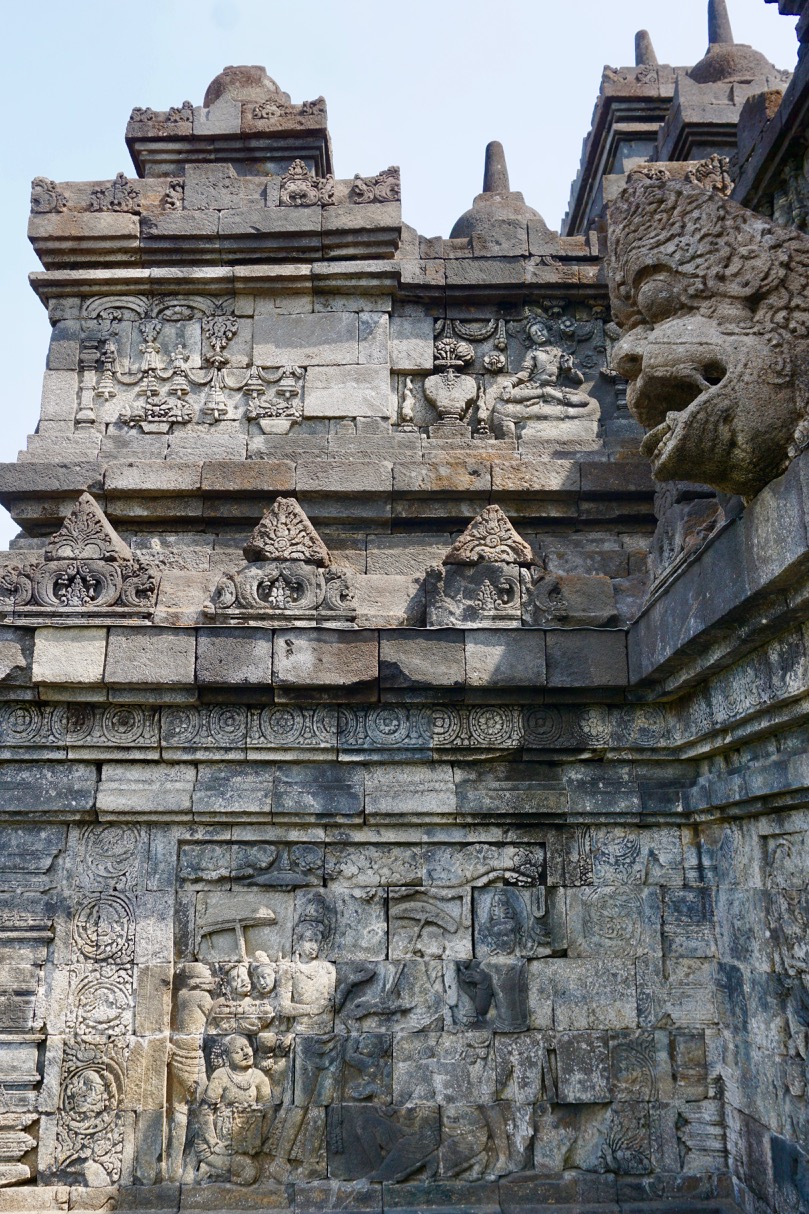
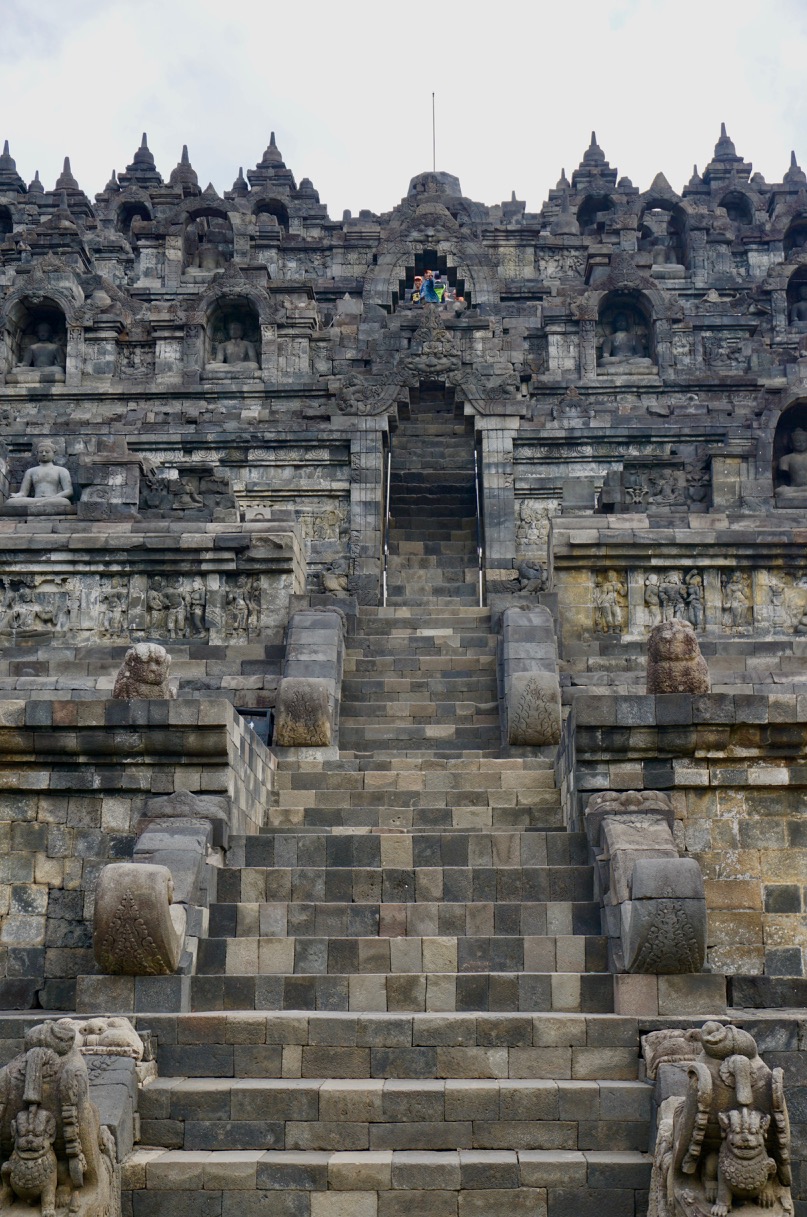
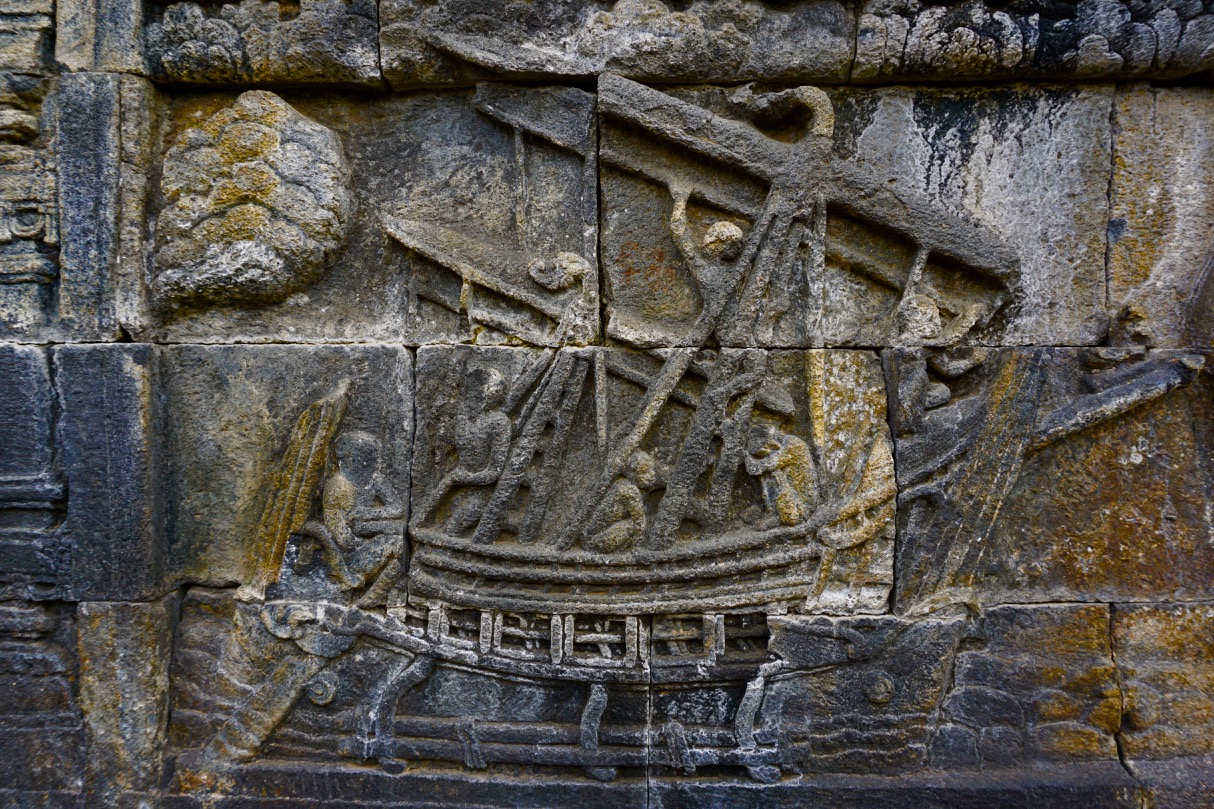
The primary reason for our visit to Jogja was to see Borobudur and Prambanan, two very famous temples. We went on a Friday to avoid weekend crowds and that actually worked out really well. Borobudur dates back to the ninth century and is now a UNESCO World Heritage site. It’s the largest Buddhist temple in the world and designed so that visitors follow the path of Buddhism from the base of the temple, symbolising the world of desire, up to the top of the temple, symbolising the Buddhist cosmology of forms and then of formlessness.

It was amazing to see how much had been reconstructed, as well as how much hadn’t. Indonesia experiences frequent earthquakes and their effects are present here as much as elsewhere.
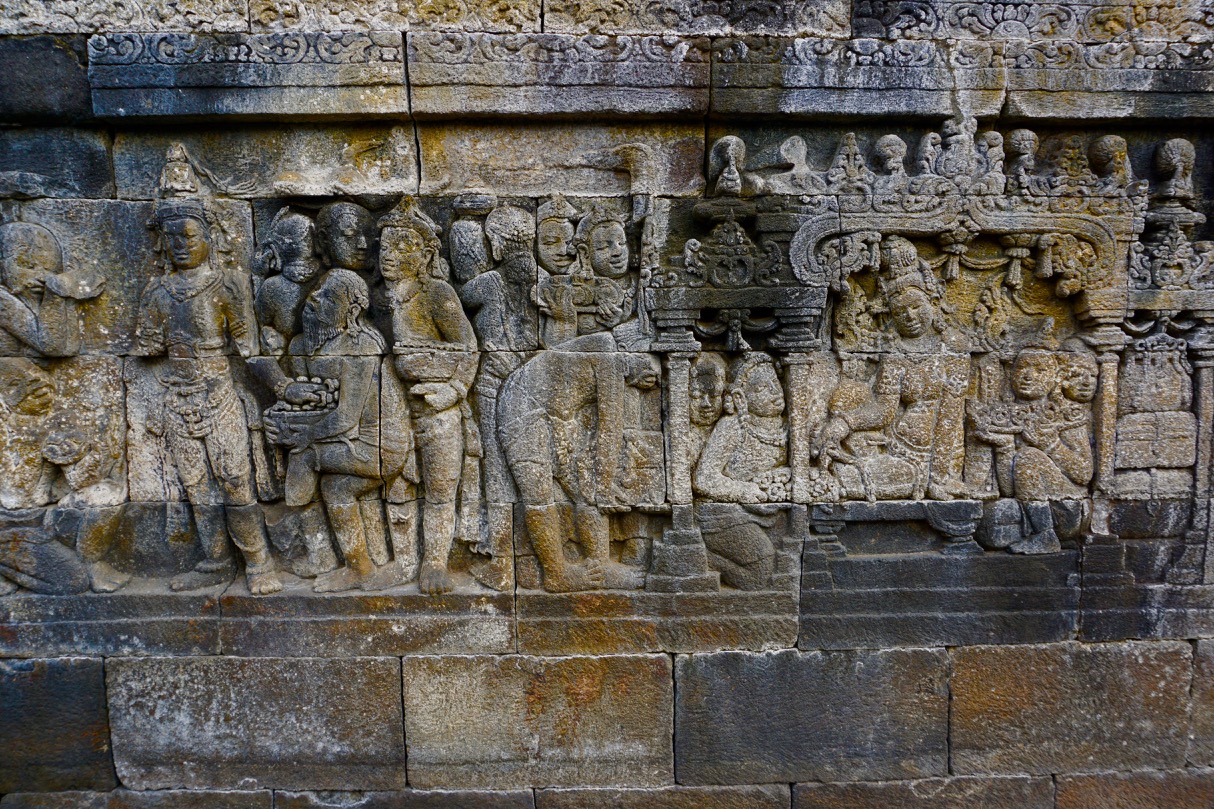
Borobudur is about an hour and a half away from Jogja and our driver pointed out interesting spots along the way, told us about Indonesian farming, and answered our questions about life in Jogja and the rest of Indonesia. On our way back to the car my friend commented that it’s interesting how the best-known part of Borobudur, the stupas at the top, are hidden until you get there. I mused that this fit into the design of the temple – you have to do the hard work on the individual self before reaching that point of clarity.

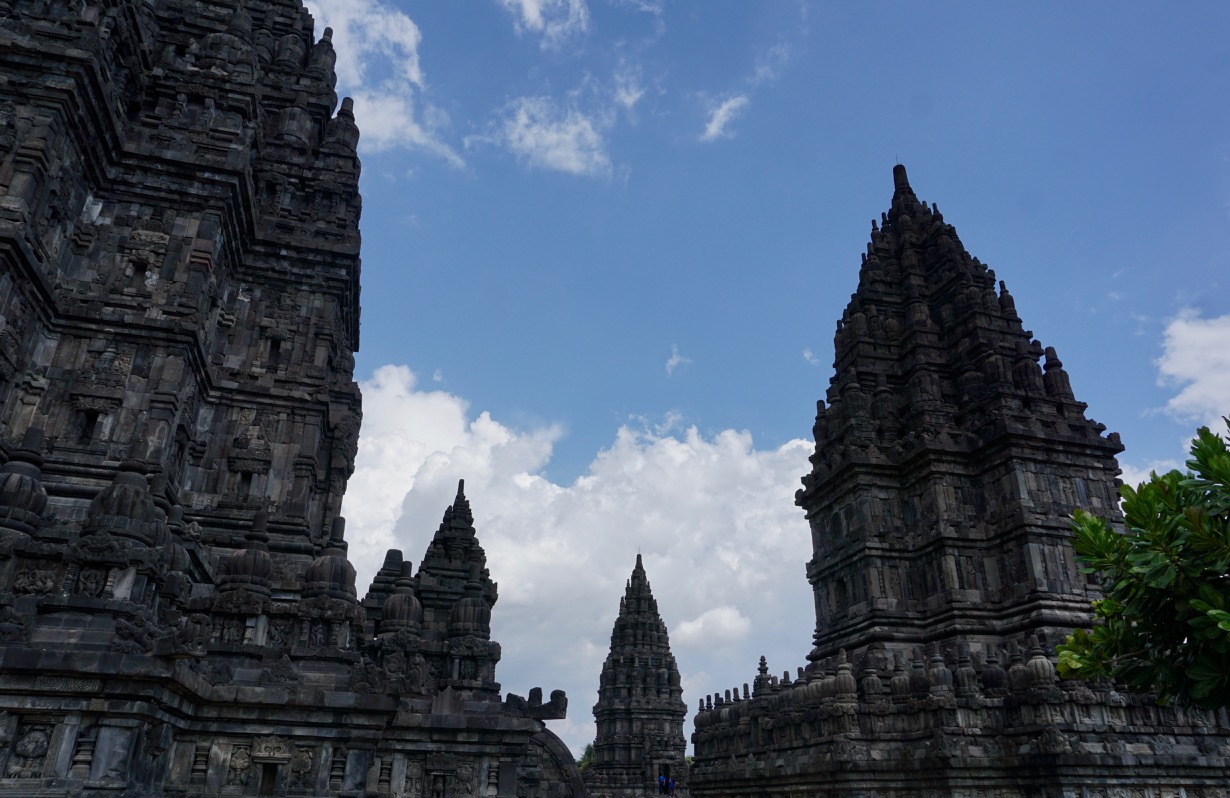
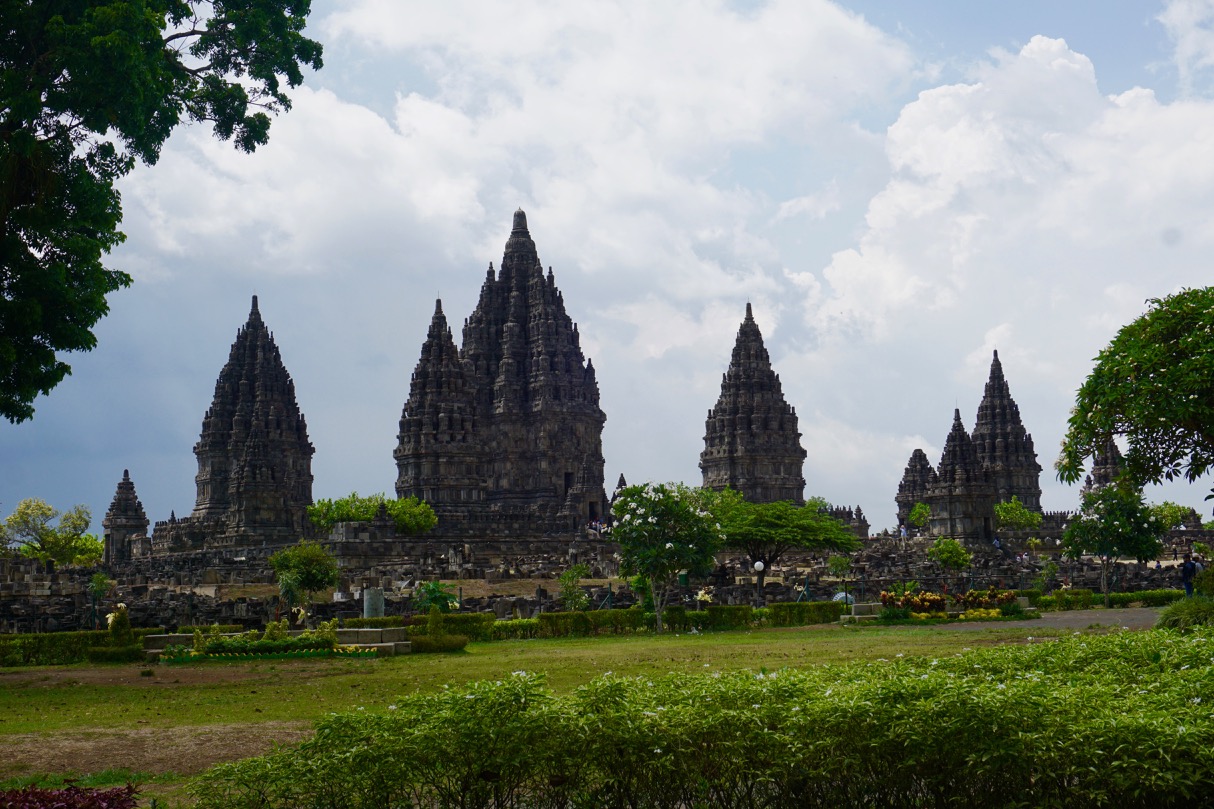
Our next stop was Prambanan, Indonesia’s largest Hindu temple and also a UNESCO site. It’s about two hours from Borobudur and, just like the first temple, took us about two hours to explore. I was really glad we went because the two temples were completely different. The architecture was noticeably different, in keeping with the typical style of each religion, but so was the feel. There was a sense of mystery at Prambanan that I had not experienced at Borobudur.

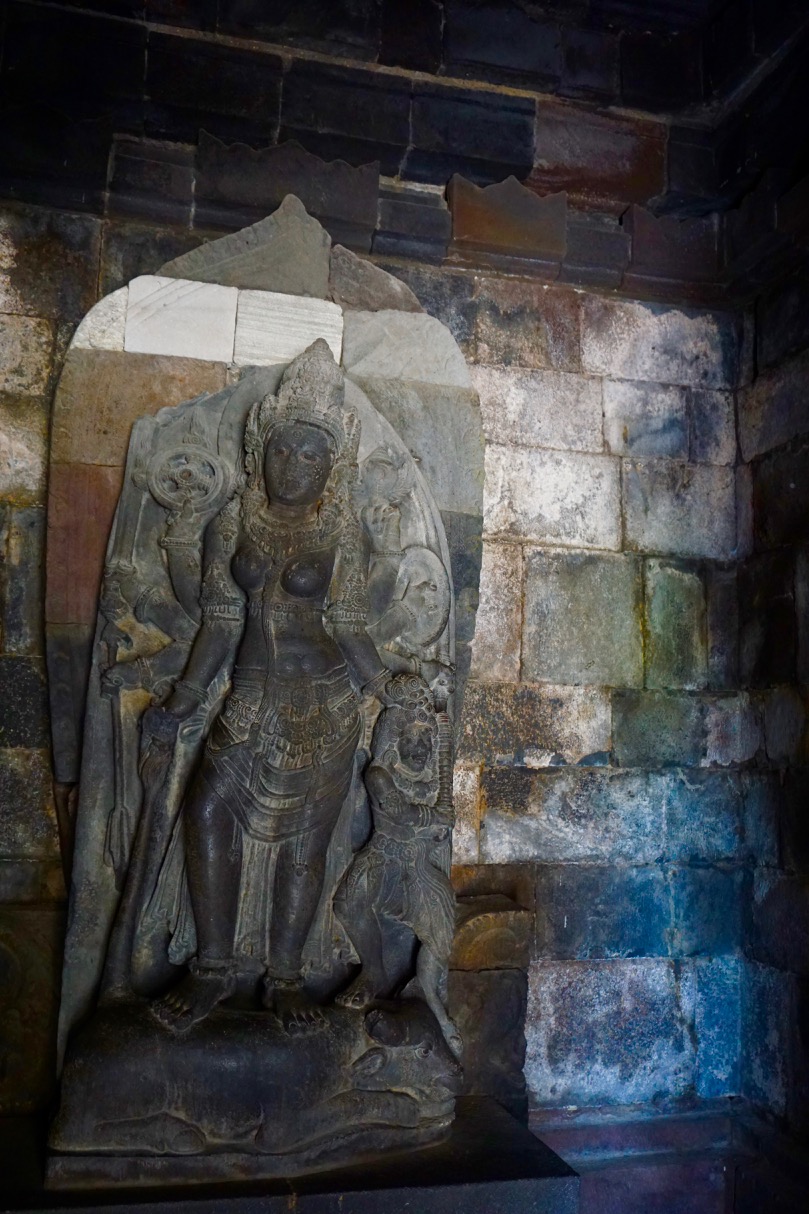
Prambanan tells the story of the Hindu Ramayana epic and has temples dedicated to different Hindu deities, the most important of whom are Brahma (the Creator), Vishnu (the Protector), and Shiva (the Destroyer).
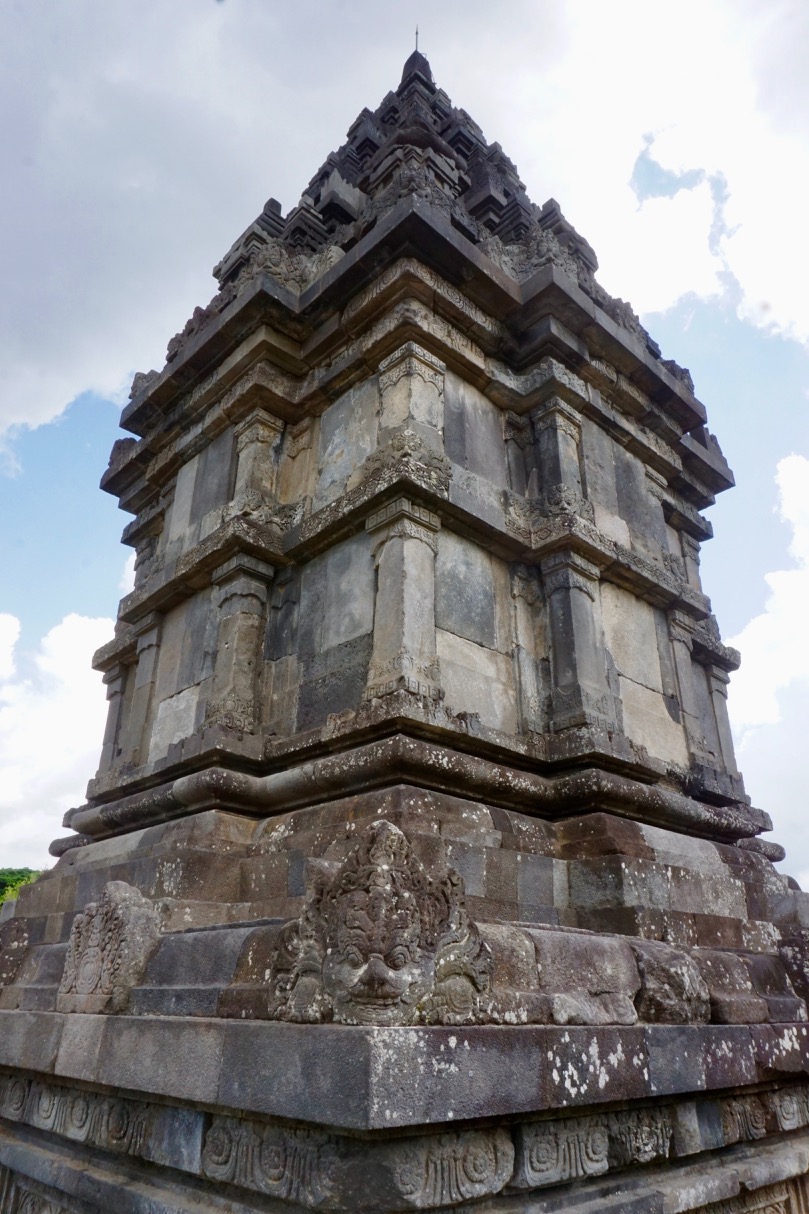
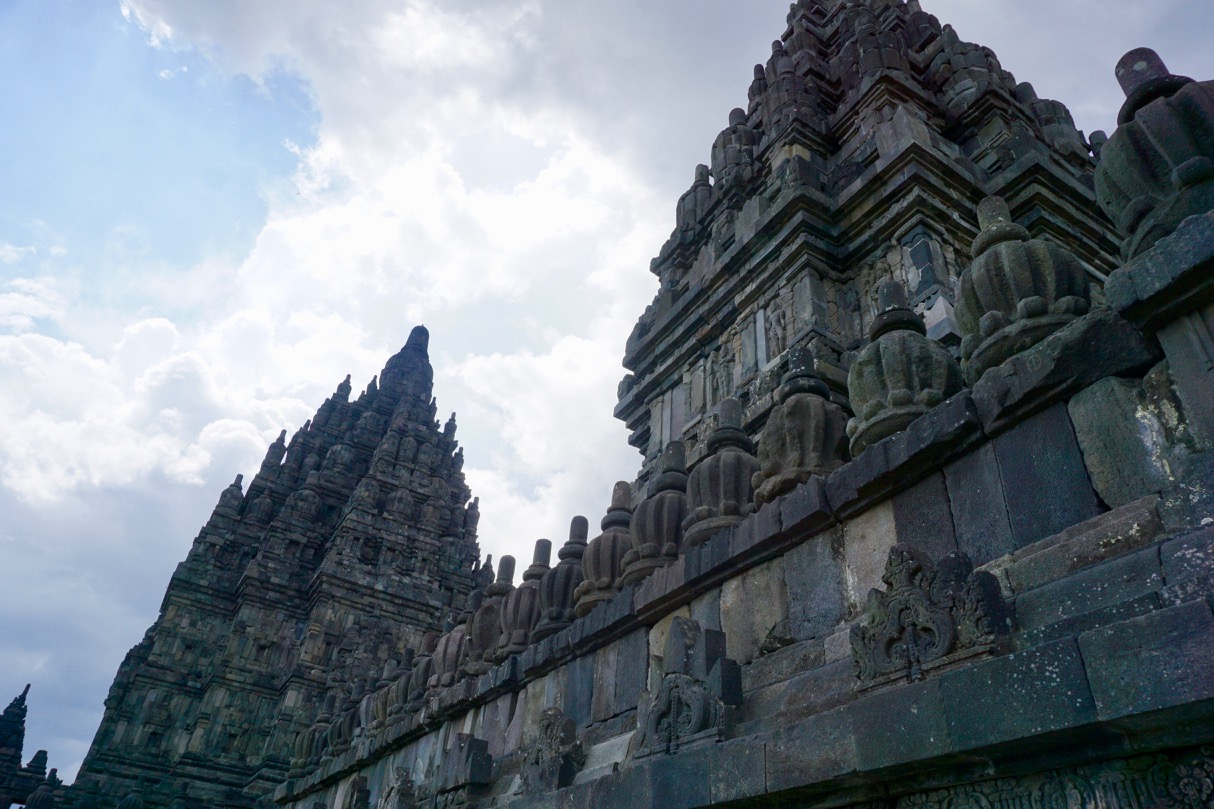
The ruins here were even more prominent than at Borobudur, too, due to significant damage from a 2006 earthquake.

The grounds around Prambanan are home to yet more Buddhist temples. We stopped to look at Lumbung . . .

. . . and Bubrah . . .

. . . and spent some time wandering around Sewu, which was definitely the coolest of the three. It was actively undergoing renovation, but empty other than us and the workers. It’s weird to wander a temple complex removed from crowds. Borobudur wasn’t busy but there were people around every corner. At Sewu, we were keenly aware of being alone and aware of the novelty of the experience.

The following day we visited Batik Winotosastro, an active batik workshop that also hosts batik classes for visitors. Our experience there was fantastic and I highly recommend a visit. A lovely woman introduced us to the workshop and set us right to work. We chose patterns to trace onto our cloth and then she moved us over to real batikers. We learned how to hold the dipper that contains the wax (I’ll be honest – I found this really difficult) and proceeded to trace the lines we’d just penciled. The batikers were working on additional layers of colour beyond the base layer and it was amazing to watch them and see how intricate, detailed, and precise their lines were. They prettied up our wax outlines while our guide showed us around the workshop.
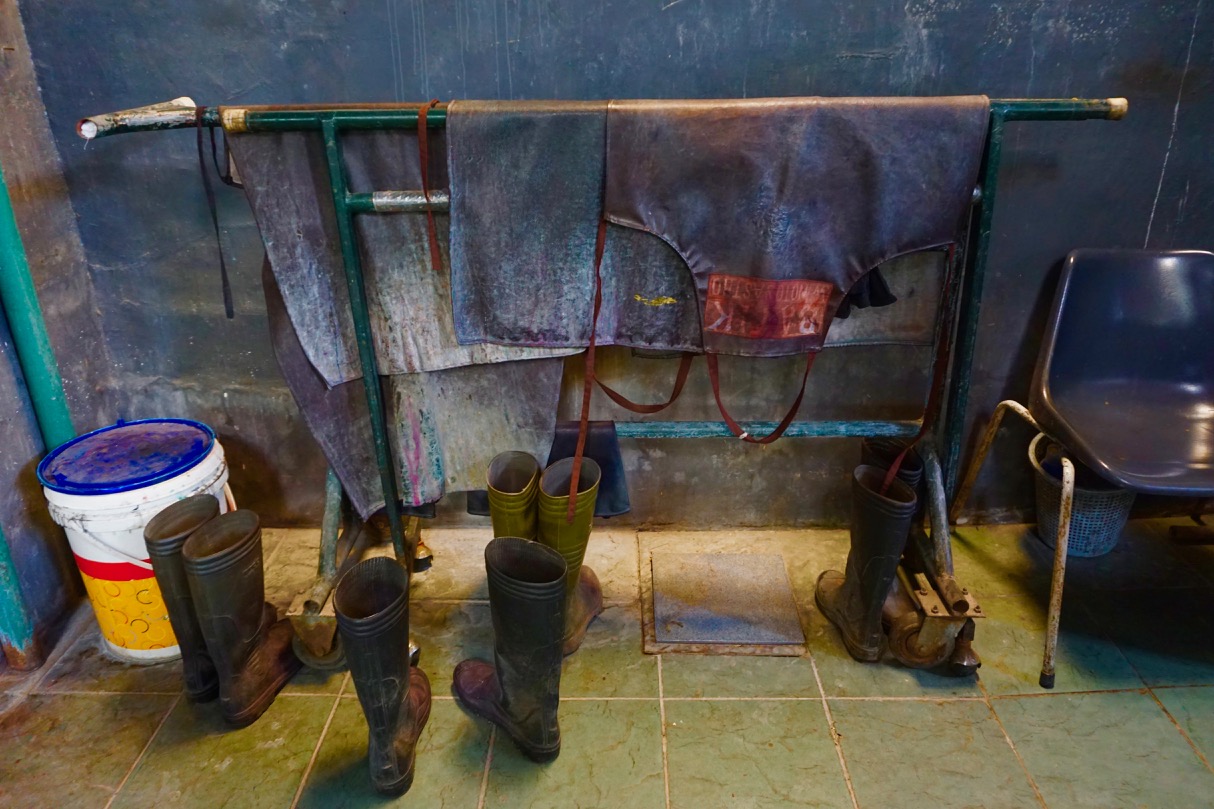
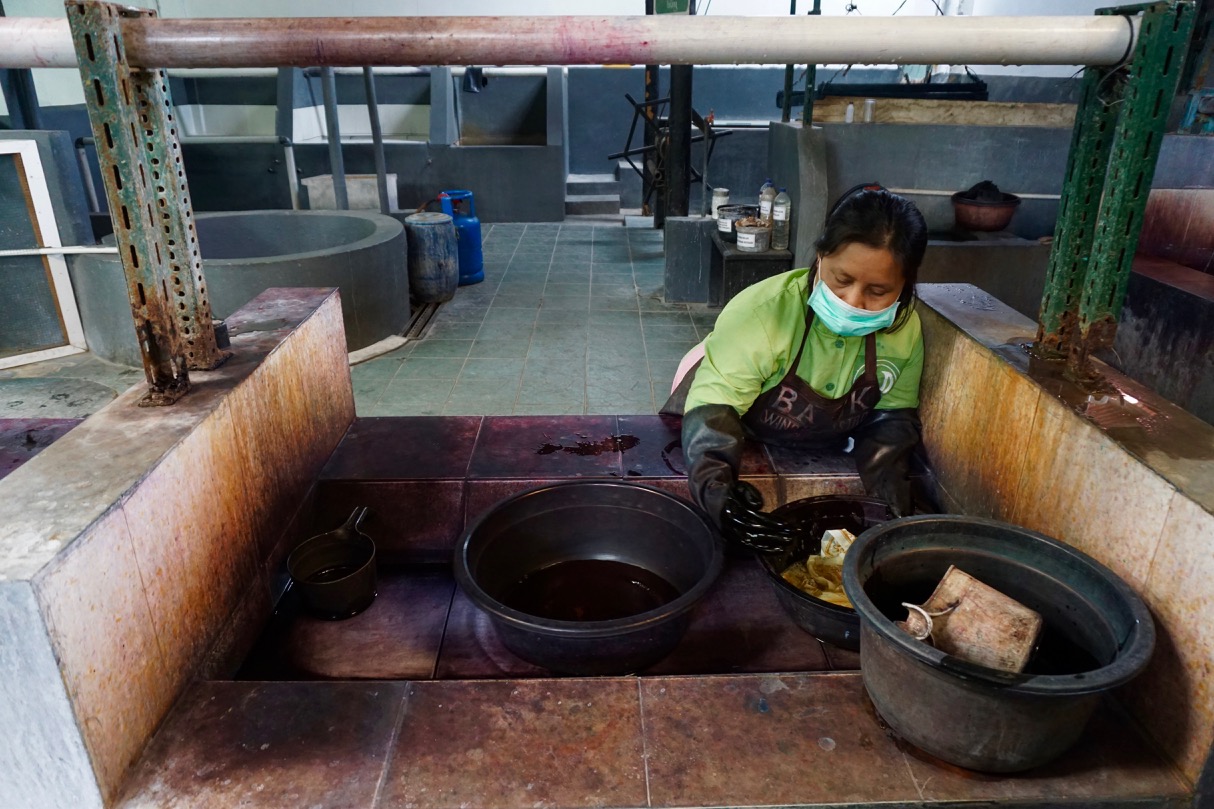
Batik can be hand drawn or stamped, we learned. The stamps are copper and have been around a very long time, but the hand drawn batik are more expensive. When our batik were prettier than we’d left them, our guide took us over to the woman responsible for dyeing . . .
. . . and the man who boiled off the wax . . .

. . . and finally to the women with sewing machines who hemmed the edges to finish off.

It was a real pleasure to learn from such a knowledgeable person and to experience how an actual batik workshop operates. Watching a traditional process in action was a great learning experience and says a lot about Jogja’s desire to maintain its heritage. I am always glad to support places like that.

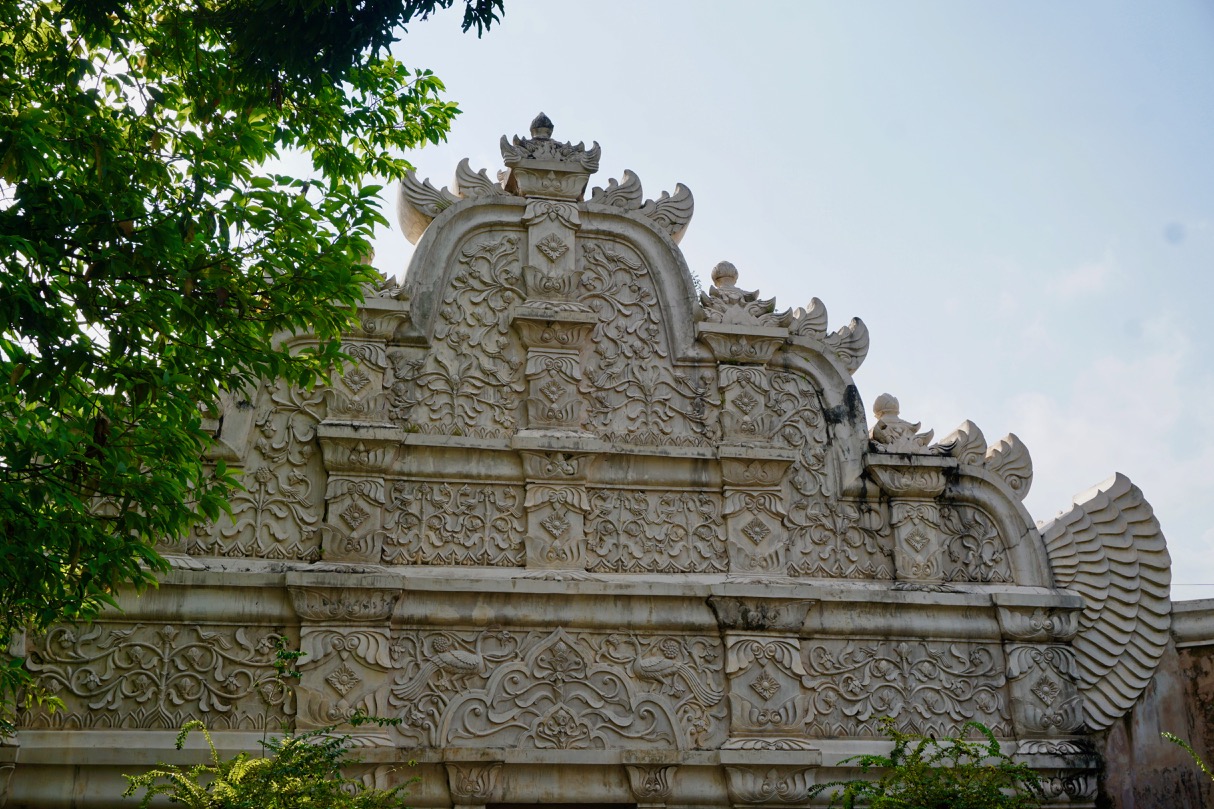
Our afternoon destination was a quick trip to the Water Castle, which is located on the grounds of the royal palace. The only section preserved today is the bathing complex where the sultan and his ladies would relax.
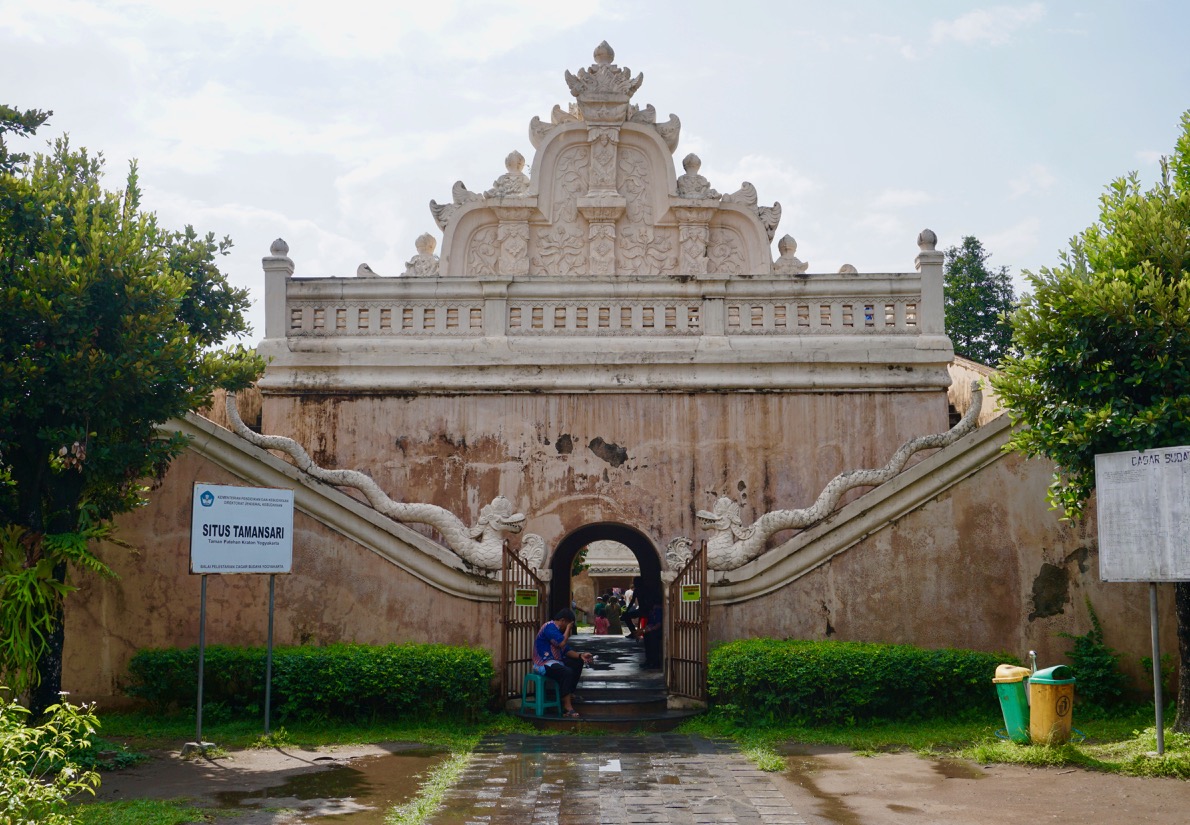
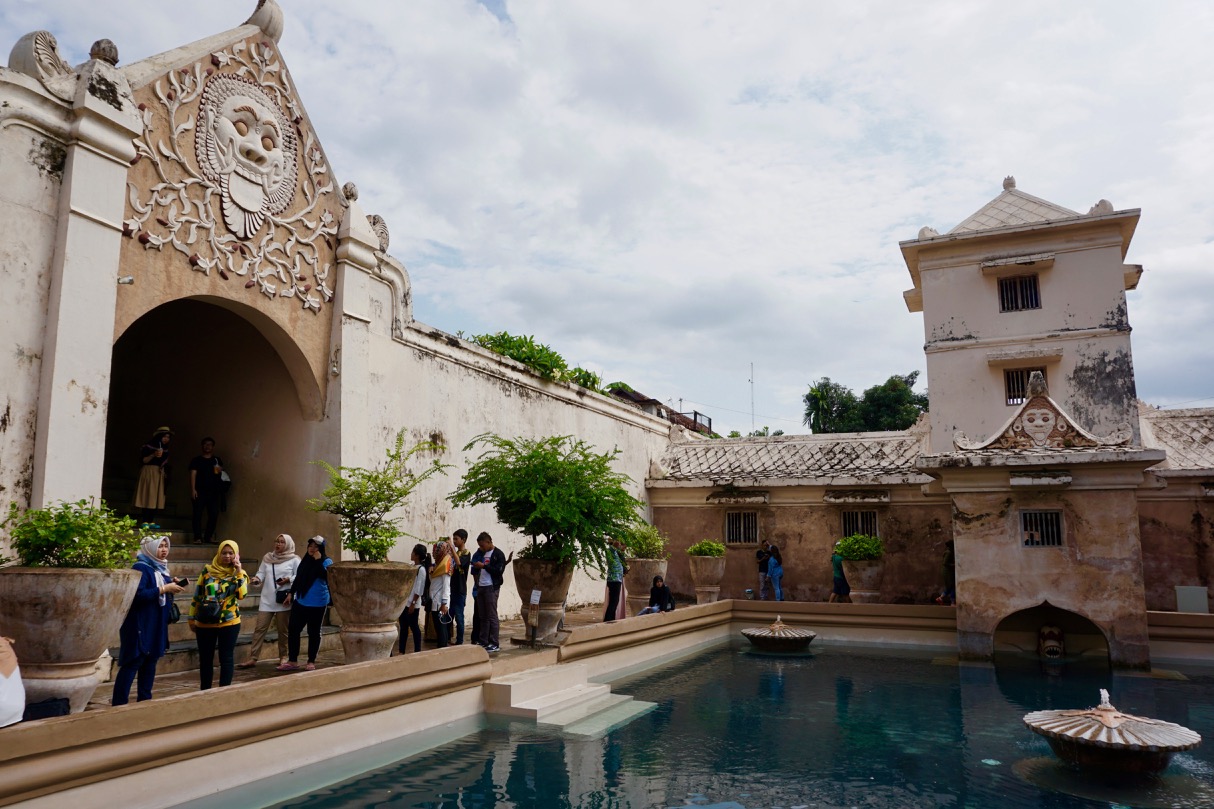
I really liked the neighbourhood around the Water Castle, too. It was bright and colourful, though very quiet. We noticed that people in Jogja tended to avoid the outdoors in the middle of the day, which is not what I have seen in other places with similar weather but definitely something that I understand.
For our last evening, we headed back down Jalan Malioboro to experience the night market. It was busy and crowded and still rather overwhelming but I’m really glad we went.

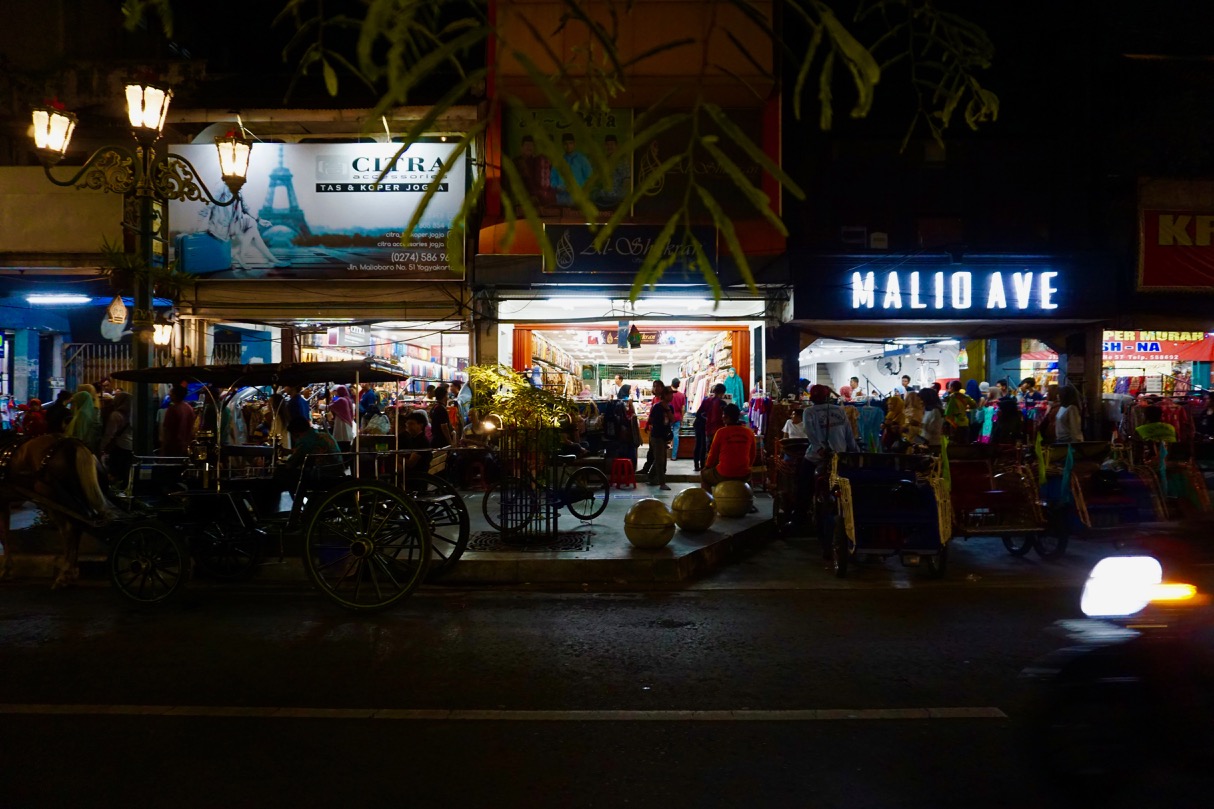
I was particularly taken by the street food stalls that opened up and attracted just about everybody.
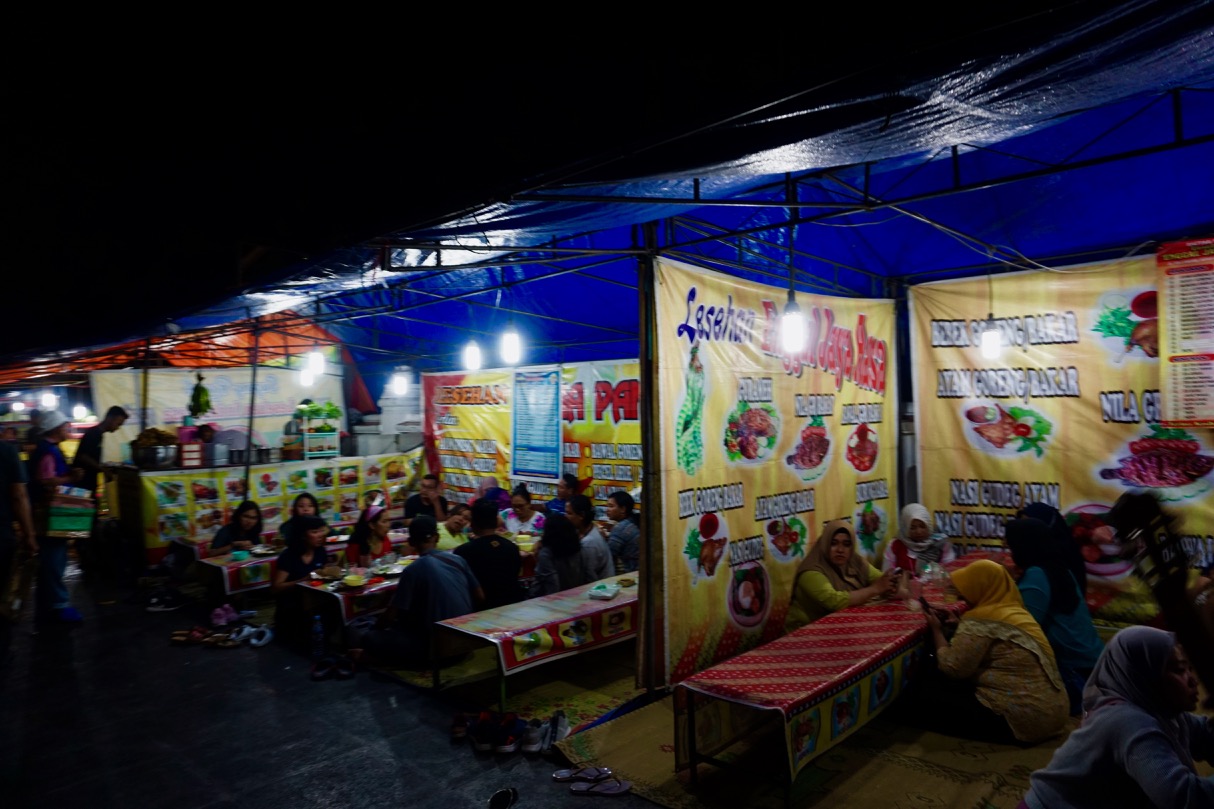
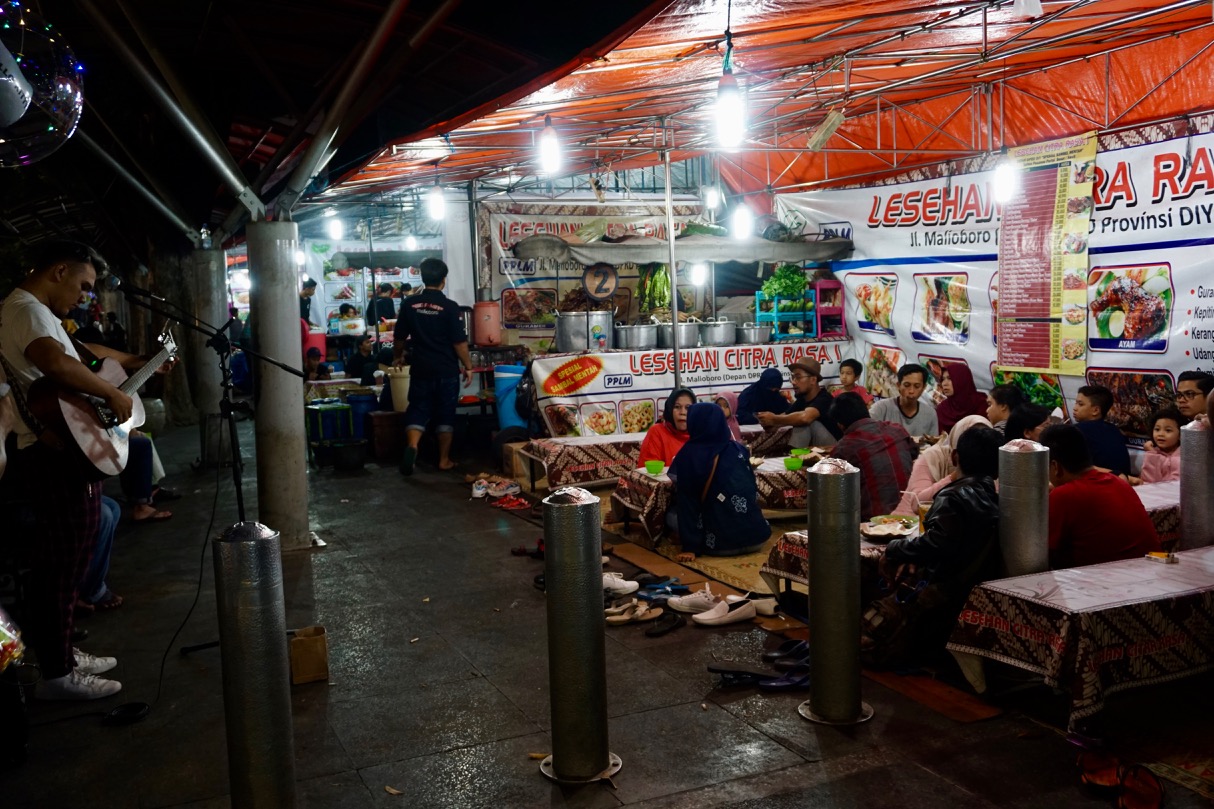
And furthermore, we were in Indonesia. They take coffee very seriously here. Filter coffee from a street cart!

Before going to the airport the following day, we went back to the royal palace, the Kraton Ngayogyakarta Hadiningrat. The palace hosts cultural performances daily so we got to hear some Javanese music and see traditional dance.

The palace also has several museums explaining different traditions and rituals. There are a few artifacts on display throughout the complex, as well.

After another cup of coffee from Tanamera Coffee, a local roastery and café that we visited a couple of times, it was time to go. We had a lovely long weekend in Yogyakarta and I would definitely recommend it for lovers of history, art, and culture. Happy travels!

Travel Guide: Busan and Around

I didn’t know what to expect when we decided to travel to Korea for October break. Many of my colleagues started their overseas teaching careers in Korea and everyone spoke highly of it, but visiting a place is obviously different from living there. The only thing I knew for sure was that it would be fall. I hadn’t seen leaves change in a long time and I was really looking forward to it.

We organised our trip based on where we could get direct flights; from Singapore, we could fly directly to Busan and from Seoul. The opposite option, interestingly, did not exist.

We landed in Busan first thing in the morning and the fact that I lost all of my photos from the first day of our trip (no joke, I managed to recover none at all) is actually fitting considering how discombobulated I felt that day. We revived ourselves a bit with coffee before heading to Haedong Yonggungsa, a Buddhist temple famous because it’s built on cliffs overlooking the sea. I loved hearing and smelling the sea, exploring the stone cracks and crevices, and looking at the food stalls on the path leading to the temple.

Busan is located on the southeastern coast of the Korean peninsula and that means it has a beach! Several, in fact. We spent some time that afternoon walking along Gwangalli Beach and enjoyed how quiet it was. October isn’t beach weather and this was a Monday afternoon, but there were lovely art installations and displays of children’s art. It felt really good to walk along the sand and even touch the water, which was about the same temperature as the air. Pleasant enough but jeans and a jacket were required. And again, we smelled the sea. It smelled alive in a way that I forget exists when living in the middle of a city.

Everyone we spoke to promised that public transportation in Korea was cheap and easy to use, a promise that we tested on our first bus ride from the beach to the hotel. Not only are stops listed in English most of the time, but you can pay in cash on all buses and the metro. Alternatively, you can use a Tcard and reload it with money at any metro station. Easy indeed!

Korea has a lot of parks and nature and before dinner we walked over to Yongdusan Park, the home of Busan Tower. The real attraction, however, was getting there. We took a series of themed escalators from street level up a hill and at the top was the park! Each level of escalator was a different colour or played music or was decorated with lights and moving images, which was highly entertaining.

We also spent some time that evening wandering through Gukje Market and BIFF Square. The market was a lot of fun because it backed right into high-end restaurants and designer shops, and the food sections of the market existed on the same roads as non-food shops. Picture pancakes frying in the middle of the street in front of a shop selling scarves and then imagine the smells of oil and wool. Put a smile on your face and that’s where I was. BIFF Square, built for the Busan International Film Festival, had its own collection of food and souvenir vendors and even fortune tellers!

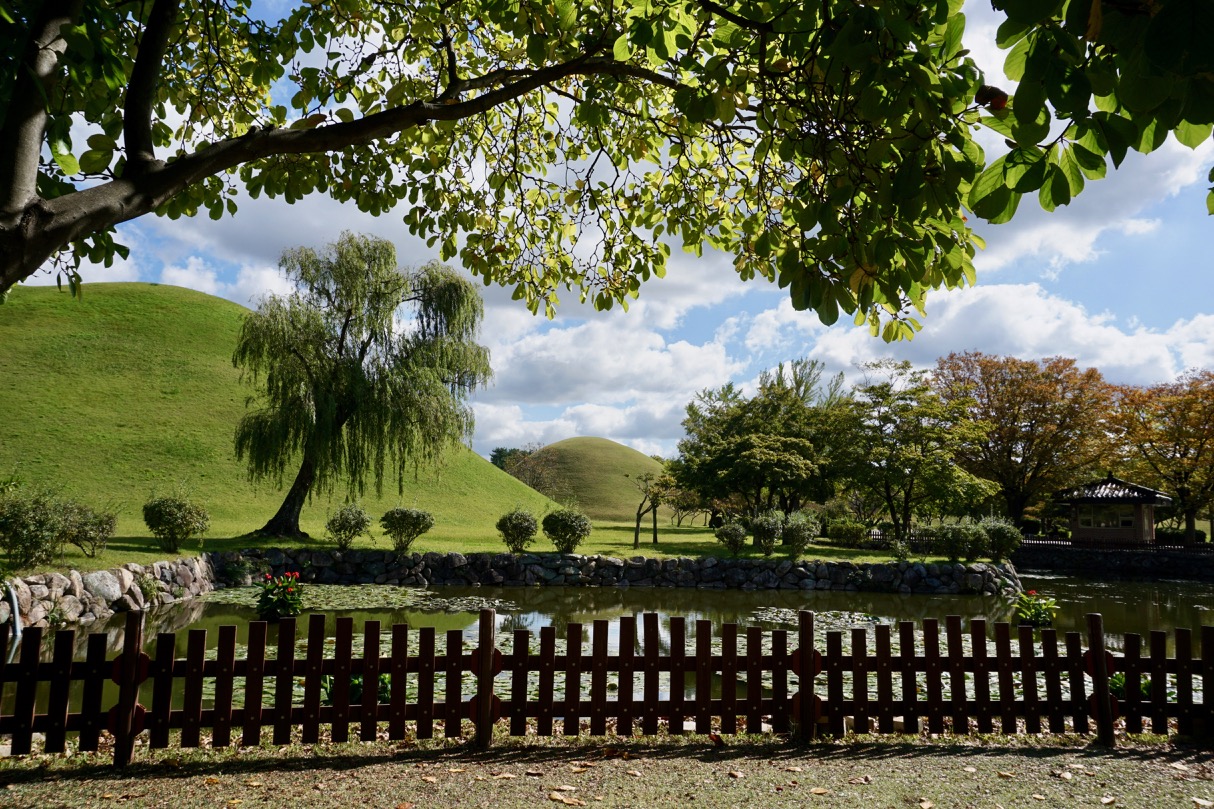
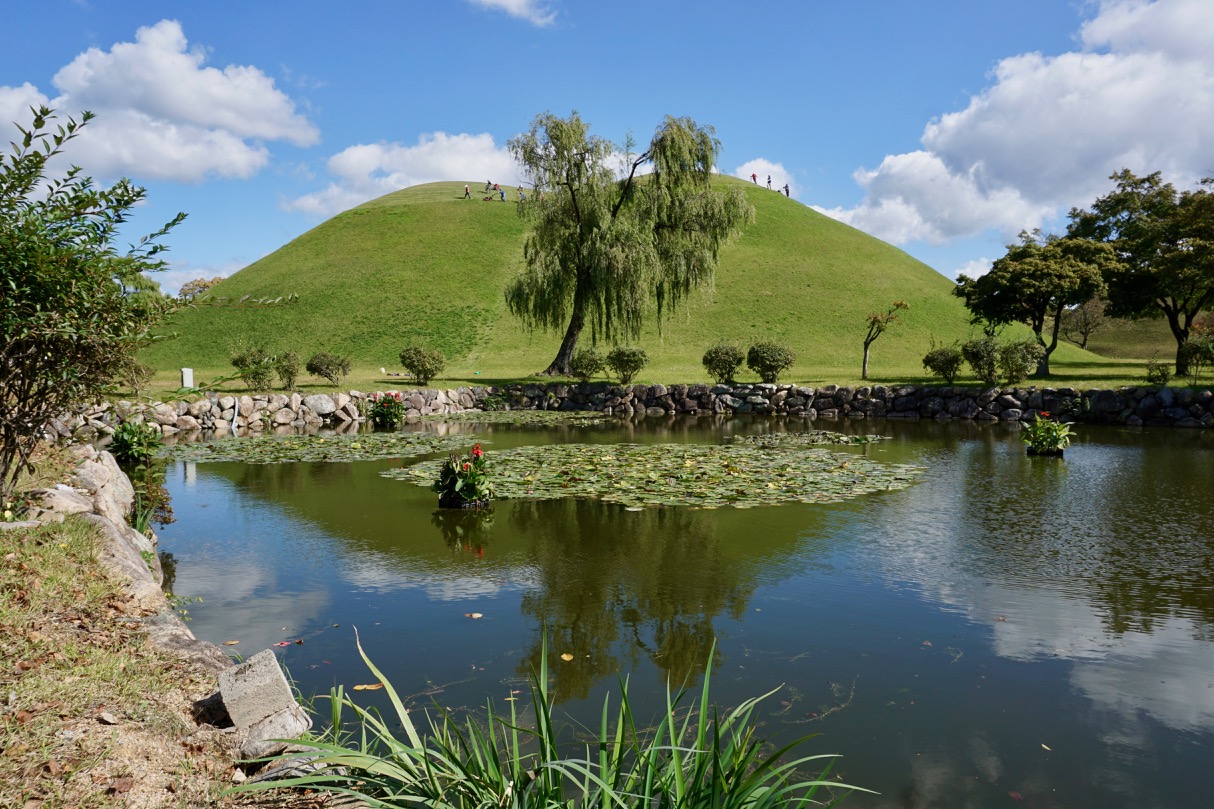
The next day we headed out of Busan to Gyeongju, the capital of the former Silla dynasty. The bus ride was really pretty and took us past rolling hills and small cities. We were there to see the burial mounds of Silla kings, most of which are contained in one park area but some are dotted through the town. (And now I have photos, yay!)

Turns out there’s a method to keeping the grass level, too!

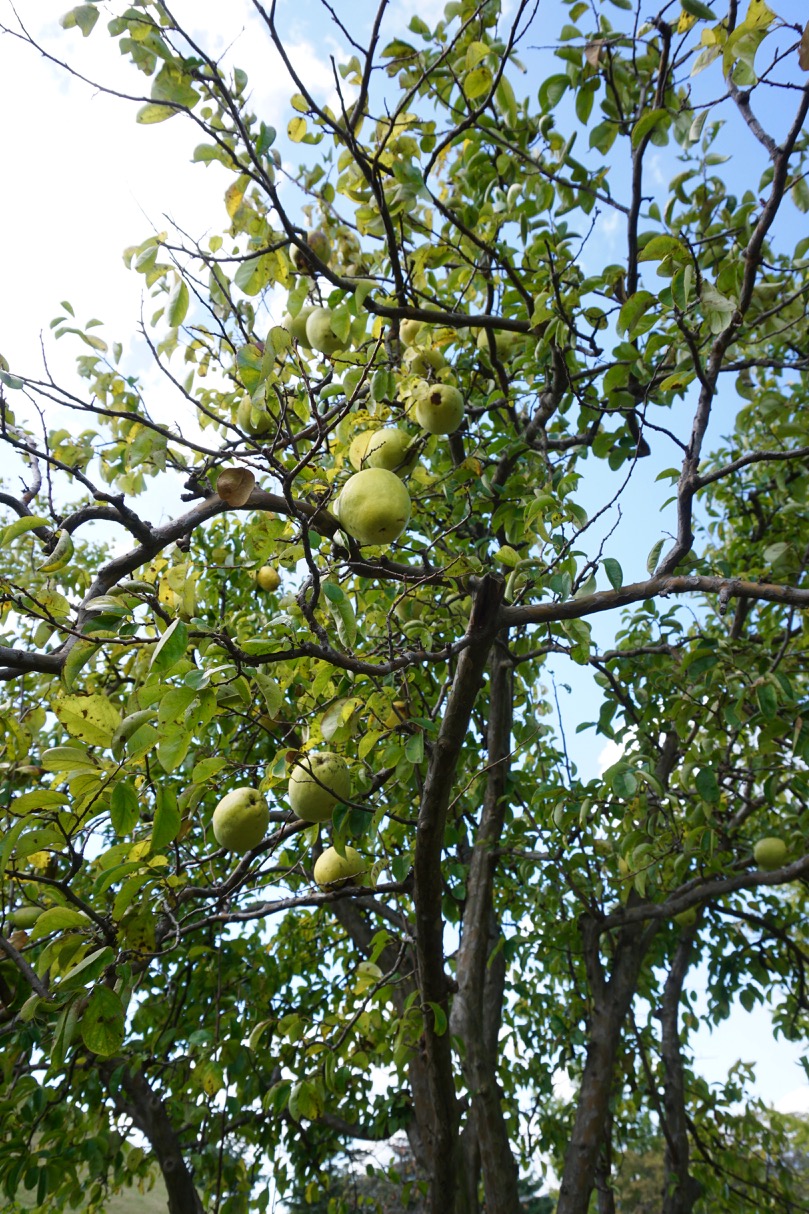
I was also really taken by the fruit trees.

We were able to go inside Cheonmachong, an excavated mound named for the white horse motif painted on the outside. The mounds are built initially as platforms and then hollowed out at the top, which is a pretty cool feat of engineering.

The town of Gyeongju itself was pretty, too, with restaurants, cafés, and lots of little shops. This is also the first place we encountered the emphasis on Instagram – cafés were literally designed for this purpose and advertised as such!

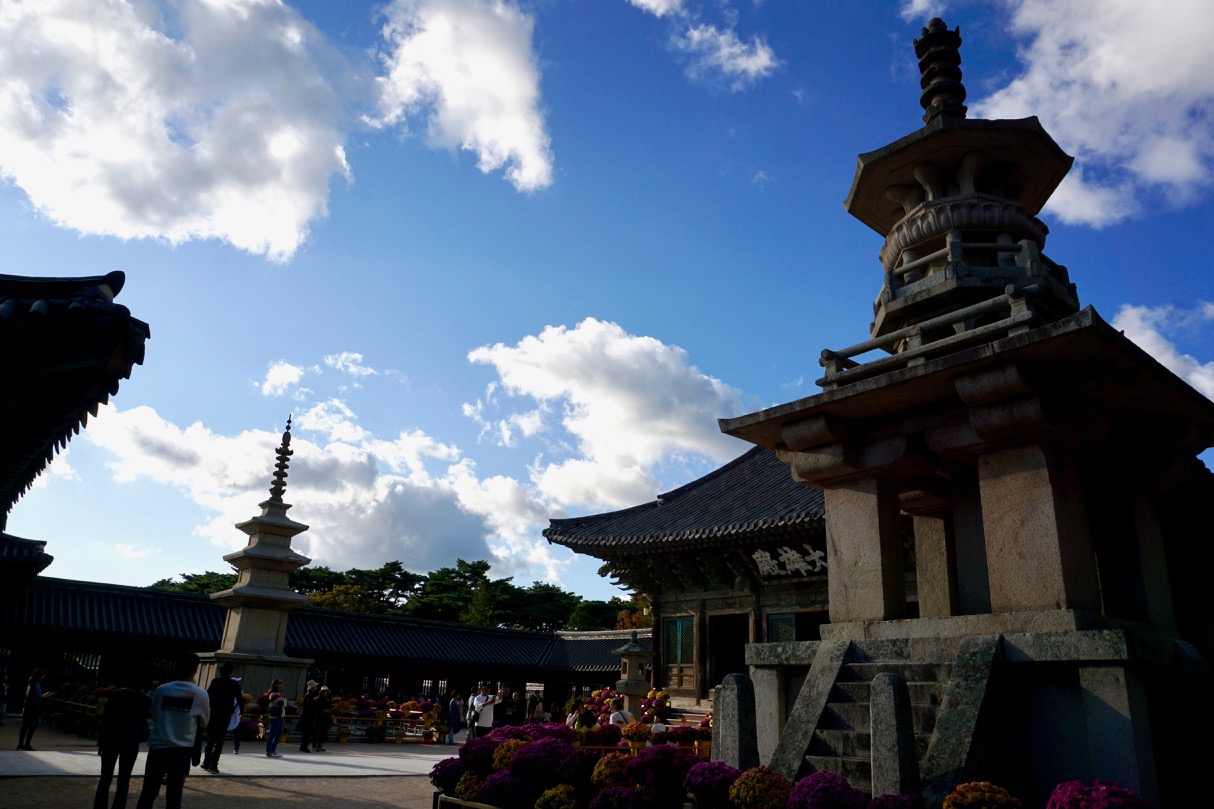
The other reason to visit Gyeongju was to get to Bulguksa Temple, which meant another bus ride through a landscape of hills, trees, and flowers. Korea is home to birds I’ve never seen before, either, and it was a really nice to experience so much of the land around us. Bulguksa was built in the eighth century and, like most of Korea, was destroyed during the wars and has since been restored. The colours were remarkable and we got very lucky with the blue sky, late afternoon sun, and autumn leaves beginning to change.

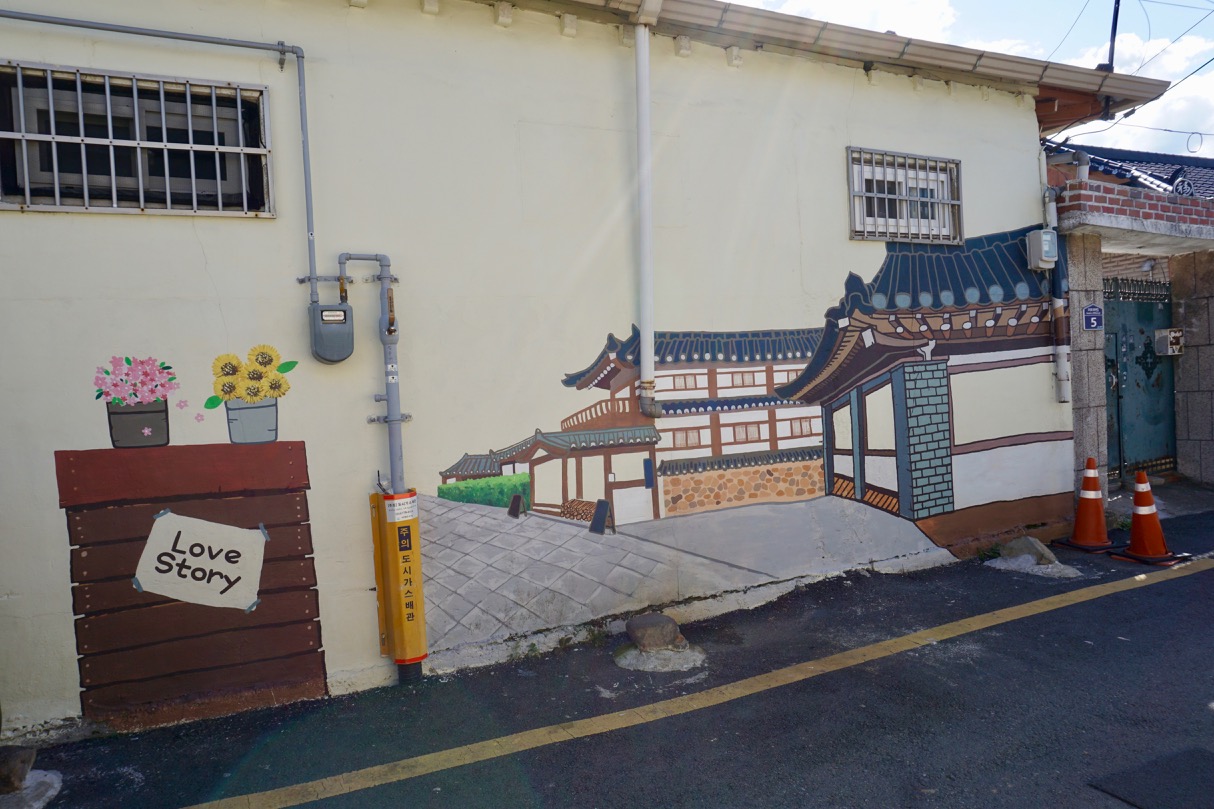
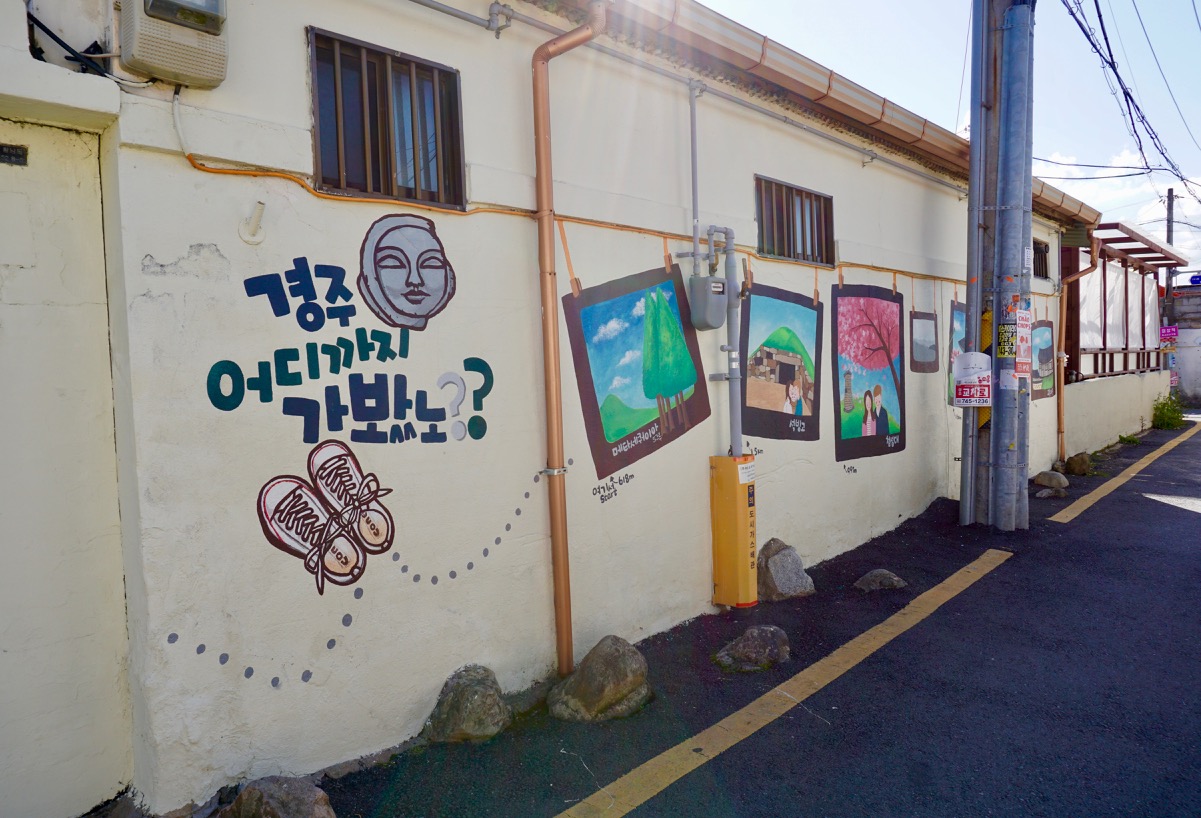
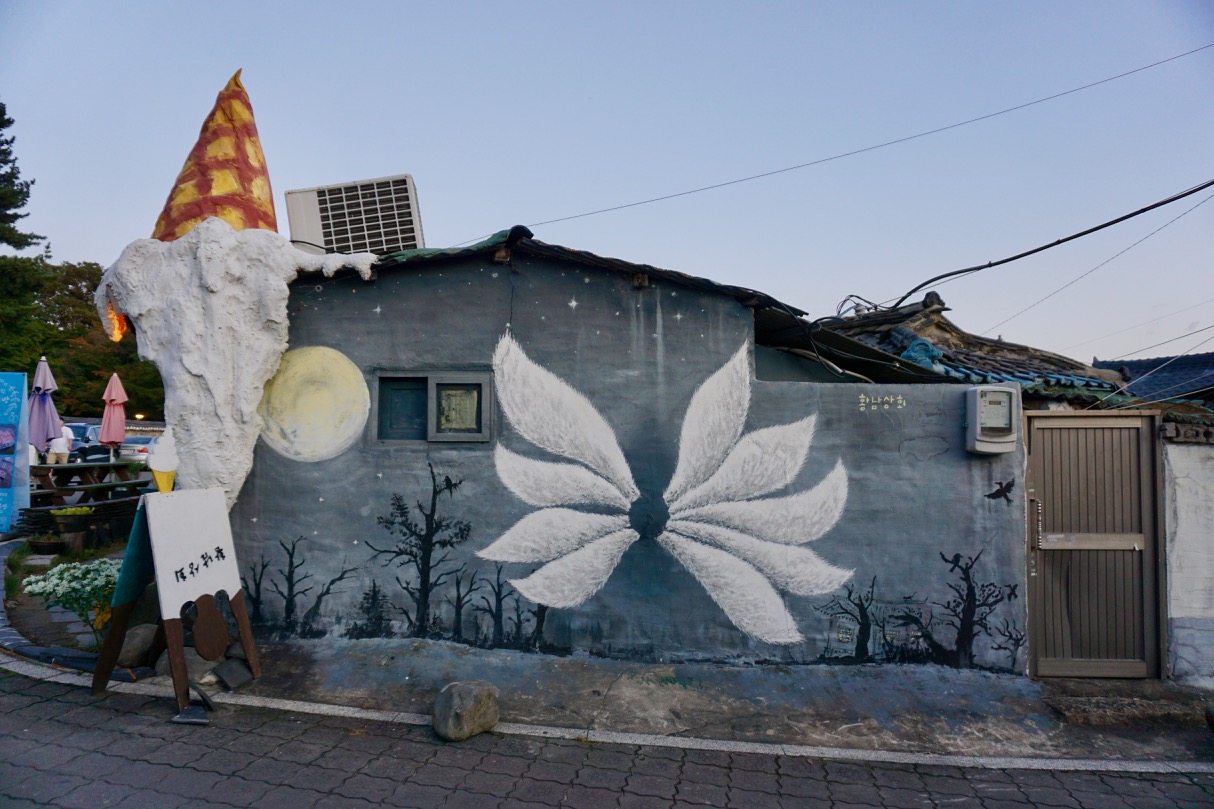
We returned to Gyongju for dinner and found more street art, which is always a highlight for me.

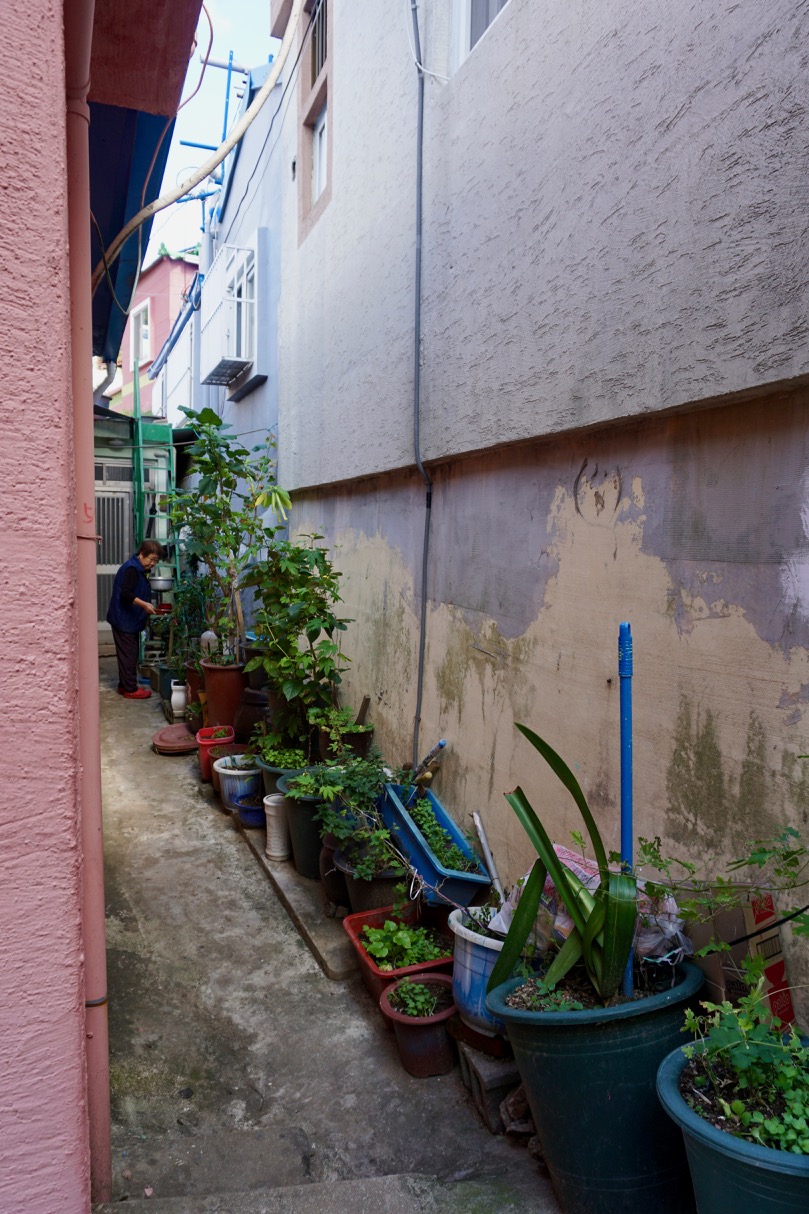
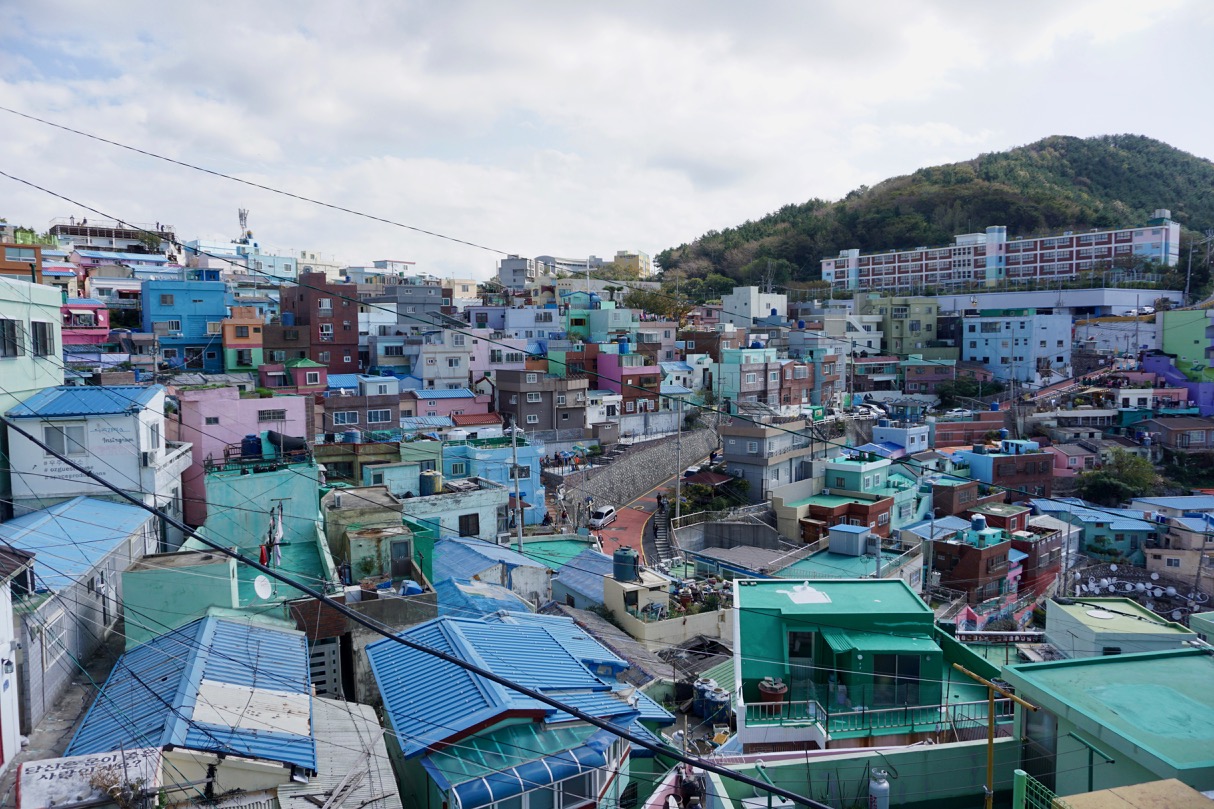
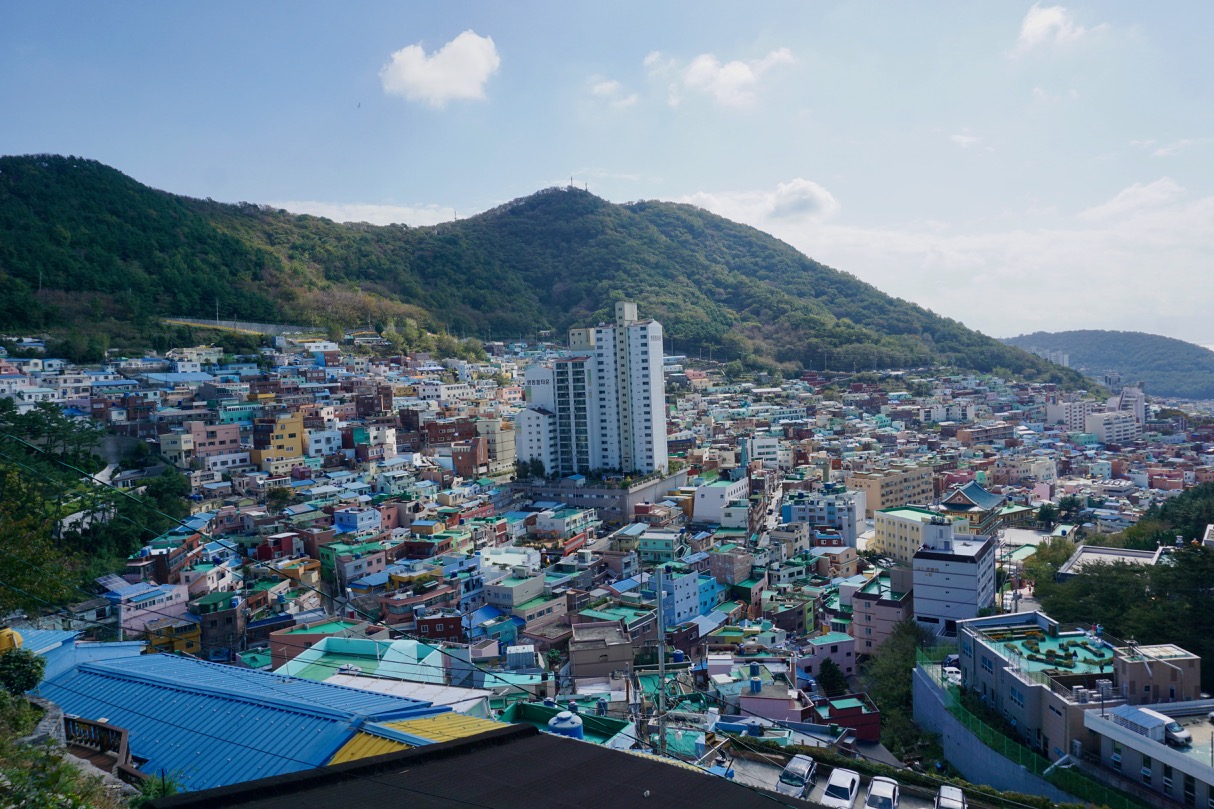
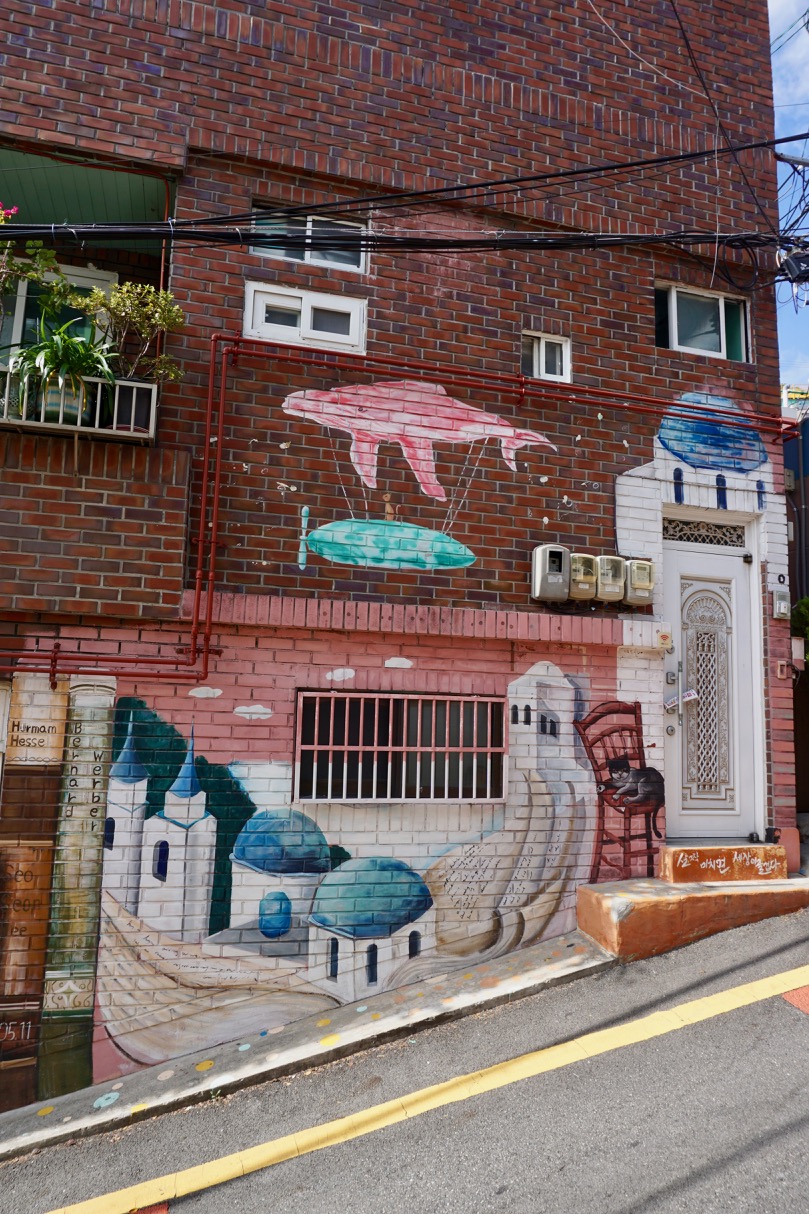
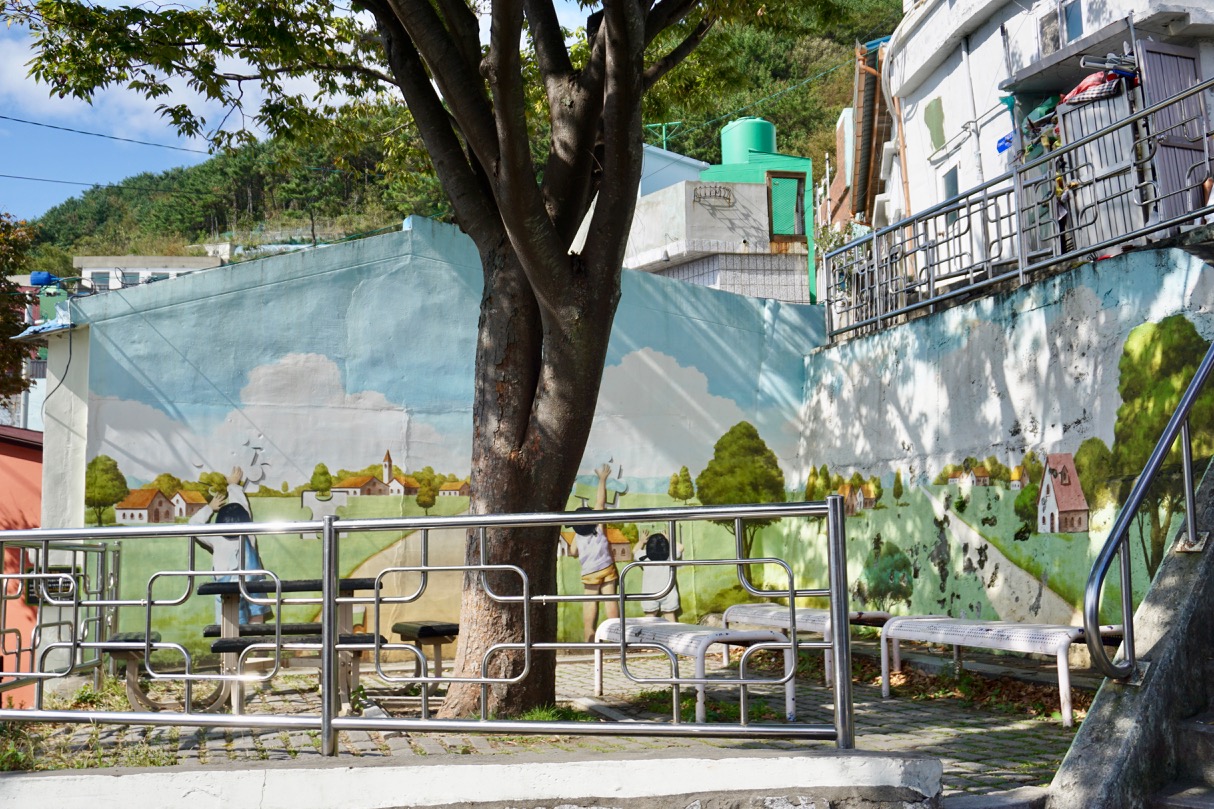
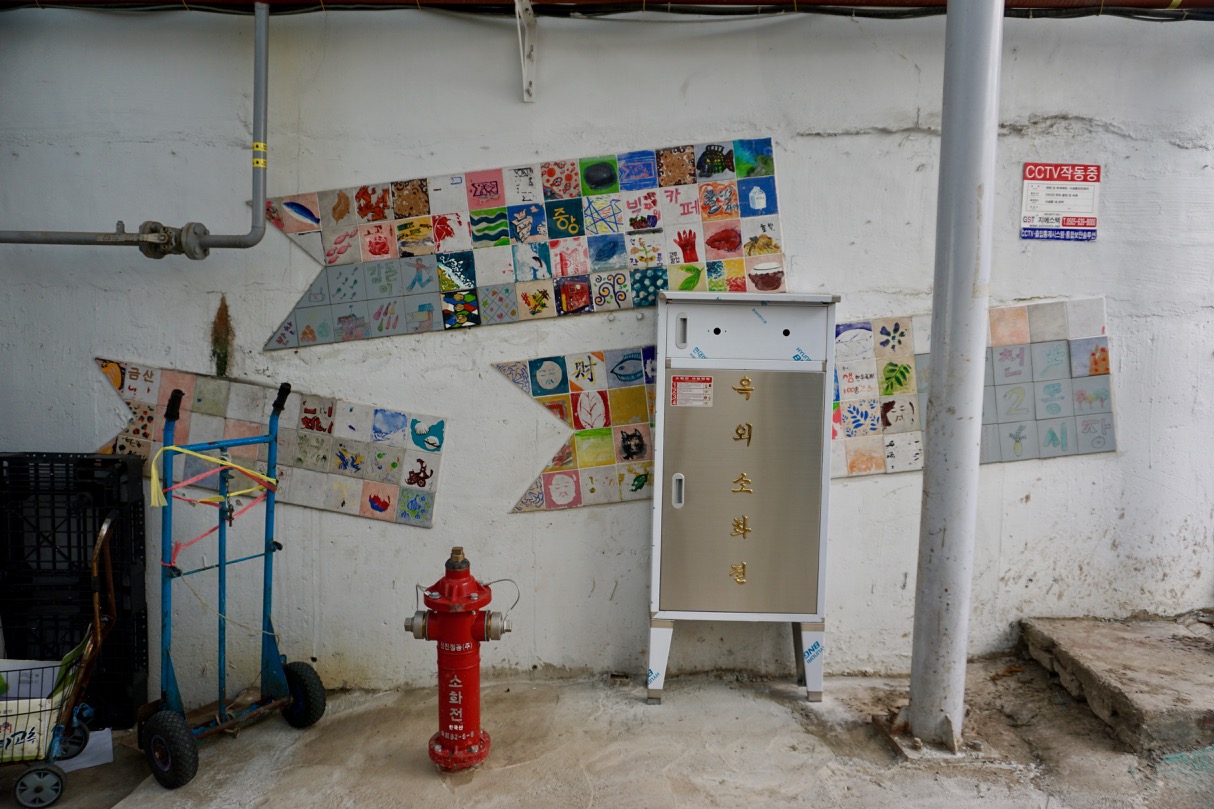
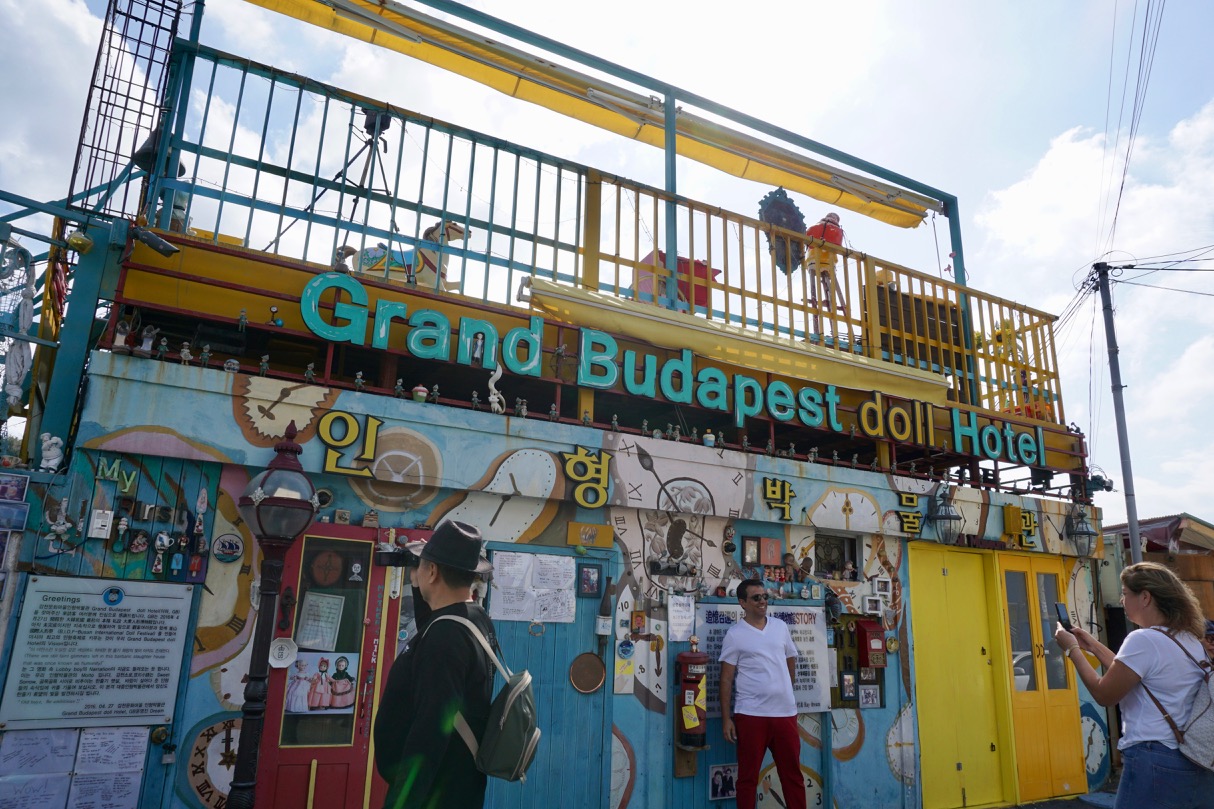
We spent our last full day in Busan at Gamcheon Cultural Village, which I’d really been looking forward to. We spent hours wandering through the twisty alleys and streets, browsing souvenirs and handcrafts, and pointing out the large variety of snacks available for purchase.

Gamcheon Cultural Village is still home to many artists and other residents and I really couldn’t shake the feeling that we were dancing on people’s heads the whole time we were there. It was first built in the 1920s and 30s and the restoration and community building that is still prevalent there was really impressive.

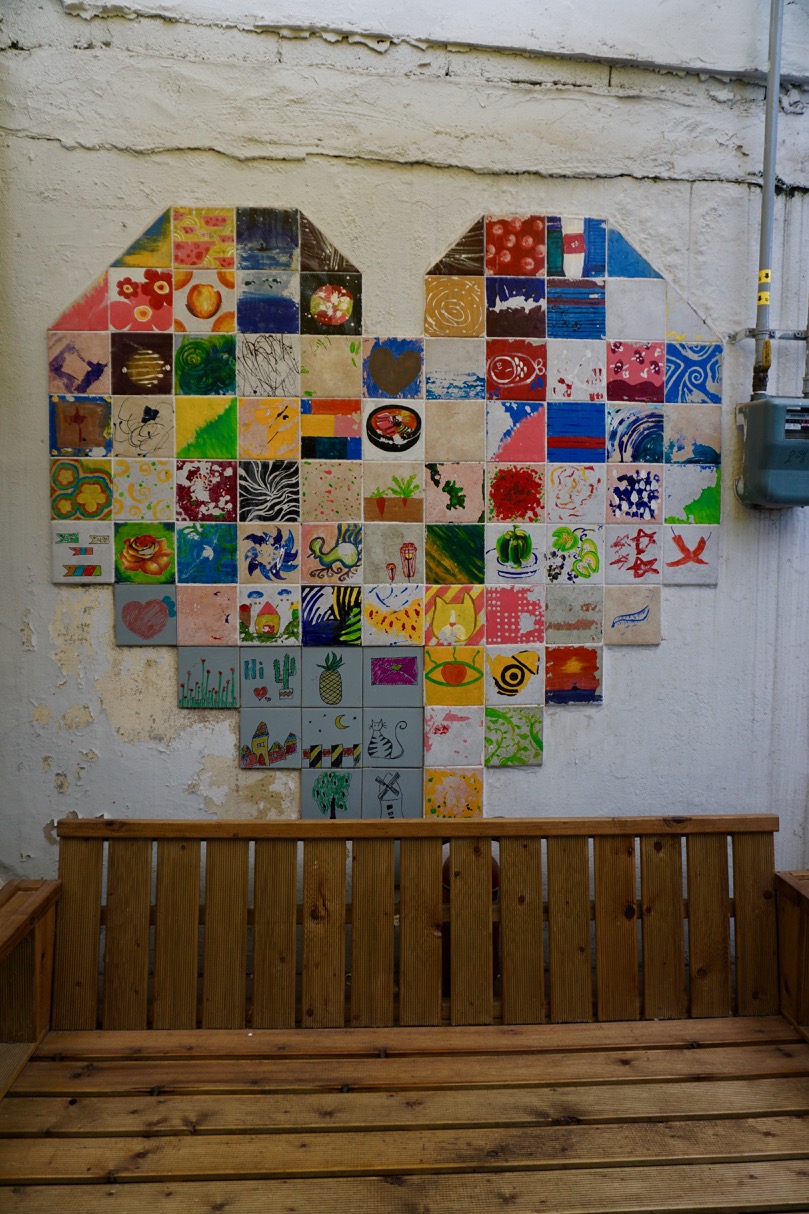
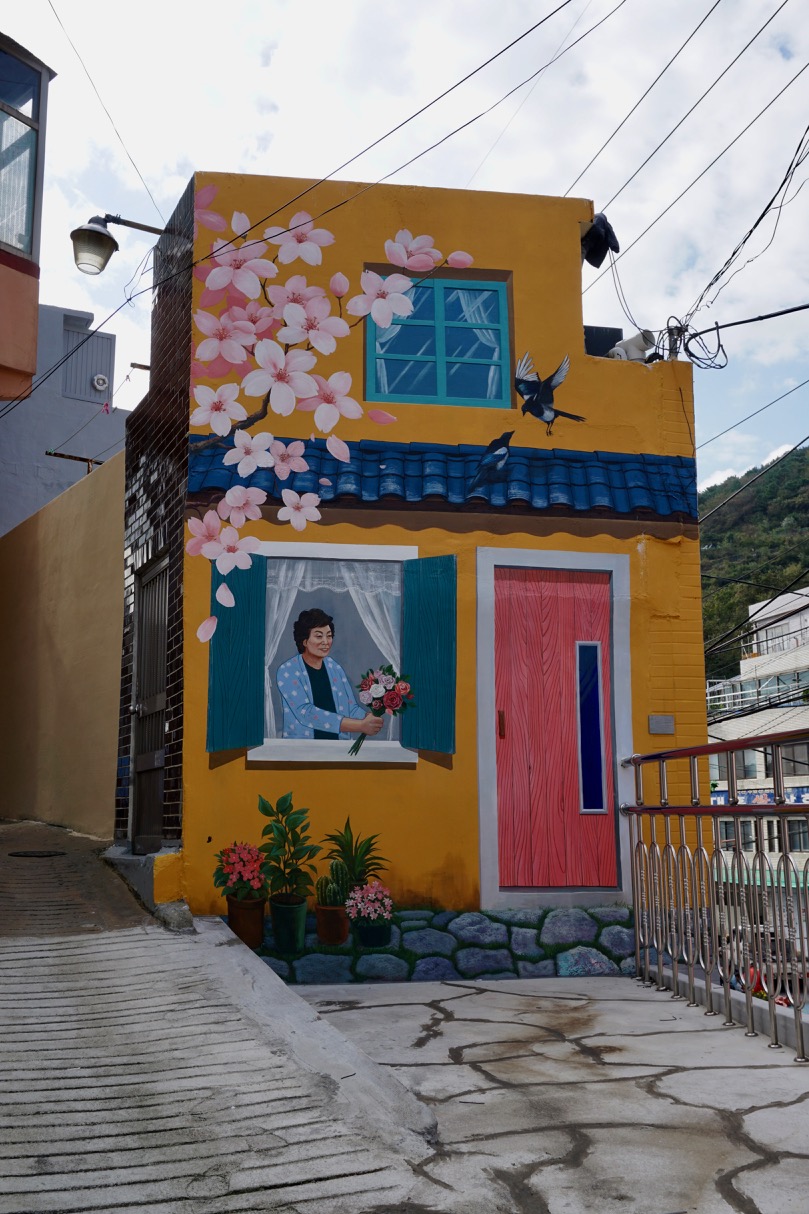
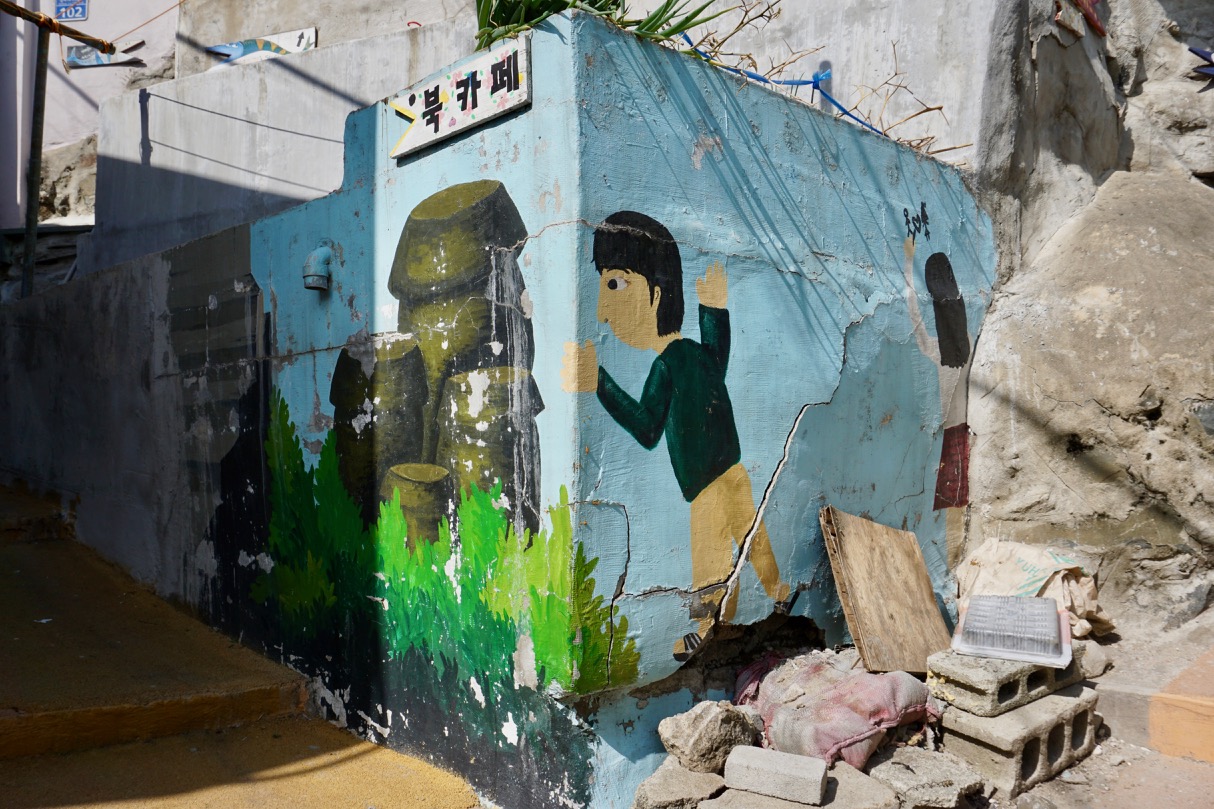
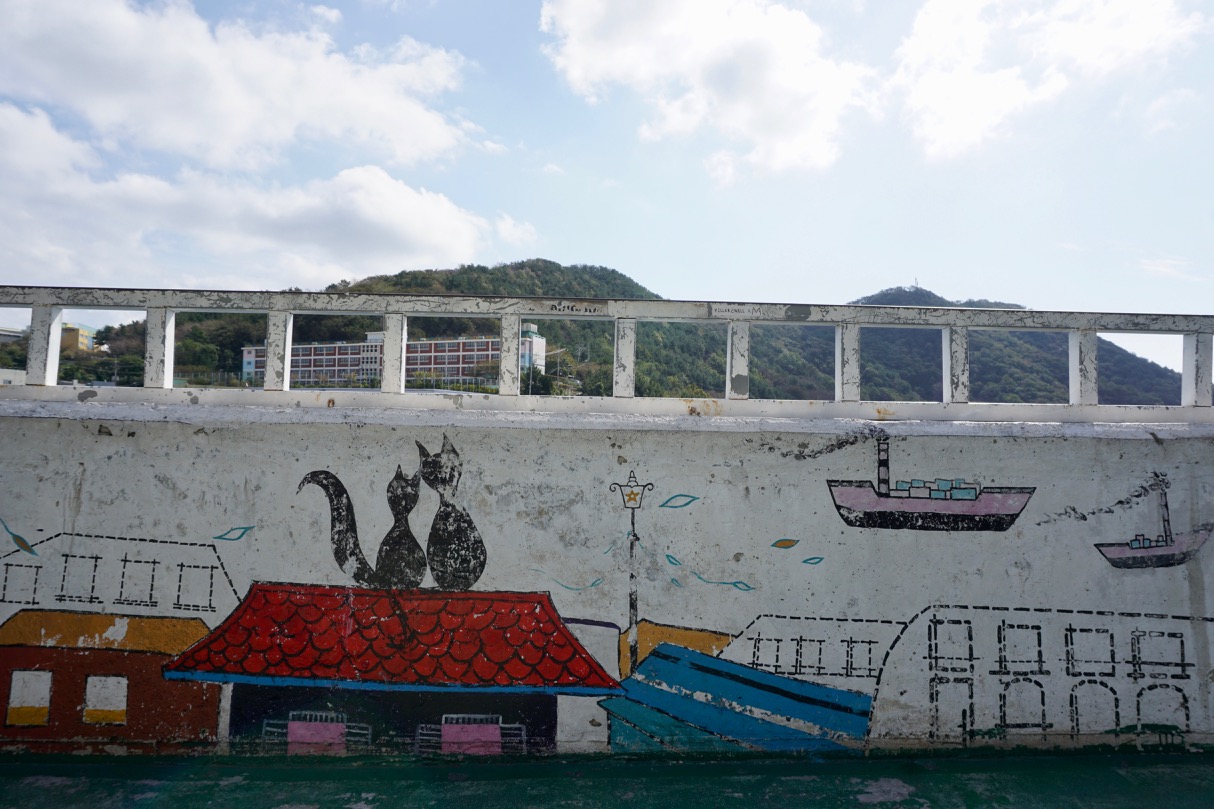
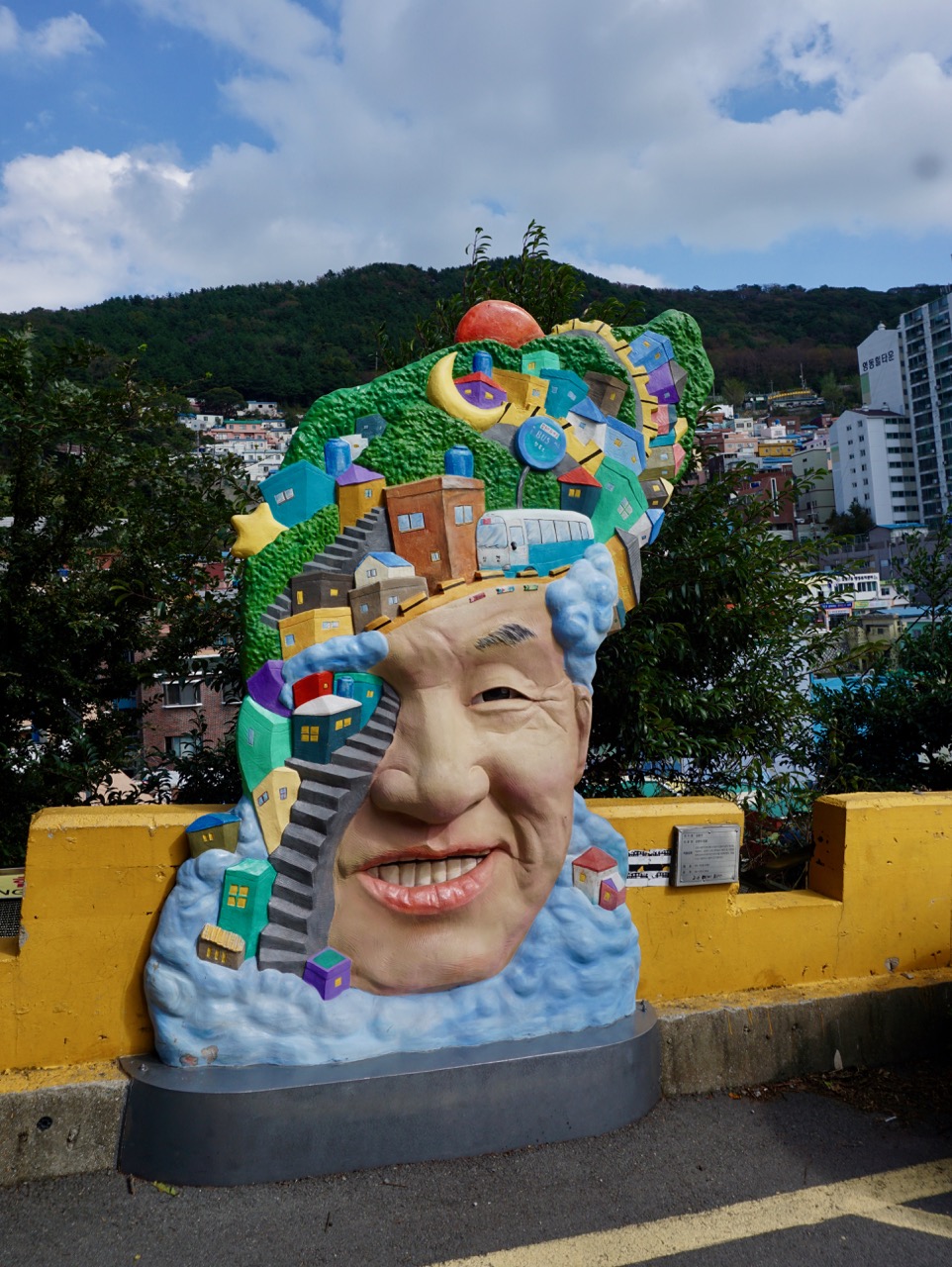
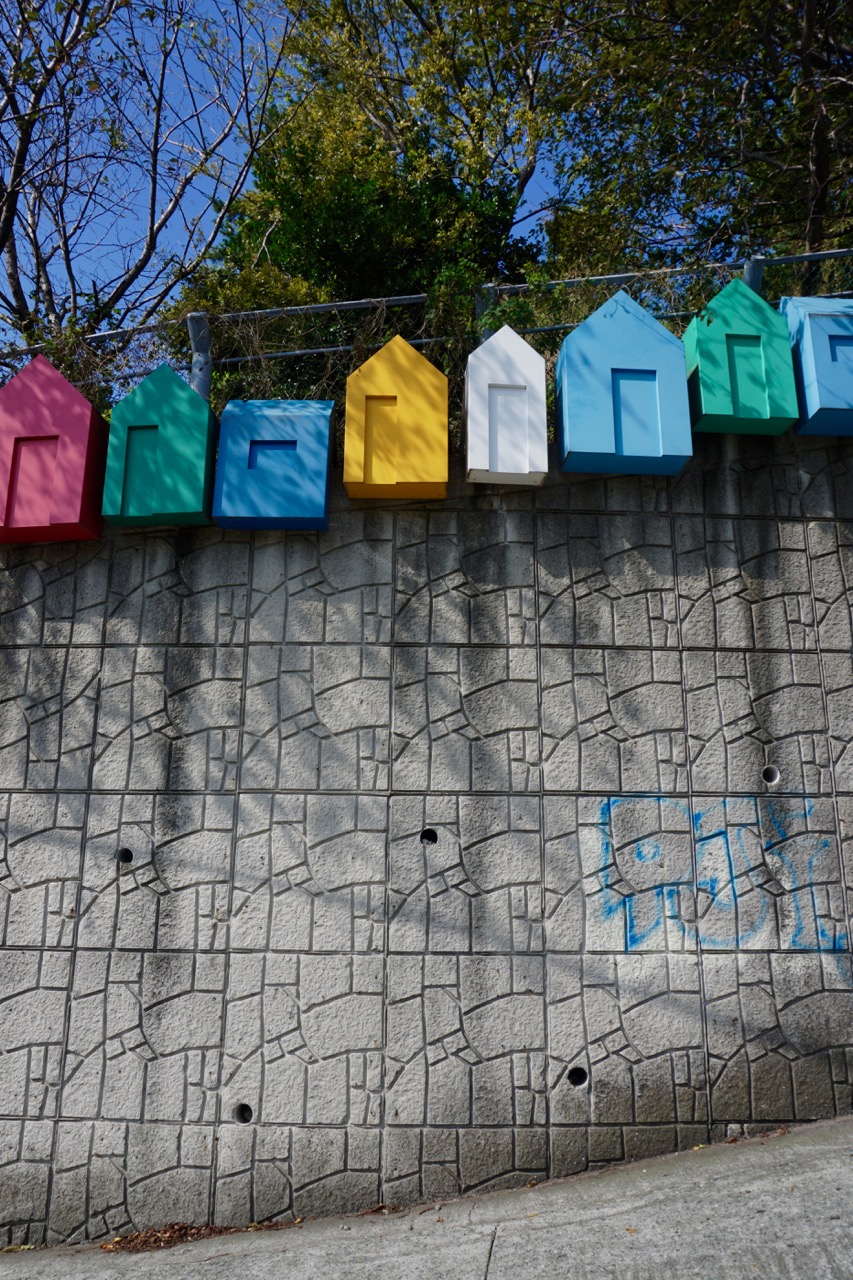
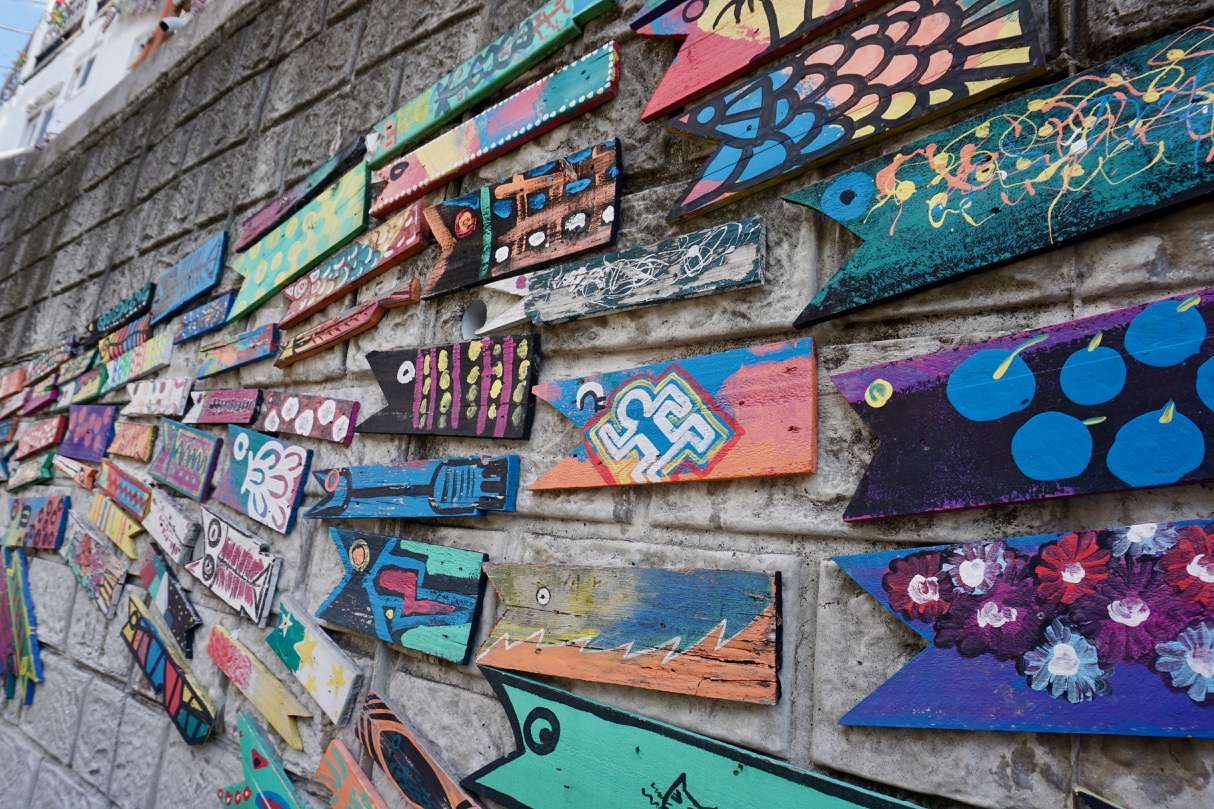
There was art everywhere and we were completely immersed in it.

On the walls . . .

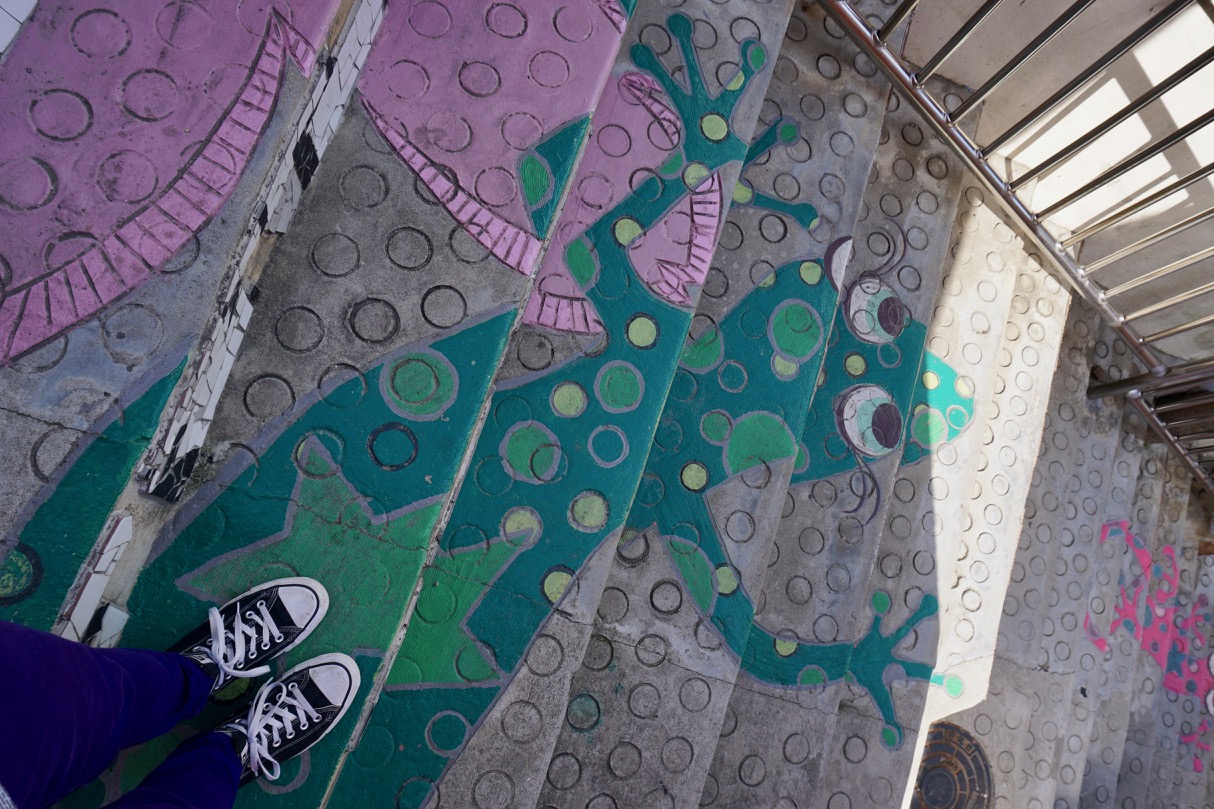
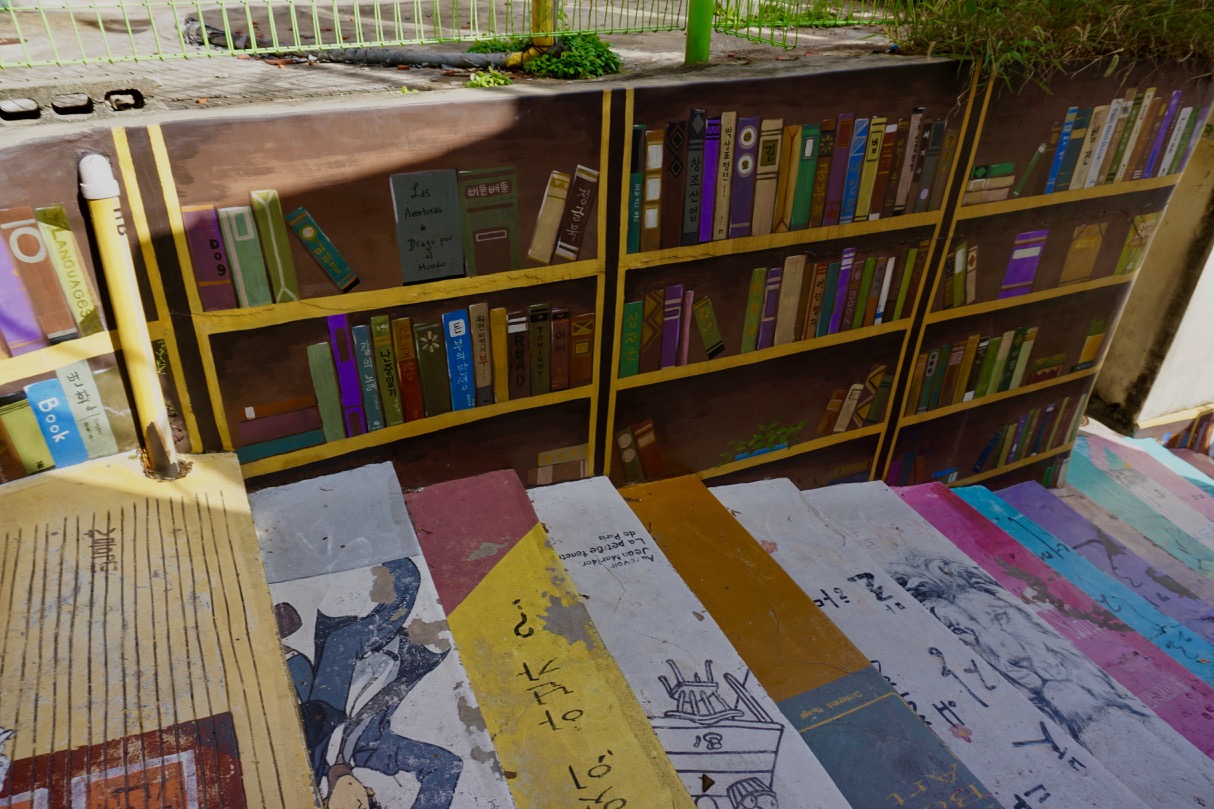
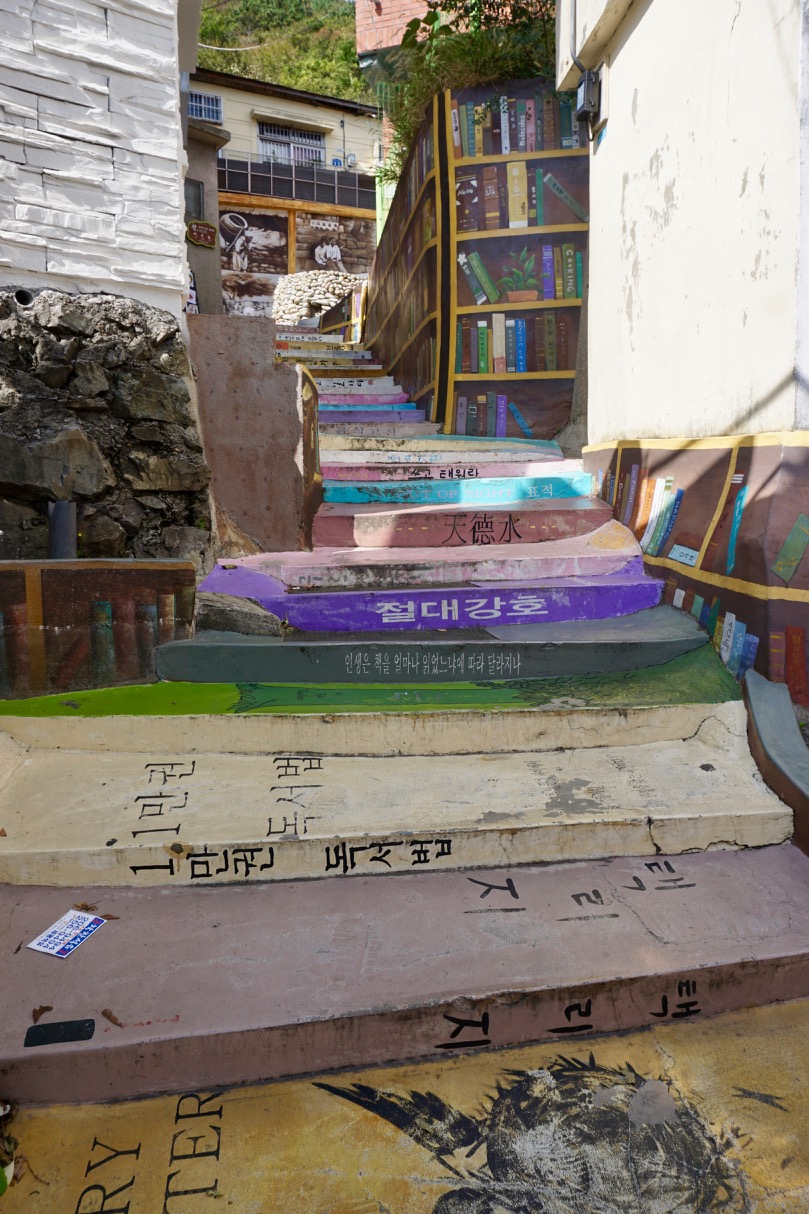
. . . and on the stairs . . .

. . . and installations everywhere you looked.

I particularly loved the book staircase . . .

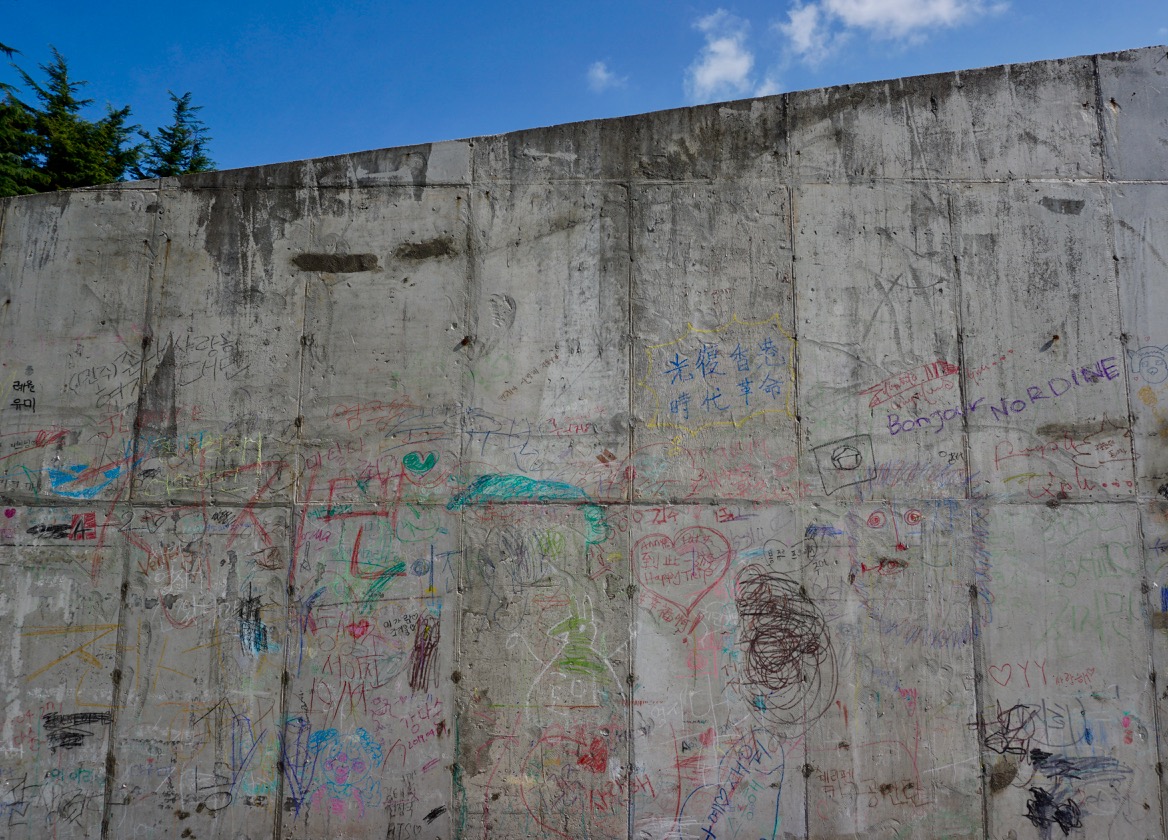
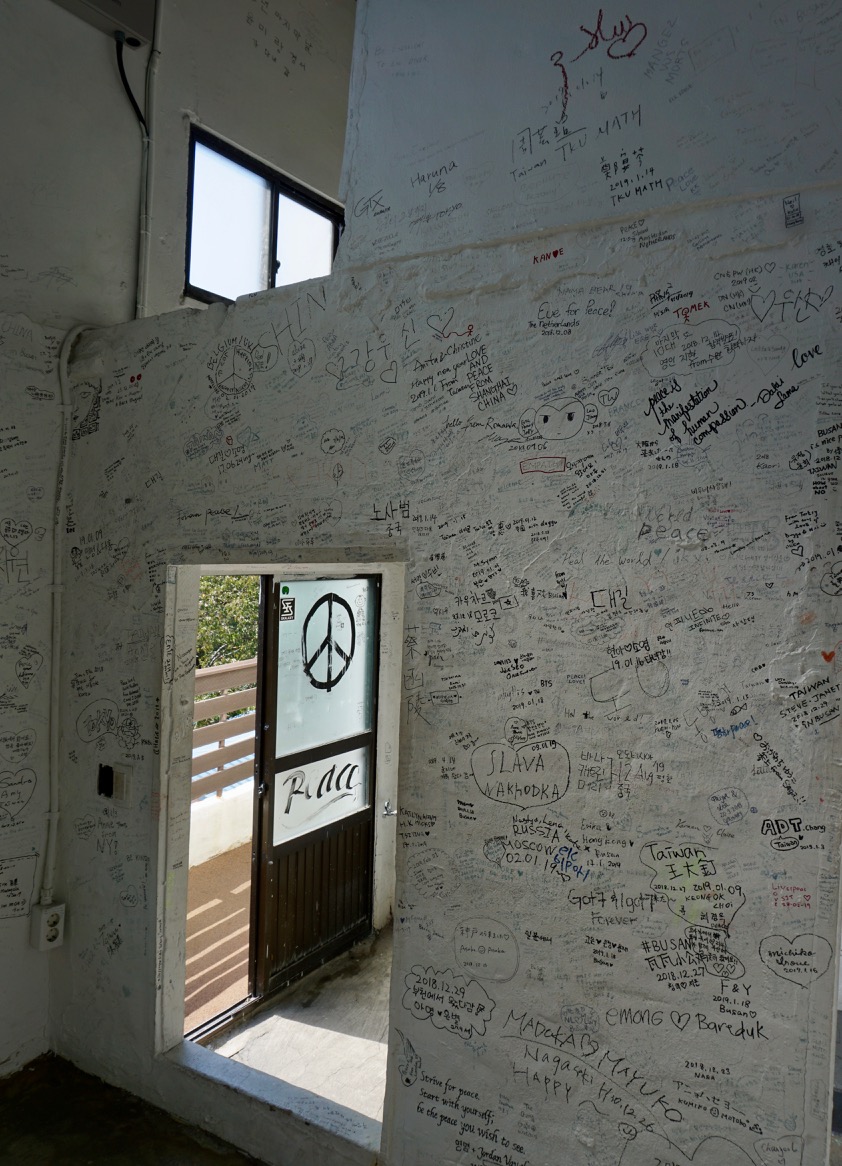
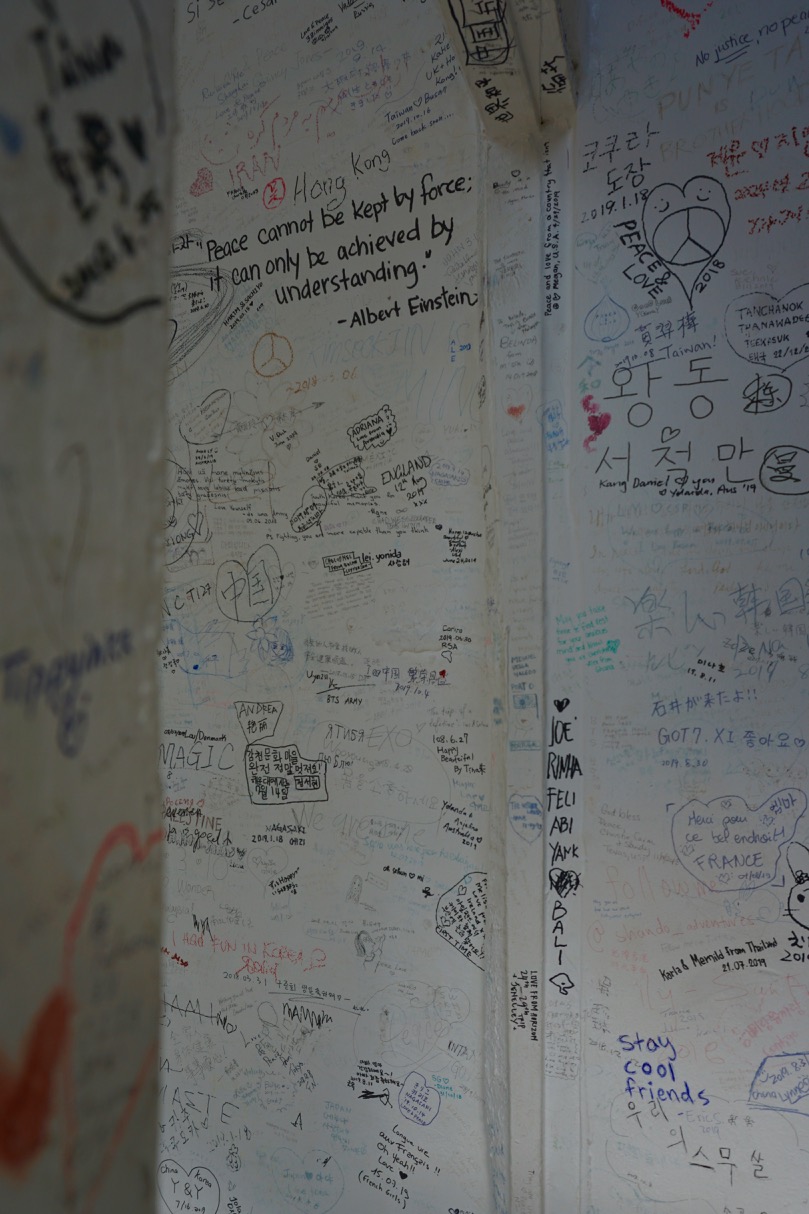
. . . and the Peace Museum. A man came by with markers for us to add messages, so of course we did so.

Gamcheon also had a local market because, as I said, people live there! The market was one of our last stops so it was mostly closed for the day but I was delighted to be there.

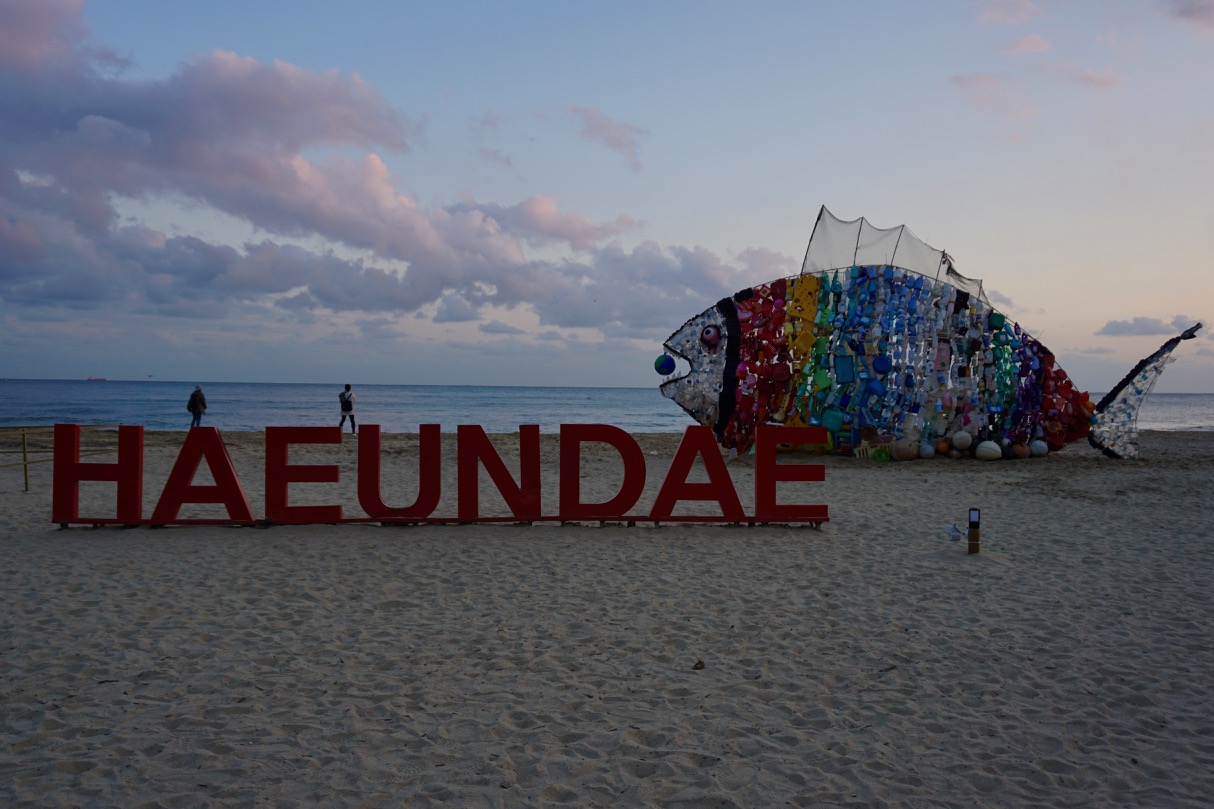
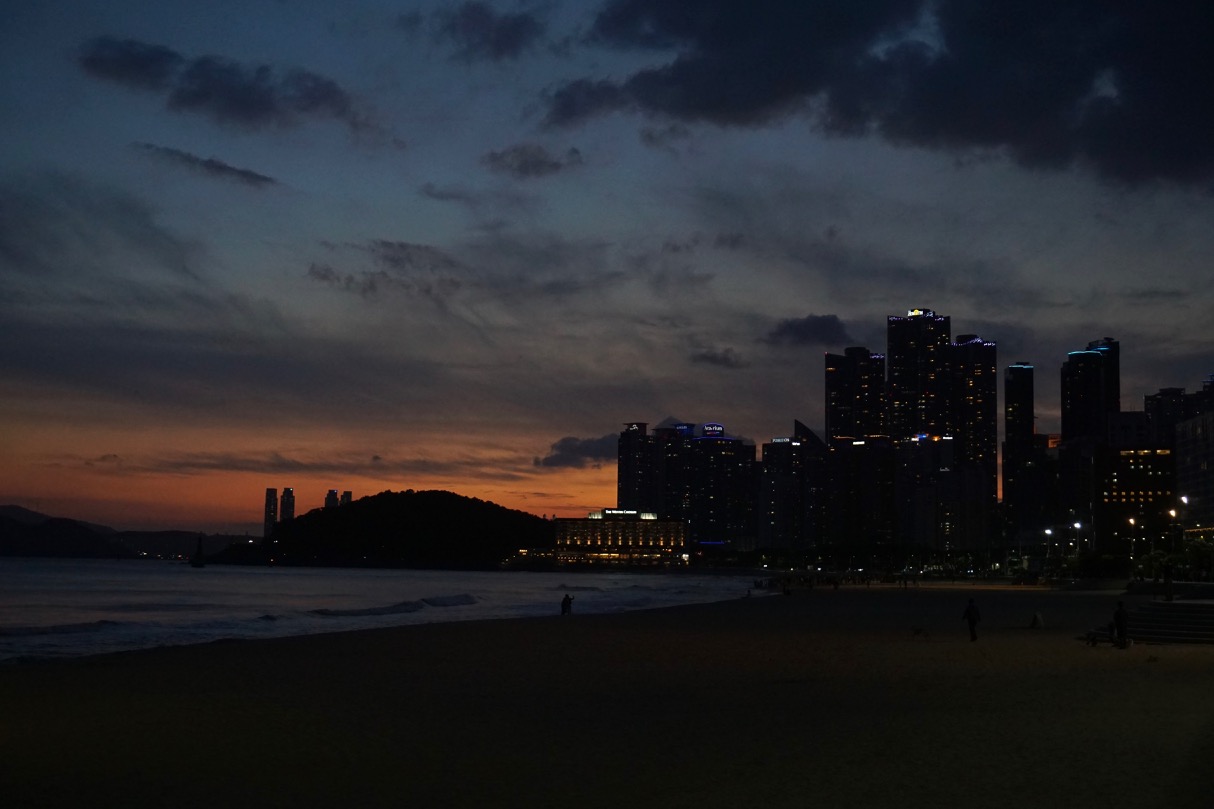
Since we visited a beach on our first day in Busan, we thought it fitting to also visit a beach on our last day. We took a really nice bus ride to Haeundae Beach, which, I learned, has the record for the most umbrellas on a beach at one time. (Note: This fact came from my travel friend and has not been independently verified.) We reached the beach at sunset and watched the sky change.

It was a rather poetic way to conclude the first chapter of our trip to Korea and left me with bright thoughts for chapter two: Seoul! Stay tuned!

Travel Guide: Christchurch

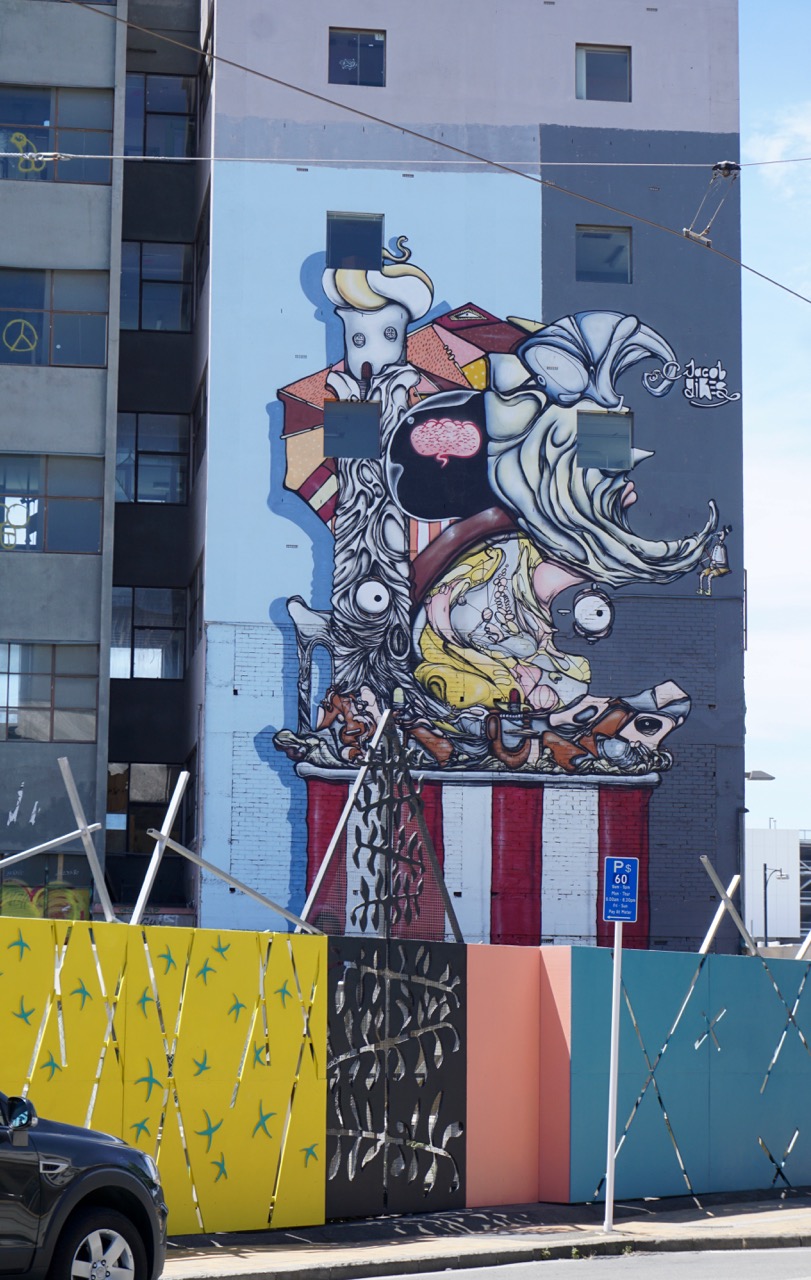
After a quick stop in Geraldine where we were told we’d find antique stores and cheese and after 2,500km of driving, my friend Sharon and I finally arrived at our last stop, Christchurch. We had the good fortune to meet the wonderful Rosie Mac, a nurse-turned-artist with a story that gave us reason to pause. She’s in the middle of a spectacular mural project and her work is beautiful – take a look! We spent a lot of time with Rosie during our time in Christchurch. She has the soul of one who gives and she gives so much – life, joy, wisdom. (Every so often I meet someone who makes me rethink my concept of the soul, which isn’t that well formed to begin with.) It was an apt place to conclude our journey through Aotearoa.

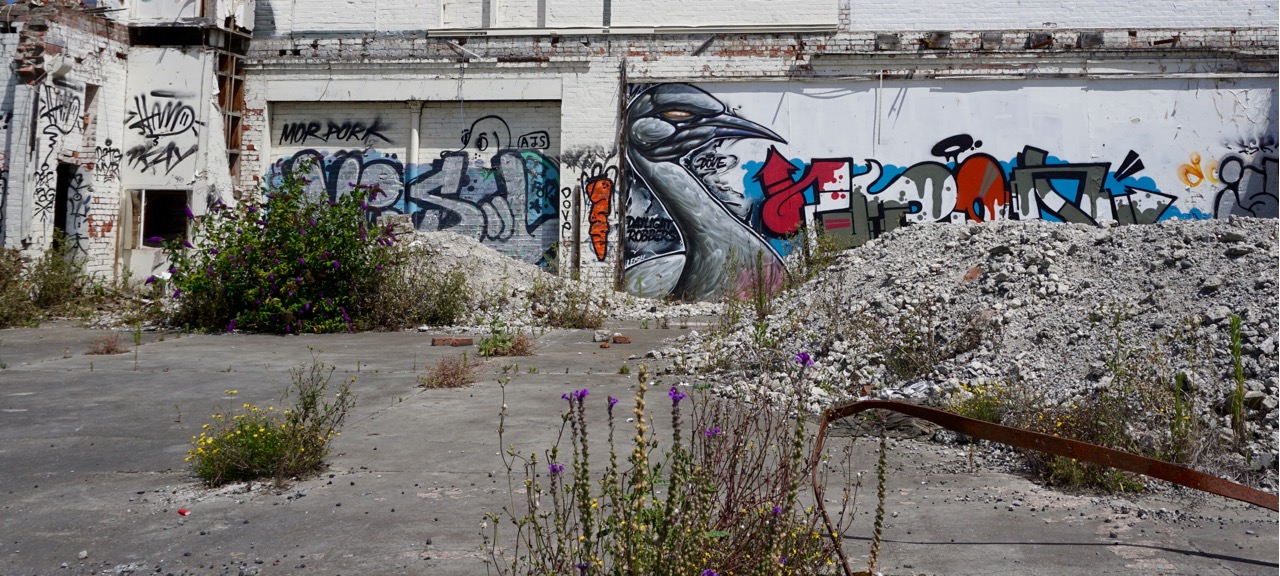
In addition to good company, Rosie also provided us with useful maps and local hints about what to do in Christchurch. She told us her story of the 2011 earthquake and its aftermath. Signs of the damage are visible everywhere; Christchurch has relatively few buildings and a great deal of construction. But there’s a wonderful sense of joie de vivre in Christchurch, too.

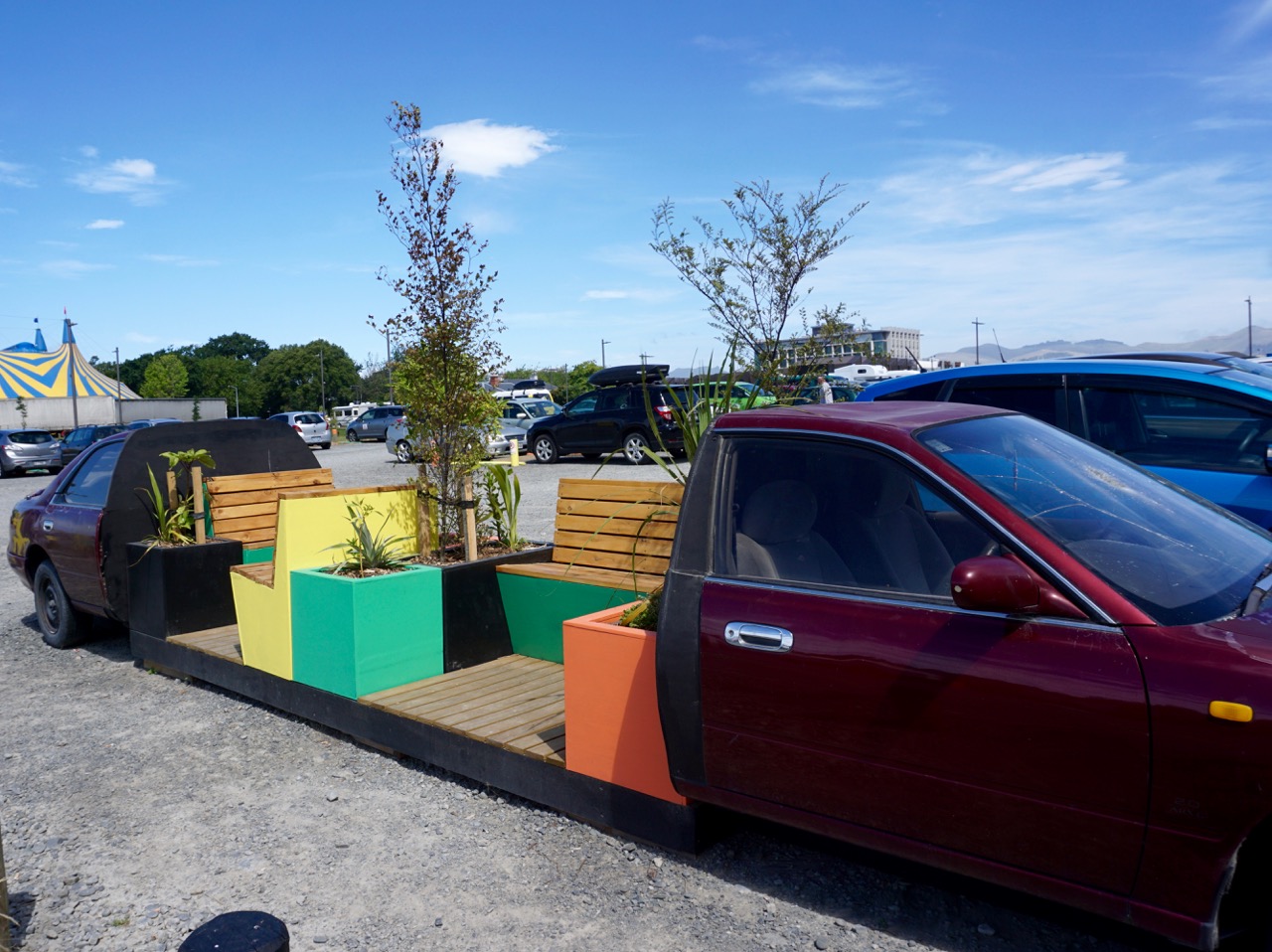
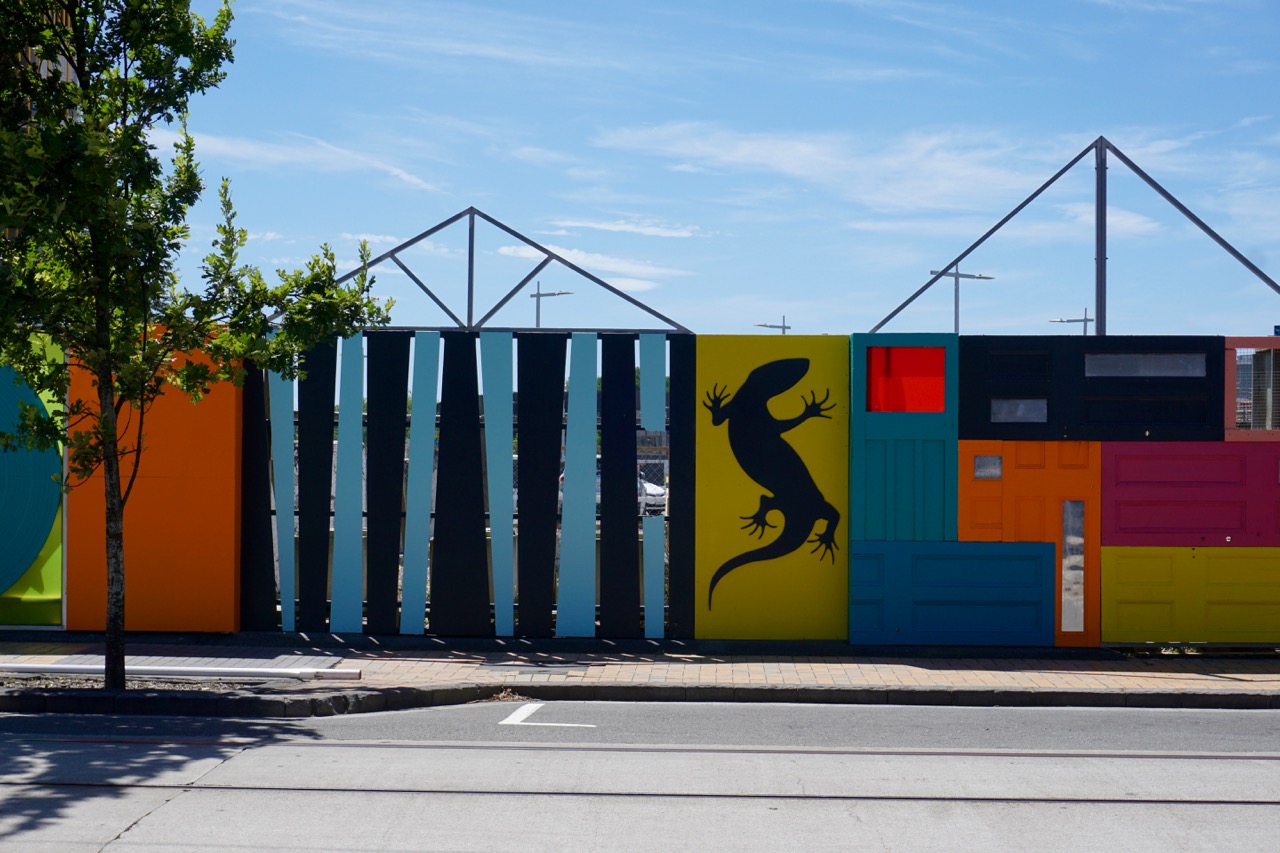
There’s art everywhere, which was fun to look at and adds a lot to the emptiness of downtown.

There are also really beautiful public parks in the middle of everything and we spent some time sitting in a wonderful playground with a waterpark, turf hills to climb, and so many things to run to, jump off, play on, scramble up, and slide down. People really seemed to care about taking the time to spend together, which is harder and harder to find.

We also really loved people watching (and eating!) at Little High Eatery, basically a fancy hawker center or what New York would call a food hall. Think mall food court with real restaurants. Something for everyone!

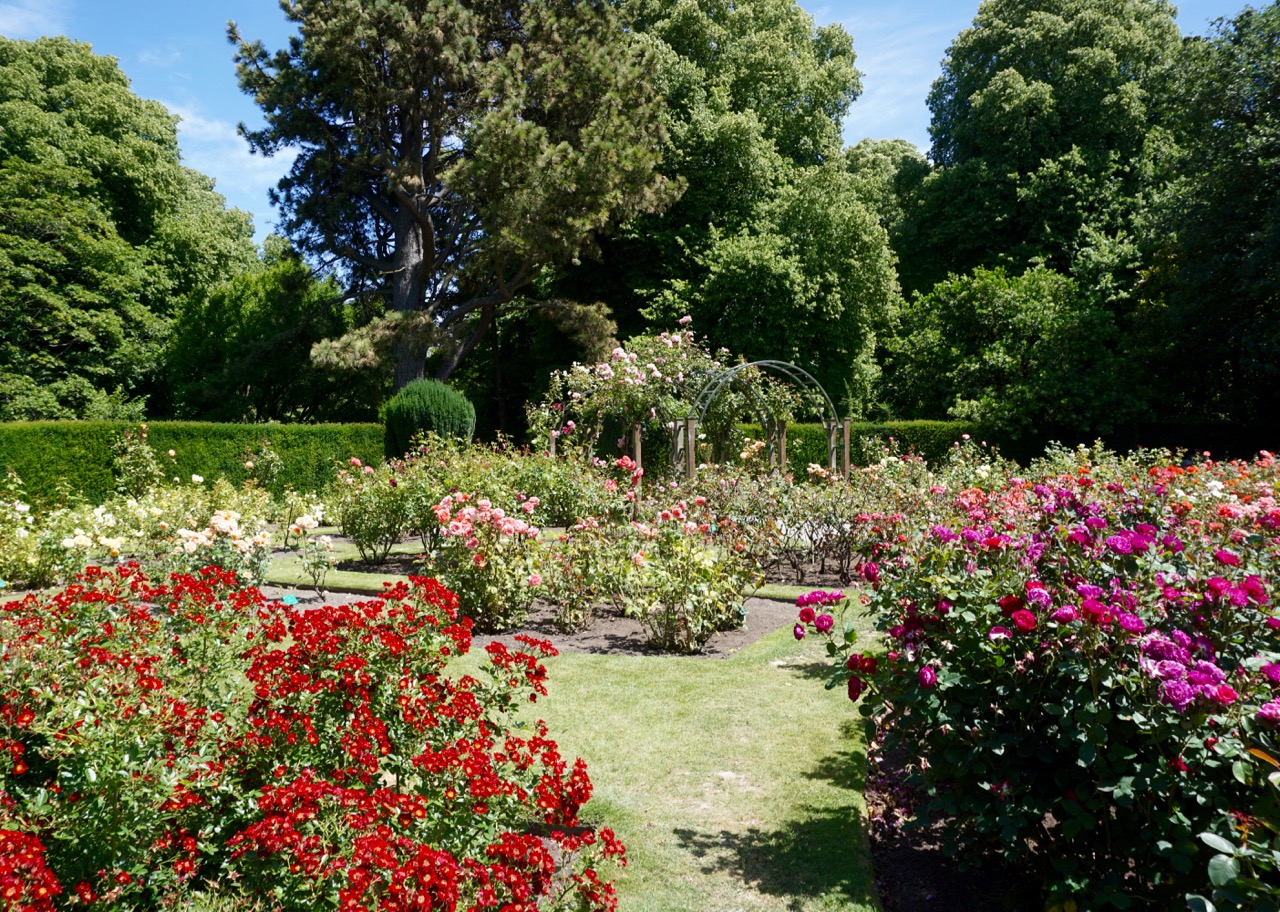
We spent our only full day in Christchurch walking as much of the city as possible which, because it’s not so large, is quite possible. We followed the Avon River to the Botanic Gardens where we visited the most amazing rose garden I’ve ever seen. The flowers all smelled so good!

Our walk along the river also took us to some interesting landmarks, including a monument to the firefighters who died on 9/11 in New York . . .

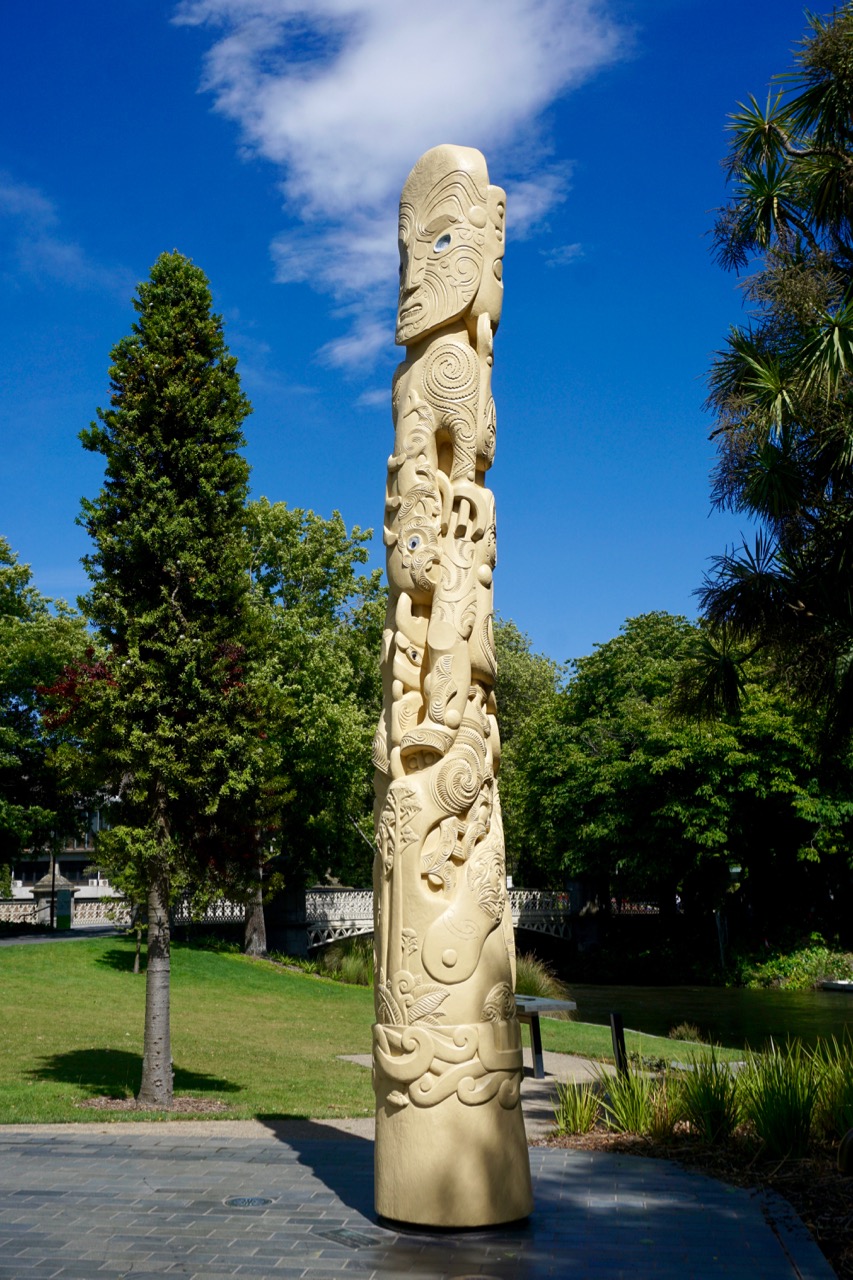
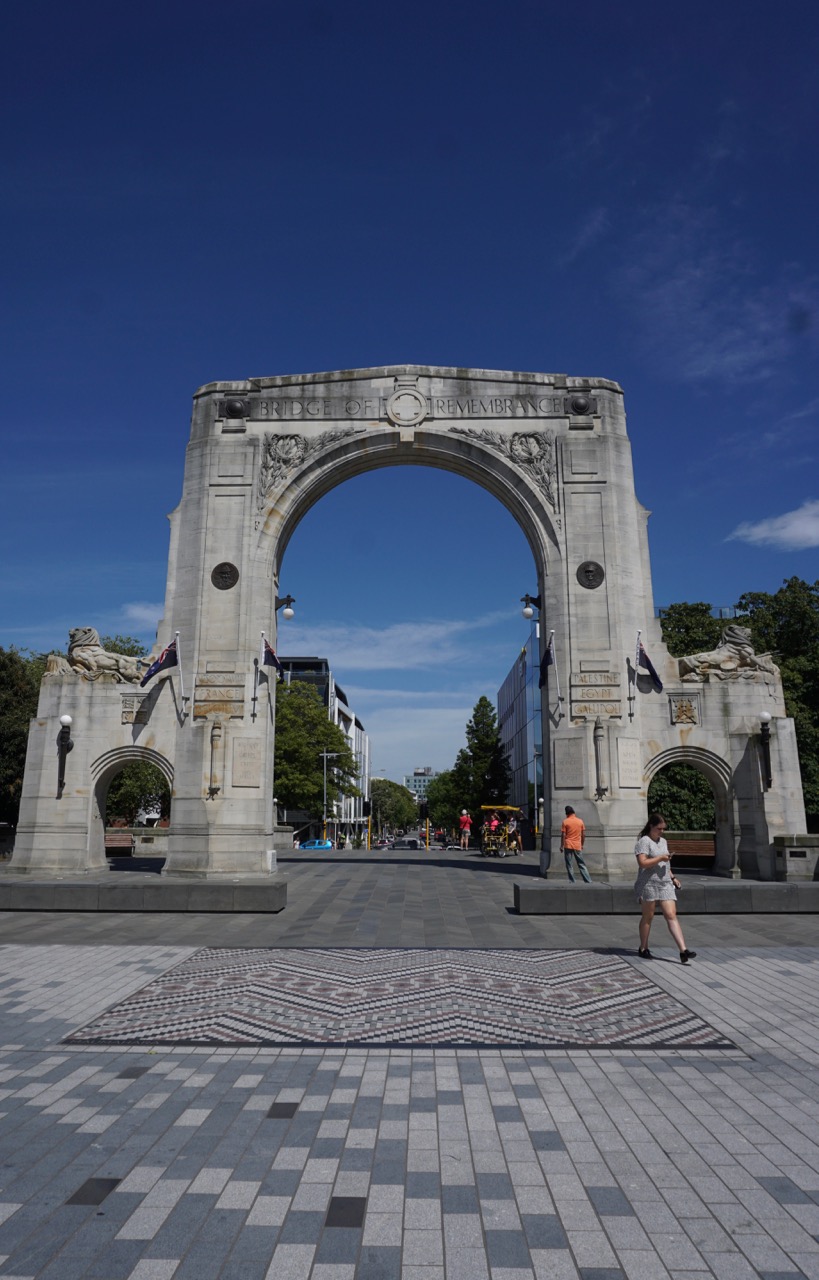
. . . and a Maori sculpture and the Bridge of Remembrance for World War I.

And then it was time to better understand the earthquake. There was a wall with names along the river and it was interesting because not all names were in English; they were written in the languages of the people they were meant to commemorate. I saw Hebrew and several Southeast Asian languages and I don’t think I’ve ever seen a memorial wall like that. And like nearly everything official that we saw in New Zealand, much of what was written in English was translated into Maori, too.

The 185 Empty Chairs memorial, however, was particularly moving. We had walked by it the night before and it was so simple and unadorned that we didn’t stop to see what it was. The artist statement made it that much more poignant and I appreciated it for its simplicity and emphasis on individuality. So many memorials make all victims the same and this one decidedly did not.

Finally, we went across the street from the 185 Empty Chairs to the site of the CTV building. A park had been built over the cracked, broken, uneven remnants of the foundation. That was moving, too, in the way that the 9/11 memorial in New York is moving. Life goes on and we remember. We remember and life goes on.

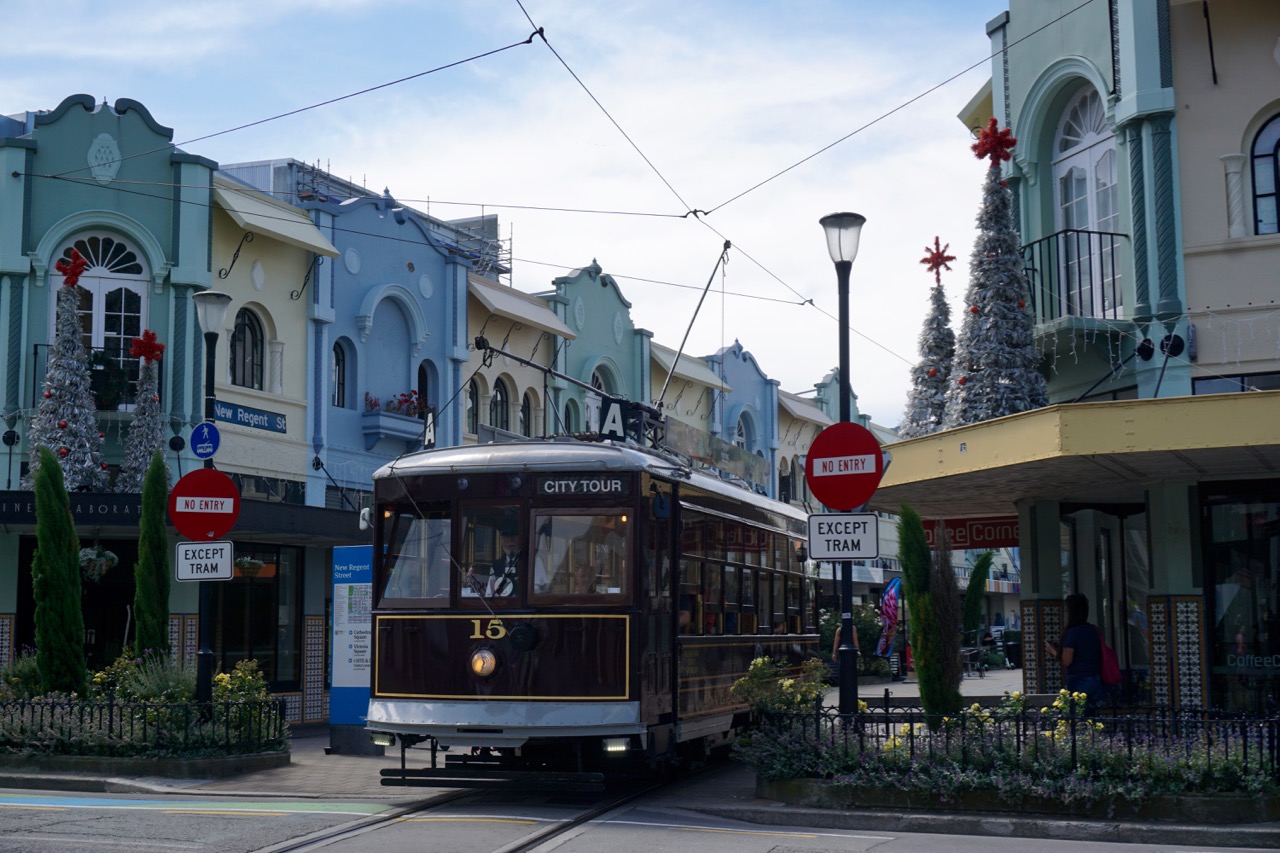
Afterwards, we walked down New Regent Street and enjoyed looking at the pastel buildings, coffee shops, and cocktail bars. It was very pretty and felt like it would have fit well in Napier, the North Island’s art deco city.

The next morning, thanks to another recommendation from Rosie, I headed to C1 Espresso for the best cup of coffee in the city before flying home to Singapore. C1 Espresso is built in the old post office and still contains some elements of the old building, like letterboxes repurposed to hold matchbox cars. There’s a secret door that is actually a bookshelf of Penguin Classics and instead of music, Harry Potter on tape was being played in the washroom. And if that wasn’t enough, the pneumatic tubes that would have delivered mail now deliver certain menu items straight to your table. Quirky and full of laughter, like much of Christchurch.

And then it was time to go. Three weeks in a magical fairyland and I cannot say enough good things about it. If you get the chance to go to New Zealand, go. Without question, it’s the most beautiful place I’ve ever been (Norway was in first place for 9 years) and I am so grateful for the opportunity to travel there.