Tag Archives: Asia

Travel Guide: Battambang

This week-long adventure was different from any I have ever experienced. This was my first time in Cambodia and my first traveling internationally with students. I visited Battambang with the entire grade 10 class of my school (about 90 students) along with the seven other teachers. Upon arrival, we joined JUMP!, a very wonderful experiential education social enterprise with which school is currently working to plan the annual field studies trips for all secondary school students. I am in awe of what JUMP! planned and how their plans came to fruition.

But I’m getting ahead of myself.

The focus of the grade 10 week in Battambang, Cambodia’s second largest city, was to get students thinking about community development, both as communities of advisories (groups of about 15 students that meet daily) and global communities. We spent the week learning from and working with different social enterprises that aim to make Cambodia a better place. All the restaurants where we ate were social enterprises, as well. As part of the program, we explored privilege, voluntourism, sustainable development, Cambodia’s history, and how to bring about positive social change. Throughout the week, I saw my students’ hearts and minds open up, not only to these ideas but also to each other as individuals and as friends. I can say without a doubt that every student returned to Singapore wiser, humbled, empowered, and with new friends.

This post will chronicle my week in Battambang as best as I can based on the photos that I can share. Most of my photos for the week were of and with students, and there are a variety of reasons (i.e. privacy, confidentiality, just plain propriety) why I won’t share them in an unprotected online space. Heartfelt thanks both to JUMP! for their incredible work and to John, the extraordinary JUMP! facilitator assigned to my advisory for the week.

To get oriented, here is a very helpful map from Lonely Planet:
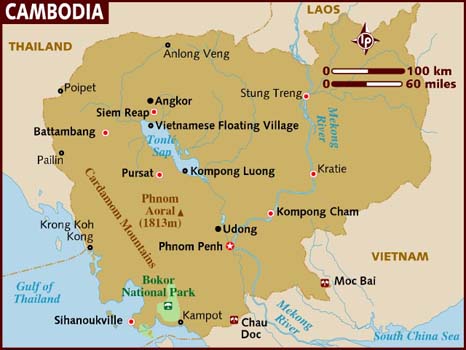
map_of_cambodia
We flew into Siem Reap on Saturday and drove the 3+ hours to Battambang the next morning

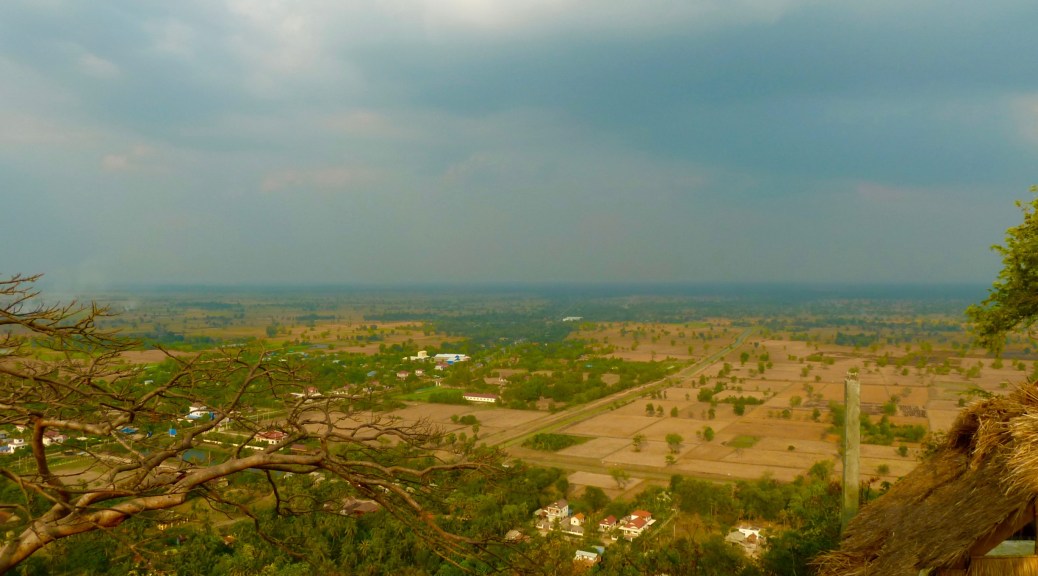
One of our first activities was a tuk tuk ride to visit Phnom Sampow. We took a difficult climb up a steep hill, pausing along the  way to see Buddhist temples and learn about Cambodian agriculture from our guide. We could see farms for miles from various lookout points.


The temples were exquisite, as well. I have a few Buddhist students who stopped to pray along the way.


We also encountered a number of monkeys and actually had to alter our route at one point to get away from them. Monkeys are vicious and will grab any food item or even backpack in site. My favorite monkey was this one:

P1060457

The highlight of this trip, though not photographed because I felt weird about that, was the killing caves, a site of Khmer Rouge slaughter. The caves contained a memorial to victims, including skulls of those who died there and a Buddha statue for those who wished to pay respects.

Probably my favorite morning of the trip started with a trip to a local market to pick up ingredients for the Cambodian lunch we would learn to prepare! The market was wonderful (and sold more than vegetables, though my photos might have you believe otherwise) and the cooking school was incredibly accommodating to my vegetarian needs. Even better: We received cookbooks to take home!


Another really transformative experience was our visit to COMPED, a social enterprise that collects organic material, turns it into compost, sells it to farmers for fertilizer, and uses the money to run enrichment programs for children. To learn about what they do, we visited a market, collected rotten produce, and shoveled it onto the compost pile at a local dump. While there, we also learned that the families who live on the dump are paid more than they would be in other jobs. Despite health risks from being around burning trash, they choose this life to feed their children.


Another social enterprise, Coconut Water Foundation, also runs after school and summer enrichment programs for students. We joined them at a school for about an hour one morning to play games with some of the students. Rather than sharing pictures of children, here are a few artsy shots:

P1060710

P1060718

Our last full day found my group on a bike ride with Soksabike, a social enterprise that pays families to produce traditional products, therefore putting money into the economy, and brings tourists to see these products. Soksabike’s tour guides are local university students who are working to enhance their English skills as they do their jobs.

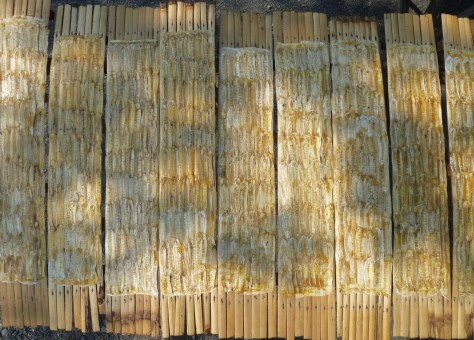
Among other things, we learned how rice paper is made . . .

P1060772

. . . and sampled some delicious dried and fried bananas.
P1060777

The final stop on the tour was a very moving memorial to another killing fields site across the street from a Buddhist temple that the Khmer Rouge turned into a prison and interrogation facility. I didn’t have the heart to take pictures of the memorial, mostly because it broke my heart. The 1970s weren’t that long ago, and the Khmer Rouge existed in Battambang until 1991. 25 years ago is not very many years. The detachment with which Cambodians speak about the Khmer Rouge genocide is painful to witness.

I don’t have photos to share, but other social enterprises that we visited and worked with were Phare, FEDA, and Cambodian Children’s Trust. All of these organizations work with and for community development, specifically targeted at children. CCT was the most moving for me because they taught us about orphanages and orphanage tourism. We learned that 80% of children in Cambodian orphanages have living family and are in orphanages (and often exploited and abused as a result) because their families were tricked into thinking their children would have better lives and a better chance at education.

It was a week of growth, that’s for sure. I’ll be back in Cambodia in March to spend a weekend in Siem Reap to visit Angkor Wat. I’m so grateful for the opportunity to travel with my students to Battambang to learn how real Cambodians live. The trip we took and experiences we had would not have been possible for me to orchestrate. JUMP!, thank you for opening my eyes to this beautiful country and its proud, hopeful citizens.

P1060627
At the old abandoned airport one night


Travel Guide: Krabi

This trip was different than many others that I’ve taken, for several reasons. Firstly, it took place over Thanksgiving weekend, so it was a three-night adventure instead of a more typical weekend jaunt. Secondly, and more importantly, I met up with my friend Lucas (with whom I also explored Hong Kong back in March) and his friend from college, Mel, for the last hurrah of the backpacking trip they were making through Thailand. Finally, this was a beach vacation with no purpose other than playing at the beach. It has been a very long time since I’ve had one of those vacations, and I have all the sunburns to prove it!

IMG_0403_2
Random building that I just loved

Lucas, Mel, and I chose to stay in Krabi Town so that we’d have quick access to an airport as well as a good jump-off point for a variety of water-related activities. We stayed at Pak-Up Hostel, met a ton of really cool people, and thoroughly enjoyed the experience.
IMG_0406
The bar at our hostel where we spent each evening

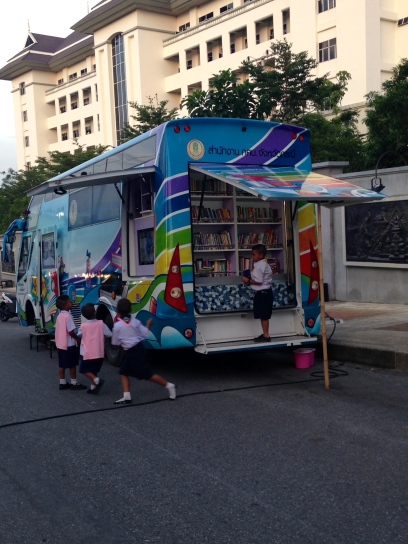
On our first night in Krabi, we walked through the night market, which contained the usual number of food stalls and stands selling other random items. My favorite, however, was a mobile library!

IMG_0404

On Friday, we booked a kayaking tour of mangrove forests and sea caves, which was really neat. It took a bit longer to get to the kayak site than we’d hoped, but we couldn’t have kayaked in this area on our own. Unfortunately, most of my cave photos didn’t come out, but this is what we saw on our adventure:

It was pouring when we got back to Krabi, but tropical storms usually clear in a couple hours. This was no exception, and we took advantage of the blue skies to head to Railay Beach, known for rock climbing. As it had just rained, we didn’t see any climbers out and about, but we did see a truly stunning place.

Our water taxi ride to Railay gave us these views . . .

. . . and our time on Railay Beach left me in complete awe:


Despite getting caught in another torrential, terrifying storm on our water taxi back to Krabi, we headed to Aonang Beach the next morning to hire a longtail boat to take us island hopping.

P1060315
Interior of our boat
P1060314
Exterior of our boat, complete with captain


It took about an hour to get to the Hong Islands, and we stopped in three places to just enjoy our time on the beach. Our favorite by far was Hong Lagoon, our last stop. Lucas and Mel dove gracefully off the boat; I belly flopped painfully a couple times and then opted just to jump.

We could have visited a fourth island, but hunger got the better of us, so we chose to head back to Aonang to eat. We spent about an hour relaxing in some rented beach chairs before making our way back to Pak-Up for a much-needed shower.

This weekend in Krabi was absolutely amazing. The ocean is my happy place and I haven’t been to the ocean in a very long time. Maybe it was the 10-bed dorm room in the hostel, maybe it was meeting up with friends, or maybe it was my makeup case remaining untouched for the entirety of the trip, but I have never felt as free as I did over the past few days. That feeling was entirely unexpected, but I’m glad for it. Sunburn and all, I’d do it again in heartbeat.


Travel Guide: Hoi An

This is the third and final post in a series of three about my travels with my dad over October break. You can read the introduction to the trip here, and my posts about Bangkok and Hanoi here and here, respectively.

The last four days of our travels found us in beautiful Hoi An, which is located in central Vietnam. Hoi An is often under water at this time of year, a fact unknown to me until we arrived. Our travels there could have been really disappointing, but we were lucky enough not to see any rain over the course of the week. As a result of the threat of weather, however, Hoi An was largely empty of tourists.

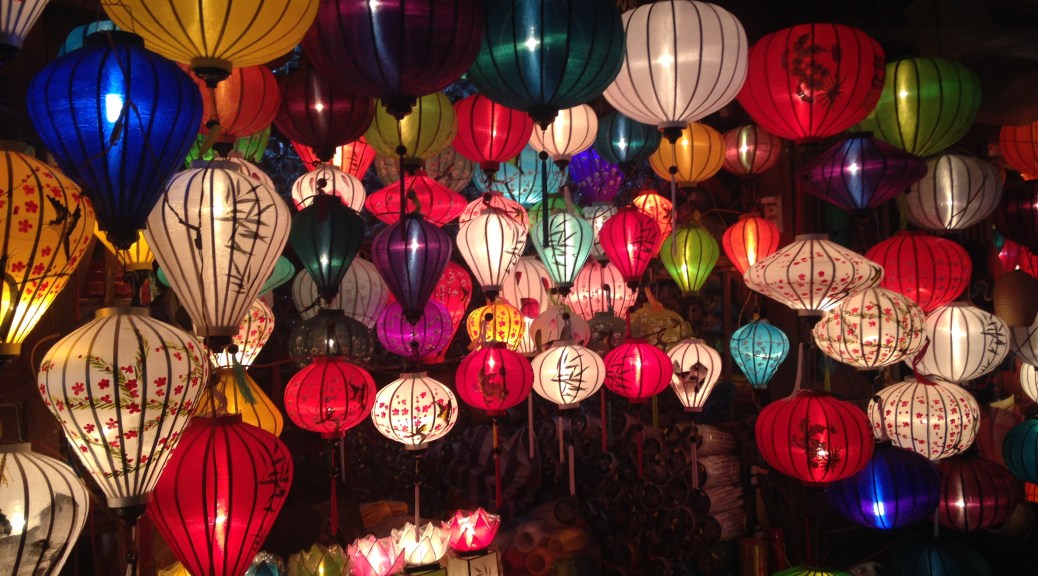
To get to quaint, sleepy Hoi An, located on the Thu Bon River, we flew into nearby Da Nang airport and hopped into a taxi for about 45 minutes. Everyone I’ve ever spoken to about Hoi An loves it (I ran into four of my friends there!), and after a walk through the tiny Ancient Town it was easy to see why. Not only is it full of old assembly halls, houses, and shops, but lanterns light up the entire town in the evening. I took the following pictures throughout our time in Hoi An:

In addition to being a nice place by itself, Hoi An is also a wonderful base for half-day trips to historical and interesting sites nearby. We took two separate trips out of Hoi An during our time there; the first was to My Son, an ancient Hindu temple site and burial ground for Cham kings dating to the fourth century. The complex must have been massive in its heyday, but much of it was destroyed by American bombs during the Vietnam War. There are very clearly marked walking paths because of unexploded ordnances all around the site, another wartime souvenir. Dad and I visited My Son as part of a tour with a very informative guide; he pointed out weathered motifs and symbols carved into the stone that we probably would have missed without him.

Along with about half of our tour group, we chose to take a boat along the Thu Bon River to return to Hoi An. The boat afforded us wonderful views of the river and of rural life on its banks.

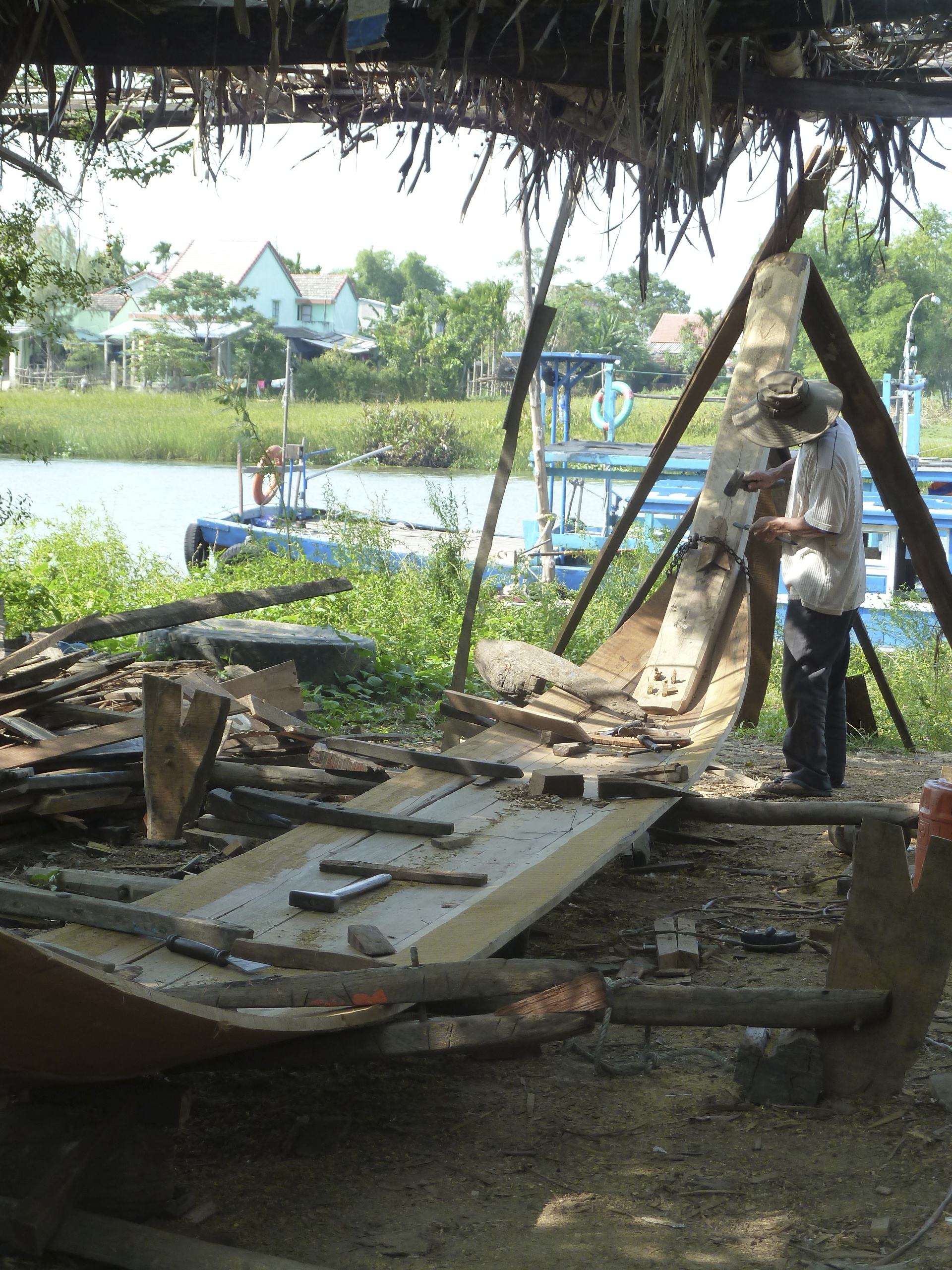
Along the way to Hoi An, we stopped on Cam Kim Island, a village known for its traditional crafts.

Now that I've seen this, I wonder how non-traditional boats and ships are made?
Now that I’ve seen this, I wonder how non-traditional boats and ships are made?
I thought it was really neat that the carver drew the pattern on the wood. Somehow, it had never occurred to me that artists do that.
Somehow, it had never occurred to me that artists draw their patterns before starting to carve.

Vietnam’s Marble Mountains, located in nearby Da Nang, was our destination the following morning. The Marble Mountains are exactly what they sound like – jutting hills of marble that are no longer quarried because they’d disappear. We took the elevator to Thuy Son, the highest peak, and then made our way down, exploring the Buddhist pagodas, Hindu temples, and various shrines and altars that dot the site.

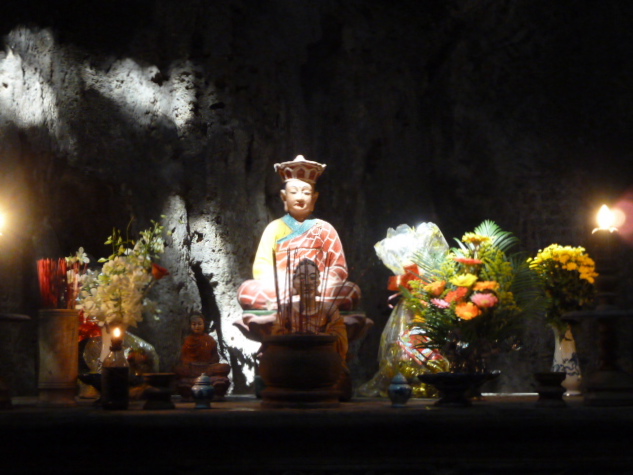
There are also caves on the mountains, including Tang Chan Cave, which contains a few altars and statues. What is truly spectacular about the cave, however, is the sunlight streaming through large holes in its top. When the light is just right, it casts a gorgeous, unearthly light on the altars.

Cave shrine

Sunlight

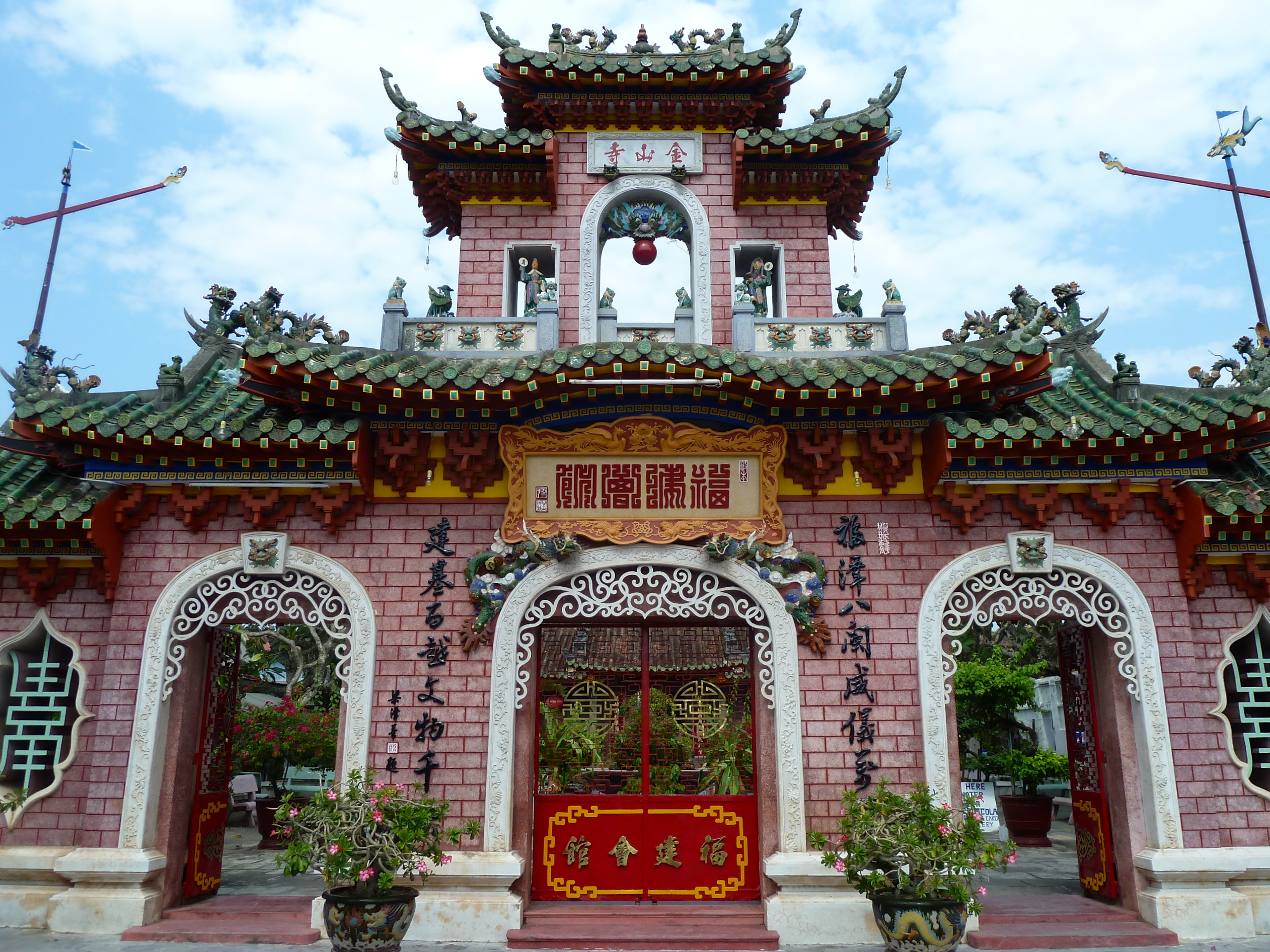
In the afternoon, we wandered around Hoi An’s Ancient Town to take advantage of the ticket scheme that allows access to five historical sites within the town. The ticket is required to visit the vast majority of assembly halls, historic homes, and even some museums, so we saved it for our last afternoon when we knew we’d have the longest amount of daylight in town. We visited the Phuoc Kien Assembly hall, which started as a pagoda and later became a temple for one of Hoi An’s Chinese groups. It is home to an altar to the Goddess of the Sea, which I thought was really interesting. There was also an altar shaped like a boat, which was beautiful. I love learning about groups of people, their livelihoods, and their values through religious art and artifacts. What a way to gain insight into the soul.

Phuoc Kien Assembly Hall

Along with our ticket scheme wanderings was a very brief stop at the Museum of Folk Culture, which was interesting largely because the door of the museum was open, all the lights were off, and there was no one inside but us and another equally confused tourist.

The Tan Ky House, on the other hand, was interesting in itself.

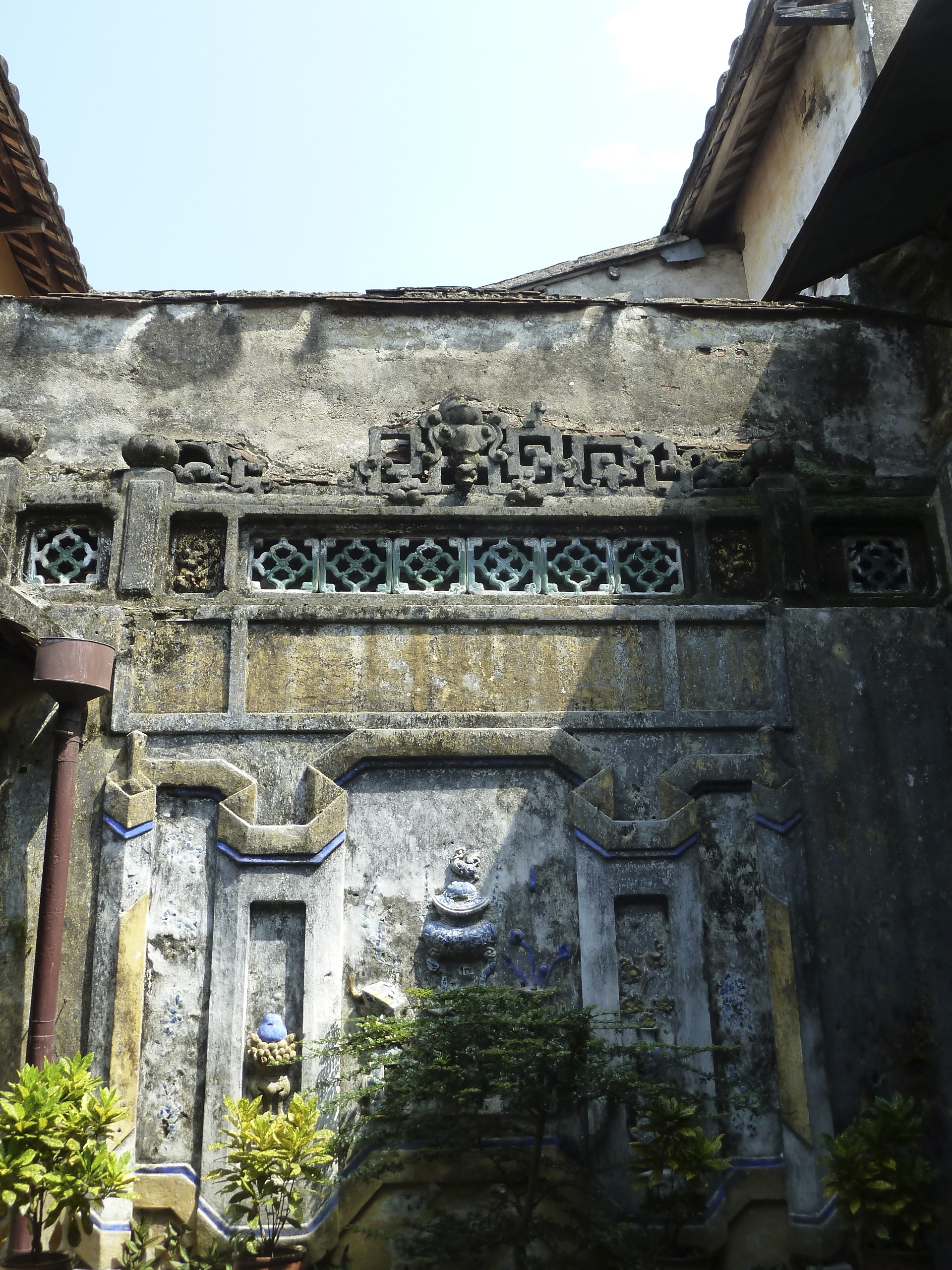
Courtyard of the Tan Ky House

The Tan Ky House is a shop house dating from the late eighteenth century that incorporated Vietnamese, Chinese, and Japanese architectural styles. I admit, I didn’t know that so many ethnic groups and nationalities call Hoi An home, and have a place in the city’s history as a trading port.

The most interesting stop on our somewhat guided wander was the Handicraft Workshop where we saw a performance of traditional music and dance. By far my favorite part was a musical piece that I can best describe as ancient jazz. A musician who would have been a saxophone player in a western jazz group played a sort of double-bow violin that didn’t seem to be made of anything but strings and a small wooden base. He had a solo in the middle of the piece that was creative, innovative, and playful; I couldn’t understand how such an unassuming instrument even made sounds, let alone such music!

Neither of us were ready to leave Hoi An early Sunday morning. I, at least, have a mental list of things I want to do when I return, which I hopefully will. There is now a direct flight from Singapore to Hoi An, so it is certainly a possibility.

Japanese Covered Bridge

Dad and I had an unbelievable time during our ten days of travel together. I am so glad to have shared such a wonderful experience with him. We both learned a lot over the course of our trip and I’m already looking forward to the next one!