
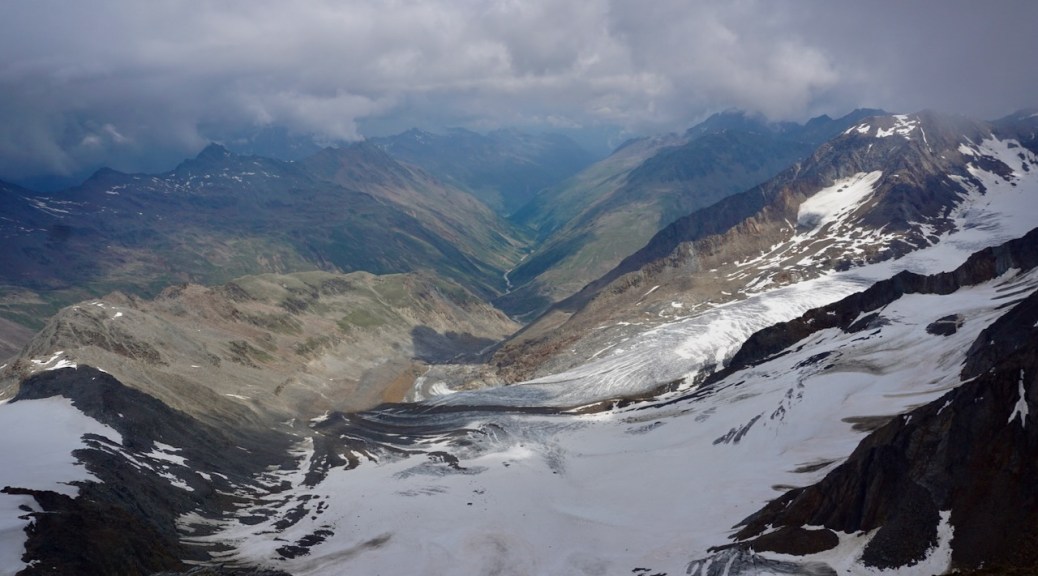
The German word “Hochtour” literally translates to “high tour” and the term is used to describe a mountaineering trek through the Alps that passes through snow or over a glacier. Last summer was my introduction to the Hochtour along the Berliner Höhenweg and climbing the Zugspitze, Germany’s tallest mountain. This summer’s adventure took me, my partner, and a friend into the Ötztal, home of Austria’s tallest mountains. This year, rather than the glacier being part of the adventure, the glacier was the adventure.
Day 1: Vent to Martin-Busch-Hütte
We began in the tiny town of Vent, following a trail that was steep immediately.

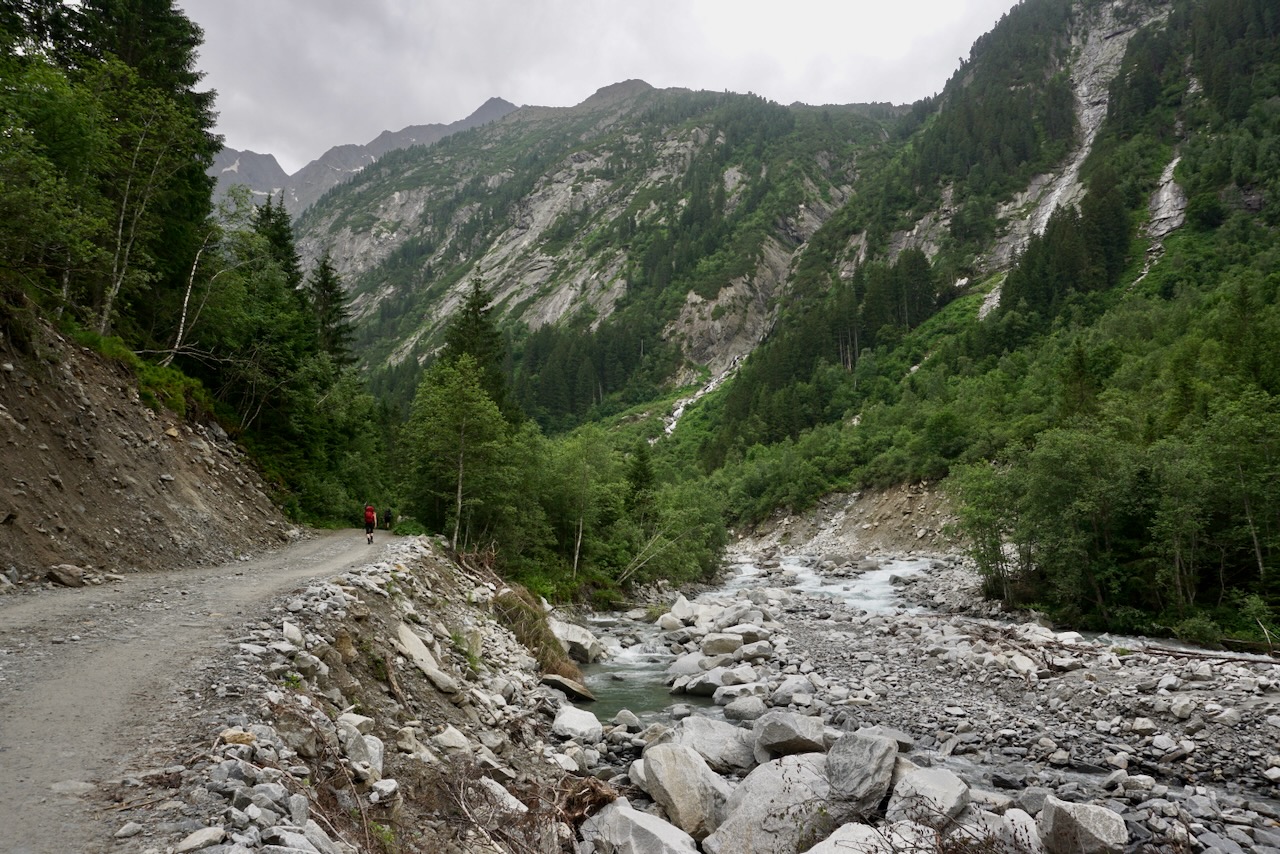
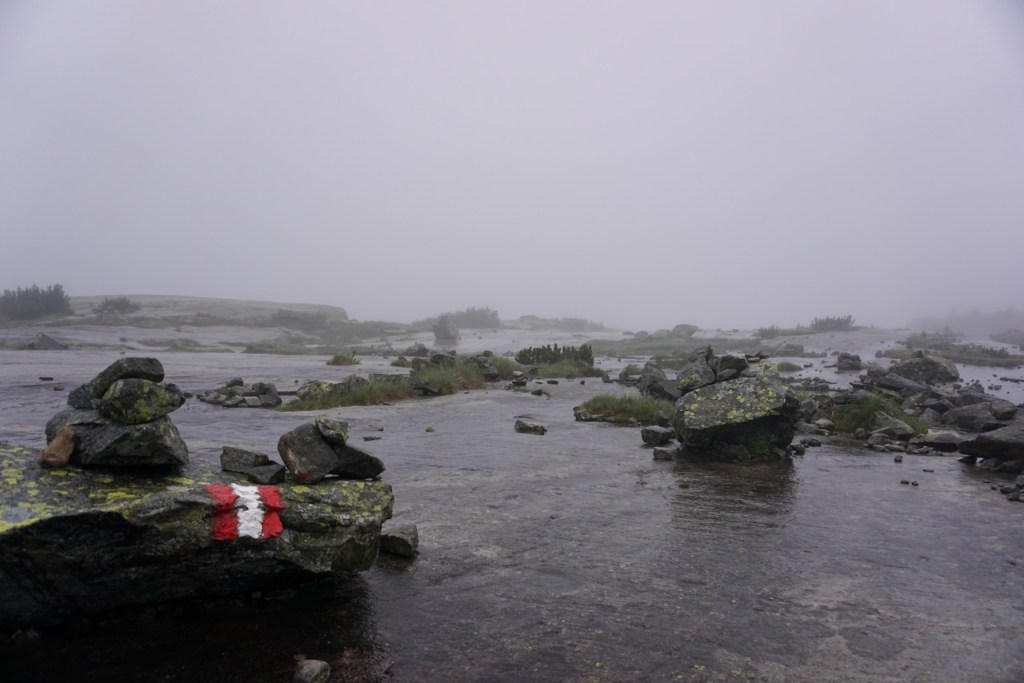
We walked toward glaciers in the distance, following the river that cut through the rock, witness to millions of years of time.


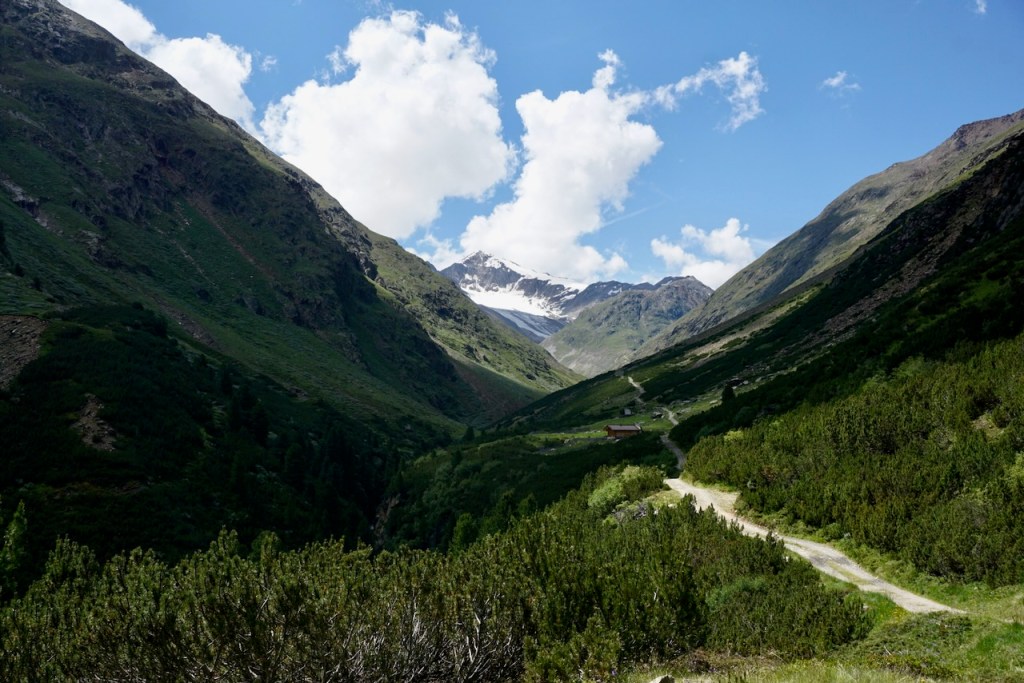
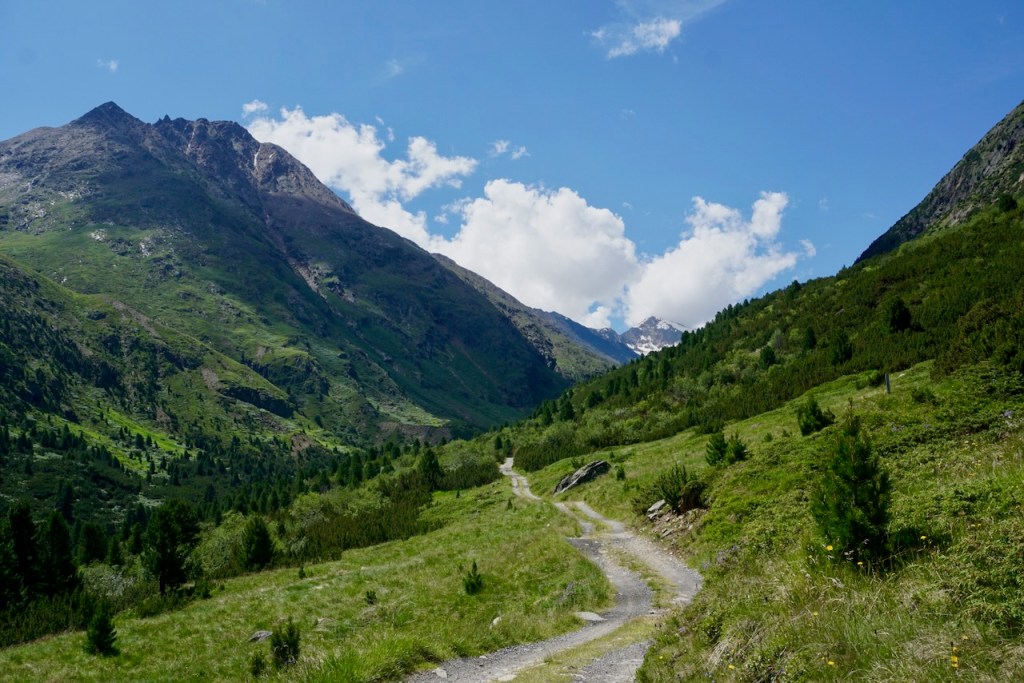
We passed an old shepherd’s hut, and we didn’t know it at the time, but we’d meet the shepherd and his dogs another day. The much more modern house we had passed earlier was his.
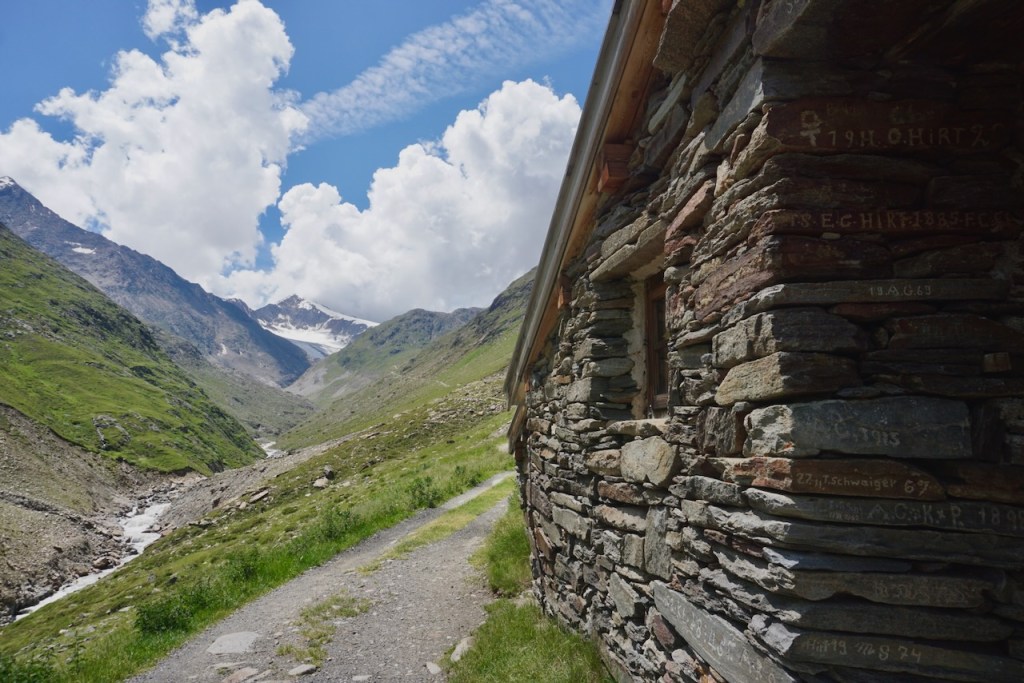
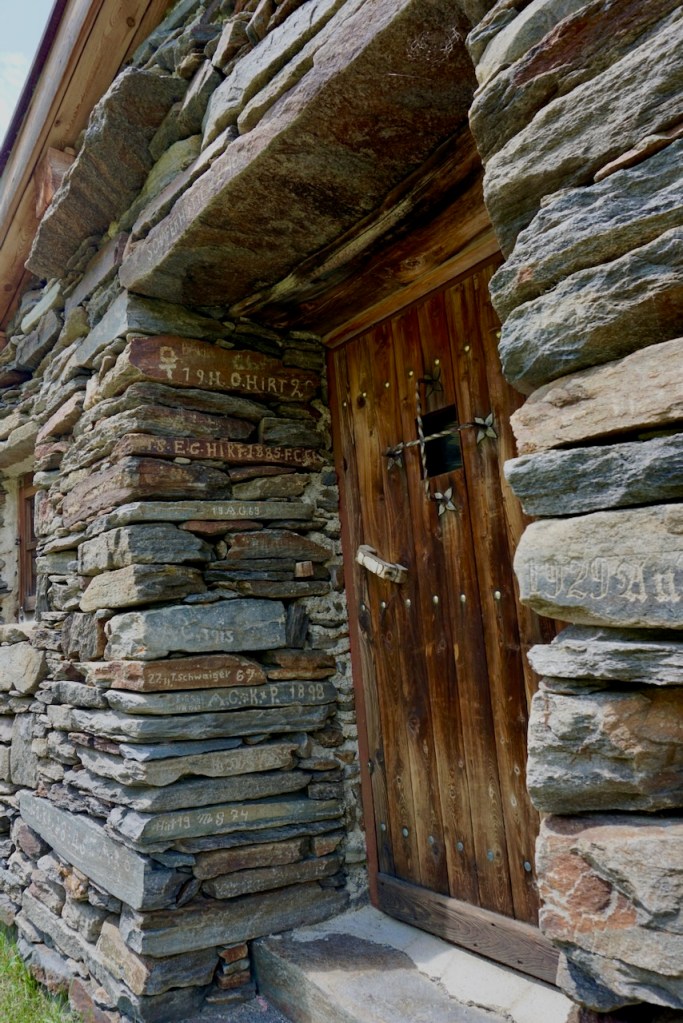
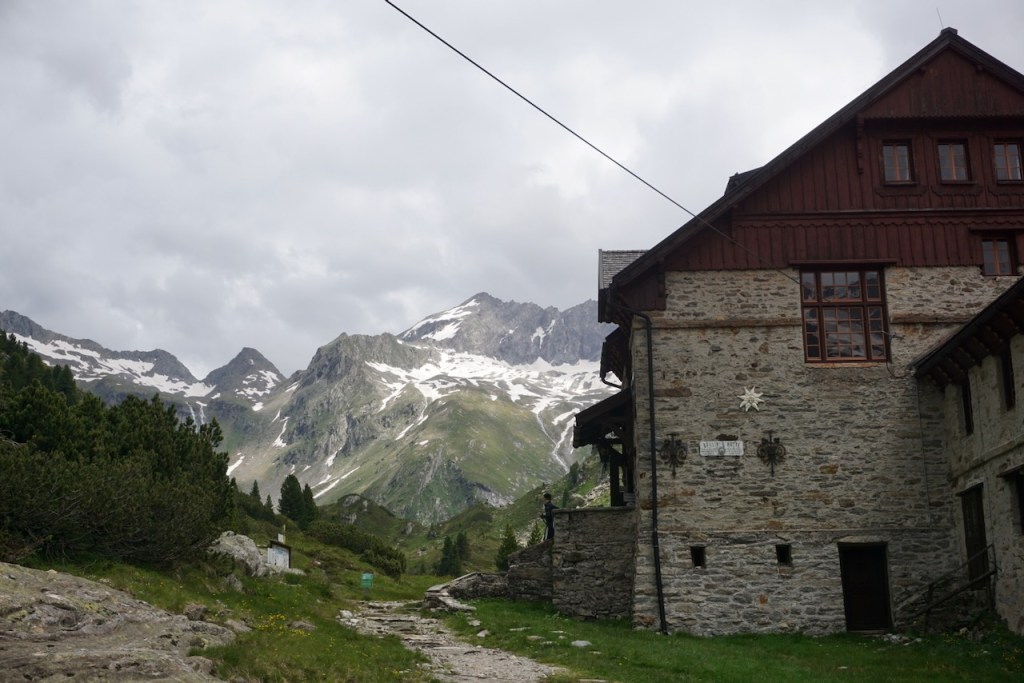
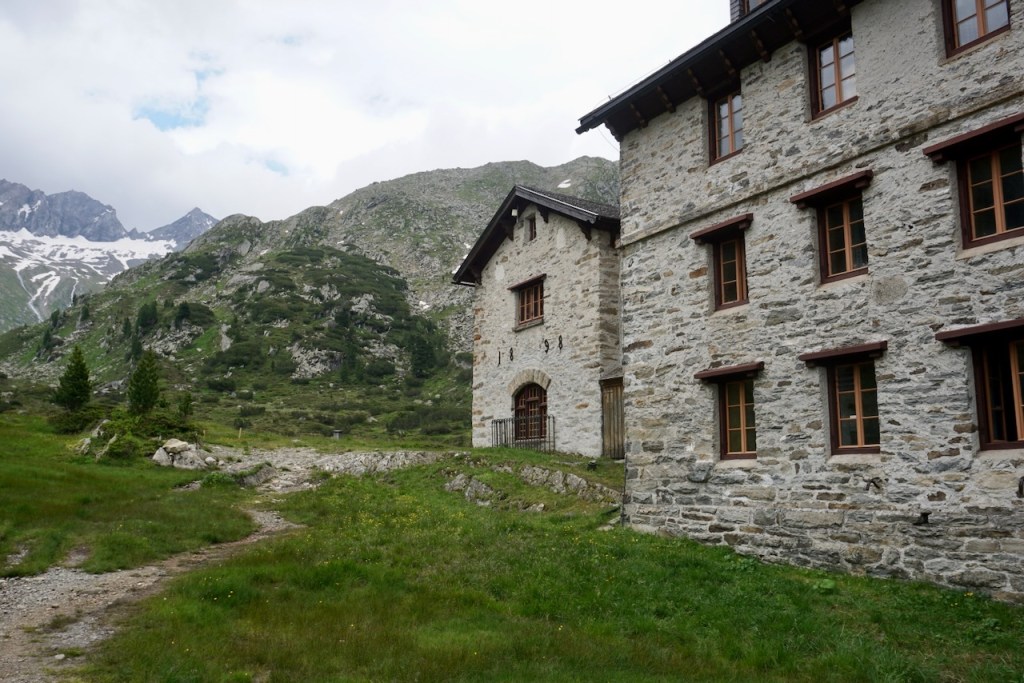
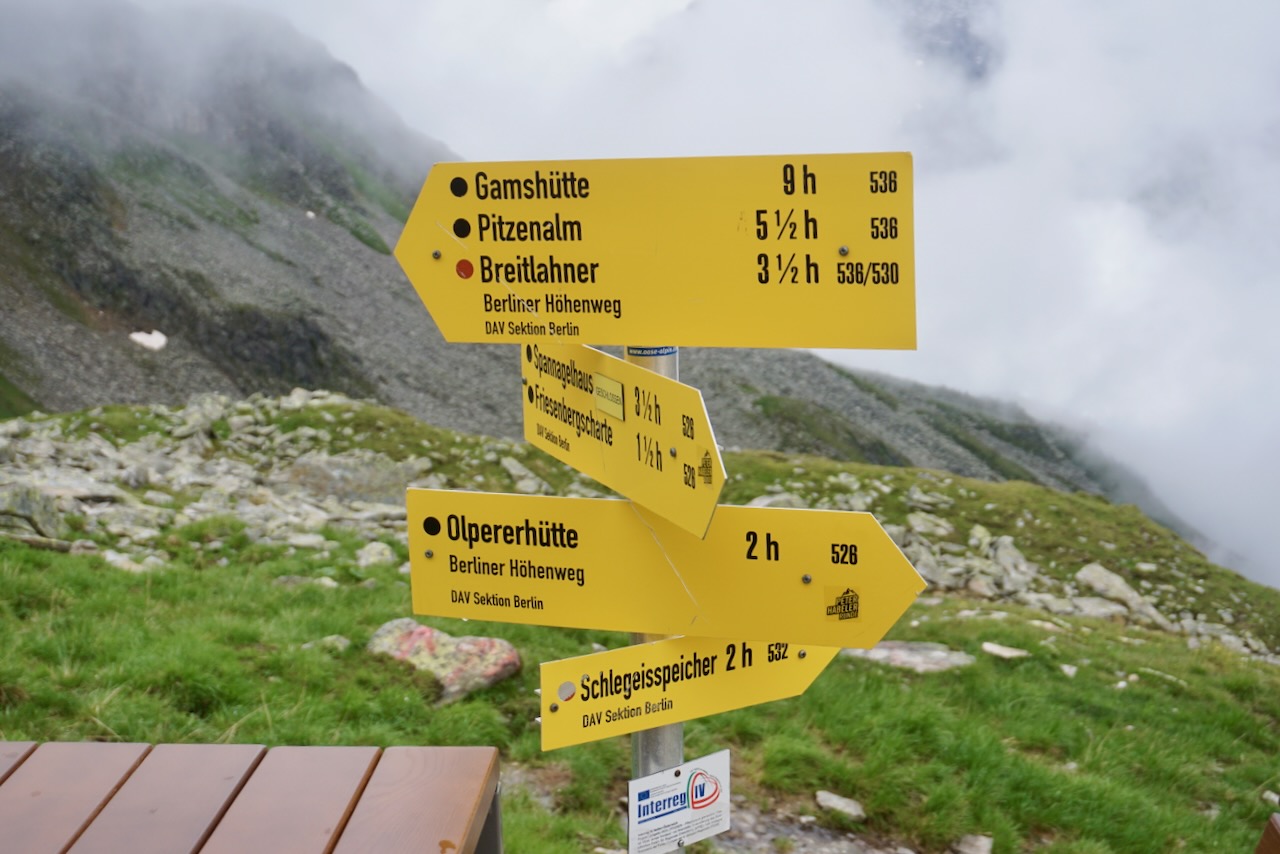
After a few hours, eight kilometers, and 600 meters of elevation, we reached the end of civilization and the beginning of our adventure. We would spend two nights at the Martin-Busch-Hütte, allowing us the luxury of leaving many of our belongings behind for our summit tour the following day. As the sign said, we were in the last spot for cell service.


The hut is located at 2,501 meters and after a snack and a shower, we went for a little walk to look around at the world we had entered.
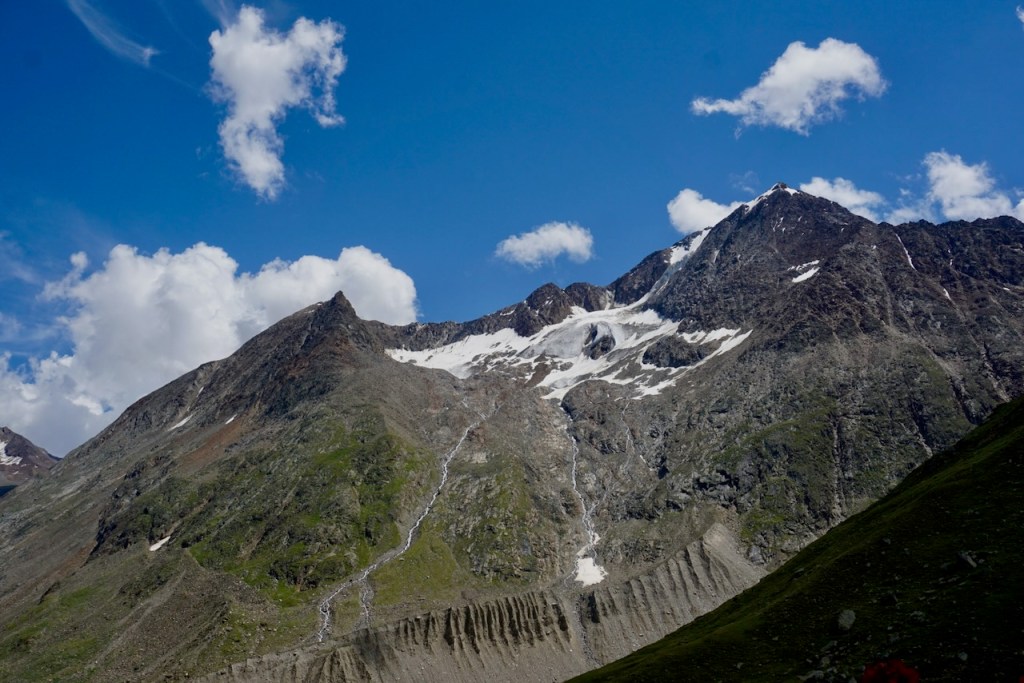


Day 2: Similaun
Summer mountaineering requires an early start because summer in the Alps is thunderstorm season. You cannot be on a peak when lightening strikes, and this means being down low enough to avoid being the highest point anywhere. We check weather forecasts, watch the clouds, and rely on the hut personnel, locals with experience, to give us the best tips on how to time the path ahead. The rule of thumb is to start early.
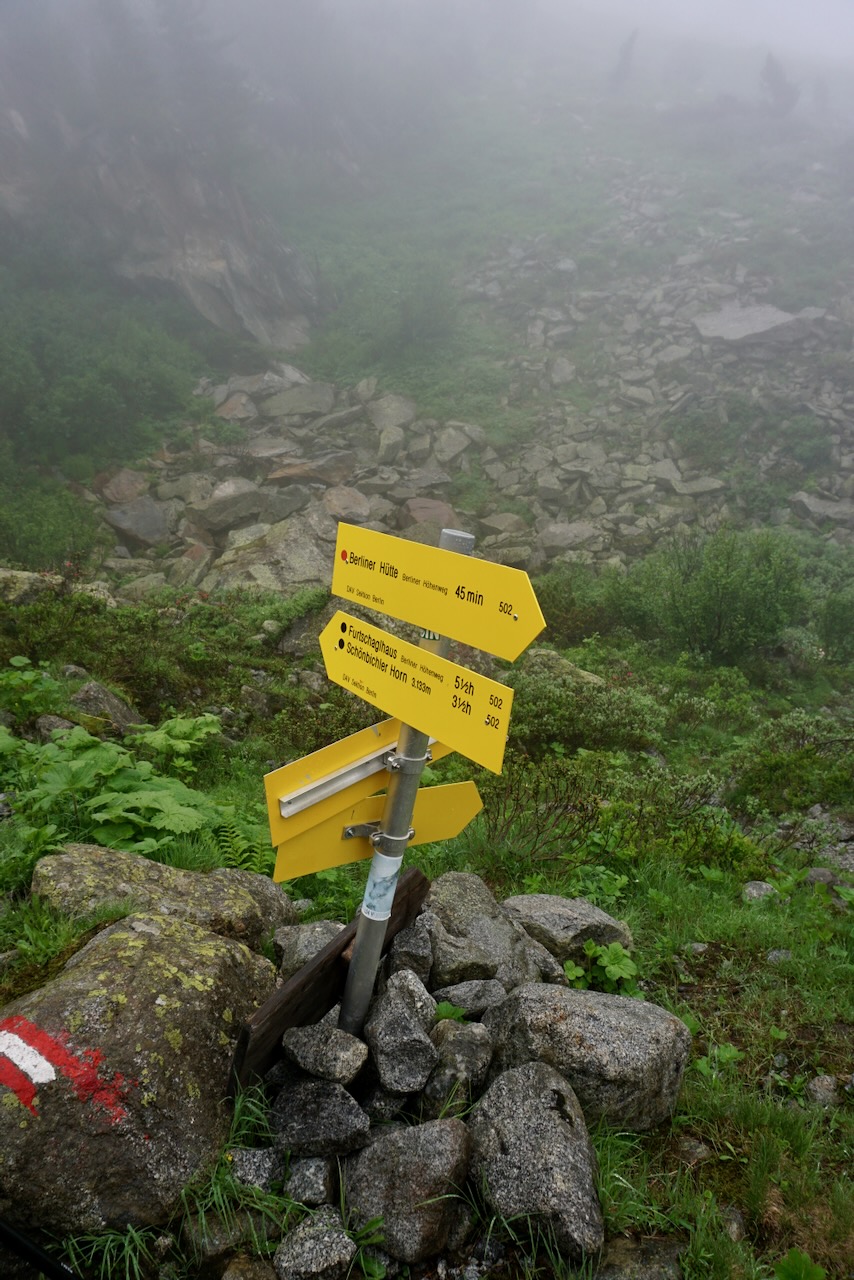
The way ahead was rocky and climbed steadily. We passed a sign showing the way to the archeological site where 5,300-year-old Ötzi the Iceman was found in 1991, which I’d love to go back to visit someday. On this day, there was a mountain to climb.
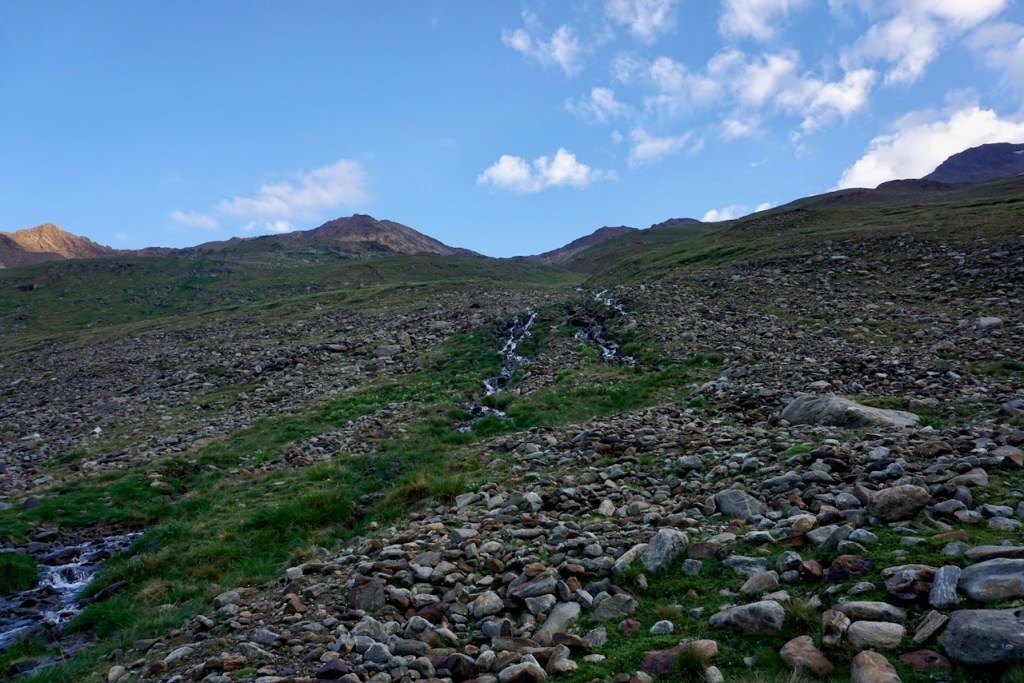
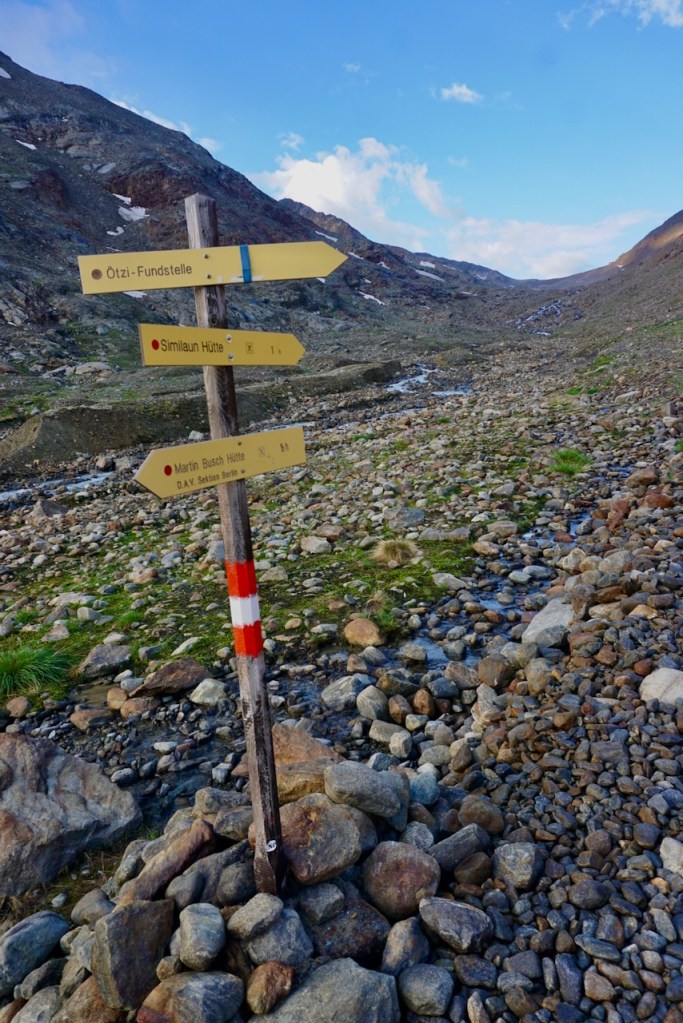

To reach the summit of the Similaun at 3,606m, we would gain almost 1,100 meters of elevation. The effect this has on the body is not be underestimated, and we were all grateful for having included jogging in our training. Although I can’t say I felt it, it must have helped! We paused when we reached the Similaun Hütte just over the border in Italy and gazed at what awaited us.


At the edge of the glacier, we prepared: Harness and helmet on; pre-organized carabiners, slings, rescue gear, ice screw attached to harness; crampons on; ice axe in hand; butterfly knots in the rope and figure-eights clipped to us. As the most experienced, my partner went last to perform any needed rescue manoeuvres should one of us fall into a crevasse. Based on negotiation, I went first to follow tracks and find the way.


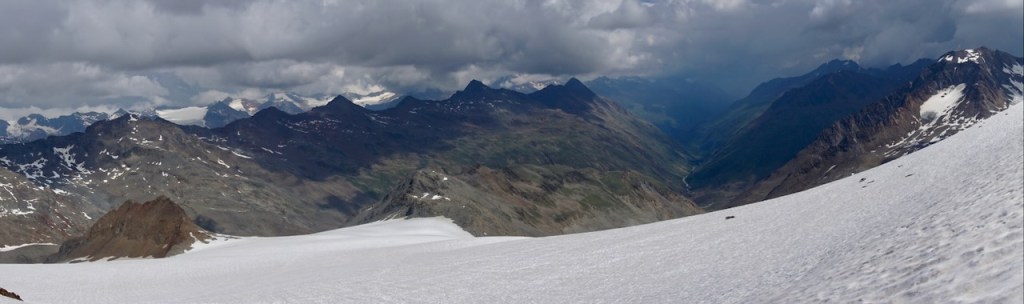
Breathing was difficult. The thighs burned. I couldn’t always find the way leading us away from crevasses and up the glacier, and we took a slight deviation from the proper way when fear of the unknown got to me. Our friend in the middle of our rope said that she was using a mantra to put one foot in front of the other, but my mind had gone in the opposite direction. As we climbed, I was already in a mindset of not wanting to be there, which is the primary reason that I don’t know if I will do this type of mountaineering again.
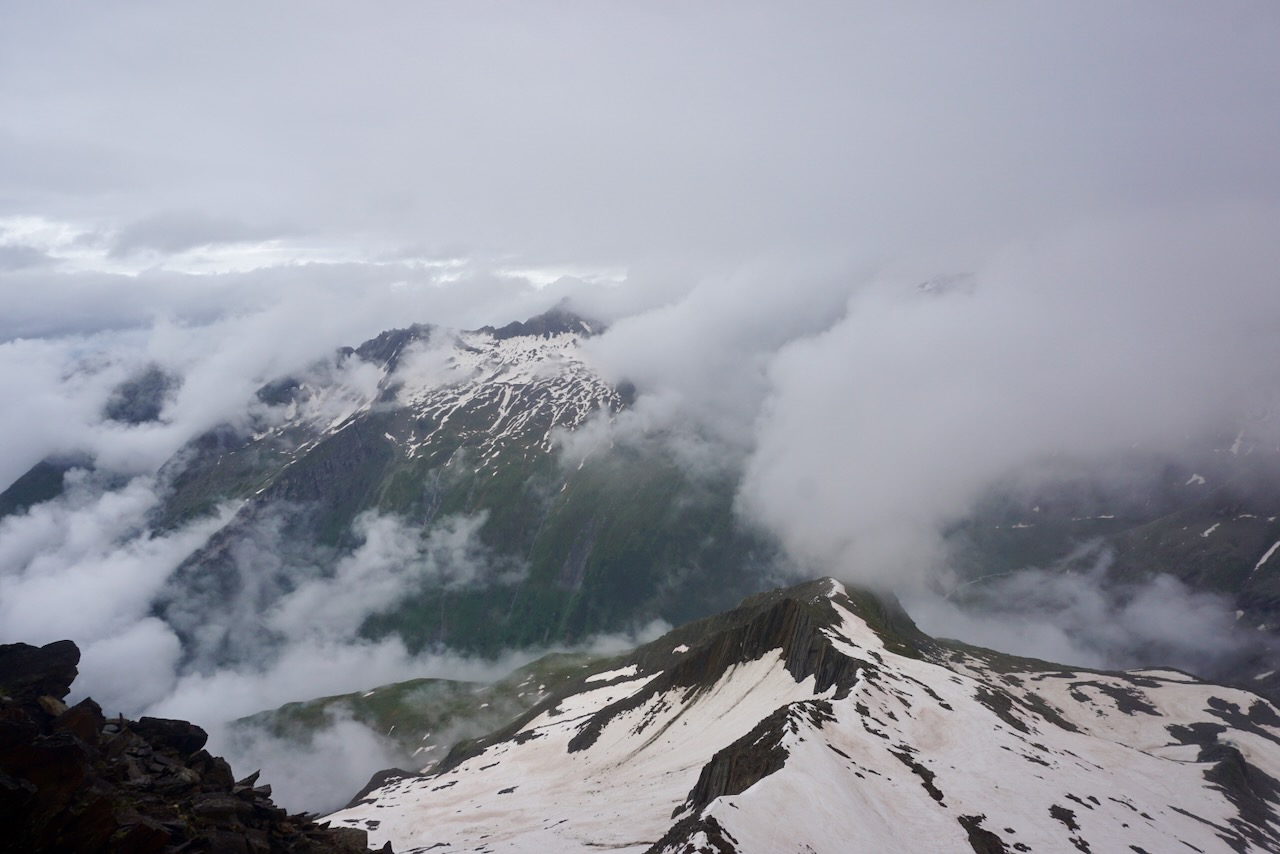
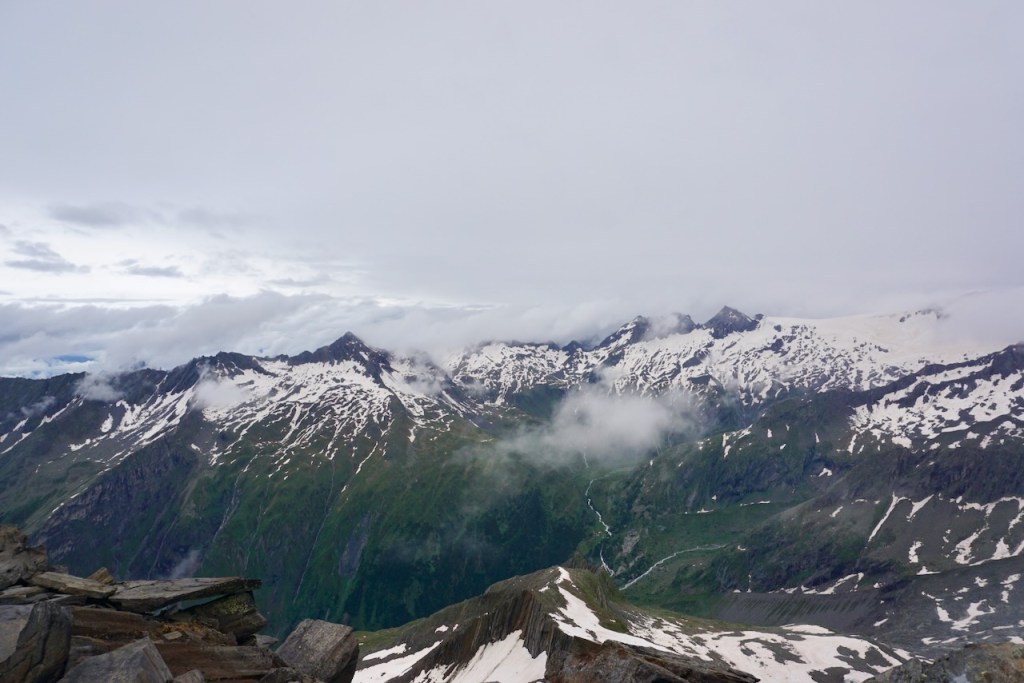
As the clouds rolled in, we reached the end of the glacier and the rock scramble along the mountain ridge began. This is the part I enjoyed because this is where I could feel my body again – I am a climber, after all. We reached summit and looked down into Austria on one side and Italy on the other.
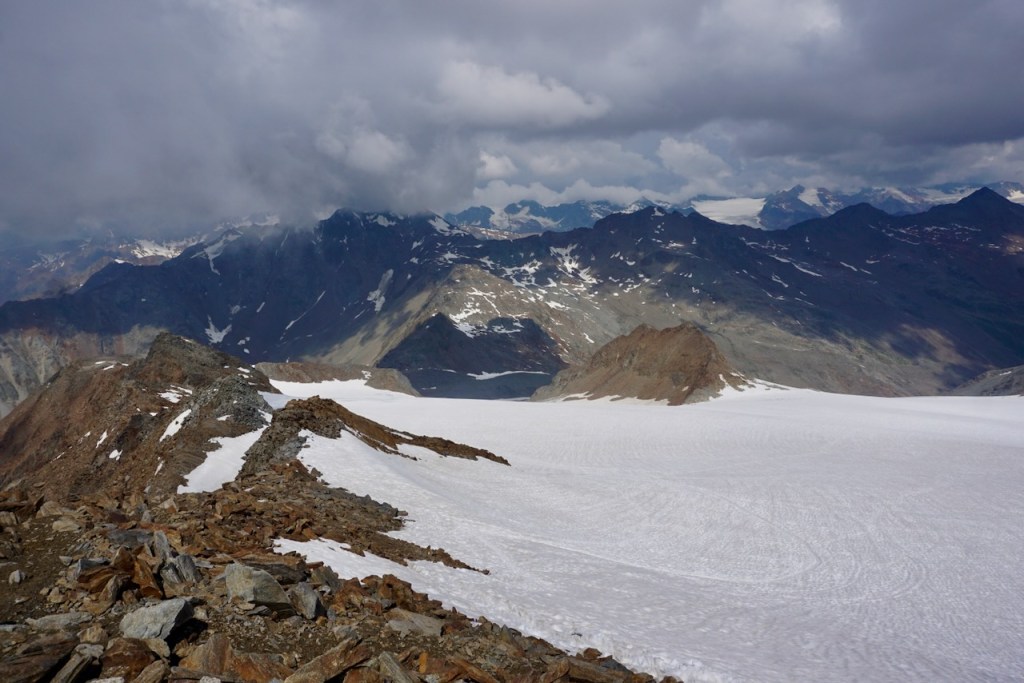
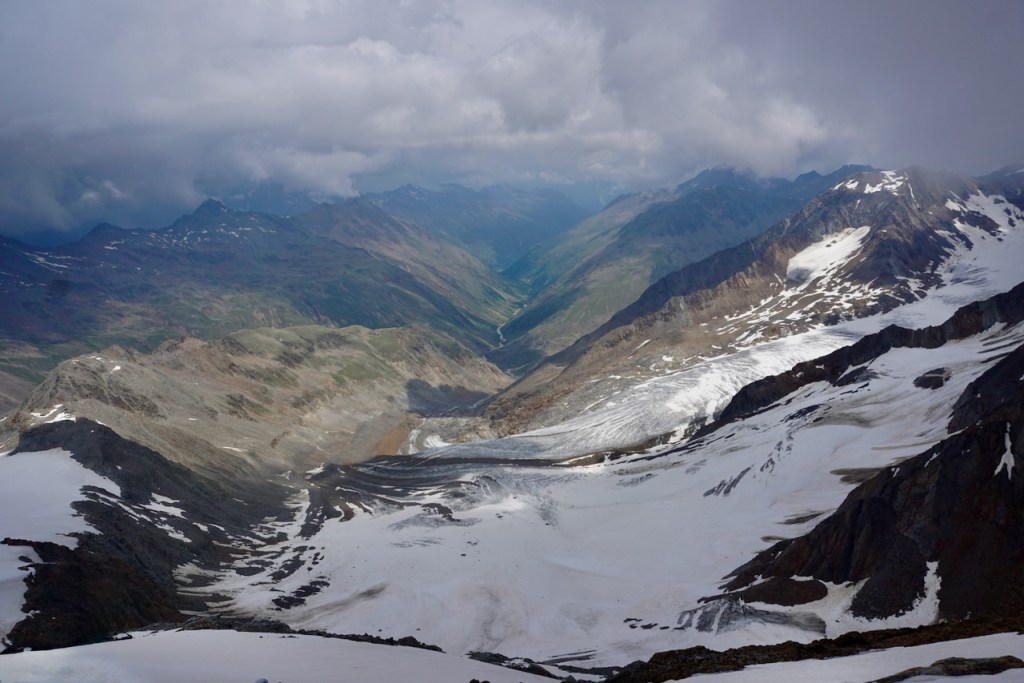

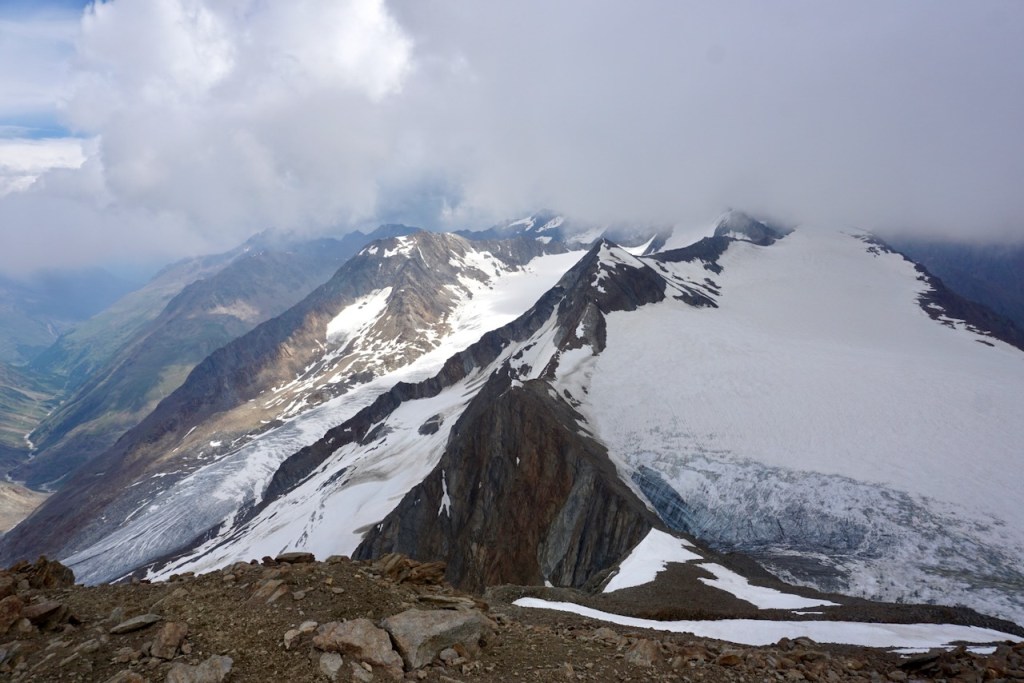
We heard a clap of thunder after we had already begun our descent. The sky darkened as we returned to our gear on the glacier and we ran. This is is the part where, like my friends, I should have thought, “Wow, now we’re really mountaineers!” But the negative mindset from before set in. As the hail began, which turned to rain as we descended, that’s not where my mind was.
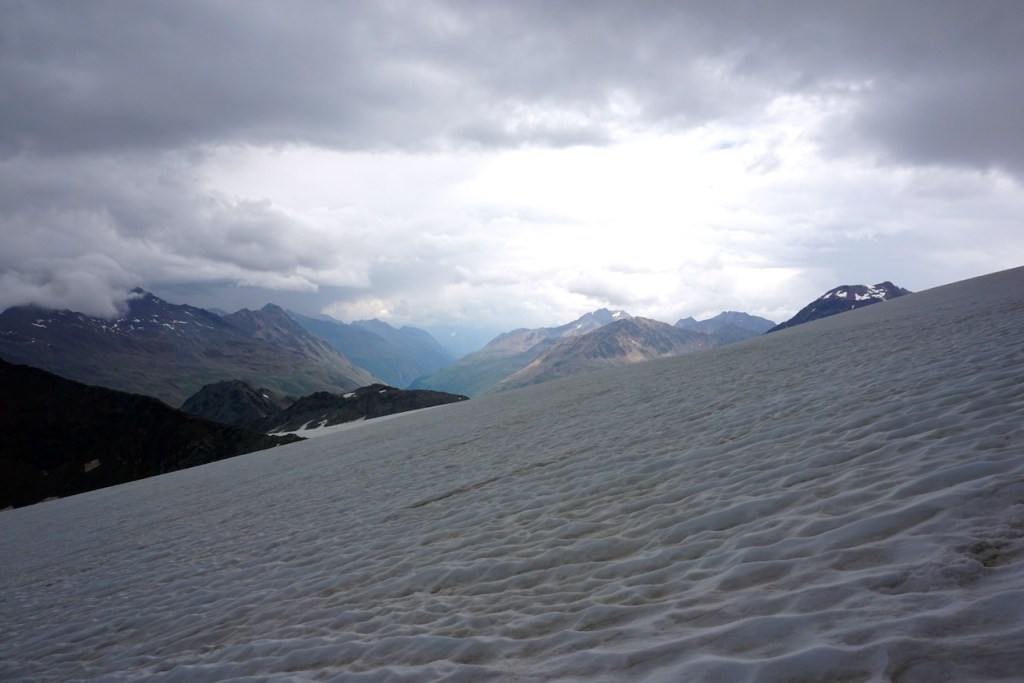

The weather changes quickly in the Alps and the rain had let up by the time we reached the Similaun Hütte and stepped inside to take stock of ourselves. Not having had time to put raincovers over our backpacks, everything was soaked. As the sun began to shine, we heard another clap of thunder from above, but this time we knew – it was one weather front meeting another rather than the sign of a coming thunderstorm.
Later on, I reflected that had the weather held during our descent, I probably wouldn’t have fallen apart. The negative film running through my head would have faded and been replaced by the accomplishment of reaching 3,606 meters. But I know how the brain works, and we remember the peak and the end of experiences. I’ve dreamt every night since of being on that mountain, and my dream self has reacted differently, more bravely, more calmly. The sun shines in my dream. My actual self was mentally crushed.
It was a relief to reach the Martin-Busch-Hütte and lay our things out to dry. We talked over weather, the day, and conditions with the men sharing our room and marvelled at the weather cells in the Alps. Just on the other side of the valley, they hadn’t had rain at all.
Day 3: Martin-Busch-Hütte to Breslauer Hütte
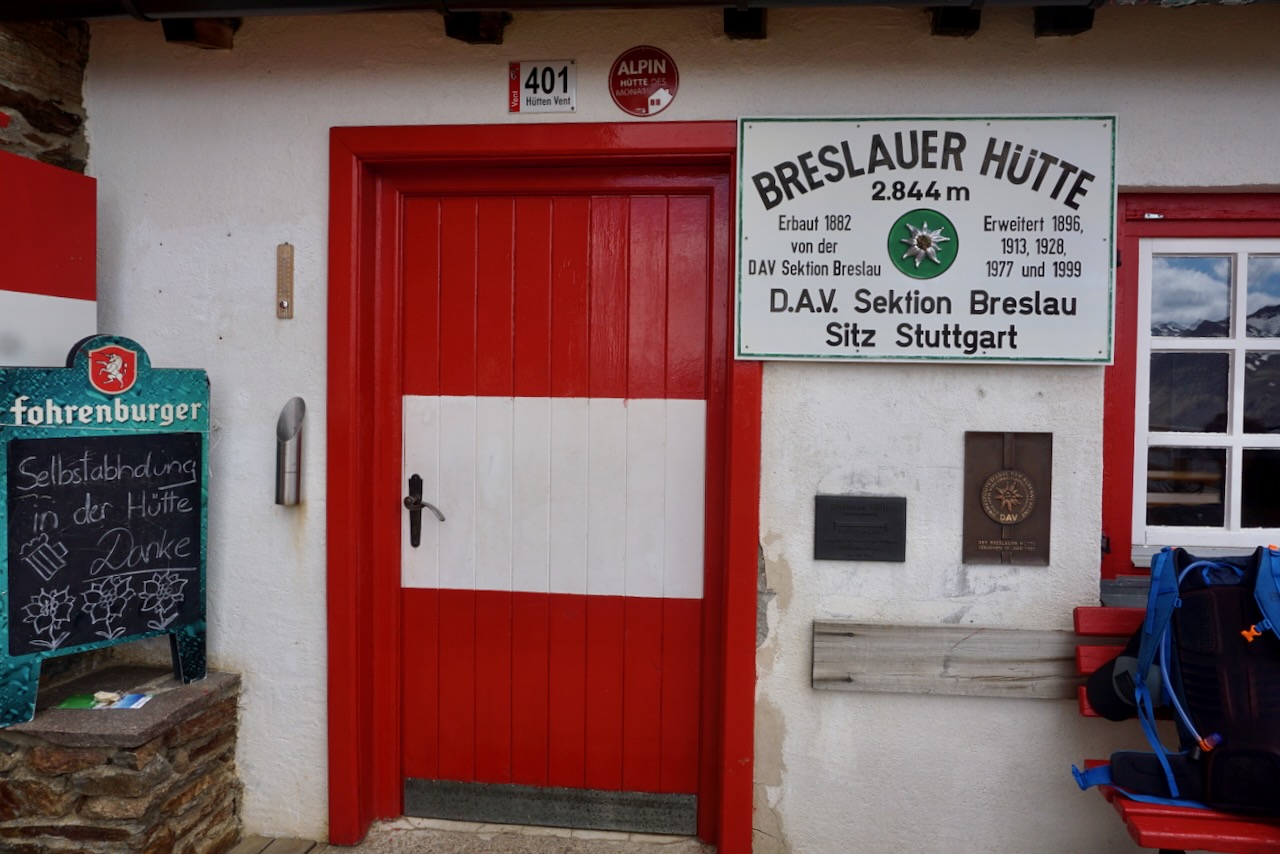
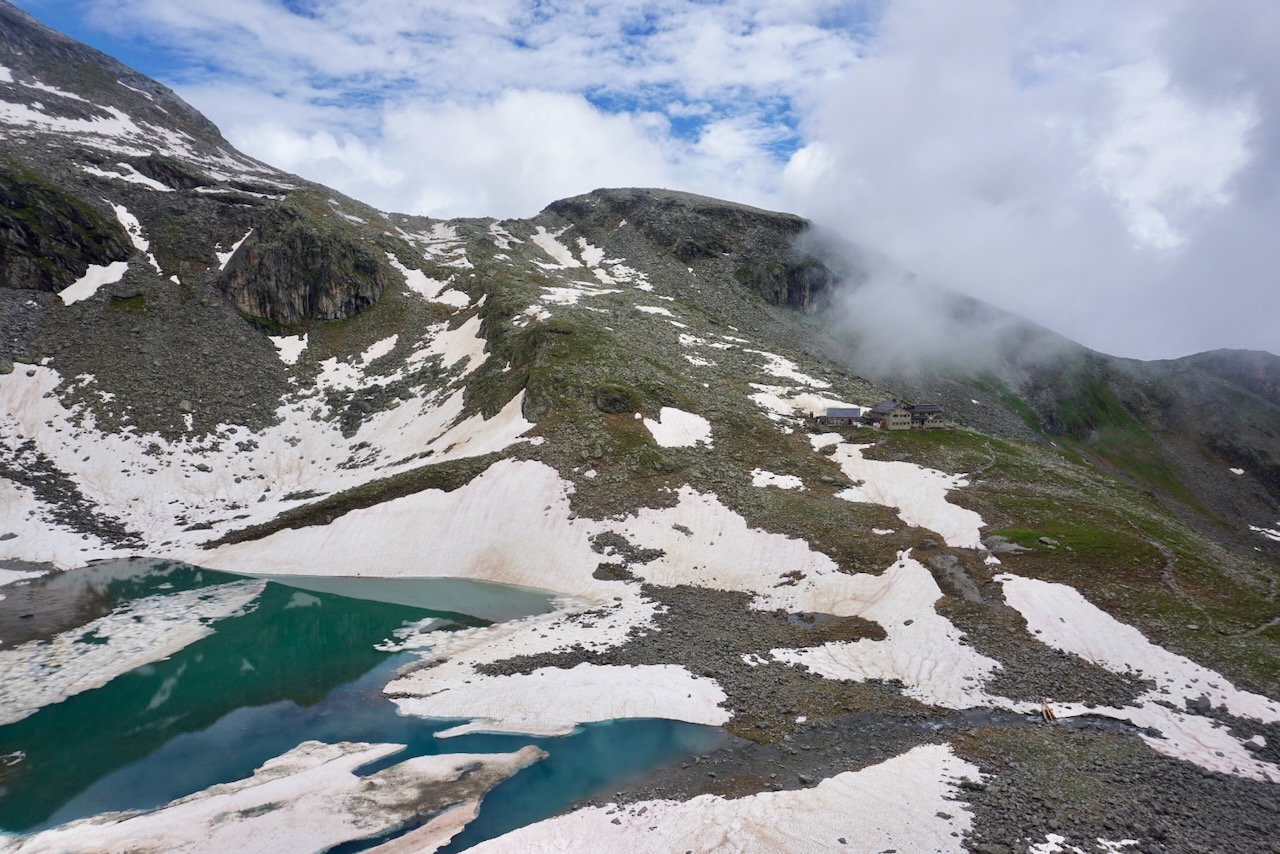
The purpose of the next day was to reach our second and final hut of this trip, the Breslauer Hütte located at the foot of Austria’s second-tallest mountain, the Wildspitze. From the beginning, the Wildspitze at 3,768 meters had been the goal. However, because of my experience the day before and the not-so-promising weather forecast, we decided a change of plans was in order.

We left the Martin-Busch-Hütte in the rain, which is no problem when you’re prepared for it. The landscape was dreamy as we descended, kissed by clouds.

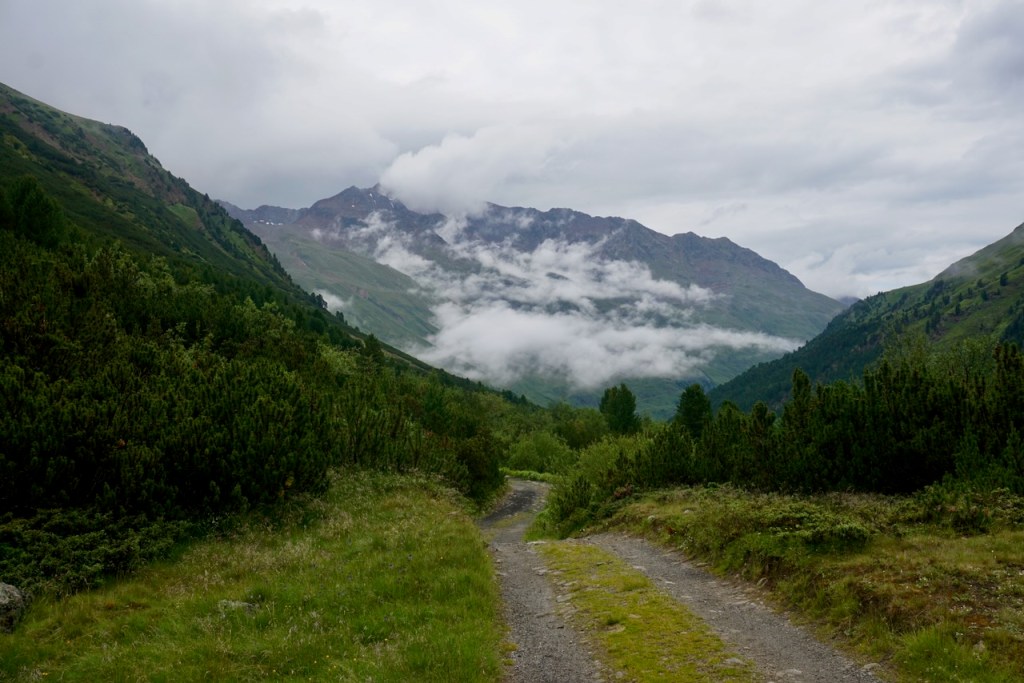
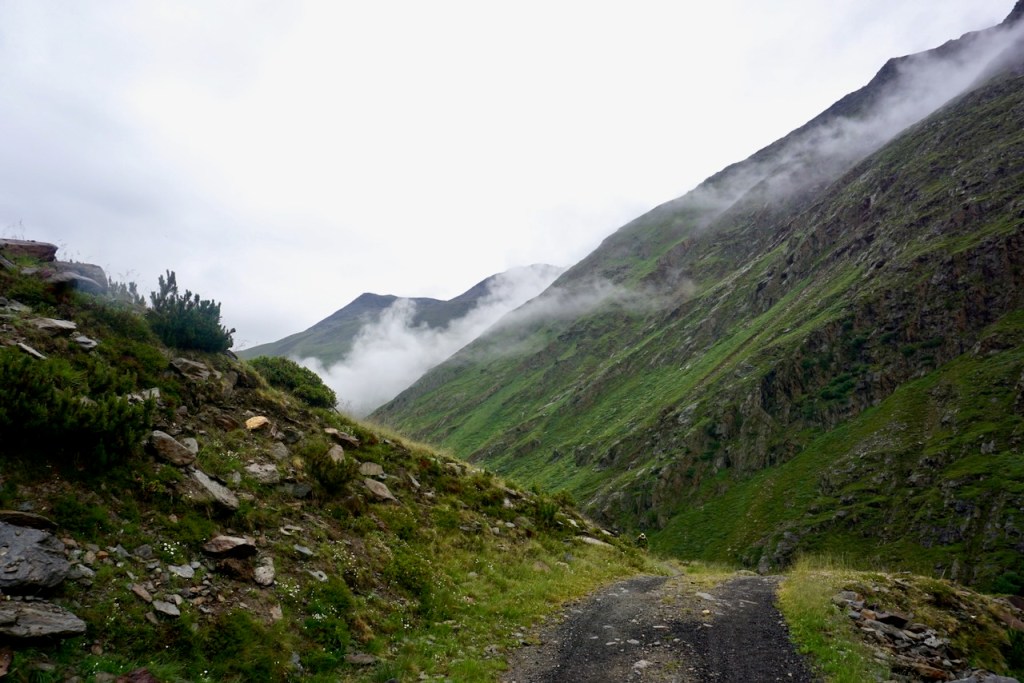

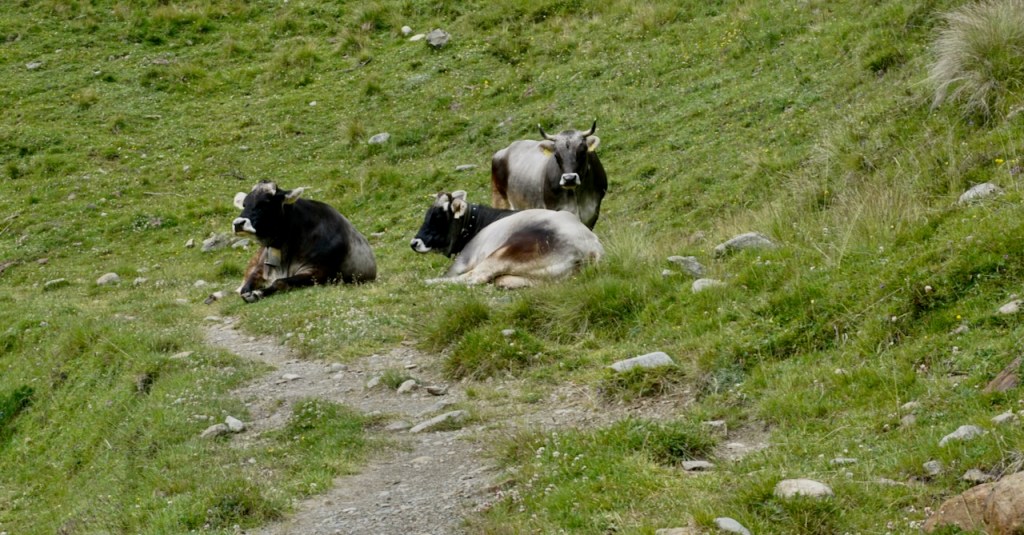
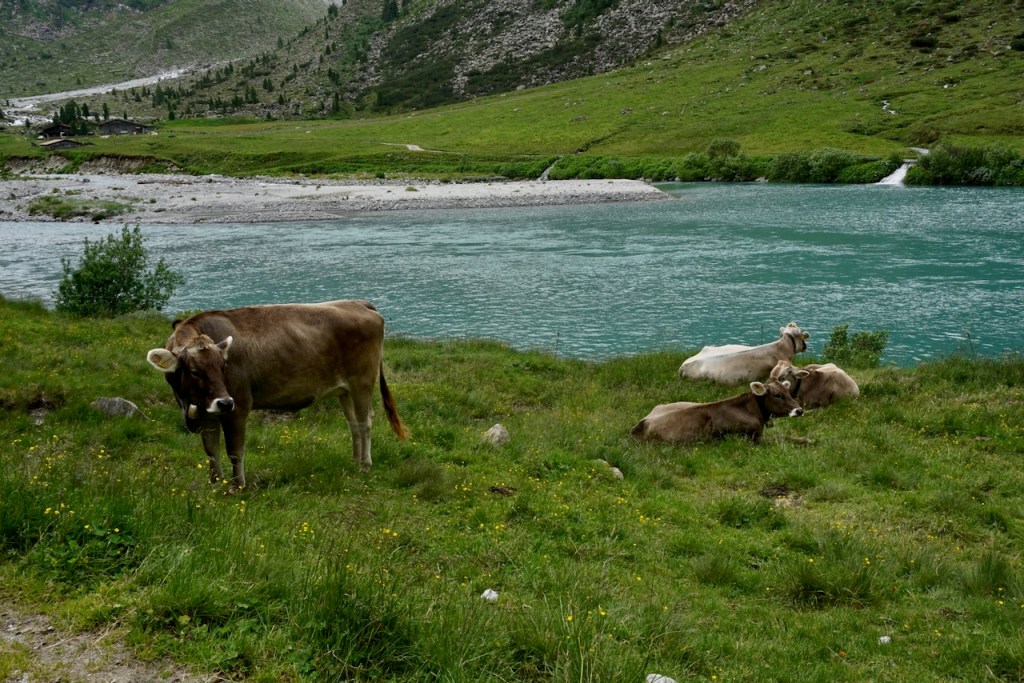
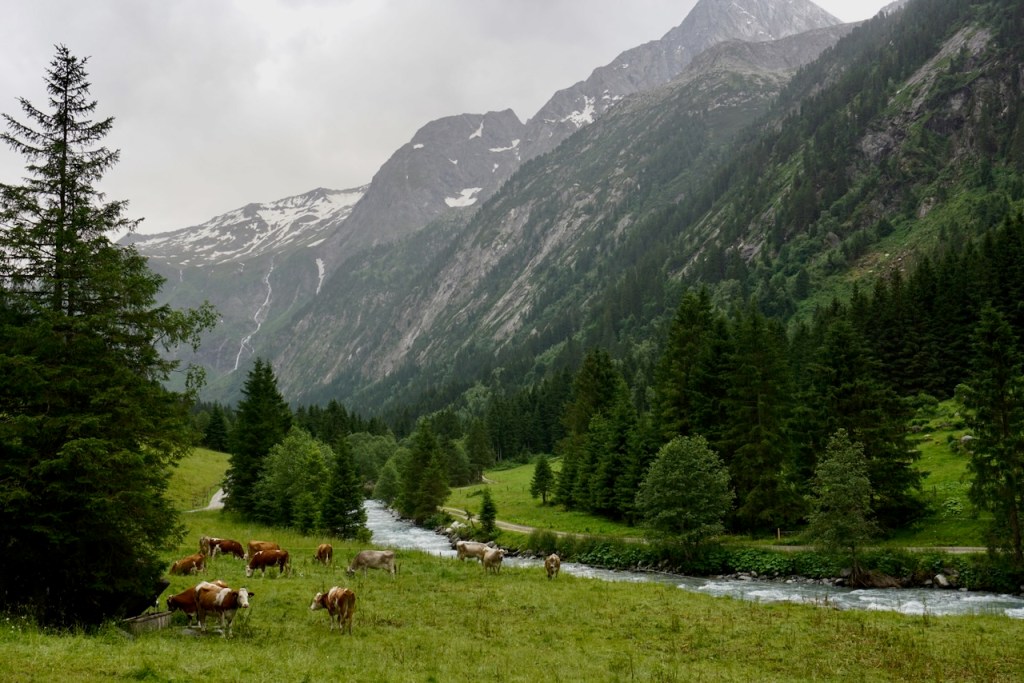
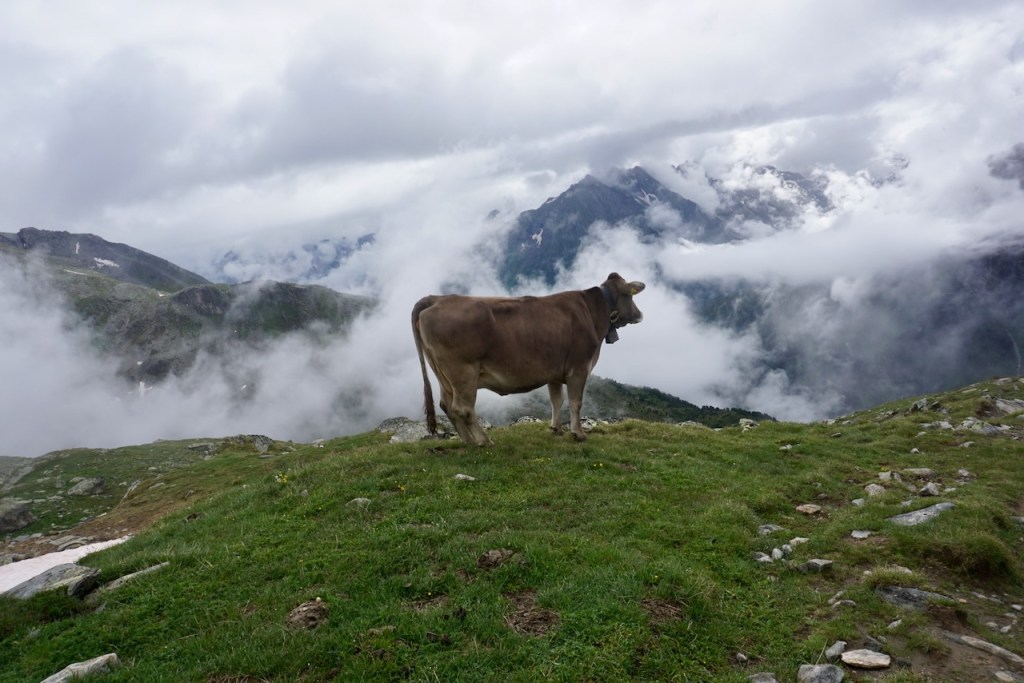
The sun had come out by the time our ascent began with over 900 meters in elevation gain comprising the last few kilometers. We passed gazing cattle . . .

. . . stopped to rest on a plateau surrounded by peaks . . .
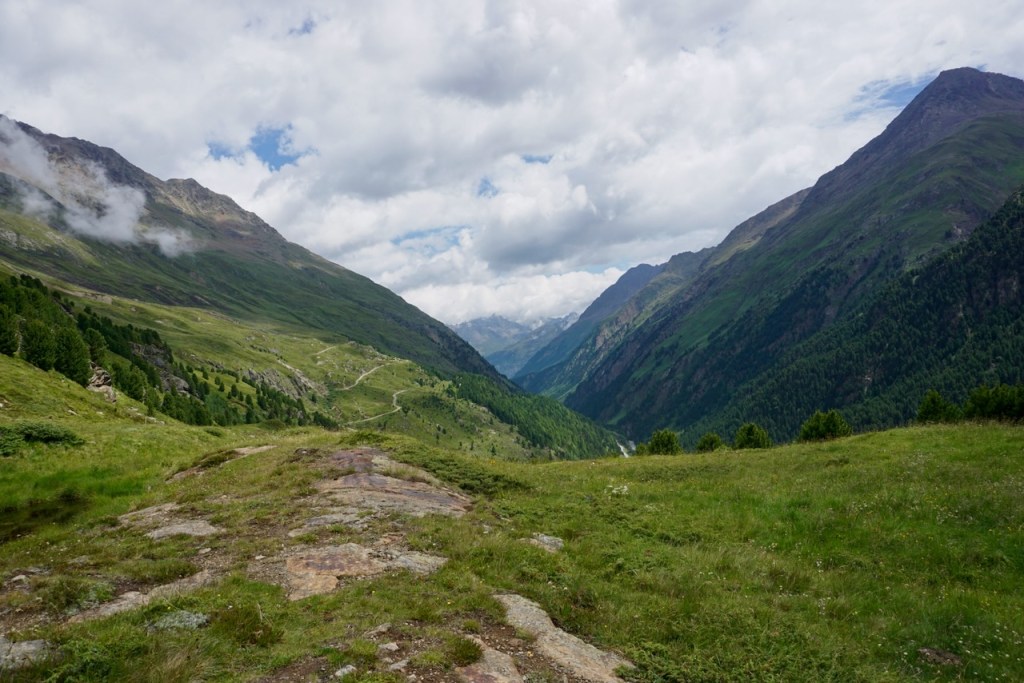
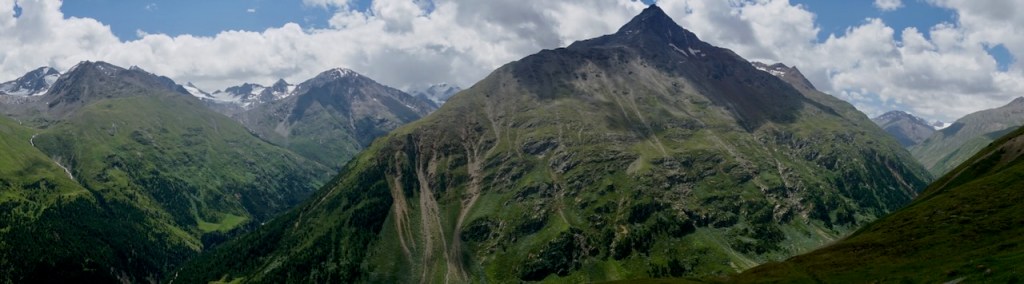
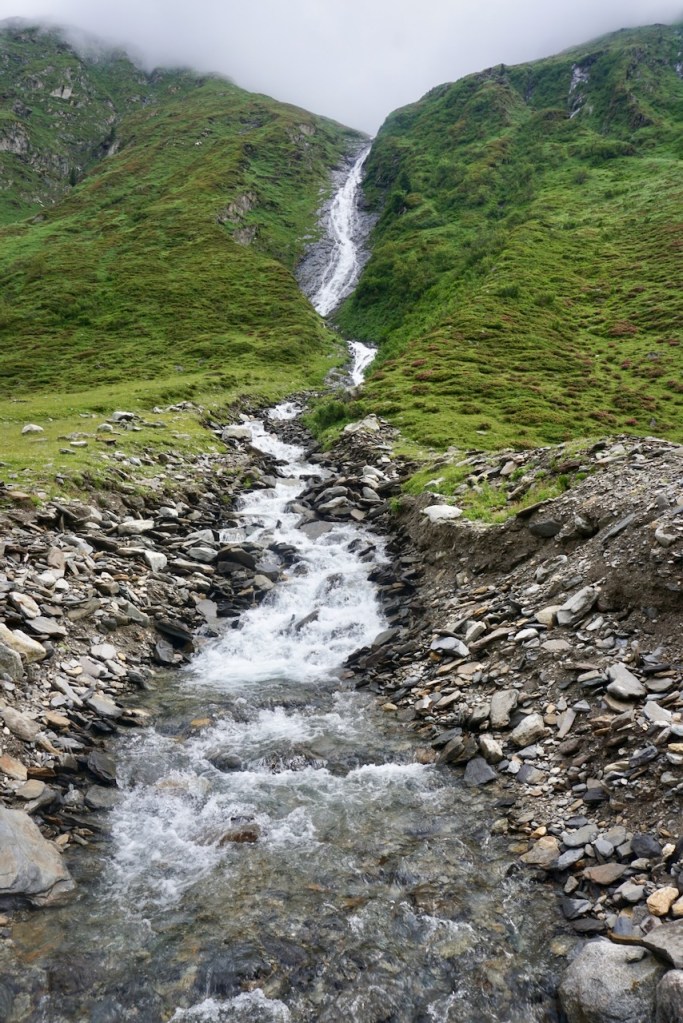
. . . and made our way along steep ridges, past more peaceful cattle, through rocky terrain that told of mountains from long ago, and across a river. Some of this had been glacier once.


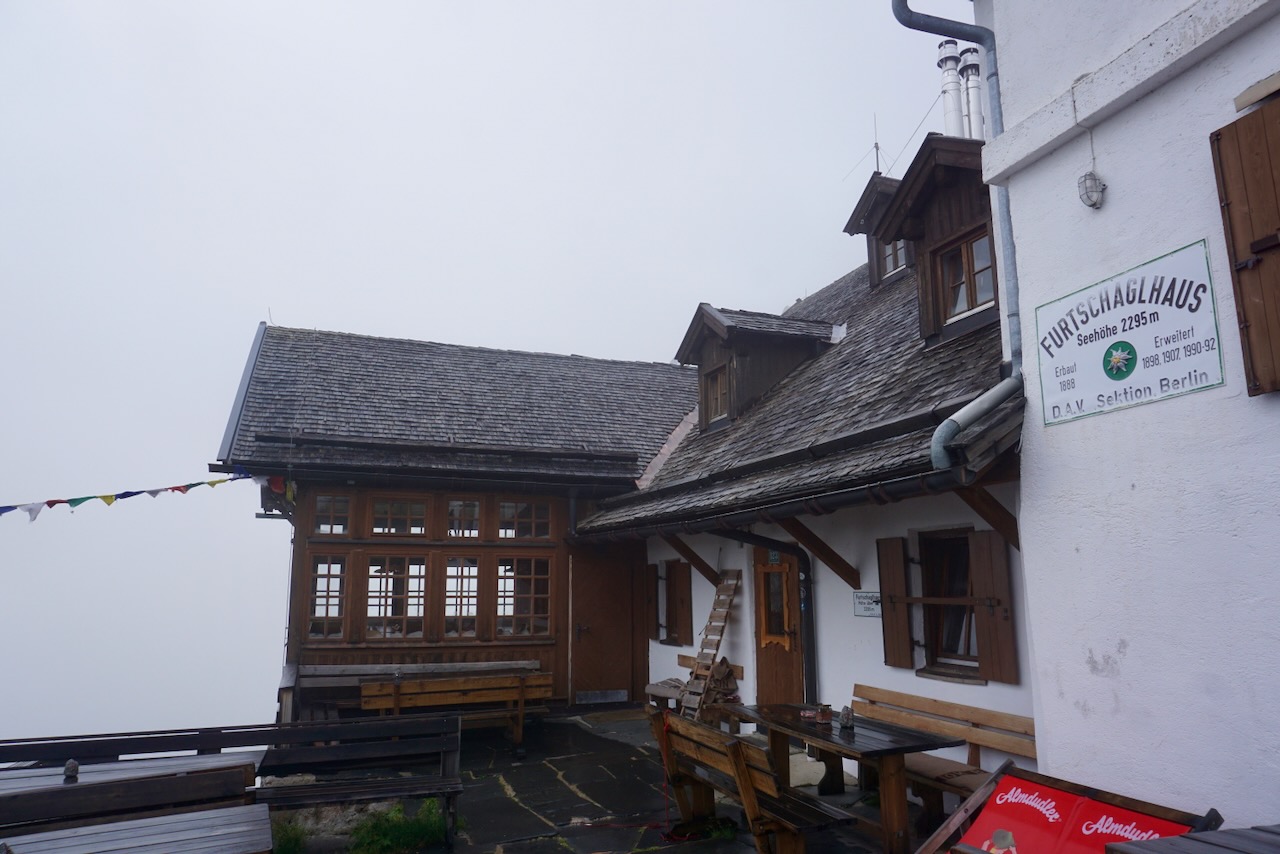
It was a long way up to the Breslauer Hütte, and hard going. We covered 12 kilometers that day, and, upon reaching 2,844 meters, we certainly felt it.

That evening, we watched the sunset.

Day 4: Breslauer Hütte to Vent
The following morning began with a strange feeling. The clientele of the Breslauer Hütte could be easily divided into two groups – mountaineers and hikers. As we decided not to attempt the Wildspitze this time (my friends have now bookmarked it for the future), we were clearly in the hiking group, despite having the gear and experience of the mountaineers. We had come to this place with a purpose and were leaving it behind.

It wasn’t only because of me but it also wasn’t not because of me that we changed the plan. I’m grateful that my friends made the decision that they did, and I will be cheering for them when they head back there next time. But that didn’t prevent me from feeling, as they were, a sense of loss.
Nevertheless, we enjoyed the easy scramble up to Wildes Mannle, a 3,023 meter peak nearby.

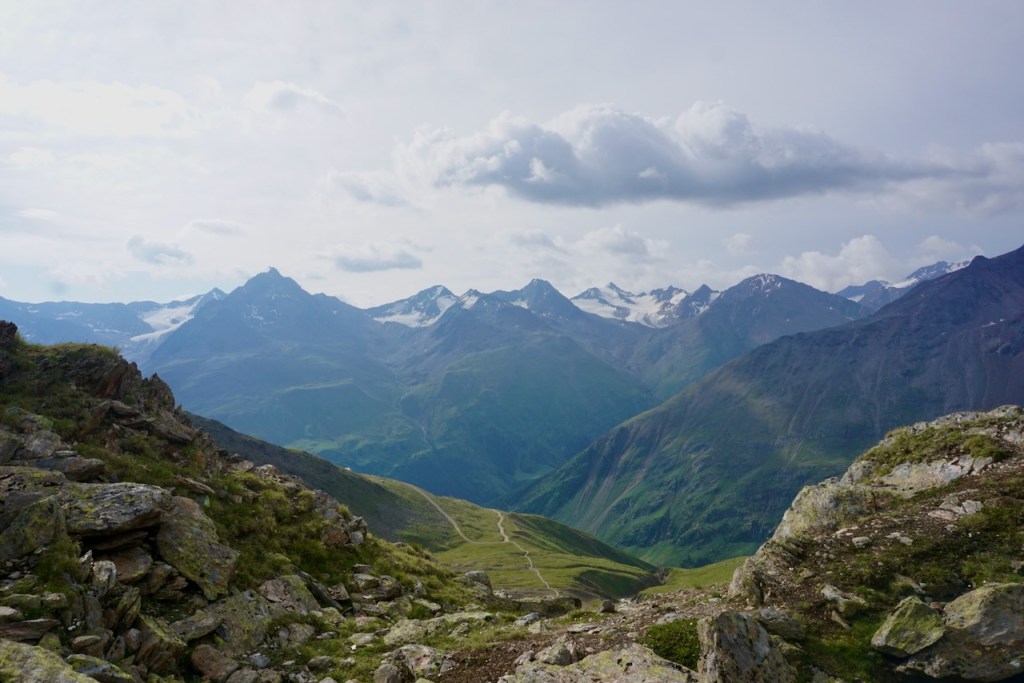
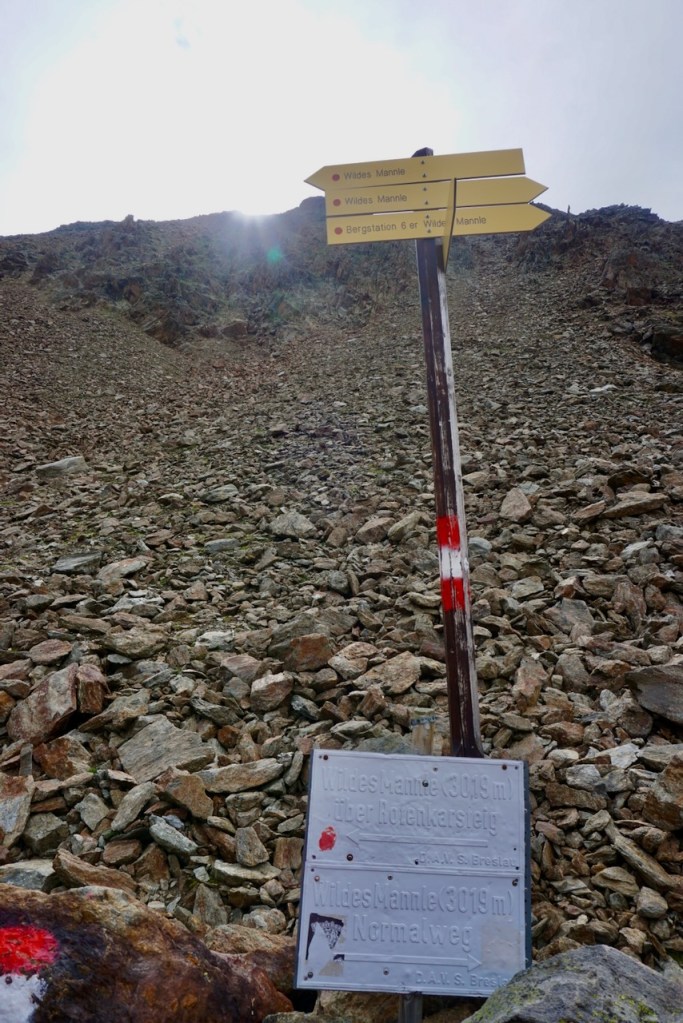

We crossed the river we’d seen the following day . . .

. . . and climbed the ridge to the summit, looking over into the distance where we knew the Wildspitze was.


From there, we began our descent, again past the cows . . .

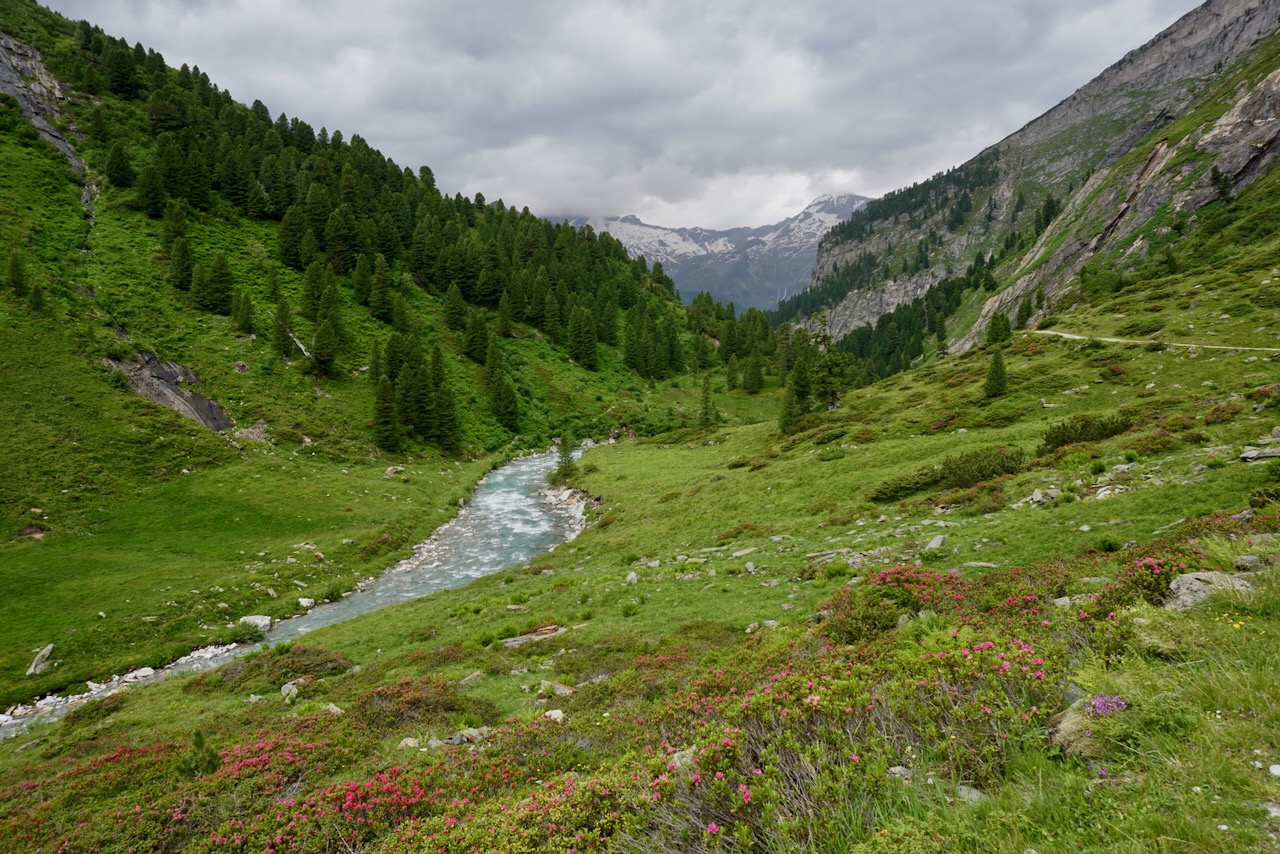
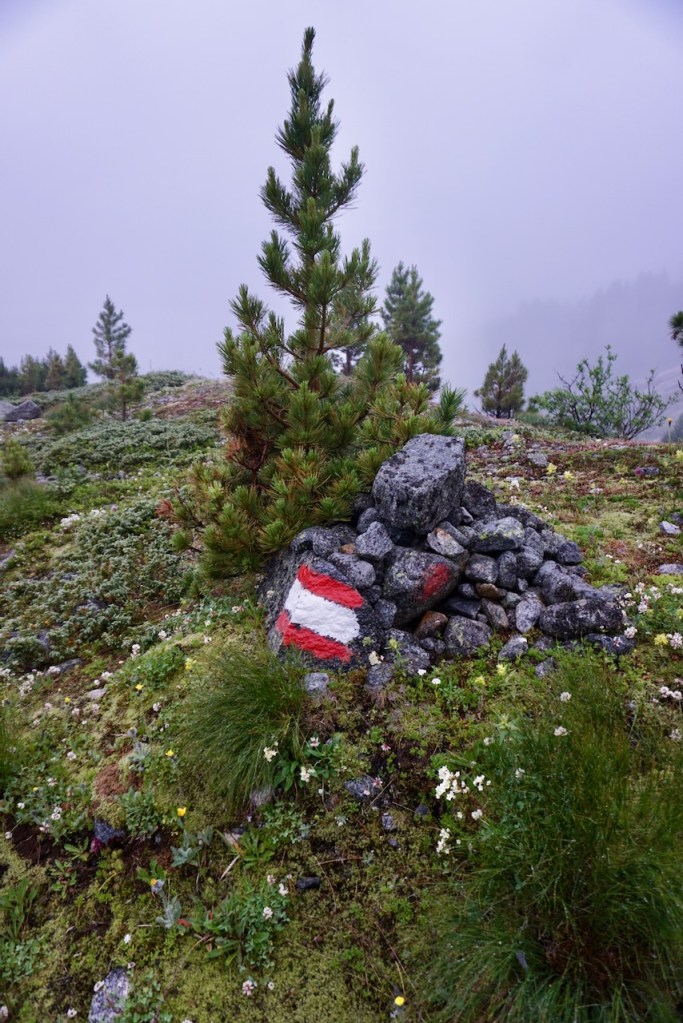
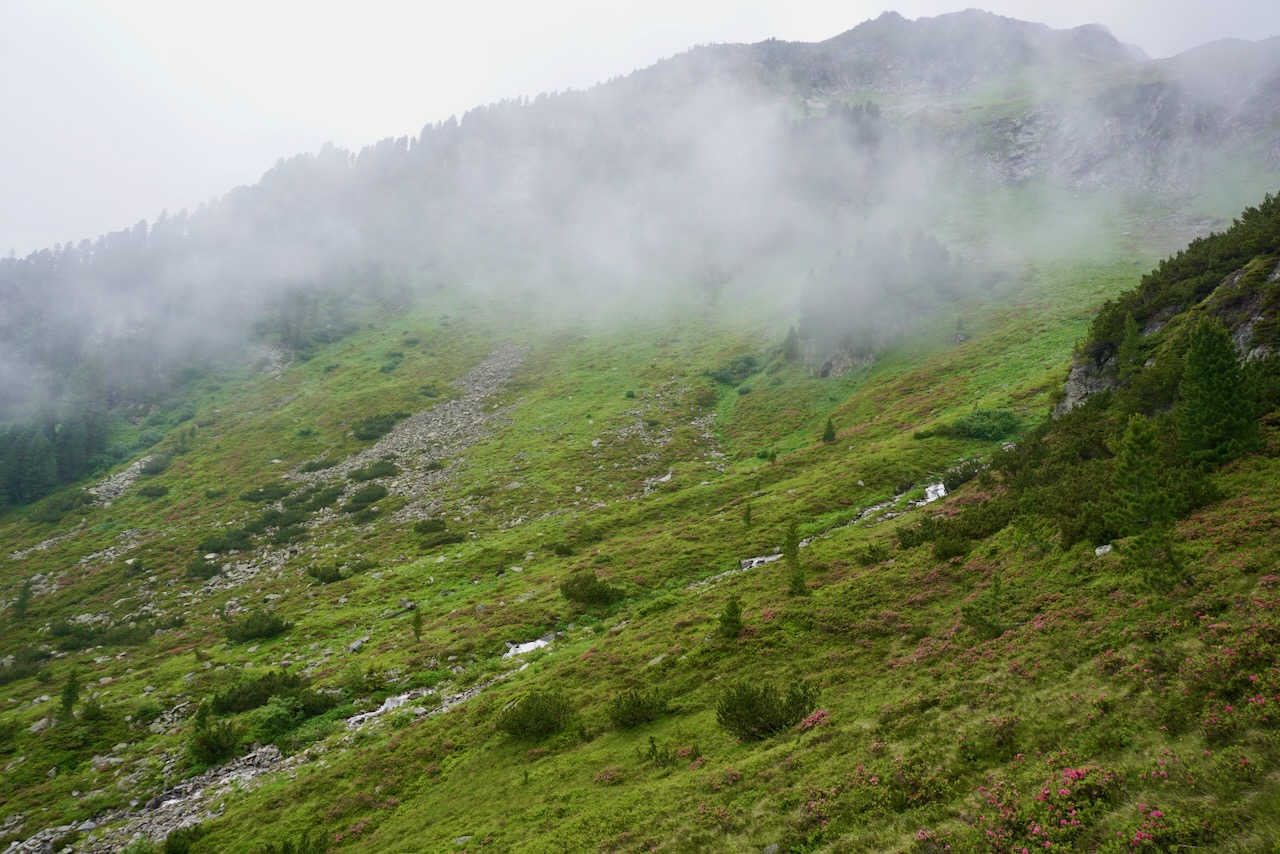
. . . and into a green oasis, welcome after the rocky terrain a thousand meters above.
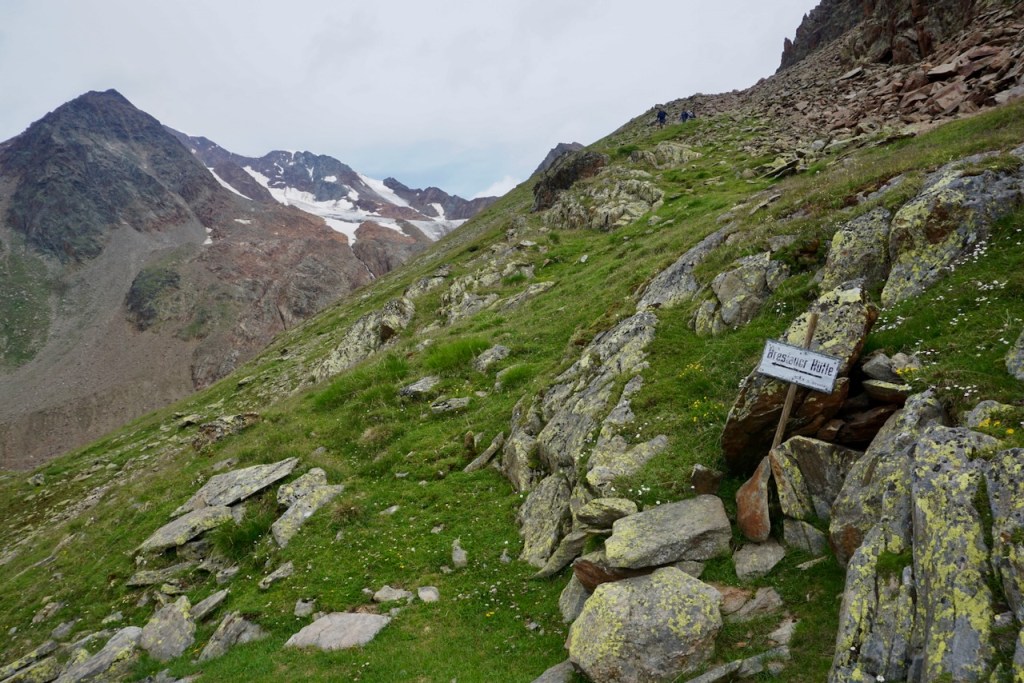
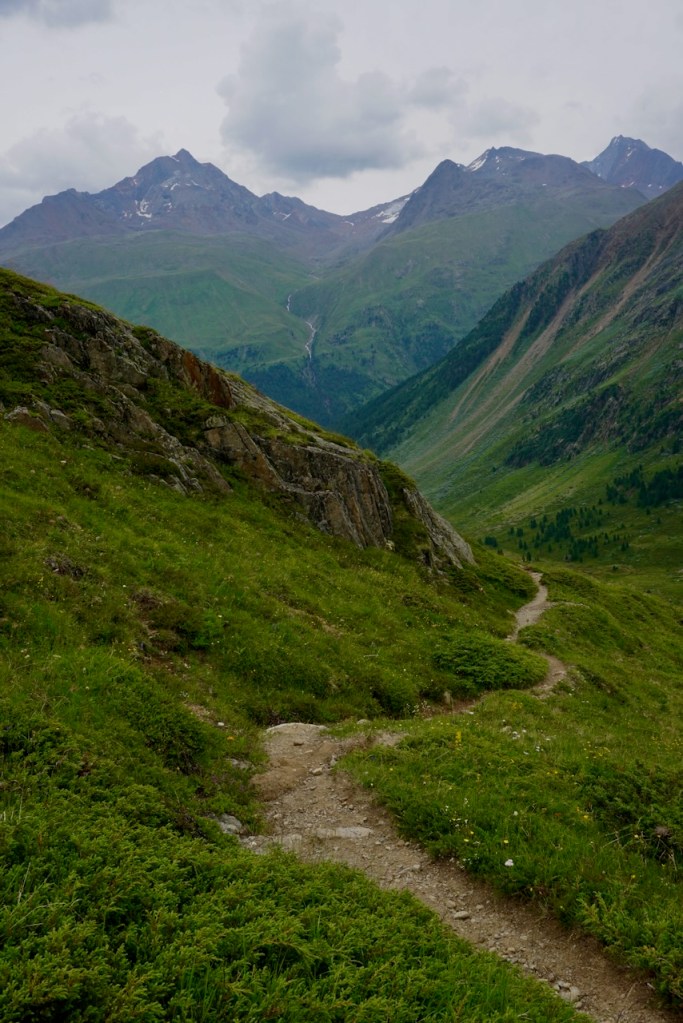

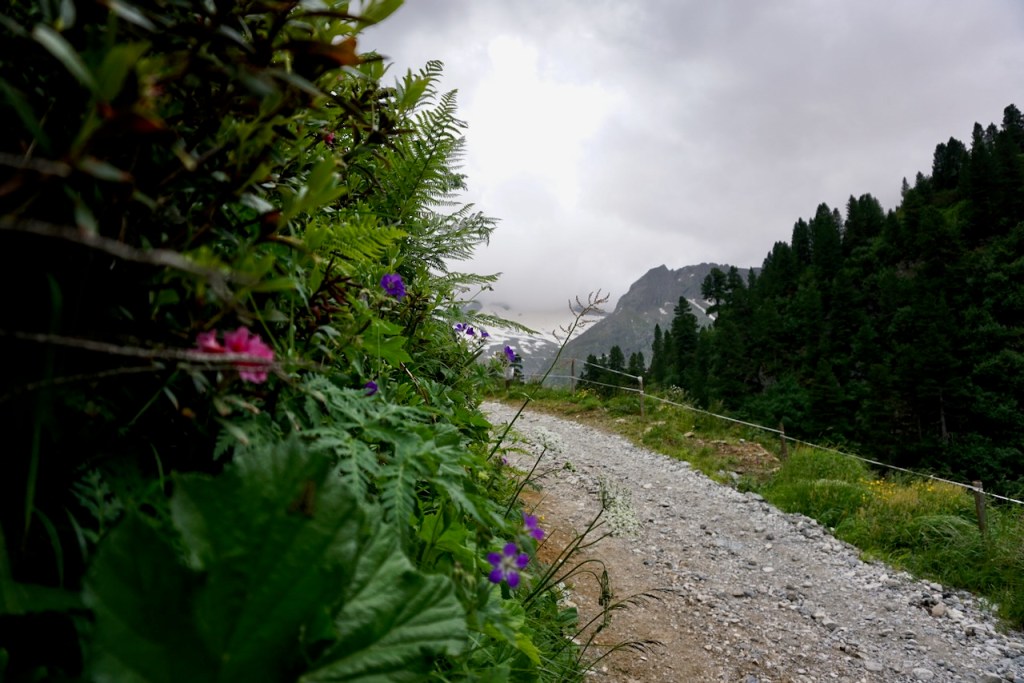
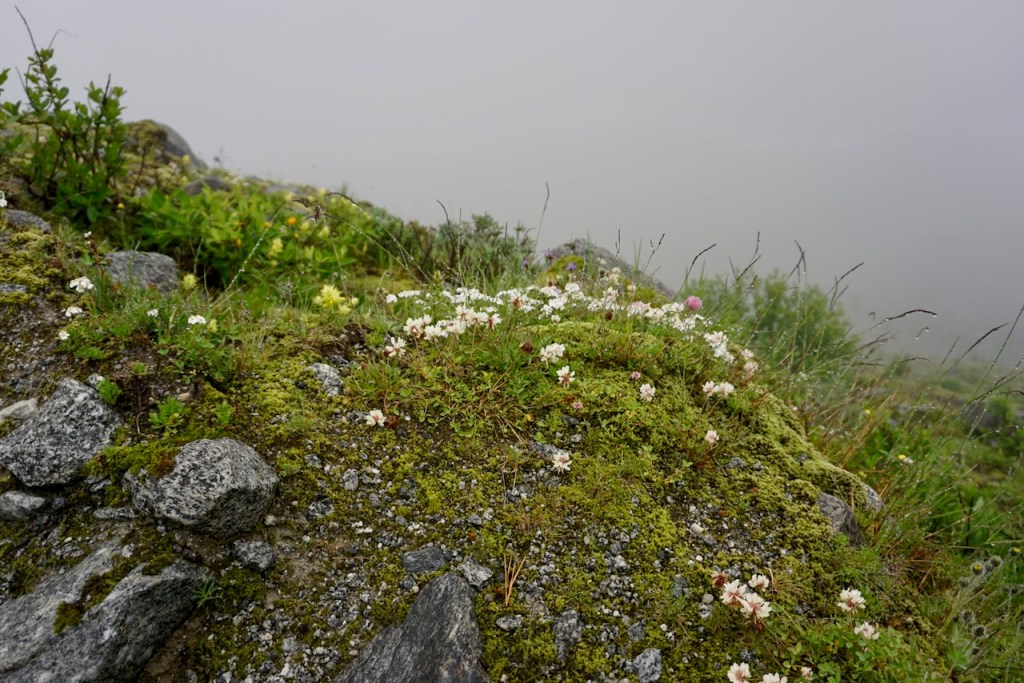
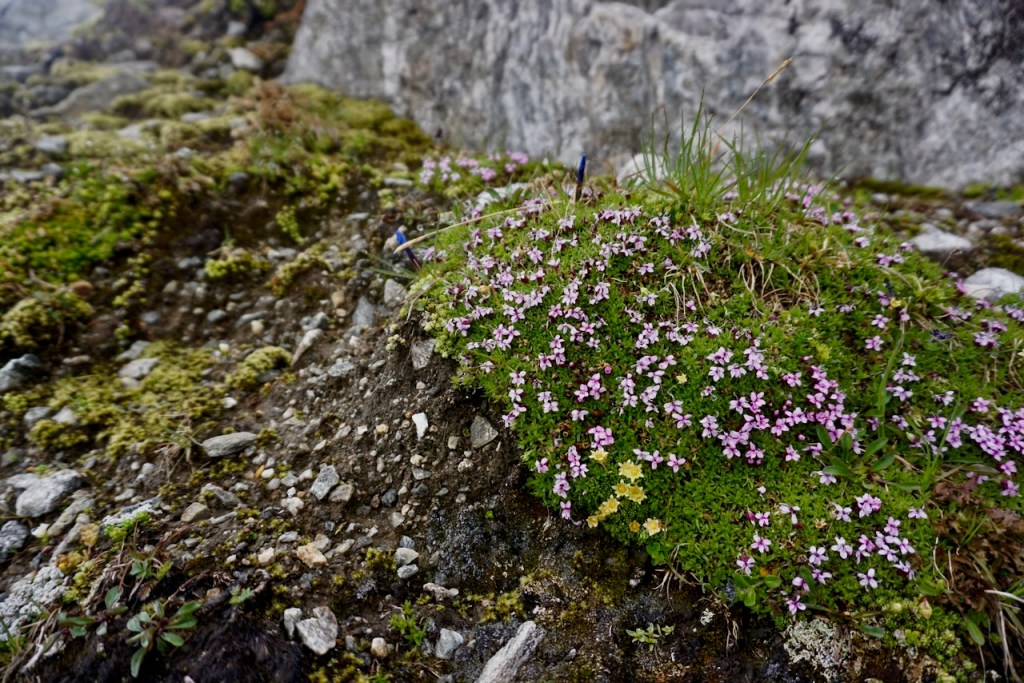
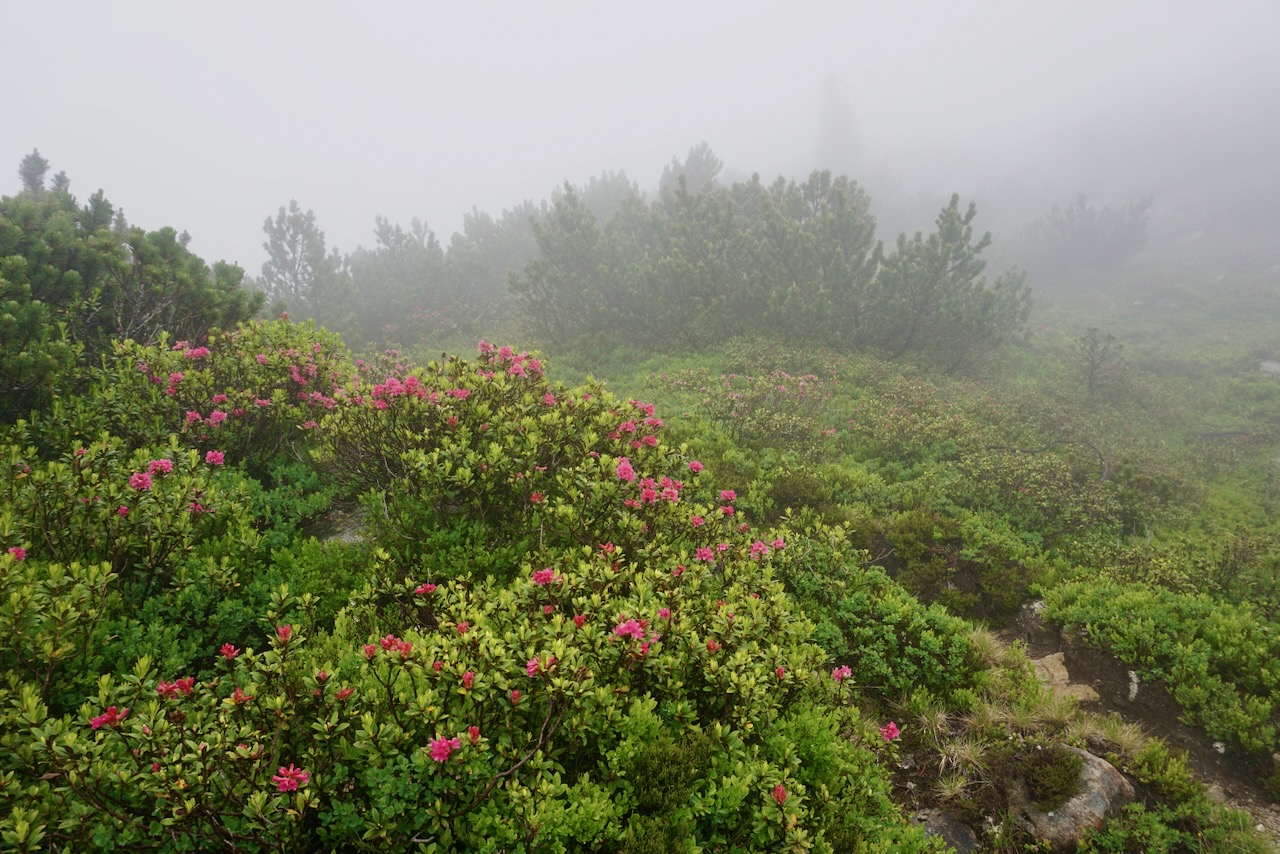
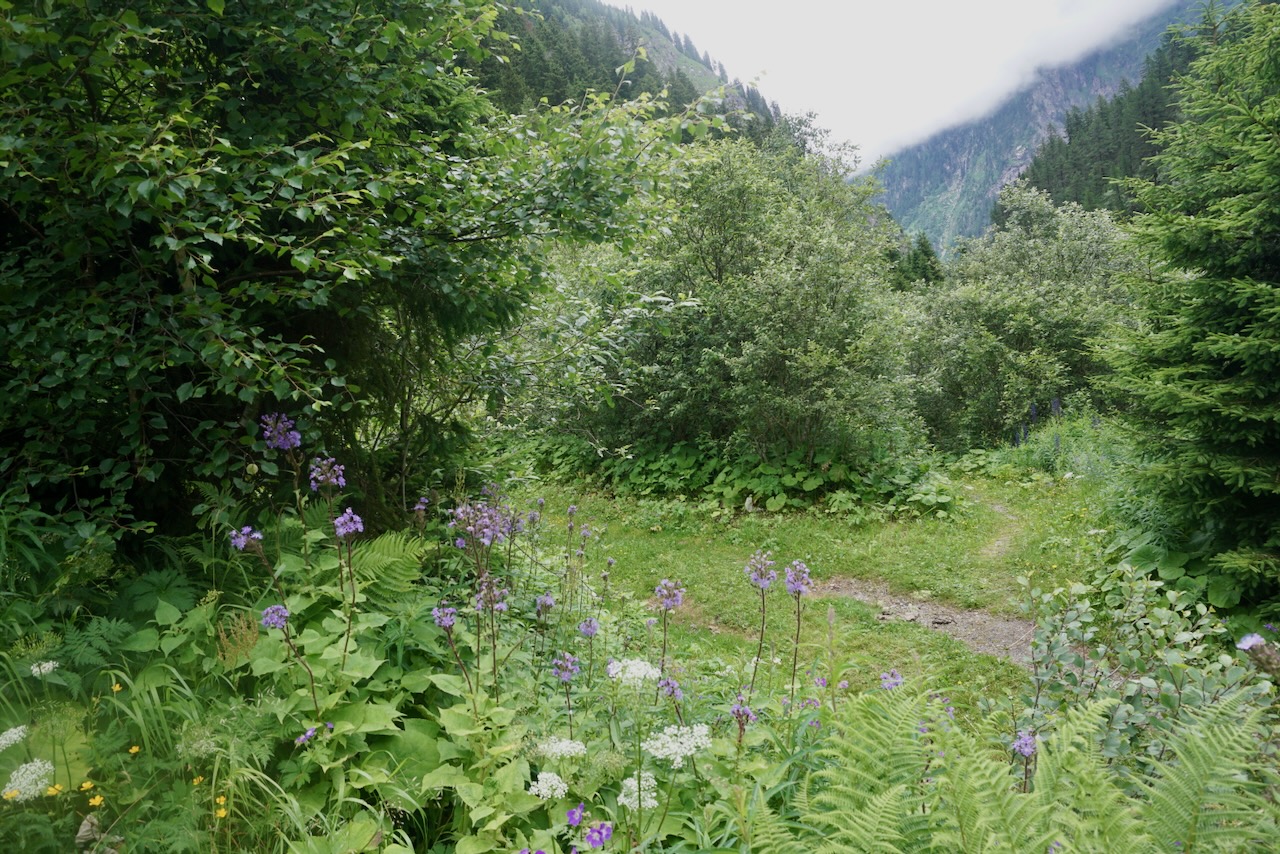
With the challenges of ascending behind us, I took the opportunity to photograph the alpine flowers that guided us along the way.
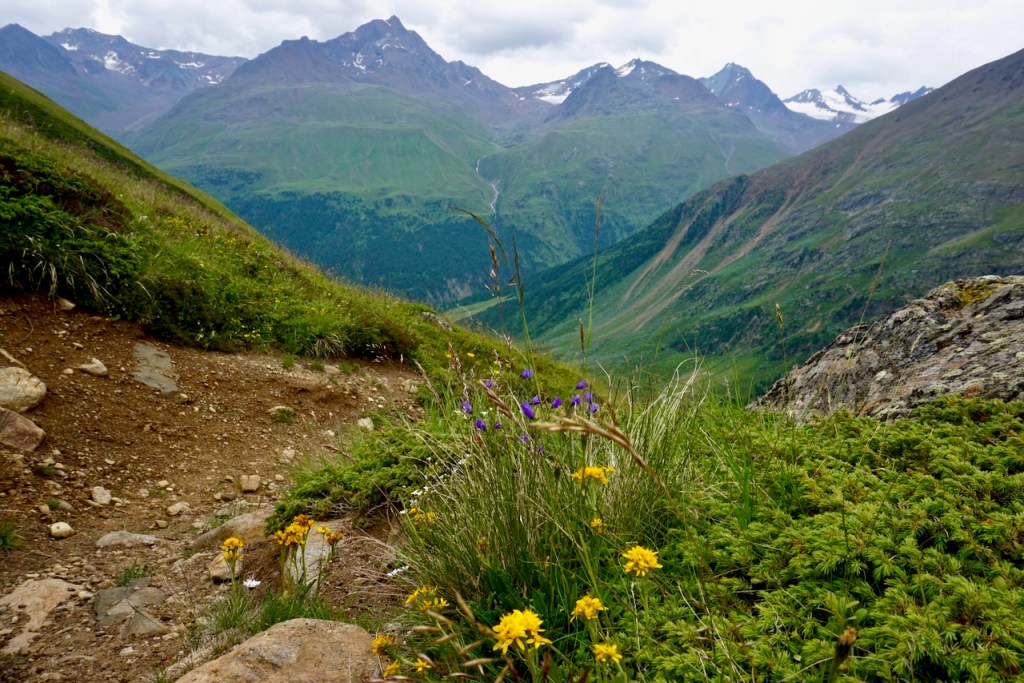

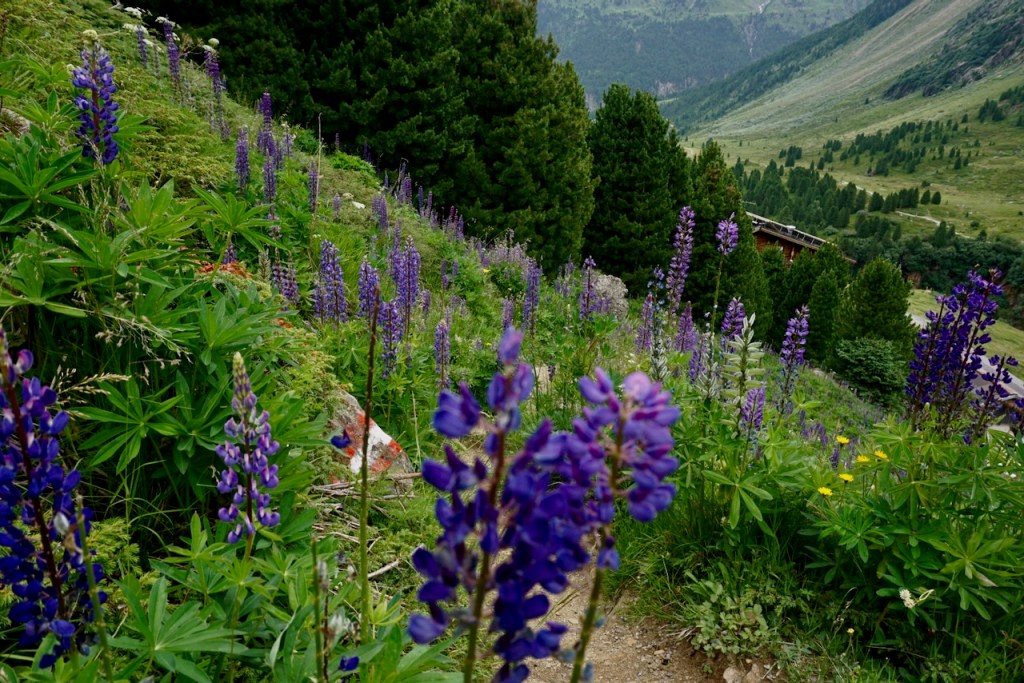


Upon reaching civilization, we crossed a bridge over the river . . .


. . . walked past one last herd of grazing horses . . .

. . . and looked in the direction of the Wildspitze again, invisible now.
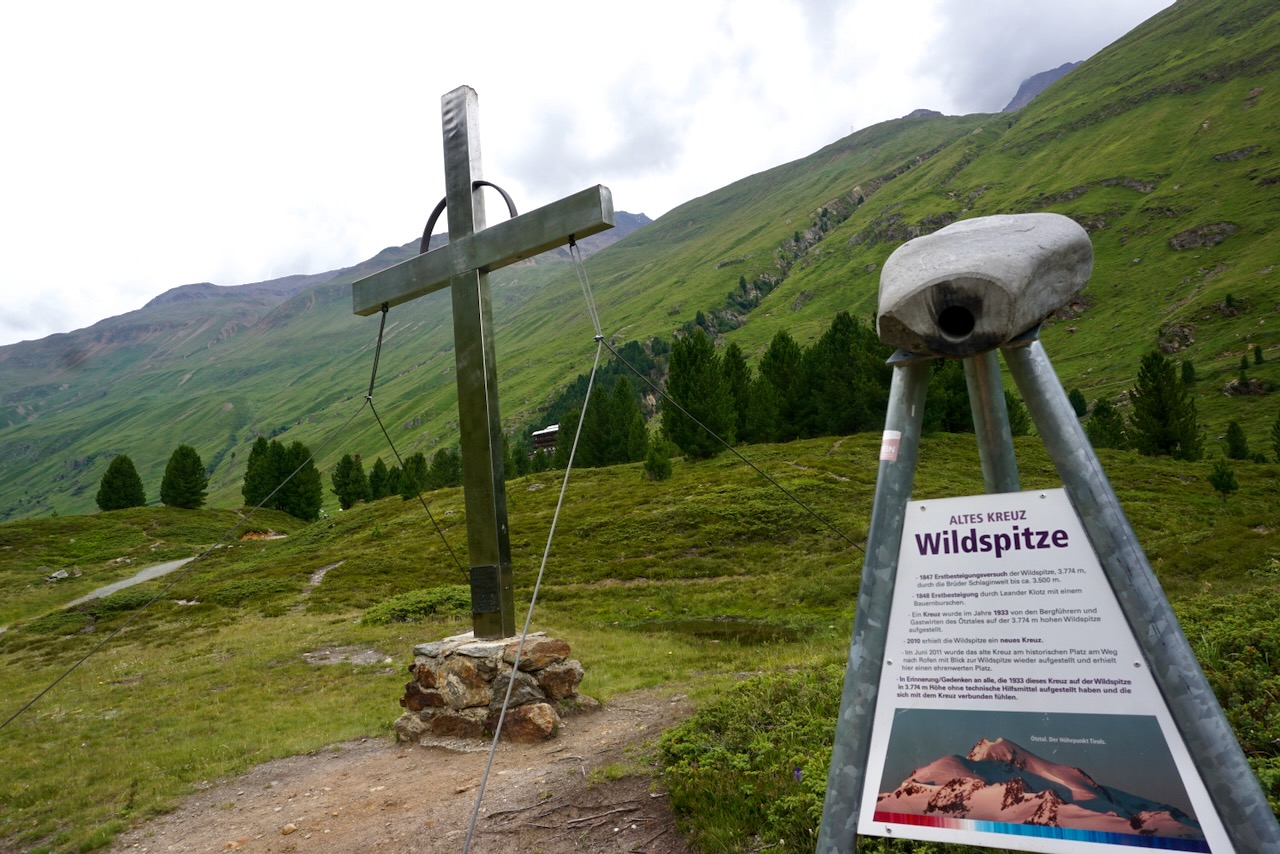
This was not my mountain to climb, but I have no doubt that my friends will climb it one day. If I’ve learned any lesson, it is this: If one cannot go calmly and steadily, one need not go at all. The purpose is to be there, not to get there.
And if I can focus on the being rather than the doing , then I have learned something indeed.

































































 By Rebecca Michelle