Bamberg is located in a region of Bayern (Bavaria) called Franken (Franconia), and the regional slang and cuisine are Fränkisch rather than Bayrisch. I was pleasantly surprised to find that Fränkisch slang really is slang – the people generally spoke Hoch Deutsch (High German) and I could understand the accent. (This was hardly the case when I visited Munich, for example, where Bayrisch is really the local language. And rest assured, I have equal problems when people speak Thüringisch from here in Thuringia. An ongoing pattern when I learn a new German slang word is to clarify whether the word is Hoch Deutsch or Thüringisch; the distinction is important for my sometime-in-the-future German language test.)
These stark regional differences make travelling even a couple hours away feel much farther, and it’s a lot of fun to hear difference forms of language, taste local beers, and experience local culture. We spent two nights in Bamberg and were delighted by what we found. The population is just a little larger than that of Weimar, but the town sprawls across seven hills. We spent our time in the old town and new old town on the opposite side of the river, going everywhere by foot, and we were pleased to see really excellent bicycle infrastructure everywhere. There were bike lanes and bike parking areas on every road, as well as pay parking in areas that would be free by us. And it definitely seemed like the population got the message! The number of people on bikes was correspondingly greater than I have seen in other German cities.
One element that makes Bamberg really special is its location where the Regnitz and Main rivers meet. There are canals that have been built to link the rivers and bridges to carry pedestrian, bicycle, and car traffic, so you’re never far from the water.
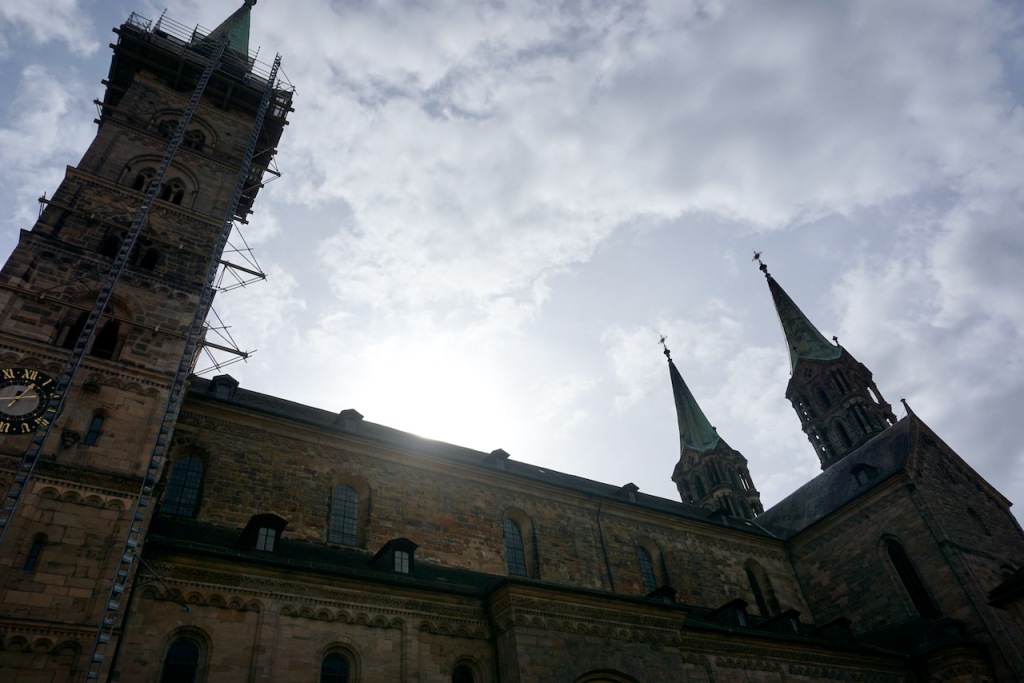
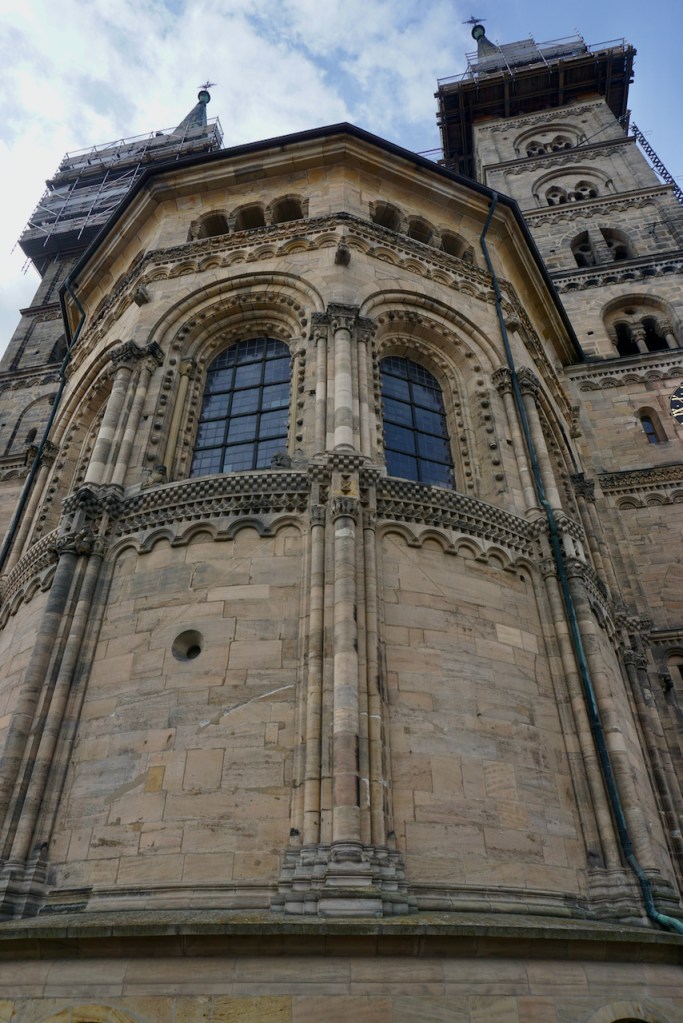
It didn’t take long to assess the wealth of this city, extending back hundreds of years. Each of Bamberg’s seven hills has a church, and Bamberg is host to a cathedral and monastery.
The old Rathaus, or town hall, is the highly decorated signal that one has entered the old town, and we photographed it at various times of day from different angles to play with the light.
We essentially stumbled into the courtyard of the old palace . . .
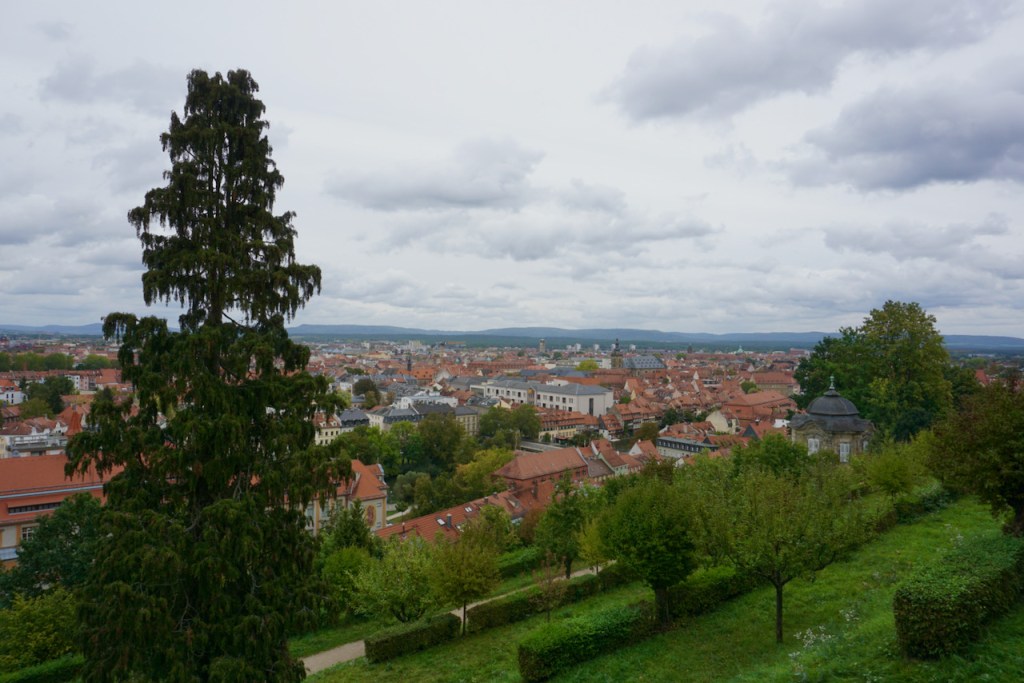
. . . just after a look at the city from the garden of the new.
As always, we climbed to the highest point, this time at the monastery that towered above everything, and looked down. The red rooftops all over Germany never fail to put me right back into a child’s storybook.
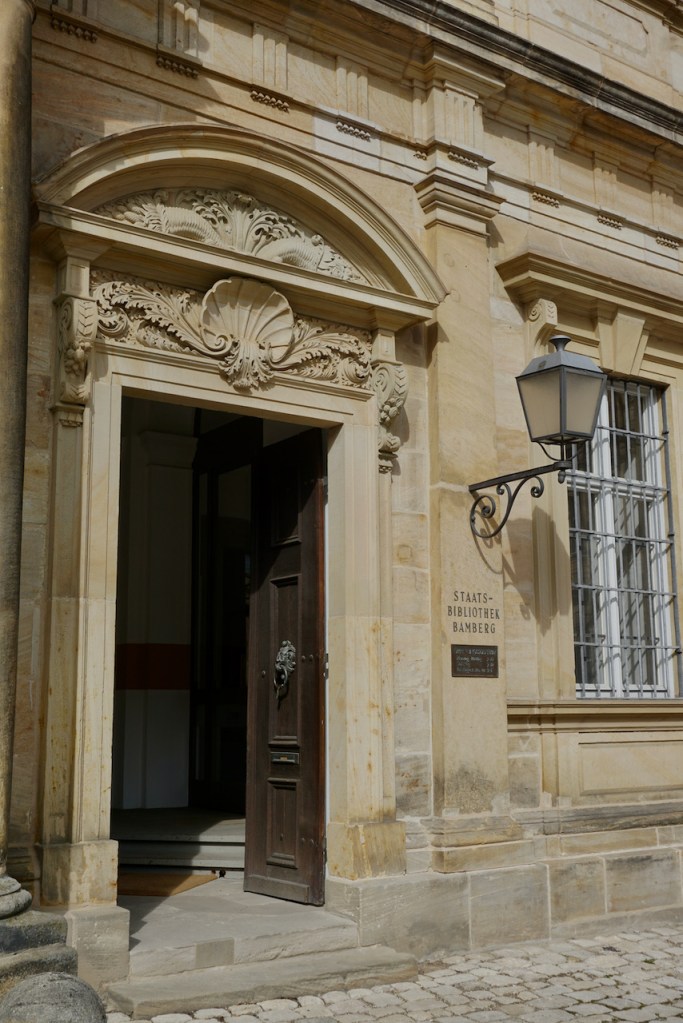
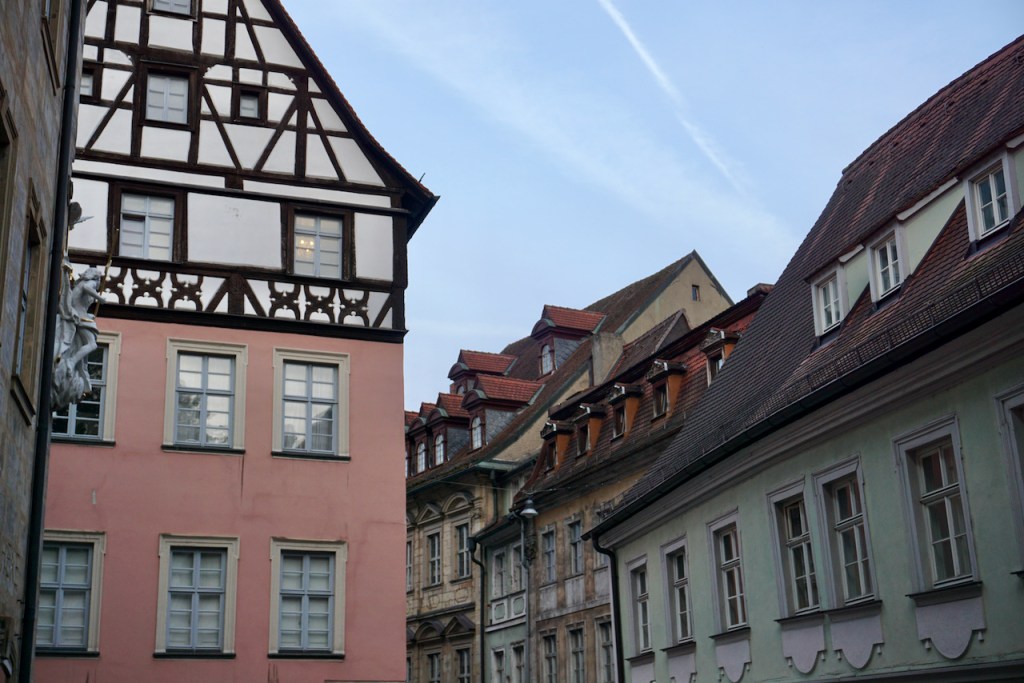
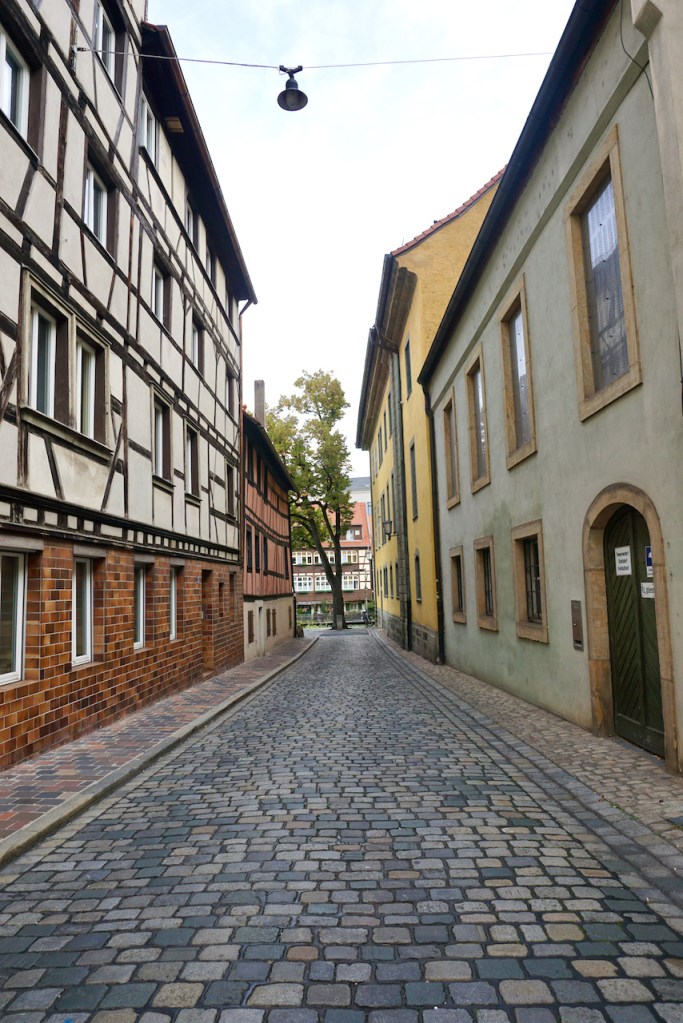
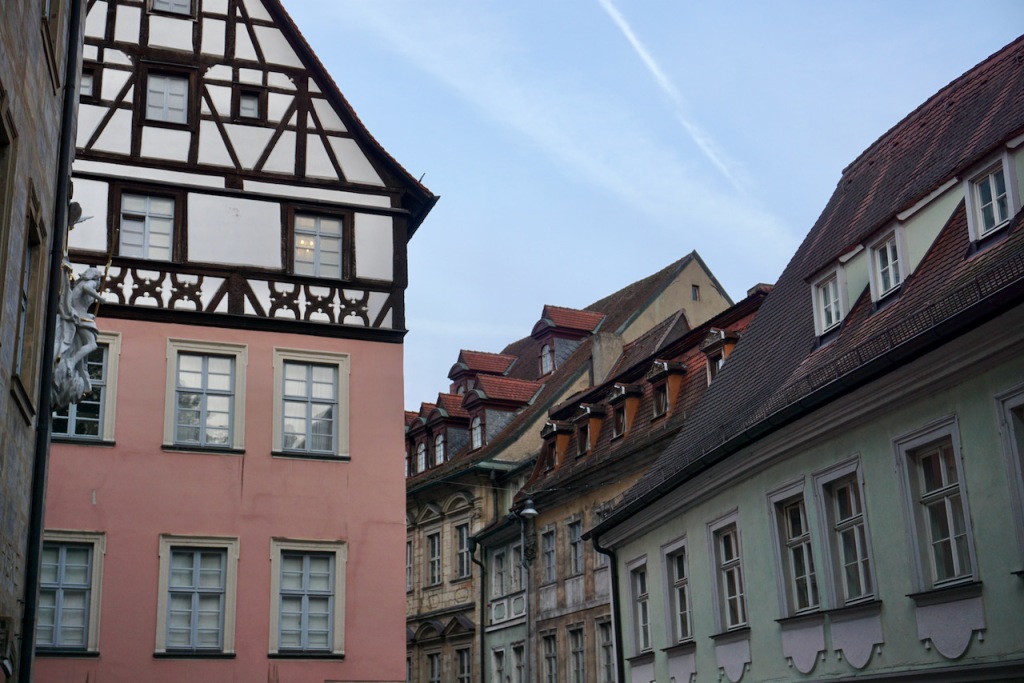
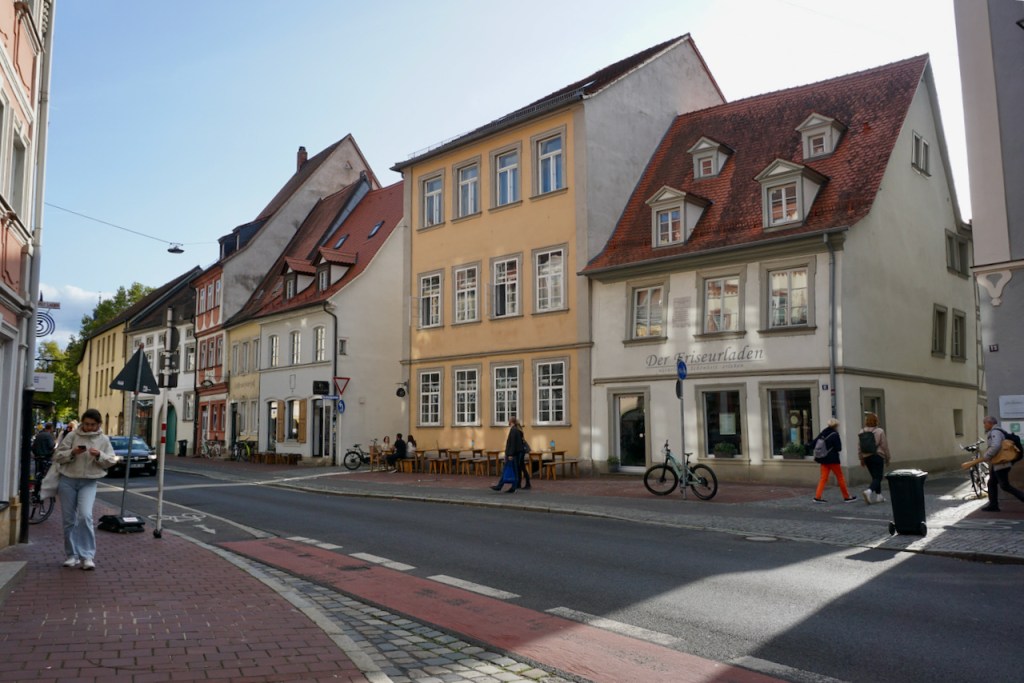
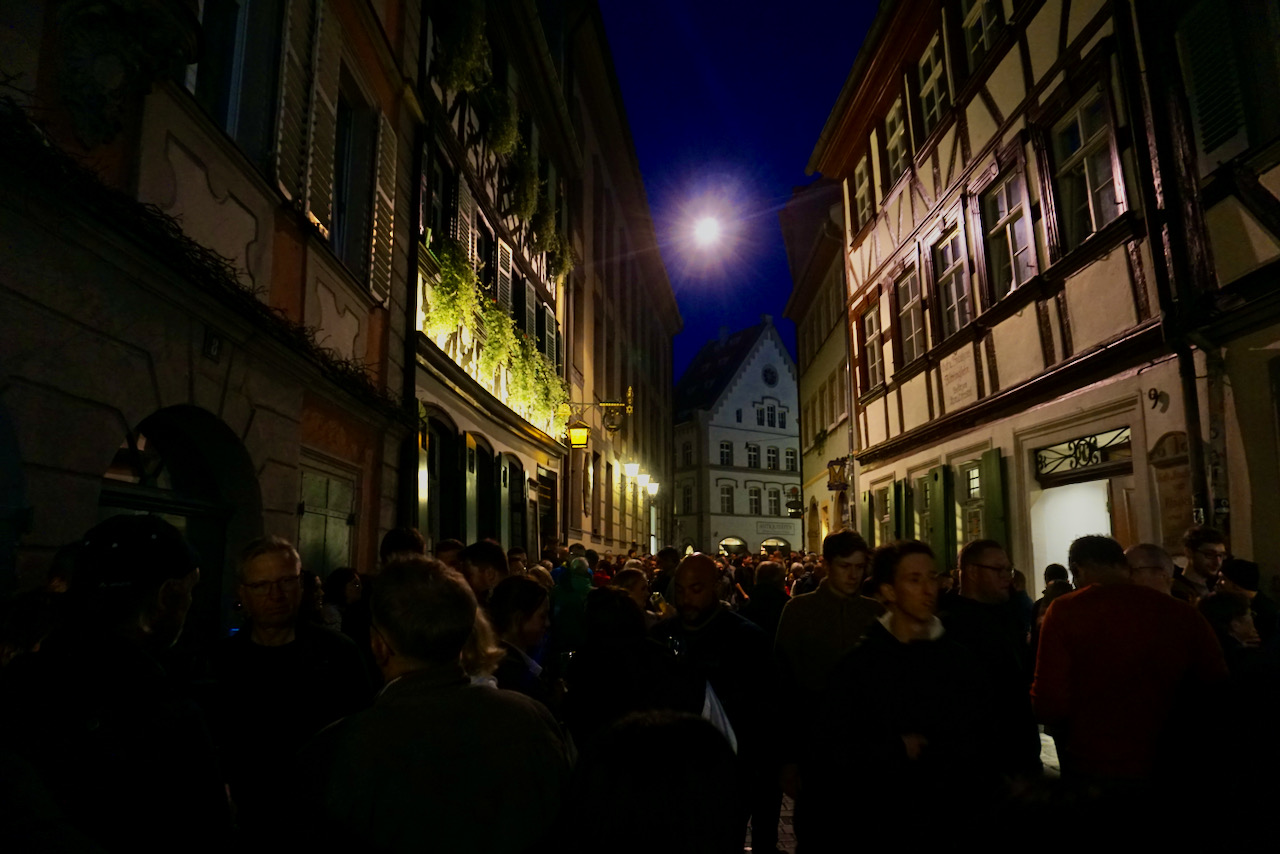
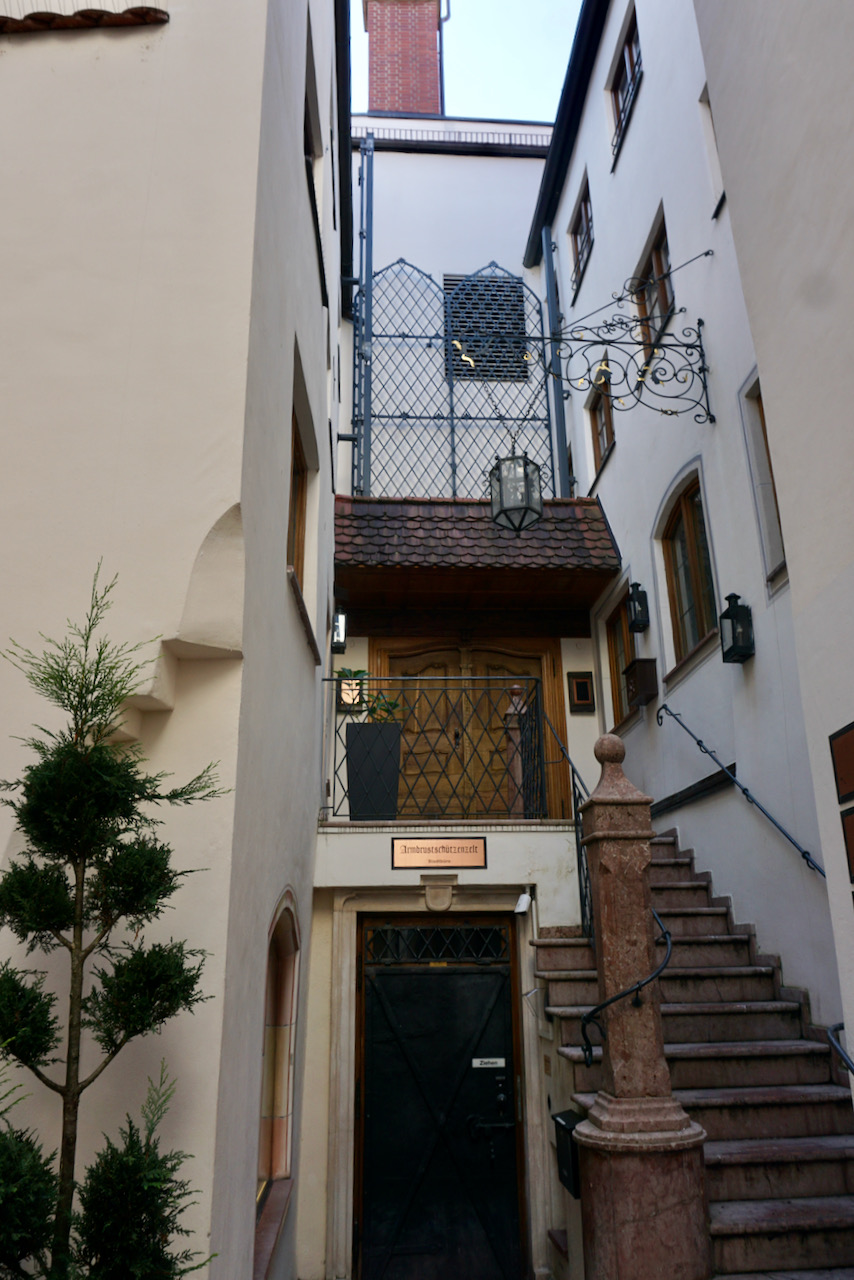
Another aspect of Bamberg that I really liked were the tiny alleyways that twisted into each other, occasionally broken up by the large squares that characterize many European cities. The buildings were ornate and detailed, another sign that this was a city that controlled trade and therefore amassed wealth.
Bamberg is known for its beer and Frankisch beer is distinct in multiple ways. Rauchbier, or smoked beer, is really only found there (it can stay, as far as I’m concerned) and the beer styles are somehow crisper in both colour and taste. Each pub is a brewer of its own beer and some have been operating since the 1400s. We visited the beer museum up at the monastery to learn more, and this is clearly a history that runs deep.
Additionally, a local tradition is the Stehbier, or standing beer. You walk into a brewery/pub/bar/restaurant and order a beer (or wine) to go. You pay the deposit on your glass and walk out into the street. The atmosphere was festive, though the environment was clearly entirely normal for the locals. By us, people bring bottles of beer and wine to the park. In Bamberg, you stand in the streets closed to cars. After all, taking part in the local culture is an essental part of travelling.
After two nights in a medieval town full of breweries, bookshops (I really couldn’t help myself), good food, and cheerful people, we drove about 20 minutes outside of town to climb in the famed Frankenjura. There are many reasons why this is one of the most popular climbing areas in the world, and climbing on the limestone there was a new experience. We’ll be back – after all, there’s climbing and beer.
Being in Munich for Oktoberfest was a bit like being in New Orleans for Mardi Gras: It was an accident and I didn’t realize that’s what I was doing until someone else told me.
In all fairness, I hadn’t intended to be in Munich for Oktoberfest. Rather, I had tickets to an Elton John concert that was cancelled (and rescheduled for two years from now!) because of Germany’s Covid regulations. Any reason to travel is a good one, and so, concert or not, I decided to head to Munich.
I arrived after dark on Friday night but I could already tell that being in a city felt rather different to my small town. There was something about the amount of light, the sheer number of buildings (though they were a far cry from what my Singapore and New York lives would consider tall), and the ambient noise that showed me how accustomed I’ve grown to my current environs. Despite this reaction , it was precisely my years of city living that immediately had me feeling comfortable navigating Munich’s excellent public transportation system.
The weather throughout the weekend was gorgeous, 20° and bright blue Bavarian skies. This meant that I was outside the whole time and have saved the indoor recommendations (all suggestions thanks to a friend who had lived in Munich for a time) for a future visit.
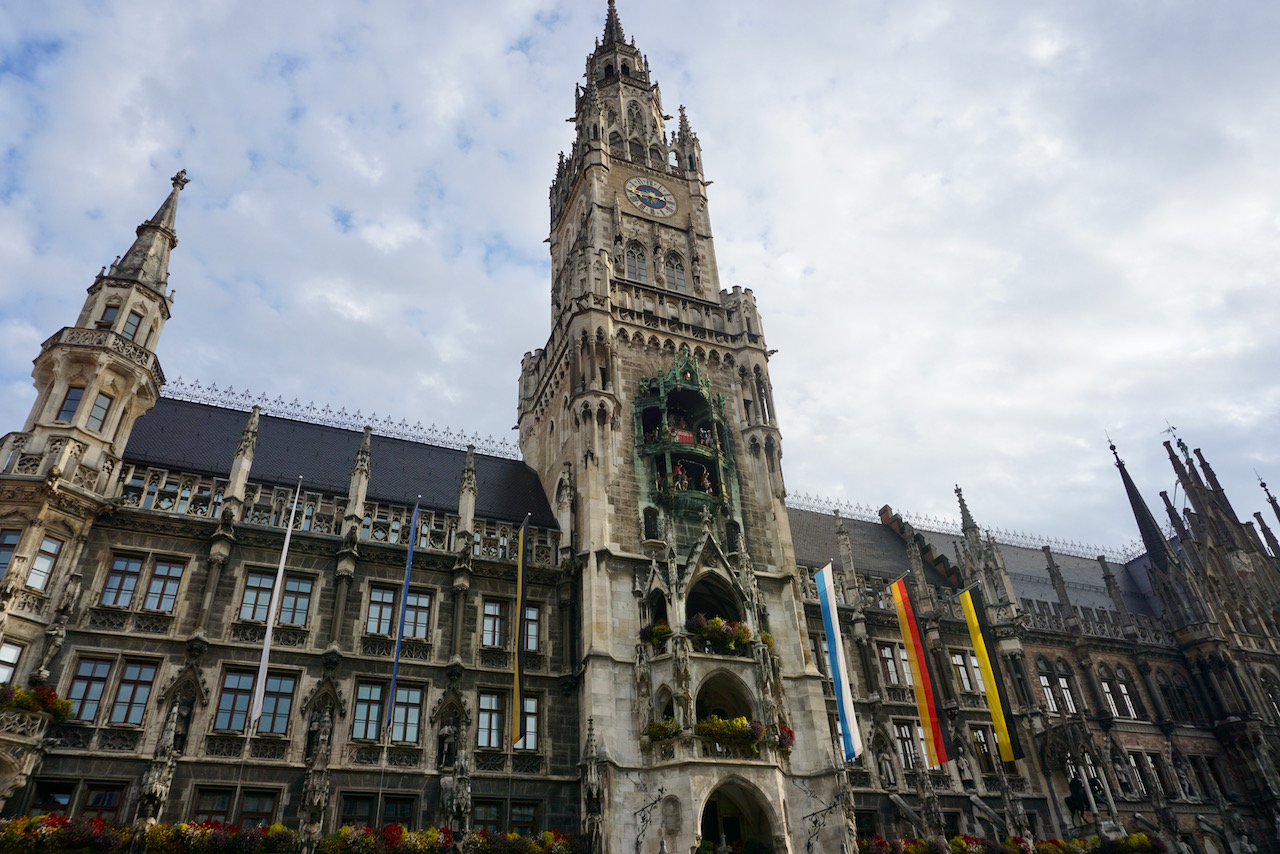
On Saturday morning I got a coffee and sandwich and sat in Marienplatz to watch the world go by. As I am directionally challenged, this became the centre of Munich in my head and I returned to this spot multiple times to reorient myself. The famed Glockenspiel at the Rathaus, or New City Hall, puts on two performances at 11am and 12pm to bring some of Munich’s history to life. It was charming and I had to smile at the excitement that must have caused in the early twentieth century.
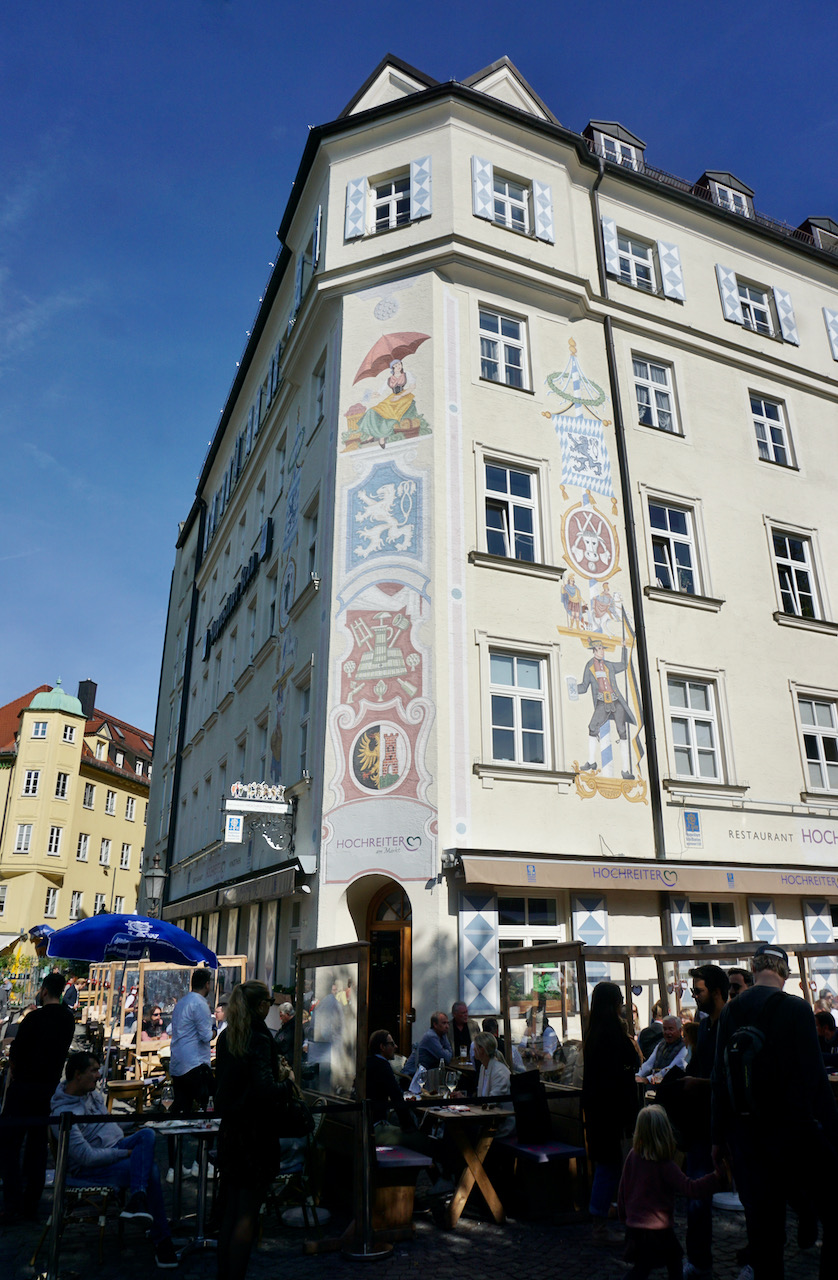
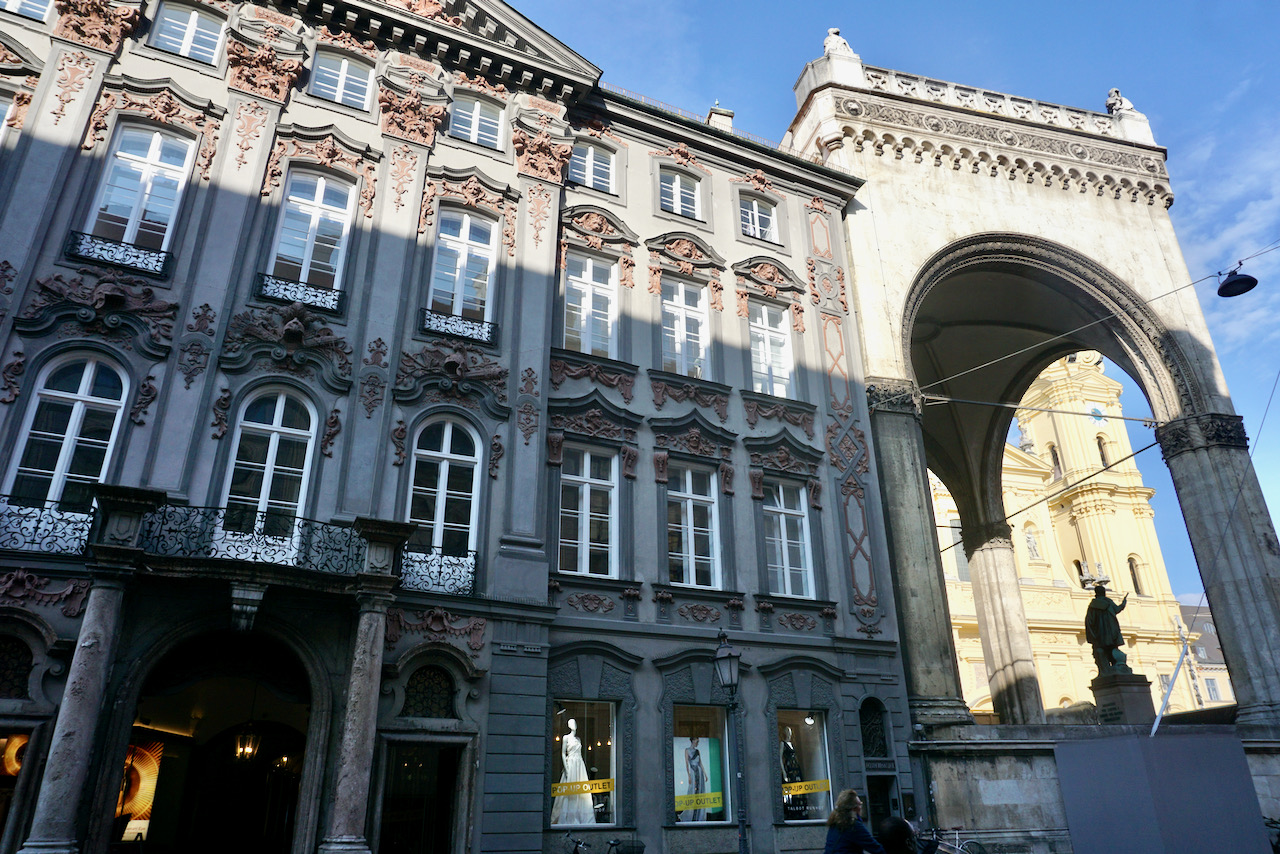
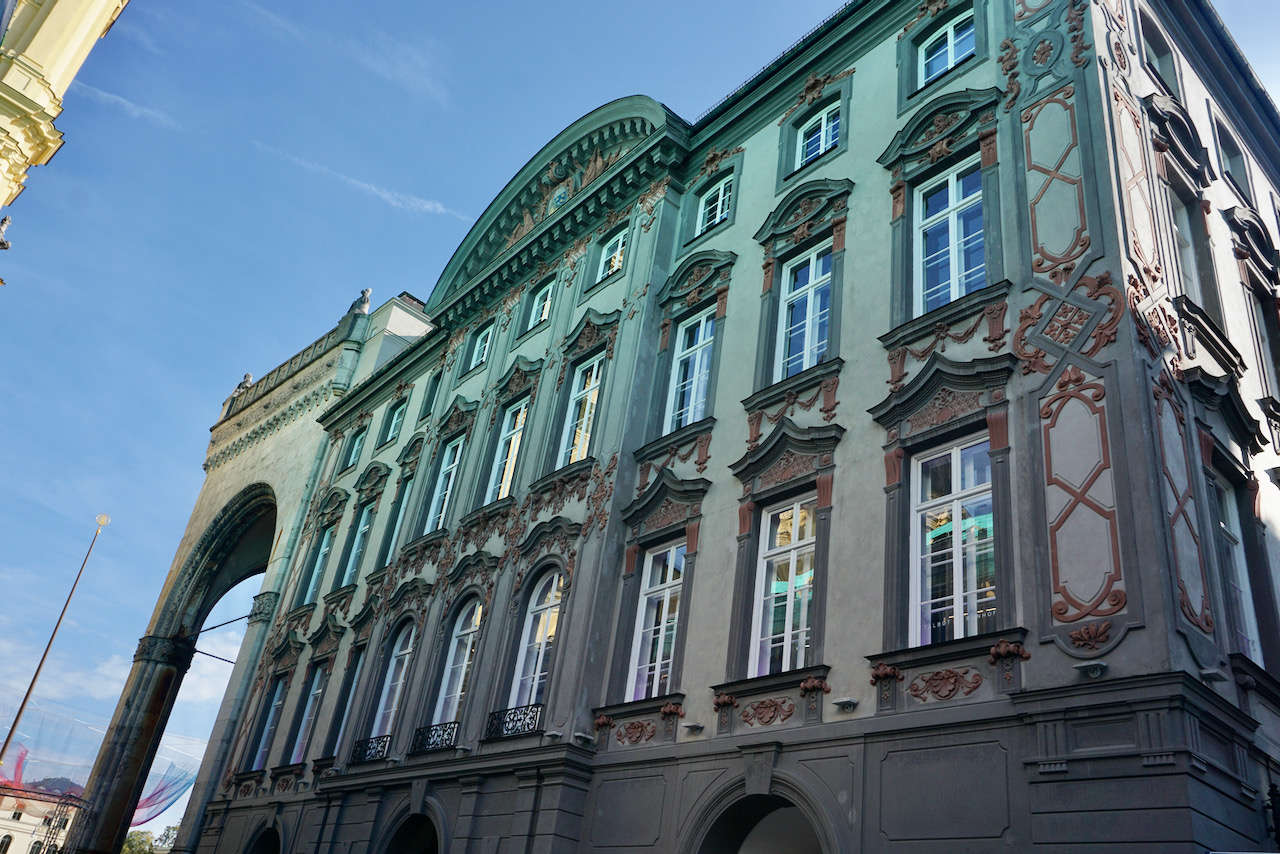
The day began in earnest with a walking tour in which we learned about the history of Munich and Bavaria and talked about beer culture. The tour guide, Jax, explained that the façades of Munich’s buildings were redone after the war, often in very clever ways. The buildings themselves are therefore not old, considering about 50% of the city was damaged during the war, but their careful consideration of the past has lent the old town an old feel.
Our tour also touched on Munich’s role in Hitler’s rise to power. I didn’t realize that the failed 1923 Beer Hall Putsch that landed Hitler in jail, where he subsequently wrote Mein Kampf, had taken place here. It was an interesting juxtaposition to talk about this just before heading into the beautiful Englischer Garten, originally the royal private garden that, once opened to the delighted public in the late 1700s, became the home of Oktoberfest.
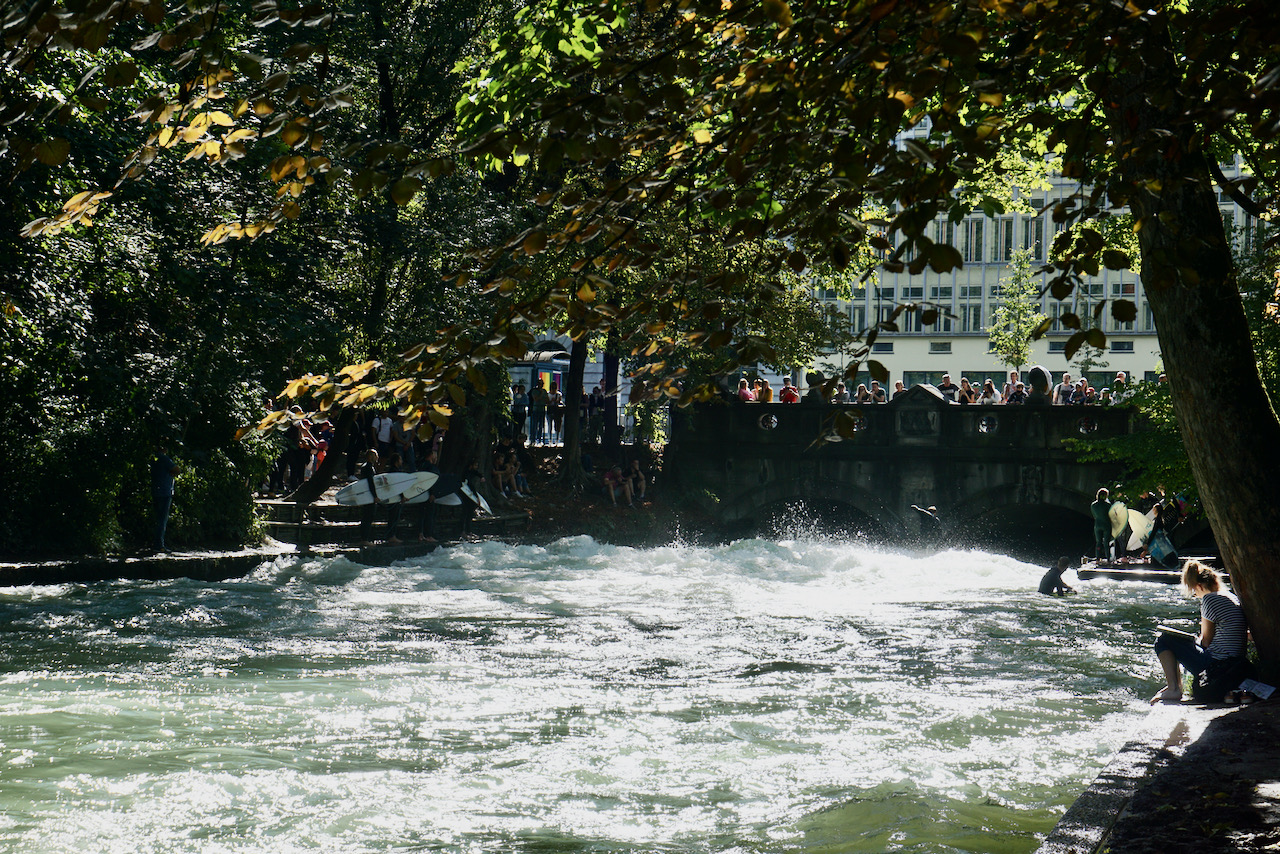
The Englischer Garten is Munich’s largest park and these photos do not do it justice. In addition to being historically interesting, it also held a first for me: Watching people surf in a public park.
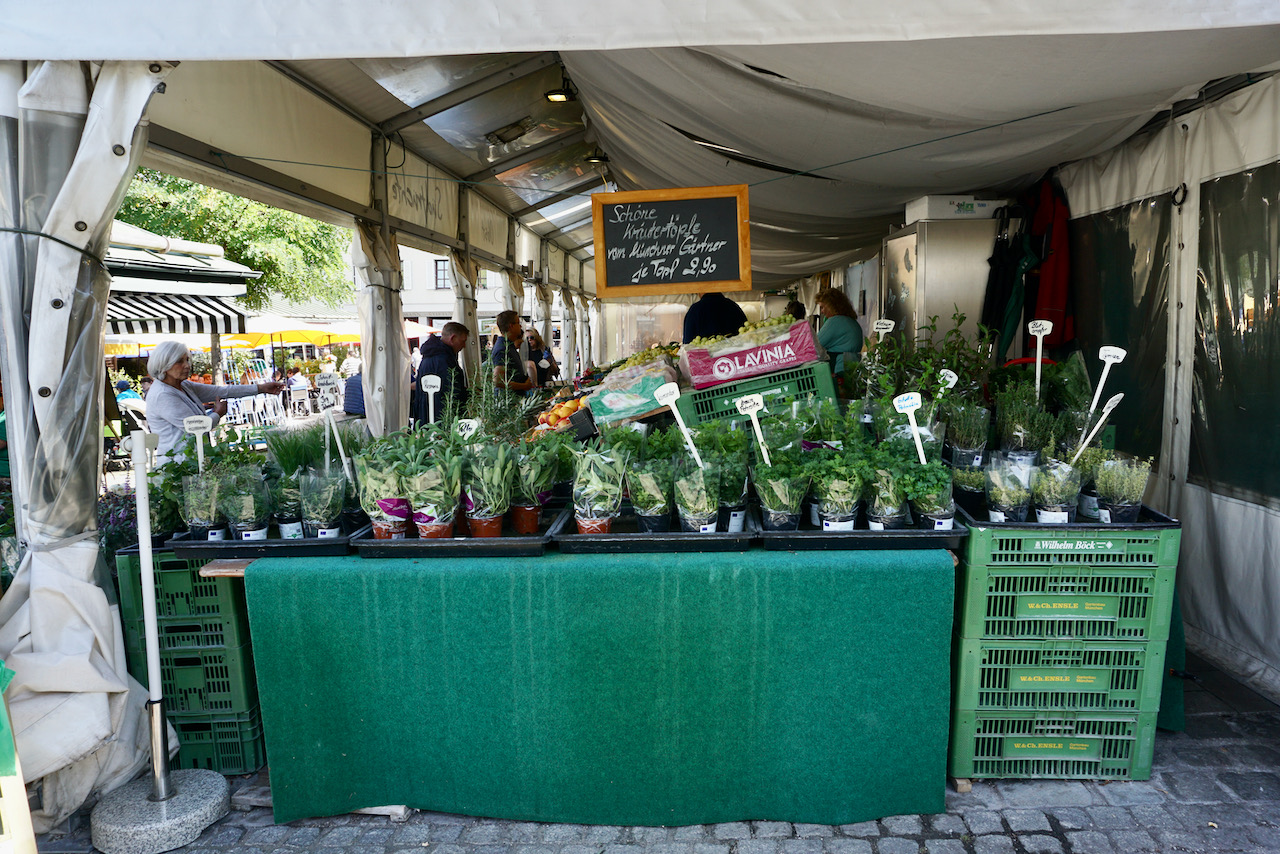
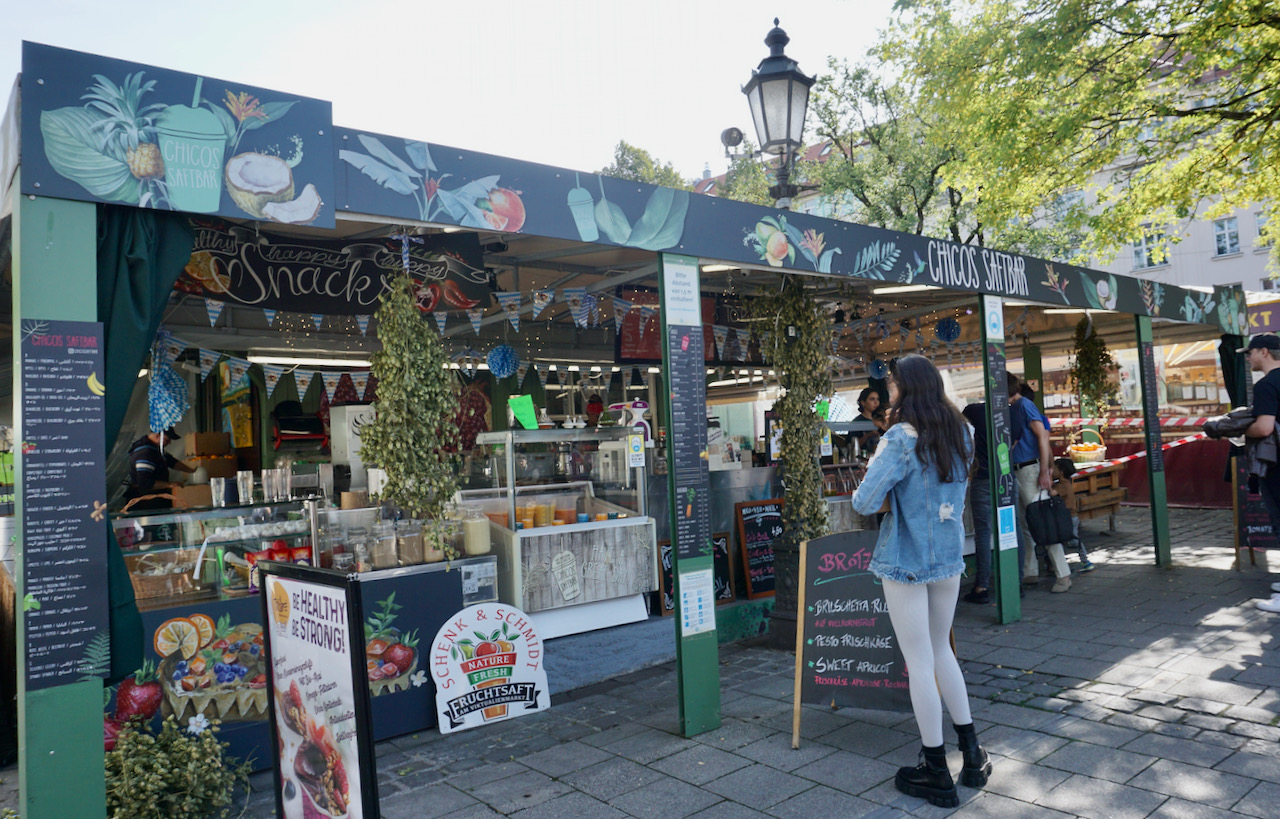
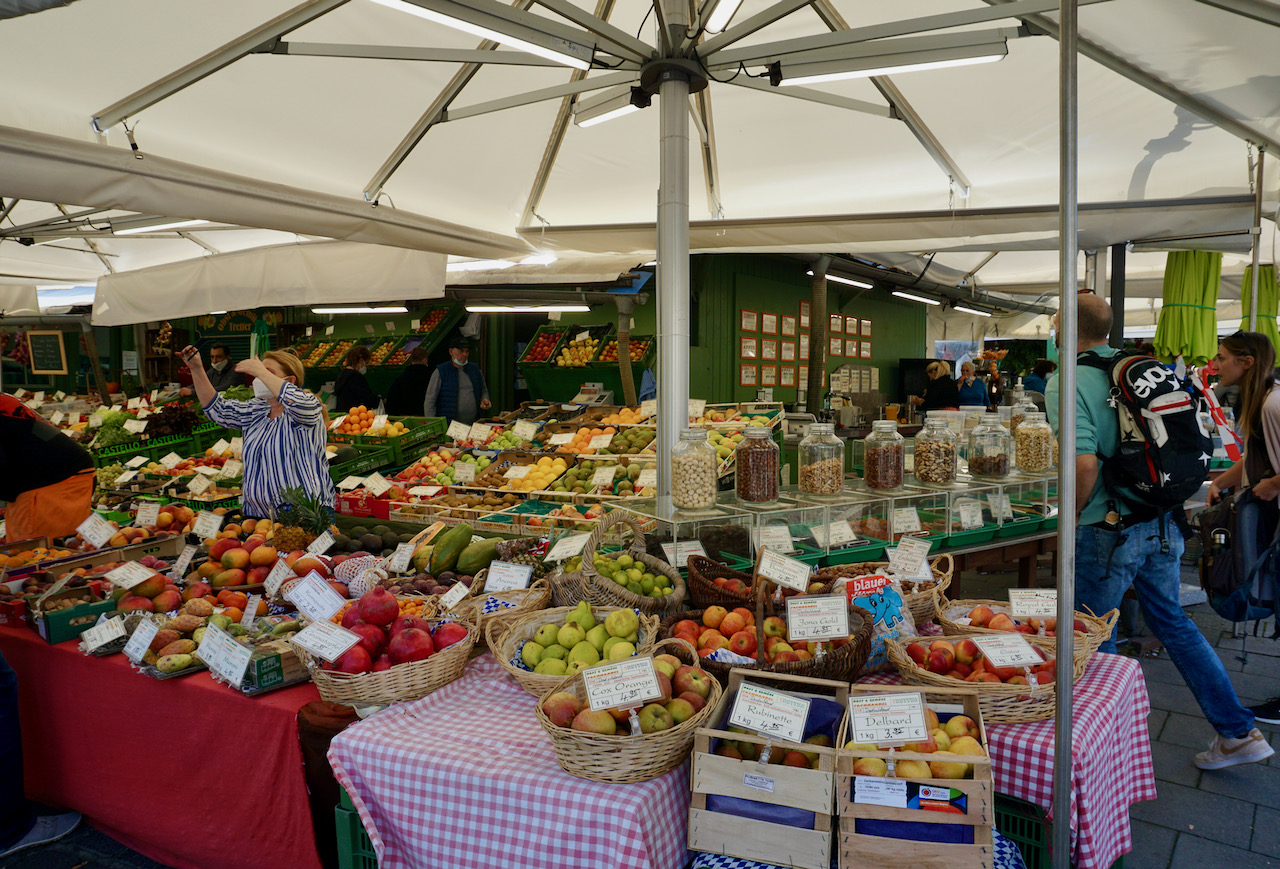
But I’m getting ahead of myself. That was the last photo I took on Sunday. Back to the tour on Saturday, which concluded with my favourite part: Viktualienmarkt!
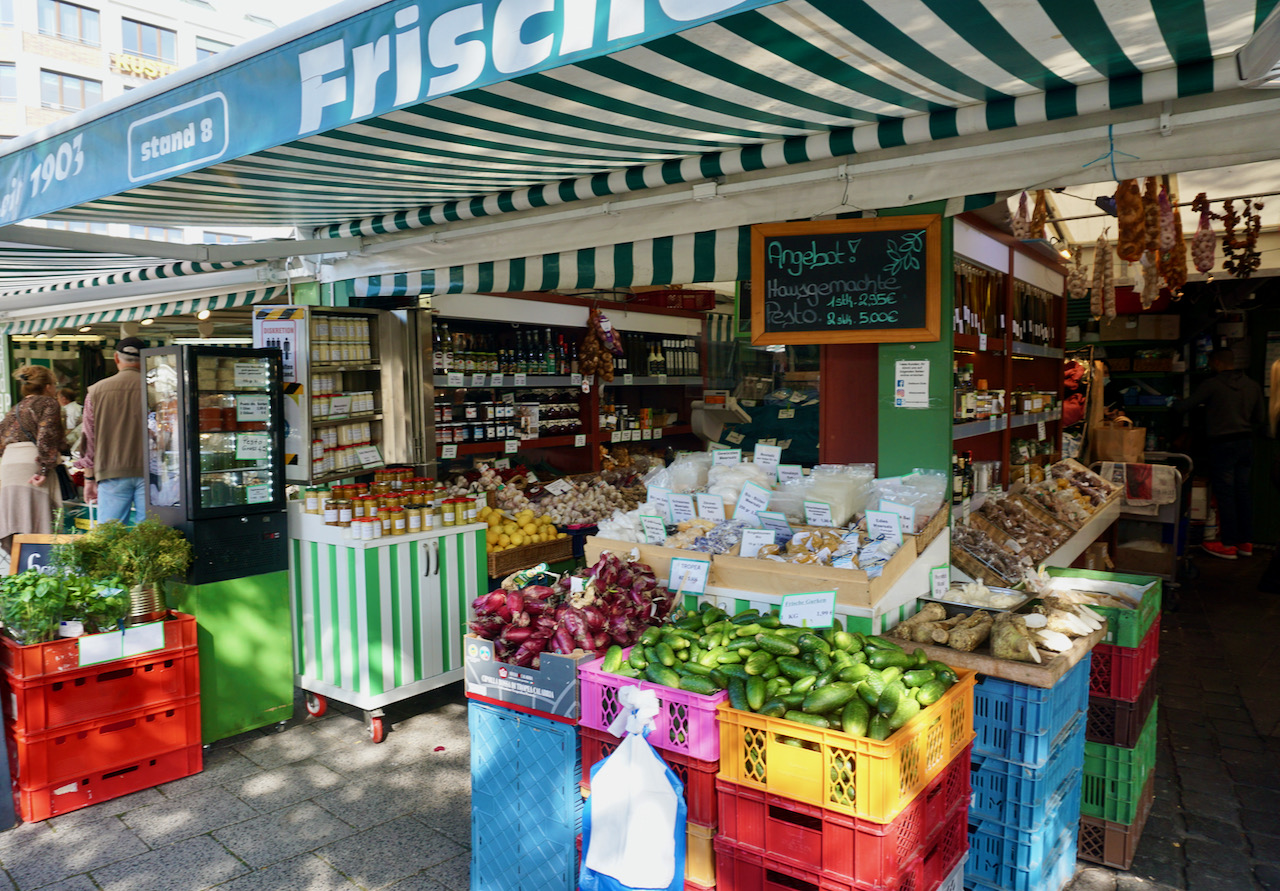
If you’ve followed this blog for any of my travels, you already know how much I enjoy markets. Please feel free to skip to the photos. If you’re new here, welcome! To sum it up, I really enjoy markets. I love the people, the energy, the community built around food. I love the smells and tastes and the fact that everything you purchase comes from a real person who is standing right there in front of you, and who could probably tell some sort of story about what you’re buying. I love the interaction and the camaraderie that comes from watching others and being caught in the act of watching. All kinds of people shop at markets, and markets cater to so many traditions and flavours. One must only glance at the colours, the careful presentation of goods, and the handwritten signs to witness the collective humanity that has created this place. Walking through a market tells us something about the culture of a place and the people who make their home and livelihood there. There is so much to see and so many opportunities to experience something new.
After the tour concluded, I returned to Viktualienmarkt, had something to eat, took some photos, and watched people. Even though the tourist events and big Oktoberfest celebrations were cancelled, it was a treat to watch people going about their business in Drindl and Lederhosen, and then joining their fellow Bavarians at the many beer gardens and beer halls. I did my part by sampling kaiserschmarrn and pretzels with obatzda in my breaks from wandering around.
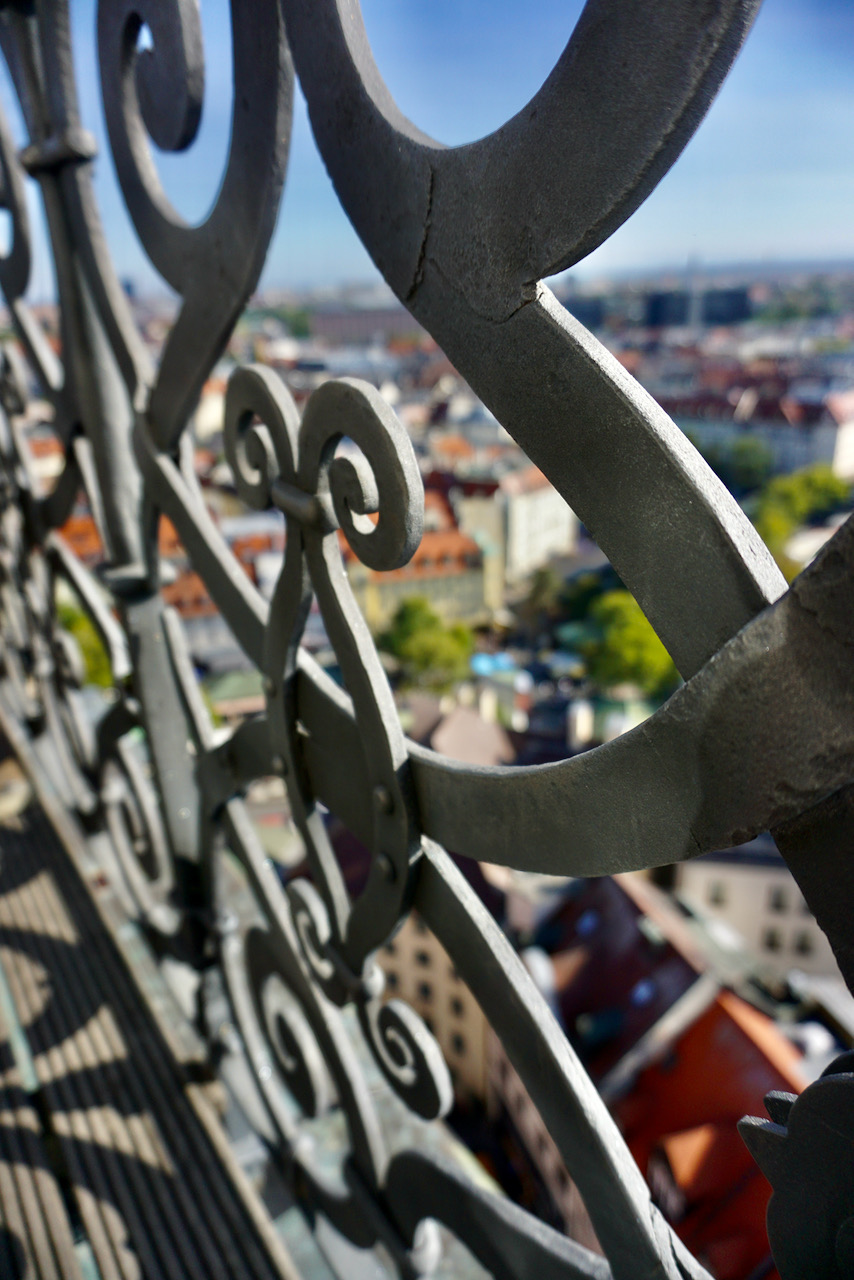
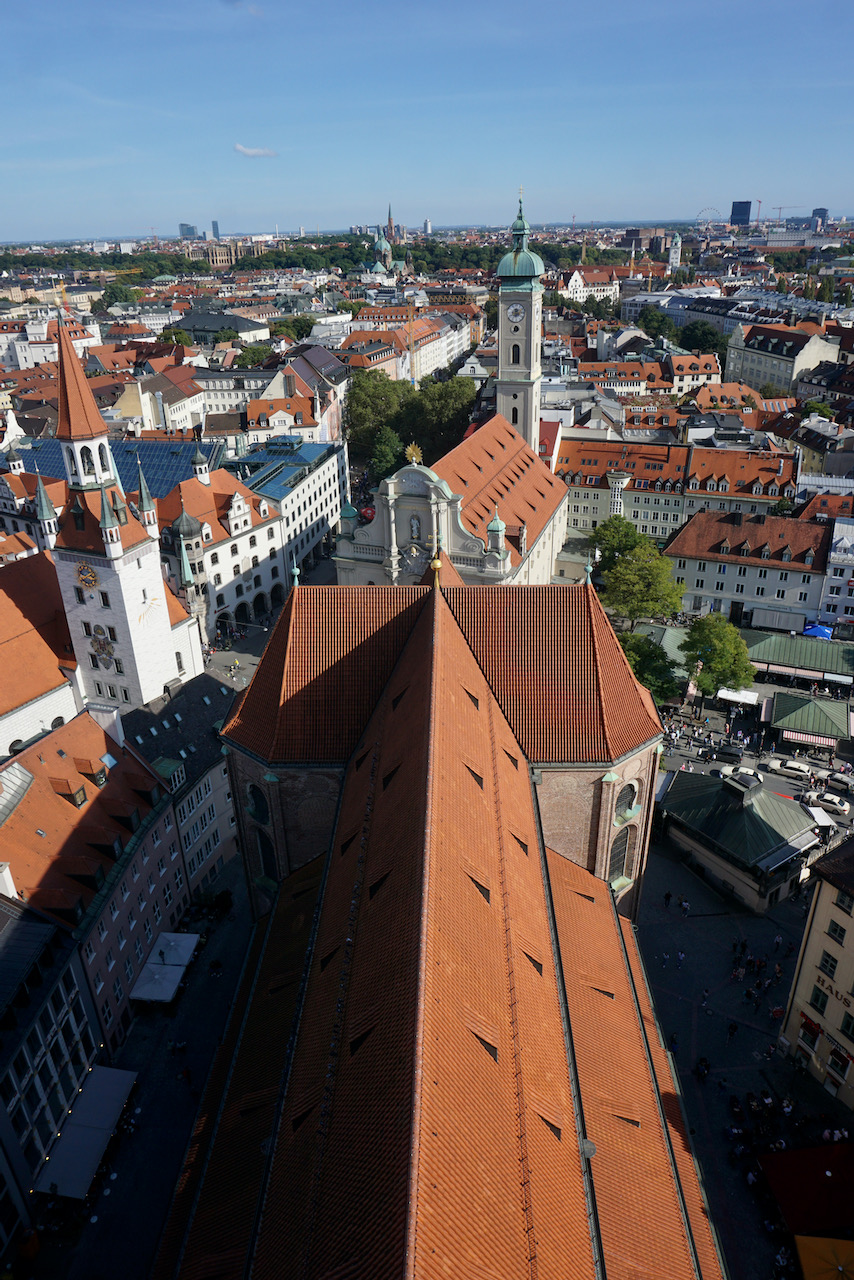
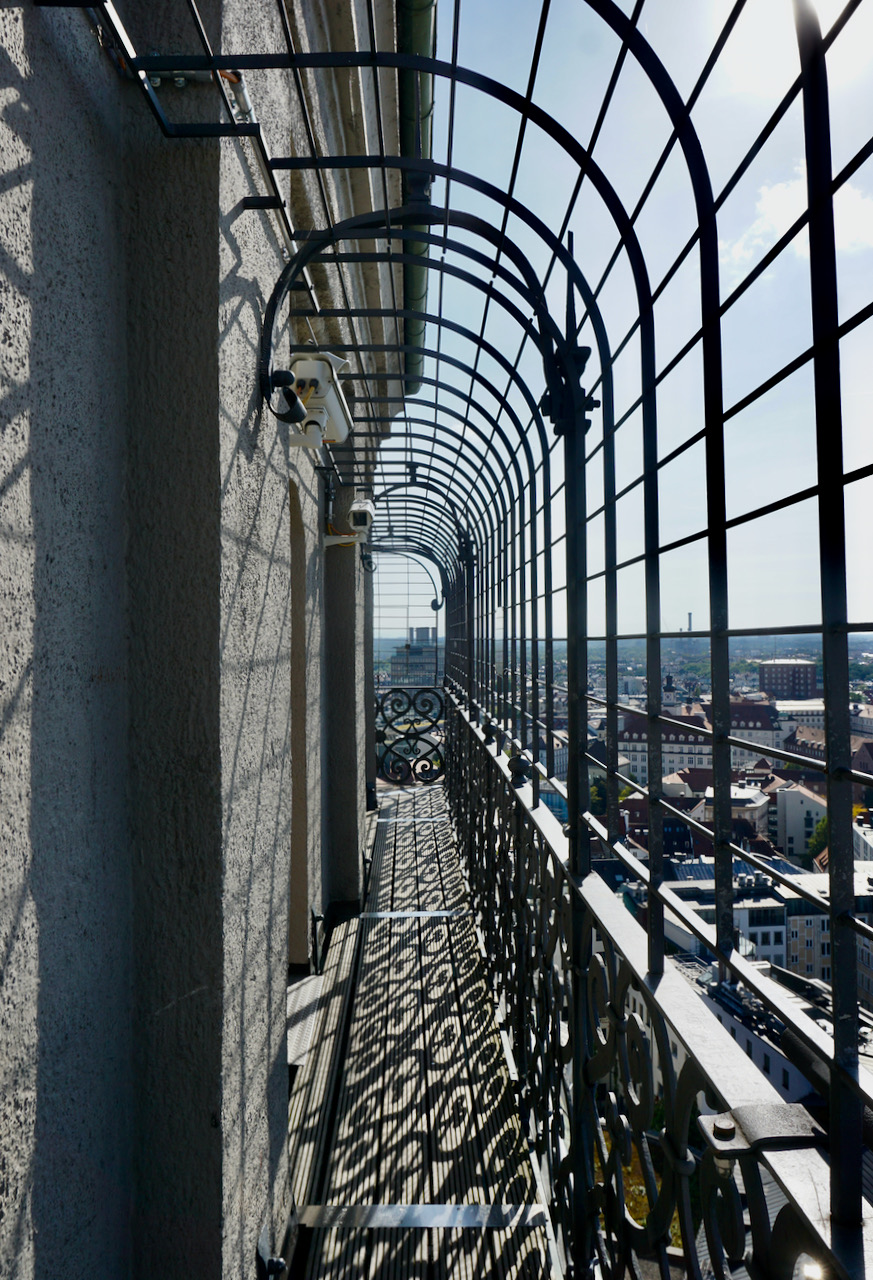
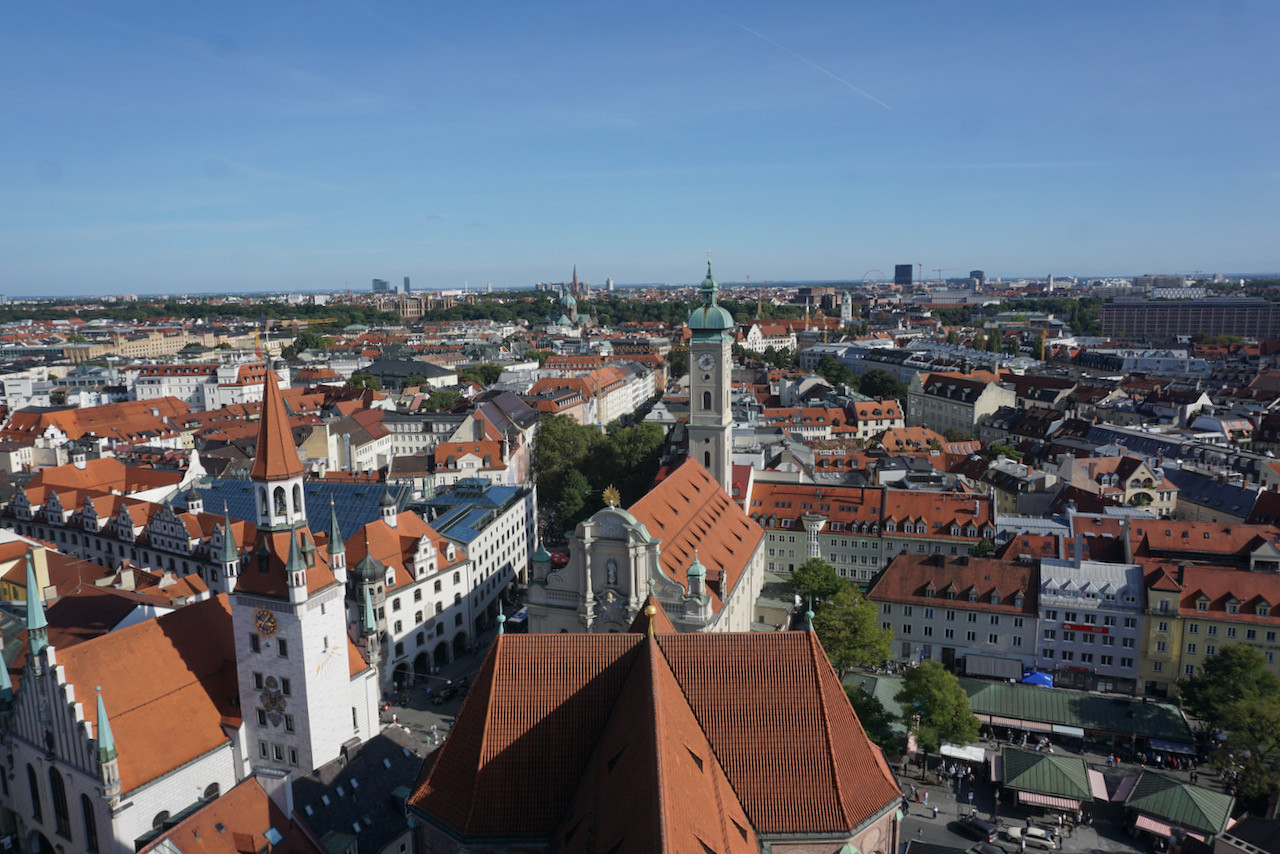
My Oktoberfest experience came later, however. Due to the beautiful weather, I was determined to remain outside as long as I could. This first meant standing in line to climb the tower at Saint Peter’s Church. I do enjoy a good church tower for a view and the passing people, many in traditional clothing and having a good time, provided plenty of diversions. Half an hour in line and about 300 steps later brought a wonderful view. People had said you can see all the way to the Alps and they were absolutely right.
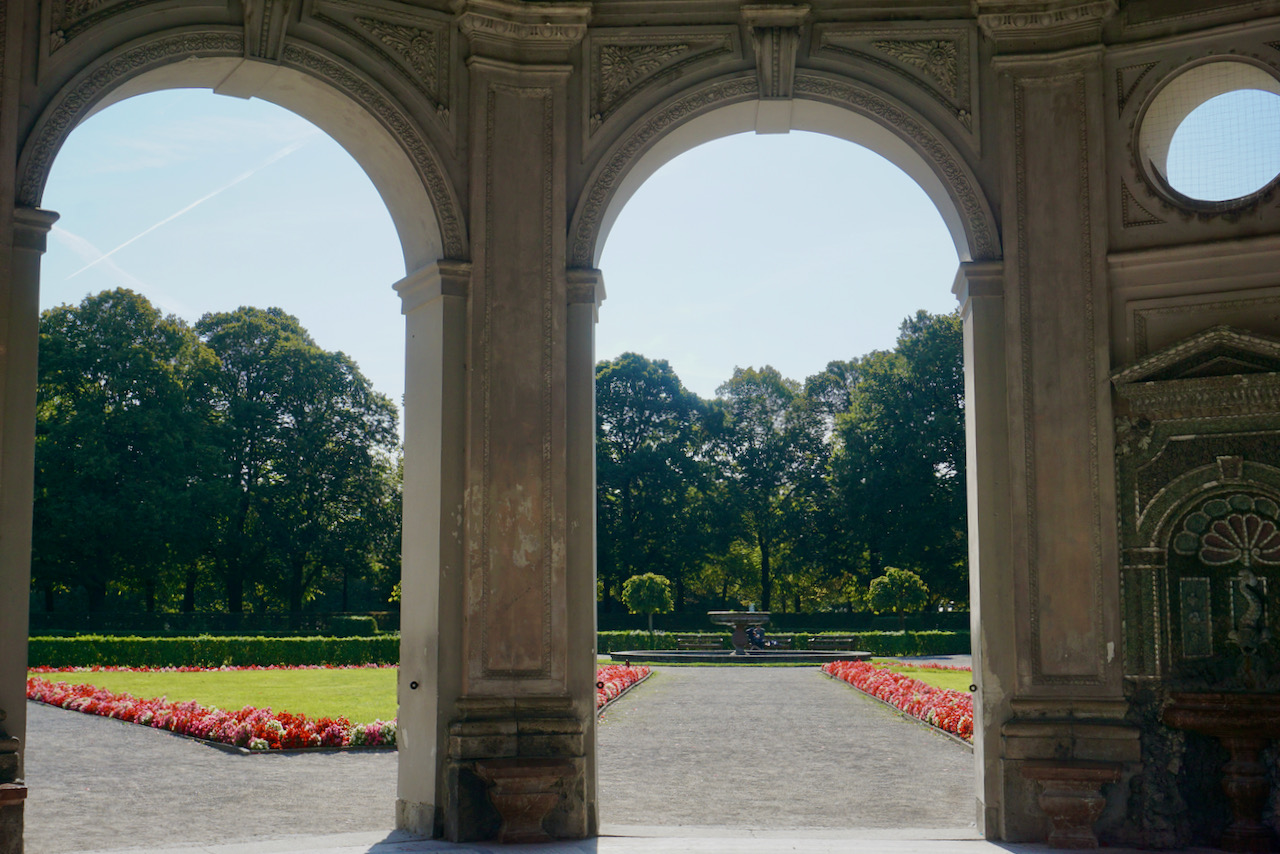
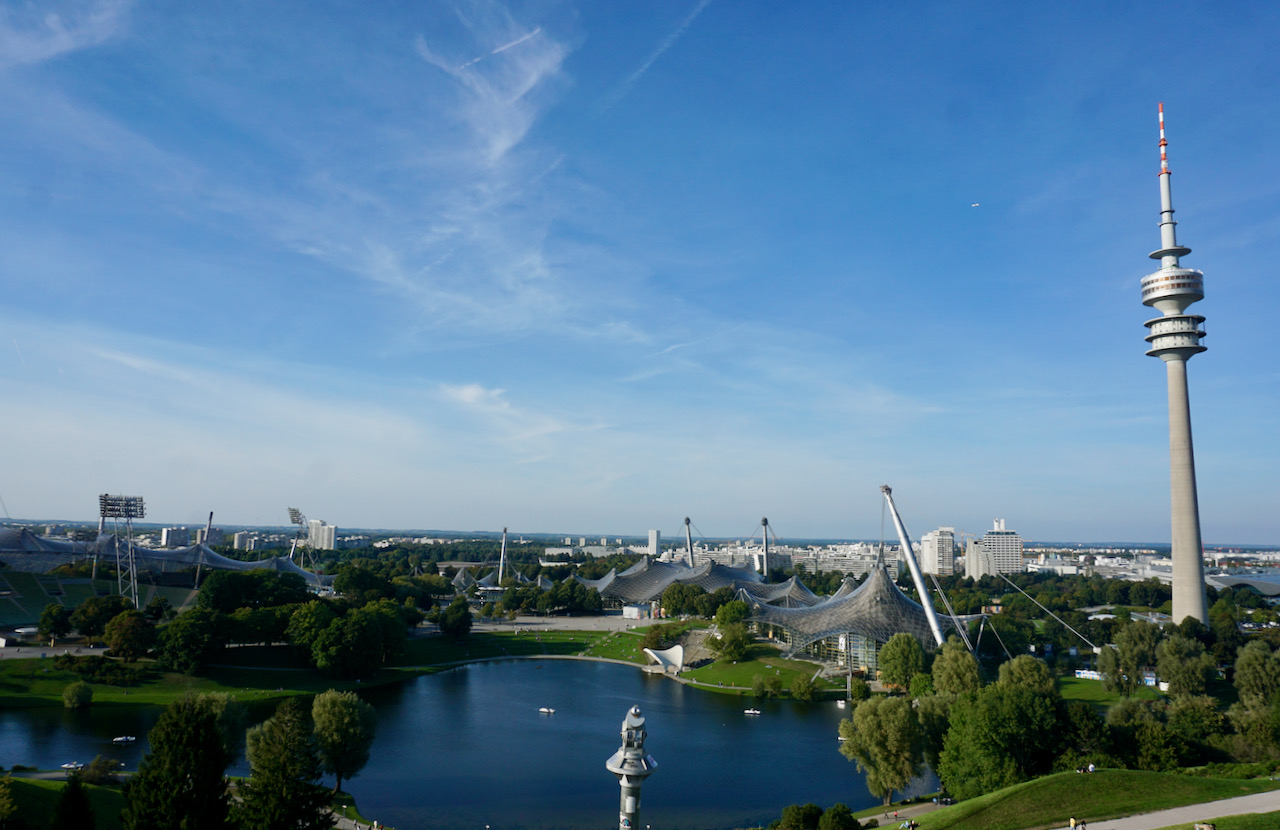
Later that afternoon I went out to Olympiapark, both for the walk and the view. Munich is a city full of parks and I was so glad to see people enjoying the weather and one another. I was also glad for so much greenery in a city! That being said, Munich is far from crowded and congested. With a population of about 1.5 million people, it is affectionately referred to as a “large village”. I cannot imagine this place with the 6-7 million visitors that come for Oktoberfest during a normal year, and I’m honestly not sorry I missed it.
Which brings me to . . . Oktoberfest!
The friend who offered suggestions also provided a list of her favourite beer gardens and I tried, I really did. I’m not one to shy away from being alone in public places, but the essence of beer gardens and beer halls is that you sit down at a communal table, introduce yourself, and enjoy your time there. This was an uncomfortable thing to try alone, even though I found plenty of single seats when I looked around. Since beer in Bavaria brings people together, I was not inclined to take the communal out of it. And I had no intention of attempting small talk in German while everyone else was at a party.
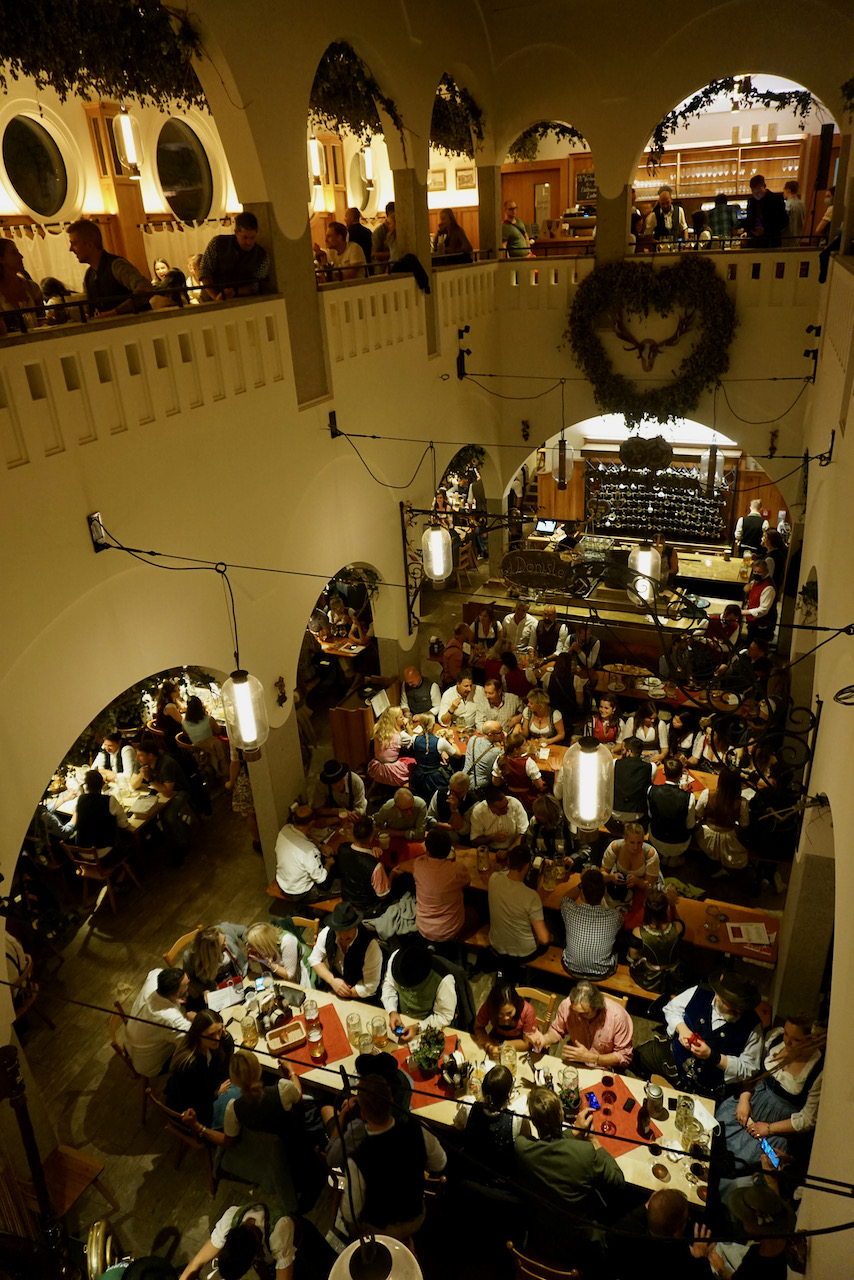
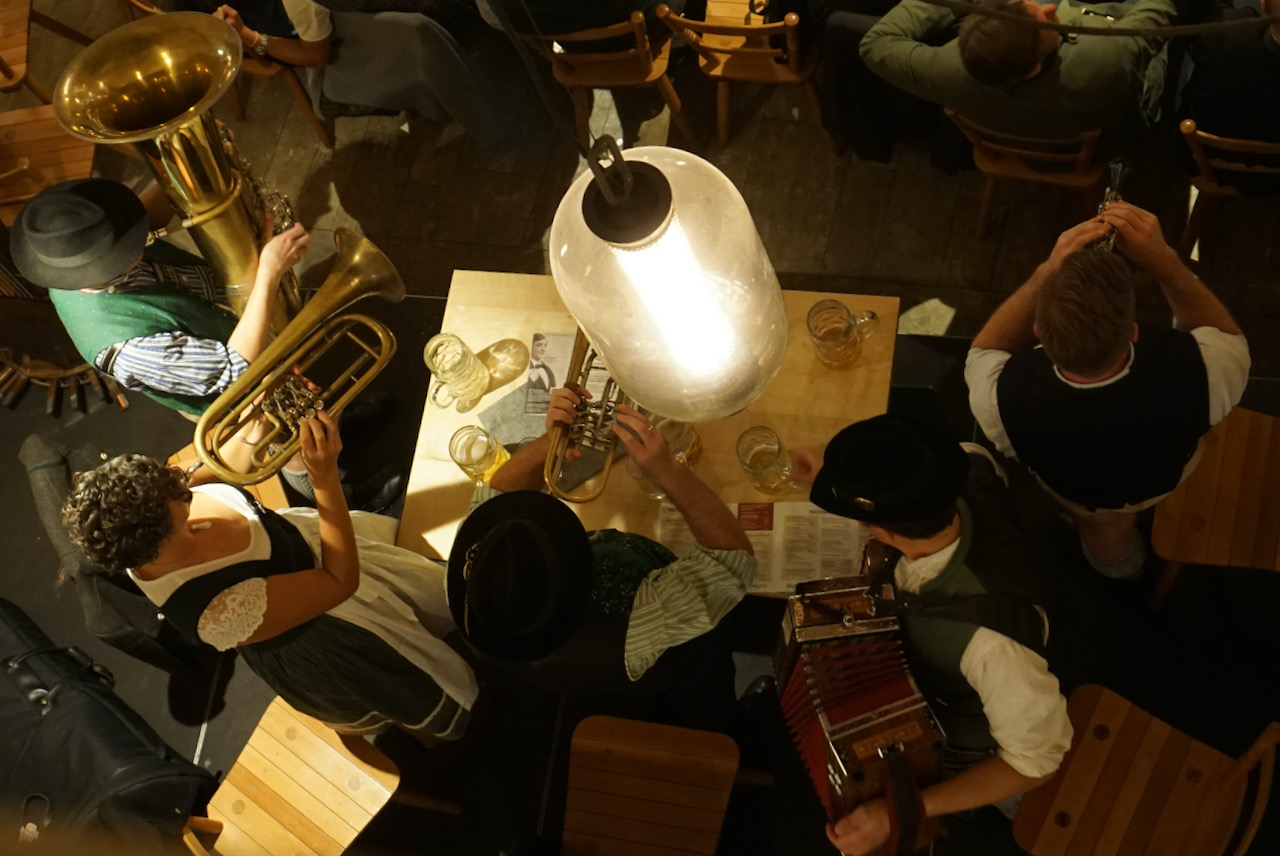
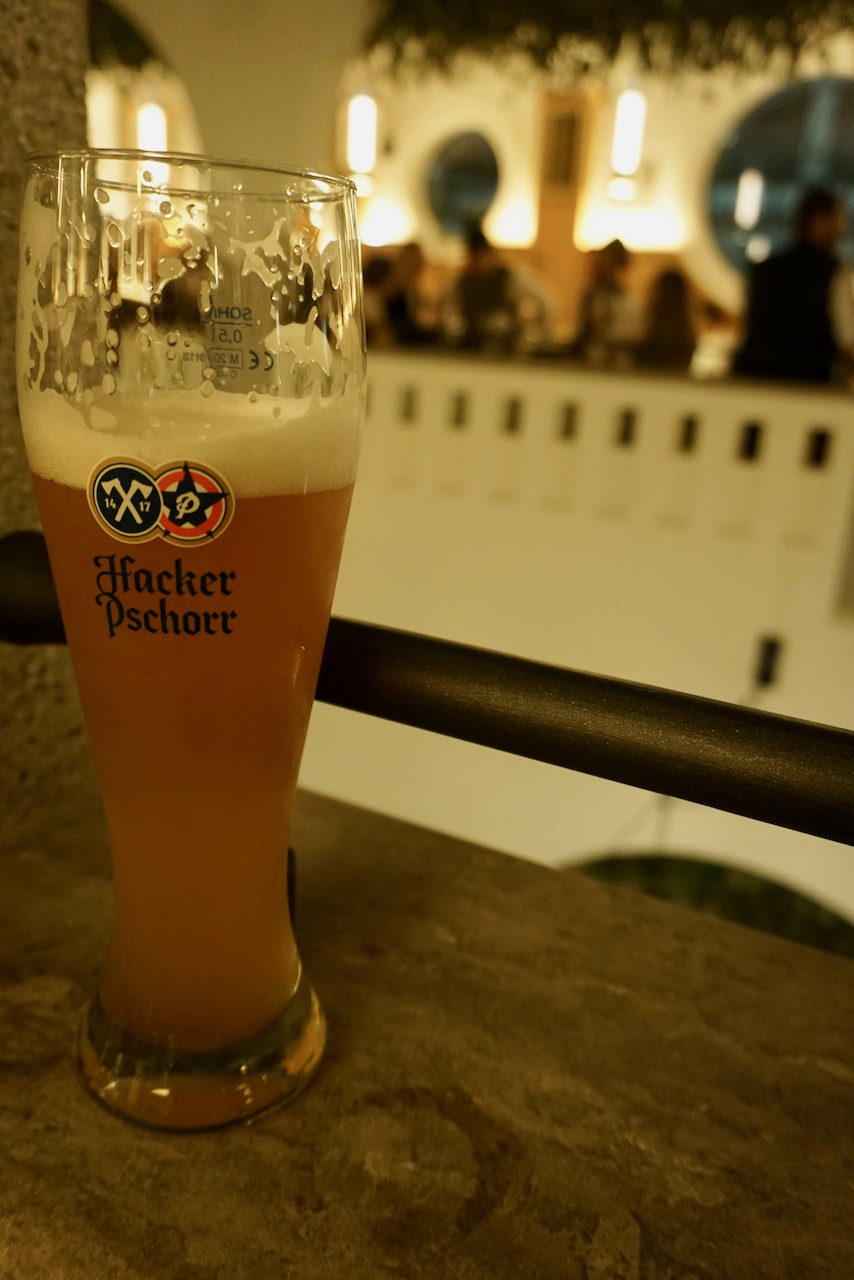
And then I got lucky. I had given up on a beer garden and decided I’d have a drink outside and watch the world go by. But then I heard music and the man at the door directed me up the stairs to the drinks-only open-air balcony above a beer hall. I found a spot by the railing and laughed out loud. The music, costumes, food, huge beer steins, the noise, laughter, drinking songs: It was just like the movies.
I was in Munich for a real Oktoberfest because a concert and the tourist parties were cancelled. The world works in strange ways, and this one treated me very well indeed.
The next morning, I headed to a vegan café for brunch and then continued wandering in the sunshine, visiting some of the same spots I had been to the day before. I redid some photos and wandered through more of the Englischer Garten than I had first seen, and then it was time to go. I still have a list of places to go and foods to try, and it’s only three hours away; I suspect I’ll be back.
The impetus for my trip to Europe was to visit my brother during his semester studying in London, but prior to meeting him, I spent time in Leiden and The Hague, Brussels, and Ghent and Bruges. We chose to meet in Amsterdam because KLM has a direct flight from Amsterdam to Singapore so it would be easy on both of us.
It was raining, windy, and unpleasantly cold when we found each other in Amsterdam’s central train station. I was reading a book next to a baby grand piano that invited travelers to sit and play, heard my brother call my name, and looked up. I hadn’t seen him since July and it was so great to reunite, give him a hug, and go off on an adventure in a place new to both of us. As travelers, we both enjoy just walking around and seeing what there is to see. So, after dropping our backpacks at a storage facility in the middle of the city, that’s mostly what we did for the couple days we were there.
Growing up in the Finger Lakes of upstate New York in a city built around a canal and a river, we’re both used to life along the water but Amsterdam was constructed differently from any city we’d been to. It felt like it was designed for people instead of people fitting themselves around the design. Being in Amsterdam made it easy to understand the emphasis on commerce and exploration that made the Netherlands a European imperialist power. Of course, we loved all the bikes and houseboats, too.
As we wandered, we spent a few minutes in the Begijnhof, the former residence of a Catholic sisterhood who took no vows lived like nuns . . .
. . . stepped into De Krijtberg to verify that it was indeed a church (the Jewish stars above the doors left us a little uncertain) . . .
. . . and walked through a lovely flower market. It’s April in Amsterdam, after all!
Before returning to pick up our bags to take them to our Airbnb, we snacked on Dutch waffles (very different from Belgian waffles) at Albert Cuypmarkt. It sells everything, as markets do, and is located in a cool neighborhood. Market visits are my favorite travel activity because of the diversity of people and products. Look through a market and you’ll know what people buy, what they eat, the cost of living, and how people get along with one another.
We were lucky to find Café Gollem Amstelstraat our first afternoon in Amsterdam and made friends with the bartender while enjoying the largest cheese plate we’d ever seen. I loved that the bar had wifi and people were there working on laptops. Reading the chalkboards on the walls, my brother noticed that they sold Westvleteren 12, often voted the best beer in the world (though this may be changing). Oddly enough, we’d talked about that beer earlier in the day and just looked at each other for a moment.
We asked the bartender if the bar indeed had it in stock. They did. We asked if it was actually the best beer in the world. He hesitated. He told us that it’s been called the most perfect beer and that it’s unique, special, and really indescribable. He confirmed that the scarcity and mythology around it only add to the appeal and assured us that we’d enjoy it, but that we should be aware that we were unlikely to immediately experience a “wow” moment.
At 10.2% alcohol, our second drink of the afternoon, and a price tag of €15, we figured we’d split a bottle. Koen, the bartender, poured the beer into two glasses that looked like wine glasses, reserving the last couple swallows to split into two shot glasses. He told us to wait until the beer warmed up a bit and to drink the shot glass pour, where all the yeast settled, slowly, alongside the glass of beer.
The first thing we noticed was the aroma. Koen was right that we wouldn’t be able to describe it, but it was indeed unique and special. As advertised, the taste of the beer was not a “wow, how delicious” moment; it was more like experiencing beer for the first time in its most perfect, pure form as in, “Oh, this is what beer tastes like.” The liquid in the shot glasses tasted and felt completely different; it had more texture and a deeper taste than the rest of the drink. The whole experience was new and interesting and one that my brother and I were glad to share.
Before we left, Koen told us he’d be hanging out at the bar that night if we wanted to stop by again. He taught us the word gezellig, which I had recently come across (though had no idea how to pronounce) in a book on language and emotion. It means feeling pleasant and cozy with friends, which is certainly how we felt leaving the bar and when we returned later that night.
After it got dark, we spent some time in De Wallen, Amsterdam’s infamous red light district. For obvious reasons, photography isn’t allowed there. (Though everything else seems to be, so maybe it’s not that obvious.) The red light district is full of bars, weed cafés, and shops selling all sorts of interesting objects. And women beckoning provocatively behind glass doors. And promoters advertising shows of all kinds. It took me until much later that night to accurately articulate my reaction to what we’d seen. Without knowing it, and as a result of its absence, I realized that I had expected the atmosphere to playful; it was anything but. Human bodies were up for sale and people were shopping and buying. Sex is an industry and one can buy, sell, and commoditize any and every part of it. The whole thing becomes really dark and grim when you realize you’re walking through a flesh market alive and well on city streets.
We got up late the following morning and decided to escape the city for a while. We took a train to Haarlem, just 20 minutes west of Amsterdam. After the busy day and late night were glad to be in a much quieter, sunny little town. We stopped for hot chocolate, the special kind where you choose a real piece of chocolate and stir it into steamed milk, and followed my usual plan without a plan of walking towards the tallest building. We found the town’s central square and toured St. Bavo’s Church . . .
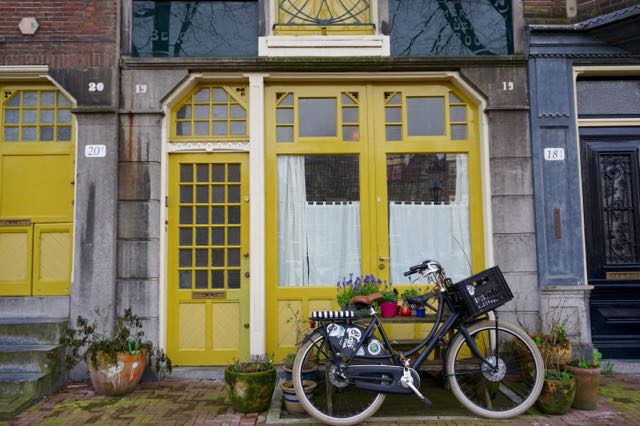
. . . and then spent our time wandering through the cobblestone streets and looking into windows of shops and restaurants. We mostly just enjoyed being away from the hustle and bustle of Amsterdam and looking at pretty gardens down little alleys in front of homes and small businesses.
facebook.com
Asia
Europe
We also enjoyed the architecture outside of the Cathedral of St. Bavo (Bavo was born in Ghent but is the patron saint of Haarlem) . . .
. . . and only stepped inside for a moment to see some very interesting stained glass. Hebrew and other Judaica are very common in Christian buildings if you know where to look, but somehow always surprise me.
Our bartender friend suggested we check out one of his favorite bars in Haarlem, and naturally we did. My tiramisu stout was delicious and my brother had his first sour. Of course, there was cheese to go along with it.
Haarlem also had a bit of an attitude, which made us laugh:
The sun was still out when we walked through Kenaupark along a canal on our way back to the train station late that afternoon. We agreed that Haarlem would be a lovely place to live, both because it’s really nice and because it’s close to a real city.
Back in Amsterdam, desiring to maintain some of the peace and quiet that we had experienced in Haarlem, we followed the canals towards their source in the tributaries off the North Sea. The sky had grown cloudy but I was glad to be on the docks with the boats.
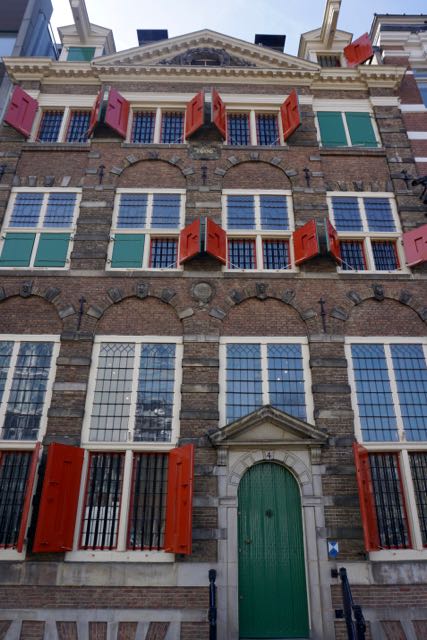
The next morning, we brought our bags to the same storage facility in city center and made our way to the Rembrandt House Museum. I really love seeing how people lived way back in the day. Rembrandt’s life looked quite comfortable and, as my brother pointed out, it’s rare that an artist was so celebrated while still alive.
Amsterdam also has a really cool statue dedicated to Rembrandt in the aptly-named Rembrandtplein, the city’s central square:
Feeling cultured, we decided we’d visit one more museum that day. On our way to the museum district, we walked through a flea market selling clothing, shoes, and cool pieces of art . . .
. . . which led us to a statue of Amsterdam native Baruch Spinoza (the birds were symbolic, but I can’t remember why) . . .
. . . and a memorial to the victims of World War II. . . .
“O that my head were (full of) waters and my eyes a fountain of tears, that I might weep day and night for the slain of the daughter of my people.” – Jeremiah 8:23
Amsterdam has a historic Jewish Quarter but we didn’t spend much time there. We happened across the Portuguese Synagogue one evening and meant to come back, but that’s the day we went to Haarlem instead. Normally, we would have visited the Anne Frank House, but it was unfortunately closed for Passover until the night that I left. Lucky brother went without me.
Our plan for the last afternoon was to visit the Van Gogh Museum in Vondelpark, full of people on the first warm day all week. On arrival, though, we learned that new rules meant tickets were timed and only available online. Unable to get tickets for that day, we opted for the Rijksmuseum just across the park, which houses very famous Dutch art, including several pieces by Rembrandt we’d learned about that morning.
There were street musicians playing in the covered museum courtyard and we stopped to listen. I’m always impressed with just how talented some people are and it reminds me over and over how difficult it is to make it in the arts worlds.
We had a very late lunch after the museum and wandered around a little while longer, enjoying the canals and the sunshine, before I took a train to the airport. There was a lot I enjoyed about just being in Amsterdam because the people of this city have something to say and want to be heard.
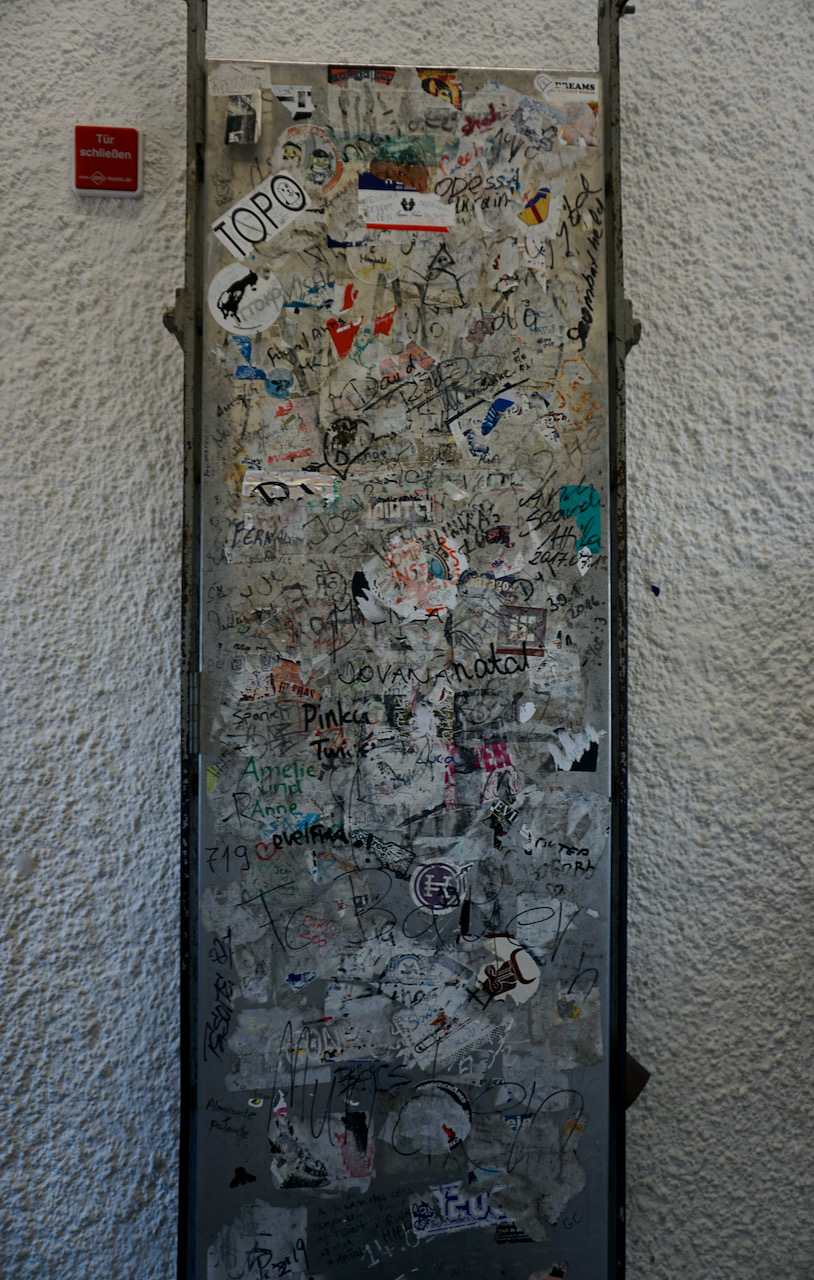
As usual, I appreciated the flavor and feel that street art and graffiti lend to a city. It’s a way of getting to know the people of a place and understand a bit about who they are and what matters to them.
In all, we really enjoyed being in Amsterdam. A city built on canals and for bicycles feels different than many places I’ve been. The graceful bridges and buildings that go right up to the water lend a lot of beauty to the city and I think the locals have a right to be concerned with negative impacts of tourism. Our Airbnb away from city center helped us understand what it means to live in Amsterdam and made me like it a lot more than I did in the crowded tourist areas. As usual, I haven’t seen everything yet, which means I’ll have to come back. Amsterdam, thanks for having us!
Photos, travels, musings, and ideas on education by someone trying to make the world a better and more peaceful place










































 By Rebecca Michelle