Tag Archives: Buddhism

Travel Guide: Battambang

This week-long adventure was different from any I have ever experienced. This was my first time in Cambodia and my first traveling internationally with students. I visited Battambang with the entire grade 10 class of my school (about 90 students) along with the seven other teachers. Upon arrival, we joined JUMP!, a very wonderful experiential education social enterprise with which school is currently working to plan the annual field studies trips for all secondary school students. I am in awe of what JUMP! planned and how their plans came to fruition.

But I’m getting ahead of myself.

The focus of the grade 10 week in Battambang, Cambodia’s second largest city, was to get students thinking about community development, both as communities of advisories (groups of about 15 students that meet daily) and global communities. We spent the week learning from and working with different social enterprises that aim to make Cambodia a better place. All the restaurants where we ate were social enterprises, as well. As part of the program, we explored privilege, voluntourism, sustainable development, Cambodia’s history, and how to bring about positive social change. Throughout the week, I saw my students’ hearts and minds open up, not only to these ideas but also to each other as individuals and as friends. I can say without a doubt that every student returned to Singapore wiser, humbled, empowered, and with new friends.

This post will chronicle my week in Battambang as best as I can based on the photos that I can share. Most of my photos for the week were of and with students, and there are a variety of reasons (i.e. privacy, confidentiality, just plain propriety) why I won’t share them in an unprotected online space. Heartfelt thanks both to JUMP! for their incredible work and to John, the extraordinary JUMP! facilitator assigned to my advisory for the week.

To get oriented, here is a very helpful map from Lonely Planet:
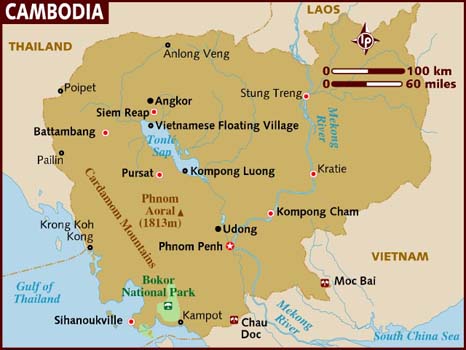
map_of_cambodia
We flew into Siem Reap on Saturday and drove the 3+ hours to Battambang the next morning

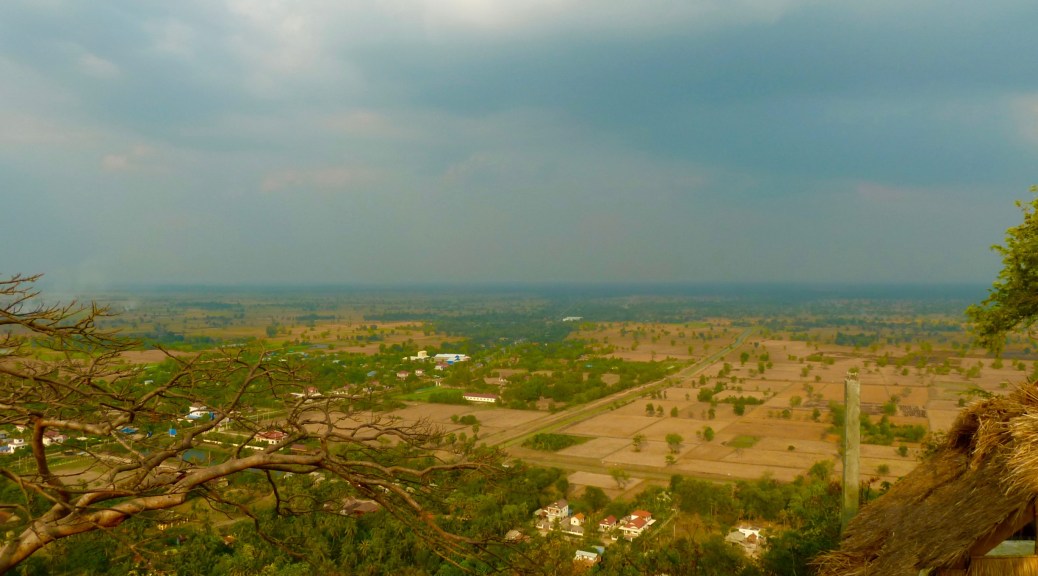
One of our first activities was a tuk tuk ride to visit Phnom Sampow. We took a difficult climb up a steep hill, pausing along the  way to see Buddhist temples and learn about Cambodian agriculture from our guide. We could see farms for miles from various lookout points.


The temples were exquisite, as well. I have a few Buddhist students who stopped to pray along the way.


We also encountered a number of monkeys and actually had to alter our route at one point to get away from them. Monkeys are vicious and will grab any food item or even backpack in site. My favorite monkey was this one:

P1060457

The highlight of this trip, though not photographed because I felt weird about that, was the killing caves, a site of Khmer Rouge slaughter. The caves contained a memorial to victims, including skulls of those who died there and a Buddha statue for those who wished to pay respects.

Probably my favorite morning of the trip started with a trip to a local market to pick up ingredients for the Cambodian lunch we would learn to prepare! The market was wonderful (and sold more than vegetables, though my photos might have you believe otherwise) and the cooking school was incredibly accommodating to my vegetarian needs. Even better: We received cookbooks to take home!


Another really transformative experience was our visit to COMPED, a social enterprise that collects organic material, turns it into compost, sells it to farmers for fertilizer, and uses the money to run enrichment programs for children. To learn about what they do, we visited a market, collected rotten produce, and shoveled it onto the compost pile at a local dump. While there, we also learned that the families who live on the dump are paid more than they would be in other jobs. Despite health risks from being around burning trash, they choose this life to feed their children.


Another social enterprise, Coconut Water Foundation, also runs after school and summer enrichment programs for students. We joined them at a school for about an hour one morning to play games with some of the students. Rather than sharing pictures of children, here are a few artsy shots:

P1060710

P1060718

Our last full day found my group on a bike ride with Soksabike, a social enterprise that pays families to produce traditional products, therefore putting money into the economy, and brings tourists to see these products. Soksabike’s tour guides are local university students who are working to enhance their English skills as they do their jobs.

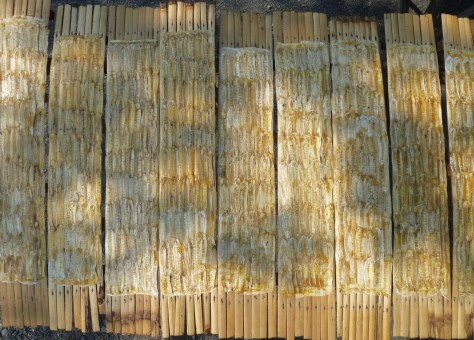
Among other things, we learned how rice paper is made . . .

P1060772

. . . and sampled some delicious dried and fried bananas.
P1060777

The final stop on the tour was a very moving memorial to another killing fields site across the street from a Buddhist temple that the Khmer Rouge turned into a prison and interrogation facility. I didn’t have the heart to take pictures of the memorial, mostly because it broke my heart. The 1970s weren’t that long ago, and the Khmer Rouge existed in Battambang until 1991. 25 years ago is not very many years. The detachment with which Cambodians speak about the Khmer Rouge genocide is painful to witness.

I don’t have photos to share, but other social enterprises that we visited and worked with were Phare, FEDA, and Cambodian Children’s Trust. All of these organizations work with and for community development, specifically targeted at children. CCT was the most moving for me because they taught us about orphanages and orphanage tourism. We learned that 80% of children in Cambodian orphanages have living family and are in orphanages (and often exploited and abused as a result) because their families were tricked into thinking their children would have better lives and a better chance at education.

It was a week of growth, that’s for sure. I’ll be back in Cambodia in March to spend a weekend in Siem Reap to visit Angkor Wat. I’m so grateful for the opportunity to travel with my students to Battambang to learn how real Cambodians live. The trip we took and experiences we had would not have been possible for me to orchestrate. JUMP!, thank you for opening my eyes to this beautiful country and its proud, hopeful citizens.

P1060627
At the old abandoned airport one night


Travel Guide: Hong Kong

Recently, Mitch and I met up with our friend Lucas in Hong Kong. Lucas has been a best friend for years; we met as freshmen in high school, went to college together, and have kept in very close touch since he moved away to California not too long before I moved to Malaysia. Lucas has a very cool job that lets him do things like travel the world. About six months ago, Lucas told us that he was going to be travelling to Hong Kong sometime in November or December. Along the way, that turned into March. The knowledge that one of my best friends was going to be a four-hour plane ride from me acted like a tonic; whenever I considered throwing in the towel and heading home after returning to Malaysia from Spain after Christmas, I remembered that Lucas was coming. And then March showed up and the three of us spent a fantastic weekend together exploring Hong Kong.

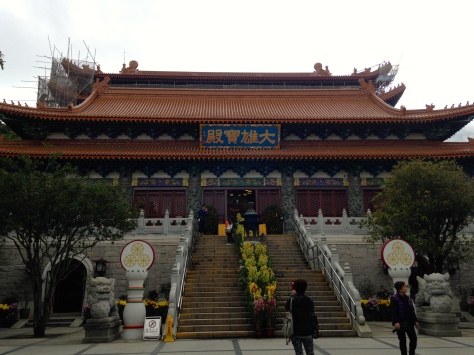
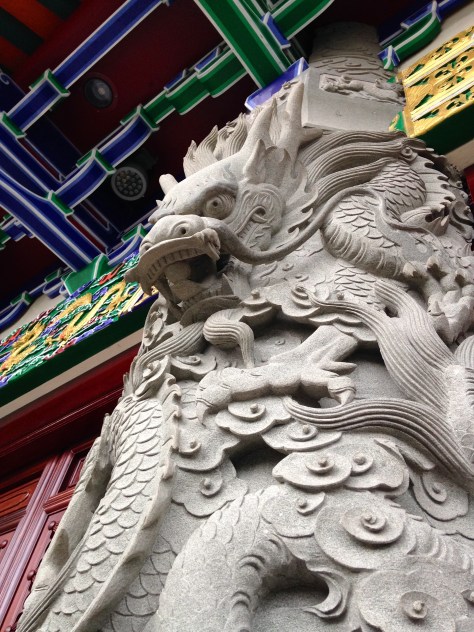
Our first destination was the Po Lin Monastery, located on the island of Lantau. It’s a bit of a trek to get there from where we were staying on Kowloon. Taking public transit took just under 2 hours. It would have been quicker had we been able to take the cable car upon arriving on the island, but it was under repair so we took a bus up windy, twisty roads. That is always a potential recipe for disaster, but we pulled through. Monasteries seem to always be built in beautiful places, and it’s no surprise why. Look around and there’s some sort of breathtaking moment or view or setting that causes one to think of higher powers that could have created such an image.

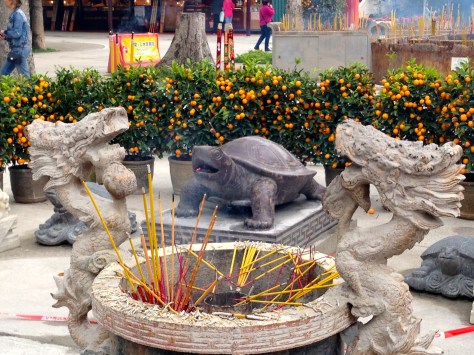
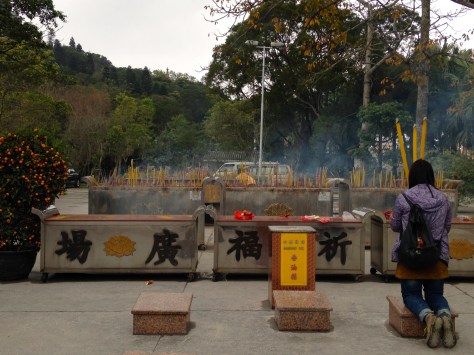
I’ve really enjoyed visiting Buddhist sites around Southeast Asia because they are so different from the types of religious sites to which I am accustomed. I particularly like seeing worshippers, also because their religious practices are unfamiliar to me. As a social studies teacher, I can list Buddhist principles and the history of Buddhism in my sleep, but seeing devotees practice is always eye-opening.

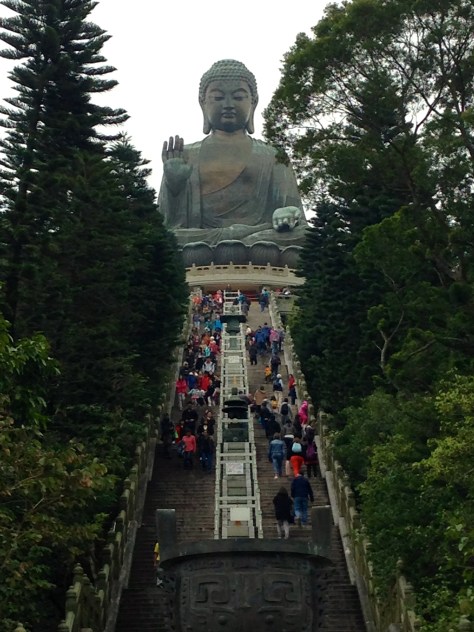
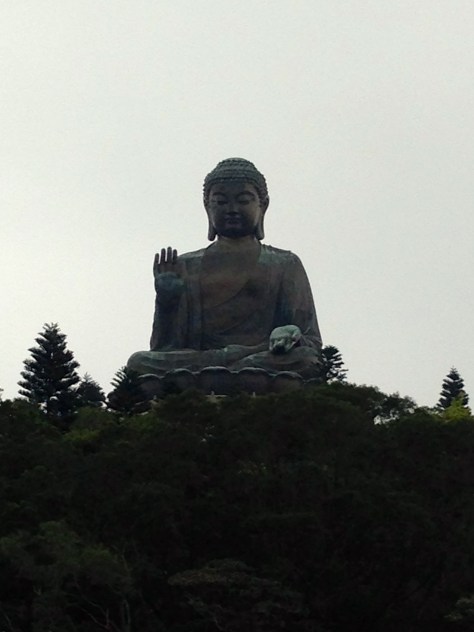
One of the main attractions at the monastery is the Tian Tan Buddha, also referred to as Big Buddha on the signs. We climbed a whole lot of steps and were enthralled with what we saw. This monastery is home to a bone relic from Siddhartha Gautama, The Buddha with a capital T. (And a capital B, I guess.) Big Buddha sits on top of the temple containing this relic. It’s so small that the only way to see it is on a video screen that has a photo of the bone under a microscope.
It was from Big Buddha that we were able to see the valley that Po Lin Monastery calls home.

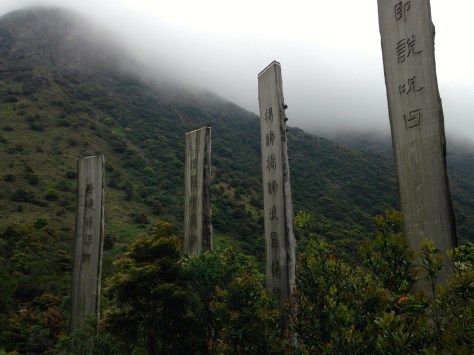
There also walking and hiking trails around the monastery, which we decided to visit. We found ourselves in clearing of unexplained trees carved with Chinese characters. Mitch said he expected druids to come out any minute, which is probably the best way to describe it.
That evening, we went to Temple Street Night Market to show Lucas what night markets are and also to eat cheap local food. In my mind, the market was notable for its vegetable satay and the prevalence of stands selling very naughty lingerie next to stands selling key chains. Something for everyone. We also ventured to the Goldfish Market the next day, which is not an experience I plan to repeat. We’d been warned and now that I’ve seen it with my own eyes, I can assure that it is no place for anyone even remotely concerned with animal welfare. The entire street was lined with pet shops and all of the animals were in tiny cages and being poked and prodded by buyers and people who simply seemed to enjoy the novelty. We looked around, walked up and down half the street, and called it quits. There are some cultural barriers that are too high to breach.

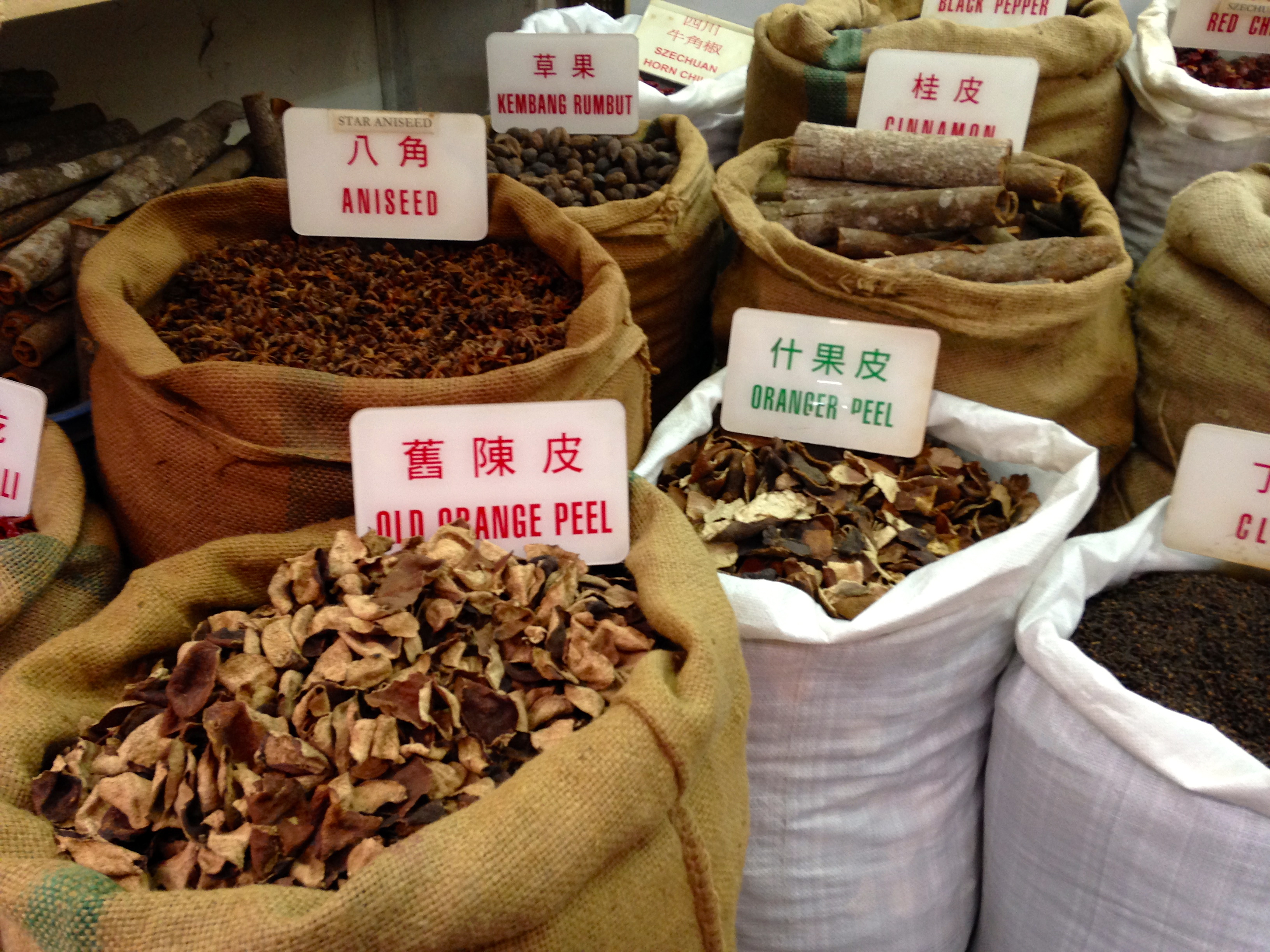
The next day, we wandered through Hong Kong Central, basically following the crowds. We made our way down windy streets where antique stores sold porn along with very old coins. (My personal favorites were the holographic cards that show a voluptuous clothed woman and a voluptuous naked woman, depending on which way they’re twisted. Fascinating stuff.) We went through streets of grocers’ markets and found multiple stands full of fish that had probably been caught that morning. Personally, I preferred the smells coming from the spice shops.

Spices
The only items in the market I could stand in front of long enough to get a picture
More spices
How old are oranges before the peel is considered old? What color is the peel if it’s considered oranger?

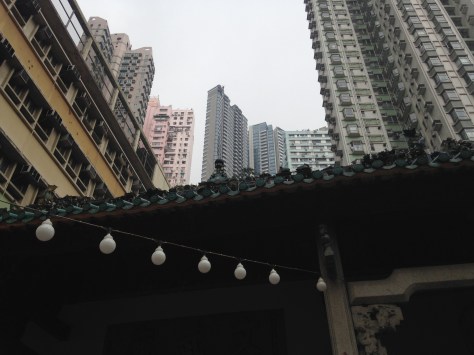
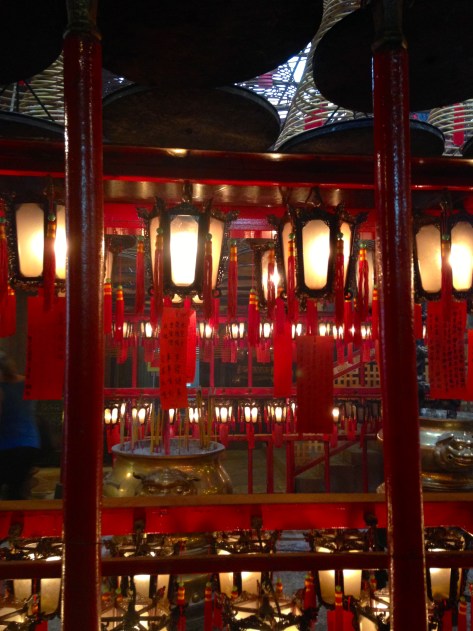
                                                                                                                                                                                                                                                                                                                                                One of the things I love about Southeast Asia are temples located in the middle of big, bustling cities. Hong Kong’s oldest temple, Man Mo Temple, dates to 1847. It sits next door to massive high-rises and crowded with Buddhists lighting incense and praying. The smoke was so thick inside that it was hard to breathe, even more difficult than in the rest of Hong Kong. (The fire alarm in our hostel went off early one morning because of the smog.)

We went to A Symphony of Lights at Tsim Sha Tsui Waterfront on Kowloon, which is the island where we were staying. The symphony wasn’t much to speak of, but it was neat to see the skyline lit up. I also really loved the ferry we took from Kowloon to Central in the dark.

Hong Kong at Night

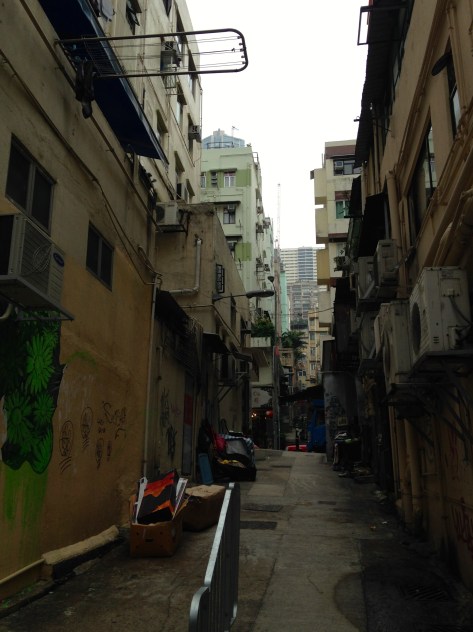
Probably my favorite aspect of travelling is experiencing life as locals do. I love unique signs and shops and neighborhoods that would never be found in guide books because of their normalcy in everyday life. From the outside looking in, however, these are what make people and places real and liveable.

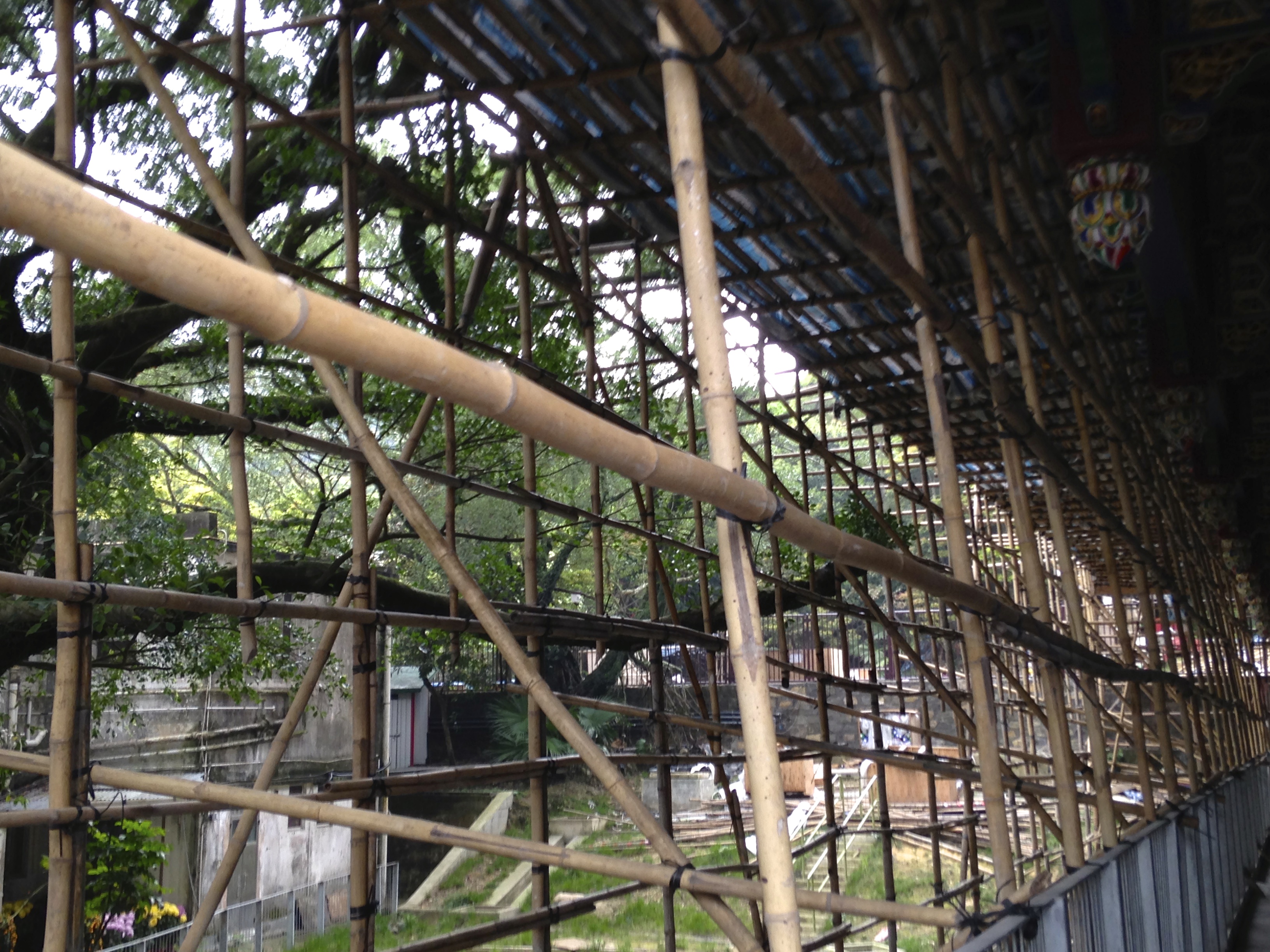
Like building techniques . . .

Scaffolding
Bamboo scaffolding – They’ve probably been using it for thousands of years and see no need to stop. If it ain’t broke, don’t fix it.
Scaffolding
Yes, this was at Po Lin Monastery but we saw scaffolding like this all over Hong Kong. It made quite the contrast against concrete!

                                                                                                                                                                                                                                                                                                                             nightlife culture . . .

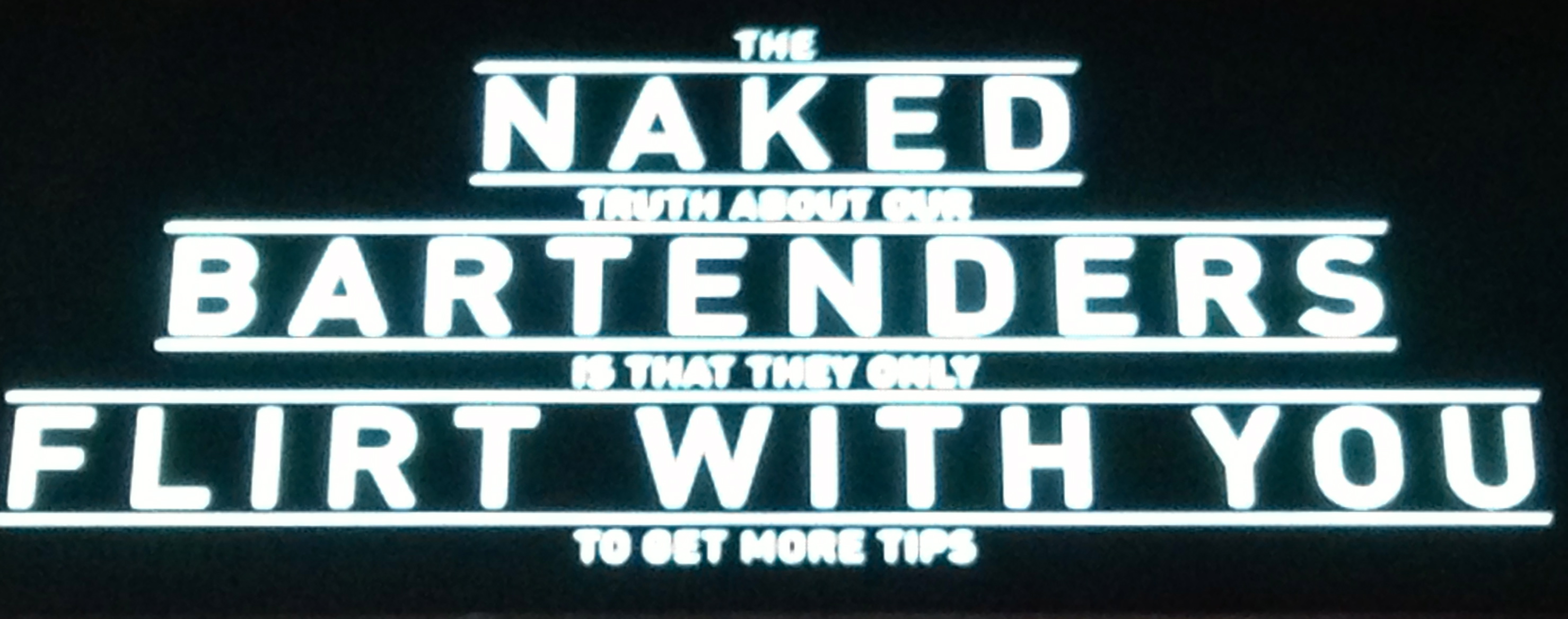
Nothing beats telling it like it is!
One of the many trendy and expensive bar streets in Central
Had we known Operation Leprechaun was on, we would have come prepared

                                                                                                                                                                                                                                                                                                                     home decor . . .

We found these mugs in a store window selling Taiwanese products. The whole area was full of high-end desginerly home goods - made me want to buy lots of things when I grow up!
We found these mugs in a store window selling Taiwanese products. The whole area was full of high-end desginerly home goods – made me want to buy lots of things when I grow up!

and a very important aspect of Hong Kong life . . . subway etiquette!

HK subway sign
Thank you, helpful sign. The best part is that “do do do” is exactly how one would describe that specific sound
HK subway sign 2
I also like that these helpful signs are color-coded

Safe travels and remember to keep your ears pricked for “ding-dong!”

Travel Guide: Bangkok

Our latest adventures took us to Bangkok where we primarily explored food and temples. Everything I’ve hear about Bangkok is true – it’s wild, it’s crowded, it smells, it’s beautiful. Bangkok is an astonishing mixture of old and new, rich and poor, traditional and modern. Mitch and I were there Friday night to Sunday morning and these photos provide just a taste at what we saw and experienced. We already have a list of what to do next time we go!

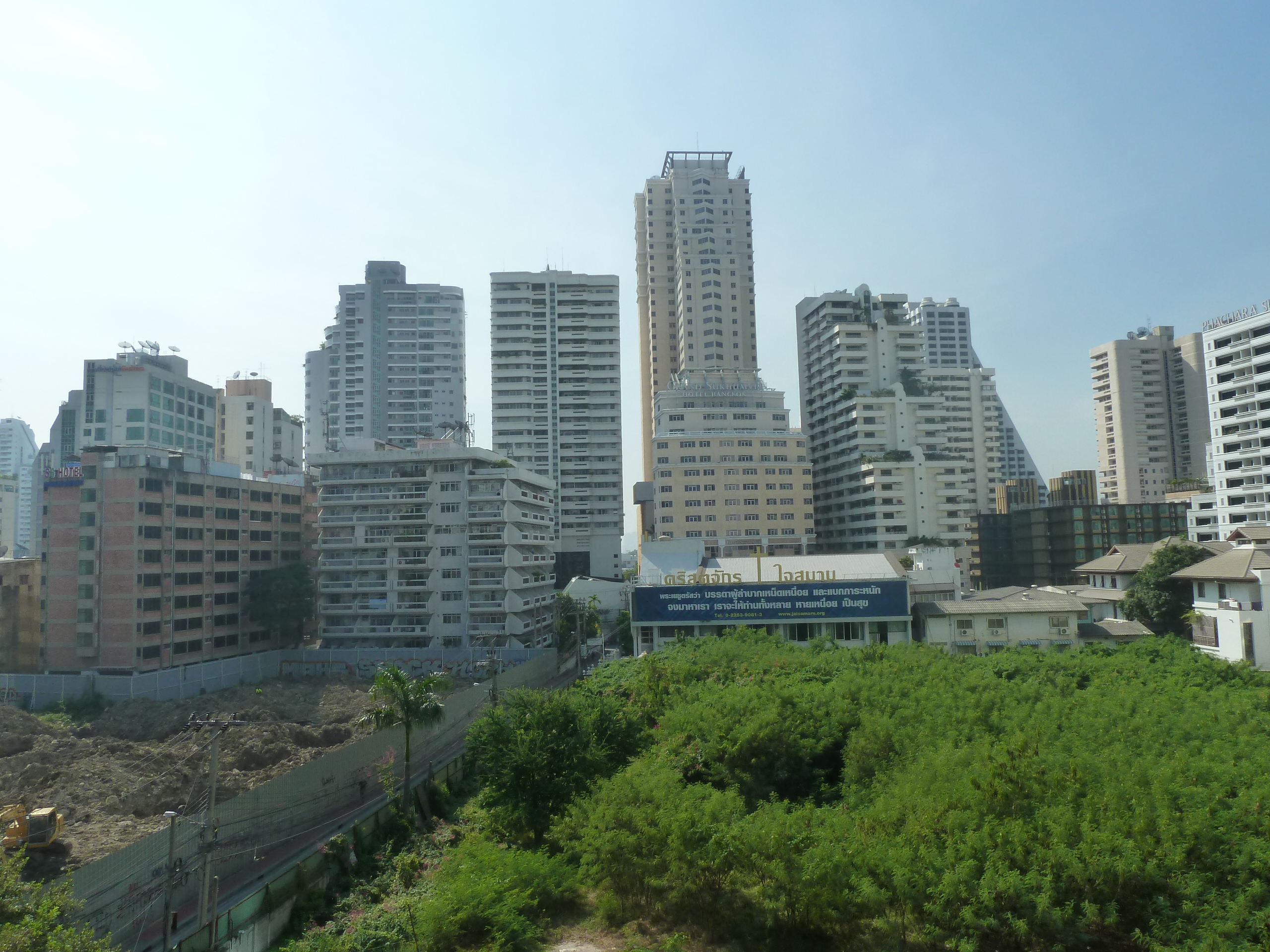
View from our hotel
View from our hotel

The Sky Train was our primary means of transportation and I really liked it because you can see quite a lot of Bangkok from the slow train up in the air. The stations are also really close together so train journeys are a lot shorter than they look.

Bangkok view
Bangkok view

Saturday morning took us to Chatuchak Market, a massive outdoor market selling literally everything one could hope to buy. The food smelled and look delicious, but we had already eaten. If you go, go hungry!


I particularly enjoyed our trip down the river in one of the many water taxis. Again, this was a great way to see the mixture of temples and religious sites and fancy hotels along the water. I also really love boats and it was fun to see the sheer variety that crowd the river and canals. Be warned: The smaller water taxis fly along and the journey can be rather harrowing for those not comfortable in the water. However, it’s a unique experience that does provide quite a bit of sight-seeing.


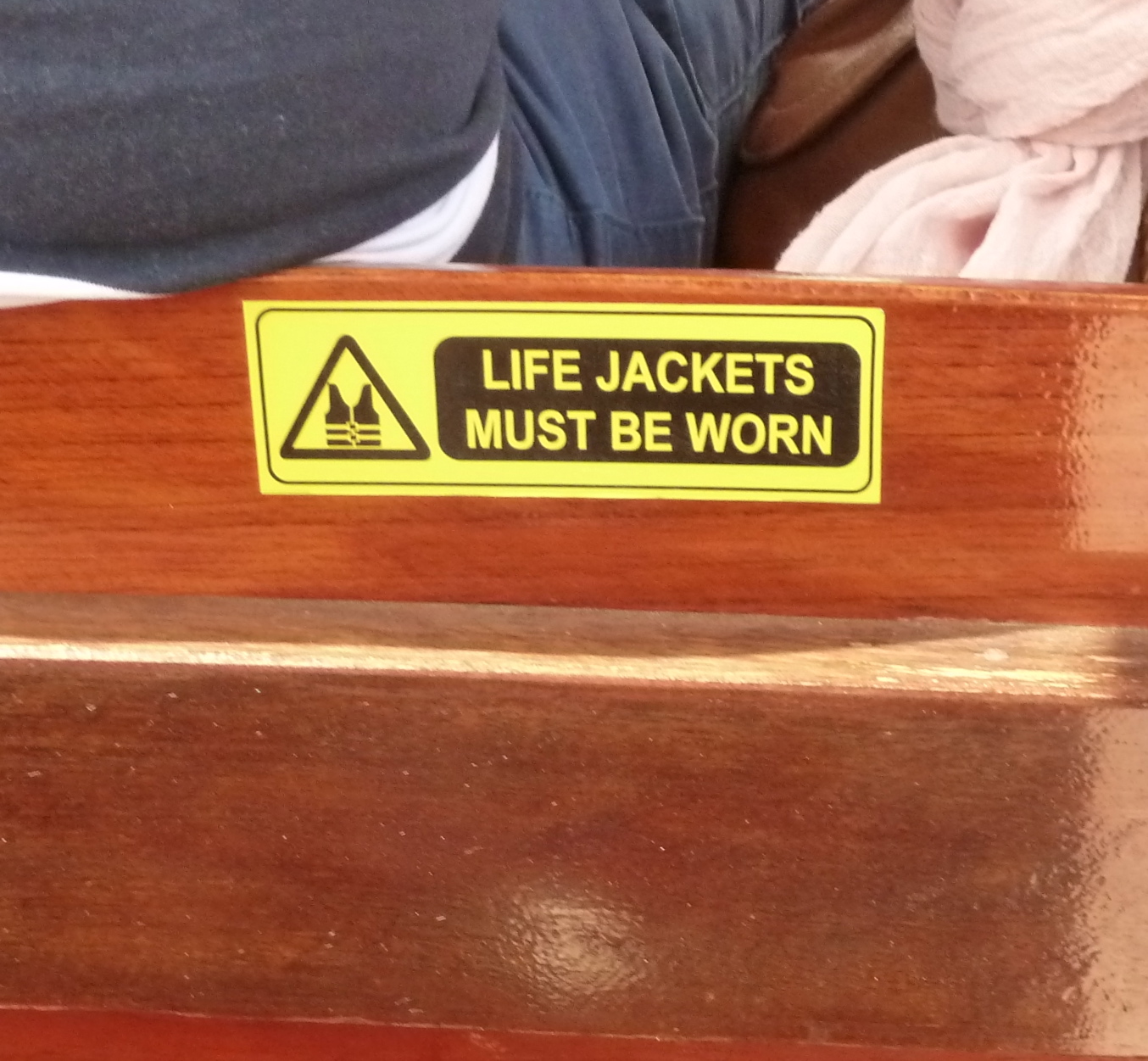
The water taxis claim:

P1040474

But of course they’re not.

Since we were in Thailand, we felt it was only fitting to enjoy real Pad Thai and Thai iced tea. As with most food that we’ve tried in Southeast Asia, the “real thing” is sweeter and far less saucy than its imitation back home. Delicious!

Mitch and his favorite non-alcoholic beverage!
Pad Thai - One of the most delicious things I have eaten since arriving in Southeast Asia
Pad Thai – One of the most delicious things I have eaten since arriving in Southeast Asia

Most of Saturday found us exploring temples. We took a tuk-tuk to see Wat Intharawihan, a beautiful temples complex containing a 32m-tall Buddha statue. There are Buddhist temples all over Bangkok and each one had people praying, which was interesting to watch. We were allowed in one of the temples in this particular complex; as always, temples are a no-shoes zone. The stone steps were really hot!


We also visited the Grand Palace, another complex containing the palace (obviously) and massive, stunning, opulent, and literally jaw-dropping temples and statues. It was incredibly touristy but, I think, worth seeing. There were monks visiting and taking photos, too, which made me laugh because I don’t think of monks as real people. In some capacities, though, I guess they are.


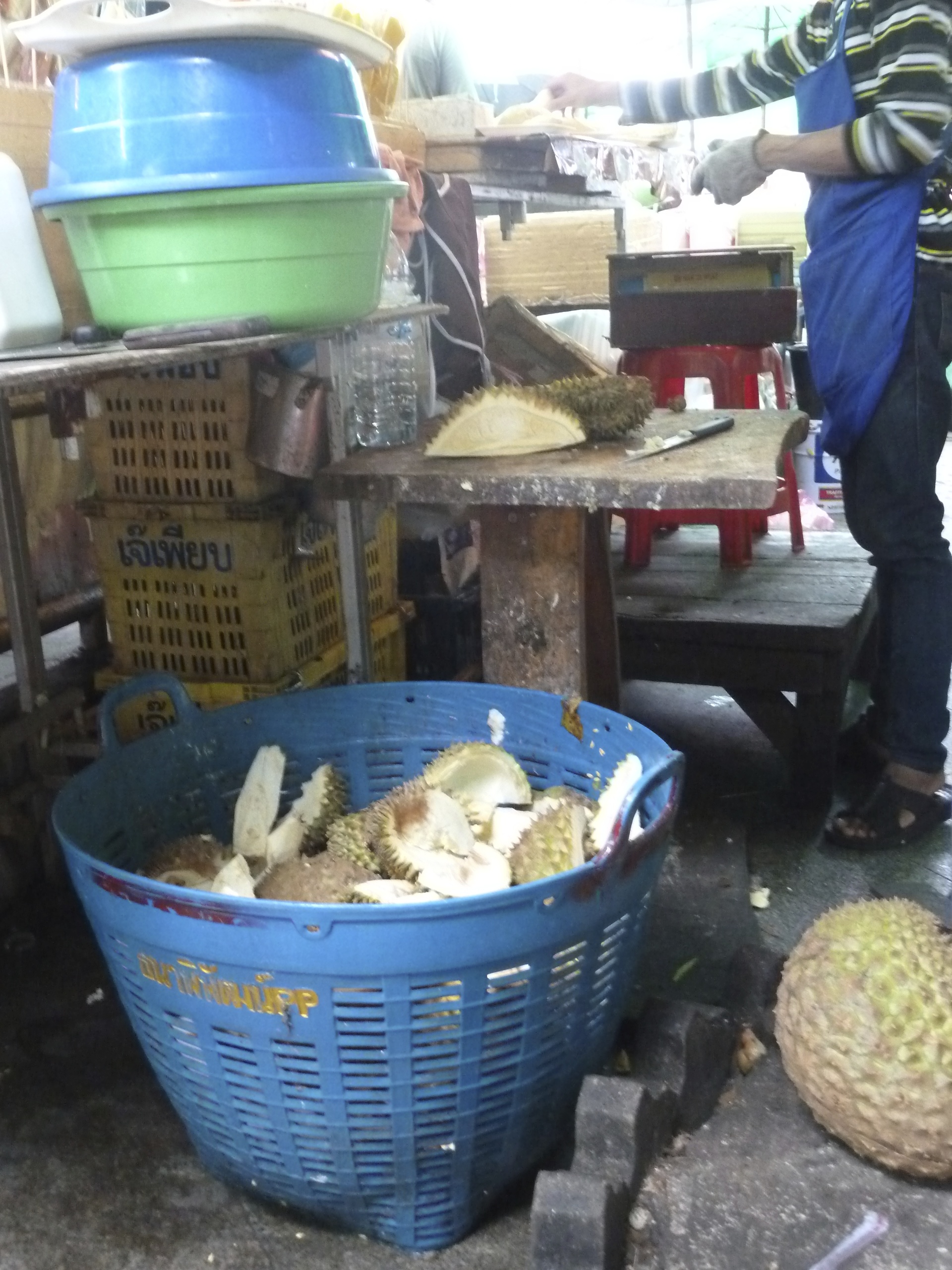
One of my favorite wanderings near the Grand Palace brought us through streets and alleys that had been turned into a market. As usual, people were frying meat, peddling fresh fruit, and there were tables full of various souvenirs and items I couldn’t even try to name. I wish we’d had more time to go explore other neighborhoods of the city. Next time, I suppose!

P1040482
P1040501
P1040542

Throughout the city, Mitch and I couldn’t help but marvel at Bangkok’s answers to modern the need for electricity. American electricians would probably start to cry.


P1040540P1040541

If nothing else, though, Bangkok is pragmatic. We found both normal boxes of condoms and mixed fruit flavored boxes of condoms in the basket of snacks in our hotel room. There were also people on the street selling sex toys and protection along with various juices, baked goods, and meats on sticks.

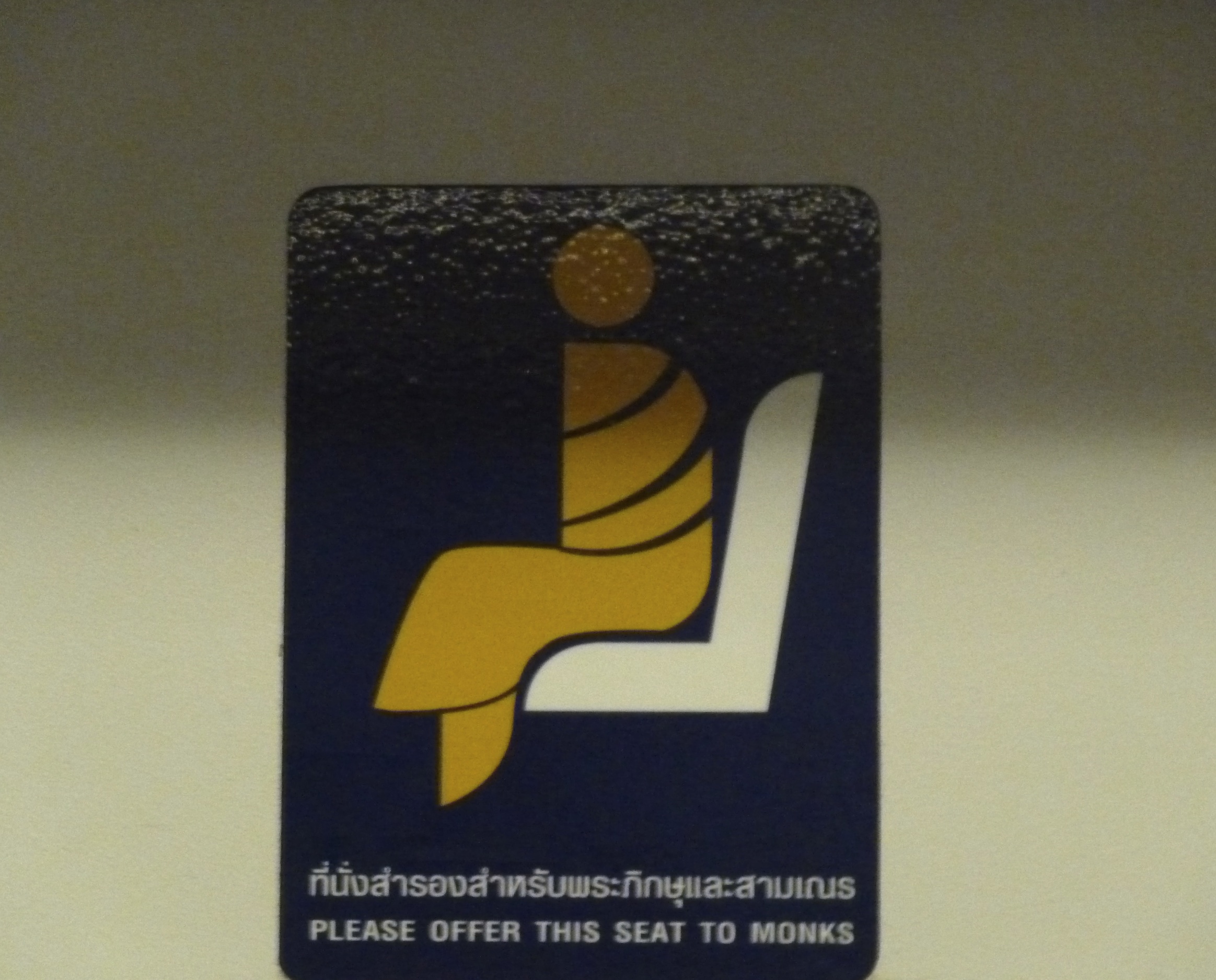
I really loved seeing shrines everywhere – in parking lots, in parks, in alleys – and constant reminders of the importance of religion to the Thai people.

P1040547
P1040549
P1040545

Never in my wildest dreams did I actually think I’d get to visit Bangkok. Amazingly enough, it’s only a two-hour flight away.