Tag Archives: Canal

Travel Guide: Venice and Burano

My family travelled to Italy when I was 16, and it was there that I fully formed the fantasy that drove my search for a university, a fantasy that never quite materialized. We spent several days in Venice on that trip and, nearly twenty years later, I was excited to return with my partner for his first visit.

We were rather more strategic with our planning of Venice than with the rest of our summer travels, which was to our benefit. We made as much use of the Venezia Unica city tourist website as possible, thus saving time and money, as well as guaranteeing a parking spot in a very convenient garage. We had a few changes of clothes in backpacks and easily managed to pick up gelato for the walk from the car to our blissfully air-conditioned hotel.

After a shower and changing into appropriate clothing, we walked the four minutes through twisting alleyways to reach Basilica San Marco, where we had timed tickets and could skip the line. I was pleased to see that everyone had followed the dress code, which isn’t always the case in places with posted dress codes. I hadn’t been inside on my first trip to Venice; according to a story my dad tells, the family voted in favour of gelato instead. I don’t remember that, but it sounds right.

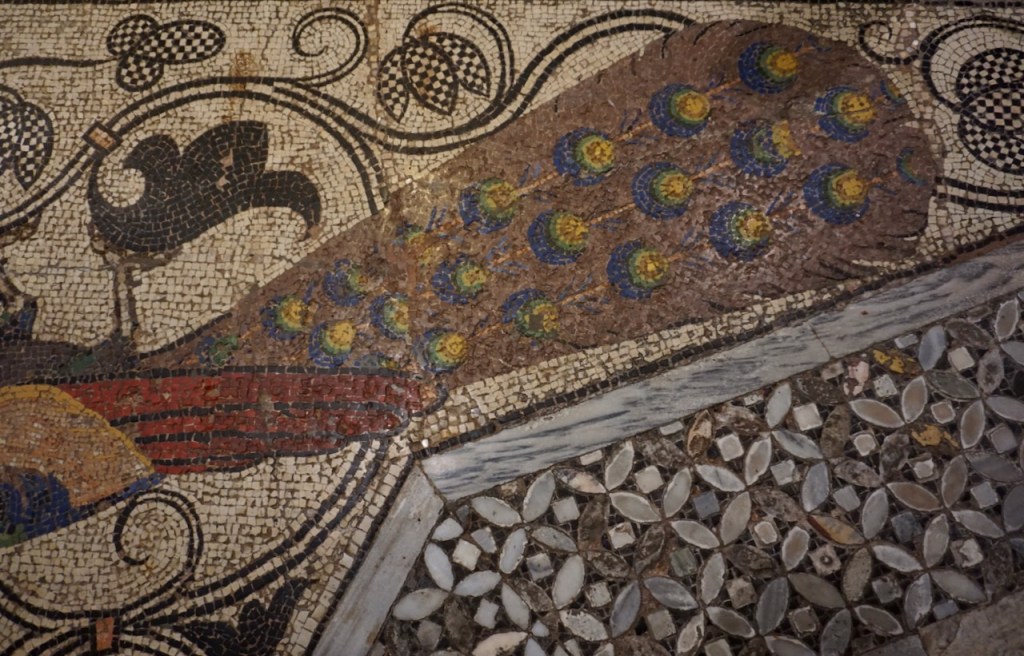
This time, my partner and I made multiple rounds of the Basilica interior, stunned by the plethora of gold, the intricate mosaic covering every surface of the floor, the saints celebrated on the walls. We tried to match the Latin names to what we knew in German and English, often coming up rather short. I have always been fascinated with the lengths to which people go to honour that which they wish to honour.

After changing clothes again (Venice, much like living in Singapore, required breaks in air conditioning and yet another shower before pursuing the next activity), we headed to the meeting point for our walking tour, always my favourite way to see a city. The tour took us through all six of Venice’s districts with a focus on the northern part where the locals live. As the tour guide explained, her job was to take us to places we wouldn’t find on our own. She told us about the history of Venice and about Venetian culture today, which we really enjoyed. I had taken a course on the history of Venice in university and I was surprised at both what I remembered and what I had forgotten.
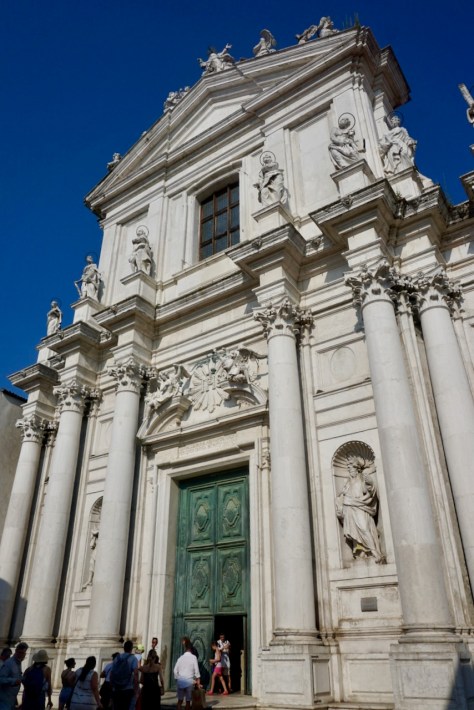
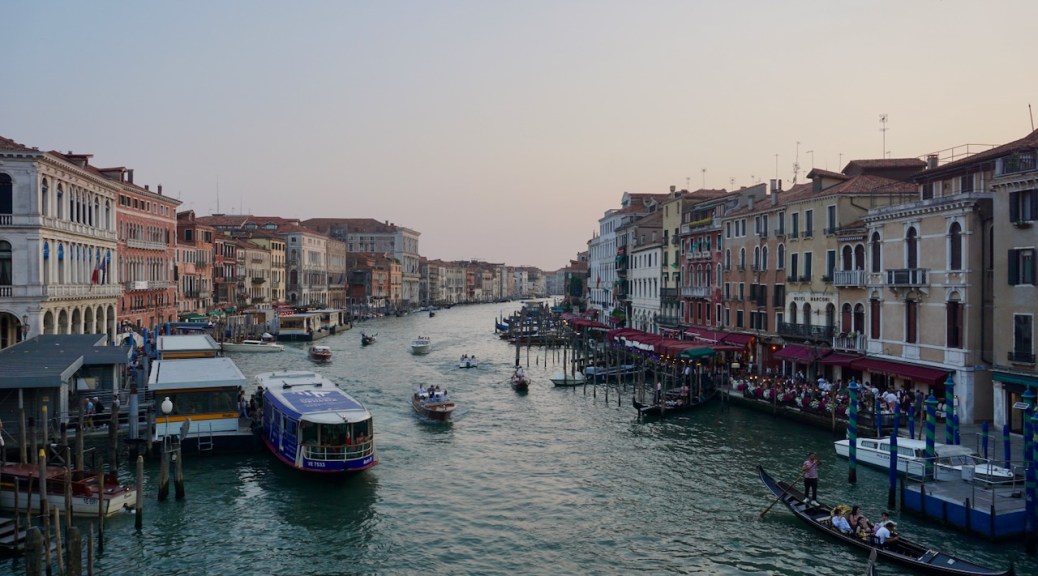
We walked over to the Rialto Bridge that evening and took in the view of the Grand Canal . . .

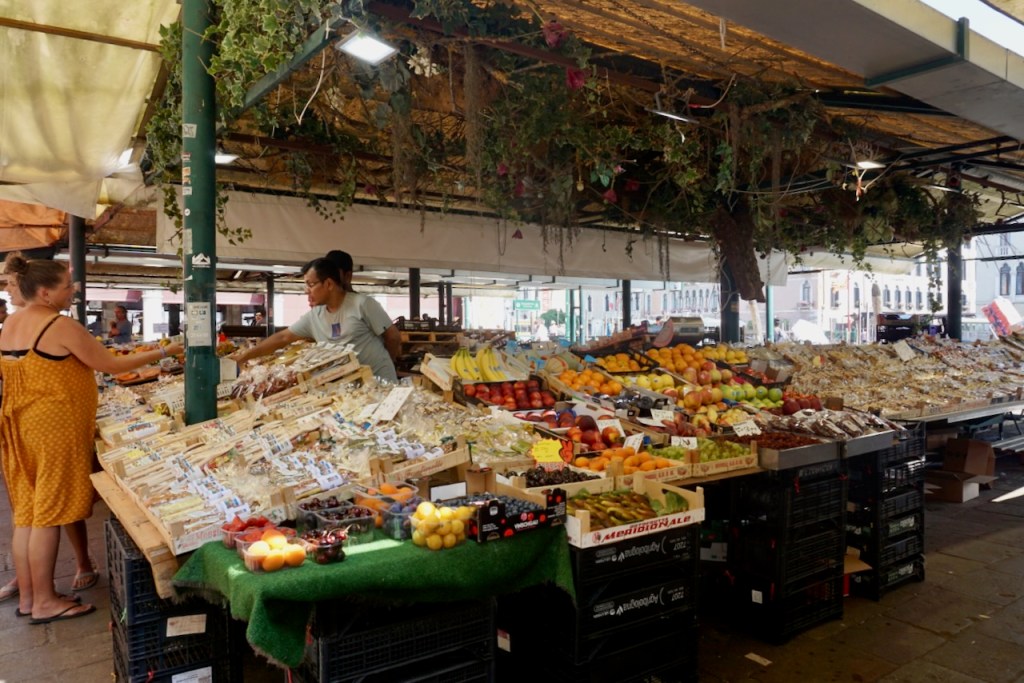
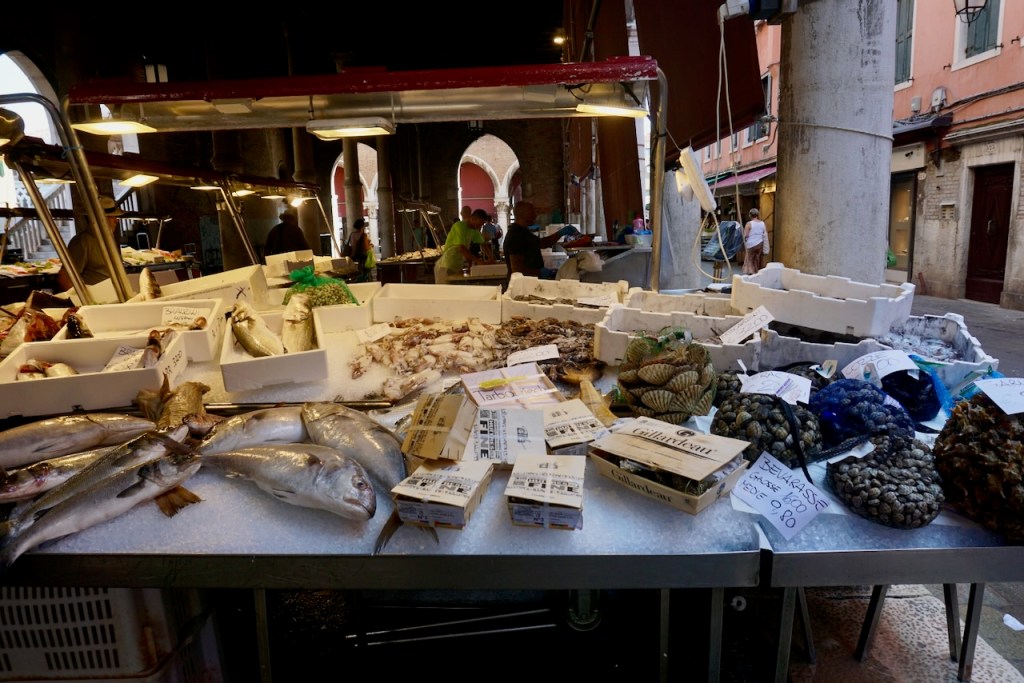
. . . and returned in the morning to visit the Rialto Market, a favourite activity whenever possible. Tourist kitsch aside, the primary ware was seafood, which should come as no surprise.

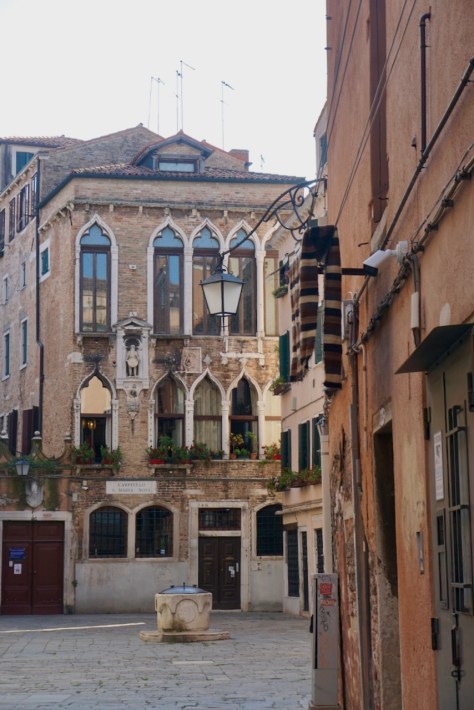
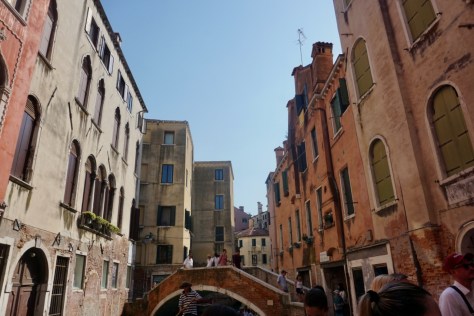
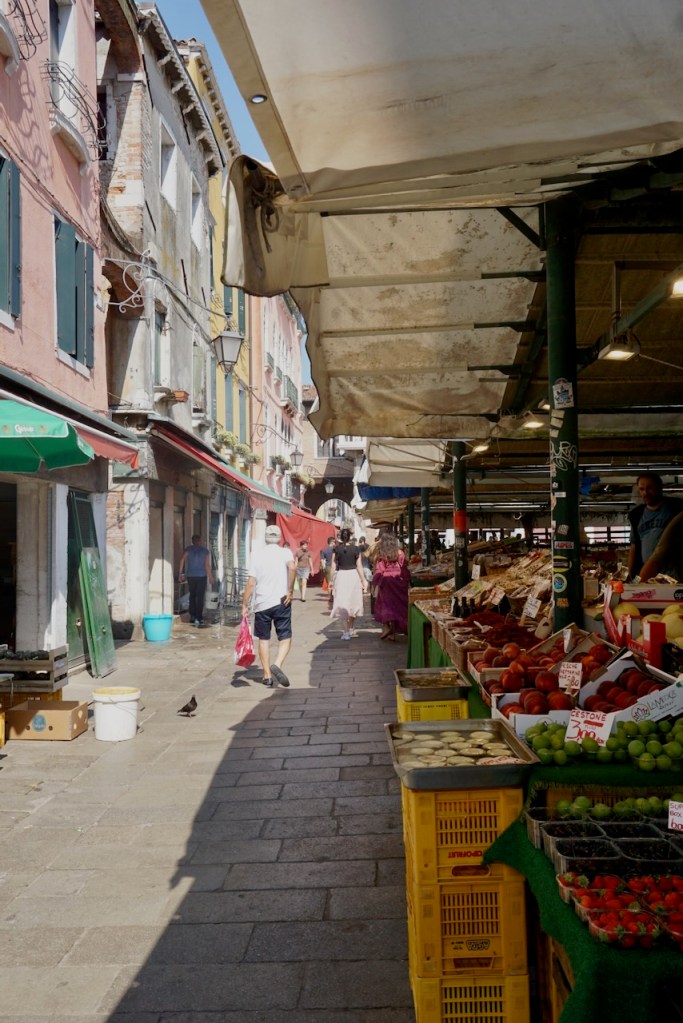
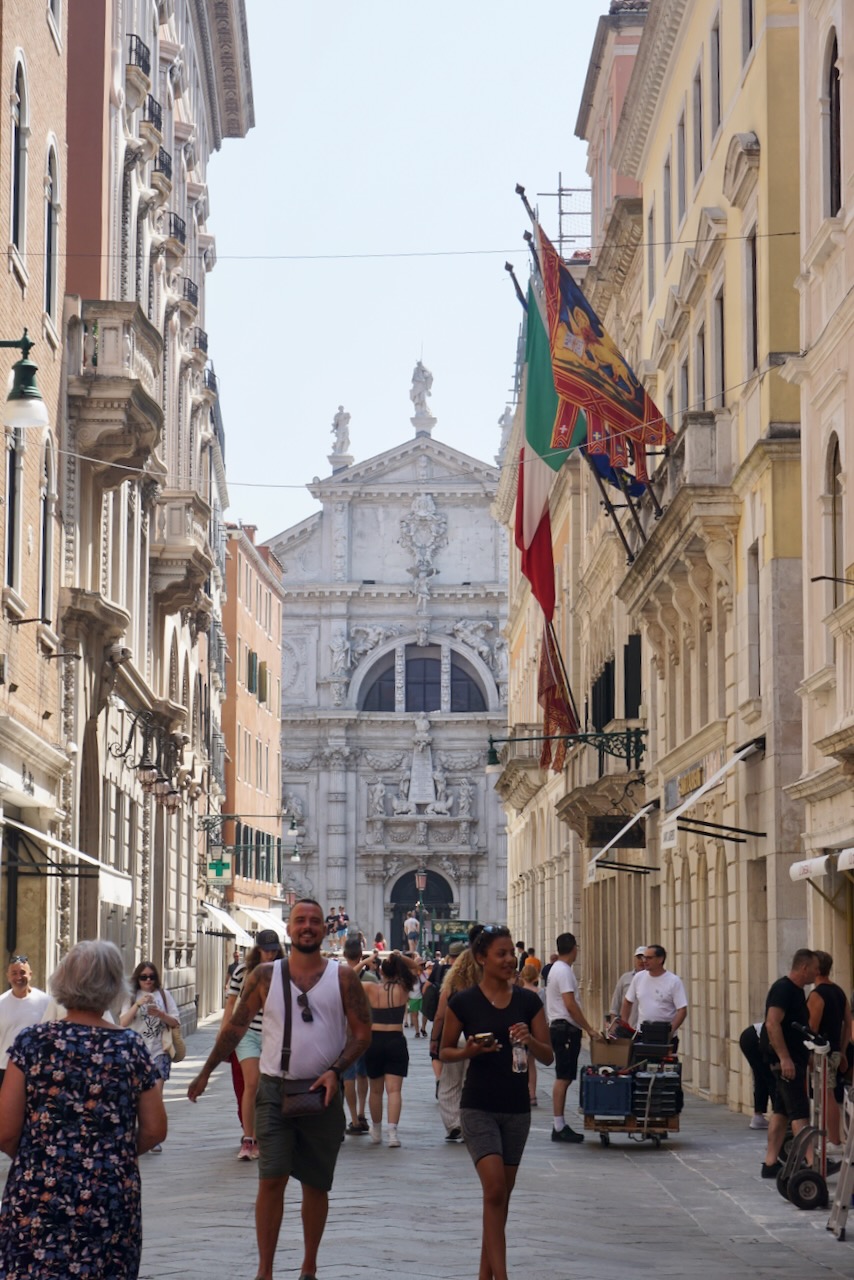
From there, we made our way leisurely through little alleys and side streets until we reached Piazza San Marco.

We walked along the water to confirm vaporetto (water bus) times for the transport passes we had purchased in advance . . .

. . . before returning to Piazza San Marco for our timed entry to the Doge’s Palace, again avoiding the long line.
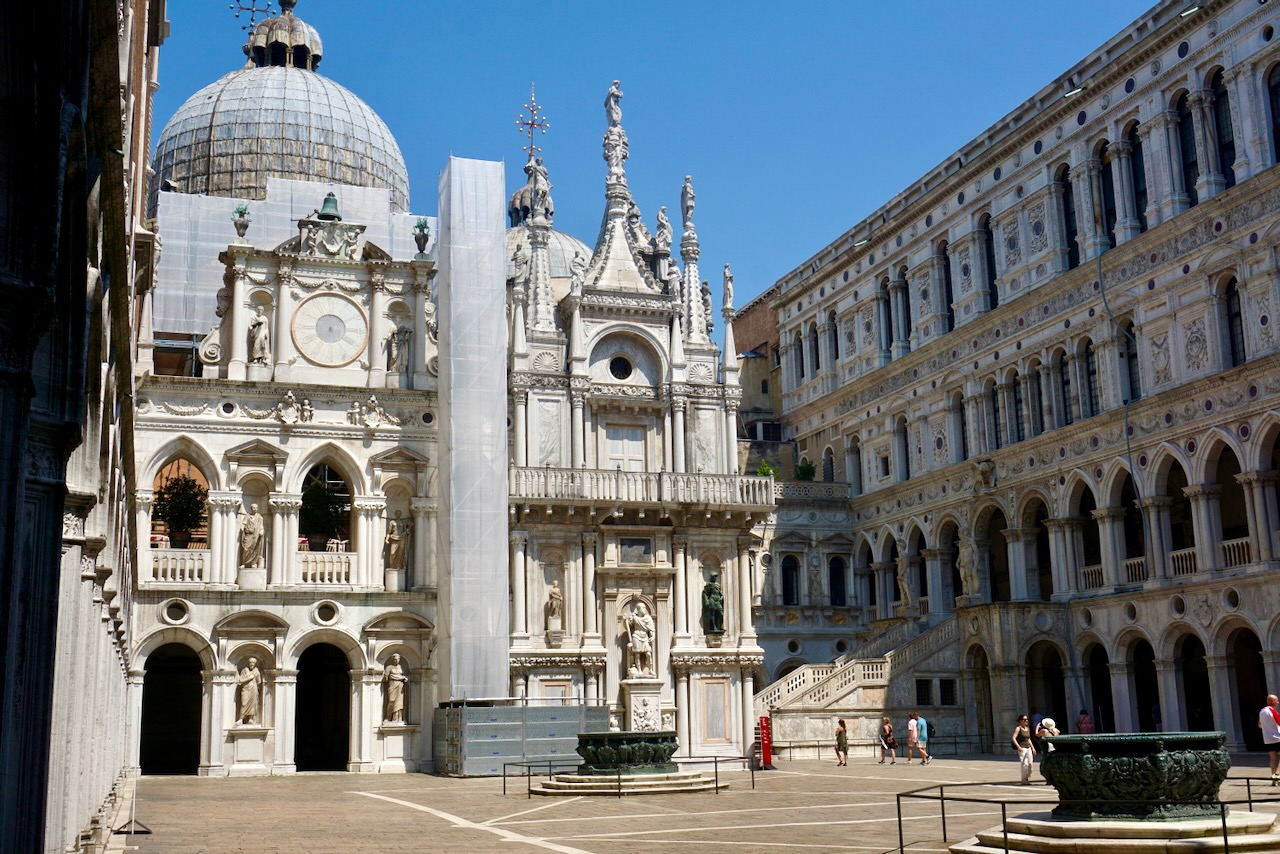
Much like Basilica San Marco, the Doge’s Palace is grand. The wealth that the former Republic of Venice had enjoyed, and the power that came with it, was awesome in the original sense of the word. The gold, the art, and the sheer size spoke volumes.

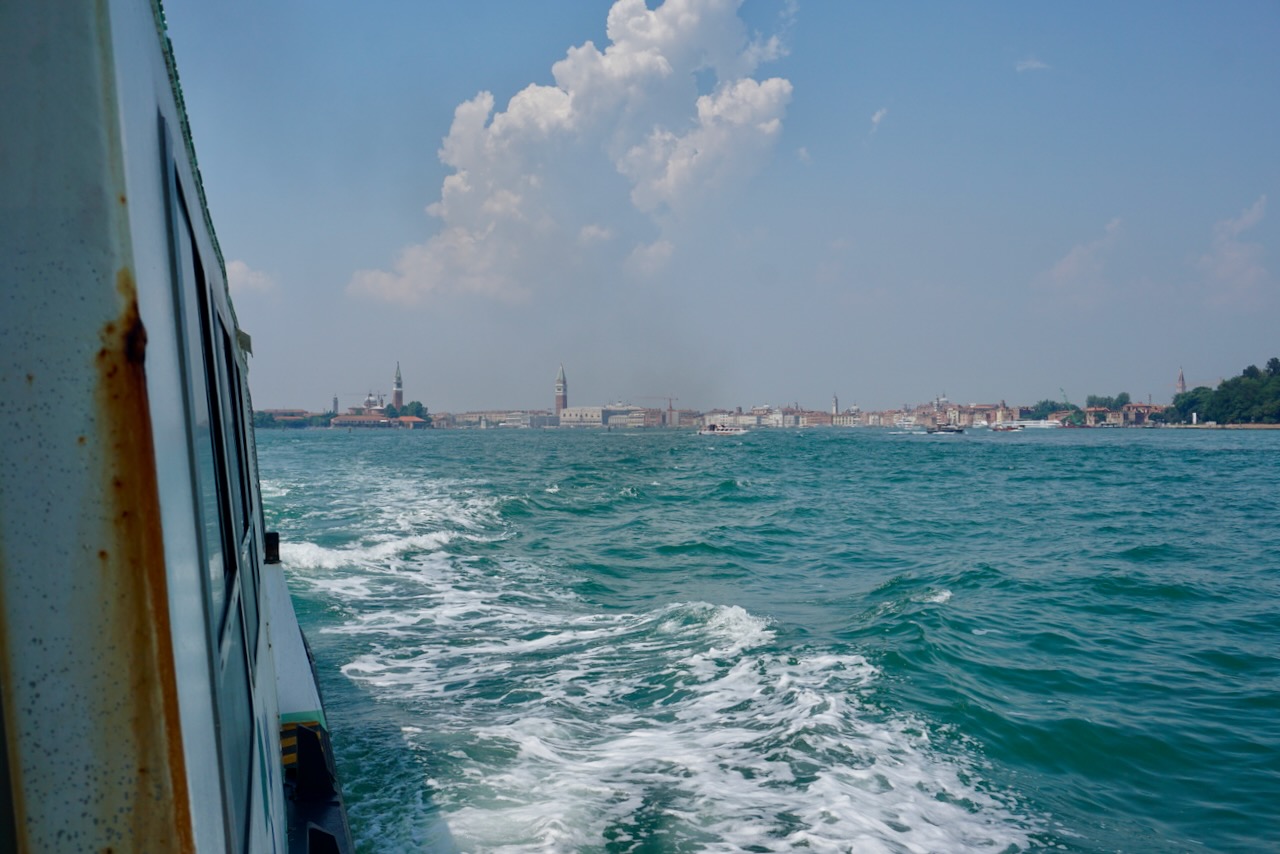
Afterwards, ready to escape the crowds for a while, we took a vaporetto for the 45-minute trip over to Burano, one of the neighbouring islands. Being on the water gave us some relief from the heat, but I would not recommend July as the time to visit Venice.
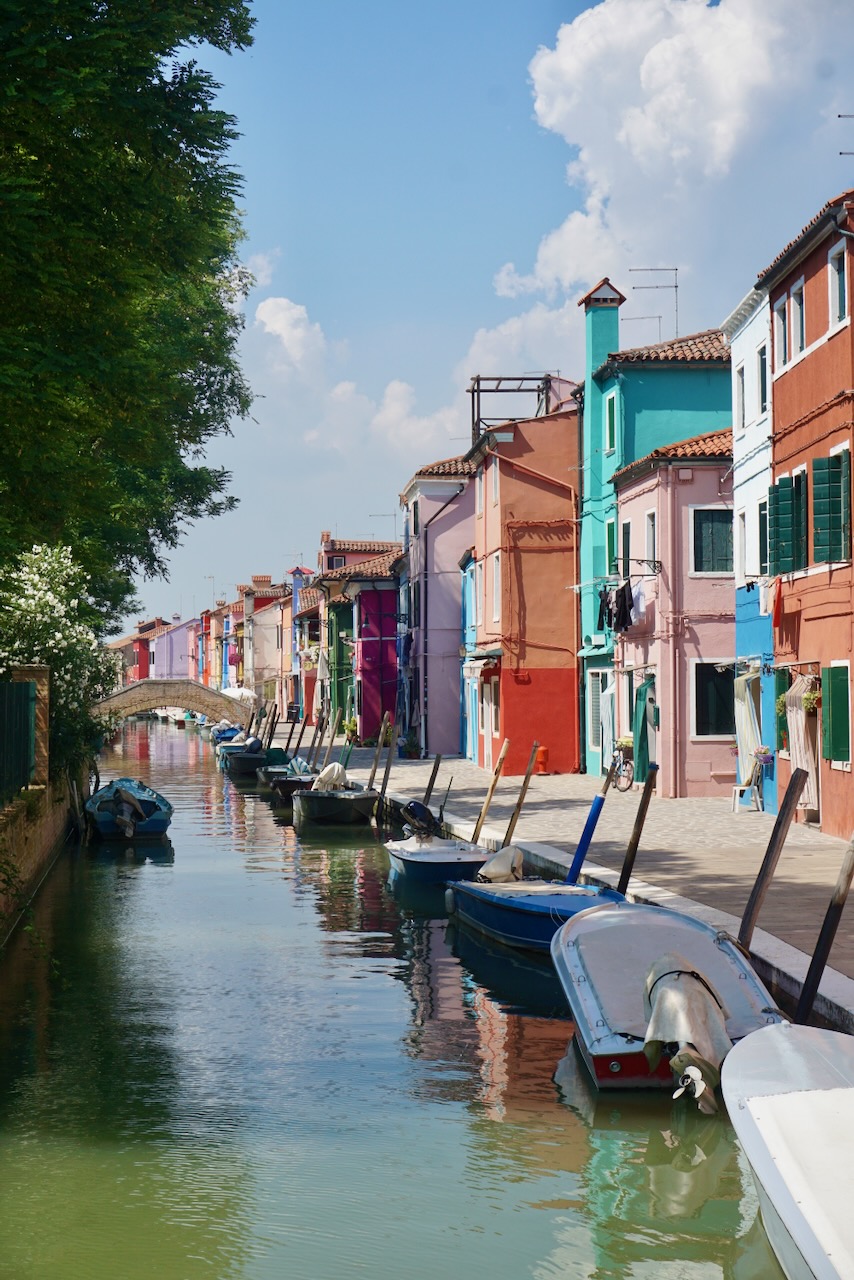
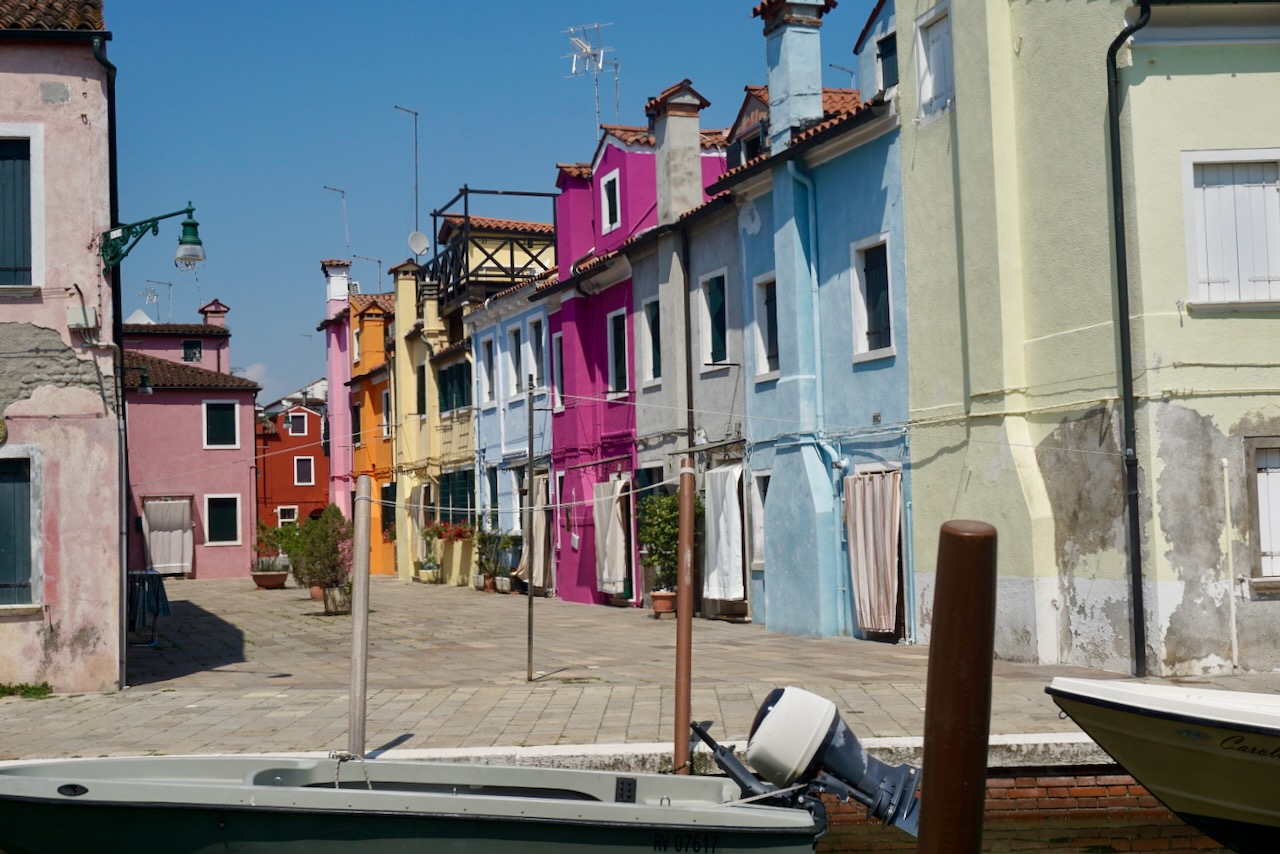
Burano is tiny, whimsical, and famous for lace-making, evidence of which could be seen in nearly all shops. What we were there to see, however, were the brightly-coloured houses that practically glowed against the blue of the sea and sky. We walked around, patronized a local café, and took photo after photo of this storybook come to life.
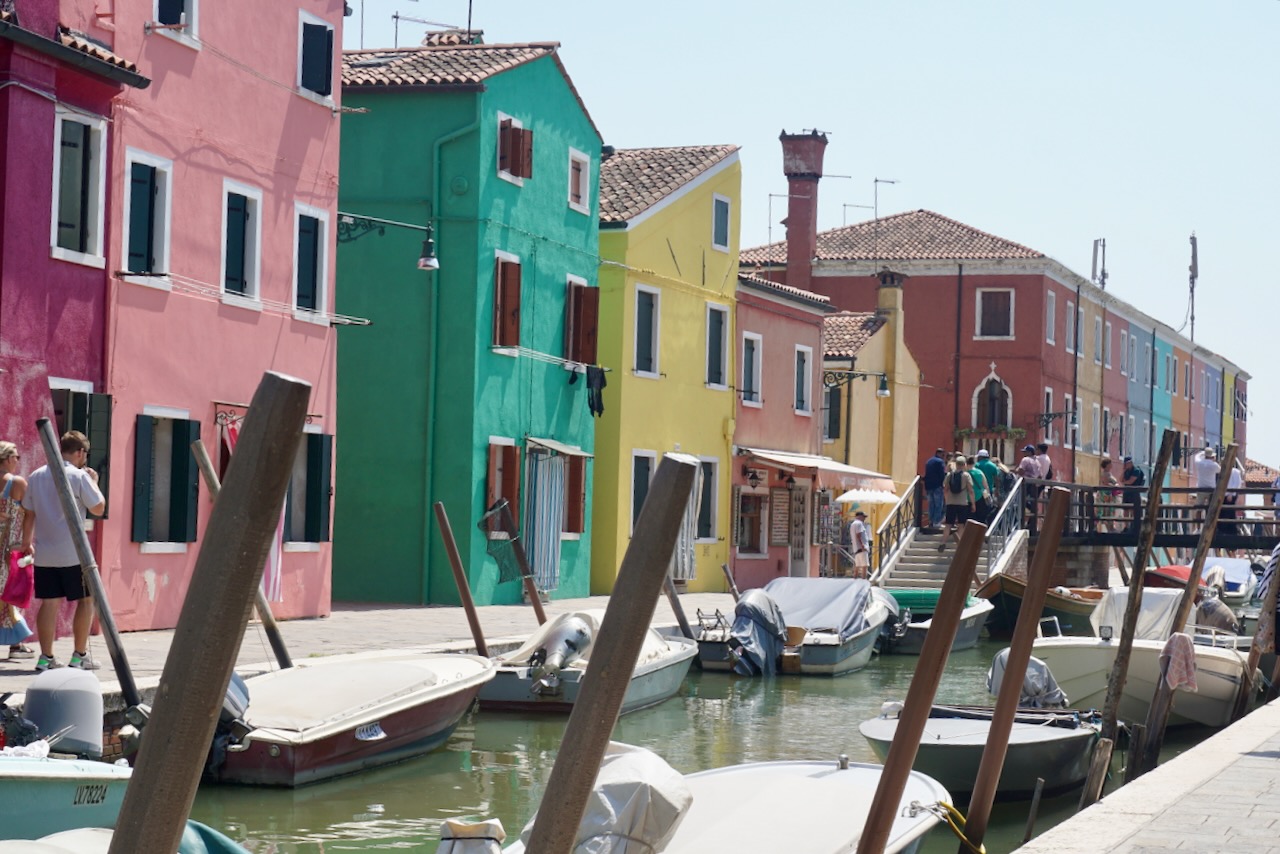
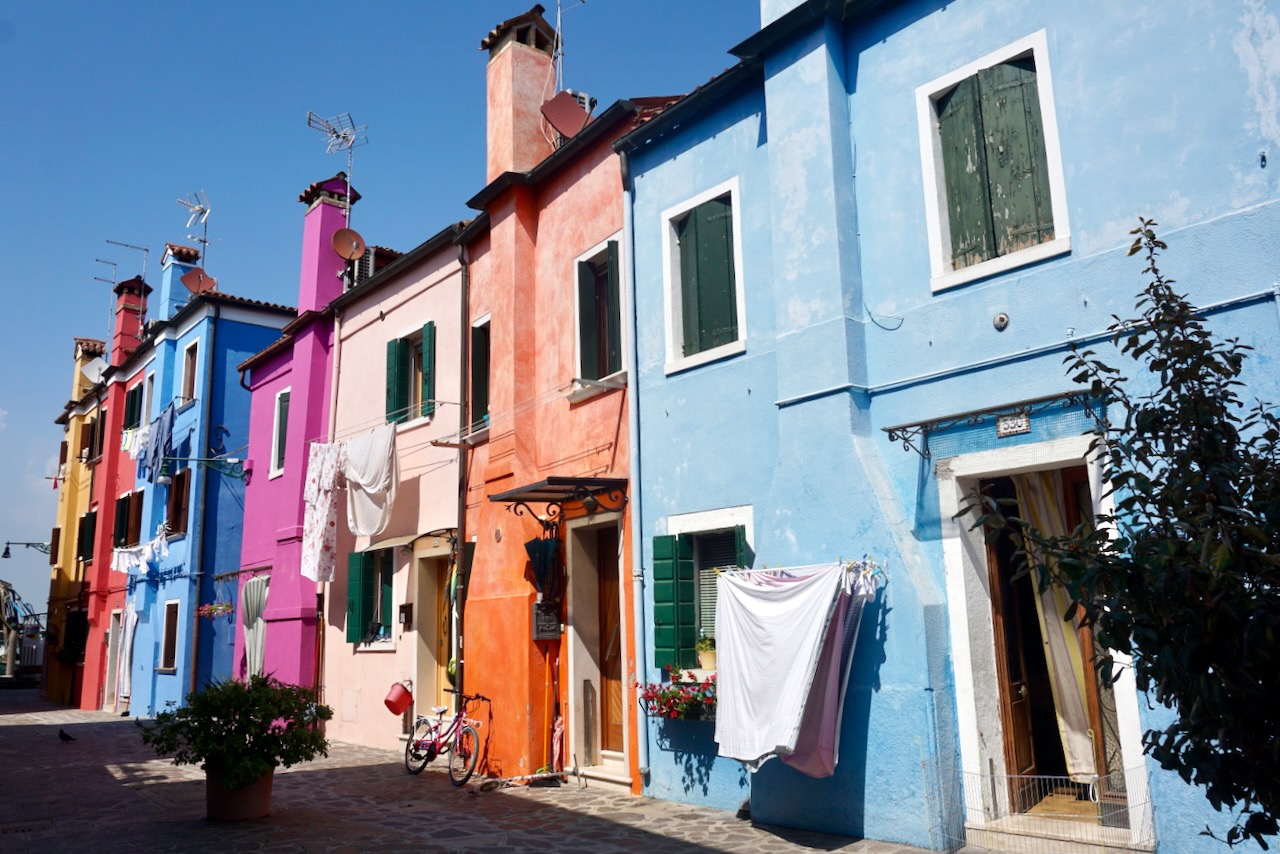
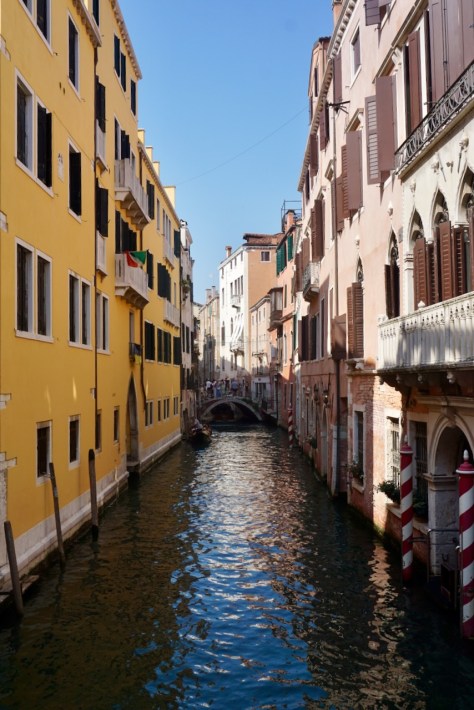
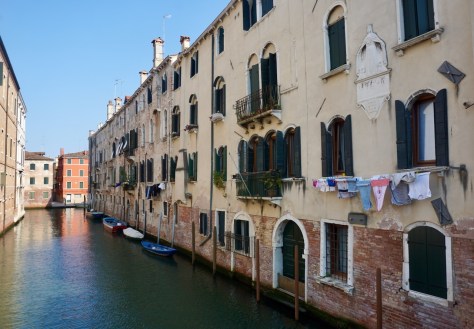
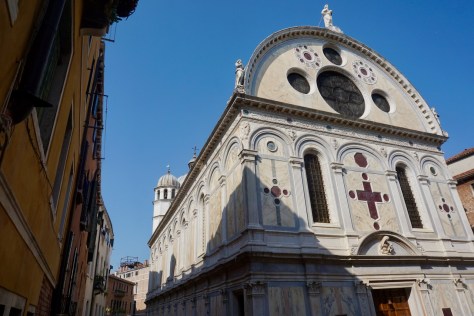
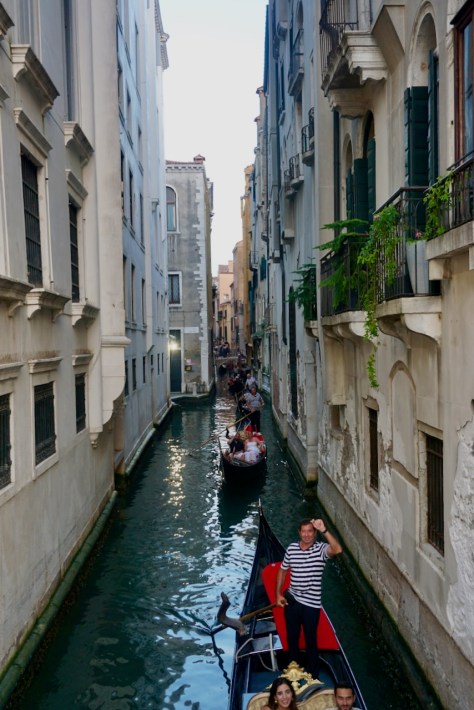
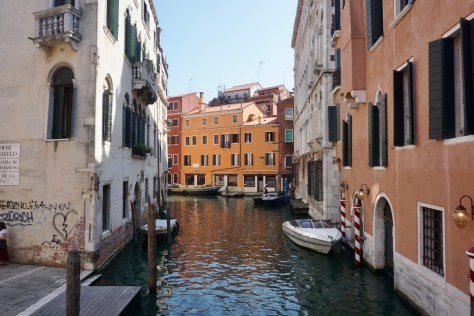
Upon returning to Venice and after some much-needed time to cool off, we braved the heat and humidity one last time to enjoy our final evening. Since Venice was designed to be seen from the water, our tour guide had said, many of the oldest building façades seen from the street side were actually the back. A gondola ride gave us a perspective of the city as it was meant to be seen. The sun was beginning to set and the city glowed.

As we rode, we asked the gondolier questions about how one gets into the business (sons are taught by fathers), how a route is chosen (the routes are what they are and do not change), and who owns the gondola (the family). The gondoliers called to each other in Venetian, the language of Venice that our Italian tour guide told us she had learned to understand since moving to Venice years ago but could not speak. Venice is Italy, but mostly, Venice is Venice.

A friend wrote to us that we were in the city of love, though we were pretty sure that designation belonged to Paris. At any rate, we held hands as we watched the sun set over the bridges.

Since we had day passes for the vaporetto, we hopped on board once again to ride nearly the whole length of the Grand Canal, a cruise for the price of a bus ride. It was dark when we disembarked this time.

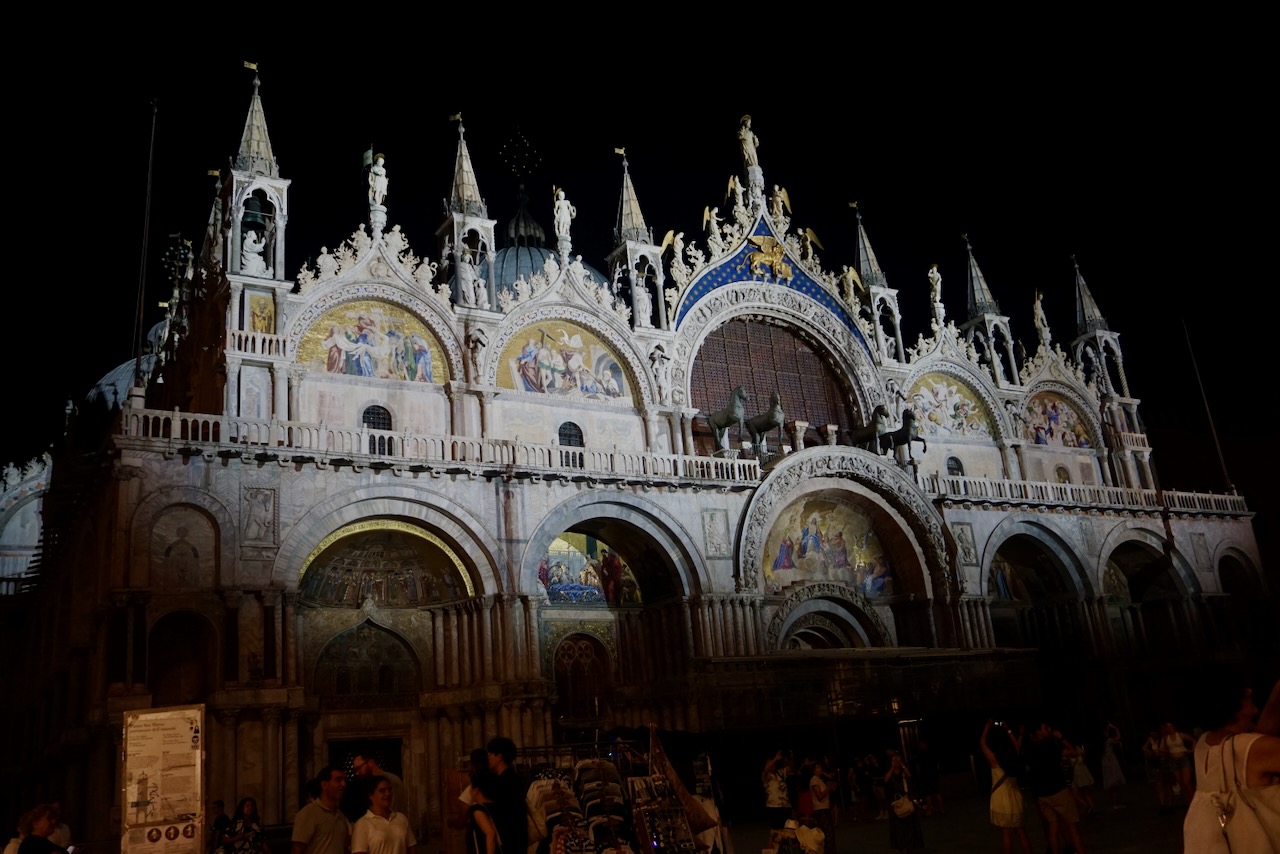
There is definitely something magical about Venice, something that lends itself well to the mysteries in novels and stories I loved as a kid. The cemetery is an island of its own; the city glows when it grows dark with the lights reflecting on the water; the language is half a secret; mailing addresses function differently here in order to function at all; there are so many twists and turns that we followed a map every time we tried to get anywhere, consistently unable to orient ourselves.

The following morning, we made our way slowly back to the car, managing to cross yet another piazza where we hadn’t been before. We loved our time in Venice but were ready to get away from throngs of people and back into nature. Next stop: Slovenia.

Travel Guide: Bamberg

Bamberg is located in a region of Bayern (Bavaria) called Franken (Franconia), and the regional slang and cuisine are Fränkisch rather than Bayrisch. I was pleasantly surprised to find that Fränkisch slang really is slang – the people generally spoke Hoch Deutsch (High German) and I could understand the accent. (This was hardly the case when I visited Munich, for example, where Bayrisch is really the local language. And rest assured, I have equal problems when people speak Thüringisch from here in Thuringia. An ongoing pattern when I learn a new German slang word is to clarify whether the word is Hoch Deutsch or Thüringisch; the distinction is important for my sometime-in-the-future German language test.)

These stark regional differences make travelling even a couple hours away feel much farther, and it’s a lot of fun to hear difference forms of language, taste local beers, and experience local culture. We spent two nights in Bamberg and were delighted by what we found. The population is just a little larger than that of Weimar, but the town sprawls across seven hills. We spent our time in the old town and new old town on the opposite side of the river, going everywhere by foot, and we were pleased to see really excellent bicycle infrastructure everywhere. There were bike lanes and bike parking areas on every road, as well as pay parking in areas that would be free by us. And it definitely seemed like the population got the message! The number of people on bikes was correspondingly greater than I have seen in other German cities.

One element that makes Bamberg really special is its location where the Regnitz and Main rivers meet. There are canals that have been built to link the rivers and bridges to carry pedestrian, bicycle, and car traffic, so you’re never far from the water.

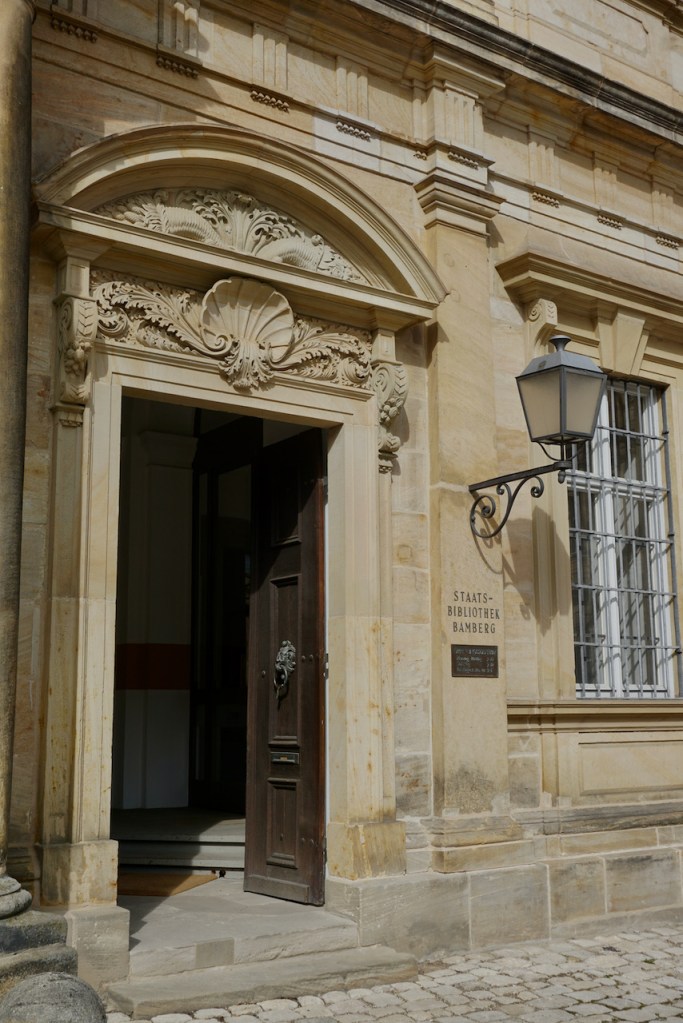
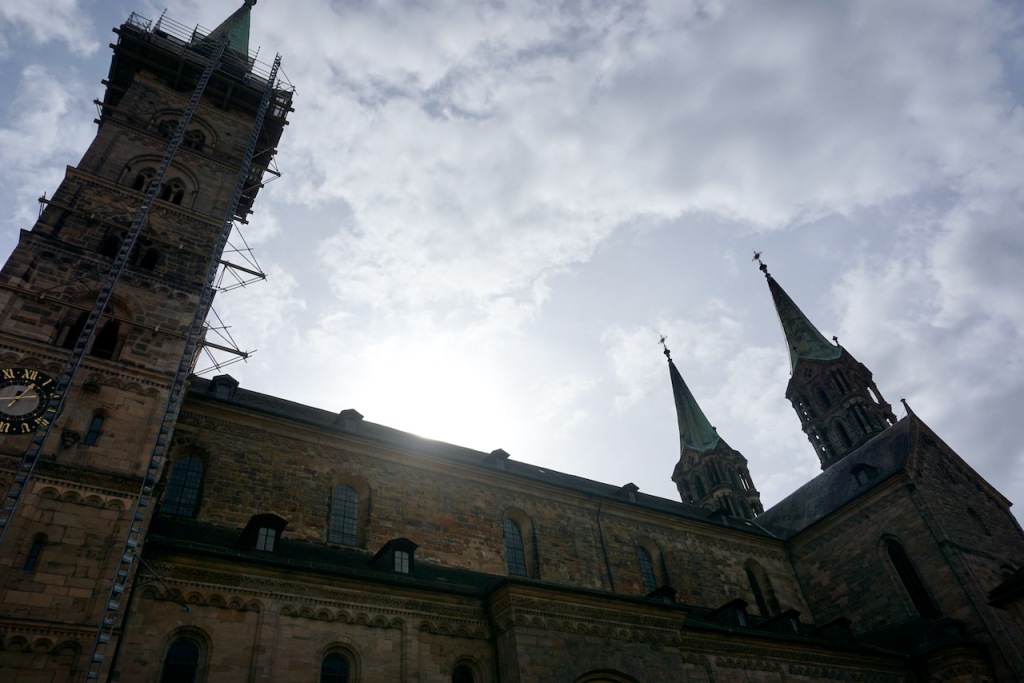
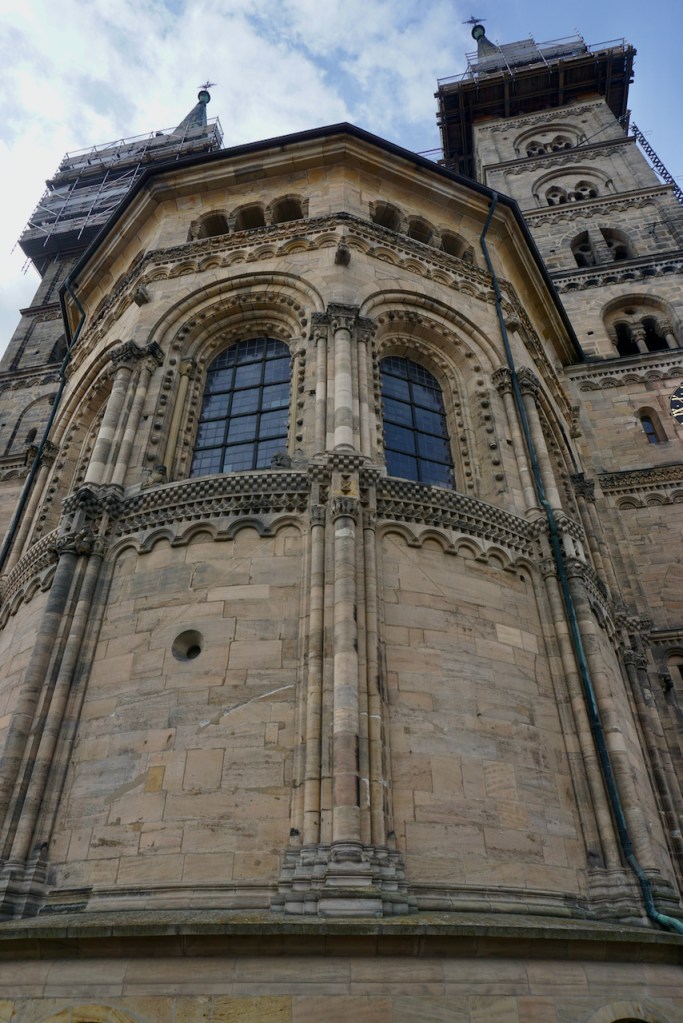
It didn’t take long to assess the wealth of this city, extending back hundreds of years. Each of Bamberg’s seven hills has a church, and Bamberg is host to a cathedral and monastery.

The old Rathaus, or town hall, is the highly decorated signal that one has entered the old town, and we photographed it at various times of day from different angles to play with the light.

We essentially stumbled into the courtyard of the old palace . . .

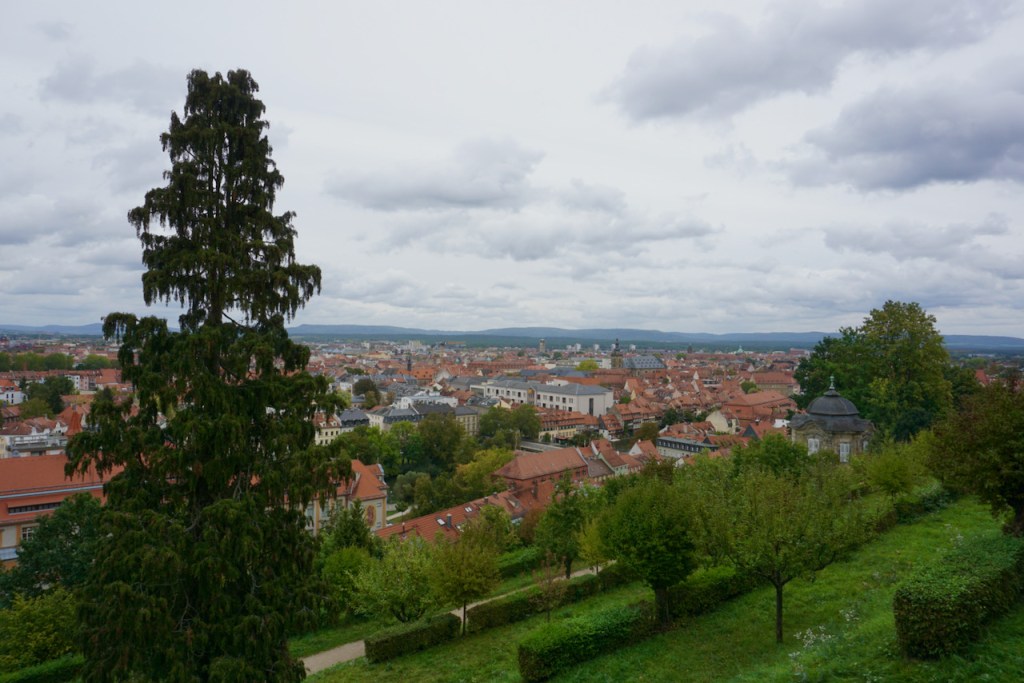
. . . just after a look at the city from the garden of the new.

As always, we climbed to the highest point, this time at the monastery that towered above everything, and looked down. The red rooftops all over Germany never fail to put me right back into a child’s storybook.

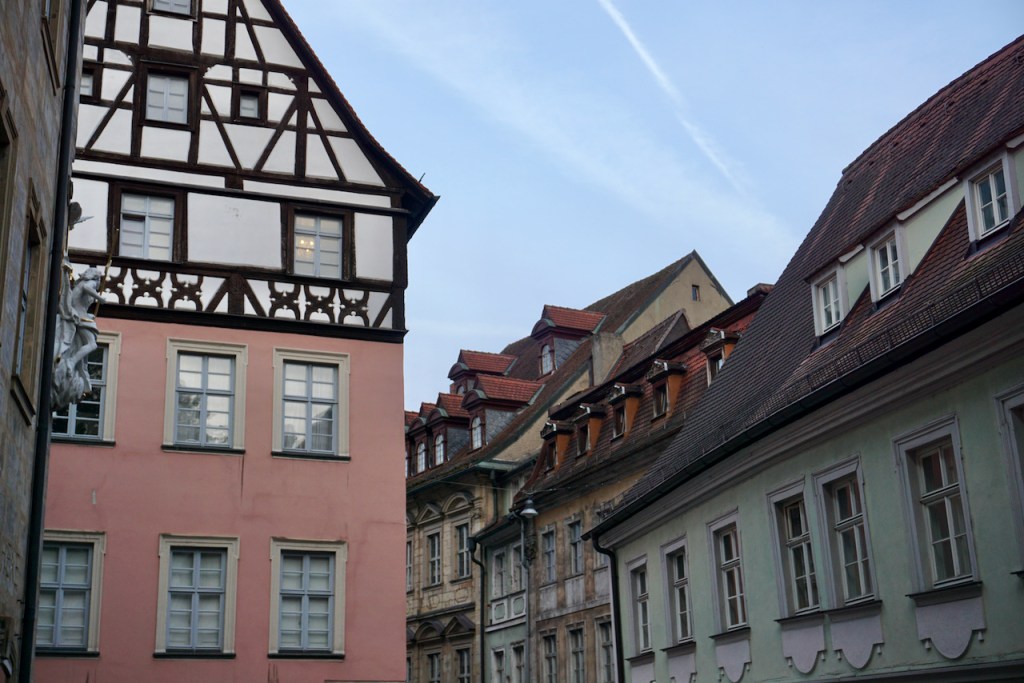
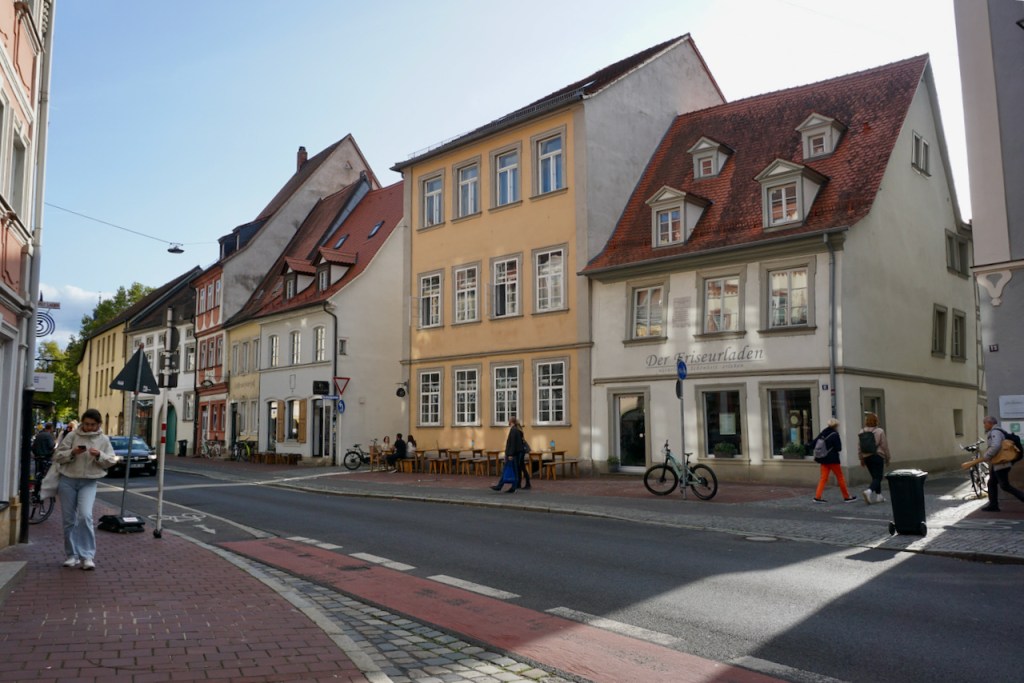
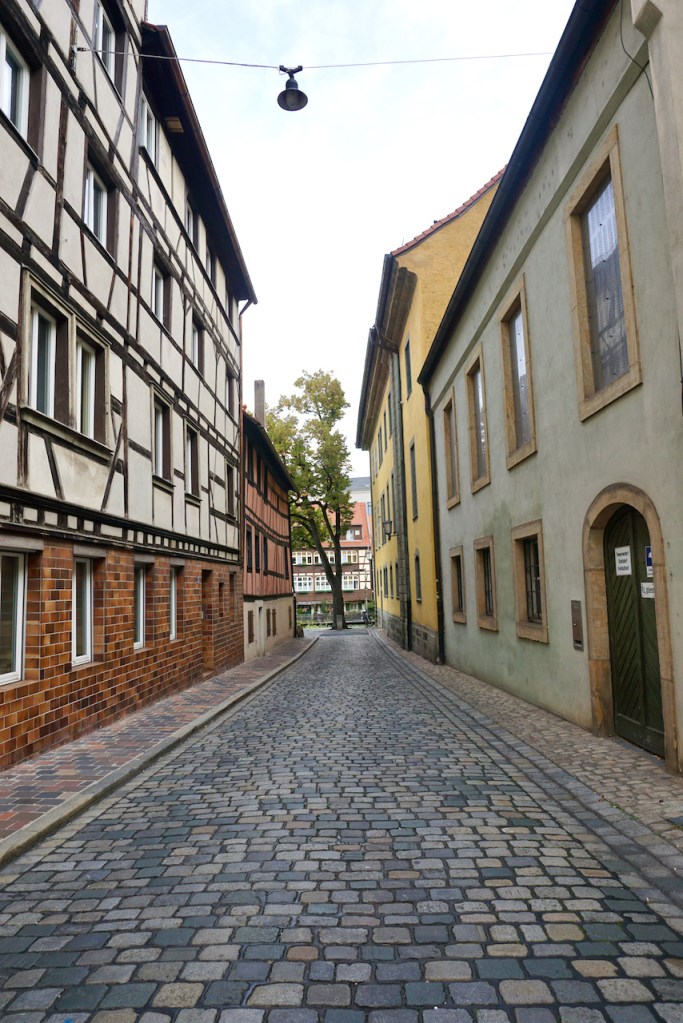
Another aspect of Bamberg that I really liked were the tiny alleyways that twisted into each other, occasionally broken up by the large squares that characterize many European cities. The buildings were ornate and detailed, another sign that this was a city that controlled trade and therefore amassed wealth.

Bamberg is known for its beer and Frankisch beer is distinct in multiple ways. Rauchbier, or smoked beer, is really only found there (it can stay, as far as I’m concerned) and the beer styles are somehow crisper in both colour and taste. Each pub is a brewer of its own beer and some have been operating since the 1400s. We visited the beer museum up at the monastery to learn more, and this is clearly a history that runs deep.

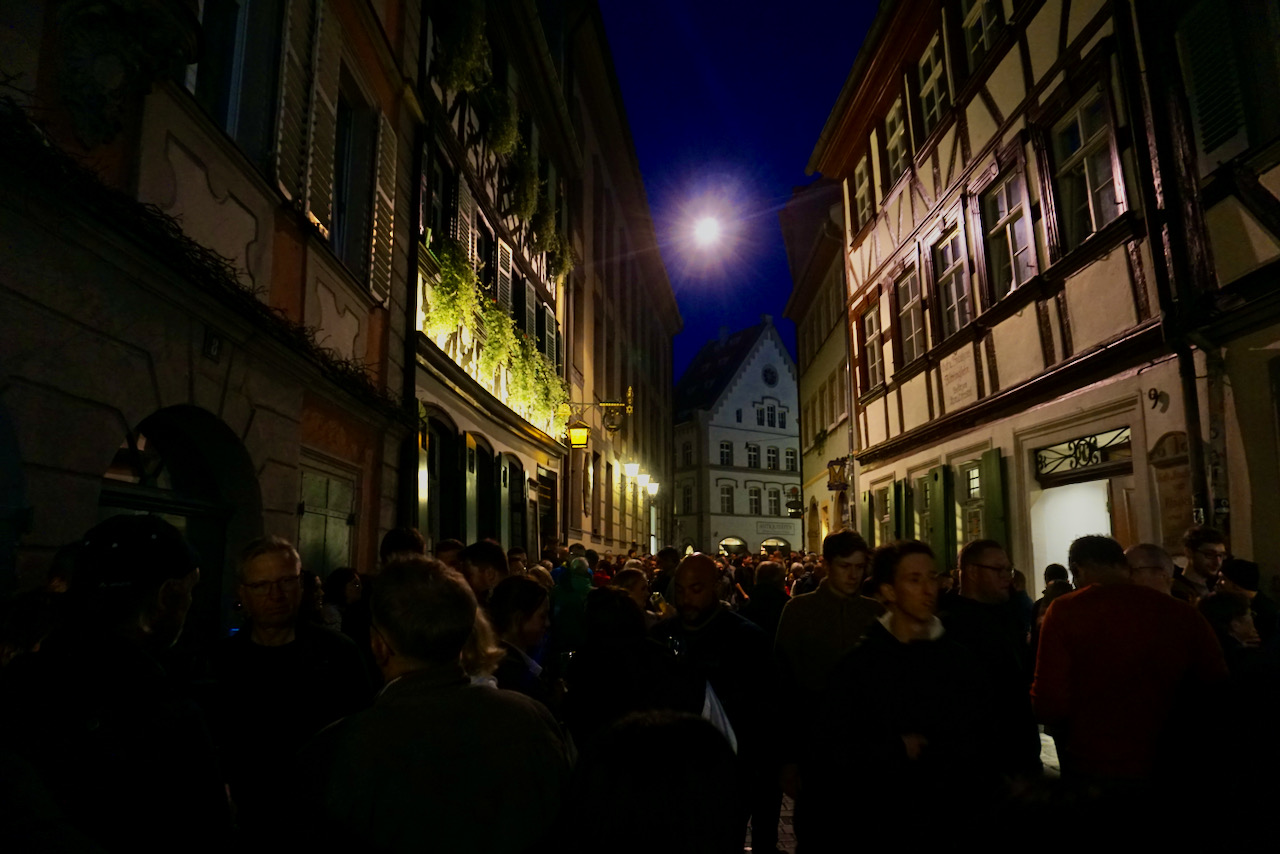
Additionally, a local tradition is the Stehbier, or standing beer. You walk into a brewery/pub/bar/restaurant and order a beer (or wine) to go. You pay the deposit on your glass and walk out into the street. The atmosphere was festive, though the environment was clearly entirely normal for the locals. By us, people bring bottles of beer and wine to the park. In Bamberg, you stand in the streets closed to cars. After all, taking part in the local culture is an essental part of travelling.

After two nights in a medieval town full of breweries, bookshops (I really couldn’t help myself), good food, and cheerful people, we drove about 20 minutes outside of town to climb in the famed Frankenjura. There are many reasons why this is one of the most popular climbing areas in the world, and climbing on the limestone there was a new experience. We’ll be back – after all, there’s climbing and beer.
Travel Guide: Amsterdam and Haarlem

The impetus for my trip to Europe was to visit my brother during his semester studying in London, but prior to meeting him, I spent time in Leiden and The Hague, Brussels, and Ghent and Bruges. We chose to meet in Amsterdam because KLM has a direct flight from Amsterdam to Singapore so it would be easy on both of us.

It was raining, windy, and unpleasantly cold when we found each other in Amsterdam’s central train station. I was reading a book next to a baby grand piano that invited travelers to sit and play, heard my brother call my name, and looked up. I hadn’t seen him since July and it was so great to reunite, give him a hug, and go off on an adventure in a place new to both of us. As travelers, we both enjoy just walking around and seeing what there is to see. So, after dropping our backpacks at a storage facility in the middle of the city, that’s mostly what we did for the couple days we were there.

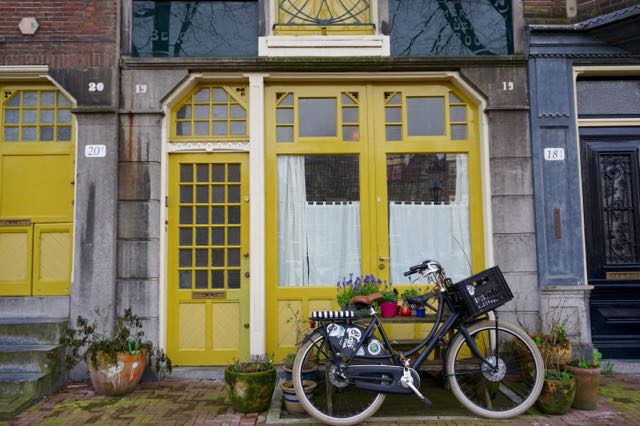
Growing up in the Finger Lakes of upstate New York in a city built around a canal and a river, we’re both used to life along the water but Amsterdam was constructed differently from any city we’d been to. It felt like it was designed for people instead of people fitting themselves around the design. Being in Amsterdam made it easy to understand the emphasis on commerce and exploration that made the Netherlands a European imperialist power. Of course, we loved all the bikes and houseboats, too.

As we wandered, we spent a few minutes in the Begijnhof, the former residence of a Catholic sisterhood who took no vows lived like nuns . . .

. . . stepped into De Krijtberg to verify that it was indeed a church (the Jewish stars above the doors left us a little uncertain) . . .

. . . and walked through a lovely flower market. It’s April in Amsterdam, after all!

Before returning to pick up our bags to take them to our Airbnb, we snacked on Dutch waffles (very different from Belgian waffles) at Albert Cuypmarkt. It sells everything, as markets do, and is located in a cool neighborhood. Market visits are my favorite travel activity because of the diversity of people and products. Look through a market and you’ll know what people buy, what they eat, the cost of living, and how people get along with one another.

We were lucky to find Café Gollem Amstelstraat our first afternoon in Amsterdam and made friends with the bartender while enjoying the largest cheese plate we’d ever seen. I loved that the bar had wifi and people were there working on laptops. Reading the chalkboards on the walls, my brother noticed that they sold Westvleteren 12, often voted the best beer in the world (though this may be changing). Oddly enough, we’d talked about that beer earlier in the day and just looked at each other for a moment.

We asked the bartender if the bar indeed had it in stock. They did. We asked if it was actually the best beer in the world. He hesitated. He told us that it’s been called the most perfect beer and that it’s unique, special, and really indescribable. He confirmed that the scarcity and mythology around it only add to the appeal and assured us that we’d enjoy it, but that we should be aware that we were unlikely to immediately experience a “wow” moment.

At 10.2% alcohol, our second drink of the afternoon, and a price tag of €15, we figured we’d split a bottle. Koen, the bartender, poured the beer into two glasses that looked like wine glasses, reserving the last couple swallows to split into two shot glasses. He told us to wait until the beer warmed up a bit and to drink the shot glass pour, where all the yeast settled, slowly, alongside the glass of beer.

The first thing we noticed was the aroma. Koen was right that we wouldn’t be able to describe it, but it was indeed unique and special. As advertised, the taste of the beer was not a “wow, how delicious” moment; it was more like experiencing beer for the first time in its most perfect, pure form as in, “Oh, this is what beer tastes like.” The liquid in the shot glasses tasted and felt completely different; it had more texture and a deeper taste than the rest of the drink. The whole experience was new and interesting and one that my brother and I were glad to share.

Before we left, Koen told us he’d be hanging out at the bar that night if we wanted to stop by again. He taught us the word gezellig, which I had recently come across (though had no idea how to pronounce) in a book on language and emotion. It means feeling pleasant and cozy with friends, which is certainly how we felt leaving the bar and when we returned later that night.

After it got dark, we spent some time in De Wallen, Amsterdam’s infamous red light district. For obvious reasons, photography isn’t allowed there. (Though everything else seems to be, so maybe it’s not that obvious.) The red light district is full of bars, weed cafés, and shops selling all sorts of interesting objects. And women beckoning provocatively behind glass doors. And promoters advertising shows of all kinds. It took me until much later that night to accurately articulate my reaction to what we’d seen. Without knowing it, and as a result of its absence, I realized that I had expected the atmosphere to playful; it was anything but. Human bodies were up for sale and people were shopping and buying. Sex is an industry and one can buy, sell, and commoditize any and every part of it. The whole thing becomes really dark and grim when you realize you’re walking through a flesh market alive and well on city streets.

DSC03795

We got up late the following morning and decided to escape the city for a while. We took a train to Haarlem, just 20 minutes west of Amsterdam. After the busy day and late night were glad to be in a much quieter, sunny little town. We stopped for hot chocolate, the special kind where you choose a real piece of chocolate and stir it into steamed milk, and followed my usual plan without a plan of walking towards the tallest building. We found the town’s central square and toured St. Bavo’s Church . . .

. . . and then spent our time wandering through the cobblestone streets and looking into windows of shops and restaurants. We mostly just enjoyed being away from the hustle and bustle of Amsterdam and looking at pretty gardens down little alleys in front of homes and small businesses.

We also enjoyed the architecture outside of the Cathedral of St. Bavo (Bavo was born in Ghent but is the patron saint of Haarlem) . . .

. . . and only stepped inside for a moment to see some very interesting stained glass. Hebrew and other Judaica are very common in Christian buildings if you know where to look, but somehow always surprise me.

DSC03882

Our bartender friend suggested we check out one of his favorite bars in Haarlem, and naturally we did. My tiramisu stout was delicious and my brother had his first sour. Of course, there was cheese to go along with it.

DSC03889

Haarlem also had a bit of an attitude, which made us laugh:

The sun was still out when we walked through Kenaupark along a canal on our way back to the train station late that afternoon. We agreed that Haarlem would be a lovely place to live, both because it’s really nice and because it’s close to a real city.

Back in Amsterdam, desiring to maintain some of the peace and quiet that we had experienced in Haarlem, we followed the canals towards their source in the tributaries off the North Sea. The sky had grown cloudy but I was glad to be on the docks with the boats.

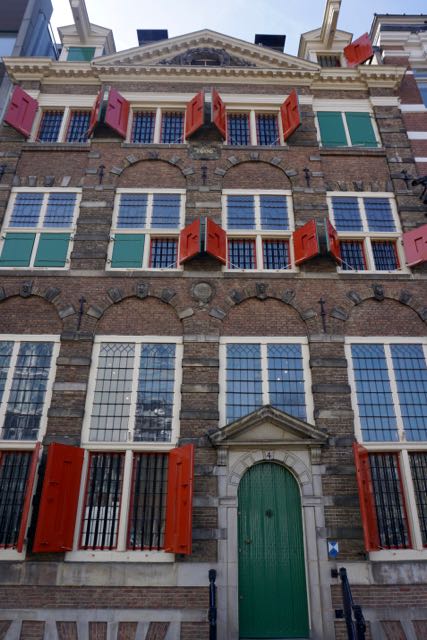
The next morning, we brought our bags to the same storage facility in city center and made our way to the Rembrandt House Museum. I really love seeing how people lived way back in the day. Rembrandt’s life looked quite comfortable and, as my brother pointed out, it’s rare that an artist was so celebrated while still alive.

DSC03934

Amsterdam also has a really cool statue dedicated to Rembrandt in the aptly-named Rembrandtplein, the city’s central square:

DSC03782

Feeling cultured, we decided we’d visit one more museum that day. On our way to the museum district, we walked through a flea market selling clothing, shoes, and cool pieces of art . . .

. . . which led us to a statue of Amsterdam native Baruch Spinoza (the birds were symbolic, but I can’t remember why) . . .

DSC03940

. . . and a memorial to the victims of World War II. . . .

DSC03942
“O that my head were (full of) waters and my eyes a fountain of tears, that I might weep day and night for the slain of the daughter of my people.” – Jeremiah 8:23

Amsterdam has a historic Jewish Quarter but we didn’t spend much time there. We happened across the Portuguese Synagogue one evening and meant to come back, but that’s the day we went to Haarlem instead. Normally, we would have visited the Anne Frank House, but it was unfortunately closed for Passover until the night that I left. Lucky brother went without me.

Our plan for the last afternoon was to visit the Van Gogh Museum in Vondelpark, full of people on the first warm day all week. On arrival, though, we learned that new rules meant tickets were timed and only available online. Unable to get tickets for that day, we opted for the Rijksmuseum just across the park, which houses very famous Dutch art, including several pieces by Rembrandt we’d learned about that morning.

There were street musicians playing in the covered museum courtyard and we stopped to listen. I’m always impressed with just how talented some people are and it reminds me over and over how difficult it is to make it in the arts worlds.

DSC03960

We had a very late lunch after the museum and wandered around a little while longer, enjoying the canals and the sunshine, before I took a train to the airport. There was a lot I enjoyed about just being in Amsterdam because the people of this city have something to say and want to be heard.

DSC03933

As usual, I appreciated the flavor and feel that street art and graffiti lend to a city. It’s a way of getting to know the people of a place and understand a bit about who they are and what matters to them.

In all, we really enjoyed being in Amsterdam. A city built on canals and for bicycles feels different than many places I’ve been. The graceful bridges and buildings that go right up to the water lend a lot of beauty to the city and I think the locals have a right to be concerned with negative impacts of tourism. Our Airbnb away from city center helped us understand what it means to live in Amsterdam and made me like it a lot more than I did in the crowded tourist areas. As usual, I haven’t seen everything yet, which means I’ll have to come back. Amsterdam, thanks for having us!

DSC03909