Tag Archives: Castle

Travel Guide: Dubrovnik

My parents and I started our trip to Croatia with two nights in Zagreb, after which came three nights in Split. Dubrovnik was our final stop and as before, we reached our destination in the dark. But the trip leading to Dubrovnik was full of colour and anticipation.

We decided to take the scenic route along the coast, which was breathtaking. I am forever lost in the majesty of cliffs that drop off into sea, the islands in the distance, the colours of the water and sky, the villages that appear and then, just as suddenly, are gone.

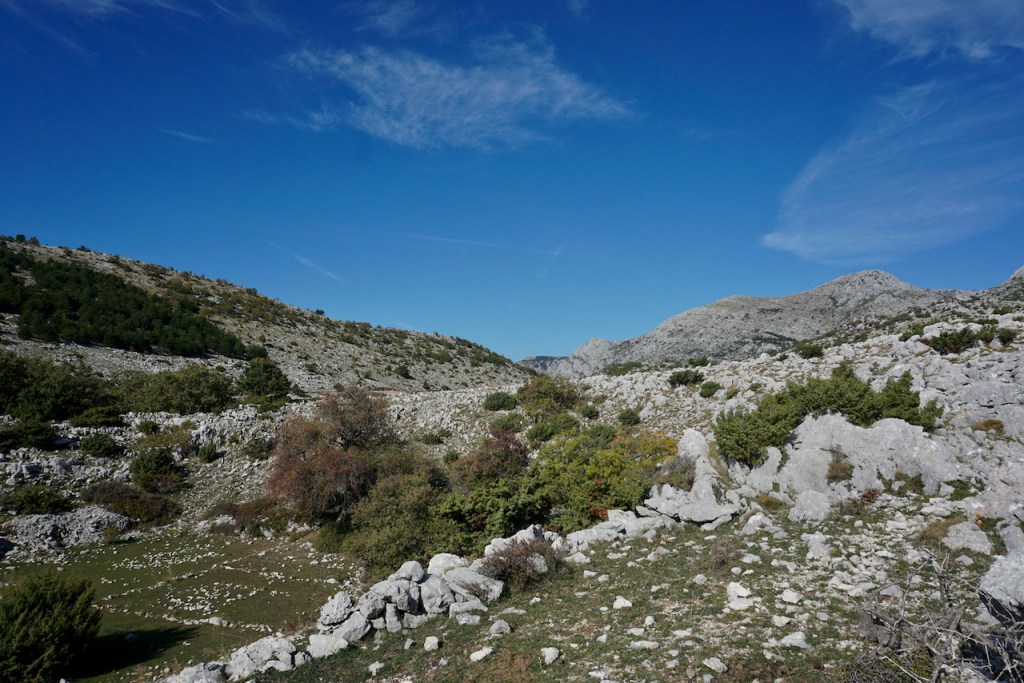
The drive was indeed stunning, but we also decided to stop and explore. Our first stop was Biokovo Nature Park, essentially a nature preserve comprising of the mountains along the coast. I’d read that the best way to see the park is to drive up the road (be ready for serpentines and some negotiation with other drivers), ride an e-bike, or take a guided walk. Now having been there, I’m not sure where a guided walk would have gone as we didn’t see any paths. Rather, we pulled off the road at a point wide enough for a couple of cars and my mum and I spent some minutes scrambling up rocks.
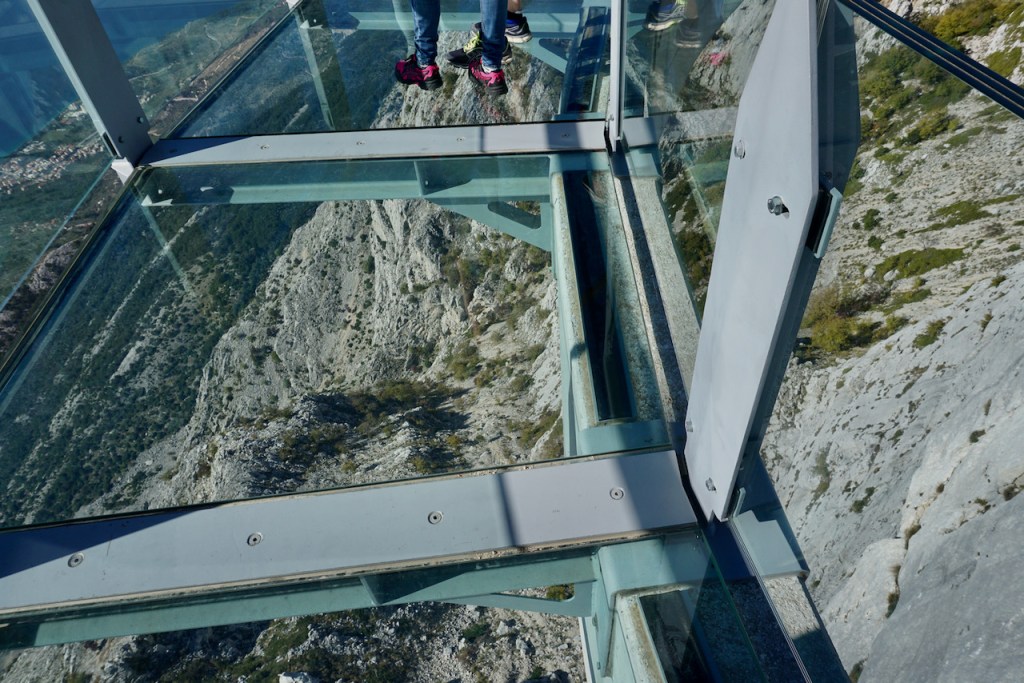
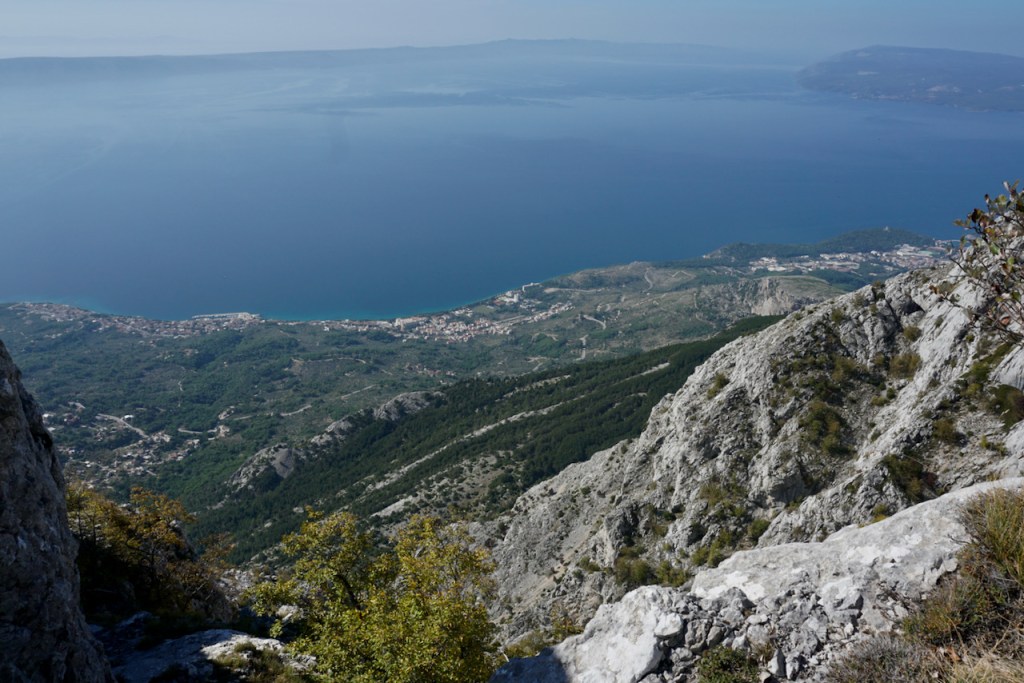
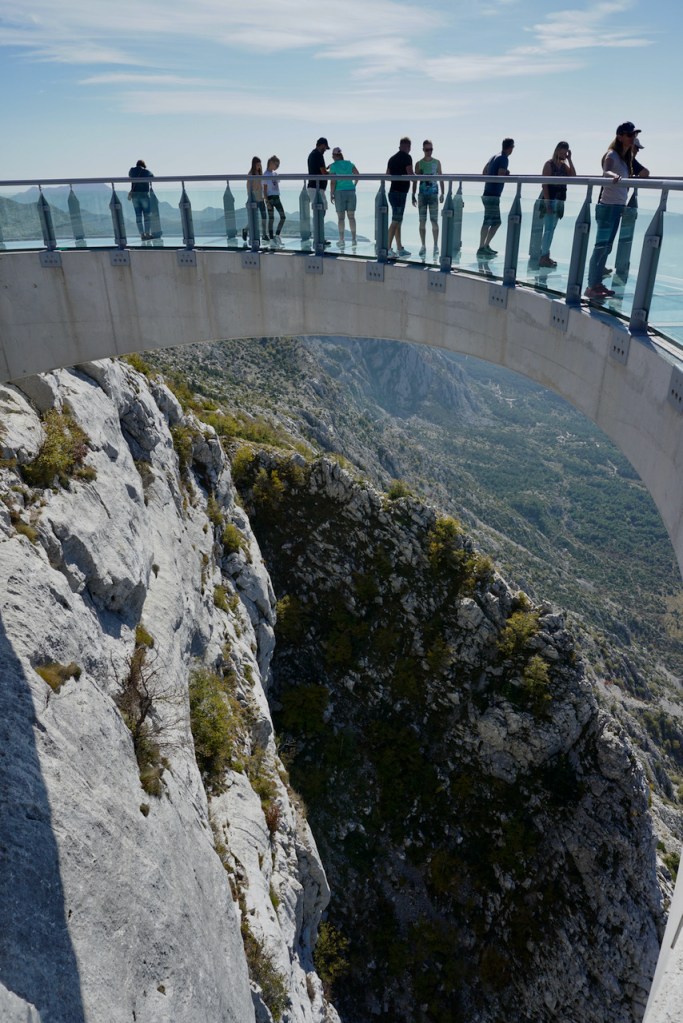
Back in the car, we followed the road to the Skywalk, which seemed to be the primary attraction. The Skywalk is exactly what it sounds like – a glass bridge where you can walk above the cliffs and stand at the edge of the world.
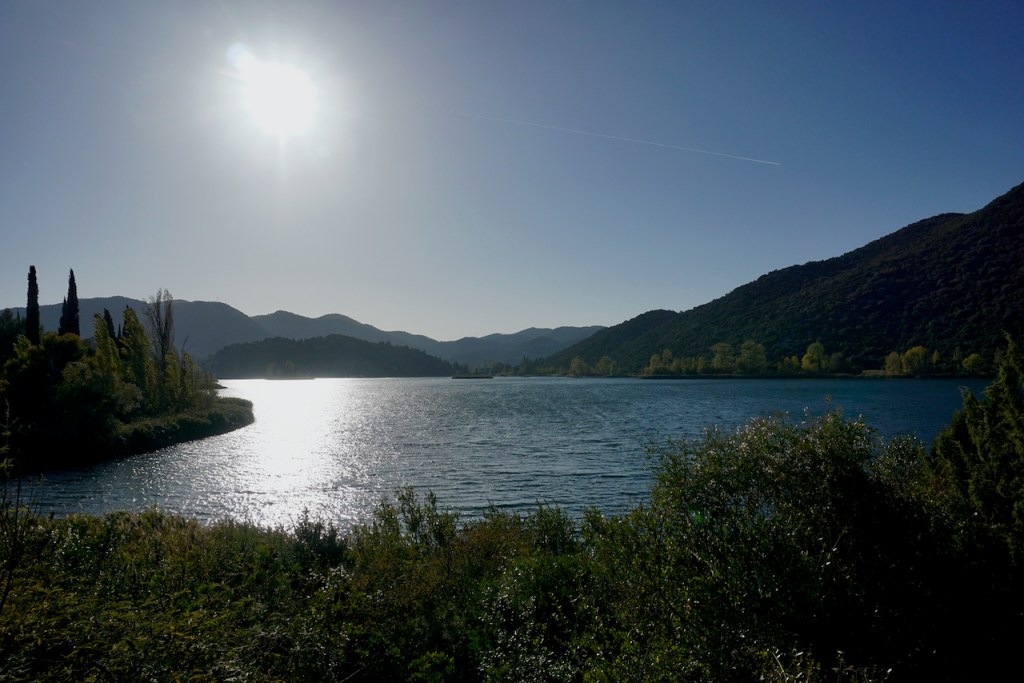
After lunch at the only restaurant, which was frequented by horses and a mule in addition to the patrons at tables outside, we drove to Baćina Lakes, which is easier said than done. It was only with the aid of several blogs, several maps, and sheer dumb luck that we found a) the lakes and b)somewhere to park. This is the type of adventure that comes from travelling outside of high season when the campgrounds and kayak rentals, from which it would be easy to get directions, are closed. I’d read about beaches and a cycling/walking trail circling the seven lakes, but as Baćina Lakes was off the coastal road, it wasn’t immediately obvious where we were or where we needed to be. In the end, after a brief attempt at visiting the tourist information centre in the nearby city of Ploče, the address of which led us to an abandoned bus depot, we put Peračko Blato Beach into the GPS because I found it listed on a blog and there we were! Another car, a camper, and a few people sunning themselves at a tiny beach heralded our arrival. More importantly, we had reached an are with very well-marked walking trails that clearly went around beautiful lakes.

There were signs detailing information about the flora and fauna and the air smelled like spring. We saw pomegranate and olive trees and a wide variety of plants and flowers, as well as a snake and a jaw containing rather a lot of teeth. Considering we were following a black dog with a wagging tail who had come to greet us at the car and proceeded to walk in front of us for the entirety of our time at Baćina Lakes, we gave the skull a wide berth.
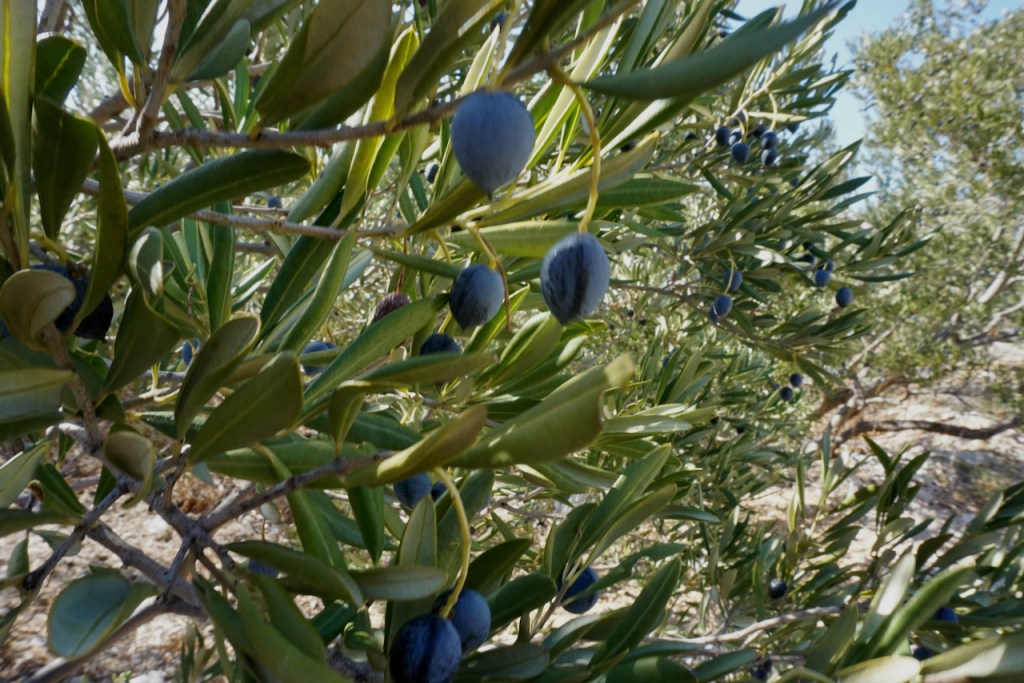
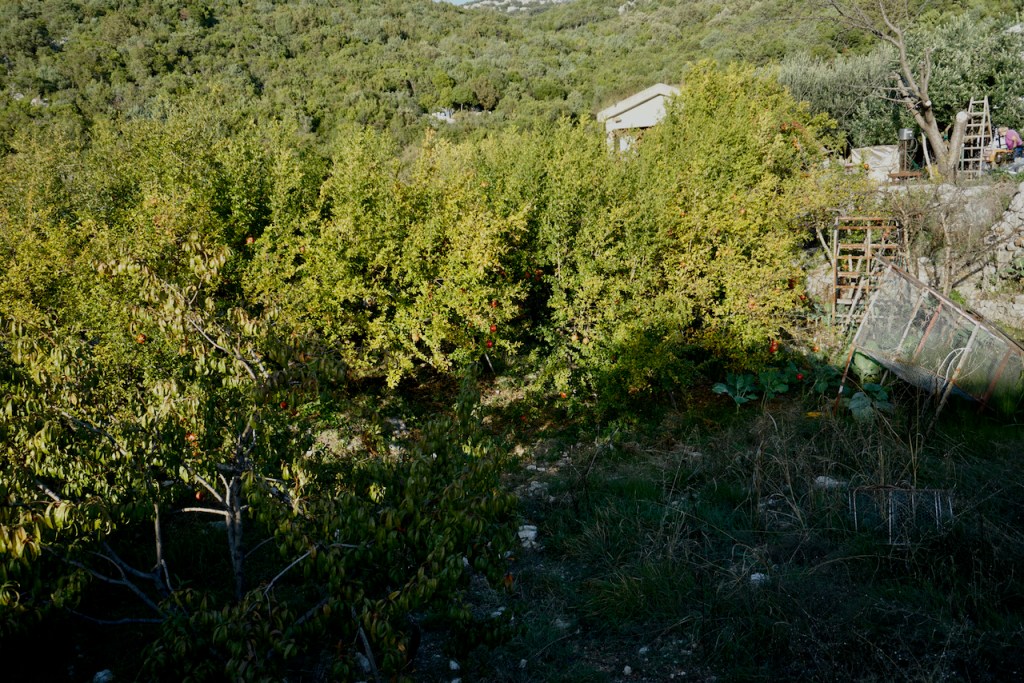
Throughout the day, we’d seen whole families spreading blankets underneath trees on the sides of the road and picking olives. We pulled over to do the same, which is when we learned that olives are not like apples and you cannot simply eat what you pull off a tree. After that, we left the olive trees to the locals, who clearly knew what they were doing.

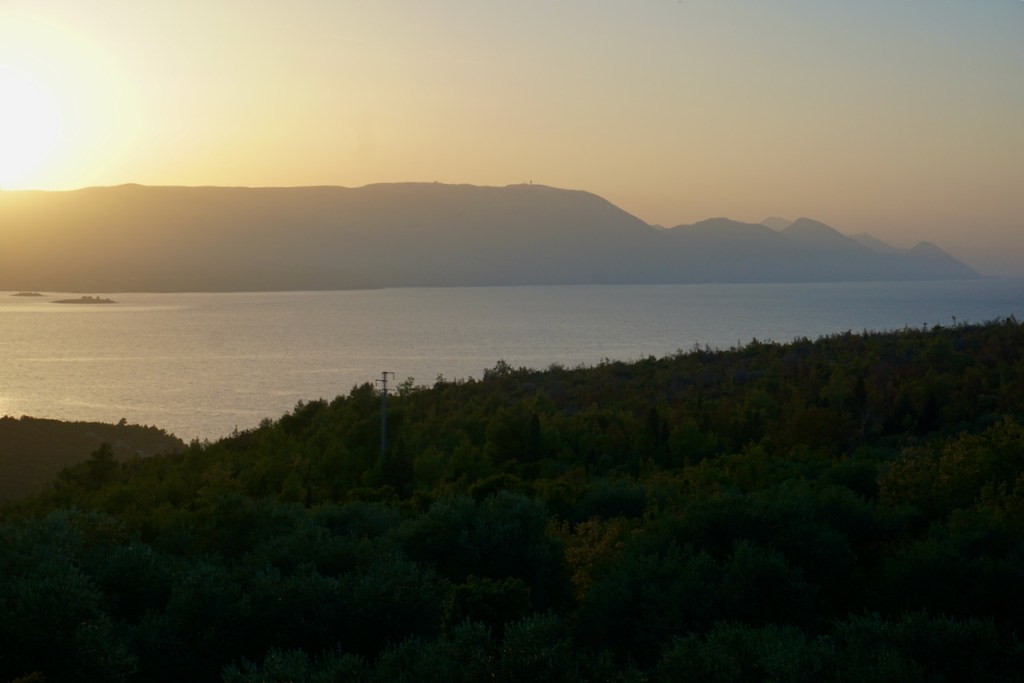
Our last stop of the day was at a rest area that specialized in wine tastings. We didn’t stay for long, nor did we taste any wine, but remained for long enough to sit silently and stare out at the view.

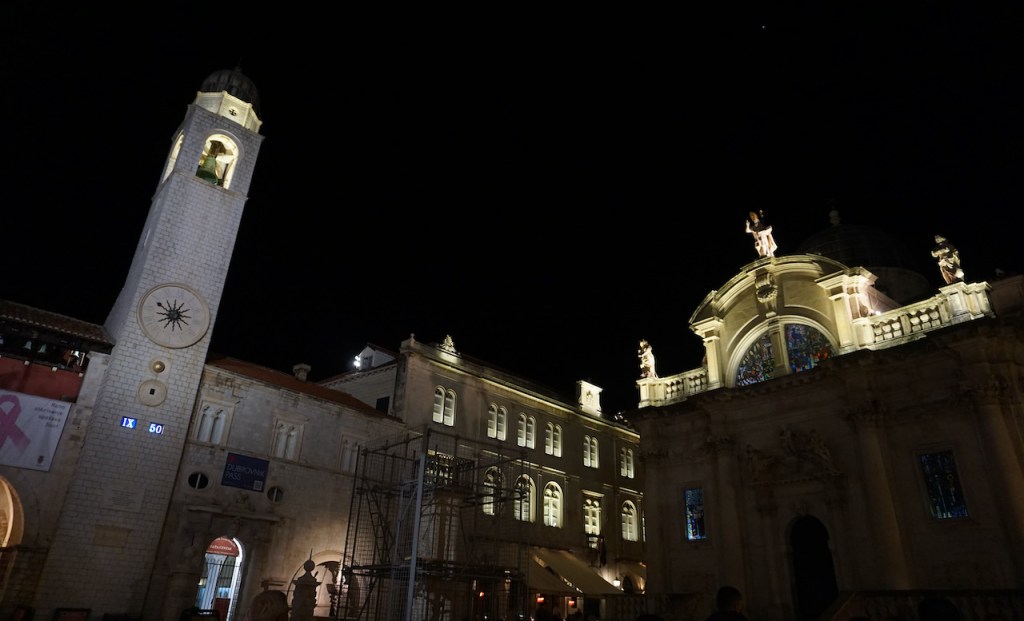
Night comes fast at this time of year and Dubrovnik was quiet when we arrived.

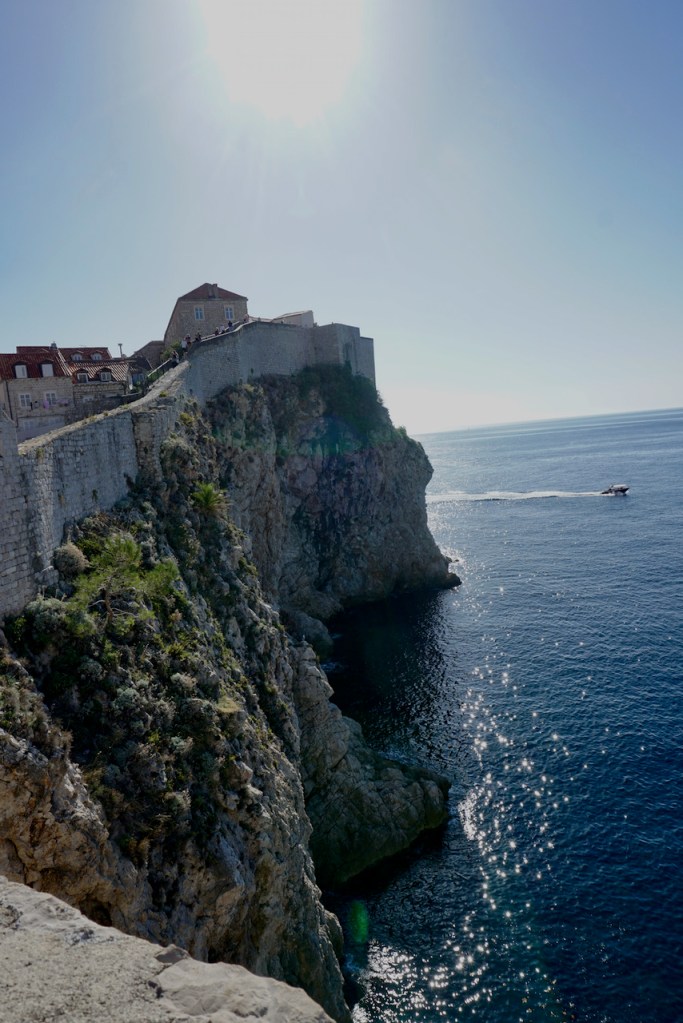
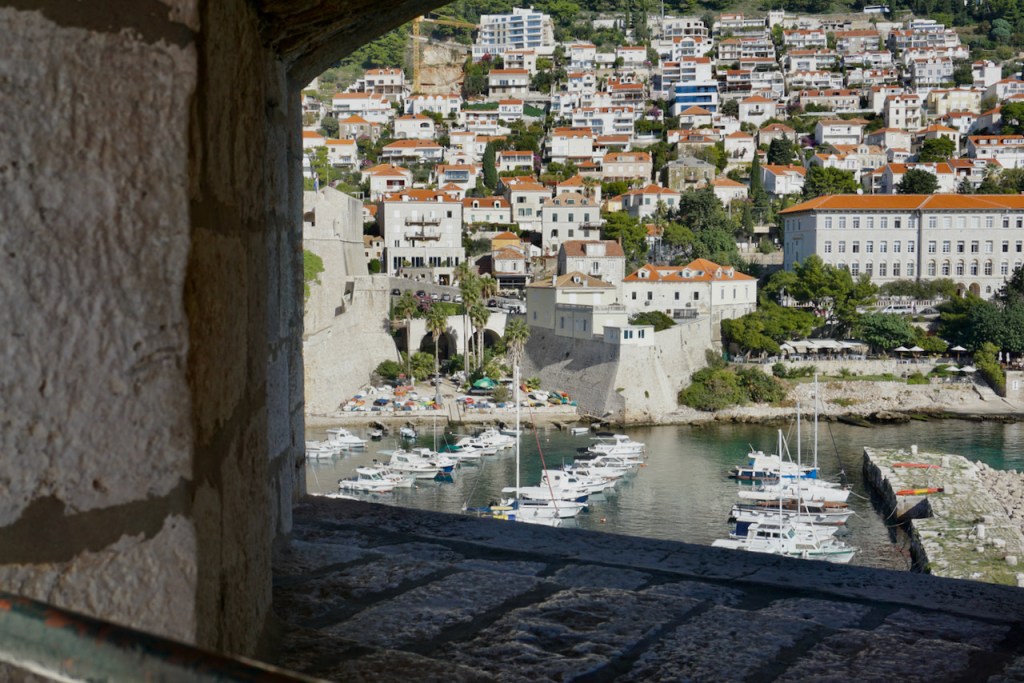
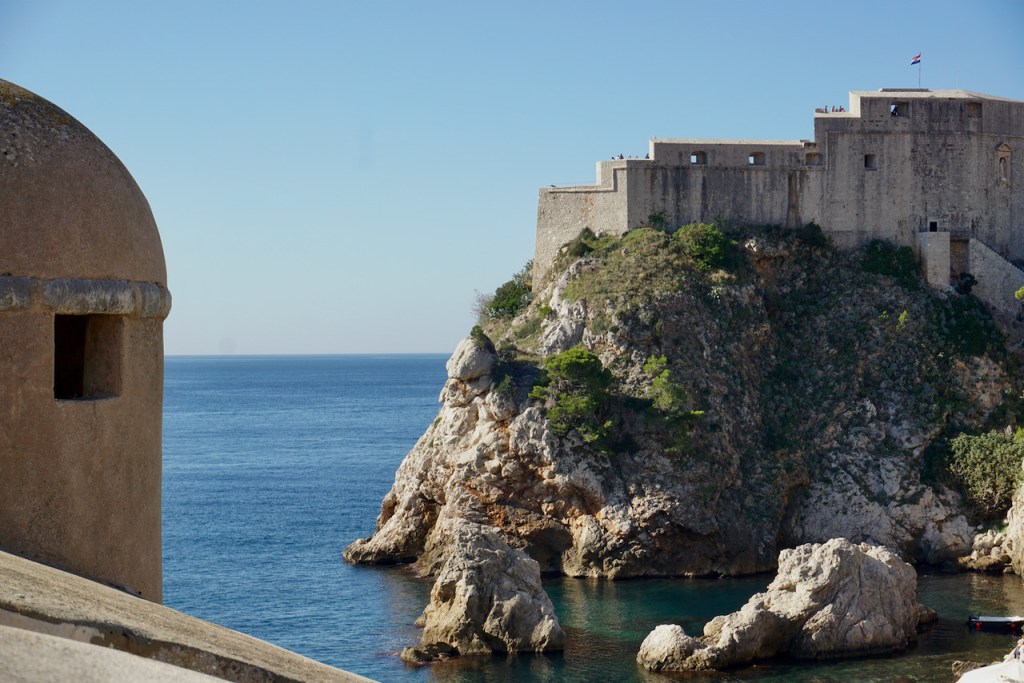
The following day was our only day to explore, and the weather was glorious. Warm bordering on hot with bright blue skies and a breeze that came out from the harbour. I had one intention for Dubrovnik and that was to walk on the city walls, which are a UNESCO World Heritage site. When I paused to think about just how old these walls were, I had to wonder about anything we build today. Will anything last like the walls have lasted? Wherever possible, I like to visit the highest point in a city and look down. It makes me feel tiny, just like standing in a forest and looking up.
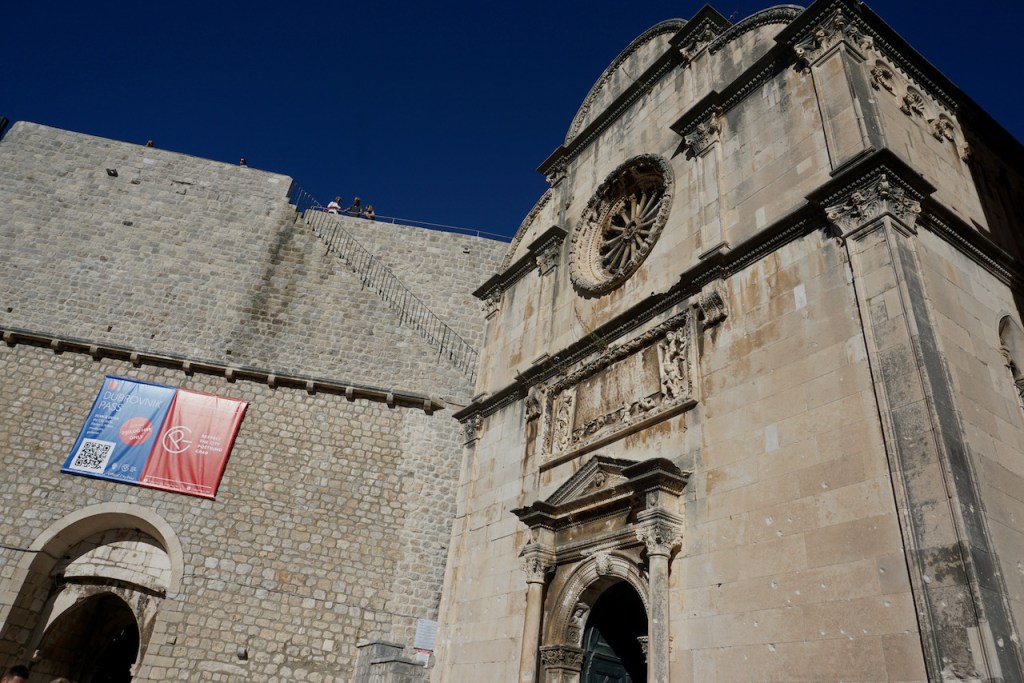
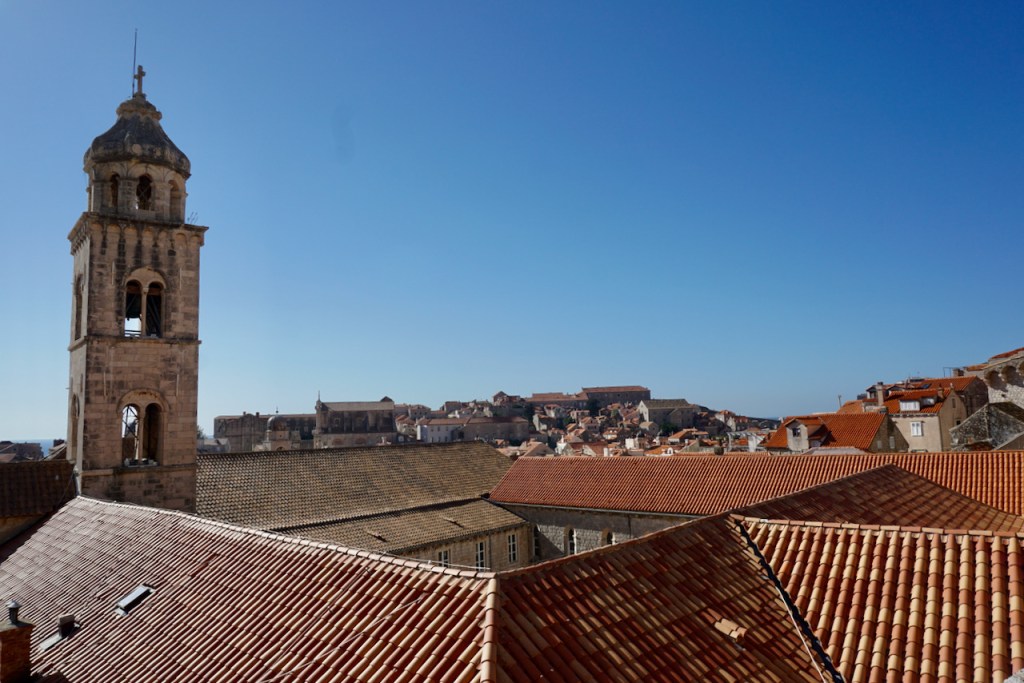
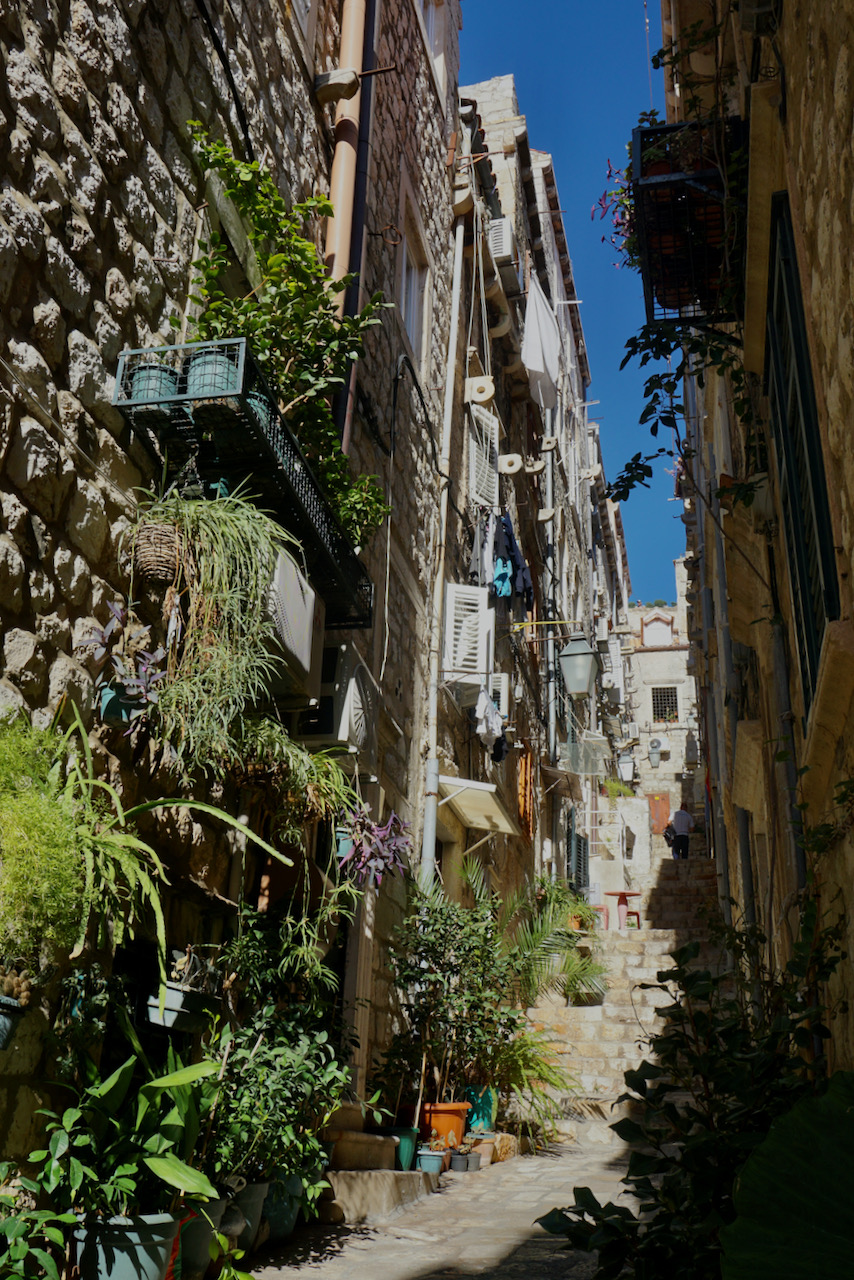
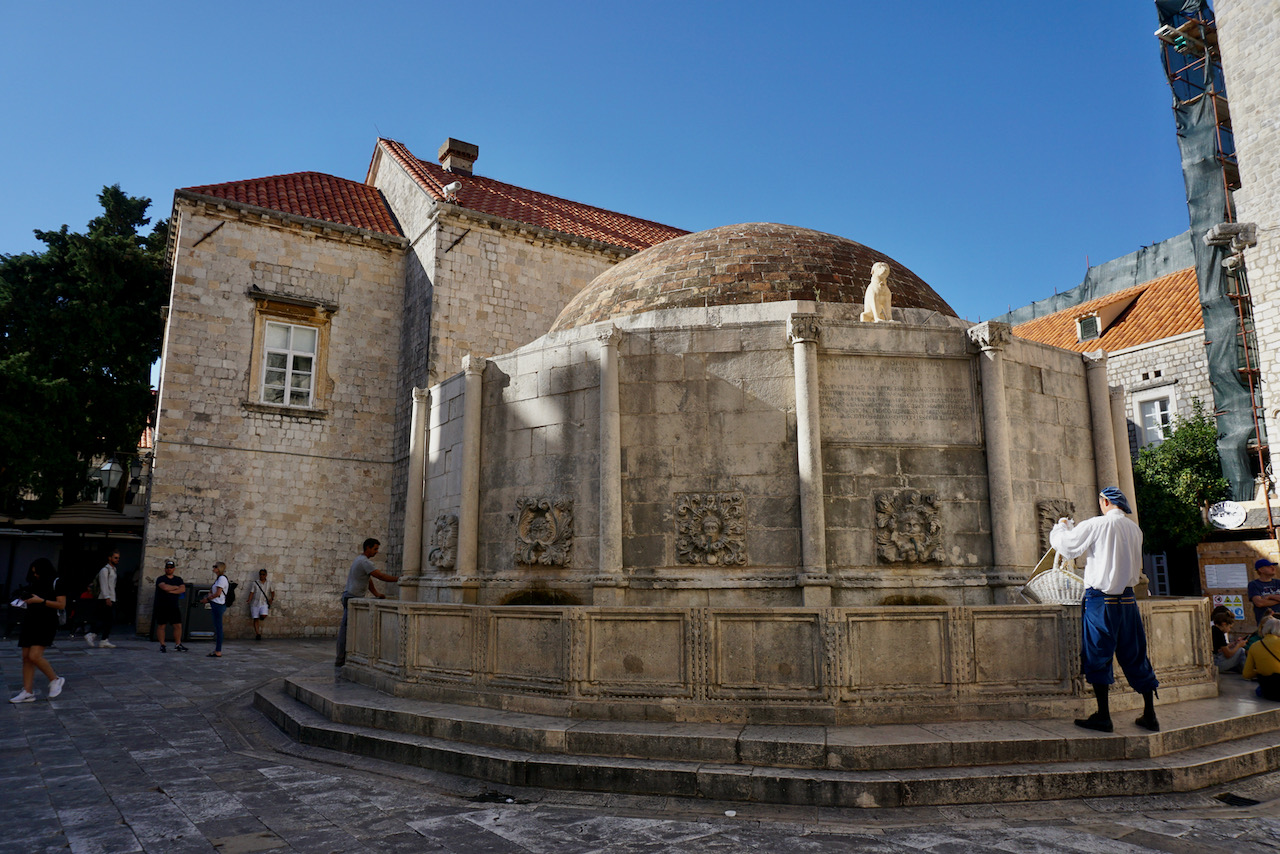
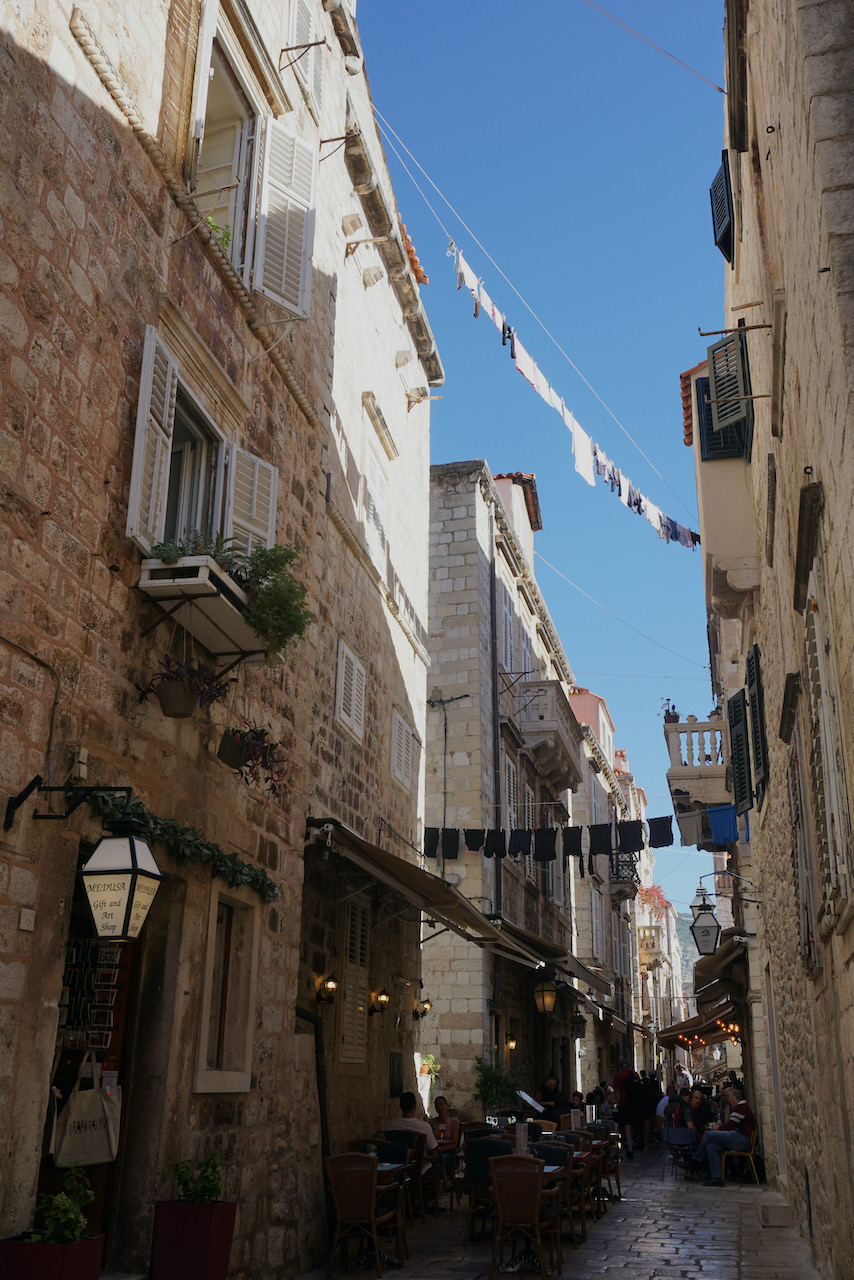
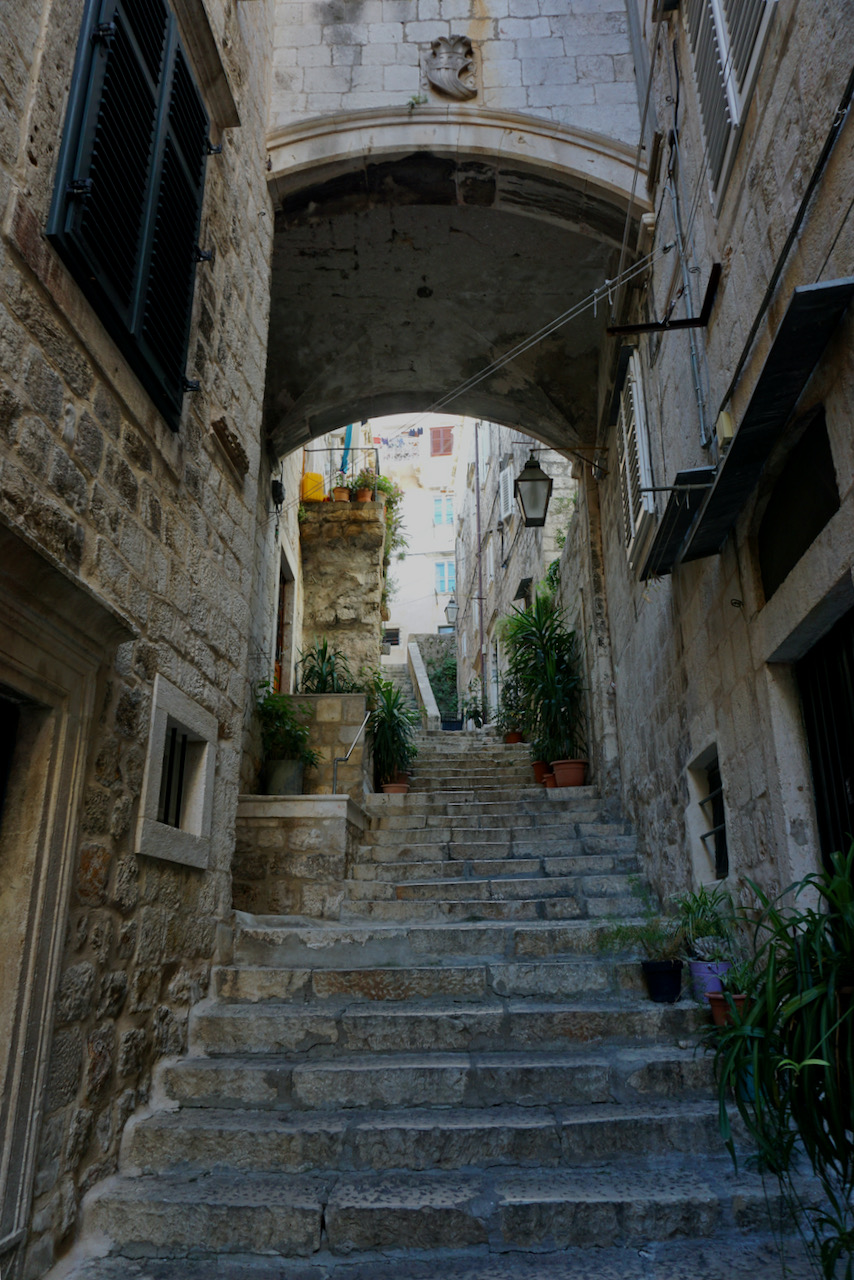
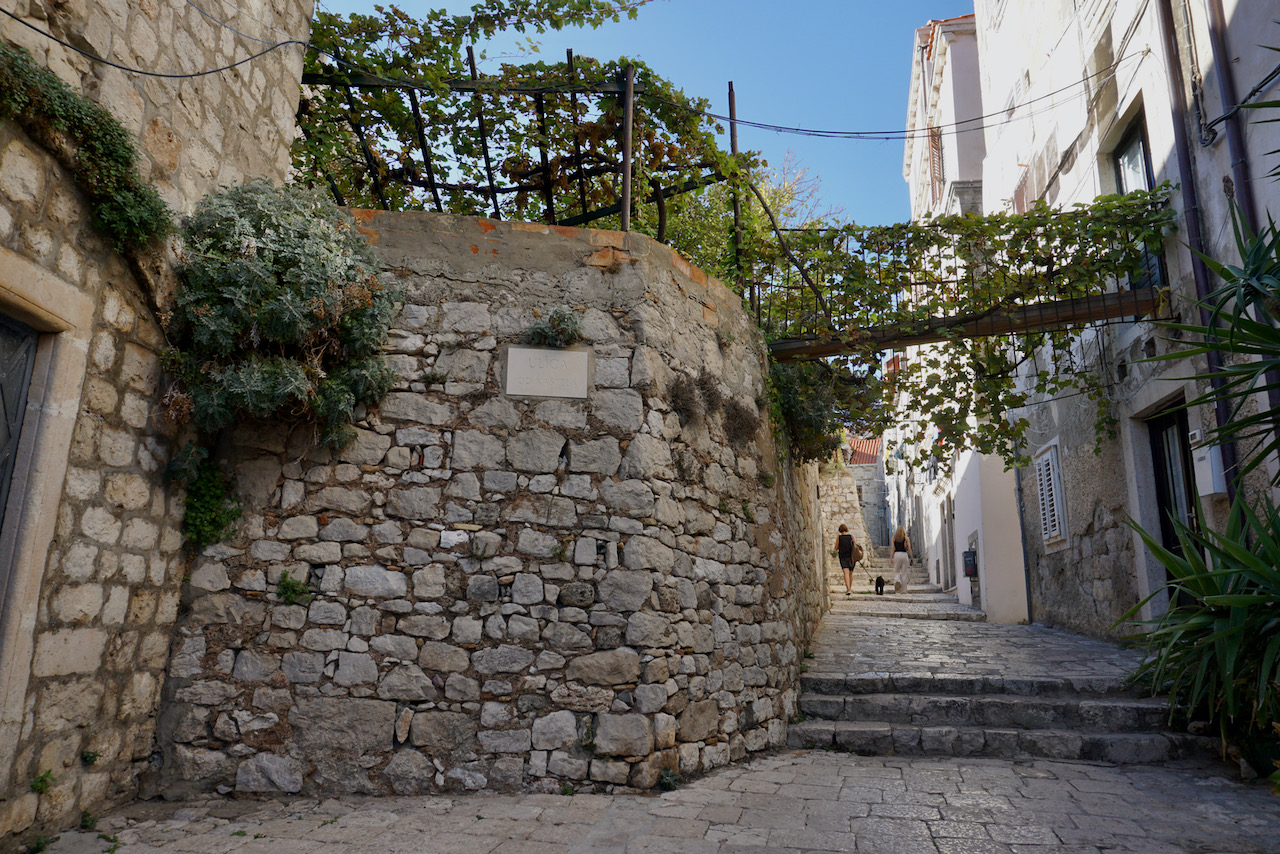
Dubrovnik is beautiful and we spent some time in the afternoon just strolling around. There are tiers of stairs all over the old town and each leads to another street or alley, stone buildings on top of stone staircases. As elsewhere in Croatia, Dubrovnik is also host to many well-behaved stray cats. We passed a small market and I bought some flavoured salt from the town of Ston, which we had passed on our drive.
Later in the afternoon, my dad and I took the cable car to the top of Srd Hill, from which you can look out to Dubrovnik, the surrounding mountains, and neighbouring Montenegro.
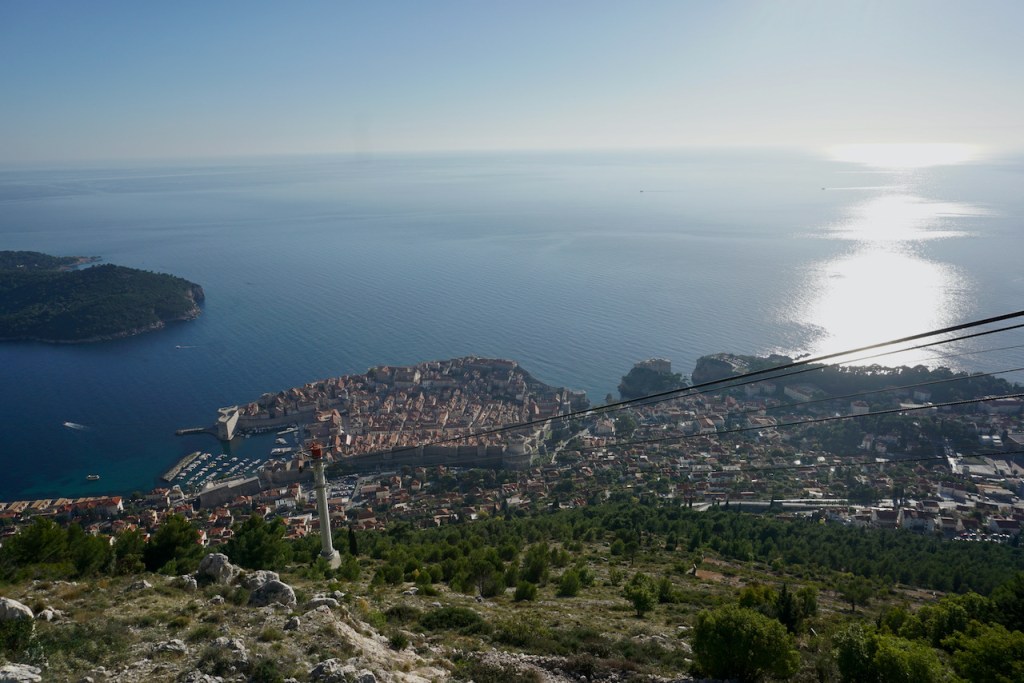
We spent some time on the walking paths, as well, and were lucky enough to watch a herd of sheep as they dutifully followed their shepherd.

Early the following morning, well before sunrise, we were off to the airport. My only expectations of Croatia came from what I’d heard from my siblings and friends who had visited – that it’s beautiful, that the people are wonderful and helpful, that it’s calm and relaxing and easy to explore. All I can add, I think, is that Croatia exemplifies strength – the strength to create, to survive, and to rebuild. It was a real pleasure to be there.

Travel Guide: Nuremberg

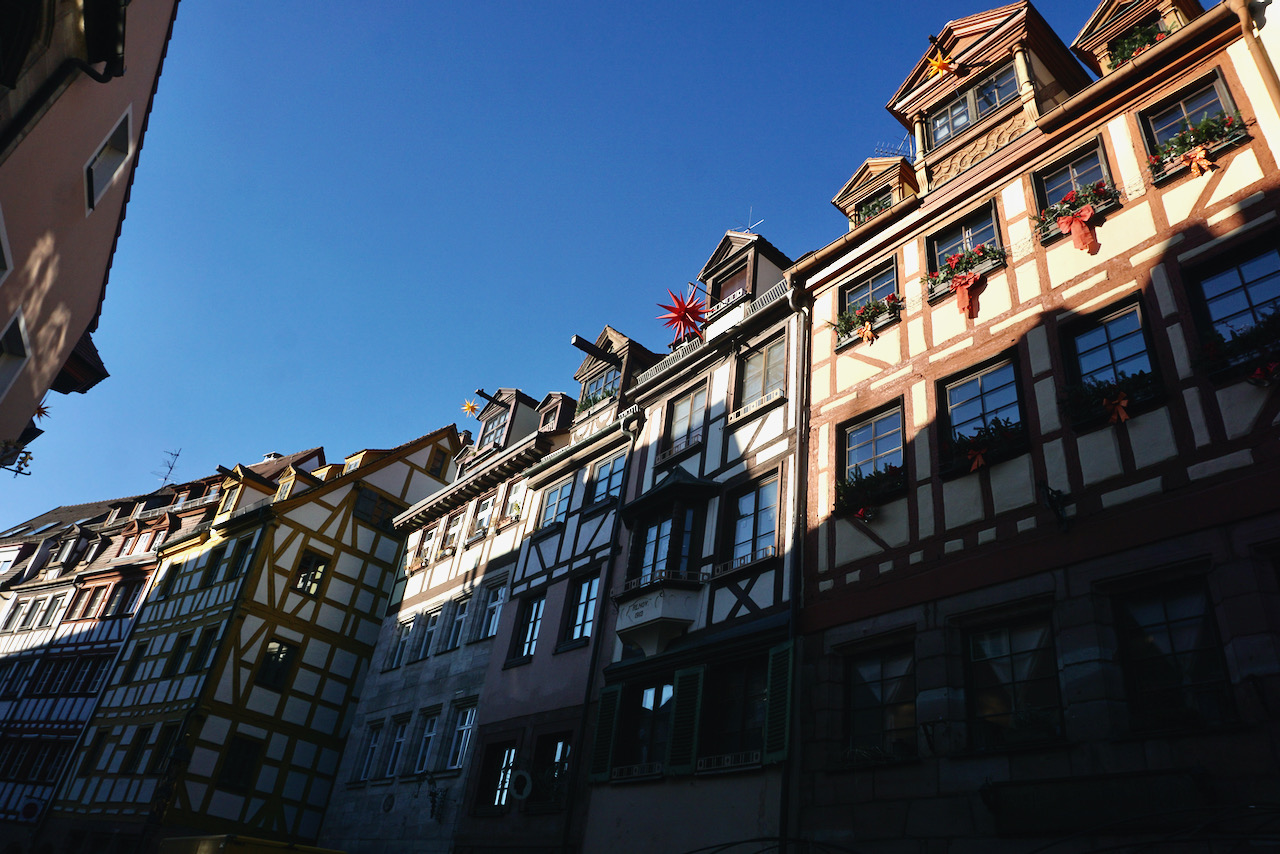
Prior to visiting, most of what I knew of Nuremberg (Nürnberg in German) was that Nazi war criminals had been tried there and justice had been served. However, there is a great deal more to this medieval town and I was glad to spend a few days there.

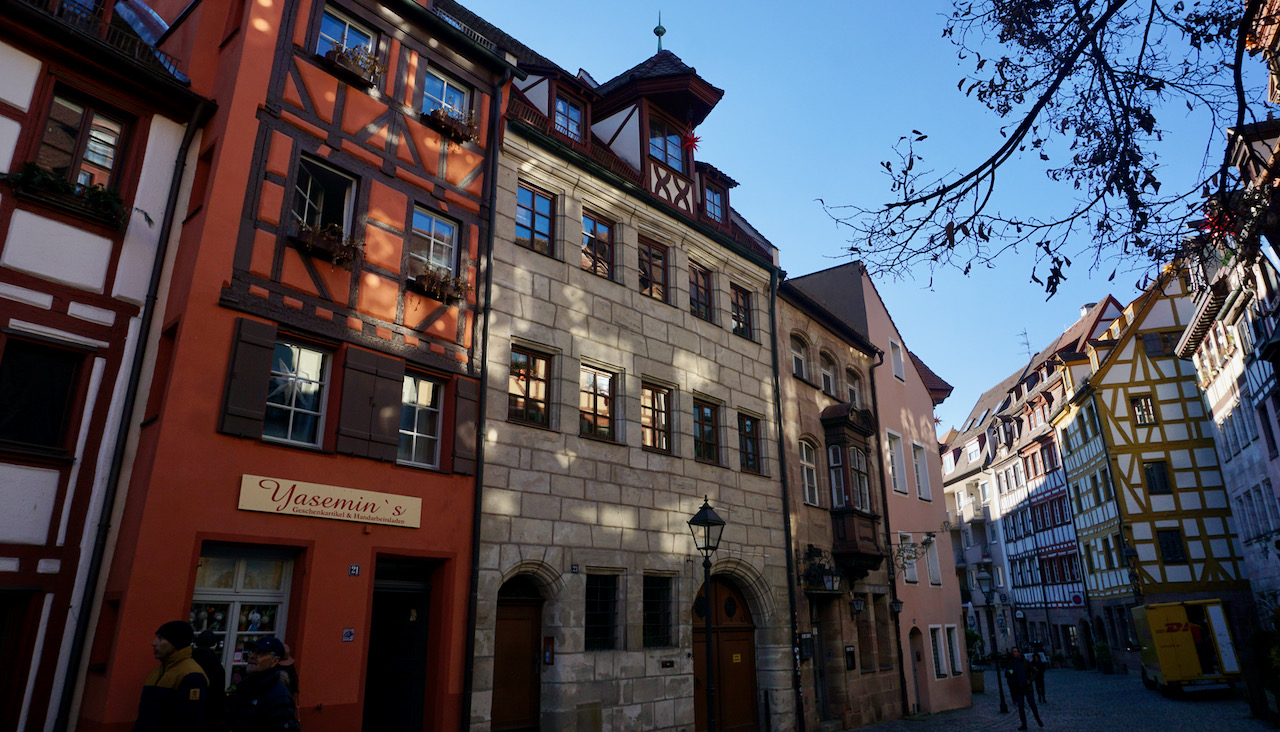
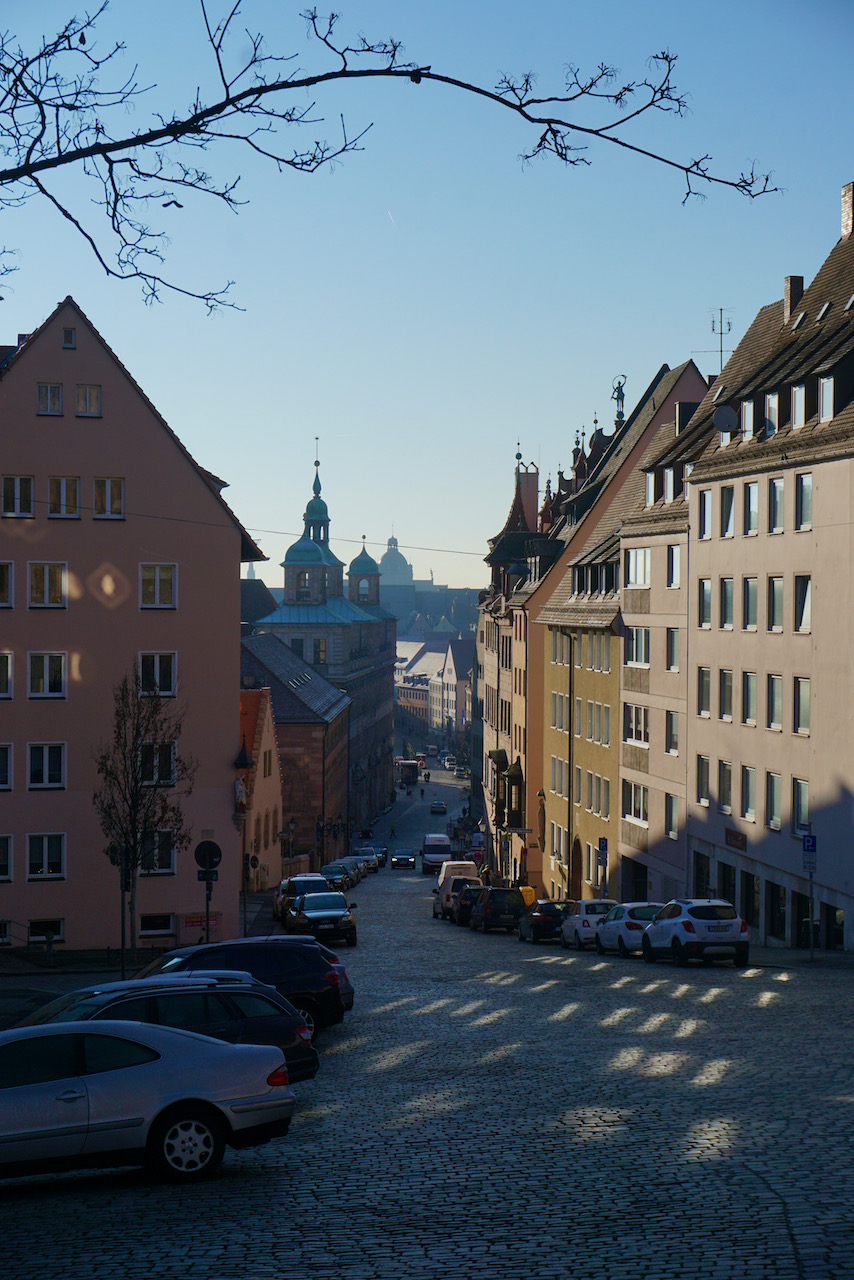
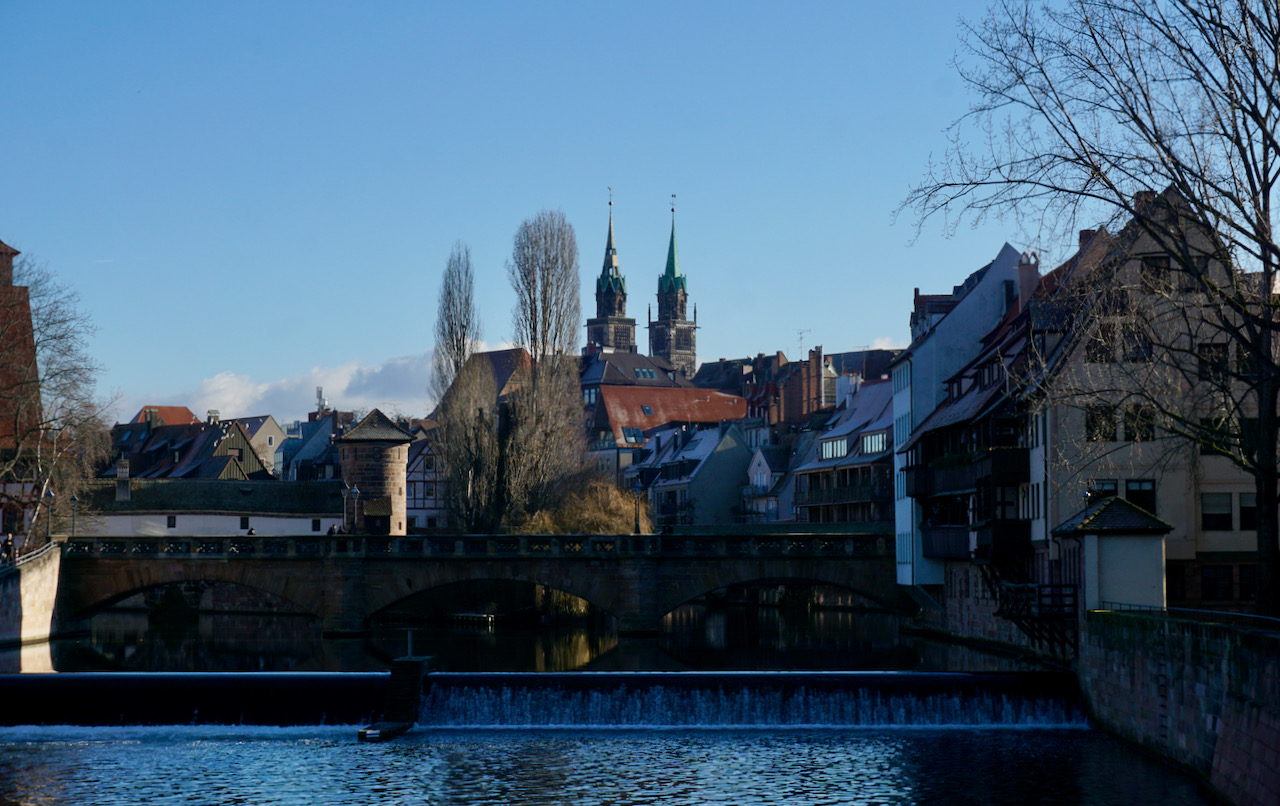
My favourite part of European cities, and the thing that painted my fantasies of the Europe I first read about in historical fiction novels, is the old town. And now that I live somewhere with an old town, I can attest that it remains as charming as on the first visit.

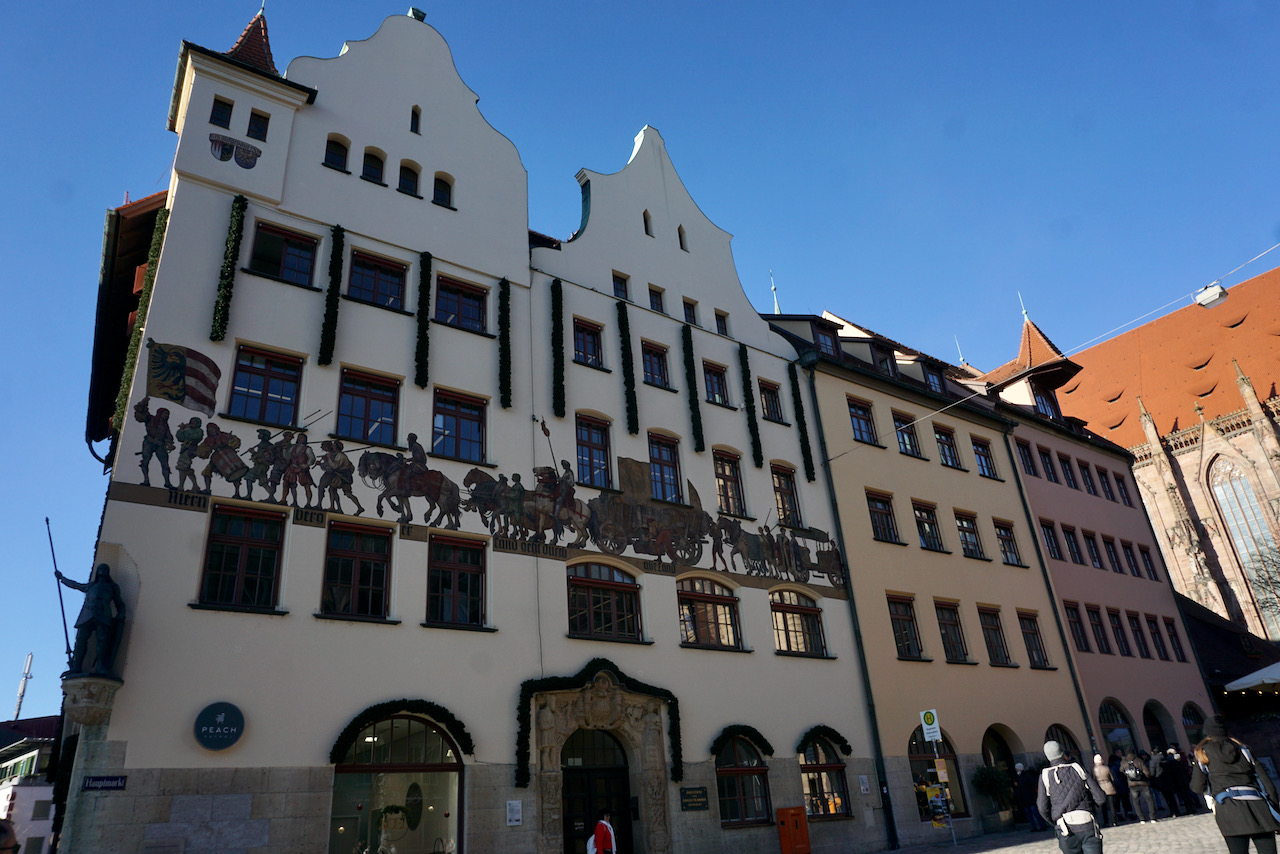
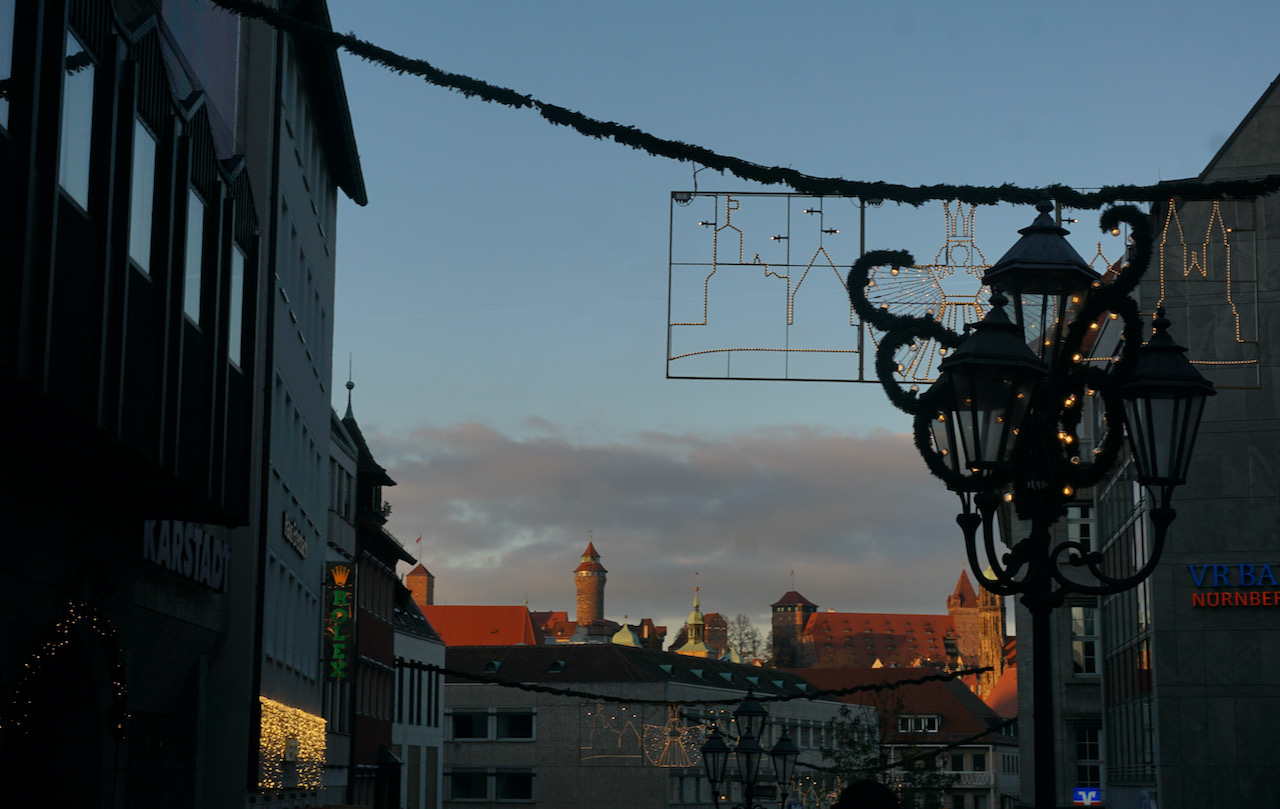
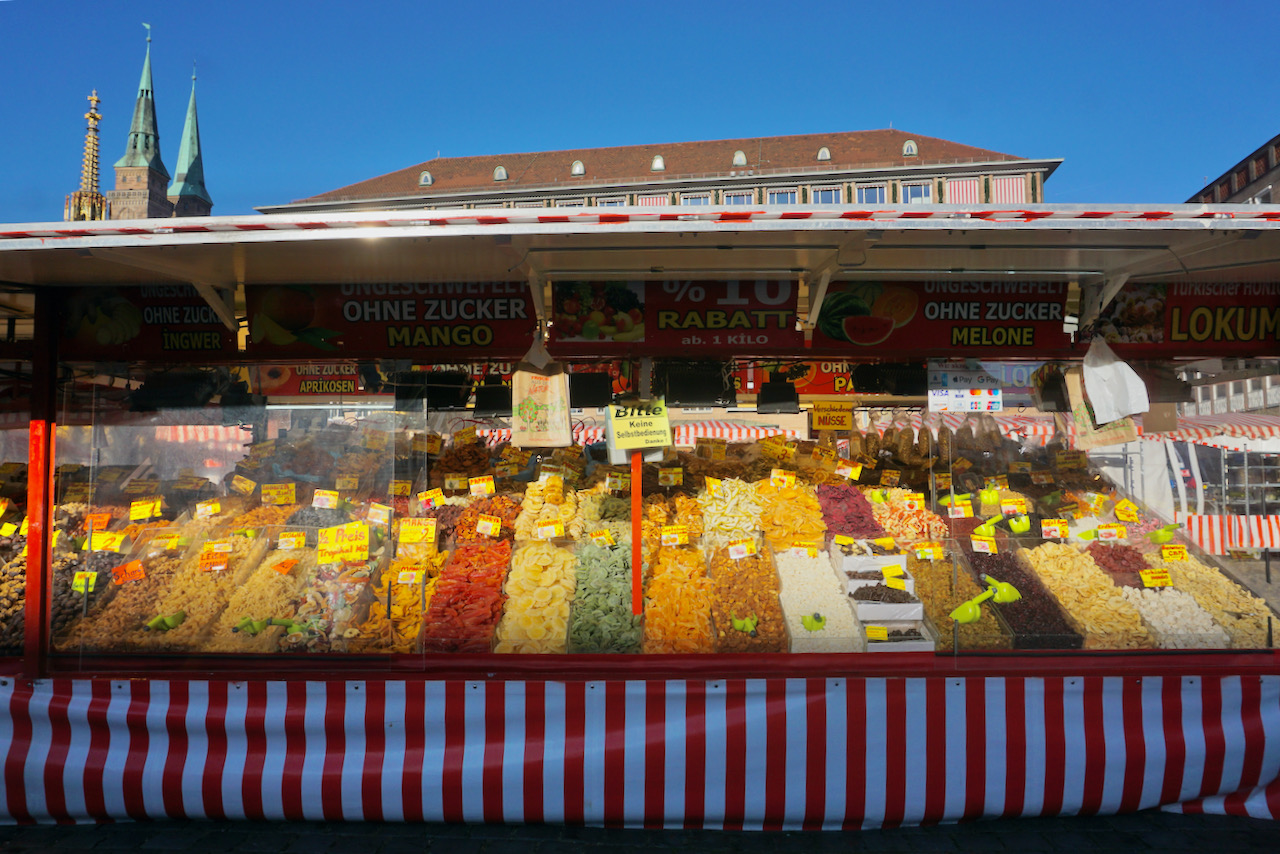
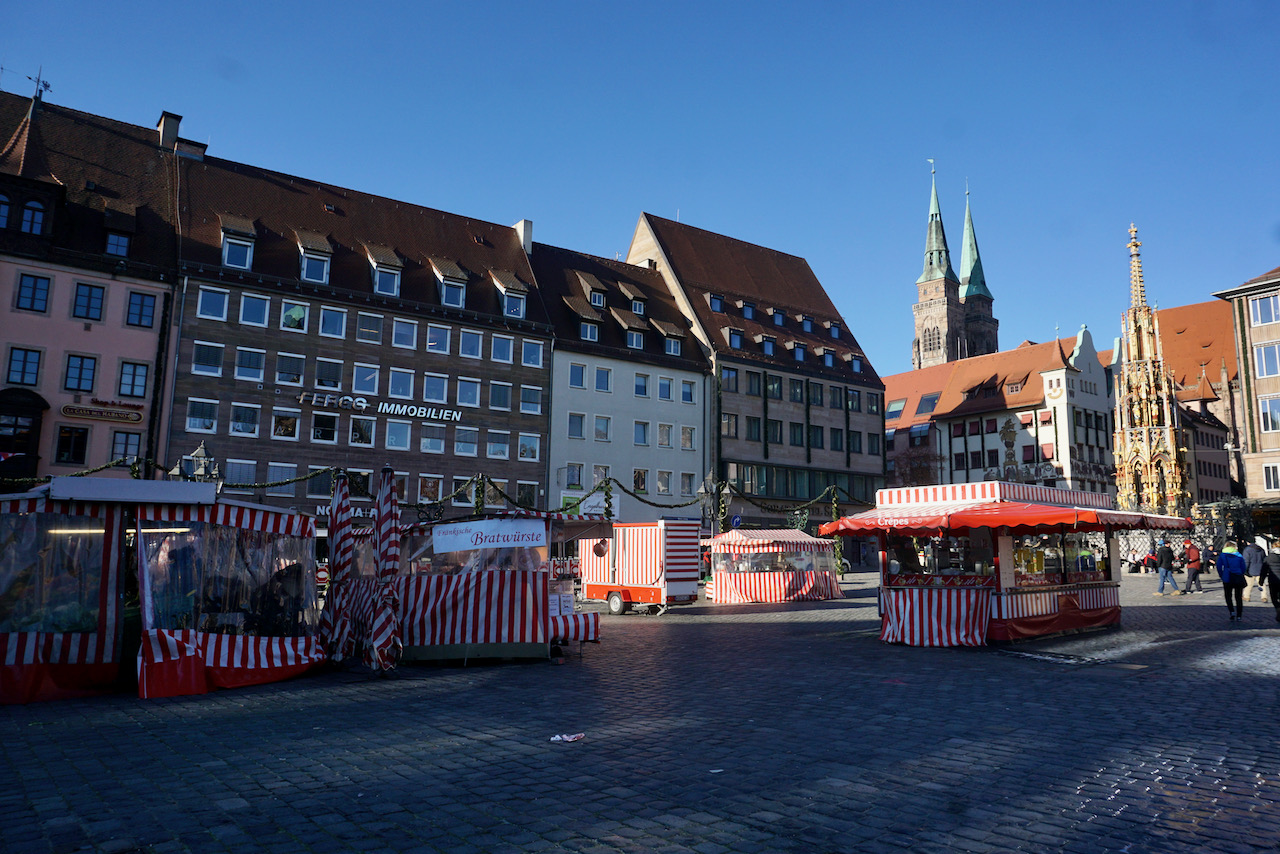
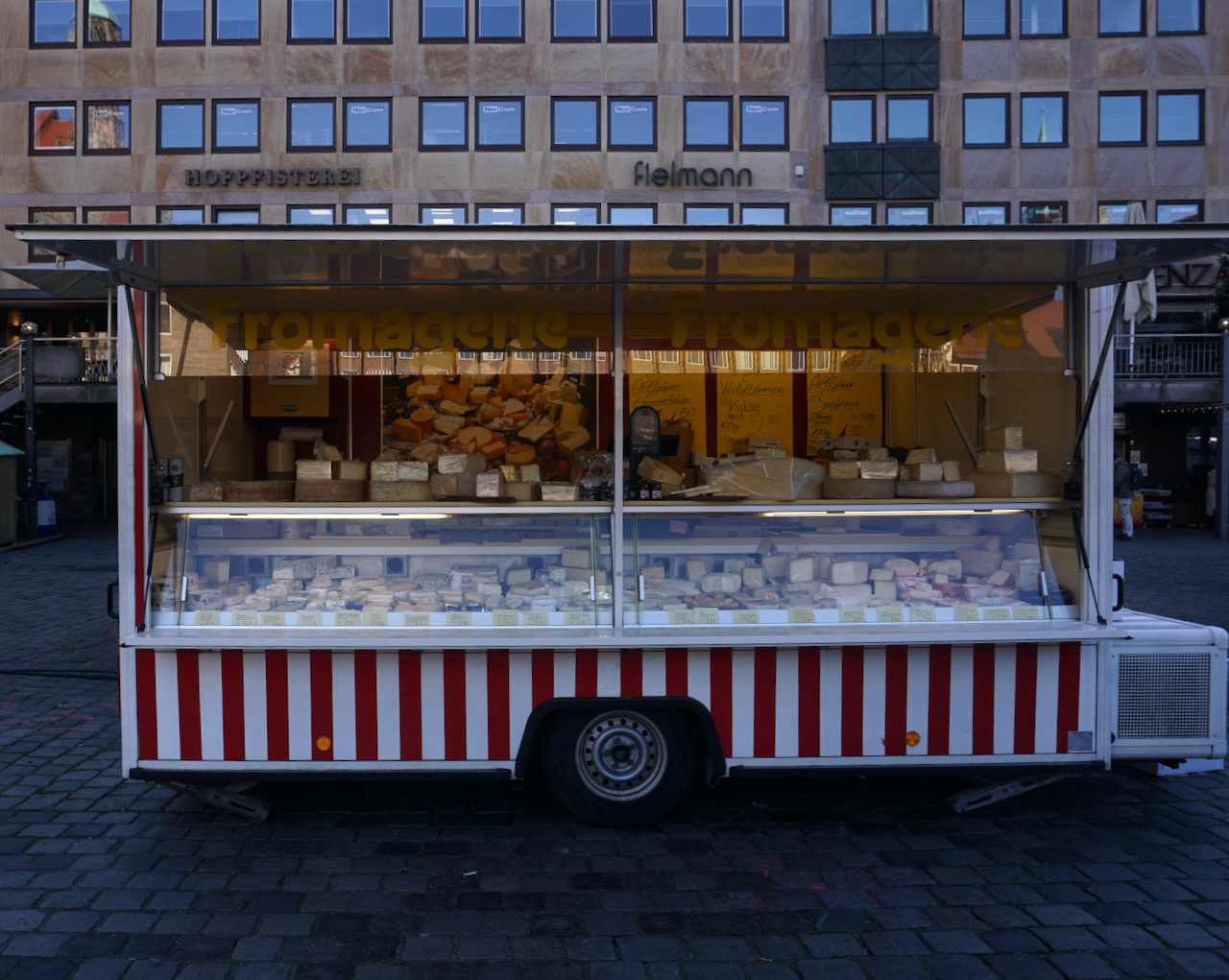
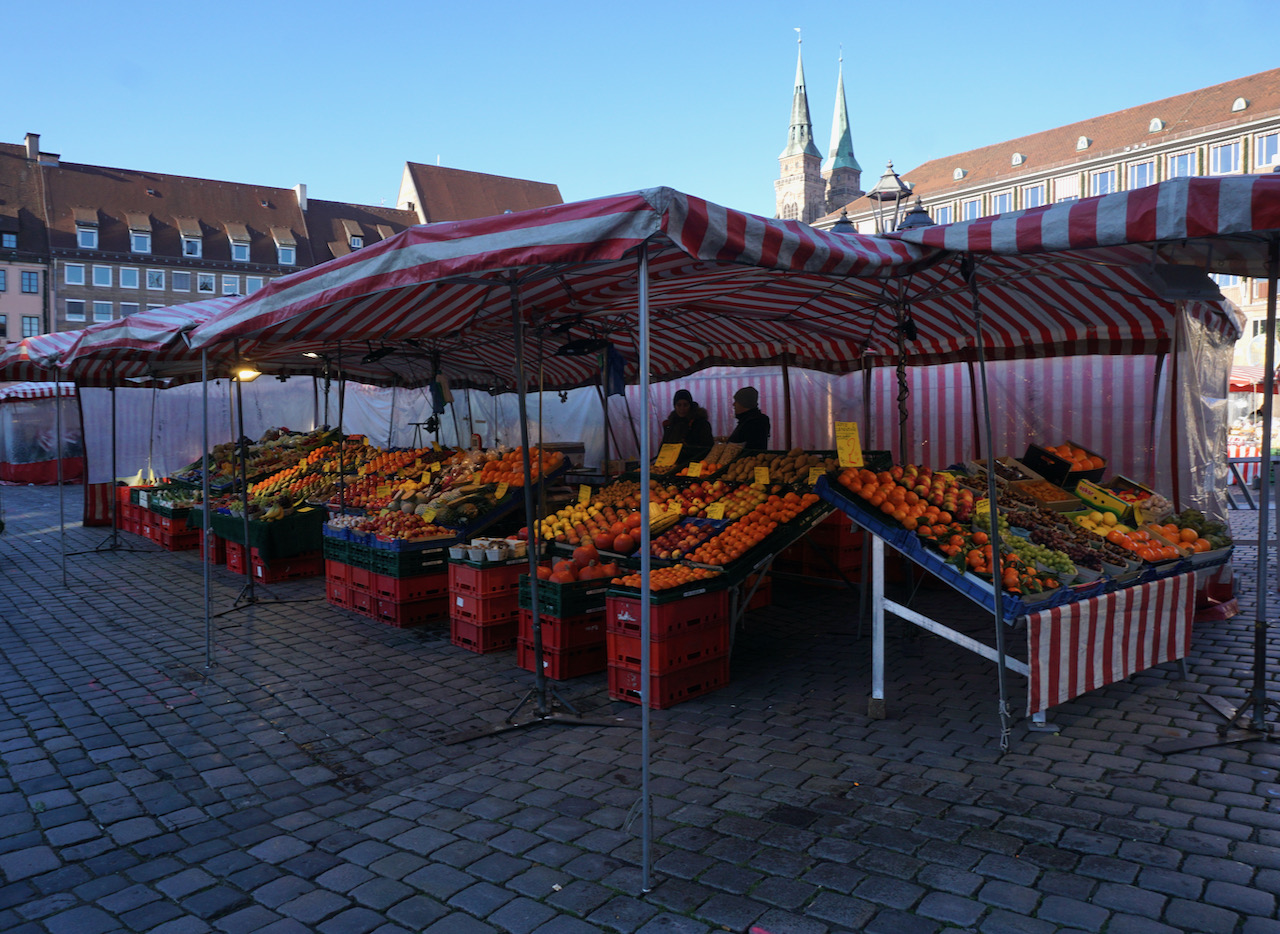
Although Nuremberg’s famed Christmas market was closed due to Covid regulations, the main market remained open and I was pleasantly surprised by its variety. Nuremberg is a city of just over 800,000 people, several universities, and what seemed to be a large immigrant community. I heard more languages than I have heard in a while, which was fun, and there was a greater variety of vegan food here than I had expected, as well as cuisine that I cannot get in my small town.

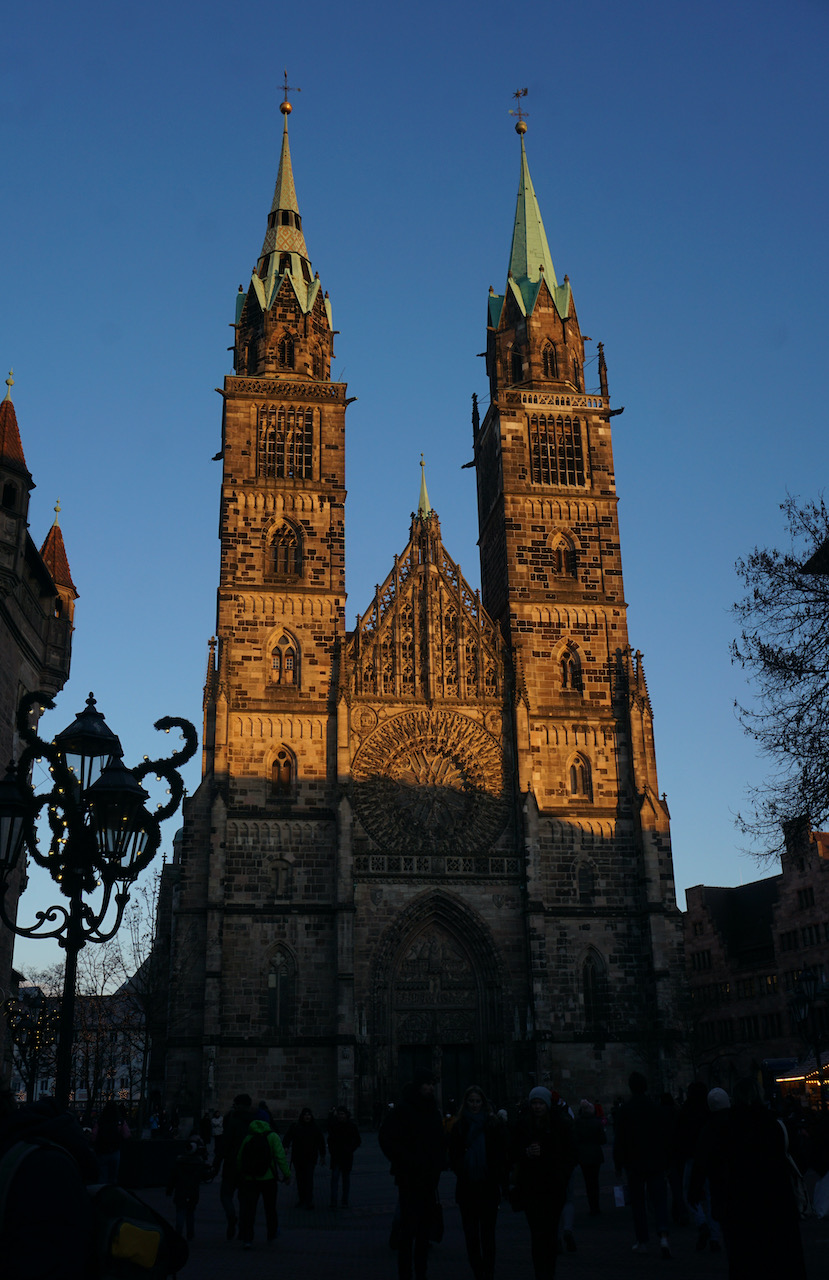
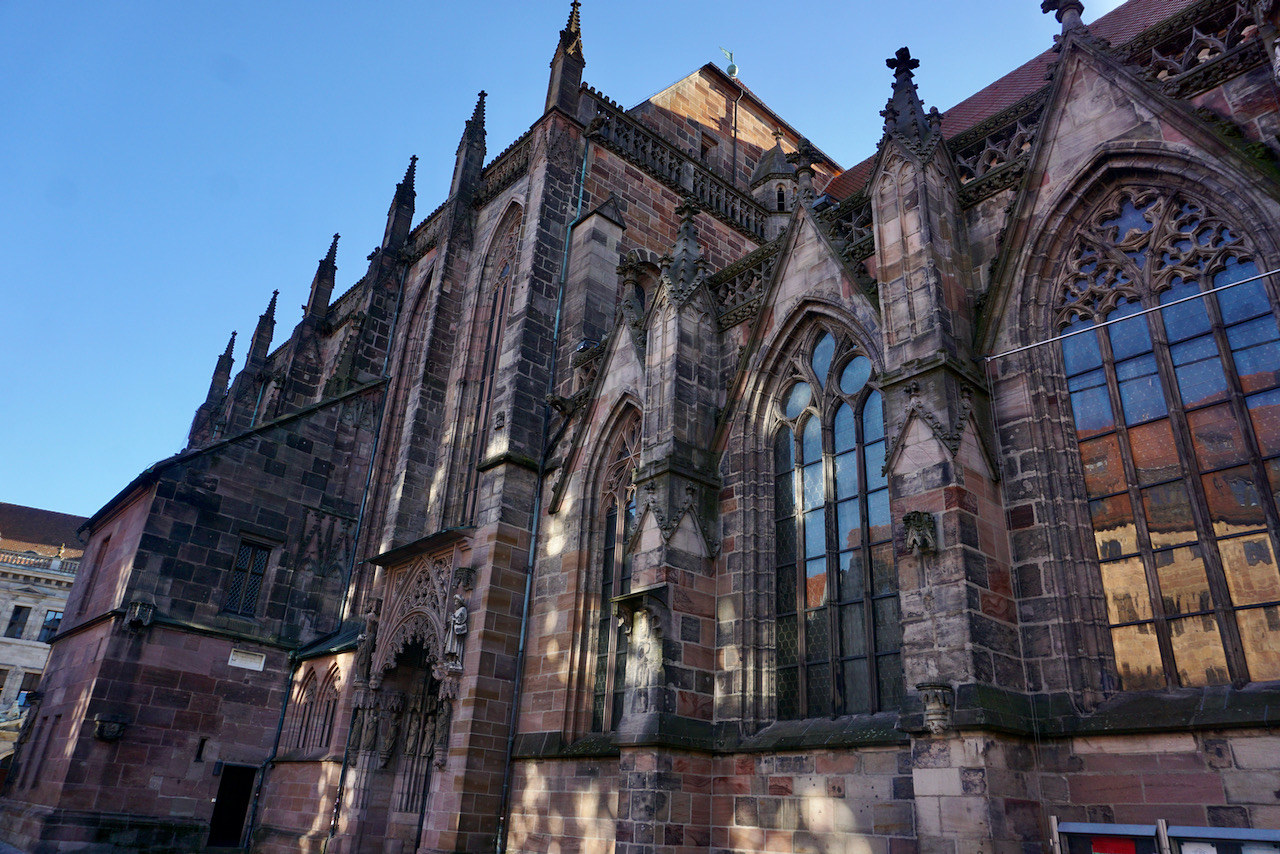
I had been told that Nuremberg has beautiful churches, and this was certainly true. Ken Follett’s Pillars of the Earth came to mind; I know the building of churches and cathedrals was anything but romantic but they certainly provide an atmosphere to a place.

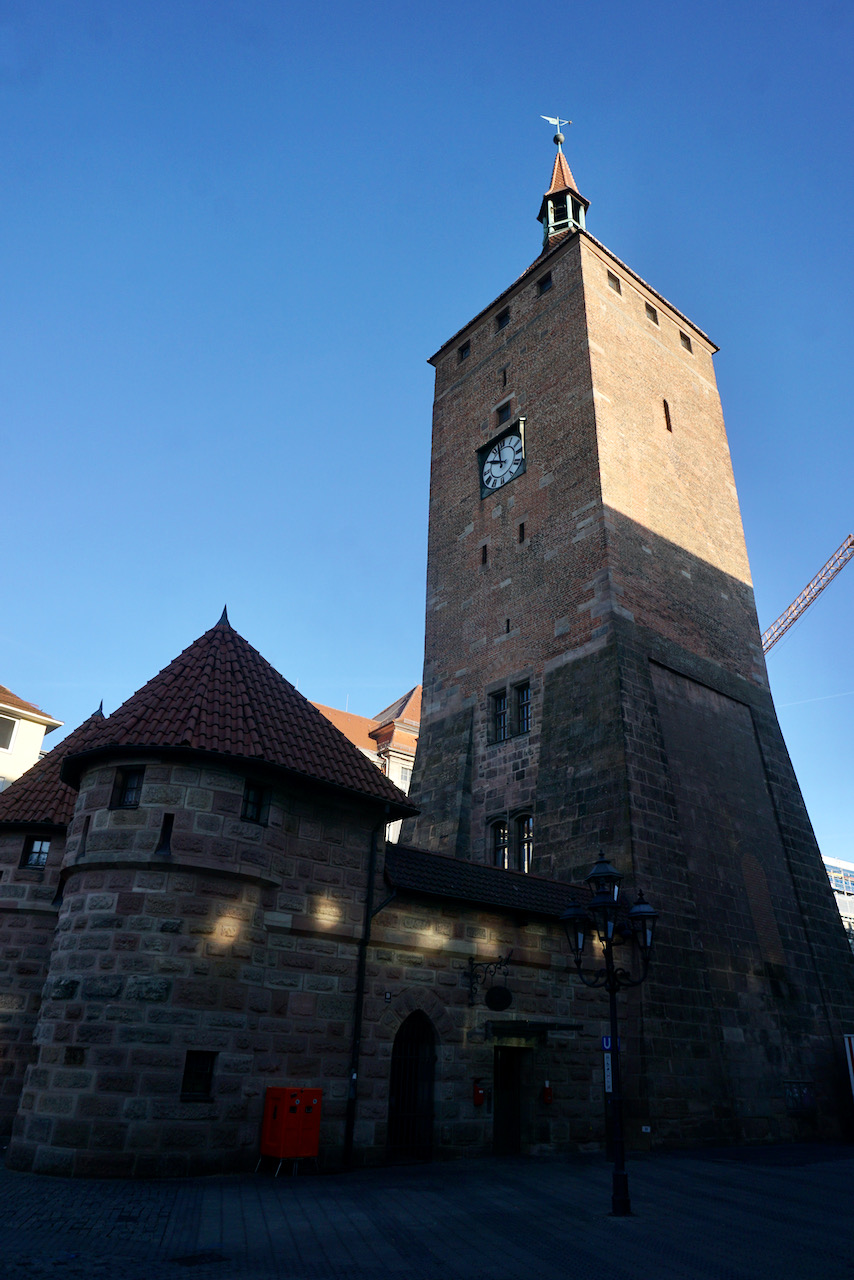
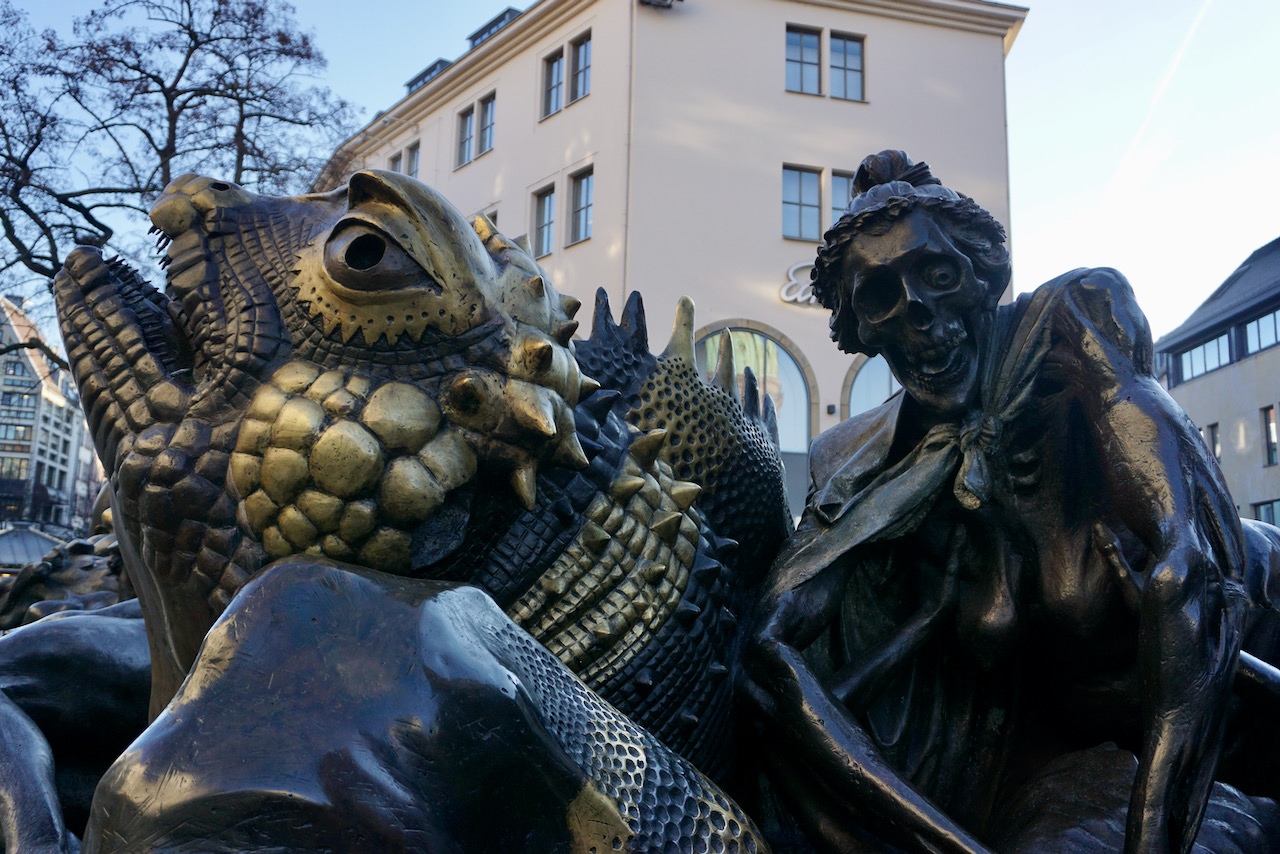
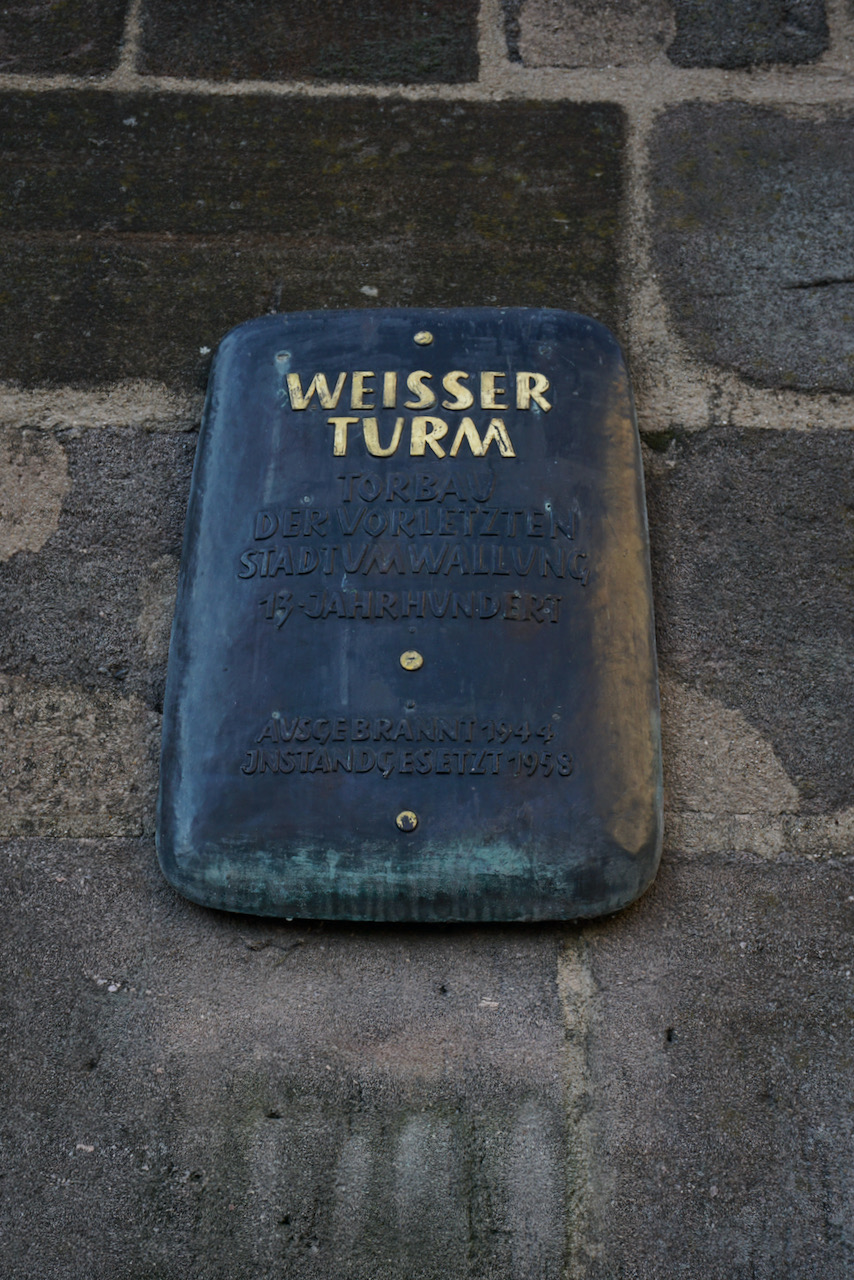
I had also been told to visit the landmarks of the Weisser Turm and Ehekarussell, the latter of which is a rather whimsical look at a marital relationship.

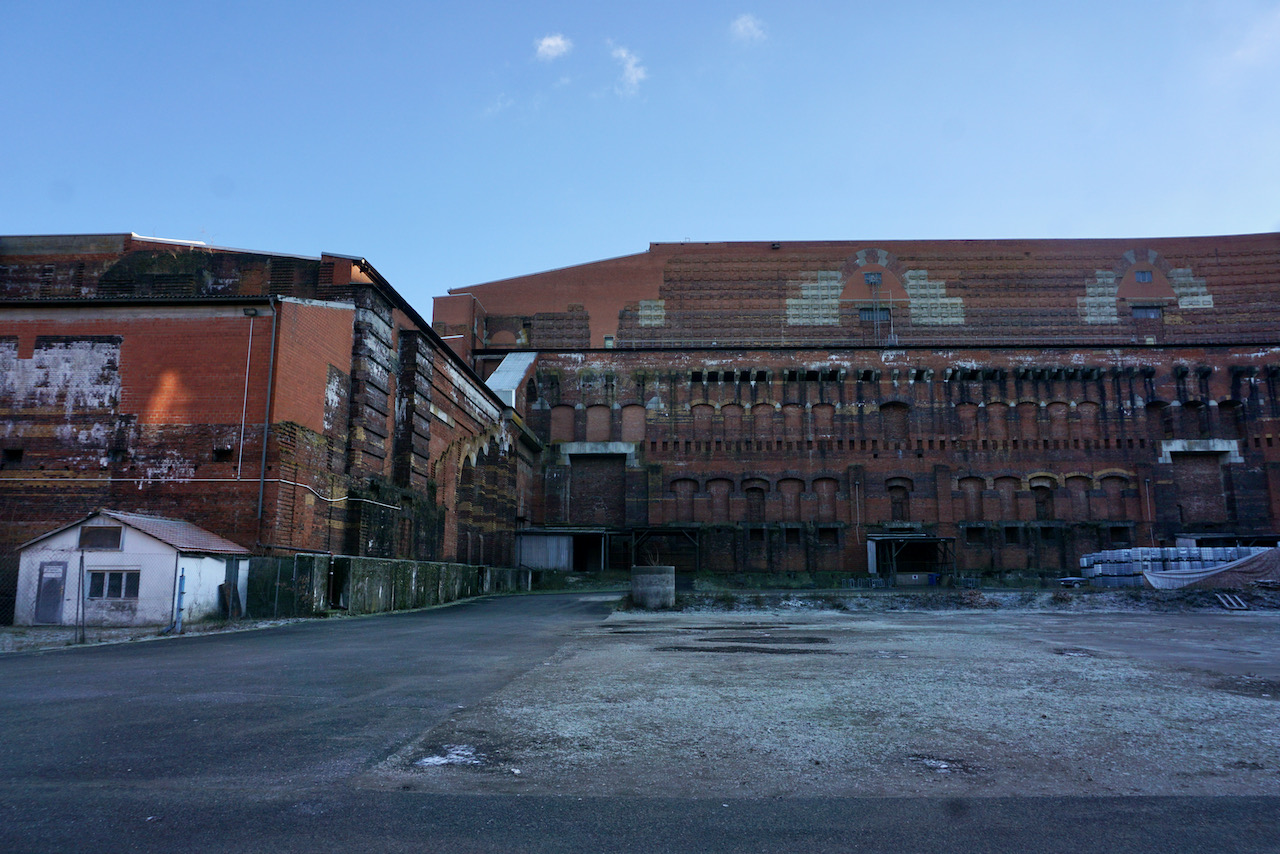
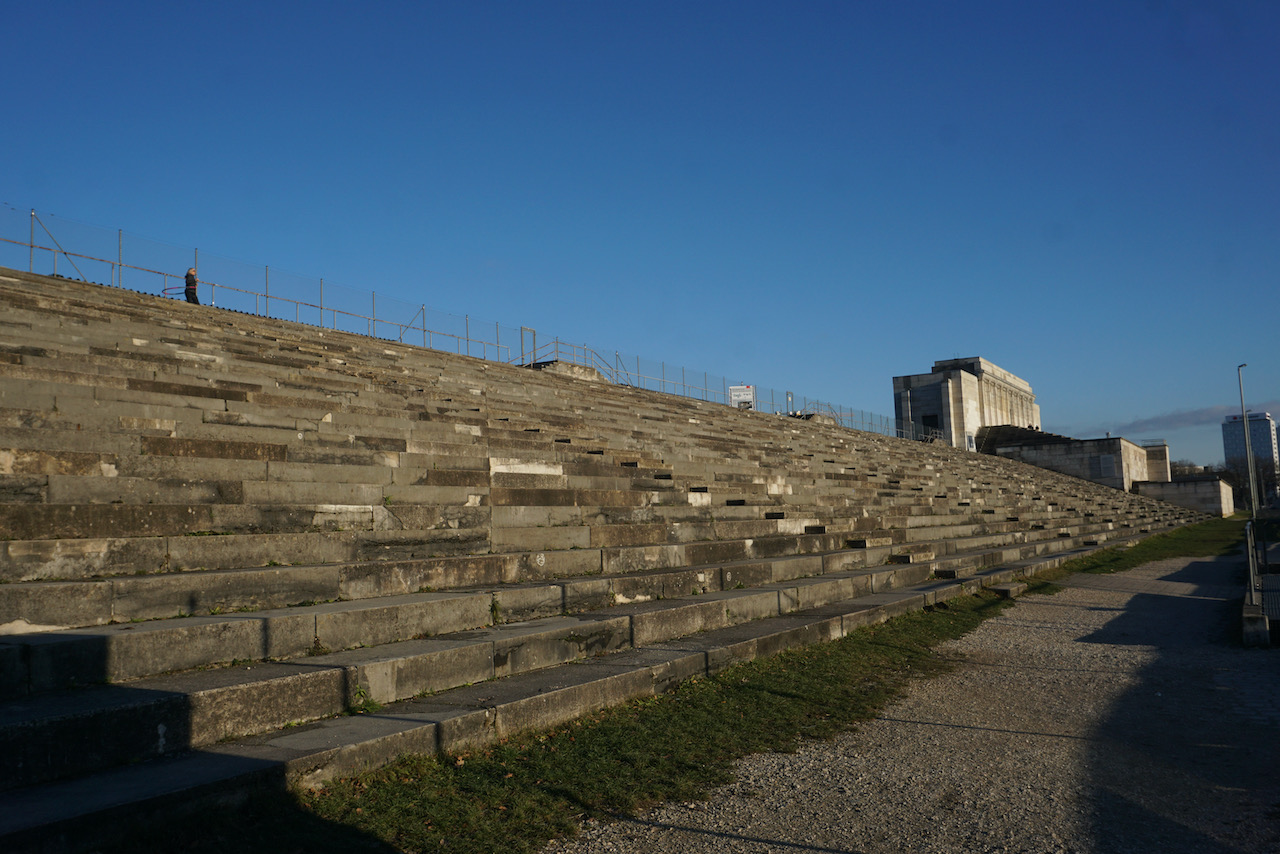
But no city is charming alone. No city is without a history, and sometimes that history is dark. I had two destinations in mind to pay homage to Nurember’s more recent history, which is why I caught a tram to the Documentation Center Nazi Party Rally Grounds on the first afternoon. The air field and still unfinished stadium complete with grandstand was the site of the Nuremberg rallies from 1933 to 1938. It was a cold afternoon with bright sunshine and shocking blue skies, and it was beautiful around the water. I am familiar with the history, but I never think about it with blue sky. Maybe that’s what made it difficult to be there.
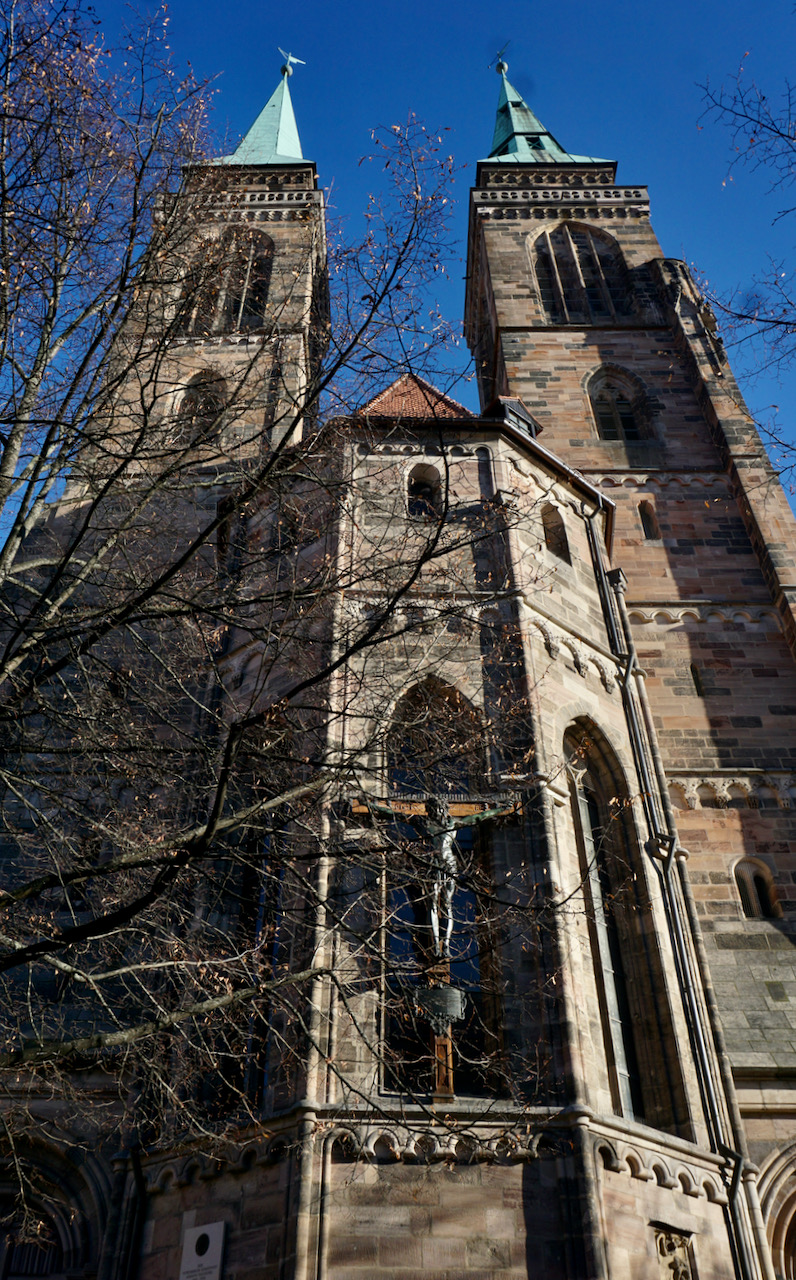
And maybe that’s why it was important to be there. The woman with the hula hoop illustrated the juxtaposition of the atmosphere and I paused for a moment for think.

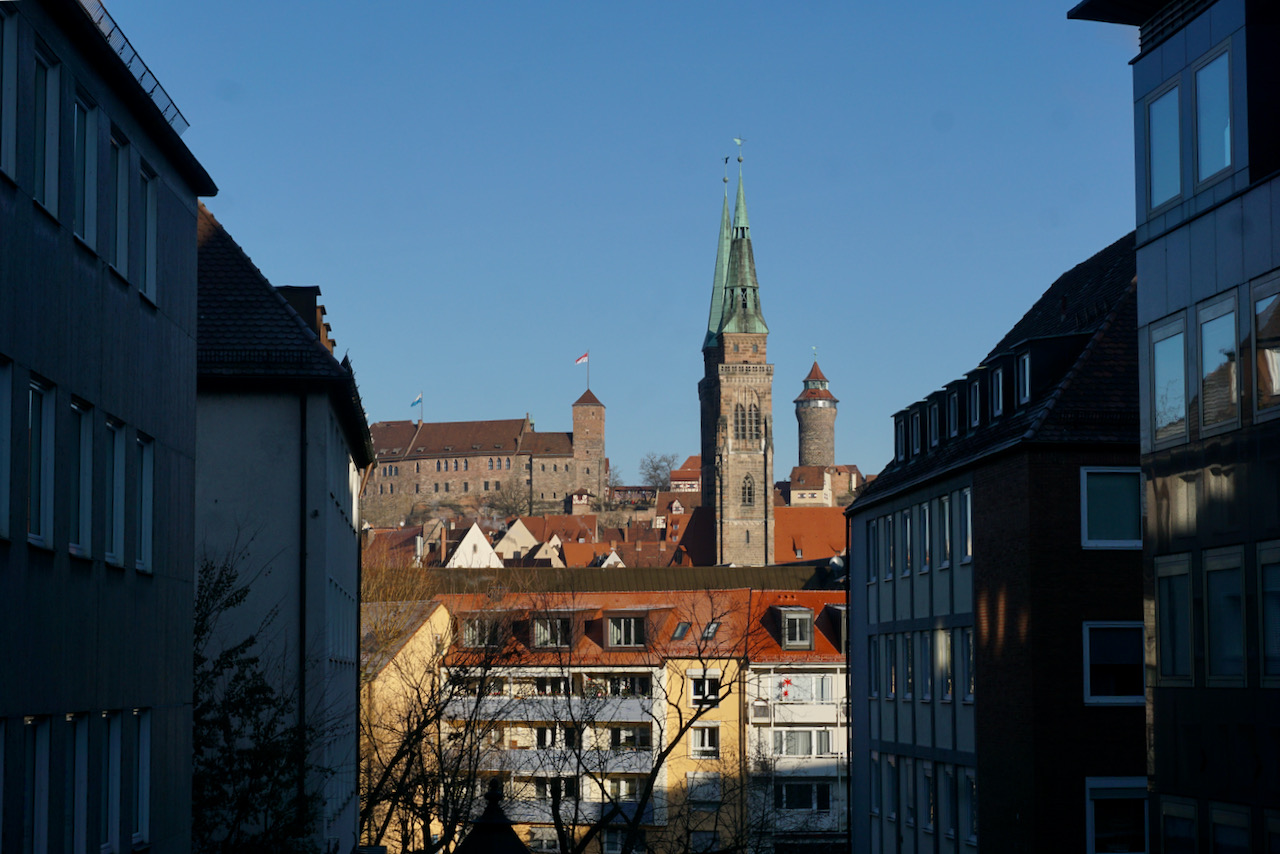
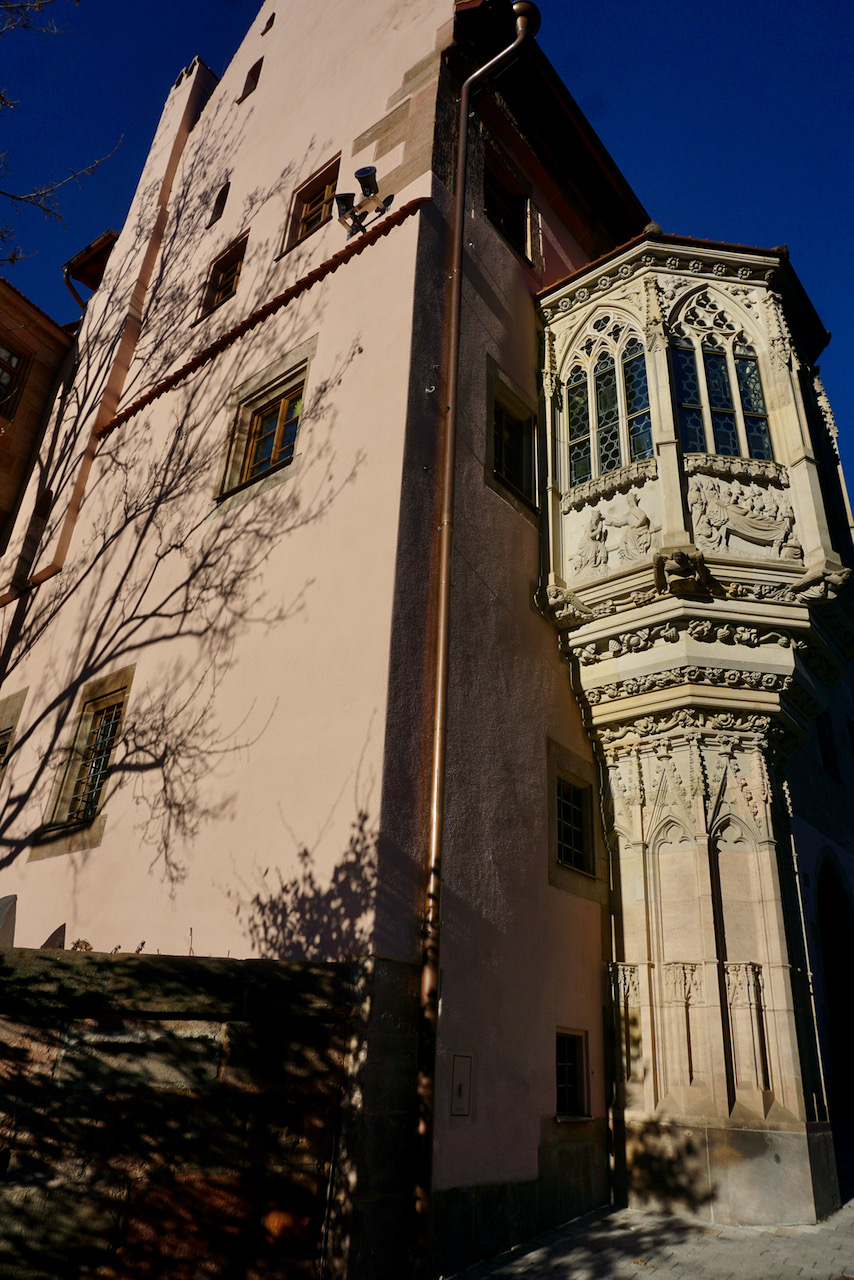
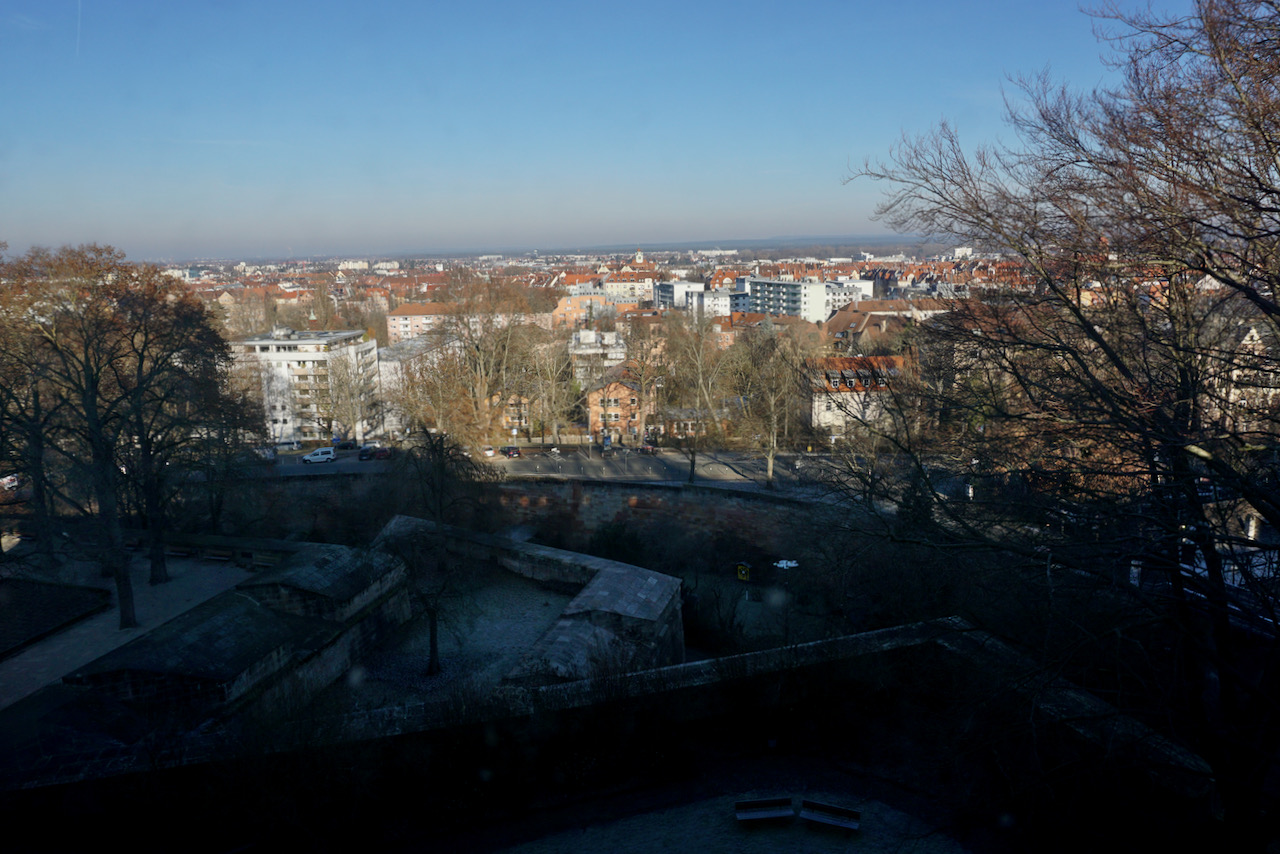
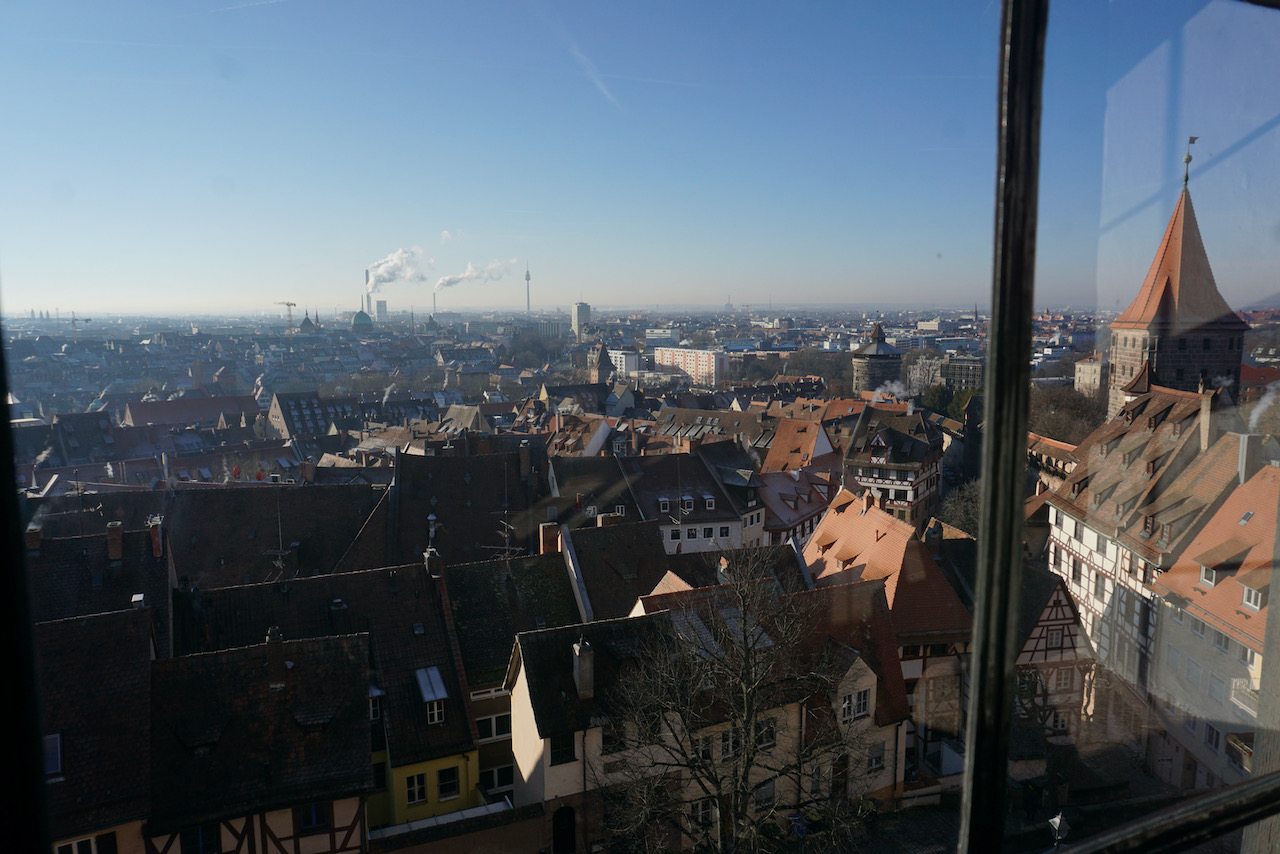
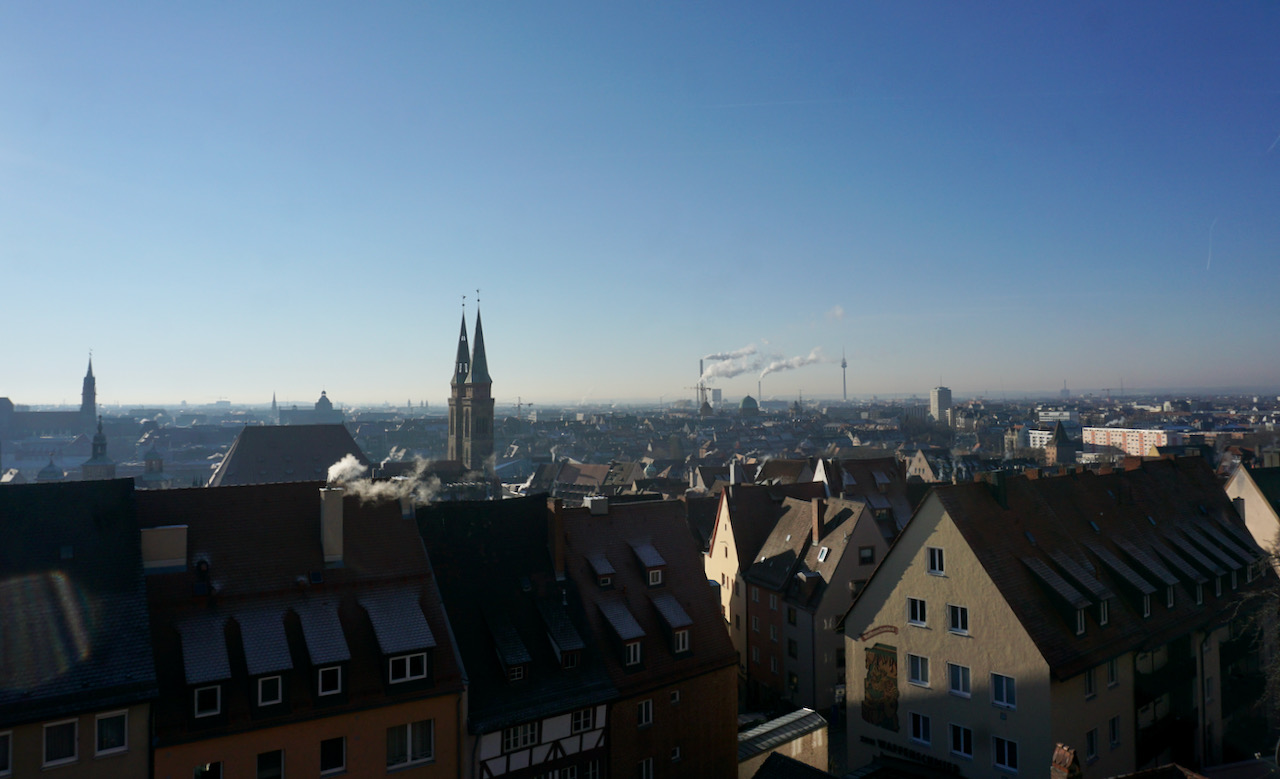
The following very cold morning, I returned to medieval history to visit the Kaiserburg, Nuremberg’s castle dating back to the Holy Roman Empire. It provided wonderful views of the city and the museum, which I visited as a respite from the cold, provided a nice overview of the previous nearly 1,000 years.

As someone who grew up in North America, I am still tickled by the thought of structures that have been, in some form, in the same location for such a long time. And I am saddened by the fact that North America, though it is not often considered in this capacity, has an equally old history, so much of which was destroyed by people who found no value in knowledge of the land and its environs.

As a contrast, though times are changing, I had earlier passed a memorial for LGBT victims of the Holocaust. This was a reminder of how we move beyond atrocity.

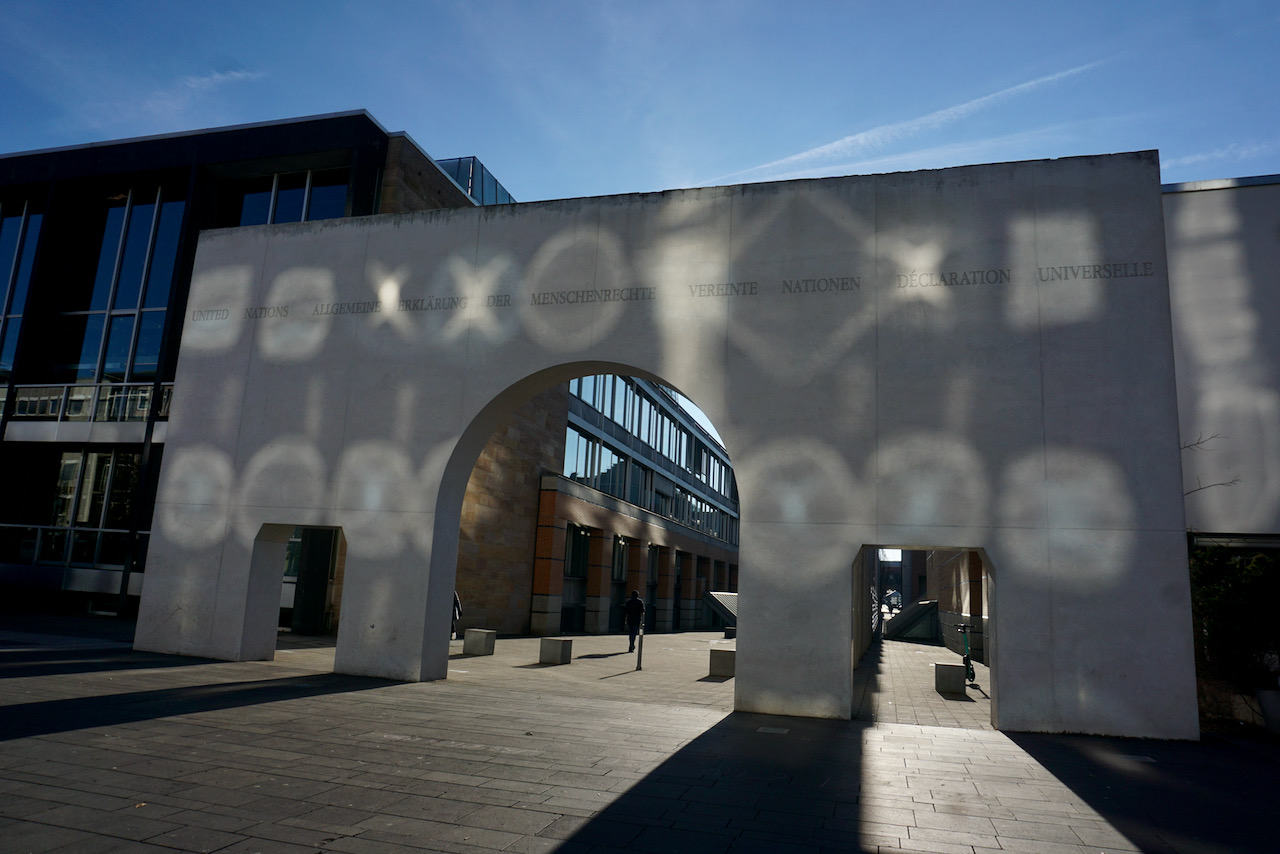
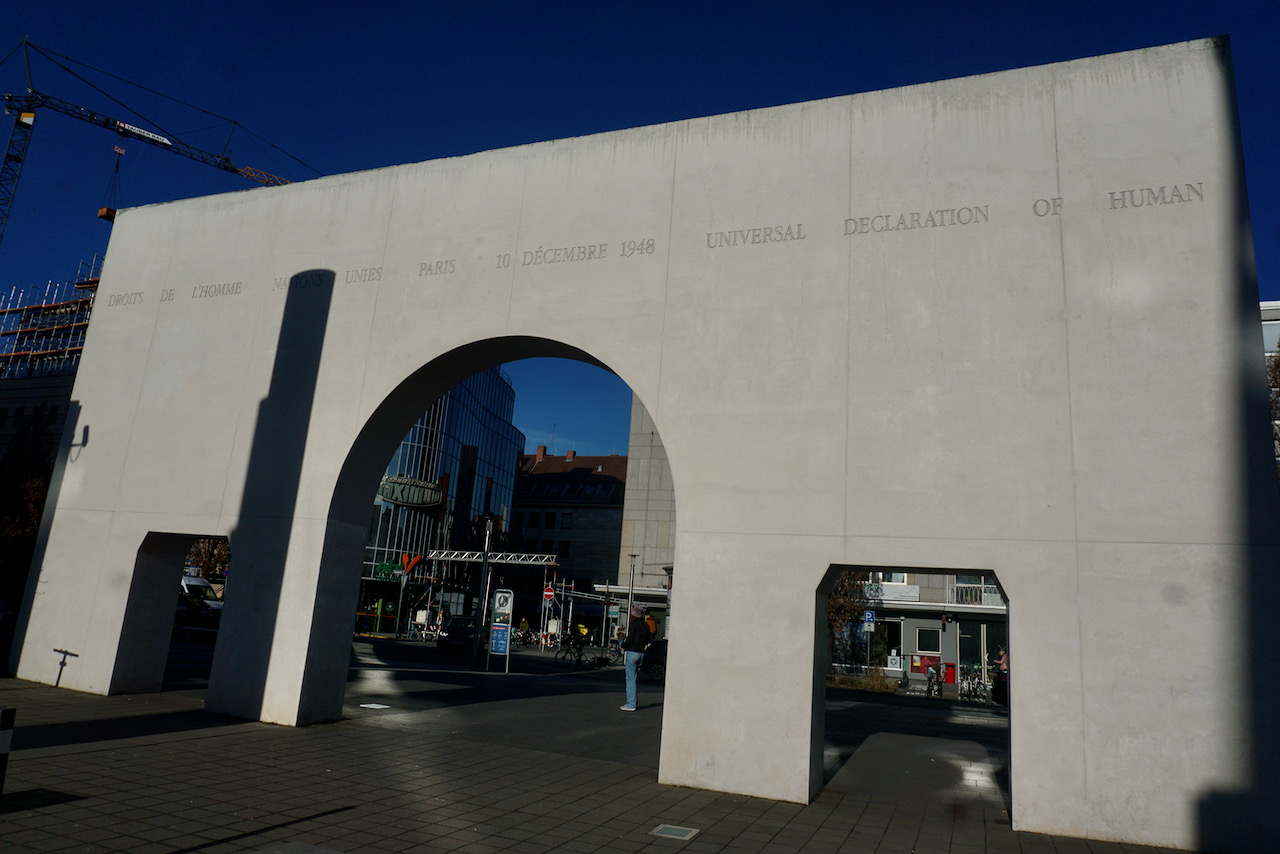
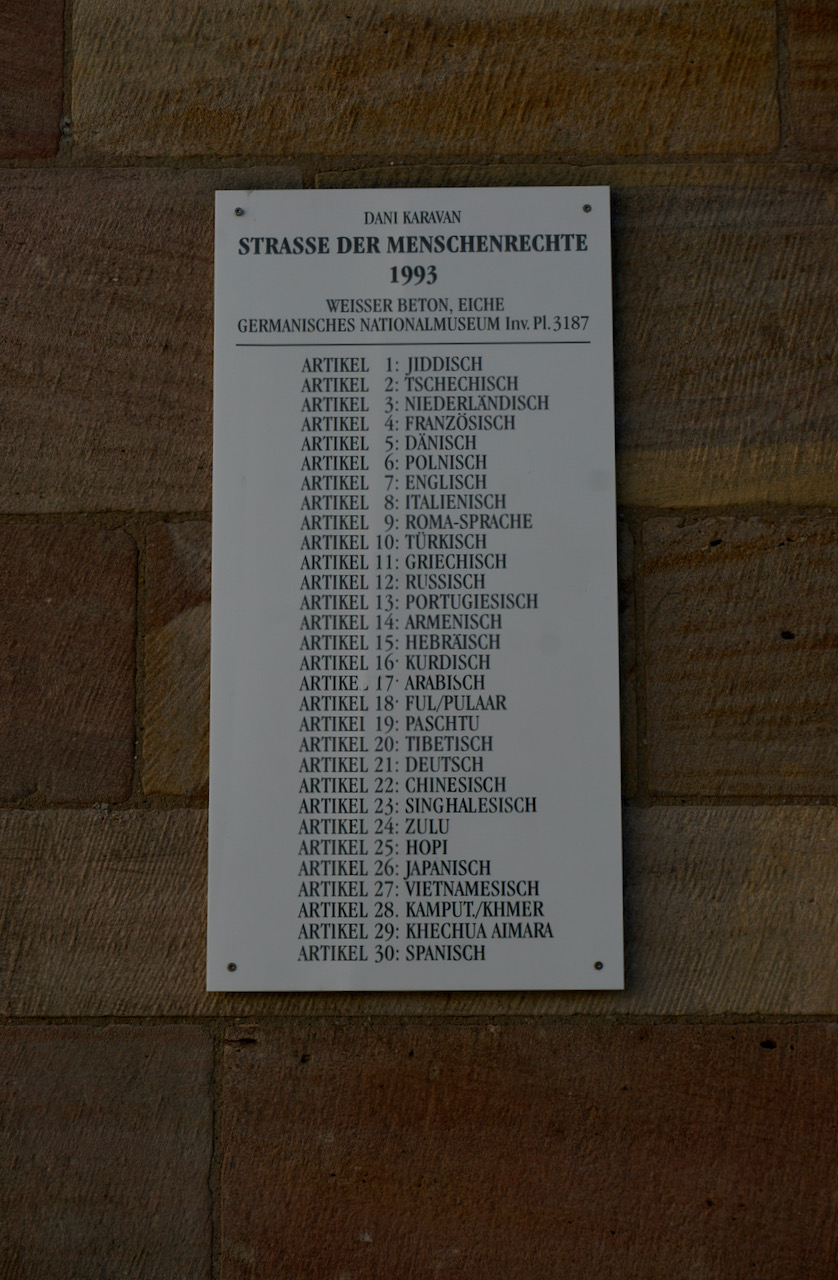
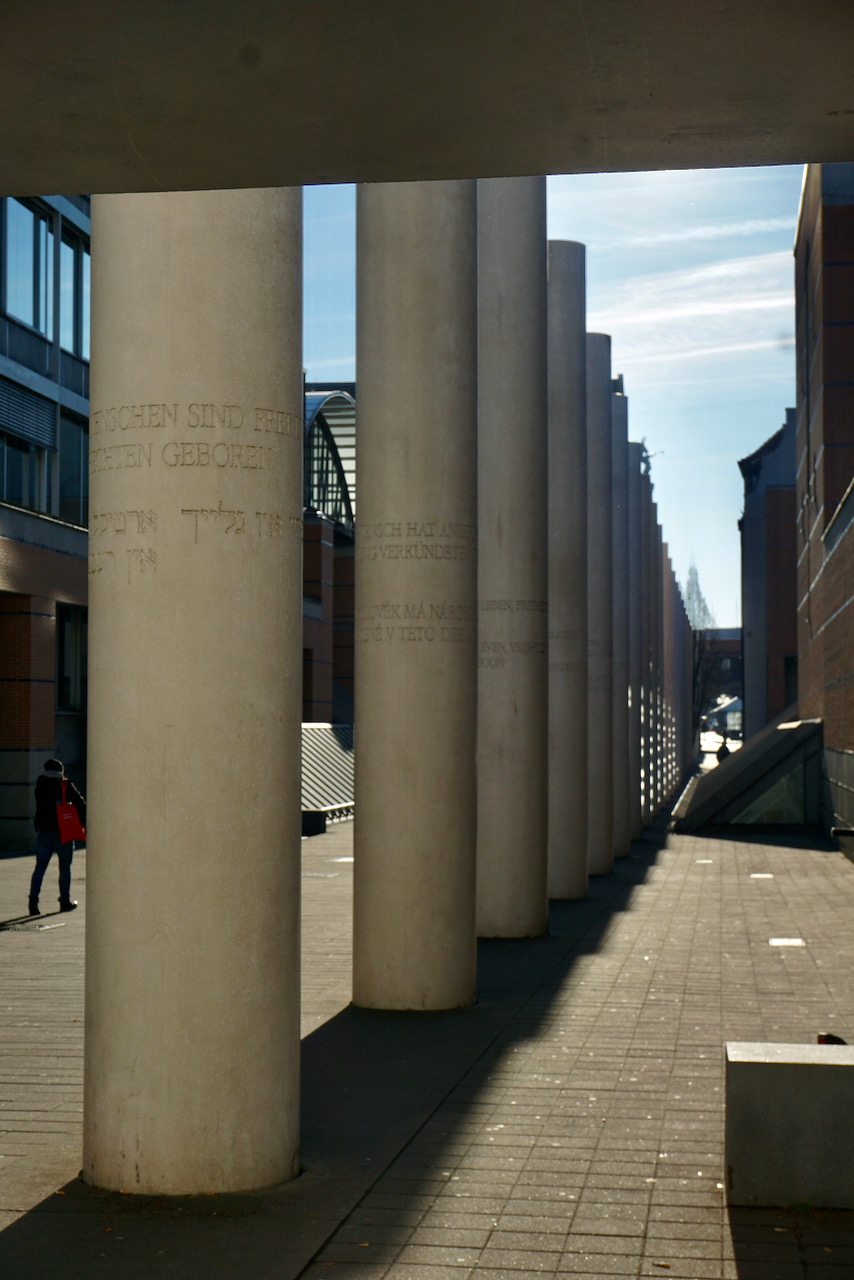
There is a history of hurt the world over and it is only through active awareness of it that we can live up to “Never again”. This attitude is also what made my later destination, the Way of Human Rights so poignant. And perhaps I am looking for signs (I don’t believe in signs but I also don’t not believe in signs) but the sunlight did take on significance that was likely undeserved.

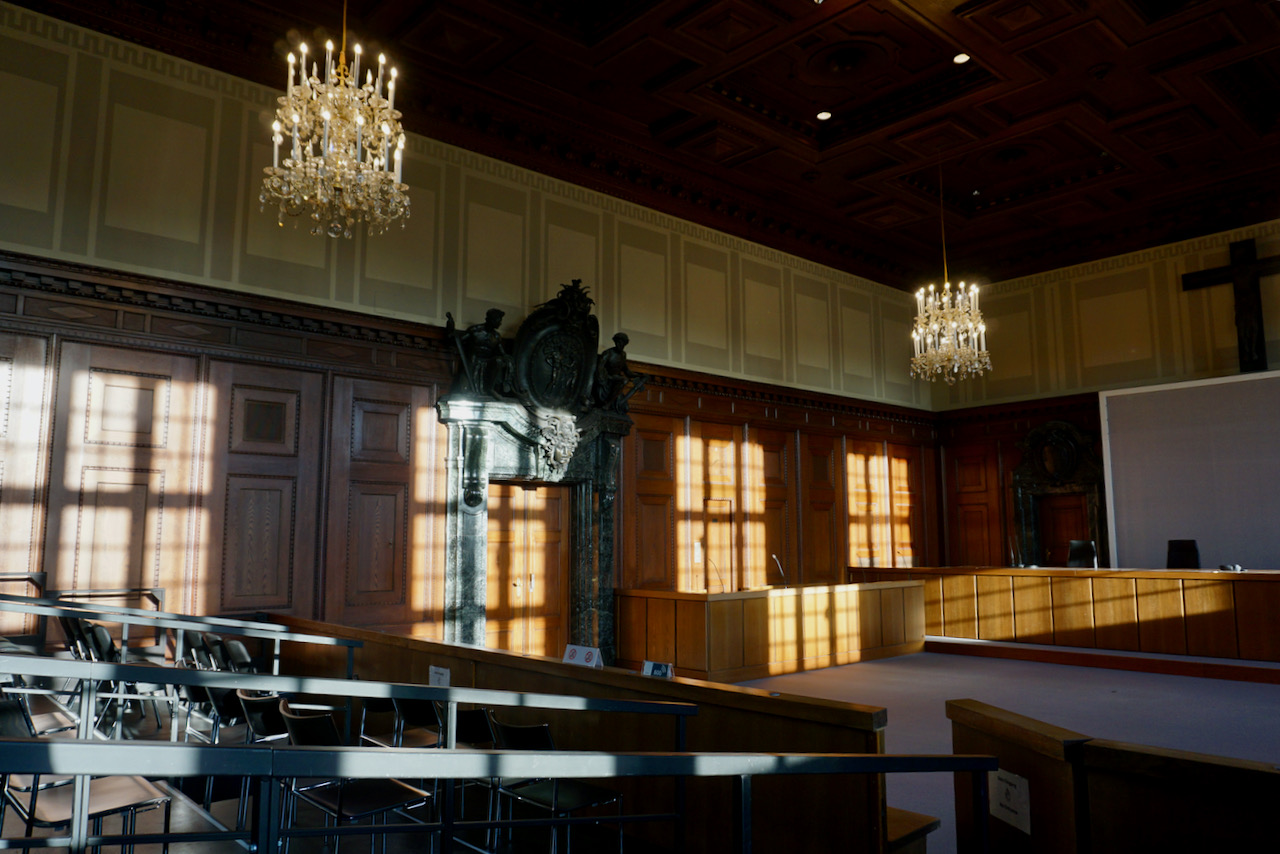
I intentionally stopped at the Way of Human Rights on the way to the Memorium Nuremberg Trials and Courtroom 600, the room where the trials took place. It is still in use today and the audioguide provided a clear description of what the room would have looked like at that time.

It was eerie to be there, strange to see bright sunshine on the walls and to sit quietly and listen to a historical overview that I had often brushed off. I now remember why, after writing my undergraduate thesis on the Hitler Youth movement, I took a long break from Holocaust reading and research. The sense of obligation that I felt to read every single word has not gone away and each word takes a toll.

I was surprised, though, to find myself angry, and it was over Glühwein and my journal later that evening that I was able to place it. I was not angry at the perpetrators or at the bystanders. I was not angry at the deniers or those who continue spreading hate in countless communities. Rather, I was angry because the Nuremberg Trials meted out justice in a way that was reasonable, fair, and largely undisputed. These were actual trials with evidence and sentencing. Individuals were convicted as far as the evidence could provide and sentencing was carried out swiftly and with due process. These trials paved a way forward for how to deal with crimes against peace, crimes against humanity, crimes of war.

And yet, there is so much bias in legal systems today. Trials have outcomes before they happen. Consequences are seemingly inconsequential. I thought about this, I thought about recent global political news, and I was angry. The Nuremberg Trials provided a framework and an opportunity and I wondered at where this legacy has gone.

I learned a few things at the Memorium, too, like the fact that simultaneous translation was used for the first time here and that the translation staff numbered 350. The proceedings followed Anglo-American legal traditions, which differ from continental European legal traditions, and this created some controversy. There were follow-up trials in later years, including of Japanese crimes in the Pacific war, but the later trials in Europe never generated the press or popular support of the first trials.

It was dark by the time I set my journal and book aside and left the café where I had taken refuge hours earlier. Sometimes it’s just good to be around people.

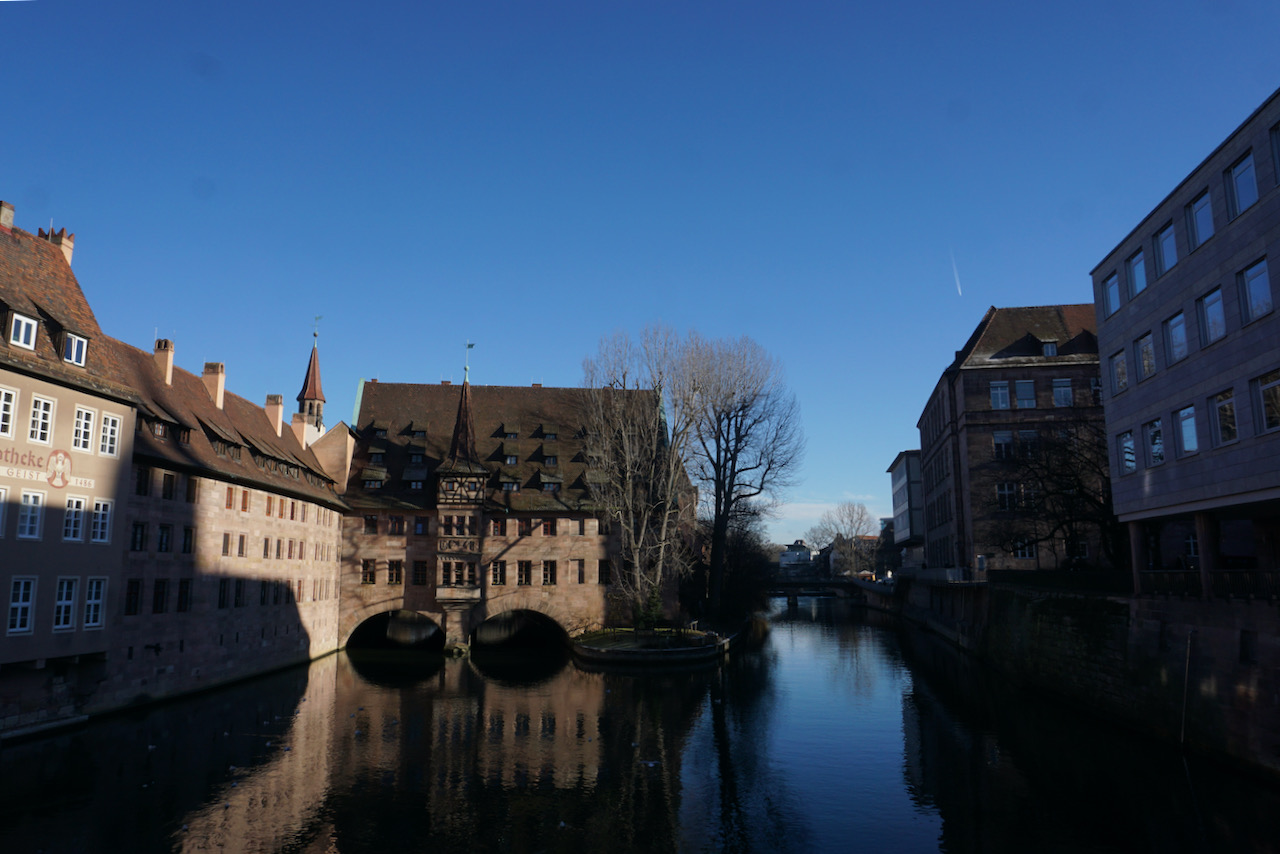
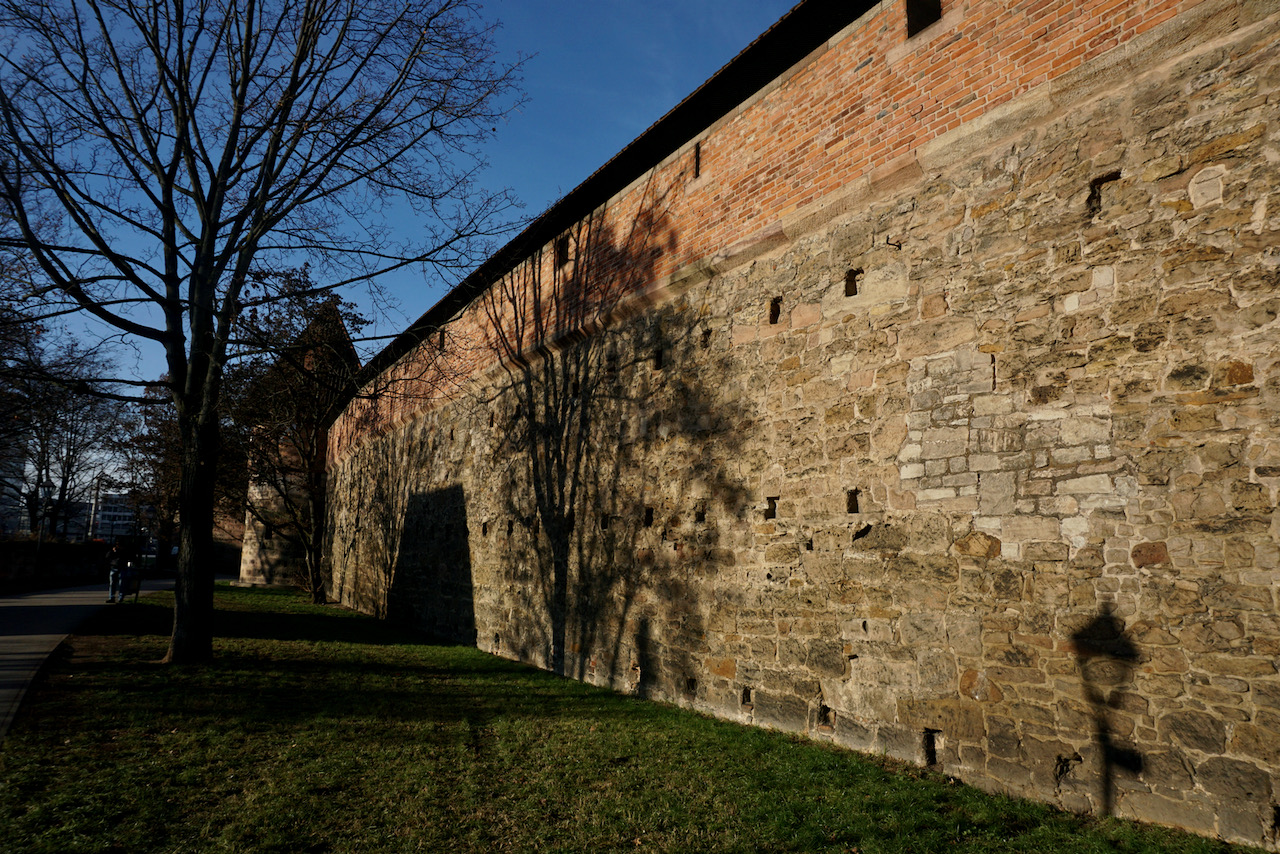
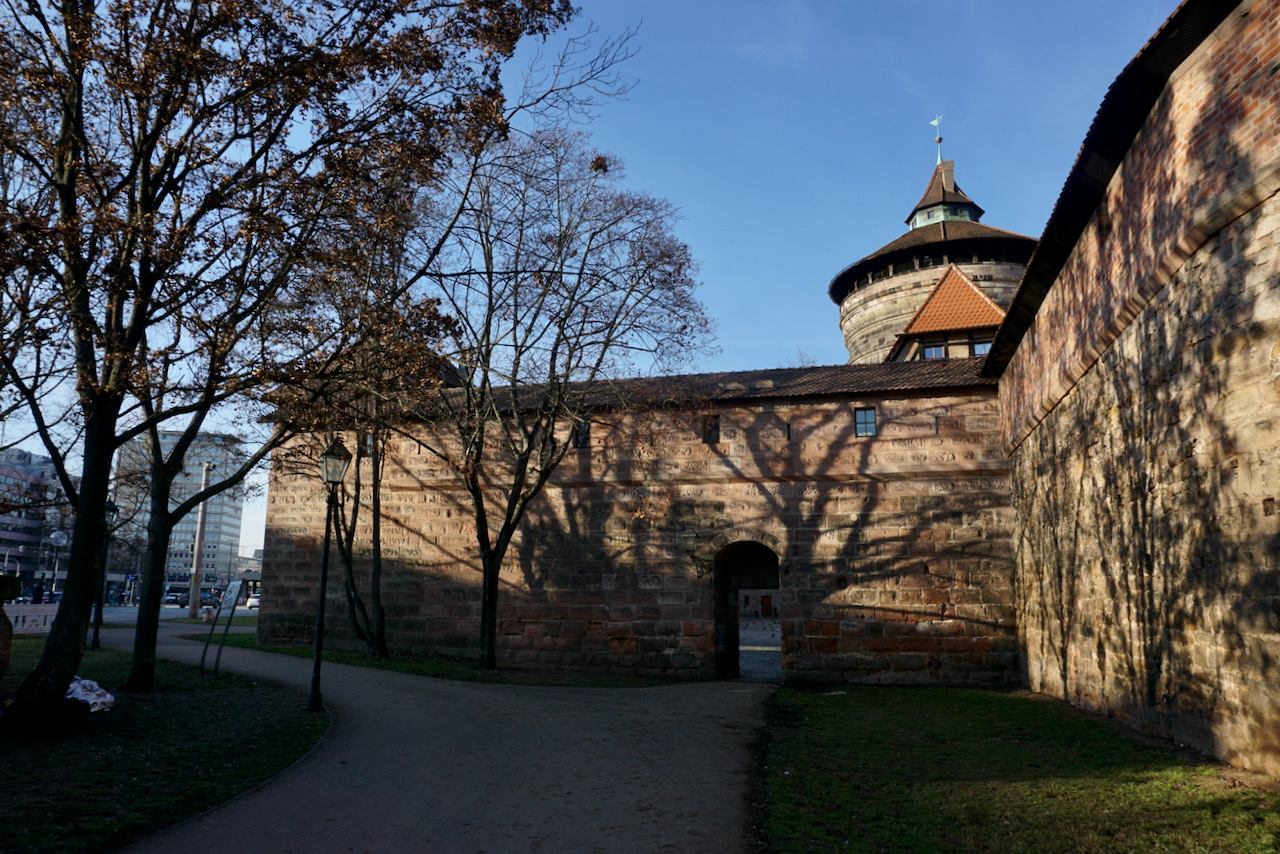
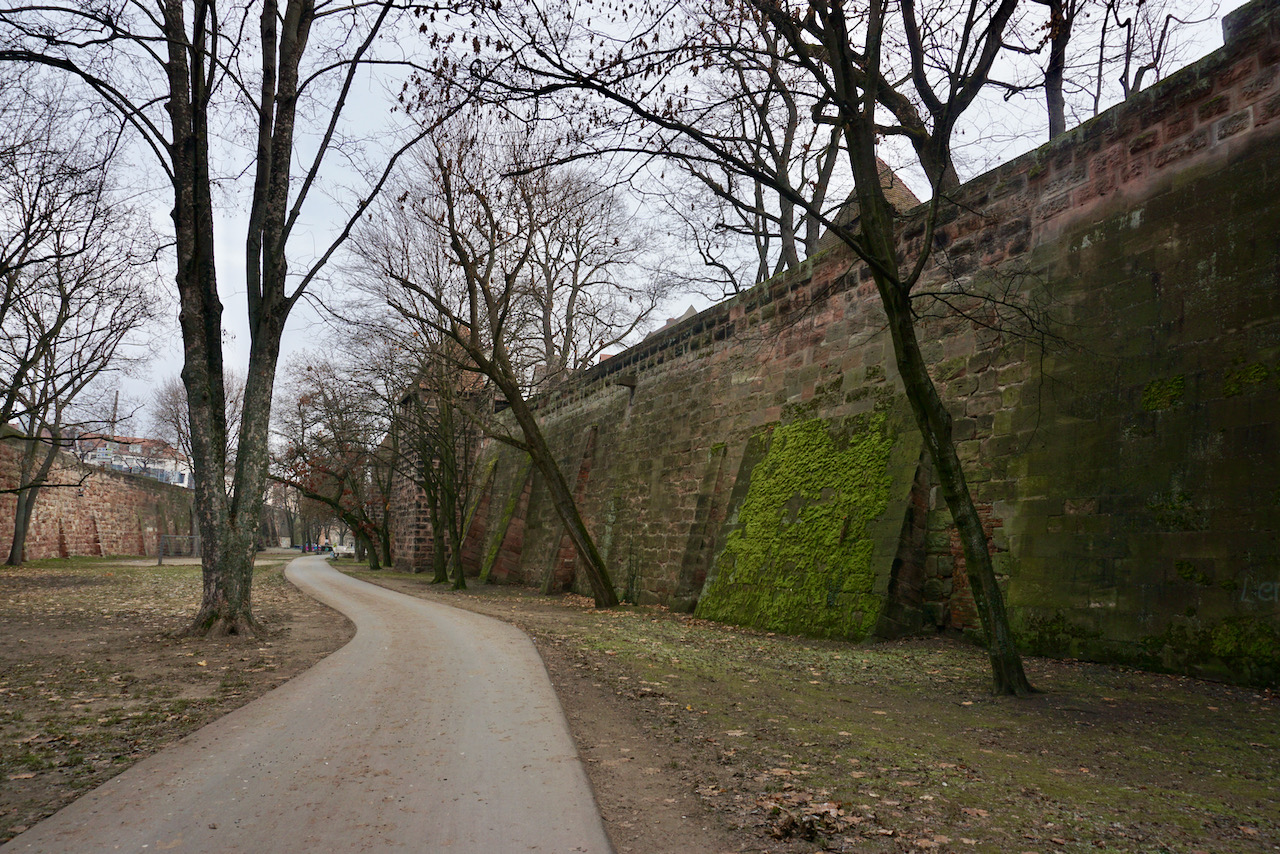
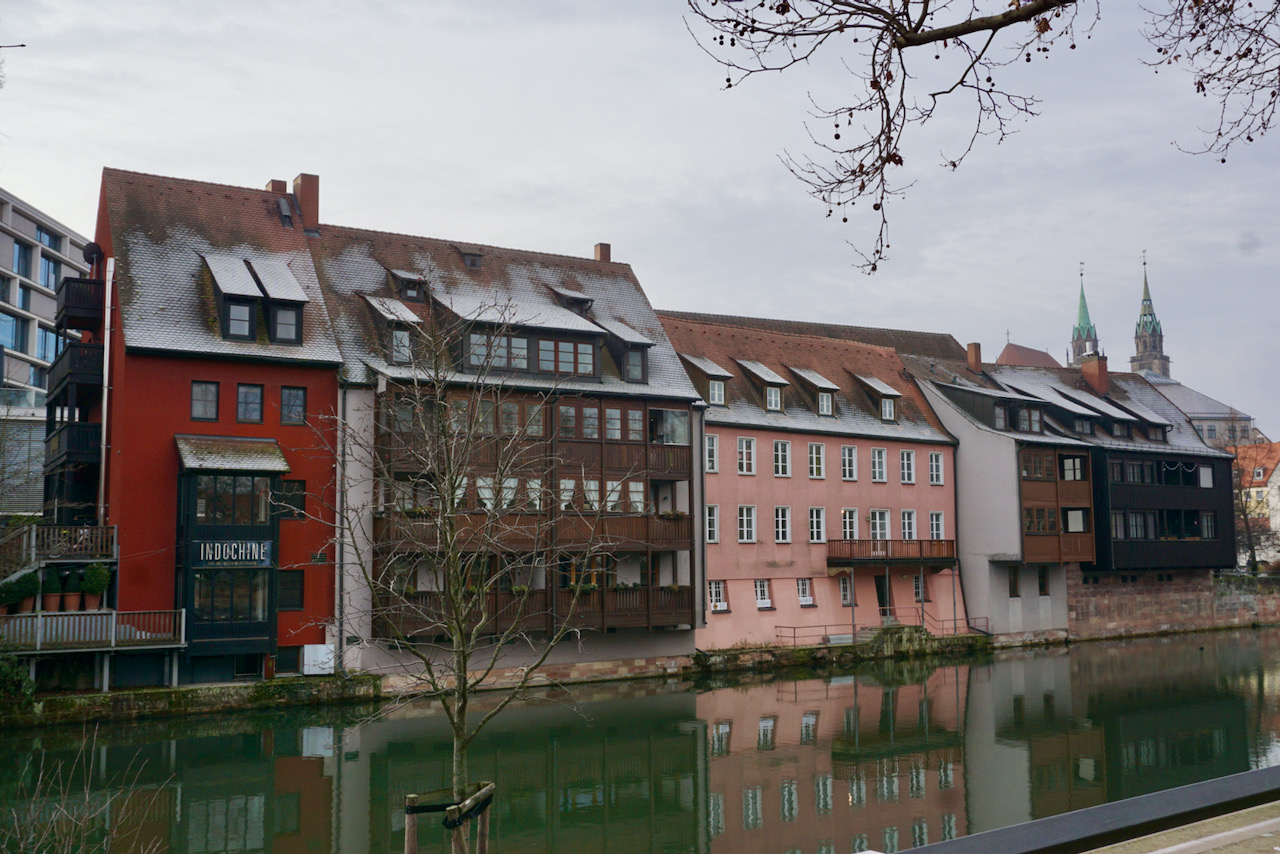
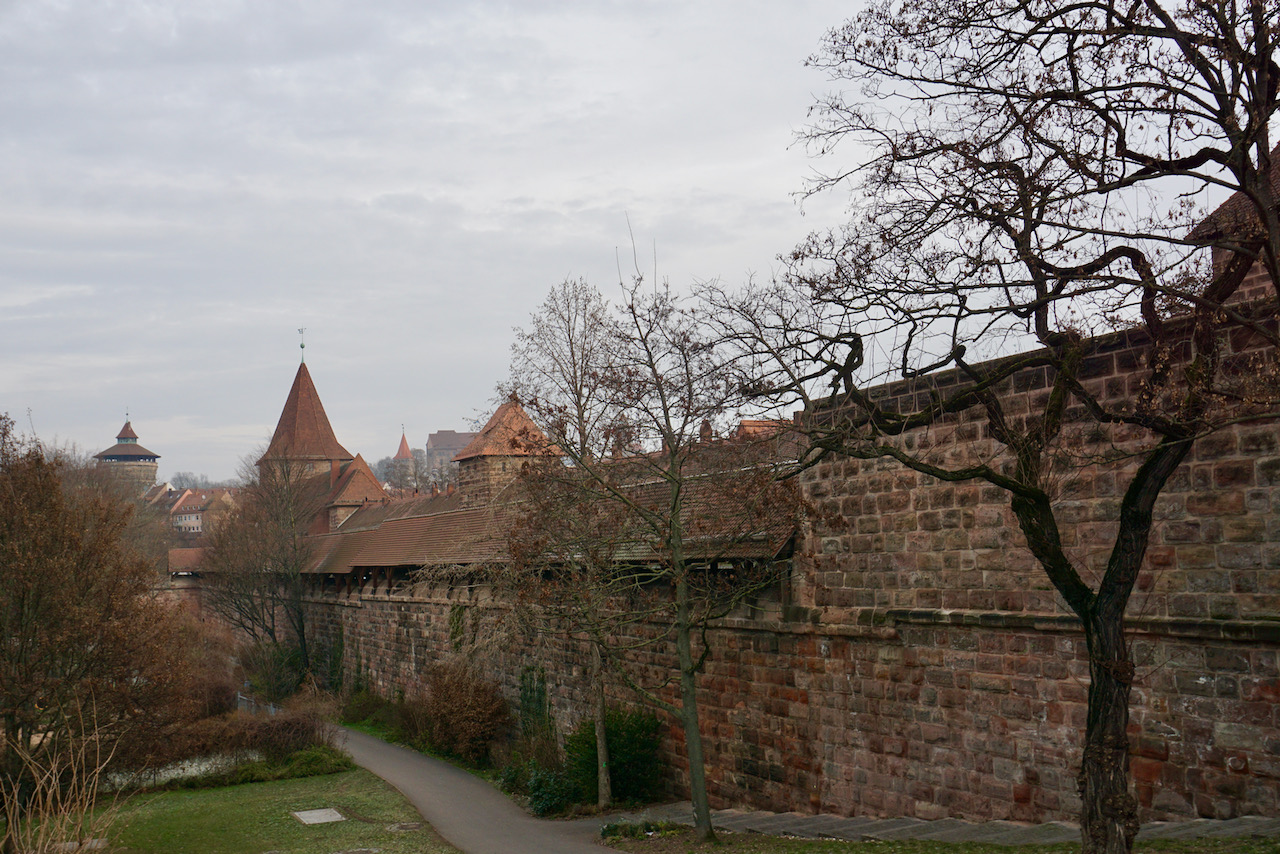
As a medieval city, Nuremberg’s old town is still surrounded by walls and I found myself quite taken by them.

This fascination remained even without sunlight. The morning of my last full day was warmer than the previous days, and I was glad of this. My plan was to walk the 5k trail that is maintained around the walls. The walls are imposing and I can imagine how impenetrable they were when first built; they seem that way now, even with playgrounds for children, a skatepark, and courts for basketball and racquet sports.

Finally, I visited the Germanisches Nationalmuseum, which has an impressive and overwhelming collection of artifacts dating throughout human history. There were also installations from the Global Art Festival scattered throughout the exhibits and I enjoyed those very much. If you’re happy to spend a few hours wandering through a museum that makes its home in a former monastery, I’d recommend a visit.

The city of Nuremberg today prides itself on being a city for human rights, which is a tall order. Perhaps this is why I saw greater diversity there than I had expected, or why different languages were so prevalent. Or perhaps this commitment itself created the environment of the place. I was glad for the opportunity to be there and look forward to a return, perhaps when there are Christmas markets again.

Travel Guide: Bratislava

Bratislava marked the end of my winter adventure through Switzerland, Austria, and Slovenia (with a brief stop in Italy). By the time I got there, I was used to the cold and the short daylight hours and I was also very glad to meet up with a friend the day after I arrived.

One of the important things I learned on this trip is that driving in Europe requires a vignette, basically a road pricing sticker that includes road tax and can vary based on roads driven and distance. The cost of a vignette is quite reasonable but the fine for not having one is rather steep. Turns out I’d been pretty lucky because I didn’t learn this until I’d been driving around for five days. After buying an online vignette for Slovakia, one of the few countries that allows this, I took back roads out of Maribor back into Austria. As I drove through a vineyard on a road with one and a half lanes, a border official waved and that was it. I do very much like this about Europe. Shortly afterwards, I stopped to look around.

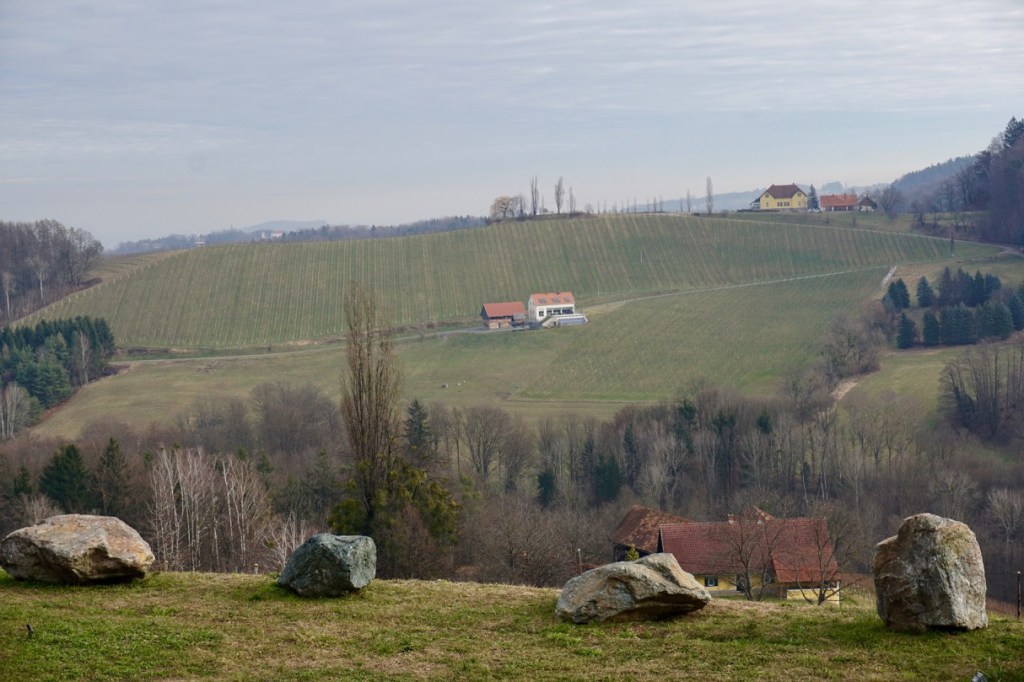
The winding, twisting, narrow roads led into small towns with winery after winery, each clearly visible on the surrounding hills. Thinking of the lives that had been built here gave me pause.

Getting to Bratislava was simple but getting into Bratislava was a little more complicated and I marvelled at how people had navigated before technology. I was more than happy to park the car and leave it for the next two days. Getting around Bratislava on foot is very easy and there’s extensive public transportation.

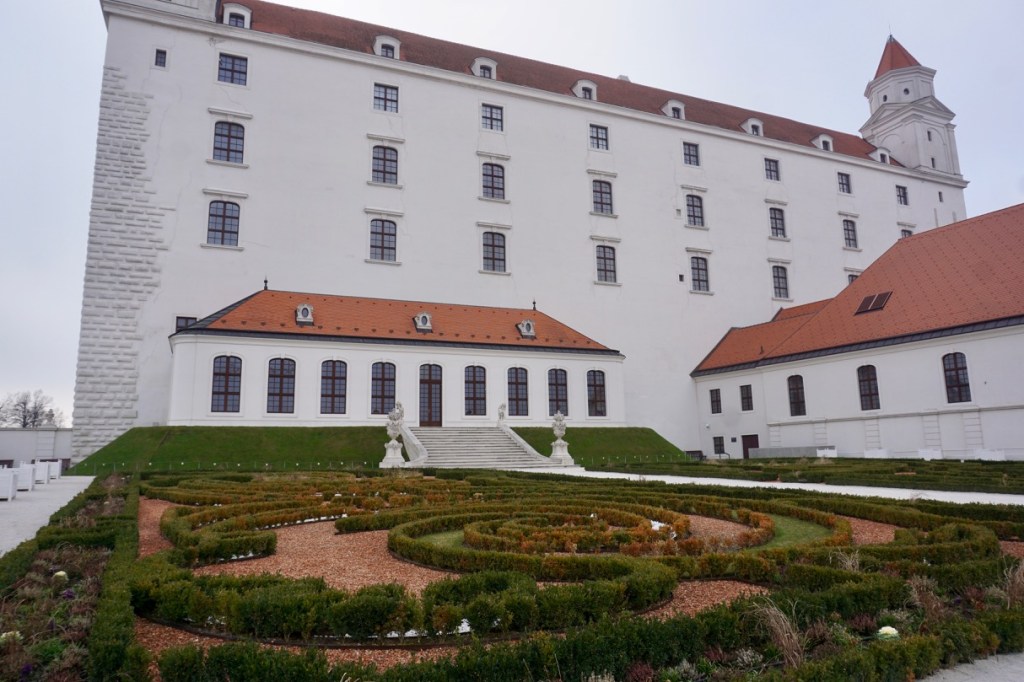
I was staying across the street from Bratislava Castle, the grounds of which are open at all times. I walked through it that afternoon and again the following morning.

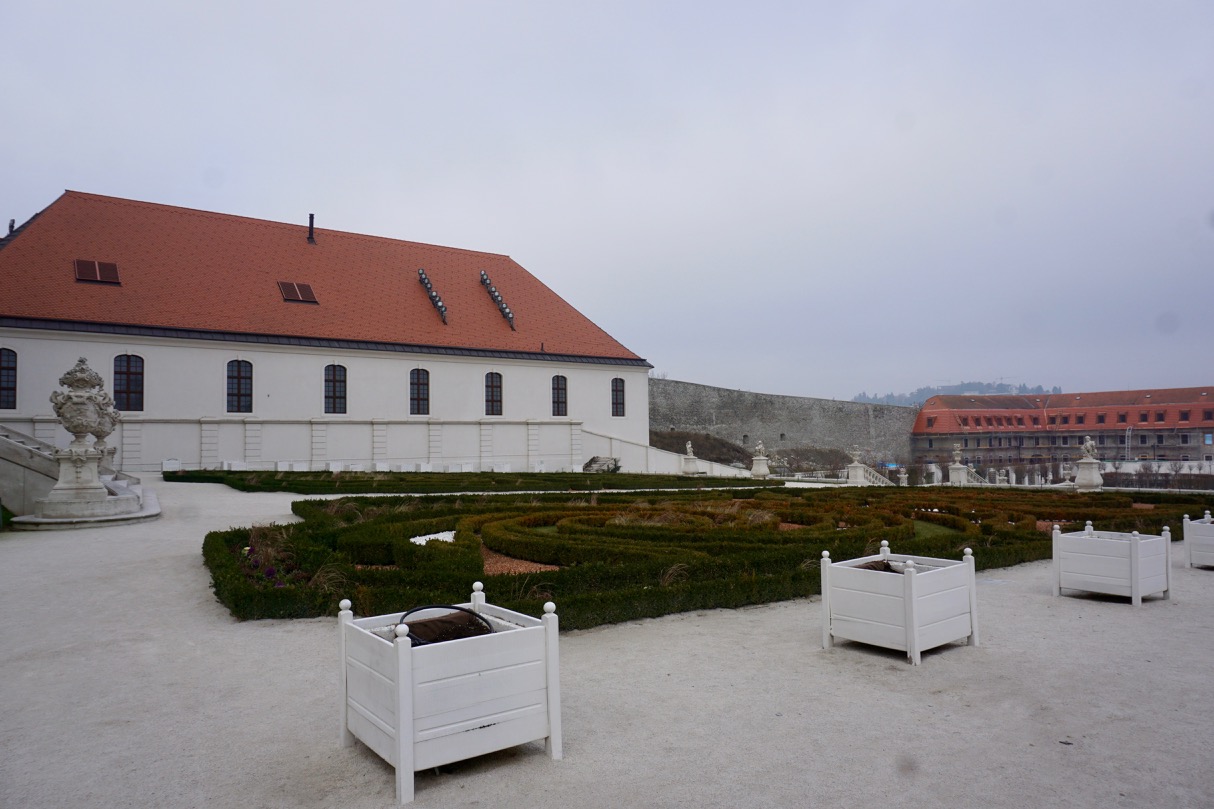
Bratislava Castle was first built in the ninth century but the current version was rebuilt beginning in the 1950s. Today, there are museums that are open to the public, as well. I was more interested in the garden . . .

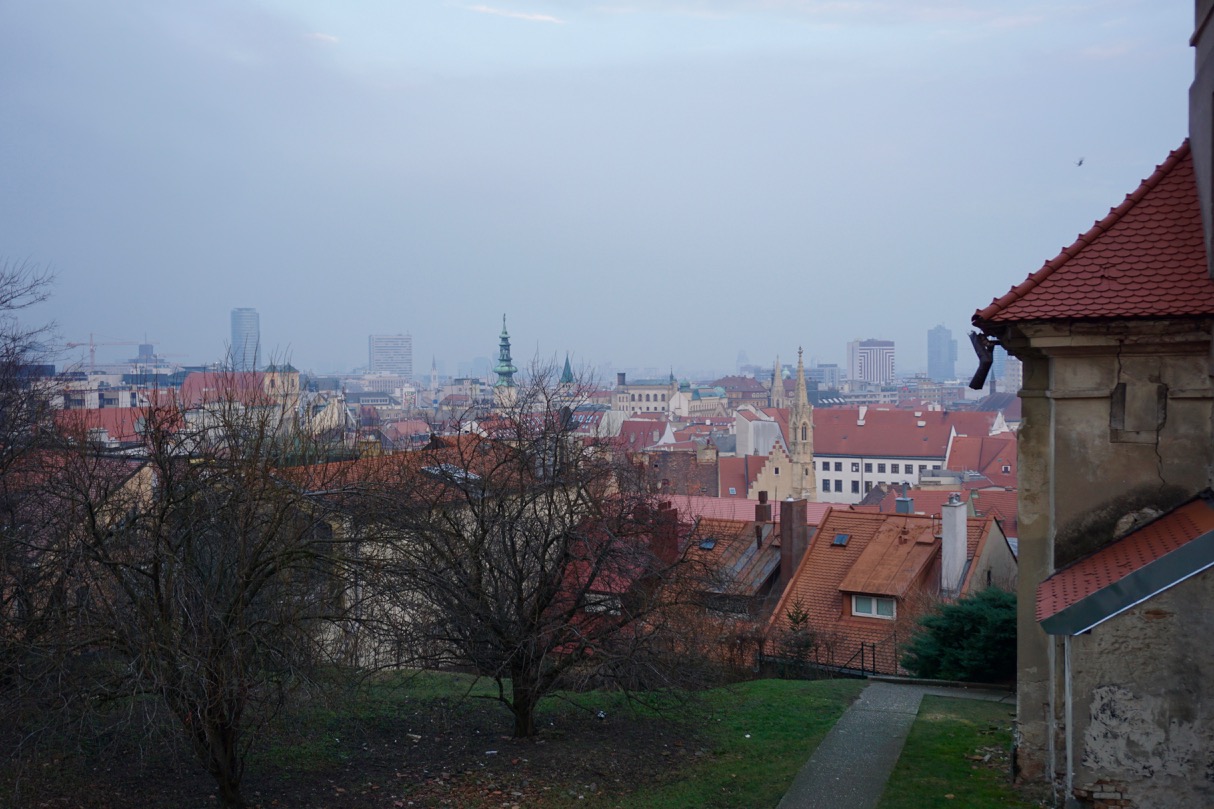
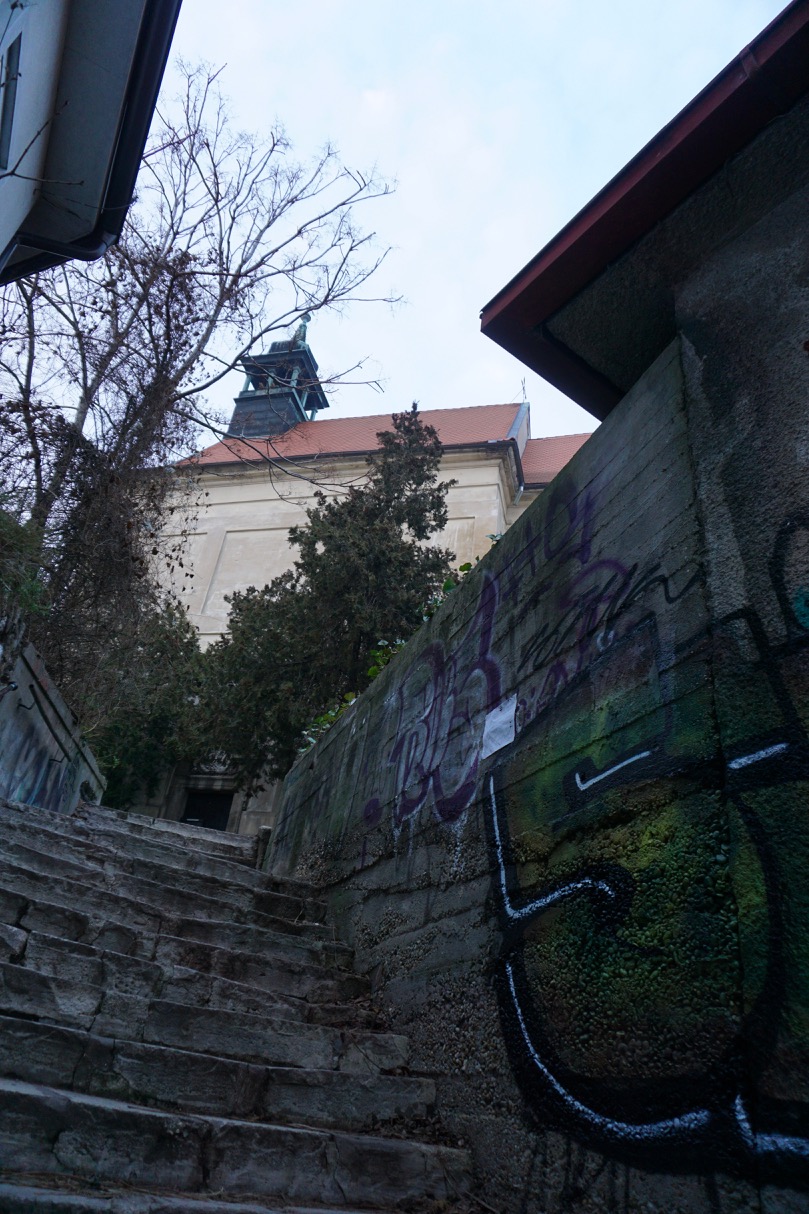
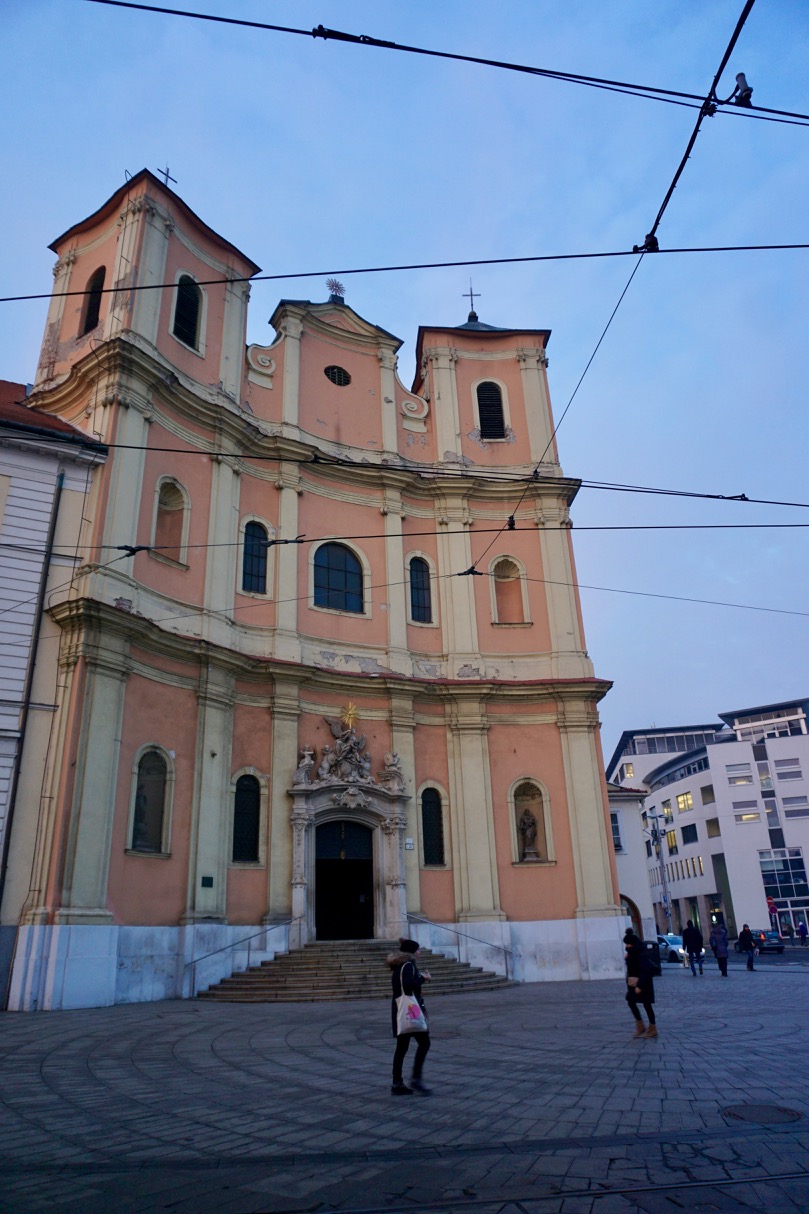
. . . and the churches and other buildings located just down the hill. There were real signs of life and ideas here, which I always enjoy seeing.

I took a quick walk through town to get my bearings, surprised at how very few people were around. I was also surprised at the number of hipster establishments that didn’t seem to match the atmosphere. The streets were really quiet and the sky, no longer the bright blue of Slovenia, gave the city a feel of being tucked into winter. Although I couldn’t tell you why, I got the impression that Bratislava could be a very stark place and it did not feel like anywhere I’d been before.

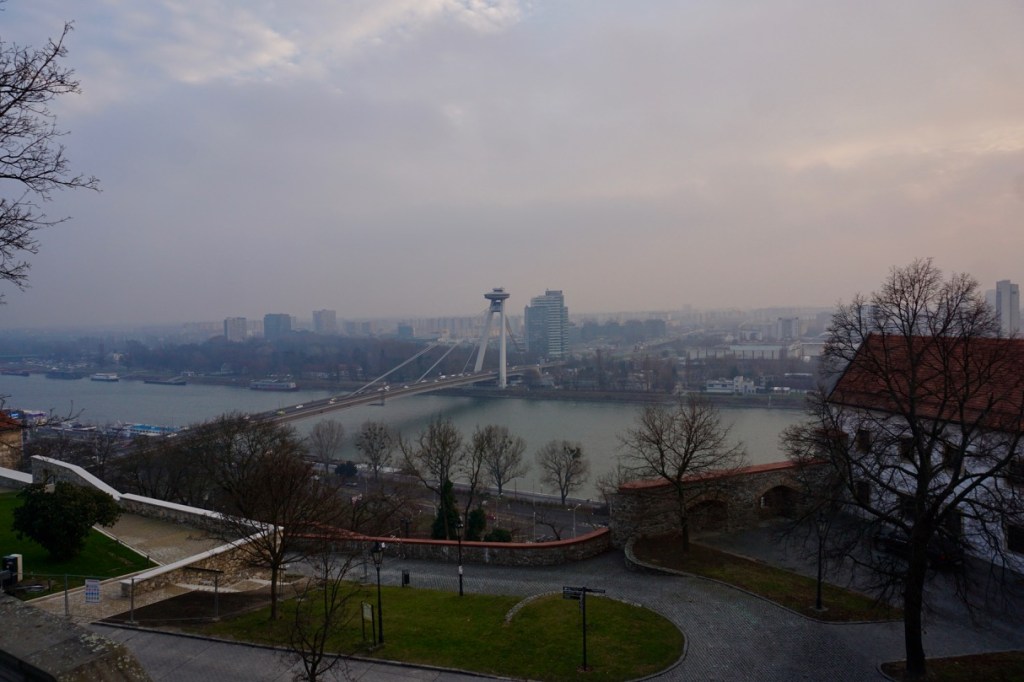
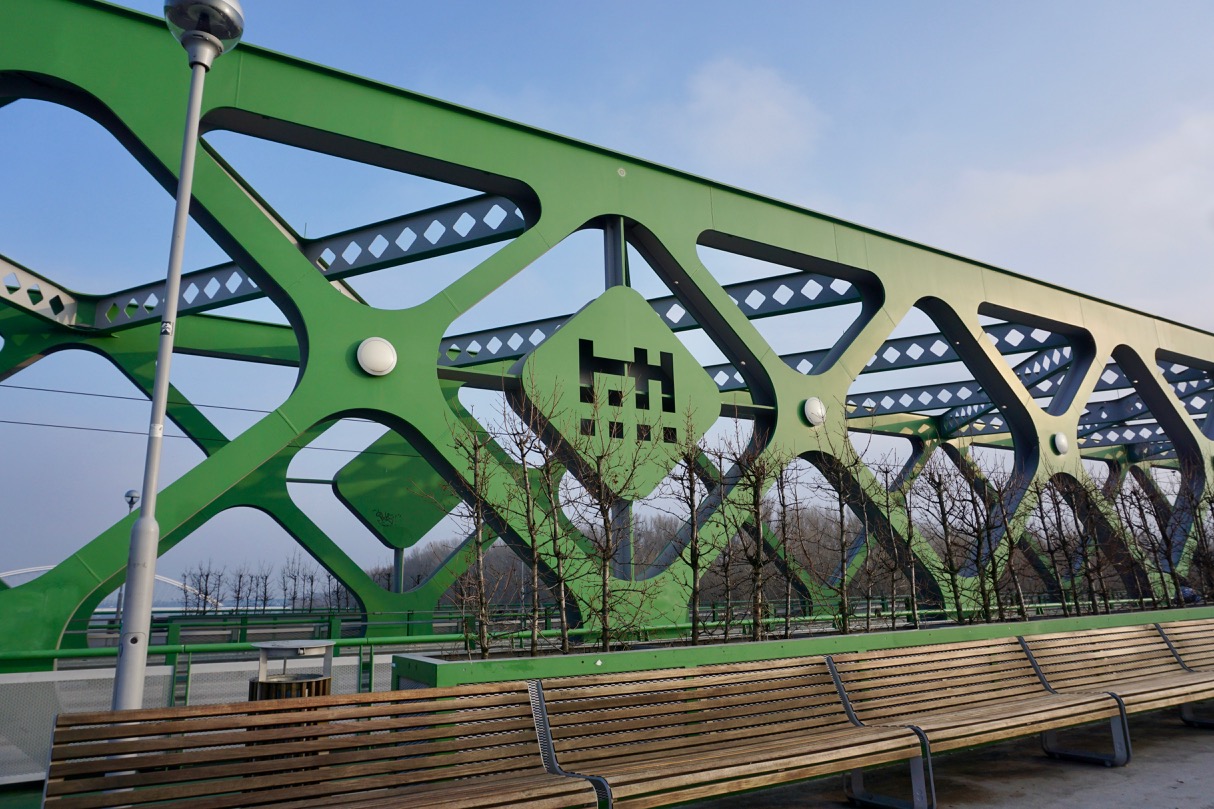
The UFO bridge certainly added to that impression.

But then I stepped inside a brewery (and then another one . . . and then another two the next day) and I found all the people. They were laughing and talking and joking and almost no one was looking at their phones. This was very, very different from what I see in Asia and I felt suddenly warmer for being around people who were interacting with each other and the space around them.

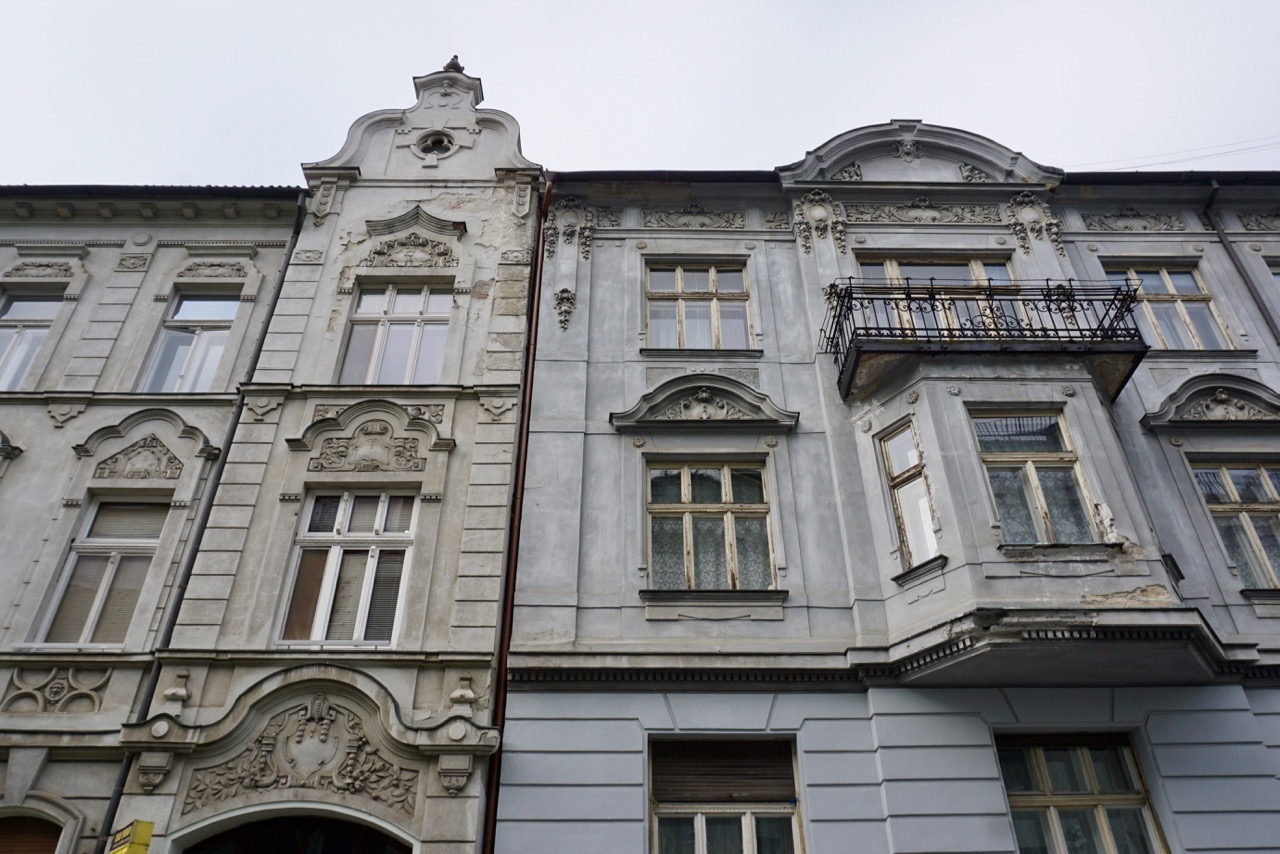
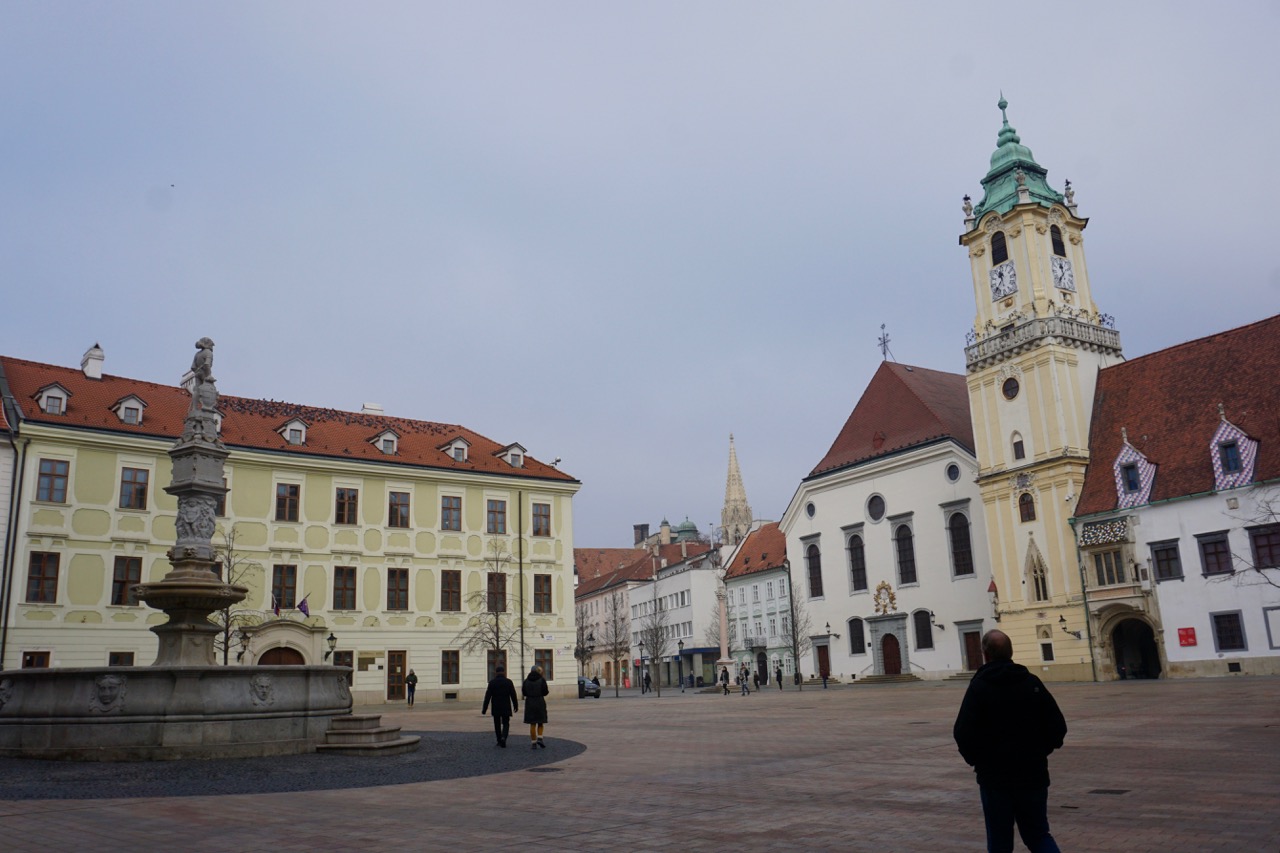
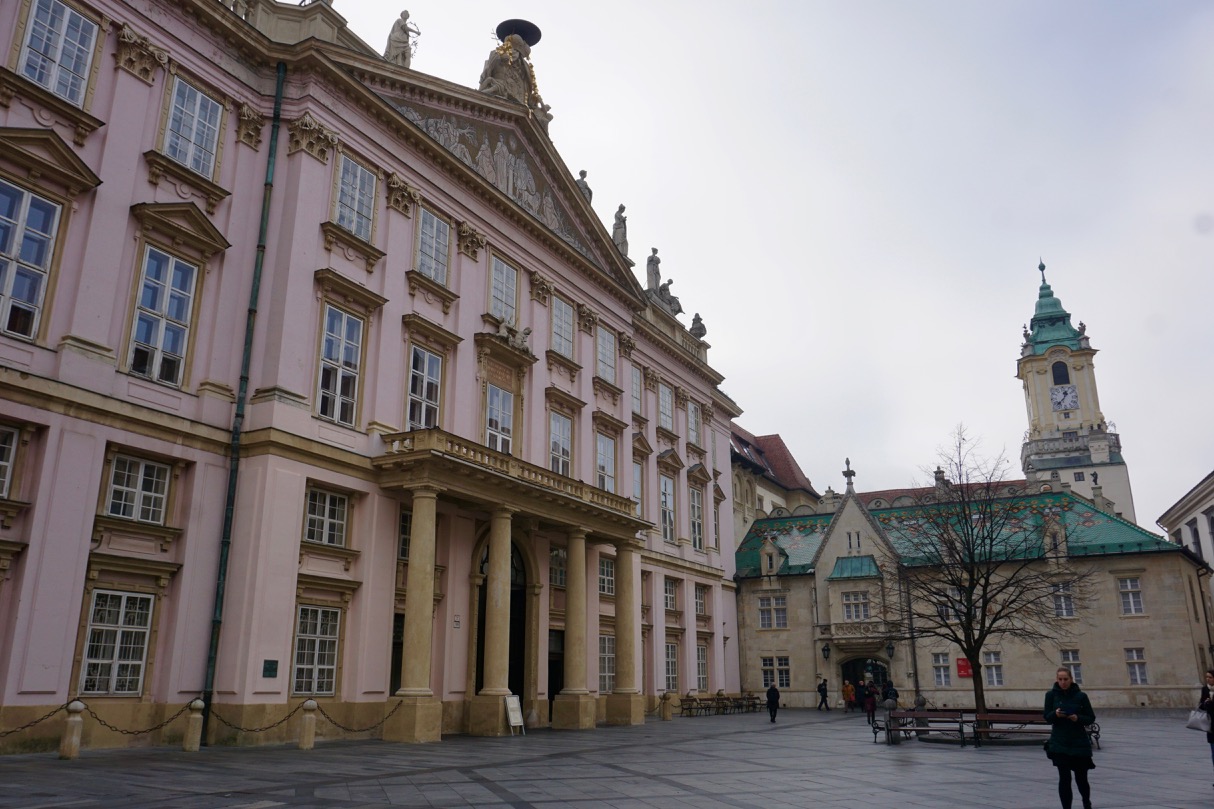
The following day was one of walking and wandering. I met up with a friend and it was great to have the company and to share this new experience. We walked through the old town and quarters of grand buildings . . .

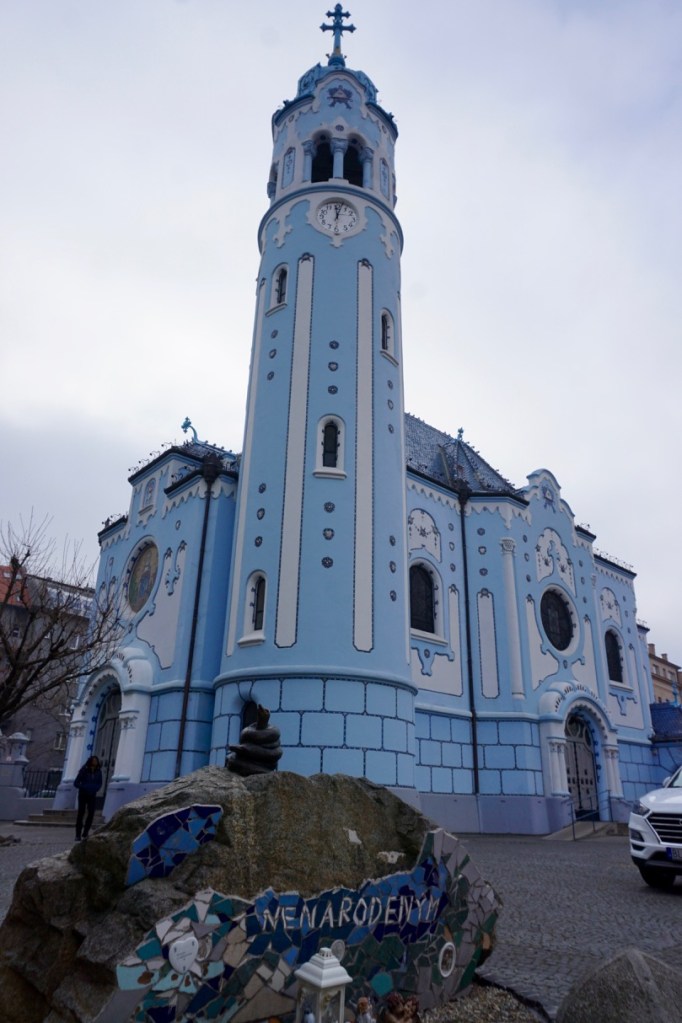
. . . through the city to visit the Blue Church . . .

. . . and took a short walk from the Blue Church to the site of Bratislava’s only remaining synagogue.

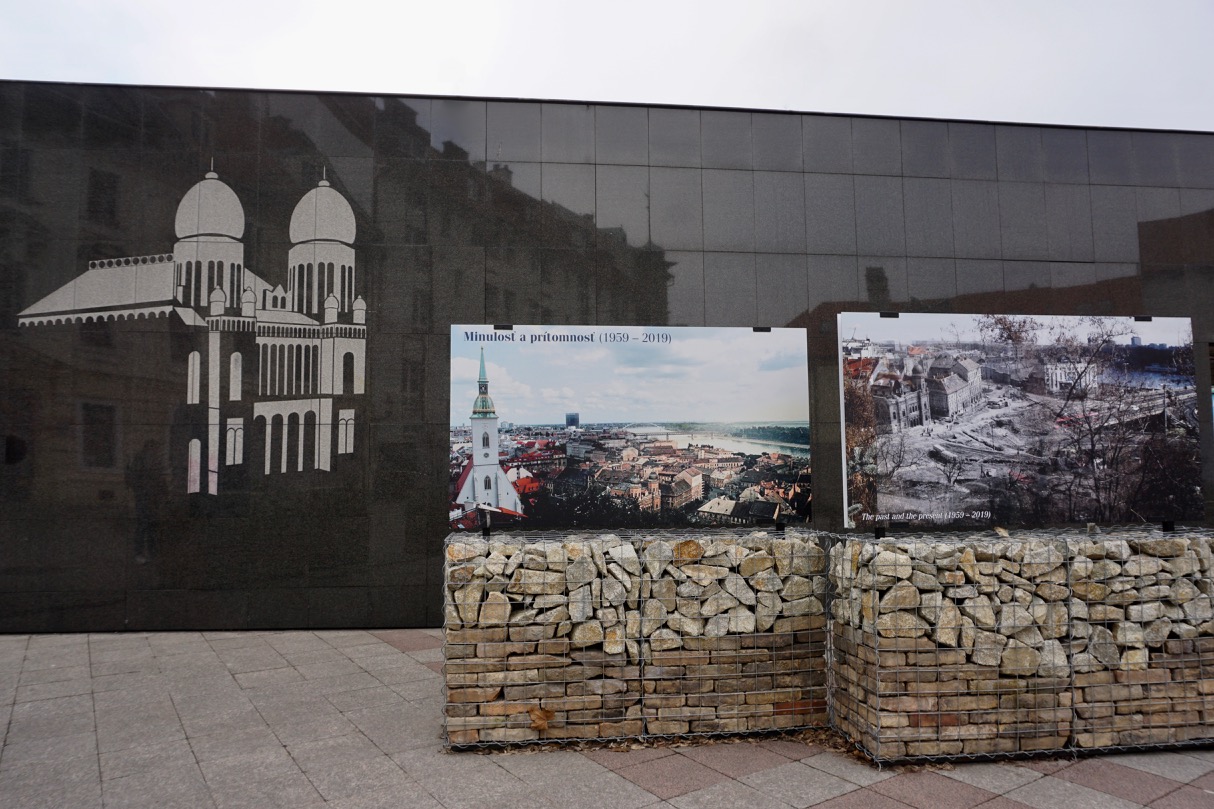
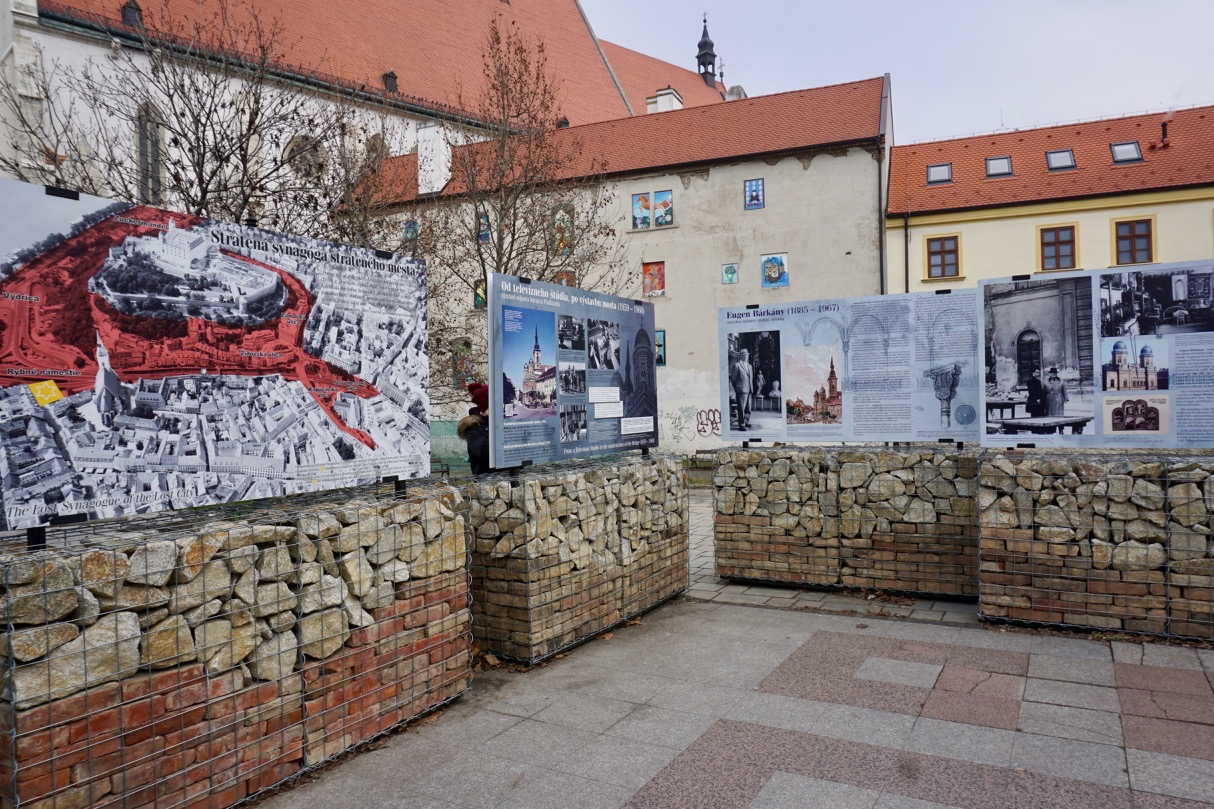
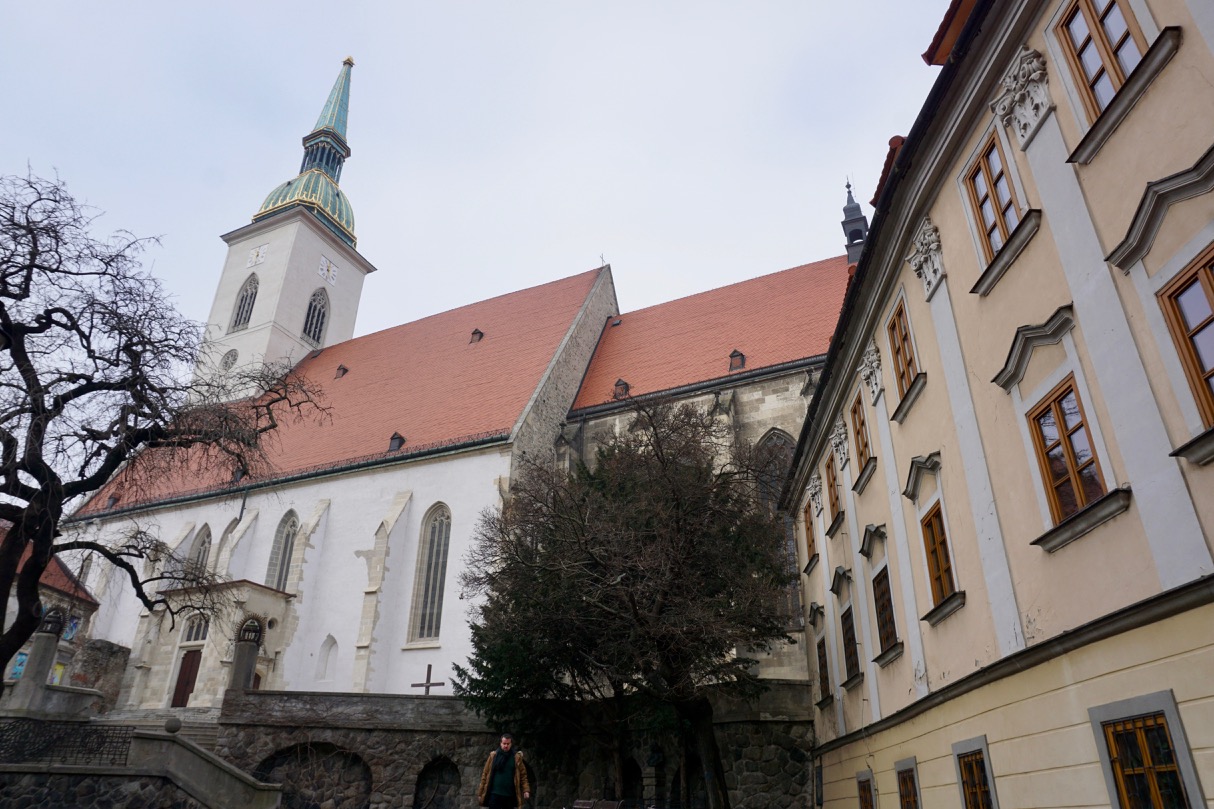
Earlier that day, right next to St. Martin’s Cathedral in the old town, we’d seen an exhibit on the street about the synagogue of Bratislava that, despite protests by the community, had been torn down in the 1960s to build the UFO bridge. Bratislava has a long and extensive Jewish history and there were historical markers about it around the city, including a museum dedicated to Jewish culture.

We also walked across the Danube River . . .

. . . and found ourselves in a park that must have been a relic of Bratislava’s communist history. Imagine the stories these benches and trees could tell! Or the last people to sit here. Who are they? Where are they?

Just across the street from the Presidential Palace, we saw another relic of communism – a fountain that had once clearly been a showpiece but was also in disrepair.

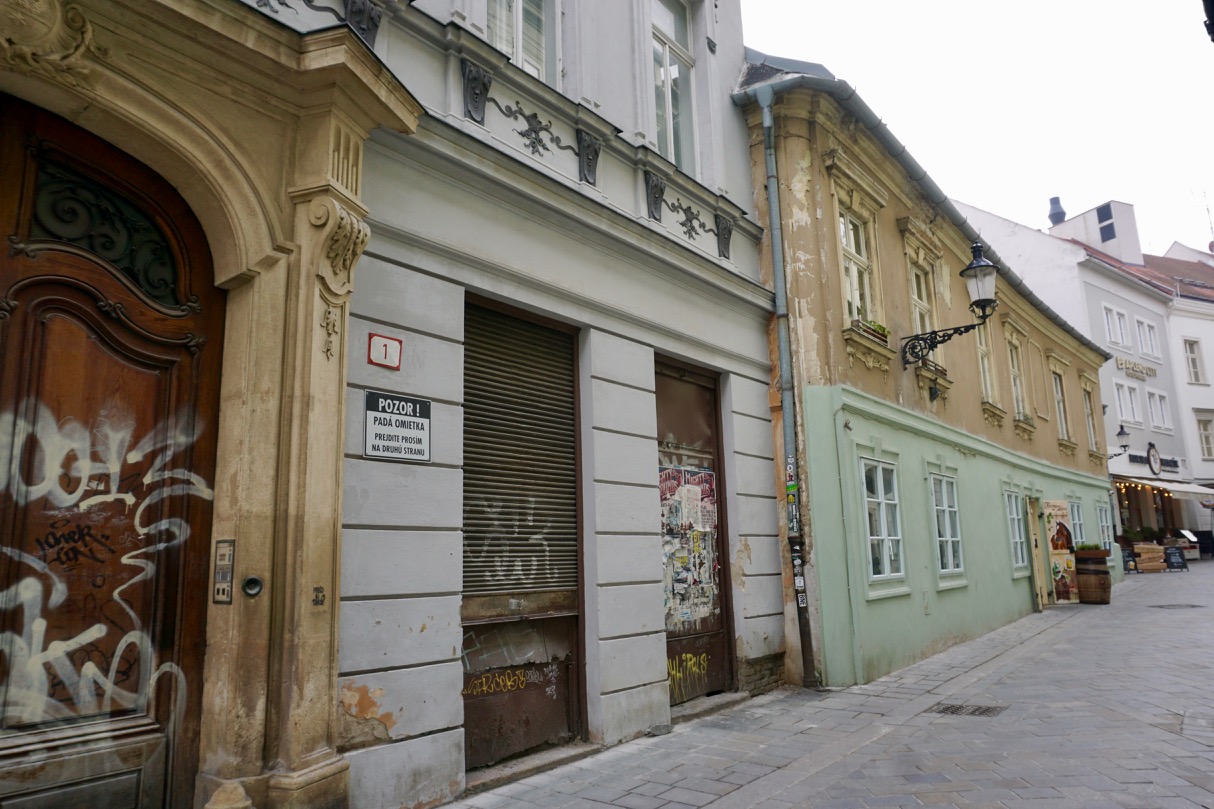
Another notable element of walking around Bratislava was the graffiti tagging everywhere. I felt a real lack of reverence and desire to be heard and I liked that attitude very much. Things that have been needn’t always be. And Bratislava was a little bit of everything.
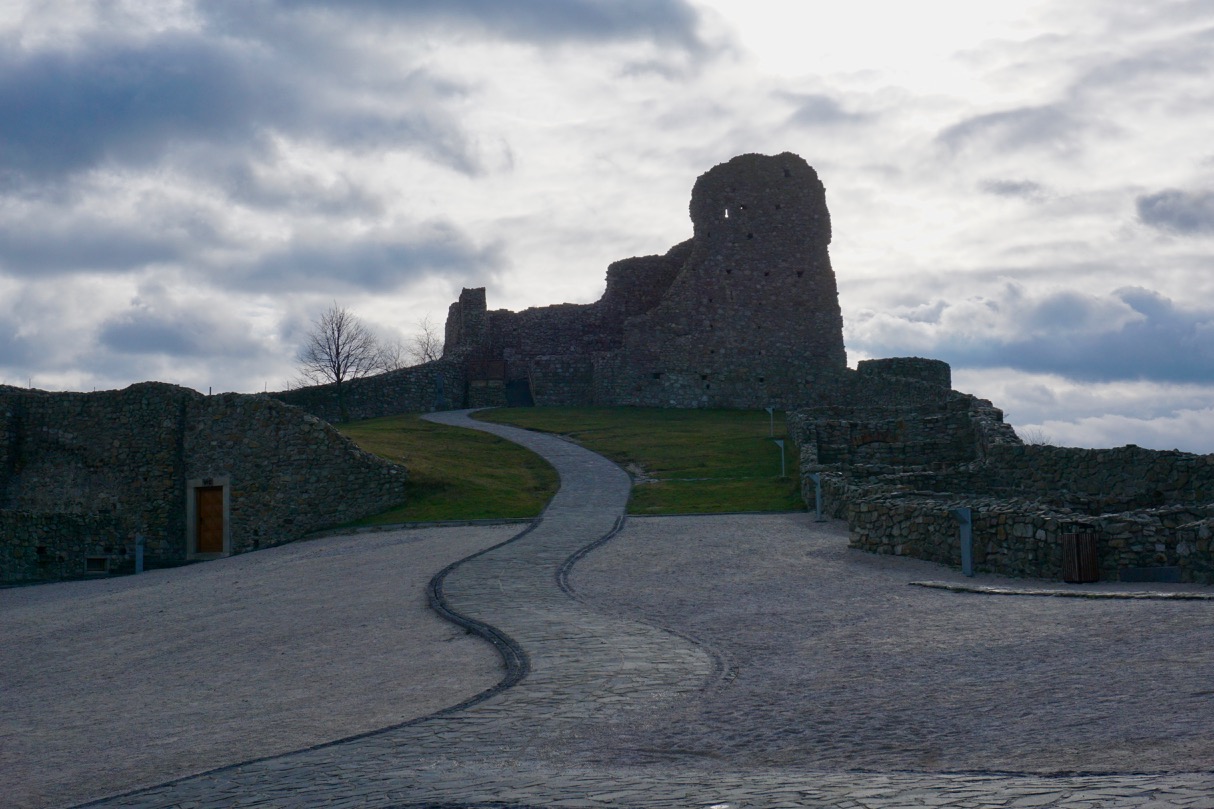
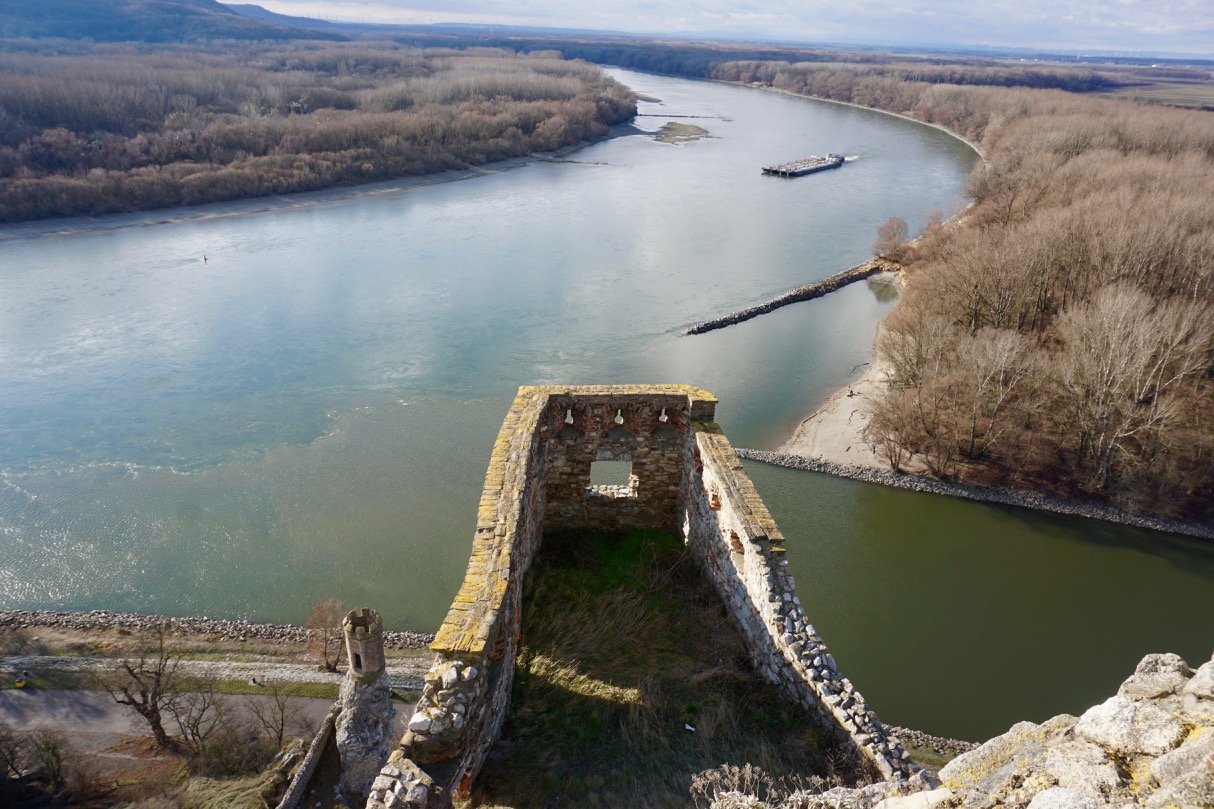
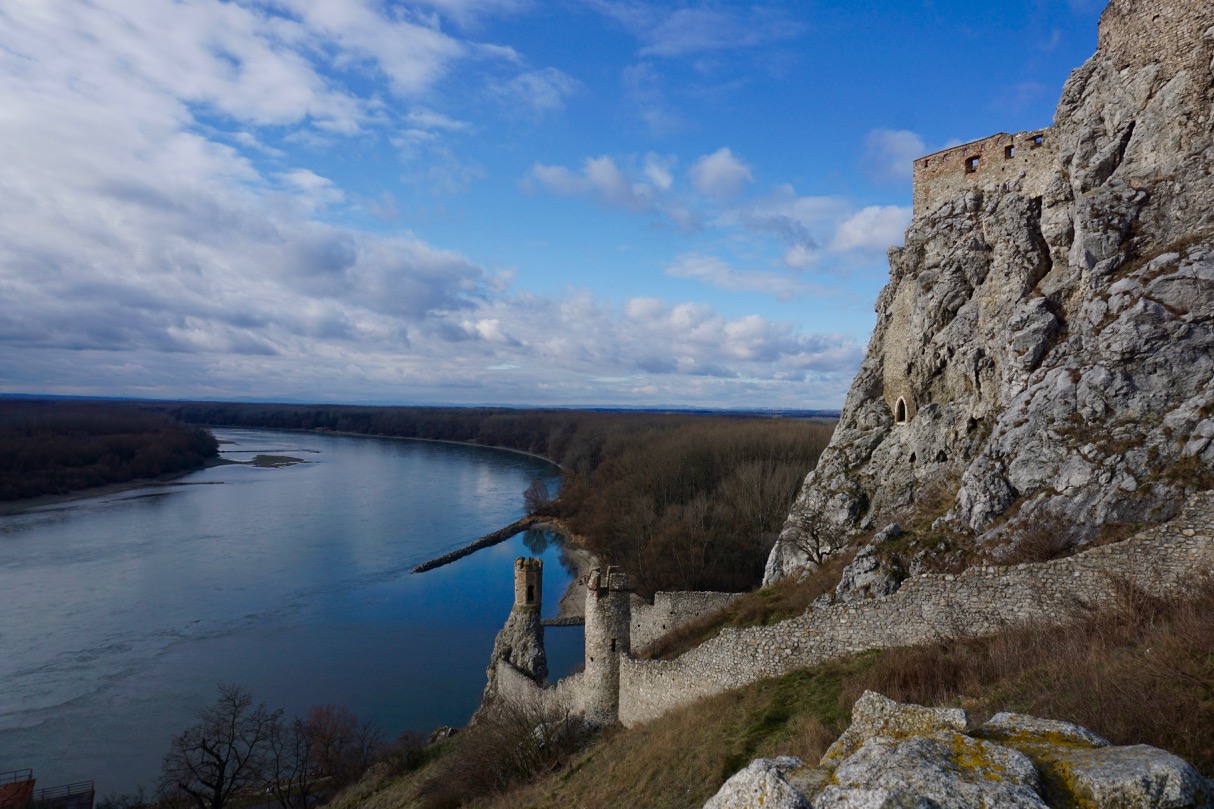
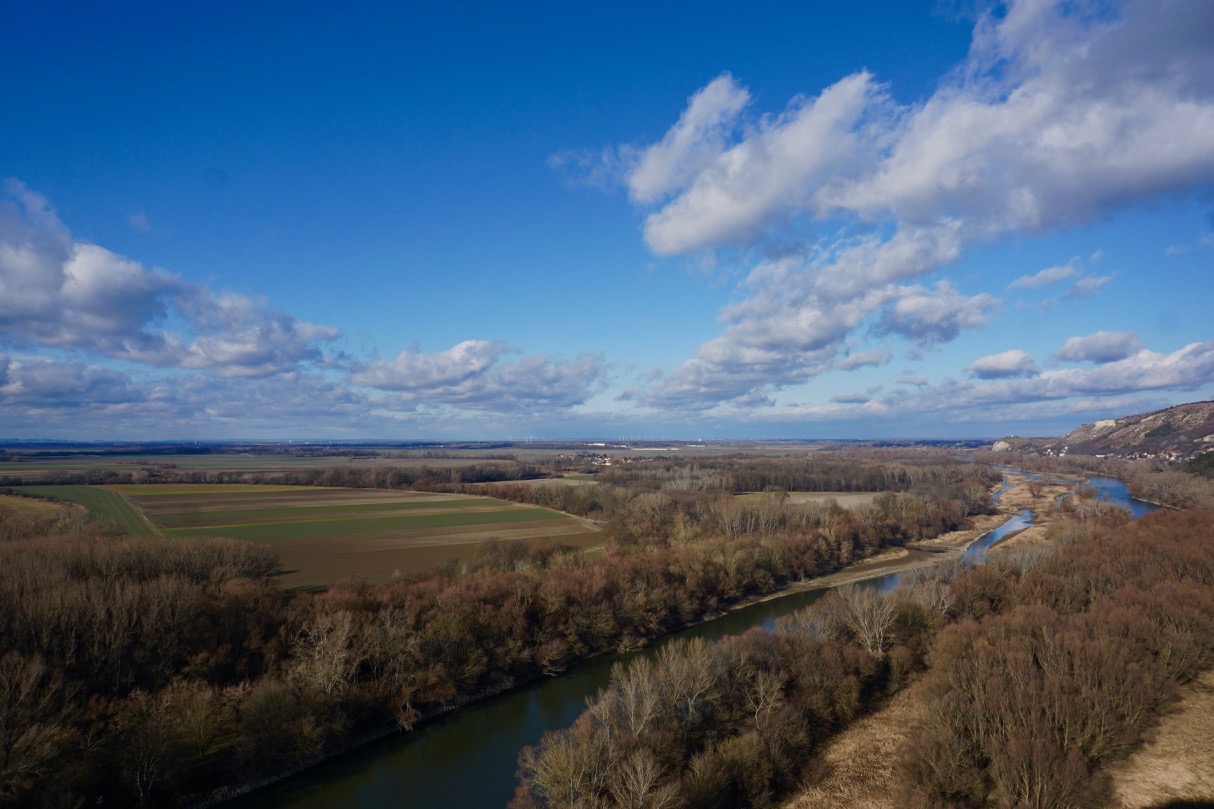
The next morning, it was time to go but I really wasn’t ready to leave just yet. Instead, the last day having a car made it possible to visit Devín Castle, a stone castle located 10km from Bratislava. It was built in the thirteenth century and was then destroyed by Napoleon’s army in the early 1800s. The sun had come out again but the wind was really strong. It was easy to see why this castle had been built up on a windy hill at the confluence of the Danube and Morava rivers.

Thanks to a photo exhibition, I learned that the Iron Curtain had run directly in front of the castle to separate Bratislava from Austria across the river. I knew that the Velvet Revolution, the history of which Bratislava is very proud, had toppled communism here but I didn’t know that the Iron Curtain was a physical structure. In school, we’d talked about it as a concept, not as something tangible. Learning about that was really powerful and reminded me again of how much I don’t know.
After the cold wind, the obvious choice was to stop for some hot wine once more before the last part of the journey, which would again follow Austrian wine roads because they’re so much prettier than the highway.

And then all too soon, the car was dropped off and I had far too much time to kill at the airport. As is my habit, I drank a hot chocolate and reflected on the roads travelled. I had seen parts of the world that I’d never really imagined seeing and I honestly felt the growth in myself as a person. When I moved to Malaysia in 2014, I never would have known how to go about a trip like this. And here I was with all clothing in my pack worn twice like it was nothing. It has been a long road to get to this point and that I cannot forget.

Sometimes the world feels right to me and over the last few weeks it had. There is solace in that feeling. There is solace in knowing there are places out there where the world feels okay. Thank you, world.