

In the end, we drove 2,716 miles (approximately 4,443 kilometres) in two weeks. While our trip earned negative points in the Environmental Friendliness category, we earned positive points in Support for Local Communities, often eating in the one diner or Mexican restaurant in the only town on endlessly straight roads that knifed through the desert.
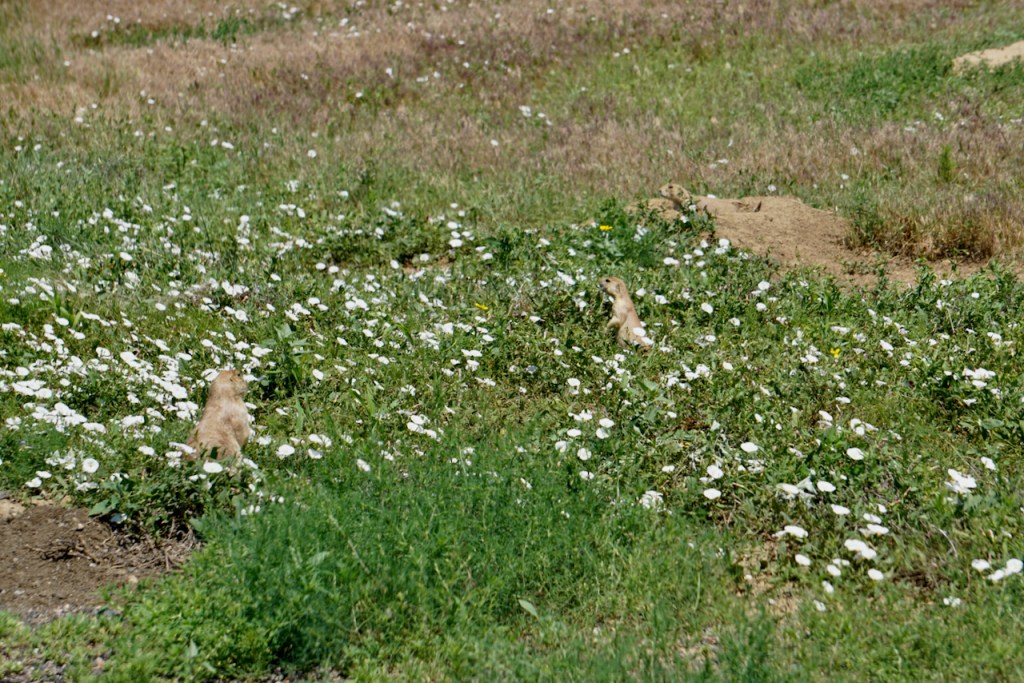
The journey started in Denver, Colorado, where we visited old friends of mine. On our way out of town, they gave us directions to Rocky Mountain Arsenal Wildlife Refuge where, from the safety of our vehicle, we saw prairie dogs . . .


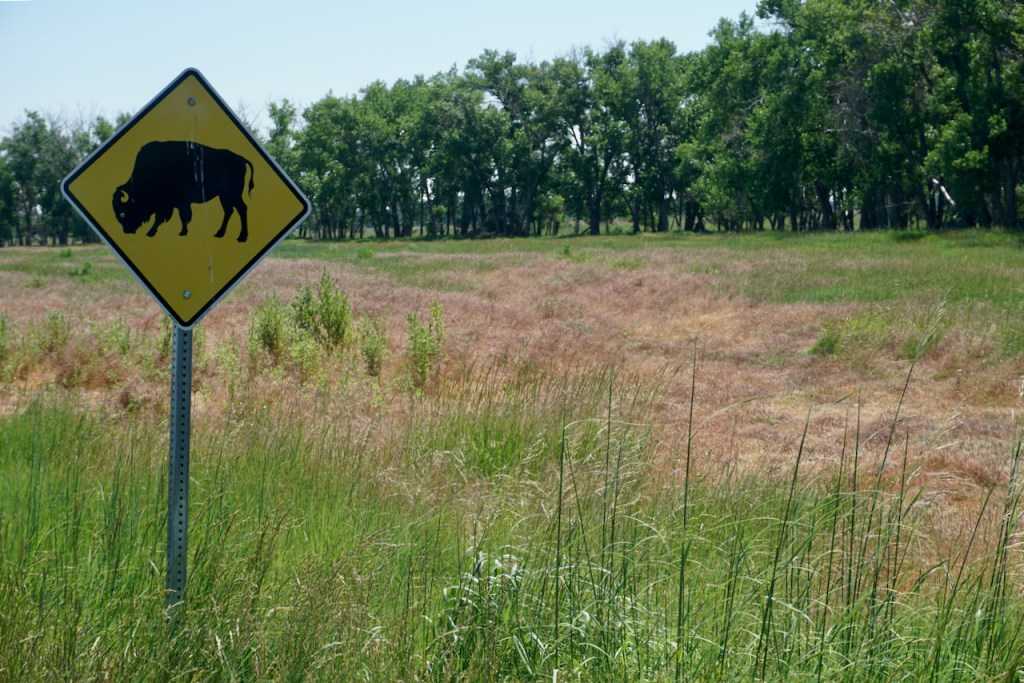
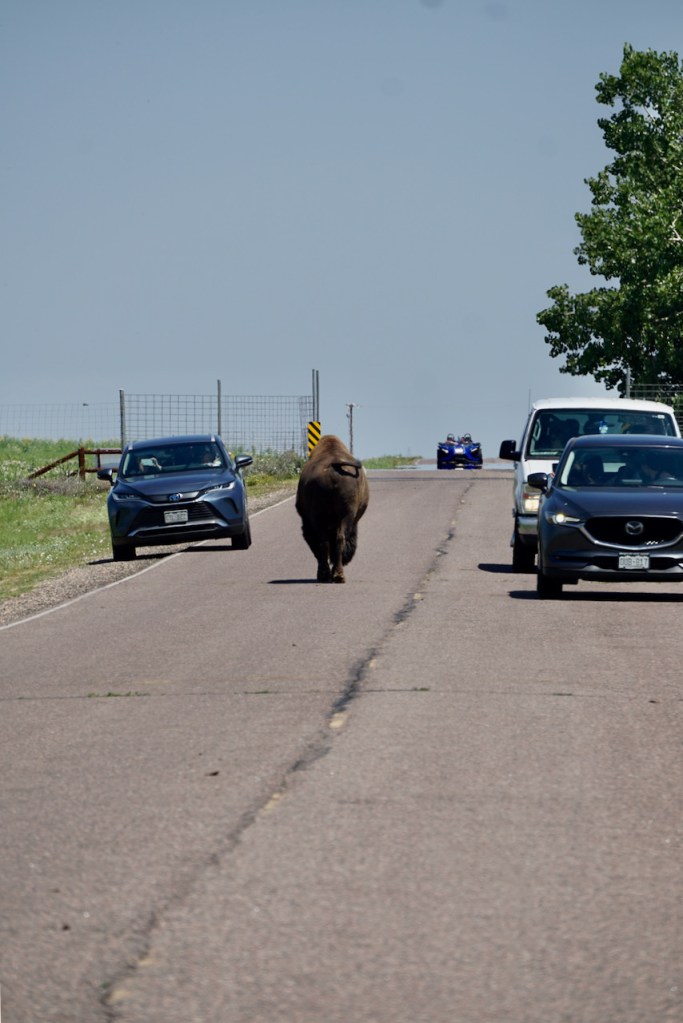
. . . and bison, first alone and then with the herd.


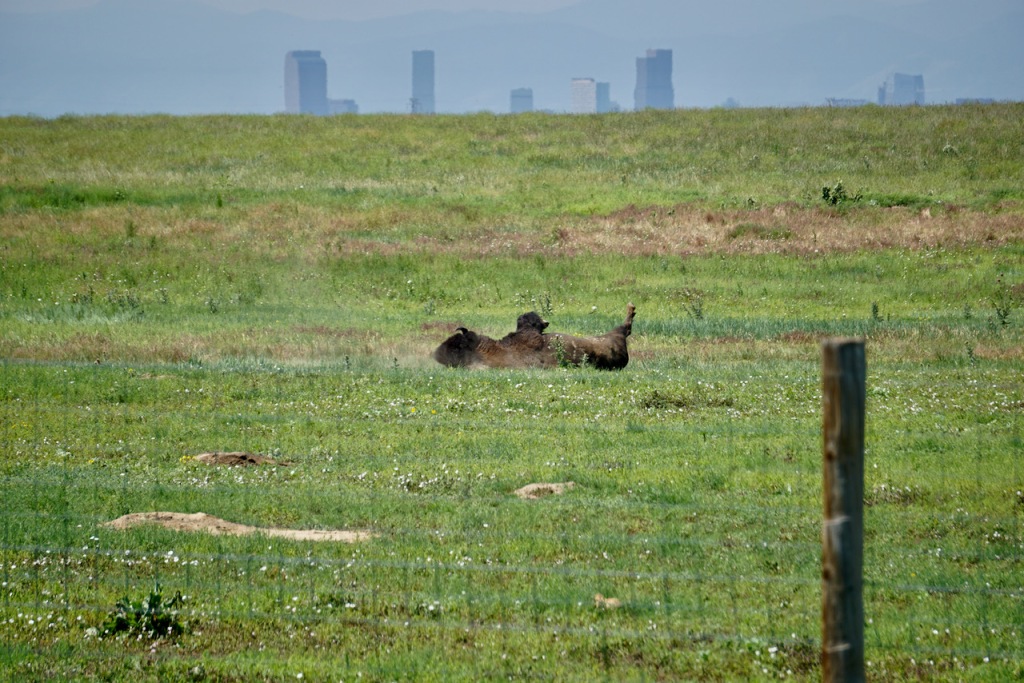


Knowing only of Colorado’s mountains, I was not expecting the endless prairie that was Denver, nor how big the sky felt when the land went on forever, with no groves of trees obstructing the view. The landscape changed as we drove, lush greenery and mountainous by the time we reached Vail, and then the rocks and red dirt, and tunnels that opened into canyons, that opened into more rock, until there was nothing. Just mountains and desert, which is to say everything.

We spent our first real night on the road in Silt, Colorado and then took our time getting to Moab, Utah. Our motto on the road became, “Always take the scenic route”, regardless of the amount of time added to the journey. After all, this trip was about the journey. And we were always, always glad for our choice.
Canyonlands National Park was our first real experience in the desert and it taught us very quickly that summer desert heat is to be respected and adhered to. And we recognized that while we were prepared for the rock, we could never be prepared for how hard it would be to not touch the rock.

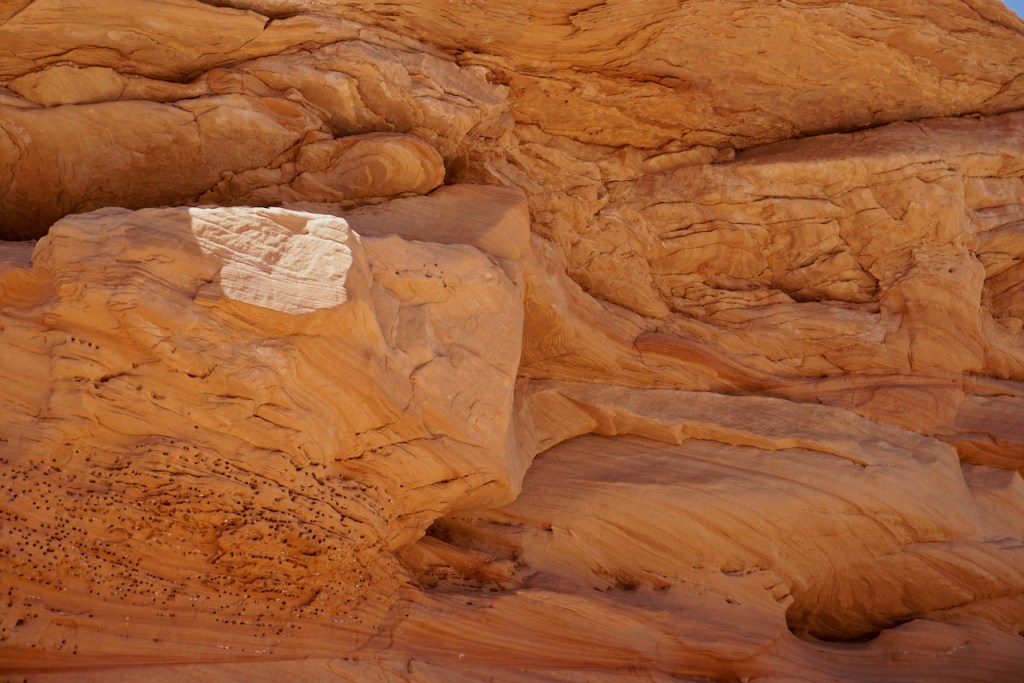


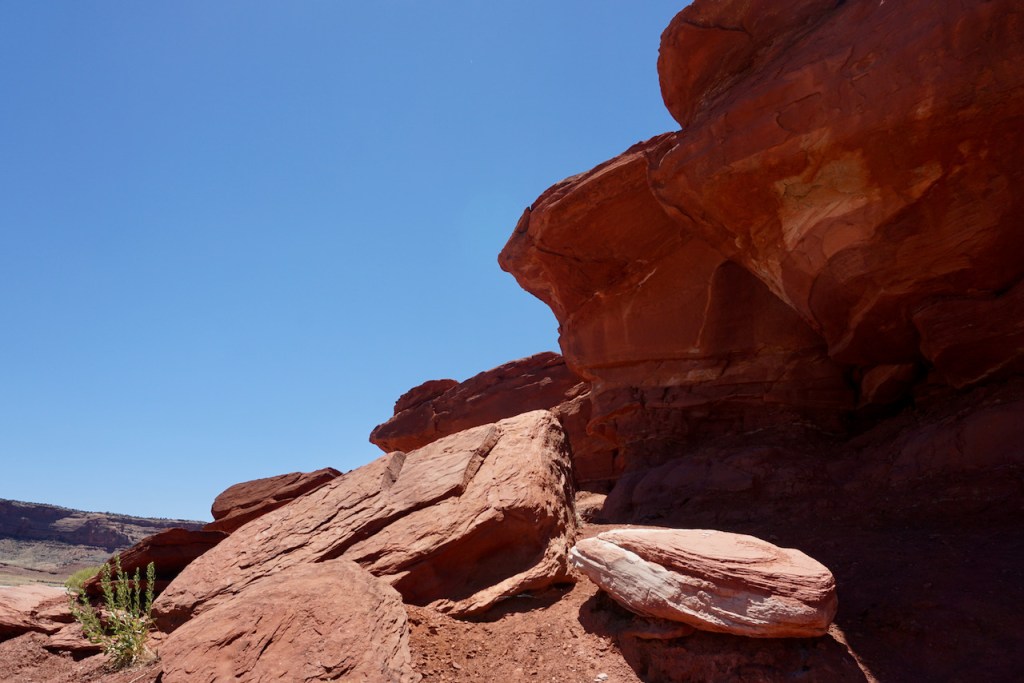
My partner and I are climbers and we marvelled at the deep red, the layers of colours, the formations created by sand and wind and endless time.


The caverns, canyons, and shapes were otherworldly, and the fact that trees and plants grew there was a testament to the incomprehensible magic of nature.


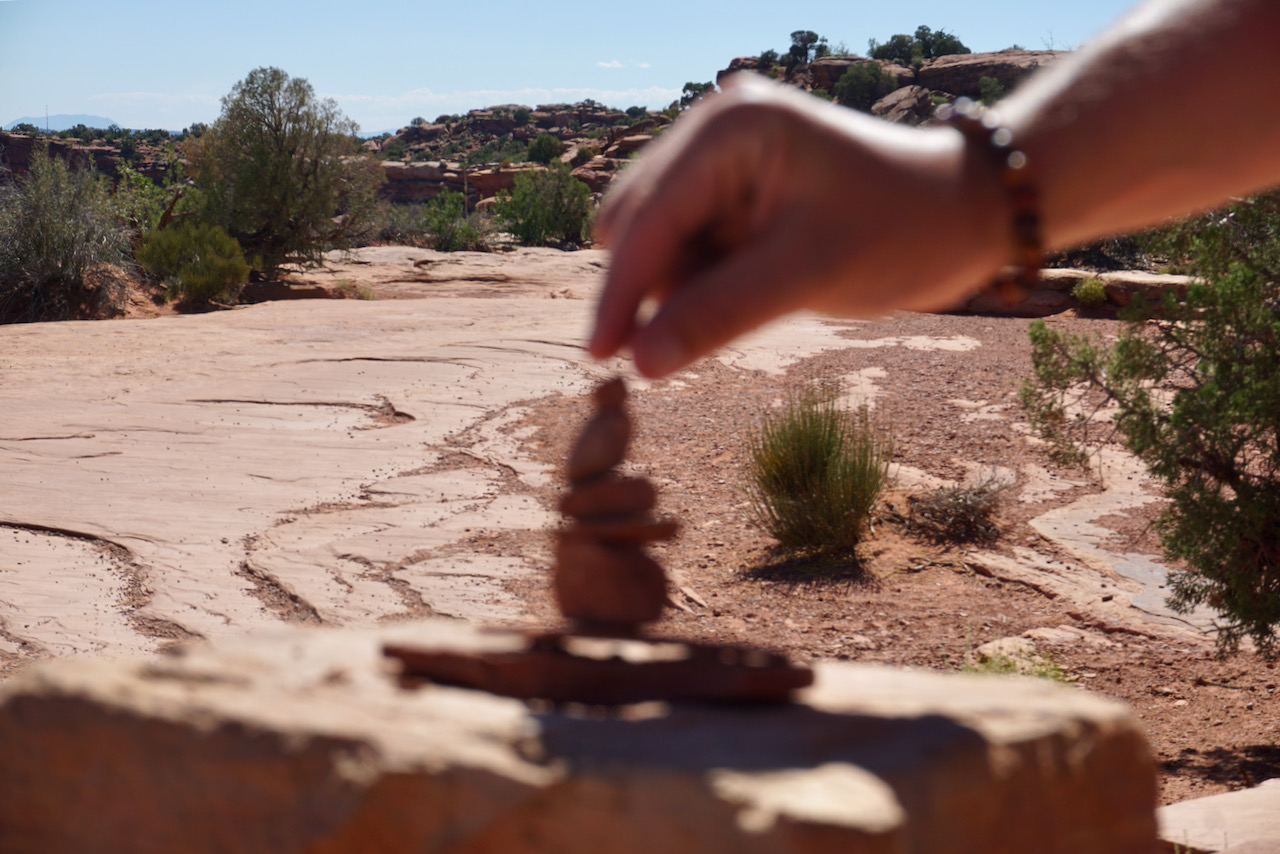
We couldn’t help it, and we wanted to be part of that rock. We didn’t build the cairn, but we appreciated whoever did.
The following morning we had the earliest timed entry slot available for Arches National Park, allowing us to watch the sun move across an extraordinary landscape. My journal, sitting beside me as usual as I write this post, says, “Today is difficult to describe because it was overwhelming. Overwhelmingly beautiful, in the most diverse landscape I’ve ever seen.”


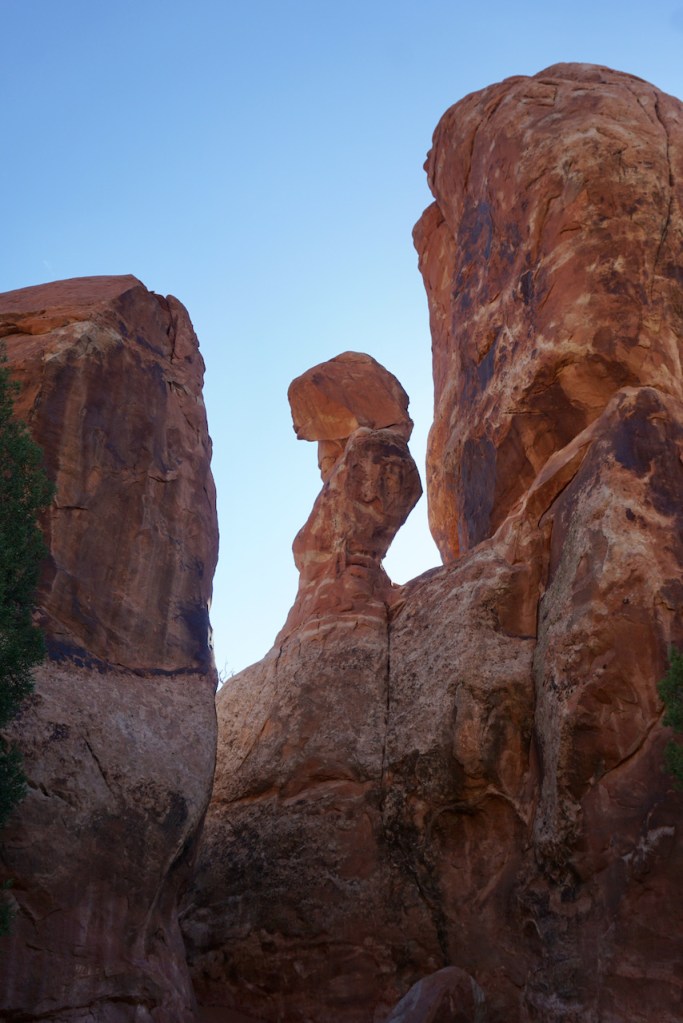

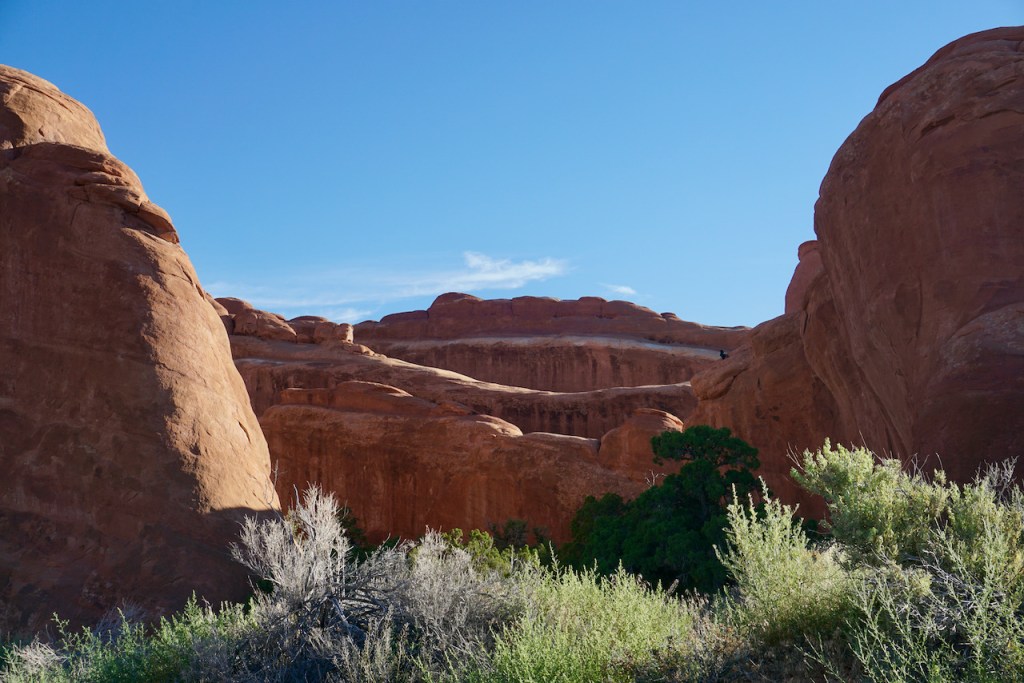


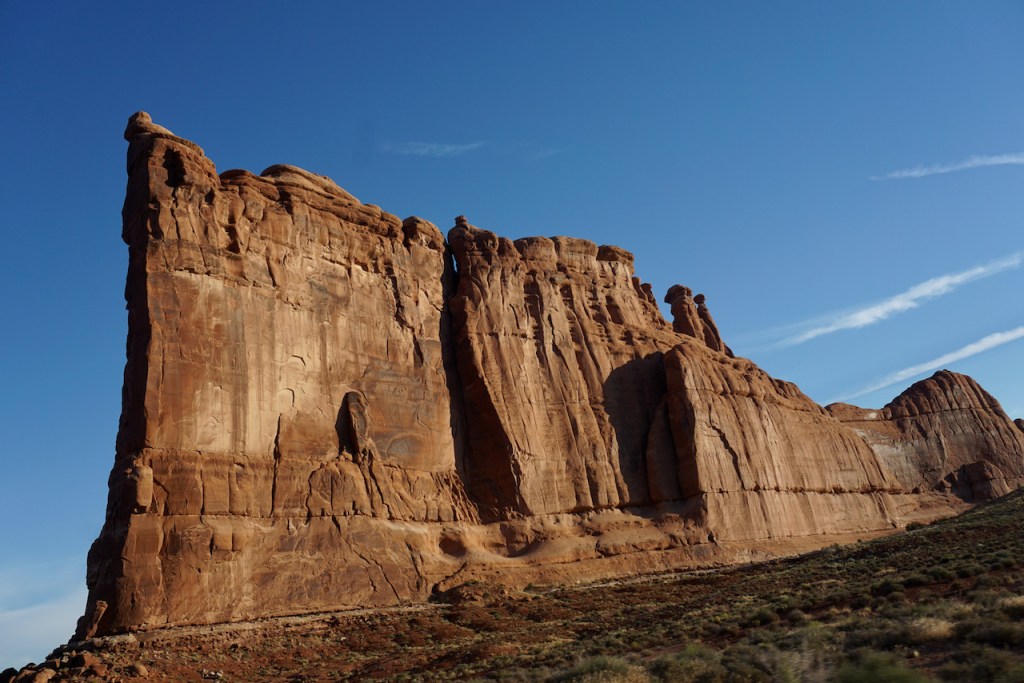


We hiked Devil’s Garden and found ourselves on what could have been another planet. We were in awe of the rock . . .


. . . of the landscape (Landscape Arch is indeed appropriately named). . .

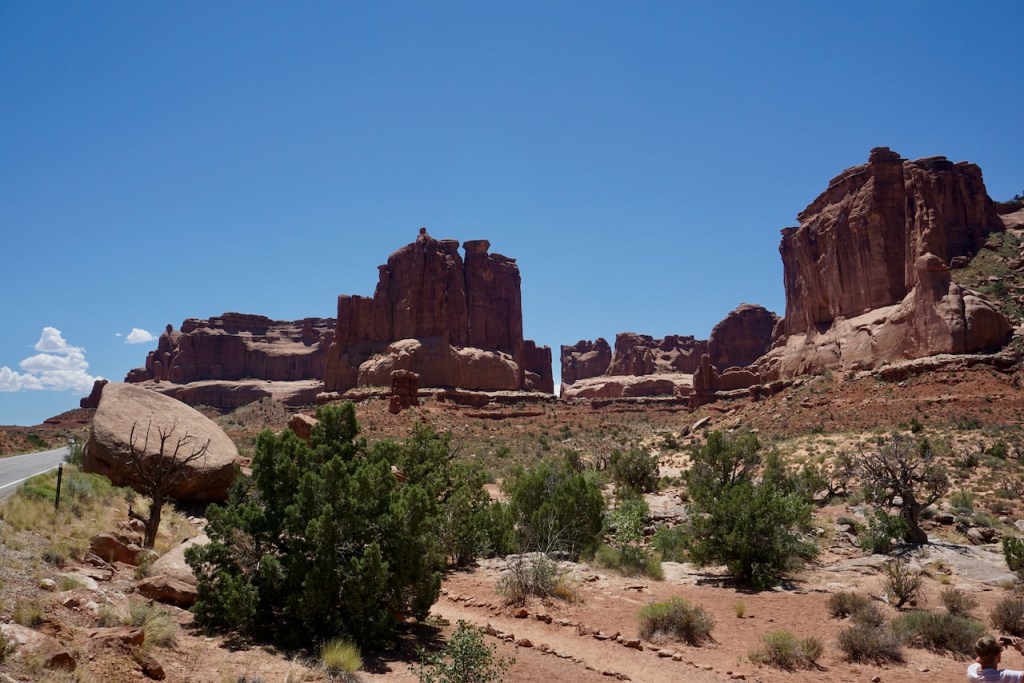
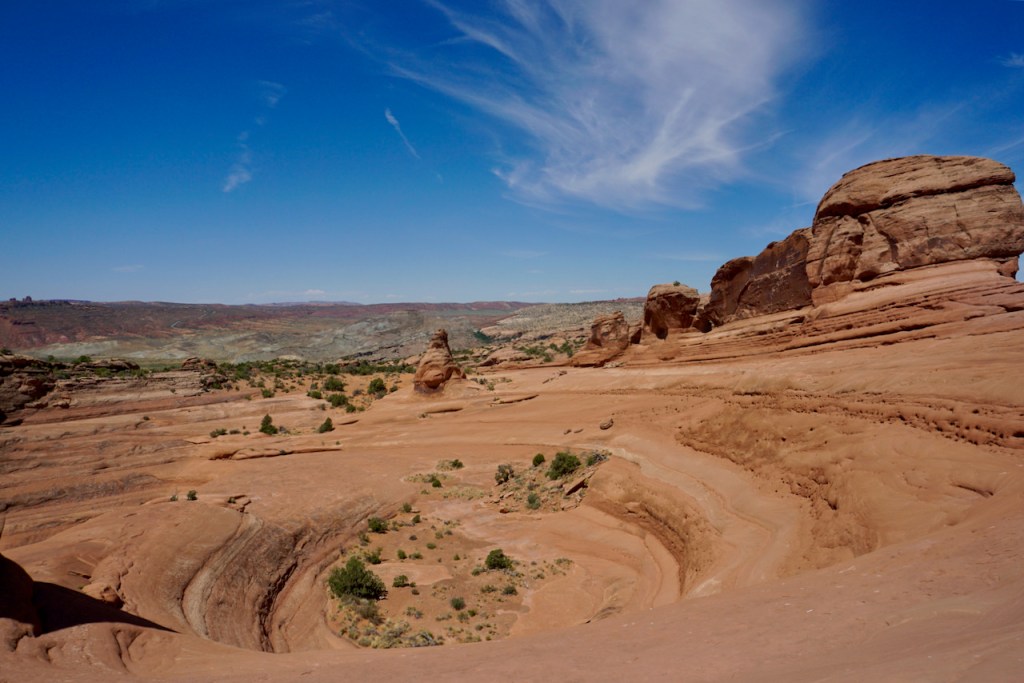


. . . and of the greenery despite the harsh desert climate.


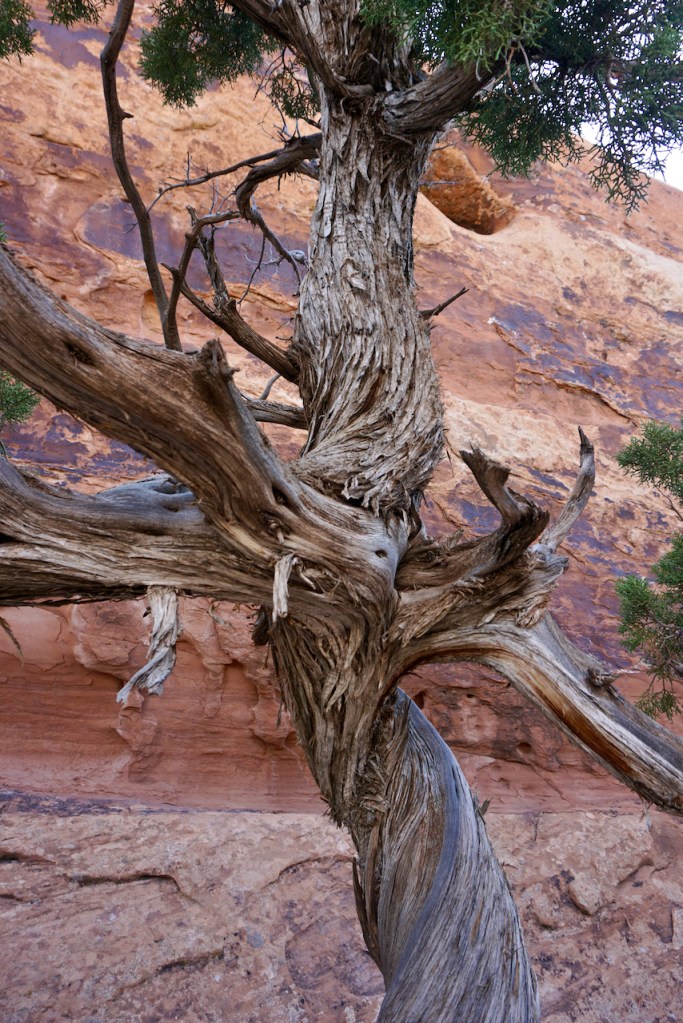
At my partner’s encouragement, we scrambled up the path under punishing sun to reach the famous Delicate Arch, which was every bit worth the discomfort.

It was on the way there that we saw our first petroglyphs, signs that real people had lived here, beginning thousands upon thousands of years ago.

Later in the day, again choosing the scenic route, we saw more of the same in Capitol Reef National Park.
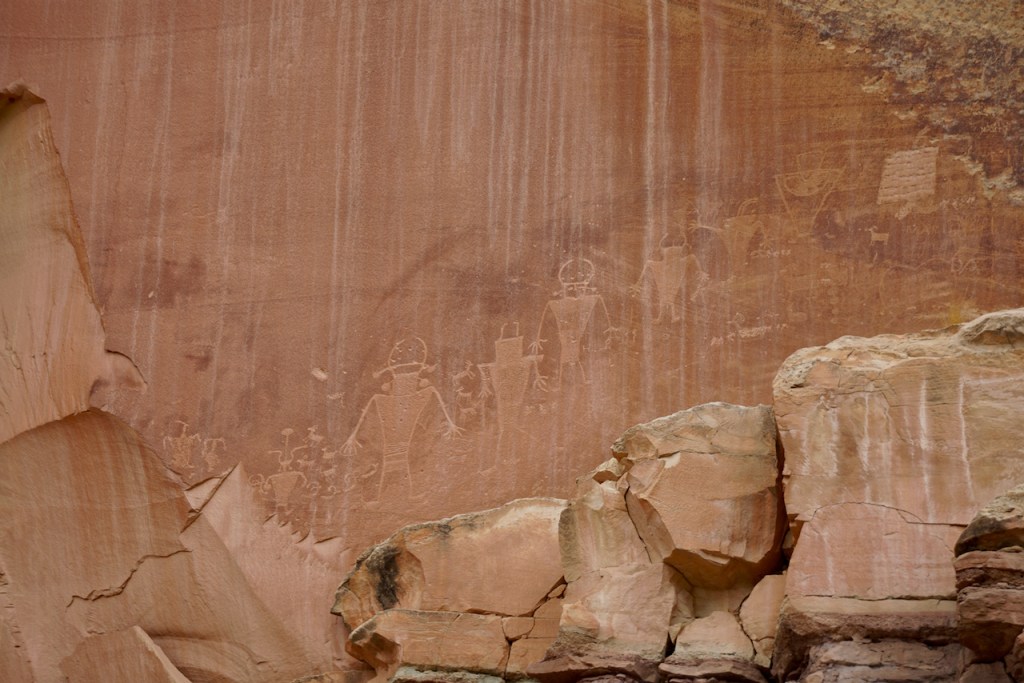


The landscape had changed along the way, with stark rock formations gradually giving way to mesas and plateaus. Unlike Arches, which was so bright and so hot it was difficult to imagine the people who had sheltered in the occasional spots of shade, Capitol Reef was an oasis with fruit orchards, a welcome breeze, and rolling hills.

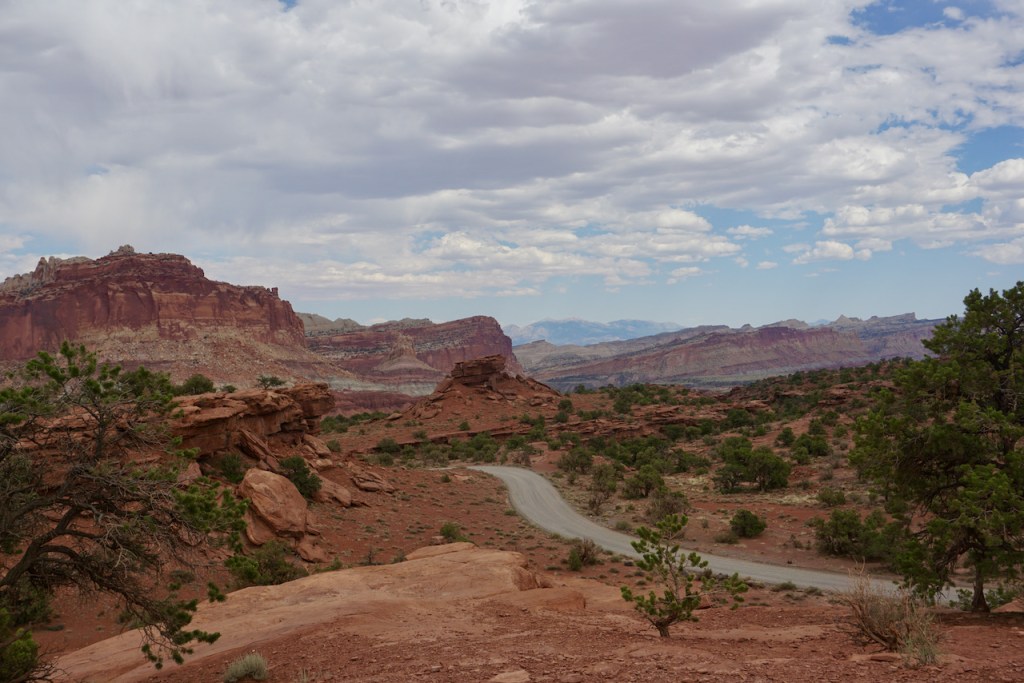
Later on, we drove through Dixie National Forest, in which we would find ourselves multiple times throughout the trip. From lookouts there, we could see Grand Staircase-Escalante National Monument, also part of our route, in the distance.
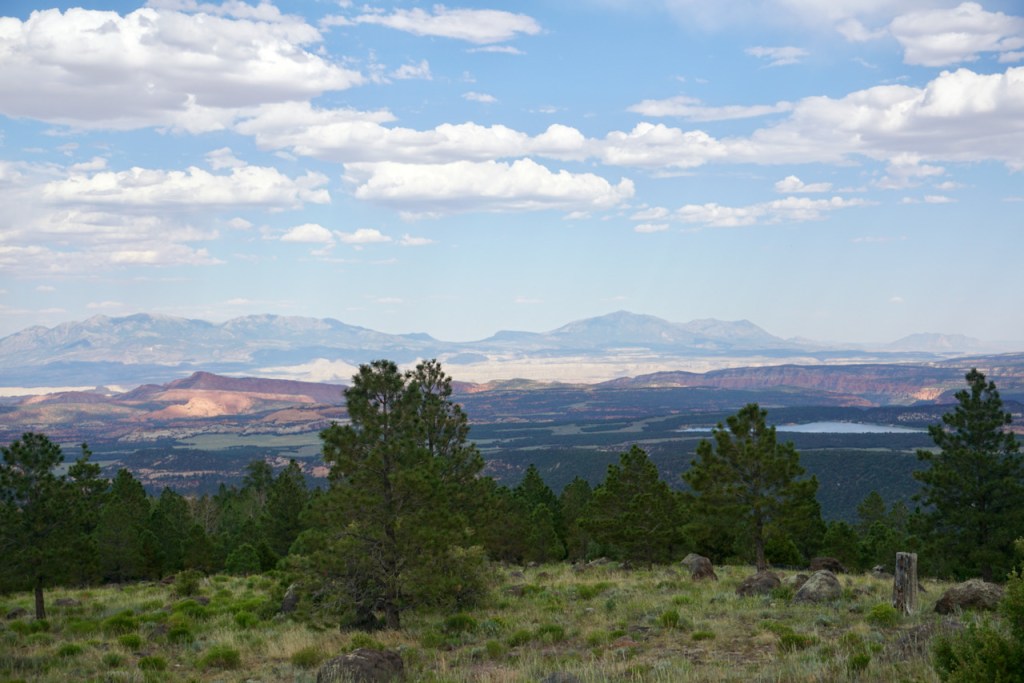

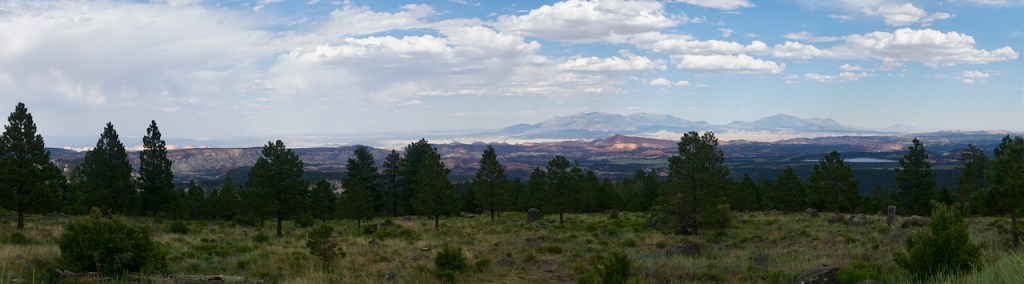
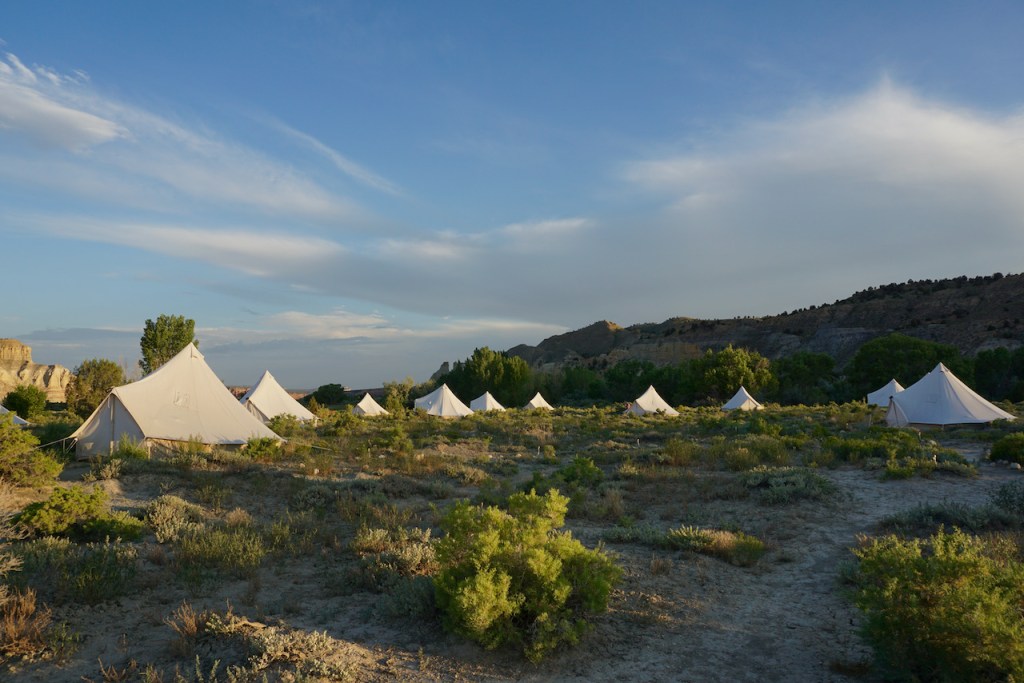
We spent the night in Cannonville, Utah, sleeping under the brightest, clearest stars that I’ve seen in North America. As is my habit, I first found the Big Dipper, and Polaris followed from there. The Milky Way winked hello and we lay on our backs pointing out constellations that we recognized and looking for others we thought we knew. It was a warm night that grew shockingly cool, and I was grateful for the heavy blanket in our cozy tent.

We left early the following morning to reach Bryce Canyon as the sun made its way across the rock formations that belonged, again, somewhere other than Earth.

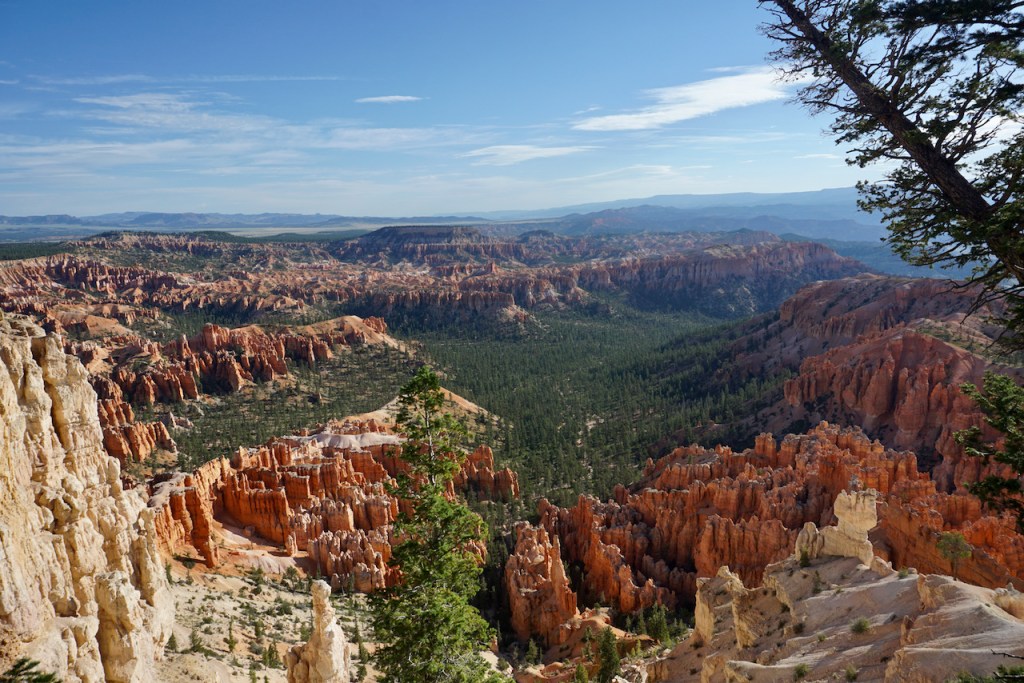

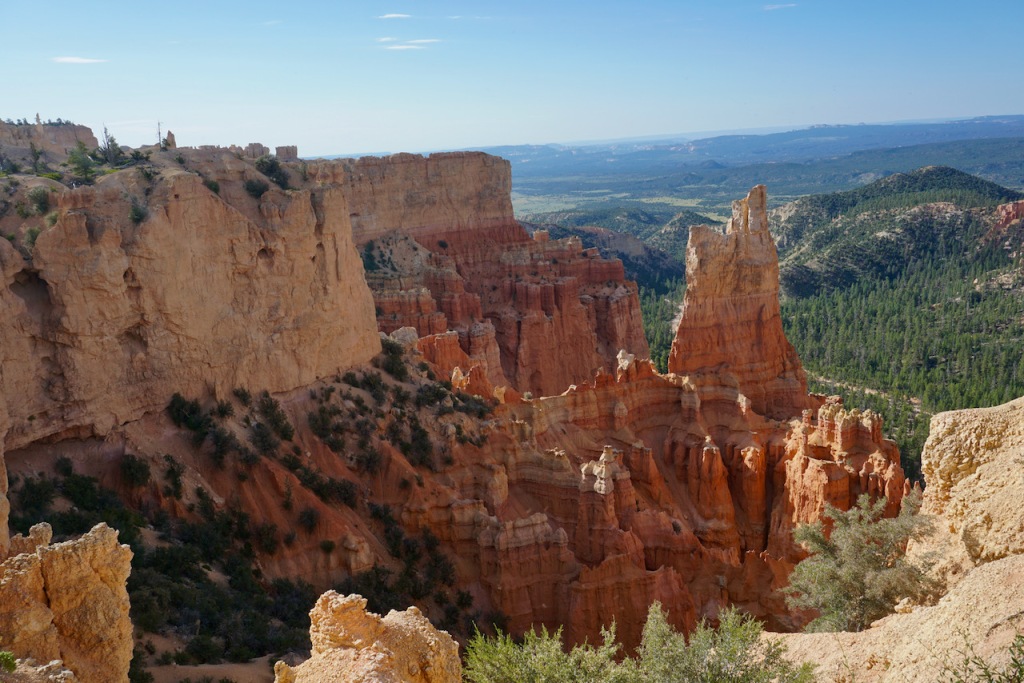

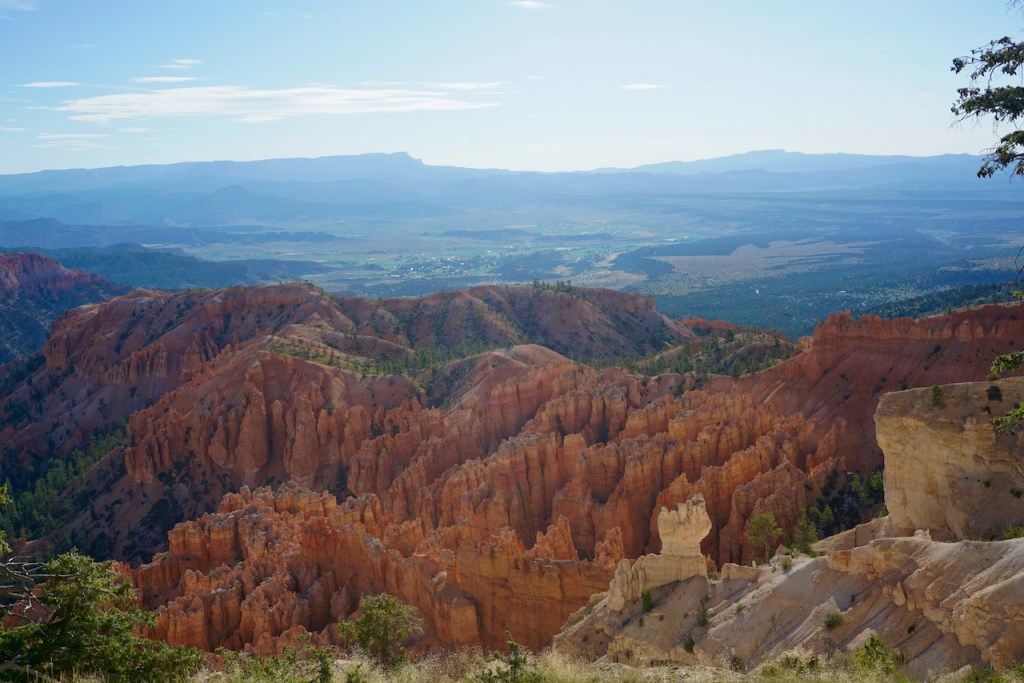
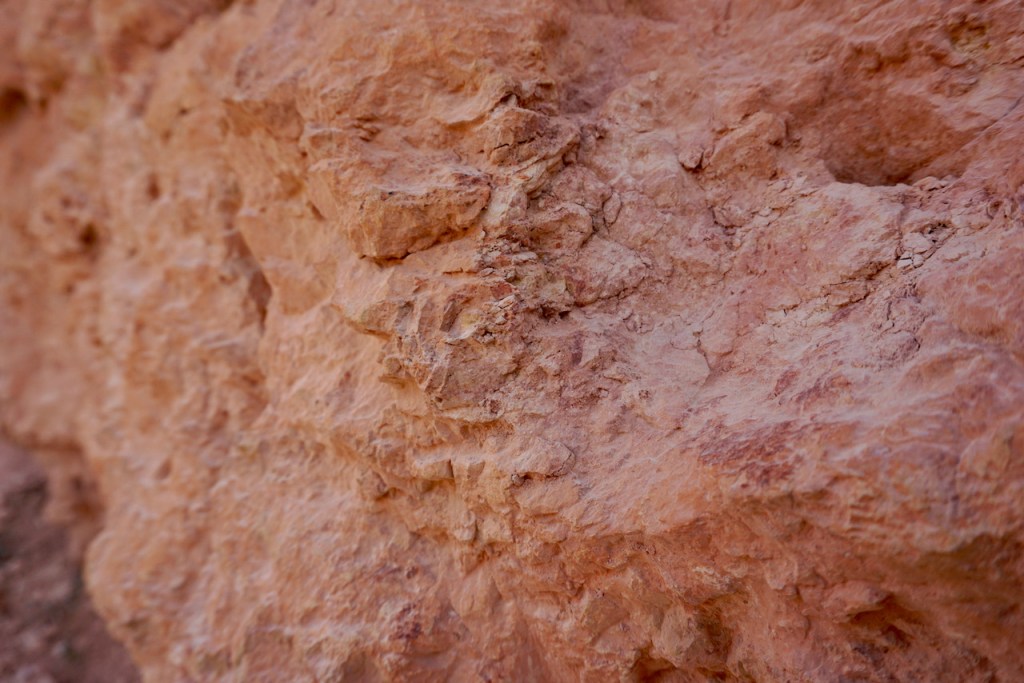
And then we made our way down into the canyon, deliciously cool, and stared up at a storybook sky as we walked along pillars of red rock and shockingly green trees. The heat got to us again, but our attention was on the rocks made of chalky sand, with formations that could have been stalagmites had they been located elsewhere. And they towered over us.
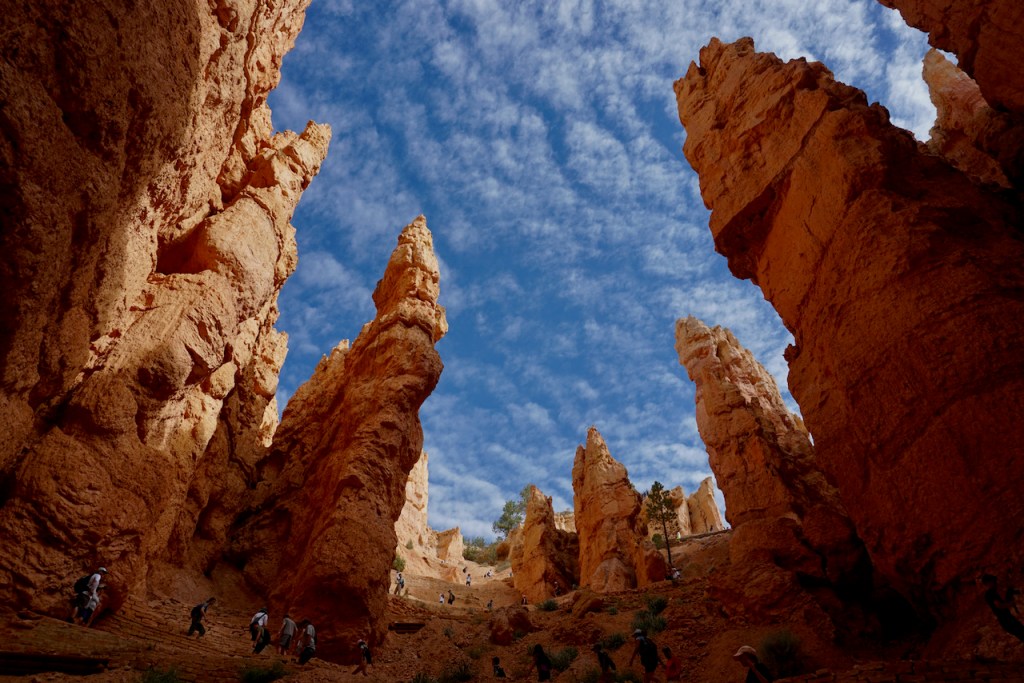
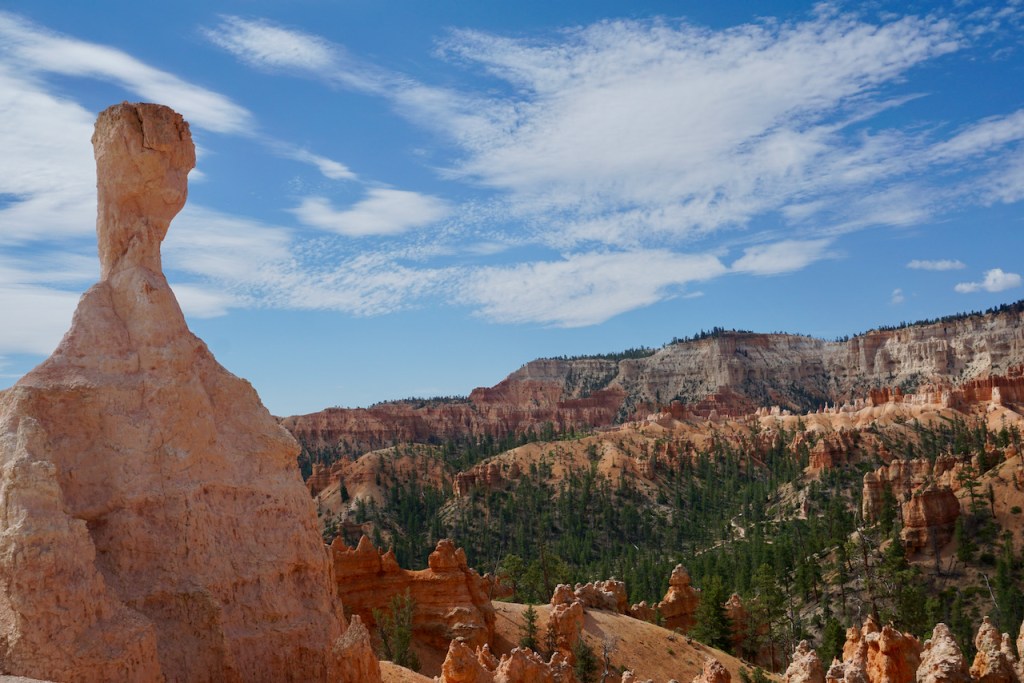


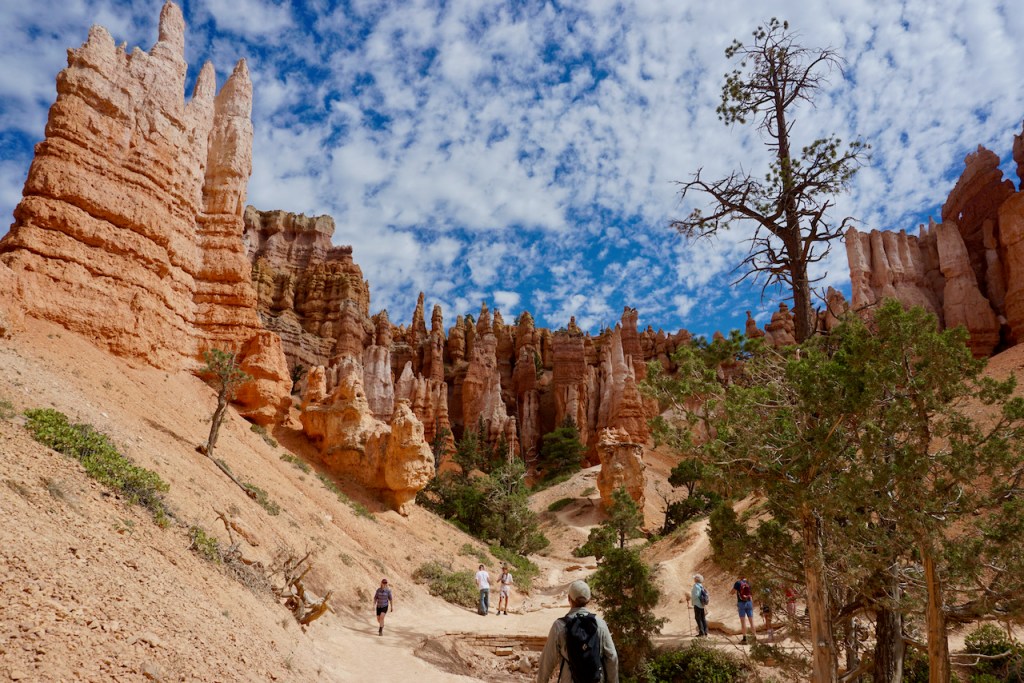
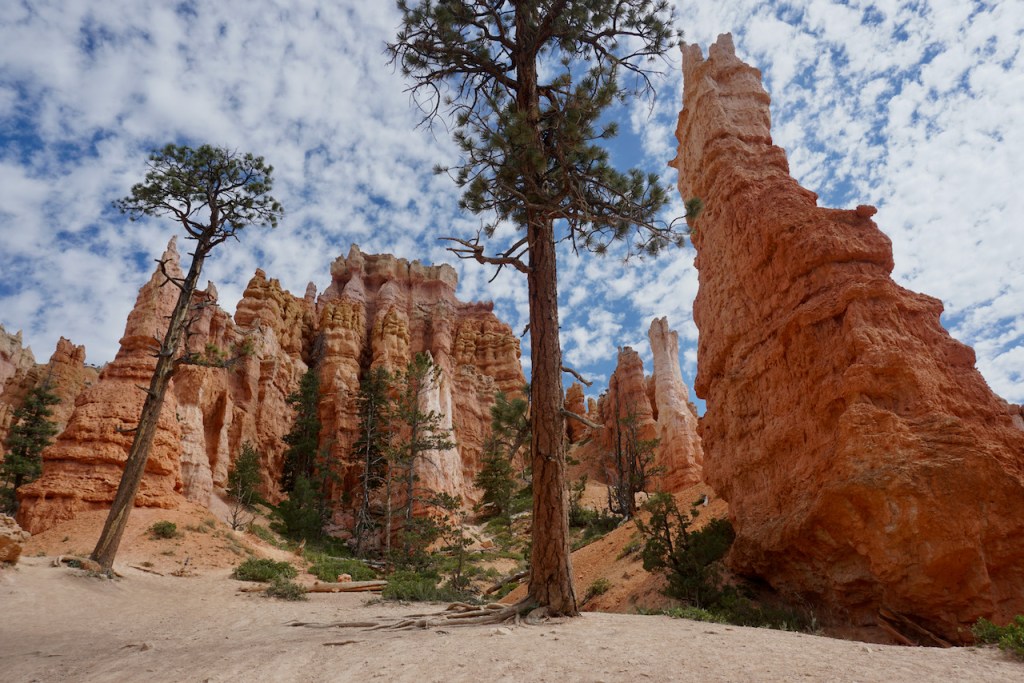


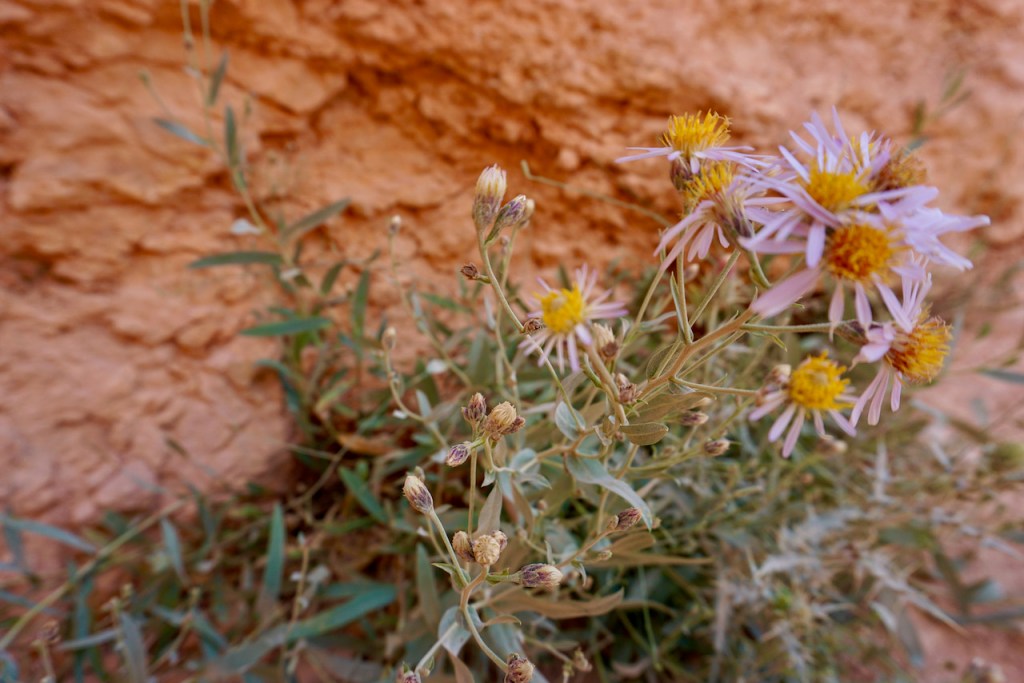
Just based on what we saw in Bryce Canyon at the height of summer, I can almost imagine what it might be like to see a desert in bloom.


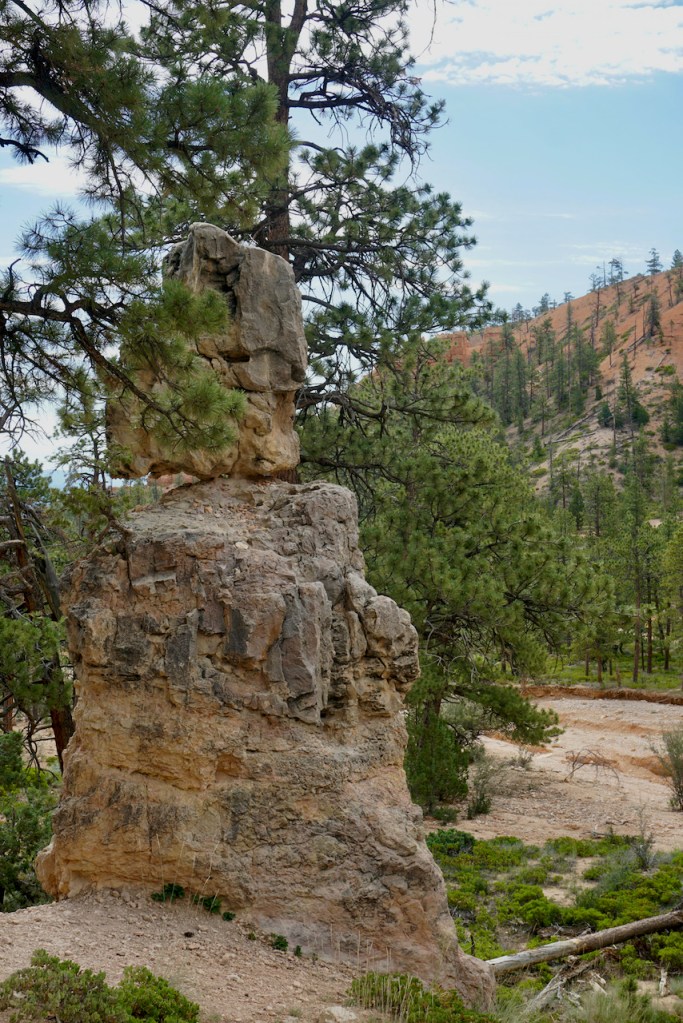


We spent the night in Springdale, Utah, at the foothills of Zion National Park. Zion is beloved among climbers, and it was no surprise as to why. This is real big wall climbing, and it is impressive in scope.
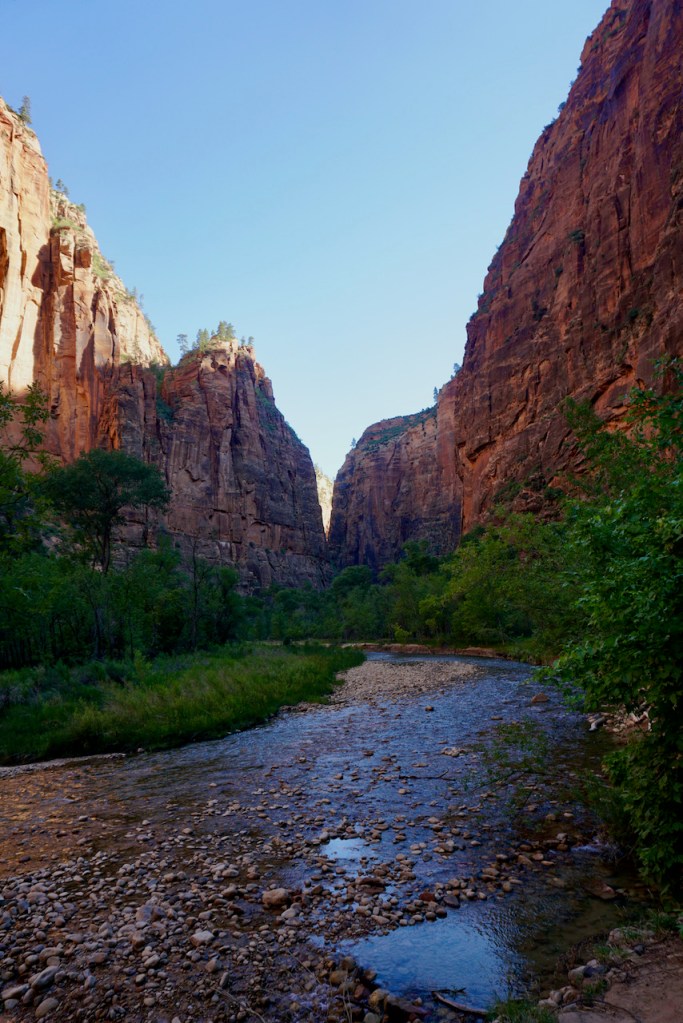
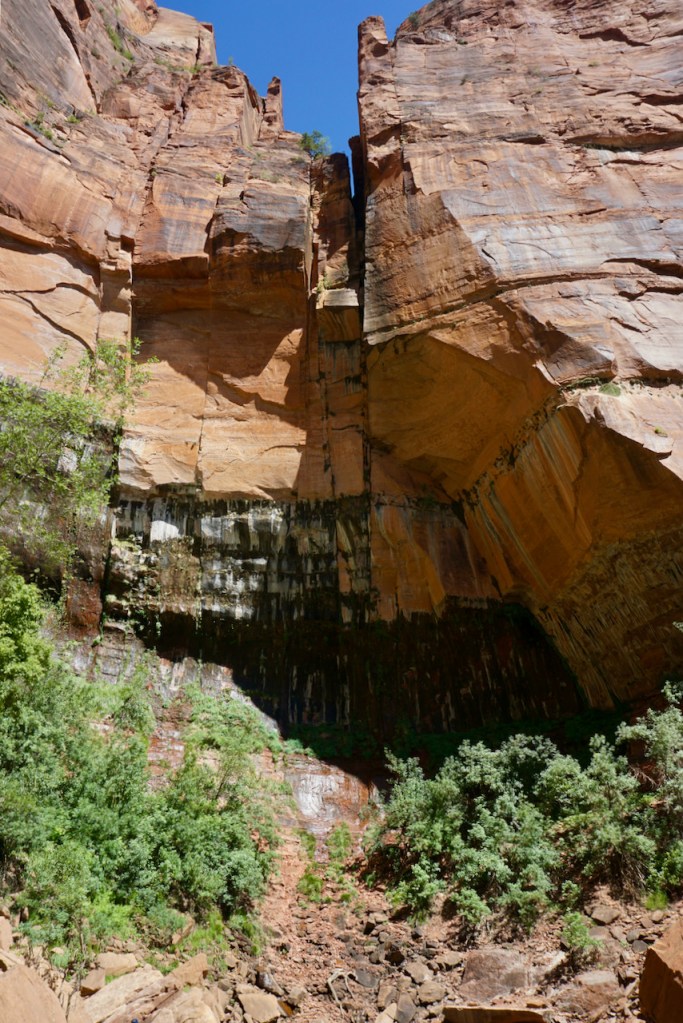


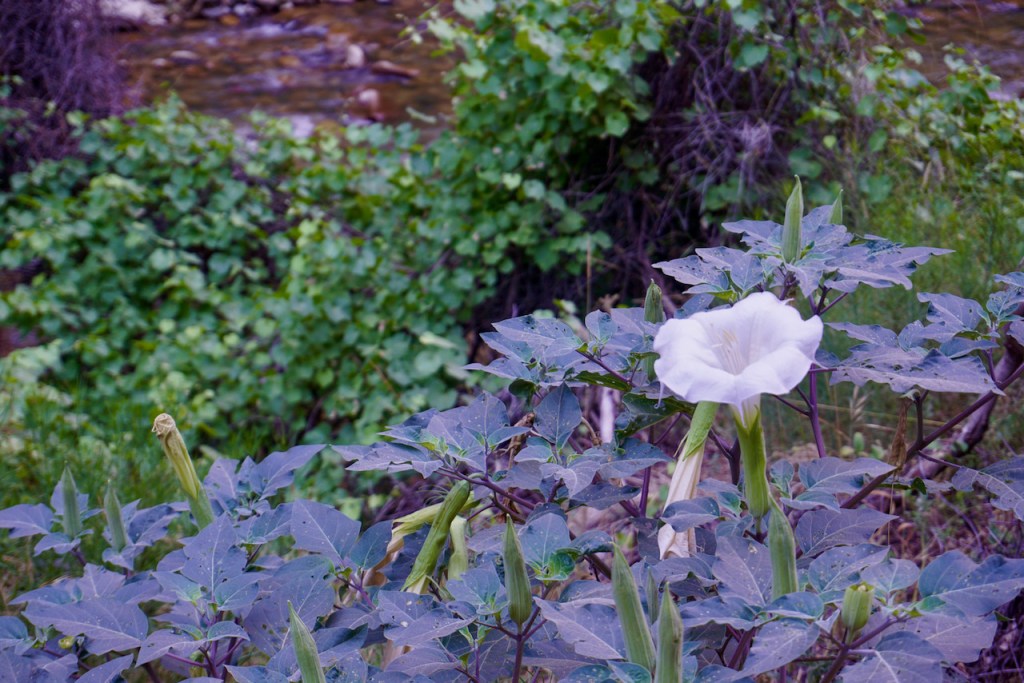
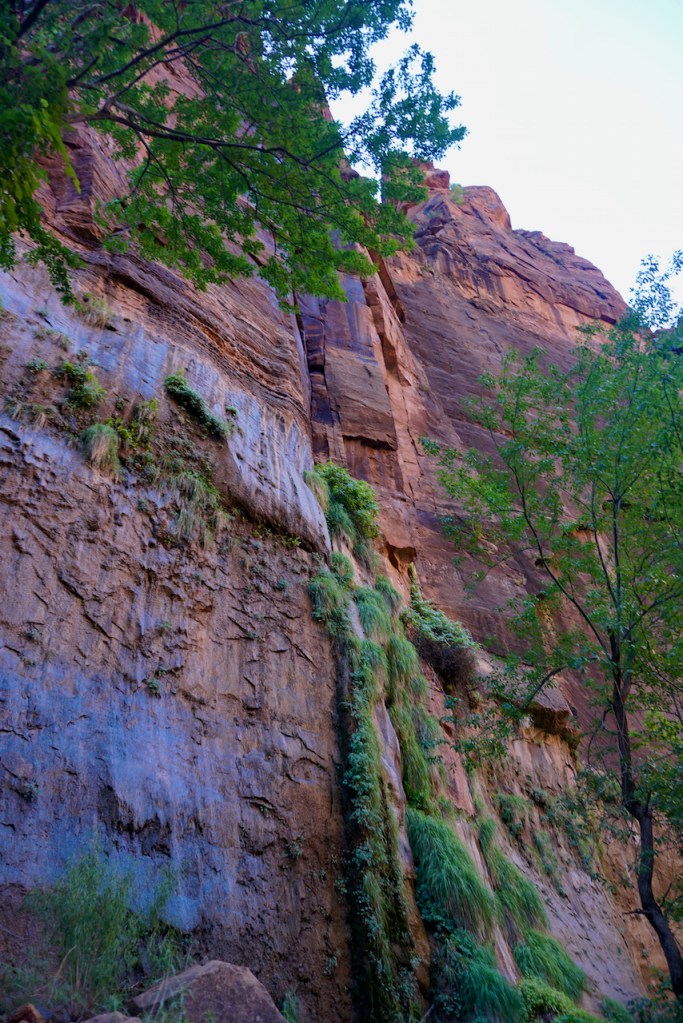
That being said, we found Zion underwhelming at first. Perhaps this is because of its similarity (cliffs and greenery) to what we’re familiar with from home, or perhaps because it came after the wonders of Canyonlands, Arches, and Bryce. We didn’t follow the crowds into the river to explore the famed Narrows, and we weren’t there at the right time of year to hike Angel’s Landing. But by choosing the scenic route on our drive out, we saw a part of Zion that raised its esteem in our eyes, and left us, as usual, glad for our choice.
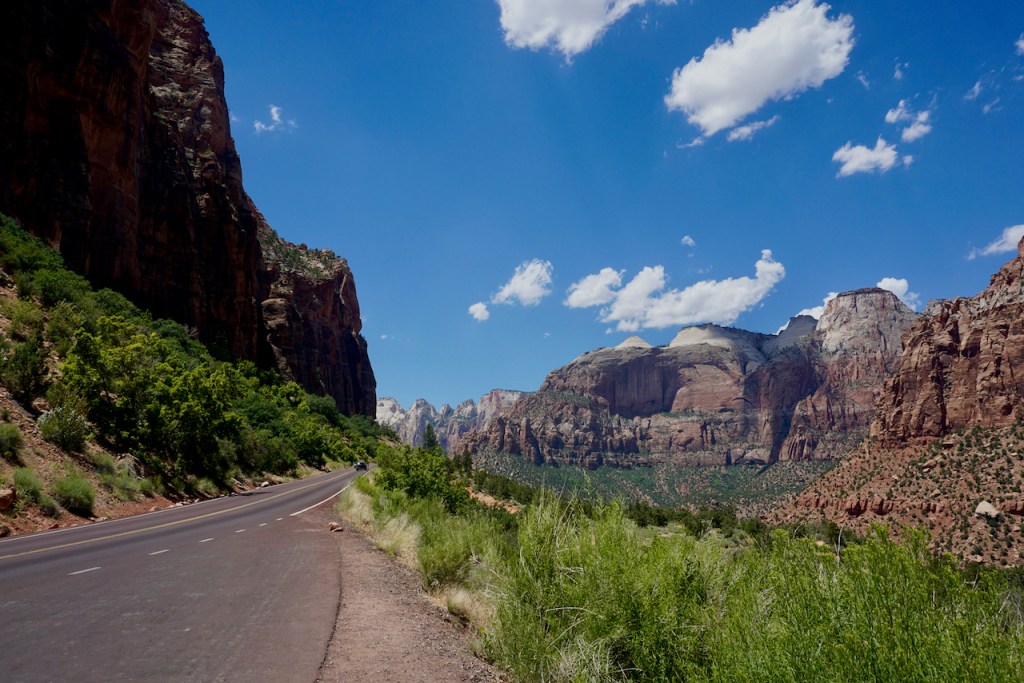


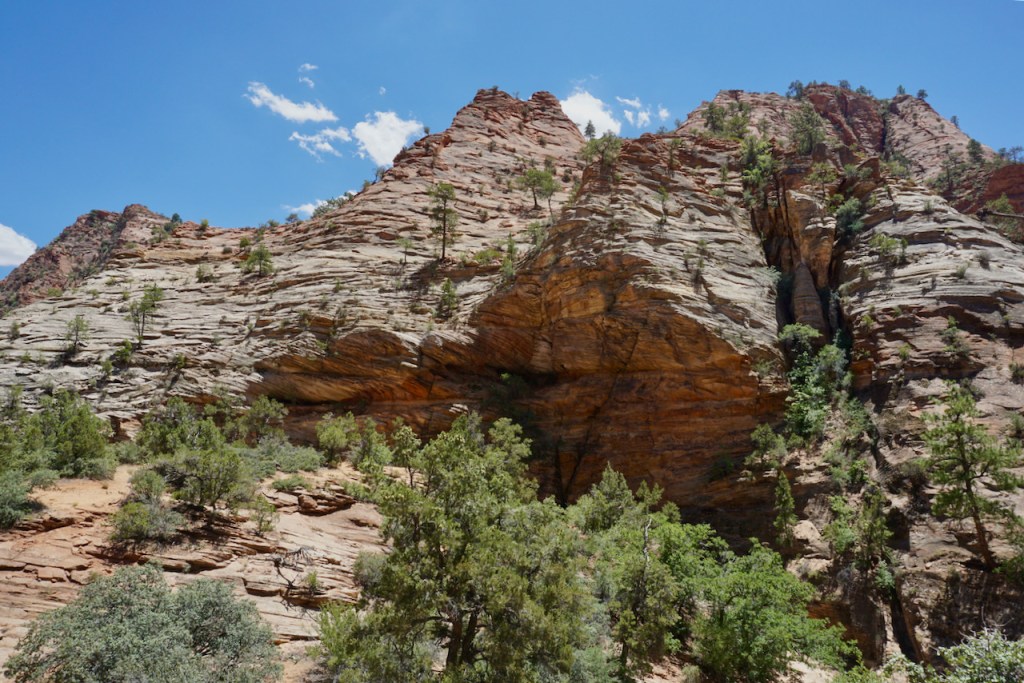

Of the five states that comprised our road trip, Utah was by far the most impressive. The landscape was diverse in a way that I’ve never seen before, and each tiny settlement or small town was set in a beauty that we were privileged to merely pass through. I’ve previously been in Utah to ski, but this was the first time I’d actually seen it, the first time I’d eaten pie with ice cream at the only diner in the only town on the only road in the middle of wherever we were. We kept early hours and correspondingly early bedtimes. We were out exploring when it was comparatively cool enough and back in the air-conditioning of our car by early afternoon. Dusk brought not a respite from the heat, but a respite from burning the backs of our legs upon getting back inside the car after stopping at yet another lookout. (The newspapers provided by many national parks were put to great use.)
After two nights in Colorado and three in Utah, we had found a rhythm on the road, one helped along by a good supply of snacks, a discerning ear for religious radio, and a classic license plate game. With camera, hat, and waterbottle within reach and sunglasses always perched on the nose, we headed towards our next state – Arizona. Stay tuned!




 By Rebecca Michelle