I haven’t spent much time in Singapore during the start of the Southwest Monsoon season, which lasts from June to September. I’m used to the hour or two of afternoon rains that characterises the new school year in August, but half a morning of pouring rain is a new experience. So is half a morning of pouring rain followed by an evening of more rain.
While I won’t be climbing rocks outdoors any time soon and while the rain has put a literal damper on morning bike rides, there are some new features to life here that I’m quite enjoying. It feels cozy, for once, which is something we rarely experience in the tropics. It’s breezy and (comparatively) cool both indoors and out; I’ve made soups and curries for dinner and I’ve been glad for their warmth.
Geylang in the rain – September 2017
When I first moved to Malaysia six years ago I learned to enjoy the rain. Where I come from, rain is cold. Rain in the tropics is not. The water is warm, the air is cool, and it’s a welcome refresher for the day. Granted, getting soaked on the way home from work is inconvenient (although getting soaked on the way to work is more inconvenient) but it’s so much fun at those times to feel like a kid again. You’re wet. Very wet. So you might as well hop off the bike, settle it safely against a wall or building, and dance in the rain.
This is what I have tried to keep in mind now that we’re in the strangest period of summer school holidays that I have ever experienced. Normally, summer for me is spent travelling between family members, catching up with friends, enjoying early morning runs on the nearby canal, and taking a complete break from my normal environment. But this year, we can’t do that. And so we adapt.
Singapore started its reopening a week ago and I have been so glad to see people out and about, to reunite with friends, and to feel my body move at the climbing gym. It has given me time to reflect on the experience of living here and what this place has to offer. And I’m not talking about museums (still closed) or fancy bars (some still closed). I’m talking about hot pot for dinner at a friend’s house and going down the street for a local coffee at a hawker stall. I’m talking about my favorite place in town to watch the world go by and the renewed joy of gathering at home in small groups. Simple things. Things that I missed when they went away.
Experiencing the small joys of an open world, although a small one right now, is what this summer is about. It might not be what I’d planned or what I’d wanted, but I am glad to have this time for what it is.
It might be raining, and that’s all the more reason to dance.
The Covid-19 circuit breaker measures here in Singapore mean that we are unable to interact in person with anyone who is not a member of our household. Going to the grocery store for a little human interaction has been very real.
As I’ve written before, I’ve been really good about starting the day with some physical activity, usually going for a run but otherwise practicing yoga. It has been really important to me to create a transition into the working day. A couple days ago, however, my need for human interaction was greater than my need to feel my body move.
So I made a cup of coffee and called an old friend. I could hear the smile in her voice when she picked up the phone and I know she could hear the same in mine. We caught up while on my side of the world, the sun rose and the day began. My friend’s day was just beginning to wind down. Since moving overseas, I’ve rarely made a phone call to another timezone without first planning to do so. People are always rushing about and it’s more likely I’ll miss them than not.
But not right now. Many people I know are waiting with open arms for human interaction right now.
Let’s keep this part of our new world, shall we?
I had conversation over the phone with my mum not too many days later and we talked about how strange she finds it to interact with people wearing masks. I know that this is very unfamiliar in North America, but I’ve lived in Asia for some time now and masks aren’t all that unusual here. The fact that the stores ran out of masks as everyone began buying them indicates that stores stock masks as a normal product (and they were back in stock as quickly as toilet paper). Reusable masks have always been common among people who ride motorcycles and there were always some food service workers wearing masks. And then there were the people who wore masks just because it’s not a strange thing here.
Mum said that people where she is don’t look at each other and don’t interact. My sister, located in another North American city, has said that people regard one another almost suspiciously. People in Singapore aren’t as overtly friendly as people often are in North America, but I have not had the same experience. People still communicate and some wave to the people they see every day. People are smiling, even if you can’t see it.
I started to think about this when my mum mentioned that she’d smiled at someone in thanks and then realised he couldn’t see it. I know I’ve been doing the same thing (because I was raised in a society where that’s what you do) but I also know I’ve become much more aware of the expressions around people’s eyes and foreheads.
When you can’t see someone’s face, how do you know if they’re smiling?
I thought back to my phone call with my friend. I’m not fond of video calls because I make most of my calls to other time zones when I’m getting ready for work in the morning. A good old fashioned voice call suits me just fine. I have never questioned whether the person on the other end of the line is smiling. Probably like you, I just just know.
When you can’t see someone’s face, you still know when they’re smiling. If you’re face to face, look around their eyes. The corners might crinkle or the cheeks might lift. Eyebrows or foreheads might wrinkle. If you’re on the phone, or can’t see each other, or if a mask has thrown you off completely, just listen. People sound different when they’re smiling.
Covid-19 has meant that we need to adapt in ways that many of us never imagined. It has led me to ask questions about the ways in which humans have evolved and why we behave in the ways that we do.
It has also caused me to look at the world a little differently, a little more carefully, and a little more critically. There is not one way to live in the world, this I have learned, but there are some ways that are more pleasant than others. There are ways in which we can honour our social responsibility while still doing what makes us feel whole. We can look at the world openly or with suspicion, and this attitude affects not only our outlook but also the ways we interact with others.
Wearing a mask might be new or strange, but it’s a whole lot better to be out in the world with one than trapped alone at home without one.
My friend and I took a high-speed train from Busan to Seoul and immediately on arrival I noted the cooler weather and the need to don my trench coat, which was really exciting. I hadn’t been in real fall (or autumn, if you prefer) for a long time!
We were staying in Insadong in order to be at the centre of the action. The neighbourhood is a wonderful mix of contemporary art galleries and traditional crafts, restaurants, clothing stores, dessert cafés, and the Ssamzigil shopping mall that specialises in handicrafts. Food vendors line the streets alongside vendors of yet more crafts and souvenirs.
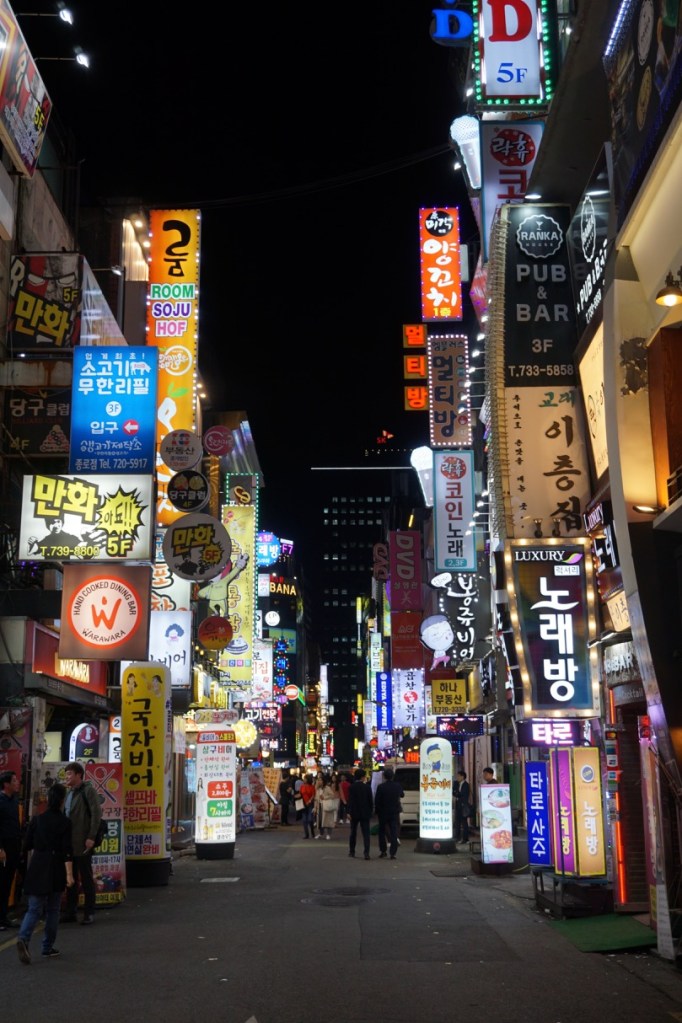
Insadong has a pretty robust night life, too.
An evening walk took us to Jogyesa Temple, which was celebrating its Chrysanthemum Festival. Jogyesa is the main temple of the Buddhist Jogya Order and, like many temples in Korea, hosts a templestay program in which visitors can spend a day or more at a temple to learn about Korea Buddhist practices and living. (If I have the opportunity to return to Korea, I’d be interested in taking part.) Not having expected anything like it, we were surprised and delighted to see the chrysanthemums in the dark.
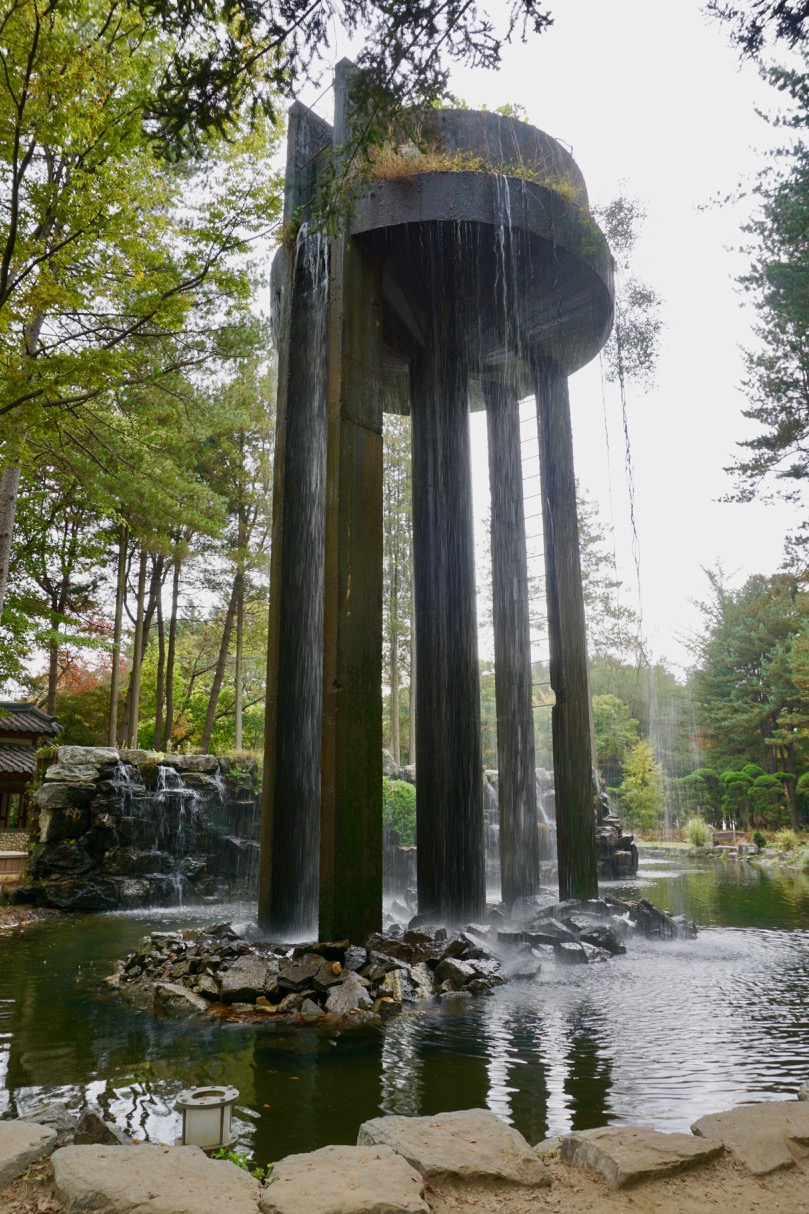
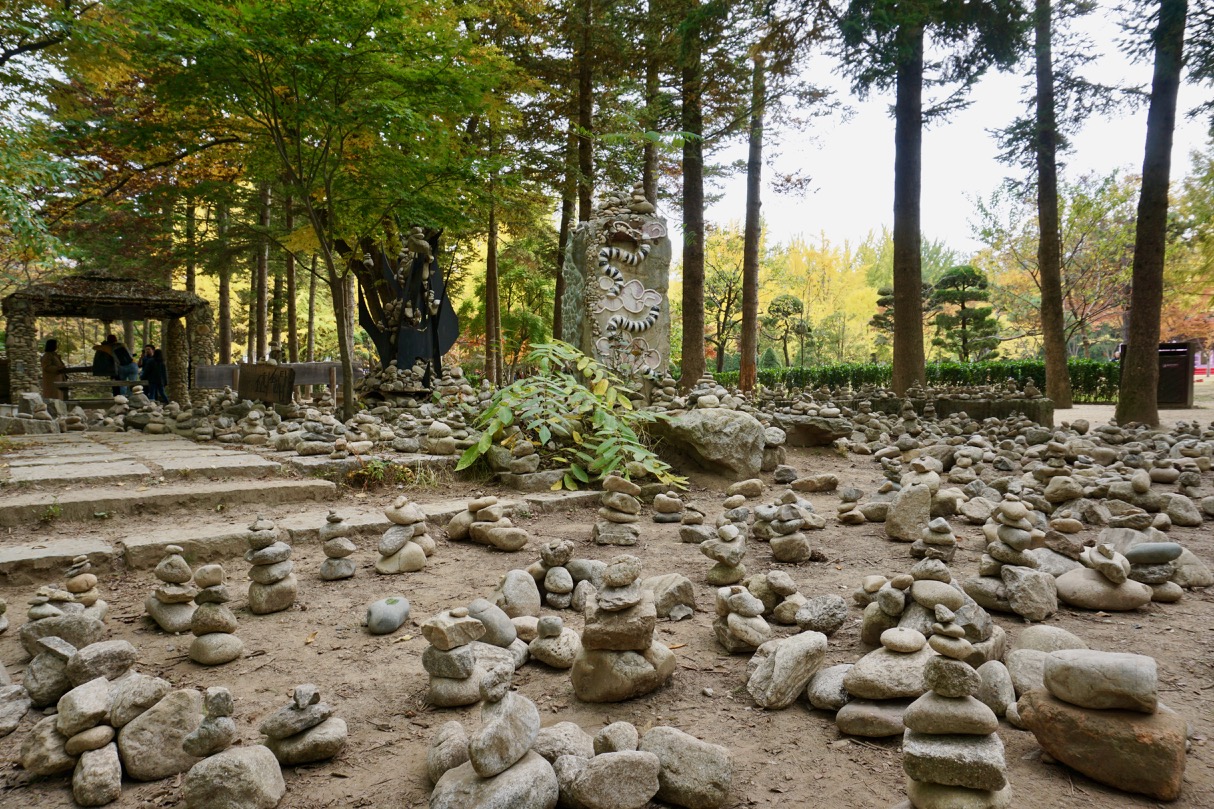
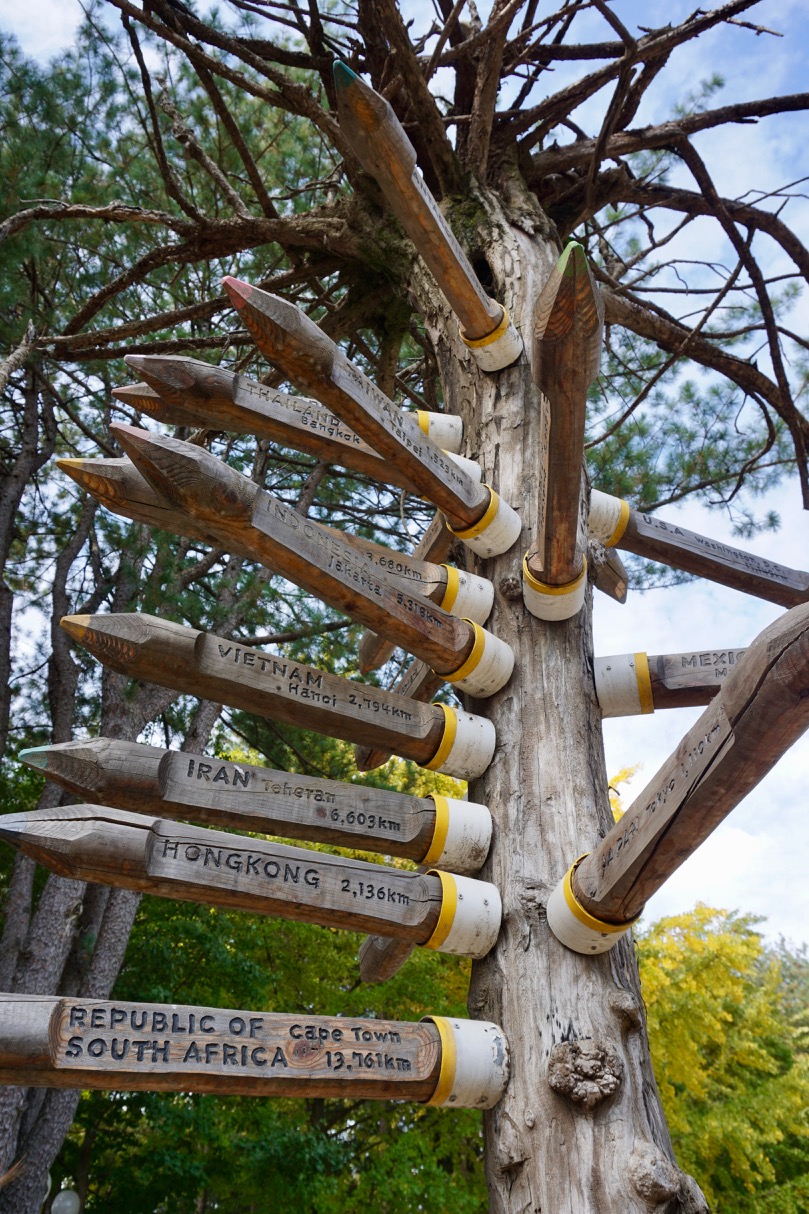
The next day was possibly my favourite day of our nine days in Korea and definitely the most unique. We took the metro to the train to the ferry until we arrived at Nami Island, an island in the middle of North Han River. Nami Island considers itself a nation, the Naminara Republic, and has its own passport, stamp, and currency. All of these can only be used on island but the symbolism struck me. Unfortunately, the officials did not stamp our passports after we paid the visa fee before boarding the ferry.
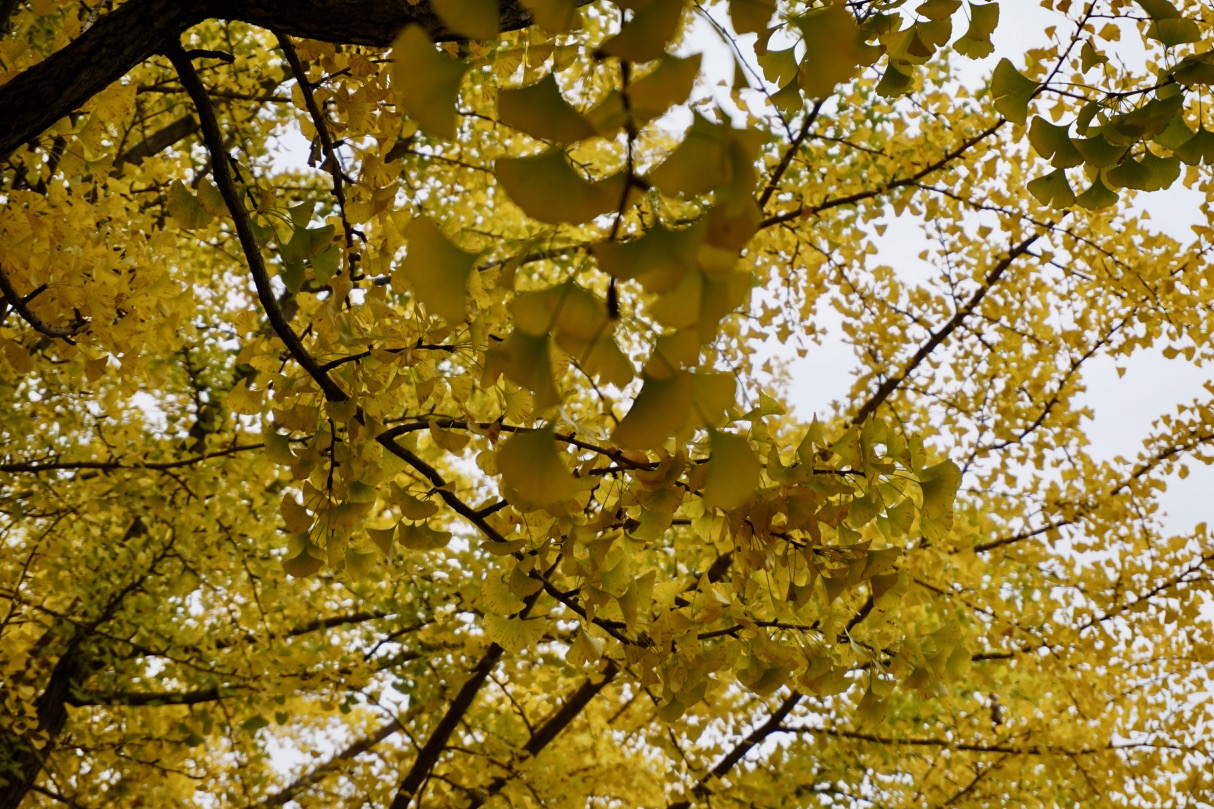
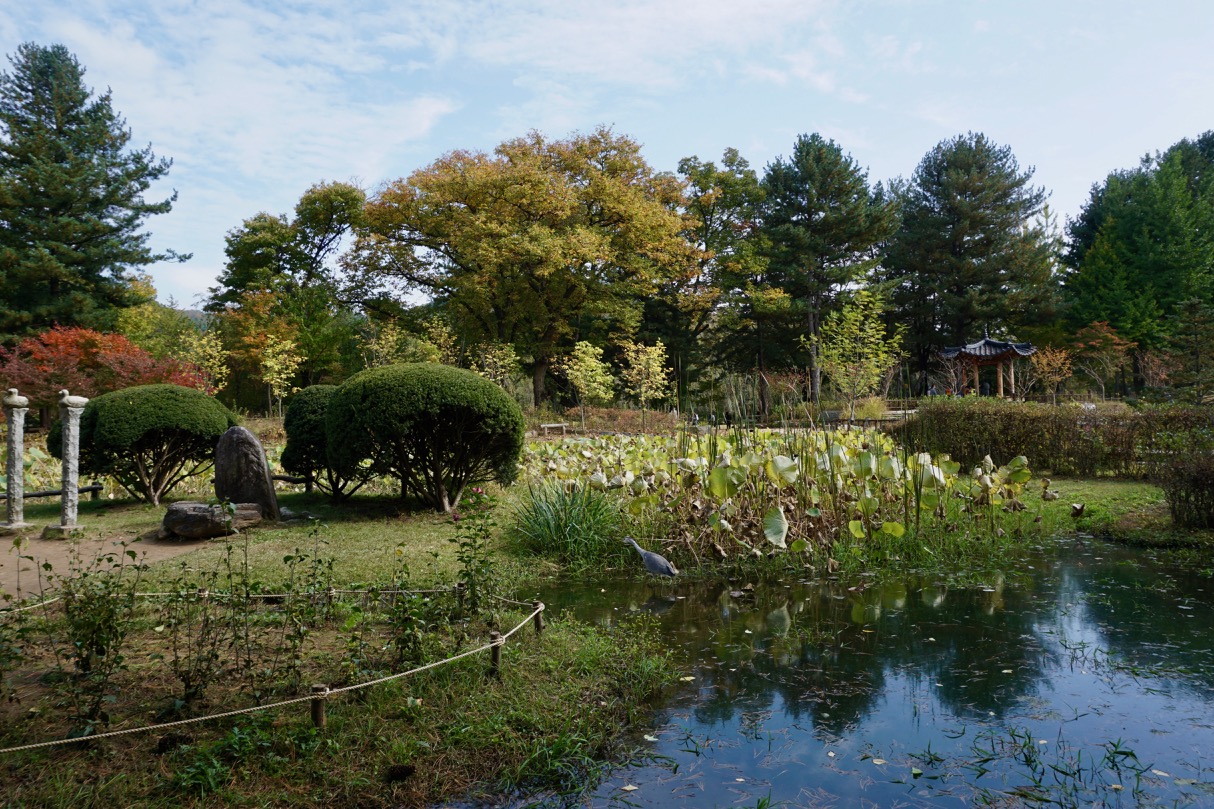
We spent the day enjoying the fall colours; I didn’t realise how much I’d missed them until they were right in front of me. I also really enjoyed the trees, flowers, plants, and animals that we don’t have in Singapore. Nami Island is famous for its appearance in K-dramas, which I don’t know anything about, but I appreciated it as a charming escape from a big city.
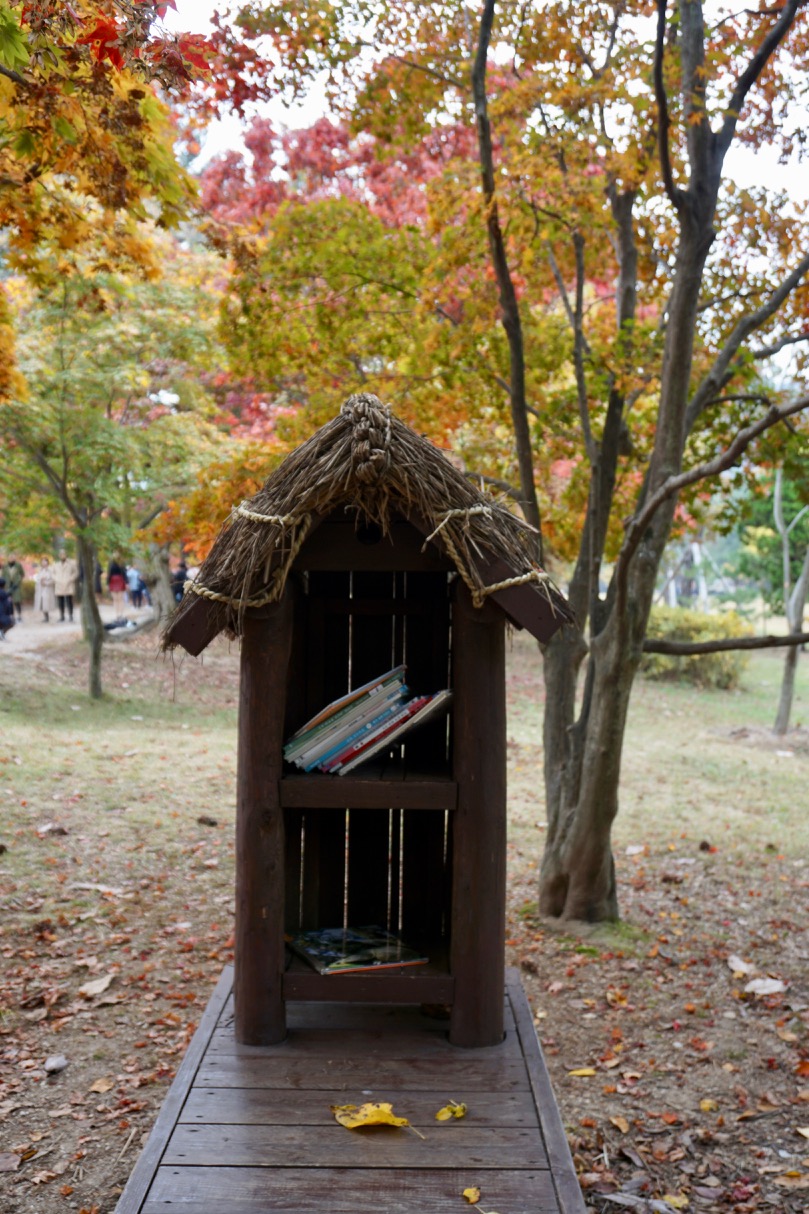
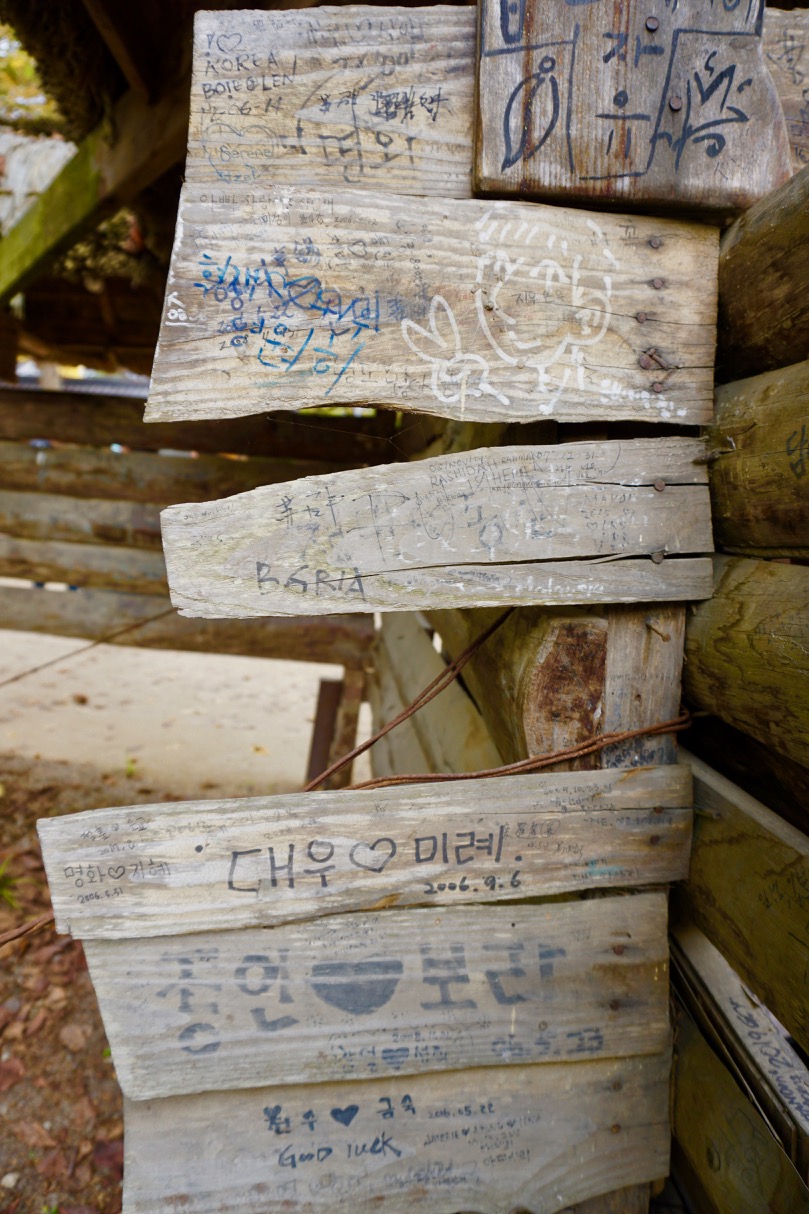
Nami Island has a beautiful emphasis on, in its own words, imagination, fairy tales, and nature itself. It also hosts the Nami Concours to highlight and celebrate picture book illustrators. The island was filled with signs of how the Naminara Republic fashioned itself and I enjoyed it very much. Nami Island also has artists workshops, galleries, and souvenir shops, as well as art on display across the island. It was very pleasant to walk around, especially since the sun came out over the course of the day.
This is also the first time And of course, I enjoyed the ferry very much. (I do really miss working on boats.)
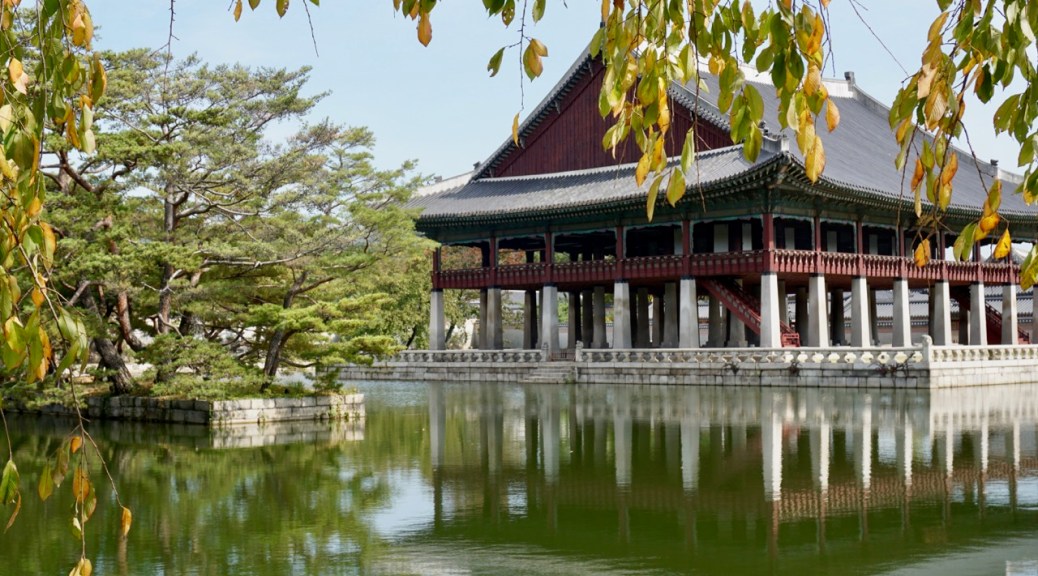
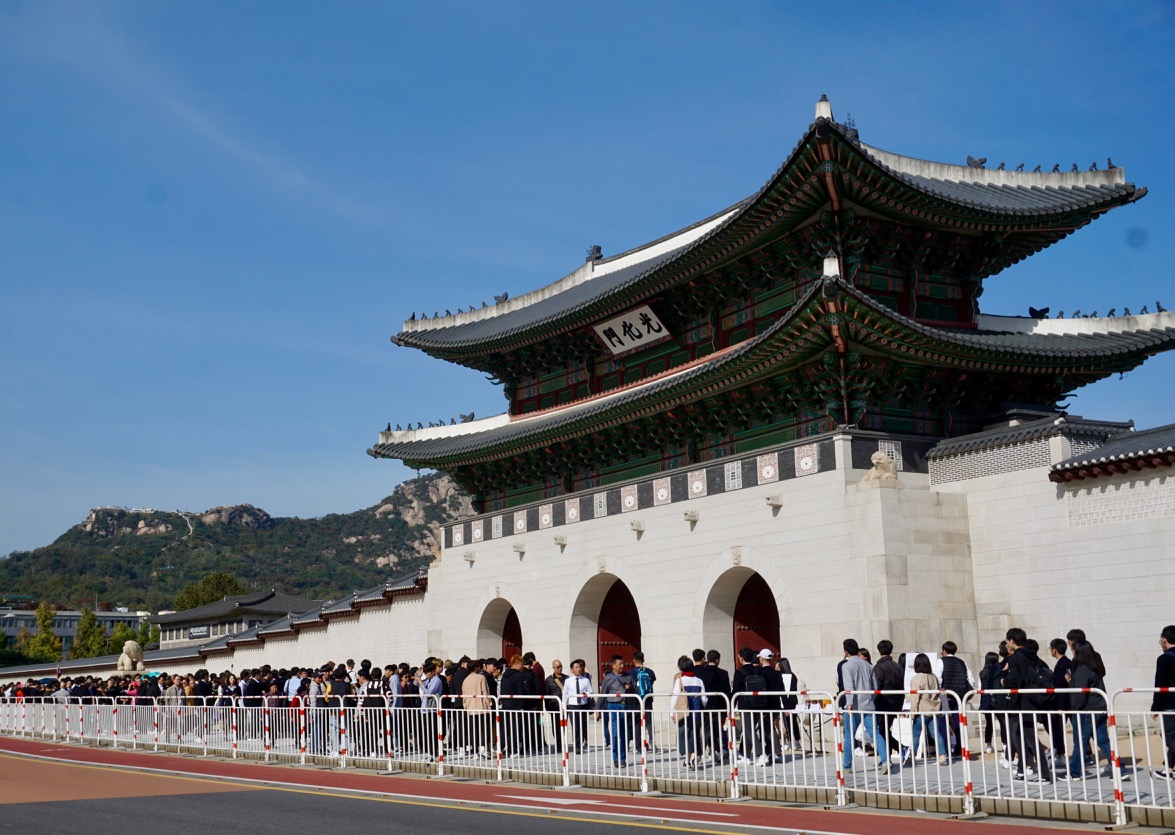
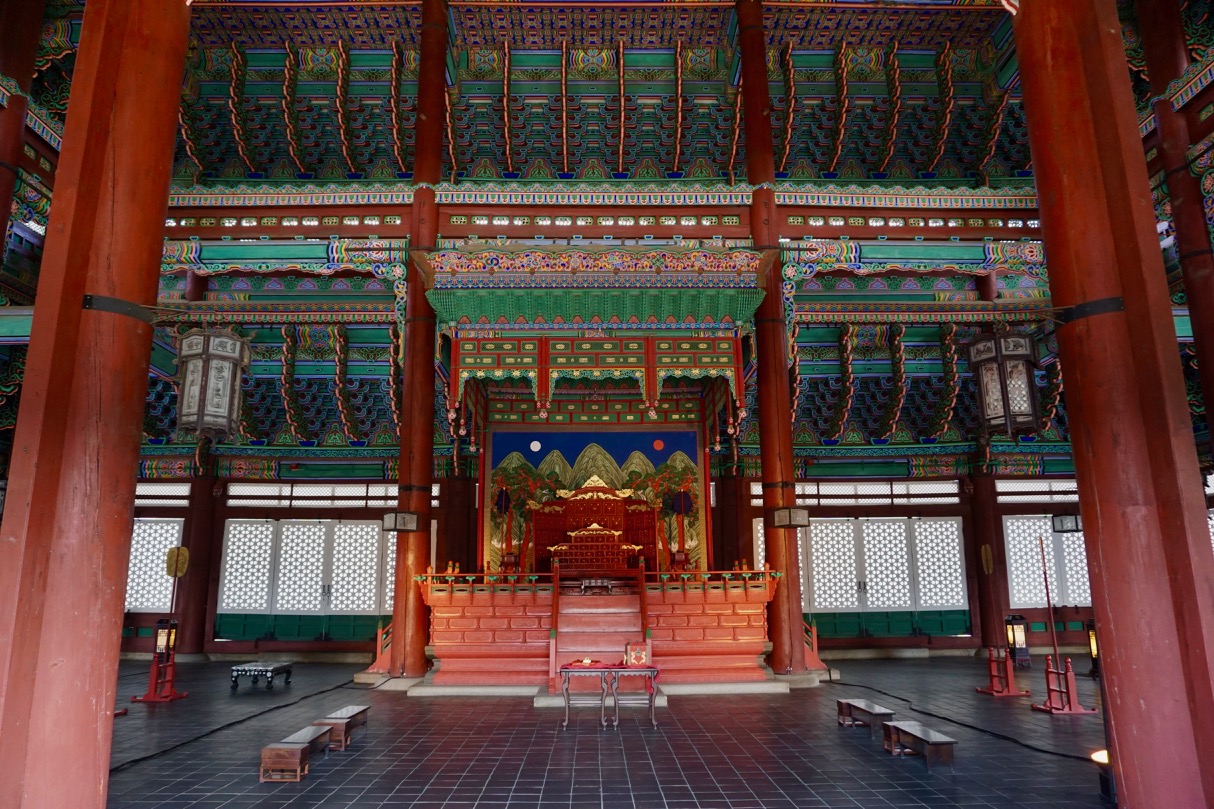
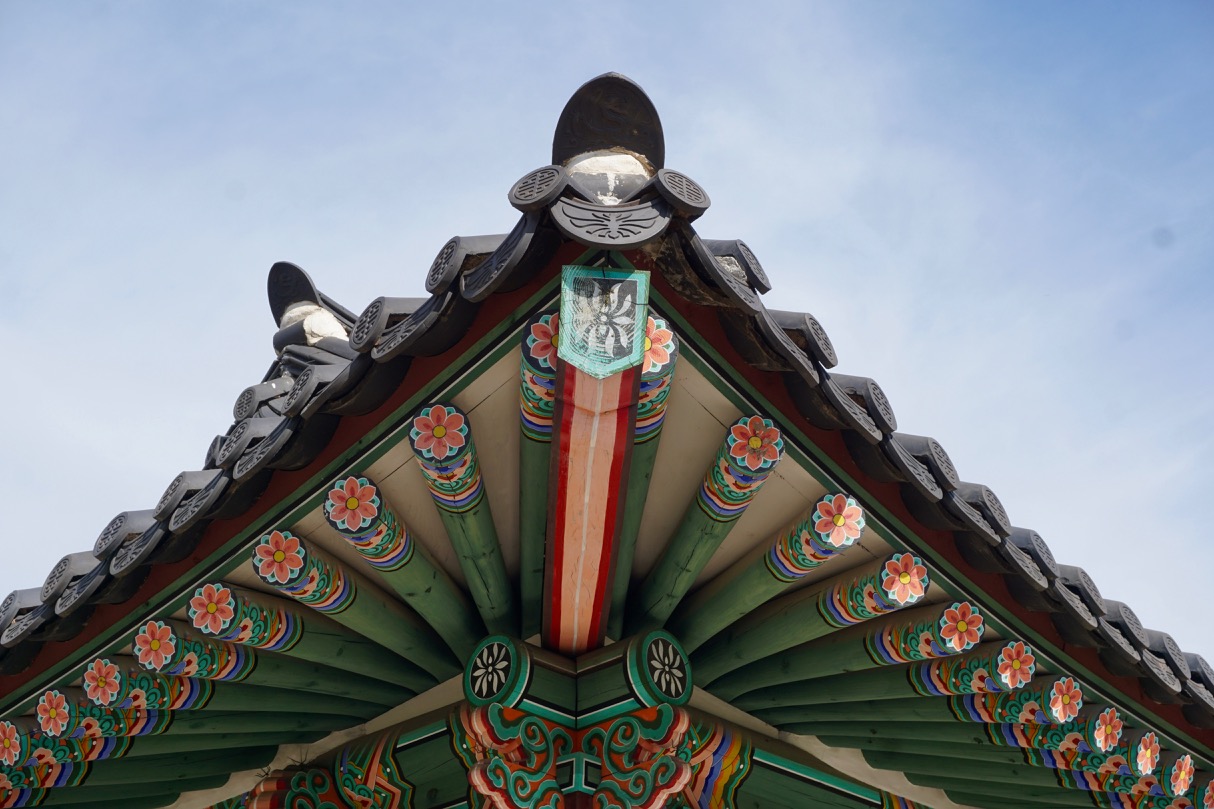
We organised our time in Seoul around day trips, so we spent every other day in or out of the city. After Nami Island we were due for an urban day. Accordingly, we spent the morning at Gyeongbokgung Palace, the main royal palace of the Joseon dynasty built in the late fourteenth century. Luckily, we arrived just in time for the changing of the guards!
Like much else, the palace was destroyed by the Japanese during the twentieth century occupation but had also been destroyed by fire in the 1500s. The palace is the size of a small city and covers about 410,000 square meters, which is only a fraction of its original size. Today, the grounds are open for visitors as are individual buildings and two museums.
Anyone wearing the traditional Korean hanbok entered the palace for free and we saw all kinds of people in traditional clothes. There were rental studios in every touristy area and it was refreshing to see men, women, and children of different nationalities and body types dressed up. I was initially very resistant (insert self-critical thoughts here) but we ultimately decided to do what everyone else was doing and I’m really glad we did. We returned to the palace two days later in our hanbok.
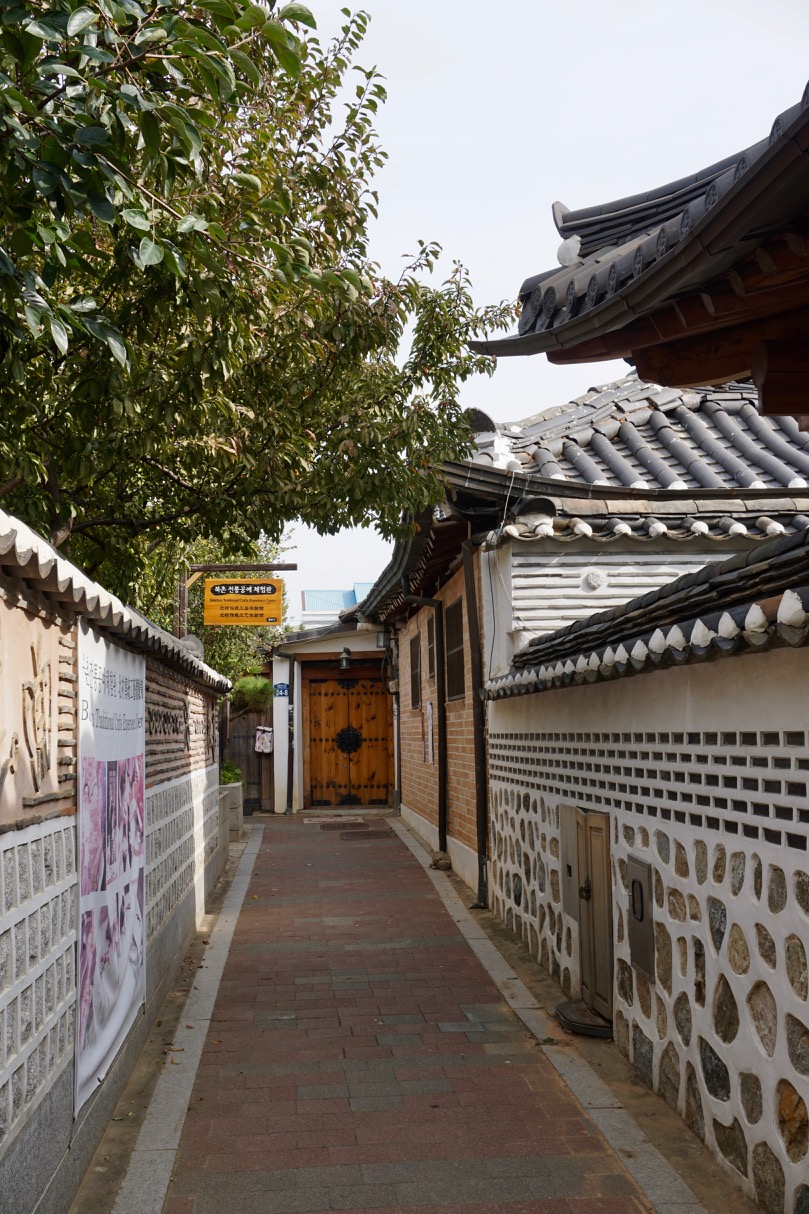
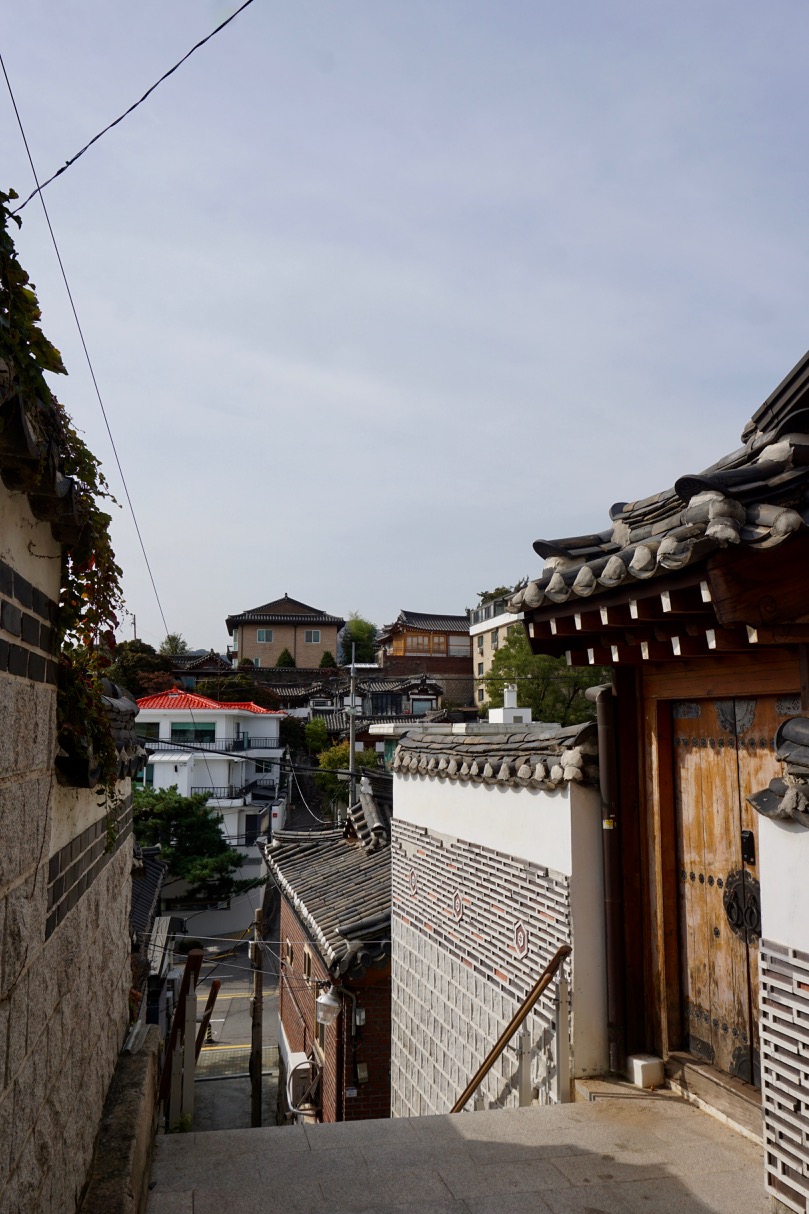
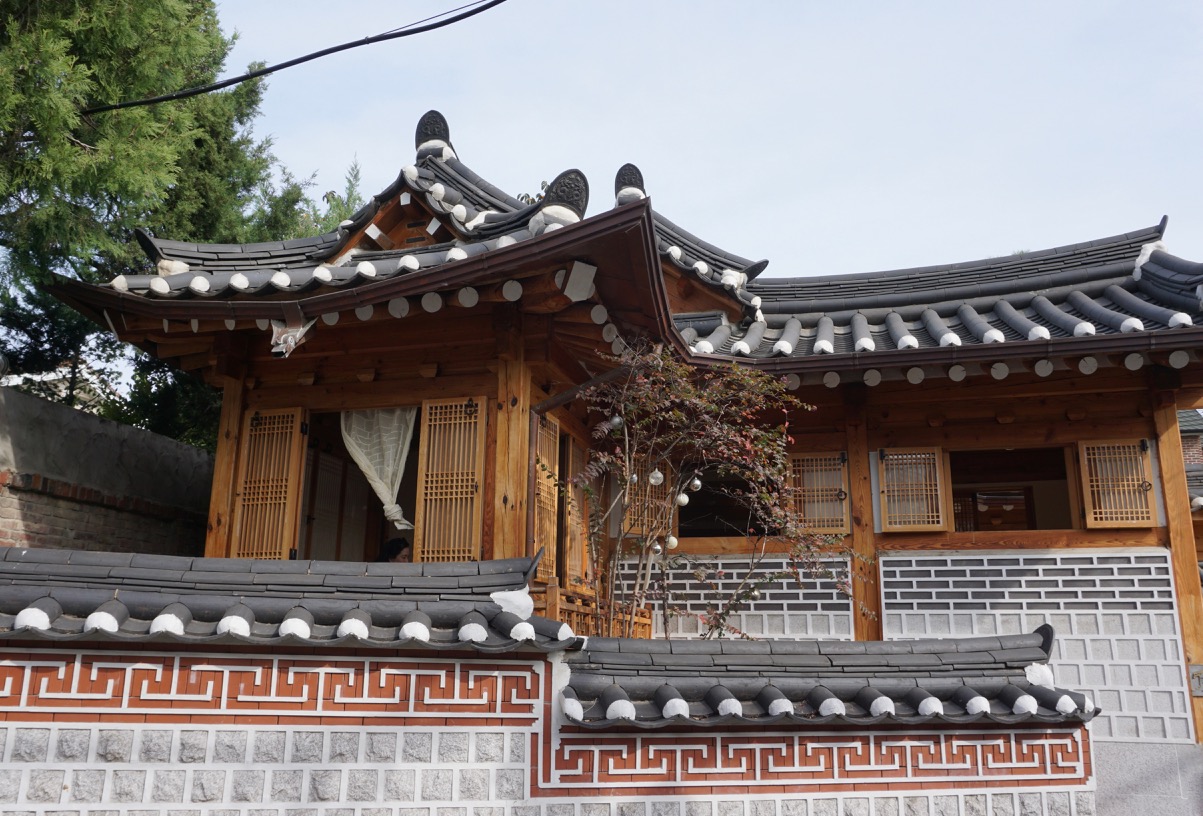
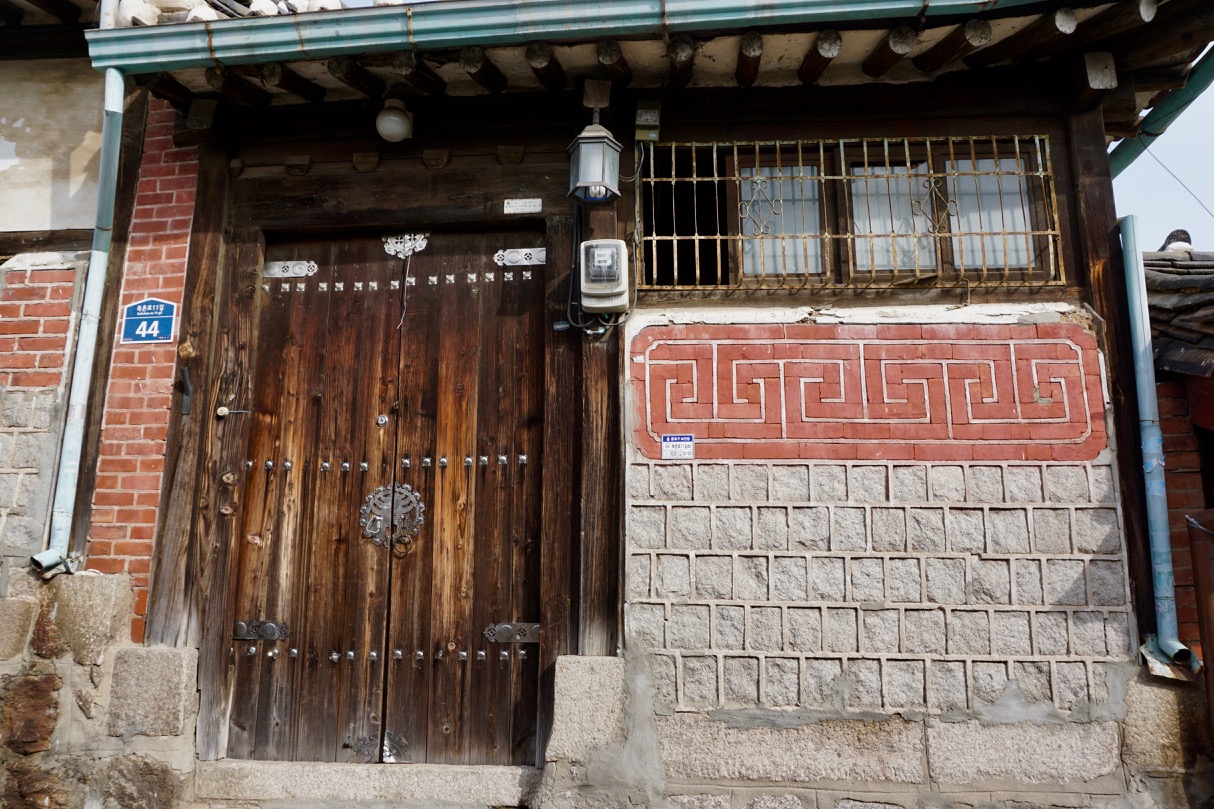
After our first visit to the palace, still deep in discussion about wearing the hanbok, we walked over to Bukchon Hanok Village, a collection of hilly streets with traditional houses. There were a few restored homes open to visitors as well as a handicrafts centre offering short sessions on different types of crafts.
Still steeped in tradition, we headed back to Insadong to experience a traditional teahouse. This one was built around a courtyard with a room of low tables and floor cushions and a second room of tables and chairs. Tea was served hot or iced with traditional Korean sweets. We chose dried persimmon stuffed with walnuts and Korean rice cakes, as well as iced balloon flower citrus tea and iced cinnamon tea. The presentation and flavours were different from any tea we’d had (and high tea is a common social activity in Singapore) and we thoroughly enjoyed it.
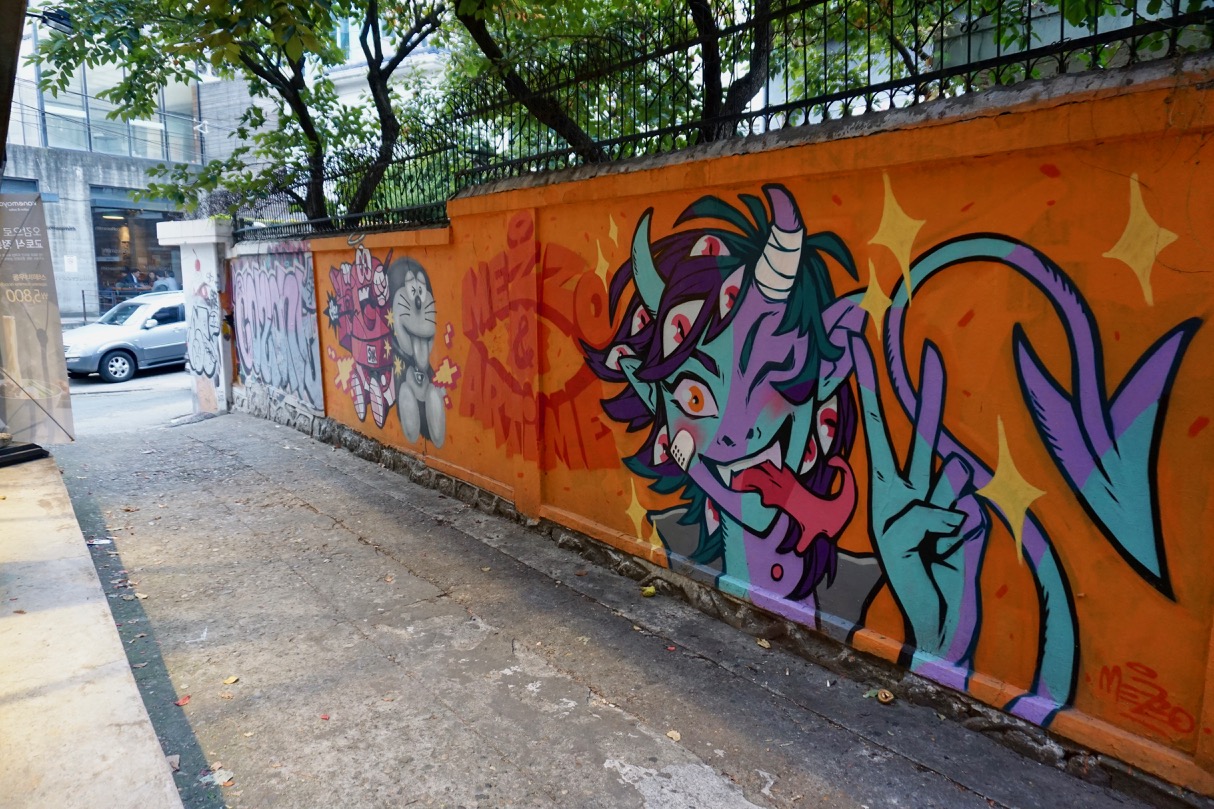
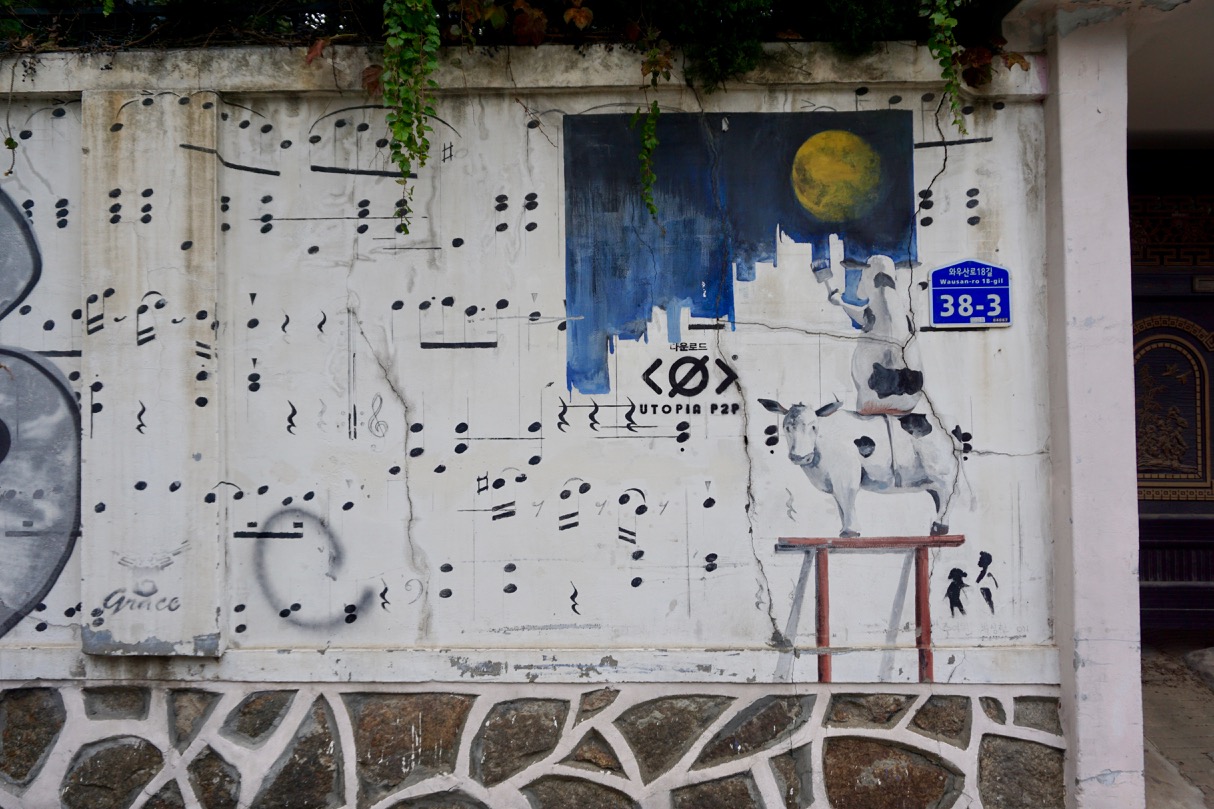
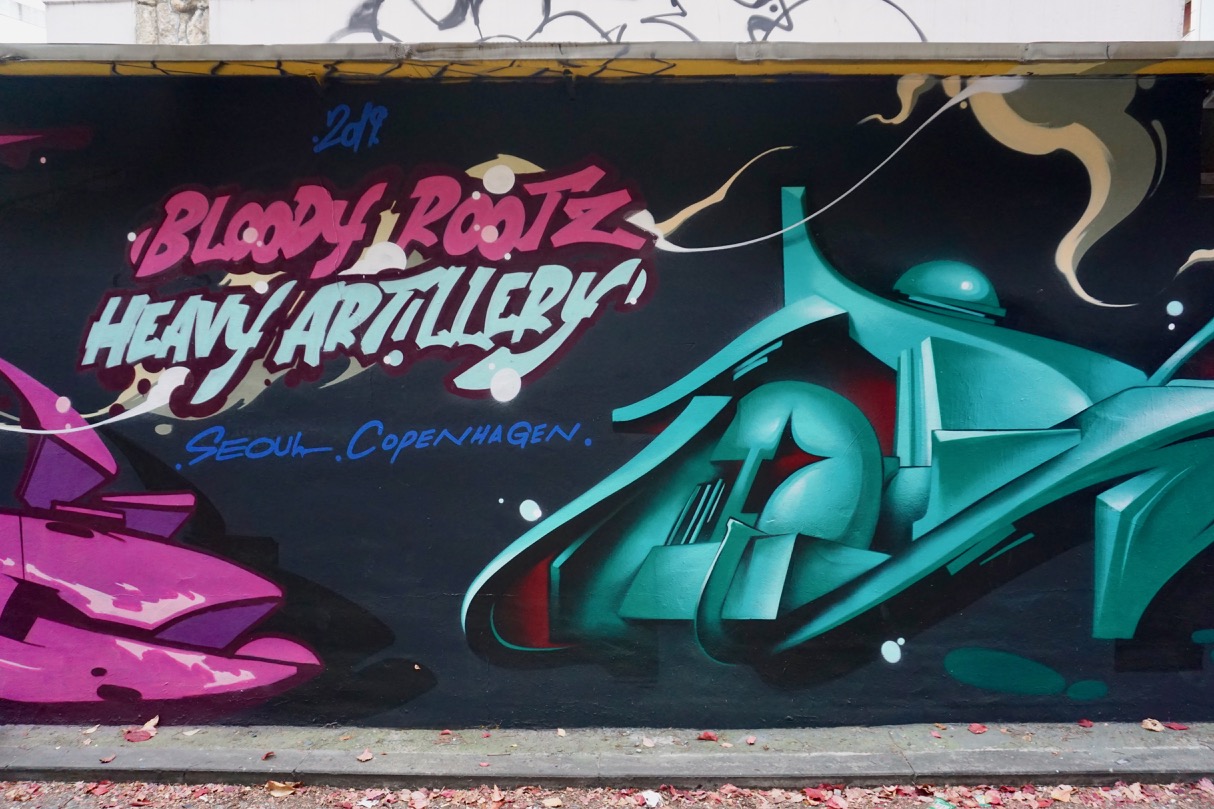
We spent the evening in Hongdae, a neighbourhood near Hongik University. As predicted, it was full of all the quirks of a university neighbourhood, including street art!
Hongdae’s shops were eclectic and fun, densely packed, and extremely popular. It’s very entertaining to see different trends and the lifestyle that goes along with them. In Korea, fashion and cosmetic trends are as popular for men as they are for women and there seems to be relatively little convention around fashion choices. Everyone clearly has a style, but the style itself comes from anywhere under the sun. Contact lenses are even sold like any other type of makeup – as an enhancement of what is already there.
There was a Halloween street party in Hongdae, too, and it was fun to watch the set up for that. It appears that Korea is just like it’s shown in the movies and people really do perform K-pop in the streets!
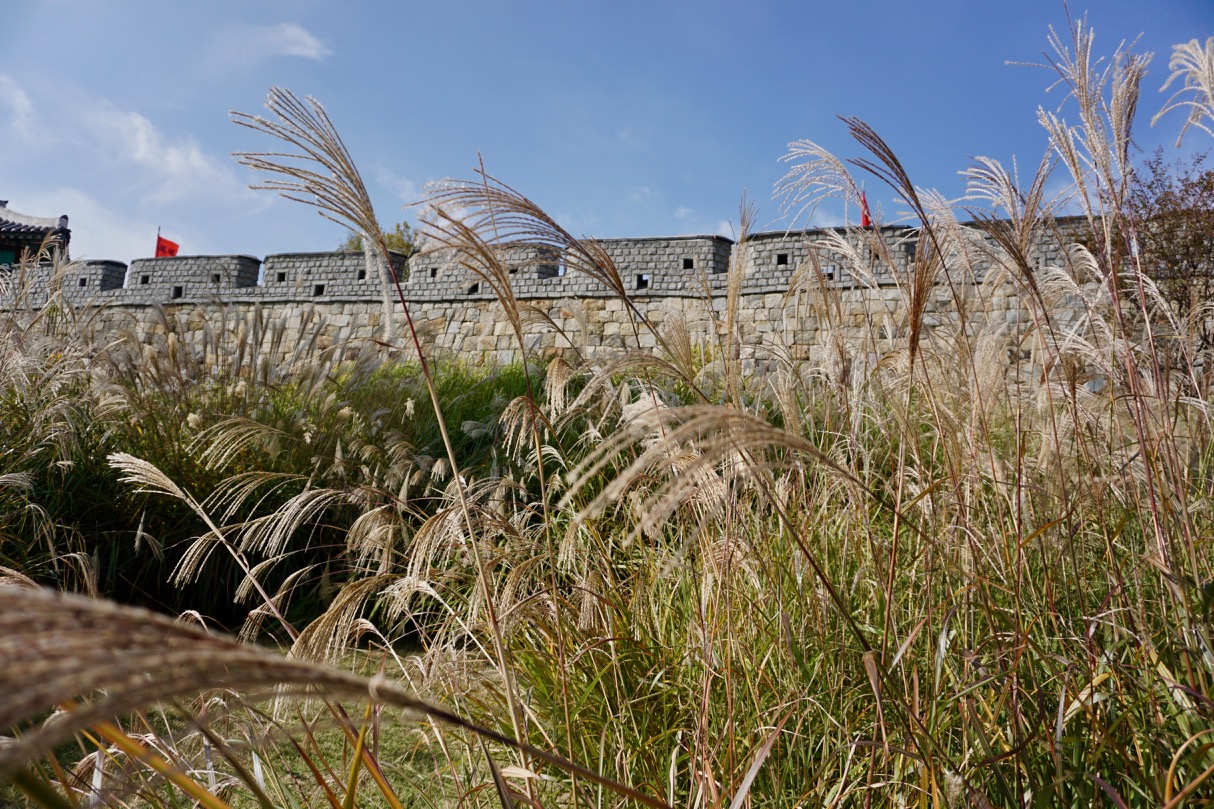
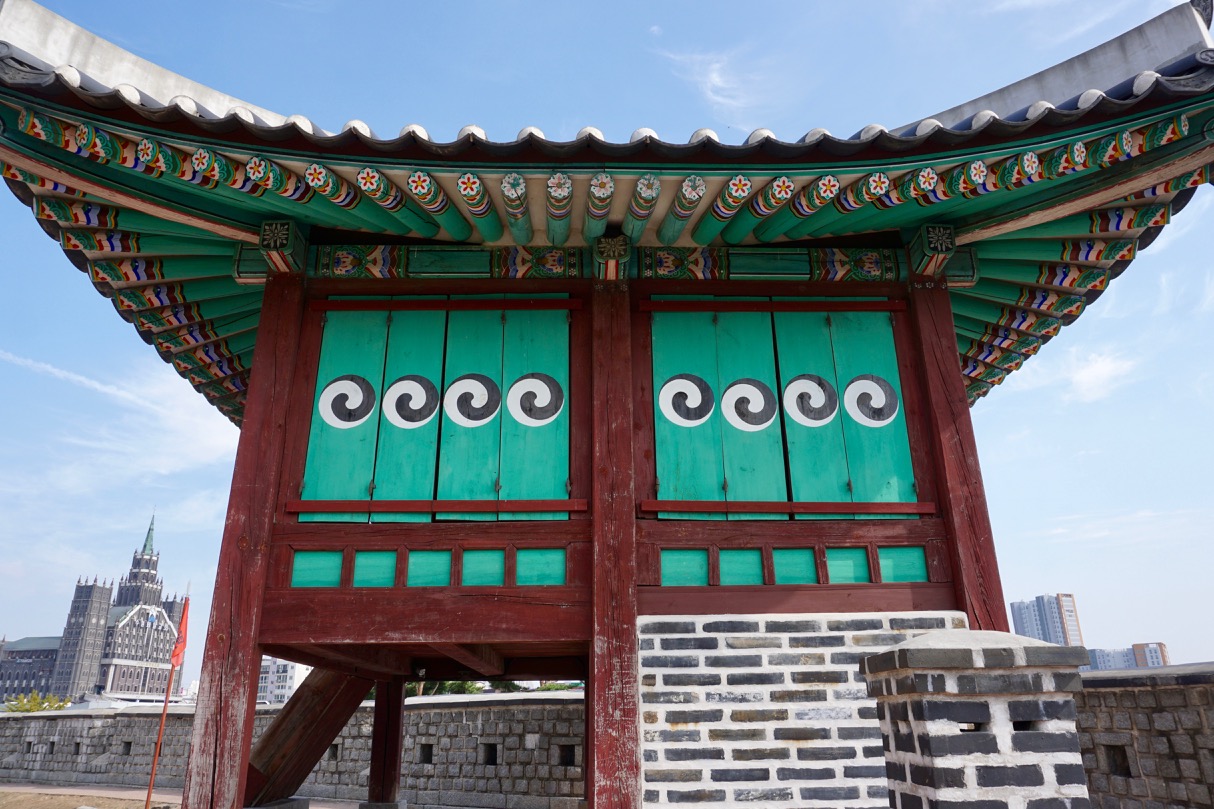
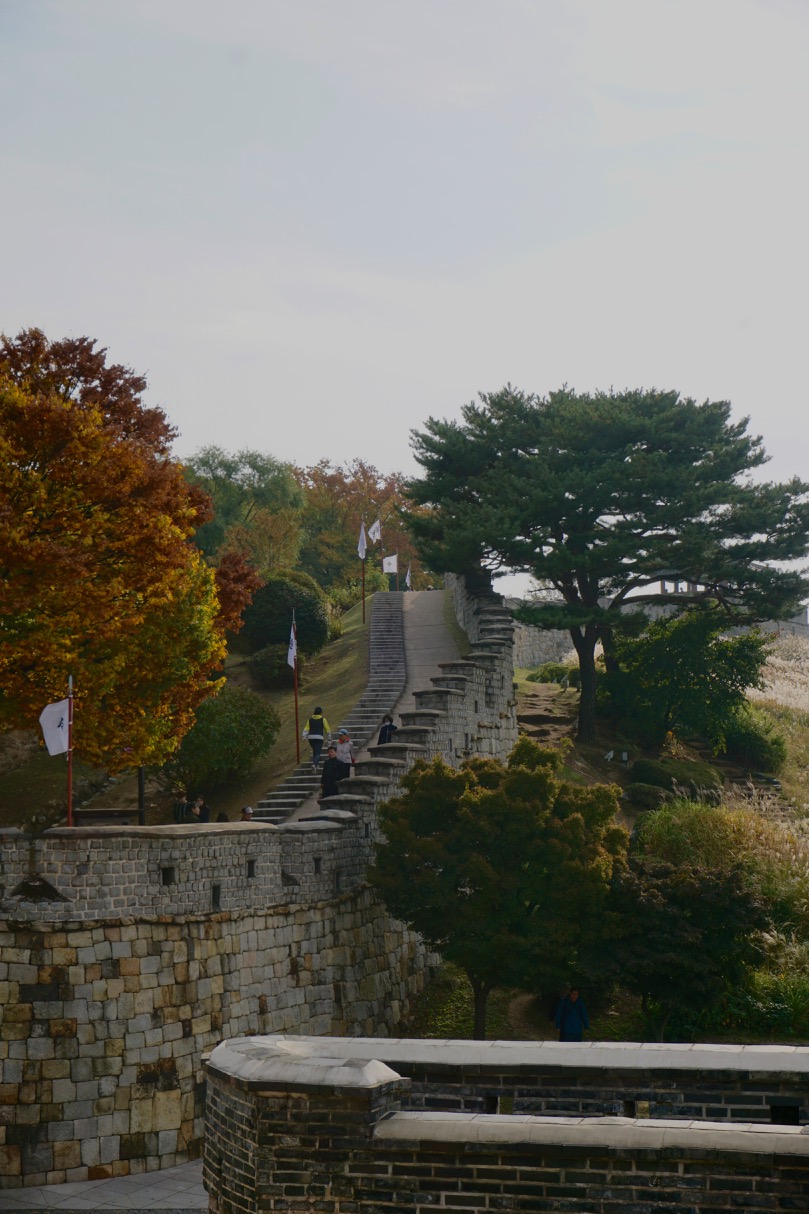
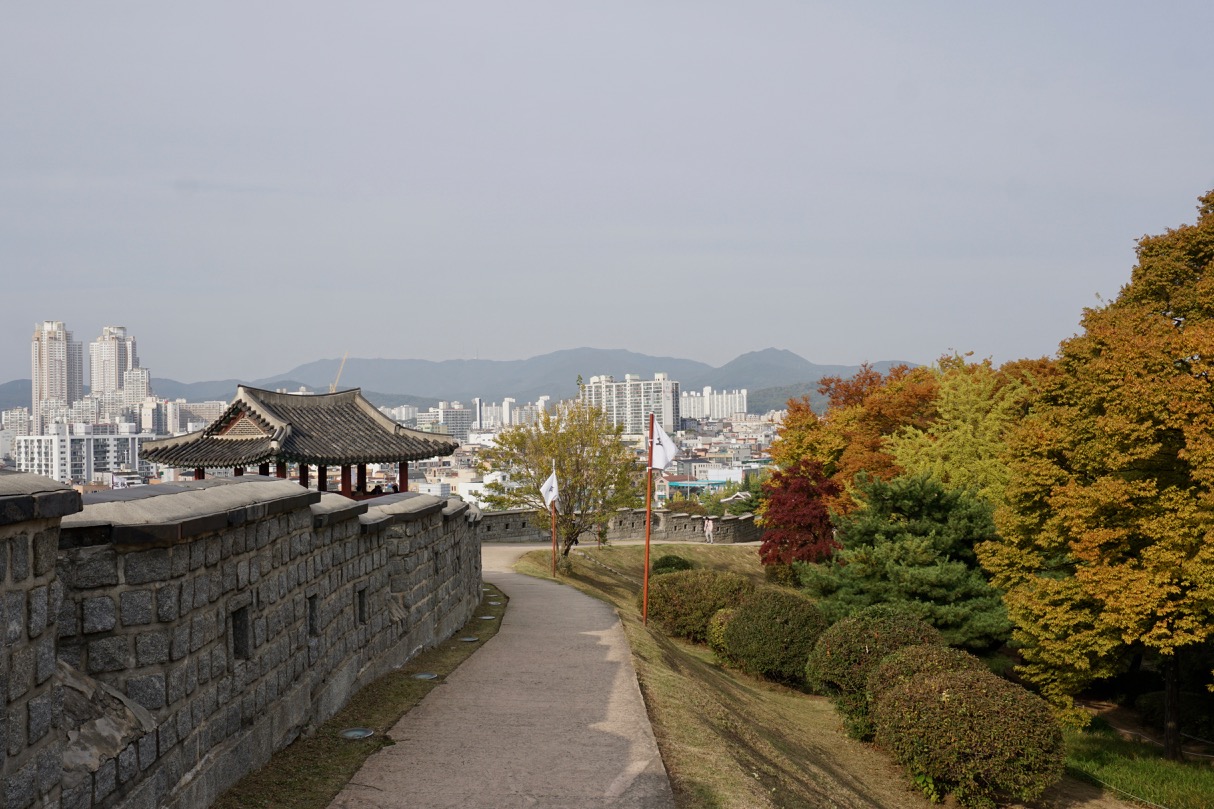
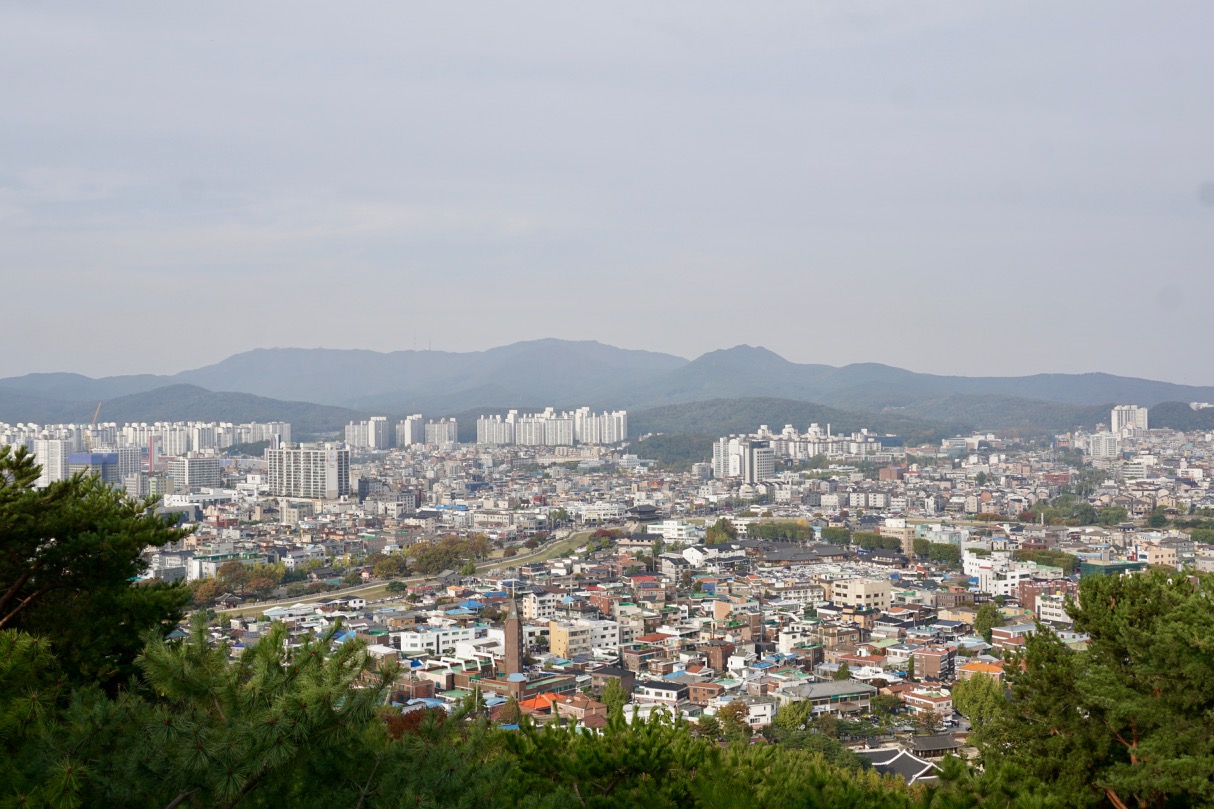
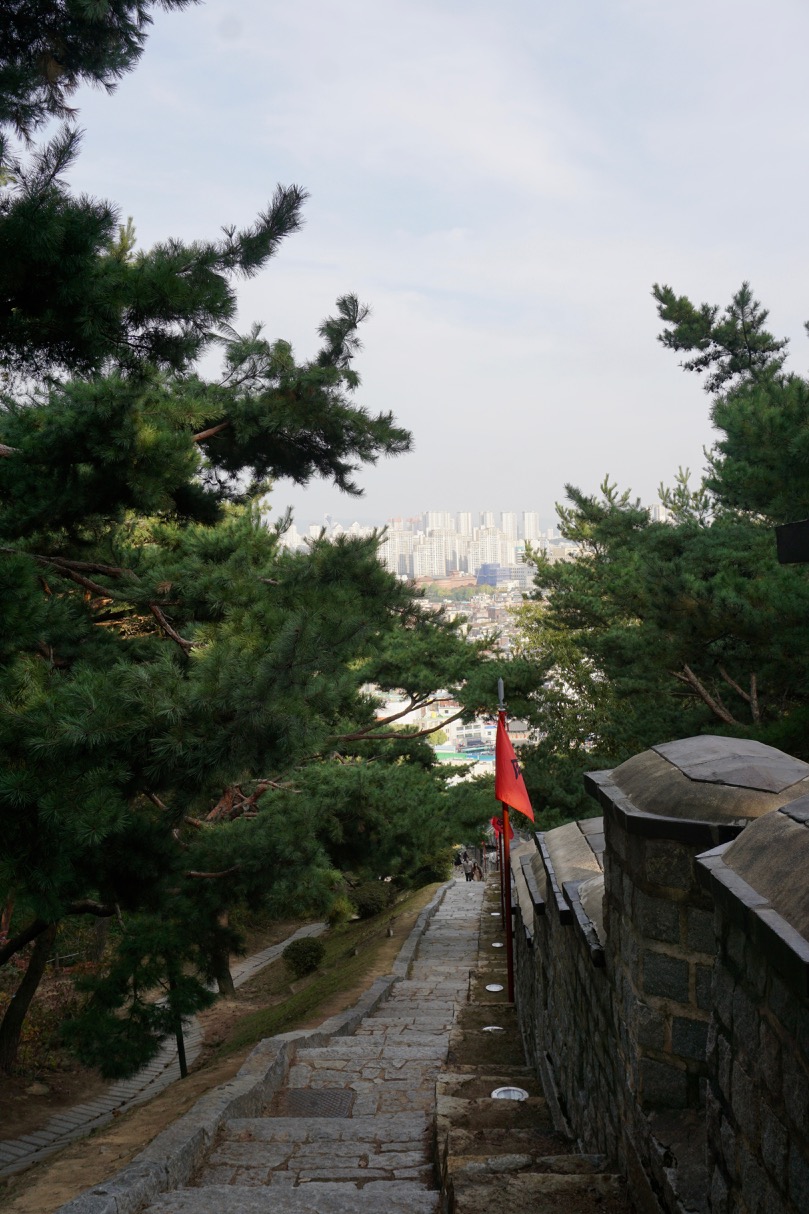
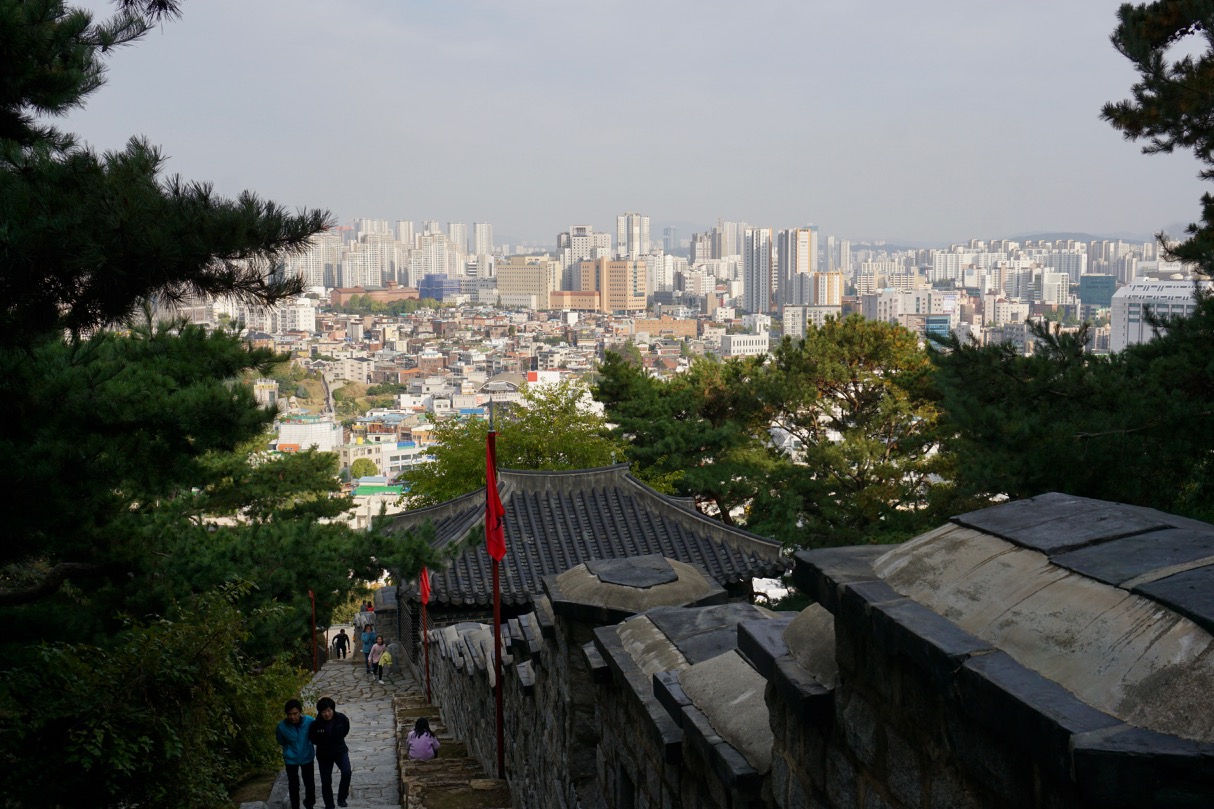
After a day in the city it was time to get out of Seoul again and take the train 30km south to Suwon. Seoul’s metro system is so sprawling that one train took us all the way there. Suwon is Korea’s last completely walled city and the primary reason to visit is to walk the 5.4km wall of the fortress. It was lovely to spend yet another day outside in cold wind and bright blue sky.
It was really neat to watch the skyline unfold as we climbed higher, too. Korea is a hilly country and the fortress rolled along with the land.
After a day in Suwon we had one final day in Seoul. As discussed and investigated, we rented our hanbok for ₩10,000 for two hours, which gave us plenty of time to return to Gyeongbokgung Palace to take photos. We’d worried about feeling silly and out of place for dressing up, but it quickly became clear that people from all over the world do this because it’s fun! As soon as we walked out of the rental shop a woman stopped us to chat about our experience in Korea. Later on, different people offered to take our photo. It was a lot of fun and a nice little confidence boost.
Just like our first day at the palace, we went back to Insadong for traditional tea, this time in a tea house that opened into a cozy room with plaster walls lined with benches, stools, and tables. Different teas and desserts and a similarly lovely experience.
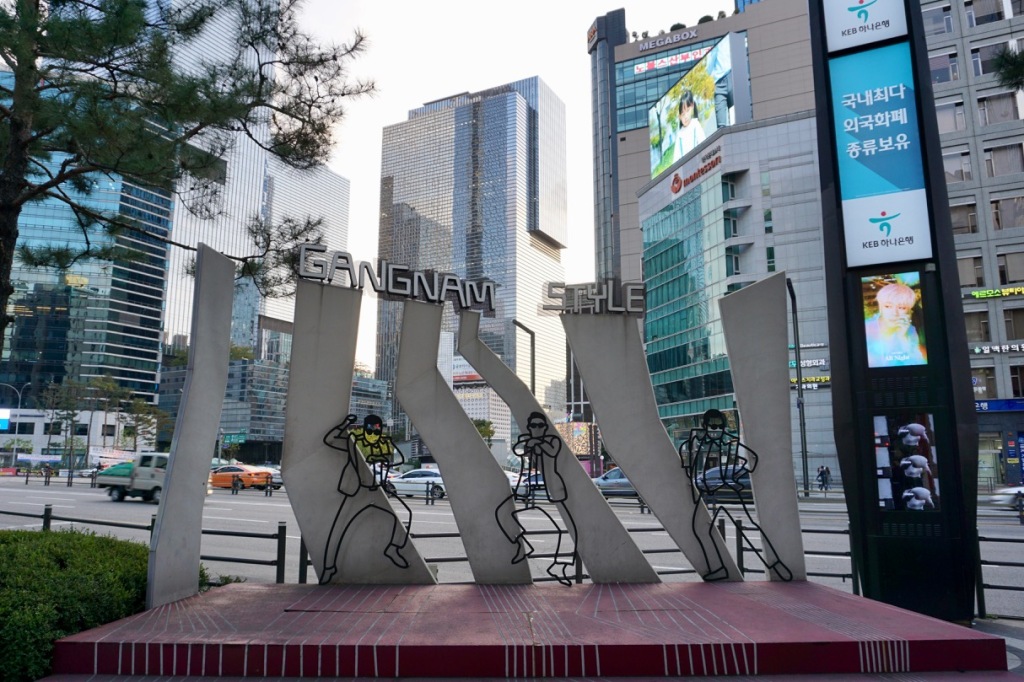
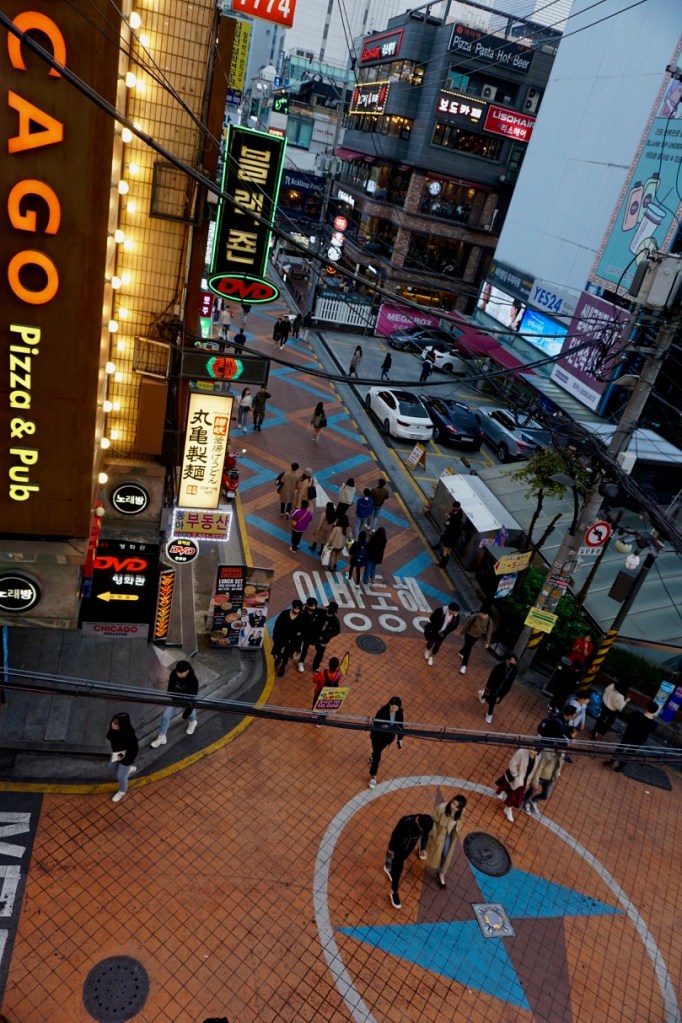
In sharp contrast to traditional clothes, the palace, and Insadong, our next destination was Gangnam across the Han River, which runs through Seoul. We stopped first at the COEX library in a mall . . .
. . . and then walked through the business district until we reached Gangnam Square and all of the entertainment around it.
It was fun to experience traditional Seoul in the morning and modern, glittery Seoul in the evening. That was something I noticed throughout our trip – the infusion of traditional and modern culture everywhere we went. There was an ease to being in Korea that I hadn’t experienced before, a sense that being whoever you were was just fine and that we should treat others accordingly. The world could do with more of that.
Photos, travels, musings, and ideas on education by someone trying to make the world a better and more peaceful place







































 By Rebecca Michelle