Tag Archives: Friends

Travel Guide: Halifax

I’m a bad Canadian. I hold a Canadian passport, speak with enough of a Canadian accent that Americans have asked where I’m from, and spent many a childhood weekend in Canada visiting grandparents and other relatives. But I’m a bad Canadian. Until last week, I had only visited two provinces (visited = seeing family) and, with the exception of a ski trip as a child, had never gone to Canada on holiday. For this reason and more, it was a pleasure to finally take a trip to Halifax and neighbouring Dartmouth to visit my closest friend from Singapore, who grew up there and has since moved back.

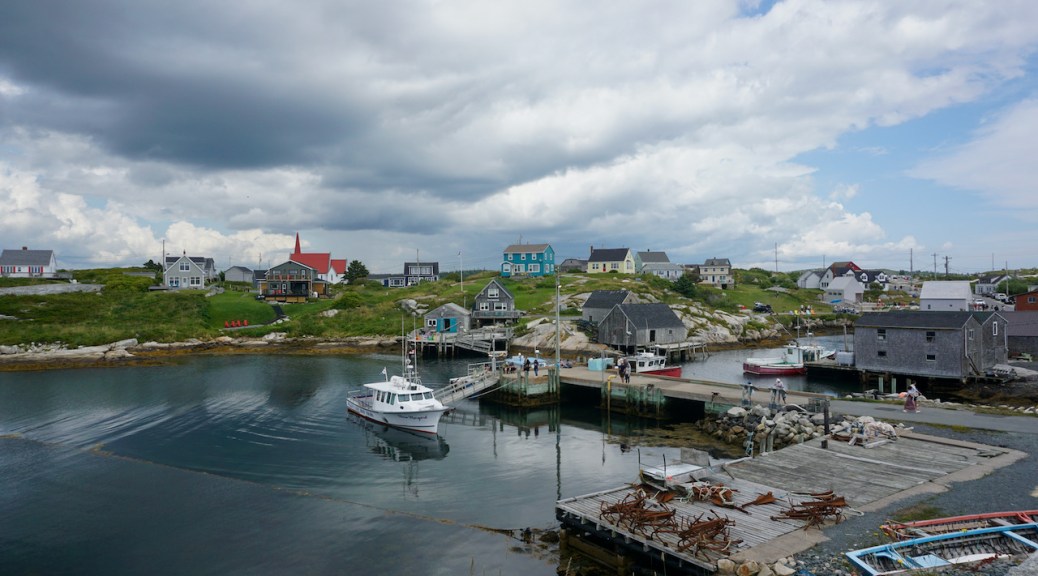
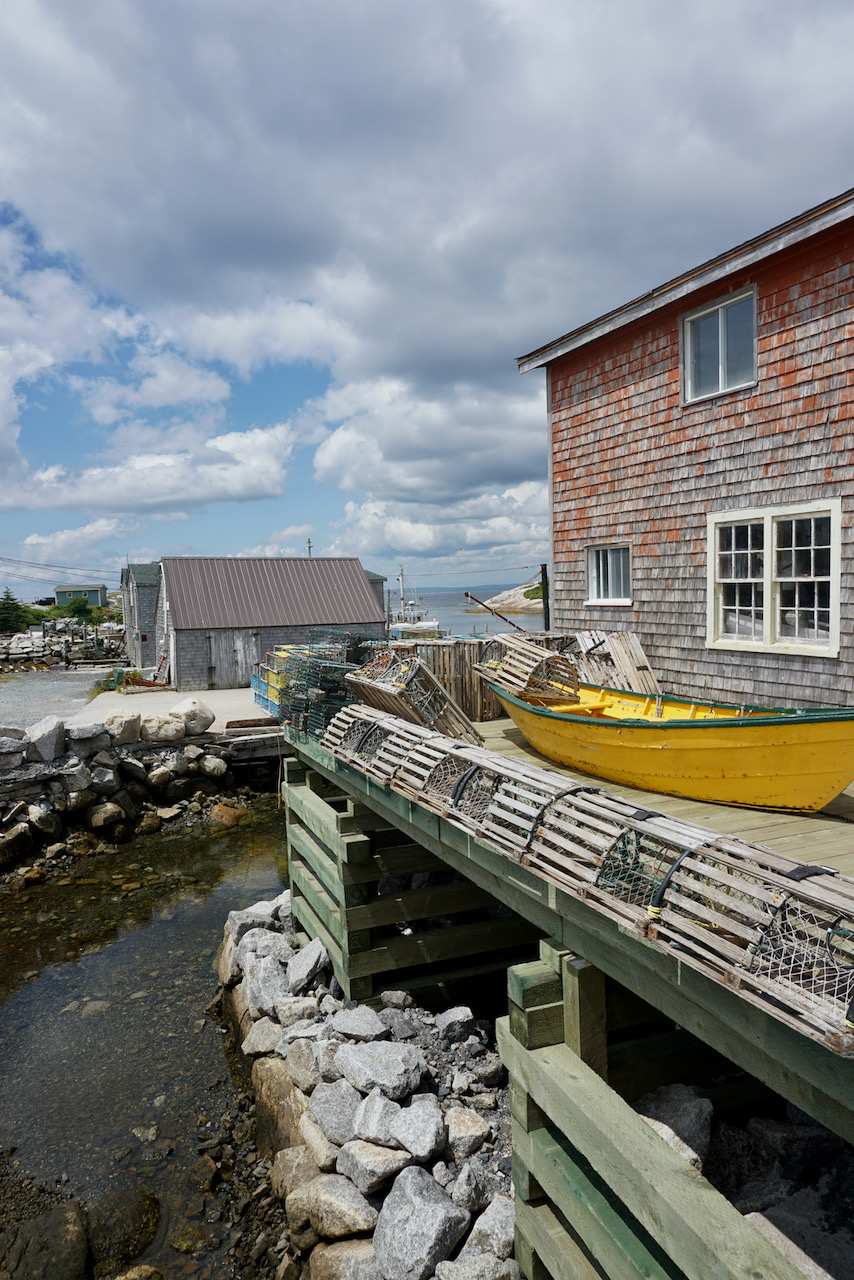
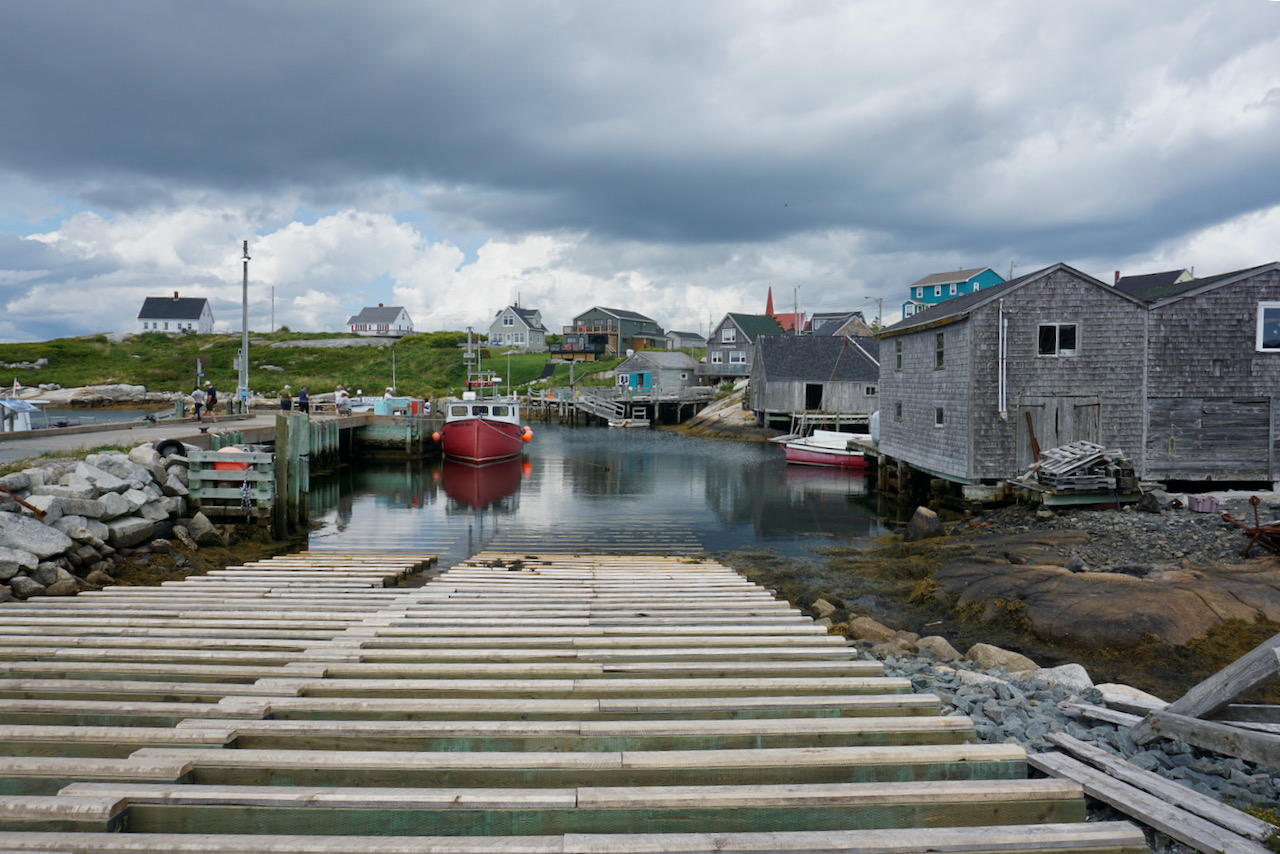
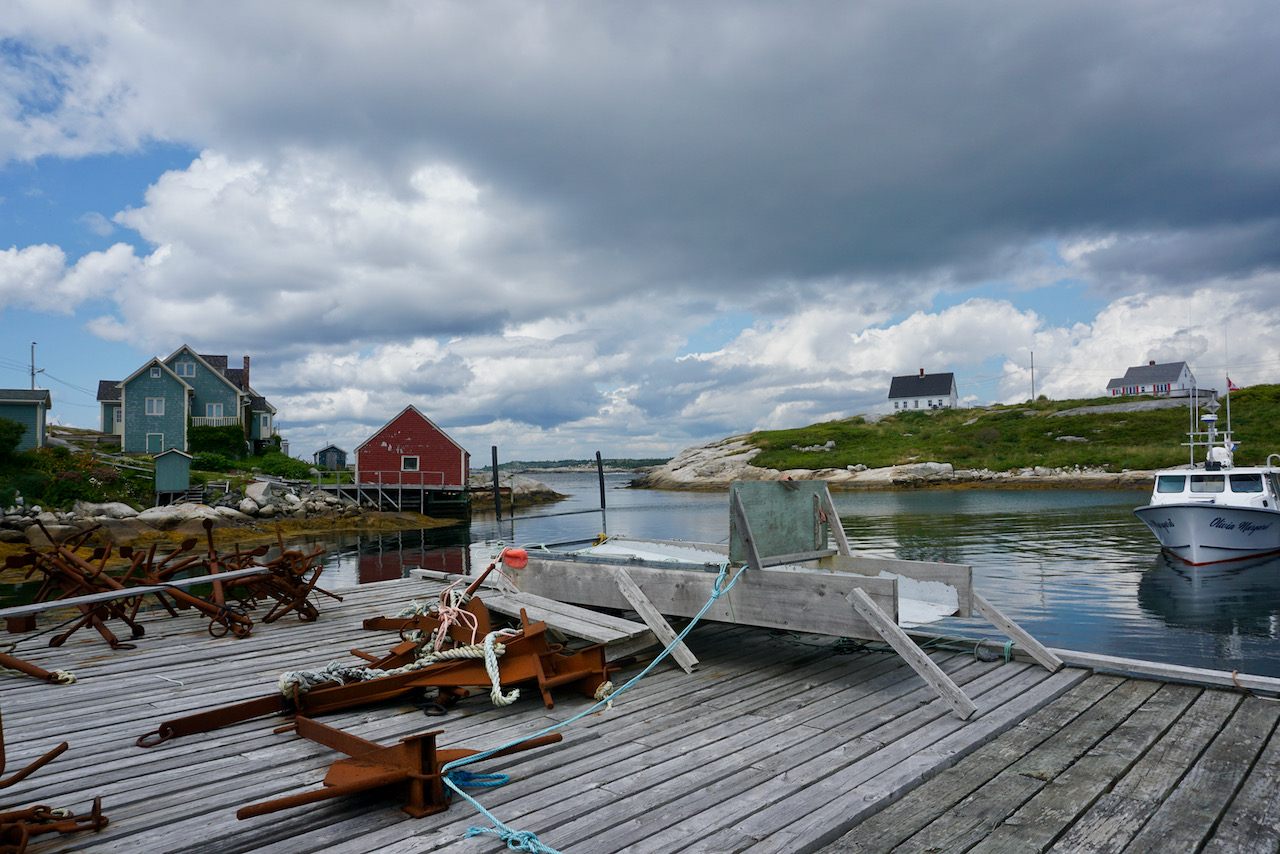
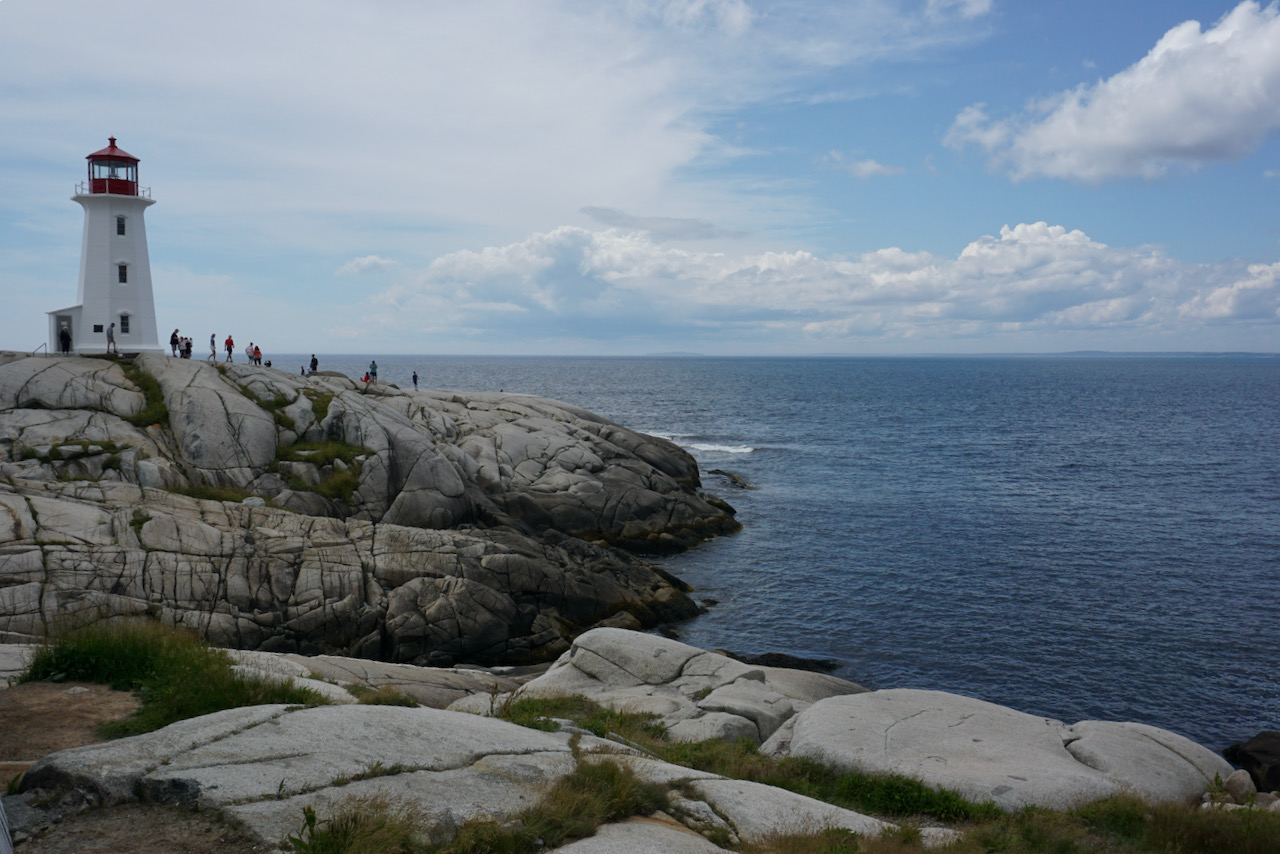
We began the tour of Halifax and its environs with a trip to Peggy’s Cove, a fishing community with a famous lighthouse. It looked like everything that comes to mind upon hearing the word “Maritimes” and, as you can imagine, smelled of the sea.

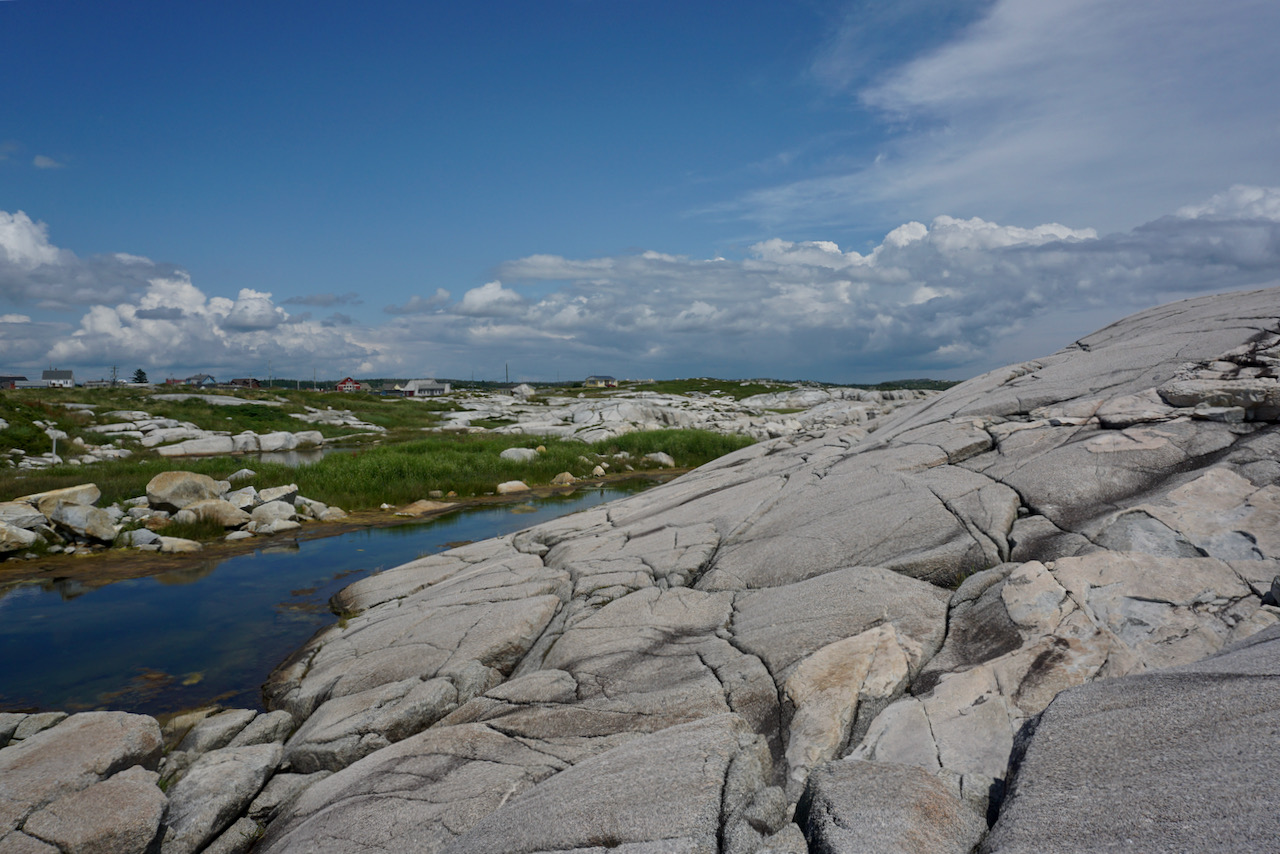
The air tasted like salt and the wind picked up as we walked further along the boulders, heeding the warnings to stay off the black rocks.

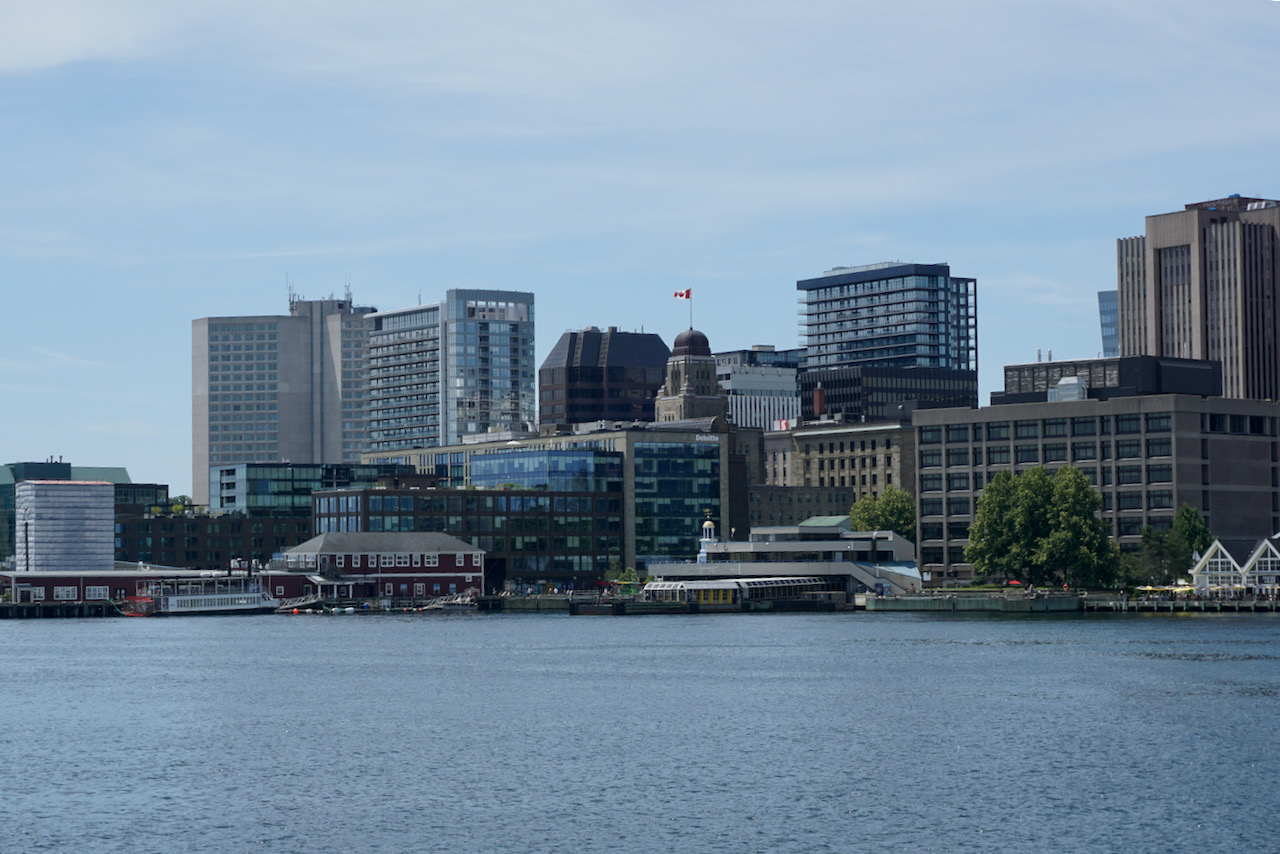
The community of Dartmouth is located across the harbour from Halifax. One can cross the bridge by car or take the ferry, which is conveniently free on the weekends (and, on the weekend of my visit, decorated for Halifax Pride). The best part of Dartmouth is the view of Halifax, I was told, though I beg to differ. Dartmouth has a vibe and charm all on its own.

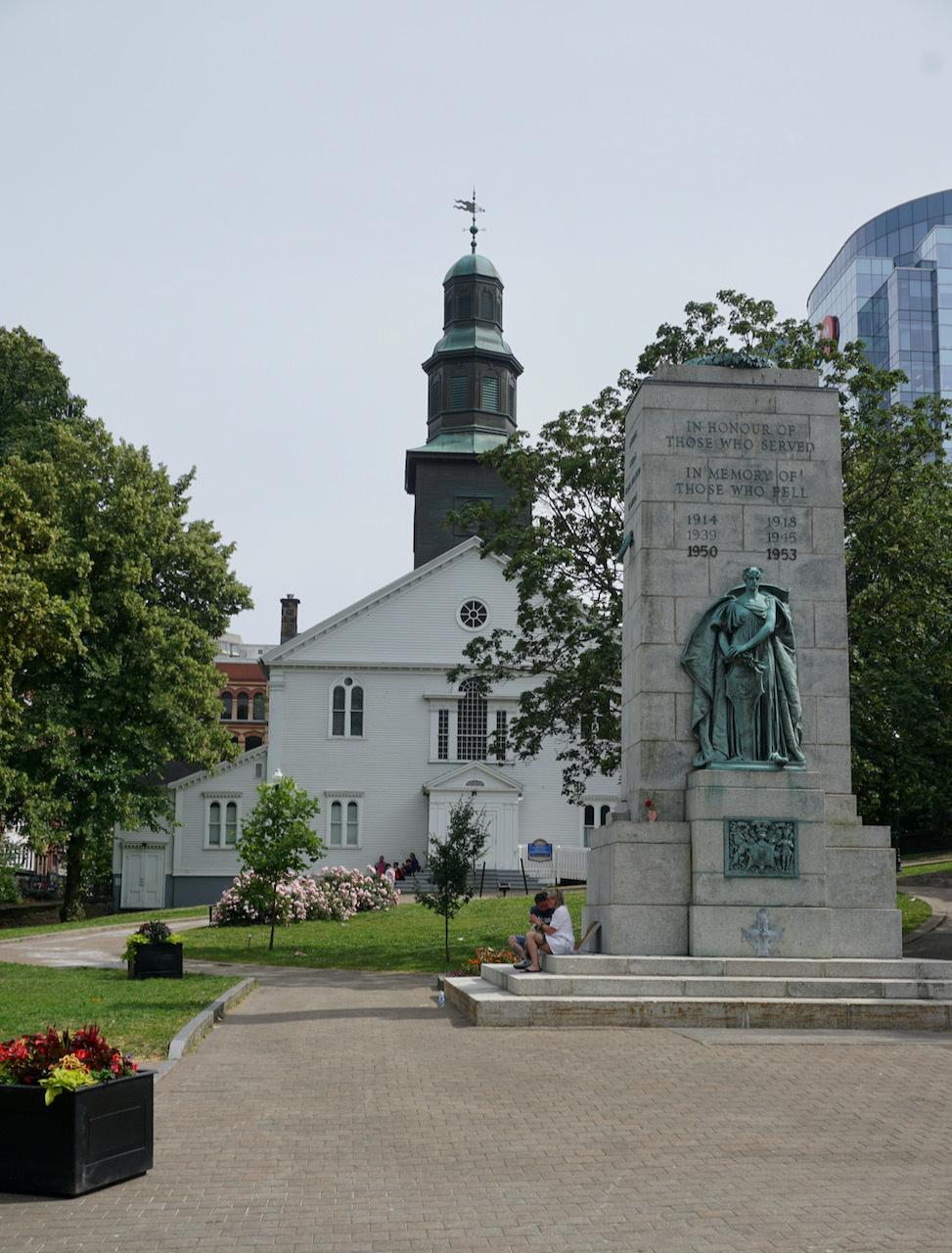
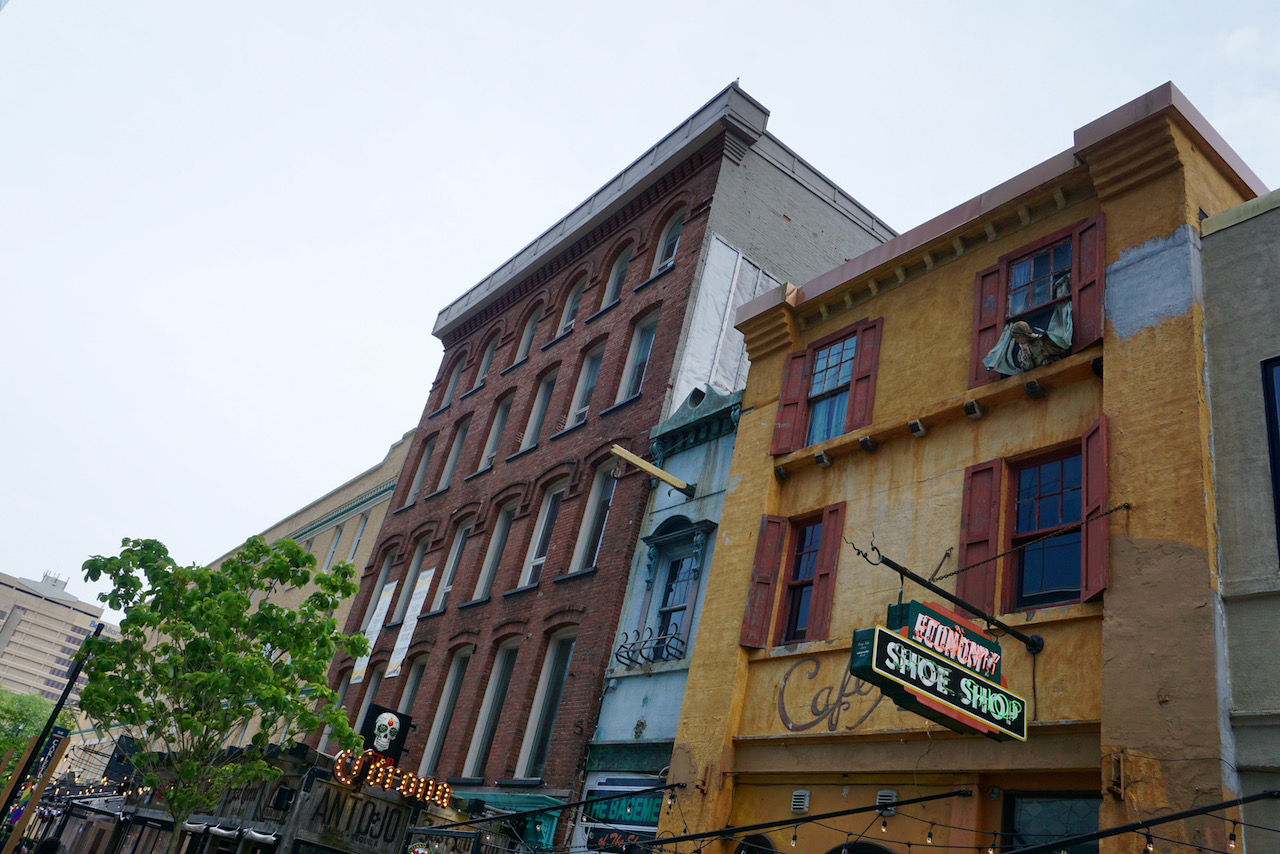
The next day we walked along the boardwalk and through downtown Halifax, admiring ships-turned-museums, murals, and funky buildings.

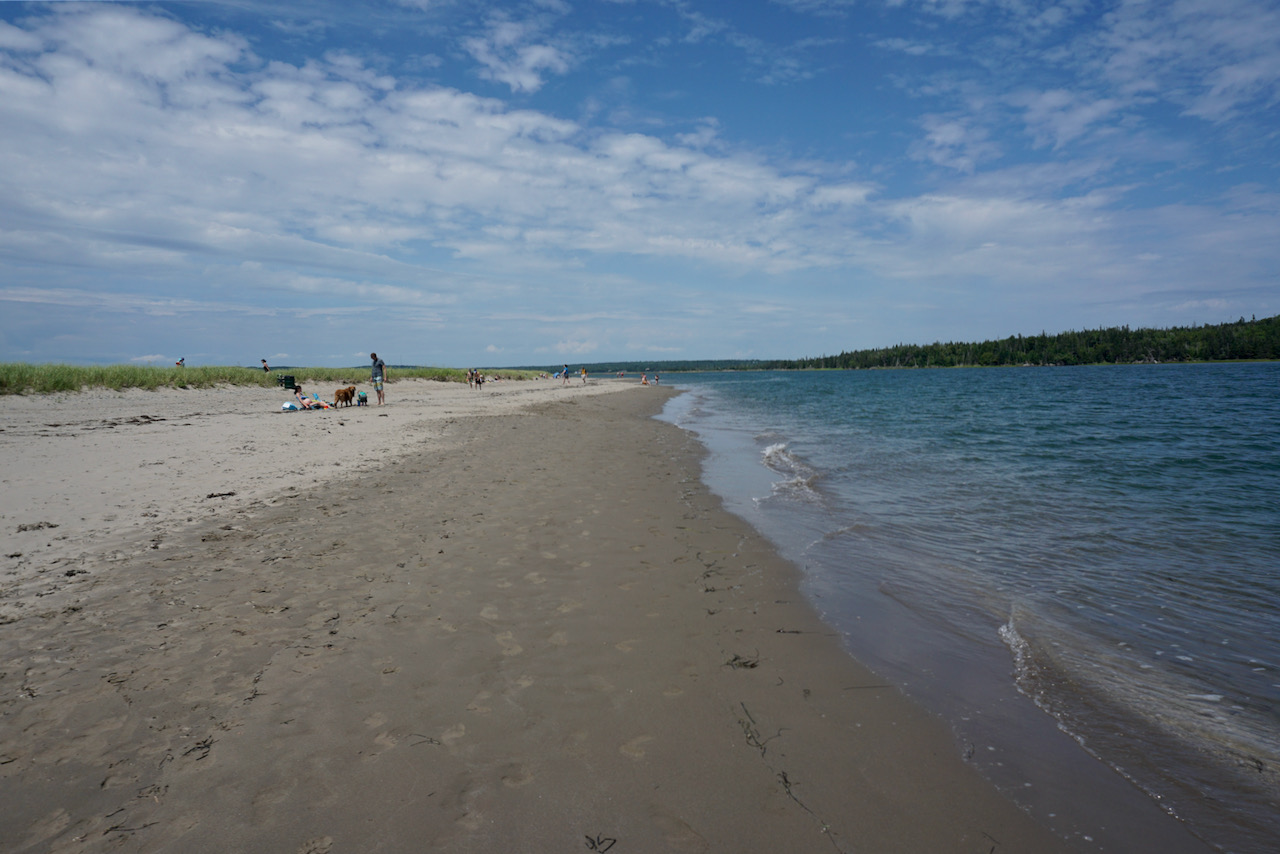
The license plate of Nova Scotia states, “Canada’s Ocean Playground,” so it was only fitting that the last full day of my visit include a tour of the nearby beaches. The water was cold and for the first time in my life, I saw people wearing sweatshirts at the beach. I dipped my toes into the North Atlantic and that was more than enough.

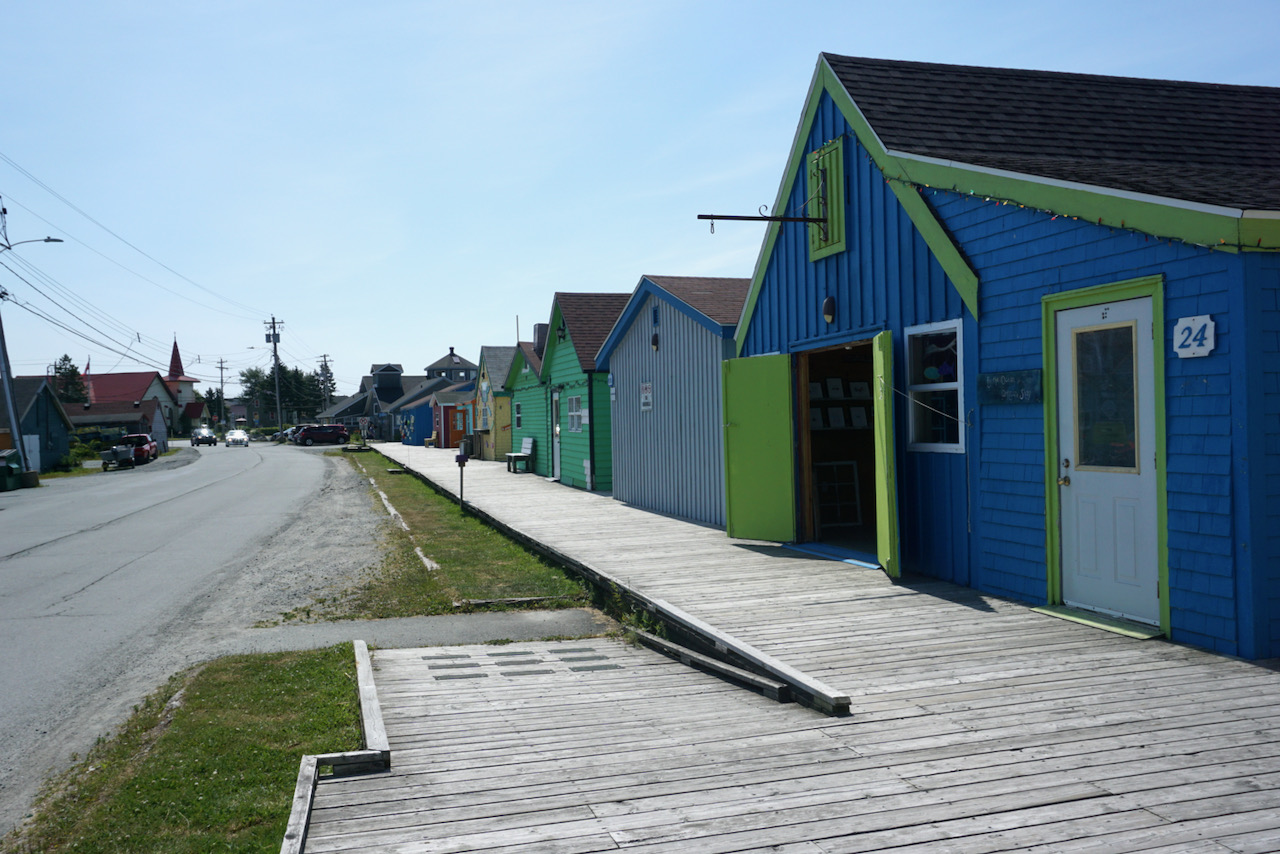
On the final morning of my visit, we went to Fisherman’s Cove to go for a walk and browse the gift shops.

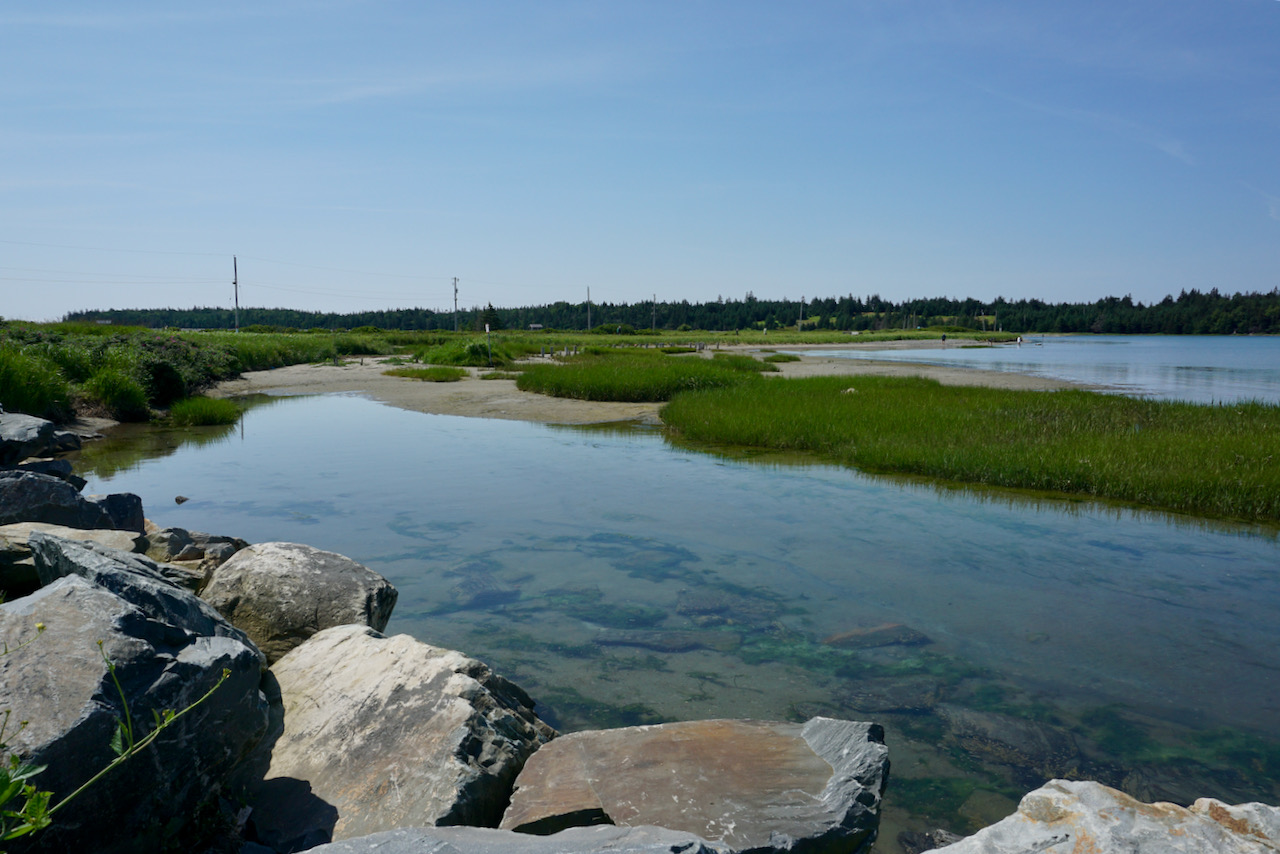
Just like everywhere else we’d been, you could taste the sea on the air. My favourite part of Dartmouth/Halifax was the integration of the ocean with regular life. It was everywhere and the communities had been built in it, around it, and with due regard for how the sea behaves. There are lakes everywhere, too, and life by the water is simply a normal part of life. I felt lucky to finally be there, a visit that was in the planning stage even before the pandemic, and grateful for the locals who took me around. My visit concluded with, “And next time we’ll go to. . . .” I am already looking forward to it.

The Beach

I’m not sure how my parents chose the beach that ultimately became the beach we visited every summer, and then every other summer, and then one last time. I think it was advertised in a catalogue or maybe as part of a vacation package at a wholesale store. Whatever it was, we loved our family beach holidays, which started as soon as we got into the car and began the sixteen-hour or so adventure of reading, license plate spotting, occasional bickering, and listening to Garrison Keillor’s A Prairie Home Companion after dark. Throughout my childhood, the ocean was my happy place.

Until last week, it had been a while since I’d spent a holiday at the ocean, several years since the order of events upon arrival followed a familiar pattern: Unload the car, have something to eat, buy groceries, walk on the beach. It was my first trip to Warnemünde on the Ostsee, or Baltic Sea, where I was thrilled to have been invited, and my heart felt almost like I’d been there before.

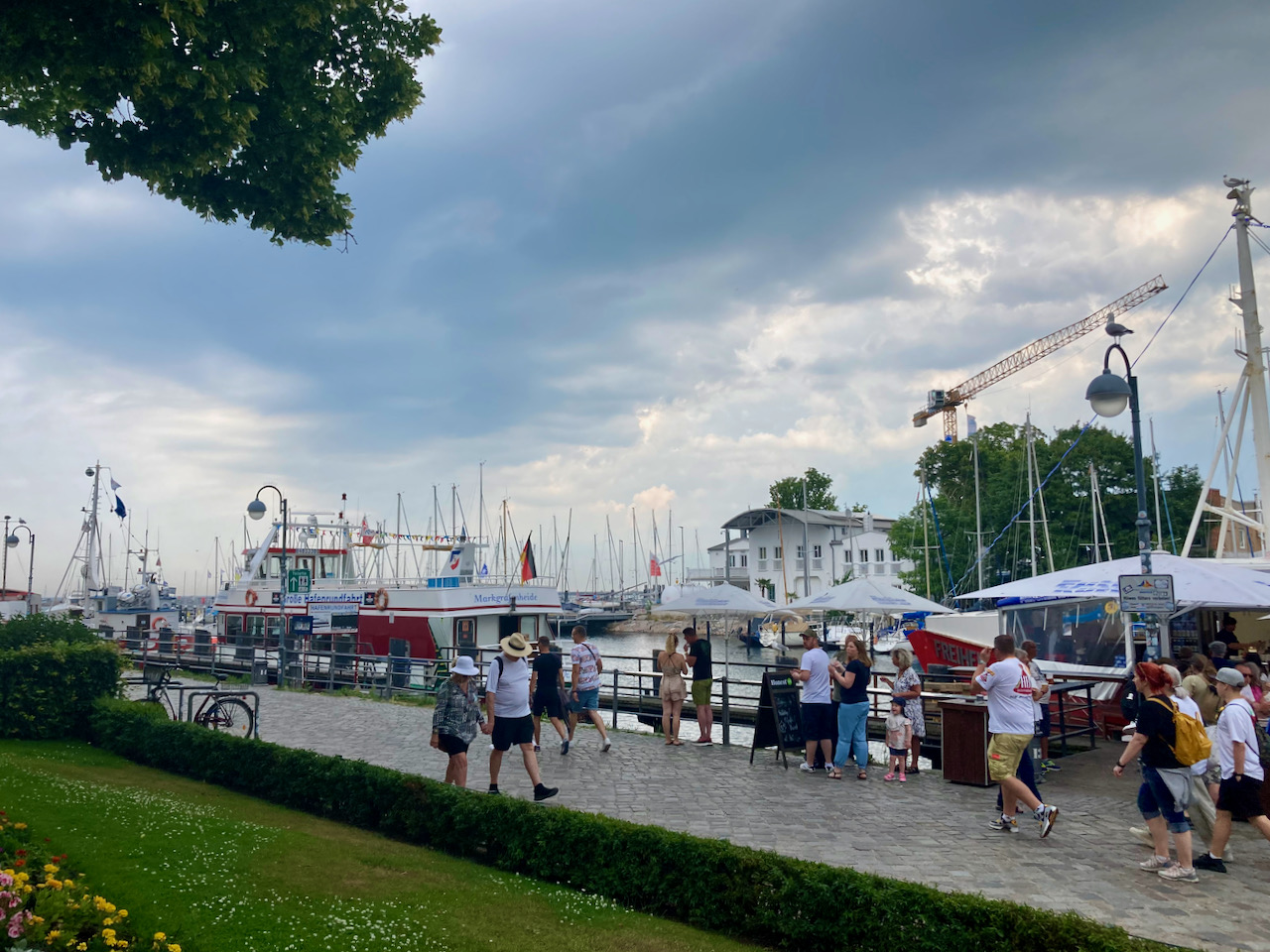
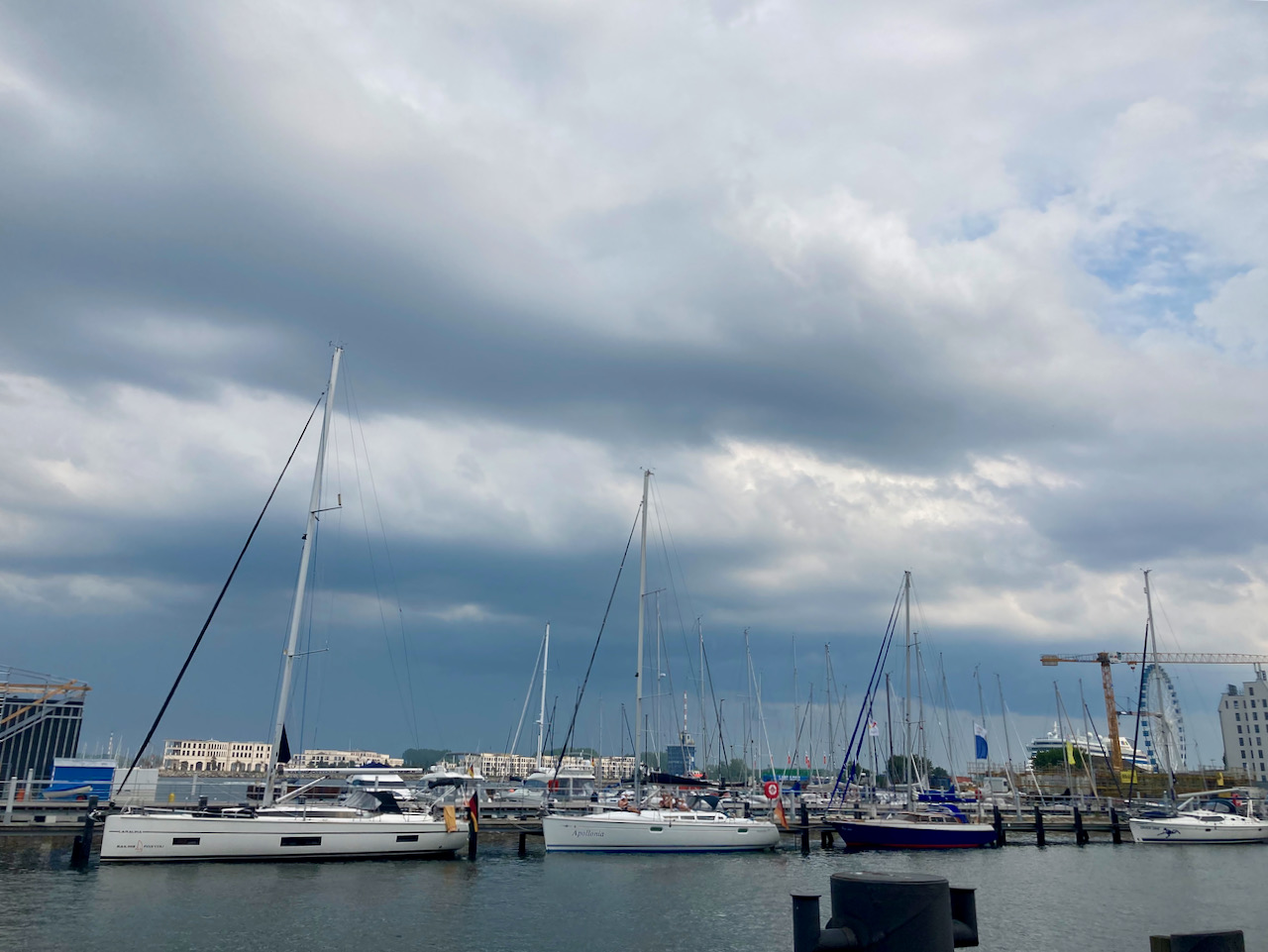
Warnemünde is a fishing town with an active port and a popular destination for tourists and cruise ships. A port means boats and lighthouses, both of which remind me warmly of my years working on boats and never fail to capture my attention.

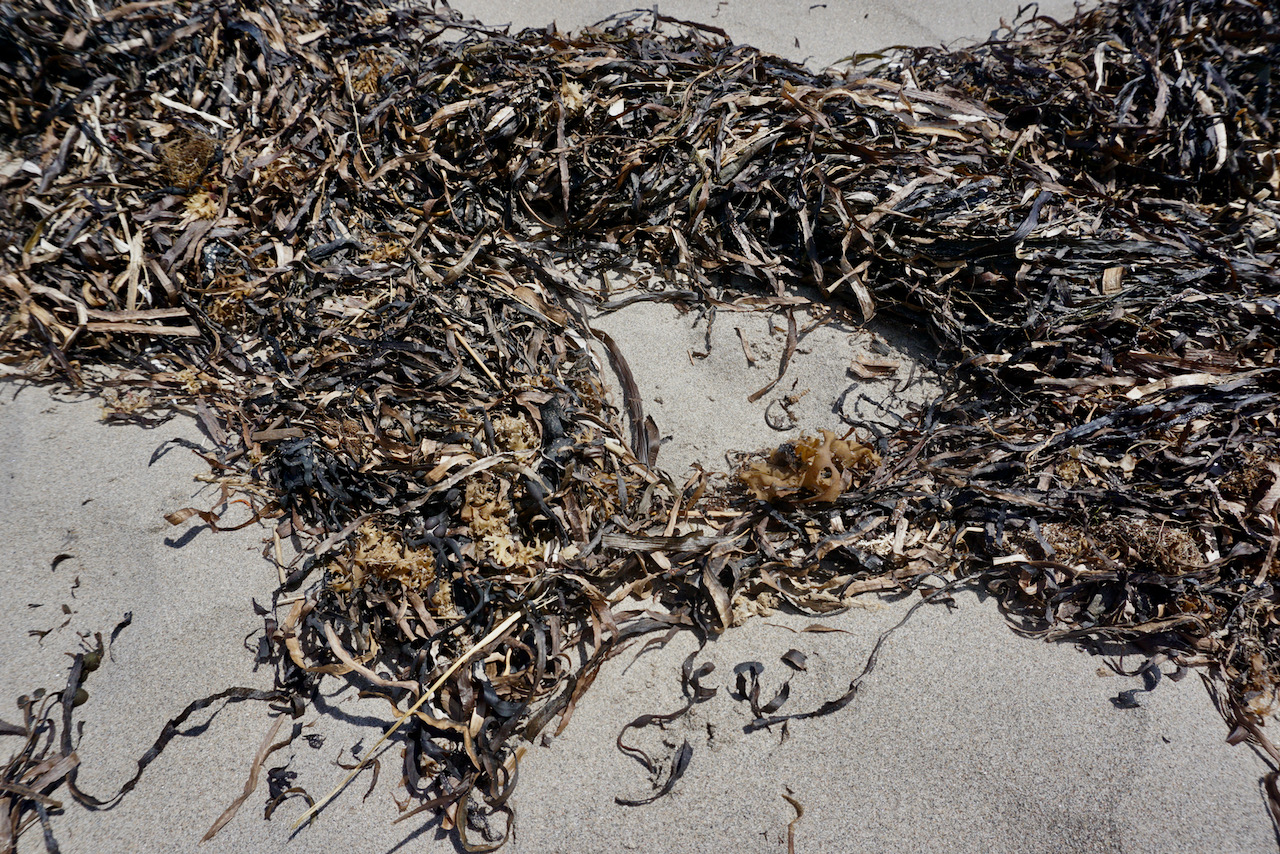
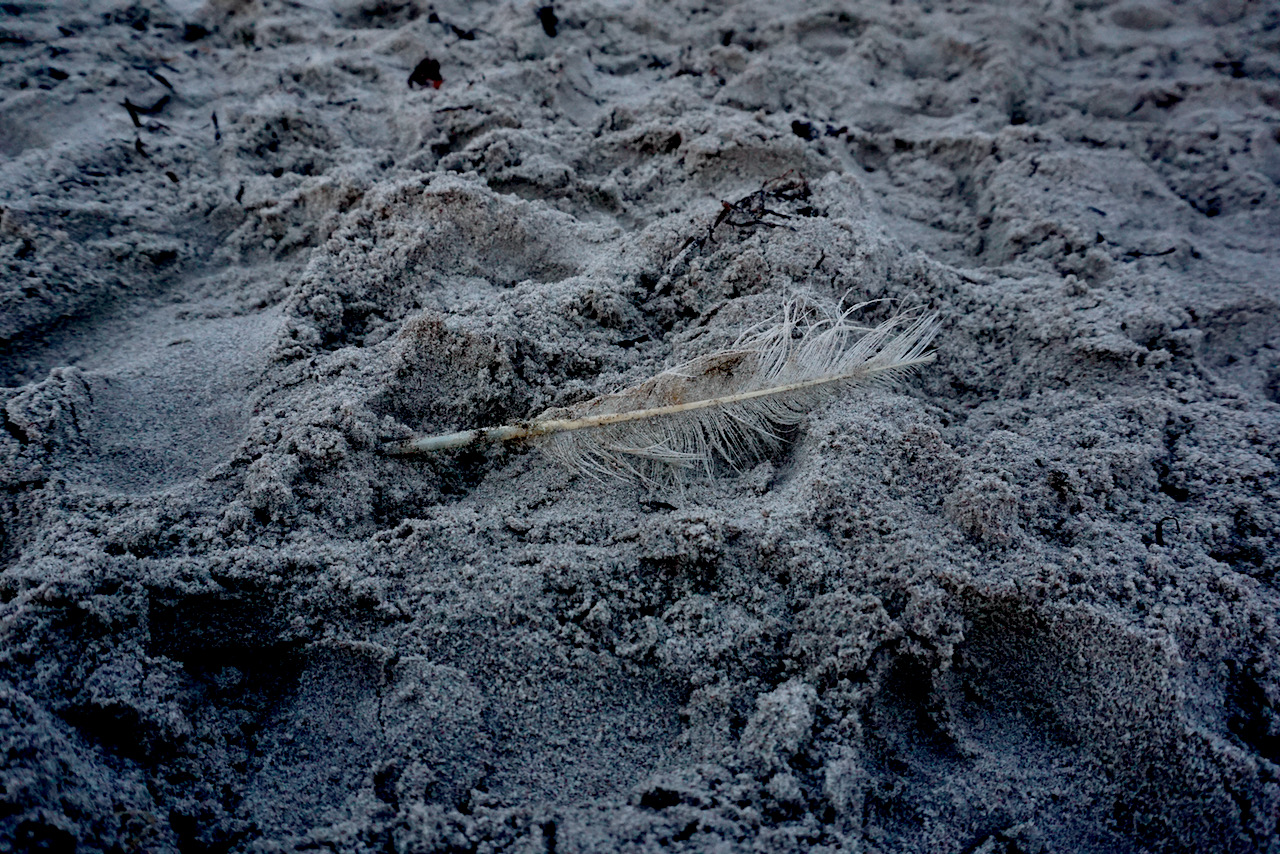
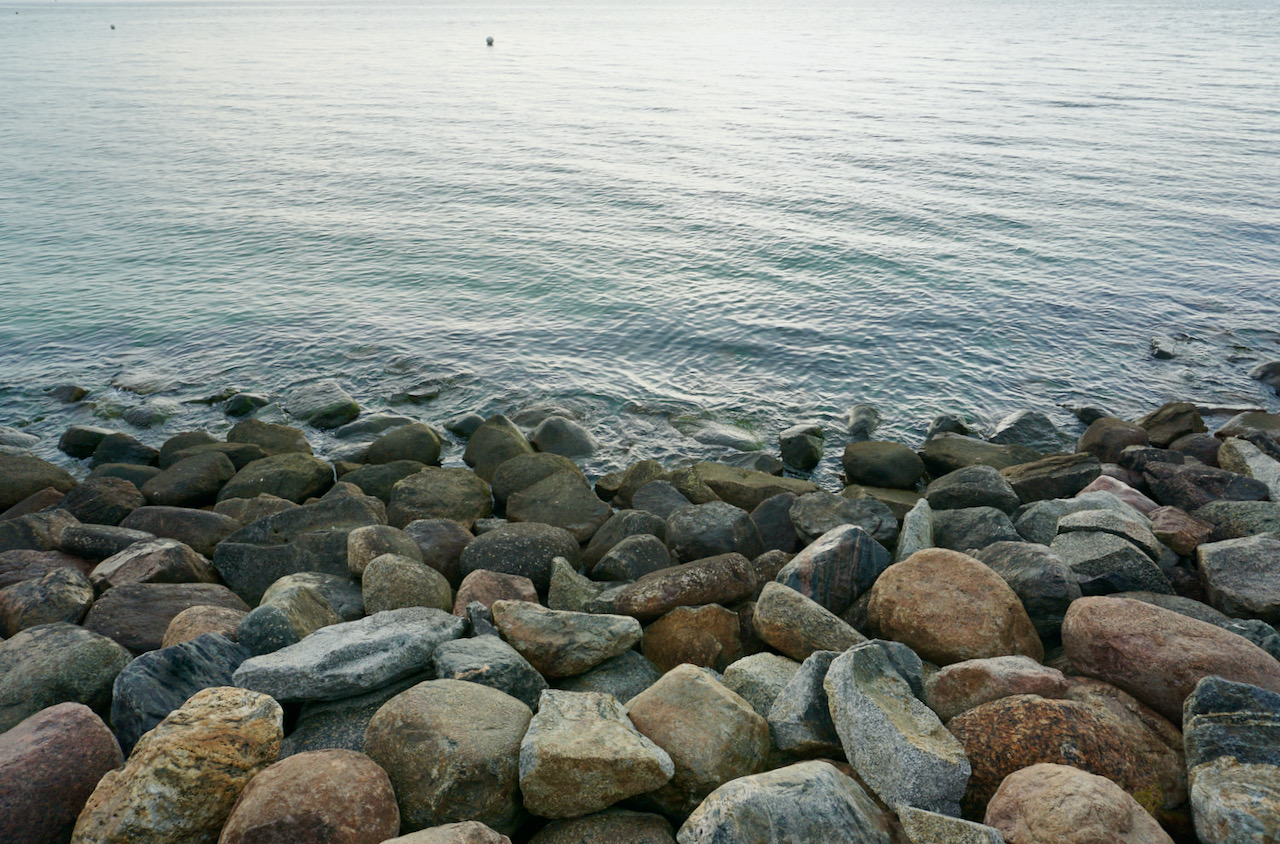
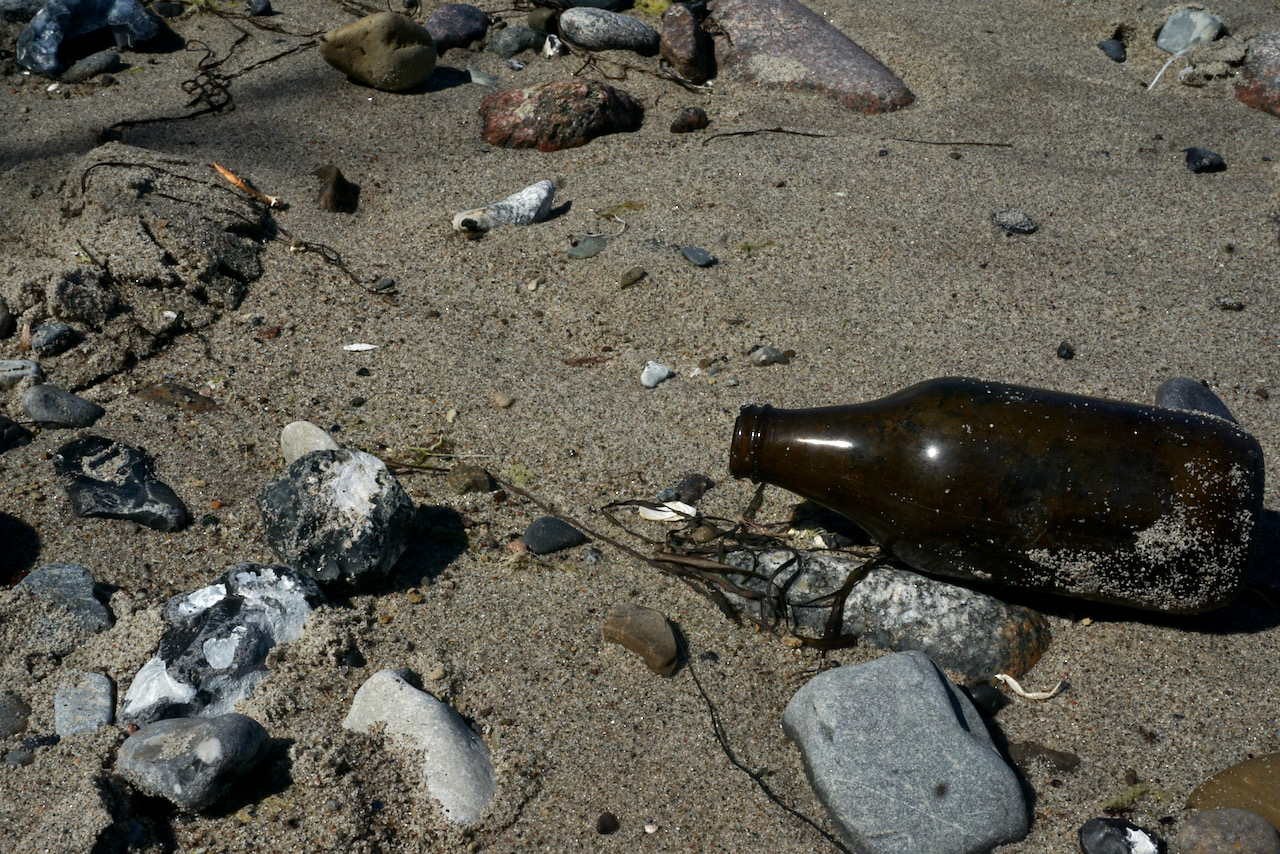
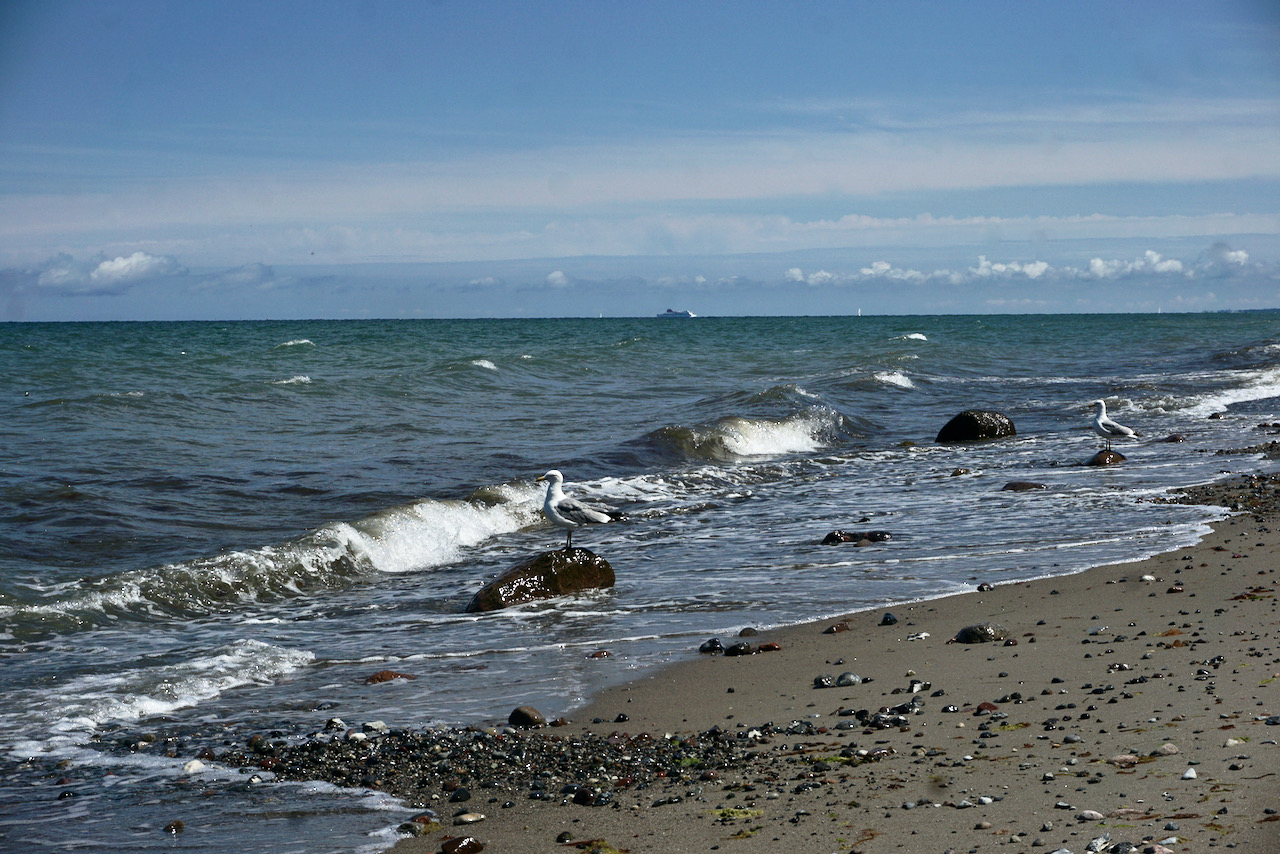
The water was warmer than I’d expected though still a shock each time we waded carefully in, laughing, slipping on rocks, getting tangled in seaweed, playing. The ocean was surprisingly flat even on windy days, and the beach rockier than usual, I was told. We tasted salt on our lips, dried off under the sun and wind, watched the seagulls marching along the sand. And when the sun went down, we walked quietly and in awe.

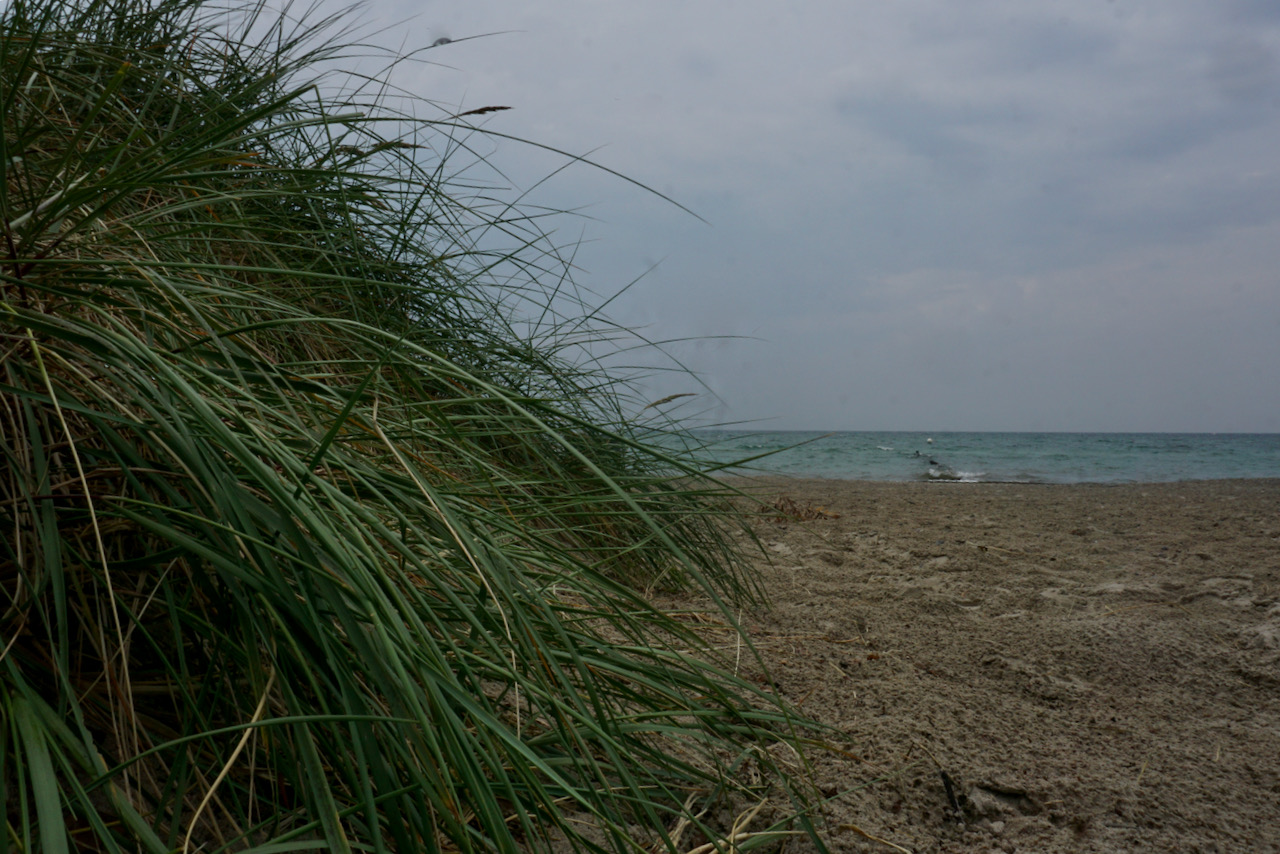
On the Ostsee, I learned, much of the beach emerges from the forest and this was completely new to me. We found a cozy spot, watched the approaching rainclouds, and walked calmly back in the storm that followed.

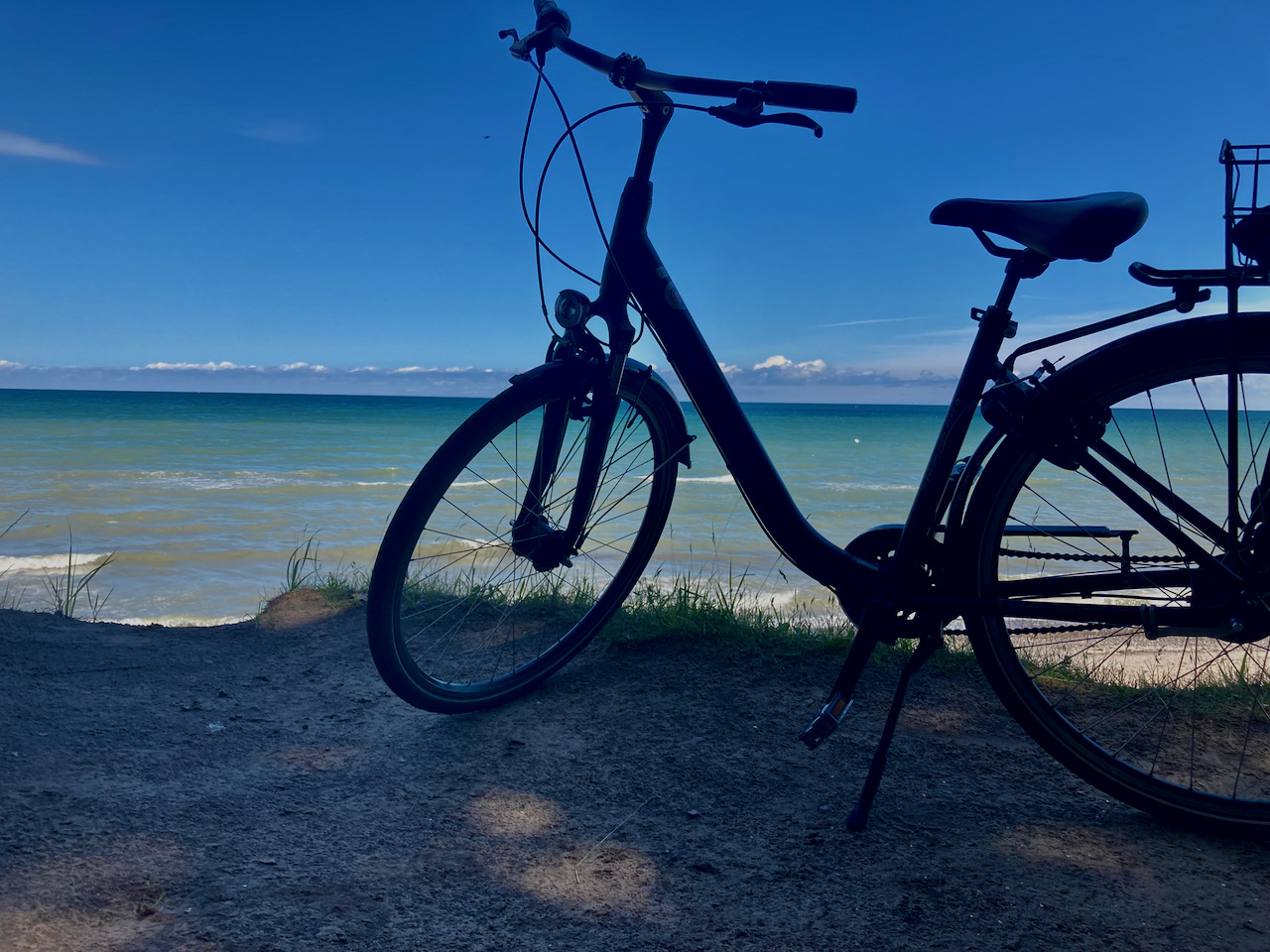
In the bright sunshine of my last day, we rented bikes and followed a path through the forest and along the coastline. We passed farms and little towns, stopped to eat and drink overlooking the ocean, and went swimming in the warmest water yet. We searched unsuccessfully for Hühnergotter, stones with a small hole through them that are supposed to bring good luck. The sound of the ocean was soothing and I nearly fell asleep on the sand.

The world is a beautiful place and I was lucky to be somewhere new to me, lucky to share it with people who have such fond memories of being there. The world is a beautiful place and to be part of it is a gift. I am glad to know this – every day.

Home Is: A Reprise

Depending on how you look at it, I am a person with many homes or with no home. Perhaps I am a person looking for a home, or perhaps I call “home” what is more accurately “place”. Is home where you are or is home how you feel?


Home is clearly more than house, but there are times when home is indeed also house. And there are times when home has no house. Home can be forest, mountain, water, and here, home is a feeling. Can the feeling also be a place? Can a place be a home?

If I have many homes, it is because home is people, not places. But not every place with people is a home, nor do all homes rely on people. Does bringing people to a place make it a home? Perhaps not, but the community that comes from the people can be a home.

If I have many homes, it is because home is a feeling, not a location. I can feel at home in different literal places when my heart can settle in a figurative place. To say that I feel at home with you means you and not where you happen to be. So I can feel at home with you within, despite, or regardless of the place.
Or do I have no home? I can be homeless without being houseless, a person who has a physical place but no sense of warmth, of love, of affection and affinity. If I have lost my connection to home, that means I have lost connection. And what does that mean for who I am? If connection comes from relating with others and the world around us, does losing home mean losing identity? And without identity, who am I?


Depending on how you look at it, I am a person with many homes or with no home. I am deeply rooted to something I cannot articulate but am never without, a sense of belonging to the trees and sky, mountains and ocean. I do not need to be out in the world to understand that, but I need to be out in the world to feel grounded in my own body. And at the same time, I seek to lose the body to become part of the world.

In this sense, I am at home in the world.

But to be home in the world does not mean being alone in it.

So home is people, not places. I do not need to know a place to feel belonging, but to know people. By this I mean the know that is tied up in care, the know that means I will share my delights and sorrows with you because, if I feel at home with you, I believe you want to know.

But home can also be found in places themselves, because to find a home is to connect with a soul. The soul of a place is a feeling and we feel places. This is how we choose where to wander and where to settle, where to explore and where to retreat. If we are able to see the soul of a place, perhaps we understand it in a way that allows us to call it a home.

In this sense, home merely is. Home exists. Home is there. Sometimes we are there, too, and sometimes home is waiting to be found.


It has been a long time since I’ve been home, and in the interim I’ve occupied many homes. Literal homes, figurative homes, shared homes, solitary homes.

Perhaps my preoccupation with home comes from a constant search for one, or perhaps from always knowing there is inherently more than one. Perhaps it’s less a preoccupation and more a vested interest, one that comes from life circumstances I never could have imagined but that, at the same time, were always lying dormant and waiting. Or maybe it’s a simple awareness of language. I cannot wait to go home, said when I am clearly at home. Welcome home, said when I coming from home.

It took years, I remember her saying, before I stopped referring to this city as home. And then I realized that my life was somewhere else and that that was my home.

This is undoubtedly logical. But if this is the case, how can I say I’m going home? And how can I then be welcomed home to multiple places?

And so I search further. I search from the security of a place that I call home, a place made up of people who hold, care, and love, and who know that it is not the search that is important, but the discoveries that are part of searching.

And I search because I like to ask questions and I like to find answers. I am curious when I am safe, and I am safe when I am home.

Schalkau, Germany – September 2021