Tag Archives: Holocaust

Counting the Living

Back in 2020, I read a New York Times article about a crowdsourced, online project to digitize records with the Arolsen Archives, the keepers of the world’s largest archive on victims and survivors of National Socialism (Nazism). The goal of the #everynamecounts initiative is to create a digital memorial with records accessible to all.

With thousands of volunteers around the world, I type whatever information there is. Sometimes I’m familiar with the names because of the community I grew up in and where I live now. Sometimes I recognize locations. One project involved documenting records of prisoners held in the concentration camp Buchenwald. I live within cycling distance of Buchenwald and have been up there more than a handful of times.

I most enjoy working on records of displaced people. These are the survivors, the young children with huge names, the defiant elders, the unbreakable adults. The documents indicate where they came from, and where they were sent to, and when. People were living in DP facilities until the early 1950s. Sailed to New York. Flight to London.

I wonder about the workers who took down these records, the handwriting of people all over the world, the very human touch of both condemning and saving a life. There is handwriting that loops and weaves, handwriting that took the time, handwriting that scratched and scrawled. Name. Marital status. Birthplace. Last address. Location. There are typed records, too, an indication that all of this happened in a world different from ours, yet not so long ago.

As I record lives lost and lives saved, I think about the internationalism of these records. Europe in ruins, its condemned minorities and those unlucky enough to have a non-conformist opinion collected and shipped off. To somewhere. Europe’s ravaged population surviving wherever they ended up, many so far from home.

And the internationalism of 175,000 volunteers around the world who painstakingly transcribe documents holding the stories of 17.5 million people. To guard against mistakes, each document is read by several volunteers. Any areas that cannot be read according to the usual guidelines are then checked by a member of the Arolsen Archives team. Seventeen and a half million individuals and their stories are too precious for error.

Two weeks ago, quite by accident, we drove past the town where the International Centre on Nazi Persecution, home of the Arolsen Archives, is located. I transcribed a few more documents the next day.

Every name counts.
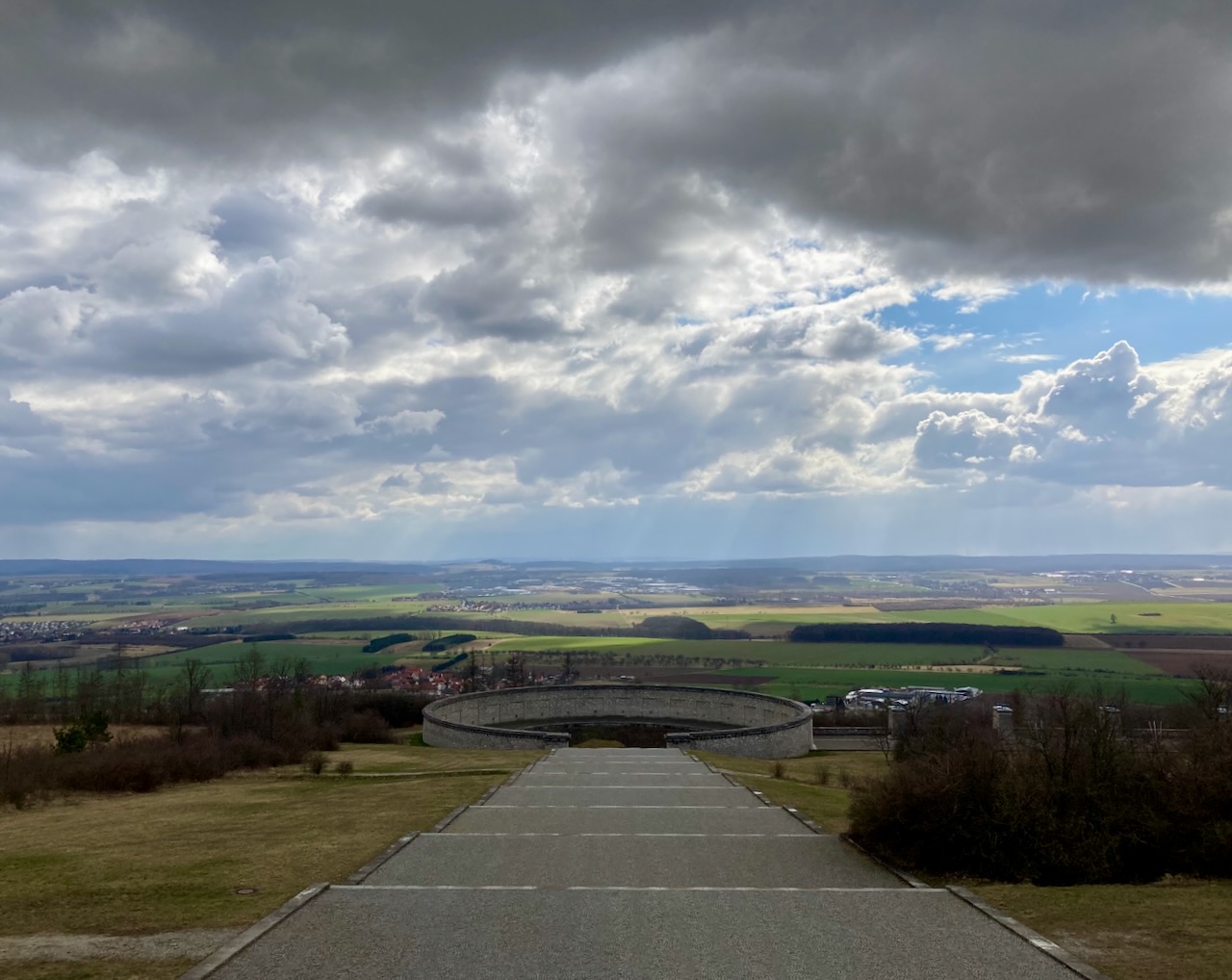
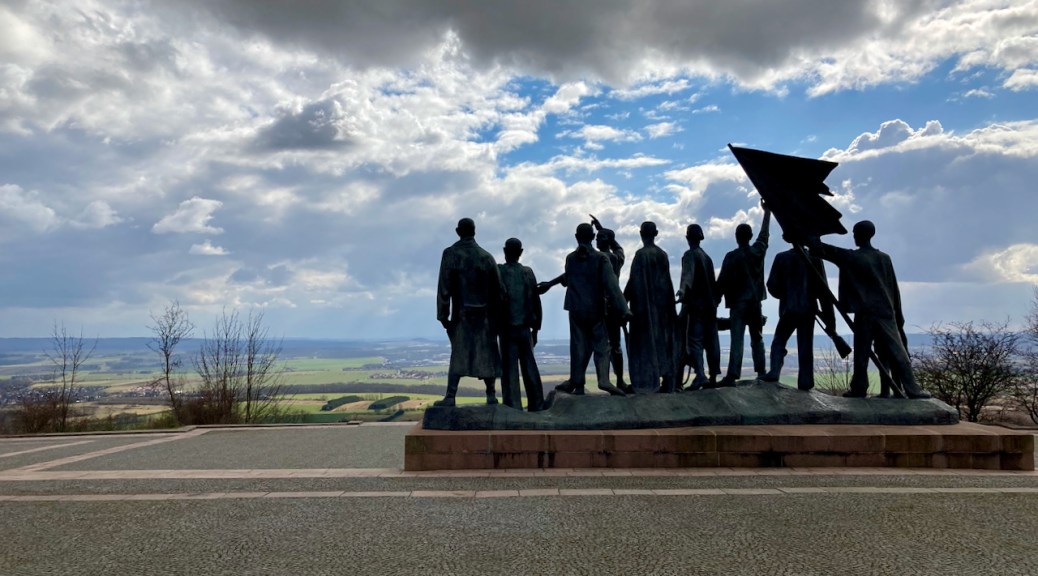
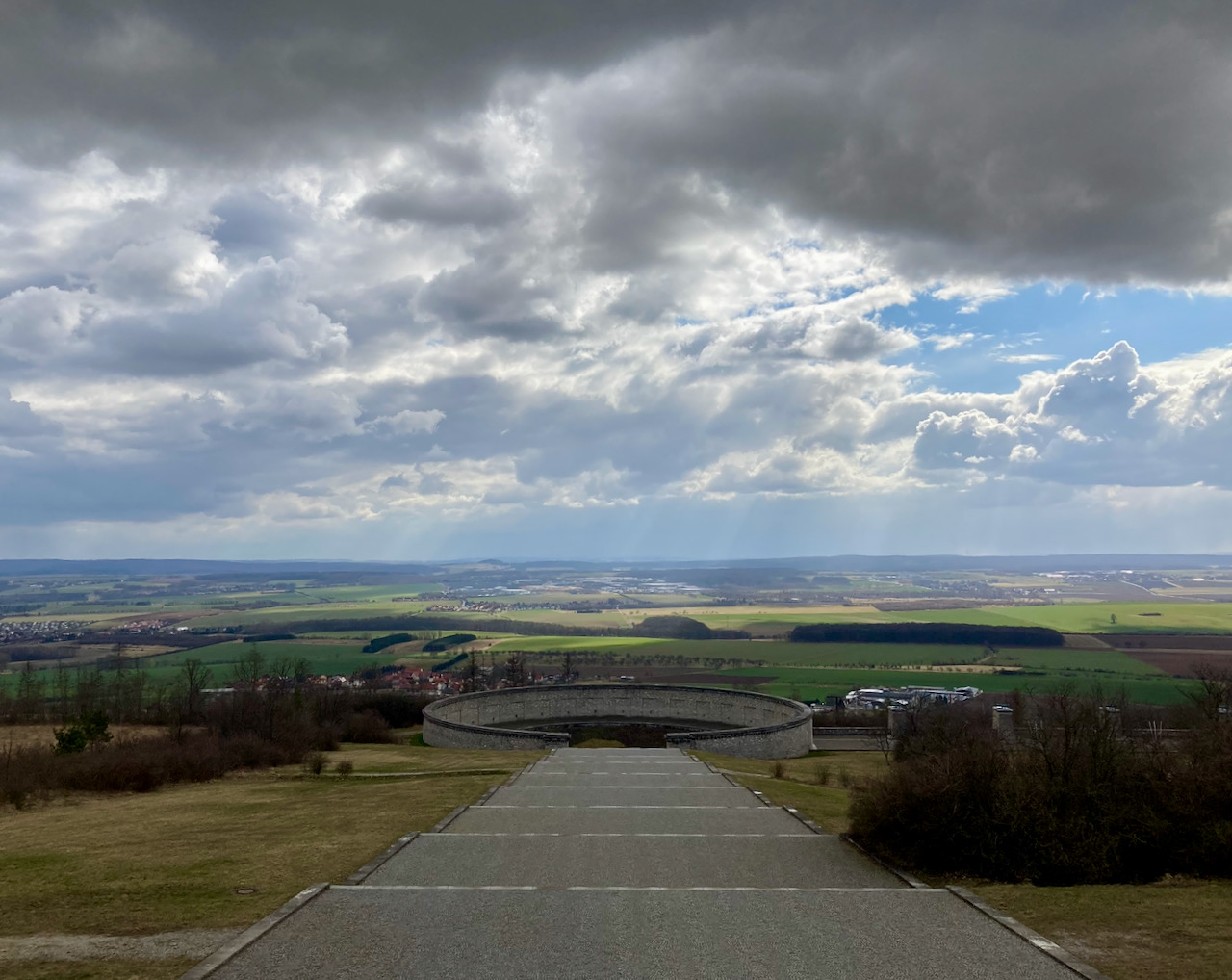
View from the Buchenwald Memorial – March 2022

1945

It wasn’t the size or the scale or the beauty of the view, the changing leaves, the sun peeking out behind the grey clouds. It wasn’t the stones placed on memorials or the signs explaining what we were meant to remember. It was, rather, the order, the organization, the efficiency and thought that had gone into creating an industrial process that, as intended, exterminated thousands of souls.

Souls that were exterminated because they were no longer thought of as souls, as individuals, as humans.

In an industrial process devoid of humanity to enable the process to function.

In a place that was beautiful, with forest growing on the mountaintop, with sunlight streaming through trees, where the wind must have been extraordinary when it came.

And what got me, too, was the way that nature could entirely take over if we let it. The soil had regenerated from the burned remains of buildings overloaded beyond expectations. The trees had grown tall inside what had once been structures meant to contain, to suppress, to separate. The paths were almost overgrown, almost hard to distinguish from the leaves strewn across the ground.

It was autumn in the beech forest. Autumn in Buchenwald.

If we let it, nature could obliterate the remains of what we were there to remember. Nature thrives despite of humanity, against humanity, and here we have fought nature back to remember. Letting this place become, once more, simply a beautiful place would mean that we risk forgetting, risk allowing the lessons of the past go unlearned.

And so the paths were almost hidden. Almost, but not quite. Intentionally the paths were designed and intentionally they remained.

It is not enough to remember; rather, there is a responsibility to act. And this means putting up the markers, placing the stones, taming the trees. This means being there, being at Buchenwald, and acknowledging the lives taken and ended there. This means continuing to tell the stories, to say the names, to walk where thousands walked, and to share the experience so as to keep it as present as we can into the future.

Because it is not enough to say that we remember.

We must always take sides. Neutrality helps the oppressor, never the victim. Silence encourages the tormentor, never the tormented. – Elie Wiesel

Buchenwald

I wasn’t expecting to see a sign for the Buchenwald memorial, even though we had decided as a group to ride there. I wasn’t expecting my heart to drop into my stomach and begin to beat slightly faster. I wasn’t expecting the sounds of the world to grow softer, to find myself so fully inside my own body.

In short, I wasn’t expecting to feel what I felt.


Sometime during my first week here in Weimar, I saw a bus with the word “Buchenwald” on its marquee. This is a place, I reminded myself. A real place. Linked by roads, buses, and people. Where life exists and carries on.

But it wasn’t until last week, actually, that I realized that I knew the word “Wald” – forest. Yesterday, looking into the forest, I learned “die Buche” – beech tree. Buchenwald is a beech forest.

Life exists and carries on.


We turned left at the roundabout and I listened to a friend explain where we were, but I already knew. The obelisk had given it away even before the stone marker indicating the beginning of Blutstraße, or Blood Road. We pulled over and I took a moment that I didn’t know I needed. To the unasked question I answered, This is very strange.

Did I want to turn back? I was grateful for the offer, but no. So we rode on.

Blutstraße is so named because it was built by camp inmates from 1938 to 1939. Small stone markers along the road indicate the railroad that was also built by inmates, a railroad designed to bring people here more quickly rather than walking up the road. The markers are painted with a bright blue train, ensuring visibility through the trees. Buchenwald. Beech forest.

We stopped to look at a map of the sight and the surrounding towns and villages. The residents of my town, Weimar, were marched up this road by the Allies who refused to accept that they didn’t know what had happened here.

The vastness of loss is staggering.


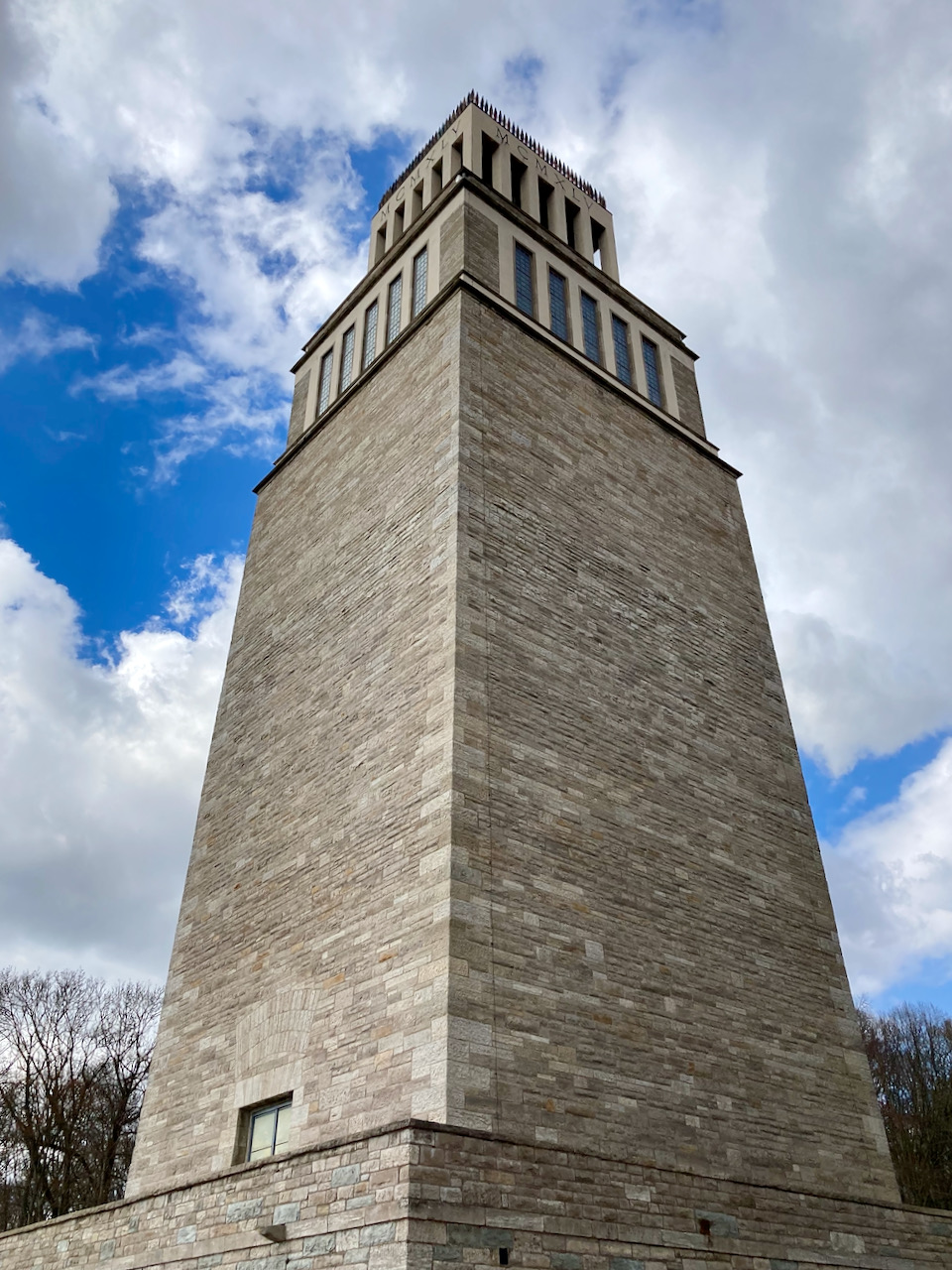
We left our bikes at the entrance to the memorial and walked towards a tower that I have only previously seen from the Autobahn below. That was the idea – to be visible. To be a reminder. So that this will never happen again. The thought of forgetting, the evidence seen around the world of all kinds of forgetting about so much history, is exactly why it was important to be here.

The complex includes three mass graves and as we walked down the steps towards them, the wind picked up. And once there, once protected by the stone that forced us to look down to the grassy knoll at its centre, the noise of the wind faded and we could take stock of where we were.

We followed the path along the ridge with monuments representing each of the eighteen nations that the prisoners came from. We read aloud each name, doing our best to speak the language that the people of that nation would have used to name their home.

The path curved back up the hill and we followed it, pausing at the sculptures illustrating scenes of life in the camp.

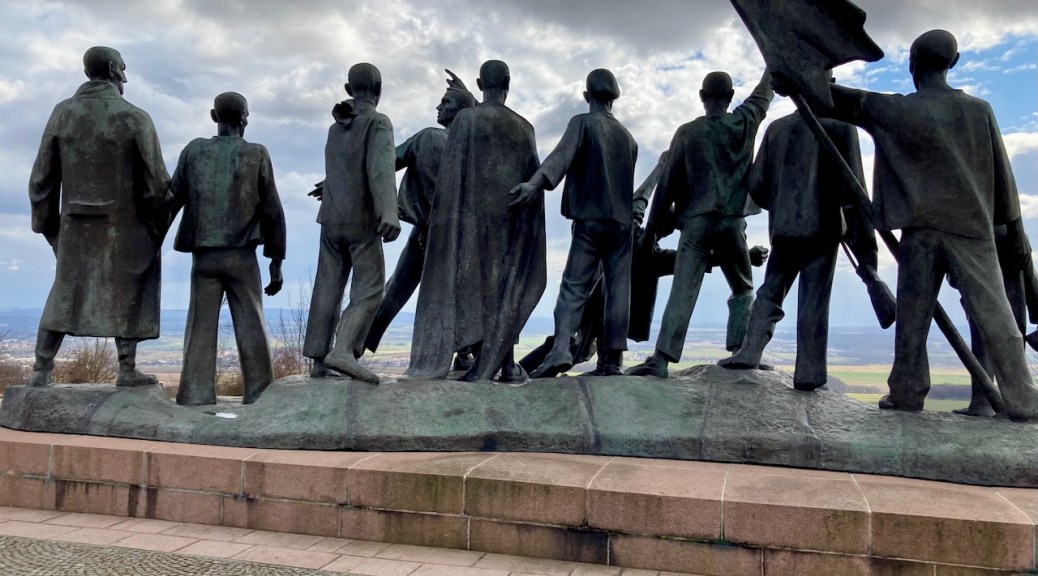
And then we returned to where we’d started, wind urging us along, back to the sculpture that had greeted us upon entrance. I couldn’t bring myself to take a photo of the faces that were far too real.

But the artist left no doubt as to their triumph, and for this, I am grateful.


What I felt in my bones as we walked through the memorial was not the sense of something uncanny that came over me at the roundabout. Rather, I felt the fire of a question that I will never stop asking: How can it be that people looked at other people and did not see them?

And to do justice to this question, I must acknowledge that this is often the case in the world we live in. I must face the reality in which we declare, “Never again”, but are quick to look away precisely when we need to look more closely. And to play my part in the world, I need to say this aloud.

Yet, I do believe the world has come a long way. I believe people have dug profoundly deep into history and rebuilt because of it. And precisely because this is possible, the challenge remains: What will we do, each of us, to make the world a better, more peaceful place?

To start, we must never stop looking.