Tag Archives: LGBT

Pride Month

As usual, the Student Council students have organized a series of activities for Pride Month. This year’s set-up includes posters around the school, a box in the foyer for questions about LGBTQIA+ topics, a series of Instagram posts, and safe space stickers passed out to teachers for their classrooms. Next week, a flag will be hung in the foyer, and the questions in the box will be answered and the answers sent out to the community. Our school is a proud member of two local organizations dedicated to open-mindedness and anti-discrimination practices, so this is just part of what we do.

But. Our school is still a diverse community with diverse opinions. Every year, some of the posters hung up for Pride Month get torn down or defaced. Now that I’ve been overseeing Student Council for three years, I have full confidence that this is not a coincidence and the school’s teachers and administrators agree. In response, Student Council has put up more posters. A colleague a took ripped poster from classroom to classroom, and we hung signs asking students why Pride posters bother them and encouraging them to talk with a few specific staff members, including ourselves, about their concerns. A note went out in the daily bulletin that was read aloud in homeroom, explaining that such behaviour is not in line with what we do at our school.

It seems like the fun of tearing down Pride posters has worn off, which is a small victory. In this case, a clear stance of “This is not acceptable and we will not stand for it” seems to have prevailed.

But the questions of “Why?” and “What’s bothering you?” remain. No one has answered our call to talk about their concerns, which is not a huge surprise. It’s much easier to act anonymously, especially when such actions go against the social norms of a particular environment.

Earlier this year, when our school community voted in favour of joining a network of schools dedicated to anti-racist teaching and practice, there were a surprising number of “no” votes, suggesting that we have not done enough to emphasize what being international and open-minded actually means. This is what we are, but to what extent is that what we do? How have we acted to make our school a place where we openly behave according to our principles? And what have we done in situations where individuals do not act in those ways?

Such questions have been ongoing at school this year, and there have been a few interventions with particular groups to address active acceptance of diversity and inclusion of all, with more plans in the works for next year. But right now, we are wondering at motivation to vote “no” or to take down a Pride poster, and there has been much discussion among staff as to why that could be the case. Having had a lot of time to think about it, I have several hypotheses.

First, there is the possibility of typical teenage rebellion. You want to have a say about something, such as voting whether or not to join a network of schools with a specific agenda, and this seems like a reasonable opportunity to be contrarian.

Alternatively, it could be the case that students know that such topics can be considered controversial and, whether they themselves find the topics controversial or not, do things that they shouldn’t do, just for the sake of it.

The possibility of genuine disagreement cannot be ignored, either. At least as far as Pride is concerned, we have a population of students from religious backgrounds, which means that we need to far more explicitly address the issue of how we, as members of the school community, are respectful of one another even when we disagree.

There are countless possibilities I haven’t thought of, certainly, and I am heartened by the number of staff who have mentioned having conversations with their classes and who are proactively printing out and putting up new posters themselves. I appreciate the support and I know the Student Council students do, too.

Appropriately, a question that came up in Student Council was why we chose to make a big deal out of Pride Month when we’ve ignored most other designated months, and nearly all holidays. I was pleased to report that the school, having recently identified this issue, has created a rotating calendar of culturally significant days to highlight in our school events and practices. Students were impressed and excited, and we are looking forward to what this brings in the upcoming school year.

Schools are places of continuous development, and it is the people within the community, both students and staff, who make them this way. It takes a lot work, it takes confrontation, and it takes decision-making, and none of this happens over night or without effort. It’s one thing to make choices as an individual, and quite another to make choices as part of a system, as the Student Council members are learning. The work is never “done”, but we can certainly take a moment to be hopeful about what we’ve started.


Berlin. Germany – December 2021

Creating Hospitable Spaces

I love books. I love books and independent bookstores and used bookstores. I love reading and learning. I love being challenged by what I’m learning, or feeling my horizons expand. I love getting so deep into the notes and references and traveling wherever they take me, to other books and other authors. I love when books I’ve read are sources for other books, when writers I respect mention other writers I respect.

It was that love that drew me to BooksActually last weekend, one of Singapore’s independent bookstores. BooksActually is particularly special because it also operates its own publishing house, making it the go-to destination for books that are truly Singaporean and might not have a significance audience elsewhere. This is where I found I Will Survive, an anthology of stories from Singapore’s LGBTQ community. While much in the book touched me, it was a line in the foreword that first got me thinking. Juliana Toh writes, “I was left thinking of Henri Nouwen’s book Reaching Out, in which relationships are viewed as contexts for the creation of hospitable experiences.” This particular way of defining relationships was new to me and I found the idea of “hospitable” really compelling. Maybe it was because we’d just started school and my students were on my mind, or maybe it was because I was reading about LGBTQ young people, but I immediately extrapolated from Toh’s statement and began to wonder what our schools would look like if we moved from creating “safe spaces” for young people to creating “hospitable spaces” instead.

Defining
The word “hospitable” has two definitions:

  1. friendly and welcoming to visitors or guests
  2. (of an environment) pleasant and favorable for living in

It seems reasonable that a hospitable space would inherently be a safe one because anywhere that is “pleasant and favorable for living in” implies safety. I think this idea fits really well in the context of school settings. After all, school is where young people spend most of their time and we know that we all do better when we feel comfortable.

Take a moment to consider what we want for the young people in our care. We want them to learn, to grow, to explore. We want them to feel good, at ease, and valued as individuals. We want them to connect to each other, to create, and to become their best selves. We want them to see and care for those around them and we want them to make the world a better, more peaceful place.

Doing this work requires that our students feel more than safe, which is currently what we tout as a goal for our schools and classrooms. A learning environment in which the above aims can be realized would be closer to “pleasant and favorable” than safe.

Rethinking
In my eight years teaching, my classroom has always been a place where students wander in and out during breaks and before school and where they stop by after school to chat about a variety of things. Like the rest of us, students spend time in places that they enjoy, places that are welcoming and pleasant and where they feel affirmed, or perhaps part of a community.

So what would schools look like if we explicitly focused on creating hospitable spaces rather than safe spaces? The biggest difference, I think, would be in the ways we approach students as individuals. The goal of safe spaces is to provide a protective, inclusive environment that embraces diversity on a range of levels. I wonder, though, what would happen if we started emphasizing the need for welcoming, pleasant spaces instead of merely safe ones. A space can be safe without being welcoming, pleasant, and favorable, but places that are favorable to us, places we want to be, will more than likely also be safe.

Imagining
As a reader, I’m a believer in the power of language. George Orwell’s 1984 does a better job illustrating this than I could, so I refer you there. Now, let’s pretend “hospitable space” was a common phrase used to talk about schools, an idea accepted and embraced by the school community.

Creating hospitable spaces would require all involved to treat one another, at the minimum, as individuals with dignity. It would require authentic communication and connection, which would foster an environment in which adults and young people work together towards common goals and in which each learns from and guides the other. A hospitable space would be positive, energizing, and a place where we all enjoy spending time. It would be flexible, open-ended, exploratory, creative. It would be a space where we grow as individuals and as a community, a space where we’d recognize first our common humanity and then the diversity that makes us each who we are.

Imagine the learning that would happen in this hospitable space.

Moving Forward
Of course, not all of us work in school and with students. But we all develop relationships with others, whether friends or colleagues or romantic partners. We all want to feel loved, affirmed, and valued. We want to grow and help others grow, to become better tomorrow than we are today.

All relationships take on colors, flavors, and textures. All relationships are built inside a metaphoric space. So let that space be hospitable. Let yourself be open to others. All of our lives are better when we can take a breath and know that someone else is doing the same.

Travel Guide: San Francisco

This trip to San Francisco was my second time in California and, like the first time, I left wondering why we all don’t live in California. (“Cost of living” likely answers this question for many.)

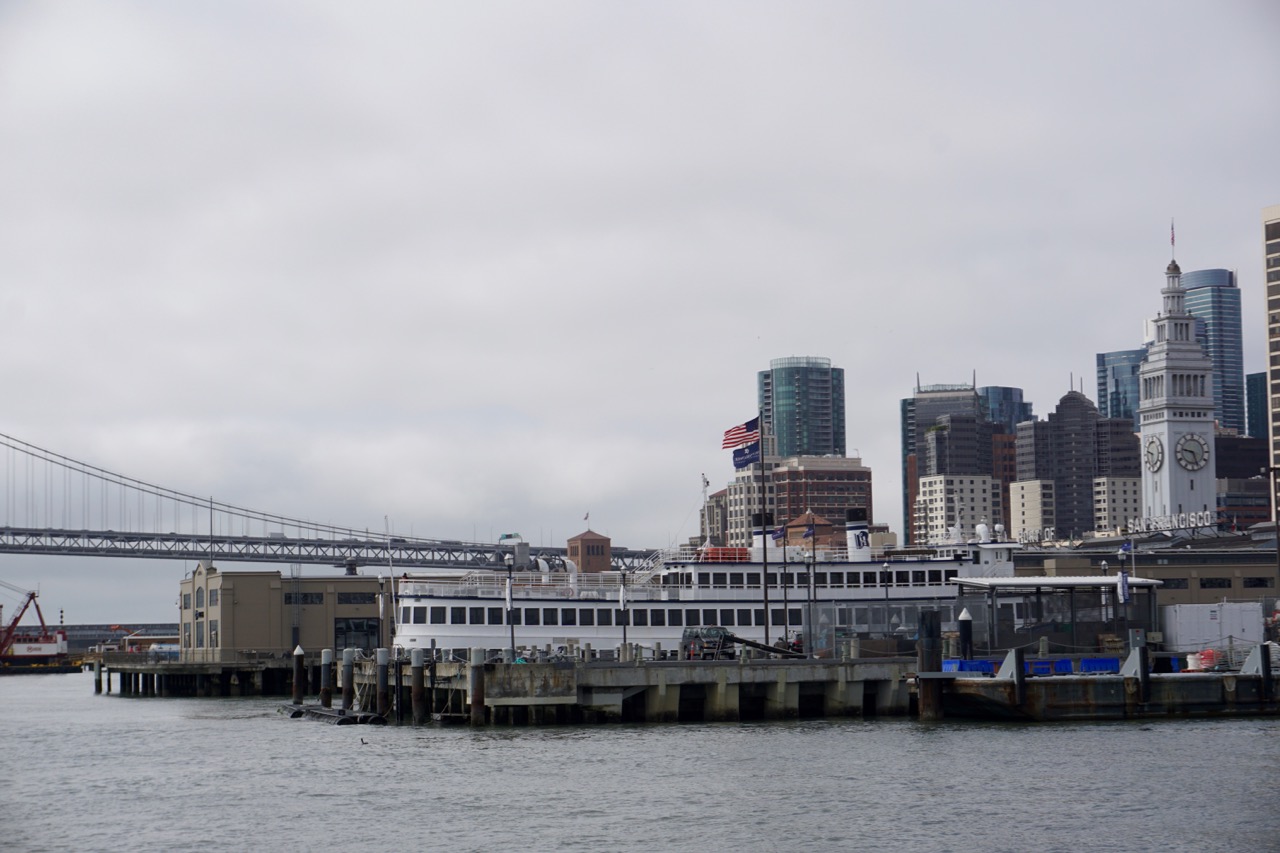
I landed at SFO Wednesday night and, marvelling all the while at the difference in weather between San Francisco and Singapore, spent most of Thursday just walking around the city to vanquish the jet lag (a failed pursuit) and enjoy time outside in non-humid air. I headed first to the Embarcadero where I took in the sights of the city from one of the many docks. I love water and was happy to be so often in sight of it.

DSC04505DSC04509

The Ferry Building was only a short walk away and I enjoyed the indoor upscale food and merchandise stalls . . .

. . . as well as the outdoor farmers’ market. . . .

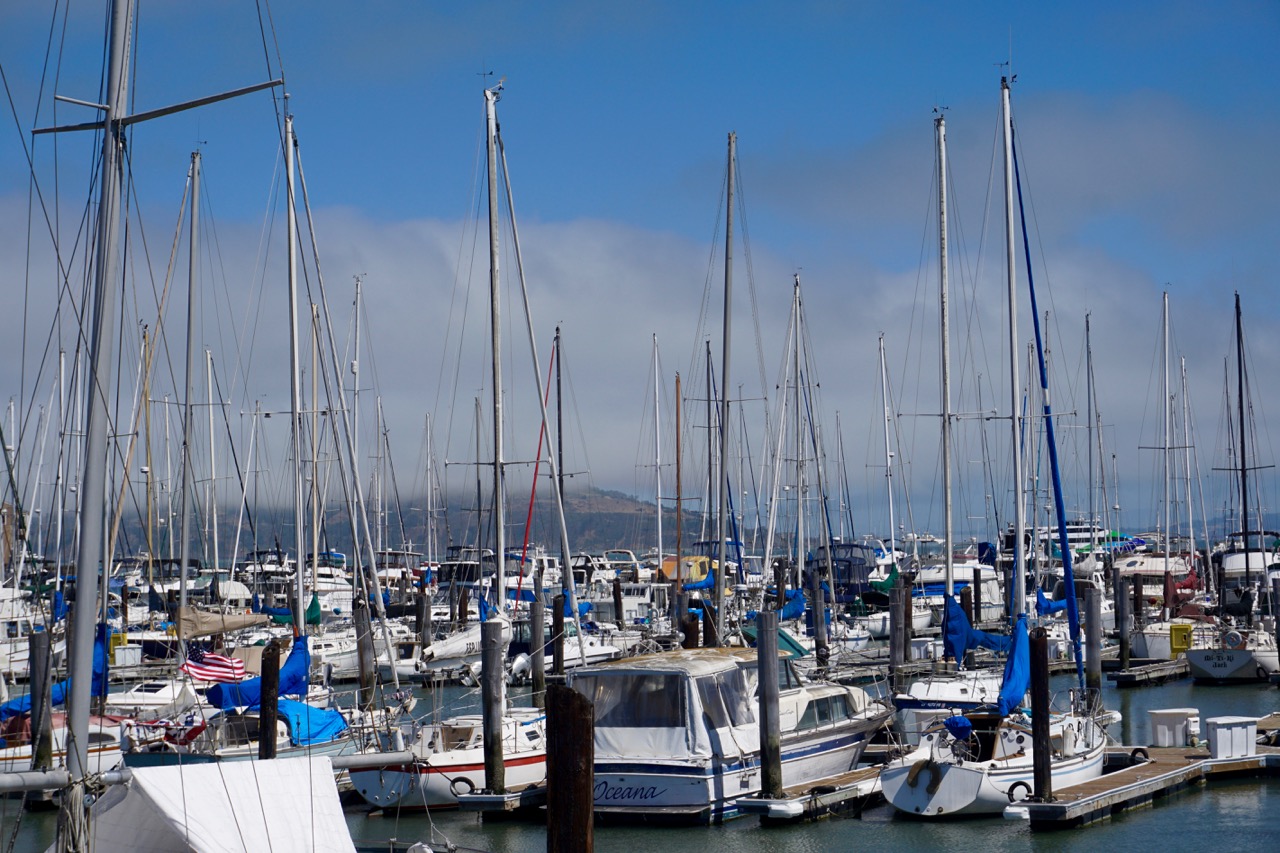
Jet lag from Singapore had made it a very early day, so it was only late morning when I began my walk along the Embarcadero. I stopped at Pier 39 to admire the boats . . .

DSC04552

. . . take in the carnival-like atmosphere complete with boardwalk sweets and treats . . .

. . . and get an unexpected peek at some lounging sea lions!

DSC04566

From there, I was pretty close to Fisherman’s Wharf. I admit that much of the hype and excitement were lost on me because I don’t eat seafood, but I enjoyed looking around and watching people enjoy themselves.

From there I walked to Ghirardelli Square, which I revisited the next day to sample the beer at San Francisco Brewing Company. We have a few microbreweries in Singapore but it’s nothing like what’s in the US.

DSC04591

After that, I decided it would be fun to walk up a whole lot of hills to Lombard Street. I can’t say the walk itself was what one typically thinks of as fun, but we don’t really have hills in Singapore and the views were well worth it.

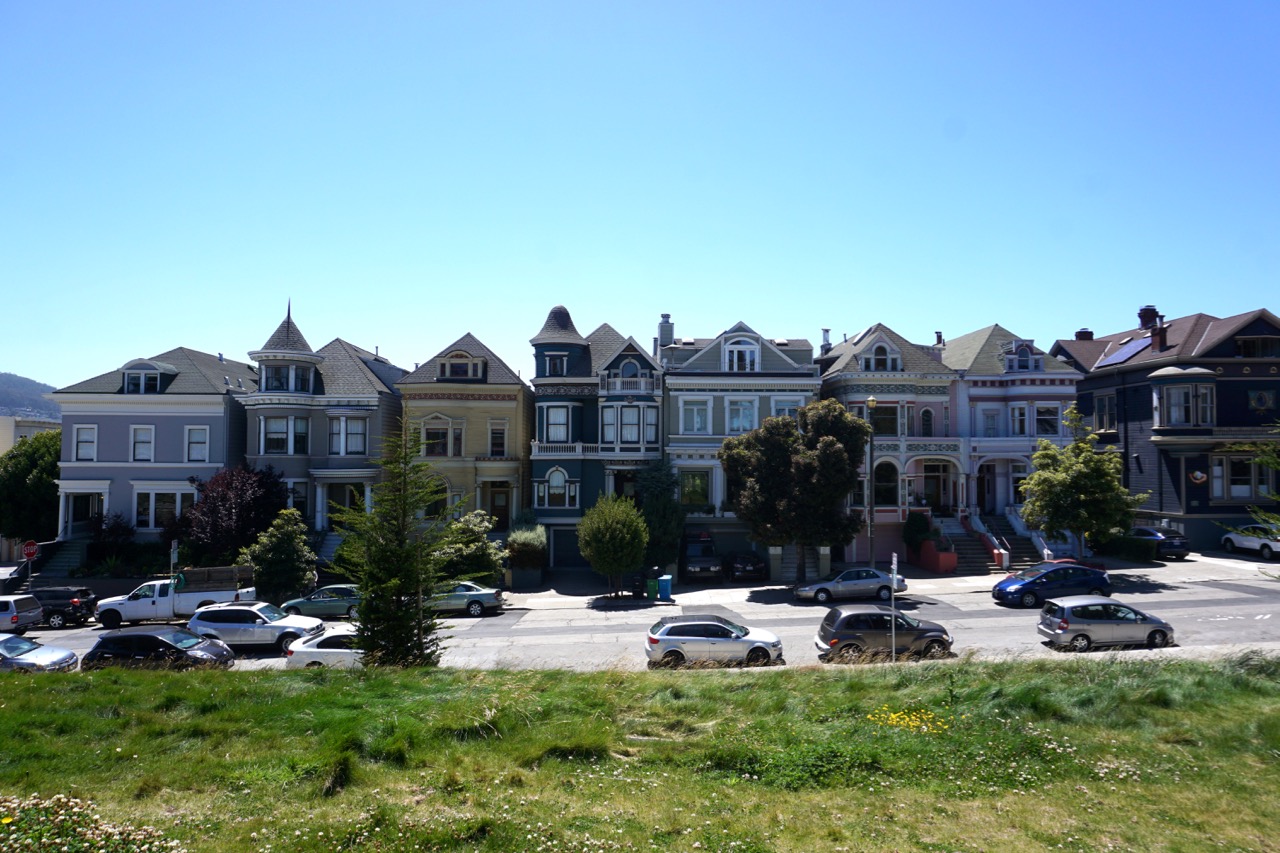
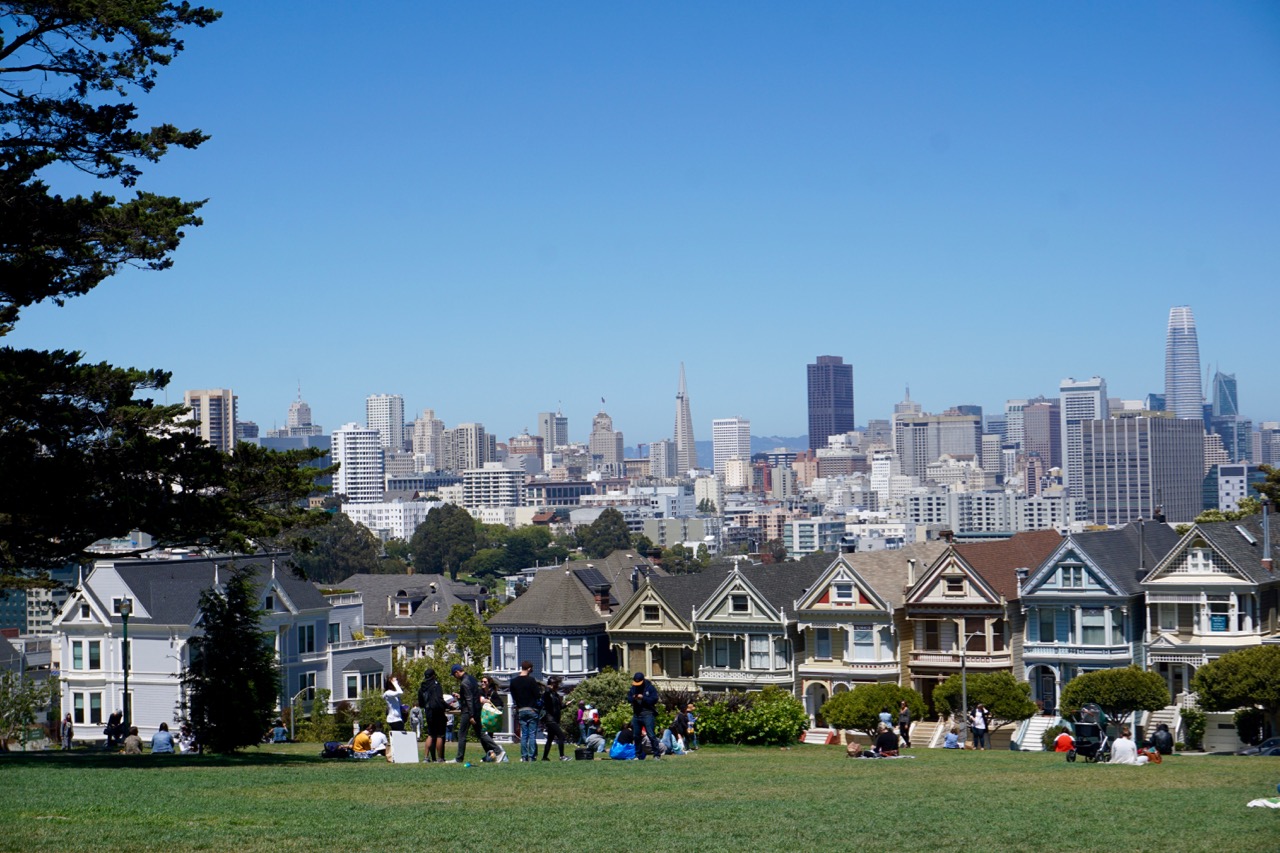
Later that afternoon, I went to Alamo Square to see the famous painted ladies. I was very tired and very jet lagged by that point but again, pretty views!

DSC04618DSC04622

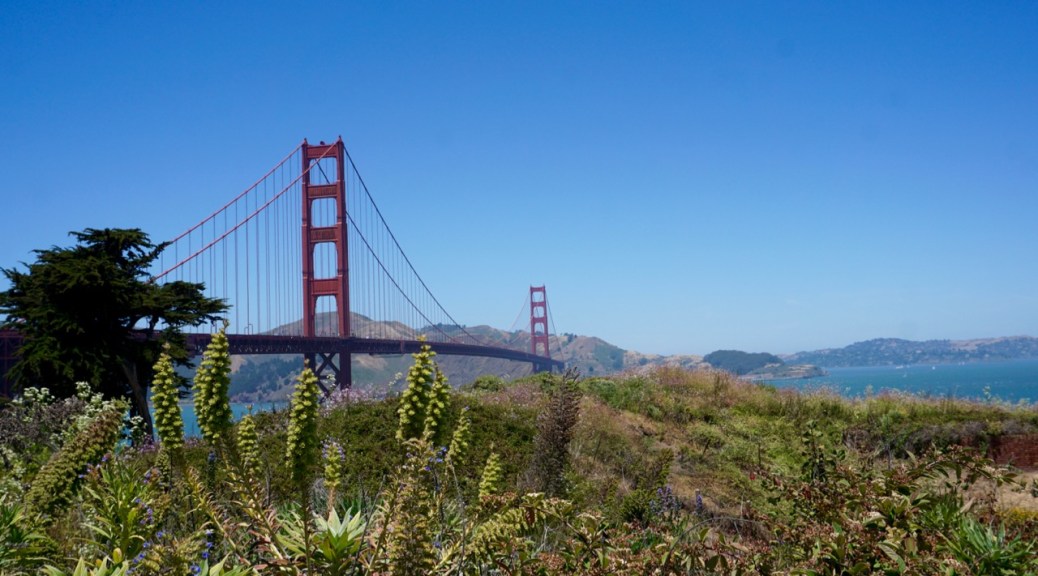
A very old friend from high school flew up from Long Beach to hang out with me for the rest of the weekend and really I could have been anywhere in the world. Catching up and hanging out was the highlight of my San Francisco experience, but we did some cool things on the side. We started our adventure Friday morning with a walk across the Golden Gate Bridge, which I was really excited about. It was so windy up there but the expanse of blue sky was extraordinary.

After walking back along the bridge, we followed the beach, enjoying the sunshine and the breeze. I really love all the flowers in California because they’re different from anything I’m used to seeing. I also really love long walks without sweating!

The beach path took us to the Palace of Fine Arts, which neither of us had known existed. There were young women and their families taking quinceañera pictures and it was easy to see why. The Palace of Fine Arts, originally built in 1915 for the Panama-Pacific Exhibition, seemed a strange architectural choice for northern California but is really beautiful.

We decided we’d done enough walking for one day and saved the rest of our energy to celebrate San Francisco Pride in the Castro, San Francisco’s historic gay neighborhood and therefore the perfect place to be! It also had some great street art, which I love.

We returned to the Castro the next day to check out the festivities in Dolores Park . . .

DSC04700

. . . and join another old friend and his new girlfriend for brunch! They drove up from Palo Alto to hang out with us, which was really special. The longer I’m away from home, the more I appreciate when people make the effort to spend time with me. We ended up spending the rest of the afternoon with some of my friend’s relatives and their adorable dogs. Naturally, we walked them to Kite Hill, a beautiful park with sweeping views of the city. It was very windy up there, too!

After a couple very busy days and much jet lag, we decided it was time to relax. The Palo Alto friends headed home and my Long Beach friend and I stopped at a couple more Castro spots to continue our celebration of SF Pride. He left before the parade the next morning and though the parade was great fun, I couldn’t see over anyone’s heads enough to take a decent picture.

Insert time warp here!

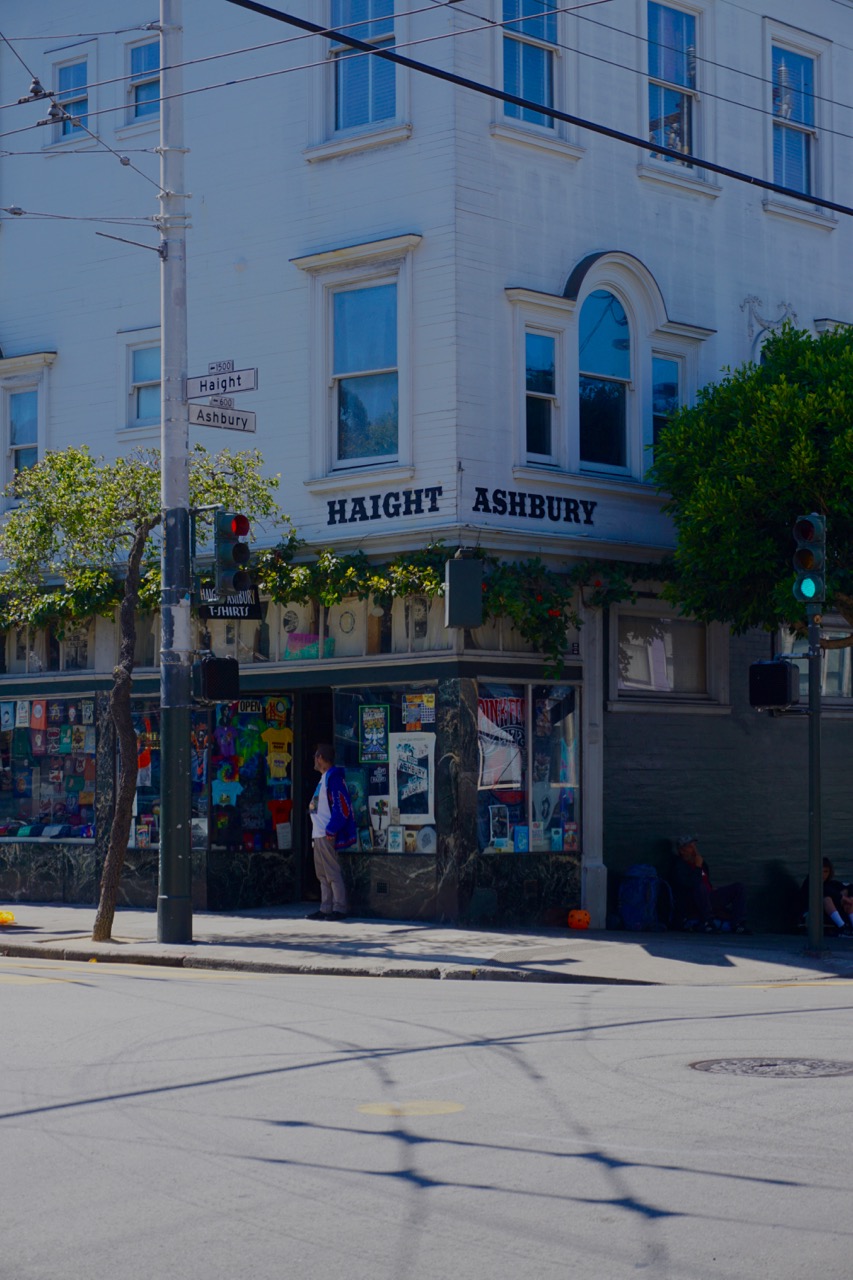
After a week in Berkeley (more on that in my next post) for the conference that prompted the trip to San Francisco in the first place, I spent a final afternoon with a new friend in the Haight-Ashbury district, made famous by the 1967 Summer of Love.

DSC04881

The whole area was an interesting mix of hippie counterculture and gentrified boutiques, which seems to embody the feel of much of San Francisco. My favorite part was the street art . . . and how it extended to cars and houses!

When I first told my principal that I was going to northern California, he told me I wouldn’t want to leave. He wasn’t wrong, but I was also very excited to go home to Rochester to visit my family. That’s where I am now and it’s taken two days to write this post because I keep getting distracted by the laughter and activities of the people around me. I am so lucky to have them! When I get a quiet moment, I’ll share the photos of my rural and urban hikes around Berkeley.

Delicious food, good friends, and diverse neighborhoods to explore – thanks, San Francisco!