Tag Archives: Market

Travel Guide: Munich

Being in Munich for Oktoberfest was a bit like being in New Orleans for Mardi Gras: It was an accident and I didn’t realize that’s what I was doing until someone else told me.

In all fairness, I hadn’t intended to be in Munich for Oktoberfest. Rather, I had tickets to an Elton John concert that was cancelled (and rescheduled for two years from now!) because of Germany’s Covid regulations. Any reason to travel is a good one, and so, concert or not, I decided to head to Munich.

I arrived after dark on Friday night but I could already tell that being in a city felt rather different to my small town. There was something about the amount of light, the sheer number of buildings (though they were a far cry from what my Singapore and New York lives would consider tall), and the ambient noise that showed me how accustomed I’ve grown to my current environs. Despite this reaction , it was precisely my years of city living that immediately had me feeling comfortable navigating Munich’s excellent public transportation system.

The weather throughout the weekend was gorgeous, 20° and bright blue Bavarian skies. This meant that I was outside the whole time and have saved the indoor recommendations (all suggestions thanks to a friend who had lived in Munich for a time) for a future visit.

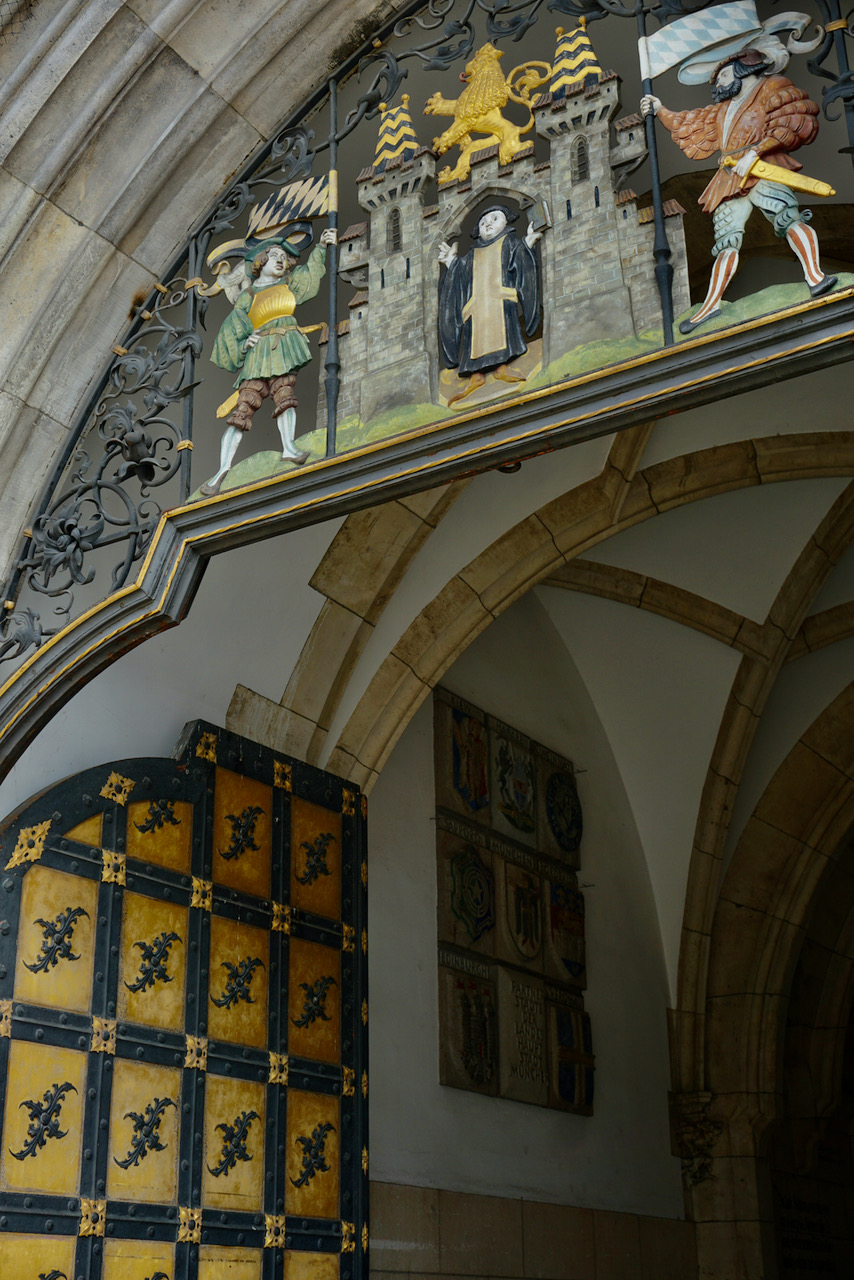
On Saturday morning I got a coffee and sandwich and sat in Marienplatz to watch the world go by. As I am directionally challenged, this became the centre of Munich in my head and I returned to this spot multiple times to reorient myself. The famed Glockenspiel at the Rathaus, or New City Hall, puts on two performances at 11am and 12pm to bring some of Munich’s history to life. It was charming and I had to smile at the excitement that must have caused in the early twentieth century.
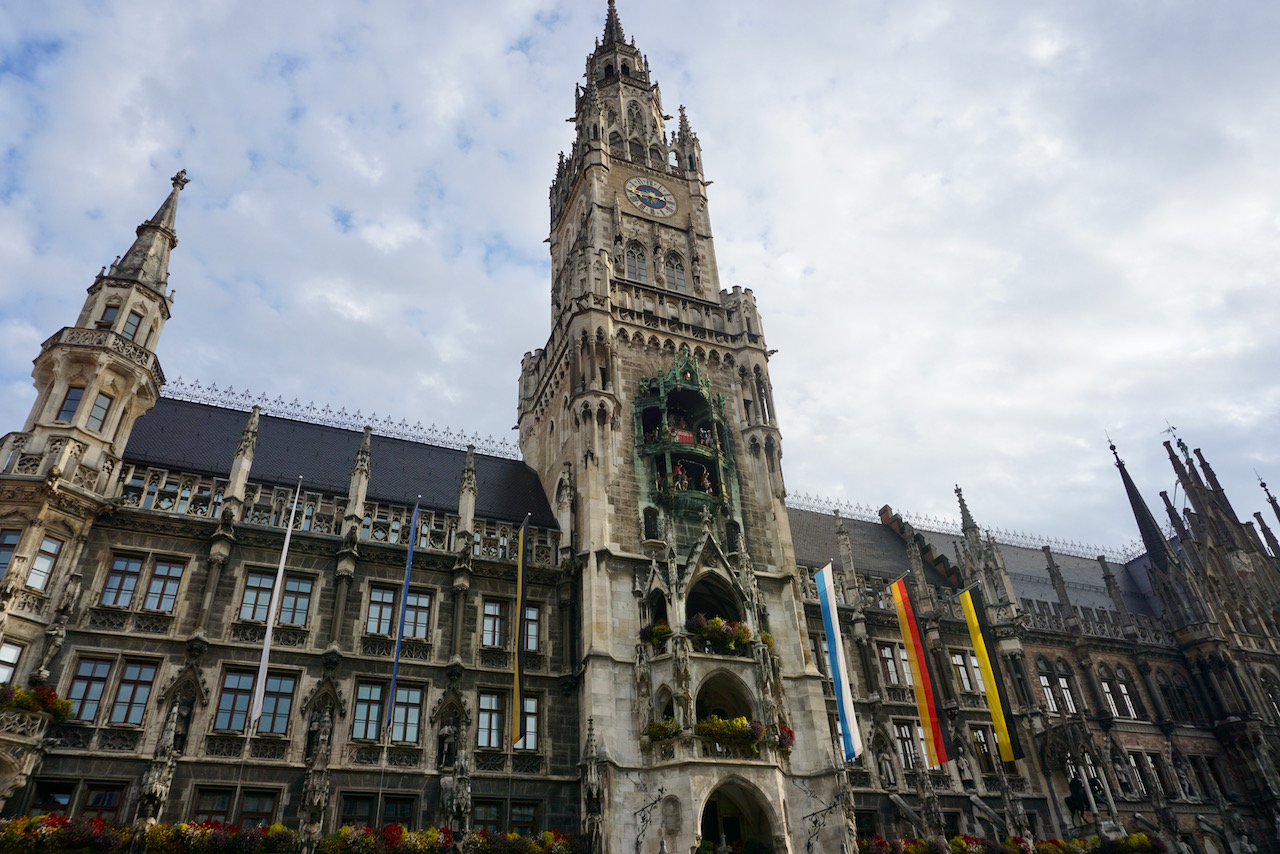
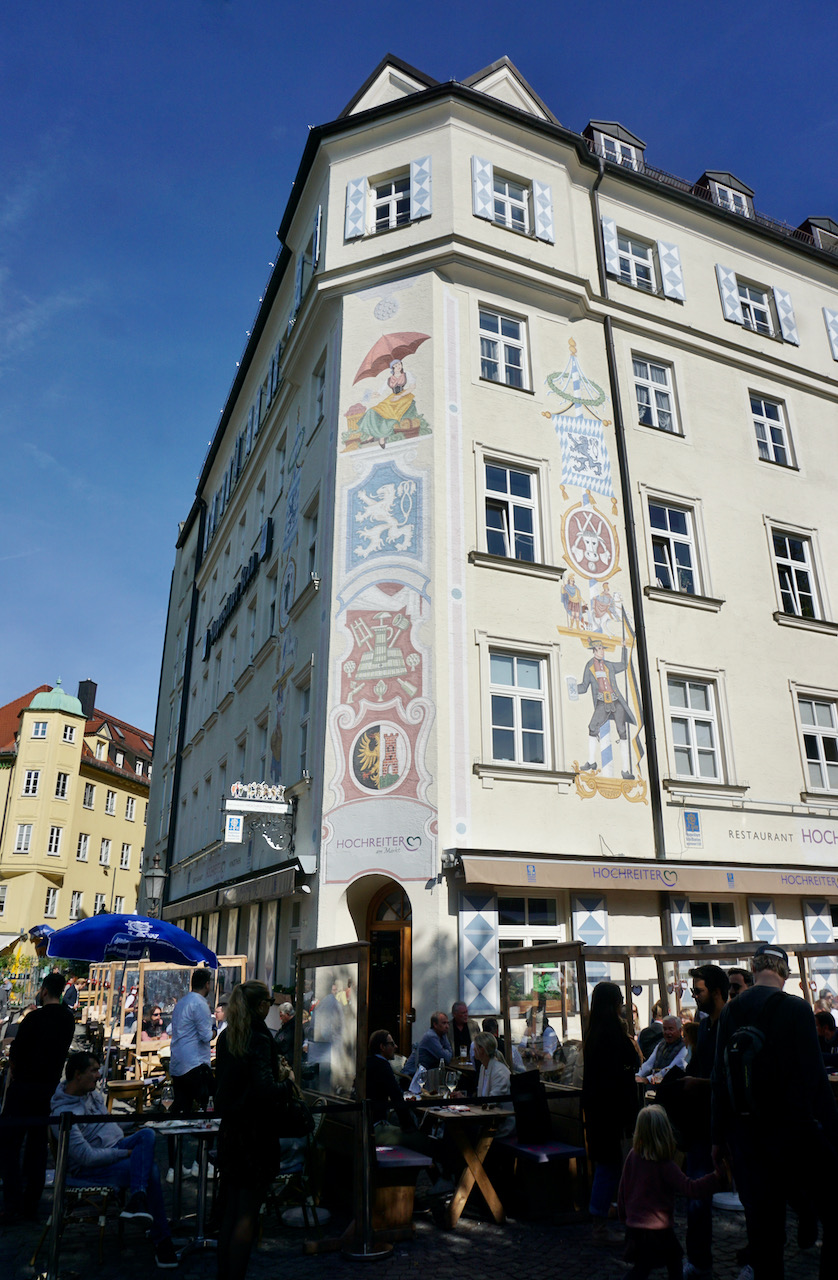
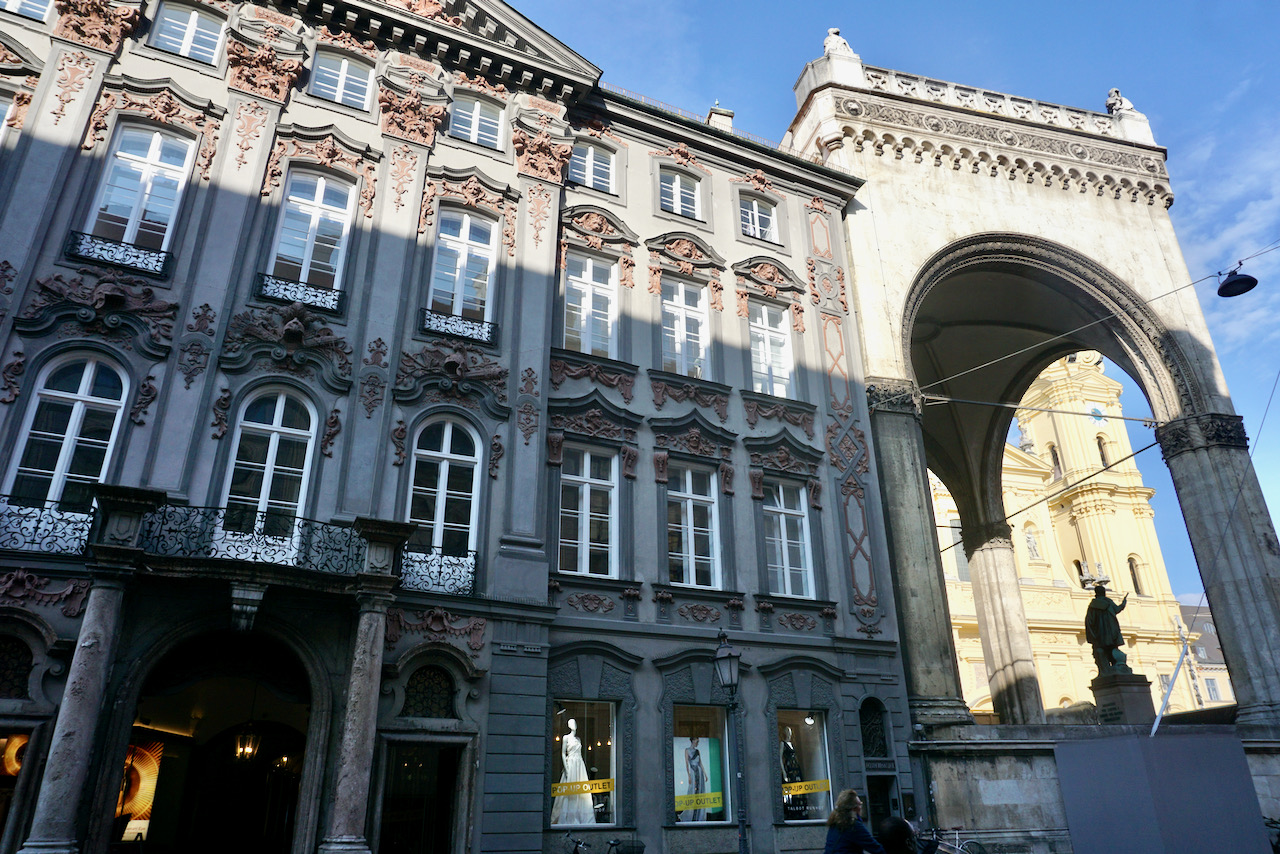
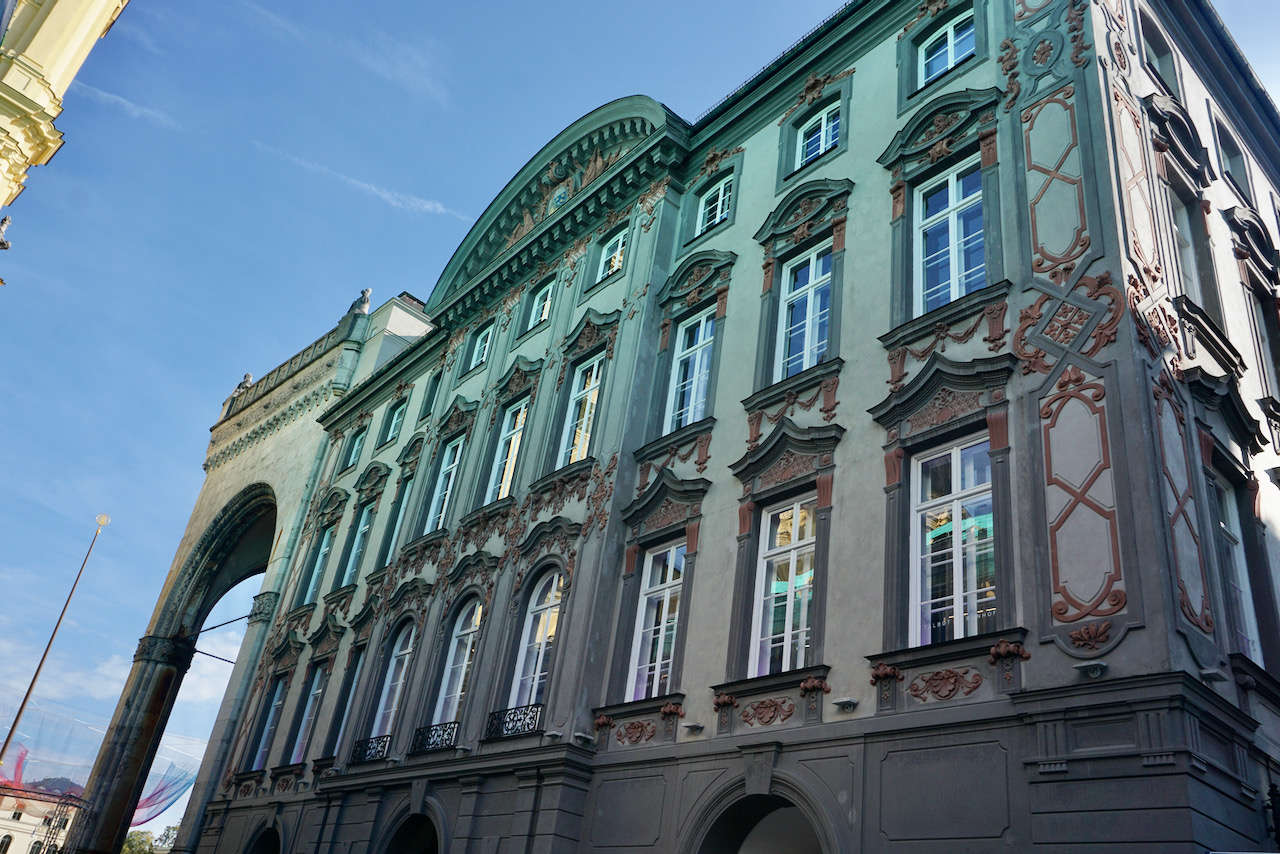
The day began in earnest with a walking tour in which we learned about the history of Munich and Bavaria and talked about beer culture. The tour guide, Jax, explained that the façades of Munich’s buildings were redone after the war, often in very clever ways. The buildings themselves are therefore not old, considering about 50% of the city was damaged during the war, but their careful consideration of the past has lent the old town an old feel.

Our tour also touched on Munich’s role in Hitler’s rise to power. I didn’t realize that the failed 1923 Beer Hall Putsch that landed Hitler in jail, where he subsequently wrote Mein Kampf, had taken place here. It was an interesting juxtaposition to talk about this just before heading into the beautiful Englischer Garten, originally the royal private garden that, once opened to the delighted public in the late 1700s, became the home of Oktoberfest.

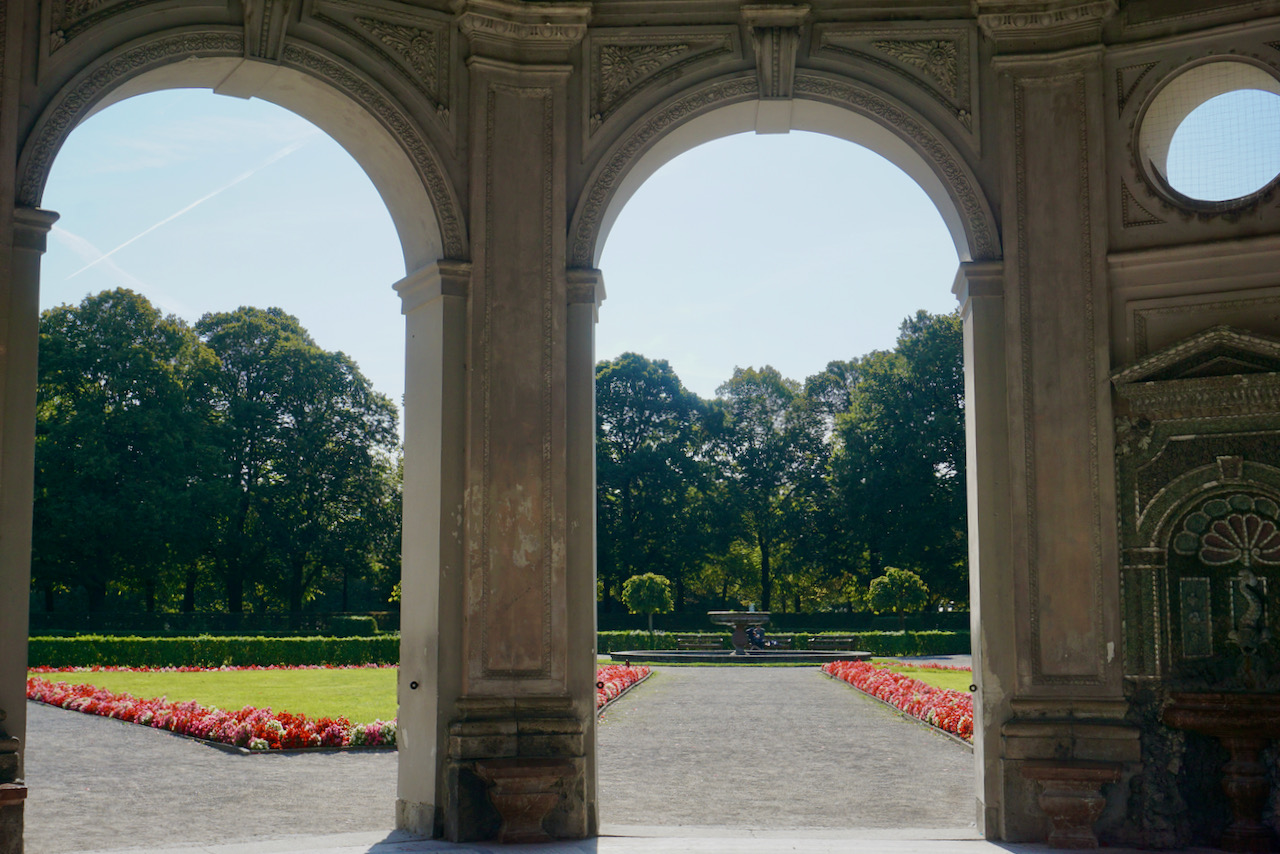
The Englischer Garten is Munich’s largest park and these photos do not do it justice. In addition to being historically interesting, it also held a first for me: Watching people surf in a public park.
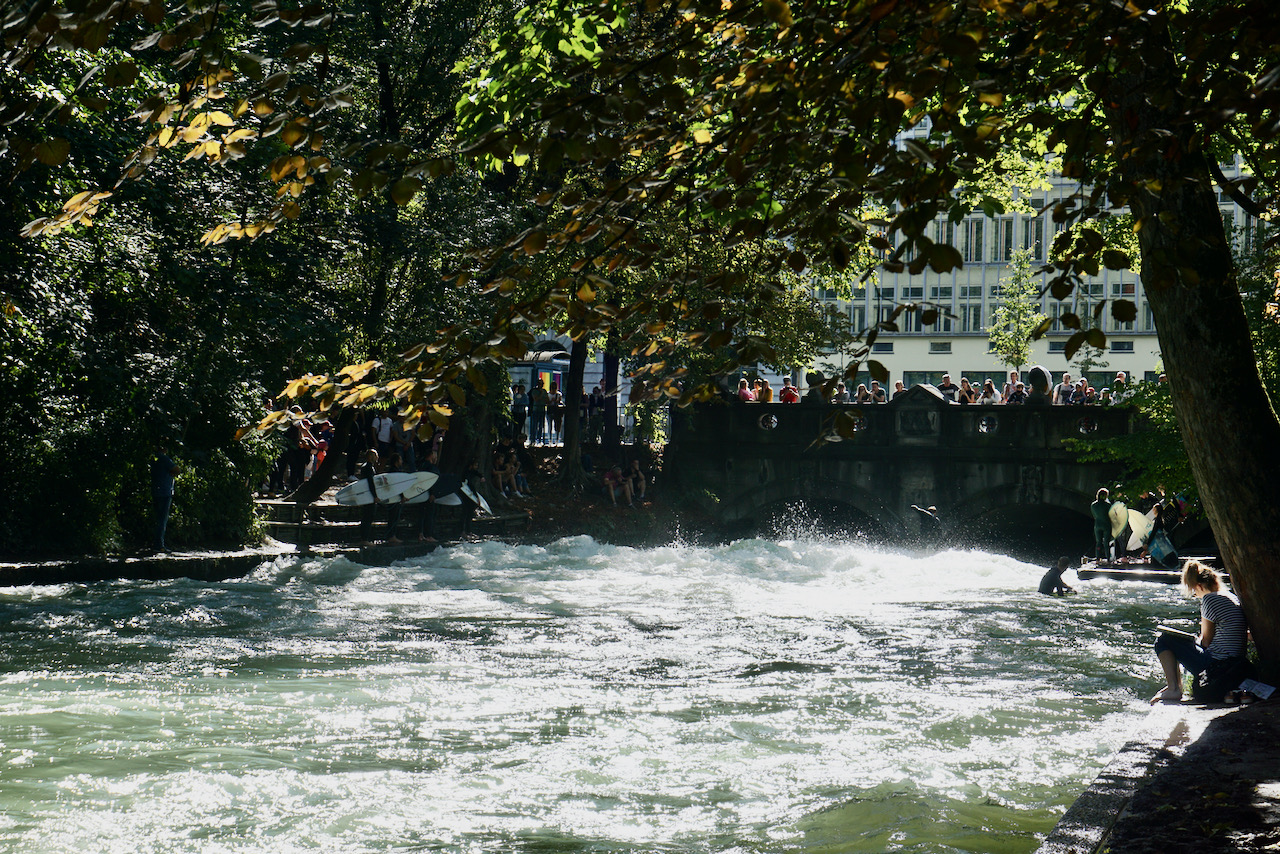
But I’m getting ahead of myself. That was the last photo I took on Sunday. Back to the tour on Saturday, which concluded with my favourite part: Viktualienmarkt!

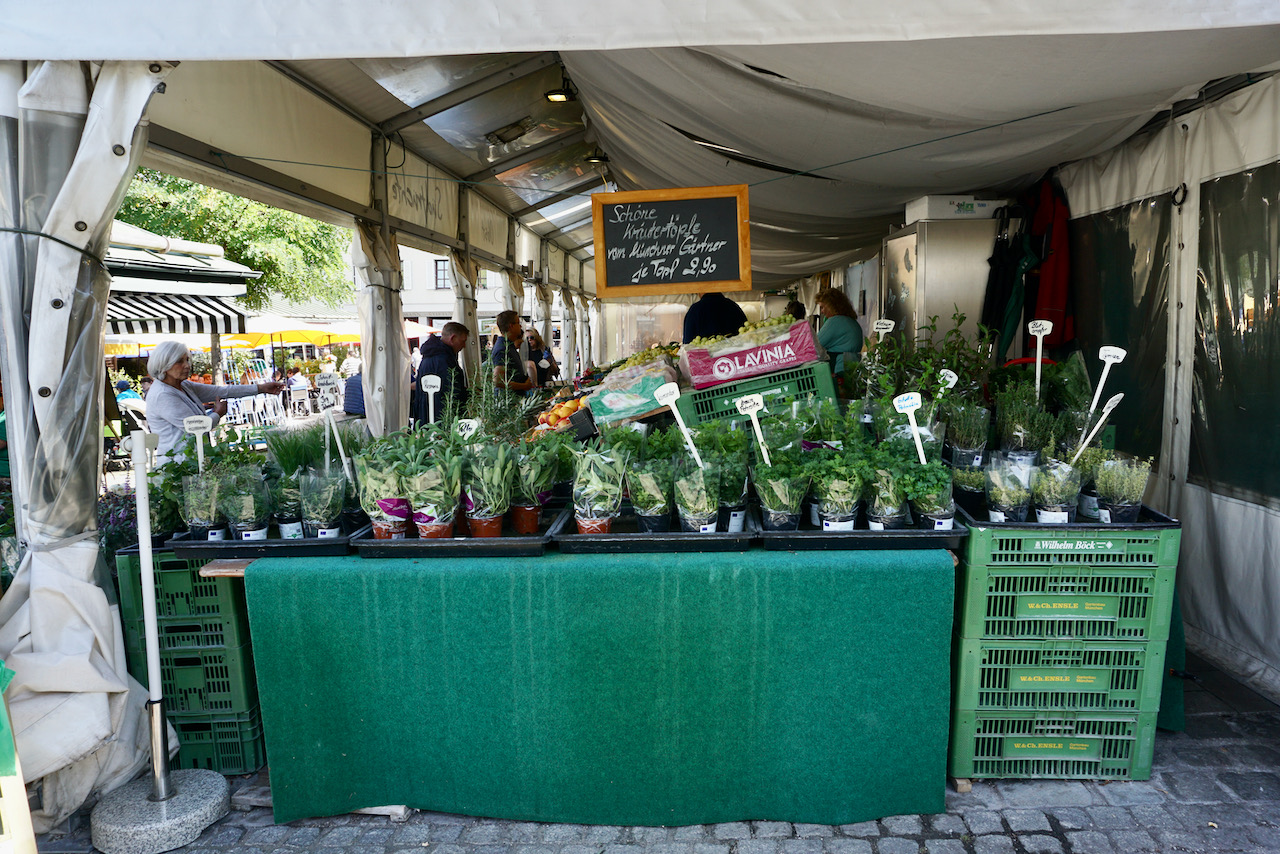
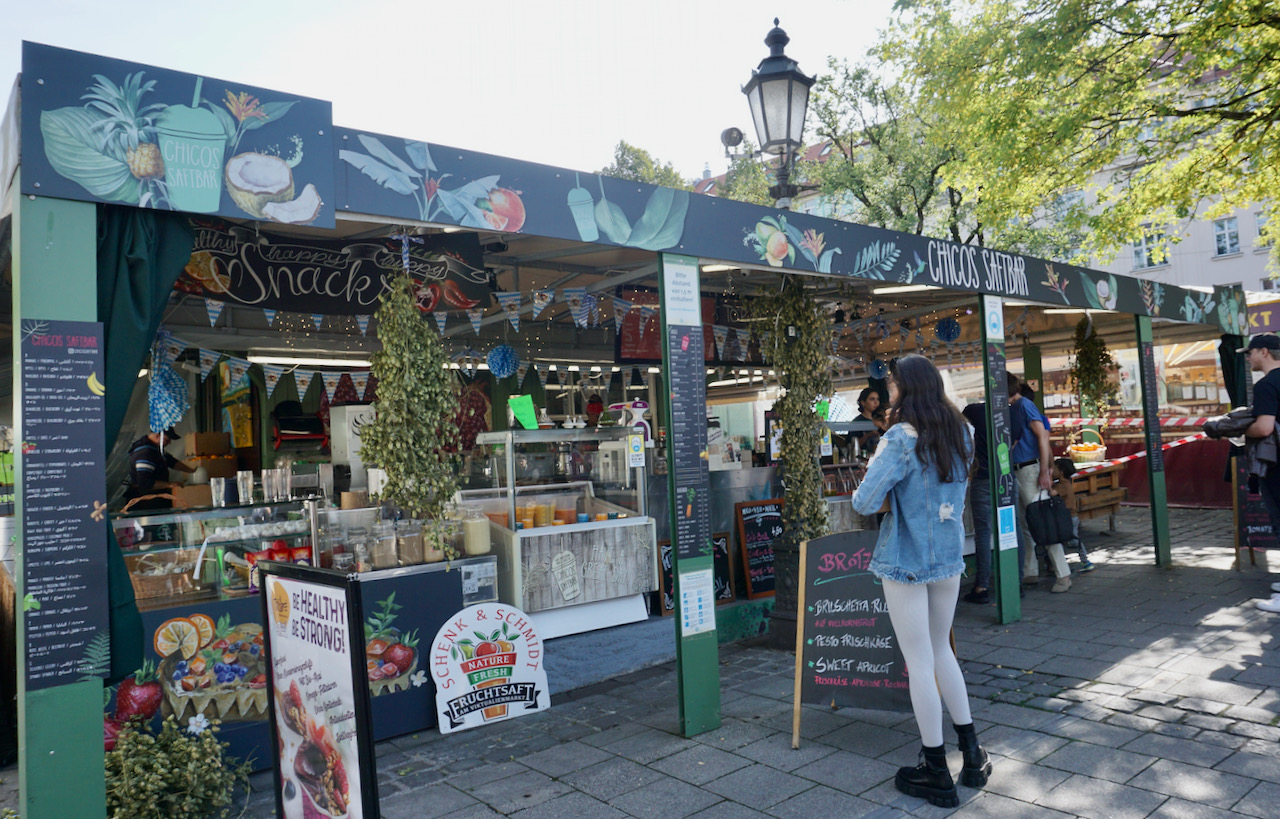
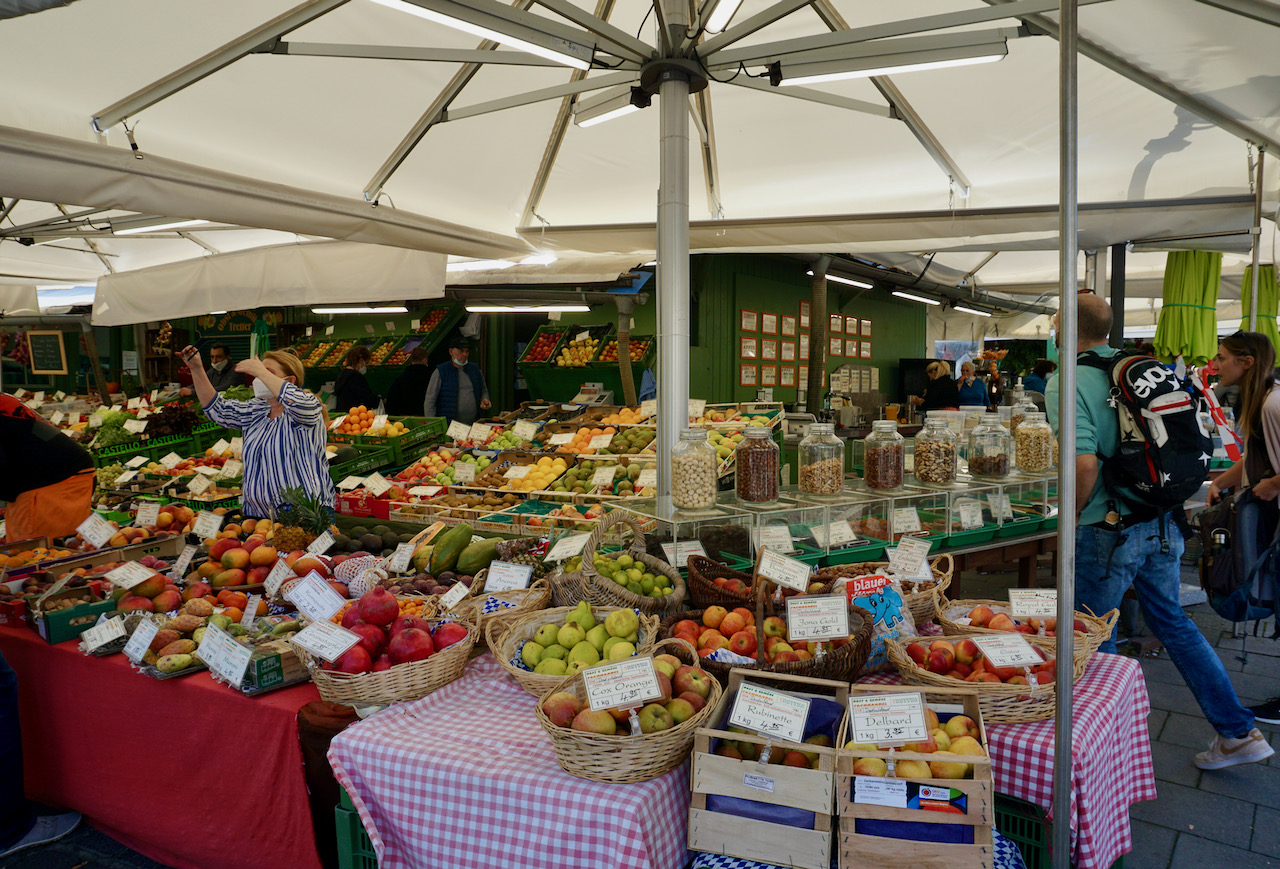
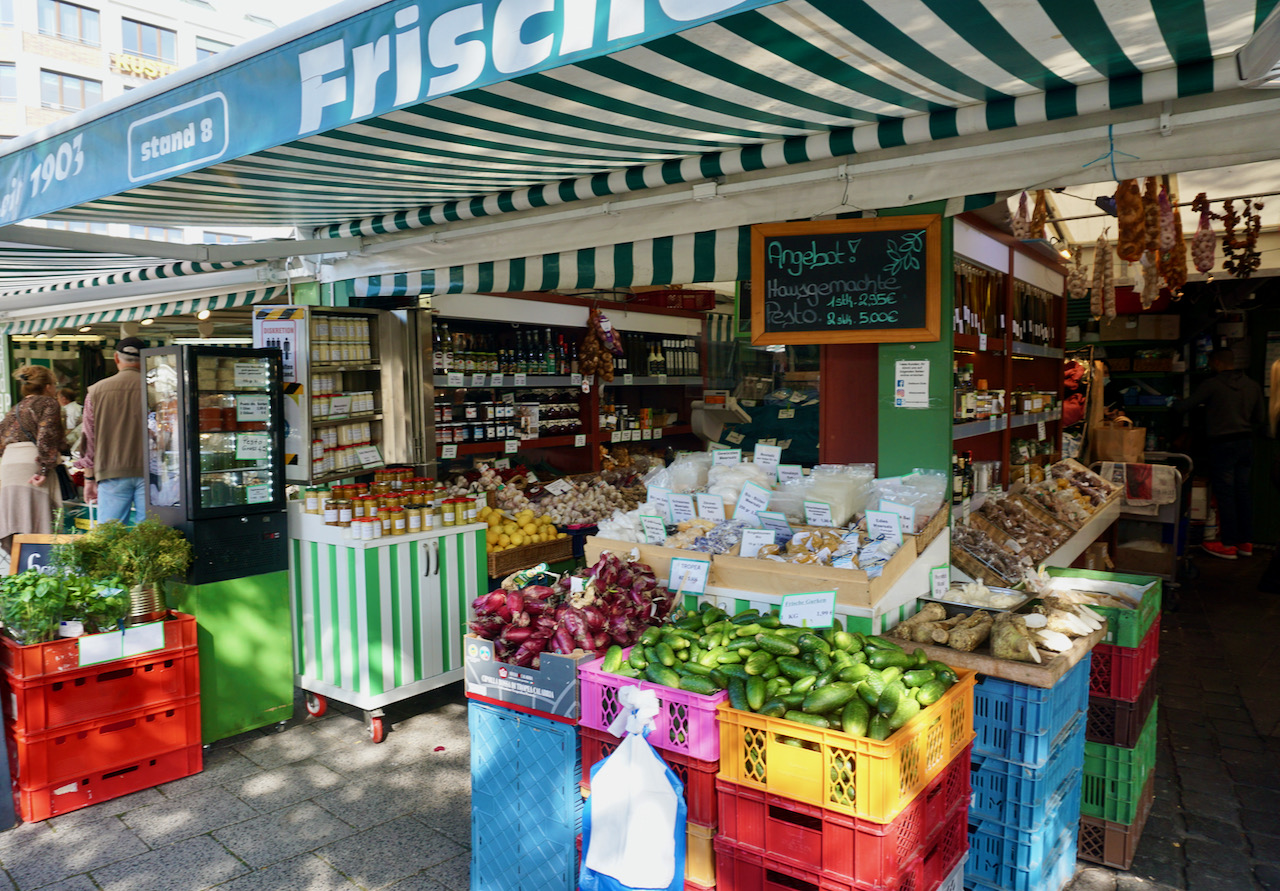
If you’ve followed this blog for any of my travels, you already know how much I enjoy markets. Please feel free to skip to the photos. If you’re new here, welcome! To sum it up, I really enjoy markets. I love the people, the energy, the community built around food. I love the smells and tastes and the fact that everything you purchase comes from a real person who is standing right there in front of you, and who could probably tell some sort of story about what you’re buying. I love the interaction and the camaraderie that comes from watching others and being caught in the act of watching. All kinds of people shop at markets, and markets cater to so many traditions and flavours. One must only glance at the colours, the careful presentation of goods, and the handwritten signs to witness the collective humanity that has created this place. Walking through a market tells us something about the culture of a place and the people who make their home and livelihood there. There is so much to see and so many opportunities to experience something new.

After the tour concluded, I returned to Viktualienmarkt, had something to eat, took some photos, and watched people. Even though the tourist events and big Oktoberfest celebrations were cancelled, it was a treat to watch people going about their business in Drindl and Lederhosen, and then joining their fellow Bavarians at the many beer gardens and beer halls. I did my part by sampling kaiserschmarrn and pretzels with obatzda in my breaks from wandering around.

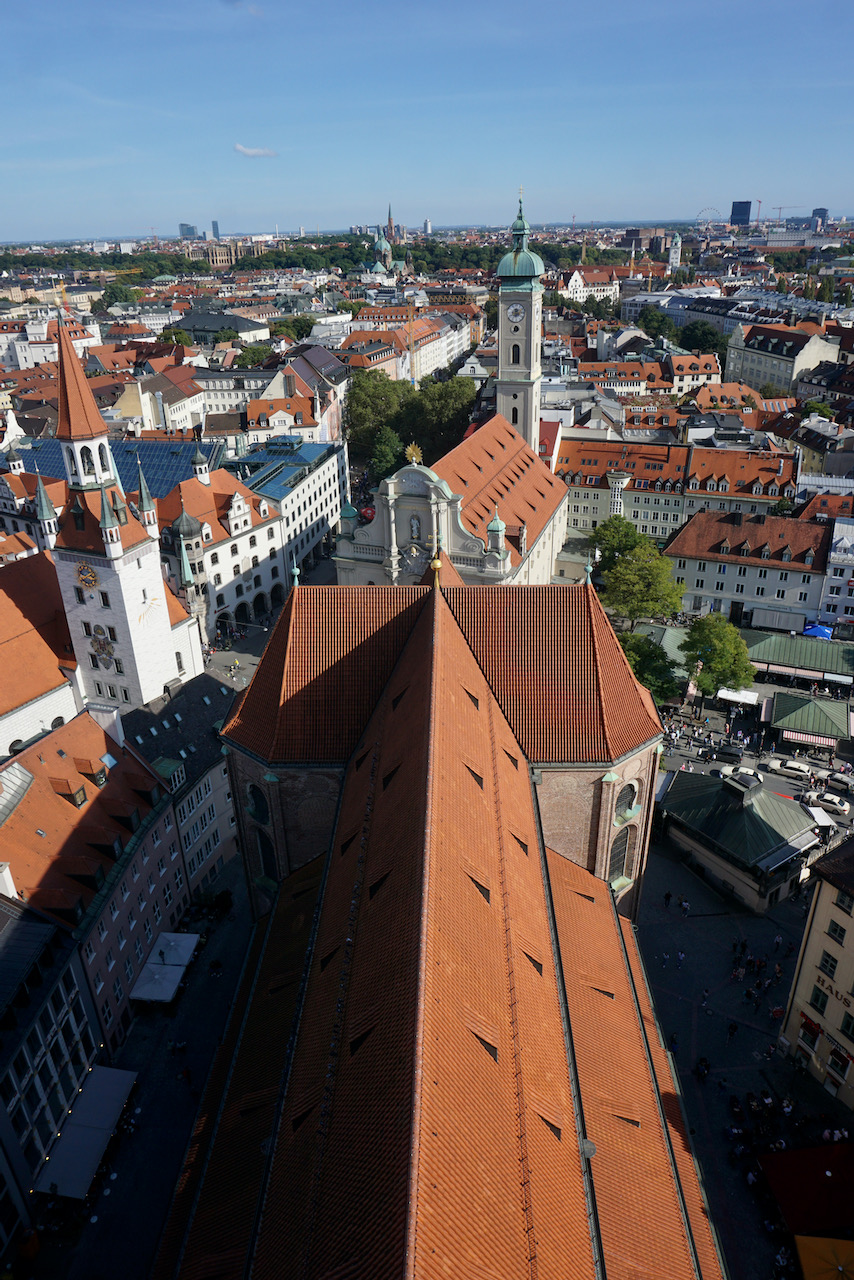
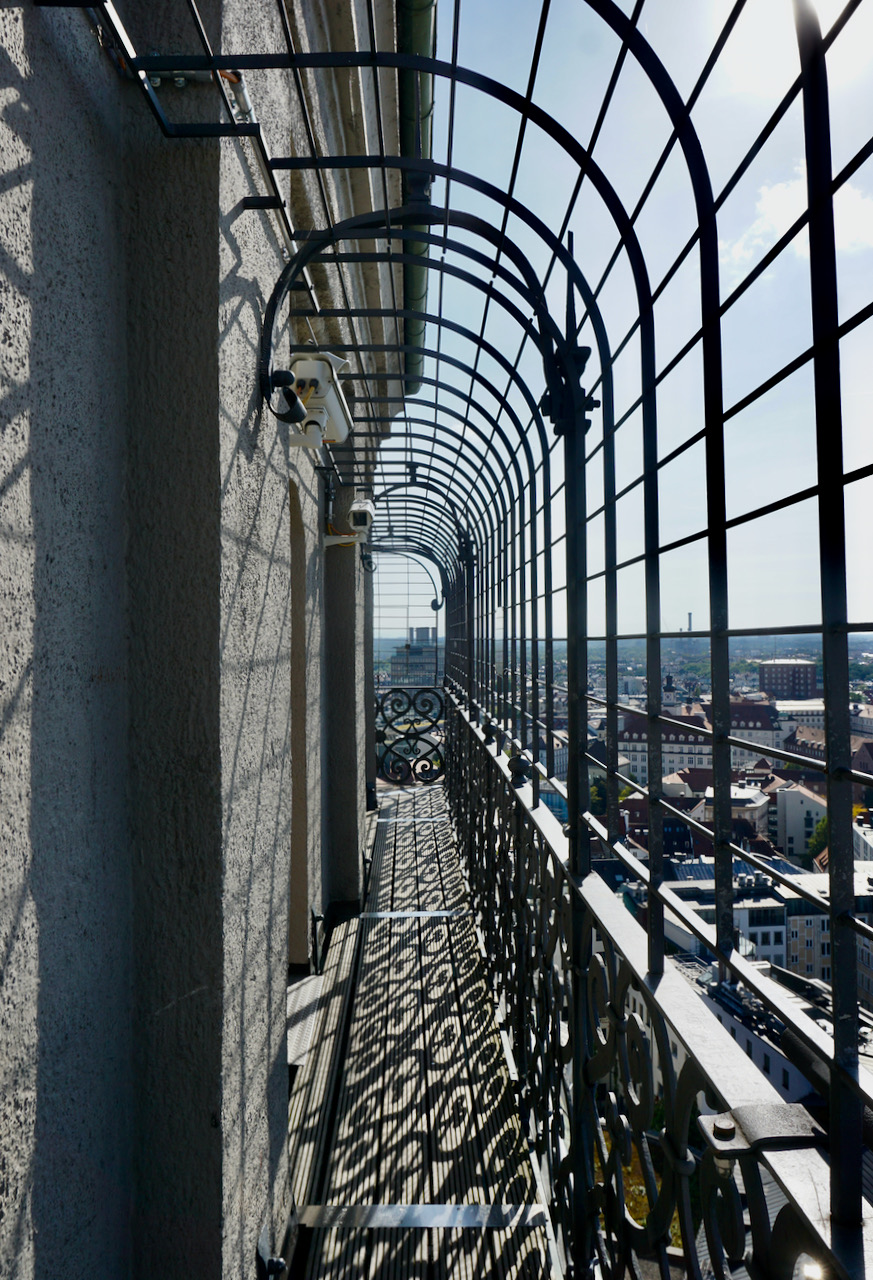
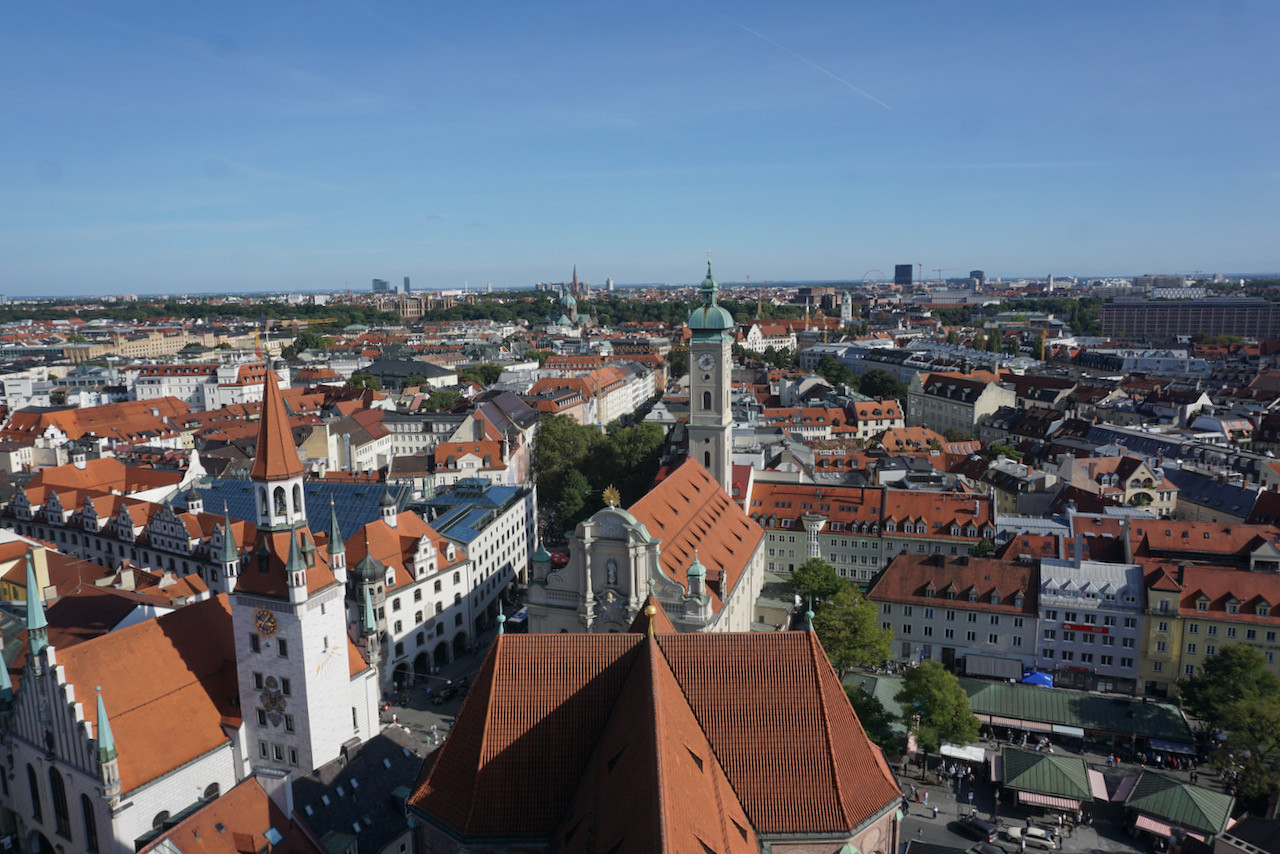
My Oktoberfest experience came later, however. Due to the beautiful weather, I was determined to remain outside as long as I could. This first meant standing in line to climb the tower at Saint Peter’s Church. I do enjoy a good church tower for a view and the passing people, many in traditional clothing and having a good time, provided plenty of diversions. Half an hour in line and about 300 steps later brought a wonderful view. People had said you can see all the way to the Alps and they were absolutely right.
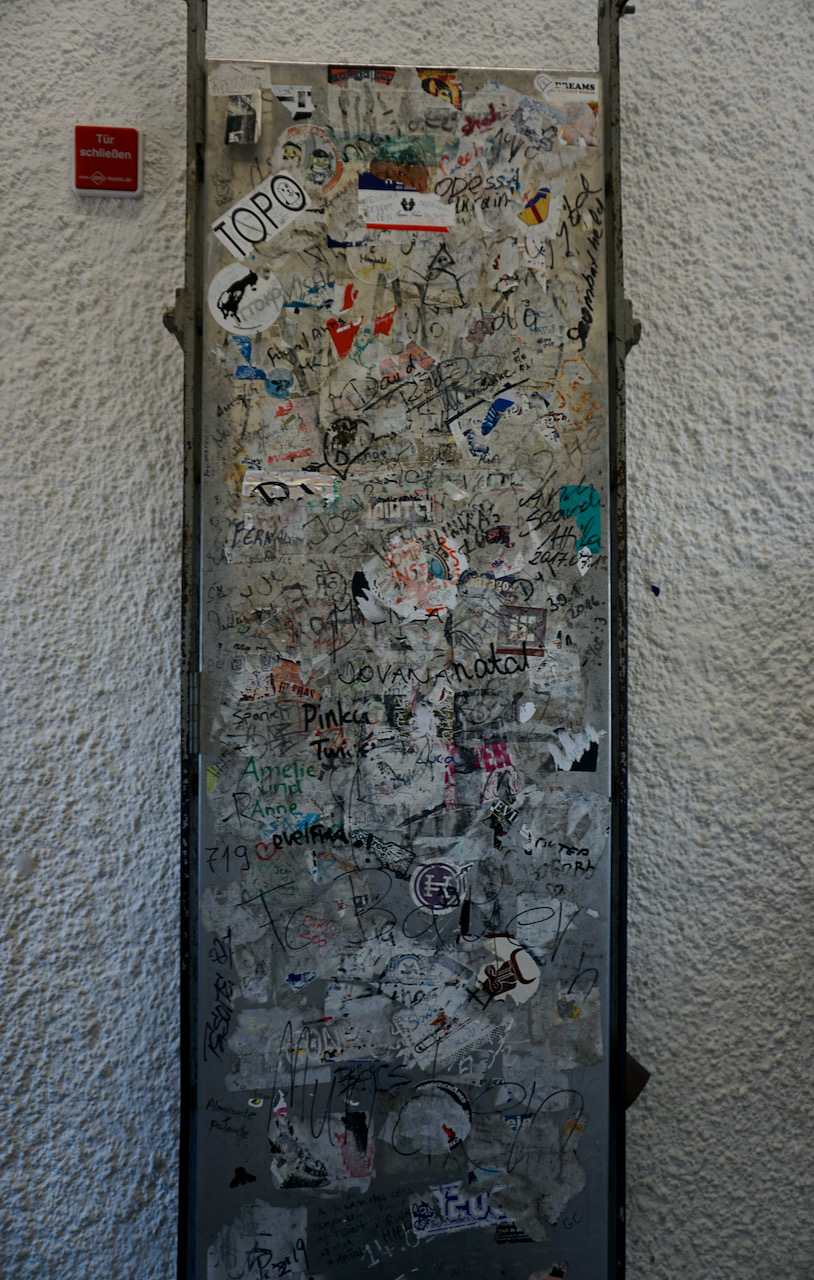
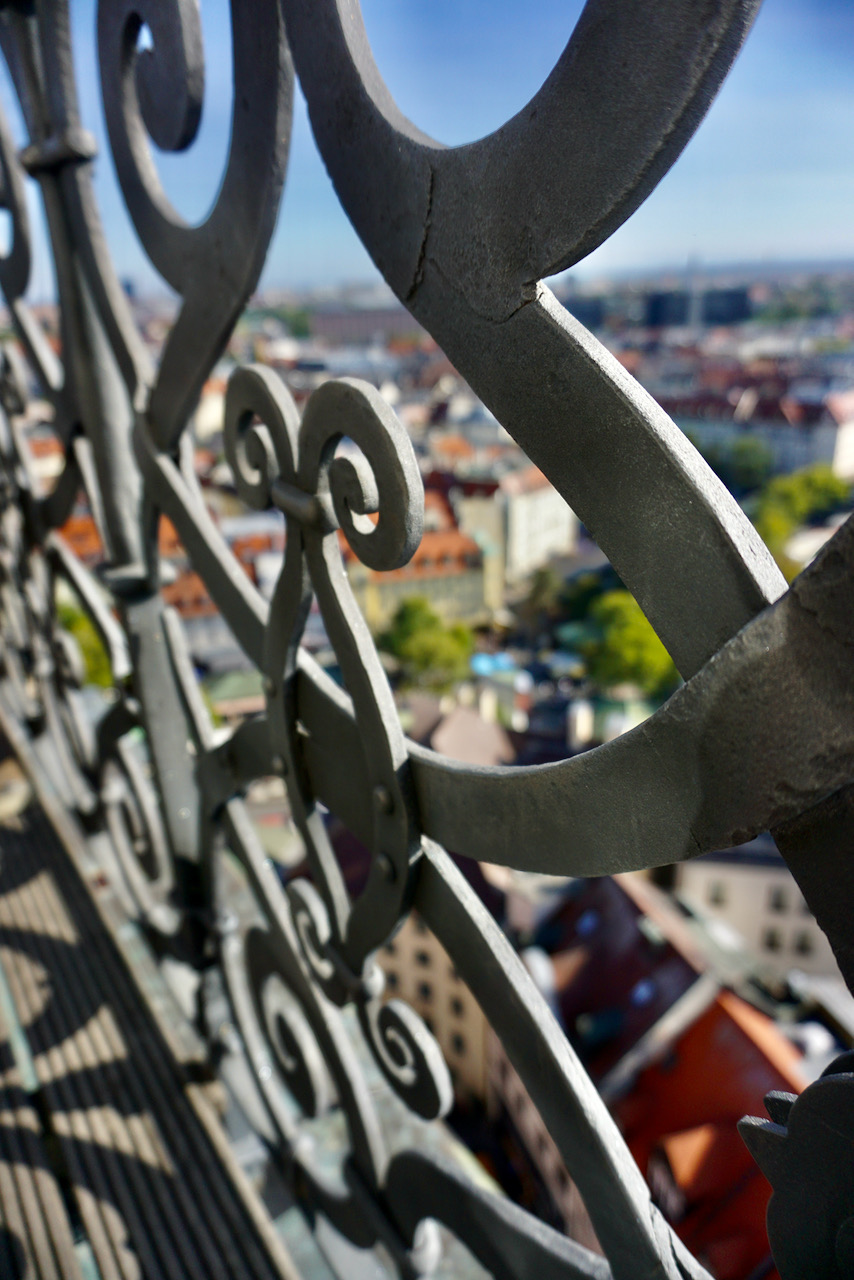
Later that afternoon I went out to Olympiapark, both for the walk and the view. Munich is a city full of parks and I was so glad to see people enjoying the weather and one another. I was also glad for so much greenery in a city! That being said, Munich is far from crowded and congested. With a population of about 1.5 million people, it is affectionately referred to as a “large village”. I cannot imagine this place with the 6-7 million visitors that come for Oktoberfest during a normal year, and I’m honestly not sorry I missed it.
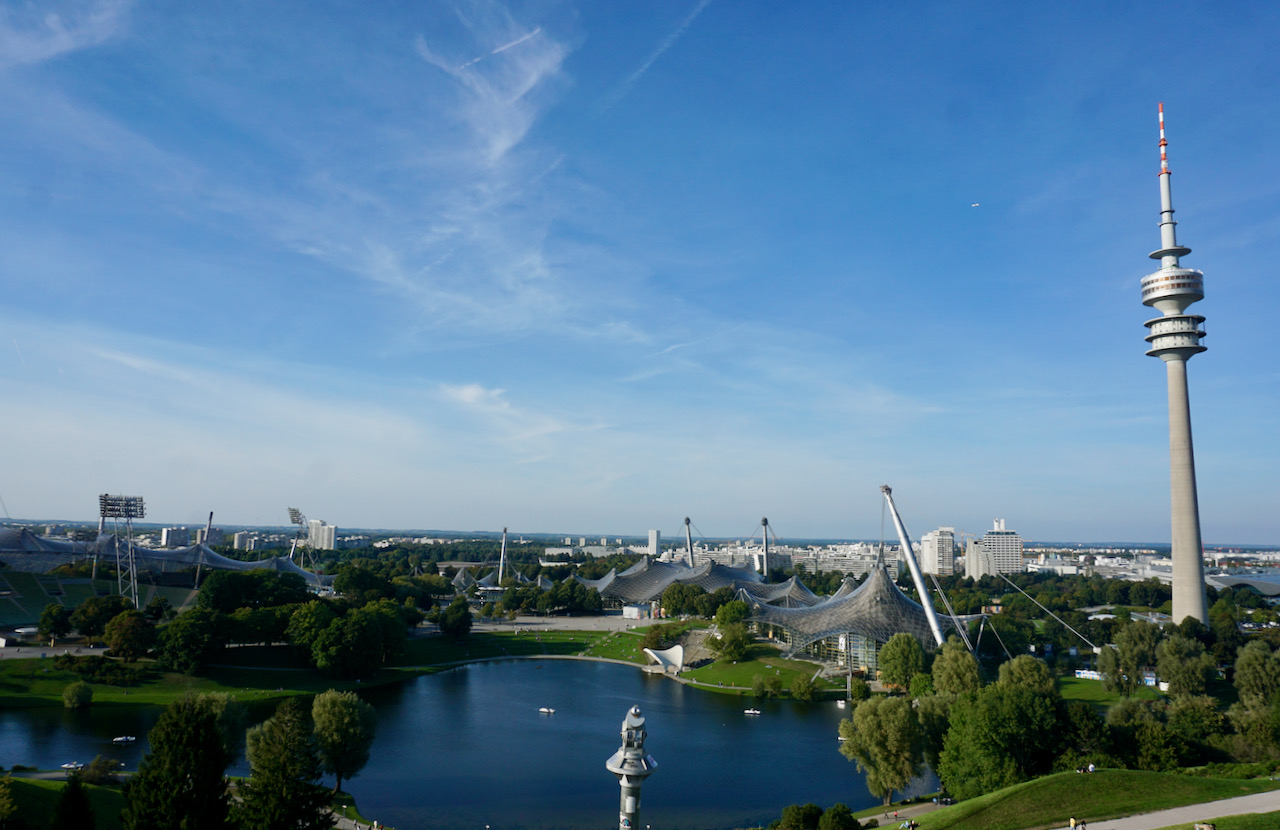
Which brings me to . . . Oktoberfest!

The friend who offered suggestions also provided a list of her favourite beer gardens and I tried, I really did. I’m not one to shy away from being alone in public places, but the essence of beer gardens and beer halls is that you sit down at a communal table, introduce yourself, and enjoy your time there. This was an uncomfortable thing to try alone, even though I found plenty of single seats when I looked around. Since beer in Bavaria brings people together, I was not inclined to take the communal out of it. And I had no intention of attempting small talk in German while everyone else was at a party.

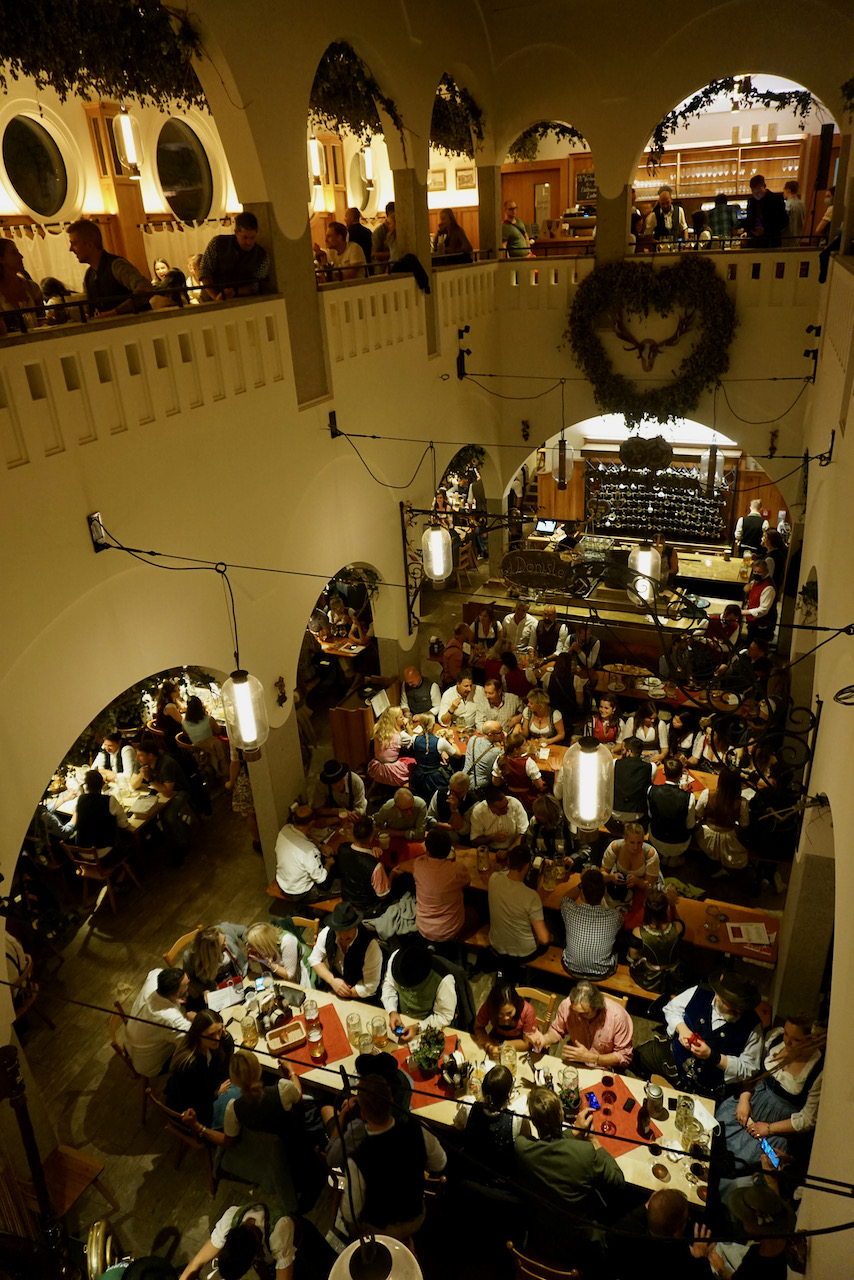
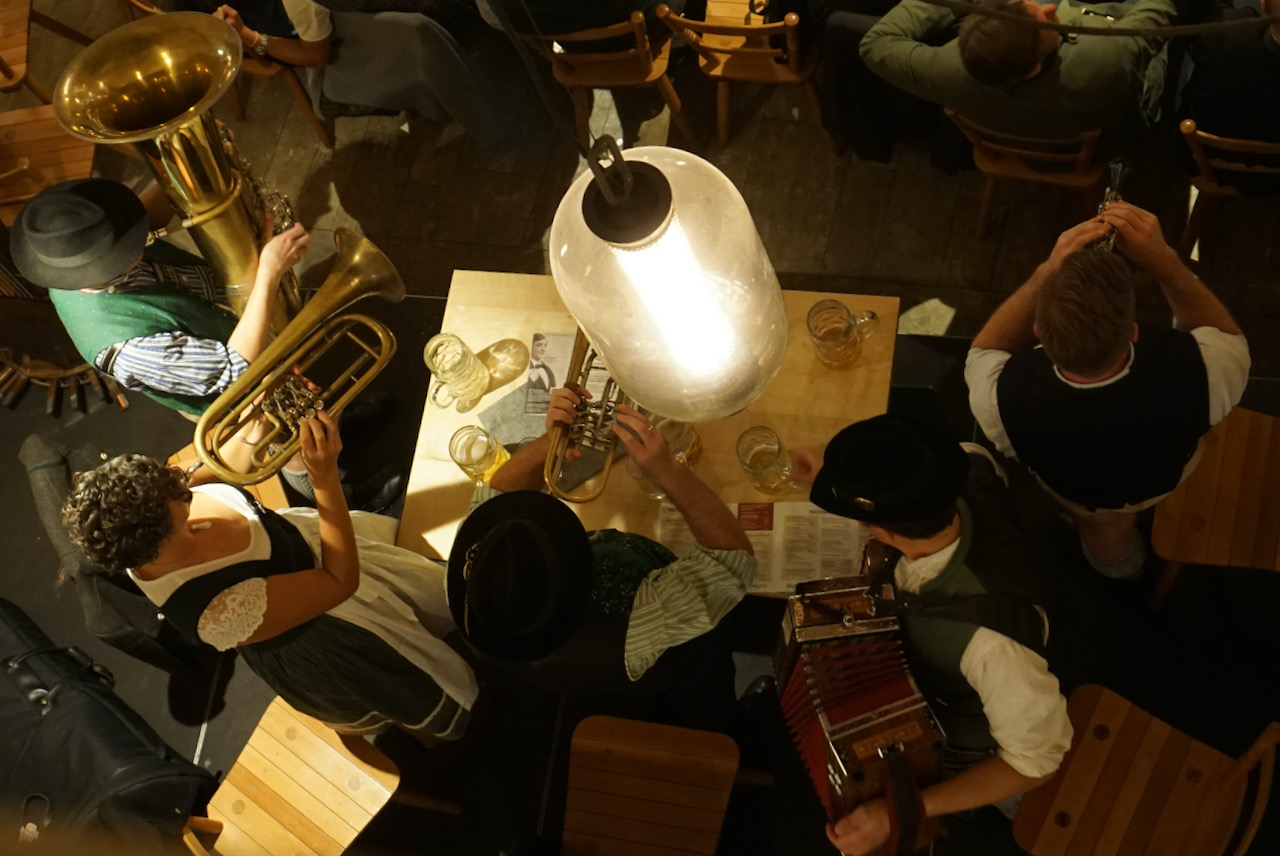
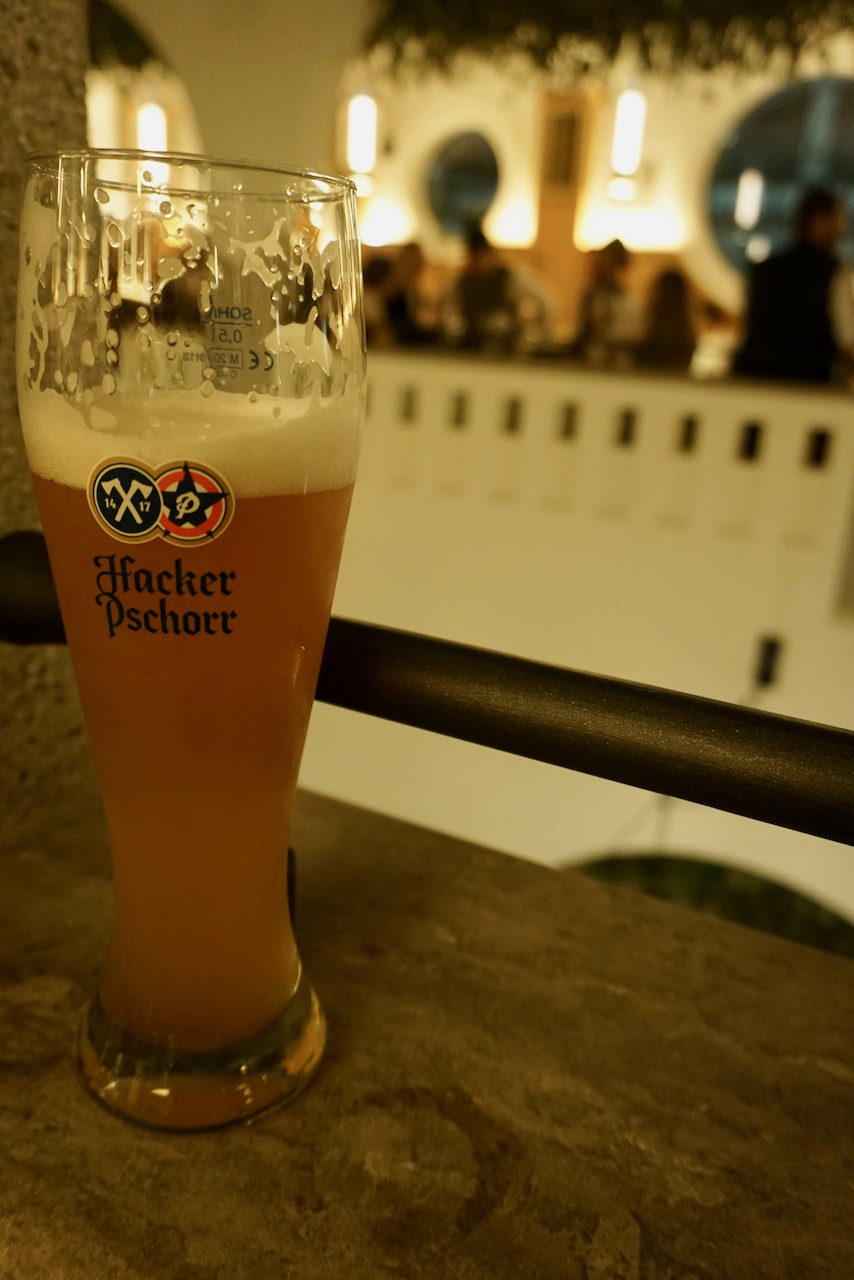
And then I got lucky. I had given up on a beer garden and decided I’d have a drink outside and watch the world go by. But then I heard music and the man at the door directed me up the stairs to the drinks-only open-air balcony above a beer hall. I found a spot by the railing and laughed out loud. The music, costumes, food, huge beer steins, the noise, laughter, drinking songs: It was just like the movies.

I was in Munich for a real Oktoberfest because a concert and the tourist parties were cancelled. The world works in strange ways, and this one treated me very well indeed.

The next morning, I headed to a vegan café for brunch and then continued wandering in the sunshine, visiting some of the same spots I had been to the day before. I redid some photos and wandered through more of the Englischer Garten than I had first seen, and then it was time to go. I still have a list of places to go and foods to try, and it’s only three hours away; I suspect I’ll be back.
Travel Guide: Salzburg, Vienna, Leoben

Before dawn on New Year’s Day after a week in Switzerland, my parents and I took the train from Zurich to Salzburg. The trip itself was beautiful and everything I had hoped train travel through Europe would be. We journeyed through mountains, hills, trees and through increasing amounts of snow, but there was sunshine and blue skies the whole way.

Salzburg

I really, really enjoyed our afternoon in Salzburg and would have loved more time there to walk up to the Hohensalzburg Fortress, or drive to Schloss Hellbrunn in the countryside. But now I have a reason to go back!

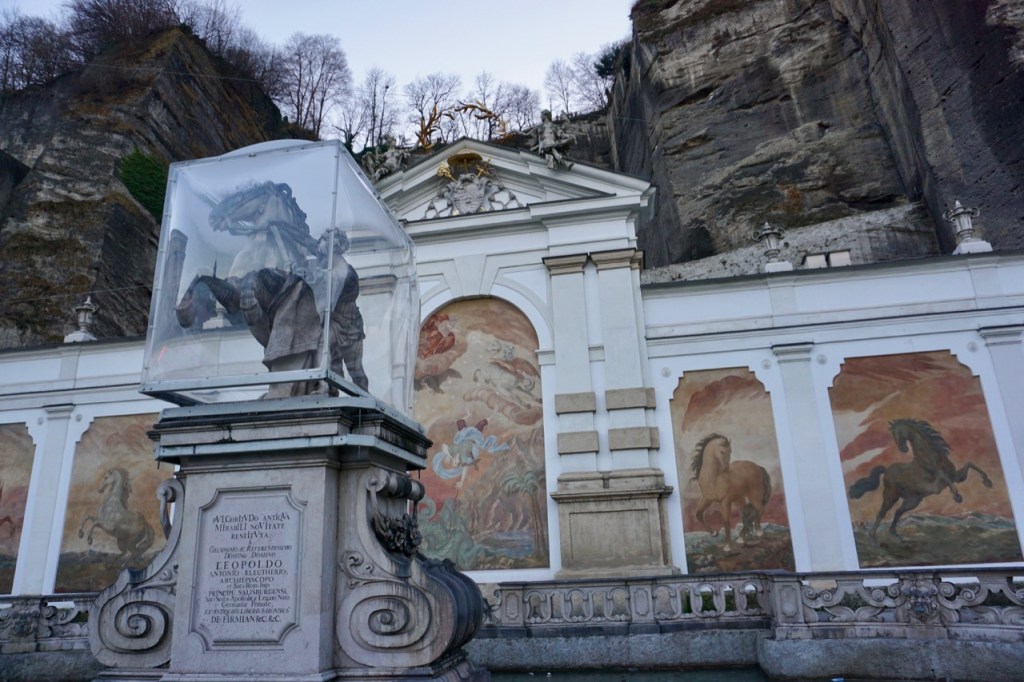
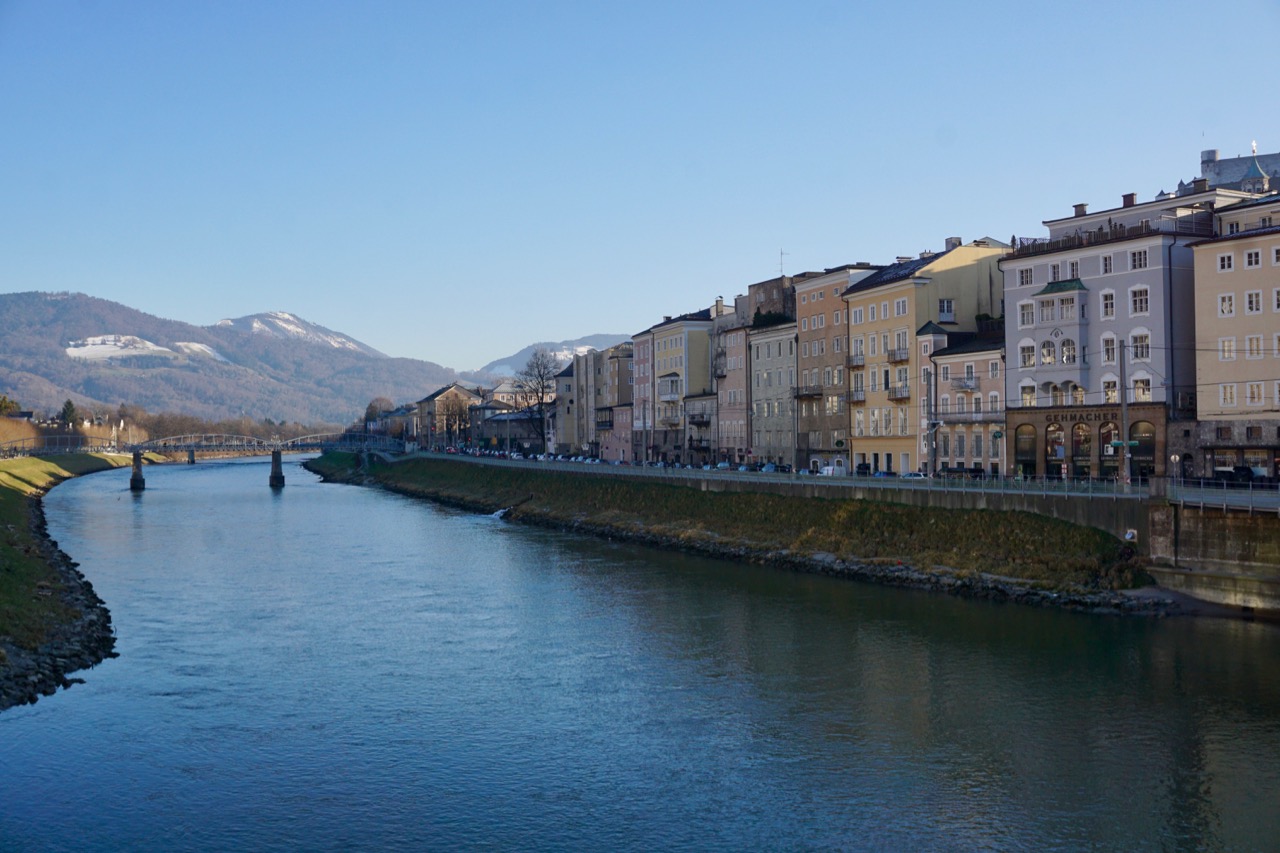
Salzburg was surrounded by water and, surprisingly to me, great stone cliffs that seemed to come up out of nowhere when we were walking through the old town.

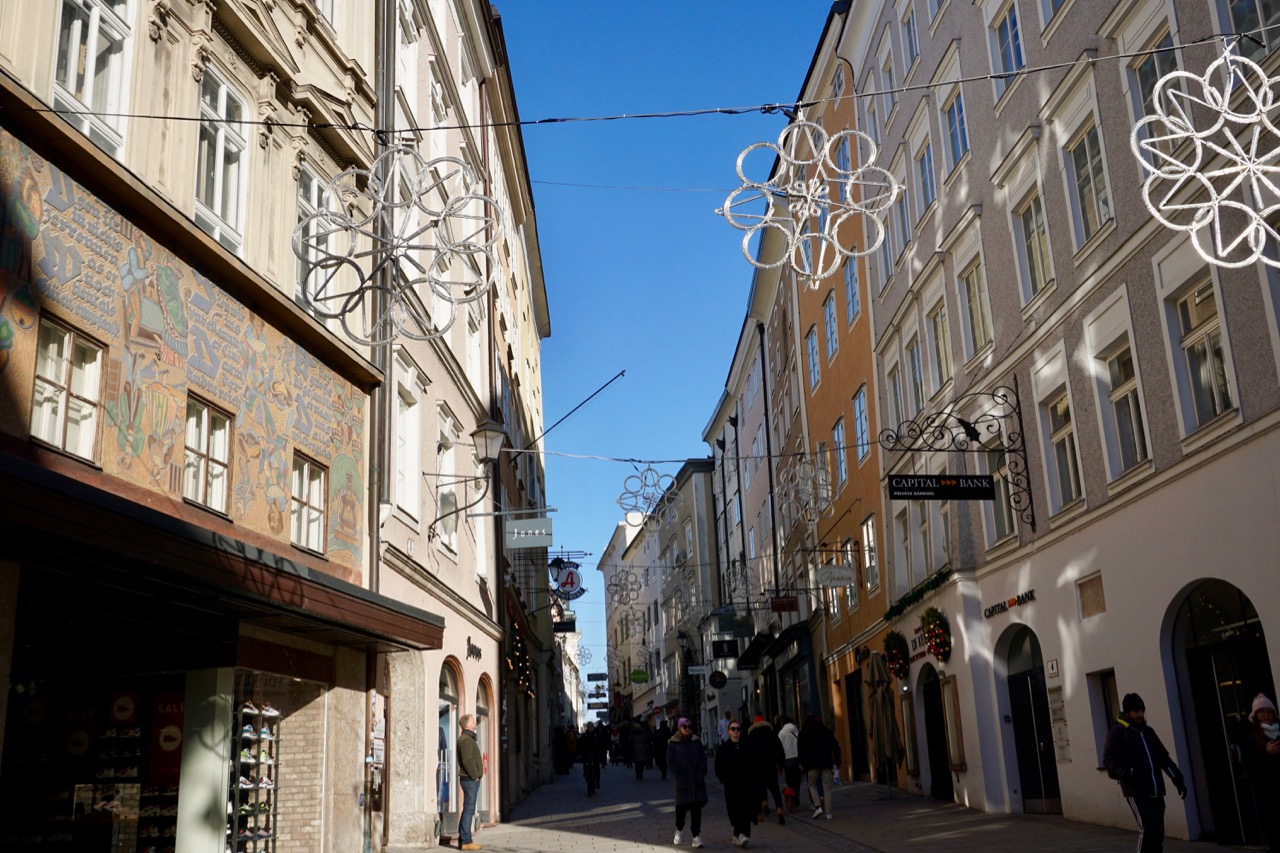
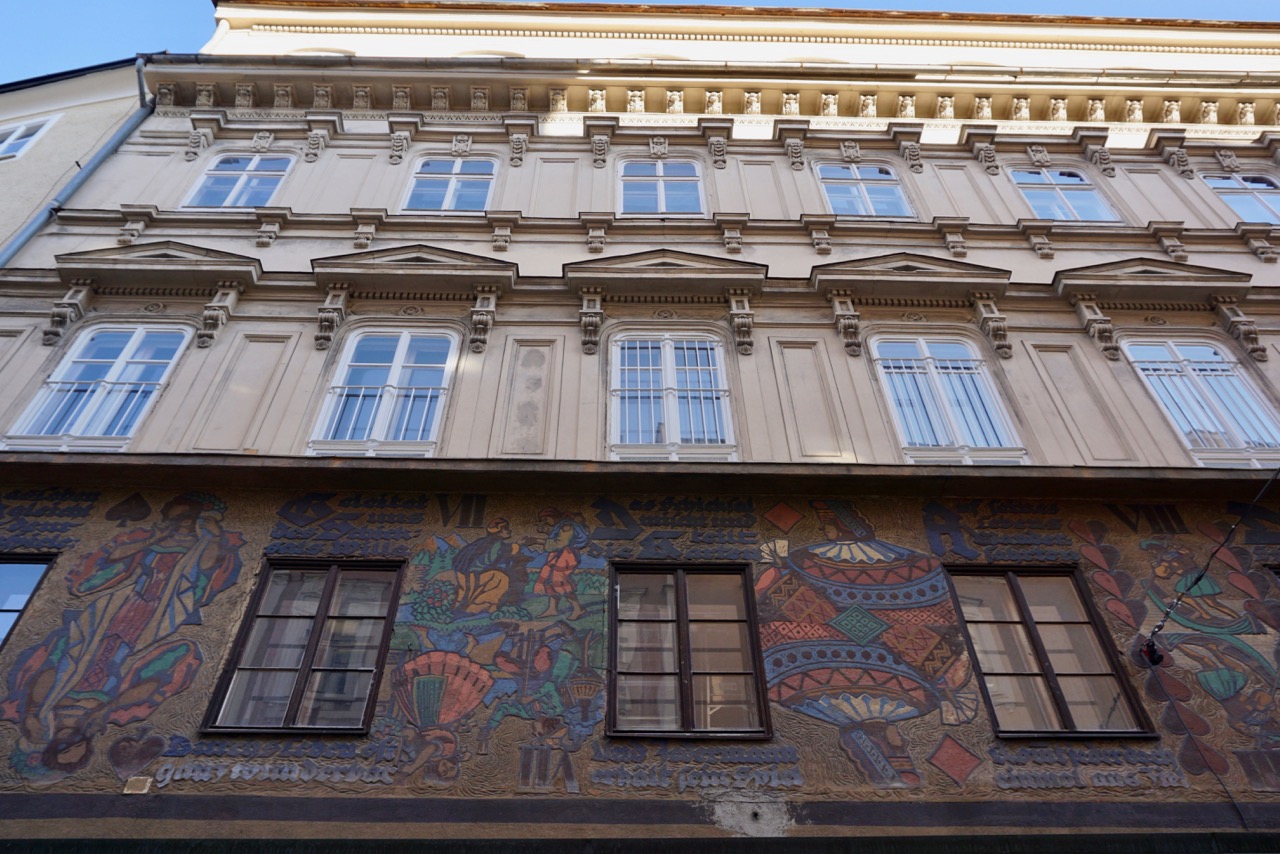
As before, the walk through the old town took us past beautifully painted buildings and intricate architecture that just don’t exist anymore. I know that real people don’t live in these old towns, but they certainly are pretty. The narrow streets leading to large open squares in Salzburg are hilly, which means that church towers and other buildings just sort of peek out at you around corners.

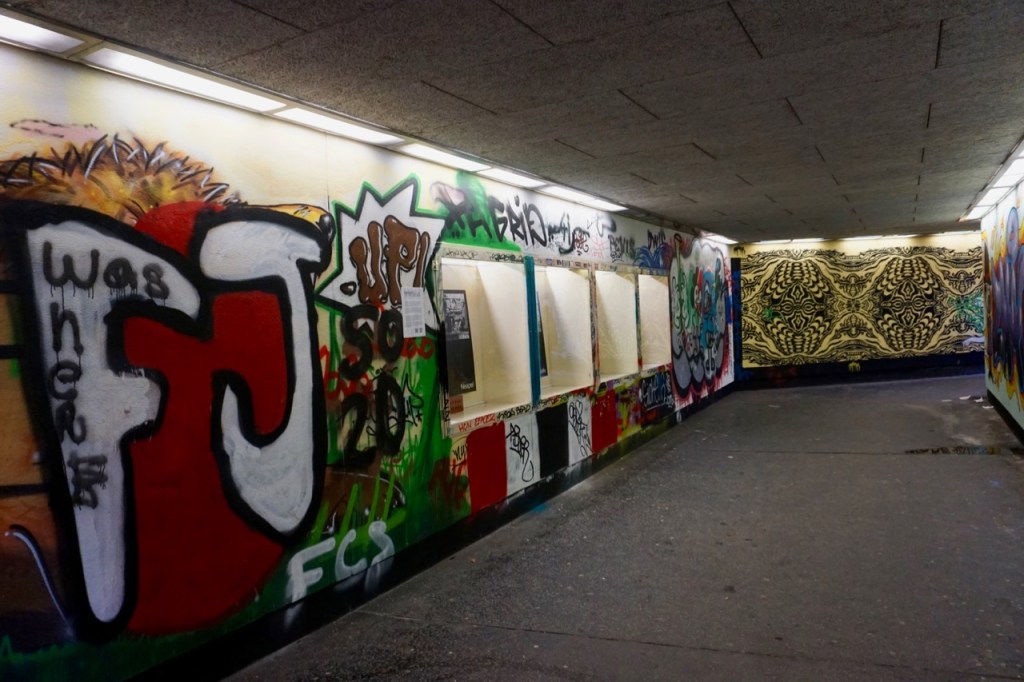
But there are other parts of Salzburg that remind you that this is a real place where people live and I was glad to see that, too.

Mozart made his home in Salzburg and we visited Mozart Geburtshaus, Mozart’s birthplace, which is considered the more informative of the two Mozart houses. We learned a great deal about Wolfgang Amadeus Mozart, his family (including a very talented sister!), and Austrian musical tradition and I was really impressed with the collection of artifacts and family papers. Music is a really important part of heritage here and classical music was playing through speakers throughout the old town in Salzburg, prompting a surprising amount of waltzing in the streets and in the squares. I kept expecting to see a live orchestra around each corner!

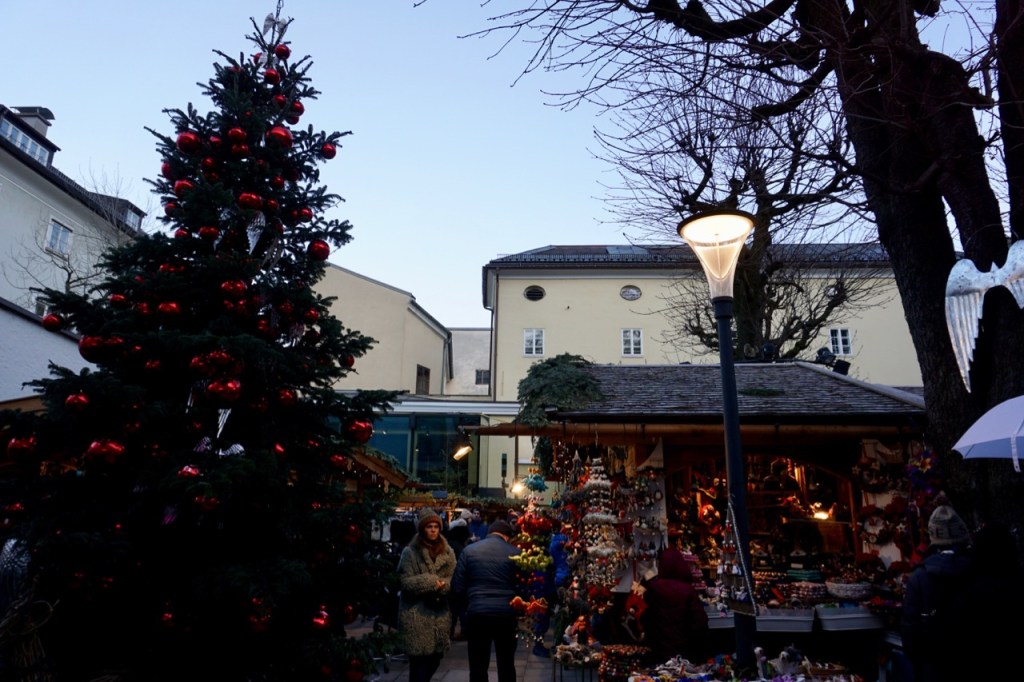
Like we’d seen across Switzerland, there were little Christmas markets and stands set up across the city.

We also stopped by the university church . . .

. . . and the Dom zu Salzburg, where we stopped to visit the church and to drink glühwein.

Vienna

The next morning was equally bright and sunny and we left fairly early for Vienna. We could have easily stayed another day in Salzburg and left for Vienna that night but something told me I’d want the time in Vienna. This turned out to be accurate and again, I really need to go back!

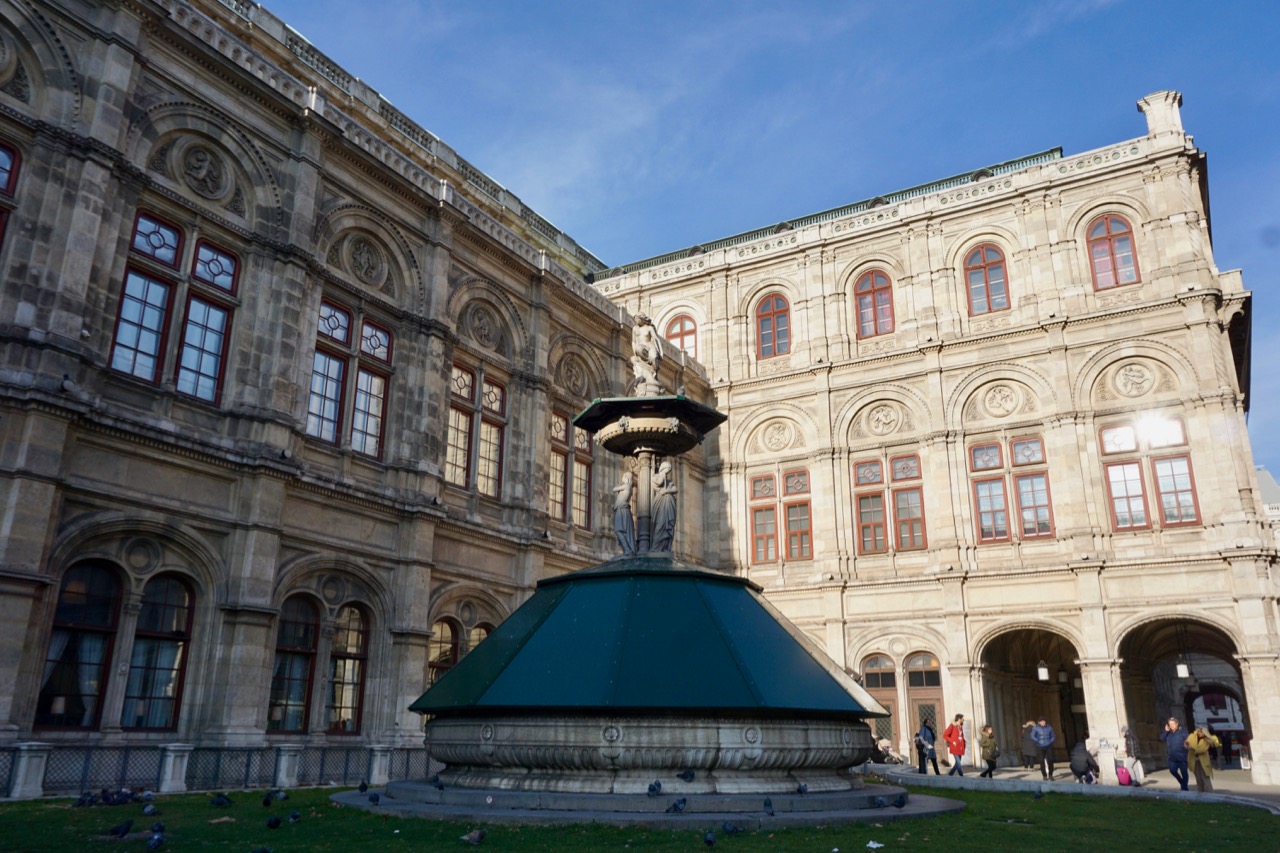
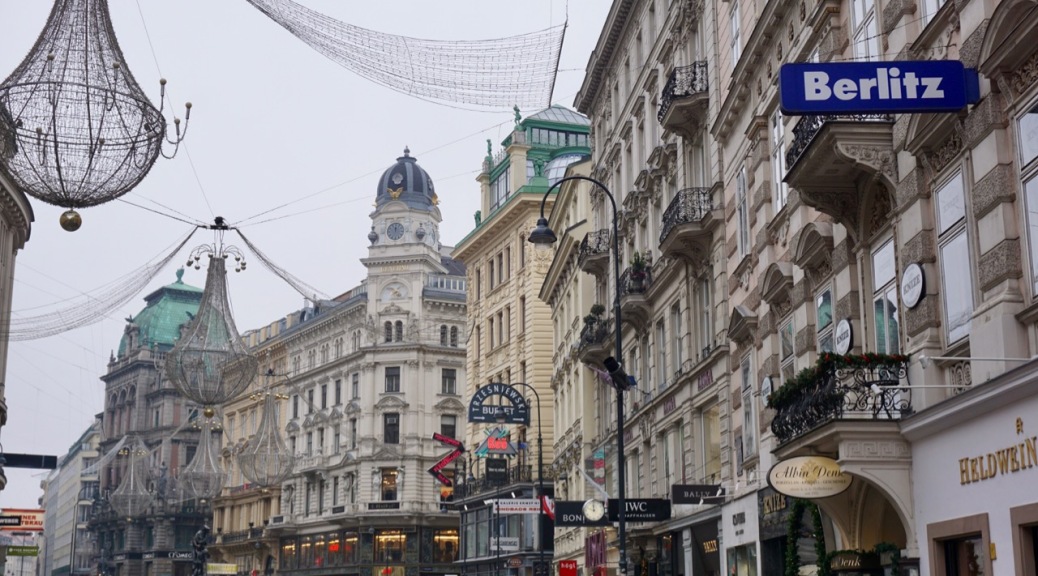
Vienna is beautiful. It’s beautiful and grand and opulent with wide streets and specially painted bike lanes. As soon as we saw the bike lanes next to the opera house, I knew that I would like Vienna very, very much. It was pretty at night, too.

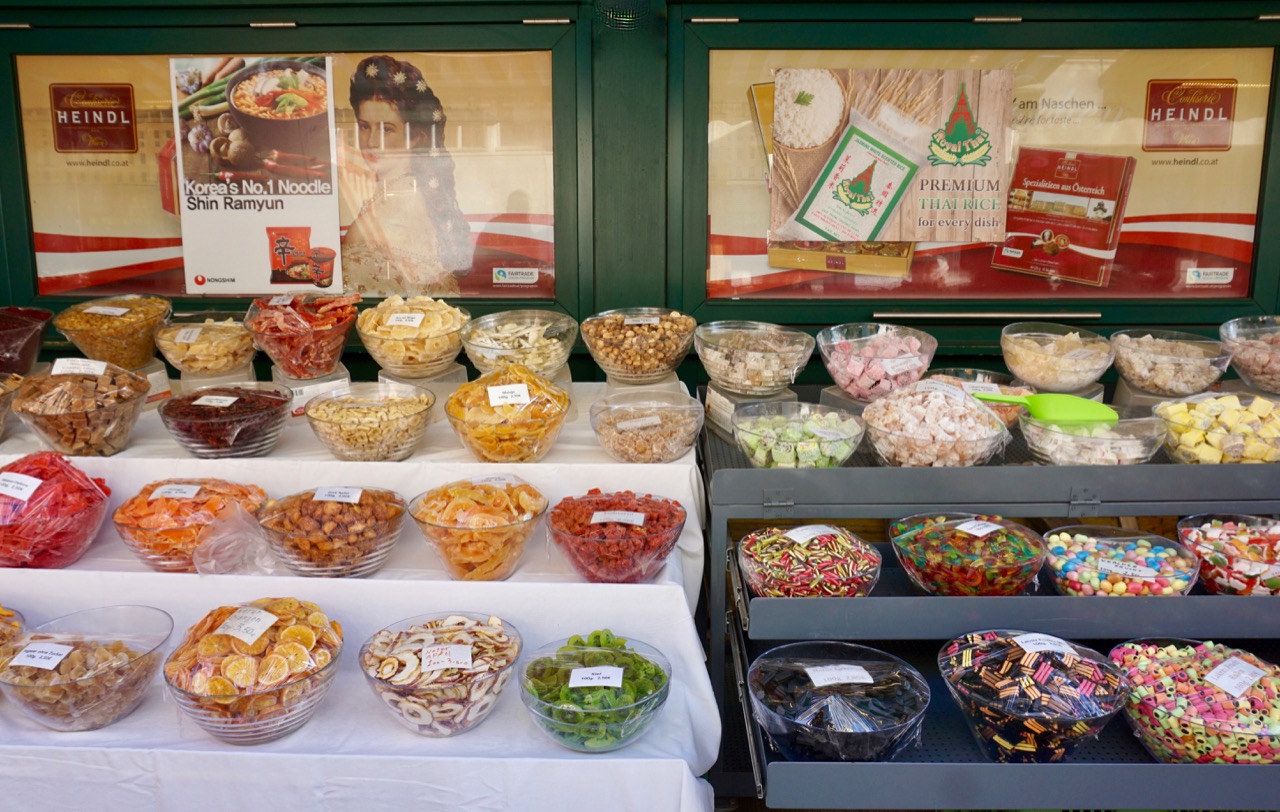
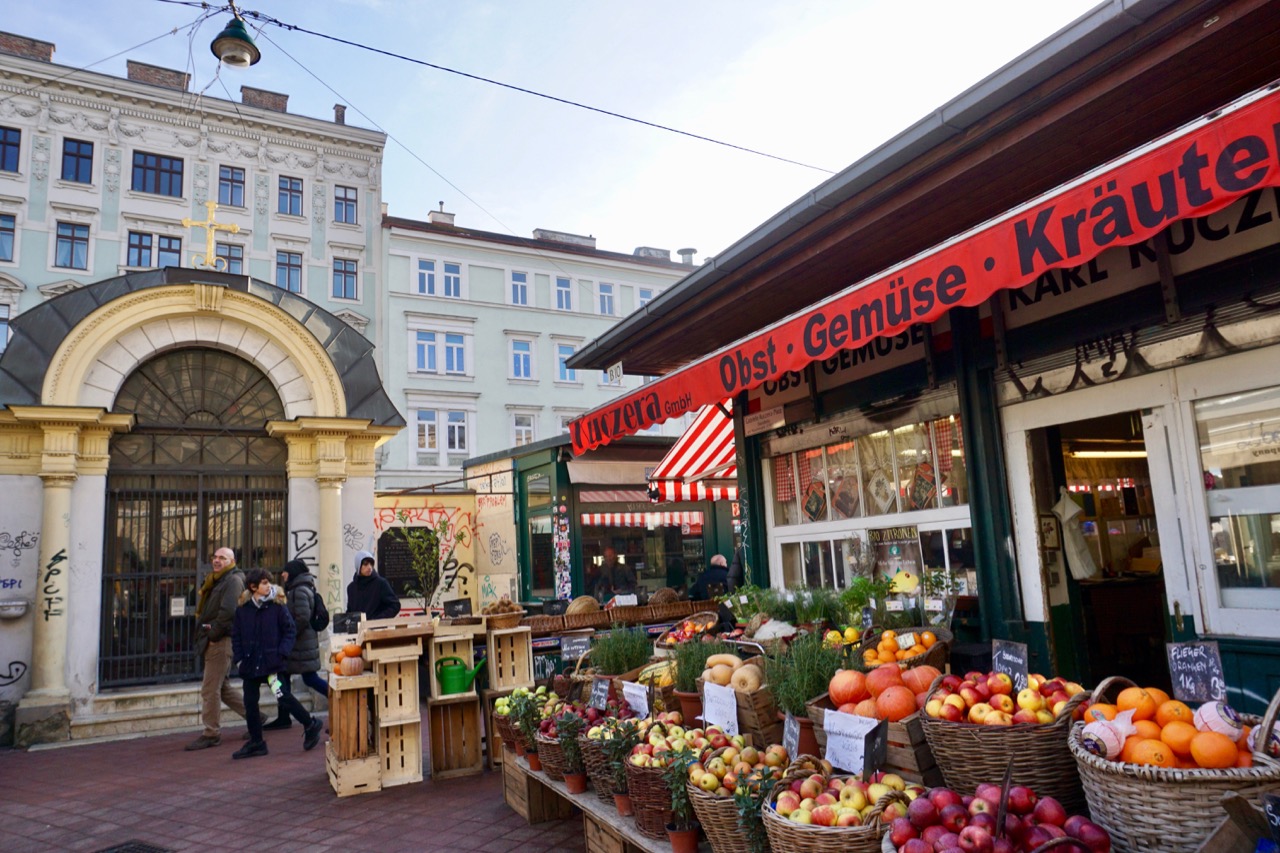
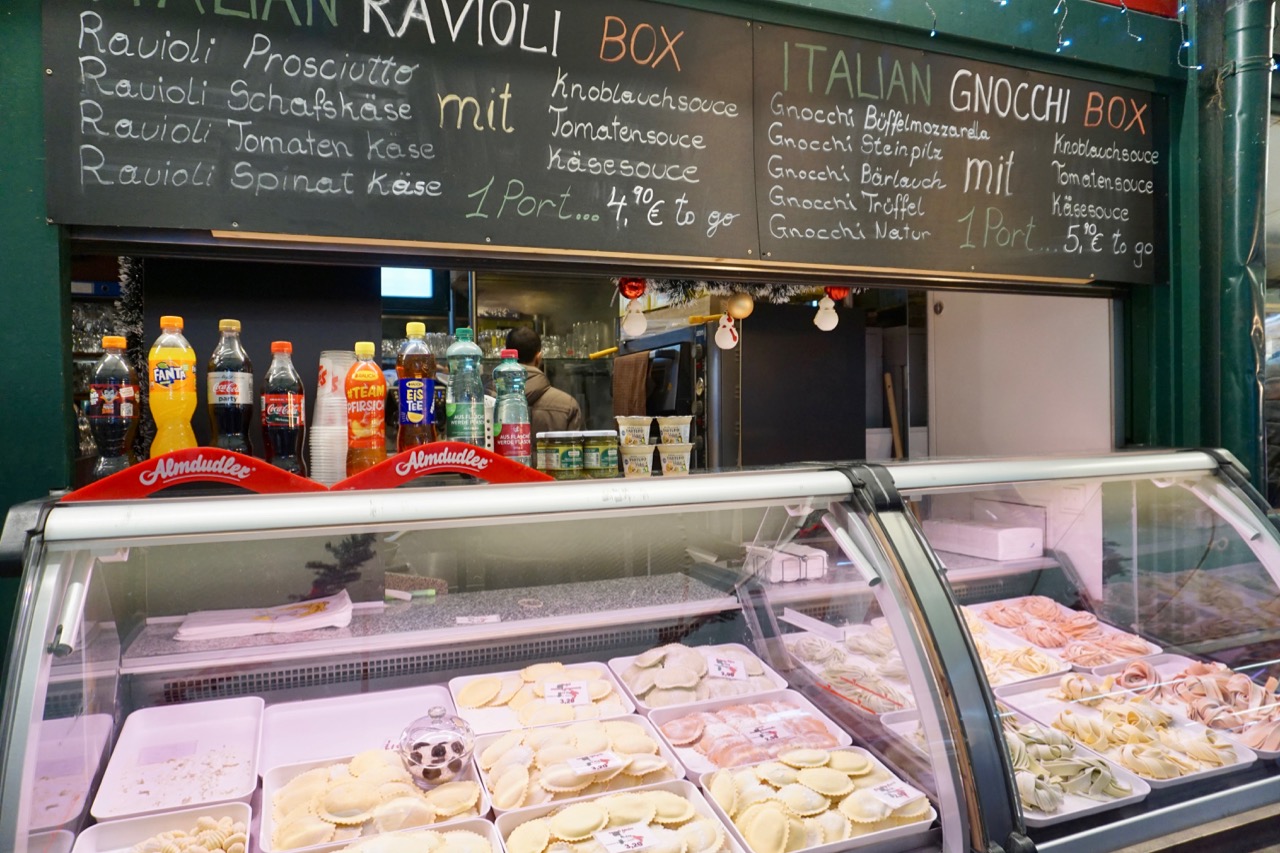
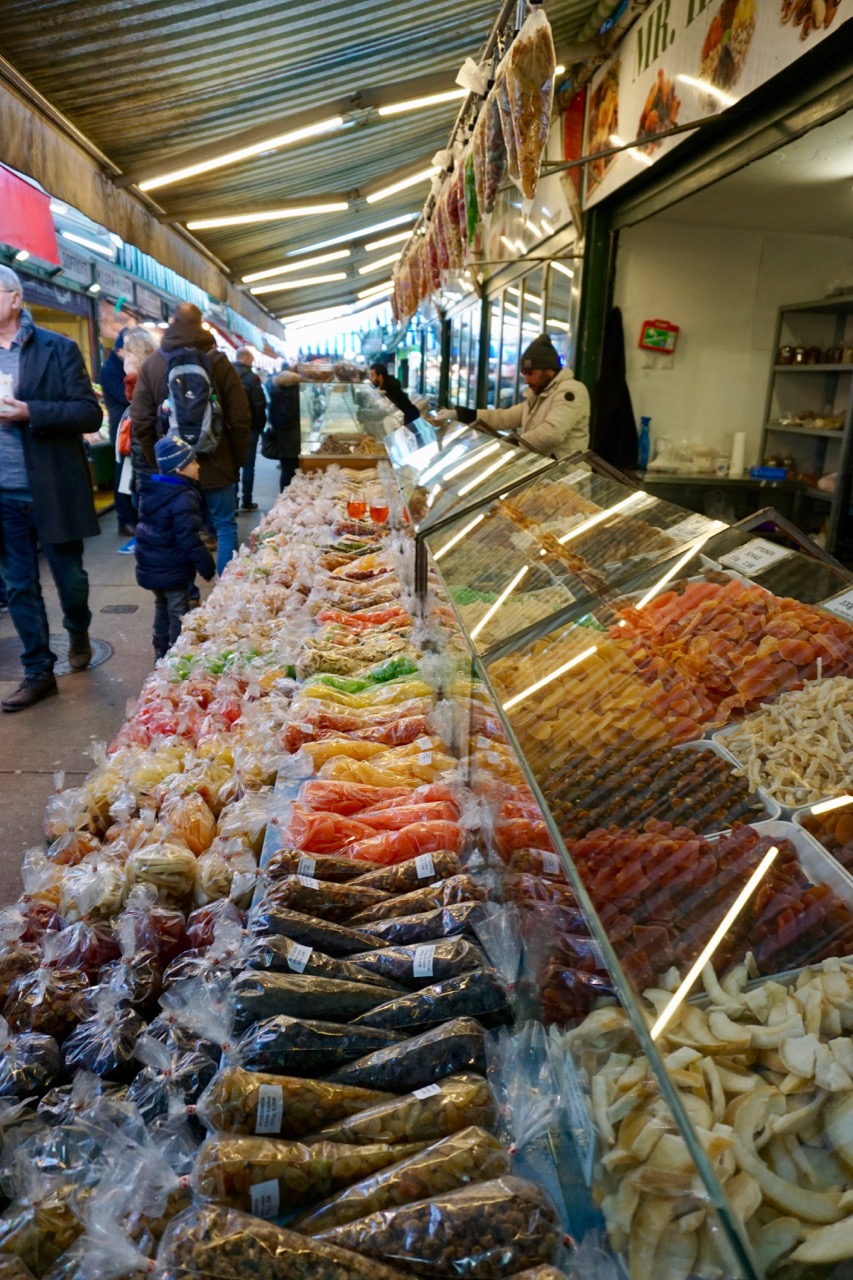
The first thing we did, however, was walk a little ways out of the old town to the Naschmarkt, Vienna’s largest food market. It’s part restaurants . . .

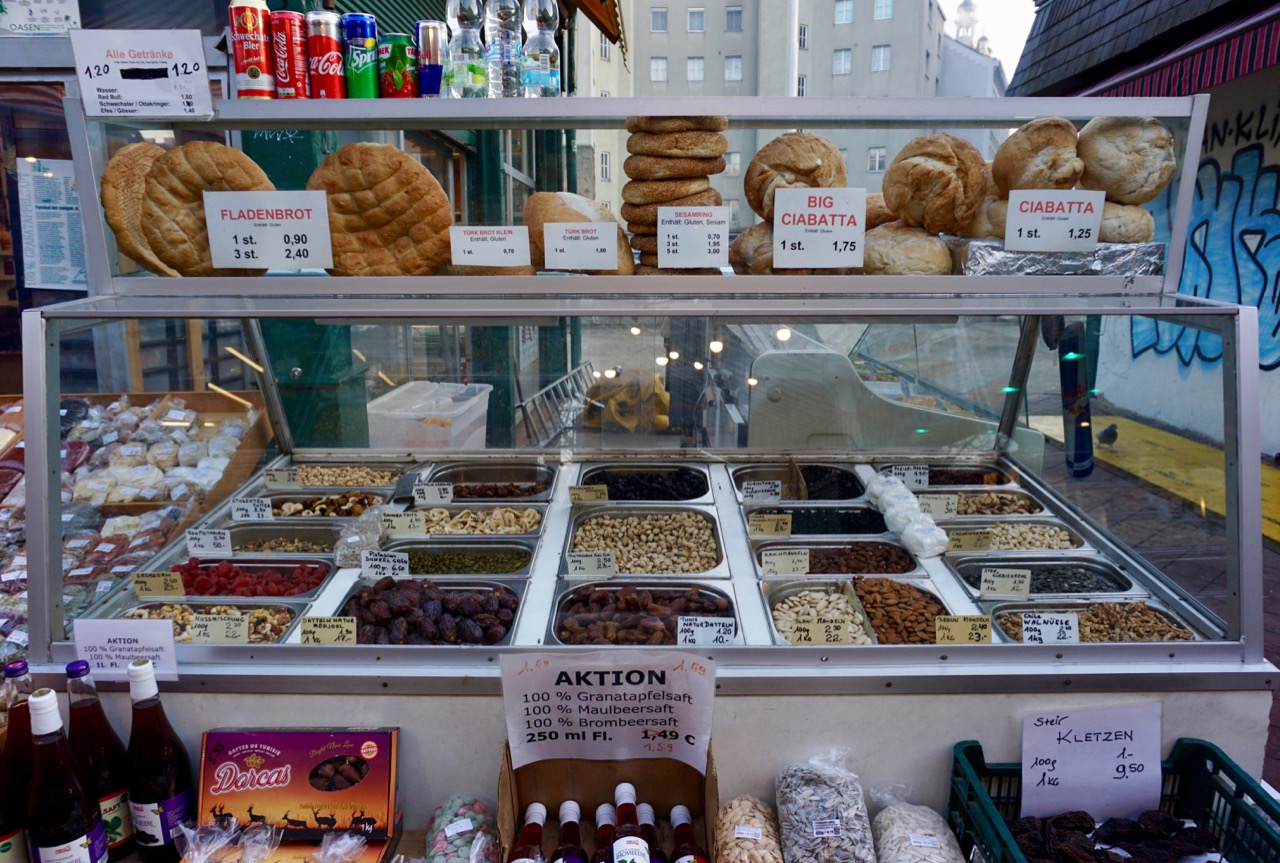
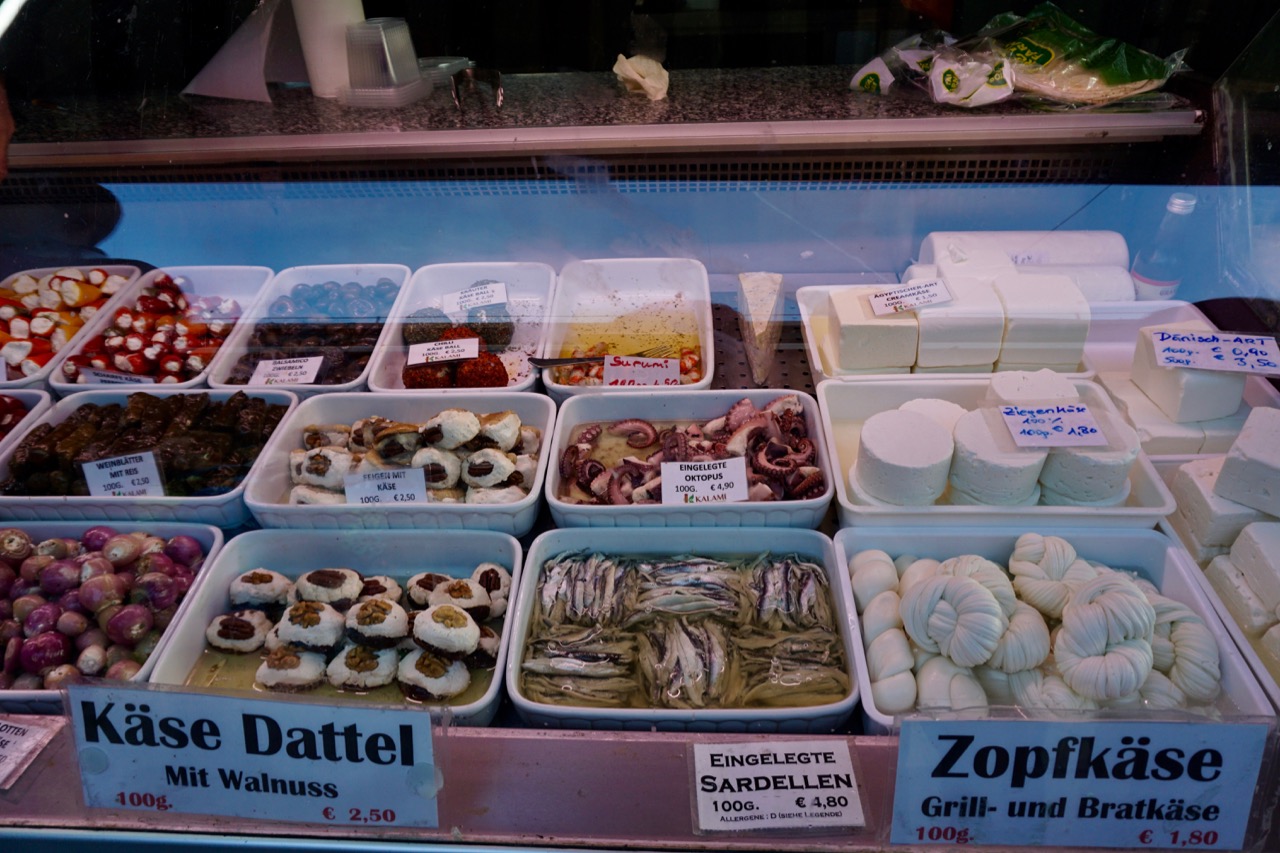
. . . and part food stalls . . .

. . . and part other goods.

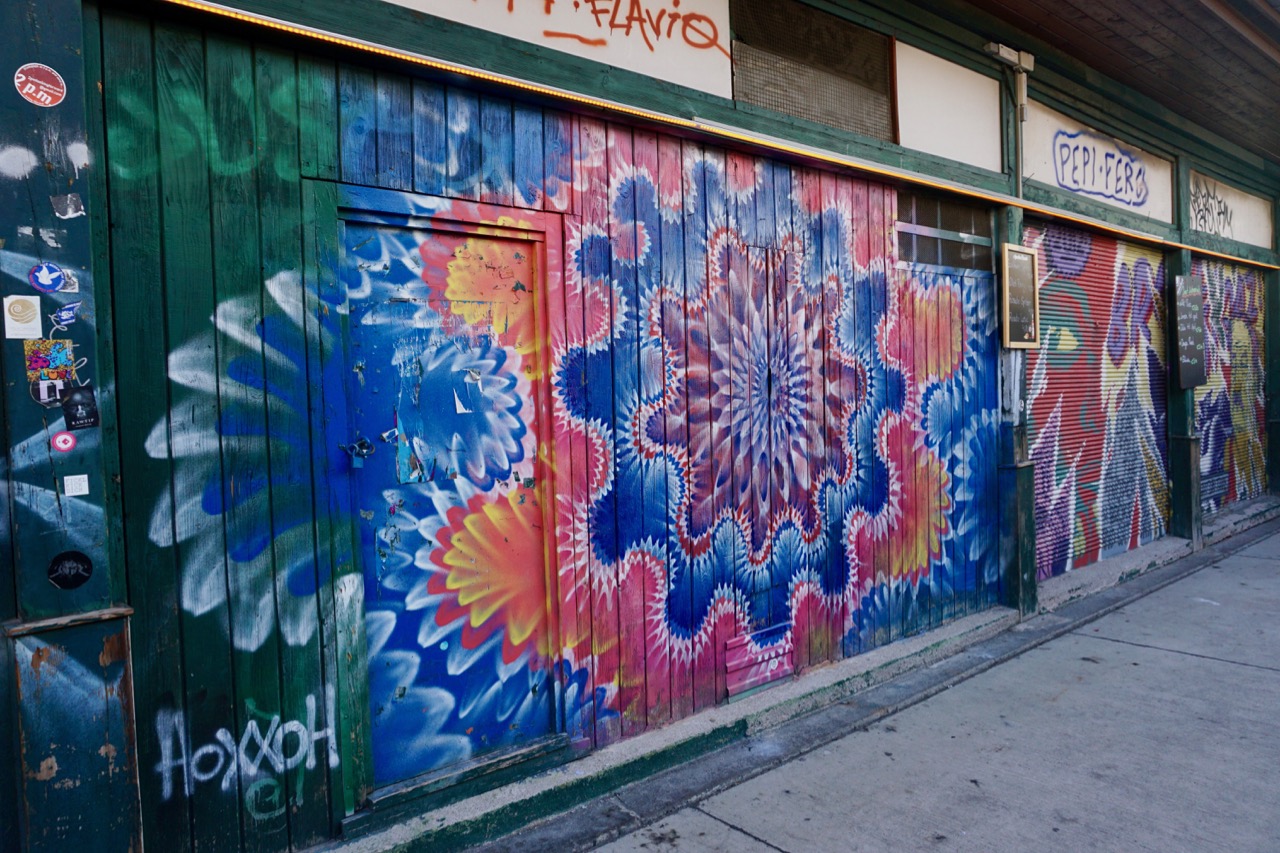
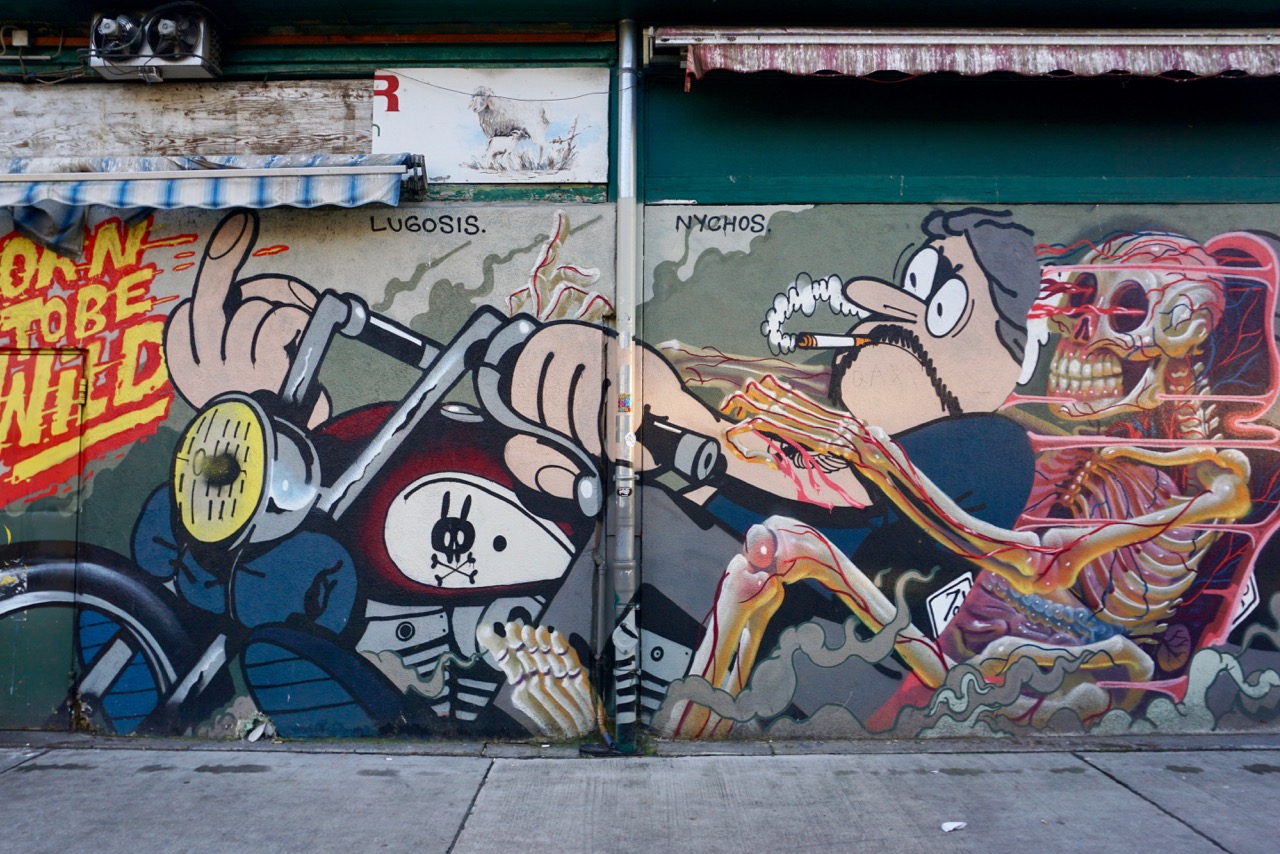
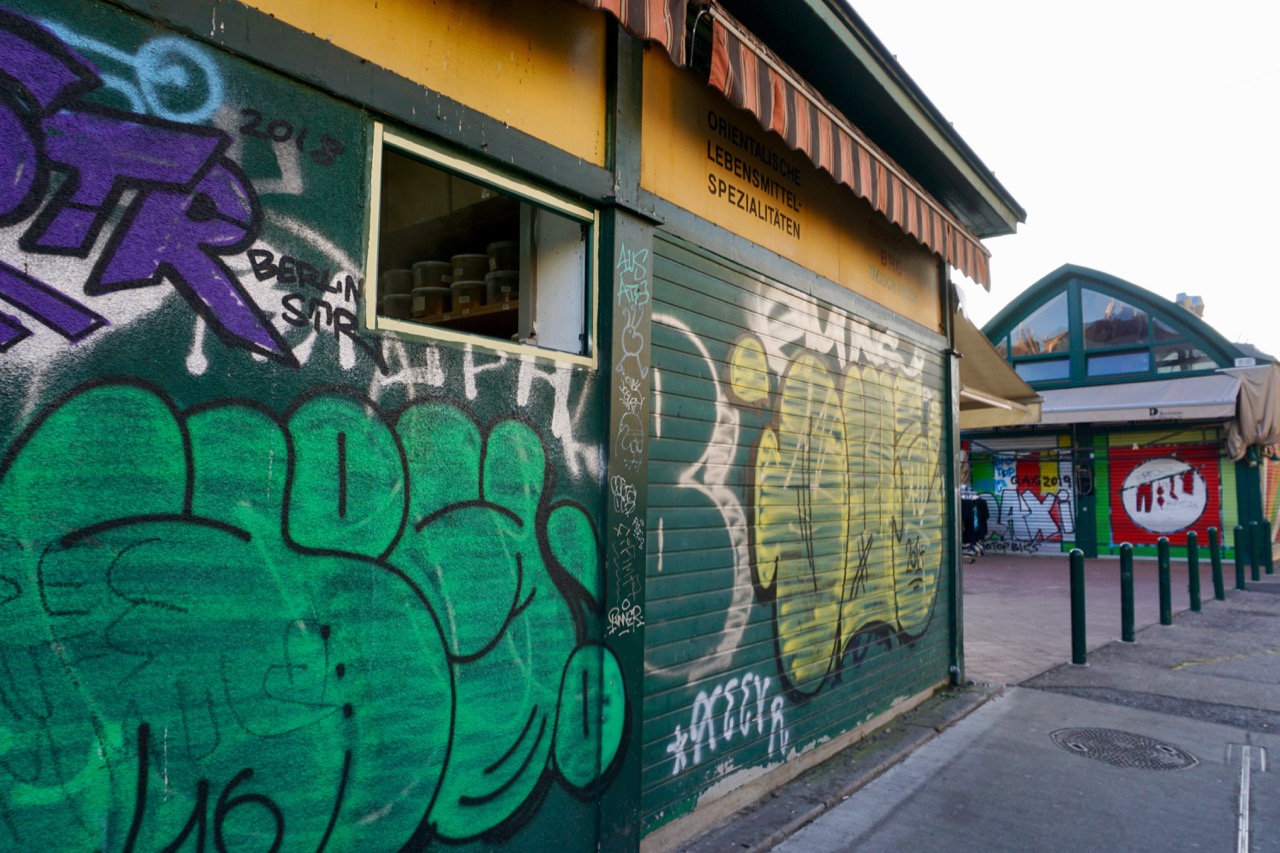
My family loves markets and food, and we ate and drank and tasted and smelled for a good couple hours. I can only imagine how much busier it would have been on the weekend when the flea market is open, but I was really glad to have the chance to see some of the art painted on the closed stall fronts.

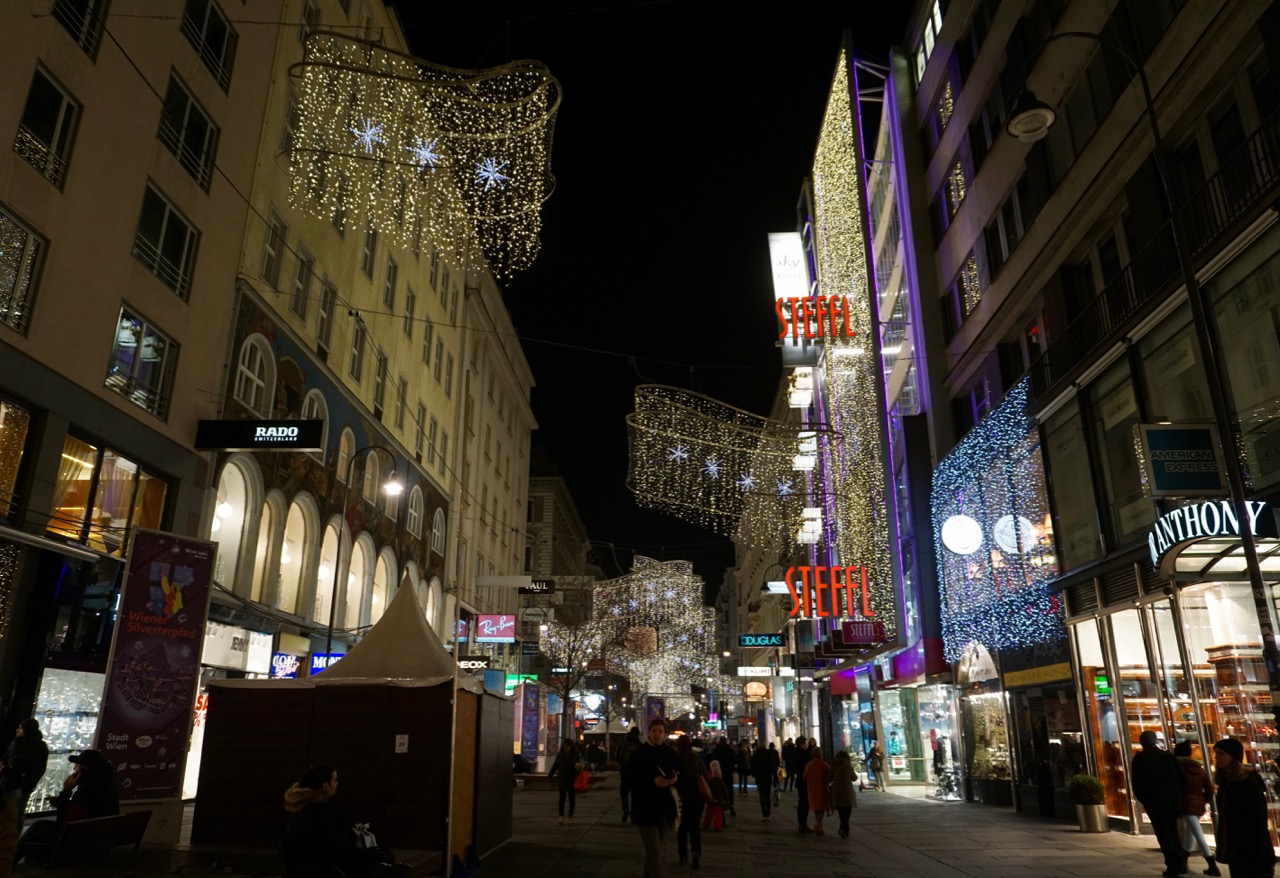
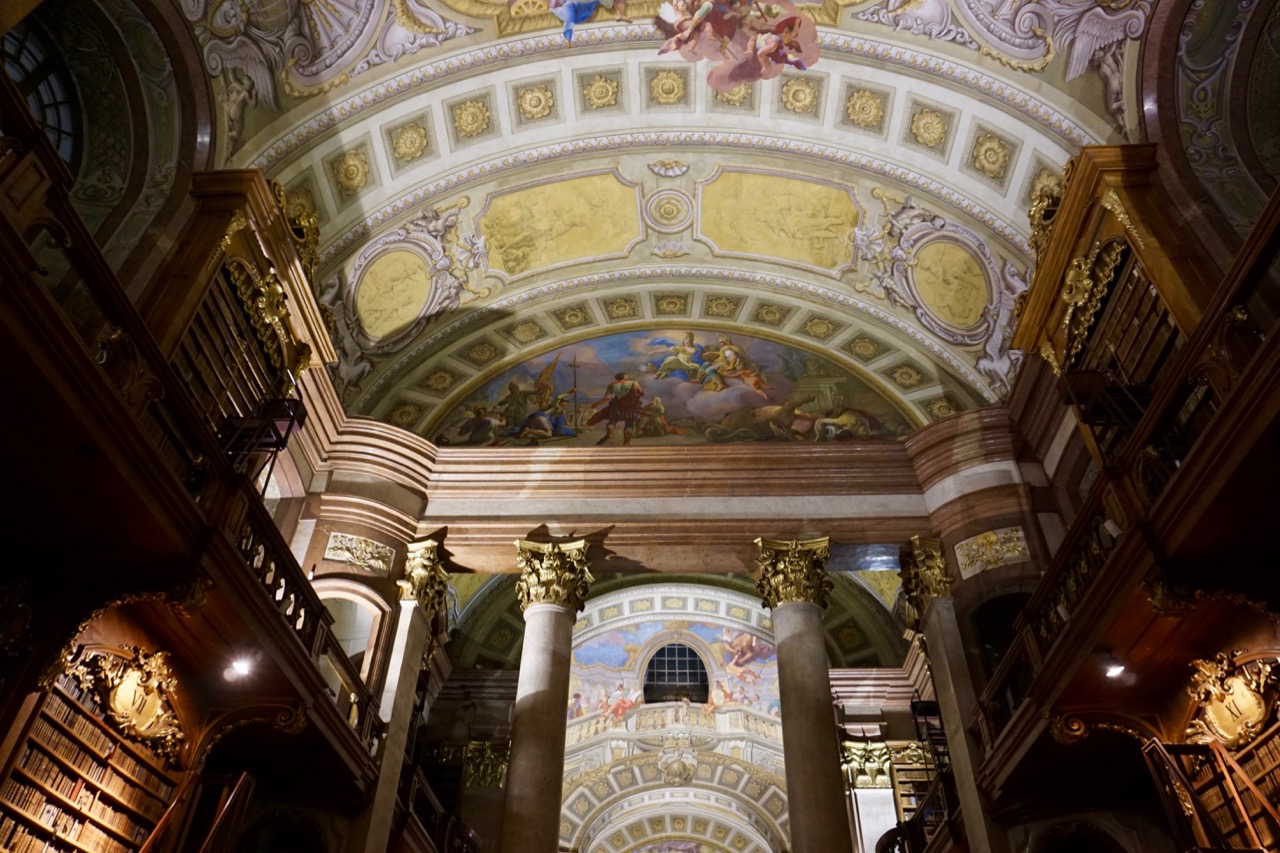
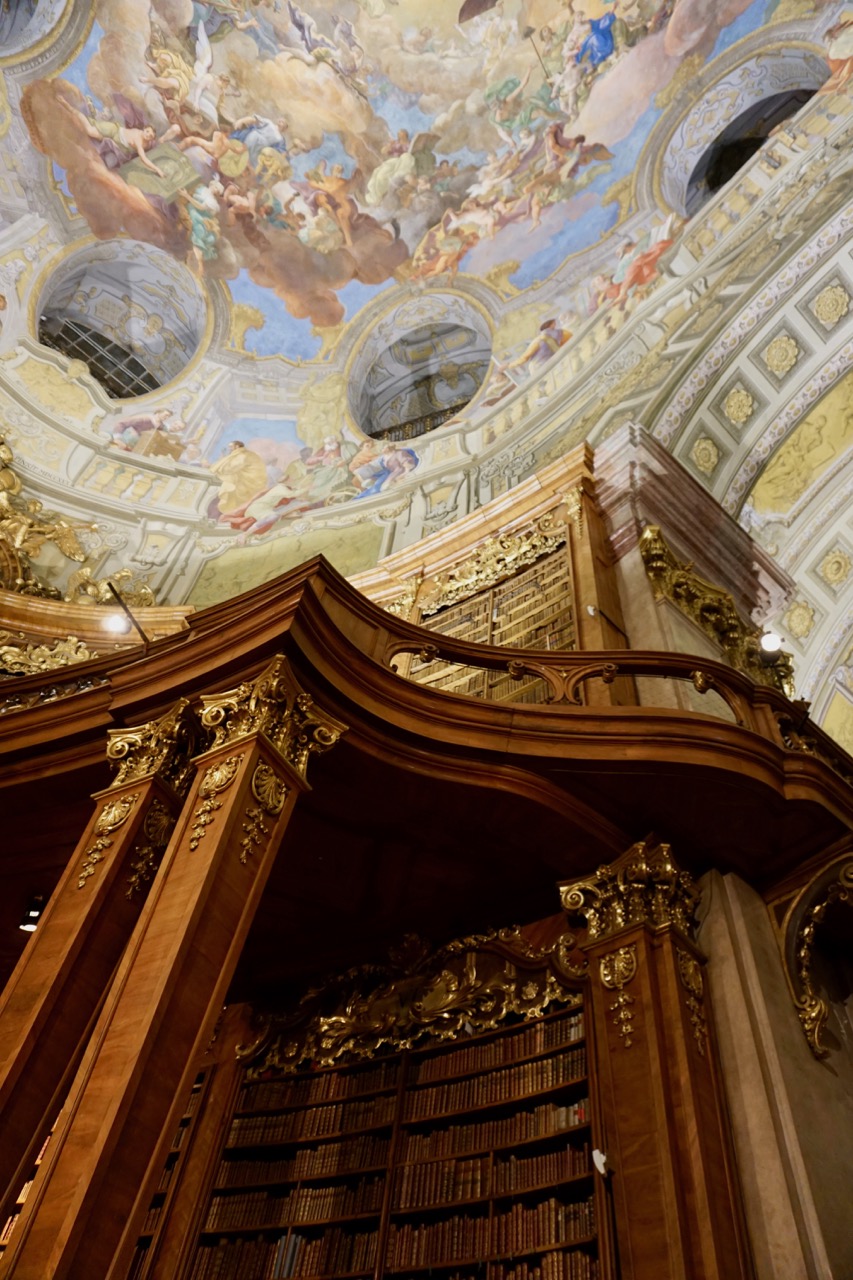
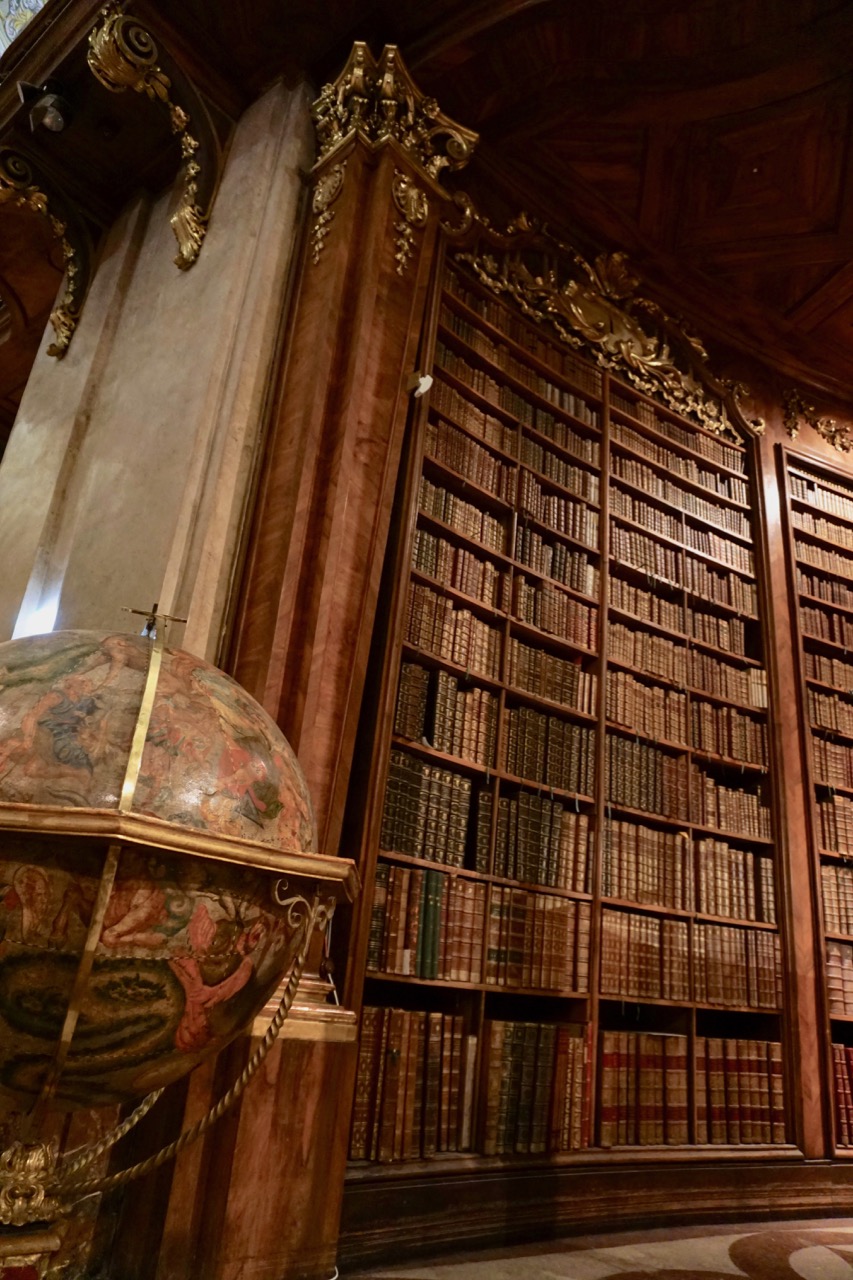
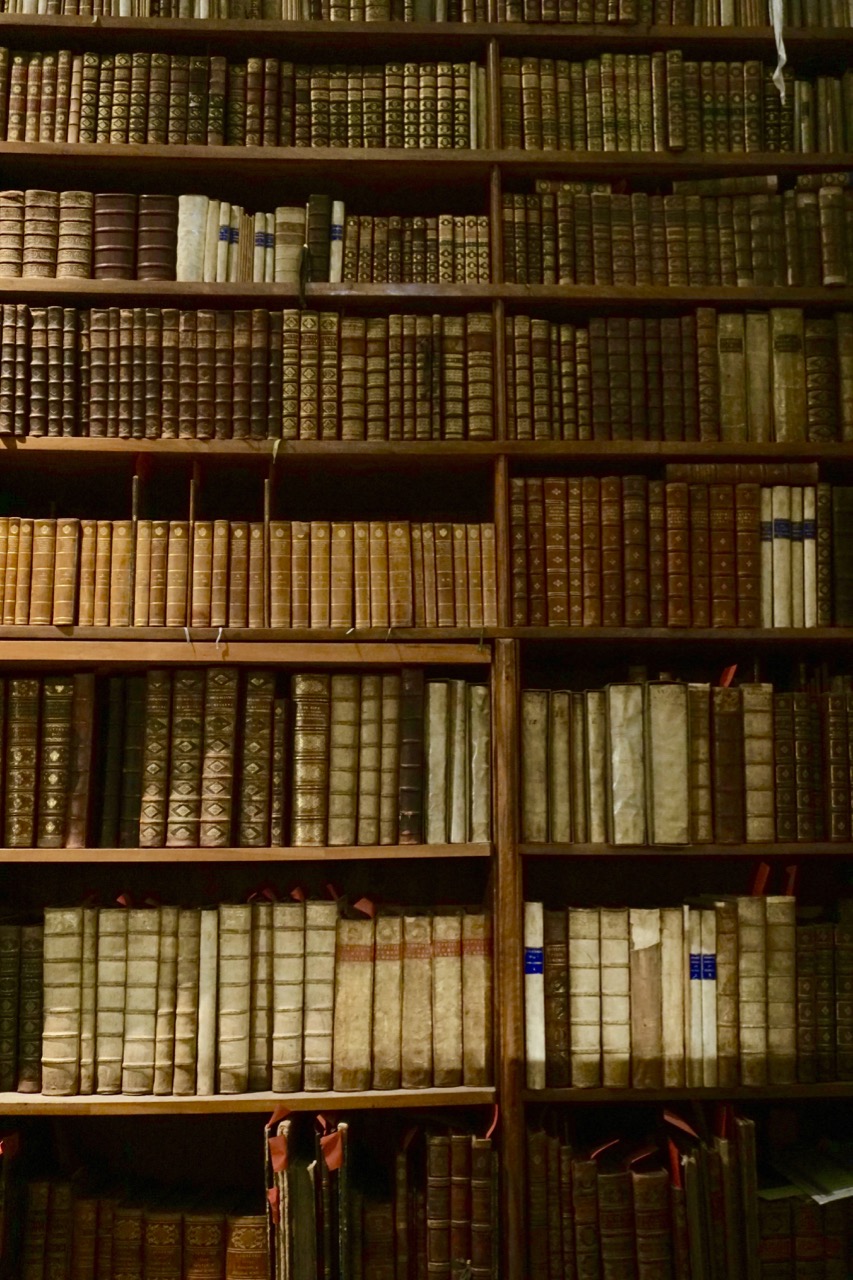
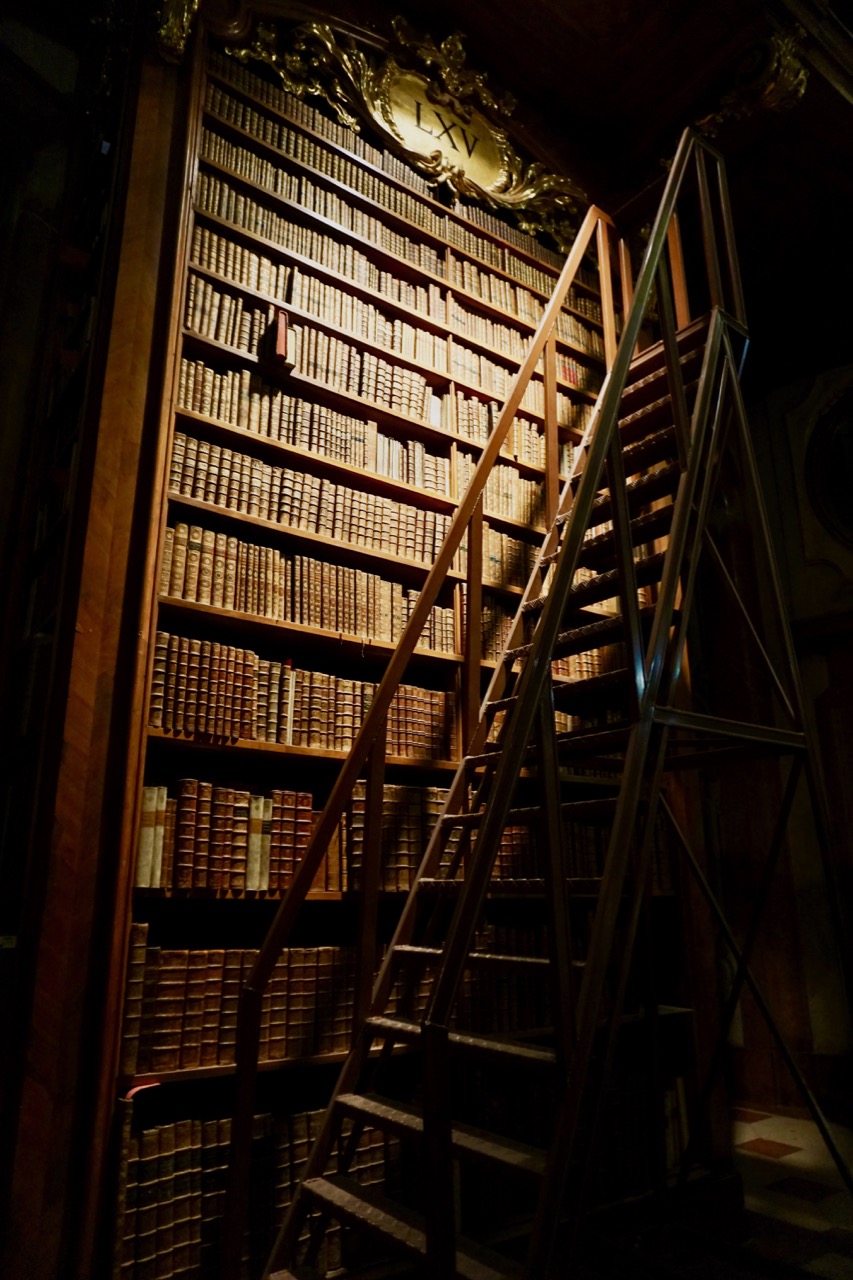
From there, we basically followed the streets brightly lit by Christmas lights. We wandered into a couple of Christmas markets and did some window shopping before stopping at the Austrian National Library. To warm up, we joined the long queue waiting to get inside. We were greeted by everything that creates the idea of a library – wooden bookshelves with the upper levels accessible by ladders, old books, vaulted painted ceilings. It was still cold inside, likely to keep the books in good condition, but so pretty that it didn’t matter.

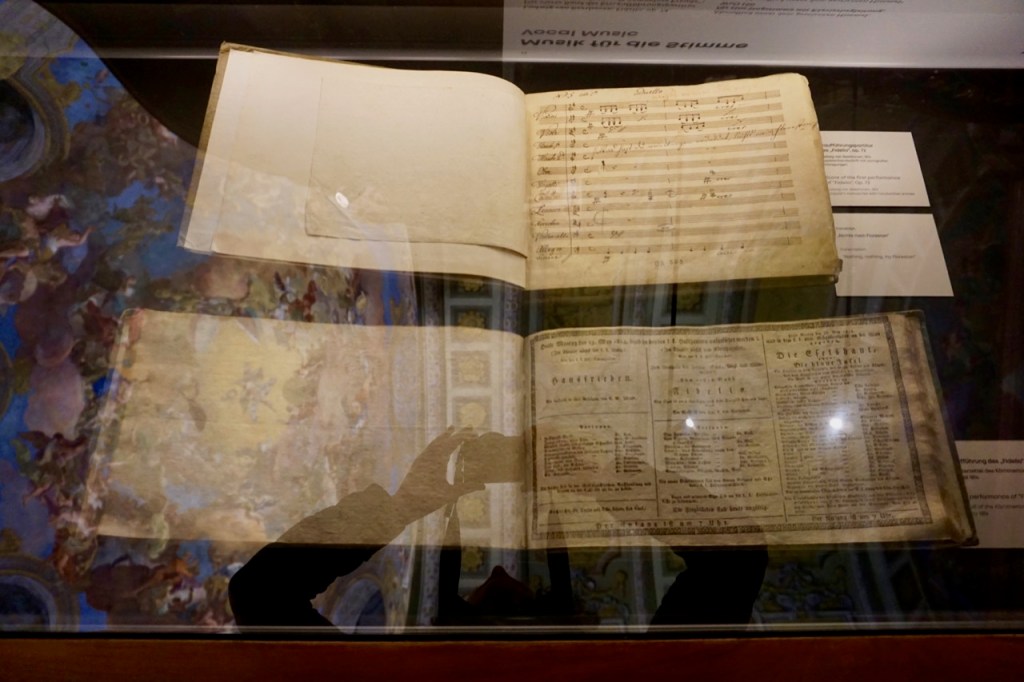
We were also lucky to see an exhibit of Beethoven’s personal papers, including the program and score of Beethoven’s only opera, Fidelio, which I have actually seen!

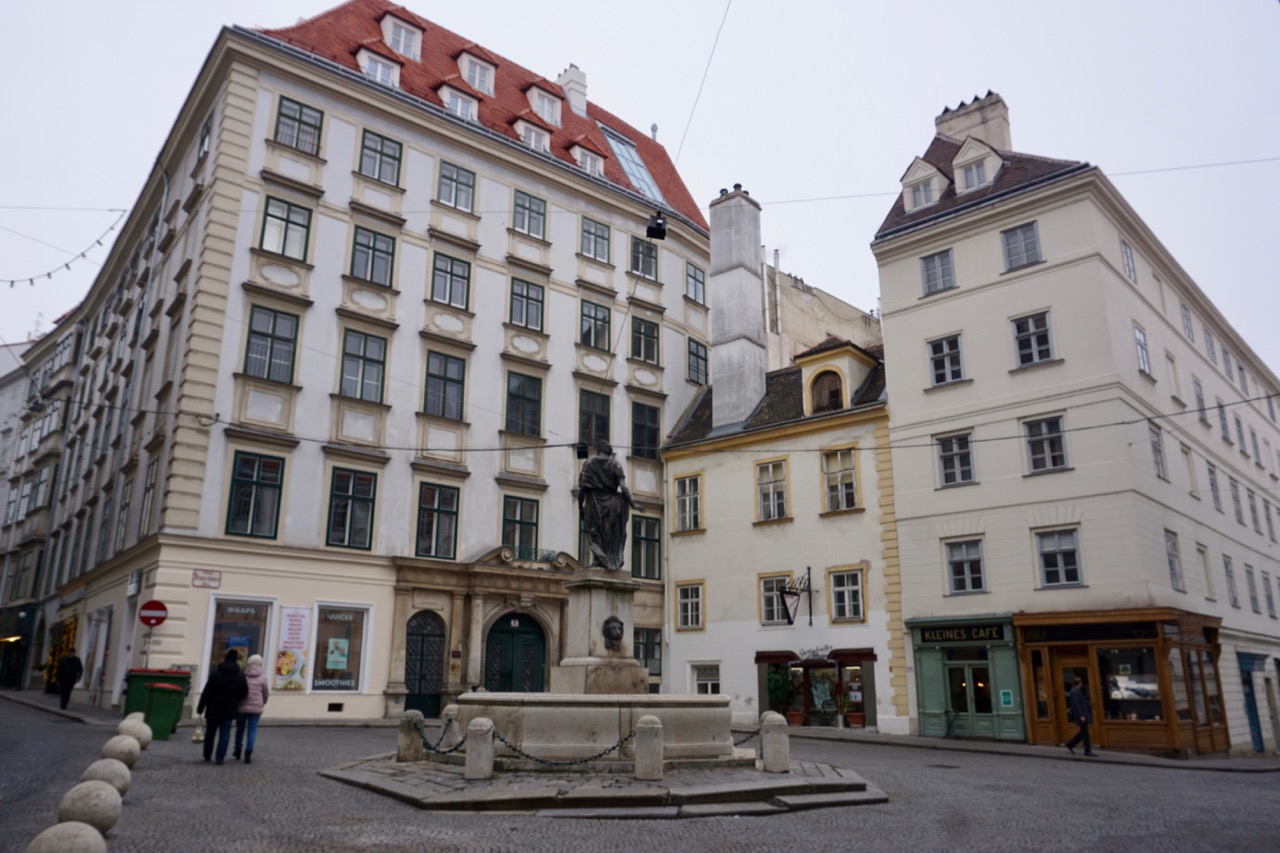
The next morning we followed a guided walk around Old Vienna and it took us down narrow, quiet streets to tiny squares with old, quiet churches.

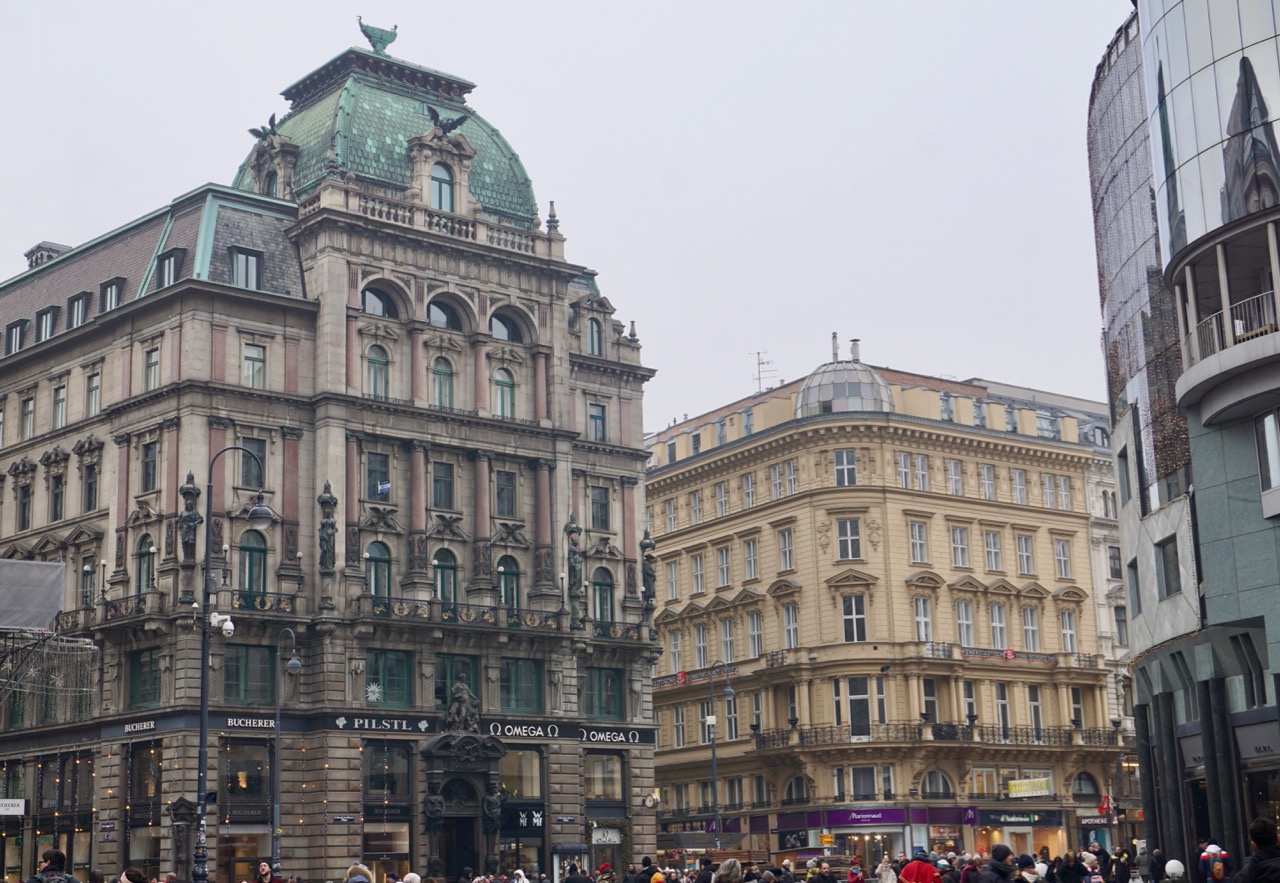
There were also busy shopping streets and grand squares with opulent buildings and statues.

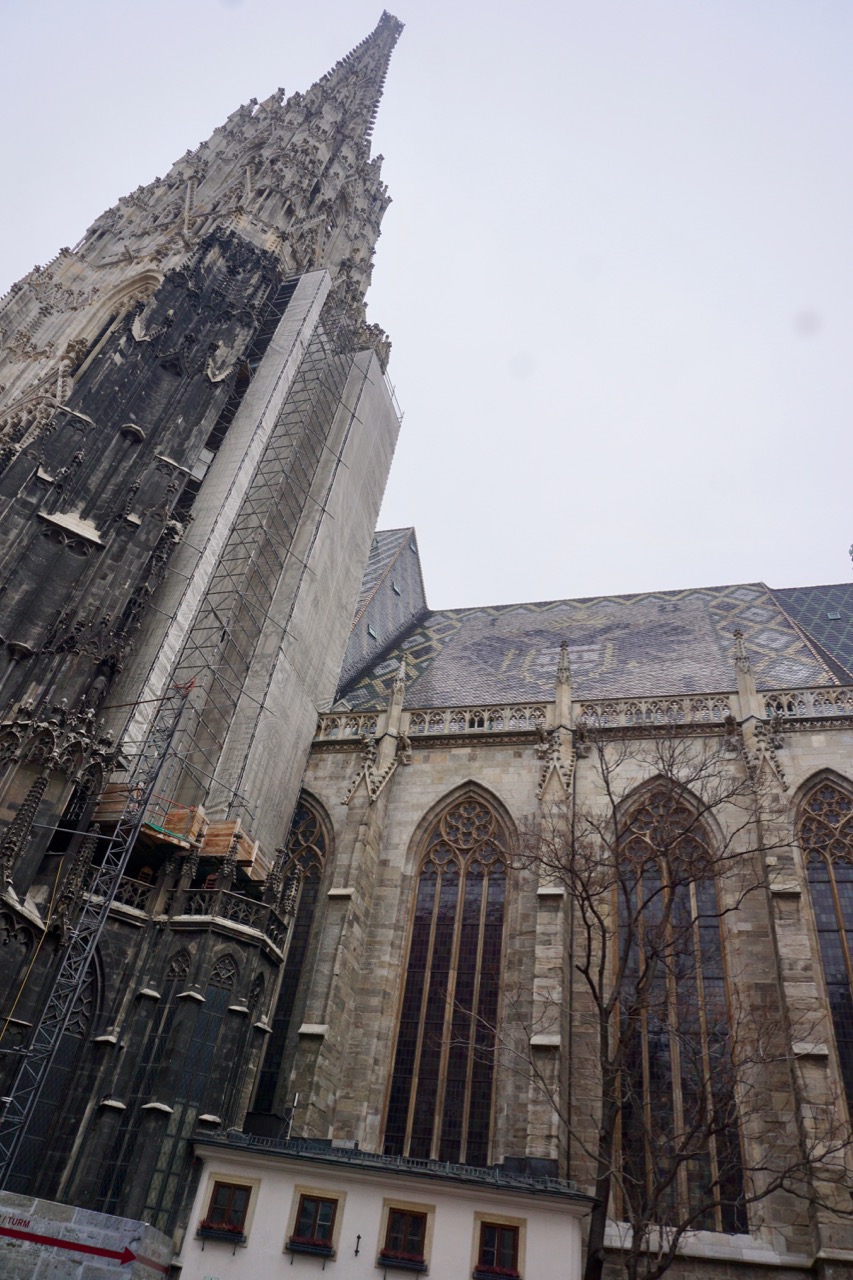
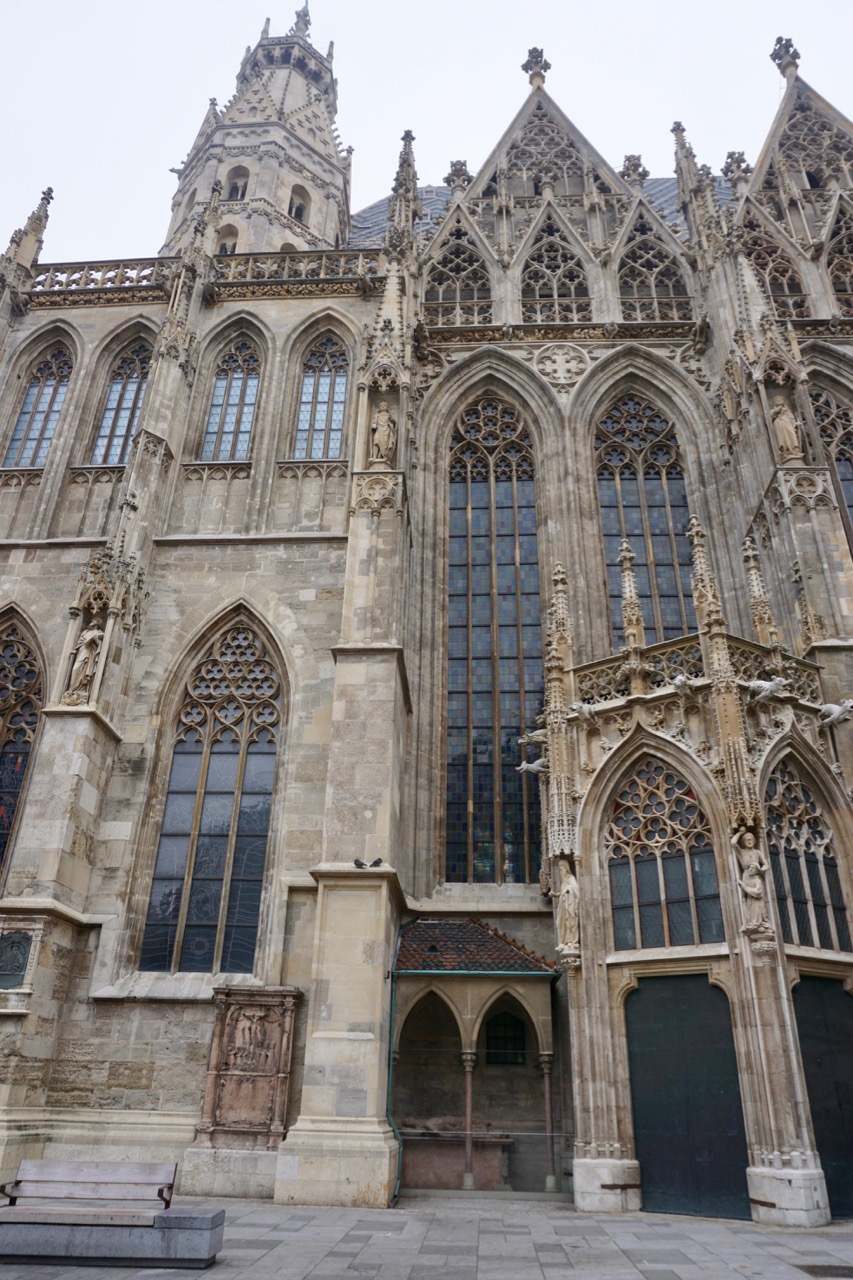
My dad and I climbed one of the towers of St. Stephen’s Cathedral and although it was cloudy, I was glad to see the view of Vienna from above. My spatial skills are mediocre so I appreciate actually being able to see the expanse of a city.

Fun fact: Vienna used to be a walled city! Our walking tour took us past the remnants of the old city walls.

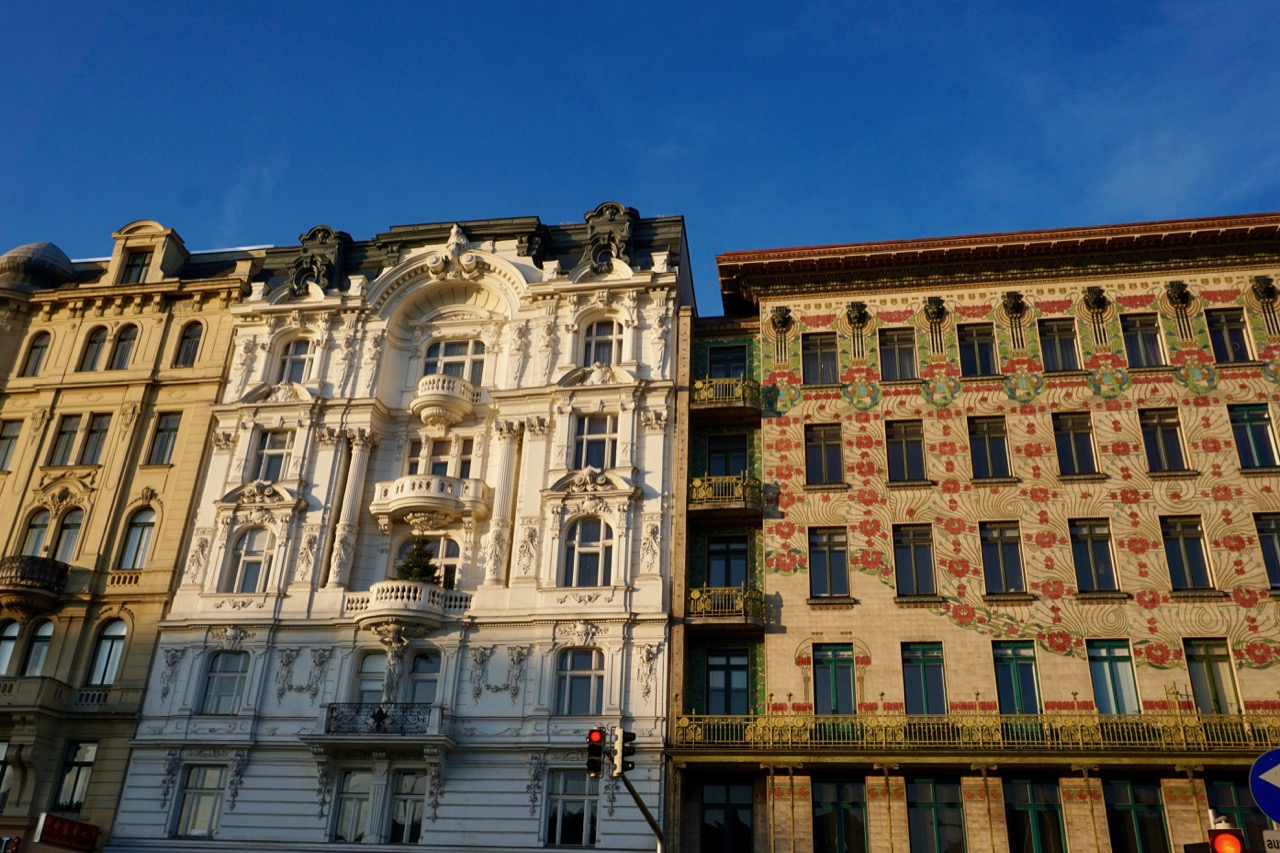
This was the coldest day we’d had (it had actually snowed!) and we decided to spend the afternoon indoors. Along with many other visitors, we took shelter in the Leopold Museum to learn about Viennese art of the 1900s. The exhibition included painting, sculpture, furniture, and jewellery and I enjoyed learning about artists who were completely new to me. I also didn’t know anything about the impact World War I had had on Vienna; I think it’s important to understand the place where you are and I was glad for the opportunity to learn more about it. The importance of art was clear outside of the museum, as well.

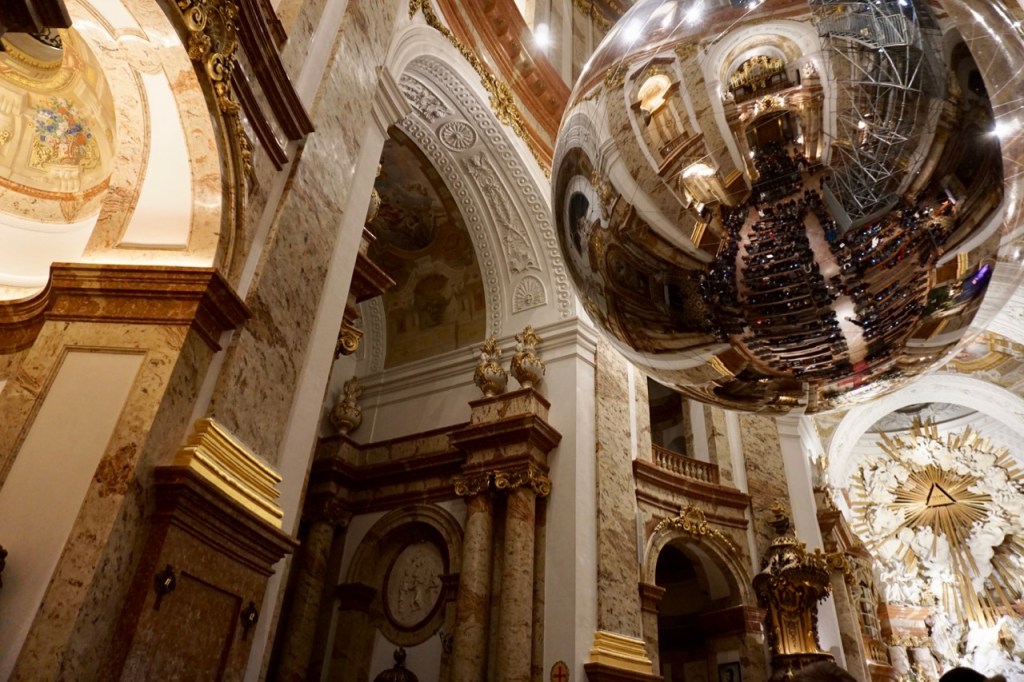
That evening we went to a concert in St. Charles Church in which we were treated to a performance of Vivaldi’s Four Seasons and what I can only assume were other works by Vivaldi because nothing was actually explained. An opera singer featured for certain parts of the performance, too. The church was beautiful but one thing that didn’t occur to me when I bought tickets is that churches are not heated. I learned an important lesson when the ushers passed out blankets at the door!

Leoben

Mum and Dad flew back to Toronto the next day and I left Vienna to pick up the car I’d be driving for the next week. This was the point at which I had no plans. I knew where I’d be staying for the first two nights but the rest of the week was wide open and I was really excited for the adventure.

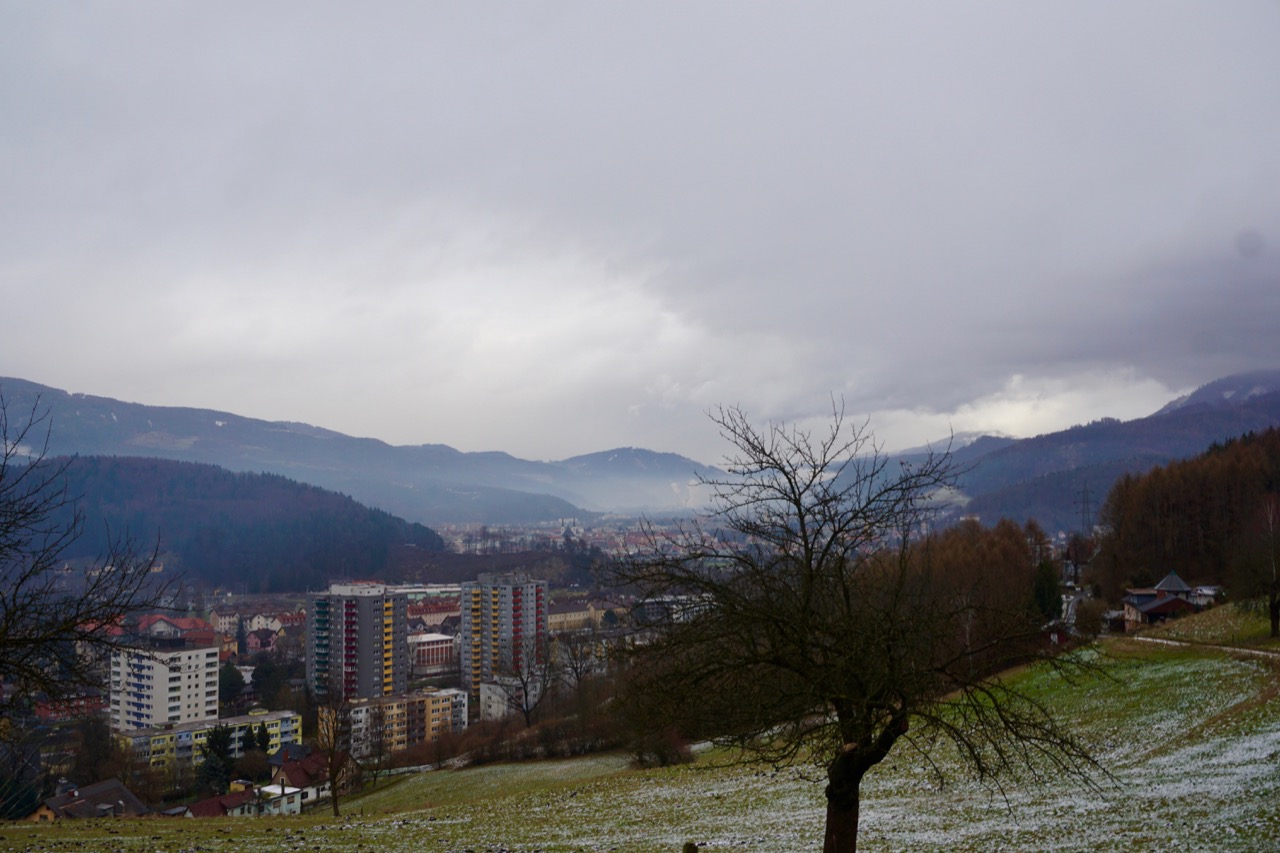
For example, I thought it might be fun to try cross-country skiing for the first time and planned to stay near a national park. The lack of snow meant I would hike instead, after getting over the initial delightful surprise of finding myself at a bed-and-breakfast up a goat track run by an elderly couple in what I think is their farmhouse. My German was almost as good as their English but everything went just fine.
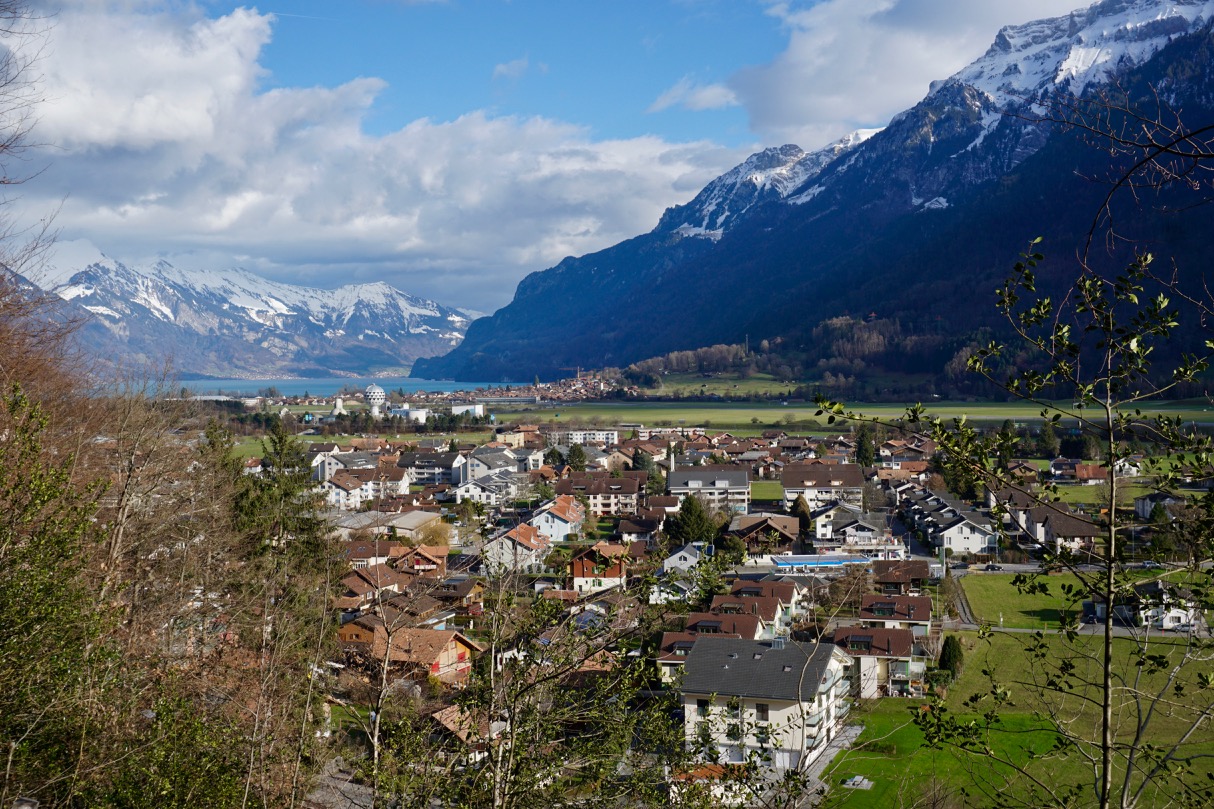
Going from grand Vienna to the country was a drastic change but I was so glad to experience a small Austrian town.

I’ve been in a number of odd towns over time and Leoben certainly fit. It appeared that part of the old town had been torn down and a multiplex had been built instead to comprise the town’s entertainment. It contains a kebab shop, pizzeria that doubles as a bar, sushi restaurant, and movie theatre. Other than that, the town has five different grocery chains, a euro shop, three discount clothing stores, a couple furniture stores, a café/bar that did not sell food, and a sex shop. Gösser beer operations are located in Leoben, too. An adventure indeed!

The drizzle let up by the next morning, perfect weather for a drive to Slovenia!

Travel Guide: Interlaken, Bern, Lucerne, Zurich

Over the summer, my parents and I decided that Switzerland was a reasonable “halfway” destination to spend the winter holidays. It’s not really halfway but it was so, so delightful! Now that I’ve been to Switzerland in the winter, I’d love to go back in the summer. And fall. And spring. This blog post will detail my travels through Interlaken, Bern, Lucerne, and Zurich, all of which are easily accessible by train. Be aware, though: Trains in Switzerland are not cheap. Timely, clean, comfortable, and efficient, but not cheap.


Interlaken

I was alone in Interlaken for the first two nights of travel. It was pouring for much of the first day but I found myself some glühwein (mulled wine) and waited for it to stop.

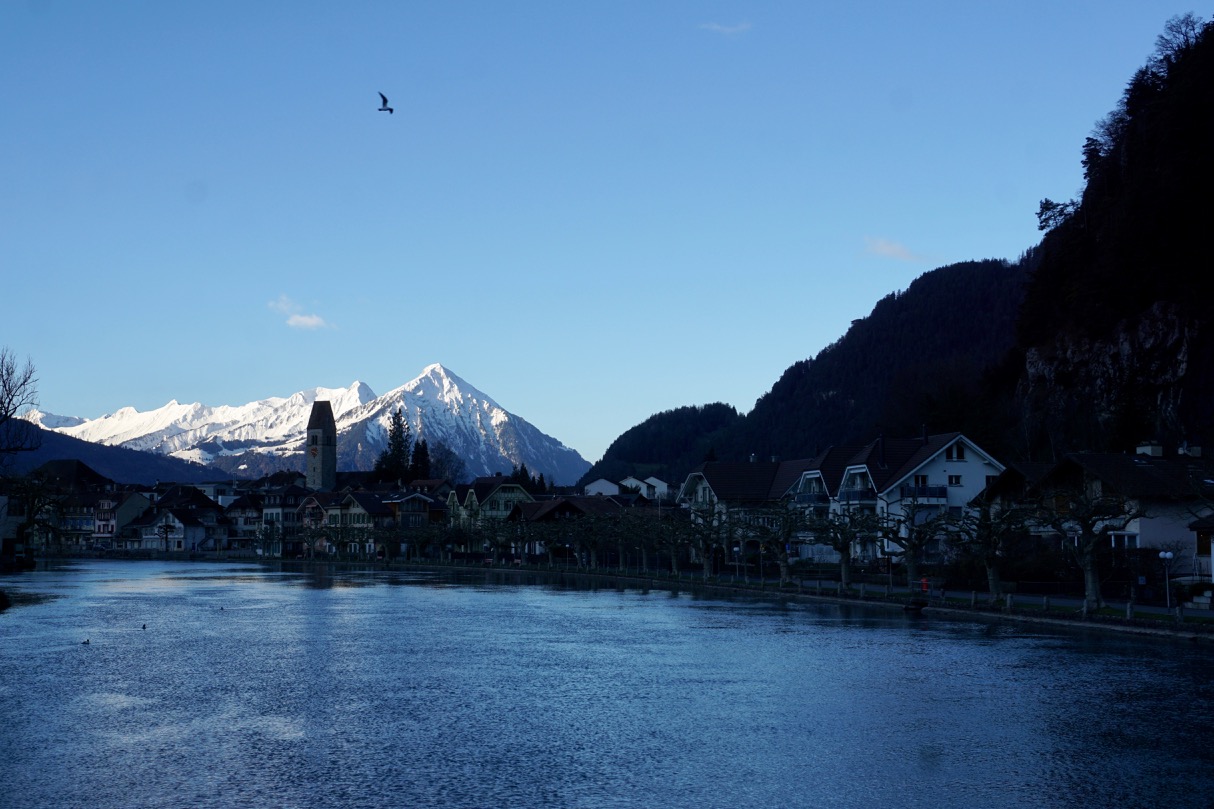
It was lovely in the afternoon when the sun came out.

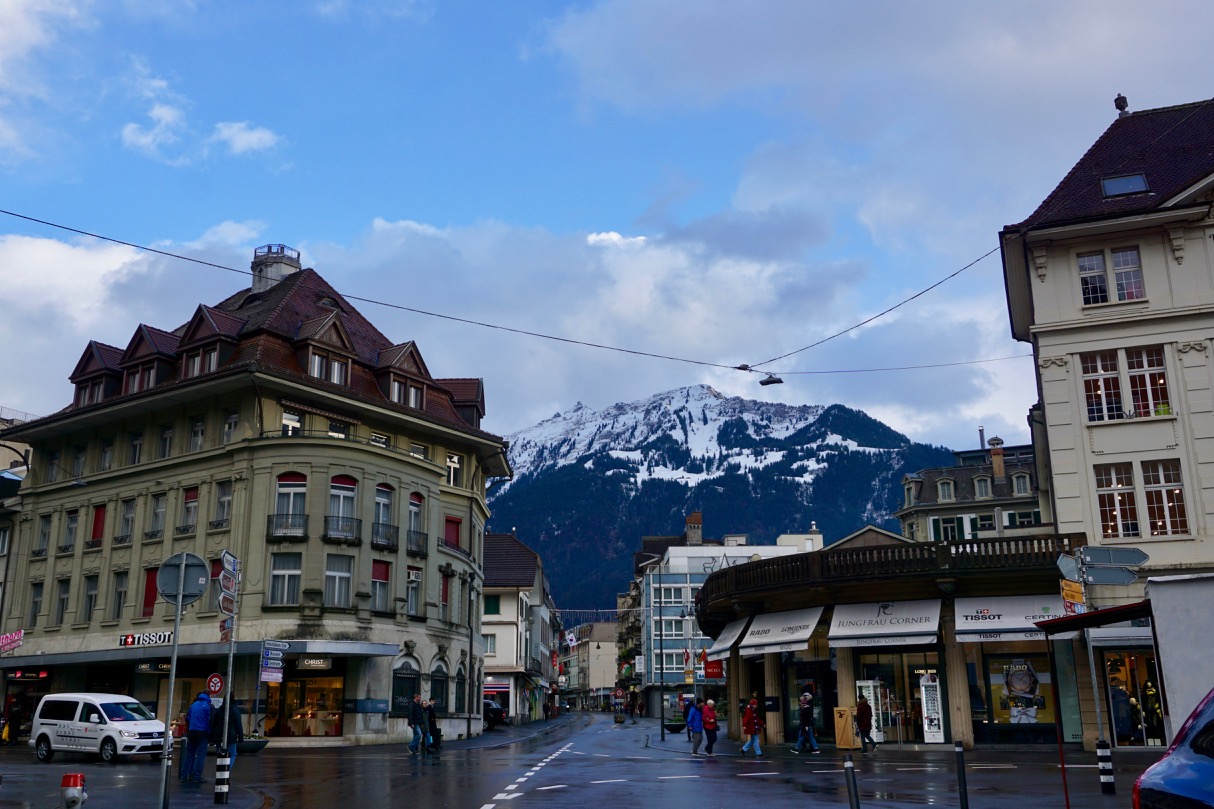
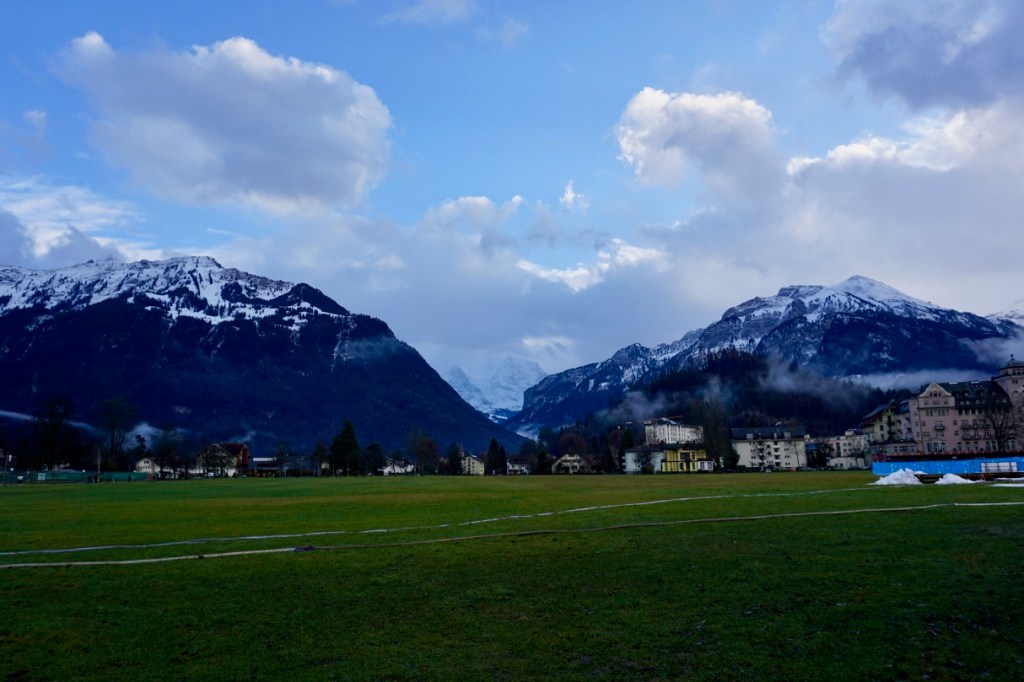
I walked around town and took pictures of mountains, hardly able to believe where I was. I watched where the sun fell and tried to capture how it lit up the trees and the snow. It made me laugh how the grass was perfectly green but there was snow up on the mountains.

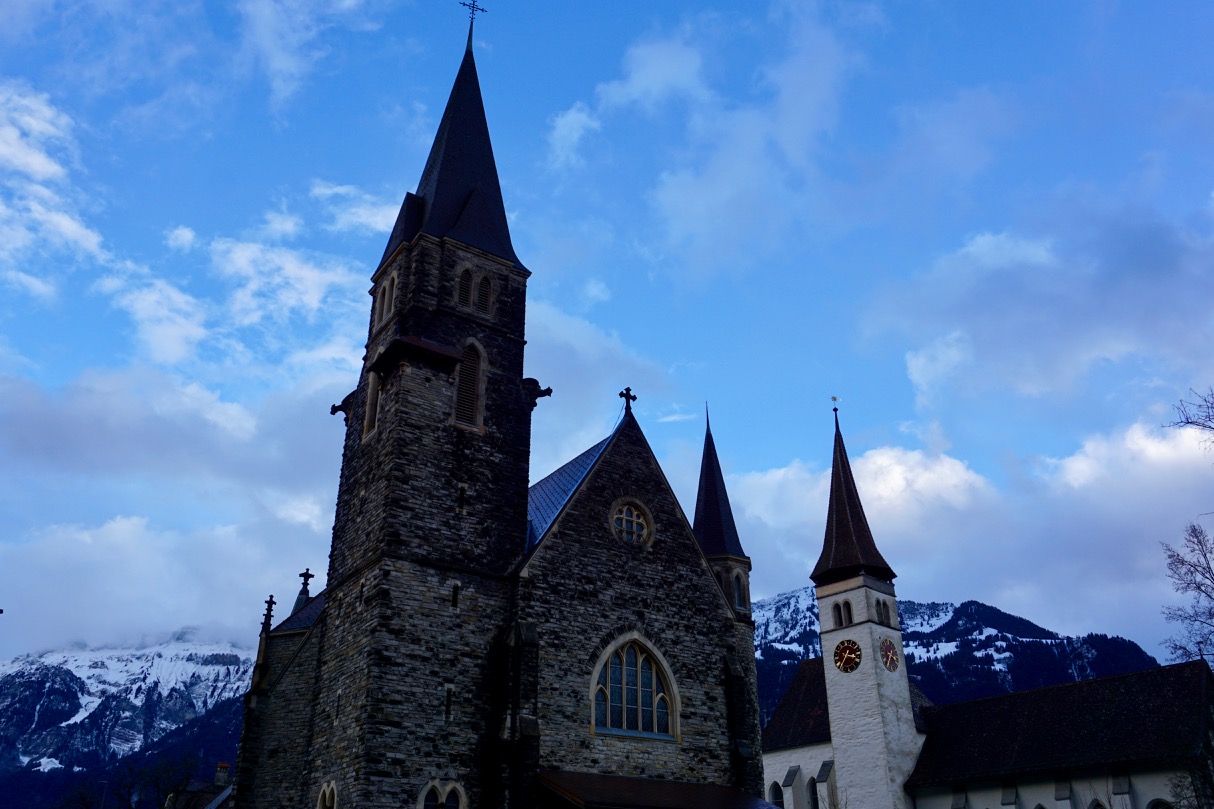
It also really tickled me to see the Catholic and Protestant churches right next to each other and to hear their bells ringing differently but at the same time.

The sun rose late (shortly after 8am) and set early (4:45pm) in Interlaken and Christmas Day was clear and cold. Around 9am I set off on a walk along the River Aare to Ringgenberg, a town about 5km away. The walk took me through little neighbourhoods by the water and in the hills. I passed a few other people along the way and perfected greeting people, “Good morning!” in German.

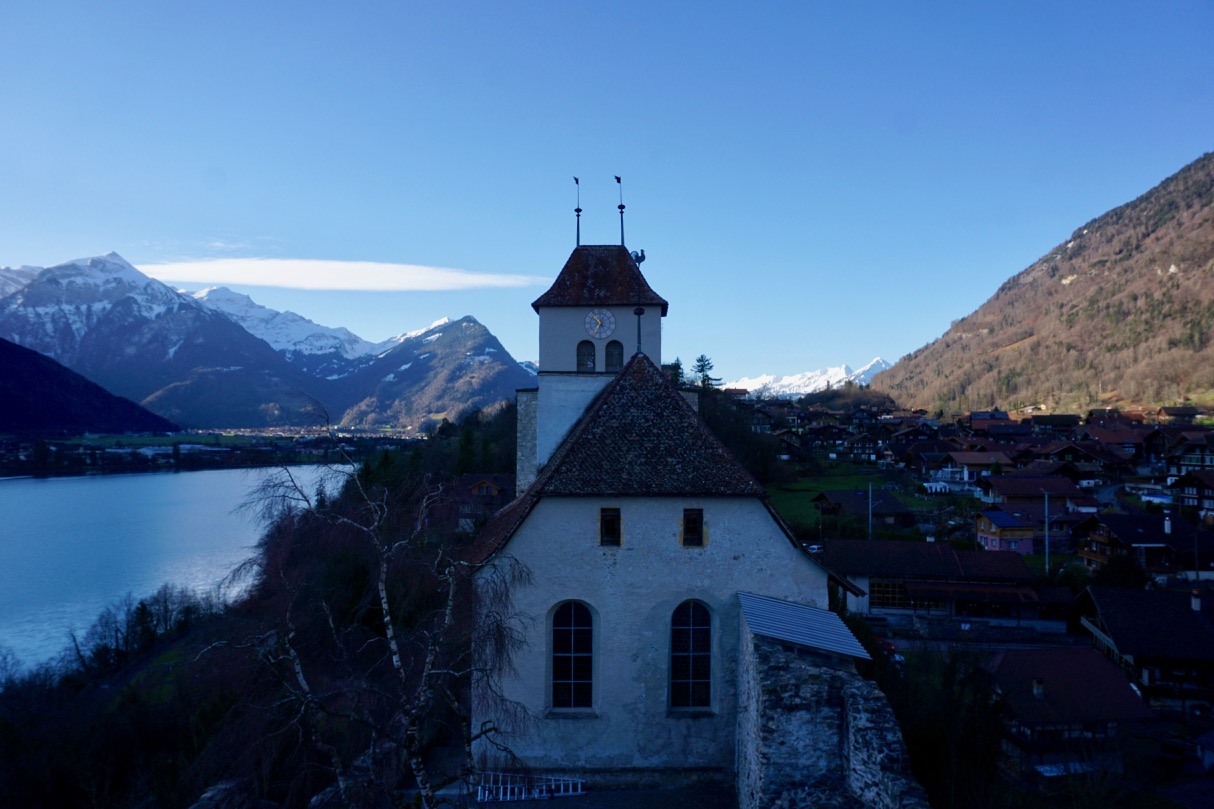
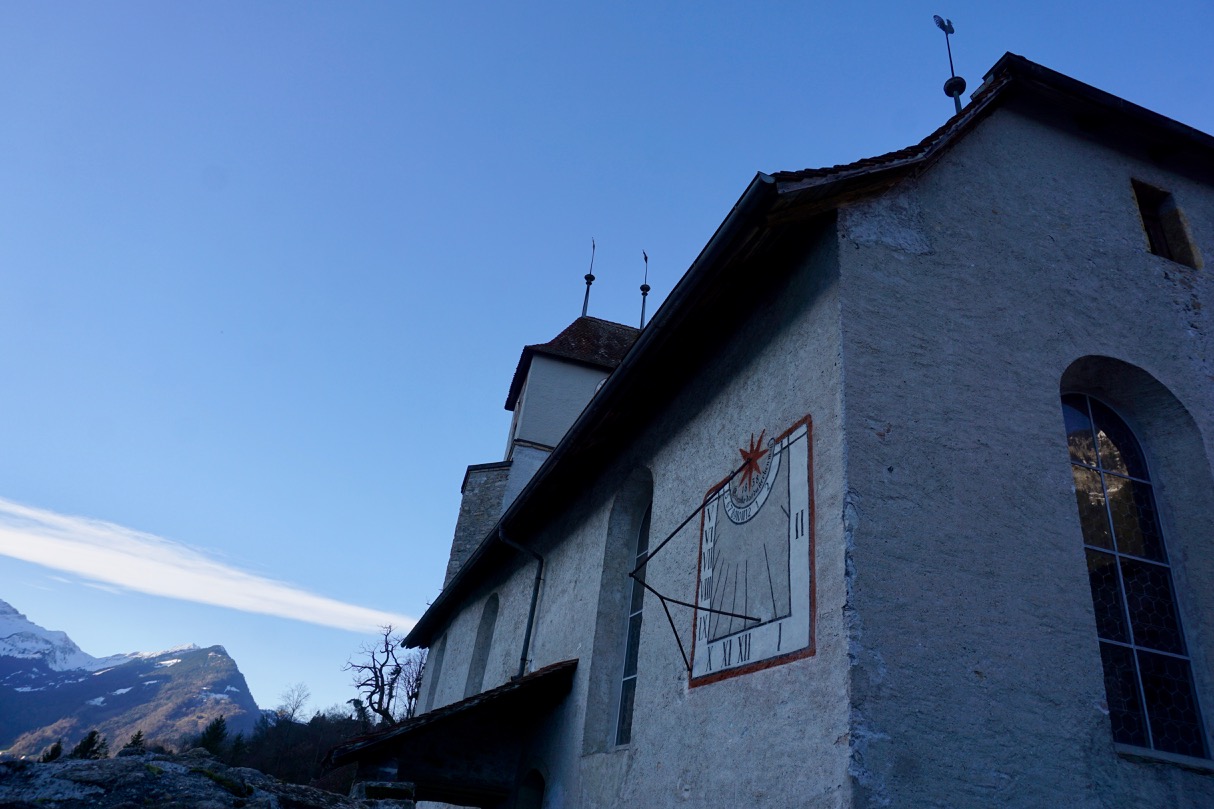
The main attraction in Ringgenberg was the church tower, which is open to visitors at any time. Services were going on when I arrived and it was a really special experience to climb the church tower alone and look out at the world while listening to songs that I couldn’t understand.

The sun was fully up as I walked back to Interlaken. I’d hoped for a coffee but settled myself on a log for some almonds instead.

After the best of the three rösti I had during my time in Switzerland, I spent the afternoon on a short walking trail called the Clara von Rappard loop, which took me up into the hills and the woods on the opposite side of Interlaken. There were eight historical markers with information about Clara and her life along the path, but I regrettably don’t speak German.

Once it got dark, I headed to the Ice Magic skating rink in the centre of town. I spent a few minutes watching the skaters before retreating into the tent of food and drink stalls, warmed by space heaters and fires. I stood with my glühwein at a small table in the corner and I watched and marveled.

Certain things make sense to me. Life shared with those around us, with laughter and goodwill, makes sense to me.

Bern

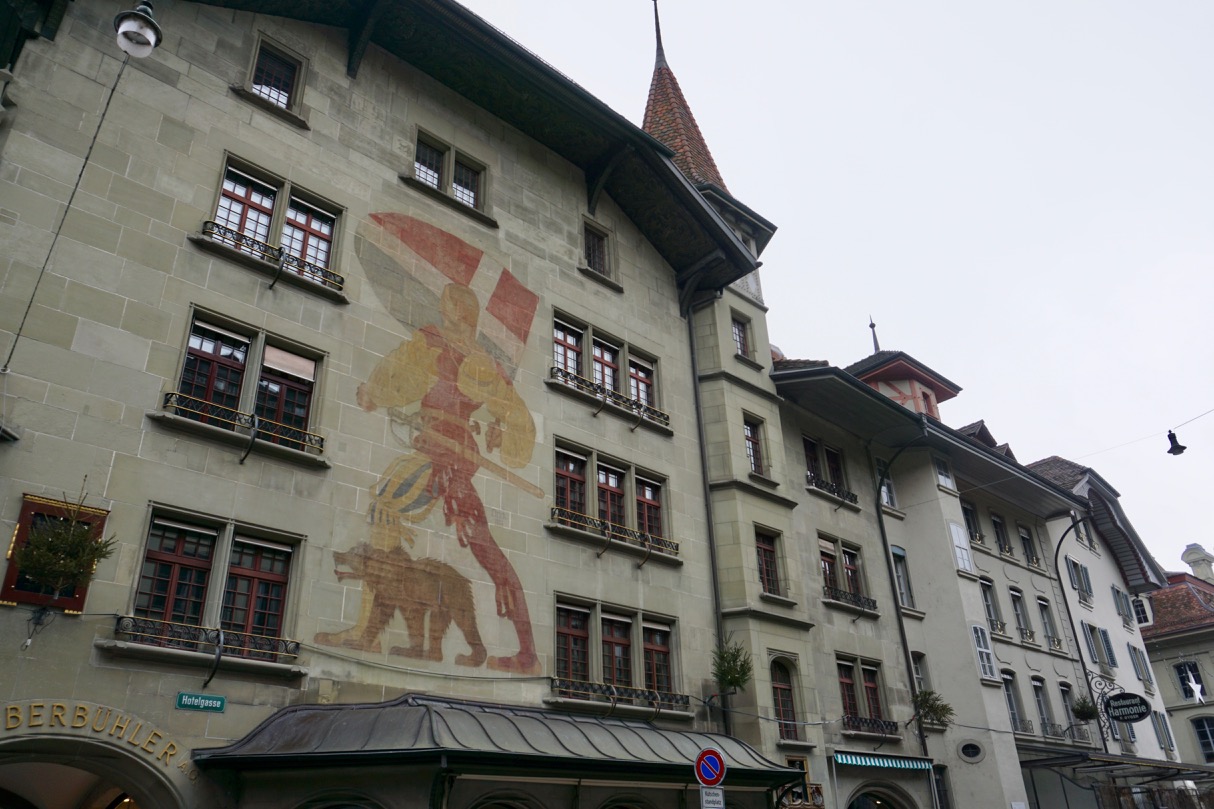
The following morning I took the train to Bern to meet my parents who had just landed from Toronto. The weather was cold and dreary but it was so great to see them. December 26 is a public holiday in Switzerland so much of the capital city was closed until evening when restaurants opened for dinner. We spent the day walking around and taking in the feel of the city.

We saw the little performance at the clock tower, watching the figurines in the mechanism move and dance as they have been for hundreds of years . . .

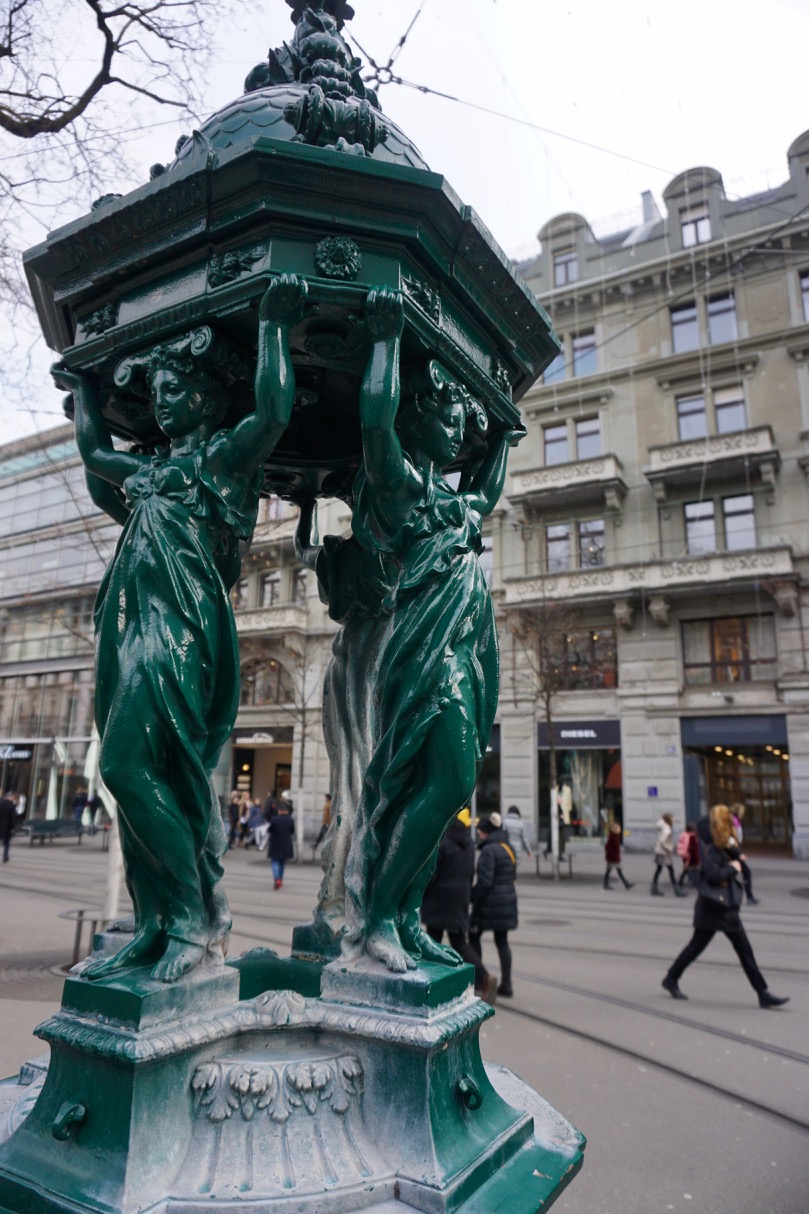
. . . examined the ornate fountains across the city, which had very cold water . . .

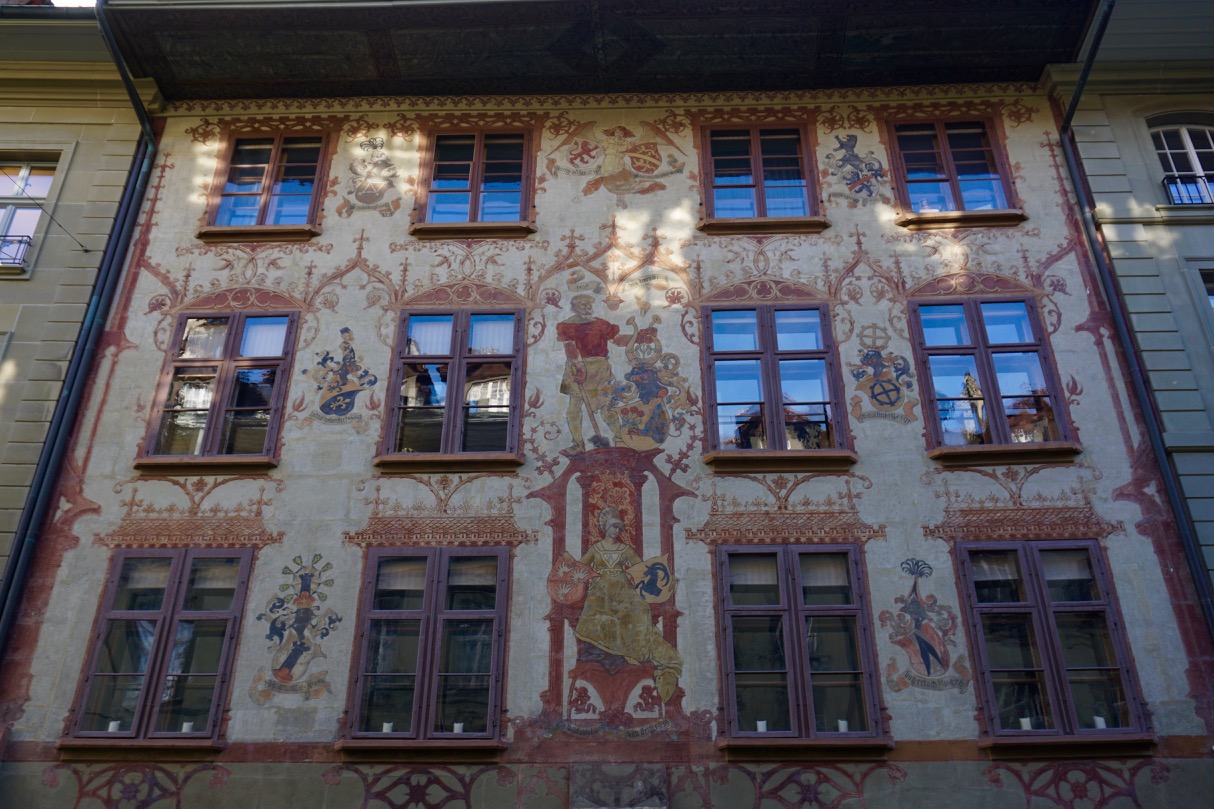
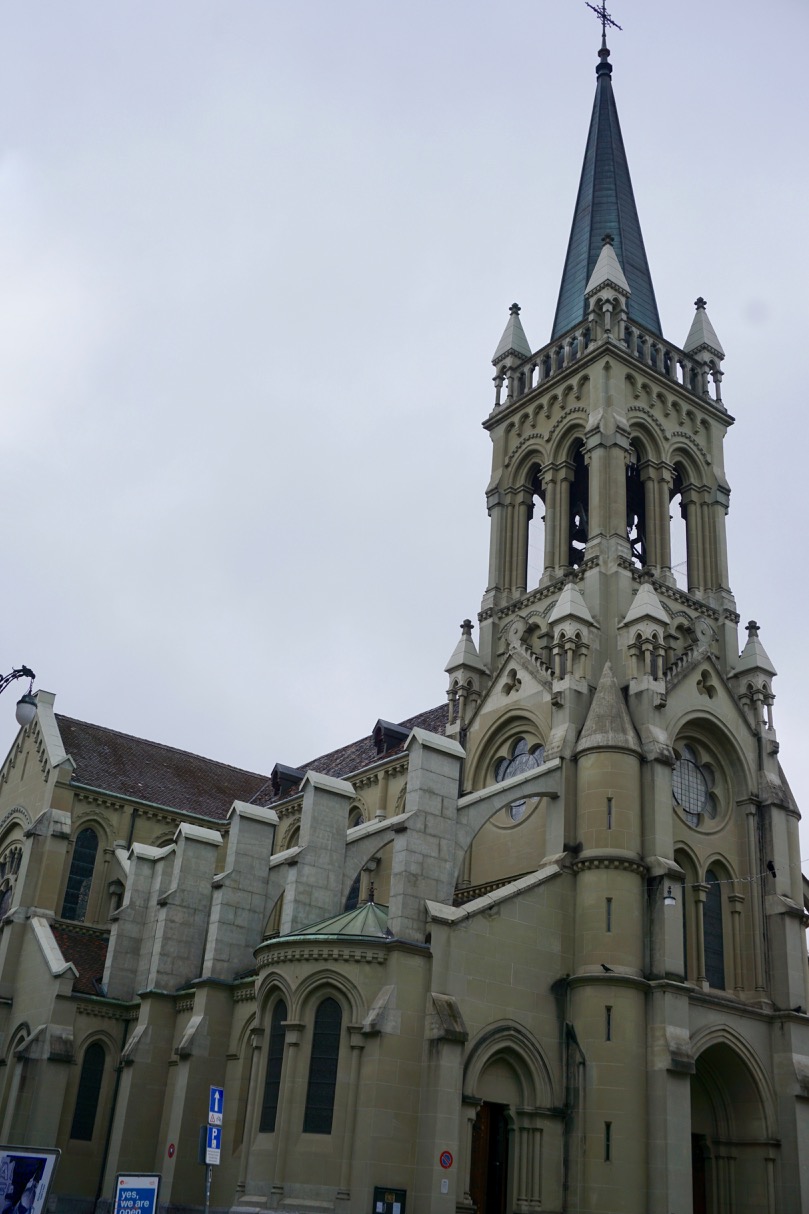
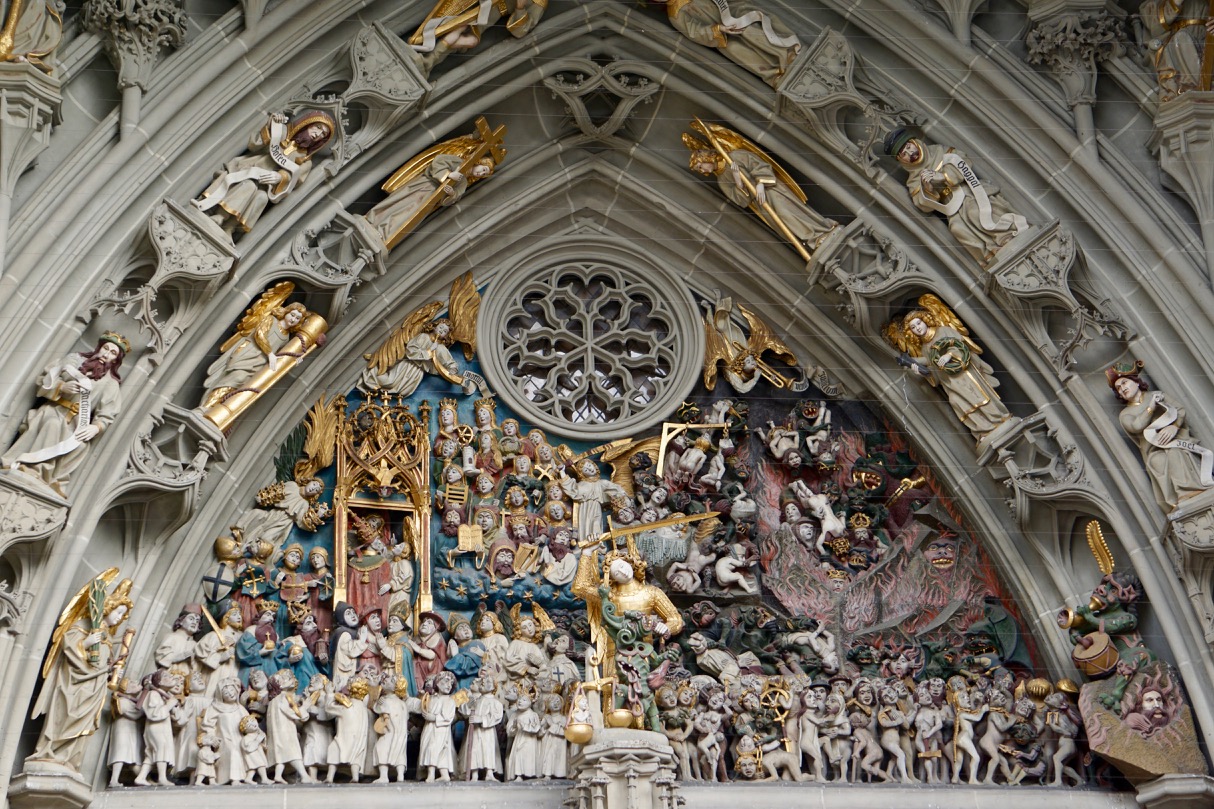
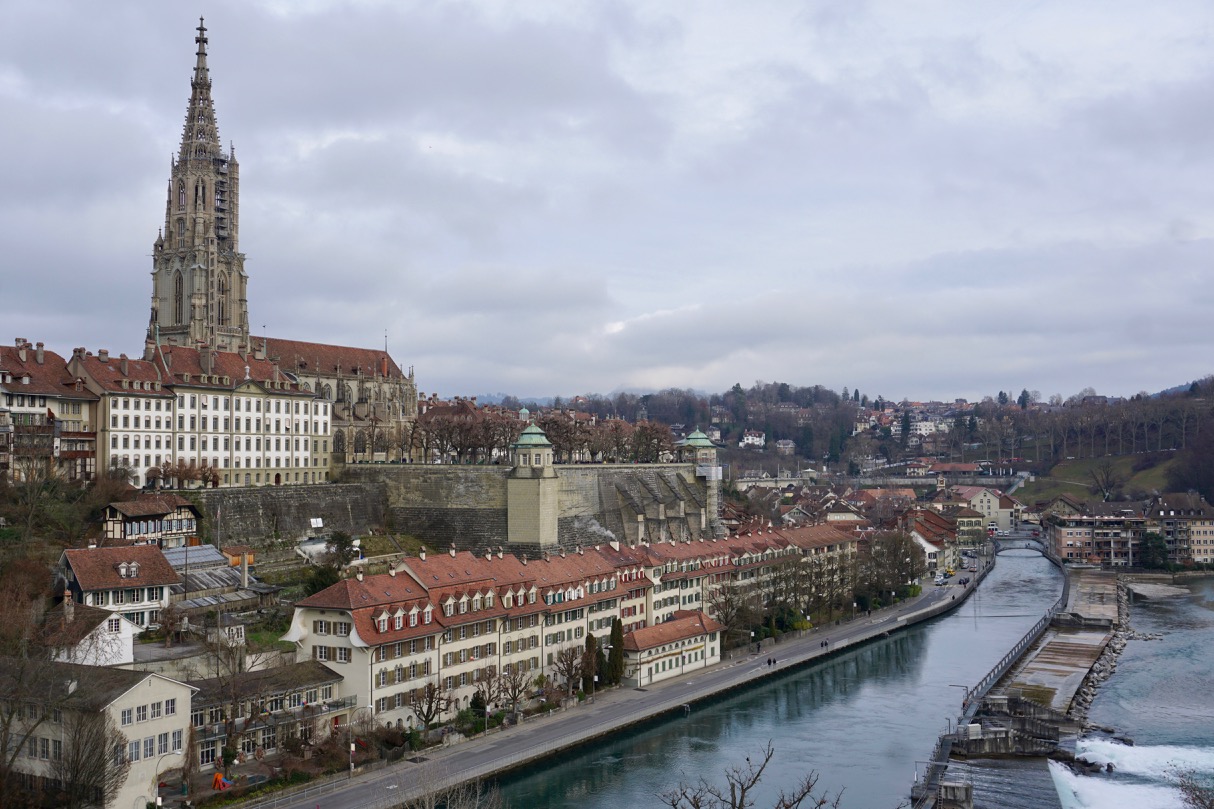
. . . and admired the exterior of Bern’s Minster while the interior underwent renovations.

We also went to the Einstein Museum because my dad is a math/science guy. There was a lot to read and a few videos that claimed to explain Einstein’s theories in “four easy lessons”. I have to be honest, I gave up halfway through lesson three.

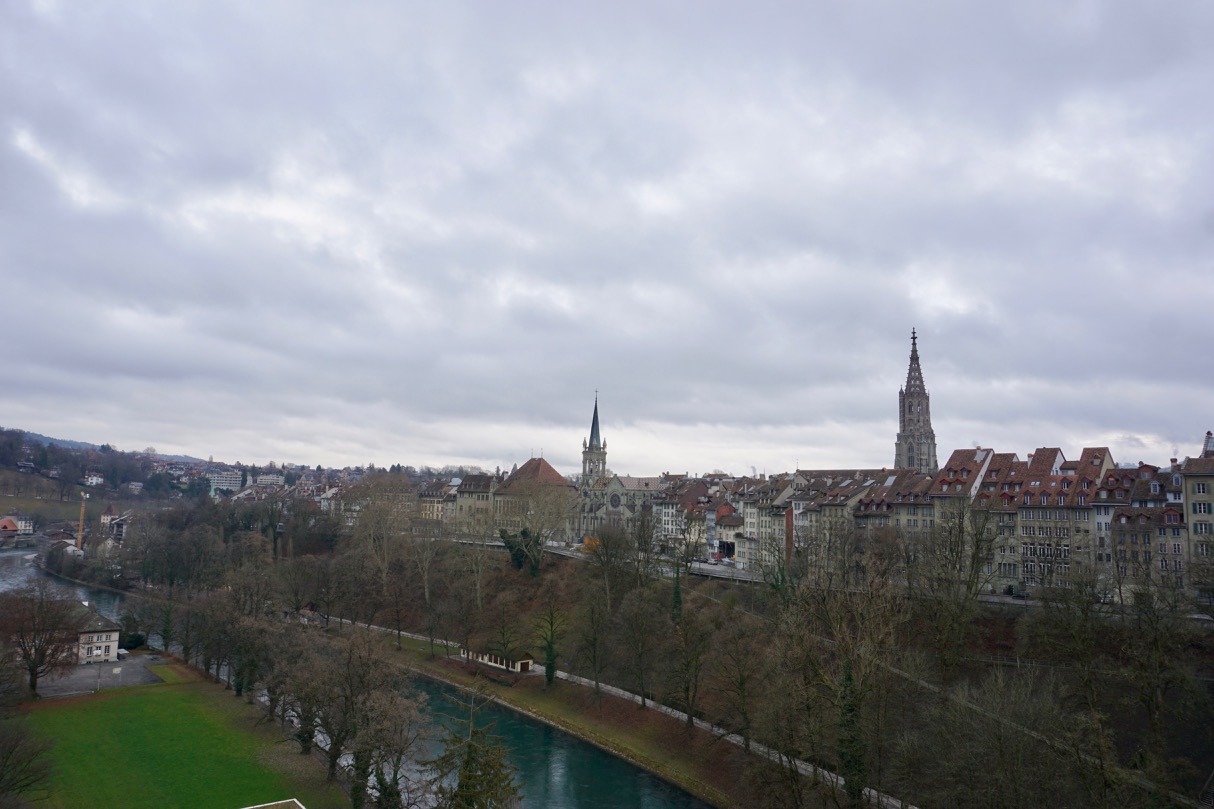
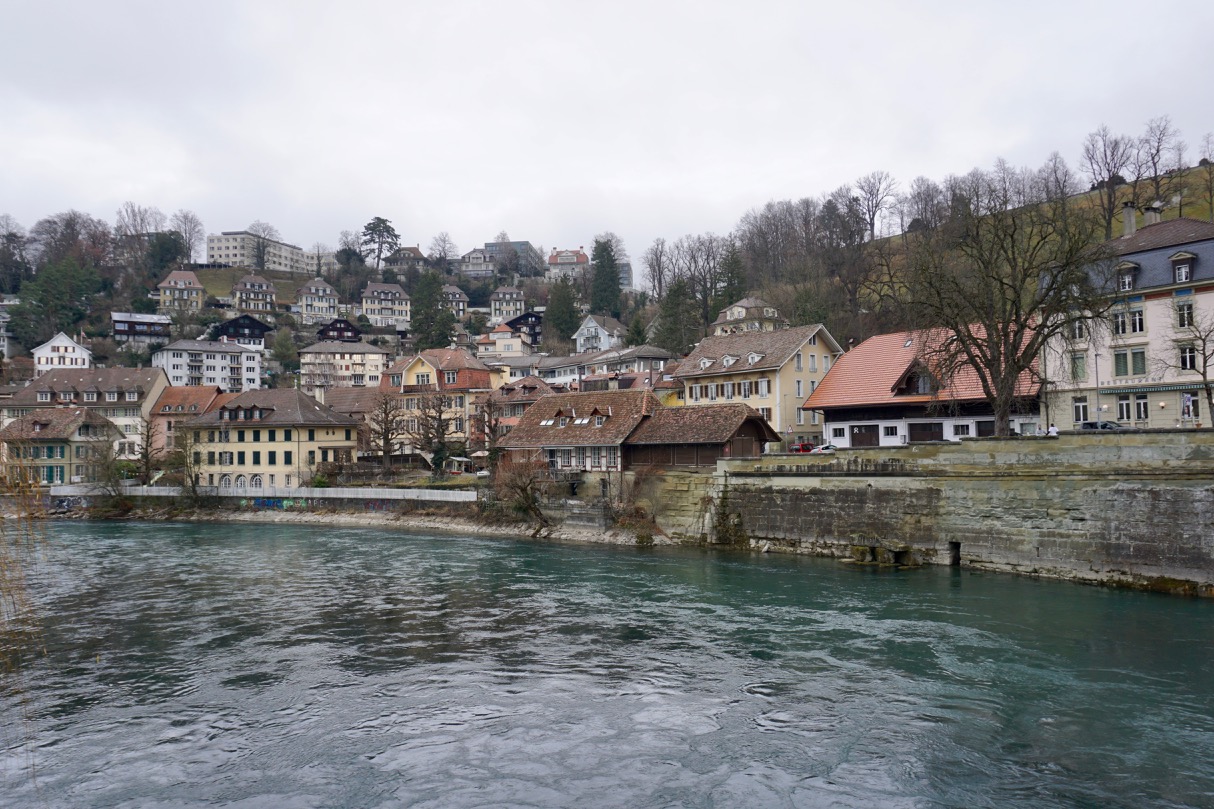
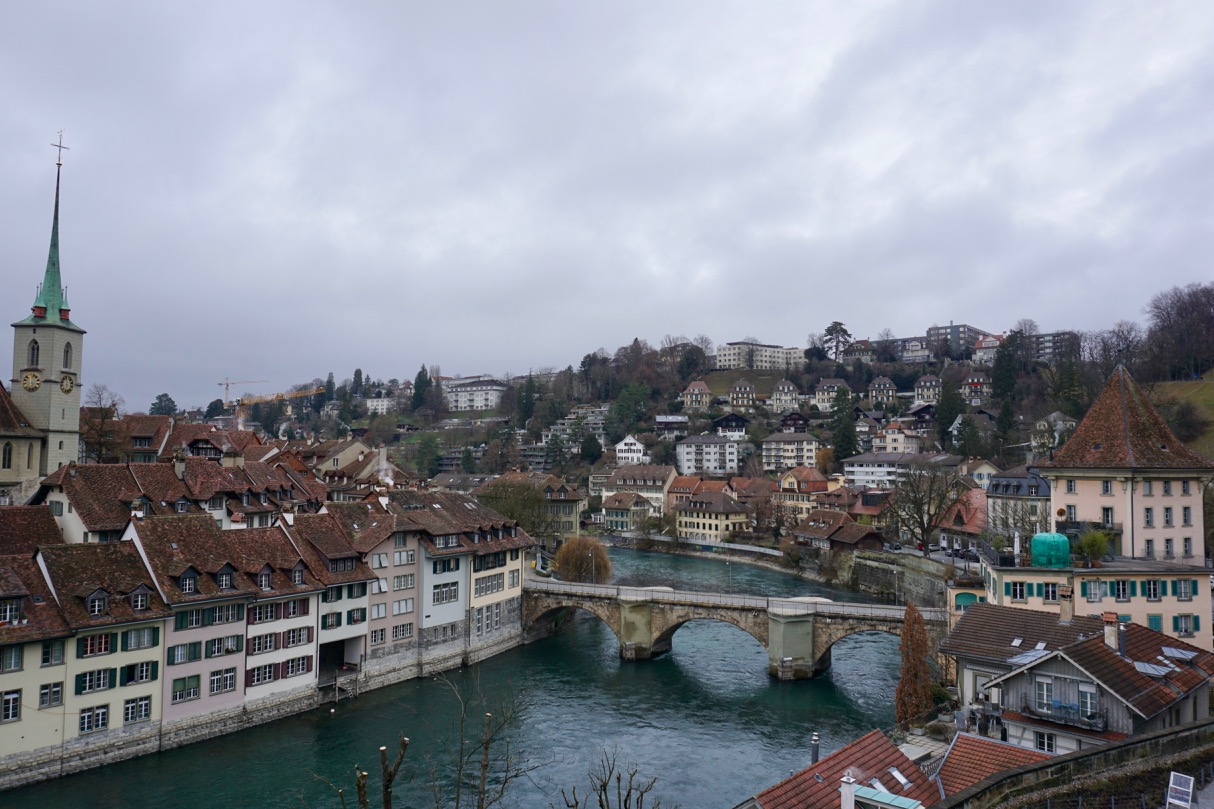
Bern’s old town is built high above the River Aare and the graceful bridges made me feel like we were floating.

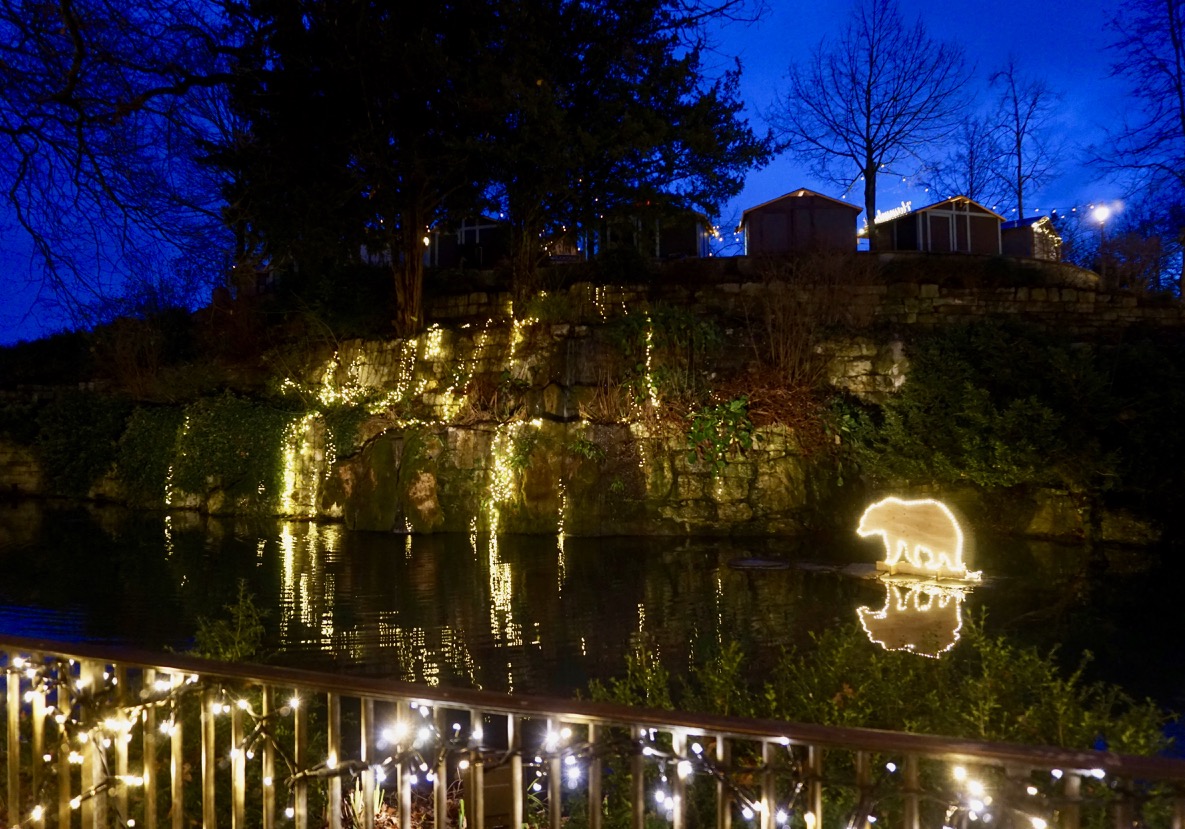
The next day we visited the Christmas market, which had been closed on actual Christmas. This was the first of several Christmas markets on this trip and while it was small, I was glad walking around and watching other people enjoying themselves.

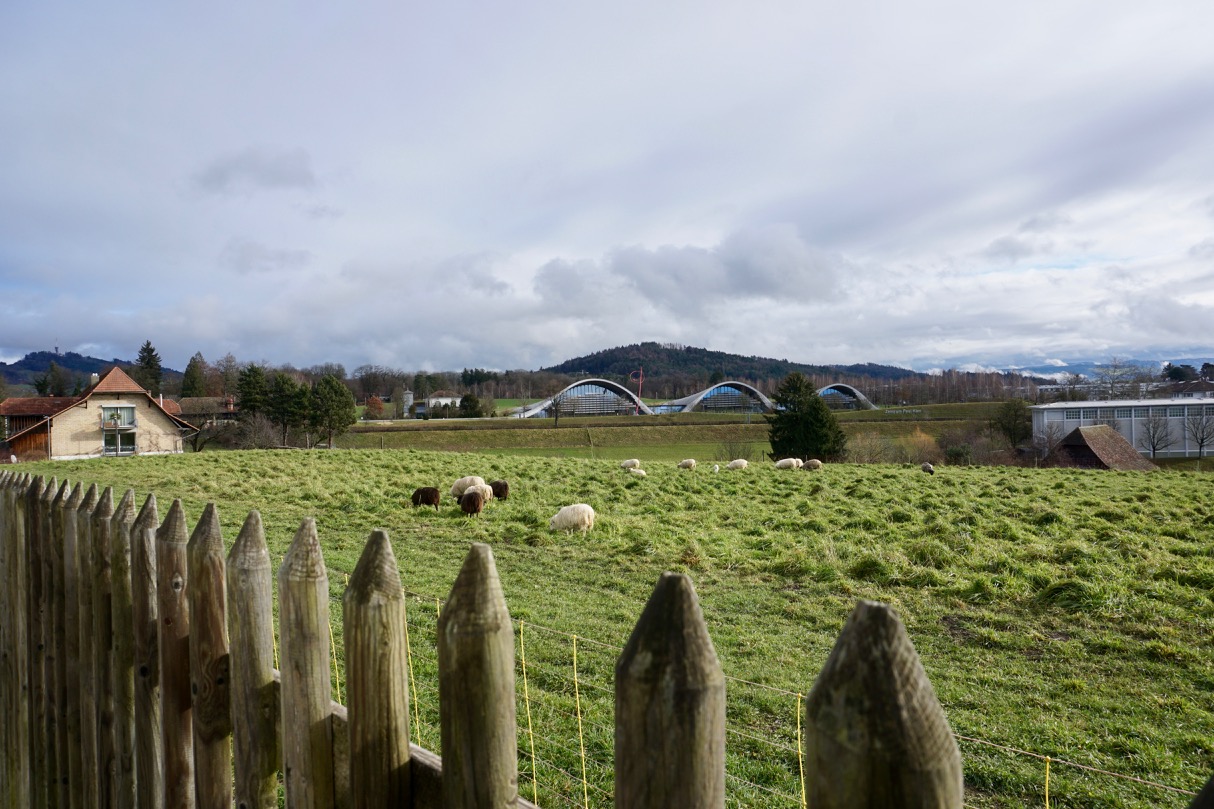
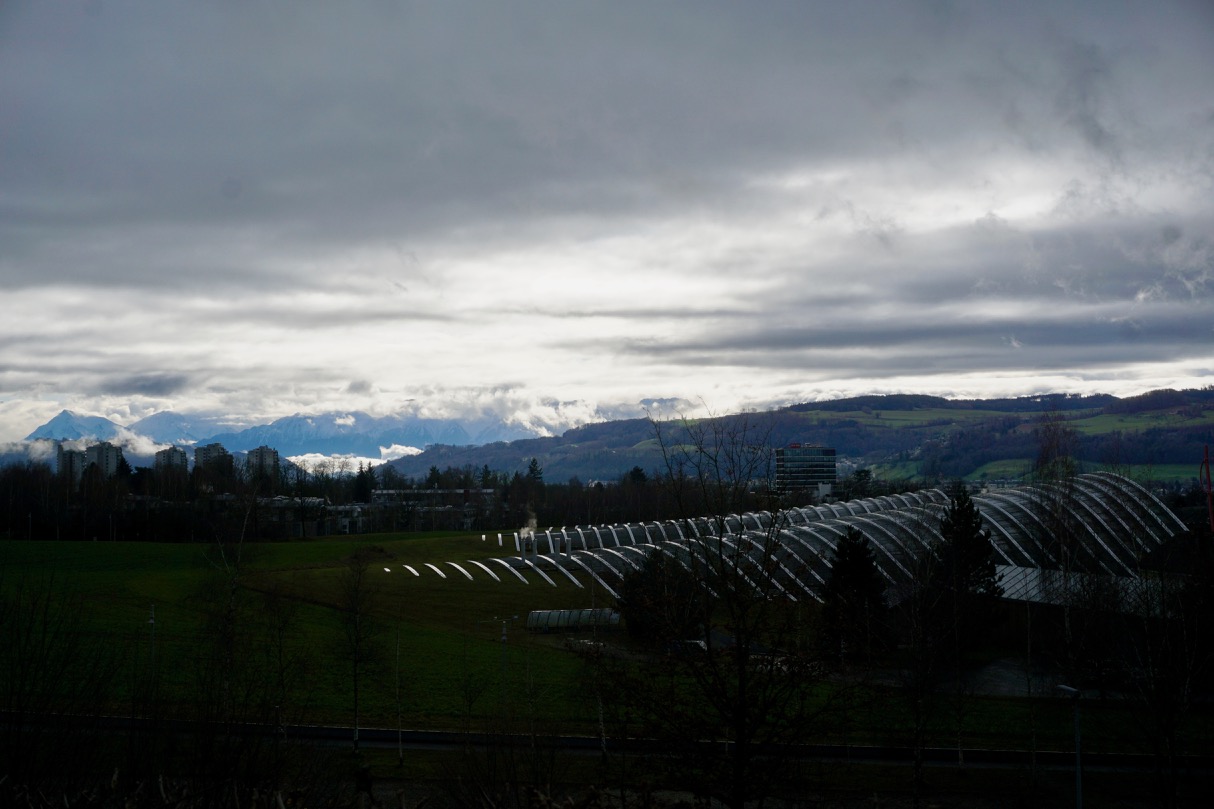
Afterwards we walked out to Zentrum Paul Klee, not because any of us was interested in Klee but because the grounds are worth visiting. The walk showed us what the residential area of Bern looks like, too, which is obviously nothing like the UNESCO site old town. The museum was intended to fit into the landscape and become part of it, and there are functioning fields and gardens there in seasons other than winter.

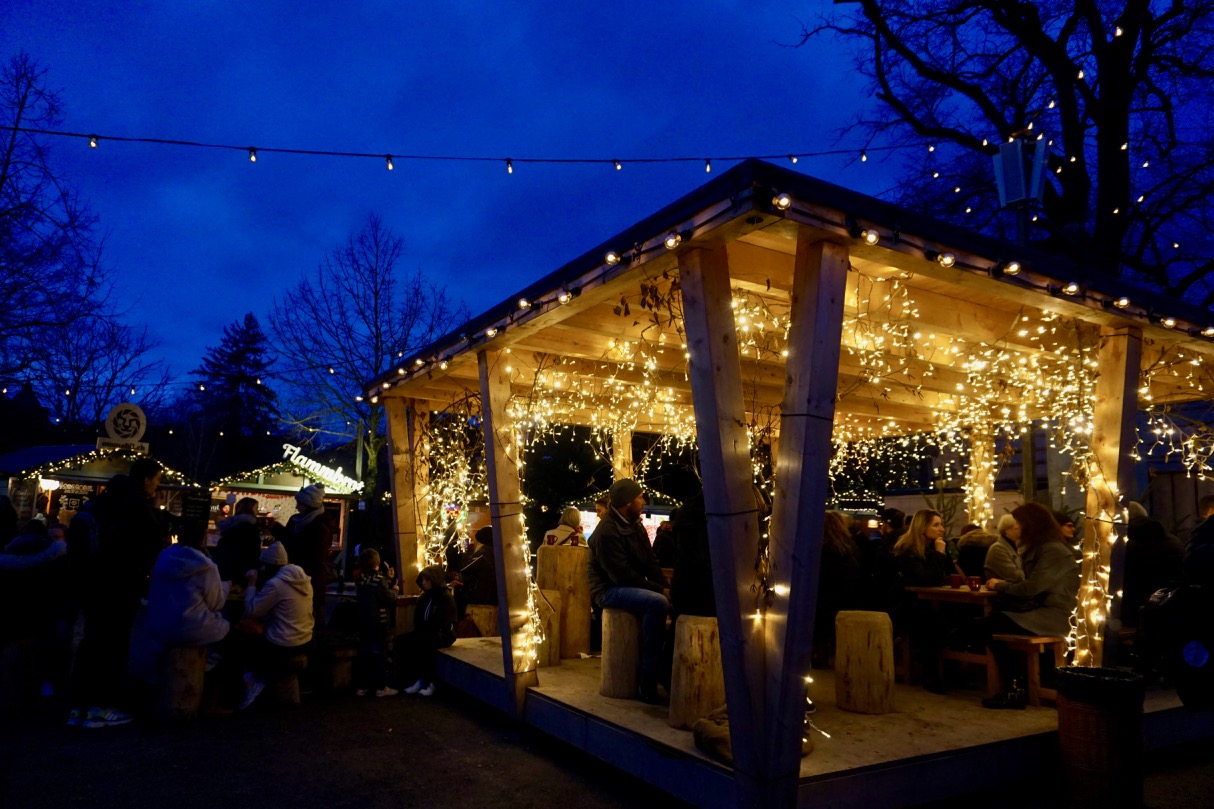
We found a much larger Christmas market and food fair on the other side of Parliament later that day. We spent the evening there walking, drinking glühwein to stay warm, and tasting some of the many cuisines on offer.

For people who don’t celebrate Christmas, we were having a great time celebrating Christmas. Whatever is it that brings a community together in a way that exudes warmth and care . . . all of that is something I’m glad to be part of.

Lucerne

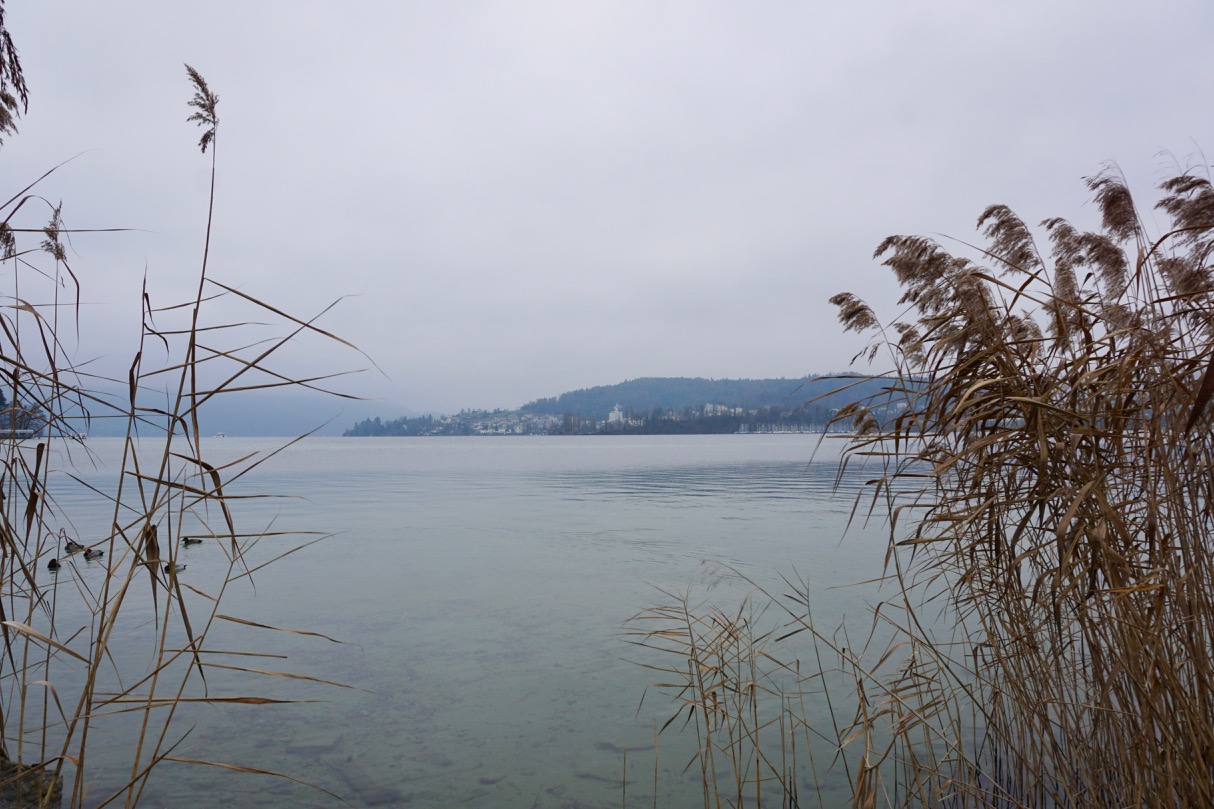
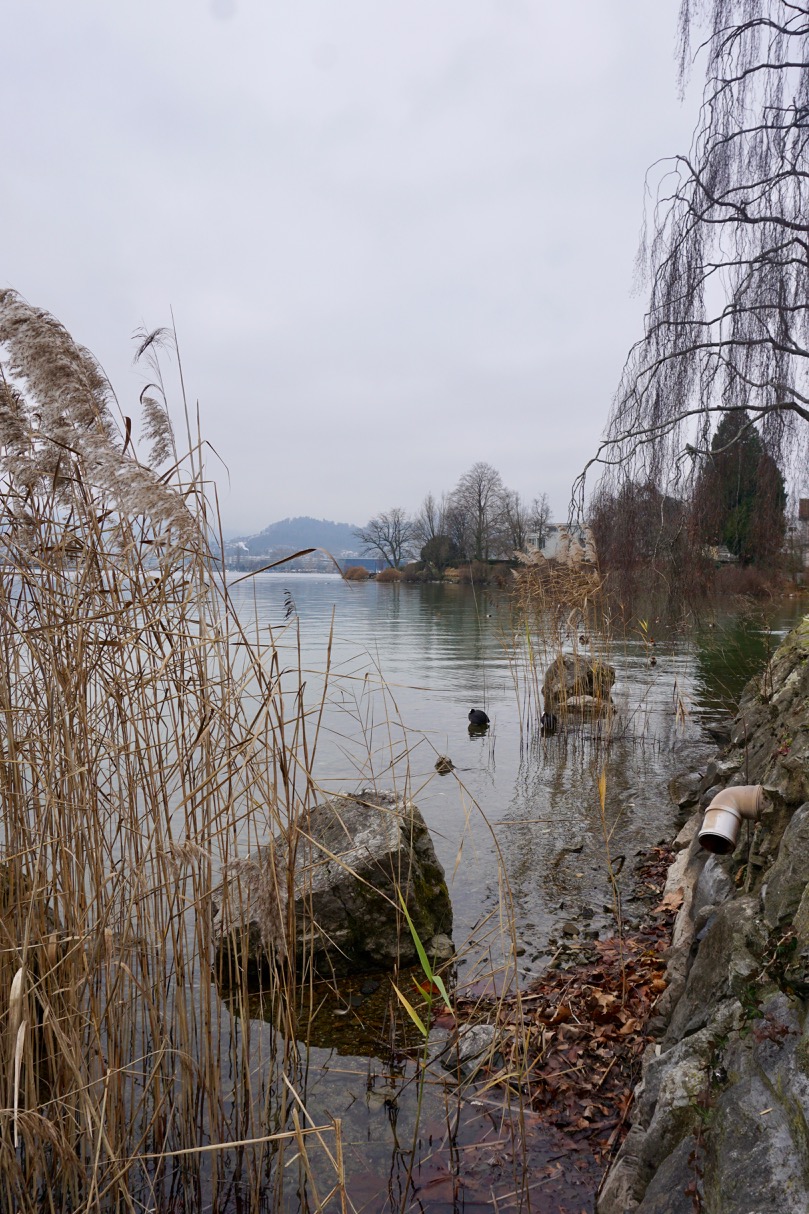
By the time we arrived in Lucerne the next morning, I had a pretty good feel for Swiss cities around Christmas time. And I liked them a lot. I really enjoyed Lake Lucerne and I’d love to see it in the summer. (Are you sensing a theme? Me, too.) I took a walk around the lake the second morning we were there and it was a beautiful change from the old town and surrounding city.

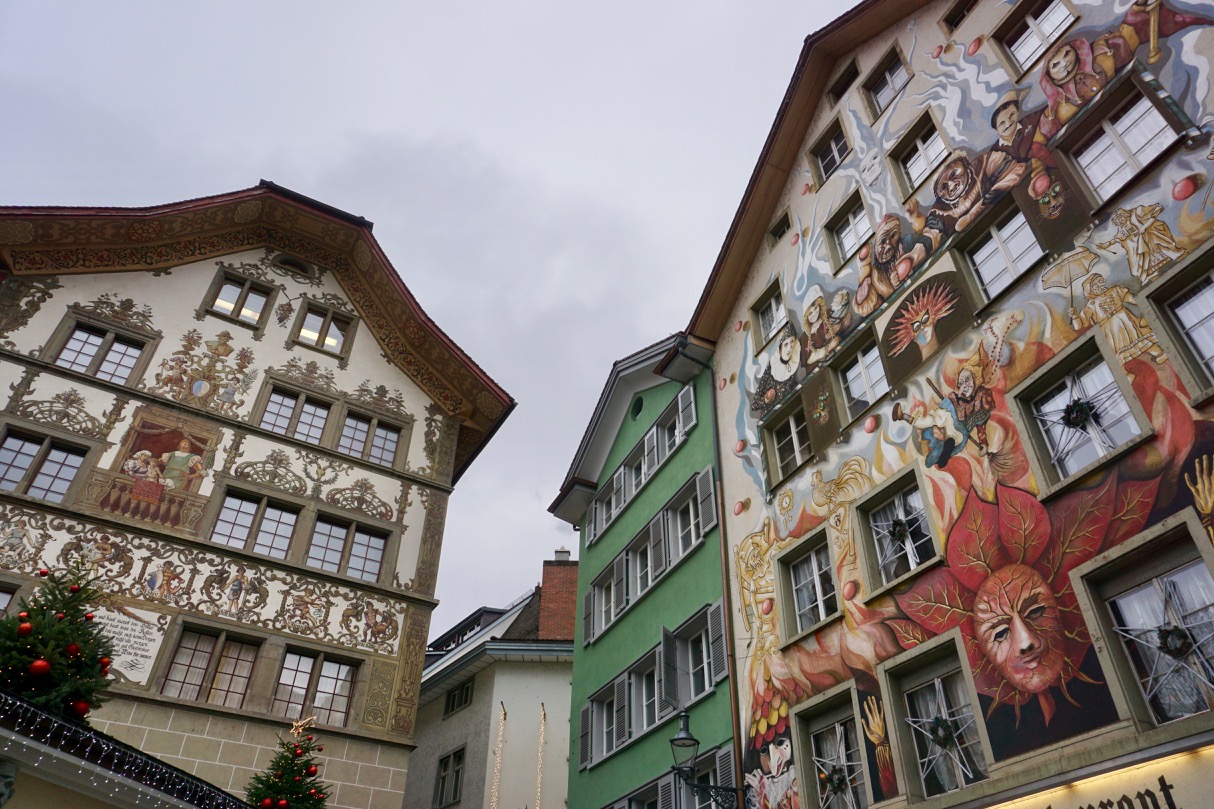
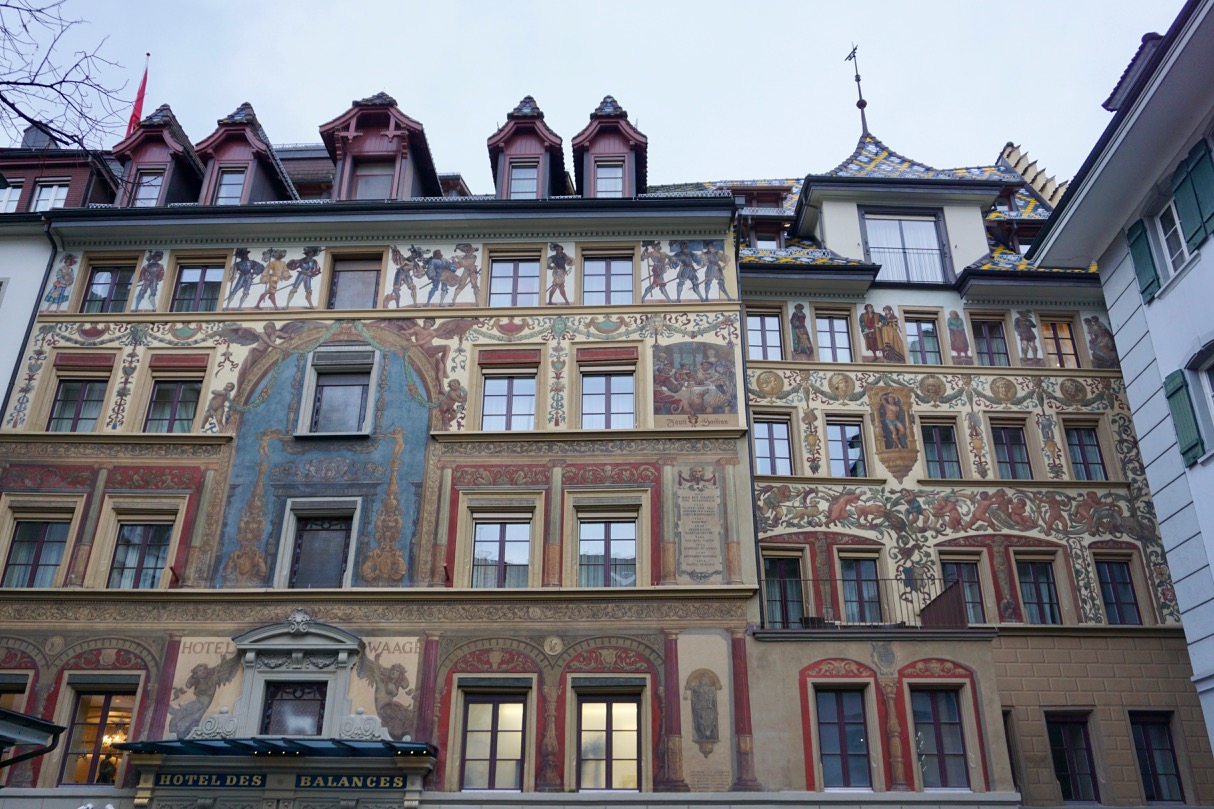
But let’s start at the beginning. Lucerne felt different from either of the previous cities because the old town’s narrow, twisting streets are peppered with little squares. The buildings are painted and tell stories of what Lucerne used to be. I loved looking at them and trying to make sense of the history surrounding us. I also loved eating fondue, which was our first meal here.

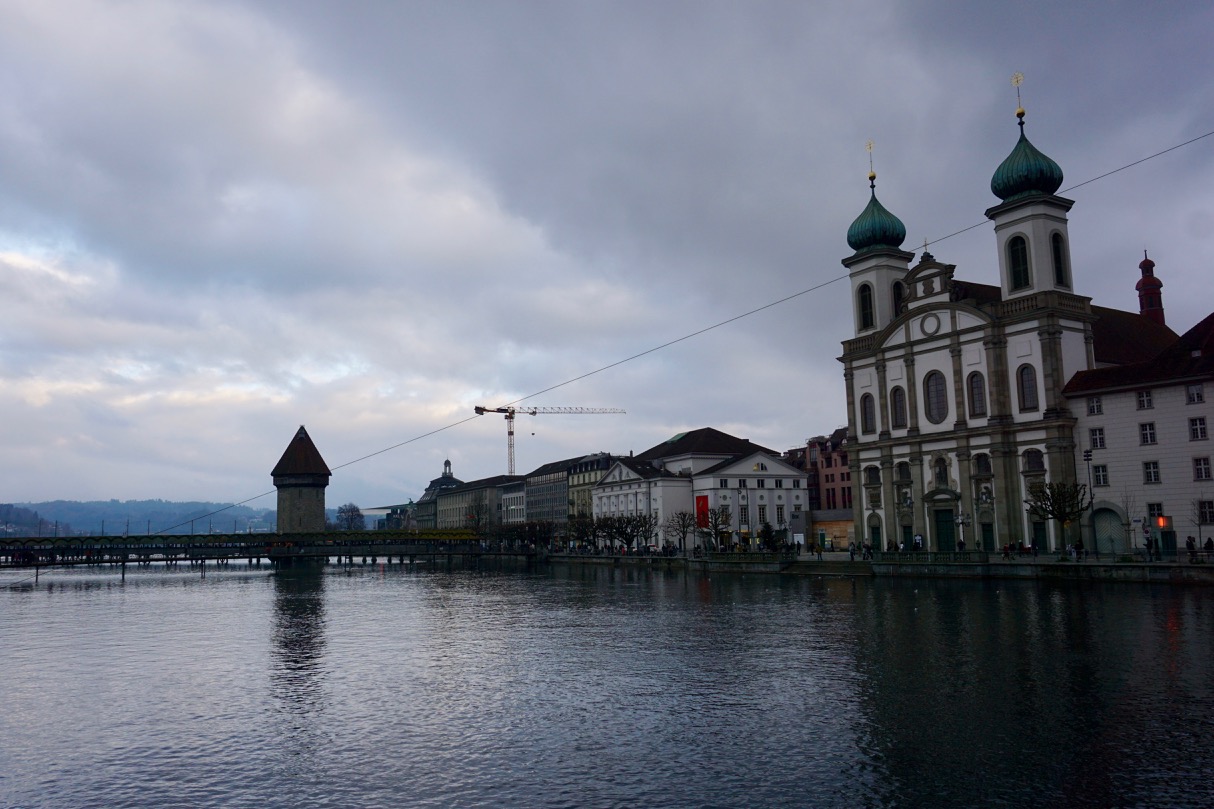
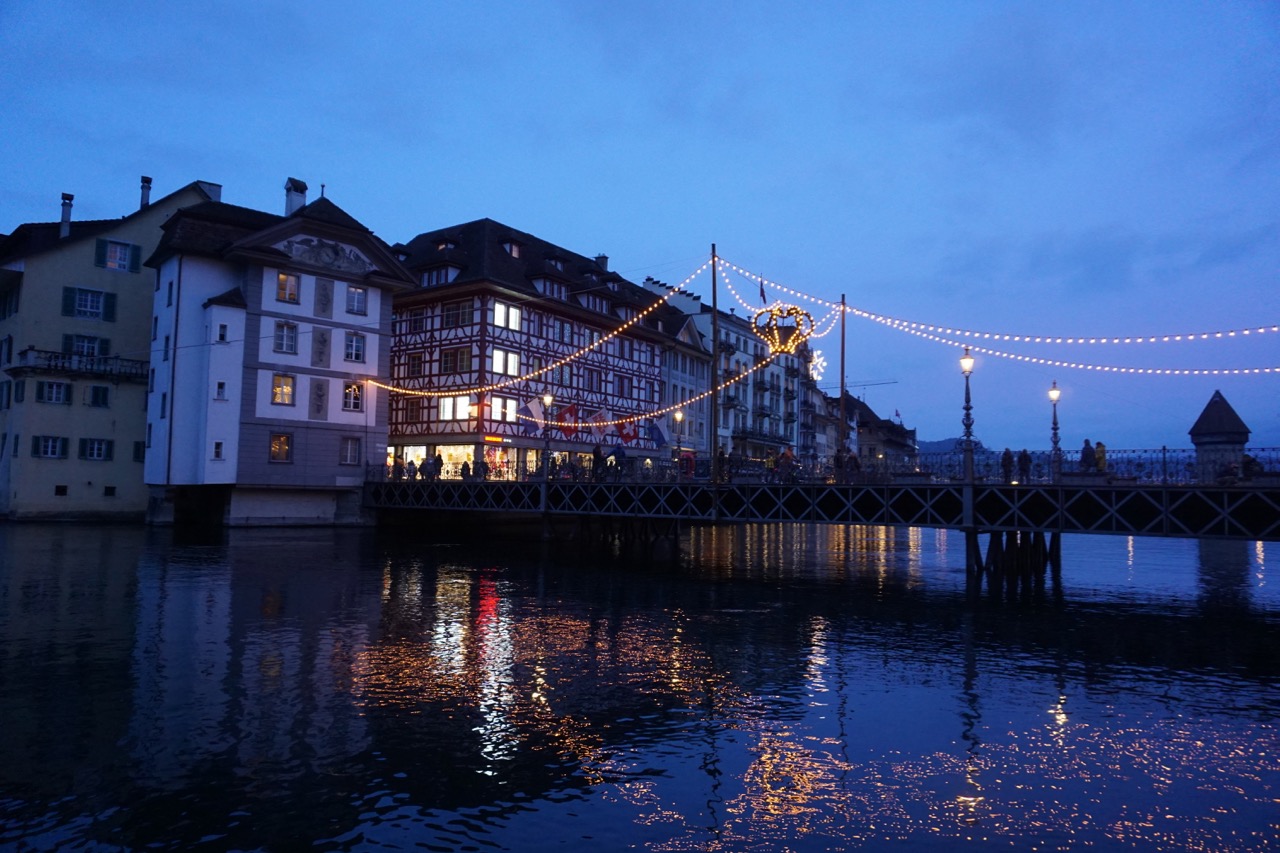
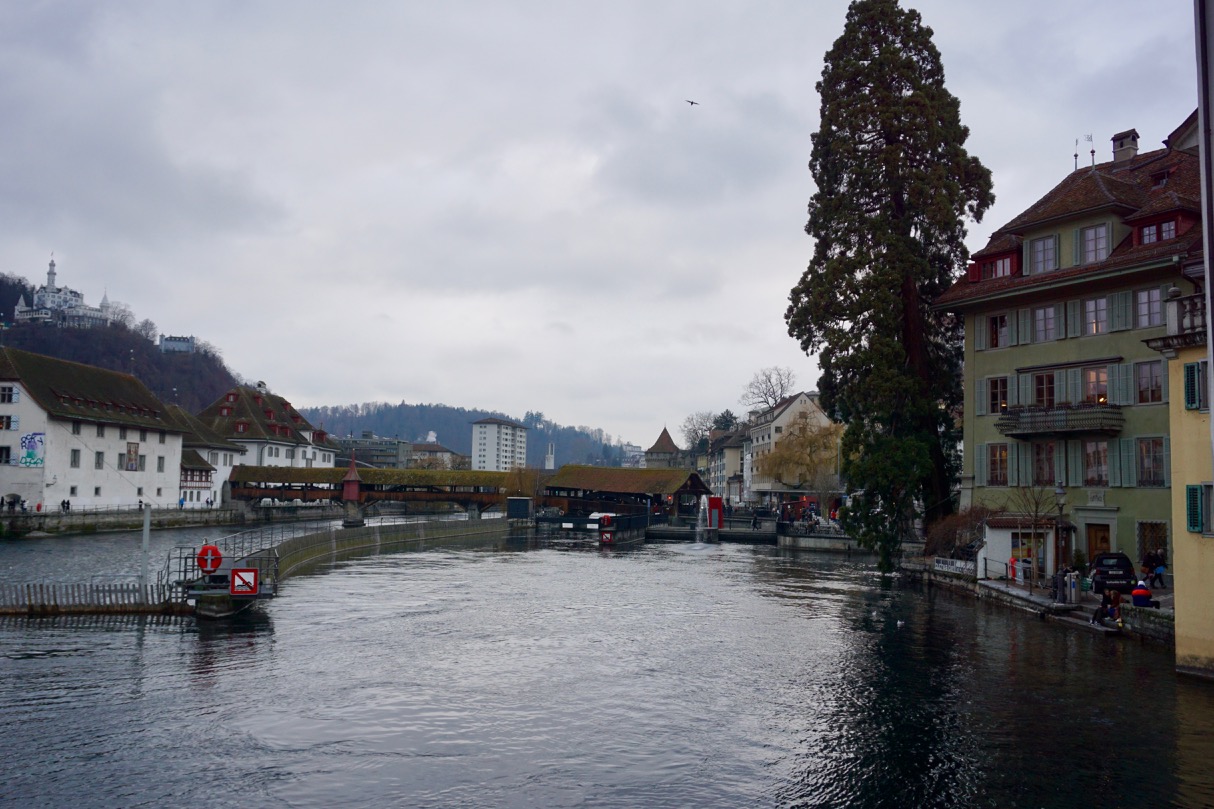
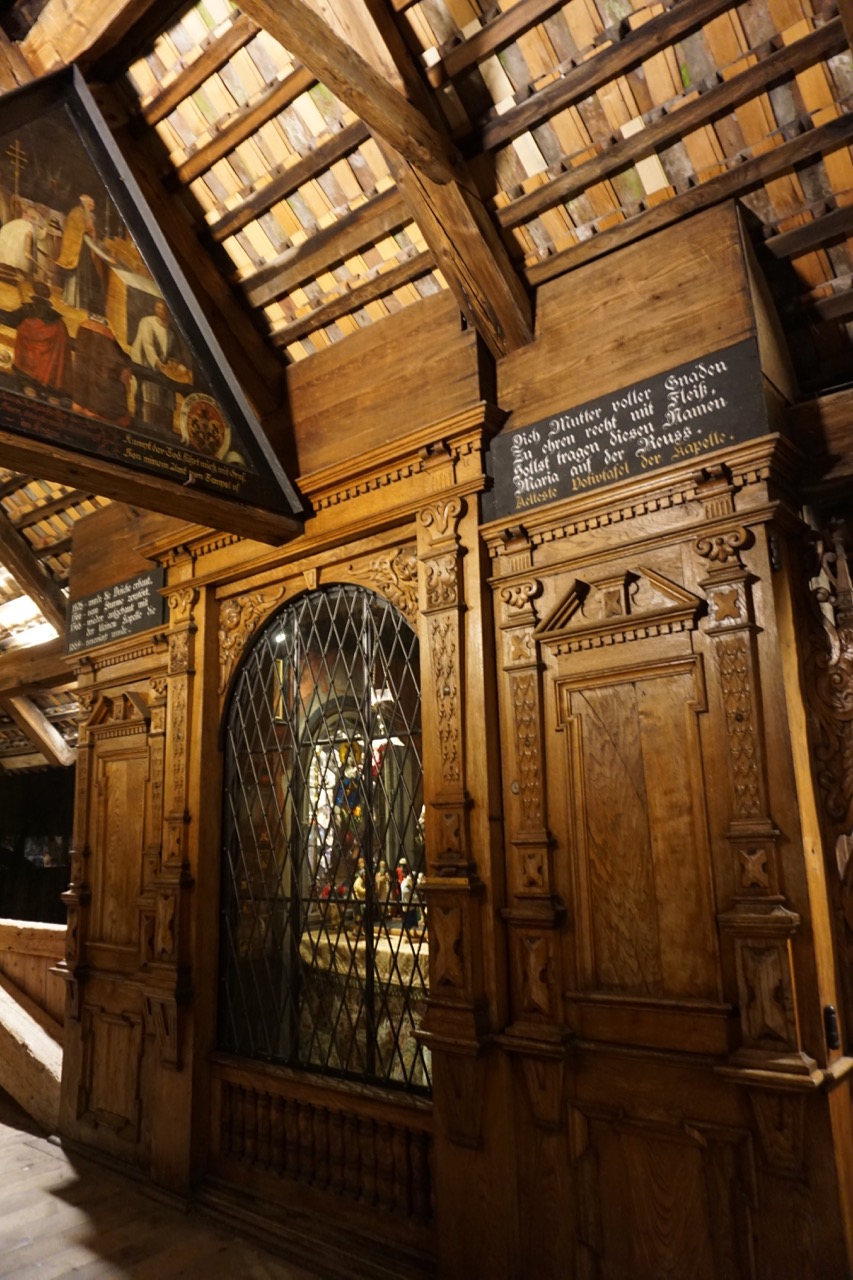
Lucerne is famous for its bridges and they’re as pretty at night as they are during the day.

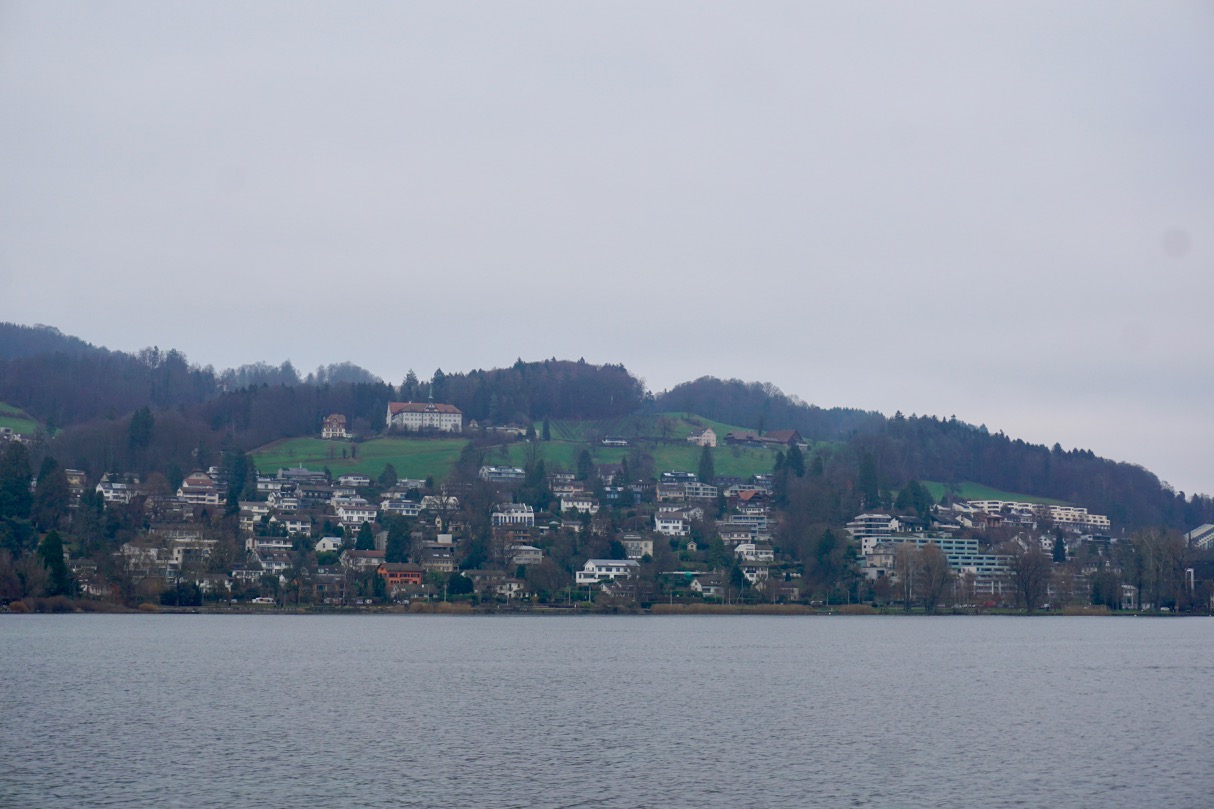
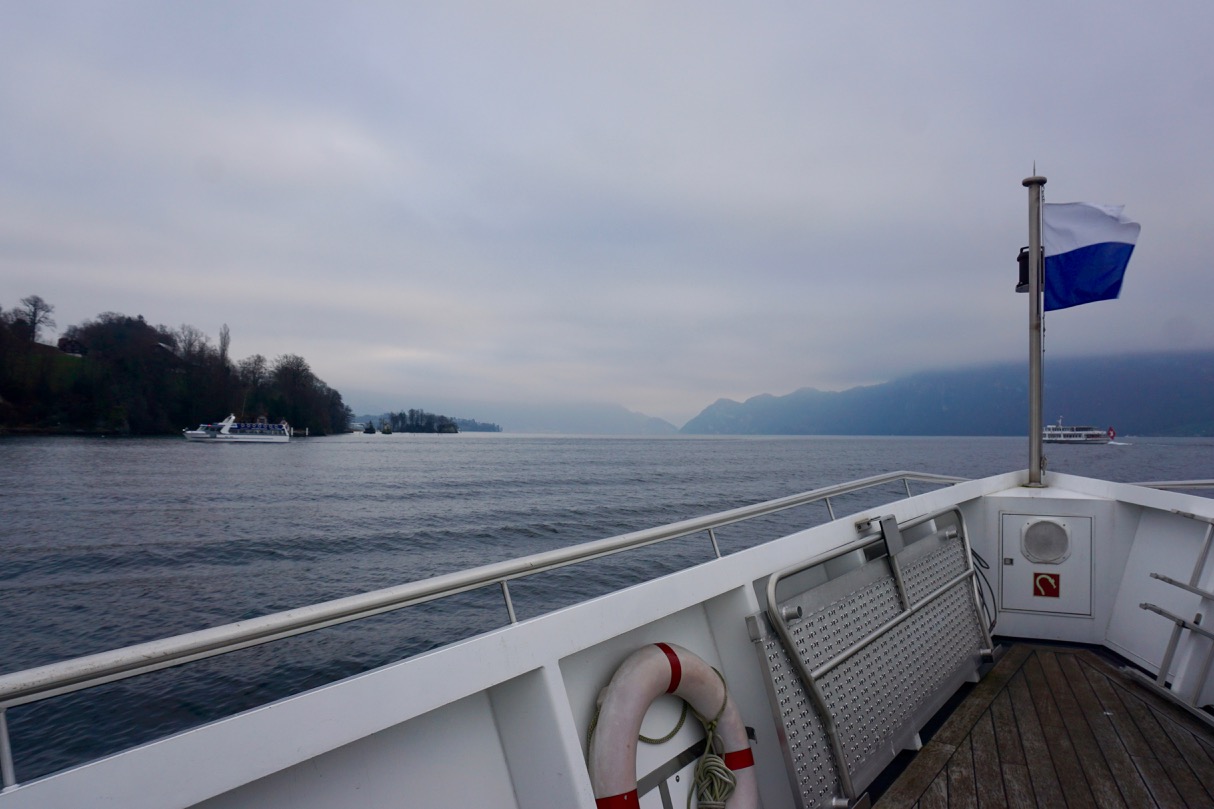
I spent a lot of time around the lake the next day, from the aforementioned walk in the morning to a boat ride later in the afternoon. The historical narrative provided during the ride was interesting and time on the water definitely provides a different view of Lucerne and its surroundings.

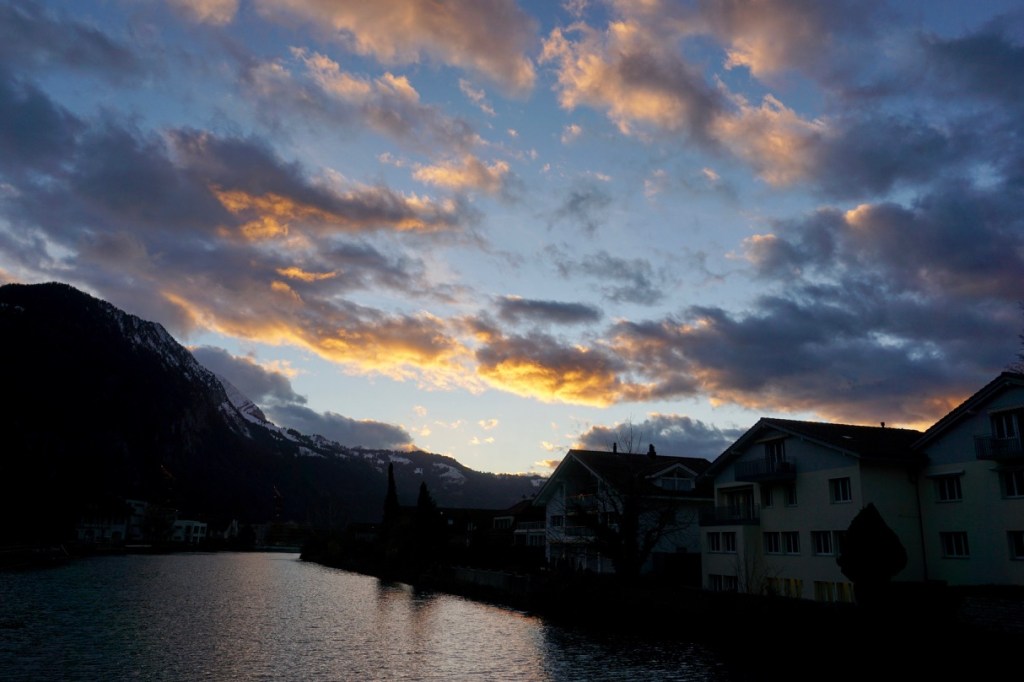
My mum and I walked around at night, as well, and I really enjoyed seeing the lights and the way the colours of the sky and the water changed at the sun set. It felt like finding ourselves just peeking out from under a blanket and marvelling for the first time at the world around.

Zurich

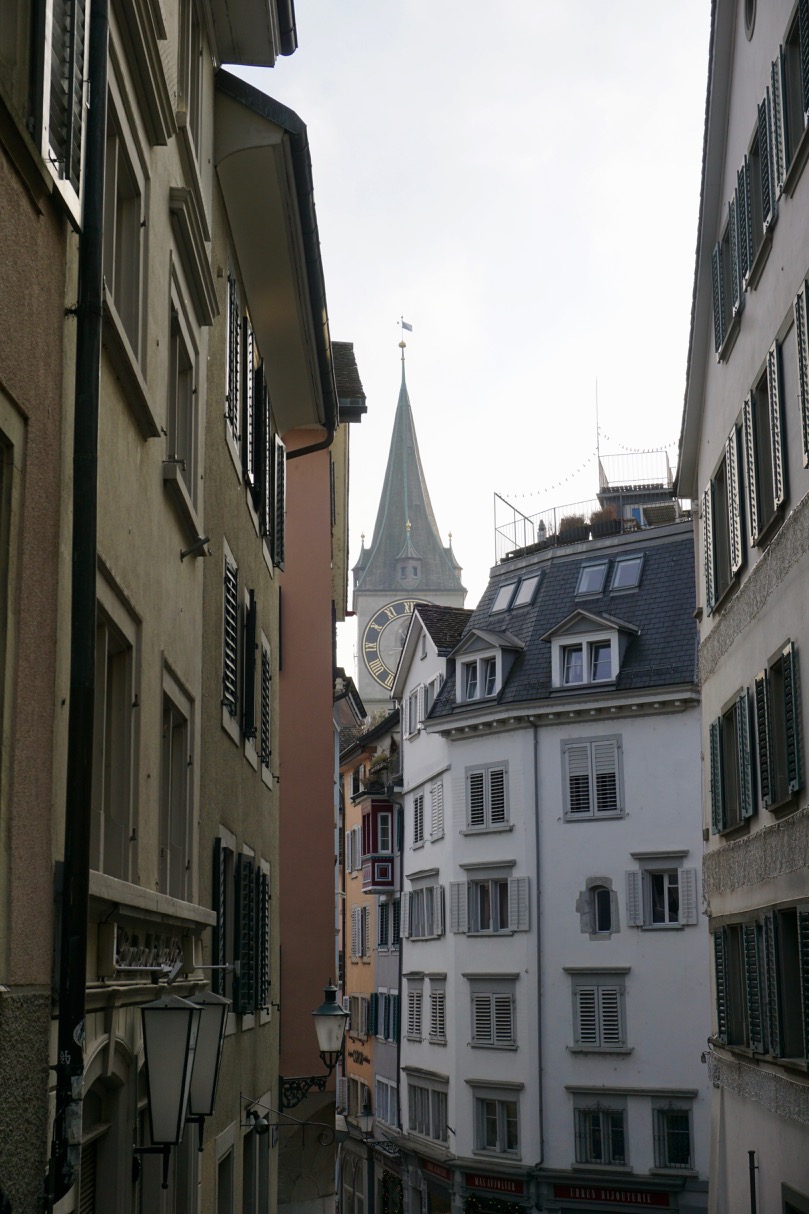
Our last stop in Switzerland was Zurich, which was very different from the previous stops. Zurich is a big, fancy city and it feels like one with designer shopping streets and luxury hotels. Naturally, the old town is beautiful . . .

. . . but it also has the signs of life that remind you that it is a living, breathing, modern place. I liked that a lot.

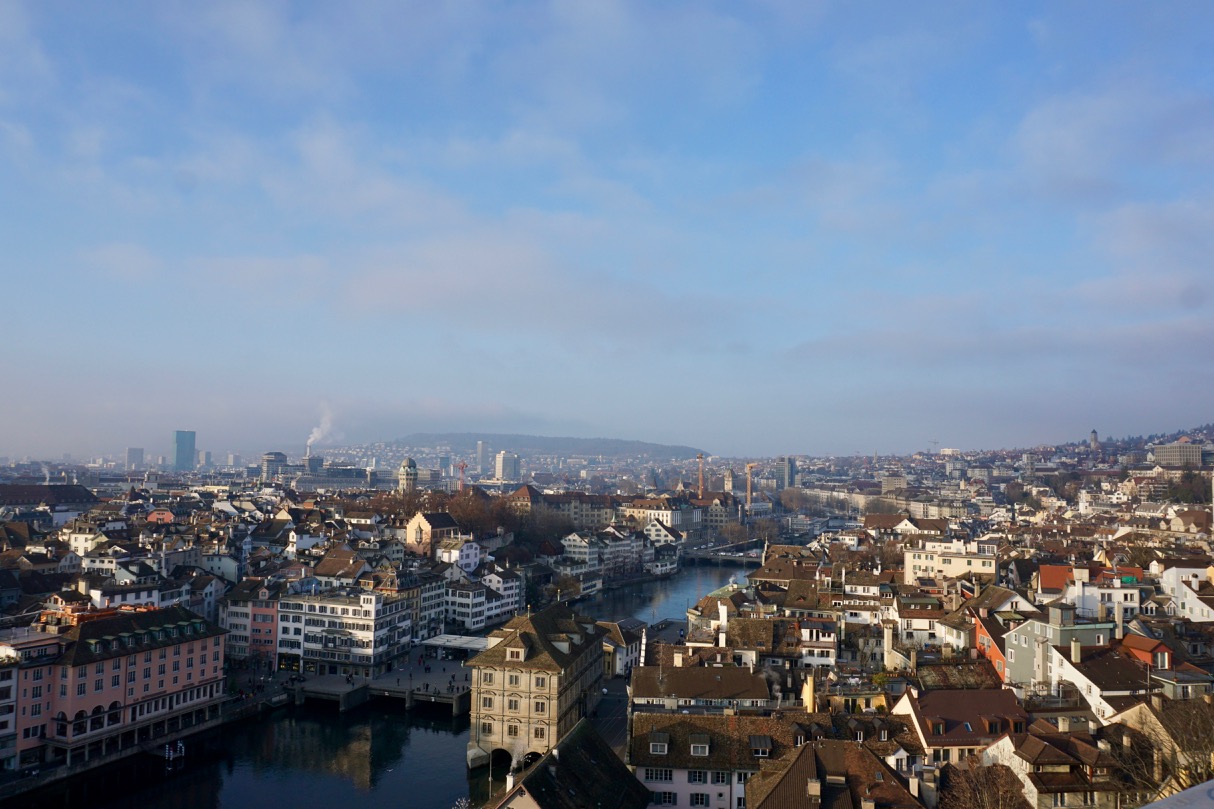
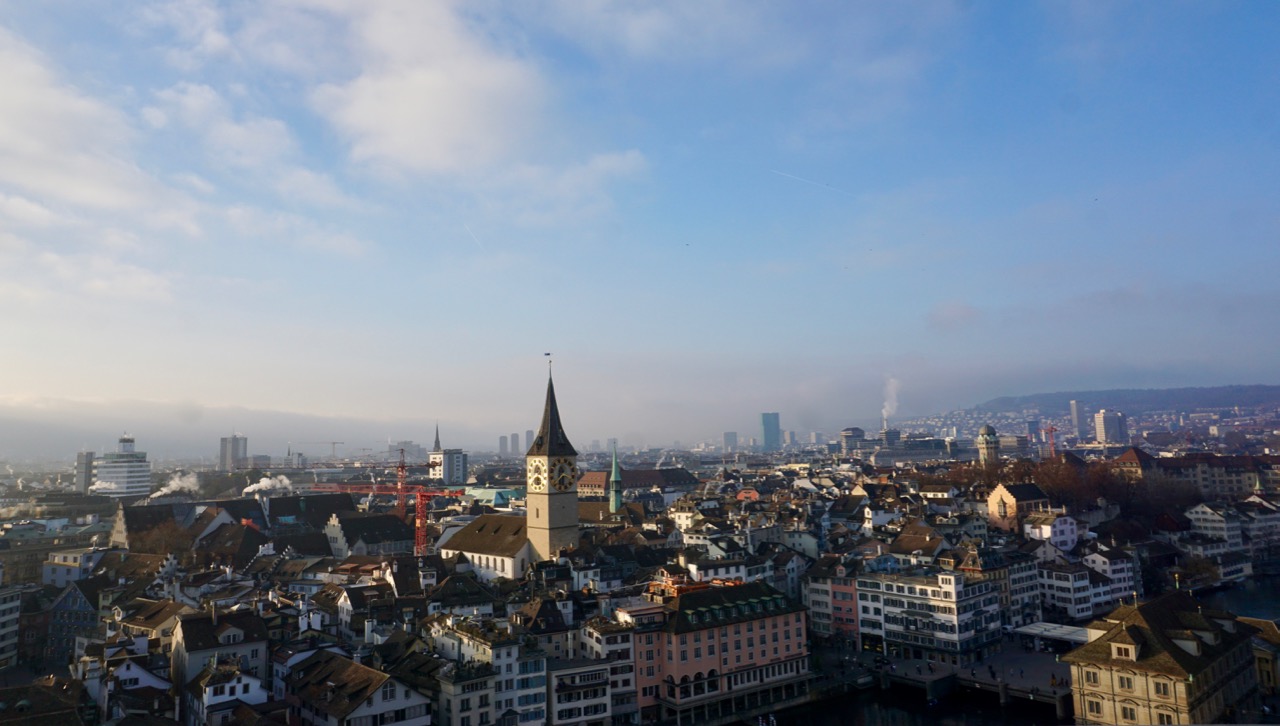
We walked along the River Limmat in the sunshine (our first sun in days!) and visited the Grossmünster, Zurich’s largest church with two huge towers.

My dad and I climbed the narrow, twisting staircase of one tower, which involved some negotiation with people climbing in the opposite direction. The sun was fully out by the time we got to the top and the view was spectacular.

We also went to the Fraumünster, a smaller church that used to be a Benedictine Abbey. We wanted to see it specifically because Marc Chagall designed the stained glass windows. With only one exception, they depicted scenes from the Old Testament. No photos allowed, but go visit!

I think the best spot to see Zurich is at the Lindenhof, a park built on what used to be a Roman fortification. It’s a bit like a hill in the middle of a city. Apparently hundreds of years ago, recognising that whoever controlled the area would control the city, the citizens of Zurich voted to prohibit building on the land and it has been a park ever since. There were a couple groups of old men playing chess with giant sets and a bunch of tourists taking photos, but the people-watching would probably be excellent at any time.

The Sechseläutenplatz is Zurich’s largest main square and we walked there to see the Opera House, which is stunning. Like elsewhere, there were Christmas lights and food stalls, including a few selling glühwein for takeaway. Naturally I couldn’t resist.

The next day we visited the Swiss National Museum, which is probably the best museum I’ve ever been to. We allotted two hours when we initially arrived and then extended that an hour and then another thirty minutes, leaving only because we were hungry. There were permanent collections on the history of Switzerland; clothing, artifacts and fully reconstructed palace rooms; the city of Zurich; and a portrait gallery that I didn’t get to visit, as well as a few other collections. The temporary exhibits taught us about Switzerland’s relationship with Indian textiles, and nativity scenes from around the world.

The museum was fascinating not just because of what it contained but because of how the information was presented. Each exhibit was highly interactive including stunning programs on iPads that allow visitors to look at objects up close and take mini guided tours of portions of the exhibits. There was a lot to touch and physically manipulate, as well. We were extremely impressed and learned a great deal about Switzerland in a very short amount of time. I’d highly recommend a visit!

My mum and I walked along Lake Zurich in the afternoon and the light was so pretty on the water. It was New Year’s Eve and the markets were setting up all over again, which was fun to see.

Switzerland in the winter was a cold but magical placed filled with lights and good wishes. While I’d love to see it in the summer, I really enjoyed the atmosphere of the winter holidays and appreciated wandering streets that were probably less busy than they would be at another time of year. Early on New Year’s Day, basking in the week that had passed, we boarded the train to Salzburg. Stay tuned!

View of the Alps from a hill overlooking a cemetery in Bern