Tag Archives: Memorial

Buchenwald

I wasn’t expecting to see a sign for the Buchenwald memorial, even though we had decided as a group to ride there. I wasn’t expecting my heart to drop into my stomach and begin to beat slightly faster. I wasn’t expecting the sounds of the world to grow softer, to find myself so fully inside my own body.

In short, I wasn’t expecting to feel what I felt.


Sometime during my first week here in Weimar, I saw a bus with the word “Buchenwald” on its marquee. This is a place, I reminded myself. A real place. Linked by roads, buses, and people. Where life exists and carries on.

But it wasn’t until last week, actually, that I realized that I knew the word “Wald” – forest. Yesterday, looking into the forest, I learned “die Buche” – beech tree. Buchenwald is a beech forest.

Life exists and carries on.


We turned left at the roundabout and I listened to a friend explain where we were, but I already knew. The obelisk had given it away even before the stone marker indicating the beginning of Blutstraße, or Blood Road. We pulled over and I took a moment that I didn’t know I needed. To the unasked question I answered, This is very strange.

Did I want to turn back? I was grateful for the offer, but no. So we rode on.

Blutstraße is so named because it was built by camp inmates from 1938 to 1939. Small stone markers along the road indicate the railroad that was also built by inmates, a railroad designed to bring people here more quickly rather than walking up the road. The markers are painted with a bright blue train, ensuring visibility through the trees. Buchenwald. Beech forest.

We stopped to look at a map of the sight and the surrounding towns and villages. The residents of my town, Weimar, were marched up this road by the Allies who refused to accept that they didn’t know what had happened here.

The vastness of loss is staggering.


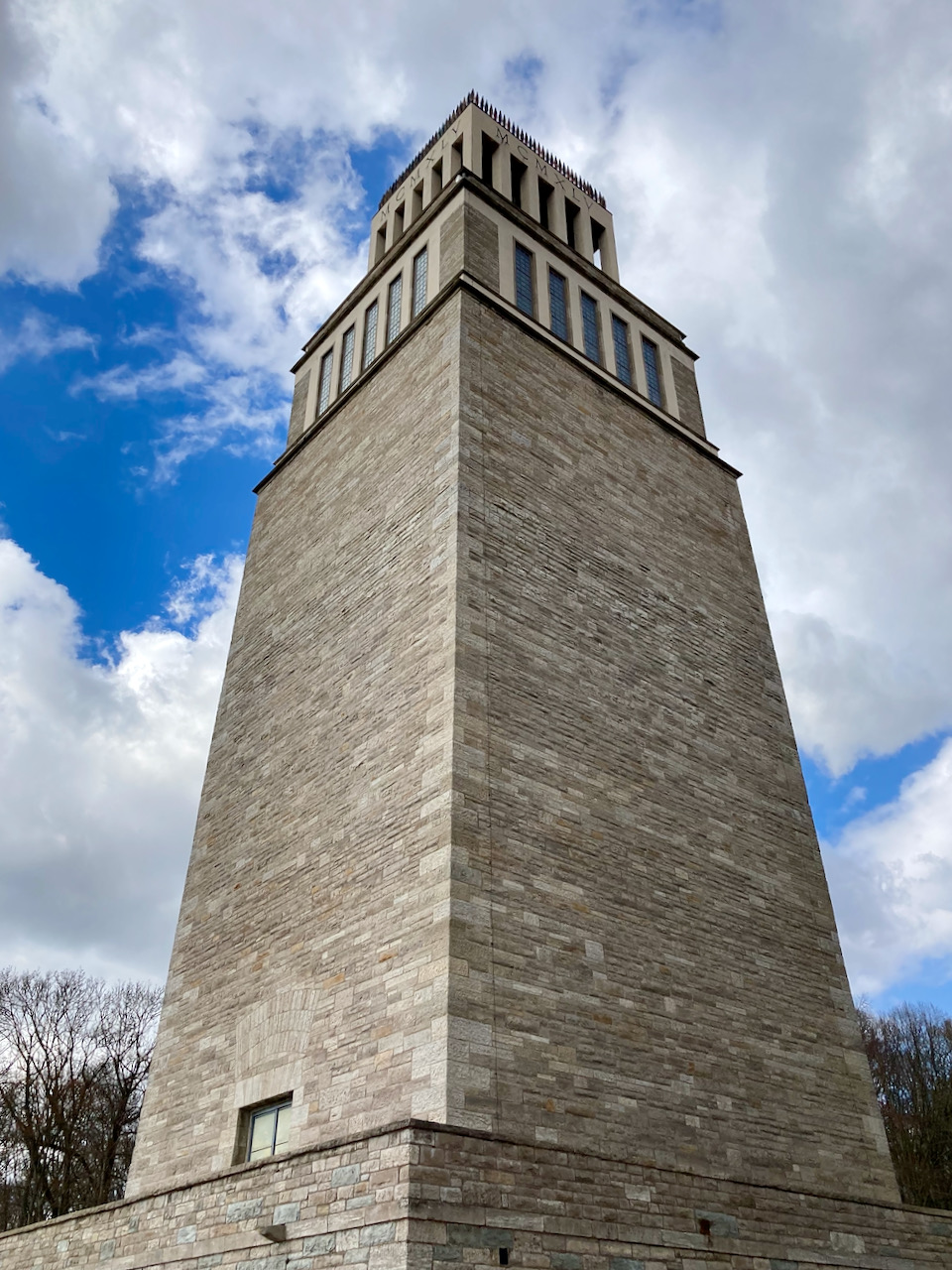
We left our bikes at the entrance to the memorial and walked towards a tower that I have only previously seen from the Autobahn below. That was the idea – to be visible. To be a reminder. So that this will never happen again. The thought of forgetting, the evidence seen around the world of all kinds of forgetting about so much history, is exactly why it was important to be here.
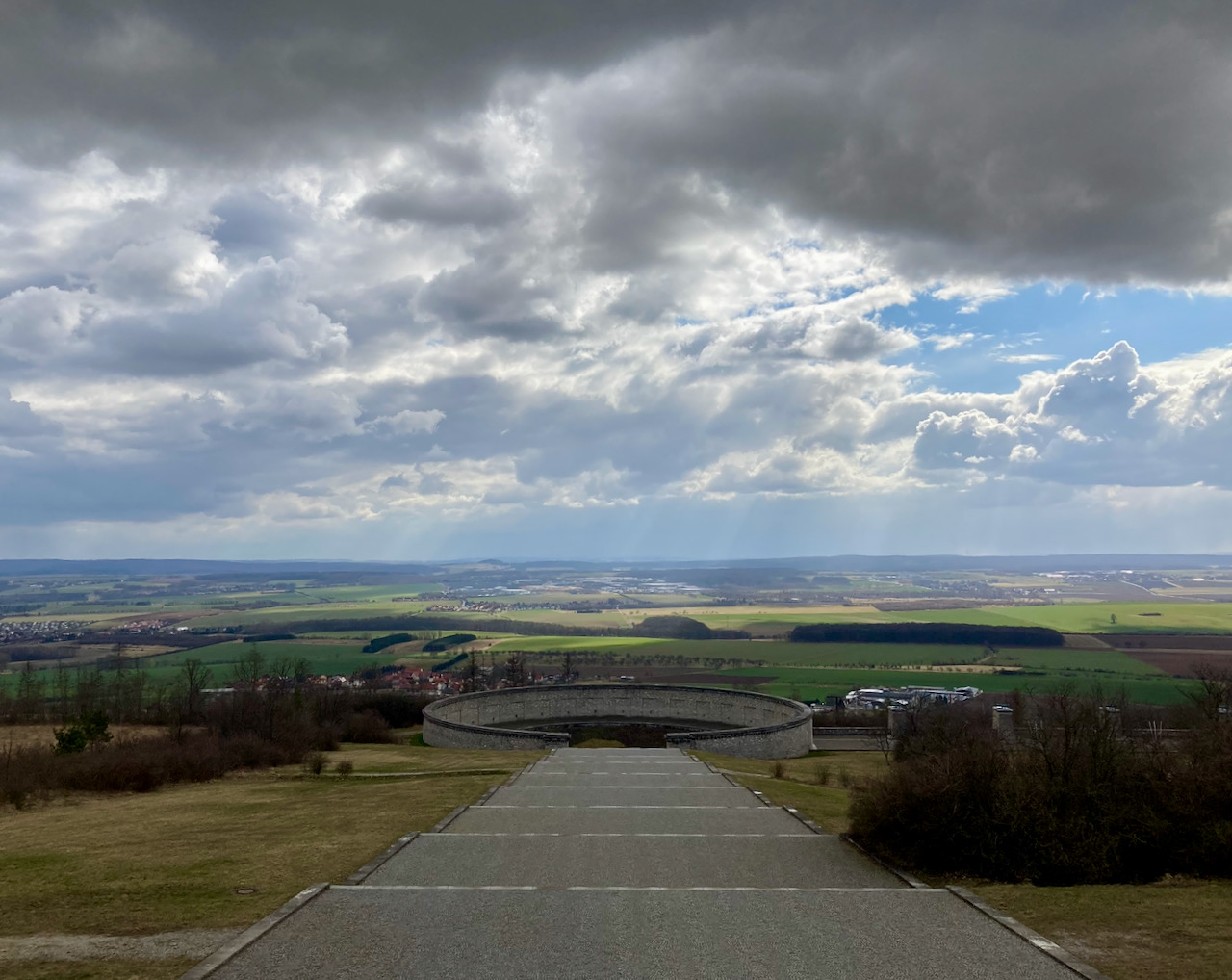
The complex includes three mass graves and as we walked down the steps towards them, the wind picked up. And once there, once protected by the stone that forced us to look down to the grassy knoll at its centre, the noise of the wind faded and we could take stock of where we were.
We followed the path along the ridge with monuments representing each of the eighteen nations that the prisoners came from. We read aloud each name, doing our best to speak the language that the people of that nation would have used to name their home.

The path curved back up the hill and we followed it, pausing at the sculptures illustrating scenes of life in the camp.

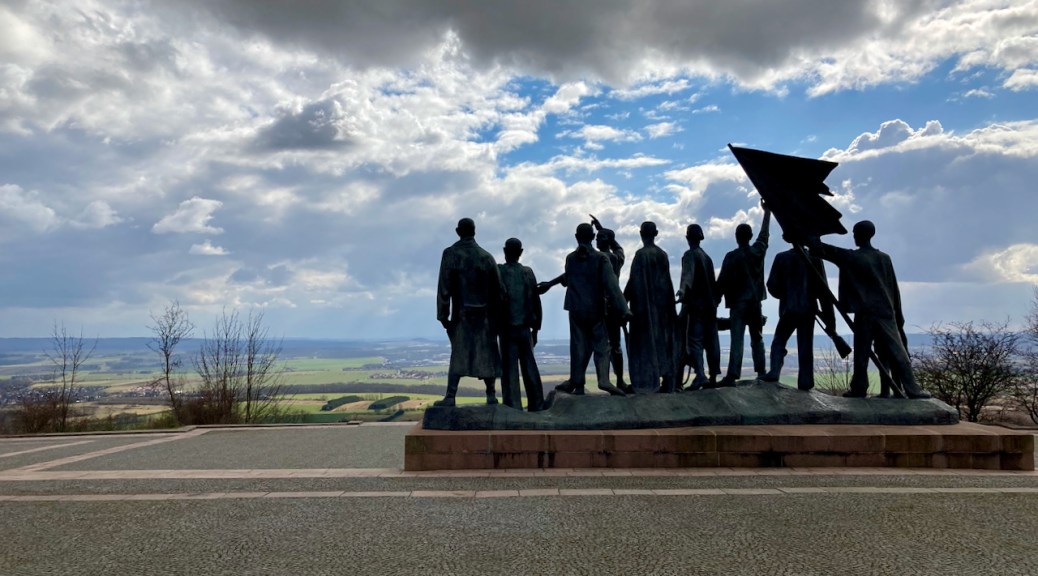
And then we returned to where we’d started, wind urging us along, back to the sculpture that had greeted us upon entrance. I couldn’t bring myself to take a photo of the faces that were far too real.

But the artist left no doubt as to their triumph, and for this, I am grateful.


What I felt in my bones as we walked through the memorial was not the sense of something uncanny that came over me at the roundabout. Rather, I felt the fire of a question that I will never stop asking: How can it be that people looked at other people and did not see them?

And to do justice to this question, I must acknowledge that this is often the case in the world we live in. I must face the reality in which we declare, “Never again”, but are quick to look away precisely when we need to look more closely. And to play my part in the world, I need to say this aloud.

Yet, I do believe the world has come a long way. I believe people have dug profoundly deep into history and rebuilt because of it. And precisely because this is possible, the challenge remains: What will we do, each of us, to make the world a better, more peaceful place?

To start, we must never stop looking.

Travel Guide: Berlin

One sibling loved every moment while the other did not speak highly of the experience. Friends have visited multiple times, reportedly always leaving with a desire to return. I once heard a comment that it felt wrong for a European capital to be new and modern rather than old and charming. As for me, I’ve been reading a lot and the reading has helped put Berlin into context. It is a very complicated place.
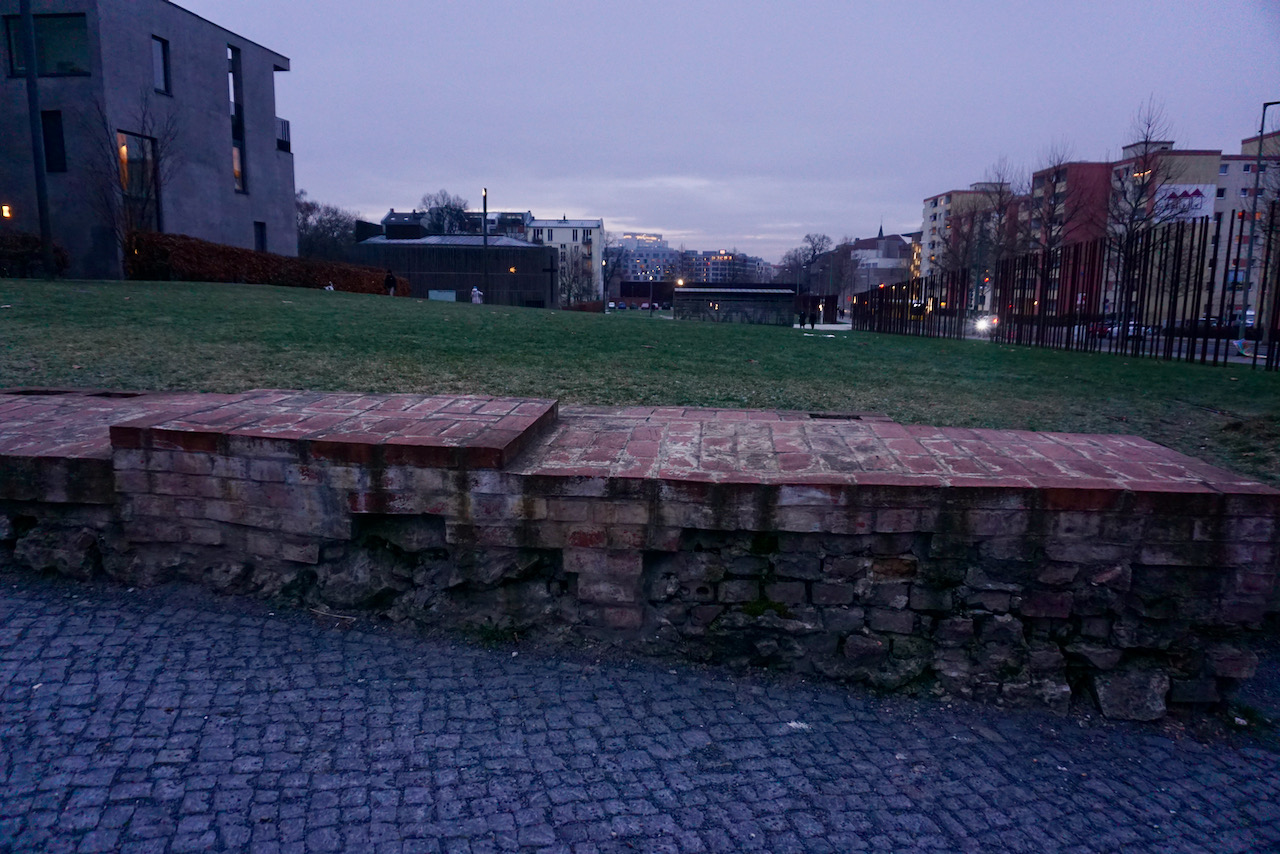
Throughout my time in Berlin, I was in awe at its history, taken in by its spirit, and curious about what I would find around the next corner. There was an unpredictability to Berlin that I had not expected, an element of surprise that makes complete sense considering the significance and history of this city. The whole time I was there, I couldn’t quite get over the fact that I was there in this place, which, not long ago, was a completely different place. People make a place and the people who made this one are amazing to me.

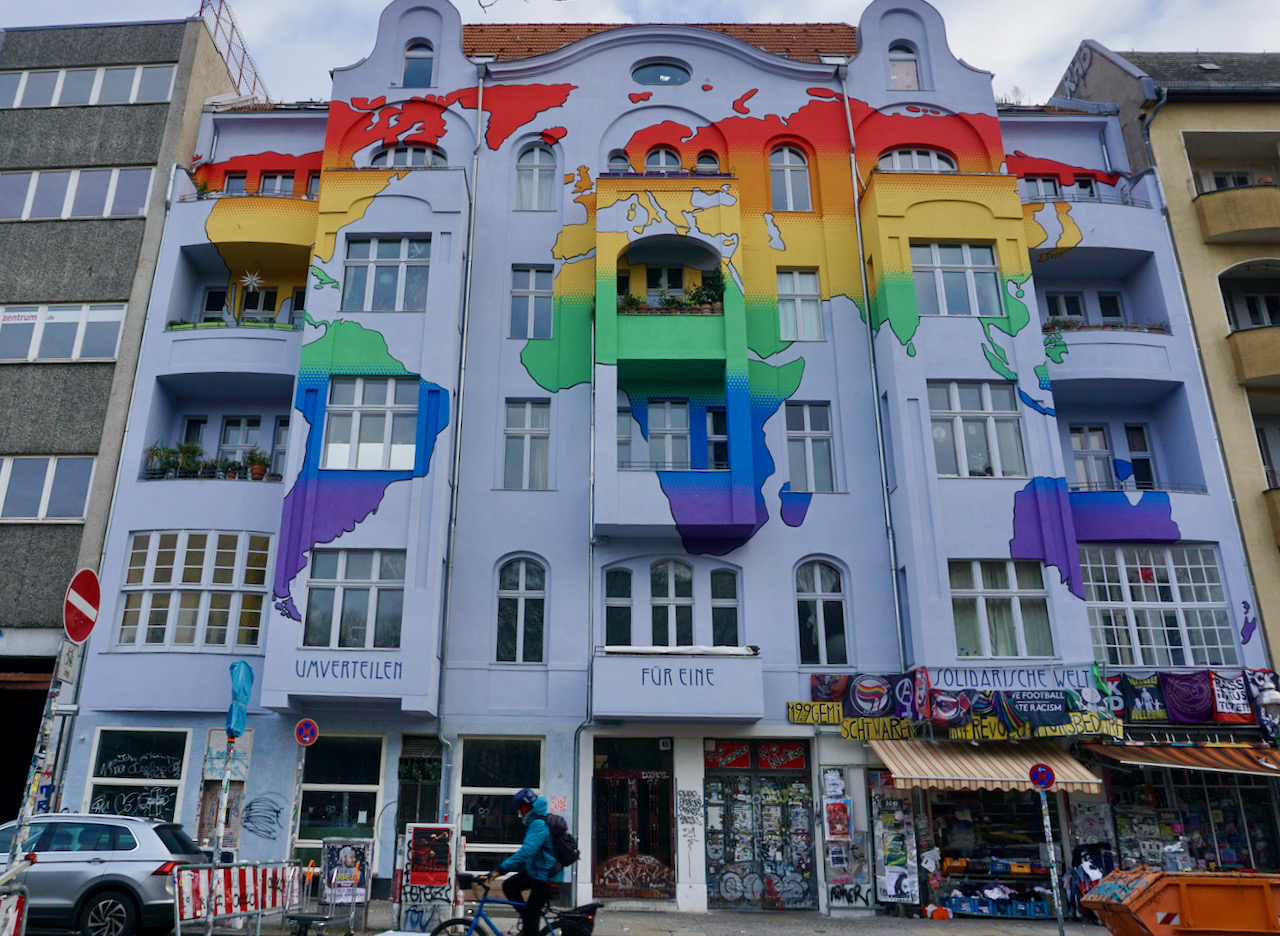
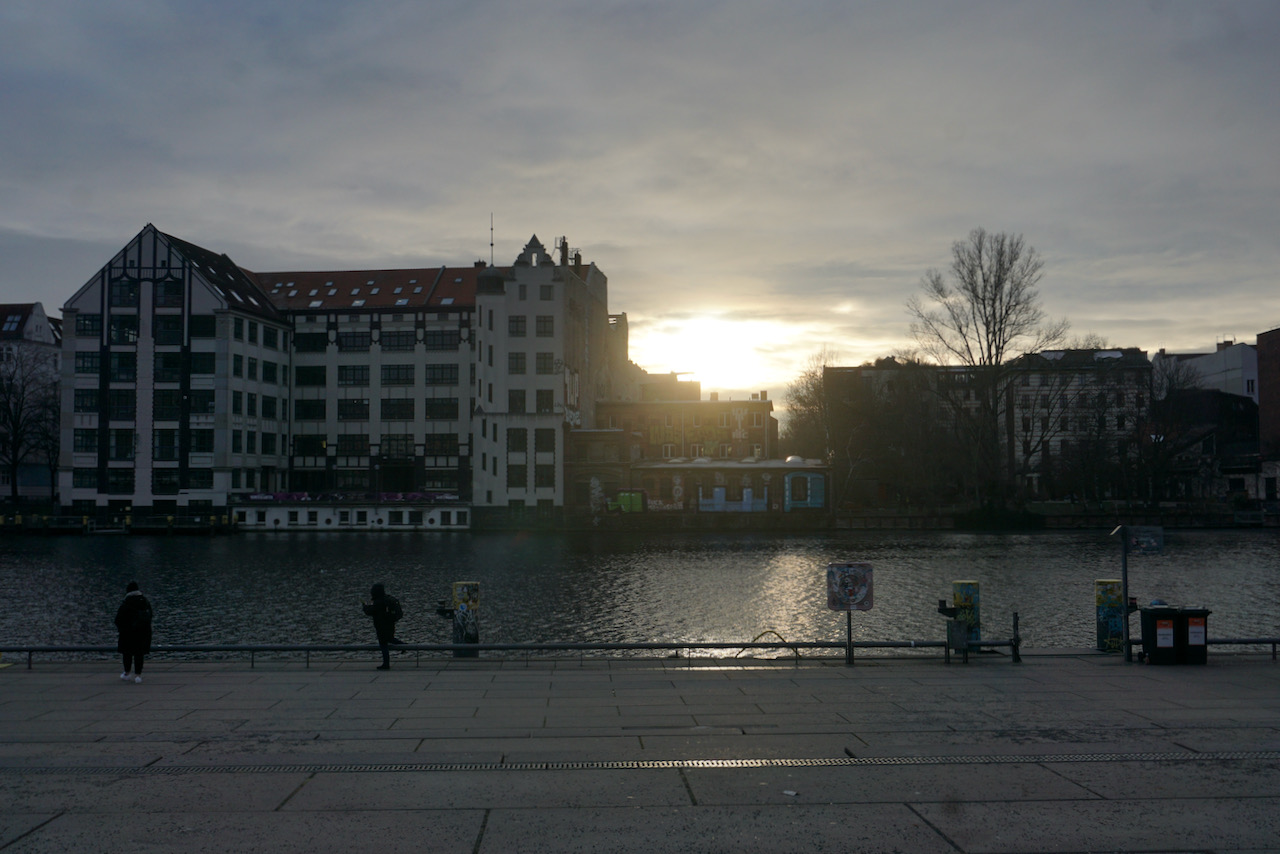
This is why I started my visit to Berlin in Kreuzberg, a neighbourhood known today for its art scene but a neighbourhood with a much grittier history than that.

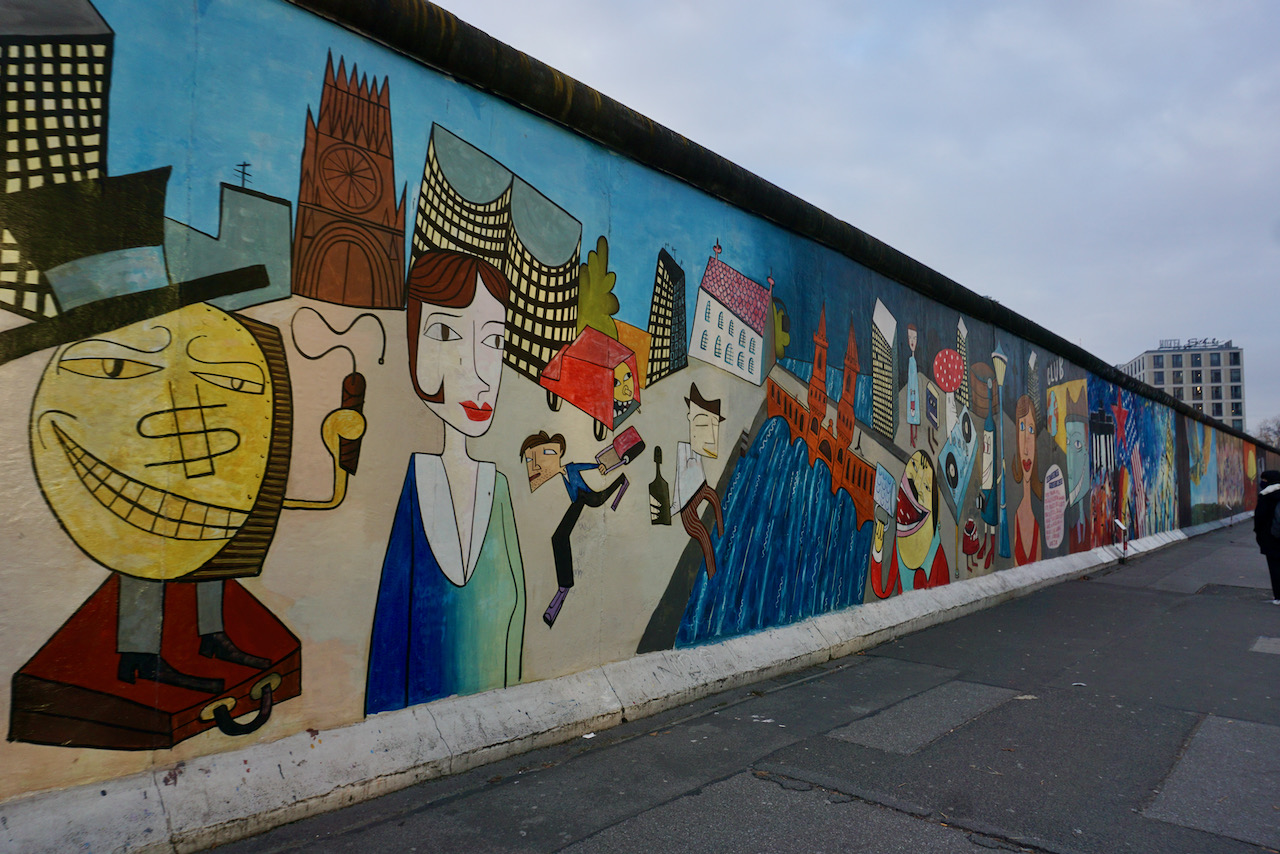
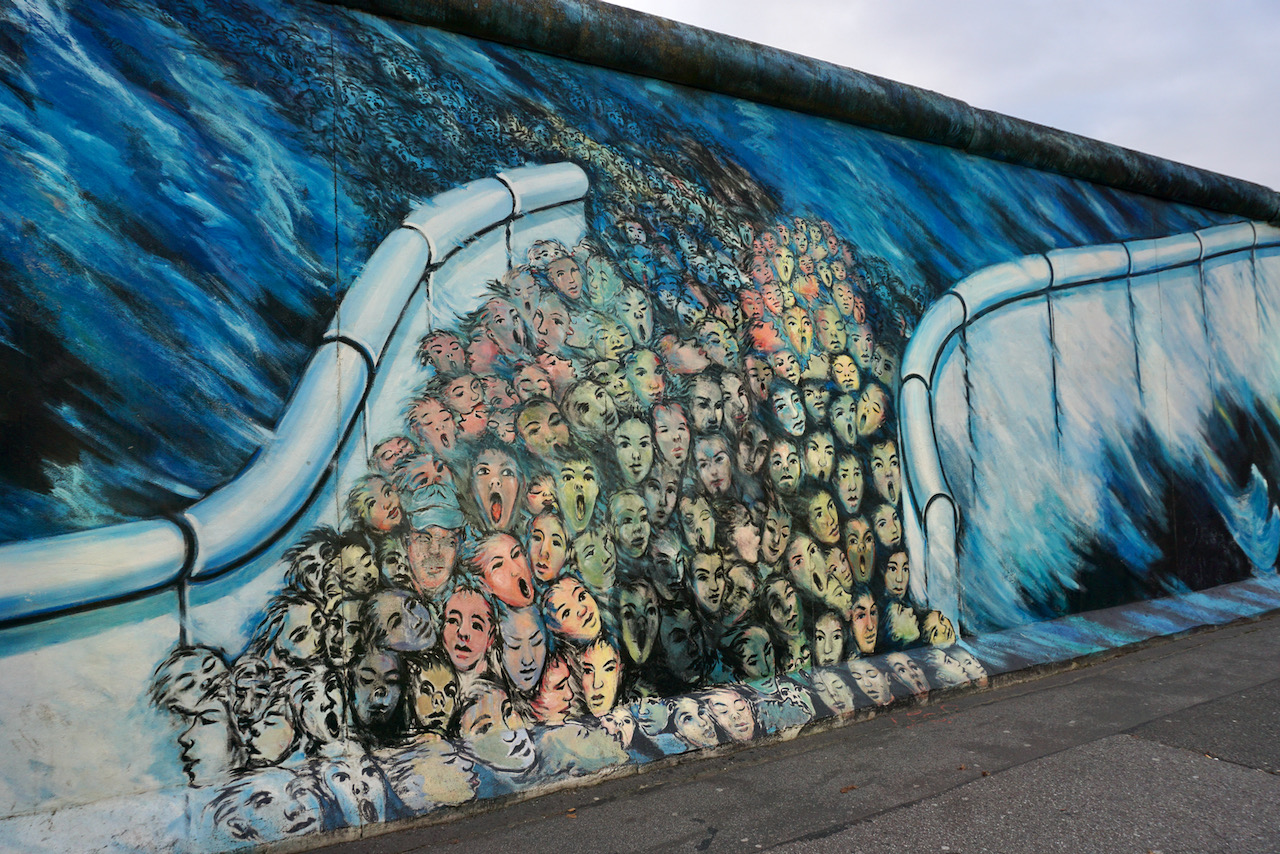
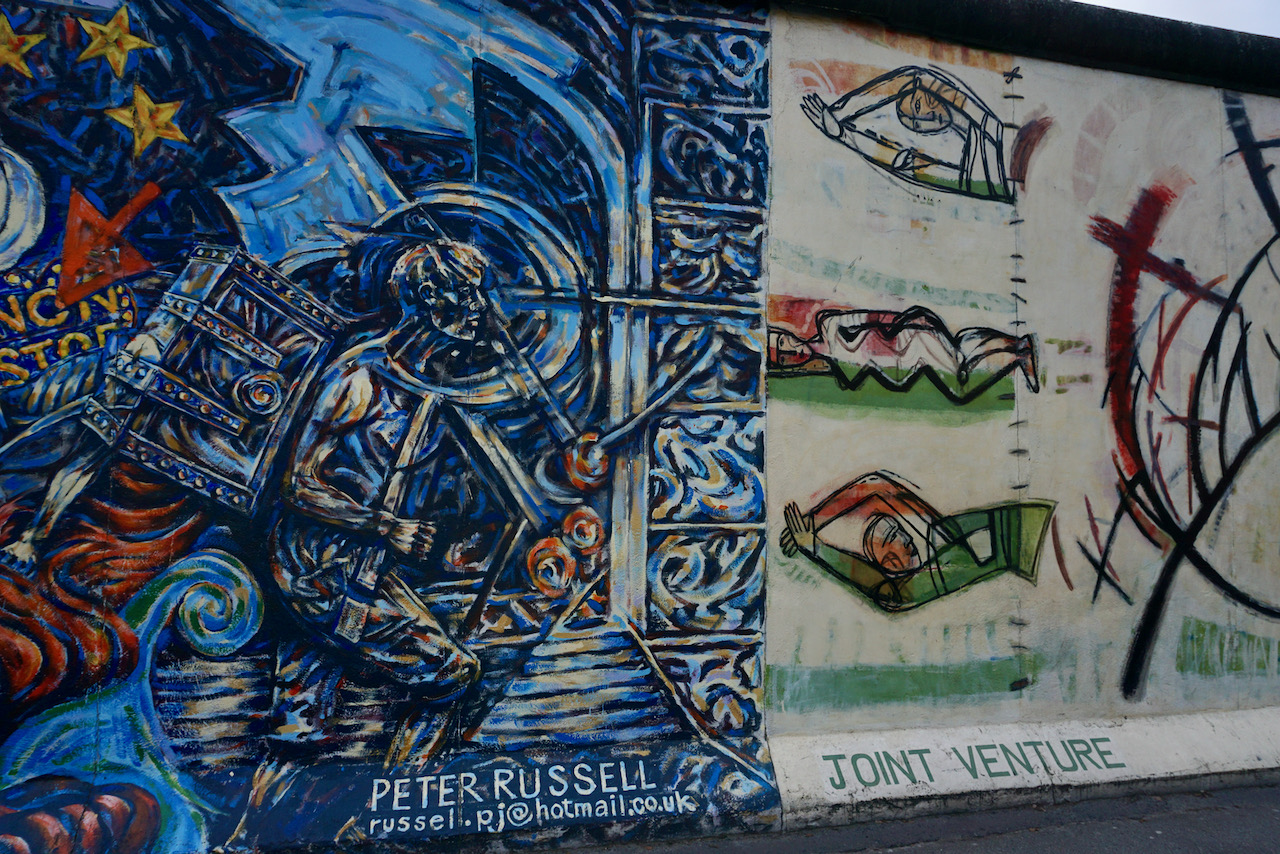
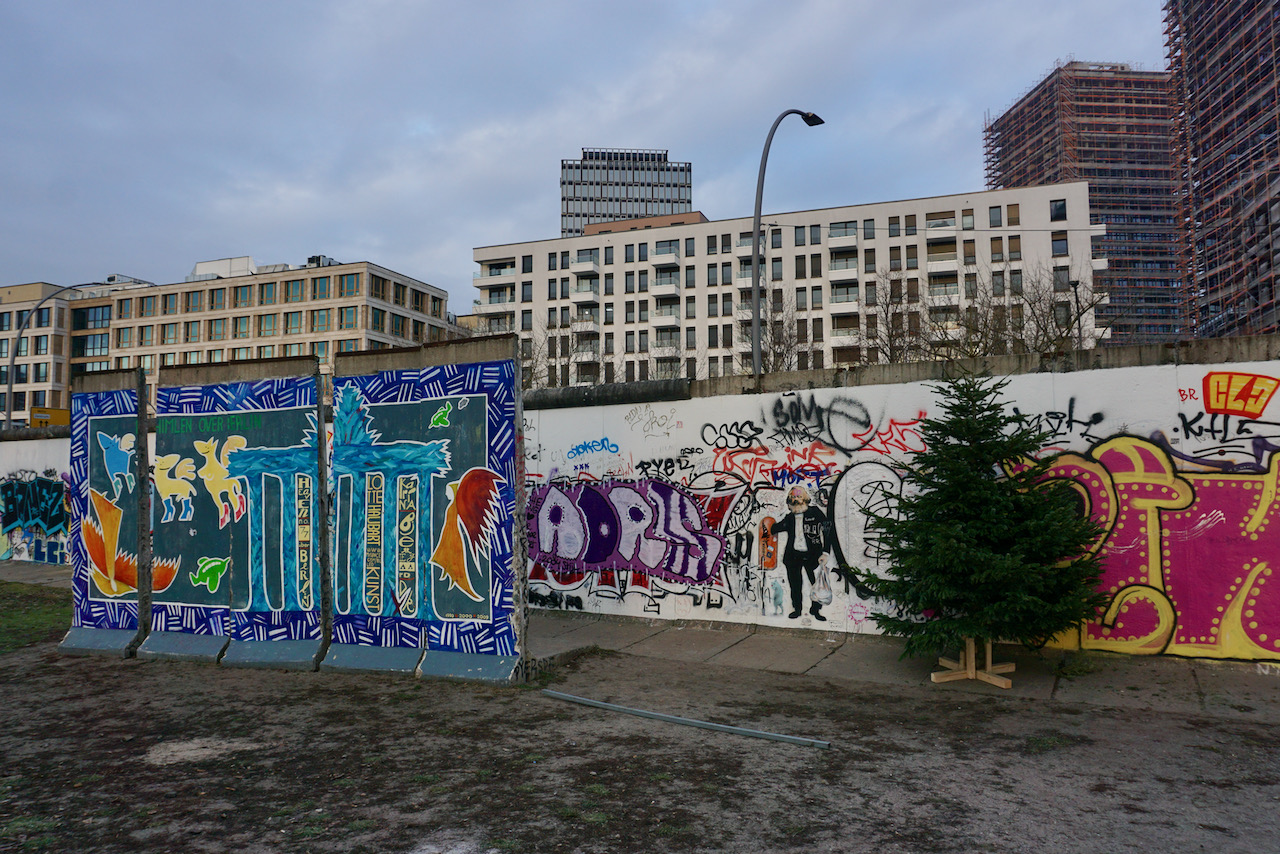
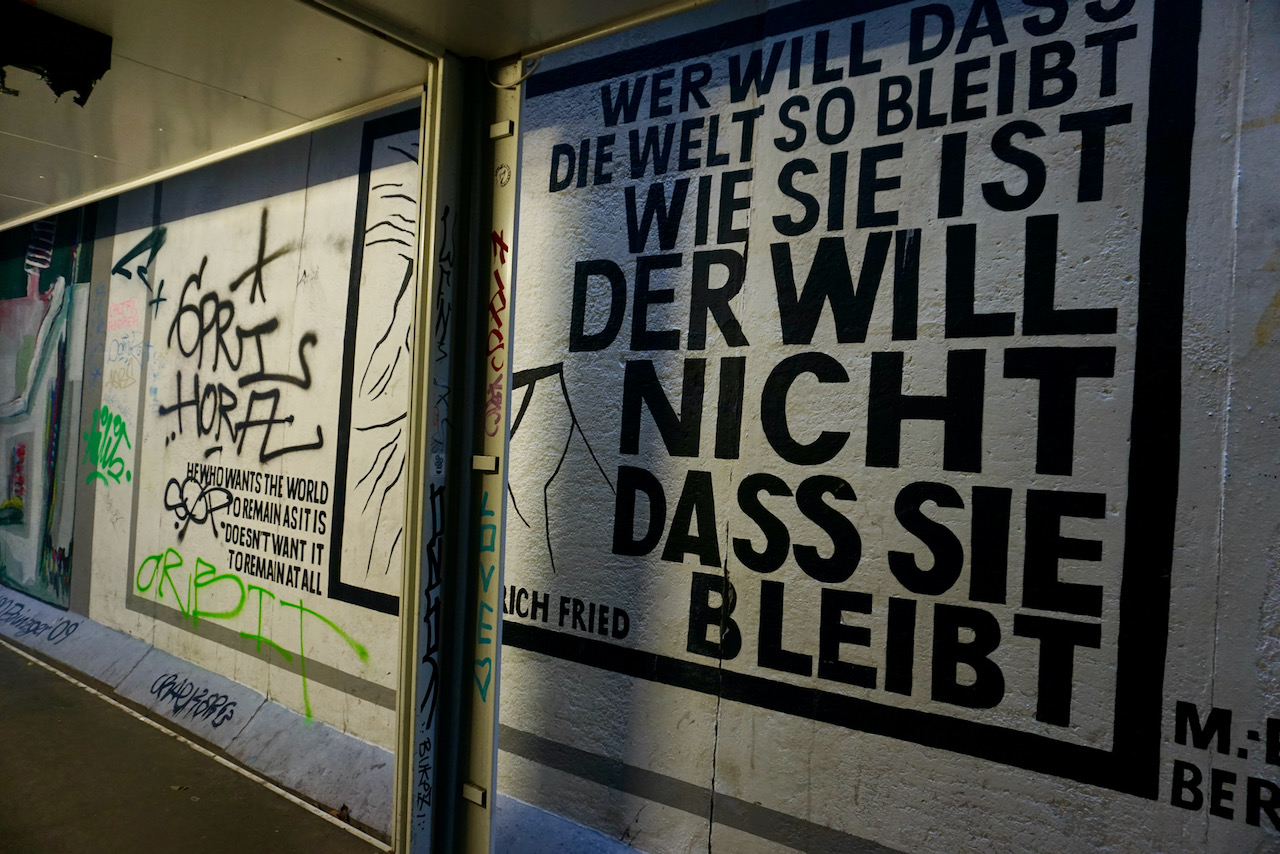
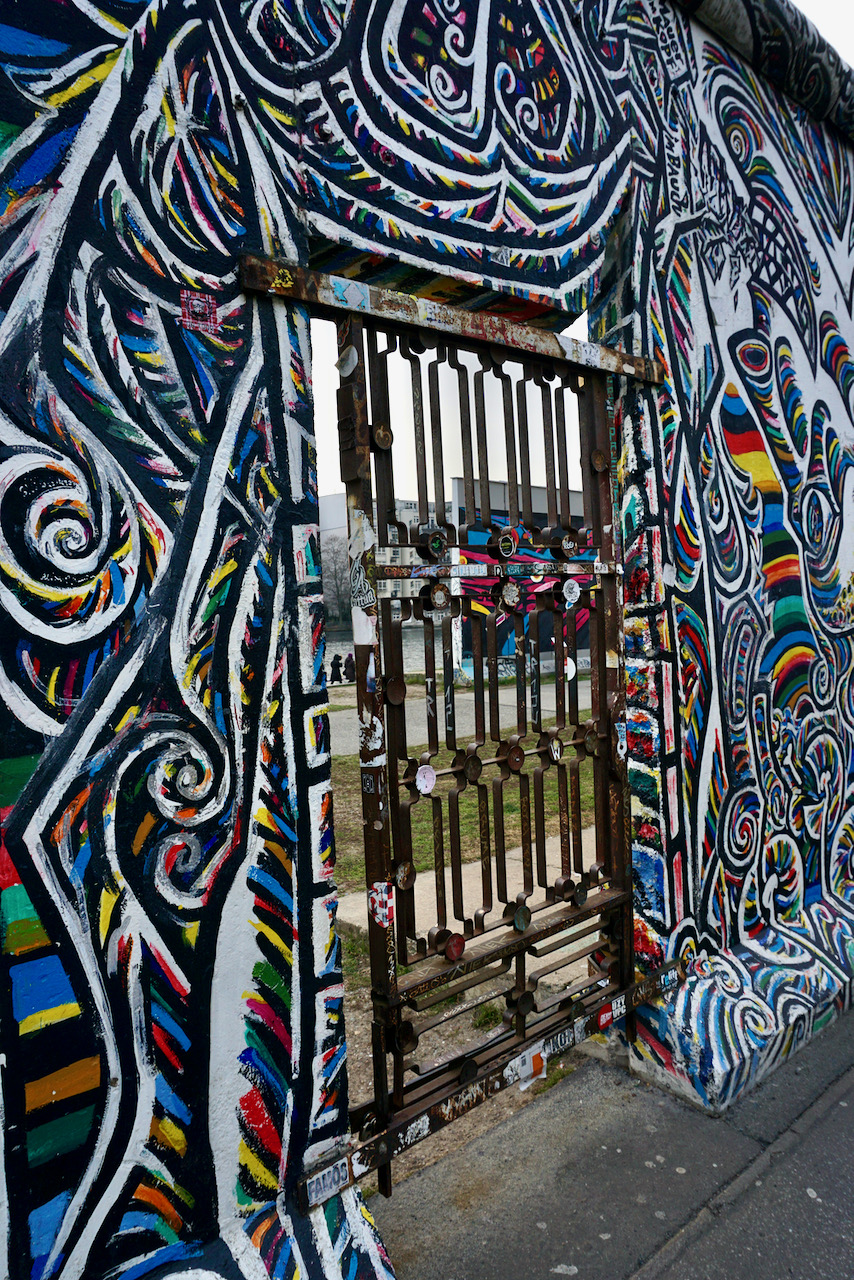
I stopped first at the Berlin Wall Museum (expensive but worth every penny) and the East Side Gallery. I wanted to understand the people who call Berlin home and the people who stood together to rebuild it. I wanted to understand the stories that people around the world want to tell about Berlin and what its separation and reunification symbolize to them. More than anything, I felt that Berlin reflected an attitude of deliberate commitment to a very clear choice, and I think the world could use more of that.

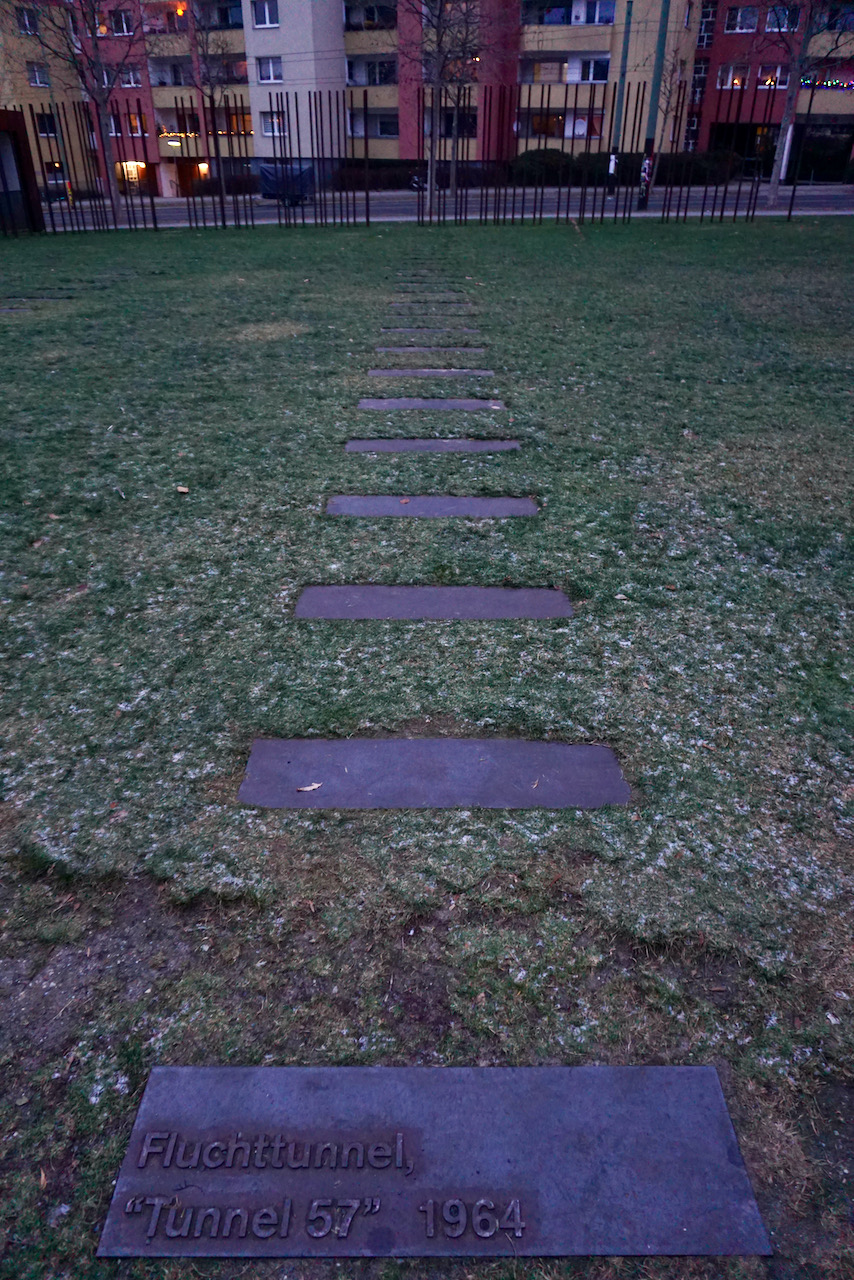
I recently read Helena Merriman’s Tunnel 29 and it gave me a great deal of background information that I would not have otherwise had. Walking along Bernauer Straße and coming to the corner of Ackerstraße left me standing a little straighter, full of hope for the future, and deeply moved by thoughts of what it must have been like for the world to completely and utterly change over the course of a single night.

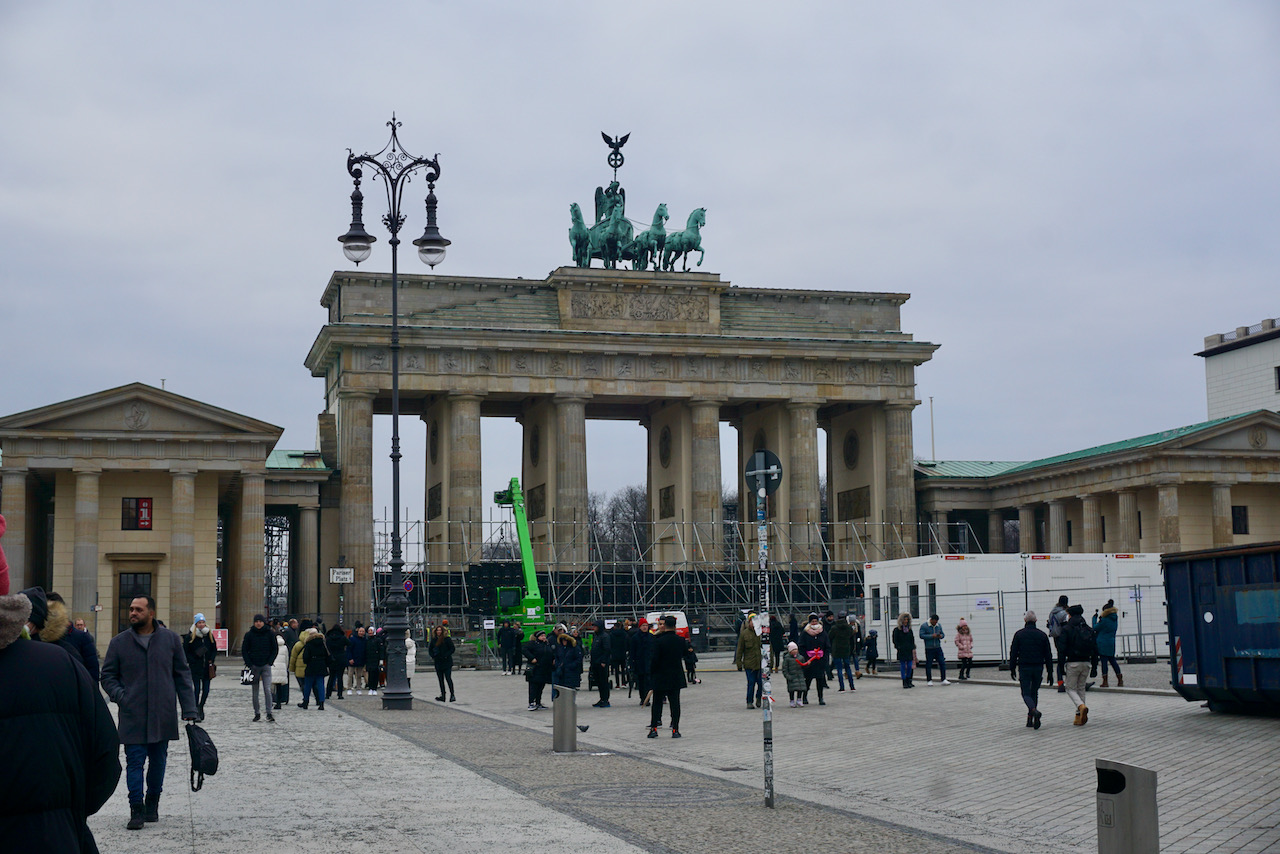
With that, it was time to find out more about the longer history of Berlin and follow a very knowledgeable guide through Mitte, the central district.

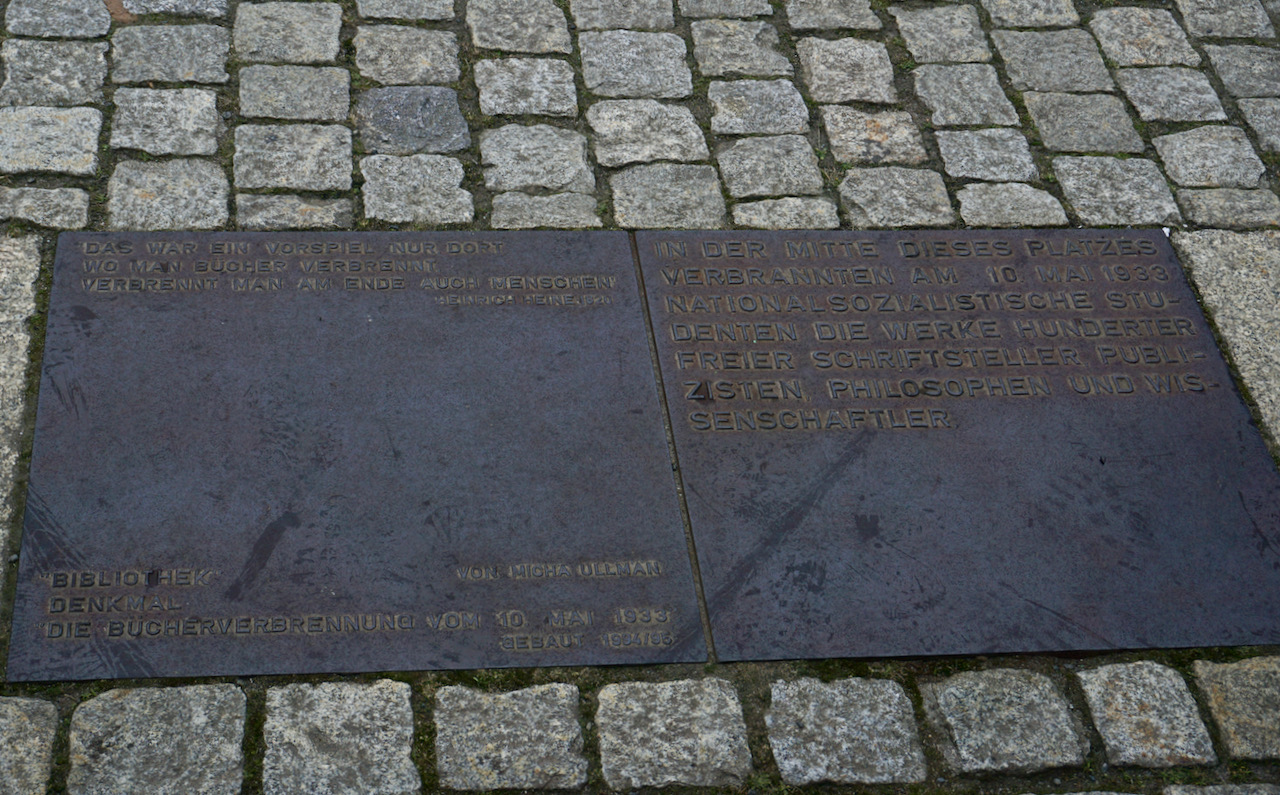
The stops that struck a particular chord with me were the memorial to the Nazi era book burnings . . .

. . . the historical significance of Checkpoint Charlie (be aware that the Disneyland-like environment around it is just really strange) . . .

. . . the carpark area built over Hitler’s bunker . . .

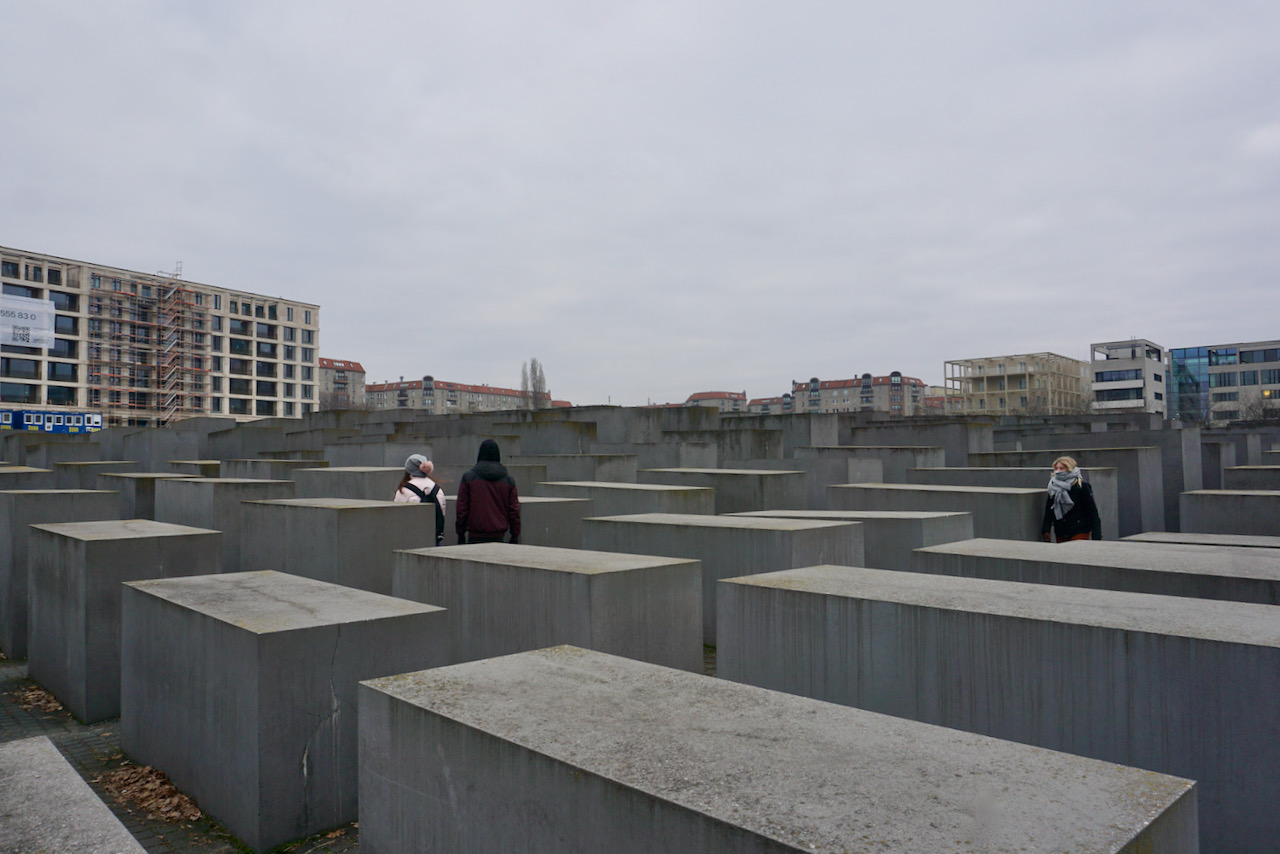
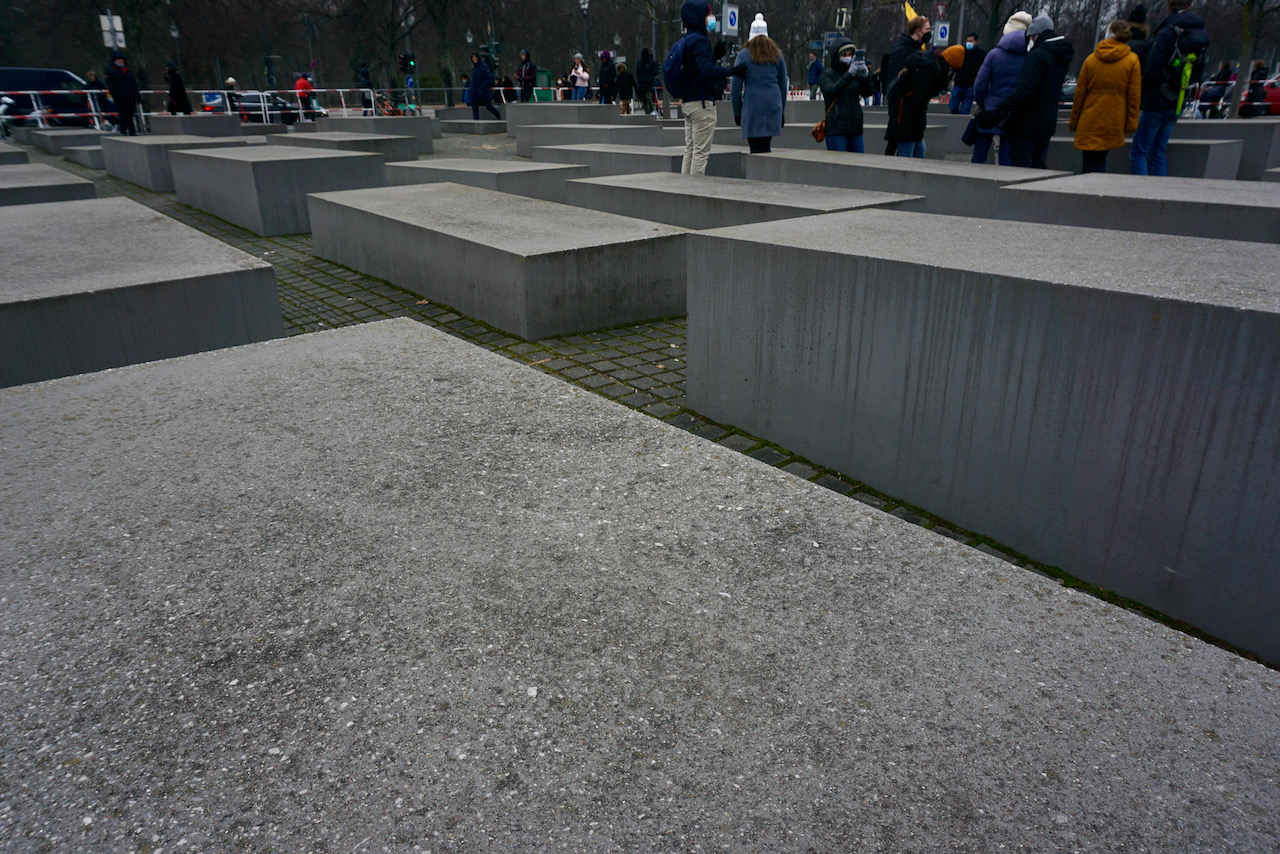
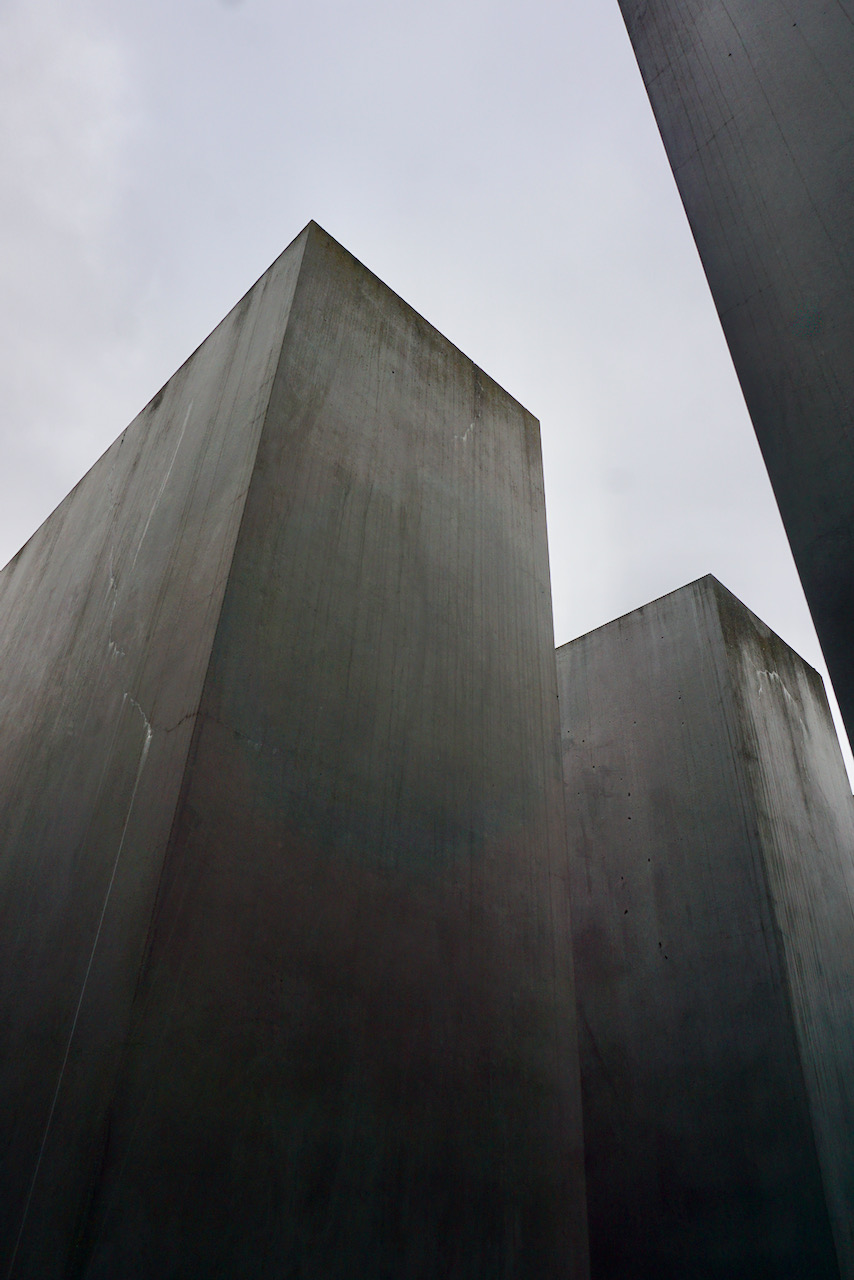
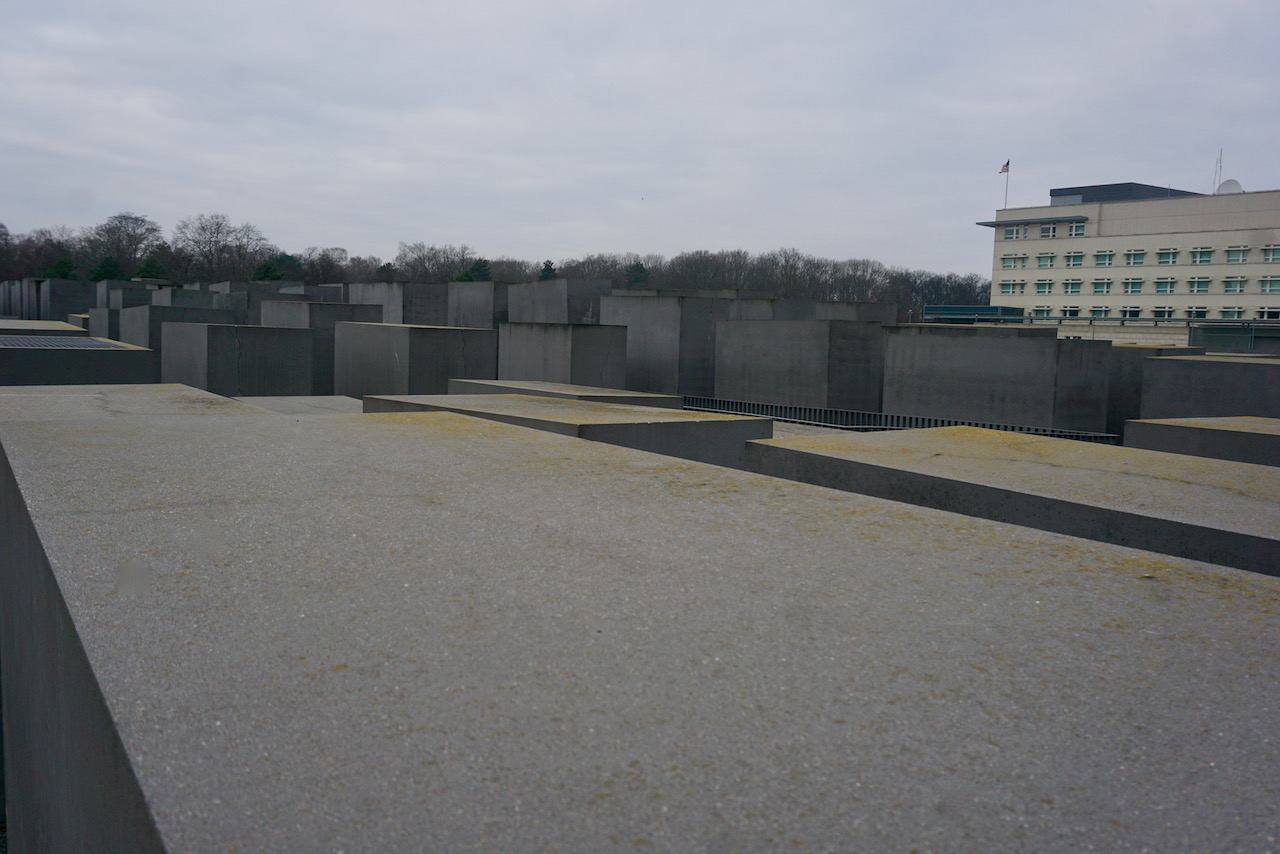
. . . and the Memorial to the Murdered Jews of Europe. The guide suggested walking through it individually and in silence, which was a powerful experience. Part confusion and isolation, part a sense of losing direction, and part a feeling of being trapped with no place to go.

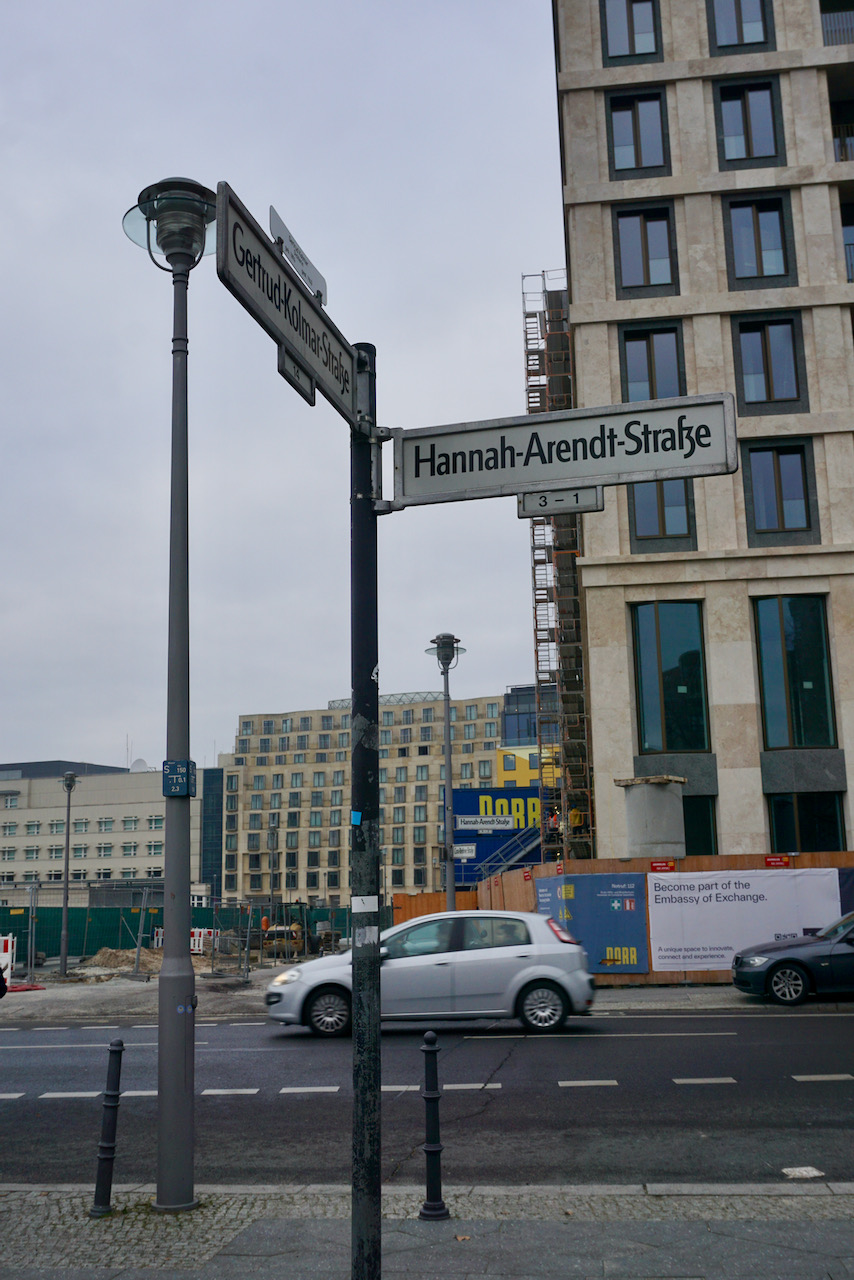
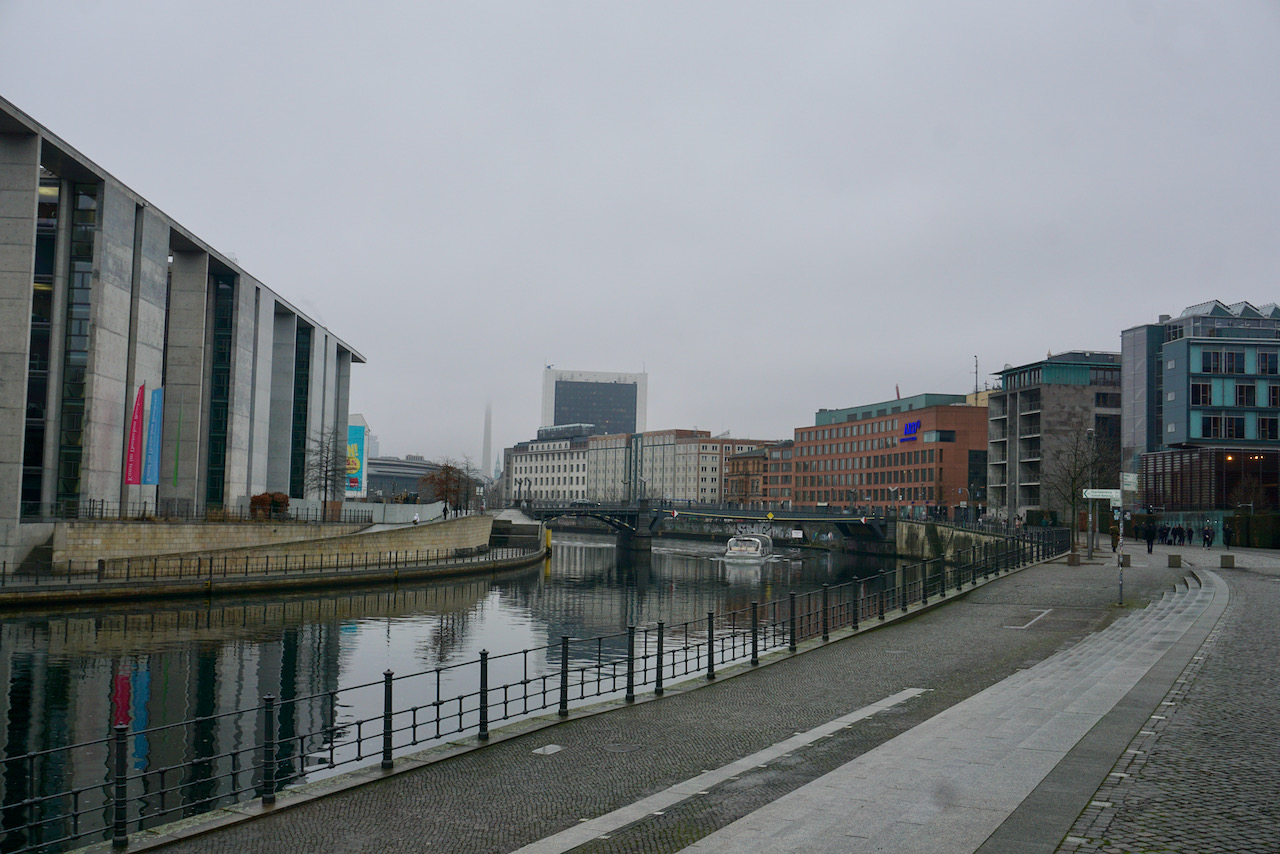
I retraced some of our steps the following day to consider Germany today and its role on the world stage. When I first told friends I was moving to Germany one of them asked, “How does it feel to be going to a country led by a woman?” I have to say, it felt pretty good.

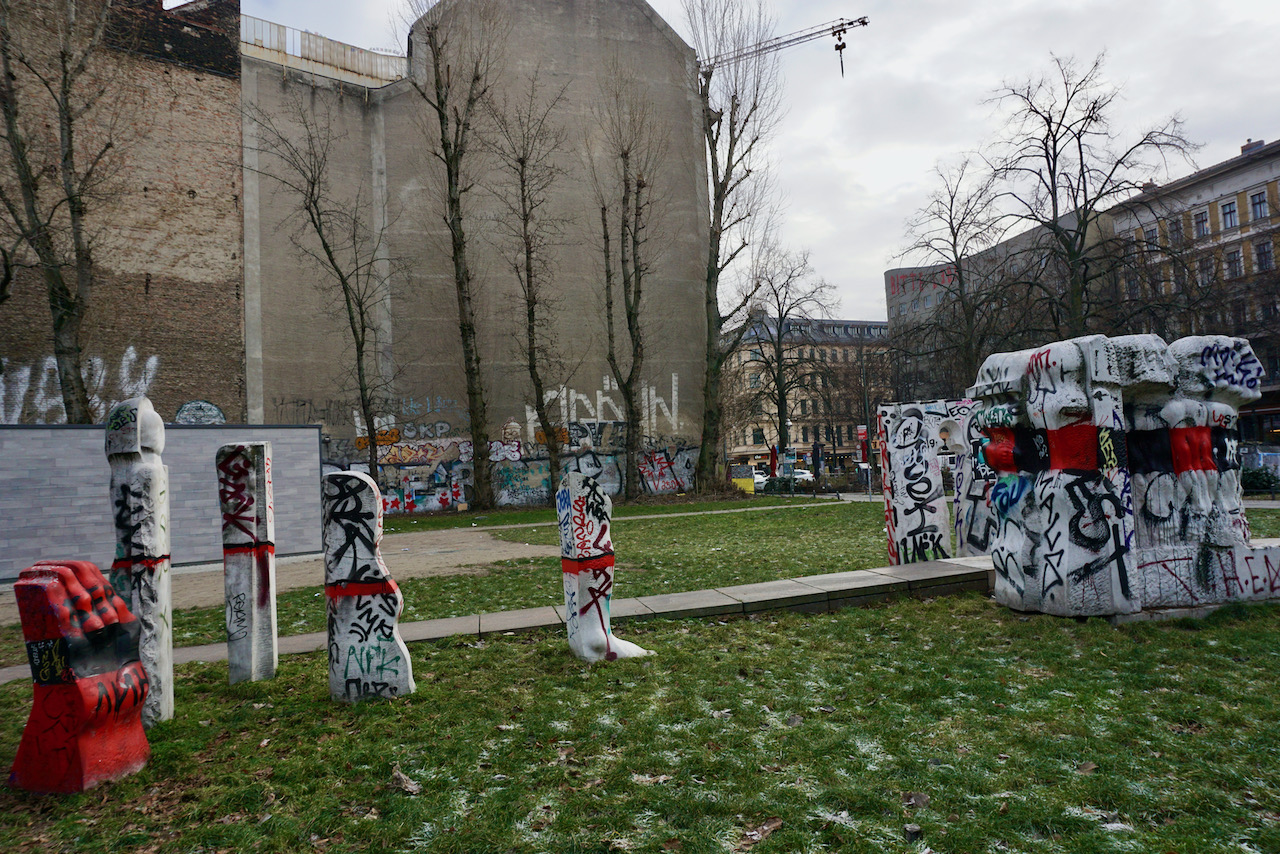
As I wandered, I paused at two quiet memorials. I’ve written about memorials before and at the very least, these made me pause. It was evident that the same was true for others. (I also really like the German word for memorial, das Denkmal. Denken means “to think” and I don’t need to say any more than that.)

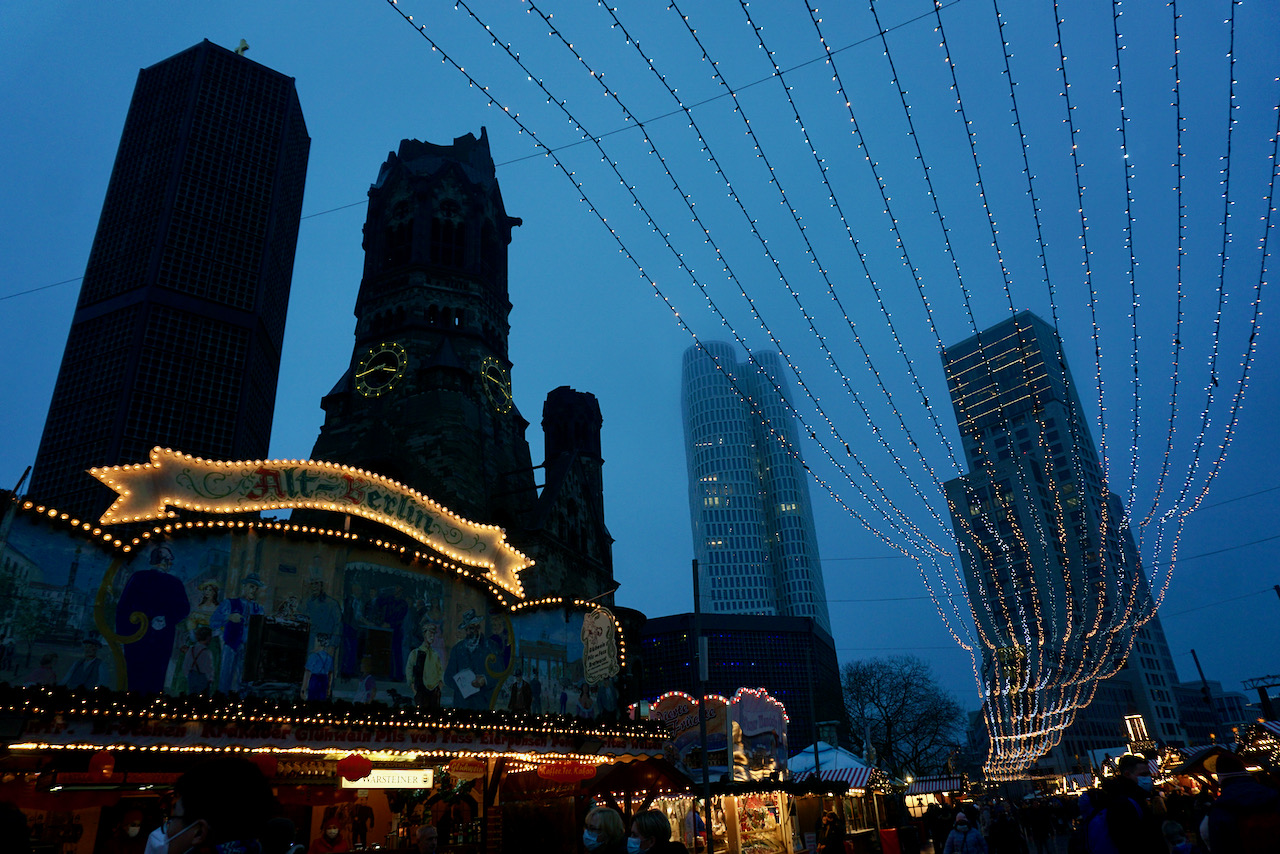
My last night in Berlin, with much warmer weather than when I arrived, I happened upon a Christmas Market as I walked along the Ku’damm to take in the lights and designer shops. Christmas Markets are scattered throughout the city and are normally all over Germany, but this year is not a normal year. Clear entry points with masks and vaccine proof, but it’s a small price to pay. I was glad to spend a little time there and glad for the energy of those around.

There’s so much more to see and do in Berlin, and I admit this post is a selection of highlights. I’ll certainly be back, hopefully next time without icy wind blowing down from the north. I left Berlin having gained a new sense of respect for this city and this country, a heightened awareness of what it means to work towards something important. I am very aware that I am a guest here in Germany, and truly grateful for the opportunity to know, to learn, and to try to understand.

Stumbling Stones

Several weeks back, I looked over the notes I took years ago as my grandmothers regaled me with stories of our extended family history. I looked over the family tree that my grandmother’s cousin, who I’ve never met, had painstakingly put together, complete with full names and the dates and locations of births, marriages, and deaths. Somehow, the story feels different on this side of the world.

One evening heading home from climbing, an American friend asked how my family had responded when I said I was moving to Germany.

Later, a German friend told me he had been wondering that, too, but as a German, never would have asked. He walked with me through town and pointed out buildings the Nazis had built and used as offices. A small sign, so nondescript that it’s easy to miss, explains it. No fanfare.

It took several weeks of lessons before my German teacher told me she had been afraid to ask about my family history after learning my name for the first time.

My history students and I are studying the period of European diplomacy between the World Wars and it hasn’t yet come up that I’m Jewish. It might. What is obvious is the depth of understanding these young people have about propaganda, hate speech, power, victimization. They do not take today’s world for granted because they know what it cost.

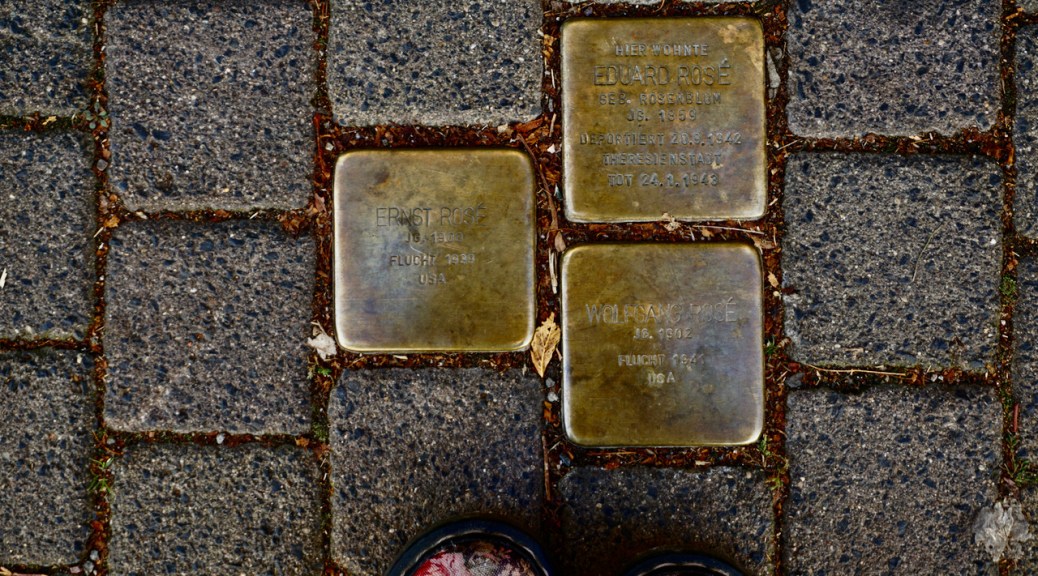
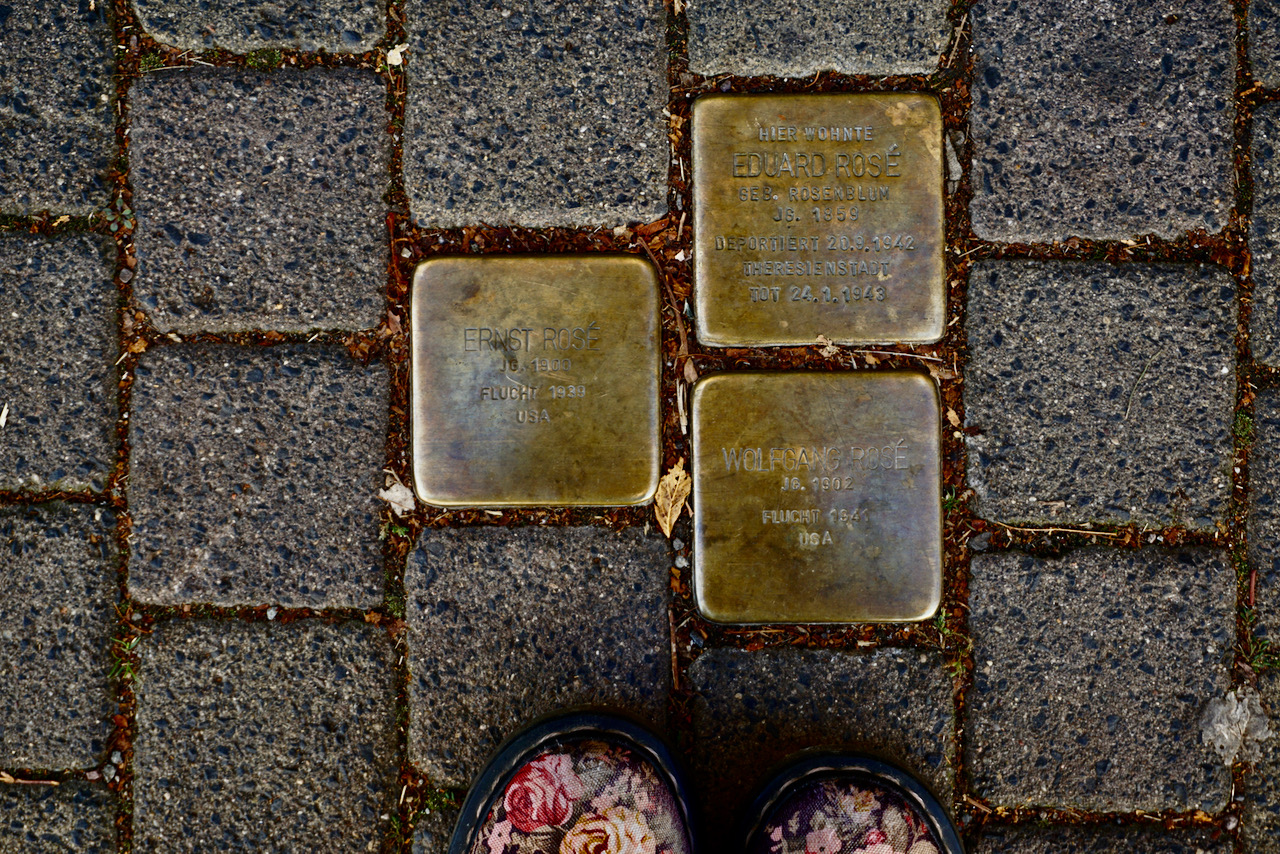
Yesterday I photographed the first stumbling stones that I saw when I arrived here. Before I knew what they were. Before I knew how they got there.

Hier wohnte. Here lived.

Here lived.

Hier wohnte.

As a memorial, the stumbling stones, or Stolpersteine, are not without controversy. (Is there such a thing as remembrance without controversy?) As of December 2019, 75,000 Stolpersteine had been placed in Germany and they are in other countries, too. But not everyone agrees that accidentally tripping over a stone and then recognizing its significance, even if it forces you to kneel before the victim, is dignified. I can appreciate the disagreement because it means that people care. They care enough to argue about the best way to honour lives taken.

It is one thing to be steeped in history. It is another thing entirely to learn from it.

Do you not know that a man is not dead while his name is still spoken? – Terry Pratchett, Going Postal