Tag Archives: Palace

Travel Guide: Marrakech

Both my partner and I have long dreamed of going to Marrakech, and this seemed to be a good point in our lives to make that happen. After consulting with friends who had lived in Tangier, we had a sense that this would not be our only visit to Morocco, and this feeling only intensified after our three nights in Marrakech. We’ve both had the fortune and opportunity to see a bit of the world and neither of us have ever been anywhere quite like Marrakech.

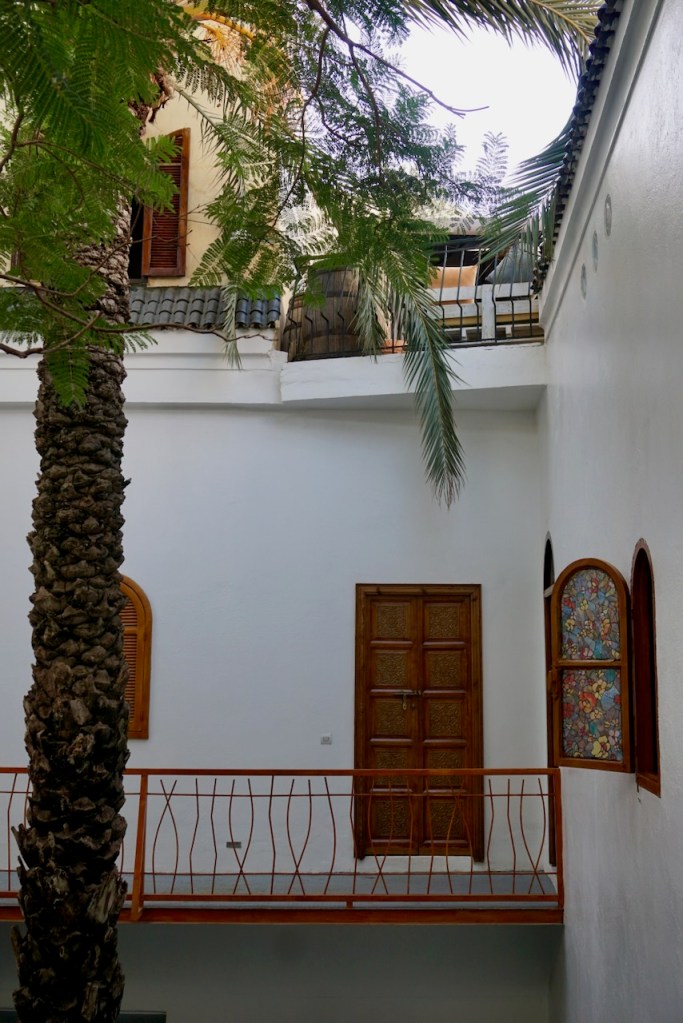
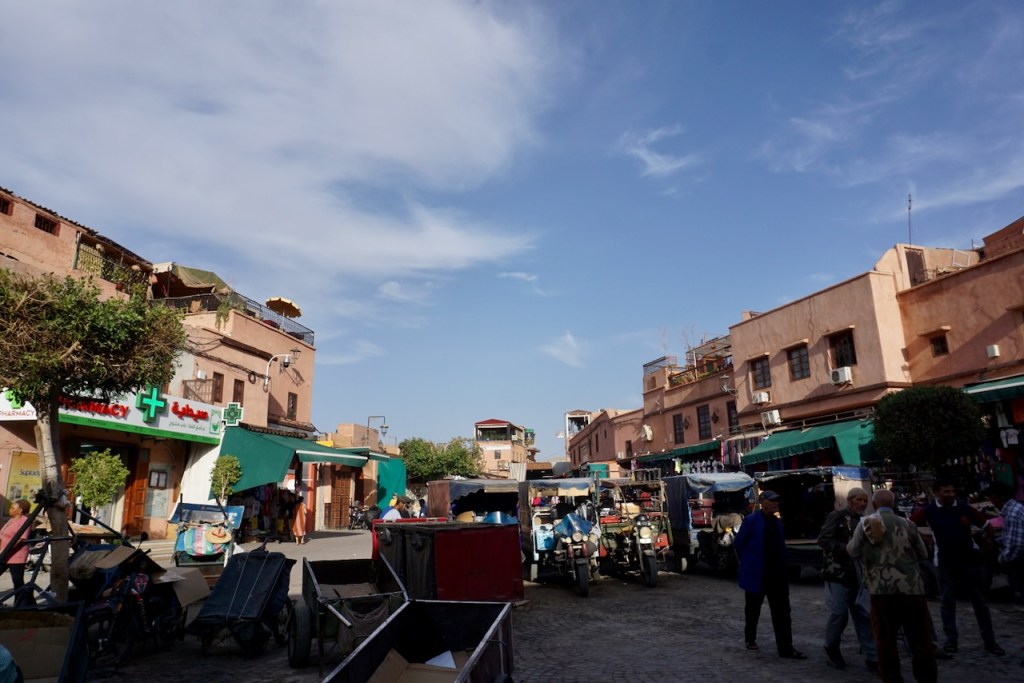
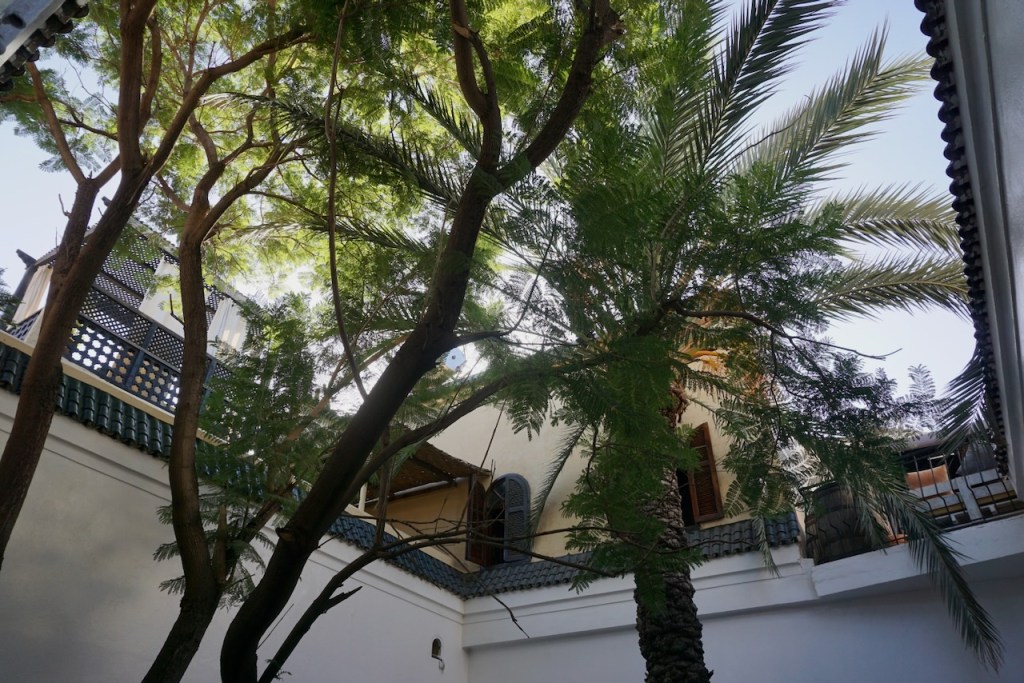
Upon landing in the late afternoon, we took a bus from the airport to Jemaa El Fna, the main marketplace in the old city, or medina, of Marrakech. From there, we navigated twists, turns, bikes, mopeds, and donkeys before arriving at the alley that we would have missed had we not been looking for it. A few twists and turns later, we entered our riad, the guesthouse build around a courtyard that would be our oasis during our visit. Riads are quiet havens that have existed for centuries as family homes; the windows face the courtyard, so there is practically no noise that comes in from outside. Ours contained, as is traditional, a fountain of running water and a good deal of flora, including a date palm that was home to a family of birds. No alarm clock needed, assuming you’ve slept through the call to prayer that comes in the middle of the night and then earlier than the birds. (Spoiler alert: You haven’t slept through anything, but it’s all rather charming.)

Breakfast was served on the rooftop terrace and the suite that we booked (yes, we went all out for this one) included a living room and a sitting area in the airy corridor. We were served sweets and mint tea on arrival, and we knew we were in a different world.
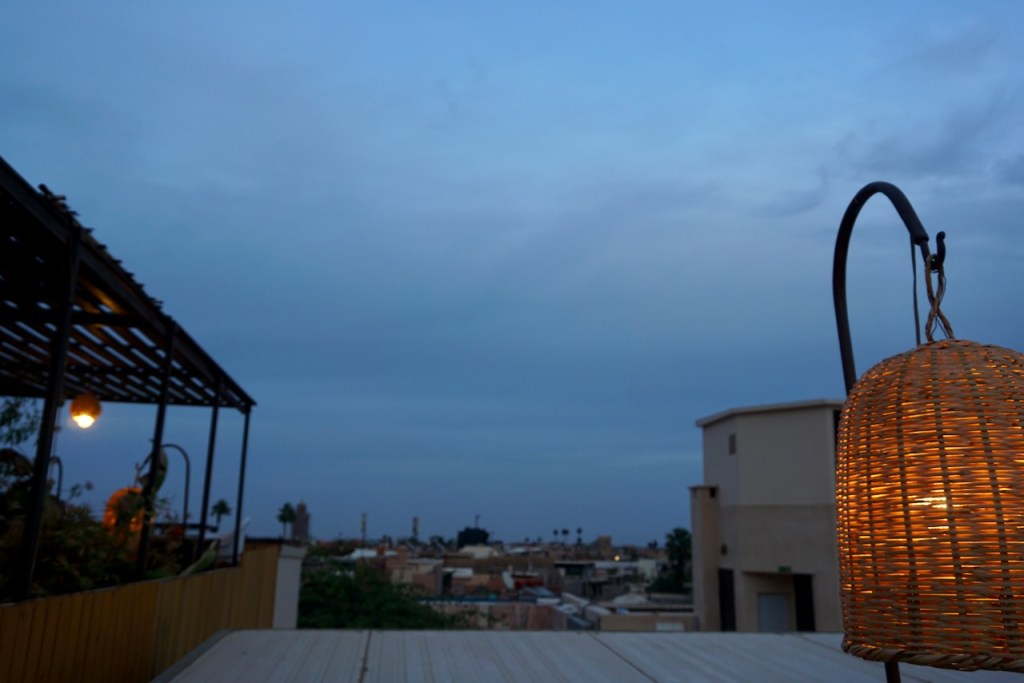
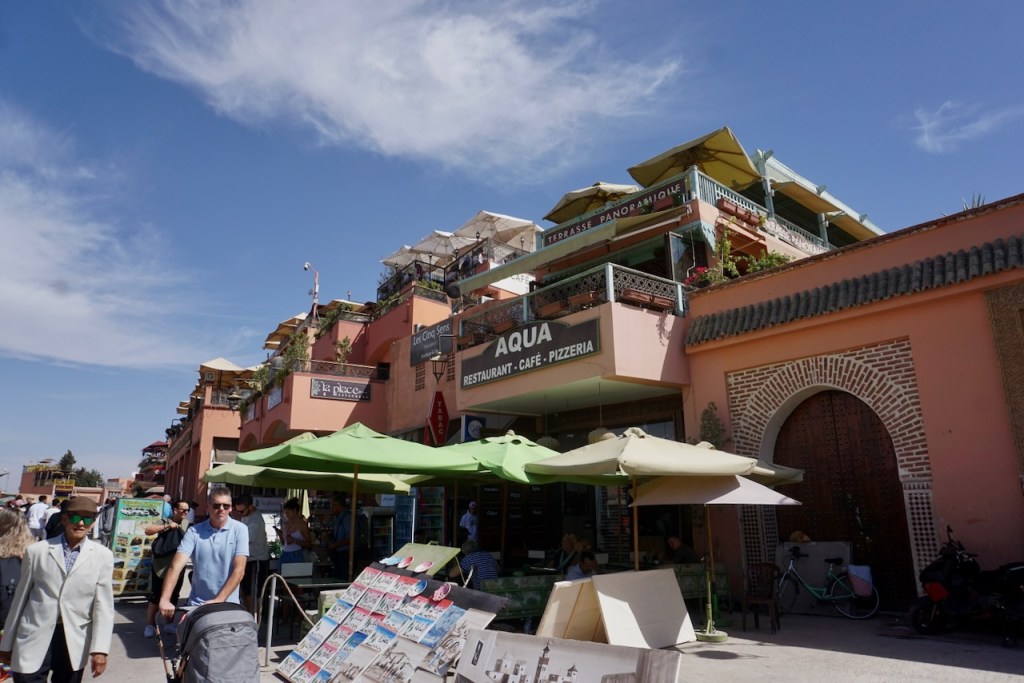
As we would learn, rooftop eateries are common and we intentionally sought them out.

We could usually see cats, a common feature of Marrakech, jumping around the rooftops, and while they are very pretty, they do come along and beg. Understandably, the restaurant cats are definitely better off than the cats eking out a living under park benches.

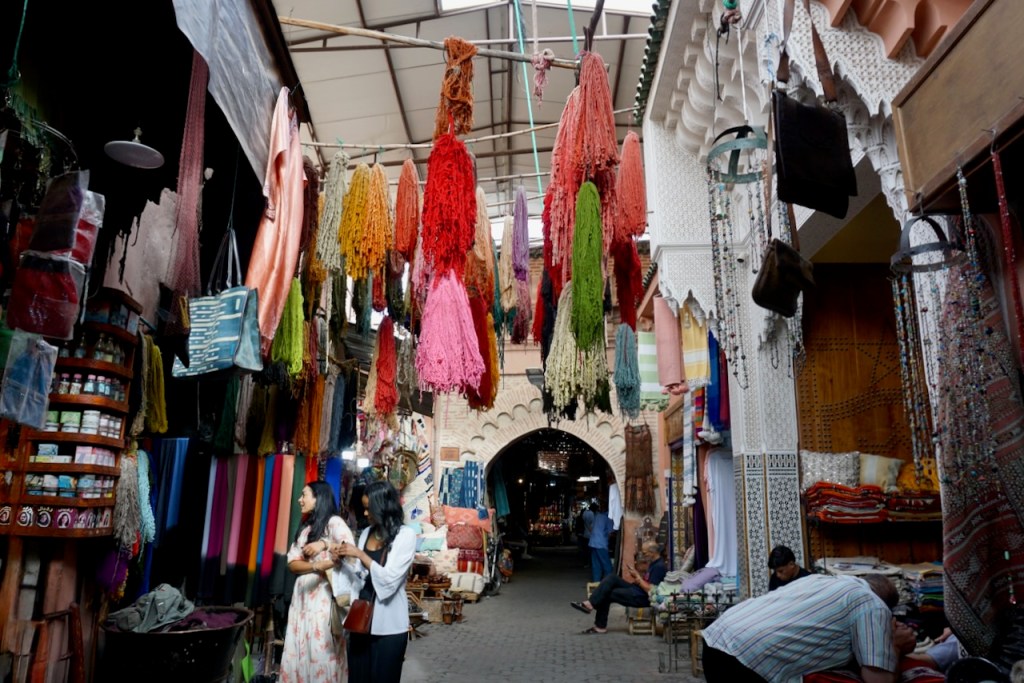
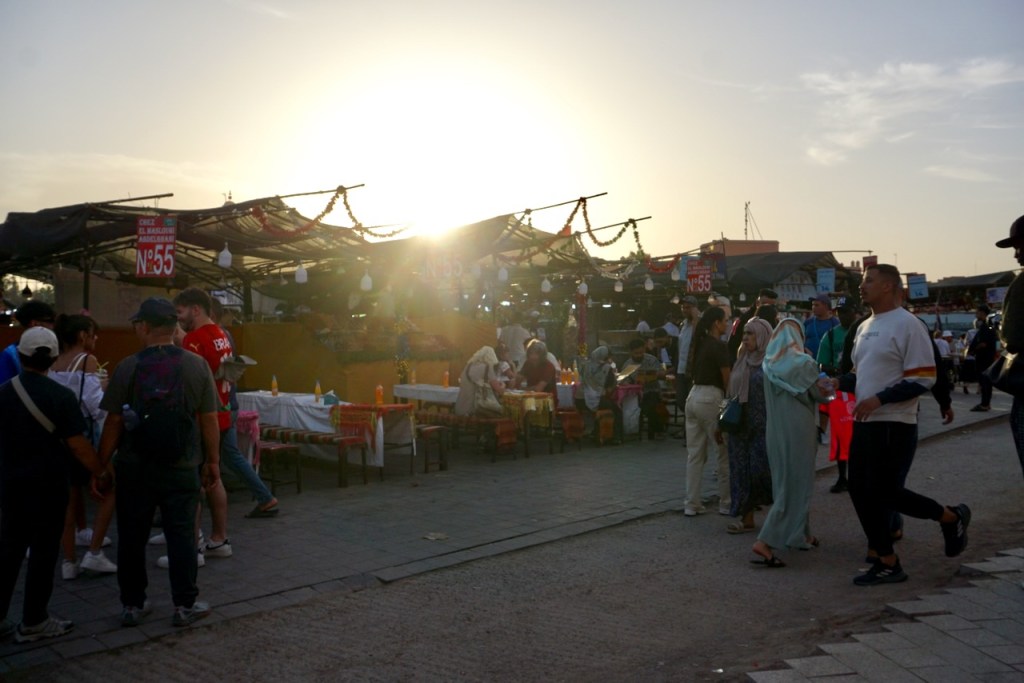
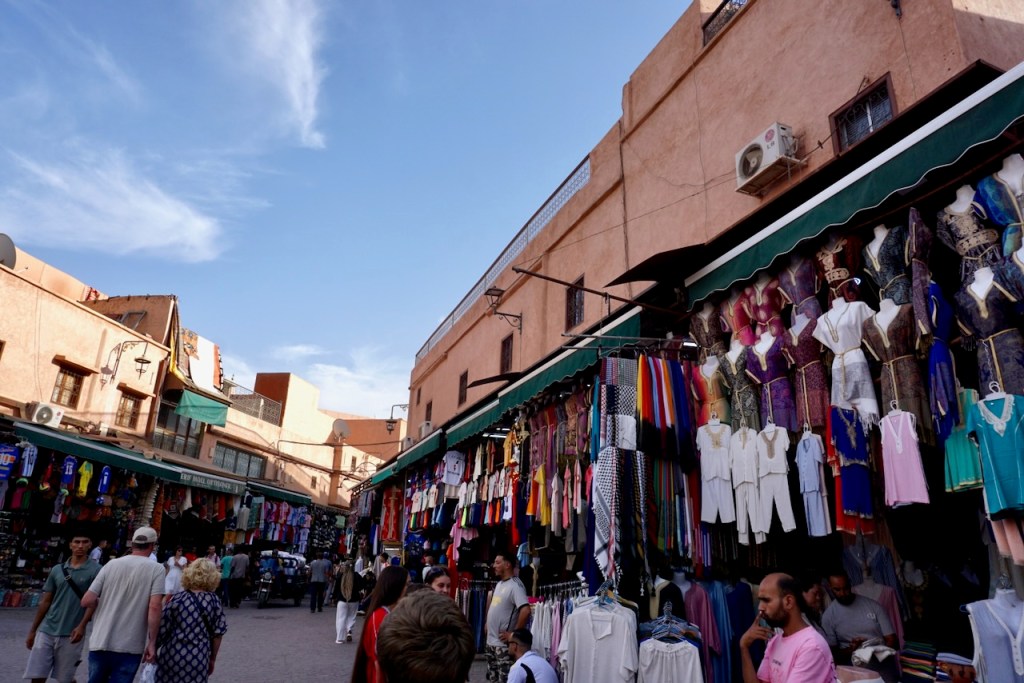
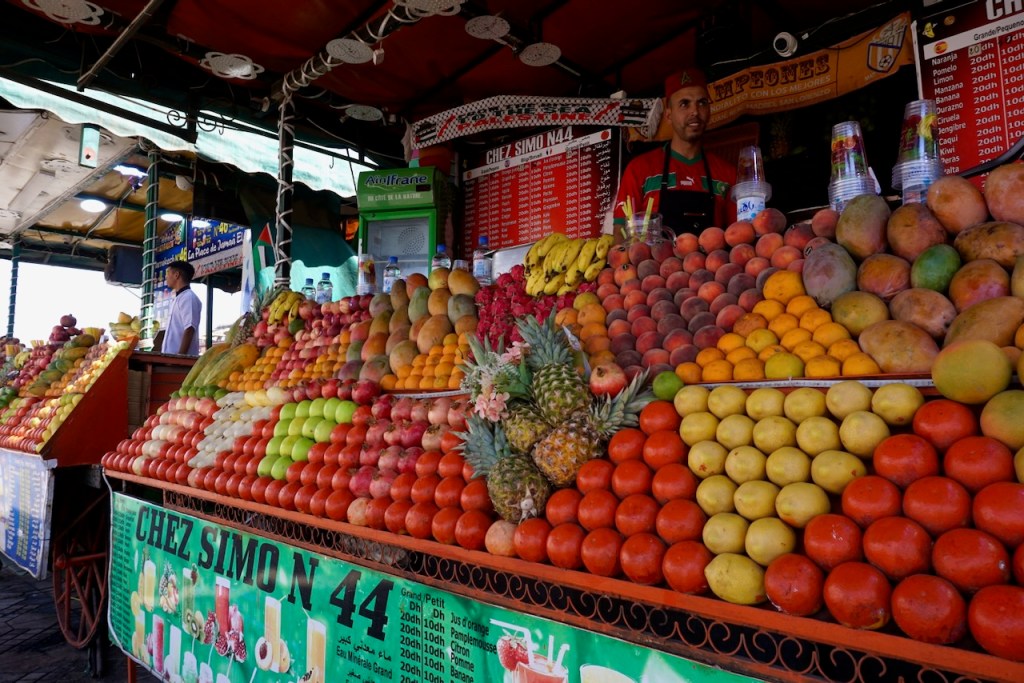
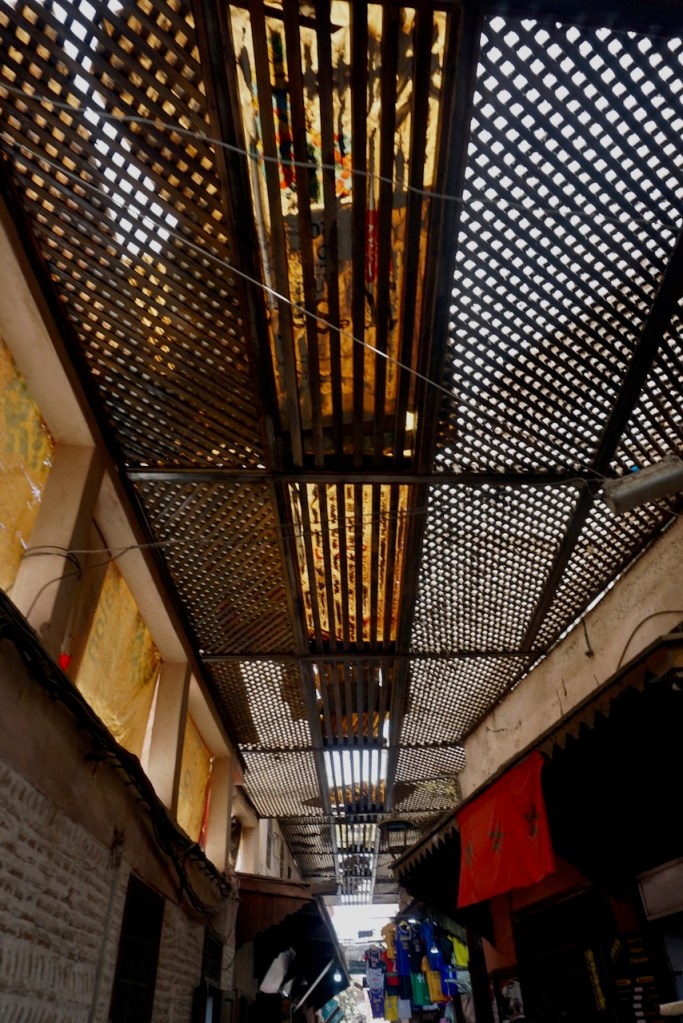
From that first walk through Jemaa El Fna, however, we were enchanted. The market, and particularly the main square, contained everything we’d always imagined about Marrakech, and we spent our time there grinning at being caught on a film set, surreal snake charmer music (and snake charmers!) included. In addition to the snake charmers, monkeys on leashes, and horse-drawn carriages, there were vendors selling all manner of items to buy, in all colours, in all scents. We never tired of looking, and the indoor market sections were surprising cool due to the slatted wooden ceilings that kept out the sun.

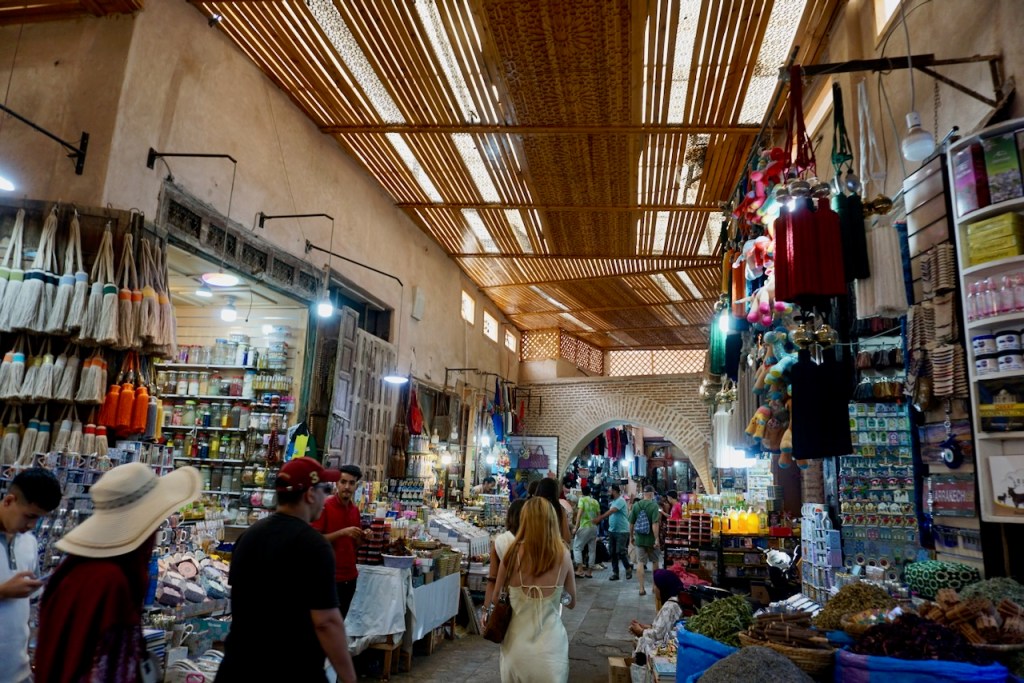
Taking the advice of our riad host, we did our best to bargain prices down at least 60% of the original asking price. We weren’t entirely successful, and we definitely bought a few things priced for tourists, regardless of haggling, but we never paid full price and we did walk away a couple of times. Overall, we found the vendors and shopkeepers respectful and less pushy than we’d been told to expect. They were also extremely flexible, switching immediately into a different language if we didn’t respond in whichever one they tried first. Just for fun, I used as much French as I could, but it’s amazing to see how little French I can still speak.

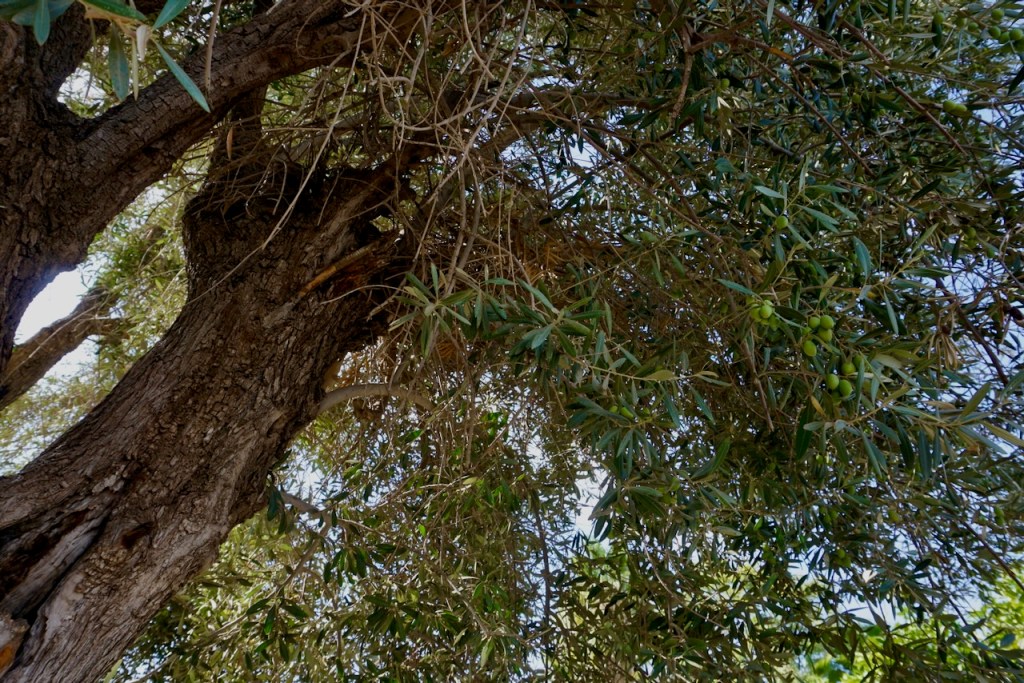
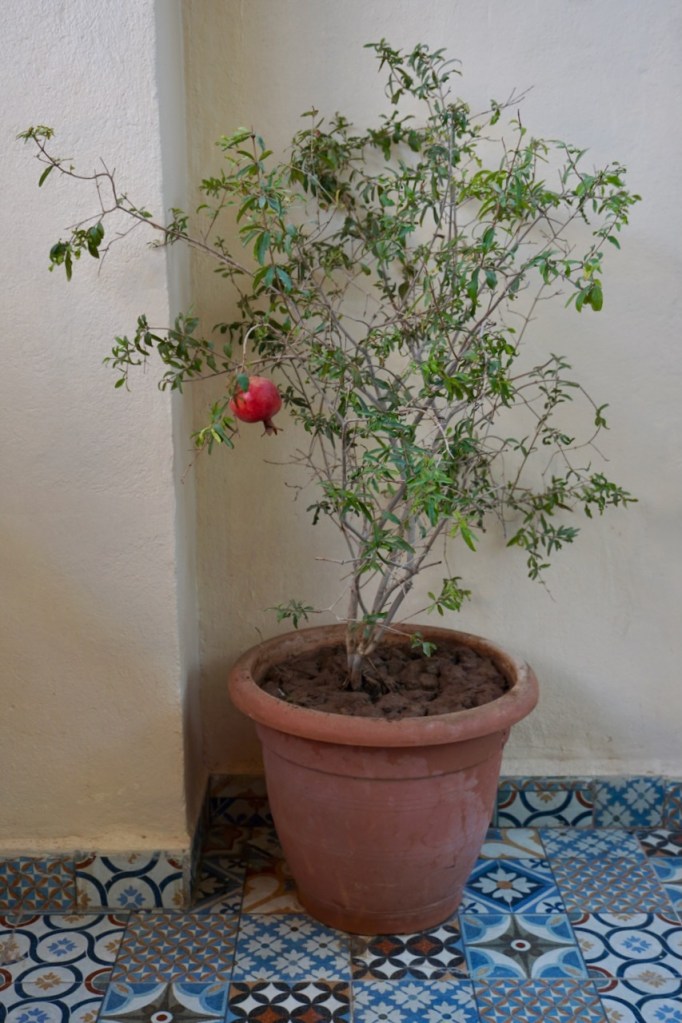
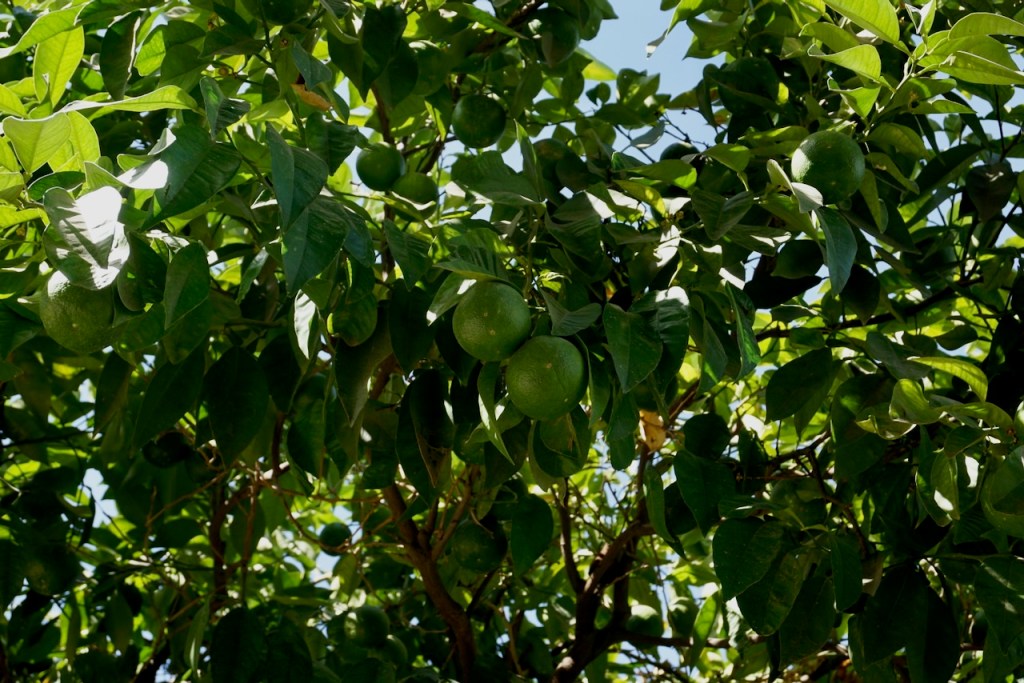
We were also pleasantly surprised by the amount of green in the desert of Marrakech. Our tour guide on our first morning told us that the water comes from the north, from the Atlas Mountains where mint grows, and that the centuries-old irrigation systems were hidden underground as protection against invasions. We saw pomegranates, olives, dates, and oranges growing from trees, and the tour guide explained that fruit from trees in the parks are free for the taking.

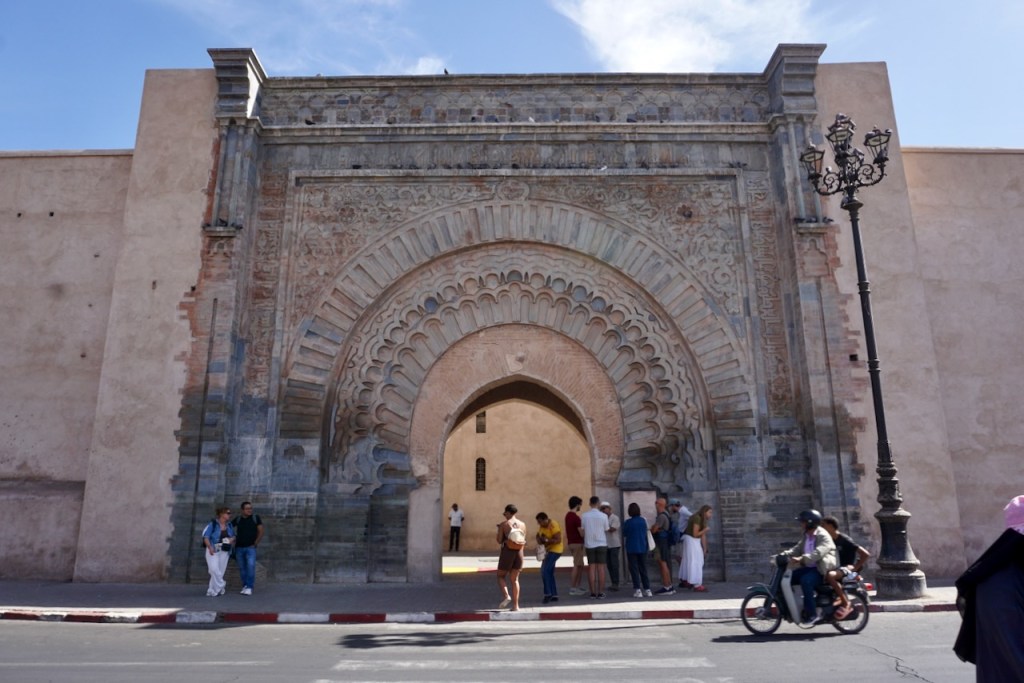
Standing in the shadow of Koutoubia Mosque, we learned about the history of Marrakech . . .

. . . and later walked through a couple of the ancient gates to the city.
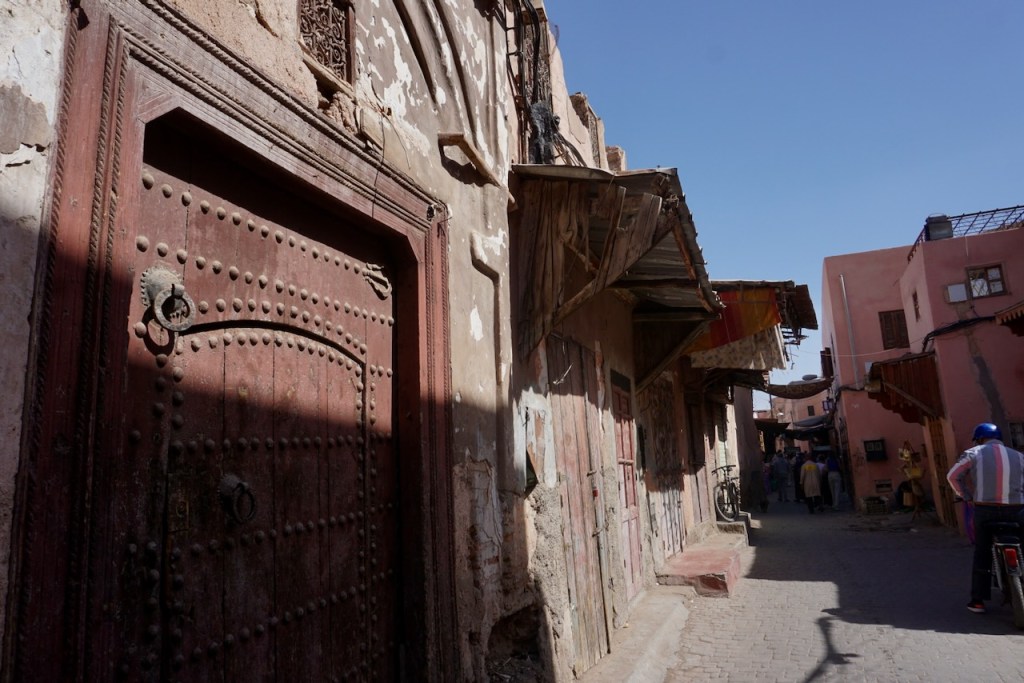
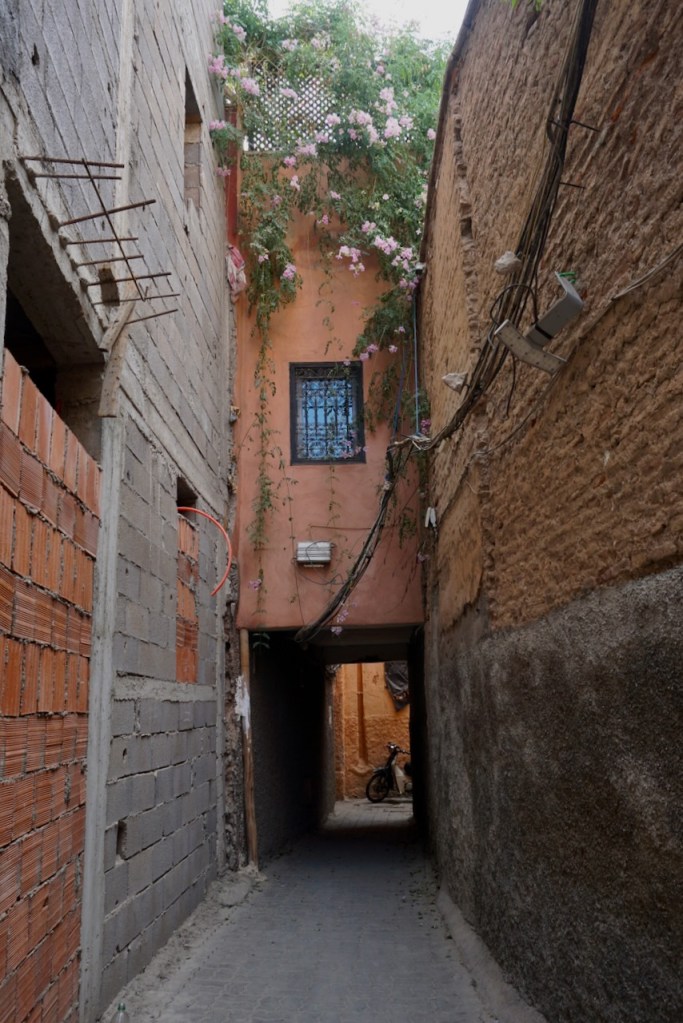
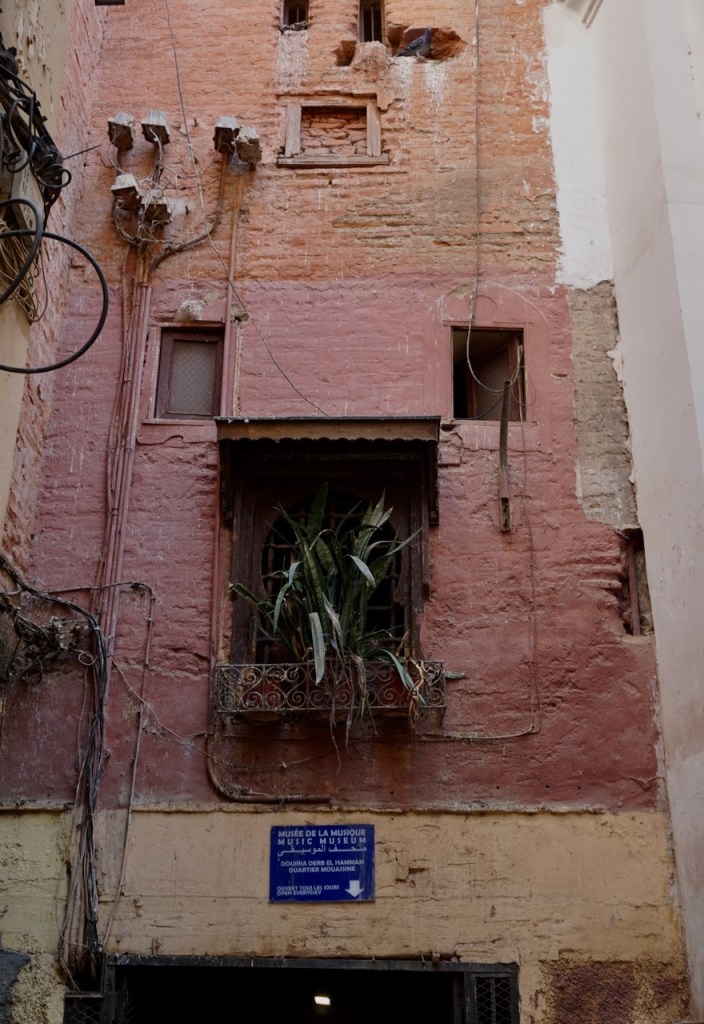
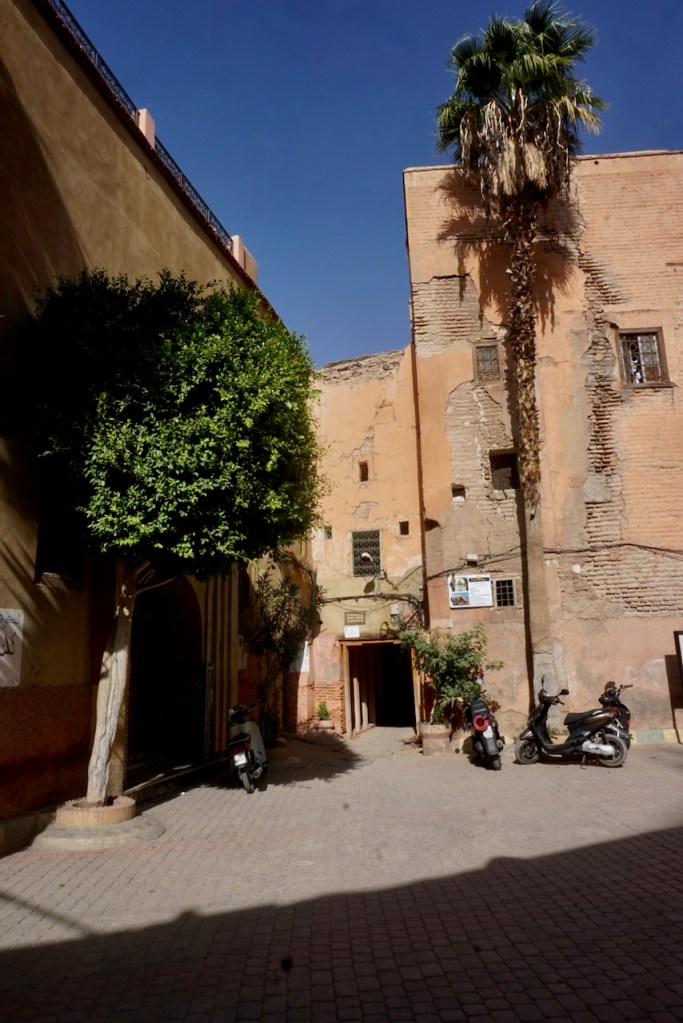
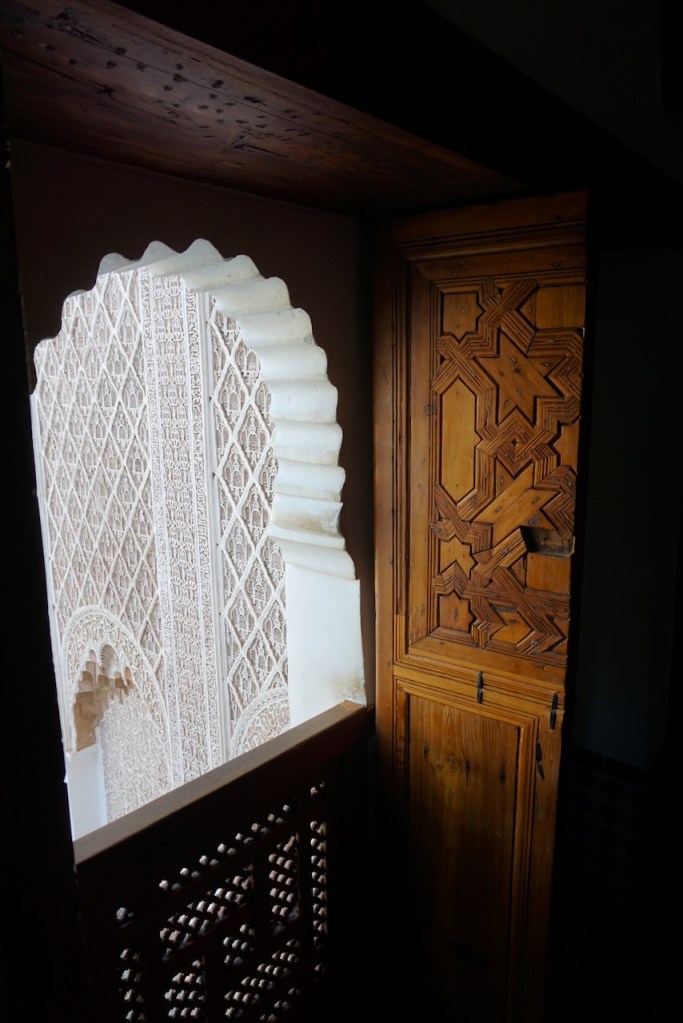
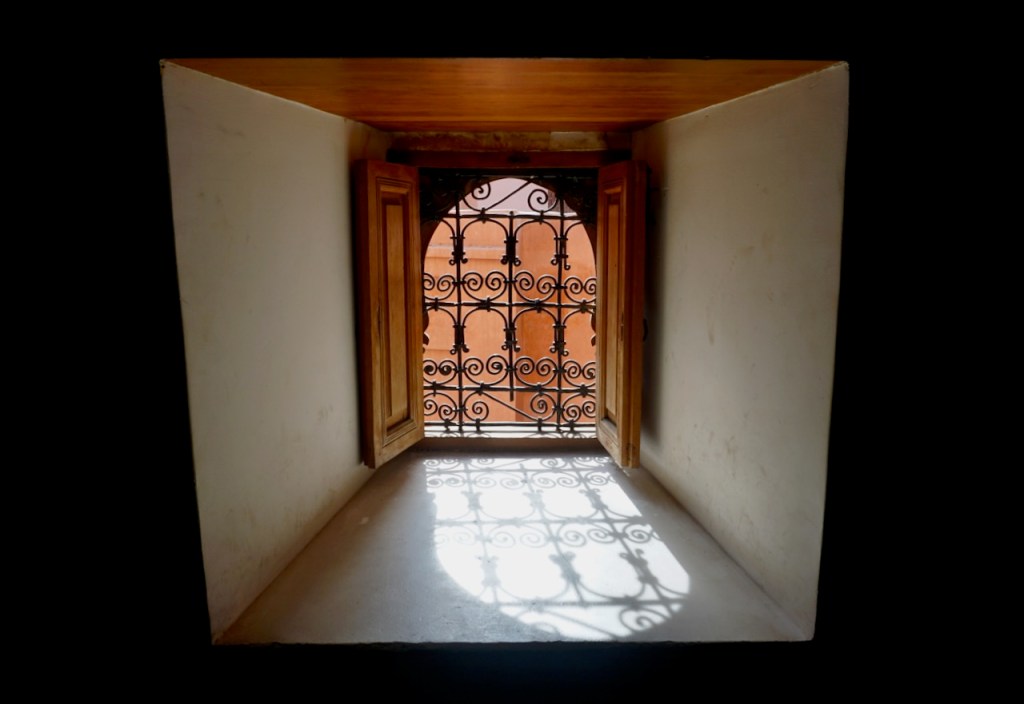
We so taken with the winding, narrow alleyways, designed for protection from invaders and sunlight. Additionally, the windows and doors were in shapes that we are not used to seeing, adding to the sense of being in a different world.

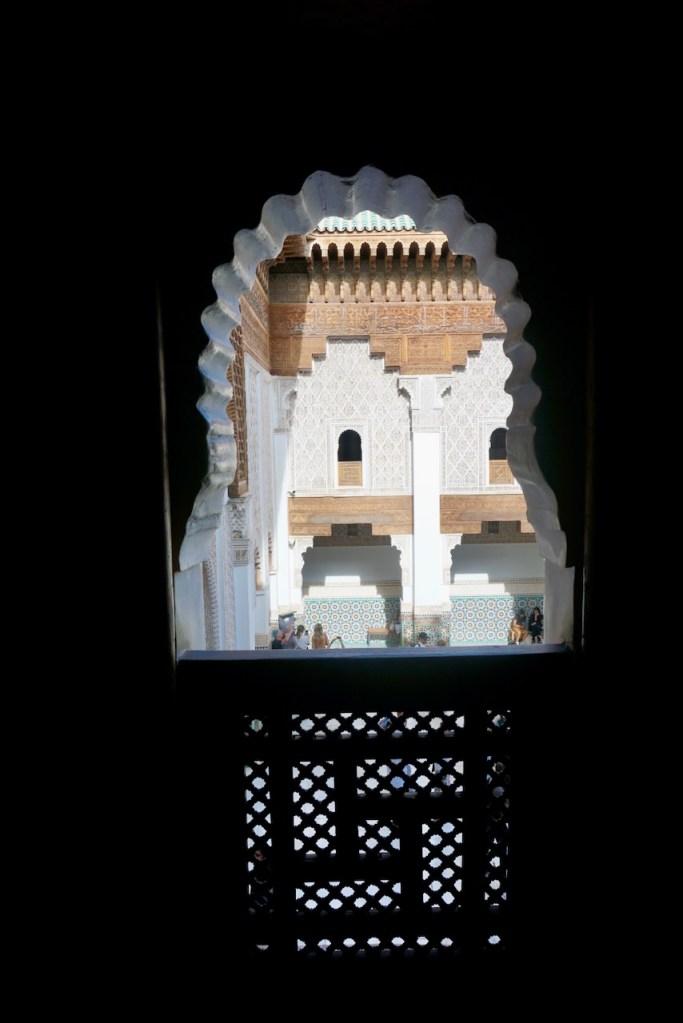
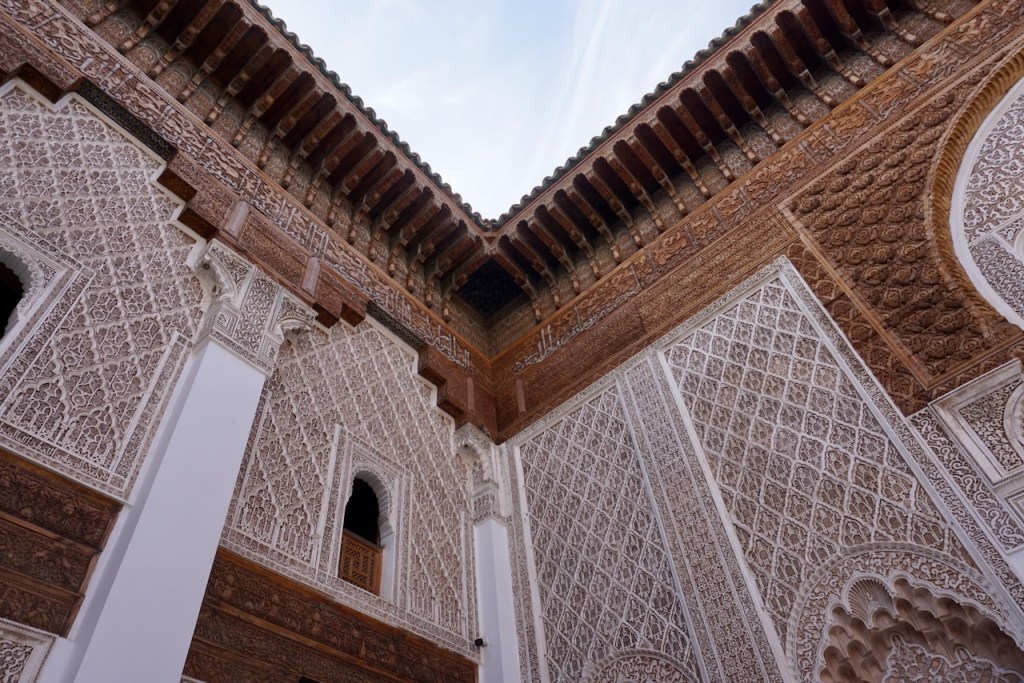
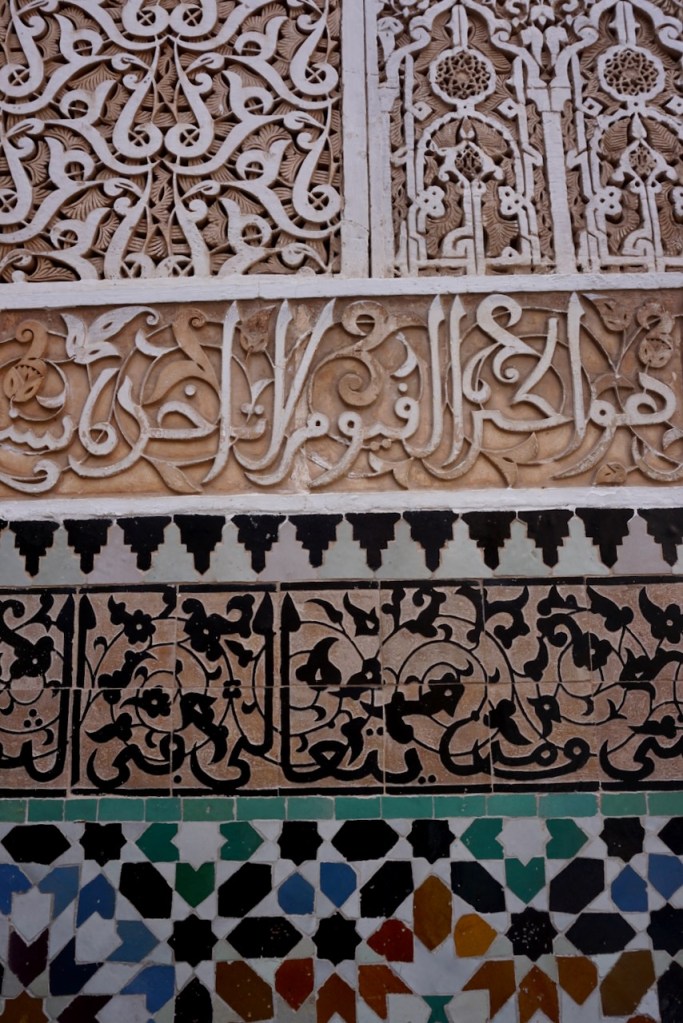
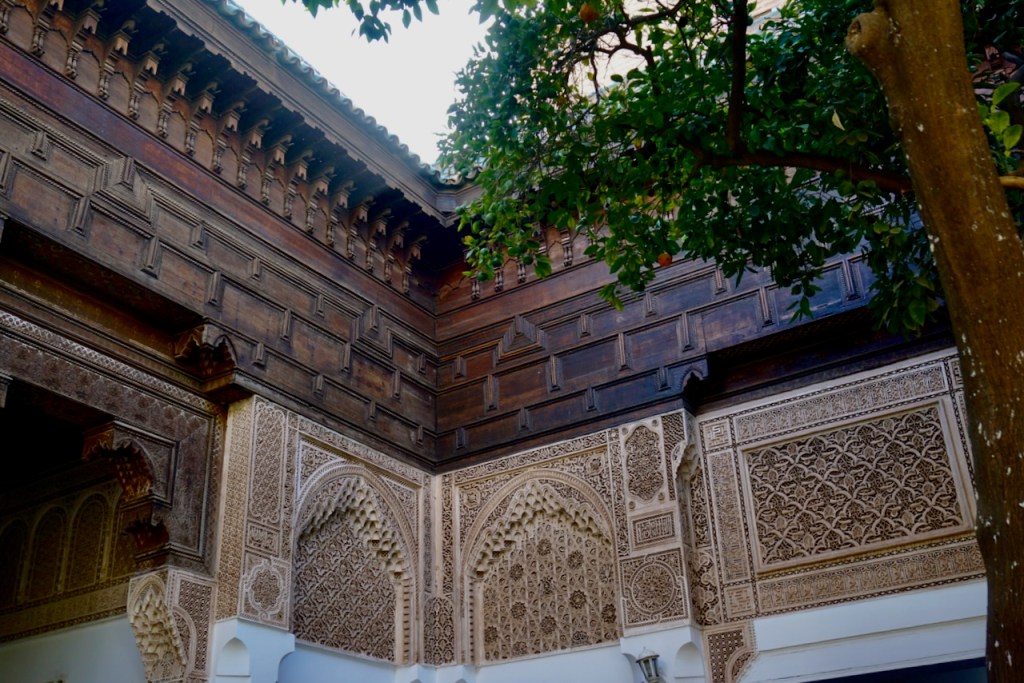
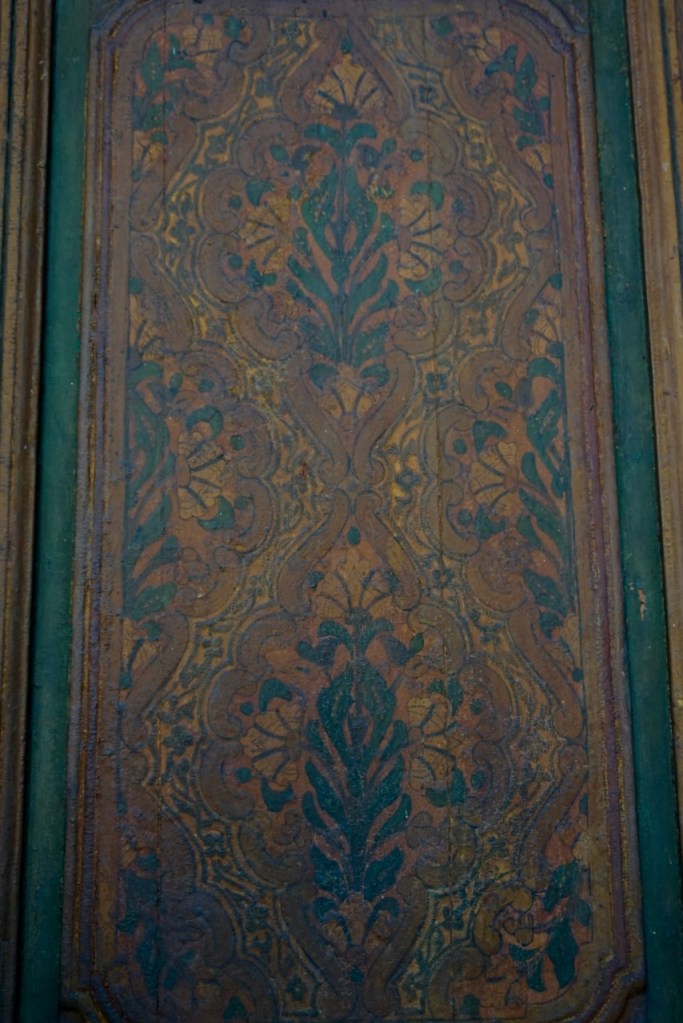
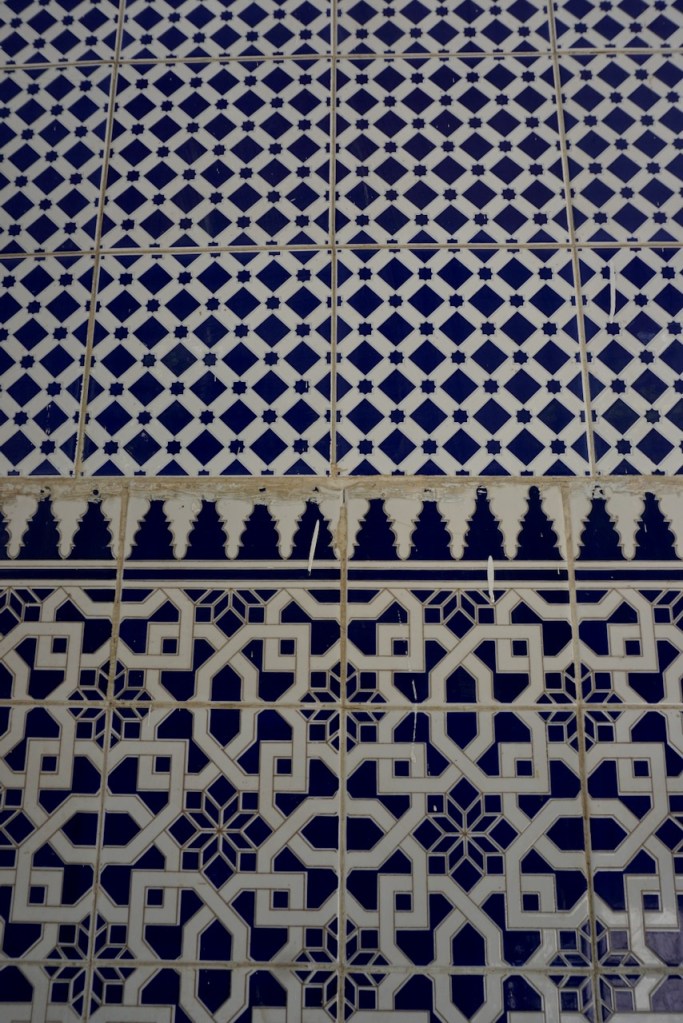
One of the best opportunities to see the architecture, tiles, carved and painted ceilings, and ornate calligraphy that characterize Marrakech is to visit the Ibn Yusuf Madrasa, which dates to the sixteenth century. This former Qur’an school has been preserved as a museum, and it is stunning.
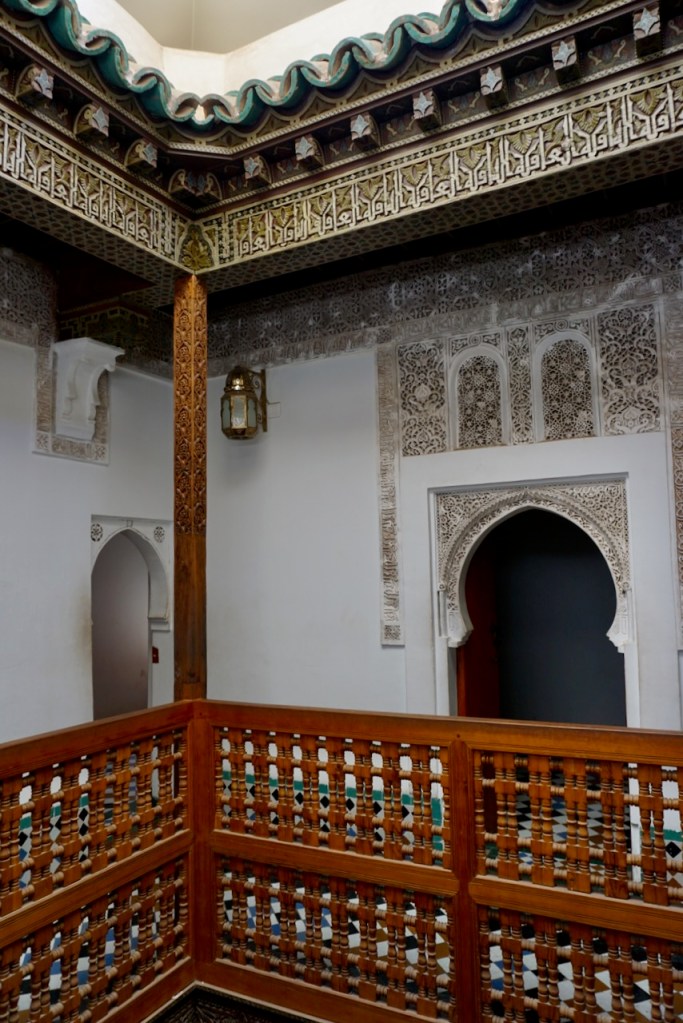
The same can be said for the Bahia Palace, built in the nineteenth century, which also contains beautiful gardens in the riad courtyards. Much of the palace, like much of the city, was undergoing renovations from the earthquake in 2023, however, so there was a lot we were unable to see.
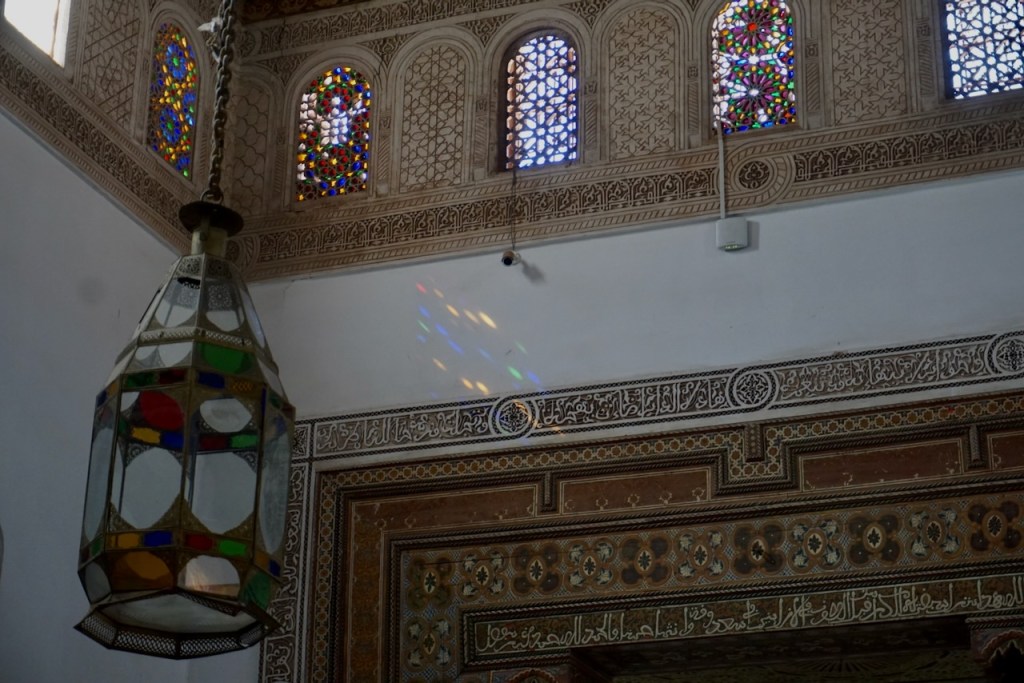
The former Jewish Quarter is located nearby, and it was heartwarming to have heard from the tour guide about the very positive and protective relationship between Muslims and Jews in Morocco. He explained that while Jews were not persecuted there, considering Judaism is an Abrahamic religion and the Abrahamic religions are traditionally recognized and protected under Islam, there were fears of invaders, and the Jewish Quarter was deliberately surrounded by other sections of the medina as a means of security.

It took us several alleyways to make our way to the Slat al-Azama (or Lazama) Synagogue, founded in 1492 following the expulsion of Jews from Spain. A small museum located on the other side of the riad courtyard contained images of Jewish communities, life, and culture across Morocco and other parts of Africa.

A visit to Marrakech, we were told, is not complete without a view of Jemaa El-Fna at night. We climbed the stairs to a rooftop café that exists for the purpose of said view, purchased the required beverage per person, and took in from above the hustle and bustle that we had experienced from below.
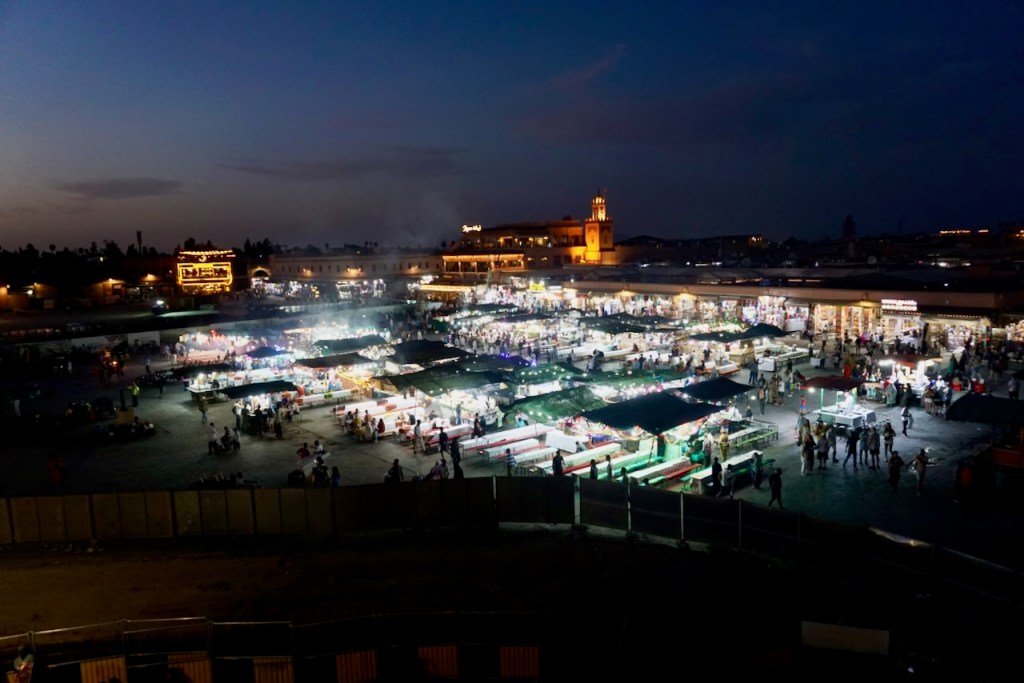
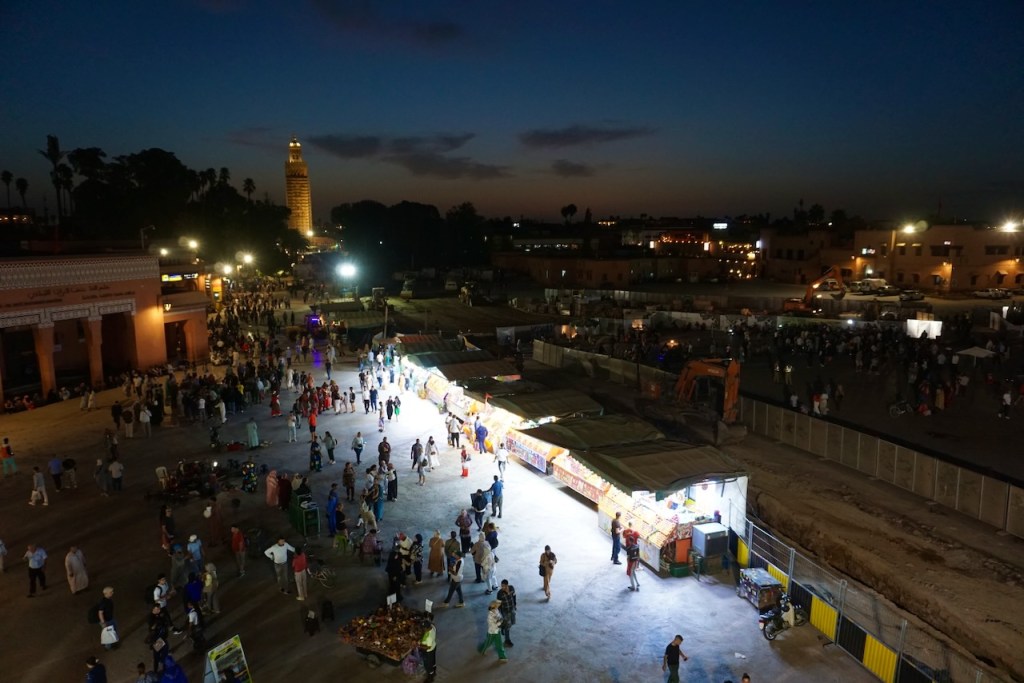
Marrakech is an overwhelming sensory experience and we retreated to the quiet of our riad each afternoon to gather and recentre ourselves. By the time our third and final morning came around, we had seen what we wanted to see and were ready for a change of pace. We basked in the calm of our riad before heading to the airport and I fell asleep immediately on the plane, exhausted from everything we’d taken in. The snake charmer music, which I was delighted to find out is real, had acted like a portal into a different world and, grateful for our time there, we could leave it behind. I never need to go back to Marrakech, but I’m so glad to have been there.

Travel Guide: Yogyakarta

Yogyakarta, also known as Jogja because it’s easier to say (according to the local guide who answered my question about that), is located on the Indonesian island of Java. It’s the only Javanese city still ruled by a monarch and is home to Indonesia’s best universities. A large student population, special government status, and a unique heritage and culture make Jogja a lovely place to spend a long weekend. I’ve been wanting to visit for some time and I was really glad to finally have the opportunity to do so.

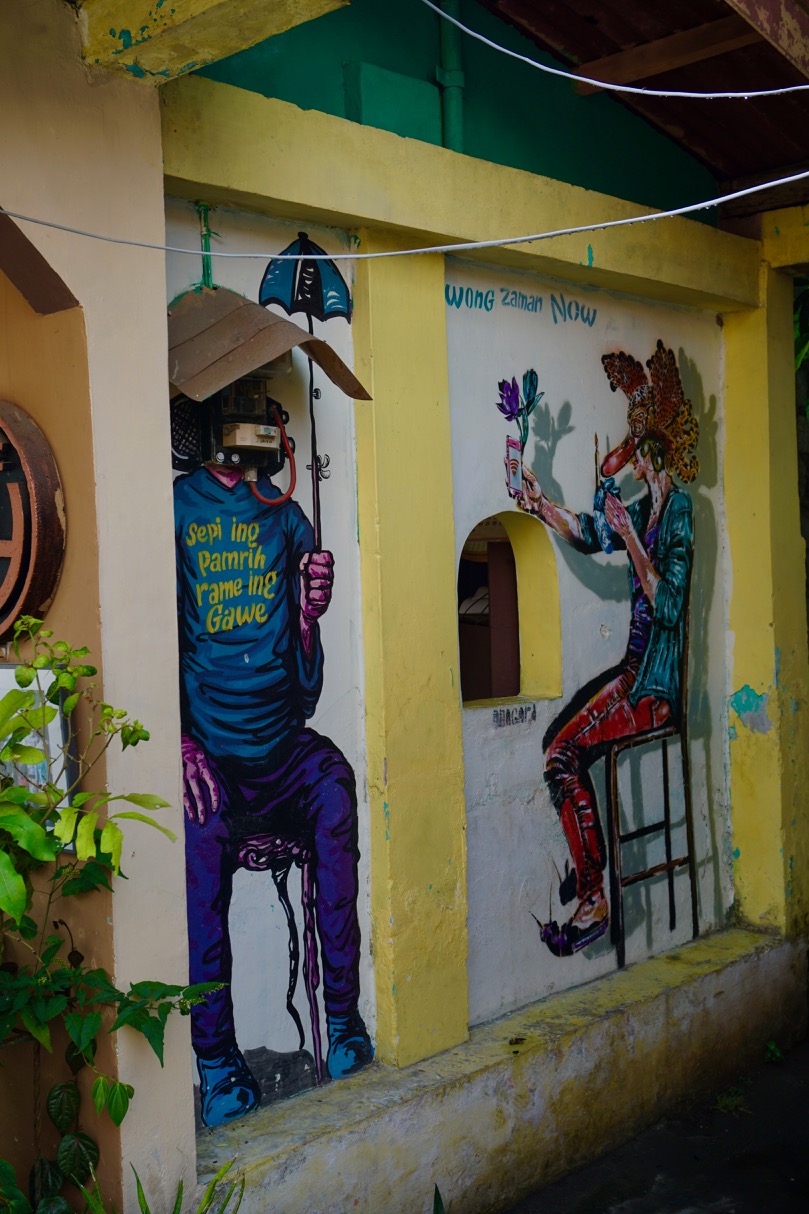
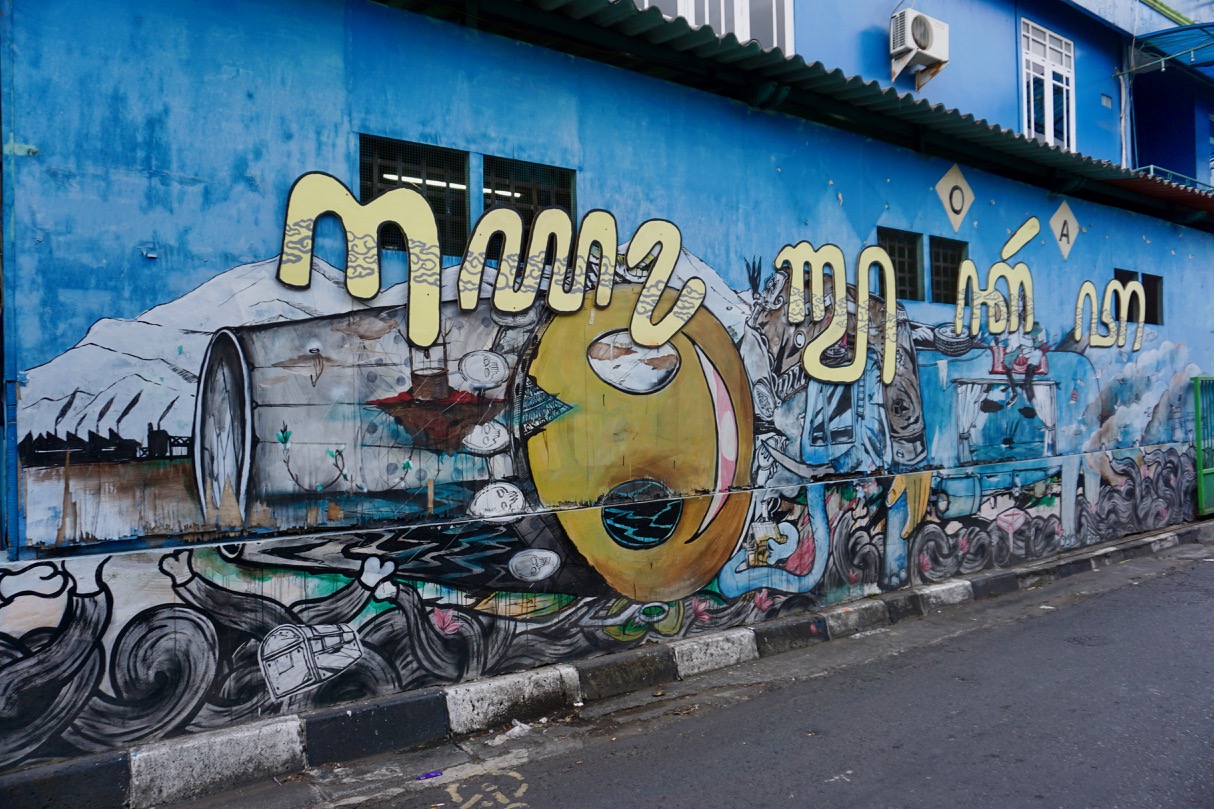
We arrived early in the afternoon and started off with a walk to get our bearings. Jogja is bright, sunny, and hot and we were happy to take the suggestions of a few locals who stopped us to chat. They sent us to a couple batik art galleries and told us about cultural events taking place over the weekend. As we walked, we saw quite a few murals, which is always a highlight for me.

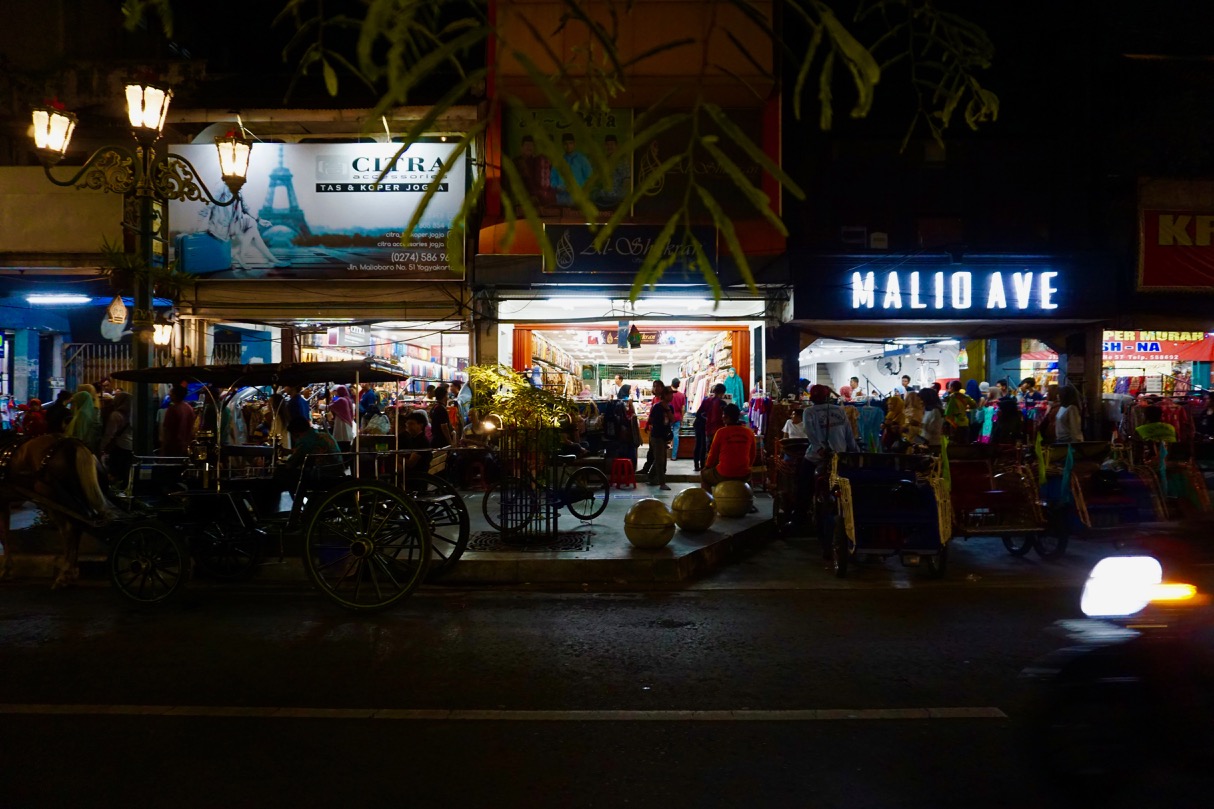
We walked along Jalan Malioboro, a very busy central street lined with shops and street sellers selling souvenirs and batik clothing. It was entirely too hot and overwhelming to be there during the day and we decided to go back in the evening. Jalan Malioboro is very tourist-oriented and the real local markets, which we saw by car the next day, are located a few streets over.

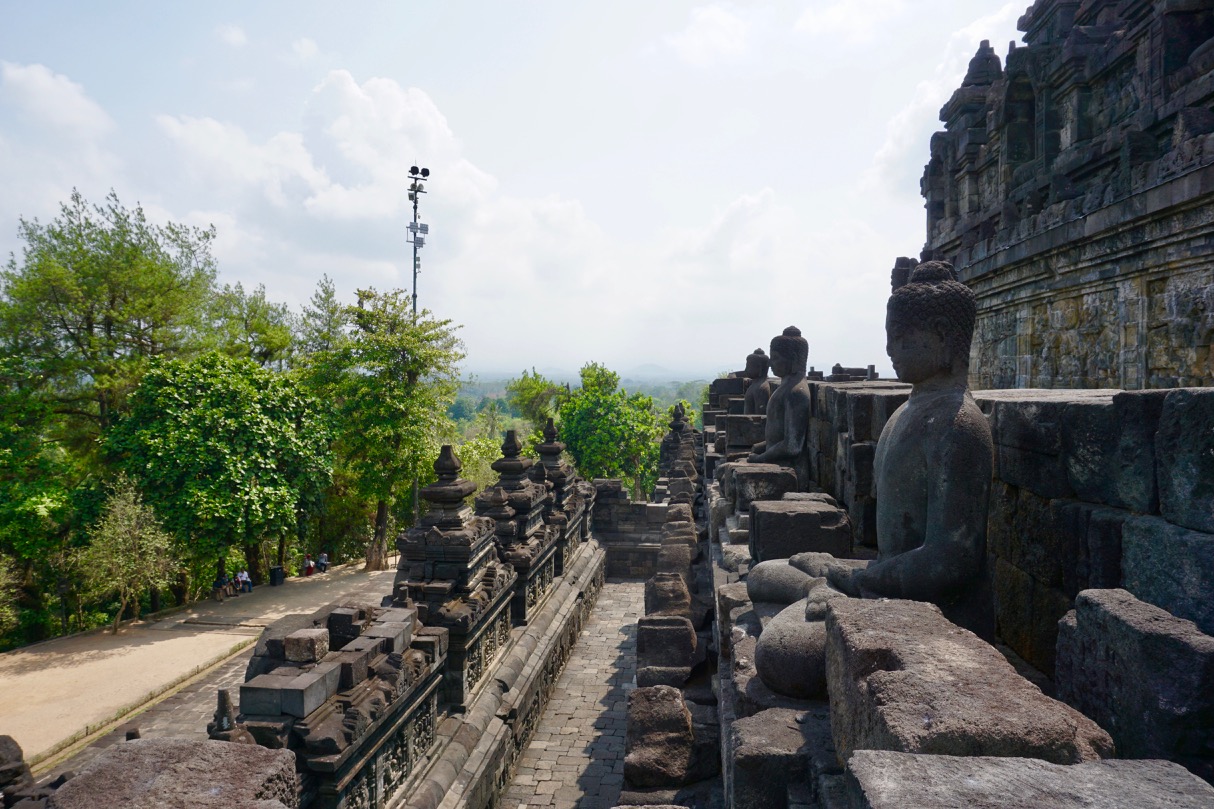
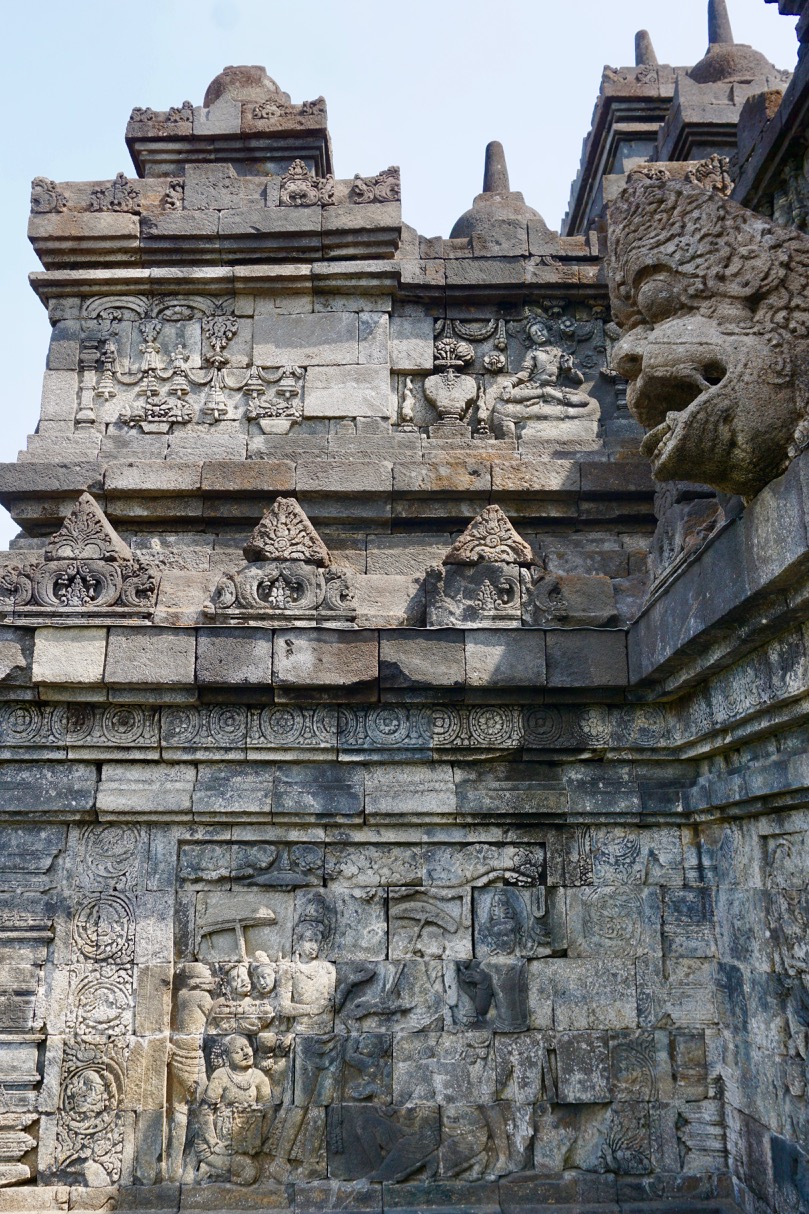
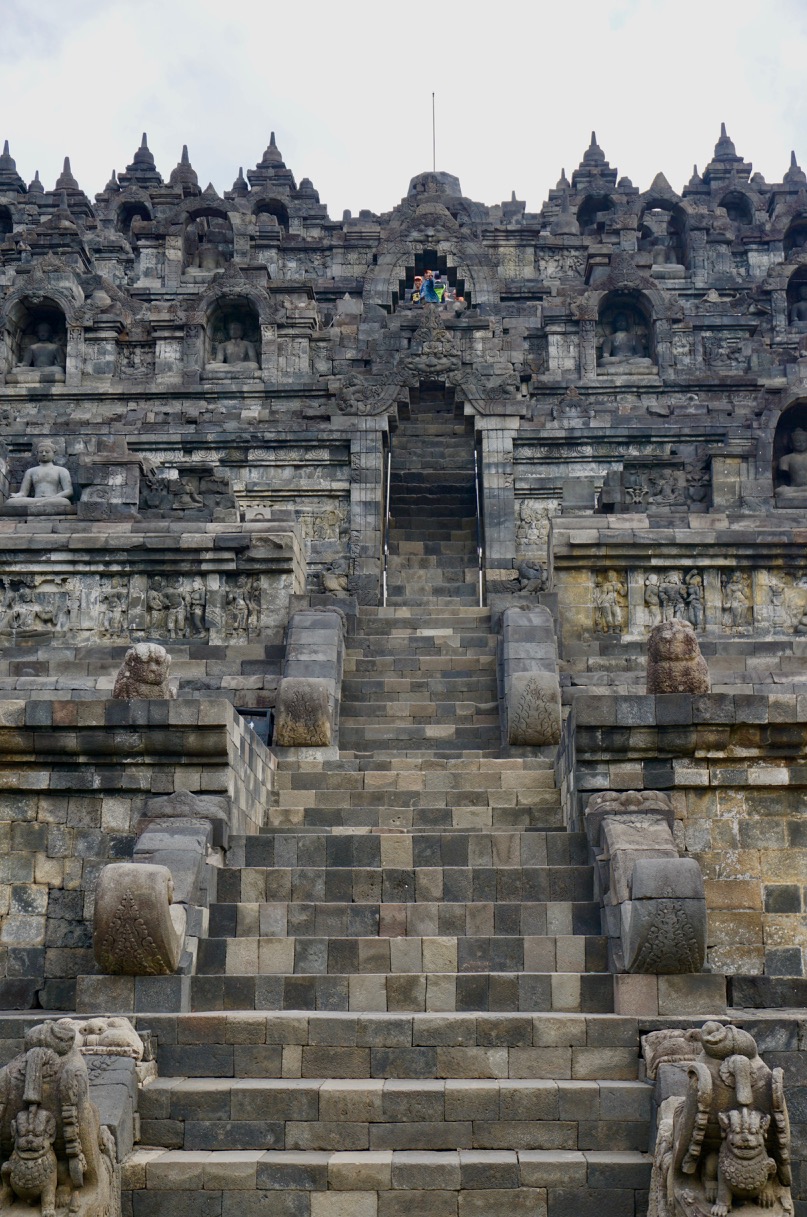
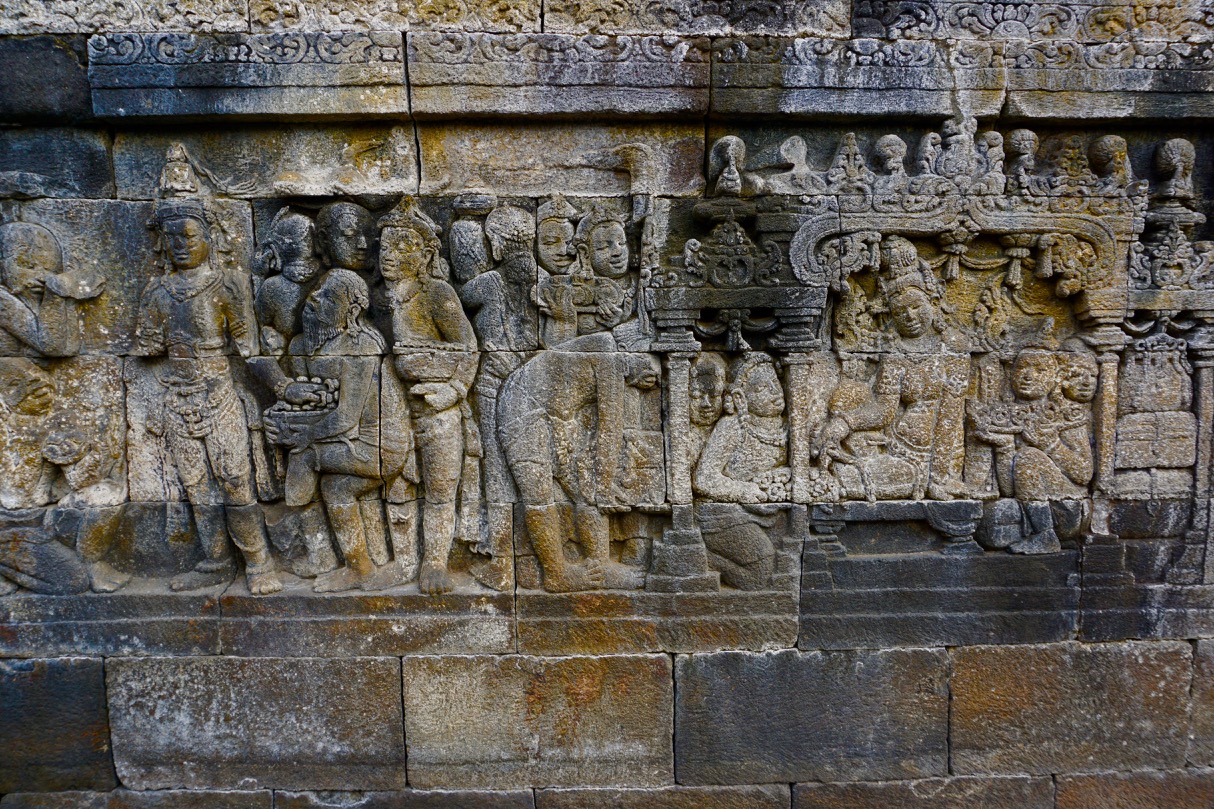
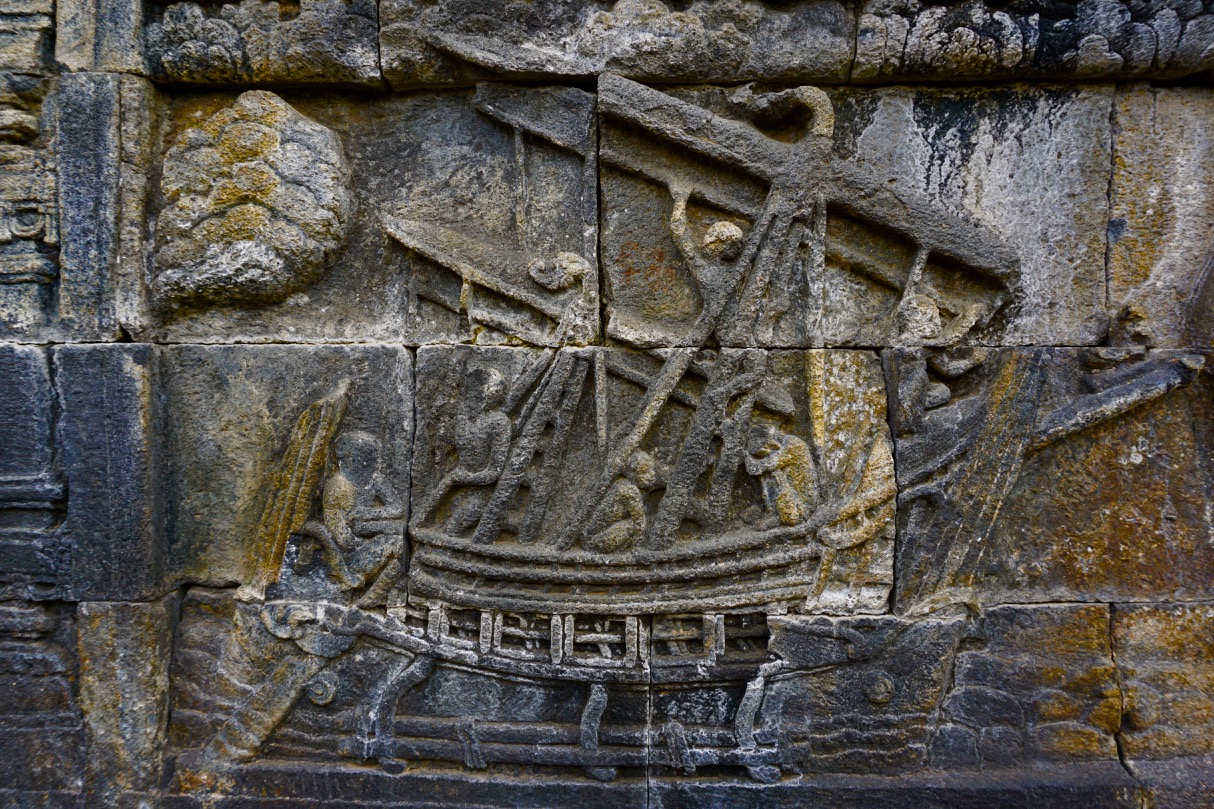
The primary reason for our visit to Jogja was to see Borobudur and Prambanan, two very famous temples. We went on a Friday to avoid weekend crowds and that actually worked out really well. Borobudur dates back to the ninth century and is now a UNESCO World Heritage site. It’s the largest Buddhist temple in the world and designed so that visitors follow the path of Buddhism from the base of the temple, symbolising the world of desire, up to the top of the temple, symbolising the Buddhist cosmology of forms and then of formlessness.

It was amazing to see how much had been reconstructed, as well as how much hadn’t. Indonesia experiences frequent earthquakes and their effects are present here as much as elsewhere.

Borobudur is about an hour and a half away from Jogja and our driver pointed out interesting spots along the way, told us about Indonesian farming, and answered our questions about life in Jogja and the rest of Indonesia. On our way back to the car my friend commented that it’s interesting how the best-known part of Borobudur, the stupas at the top, are hidden until you get there. I mused that this fit into the design of the temple – you have to do the hard work on the individual self before reaching that point of clarity.

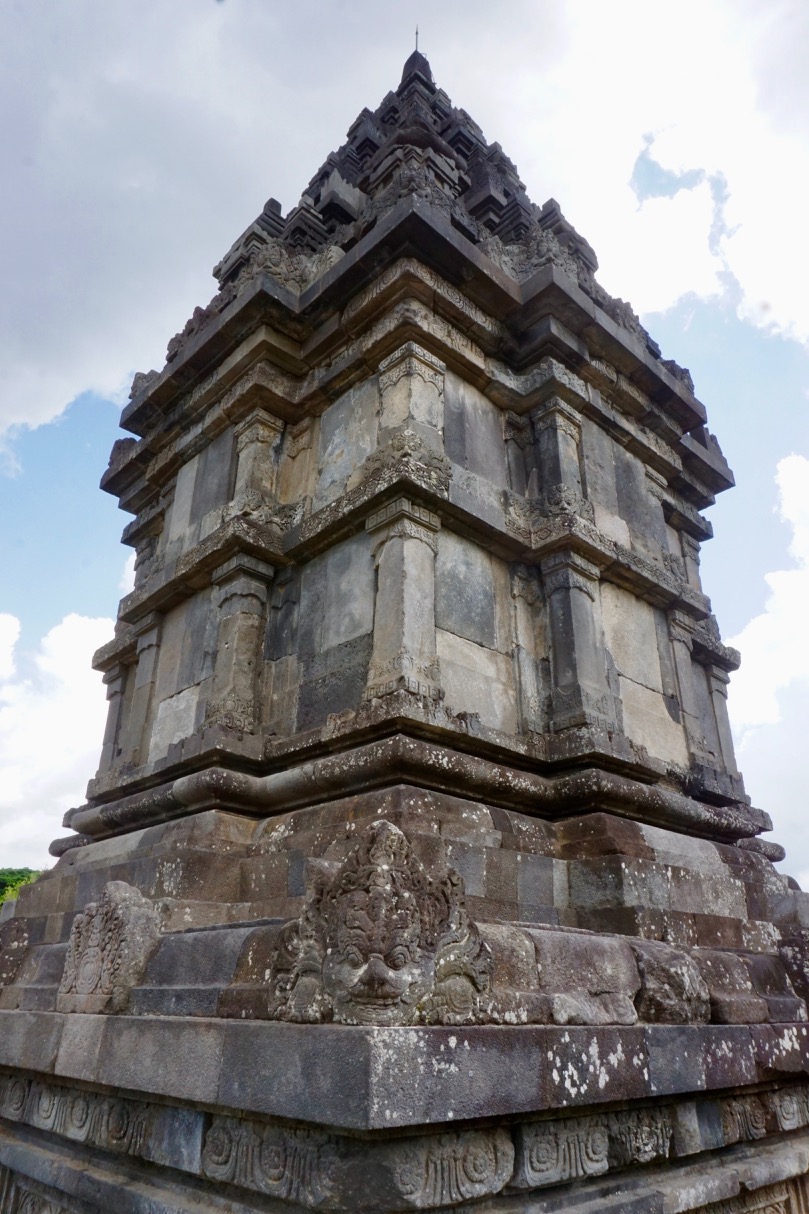
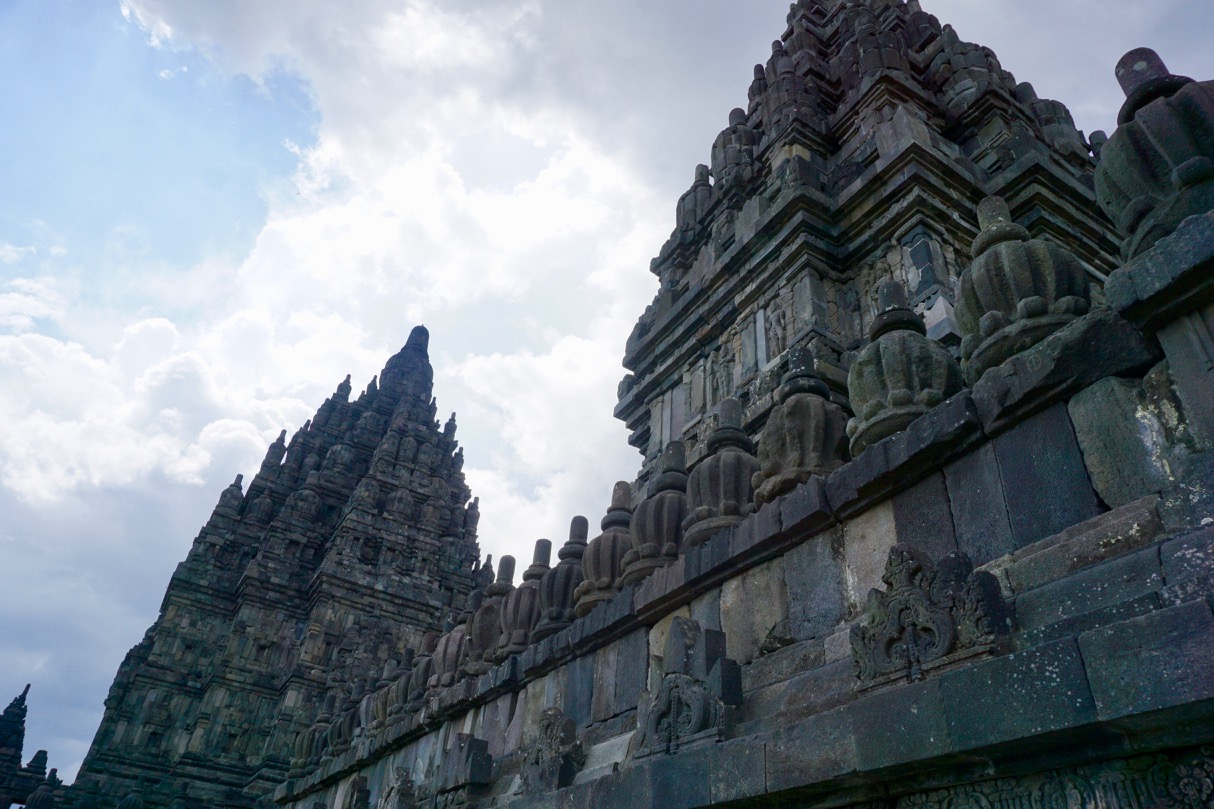
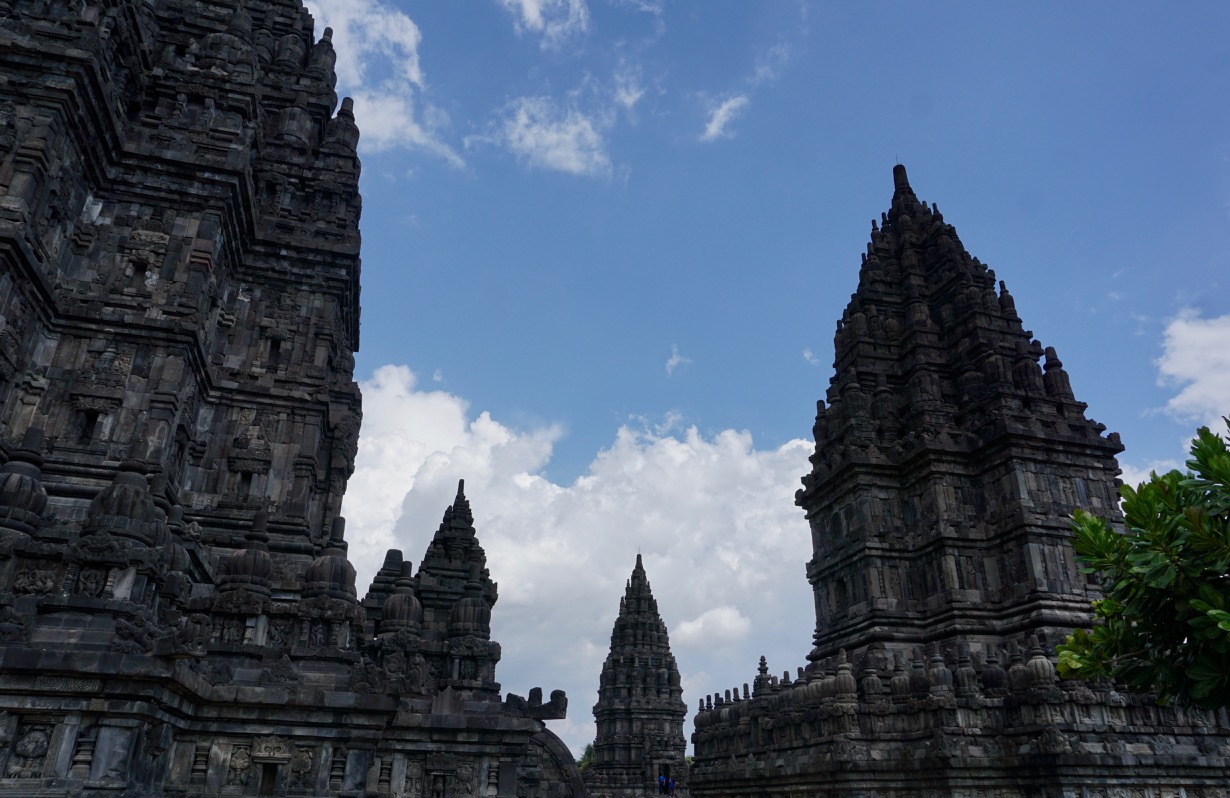
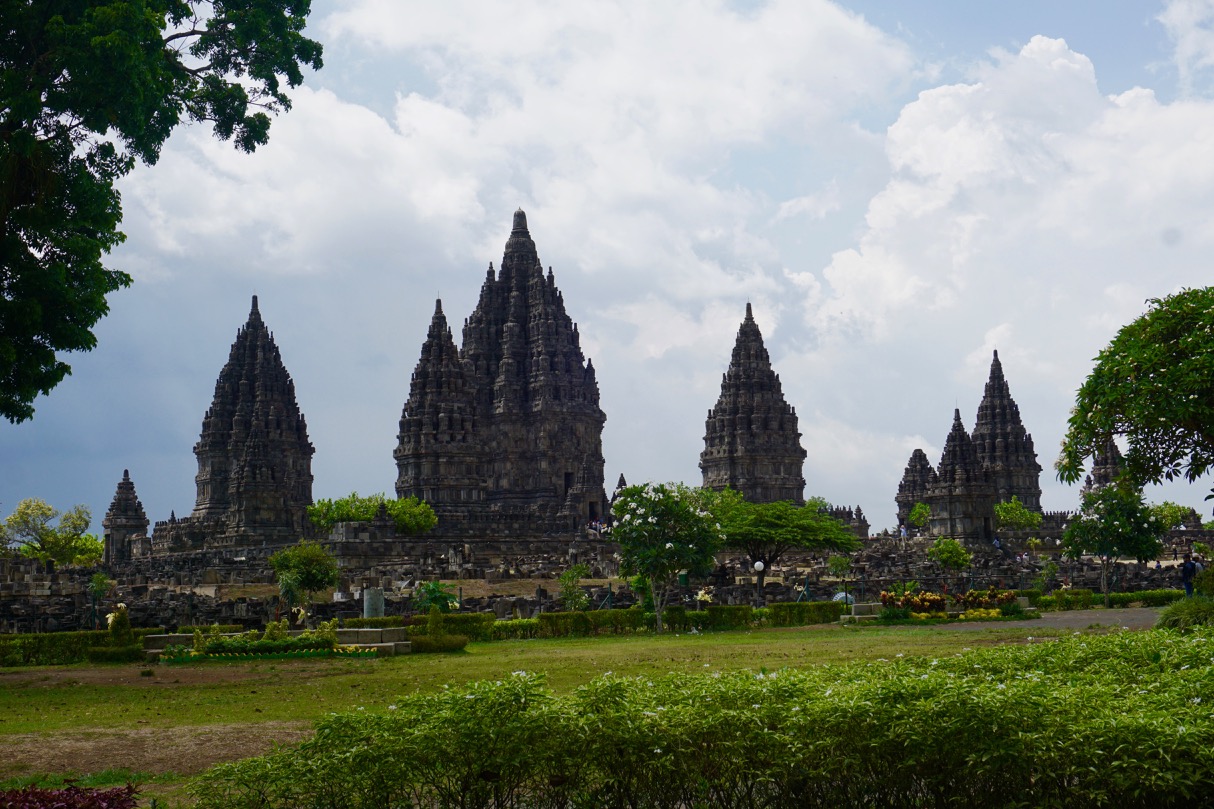
Our next stop was Prambanan, Indonesia’s largest Hindu temple and also a UNESCO site. It’s about two hours from Borobudur and, just like the first temple, took us about two hours to explore. I was really glad we went because the two temples were completely different. The architecture was noticeably different, in keeping with the typical style of each religion, but so was the feel. There was a sense of mystery at Prambanan that I had not experienced at Borobudur.

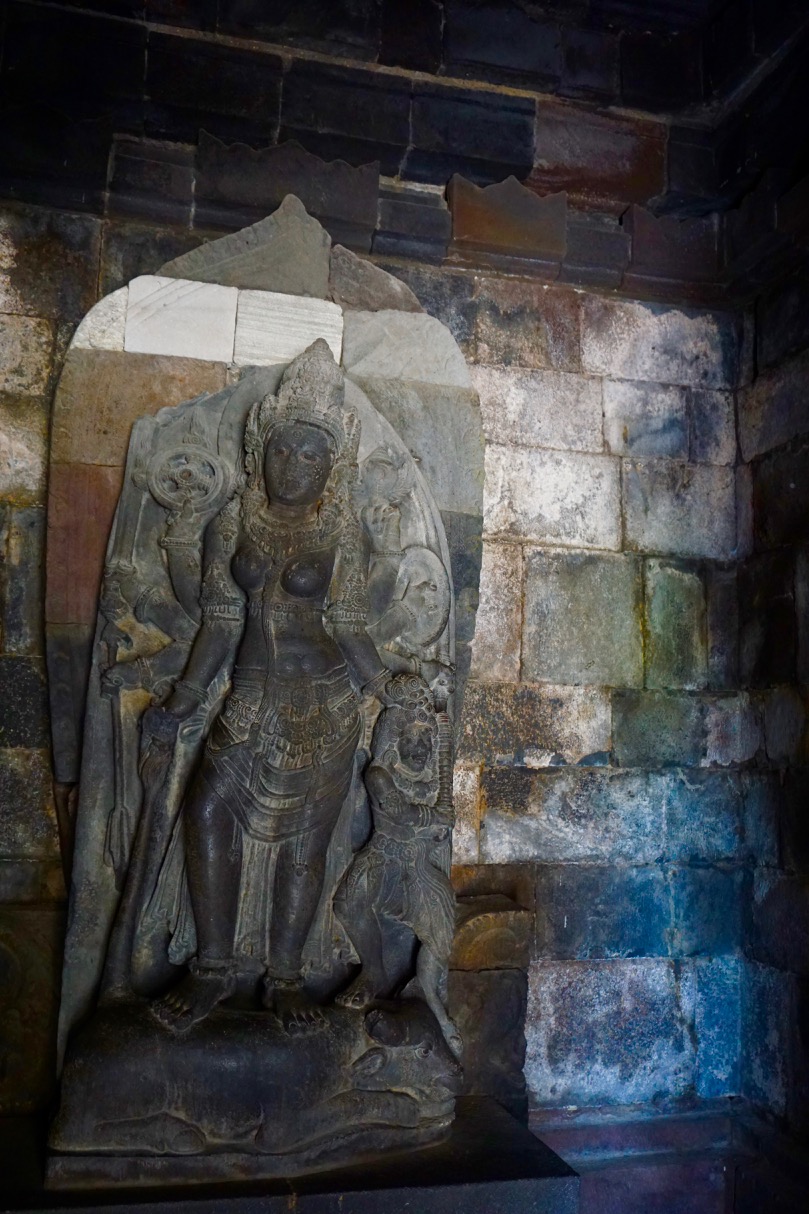
Prambanan tells the story of the Hindu Ramayana epic and has temples dedicated to different Hindu deities, the most important of whom are Brahma (the Creator), Vishnu (the Protector), and Shiva (the Destroyer).

The ruins here were even more prominent than at Borobudur, too, due to significant damage from a 2006 earthquake.

The grounds around Prambanan are home to yet more Buddhist temples. We stopped to look at Lumbung . . .

. . . and Bubrah . . .

. . . and spent some time wandering around Sewu, which was definitely the coolest of the three. It was actively undergoing renovation, but empty other than us and the workers. It’s weird to wander a temple complex removed from crowds. Borobudur wasn’t busy but there were people around every corner. At Sewu, we were keenly aware of being alone and aware of the novelty of the experience.

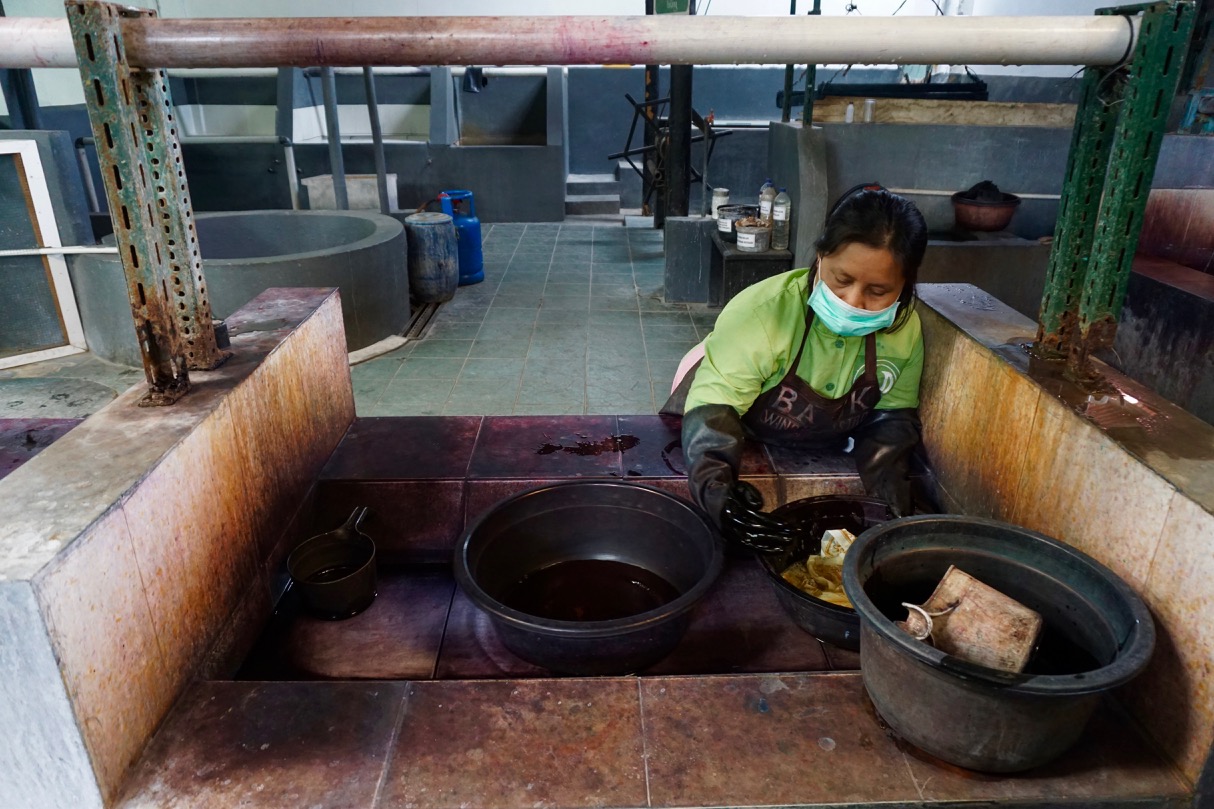
The following day we visited Batik Winotosastro, an active batik workshop that also hosts batik classes for visitors. Our experience there was fantastic and I highly recommend a visit. A lovely woman introduced us to the workshop and set us right to work. We chose patterns to trace onto our cloth and then she moved us over to real batikers. We learned how to hold the dipper that contains the wax (I’ll be honest – I found this really difficult) and proceeded to trace the lines we’d just penciled. The batikers were working on additional layers of colour beyond the base layer and it was amazing to watch them and see how intricate, detailed, and precise their lines were. They prettied up our wax outlines while our guide showed us around the workshop.

Batik can be hand drawn or stamped, we learned. The stamps are copper and have been around a very long time, but the hand drawn batik are more expensive. When our batik were prettier than we’d left them, our guide took us over to the woman responsible for dyeing . . .

. . . and the man who boiled off the wax . . .

. . . and finally to the women with sewing machines who hemmed the edges to finish off.

It was a real pleasure to learn from such a knowledgeable person and to experience how an actual batik workshop operates. Watching a traditional process in action was a great learning experience and says a lot about Jogja’s desire to maintain its heritage. I am always glad to support places like that.

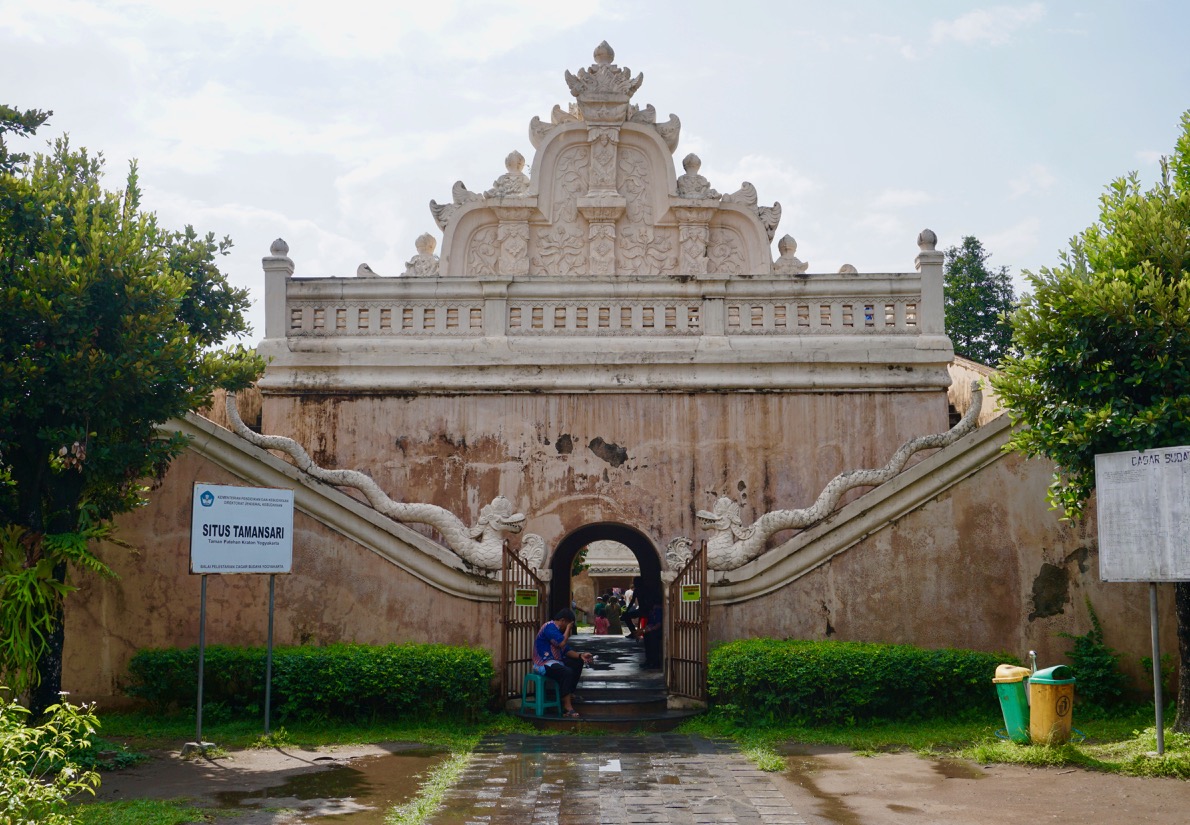
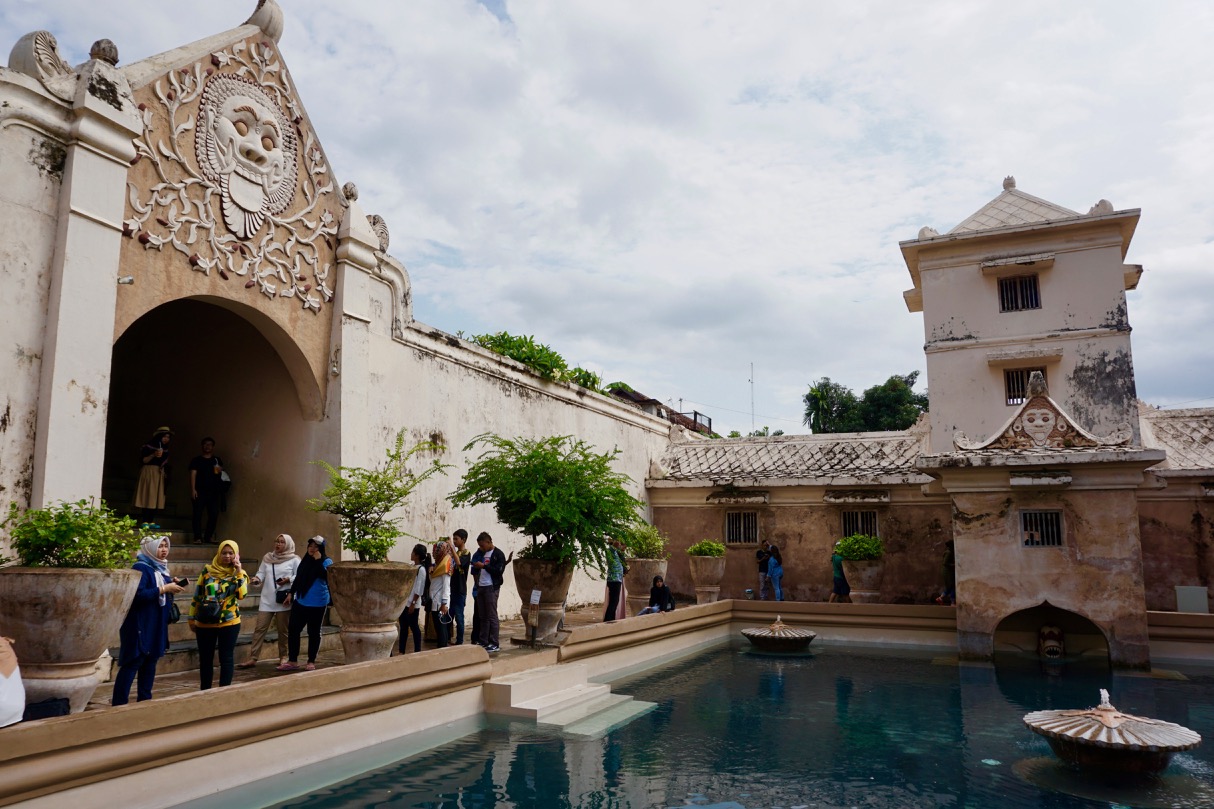
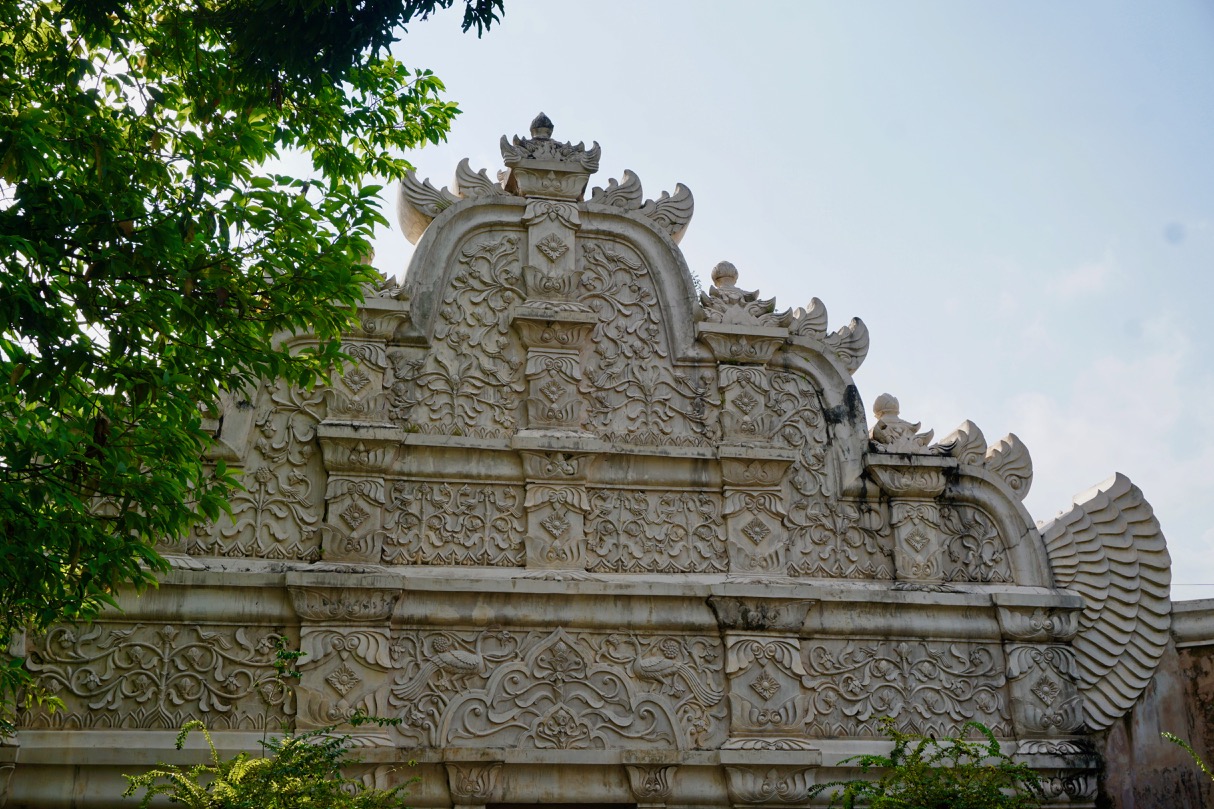
Our afternoon destination was a quick trip to the Water Castle, which is located on the grounds of the royal palace. The only section preserved today is the bathing complex where the sultan and his ladies would relax.

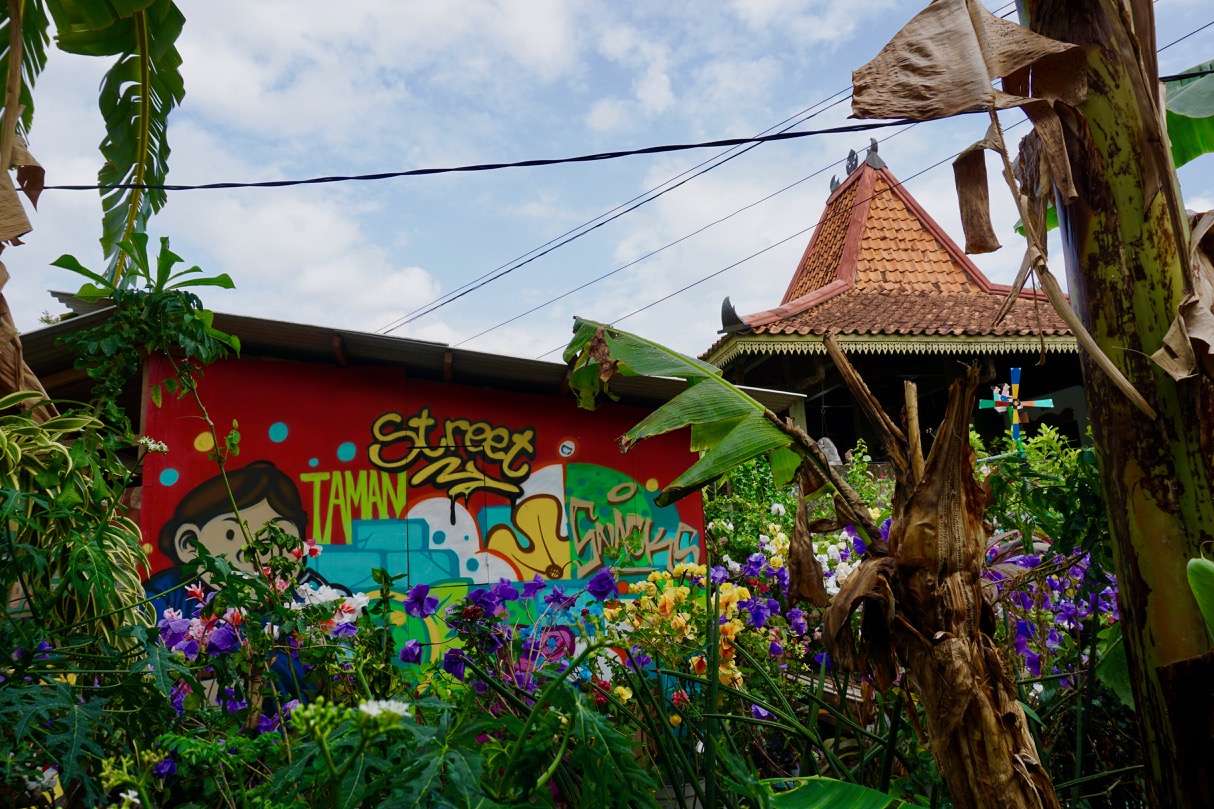
I really liked the neighbourhood around the Water Castle, too. It was bright and colourful, though very quiet. We noticed that people in Jogja tended to avoid the outdoors in the middle of the day, which is not what I have seen in other places with similar weather but definitely something that I understand.

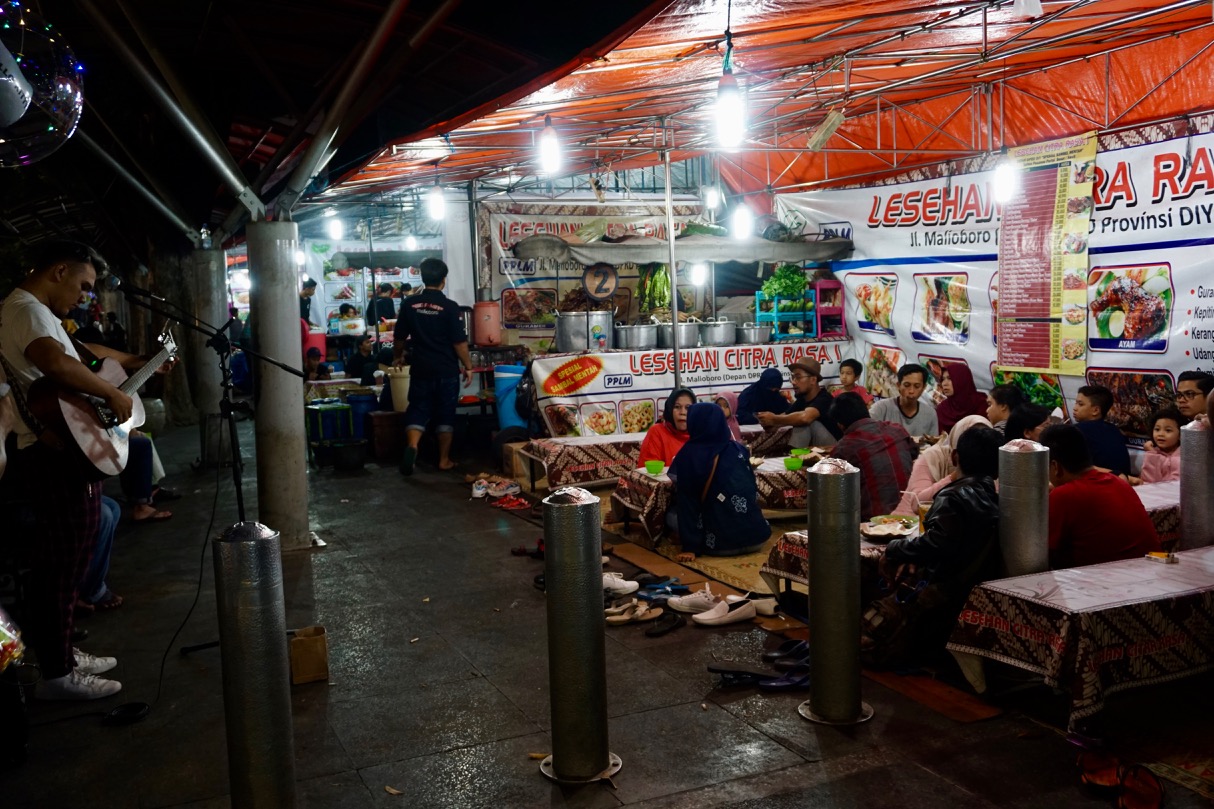
For our last evening, we headed back down Jalan Malioboro to experience the night market. It was busy and crowded and still rather overwhelming but I’m really glad we went.

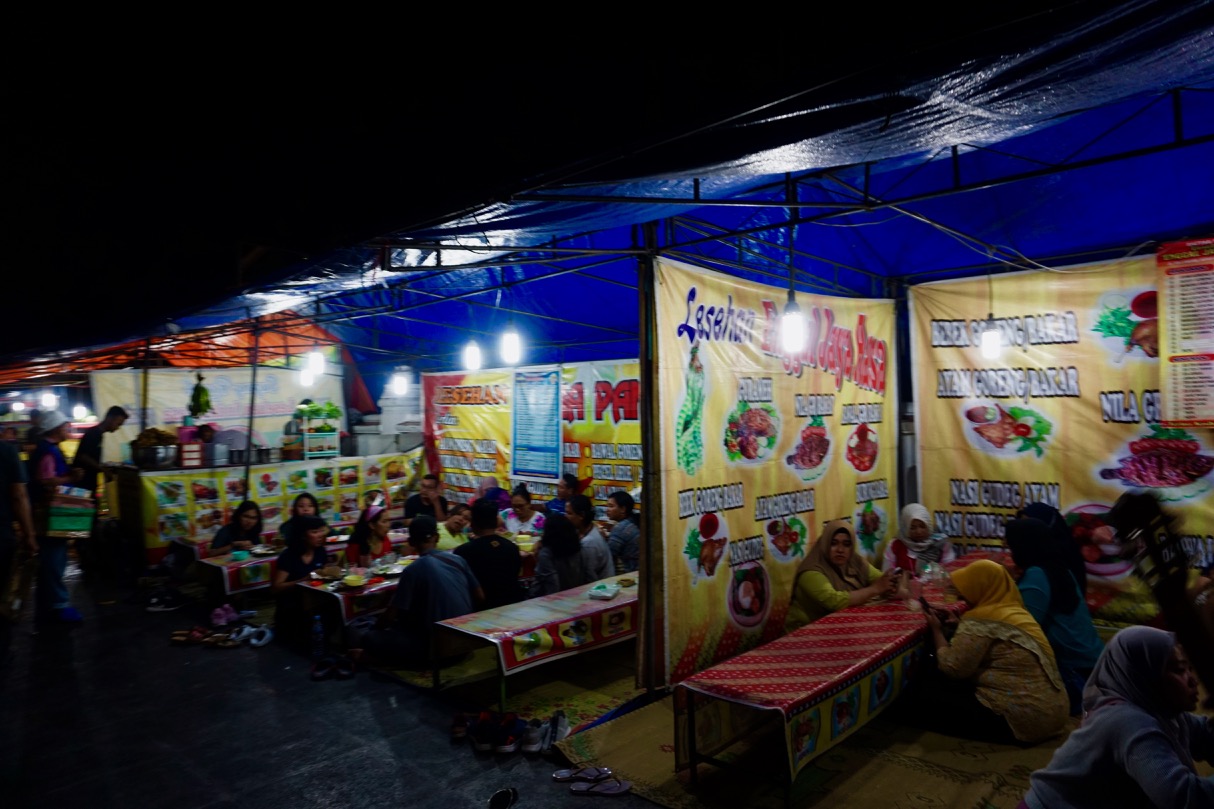
I was particularly taken by the street food stalls that opened up and attracted just about everybody.

And furthermore, we were in Indonesia. They take coffee very seriously here. Filter coffee from a street cart!

Before going to the airport the following day, we went back to the royal palace, the Kraton Ngayogyakarta Hadiningrat. The palace hosts cultural performances daily so we got to hear some Javanese music and see traditional dance.

The palace also has several museums explaining different traditions and rituals. There are a few artifacts on display throughout the complex, as well.

After another cup of coffee from Tanamera Coffee, a local roastery and café that we visited a couple of times, it was time to go. We had a lovely long weekend in Yogyakarta and I would definitely recommend it for lovers of history, art, and culture. Happy travels!

Travel Guide: Seoul and Around

My friend and I took a high-speed train from Busan to Seoul and immediately on arrival I noted the cooler weather and the need to don my trench coat, which was really exciting. I hadn’t been in real fall (or autumn, if you prefer) for a long time!

We were staying in Insadong in order to be at the centre of the action. The neighbourhood is a wonderful mix of contemporary art galleries and traditional crafts, restaurants, clothing stores, dessert cafés, and the Ssamzigil shopping mall that specialises in handicrafts. Food vendors line the streets alongside vendors of yet more crafts and souvenirs.

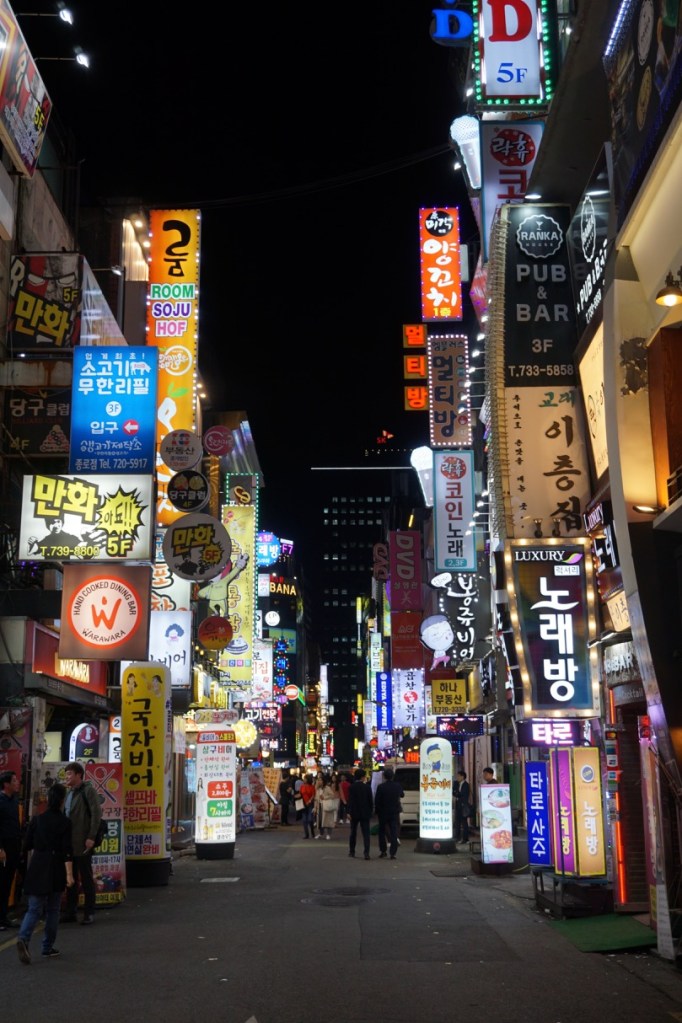
Insadong has a pretty robust night life, too.

An evening walk took us to Jogyesa Temple, which was celebrating its Chrysanthemum Festival. Jogyesa is the main temple of the Buddhist Jogya Order and, like many temples in Korea, hosts a templestay program in which visitors can spend a day or more at a temple to learn about Korea Buddhist practices and living. (If I have the opportunity to return to Korea, I’d be interested in taking part.) Not having expected anything like it, we were surprised and delighted to see the chrysanthemums in the dark.

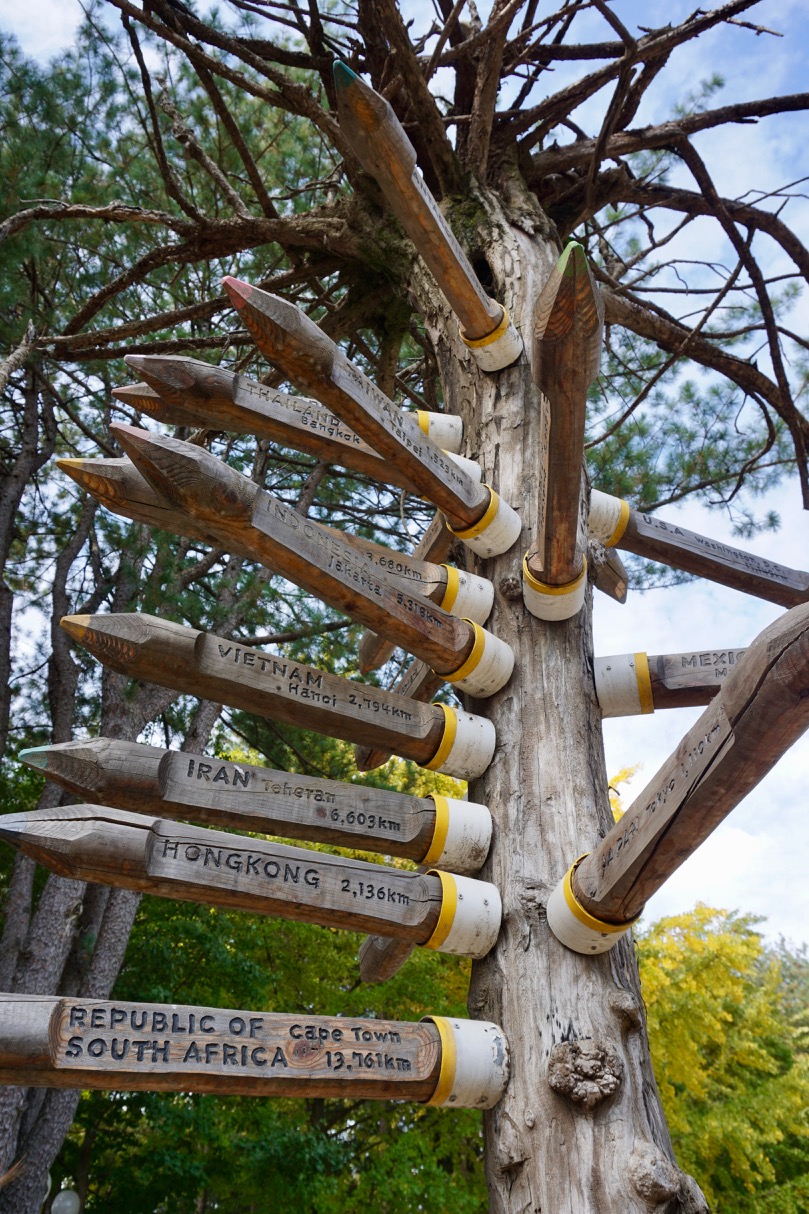
The next day was possibly my favourite day of our nine days in Korea and definitely the most unique. We took the metro to the train to the ferry until we arrived at Nami Island, an island in the middle of North Han River. Nami Island considers itself a nation, the Naminara Republic, and has its own passport, stamp, and currency. All of these can only be used on island but the symbolism struck me. Unfortunately, the officials did not stamp our passports after we paid the visa fee before boarding the ferry.

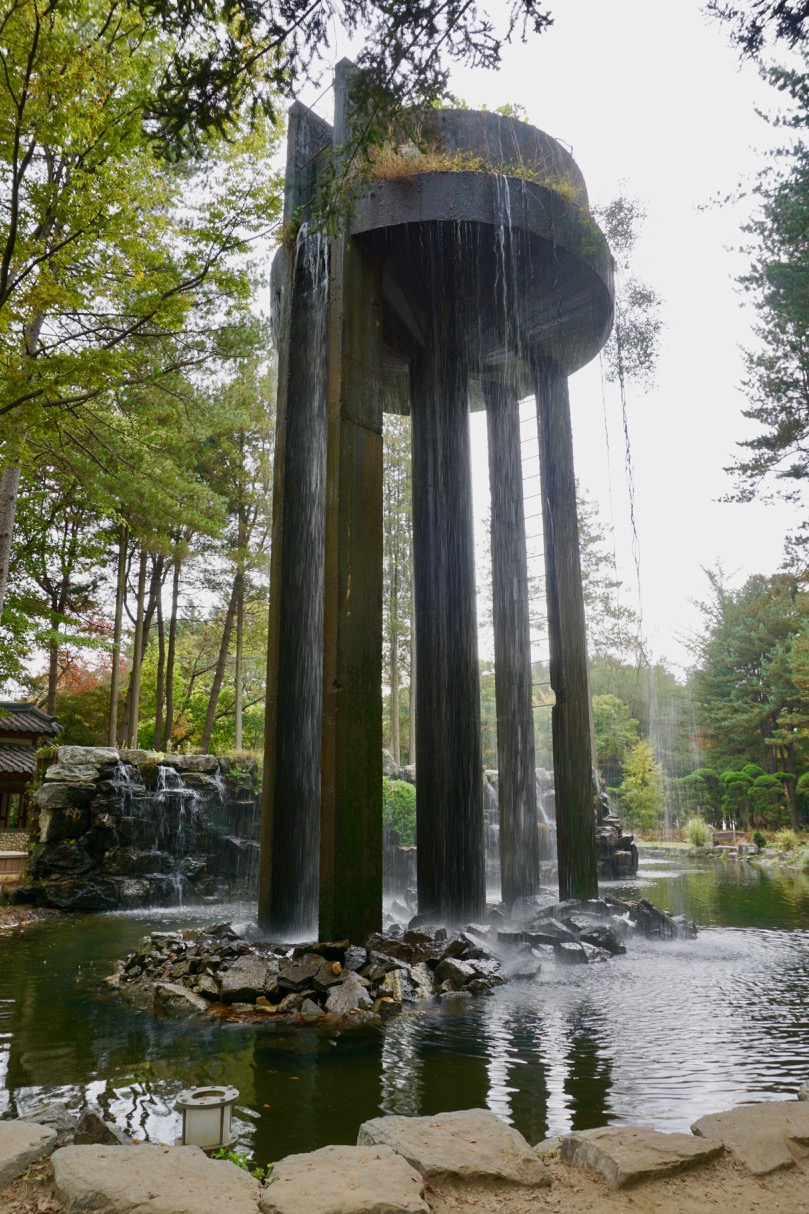
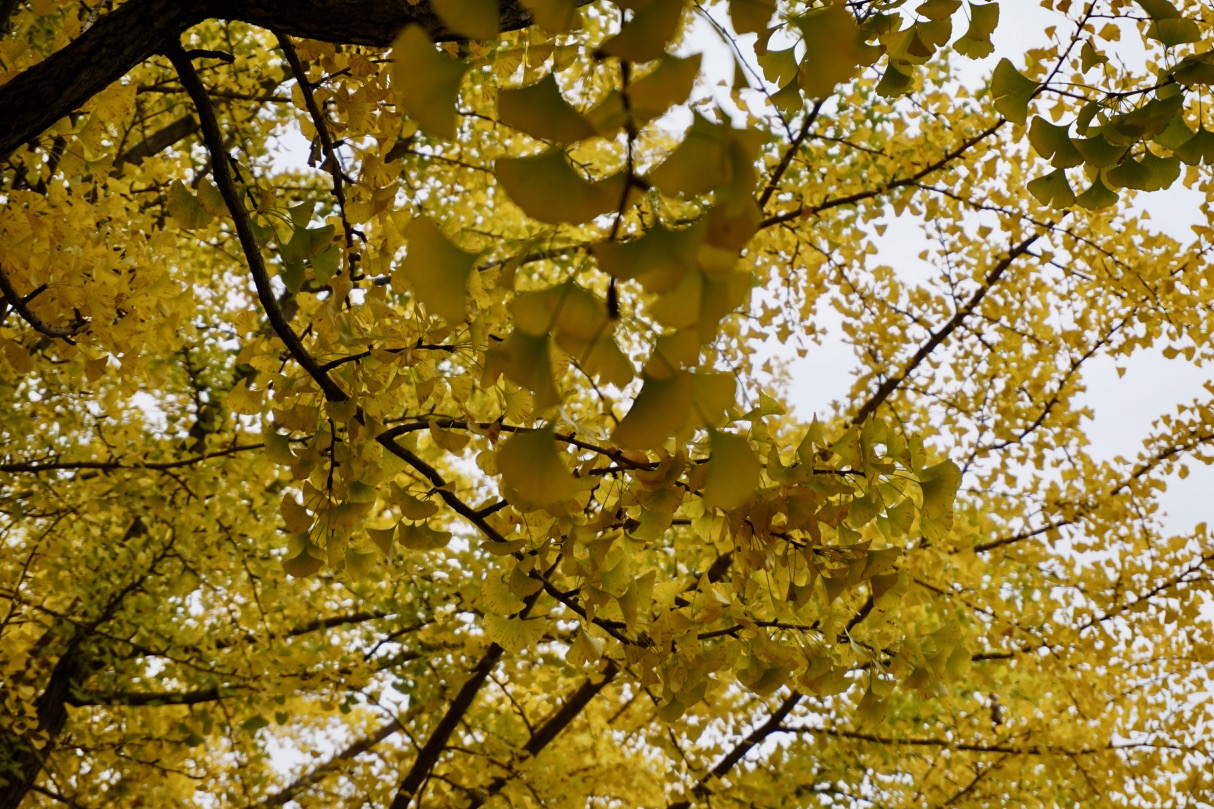
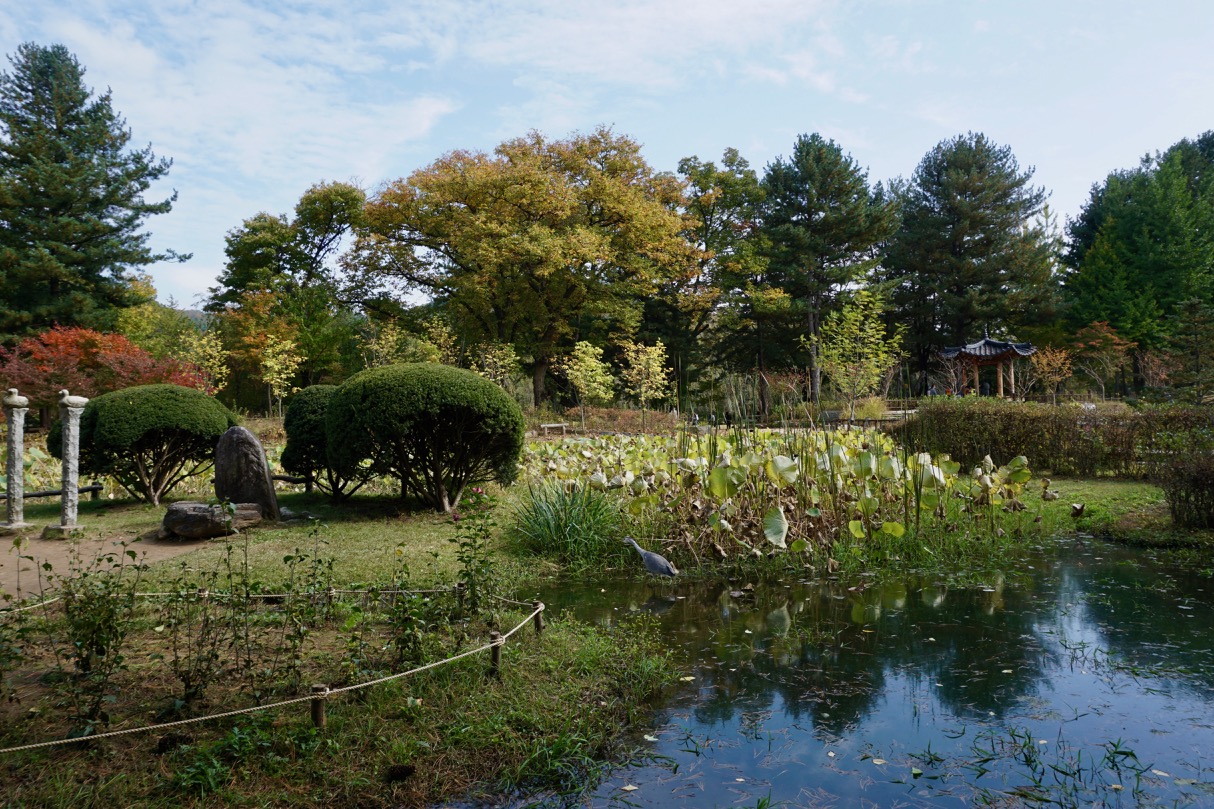
We spent the day enjoying the fall colours; I didn’t realise how much I’d missed them until they were right in front of me. I also really enjoyed the trees, flowers, plants, and animals that we don’t have in Singapore. Nami Island is famous for its appearance in K-dramas, which I don’t know anything about, but I appreciated it as a charming escape from a big city.

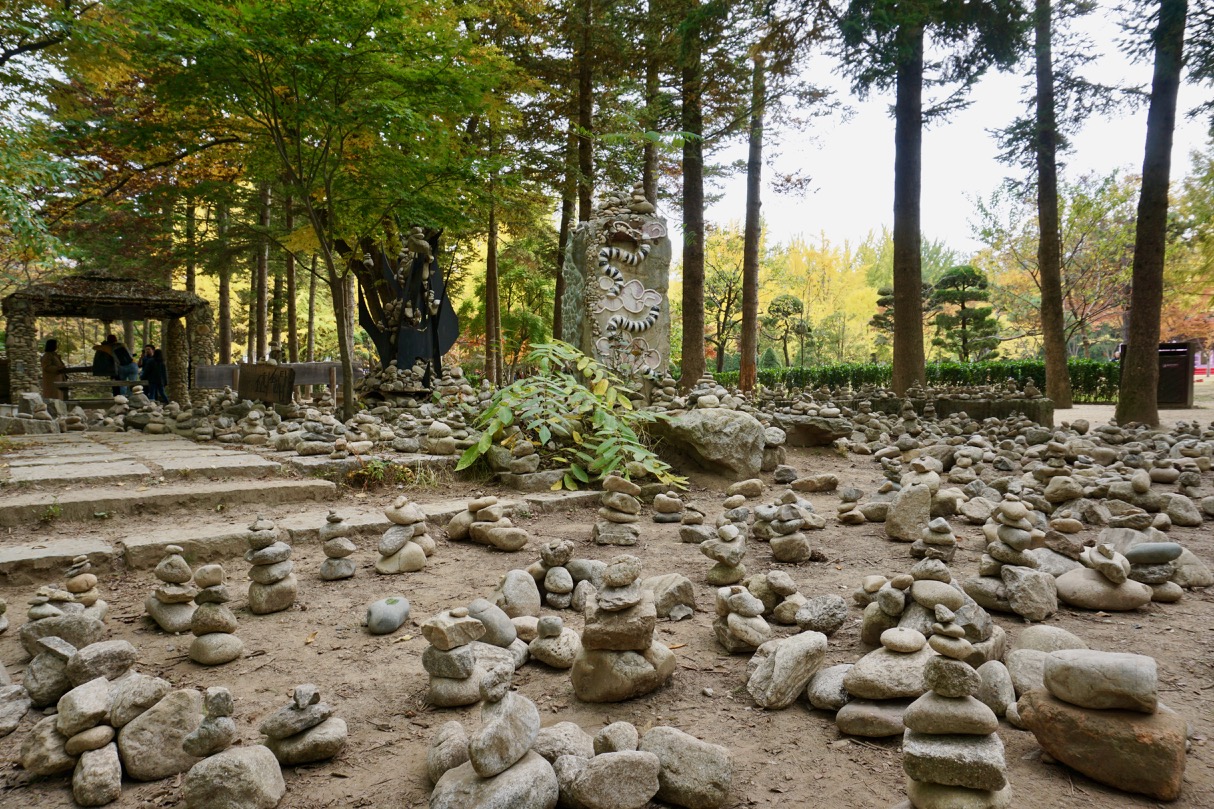
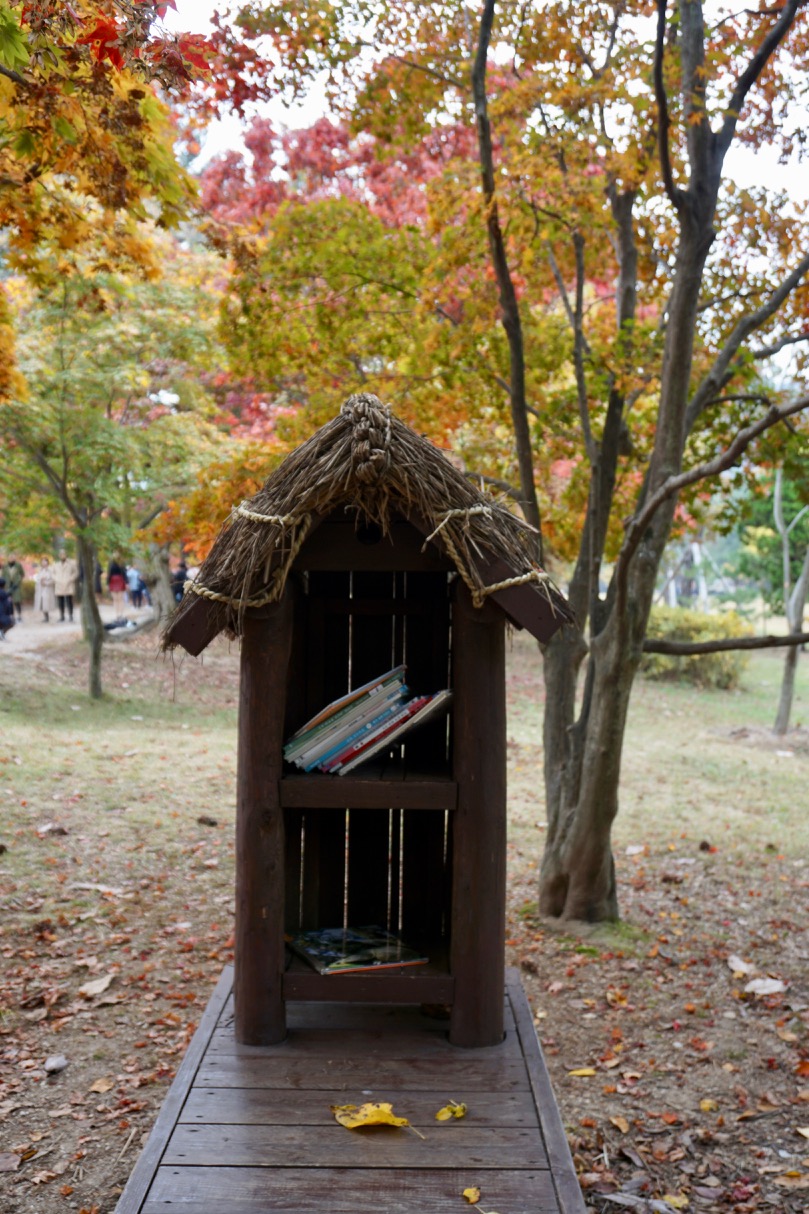
Nami Island has a beautiful emphasis on, in its own words, imagination, fairy tales, and nature itself. It also hosts the Nami Concours to highlight and celebrate picture book illustrators. The island was filled with signs of how the Naminara Republic fashioned itself and I enjoyed it very much. Nami Island also has artists workshops, galleries, and souvenir shops, as well as art on display across the island. It was very pleasant to walk around, especially since the sun came out over the course of the day.

This is also the first time And of course, I enjoyed the ferry very much. (I do really miss working on boats.)

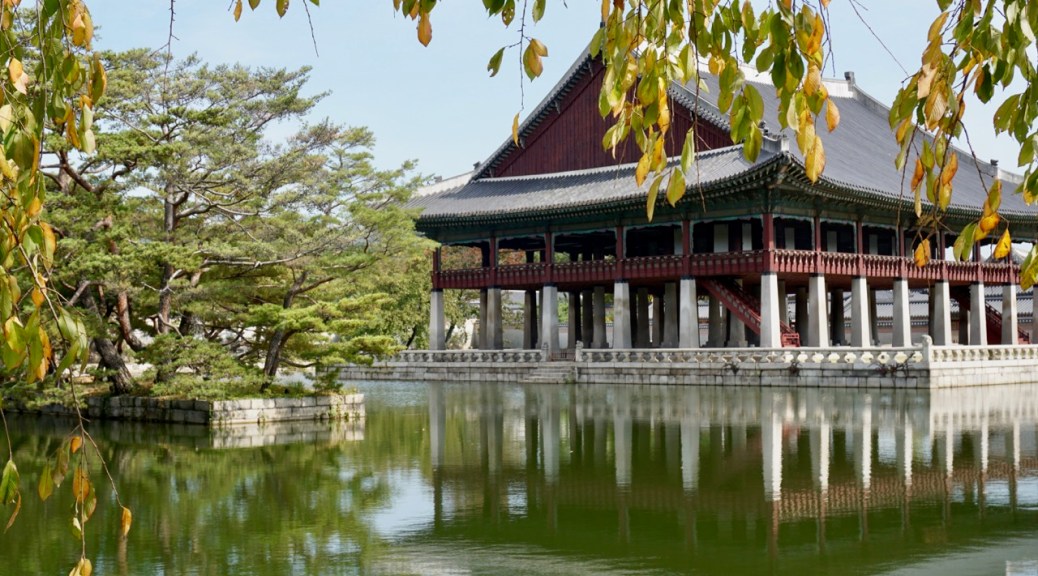
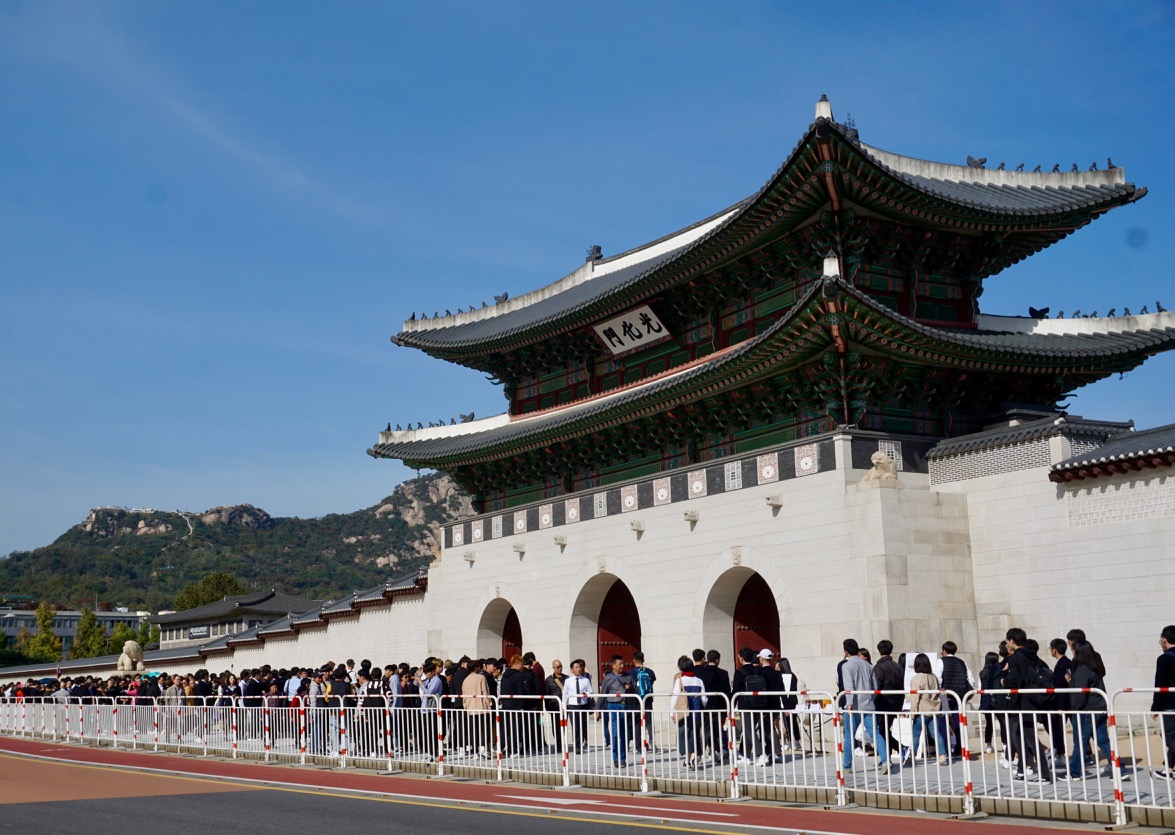
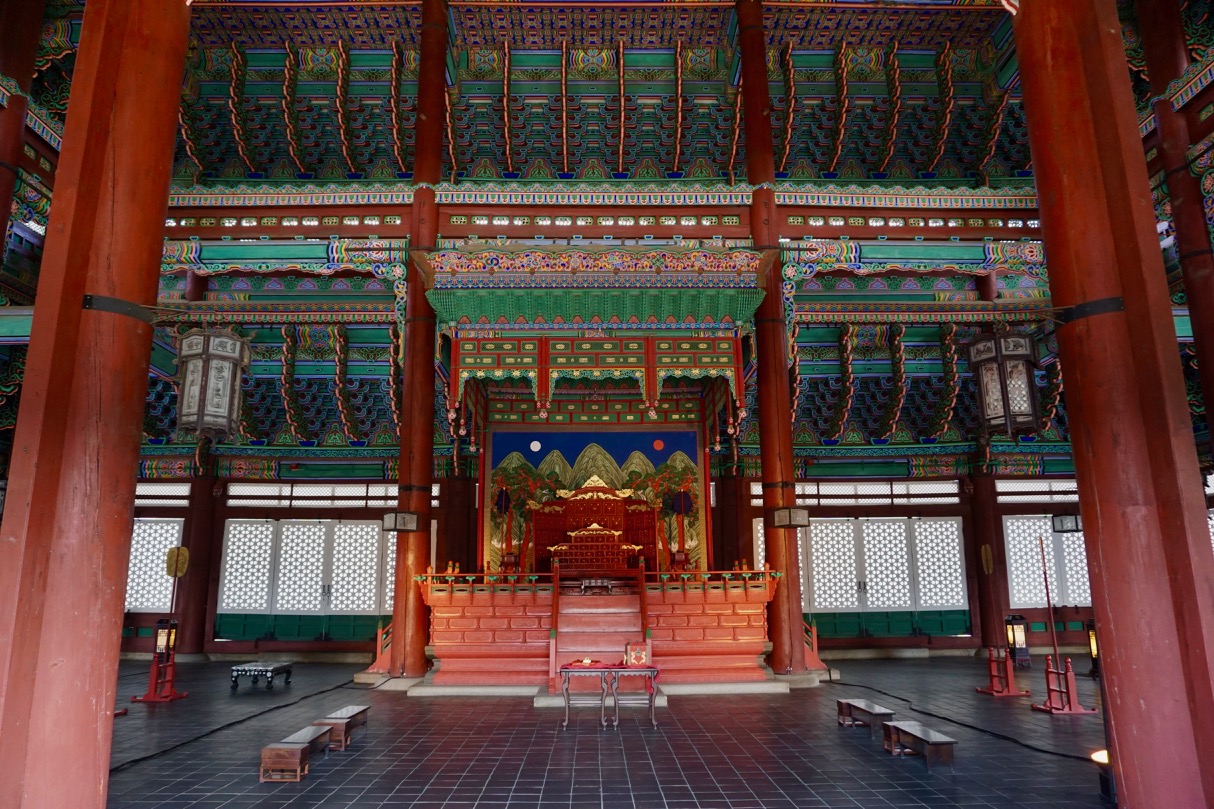
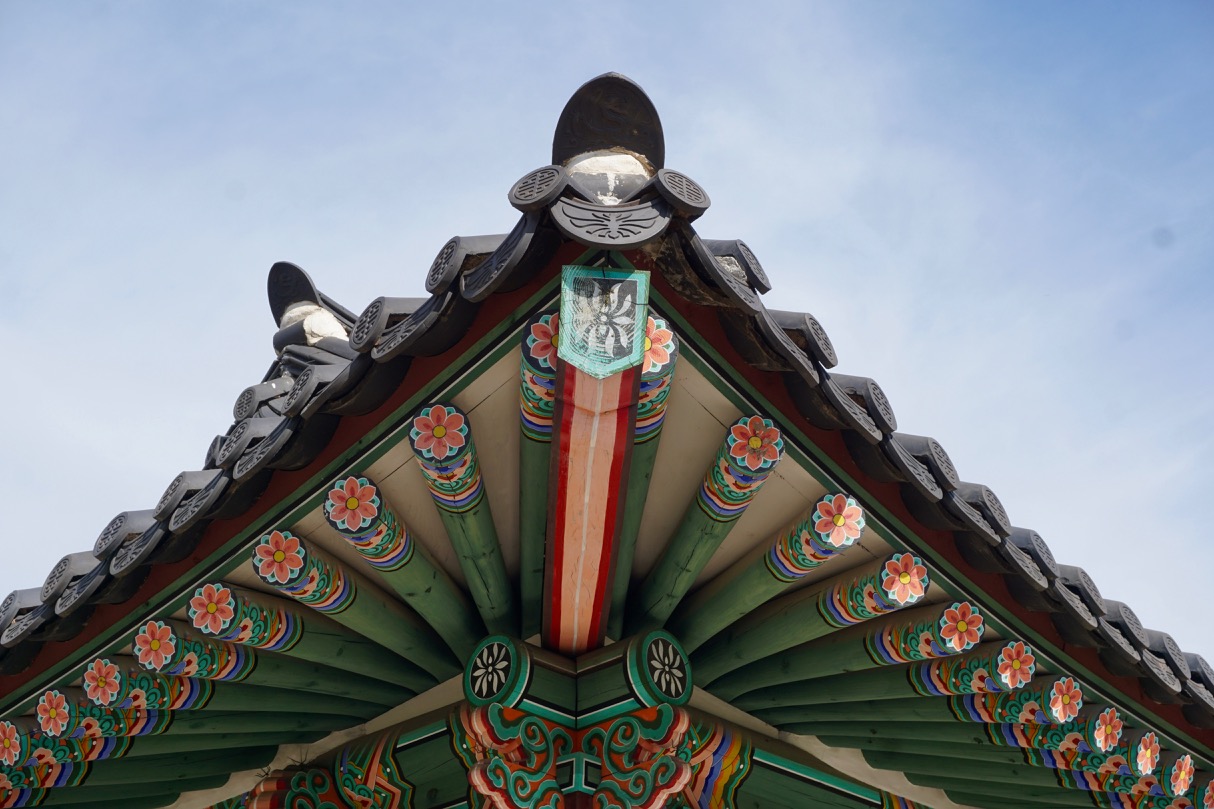
We organised our time in Seoul around day trips, so we spent every other day in or out of the city. After Nami Island we were due for an urban day. Accordingly, we spent the morning at Gyeongbokgung Palace, the main royal palace of the Joseon dynasty built in the late fourteenth century. Luckily, we arrived just in time for the changing of the guards!

Like much else, the palace was destroyed by the Japanese during the twentieth century occupation but had also been destroyed by fire in the 1500s. The palace is the size of a small city and covers about 410,000 square meters, which is only a fraction of its original size. Today, the grounds are open for visitors as are individual buildings and two museums.

Anyone wearing the traditional Korean hanbok entered the palace for free and we saw all kinds of people in traditional clothes. There were rental studios in every touristy area and it was refreshing to see men, women, and children of different nationalities and body types dressed up. I was initially very resistant (insert self-critical thoughts here) but we ultimately decided to do what everyone else was doing and I’m really glad we did. We returned to the palace two days later in our hanbok.

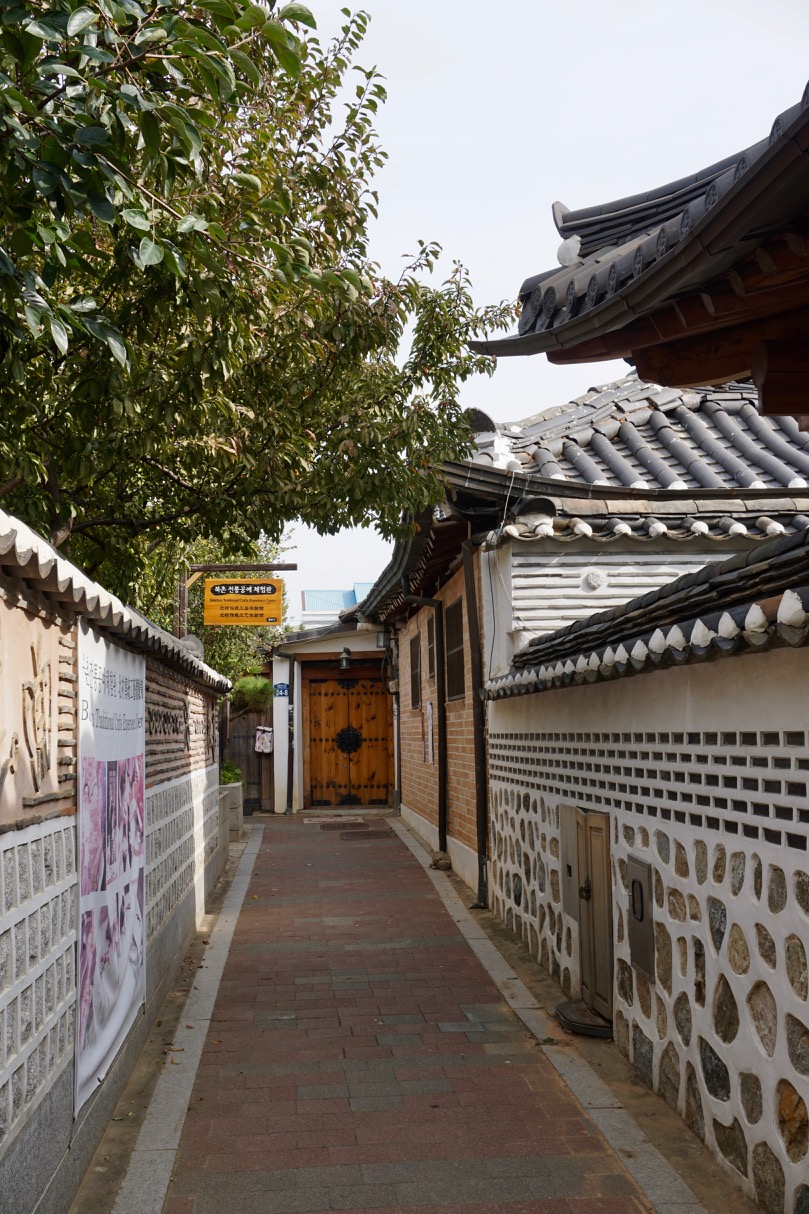
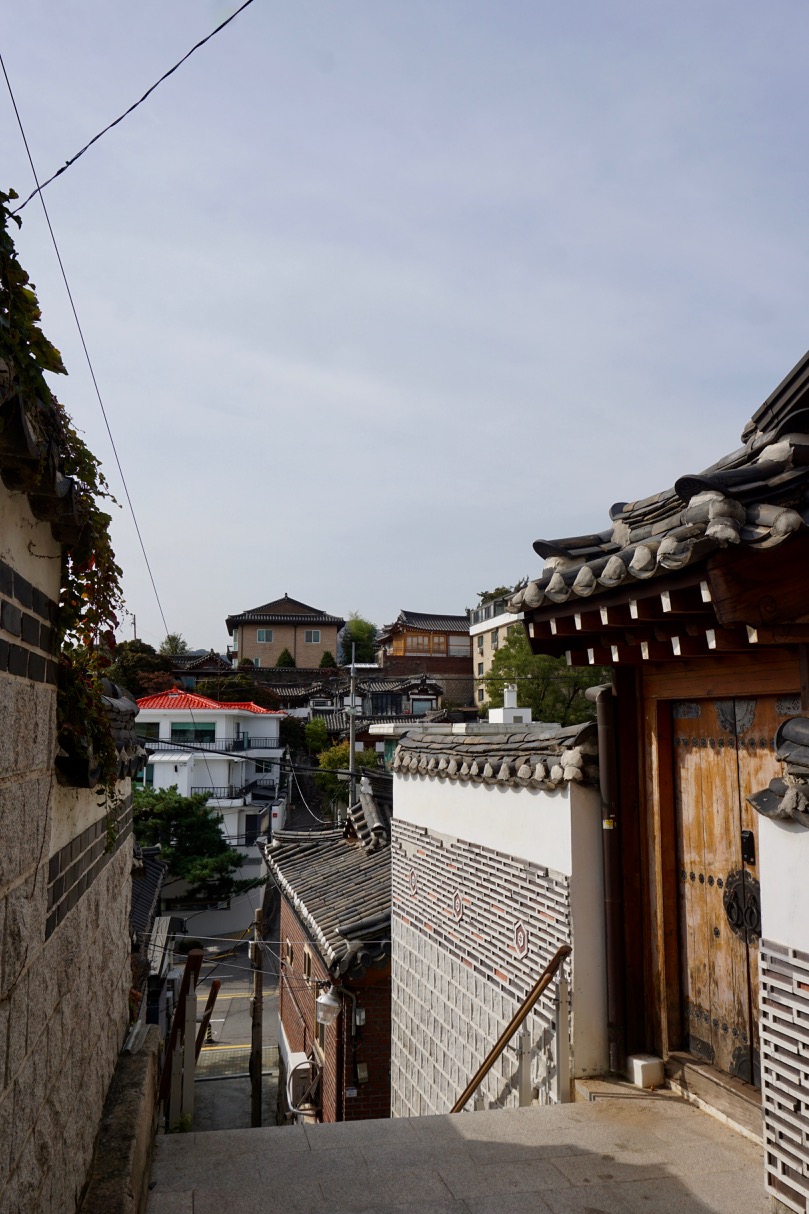
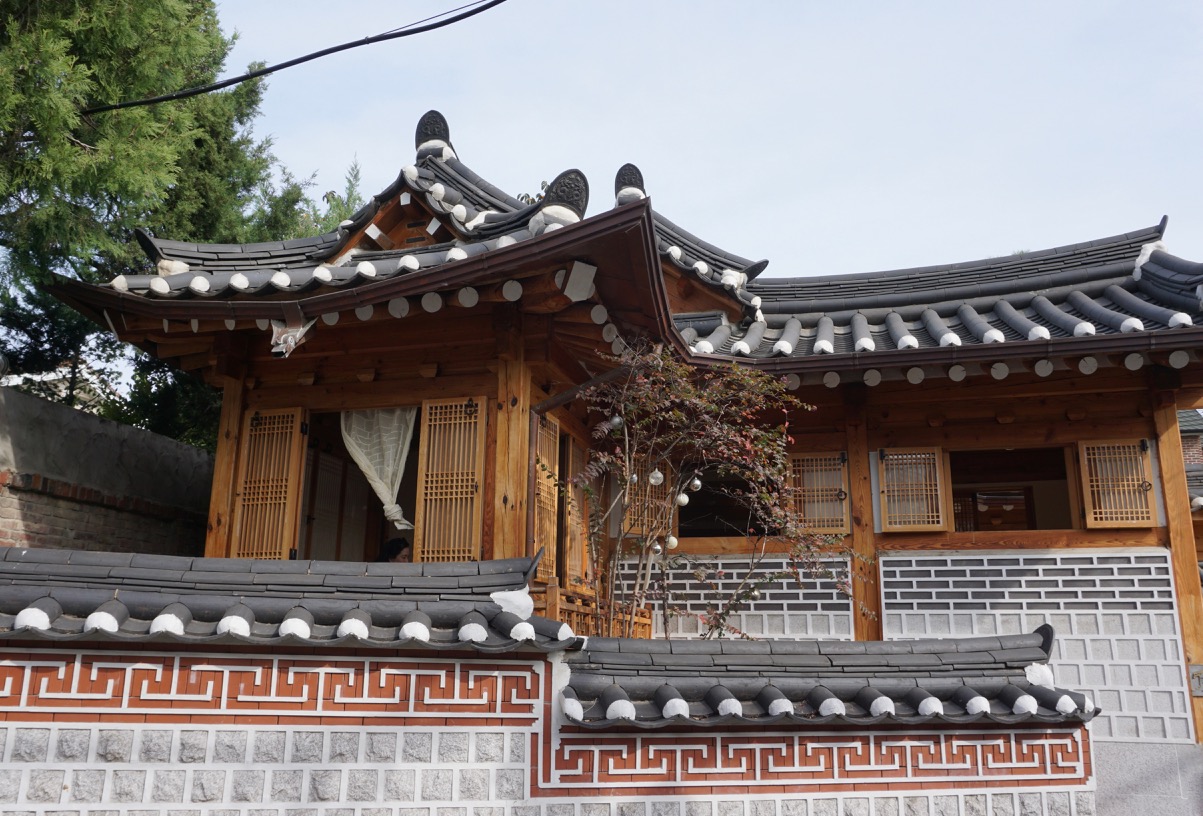
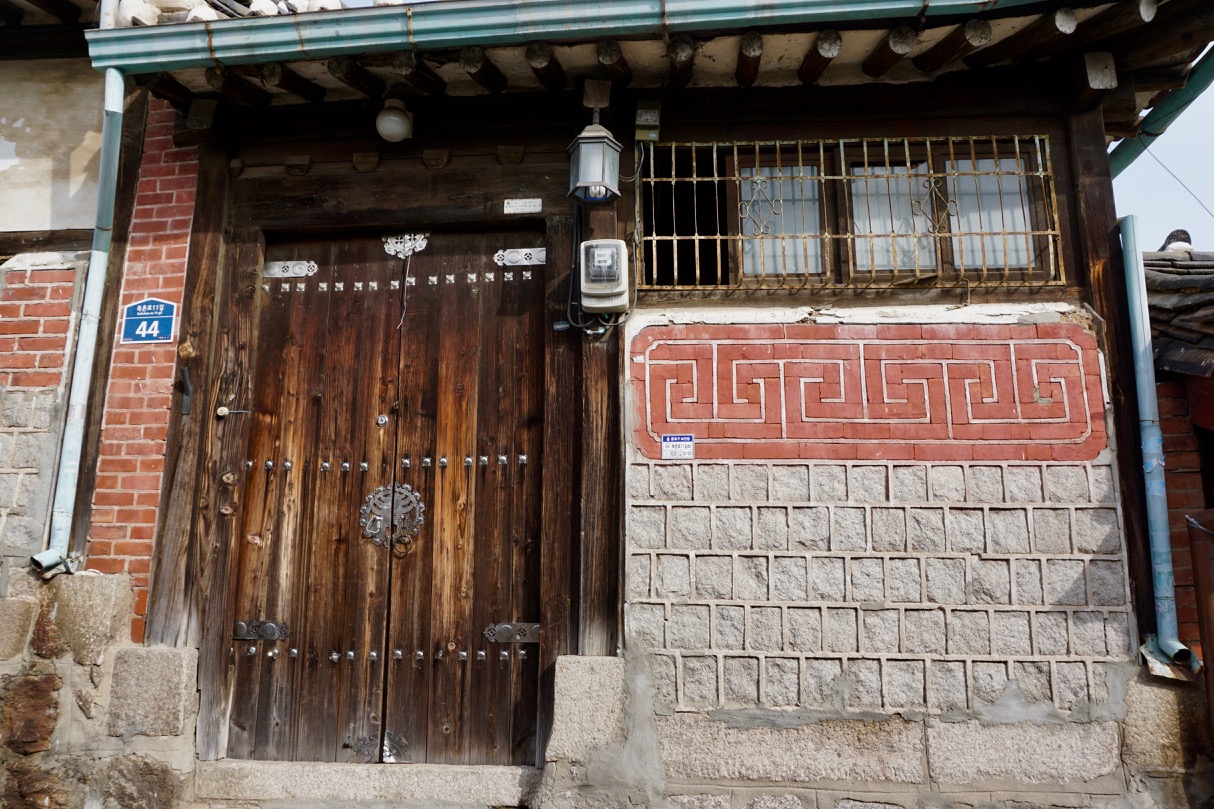
After our first visit to the palace, still deep in discussion about wearing the hanbok, we walked over to Bukchon Hanok Village, a collection of hilly streets with traditional houses. There were a few restored homes open to visitors as well as a handicrafts centre offering short sessions on different types of crafts.

Still steeped in tradition, we headed back to Insadong to experience a traditional teahouse. This one was built around a courtyard with a room of low tables and floor cushions and a second room of tables and chairs. Tea was served hot or iced with traditional Korean sweets. We chose dried persimmon stuffed with walnuts and Korean rice cakes, as well as iced balloon flower citrus tea and iced cinnamon tea. The presentation and flavours were different from any tea we’d had (and high tea is a common social activity in Singapore) and we thoroughly enjoyed it.

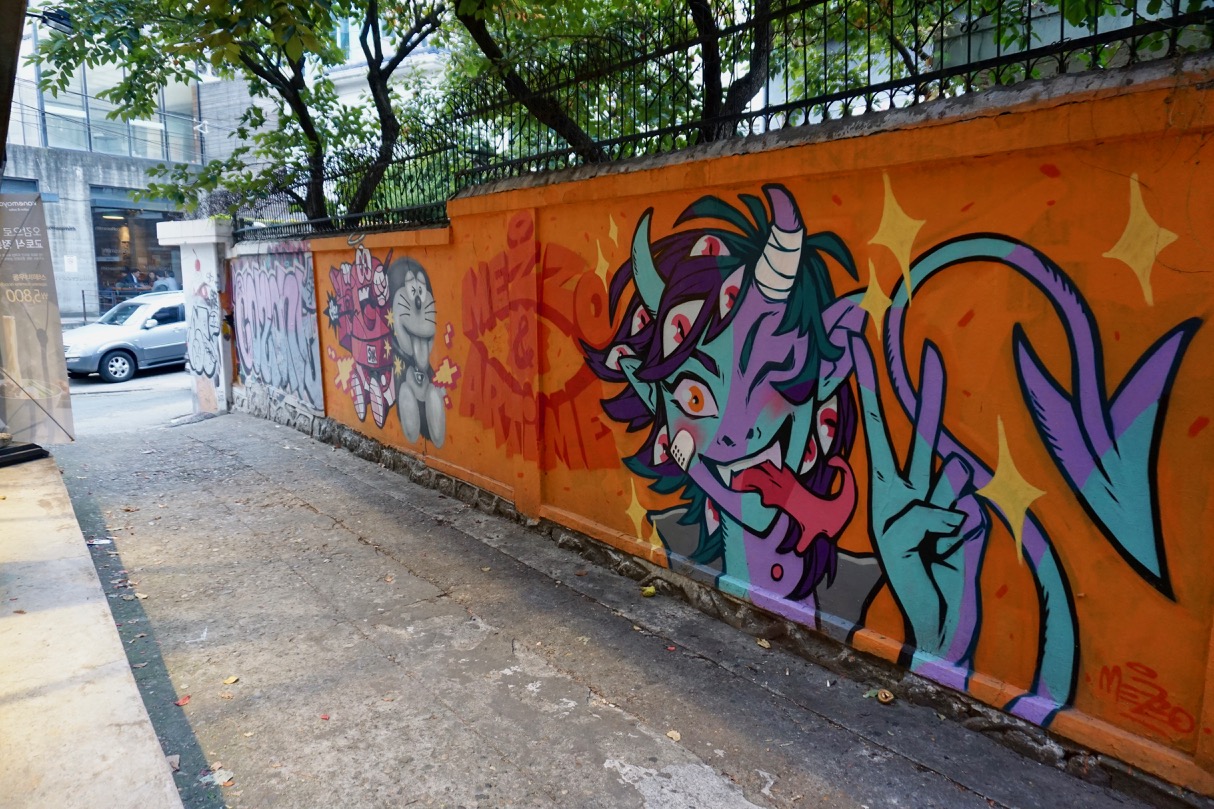
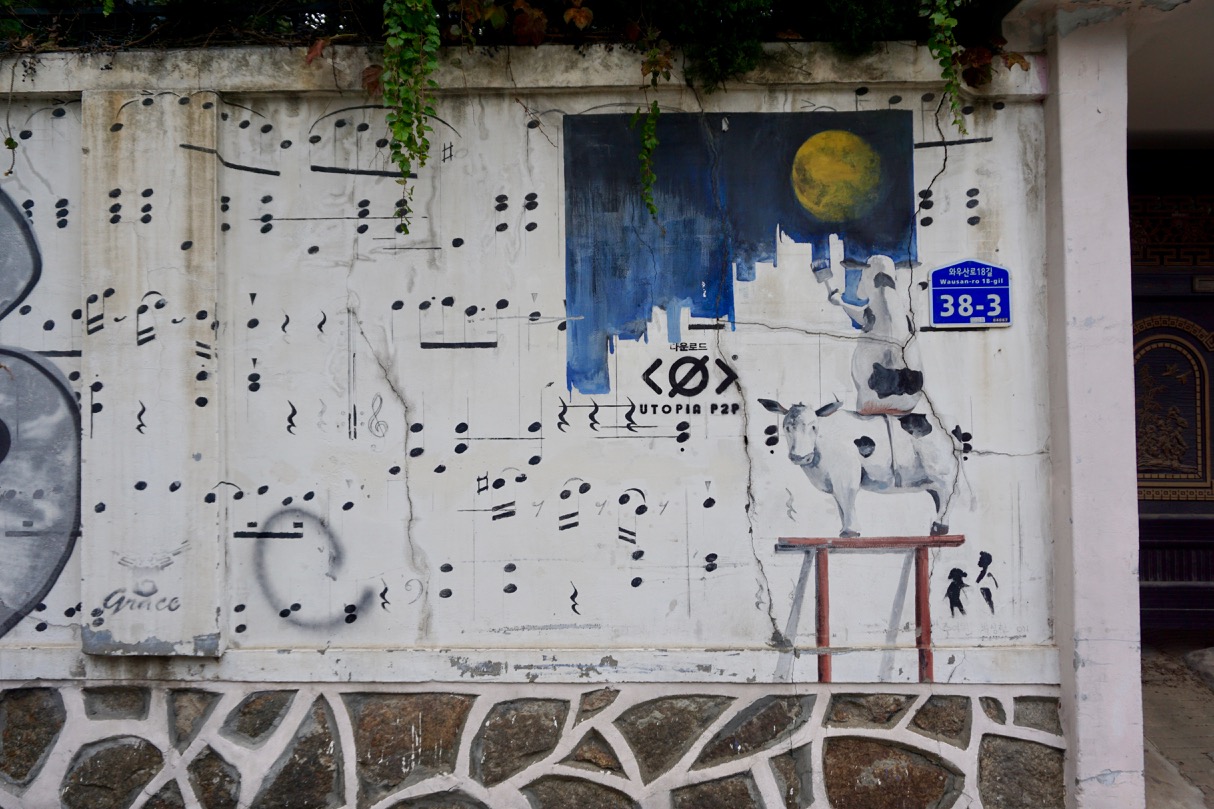
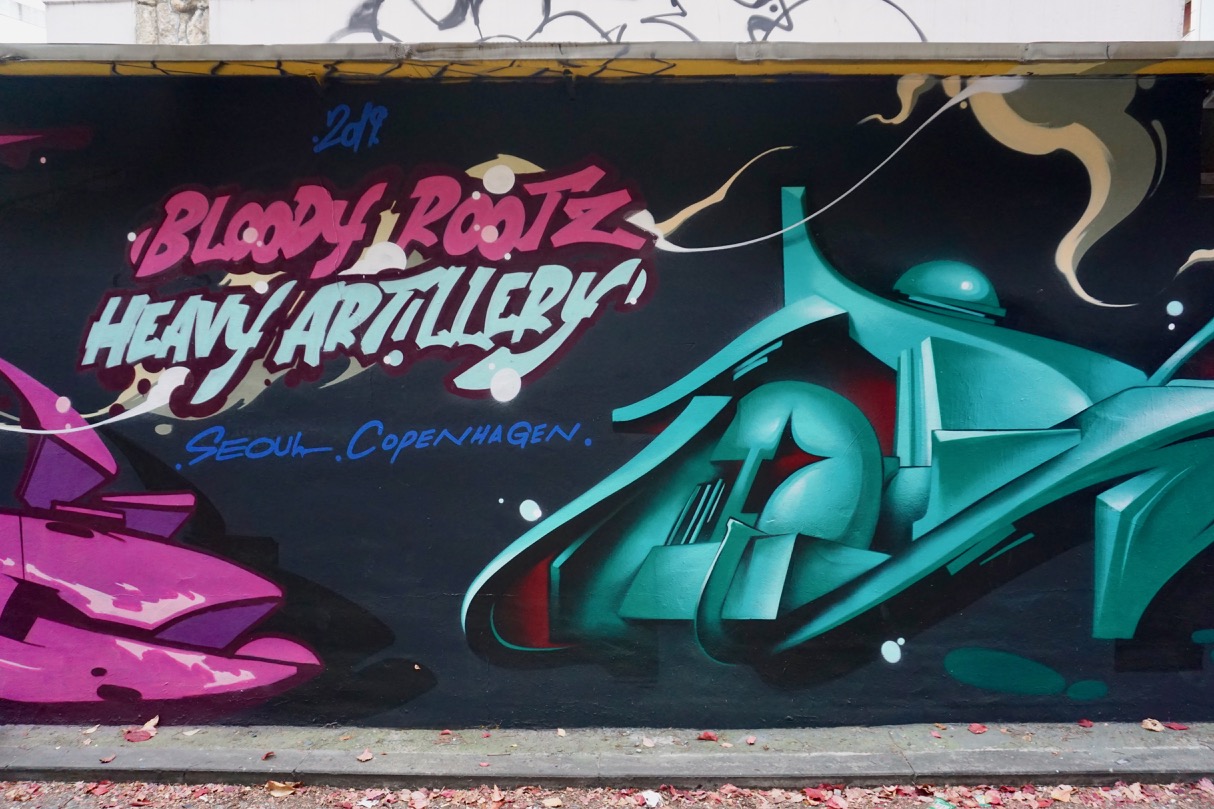
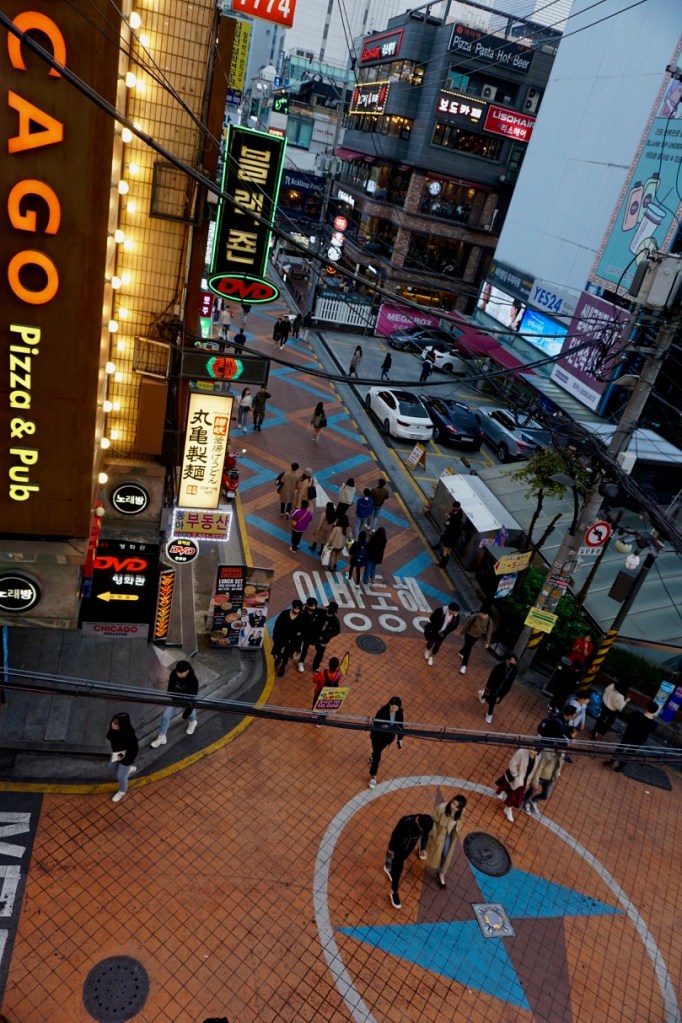
We spent the evening in Hongdae, a neighbourhood near Hongik University. As predicted, it was full of all the quirks of a university neighbourhood, including street art!

Hongdae’s shops were eclectic and fun, densely packed, and extremely popular. It’s very entertaining to see different trends and the lifestyle that goes along with them. In Korea, fashion and cosmetic trends are as popular for men as they are for women and there seems to be relatively little convention around fashion choices. Everyone clearly has a style, but the style itself comes from anywhere under the sun. Contact lenses are even sold like any other type of makeup – as an enhancement of what is already there.
There was a Halloween street party in Hongdae, too, and it was fun to watch the set up for that. It appears that Korea is just like it’s shown in the movies and people really do perform K-pop in the streets!

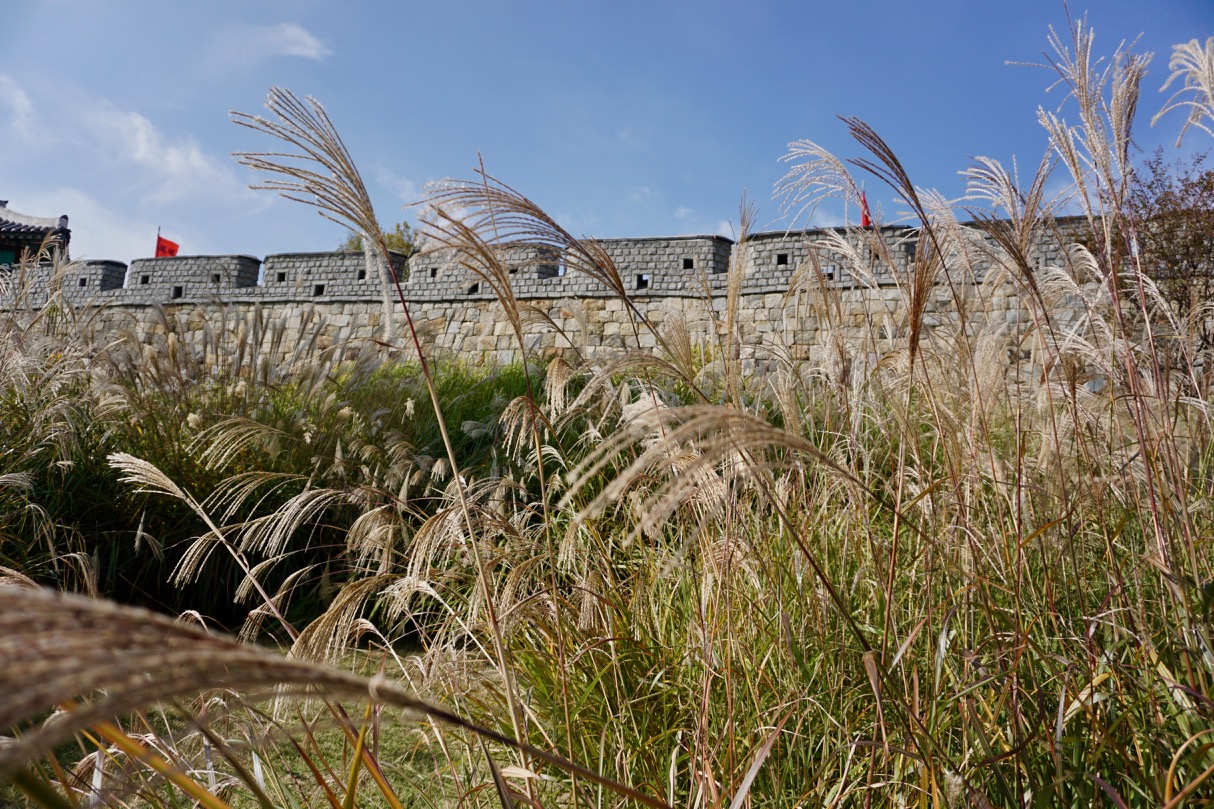
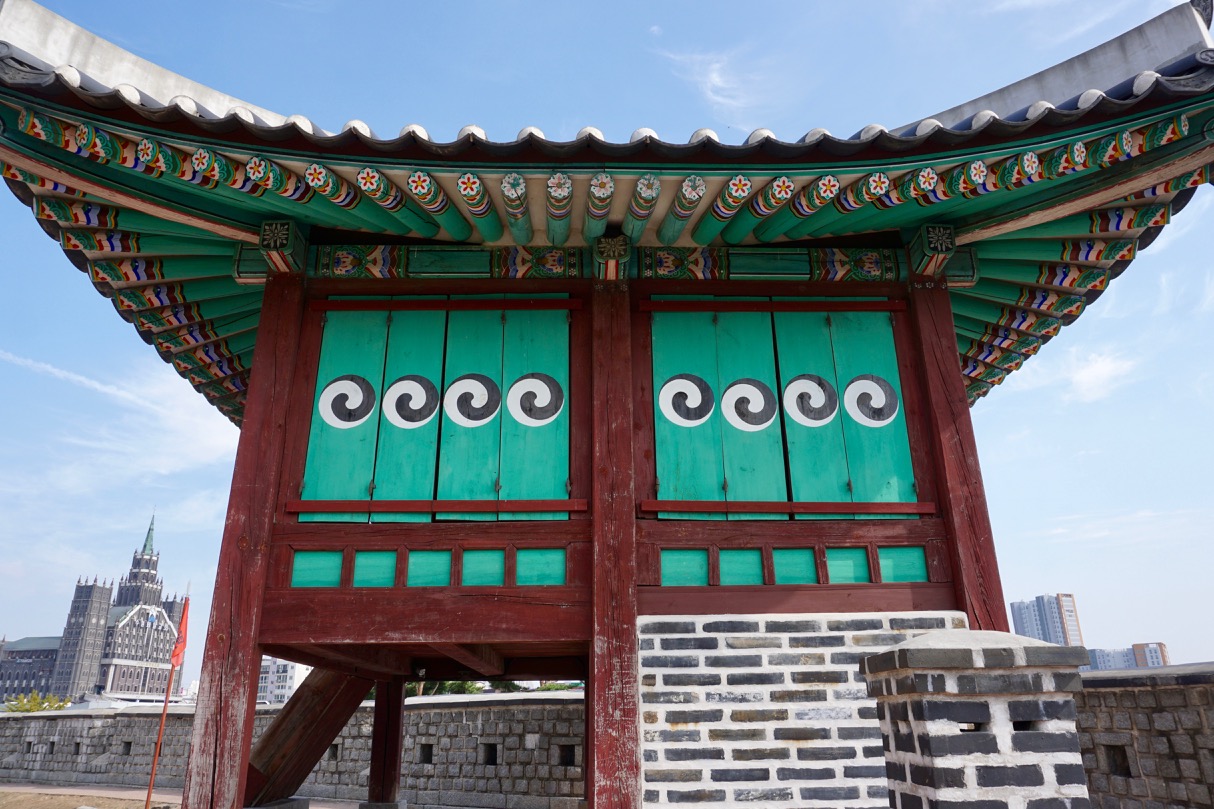
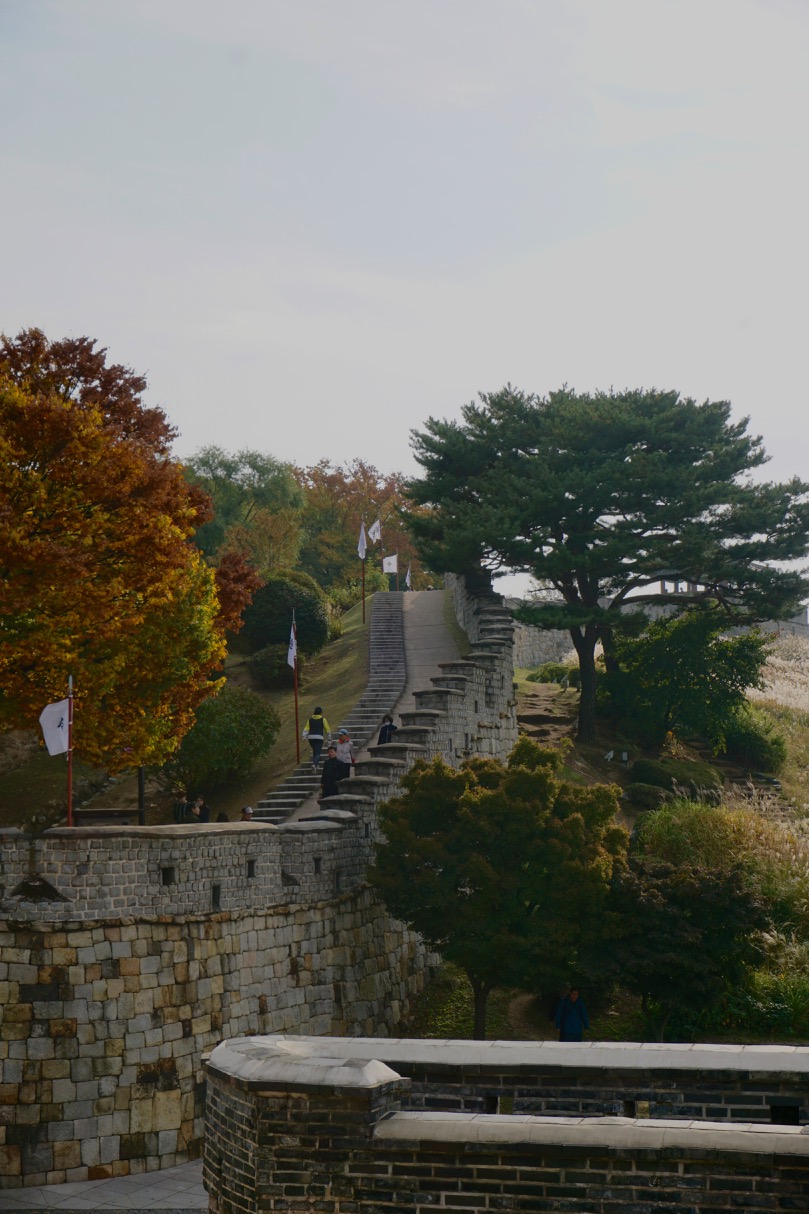
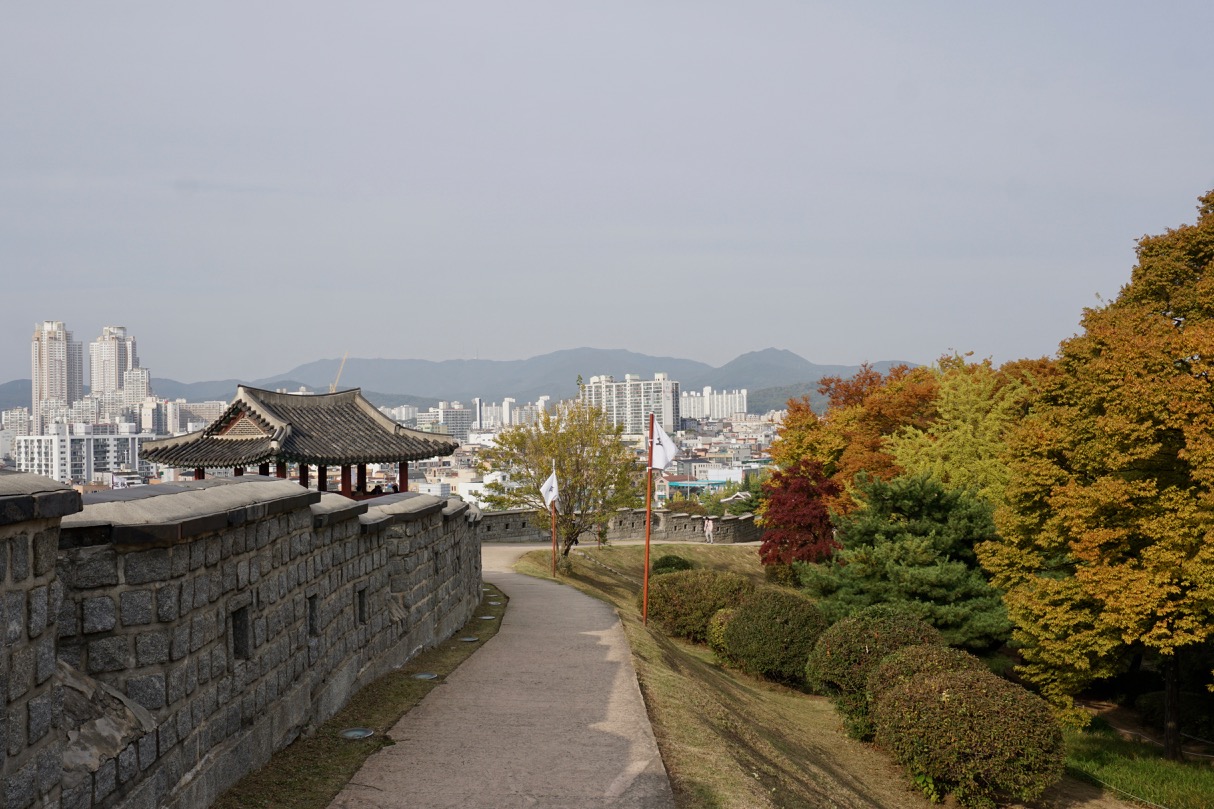
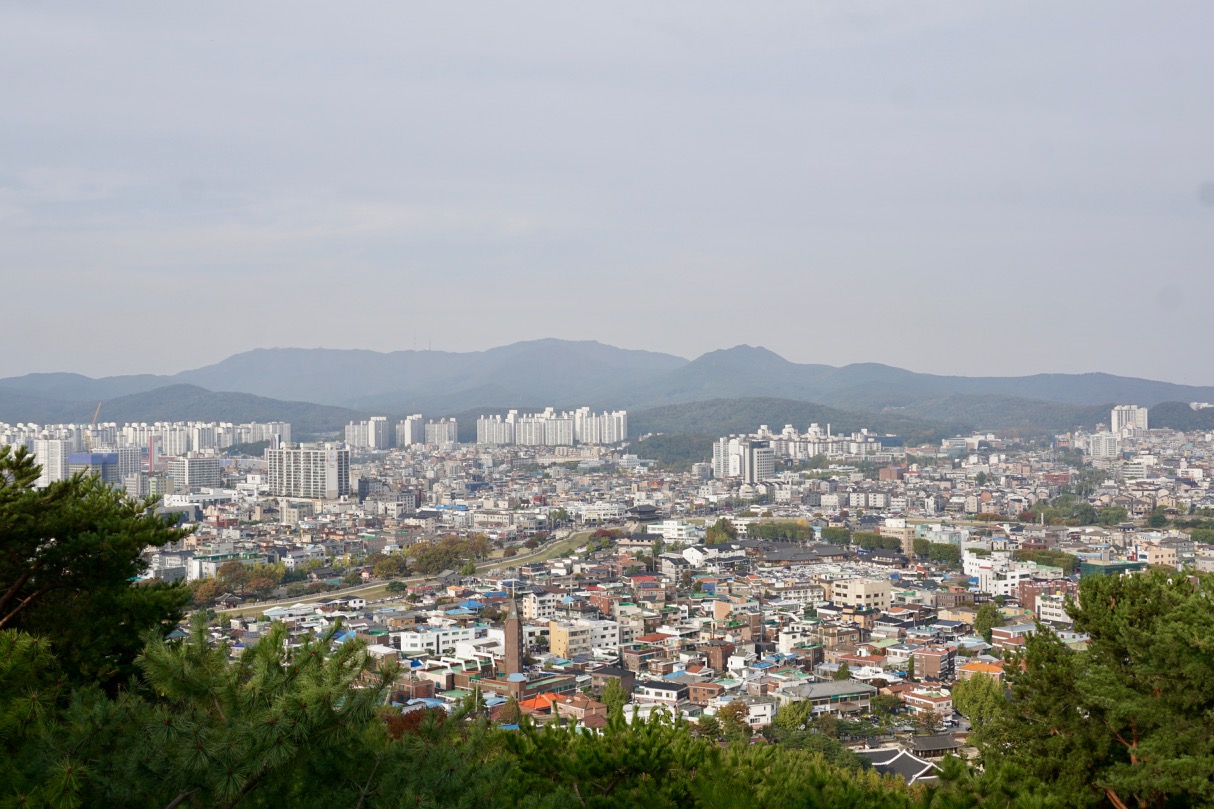
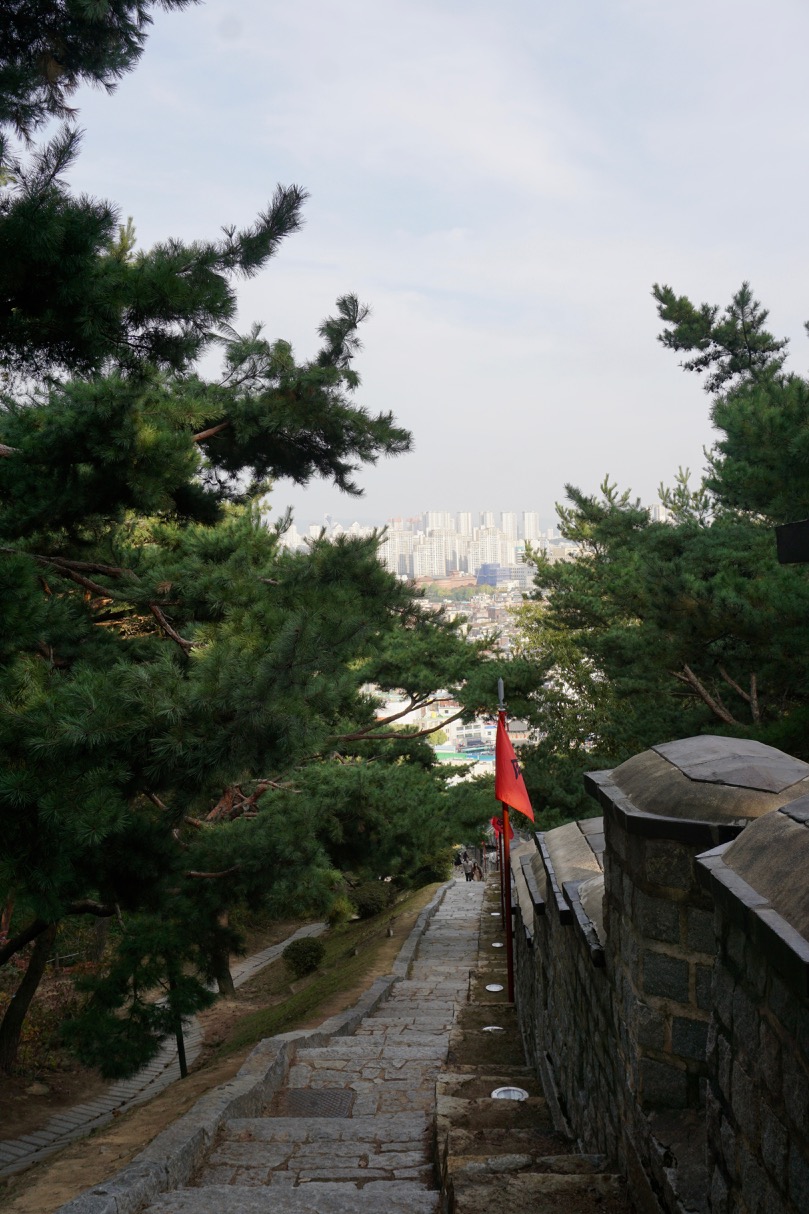
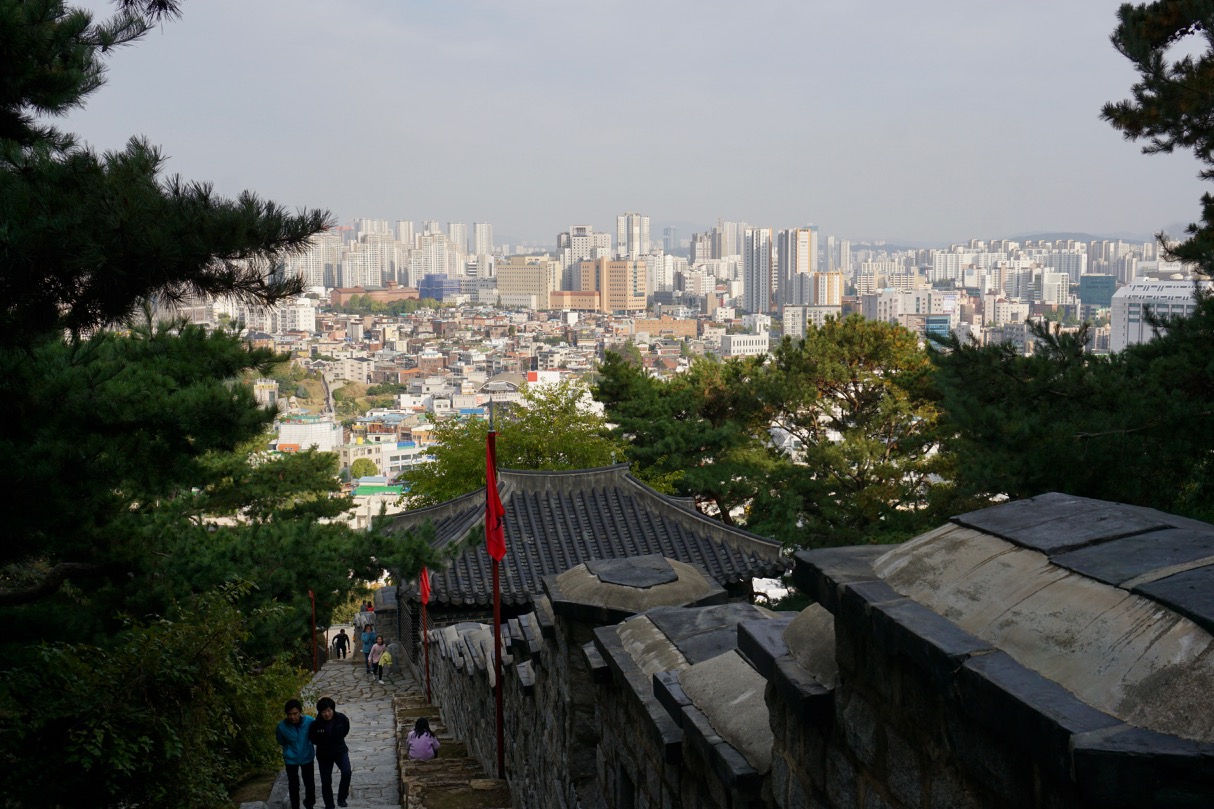
After a day in the city it was time to get out of Seoul again and take the train 30km south to Suwon. Seoul’s metro system is so sprawling that one train took us all the way there. Suwon is Korea’s last completely walled city and the primary reason to visit is to walk the 5.4km wall of the fortress. It was lovely to spend yet another day outside in cold wind and bright blue sky.

It was really neat to watch the skyline unfold as we climbed higher, too. Korea is a hilly country and the fortress rolled along with the land.

After a day in Suwon we had one final day in Seoul. As discussed and investigated, we rented our hanbok for ₩10,000 for two hours, which gave us plenty of time to return to Gyeongbokgung Palace to take photos. We’d worried about feeling silly and out of place for dressing up, but it quickly became clear that people from all over the world do this because it’s fun! As soon as we walked out of the rental shop a woman stopped us to chat about our experience in Korea. Later on, different people offered to take our photo. It was a lot of fun and a nice little confidence boost.

Just like our first day at the palace, we went back to Insadong for traditional tea, this time in a tea house that opened into a cozy room with plaster walls lined with benches, stools, and tables. Different teas and desserts and a similarly lovely experience.

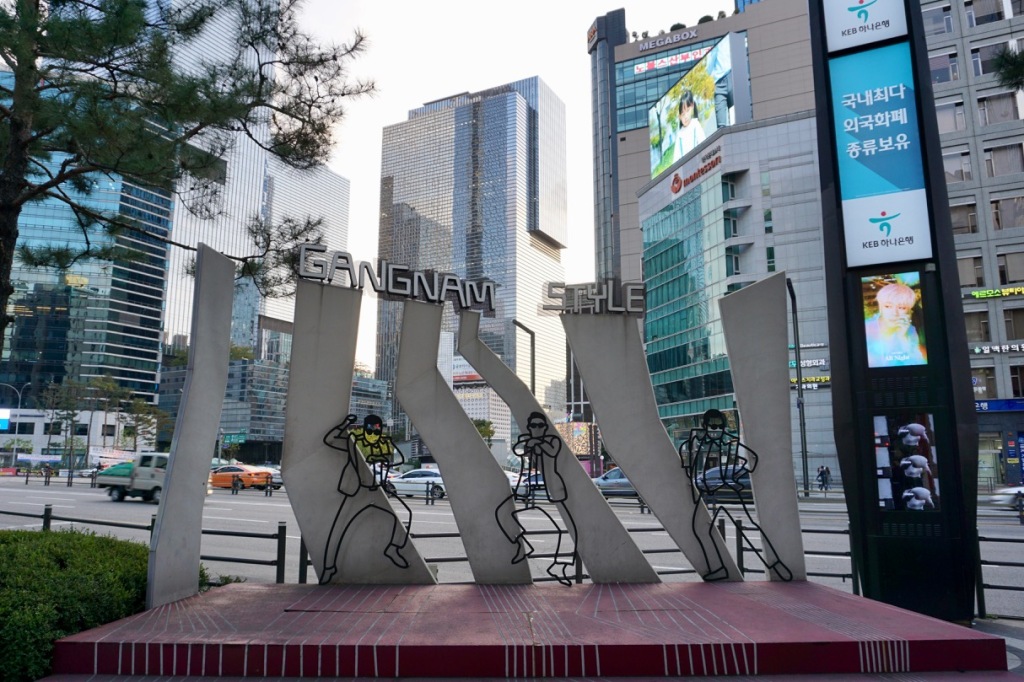
In sharp contrast to traditional clothes, the palace, and Insadong, our next destination was Gangnam across the Han River, which runs through Seoul. We stopped first at the COEX library in a mall . . .

. . . and then walked through the business district until we reached Gangnam Square and all of the entertainment around it.

It was fun to experience traditional Seoul in the morning and modern, glittery Seoul in the evening. That was something I noticed throughout our trip – the infusion of traditional and modern culture everywhere we went. There was an ease to being in Korea that I hadn’t experienced before, a sense that being whoever you were was just fine and that we should treat others accordingly. The world could do with more of that.