Tag Archives: Road trip

Travel Guide: Porto to Lisbon

I think it was over a year ago that a girlfriend first mentioned the possibility of a trip to Portugal together. Our partners had been each other’s travel buddies before we came into the picture, and they were more than happy to let us take the lead on planning. Their plan was to see pretty sights and enjoy one another’s company. In the end, that’s what we all did. Knowing more or less where we wanted to be, the four of us spent a week strolling through narrow alleys, taking endless pictures of tiles, and eating excellently, which is saying something when one member of the group is not only a vegetarian but also gluten free.

Because of the way the week flowed, one day of wandering into the next, I’m breaking with established patterns and writing about the whole trip in one post. We rented a car for the days in the middle but were otherwise on foot, averaging 10 kilometers per day in spite of some good rain. The experience of being in Portugal was one of getting turned around in twisting streets, marvelling at the hills and stairs, and alternately admiring and lamenting the old buildings in various states of restoration. It was an experience in being rather than one of expectations, and we let ourselves be surprised.

Porto

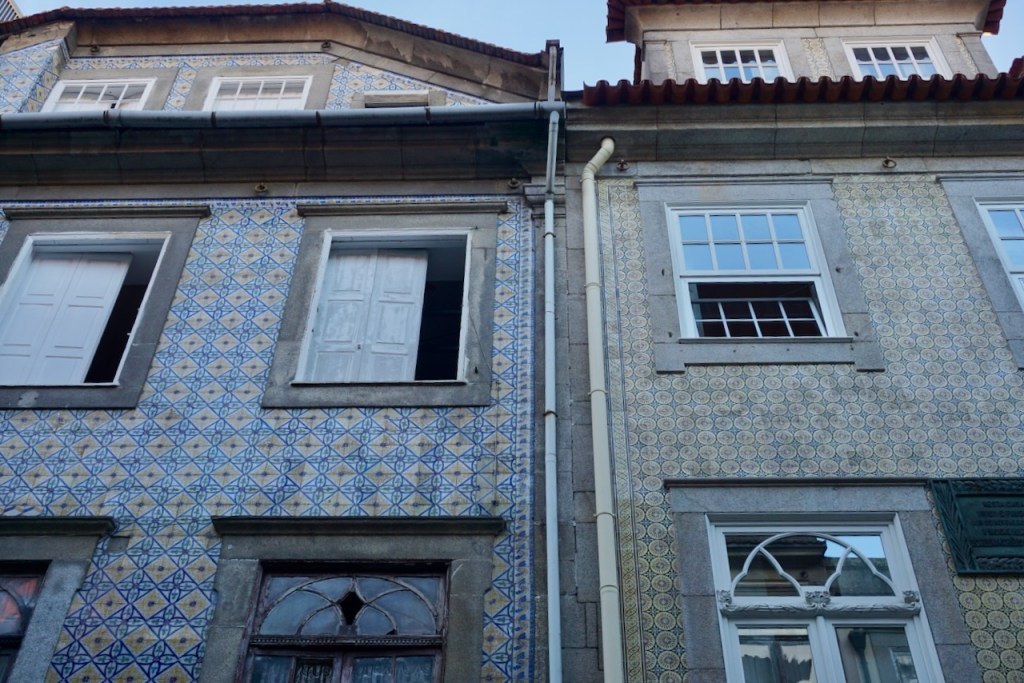
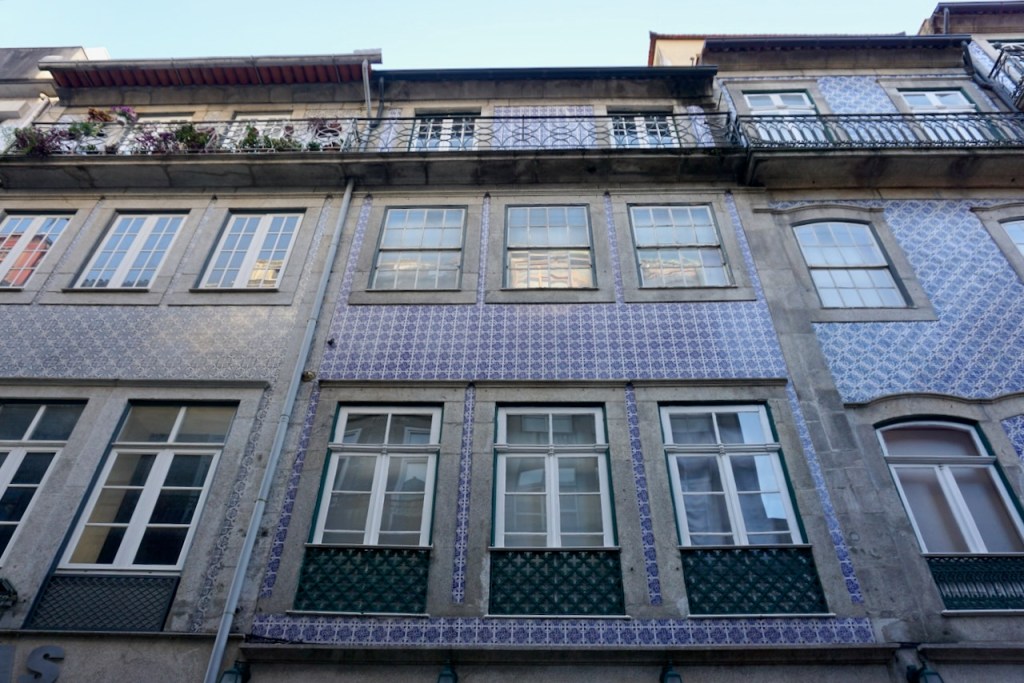
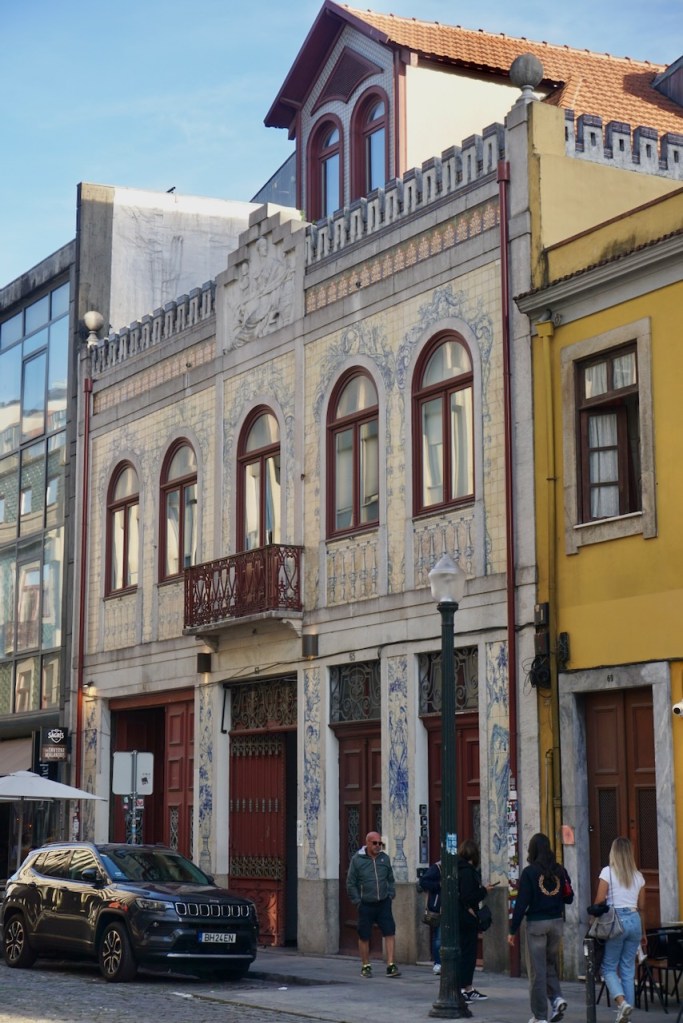
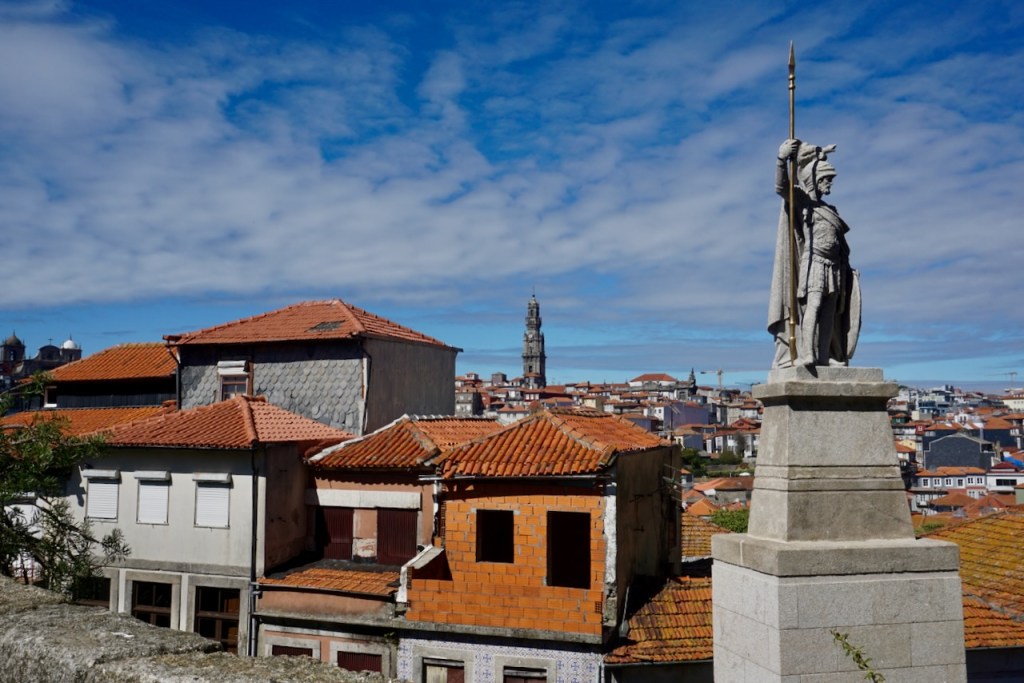
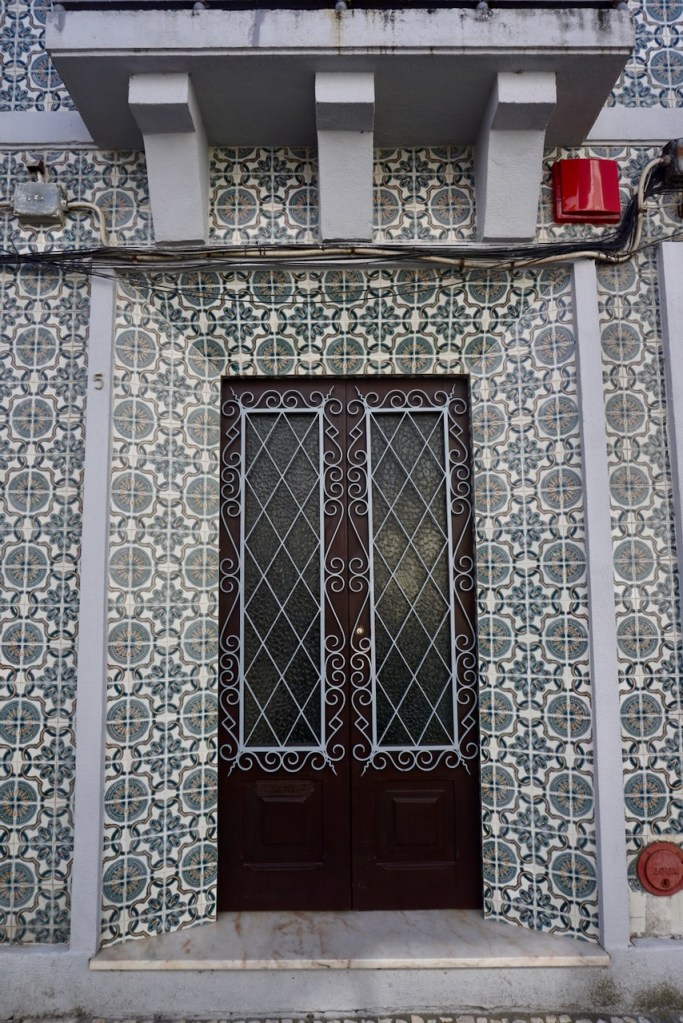
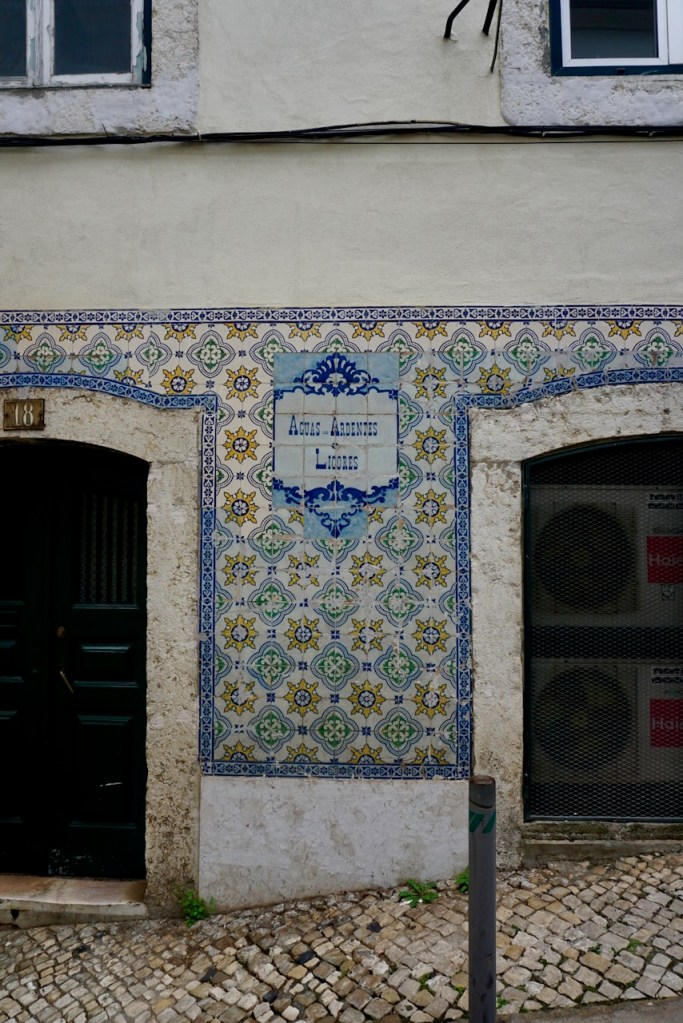
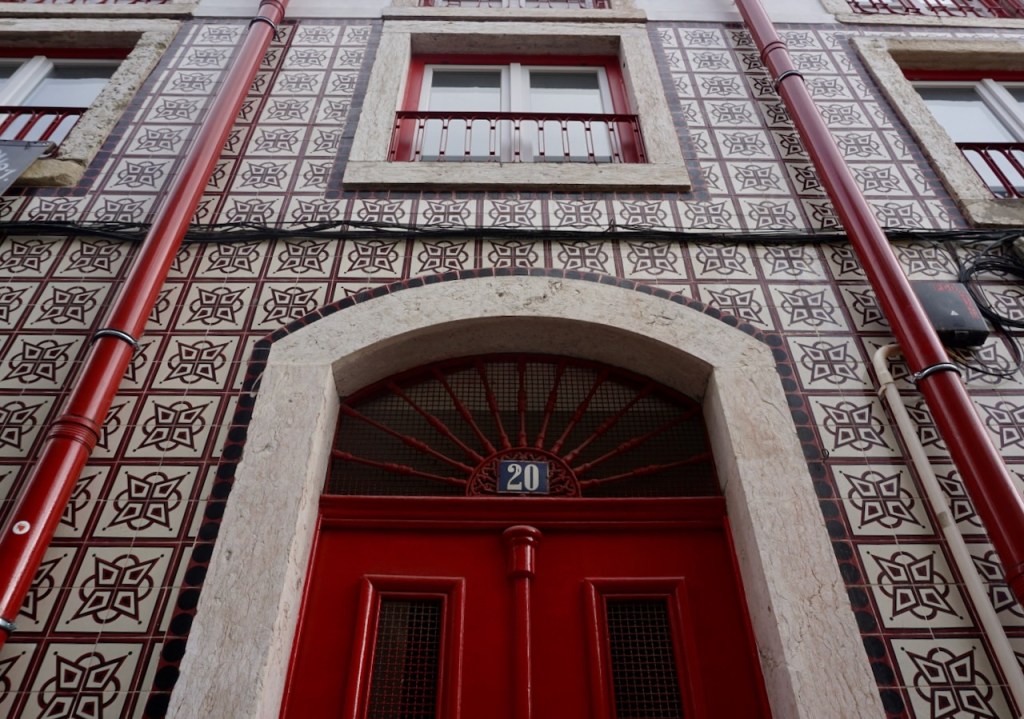
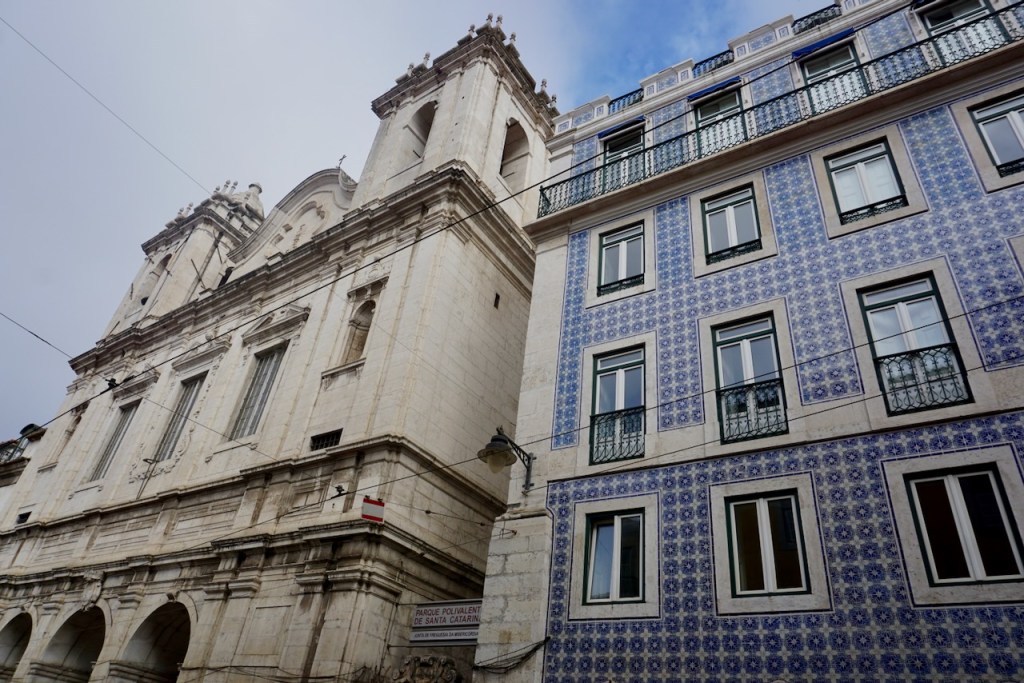
We arrived in Porto late in the afternoon and hungry, but eating needed to wait because most restaurants in Portugal, as we learned, open first at 7:00 or 7:30 for dinner. So, as would become routine, we walked. That evening and the following day we exclaimed at the tiles covering the buildings . . .
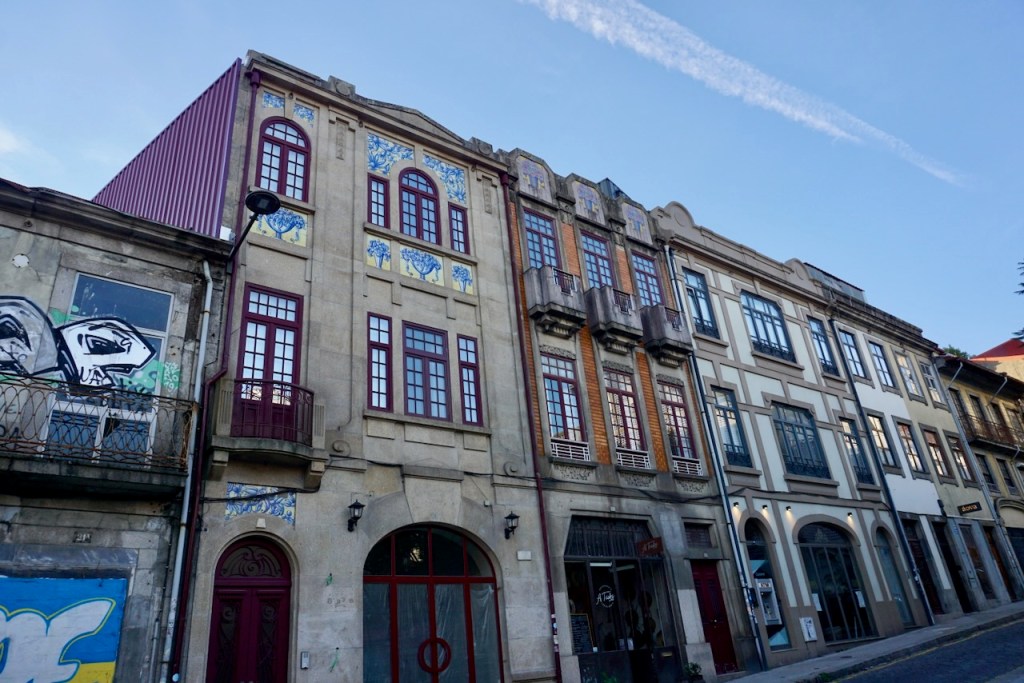
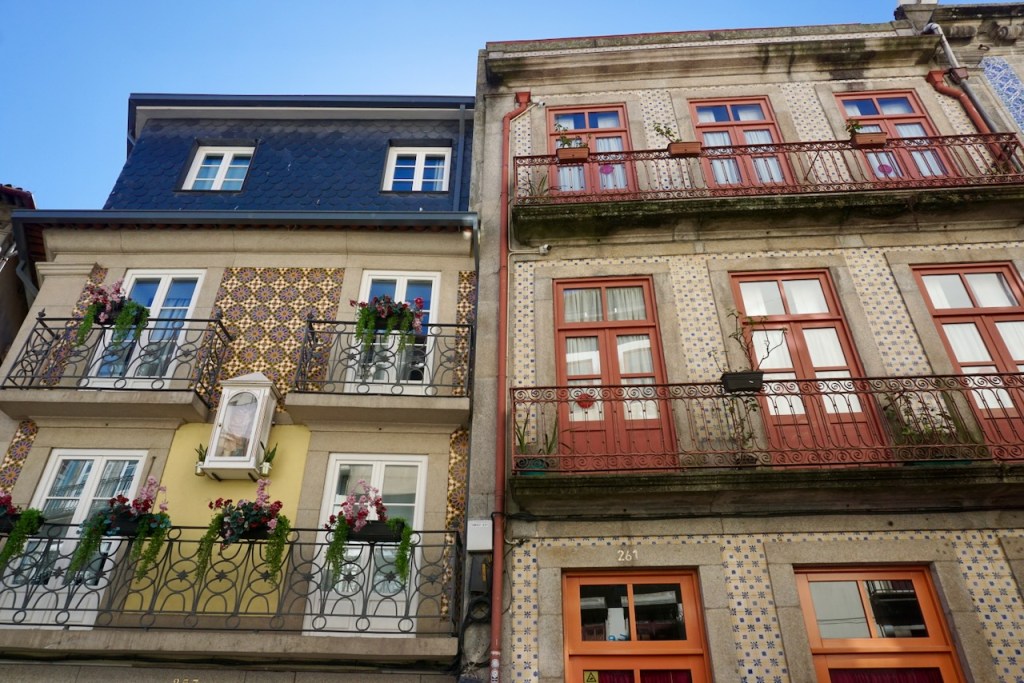
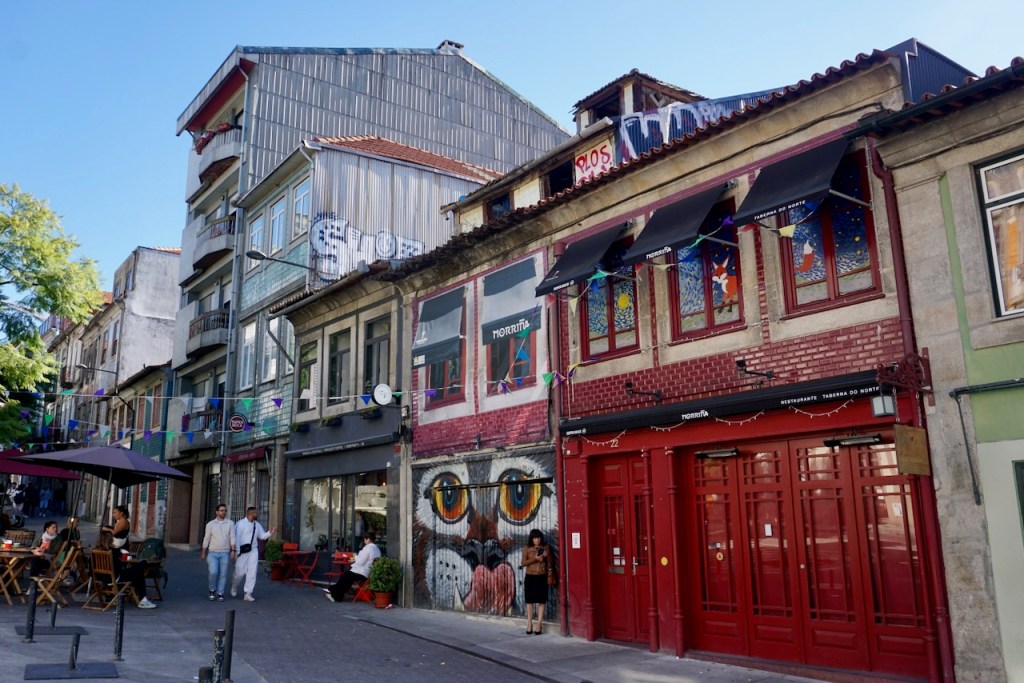
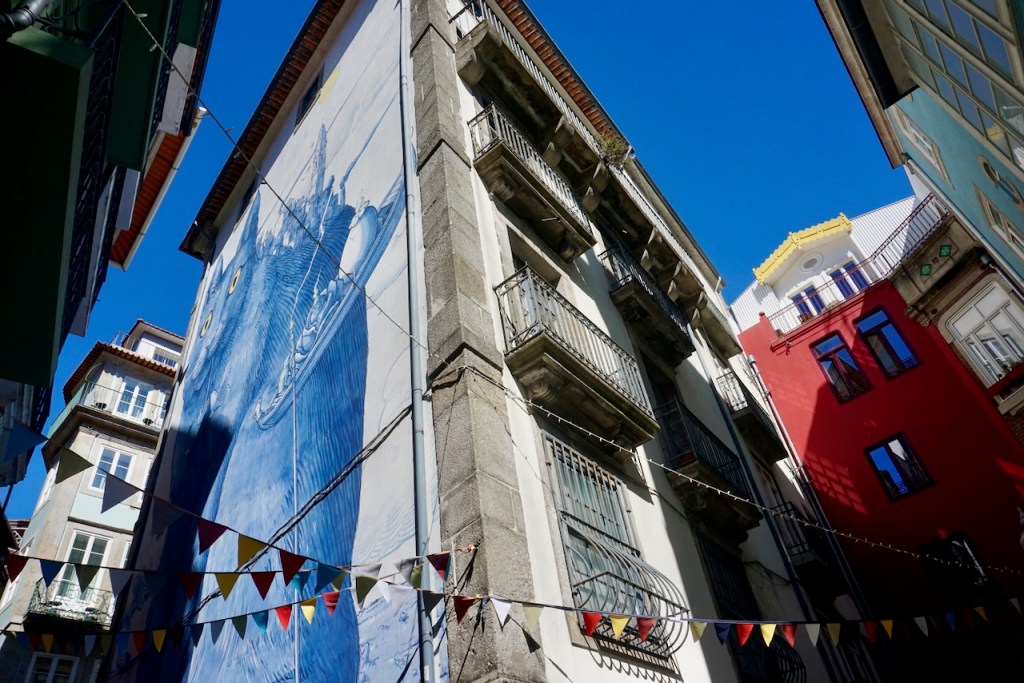
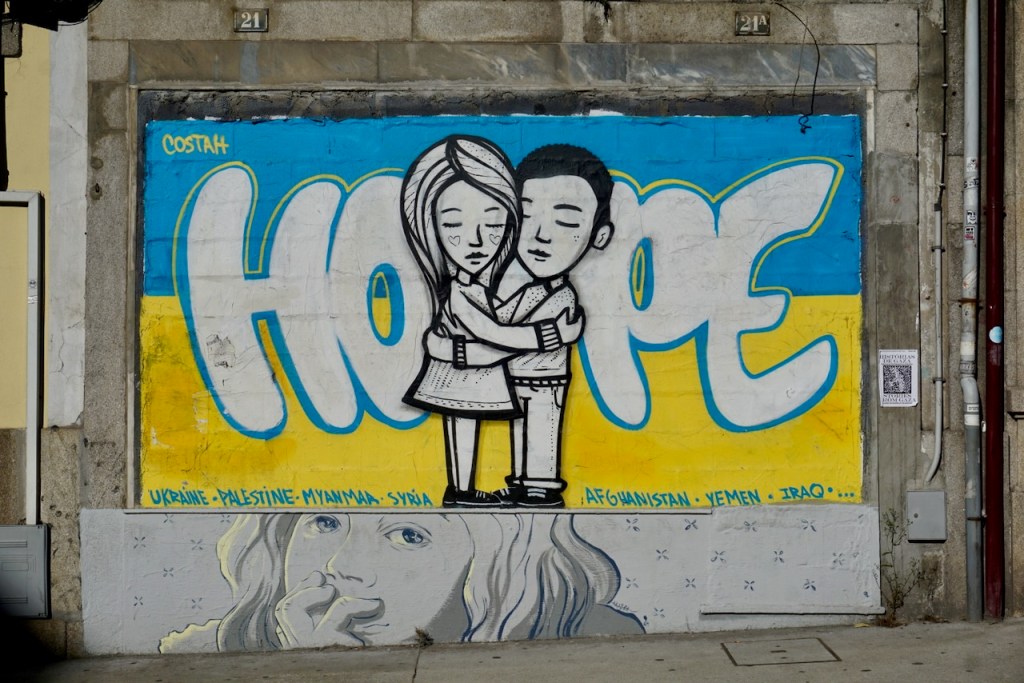
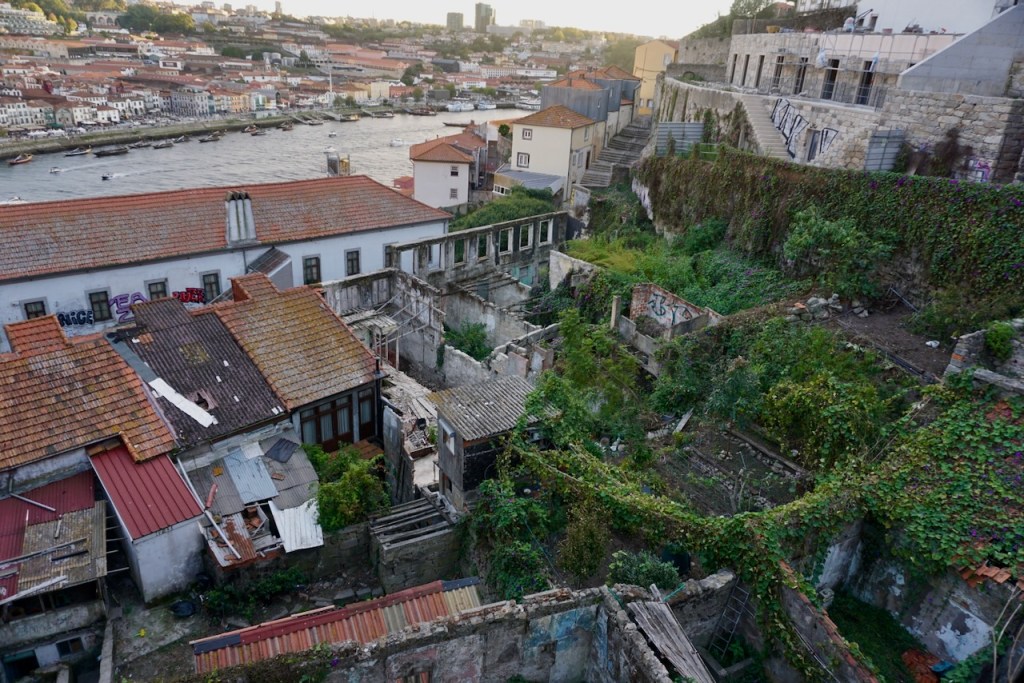
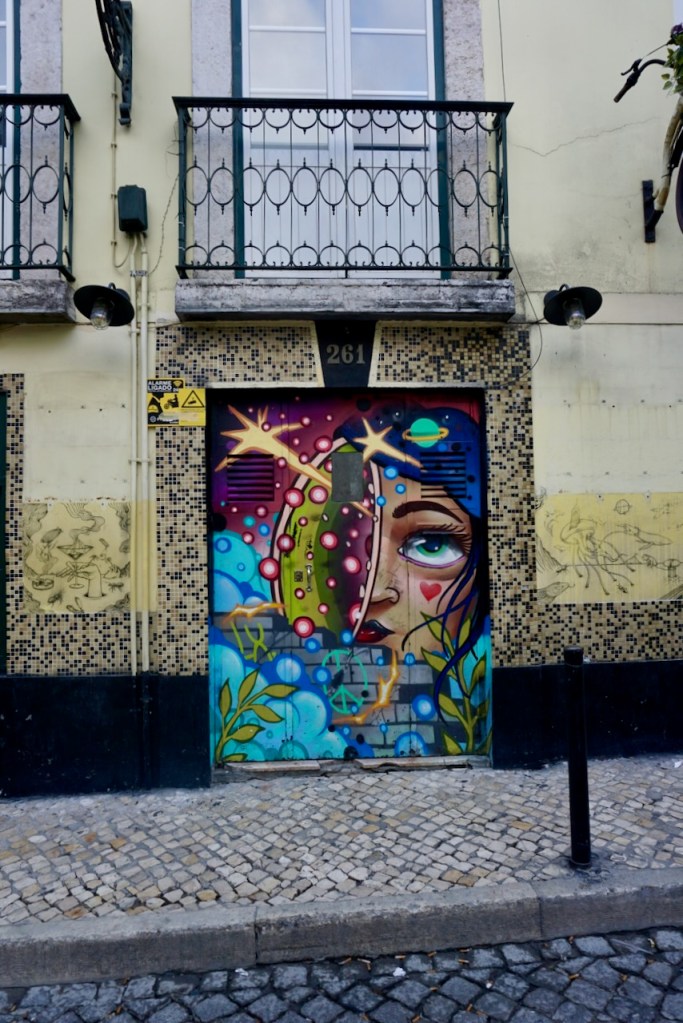
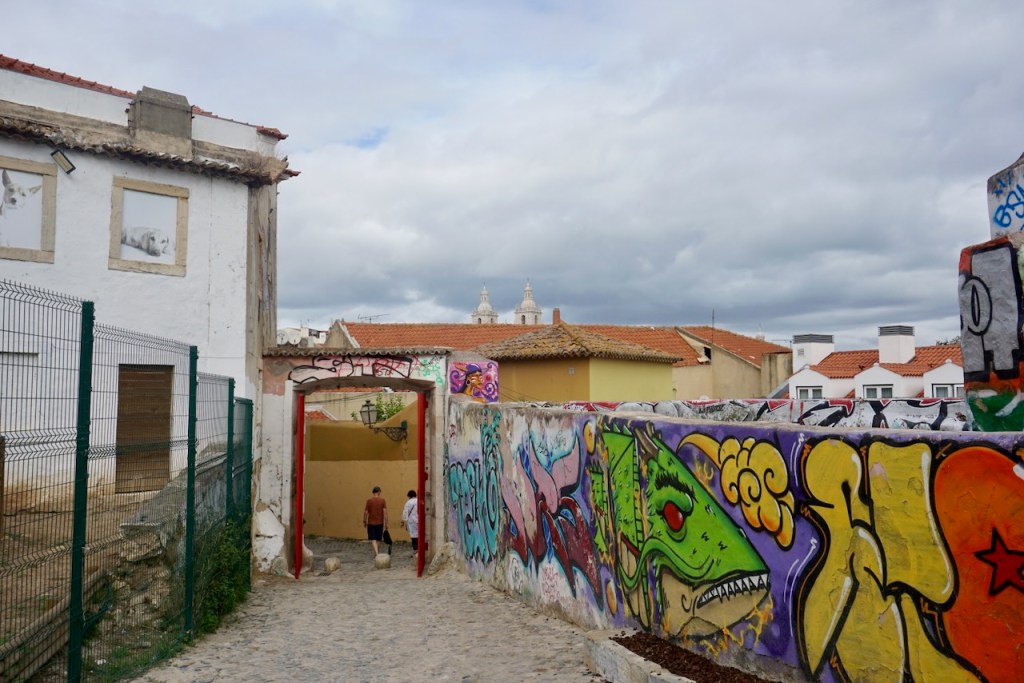
. . . the prevalence of street art in the Ribeira neighbourhood and elsewhere . . .

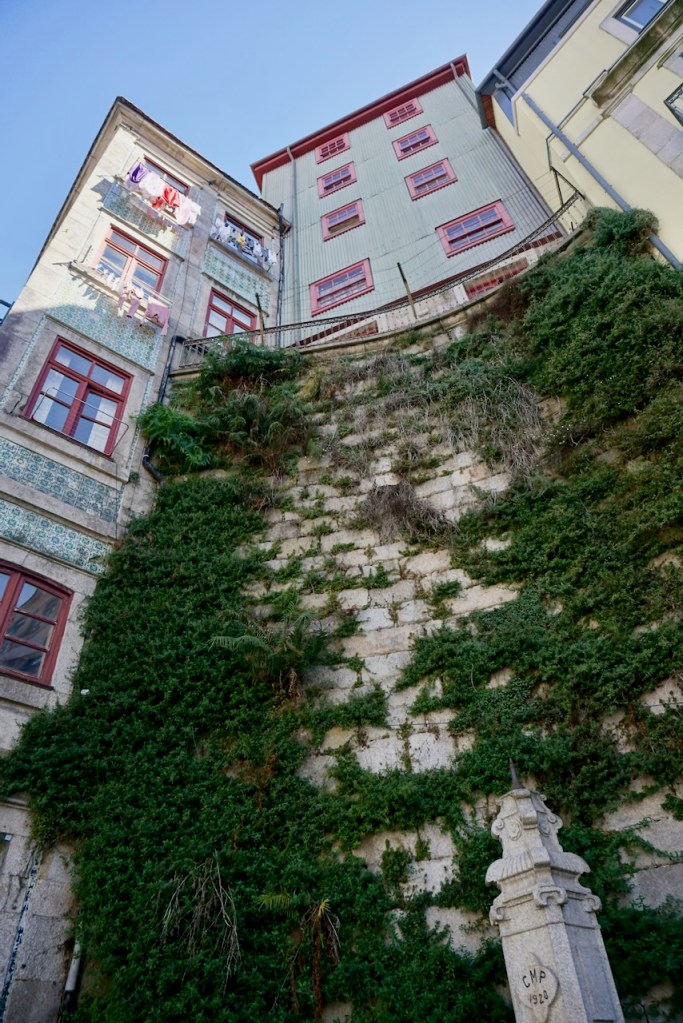
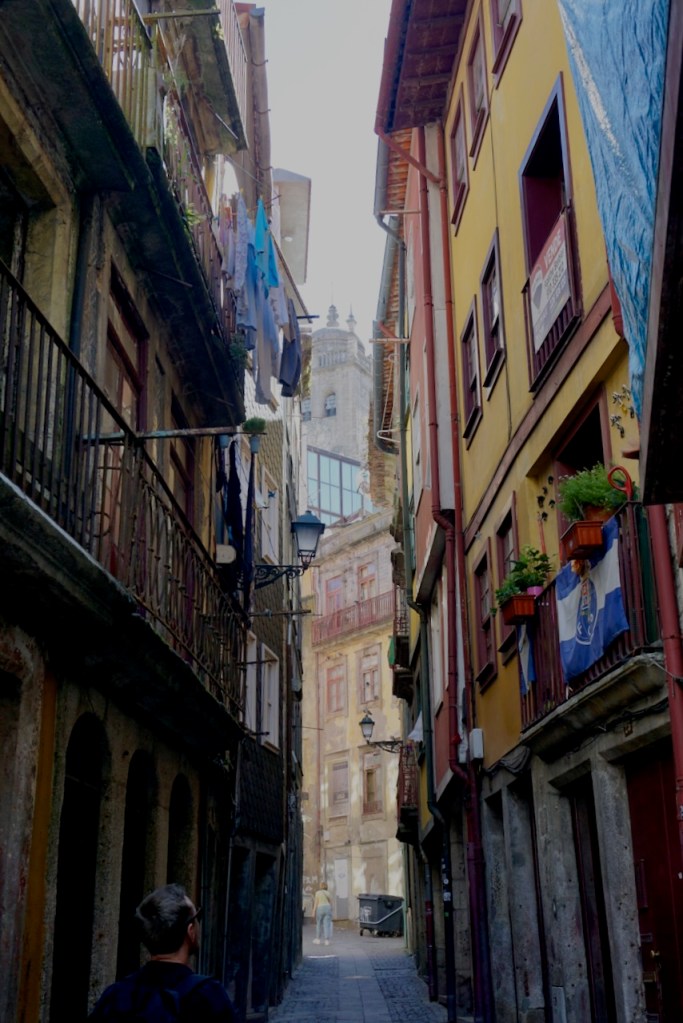
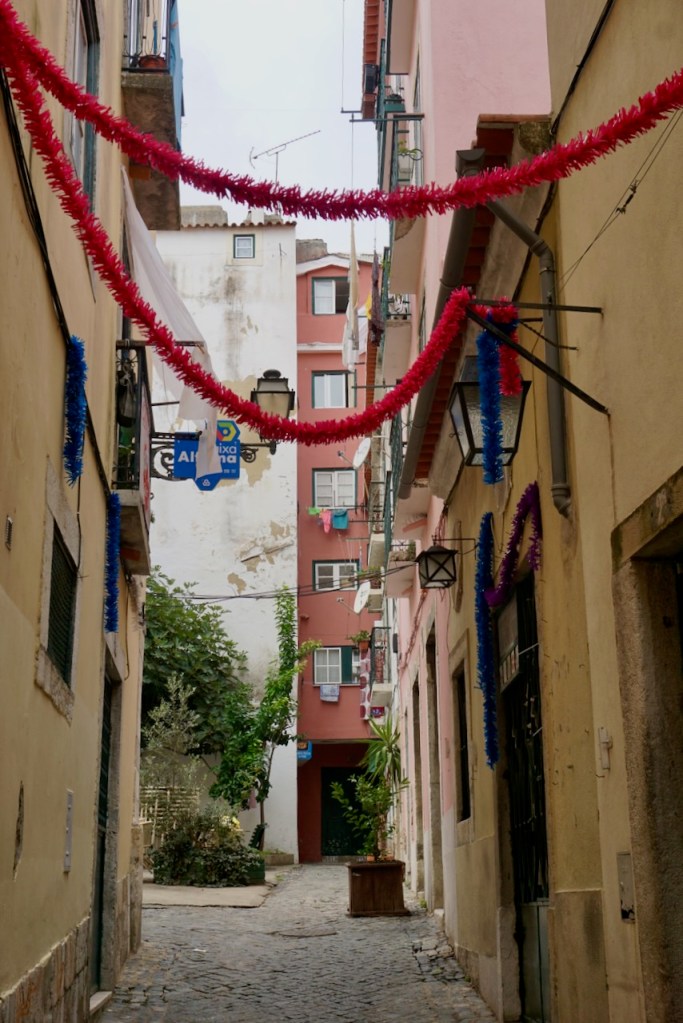
. . . and the surprises hidden in little alleys, which always seemed to be built following the curves of hillsides.

We saw some important sights, as well, such as the Torre dos Clérigos . . .

. . . the train station . . .
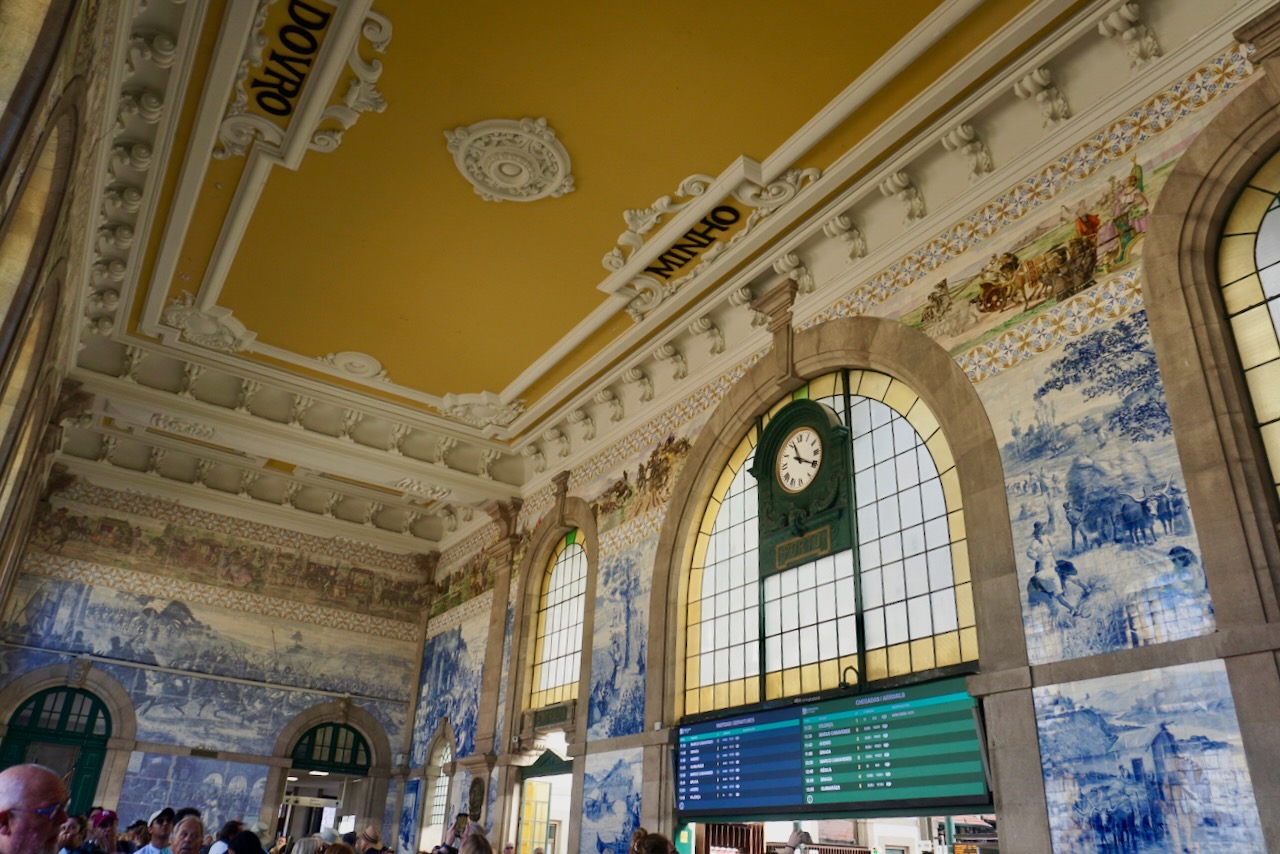
. . . and the Igreja do Carmo, which caught our attention because of, again, the tiles.

We paid for relatively few “attractions” on this trip, but were more than happy to buy timed tickets and wait in line for Livraria Lello, a bookstore described to me “like walking into Harry Potter“. And it was.

As we found out at the end upon paying for our books, the ticket price was discounted from our purchases, which struck me as a rather clever business model.

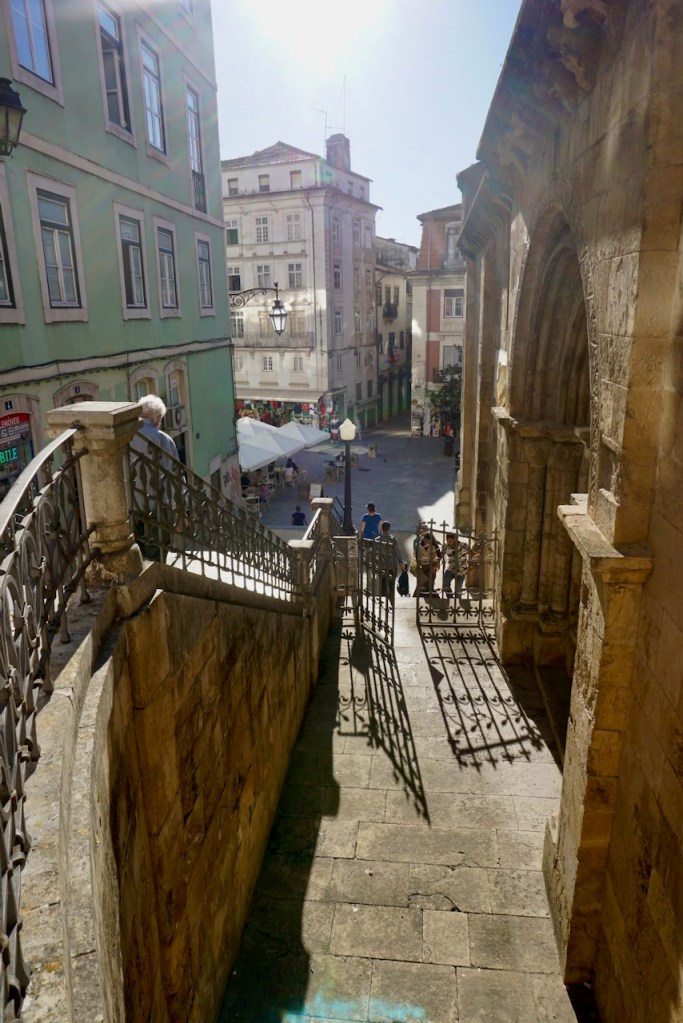
In the afternoon, we climbed all the stairs to the Sé do Porto, the cathedral, and found ourselves far more interested in the view than the building itself.
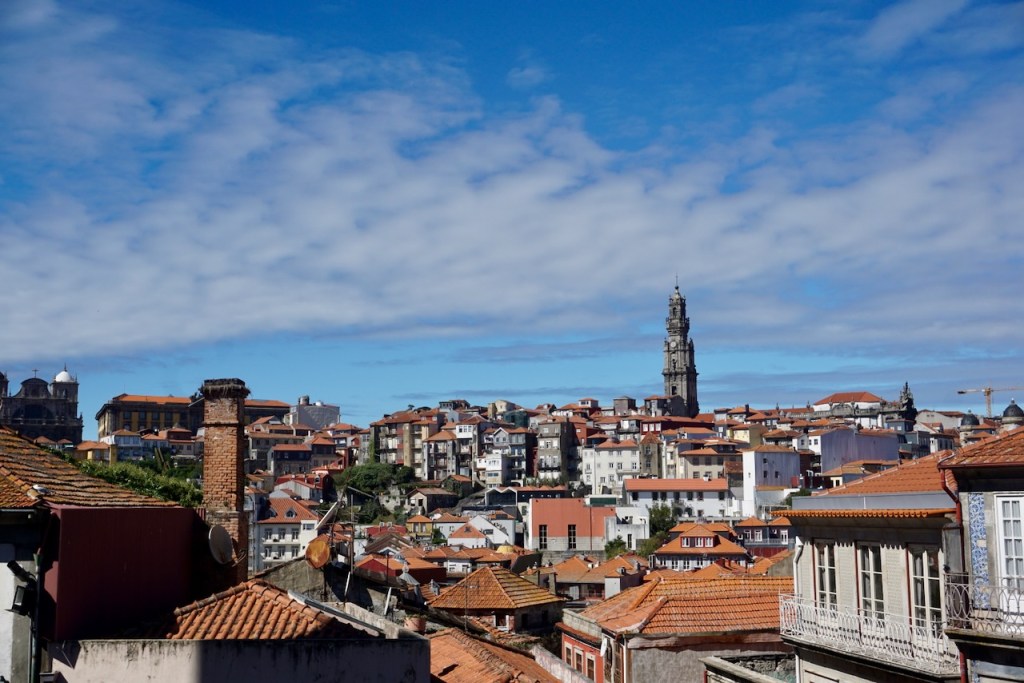
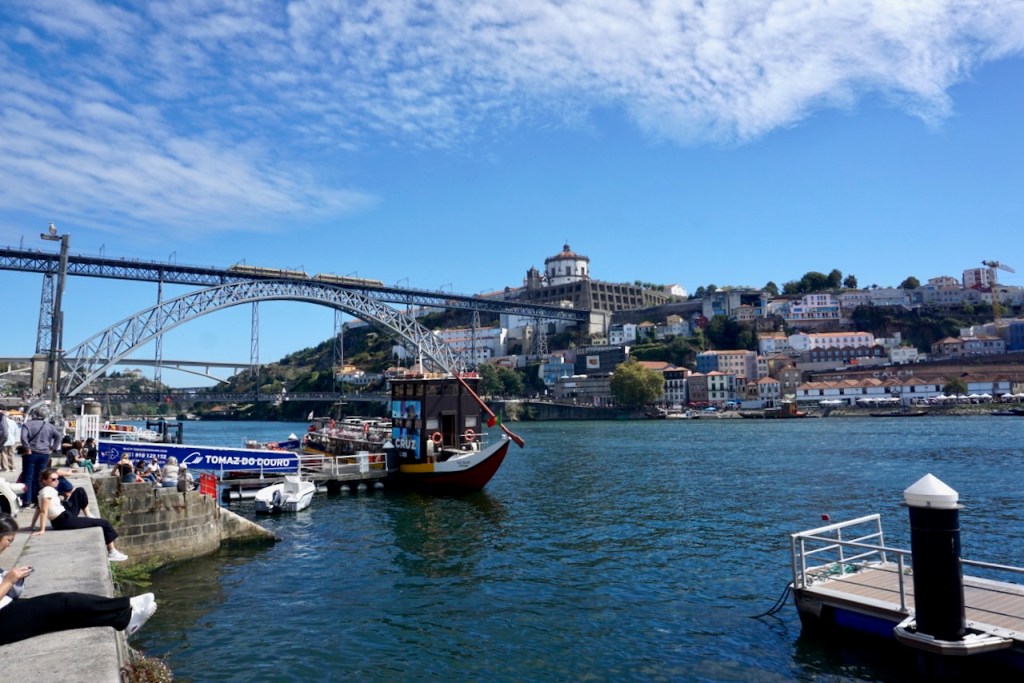
From there, we headed down to the water for a snack before crossing the river to taste some port. We’d had a glass at dinner the previous night, and that was fine, but I found three tastes to be rather a lot. Port tastes like it smells, thick and syrupy, and I think it was the amount of sugar that left me with a headache the following morning. National beverage aside, that was the end of drinking port.
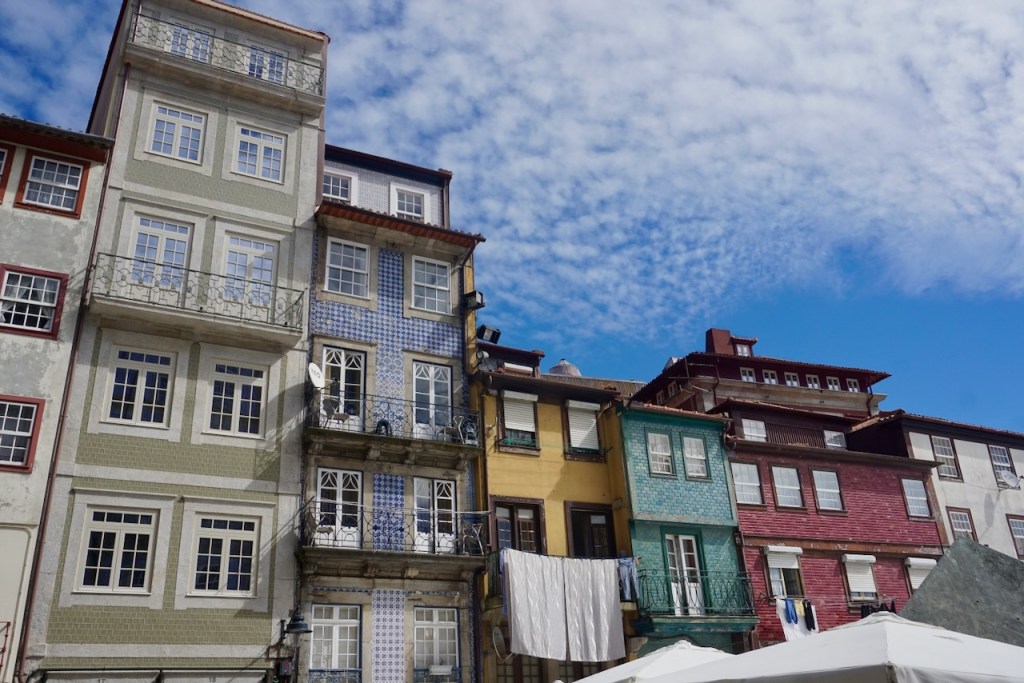
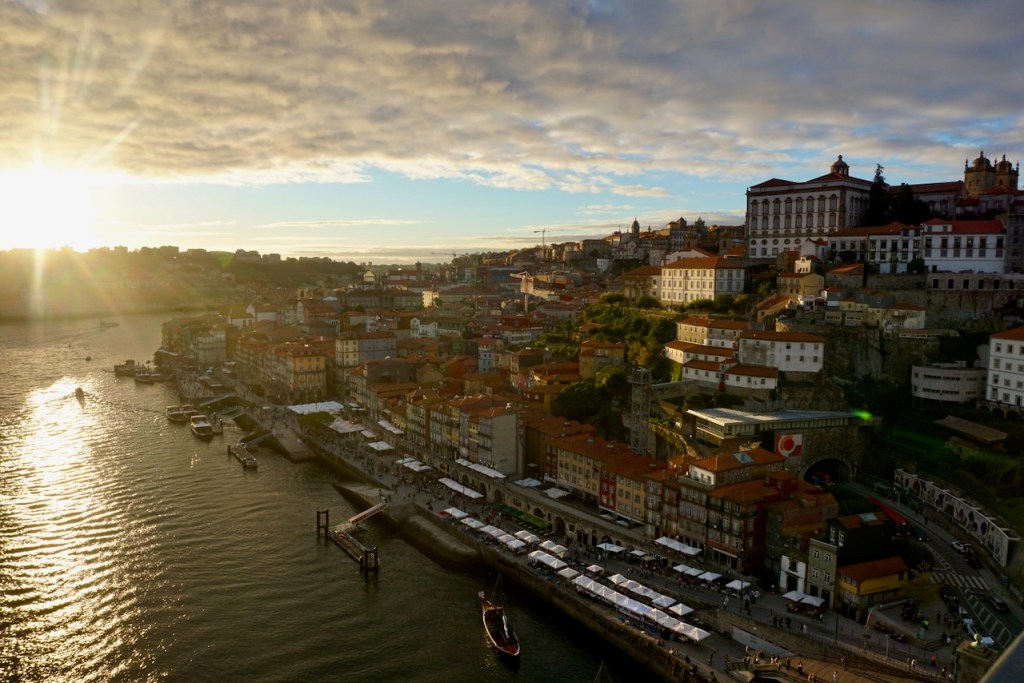
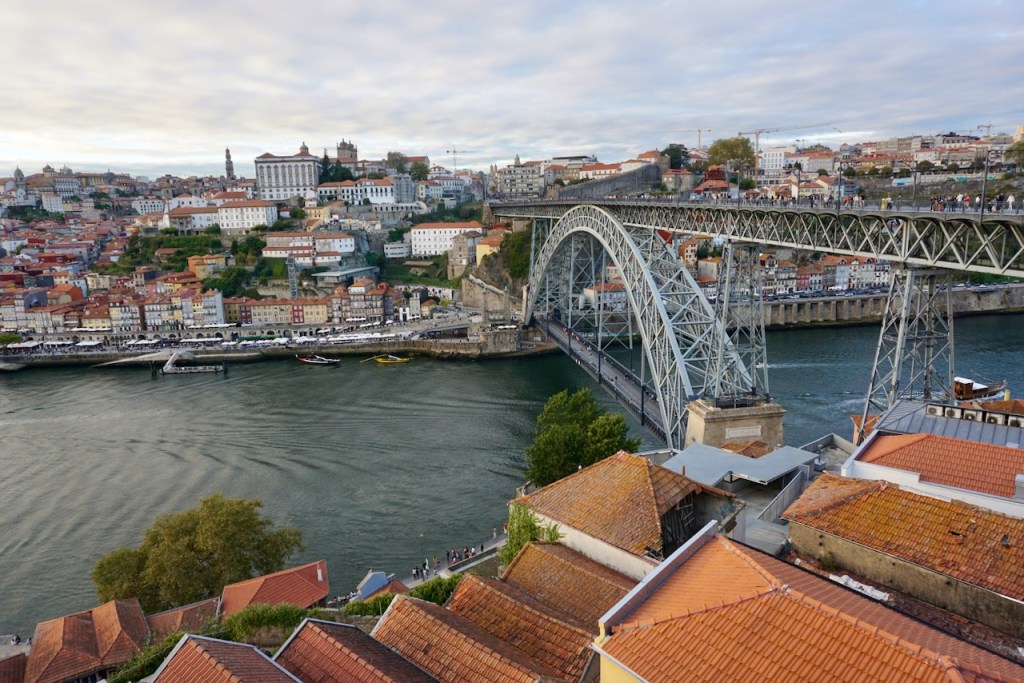
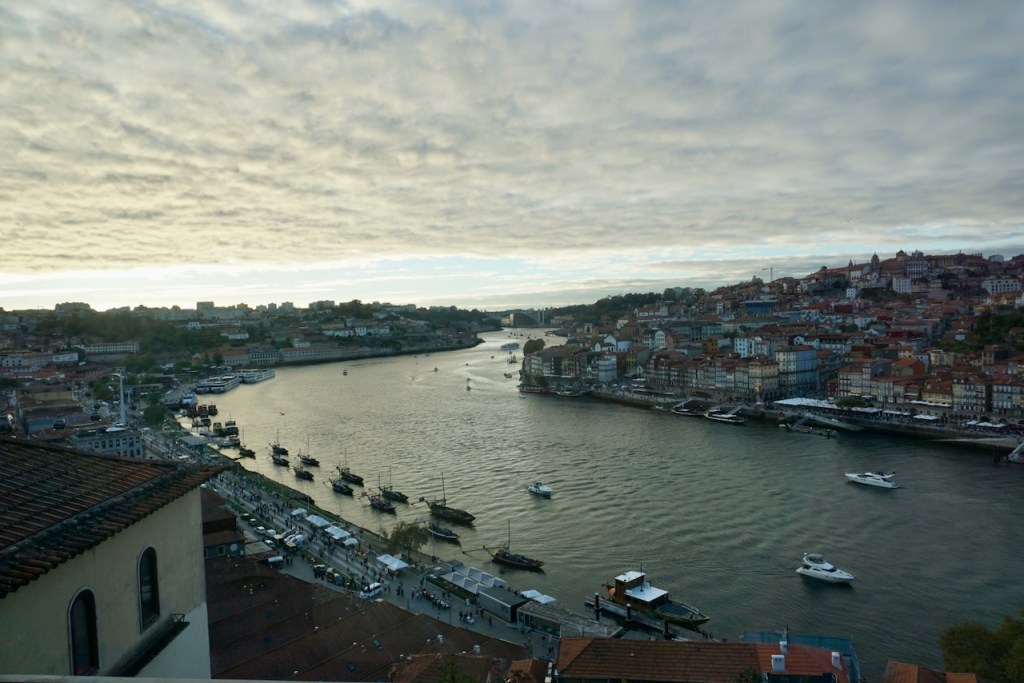
For the sake of the view, we took the Gaia cable car back to the bridge after a stroll along the Duoro River. Crowds of people had gathered to wait for sunset, which we took in while walking across the bridge in the direction of downtown.
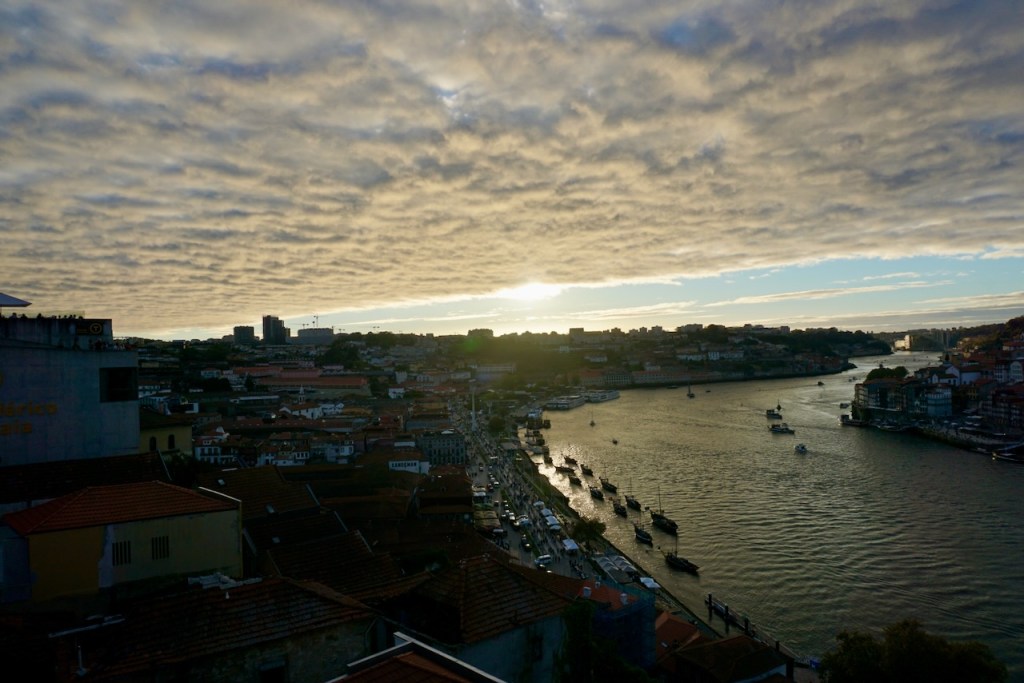
I found this a fitting end to our time in Porto. We had the feeling that we had at once seen the whole city and nothing at all. We had wandered and tasted and gotten lost and taken detours, and we picked up our rental car the following morning thoroughly charmed by the experience. There’s not much more one can ask of a city.

Aveiro

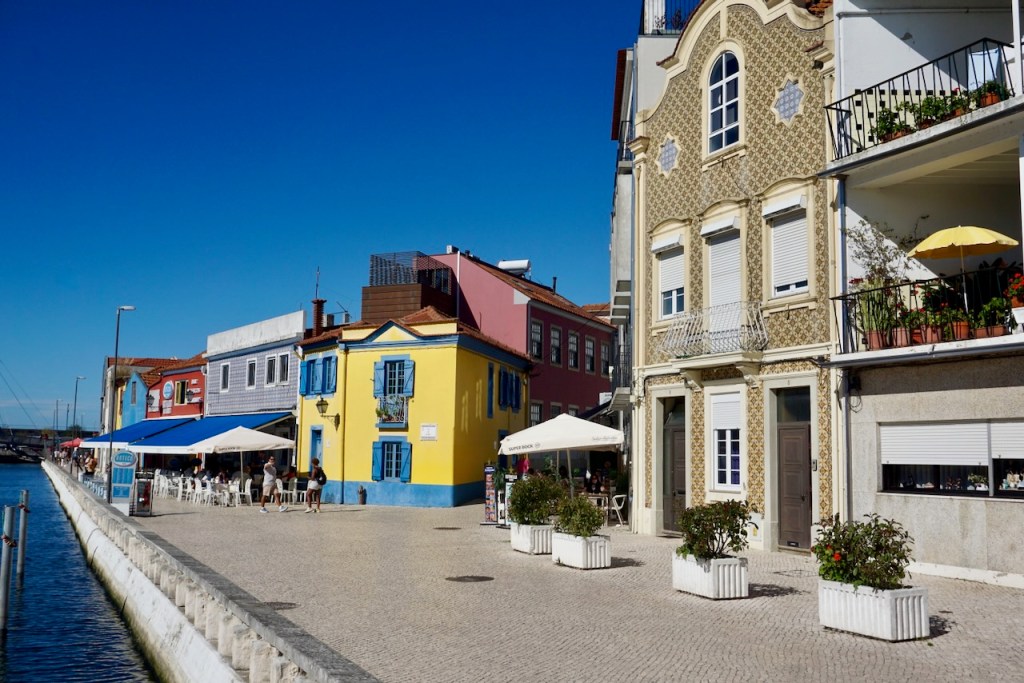
Our first stop on the road was Aveiro, a little town built along a system of canals stemming from a nearby lagoon. For reasons that we couldn’t discern, the bridges were festooned with ribbons on which messages, names, and dates were written, giving everything a rather festive atmosphere.

After getting our bearings, we headed into a plaza for ice cream and made good use of the handicrafts souvenir shop nearby. It always makes me smile to see perspectives of the world from elsewhere.

As always, we appreciated the architecture and the tiles; many of the buildings here had an Art Deco flair, lending Aveiro the feeling of walking through an old film set.

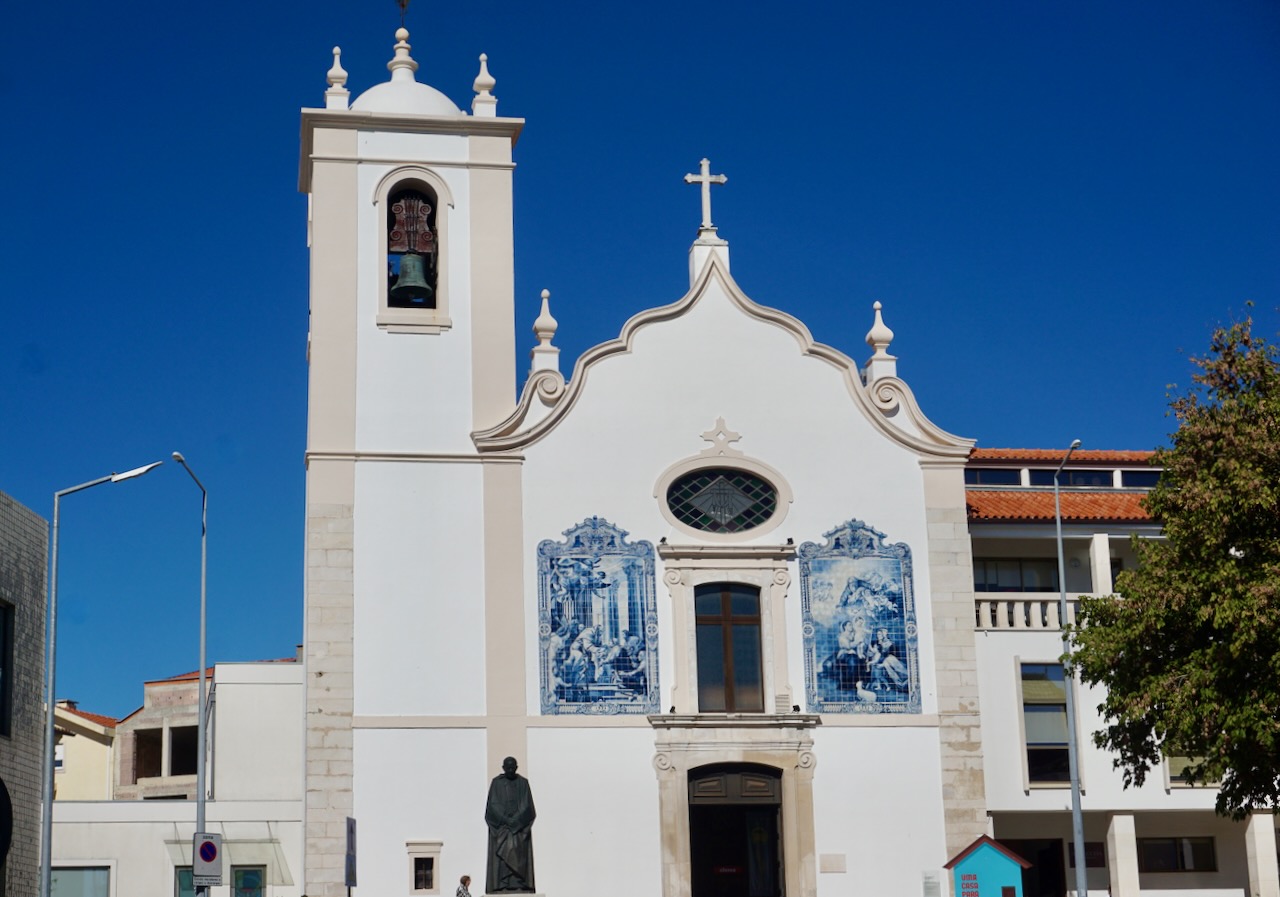
As in most towns in Europe, there was naturally a church to see . . .
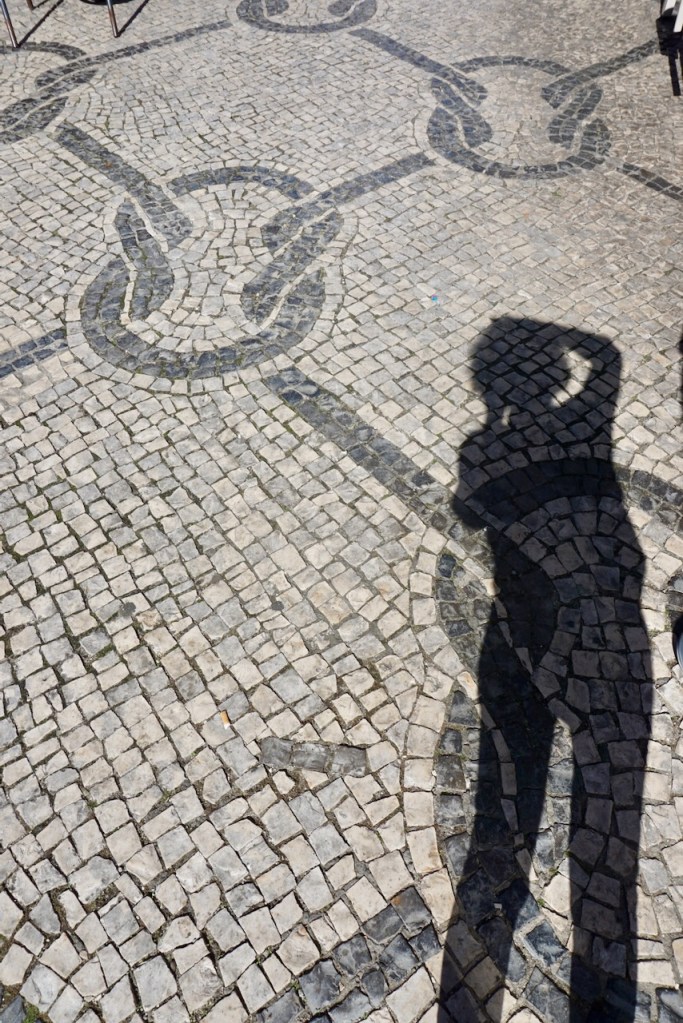
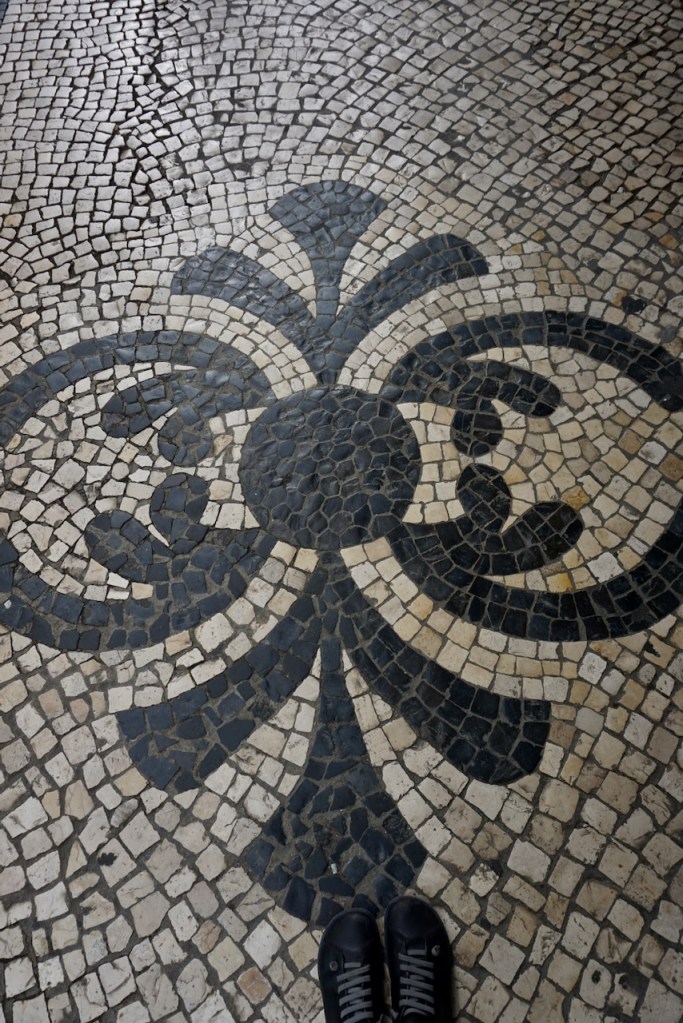
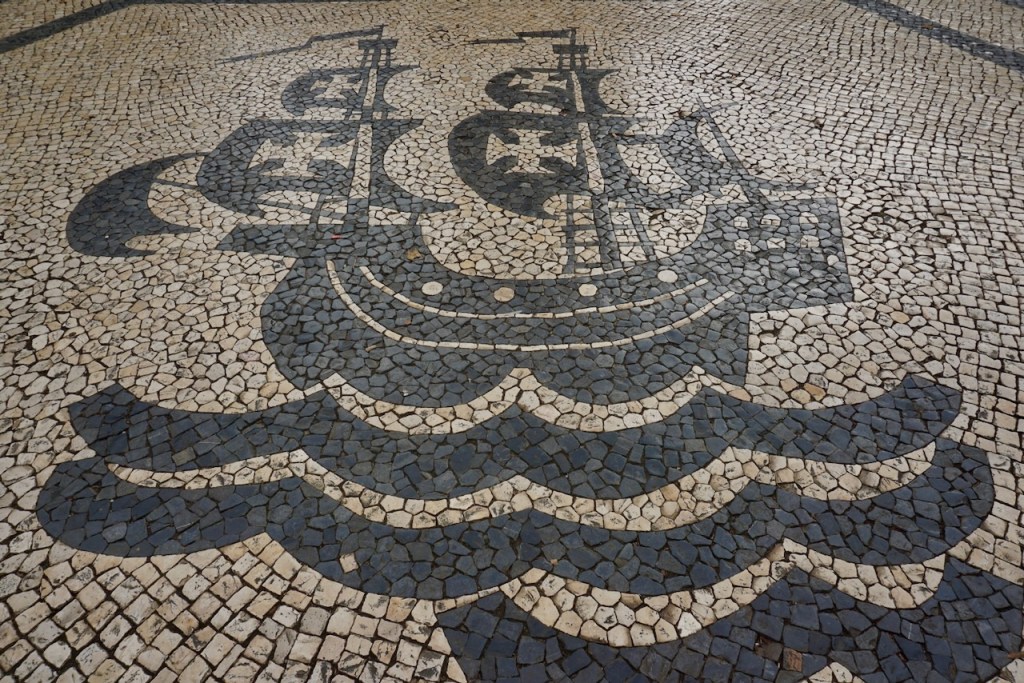
. . . and the mosaics covering the ground nodded at the importance of fishing to the area.
After a brief stroll to stretch our legs, it was back to the car to make it to our next destination before sunset.

Coimbra

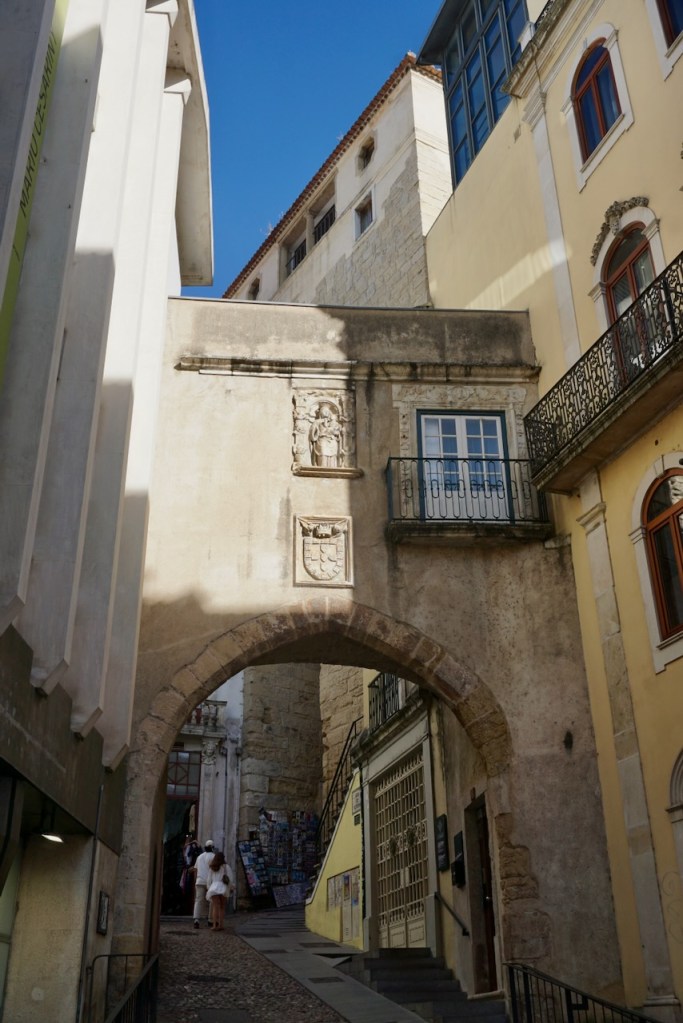
The first thing that strikes about Coimbra, as everyone had told us, is that it’s old. It has a history dating back to Roman times, many medieval buildings, and a university also from the Middle Ages. The construction and stone work differed from what we had seen before, and the layout of the town curved upwards, staircases and streets spiralling, winding, and becoming narrower the higher we went.
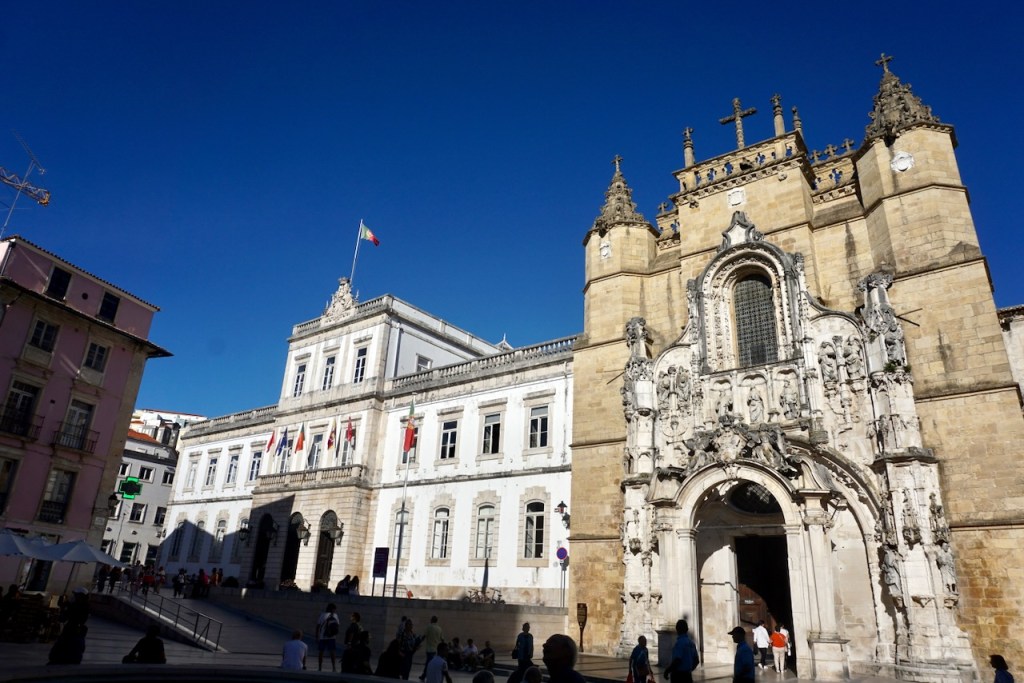
At the university, the most famous building is the library, which we admired but did not pay to visit.
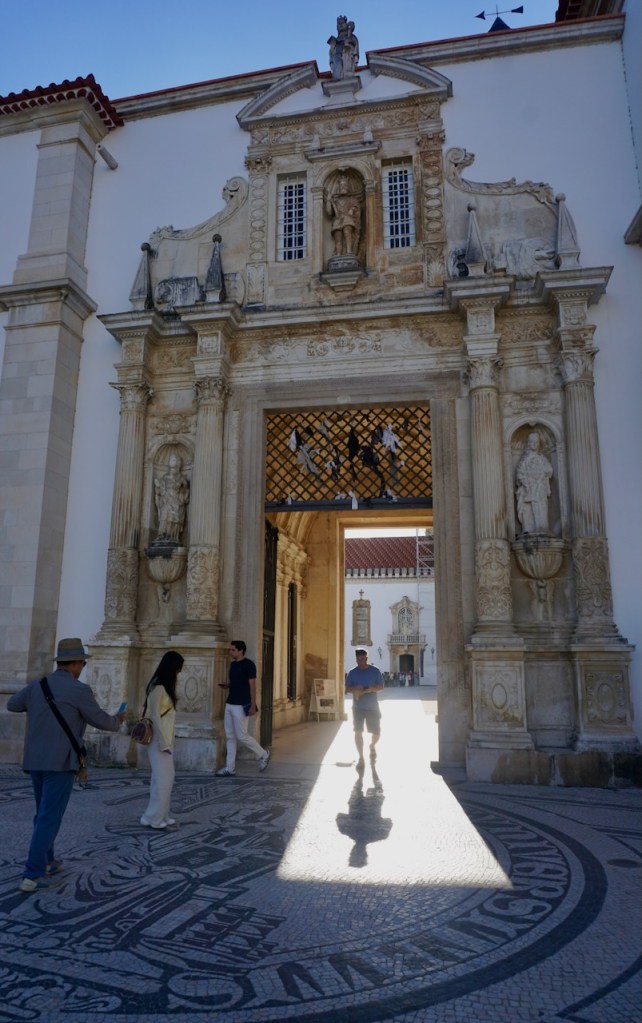
Coimbra is a student town and the atmosphere of such a place was present in street art, installations, and many buildings.

It was dusk when we left Coimbra and dark when we arrived at the beach town where we’d spend two nights. As we found out in the morning, we were a world away from touristy hot spots.

Figueira da Foz

Due to globalization, it’s sometimes easy for the English-speaking traveller to forget that there are places in the world that still exist unto themselves. Figueira da Foz was just such a place. Located on the beach, there is some tourism when the weather is right, but not enough that people working in bakeries or grocery stores, with one single exception, spoke English. And I am again reminded what a privilege it is to be able to travel through the world speaking my own language.

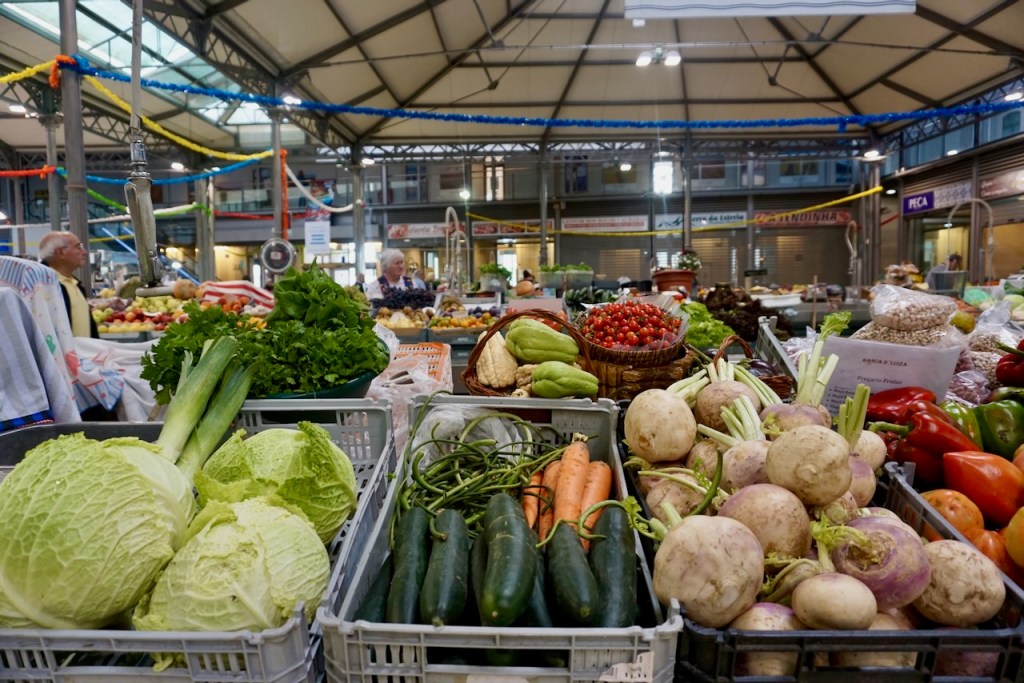
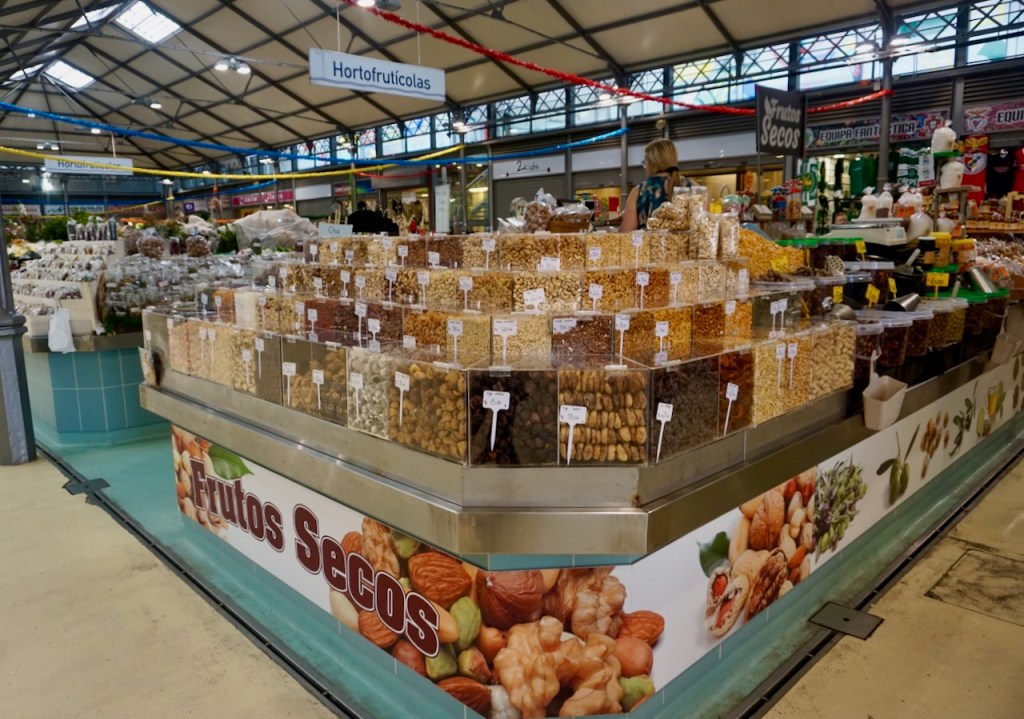
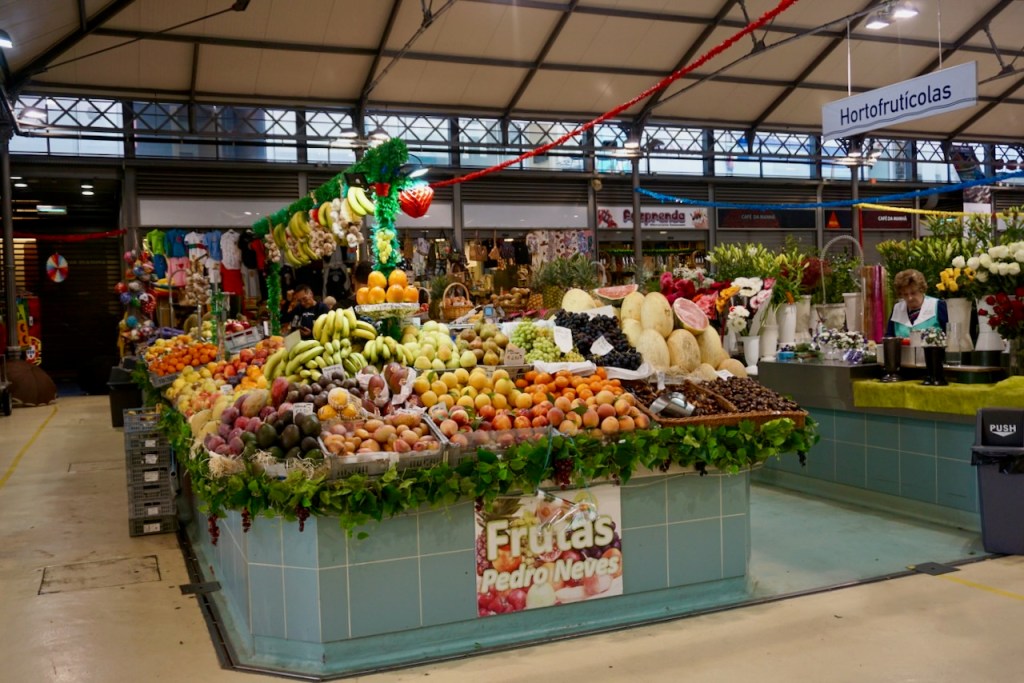
After an unsuccessful attempt in pouring rain to find gluten free breakfast, we headed to the local market. Figueira da Foz has multiple supermarkets (we visited out of curiosity to buy snacks that we don’t have in Germany) but the market was visited by elderly people doing their shopping and simply meeting one another. I would be very glad to have daily access to something similar. We bought fresh and dried fruit and loose tea, and I wished that we had proper kitchen utensils in our accommodation to make ourselves a real meal.
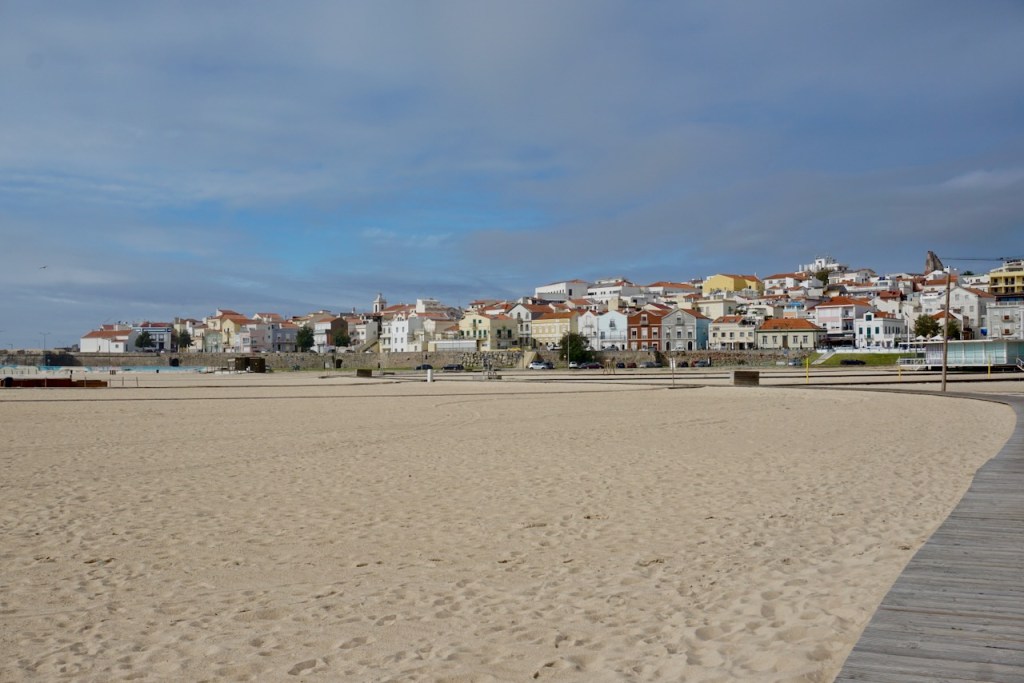
When the rain stopped in the afternoon, we walked for a long time along the beach, testing the cold Atlantic with our feet, laughing and running away from the waves that came up sharply and suddenly, far higher than we expected. This is not a surf beach; the wind and waves were far too dangerous for that.

We were pleasantly surprised by the excellent meal of traditional tapas (heavy emphasis on seafood but plenty for the vegetarians) accompanied by local red wine. And we had the distinction of being the first people in the restaurant, again driven by rain, and the last ones out. We talked and laughed and it was a pleasure to sit cozily inside, the lighting dim, enjoying the time. Considering we would be on the road again the next day, it ended up being a rather late night.

Sintra

In the rain again, we stopped in Sintra, parking as required in the city before making our way on foot past the train station and into the old town where parking is prohibited. Like everything so far, we had no real plan for Sintra, other than to see castles and gardens. As we found out, however, Sintra requires tickets, some timed, for everything. The rain let up and we began to walk in the direction of the next set of hills, following signs pointing to castles built, as always, as high up as possible. Already, the town had a mysterious air to it.
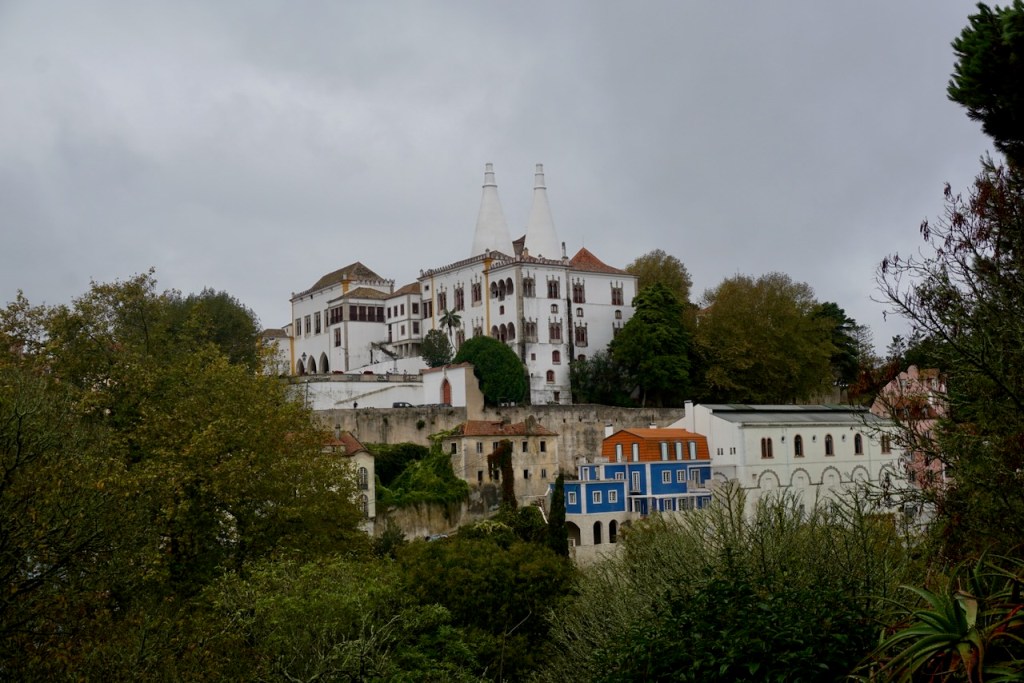
It soon became clear, however, that rain was coming in again and that it was much too far to walk in our jeans and street shoes. We found a bus stop, did some quick inquiries with the aid of technology, talked to the next bus driver, and bought round-trip tickets that took us back down to where we started before heading up the impossibly narrow roads through the old town and up the hill. I quickly understood why cars weren’t allowed.

The drive up to the castles overlooking Sintra was like entering a portal to another world. It began to rain in earnest, giving what was already a unique place a mystical, ancient feeling. There were secrets here, there had been lives lived, there were stories told and to tell.

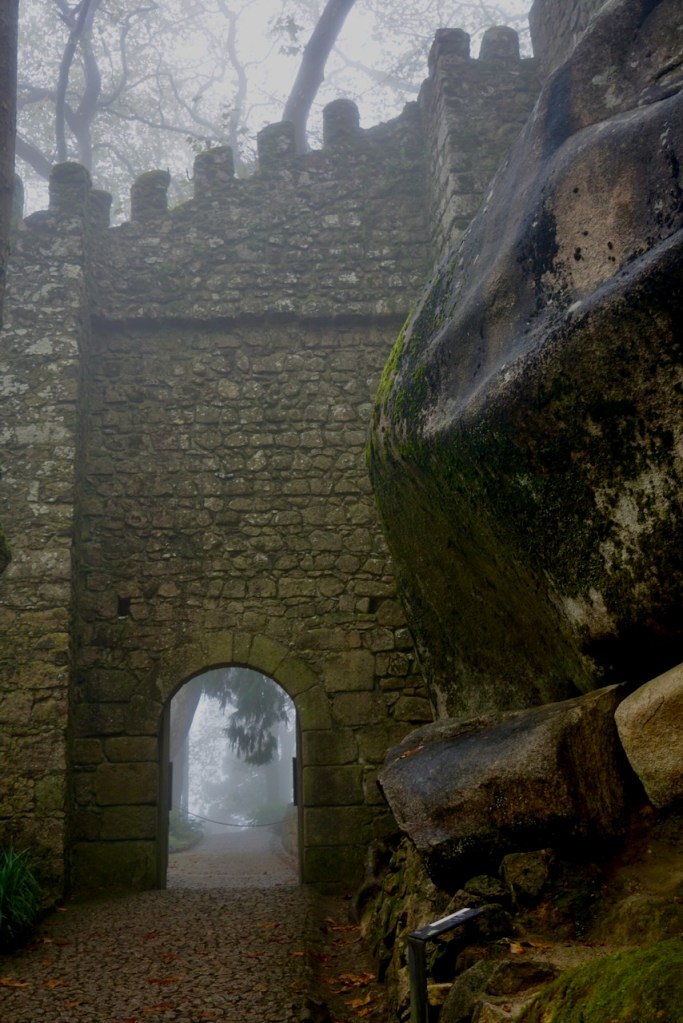
As every castle charges an entry fee, we made our choice based on where we got off the bus and bought tickets for Moorish Castle, a fortification dating back to the tenth century. We saw ancient cisterns, walked along the fortress walls, and looked at evidence of the confluence of Islamic and Christian history in the area.
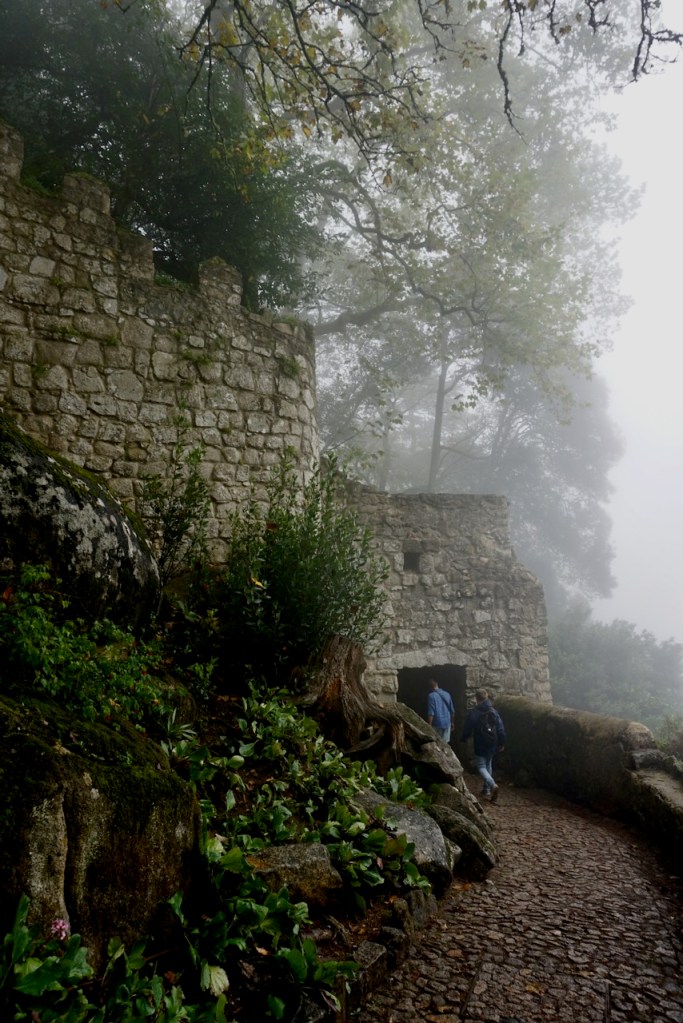
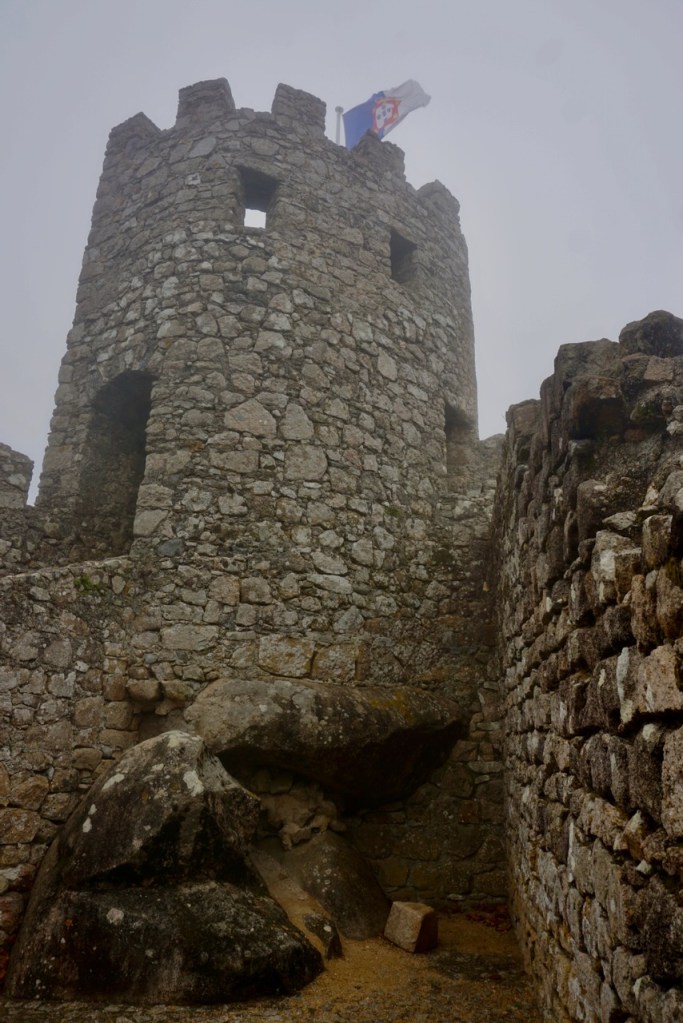
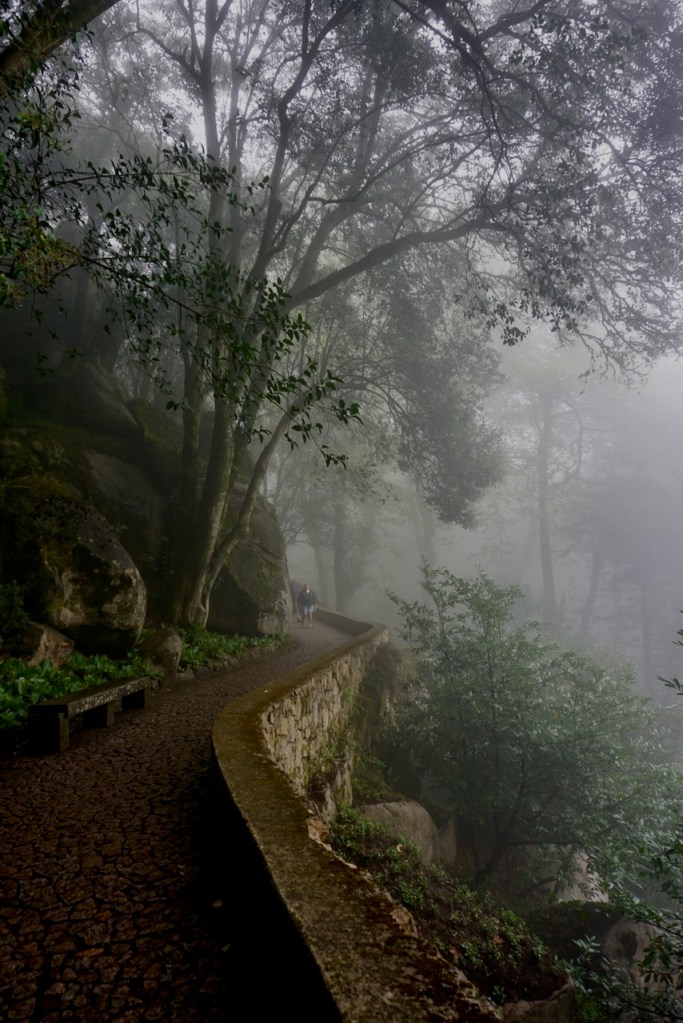
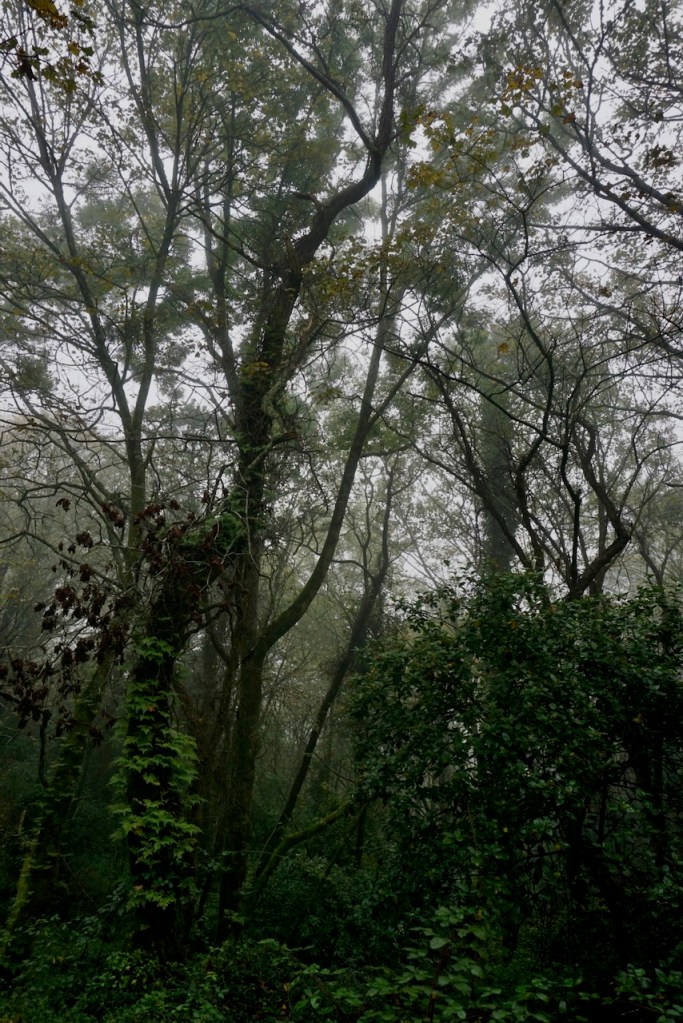
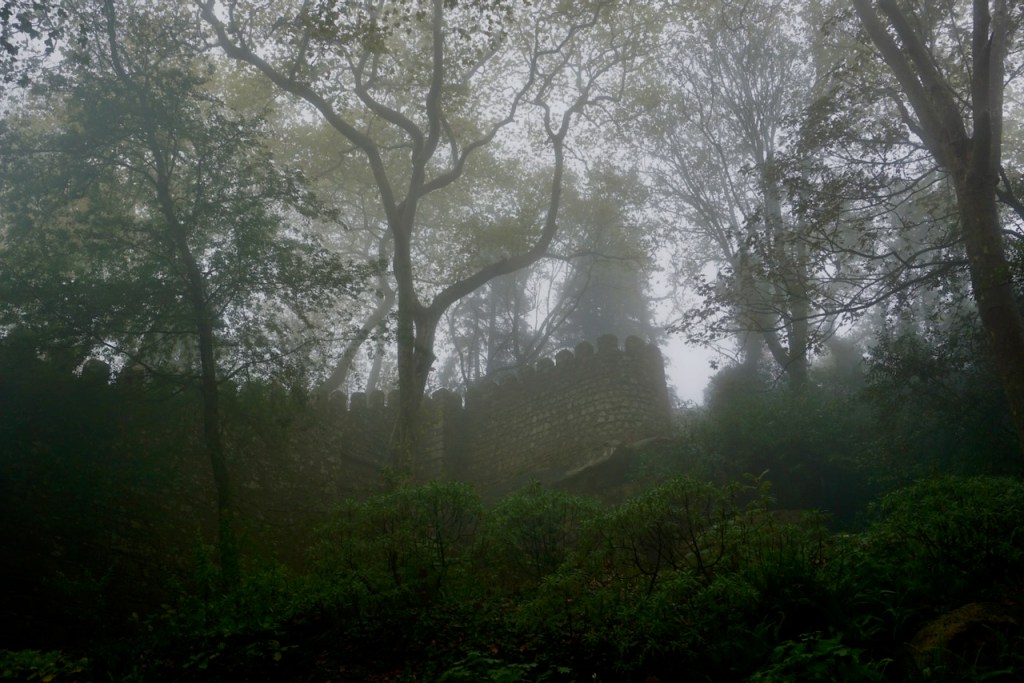
The air temperature was different up here, the greenery so lush as to create a microclimate completely juxtaposed with the palm trees below. This was a magical sort of world, a different place, an ancient time. The rain didn’t invite us to linger, but being there was a far more immersive experience due to the rain than it would have been without it.

Lisbon

A broken entry gate in the parking garage greeted us in Lisbon and we were instructed to simply drive around the block and try again at the other entrance. In other parts of the world, there might have been a sign, but I have to admit that I do like the casual, relaxed lifestyle of southern Europe.

Lisbon was instantly all-consuming in the ways that big cities often are. Loud, busy, fast, a buzzing that excites the senses. I enjoy feeling the thrum of a city and I enjoy the exploring that comes with it, but I feel myself having slowed down a lot since moving to a small town. As we had throughout Portugal, we spent our time in Lisbon just walking and looking, and therefore doing everything at our own pace.

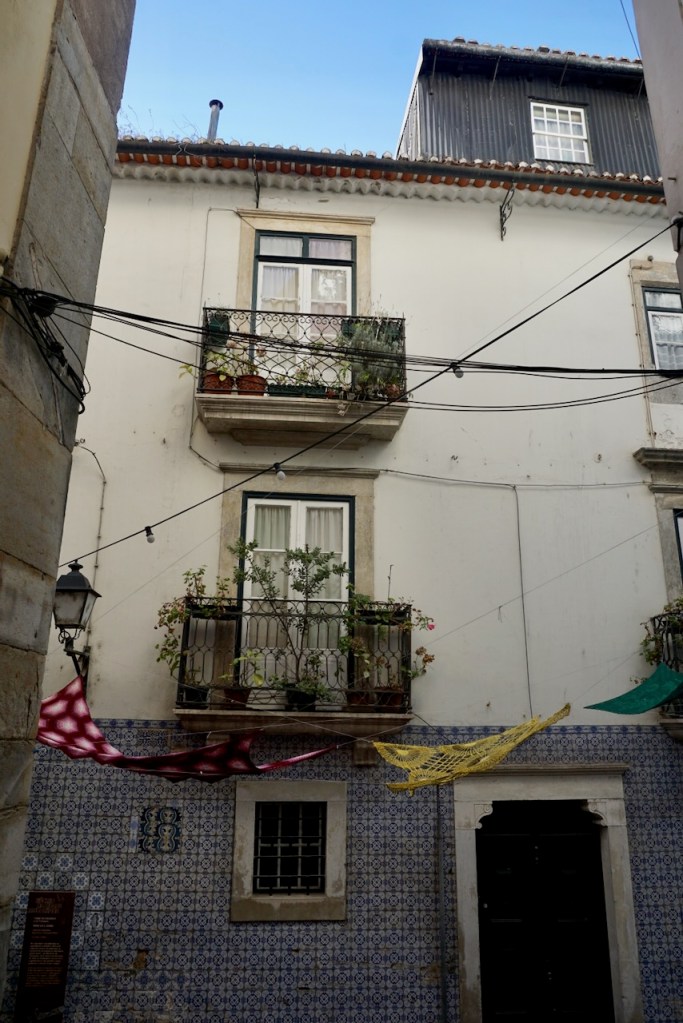
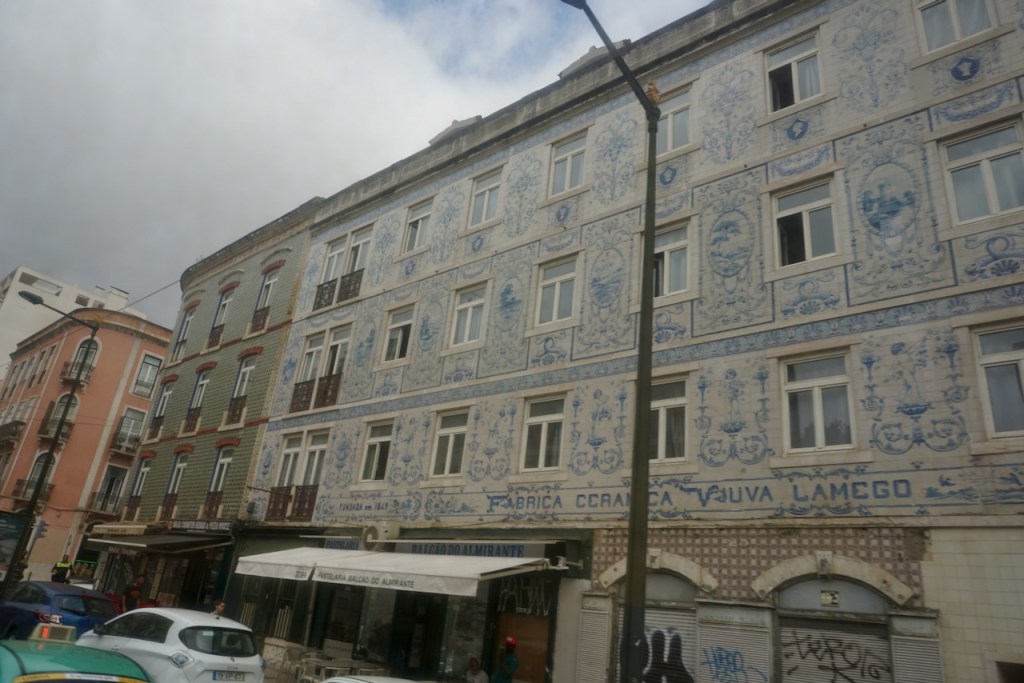
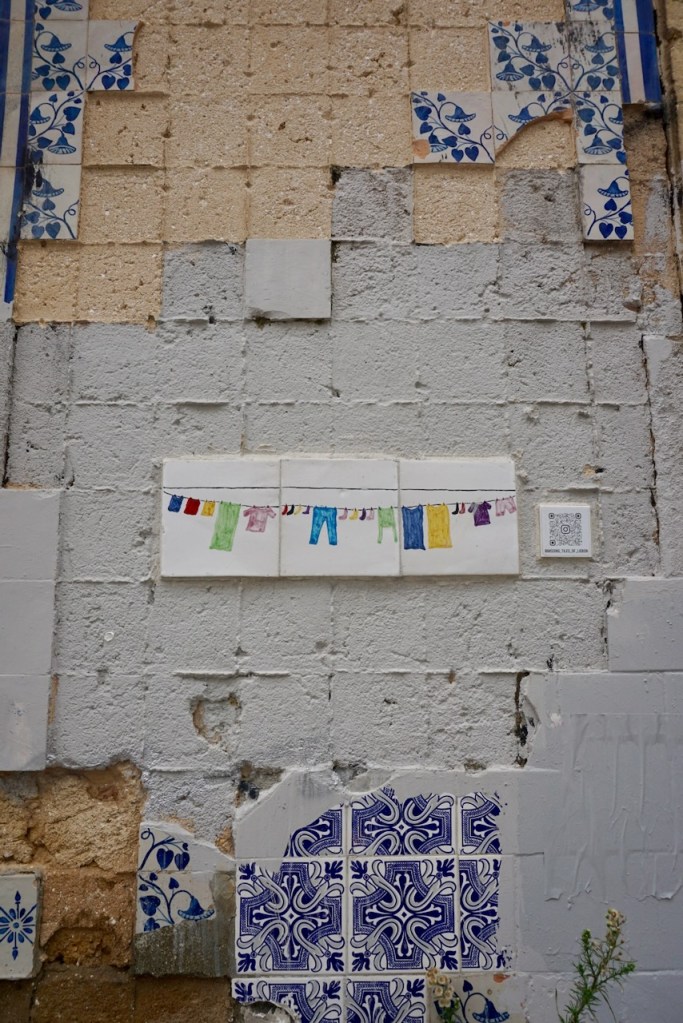
As usual, we were enamoured with tiles . . .

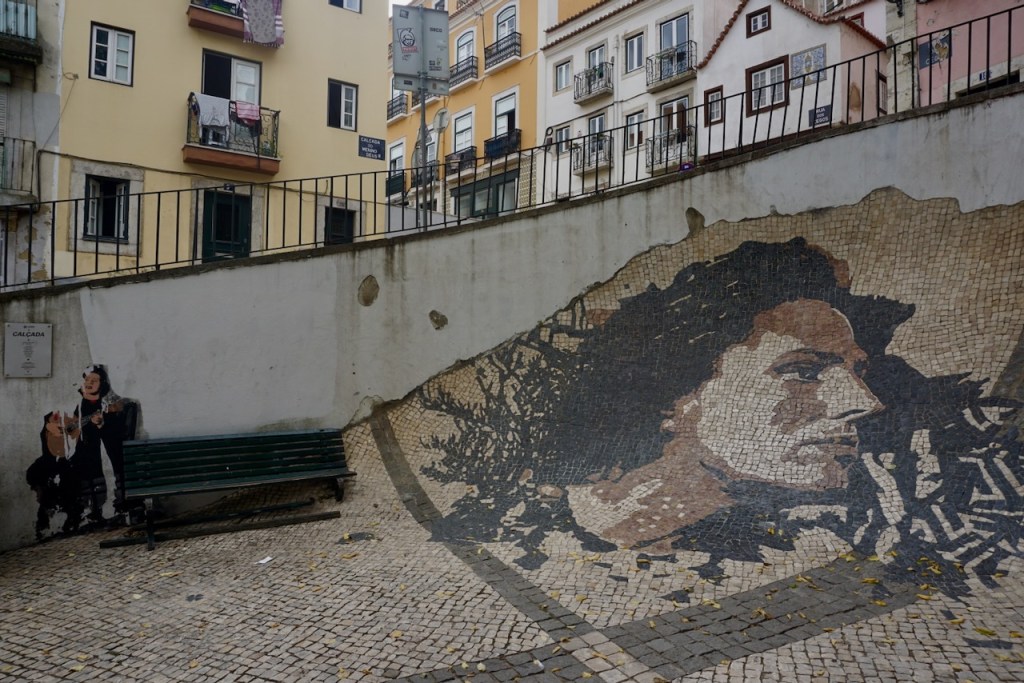
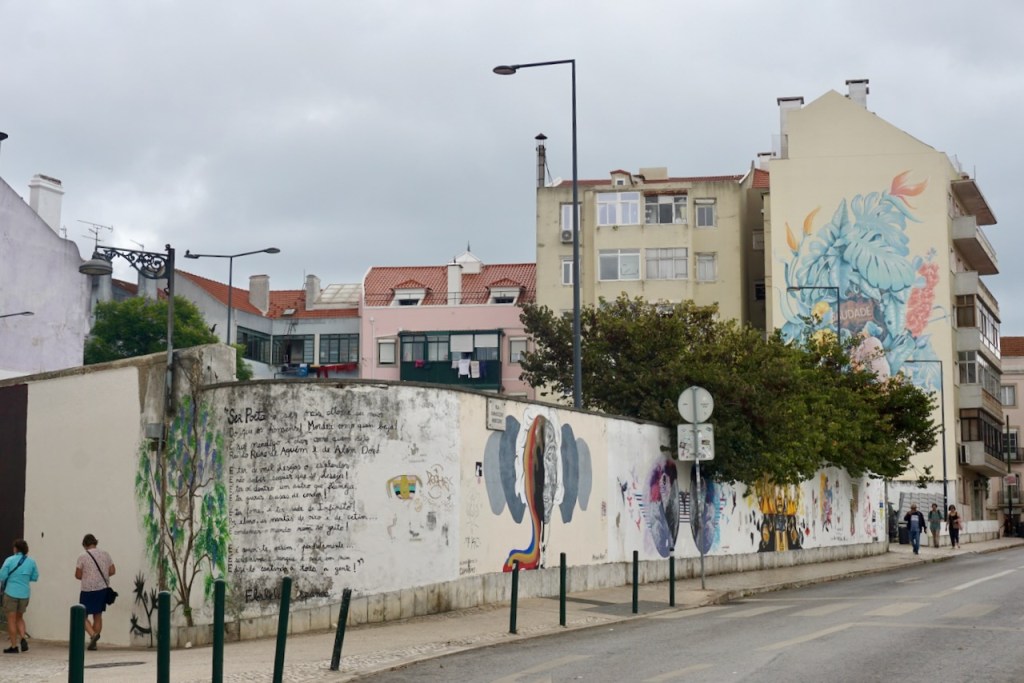
. . . the street art and symbols of human creativity . . .

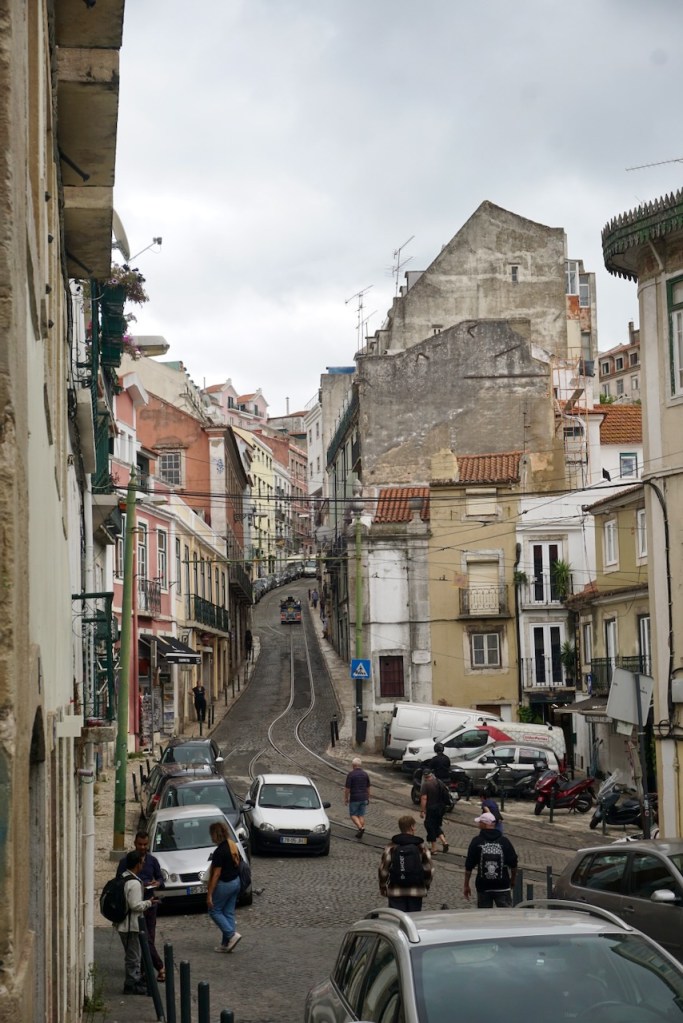
. . . and the twisting, winding streets built into the hills that make up the city and the Alfama, the old town.

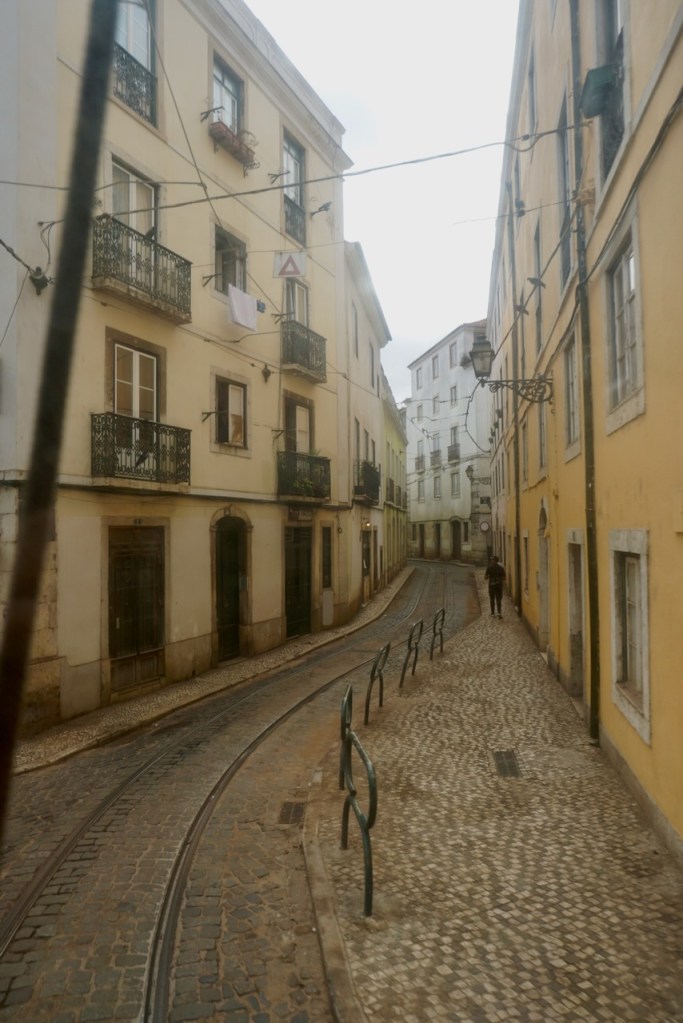
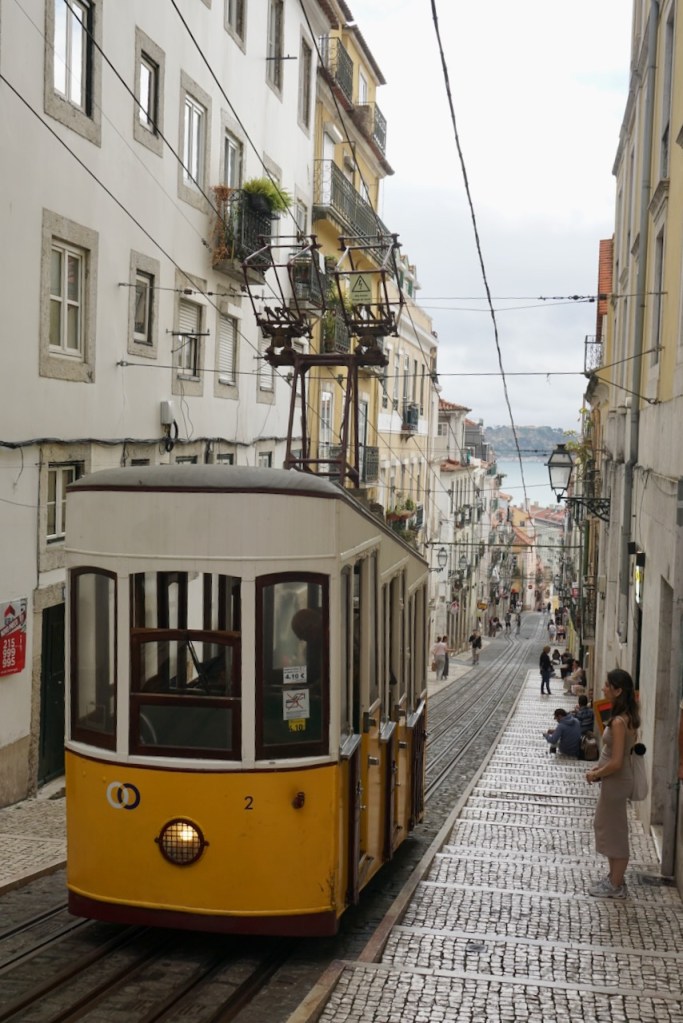
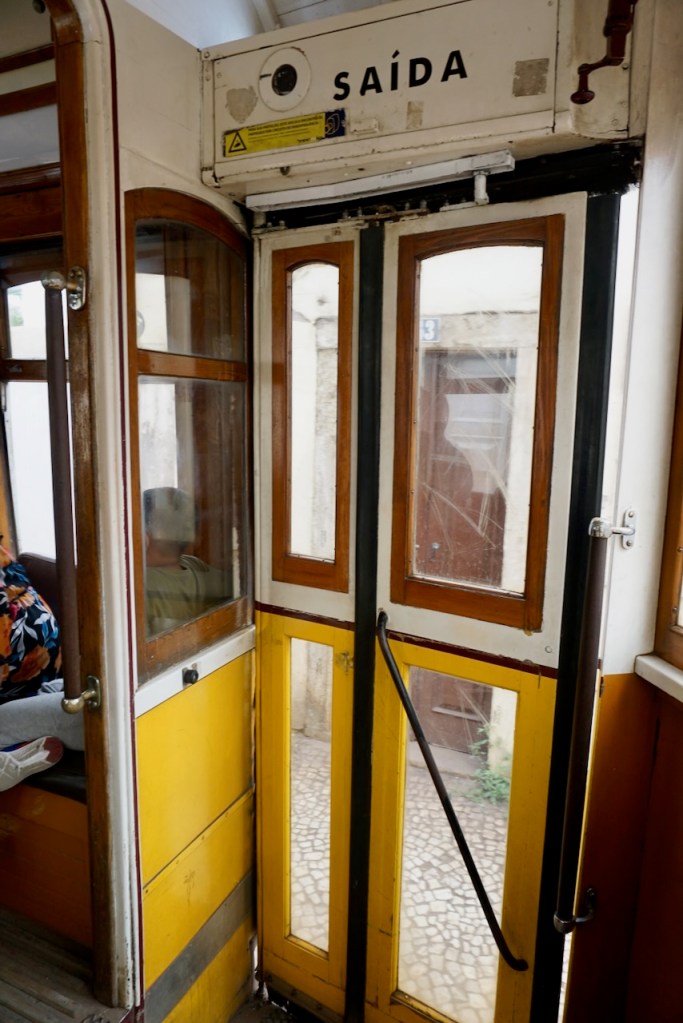
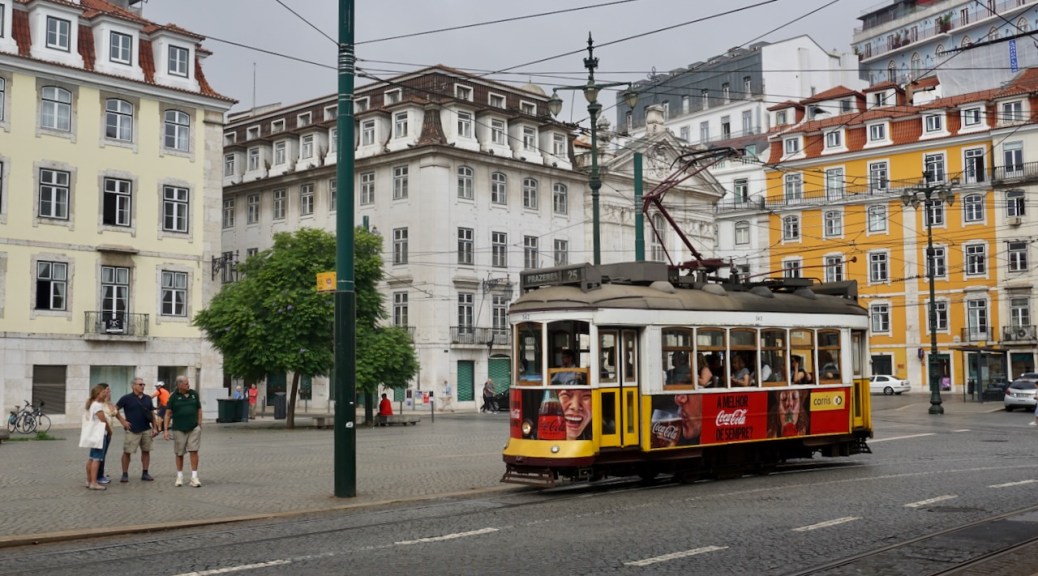
Streetcars and old trams are a particularly charming feature of Lisbon and we went for a ride on Line 28E, taking it from its starting point to its terminus. I hung on in the back, trying to take photos out the windows, and found the speed rather alarming.

We had not expected so great a presence of tuk tuks in Lisbon, but they were everywhere. A glimpse at the prices convinced us that we were better off walking, but they probably are a great option for some, particularly those who would have a harder time with the stairs and hills.

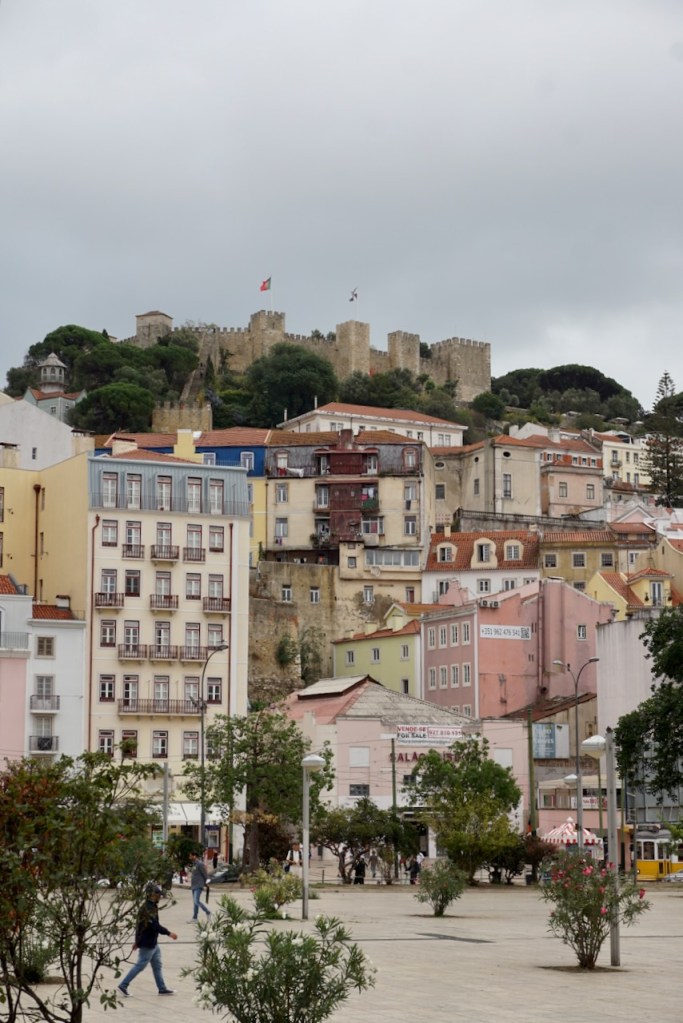
We walked up to the lookout point Miradouro da Senhora do Monte, from which we could also see São Jorge Castle, and gazed down at Lisbon, listenting intently as the tour guide next to us described the stages of building in different neighbourhoods.

While we didn’t go inside the castle, we were tickled by the peacocks that came out to say hello.

Another aspect of Lisbon that we really enjoyed was the nature that popped up everywhere, despite the tiled walkways and streets that seemed to be giving their best efforts to prevent just that.
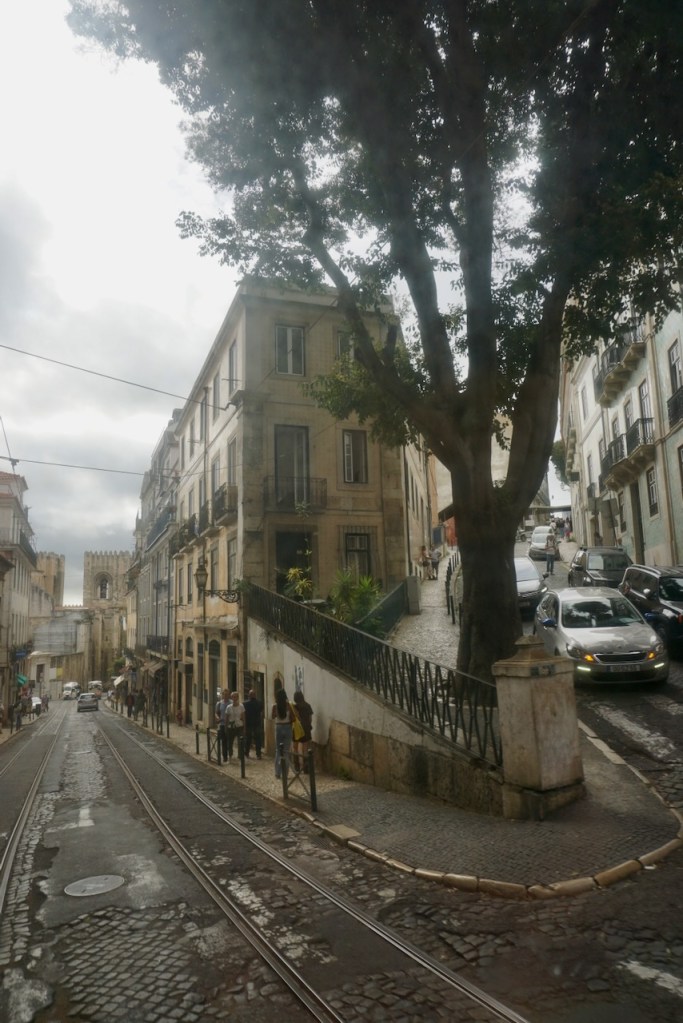
It is worth remembering that Lisbon is old, actually ancient and prehistoric, and cities that old have walls. It was really nice to see shadows of Lisbon’s history in the ground that we walked on.

On our last full day in Lisbon, we walked to the Torre de Belém, a tower fortification built to control the shipping and commerce that made Lisbon famous and Portugal, the first of the European explorers, rich.

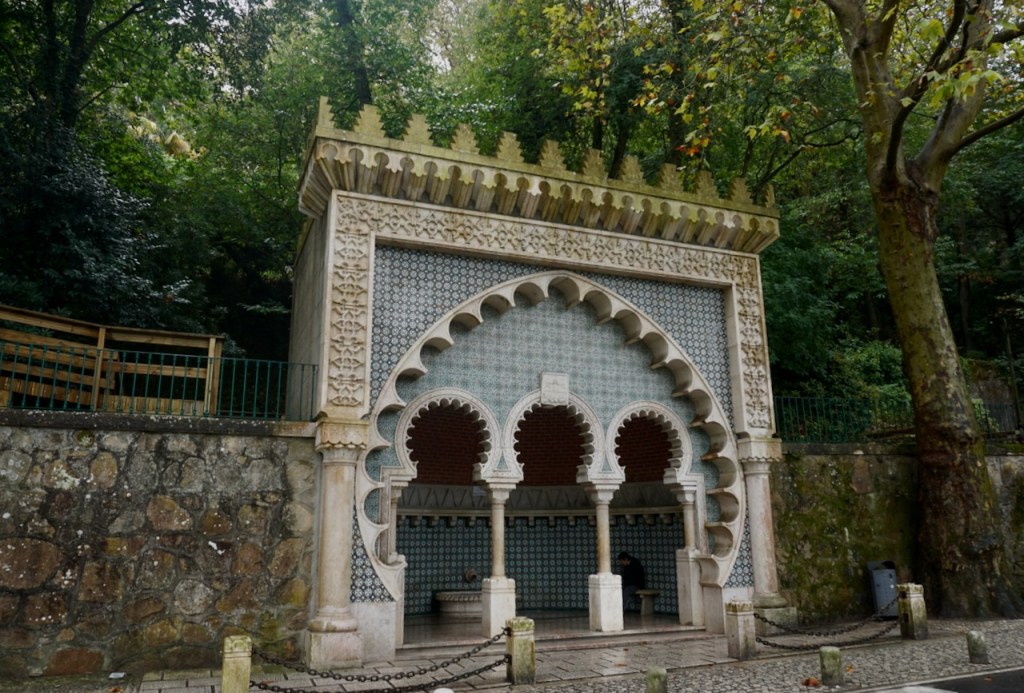
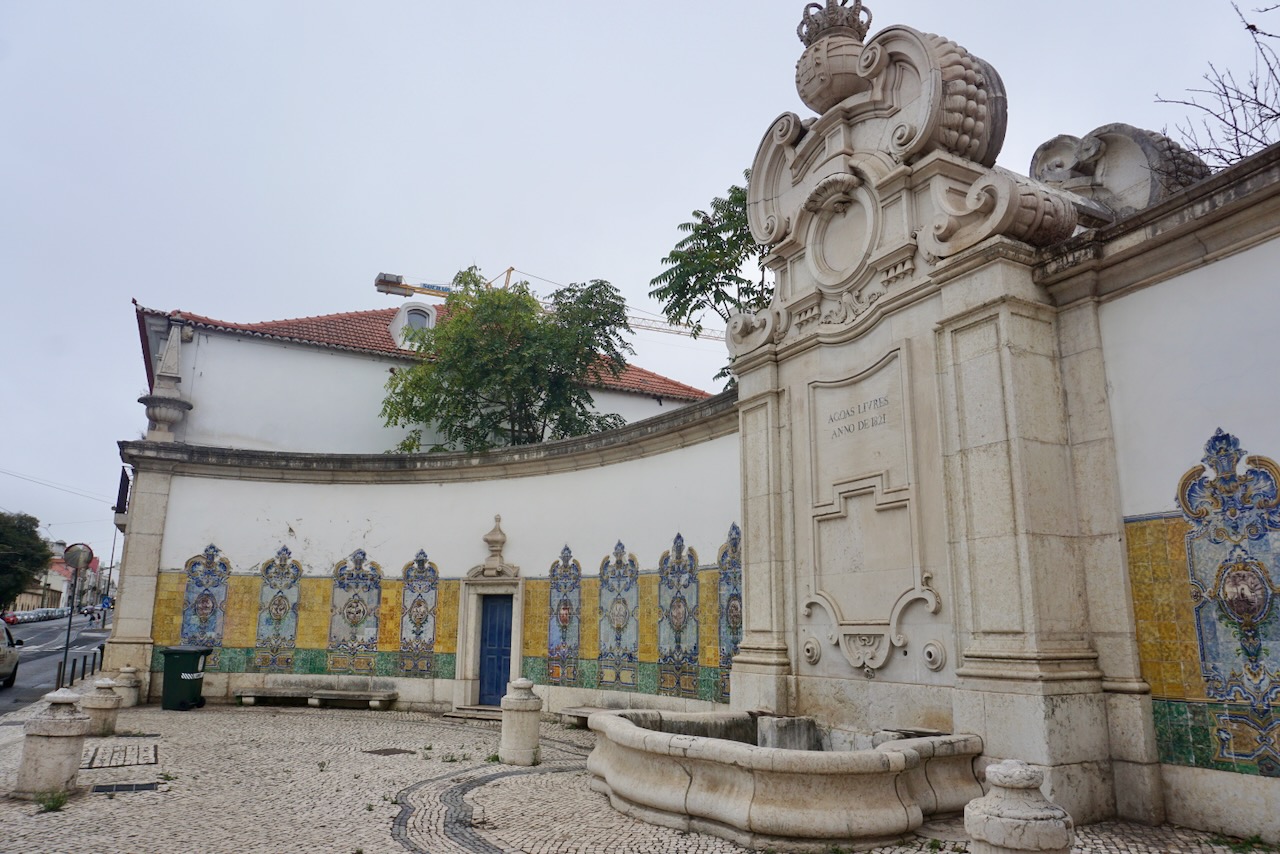
Along the way we passed a fountain that seems to commemorate the aqueducts built to provide water to the city (I could not find any data to verify this, so please jump in if you have details) . . .
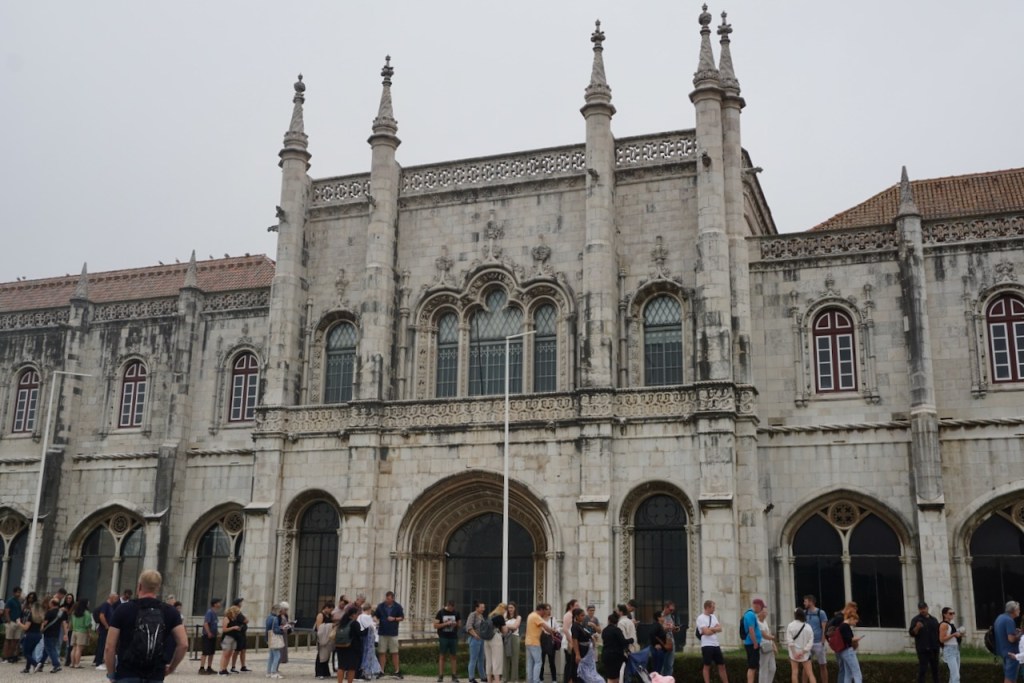
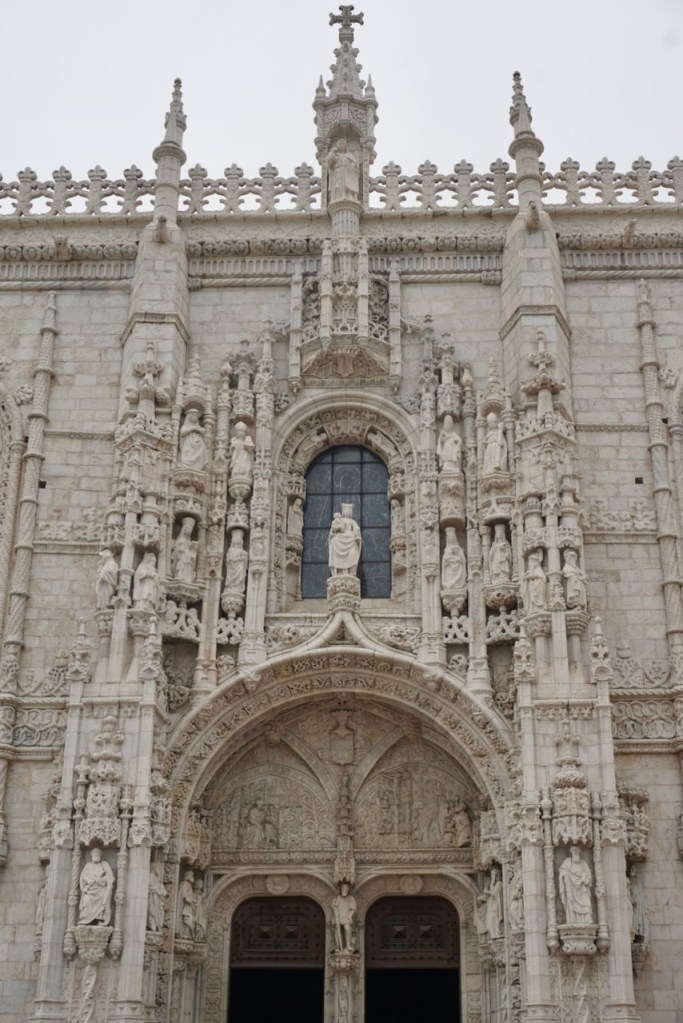
. . . and Jerónimos Monastery, which was stunning enough from the outside. Judging by the lines of people, there’s also a lot to see on the inside.

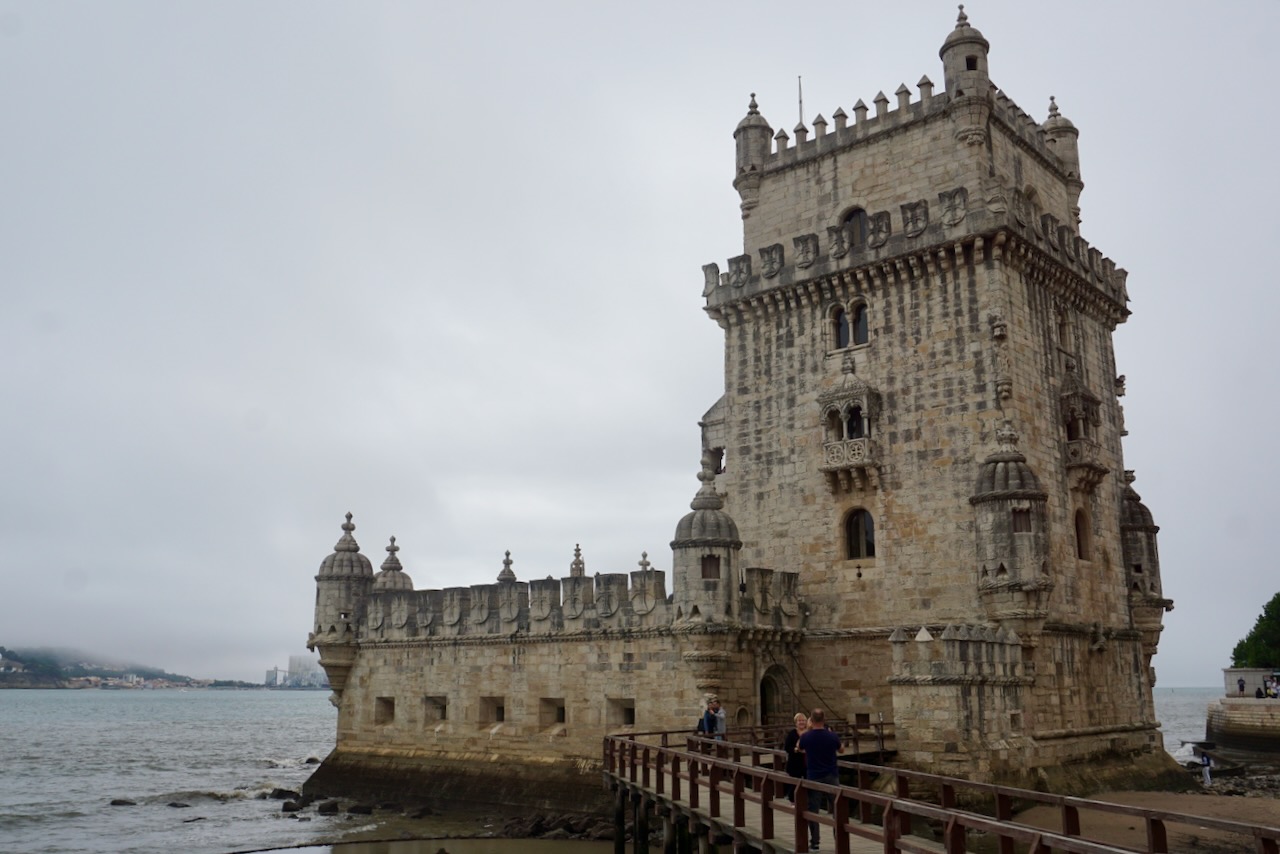
The clouds began to shift as we arrived at Belém Tower, where I once again have to give credit to indefatigable lines of people. The waiting time was listed as two hours because only 150 people are allowed in at once, and we opted not to wait.

On the walk to the bus stop (public transit in Lisbon is incredibly easy), we passed the Monument to the Discoveries, which included a tiled map on the ground of places the Portuguese had developed colonies. As I took the photo, I couldn’t help but think that the monument didn’t quite fit with a time period when so much of the world is reckoning with colonial history. The Padrão dos Descobrimentos was built in 1940 and that was a rather different time.

We ended our time in Lisbon with a cocktail in the rain at a rooftop bar, a bar fittingly located on top of the parking garage with the broken entry gate. The people of Lisbon know how to have a good time and that was also apparent in the flavour and feel of the city. I don’t know if we’ll make it back to Lisbon, but it was definitely not the last visit to Portugal. “Adeus” until next time!

Travel Guide: California National Parks (and a Day in San Francisco)

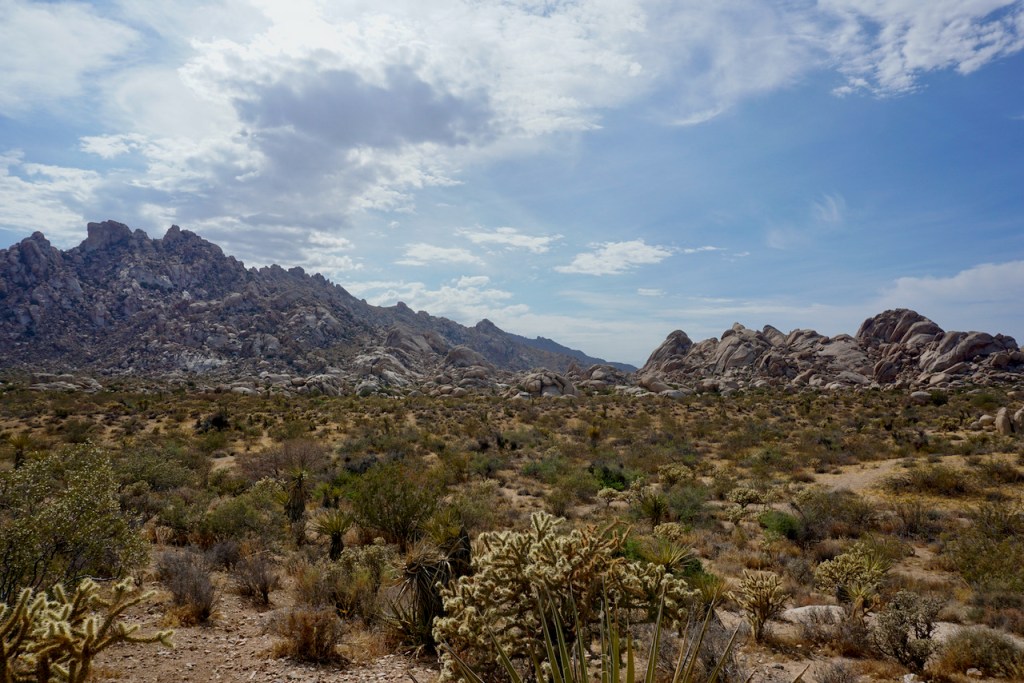
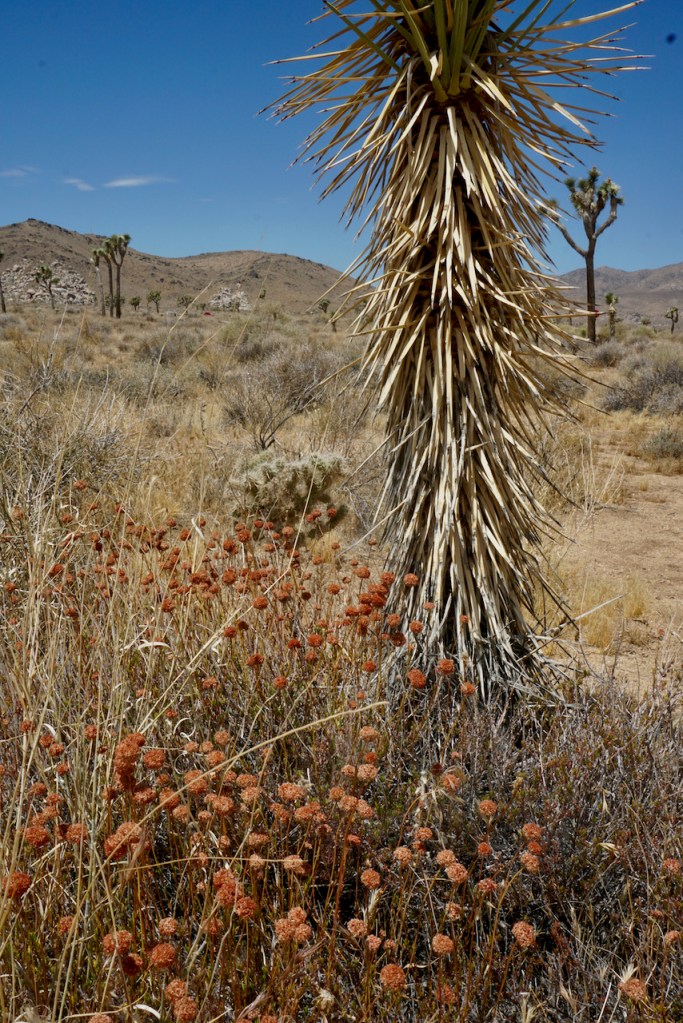
Upon leaving Nevada, we admitted that we were desperate for greenery. The desert is beautiful but we come from green places, and the lack of lush foliage was starting to wear. We would find green in California, but we first turned in the direction of Mojave National Preserve, which was a far rather different desert than we had expected. Rather than flat and endless, the drive was rather bouncy as we passed the many signs announcing: “DIP”. The temperature was cooler, as well, rendering the Mojave surprisingly comfortable for the ten minutes we stepped out of the car to look closer at the plants.

It’s a little strange to write and post this now because the area we drove through is currently on fire. The theme of fire, of which we had seen traces throughout our travels, only grew as we entered California; my concern for the planet, as I now experience a very wet summer with crops rotting in fields, has grown in parallel.

Our drive also included elements of desert travel along Route 66 that we had come to know, elements of the uncanny punctuating the stark landscape.

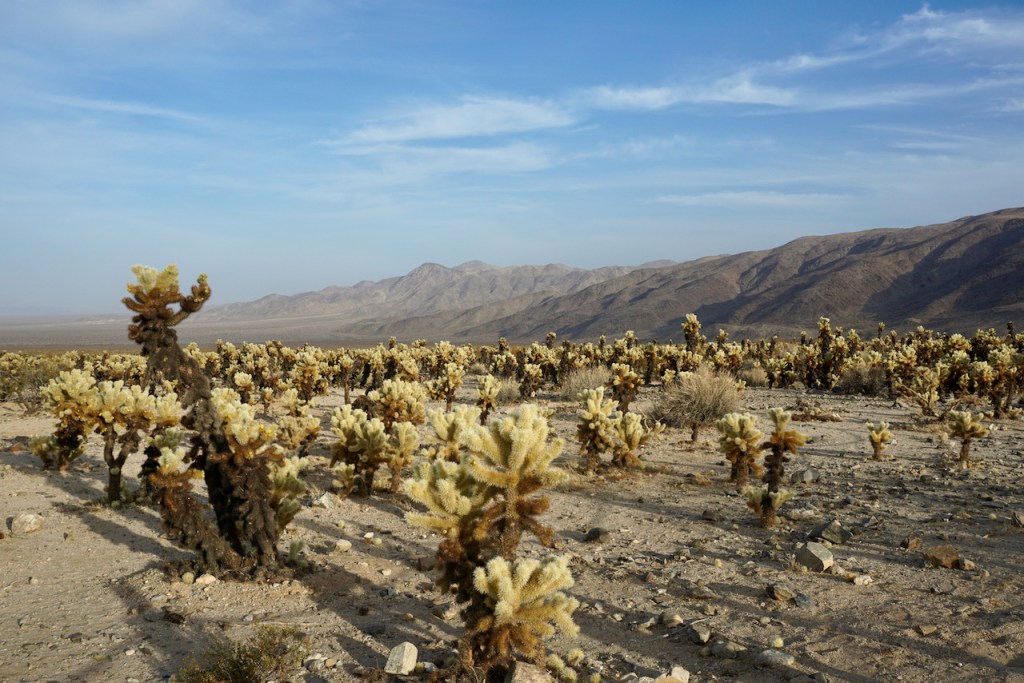
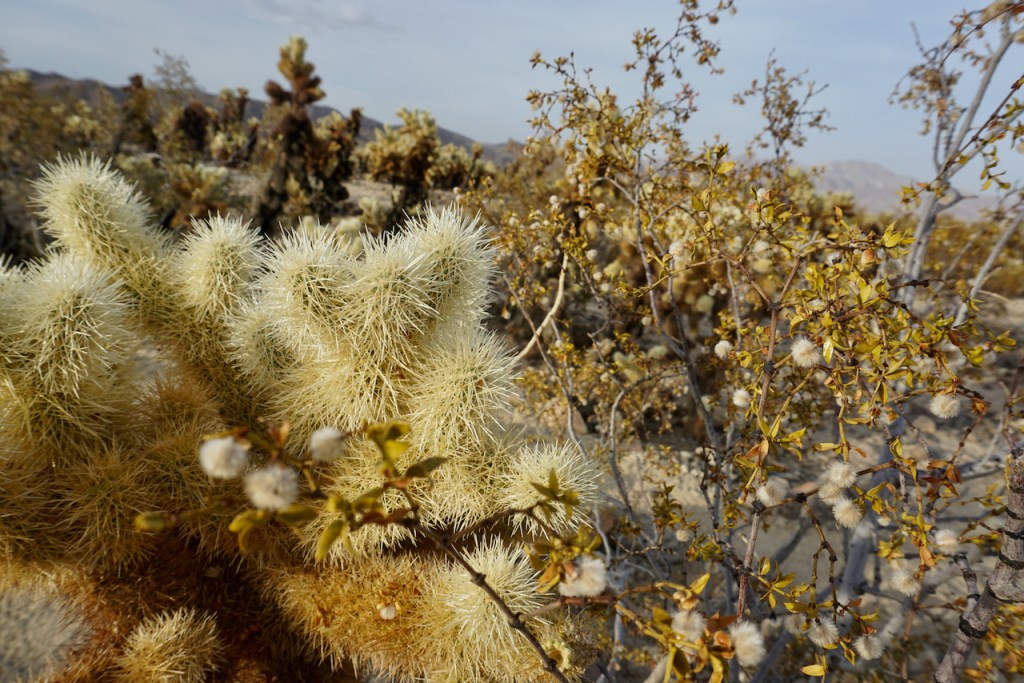
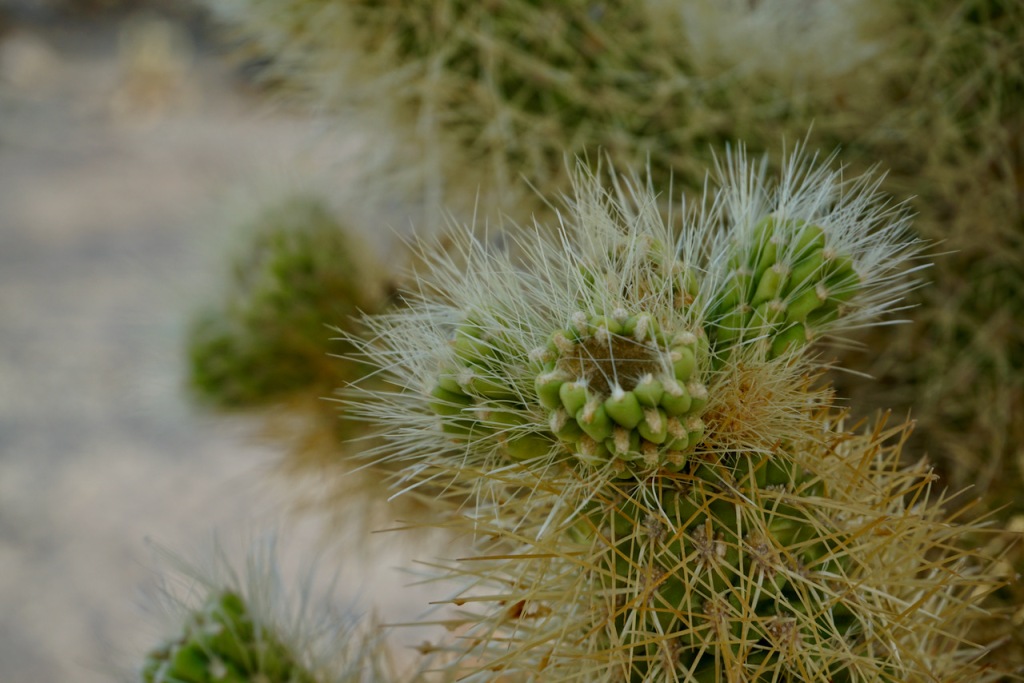
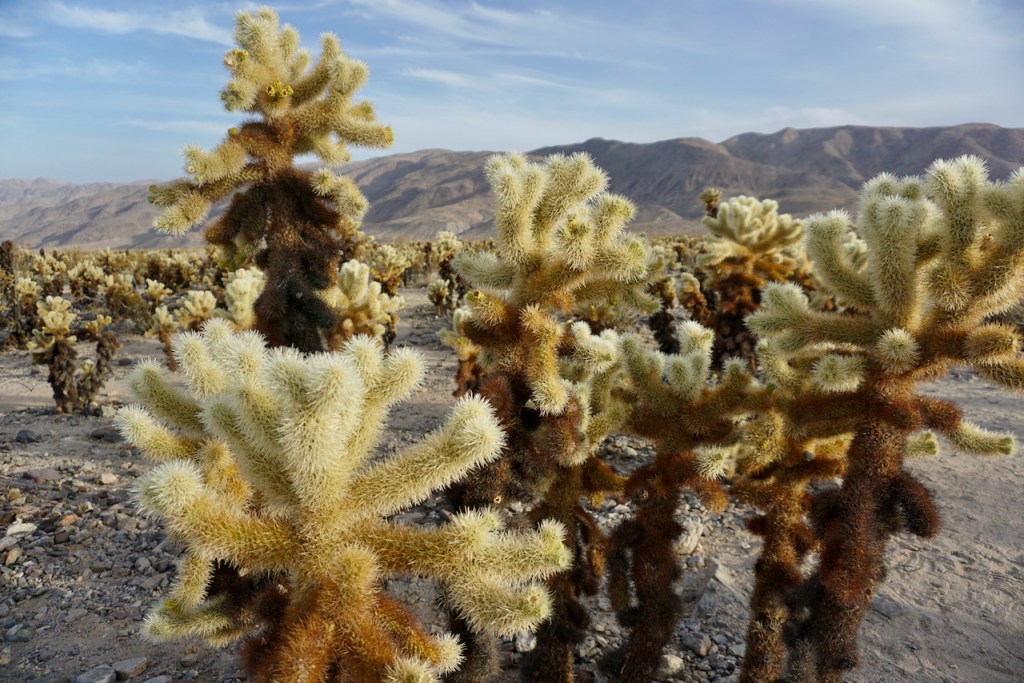
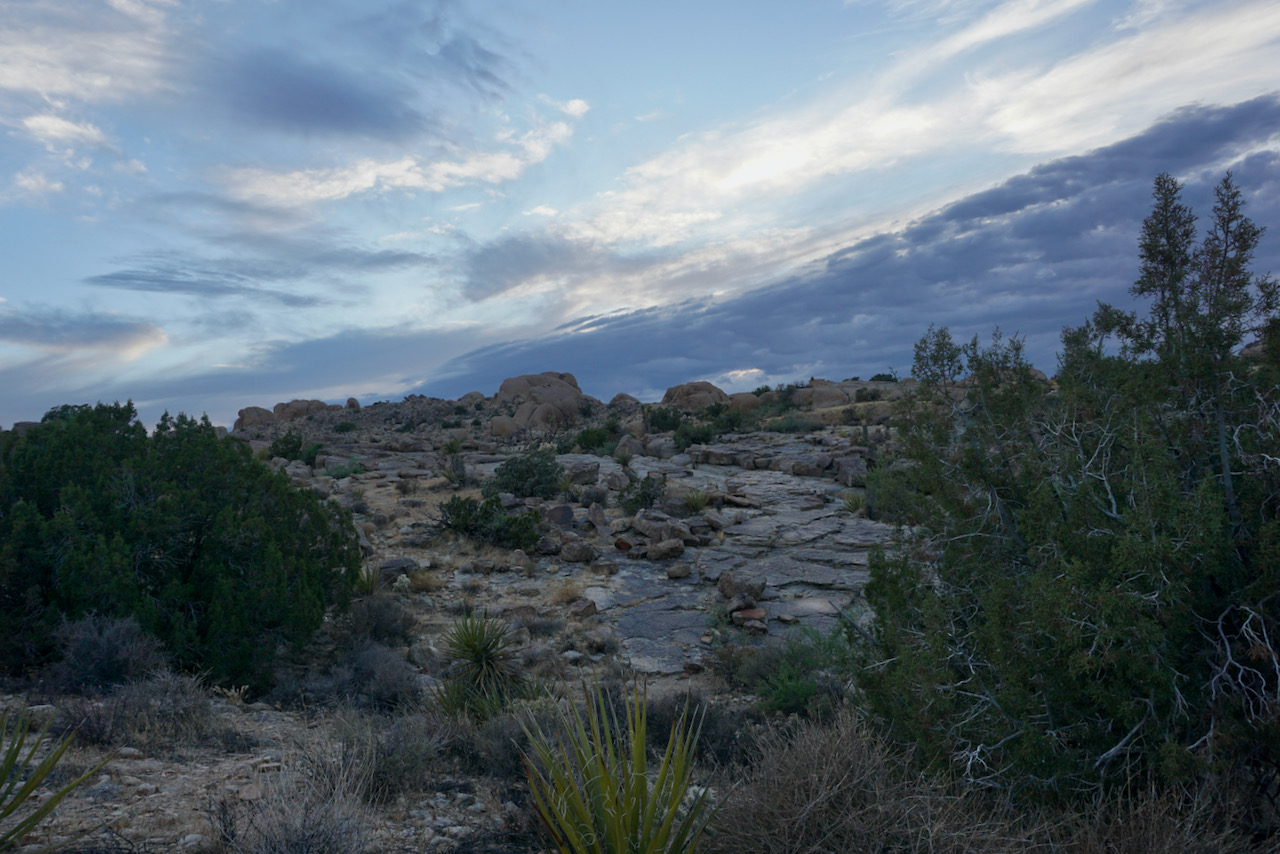
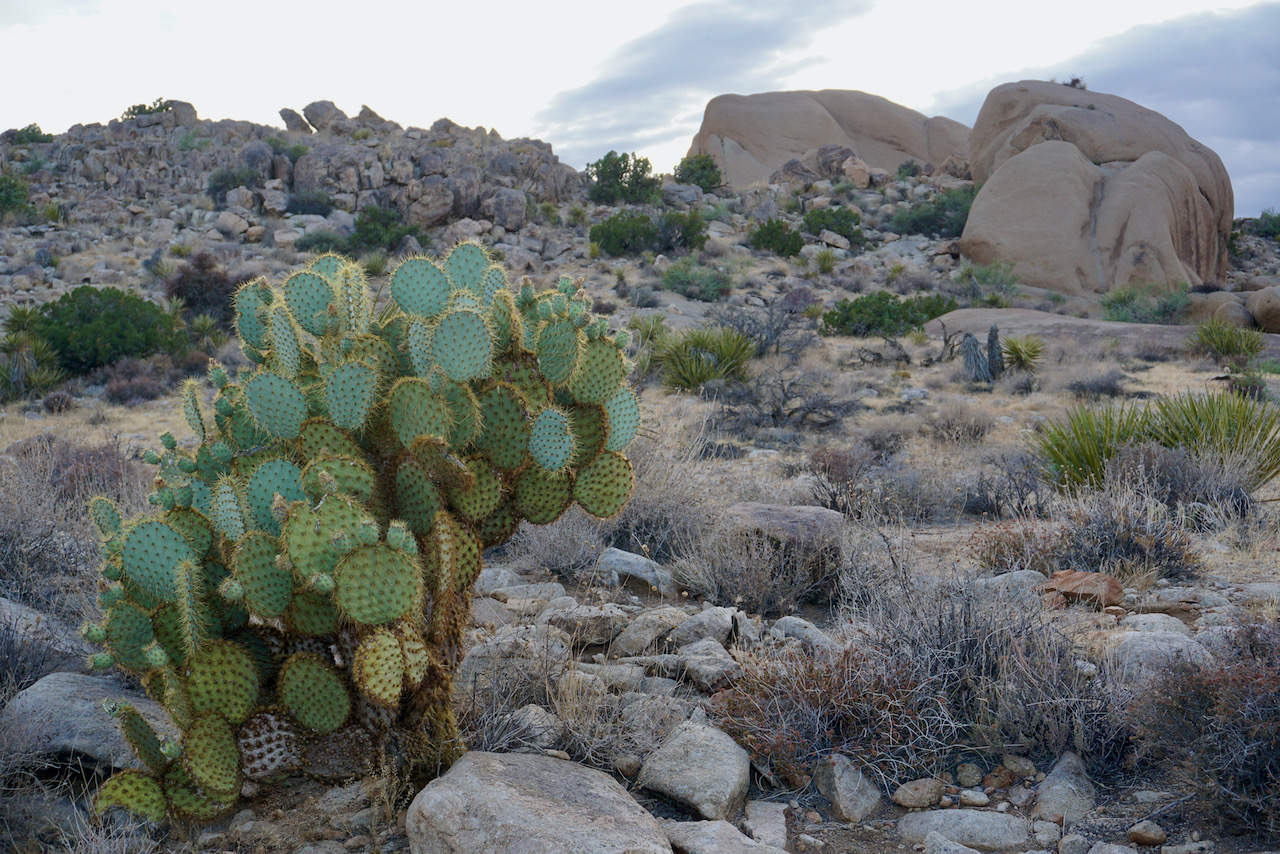
That evening, we arrived in Joshua Tree National Park and went for several walks as the sun began to set. We caught the last of the day’s light on fuzzy-looking cacti that I wanted to touch (but refrained) . . .

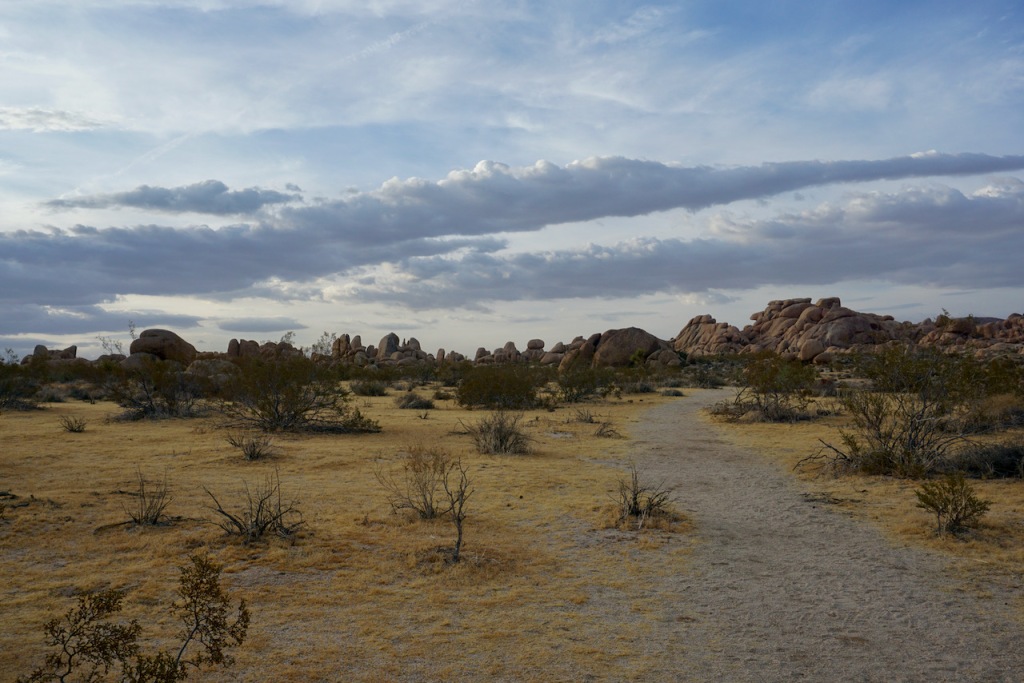
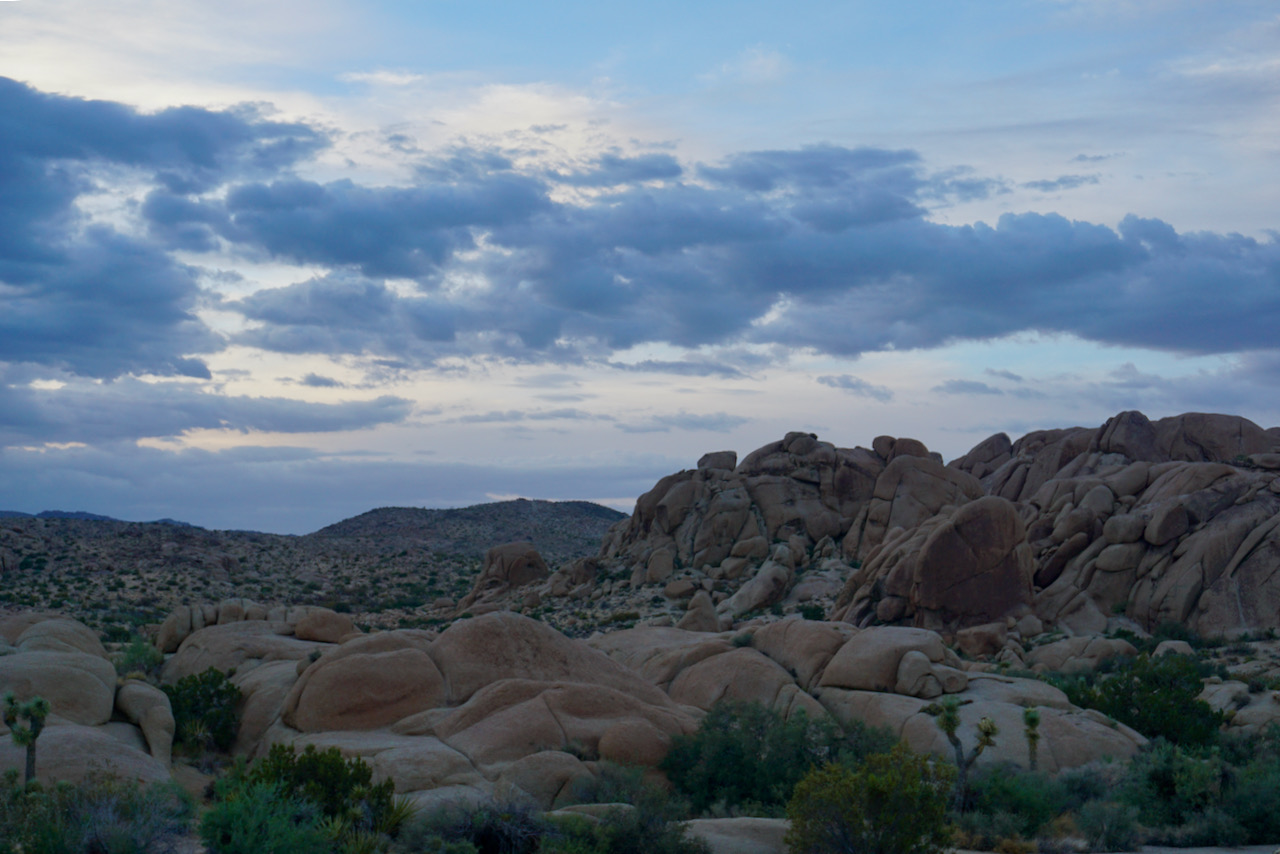
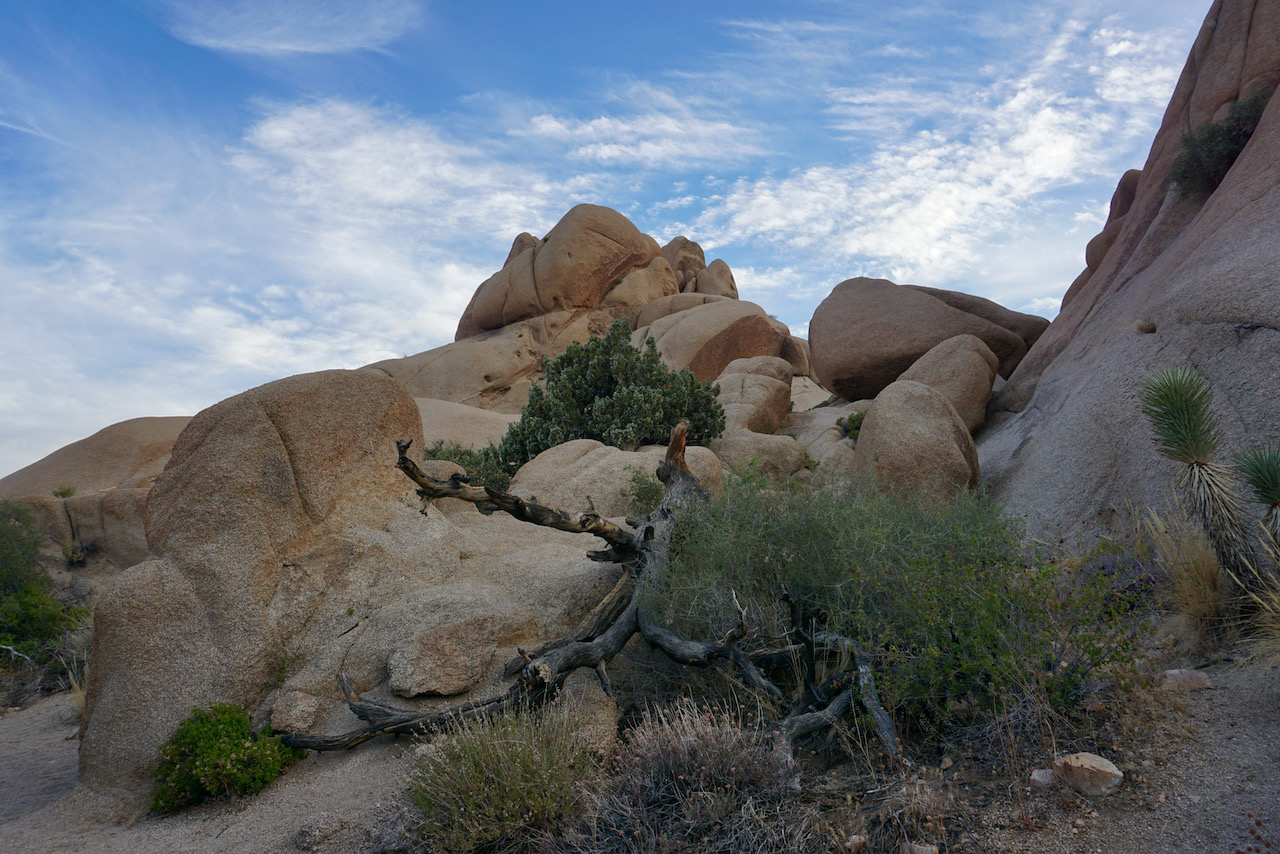
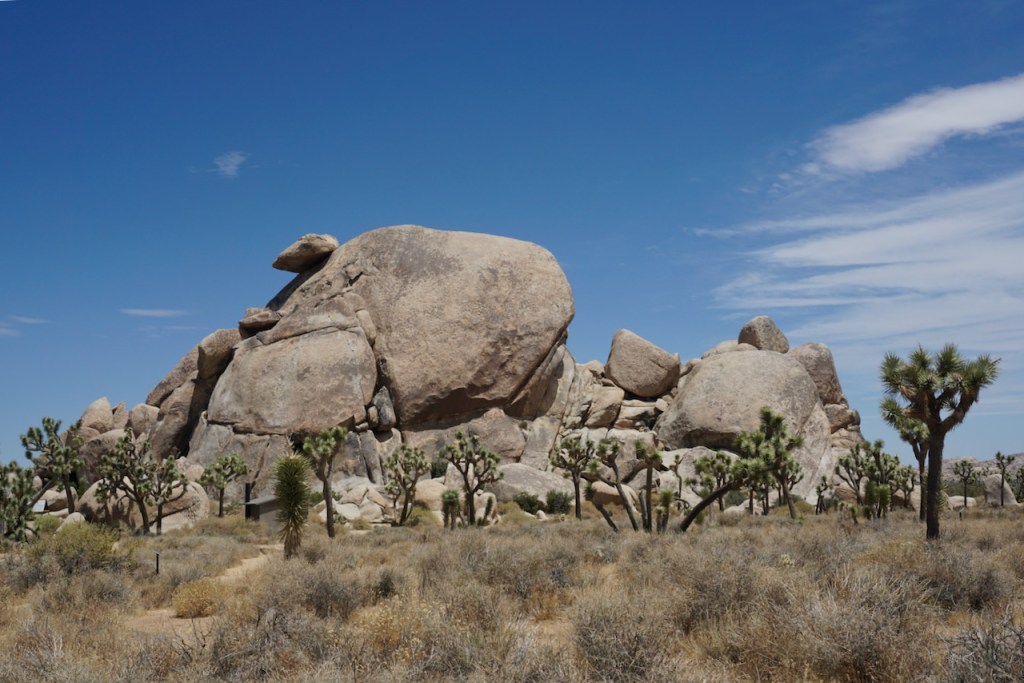
. . . and walked a trail amidst clusters of the pillow-shaped boulders that have far more texture than we originally thought. It’s no wonder there’s so much bouldering and climbing here, and we played around a little in our hiking boots. There were more species of cacti, again making for a different desert than we’d seen previously.

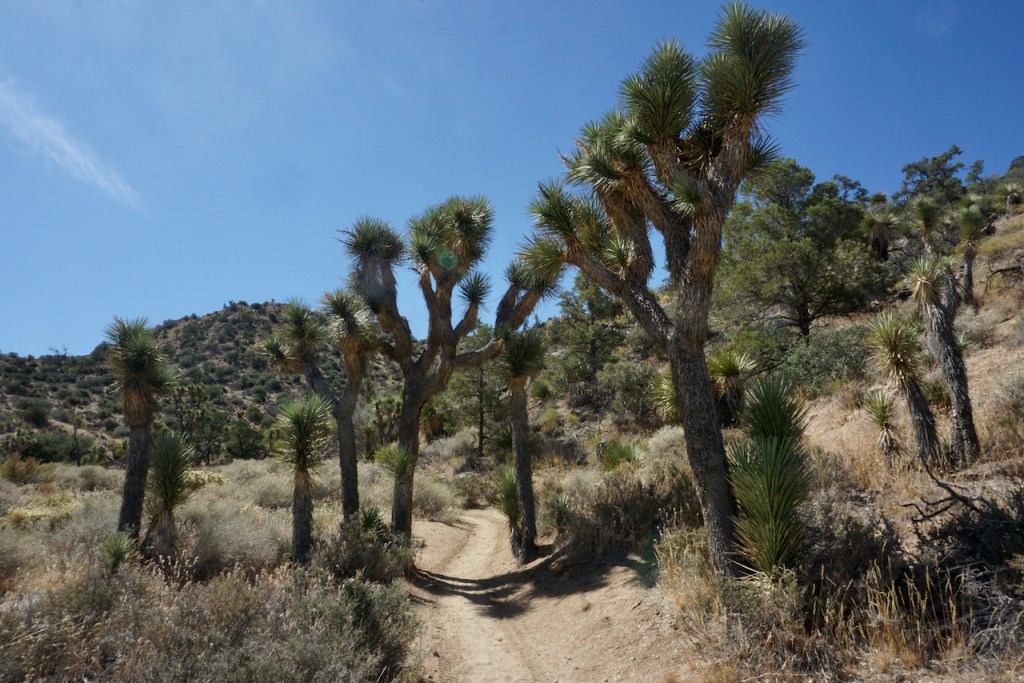
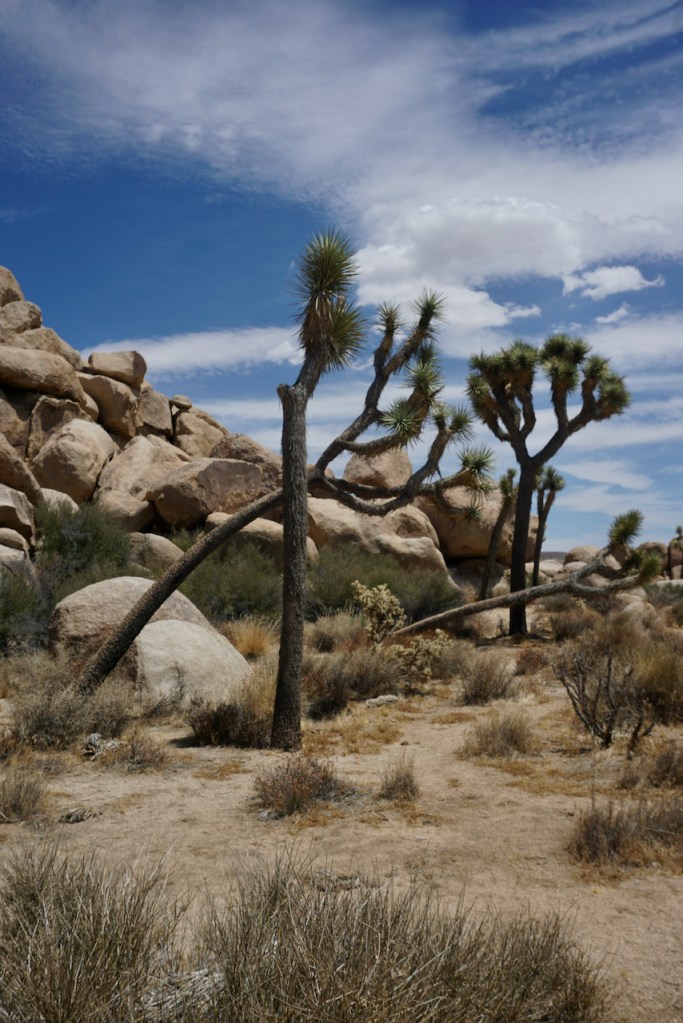
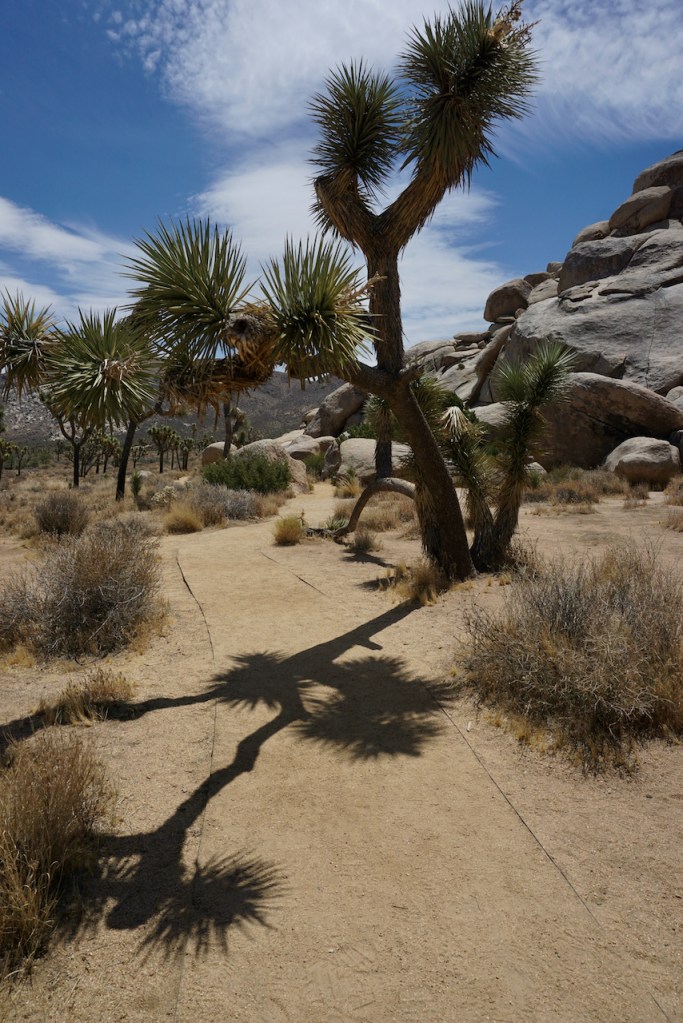
This is also where we finally saw Joshua trees. We had seen them for the first time on the way to the Grand Canyon, but not yet in their eponymous park.

We crossed the road to scramble up the boulders just behind Skull Rock, and then it was truly dusk and time to go.

We returned to the park after staying the night in Twentynine Palms, California. The temperature was relatively comfortable but the sun was intense, dictating short walks rather than longer hikes. We had learned to listen to the desert, and we headed off the in direction of a high viewpoint to look around.

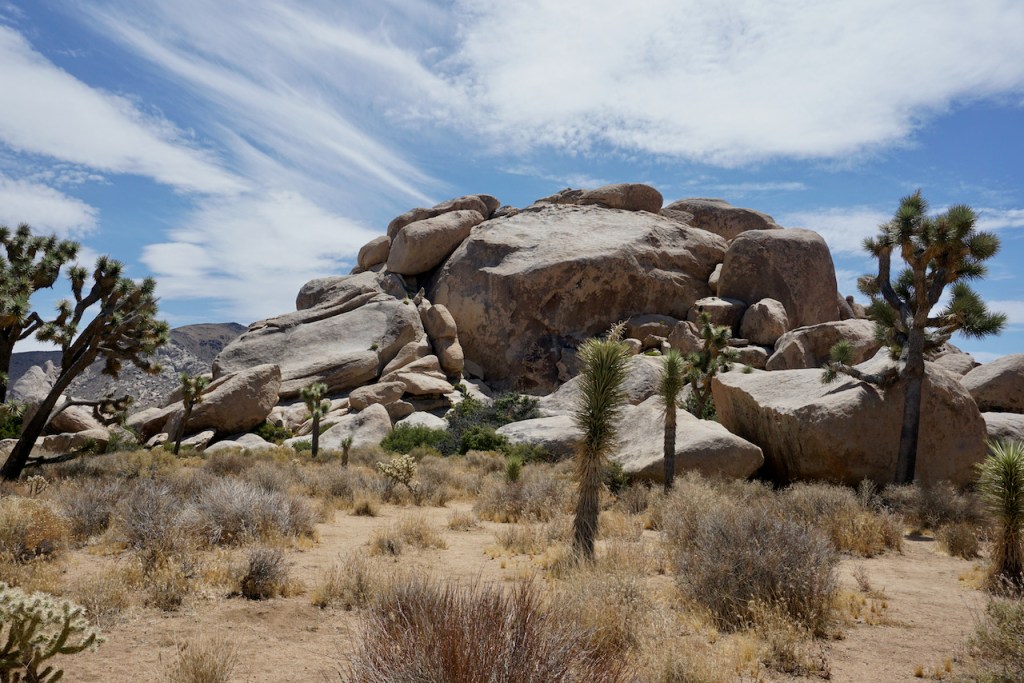
As before, we were really taken by the boulders and found chalk marks mapping out routes. They felt good, those rocks.

The afternoon was spent driving through real desert, yellow and scrubby, becoming hilly and mountainous as we drove further north. By the time we reached Porterville, California to stop for the night, the landscape alternated between yellow rolling hills of nothing and irrigated orchards and farms that were so green by comparison that they almost didn’t seem real.

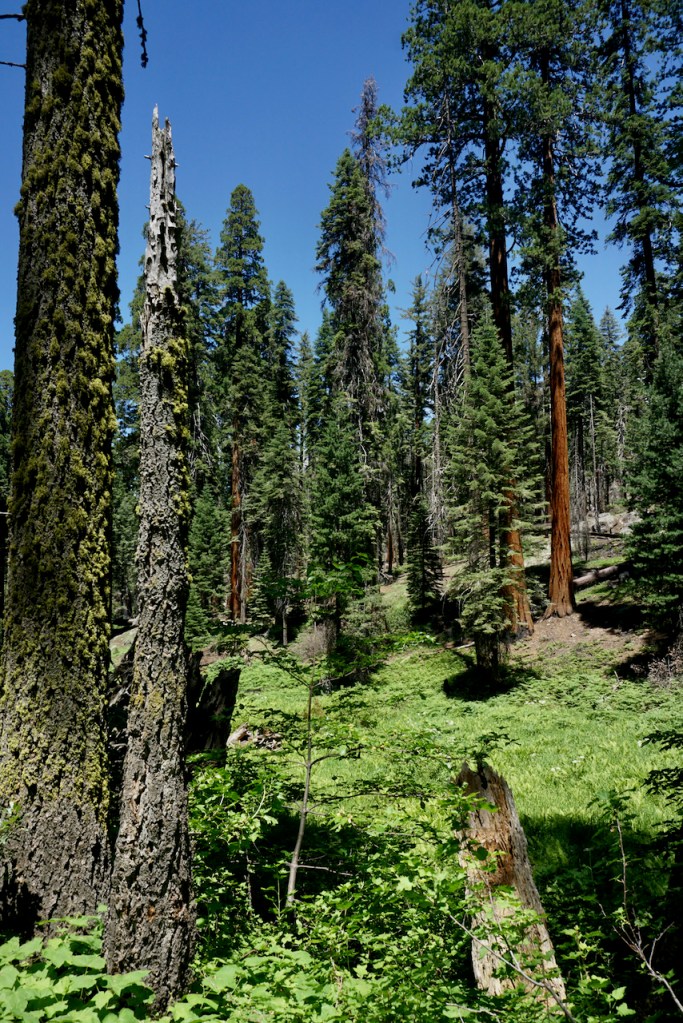
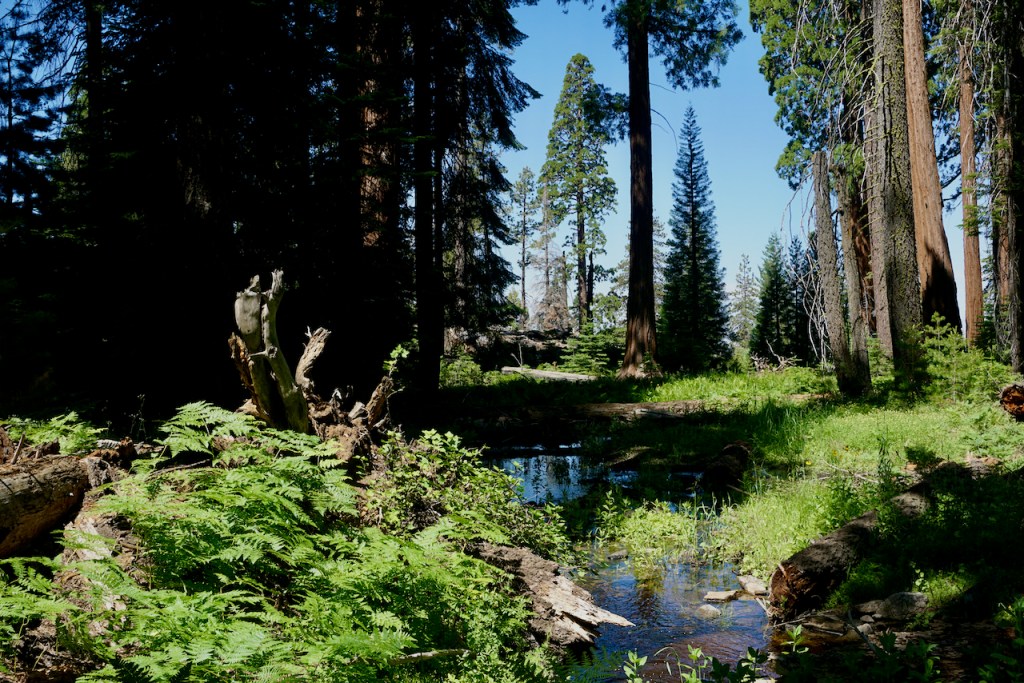
The following morning found us on the way to Sequoia National Park, which definitely made us feel better about missing trees and greenery. We drove serpentines up mountains, ending in lush, cool, aromatic forest.

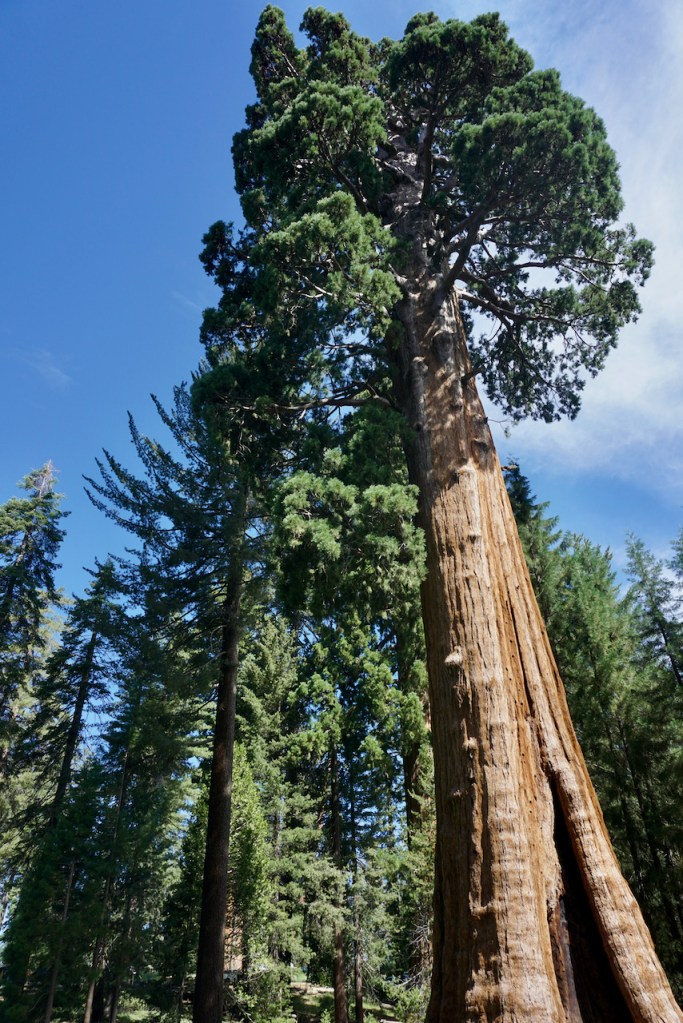
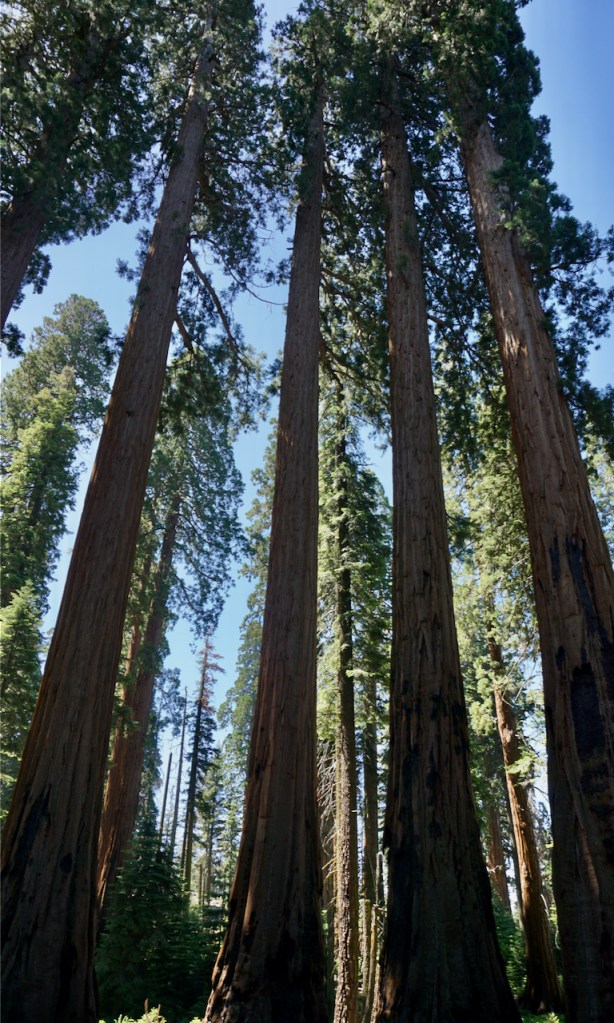
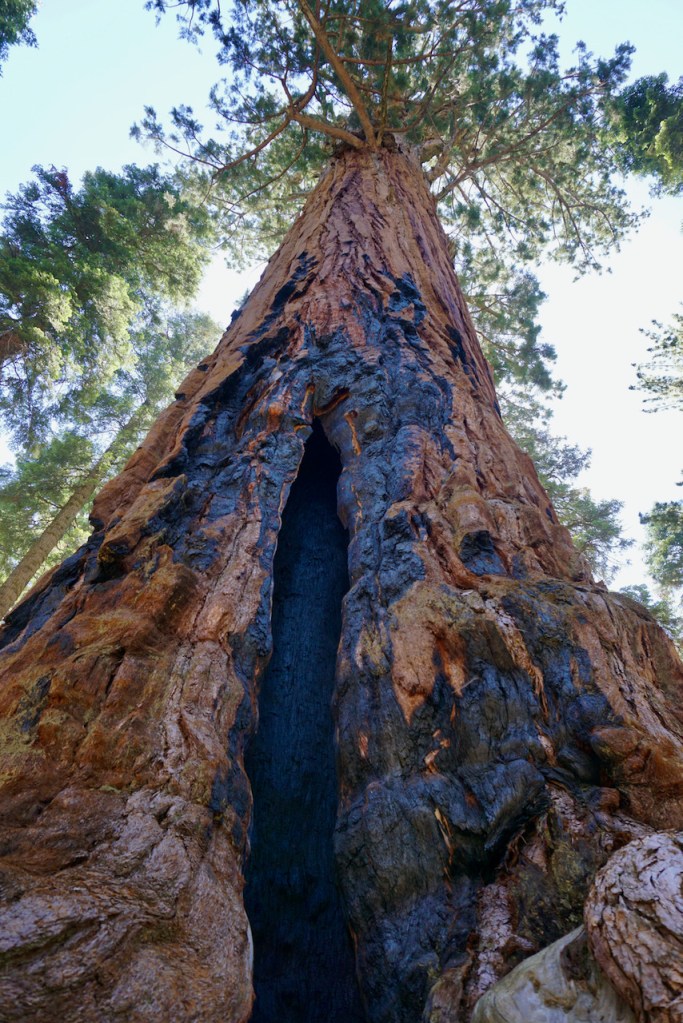
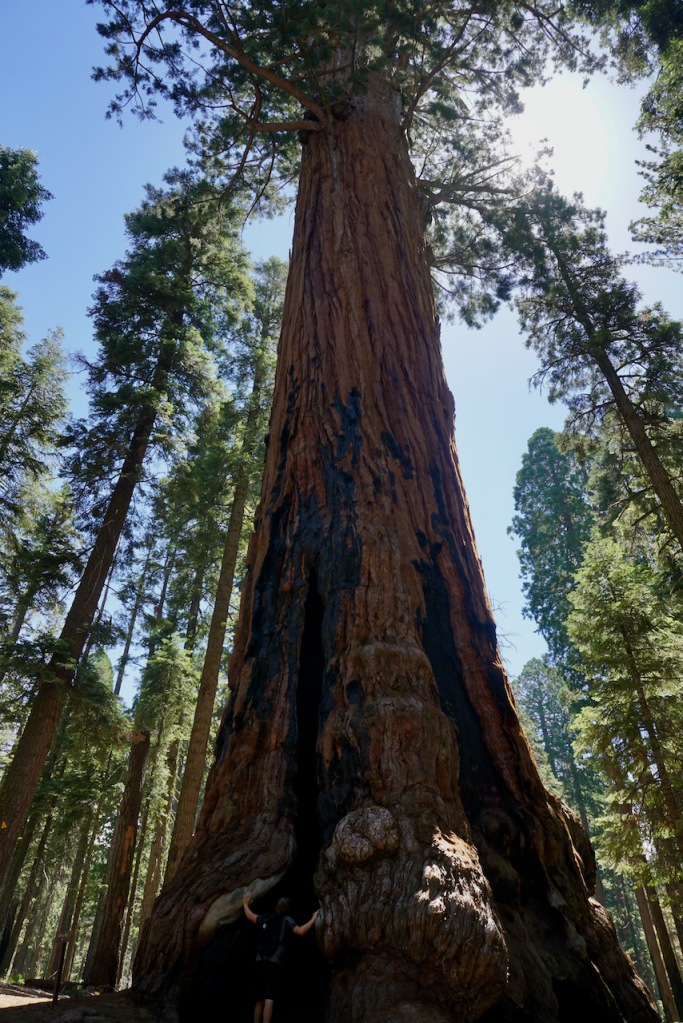
And the sequoias. They are so much larger than what I had imagined, or what I can describe. I could not fit a whole tree into my camera lens, and instead felt myself become nothing beside them. An individual is utterly insignificant in the scale of the world, and the sequoias are a reminder of that. Further amazing, if possible, were the obvious signs of damage and regrowth from fire. A museum exhibit explained the fire protective and regenerative nature of these giants, and it was interesting to see so clearly fire’s role in the life cycle and ecosystem. However, the serpentines leading up to the park were barren in part, entire swaths of forest swallowed, interspersed with tiny, new saplings. Cycle indeed.

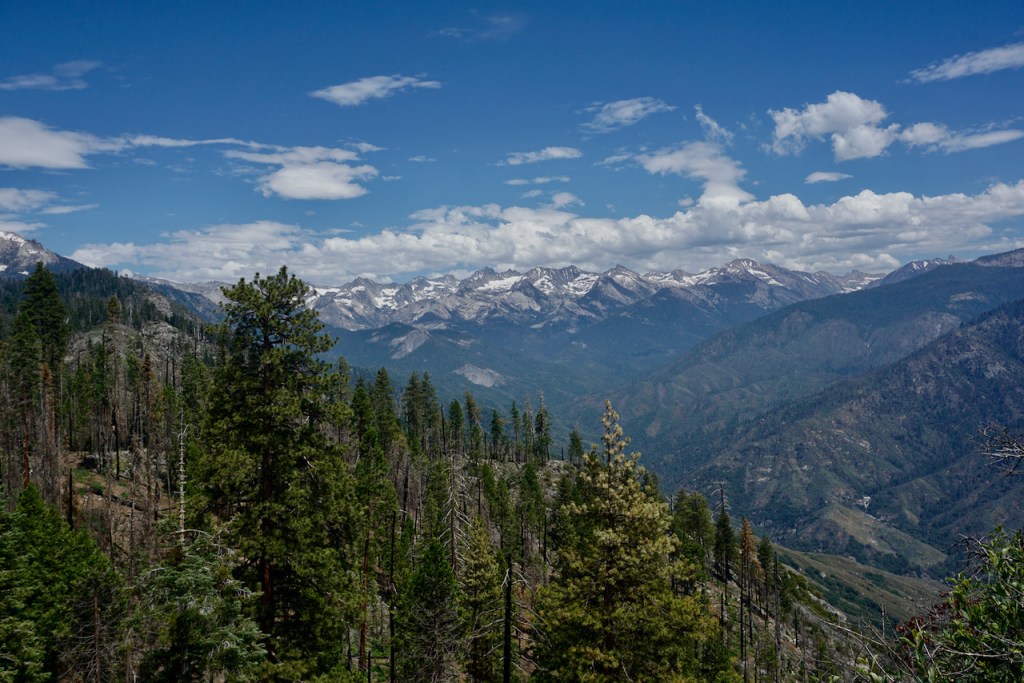
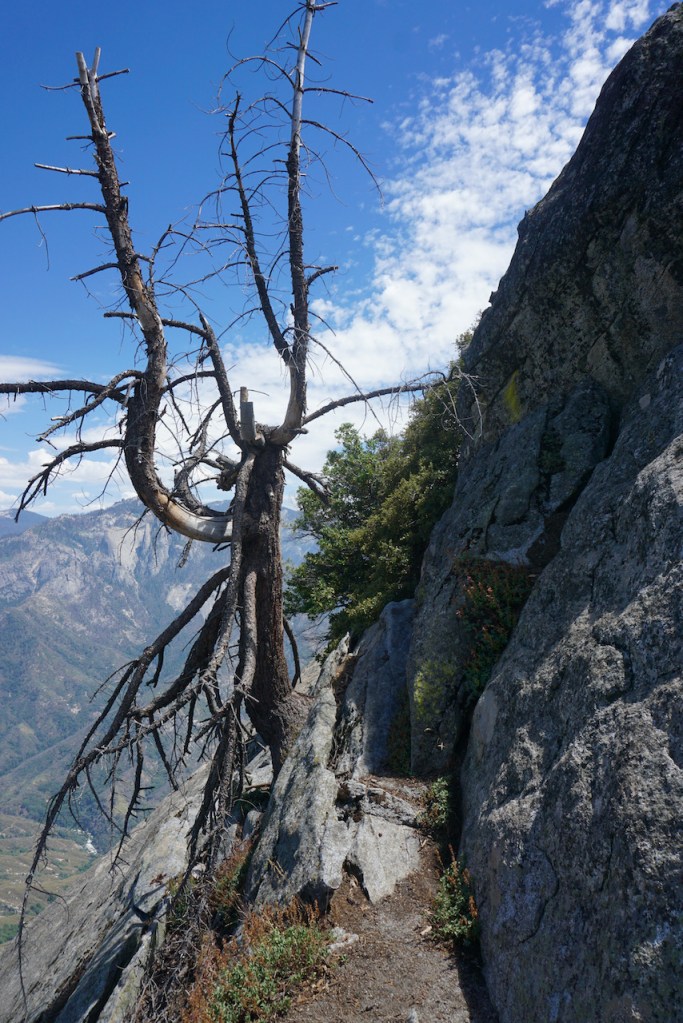
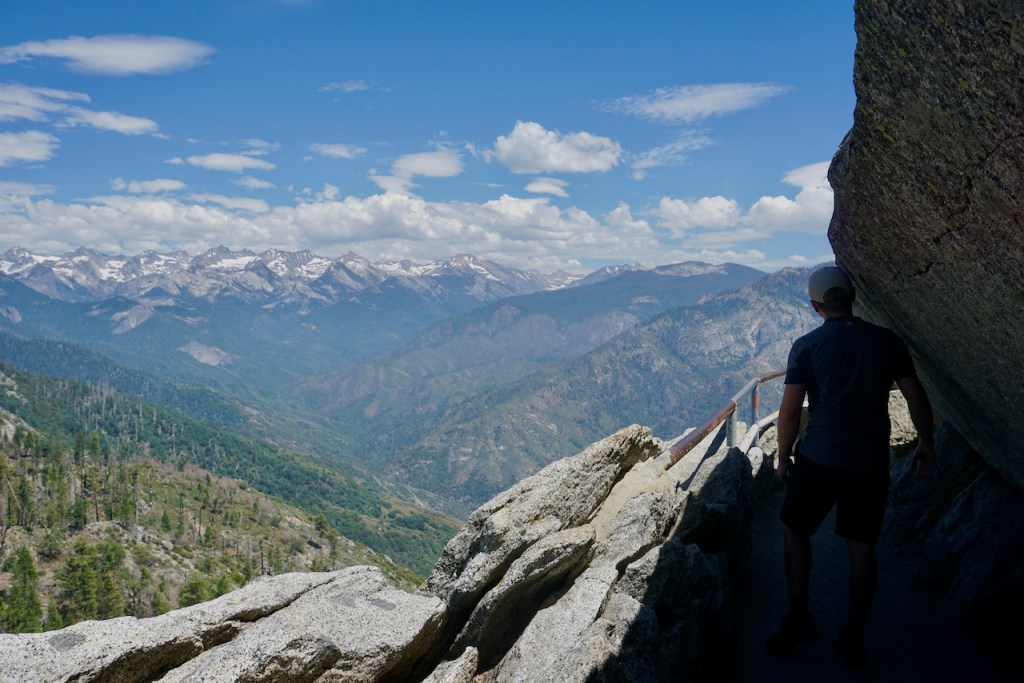
I really love reaching the highest point and looking out, and to that end we climbed up to Moro Rock, respecting the 400-step staircase except in one area where the little climb was too lovely to resist.

From there, we continued driving north to Oakhurst, California to spend the night as close to Yosemite National Park as we were willing to afford, putting us almost two hours away. The landscape continued to change on our drive, with deep green trees gradually appearing along the rolling hills covered in yellow grass. The trees grew in numbers until it was clear that we were finally out of the desert. And as much as we had enjoyed it, we were glad.

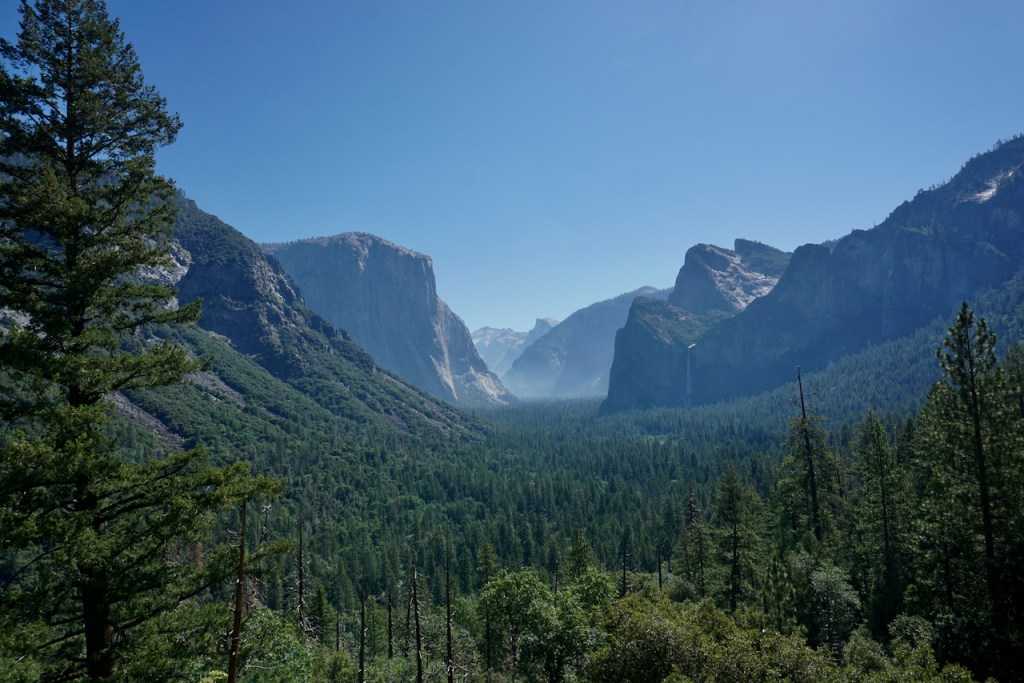
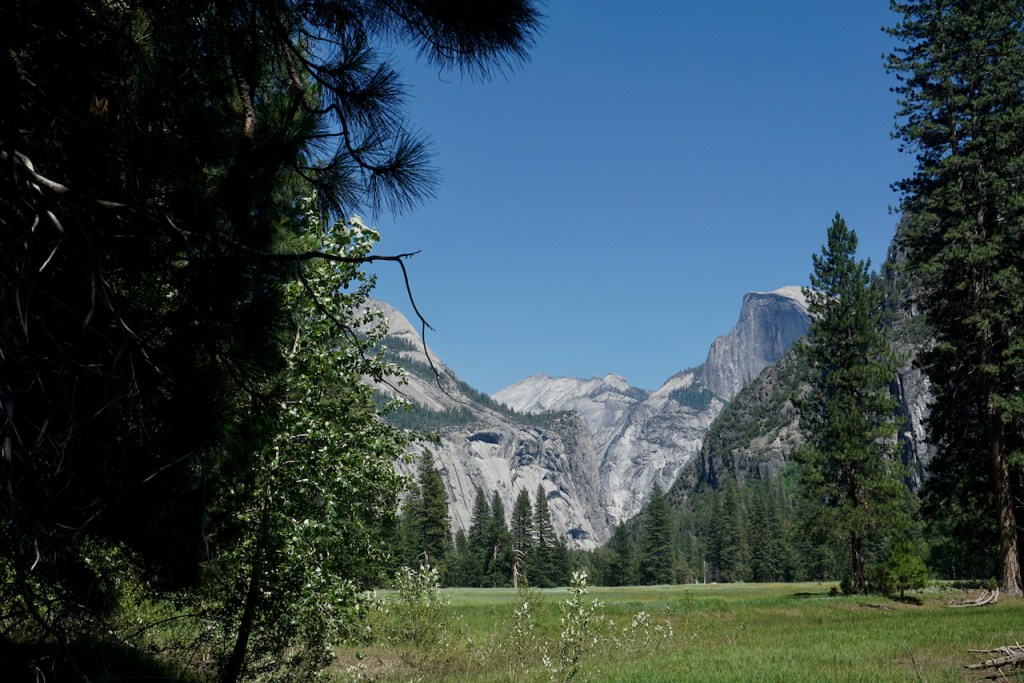
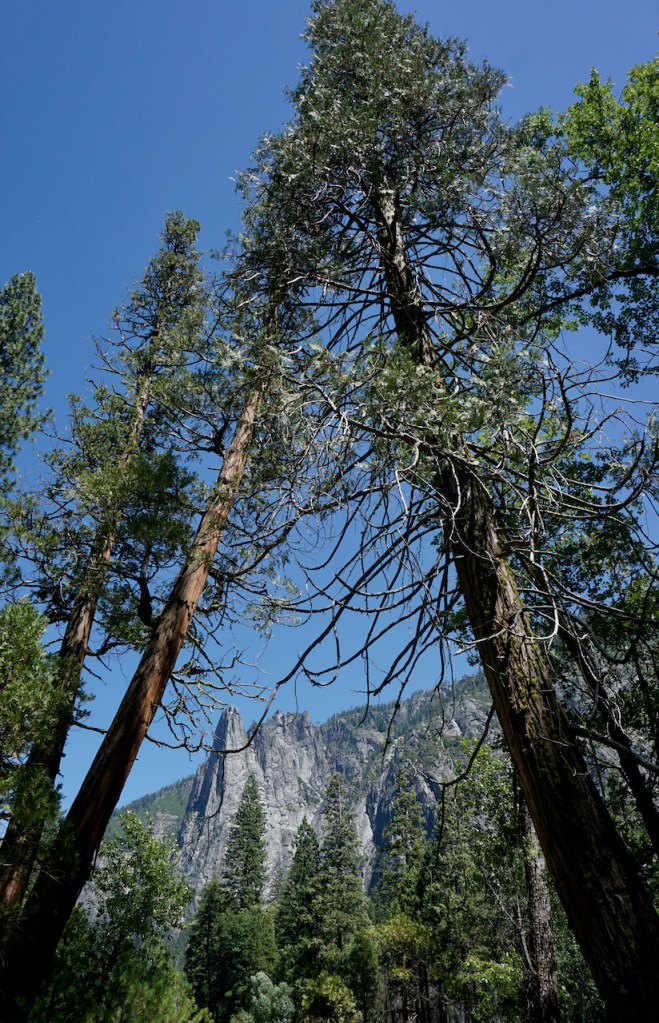
Let me emphasize here, in case it is not yet clear, that we are rock climbers. We met in the climbing hall and had climbed real rocks together before realizing mutual interest. Therefore, the excitement of Yosemite was in seeing Half Dome . . .

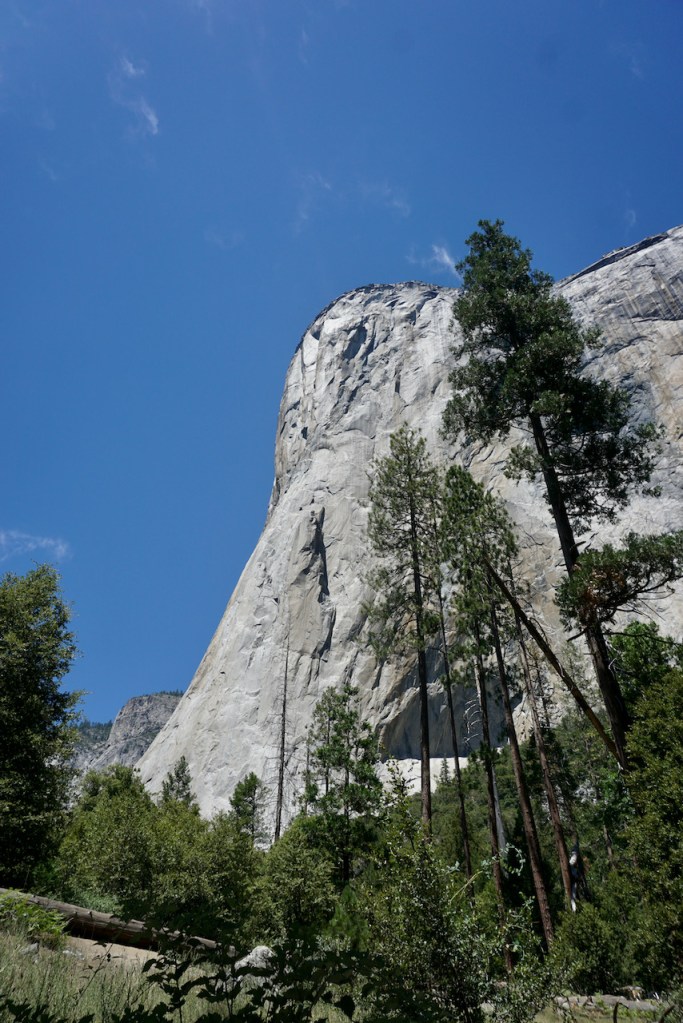
. . . and El Capitan, which did not disappoint. The signs indicating climbing areas where particularly enticing and we followed them to the base of the rock, playing on the first few moves.

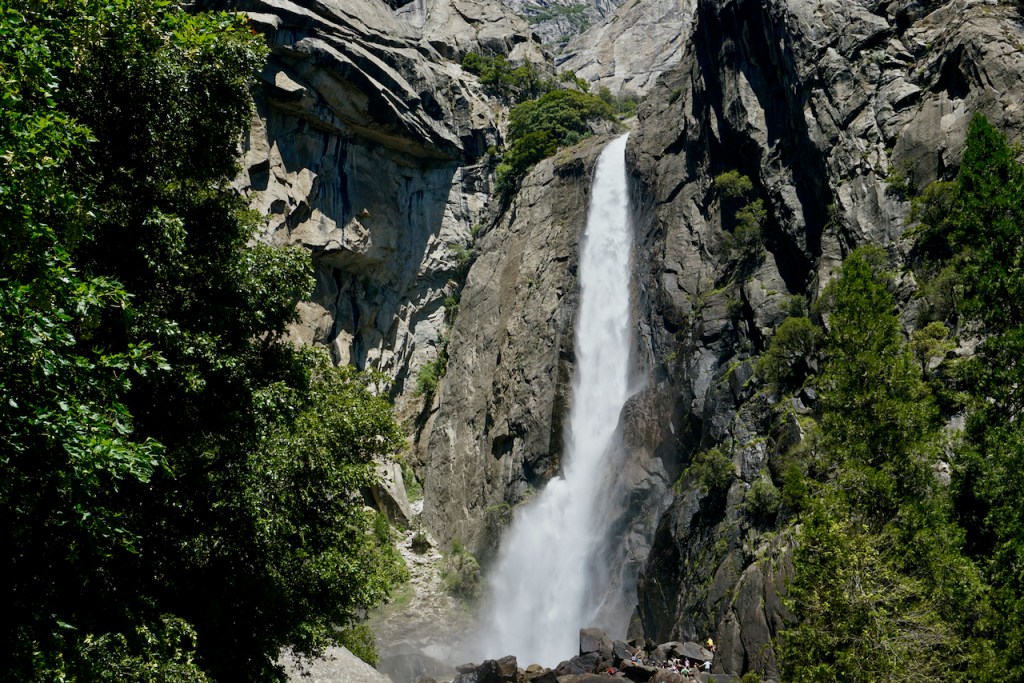
We also followed the largest numbers of tourists that we’d seen at any park to see and hear some of Yosemite’s famed waterfalls.

We had grossly underestimated the number of visitors to Yosemite, thinking of it as a Mecca for climbers and not as a sightseeing destination that, in 2016, received 5 million visitors, most of whom visit during the summer, as we did. With the crowds and the poor layout and transportation of the park, it was almost as though nature faded into the background as people vied for the best spot to take photos. We were glad to escape to the foot of El Cap and to follow a longer walking trail through the valley to get back to our car.

Due to good weather and general difficulties getting around in Yosemite, we were on the road rather late on the way to our final destination. We would spend two nights in Oakland, California before flying home. On the way through the park, we again saw evidence of fire damage everywhere. Entire hillsides were populated only with fire-damaged trees and the grasses that have grown back around them. It was hard to look at, and so much greater in scale than I had imagined, despite being generally aware of California’s fire news.

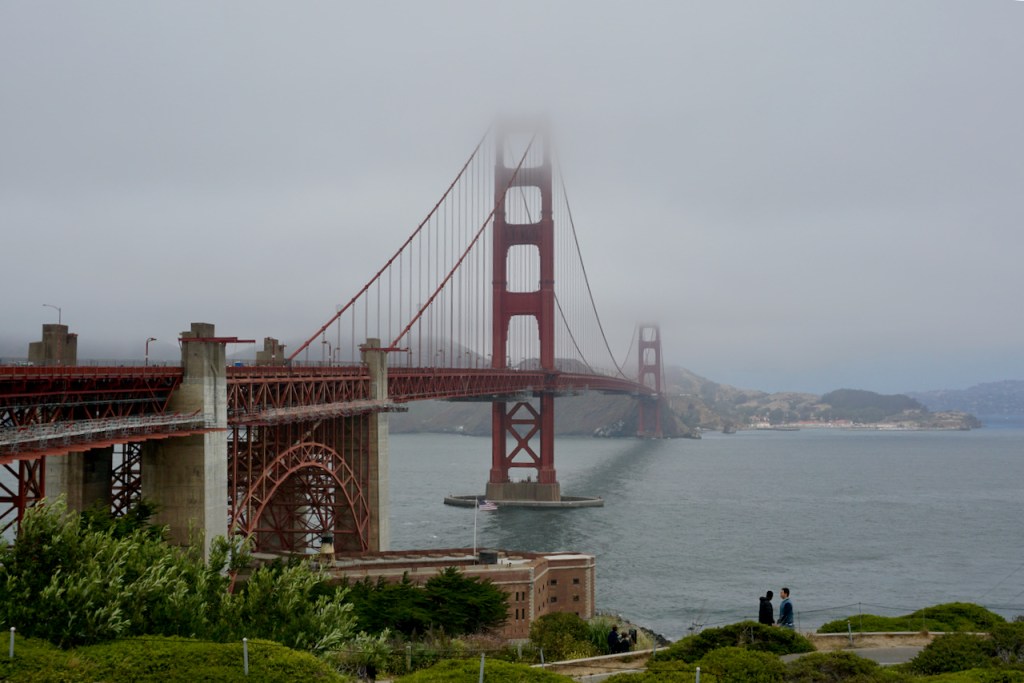
It was summer when we left Yosemite, but we found spring/fall in Oakland and San Francisco. We dug jeans, long sleeves, and windbreakers from the bottoms of our bags and headed out in weather of 14°C (57°F), temperatures we hadn’t experienced in quite a while. This was my second time in San Francisco and I was pleased at how much of the city’s layout I remembered. We did as much as we could in the day that we had, including a windy walk across the Golden Gate Bridge . . .

. . . a stroll along the beach and through a park . . .

. . . a stop at Fisherman’s Wharf to look at the boats, seals, and general activity. . .

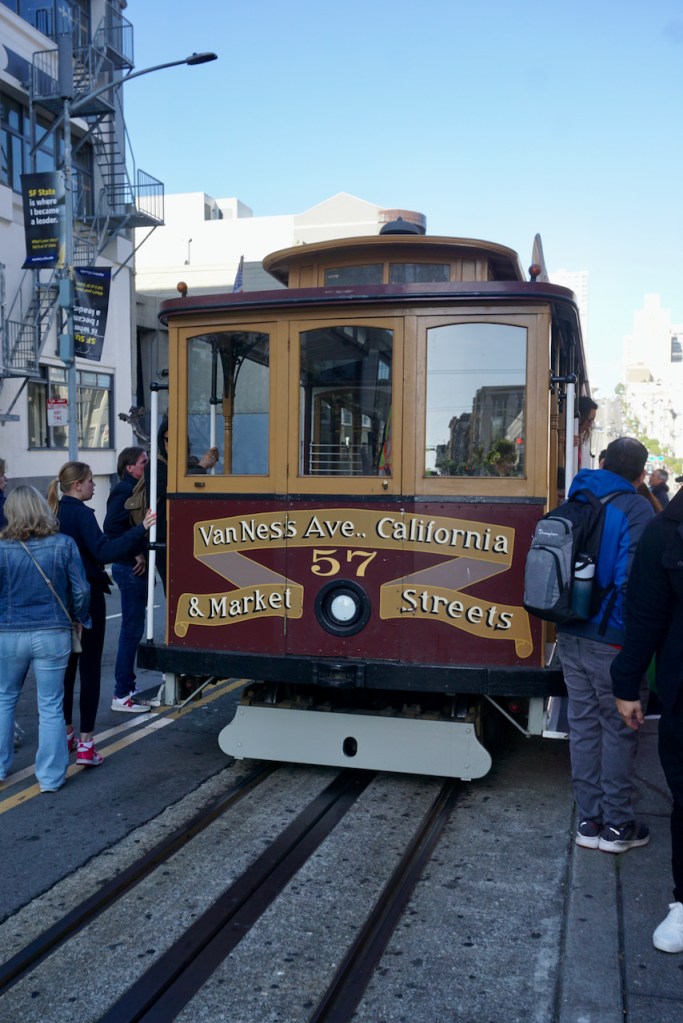
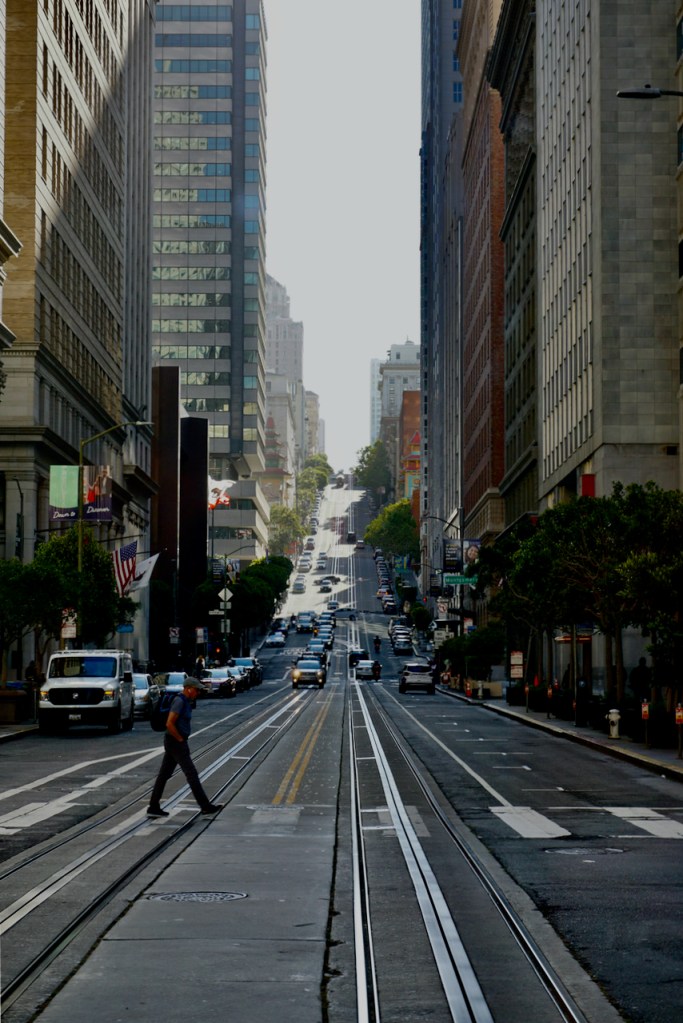
. . . a ride on a cable car up very steep San Francisco hills, complete with all the clanging and banging that is straight out of another century . . .

. . . and a visit to the Painted Ladies, which I now know are the Full House houses.

Within that, we also walked through the Embarcadero and the Mission, got a quick peek at the Chinatown Gate from the cable car and the Tenderloin from a bus, and spent a few minutes in Sausalito after deciding to be adventurous and getting off one stop later than planned without checking the bus route. There is a lot to see and do in San Francisco, and a day doesn’t quite cut it.

That being said, we spent much of the day laughing at the combination of people-watching and the weather. It seemed we weren’t the only ones surprised by needing jackets, but we were luckily not among those who resorted to brand-new souvenir shop sweatshirts. As in any big city, there are all kinds of people in San Francisco, tourists aside, and that was refreshing. What I find difficult about San Francisco, however, is the homelessness. The visibility of the problem seems a mere hint at the scale of the problem, and that makes me sad.


After all that we had seen and experienced on our trip, we were ready to fly home and take the time to process, to think over, to reflect on the opportunities we’d had. It’s a wonderful feeling to go away, and sweet indeed to come home.

Travel Guide: Arizona Road Trip (and a Moment in Nevada)

We’d been in Arizona since early afternoon, had seen sights, eaten at a diner where we heard a local band, and were getting ready to call it a day when we realized that we’d crossed, hours earlier, into a different time zone.

Source: https://en.wikipedia.org/wiki/File:US-Timezones.svg#/media/File:US-Timezones.svg

The shaded parts of Arizona and Nevada on the above map do not observe Daylight Saving Time, remaining instead on Mountain time. This means that Arizona follows Pacific time in the summer. The parts of Arizona that are not shaded are Navajo territory, where they do observe Daylight Saving Time. (Thanks to Wikipedia for helping us out once we noticed that our phones and my wristwatch were keeping different time. Figuring out how to change the time on the GPS took us another day.)

Our drive from southeastern Utah took us through Kaibab National Forest where we saw the effects of forest fire, sometimes stopped only by the road itself. We didn’t know when the fires were, or how many there had been. There were patches where tree trunks were fully blackened, leaves burned away, and patches where black tree trunks were topped with fresh green leaves. We had already seen warnings of fire risk in each of the national parks we visited, and this theme only became more prominent as we drove deeper into the desert.

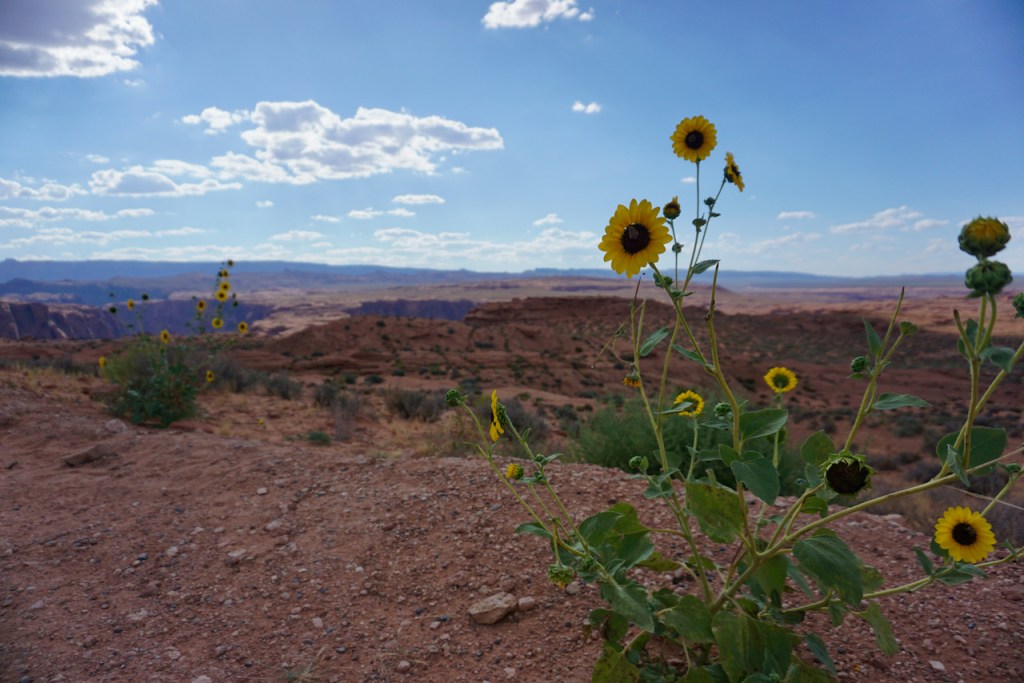
What is desert? Desert is yellow sand, red and purple rock, vast blue sky, and the straightest roads I’ve ever seen. Roads that stretched beyond the horizon, already impossibly far away, and further than that. The lazy tumbleweeds of the movies actually exist, as do dust devils that you can see in the air long before you reach them, assuming a sudden shift in atmosphere doesn’t blown them away by then. We spent many hours driving through a desert of nowhere, of now here.

It was extraordinary to watch the flatness of this scrubby landscape, populated with yellow grasses and green shrubs, suddenly sprout canyon walls and huge red mesas that stayed with us along the road.

Several times a day, as we passed sign of human activity ranging from clusters of trailers to tiny towns built along the oases created by rivers, my partner commented, “You’re on a journey looking for a new place to live, and you stop here and you look around and you say, ‘Yep, looks great. We’ll stay.’ There’s nothing here. How do people live here?” My contributing comment in response: “And why do they still live here?”

Knowing what I know about the history of American treatment of Native people, it’s entirely plausible that living here was never a choice. And that means it’s also possible that the people who have stayed are here for reasons beyond eking out an income. The reasons the Navajo consider this land holy ground were all around us.

We stopped at Horseshoe Bend in the late afternoon, just outside of Page, Arizona, where we would spend the night. We looked down at the mighty Colorado River, which we had encountered multiple times on our journey, and we watched the clouds move and the sky change.

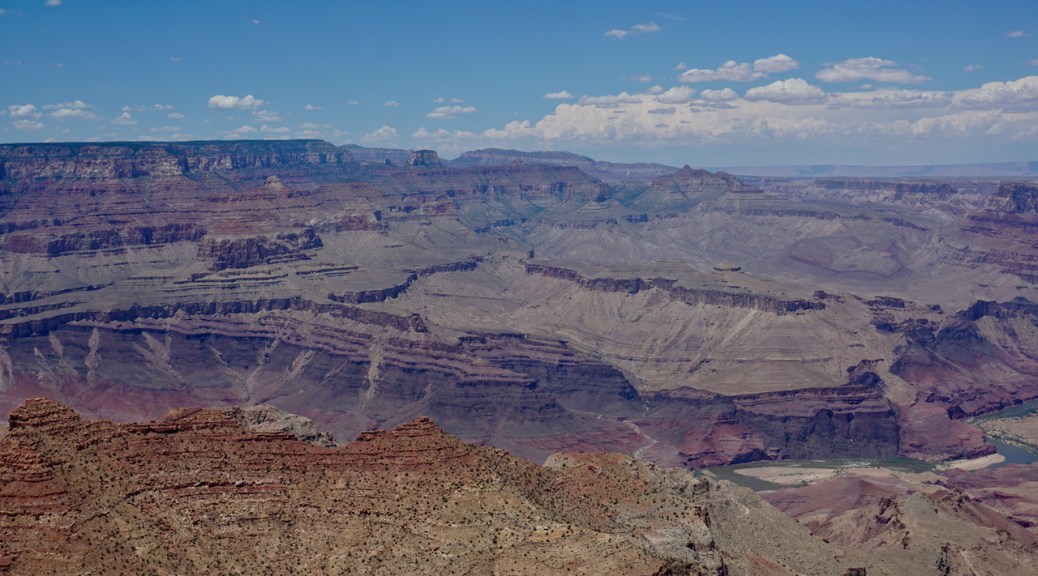
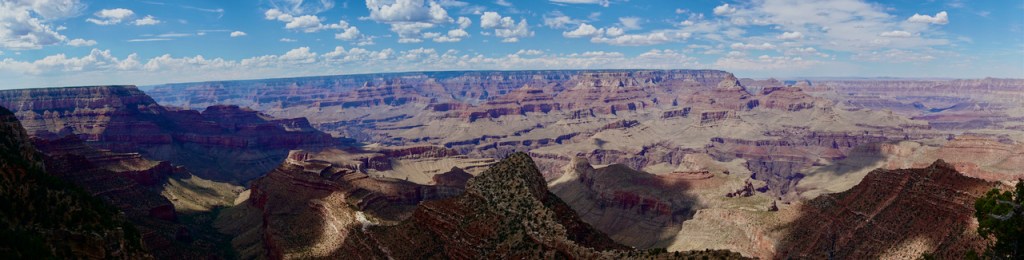
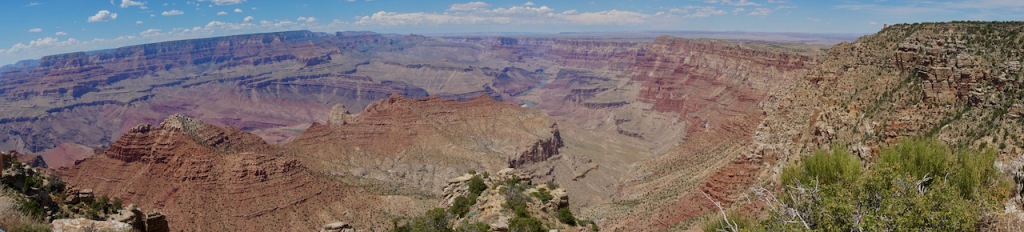
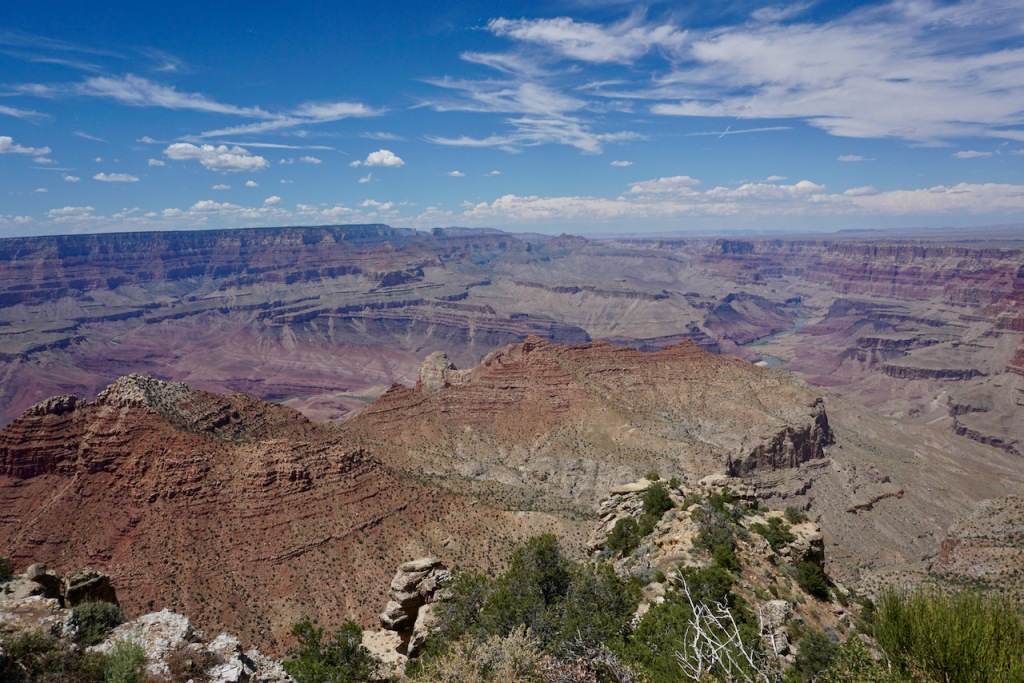
Although there is a great deal of beauty around Page, we didn’t linger. Instead, we drove in the direction of the Grand Canyon, which is indeed a sight to behold. It is so massive, so huge, and stretches to somewhere very far away. It is unfathomably deep, cavernous, and abutted by mountains in one direction and forest in the other. At lookout after lookout, we exclaimed over the scale, the vastness, and the majesty of sand, wind, water, and time, this wonder called nature.

After a while I stopped taking photos and just looked. There was really nothing to say, no words that could capture the privilege of being there.

Late in the afternoon, following our trip motto of, “Always take the scenic route,” we turned off the main highway to follow:

On Route 66 we found the town of Seligman, with preserved shades of former glory and local people used to welcoming tourists. My partner’s dream of being called “sweetheart” by a diner server was fulfilled, I finally had a veggie burger, and the man in the kitsch/second-hand/antique store gave us markers to sign the wall, like many hundreds of travellers before us. Liebe Grüße aus Weimar!
It took us fully by surprise that the diner where we ate was German-themed, the walls full of license plates, stickers, and other memorabilia. In addition to typical diner offerings (refillable coffee, breakfast all day, pie in a glass fridge by the door) bratwurst was on the menu at Westside Lilo’s Cafe. Based on the reactions of people who walked in the doors, we were the only ones who had just stumbled in, but not the only ones who could read the German and English newspaper clippings on the walls.

After a night in Kingman, Arizona, we drove to the other side of the Grand Canyon to experience the skywalk, which I really wanted to do despite having already paid once for access to nature. But, as with Horseshoe Bend, this was the way in. Here was our opportunity, picture-taking prohibition notwithstanding, to be high up on the rock and look down. Also enjoyable was the obligatory bus stop at another lookout where we scrambled up rocks to the highest point. The sheer size of the Grand Canyon was awesome, in the original sense of the word.

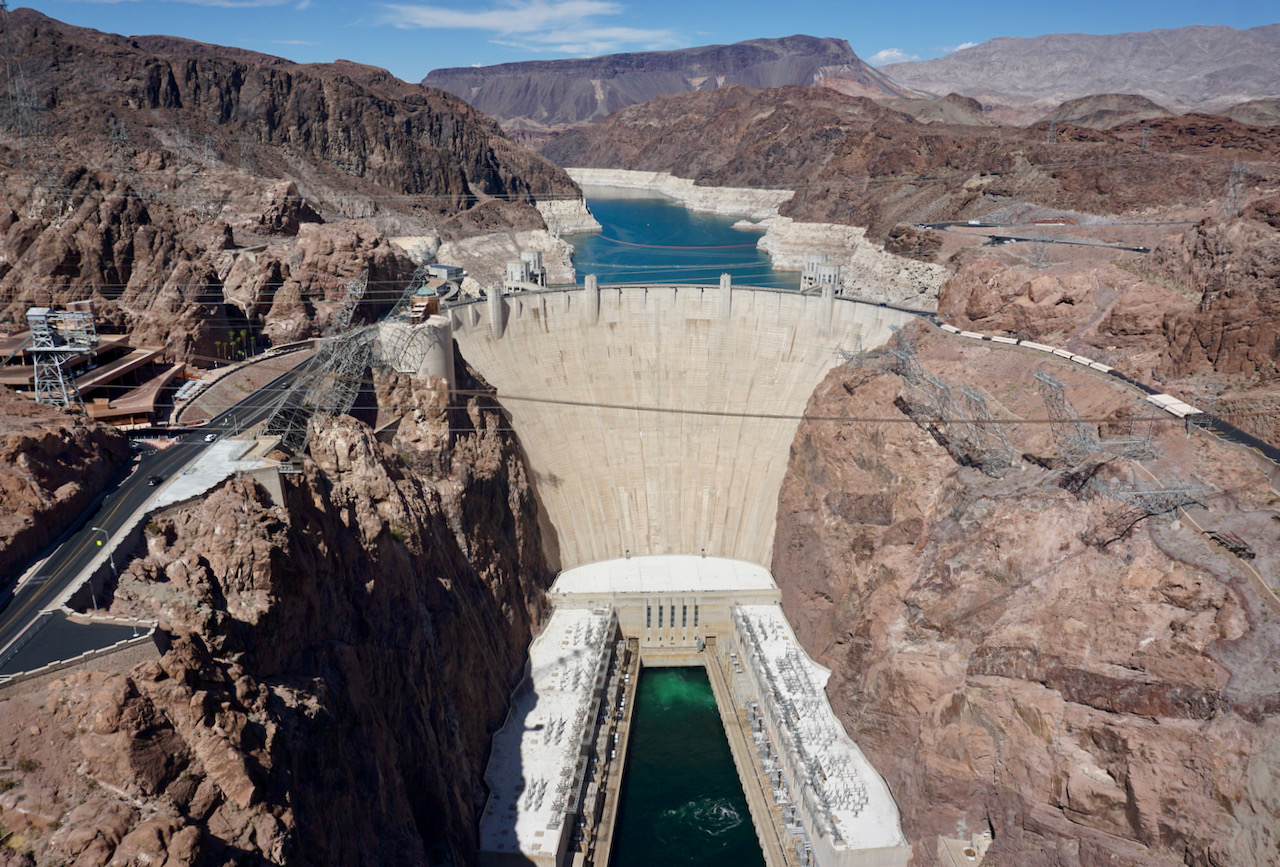
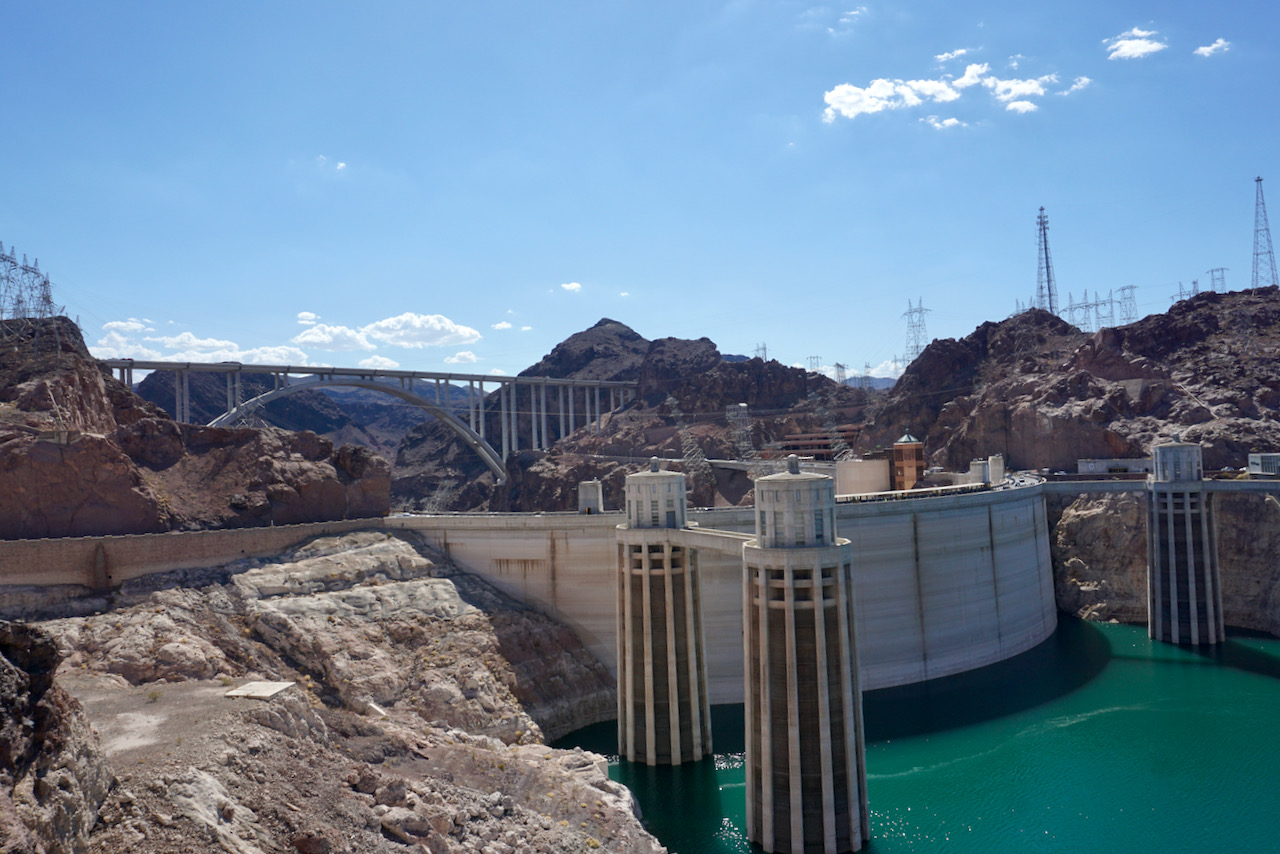
Our next overnight stop was Las Vegas, Nevada, and on the border between Arizona and Nevada, where our car registered 122°F (50°C), we pulled over to walk across the bridge at the Hoover Dam. Not interested in the engineering feat, I was mostly in shock at the heat against the backs of my legs and the fact that my greenstone necklace burned against my skin. No one needs to live in a place that is that hot.

And why people do so is the question we asked ourselves, and later the friend who hosted us in Vegas, as we continued our drive.

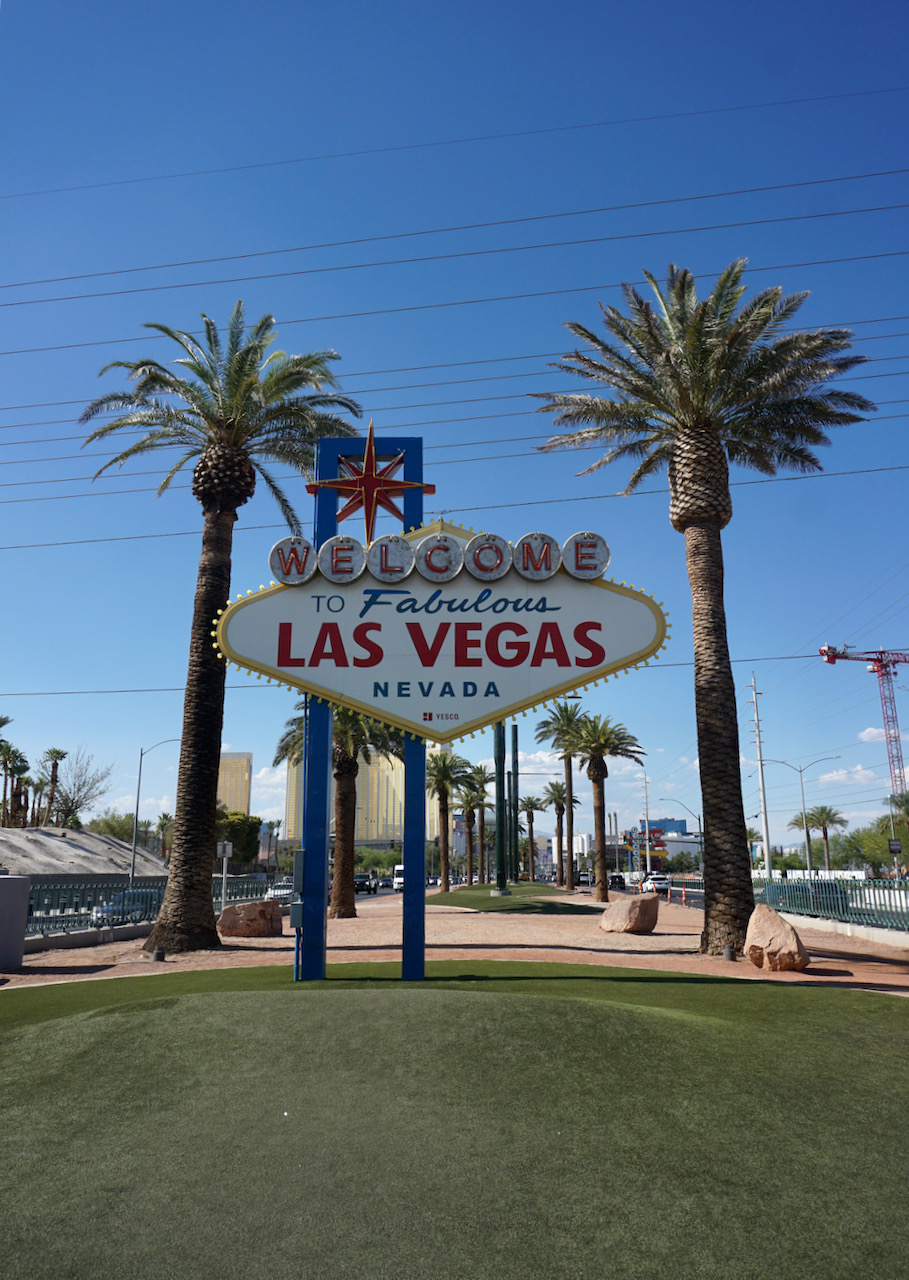
I never had any intention of visiting Vegas, but there we were, and having a local tour guide was a lovely experience. We visited the Strip in the afternoon to gawk at the buildings and the people, and returned at night to see the lights and a show, continue gawking at buildings and people, lose a gambling budget of $50 in under two minutes, and take a drive to the “old Vegas” of Freemont Street, glitzy yet cozy under even more lights.

There was so much to look at and it was impossible to stop looking. I’ve lived in big cities and have plenty of experience with glitz, glam, and mazes of shopping malls. After a week of the relative solitude of the desert and intense contact with nature, however, we found the scope and scale of it all a little stressful and overwhelming. I was glad to get back on the road and looking forward to the final part of our trip – California. Coming soon!