Tag Archives: Sky

Travel Guide: Krabi

This trip was different than many others that I’ve taken, for several reasons. Firstly, it took place over Thanksgiving weekend, so it was a three-night adventure instead of a more typical weekend jaunt. Secondly, and more importantly, I met up with my friend Lucas (with whom I also explored Hong Kong back in March) and his friend from college, Mel, for the last hurrah of the backpacking trip they were making through Thailand. Finally, this was a beach vacation with no purpose other than playing at the beach. It has been a very long time since I’ve had one of those vacations, and I have all the sunburns to prove it!

IMG_0403_2
Random building that I just loved

Lucas, Mel, and I chose to stay in Krabi Town so that we’d have quick access to an airport as well as a good jump-off point for a variety of water-related activities. We stayed at Pak-Up Hostel, met a ton of really cool people, and thoroughly enjoyed the experience.

IMG_0406
The bar at our hostel where we spent each evening

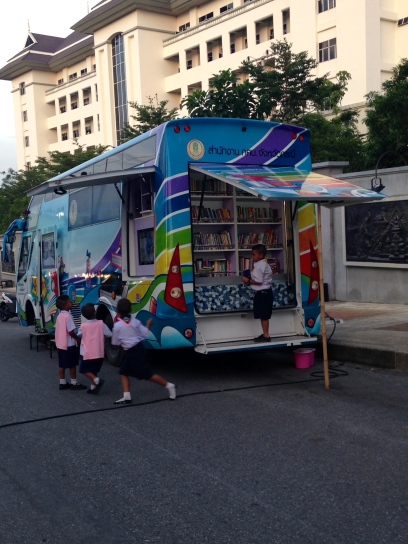
On our first night in Krabi, we walked through the night market, which contained the usual number of food stalls and stands selling other random items. My favorite, however, was a mobile library!
IMG_0404

On Friday, we booked a kayaking tour of mangrove forests and sea caves, which was really neat. It took a bit longer to get to the kayak site than we’d hoped, but we couldn’t have kayaked in this area on our own. Unfortunately, most of my cave photos didn’t come out, but this is what we saw on our adventure:

It was pouring when we got back to Krabi, but tropical storms usually clear in a couple hours. This was no exception, and we took advantage of the blue skies to head to Railay Beach, known for rock climbing. As it had just rained, we didn’t see any climbers out and about, but we did see a truly stunning place.

Our water taxi ride to Railay gave us these views . . .

. . . and our time on Railay Beach left me in complete awe:


Despite getting caught in another torrential, terrifying storm on our water taxi back to Krabi, we headed to Aonang Beach the next morning to hire a longtail boat to take us island hopping.

P1060315
Interior of our boat
P1060314
Exterior of our boat, complete with captain


It took about an hour to get to the Hong Islands, and we stopped in three places to just enjoy our time on the beach. Our favorite by far was Hong Lagoon, our last stop. Lucas and Mel dove gracefully off the boat; I belly flopped painfully a couple times and then opted just to jump.

We could have visited a fourth island, but hunger got the better of us, so we chose to head back to Aonang to eat. We spent about an hour relaxing in some rented beach chairs before making our way back to Pak-Up for a much-needed shower.

This weekend in Krabi was absolutely amazing. The ocean is my happy place and I haven’t been to the ocean in a very long time. Maybe it was the 10-bed dorm room in the hostel, maybe it was meeting up with friends, or maybe it was my makeup case remaining untouched for the entirety of the trip, but I have never felt as free as I did over the past few days. That feeling was entirely unexpected, but I’m glad for it. Sunburn and all, I’d do it again in heartbeat.


Travel Guide: Hoi An

This is the third and final post in a series of three about my travels with my dad over October break. You can read the introduction to the trip here, and my posts about Bangkok and Hanoi here and here, respectively.

The last four days of our travels found us in beautiful Hoi An, which is located in central Vietnam. Hoi An is often under water at this time of year, a fact unknown to me until we arrived. Our travels there could have been really disappointing, but we were lucky enough not to see any rain over the course of the week. As a result of the threat of weather, however, Hoi An was largely empty of tourists.

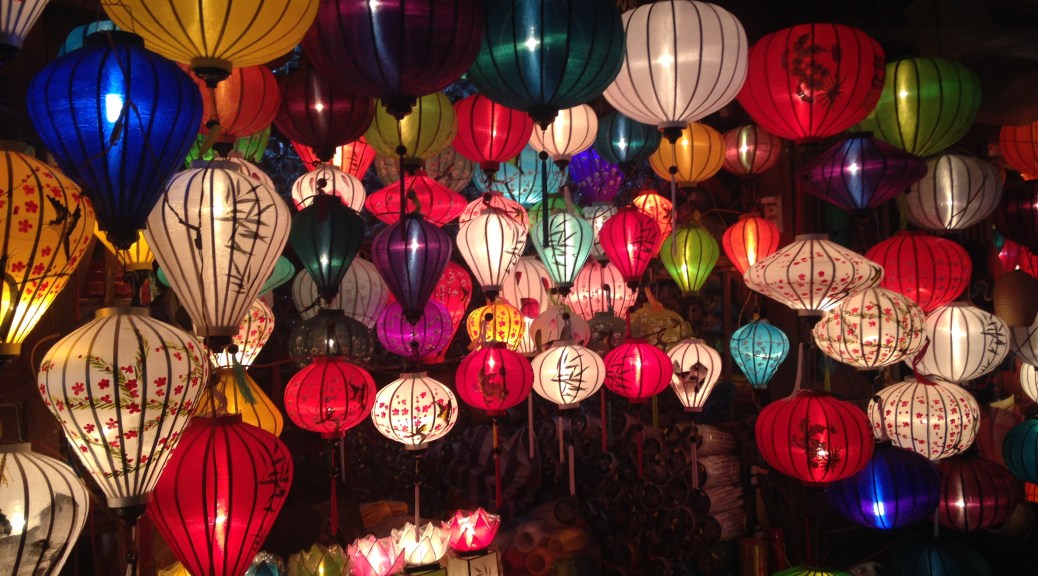
To get to quaint, sleepy Hoi An, located on the Thu Bon River, we flew into nearby Da Nang airport and hopped into a taxi for about 45 minutes. Everyone I’ve ever spoken to about Hoi An loves it (I ran into four of my friends there!), and after a walk through the tiny Ancient Town it was easy to see why. Not only is it full of old assembly halls, houses, and shops, but lanterns light up the entire town in the evening. I took the following pictures throughout our time in Hoi An:

In addition to being a nice place by itself, Hoi An is also a wonderful base for half-day trips to historical and interesting sites nearby. We took two separate trips out of Hoi An during our time there; the first was to My Son, an ancient Hindu temple site and burial ground for Cham kings dating to the fourth century. The complex must have been massive in its heyday, but much of it was destroyed by American bombs during the Vietnam War. There are very clearly marked walking paths because of unexploded ordnances all around the site, another wartime souvenir. Dad and I visited My Son as part of a tour with a very informative guide; he pointed out weathered motifs and symbols carved into the stone that we probably would have missed without him.

Along with about half of our tour group, we chose to take a boat along the Thu Bon River to return to Hoi An. The boat afforded us wonderful views of the river and of rural life on its banks.

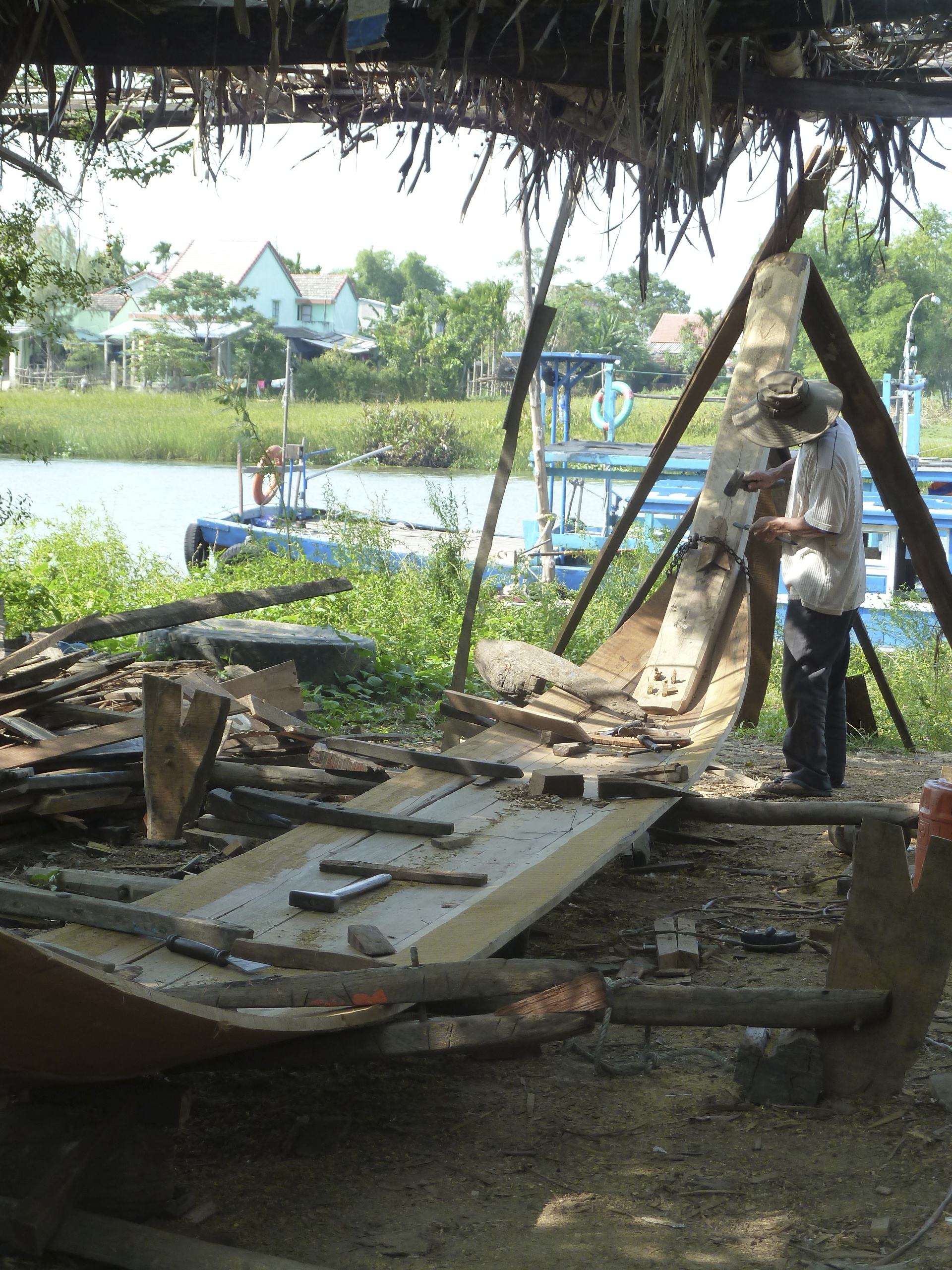
Along the way to Hoi An, we stopped on Cam Kim Island, a village known for its traditional crafts.

Now that I've seen this, I wonder how non-traditional boats and ships are made?
Now that I’ve seen this, I wonder how non-traditional boats and ships are made?
I thought it was really neat that the carver drew the pattern on the wood. Somehow, it had never occurred to me that artists do that.
Somehow, it had never occurred to me that artists draw their patterns before starting to carve.

Vietnam’s Marble Mountains, located in nearby Da Nang, was our destination the following morning. The Marble Mountains are exactly what they sound like – jutting hills of marble that are no longer quarried because they’d disappear. We took the elevator to Thuy Son, the highest peak, and then made our way down, exploring the Buddhist pagodas, Hindu temples, and various shrines and altars that dot the site.

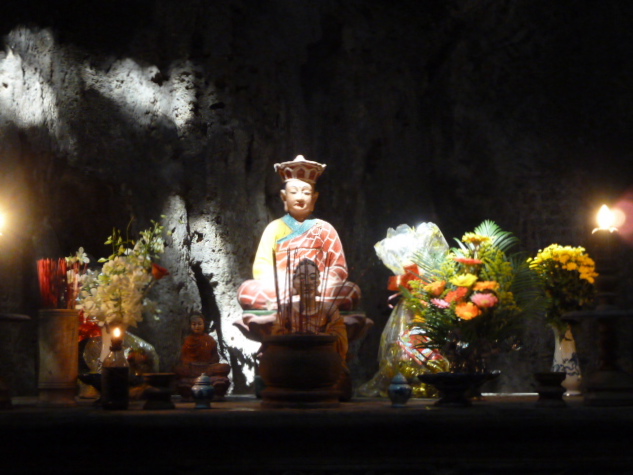
There are also caves on the mountains, including Tang Chan Cave, which contains a few altars and statues. What is truly spectacular about the cave, however, is the sunlight streaming through large holes in its top. When the light is just right, it casts a gorgeous, unearthly light on the altars.

Cave shrine

Sunlight

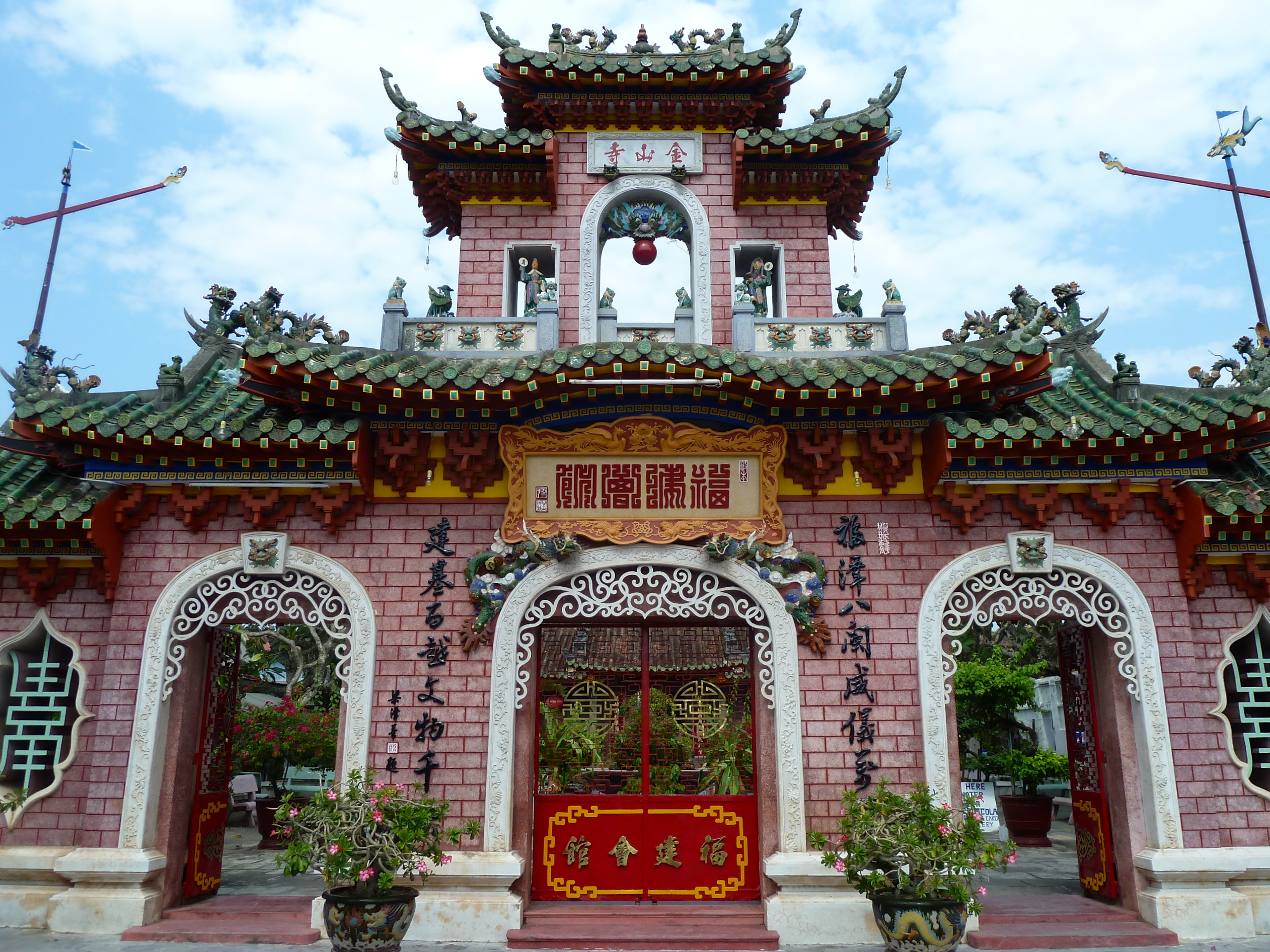
In the afternoon, we wandered around Hoi An’s Ancient Town to take advantage of the ticket scheme that allows access to five historical sites within the town. The ticket is required to visit the vast majority of assembly halls, historic homes, and even some museums, so we saved it for our last afternoon when we knew we’d have the longest amount of daylight in town. We visited the Phuoc Kien Assembly hall, which started as a pagoda and later became a temple for one of Hoi An’s Chinese groups. It is home to an altar to the Goddess of the Sea, which I thought was really interesting. There was also an altar shaped like a boat, which was beautiful. I love learning about groups of people, their livelihoods, and their values through religious art and artifacts. What a way to gain insight into the soul.

Phuoc Kien Assembly Hall

Along with our ticket scheme wanderings was a very brief stop at the Museum of Folk Culture, which was interesting largely because the door of the museum was open, all the lights were off, and there was no one inside but us and another equally confused tourist.

The Tan Ky House, on the other hand, was interesting in itself.

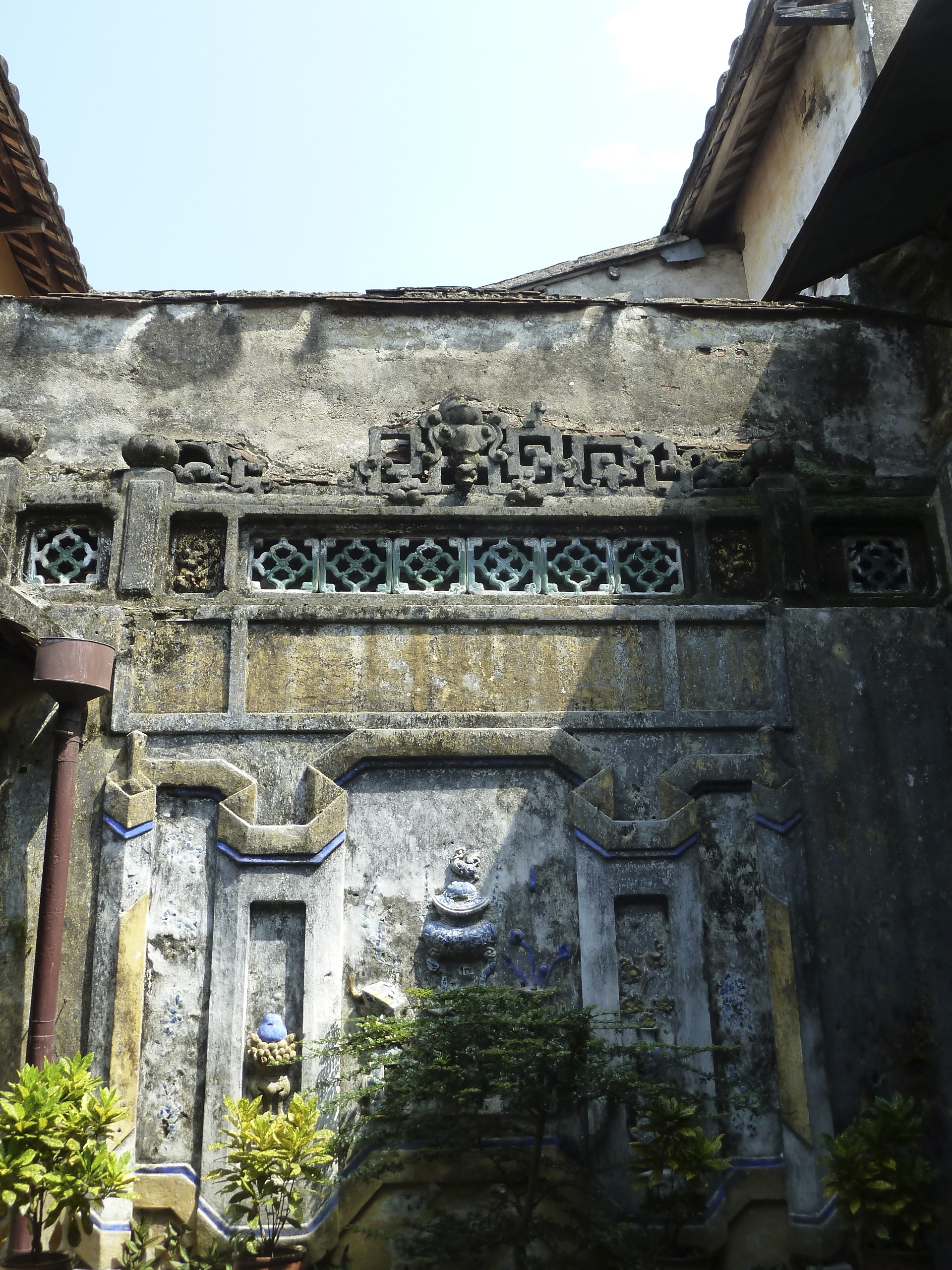
Courtyard of the Tan Ky House

The Tan Ky House is a shop house dating from the late eighteenth century that incorporated Vietnamese, Chinese, and Japanese architectural styles. I admit, I didn’t know that so many ethnic groups and nationalities call Hoi An home, and have a place in the city’s history as a trading port.

The most interesting stop on our somewhat guided wander was the Handicraft Workshop where we saw a performance of traditional music and dance. By far my favorite part was a musical piece that I can best describe as ancient jazz. A musician who would have been a saxophone player in a western jazz group played a sort of double-bow violin that didn’t seem to be made of anything but strings and a small wooden base. He had a solo in the middle of the piece that was creative, innovative, and playful; I couldn’t understand how such an unassuming instrument even made sounds, let alone such music!

Neither of us were ready to leave Hoi An early Sunday morning. I, at least, have a mental list of things I want to do when I return, which I hopefully will. There is now a direct flight from Singapore to Hoi An, so it is certainly a possibility.

Japanese Covered Bridge

Dad and I had an unbelievable time during our ten days of travel together. I am so glad to have shared such a wonderful experience with him. We both learned a lot over the course of our trip and I’m already looking forward to the next one!

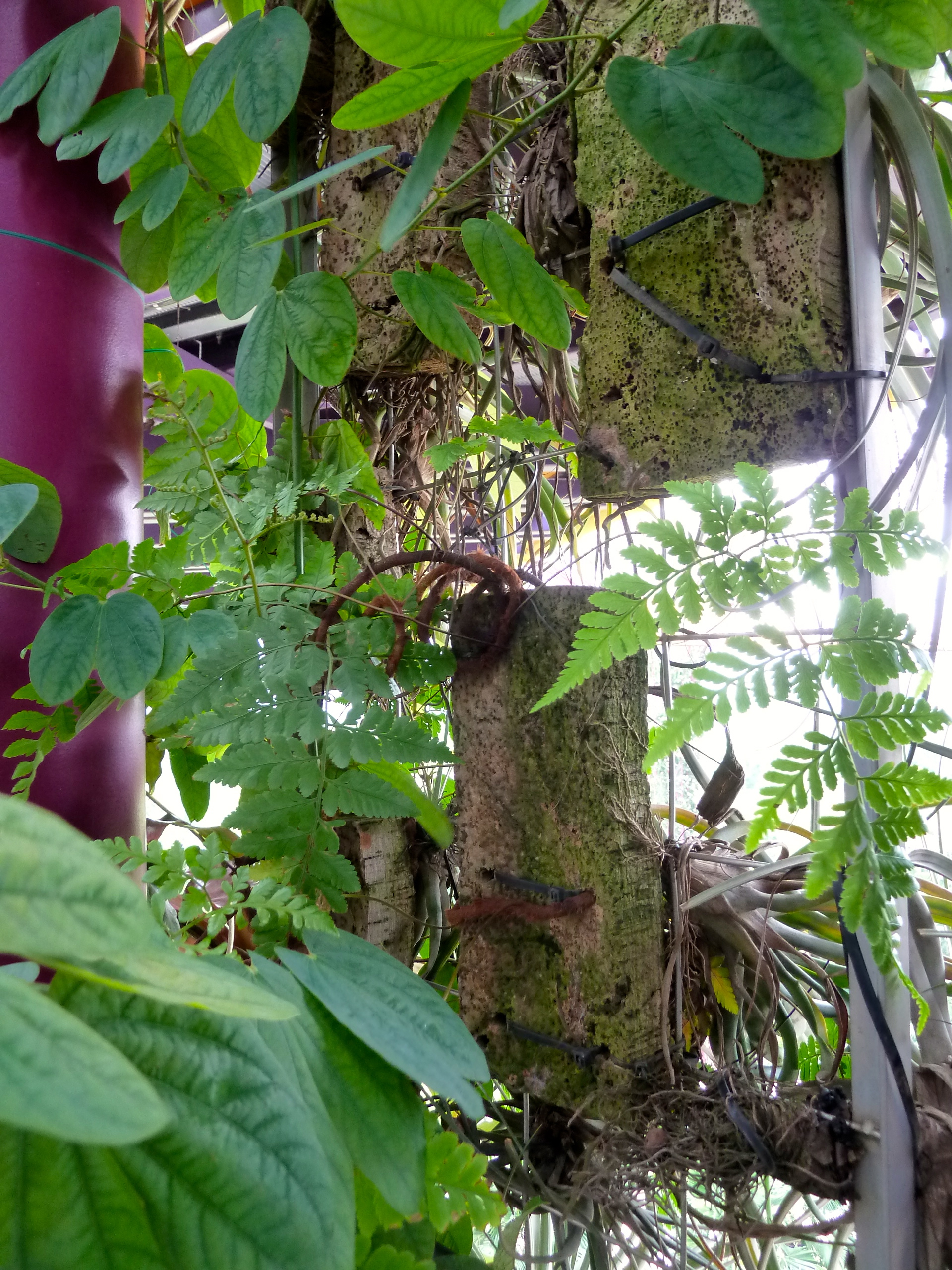
Gardens by the Bay

I haven’t been out of Singapore since I went to Chiang Mai about a month ago, and I’m getting antsy. That’s one of the problem with travelling so often, I think. I love traveling and exploring new places; staying in one place for (gasp!) four whole weekends seems like a lot.

Today was our fourth non-hazy day in a row, though it wasn’t a terribly nice day. The sun poked through the clouds every now and then, but wasn’t actually shining past about 11am. The last three days have been much nicer. Nevertheless, I had to do something new and exciting. Last weekend I went to the National Museum to see the newly renovated permanent exhibit, and today I went to Gardens by the Bay to see what I could see.

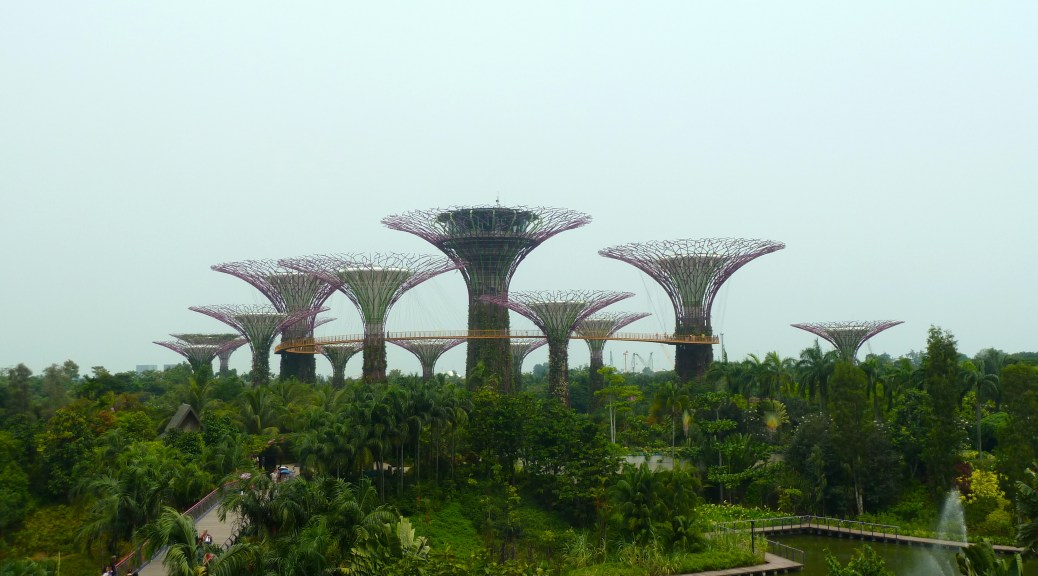
I’ve been to Gardens by the Bay only once before, which was at night on SG50. That was a very different atmosphere. Today the Gardens were calm, peaceful, and a wonderful break from the urban jungle that is Singapore. The Gardens by the Bay are connected to Marina Bay Sands, so there’s more than one “wow” factor to a visit there. I highly recommend it. A lot of people have heard of the supertrees, but I’ve linked a quick CNN article from 2012 for those who want more information. They’re as super as you can imagine.

Singapore calls itself “A City in a Garden,” and sometimes I have to agree that it’s true. However, Singapore’s industry is never far away because the island is quite small.

The shipping lanes are rather nearby the tranquil Gardens by the Bay. It reminded me of visiting Sentosa and watching oil refineries do their thing.

But then, when I turned my attention to the innards of the supertrees, I couldn’t care less about the refineries and shipping lanes. People have to make a living, after all.

P1050393 P1050394

I couldn’t resist taking a few close-ups of the foliage, either. I don’t know how good these photos are, but their subjects are pretty! There are themed gardens at Gardens by the Bay like the Indian, Chinese, and Malay gardens, as well as gardens showcasing trees, mushrooms, and fruits!

The strangest feature of Gardens by the Bay is this sculpture (people included in the photo for scale):

Giant baby sculture

Lucky for me (and for all the other curious patrons) it was accompanied by this helpful explanation:

Helpful explanation

I’m not really a fan of the sculpture, but I think the rationale for it is beautiful. At any rate, it was a lovely afternoon spent at the Gardens by the Bay. I’m sure I’ll be back – hopefully on a clearer day!