This post is dedicated to AL, CC, DF, KB, LC, MS, SB, SF, and TM.
The 91-kilometer SaaleHorizontale Wanderweg was voted Germany’s prettiest hike of 2023. It is located in the hills surrounding the city of Jena, about 20 kilometers from where I live in Weimar, and conveniently divided into nine very manageable stages that are accessible by public transportation. I really enjoy the nature around Jena, a city situated in a valley cut by the Saale River among rolling hills, farms, and some wine country. From the hills, which are easily accessible on foot throughout the city, you can look into the distance and the appreciation of the landscape only grows. I miss that in Weimar sometimes.
I had heard about the SaaleHorizontale previously, but didn’t knowingly experience it myself until the beginning of 2024 with the aid of a helpful map. Immediately upon completing the first stage, I decided that my outdoor goal for 2024 was to complete all nine stages. I wanted be intimately familiar with the nature in my backyard.
As it worked out, I didn’t walk the stages in order and completed only three alone. I spent most of my time in good company; my partner and I were often together and I am happy to have friends who like hiking as much as I do. I ended up in the rain only twice, the first time a heavy shower for a few minutes and the second time a steady four hours on a day where no inclement weather was called for. It’s nice to remember that we are part of nature and not the other way around.
A story of changing seasons can be seen in the photos below. Nature never fails to calm and to comfort, and that was my experience the whole time.
Stage 1: Klinikum Jena to Kupferplatte (12.7km) – Early January
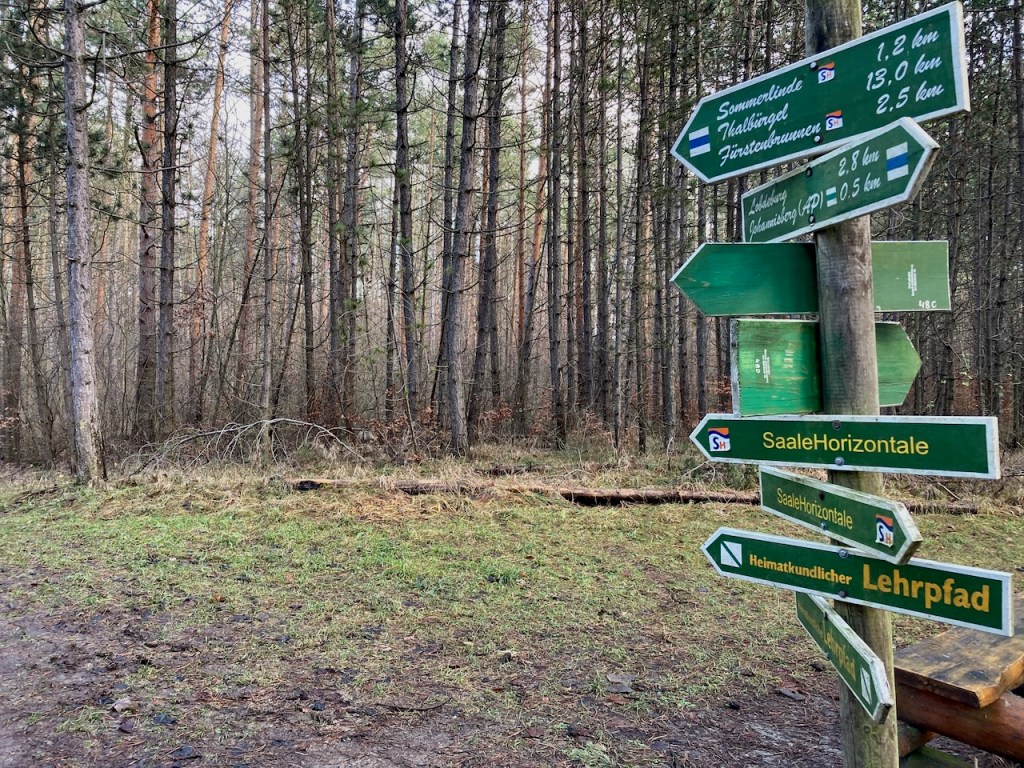
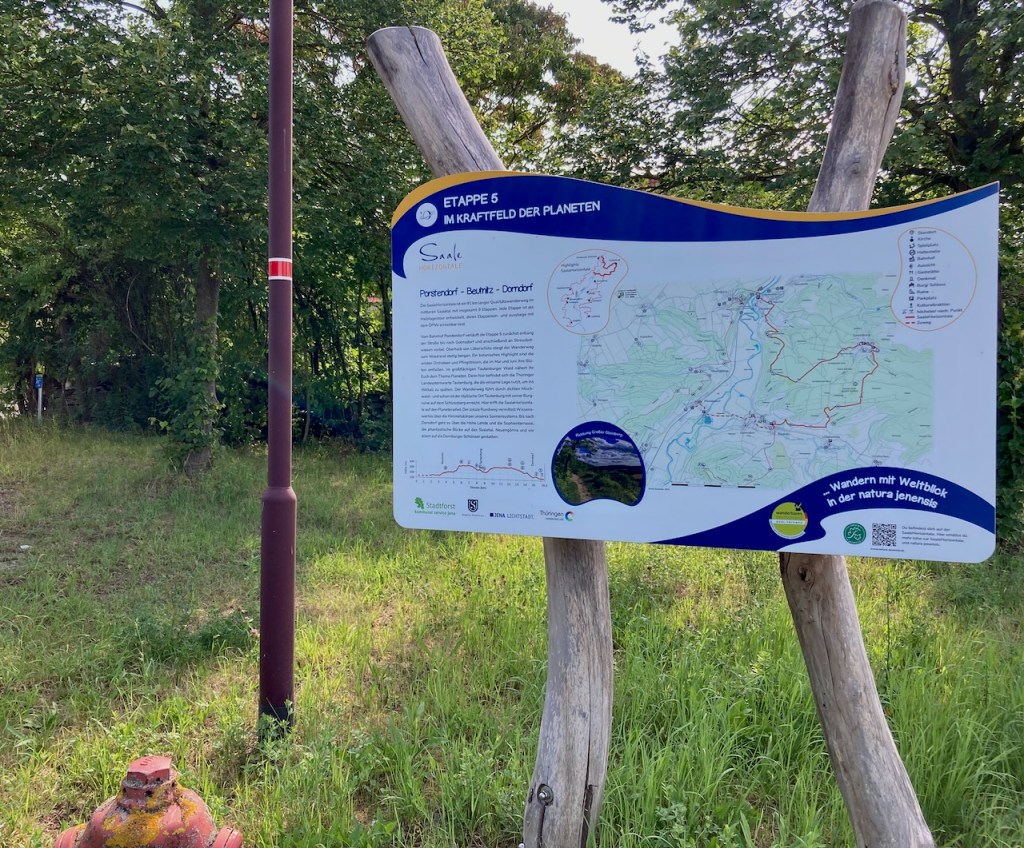
Germany is known for being nature-loving and hiker-friendly, which can be seen in the helpful signs at the start of each stage.

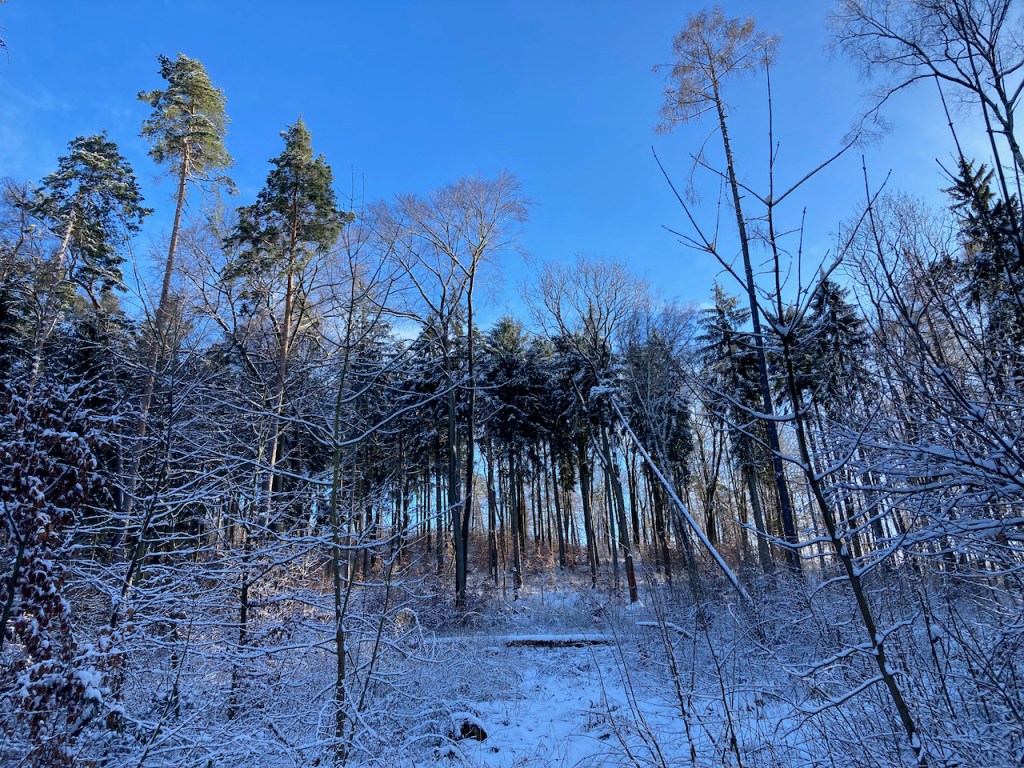
Although January and cold enough for my winter jacket, this was obviously not a point at which we had snow. We had had a lot of snow at the beginning of November and would get more later in the month. I love winter hiking and did as much of it as the weather allowed this year, but the SaaleHorizontale trails are narrow and on the edges of hills. I’m sure people walk it in the snow, but I don’t need to do that.
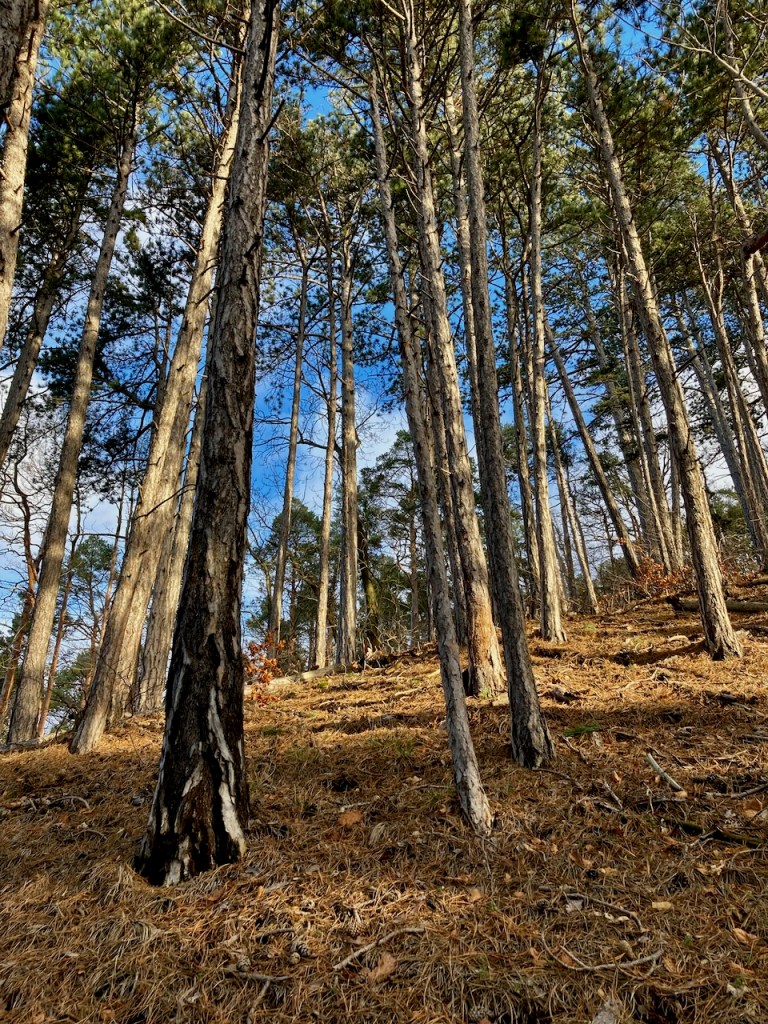



The view from all exposed parts of the trail is wide, and I saw the rain coming before it came. I enjoyed a snack in the last rays of sunshine and had almost made it out of the woods before the short, heavy shower. As often happens, the sun that came out immediately thereafter was beautiful and left me completely dry before I reached the tram stop.

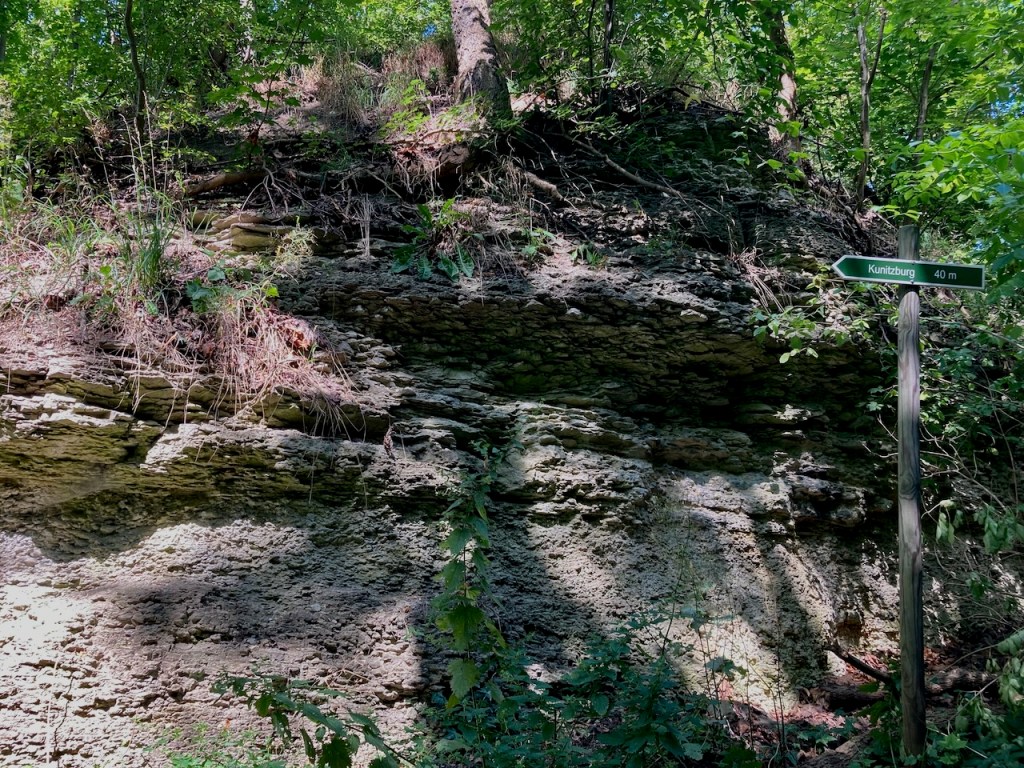
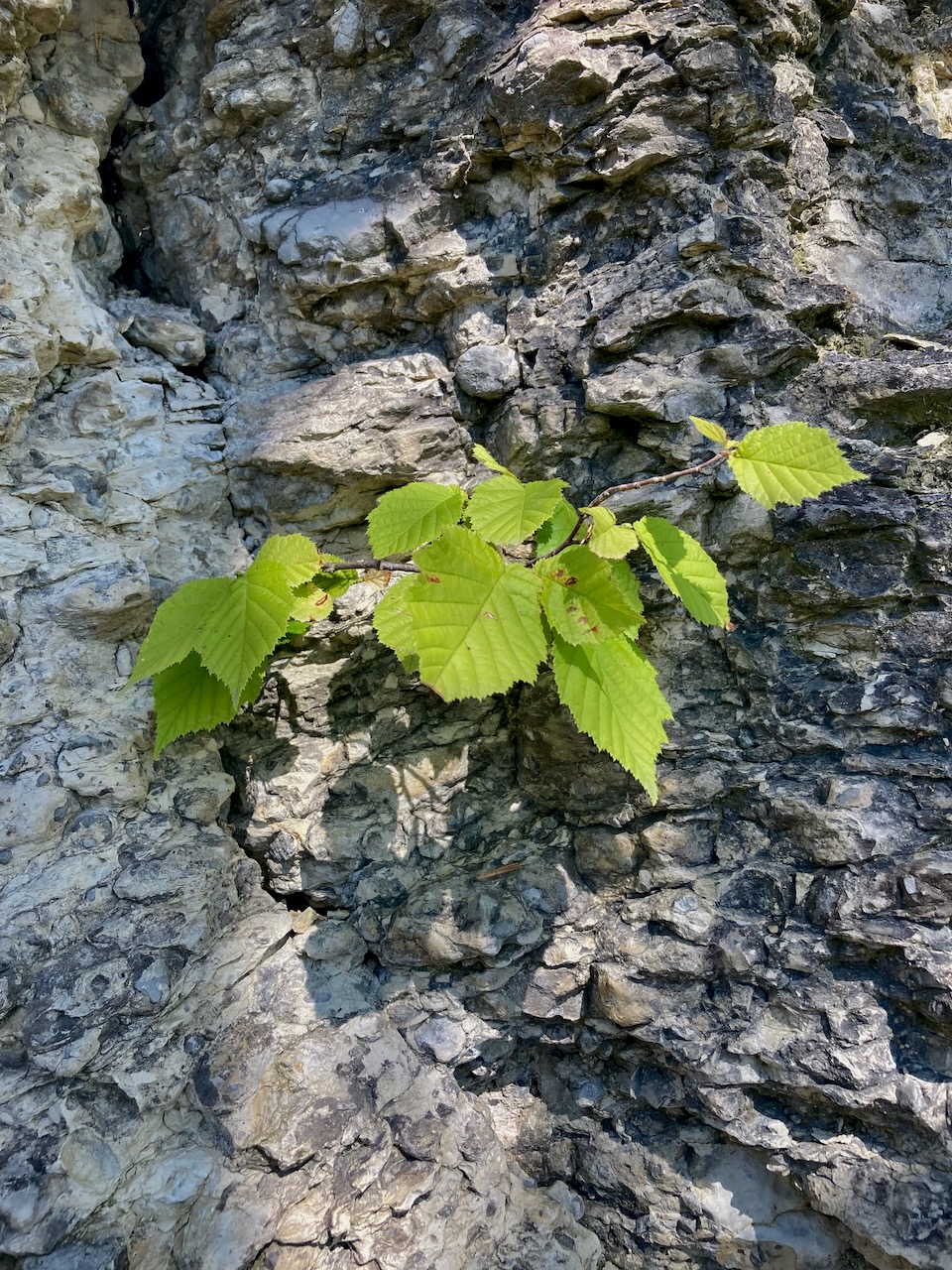
Rock tells the story of the history of our planet and there’s a good deal of beautiful rock along the SaaleHorizontale. Unfortunately, there’s no climbing immediately around here because this is Muschelkalk, or shell limestone, and very brittle. Shells? Indeed – this region was once under water.

Stage 6: Dornburg to Zwätzen (13.8km) – Late February
It was very early spring the next time I stepped foot on the SaaleHorizontale, this time with a large group of friends. Bundled into down jackets, we began in a small village . . .

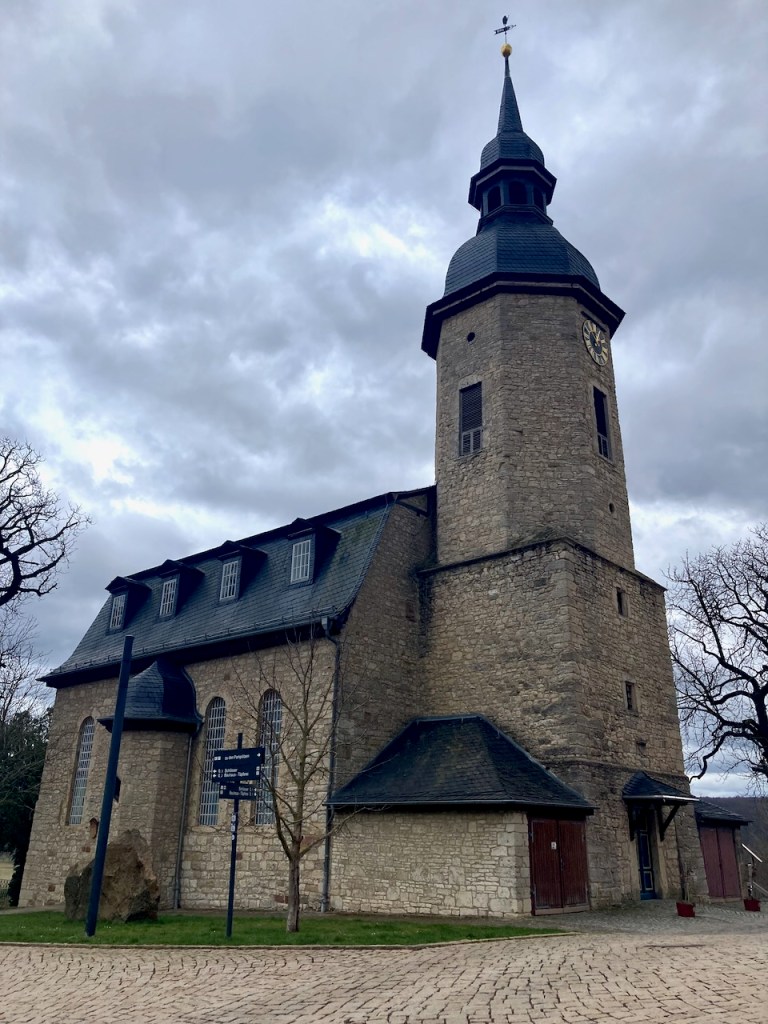
. . . and followed the signs to the trailhead.

A charming aspect of Germany is that even small villages have castles. Royals since time immemorial have loved the countryside.

We walked past small farms . . .

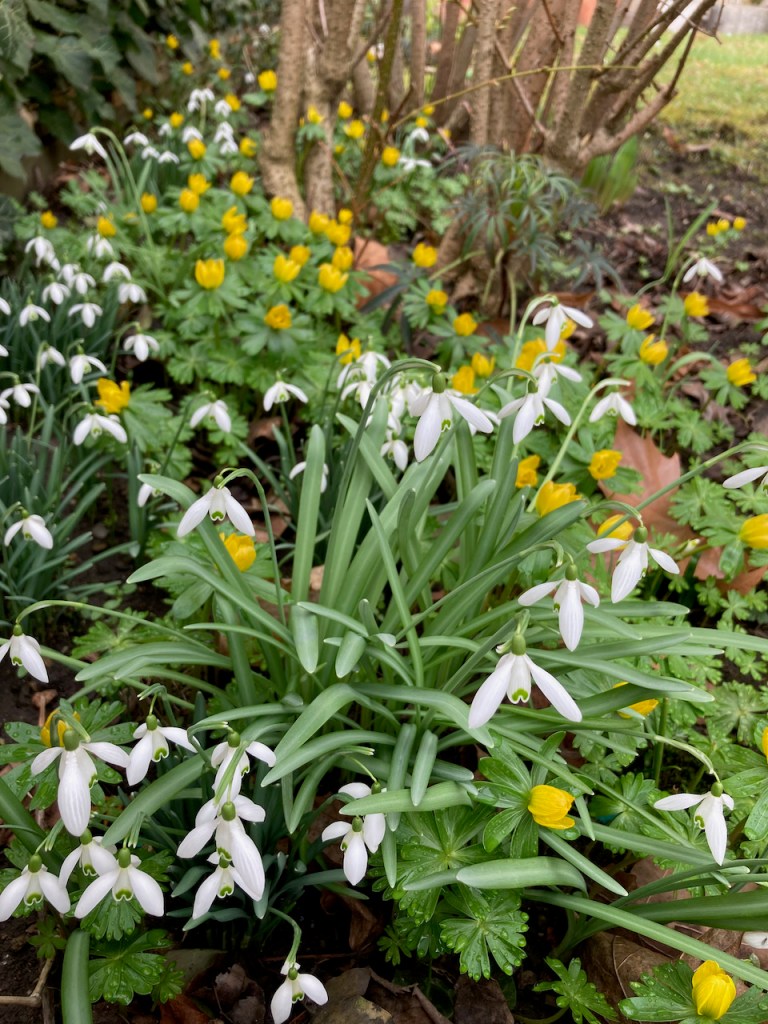
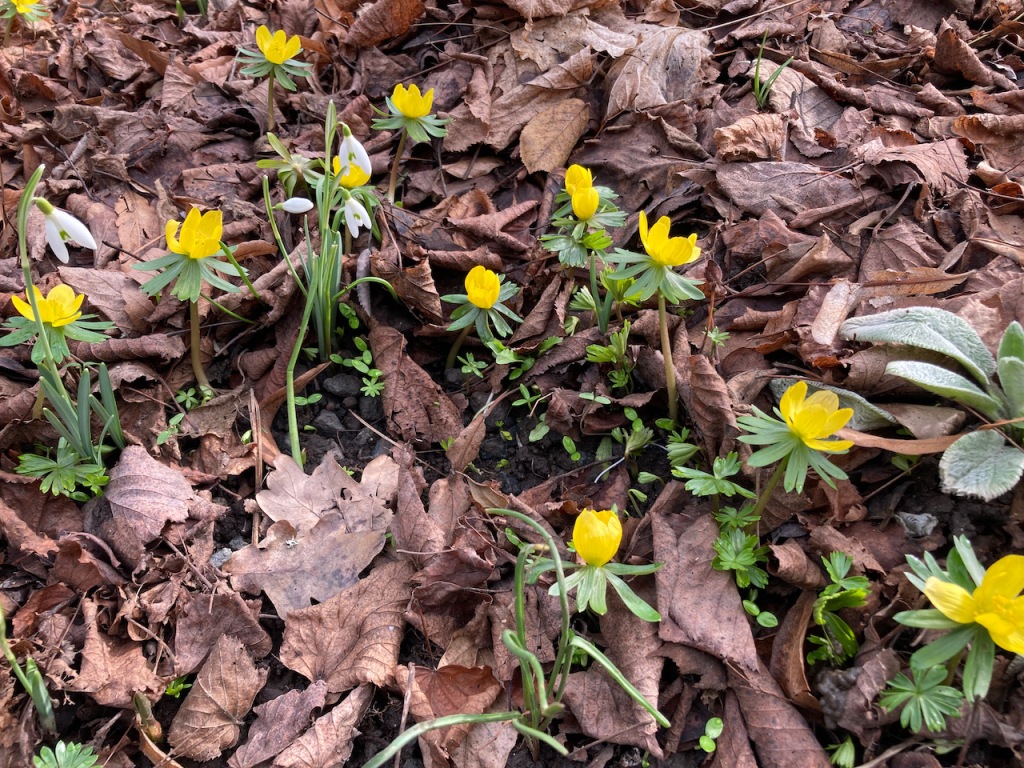
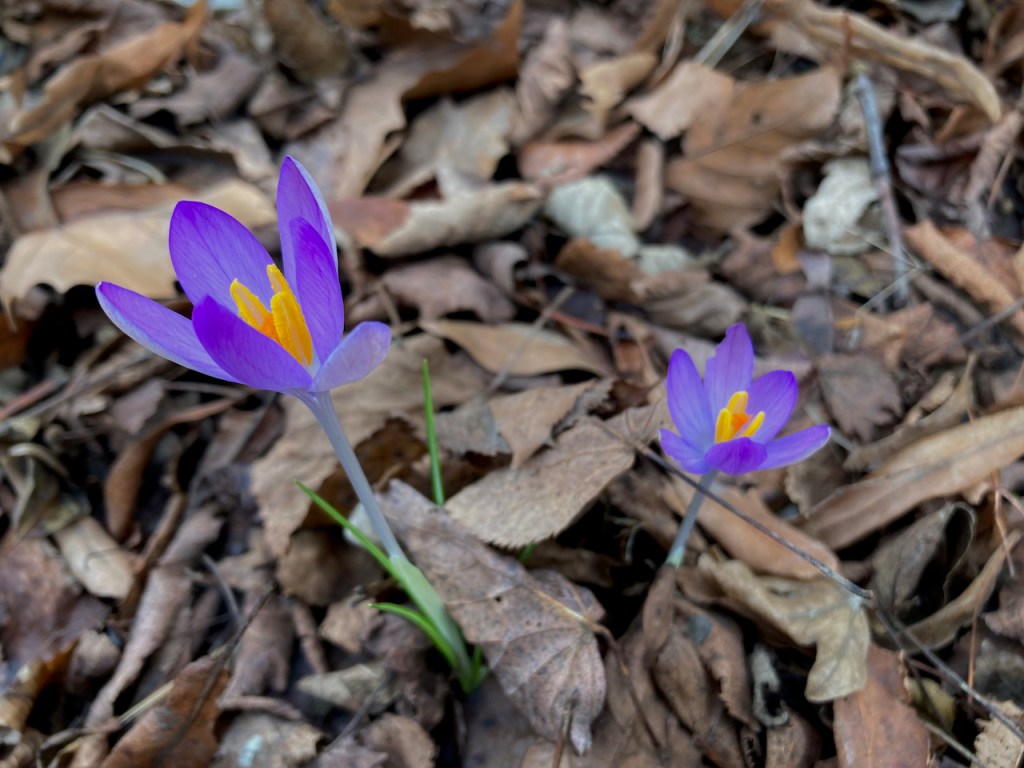
. . . and past fields of tiny spring flowers. The little yellow ones are Winterlinge, visible for just a few weeks as winter fades into spring, the white ones are called Märzenbecher, which roughly translates to “March goblets”, and the purple ones are, of course, crocuses.
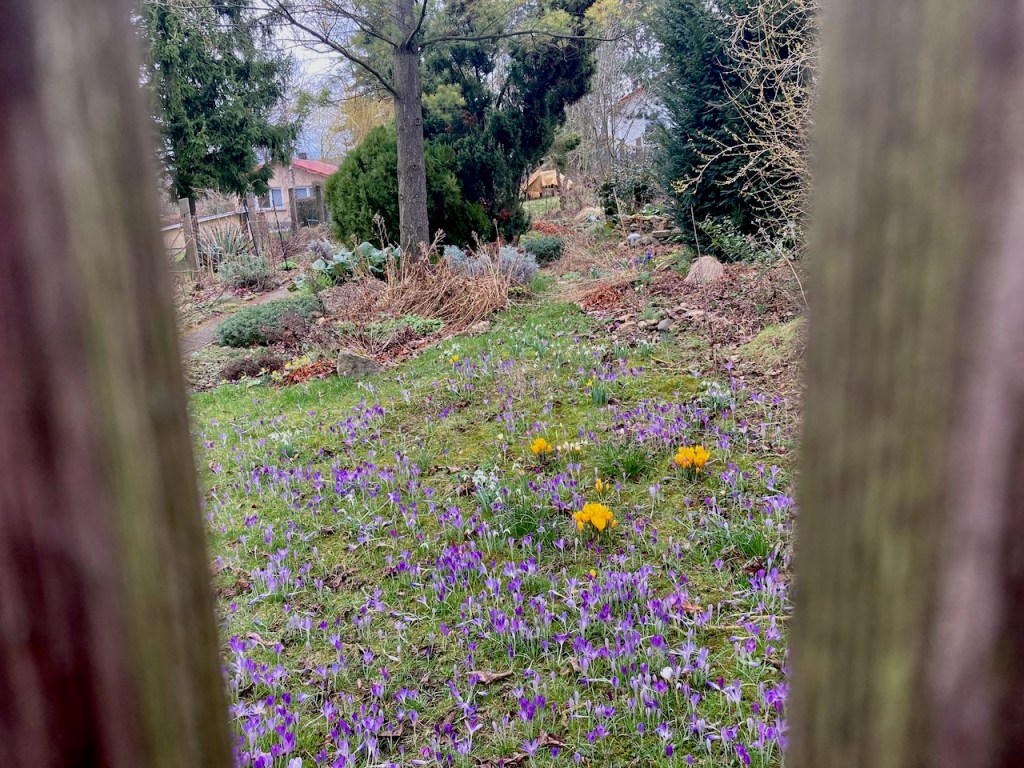
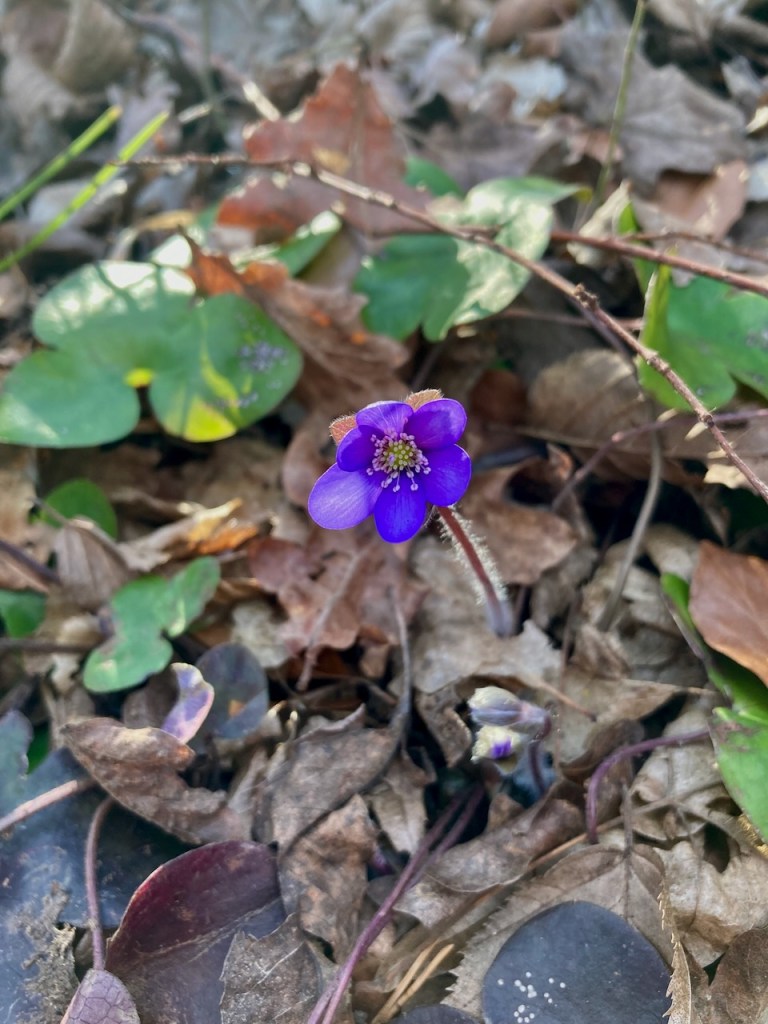

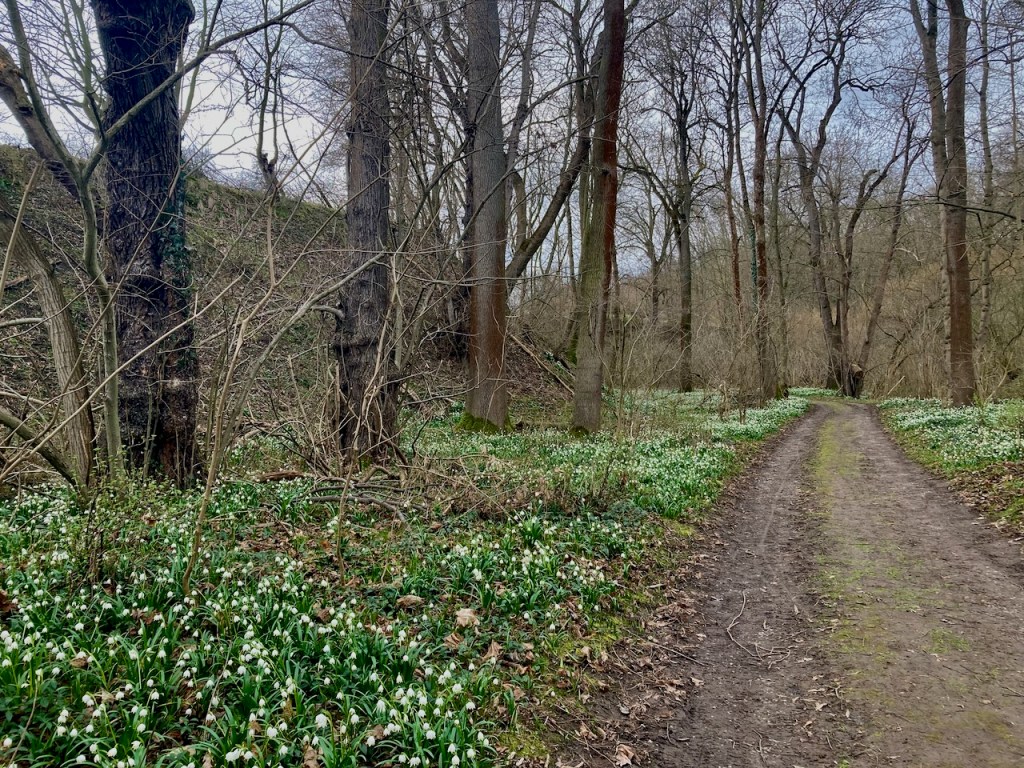

The SaaleHorizontale route passes through many little villages that look a lot more remote than they are. The hills make for the remoteness while their location in the valley mean that the university city of Jena is a short public bus ride away.
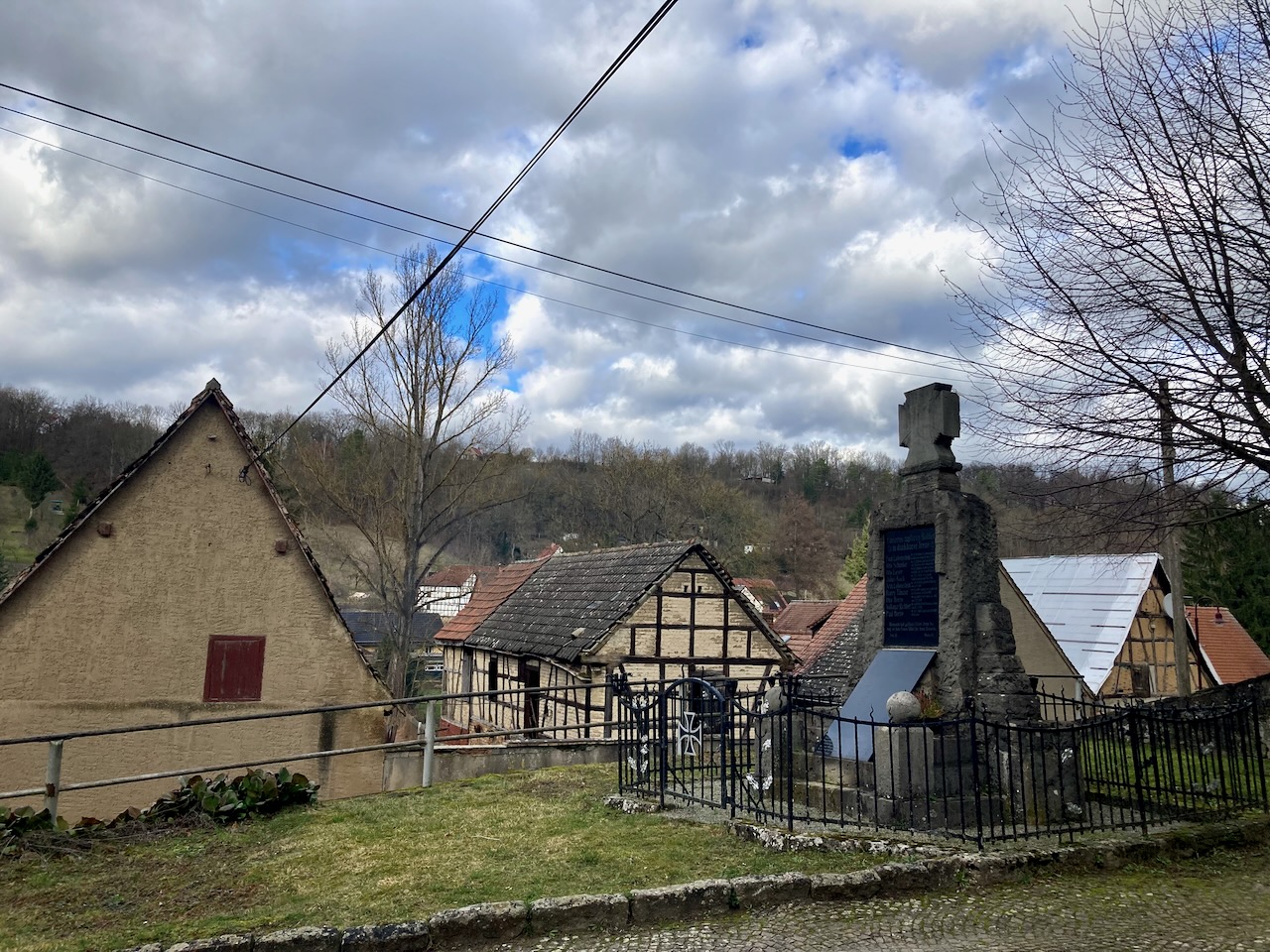
My favourite parts of the trail are in the woods . . .


. . . and I love the moments where the sun shines through and leaves patterned shadows. My very old phone doesn’t take the smoothest panoramas, but the clouds really were storybook clouds and the grass really was turning green again.

Stage 7: Zwätzen to Papiermühle (9.3km) – Early March
Shortly thereafter, in order to once again enjoy the tenderest flowers, my partner and a friend, both of whom had been along the previous weekend, went with me for another walk in the woods.

Rather than down jackets this time, we stripped off layers and headed up hills into the sunshine.

The first signs of spring, which grow with abandon and without scruple, had settled into a thick carpet on the forest floor.
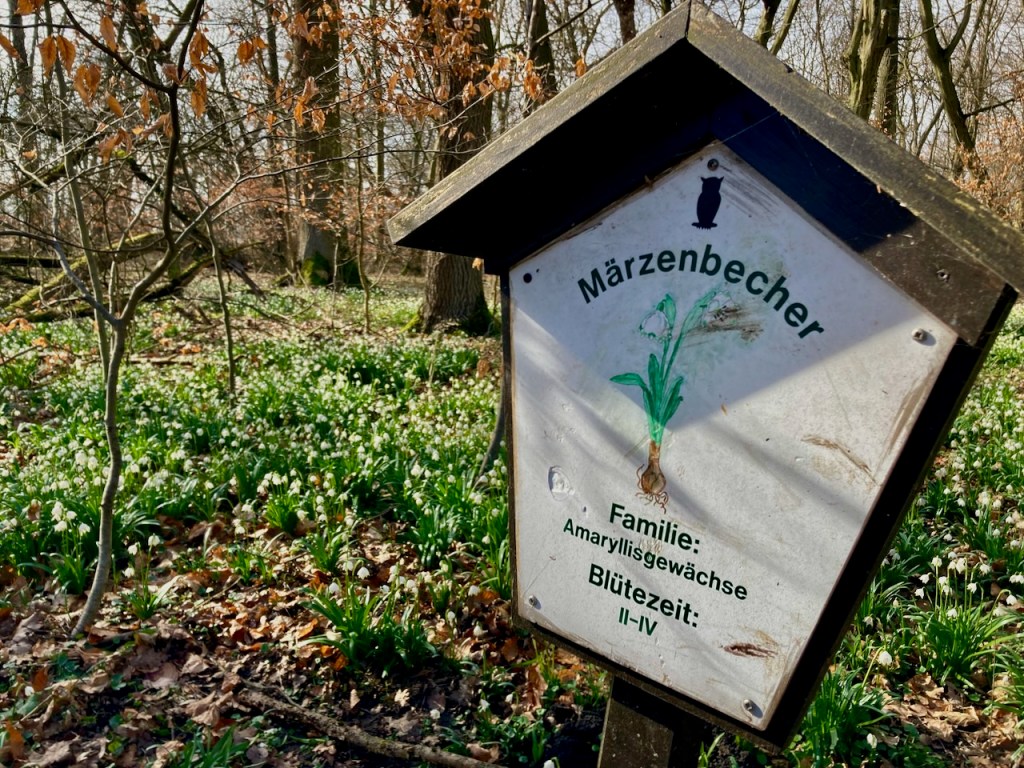
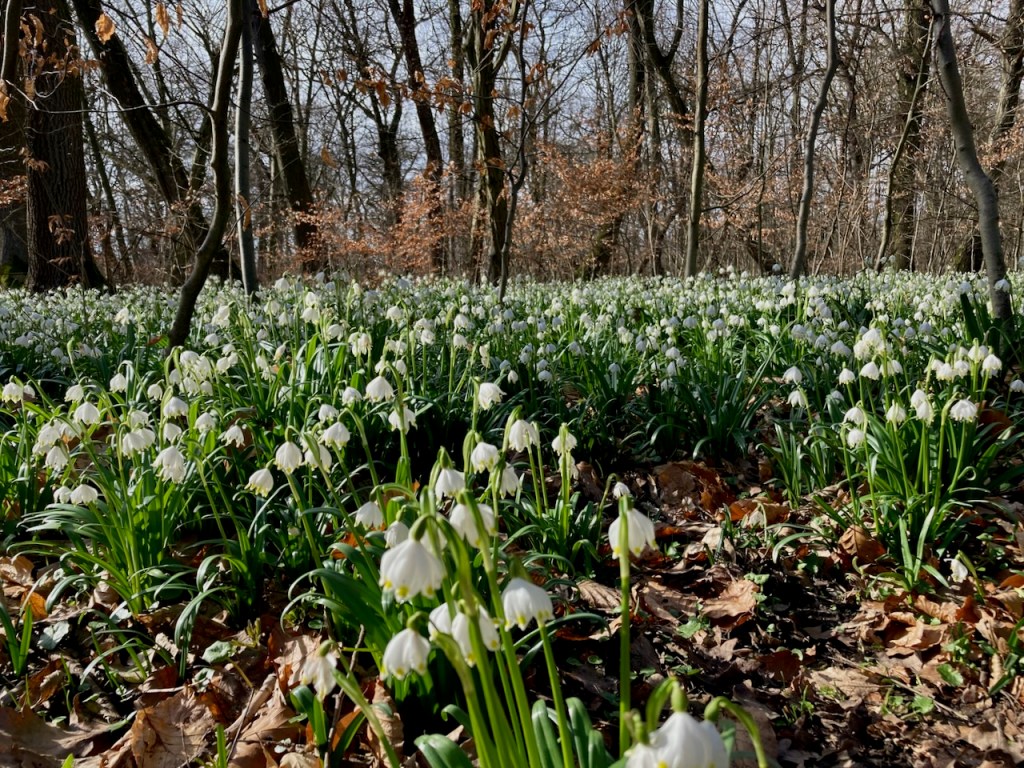

Today’s stage took us over a plateau where it’s not hard to imagine Napoleon’s army standing in 1806. There’s also a monument that we’d visited before, as well as a museum in a nearby village dedicated to the area’s battle. Every so often in this area, one comes across markers designating that Napoleon and his army had been there.
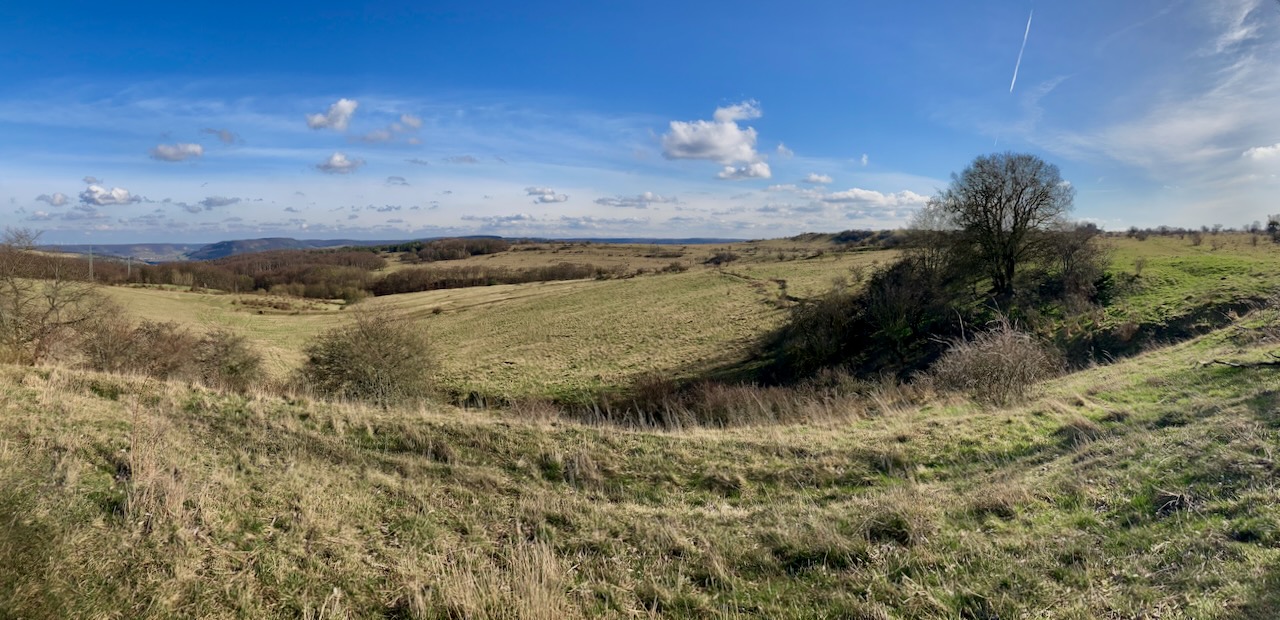
Clearly, the battles of Napoleon were not the only confrontations that had taken place there.

We watched the sun beginning to set as we made our way to the end of the trail and back to the train station.


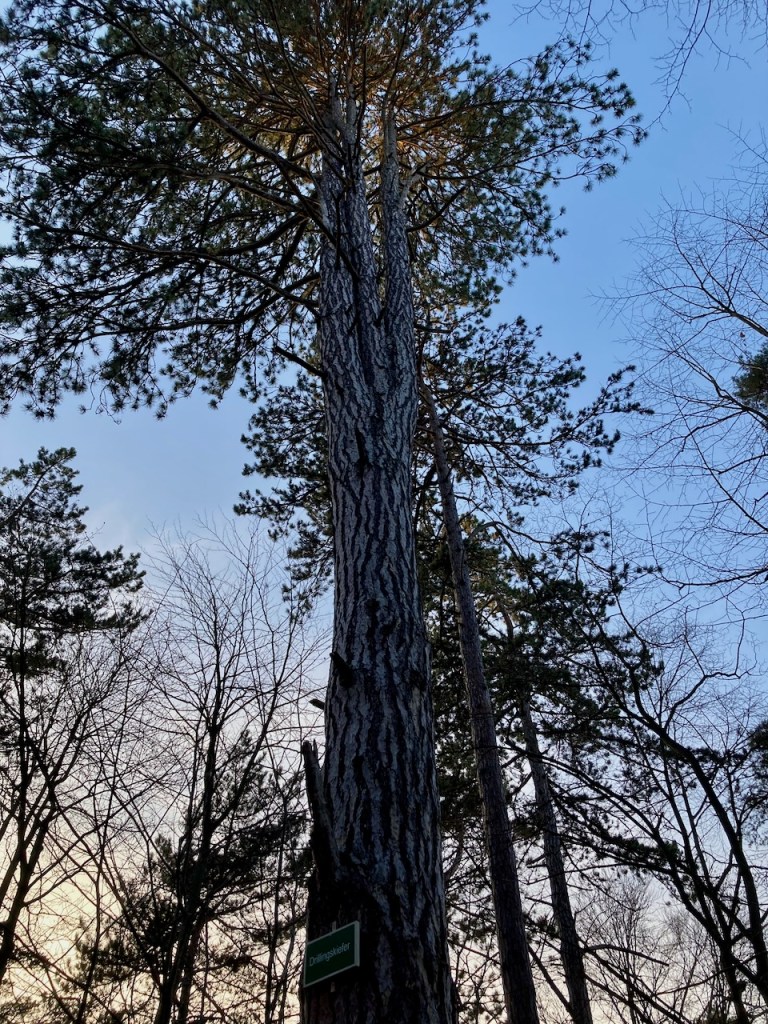
Stage 8: Papiermühle to Ammerbach (10.9km) – Late May
More than two months passed before I made it to the SaaleHorizontale again, this time accompanied by yet another friend. The day was hot and humid, the leaves lush and green, and the air had the smell of the coming summer. It was the kind of warm day that quickly cools off when the sun goes down, which is how you know it’s very much still spring.

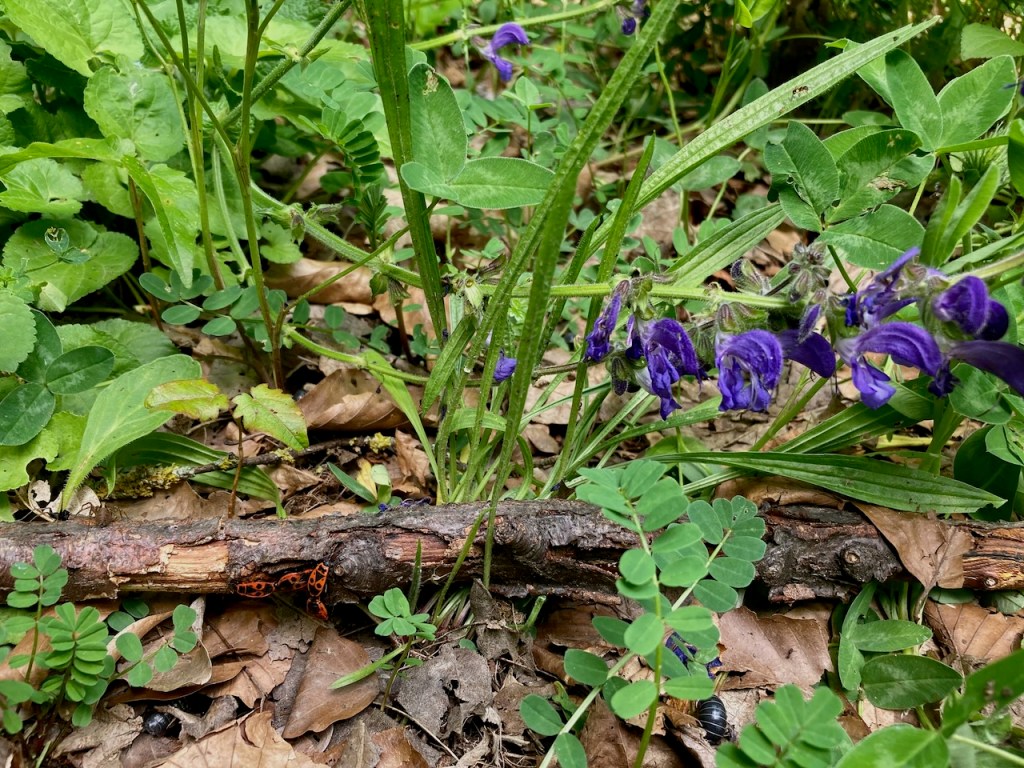
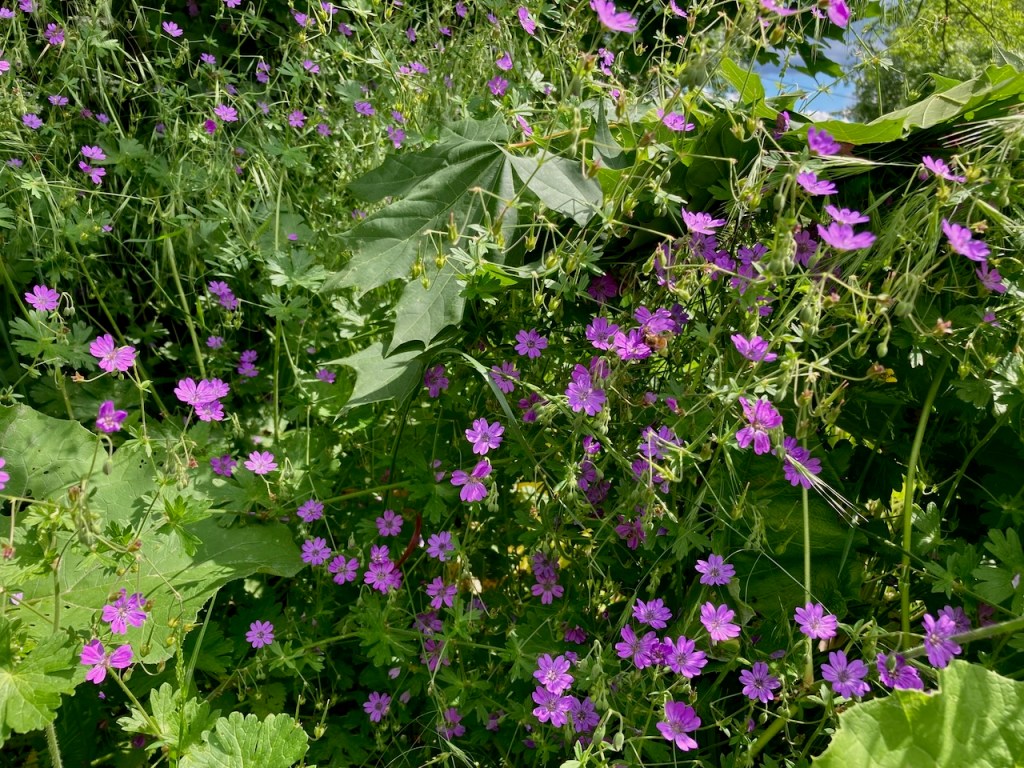


We passed a number of sights of interest along the way including Bismarckturm, celebrating the great general and unifier himself . . .

. . . a marker denoting the different layers in the earth and the sadly unclimbable rock . . .

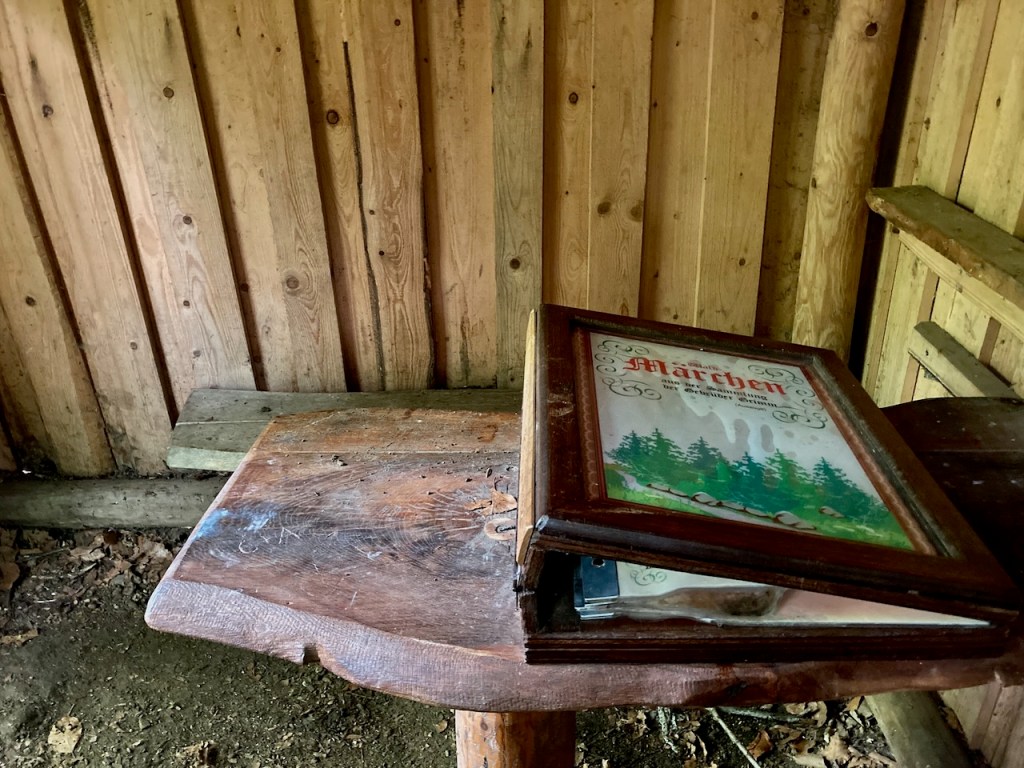
. . . and a section that was part of a children’s discovery trail of fairytales and witch houses.
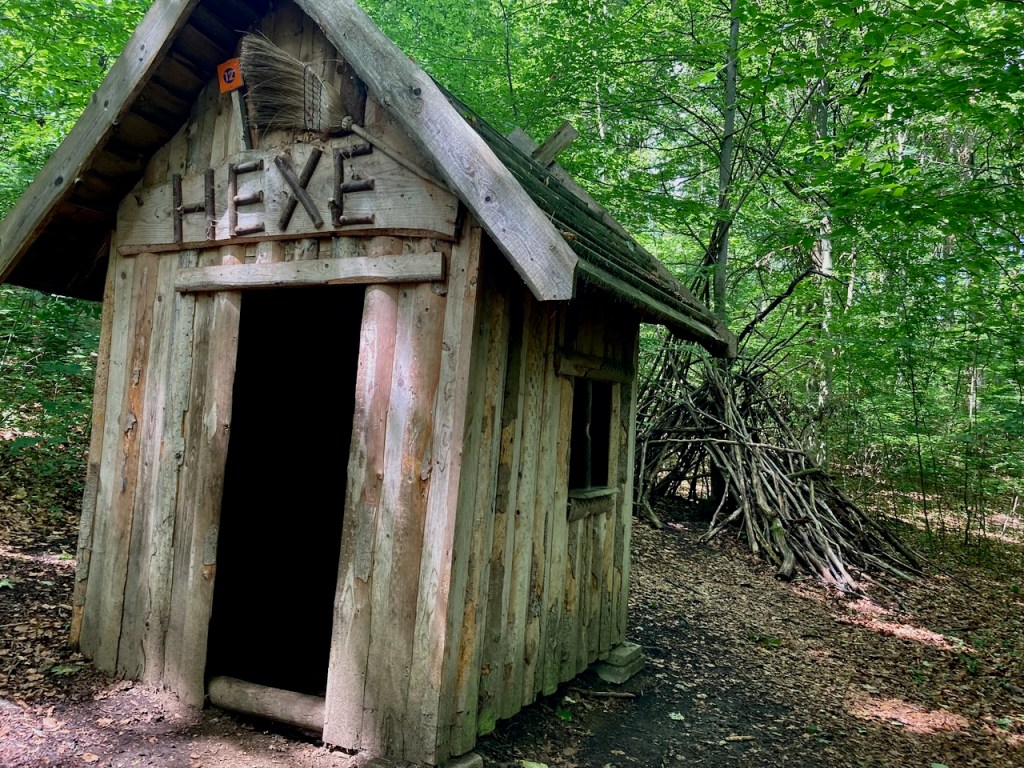
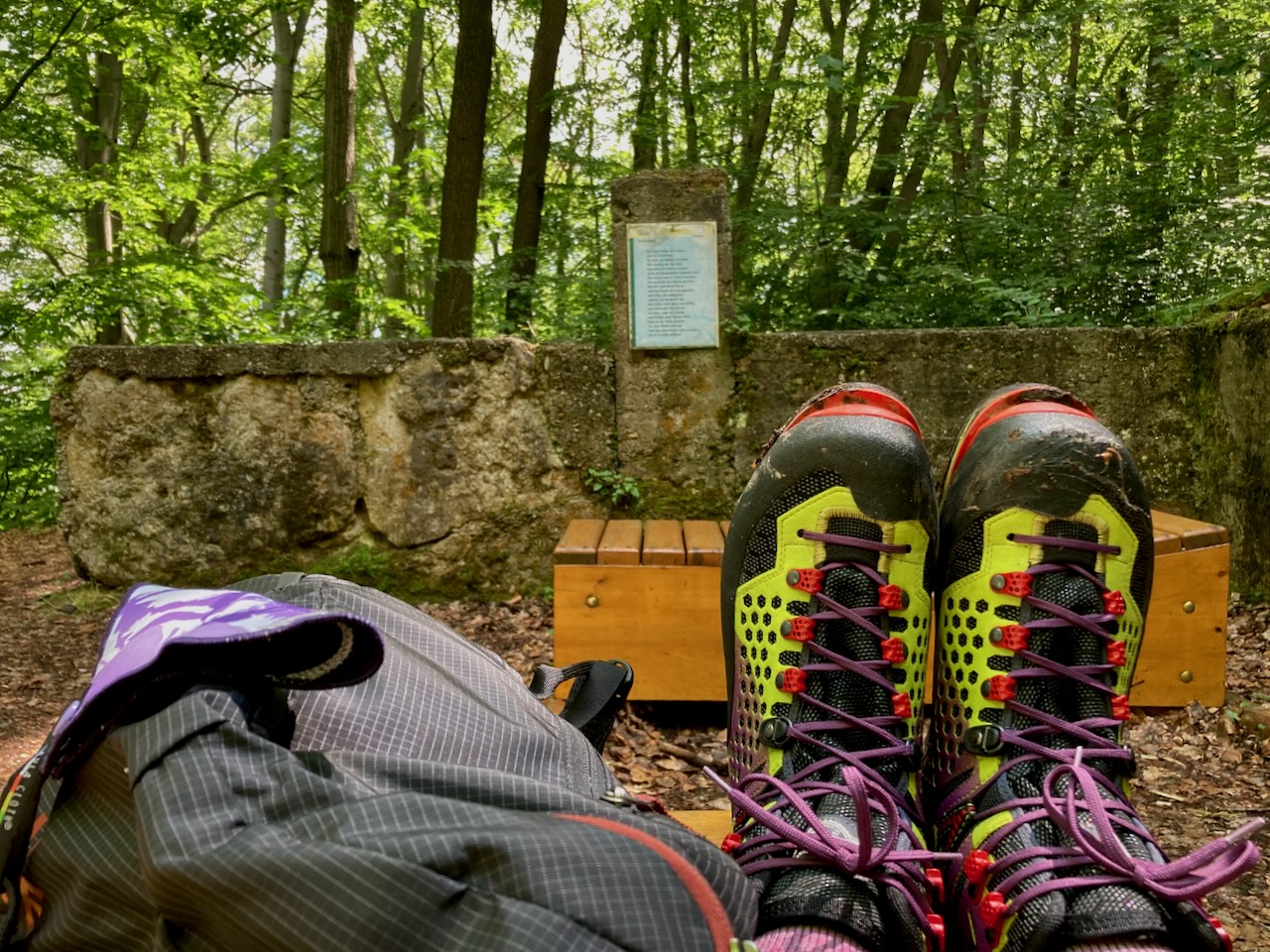
As I had for months by this point, I was using every hiking opportunity to break in my increasingly-less-new mountaineering boots in preparation for our Alps tour over the summer. They are far too intense for a casual walk in the woods, but they have seen many kilometers of this trail.
Stage 5: Porstendorf to Dorndorf (18.2km) – Late July
My next stage on the SaaleHorizontaale was the longest, but it was a comfortable way to spend the day in comparison to the outdoor adventure that was climbing the Zugspitze, which my partner and I had done just a week earlier. While I very much appreciate that all stages are organized with accessibility to public transportation, I did not love the approach along a road for this one . . .

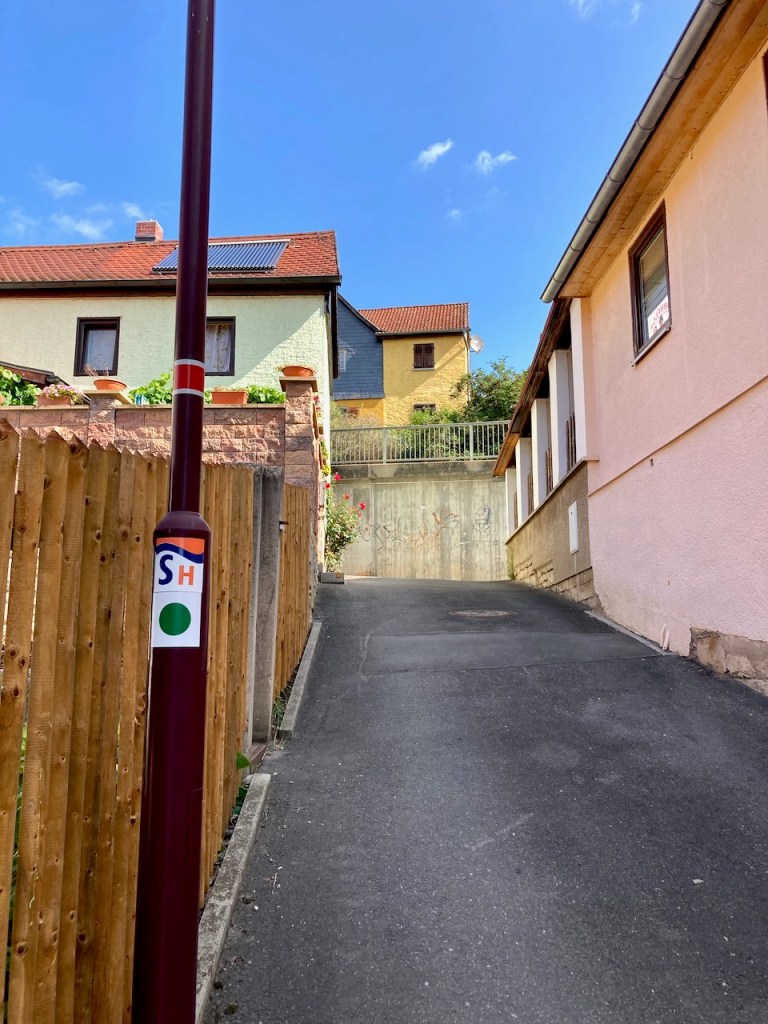
. . . and was very happy to see the trail markers that pointed, as the SaaleHorizontale often does, along a small alley through a village.
I walked past farmers’ fields . . .
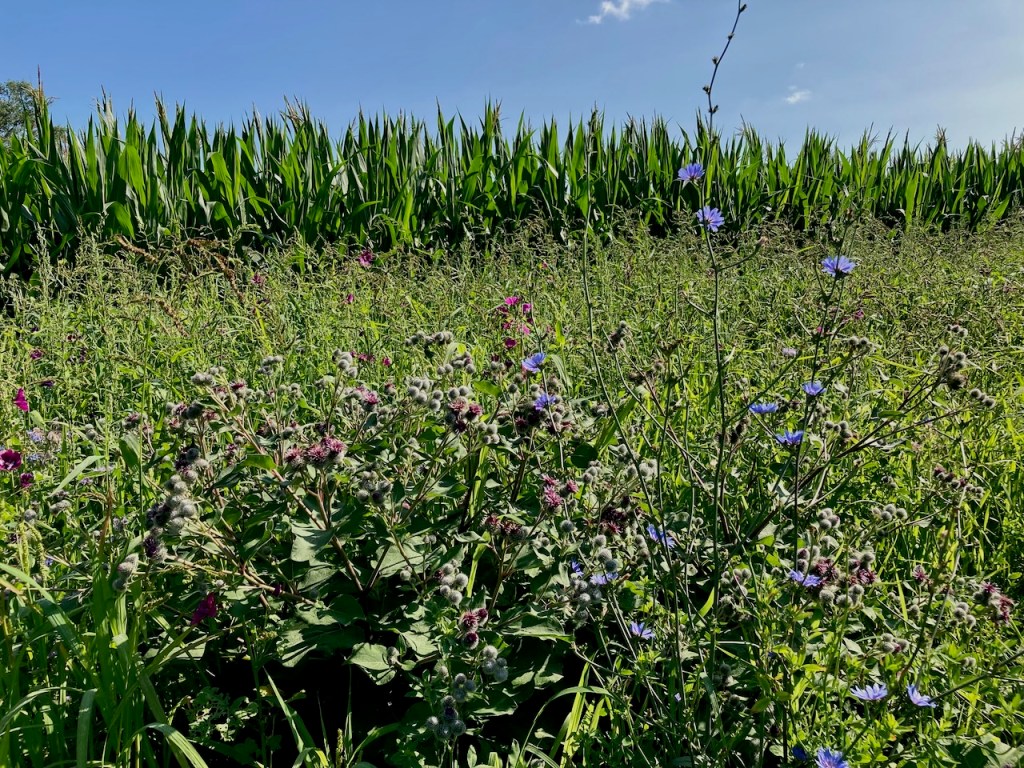


. . . and then remained largely on narrow paths . . .
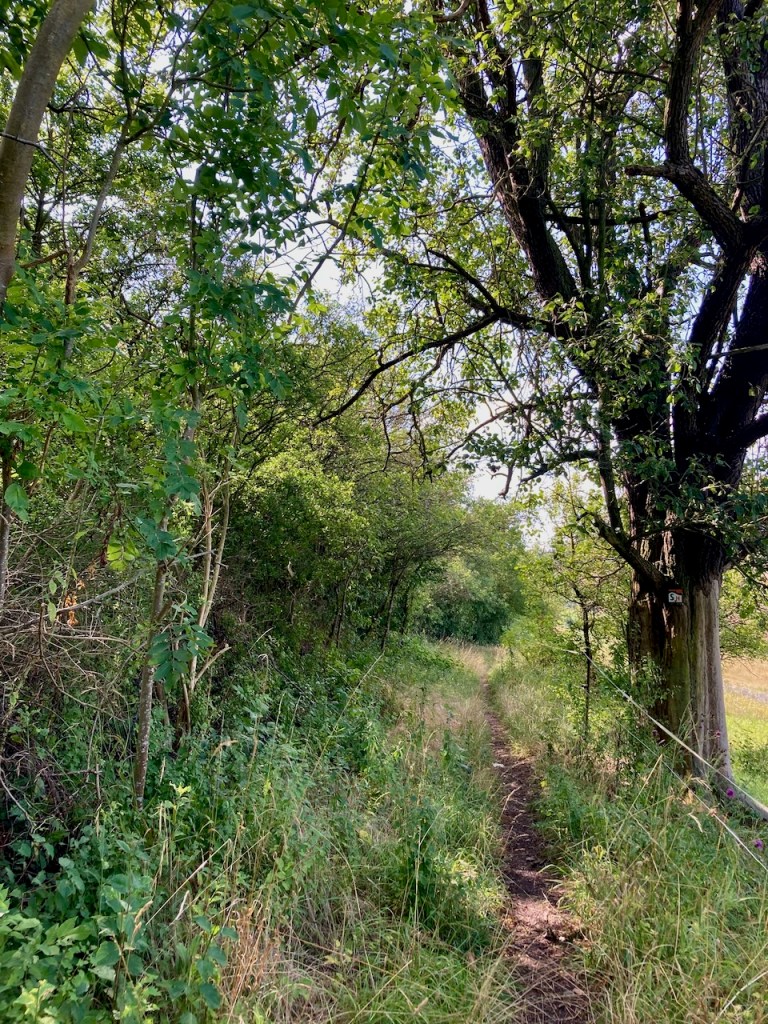
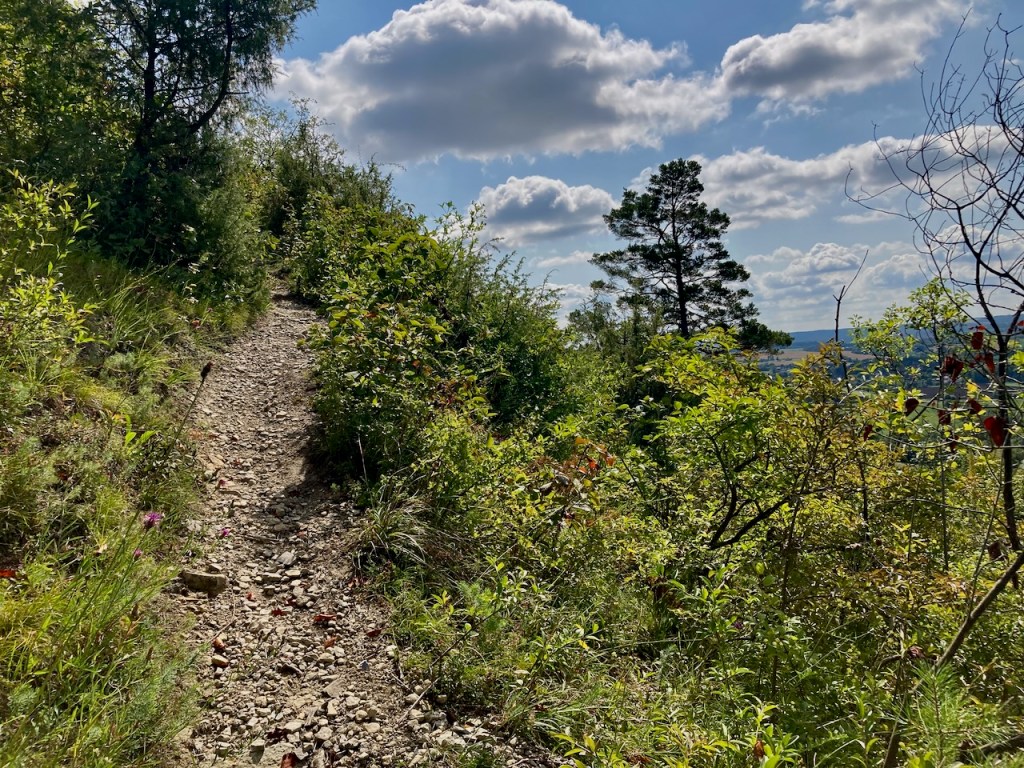


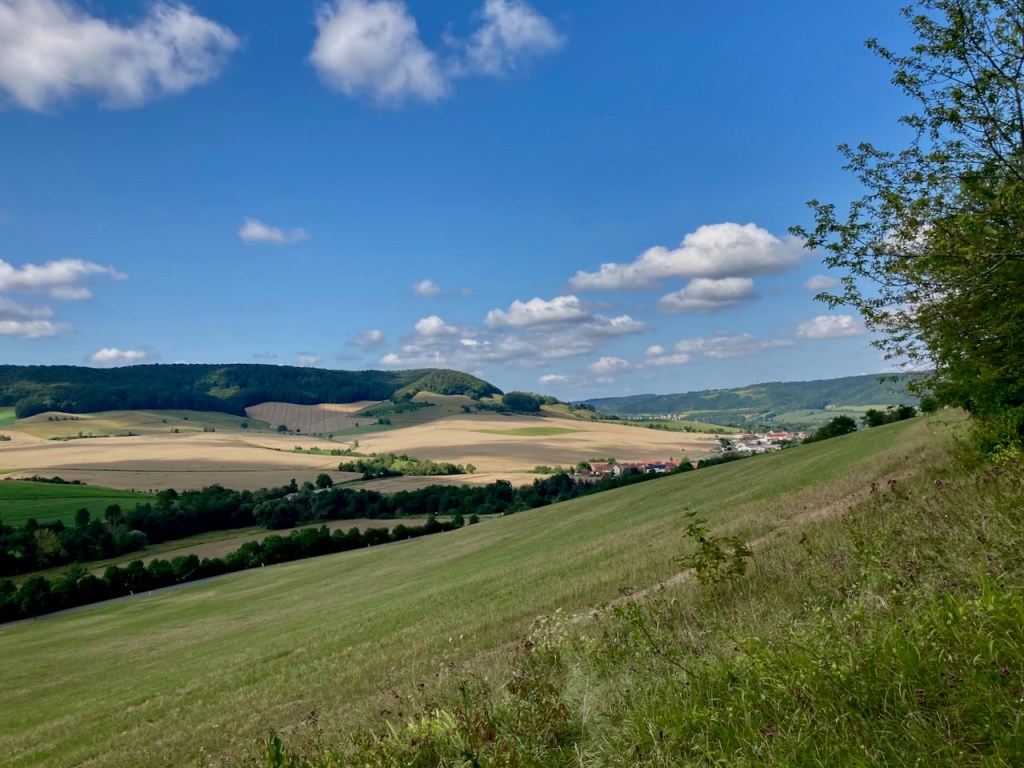
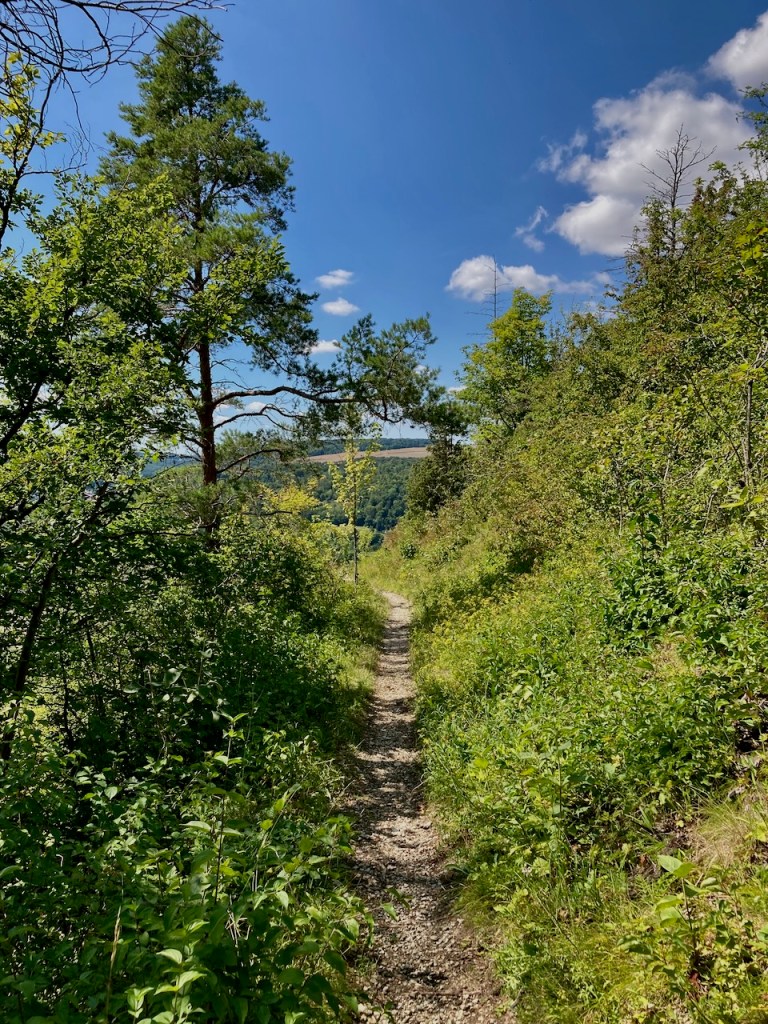
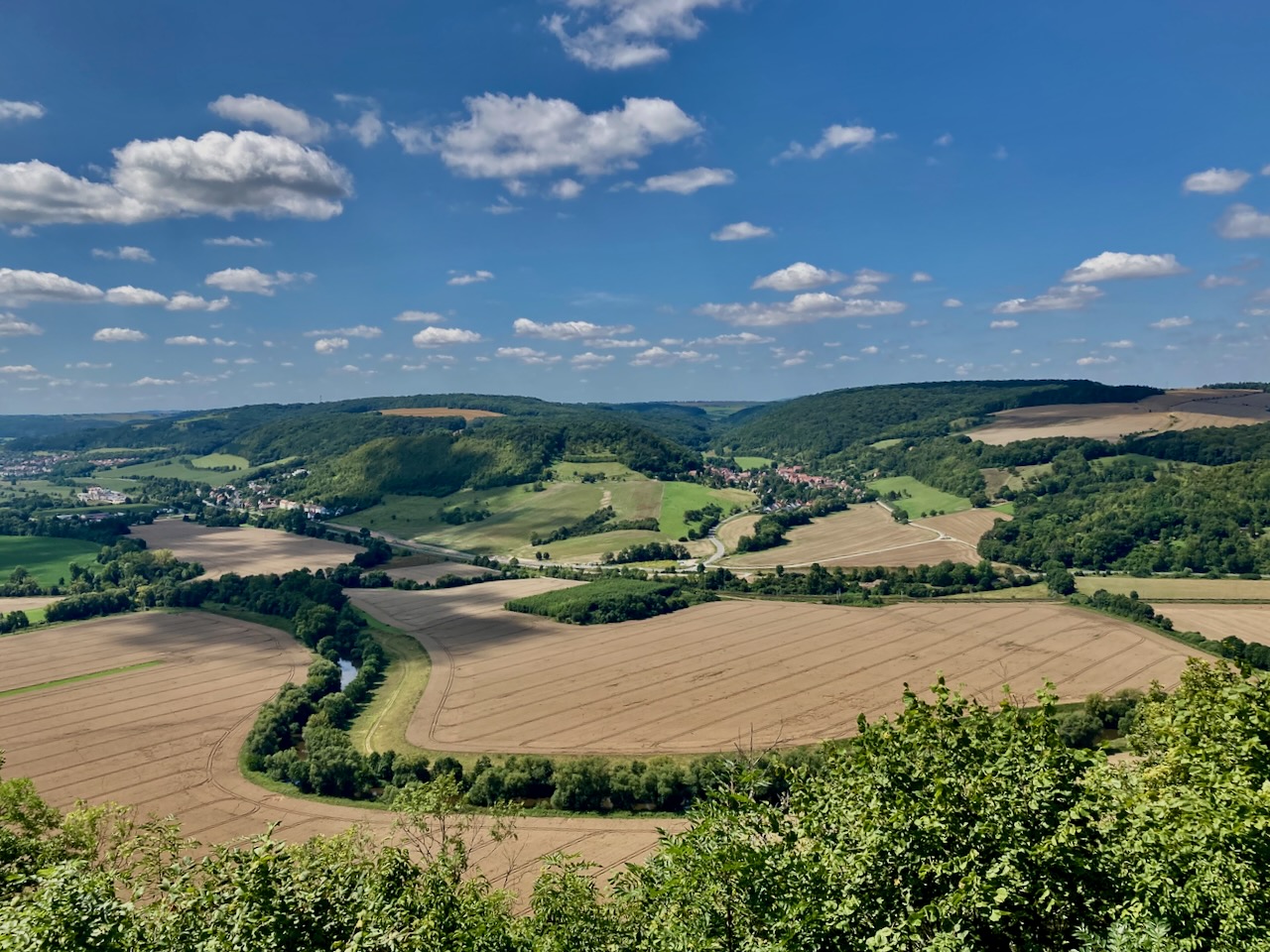
. . . steadily working my way upwards towards a view of rolling hills and harvested and harvest-awaiting fields interspersed with forests. This is so typical of the landscape here and I love it anew every time.
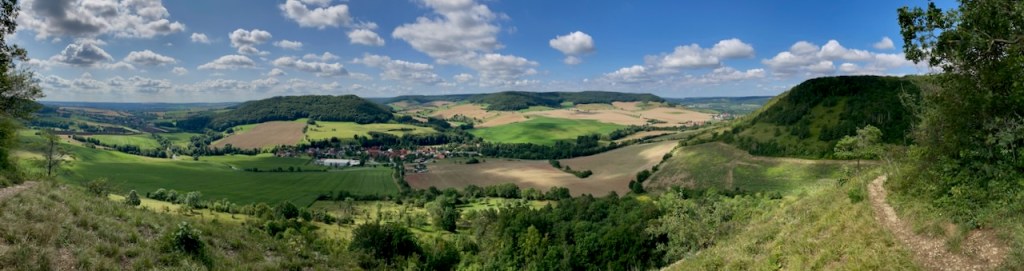
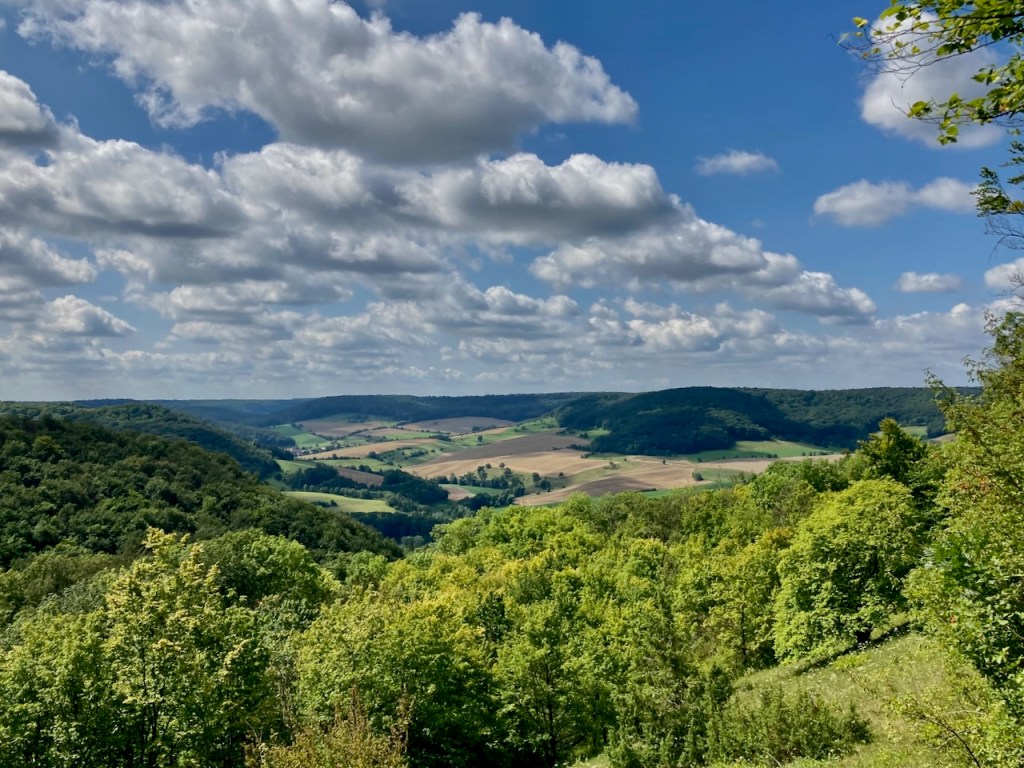
It was a hot day and I was glad to make it into the cover of the forest.

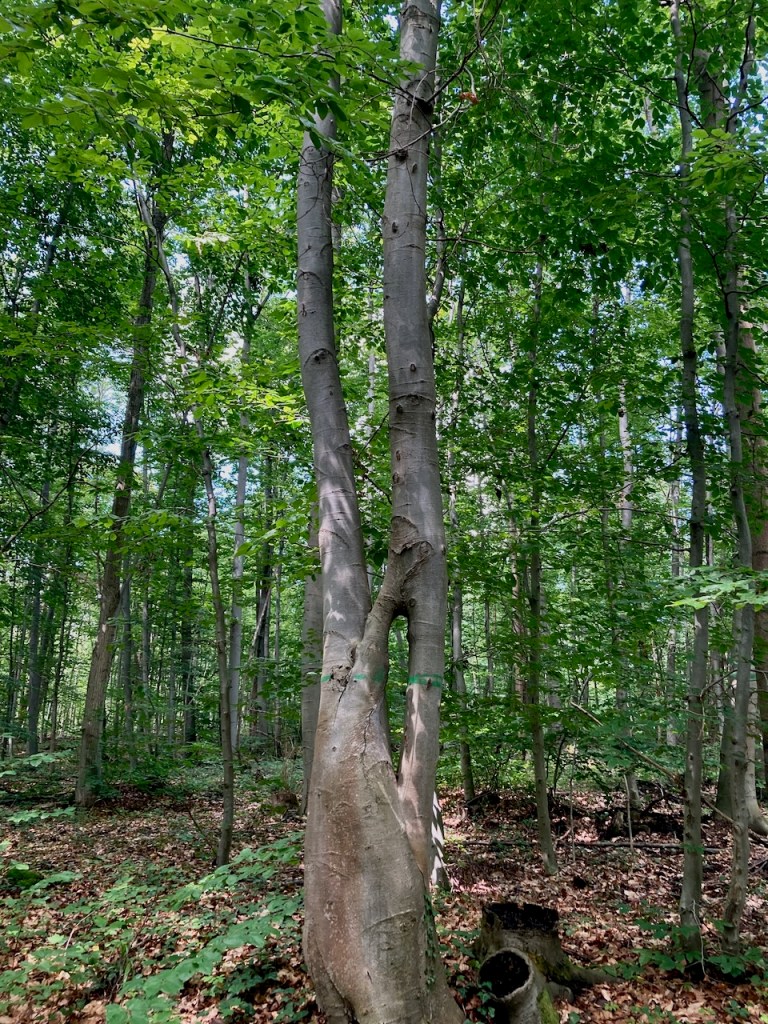
The butterflies were busy enough that I could inch closer, and I wondered at the old road in what was now woods.


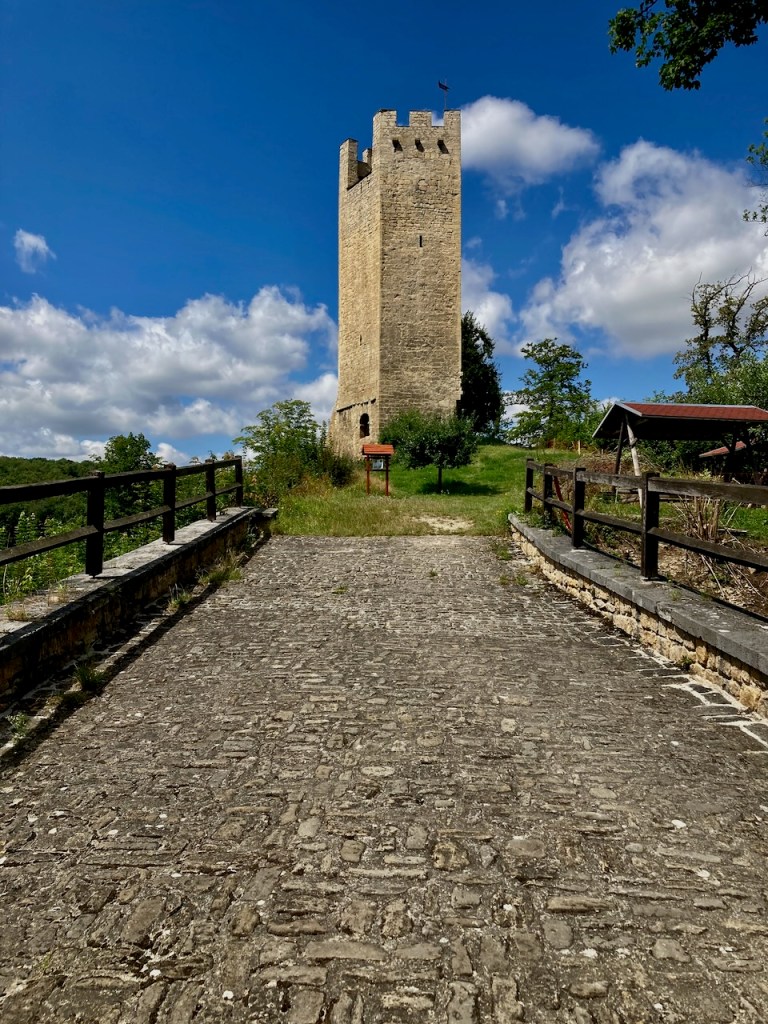
I passed a village with the remains of a castle . . .

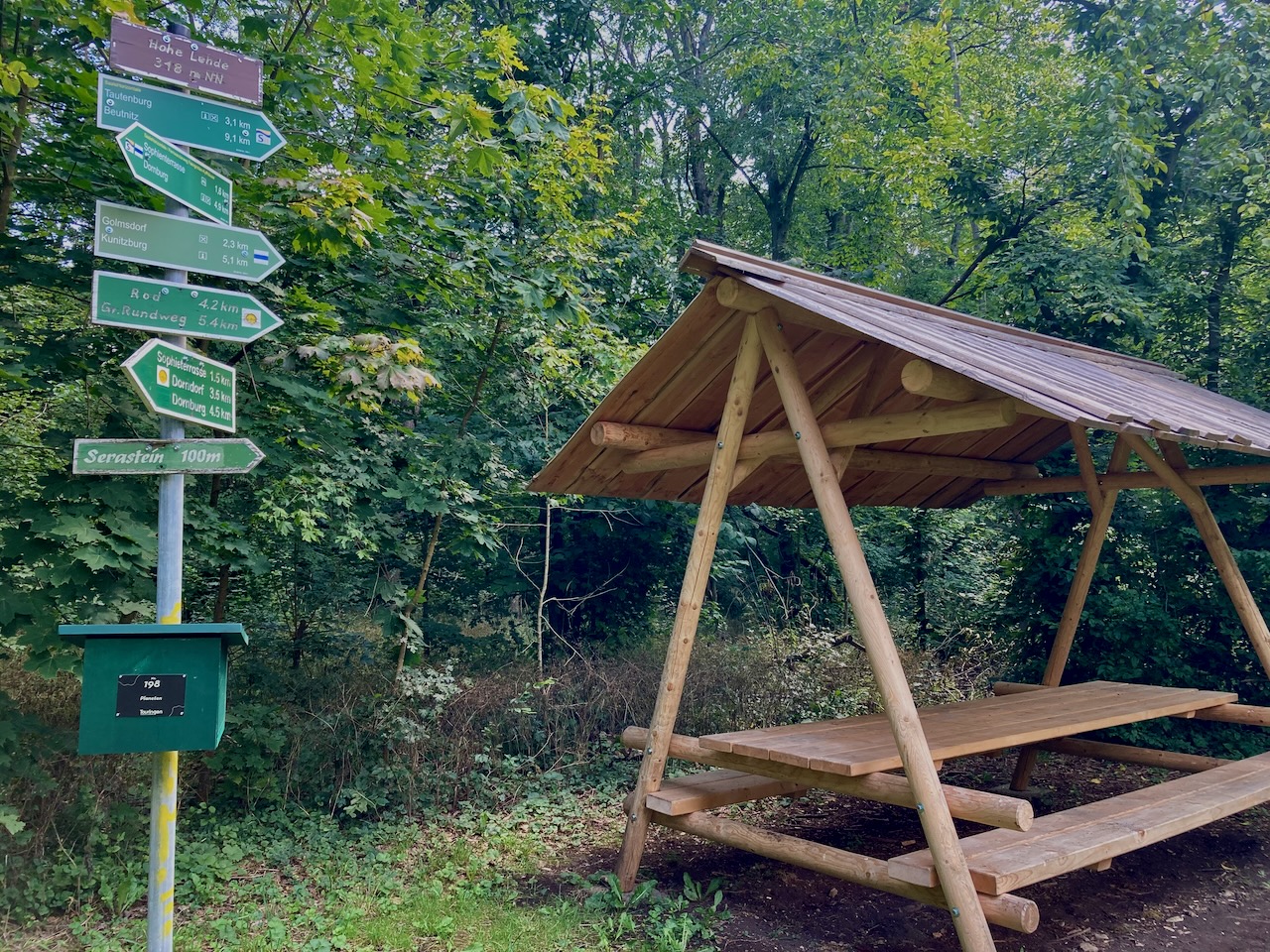
. . . took a break at one of the many picnic tables that one finds on hiking trails around here . . .
. . . and once again took in the view from above.
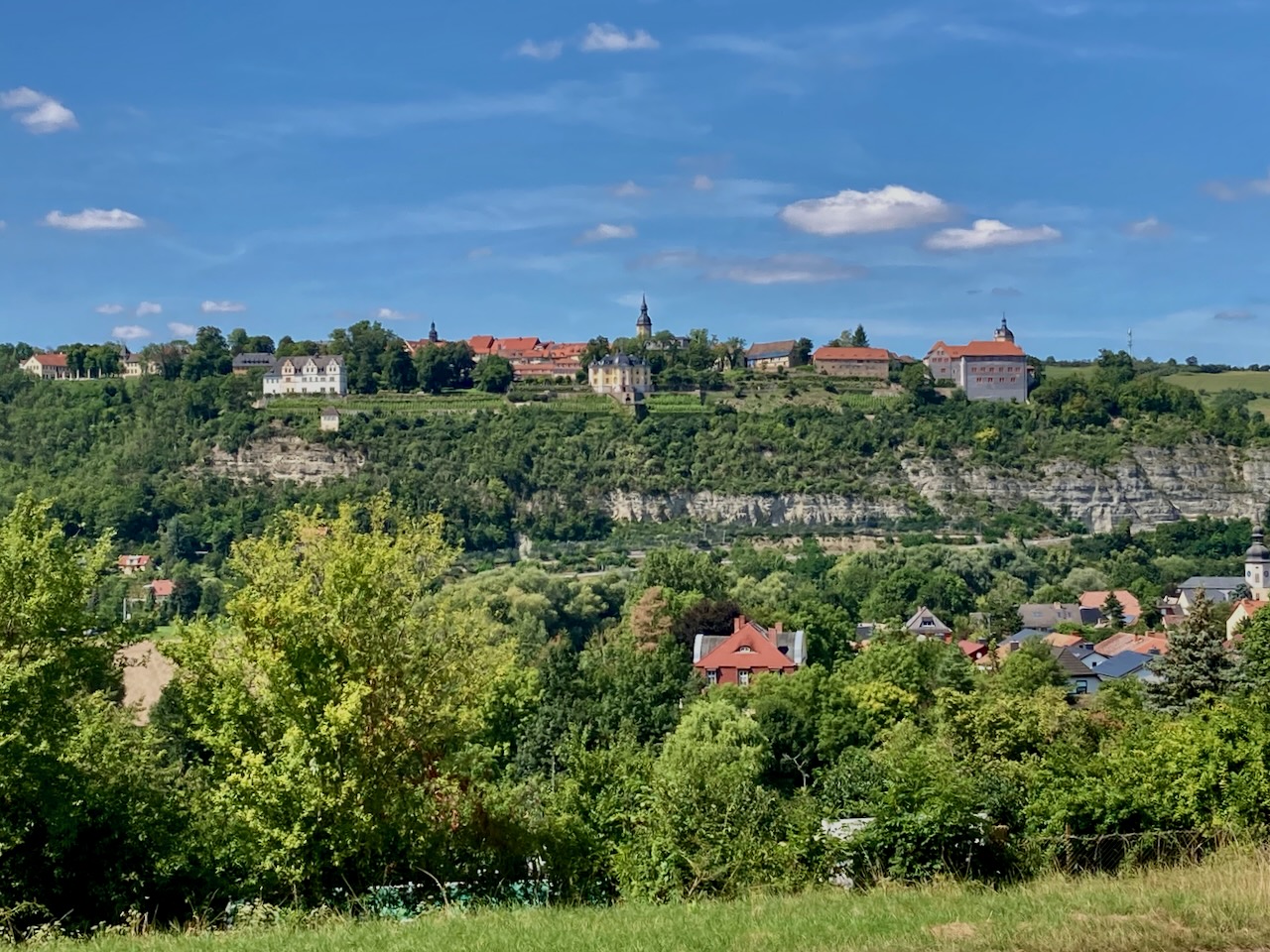
I crossed a small lookout point named for a duchess and princess who had lived in the area . . .

. . . and found myself looking up at the palace where my friends and I had started for stage 6.
Rather than dip my tired feet in the springs that seem to be there just for this reason, I practically ran to the train station. The following train would be in an hour and I was too hungry to wait.
Stage 4: Kunitz Loop (9.7km) – Mid-August
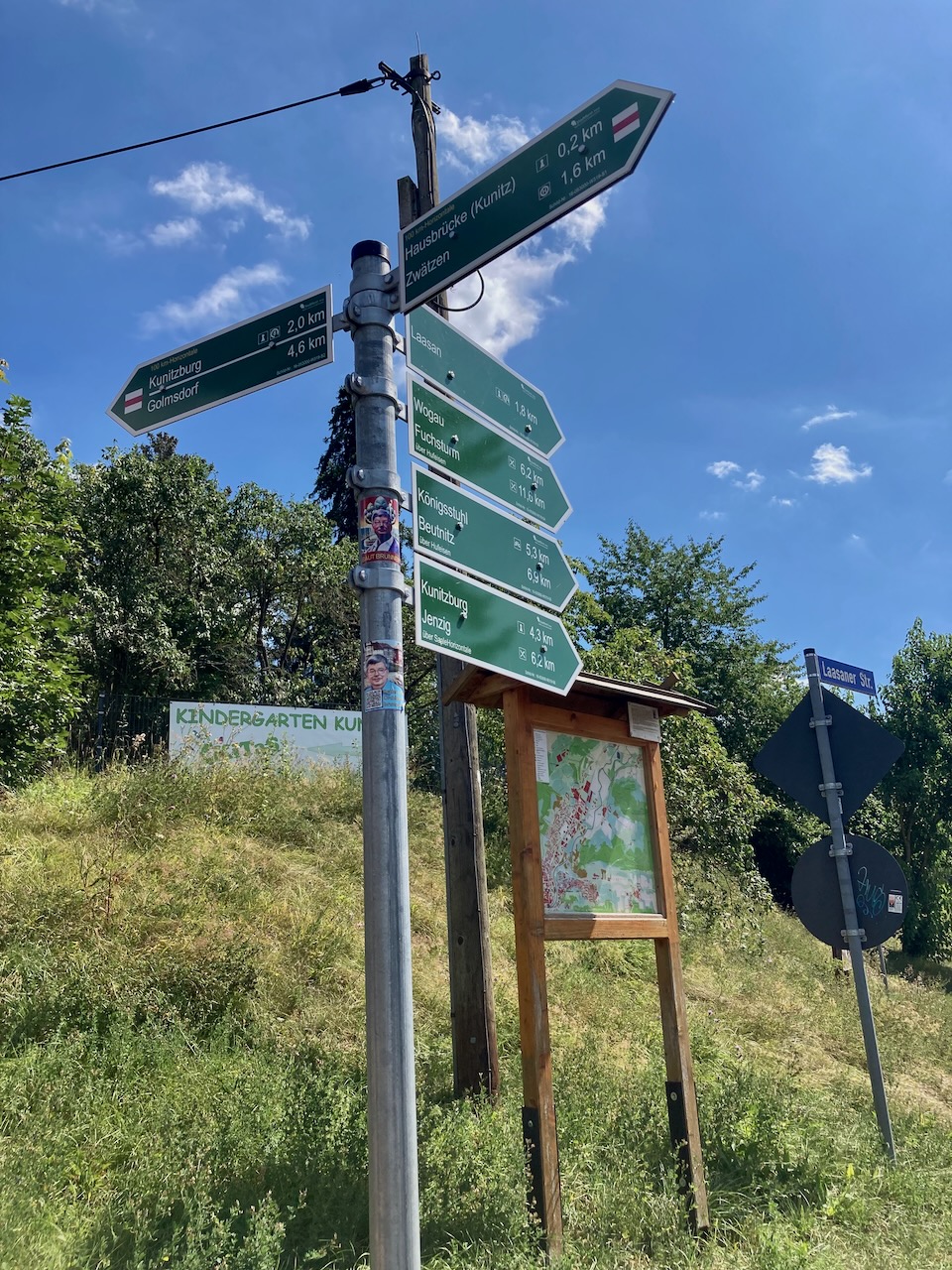
There is only one stage on the SaaleHorizontale that starts and ends from the same point, and the majority of this stage is the approach. As a result, my partner and I relied on other trail markers to get us where we wanted to go.
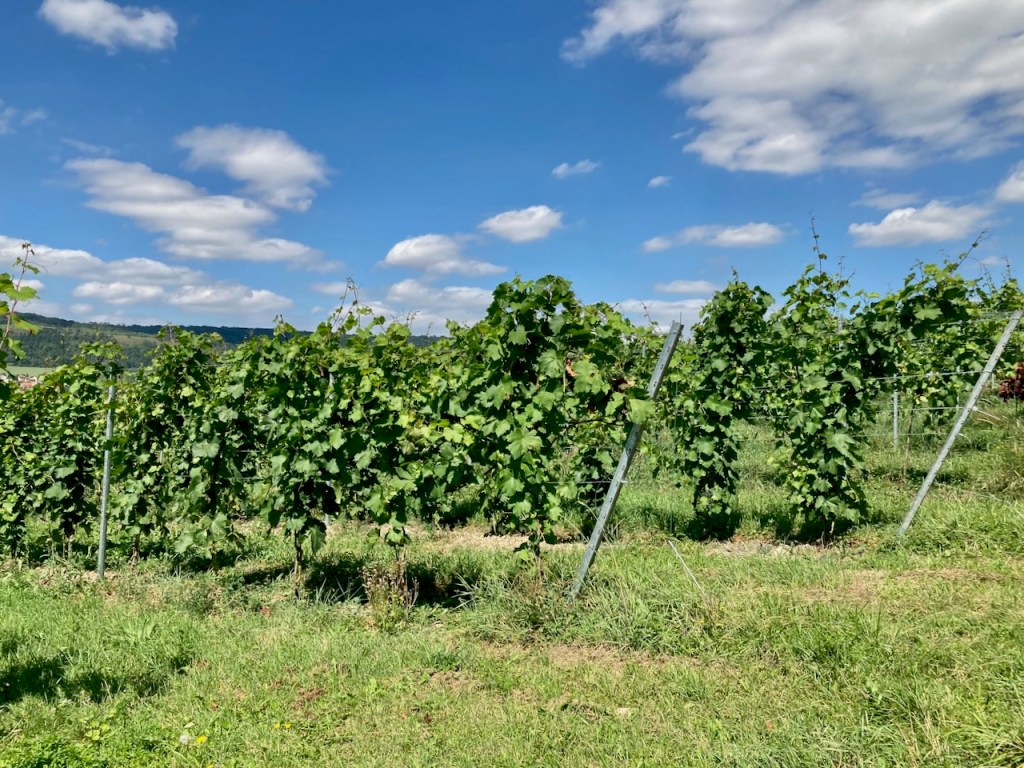
We passed vineyards along the way and I can attest that the wine grown on the hillsides of this region is lovely.
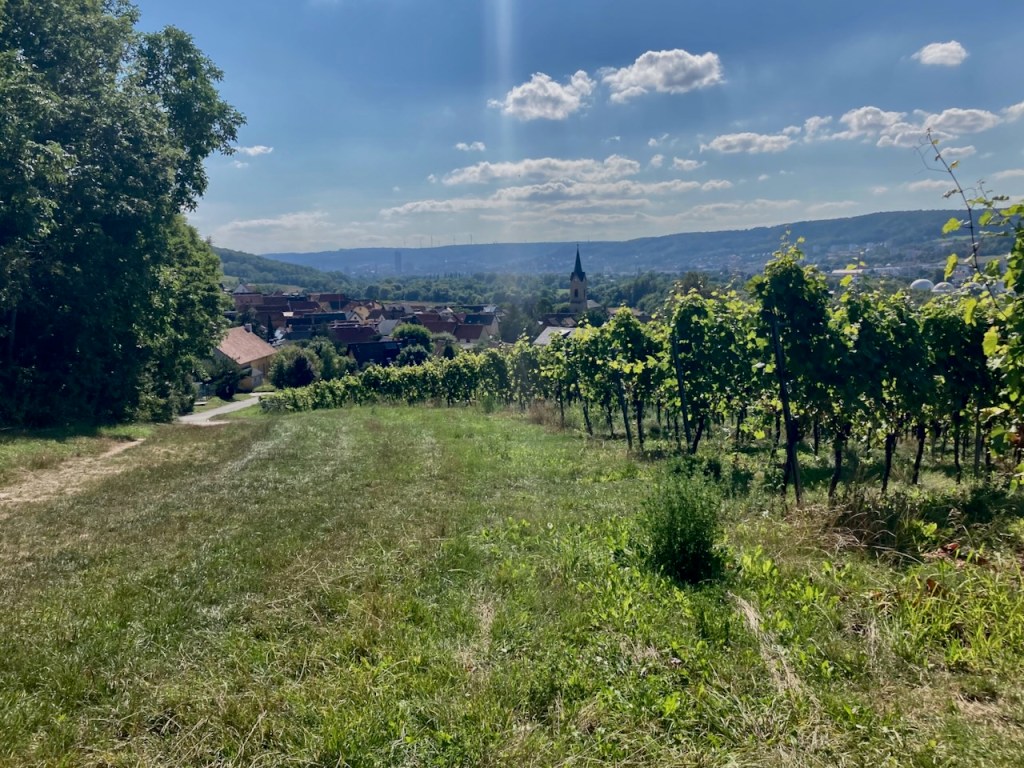

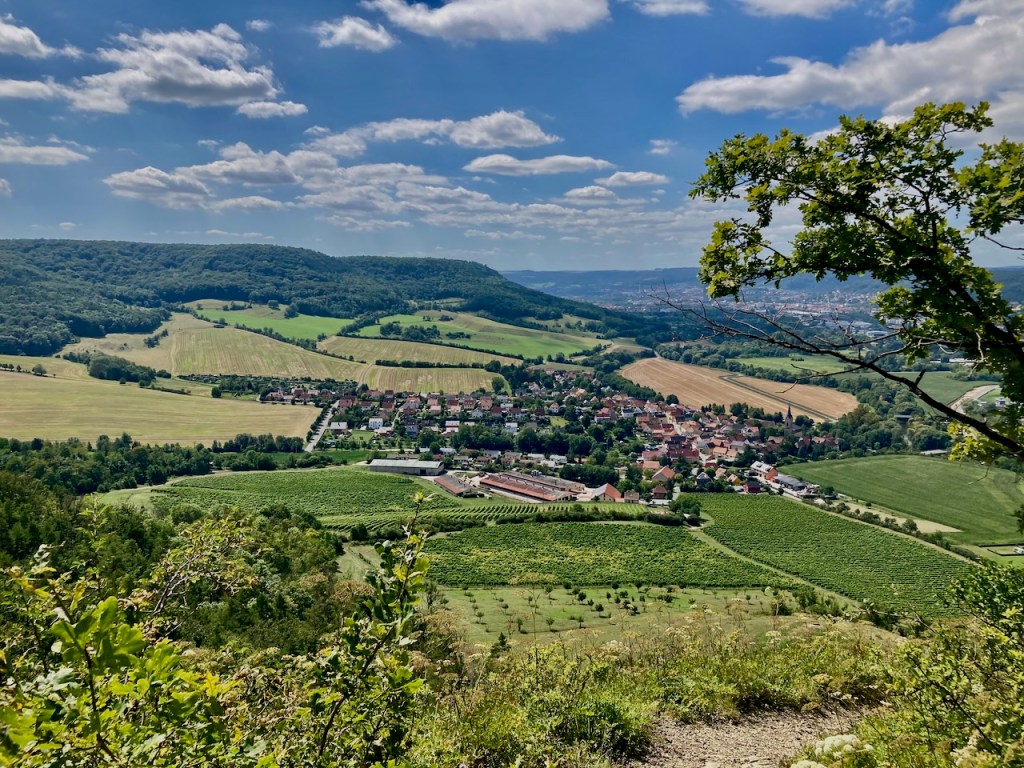
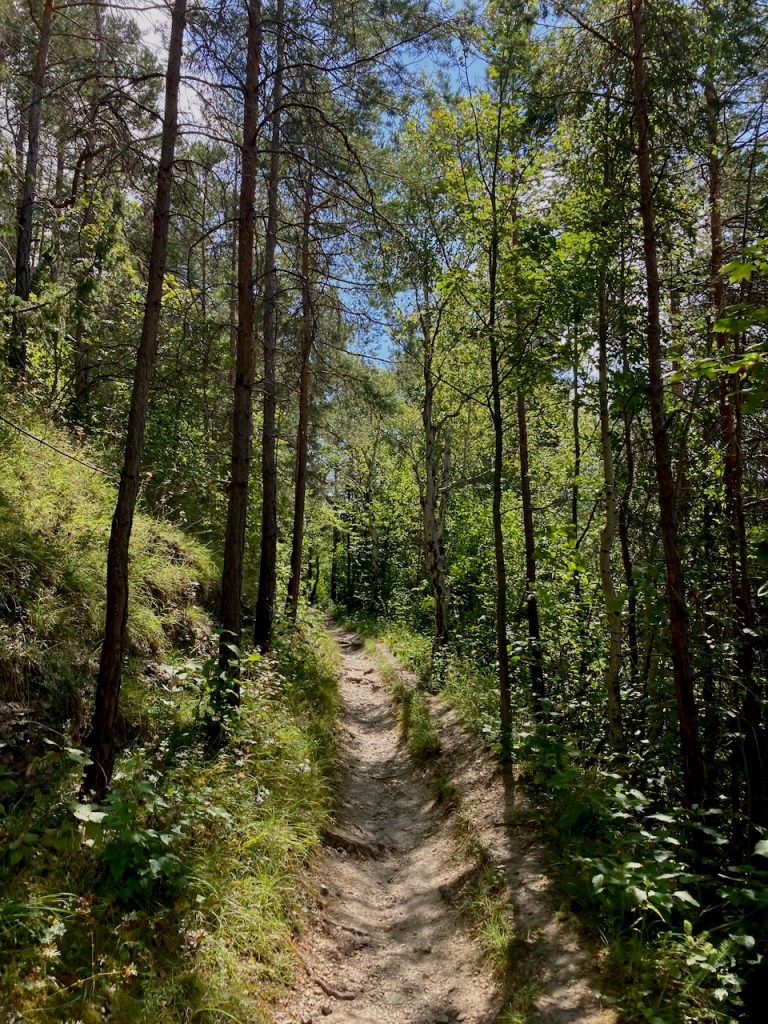
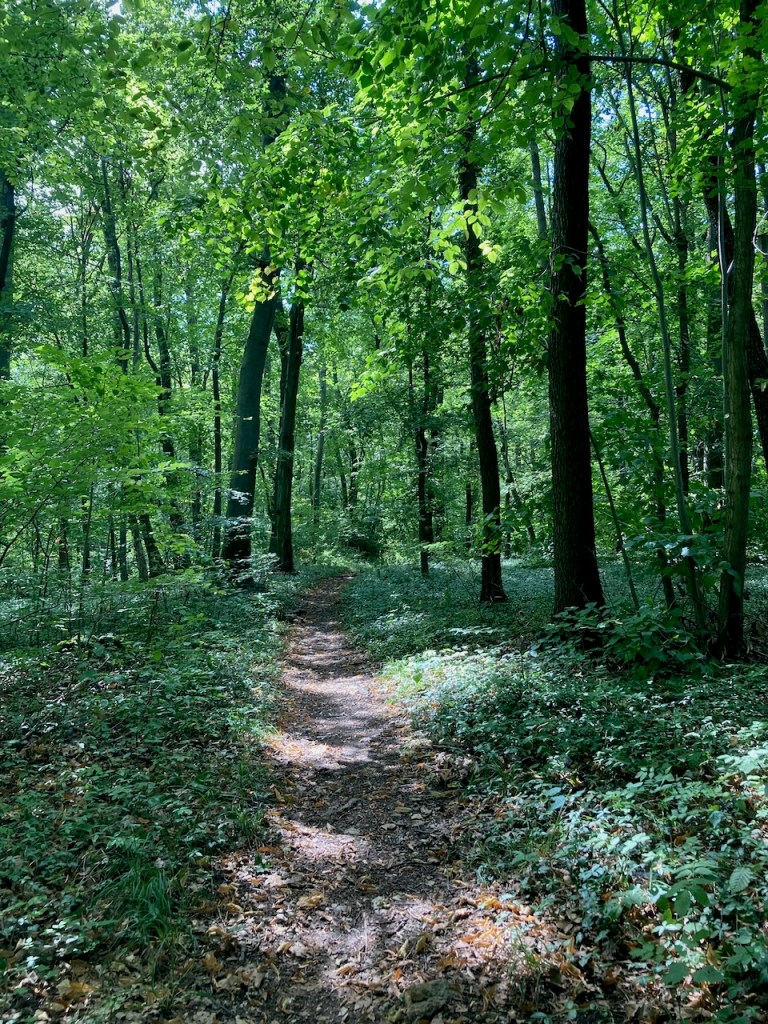
We were glad for the portions of this stage that led us through the forest because the mid-day August sun was hot indeed.
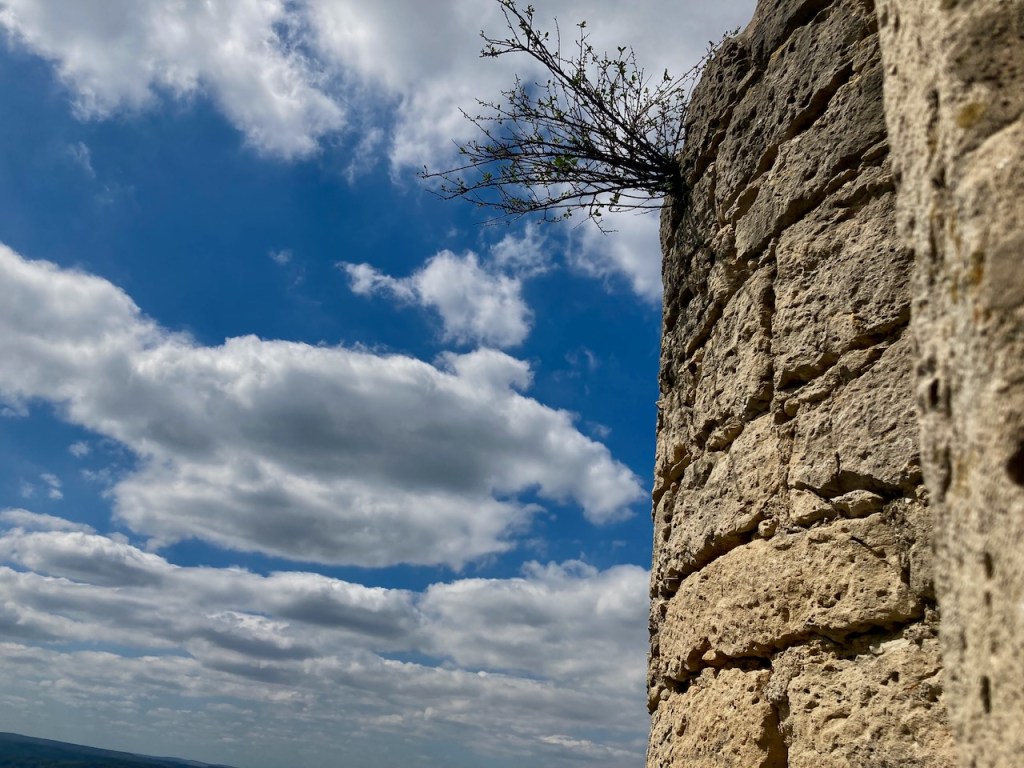
We lingered for a few moments in the cool of castle ruins and asked ourselves what the valley had looked like back when there was a castle here.


The fields were in varying stages of harvest time and the air smelled like hay.

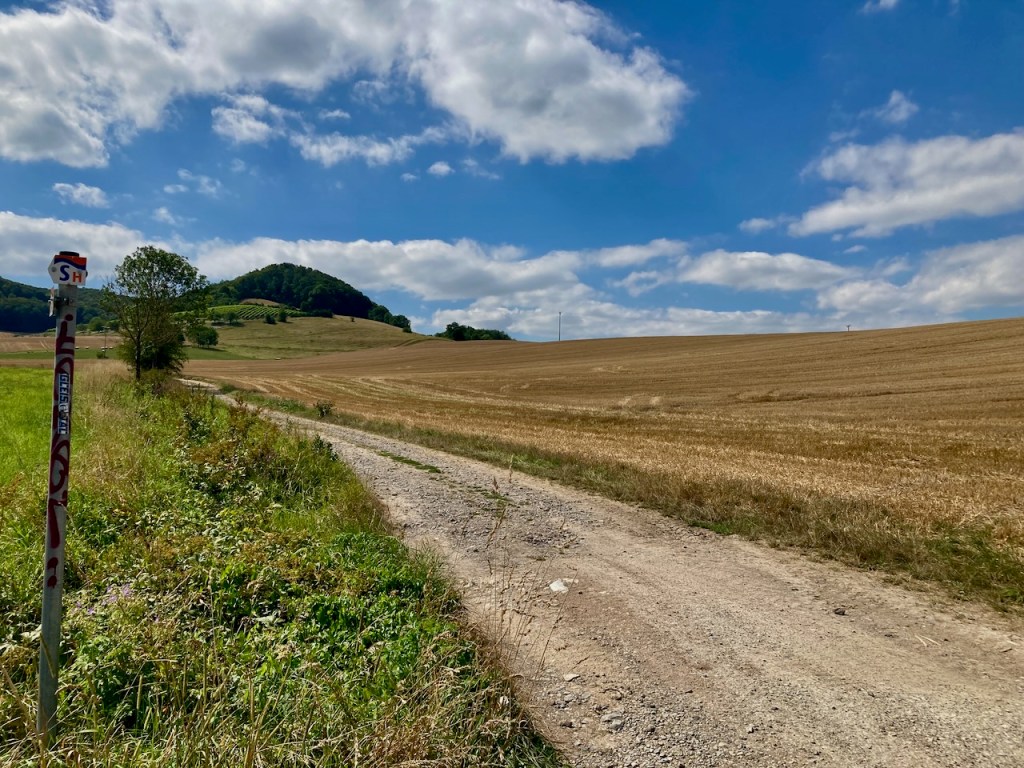


We walked for a couple hours before reaching the sign for our stage of the SaaleHorizontale . . .

. . . and the rest of the walk left us with the feeling of this stage being somewhat forgotten, its purpose to connect two other stages rather than having an identity of its own. There’s a run each year that follows the entirety of the SaaleHorizontale, which would therefore skip the approach and descent to public transportation locations; perhaps this stage makes more sense when done like that, but I am not about to find out.
Stage 9: Ammerbach to Göschwitz (12.3km) – Mid-September
The calendar had just flipped over to fall the next time my partner and I took a walk along the SaaleHorizontale, but a fall feeling had been in the air for somewhat longer. The light had changed, and this is always a sign.
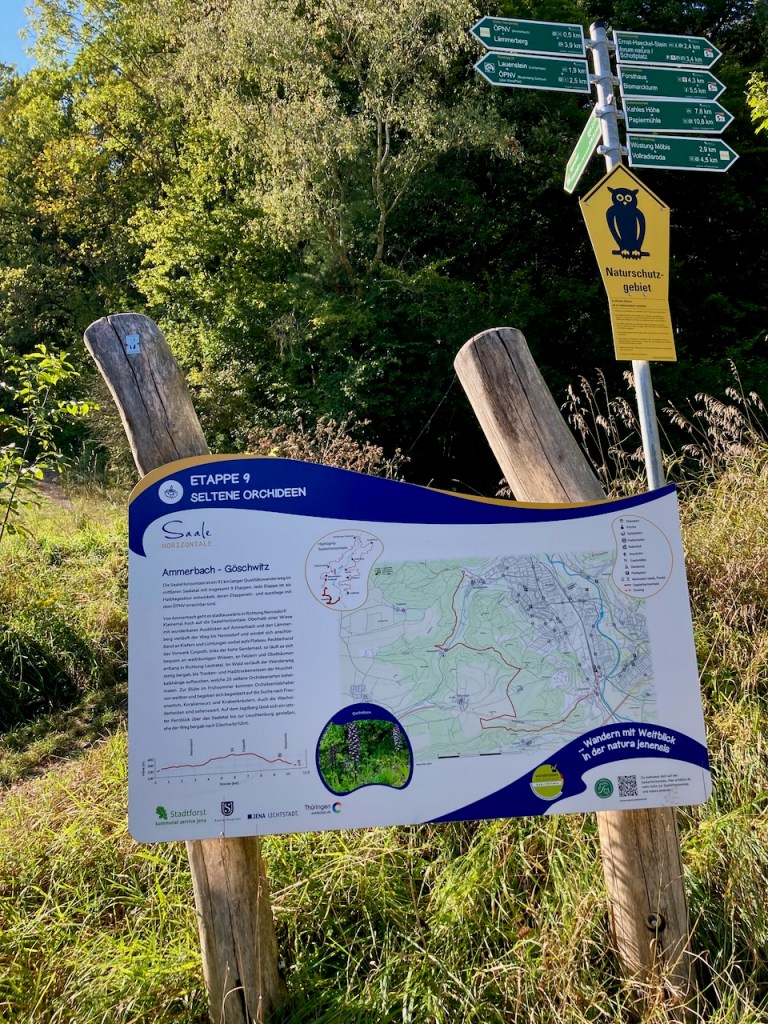
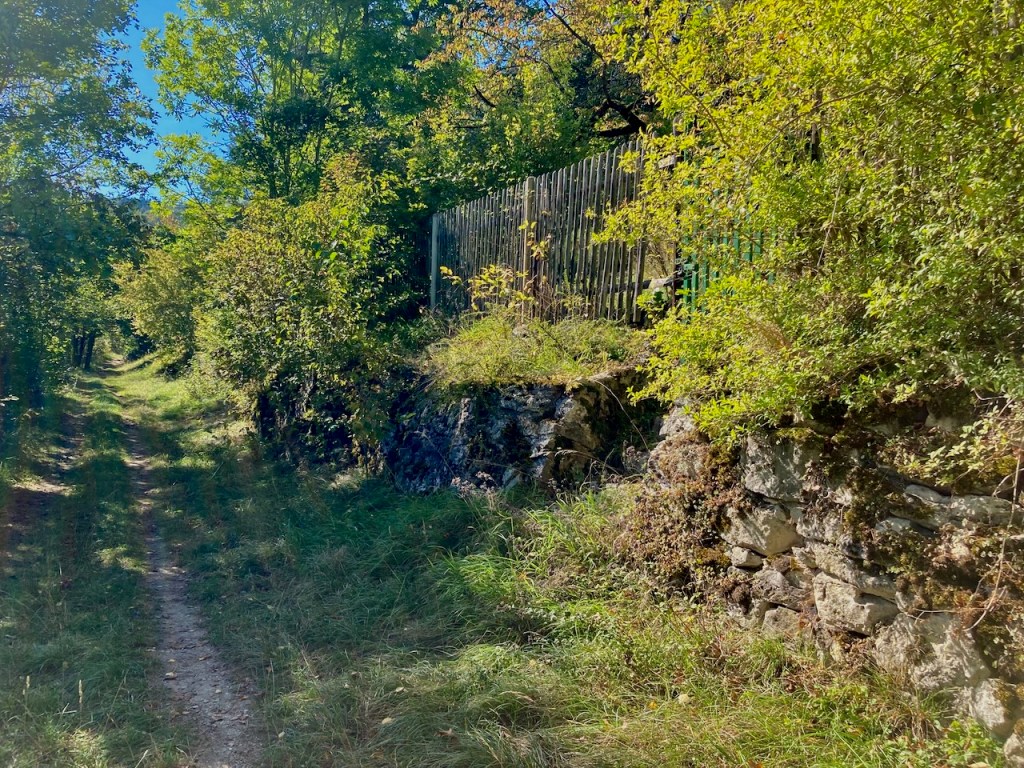
The beginning and end of the trail was located in the woods, woods with which we had become familiar in the months walking the hills around Jena.


Hay bales were drying in the fields and grass had regrown. These are signs of fall, of summer having just gone.


But only just, as the corn was still waiting. Where I grew up, corn is grown to be eaten, and a great joy of my childhood was being sent outside to shuck the yellow ears. My middle sibling and I played “old fashioned times”, corn opening the portal to another world. The corn that grows in this area is meant as animal feed or to be processed into fuel, but the sound of dry stalks as the wind rushes is one I know and it takes me back.


We ended this stage in the woods again, and I liked the feeling of coming full circle over the course of the afternoon.
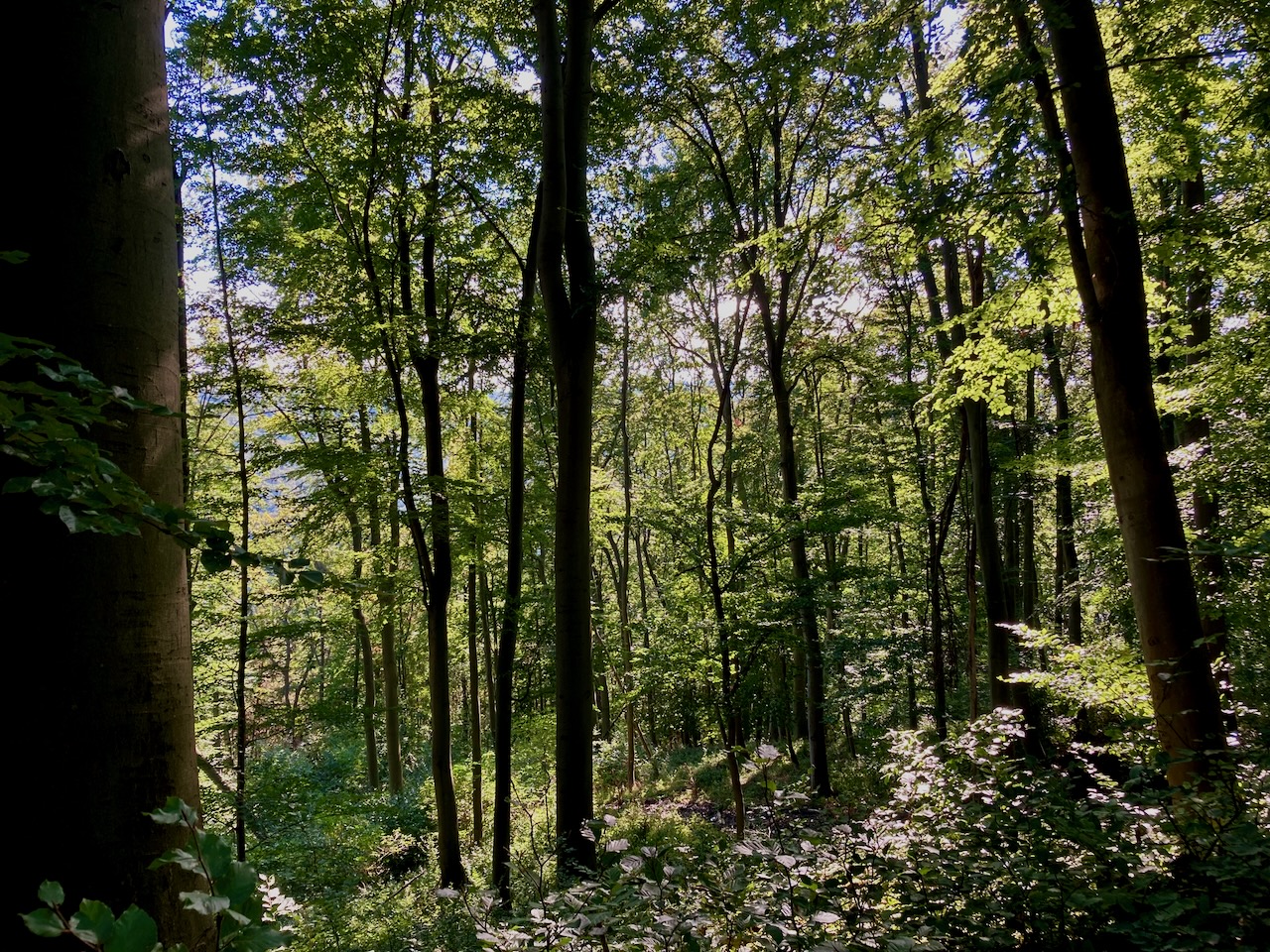
Stage 2: Kupferplatte to Wogau (13.6km) – Early October
The last stage that I completed alone was probably my favourite, and this despite nearly four hours of steady rain. A good jacket and study shoes go a very long way.
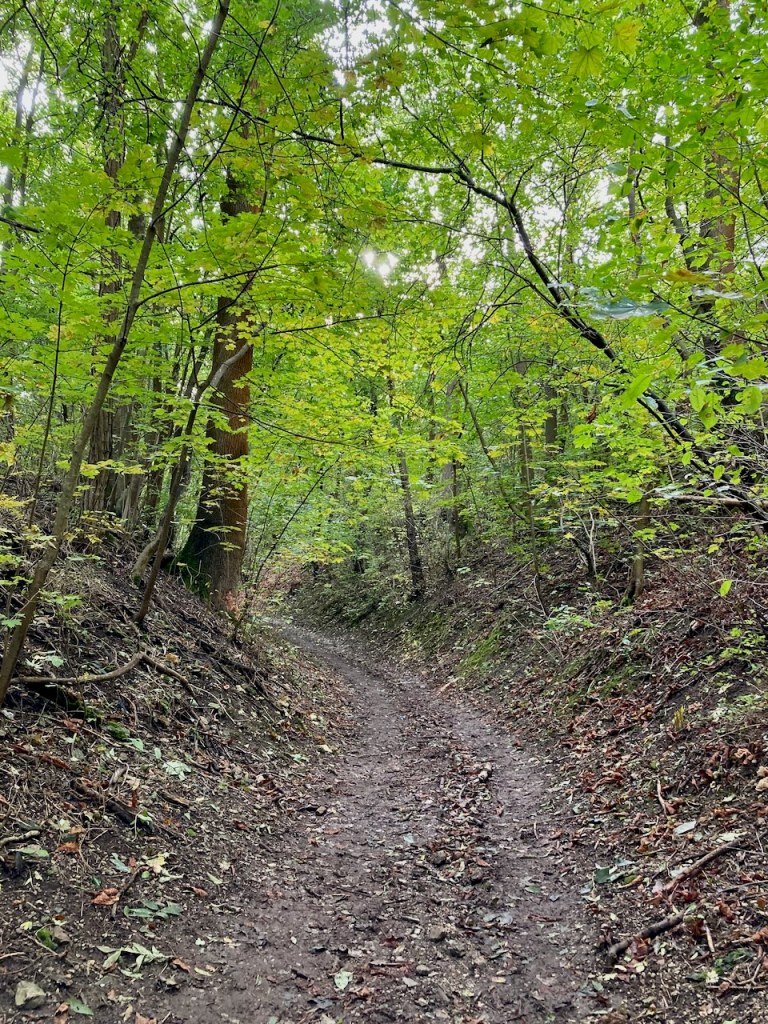
The approach to this stage went immediately through forest, blue skies above, and I was reminded of the descent from the first stage along the same path back in January, the first time I had experienced rain on the trail.
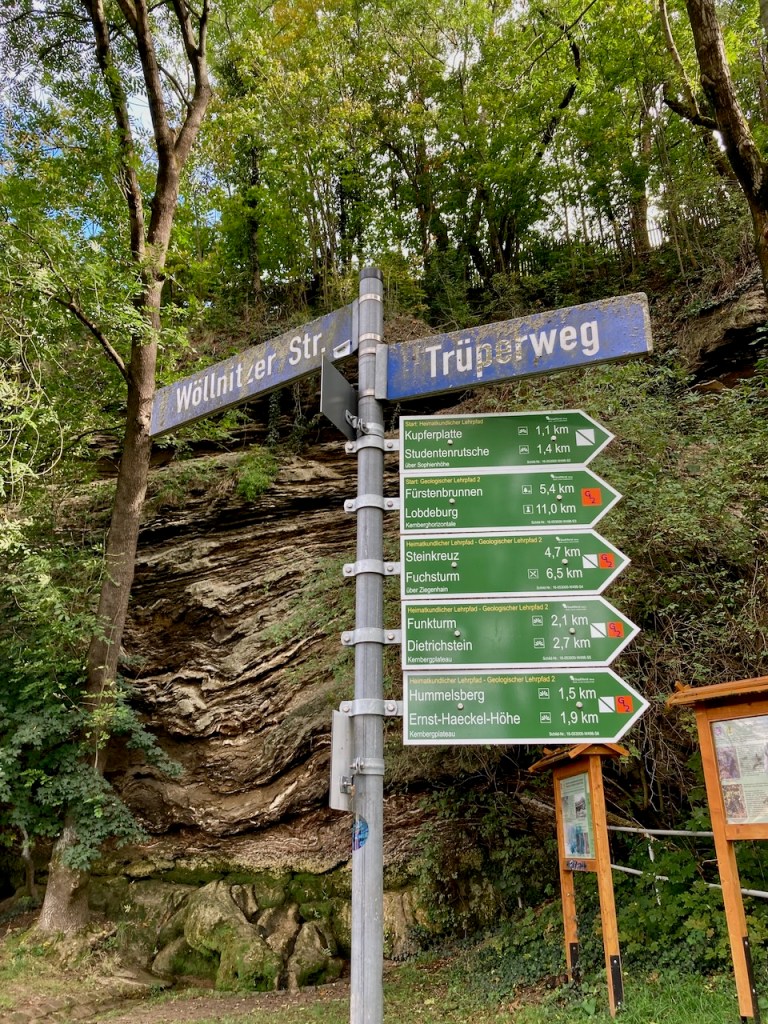


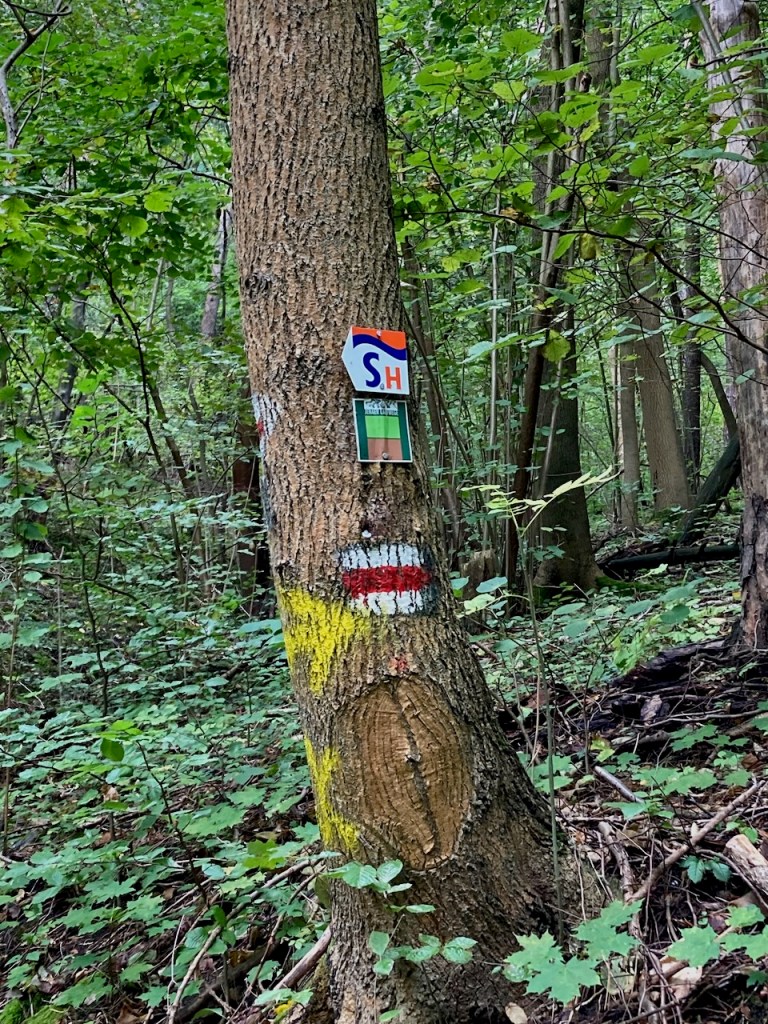
It didn’t take long to reach the first set of trail markers, by which time the steepest part of the route was already behind me.
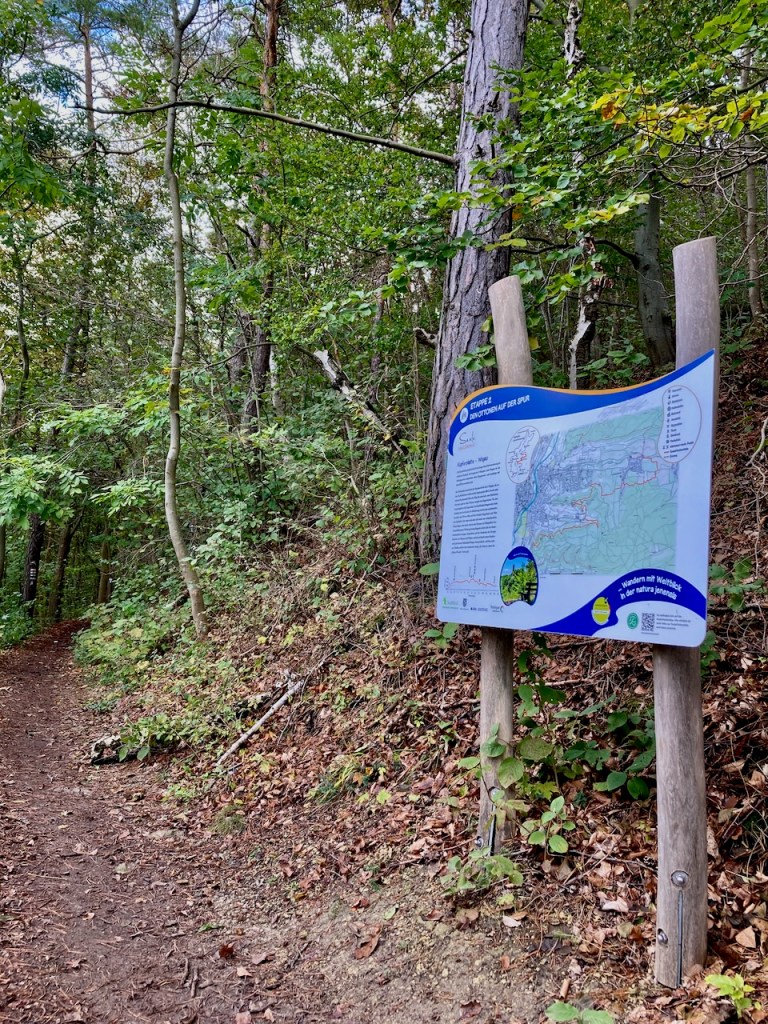
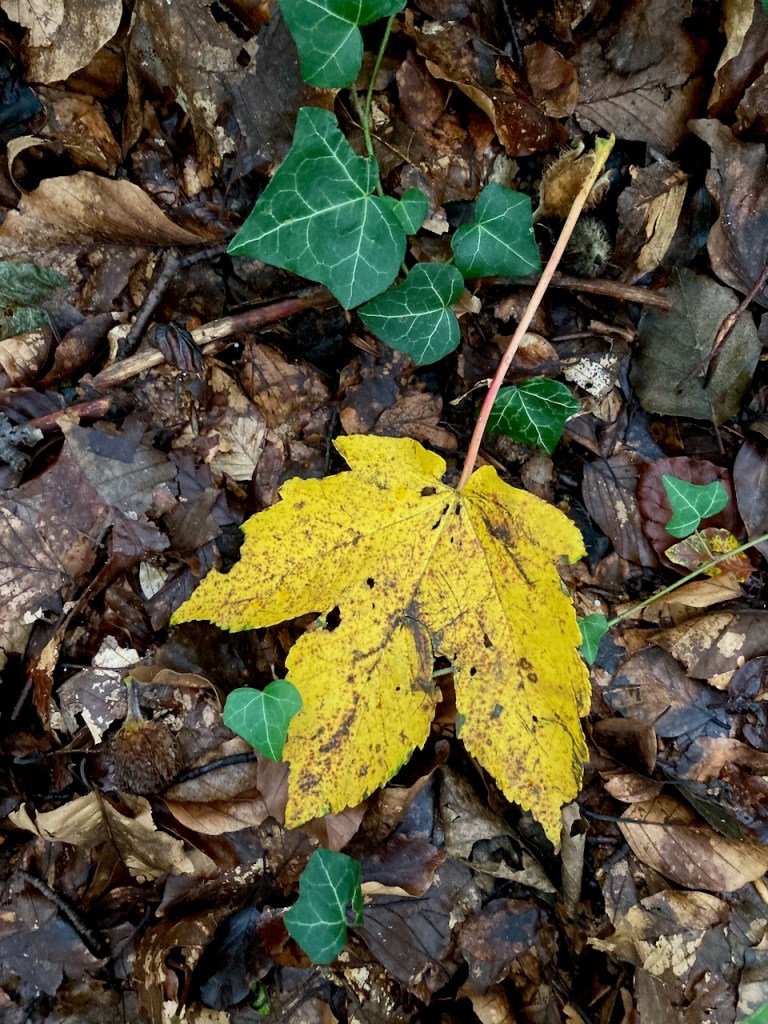
The leaves in the forest were slowly starting to change colour and the clouds began to roll in.



Good views were the reward for much of this stage . . .


. . . and even the increasingly muddy crossings over fields failed to bother me.


I walked by an old cemetery . . .

. . . a monument to someone I’d never heard of but who is important to the history of Jena (according to brief research while writing this post) . . .

. . . and a tree with a stunning root system that clearly ignored the expectation that it remain in the ground.

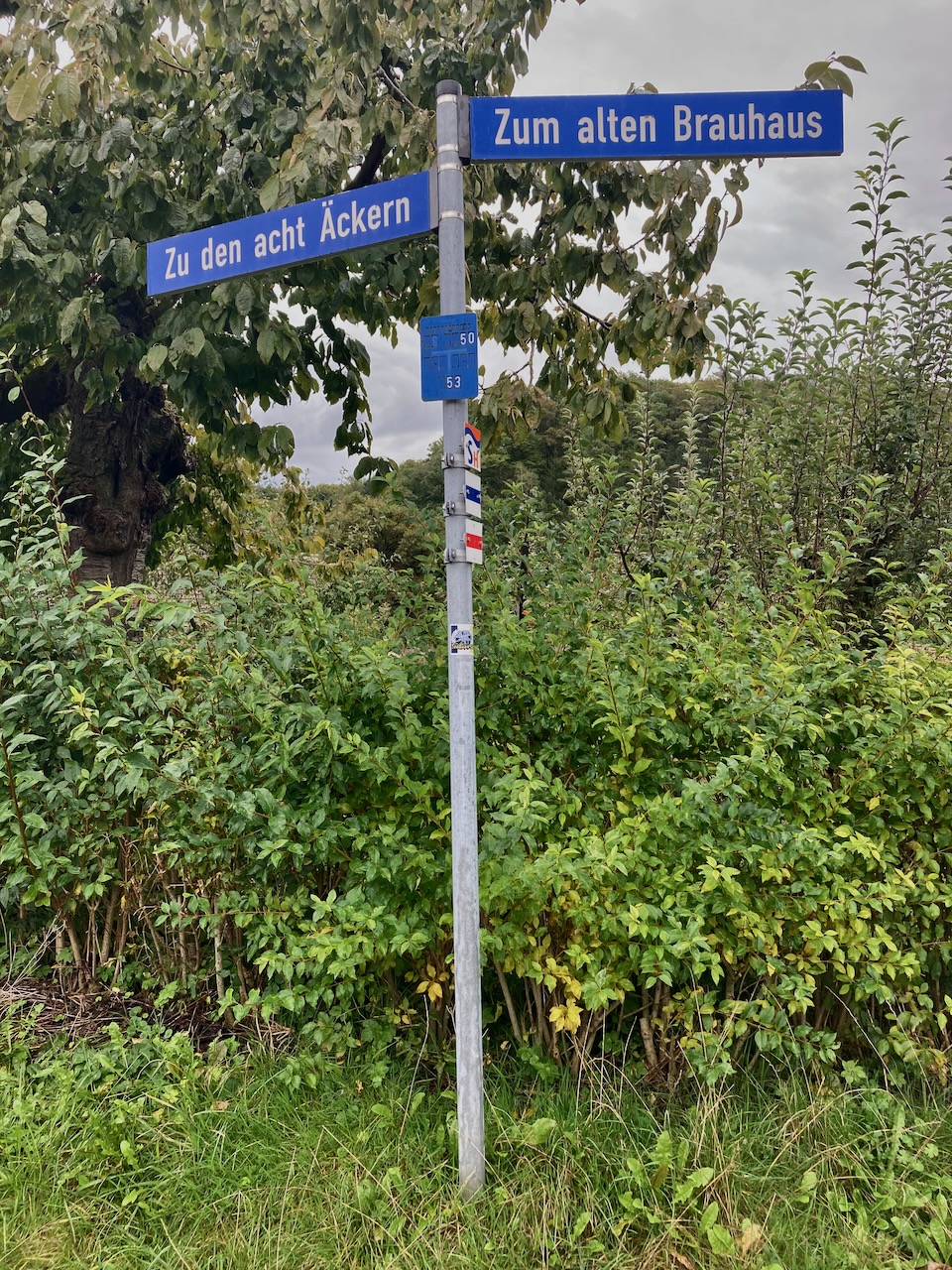
I crossed through a village in which the street signs nodded to times past . . .
. . . and then came upon a field at the edge of the forest populated with hungry cows and their curious calves.


The stage concluded as I skirted the edge of the field and though I had thoroughly enjoyed it, I really was looking forward to getting out of the rain.

Stage 3: Wogau to Kunitz (12.6km) – Mid-October
When I finished the previous stage, fall was slowly beginning. Mere weeks later, it had arrived. My partner and I took the blue skies as a sign and headed out to have a look.

The stage took us through several woods, each with slightly different trees in slightly different stages of changing colour. The air felt fresh in each, the soil smelled different, and the atmosphere of each forest was clearly its own.
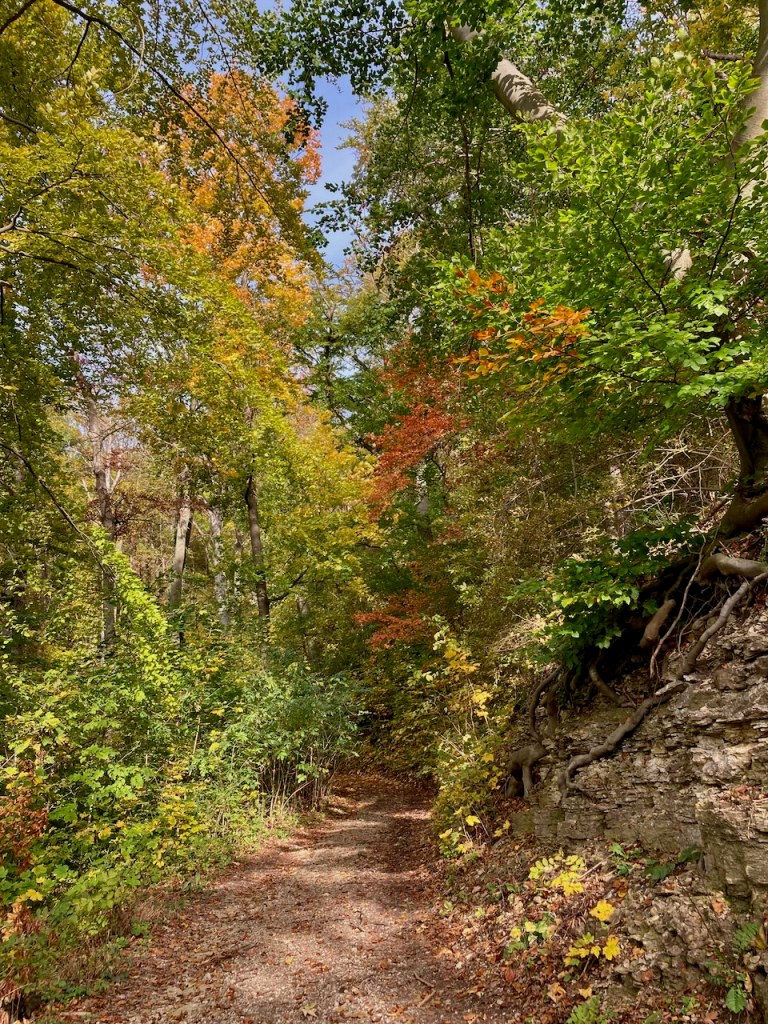
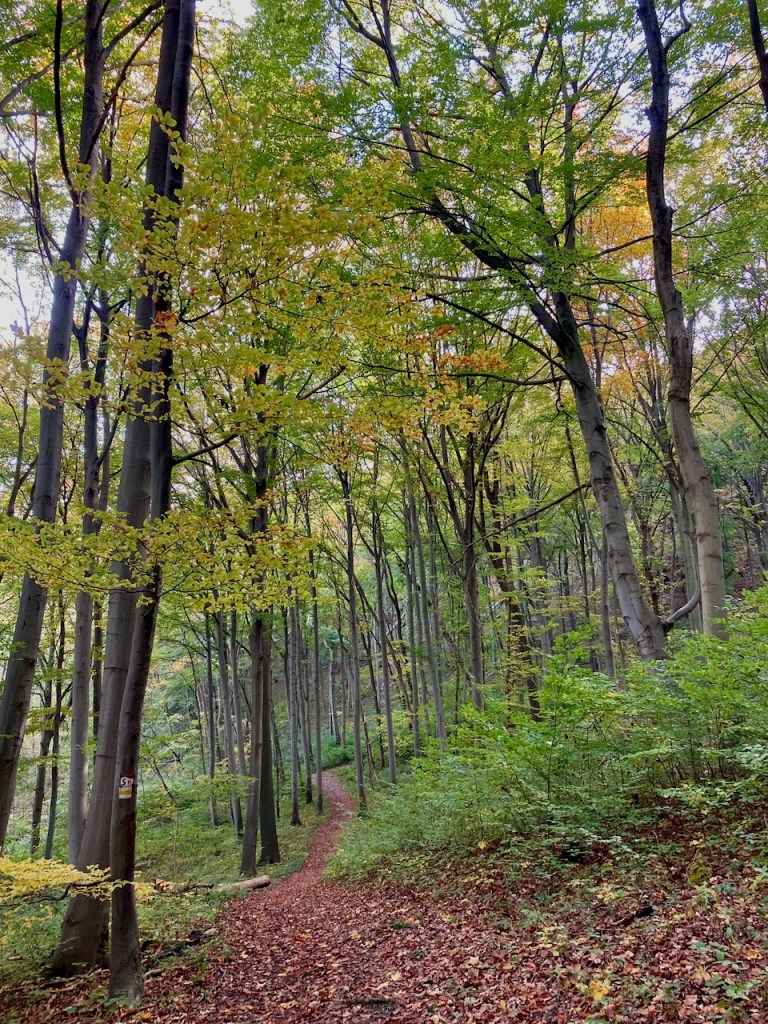
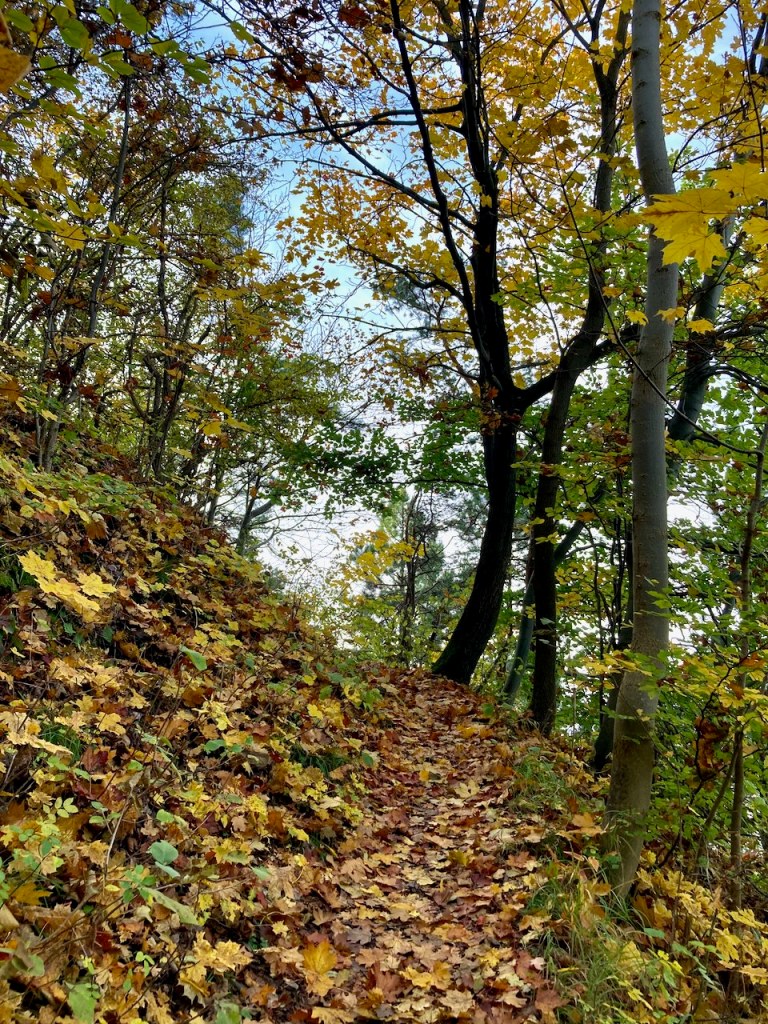
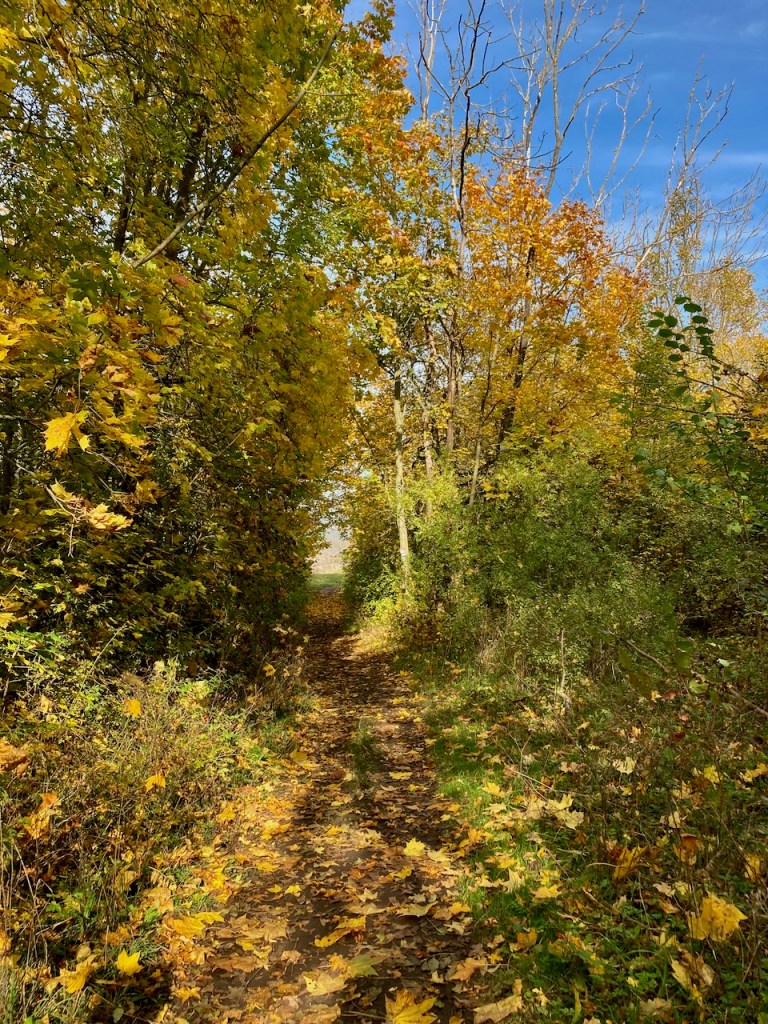
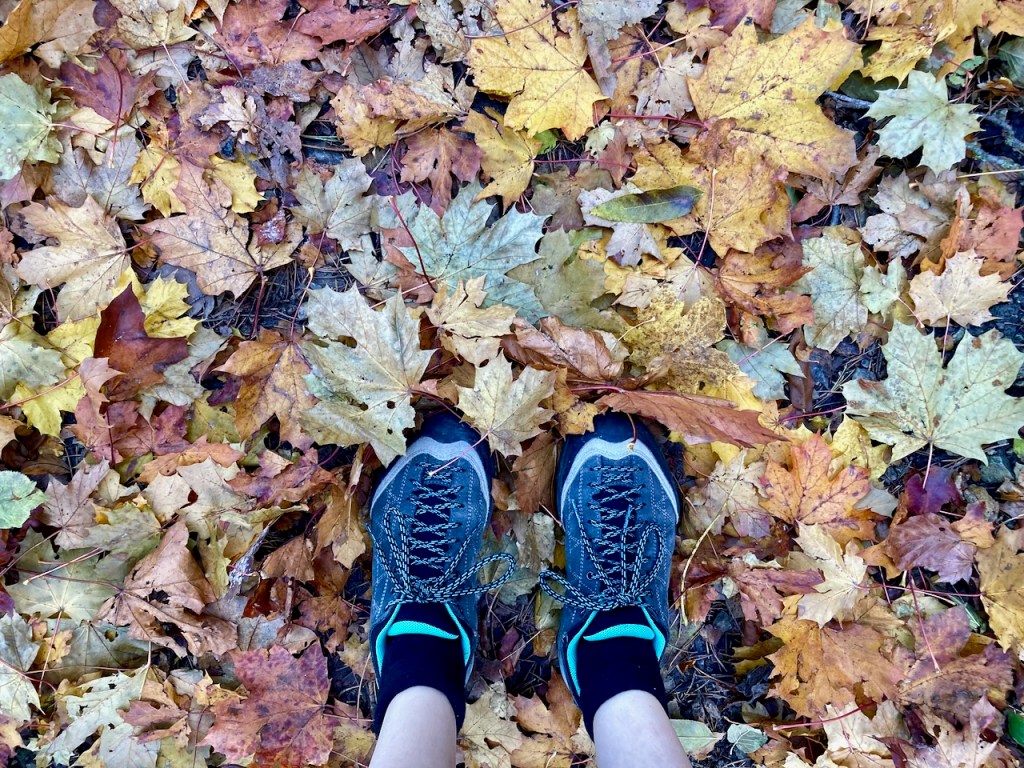
We walked on the edges of the hills and looked down at Jena.


Enticed by the sun, we lay back on conveniently located sun loungers to soak up as much vitamin D as we could. November is a dark, dreary month here.

We passed a sign that had clearly been here a while . . .

. . . and paused for lunch at a bench overlooking a tiny village, a little oasis just a stone’s throw from the city.
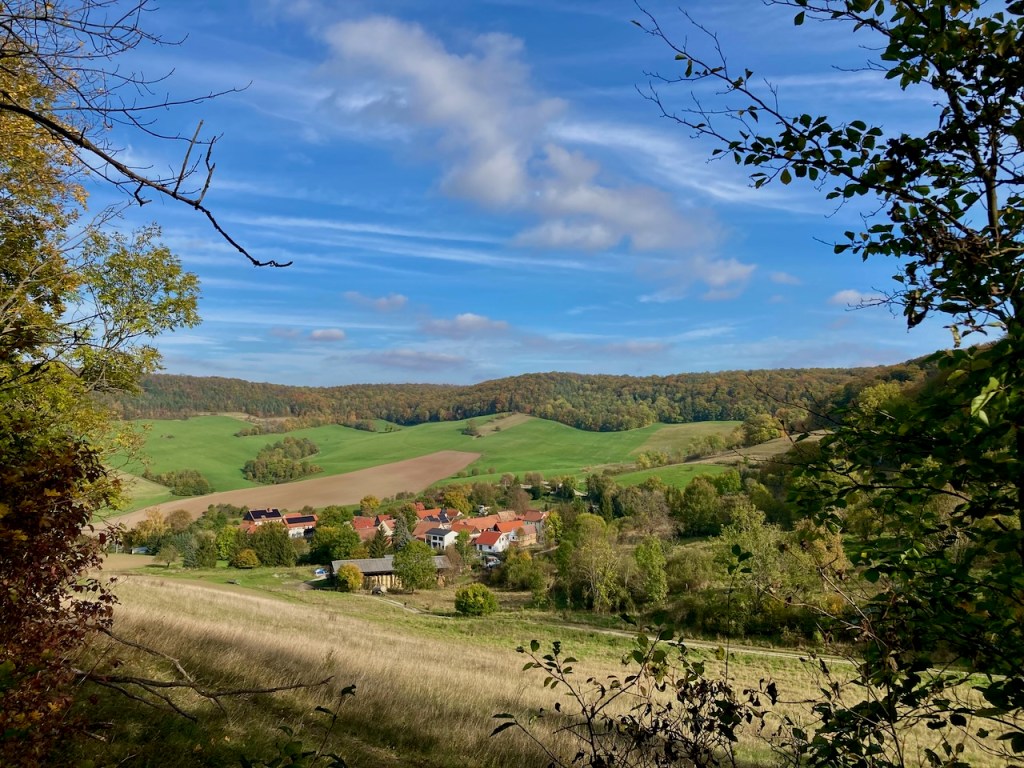

We crossed a field . . .

. . . leading us along a path back to an old ruin we’d been to before. The landscape in October was slightly different than that of July.

Finally, we passed the vineyards that I’d seen several times now, all at different growing stages.
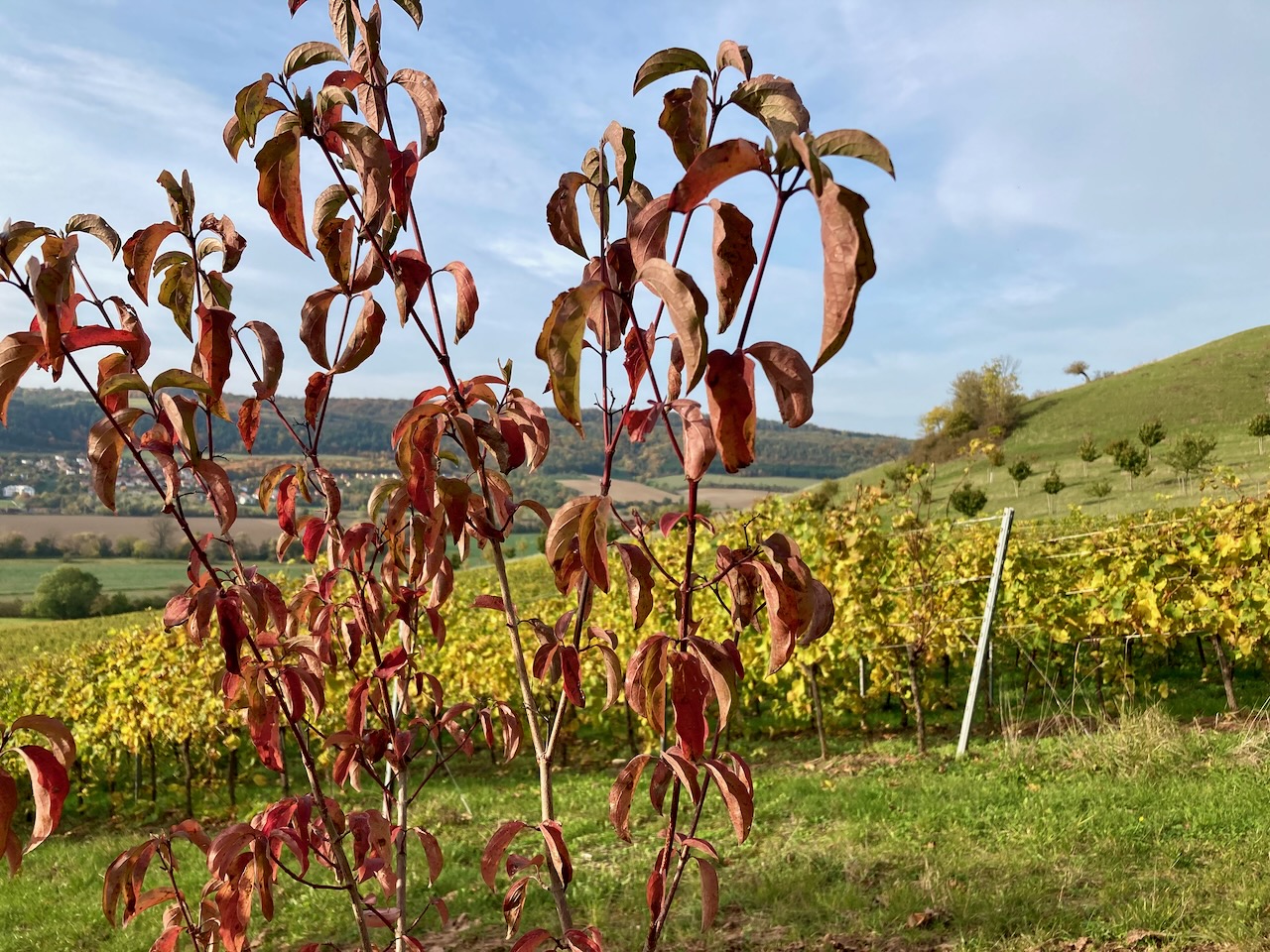
We walked down the hill, followed the dotted line on our map to the end of the trail, and I grinned. Last stage done with a person I love on a sunny October afternoon.
And with that, I completed the entirety of the SaaleHorizontale. The moment of finishing was one of gratitude for the time spent walking in nature and for the people who had joined me. The world is a beautiful place, and even more so when it can be shared with others.
Walking allows us to be in our bodies and in the world without being made busy by them. It leaves us free to think without being wholly lost in our thoughts. – Rebecca Solnit, Wanderlust