Tag Archives: Synagogue

Travel Guide: Marrakech

Both my partner and I have long dreamed of going to Marrakech, and this seemed to be a good point in our lives to make that happen. After consulting with friends who had lived in Tangier, we had a sense that this would not be our only visit to Morocco, and this feeling only intensified after our three nights in Marrakech. We’ve both had the fortune and opportunity to see a bit of the world and neither of us have ever been anywhere quite like Marrakech.

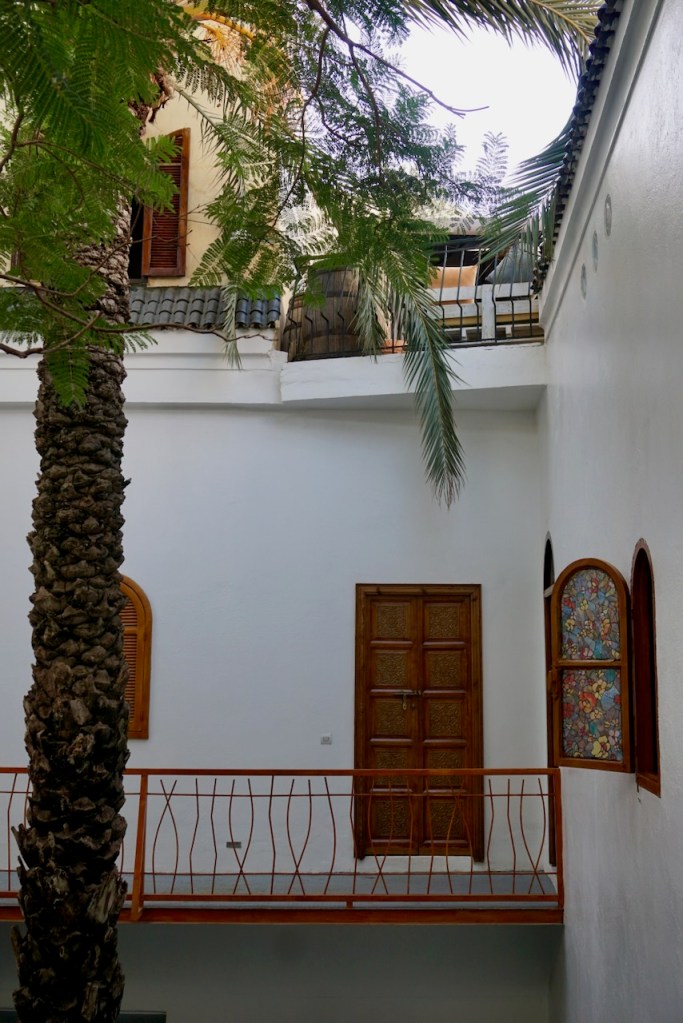
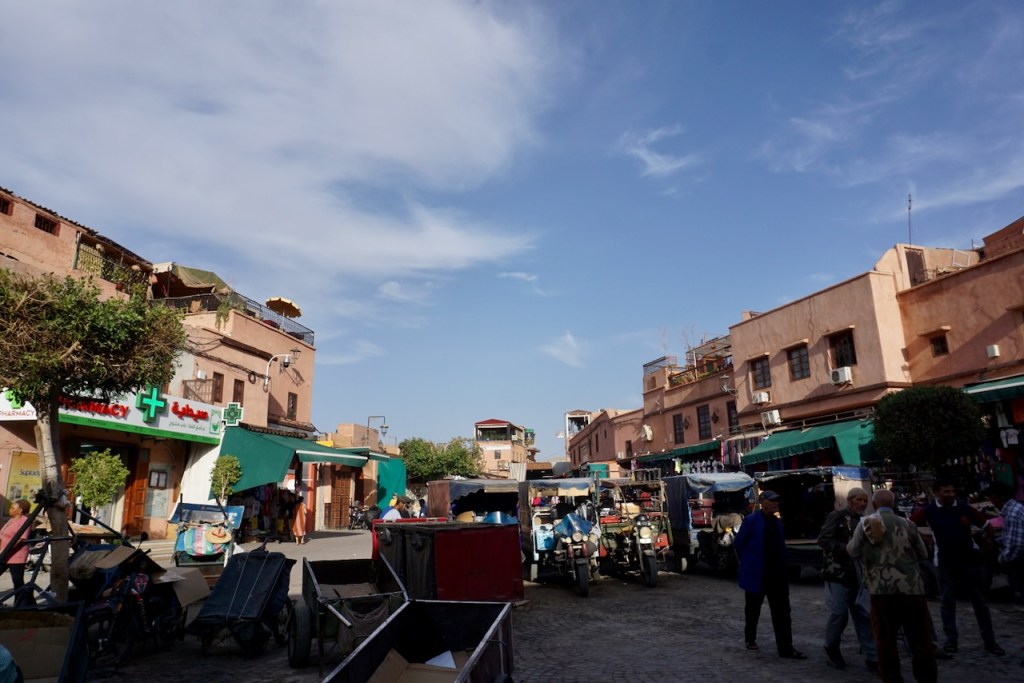
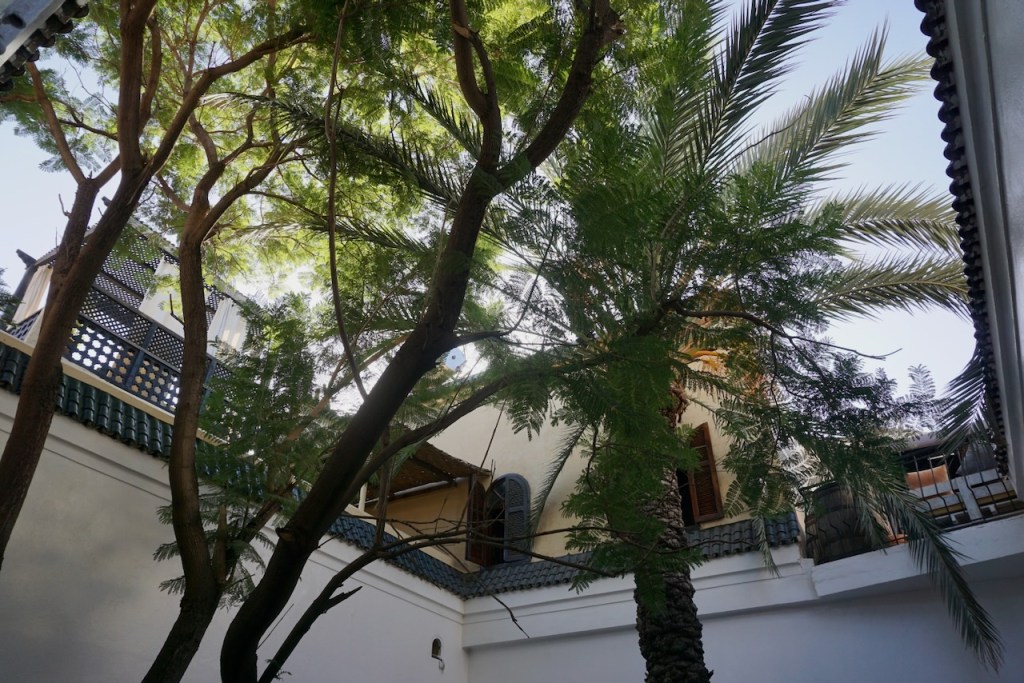
Upon landing in the late afternoon, we took a bus from the airport to Jemaa El Fna, the main marketplace in the old city, or medina, of Marrakech. From there, we navigated twists, turns, bikes, mopeds, and donkeys before arriving at the alley that we would have missed had we not been looking for it. A few twists and turns later, we entered our riad, the guesthouse build around a courtyard that would be our oasis during our visit. Riads are quiet havens that have existed for centuries as family homes; the windows face the courtyard, so there is practically no noise that comes in from outside. Ours contained, as is traditional, a fountain of running water and a good deal of flora, including a date palm that was home to a family of birds. No alarm clock needed, assuming you’ve slept through the call to prayer that comes in the middle of the night and then earlier than the birds. (Spoiler alert: You haven’t slept through anything, but it’s all rather charming.)

Breakfast was served on the rooftop terrace and the suite that we booked (yes, we went all out for this one) included a living room and a sitting area in the airy corridor. We were served sweets and mint tea on arrival, and we knew we were in a different world.
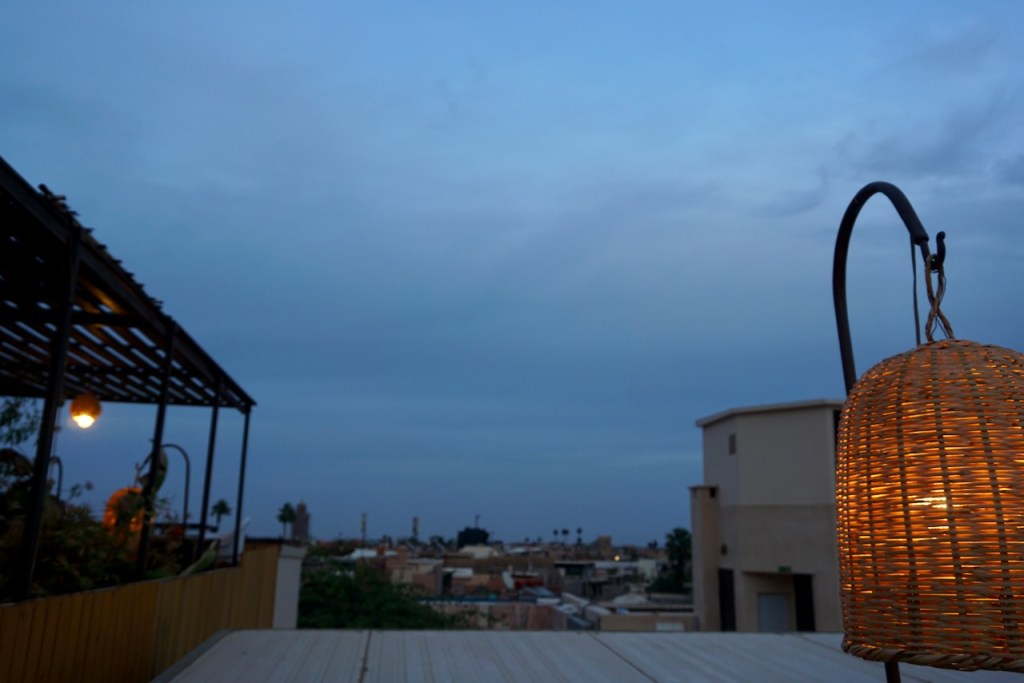
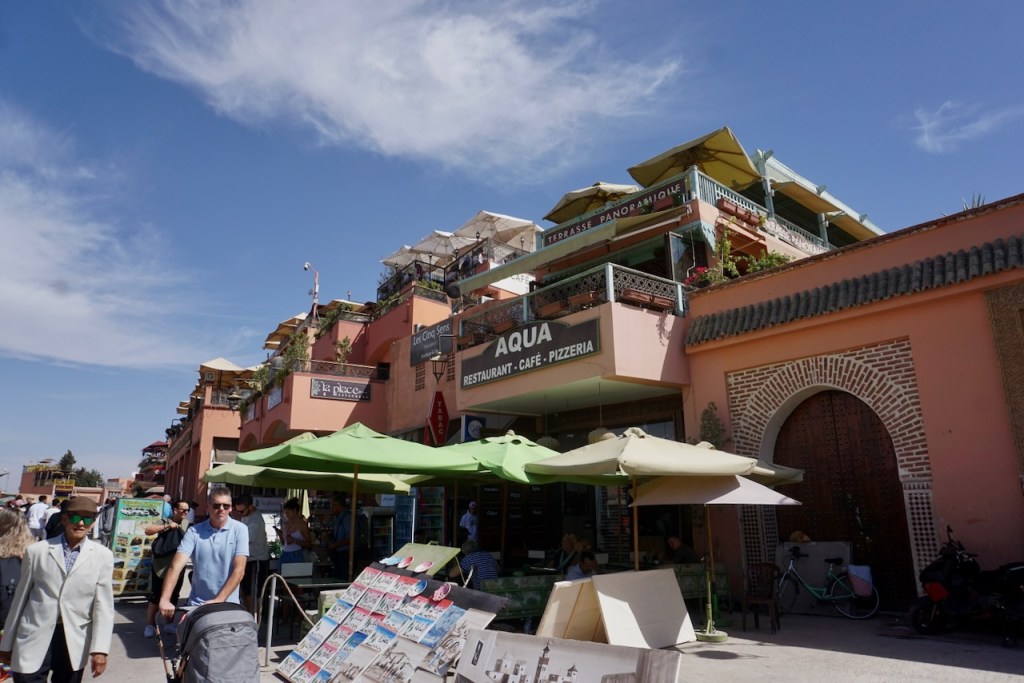
As we would learn, rooftop eateries are common and we intentionally sought them out.

We could usually see cats, a common feature of Marrakech, jumping around the rooftops, and while they are very pretty, they do come along and beg. Understandably, the restaurant cats are definitely better off than the cats eking out a living under park benches.

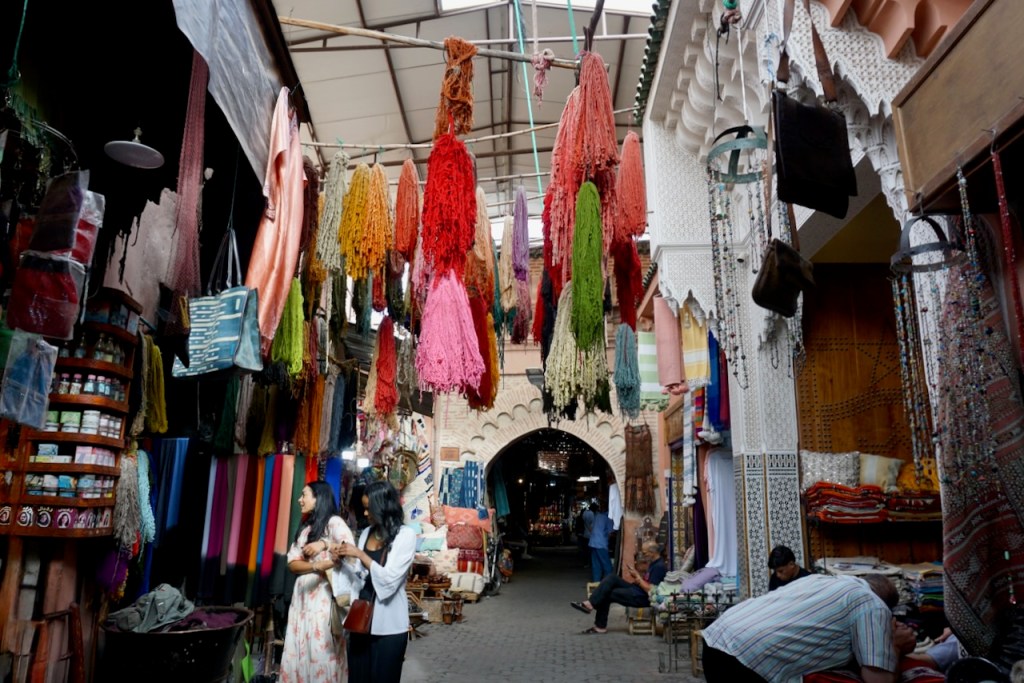
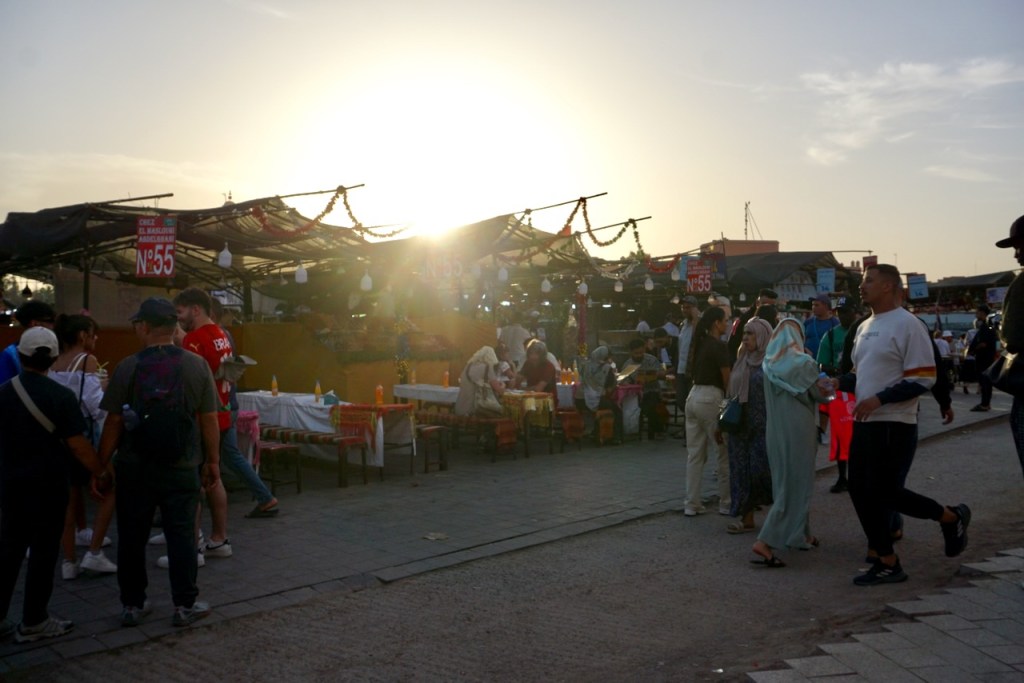
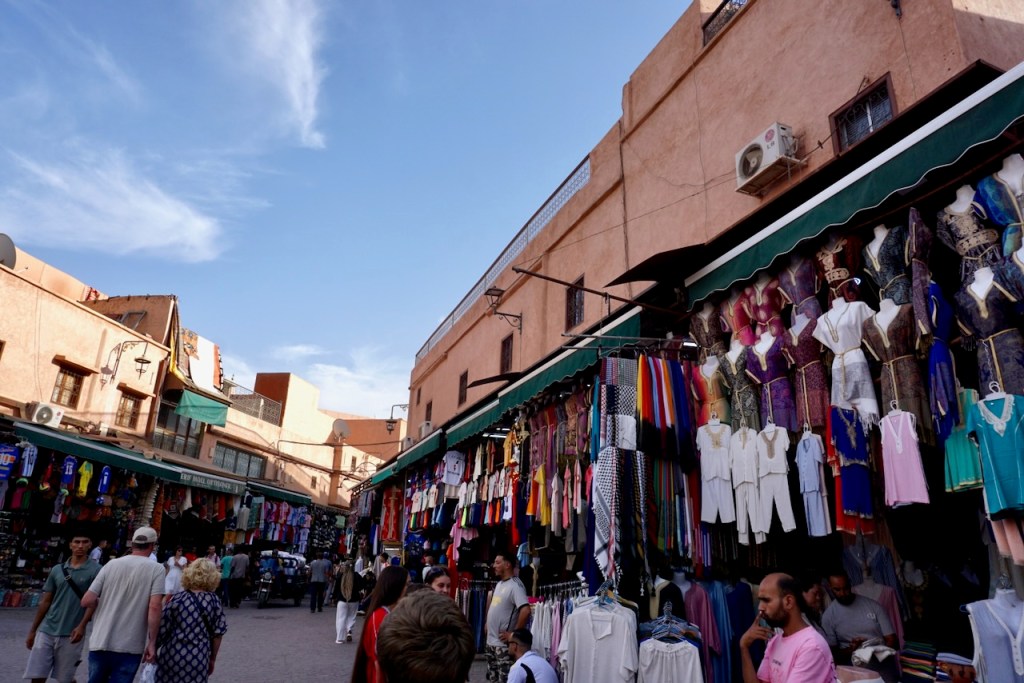
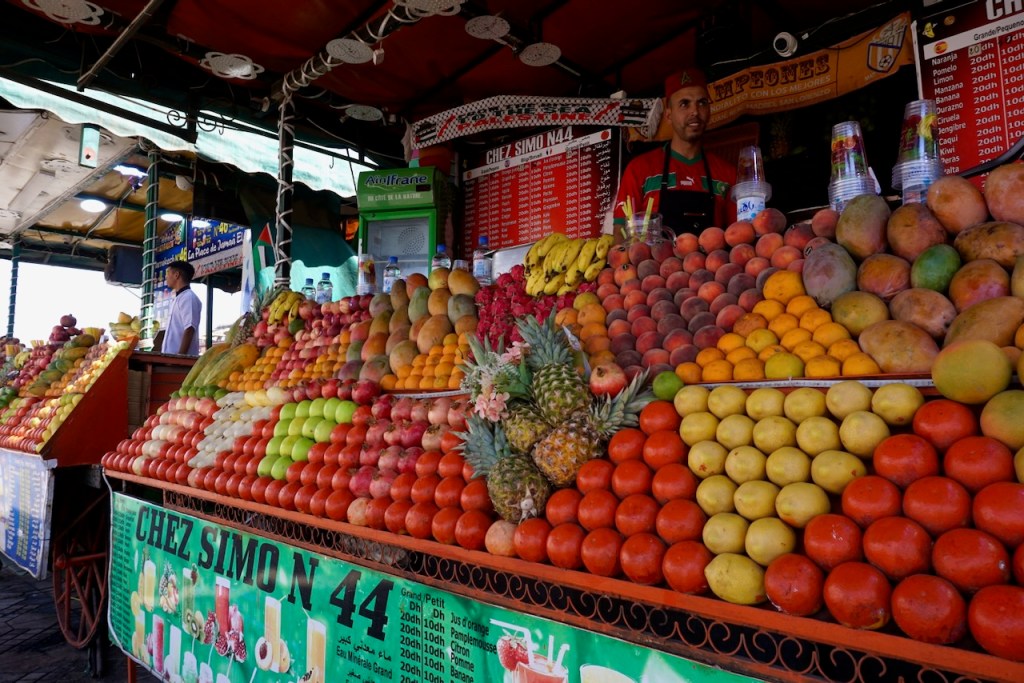
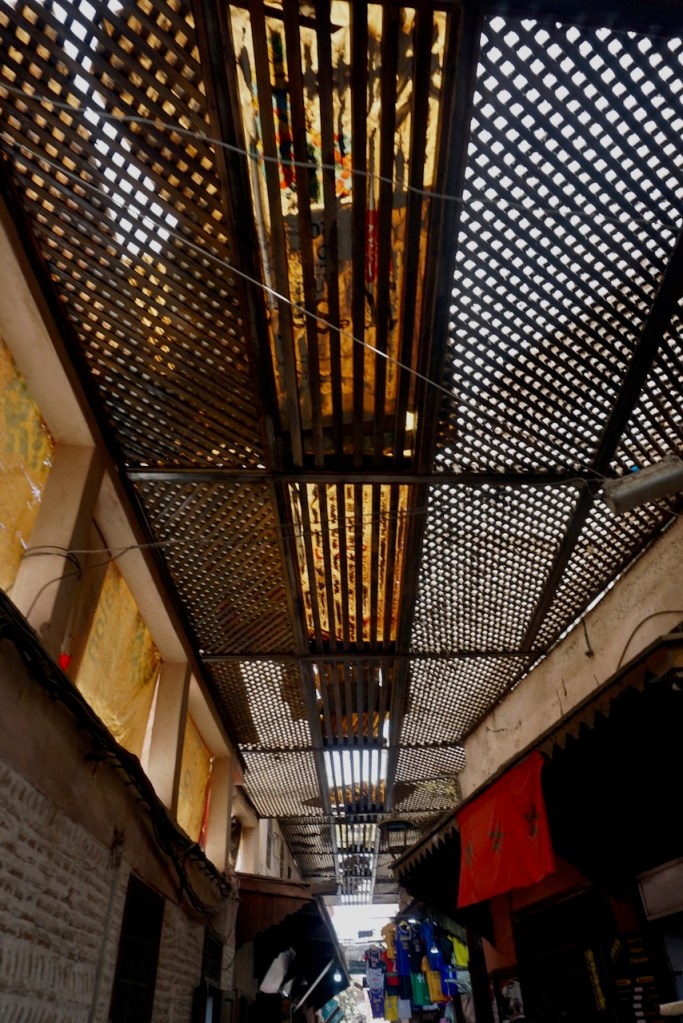
From that first walk through Jemaa El Fna, however, we were enchanted. The market, and particularly the main square, contained everything we’d always imagined about Marrakech, and we spent our time there grinning at being caught on a film set, surreal snake charmer music (and snake charmers!) included. In addition to the snake charmers, monkeys on leashes, and horse-drawn carriages, there were vendors selling all manner of items to buy, in all colours, in all scents. We never tired of looking, and the indoor market sections were surprising cool due to the slatted wooden ceilings that kept out the sun.

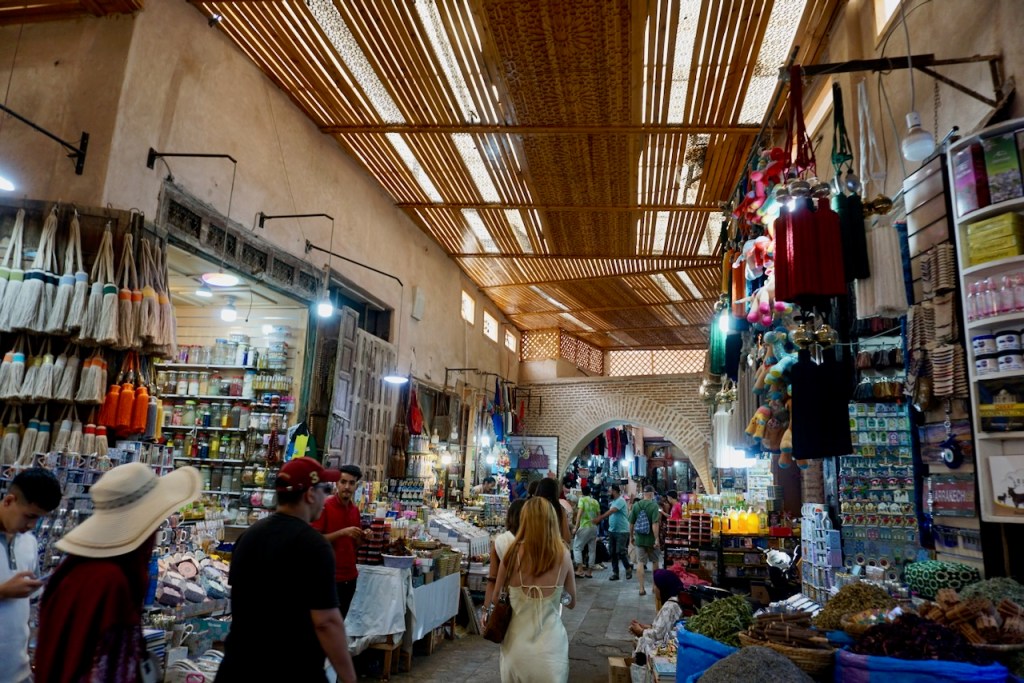
Taking the advice of our riad host, we did our best to bargain prices down at least 60% of the original asking price. We weren’t entirely successful, and we definitely bought a few things priced for tourists, regardless of haggling, but we never paid full price and we did walk away a couple of times. Overall, we found the vendors and shopkeepers respectful and less pushy than we’d been told to expect. They were also extremely flexible, switching immediately into a different language if we didn’t respond in whichever one they tried first. Just for fun, I used as much French as I could, but it’s amazing to see how little French I can still speak.

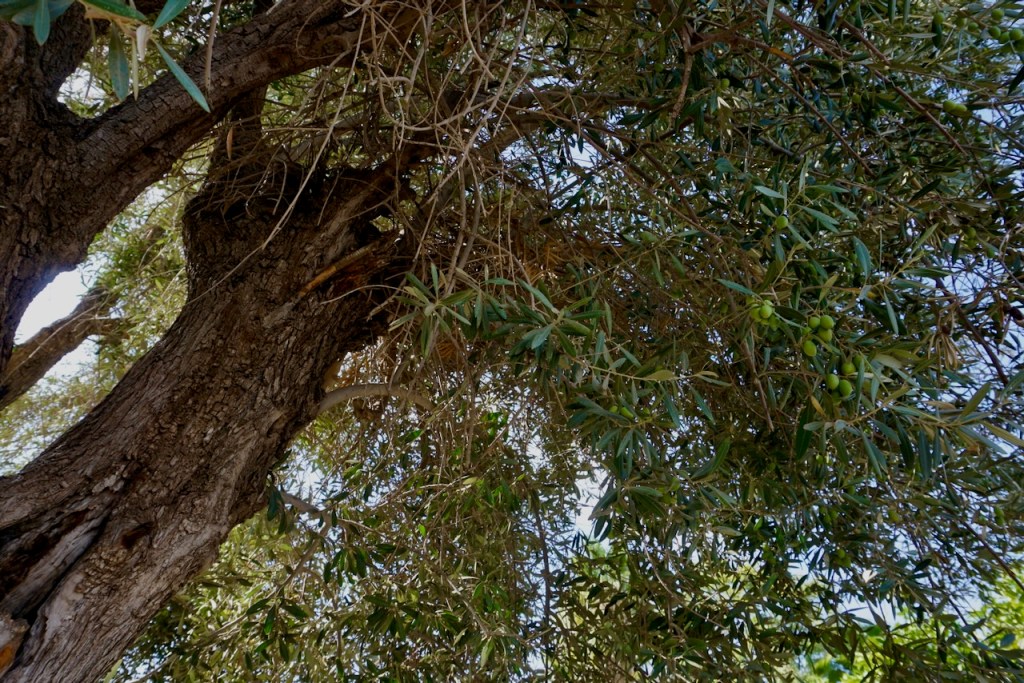
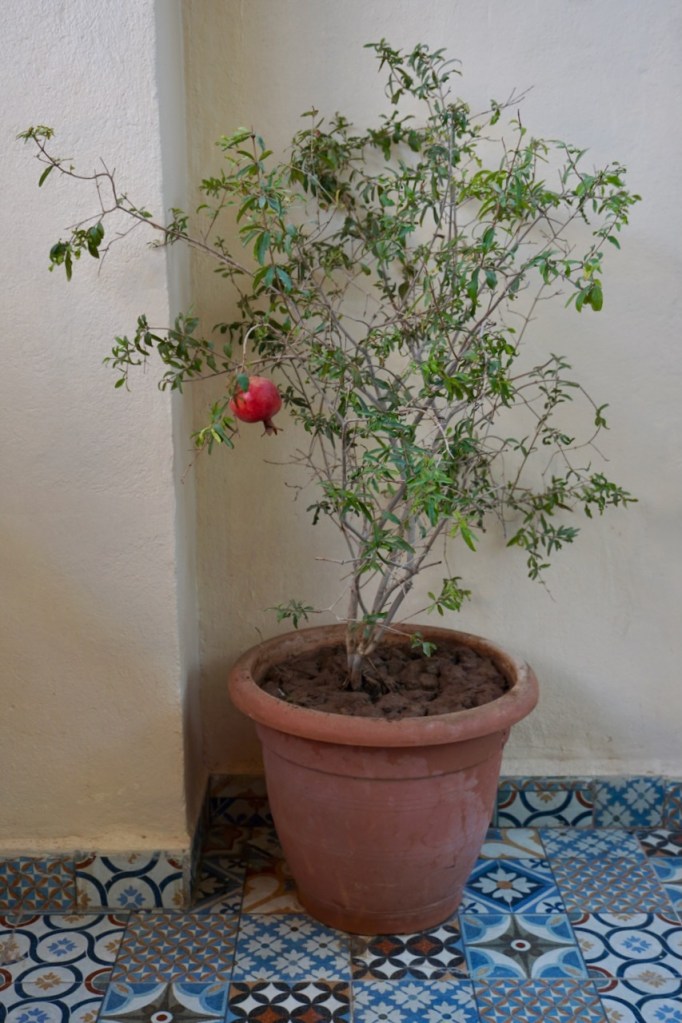
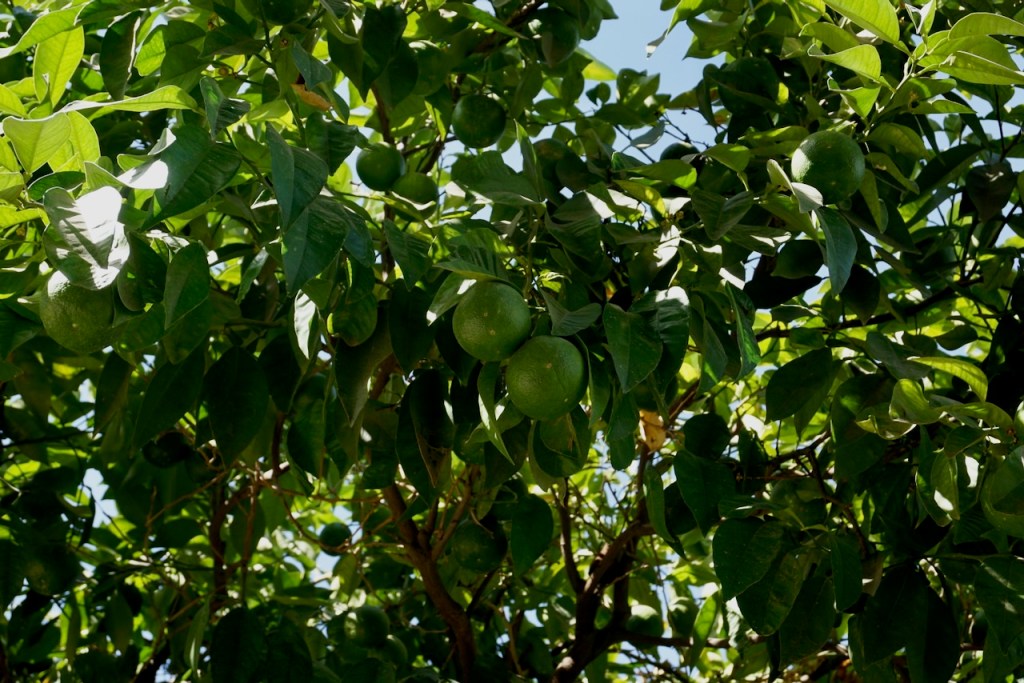
We were also pleasantly surprised by the amount of green in the desert of Marrakech. Our tour guide on our first morning told us that the water comes from the north, from the Atlas Mountains where mint grows, and that the centuries-old irrigation systems were hidden underground as protection against invasions. We saw pomegranates, olives, dates, and oranges growing from trees, and the tour guide explained that fruit from trees in the parks are free for the taking.

Standing in the shadow of Koutoubia Mosque, we learned about the history of Marrakech . . .

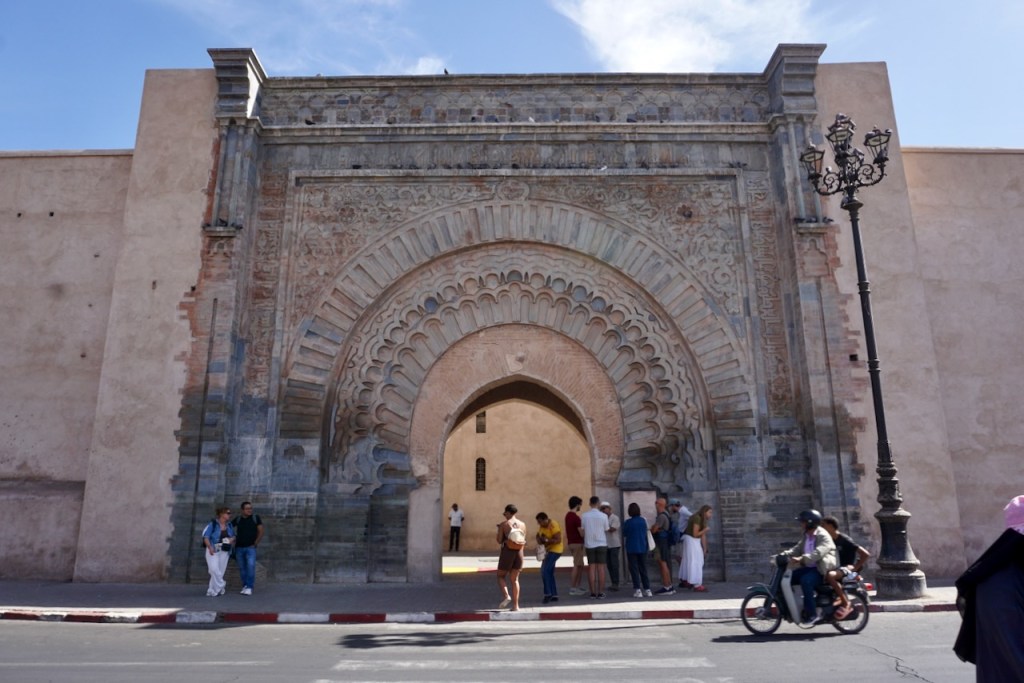
. . . and later walked through a couple of the ancient gates to the city.
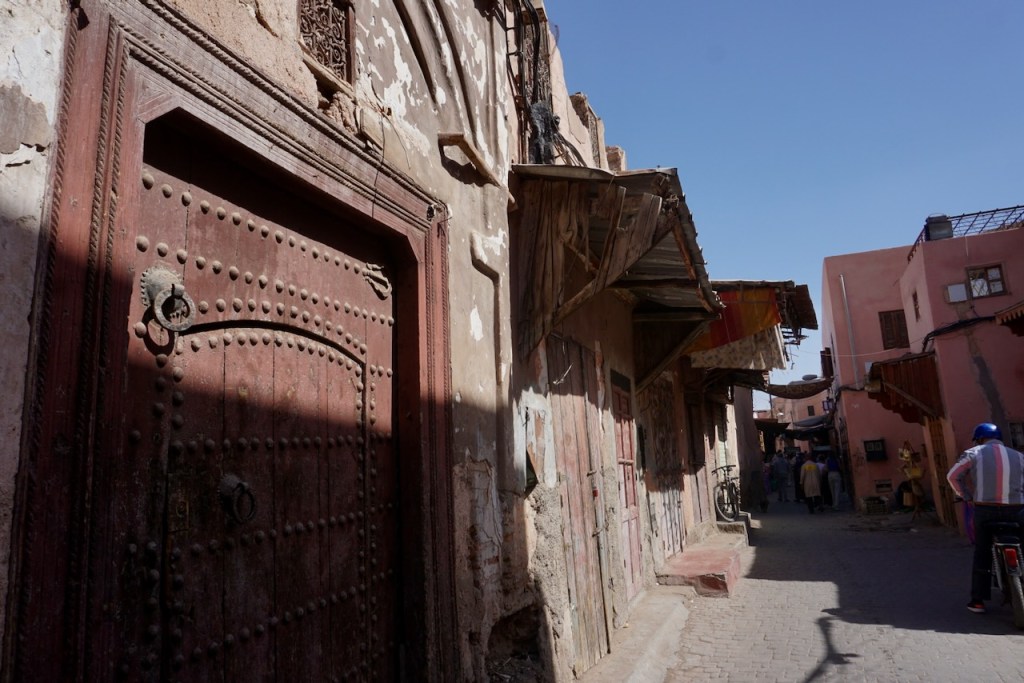
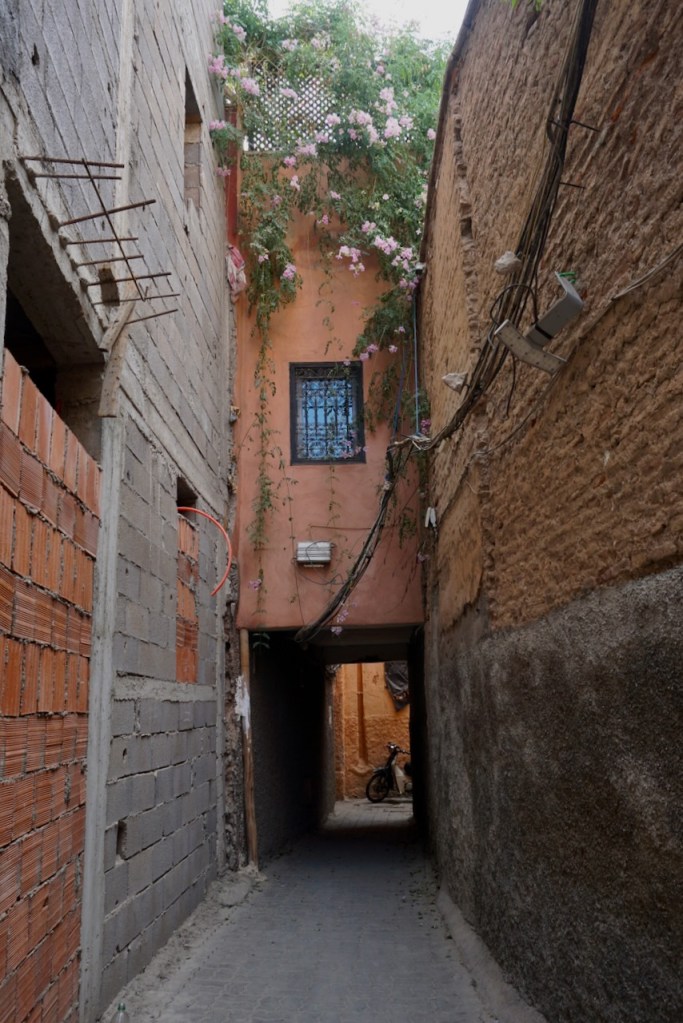
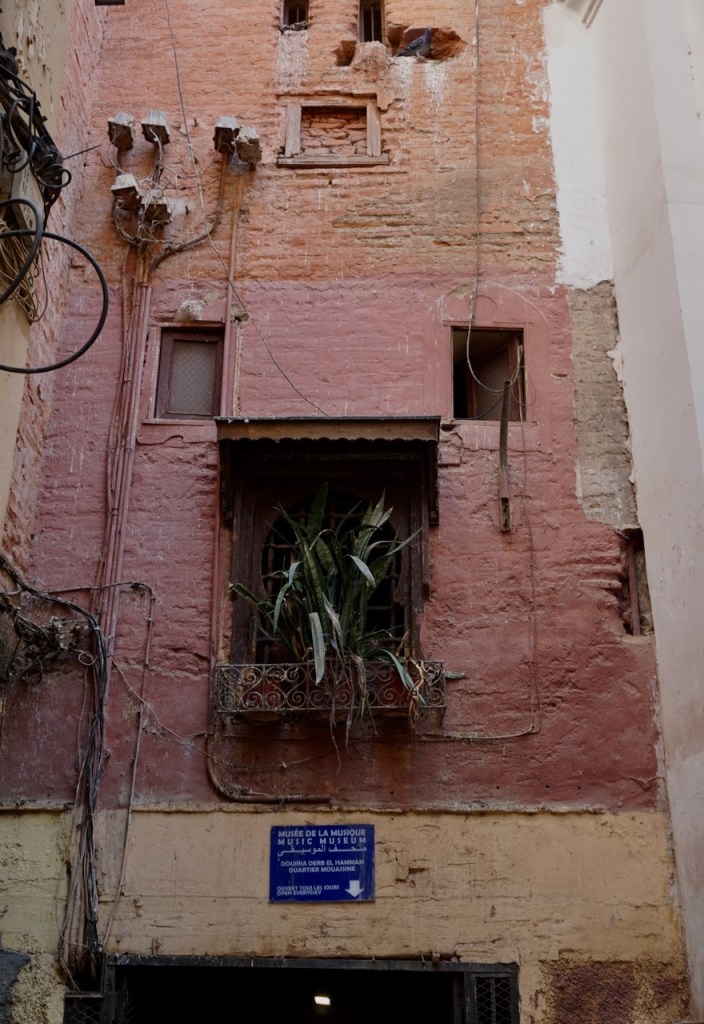
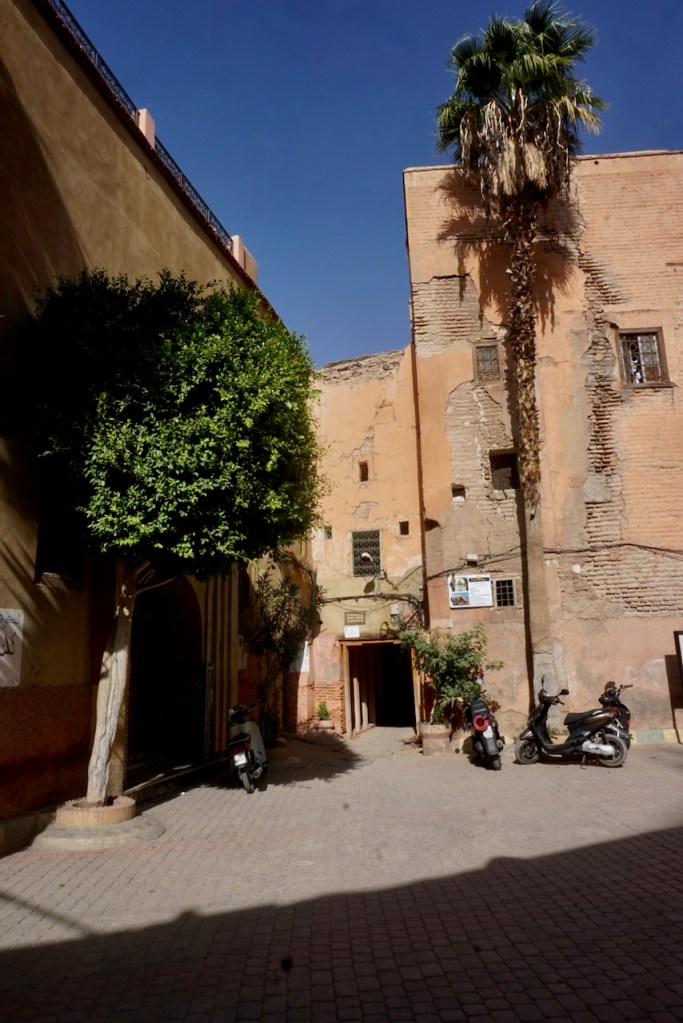
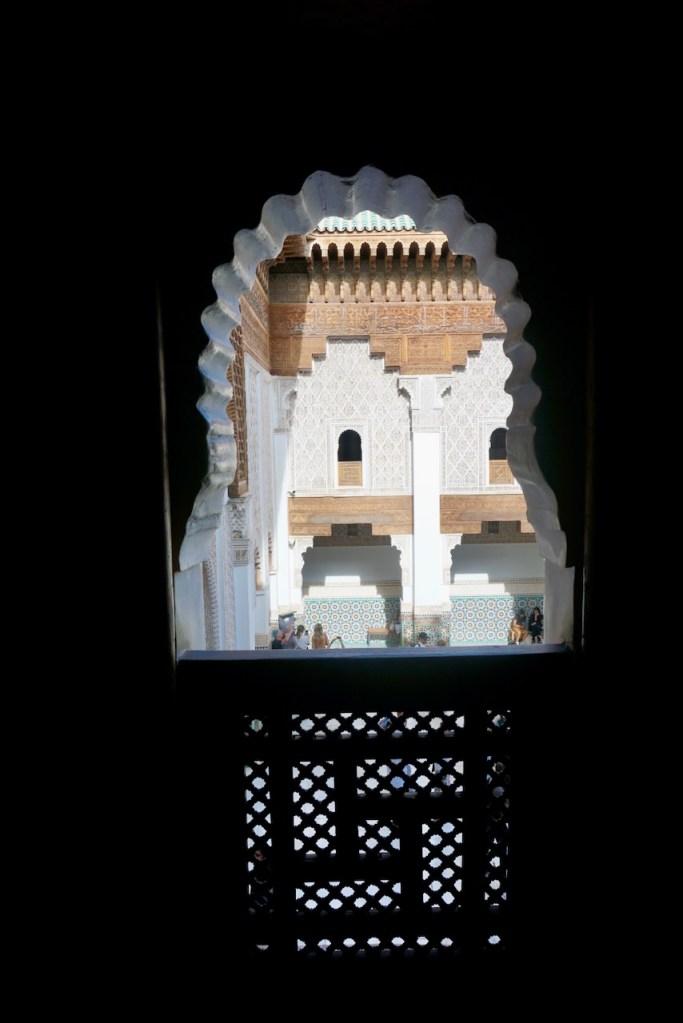
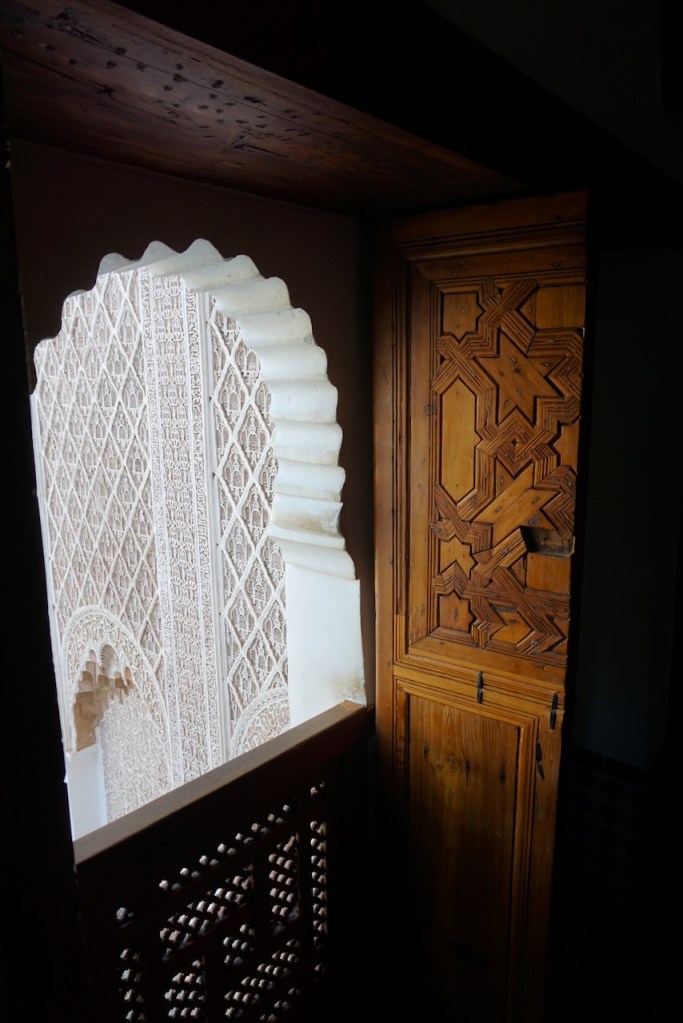
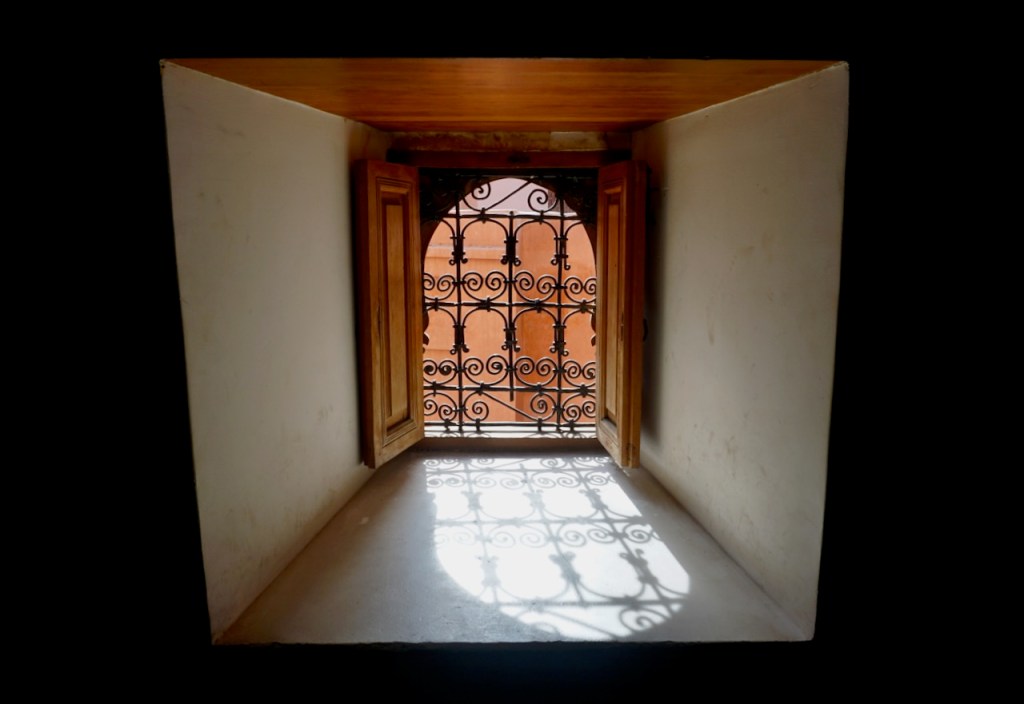
We so taken with the winding, narrow alleyways, designed for protection from invaders and sunlight. Additionally, the windows and doors were in shapes that we are not used to seeing, adding to the sense of being in a different world.

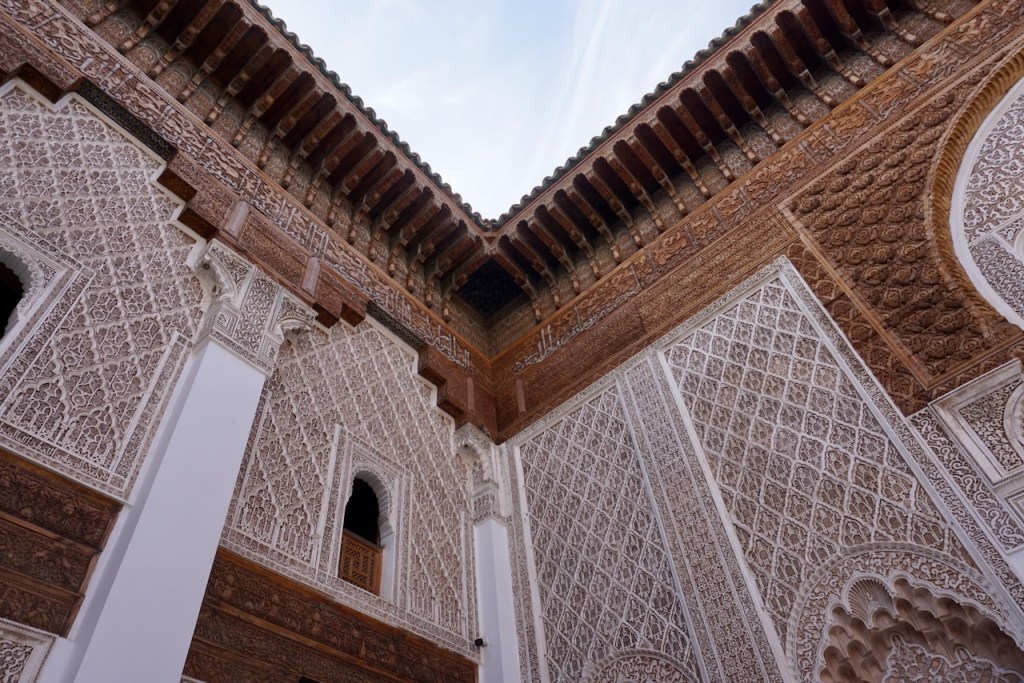
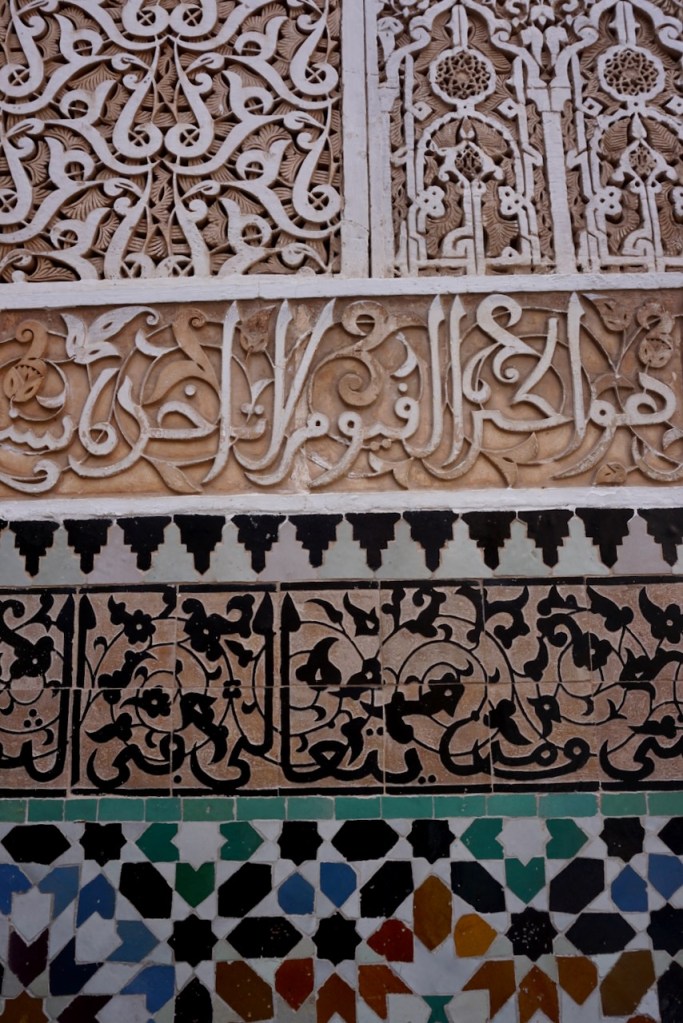
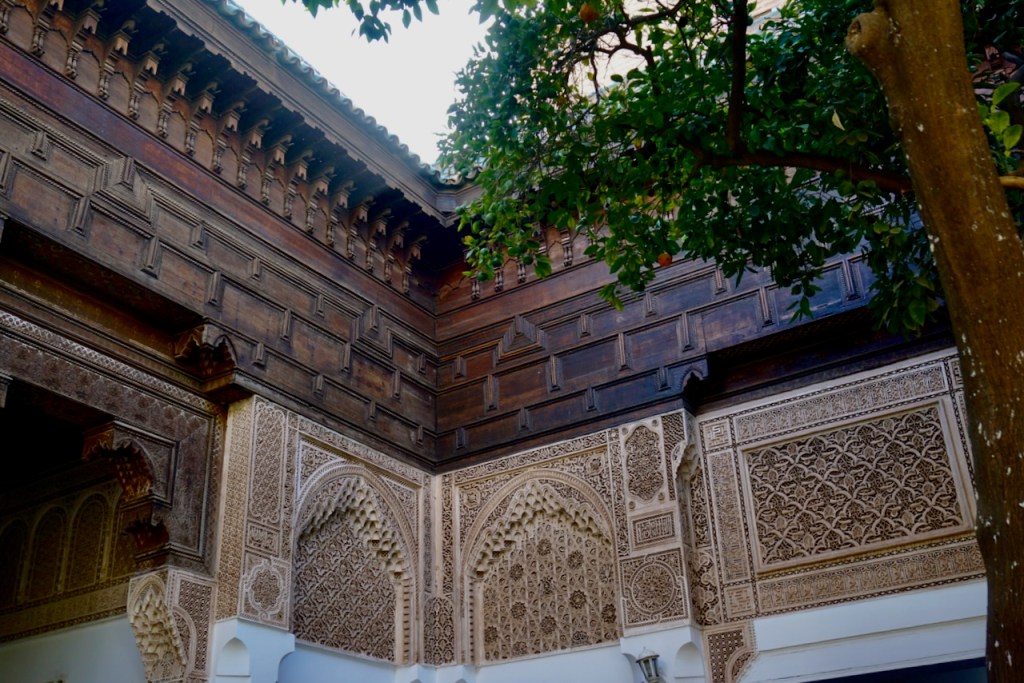
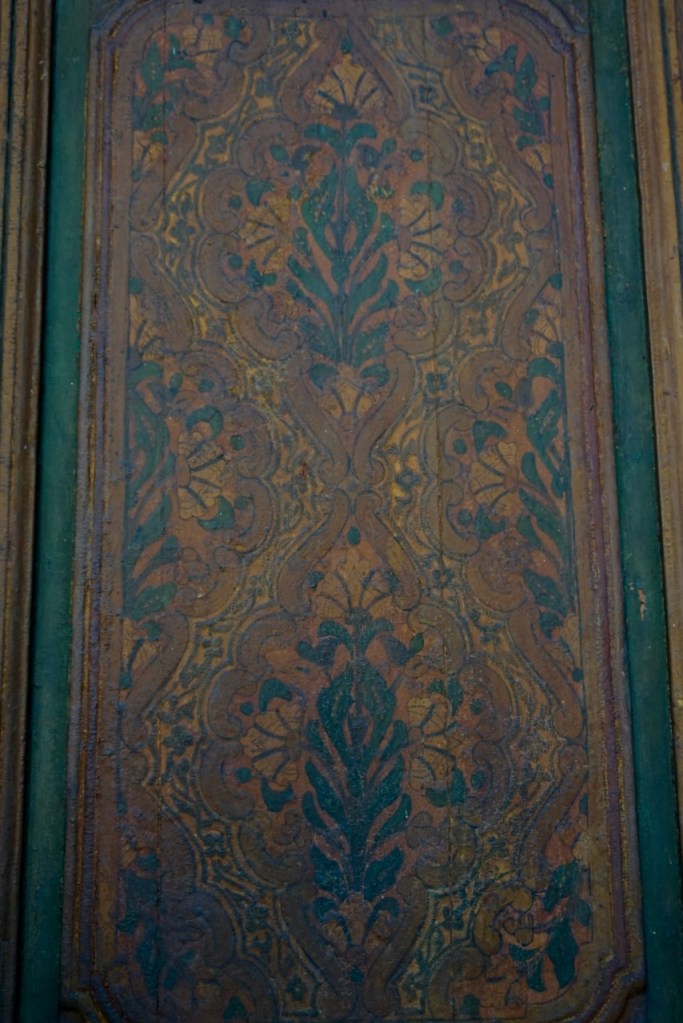
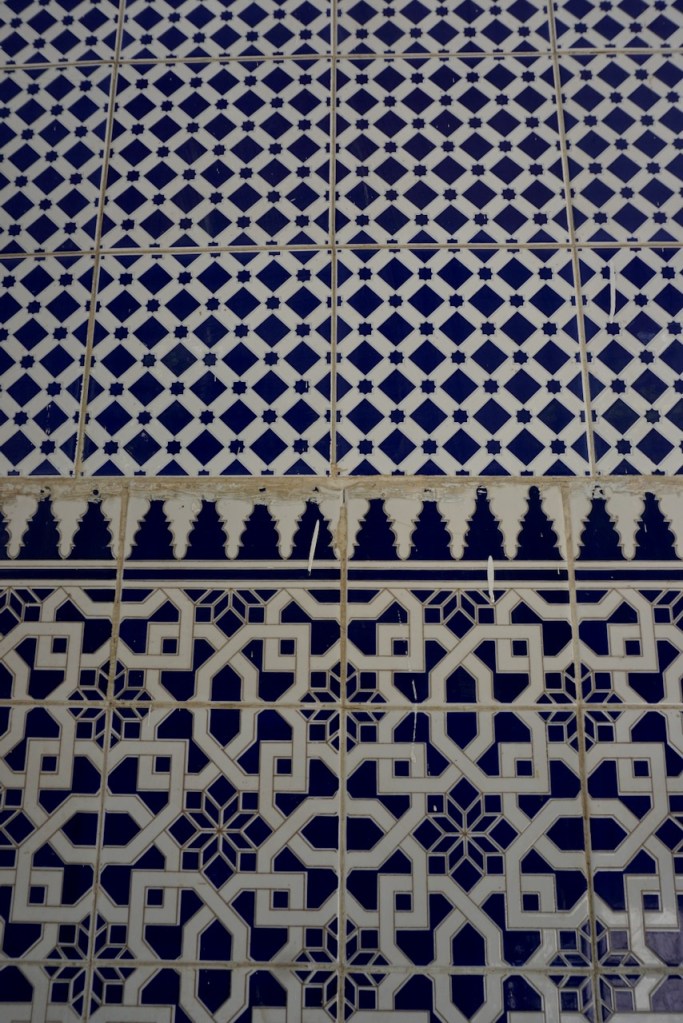
One of the best opportunities to see the architecture, tiles, carved and painted ceilings, and ornate calligraphy that characterize Marrakech is to visit the Ibn Yusuf Madrasa, which dates to the sixteenth century. This former Qur’an school has been preserved as a museum, and it is stunning.
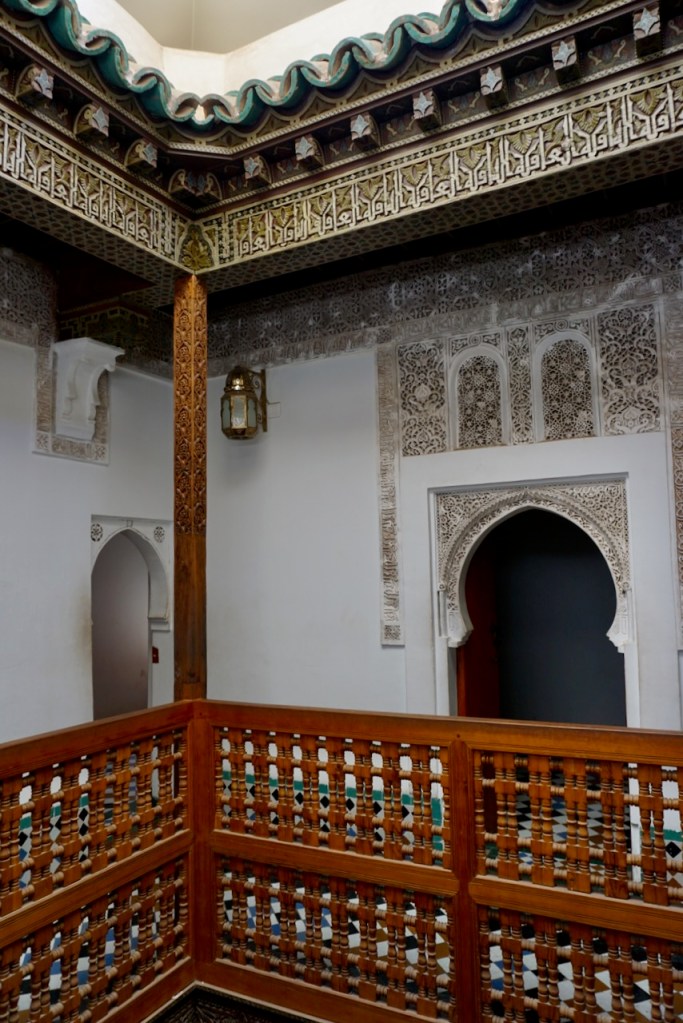
The same can be said for the Bahia Palace, built in the nineteenth century, which also contains beautiful gardens in the riad courtyards. Much of the palace, like much of the city, was undergoing renovations from the earthquake in 2023, however, so there was a lot we were unable to see.
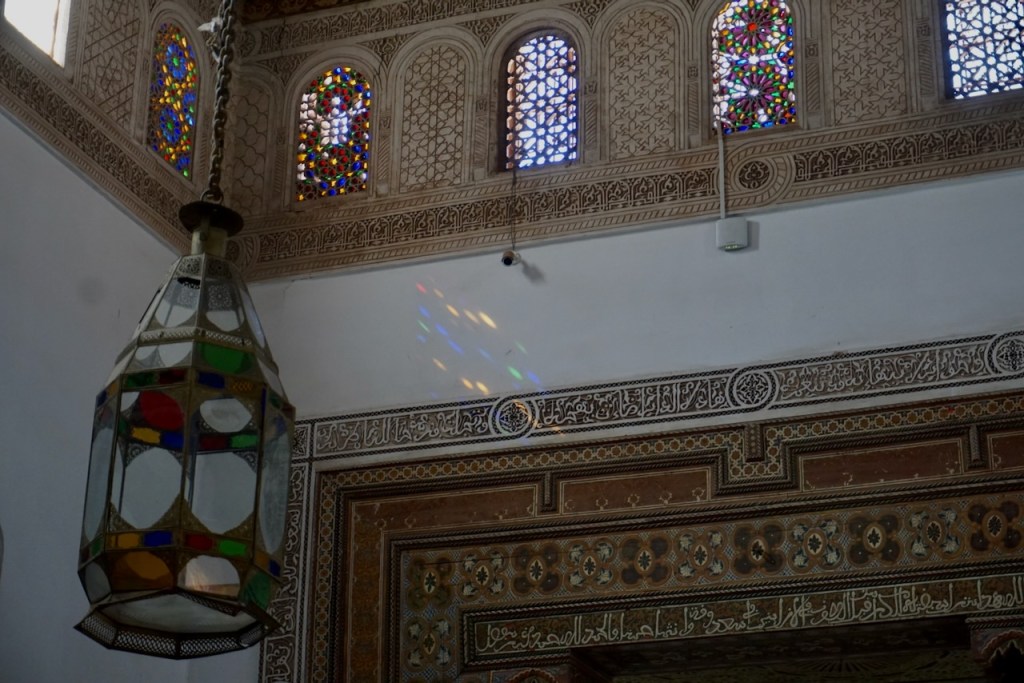
The former Jewish Quarter is located nearby, and it was heartwarming to have heard from the tour guide about the very positive and protective relationship between Muslims and Jews in Morocco. He explained that while Jews were not persecuted there, considering Judaism is an Abrahamic religion and the Abrahamic religions are traditionally recognized and protected under Islam, there were fears of invaders, and the Jewish Quarter was deliberately surrounded by other sections of the medina as a means of security.

It took us several alleyways to make our way to the Slat al-Azama (or Lazama) Synagogue, founded in 1492 following the expulsion of Jews from Spain. A small museum located on the other side of the riad courtyard contained images of Jewish communities, life, and culture across Morocco and other parts of Africa.

A visit to Marrakech, we were told, is not complete without a view of Jemaa El-Fna at night. We climbed the stairs to a rooftop café that exists for the purpose of said view, purchased the required beverage per person, and took in from above the hustle and bustle that we had experienced from below.
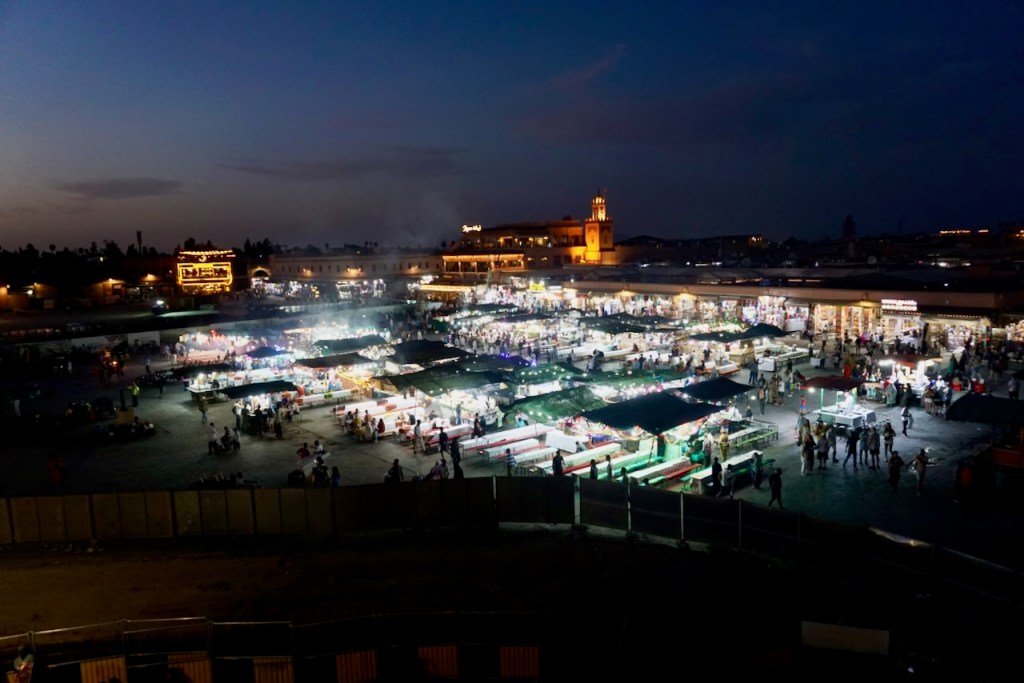
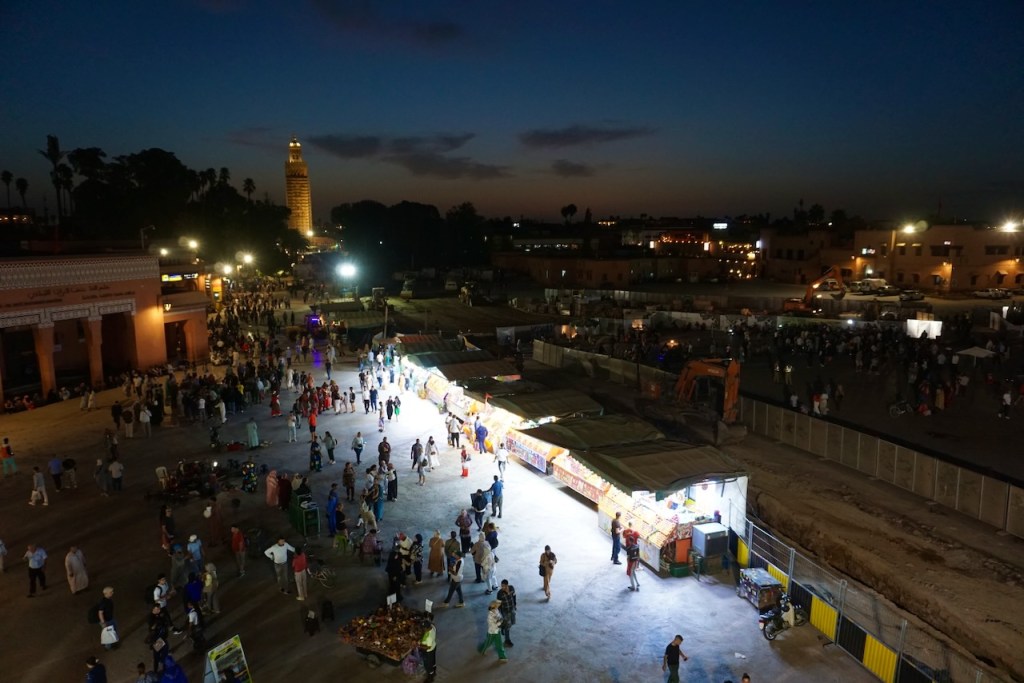
Marrakech is an overwhelming sensory experience and we retreated to the quiet of our riad each afternoon to gather and recentre ourselves. By the time our third and final morning came around, we had seen what we wanted to see and were ready for a change of pace. We basked in the calm of our riad before heading to the airport and I fell asleep immediately on the plane, exhausted from everything we’d taken in. The snake charmer music, which I was delighted to find out is real, had acted like a portal into a different world and, grateful for our time there, we could leave it behind. I never need to go back to Marrakech, but I’m so glad to have been there.

Travel Guide: Bratislava

Bratislava marked the end of my winter adventure through Switzerland, Austria, and Slovenia (with a brief stop in Italy). By the time I got there, I was used to the cold and the short daylight hours and I was also very glad to meet up with a friend the day after I arrived.

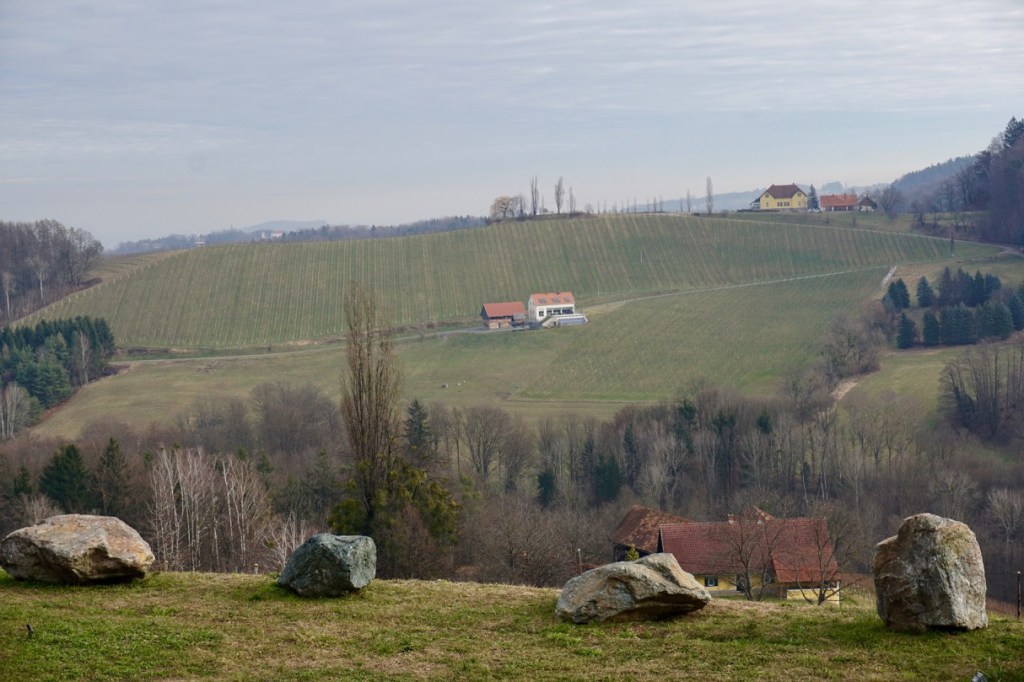
One of the important things I learned on this trip is that driving in Europe requires a vignette, basically a road pricing sticker that includes road tax and can vary based on roads driven and distance. The cost of a vignette is quite reasonable but the fine for not having one is rather steep. Turns out I’d been pretty lucky because I didn’t learn this until I’d been driving around for five days. After buying an online vignette for Slovakia, one of the few countries that allows this, I took back roads out of Maribor back into Austria. As I drove through a vineyard on a road with one and a half lanes, a border official waved and that was it. I do very much like this about Europe. Shortly afterwards, I stopped to look around.

The winding, twisting, narrow roads led into small towns with winery after winery, each clearly visible on the surrounding hills. Thinking of the lives that had been built here gave me pause.

Getting to Bratislava was simple but getting into Bratislava was a little more complicated and I marvelled at how people had navigated before technology. I was more than happy to park the car and leave it for the next two days. Getting around Bratislava on foot is very easy and there’s extensive public transportation.

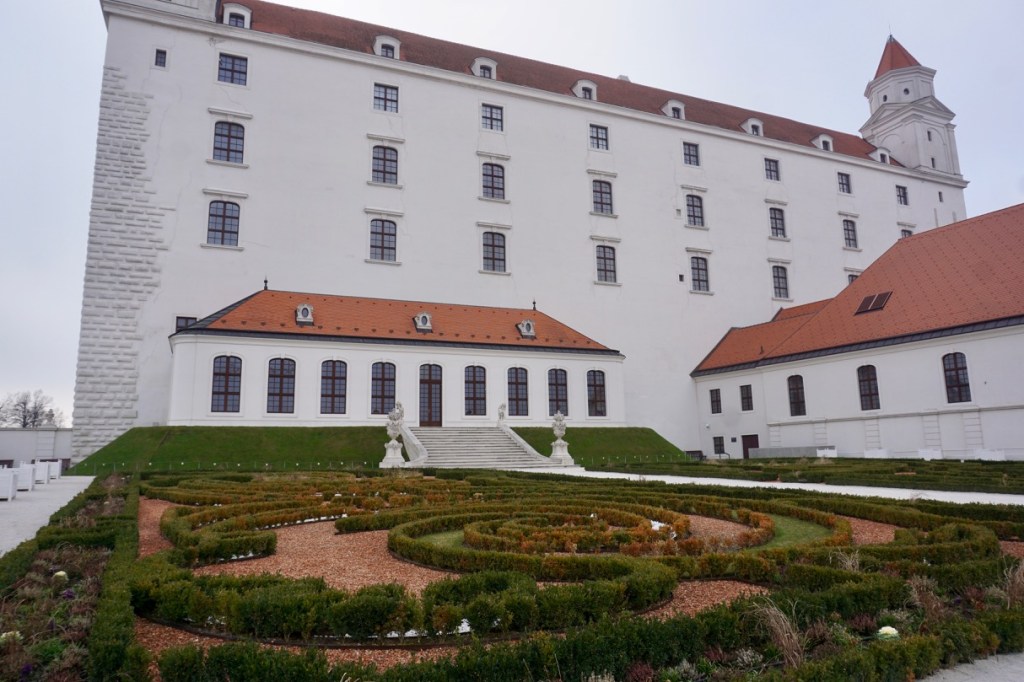
I was staying across the street from Bratislava Castle, the grounds of which are open at all times. I walked through it that afternoon and again the following morning.

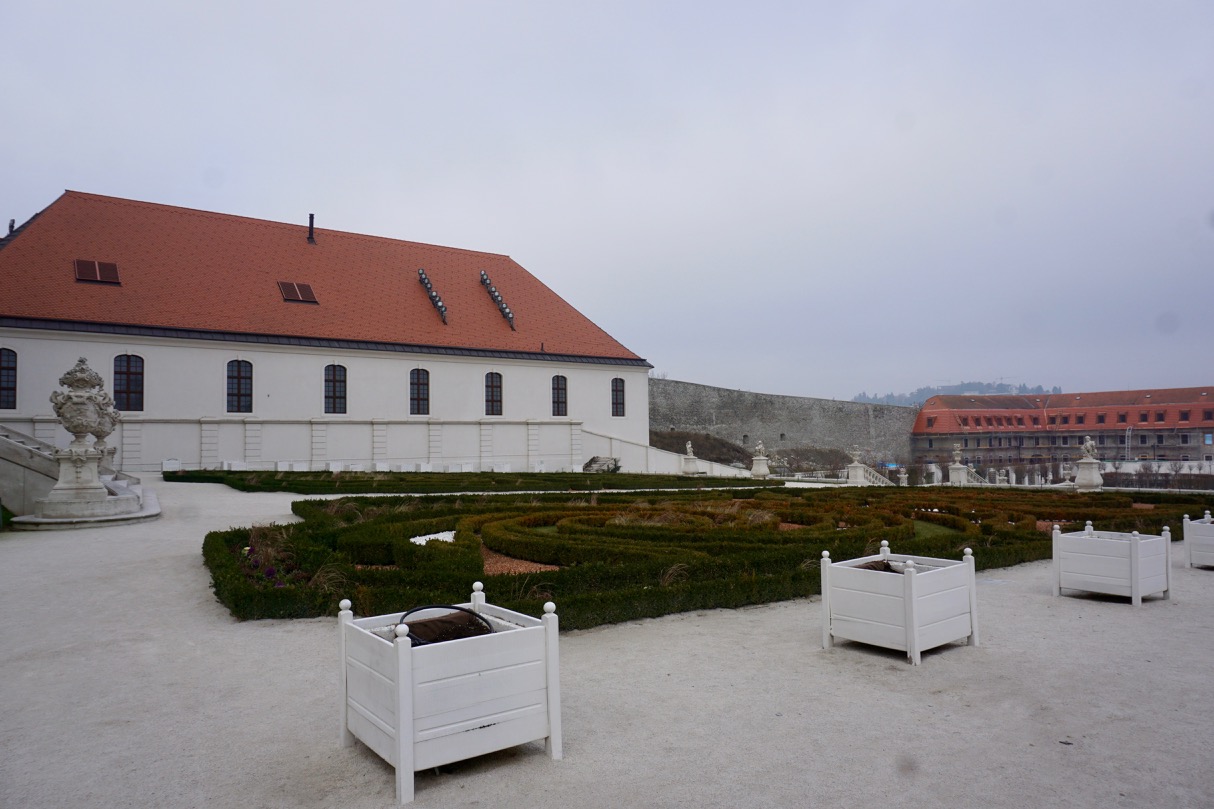
Bratislava Castle was first built in the ninth century but the current version was rebuilt beginning in the 1950s. Today, there are museums that are open to the public, as well. I was more interested in the garden . . .

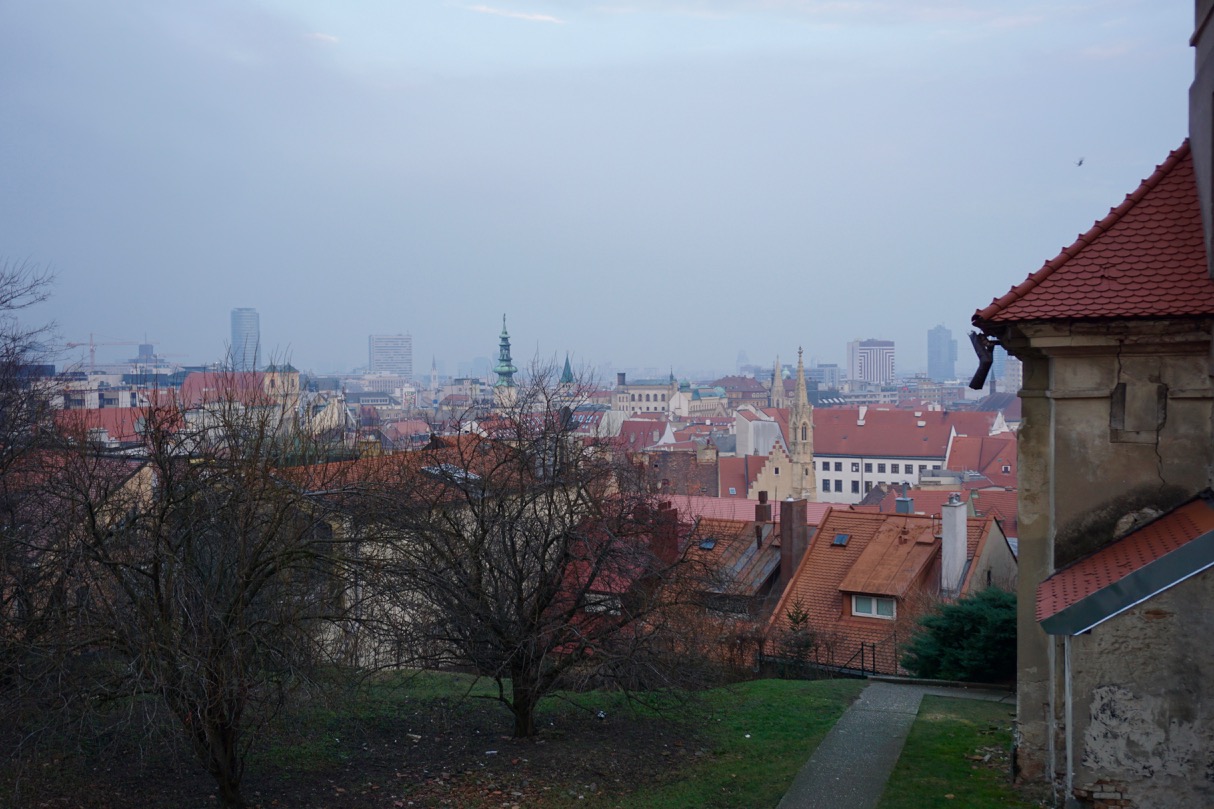
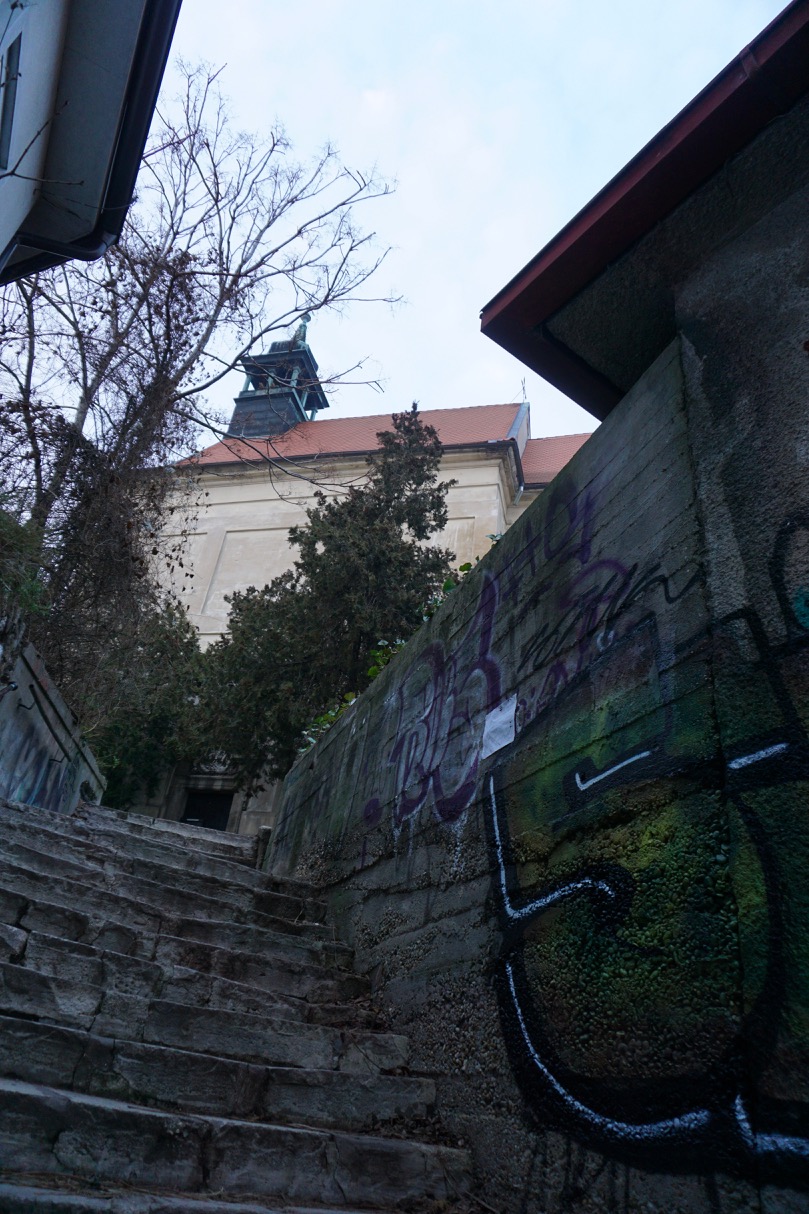
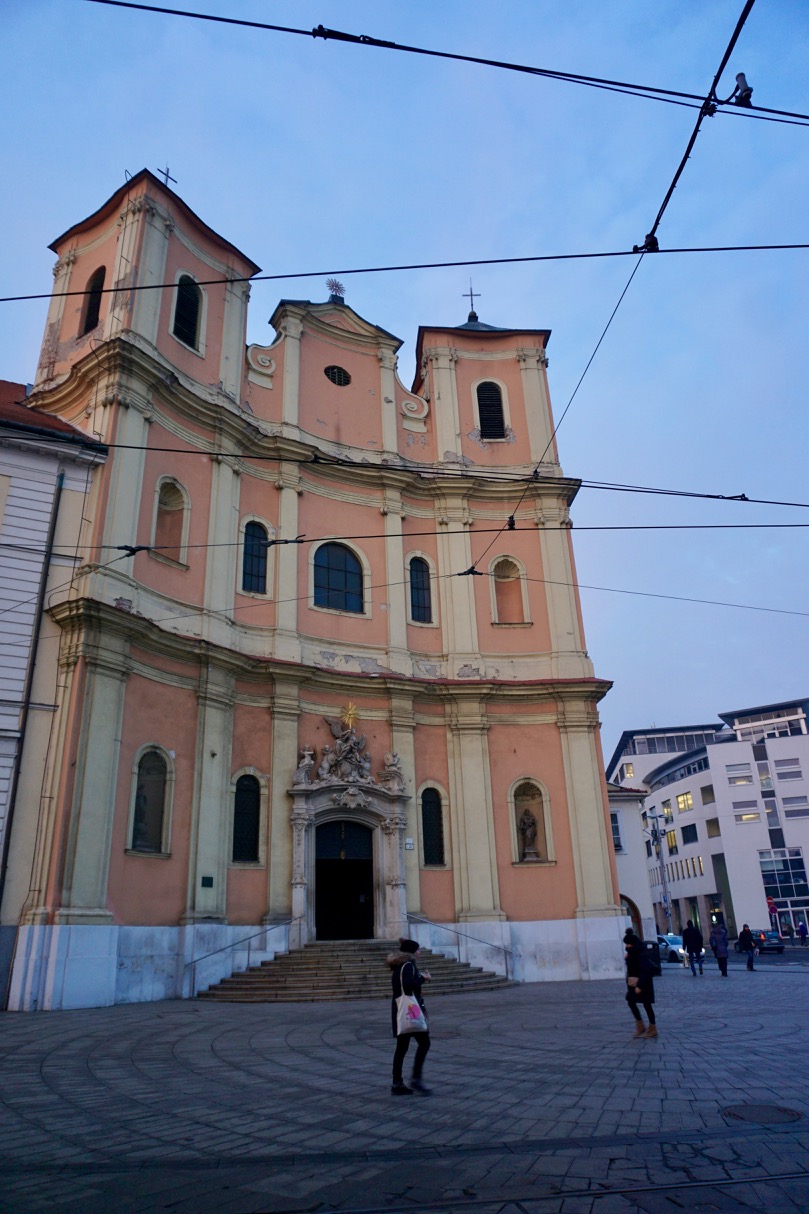
. . . and the churches and other buildings located just down the hill. There were real signs of life and ideas here, which I always enjoy seeing.

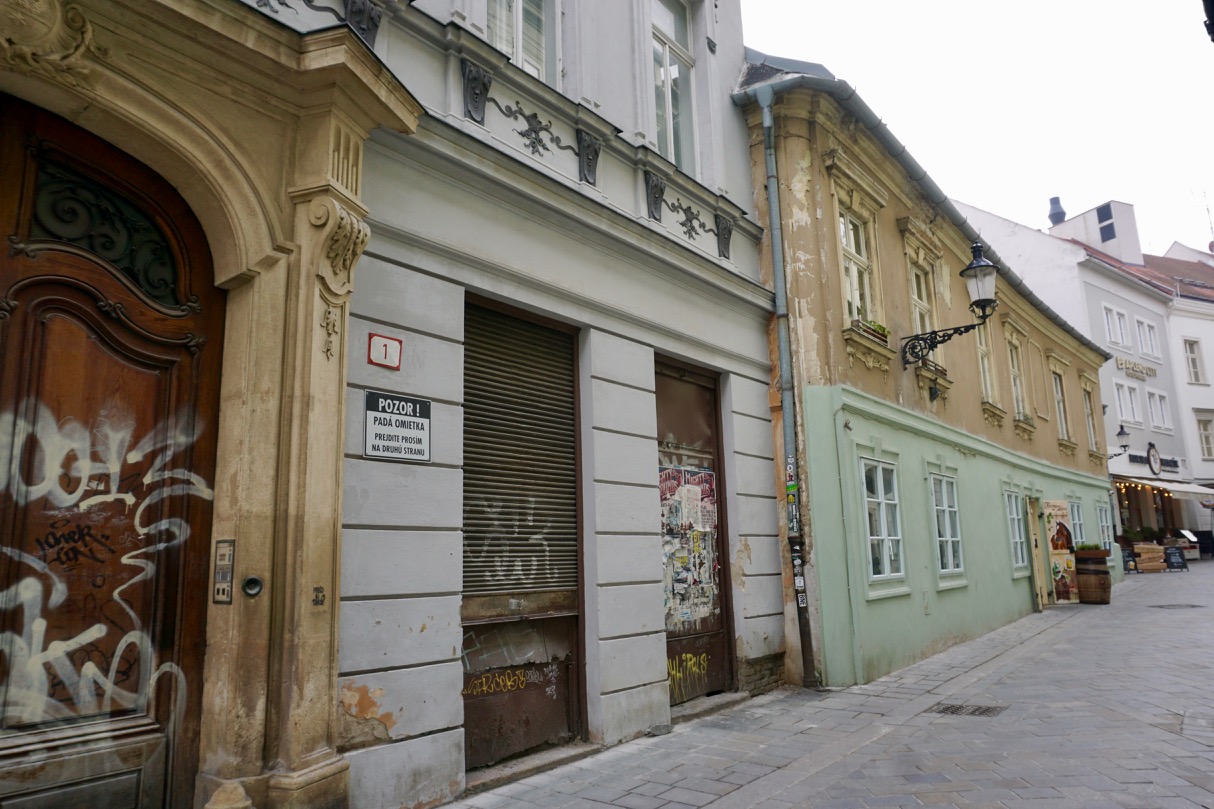
I took a quick walk through town to get my bearings, surprised at how very few people were around. I was also surprised at the number of hipster establishments that didn’t seem to match the atmosphere. The streets were really quiet and the sky, no longer the bright blue of Slovenia, gave the city a feel of being tucked into winter. Although I couldn’t tell you why, I got the impression that Bratislava could be a very stark place and it did not feel like anywhere I’d been before.

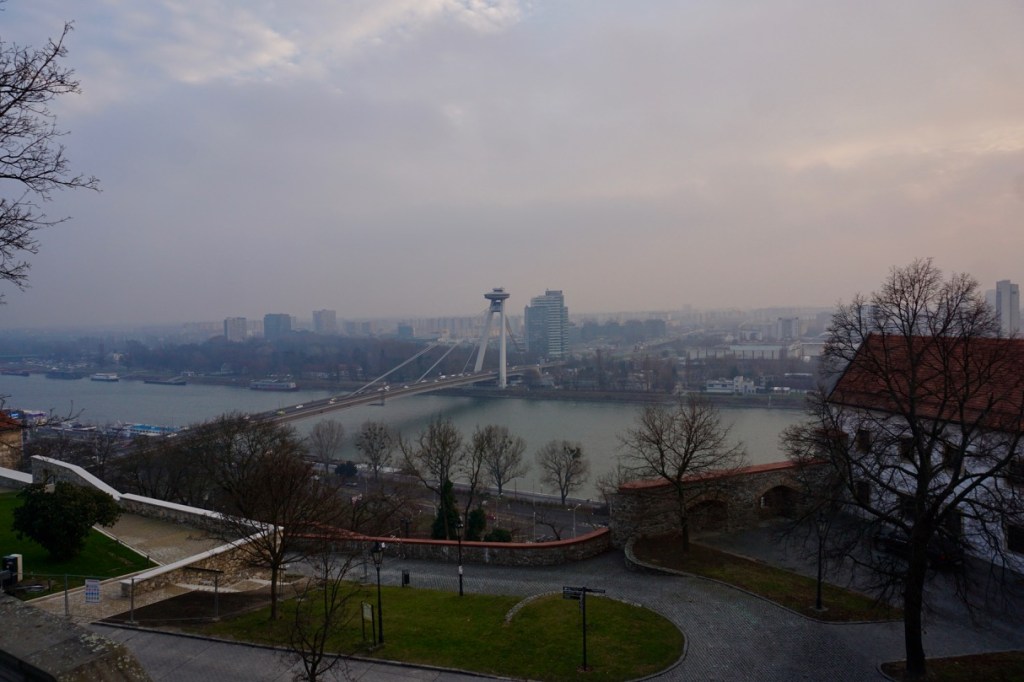
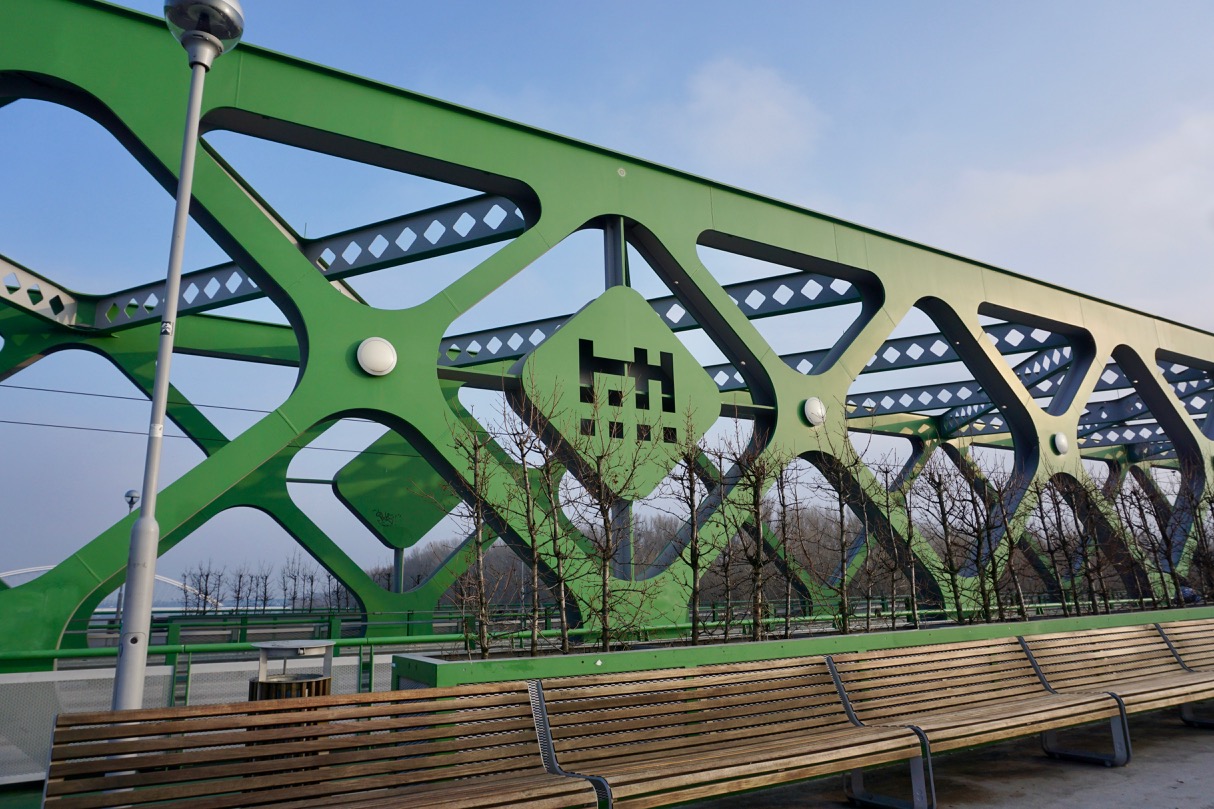
The UFO bridge certainly added to that impression.

But then I stepped inside a brewery (and then another one . . . and then another two the next day) and I found all the people. They were laughing and talking and joking and almost no one was looking at their phones. This was very, very different from what I see in Asia and I felt suddenly warmer for being around people who were interacting with each other and the space around them.

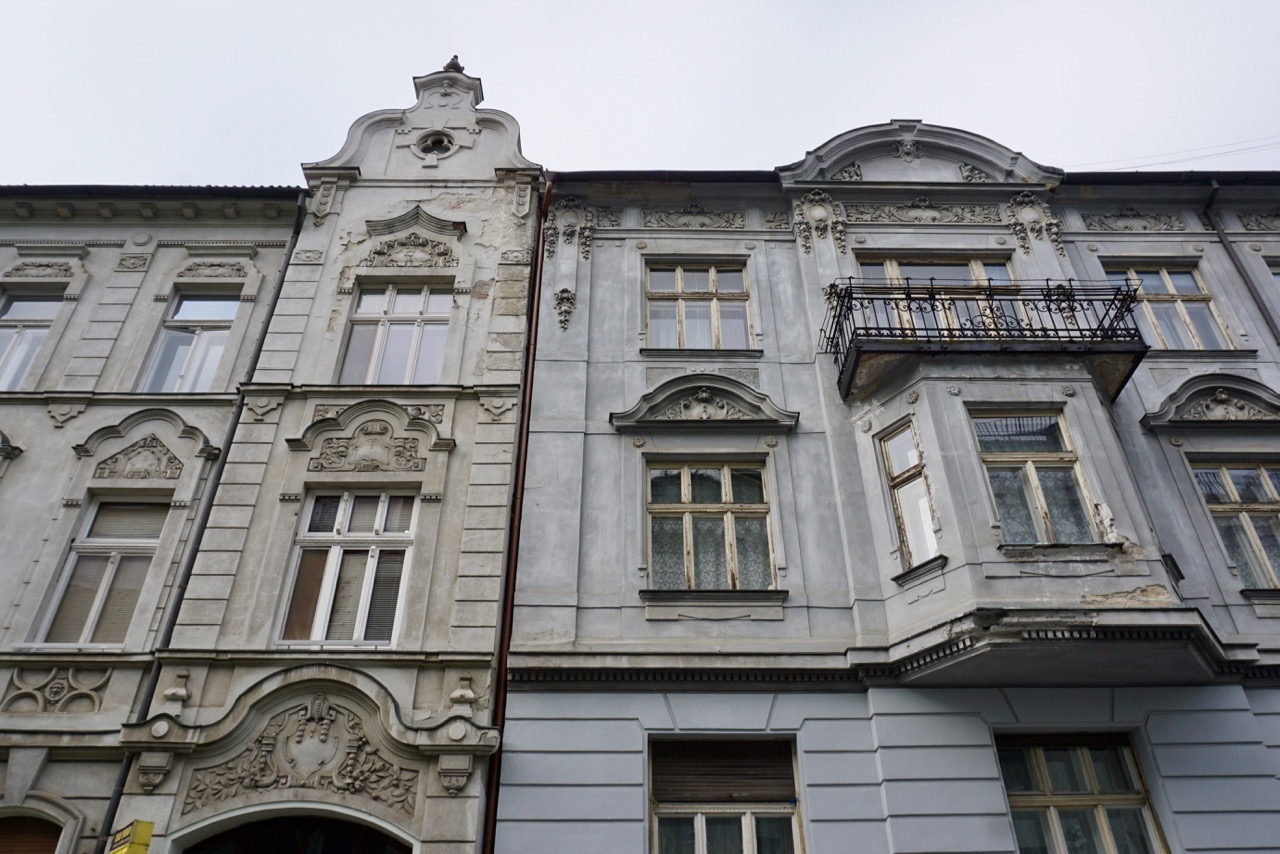
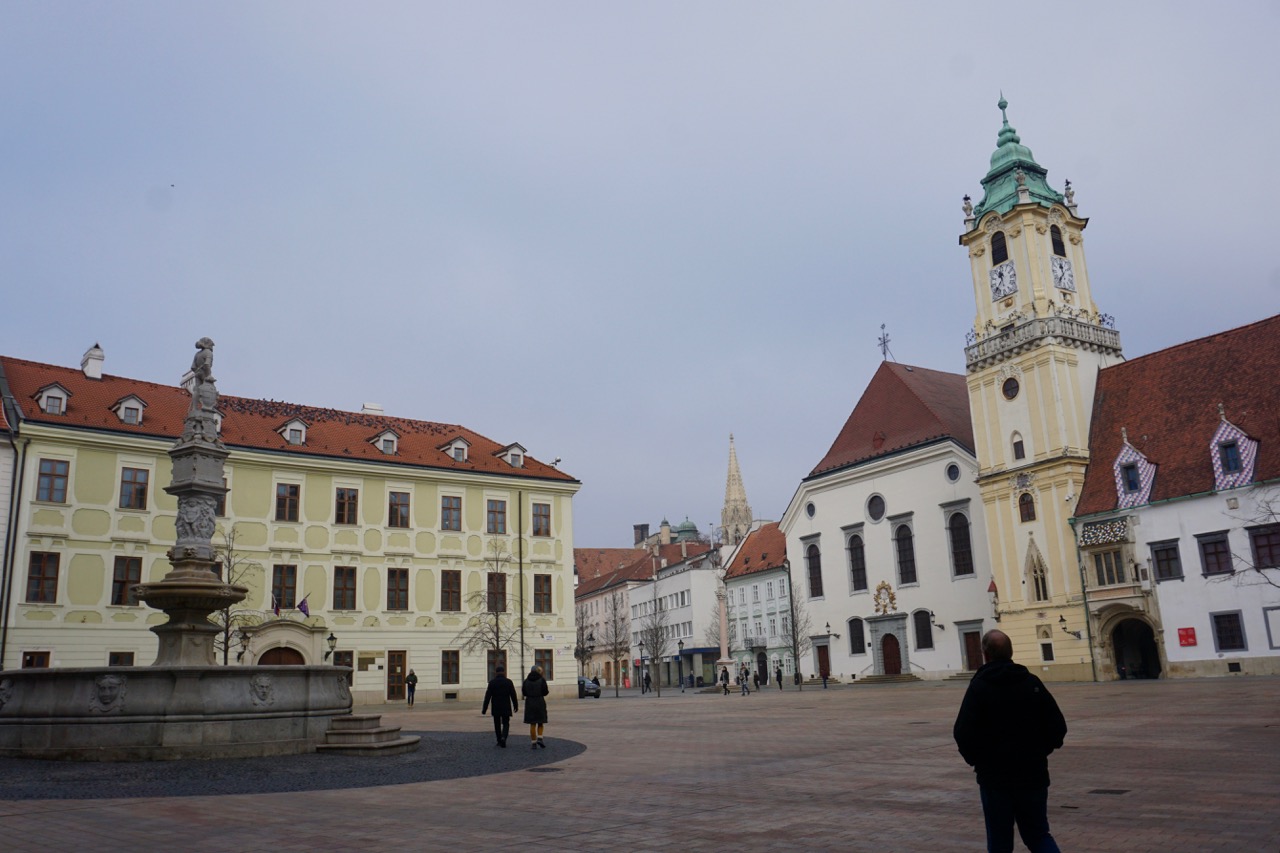
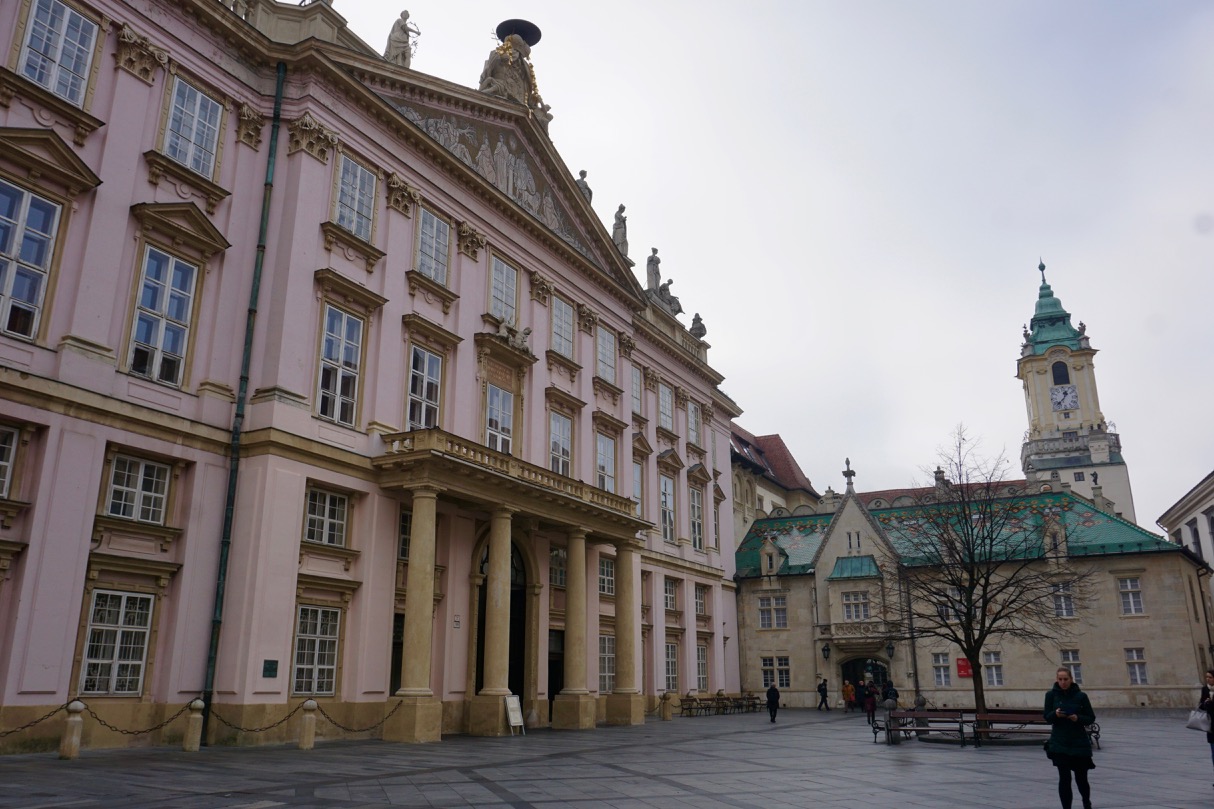
The following day was one of walking and wandering. I met up with a friend and it was great to have the company and to share this new experience. We walked through the old town and quarters of grand buildings . . .

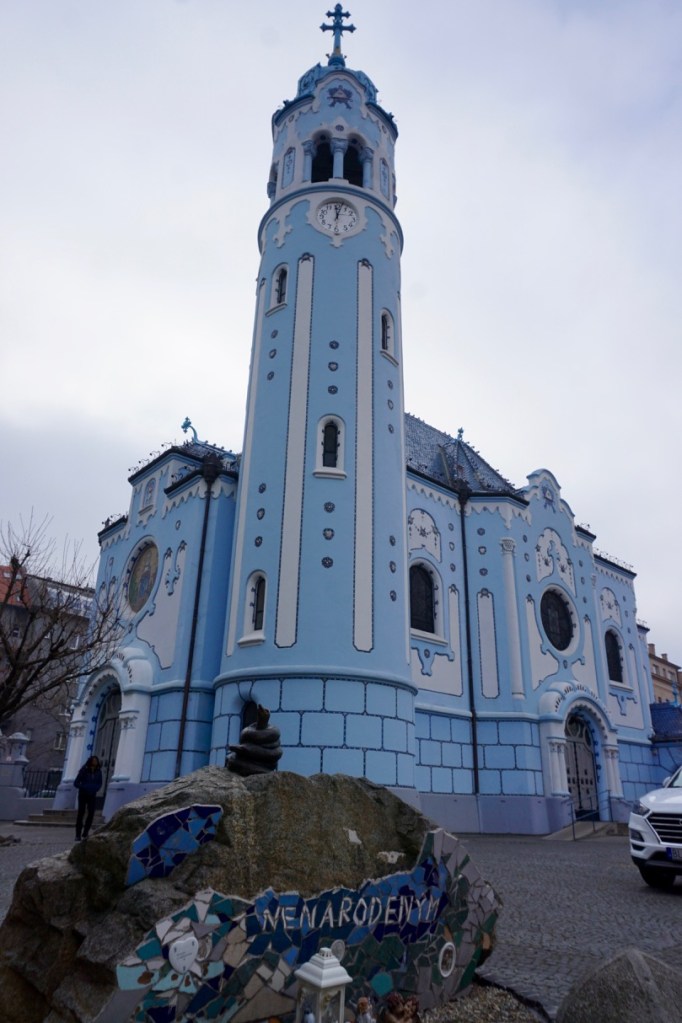
. . . through the city to visit the Blue Church . . .

. . . and took a short walk from the Blue Church to the site of Bratislava’s only remaining synagogue.

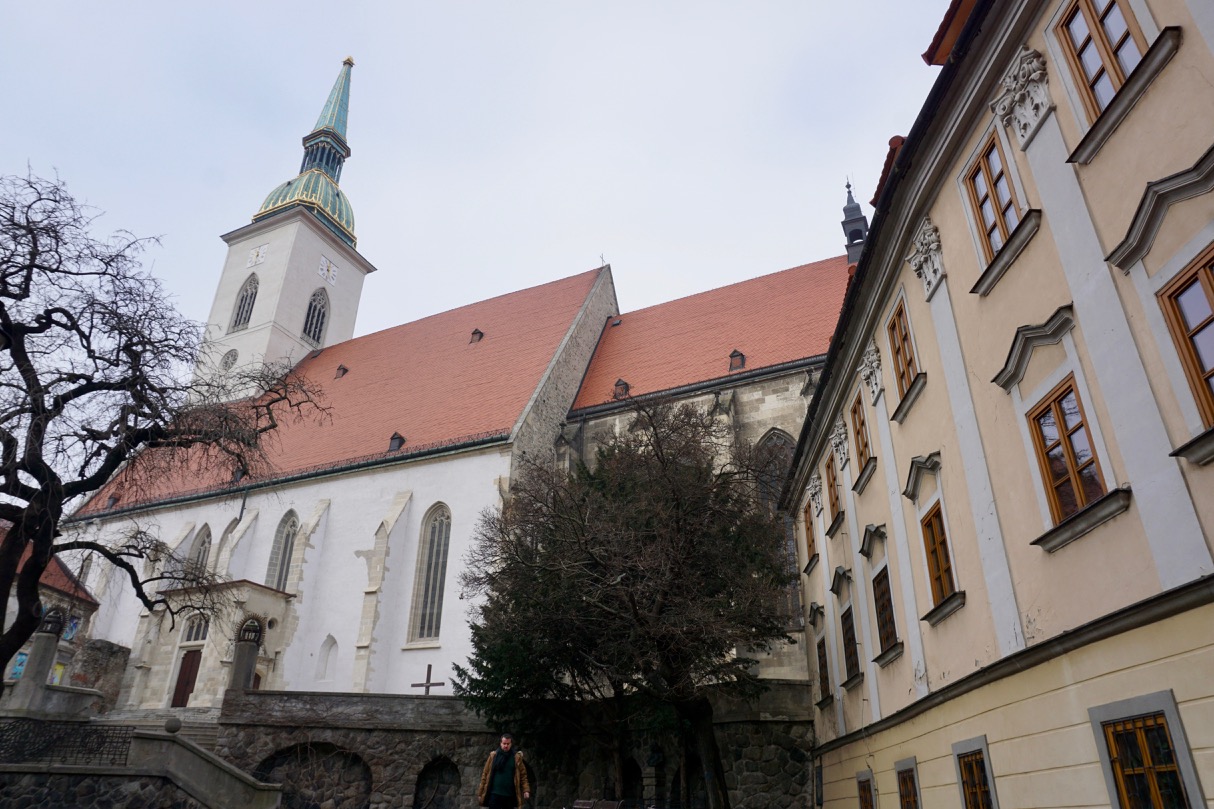
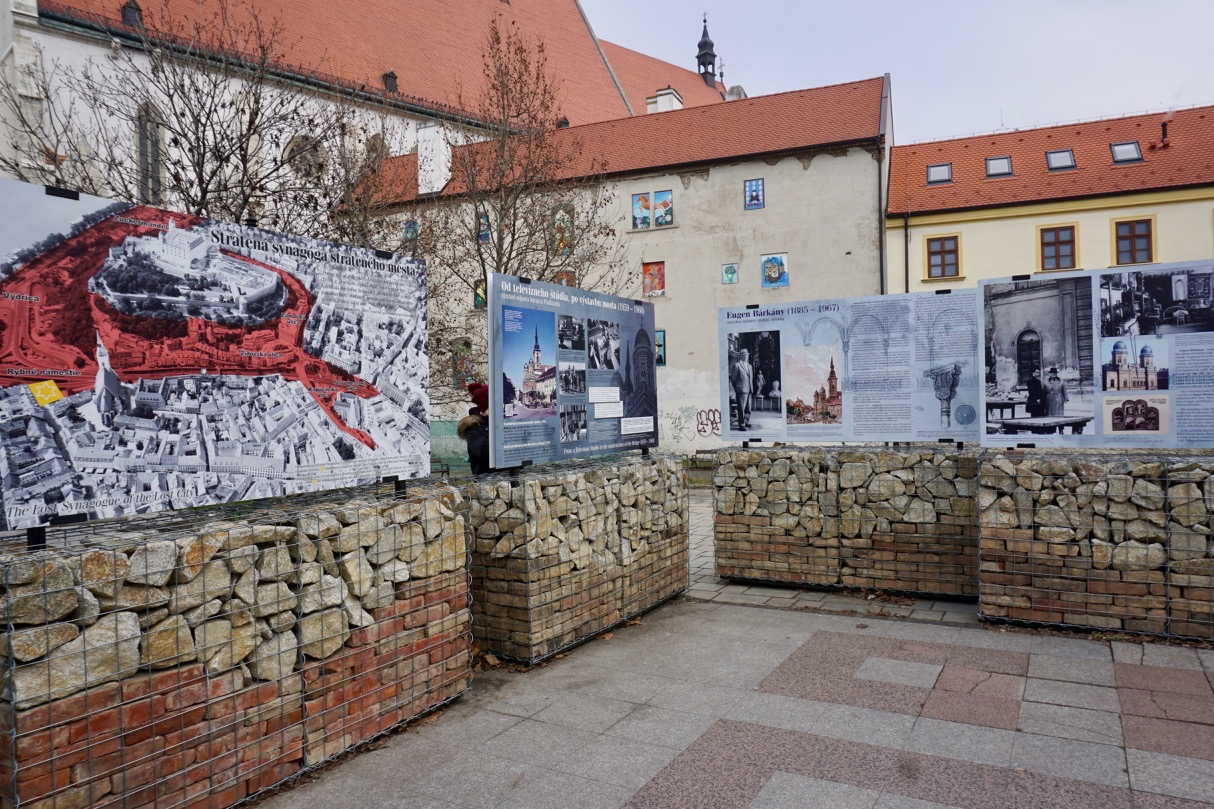
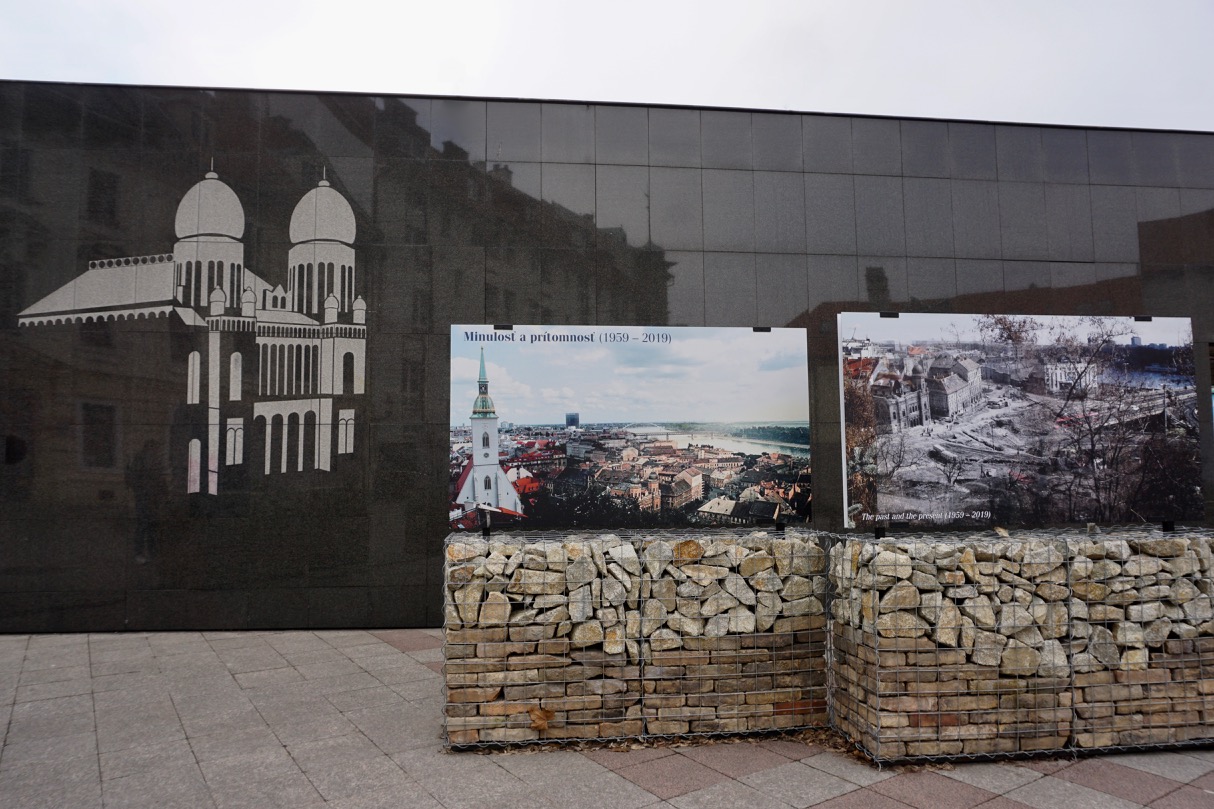
Earlier that day, right next to St. Martin’s Cathedral in the old town, we’d seen an exhibit on the street about the synagogue of Bratislava that, despite protests by the community, had been torn down in the 1960s to build the UFO bridge. Bratislava has a long and extensive Jewish history and there were historical markers about it around the city, including a museum dedicated to Jewish culture.

We also walked across the Danube River . . .

. . . and found ourselves in a park that must have been a relic of Bratislava’s communist history. Imagine the stories these benches and trees could tell! Or the last people to sit here. Who are they? Where are they?

Just across the street from the Presidential Palace, we saw another relic of communism – a fountain that had once clearly been a showpiece but was also in disrepair.

Another notable element of walking around Bratislava was the graffiti tagging everywhere. I felt a real lack of reverence and desire to be heard and I liked that attitude very much. Things that have been needn’t always be. And Bratislava was a little bit of everything.

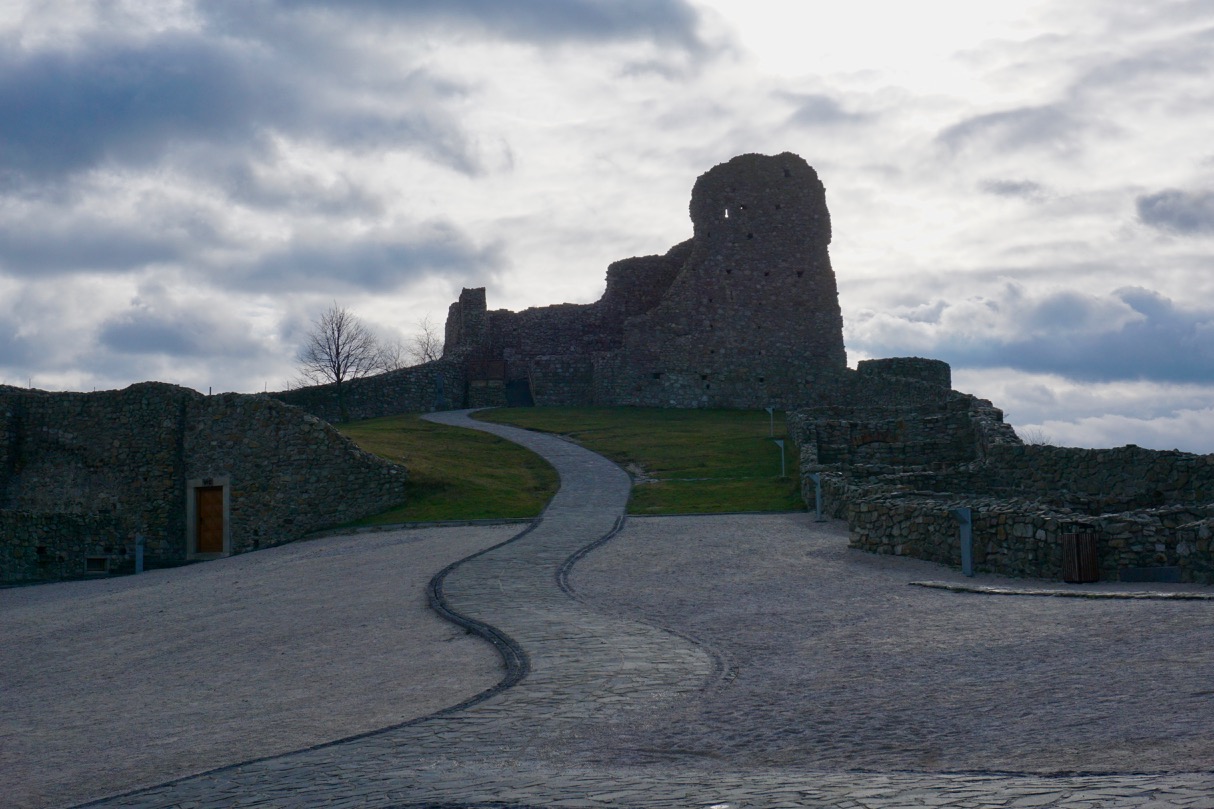
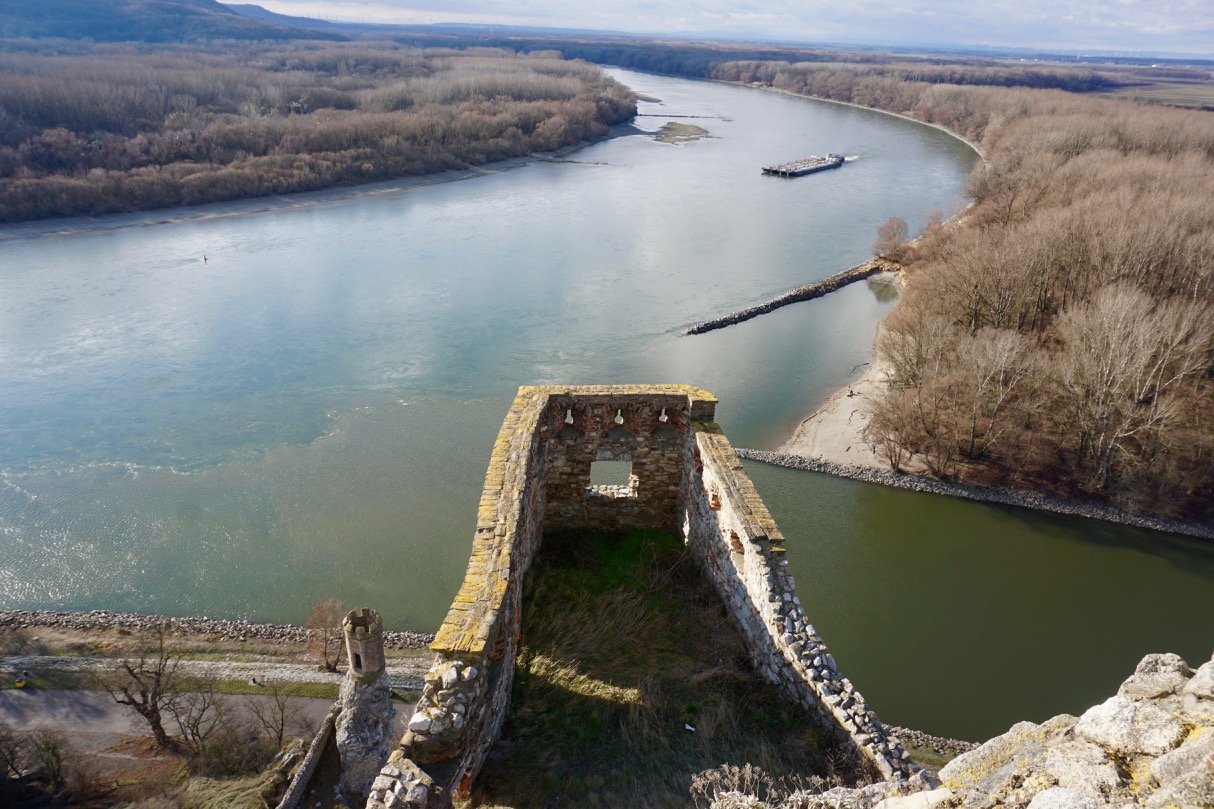
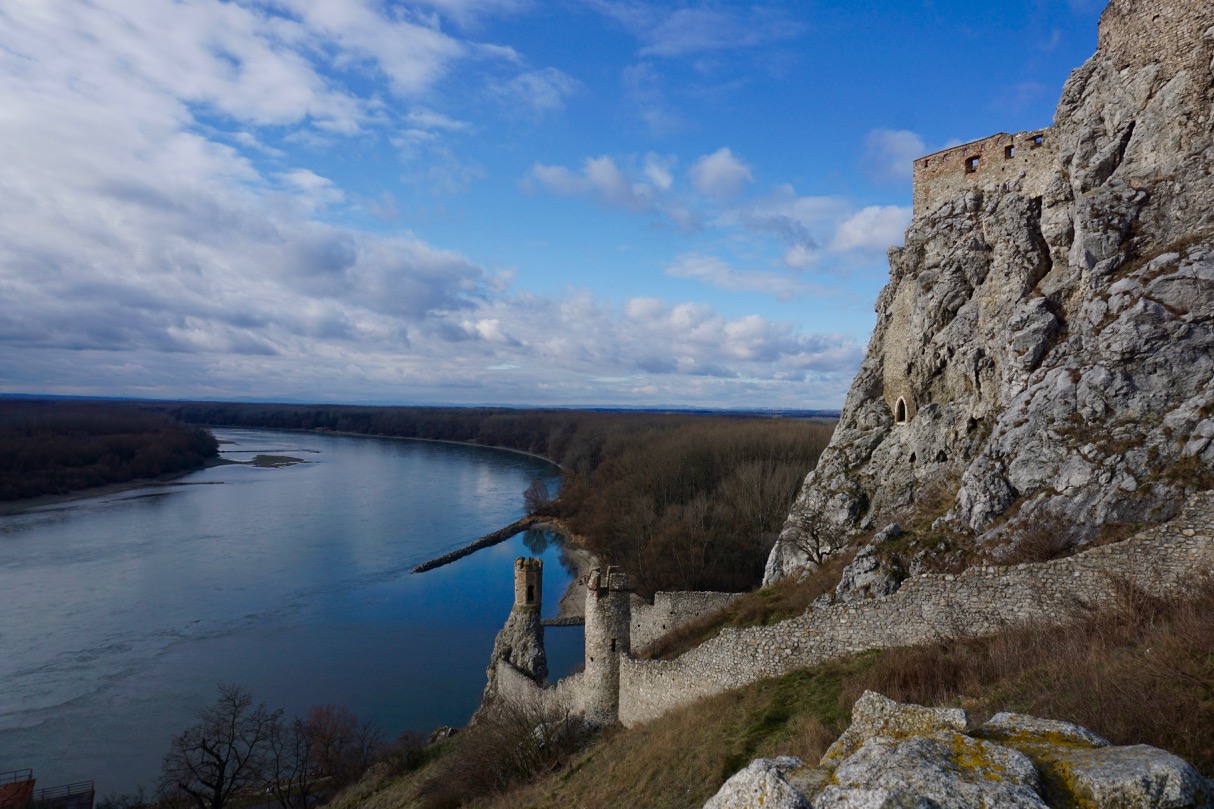
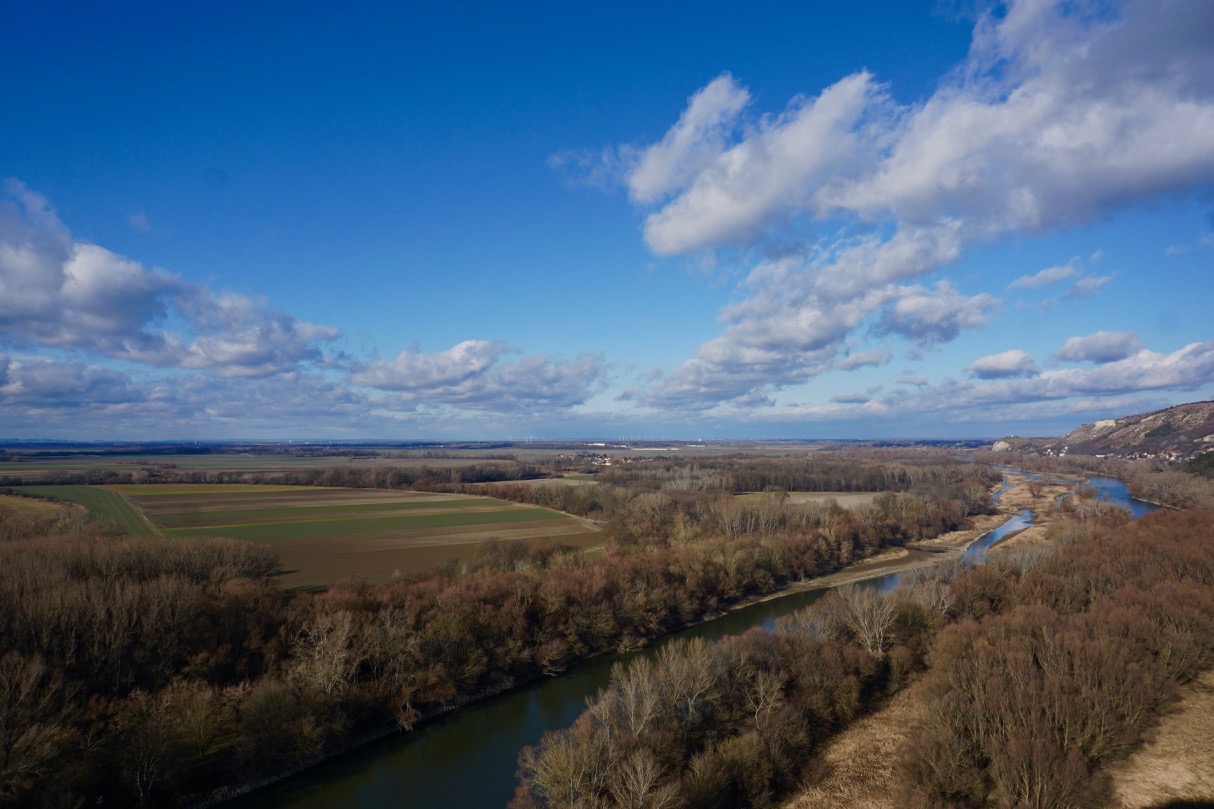
The next morning, it was time to go but I really wasn’t ready to leave just yet. Instead, the last day having a car made it possible to visit Devín Castle, a stone castle located 10km from Bratislava. It was built in the thirteenth century and was then destroyed by Napoleon’s army in the early 1800s. The sun had come out again but the wind was really strong. It was easy to see why this castle had been built up on a windy hill at the confluence of the Danube and Morava rivers.

Thanks to a photo exhibition, I learned that the Iron Curtain had run directly in front of the castle to separate Bratislava from Austria across the river. I knew that the Velvet Revolution, the history of which Bratislava is very proud, had toppled communism here but I didn’t know that the Iron Curtain was a physical structure. In school, we’d talked about it as a concept, not as something tangible. Learning about that was really powerful and reminded me again of how much I don’t know.

After the cold wind, the obvious choice was to stop for some hot wine once more before the last part of the journey, which would again follow Austrian wine roads because they’re so much prettier than the highway.

And then all too soon, the car was dropped off and I had far too much time to kill at the airport. As is my habit, I drank a hot chocolate and reflected on the roads travelled. I had seen parts of the world that I’d never really imagined seeing and I honestly felt the growth in myself as a person. When I moved to Malaysia in 2014, I never would have known how to go about a trip like this. And here I was with all clothing in my pack worn twice like it was nothing. It has been a long road to get to this point and that I cannot forget.

Sometimes the world feels right to me and over the last few weeks it had. There is solace in that feeling. There is solace in knowing there are places out there where the world feels okay. Thank you, world.

Travel Guide: Lake Bled, Lake Bohinj, Trieste, Maribor

After four days in three cities in Austria, a beautiful drive through mountains, rolling hills, wind, sunshine, and blue skies led the way to Slovenia. After two nights in Slovenia, I headed into Italy just because “Let’s drive to Italy today” seemed like a fun thing to do. One more night in Slovenia completed this part of the road trip.

Lake Bled

I cannot say enough good things about Slovenia. And I almost don’t want to say anything at all because part of the magic of Slovenia is that it was quiet, though this might also be because I was there in the winter. But anyway, there are a million good things to say about Slovenia. Go see for yourself!

For my first night in Slovenia I stayed in Lesce, a small town in the hills that was close to everywhere I wanted to be but away from the much more popular area of Bled. The quiet, calm solitude was startling (even after a night at a farmhouse in Leoben) and contributed to quiet and calm in my mind, too.

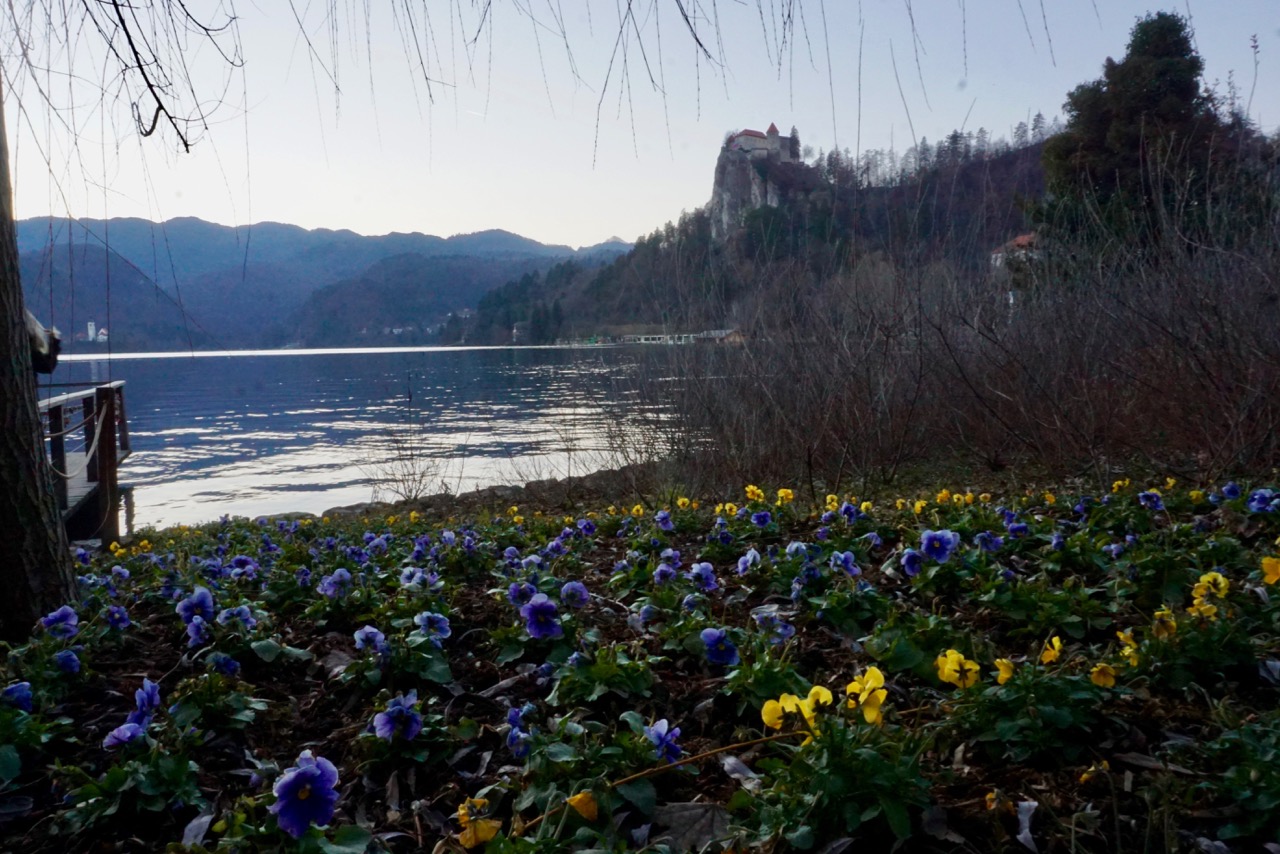
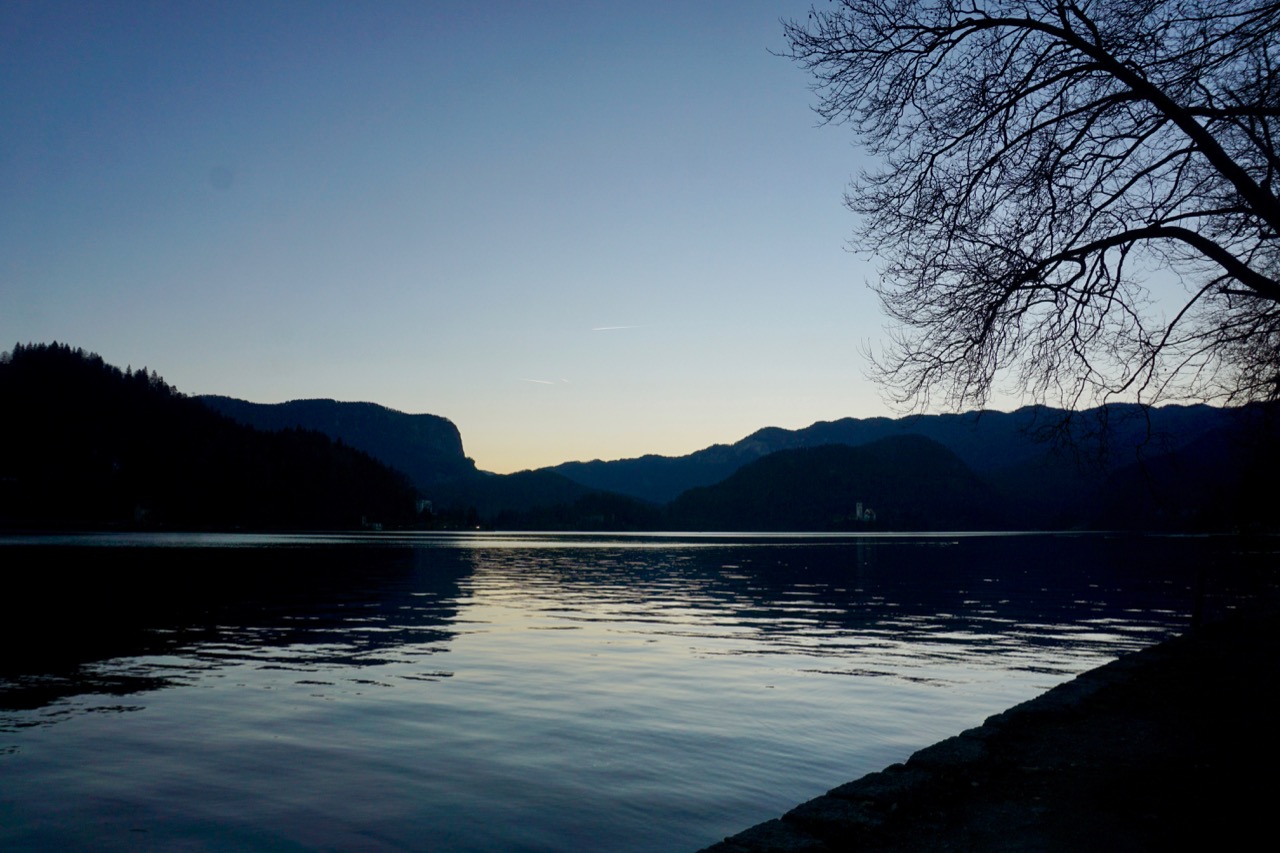
However, I’d heard of Lake Bled in the past and knew I wanted to see it. There’s a castle and a church at the lake and while I didn’t venture up, I know you can actually visit. Instead, I opted for the 6km walk around the lake, which began with afternoon sun . . .

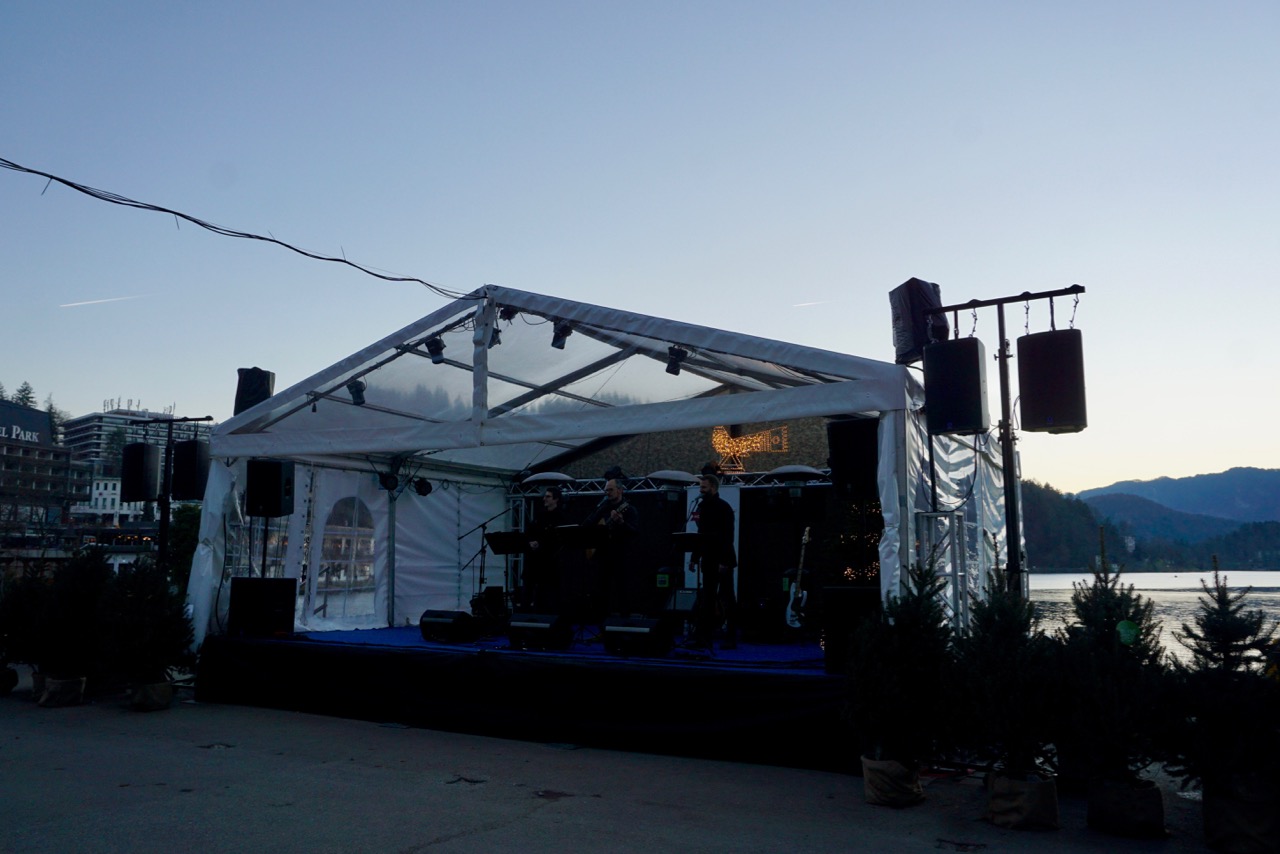
. . . went through a Christmas market celebrating its final night . . .

. . . and ended in the evening’s gathering darkness, though not without a cup of hot wine along the way.

Walking back from dinner that night along a silent street, I noticed the stars. The sky was dark and the stars were bright and the air was cold and I stood outside and just looked. We don’t see often stars in Singapore and when we do, they don’t look like Slovenian stars.

The world of that night was very different to the world of the morning waking up on a farm in Austria.

Lake Bohinj

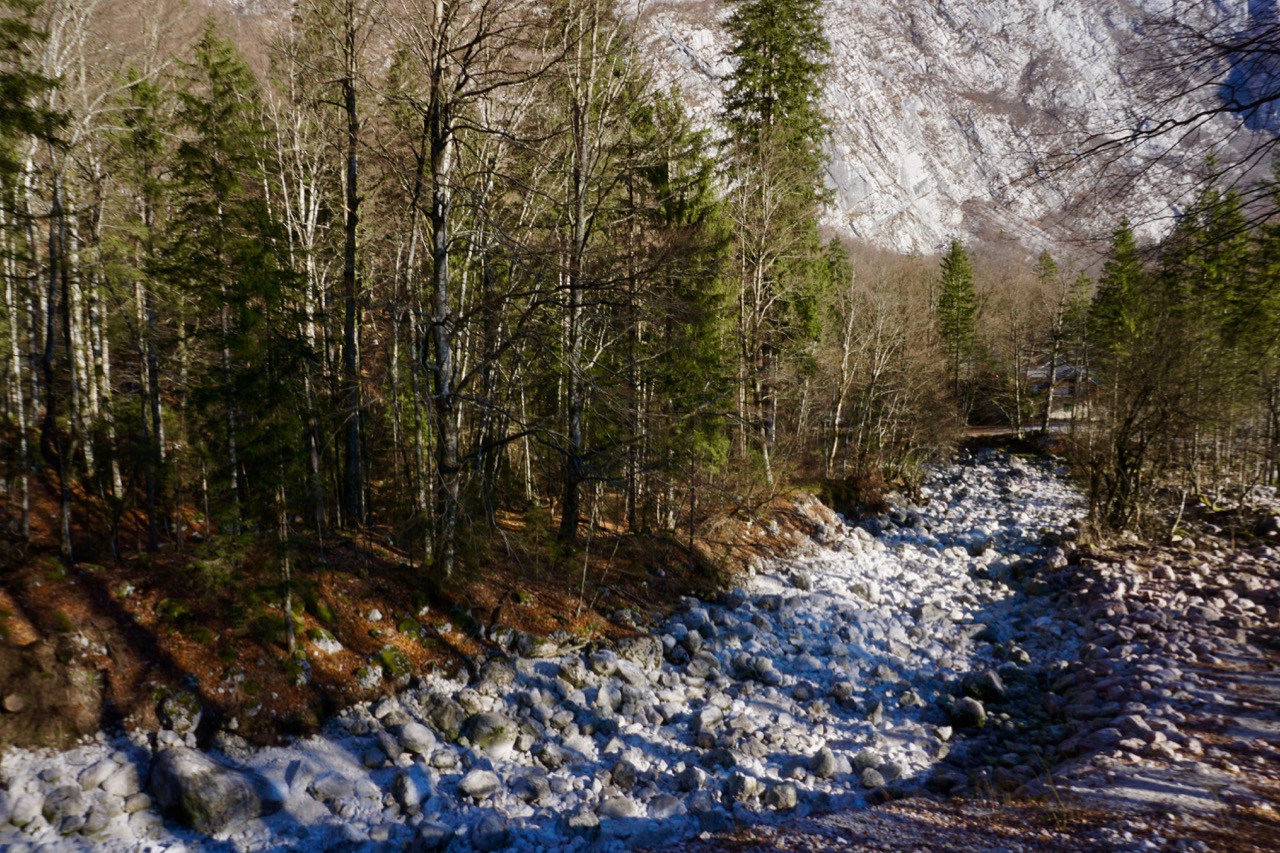
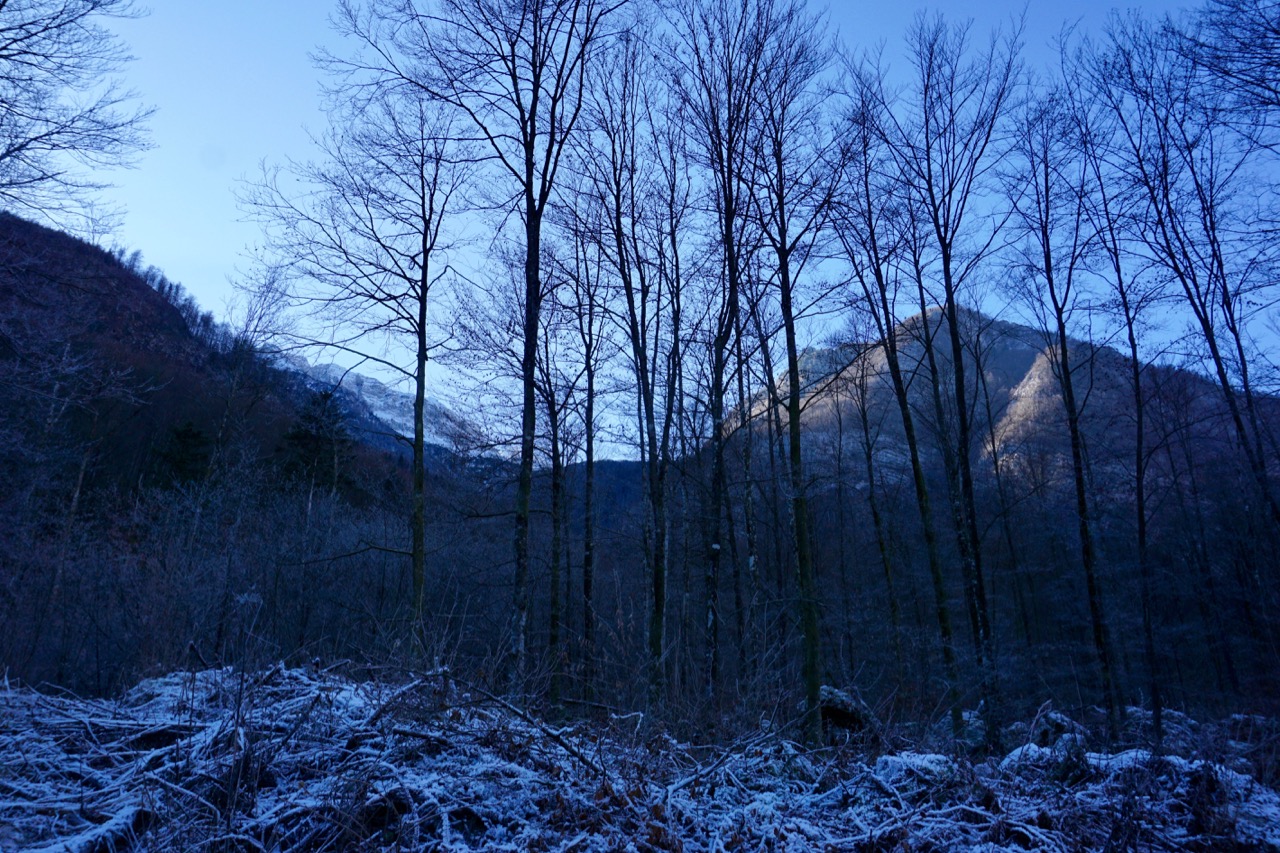
The next morning, giggling at how I planned to spend my thirtieth birthday playing outside, I drove past Lake Bled to Lake Bohinj. There was snow on the ground as the road descended into another glacial valley and I actually got out of the car to look at the world. It was the magical winter fairytale of childhood that I haven’t seen in a very long time.

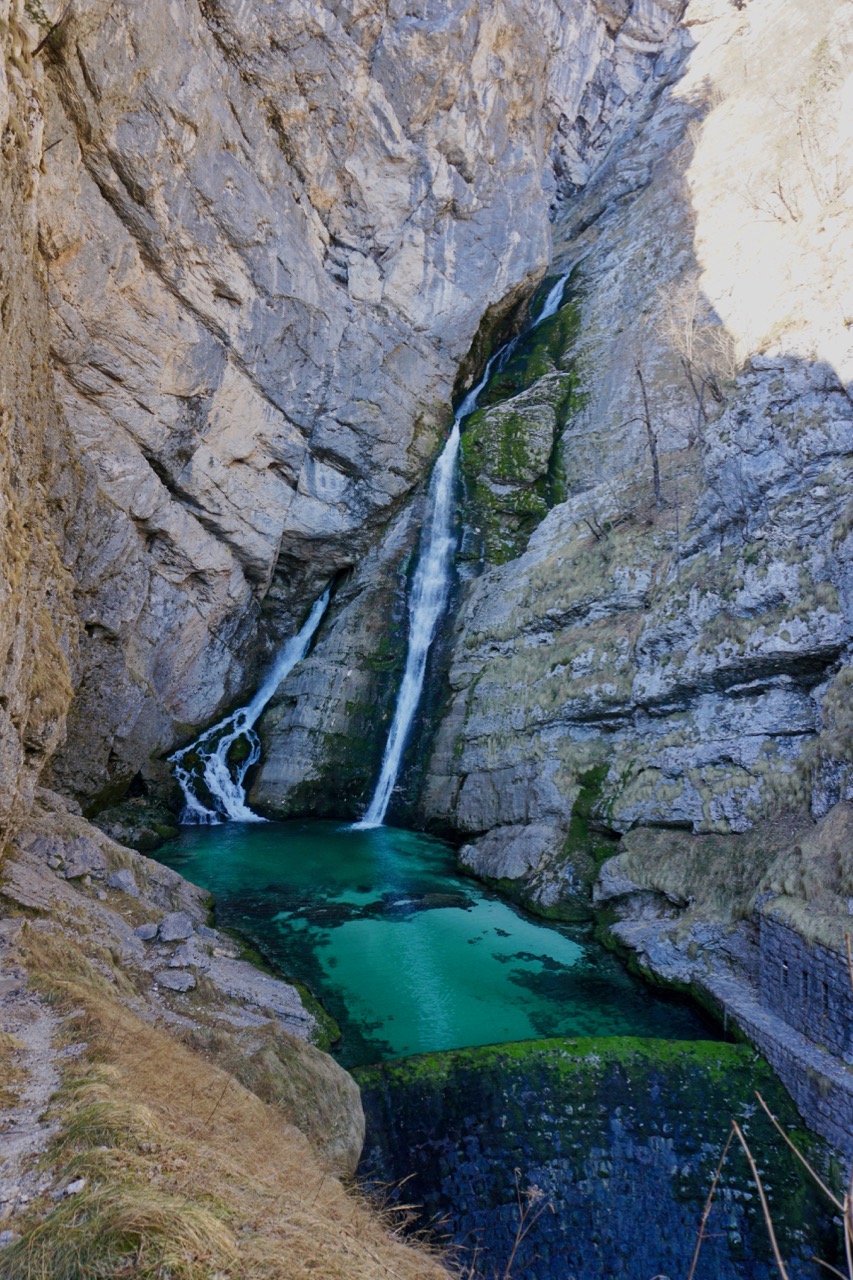
Before finding a parking spot at Lake Bohinj that turned out to be illegal, I stopped to visit Slap Savica, the Savica Waterfall. The walk up itself was nice and easy and it was beautiful to look out at the Julian Alps while listening to the rushing water and feeling the cold.

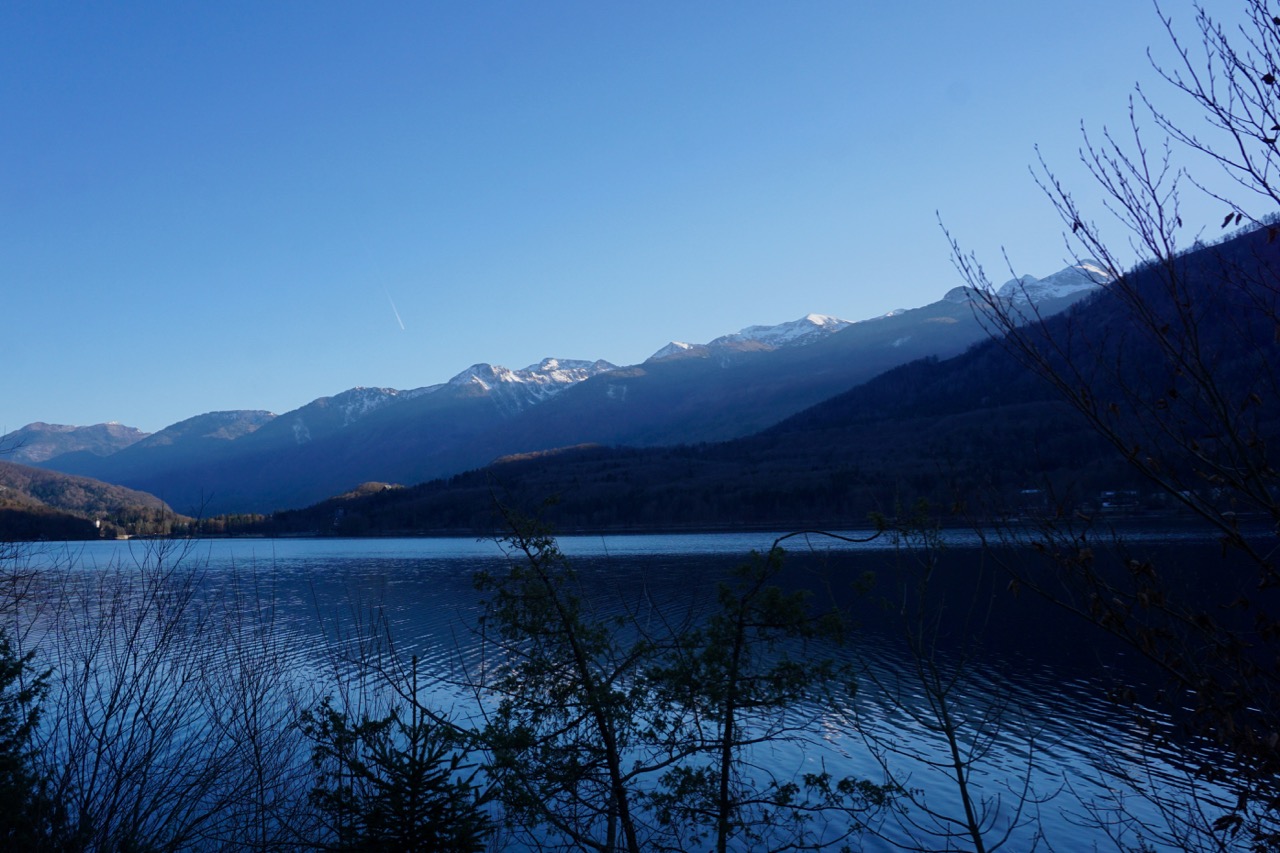
A picnic lunch on a bench in the sun was in order before a walk around Lake Bohinj. Later that day, I’d pay my parking ticket (oops) at the post office. The light on the lake was stunning, as were the mountains surrounding it.

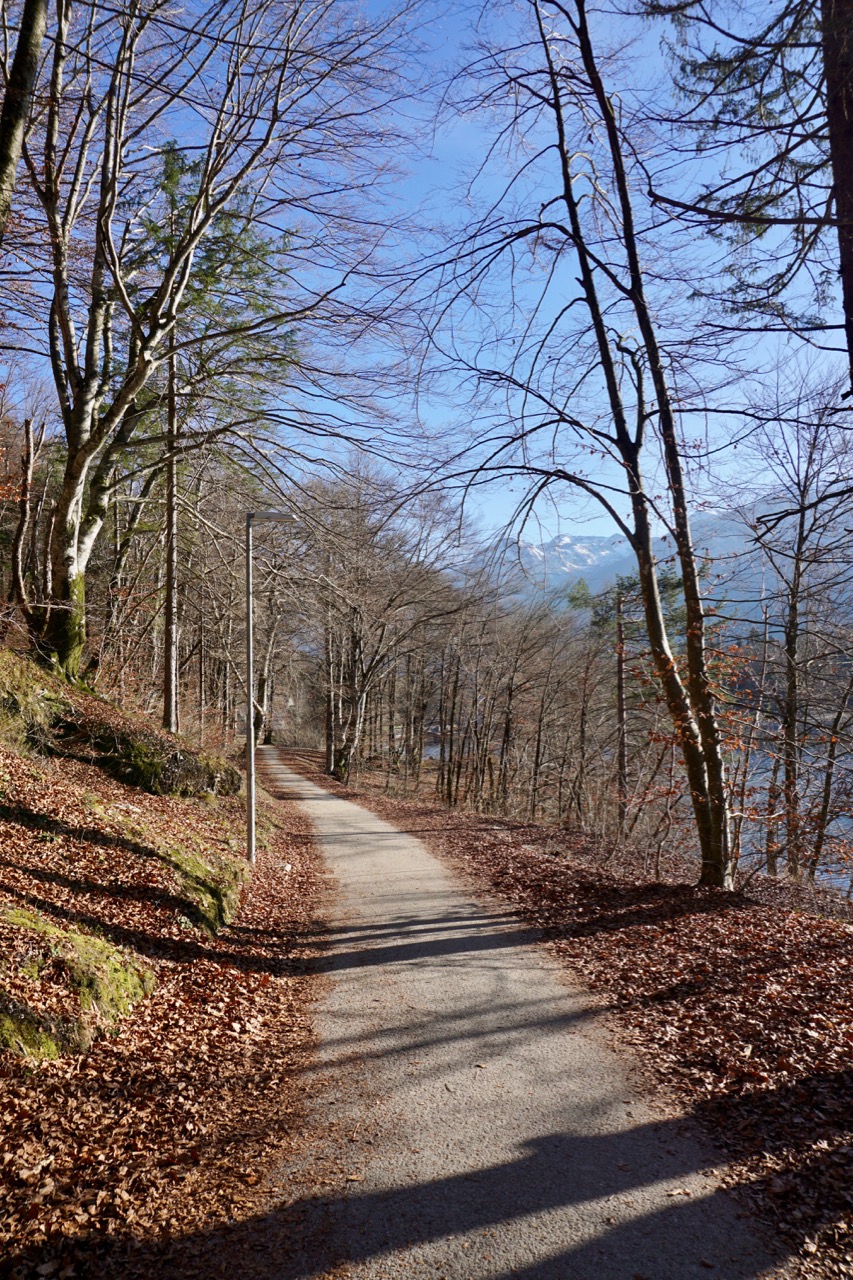
I walked through a sub-alpine meadow and looked down at the lake and up to the mountains and felt the cold and the wind and the air.

There were plants and trees and runoff from the snow creating little rivers and puddles.

Once the sun disappeared behind the ridge and then grew smaller and smaller, it was time to go. It gets bitterly cold at night in January in Slovenia.

The drive to Bohinjska Cesnjica where I spent the night went through narrow twisting roads and tiny towns containing wood and stone guesthouses and farms. Late that night with the weather well below freezing, I walked outside to look at stars. How had I gotten here? How did any of us get here?

Trieste

The next day taught me that I never again want to have a car in an Italian city. I decided to go to Trieste rather than Croatia or Hungary, both of which are relatively nearby, based on the fact that Italy is in the eurozone. I drove through the sunshine and the Alps, which was lovely, and then into a busy city with small cars and limited parking, which was far less lovely. My tip for parking a car in Trieste: Spend a few euro and park in the spacious and huge parking lot at the port. It was easy to find once I knew it existed and the parking machines take coins, notes, and cards.

At least at that time of year, it appeared that all shops and many other establishments closed in the afternoon from 1 or 1:30 until 4 or 4:30, and I arrived close to 1. I had every intention of going back in the evening when shops would be open until 7 or 7:30, but the guesthouse where I spent the night was up a ridiculously narrow, winding road on a hill about 8km outside of town. There was no way I was going down (or up) that road in the dark.

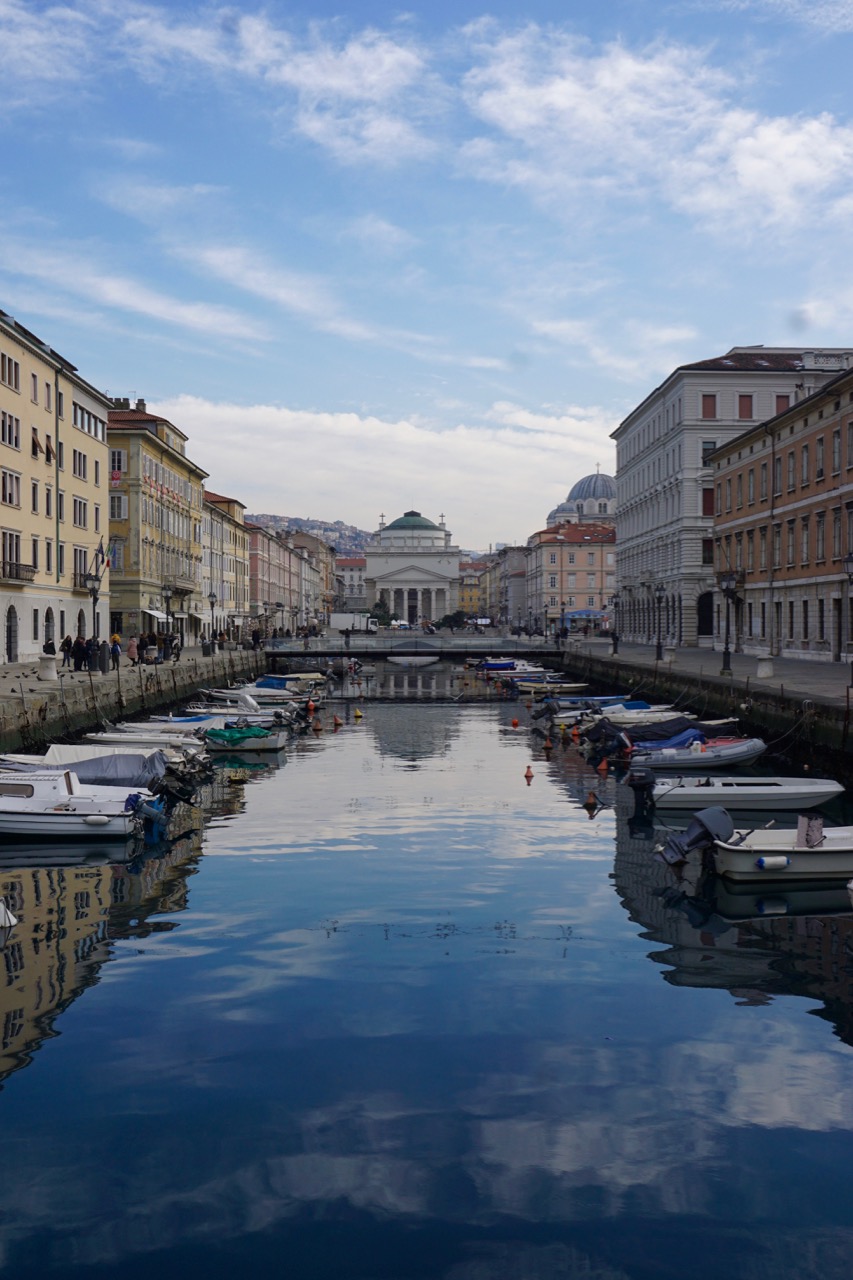
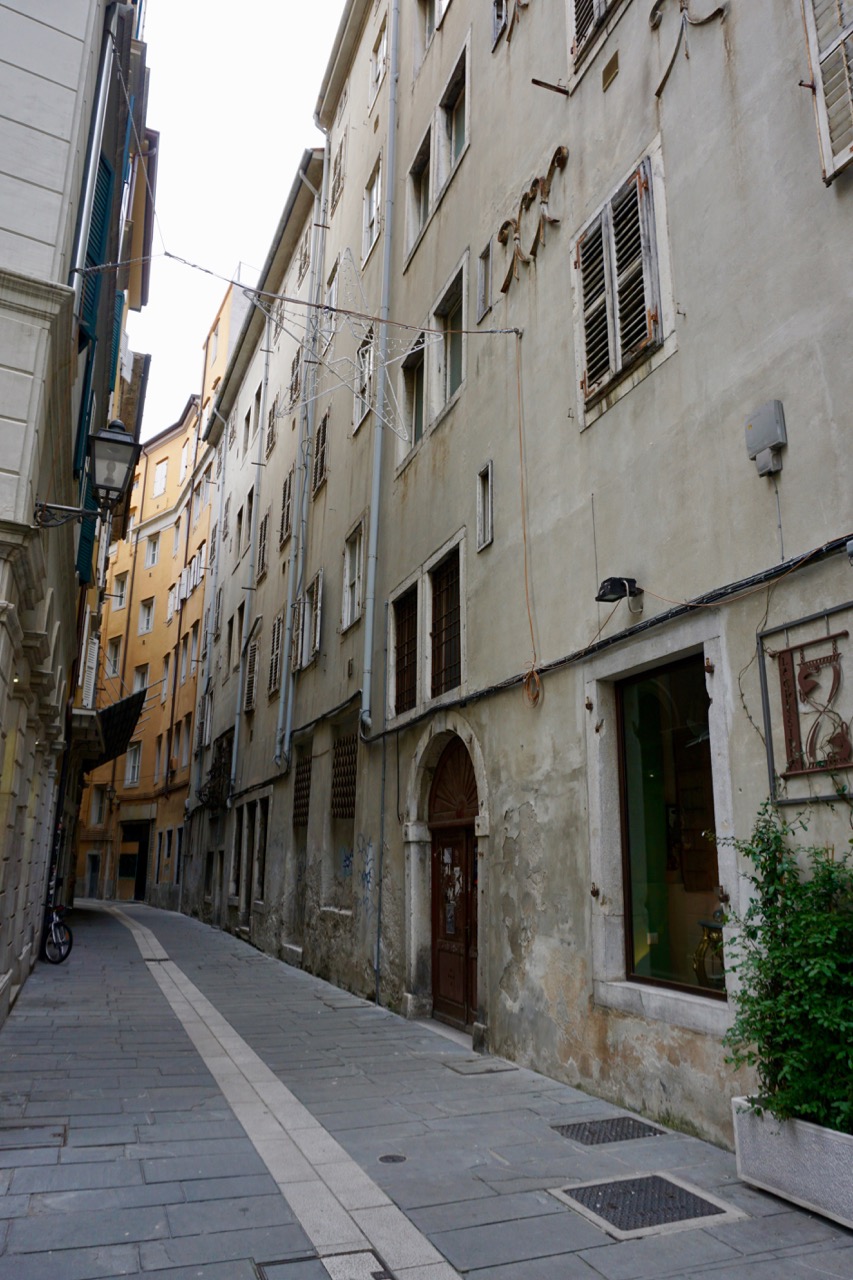
One thing that struck me about Trieste is that this city is old. The buildings were beautiful but they had been standing for a long, long time.

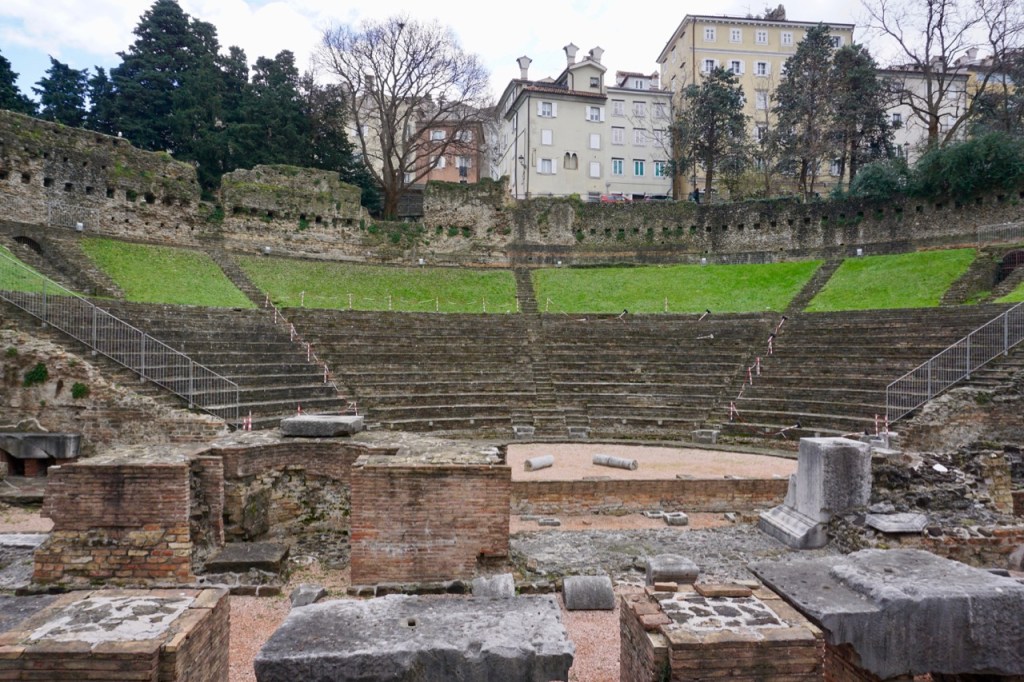
It was also really neat to see a stadium from Roman times next to a car park and an apartment block. I very much love that about Europe.

I also really loved the greengrocer set up in the middle of a piazza.

And of course, there were grand piazze that are probably much busier in the summer.

The history of Trieste’s Jewish community dates back about 800 years and I walked to the synagogue . . .

. . . and through the old Jewish ghetto that was full of (unfortunately closed) quirky shops selling antiquities and used books.

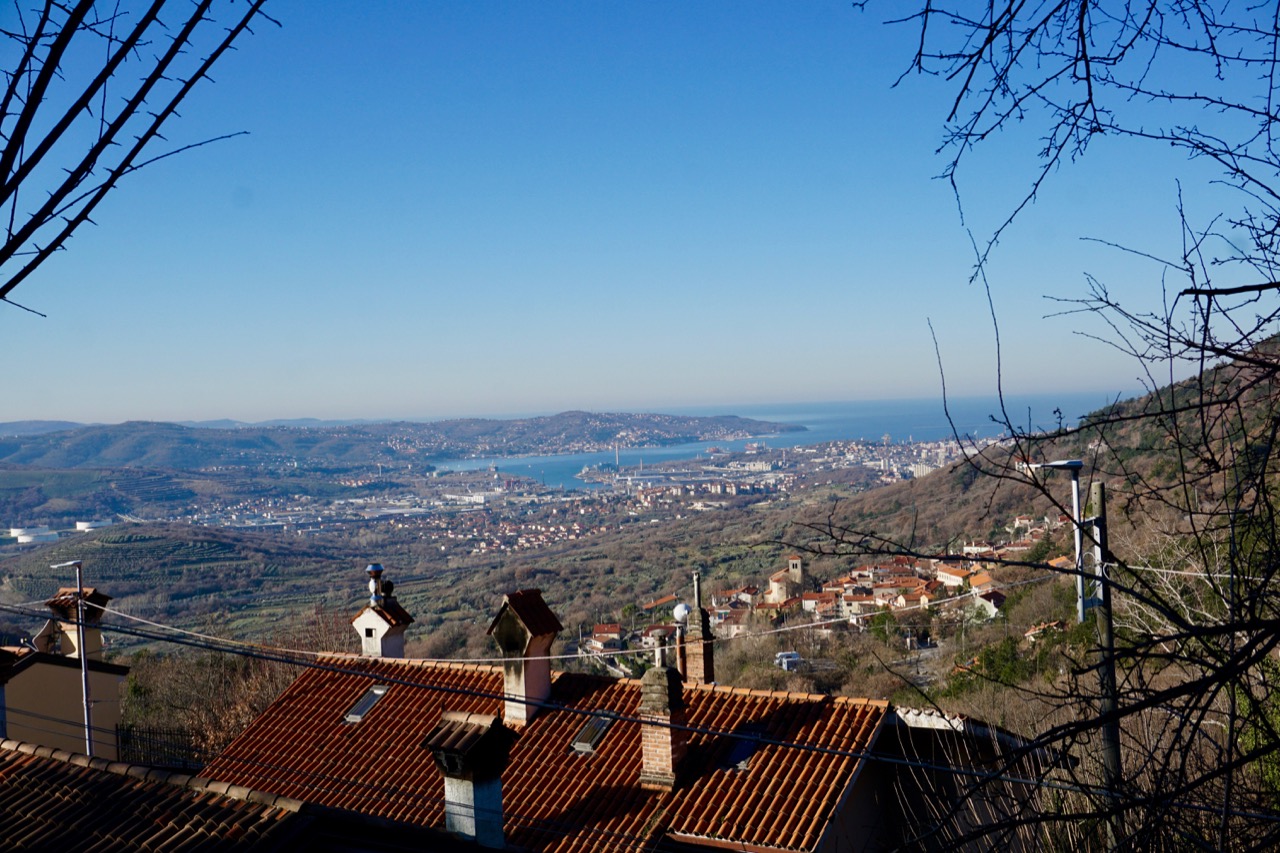
All things considered, a wander through parts of Trieste was a perfectly acceptable way to spend an afternoon before settling into the little guesthouse on the hill. Looking down on Trieste both at night and in the morning was really cool.

Maribor

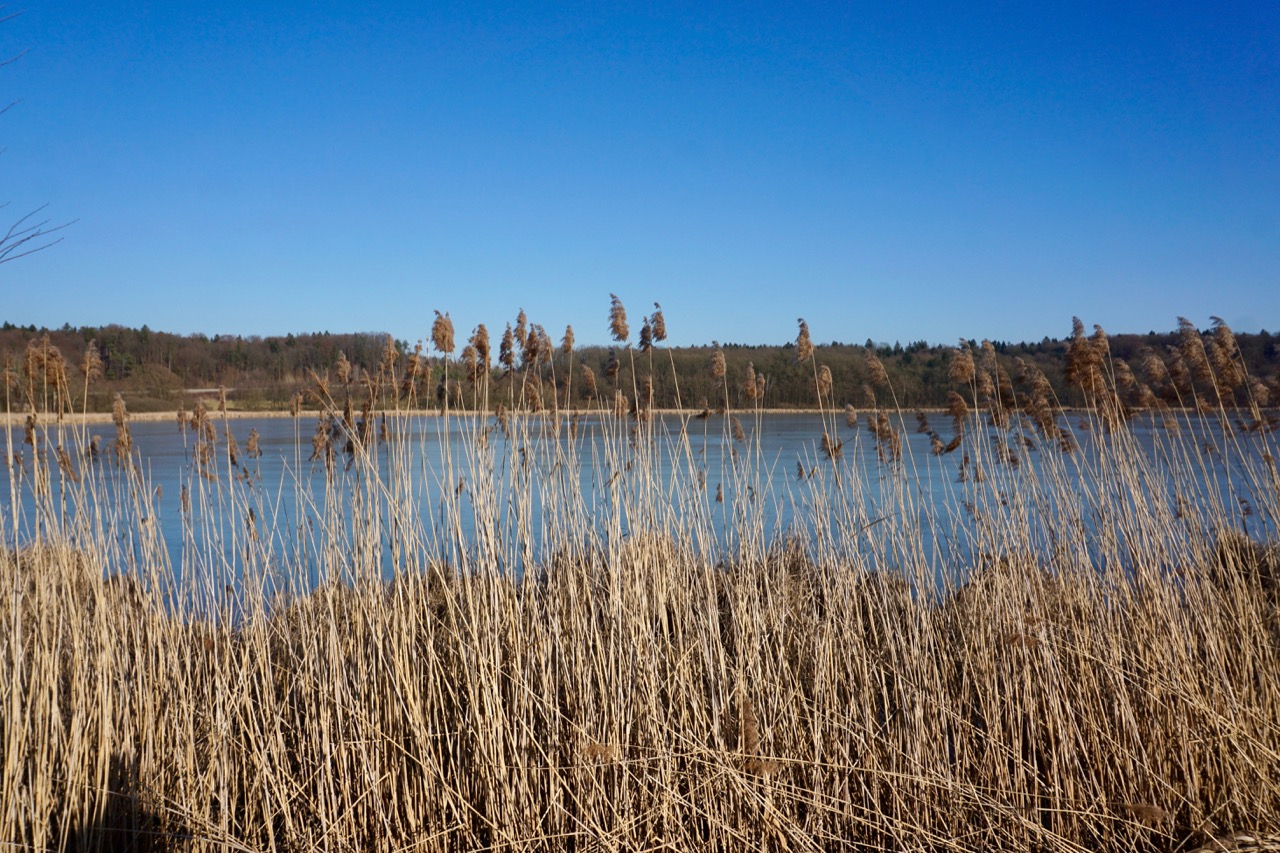
After a day away, I decided I missed Slovenia. In the morning, I drove to Maribor, Slovenia’s second-largest city. It was a bright and sunny day and not too cold yet, which was perfect weather for a walk. I looked at a map and found Jezero (Lake) Komarnik, which has marked running and hiking trails.

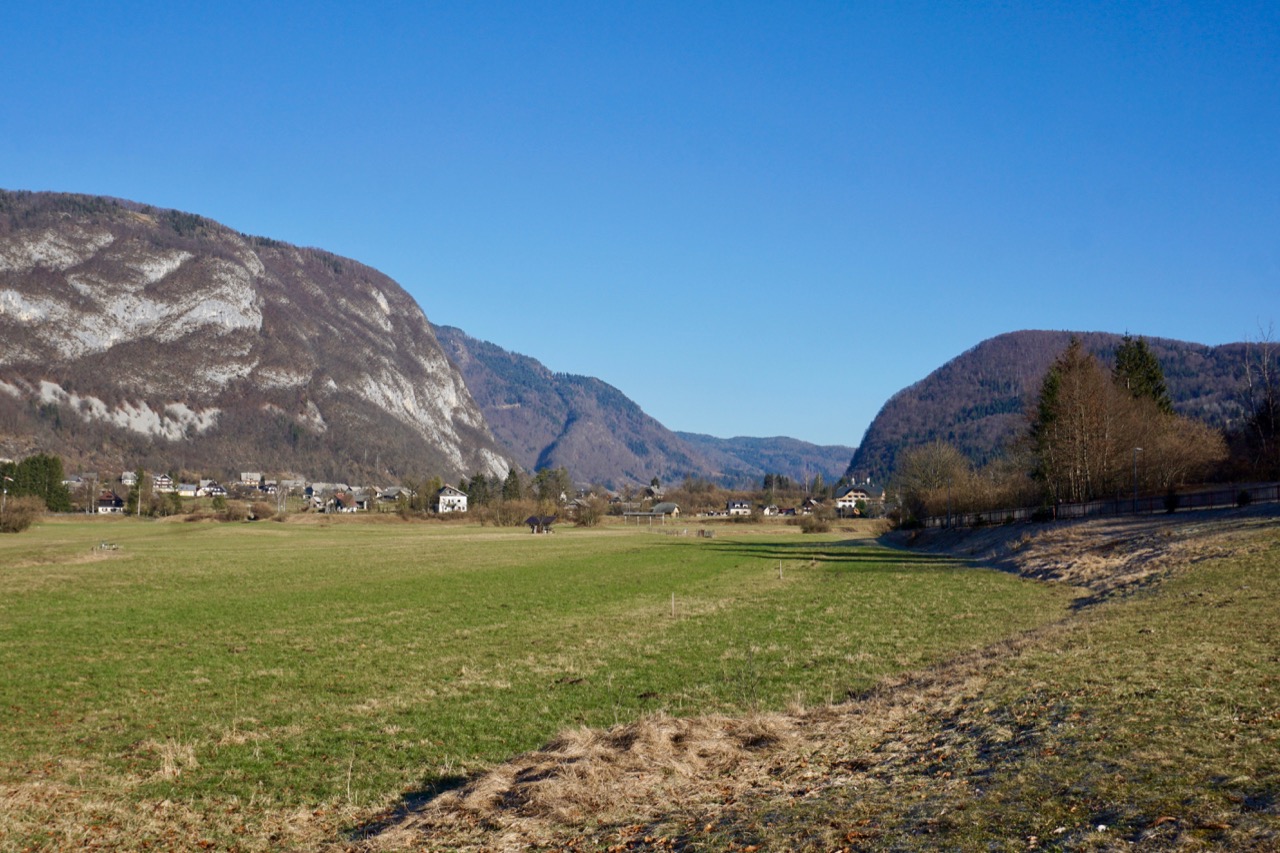
Remaining aware of the sun and the time of day, I chose the shorter of the two paths and found myself first walking along a dike at the edge of a field . . .

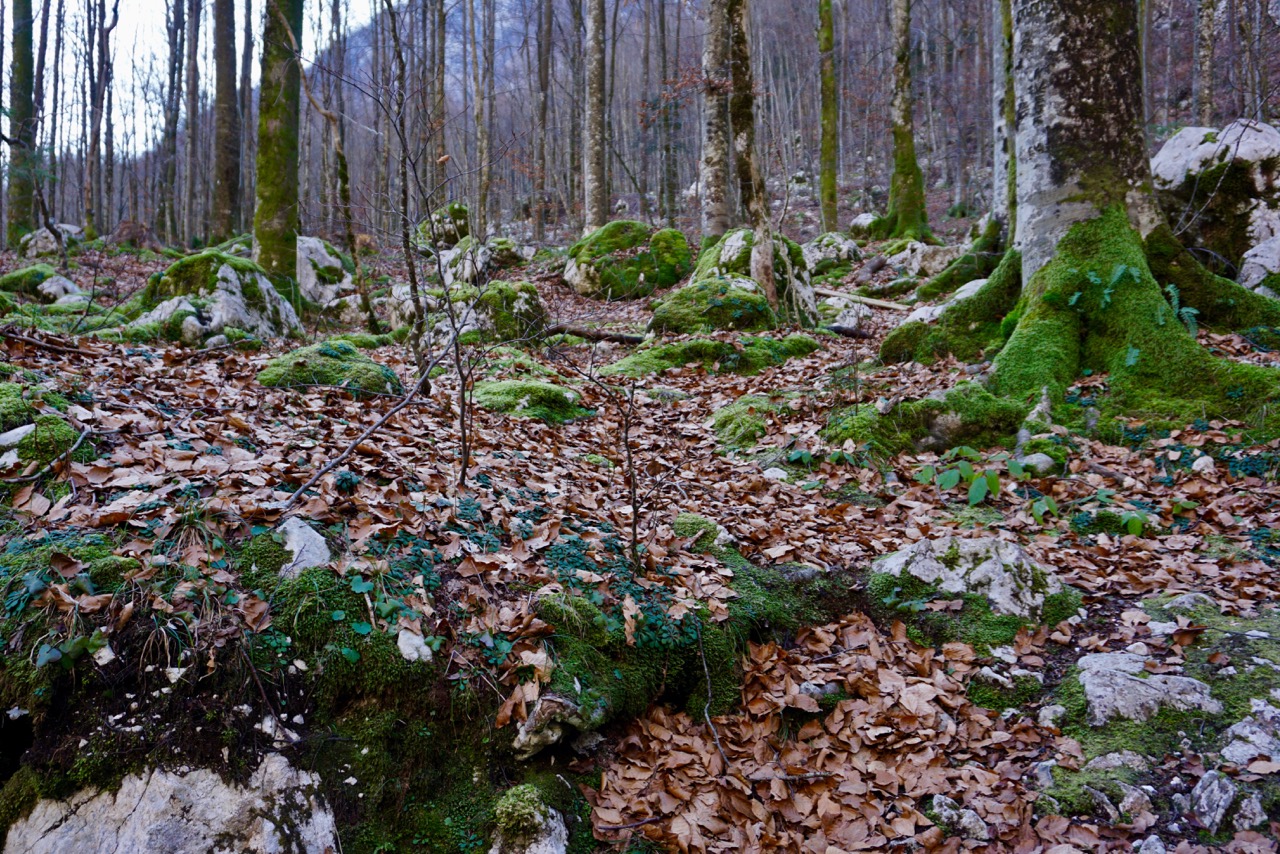
. . . and then crunching leaves underfoot in a forest.

There were nature signs posted along the route with information about plants, animals, and ecosystems and even though I didn’t understand any of it, I really enjoyed that it was there. The way a community treats the environment tells a lot about what that community is and what it stands for.
Later in the afternoon I walked through Maribor City Park, which is exactly what it sounds like. A large park in the middle of a city with ponds, old trees, a bandstand, and a nature centre.

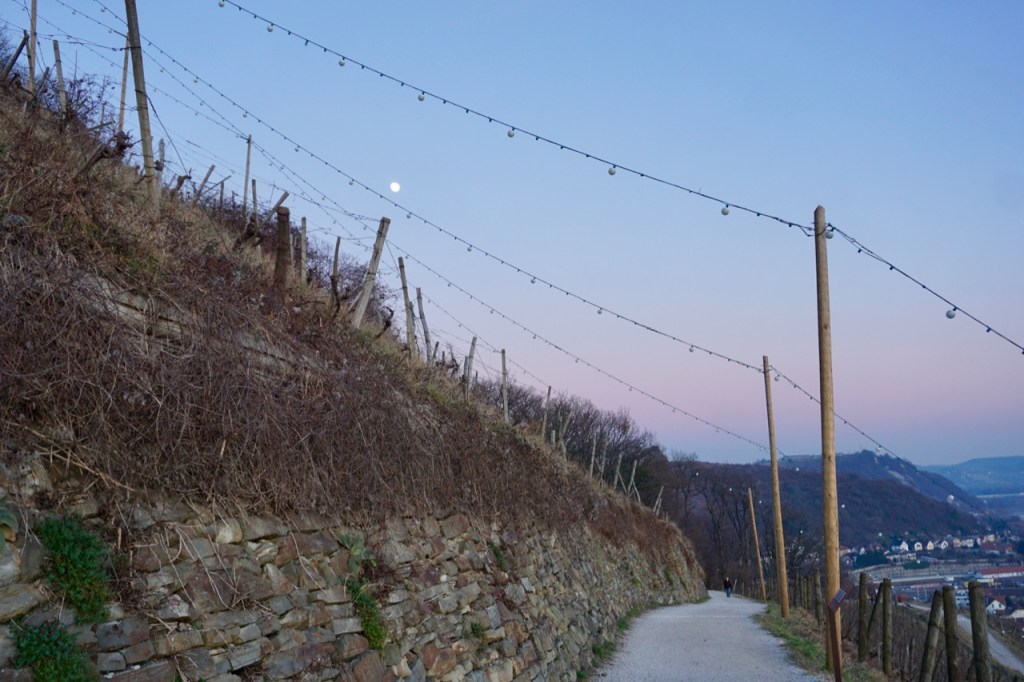
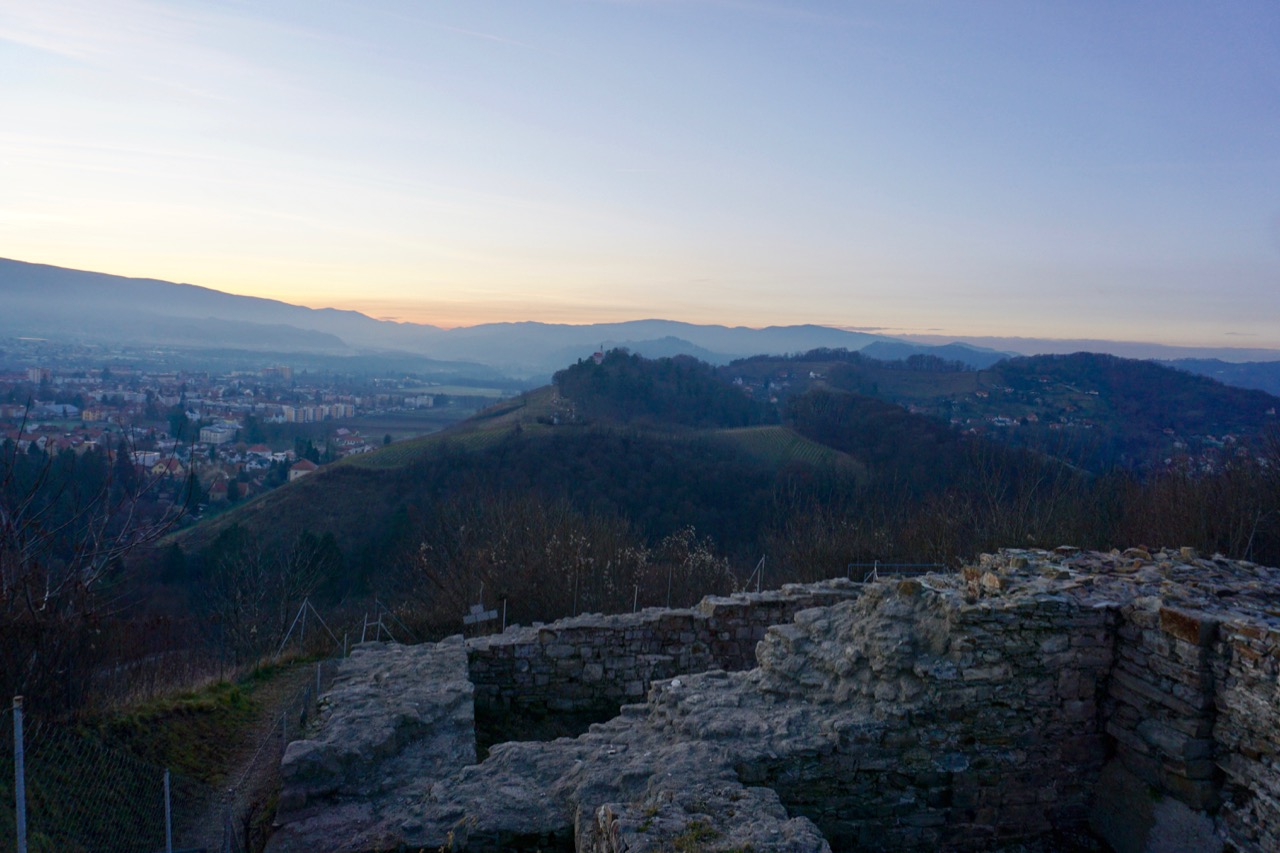
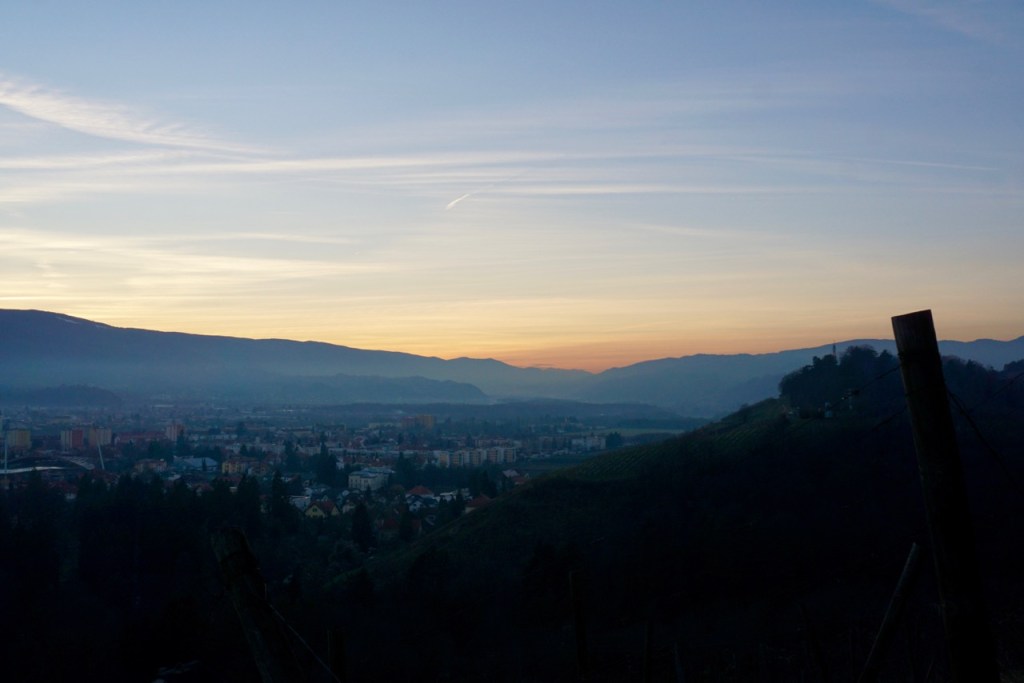
On the drive to the park, I spotted signs for Pyramid Hill. As the sun was beginning to set, I followed the walking trail up the hill . . .

. . . through the vineyard . . .

. . . and past the recent excavations of a twelfth century castle.

Signs along the way, including some in English, explained Pyramid Hill and Maribor City Park and it was nice to get a sense of where I was. There are longer walking trails along the back of Pyramid Hill but it was far too late in the afternoon for those.

Once it was dark, I headed into the old town to find the town square, have some wine, and feel European. It grew very cold as night came in but the narrow cobblestones felt good under my feet and I walked until the need to actually feel my toes became urgent.

It had been a wonderful few days and I knew I’d miss Slovenia even before it was time to leave. I spent the last evening curled up reading a novel and researching international schools. This had been a very special adventure and it left me excited for the next day’s journey to Bratislava.