
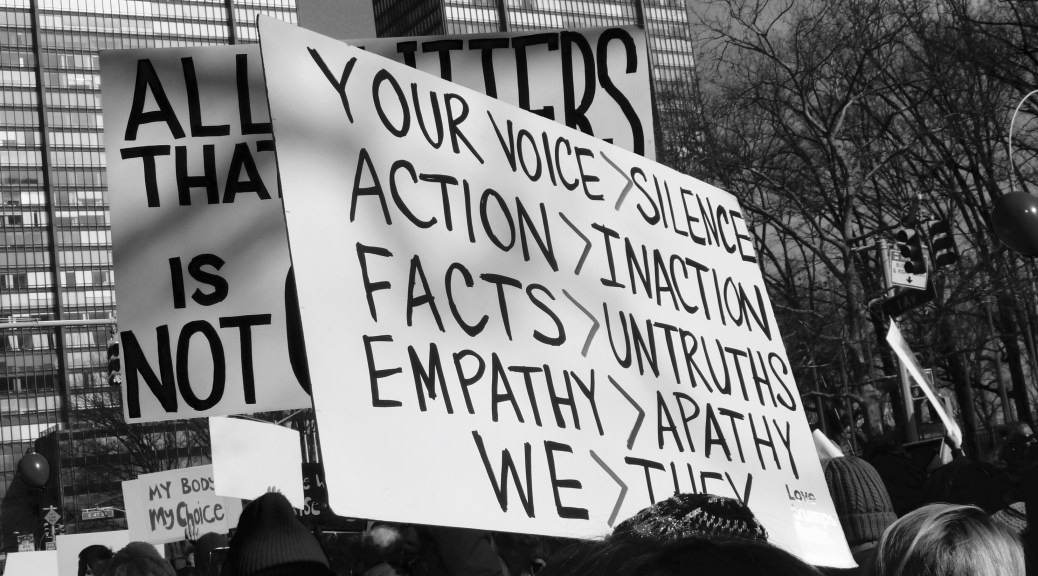
My political coming of age occurred during the Obama years, a different time that seems like it came out of a different world. The question that hung around my university in the fall of 2008 was whether America was ready to choose a Black man as president. There was discourse, discussion, and dialogue. There were conversations about policies and expertise, the economy and foreign affairs. I went to at least one student-run forum to analyze policy positions of different candidates. Like my peers, I made what I thought was the best choice, and I voted in my first election.
For years after that, I continued to look into policy statements and records. I read the websites of everyone running for local and state office for every election, and I voted in every local and state election. I subscribed to newsletters and read the emails that poured into my inbox. I made lists of pros and cons and tried to do what I had been taught in school, which was to inform myself and make a decision.
And then came 2016.
I’d just returned from two years living overseas and moved back to a country I didn’t recognize. Dialogue and discourse were no longer words that were used. It was a time of rallies rather than campaign events, insulting rather than debating, catastrophe and failure rather than hope and change. With a group of friends, I attended gatherings and marches, signed petitions, called elected officials and left messages whenever their mailboxes weren’t full. This was the game plan before the election and it remained the game plan thereafter. The game wasn’t over.
Now here we are in 2024. And we are asking a similar question to the one that was humming through my university in 2008: Is America ready for a Black woman as president?
But this is very different from 2008. Now, the questions about specific policies have become less important because answers about other policies loom large. The dialogue that occurs takes place between people who already know one another’s opinions, and probably agree with them. There are deep feelings rather than deep discourse.
The front page of The New York Times today proclaims, “WORRY AND HOPE ON LAST DAY OF VOTING”. In 2008, the front page read, “The ’08 Campaign: A Sea Change for Politics as We Know It”.
My political awakening occurred not so long ago, but in a different time. The world will be a different place still as a result of who wins this election. The only way to be part of that decision is to exercise the most basic democratic right, which is to vote. And if voting feels good, vote for those who believe in your right to make your voice heard.
Vote for those who believe in the democratic system that allows for dialogue and discourse, questions and answers.
Vote for those who want to build up a country for its people rather than tearing it apart.
Vote for the people who wanted to and couldn’t, who tried to and were condemned, who fought for it and died.
Vote. Because it matters.














 By Rebecca Michelle