Tag Archives: Vietnam

Travel Guide: Sapa

When my sister told me she was coming to visit, I knew I wanted to take her to Vietnam, but I also wanted to go somewhere I’d never been. We spent a day and a half in Hanoi before taking a very lovely night train northwest to Sapa to spend two days trekking with local Hmong guides. I first learned about the Sapa trek from someone I met on an airplane on the way to Hoi An a couple years ago and was excited to finally make it there!

We booked this part of our trip with the friendly, helpful, ever knowledgable people at Lily’s Travel Agency. They were very responsive via email and WhatsApp, which made the planning very easy on my end. Lily’s Travel works with Mao, a Black Hmong woman who leads Sapa treks, to provide a “backroads” trekking experience and an authentic look at the lives of the Hmong people.

Our train left Hanoi at 10pm and we arrived at Lao Cai station at 6am. It was very cozy and truly delightful to curl up with a book and listen to the sounds of the train. I’ve always found the whistle of a train to be simultaneously romantic, mysterious, and exciting.

DSC02255

From there, we took an hour-long bus ride to Sapa where we met the spunky, warm Mao. Everyone we met in Sapa seemed to know her! Mao introduced us to several other local guides and to her sister-in-law, our guide for the next two days. Mao took a particular liking to my sister’s pink curly hair – but then again, who doesn’t?

Our trek started from the town of Sapa at about 8:30am to give us time to swap the glasses for contact lenses and have some eggs and coffee. It was sunny but cold and I was glad for my winter coat and gloves . . . and skiing sweatshirt . . . and thermal leggings. (My sister, on the other hand, had come from the very cold upstate New York and maintained that it was in fact rather balmy.)

I really love meeting fellow travelers and trekking in Sapa provided a great opportunity to do that. Our group included a Malaysian man, several Singaporeans, a French woman, and two German girls. Along the way, we met other travelers from the US, Canada, and Israel. I really enjoy knowing that people from all over the world were on the same trail on the same chilly but sunny day, happy to be where they were and excited for what they would see.

I also really loved that we were all guided on our journey by a group of Hmong women who were wonderfully knowledgeable, liked to talk and make jokes, and made for excellent company.

The trek took us through rice paddies that are dormant in the winter because of the weather. Winter in northern Vietnam is too cold and dry for rice to grow but I’ve been to rice plantations in Malaysia and can imagine what it looks like in the summer. For that reason, though, I loved seeing the landscape at a different time of year. It was beautiful just as it was.

We also saw our fair share of animals! Pigs, water buffalo, and dogs were all in abundance.

By the time we arrived at the homestay, also coordinated by Mao, we were exhausted and very glad to huddle up around a charcoal fire in a large stone bowl on the floor. Our crew for the night was a really lovely group – the German and French women we’d been with all day and an American living in Thailand who we’d met over lunch. One of the girls was brave enough to test the hot water in the bathroom located just outside the house. Thanks to her, we all took a hot shower! The hardest part was figuring out where to keep our clothes so they wouldn’t get wet. Except for my sister, we wore jackets, hats, and scarves indoors because any spot away from the fire was as cold as being outside. I slept in my jacket, too, but I think I was the only one.

It was really relaxing to sit and talk and get to better know the people we’d hiked with all day. Because of that, I’m glad we stayed in the more traditional of Mao’s two houses. Our homestay had a ladder to reach the unlit second floor loft, which housed cozy mattresses and quilts under mosquito nets. There were curtains on the main floor separating one room from the other, single lightbulbs to illuminate the kitchen and main sitting area, and a combination lock to secure the sheet metal door at night. Our guide told me that her home with her husband’s family is very similar to the house where we slept. We visited the newer homestay the next morning and while it was made of brighter wood, better lit, and had private bedrooms with doors and a staircase to the second floor, I feel that we had a far more authentic experience  than we would have otherwise. At any rate, it was an adventure and that’s why I travel.

And speaking of adventures, the second day of our trek was my first day of mountain trekking in mud and rain! The rice fields looked completely different and the mist all around us made for an experience quite unlike the sunshine of the previous day.

It was still pouring when we finally returned to the town of Sapa where we had arranged to spend a night in a proper hotel rather than taking the 9:30pm train back to Hanoi the same day. Since the downpour continued and we were cold, wet, and muddy, I am very glad we made this decision. I would not have enjoyed sitting on a train for eight hours under those conditions, let alone trying to sleep on one.

There isn’t much to do in Sapa, but we enjoyed a calm day of wandering. It was much warmer in town than in the mountains, which also very welcome.

That night, we were back on the train to Hanoi, already missing the mountains and the “trek life”, as my sister termed it.

I’ve been hearing wonderful things about Sapa since my first trip to Vietnam and I’m really glad that my sister and I could experience a new place together. After a couple days in Hanoi, we were off again, this time to one of my favorite destinations – Chiang Mai! Stay tuned!
Travel Guide: Hanoi x2

Two and some years ago, I explored Hanoi with my dad when he came to visit. We spent a few days there before going to Hoi An to relax from the hustle and bustle that characterizes Vietnam’s capital city. This time around, I was travelling with my sister and we spent a total of three nights in Hanoi, bookending a trip north to Sapa (as a respite from Hanoi’s hustle and bustle). I really enjoyed being back in the city and showing my sister some places that I remembered. The weather was completely different this time around and far more enjoyable now, during Hanoi’s winter, than it was in the summer. We were able to do so much more walking because the air was (relatively) fresh and cool.

We arrived in Hanoi on Christmas Eve and found the city even busier than usual. Crossing the street is an activity of its own in Vietnam and the closed streets, parading Christmas celebrants complete with costumes (my sister likened it to Halloween), and jazzy Christmas concert (we actually heard a rendition of “happy birthday, Jesus”) made it more challenging than usual.

DSC02105

DSC02113
St. Joseph’s Cathedral

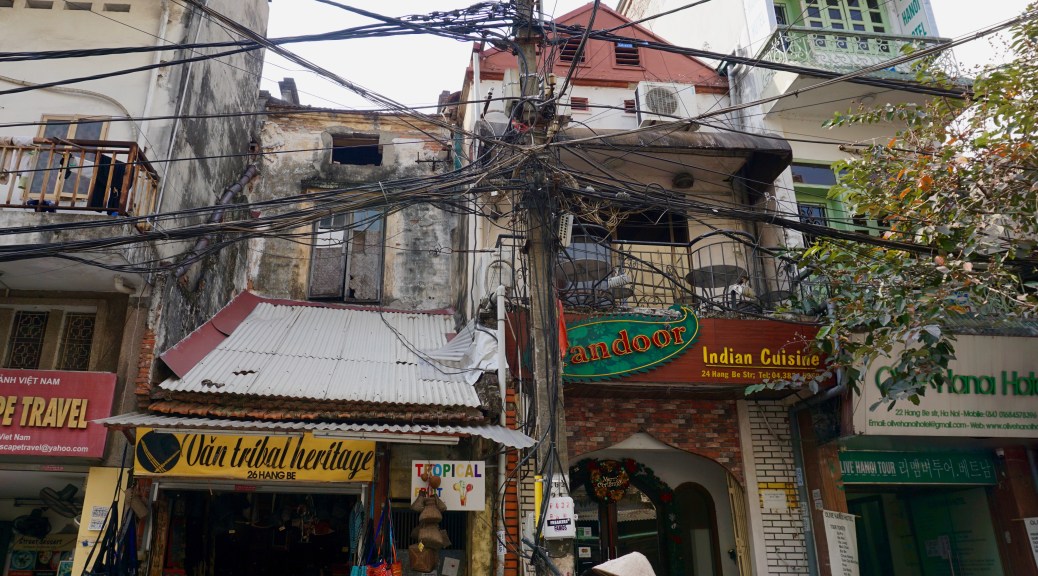
One of the things I really love about Hanoi is that the Old Quarter and French Quarter, though adjacent to each other and both quite small, feel like completely different cities. We spent time every day in the Old Quarter, which I think is the more fascinating:


Needing quiet, however, I wandered the French Quarter by myself the morning of our last day in Hanoi:


There’s an excellent café culture of Hanoi and coffee was a highlight of every day. Vietnamese coffee is served in tiny cups and I rather enjoyed visiting two cafés in quick succession.

Though we spent most of our time just wandering, my sister had told me that she really wanted to visit temples on her trip to Asia and Hanoi did not disappoint. There are Buddhist temples everywhere and it’s perfectly acceptable to stop in. We entered several instead of just passing by, especially at the beginning of our trip when it was all new:


Hanoi also has some very famous temples that I was more than happy to visit again. The first of these was Ngoc Son Temple, located on Hoan Kiem Lake, the center of Hanoi:


To get there, you need to cross Huc Bridge, which is cool because it’s red. I did take a photo during the day but this one was better:

DSC02531

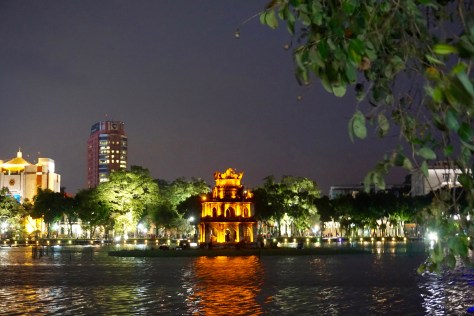
Turtle Tower is another Hanoi landmark, also located on Hoan Kiem Lake, but is inaccessible:

DSC02530

My favorite temple in Hanoi is the Temple of Literature, dedicated to Confucius 1,000 years ago. I love it because in addition to being really beautiful, it is dedicated to learning (my favorite thing!). It contains massive carved turtles listing the names of students who passed state exams. Unfortunately, I was dissatisfied with all of my turtle pictures, but the Temple of Literature is still really pretty:


We also visited the Hanoi Citadel, which was new to me. The citadel is really more of a palace; it was the residence of Vietnamese royalty until the nineteenth century. It was lovely to walk through the grounds and see several small museum exhibits of artifacts found during various excavations. There was also an exhibit on the Vietnam War (which the Vietnamese call America’s War, as I learned when I visited Ho Chi Minh City) that was interesting because it portrays a different war than the one I studied in school.


Although I don’t have any pictures to prove it, we also went to a water puppet show, which was the other new activity for me! Water puppetry originated in the wet rice fields in Vietnam and now is performed on stage by puppeteers hidden behind a screen. They control the puppets on very long poles while standing waist-deep in water. The shows depict scenes of traditional Vietnamese life and are accompanied by singers and an orchestra playing traditional instruments. We didn’t understand the words but we understood the ideas and enjoyed it very much.

Again, no pictures to prove it, but we ate very well. There was far more vegetarian street food available in Hanoi this time than I remember from last time (or maybe I’ve gotten better at looking) and all of it was delicious! The only disappointment was not being able to find vegetarian pho, which seems to be everywhere but Vietnam.
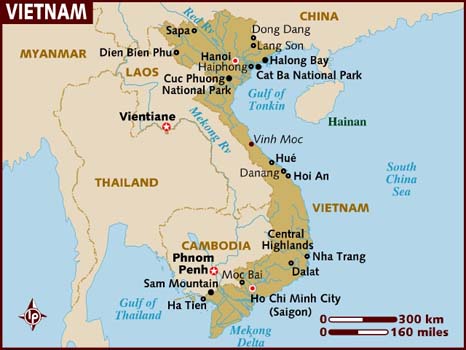
From Hanoi, we took a sleeper train northwest to Sapa, which is up in the mountains and very close to the border with China. More on that soon!

map_of_vietnam

Travel Guide: Hoi An

This is the third and final post in a series of three about my travels with my dad over October break. You can read the introduction to the trip here, and my posts about Bangkok and Hanoi here and here, respectively.

The last four days of our travels found us in beautiful Hoi An, which is located in central Vietnam. Hoi An is often under water at this time of year, a fact unknown to me until we arrived. Our travels there could have been really disappointing, but we were lucky enough not to see any rain over the course of the week. As a result of the threat of weather, however, Hoi An was largely empty of tourists.

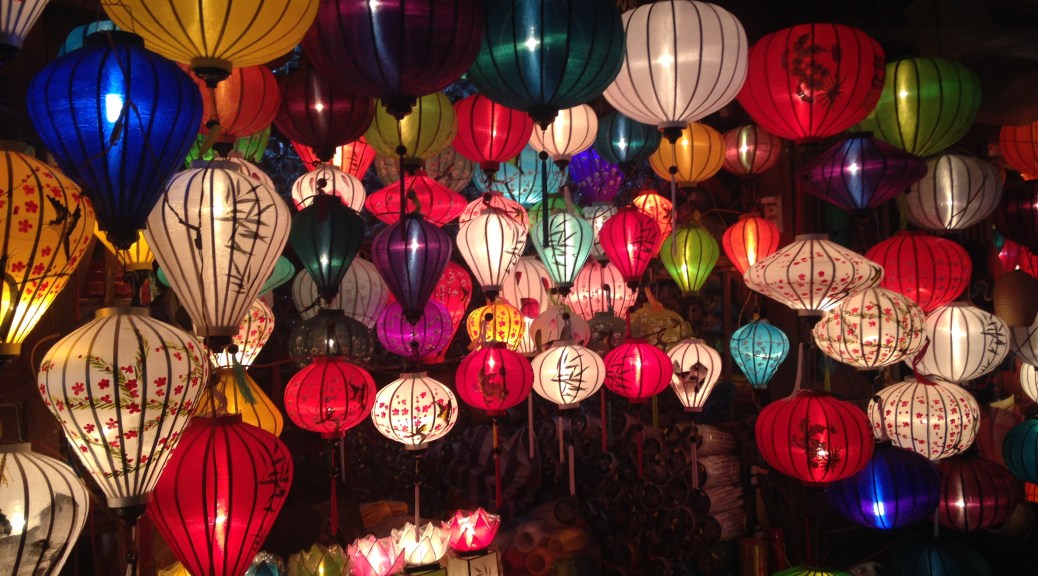
To get to quaint, sleepy Hoi An, located on the Thu Bon River, we flew into nearby Da Nang airport and hopped into a taxi for about 45 minutes. Everyone I’ve ever spoken to about Hoi An loves it (I ran into four of my friends there!), and after a walk through the tiny Ancient Town it was easy to see why. Not only is it full of old assembly halls, houses, and shops, but lanterns light up the entire town in the evening. I took the following pictures throughout our time in Hoi An:

In addition to being a nice place by itself, Hoi An is also a wonderful base for half-day trips to historical and interesting sites nearby. We took two separate trips out of Hoi An during our time there; the first was to My Son, an ancient Hindu temple site and burial ground for Cham kings dating to the fourth century. The complex must have been massive in its heyday, but much of it was destroyed by American bombs during the Vietnam War. There are very clearly marked walking paths because of unexploded ordnances all around the site, another wartime souvenir. Dad and I visited My Son as part of a tour with a very informative guide; he pointed out weathered motifs and symbols carved into the stone that we probably would have missed without him.

Along with about half of our tour group, we chose to take a boat along the Thu Bon River to return to Hoi An. The boat afforded us wonderful views of the river and of rural life on its banks.

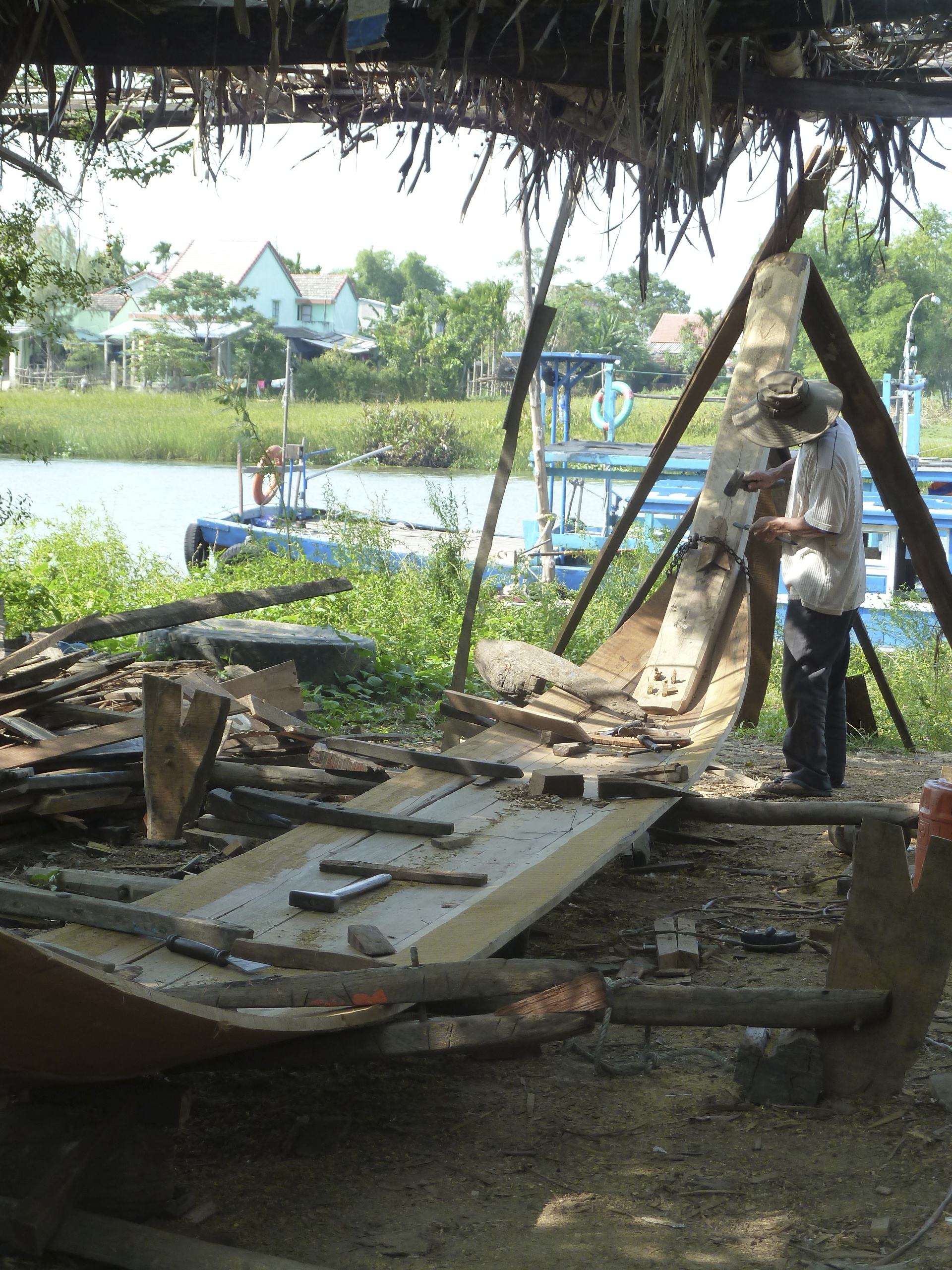
Along the way to Hoi An, we stopped on Cam Kim Island, a village known for its traditional crafts.

Now that I've seen this, I wonder how non-traditional boats and ships are made?
Now that I’ve seen this, I wonder how non-traditional boats and ships are made?
I thought it was really neat that the carver drew the pattern on the wood. Somehow, it had never occurred to me that artists do that.
Somehow, it had never occurred to me that artists draw their patterns before starting to carve.

Vietnam’s Marble Mountains, located in nearby Da Nang, was our destination the following morning. The Marble Mountains are exactly what they sound like – jutting hills of marble that are no longer quarried because they’d disappear. We took the elevator to Thuy Son, the highest peak, and then made our way down, exploring the Buddhist pagodas, Hindu temples, and various shrines and altars that dot the site.

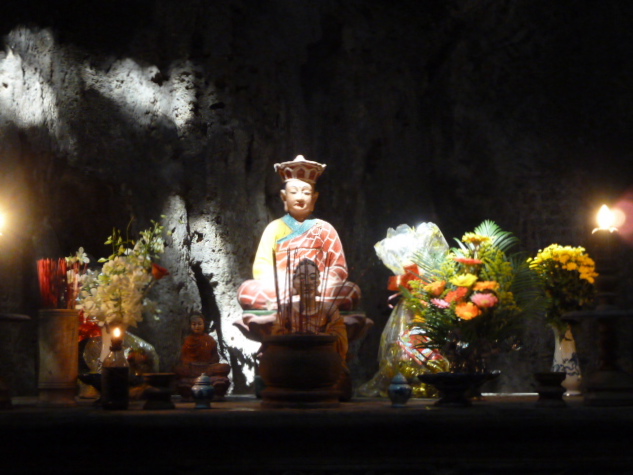
There are also caves on the mountains, including Tang Chan Cave, which contains a few altars and statues. What is truly spectacular about the cave, however, is the sunlight streaming through large holes in its top. When the light is just right, it casts a gorgeous, unearthly light on the altars.

Cave shrine

Sunlight

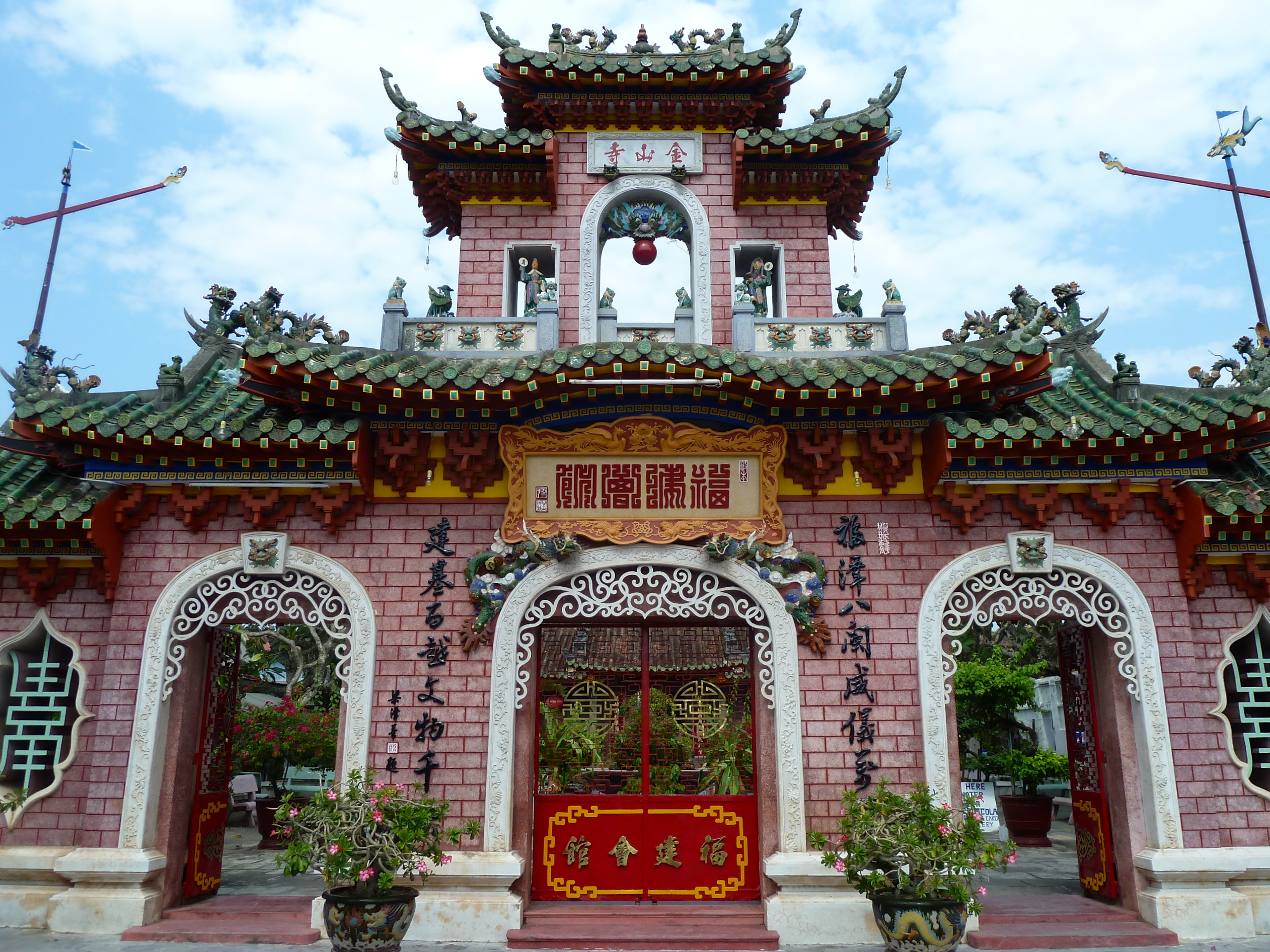
In the afternoon, we wandered around Hoi An’s Ancient Town to take advantage of the ticket scheme that allows access to five historical sites within the town. The ticket is required to visit the vast majority of assembly halls, historic homes, and even some museums, so we saved it for our last afternoon when we knew we’d have the longest amount of daylight in town. We visited the Phuoc Kien Assembly hall, which started as a pagoda and later became a temple for one of Hoi An’s Chinese groups. It is home to an altar to the Goddess of the Sea, which I thought was really interesting. There was also an altar shaped like a boat, which was beautiful. I love learning about groups of people, their livelihoods, and their values through religious art and artifacts. What a way to gain insight into the soul.

Phuoc Kien Assembly Hall

Along with our ticket scheme wanderings was a very brief stop at the Museum of Folk Culture, which was interesting largely because the door of the museum was open, all the lights were off, and there was no one inside but us and another equally confused tourist.

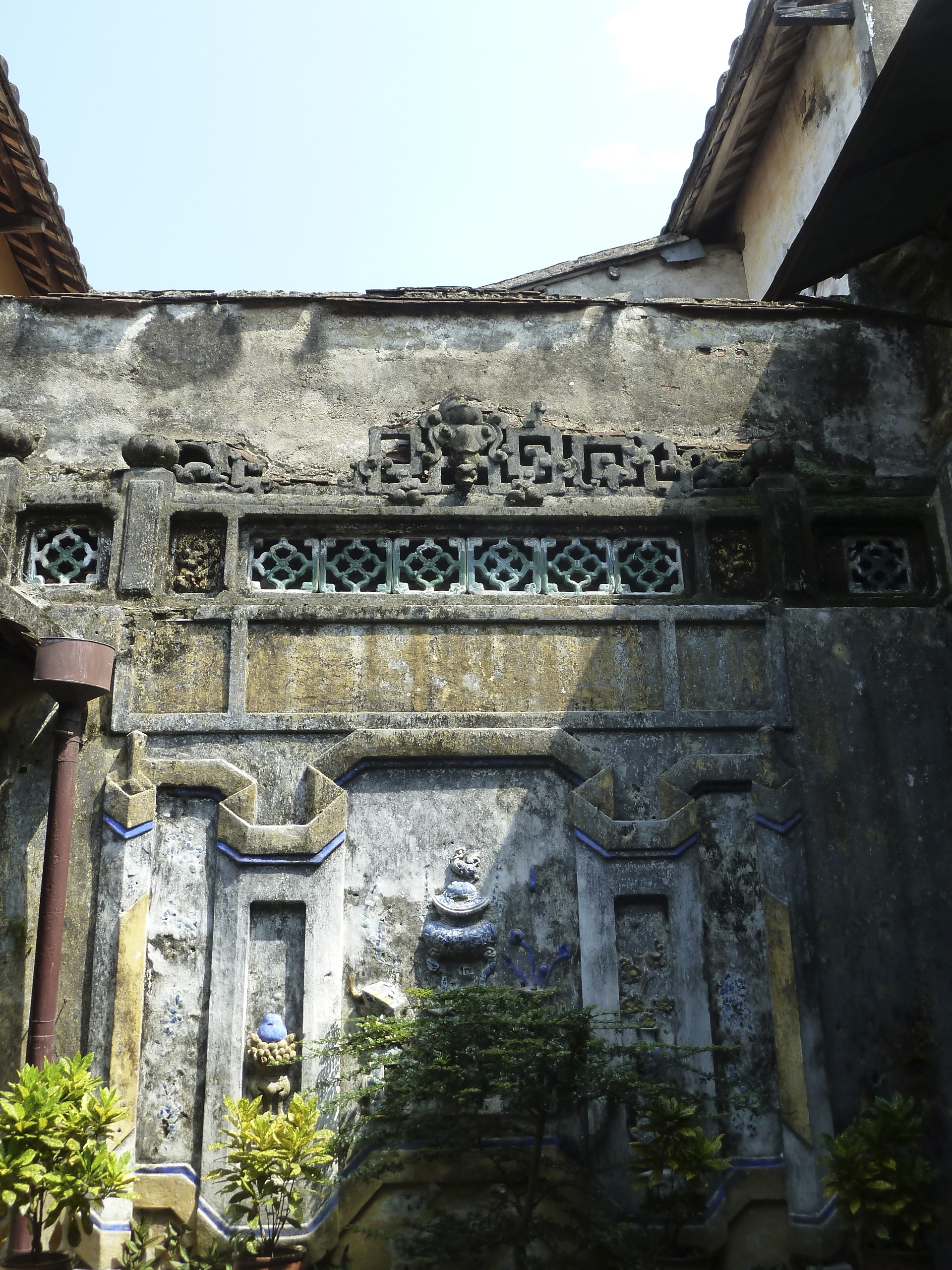
The Tan Ky House, on the other hand, was interesting in itself.

Courtyard of the Tan Ky House

The Tan Ky House is a shop house dating from the late eighteenth century that incorporated Vietnamese, Chinese, and Japanese architectural styles. I admit, I didn’t know that so many ethnic groups and nationalities call Hoi An home, and have a place in the city’s history as a trading port.

The most interesting stop on our somewhat guided wander was the Handicraft Workshop where we saw a performance of traditional music and dance. By far my favorite part was a musical piece that I can best describe as ancient jazz. A musician who would have been a saxophone player in a western jazz group played a sort of double-bow violin that didn’t seem to be made of anything but strings and a small wooden base. He had a solo in the middle of the piece that was creative, innovative, and playful; I couldn’t understand how such an unassuming instrument even made sounds, let alone such music!

Neither of us were ready to leave Hoi An early Sunday morning. I, at least, have a mental list of things I want to do when I return, which I hopefully will. There is now a direct flight from Singapore to Hoi An, so it is certainly a possibility.

Japanese Covered Bridge

Dad and I had an unbelievable time during our ten days of travel together. I am so glad to have shared such a wonderful experience with him. We both learned a lot over the course of our trip and I’m already looking forward to the next one!