Being in Singapore with Mitch this weekend was a blast. It was also rather useful because Mitch has been there for a grand total of 12 days, which practically made him a local. He knew where we should eat and drink, which MRT (Singapore’s metro) stations would lead us where, which parts of town I should see, and how to get there.
Everything I’d heard about Singapore turned out to be true. It’s almost uncomfortably clean, people queue for everything, it’s incredibly safe, there are trees, plants, and parks everywhere, and it could easily pass for a Western city. The population is very diverse and all signs are posted in four languages: English, Bahasa Malay, Mandarin, and Tamil.
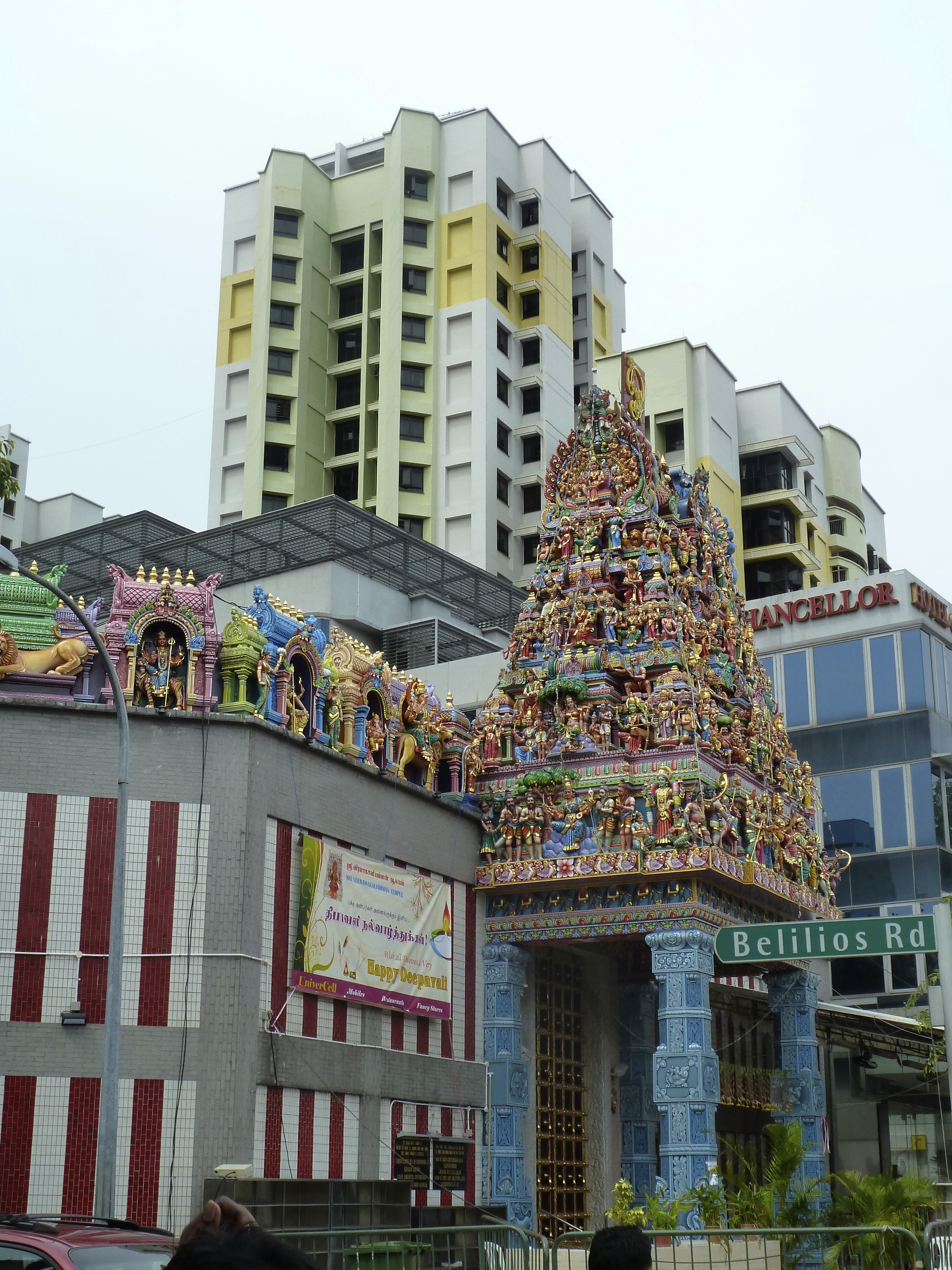
I really love the juxtaposition of traditional and modern that one sees all over Singapore
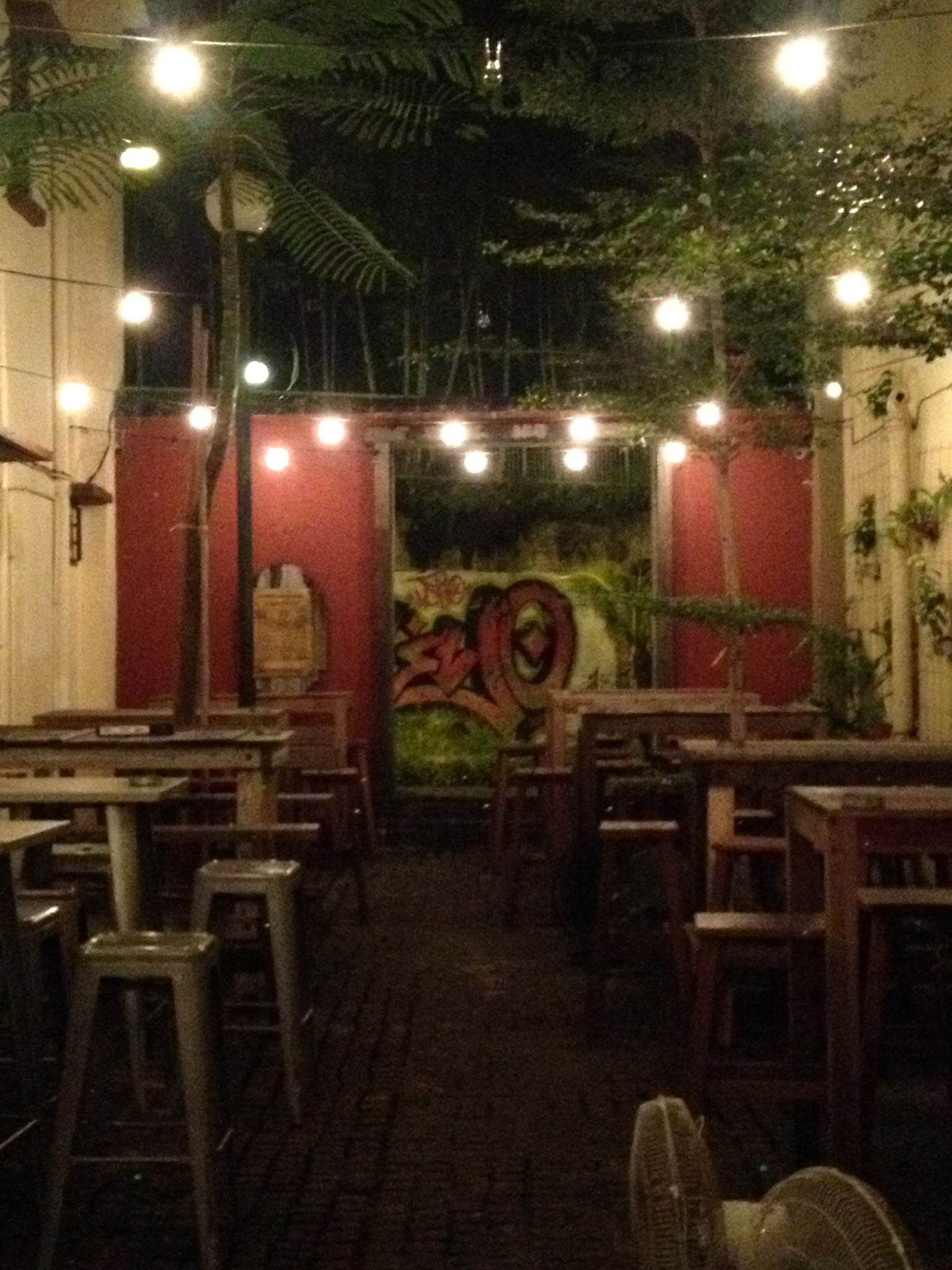
I arrived in time for a late dinner and drinks Friday night at a Japanese craft beer bar in one of Singapore’s many outdoor food courts. This one had restaurants serving cuisines from all over the world; we saw French, Italian, Irish, Japanese, and American eateries under brightly colored awnings next to a park.
A quest for brunch on Saturday morning led us to Mark’s, a restaurant specializing in chocolate. (Yes, you read that correctly.) Patrons ordering a simple cup of hot chocolate choose from a list of chocolate-producing regions from around the world. The chocolate in Mitch’s hot chocolate came from Cuba! The other item in which Mark’s specializes is waffles! We got a “plain” waffle with real maple syrup and a cheese waffle with salad, eggs, and oranges. Yummy!
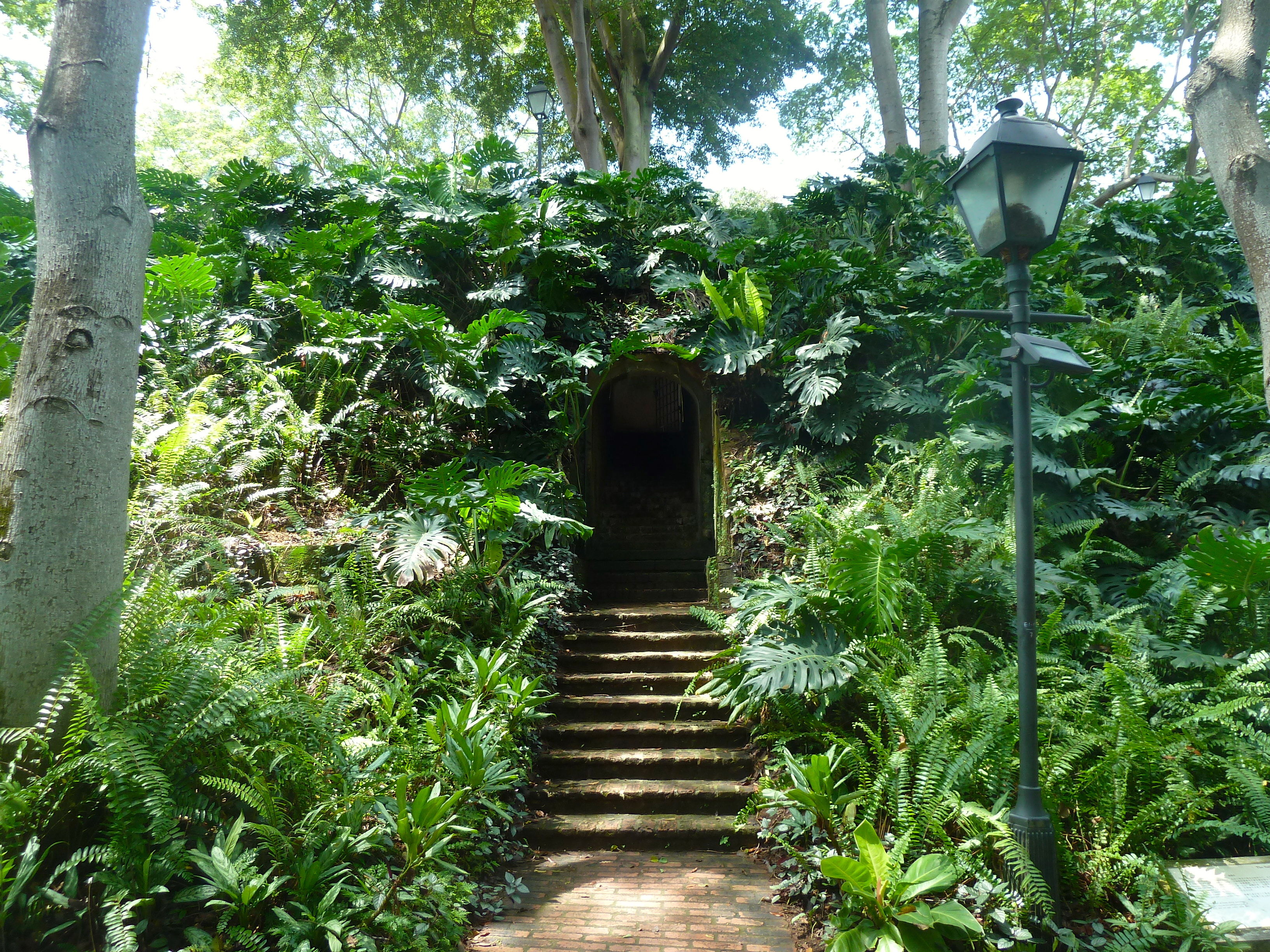
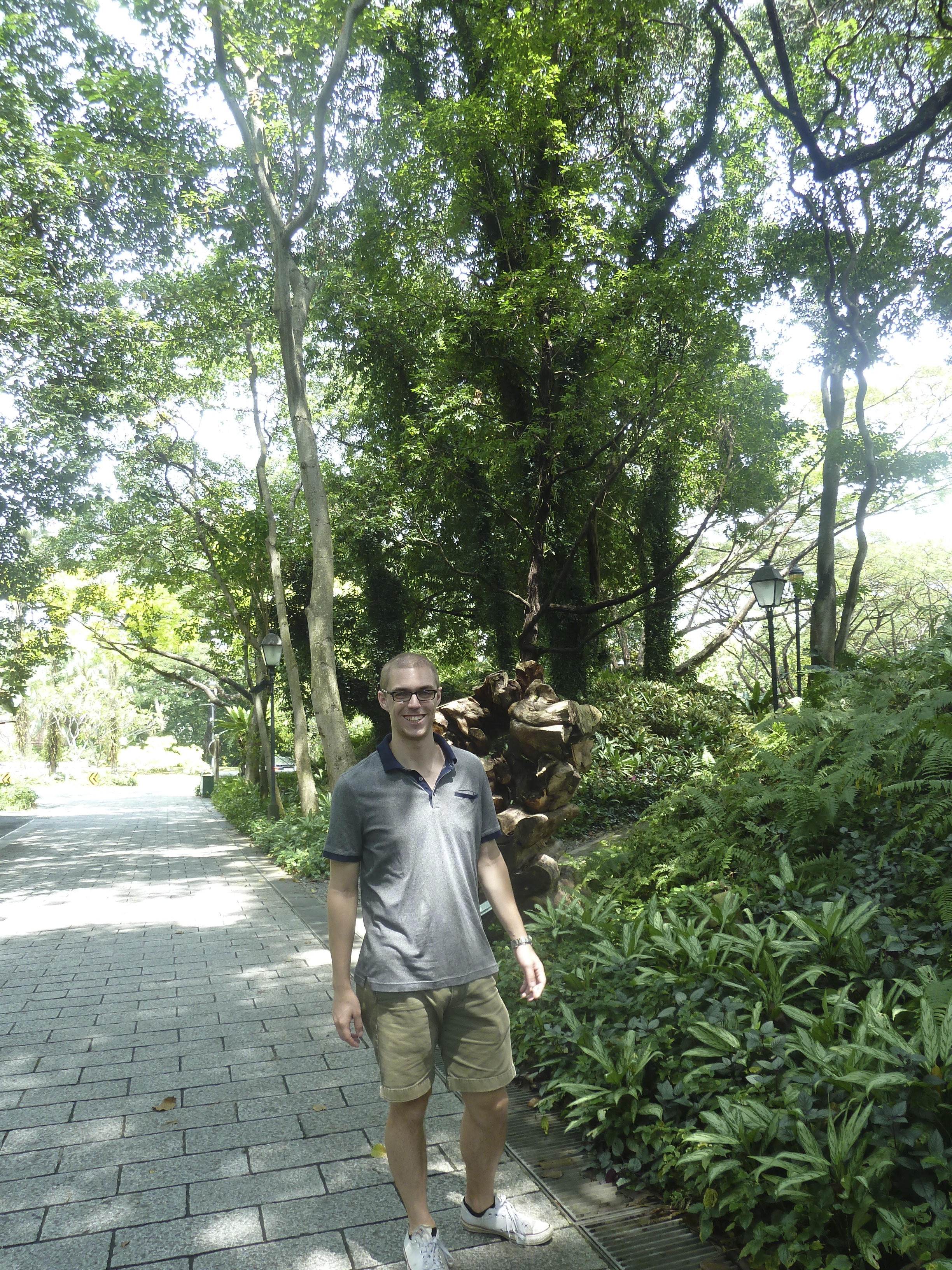
We spent a bit of Saturday morning wandering around Fort Canning Park on our way to the National Museum of Singapore. The park was lovely and had a really beautiful fountain that actually wasn’t on because the city is in a bit of a drought. Welcome to Southeast Asia.
The National Museum’s permanent galleries are closed for renovations until September 2015 (depending on how all of this works out, we might still be in the area) but there was a really interesting exhibit on the history of Singapore that I believe was a smaller version of one of the permanent exhibits. I knew next to nothing about Singapore before spending several hours walking through the exhibit. For example, one of Singapore’s earliest kings in the 1200s was a relative of Alexander the Great! I’m ashamed to admit that I didn’t know the Japanese were in control of Singapore during World War II and I didn’t know anything about Japanese wartime propaganda. Now I do and I’m glad we had the chance to learn!
Mitch introduced me to the gem of ABC juice. ABC stands for apple, beet, carrot and the juice is made out of those three ingredients blended with ice. One buys juices like that at stands like this:
We spent some time exploring Chinatown on Saturday . . .
And Little India on Sunday . . .
The socioeconomic differences are pretty obvious. Chinatown is definitely more affluent and the bigger attraction, definitely for tourists and possible for locals just based on location. However, every third restaurant in Little India is a vegetarian restaurant, which was both shocking and amazing. (Why is is that there are Chinatowns and Little Indias all over the world? Why not Little China and Indiatown?)
We made our way down to Marina Bay on Saturday, as well.
In addition to the financial district’s tall building and the boats on the water there was a display of Christmas trees right next to the palm trees that are actually natural to the region. It made me laugh.
Christmas in July! But not . . .
Other Singaporean adventures took us to a British pub, Red Dot Microbrewery (the best beer I’ve had since leaving the US), the club Zouk for a guest DJ show, and a restaurant called Strictly Pancakes (I had pancakes stuffed with leeks and potatoes and topped with mushrooms and cream cheese).
We also came across this building:
Google was only marginally helpful in telling me who David Elias is, but I’m quite curious as David and I share a name . . .
Moral of the story: Singapore is interesting, exciting, cultural, modern, traditional, and very liveable. I can’t wait to go back!
Reader be warned: As in Penang, I took a lot of pictures.
The third and final weekend of our (currently) planned trips out of Seremban brought us to Kuching, the capital of the East Malaysia state of Sarawak. Sarawak is located on the island of Borneo along with another Malaysian state, Sabah, the country of Brunei, and part of Indonesia.
For clarity and your viewing pleasure, here is a map
Kuching means “cat” and there are statues of cats around the city, a cat museum, and, of course, many feral cats.
Cat statue in the center of Kuching
We arrived on Wednesday because of a school holiday for Deepavali/Divali/Diwali so this was a longer trip than any trip we’ve taken so far. We spent Wednesday getting our bearings and wandering around. Kuching is not a big city and there are sidewalks and a boardwalk along the river. What we found really interesting was that it felt old. Not old in a historic, cultural sense but old as in neglected and rundown. It didn’t bother us, but we noticed. Sarawak and its neighboring state, Sabah, are the primary oil producers in Malaysia but they don’t get the same government aid and funding as the peninsula. Yes, it shows. Regardless, we loved Kuching and the areas that we explored around it. These pictures are from our walk around the city on our first day:
We took a little motorboat to cross the river (finally, this blog lives up to its name) to visit Fort Margherita, a relic of Sarawak’s early history. The British arrived in Sarawak in the 1840s and Charles Brooke, the second of the White Rajahs (the first was his uncle) gets the credit for its construction.
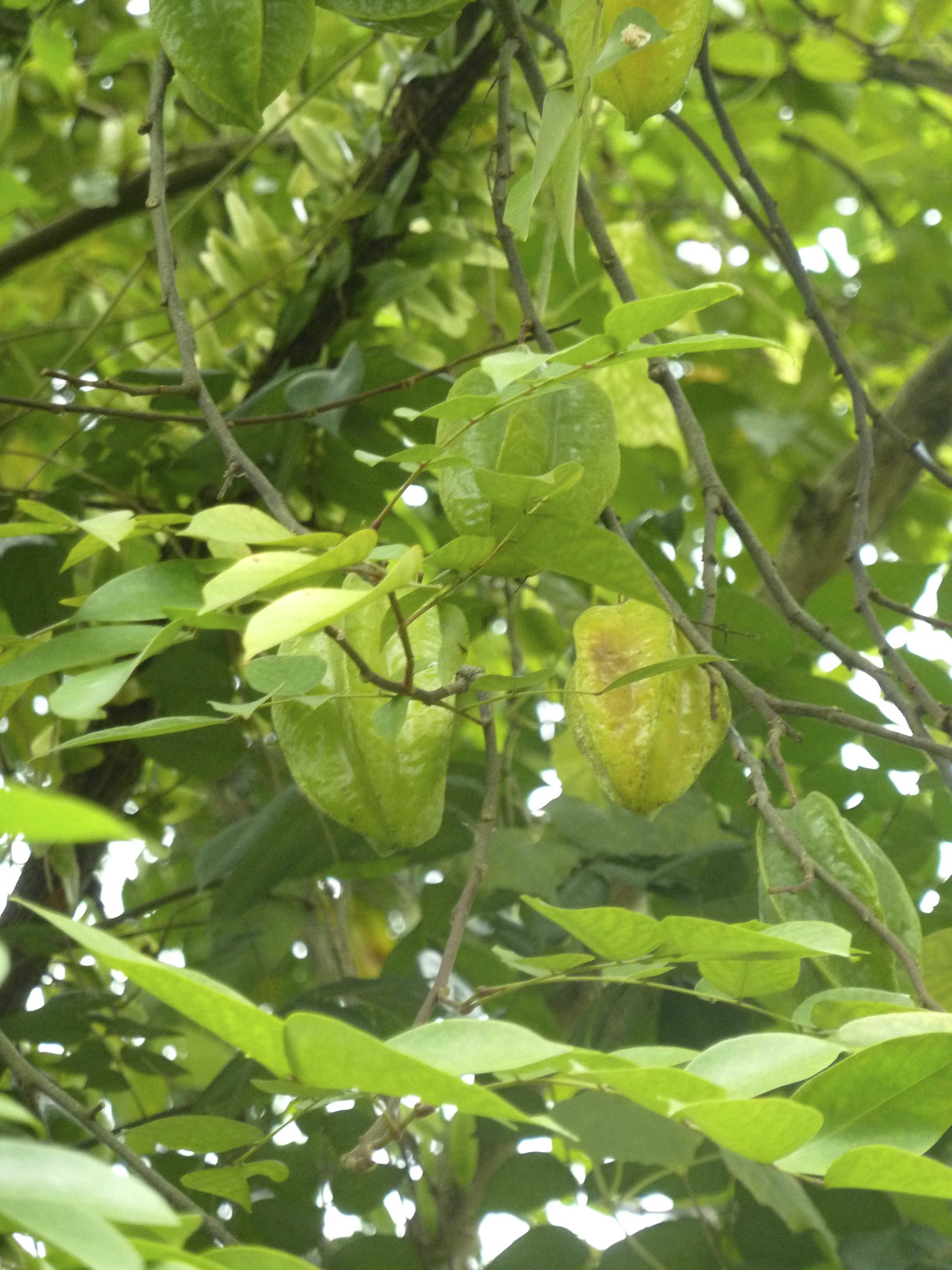
The interior of the motorboat that we took from one side of the river to the otherWe walked through a neighborhood and found starfruit growing on trees . . .. . . and finally arrived at the fort and then promptly left because it was closed
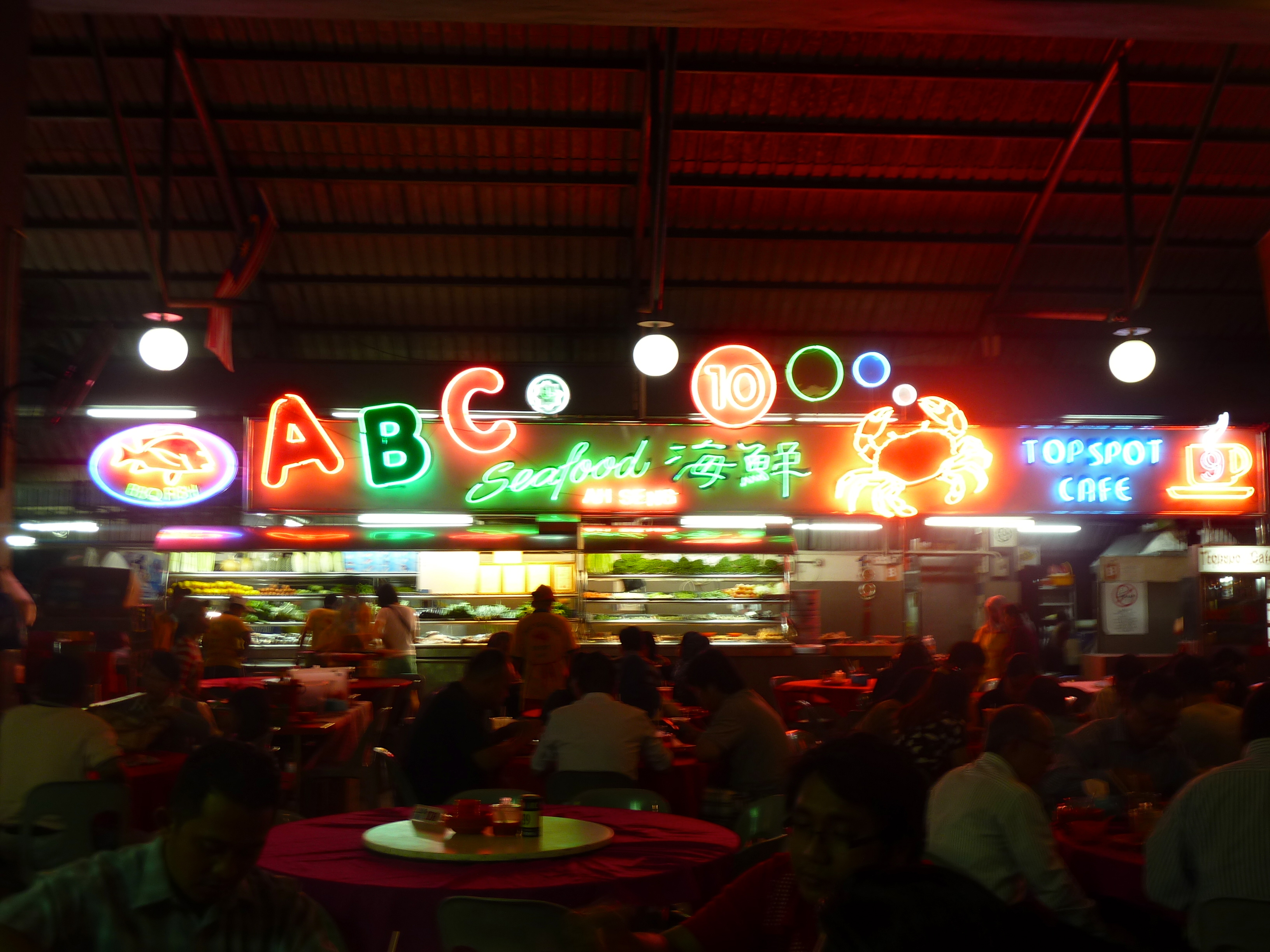
For dinner the first night we took a colleague’s recommendation to go to Top Spot, a food court on top of a multi-story parking garage.
This place is amazing. Go
The picture isn’t the best, but the food was. You literally pick your fish or other seafood from ice, put all the vegetables that you want on a plate, tell the staff how you want it cooked (they have different lists of cooking styles depending on what you’re eating), and enjoy your beautiful food when it arrives. We were in heaven the entire time. Our sea bass was steamed with ginger, pepper, garlic, and some other magical ingredients and it was quite possibly the best fish I’ve ever had.
We woke up early the next morning to catch the first bus to Semenggoh Nature Reserve, located about 45 minutes outside Kuching. Basically everything a tourist is supposed to do while staying in Kuching is 45 minutes out of Kuching. Public transit is cheap and shuttles are readily available, so there’s no need for a car. Semenggoh is a huge land preservation area with different types of botanical gardens, but it is best known for its orangutan project.
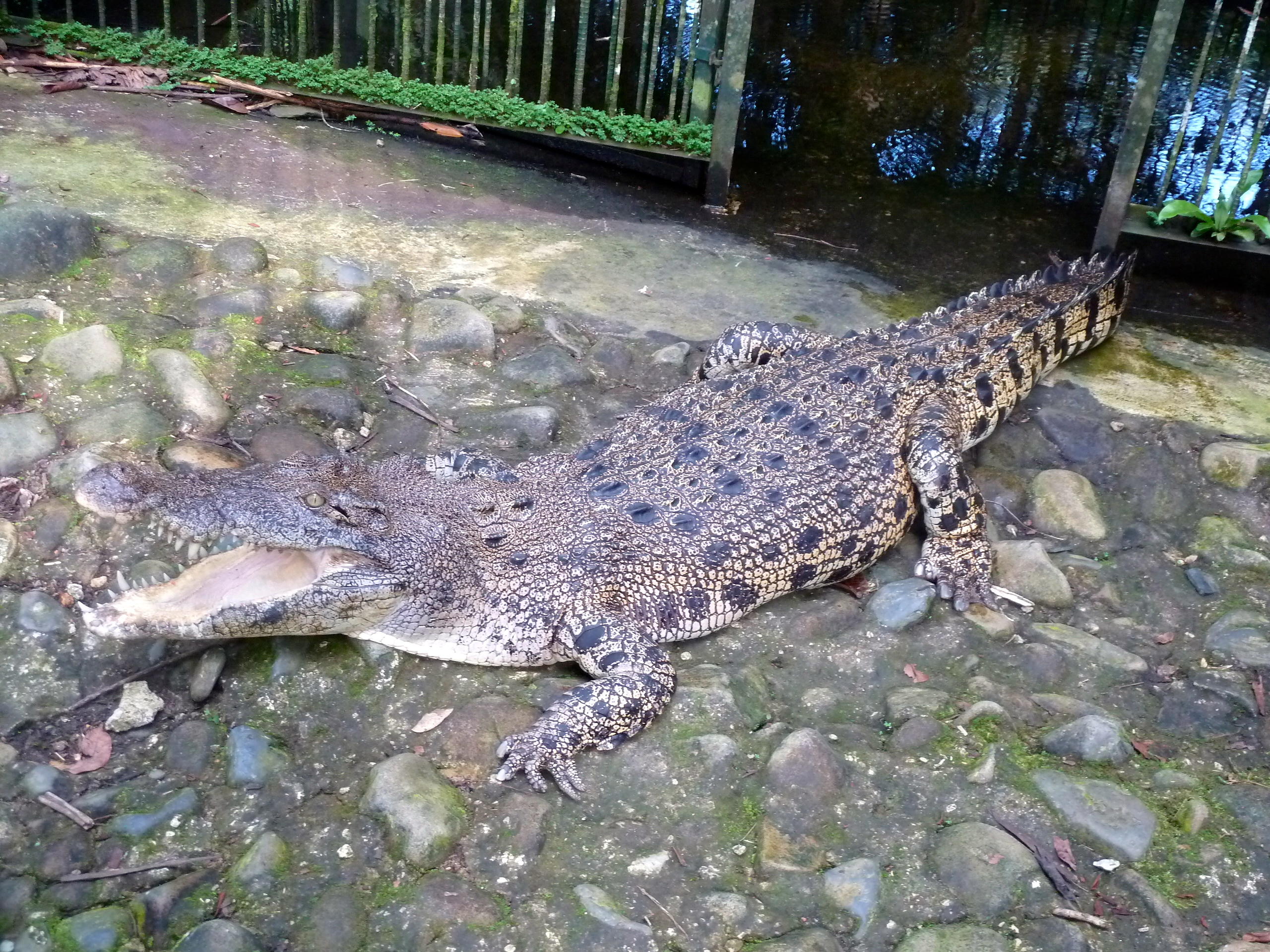
Semenggoh also had a few crocodiles, but no one paid much attention to them
The orangutans are fed twice a day at the center, though the goal is for them to find food in the while on their own. It’s the end of fruit season now, so they were beginning to return to the center at the designated feeding times.
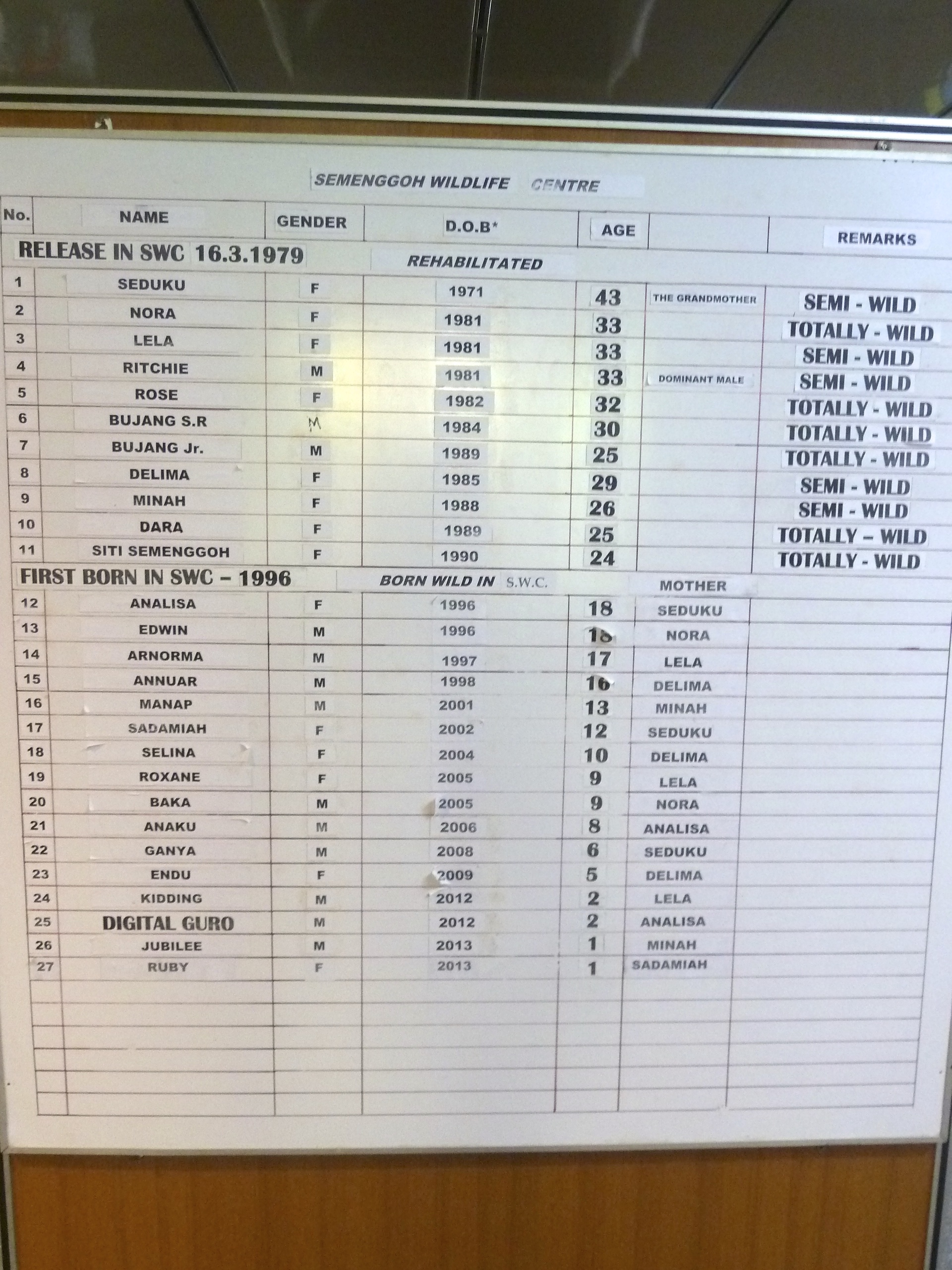
Handy chart helping visitors understand the family structure of these orangutans, when they arrived at the center, and how old they are
We ended up seeing both feedings because of a trip that we took in the middle of the day, so these pictures are a combination of the feedings. The first time, two mothers and their babies came to eat and the second time we met two young males and an older male (though not the alpha, who was reportedly lurking in the forest nearby). One of the mothers returned with her baby, too.
Watching the orangutans was one of the most amazing experiences I’ve ever had. They are so agile and flexible and so human-like. (Or, I suppose, humans are very orangutan-like.) They have distinct personalities, facial expressions, and relationships with each other and it was just a very humbling experience. I felt almost as though I were watching evolution as it happened; it is so easy to see how orangutans and humans are related. If you’re not convinced, consider that “orang utan” in Malaya means “people of the forest.” Wow.
After the first orangutan feeding, we joined an older Belgian couple with whom we had been talking to visit the Annah Rais Longhouse located 45 minutes away. They say that no trip to Sarawak is complete without visiting one of the many indigenous groups of the area and this Bidayuh longhouse is happy to have visitors.
Beautiful scenery we passed along the way. There are churches all over Sarawak and there were crosses on most of the doorways at Annah Rais
I felt a little strange walking through people’s homes and basically dancing on their heads, but if my RM5 entry fee helps alleviate their poverty (or supports their choice to live in traditional longhouses), so be it.
While visiting the Annah Rais Longhouse, Mitch bought a bottle of rice wine sweetened with sugar. We had it as a welcome drink on the way into the longhouse and had tried an unsweetened version the night before. We liked the first and loved the second. We also loved that it was RM5 and came in a Carlsberg bottle – definitely homemade and definitely authentic. After a delicious dinner at a local, cheap restaurant we took our Carlsberg bottle down to the river and shared it while looking out over the water. We really did love Kuching.
Our trip the next day, Friday, to the Sarawak Cultural Village 45 minutes from Kuching helped put the Bidayuh lifestyle into context. The Cultural Village contained examples of dwellings of many of Malaysia’s indigenous peoples and it was really interesting to see the differences and similarities between them, as well as learn about where they’re located on Borneo. Considering I knew next to nothing before going, I’m glad we went. However, the lack of pictures should tell you my overall impression of Sarawak Cultural Village. I found it stale, dry, lacking in detail, and hellbent on an agenda to teach its visitors that the modern Malay people are superior to everyone else. In short, I found it distasteful and insulting. I didn’t think any of the people who worked there (there were no interpreters, which is a crime in itself) took the place seriously and concrete and nails do not give much of a representation of authentic building methods. If nothing else, we started to ask questions that we didn’t know we needed to ask.
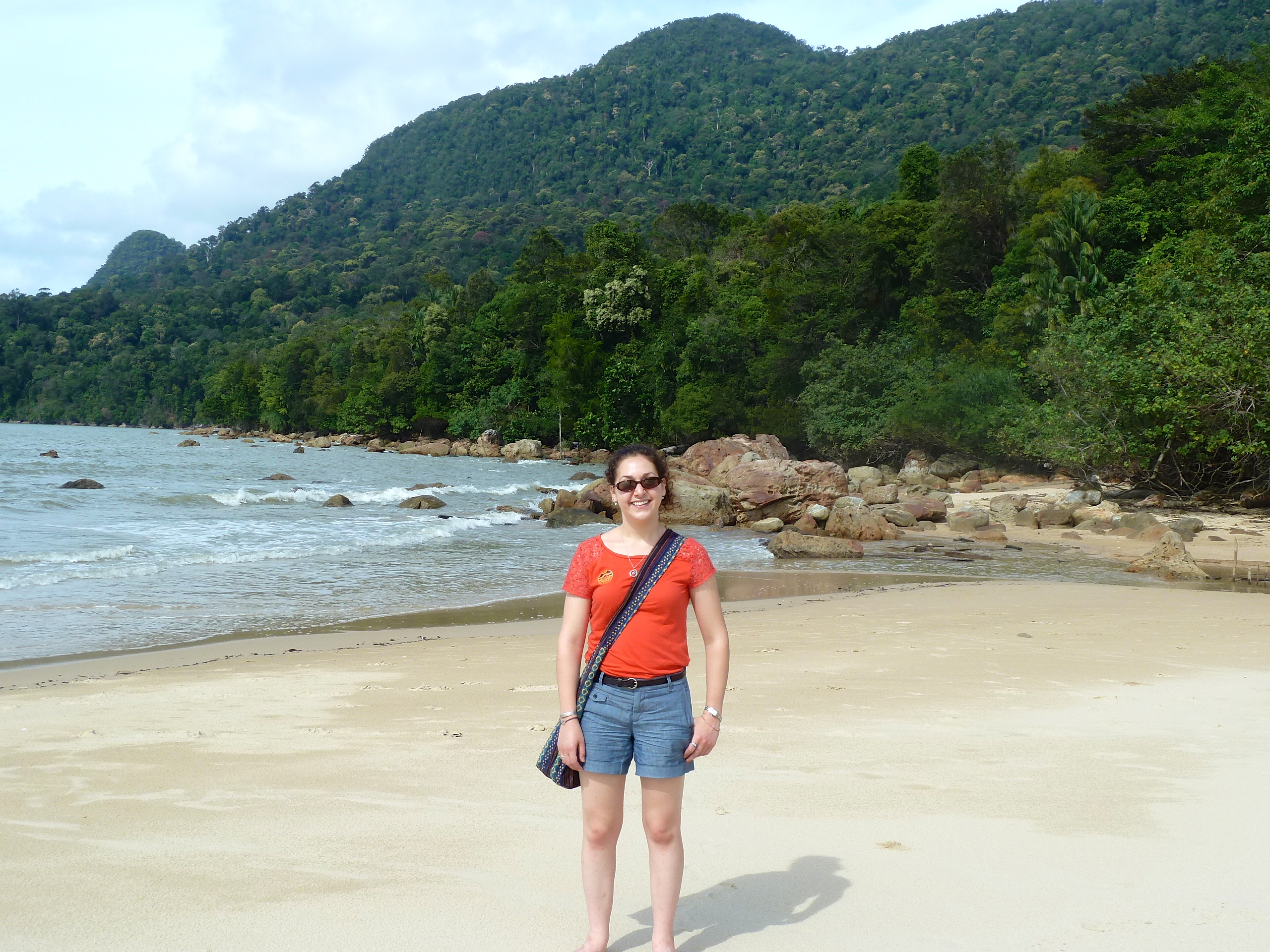
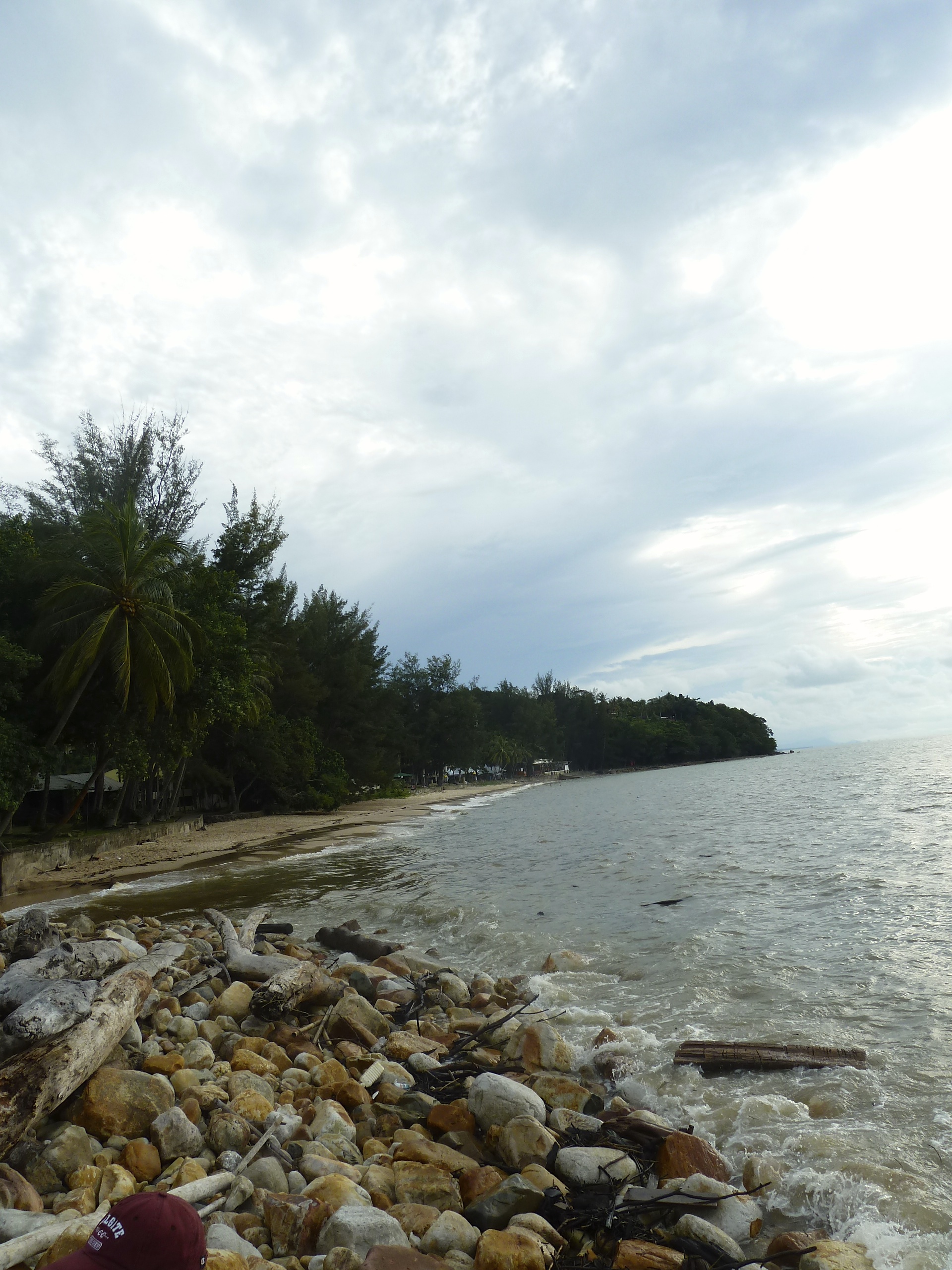
Our walk along the beach later in the afternoon proved less educational, but also more enjoyable. The South China Sea and the rain forests along the coast are really beautiful.
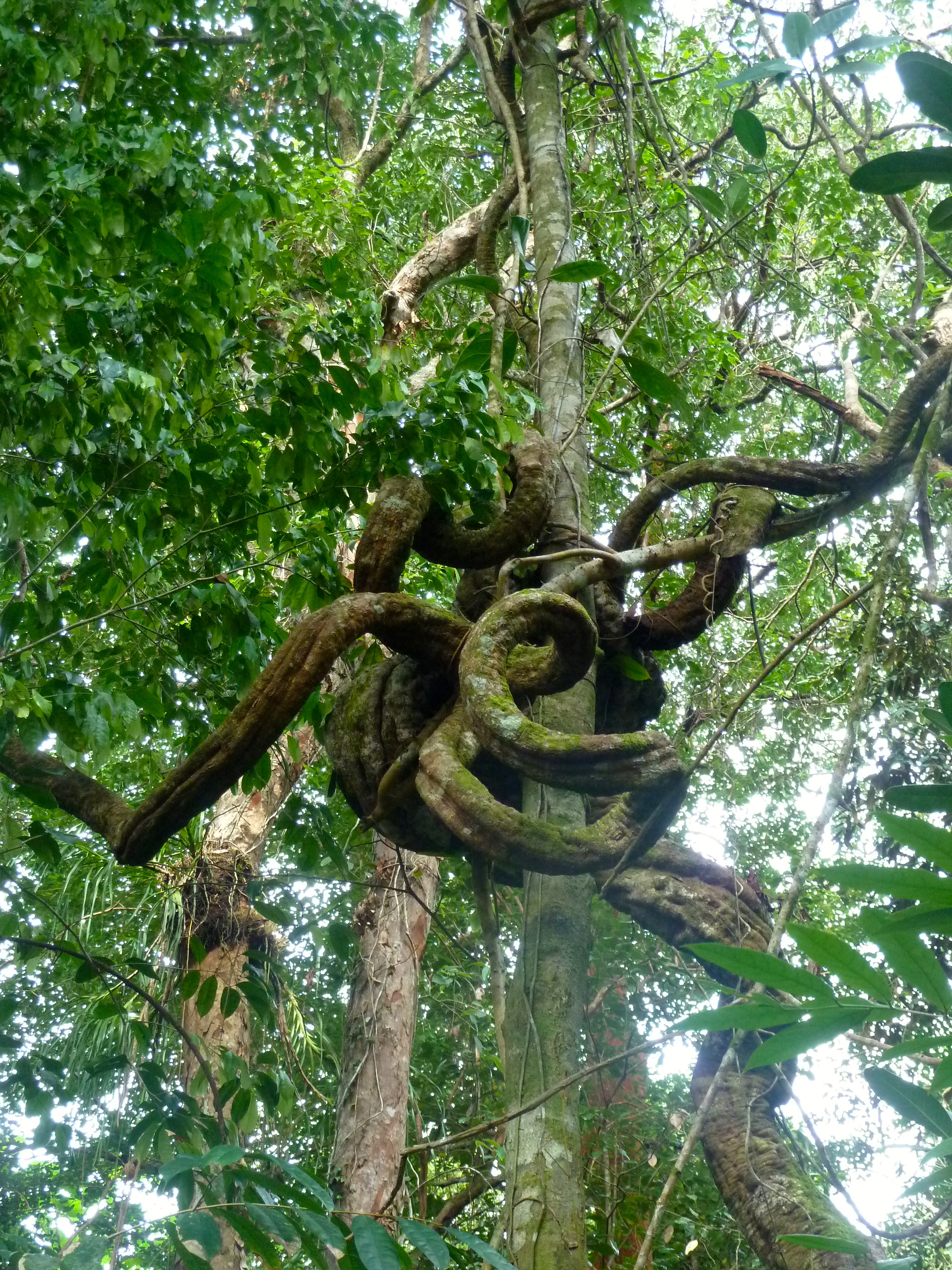
Mitch by the waterLook, I’m in a picture!Really cool vineBeautiful Borneo
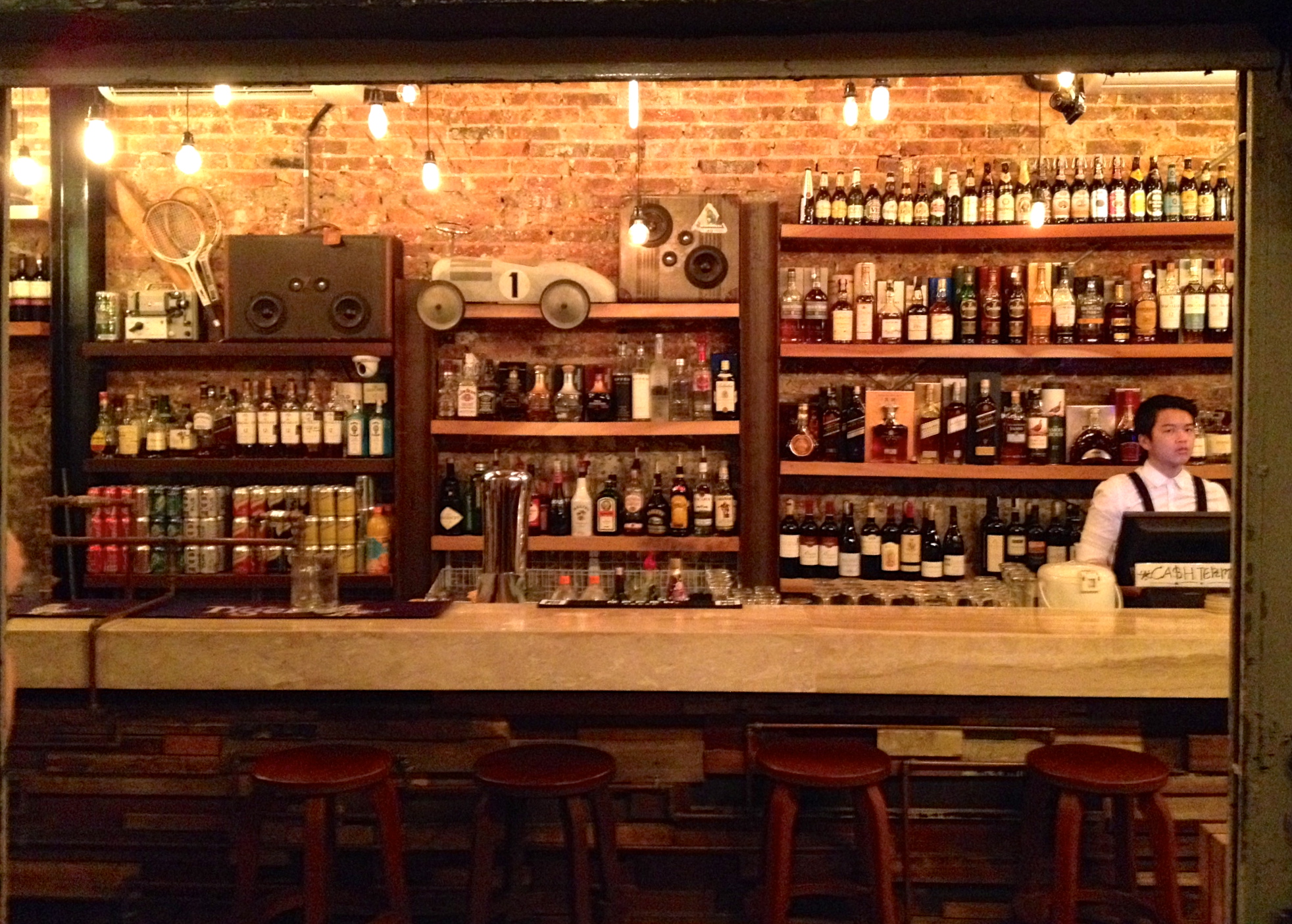
Dinner Friday night found us at the Drunk Monkey, another place recommended by my coworker. Ray learned that we were going to Kuching and sent me a lengthy email with suggestions of not only where to go, but which sites and trips to combine. We followed his advice almost to the letter. Anyway, the Drunk Monkey is a Western-style bar that had a handful of takeout menus from cafes across the street sitting at the counter. We ordered our food at the bar, a bartender brought the order across the street, and cafe staff brought us our meals. Great system!
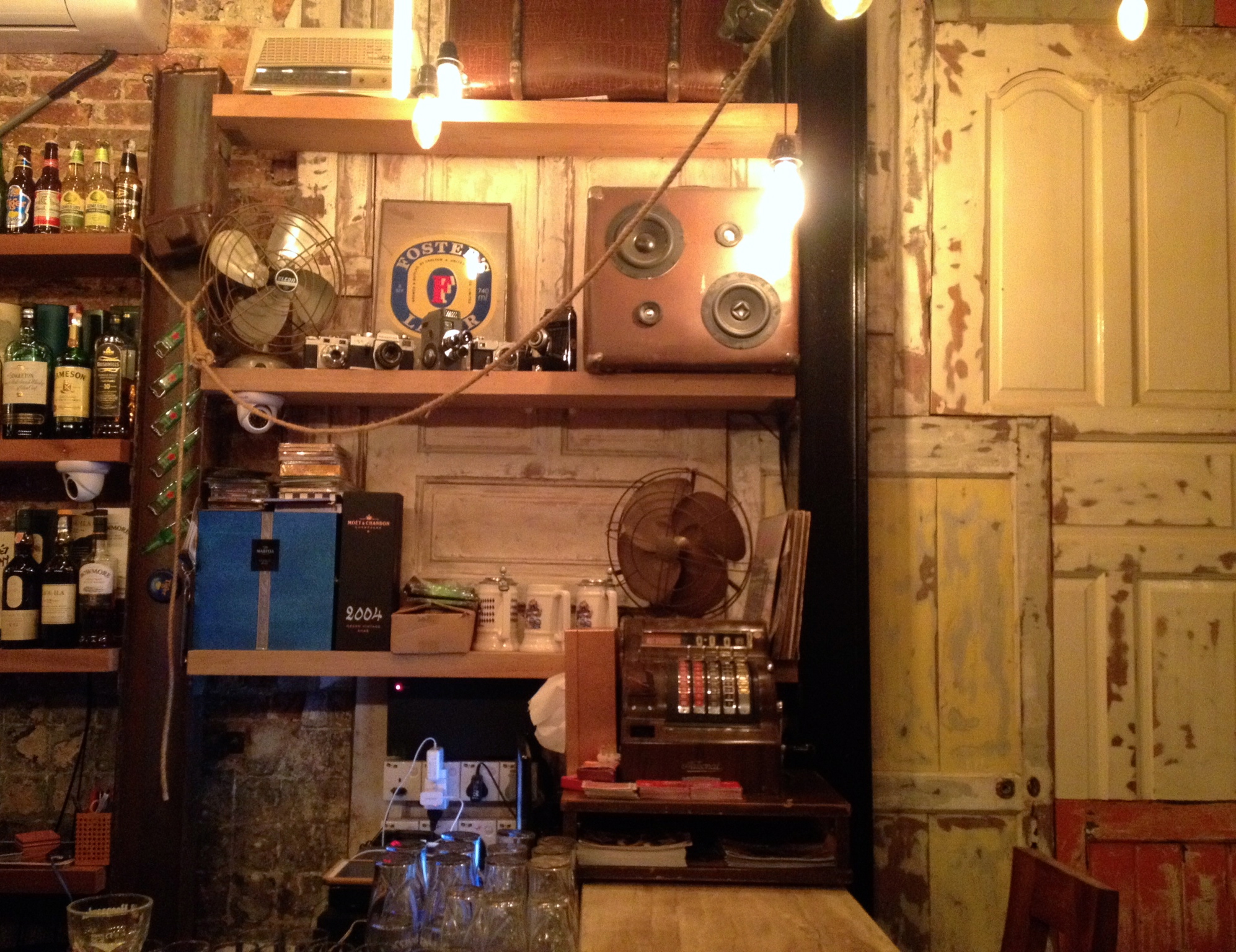
Look at all the choices!There was a cool atmosphere in the bar with old posters for Coca-Cola and various vintage objectsDrunk Monkey’s exterior was a alleyway in between the bar and a restaurant next door
(And then we bought a bottle of rice wine at a corner store that came in a Tiger bottle and was missing the sugar from the Annah Rais bottle. We didn’t finish it, unfortunately. As Mitch said, it was like drinking real pirate liquor.)
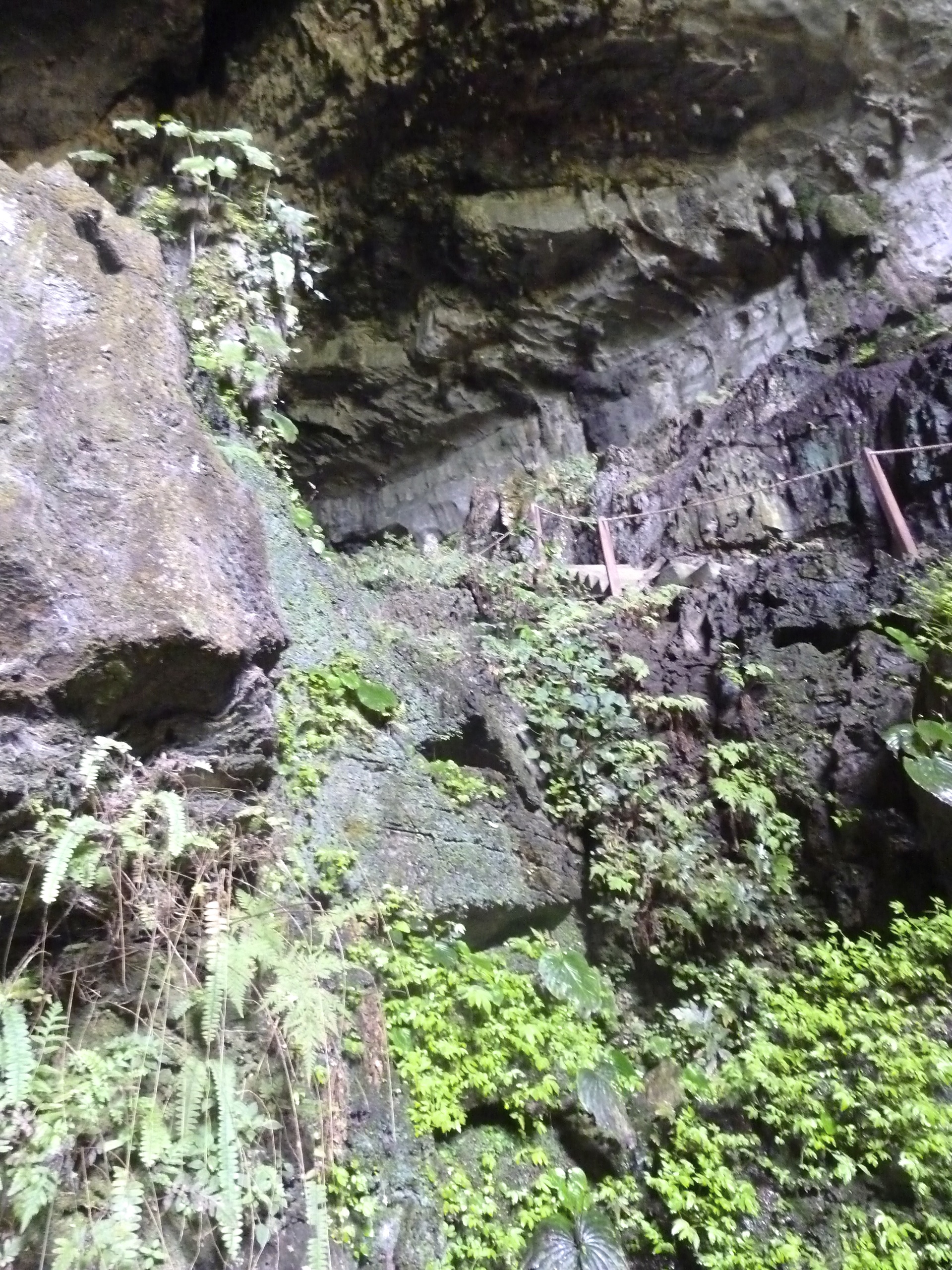
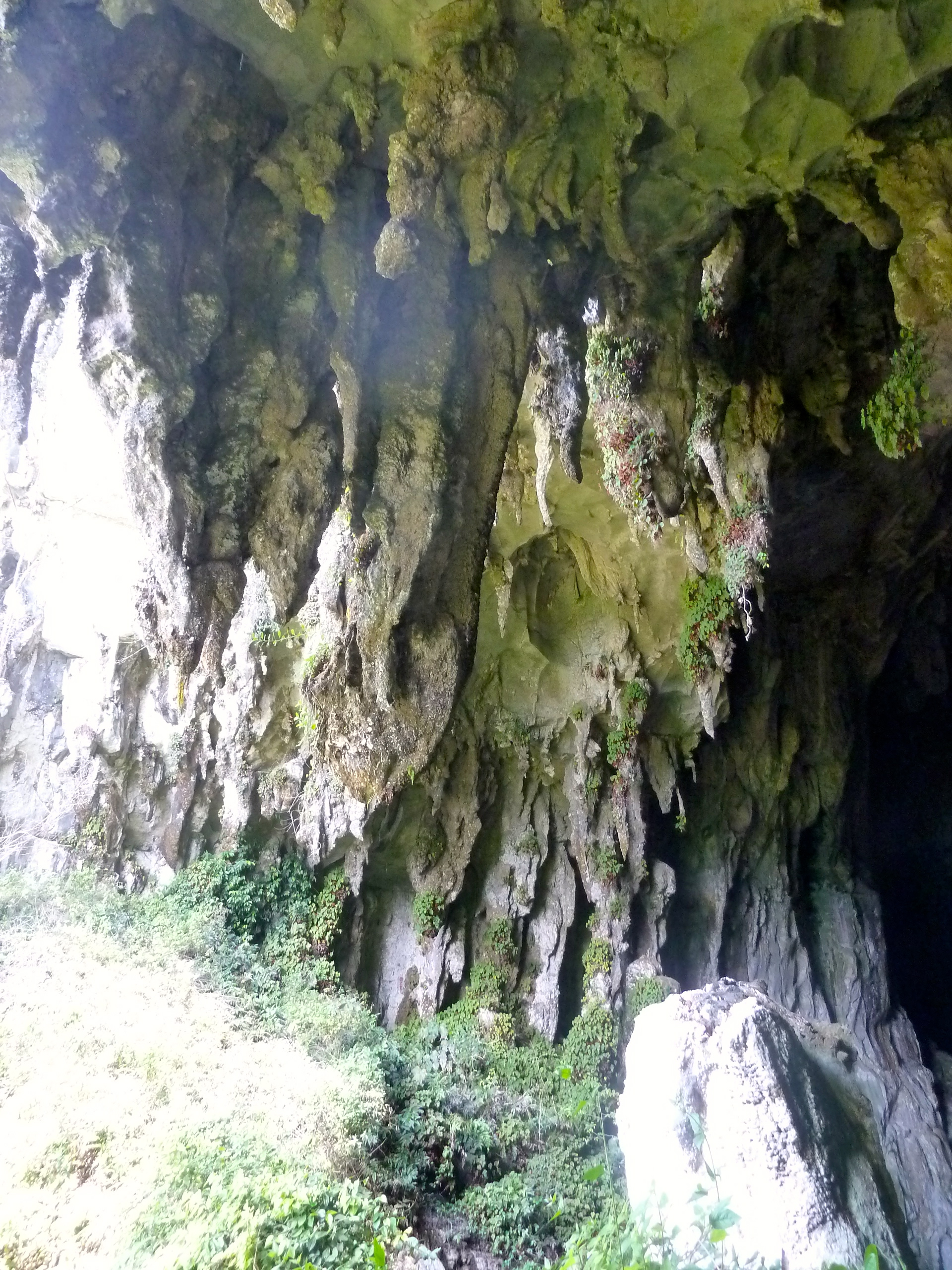
On Saturday we met up with a friend who was also in Kuching for the weekend. We rented a car and drove about – you guessed it! – 45 minutes to Bao to see the Fairy Cave, a cave so named because of the fairy statue inside. It was a dark, scary walk both up into the cave and down the slick flights of stairs back to Earth, but definitely worth it. The pictures don’t do it justice, but imagine grass and foliage growing in a bat cave. Imagine that all you can hear are the bats and that the only light comes from a gaping opening hundreds of feet off the ground.
From there we drove for another 45 minutes or so to the coast to put our feet in a very, very hot bit of the South China Sea. The beach we found was at the edge of a tiny fishing village and completely empty. It was also flat, which provided some fantastic scenery and a real appreciation for the vastness of nature.
We drove around the coastal countryside for a bit longer, found a restaurant with some delicious fish that had definitely been caught that day, and finally made our way to the airport. It was a very nice way to end a wonderful trip.
Long story short: We loved Kuching and want to go back. The more time one has in Sarawak, so I’m told, the farther from Kuching one ought to go. We’d love to spend a few nights in Bako National Park, for example, or stay at a longhouse further out in the jungle. Maybe next time!
This weekend was the first of our three consecutive weekends of travel. As I’m sure you gathered from my last post, I’m not 100% delighted with life here and Mitch and I decided it was high time to begin exploring Malaysia. We chose the island of Langkawi because it has beaches and we wanted to spend some time in clean mountain air, which one can find everywhere in Malaysia except in cities.
Our trip started Friday evening on a pretty amazing AirAsia plane. These are iPhone photos so they’re not the best quality, but I guess AirAsia loves Taylor Swift as much as I do!
I’ve never flown AirAsia before and got a good laugh out of just how “budget” the airline is.
Poor Mitch’s legs hardly fit!
Our plane arrived about an hour late but the Seaview Guest House where we were staying is pretty close to the airport. Lesson learned: You get what you pay for. We paid $12 a night and had a room with two double beds and use of a shared bathroom located at the bottom of a very steep staircase. It was not pretty and I wouldn’t stay there again. (We do, however, plan to return to Langkawi.) Seaview Guest House isn’t exactly conveniently located (again, you get what you pay for) and we needed to take taxis everywhere we went. Since Langkawi is a very touristy island, each taxi ride cost RM20. It’s only about RM50 to rent a car for the day, so we learned after the fact, so that’s what I’d recommend to other travellers. We will definitely do that on our next trip.
The best part about Seaview Guest House, though, is that it’s attached to a bar so we were able to have our first cocktails since coming to Malaysia. Like the room, the drinks were cheap; unlike the room, they were amazing. There were a handful of people hanging out at the bar when we got in Friday night so we joined two guys from Sri Lanka and had a lot of fun talking to them. We exchanged contact information via Facebook (oh, Facebook, how useful you are) and spent quite a bit of time with them last night, too. Meeting new people is a lot of fun, especially when everyone is brand new to an area and when everyone is on holiday and therefore pretty happy!
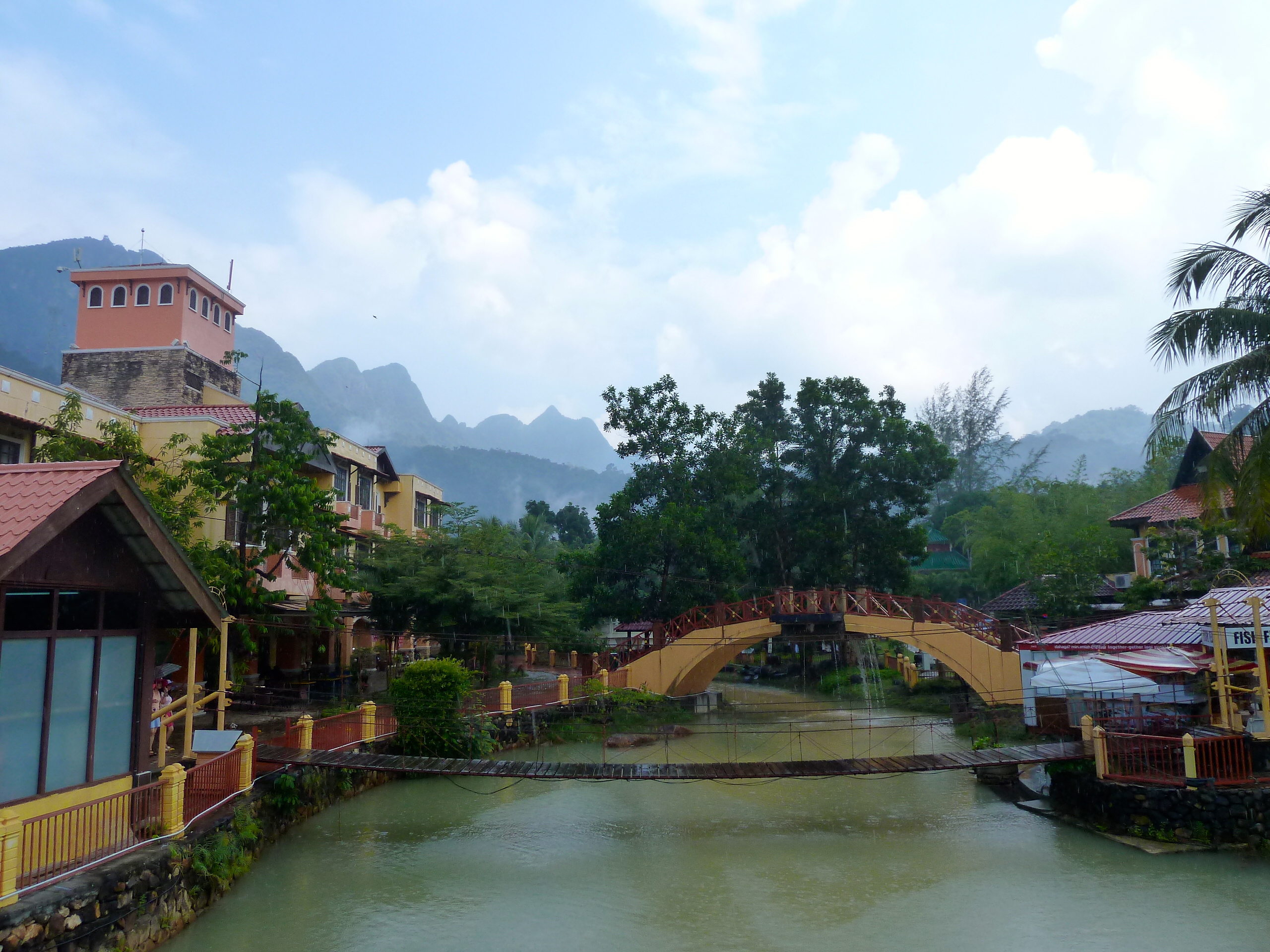
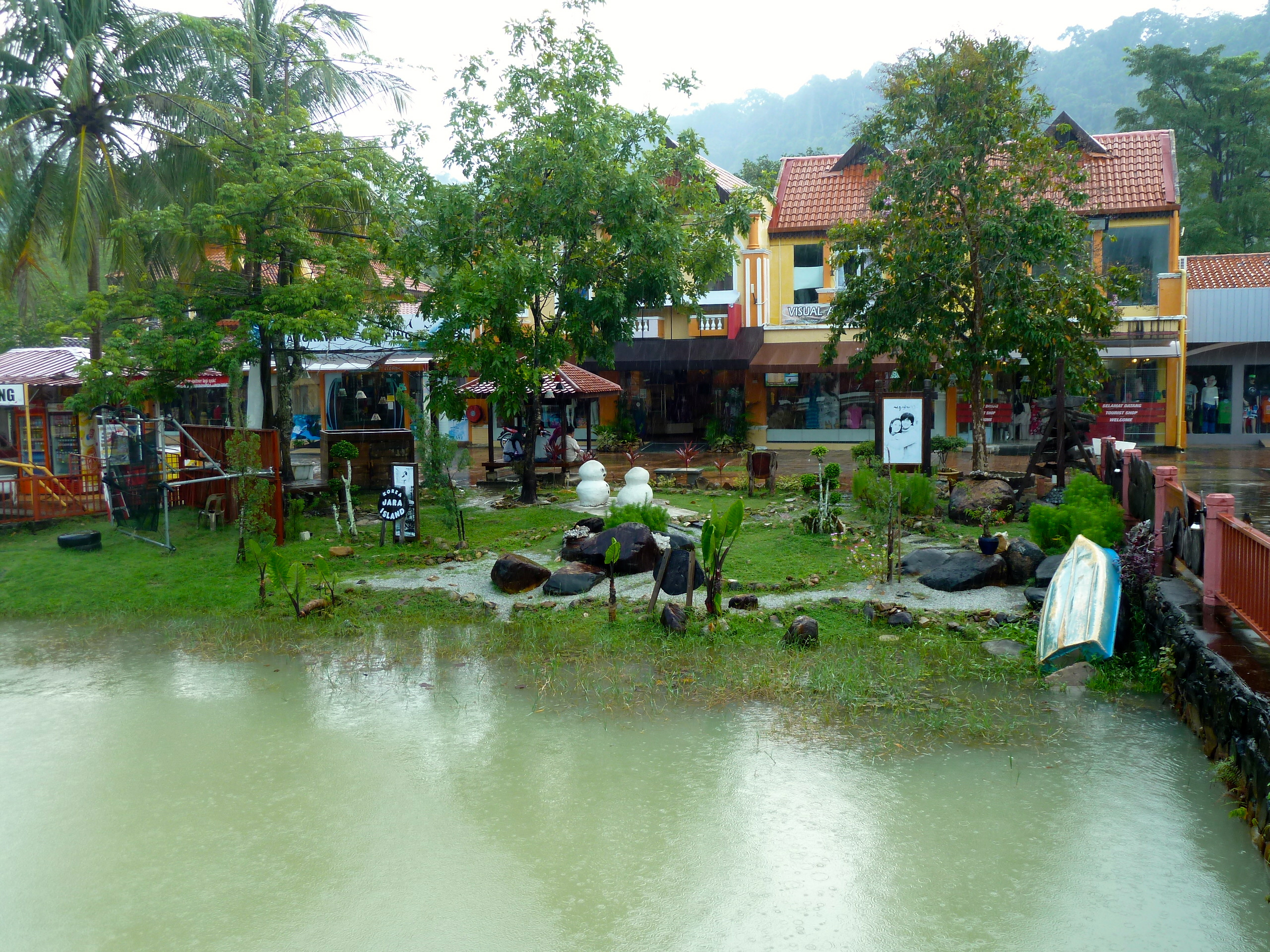
We woke up pretty late on Saturday and then ventured to an area called Oriental Village, which is very pretty but also very touristy. Langkawi is famous for a cable car ride from Oriental Village to the closest mountain and we really wanted to go. There’s also a bridge that connects the mountain to its neighbor that adventurous people can walk along. We totally planned on doing that but the bridge was closed for maintenance, another reason we have to go back.
It was sunny when we got to Oriental Village, rained, and got sunny again, which you can see in the photos:
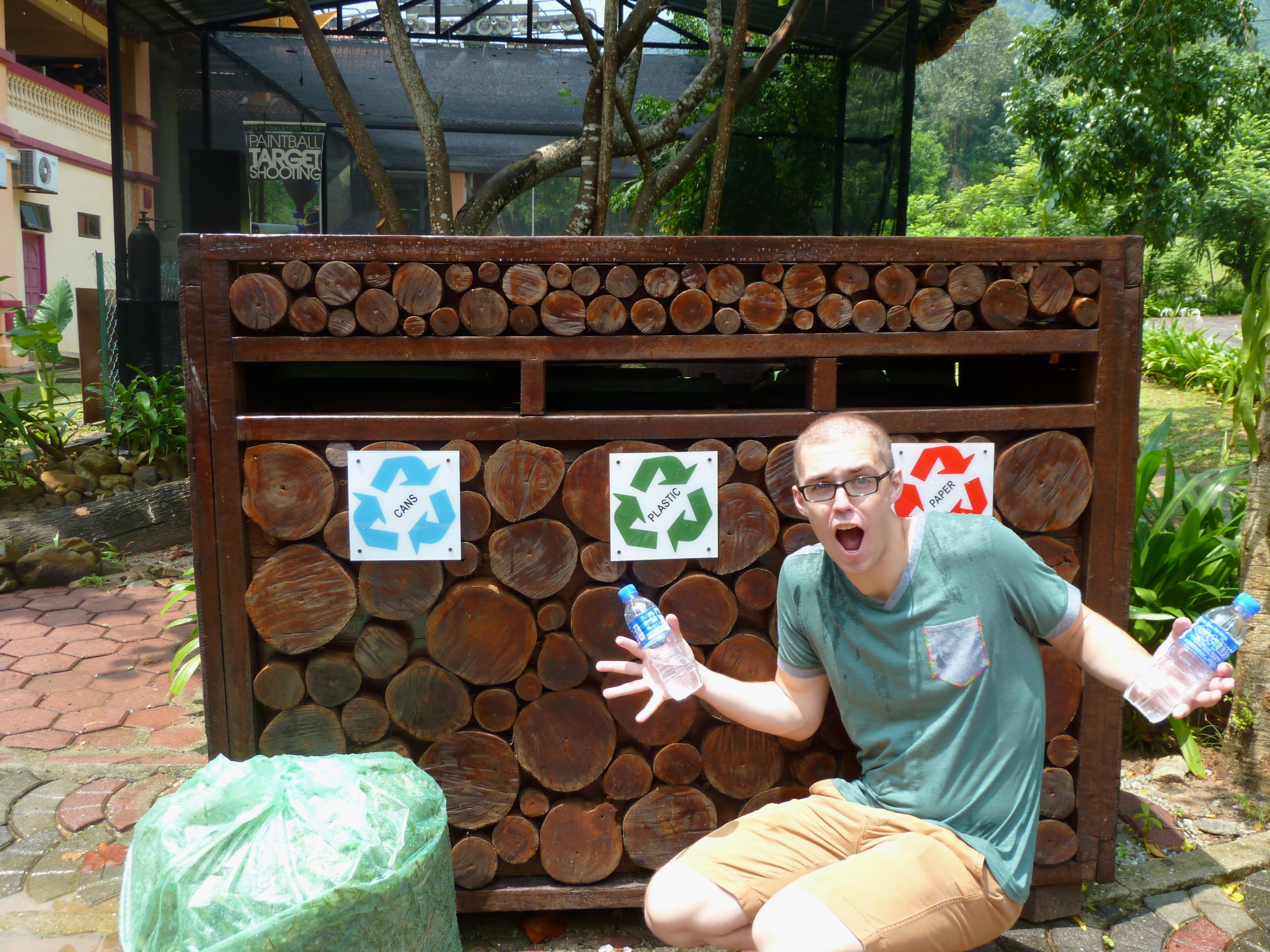
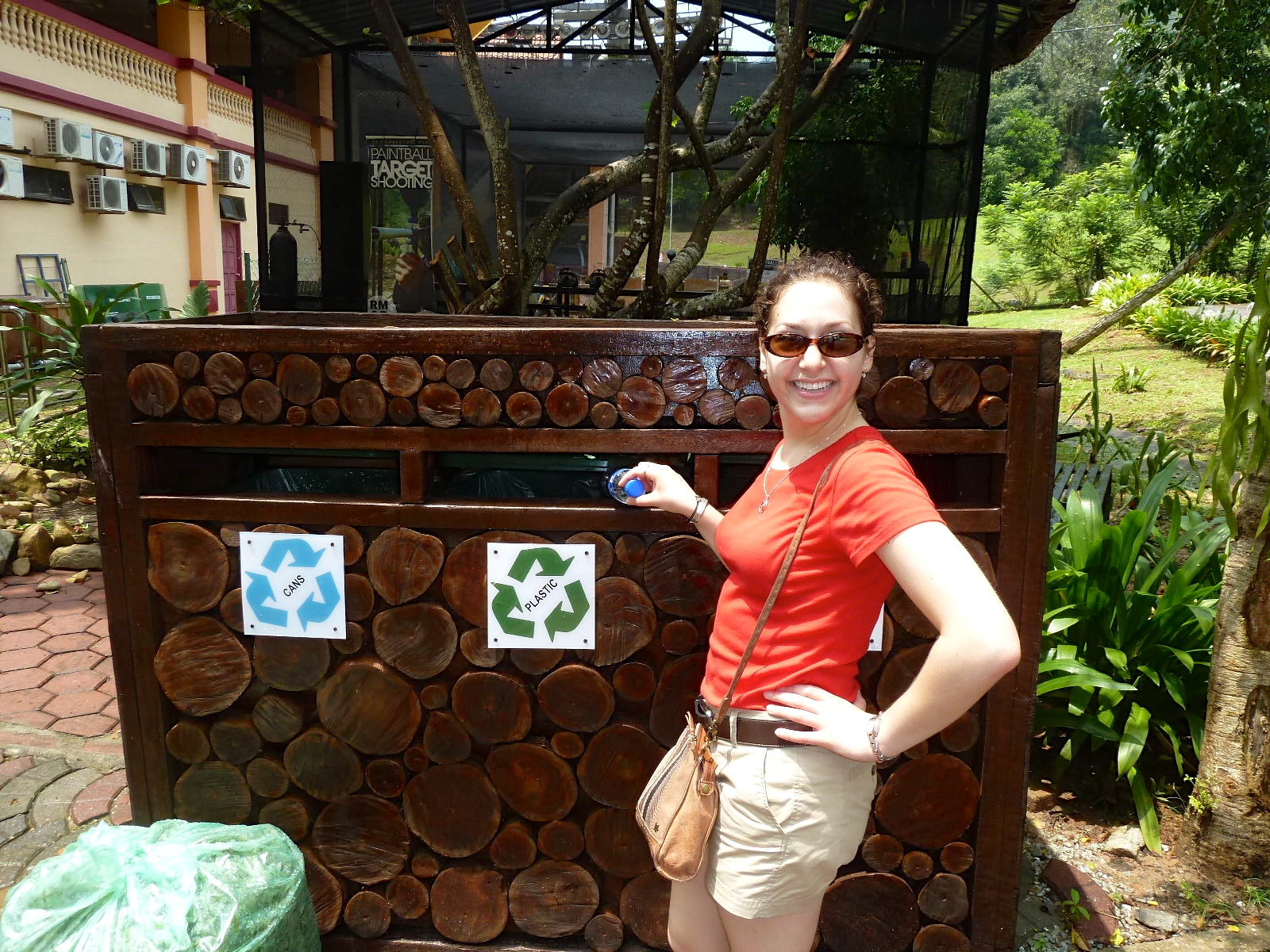
Not only was it beautiful, but we also found recycling!
Recycling?! In Malaysia?! What????Happy recycler
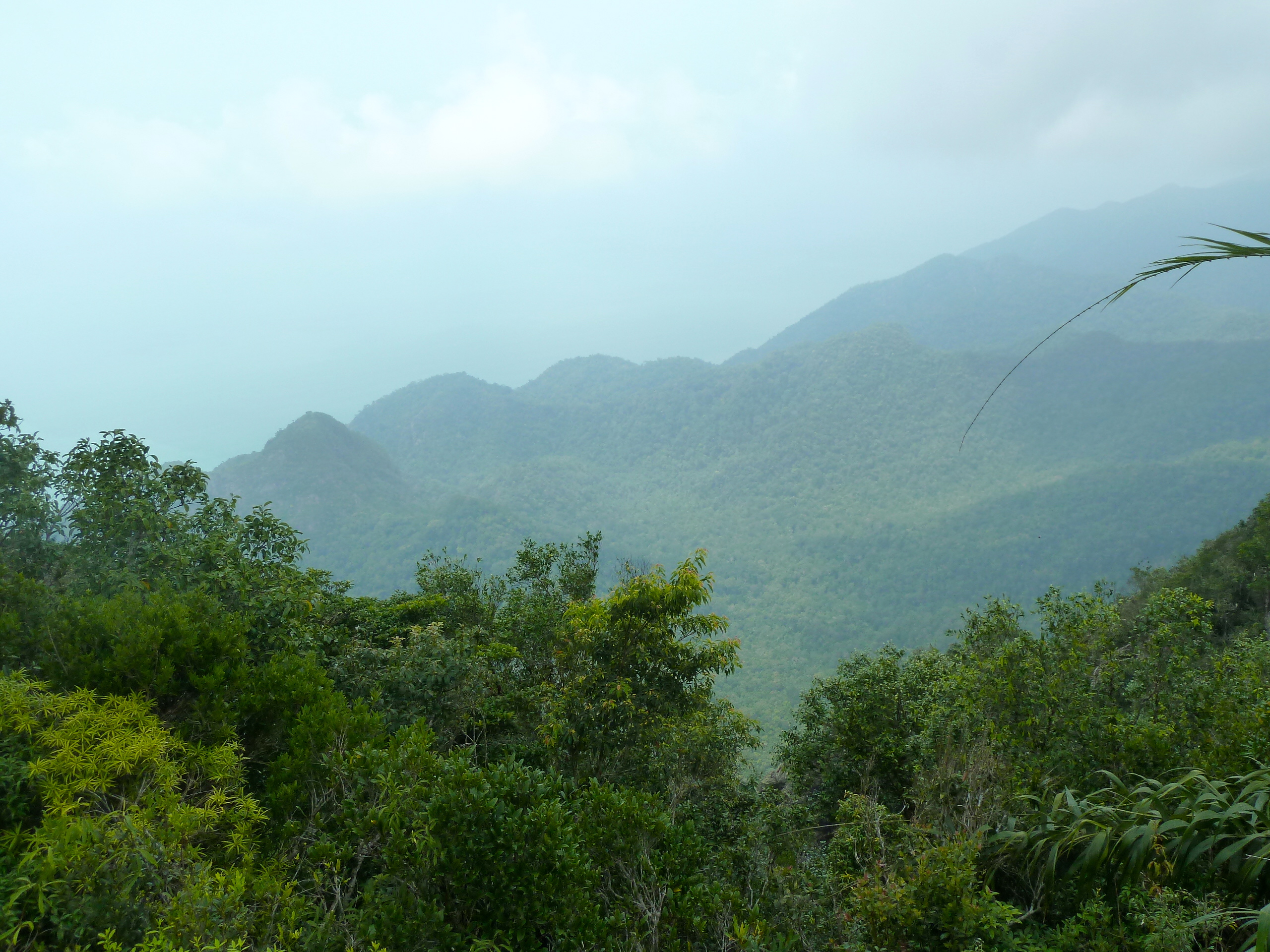
Thanks to the weather, our cable car excursion perhaps was not as thrilling as it might have been. Visibility gradually decreased as we went up the mountain, which reminded both of us of skiing out West in the US. On a clear day, one should be able to see the entire island, but this was not a clear day. It was beautiful, though, in a very different way. At times, it honestly looked like the fog was creeping up around us. It was rather sobering to be so small and insignificant and hidden in a cloud when we knew there were mountains around us. The air smelled fantastic, too. If we were going to be in Langkawi longer, we would have waited to see if the weather cleared up but we didn’t have that option. That’s the drawback of short trips, I guess, but it’s better than not going at all. I’d definitely go again on a clear day.
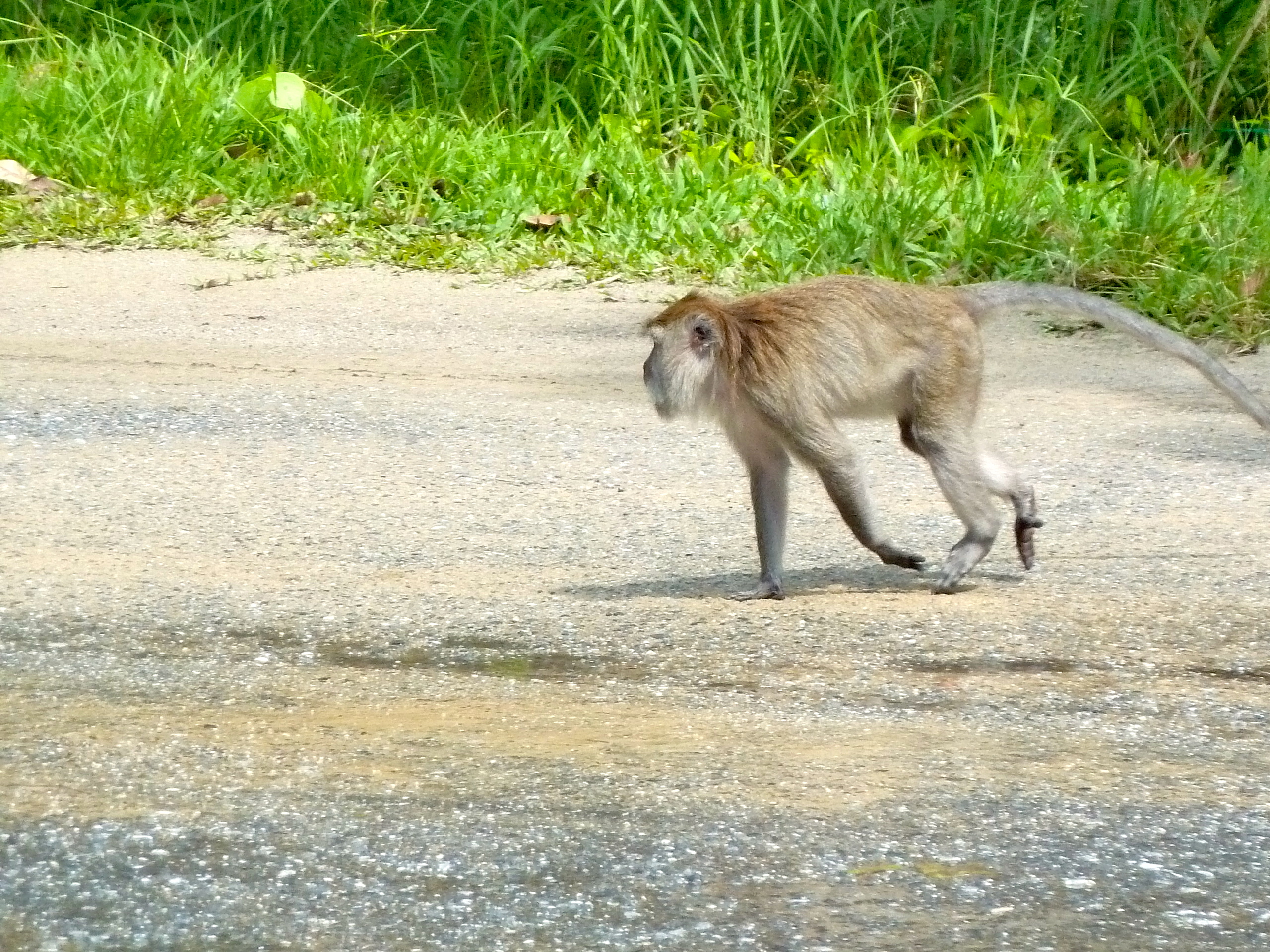
In sharp contrast to Seremban, Langkawi has wildlife! It also has cats and dogs everywhere, but so do we. We passed multiple groups of crab-eating macaques searching for food, picking bugs off each other, and, in the case of this one, pursuing mates.
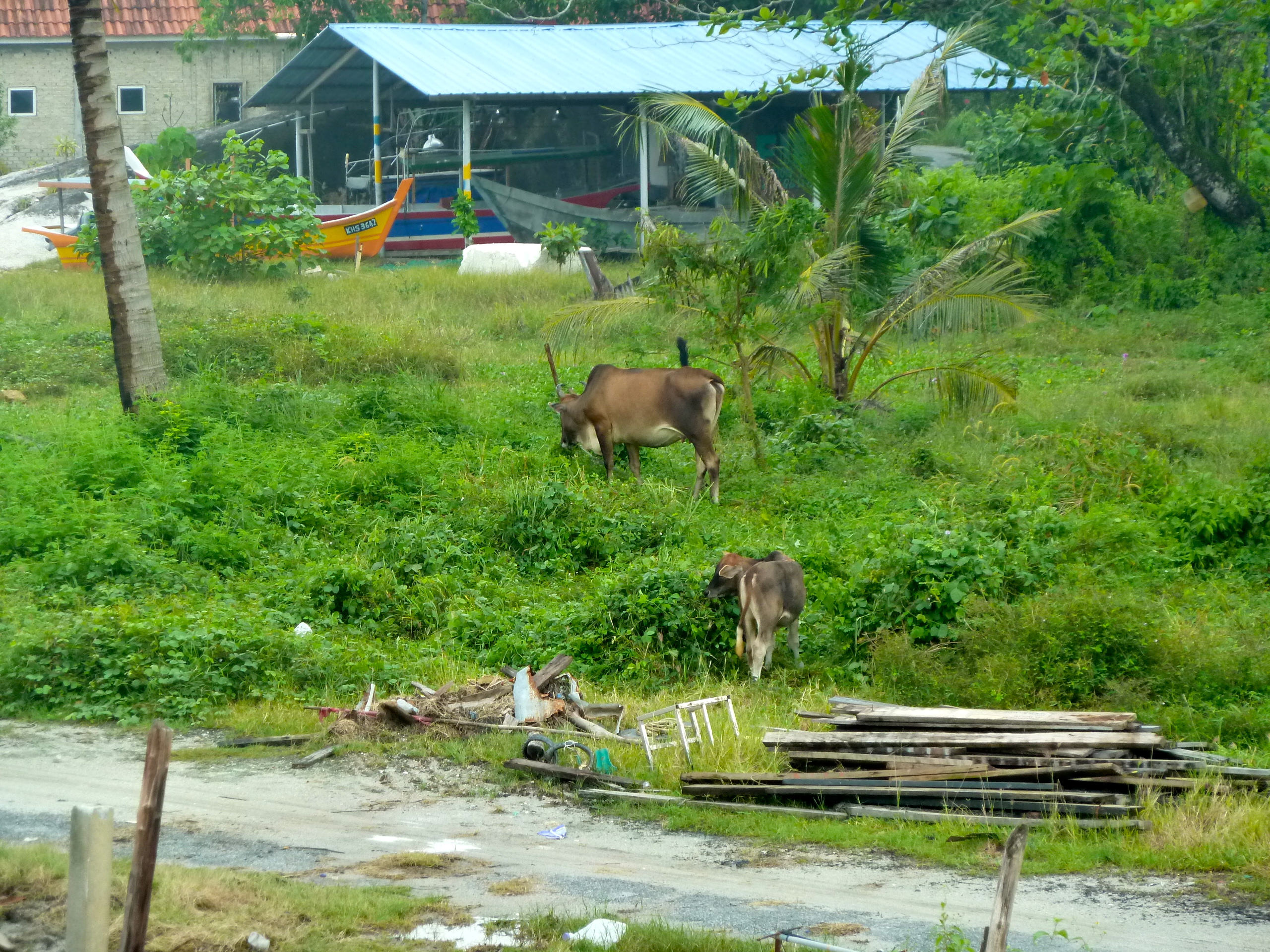
Macaque on a missionThere were also groups of buffalo and cows grazing in just about every open field (and some not so open fields)
The afternoon remained cloudy but we went to the beach anyway and walked up and down for long enough to watch the beginning of the sunset. We passed a creek of little fishing boats on the way there, which I just loved.
The beach had some of the softest sand that I’ve ever felt, but we had to go pretty far into the water to find it. Otherwise it was rather rocky. There’s a marina in Langkawi that we passed on the way to the beach and a lot of the boats are fishing boats, so it was fun to watch them move around very slowly and then finally head back to the marina with their catch for the day.
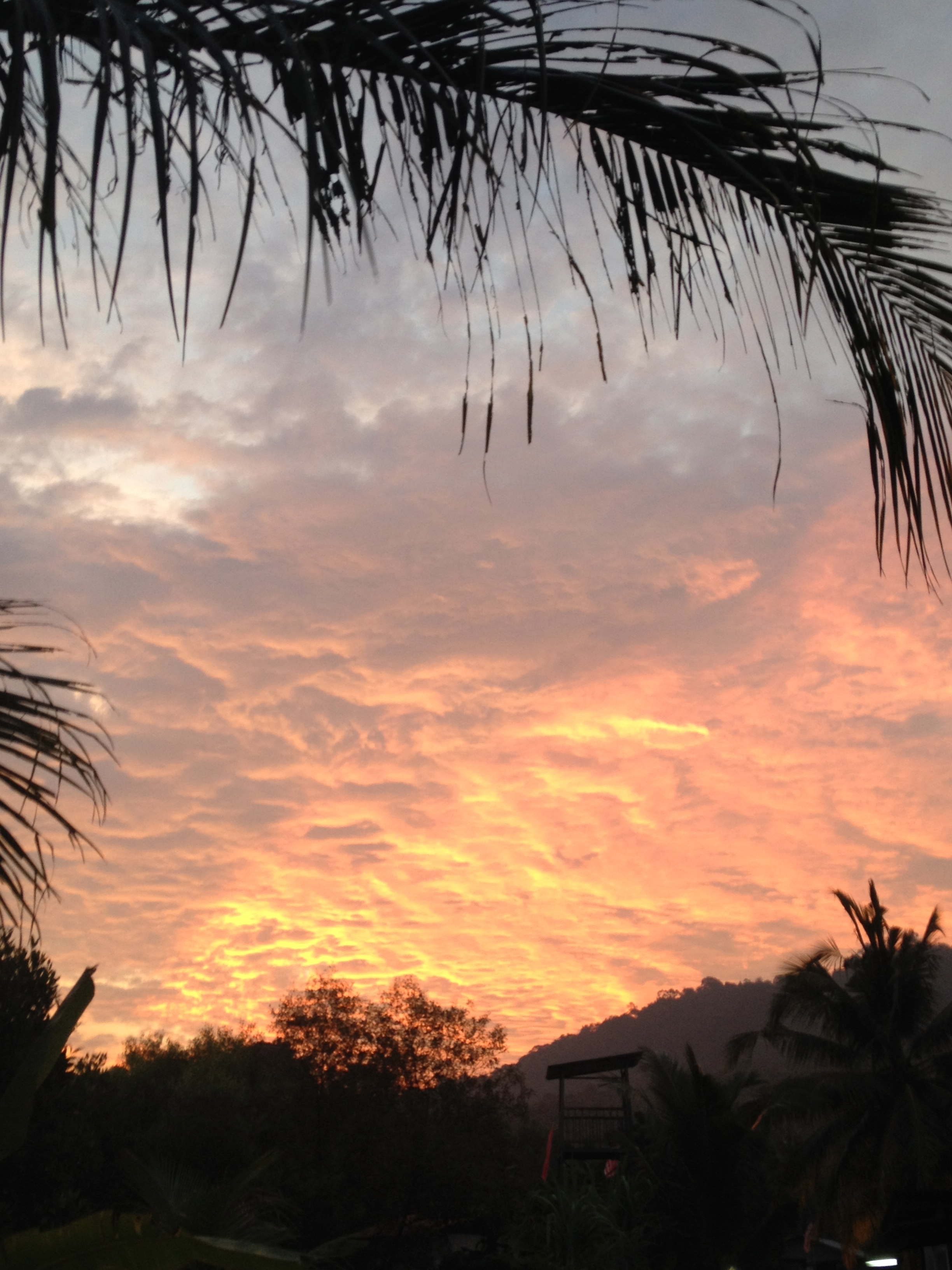
As the sun began to set, it also managed to break through the clouds so we had a spectacular sunset when we got back to Seaview.
I have a thing for pictures of rooftops. I took this as soon as we got back from the beach and I love the way the light from the setting suns reflects on the roofs.
Our Sri Lankan friends introduced us to a new arrival at Seaview, a guy from Japan taking a year off from university to practice his English. We all had a few drinks and then we all went to Cenang Beach late Saturday night, once the tide had gone out. The sand was soft and the waves were larger and louder, which I love. We didn’t going into the water because it was 10pm by that point, but next time we visit Langkawi, I’d love to stay at Cenang Beach because that’s where all the action is – restaurants, shops, places to book island tours, etc. Next time, we also plan to visit the city of Kuah and hike up to Seven Wells Waterfall, which we could see from the cable car.
Lessons learned from this trip:
In terms of accommodation, you get what you pay for
Stay in the city where the action is
Taxis are expensive and renting a car is not; therefore, rent a car
Be friendly and you’ll make friends
It was a really great weekend. We were very glad to get away from the city, breathe clean air, spend time outside and in nature, meet cool people, and just be somewhere else. Hopefully we’ll return to Langkawi before leaving Malaysia because there’s definitely more to see and do!
Photos, travels, musings, and ideas on education by someone trying to make the world a better and more peaceful place





















 By Rebecca Michelle
