Tag Archives: Waterfall

Travel Guide: Madeira

Funchal

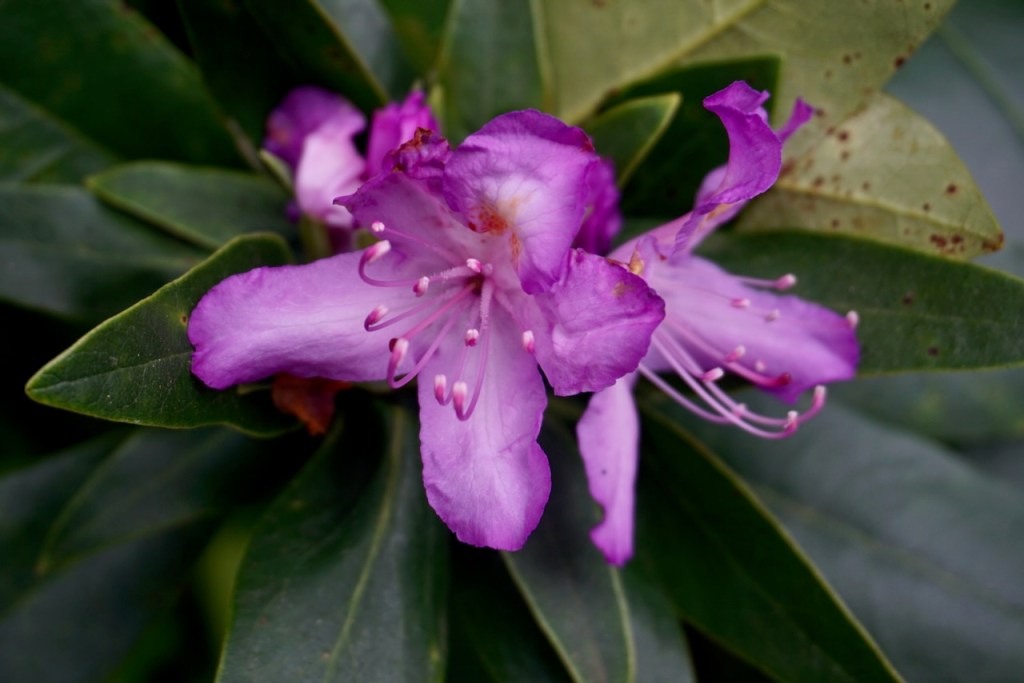
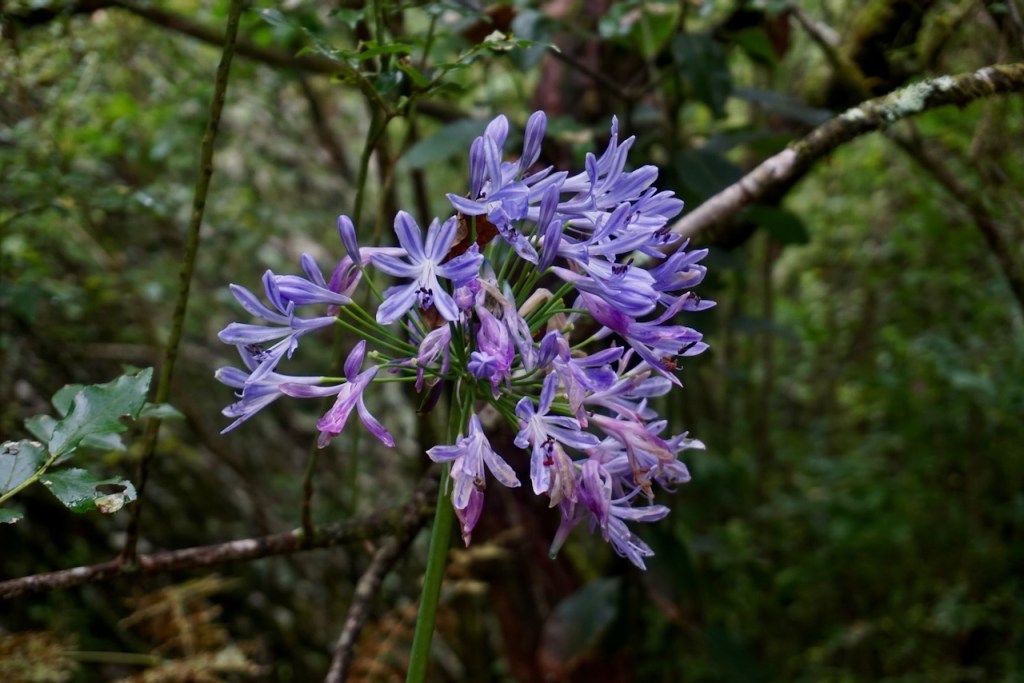
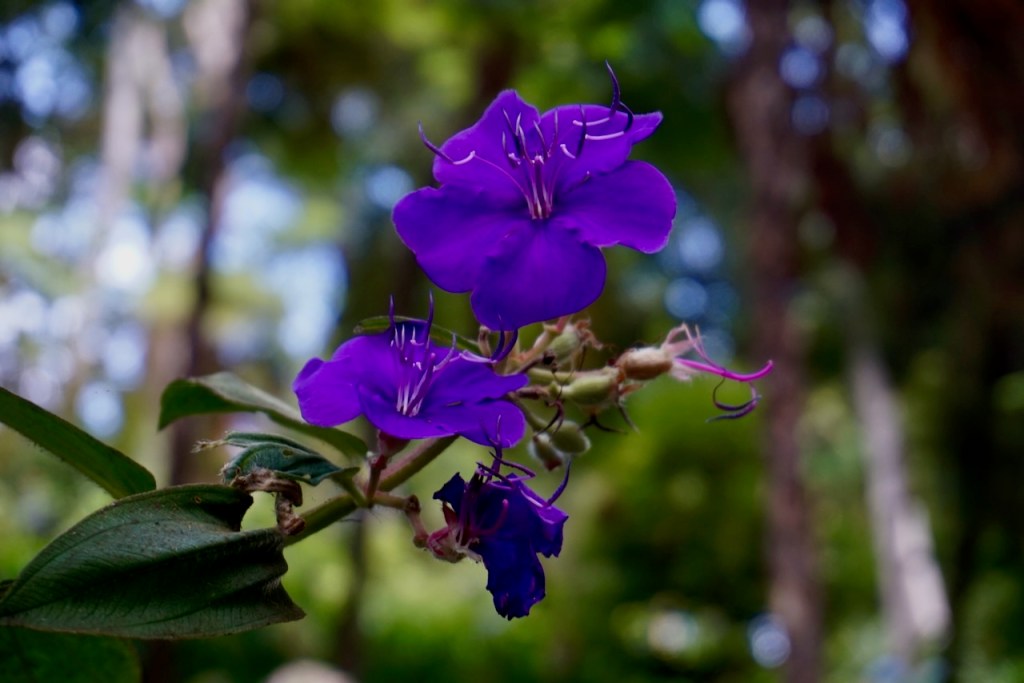
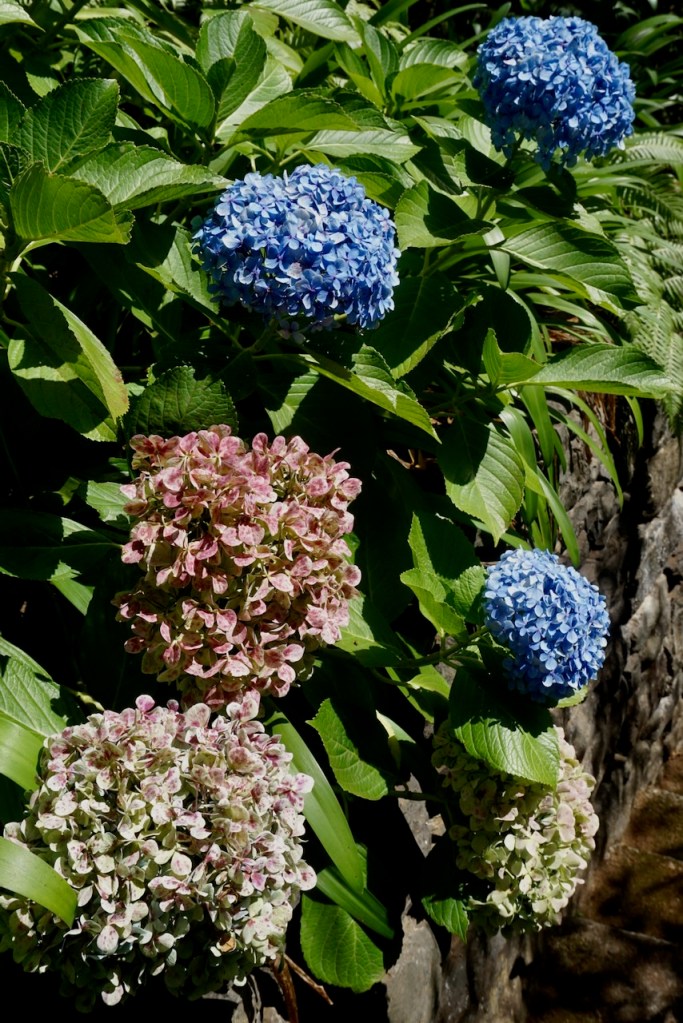
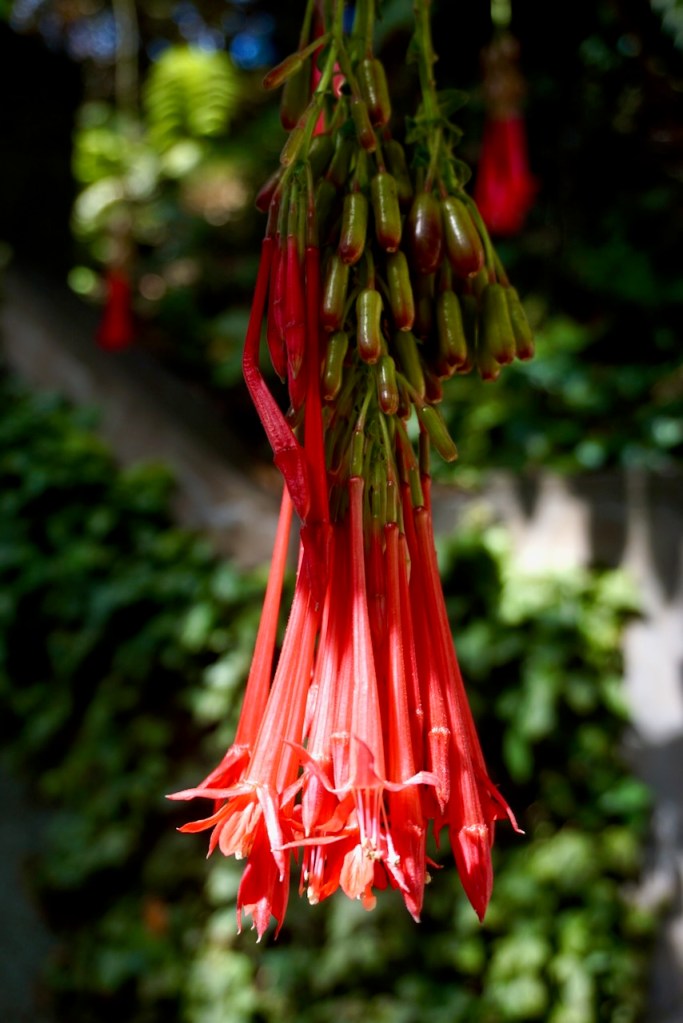
Madeira is a Portuguese island off the coast of Morocco, and I knew little else about it when my partner and I decided to spend a week there. For reasons that immediately became apparent upon our arrival in the capital, Funchal, the island is known as the “Flower Island”.

The temperature on Madeira remains constant year-round and the island is full of microclimates, which was the most amazing part of our trip. The vegetation and foliage are more diverse there than anything we’d ever seen in a similarly-sized area, and the landscape was made up of different worlds.

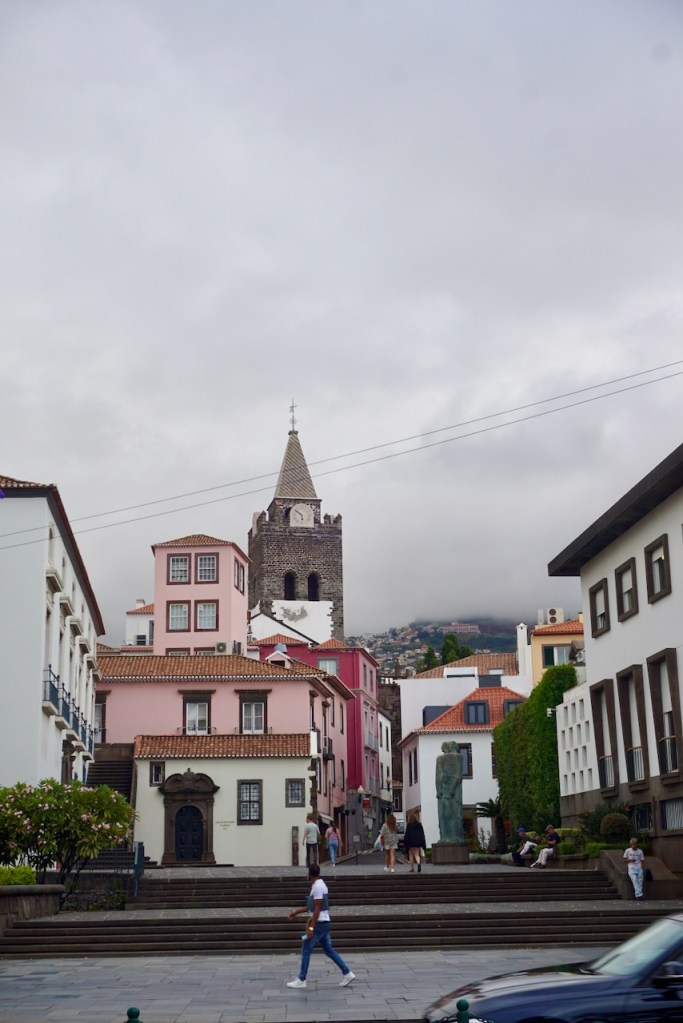
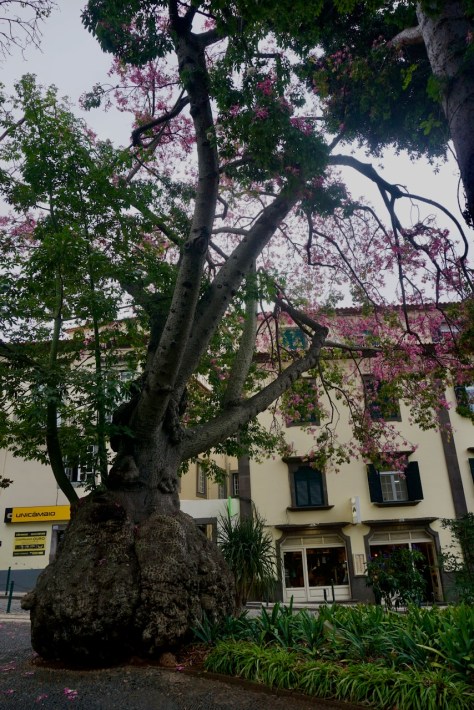
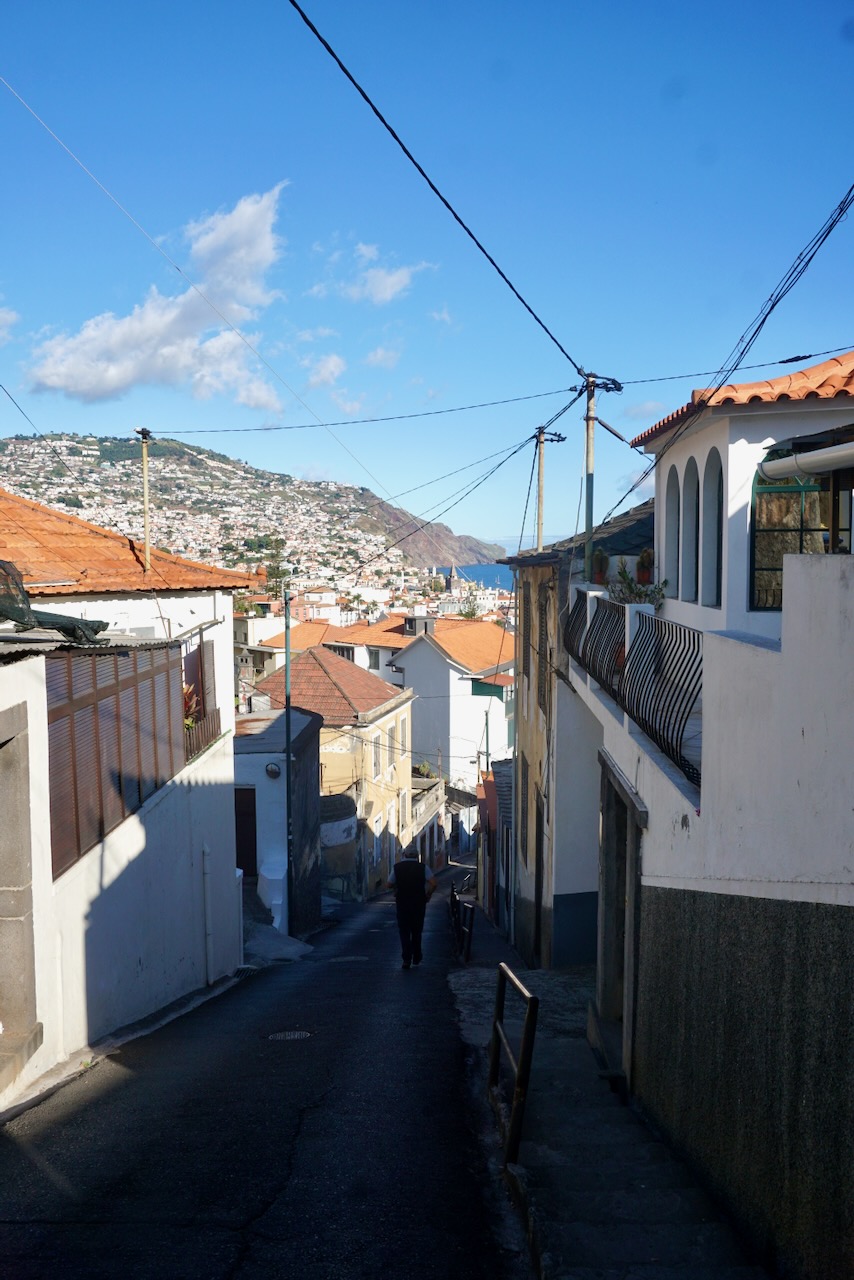
In Funchal, we delighted in old buildings lining winding streets . . .

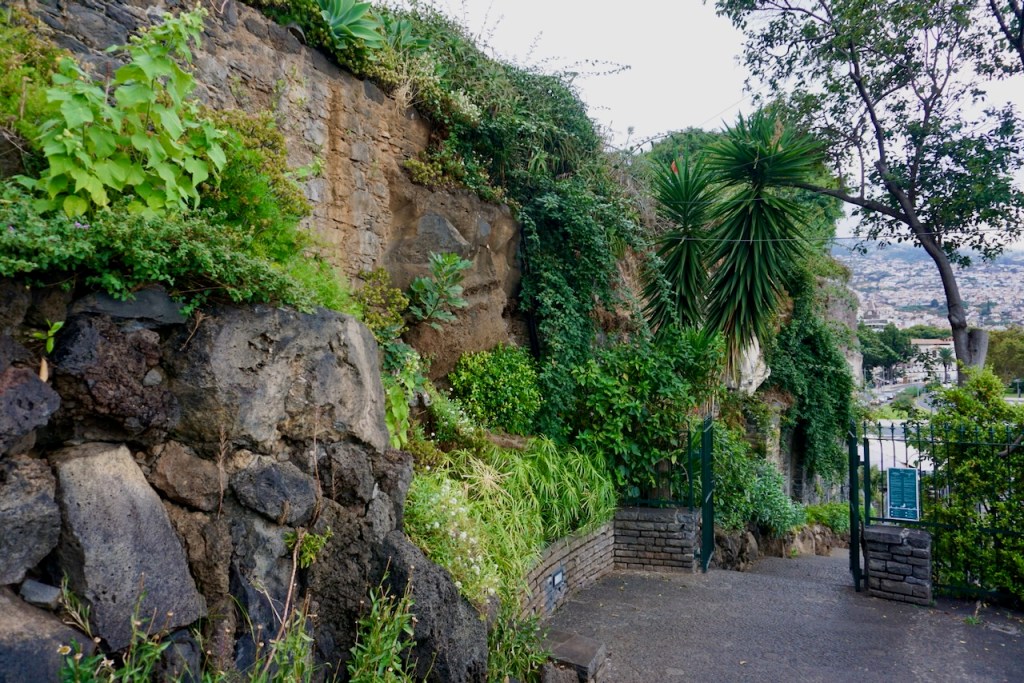
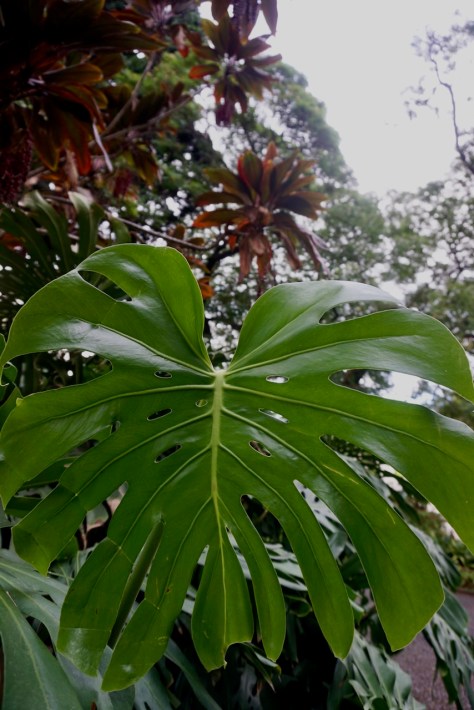
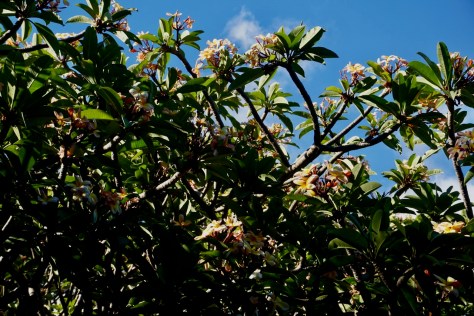
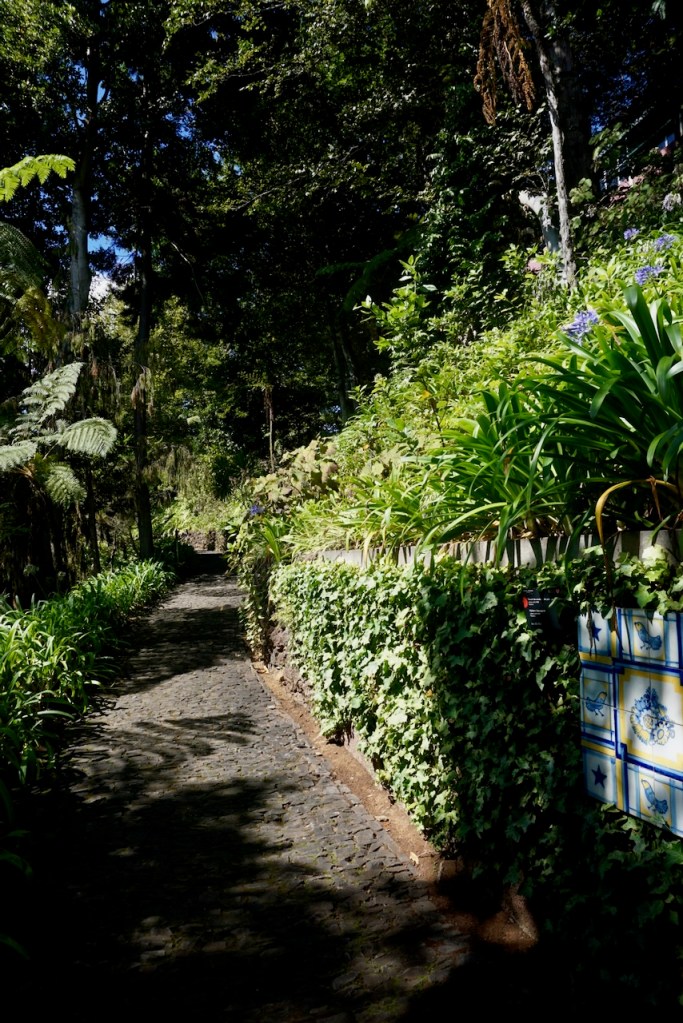
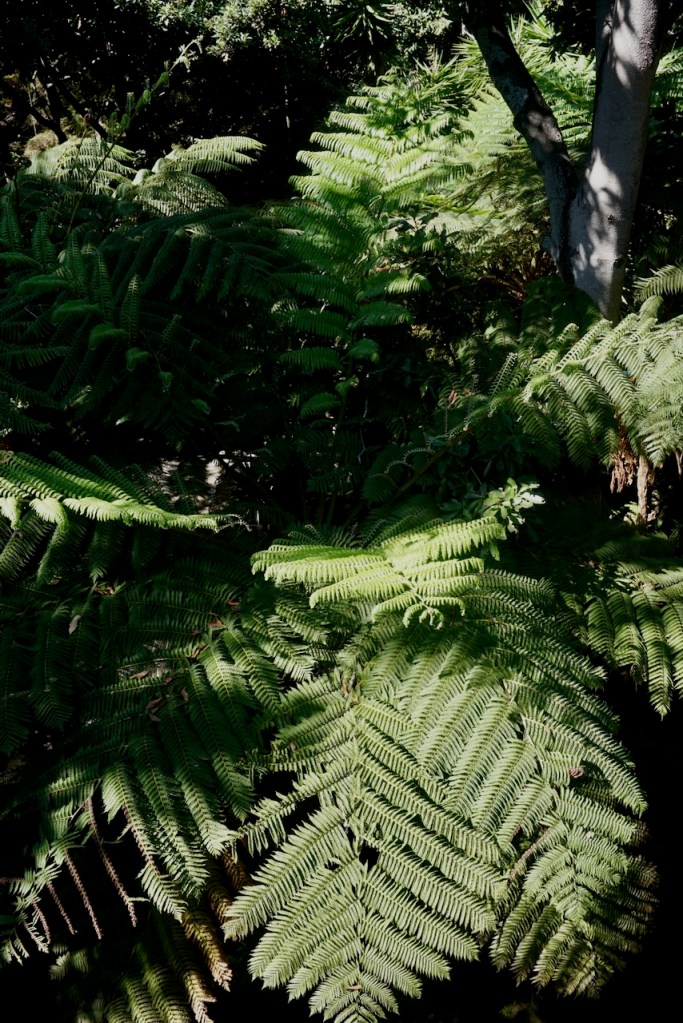
. . . the botanical gardens in the centre of town, which contained tropical species I haven’t seen since living in Singapore . . .

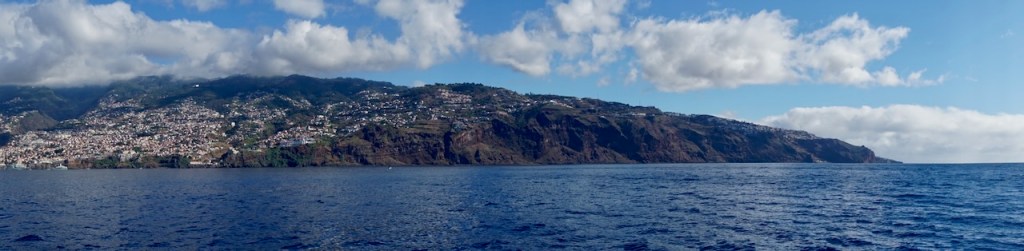
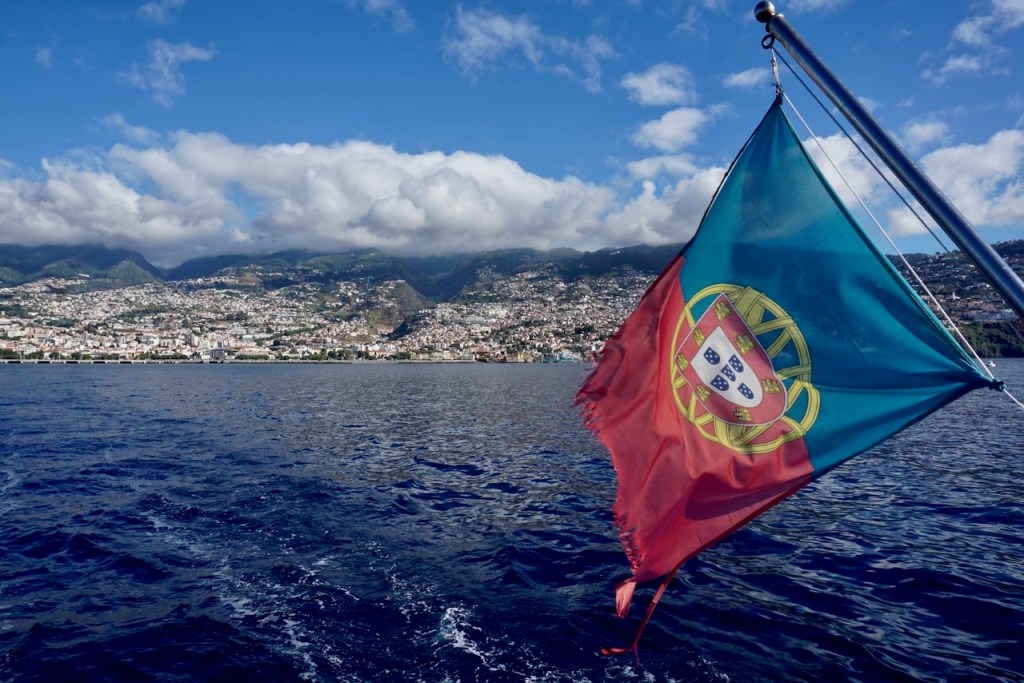
. . . and proximity to the harbour. . . .

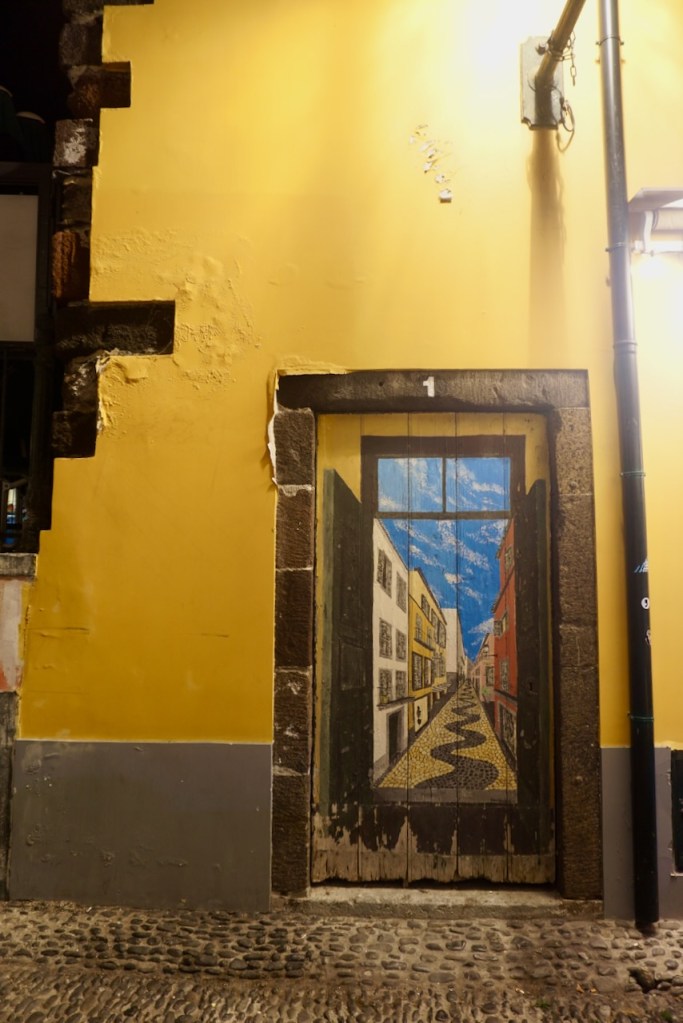
Funchal also has an excellent street art scene in the Zona Velha, the old part of town that used to be comprised of fishermen’s cottages and is now made up of buzzing restaurants and shops.

Unbeknownst to us before our arrival, dolphin and whale watching tours were on offer, and we were happy to participate. Once a pod is spotted, the boat is only allowed to spend 10 minutes there so as not to overwhelm the animals, which we appreciated. We saw several groups of pilot whales, which are common in the area.
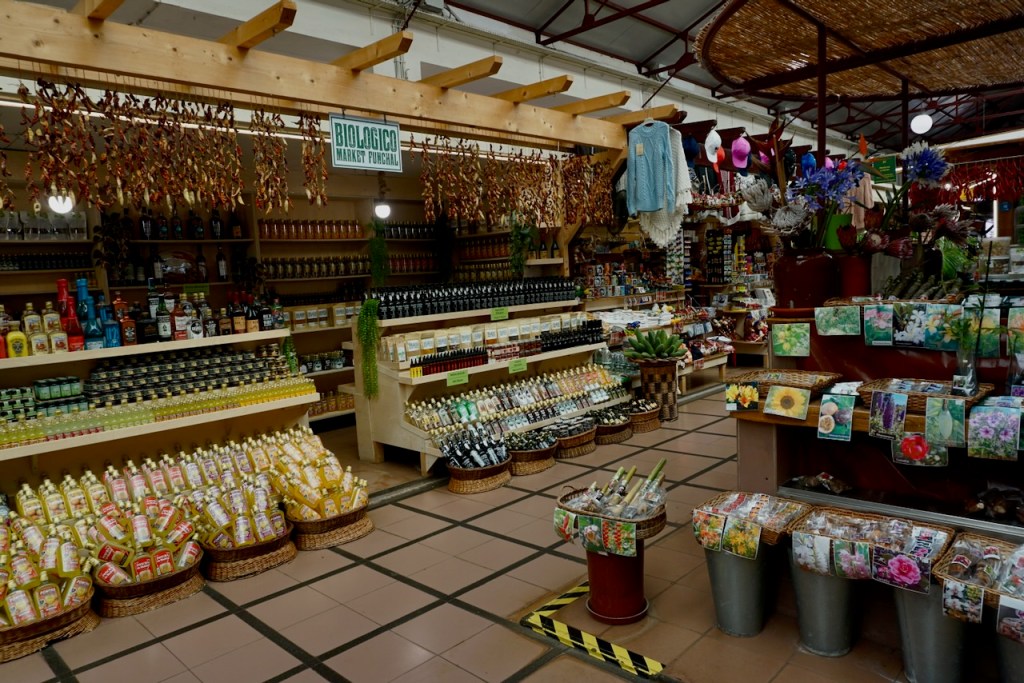
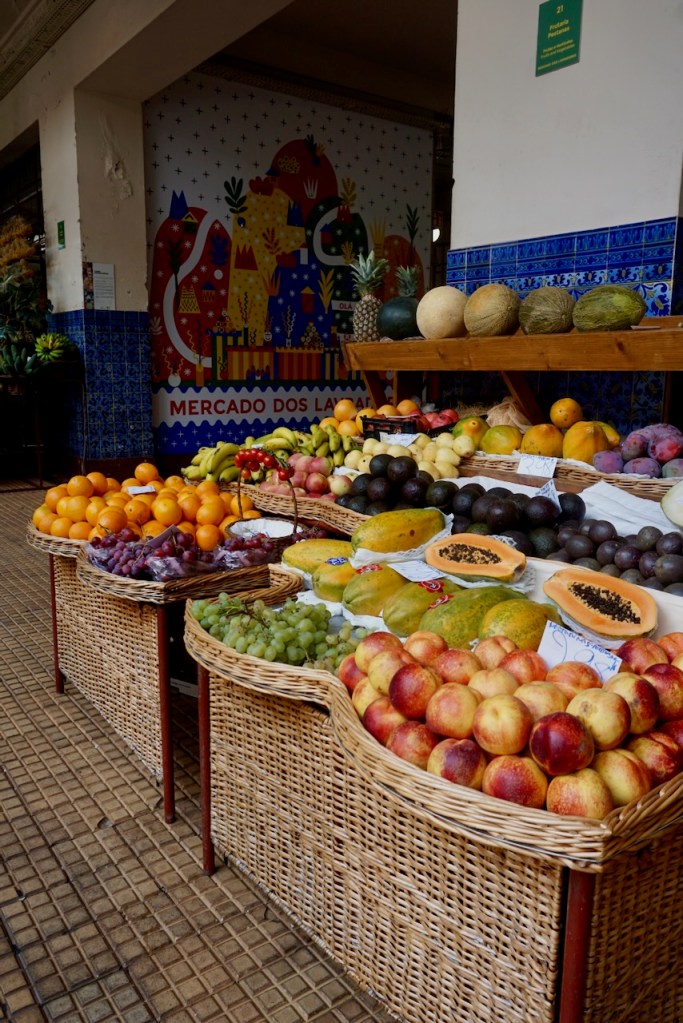
That afternoon, we visited the Mercado dos Lavradores, which seemed more touristy than we would have liked. A salesperson gave us tastes of the seven different species of passion fruits that grow on Madeira and we bought one each. A few items that we hadn’t selected ended up in our bag, as well, and we certainly paid for them. However, everything really did taste as good as it looked.

Interested in the views from lookout points, we walked through Forte de São Tiago later that day, the yellow paint striking against the blue sky.

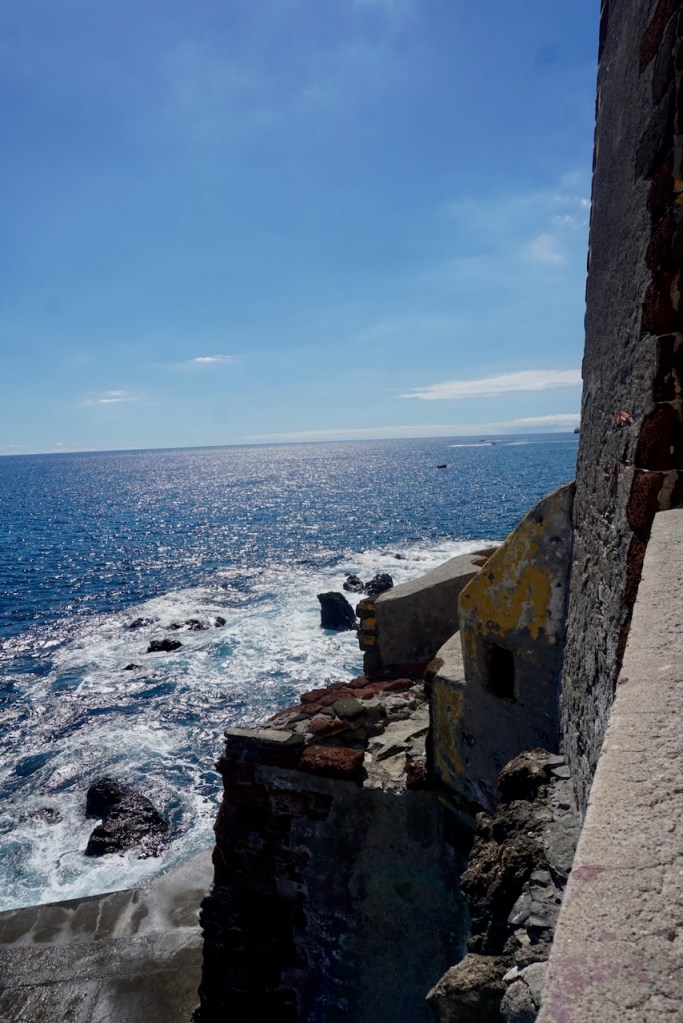
The steepness of the island is hard to understate, and this is something we didn’t fully understand or appreciate until we rented a car later on, but we were beginning to get an idea.
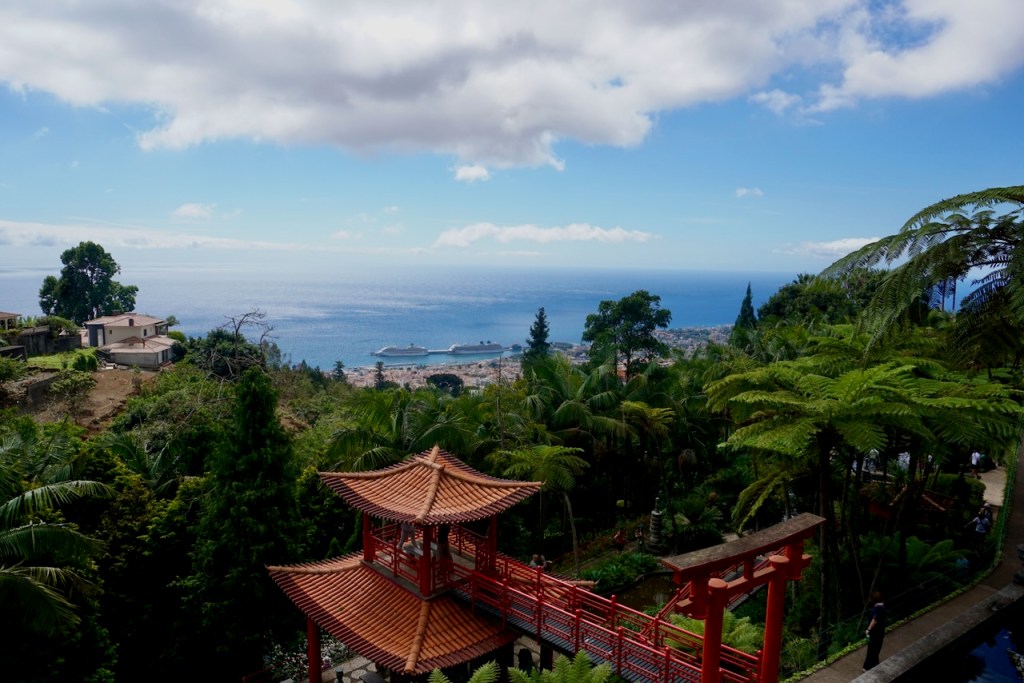
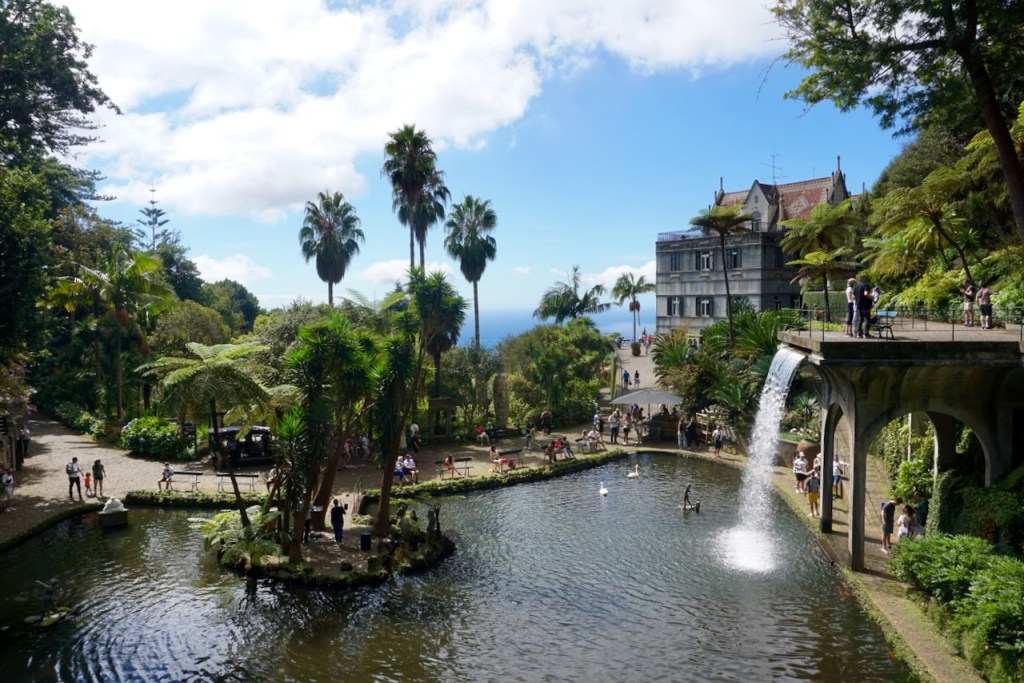
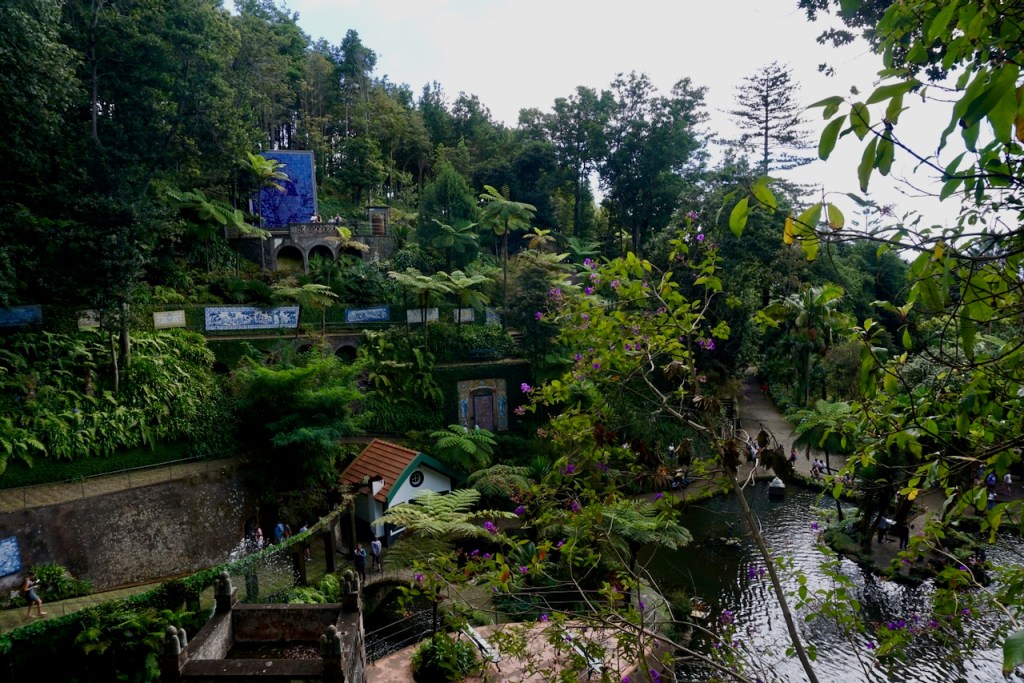
The following day, we took a cable car up to the Monte Palace Tropical Garden, giving us an excellent perspective on the elevation of Funchal. The air was noticeably cooler than at sea level, and we were fascinated by the hundreds of plants from all over the world that looked completely at home. In the centre of the gardens was a lake with a small stage and live music. It was relaxing, idyllic, and a wonderful oasis away from the bustle of city life, even on an island.
The Monte Church, located just around the corner, stands at 598 meters, and the view down to sea level was impressive.

Traditionally, one descends from the palace into the city by way of the Carreiros do Monte, essentially a wicker basket sled guided from the rear by two porters. Nowadays, the ride is only two kilometers (we walked the rest of the way) and we enjoyed every minute of it.

Machico

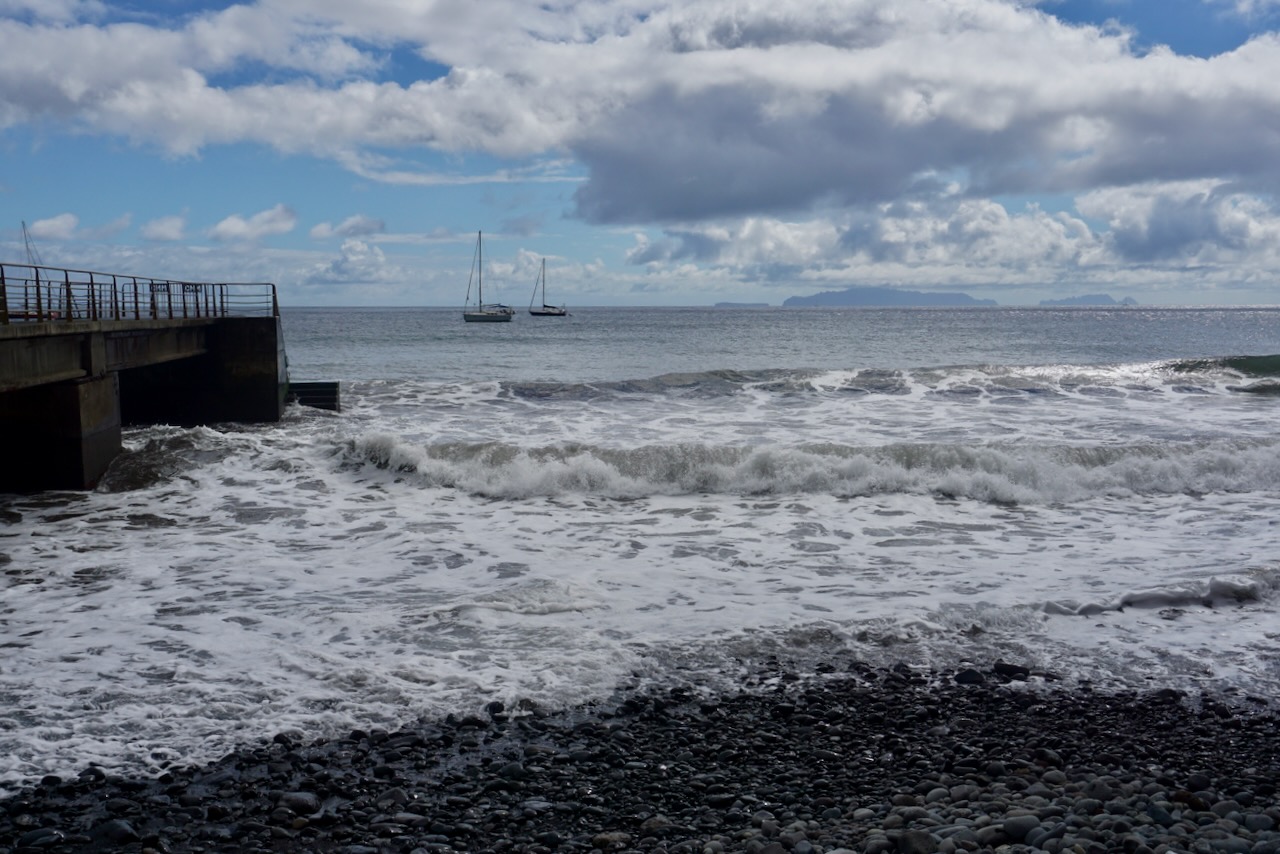
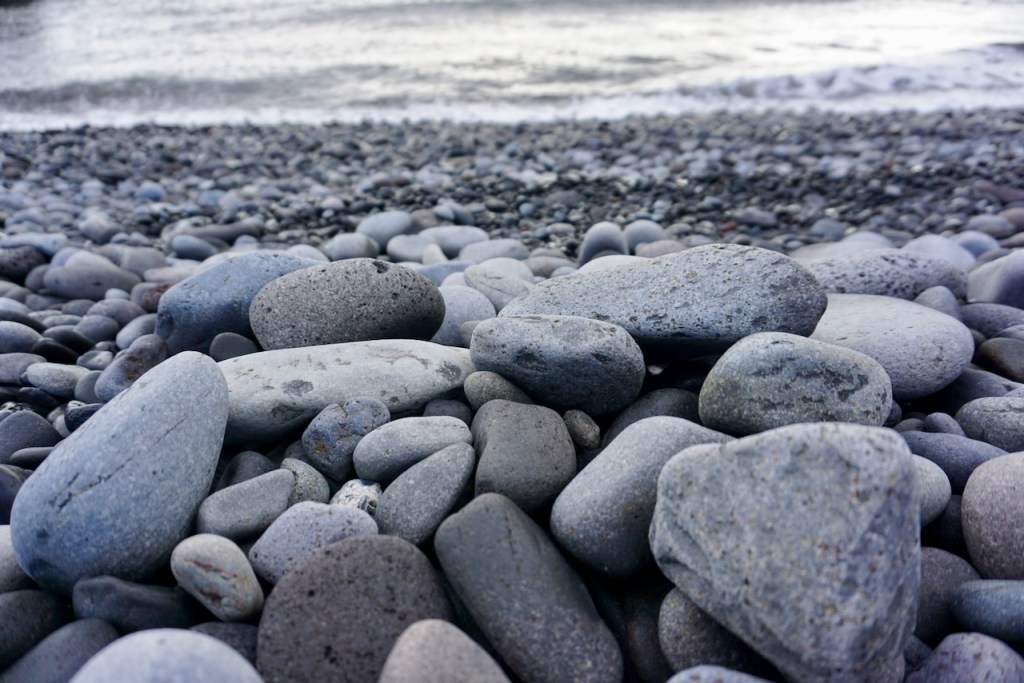
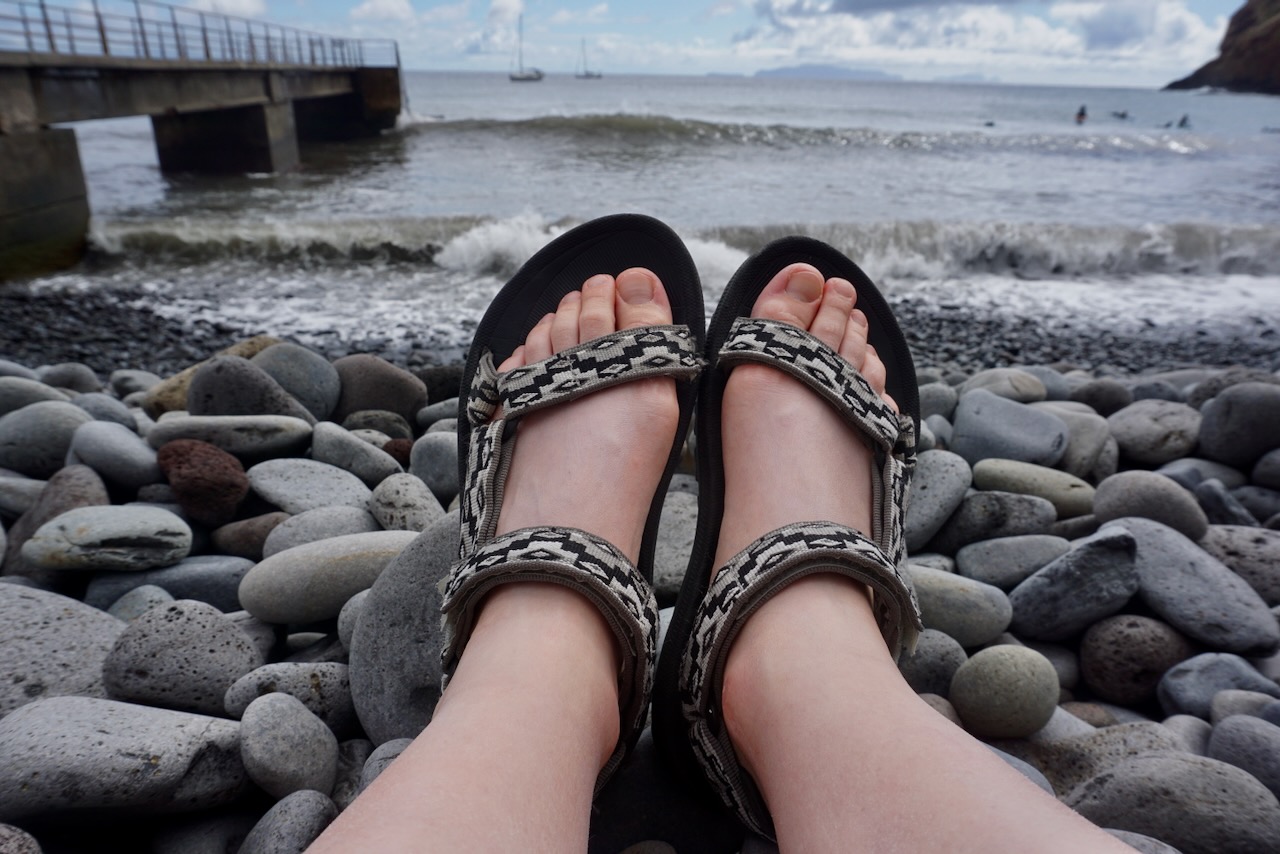
The following morning, we took the bus to the airport to pick up our rental car, and then headed down the road to the beach town of Machico, which we had chosen due to its proximity to the hiking trails for which Madeira is famous. We arrived to weather significantly cooler than what we had experienced in Funchal, though the two locations are only 25 kilometers apart along the coast. In recognition of the slower pace and change of atmosphere, we made ourselves comfortable on the rocky beach and just watched the waves.

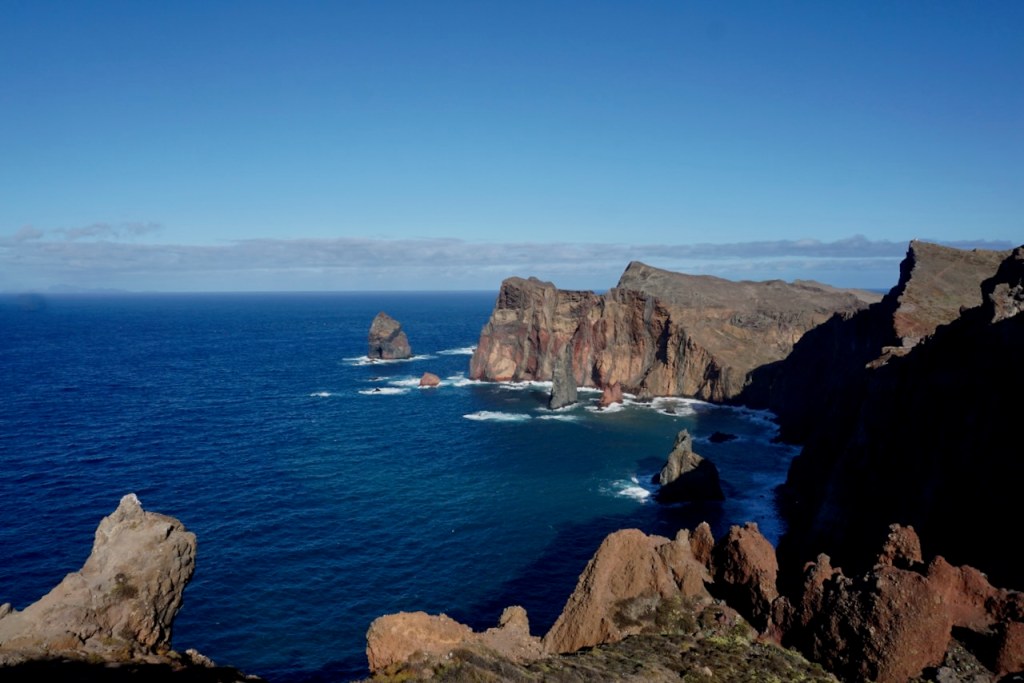
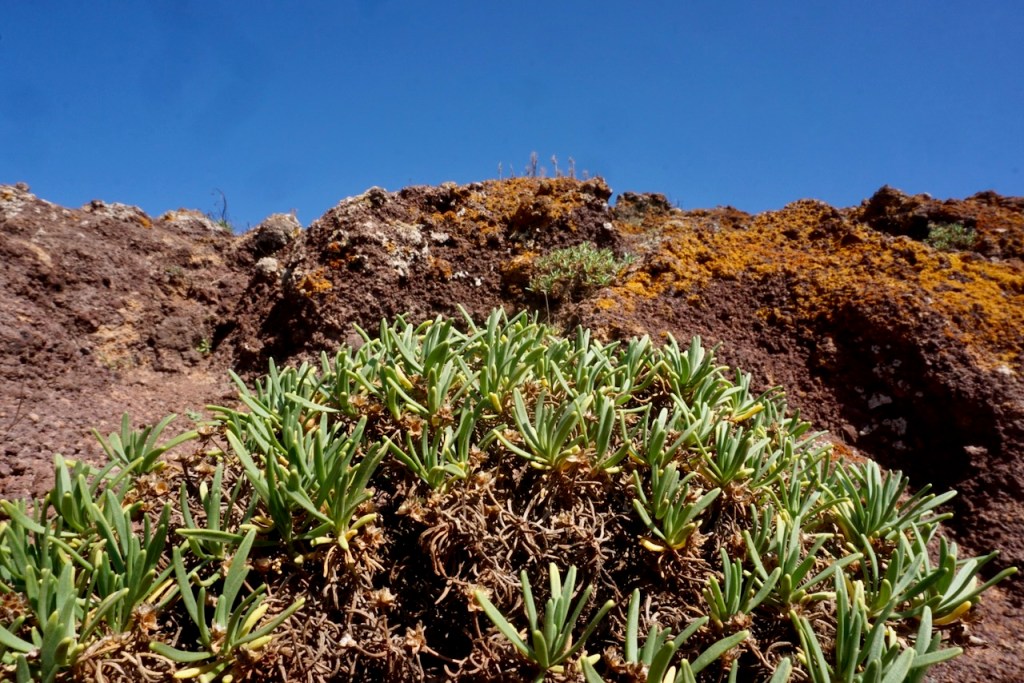
That afternoon, we drove out to a lookout point on the eastern end of the island, gradually gaining elevation on narrow, twisting roads. The landscape changed from tropical trees and flowers, to cacti and beach grasses, to red earth with scrubby brush.

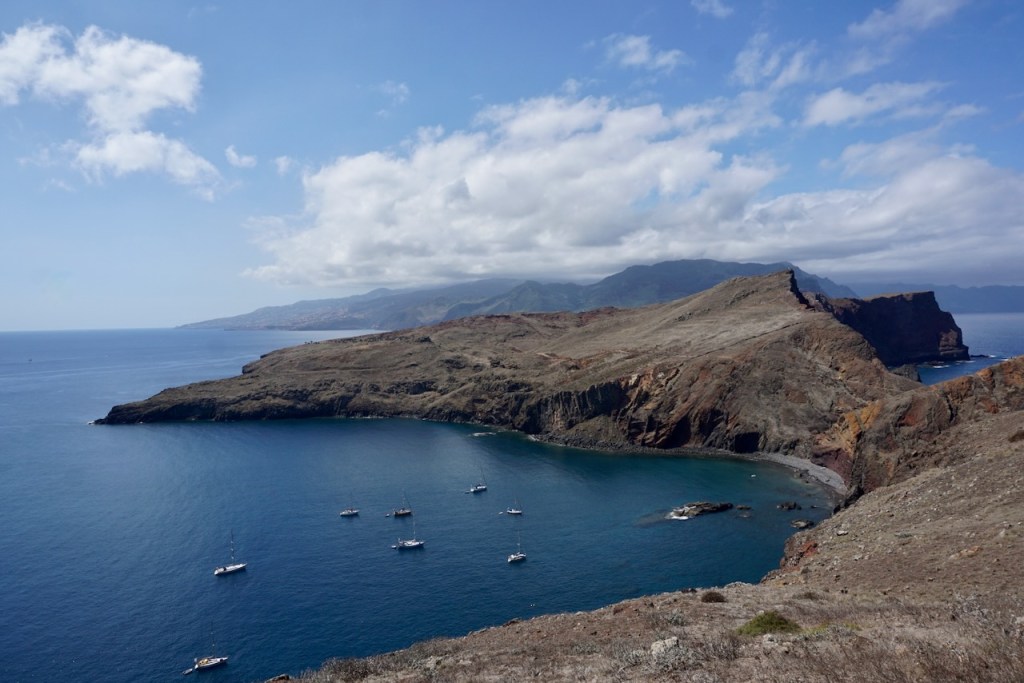
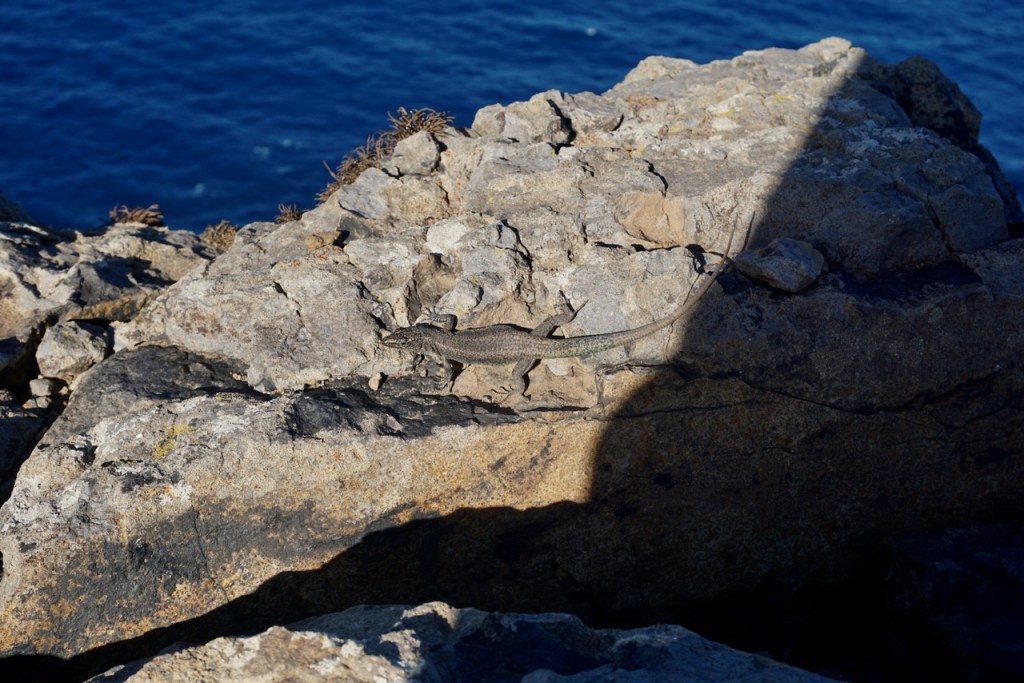
We walked along the edges of cliffs looking out into the sea, clearly in the shape of the caldera left behind from the volcano that created Madeira Island.

The next morning, we took what was probably the wildest drive of the trip, climbing serpentines for about 1300 meters from where we began at sea level. We wanted to hike up to Pico Ruivo, the highest point of Madeira Island at 1862 meters.

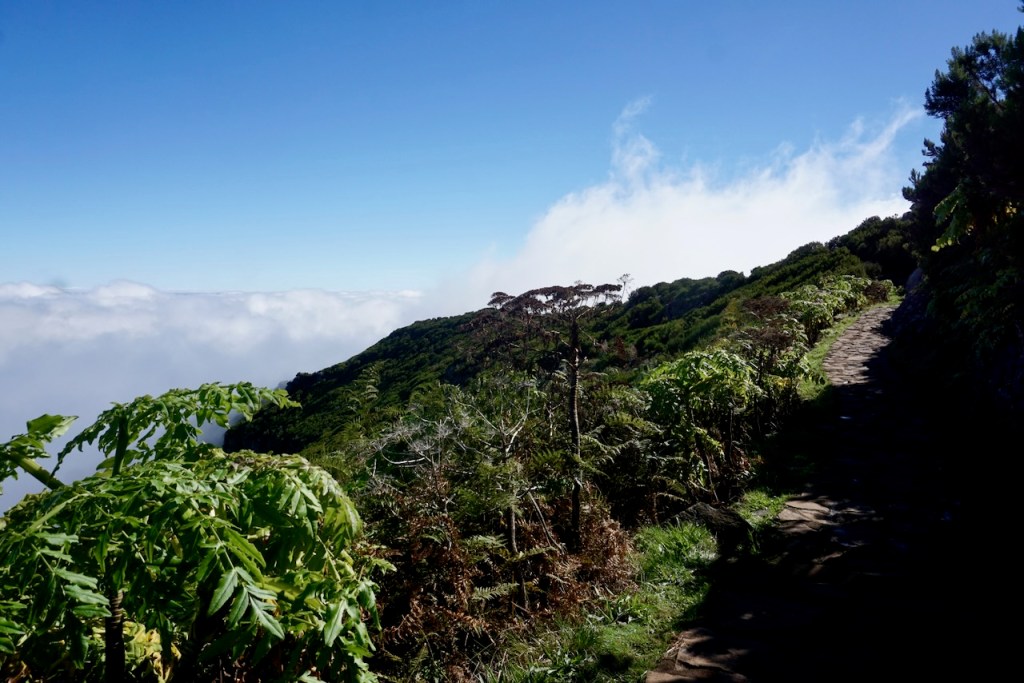
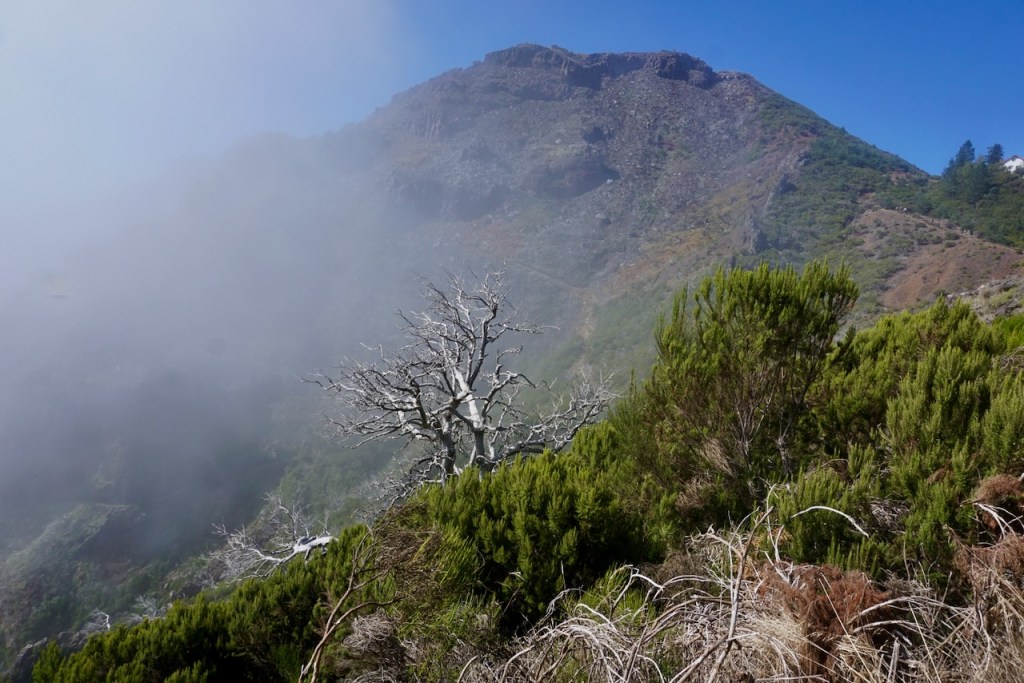
At just under three kilometers, the trail is straightforward though steep, and it winds through an incredibly diverse landscape. We started in terrain that was almost sub-alpine, mist in the cold air . . .

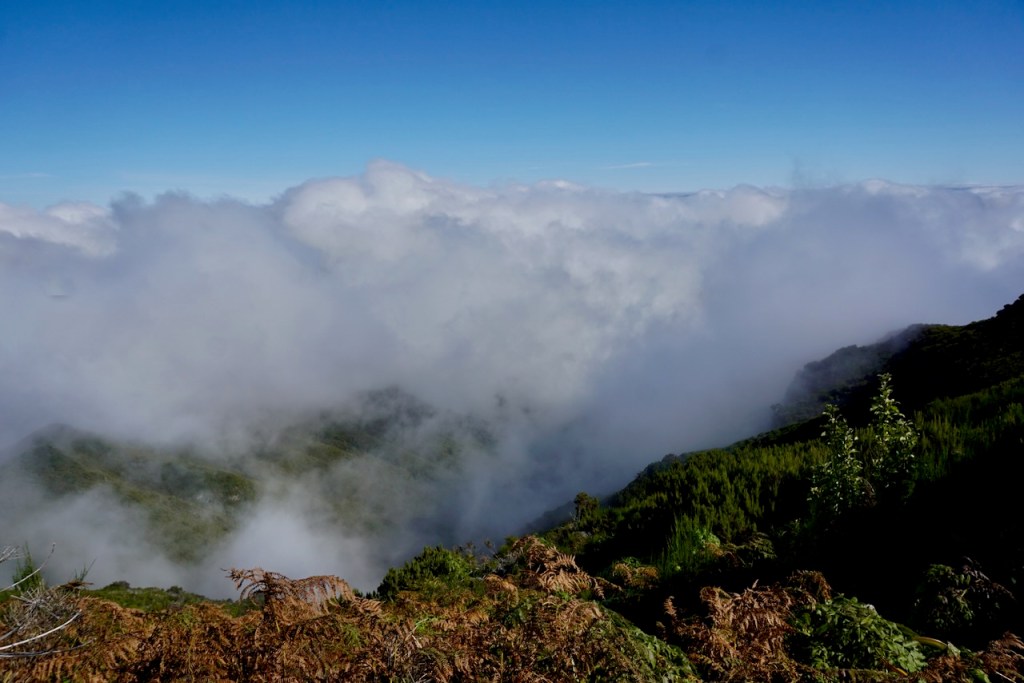
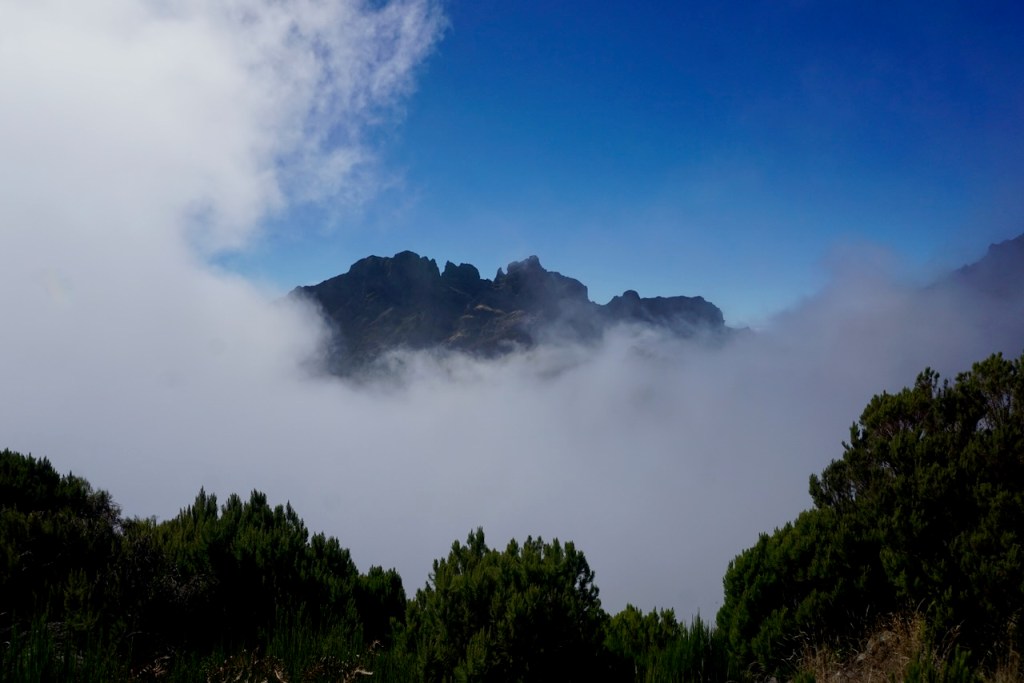
. . . climbed through and above the clouds . . .
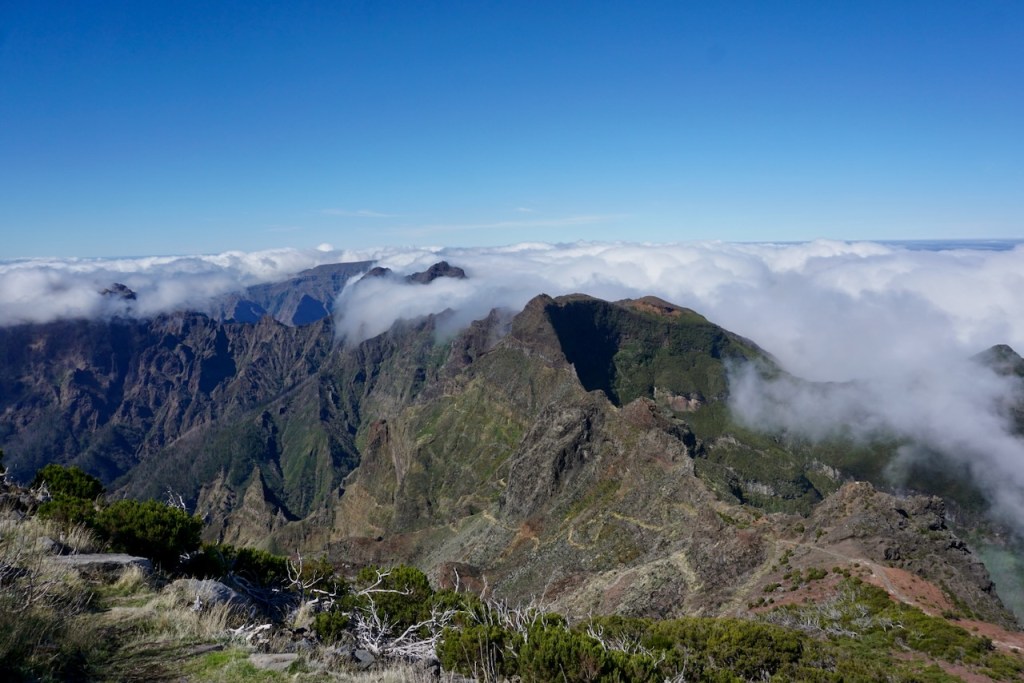
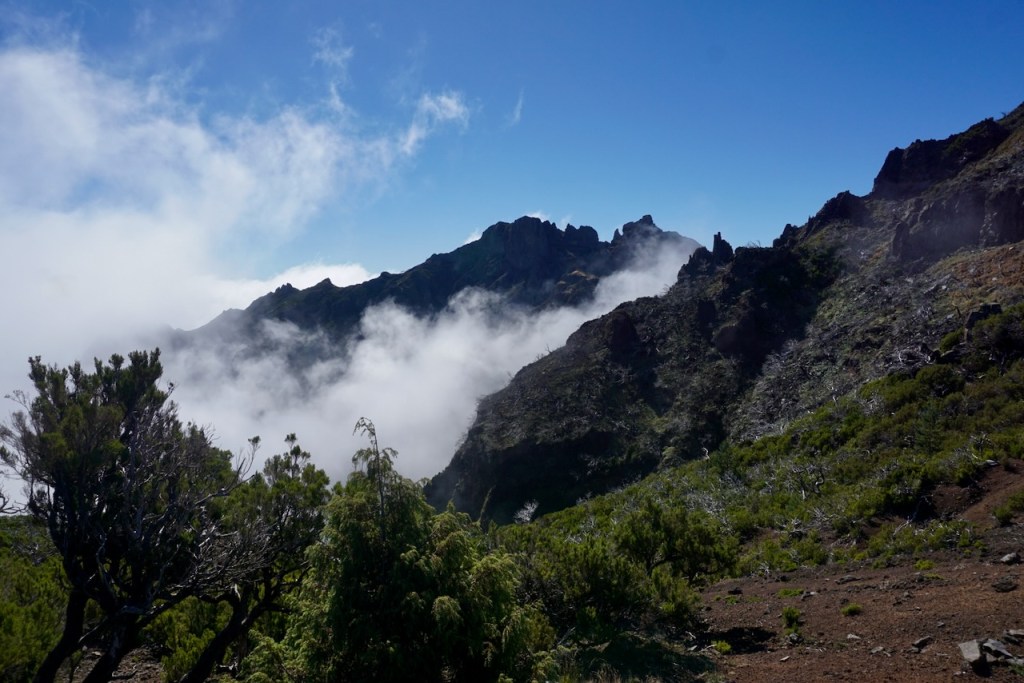
. . . and ended on the south side of the peak in a dry, scrubby landscape with signs of fire damage. . . .
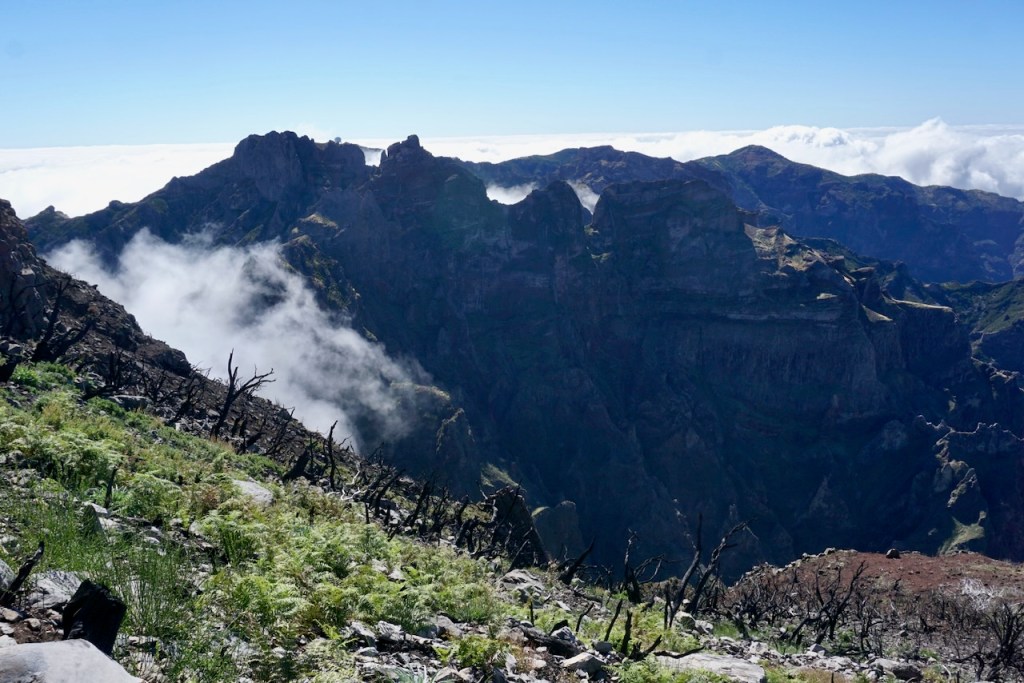
By the time we got to the summit, I was very aware of my pregnant and rapidly changing body. I had needed to go more slowly than usual to regulate my breathing, and I tried to skirt the stairs that caused my stomach muscles to engage, resulting in cramps that are best avoided. But there’s also a feeling of confidence that comes from being pregnant in such terrain (I wasn’t the only one, either!) and I enjoyed that very much.

Upon returning to the car, having thoroughly enjoyed the hike and wanting to explore more of the island, we drove about five minutes back down the road and again into the clouds. Pulling over when we could, we walked the easy, flat trail from Queimadas to Pico das Pedras. In sharp contrast to the morning, this trail took us through a rainforest. It had been cold and sunny on the summit, but we needed a jacket for the rainforest.

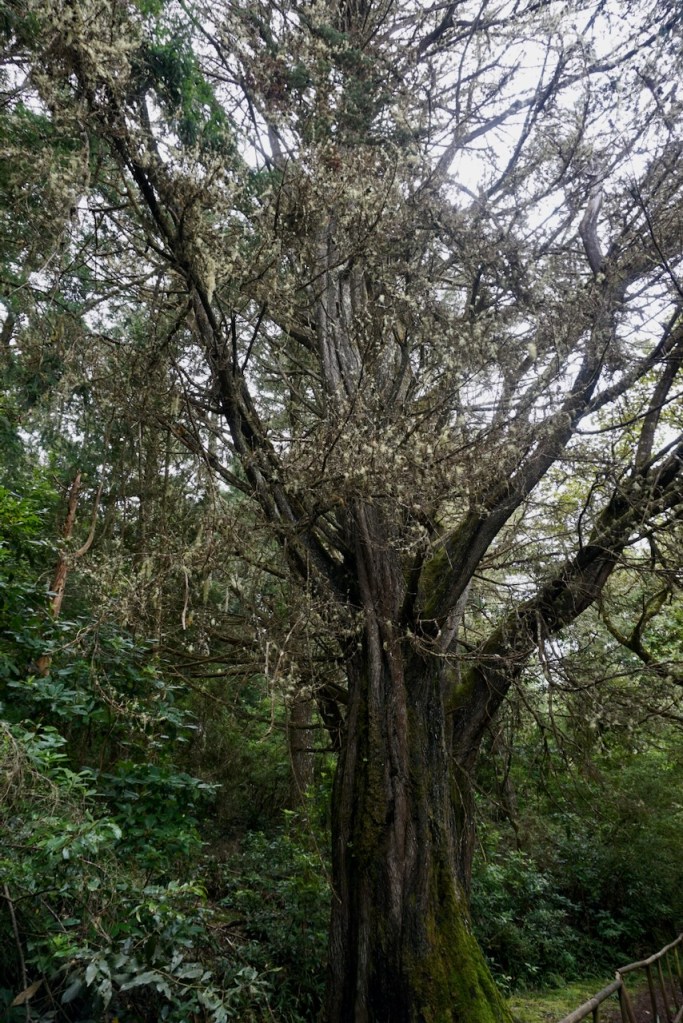
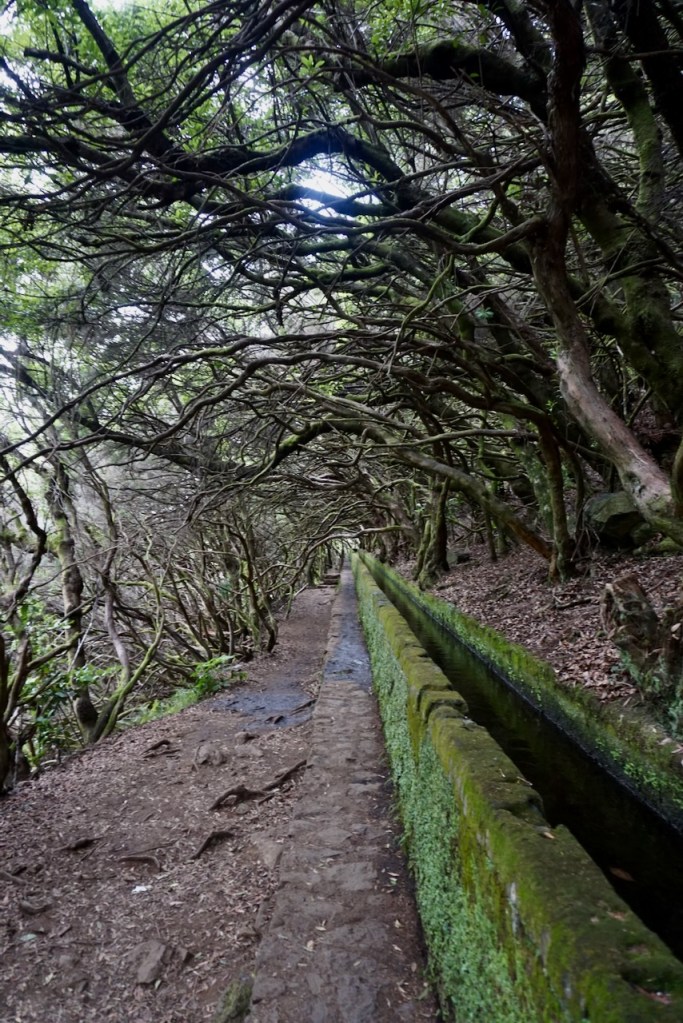
And what a forest. Moss hanging in clumps from old, gnarled trees; water running below us and along the sides of the path; ferns everywhere. We walked mostly in silence, smelling the muddy earth and the effortlessly lush vegetation, marvelling at finding ourselves in yet another climate zone.

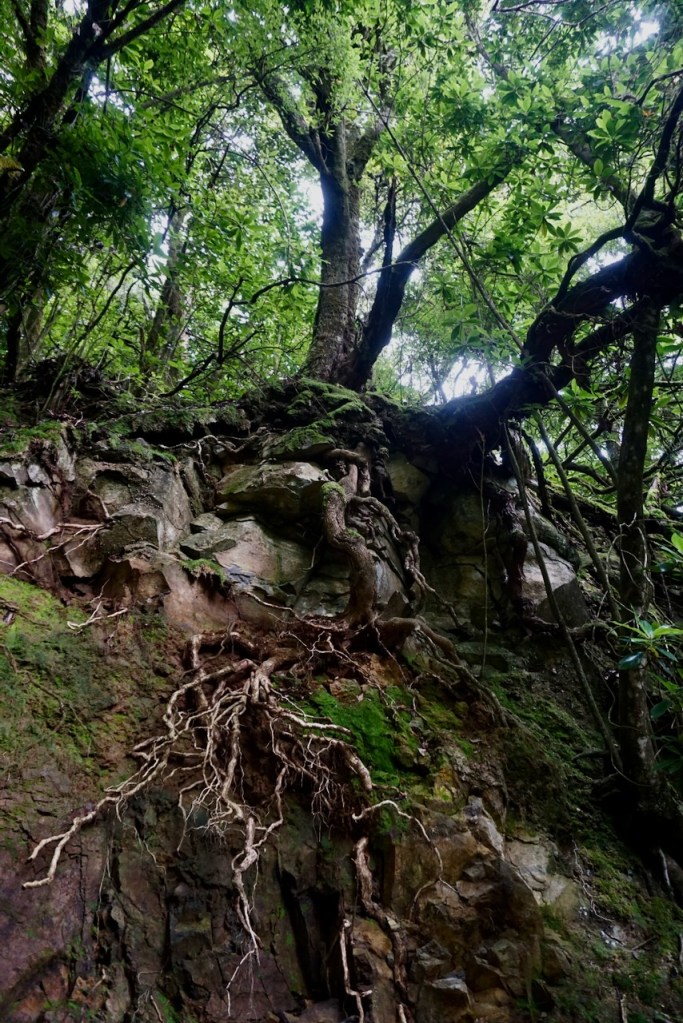
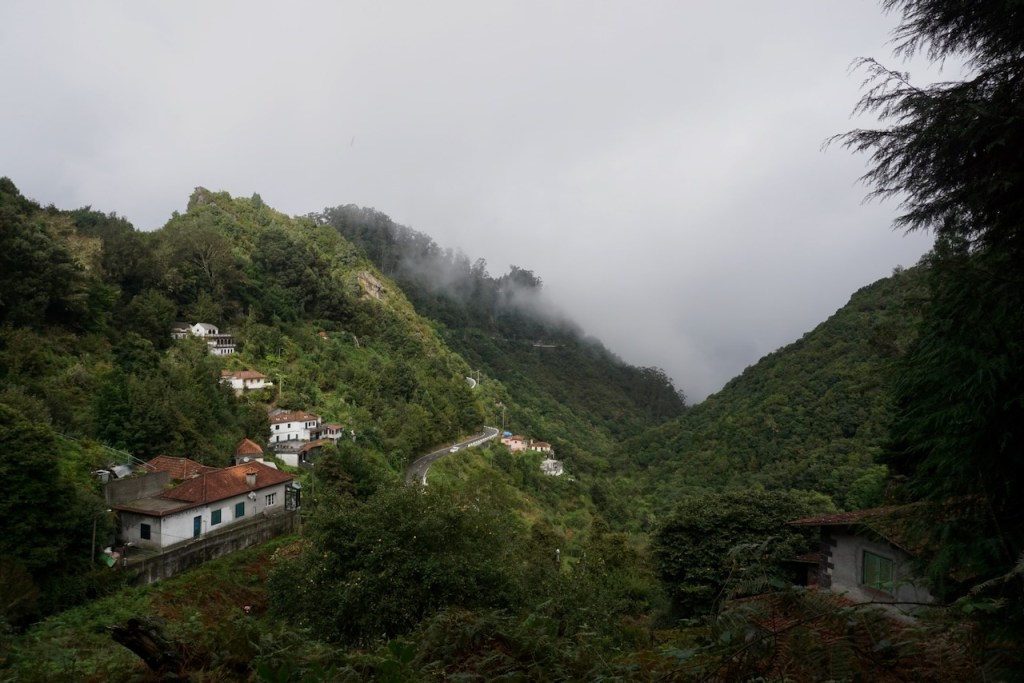
From there, another winding, twisting drive took us yet higher into the cliffs to the short walk named for its outlook point, Vereda dos Balcões. We were in a cloud forest at that point, walking along the side of a cliff that looked down into one of the many villages dotting the landscape.

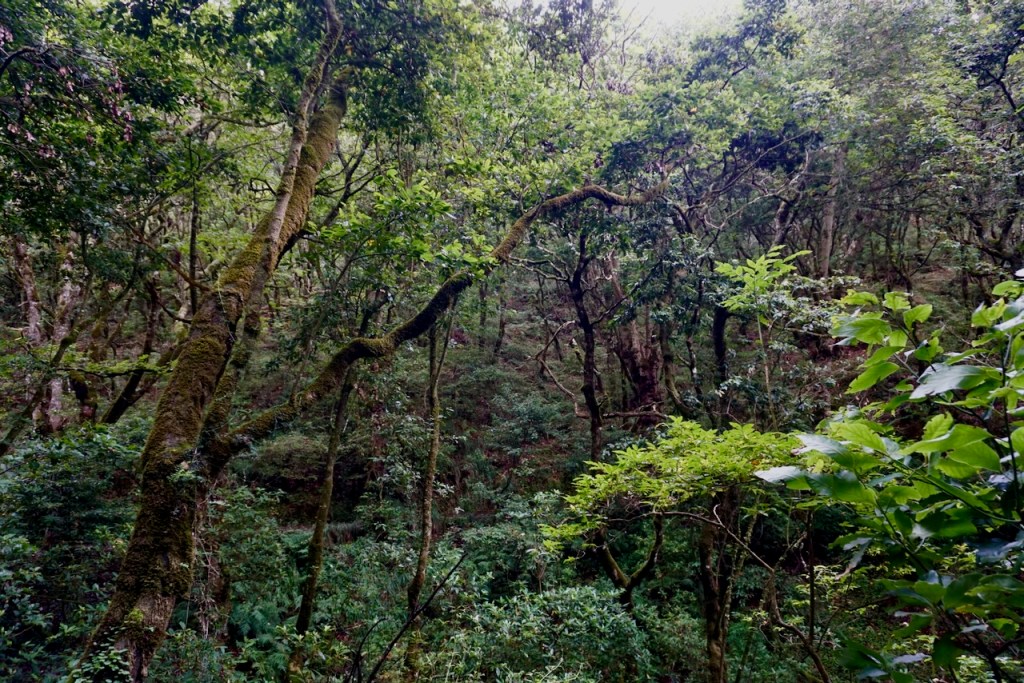
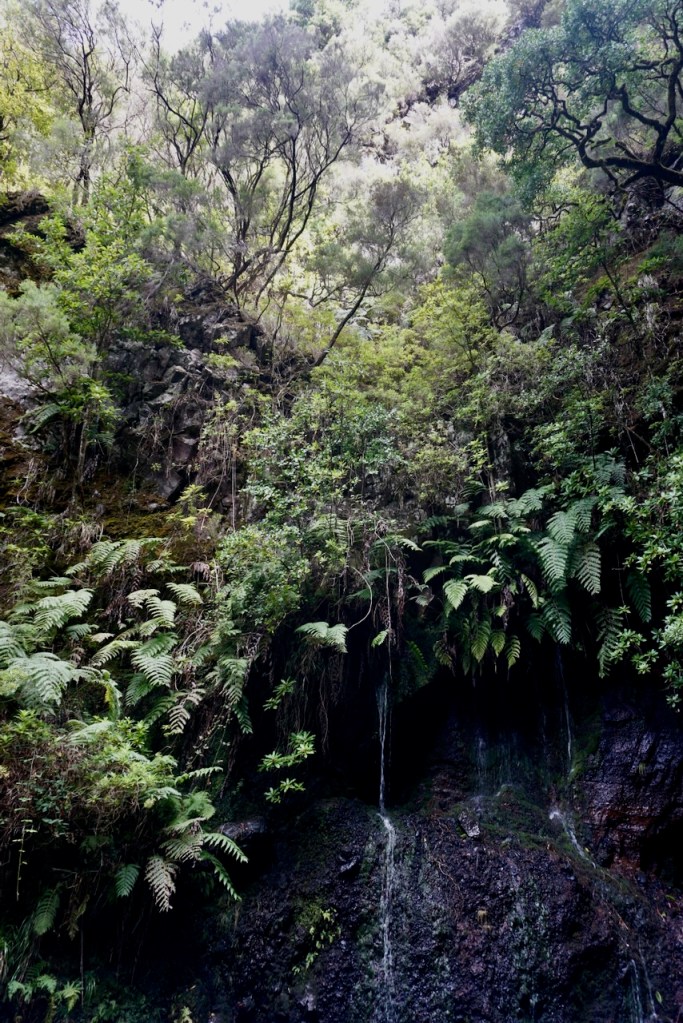
After our explorations of the east side of the island, we drove out the next day towards the centre to hike the Levada das 25 Fontes, a trail named for its 25 waterfalls. The easy walk led downhill from where we parked, and its status as one of Madeira’s most famous walks was immediately apparent from the number of people following the trail. We had to look for stillness here, which we managed to find.

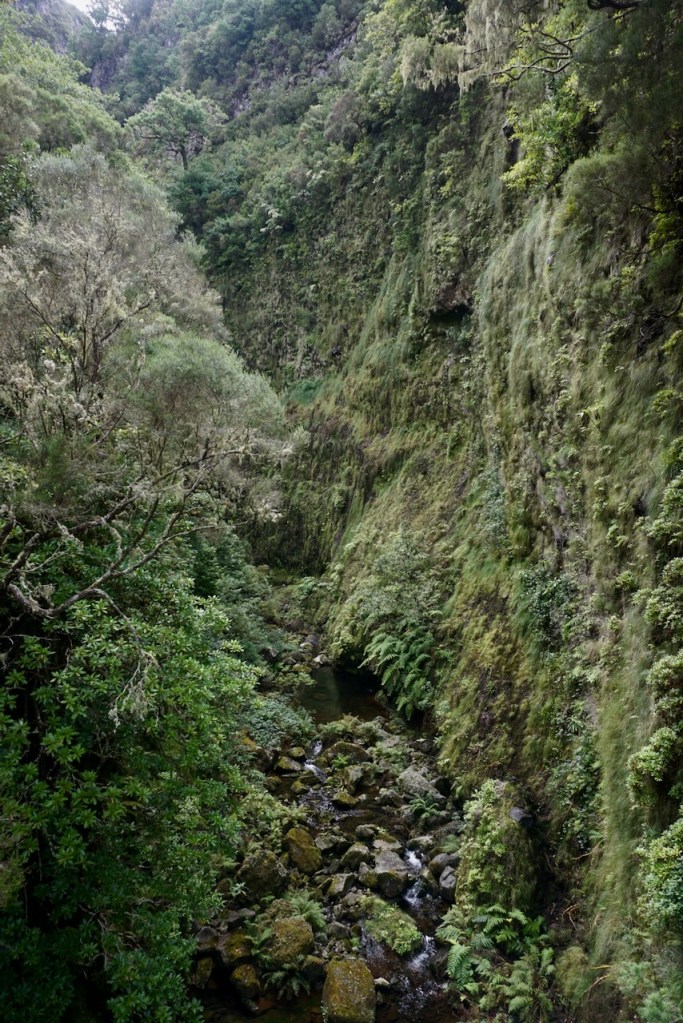
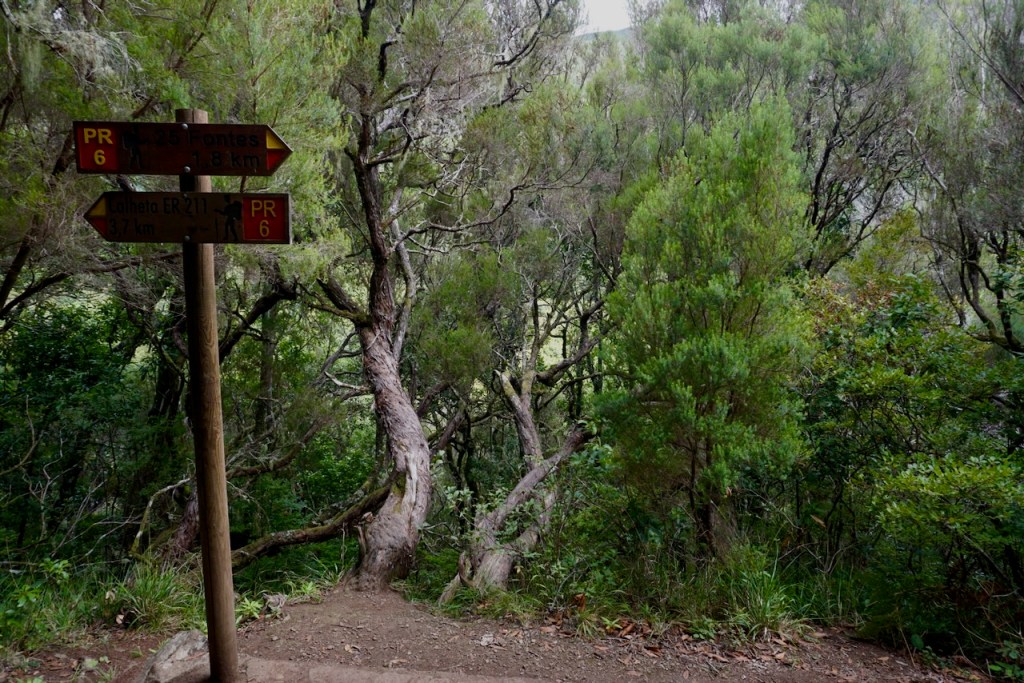
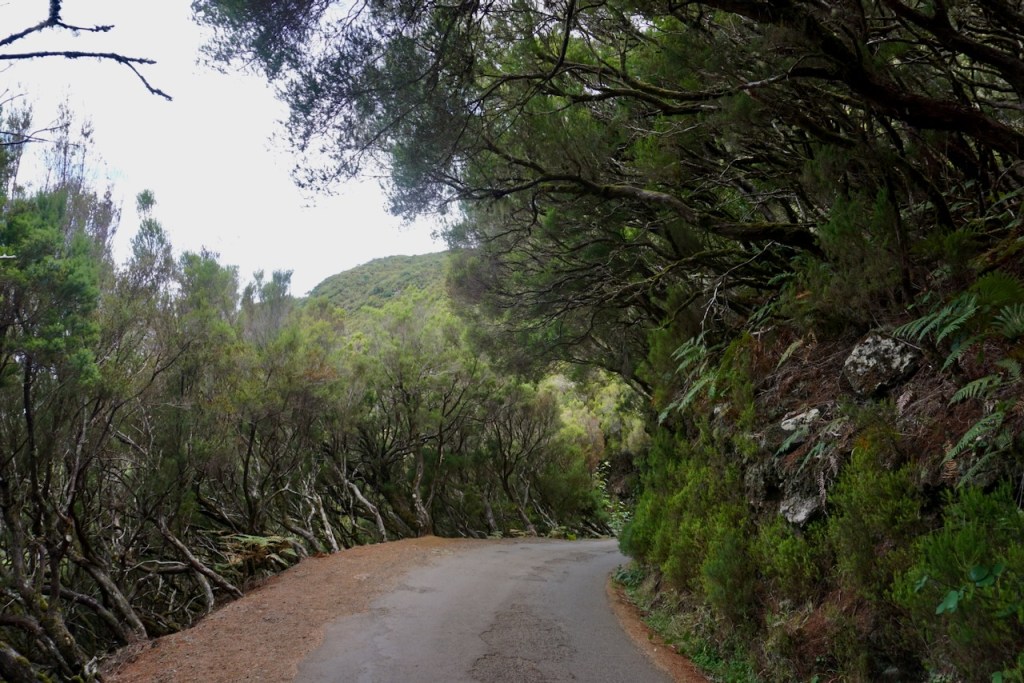
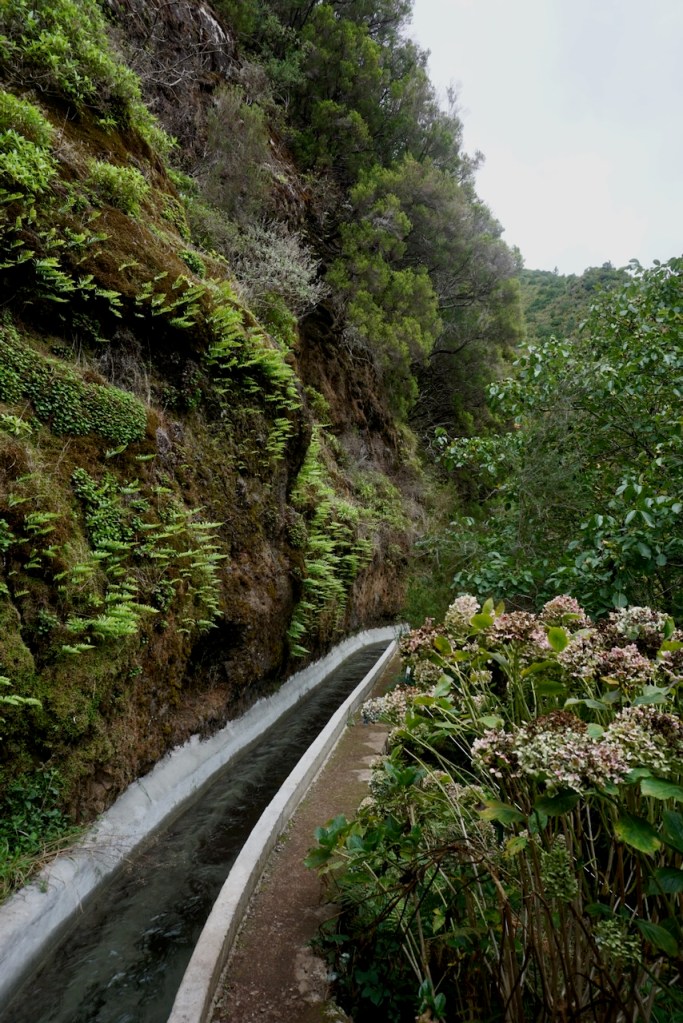
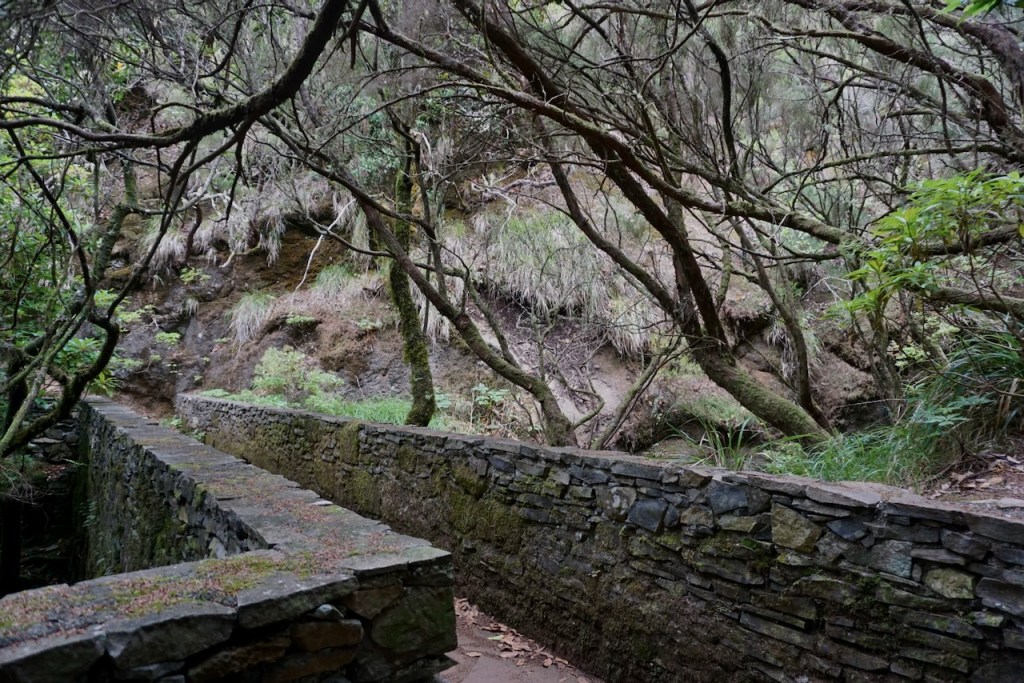
And then, ready for stillness to find us, we followed a trail turnoff that would take us back to the car in a slightly different direction than the out-and-back that we knew most people would follow. Alongside Spanish moss, trees with low-hanging branches, and irrigation canals, we found ourselves exactly where we wanted to be – entirely alone.

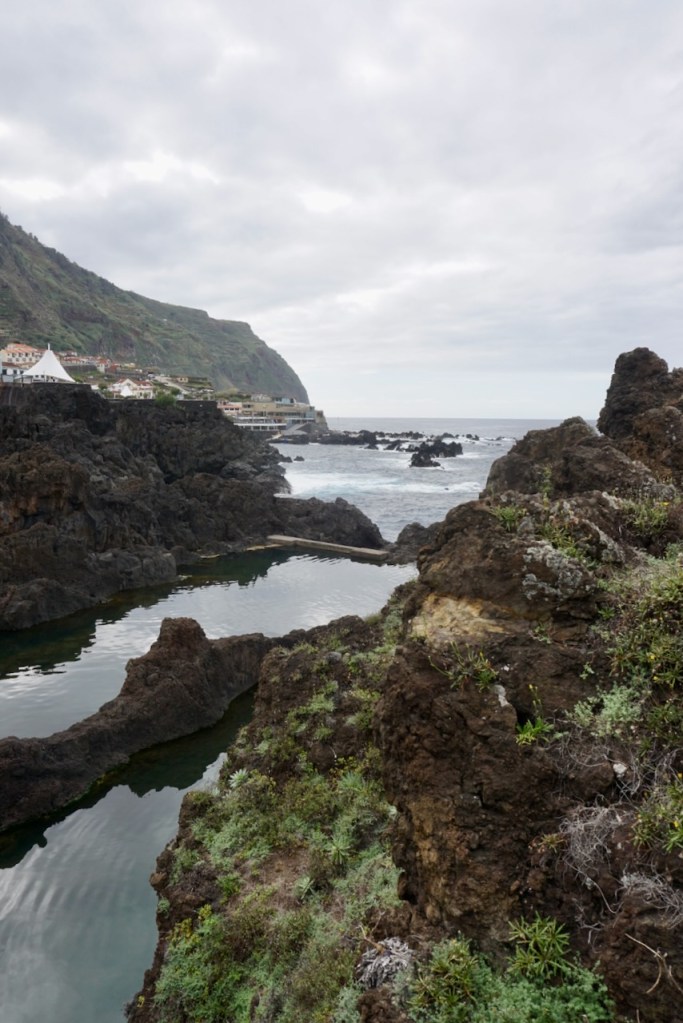
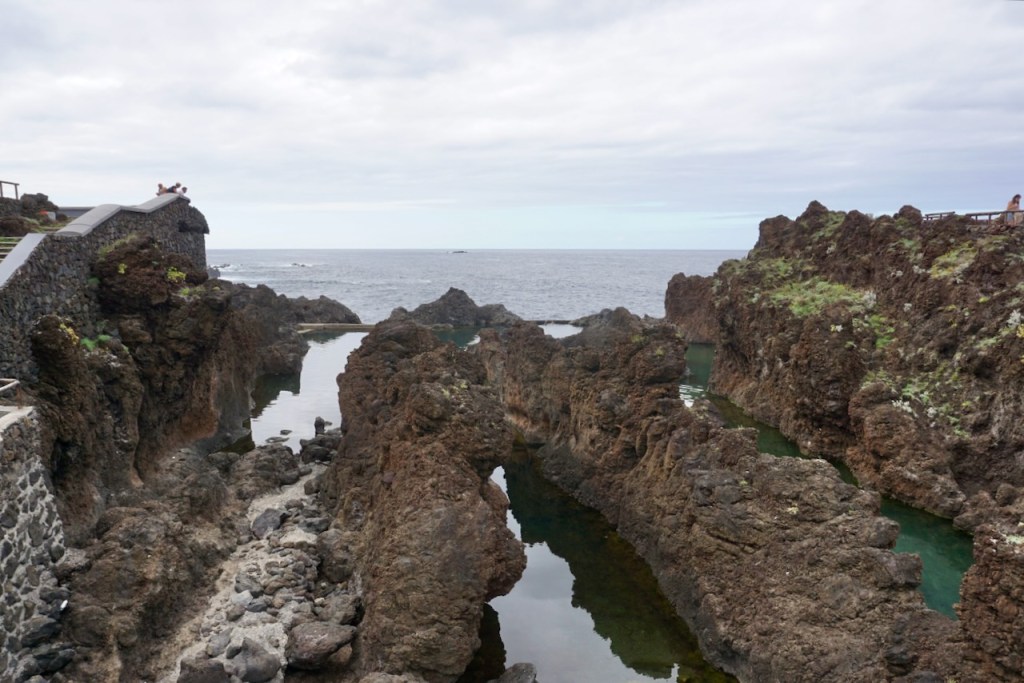
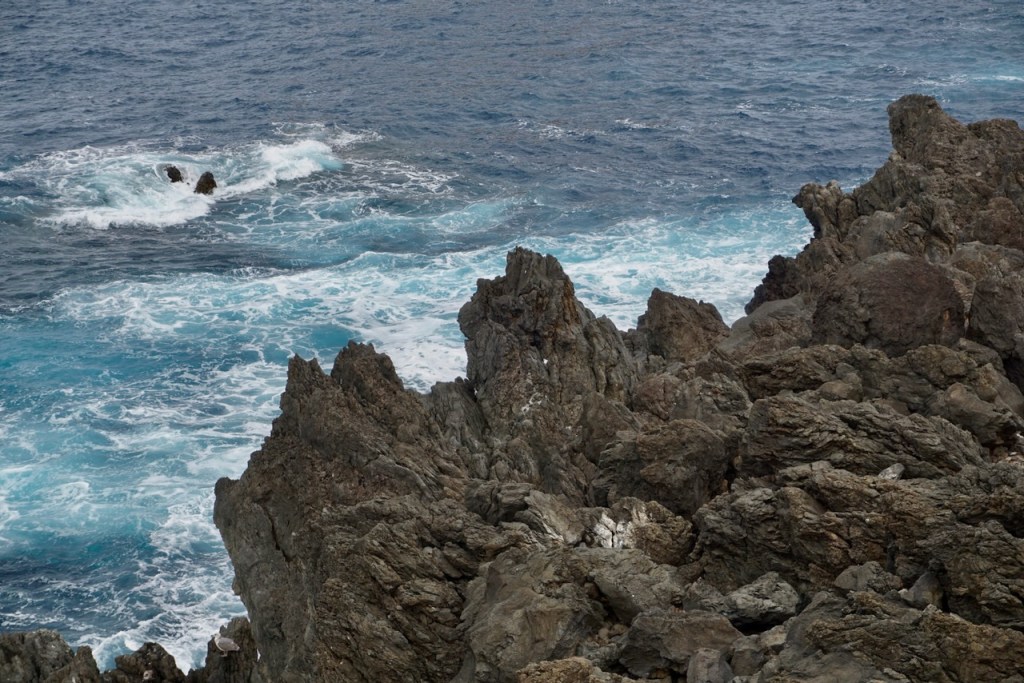
From there, we continued our drive to Porto Moniz, the northwestern most point of the island. We walked along the water and gazed down into the natural pools created by the ocean.

The drive back to Machico completed our circuit of the island, which had left us in awe of the diversity we had experienced. We have both had the fortune to see a few places in the world, and neither of us had been anywhere quite like this.

The next morning, our last full day on Madeira, I settled myself on the rocky beach while my partner took a surf lesson . . .
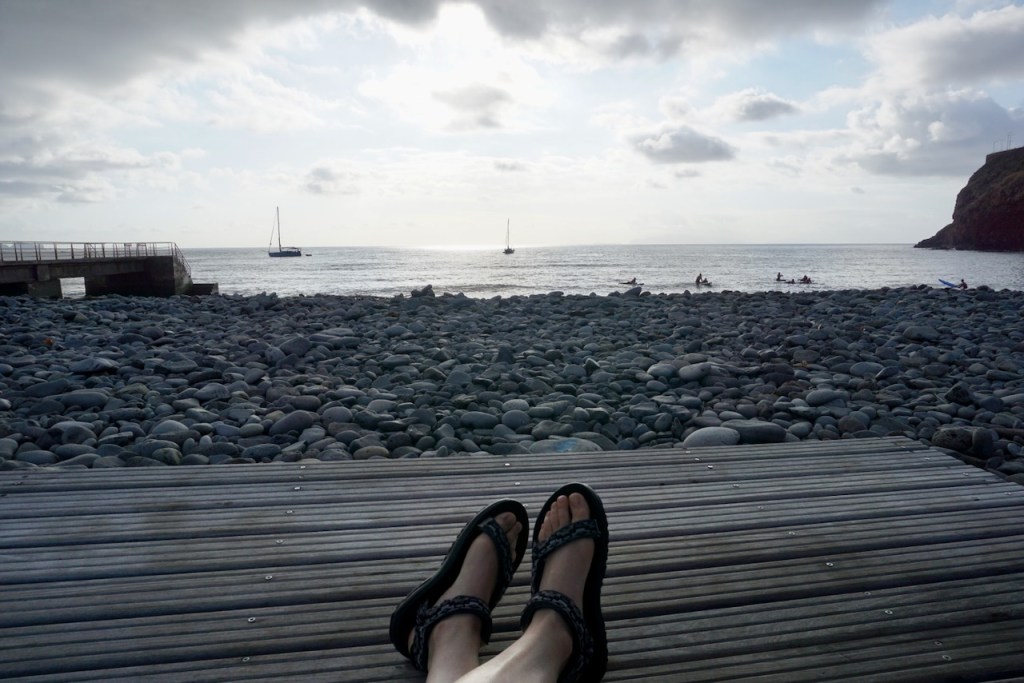
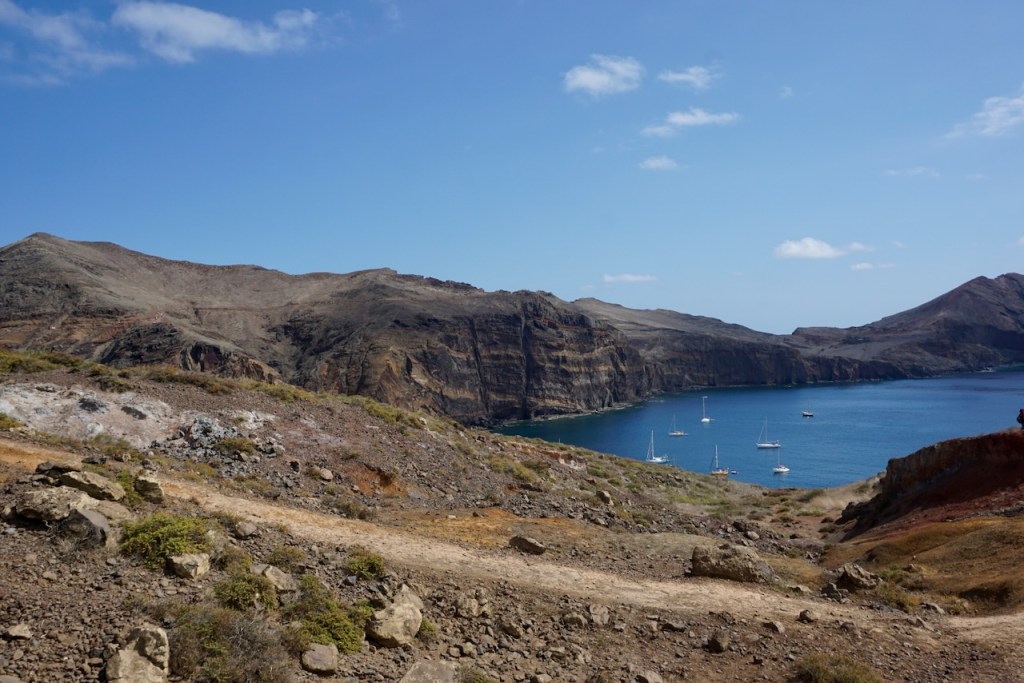
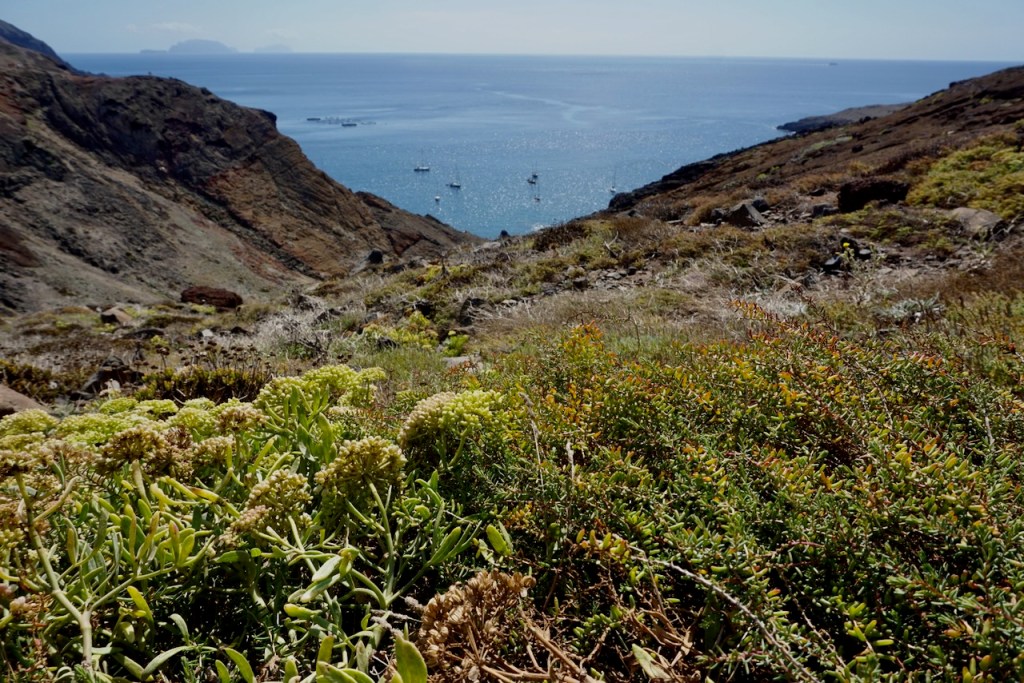
. . . and we spent the afternoon hiking the Vereda da Ponta de São Lourenço, the trail on the eastern end of the island that reaches the highest peak in that area. This time, we walked through desert and along sea cliffs, and were almost always in sight of the ocean. Every so often, a particularly spectacular rock formation came into view, and we just had to stop and take in the colours.

The sun made this walk strenuous because there was absolutely zero shade, but the rocky paths themselves were gentle enough with a relaxed variety of ascents and descents. And like we had seen literally everywhere in Madeira, there were snacks and drinks on offer (upon return, of course!) from multiple food trucks in the parking lot.

Returning to our favourite restaurant for yet another delicious meal of fish (locally caught) and vegetables (locally grown), we toasted a local beer and a local juice to the week we had experienced. We had seen plenty of families underway on Madeira and smiled at the thought of being there with our little one. It is hopefully not our last time on this beautiful island, and we departed early the next morning with beach air in our noses and the sunrise in our eyes. One cannot ask for more than that.

Travel Guide: Lake Bohinj, Ljubljana, Lake Bled x2

I had wanted to return to Slovenia since a trip there in the winter several years ago, and this was the perfect opportunity. We spent five nights in the village of Stara Fužina by Lake Bohinj at the foothills of Triglav National Park in the Julian Alps, which gave us ample time for some much-needed relaxation and immediate access to all the nature we had missed while in Venice. The village had two grocery stores, a snack bar, two restaurants, two churches, and a fire station. The primary business seemed to be tourism with a good amount of farming, and it seemed like everyone knew everyone else.

As we would learn, the church bells next door to our accommodation ring promptly at 9pm and 7am – and by ring, I mean clash and clang. Insistently. For several minutes. Our host told us that she likes them; being on holiday, I was rather less fond of the 7am round.

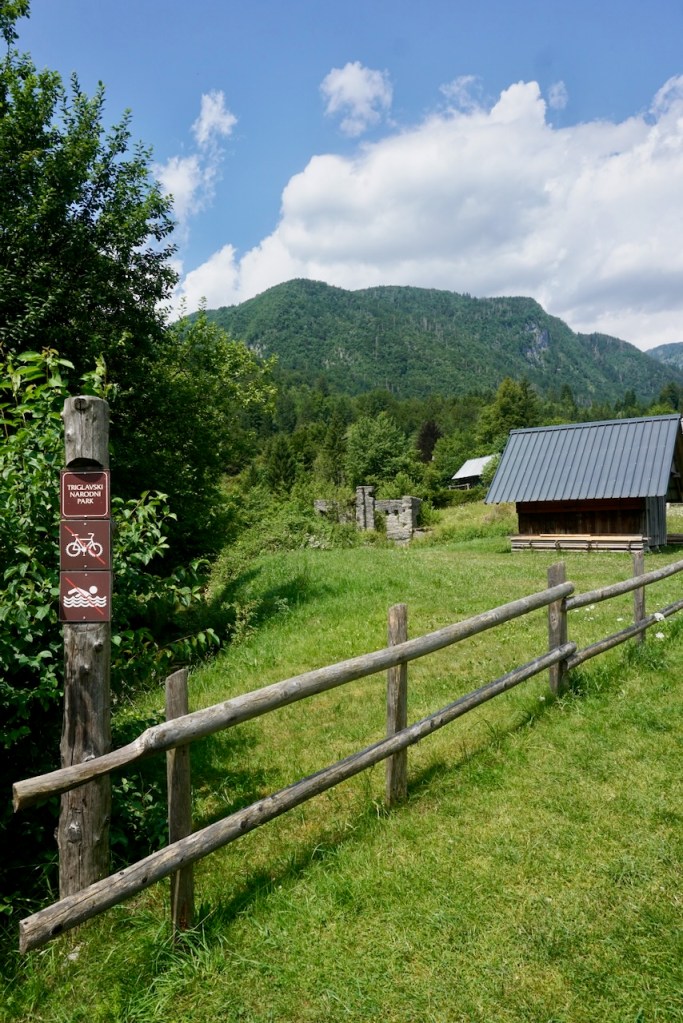
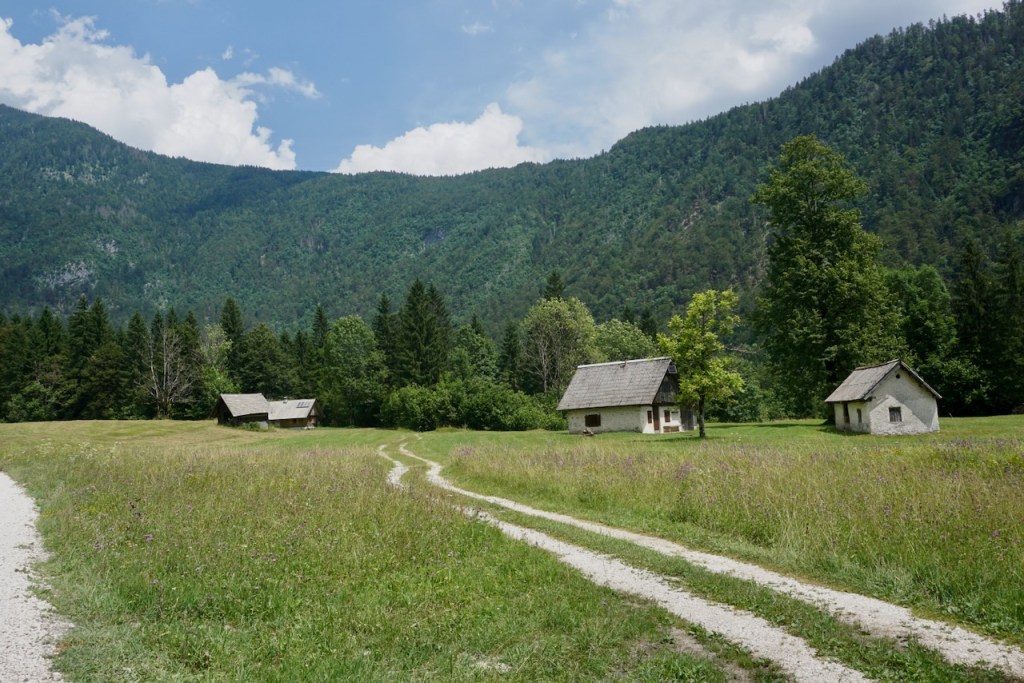
Our time in Slovenia was mostly spent enjoying Triglav National Park. On our first full day, we hiked past the fields at the edge of the village . . .

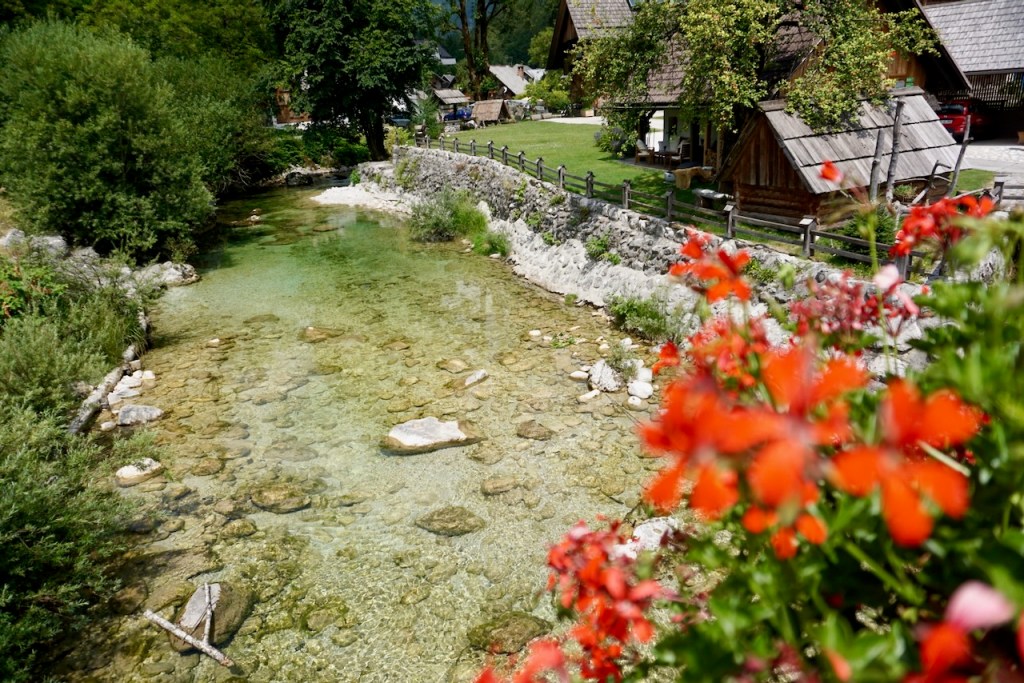
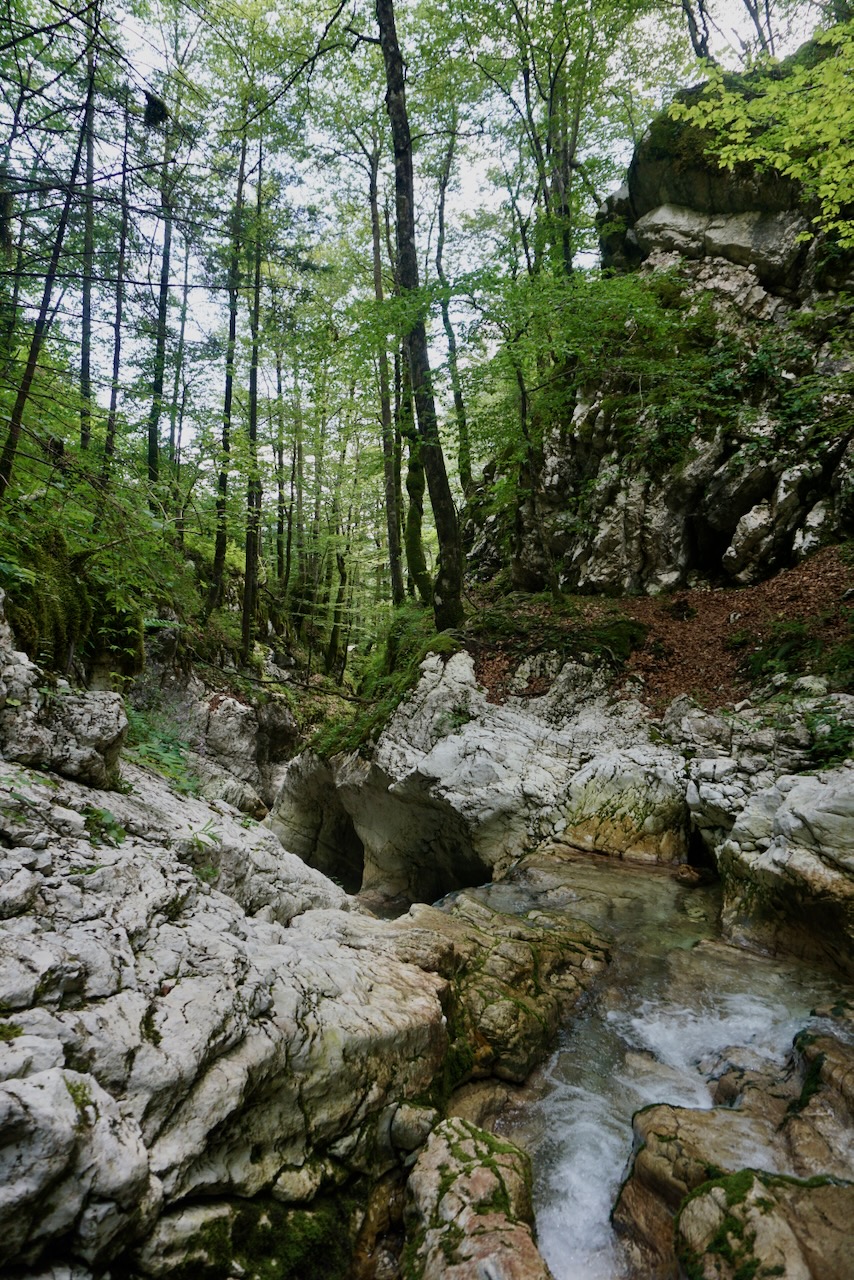
. . . through Mostnica Gorge with its deep caverns of bitingly cold water that provided relief for our feet . . .

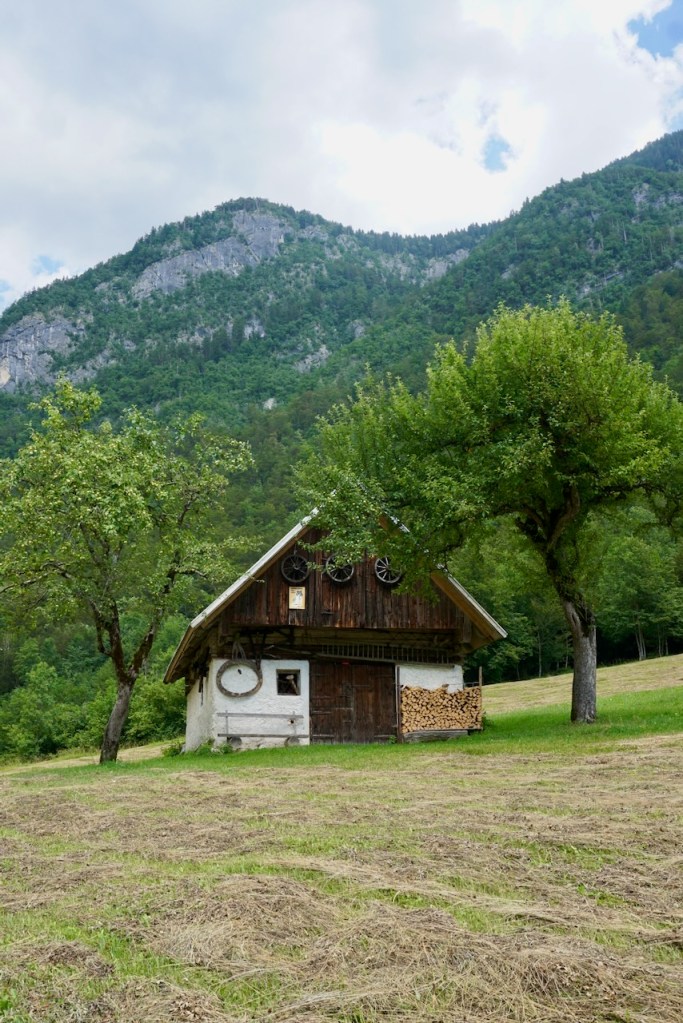
. . . and alongside fields owned and operated by farming families . . .

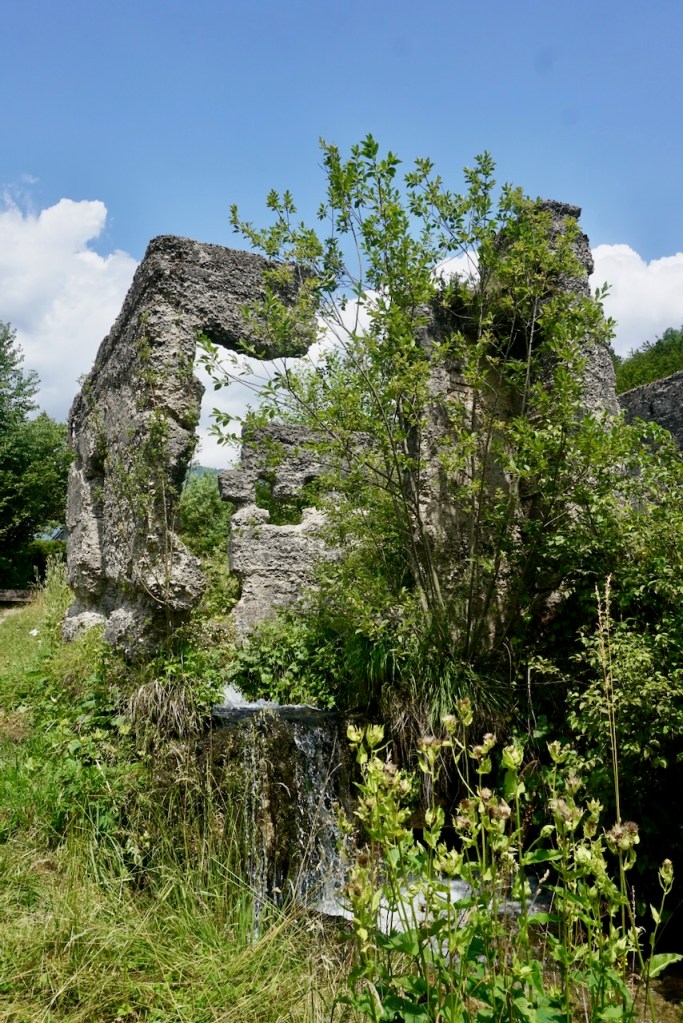
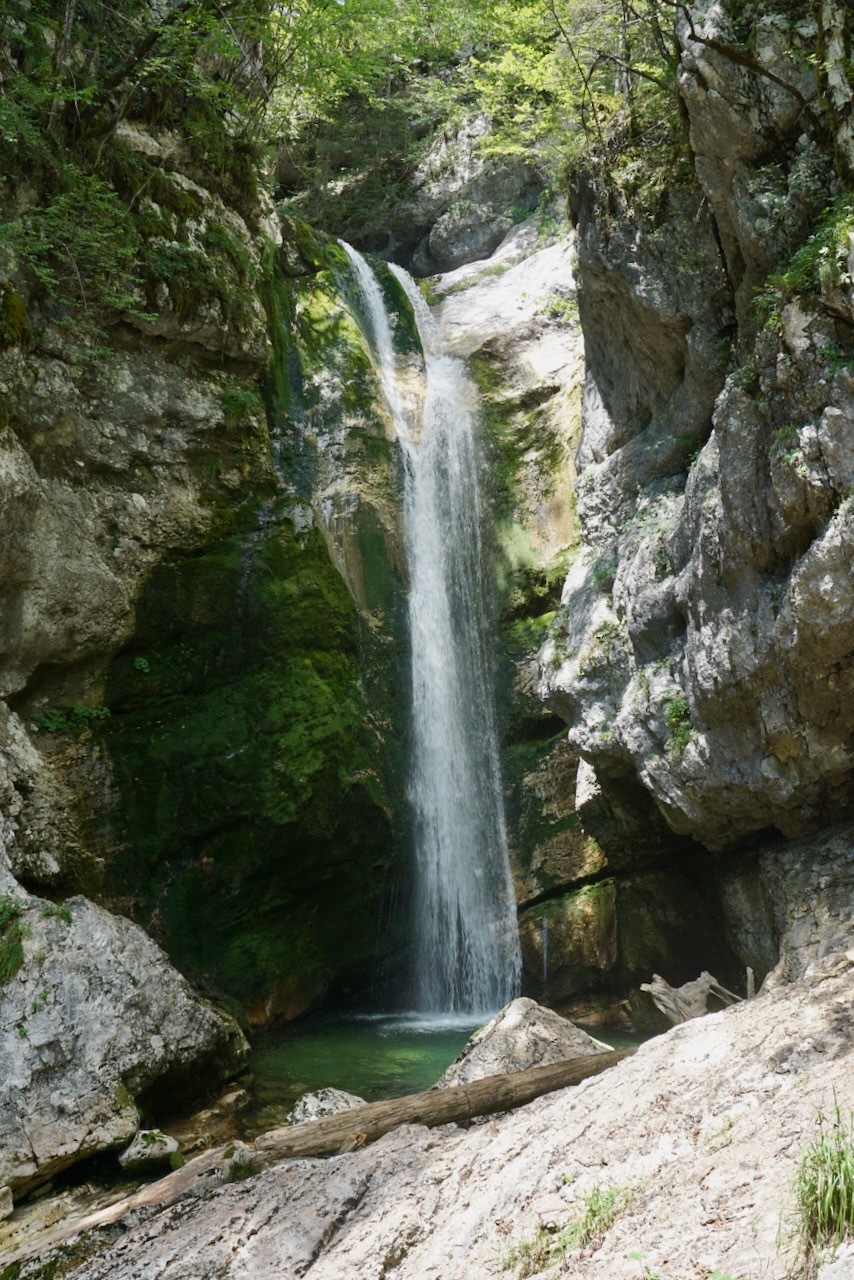
. . . before arriving at the main attraction, the Mostnica Waterfall.

It was here where we picnicked on the rocks before heading back in the direction of the guesthouse we’d passed on the way. There would be a cold drink there waiting for us.

The next day, we walked in a different direction through the village and past the fields . . .

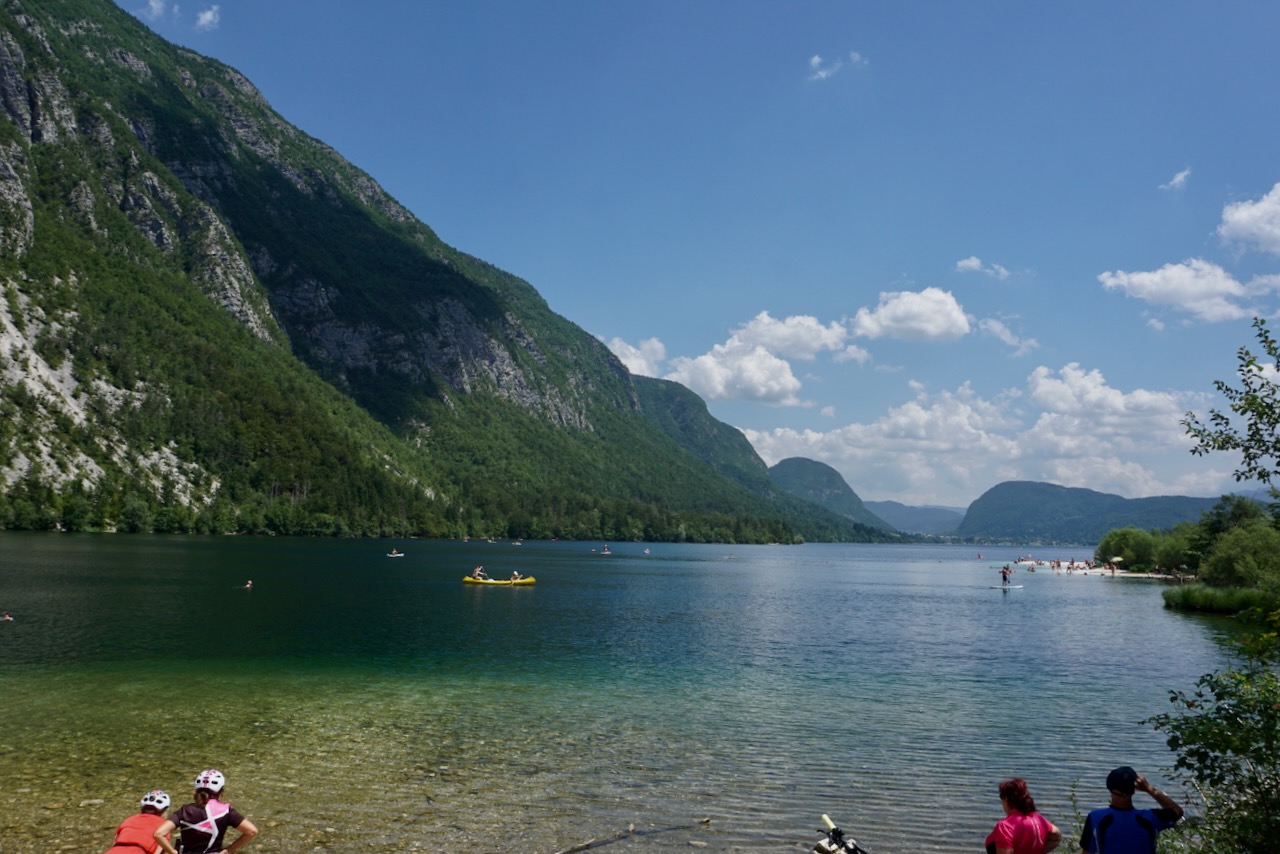
. . . to reach the path that runs the length of Lake Bohinj. We stopped for ice cream, our usual picnic, and to sit for a while by the water. Despite wearing a bathing suit, I only went in as far as possible without getting wet. I am not fond of hiking in wet clothes and we had a ways to go.

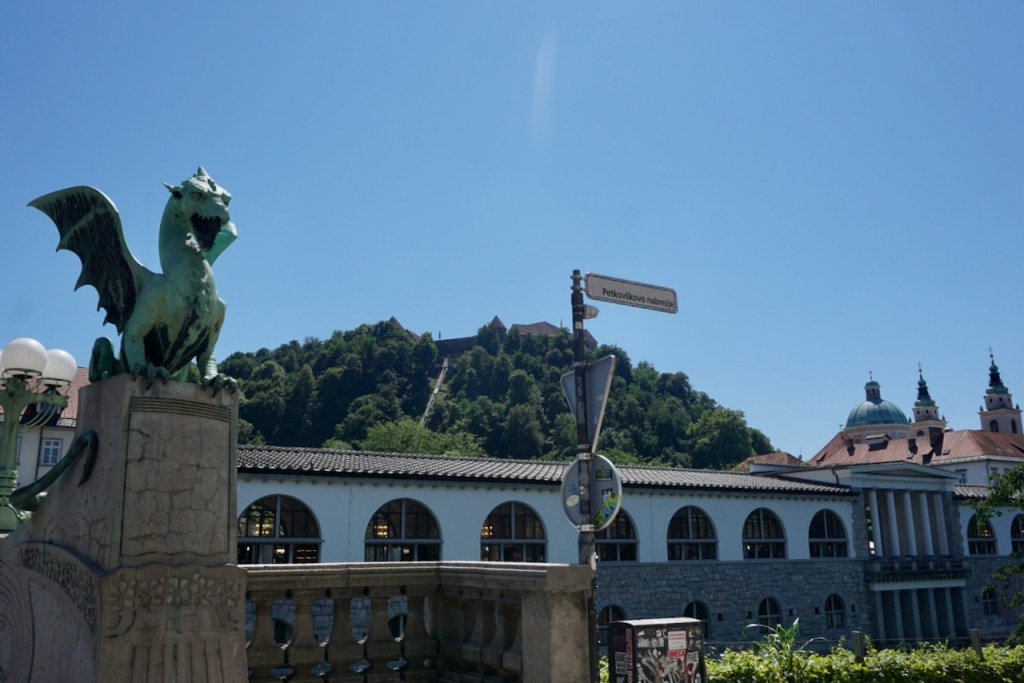
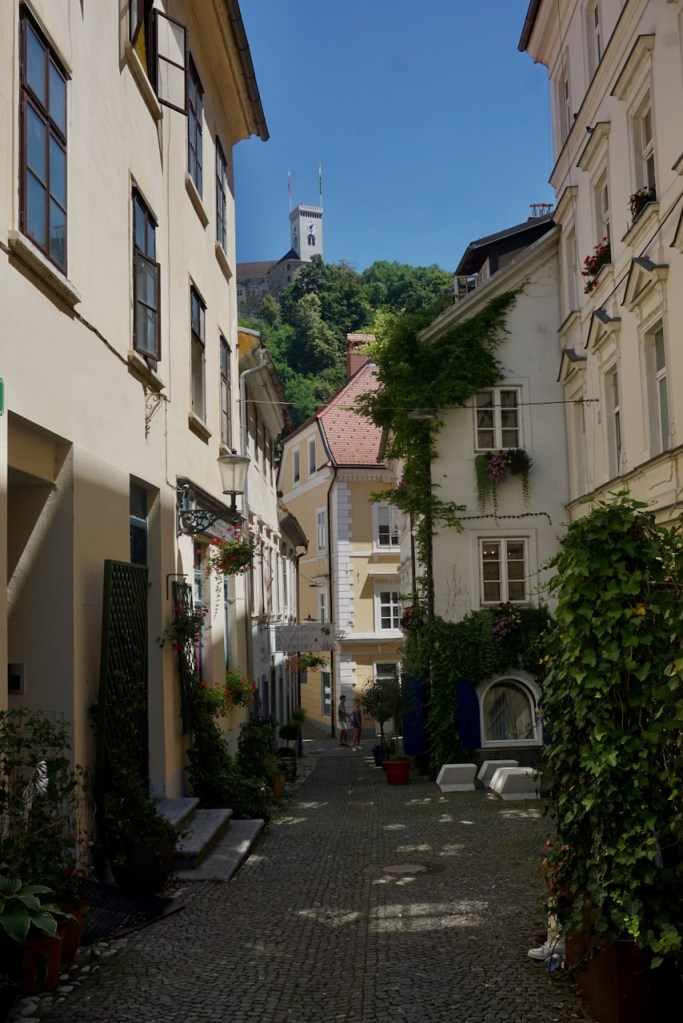
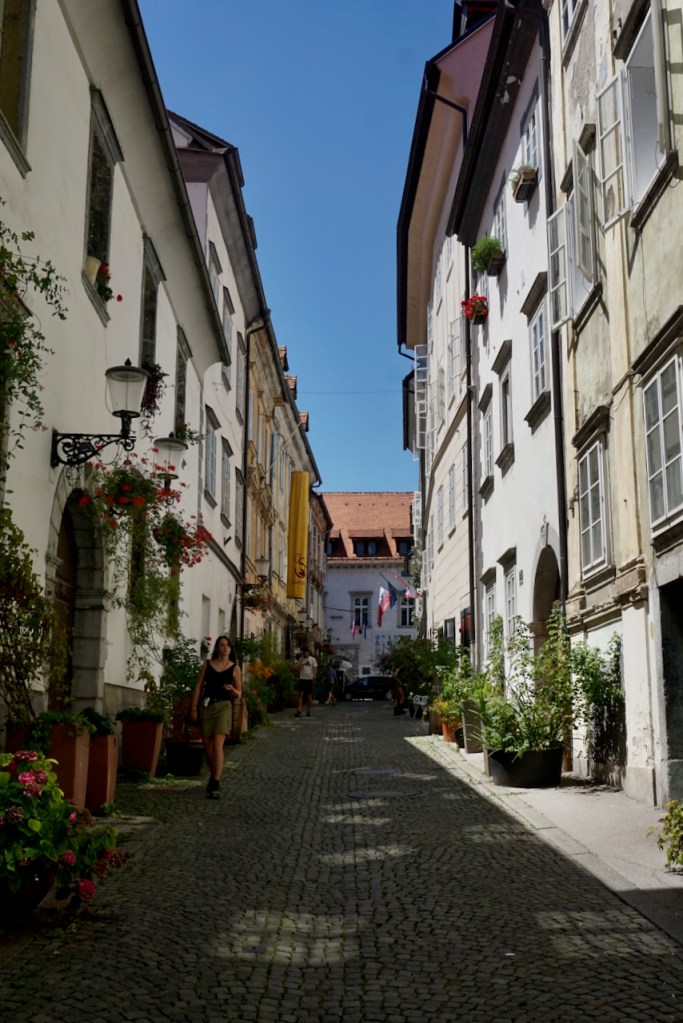
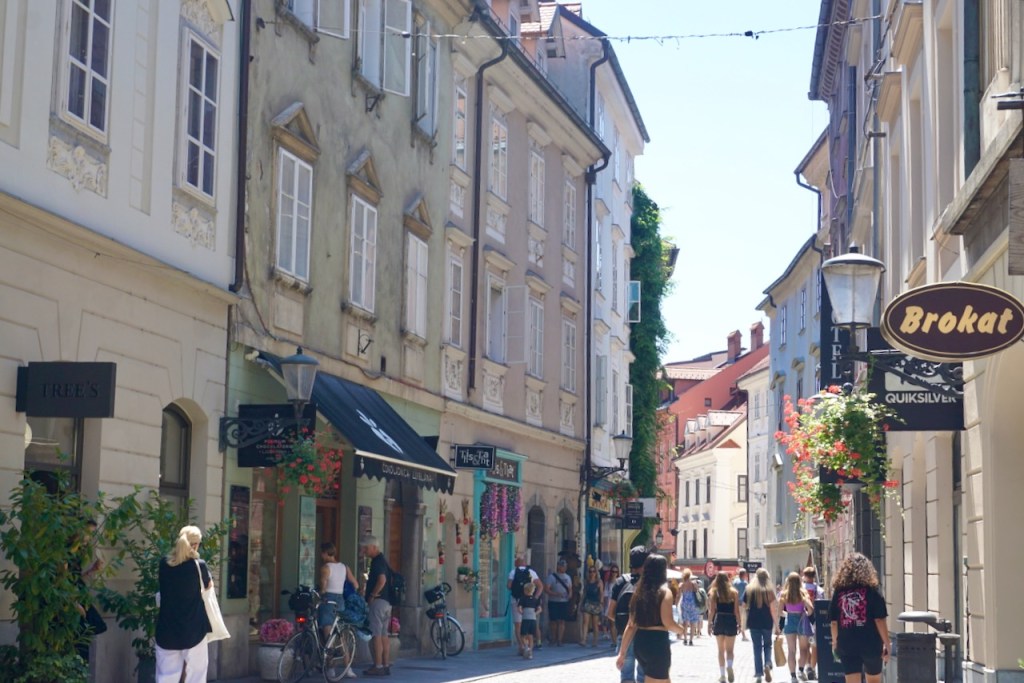
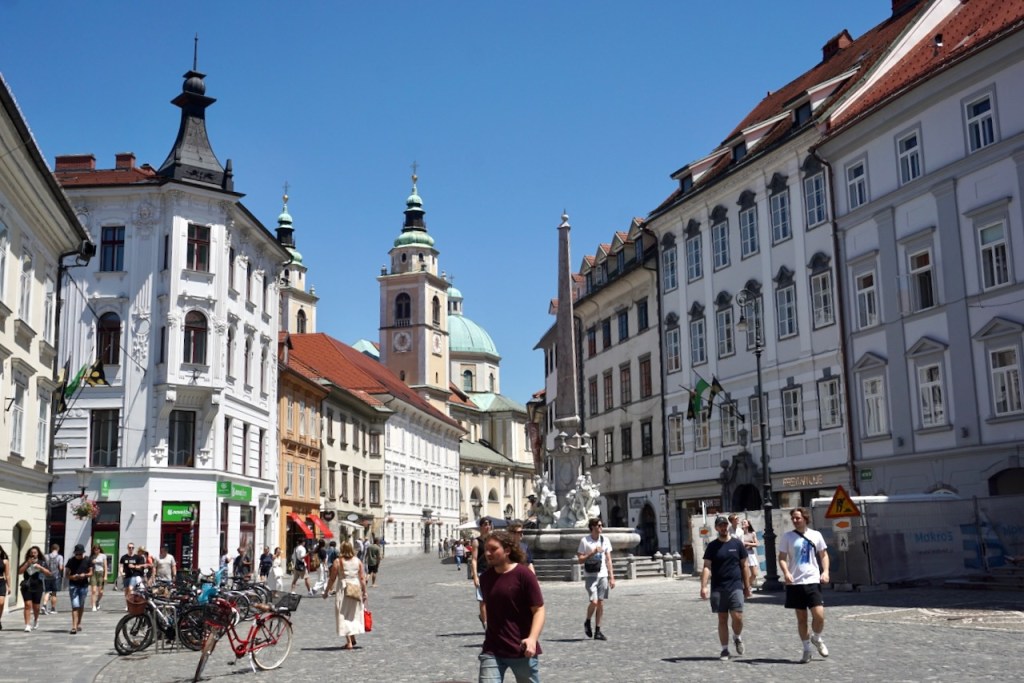
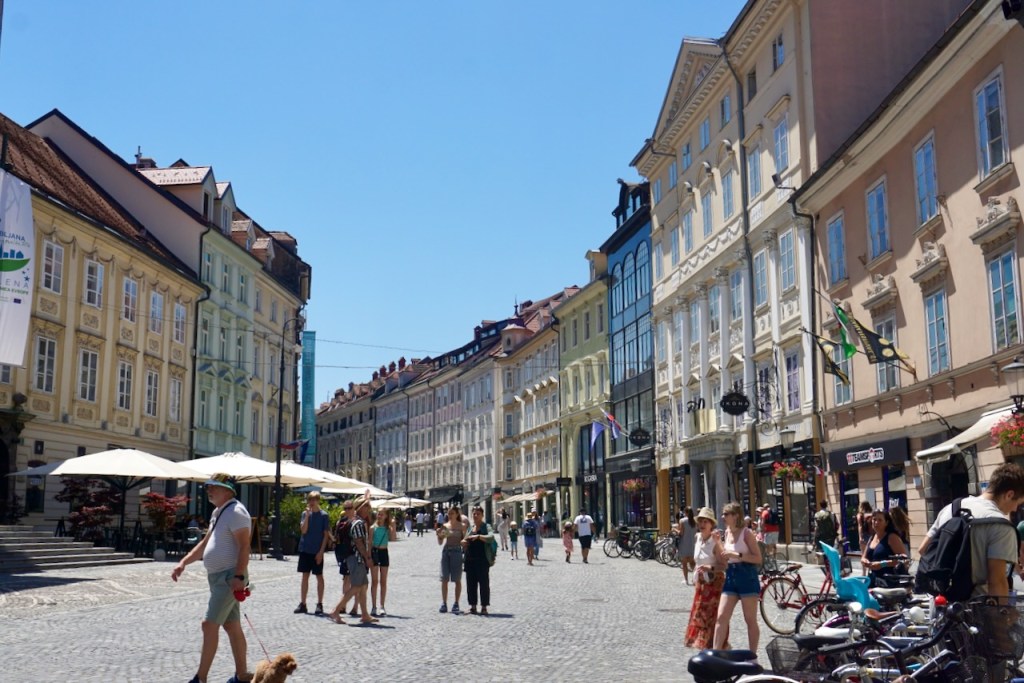
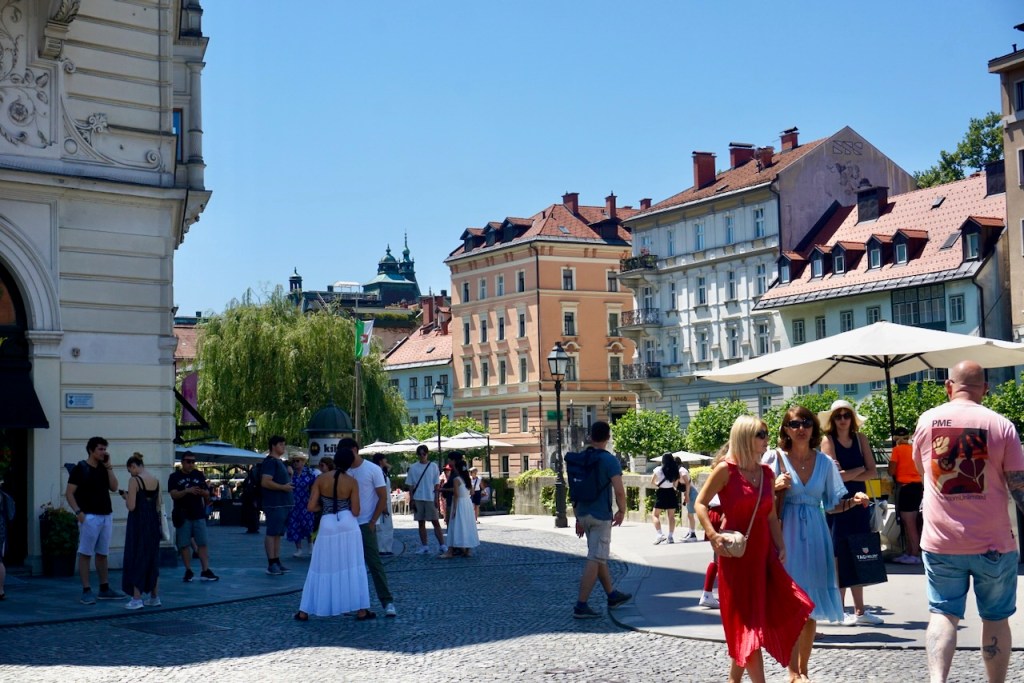
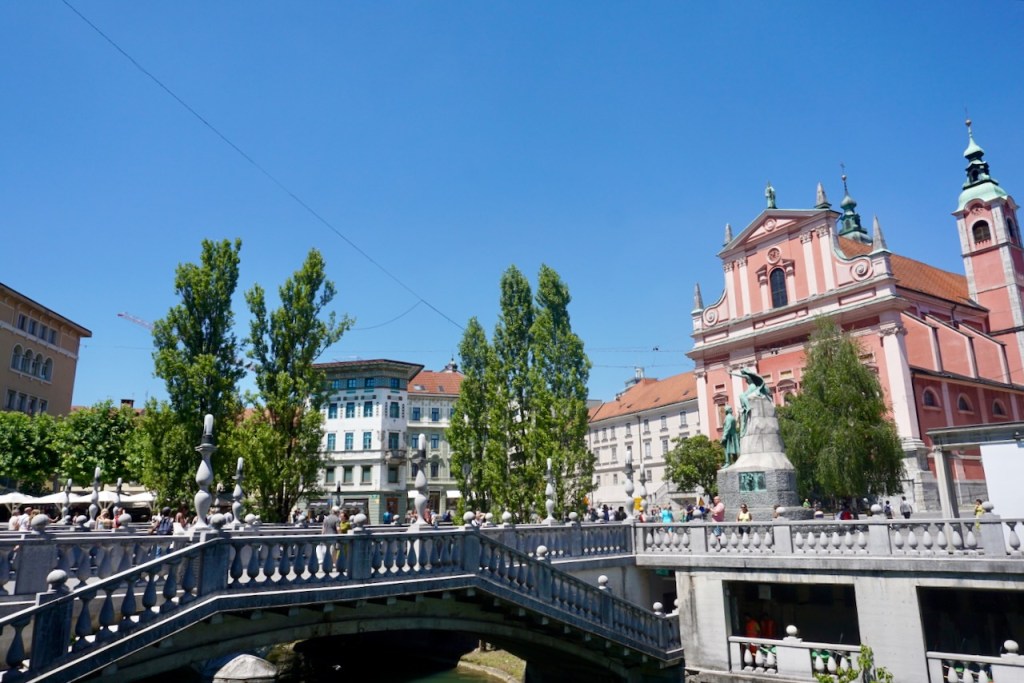
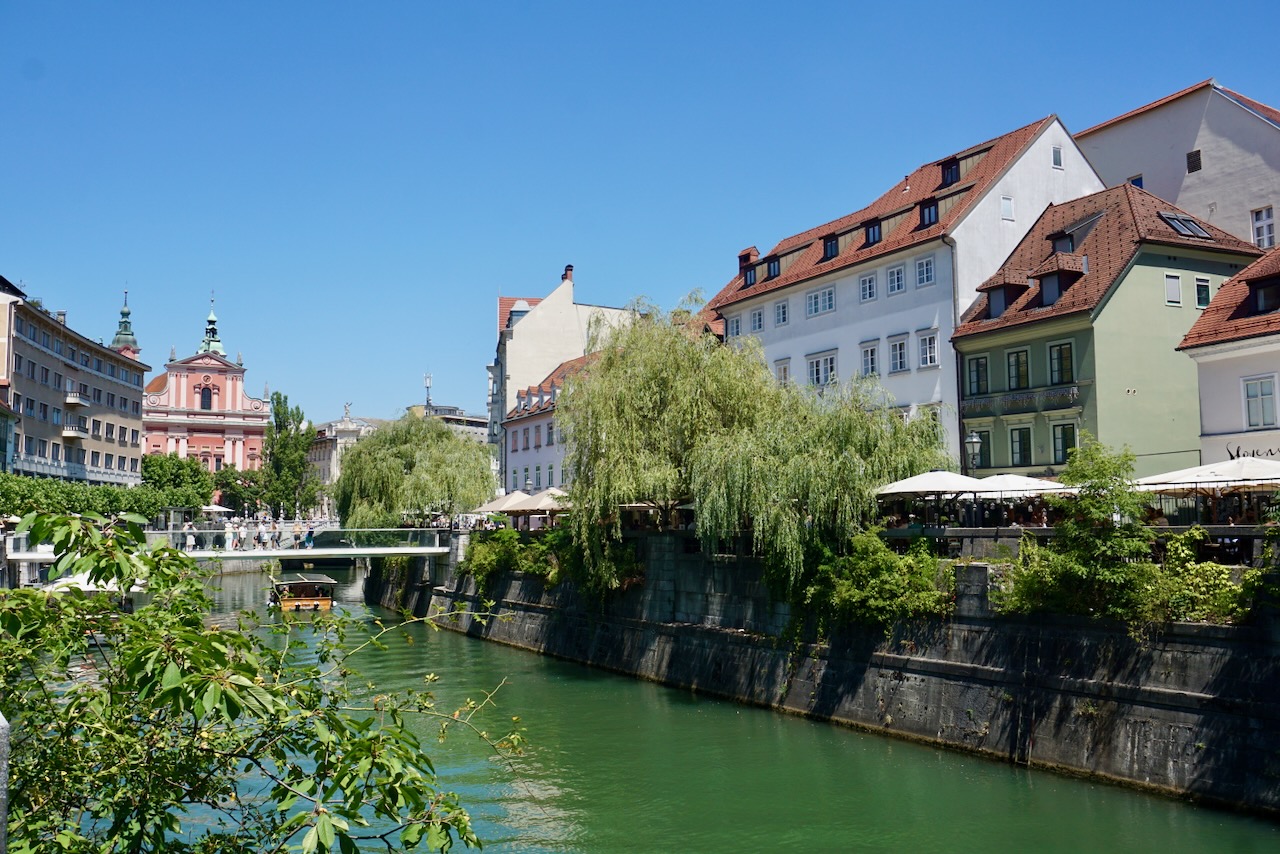
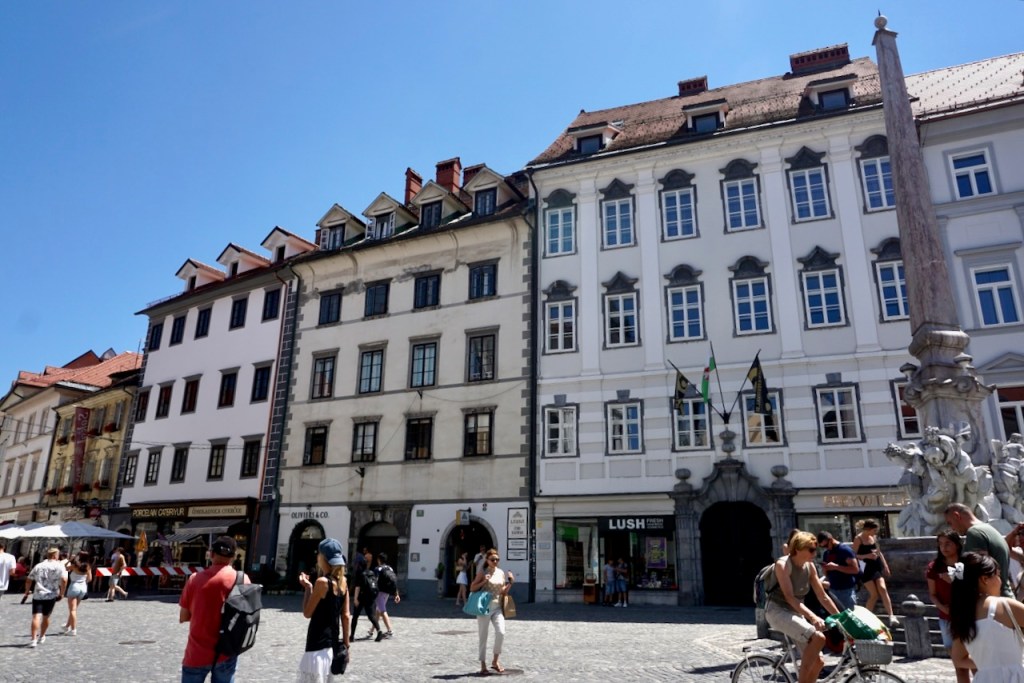
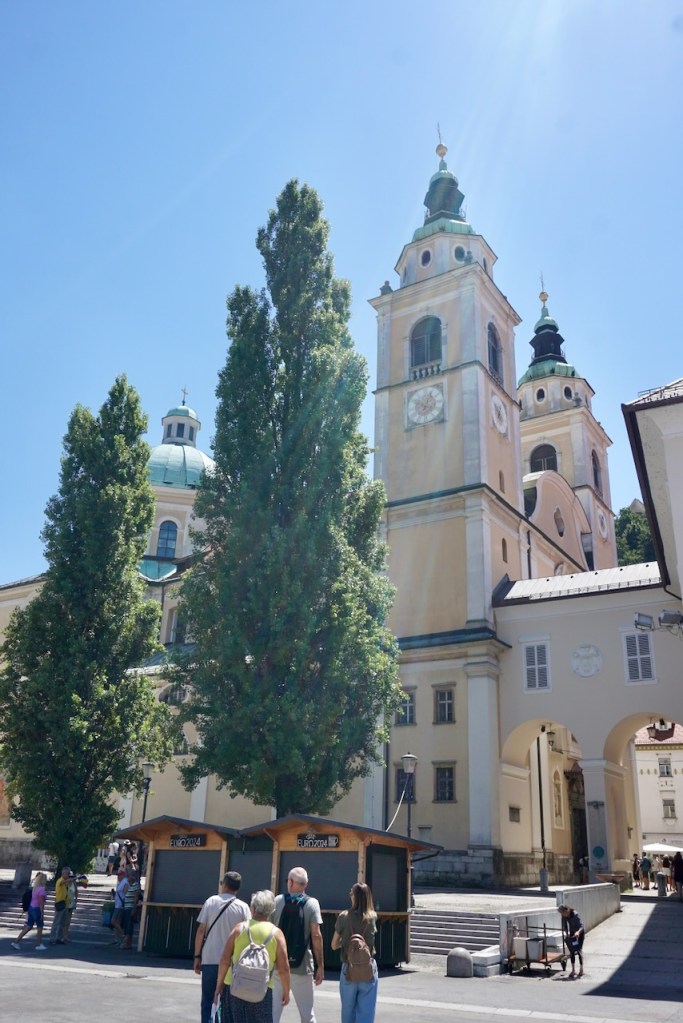
The following day, we visited Ljubljana, Slovenia’s capital, where I hadn’t been on my first trip. The city felt like many around Germany with narrow side streets, pastel buildings, and open squares. The amount of German being spoken by tourists only augmented the sense of familiarity. The castle on the hill and the city’s dragon symbol added an air of the medieval.

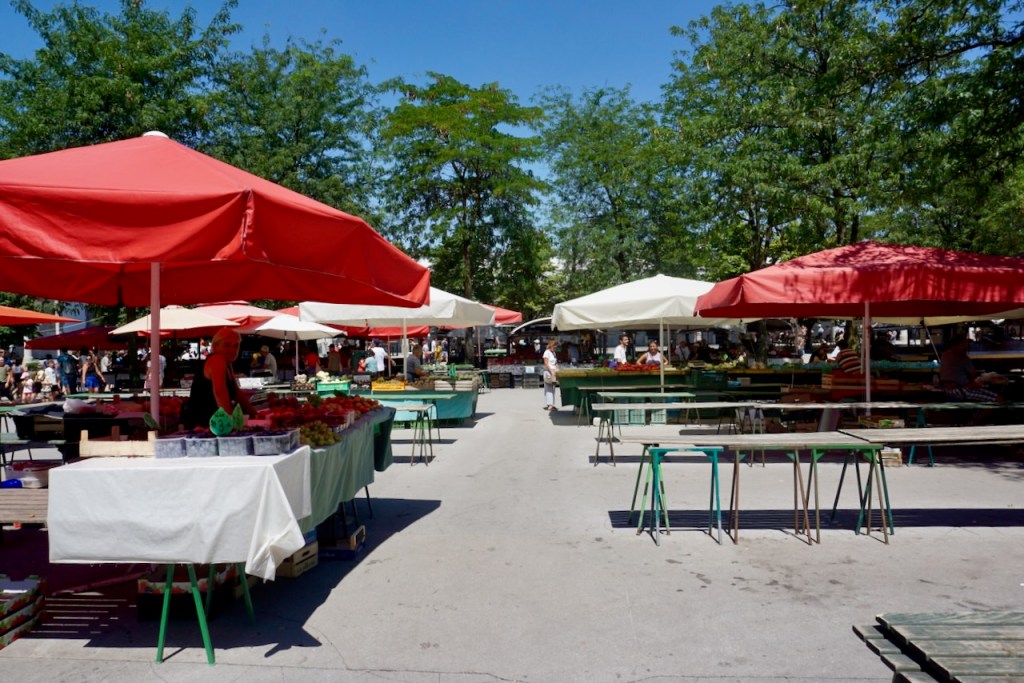
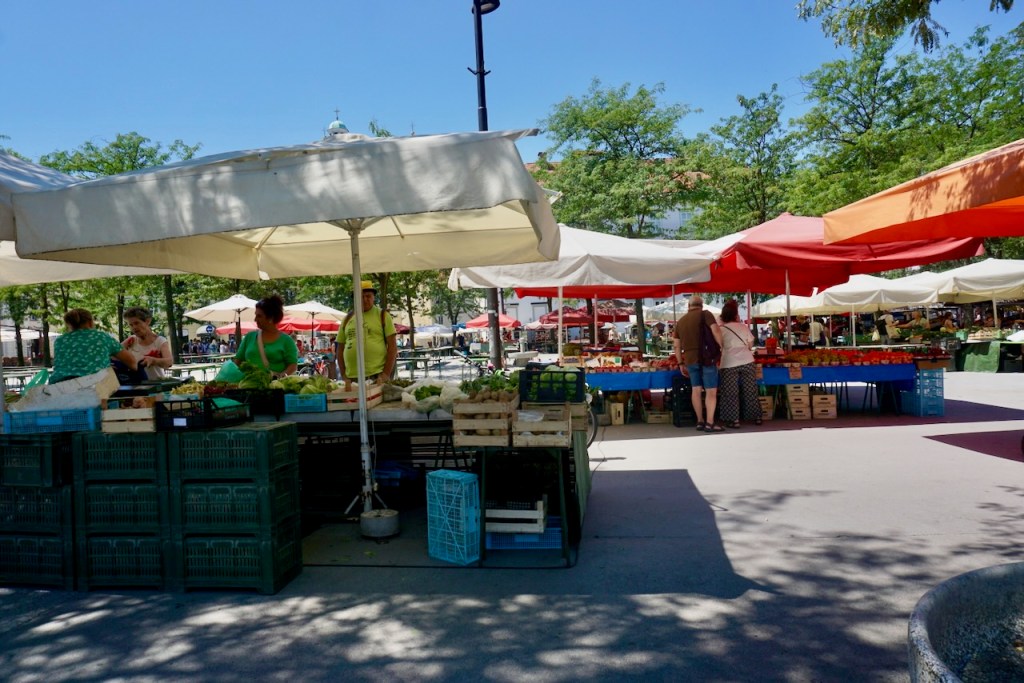
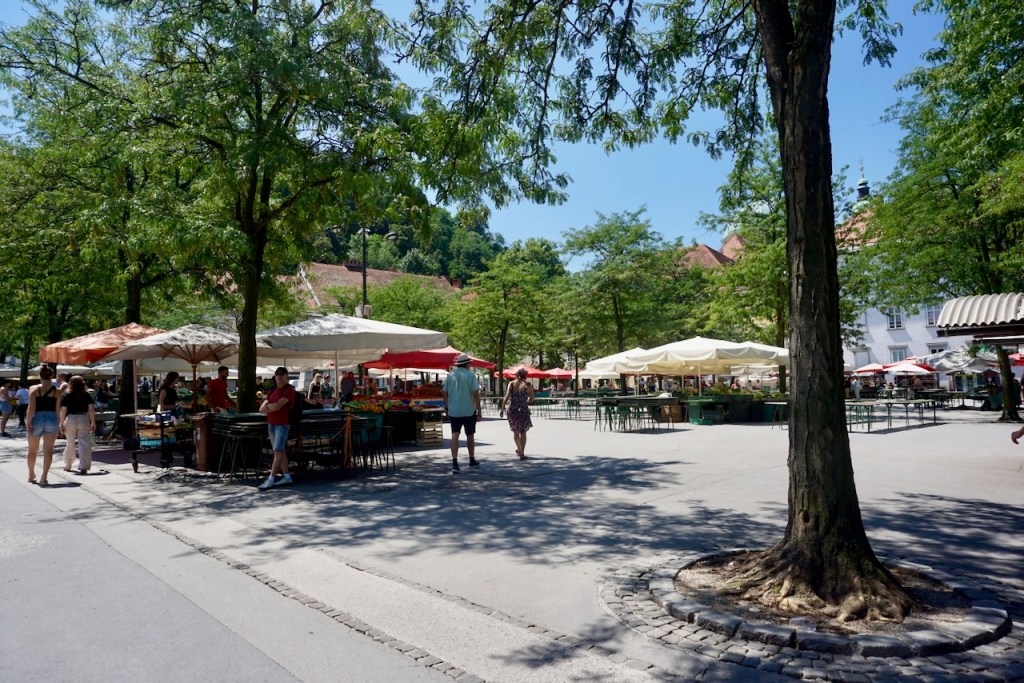
I enjoy any city with a market . . .

. . . or on the water . . .

. . . and Ljubljana’s car-free old town was pleasant to walk through. It is also very small, making it easy to take everything in. I especially appreciated aspects of Ljubljana that hinted at the daily lives of the people who live there.

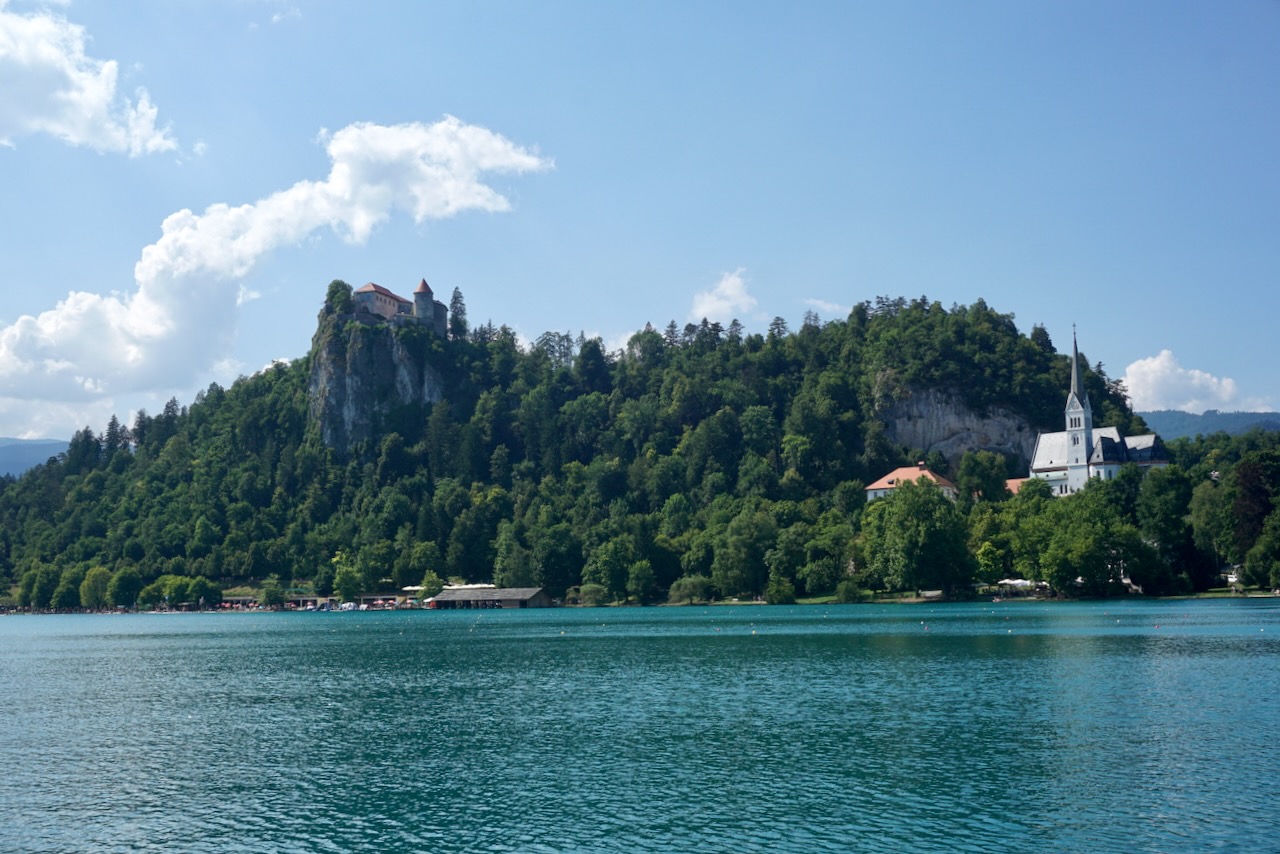
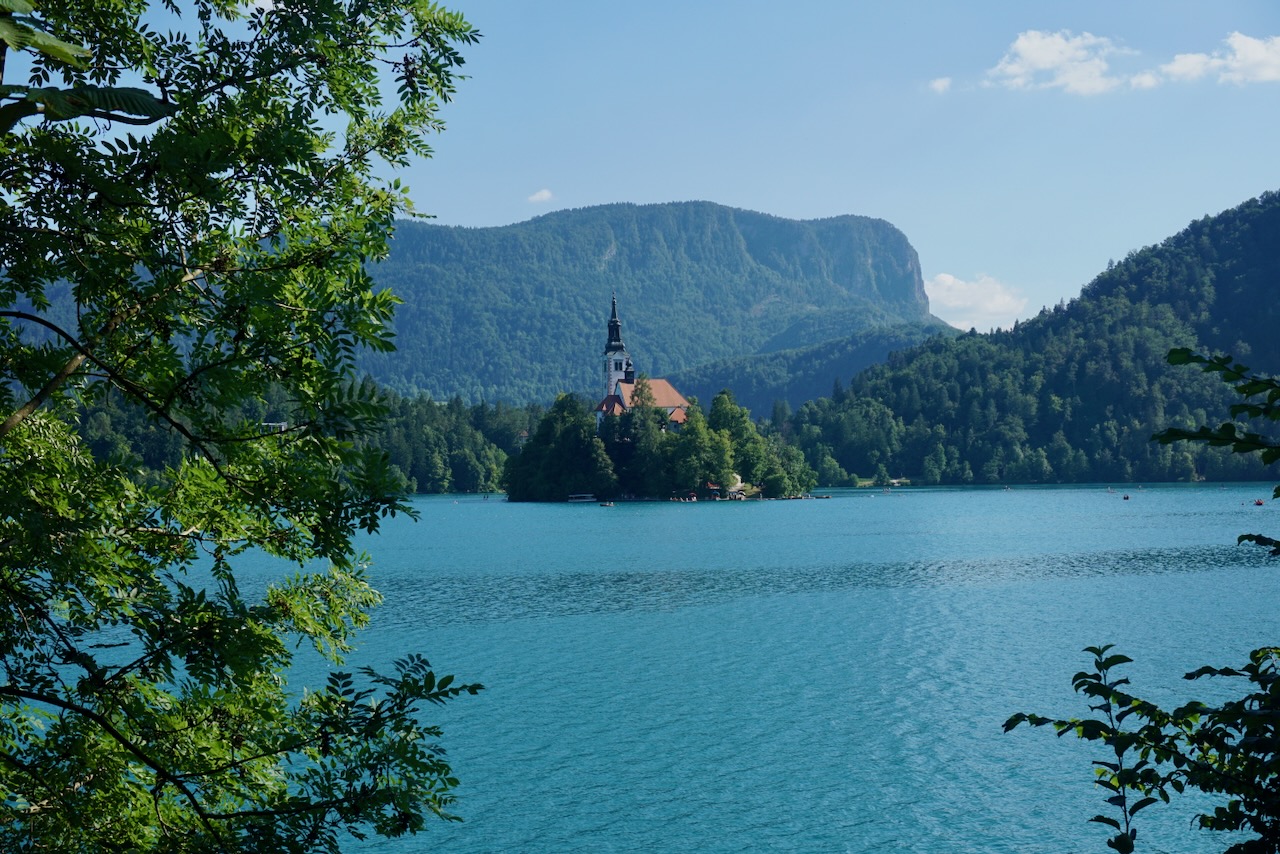
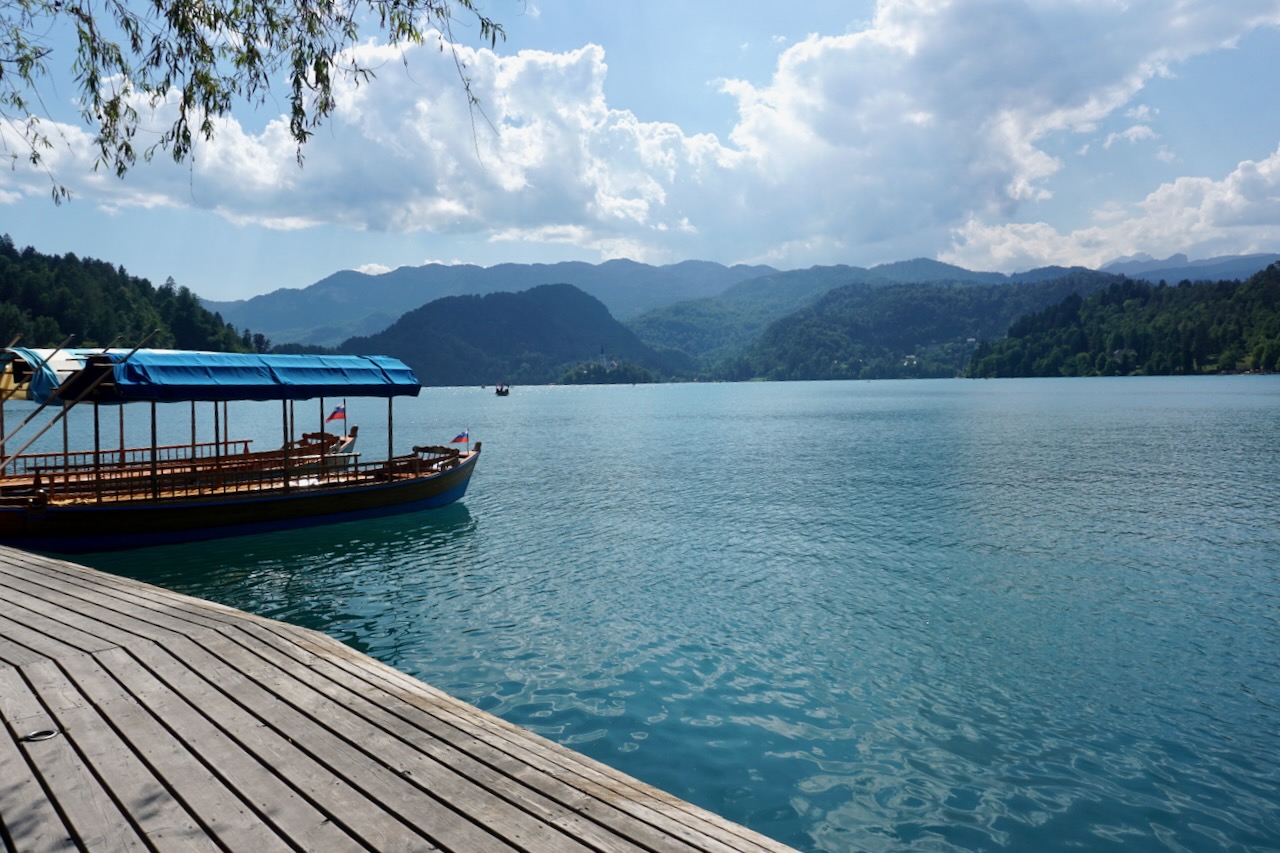
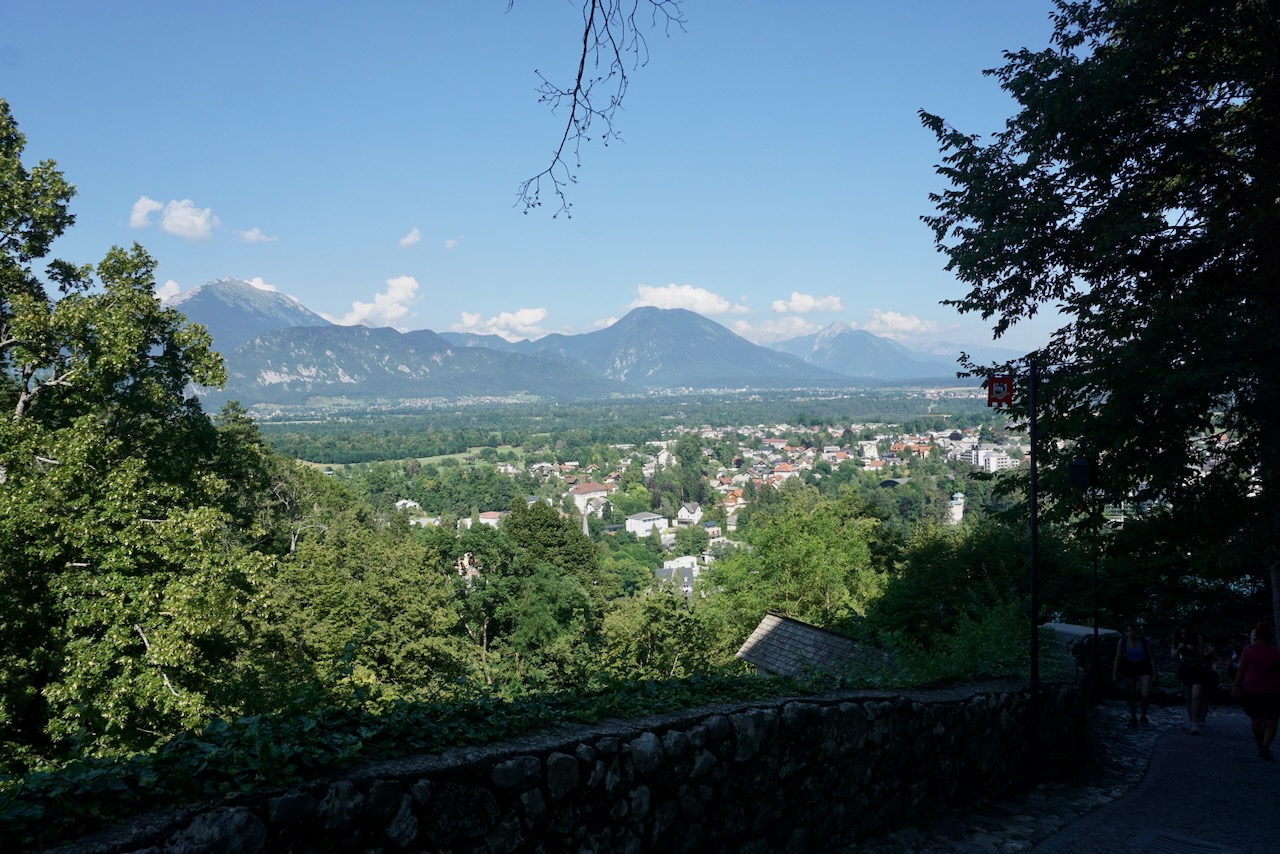
On the way back, we stopped in Lake Bled. The lake was an almost unreal blue, and we were, as always, enchanted by the mountains in the distance.

We walked up the path to Castle Bled, stopping just before we had to pay admission to look down at the valley through which we had driven on our way there.

We spent our last day in Slovenia having a beach day at Lake Bohinj. We spread our towels on the grass under a tree, bought ice cream bars from a kiosk, went swimming, and paddled our rented boards. It had been very hot the last several days and the water was delicious.

Rejuvenated from the slow pace and having spent nearly a week surrounded by the Julian Alps, we were excited to get back into the mountains for one final adventure: Germany’s Zugspitze.

Travel Guide: California National Parks (and a Day in San Francisco)

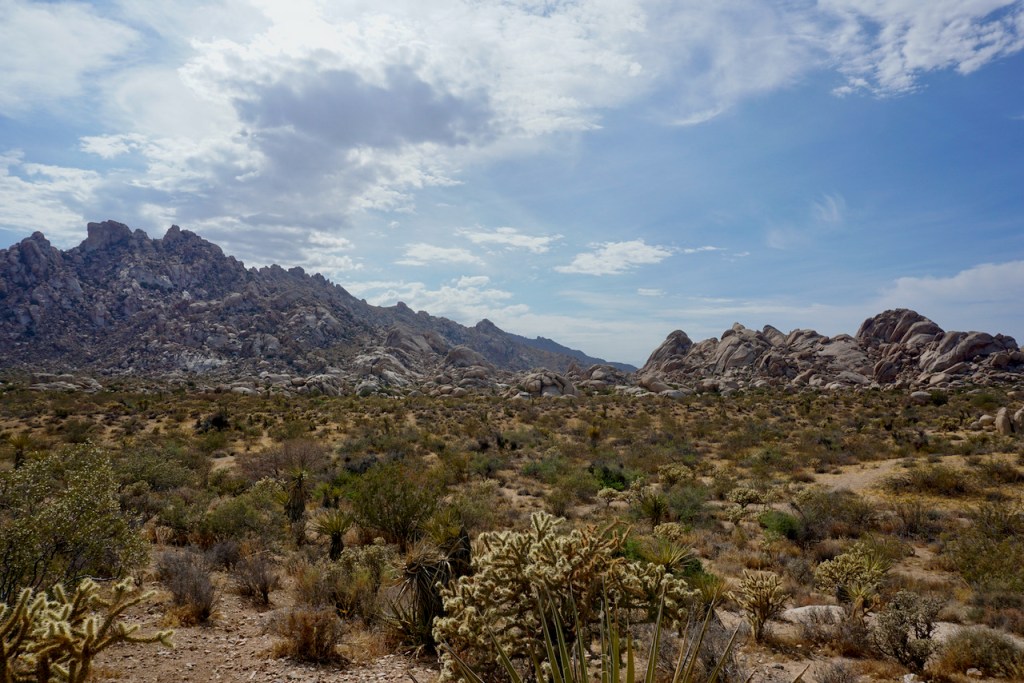
Upon leaving Nevada, we admitted that we were desperate for greenery. The desert is beautiful but we come from green places, and the lack of lush foliage was starting to wear. We would find green in California, but we first turned in the direction of Mojave National Preserve, which was a far rather different desert than we had expected. Rather than flat and endless, the drive was rather bouncy as we passed the many signs announcing: “DIP”. The temperature was cooler, as well, rendering the Mojave surprisingly comfortable for the ten minutes we stepped out of the car to look closer at the plants.

It’s a little strange to write and post this now because the area we drove through is currently on fire. The theme of fire, of which we had seen traces throughout our travels, only grew as we entered California; my concern for the planet, as I now experience a very wet summer with crops rotting in fields, has grown in parallel.

Our drive also included elements of desert travel along Route 66 that we had come to know, elements of the uncanny punctuating the stark landscape.

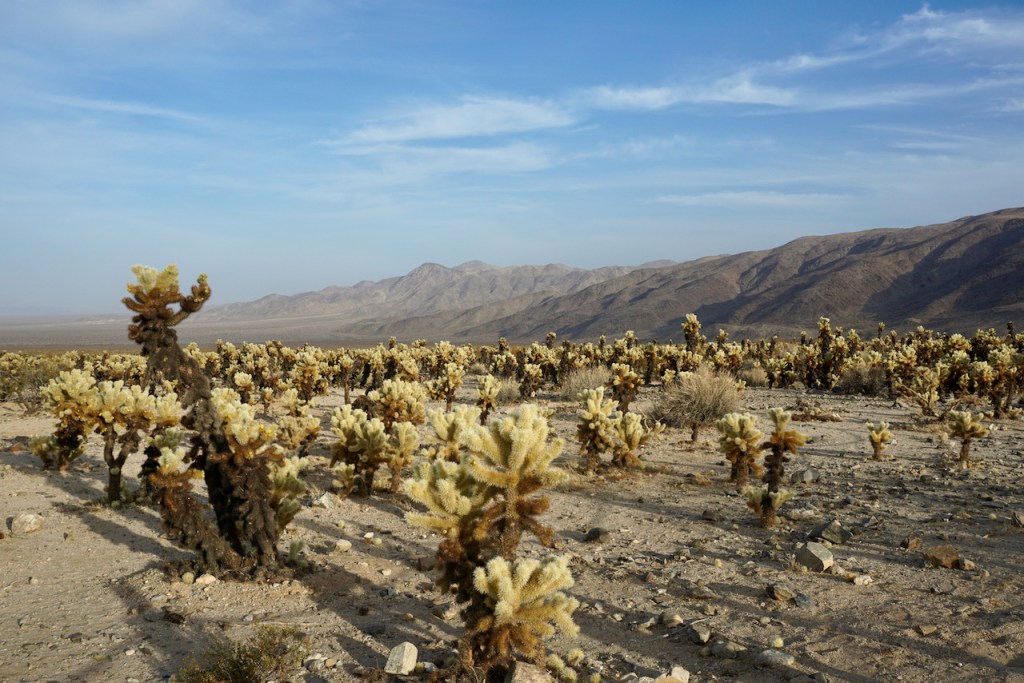
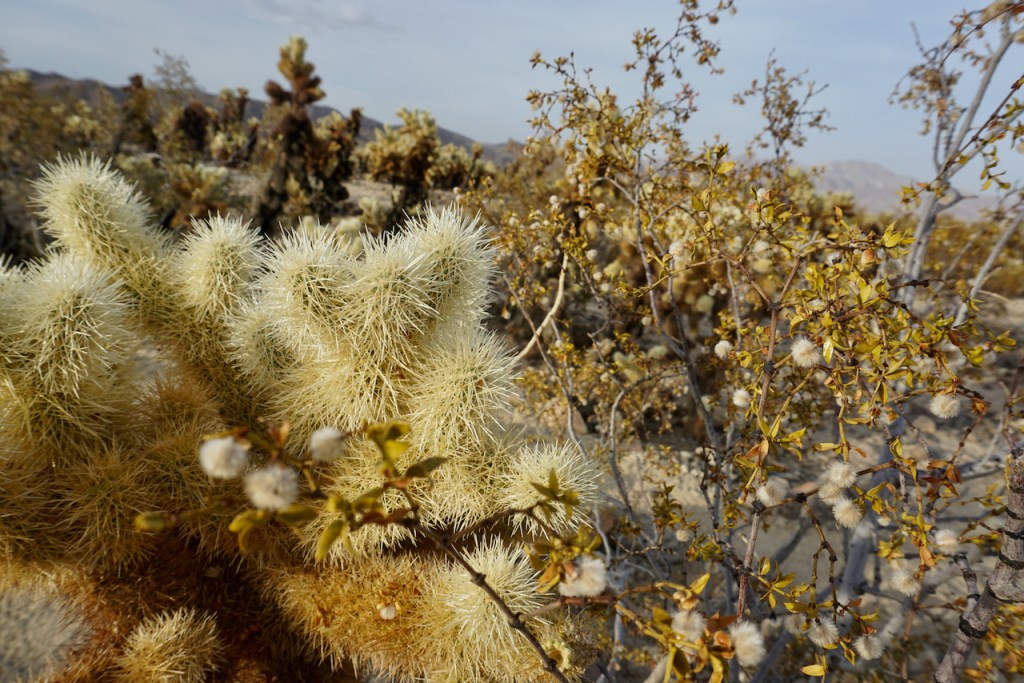
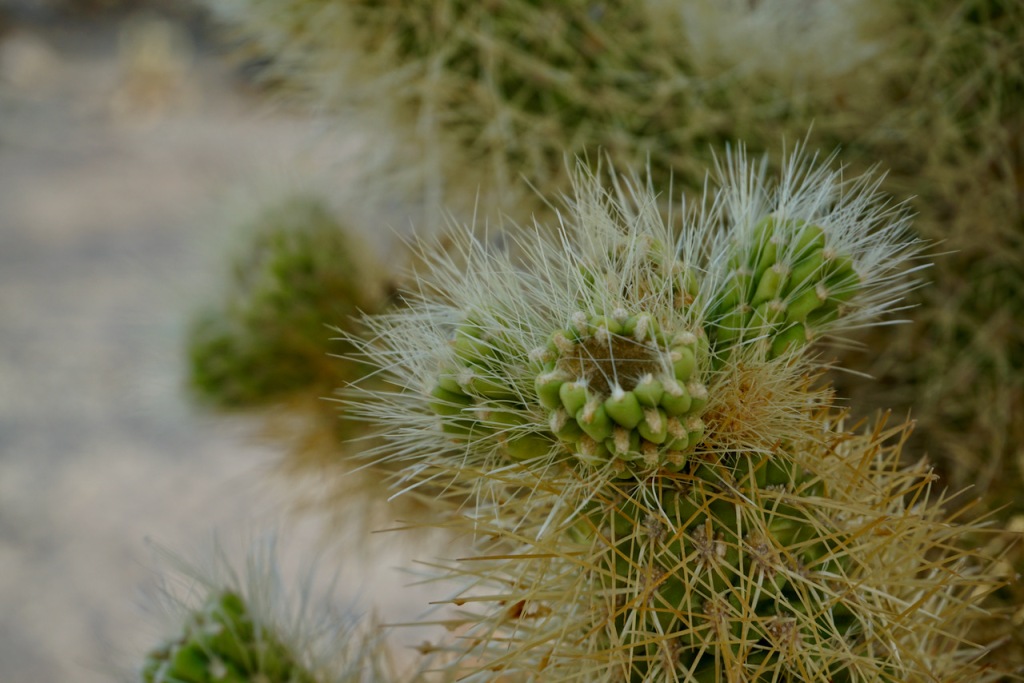
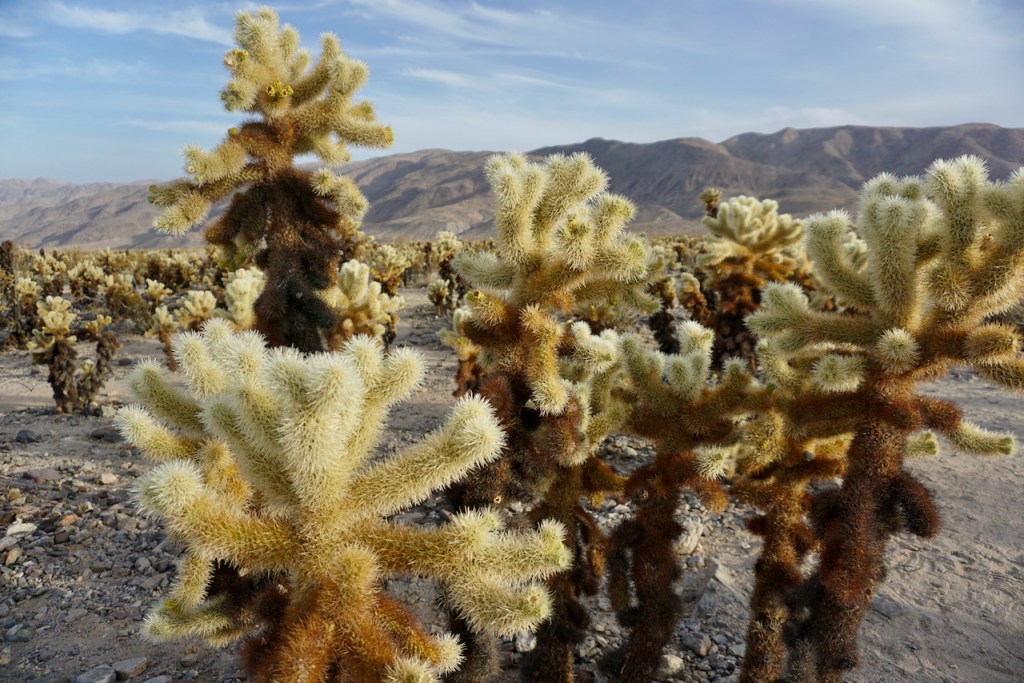
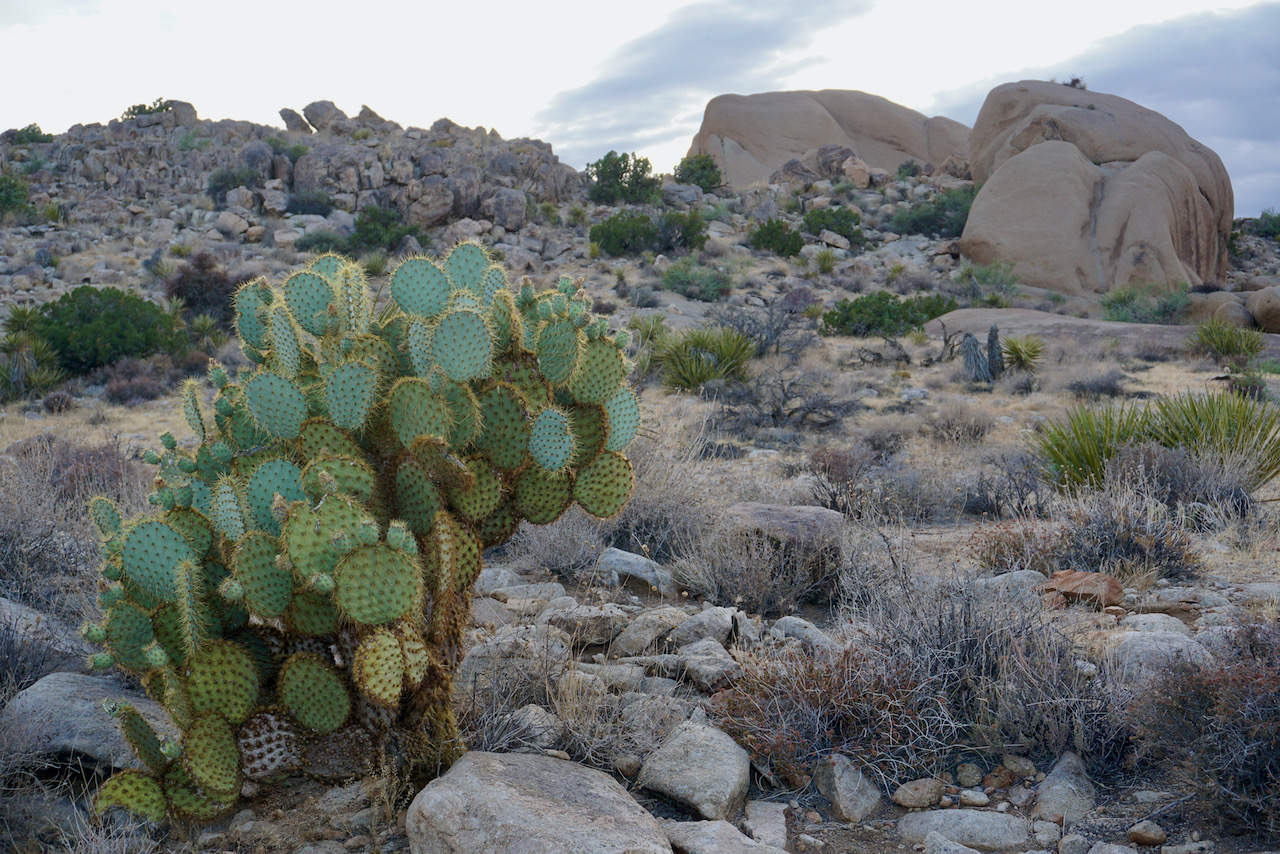
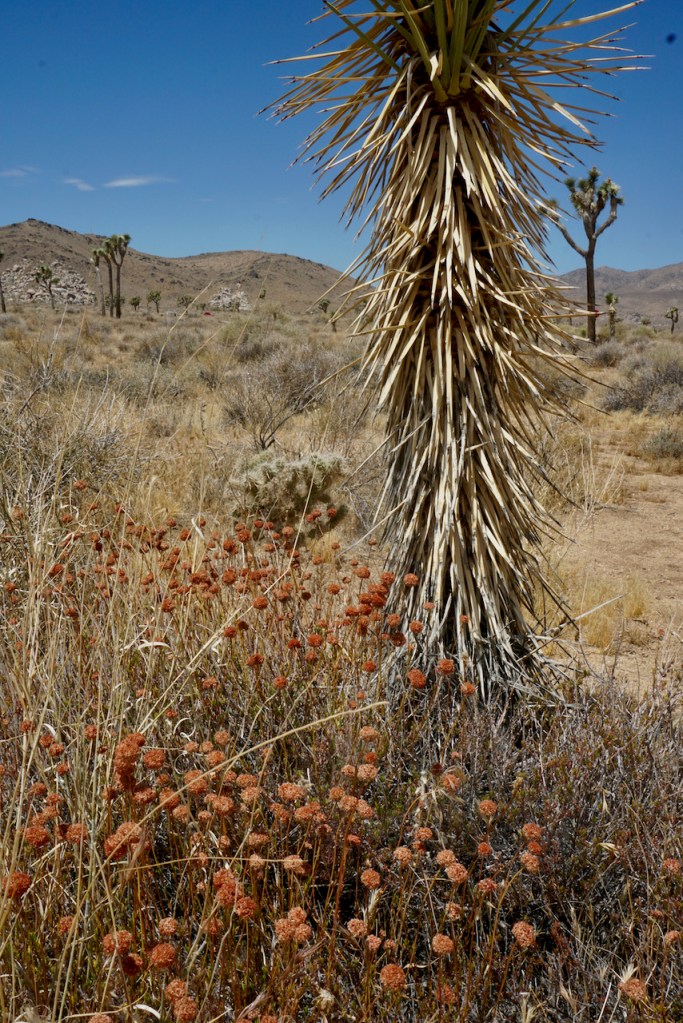
That evening, we arrived in Joshua Tree National Park and went for several walks as the sun began to set. We caught the last of the day’s light on fuzzy-looking cacti that I wanted to touch (but refrained) . . .

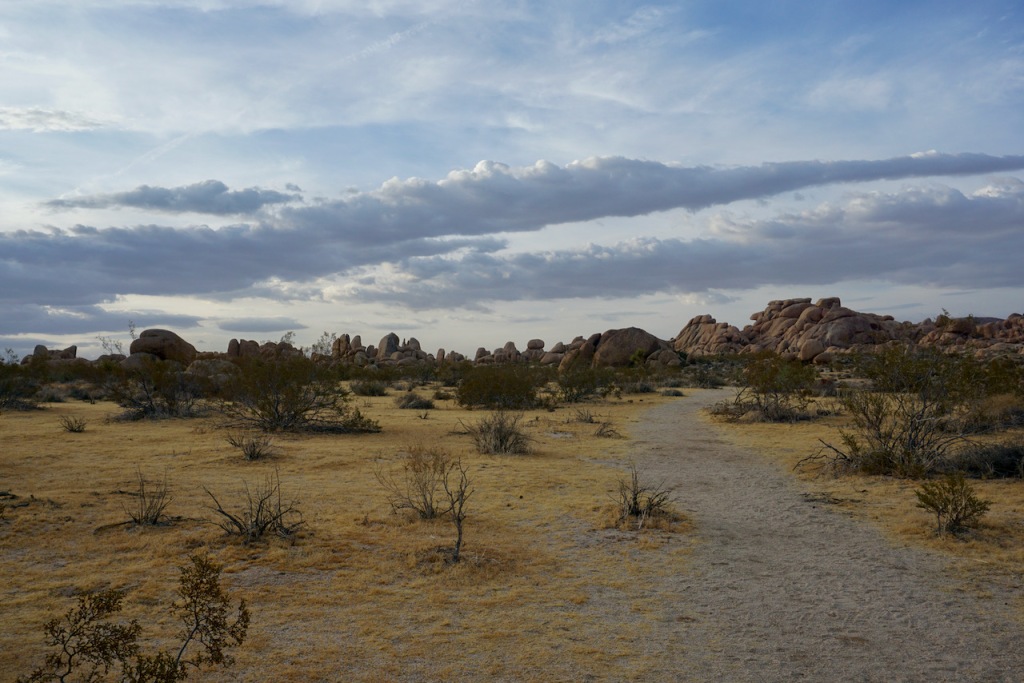
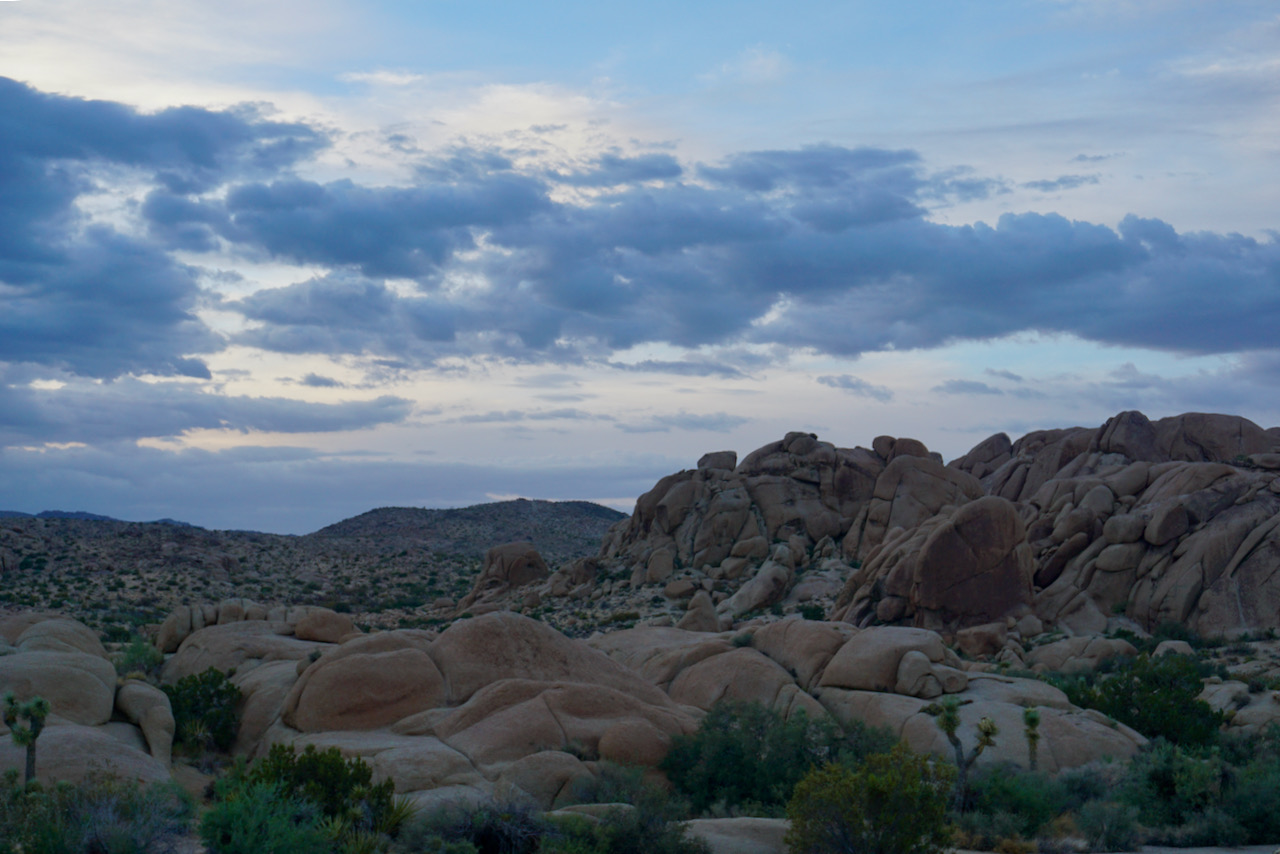
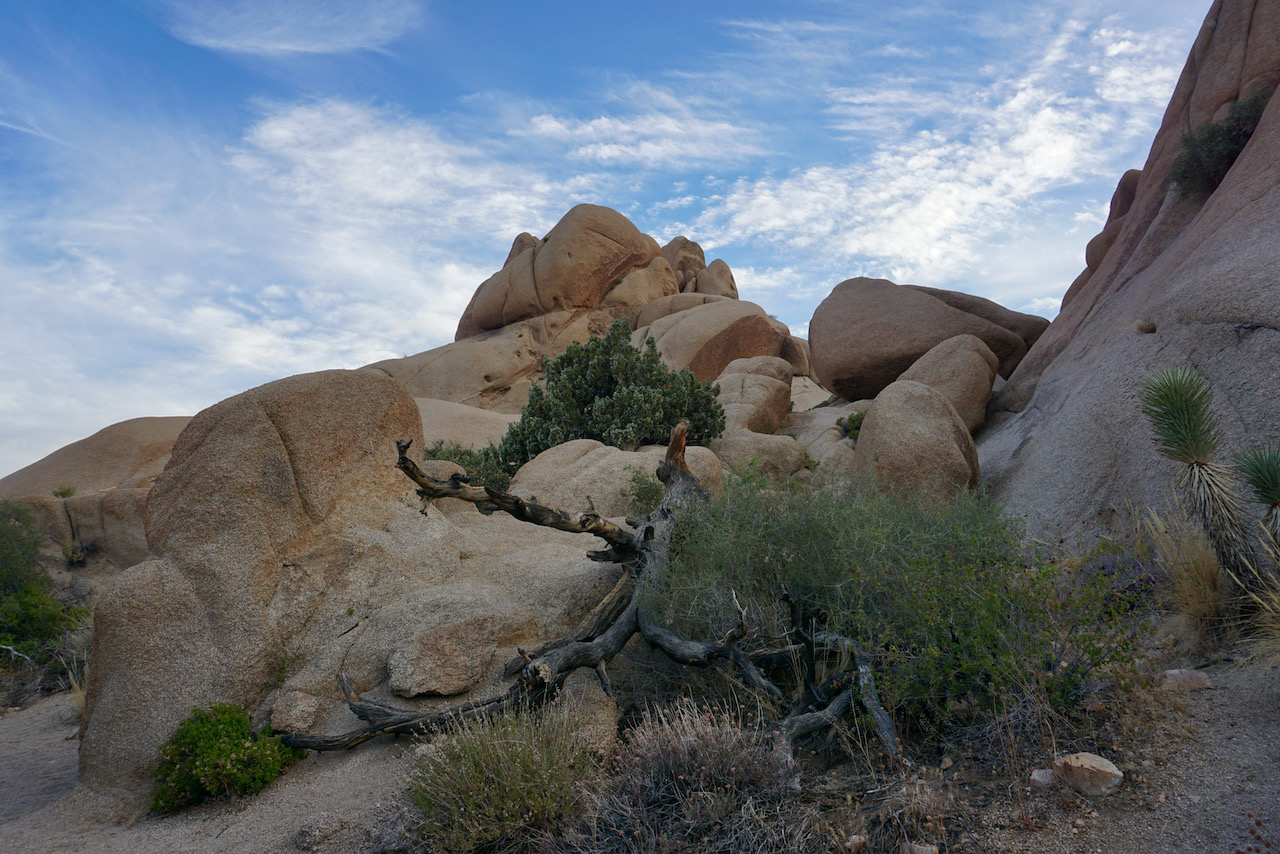
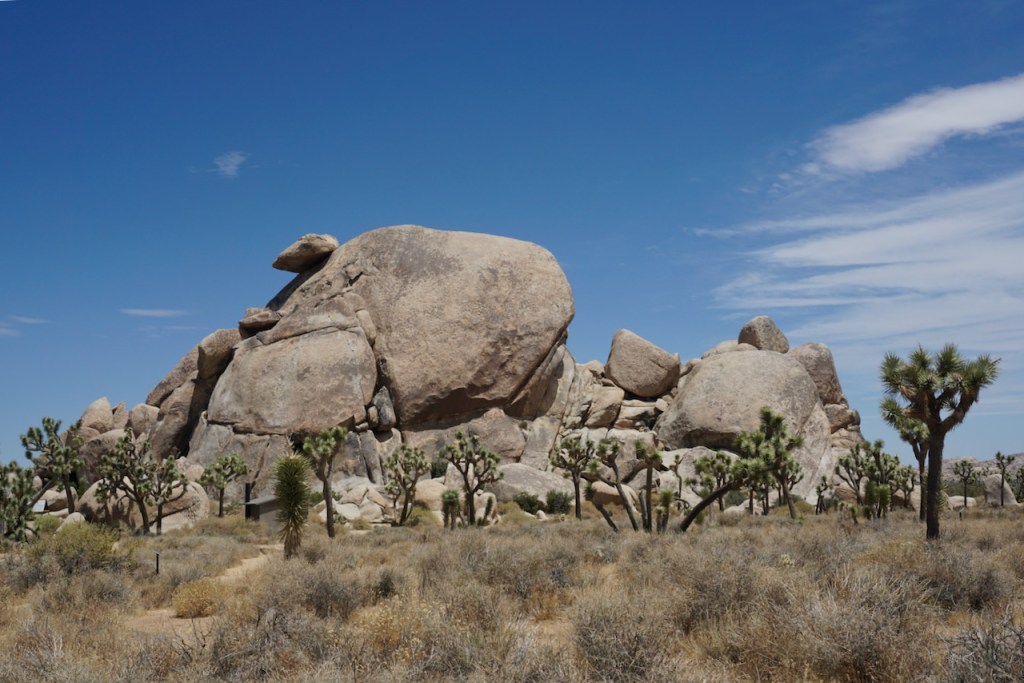
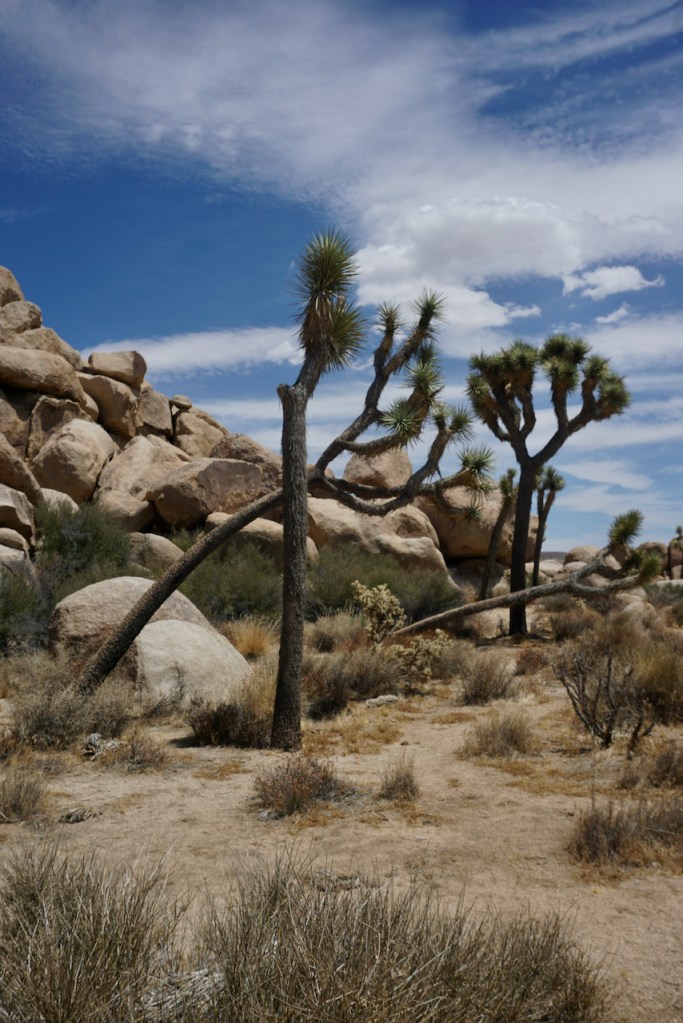
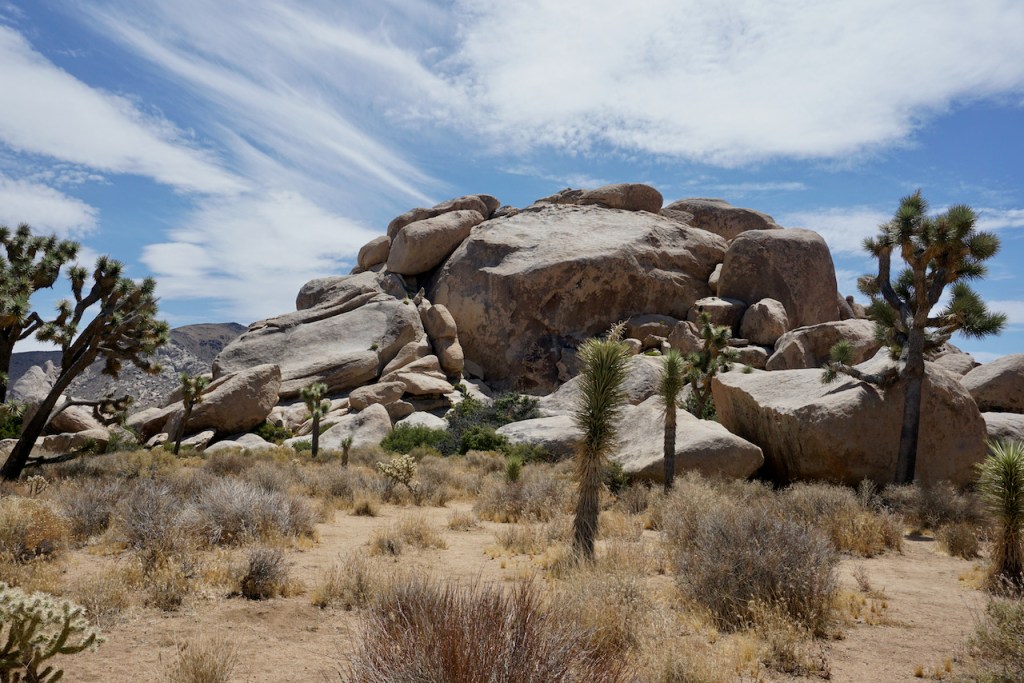
. . . and walked a trail amidst clusters of the pillow-shaped boulders that have far more texture than we originally thought. It’s no wonder there’s so much bouldering and climbing here, and we played around a little in our hiking boots. There were more species of cacti, again making for a different desert than we’d seen previously.

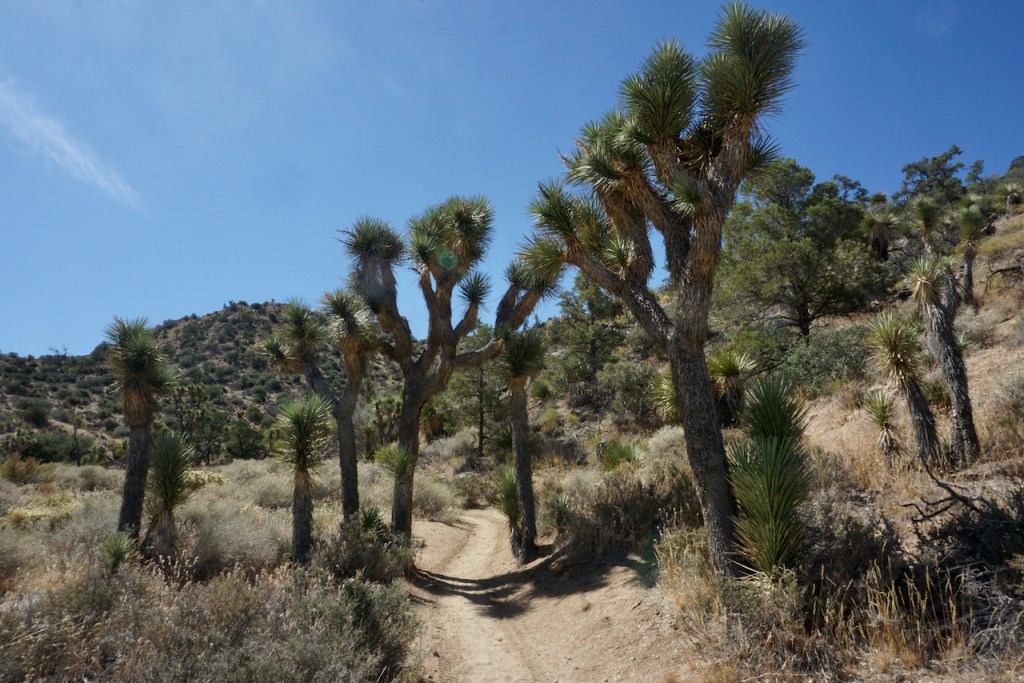
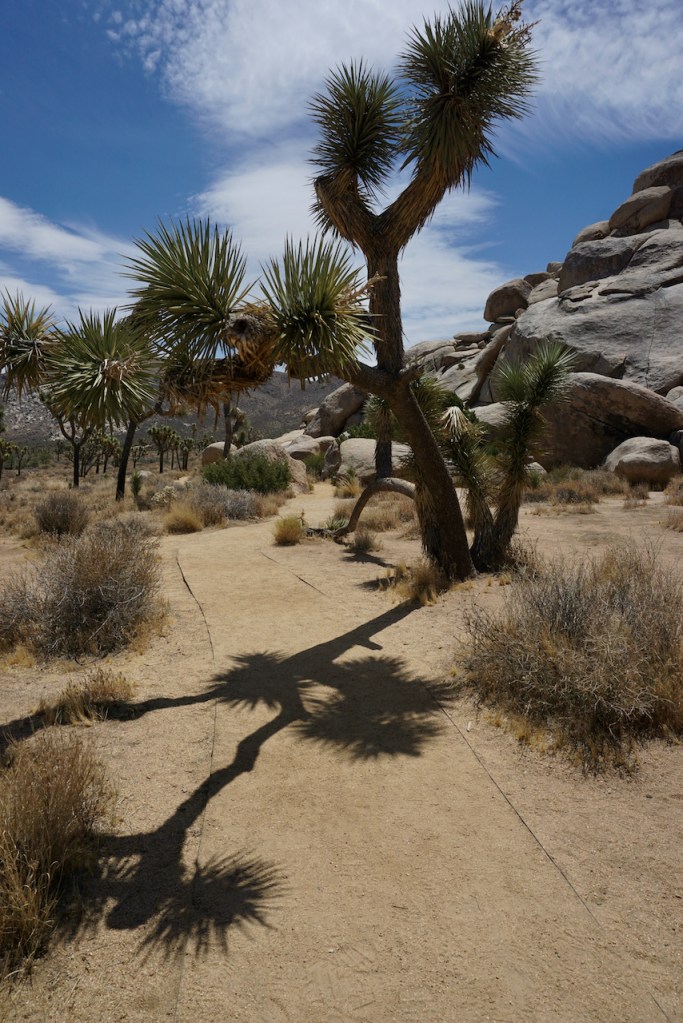
This is also where we finally saw Joshua trees. We had seen them for the first time on the way to the Grand Canyon, but not yet in their eponymous park.

We crossed the road to scramble up the boulders just behind Skull Rock, and then it was truly dusk and time to go.

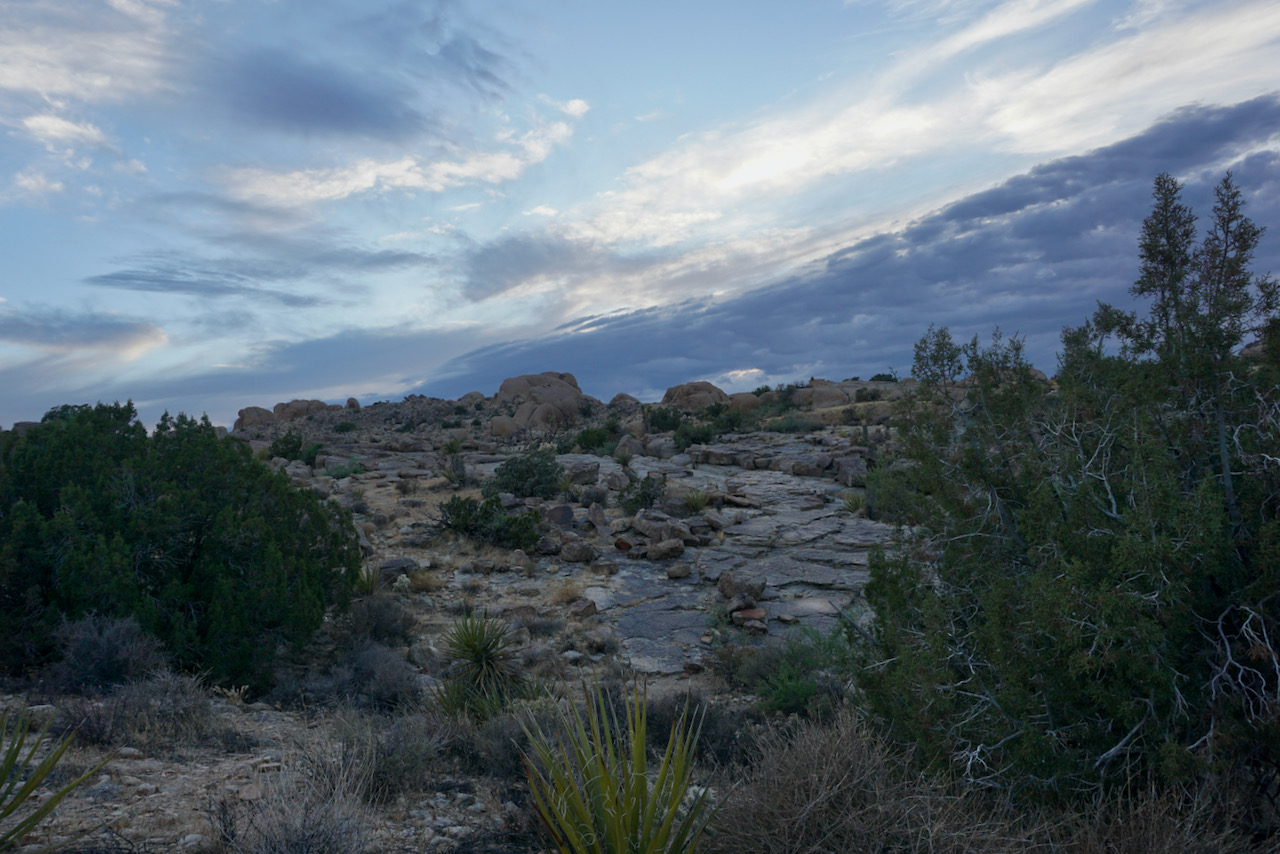
We returned to the park after staying the night in Twentynine Palms, California. The temperature was relatively comfortable but the sun was intense, dictating short walks rather than longer hikes. We had learned to listen to the desert, and we headed off the in direction of a high viewpoint to look around.

As before, we were really taken by the boulders and found chalk marks mapping out routes. They felt good, those rocks.

The afternoon was spent driving through real desert, yellow and scrubby, becoming hilly and mountainous as we drove further north. By the time we reached Porterville, California to stop for the night, the landscape alternated between yellow rolling hills of nothing and irrigated orchards and farms that were so green by comparison that they almost didn’t seem real.

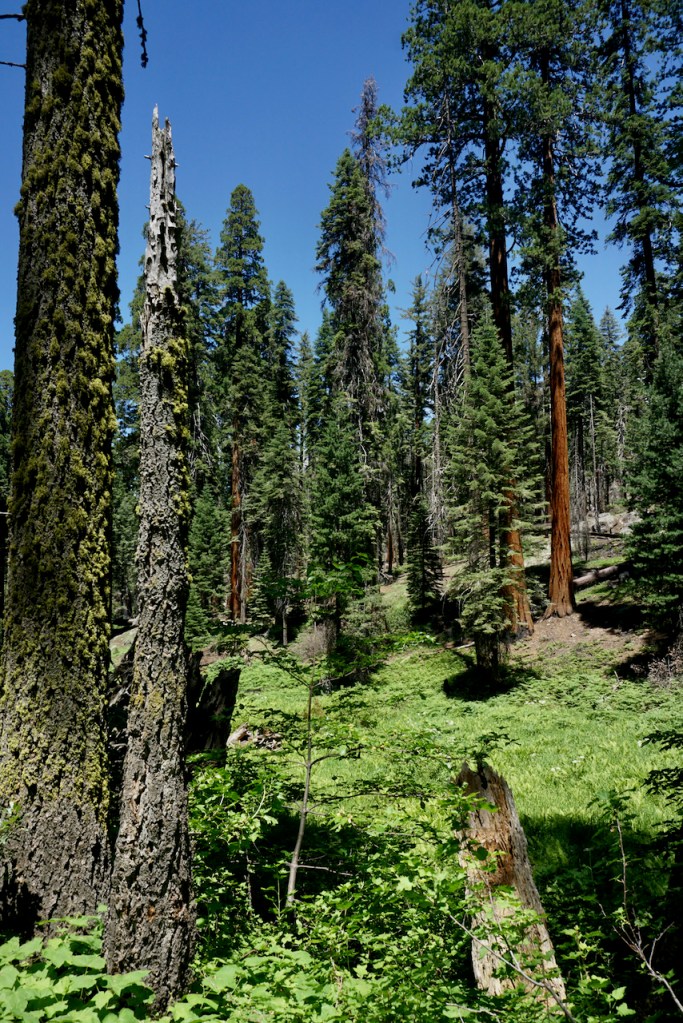
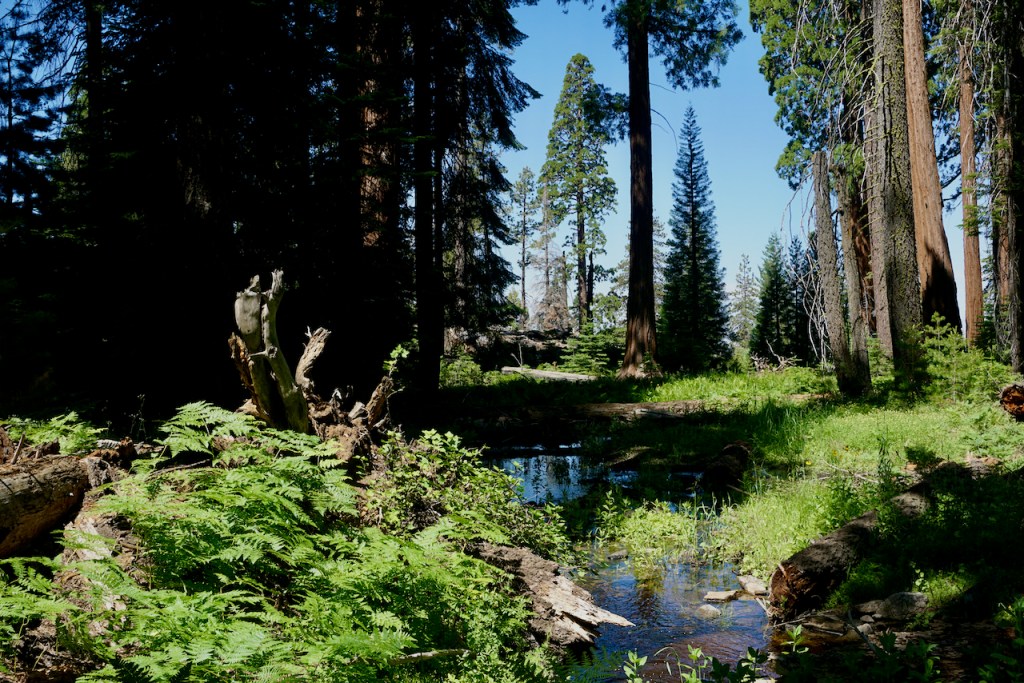
The following morning found us on the way to Sequoia National Park, which definitely made us feel better about missing trees and greenery. We drove serpentines up mountains, ending in lush, cool, aromatic forest.

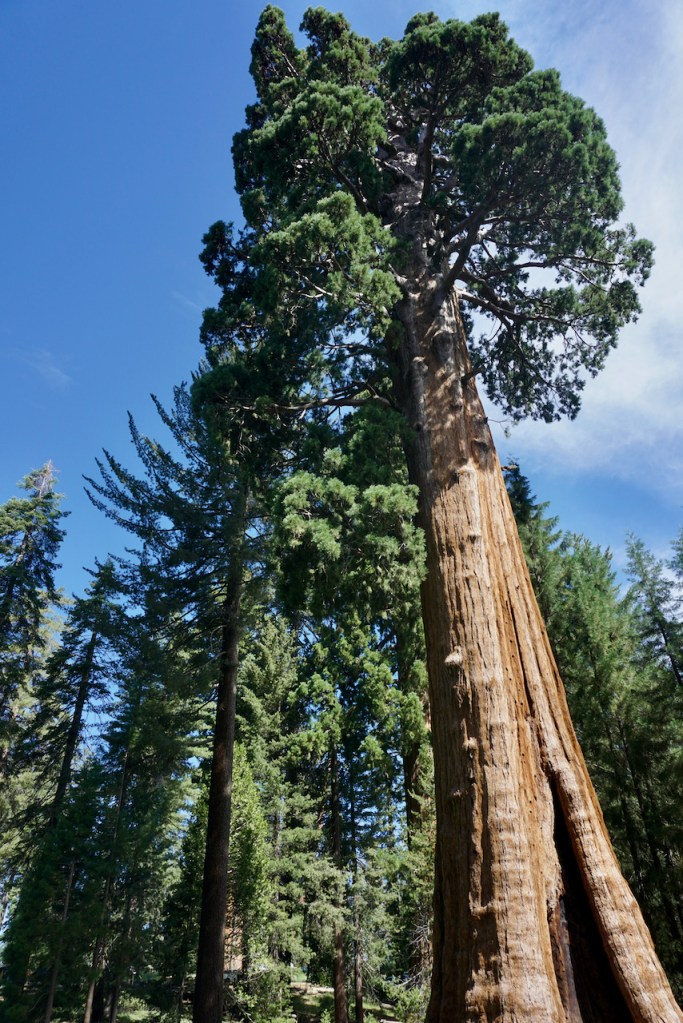
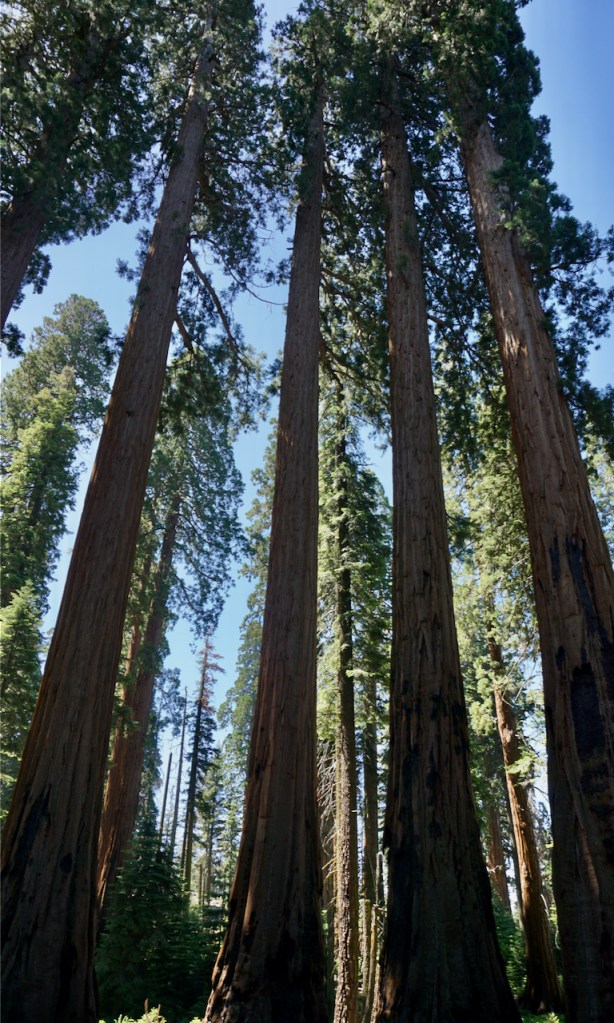
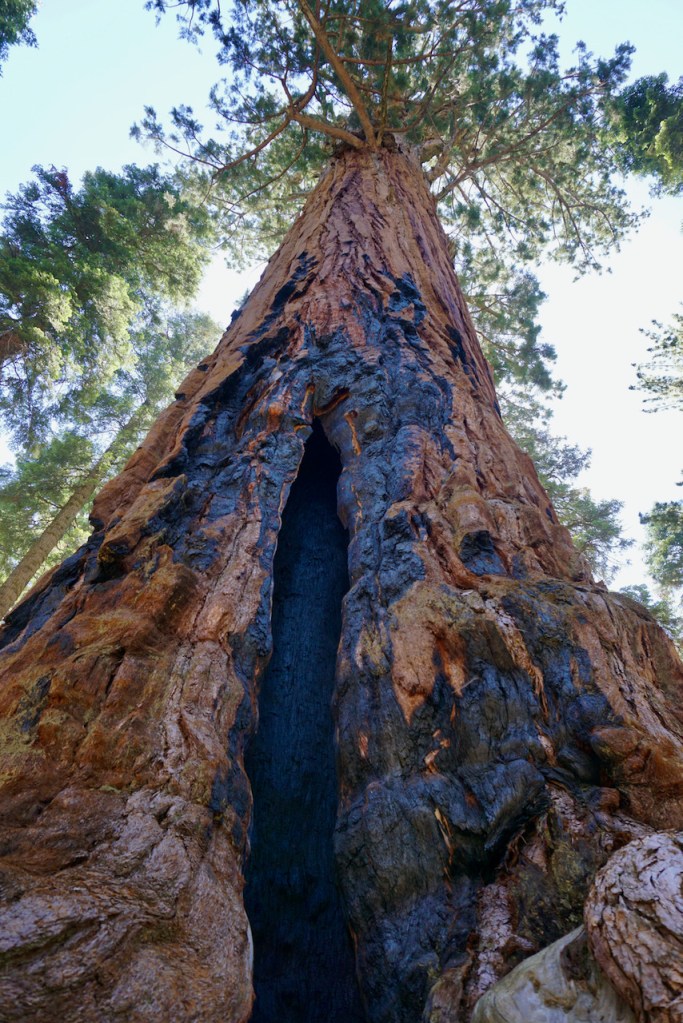
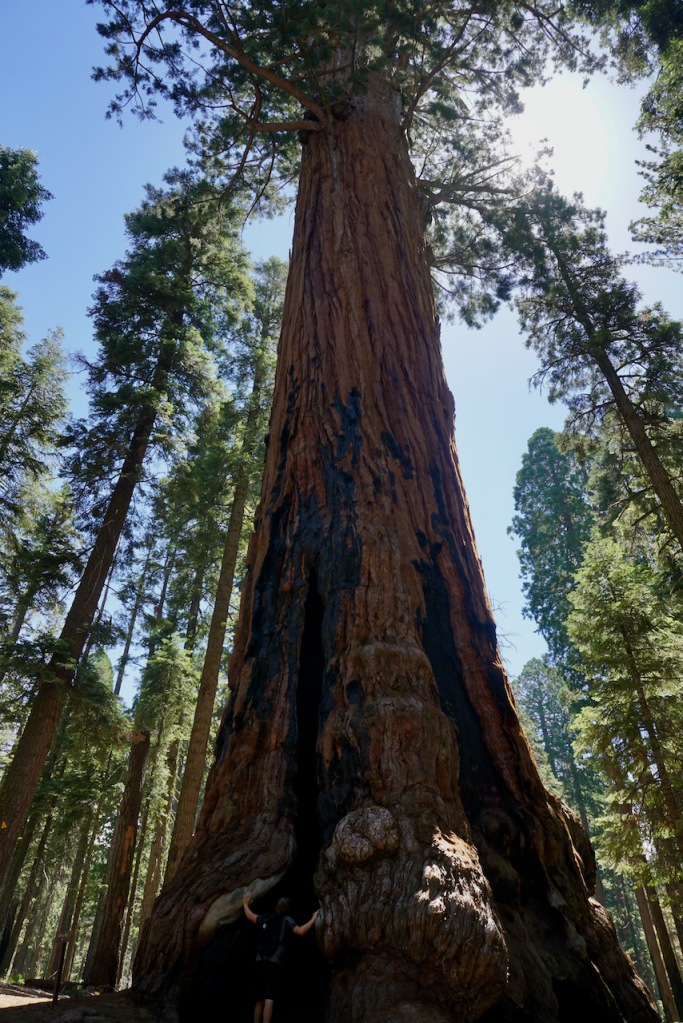
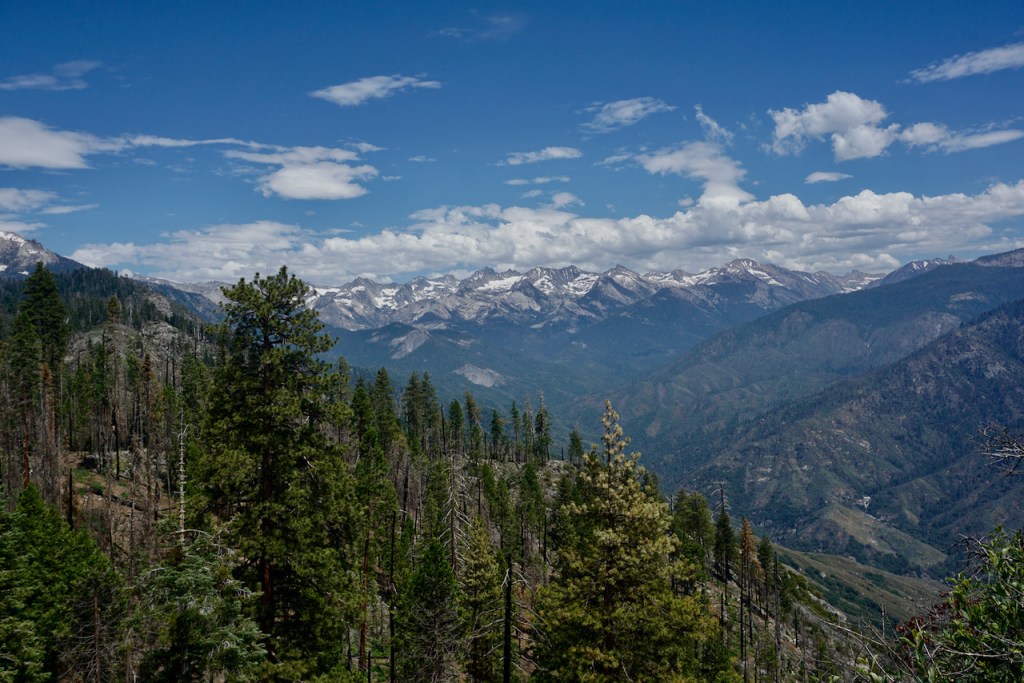
And the sequoias. They are so much larger than what I had imagined, or what I can describe. I could not fit a whole tree into my camera lens, and instead felt myself become nothing beside them. An individual is utterly insignificant in the scale of the world, and the sequoias are a reminder of that. Further amazing, if possible, were the obvious signs of damage and regrowth from fire. A museum exhibit explained the fire protective and regenerative nature of these giants, and it was interesting to see so clearly fire’s role in the life cycle and ecosystem. However, the serpentines leading up to the park were barren in part, entire swaths of forest swallowed, interspersed with tiny, new saplings. Cycle indeed.
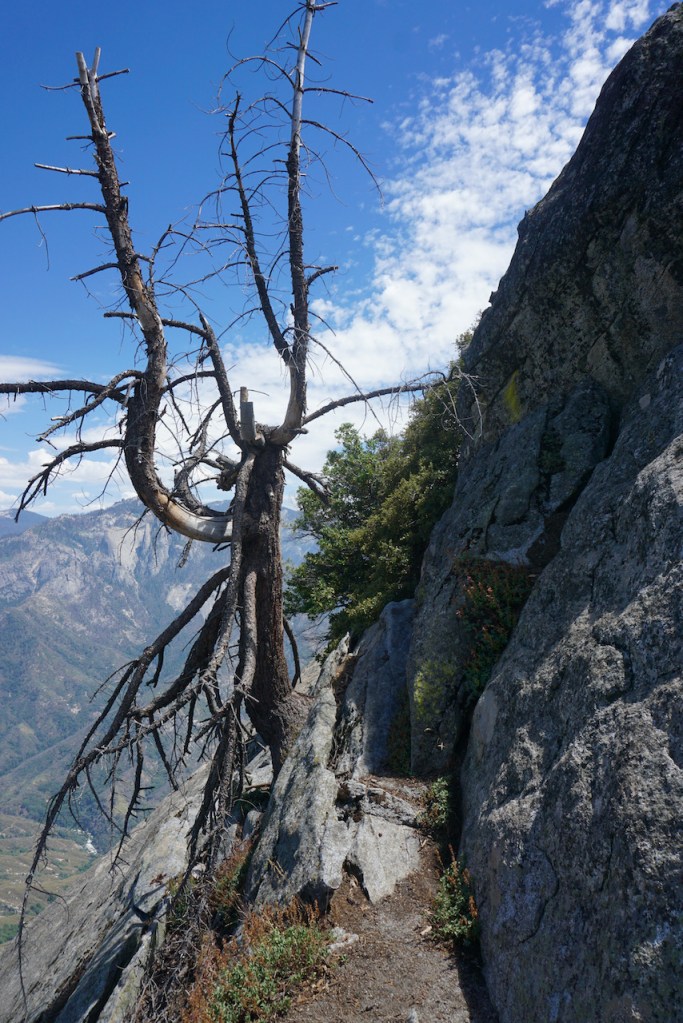
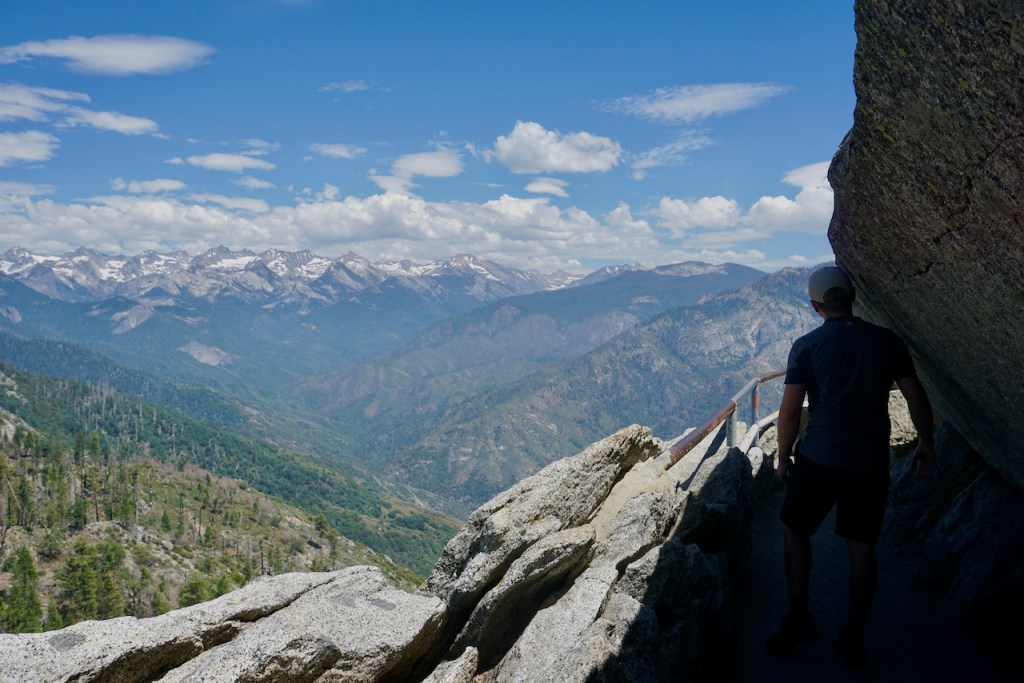
I really love reaching the highest point and looking out, and to that end we climbed up to Moro Rock, respecting the 400-step staircase except in one area where the little climb was too lovely to resist.
From there, we continued driving north to Oakhurst, California to spend the night as close to Yosemite National Park as we were willing to afford, putting us almost two hours away. The landscape continued to change on our drive, with deep green trees gradually appearing along the rolling hills covered in yellow grass. The trees grew in numbers until it was clear that we were finally out of the desert. And as much as we had enjoyed it, we were glad.
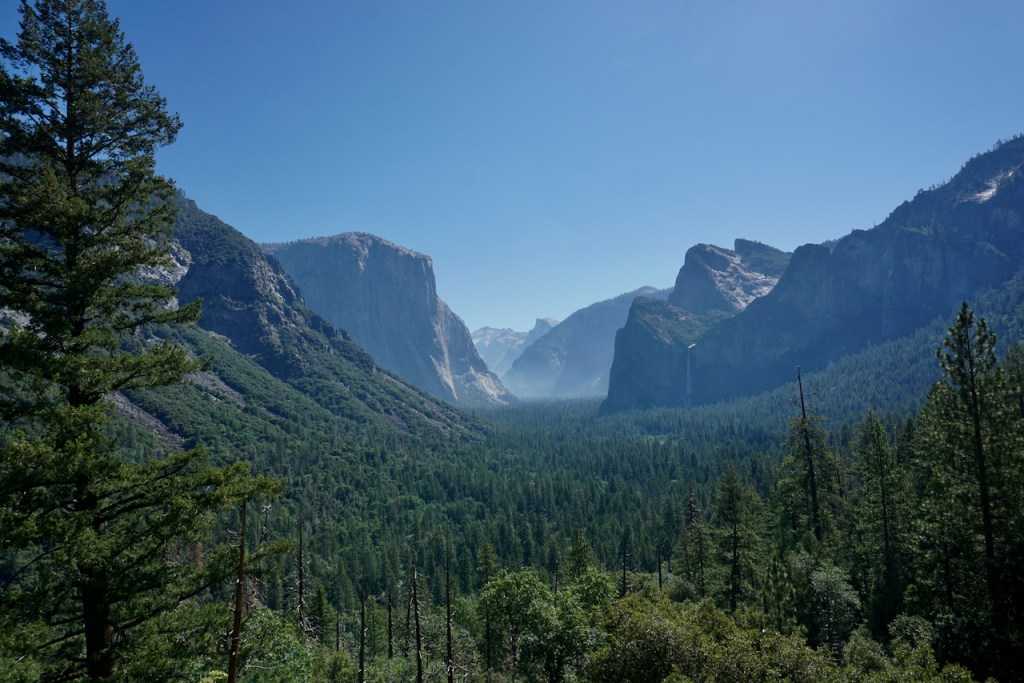
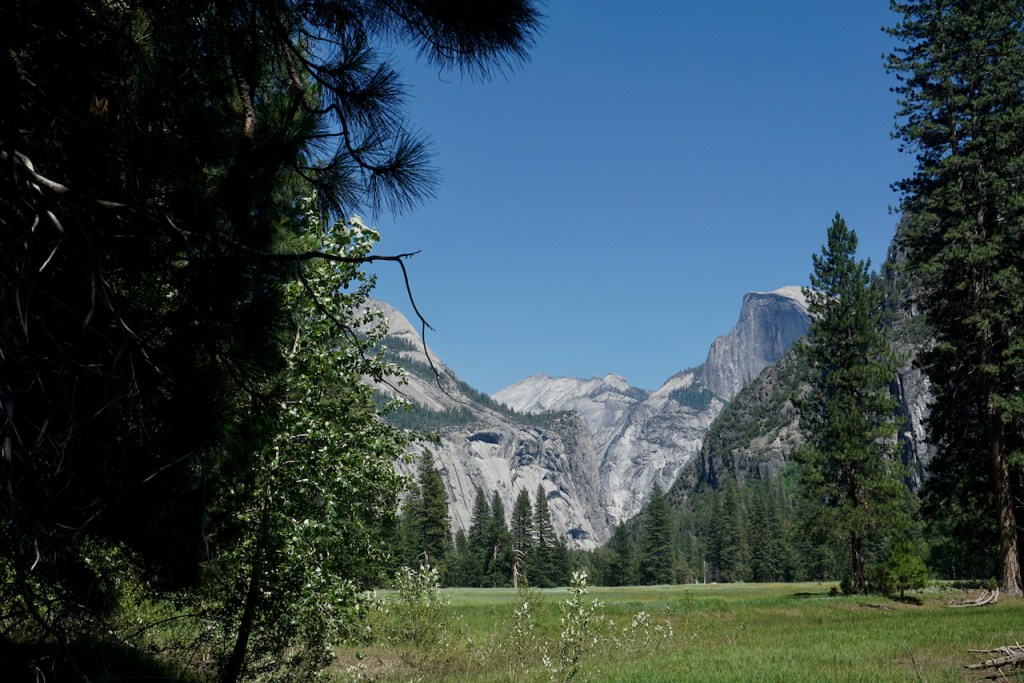
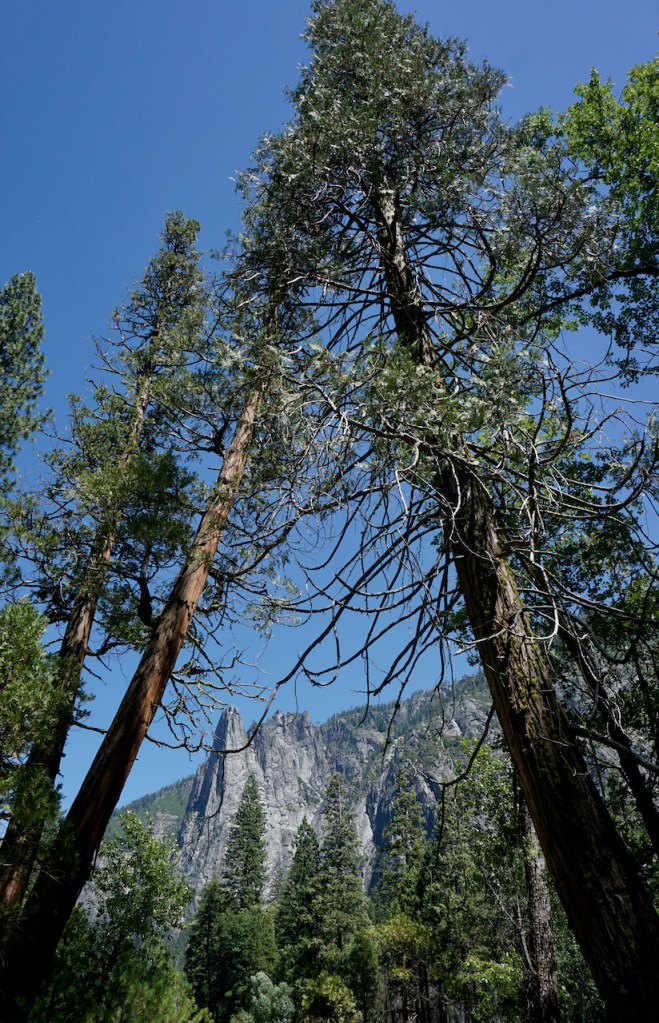
Let me emphasize here, in case it is not yet clear, that we are rock climbers. We met in the climbing hall and had climbed real rocks together before realizing mutual interest. Therefore, the excitement of Yosemite was in seeing Half Dome . . .

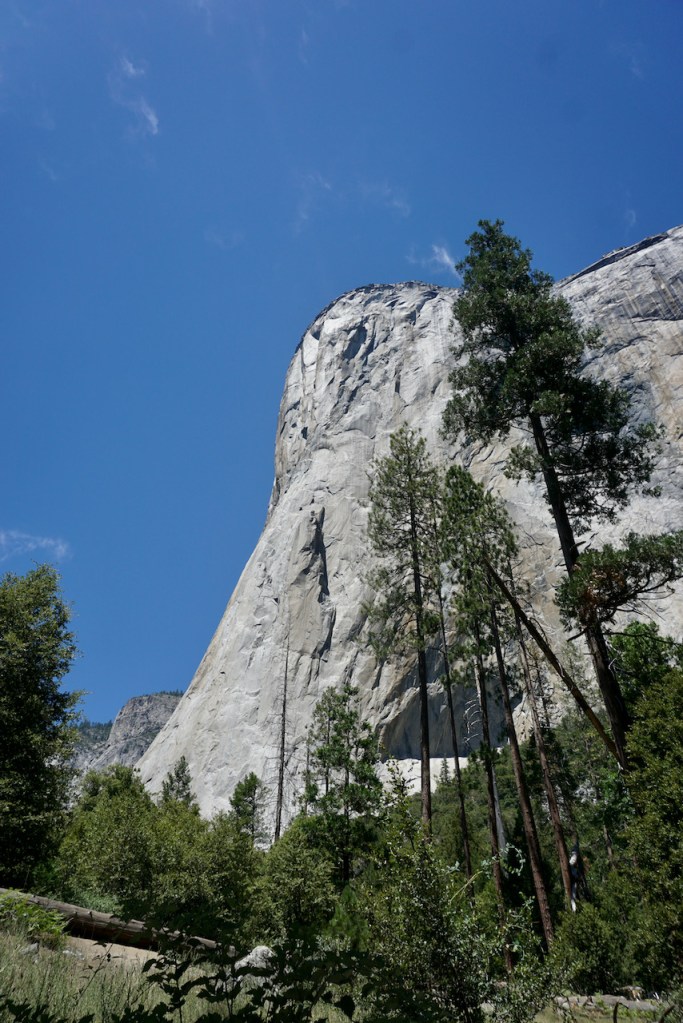
. . . and El Capitan, which did not disappoint. The signs indicating climbing areas where particularly enticing and we followed them to the base of the rock, playing on the first few moves.

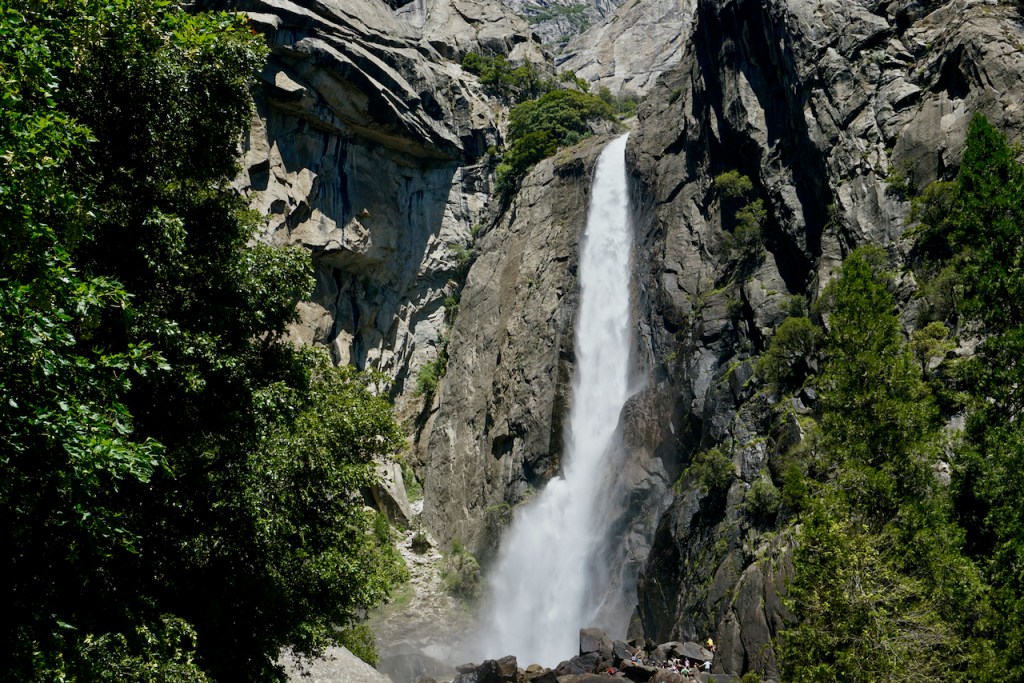
We also followed the largest numbers of tourists that we’d seen at any park to see and hear some of Yosemite’s famed waterfalls.

We had grossly underestimated the number of visitors to Yosemite, thinking of it as a Mecca for climbers and not as a sightseeing destination that, in 2016, received 5 million visitors, most of whom visit during the summer, as we did. With the crowds and the poor layout and transportation of the park, it was almost as though nature faded into the background as people vied for the best spot to take photos. We were glad to escape to the foot of El Cap and to follow a longer walking trail through the valley to get back to our car.

Due to good weather and general difficulties getting around in Yosemite, we were on the road rather late on the way to our final destination. We would spend two nights in Oakland, California before flying home. On the way through the park, we again saw evidence of fire damage everywhere. Entire hillsides were populated only with fire-damaged trees and the grasses that have grown back around them. It was hard to look at, and so much greater in scale than I had imagined, despite being generally aware of California’s fire news.

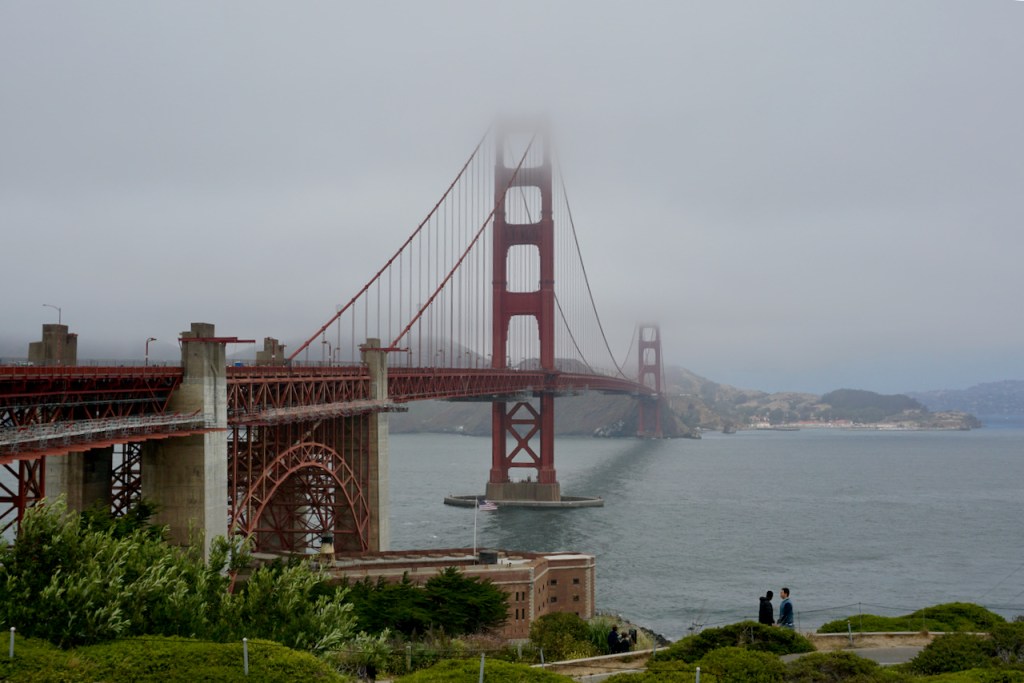
It was summer when we left Yosemite, but we found spring/fall in Oakland and San Francisco. We dug jeans, long sleeves, and windbreakers from the bottoms of our bags and headed out in weather of 14°C (57°F), temperatures we hadn’t experienced in quite a while. This was my second time in San Francisco and I was pleased at how much of the city’s layout I remembered. We did as much as we could in the day that we had, including a windy walk across the Golden Gate Bridge . . .

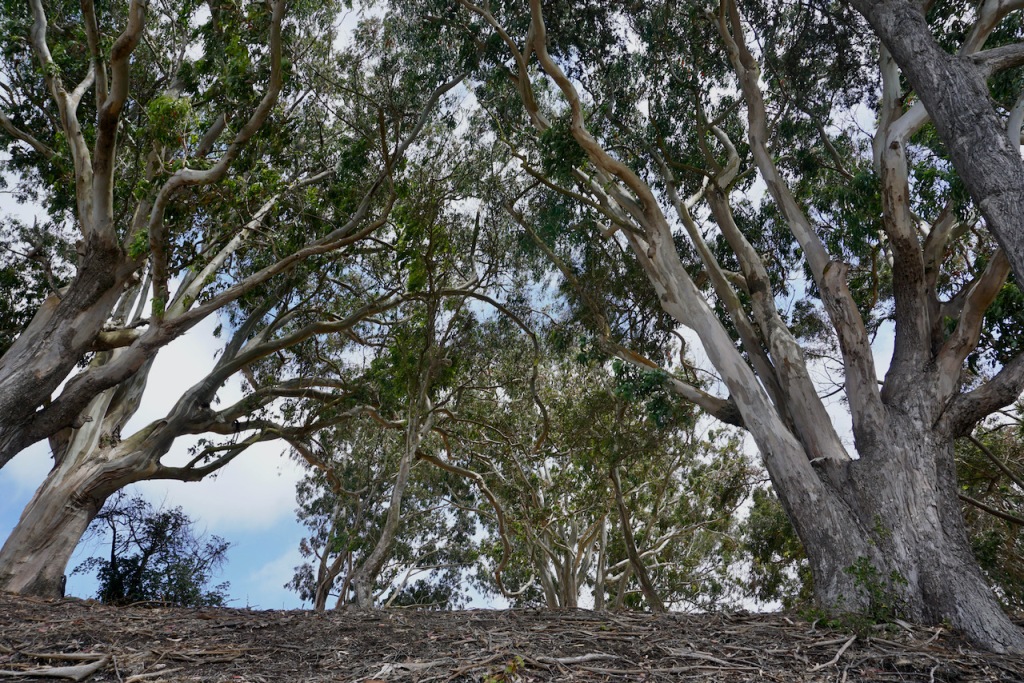
. . . a stroll along the beach and through a park . . .

. . . a stop at Fisherman’s Wharf to look at the boats, seals, and general activity. . .

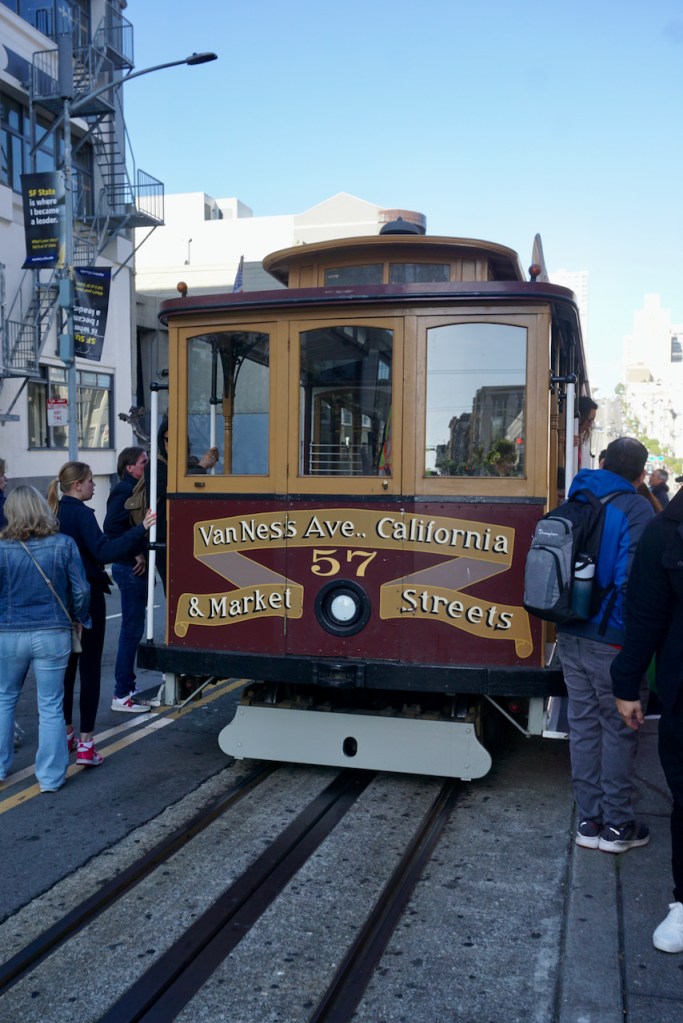
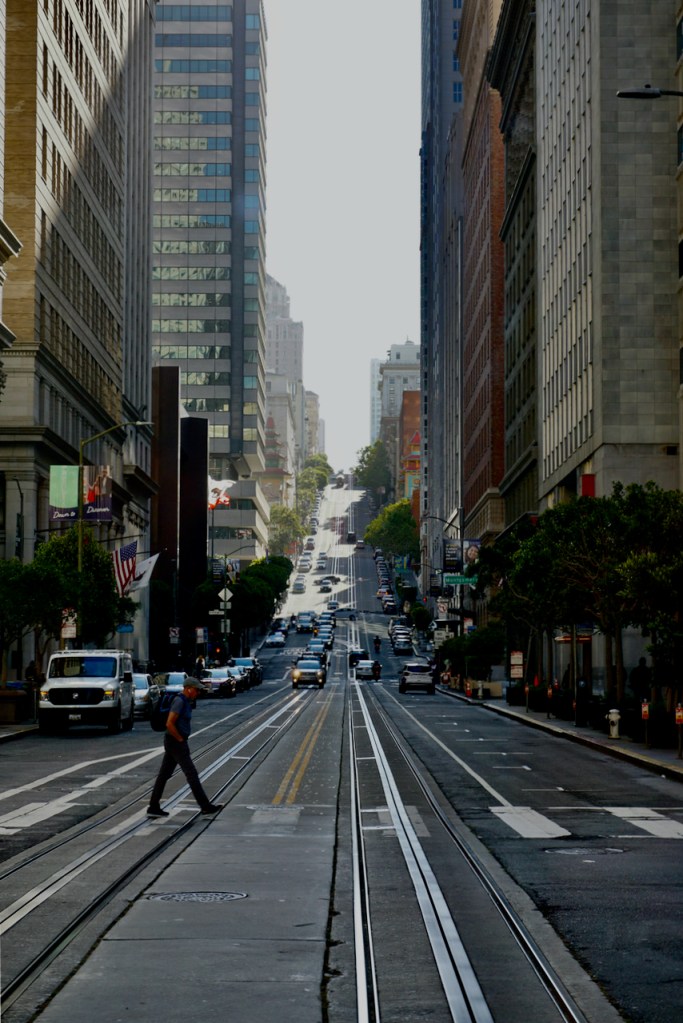
. . . a ride on a cable car up very steep San Francisco hills, complete with all the clanging and banging that is straight out of another century . . .

. . . and a visit to the Painted Ladies, which I now know are the Full House houses.

Within that, we also walked through the Embarcadero and the Mission, got a quick peek at the Chinatown Gate from the cable car and the Tenderloin from a bus, and spent a few minutes in Sausalito after deciding to be adventurous and getting off one stop later than planned without checking the bus route. There is a lot to see and do in San Francisco, and a day doesn’t quite cut it.

That being said, we spent much of the day laughing at the combination of people-watching and the weather. It seemed we weren’t the only ones surprised by needing jackets, but we were luckily not among those who resorted to brand-new souvenir shop sweatshirts. As in any big city, there are all kinds of people in San Francisco, tourists aside, and that was refreshing. What I find difficult about San Francisco, however, is the homelessness. The visibility of the problem seems a mere hint at the scale of the problem, and that makes me sad.


After all that we had seen and experienced on our trip, we were ready to fly home and take the time to process, to think over, to reflect on the opportunities we’d had. It’s a wonderful feeling to go away, and sweet indeed to come home.