Swingset

At the end of the forest, or at the beginning depending on where you start, is a lovely little playground. It was empty when we arrived a few nights ago, a weekday shortly after suppertime. We stopped our bikes and looked at the swings.

“I’m just going to go on the swings for a minute.”
“Me, too. That’s why I stopped here.”

It’s easy to fly in a swing and I laughed when I reached the point where, twenty years ago, I would have jumped off when the school bell rang. Jumped, dusted myself off, and run across the yard.

“Jump off?”
“Not anymore!”
“Yeah, I think I’d break.”

Laughing, kicking heels in the woodchips to slow the swing and then spinning, first one way and then the other as the chains unwound and wound again.

“Whoa.”
“I know. I didn’t used to feel dizzy.”

Head tipped all the way back.

“To think I used to do flips on the swings.”
“Try it!”
“No way!”

We watched the trees, looking up at canopies of leaves. Watched the sky, slowly darkening.

“Nice to know that all the school games were the same.”
“I was just thinking that.”

We got back on our bikes, left the forest. The air had changed, growing cooler. Summer ending and fall beginning. We’re often in the forest (“Want to go hug some trees?”) and the swings are not far away.

Lovely to know, indeed.

We don’t stop playing because we grow old; we grow old because we stop playing. – George Bernard Shaw

Yoga auf Deutsch

I’ve been living in Germany for slightly over a year and it seems like my language skills are slowly improving. A friend asked recently how long I’ve been learning German (about a year and a half) and complemented my fluidity when speaking, which I think was a generous remark. It certainly doesn’t feel fluid and I often only catch the grammar mistakes after I’ve made them, assuming I catch them at all. But I am starting to get a sense for the language and I can make more meaning out of what I read and hear without knowing all of the words, which suggests a gradual improvement.

One thing I’ve been trying to do is hear as much German as possible, for example, on the radio, in films or TV shows, and eavesdropping closely when the opportunity arises. It is for this reason that I started following a German yoga instructor on YouTube. I’ve done YouTube yoga for well over ten years and it seemed like a natural progression in language learning. The idea is immersion, after all.

It helps that I am intimately familiar with yoga after years of practice and it helps that Sanskrit is used for many postures. It helps that yoga sequences are deliberately repetitive and that all yoga teachers talk (slowly and calmly) about breath, stillness, movement, and stretching. They use imperative language, which is not always obvious in daily life, and speak as explicitly as possible without simplifying, which is otherwise hard to find. I hadn’t realized all of this when I first began looking for yoga videos in German and perhaps it wouldn’t have taken me so long if I had.

Brand new when I began practicing yoga auf Deutsch were some anatomy words and the German translations for names of postures that I’m used to hearing in English. These are the things one doesn’t typically learn out of textbooks, but also the things that make the difference between living in German (when I try to do that) and learning German. And if experience is the best teacher and language learning requires repetition, yoga is a beautiful way to practice.

A benefit I did not expect is that doing yoga in German requires me to focus in a way that a yoga class in English does not. I’ve done plenty of yoga sequences with my mind accidentally elsewhere the whole time, breathing automatically rather than intentionally following the breath. After such a practice, the body feels better but the mind remains in a whirl. But when the instruction is in German, my whole attention is on listening because I cannot passively absorb language the way I do in English. As a result, I am more engaged when practicing and recognize immediately when my mind has wandered because I lose track of the sequence and literally cannot continue. At the conclusion of practice, my body and mind are very much aligned.

Naturally, there are things that I miss in these videos, perhaps elements of philosophy that go beyond my current vocabulary. But the benefits, both for language learning and for yoga practice itself, are far greater than that, and far greater than I anticipated. The biggest reminder here, I think, is that it is always worth trying something new because you really never know what you’re going to find.

You live a new life for every language you speak. If you know only one language, you live only once. – Czech proverb

Welcome Home

It has been almost a week since I’ve been home, a week since I left home to come home, a phenomenon that remains strange no matter how many times the scenario plays out. I cried in the airport and then, just hours later, comfortably walked the streets of a town that, a year ago, I was just beginning to know.

Time flies.

Laughing recently over a tale of people who remained in place and those who have come to them, I wonder about the point at which we begin to put down roots. “I’ve nested,” a couple people commented recently about apartments they don’t plan to leave. If plants in pots and frames on walls are nesting, I’ve managed both with varying degrees of success, but I wouldn’t quite call that roots. There’s a difference between being in a place and being part of a place.

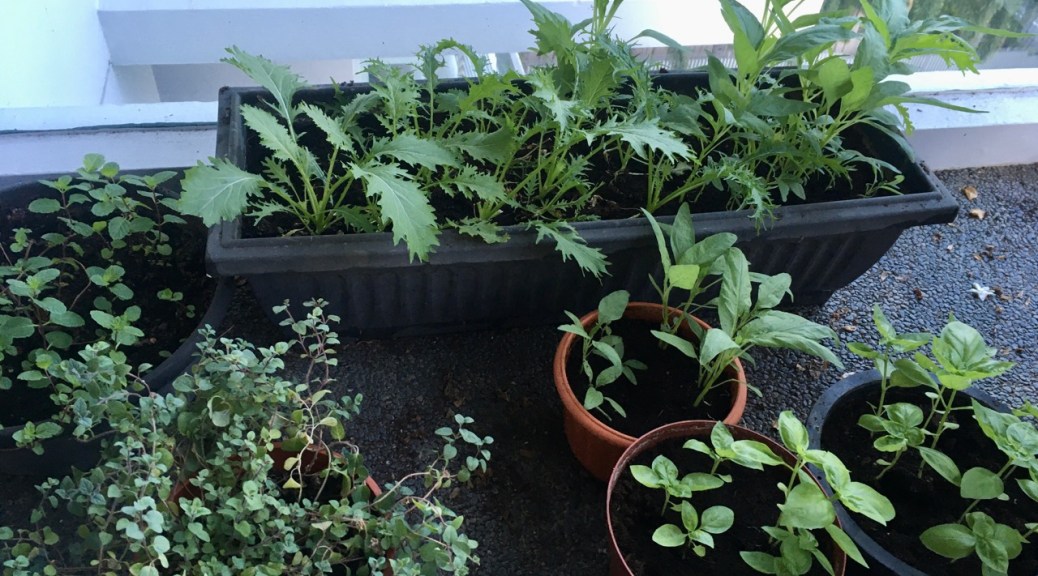
After watering a garden plot earlier this week, we talked about what to do differently in the garden next year, how to make a few suggestions for improvement. To invest time and energy into something and wanting to see it to completion takes exactly that – time and energy. And this means doing more than being in a place in which time just passes by. To be part of a place means to leave a bit of oneself there, to have contributed in a way that creates an impression, to be involved in ways that connect us to others so that we build something together.

Perhaps this is what it means to lay down roots, something I’ve thus far shied away from. In the case of this garden, however, I’d like to stay to watch it grow. I’d like to feel my hands in the dirt, to smell the tomato vines in the greenhouse, to prepare a meal with produce that comes from right there. These things take time and for once, I’m in no hurry. This year I’ve watched the garden grow and next year, I’d like to help plant it.

After two planes, two trains, and a bus, it was a lovely feeling to relinquish my suitcase to careful hands, to walk along paths that changed in my time away, to laugh about what had transpired in just a short while. “Welcome home,” you said, and I was.

Singapore – September 2020