All posts by Rebecca Michelle

Educator, traveler, reader, blogger. Loves learning, black coffee, and friendly people.

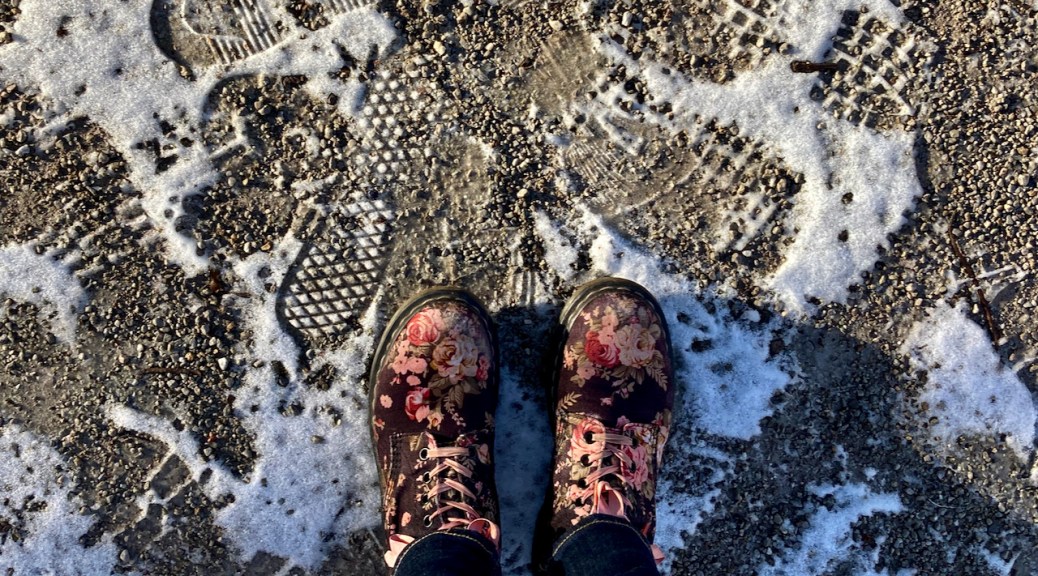
In Praise of Wool Socks

I am generally not a warm person. As in, my body is usually rather chilly and I am almost always looking for extra layers. (You’d think, wrongly, that I would be better at planning accordingly.) As far as I know, genetics are to blame for the poor circulation in my hands and feet, which turn white when cold and red when hot. It looks strange and can also be quite physically uncomfortable. (I’m told there’s a name for this but I never remember what it is.) Stranger is the phenomenon by which one of my hands is a normal temperature and the other, usually the one holding the book and not tucked into the blankets, is freezing.

Since returning to a cold climate, I have become reacquainted with the problem of keeping my feet warm, and I’m not sure how I previously managed it. Observation suggests that most people walk around in the winter without being in pain all the time and I spent the earliest cold days hoping to learn their secret. Perhaps, I initially reasoned, I was simply not used to so much walking around in the cold. After all, this is my first winter as a European resident, relying on walking and cycling for transportation regardless of the weather. Getting into a car in North America really doesn’t require too much time outside, and certainly not on the coldest days. But then again, I lived in New York City for a winter and certainly walked there. We had snow that year, too! Or perhaps I am just not as hardy as Germans, who casually do wild things like eat ice cream outdoors in all seasons.

Given my bemusement with the whole situation, you’ll understand why I was shocked when, after I mentioned my cold feet to a few friends, one asked, “Are you wearing wool socks?”

Well no, I wasn’t. I owned one pair and as far as life had led me to believe, they were for hiking. And my ski socks (for skiing) seemed to have vanished (and have since been replaced).

“You should try it,” my friends urged. “It’ll help.”

Who would’ve thought?

Fast forward. Turns out not all socks that look like wool are made of wool and you get what you pay for. Turns out there can be different amounts of wool in wool socks, and that some contain more synthetic materials than others, which may or may not be a bad thing. Turns out thick wool socks fit differently (and not very well) into certain pairs of tight boots. Turns out wool socks keep my feet comfortable enough, though not as warm as I’d been led to believe. (I might need to conduct further trials into my choice of footwear, but maybe that is a project for next winter.)

So I am trying to adapt to winter in Germany: Dress in many layers. Wear wool socks. Always have a scarf. Earmuffs are a good replacement for a hat, but everyone else will be wearing a hat. Children and teenagers never seem cold, even when they should be. Carry a backpack. Ride your bike slowly if it might be icy. Always be prepared to sit outside. Breathe the fresh air. Drink hot tea. Look up at the stars. Enjoy the rare days with sunshine.

Get ready, people keep telling me. Winter only gets colder.

It’s a good thing I have wool socks.

Weimar, Germany – December 2021

Saying “I’m Sorry”

A brief introduction to this post: I have been thinking a lot about growth lately. After reflecting on past experiences, I have watched myself act in ways that demonstrate that I have actually learned something. This has been critical but is not always comfortable. It is difficult to put myself in a position of vulnerability, but it is also the only way that I can live up to the pictures I paint on this blog. I am grateful for what I have learned and for all who have taught me. To those who were gracious enough to give me multiple chances, to those who heard my awkward apologies, to those who looked me in the eye when looking back was the hardest thing to do: I am still sorry and I thank you.

I am sorry . . . .
if
that
but
you

I thought . . .
meant
didn’t

But you . . .
and so
it’s just

I guess . . .
next time
differently.

It can be hard to apologize. It can be hard to admit that we were wrong, that we hurt someone else, that we misunderstood or misinterpreted or made a mistake. It can be hard to acknowledge that we didn’t behave in the ways that we should have and that our behaviour was harmful.

To apologize means to stand before another person and admit to being fallible, to having erred, to being human. It means wanting to do better and, significantly, taking the steps necessary to do so. To apologize means asking for forgiveness, and asking for forgiveness, we often think, means handing someone else power.

And that is scary.

I’d like to offer something else here: Saying “I’m sorry” and then acting upon what it actually means to be sorry is not only an act of courage, but also an act of recognizing the humanity inside someone else.

Saying “I’m sorry” acknowledges that a wrong has been committed, that a relationship has the potential for being repaired, and that this is work we want to do. And we cannot do it alone.

To come together and rebuild takes not only compassion, but also grace. It takes setting aside ego and hierarchy and control and everything that separates us, and requires us to sit down together and acknowledge, perhaps for the first time, that being human can hurt and that humans cause hurt.

Saying “I’m sorry” recognizes that maybe we are too far gone, and that maybe the gulf is too wide to cross again. Maybe the trust that was once between us has shattered into too many pieces to reconstruct. Saying “I’m sorry” admits that this might be possible.

And this is scary.

But it also might be the only way to move on, even if we aren’t moving on in the ways that we’d hoped. Sometimes life goes that way.

Given that our current cultural obsession with the self has created personalized environments in which each individual is at the centre, it is no wonder considering another perspective is challenging. After all, there are no other perspectives. It is no wonder that discourse and dialogue are anathema. After all, we “cancel” those with whom we disagree. To change one’s mind, which is what happens when we learn, is to flip-flop; to apologize is to capitulate, roll over, show weakness.

There is a great deal wrong here.

A genuine, heartfelt apology carries with it the possibility of making the world a better place. It is an act of building peace in our interactions, relationships, and everyday encounters. This is a powerful thing. No one ever said something so important was easy, though it might be easier than we think. Many things are this way when approached with honesty and openness rather than suspicion and competition.

Sometimes we are wrong, but we can mend those wrongs. This does not mean the harm disappears, or that everything goes back to the way it was before. It means that we forge new paths and learn new ways. We are marked by our experiences, and this is how our lives are constructed.

Treat others the way you want to be treated, or the way they might want to be treated.
Be kind.
Take a deep breath.
Do the hard thing.
Hold out your hand.

If we continue building this world into a better place, there will be someone there to take it.

Weimar, Germany – August 2021

Glow

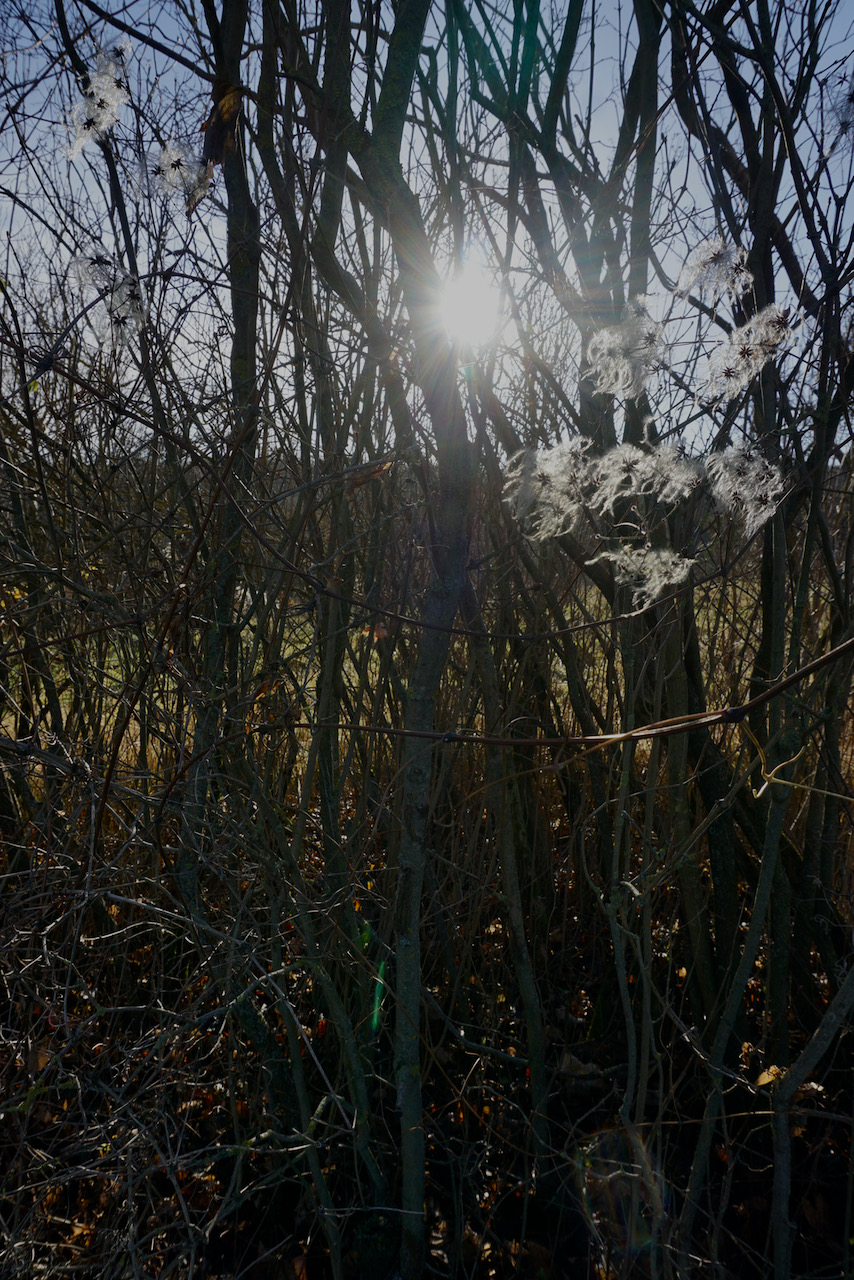
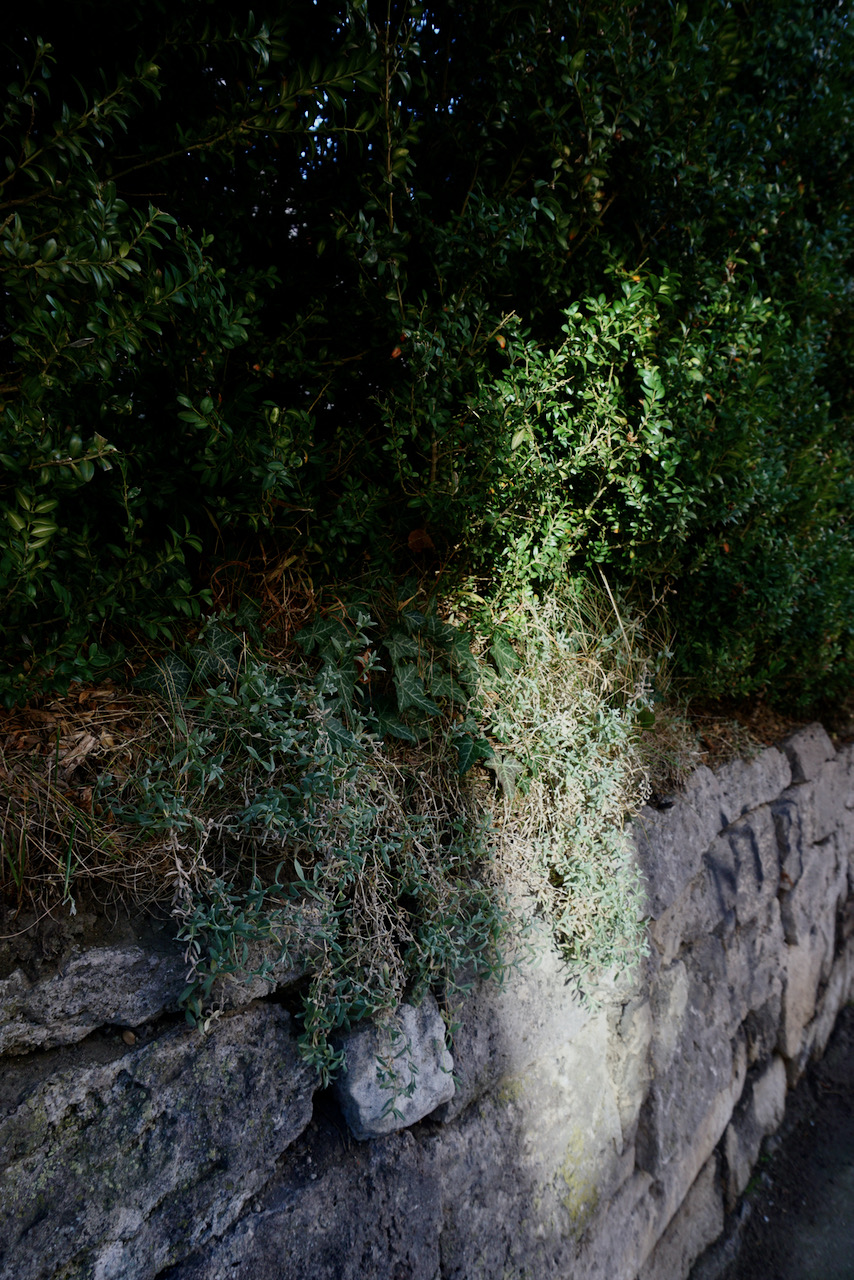
The weather gave us a gift this weekend. We had sun, blue skies, and temperatures perfect for being outside. (Although nothing really seems to stop Germans from being outside, which I like very much.) I was out late Sunday morning revisiting a route I’d taken with a friend some weeks ago. We had looked in vain for sunshine that day and the walk was bound to feel different this time.

One thing I have always noticed about walking with my camera is that my senses are sharper, and not just my eyes. I see the world differently, but am also more aware of how it tastes, how it smells, how it feels, and where I stand within it.

In other words, the more present I am, the calmer and more peaceful I feel. The camera around my neck acts as a reminder. Likewise, the more experienced I become in meditation, the more easily awareness seeps into my everyday life. I pause more frequently, slow down, notice, breathe. This is what it means to be mindful.

Lately there have been several loving-kindness, or metta, meditations in my routine. The warmth that I experience through these practices is not unlike the warmth I experienced last weekend in the sun. The world opens wide and it calls.

What I like most about metta meditation is that it makes obvious our connection with one another. There is a physical sensation, a warm glow, that comes from that realization.

There is a warm glow that comes from wishing loving-kindness to others, similar to the sense of rejuvenation that comes from being in nature. I have learned that these are needs for me, needs rather than wants. I would like to think that I am a better person to those around me for having learned this and sought this out.

It is easy to form connections that are light and fun, to play outside on a sunny day. It is not always so easy to get out in the rain or cold, not always so easy to touch another person. But so often, it is the experience of doing exactly this, of embracing difficult conditions and searching for the light, that plants us firmly on the ground.

And this is when we can not only look, but see.