

Over the weekend, I had the very great honour of being one of two teachers to give a speech at our class of 2025 graduation.
These were my words to these young people, and to young people everywhere:
Thank you for the honour of speaking to you today. A former colleague once told me that for a teacher, this is as good as it gets. I’d have to agree.
But the thing about giving a speech is that one must know what one wants to say. And, feeling rather like a student presented with a long-term writing task, I didn’t. So I did what many of the young people sitting before us have done in this situation, and, despite what I have told you all, either as your I&S teacher, psychology teacher, or EE Coordinator, I procrastinated. For months. Naturally, I collected ideas along the way, but the writing itself happened in a relatively short amount of time in a sort of self-imposed IA jail. Like I’ve been saying, we’re all in this together.
When I first met this group of young people in August 2021, it did not take long to realize that something very significant was afoot here. After a short time getting to know you in the classroom, we spent four nights together in the Thuringian Forest and by the time we came back I was convinced: This was a group of friends who bickered like siblings, deliberately pushed each other’s buttons, and loved each other in ways that demonstrate what love is – a verb.
Fast-forward to your trip to Munich in February of this year. Once again, I watched as you looked out for each other and spoke up for one another. Even in the moments when you split off into small groups, you kept track of everyone’s whereabouts and plans. You knew who had internalized a city map and who could find the best restaurants. You knew who had extra cash for transport tickets and who was running a few minutes late. In short, you cared about each other.
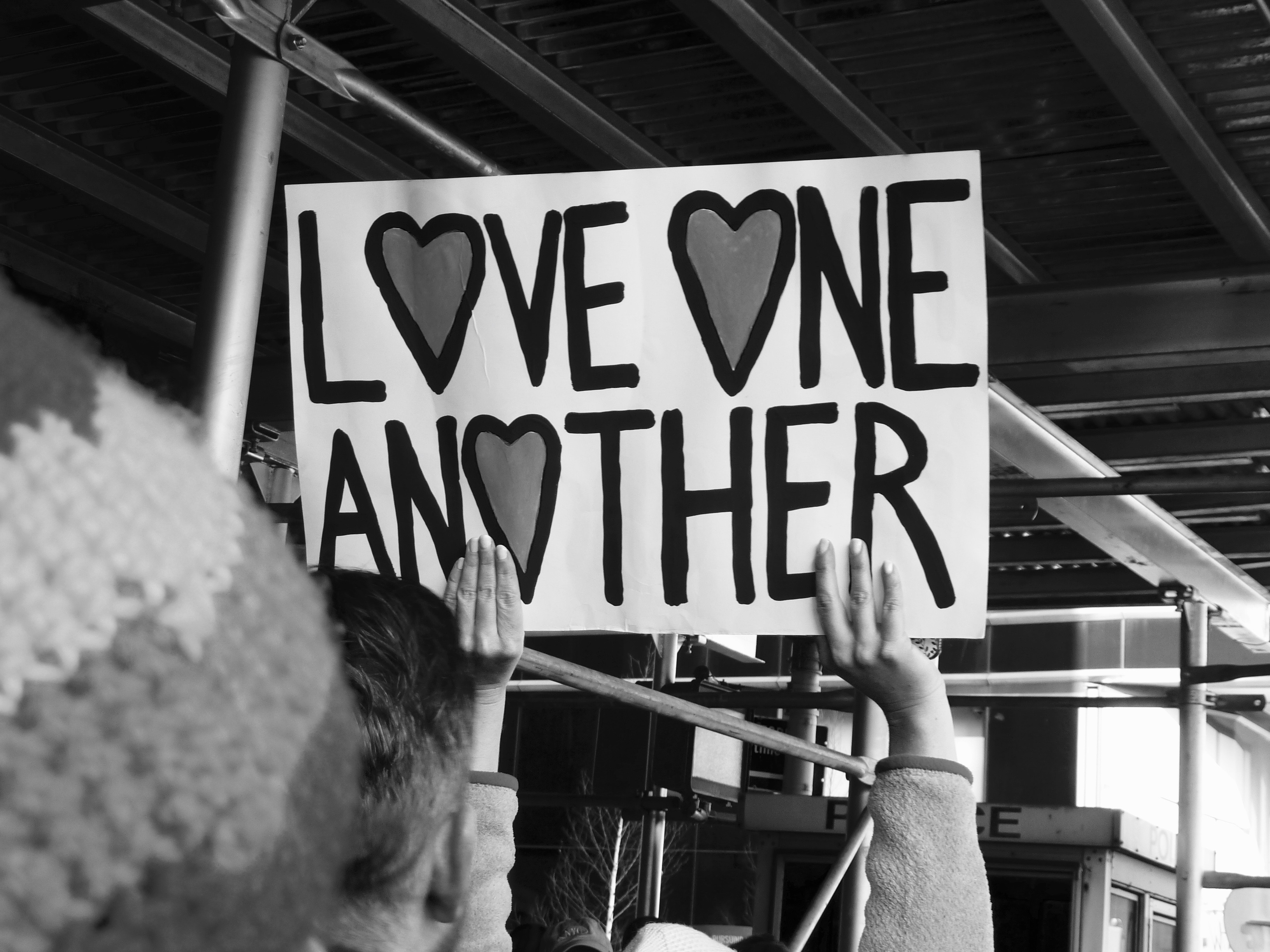
Care is a verb. Love is a verb. It’s not enough to call oneself a friend. One must act like a friend in order to be a friend. Many of you know my thoughts on social media, and it will probably not surprise you to hear that I believe “friend” is a word we throw around too often without thinking about what it really means. I like the description by poet Mary Ann Evans, better known by the pen name George Eliot: “A friend is one to whom one may pour out the contents of one’s heart . . . knowing that gentle hands will take and sift it, keep what is worth keeping, and with a breath of kindness, blow the rest away.”
Friends look at our best qualities and forgive us the rest. They care about us enough to be honest, which helps us become better than we are. We need those people sometimes. And we need to be those people for others. Imagine what type of world we could live in if we acted with kindness, if we looked for the best in individuals, seeking to build one another up rather than tear each other down. In the family that is this class, you have experienced just that. My hope for you is that you continue to create that community wherever it is that you go next.
Friendship is, writes poet David Whyte, “the privilege of having been seen by someone and the equal privilege of being granted the sight of the essence of another, to have walked with them and to have believed in them, and sometimes just to have accompanied them for however brief a span, on a journey impossible to accomplish alone.”
It is having and being a friend that allows us to navigate this complex world, one in which negativity frequently demands our attention and feeds off exactly that. The counter to this is the very real positivity and joy that we find in one another. These are our opportunities to love others, to care for them, and give our attention to those who deserve it. It is with one another that you have learned true friendship, an art that has shaped you and will stay with you. Some of the people beside you today will walk with you for years into the future. A beautiful thing about real friends is that they give us the courage to be ourselves. Be there for them and let them be there for you. For those who will let each other go after today, be gentle when you meet again, for these people, too, have shaped you as an individual.
Today marks a metamorphosis, the beginning of a new chapter in the journey of your individual life. It is as individuals that we are able to motivate, nurture, and challenge one another to be the best people that we can be. I’d like to take a moment to celebrate the very individual people that you are.
[Here followed a few words to each of my psychology students. My colleague spoke to the other half of the students, who had taken the business management course.]
Dear graduates, it has been a joy to observe your true friendships with each other, and the way you have embraced the individual that is each one of you. The world needs more people who are friends like you are.
Congratulations, Class of 2025. I can’t wait to see who you become.



 By Rebecca Michelle