All posts by Rebecca Michelle

Educator, traveler, reader, blogger. Loves learning, black coffee, and friendly people.

Getting to Tomorrow

I met up with a former student last week and it was a delightful, gratifying, and energising experience. It is a real pleasure to see how much a young person has grown in a very short amount of time and to have conversation about, as a friend would say, life and the universe.

I’ll paraphrase and modify here, but we talked about what it means to be grounded and about believing in something to get through a difficult time. Some people rely on faith in a religion or religious figure and for the rest of us, well, there must be something, right?

I know what has carried me through times of difficulty in the past and I know there will be more of those times. After all, that’s living. In many ways, overcoming a difficult time has come down to perspective. Where am I really in the grand scheme of things? What can I cling to that will remain constant no matter what else is happening? What images need to be in my head while I concentrate on my breathing until my heart rate slows and my mind ceases racing?

There are several things that I find helpful and this post will share these. Perhaps you will find them helpful, too.

Tiny little me with a very tall tree in Berkeley, California – June 2018

One thing that I know is that the sun will set tonight and rise tomorrow. It might be cloudy and I might not be able to watch the sun disappear and reappear along the horizon but I know it’s happening. I know that today will end and tomorrow will come. Even if I’m dreading tomorrow, I know that, like today, it will begin and then it will end and I will walk tomorrow like I walked today.

Deliberately cultivating a certain attitude matters a lot here, too. I have spent the last seven or eight years writing down three things I’m grateful for every single day. There have been extended periods when this lists consists of a roof over my head, a hot shower, and a full stomach, but it helps to remind myself that I do have these things. I have something rather than nothing. And I have been lucky enough that those things are also constants for tomorrow. Regardless of what it is, the perspective of having something to be grateful for has calmed my mind.

Another image that helps me find my footing when the world is spinning more quickly than I can grasp it is to look at the trees. Really look, look carefully and silently and deliberately. Mentally trace the patterns on the bark, the shapes of the branches, the growth of leaves and flowers. Trees are strong and tall and solid and they withstand all sorts of weather conditions and human activity. The trees, too, will be here tomorrow and through the next storm and the next one. Touch the trees if you can. They hold a special sort of warmth.

I’m not a religious person but I think there’s an element of spirituality here, an understanding that I am part of a wider universe that spins and moves. The best I can do is spin and move with it rather than remaining rigid and uncompromising. Complaining and waiting have a time and a place but they don’t always get us very far. As my pen holder mug proclaims:

Peace. It does not mean to be in a place where there is no noise, trouble or hard work. It means to be in the midst of those things and still be calm in your heart. – Unknown

Peace can be hard to find, there’s no doubt about that. Peace can also be fleeting. It can engulf in one moment and then completely desert in the next. But the important thing is being able to find it again, to develop those moments when peace is easy and fluid. This also means you need to look for it, actively seek it out, especially when everything is all right. Watch the sun. Write down a few things. Look at the trees. When all is well, the world has given you time to find who you are and ground yourself in the present. Doing so eases the transition to whatever world we awake in tomorrow.

Travel Guide: Bratislava

Bratislava marked the end of my winter adventure through Switzerland, Austria, and Slovenia (with a brief stop in Italy). By the time I got there, I was used to the cold and the short daylight hours and I was also very glad to meet up with a friend the day after I arrived.

One of the important things I learned on this trip is that driving in Europe requires a vignette, basically a road pricing sticker that includes road tax and can vary based on roads driven and distance. The cost of a vignette is quite reasonable but the fine for not having one is rather steep. Turns out I’d been pretty lucky because I didn’t learn this until I’d been driving around for five days. After buying an online vignette for Slovakia, one of the few countries that allows this, I took back roads out of Maribor back into Austria. As I drove through a vineyard on a road with one and a half lanes, a border official waved and that was it. I do very much like this about Europe. Shortly afterwards, I stopped to look around.

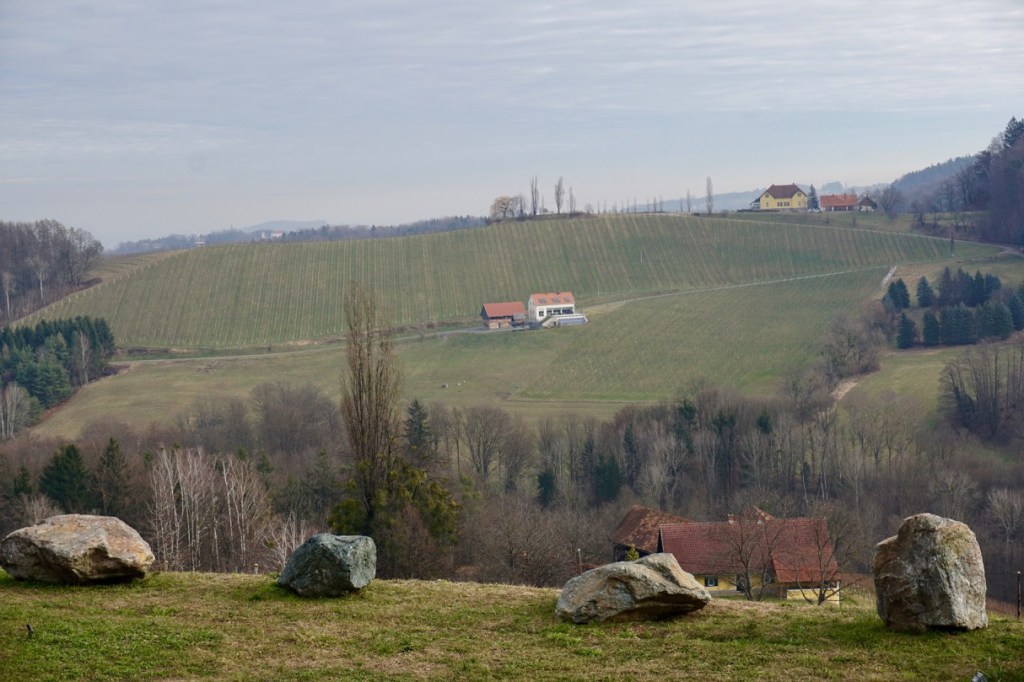
The winding, twisting, narrow roads led into small towns with winery after winery, each clearly visible on the surrounding hills. Thinking of the lives that had been built here gave me pause.

Getting to Bratislava was simple but getting into Bratislava was a little more complicated and I marvelled at how people had navigated before technology. I was more than happy to park the car and leave it for the next two days. Getting around Bratislava on foot is very easy and there’s extensive public transportation.

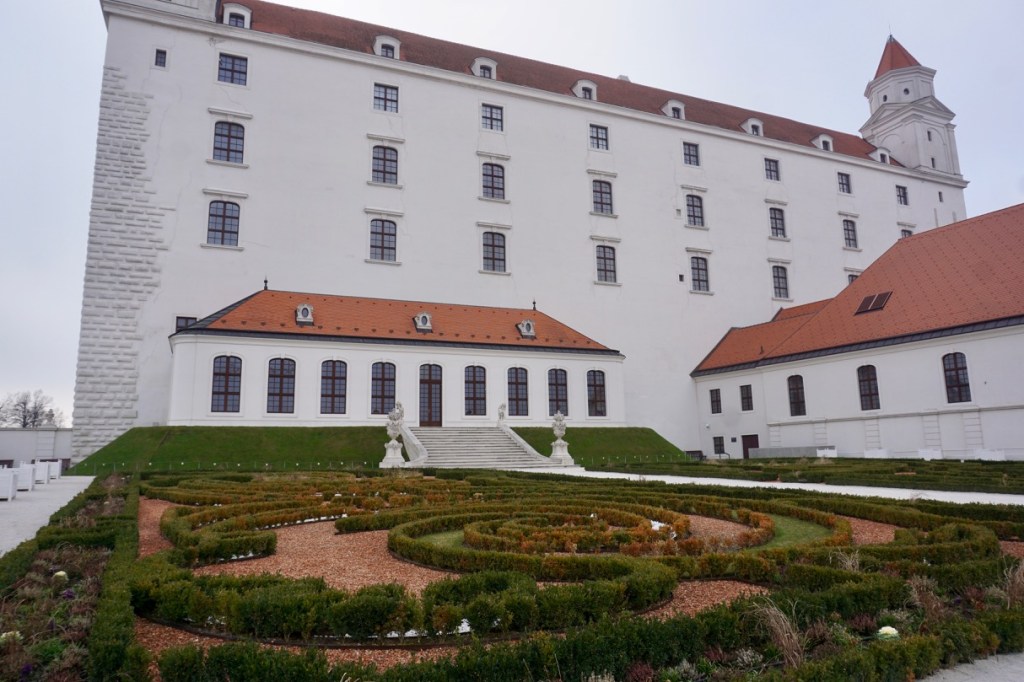
I was staying across the street from Bratislava Castle, the grounds of which are open at all times. I walked through it that afternoon and again the following morning.

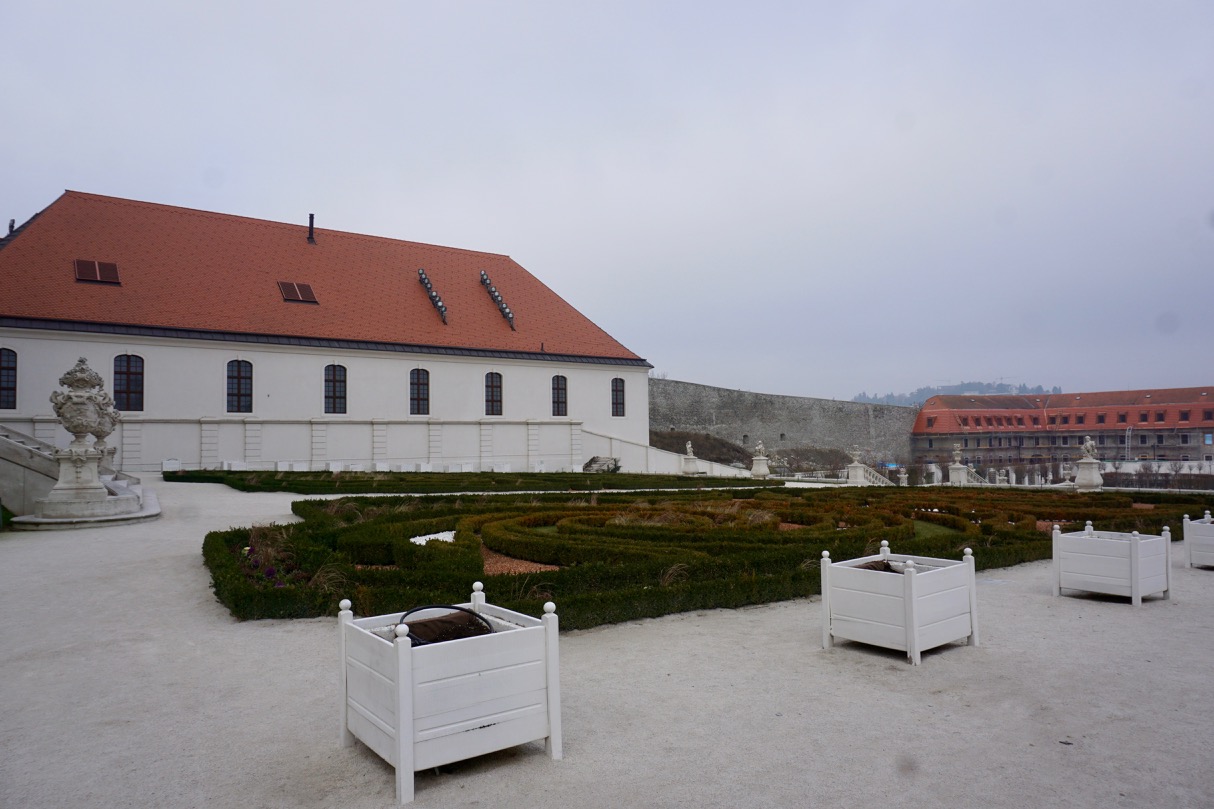
Bratislava Castle was first built in the ninth century but the current version was rebuilt beginning in the 1950s. Today, there are museums that are open to the public, as well. I was more interested in the garden . . .

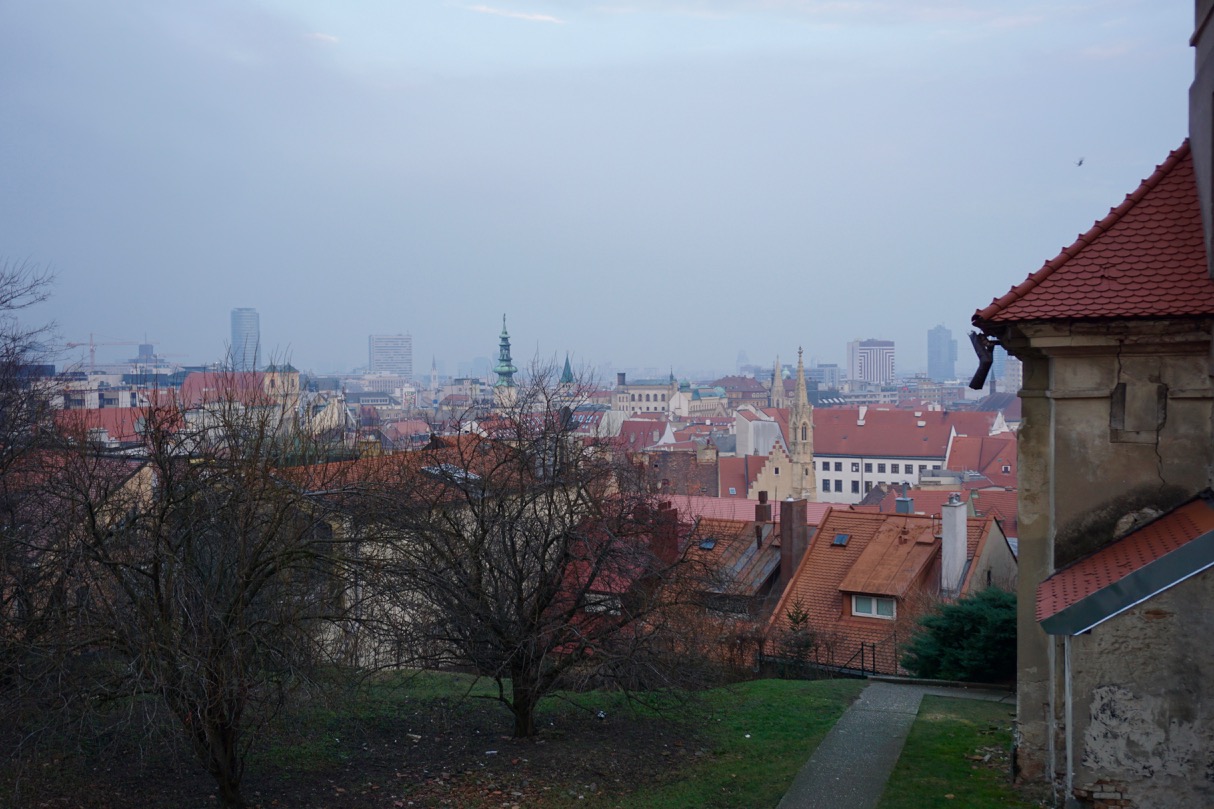
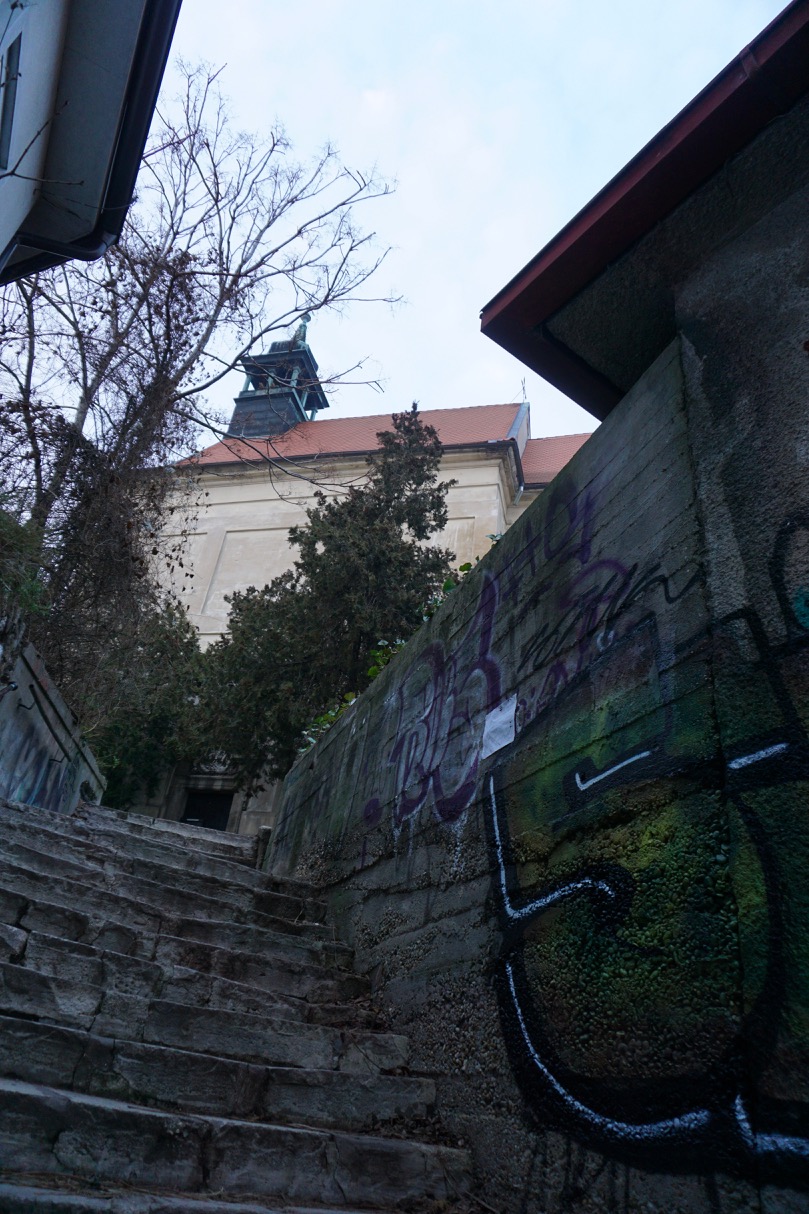
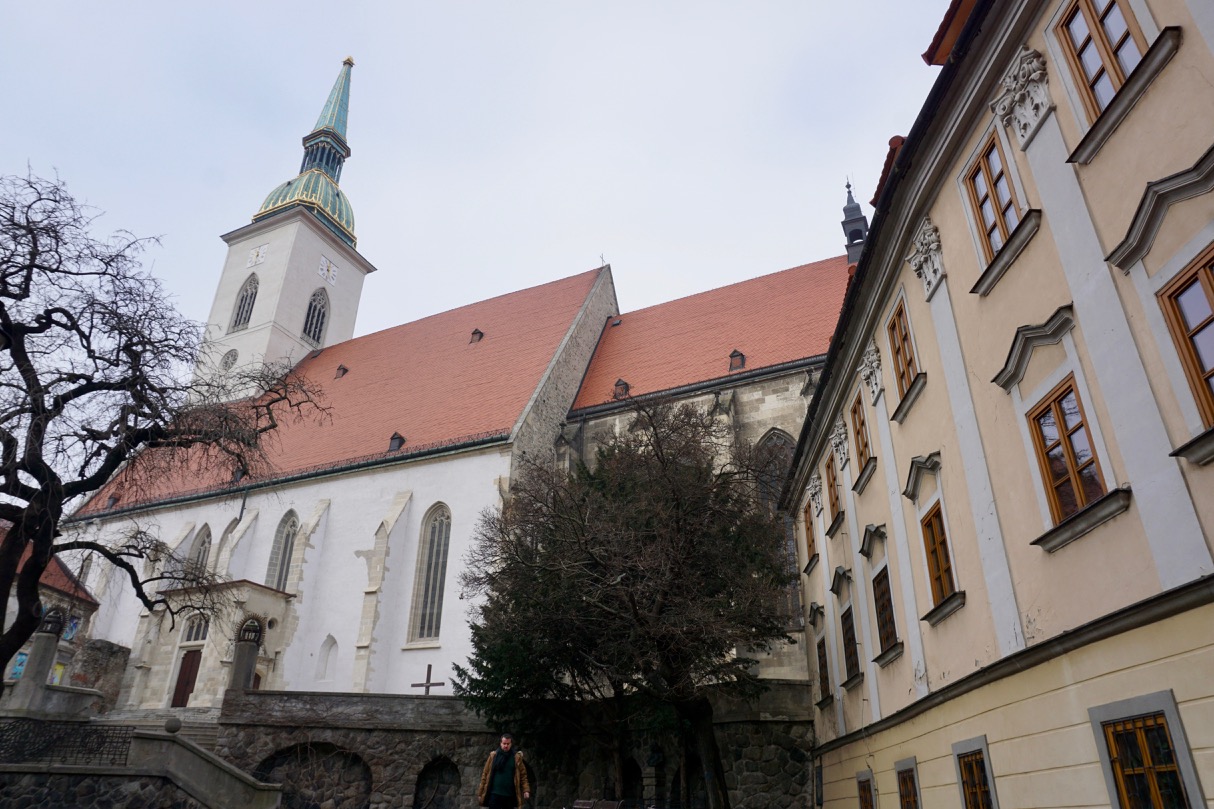
. . . and the churches and other buildings located just down the hill. There were real signs of life and ideas here, which I always enjoy seeing.

I took a quick walk through town to get my bearings, surprised at how very few people were around. I was also surprised at the number of hipster establishments that didn’t seem to match the atmosphere. The streets were really quiet and the sky, no longer the bright blue of Slovenia, gave the city a feel of being tucked into winter. Although I couldn’t tell you why, I got the impression that Bratislava could be a very stark place and it did not feel like anywhere I’d been before.

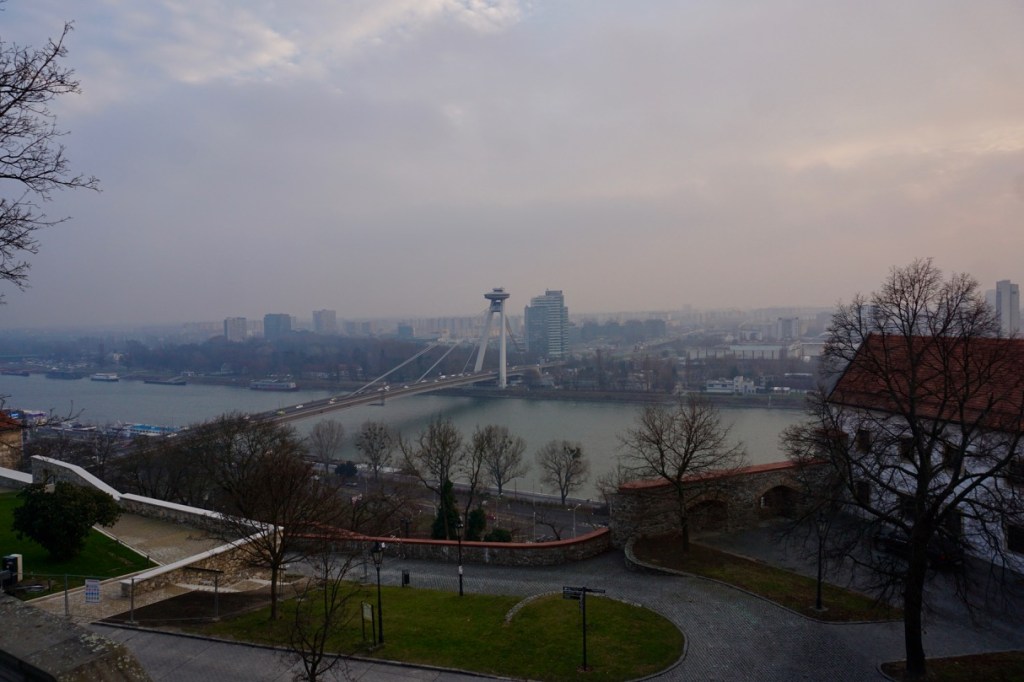
The UFO bridge certainly added to that impression.

But then I stepped inside a brewery (and then another one . . . and then another two the next day) and I found all the people. They were laughing and talking and joking and almost no one was looking at their phones. This was very, very different from what I see in Asia and I felt suddenly warmer for being around people who were interacting with each other and the space around them.

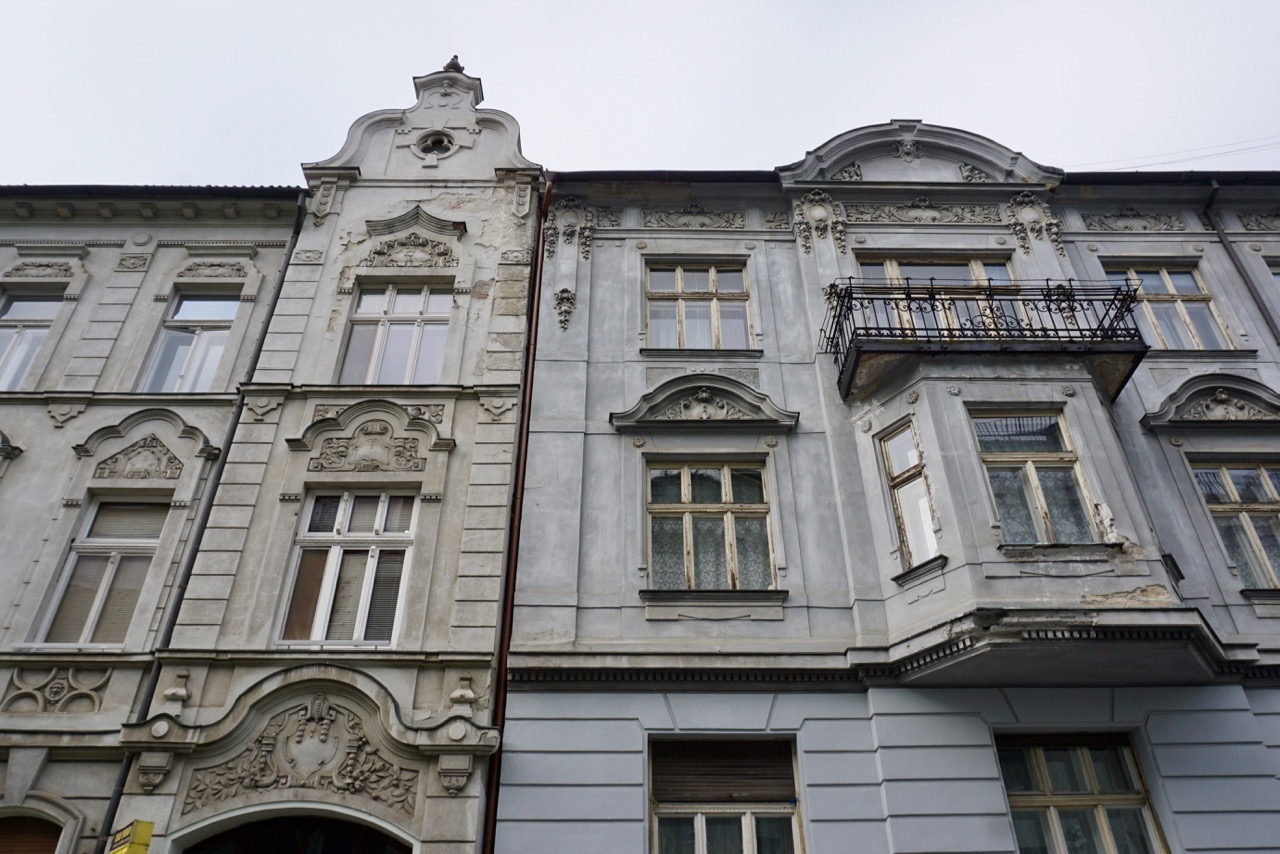
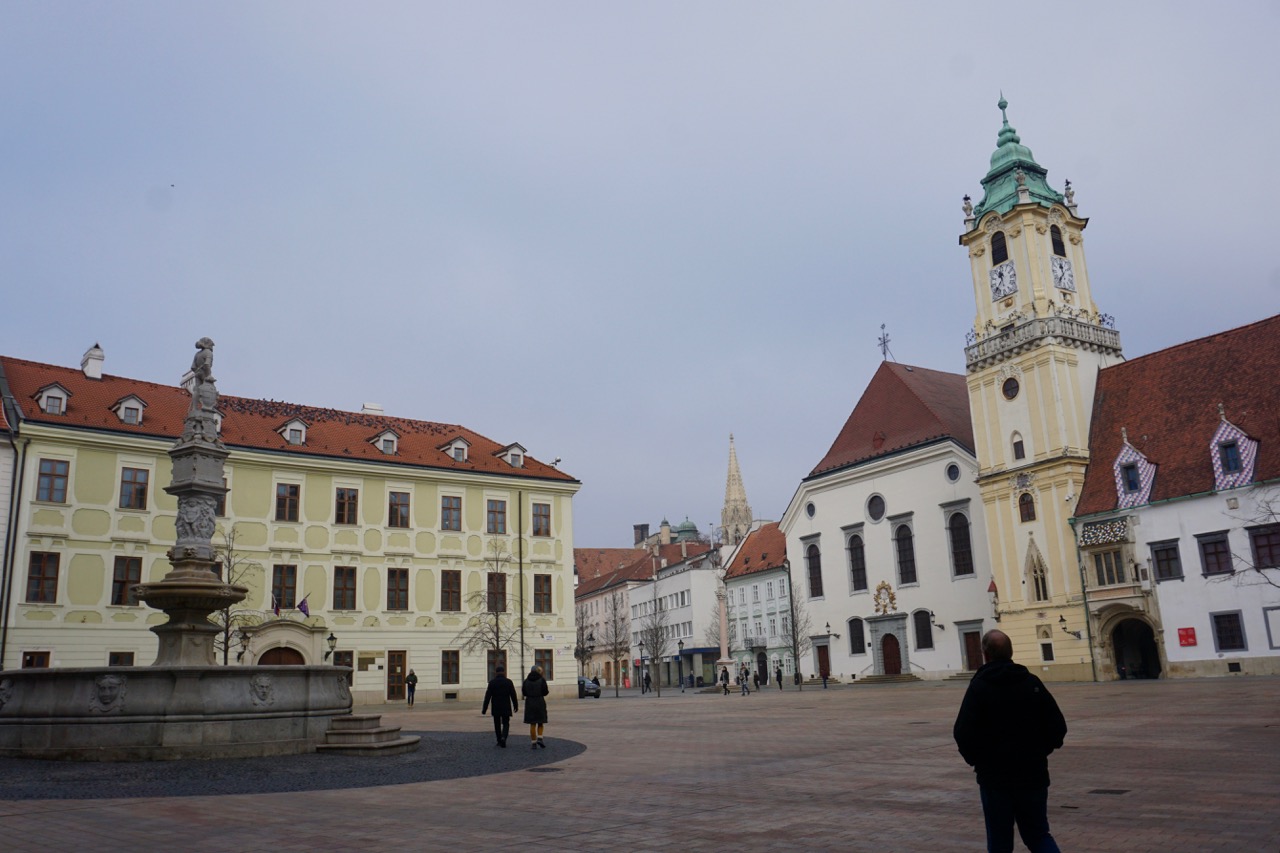
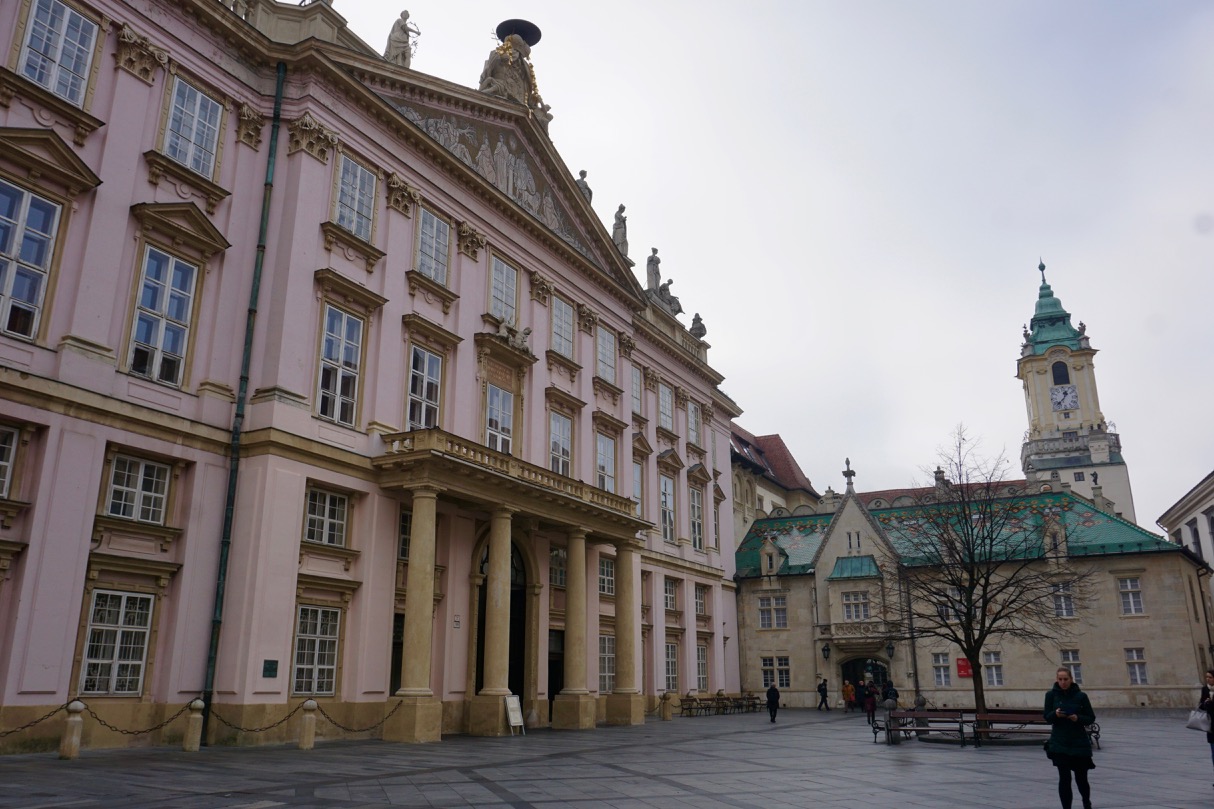
The following day was one of walking and wandering. I met up with a friend and it was great to have the company and to share this new experience. We walked through the old town and quarters of grand buildings . . .

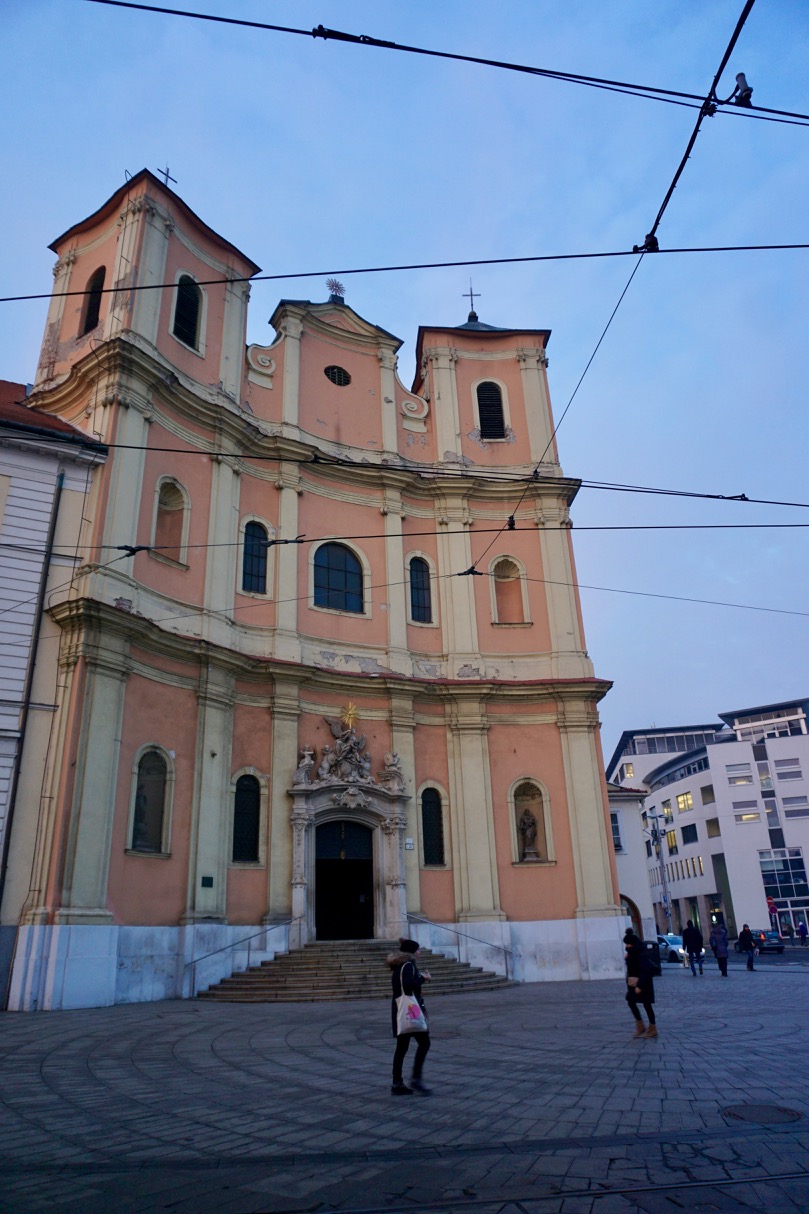
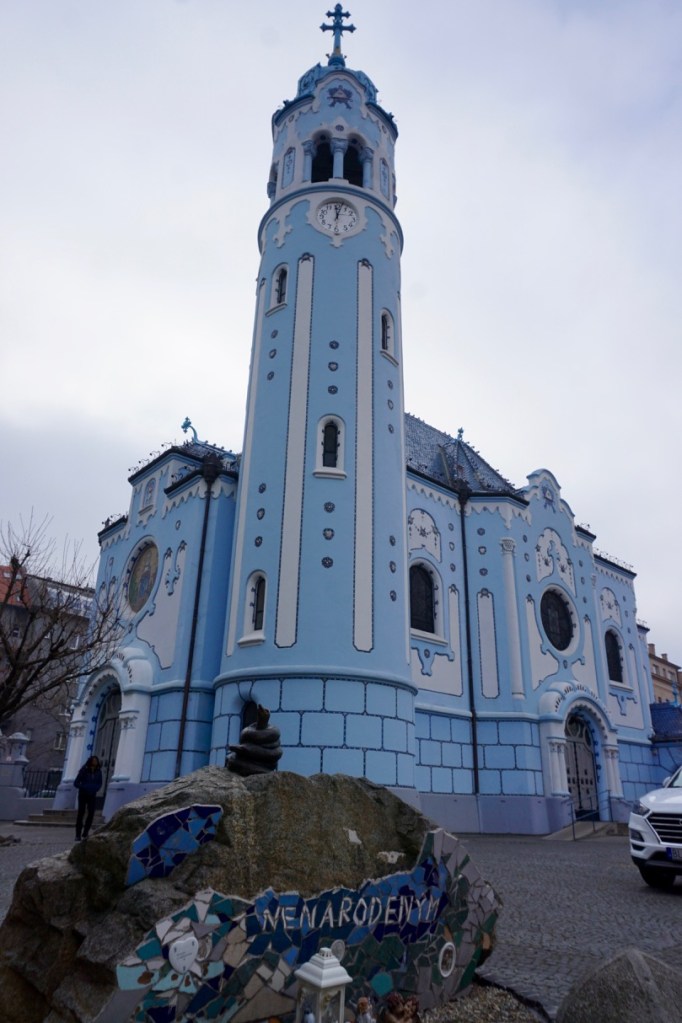
. . . through the city to visit the Blue Church . . .

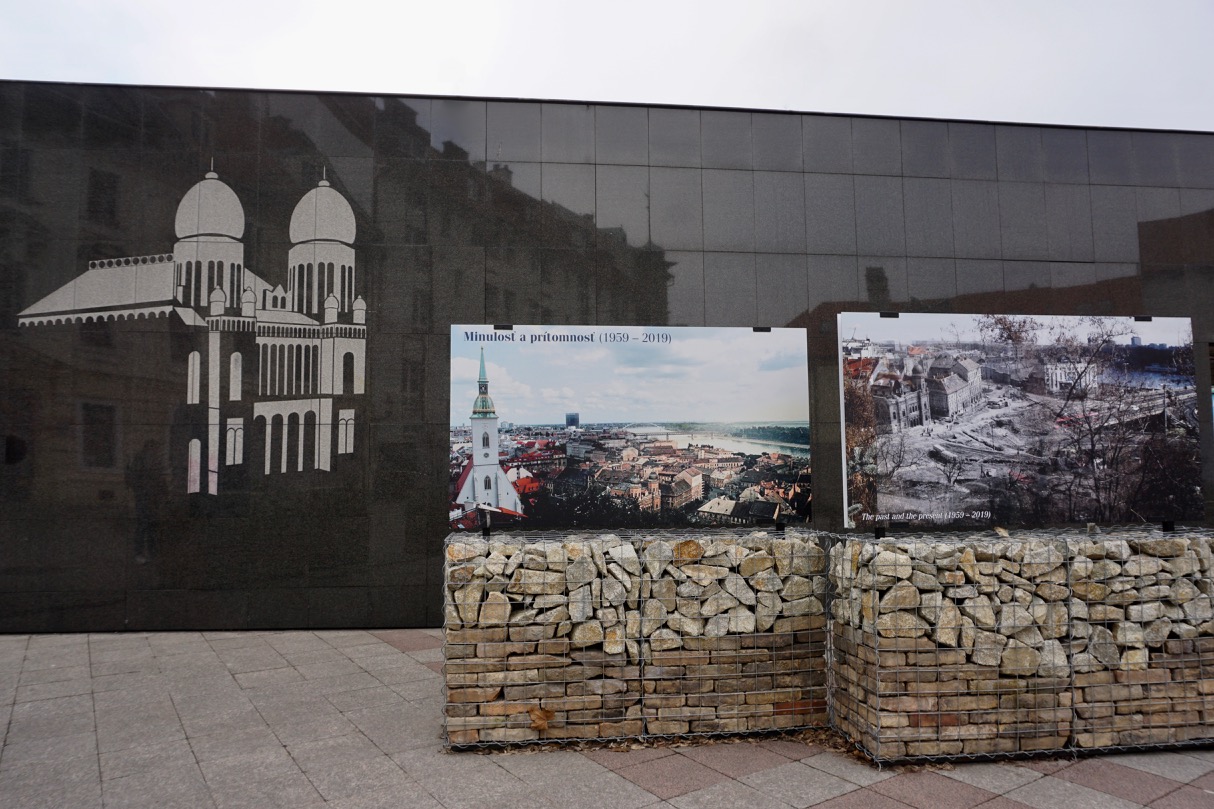
. . . and took a short walk from the Blue Church to the site of Bratislava’s only remaining synagogue.

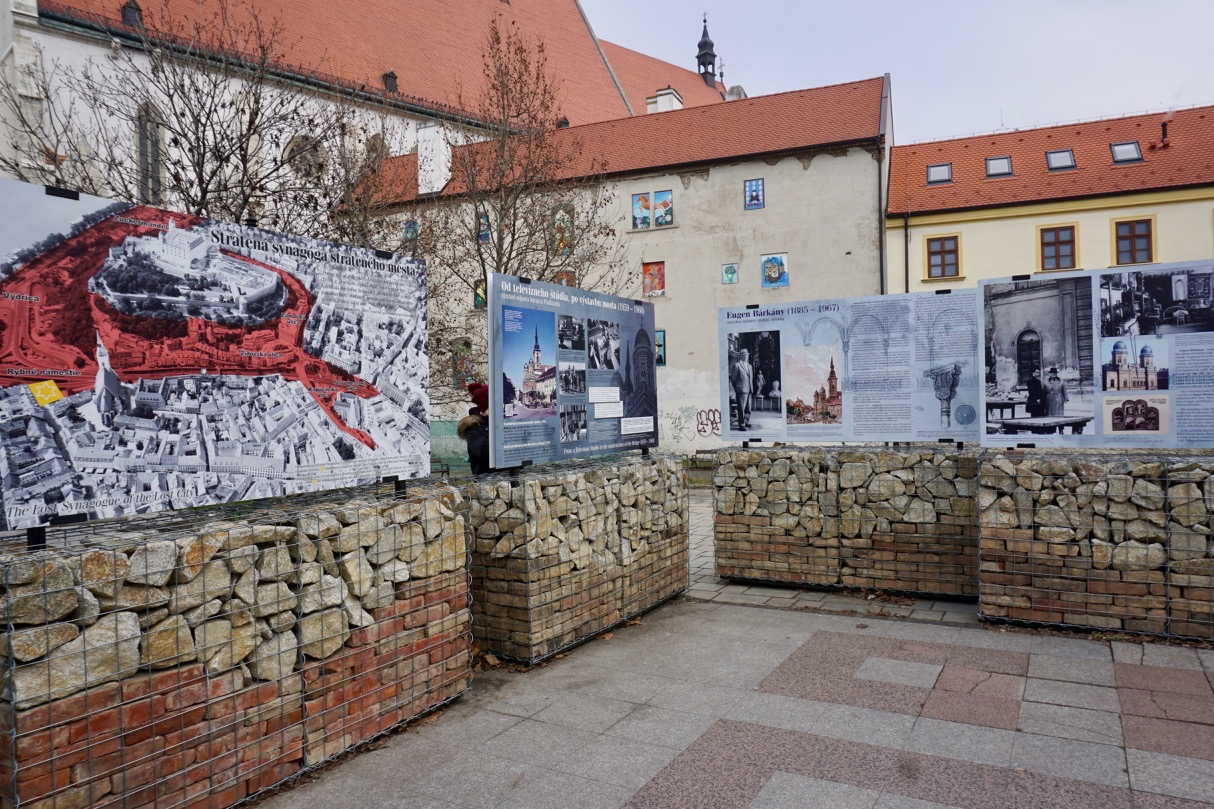
Earlier that day, right next to St. Martin’s Cathedral in the old town, we’d seen an exhibit on the street about the synagogue of Bratislava that, despite protests by the community, had been torn down in the 1960s to build the UFO bridge. Bratislava has a long and extensive Jewish history and there were historical markers about it around the city, including a museum dedicated to Jewish culture.

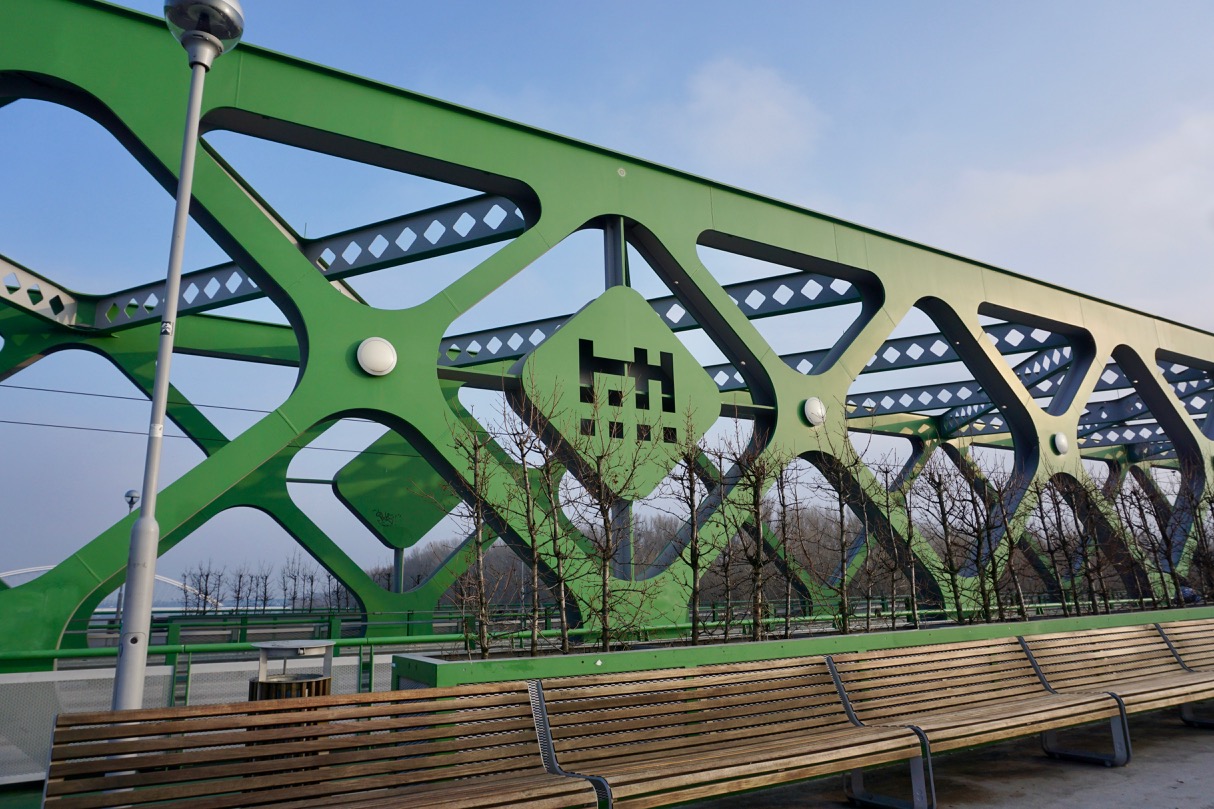
We also walked across the Danube River . . .

. . . and found ourselves in a park that must have been a relic of Bratislava’s communist history. Imagine the stories these benches and trees could tell! Or the last people to sit here. Who are they? Where are they?

Just across the street from the Presidential Palace, we saw another relic of communism – a fountain that had once clearly been a showpiece but was also in disrepair.

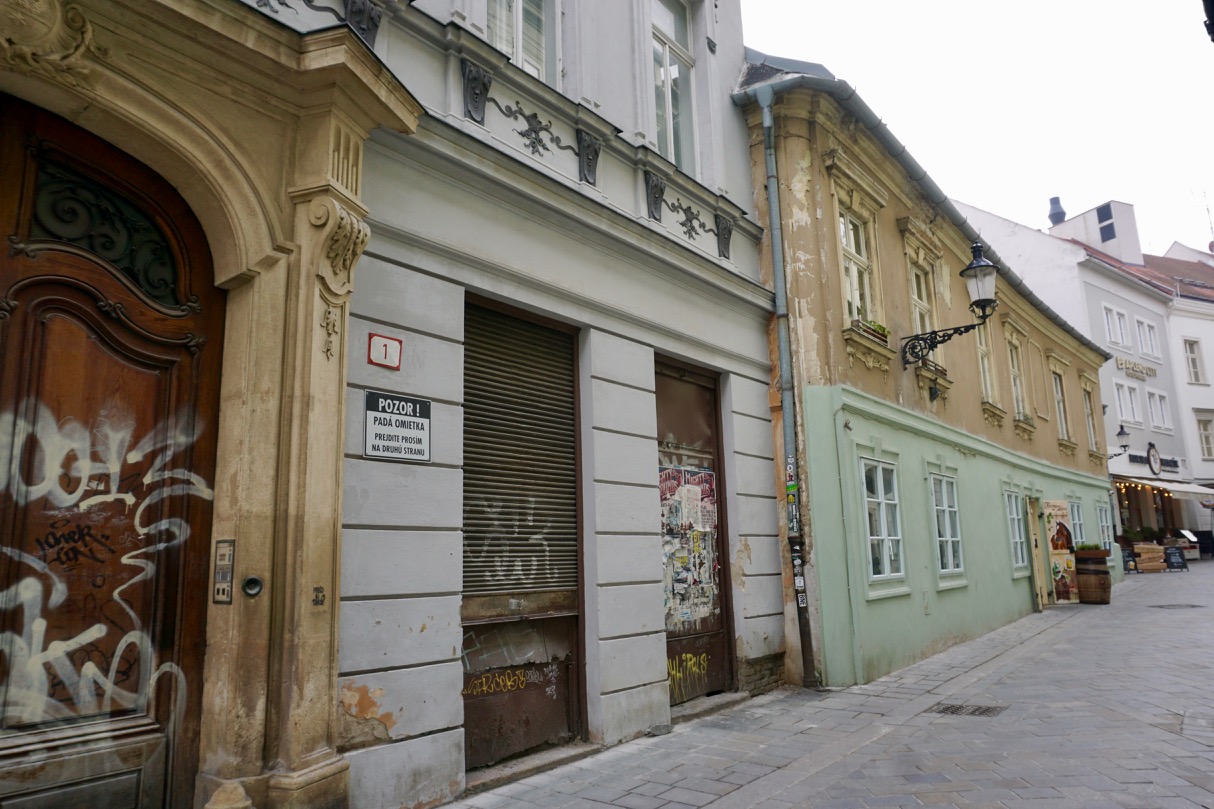
Another notable element of walking around Bratislava was the graffiti tagging everywhere. I felt a real lack of reverence and desire to be heard and I liked that attitude very much. Things that have been needn’t always be. And Bratislava was a little bit of everything.

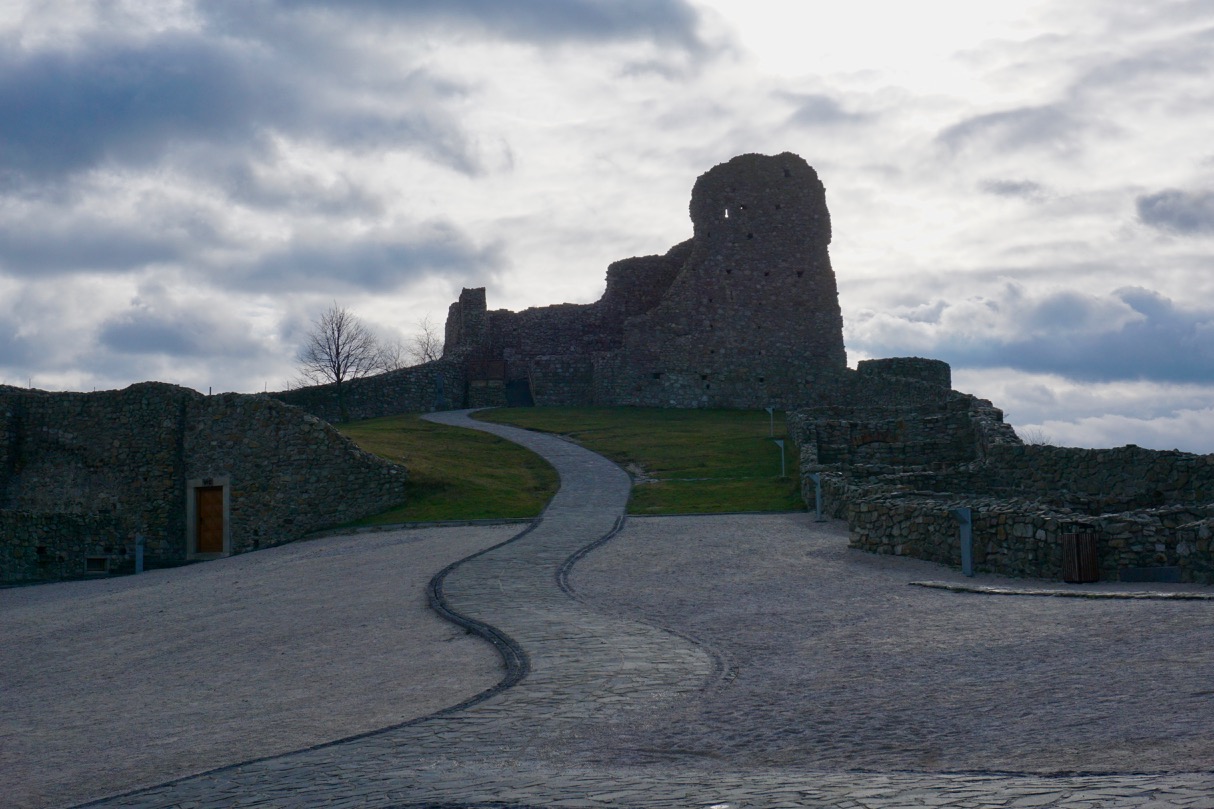
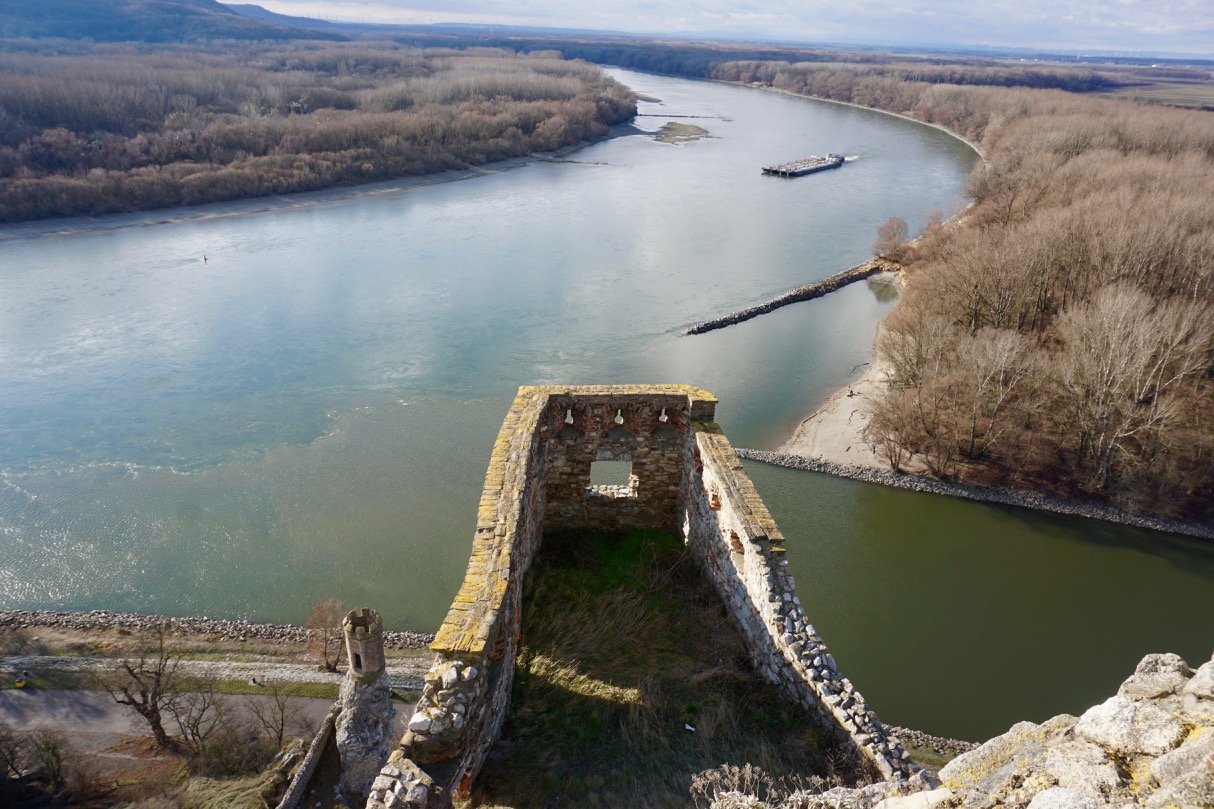
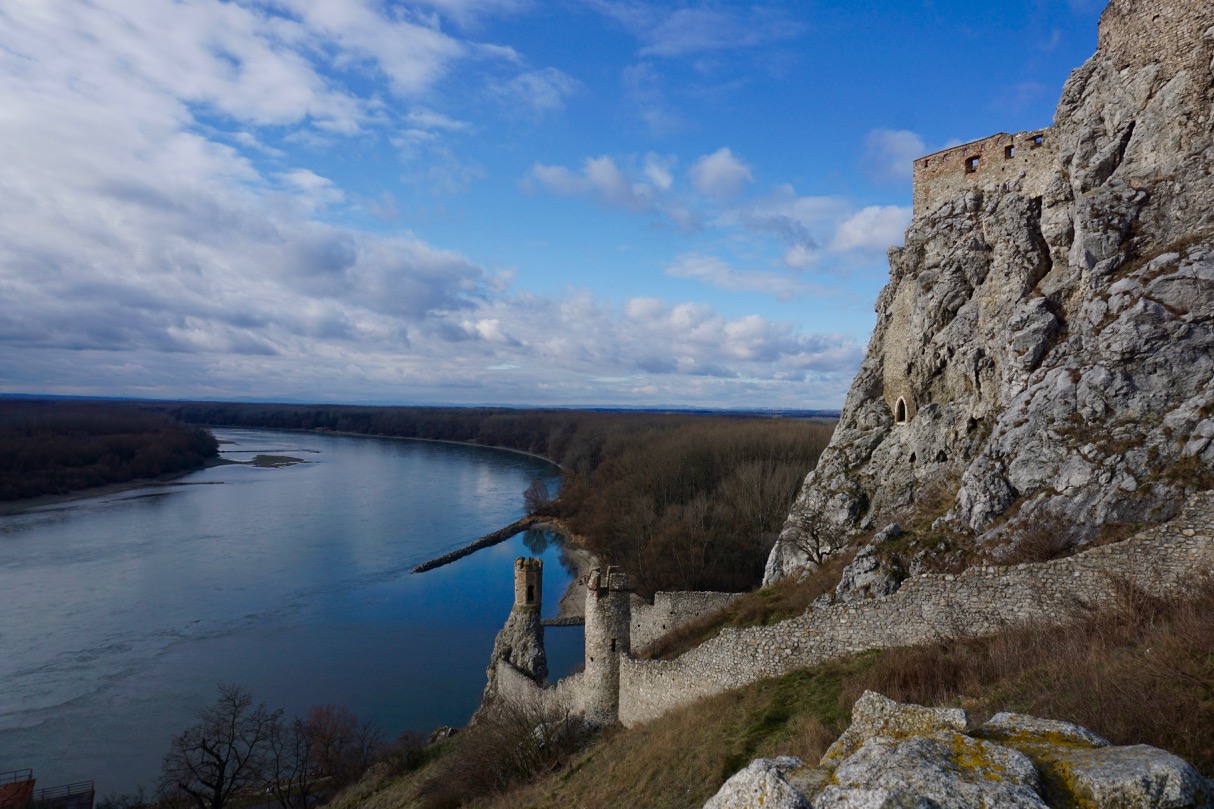
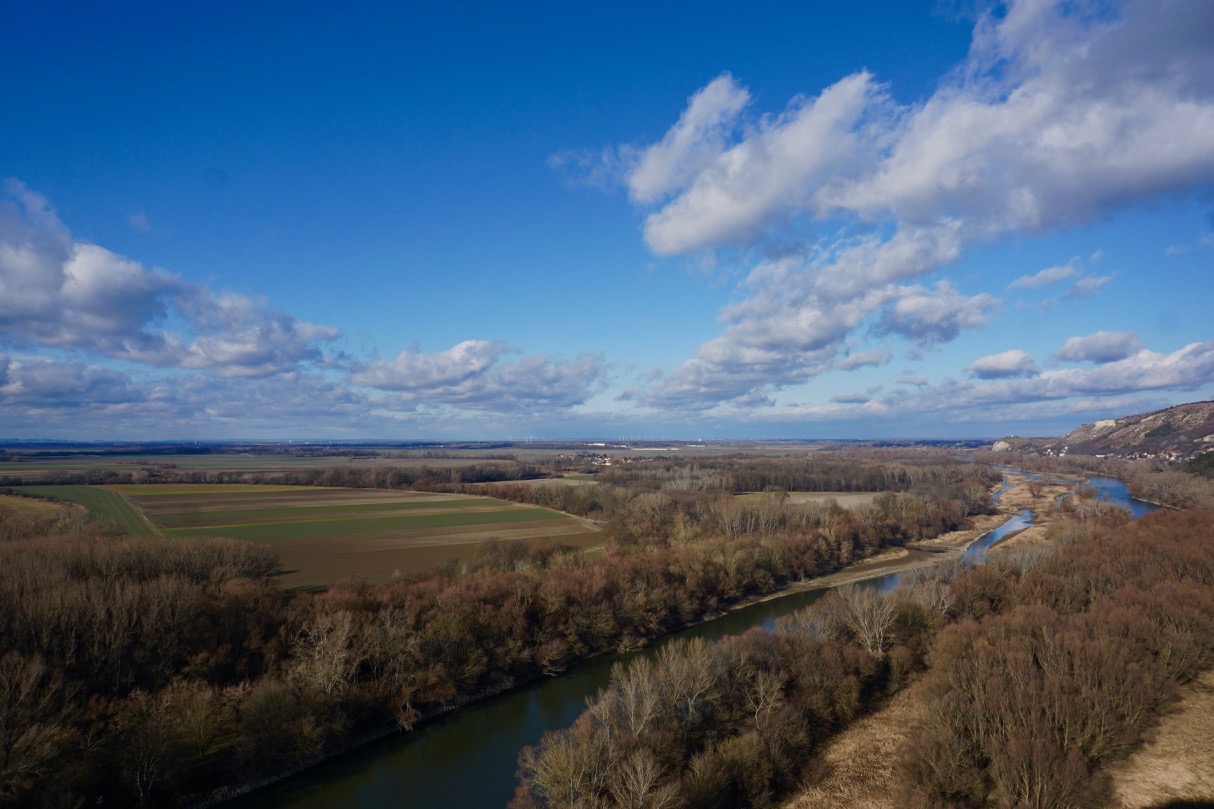
The next morning, it was time to go but I really wasn’t ready to leave just yet. Instead, the last day having a car made it possible to visit Devín Castle, a stone castle located 10km from Bratislava. It was built in the thirteenth century and was then destroyed by Napoleon’s army in the early 1800s. The sun had come out again but the wind was really strong. It was easy to see why this castle had been built up on a windy hill at the confluence of the Danube and Morava rivers.

Thanks to a photo exhibition, I learned that the Iron Curtain had run directly in front of the castle to separate Bratislava from Austria across the river. I knew that the Velvet Revolution, the history of which Bratislava is very proud, had toppled communism here but I didn’t know that the Iron Curtain was a physical structure. In school, we’d talked about it as a concept, not as something tangible. Learning about that was really powerful and reminded me again of how much I don’t know.

After the cold wind, the obvious choice was to stop for some hot wine once more before the last part of the journey, which would again follow Austrian wine roads because they’re so much prettier than the highway.

And then all too soon, the car was dropped off and I had far too much time to kill at the airport. As is my habit, I drank a hot chocolate and reflected on the roads travelled. I had seen parts of the world that I’d never really imagined seeing and I honestly felt the growth in myself as a person. When I moved to Malaysia in 2014, I never would have known how to go about a trip like this. And here I was with all clothing in my pack worn twice like it was nothing. It has been a long road to get to this point and that I cannot forget.

Sometimes the world feels right to me and over the last few weeks it had. There is solace in that feeling. There is solace in knowing there are places out there where the world feels okay. Thank you, world.

Two Things I’ve Given Up

Growing up, I was highly motivated by sticker charts. Need to do something I didn’t like doing? Make a sticker chart. Counting down to something? Sticker chart. I liked the sense of accomplishment and I loved the stickers, especially the really intricate, detailed ones that you had to carefully peel off the backing paper and painstakingly adjust before sticking down because there was no peeling them back up again.

In my adult life, I’ve maintained slightly more advanced versions of sticker charts. There’s a minutes meditated counter in an app on my phone, a 1000km running challenge in a different app, and I can set my annual reading goal on yet another app. (And there are my blog statistics, but I’m going to leave that out of this discussion.)

Recently, I’ve started giving up those external motivators because it felt like the right thing to do. I spent the weekend out of town, mostly without wifi, doing yoga and eating spicy food and it gave me time to reflect. The post below explores what I have learned.

Annual Reading Goal

It’s no secret that I read a lot. I find it interesting to keep track of what I’ve read because I can look back on patterns and try to fit what I was reading into my memories of life at a certain time. Additionally, it’s helpful to look back on my book list to figure out when certain ideas changed and consider why that might have been.

For a couple years, I used Goodreads to set a reading goal and I noticed a change in my reading when I wasn’t sure whether or not I would reach it. Does this book “count” or is it really an extended essay or article? Do I start this shorter book that I’m sure to finish or do I invest myself in a long one? Do I take the longer train ride to get in a few more minutes of reading?

When I started riding my bike instead of taking the MRT and realised I was fretting a little bit, I decided a reading goal was no longer a good idea. The point is that I read what interests me, I learn and I talk to people, and I learn some more. The point is not to read a certain number of books.

Last year, I didn’t set a reading goal and found that I was much more impulsive choosing books and reading several books at once. They took however much time they took, and I found myself doing a variety of different things with my leisure time. Rather than read on the treadmill to make sure I was keeping up, I stopped on my outdoor runs to meditate by a nearby pond. Rather than sit in cafés over the weekend to read, I rode my bike, cooked dinner with a friend, and settled myself down to people-watch.

I still read something every single day, but I no longer feel guilty if that something isn’t a book that can count on my app. Rather than collect trophies, I’m trying to balance the time I spend in the book world and the time I spend in the real world. It’s a lot easier to hide in a book but I’m glad to experience the world where I am, too. There’s a lot to learn out there!

1000km Running Goal

I started running when I was in university as a way to deal with stress. Many of my friends ran and although it was a real chore for quite some time, I felt better when I exercised than when I didn’t. I’ve gone through occasionally obsessive periods in which I have to run and get really antsy when I don’t. These moments still occur (it has recently come to my attention that the itchy, visceral need to move my body right now is not normal) but I’ve calmed down a lot when it comes to running.

This shift has been gradual and likely has something to do with living in a climate where running is usually really unpleasant. Maybe all of this will change when I’m no longer living on the equator. But for several years, I participated in a 1000km challenge through an app and I steadily met the goal. I used to get a little anxious when I realised I was falling behind or when I started to count how many times I’d have to run over a particularly busy period in order to stay on track. Getting anxious over running, however, was completely counter to why I started running in the first place.

I got into rock climbing about a year and a half ago and immediately recognised that I enjoyed climbing and what it did to my body far more than I enjoyed running. Running got me outside, which is high on the list of reasons why I continue doing it, but the climbing gym (and real rocks when we can arrange it) worked my body and mind very differently than running ever had.

2019 was the first year I didn’t complete the 1000km challenge and I opted not to enter for 2020. For a long time, running was the way to feel strong physically and the way I judged my fitness and compared myself to others. Climbing, however, showed me that there’s a very different type of strength, fitness, and agility that actually suits me much better. I still dance and practice yoga regularly and that’s what my body does well.

This is not to say I’ve stopped running; I haven’t and I likely won’t. But it’s one of several active pursuits now and not the one that dictates the pace of a weekend morning or the flow of an evening. And surprisingly enough, I actually like it a whole lot more.

Conclusion

There’s nothing wrong with stickers. But there’s a lot wrong when the pursuit of a sticker detracts from the original purpose of an action. I’ve grown a lot more adept at figuring out what I need and I’ve grown more confident choosing X over Y. Just because I usually do things one way doesn’t mean that’s the only way, and just because something used to be my primary driver doesn’t mean it will always be.

Over the last little while, I’ve learned to balance. I’ve learned to maintain routines that fit and adapt those that do not. I’ve learned to be more spontaneous and less concerned with maintaining something that, for all intents and purposes, I was maintaining mostly out of habit.

And I’ve also learned that there’s comfort in pattern and sometimes, when I’m feeling out of sorts, the best thing to do is to return to those patterns and reset.

It’s nice to take a moment to breathe, isn’t it?