
Category Archives: Education

Pride Month

As usual, the Student Council students have organized a series of activities for Pride Month. This year’s set-up includes posters around the school, a box in the foyer for questions about LGBTQIA+ topics, a series of Instagram posts, and safe space stickers passed out to teachers for their classrooms. Next week, a flag will be hung in the foyer, and the questions in the box will be answered and the answers sent out to the community. Our school is a proud member of two local organizations dedicated to open-mindedness and anti-discrimination practices, so this is just part of what we do.

But. Our school is still a diverse community with diverse opinions. Every year, some of the posters hung up for Pride Month get torn down or defaced. Now that I’ve been overseeing Student Council for three years, I have full confidence that this is not a coincidence and the school’s teachers and administrators agree. In response, Student Council has put up more posters. A colleague a took ripped poster from classroom to classroom, and we hung signs asking students why Pride posters bother them and encouraging them to talk with a few specific staff members, including ourselves, about their concerns. A note went out in the daily bulletin that was read aloud in homeroom, explaining that such behaviour is not in line with what we do at our school.

It seems like the fun of tearing down Pride posters has worn off, which is a small victory. In this case, a clear stance of “This is not acceptable and we will not stand for it” seems to have prevailed.

But the questions of “Why?” and “What’s bothering you?” remain. No one has answered our call to talk about their concerns, which is not a huge surprise. It’s much easier to act anonymously, especially when such actions go against the social norms of a particular environment.

Earlier this year, when our school community voted in favour of joining a network of schools dedicated to anti-racist teaching and practice, there were a surprising number of “no” votes, suggesting that we have not done enough to emphasize what being international and open-minded actually means. This is what we are, but to what extent is that what we do? How have we acted to make our school a place where we openly behave according to our principles? And what have we done in situations where individuals do not act in those ways?

Such questions have been ongoing at school this year, and there have been a few interventions with particular groups to address active acceptance of diversity and inclusion of all, with more plans in the works for next year. But right now, we are wondering at motivation to vote “no” or to take down a Pride poster, and there has been much discussion among staff as to why that could be the case. Having had a lot of time to think about it, I have several hypotheses.

First, there is the possibility of typical teenage rebellion. You want to have a say about something, such as voting whether or not to join a network of schools with a specific agenda, and this seems like a reasonable opportunity to be contrarian.

Alternatively, it could be the case that students know that such topics can be considered controversial and, whether they themselves find the topics controversial or not, do things that they shouldn’t do, just for the sake of it.

The possibility of genuine disagreement cannot be ignored, either. At least as far as Pride is concerned, we have a population of students from religious backgrounds, which means that we need to far more explicitly address the issue of how we, as members of the school community, are respectful of one another even when we disagree.

There are countless possibilities I haven’t thought of, certainly, and I am heartened by the number of staff who have mentioned having conversations with their classes and who are proactively printing out and putting up new posters themselves. I appreciate the support and I know the Student Council students do, too.

Appropriately, a question that came up in Student Council was why we chose to make a big deal out of Pride Month when we’ve ignored most other designated months, and nearly all holidays. I was pleased to report that the school, having recently identified this issue, has created a rotating calendar of culturally significant days to highlight in our school events and practices. Students were impressed and excited, and we are looking forward to what this brings in the upcoming school year.

Schools are places of continuous development, and it is the people within the community, both students and staff, who make them this way. It takes a lot work, it takes confrontation, and it takes decision-making, and none of this happens over night or without effort. It’s one thing to make choices as an individual, and quite another to make choices as part of a system, as the Student Council members are learning. The work is never “done”, but we can certainly take a moment to be hopeful about what we’ve started.

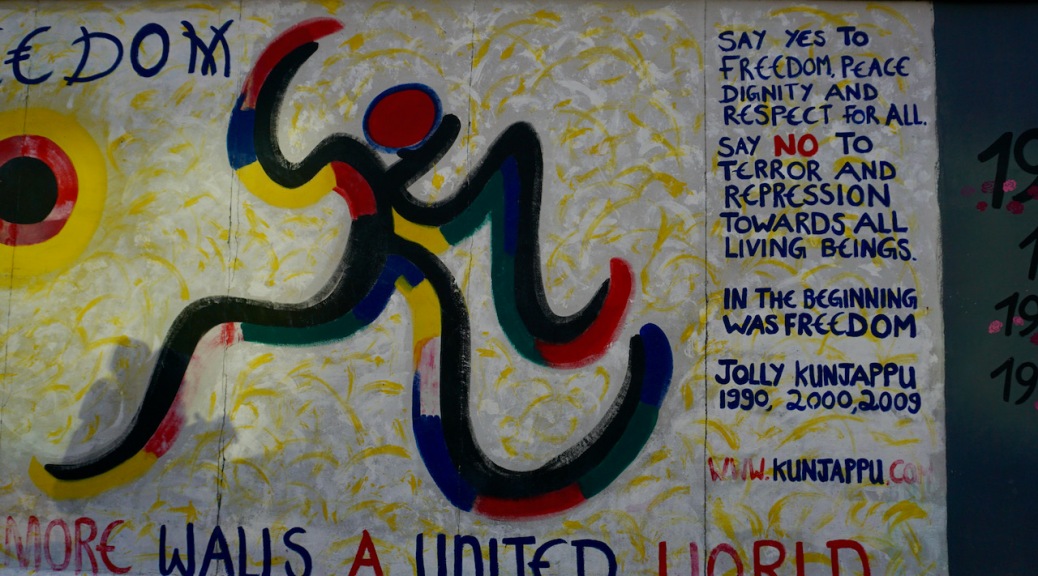
Berlin. Germany – December 2021

May Exams

Inside, students are revising between exam papers, the common area full of laptops, notebooks, and nervous chatter.

Outside, trees that bloomed in early April only to have their blossoms freeze overnight fight for their lives, flowers and leaves black but still clinging.

Over lunch, we talked about the idea that as people live longer, childhood has extended. In many ways, this is a good thing: It is no longer expected for children to leave school and go off to work at 12 or 14, nor that everyone is partnered and married in their early 20s. In other ways, perhaps not such a good thing: An extension of childhood seems to have translated to less conformity to social norms, many of which have to do with respect for others. I believe social media is at fault here for creating alternate realities that fit each user. Why, I imagine a user thinking-without-thinking in the brief moments that the real world intrudes, should I have to fit myself into anything at all?


It’s May and our grade 12 exams have already begun, with grade 10 exams following next week. Some aspects of my students’ school experience still match mine from many years ago, but there are also ways my students learn that could not be more different. The fact that students, unprompted, refer to “learning how you learn” indicates that some shift has taken place.

Considering how much of our daily experiences in the world are curated for us – think about music recommendations, subscription-based news alerts, personal feeds, and explore pages – I think it’s worth noting that the school exam experience worldwide is very similar. All students who take exams from a certain exam board go through the same process. All schools are obligated to fulfill the same requirements. Everyone opens their results on the same day. As a student, I knew this to be the case, but it always thrilled me when, upon meeting new people, conversation turned to our experiences in classes and with teachers. I was surprised to learn how different our daily experiences were, only having encountered my own. And somehow, we all had ended up at the same place.

Through many years working with students, I have learned that it is not the work that I put into preparing them for exams, but rather the work that students put into preparing themselves that matters. I spend very little time these days, and sometimes none at all, going over course material; after all, students have spent two years on course content and have access to whatever they need to review. Rather, exam preparation in my classroom takes the form of prepared activities in which students are actively doing something and I wait to answer questions that arise. It might be easy to listen to a teacher talk, but the work is in the thinking, and my students understand that I am not going to do this part for them.

They understand, too, that exams are not a measure of their worth as a person, but rather a step that certain elements of society has decided is necessary in order to get them from point A to point B. One aspect of German society that I really like is that almost everyone does some sort of internship during secondary school, and that there are many vocational pathways of how to become a productive member of society; sitting exams that allow entrance to university is neither expected nor required. So when my students say, “But what if . . . ?” it’s easy to point to other options. In Germany, only about a third of people hold a university degree simply because it is not required for the vast majority of career possibilities.

Wherever young people end up and whatever they happen to do, I hope they are happy and fulfilled. I hope they chase the dreams that make them feel whole, and I hope they give themselves enough time to figure out what those dreams are. I hope they have opportunities to learn from success and failure, to stand tall after standing up again. And if they remember anything from their time in school, I hope it’s about the world around them, about appreciation of others, about what it means to be a good friend. They’ll figure out the rest as it comes.


Outside, the air deepens with the feeling that spring is, actually, here to stay this time.

Inside, students approach their tests with a mix of quiet confidence and anxiety, an understanding that they’ve spent two years learning and now need to prove it.

A former student came in for a chat the other day, and I smiled when she said she hardly thinks about high school anymore because it’s just not relevant. A year ago, she was one of the students waiting quietly with blue or black pens and sharpened pencils before taking her assigned seat in the exam rooms. What a difference a year makes.

What I Learned from Action Research

I started my graduate work in education the day after I accepted my undergraduate diploma, the day after my parents and I packed my school things into the car and I unpacked into my childhood bedroom. I spent that summer working my usual summer job, taking the first required courses of my Master’s degree, and applying for every teaching job that I could find. By the time summer ended and I had secured a teaching job for the fall, I was decidedly less enthusiastic about said degree and wasted little time in letting my advisor know. At the time, my coursework seemed too theoretical, too academic, too highbrow, and no match for the reality of being a new teacher. Balancing the time spent on teaching work and coursework meant that all other time ceased to exist, and I was in no state to actually learn much from the early stages of my degree. But I did, though I didn’t recognize it until much later.

In the second semester, at a time when I was decidedly more focused as a result of surviving the first months of teaching, one of our required assignments was a very traditional action research project. Action research has several theoretical frameworks, but the basic idea is that a teacher does research based on what is going on in a classroom and takes simultaneous action. Reflection is a key component of this process, and the hope is that transformative change will occur. Looking back, I don’t remember much of the paper I submitted, but the experience of doing action research indeed transformed the way I understood teaching and learning, a transformation that is a core component of my practice today. As a rule, I do not recommend being a first-year teacher when entering a graduate program, but I cannot deny that being a first-year teacher during my graduate program (and then a second-year teacher, which makes a remarkable difference) meant that I was malleable, enthusiastic, and highly motivated. This project caught me at a good time.

As it was, I was very lucky to be teaching a psychology elective course to grades 11 and 12 students. In the first semester of the school year, I taught one section and my department chair taught another, giving me someone to lean on. In the second semester, at the time of my action research project, I was having the wonderful experience of having taught something once and being able to revise it, a process I still very much enjoy. I was now the only teacher of this course, meaning I could really do whatever I wanted. Unlike the history courses I was also teaching, which culminated in state exams, this psychology course had no specific requirements aside from a broad set of standards. I was constantly trying to juggle the amount of information I felt responsible for giving my students in history (my approach to teaching and learning has changed dramatically in twelve years!) and psychology was a breath of fresh air. What if, I wanted to know, I took a step back and let my students lead?

For my project, my students and I divided up the psychology syllabus and students chose one topic for which they’d like to lead a discussion at the end of the unit. I don’t remember what the requirements were or what I expected students to hand in, but I do remember that it worked. I sat quietly in the back, taking notes as my students sat in a circle and went through the list of discussion questions their classmates had prepared. I remember one student who recorded herself having a conversation with someone about her topic, someone whose perspective she thought was missing, and playing it for her classmates before asking for their feedback. I remember my students really looking forward to each discussion, for the opportunity to share knowledge and draw conclusions. And I remember that the discussions got better over time, the students more prepared, the participants more involved. Ultimately, I concluded, my students didn’t need me to give them information. There was a whole lot they could find out and build and create on their own.

In terms of action research, I’d learned that a teacher can hand over to students and that this is an effective way to learn. A teacher creates the foundation, scaffolds, models, and supports, and this allows students to construct knowledge on their own. Beginning with this project, I began to understand the importance of both structure and flexibility, of the balance between time and resources. I learned that developing interpersonal skills is a part of learning and not an addition to it, and that mistakes and misconceptions are part of the learning process and not something to fear. I got used to saying, “I don’t know” in class and finding answers became a group activity.

As the world has changed, so has my approach to teaching and learning. This has also had to keep up with the way students have changed, and these changes have been dramatic. But at the end of the day, there is a lot that has remained the same. Learning is still a partnership and a process, and students need to know that they are critical partners in the process. Their devices know far more than I ever will, and my role is not to provide that information or to pretend I can keep up. Rather, my role is to raise young people who know how to work independently and together, who ask and answer difficult questions, and who see themselves as part of an interconnected community. I didn’t draw those connections in my action research project a dozen years ago, but I did learn that I could trust the young people who, for better or for worse, trusted me. And that has made all the difference.