My political coming of age occurred during the Obama years, a different time that seems like it came out of a different world. The question that hung around my university in the fall of 2008 was whether America was ready to choose a Black man as president. There was discourse, discussion, and dialogue. There were conversations about policies and expertise, the economy and foreign affairs. I went to at least one student-run forum to analyze policy positions of different candidates. Like my peers, I made what I thought was the best choice, and I voted in my first election.
For years after that, I continued to look into policy statements and records. I read the websites of everyone running for local and state office for every election, and I voted in every local and state election. I subscribed to newsletters and read the emails that poured into my inbox. I made lists of pros and cons and tried to do what I had been taught in school, which was to inform myself and make a decision.
And then came 2016.
I’d just returned from two years living overseas and moved back to a country I didn’t recognize. Dialogue and discourse were no longer words that were used. It was a time of rallies rather than campaign events, insulting rather than debating, catastrophe and failure rather than hope and change. With a group of friends, I attended gatherings and marches, signed petitions, called elected officials and left messages whenever their mailboxes weren’t full. This was the game plan before the election and it remained the game plan thereafter. The game wasn’t over.
Now here we are in 2024. And we are asking a similar question to the one that was humming through my university in 2008: Is America ready for a Black woman as president?
But this is very different from 2008. Now, the questions about specific policies have become less important because answers about other policies loom large. The dialogue that occurs takes place between people who already know one another’s opinions, and probably agree with them. There are deep feelings rather than deep discourse.
The front page of The New York Times today proclaims, “WORRY AND HOPE ON LAST DAY OF VOTING”. In 2008, the front page read, “The ’08 Campaign: A Sea Change for Politics as We Know It”.
My political awakening occurred not so long ago, but in a different time. The world will be a different place still as a result of who wins this election. The only way to be part of that decision is to exercise the most basic democratic right, which is to vote. And if voting feels good, vote for those who believe in your right to make your voice heard.
Vote for those who believe in the democratic system that allows for dialogue and discourse, questions and answers.
Vote for those who want to build up a country for its people rather than tearing it apart.
Vote for the people who wanted to and couldn’t, who tried to and were condemned, who fought for it and died.
This post is dedicated to AL, CC, DF, KB, LC, MS, SB, SF, and TM.
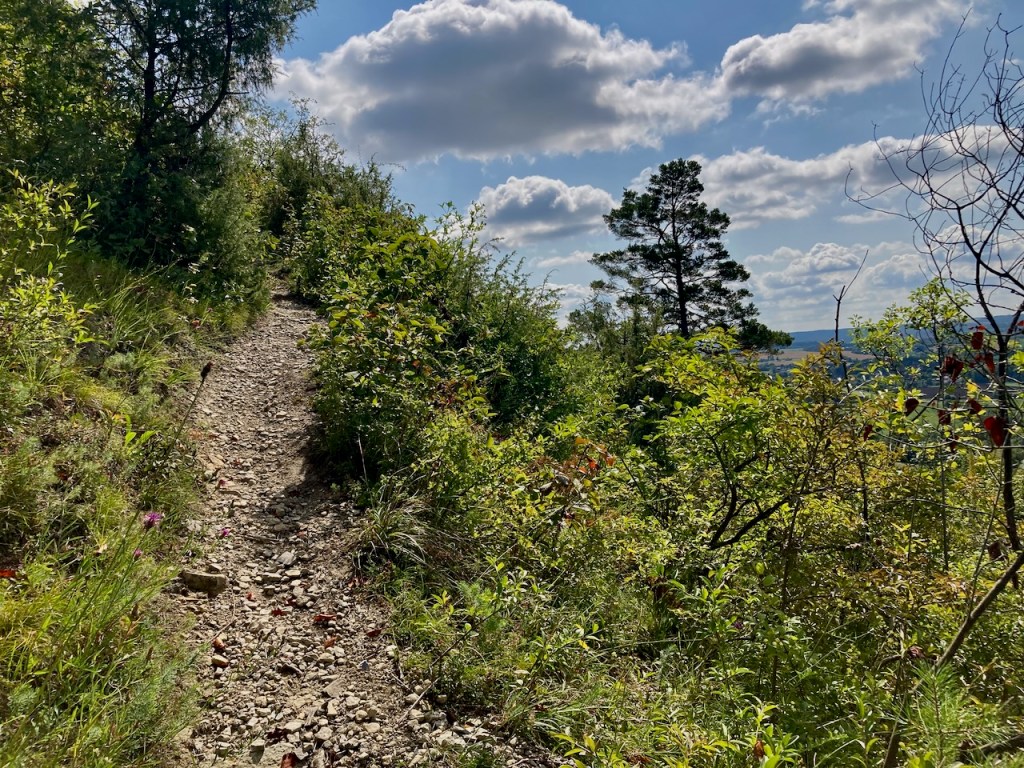
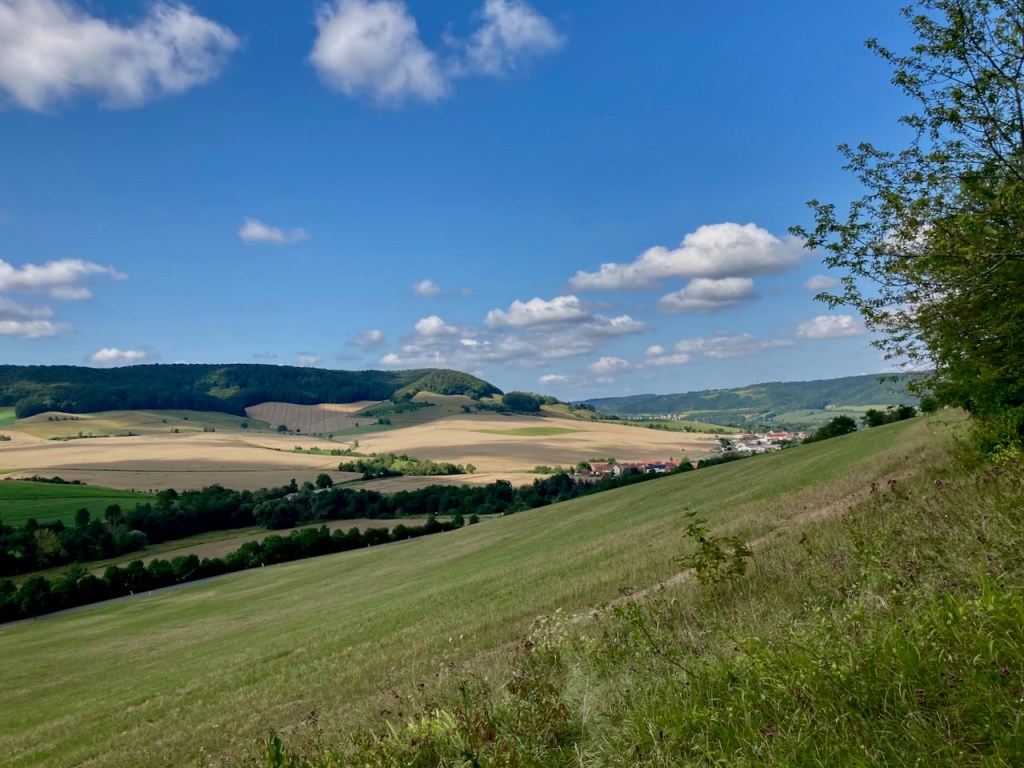
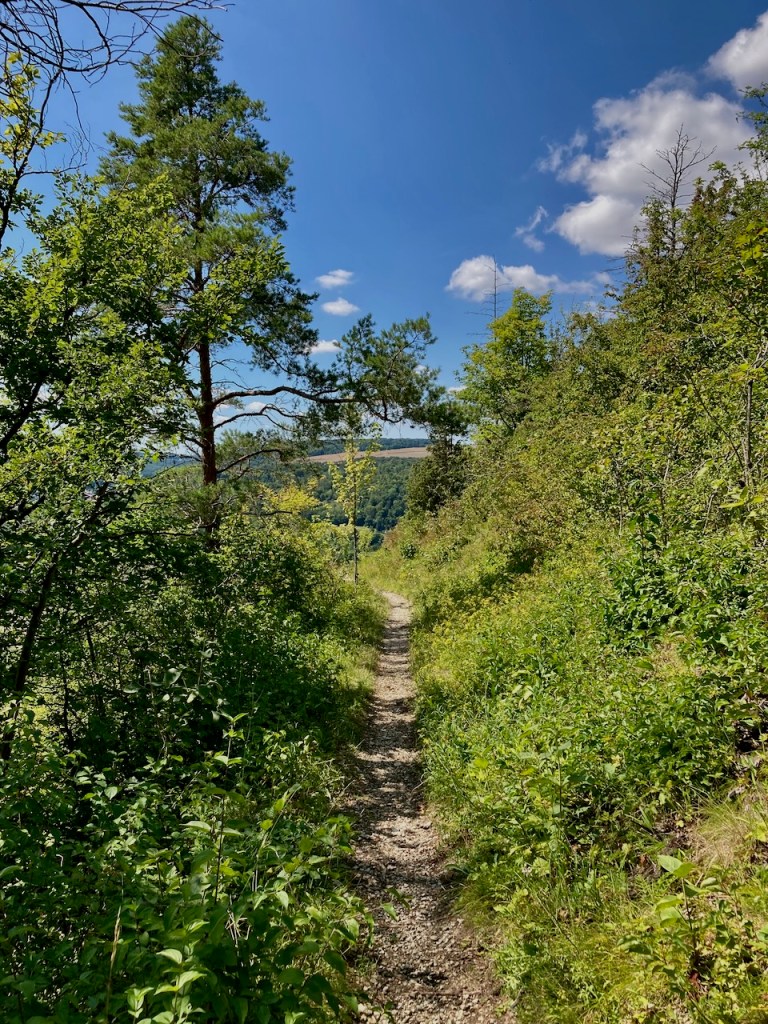
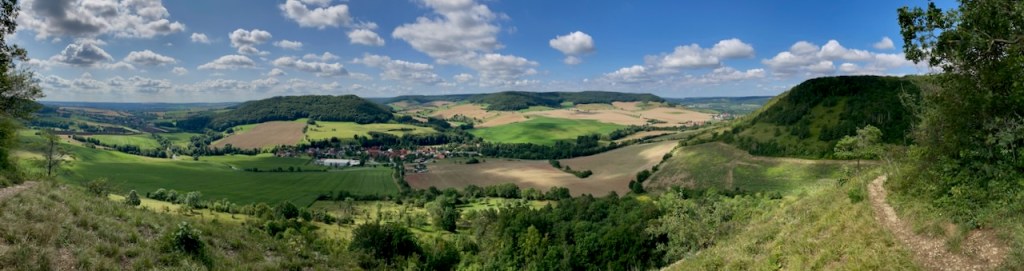
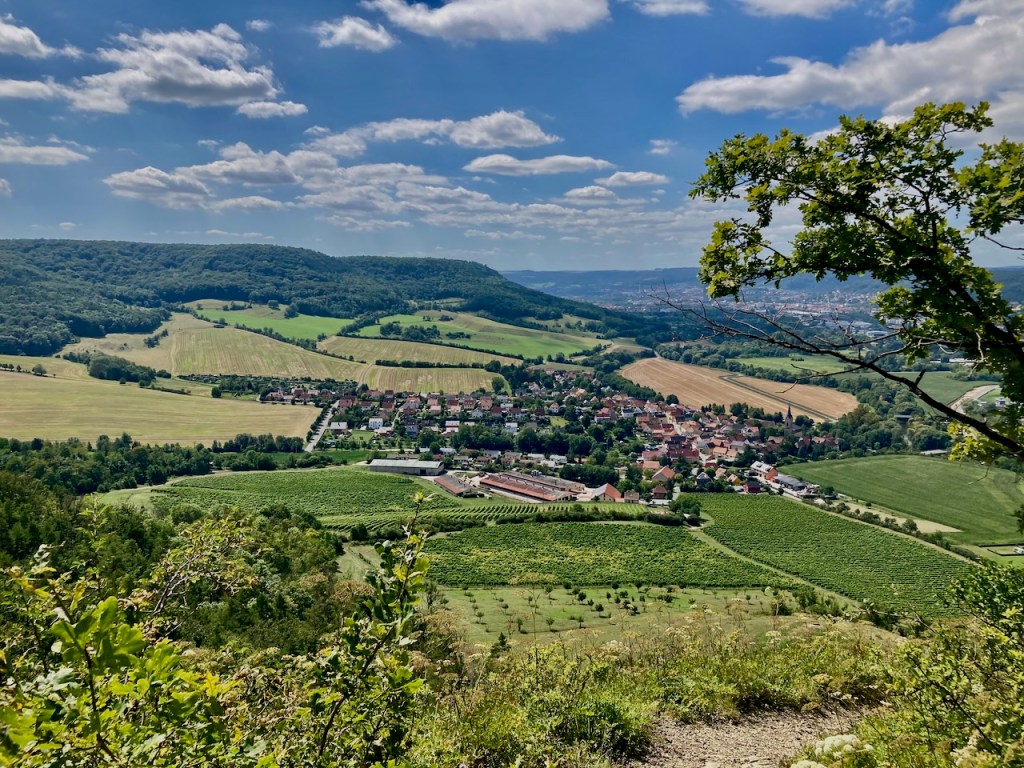
The 91-kilometer SaaleHorizontale Wanderweg was voted Germany’s prettiest hike of 2023. It is located in the hills surrounding the city of Jena, about 20 kilometers from where I live in Weimar, and conveniently divided into nine very manageable stages that are accessible by public transportation. I really enjoy the nature around Jena, a city situated in a valley cut by the Saale River among rolling hills, farms, and some wine country. From the hills, which are easily accessible on foot throughout the city, you can look into the distance and the appreciation of the landscape only grows. I miss that in Weimar sometimes.
I had heard about the SaaleHorizontale previously, but didn’t knowingly experience it myself until the beginning of 2024 with the aid of a helpful map. Immediately upon completing the first stage, I decided that my outdoor goal for 2024 was to complete all nine stages. I wanted be intimately familiar with the nature in my backyard.
As it worked out, I didn’t walk the stages in order and completed only three alone. I spent most of my time in good company; my partner and I were often together and I am happy to have friends who like hiking as much as I do. I ended up in the rain only twice, the first time a heavy shower for a few minutes and the second time a steady four hours on a day where no inclement weather was called for. It’s nice to remember that we are part of nature and not the other way around.
A story of changing seasons can be seen in the photos below. Nature never fails to calm and to comfort, and that was my experience the whole time.
Stage 1: Klinikum Jena to Kupferplatte (12.7km) – Early January
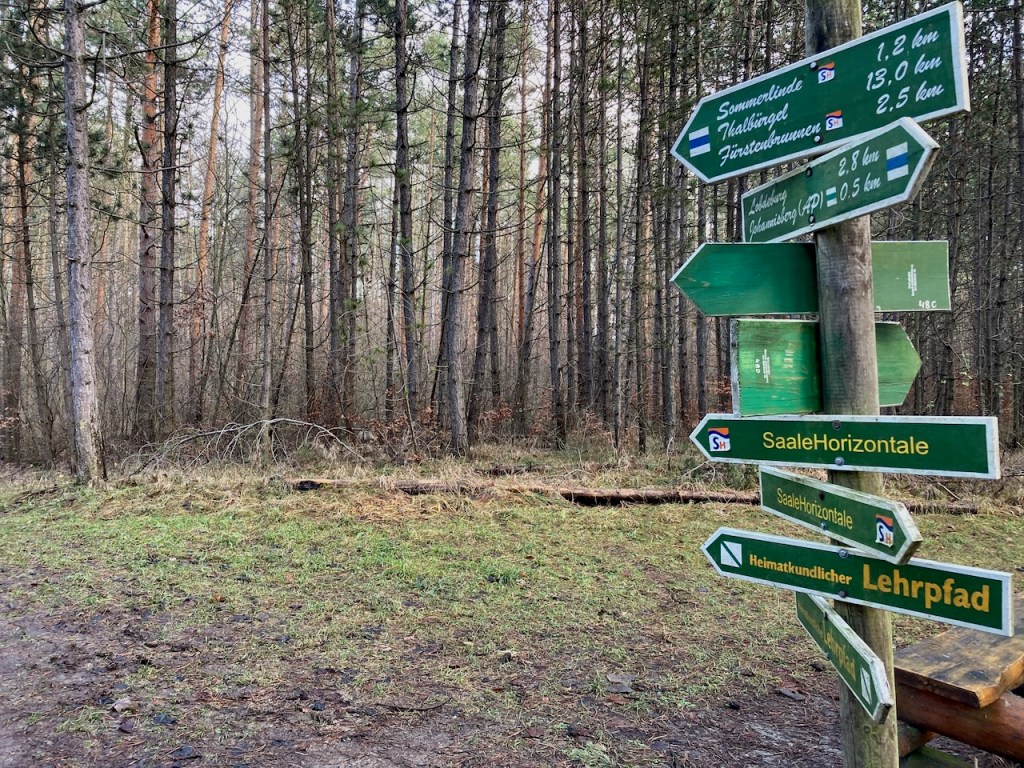
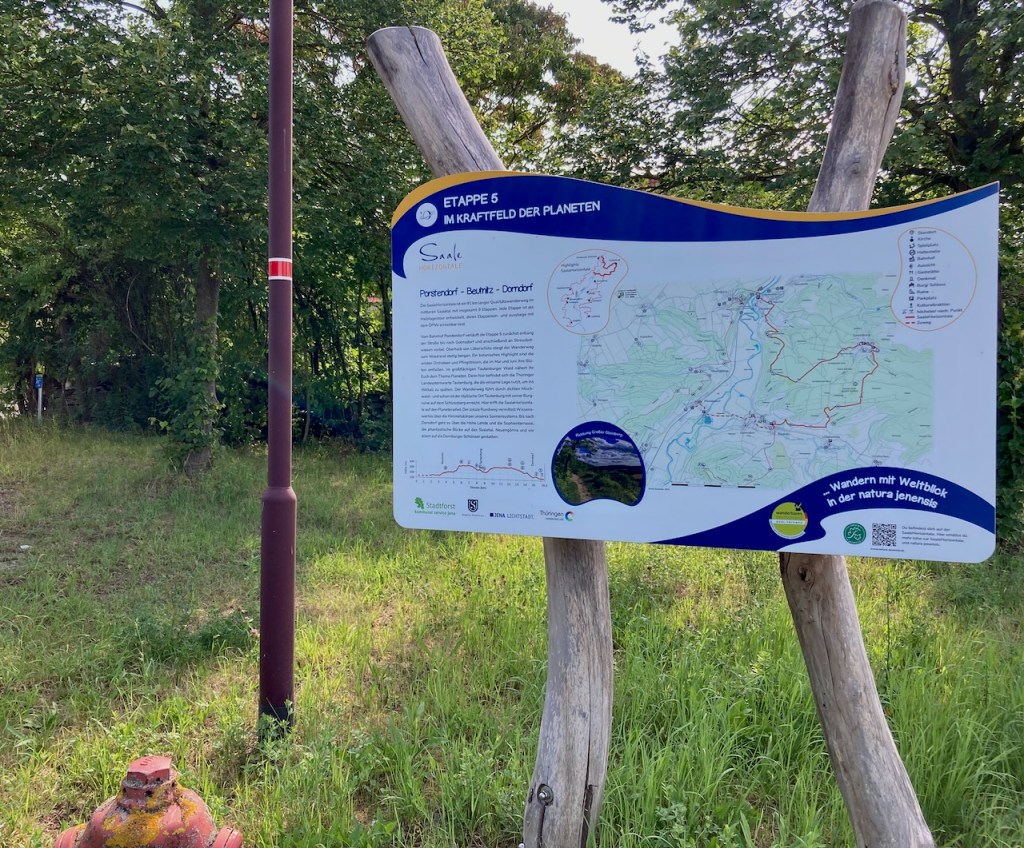
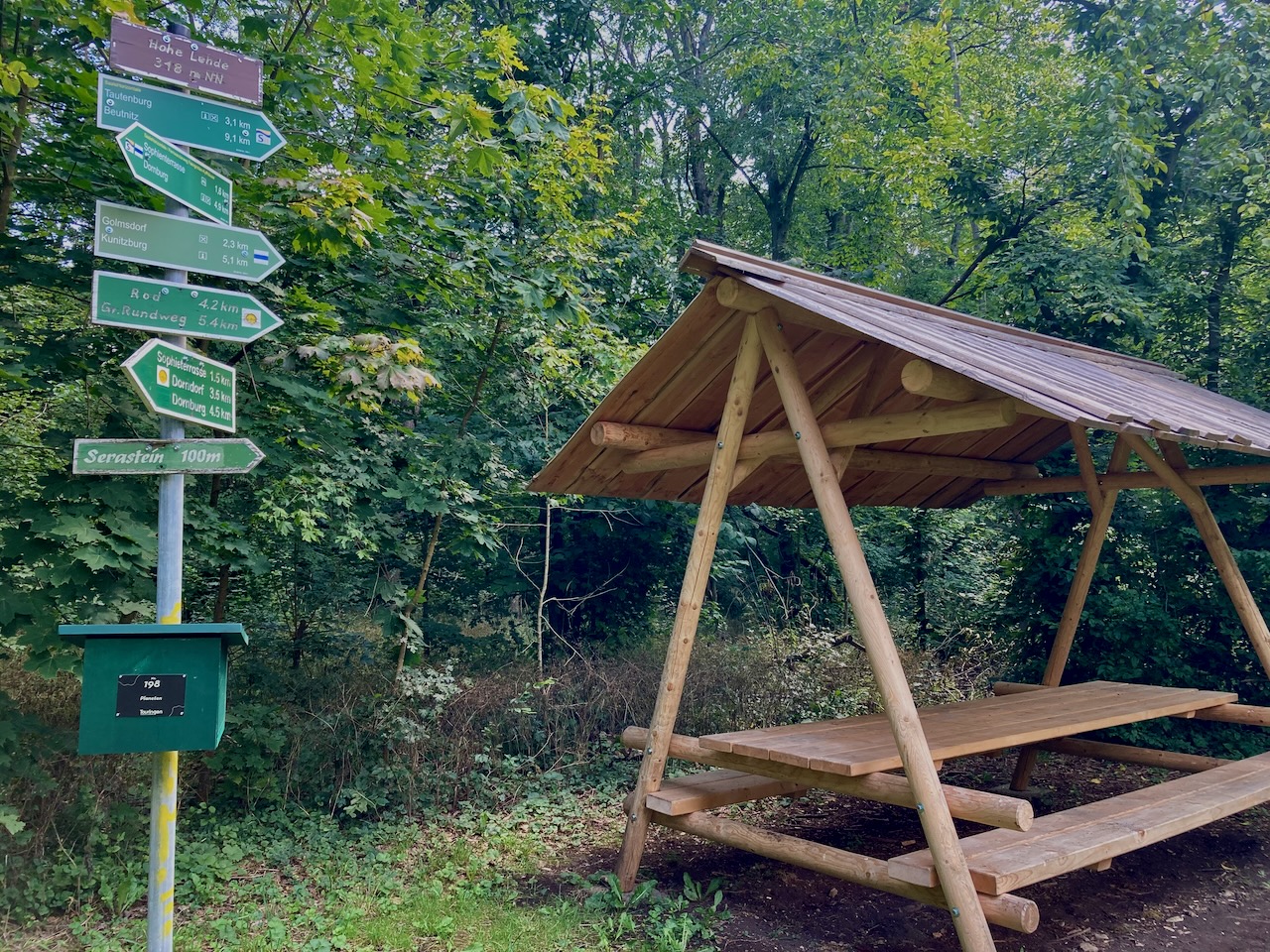
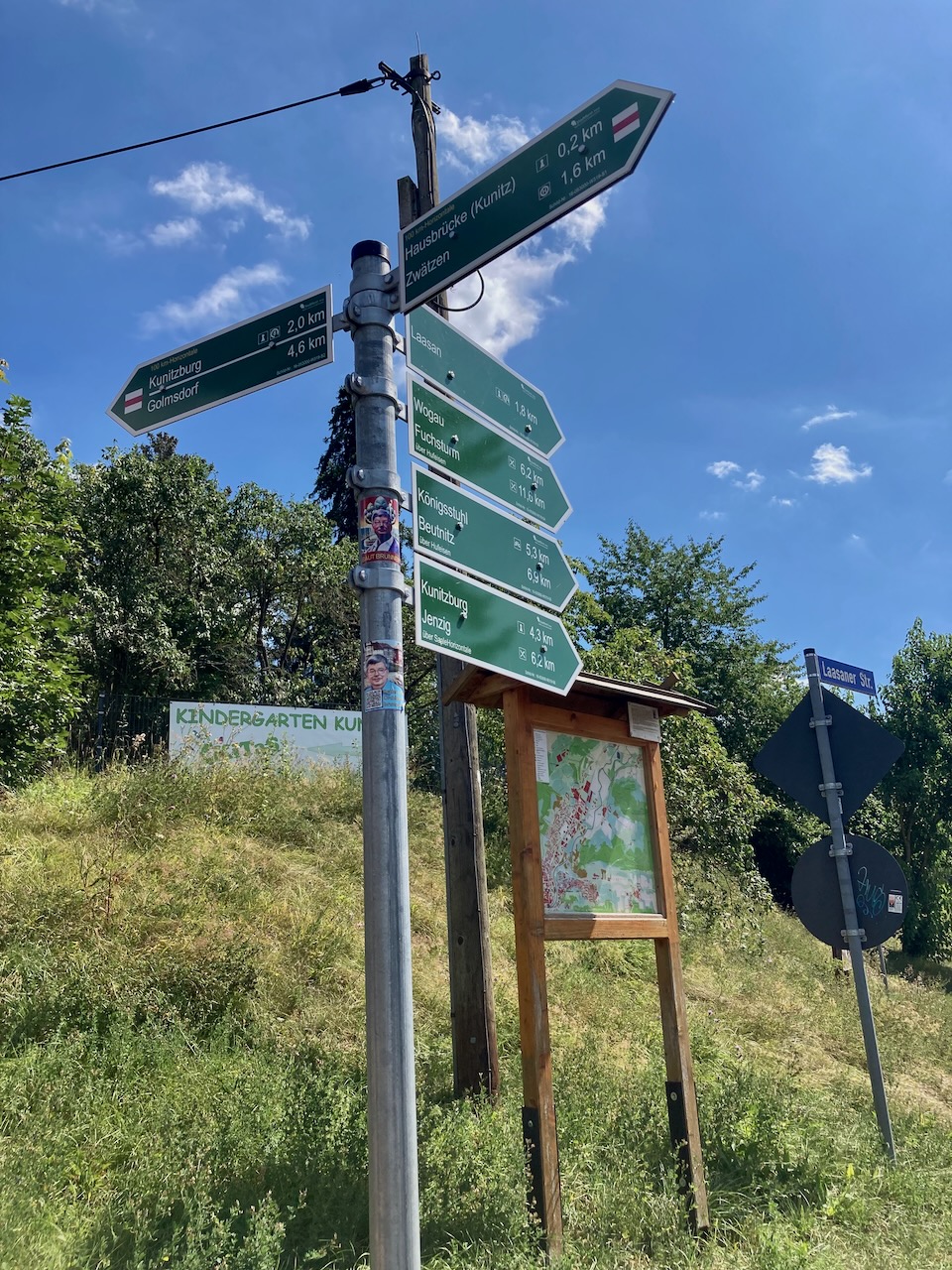
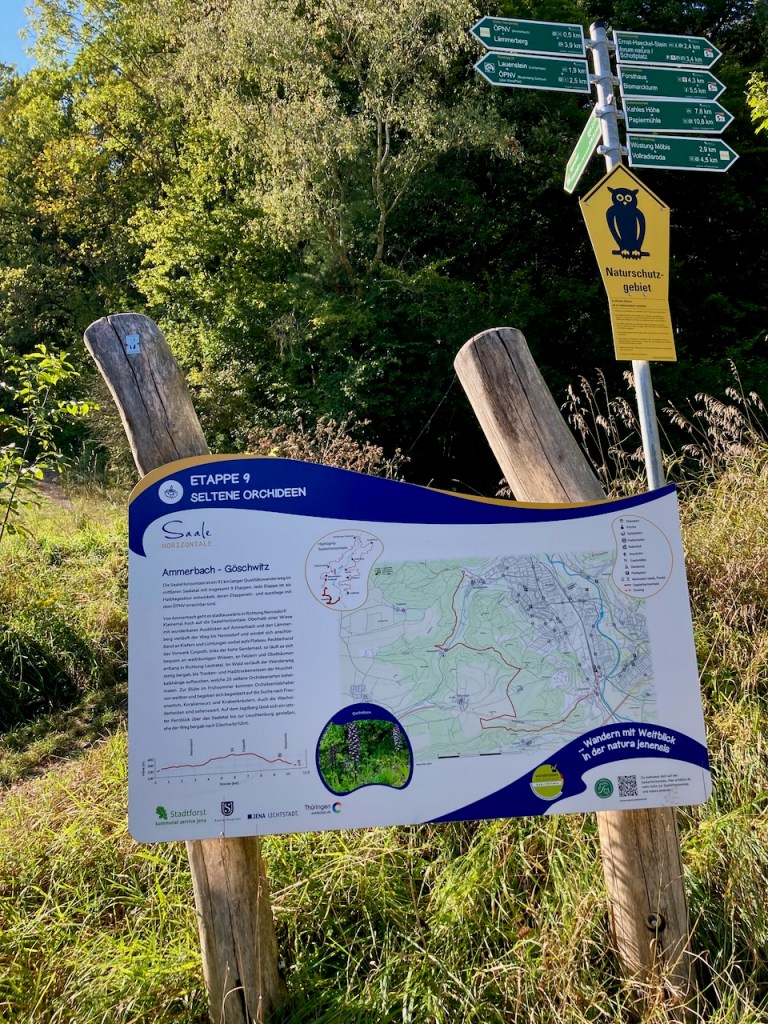
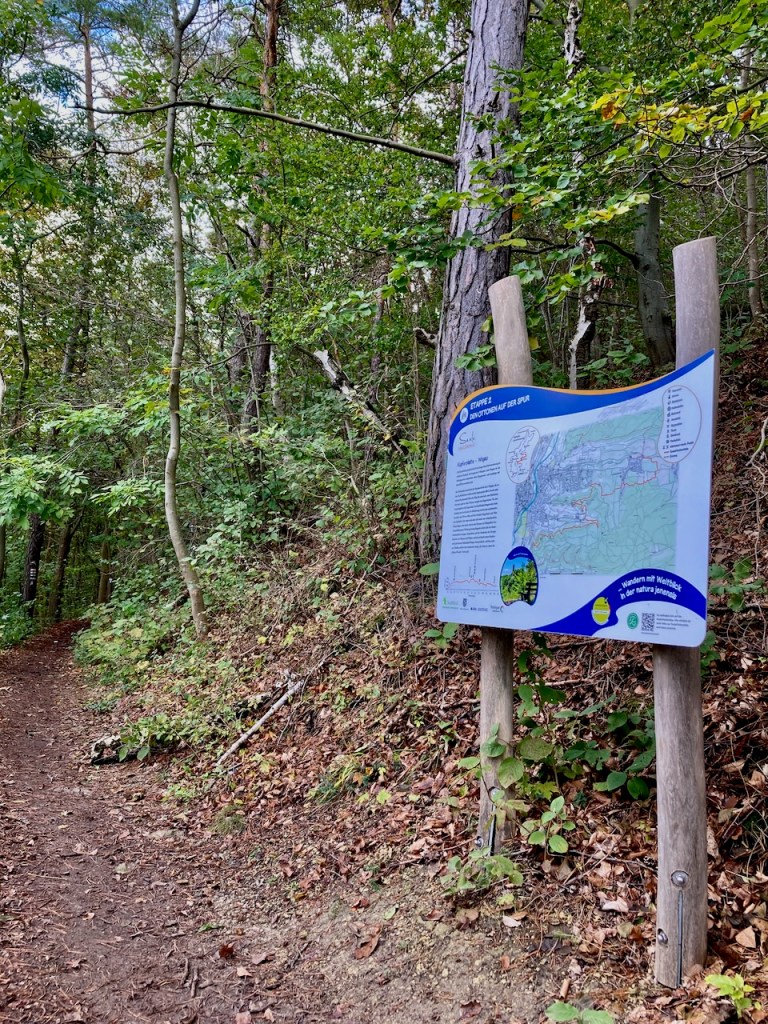
Germany is known for being nature-loving and hiker-friendly, which can be seen in the helpful signs at the start of each stage.
Although January and cold enough for my winter jacket, this was obviously not a point at which we had snow. We had had a lot of snow at the beginning of November and would get more later in the month. I love winter hiking and did as much of it as the weather allowed this year, but the SaaleHorizontale trails are narrow and on the edges of hills. I’m sure people walk it in the snow, but I don’t need to do that.
The view from all exposed parts of the trail is wide, and I saw the rain coming before it came. I enjoyed a snack in the last rays of sunshine and had almost made it out of the woods before the short, heavy shower. As often happens, the sun that came out immediately thereafter was beautiful and left me completely dry before I reached the tram stop.
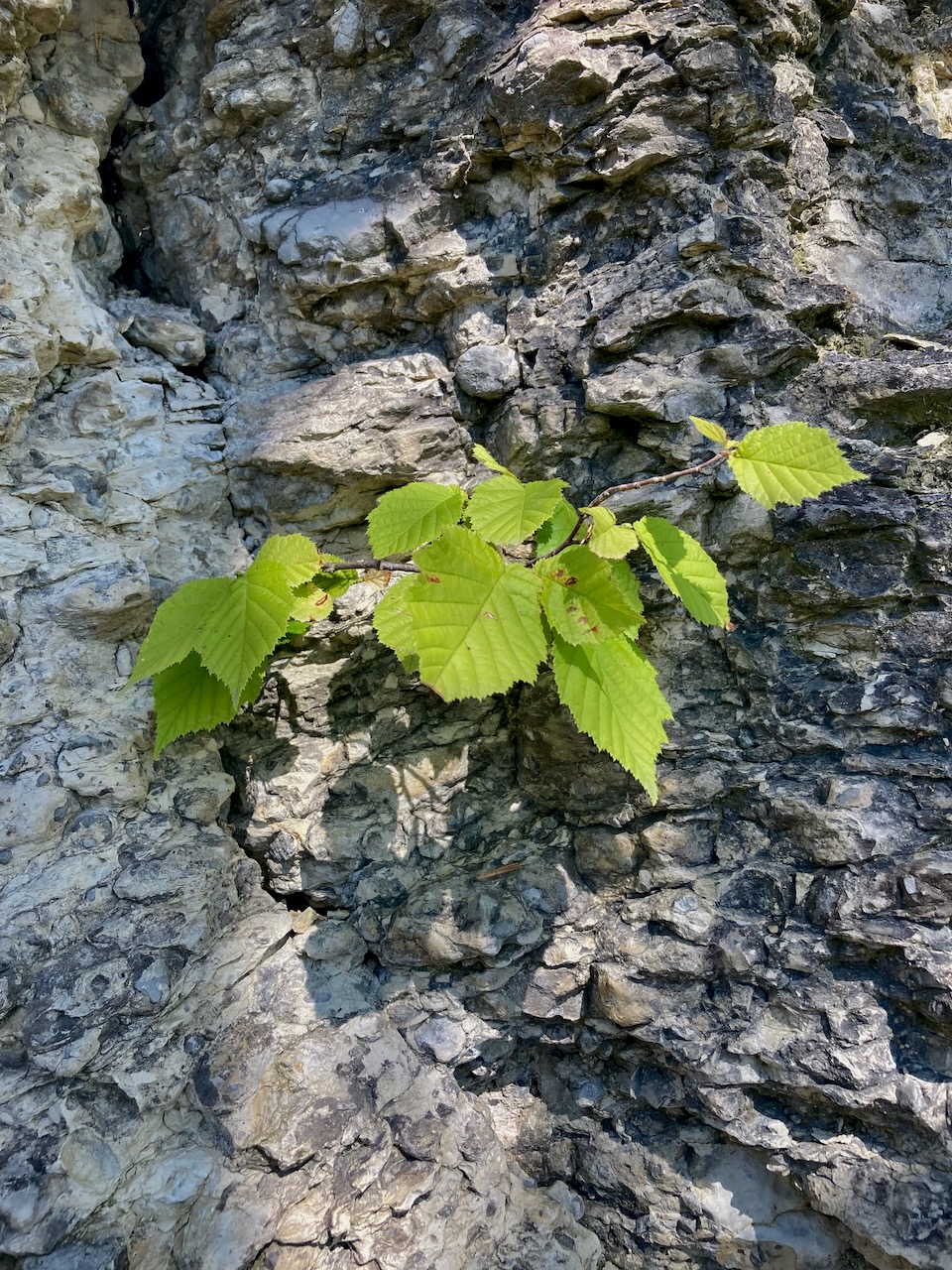
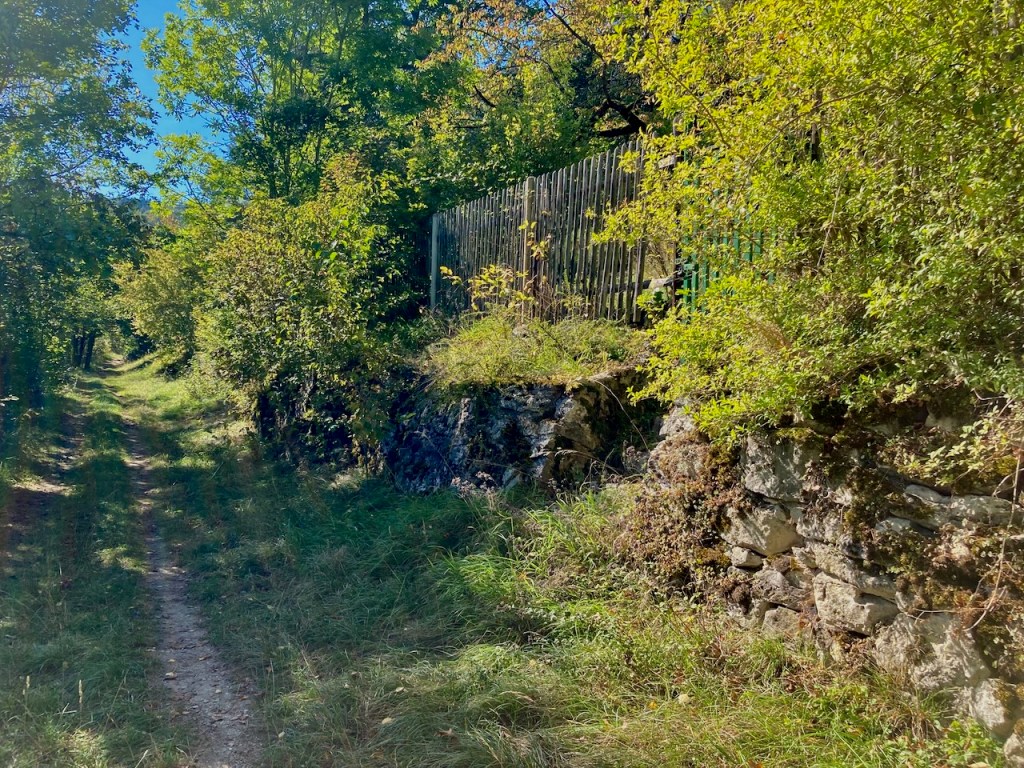
Rock tells the story of the history of our planet and there’s a good deal of beautiful rock along the SaaleHorizontale. Unfortunately, there’s no climbing immediately around here because this is Muschelkalk, or shell limestone, and very brittle. Shells? Indeed – this region was once under water.
Stage 6: Dornburg to Zwätzen (13.8km) – Late February
It was very early spring the next time I stepped foot on the SaaleHorizontale, this time with a large group of friends. Bundled into down jackets, we began in a small village . . .
. . . and followed the signs to the trailhead.
A charming aspect of Germany is that even small villages have castles. Royals since time immemorial have loved the countryside.
We walked past small farms . . .
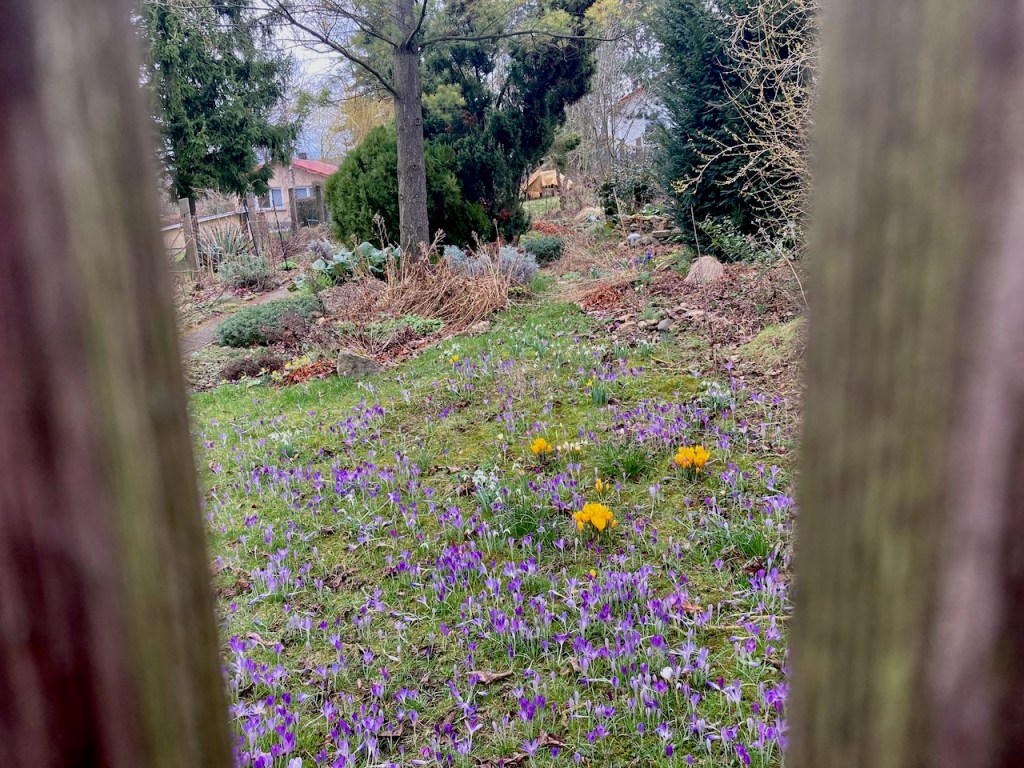
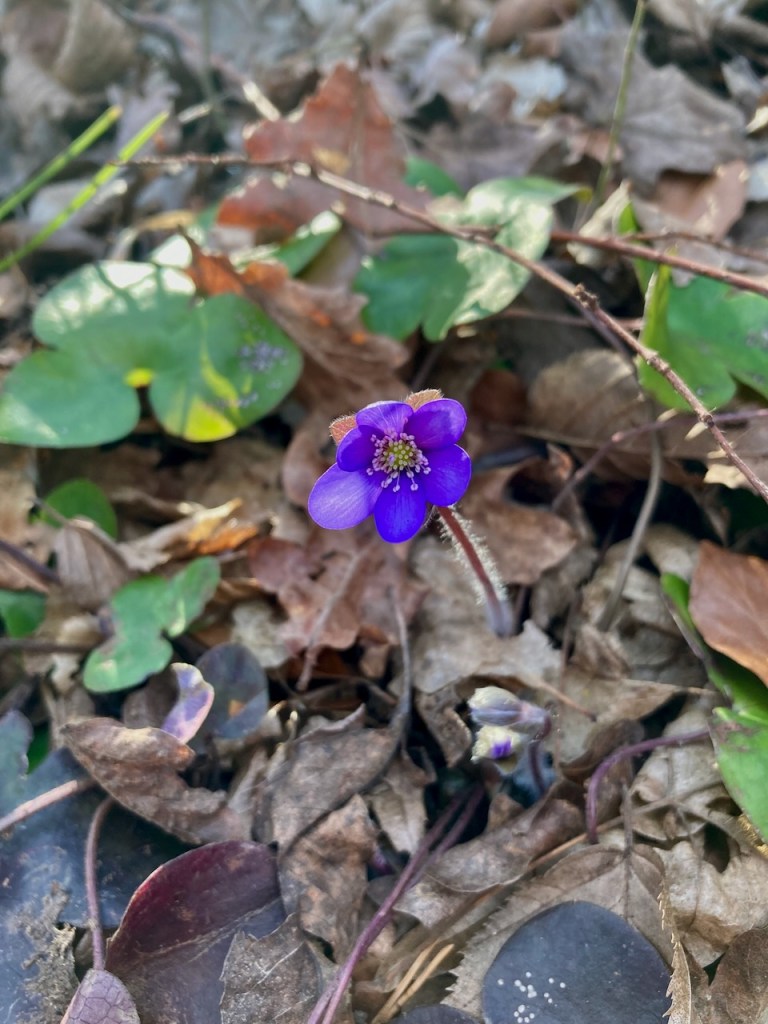
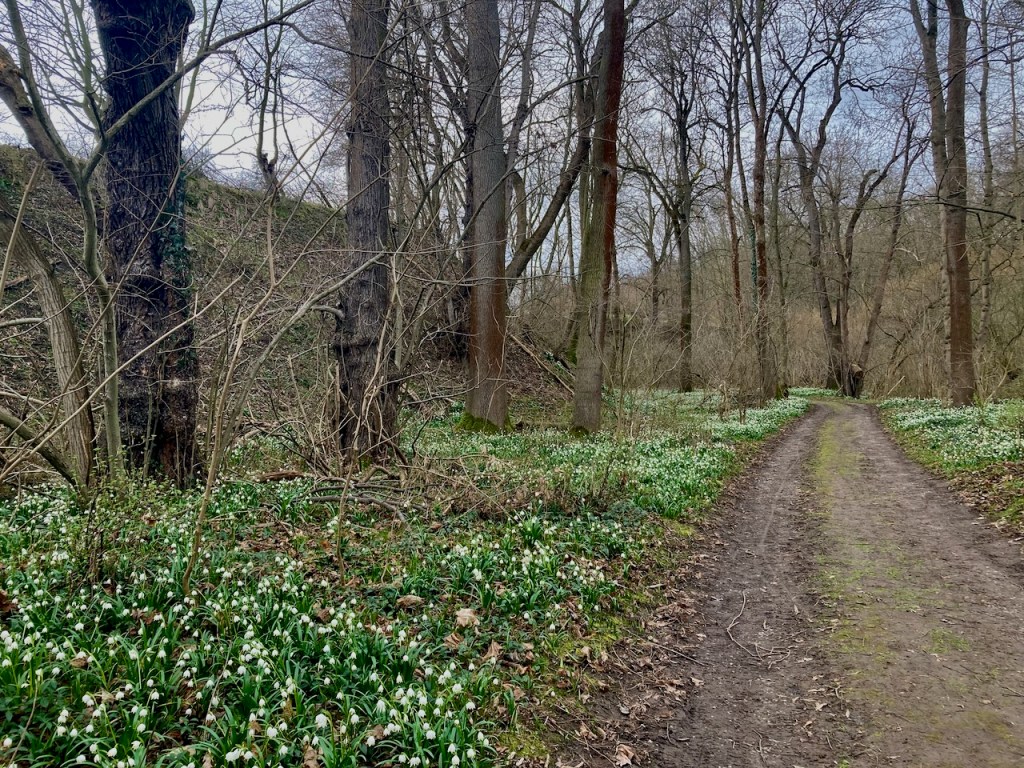
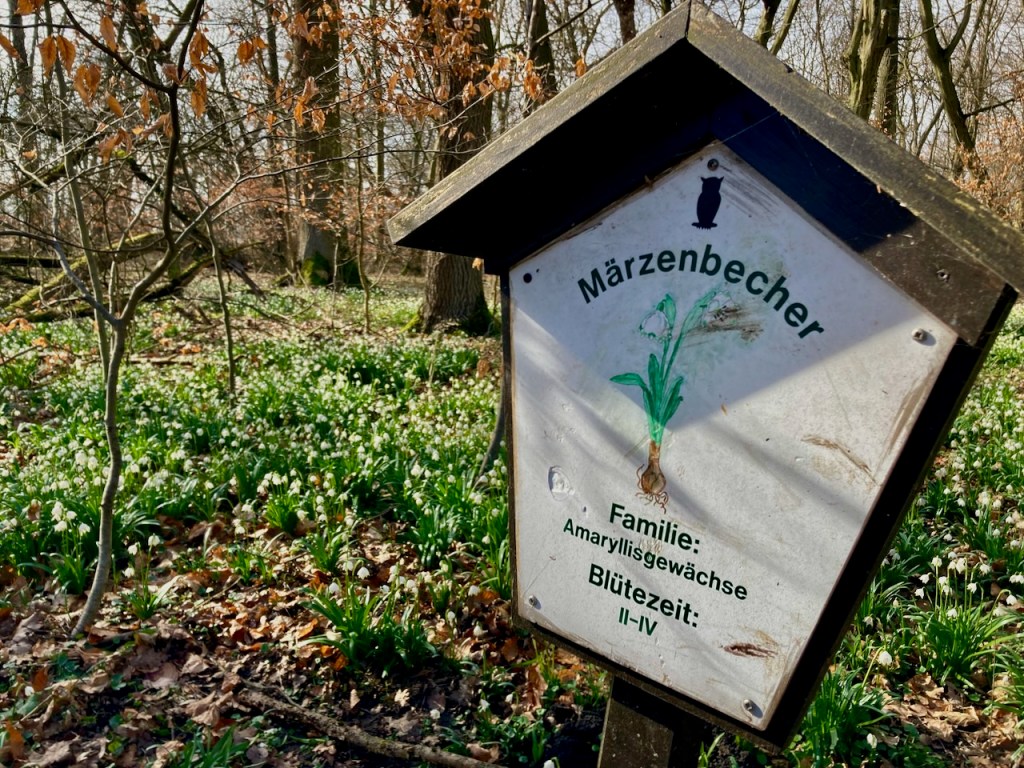
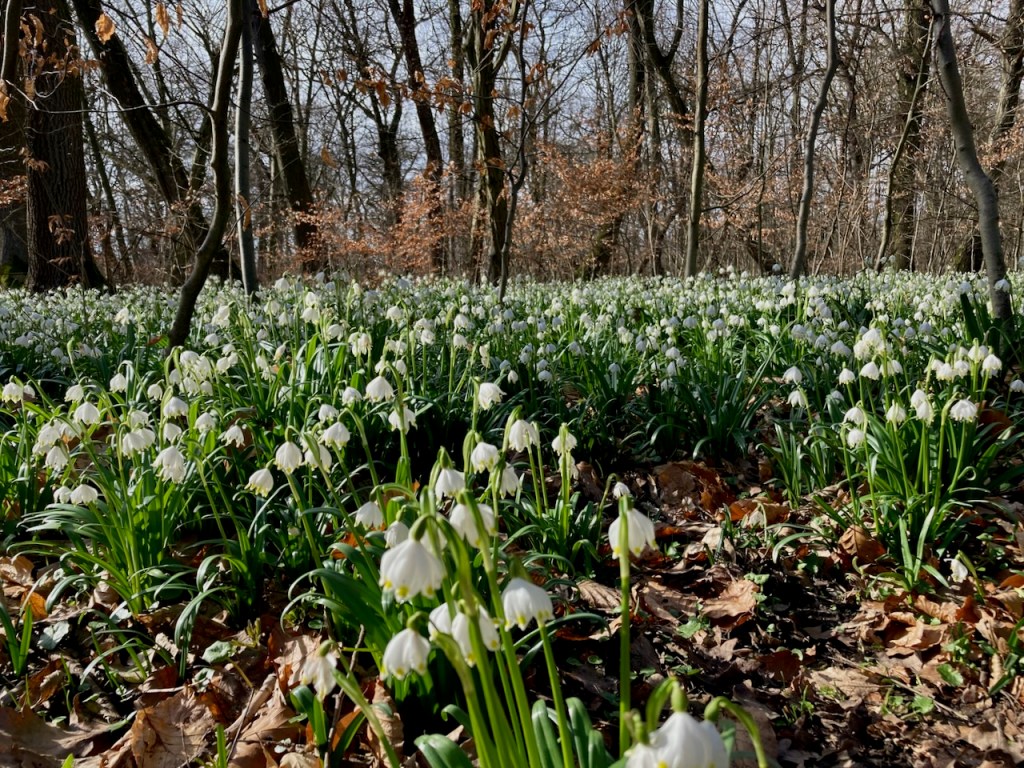
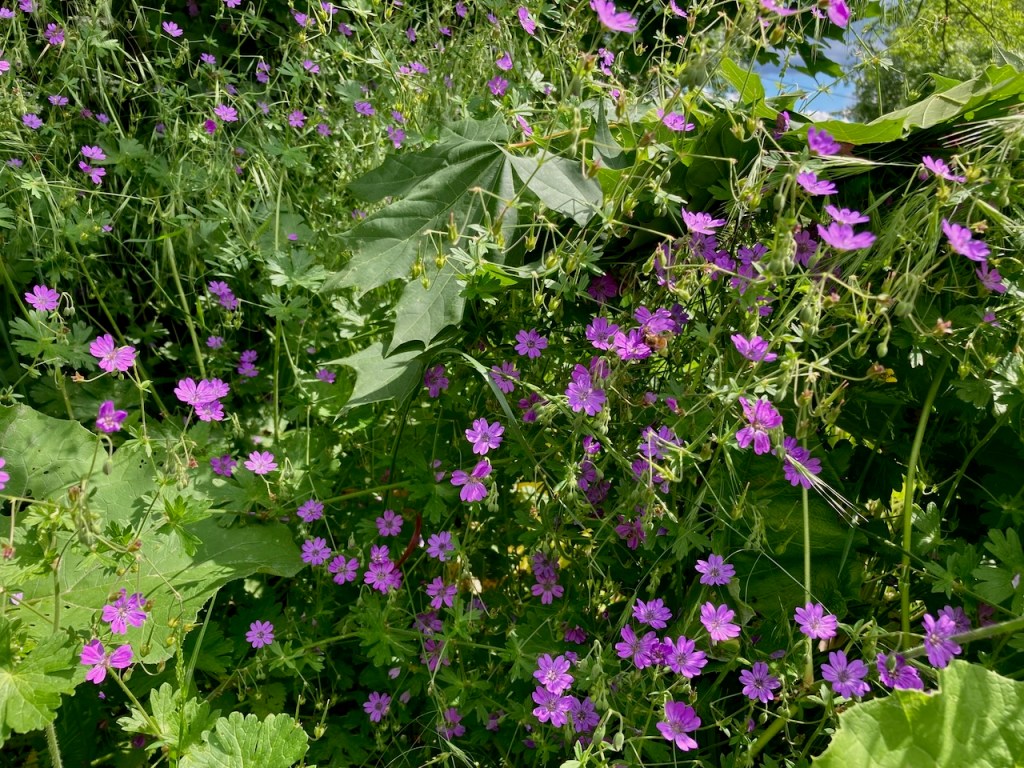
. . . and past fields of tiny spring flowers. The little yellow ones are Winterlinge, visible for just a few weeks as winter fades into spring, the white ones are called Märzenbecher, which roughly translates to “March goblets”, and the purple ones are, of course, crocuses.
The SaaleHorizontale route passes through many little villages that look a lot more remote than they are. The hills make for the remoteness while their location in the valley mean that the university city of Jena is a short public bus ride away.
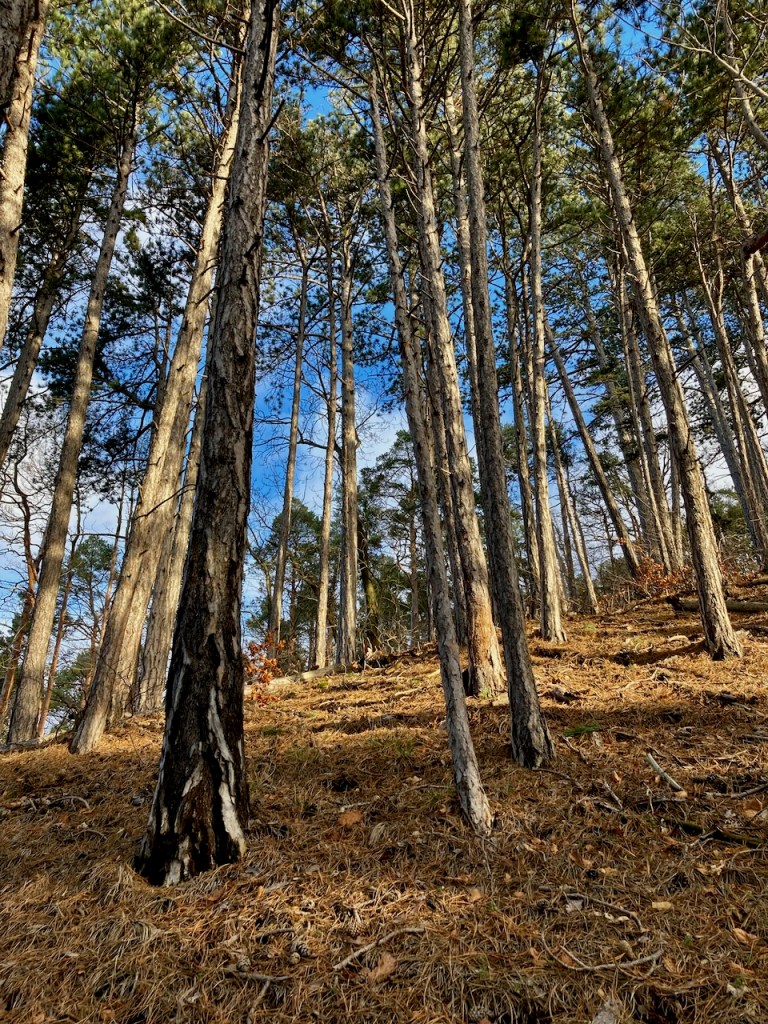
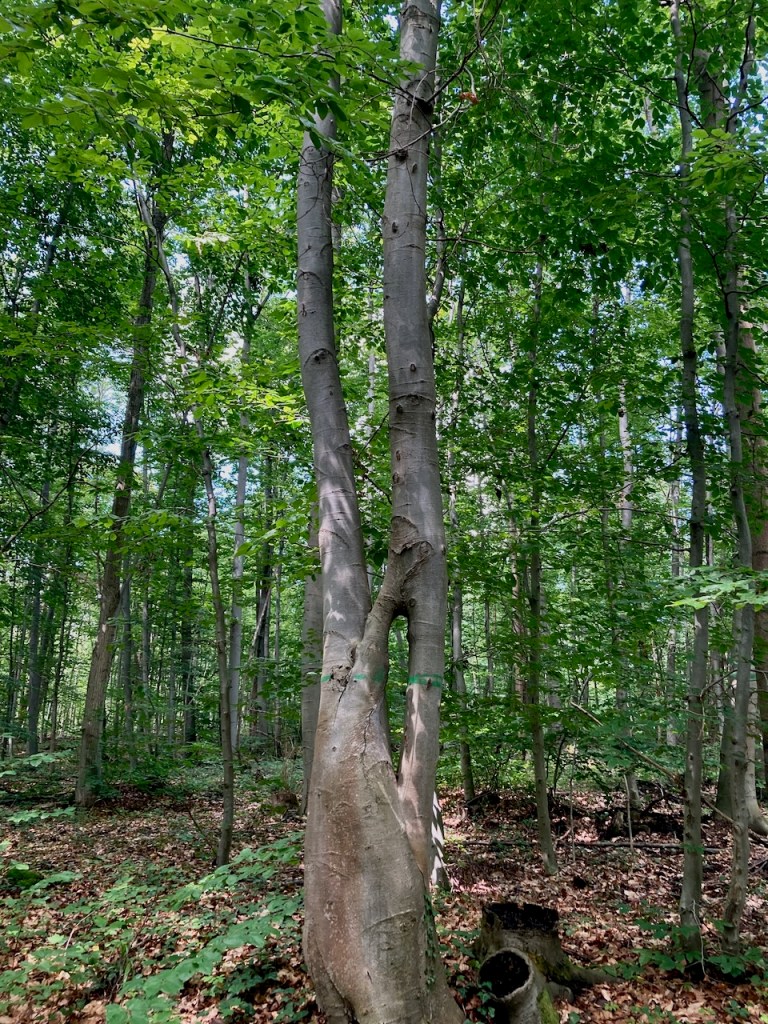
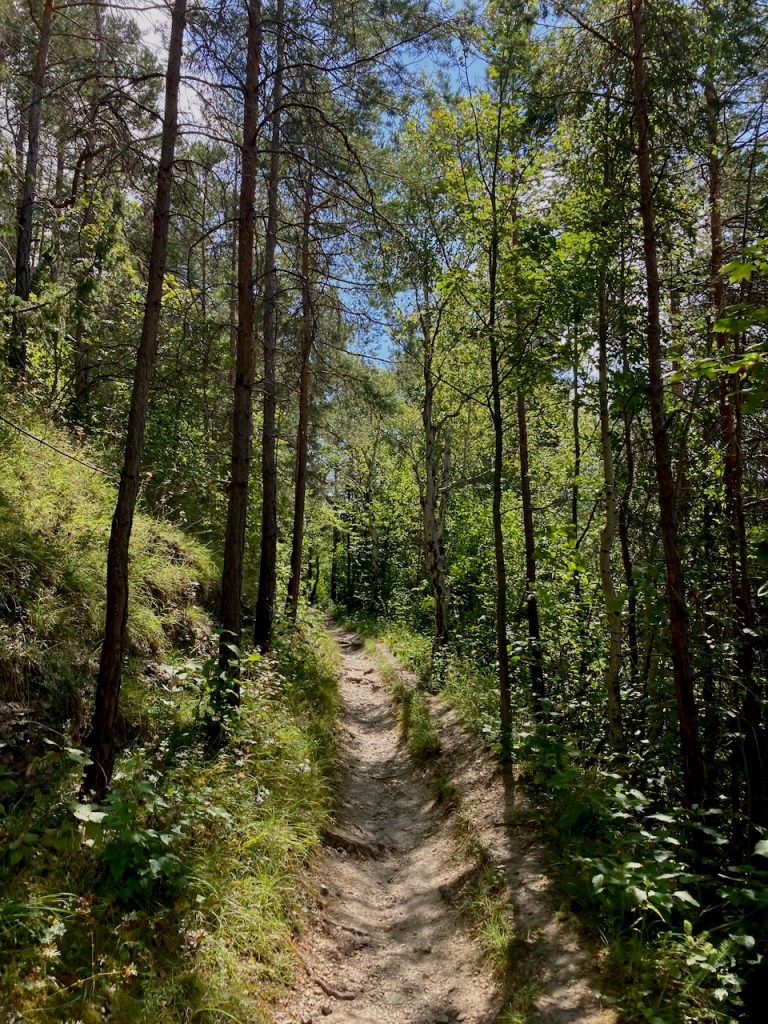
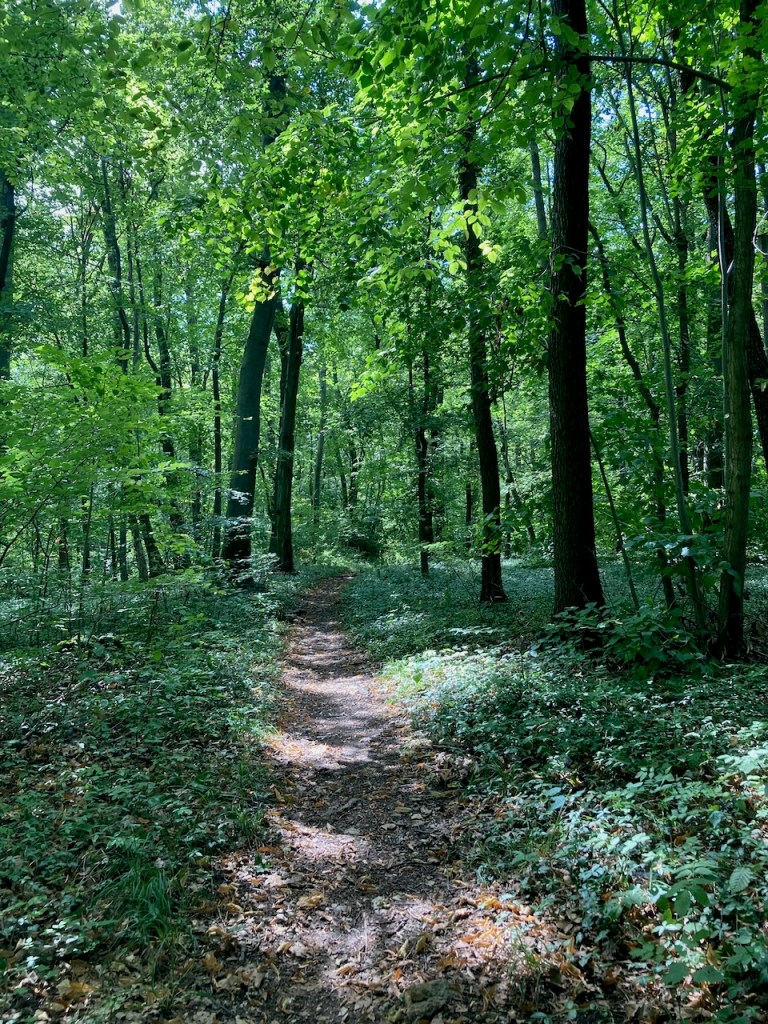
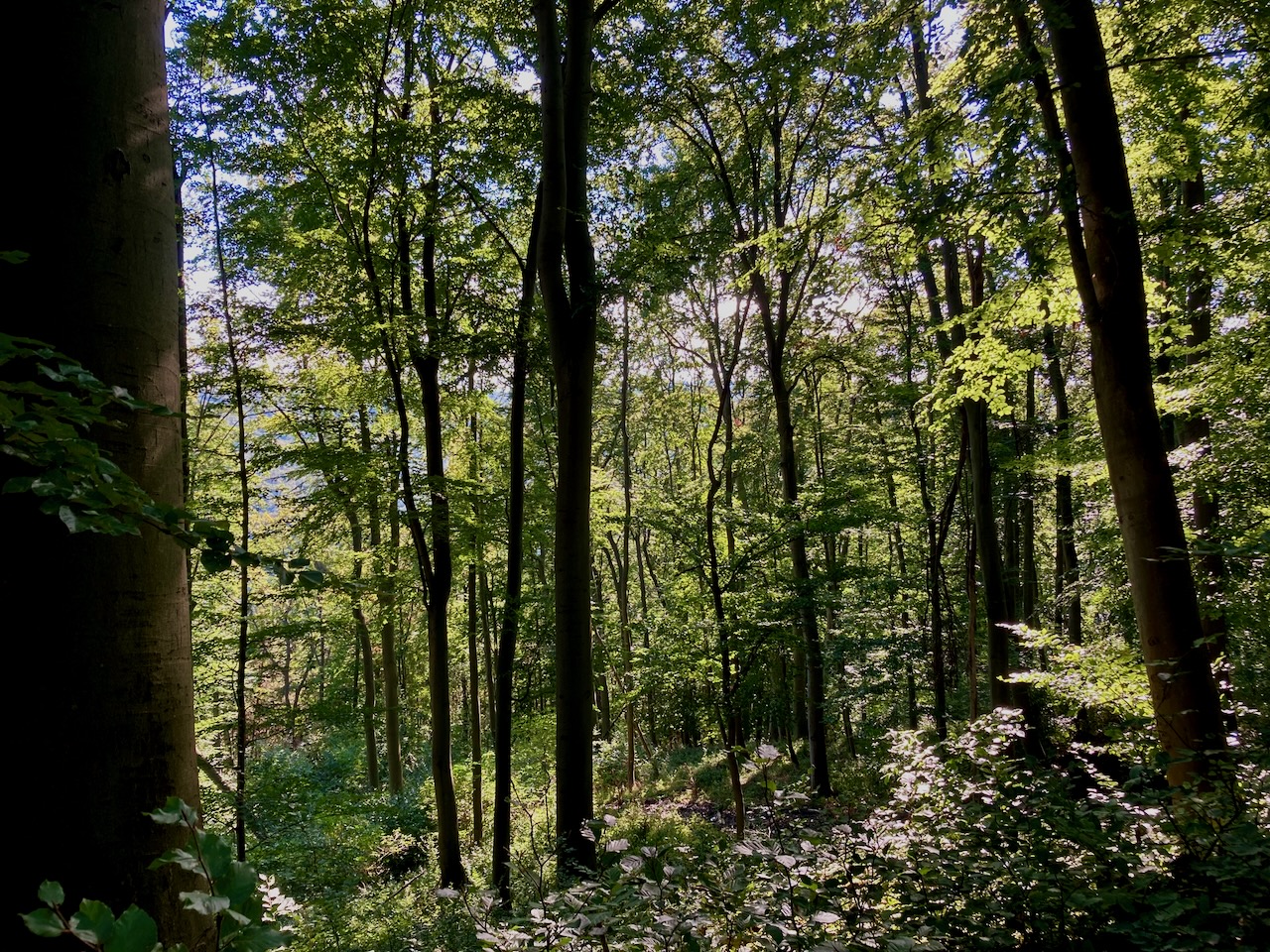
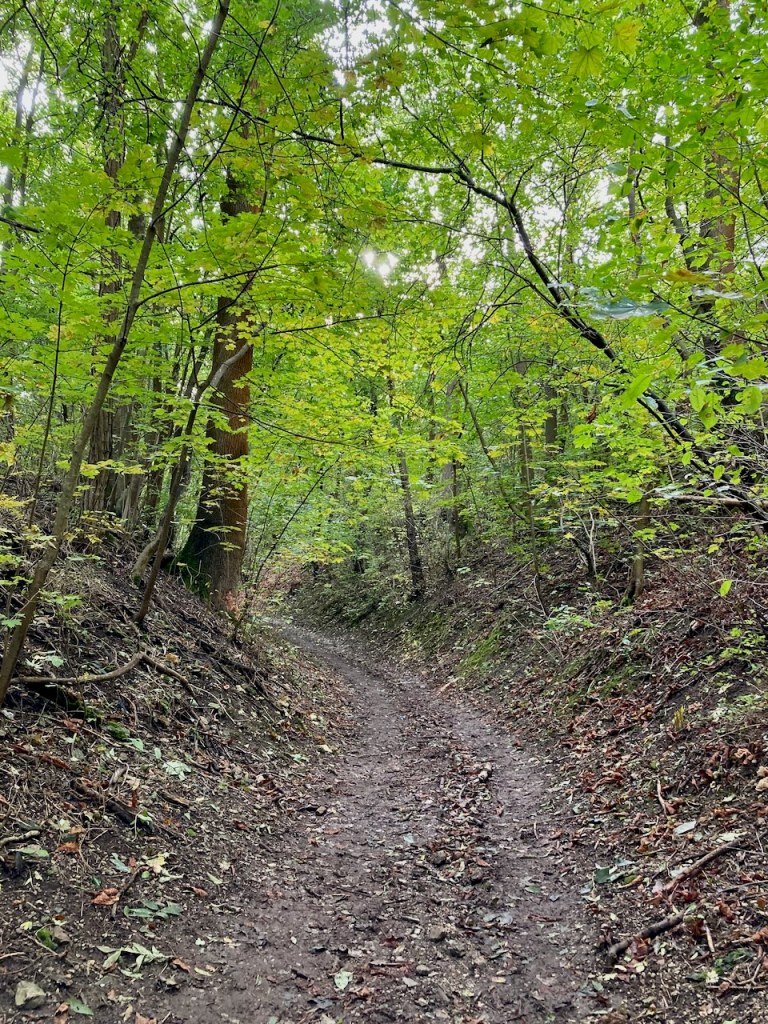
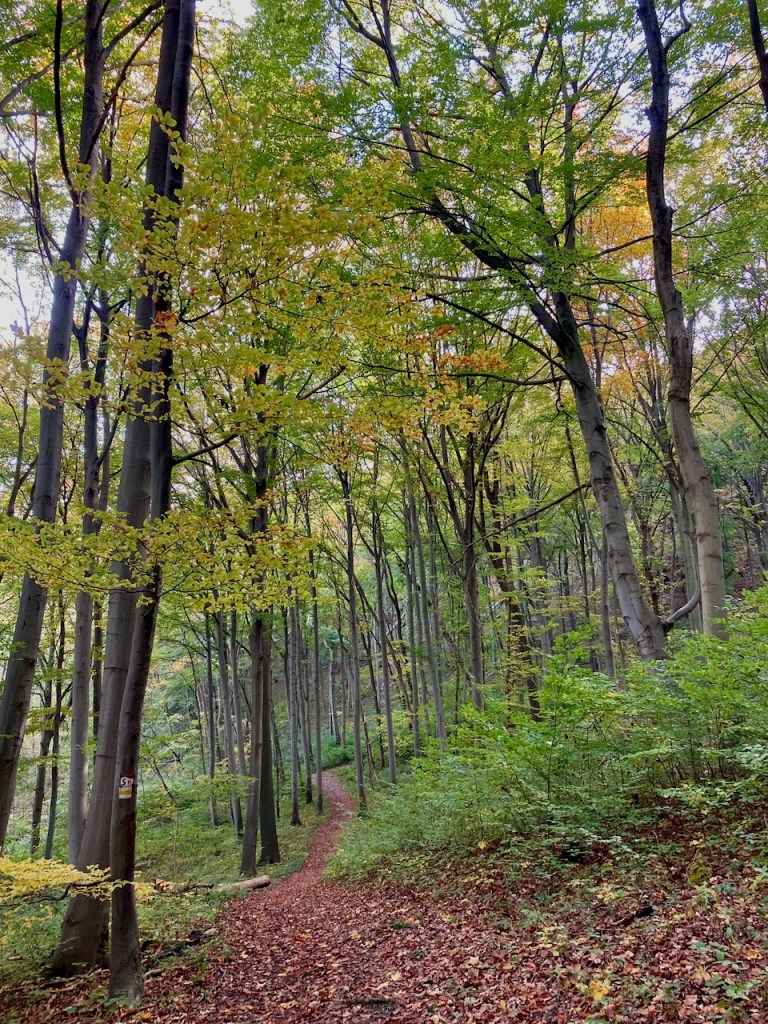
My favourite parts of the trail are in the woods . . .
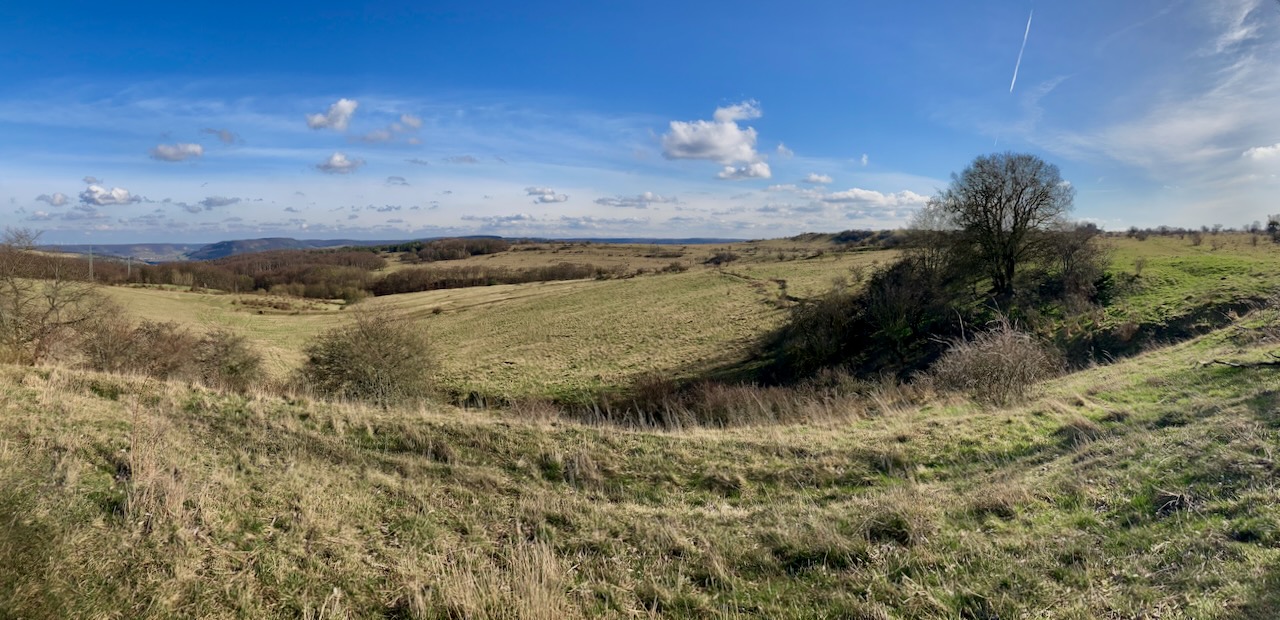
. . . and I love the moments where the sun shines through and leaves patterned shadows. My very old phone doesn’t take the smoothest panoramas, but the clouds really were storybook clouds and the grass really was turning green again.
Stage 7: Zwätzen to Papiermühle (9.3km) – Early March
Shortly thereafter, in order to once again enjoy the tenderest flowers, my partner and a friend, both of whom had been along the previous weekend, went with me for another walk in the woods.
Rather than down jackets this time, we stripped off layers and headed up hills into the sunshine.
The first signs of spring, which grow with abandon and without scruple, had settled into a thick carpet on the forest floor.
Today’s stage took us over a plateau where it’s not hard to imagine Napoleon’s army standing in 1806. There’s also a monument that we’d visited before, as well as a museum in a nearby village dedicated to the area’s battle. Every so often in this area, one comes across markers designating that Napoleon and his army had been there.
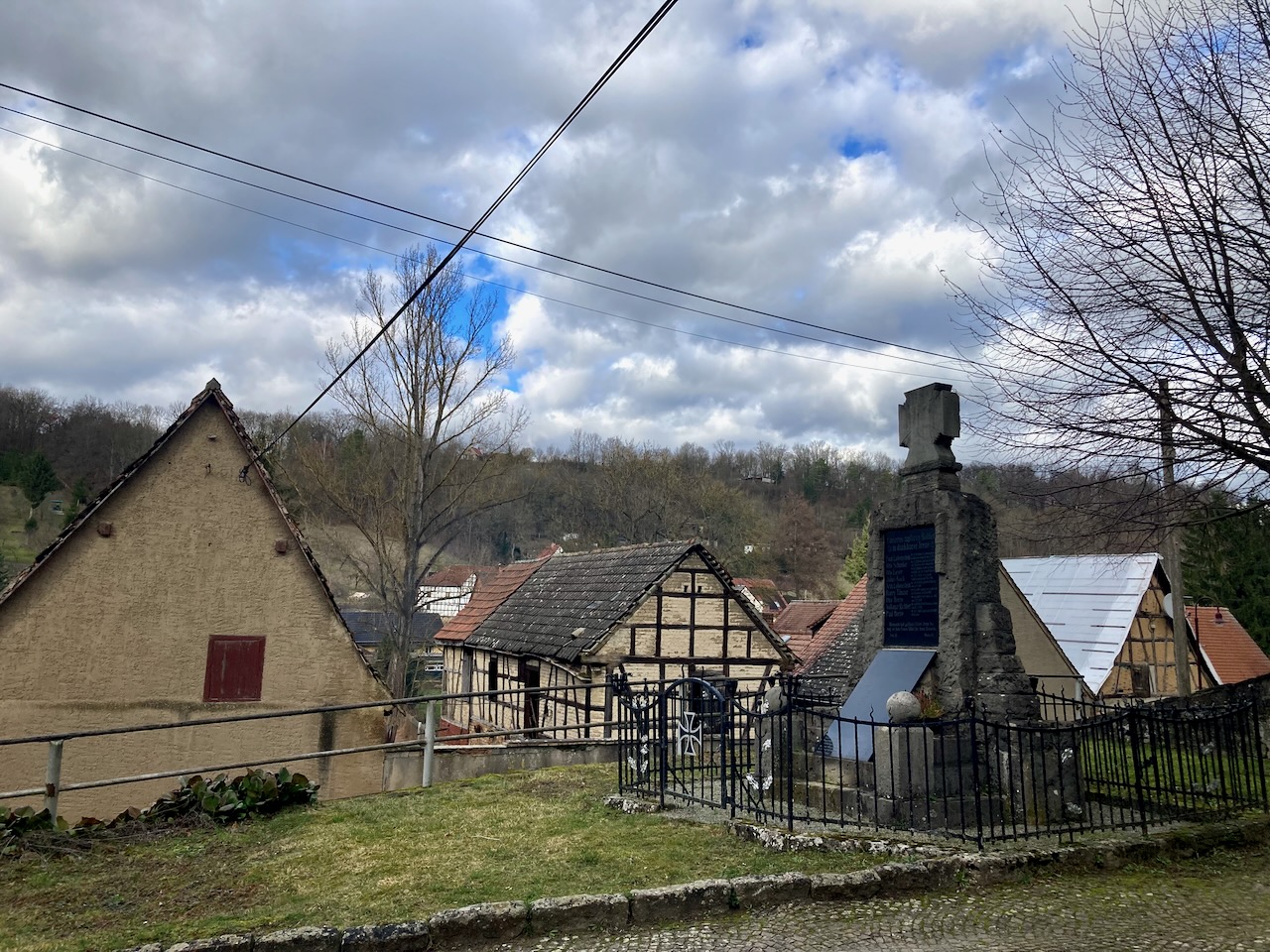
Clearly, the battles of Napoleon were not the only confrontations that had taken place there.
We watched the sun beginning to set as we made our way to the end of the trail and back to the train station.
Stage 8: Papiermühle to Ammerbach (10.9km) – Late May
More than two months passed before I made it to the SaaleHorizontale again, this time accompanied by yet another friend. The day was hot and humid, the leaves lush and green, and the air had the smell of the coming summer. It was the kind of warm day that quickly cools off when the sun goes down, which is how you know it’s very much still spring.
We passed a number of sights of interest along the way including Bismarckturm, celebrating the great general and unifier himself . . .
. . . a marker denoting the different layers in the earth and the sadly unclimbable rock . . .
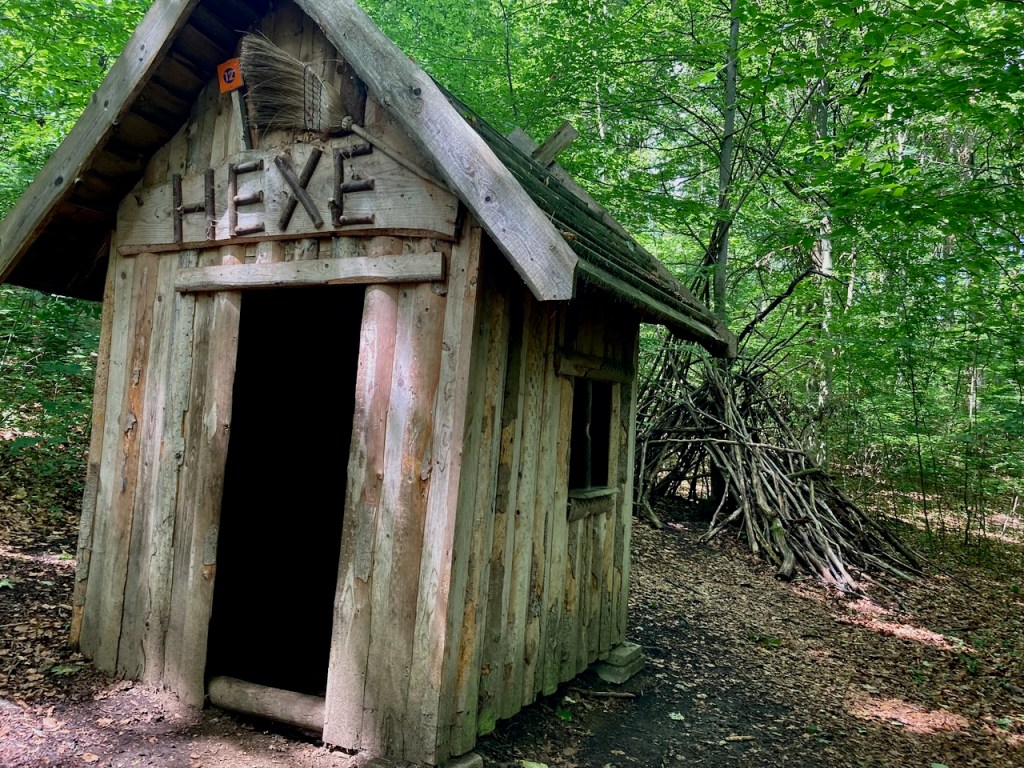
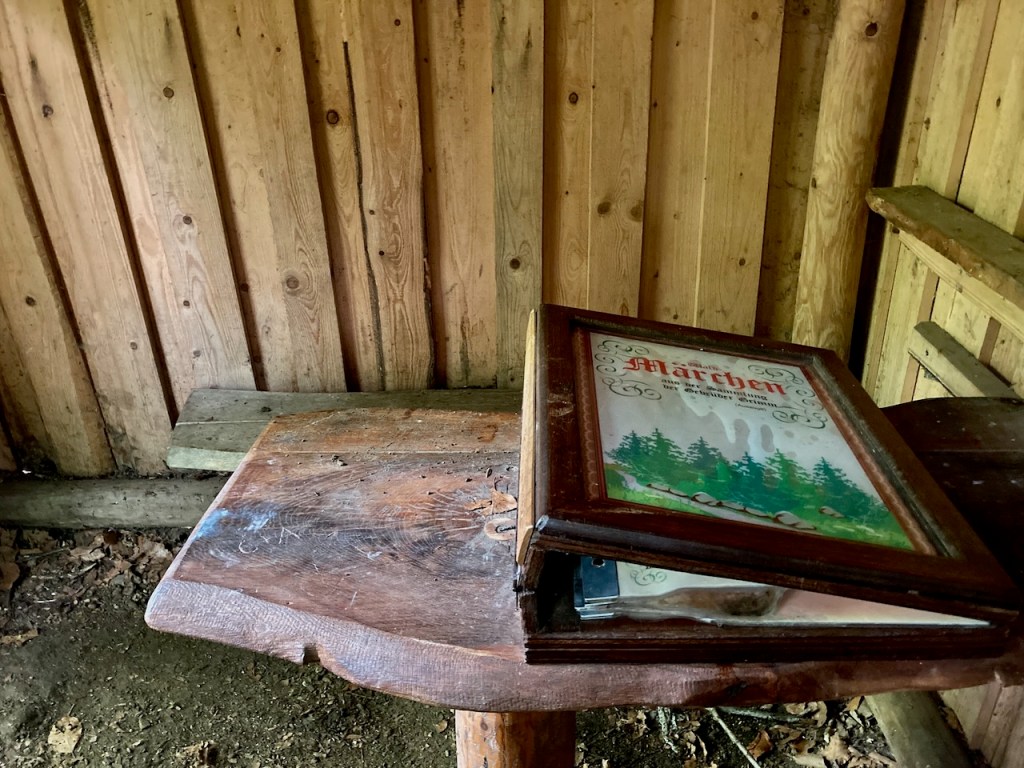
. . . and a section that was part of a children’s discovery trail of fairytales and witch houses.
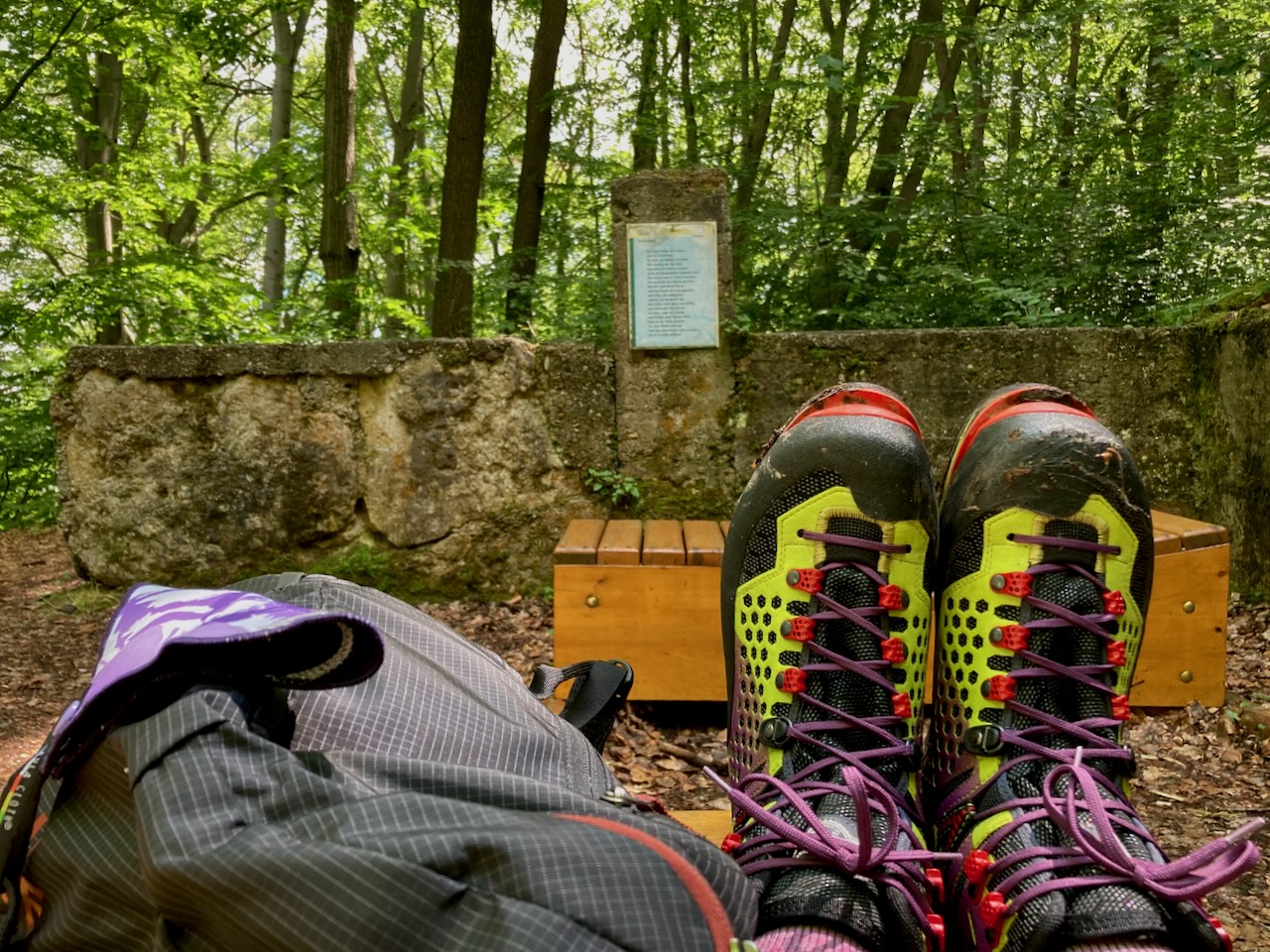
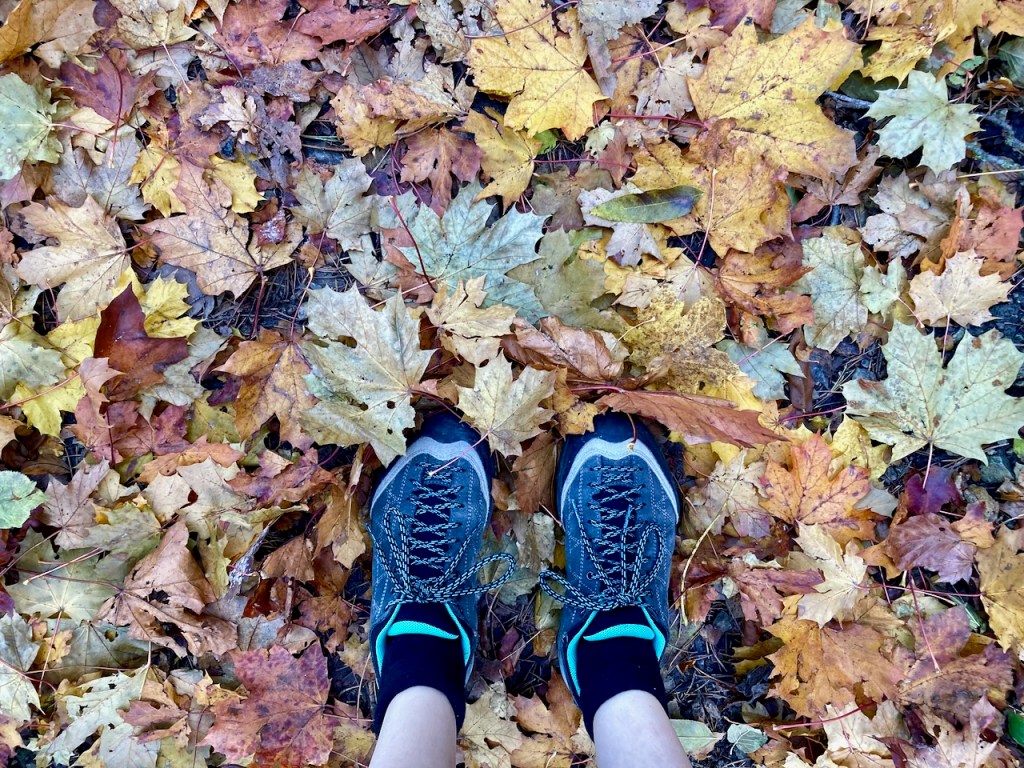
As I had for months by this point, I was using every hiking opportunity to break in my increasingly-less-new mountaineering boots in preparation for our Alps tour over the summer. They are far too intense for a casual walk in the woods, but they have seen many kilometers of this trail.
Stage 5: Porstendorf to Dorndorf (18.2km) – Late July
My next stage on the SaaleHorizontaale was the longest, but it was a comfortable way to spend the day in comparison to the outdoor adventure that was climbing the Zugspitze, which my partner and I had done just a week earlier. While I very much appreciate that all stages are organized with accessibility to public transportation, I did not love the approach along a road for this one . . .
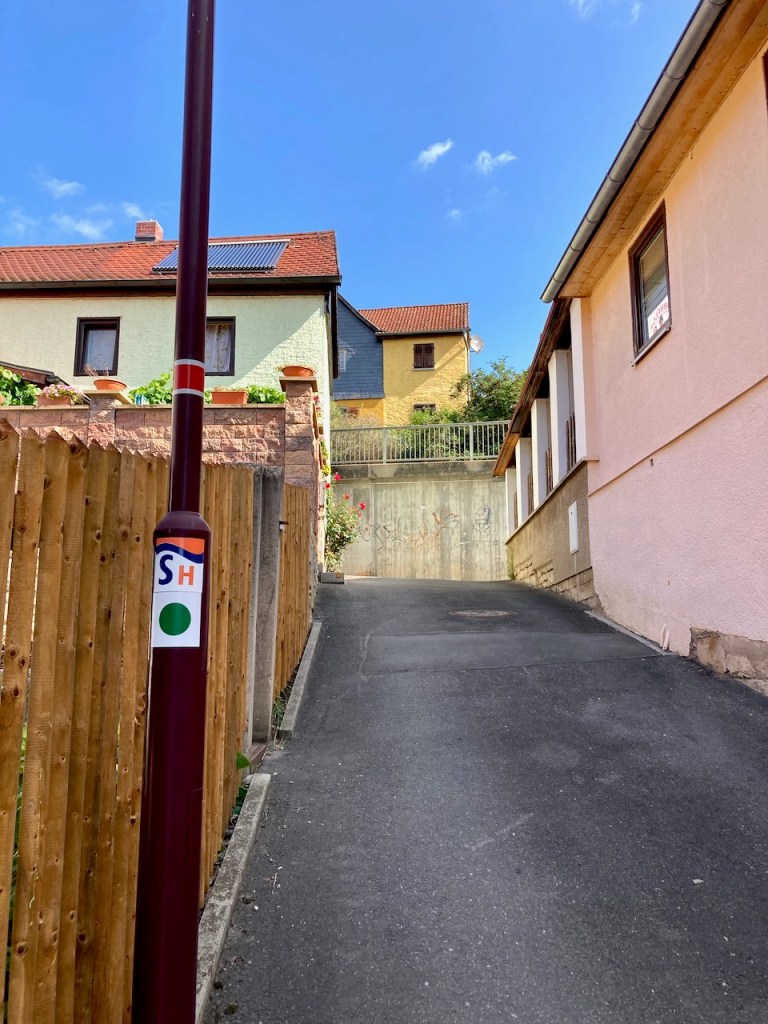
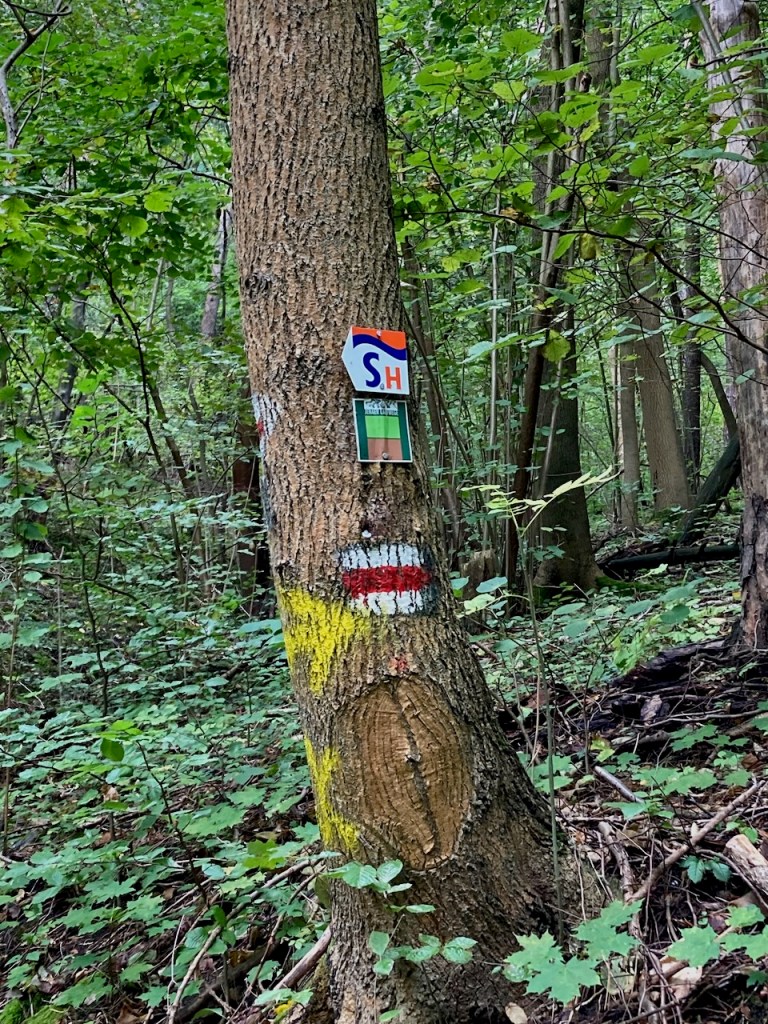
. . . and was very happy to see the trail markers that pointed, as the SaaleHorizontale often does, along a small alley through a village.
I walked past farmers’ fields . . .
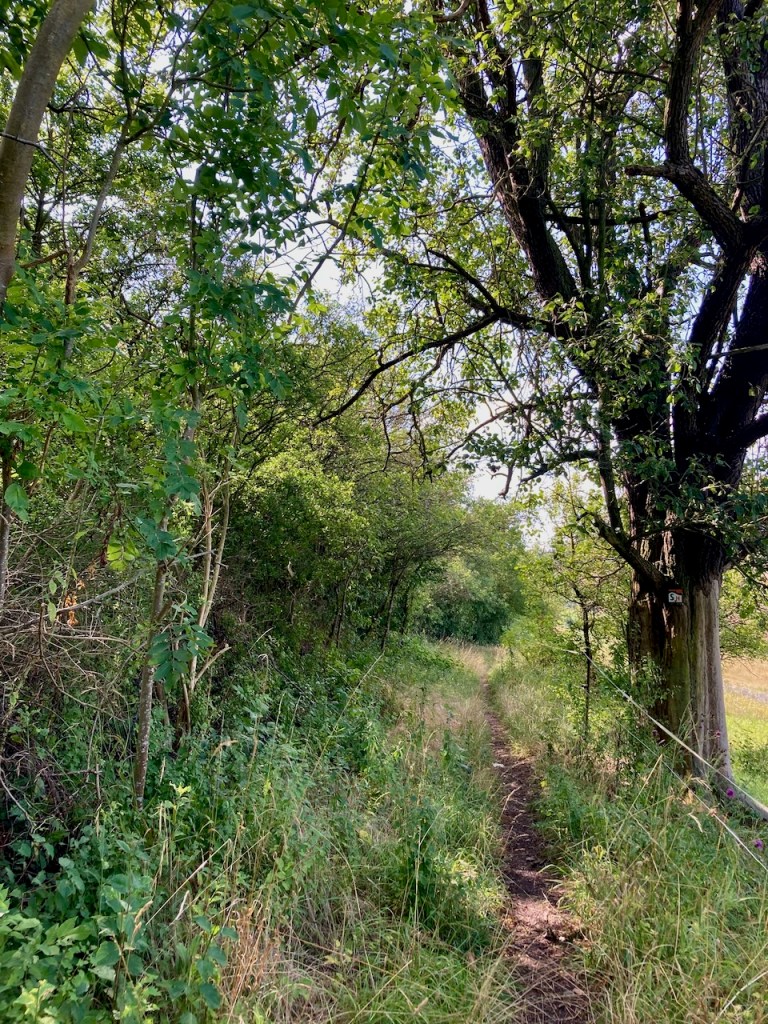
. . . and then remained largely on narrow paths . . .
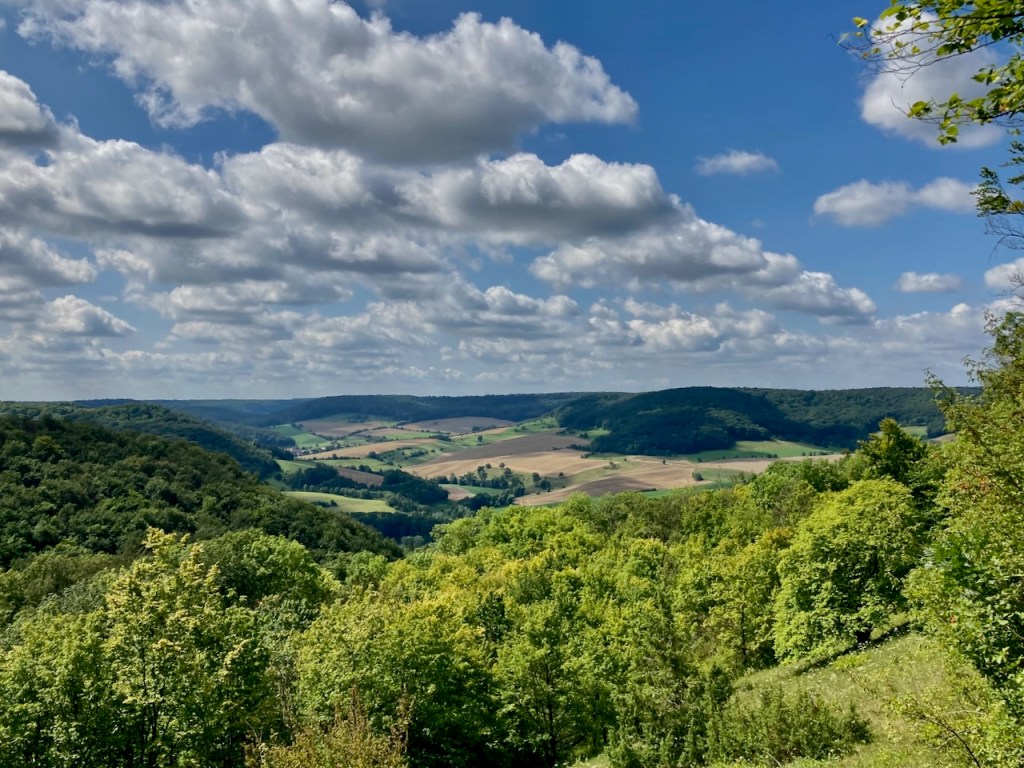
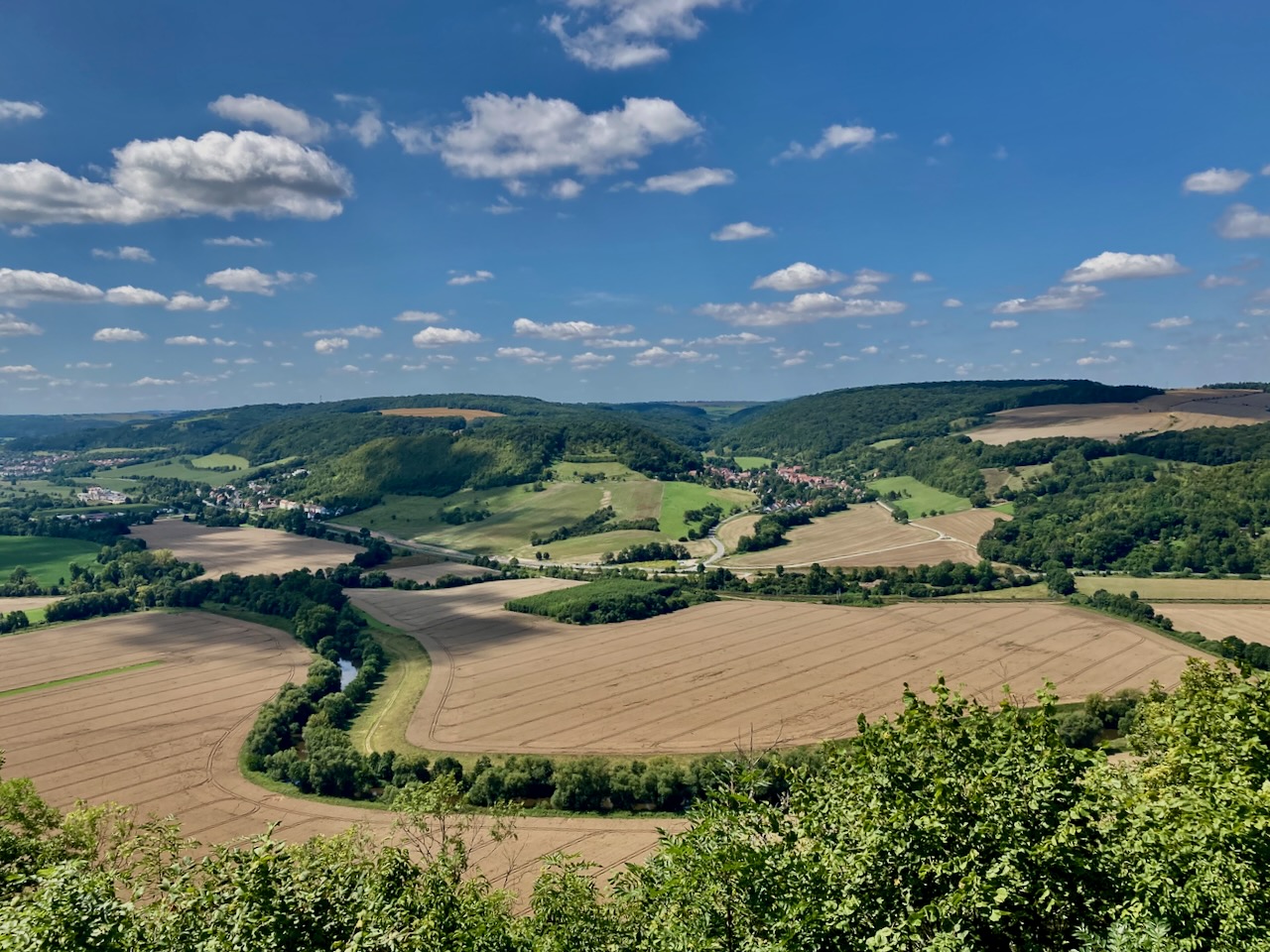
. . . steadily working my way upwards towards a view of rolling hills and harvested and harvest-awaiting fields interspersed with forests. This is so typical of the landscape here and I love it anew every time.
It was a hot day and I was glad to make it into the cover of the forest.
The butterflies were busy enough that I could inch closer, and I wondered at the old road in what was now woods.
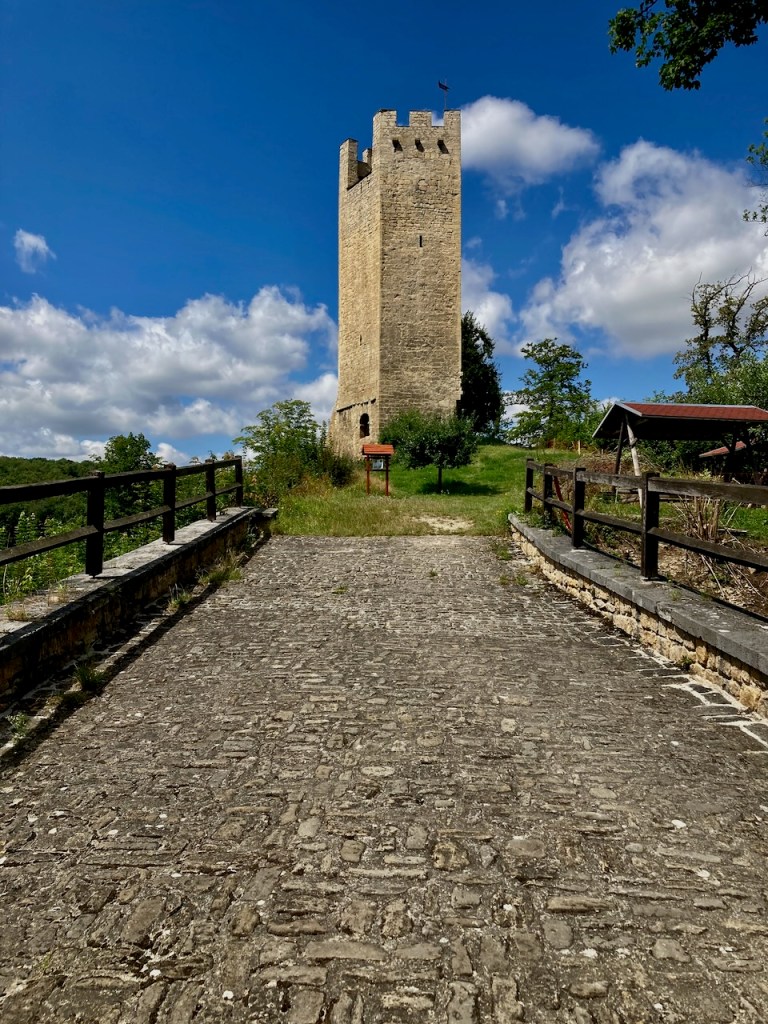
I passed a village with the remains of a castle . . .
. . . took a break at one of the many picnic tables that one finds on hiking trails around here . . .
. . . and once again took in the view from above.
I crossed a small lookout point named for a duchess and princess who had lived in the area . . .
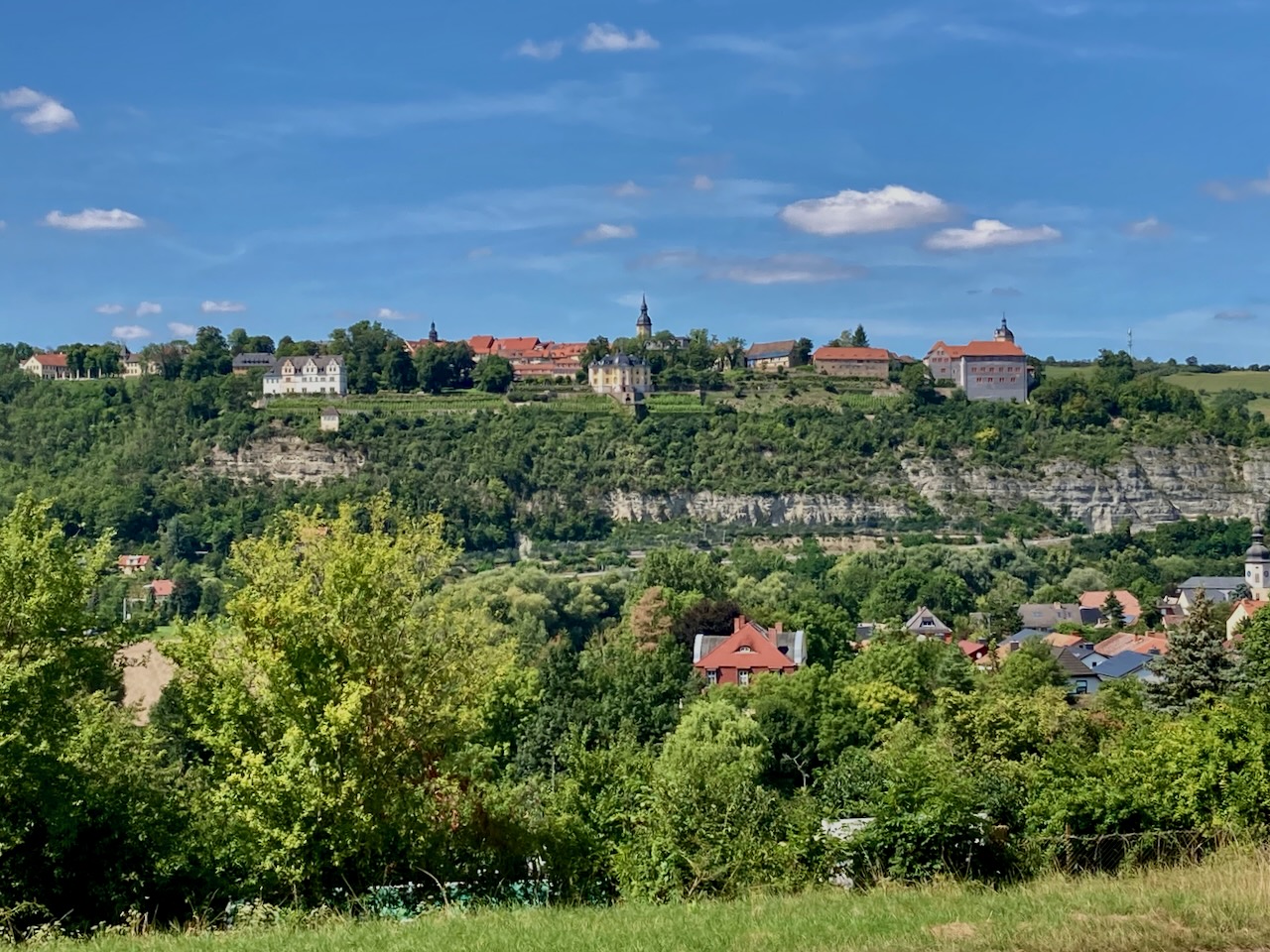
. . . and found myself looking up at the palace where my friends and I had started for stage 6.
Rather than dip my tired feet in the springs that seem to be there just for this reason, I practically ran to the train station. The following train would be in an hour and I was too hungry to wait.
Stage 4: Kunitz Loop (9.7km) – Mid-August
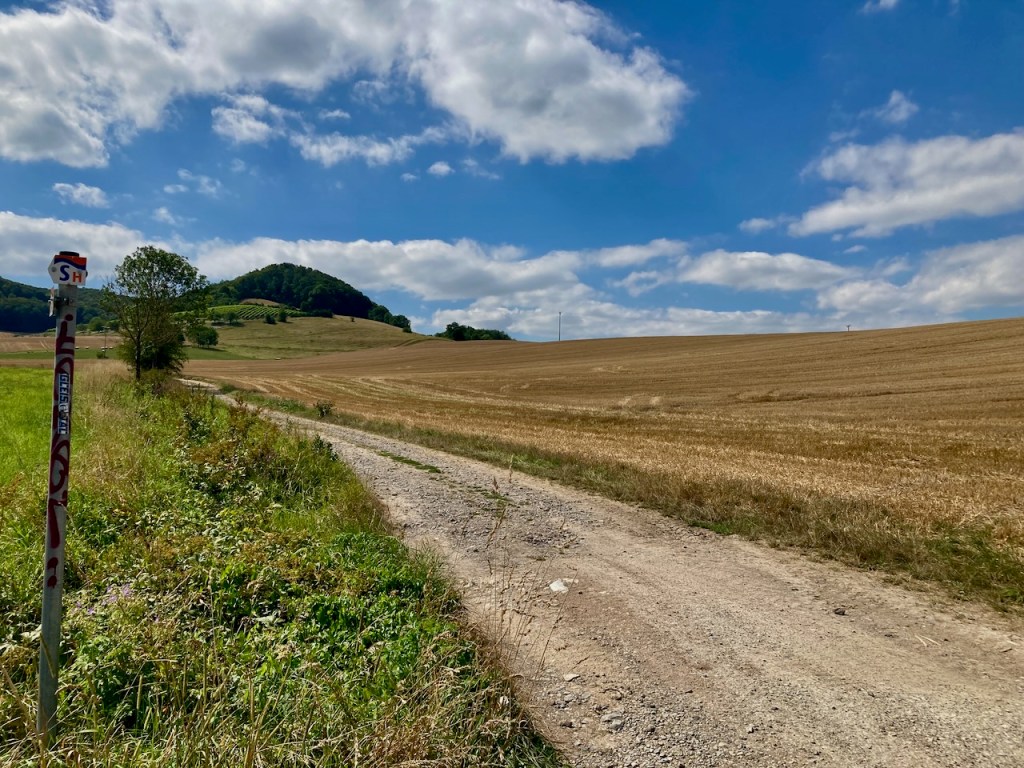
There is only one stage on the SaaleHorizontale that starts and ends from the same point, and the majority of this stage is the approach. As a result, my partner and I relied on other trail markers to get us where we wanted to go.
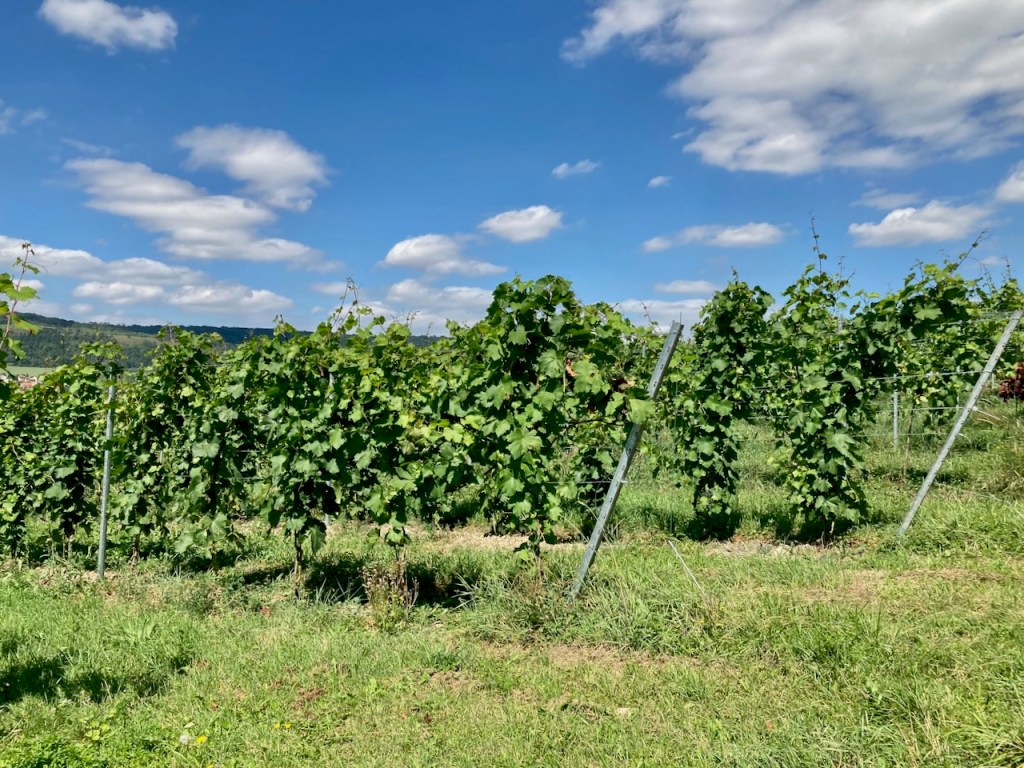
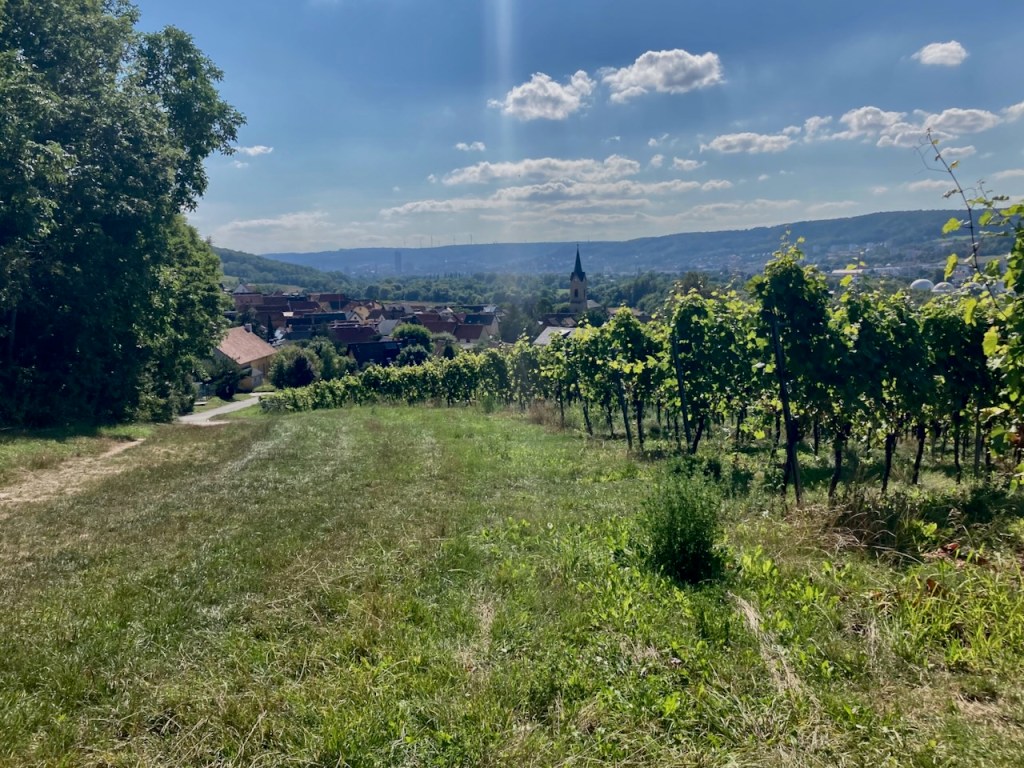
We passed vineyards along the way and I can attest that the wine grown on the hillsides of this region is lovely.
We were glad for the portions of this stage that led us through the forest because the mid-day August sun was hot indeed.
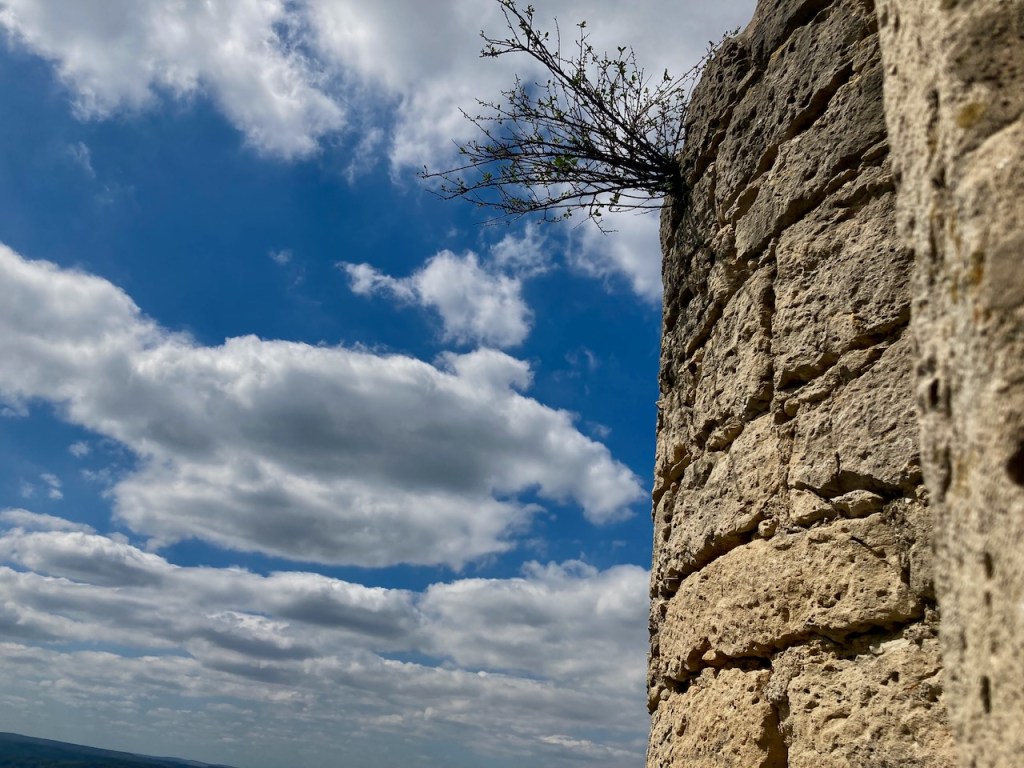
We lingered for a few moments in the cool of castle ruins and asked ourselves what the valley had looked like back when there was a castle here.
The fields were in varying stages of harvest time and the air smelled like hay.
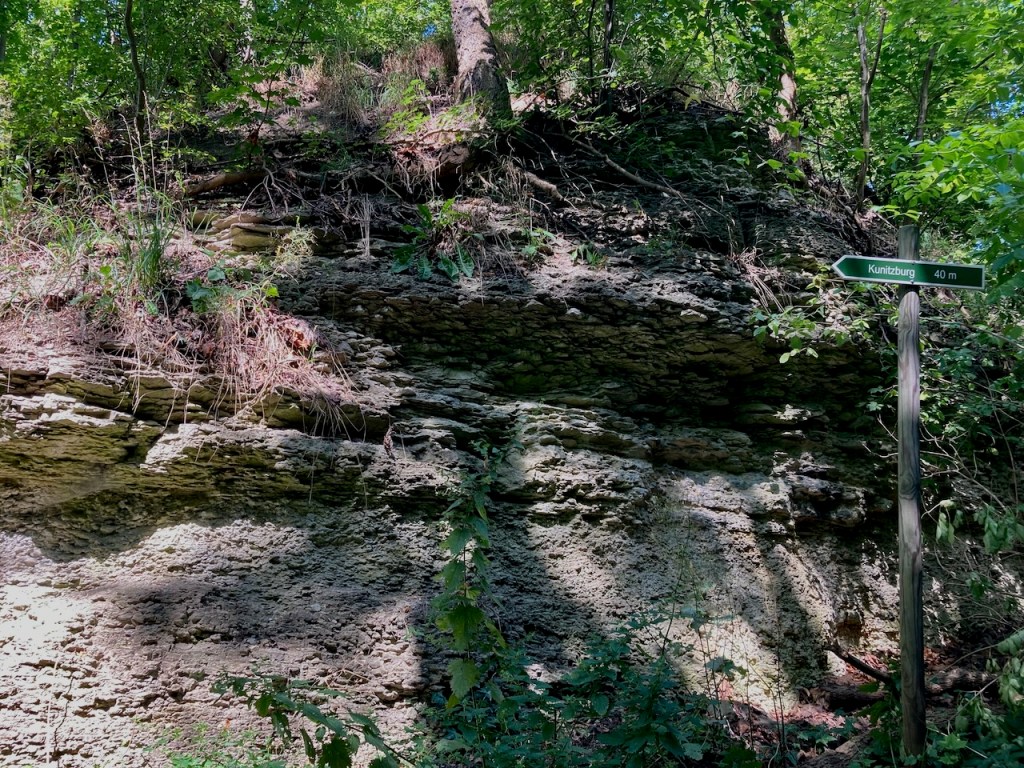
We walked for a couple hours before reaching the sign for our stage of the SaaleHorizontale . . .
. . . and the rest of the walk left us with the feeling of this stage being somewhat forgotten, its purpose to connect two other stages rather than having an identity of its own. There’s a run each year that follows the entirety of the SaaleHorizontale, which would therefore skip the approach and descent to public transportation locations; perhaps this stage makes more sense when done like that, but I am not about to find out.
Stage 9: Ammerbach to Göschwitz (12.3km) – Mid-September
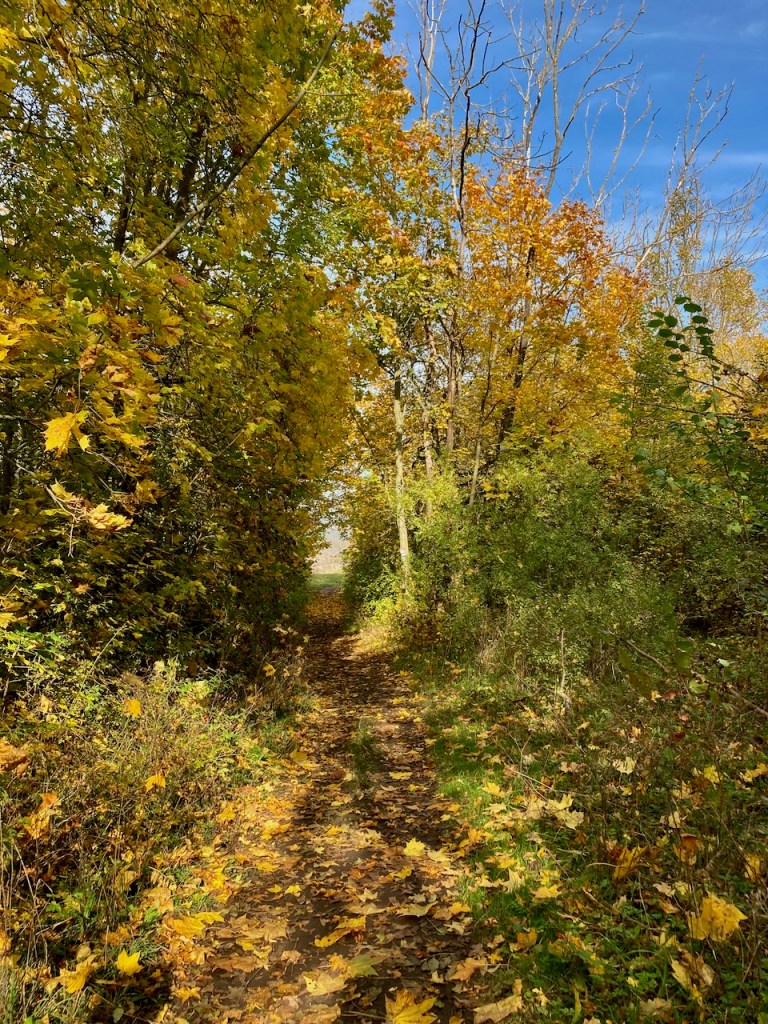
The calendar had just flipped over to fall the next time my partner and I took a walk along the SaaleHorizontale, but a fall feeling had been in the air for somewhat longer. The light had changed, and this is always a sign.
The beginning and end of the trail was located in the woods, woods with which we had become familiar in the months walking the hills around Jena.
Hay bales were drying in the fields and grass had regrown. These are signs of fall, of summer having just gone.
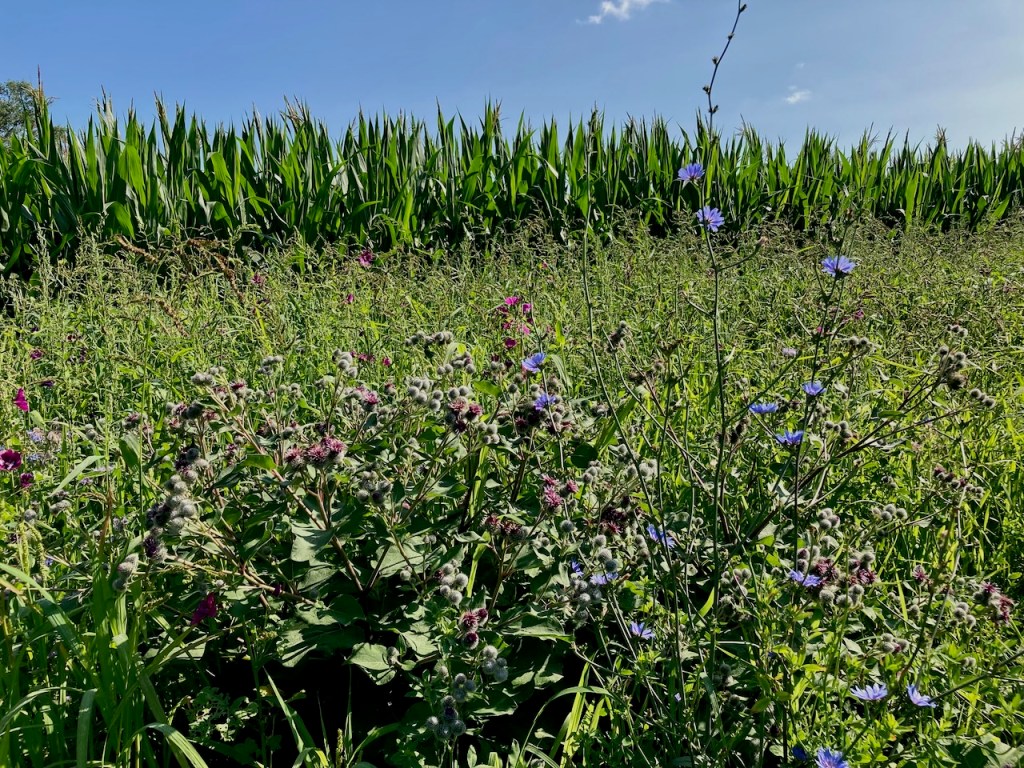
But only just, as the corn was still waiting. Where I grew up, corn is grown to be eaten, and a great joy of my childhood was being sent outside to shuck the yellow ears. My middle sibling and I played “old fashioned times”, corn opening the portal to another world. The corn that grows in this area is meant as animal feed or to be processed into fuel, but the sound of dry stalks as the wind rushes is one I know and it takes me back.
We ended this stage in the woods again, and I liked the feeling of coming full circle over the course of the afternoon.
Stage 2: Kupferplatte to Wogau (13.6km) – Early October
The last stage that I completed alone was probably my favourite, and this despite nearly four hours of steady rain. A good jacket and study shoes go a very long way.
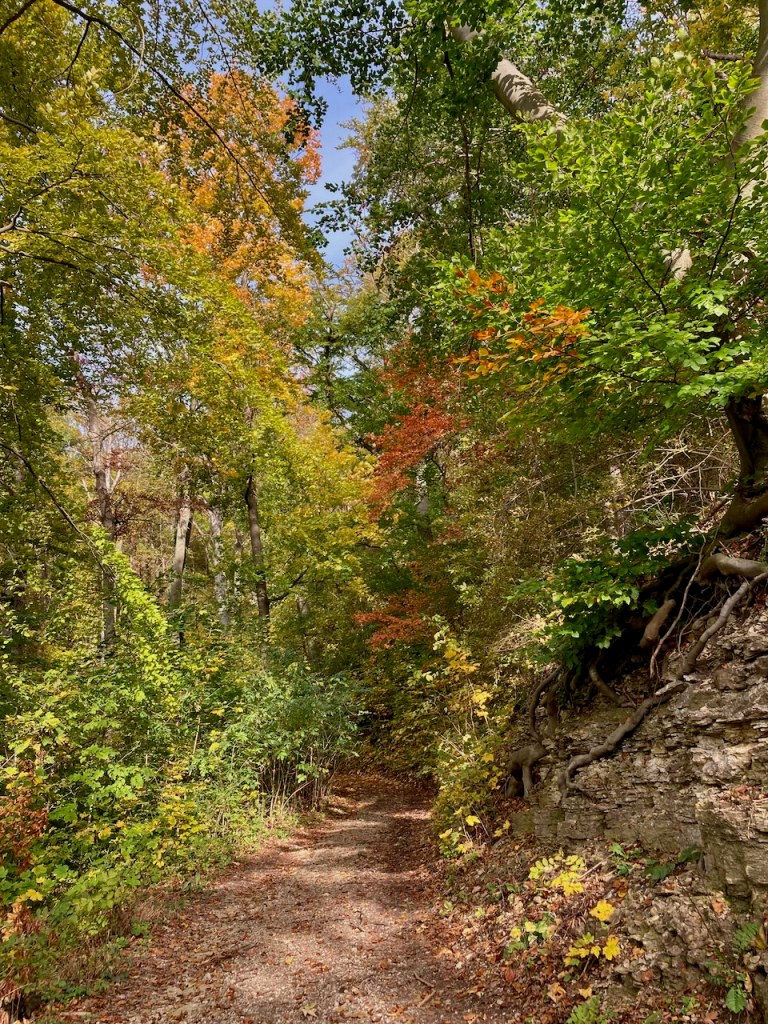
The approach to this stage went immediately through forest, blue skies above, and I was reminded of the descent from the first stage along the same path back in January, the first time I had experienced rain on the trail.
It didn’t take long to reach the first set of trail markers, by which time the steepest part of the route was already behind me.
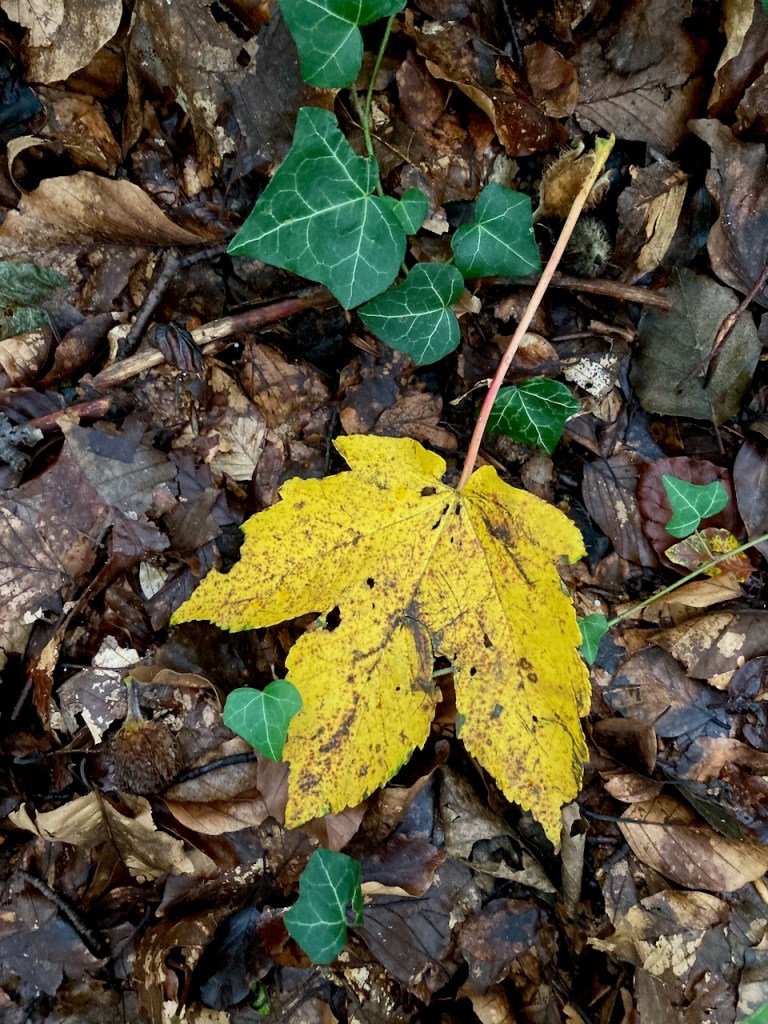
The leaves in the forest were slowly starting to change colour and the clouds began to roll in.
Good views were the reward for much of this stage . . .
. . . and even the increasingly muddy crossings over fields failed to bother me.
I walked by an old cemetery . . .
. . . a monument to someone I’d never heard of but who is important to the history of Jena (according to brief research while writing this post) . . .
. . . and a tree with a stunning root system that clearly ignored the expectation that it remain in the ground.
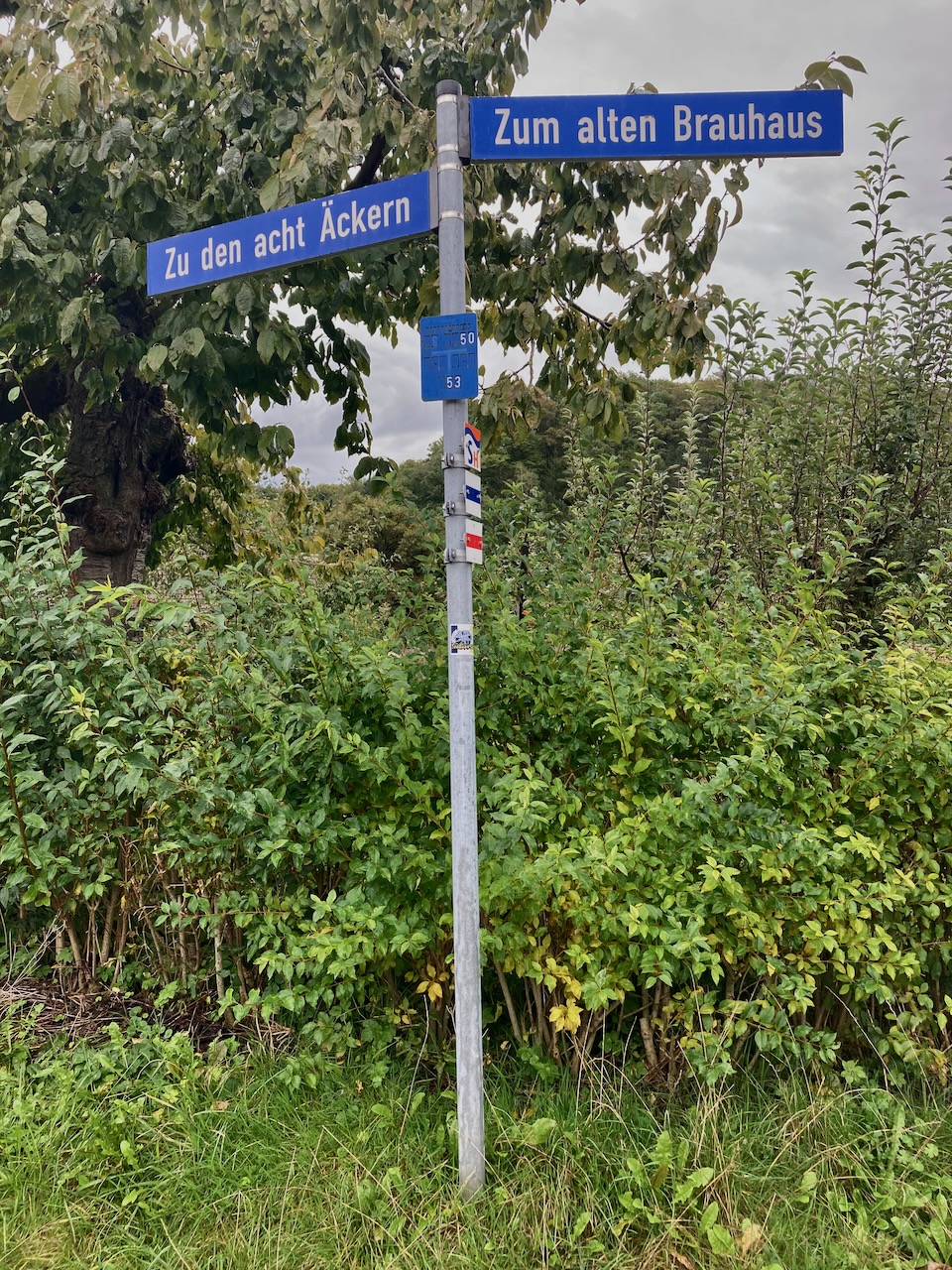
I crossed through a village in which the street signs nodded to times past . . .
Left to the eight acres and right to the old brewery
. . . and then came upon a field at the edge of the forest populated with hungry cows and their curious calves.
The stage concluded as I skirted the edge of the field and though I had thoroughly enjoyed it, I really was looking forward to getting out of the rain.
Stage 3: Wogau to Kunitz (12.6km) – Mid-October
When I finished the previous stage, fall was slowly beginning. Mere weeks later, it had arrived. My partner and I took the blue skies as a sign and headed out to have a look.
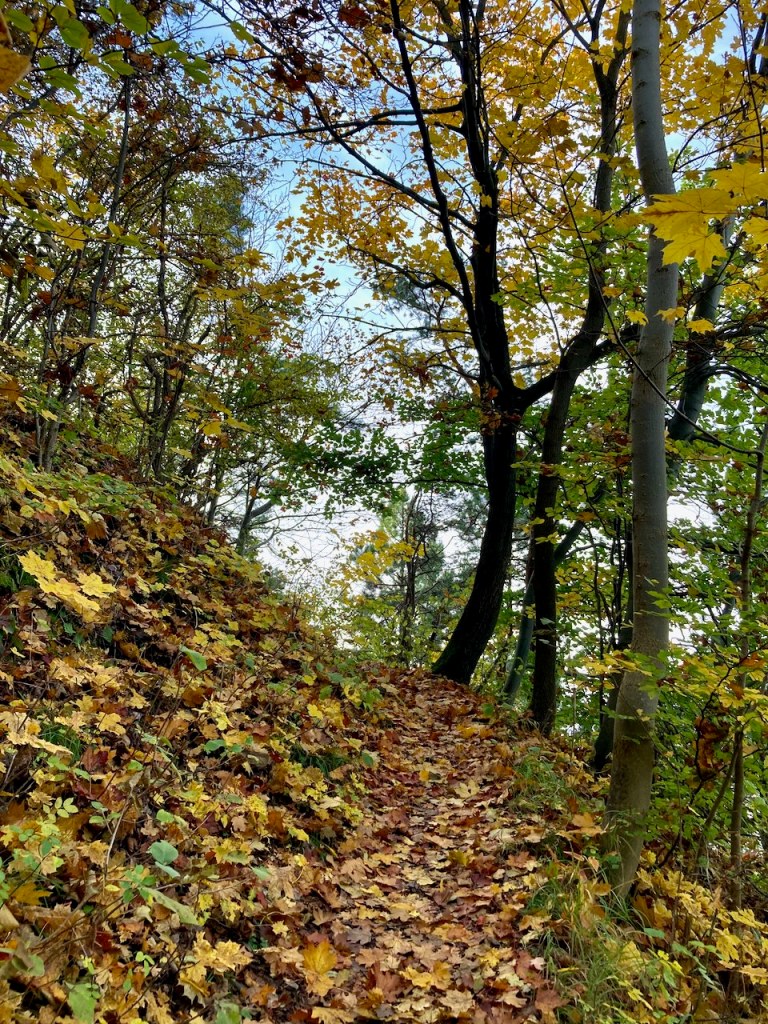
The stage took us through several woods, each with slightly different trees in slightly different stages of changing colour. The air felt fresh in each, the soil smelled different, and the atmosphere of each forest was clearly its own.
We walked on the edges of the hills and looked down at Jena.
Enticed by the sun, we lay back on conveniently located sun loungers to soak up as much vitamin D as we could. November is a dark, dreary month here.
We passed a sign that had clearly been here a while . . .
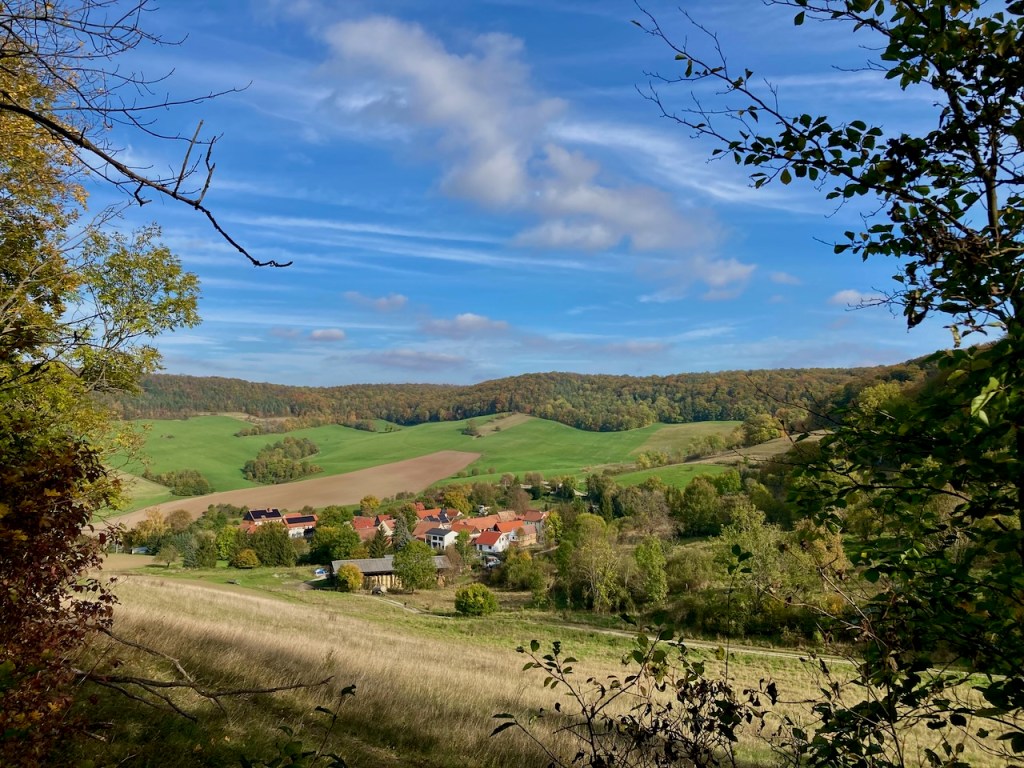
. . . and paused for lunch at a bench overlooking a tiny village, a little oasis just a stone’s throw from the city.
We crossed a field . . .
. . . leading us along a path back to an old ruin we’d been to before. The landscape in October was slightly different than that of July.
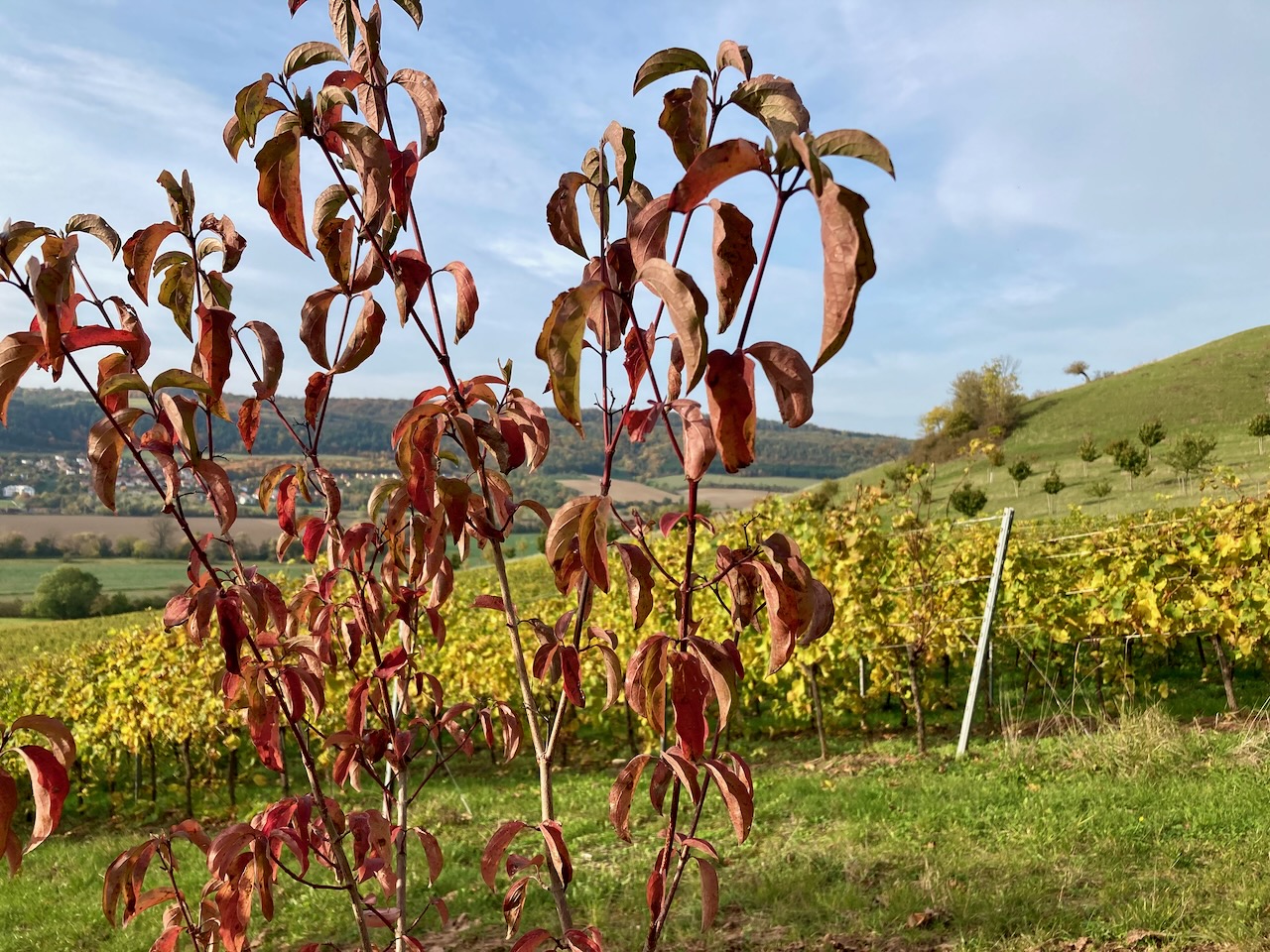
Finally, we passed the vineyards that I’d seen several times now, all at different growing stages.
We walked down the hill, followed the dotted line on our map to the end of the trail, and I grinned. Last stage done with a person I love on a sunny October afternoon.
And with that, I completed the entirety of the SaaleHorizontale. The moment of finishing was one of gratitude for the time spent walking in nature and for the people who had joined me. The world is a beautiful place, and even more so when it can be shared with others.
Walking allows us to be in our bodies and in the world without being made busy by them. It leaves us free to think without being wholly lost in our thoughts. – Rebecca Solnit, Wanderlust
I think it was over a year ago that a girlfriend first mentioned the possibility of a trip to Portugal together. Our partners had been each other’s travel buddies before we came into the picture, and they were more than happy to let us take the lead on planning. Their plan was to see pretty sights and enjoy one another’s company. In the end, that’s what we all did. Knowing more or less where we wanted to be, the four of us spent a week strolling through narrow alleys, taking endless pictures of tiles, and eating excellently, which is saying something when one member of the group is not only a vegetarian but also gluten free.
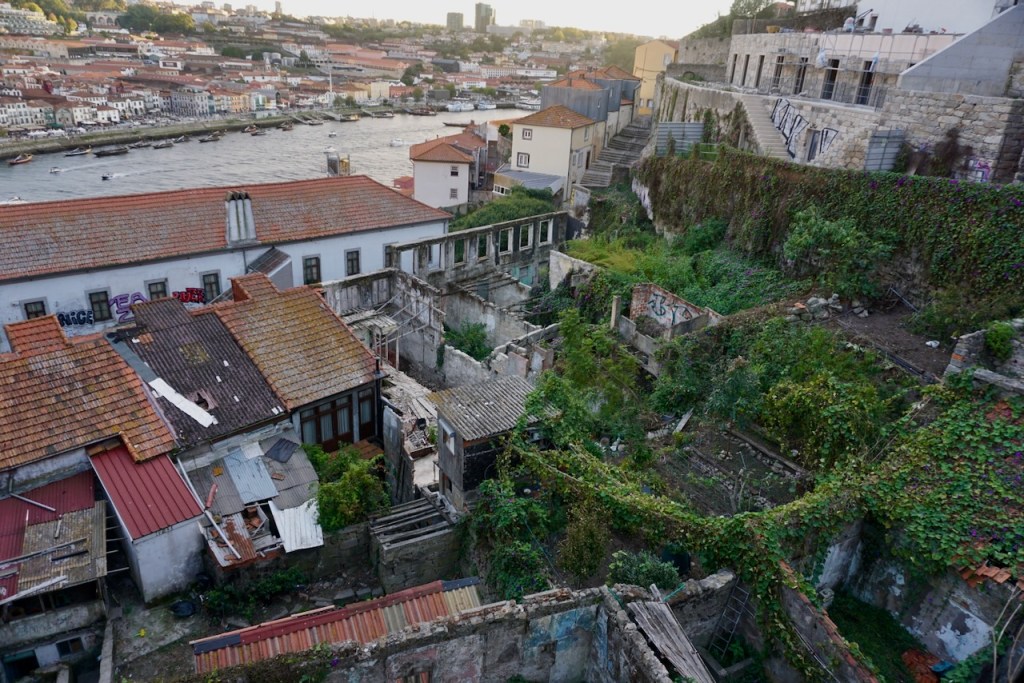
Because of the way the week flowed, one day of wandering into the next, I’m breaking with established patterns and writing about the whole trip in one post. We rented a car for the days in the middle but were otherwise on foot, averaging 10 kilometers per day in spite of some good rain. The experience of being in Portugal was one of getting turned around in twisting streets, marvelling at the hills and stairs, and alternately admiring and lamenting the old buildings in various states of restoration. It was an experience in being rather than one of expectations, and we let ourselves be surprised.
Porto
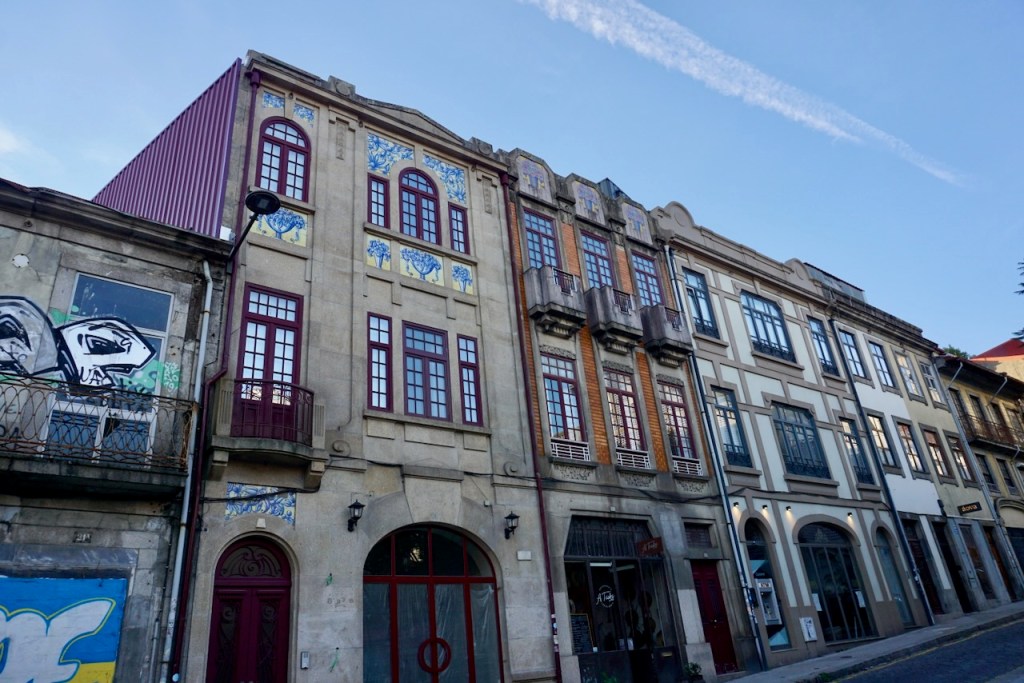
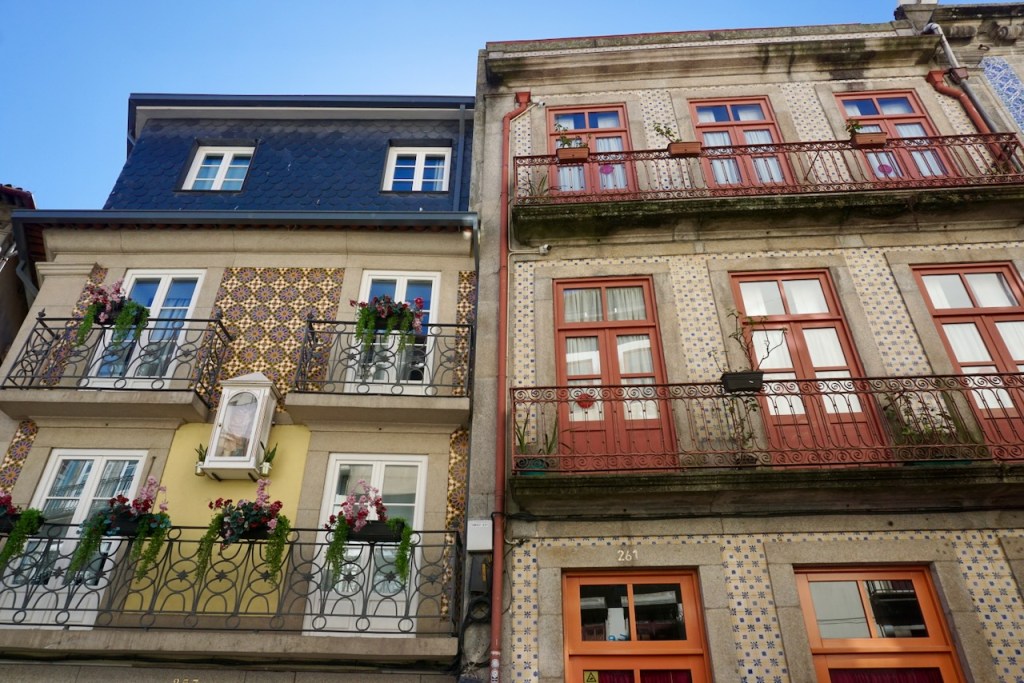
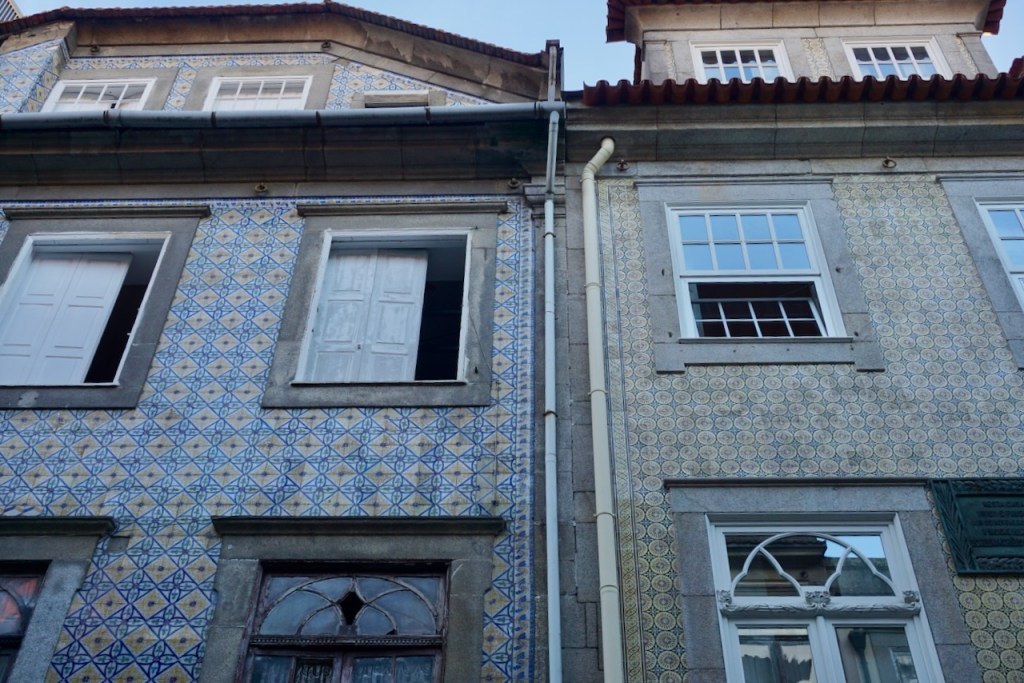
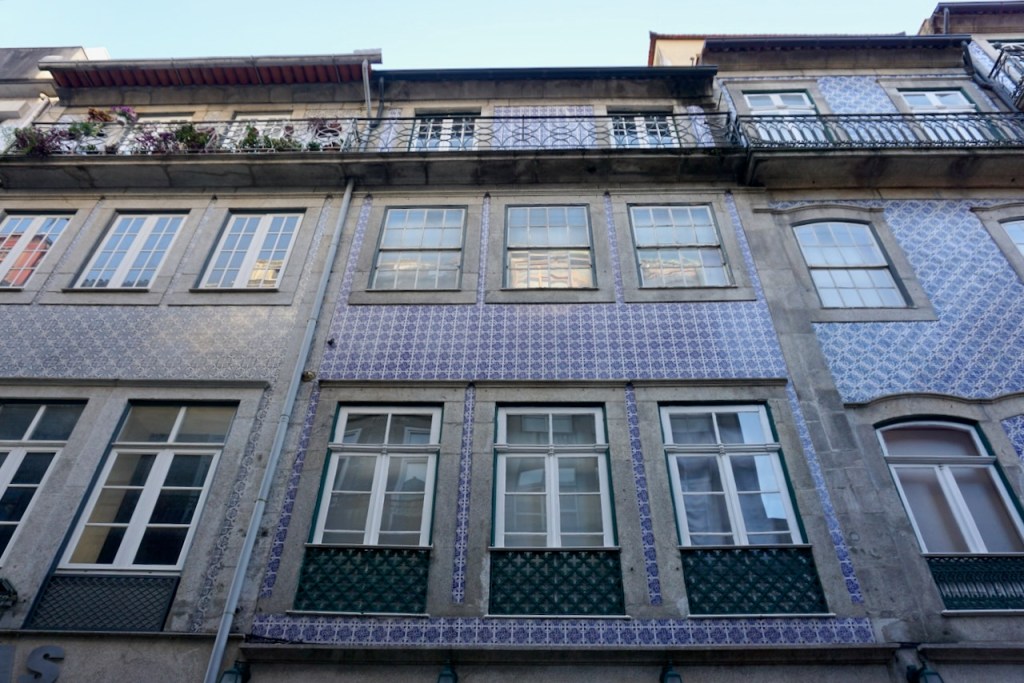
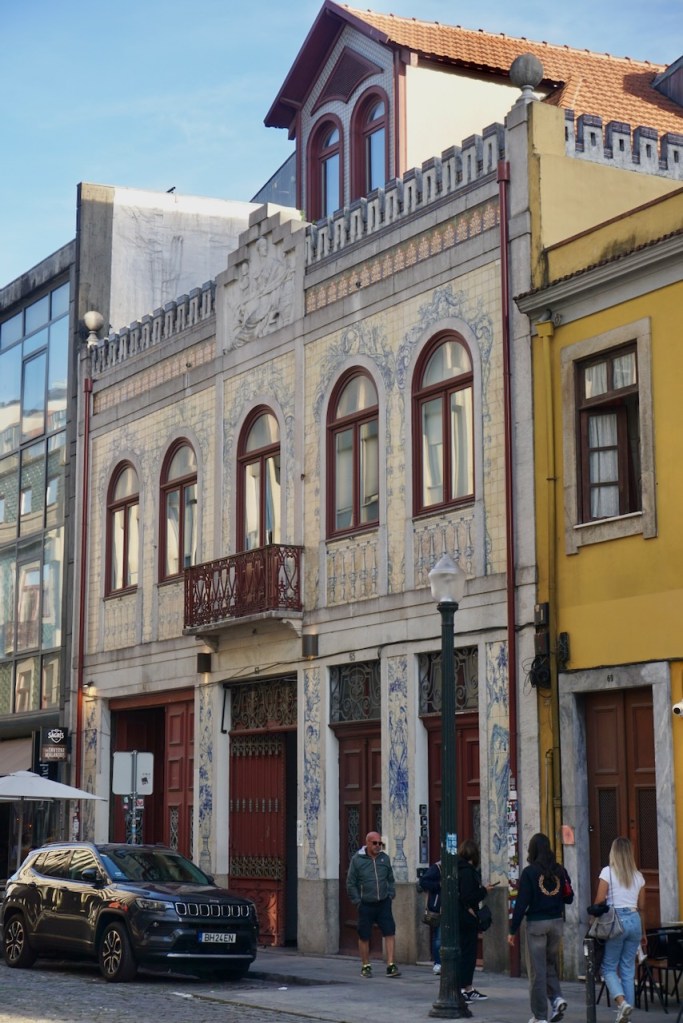
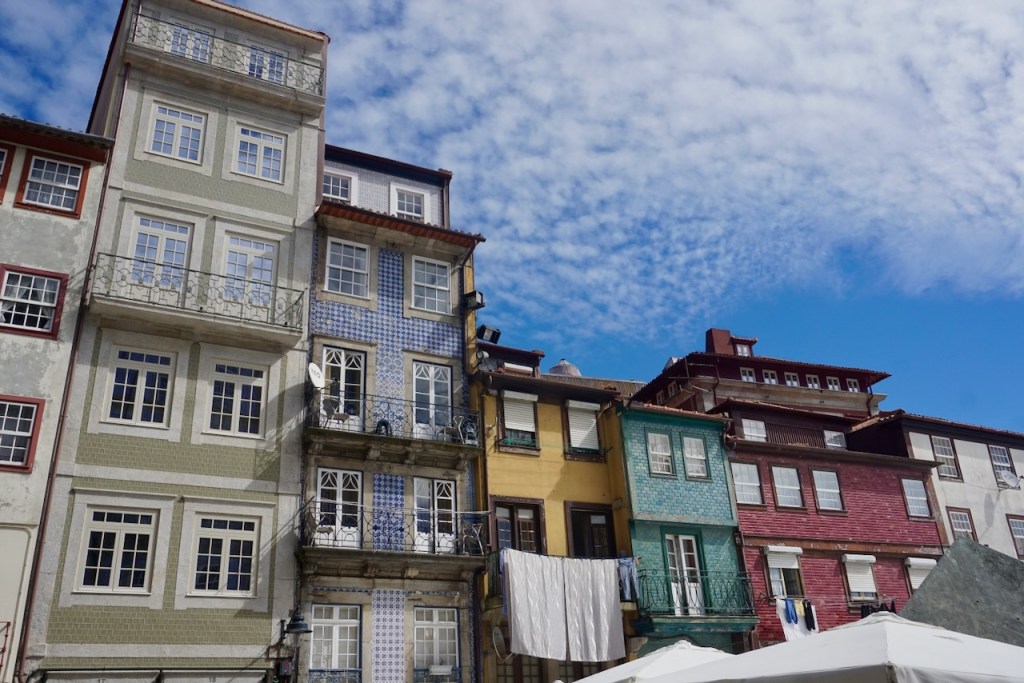
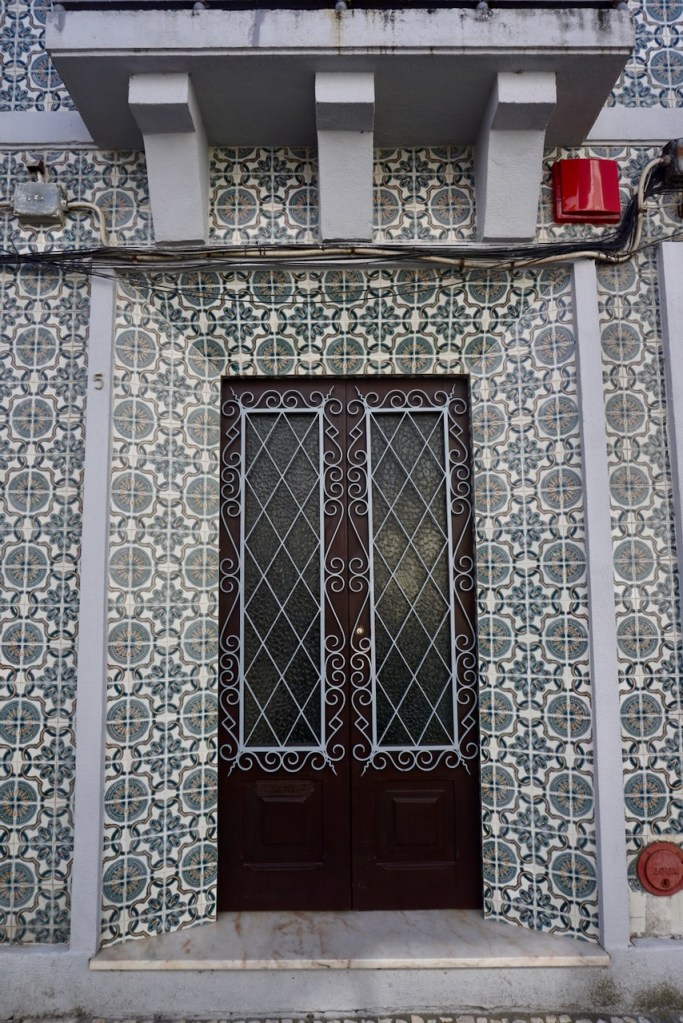
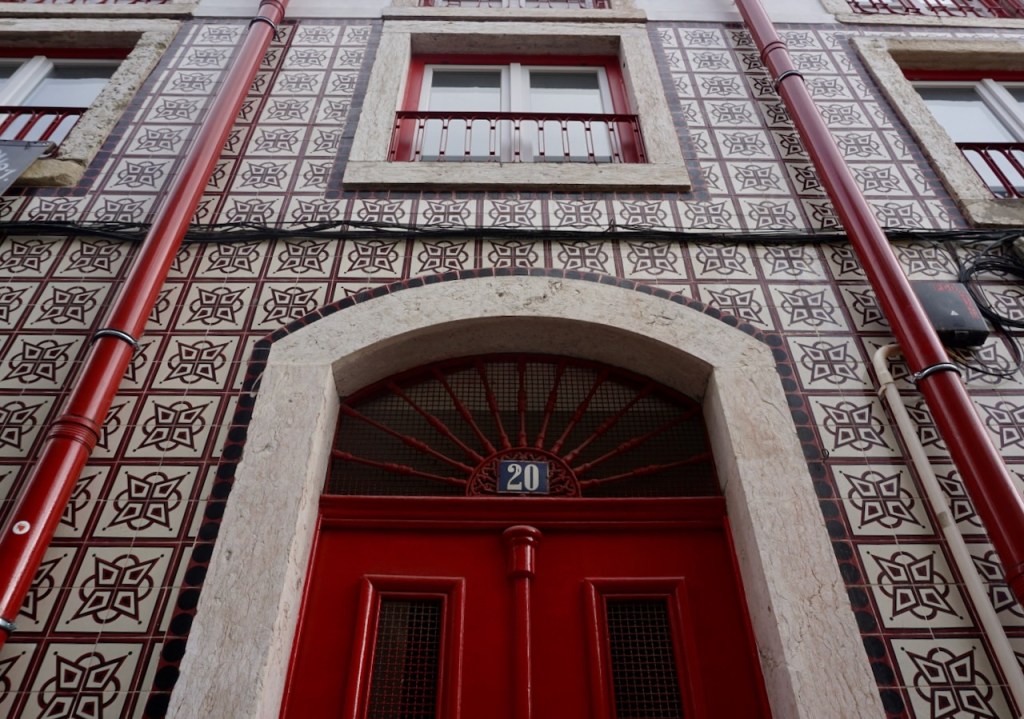
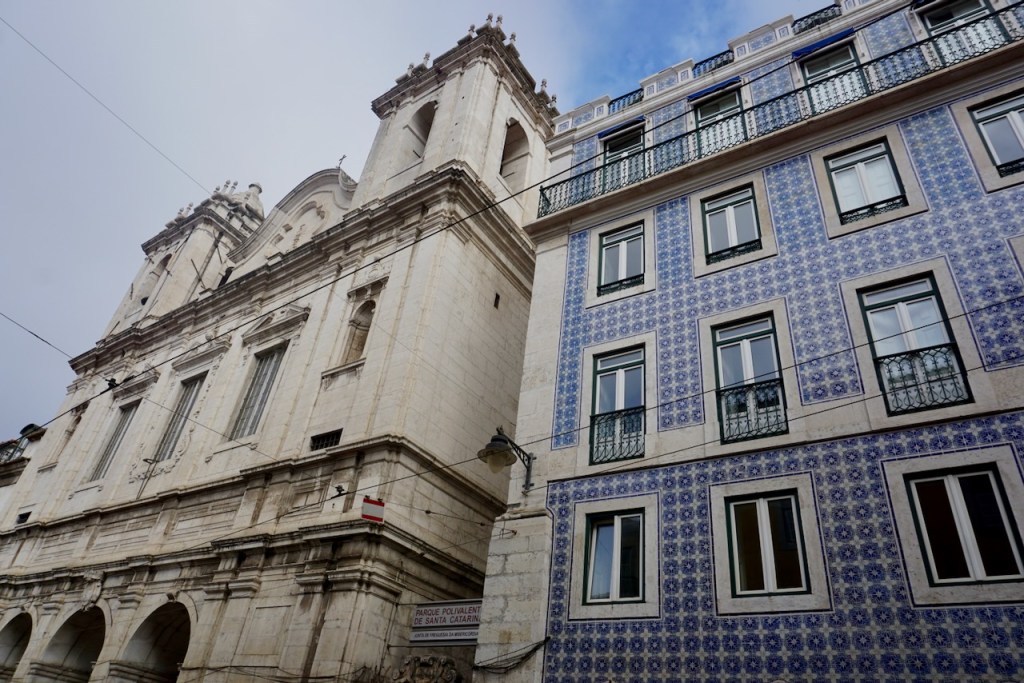
We arrived in Porto late in the afternoon and hungry, but eating needed to wait because most restaurants in Portugal, as we learned, open first at 7:00 or 7:30 for dinner. So, as would become routine, we walked. That evening and the following day we exclaimed at the tiles covering the buildings . . .
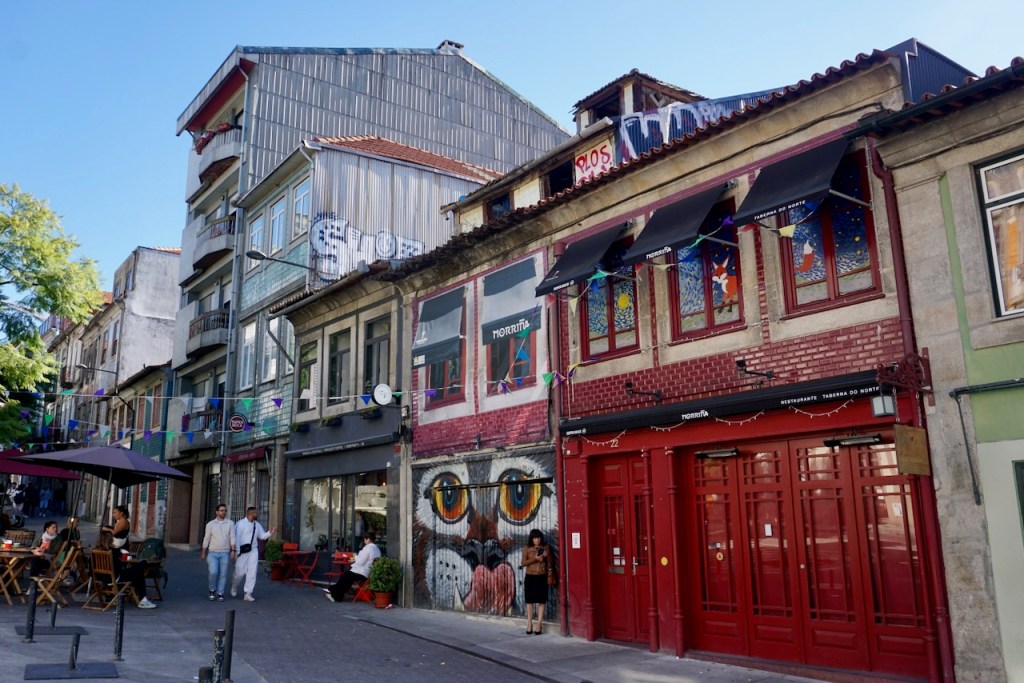
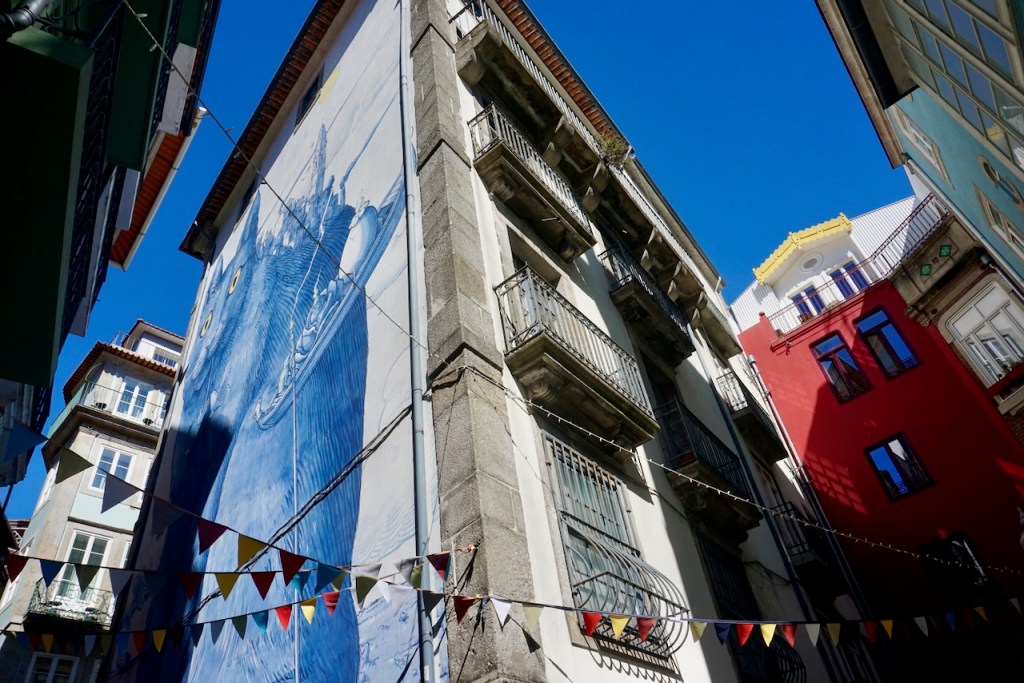
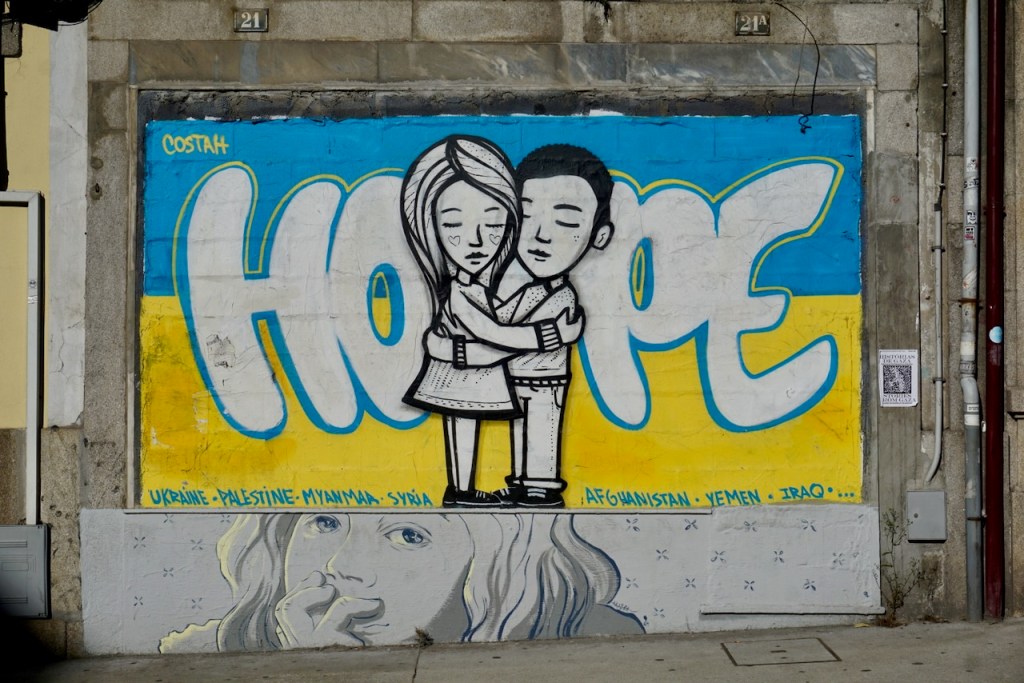
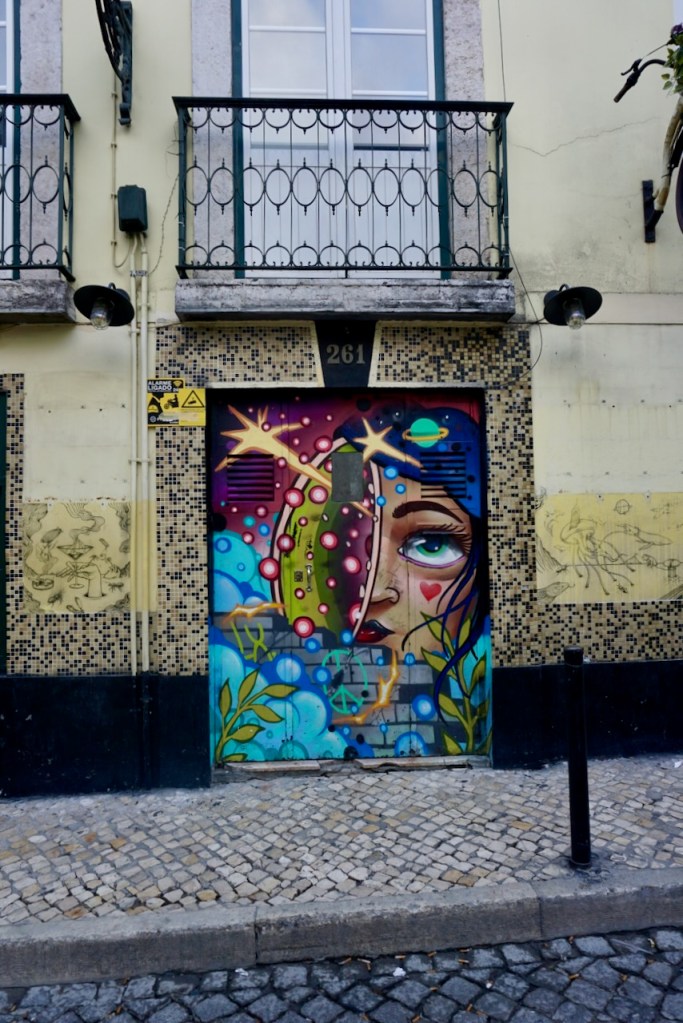
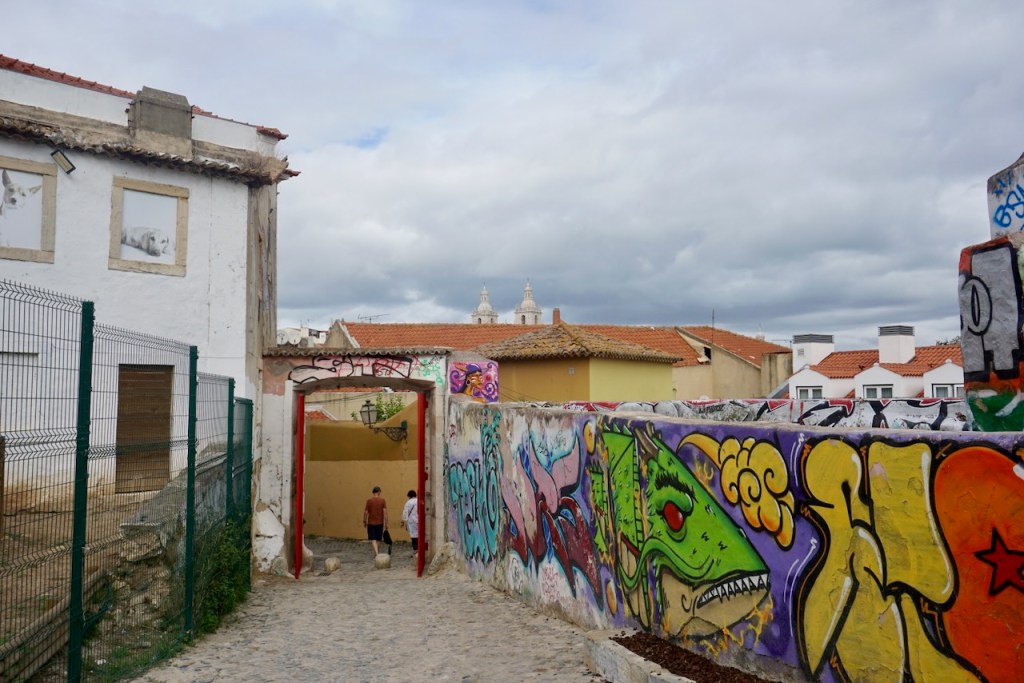
. . . the prevalence of street art in the Ribeira neighbourhood and elsewhere . . .
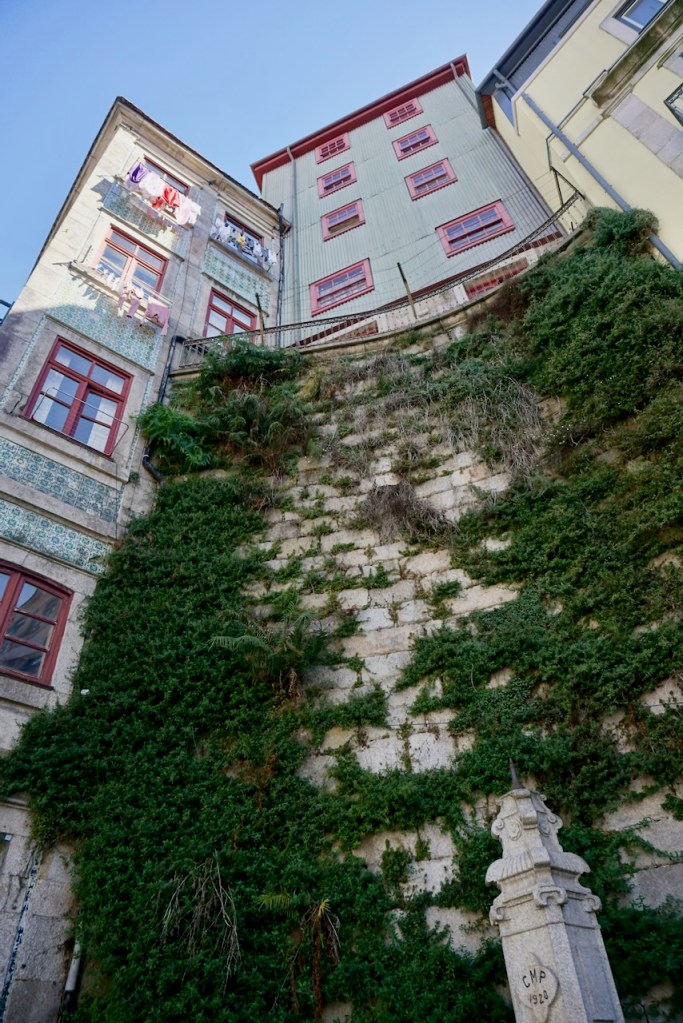
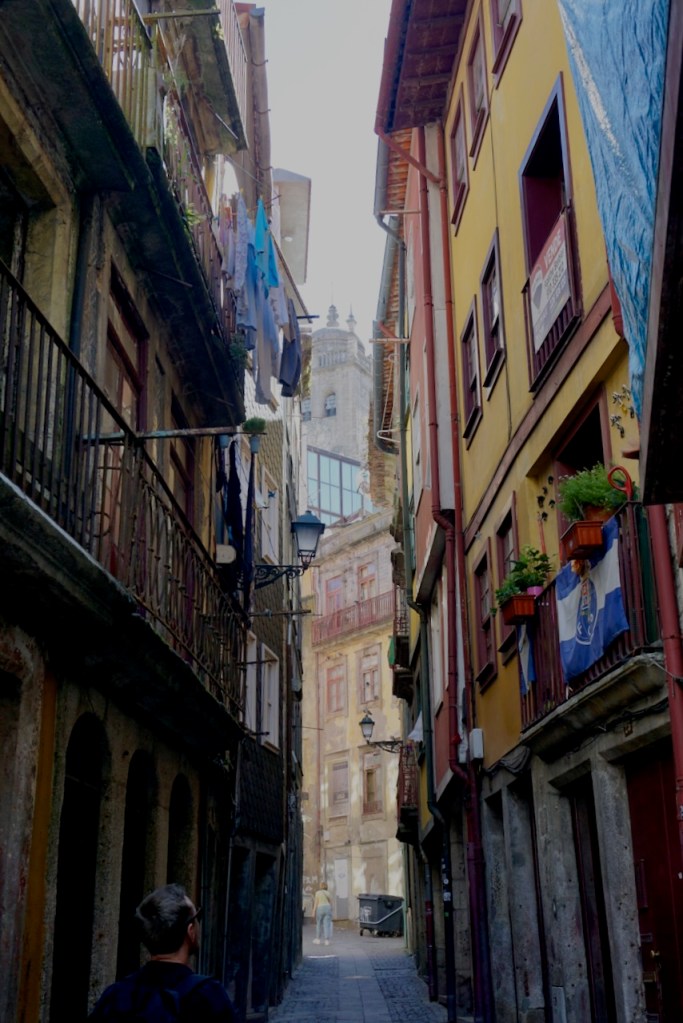
. . . and the surprises hidden in little alleys, which always seemed to be built following the curves of hillsides.
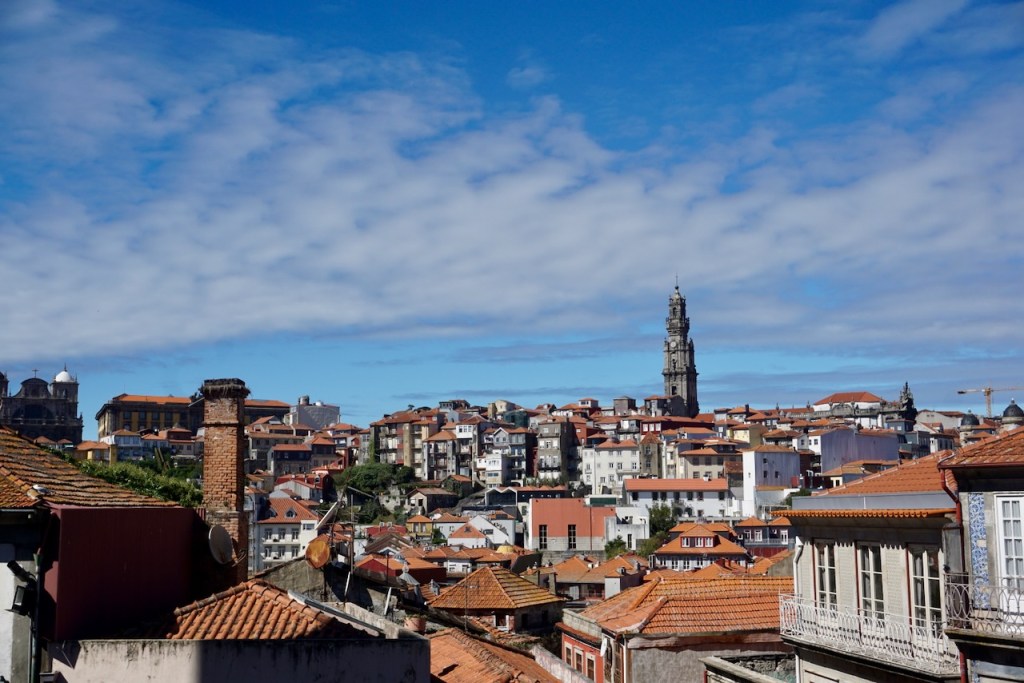
We saw some important sights, as well, such as the Torre dos Clérigos . . .
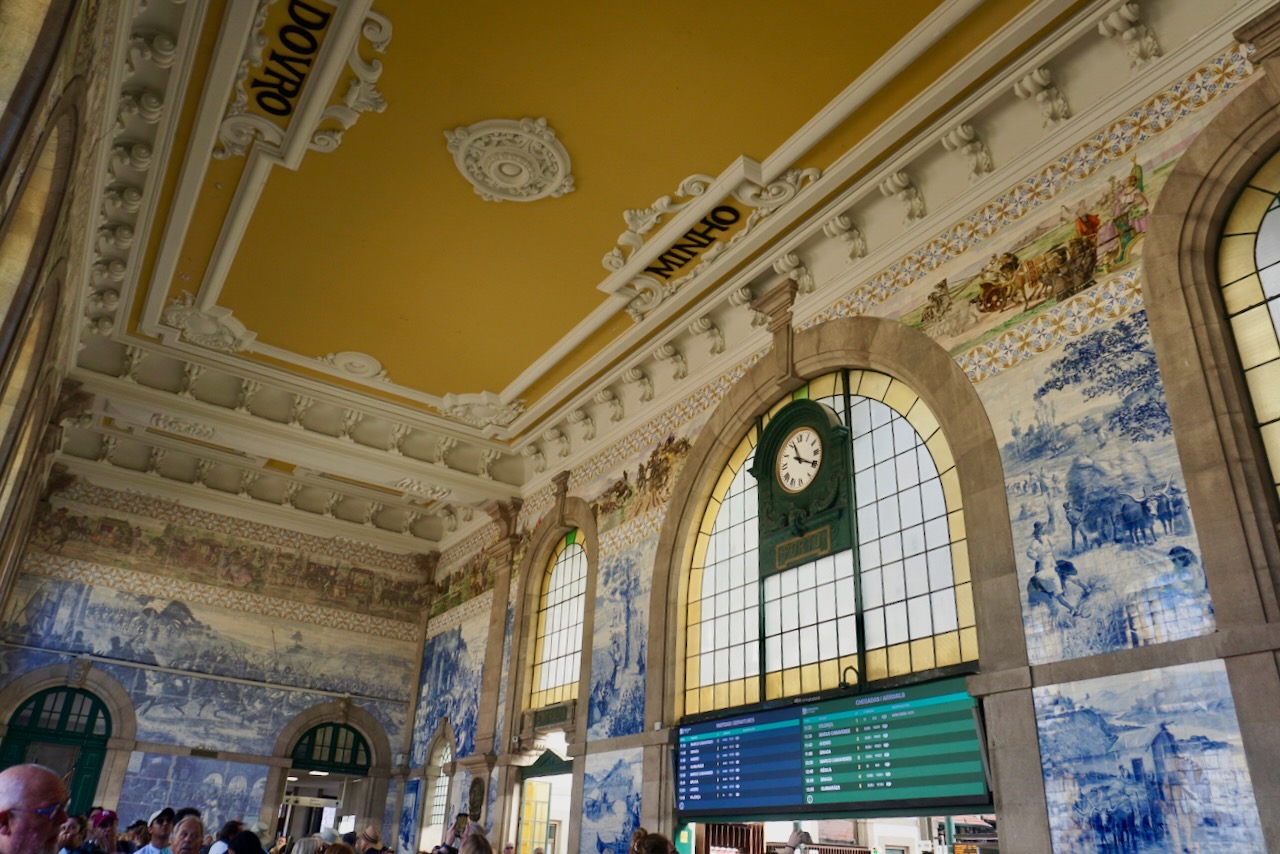
. . . the train station . . .
. . . and the Igreja do Carmo, which caught our attention because of, again, the tiles.
We paid for relatively few “attractions” on this trip, but were more than happy to buy timed tickets and wait in line for Livraria Lello, a bookstore described to me “like walking into Harry Potter“. And it was.
As we found out at the end upon paying for our books, the ticket price was discounted from our purchases, which struck me as a rather clever business model.
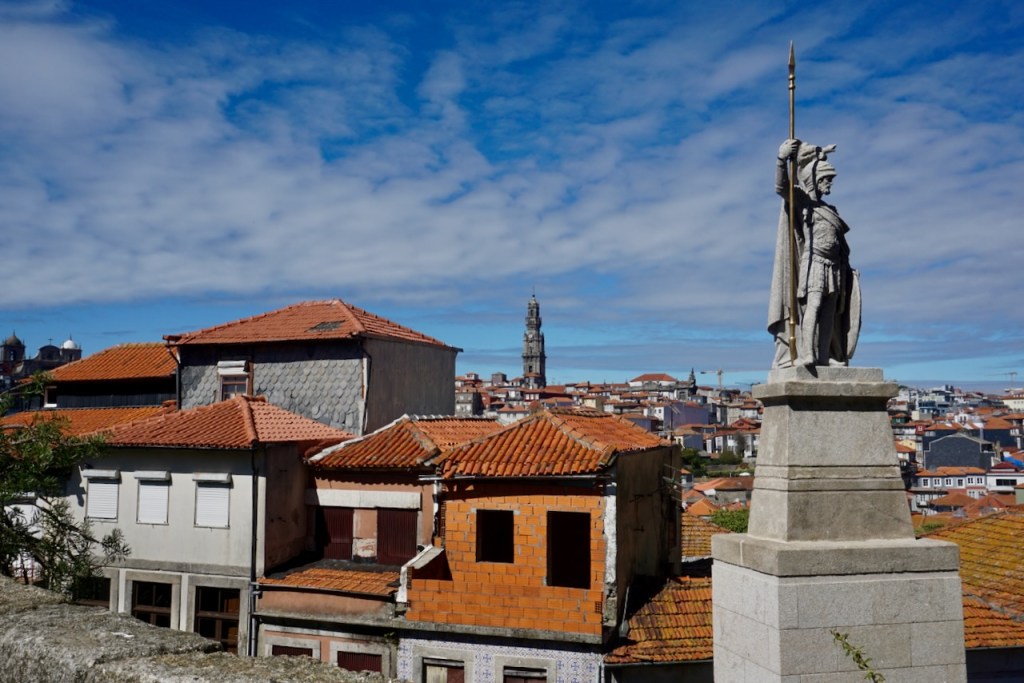
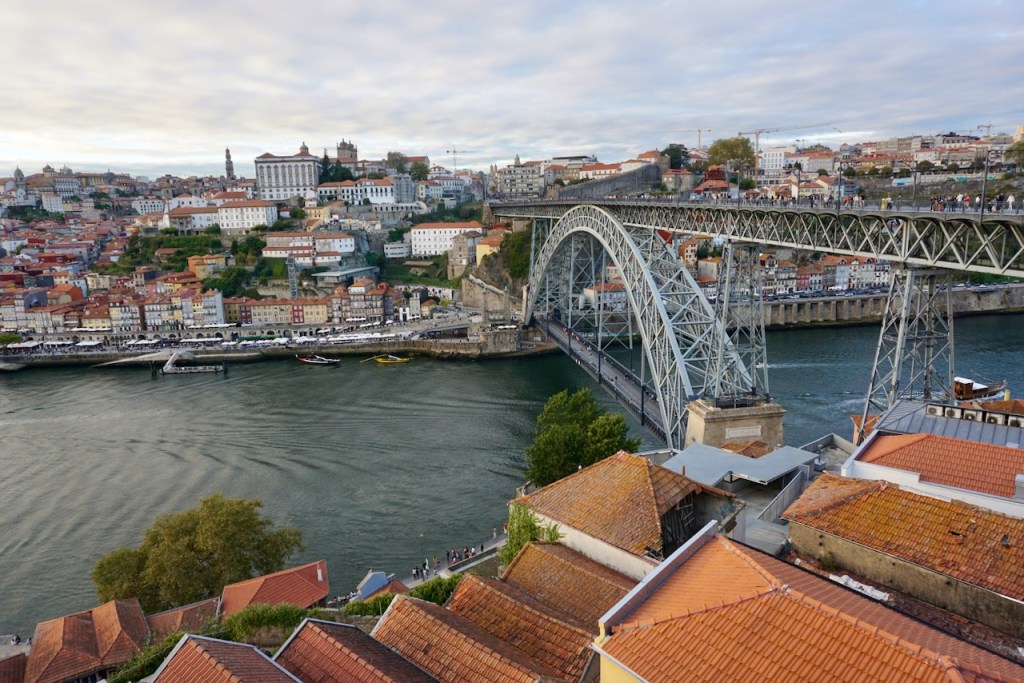
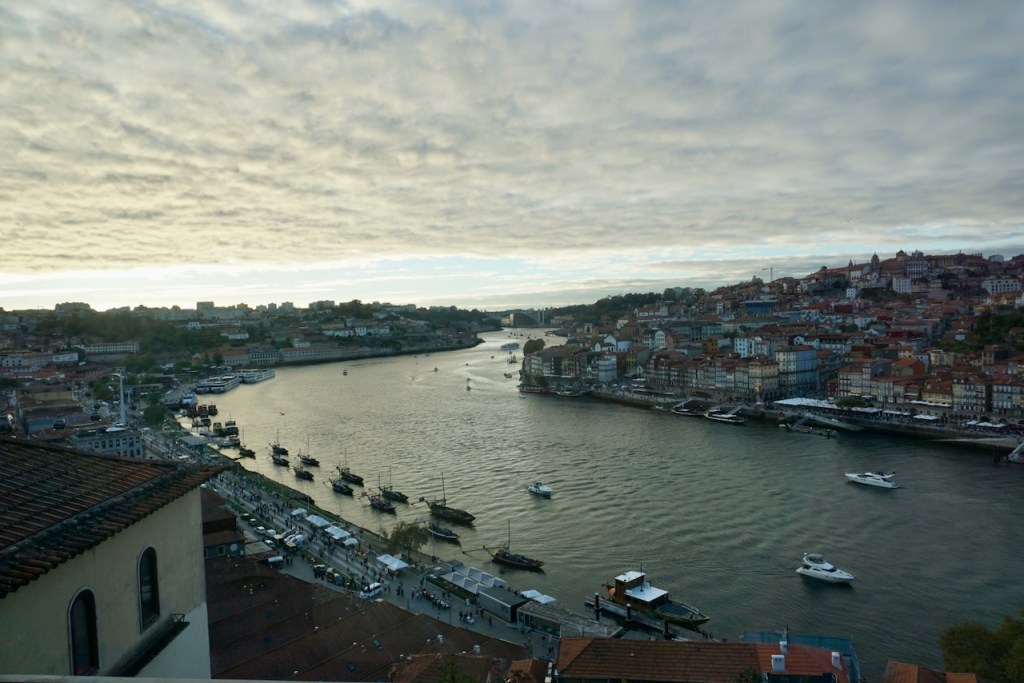
In the afternoon, we climbed all the stairs to the Sé do Porto, the cathedral, and found ourselves far more interested in the view than the building itself.
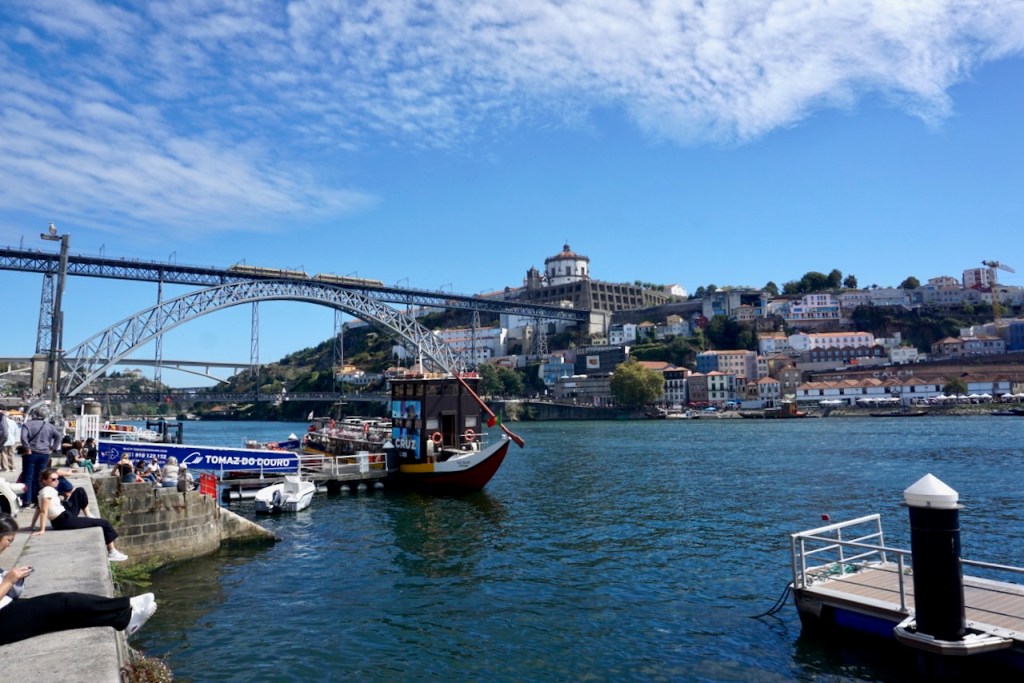
From there, we headed down to the water for a snack before crossing the river to taste some port. We’d had a glass at dinner the previous night, and that was fine, but I found three tastes to be rather a lot. Port tastes like it smells, thick and syrupy, and I think it was the amount of sugar that left me with a headache the following morning. National beverage aside, that was the end of drinking port.
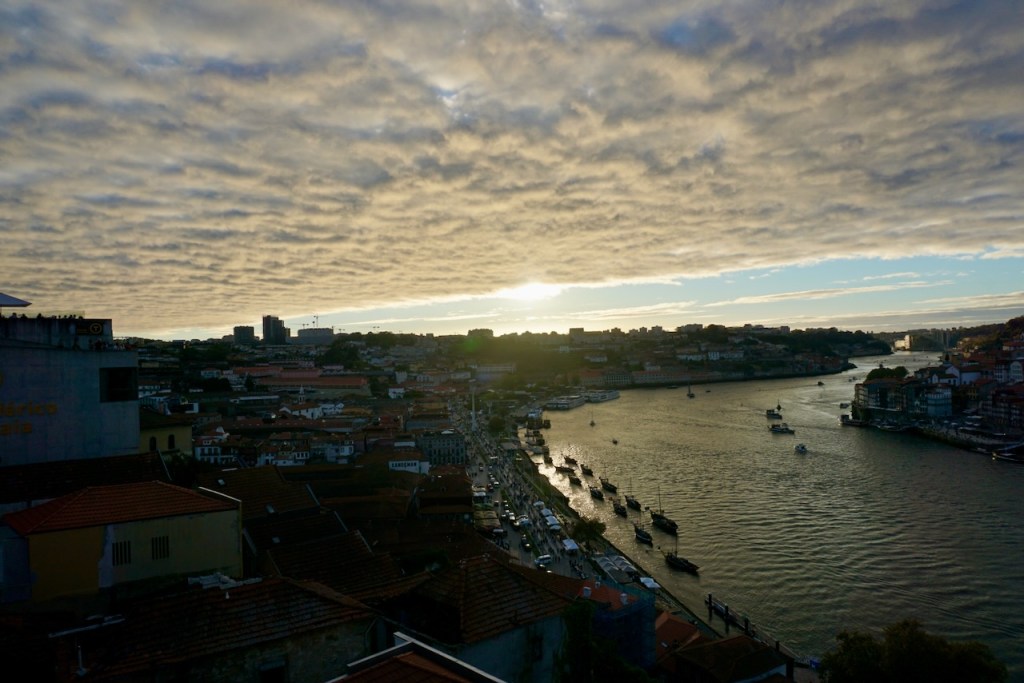
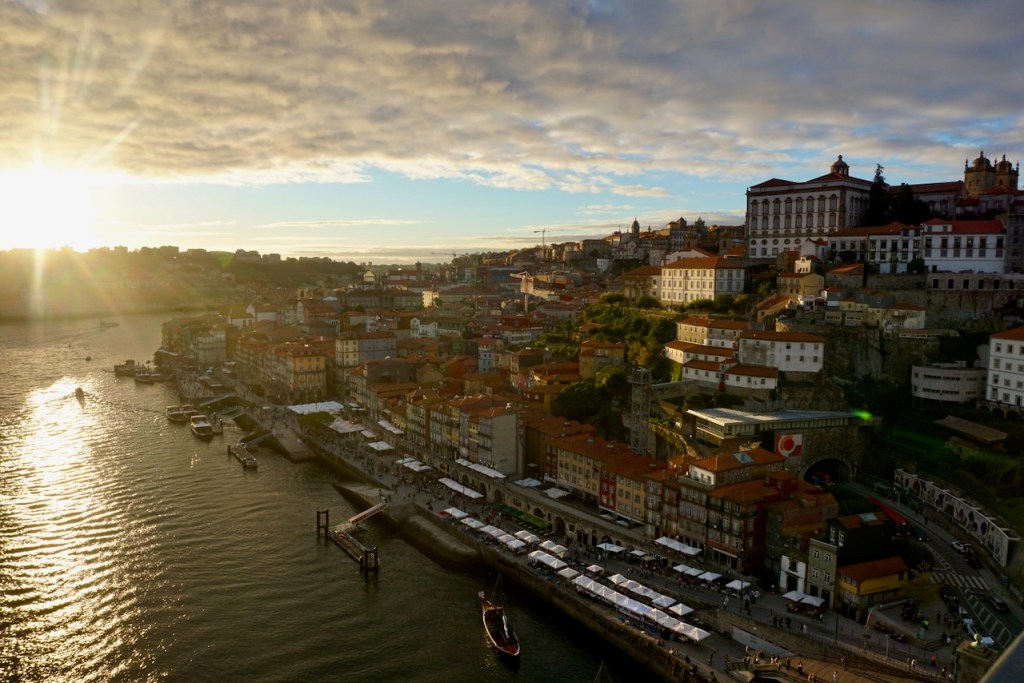
For the sake of the view, we took the Gaia cable car back to the bridge after a stroll along the Duoro River. Crowds of people had gathered to wait for sunset, which we took in while walking across the bridge in the direction of downtown.
I found this a fitting end to our time in Porto. We had the feeling that we had at once seen the whole city and nothing at all. We had wandered and tasted and gotten lost and taken detours, and we picked up our rental car the following morning thoroughly charmed by the experience. There’s not much more one can ask of a city.
Aveiro
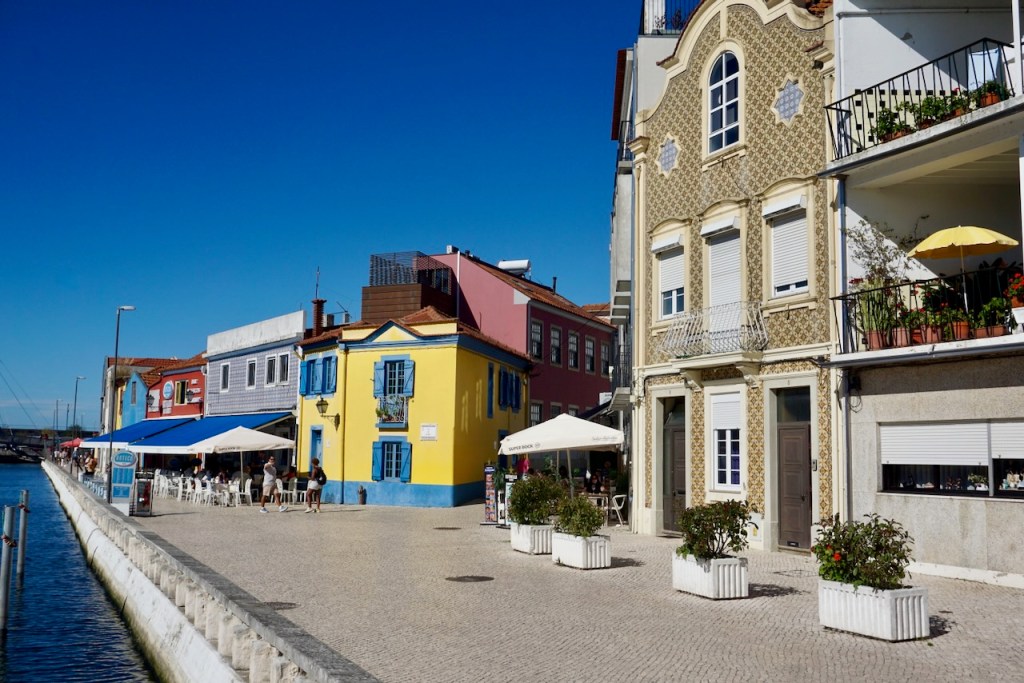
Our first stop on the road was Aveiro, a little town built along a system of canals stemming from a nearby lagoon. For reasons that we couldn’t discern, the bridges were festooned with ribbons on which messages, names, and dates were written, giving everything a rather festive atmosphere.
After getting our bearings, we headed into a plaza for ice cream and made good use of the handicrafts souvenir shop nearby. It always makes me smile to see perspectives of the world from elsewhere.
As always, we appreciated the architecture and the tiles; many of the buildings here had an Art Deco flair, lending Aveiro the feeling of walking through an old film set.
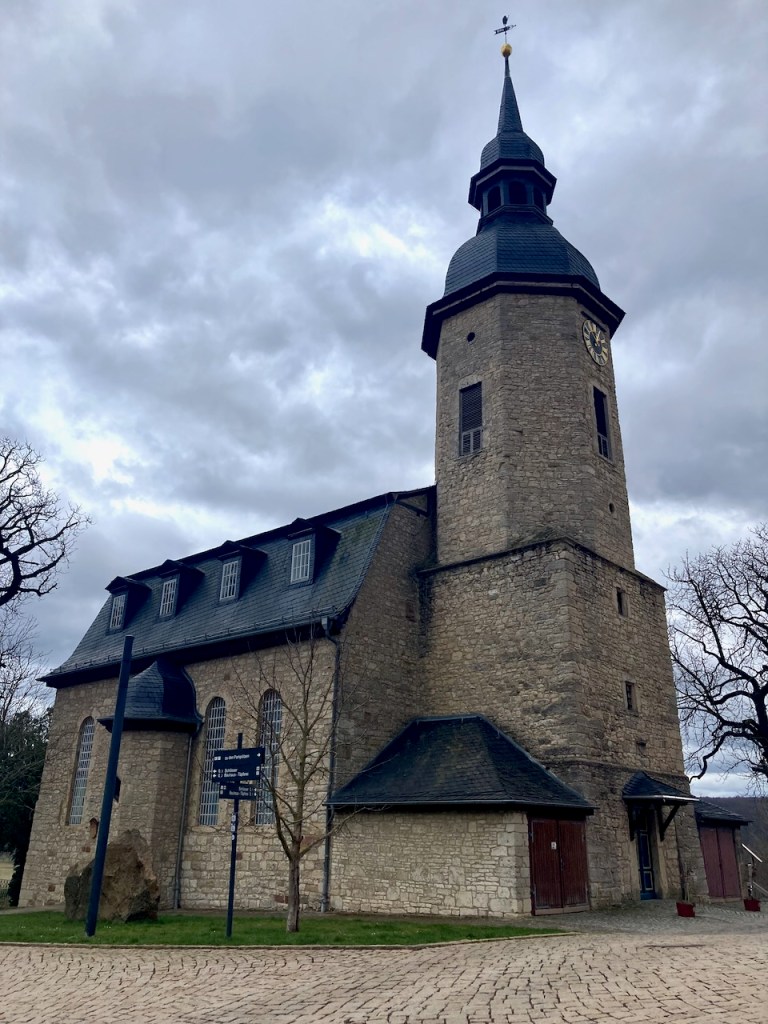
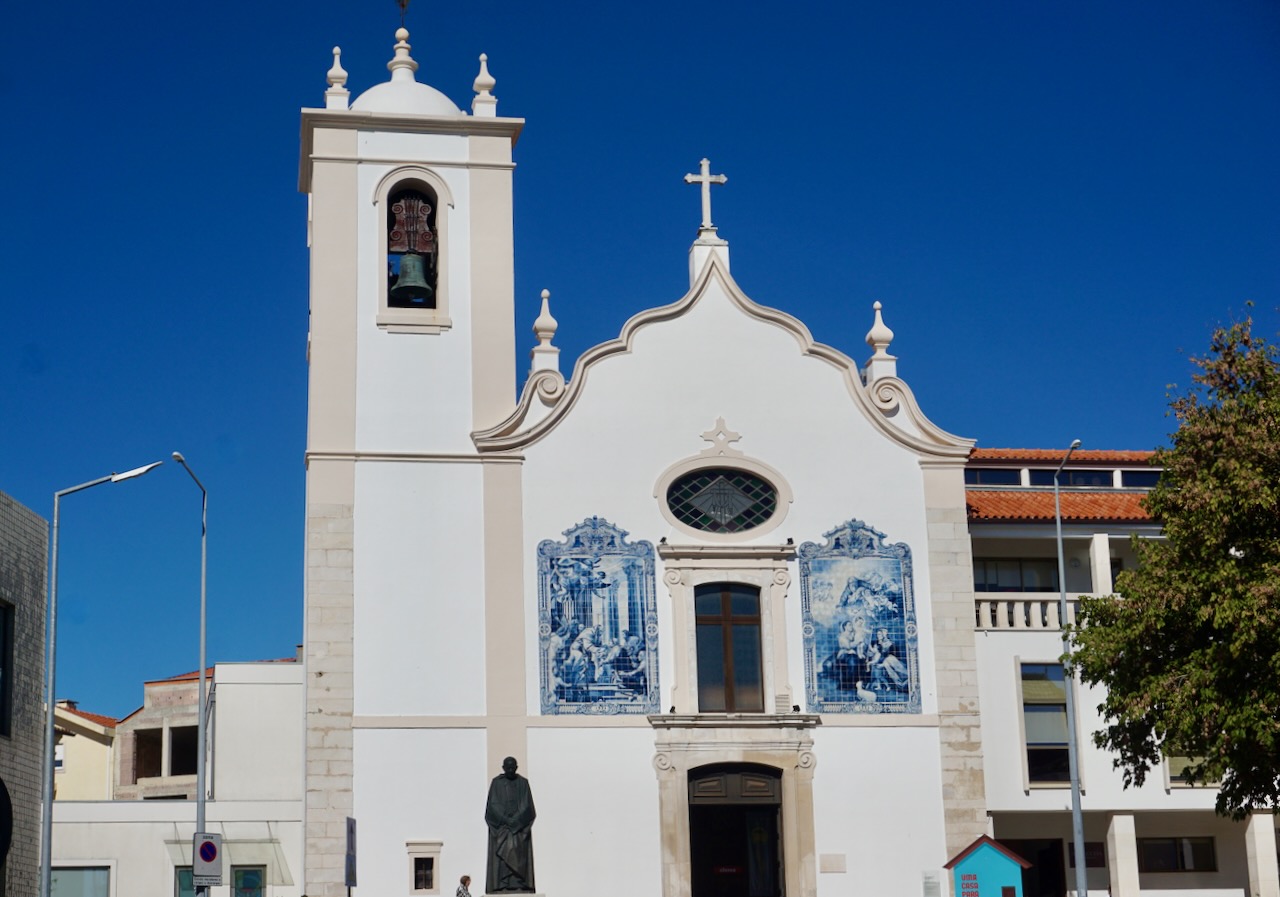
As in most towns in Europe, there was naturally a church to see . . .
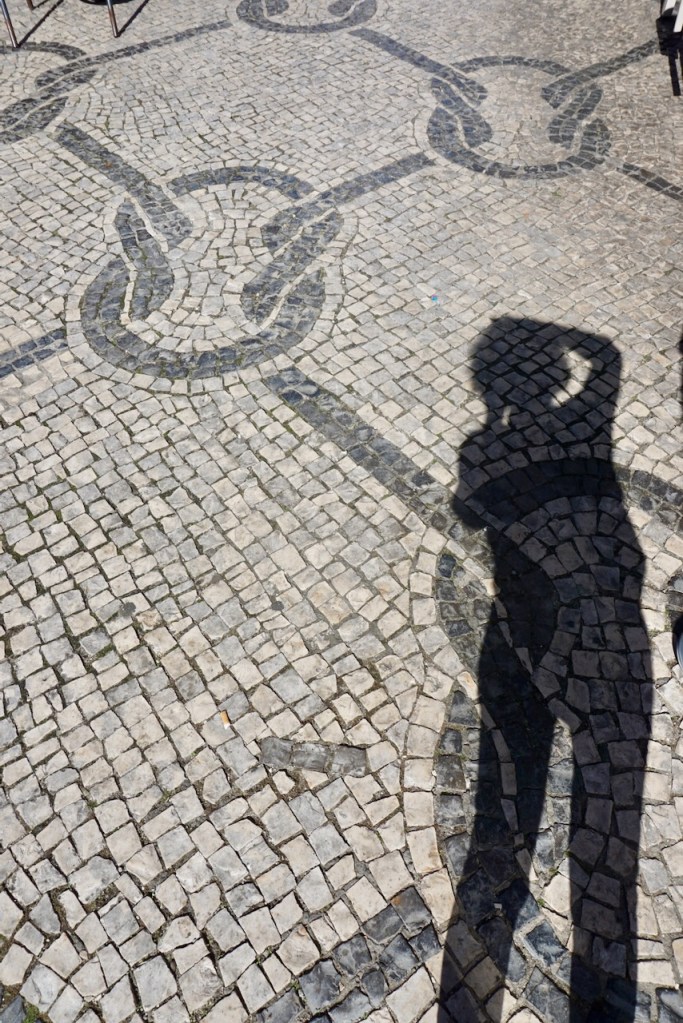
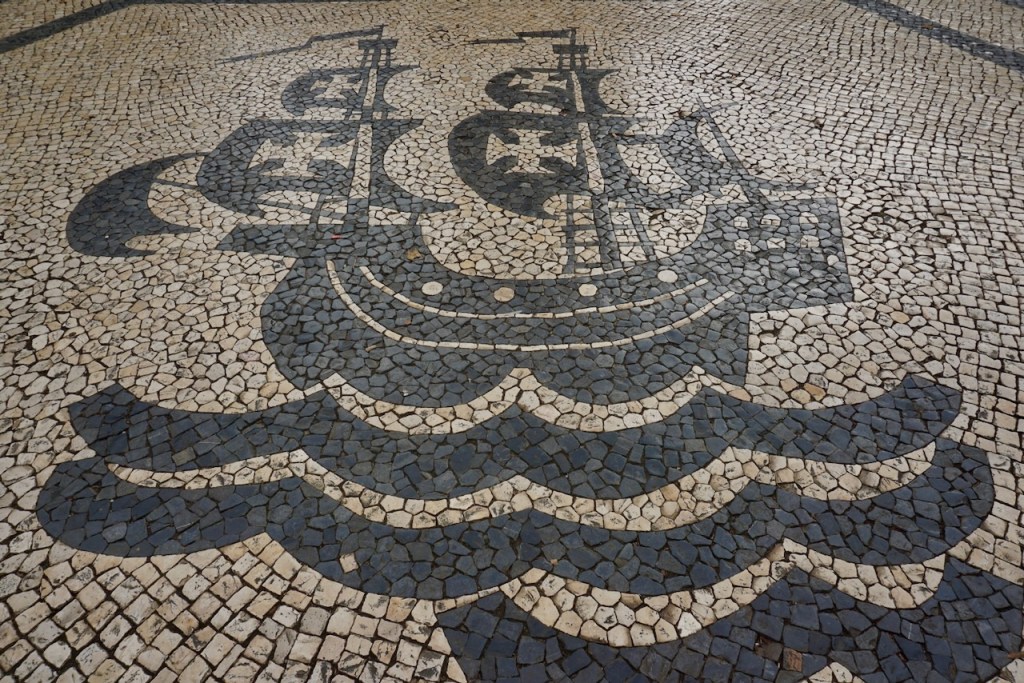
. . . and the mosaics covering the ground nodded at the importance of fishing to the area.
After a brief stroll to stretch our legs, it was back to the car to make it to our next destination before sunset.
Coimbra
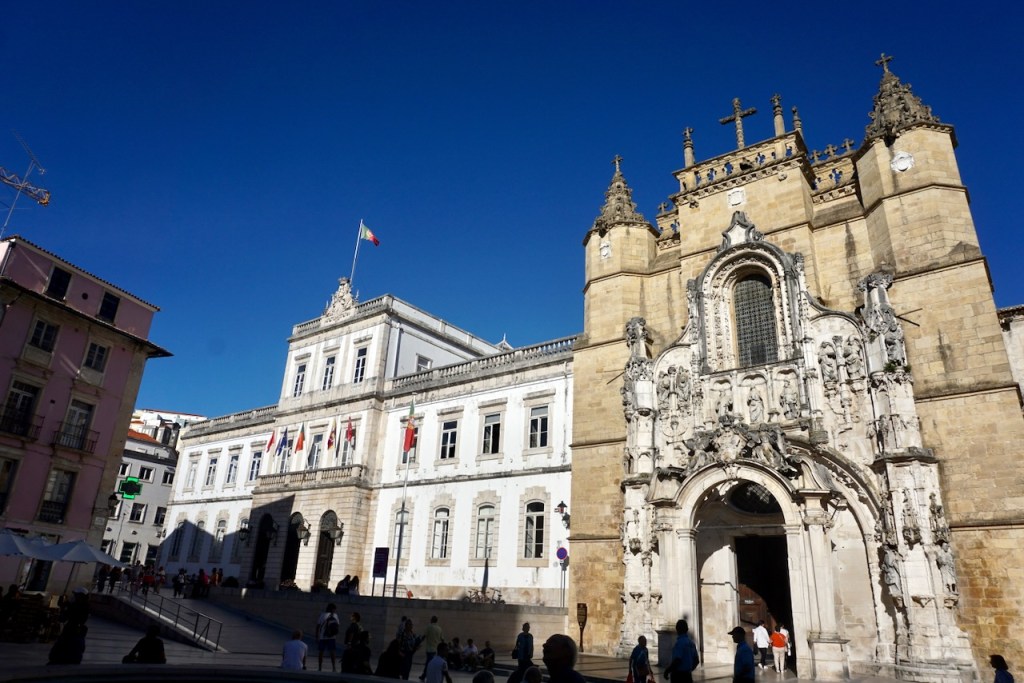
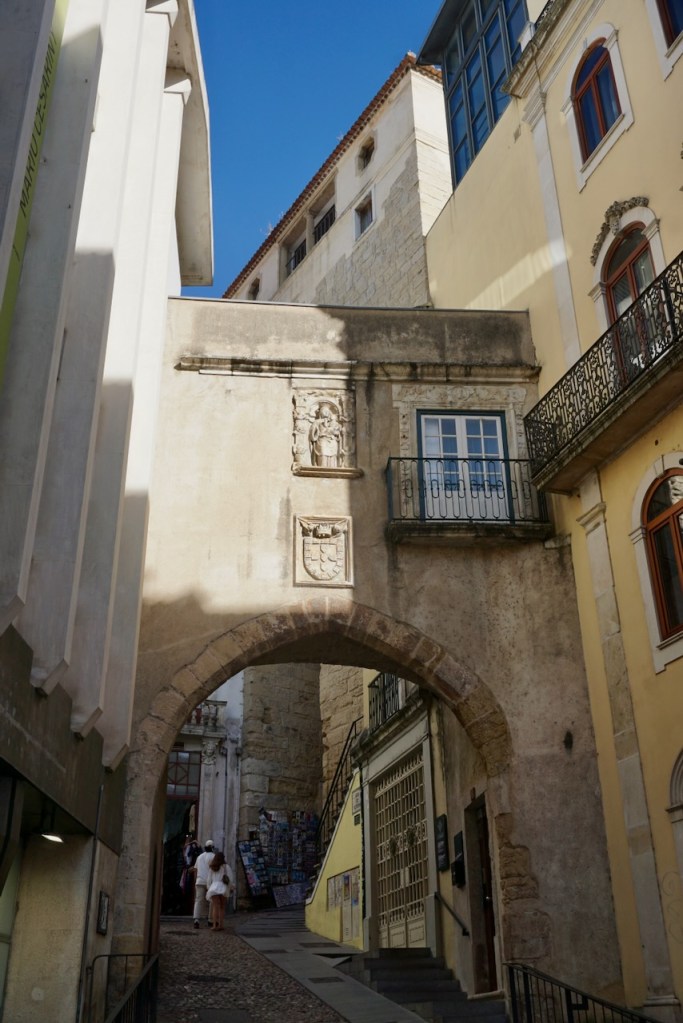
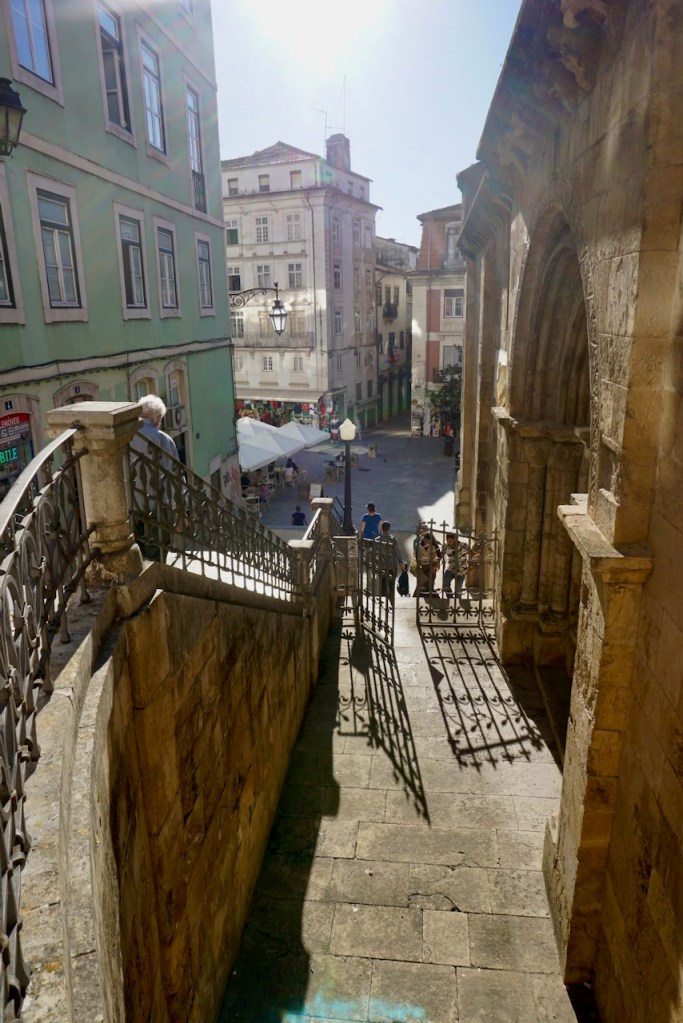
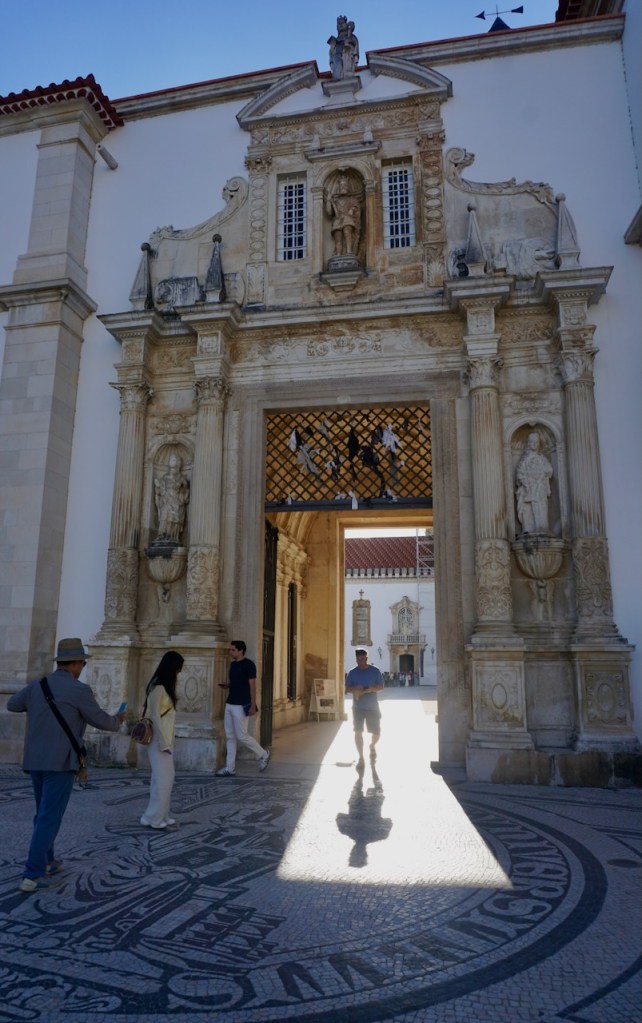
The first thing that strikes about Coimbra, as everyone had told us, is that it’s old. It has a history dating back to Roman times, many medieval buildings, and a university also from the Middle Ages. The construction and stone work differed from what we had seen before, and the layout of the town curved upwards, staircases and streets spiralling, winding, and becoming narrower the higher we went.
At the university, the most famous building is the library, which we admired but did not pay to visit.
Coimbra is a student town and the atmosphere of such a place was present in street art, installations, and many buildings.
It was dusk when we left Coimbra and dark when we arrived at the beach town where we’d spend two nights. As we found out in the morning, we were a world away from touristy hot spots.
Figueira da Foz
Due to globalization, it’s sometimes easy for the English-speaking traveller to forget that there are places in the world that still exist unto themselves. Figueira da Foz was just such a place. Located on the beach, there is some tourism when the weather is right, but not enough that people working in bakeries or grocery stores, with one single exception, spoke English. And I am again reminded what a privilege it is to be able to travel through the world speaking my own language.
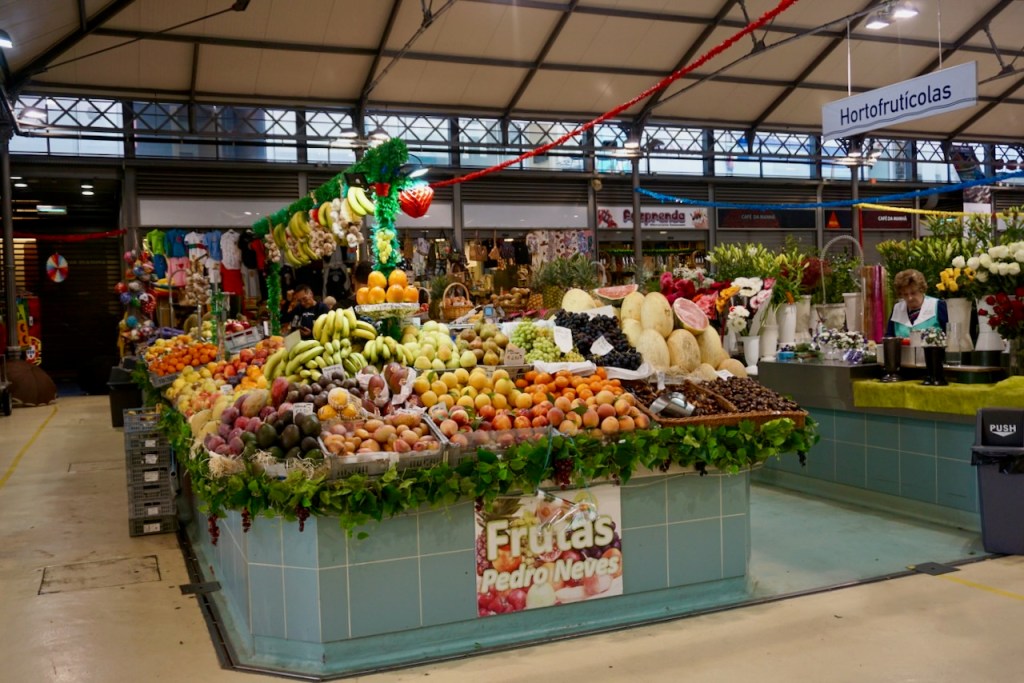
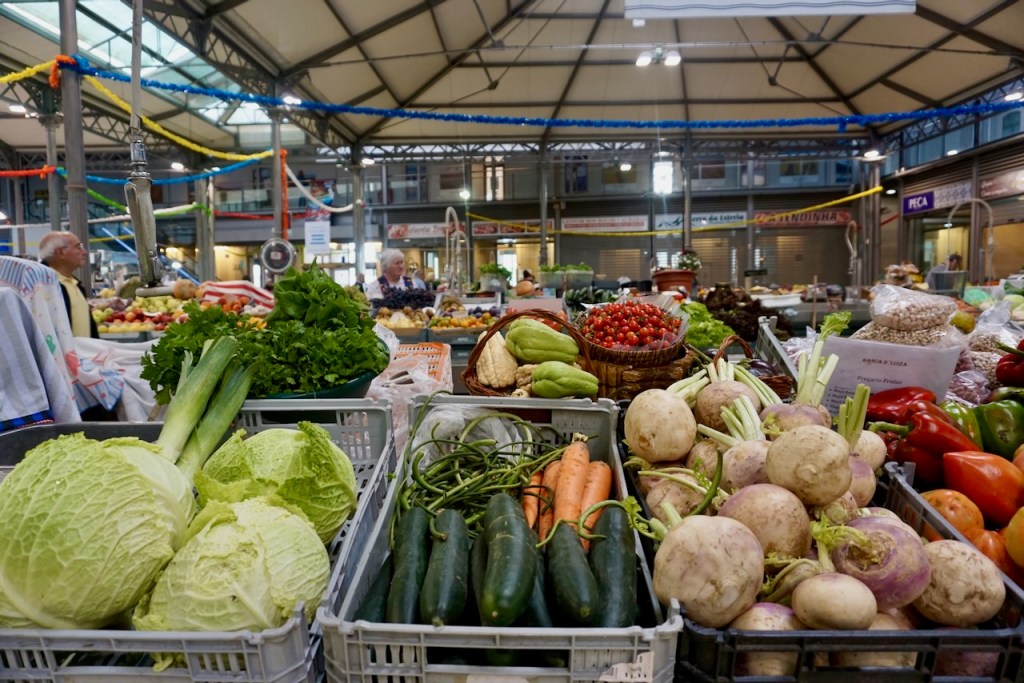
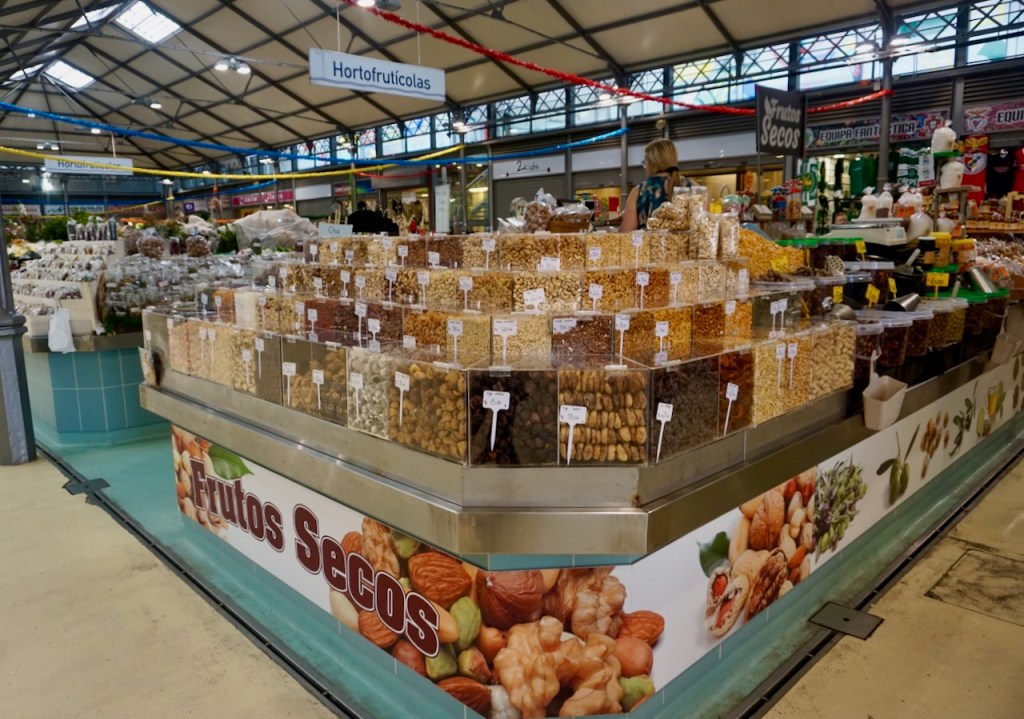
After an unsuccessful attempt in pouring rain to find gluten free breakfast, we headed to the local market. Figueira da Foz has multiple supermarkets (we visited out of curiosity to buy snacks that we don’t have in Germany) but the market was visited by elderly people doing their shopping and simply meeting one another. I would be very glad to have daily access to something similar. We bought fresh and dried fruit and loose tea, and I wished that we had proper kitchen utensils in our accommodation to make ourselves a real meal.
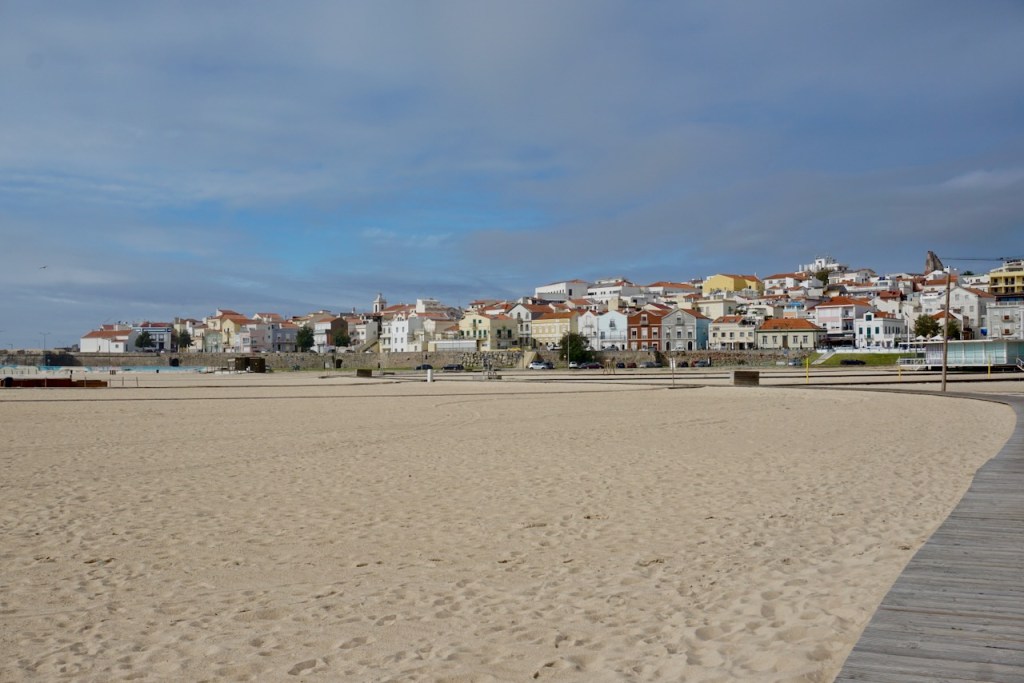
When the rain stopped in the afternoon, we walked for a long time along the beach, testing the cold Atlantic with our feet, laughing and running away from the waves that came up sharply and suddenly, far higher than we expected. This is not a surf beach; the wind and waves were far too dangerous for that.
We were pleasantly surprised by the excellent meal of traditional tapas (heavy emphasis on seafood but plenty for the vegetarians) accompanied by local red wine. And we had the distinction of being the first people in the restaurant, again driven by rain, and the last ones out. We talked and laughed and it was a pleasure to sit cozily inside, the lighting dim, enjoying the time. Considering we would be on the road again the next day, it ended up being a rather late night.
Sintra
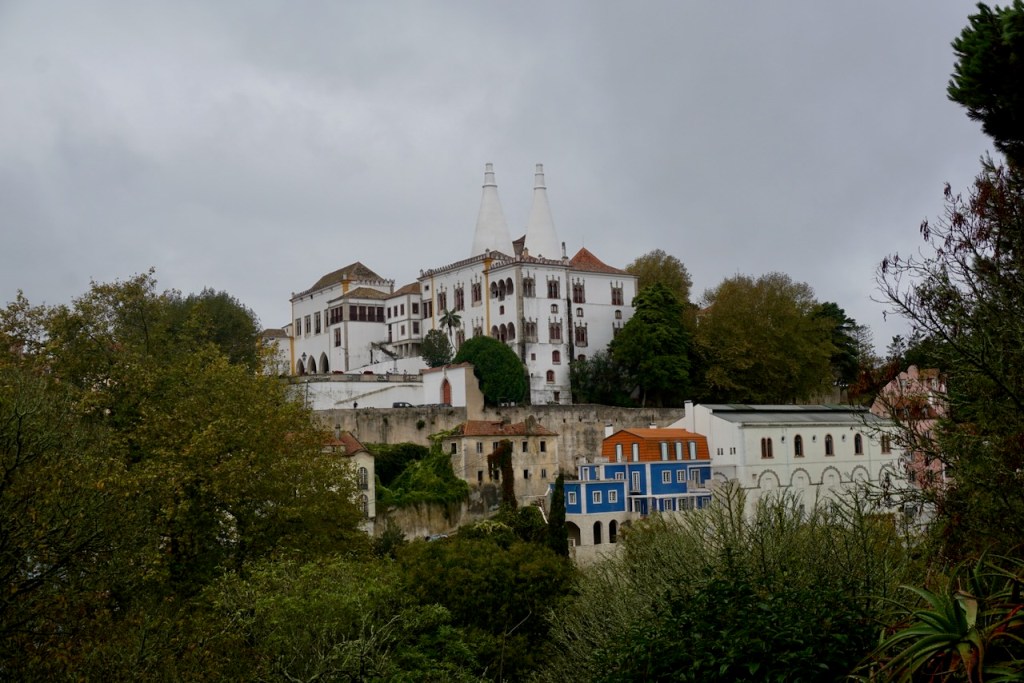
In the rain again, we stopped in Sintra, parking as required in the city before making our way on foot past the train station and into the old town where parking is prohibited. Like everything so far, we had no real plan for Sintra, other than to see castles and gardens. As we found out, however, Sintra requires tickets, some timed, for everything. The rain let up and we began to walk in the direction of the next set of hills, following signs pointing to castles built, as always, as high up as possible. Already, the town had a mysterious air to it.
It soon became clear, however, that rain was coming in again and that it was much too far to walk in our jeans and street shoes. We found a bus stop, did some quick inquiries with the aid of technology, talked to the next bus driver, and bought round-trip tickets that took us back down to where we started before heading up the impossibly narrow roads through the old town and up the hill. I quickly understood why cars weren’t allowed.
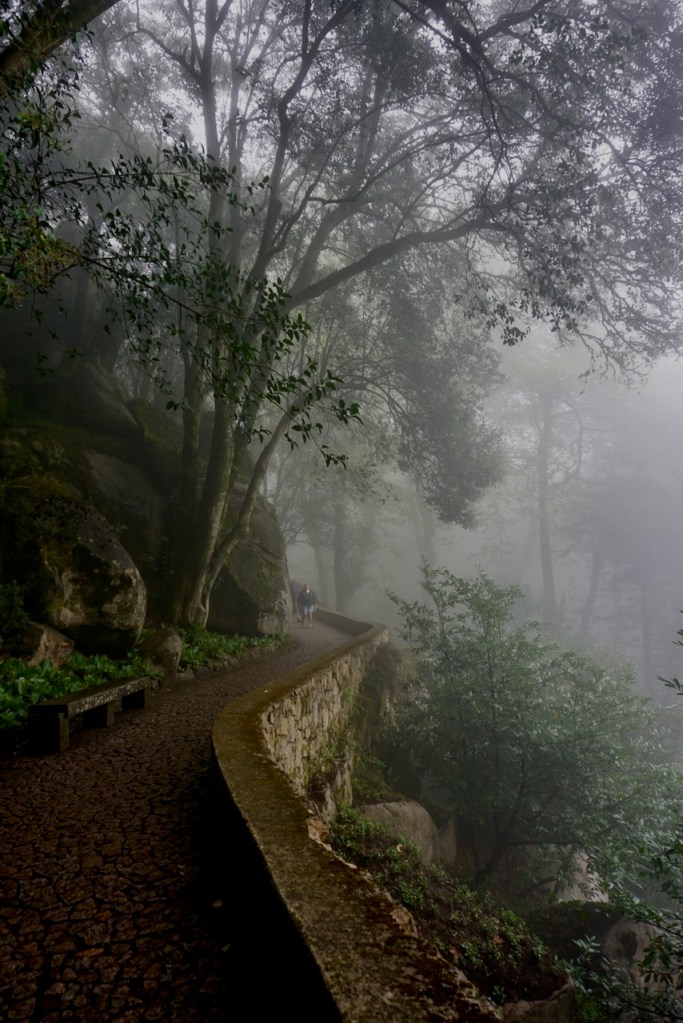
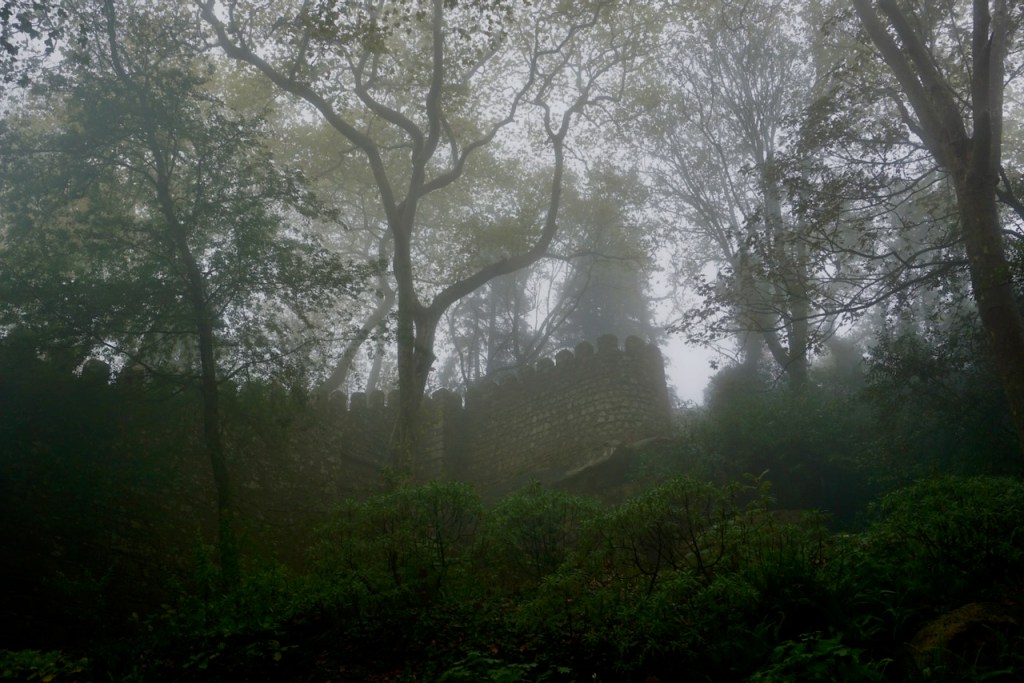
The drive up to the castles overlooking Sintra was like entering a portal to another world. It began to rain in earnest, giving what was already a unique place a mystical, ancient feeling. There were secrets here, there had been lives lived, there were stories told and to tell.
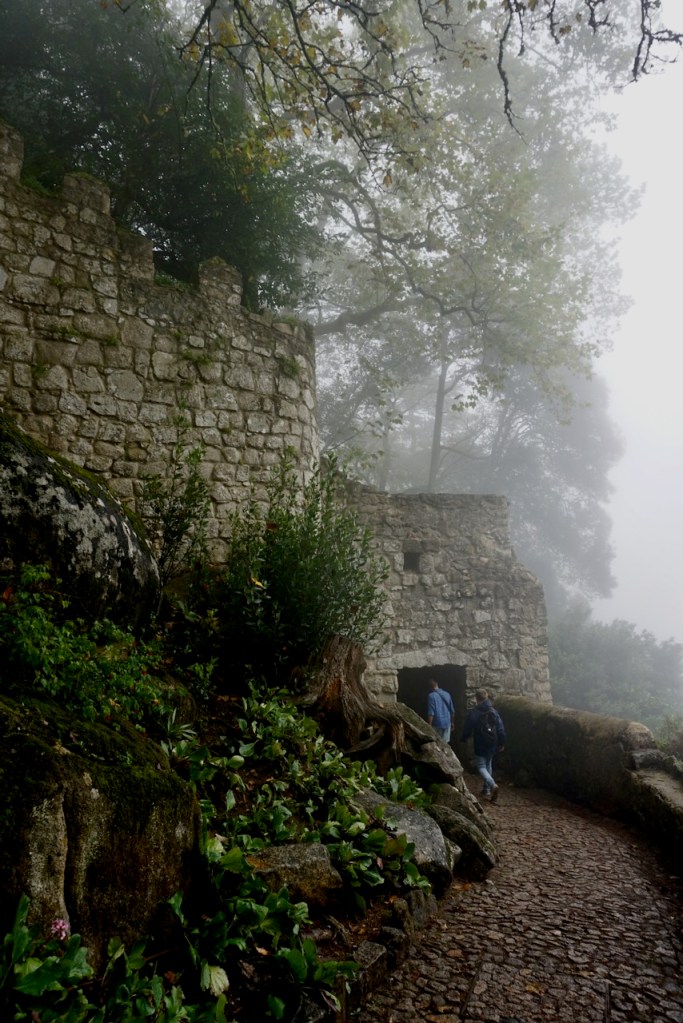
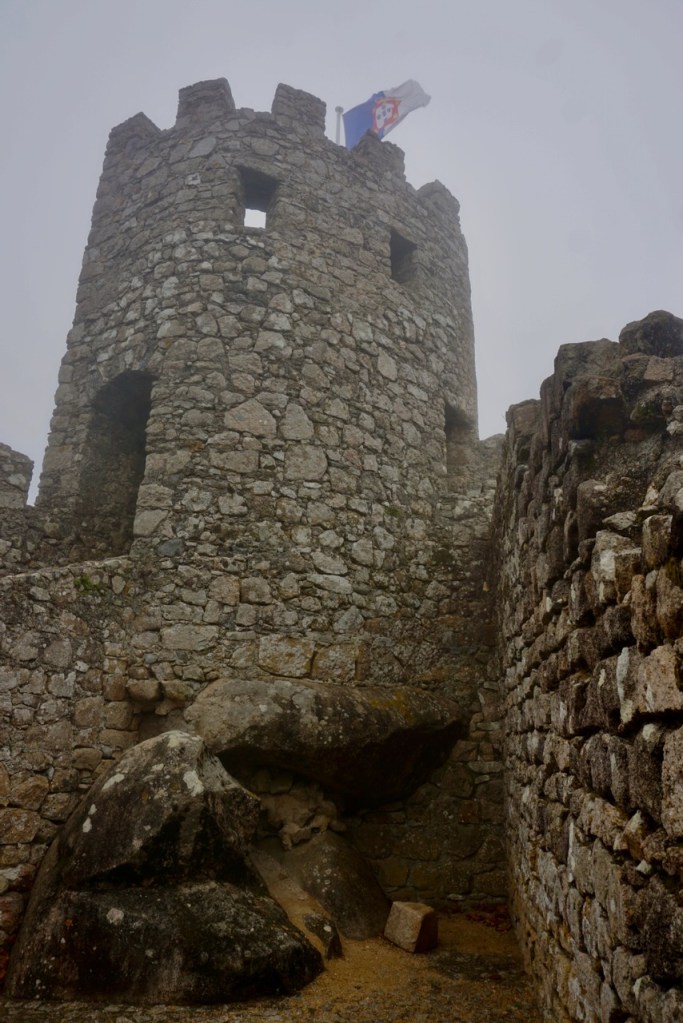
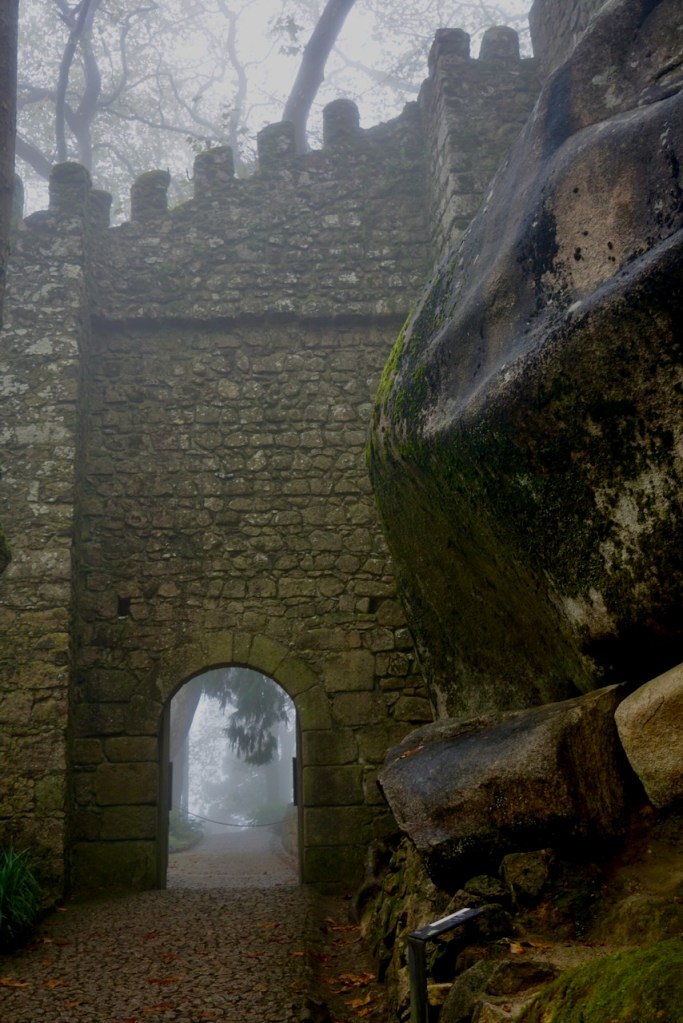
As every castle charges an entry fee, we made our choice based on where we got off the bus and bought tickets for Moorish Castle, a fortification dating back to the tenth century. We saw ancient cisterns, walked along the fortress walls, and looked at evidence of the confluence of Islamic and Christian history in the area.
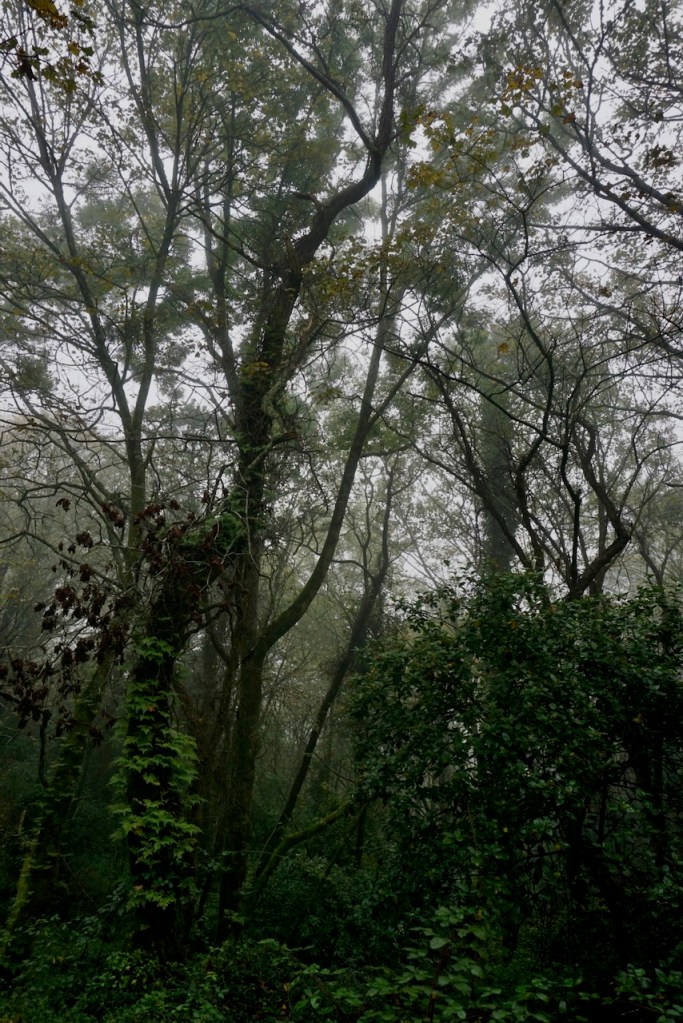
The air temperature was different up here, the greenery so lush as to create a microclimate completely juxtaposed with the palm trees below. This was a magical sort of world, a different place, an ancient time. The rain didn’t invite us to linger, but being there was a far more immersive experience due to the rain than it would have been without it.
Lisbon
A broken entry gate in the parking garage greeted us in Lisbon and we were instructed to simply drive around the block and try again at the other entrance. In other parts of the world, there might have been a sign, but I have to admit that I do like the casual, relaxed lifestyle of southern Europe.
Lisbon was instantly all-consuming in the ways that big cities often are. Loud, busy, fast, a buzzing that excites the senses. I enjoy feeling the thrum of a city and I enjoy the exploring that comes with it, but I feel myself having slowed down a lot since moving to a small town. As we had throughout Portugal, we spent our time in Lisbon just walking and looking, and therefore doing everything at our own pace.
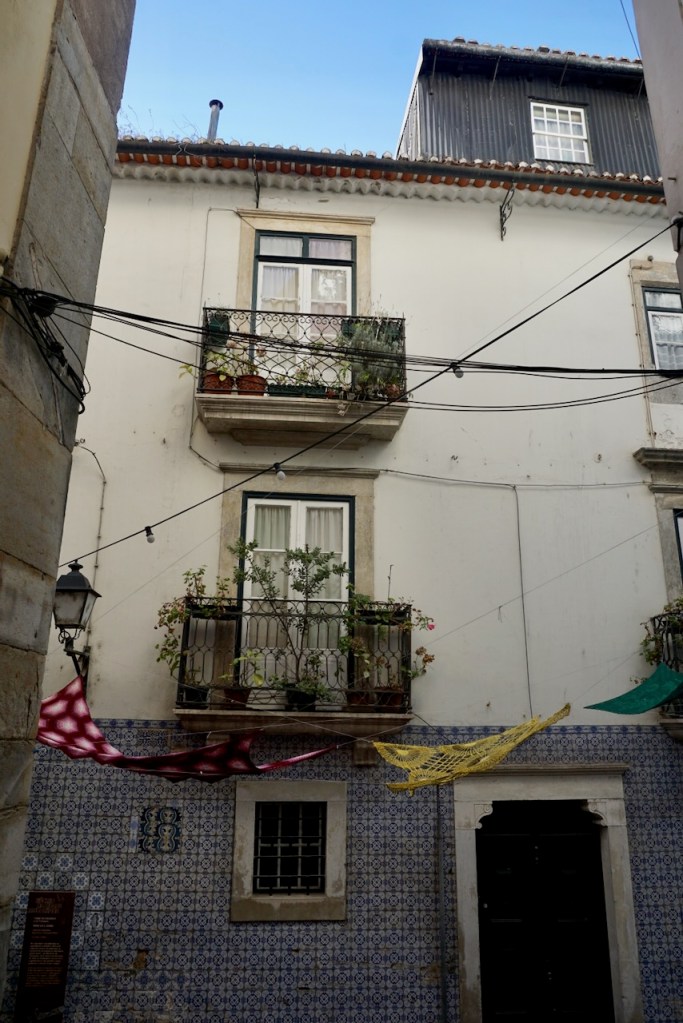
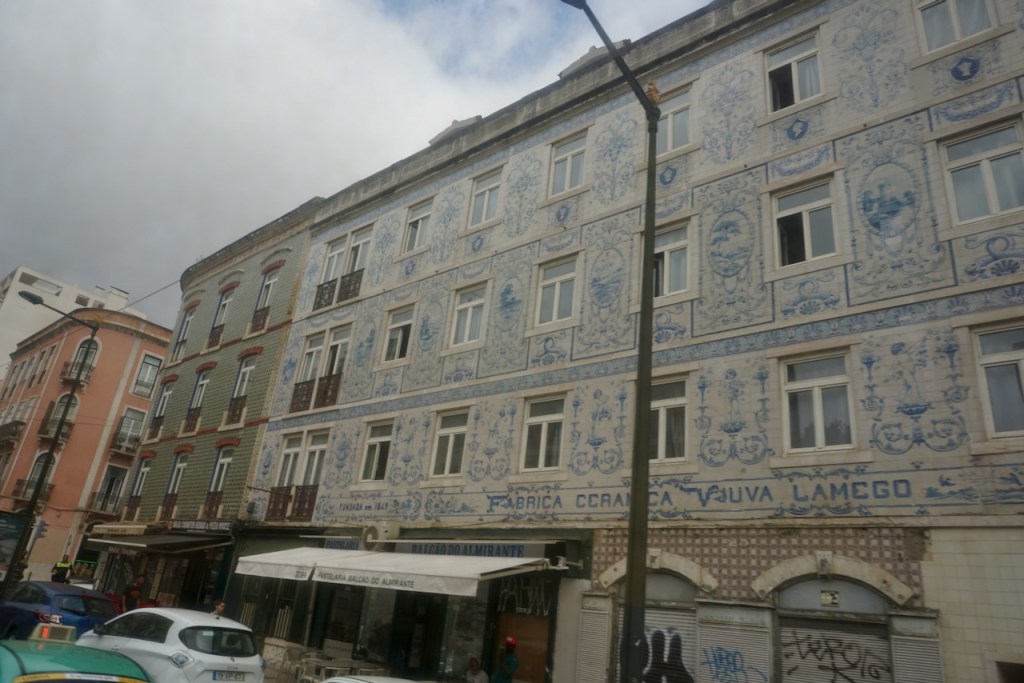
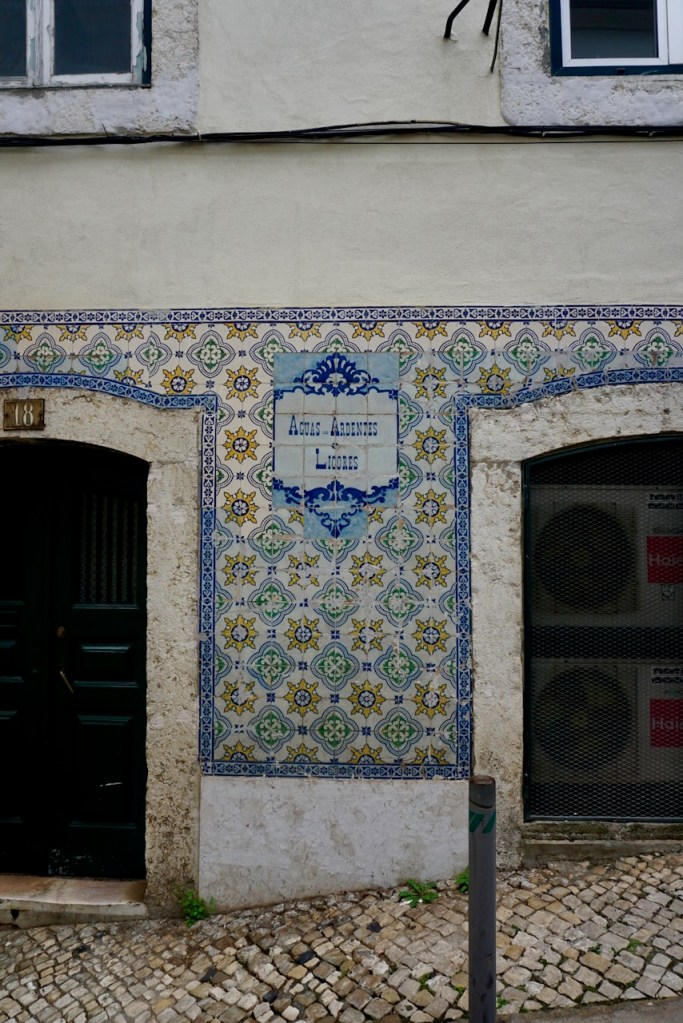
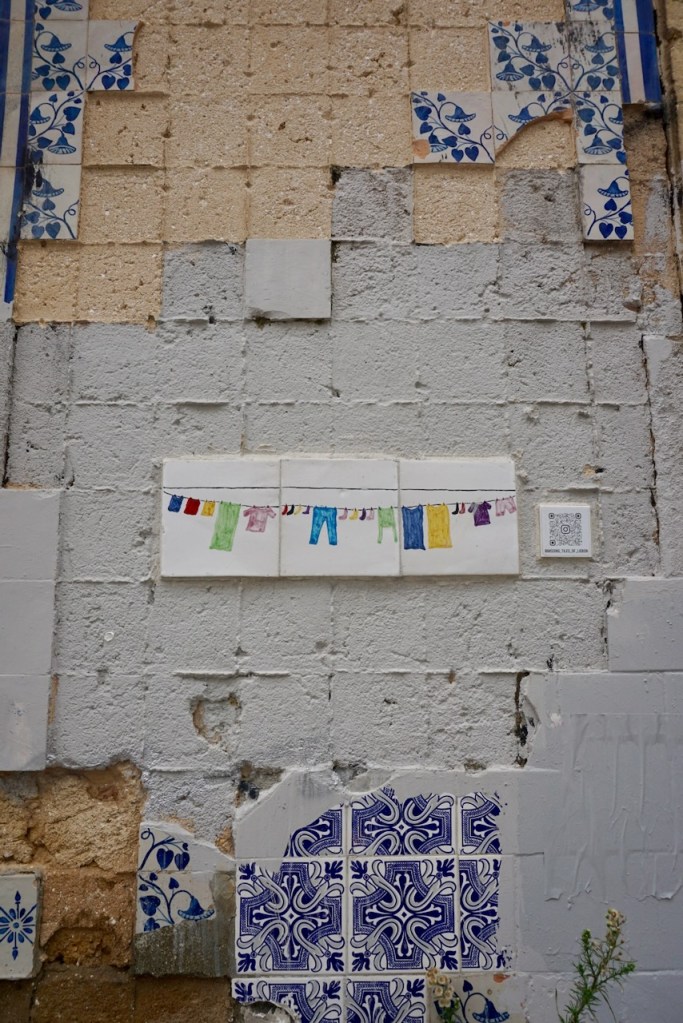
As usual, we were enamoured with tiles . . .
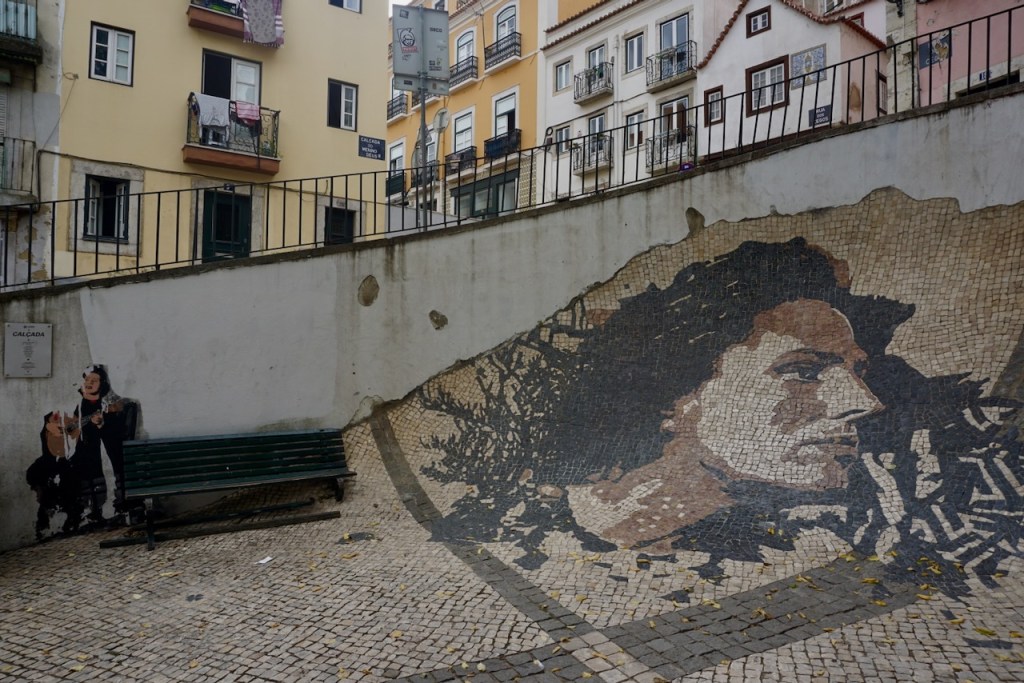
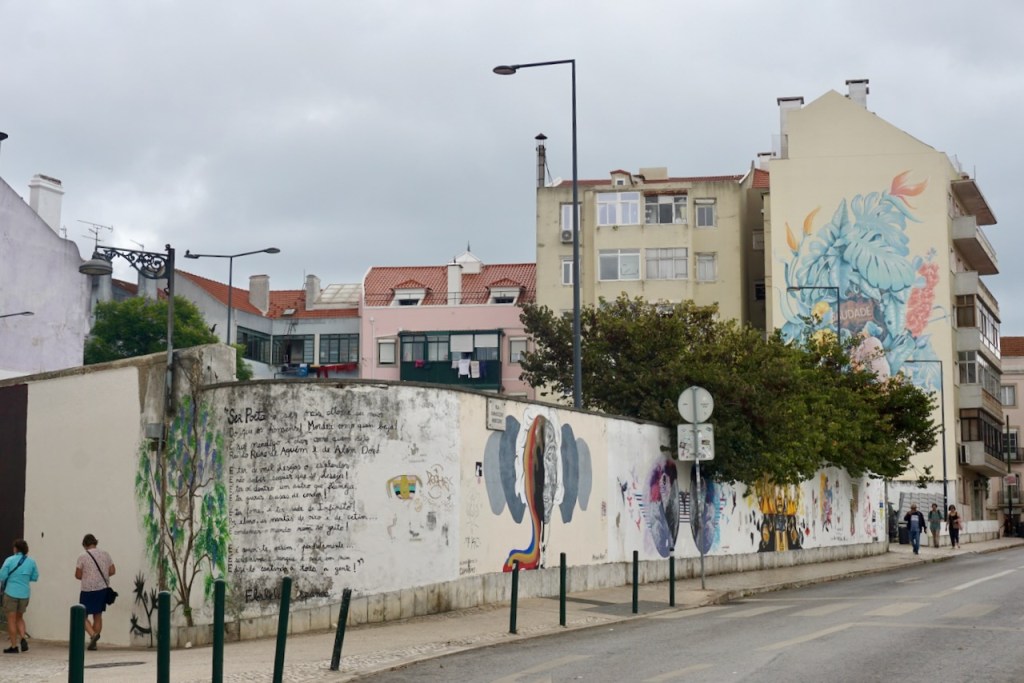
. . . the street art and symbols of human creativity . . .
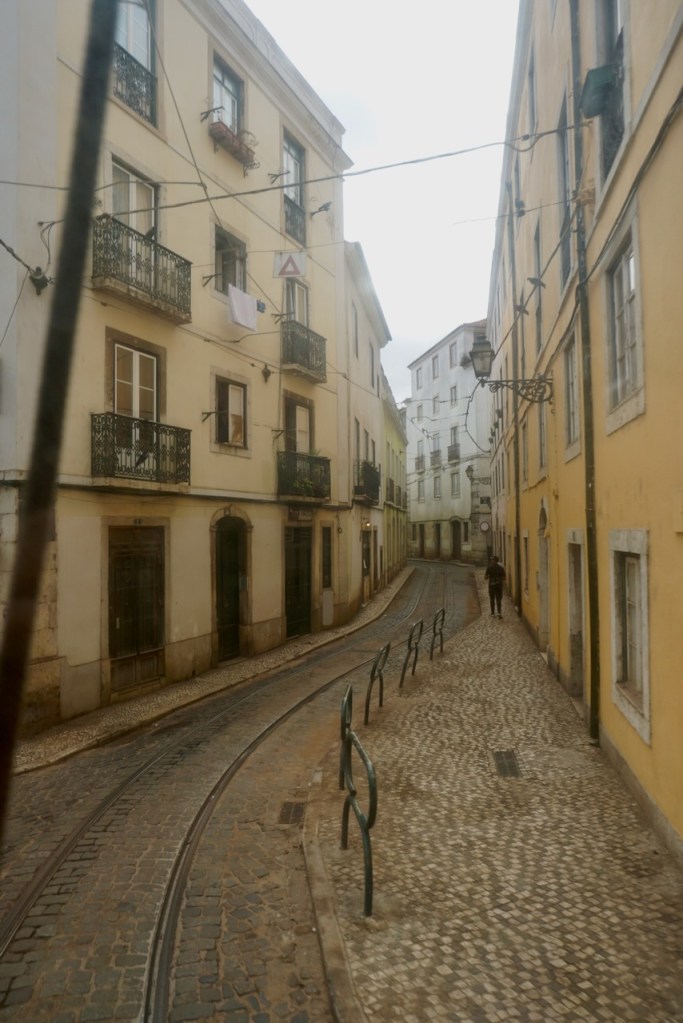
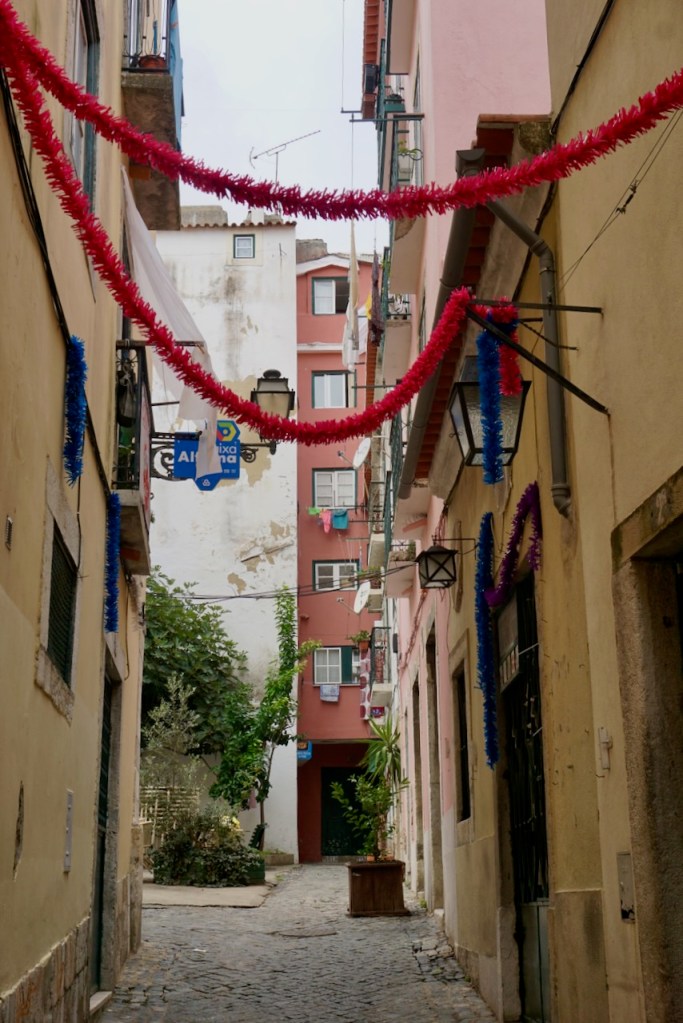
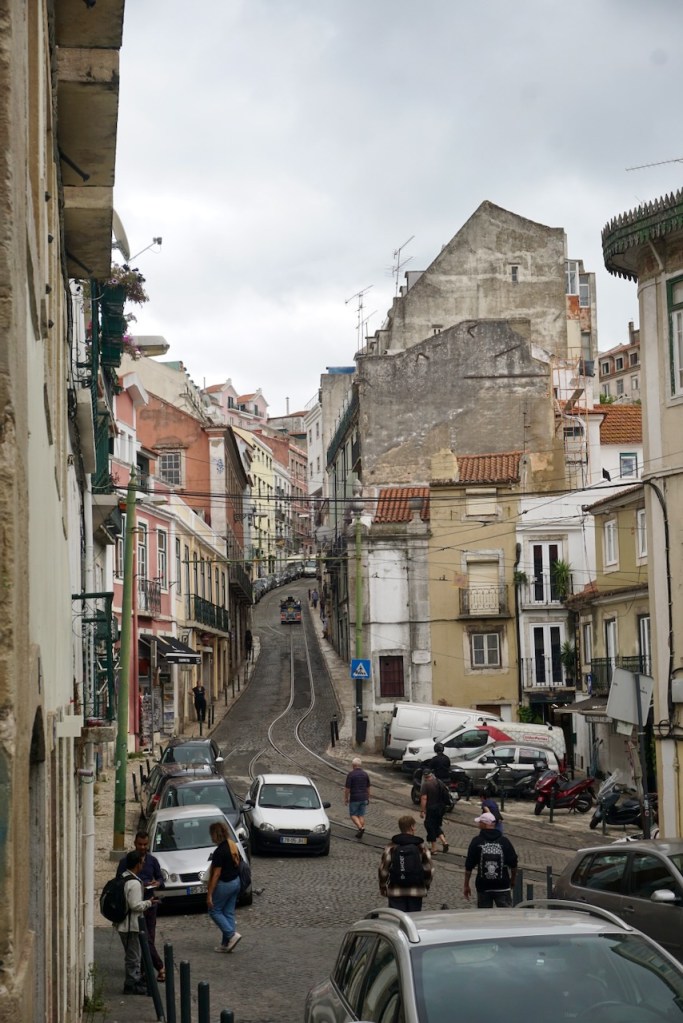
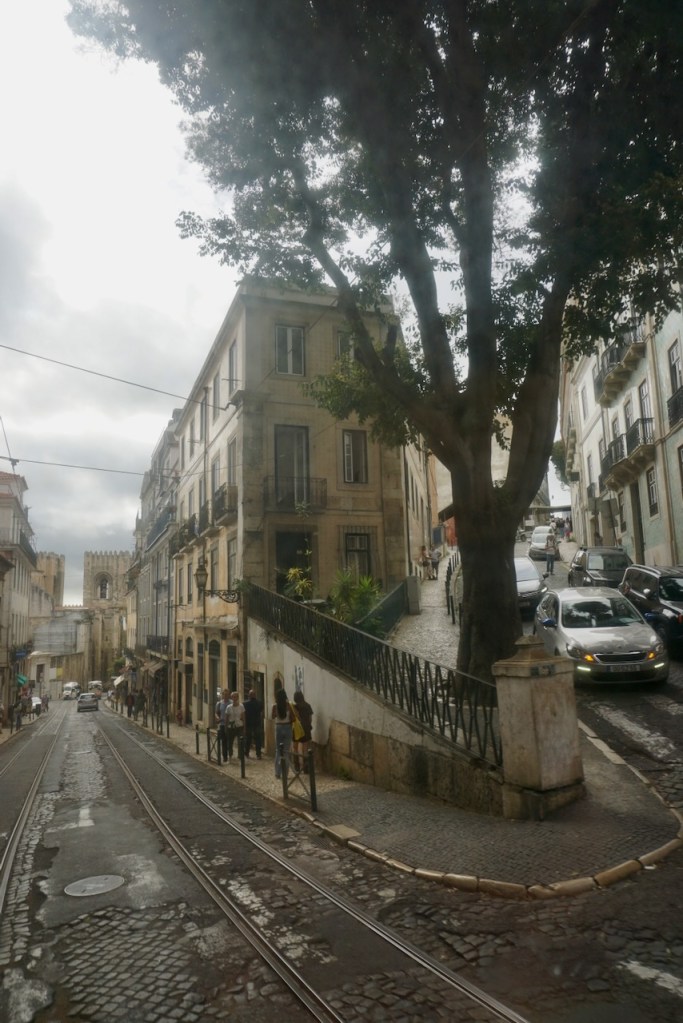
. . . and the twisting, winding streets built into the hills that make up the city and the Alfama, the old town.
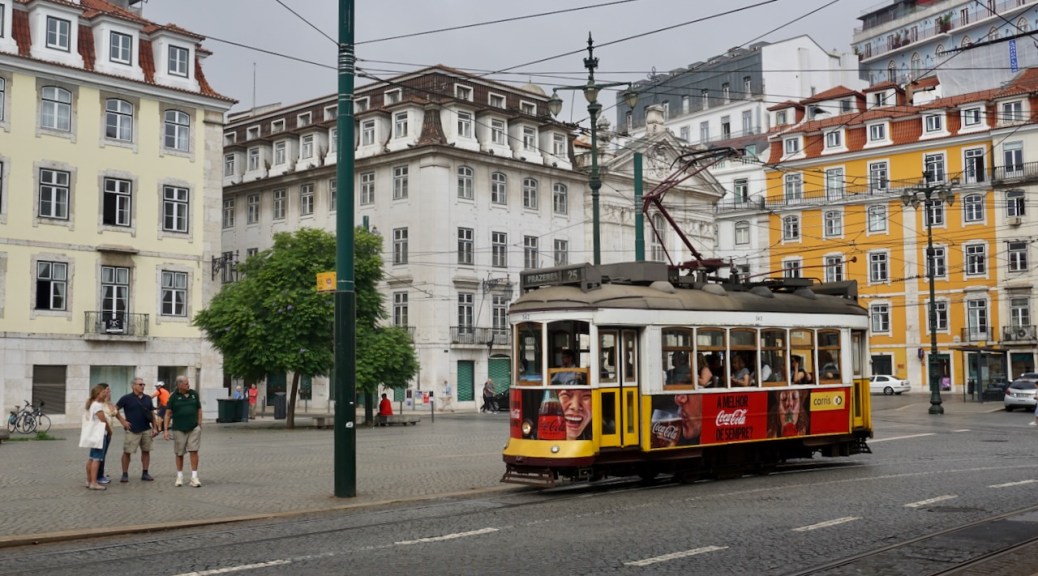
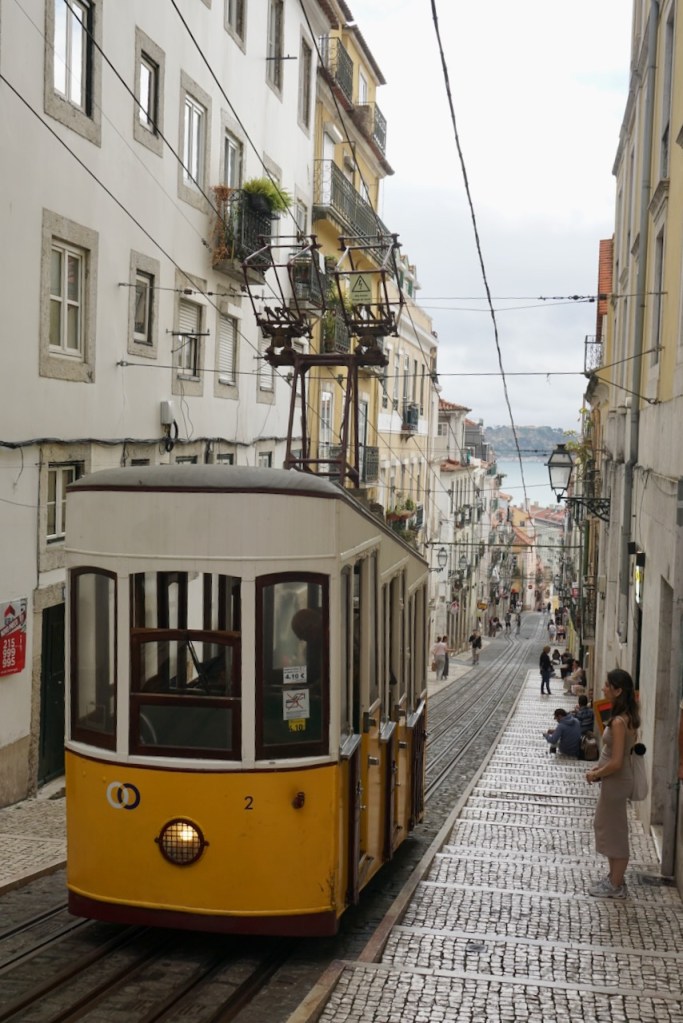
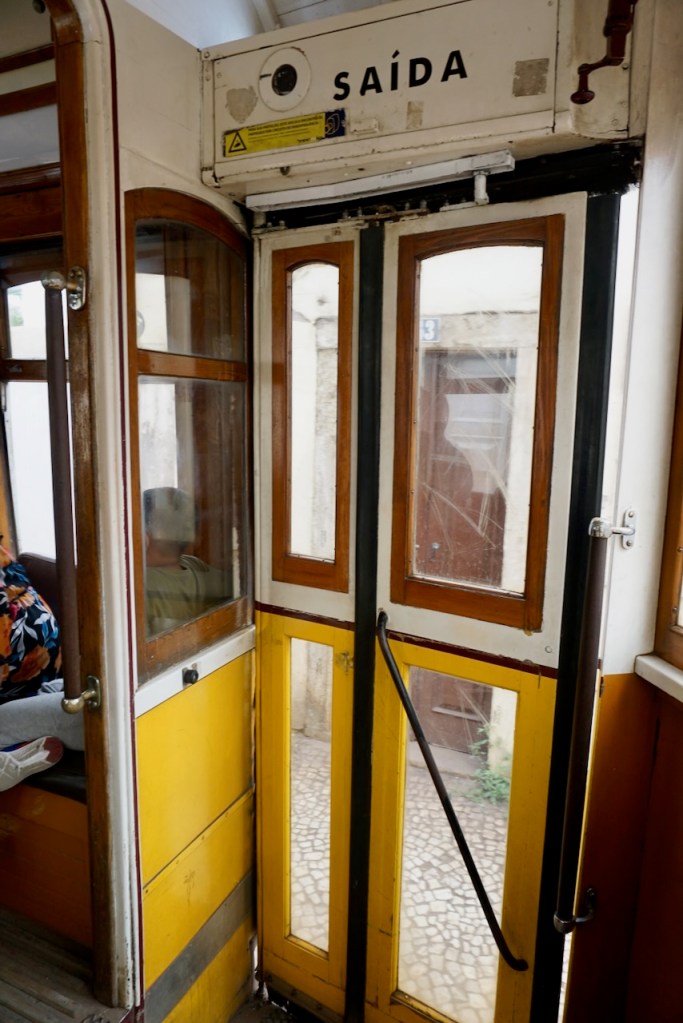
Streetcars and old trams are a particularly charming feature of Lisbon and we went for a ride on Line 28E, taking it from its starting point to its terminus. I hung on in the back, trying to take photos out the windows, and found the speed rather alarming.
We had not expected so great a presence of tuk tuks in Lisbon, but they were everywhere. A glimpse at the prices convinced us that we were better off walking, but they probably are a great option for some, particularly those who would have a harder time with the stairs and hills.
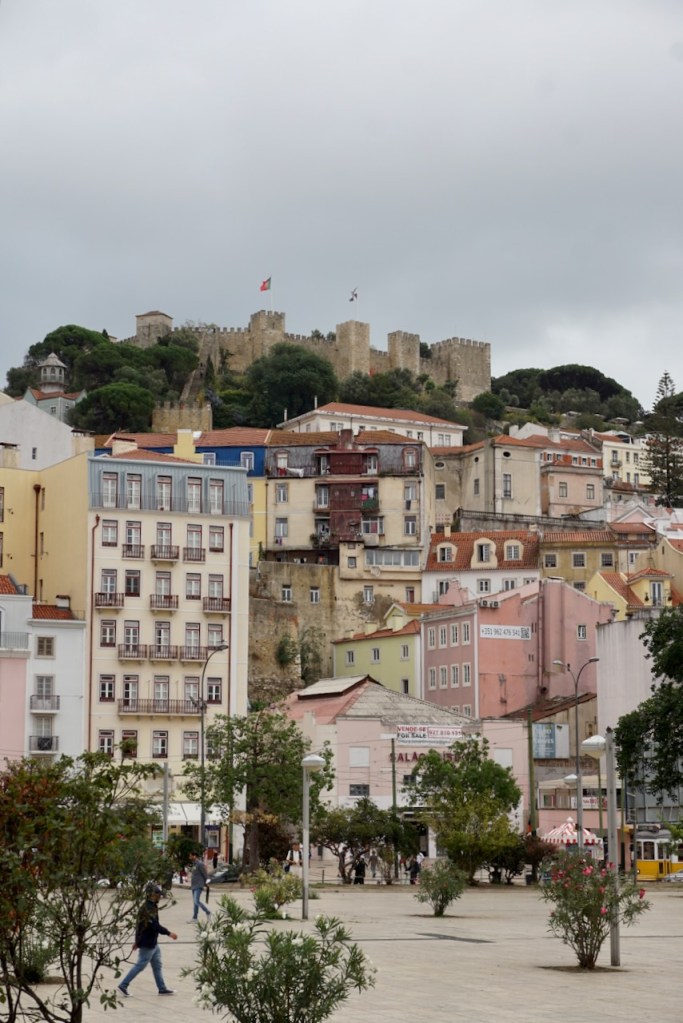
We walked up to the lookout point Miradouro da Senhora do Monte, from which we could also see São Jorge Castle, and gazed down at Lisbon, listenting intently as the tour guide next to us described the stages of building in different neighbourhoods.
While we didn’t go inside the castle, we were tickled by the peacocks that came out to say hello.
Another aspect of Lisbon that we really enjoyed was the nature that popped up everywhere, despite the tiled walkways and streets that seemed to be giving their best efforts to prevent just that.
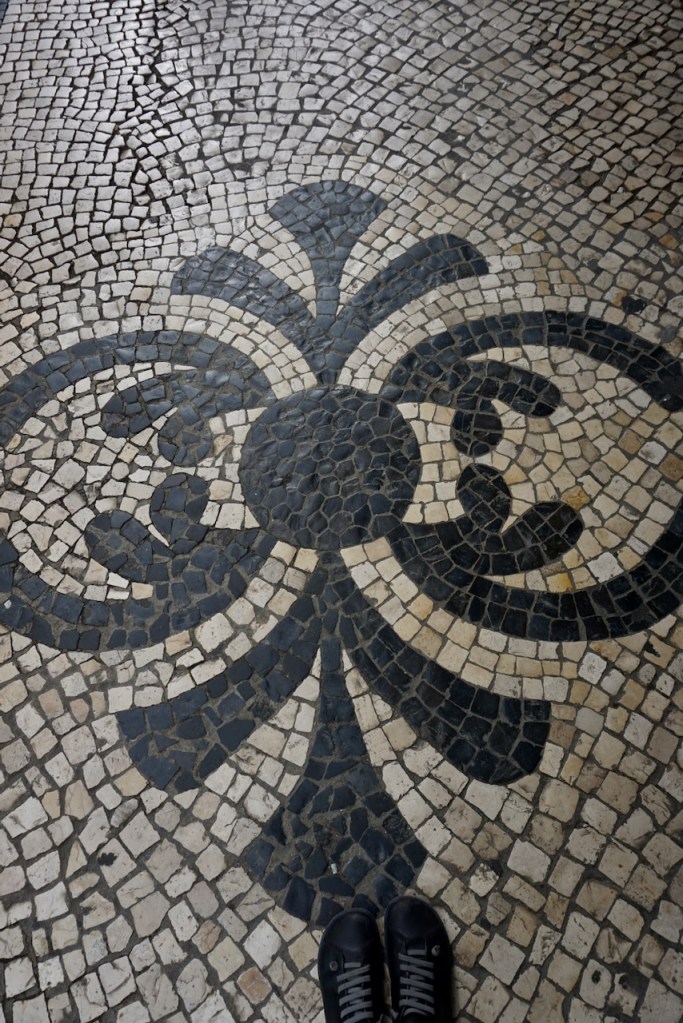
It is worth remembering that Lisbon is old, actually ancient and prehistoric, and cities that old have walls. It was really nice to see shadows of Lisbon’s history in the ground that we walked on.
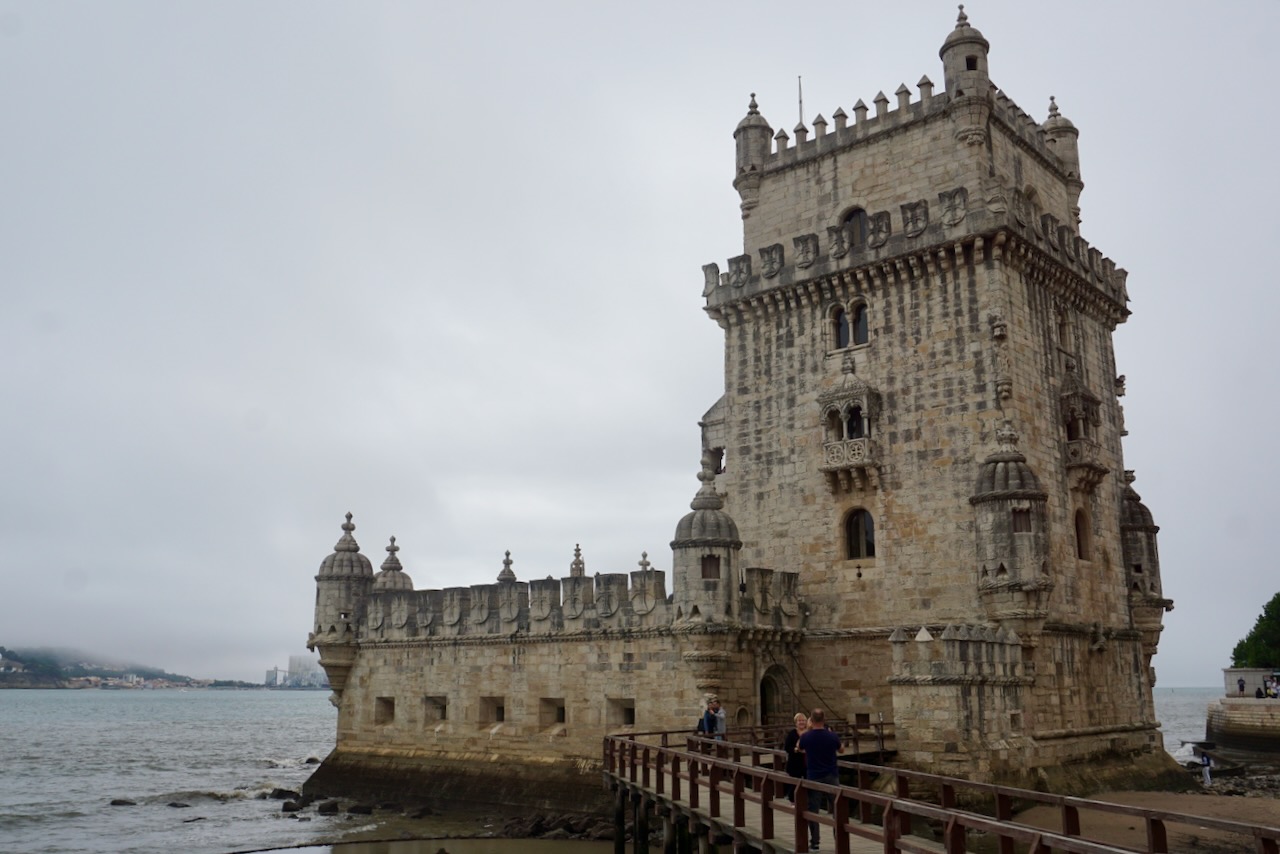
On our last full day in Lisbon, we walked to the Torre de Belém, a tower fortification built to control the shipping and commerce that made Lisbon famous and Portugal, the first of the European explorers, rich.
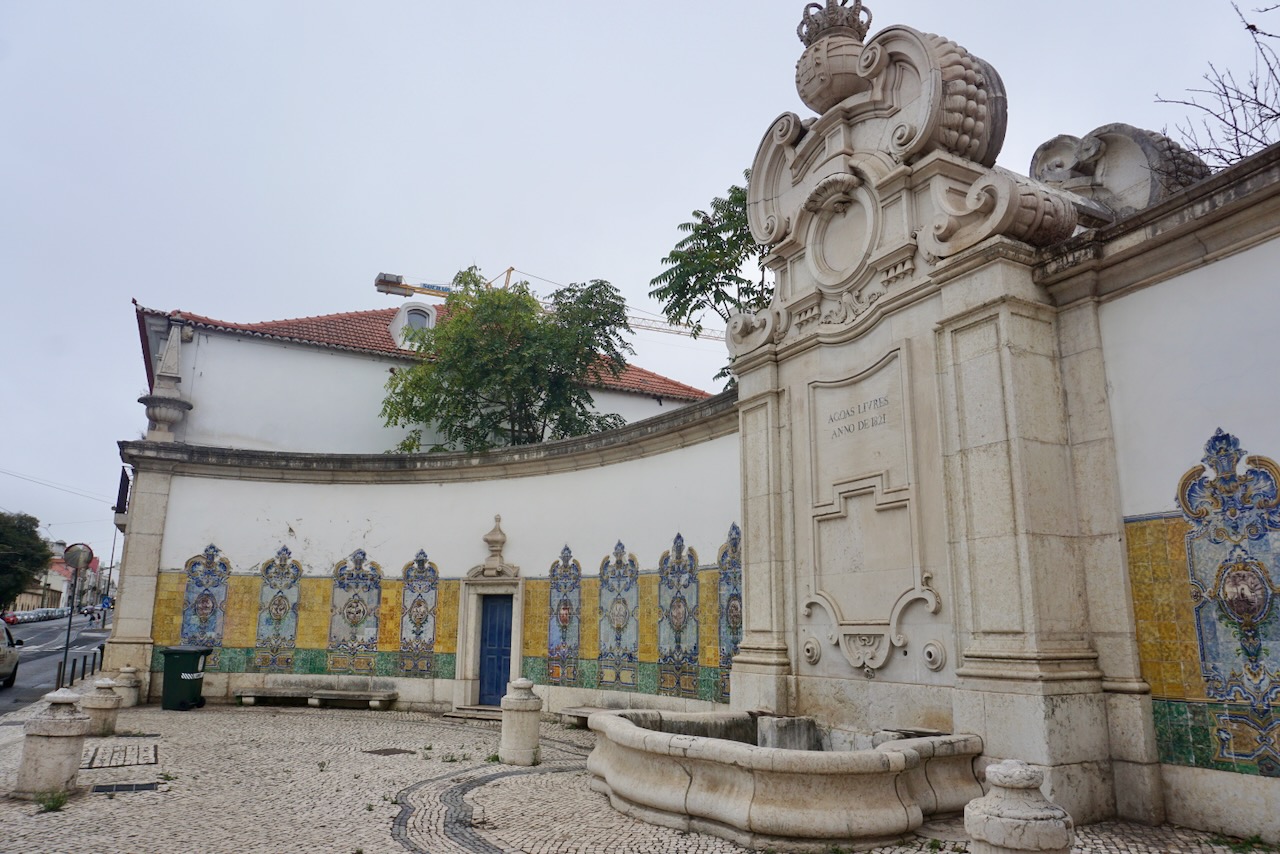
Along the way we passed a fountain that seems to commemorate the aqueducts built to provide water to the city (I could not find any data to verify this, so please jump in if you have details) . . .
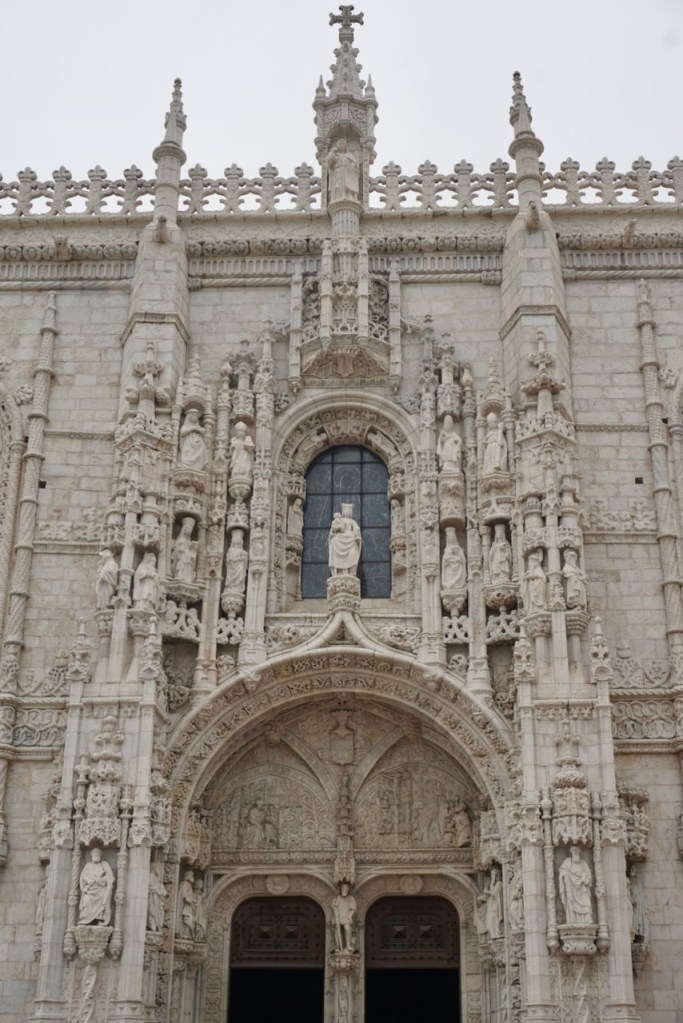
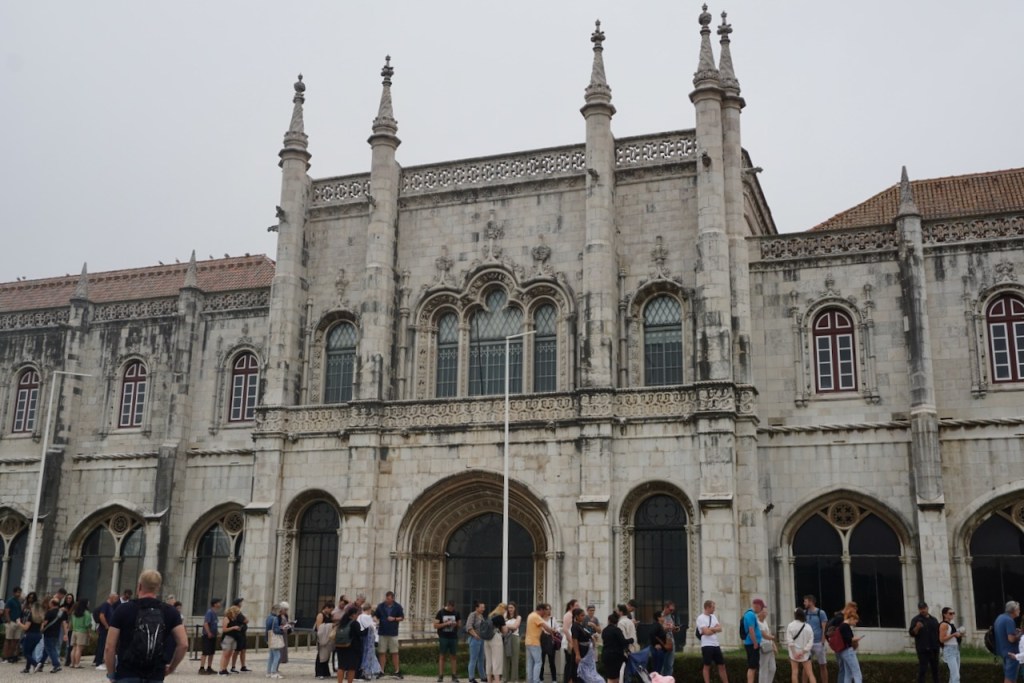
. . . and Jerónimos Monastery, which was stunning enough from the outside. Judging by the lines of people, there’s also a lot to see on the inside.
The clouds began to shift as we arrived at Belém Tower, where I once again have to give credit to indefatigable lines of people. The waiting time was listed as two hours because only 150 people are allowed in at once, and we opted not to wait.
On the walk to the bus stop (public transit in Lisbon is incredibly easy), we passed the Monument to the Discoveries, which included a tiled map on the ground of places the Portuguese had developed colonies. As I took the photo, I couldn’t help but think that the monument didn’t quite fit with a time period when so much of the world is reckoning with colonial history. The Padrão dos Descobrimentos was built in 1940 and that was a rather different time.
We ended our time in Lisbon with a cocktail in the rain at a rooftop bar, a bar fittingly located on top of the parking garage with the broken entry gate. The people of Lisbon know how to have a good time and that was also apparent in the flavour and feel of the city. I don’t know if we’ll make it back to Lisbon, but it was definitely not the last visit to Portugal. “Adeus” until next time!
Photos, travels, musings, and ideas on education by someone trying to make the world a better and more peaceful place

















































































































 By Rebecca Michelle