I recently had the opportunity to travel to Budapest for work, an opportunity I relished not only as a chance to learn something new, but also as a chance to spend some time in a new place. As it turned out, I learned far more than I had hoped at the training, though it got in the way of my exploring. There is a lot to see in Budapest, which is already two cities rather than one, and my glance across the surface left me with a longer list than I had when I arrived.
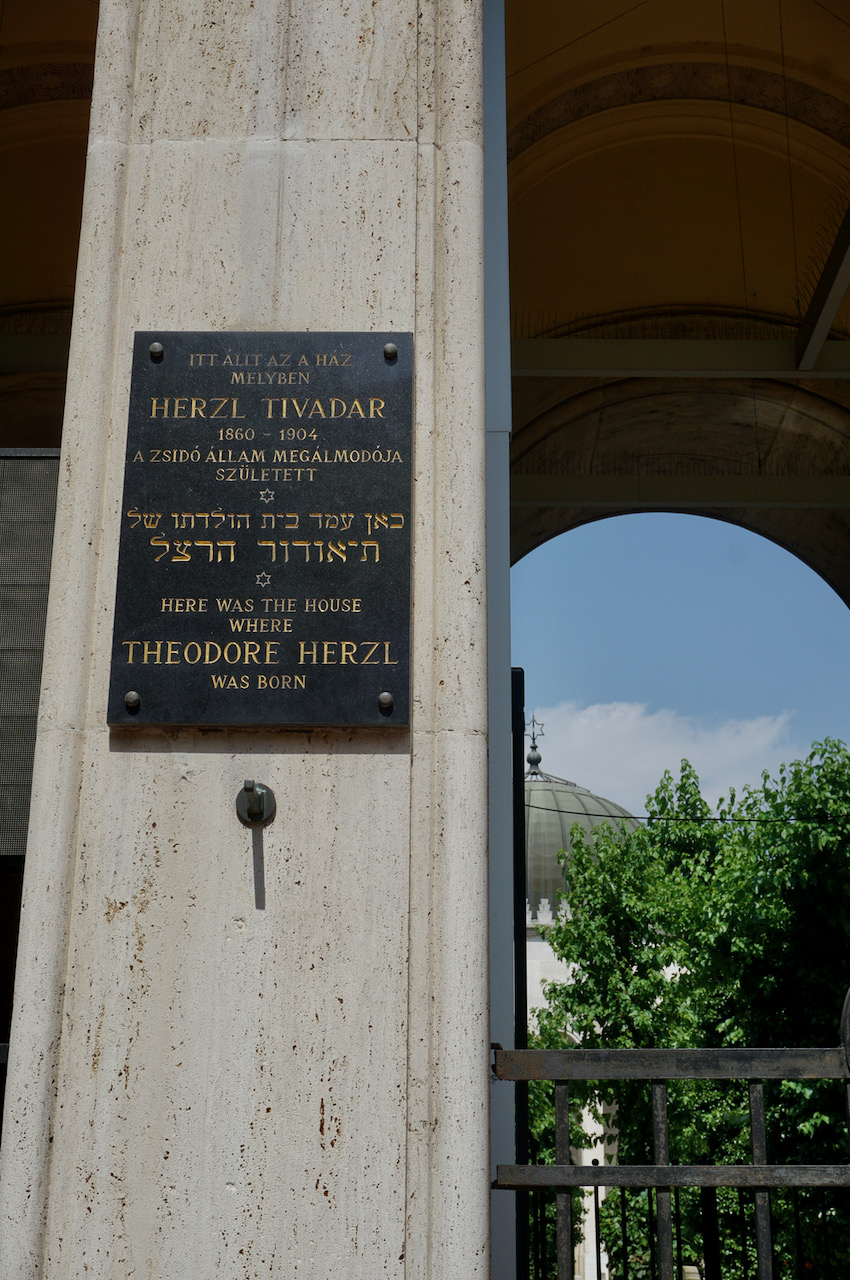
After deciding I liked Budapest upon first seeing one of its many street bookstalls, I stood in front of Europe’s largest synagogue, completed in 1859. It surprised me that Dohány Street Synagogue is located in a country that is 99% Christian, according to my tour guide, in a city with restaurants serving food from all over the world, and that’s something I love about visiting new places.
I was staying on the Pest side of the Danube and that’s where I took a walking tour the afternoon of my arrival, always my favourite way to see a city and learn its history. We saw the landmarks Budapest is known for, such as Europe’s largest Parliament . . .
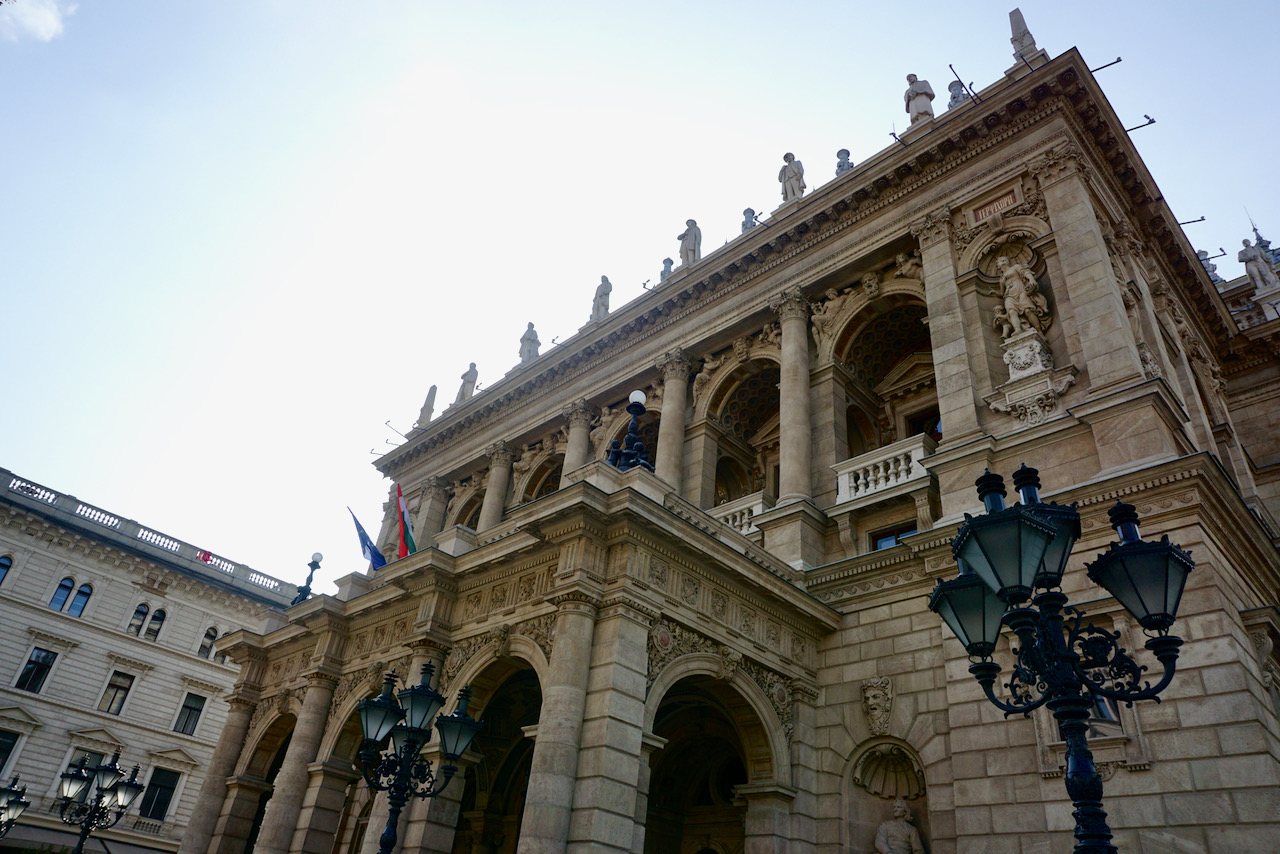
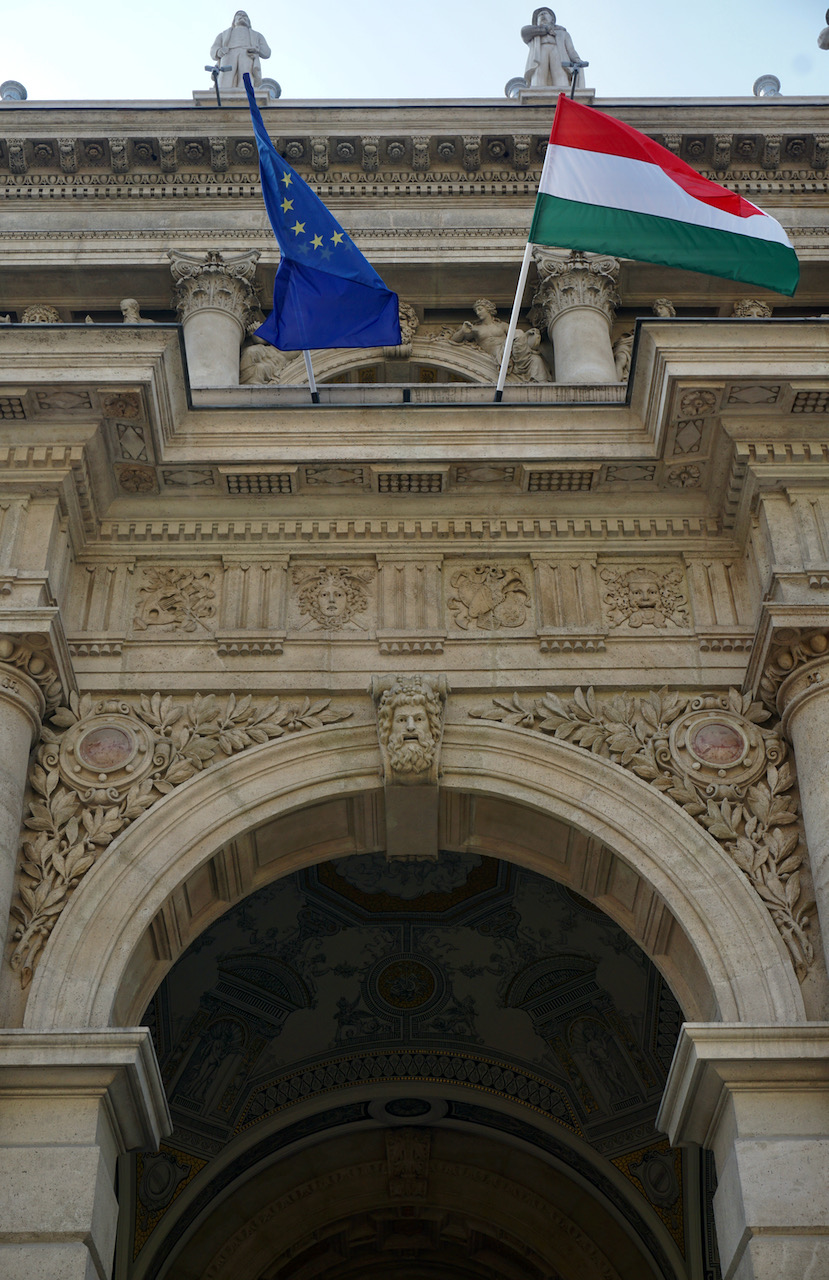
. . . the Hungarian State Opera . . .
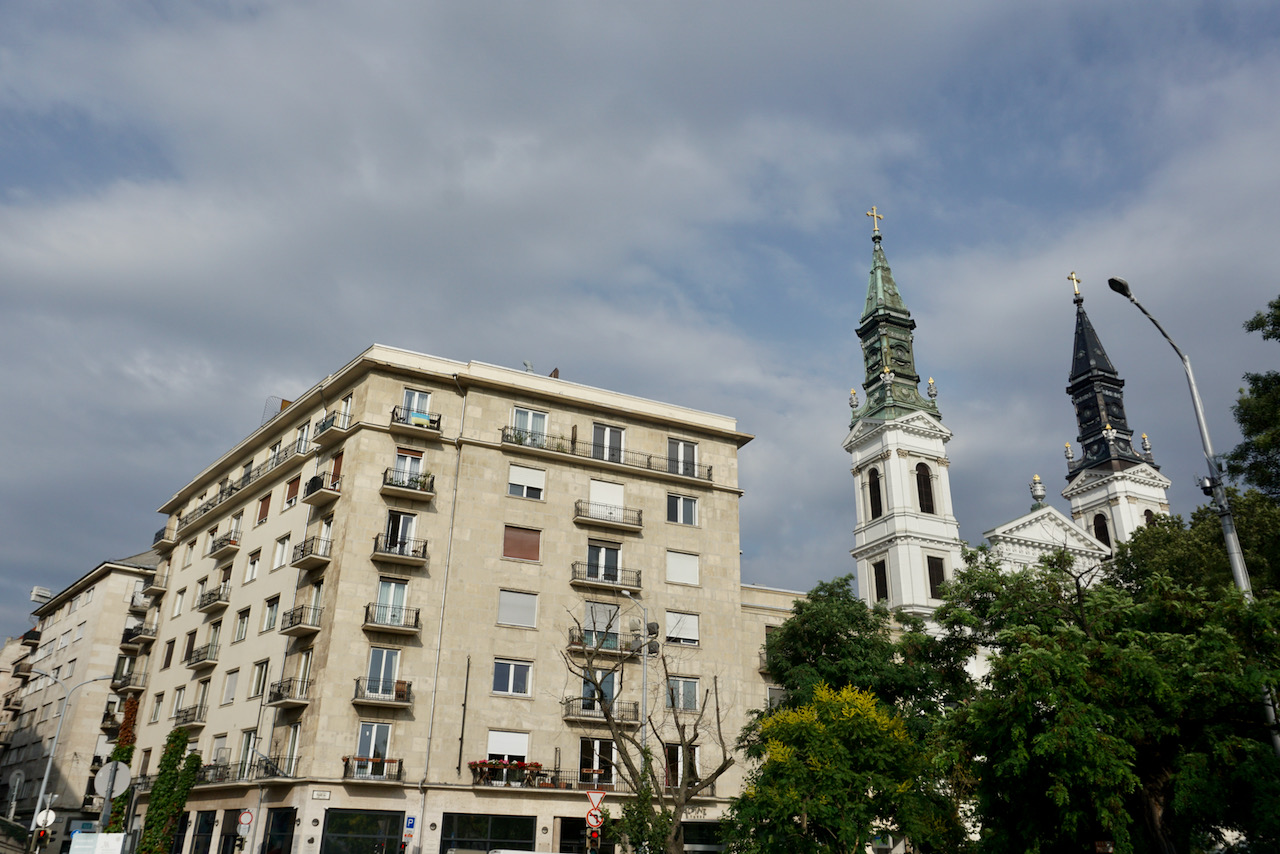
. . . St. Stephen’s Basilica . . .
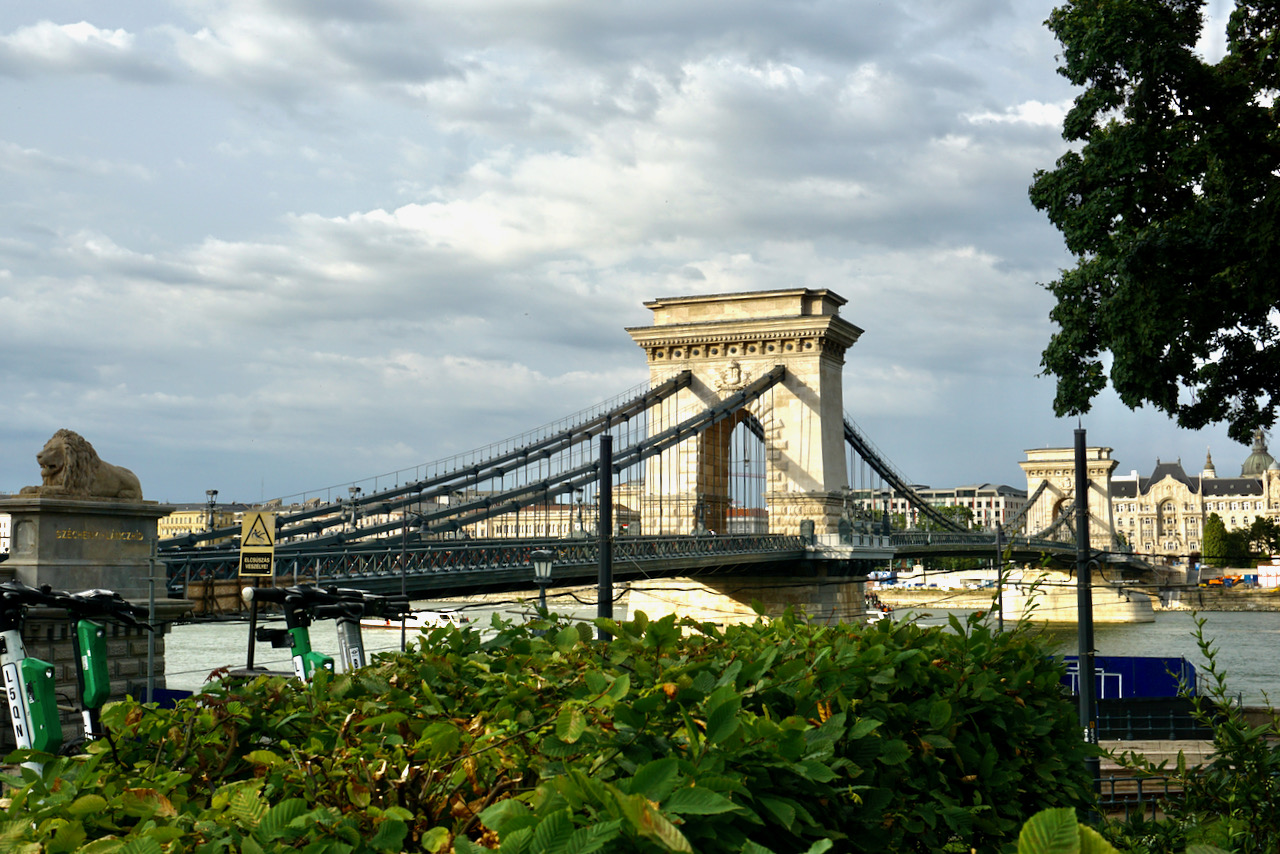
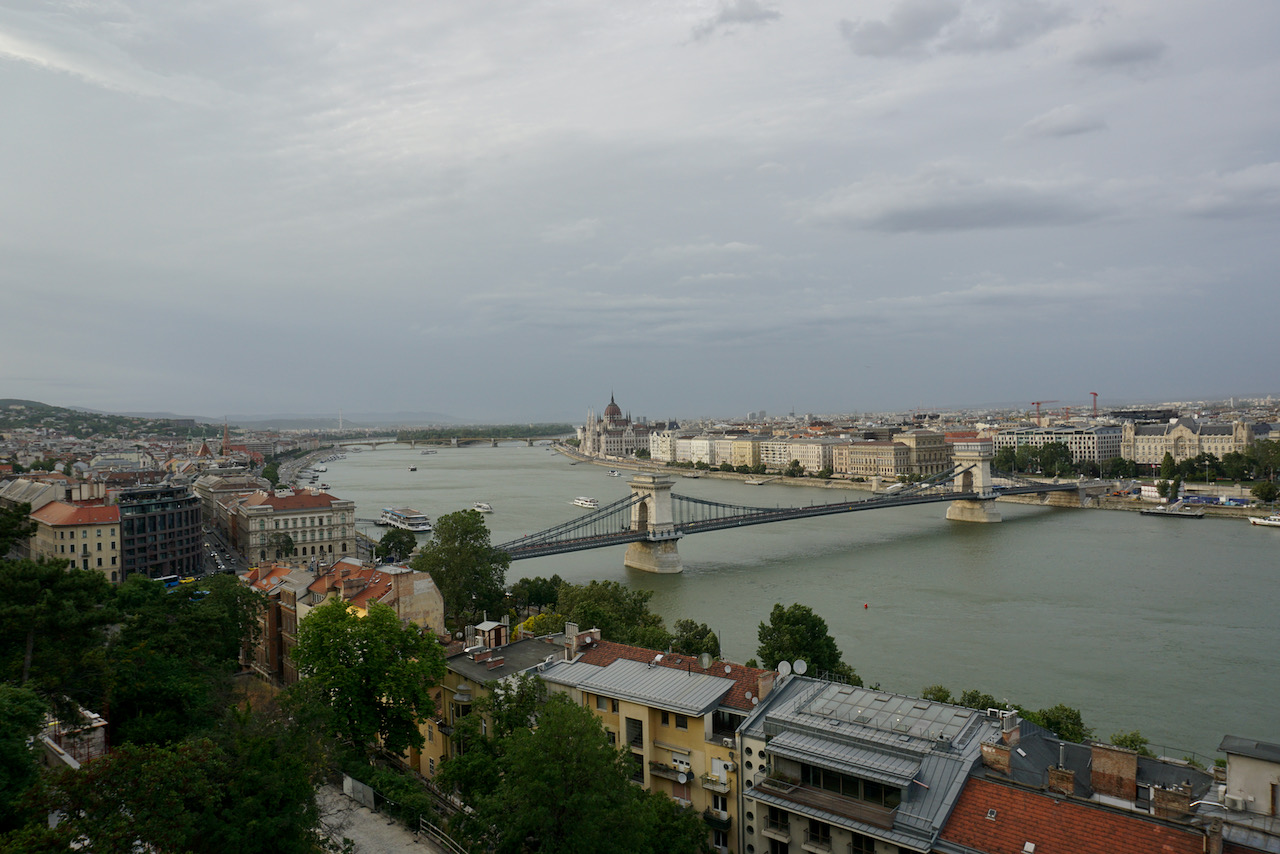
. . . the Danube River and Széchenyi Chain Bridge (unfortunately closed to pedestrians due to construction) . . .
. . . and walked through a few of the parks that are an important part of local life.
It was on the walking tour that I learned about the monument that went up overnight in 2014, an attempt to change the narrative of Hungary’s role in World War II. The counter-monument placed by the people of Budapest aimed to rewrite that wrong.
It came as a surprise that history was being rewritten in a city with a memorial called Shoes on the Danube Bank, commemorating the 3,500 people told to remove their shoes before being executed and their bodies thrown into the river during the Arrow Cross terror of 1944-1945.
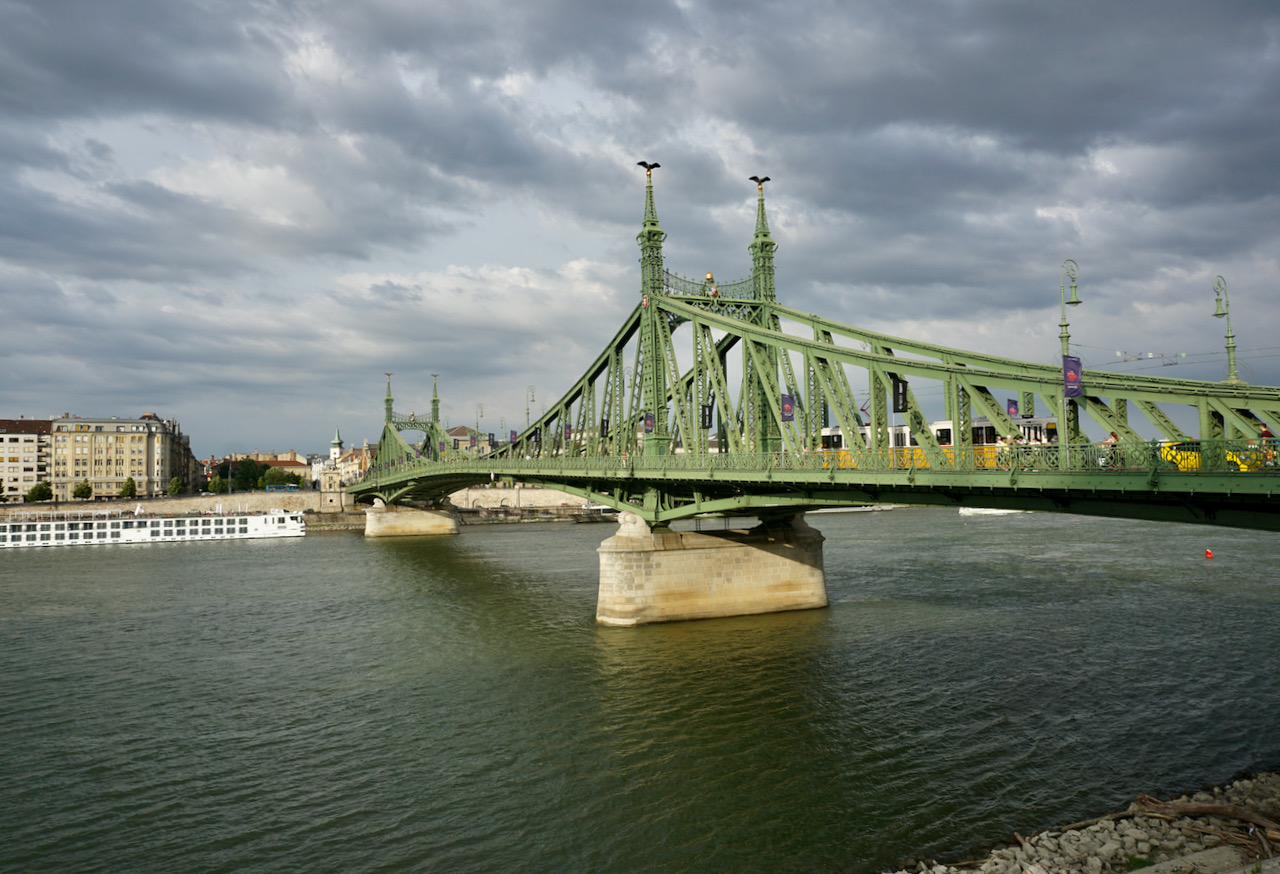
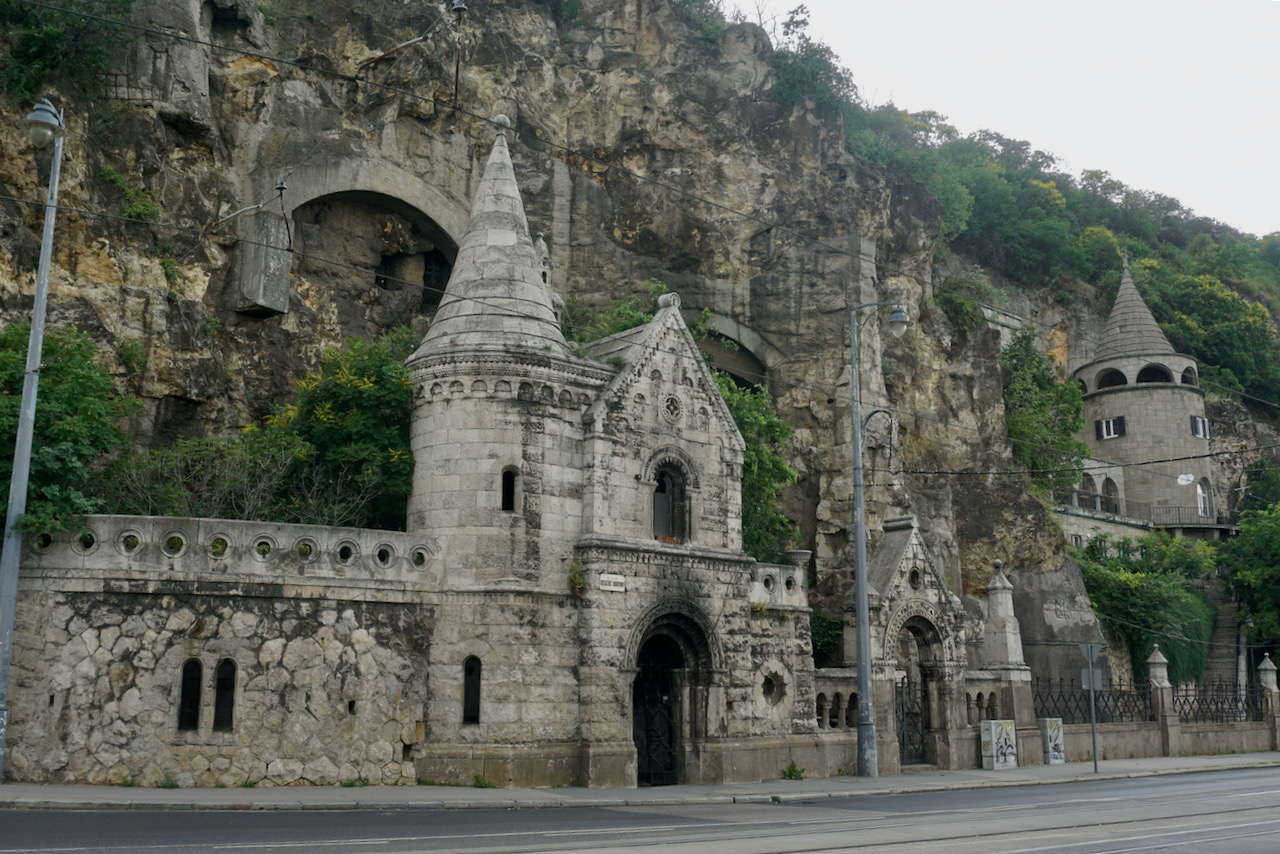
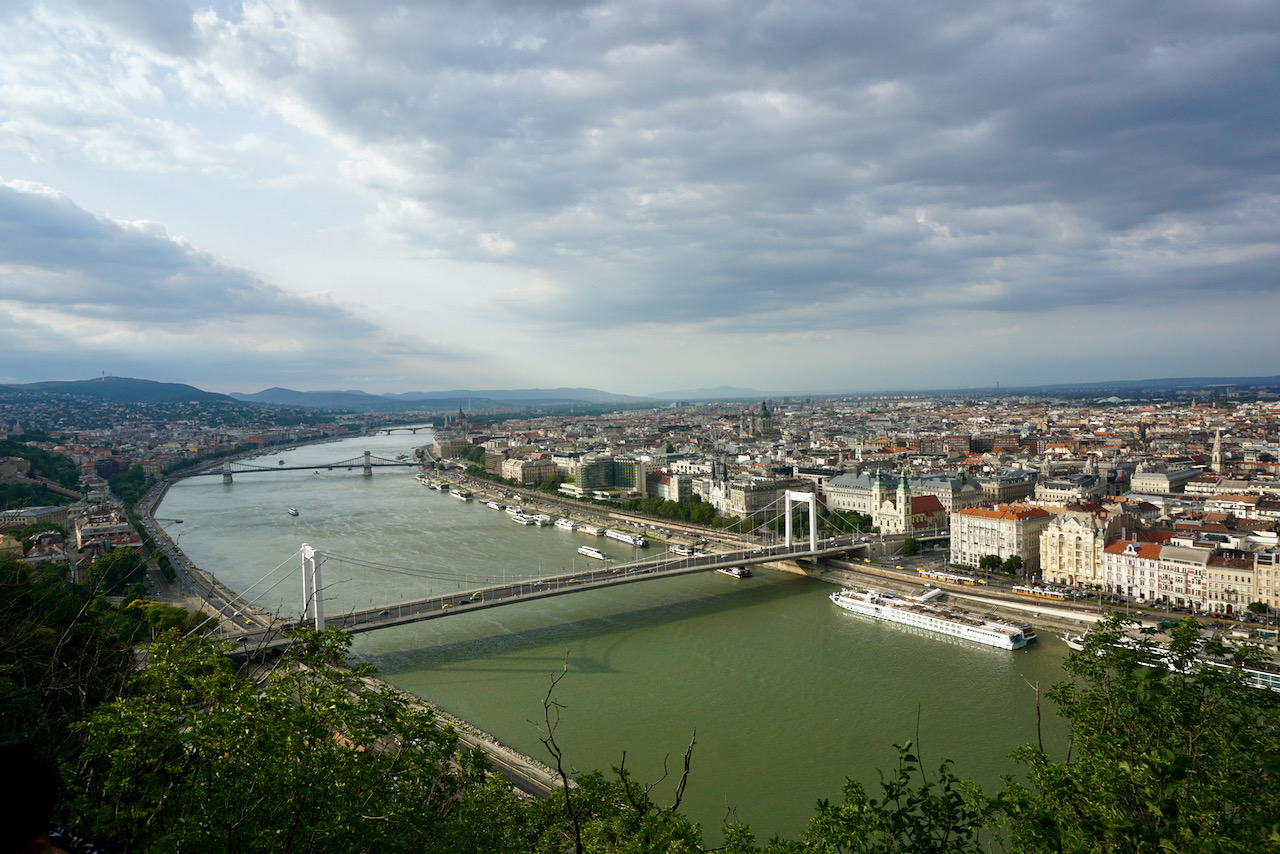
This memorial is on the Pest side of the Danube and, with eyes towards Buda on the other side, I headed over to do what I always try to do in a new place: Find the highest point and look down. In Budapest, this meant crossing the bridge to Buda and walking up to the Citadel.
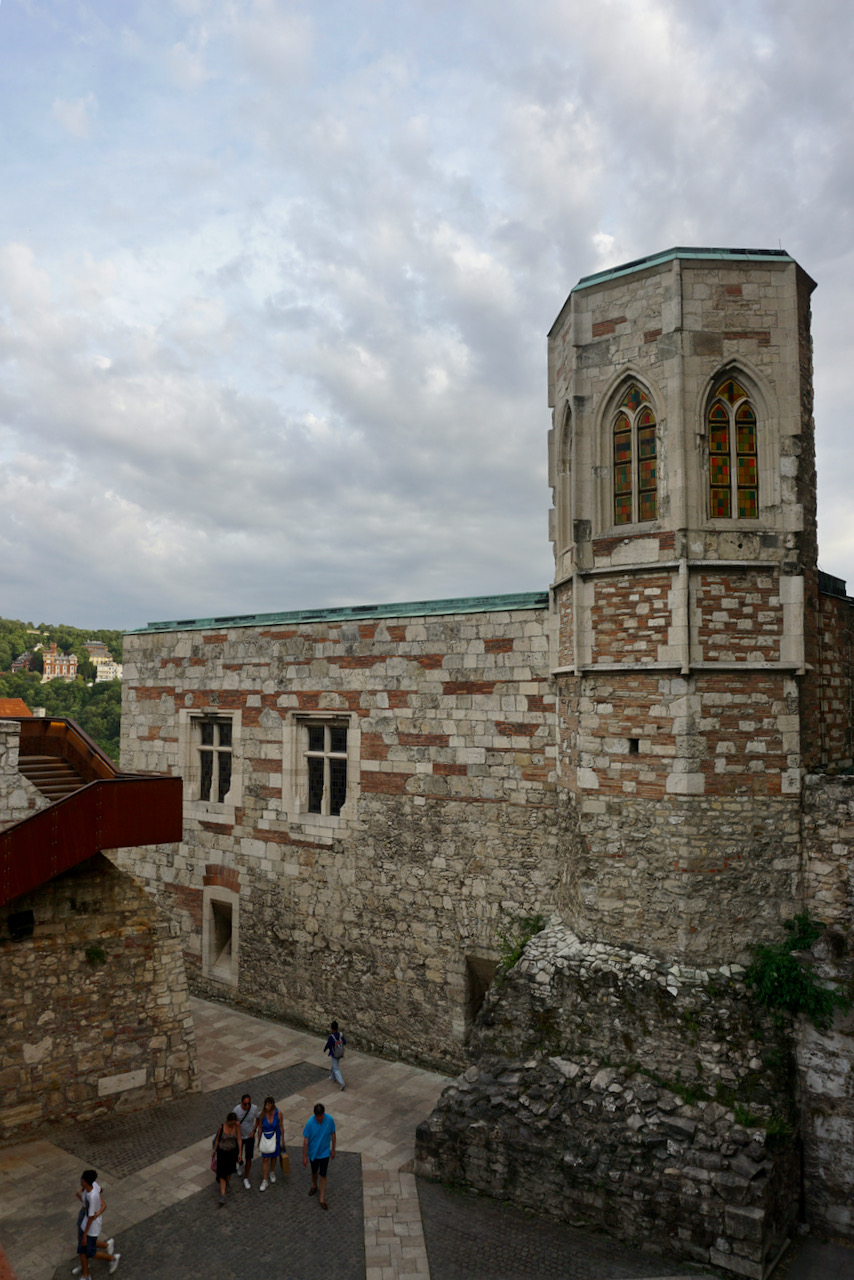
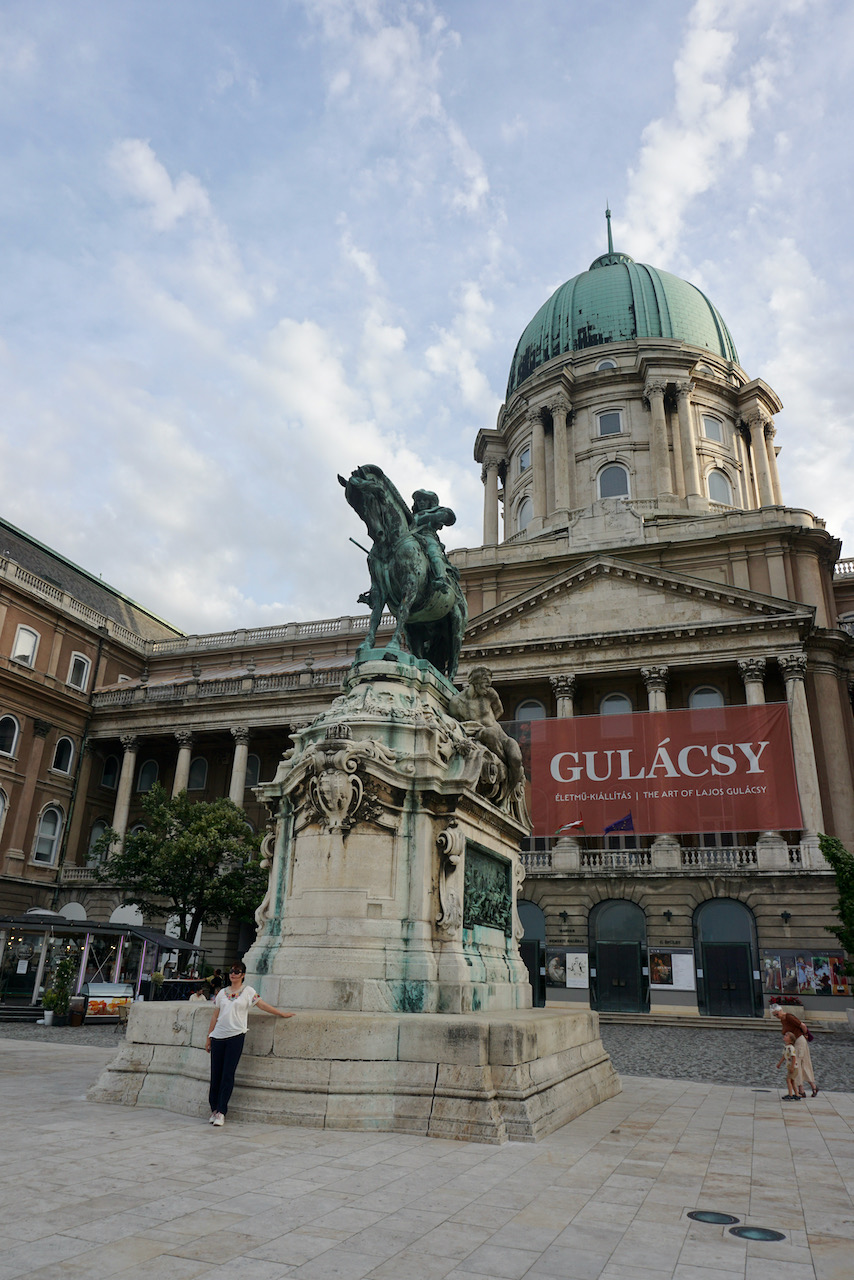
Once in Buda, I walked along the Danube, marvelling at the force of the wind that cooled the air that had been steamy and humid when I arrived the day before. I went up to Buda Castle and looked down again.
I left by bus when it began to get dark. There was so much more to see.
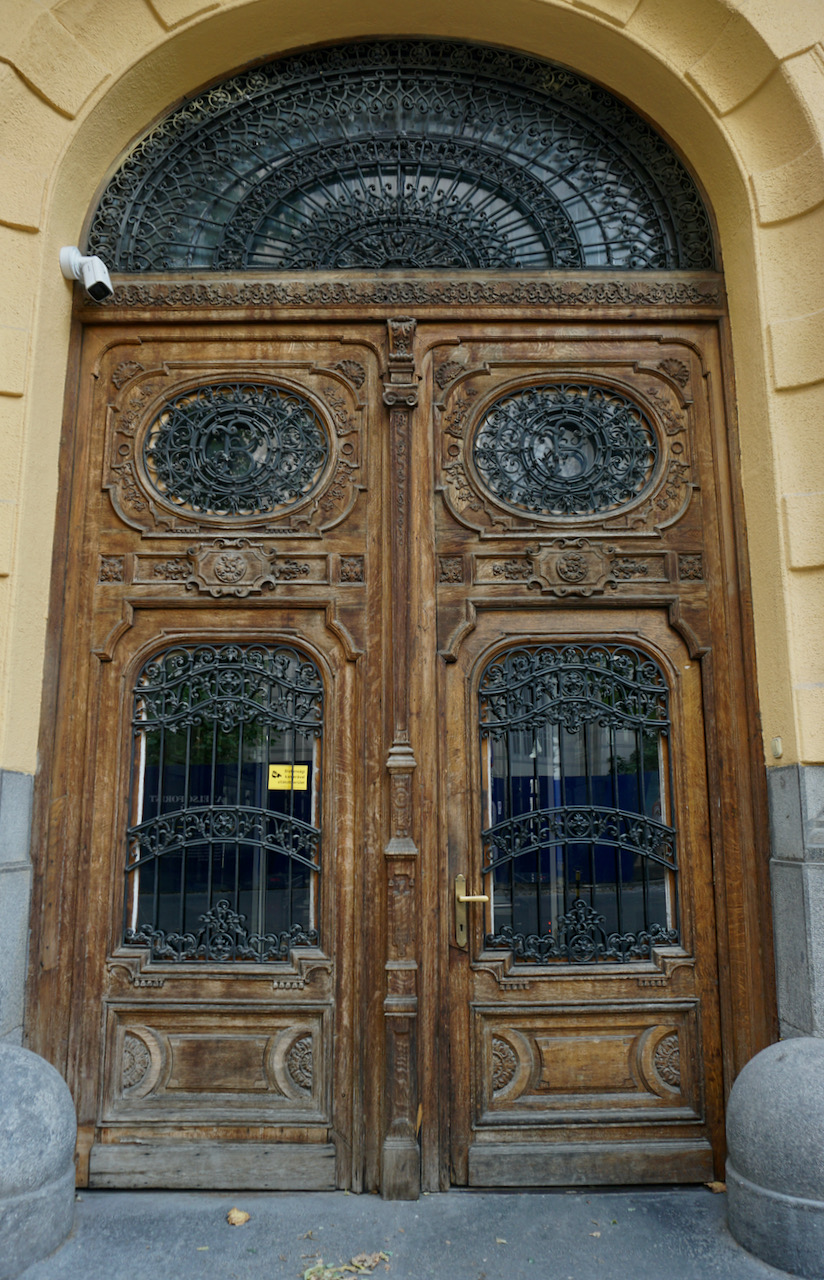
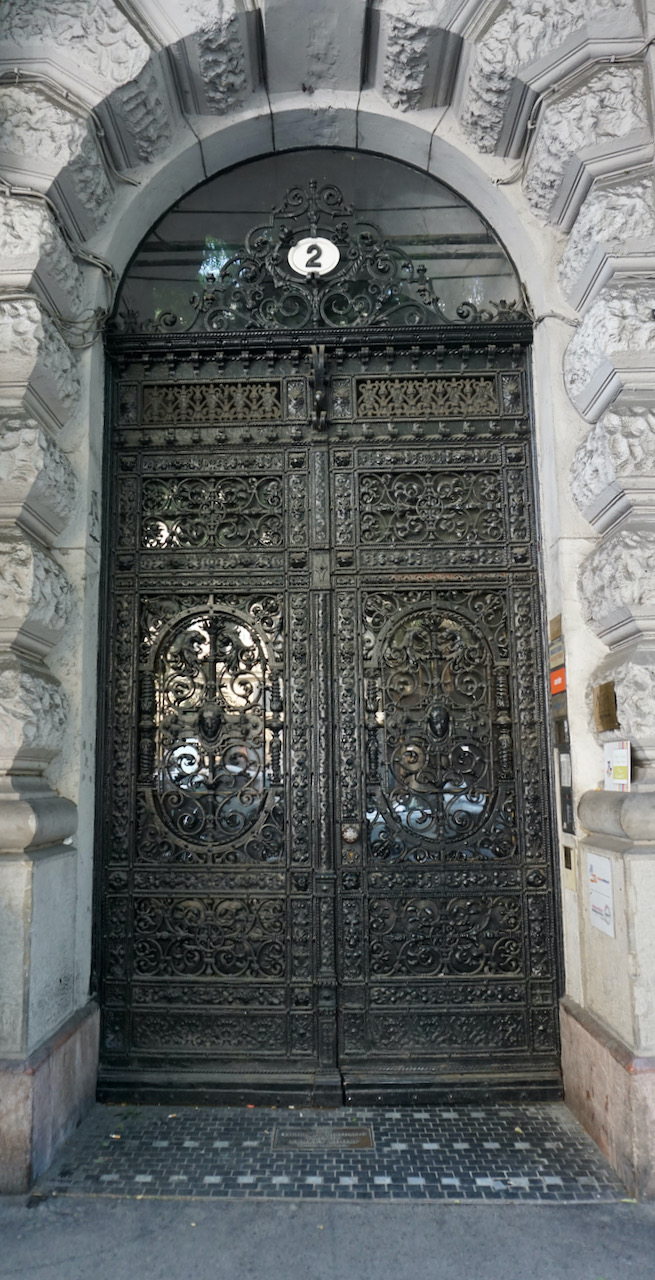
With the time I had outside of the training, other wandering was an exploration of ornate doors . . .
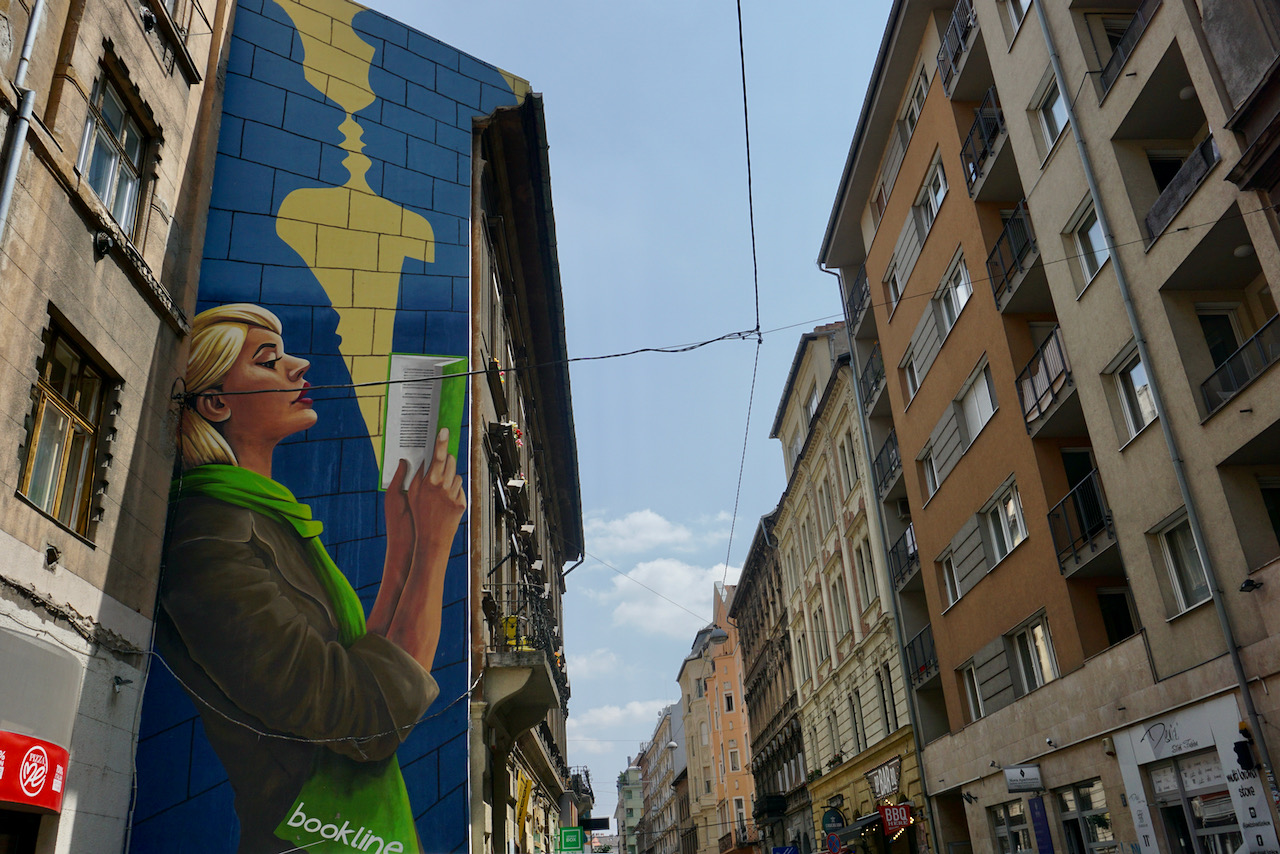
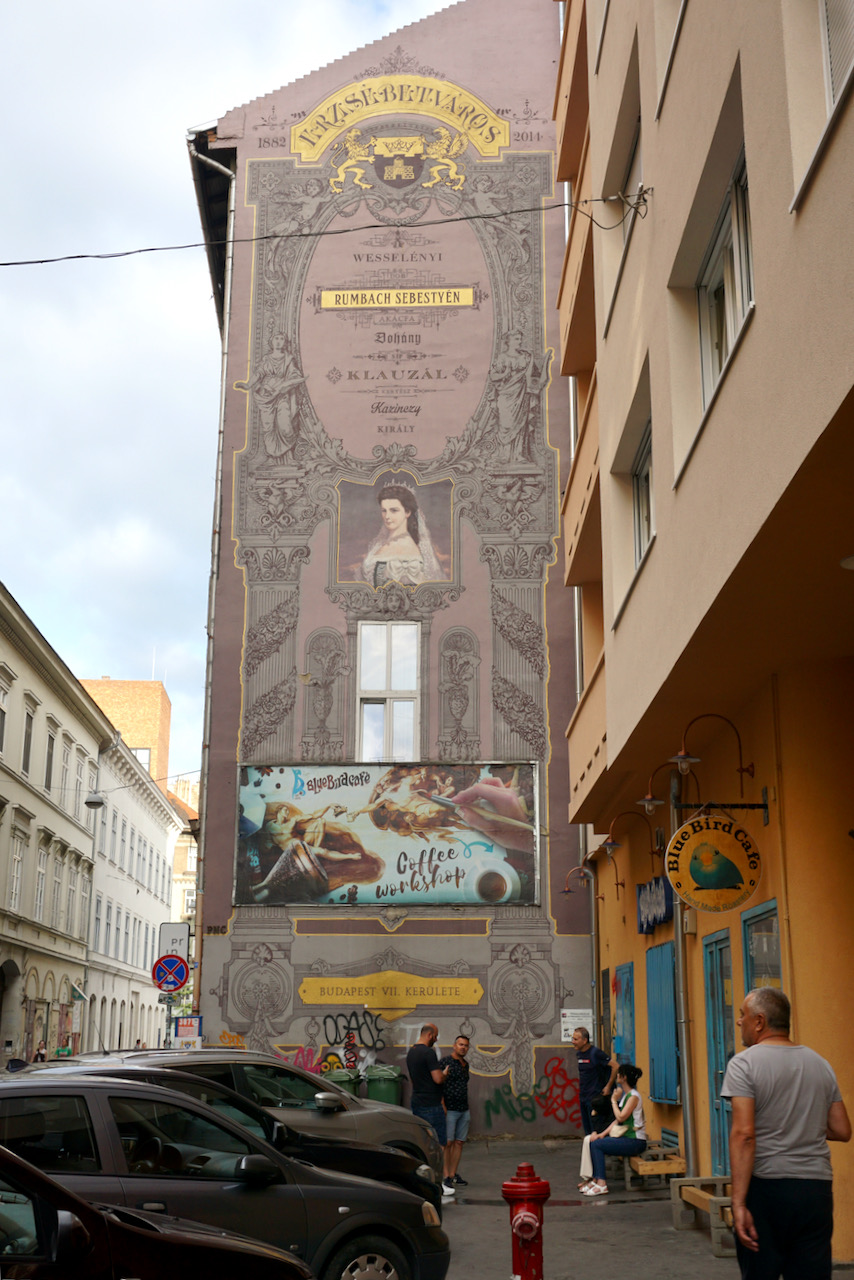
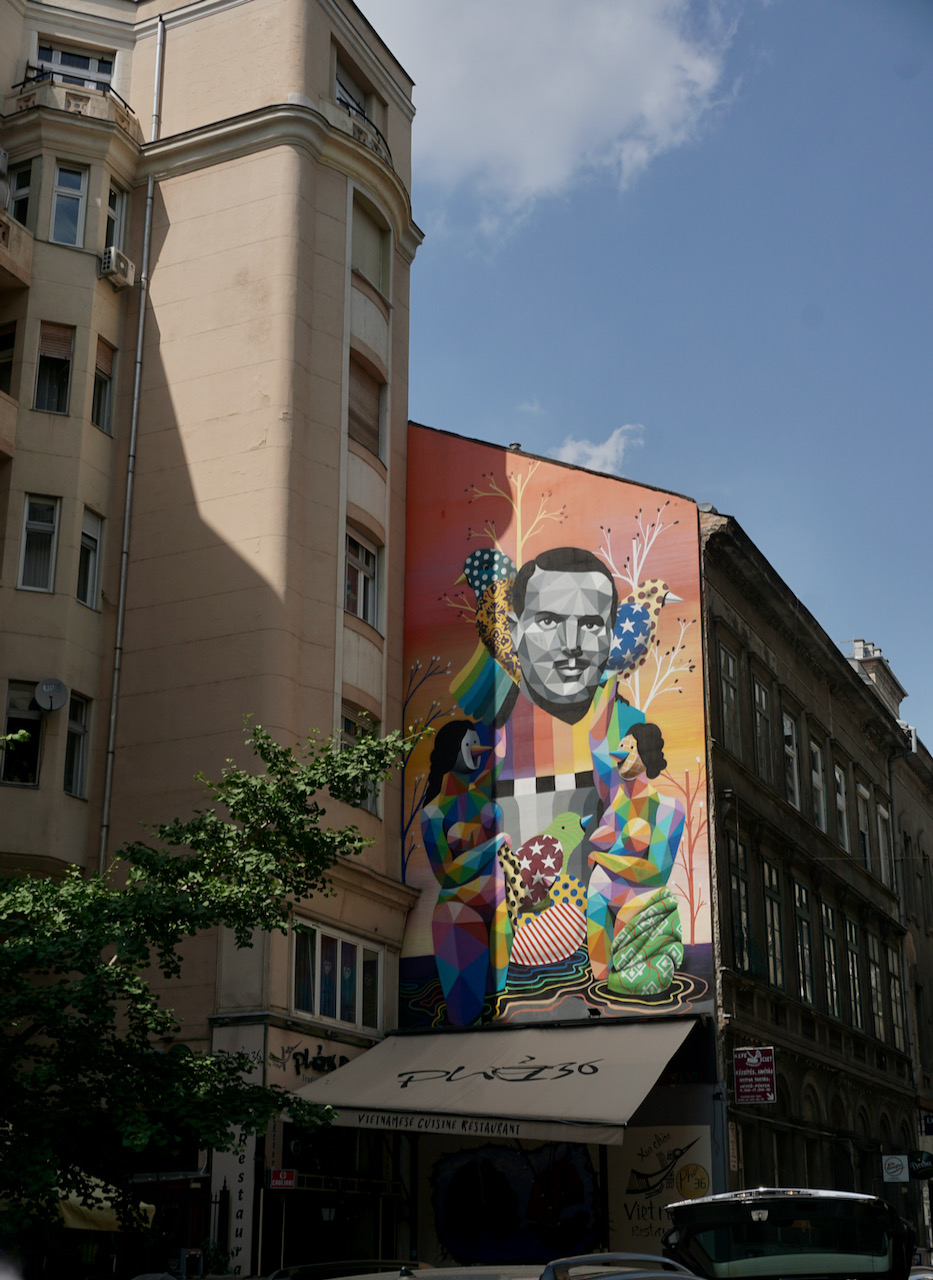
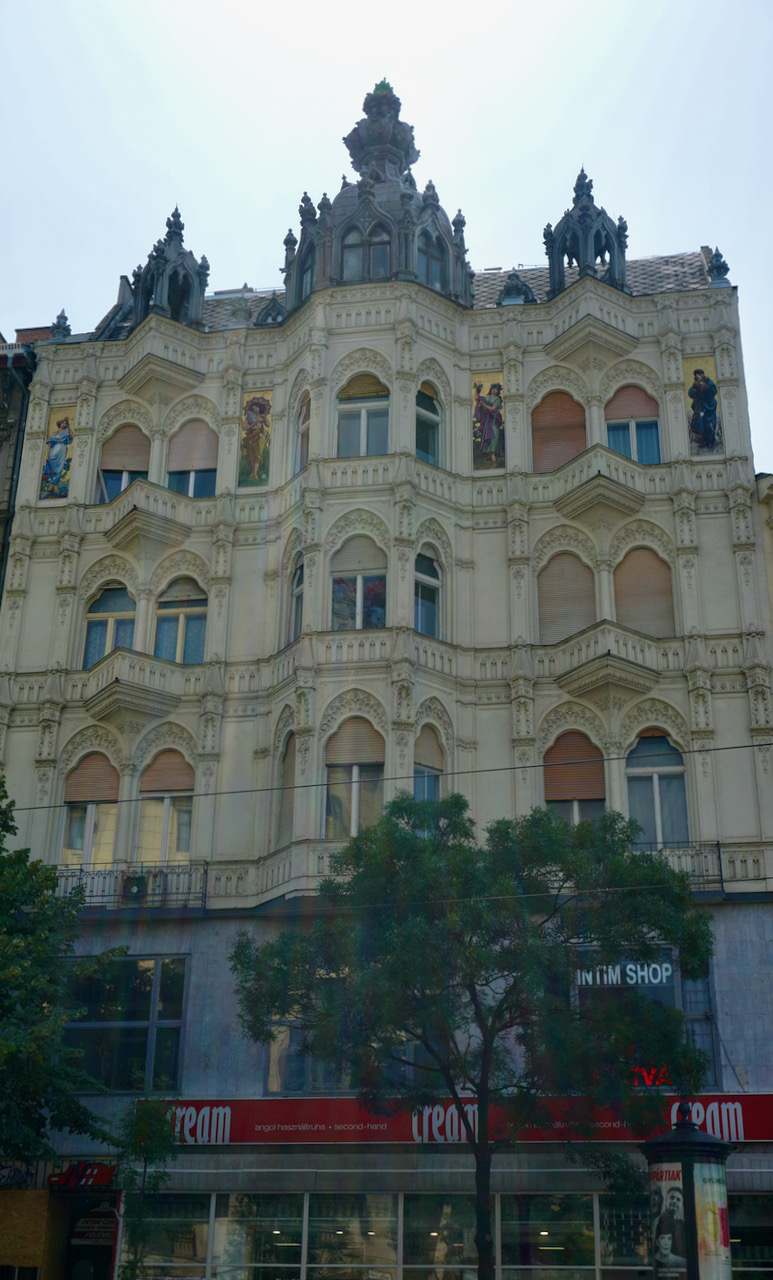
. . . murals . . .
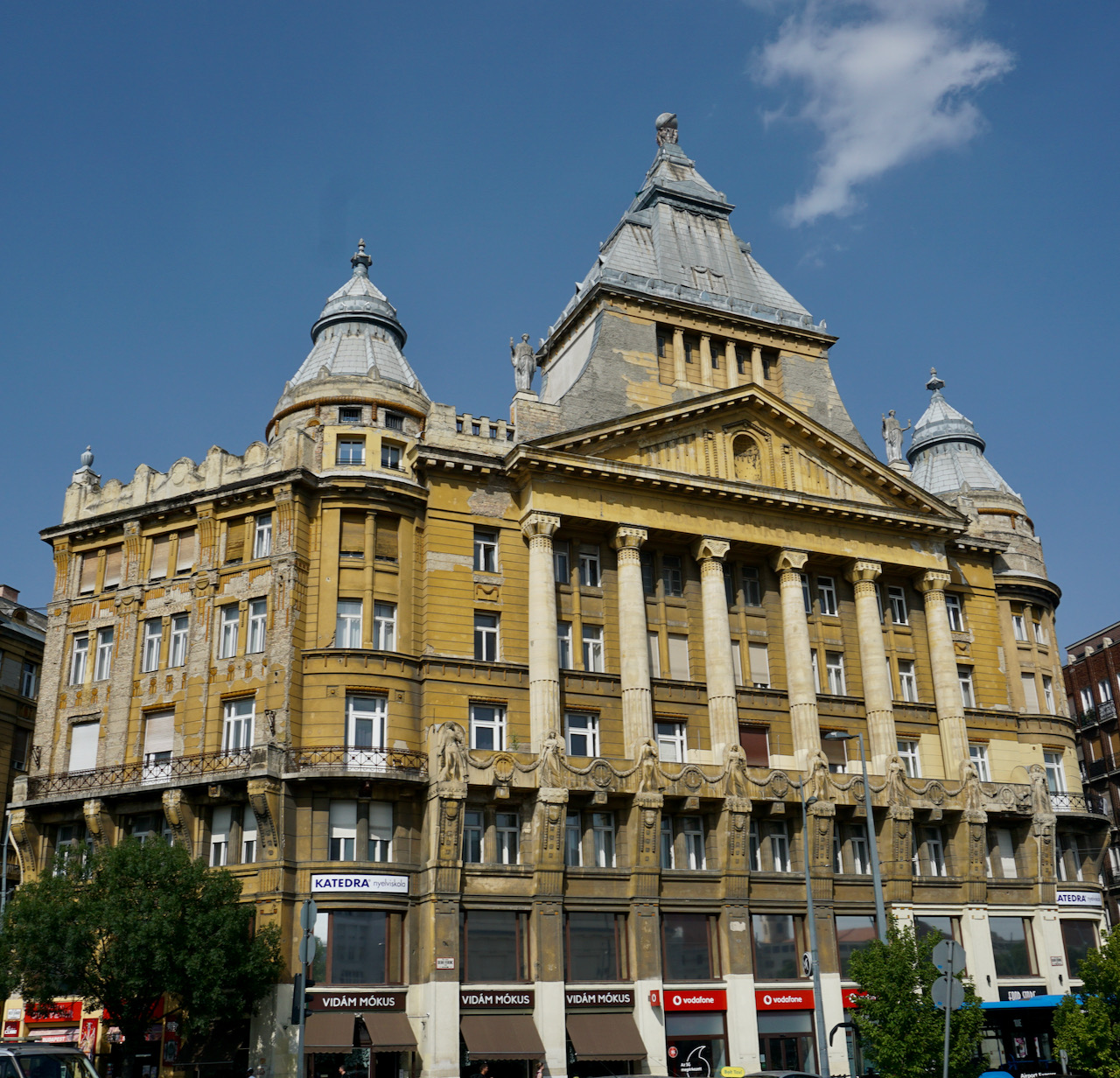
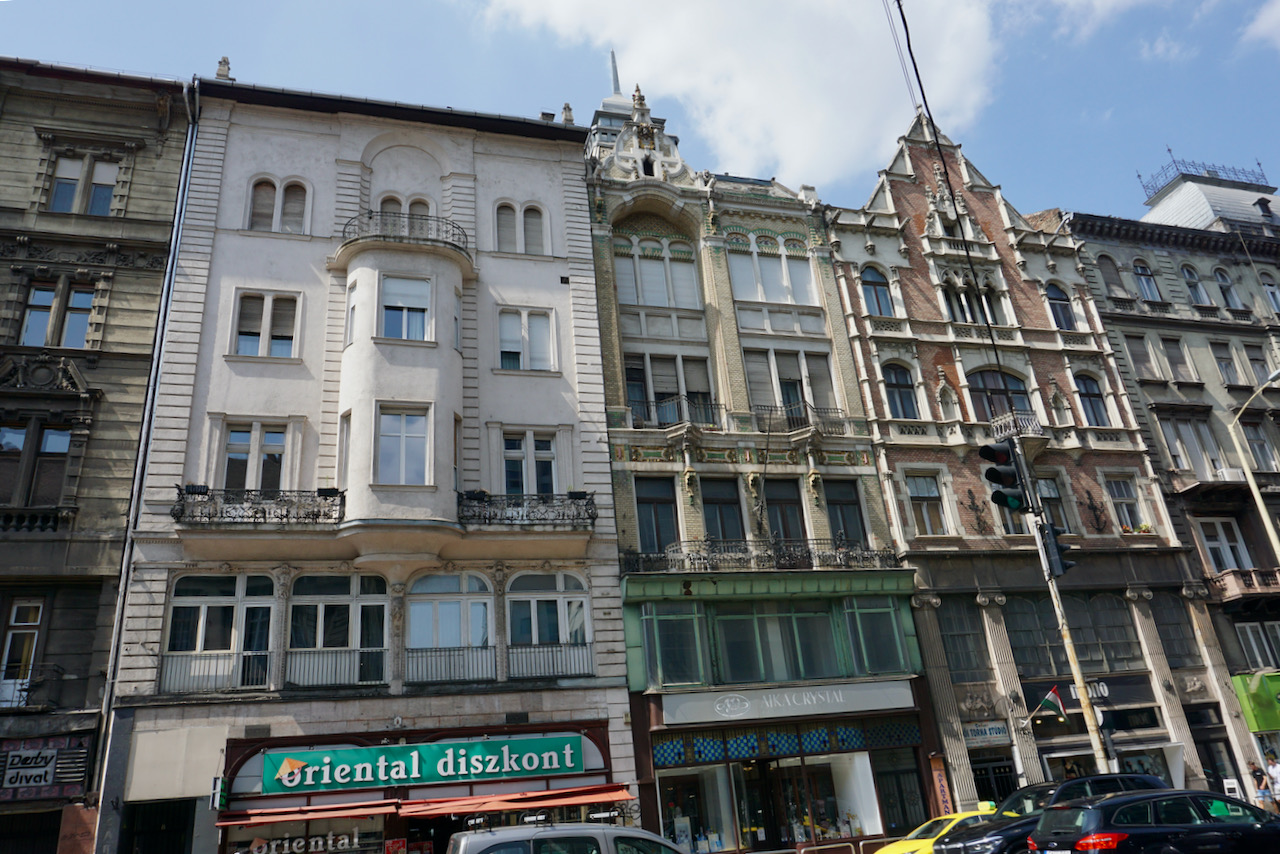
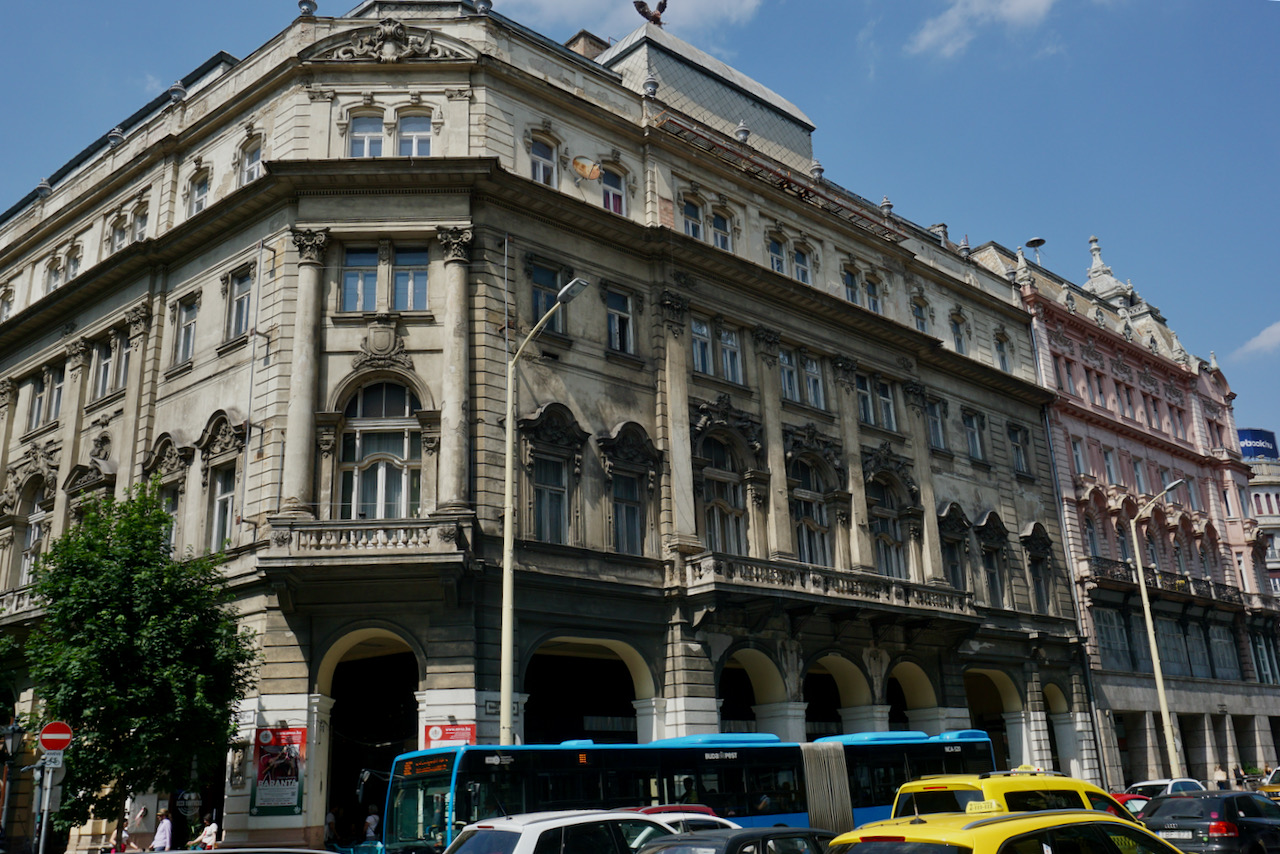
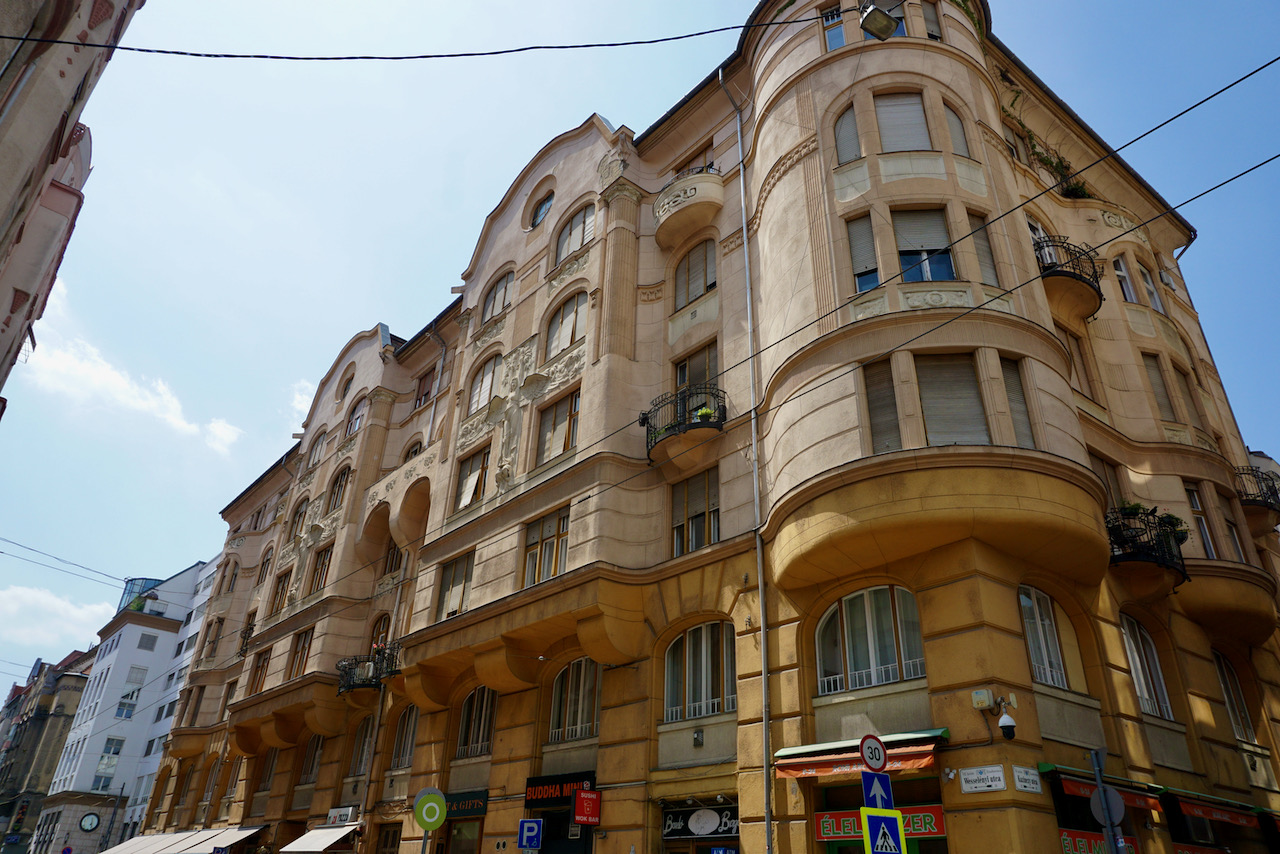
. . . and buildings that I liked for their appearance, a mix of architecture from before the wars, the Soviet period, and the time since.
I walked along Andrássy Avenue to its end at Heroes’ Square . . .
. . . and came upon Vajdahunyad Castle, build in 1896 to mark the millennium of Hungary’s beginning as a modern state; it’s an art museum today, one of many in Budapest.
Making mental lists of what I still wanted to discover, it was time to go. I left Budapest having tried new foods, made plans for a new role at school, and learned to greet, thank, and bid farewell in Hungarian. As always when travelling, I left with more than I had when I arrived, and I left grateful for the opportunity to be there.
Whenever I dream of “home” I dream of the old house, specifically the kitchen, which was always my favourite room.
I remember the walls yellow and later orange-red, the cherry wood table and matching chairs stained with a blue accent that I knew was beautiful long before I was old enough to develop taste in furniture. I wonder if there are still math problems visible on the soft wood when the sun shines just right. I wonder if they can still be felt when you rub your finger along a seemingly smooth surface. It was always bright in the kitchen, even when it was dark outside, and I remember the upheaval of removing one pantry to build a desk and replacing the floor that children and toys had long treated too harshly.
The kitchen was the geographic centre of the old house, the first room you saw from the front door, and the first room you entered after bursting through the mudroom door in playclothes, smelling of sun and sweat or peeling off layers of snowpants and gloves. We did our homework at the kitchen table, ate dinner as a family, played board games, sat around to share the worst news and the best news. Almost every photo that we have from a birthday or holiday was taken in the kitchen. Every gathering with friends and extended family started and ended in the kitchen.
We always had a radio there and we listened to talk radio in the morning and music in the afternoon. Sometimes the bird was out on the island when we got home from school, and late in the evenings, the dog turned the island into a race track. The kitchen was the part of the house we lived in, and it’s the room I picture when I think about growing up.
I don’t remember much from my dream last night, but I was back in the old house, back in the old kitchen. I haven’t been inside since I moved to Malaysia nine years ago, shortly after which my parents sold the house and moved across town. I drove by once and soon I’ll drive by again to show it to someone who has only seen it through Street View on Google Maps. The photo there is of a house where I still lived, the car in the driveway not yet my brother’s. I wonder what it looks like now. I wonder what parts of it are best-loved now.
The kitchen is the room I always want to see when I visit a home for the first time. That’s the room I want to be in, the room where I feel most invited and most comfortable. Guests are shown first to other spaces, but kitchen parties are always the best parties. Time in someone’s kitchen is intimate, cozy, personal, and I think there’s some love there, too. It’s in the kitchen where we work alongside one another, where we see what’s not so tidy, where we take raw ingredients and make them into something magical.
It’s no surprise that the kitchen in my parents’ “new” house is the room I’ve spent the most time, the room I like best. It’s the first room you see from the side door, which is the only door they use, and it’s the room that contains the daily traces of people – reading materials left on the counter, coffee cups out ready for use, recipes tucked under the fruit bowl.
Last night I dreamed of the old house, which is always the case when I dream of “home”. My dream started and ended in the kitchen, and as always, it took me right back.
Every so often there are moment that remind us of the groups we are fully, intrinsically, unquestionably part of . . . and the groups we are not. The groups where, for one reason or another, we stand a little bit on the outside. This is not necessarily a negative thing; we cannot be an invested member in all of our groups, simply because there’s not enough of us to go around. Furthermore, we might not want to be so deeply involved, perhaps because this would present us with obligations that we are not interested in or prepared to shoulder. It can be painfully difficult to come to terms with the groups that we want to be part of that do not want us, but that is not of interest in this post. Rather, this post is about recent circumstances in which group membership was unspoken but thrown into focus.
Language and Culture
Before I moved overseas, I helped out with the international student exchange program at my school. This opened my eyes to the question of integration: How do I help young people integrate into a group that is relatively homogeneous . . . and very different from what they are used to? This question changed in form when I had the opportunity to work in a very diverse environment in which integration was a question caught between language and culture. (Danau Tanu’s phenomenal Growing Up in Transit deserves mention here for its impact on the way I think about schools and language.)
In my somewhat nomadic adulthood, I find that language plays a more important role in my interactions and friendships than I would have guessed. For example, there is a difference in the shared understanding that I immediately sense with those who come from the same linguistic background as I do. I almost always know who is American (accents aside) based on the words that they choose in certain situations, or the way that they explain past experiences. Having worked with so many Brits, Canadians, Australians, and Kiwis over the years has tuned me into the differences in our cultural contexts, and therefore also informed the words that I use when talking to certain people. My favourite example here is “college”. This has a meaning in the US that does not match the meaning used by English speakers, and sharing the context is important. Telling a story about a high school experience needs a different explanation when I’m speaking with people who had a similar educational experience to mine. I am immediately “in” with those people, and forever “a little bit outside” of others.
A few weeks ago, my partner and I had dinner with friends and talk turned to just that – our school experiences. Not only did I have to ask clarification questions about what was clearly a shared understanding among the others, but I also had to provide background context before much of what I said could make sense. I laughed along with them as we talked, fully aware that the picture in my head of their world was likely as inaccurate as their picture of mine. The pleasure is in finding common ground despite the differences, and seeing my own experiences through new eyes.
Things like this happen so often. There are many instances in which my partner and I interpret actions or events differently, to say nothing of the differences in our language. Because I am the one who has moved, it is my responsibility to adapt to where I am rather than expecting to find what I chose to leave elsewhere. I find that I am sometimes caught unexpectedly unaware simply because I didn’t know that there could be another idea, interpretation, or action. I am simply “not from here” and haven’t run into this particular circumstance yet. A little bit outside, as it were.
I’m not sure when one begins to feel at home in a culture, though I have had years of experiences being surprised at what I found when I returned to North America. Sometimes I know how to live the way people in Germany live and I do it automatically, and sometimes it’s like seeing yourself in a mirror and forgetting that you got a haircut. It’s familiar but not quite right.
Social Groups
And now for a completely different example, one in which no one is talking about the groups that everyone knows are at the centre of the conversation.
In order to make plans for the summer holidays, I sent a message to a group of people who I had previously talked with about plans. The daily lives of these individuals are intertwined and I am the one clearly on the outside, a result of the choice made to live somewhere else. It is not a secret that this group interacts without me, that I fit in only at the seldom moments when I’m around. If I ever had different expectations, I lost them a long time ago. And I’m no more present for this group than they are for me; we interact infrequently, as has been the habit since before I knew it was a habit, and otherwise, it’s pretty silent.
For that reason, it didn’t entirely come as a surprise when my message went unanswered. I had anticipated precisely what I did not like, which is becoming a topic of conversation that I was not privy to. Being outside of this group means that I am not privy to very much, but it was obvious what was happening when I received no replies to a message that, among people who are part of each other’s lives, would have received replies. That the group responded (by not responding) en masse suggests that a discussion had occurred, a course of action deliberately taken.
This is a situation in which a group was clearly more than just one group, and being outside the group meant not being in the group at all. It’s interesting because this fact was always simmering under the surface and now it is fully out in the open, precisely by not being open. One of the things I learned when first working to integrate groups of students was that friendships thrive on shared experiences; it is difficult to feel connected to people when our shared experiences are few and far between, and especially when, looking back, what was ostensibly shared was only shared at the acquiescence of the group, and not those standing a little bit outside.
Reflections
Our daily lives are enmeshed in relationships, both those we’ve chosen and those we have been forced into, for a range of reasons. Building and maintaining relationships is a process with which we are all familiar, and it governs the way we structure our world. I love teaching the human relationships topic in psychology because it’s about the everyday experiences of all of us, immediately relatable and immediately captivating.
Maybe it’s because of teaching psychology that I am fascinated by the inner workings of my own relationships, and try to be conscious of the role I (and others) play in each of them. I think the important lesson here is that relationships are complex and there are more stories to explain them than the ones I can tell; just because I’ve interpreted a situation a certain way doesn’t mean someone else has. Humility plays an important role here, too. We must be humble enough to listen to other viewpoints, as well as confident enough to express when we disagree. We must be vulnerable enough to let others in, and strong enough to stand on our own. It’s a delicate balance, being human, and that is what we doubtless share, regardless of who is on the inside and who stands a little bit outside.
Bad Herrenalb, Germany – February 2023
Photos, travels, musings, and ideas on education by someone trying to make the world a better and more peaceful place





























 By Rebecca Michelle