It took me a long time to fall asleep the other night and I knew exactly why. I was spinning scenarios in my head of conversations that hadn’t occurred but could occur (although in daylight, it seems far more likely that they would not occur) and how I would feel should that come to pass. I could have listed a variety of negative emotions to describe my mental state that night, including disappointed, frustrated, or sad, but the emotion I kept returning to was fear.
And I realized that the reason I was afraid, the reason I was experiencing the negative emotions of fear, disappointment, frustration, and sadness, was because I had run into something that mattered.
And I took comfort in this thought because we are not bothered by things that don’t matter to us. We do not lie awake at night overthinking, mulling over, fretting about what is meaningless. Rather, we find ourselves troubled precisely because we care. If we didn’t, there would be nothing to think about. Coming to this realization calmed me enough that I fell asleep.
I’d be more bothered, I think, if the thoughts had floated into my mind without my noticing. That would mean there was no depth, no substance, no weight to any of it. And while I don’t need to lie awake to know that something matters to me, while I have practiced enough meditation to know how to recognize a thought and its sensations and then (still with a good deal of effort) set it to rest, the experience was nevertheless a nice affirmation that I haven’t lost track of what I would like my world to hold.
I don’t want to say that experiencing negative emotions is a positive thing, and I don’t want to dismiss the persistent sadness and hopelessness that characterize depression, for example. However, I do want to reframe what it might mean, for instance, to experience stress before an exam or job interview, to deeply miss someone, to feel an ache because a chapter of our lives has ended. Feeling this way means that something important is at stake or has been part of our experience. Life without emotional valence would be hollow indeed.
If the world were nothing but sunshine, I wonder if we’d stop seeing it after a while. And if it were only dark clouds, perhaps we’d stop looking for that break of sunshine. We need the whole spectrum, I think, to appreciate what it is that we have before us and what it is that matters to us. It’s not pleasant to lie awake and ruminate, but I’d gladly take the rumination over not having cared deeply at all.
Plitvice Lakes National Park, Croatia – October 2022
My parents and I started our trip to Croatia with two nights in Zagreb, after which came three nights in Split. Dubrovnik was our final stop and as before, we reached our destination in the dark. But the trip leading to Dubrovnik was full of colour and anticipation.
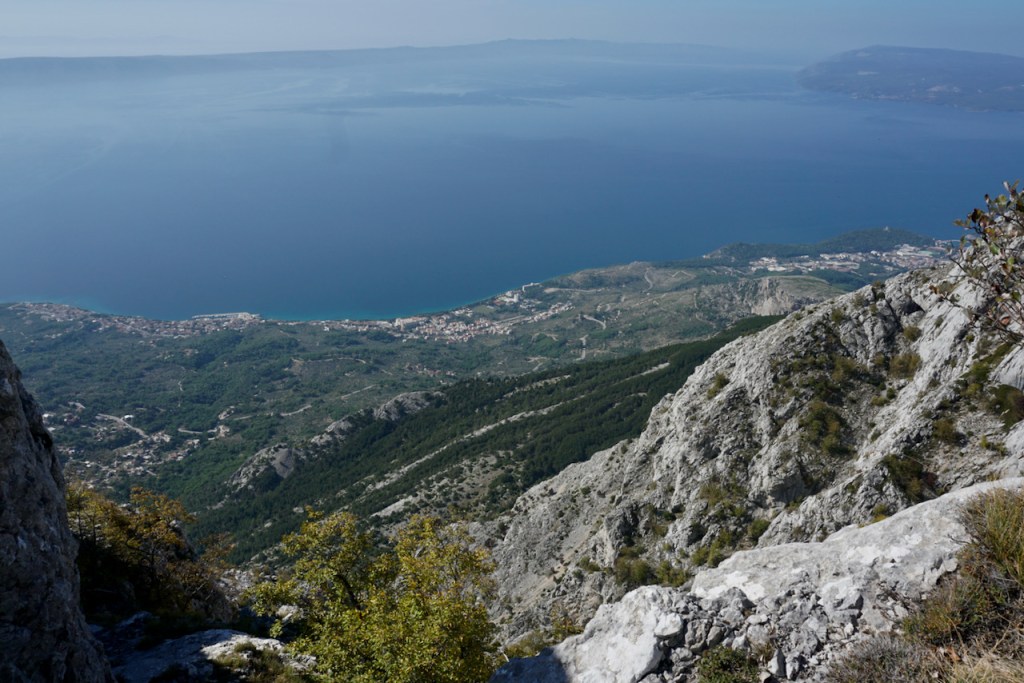
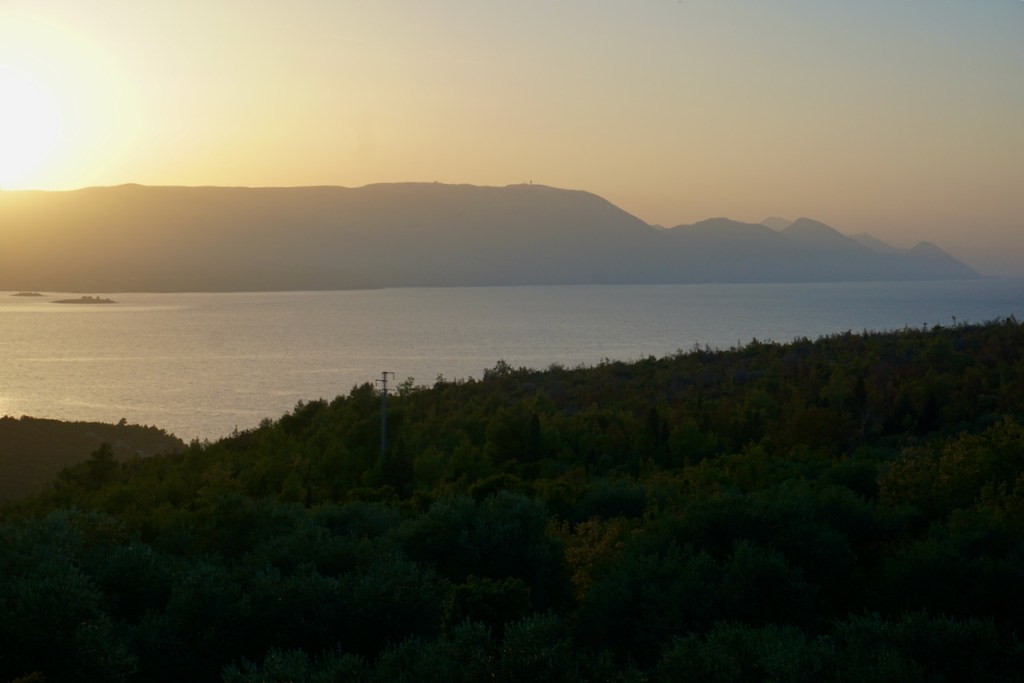
We decided to take the scenic route along the coast, which was breathtaking. I am forever lost in the majesty of cliffs that drop off into sea, the islands in the distance, the colours of the water and sky, the villages that appear and then, just as suddenly, are gone.
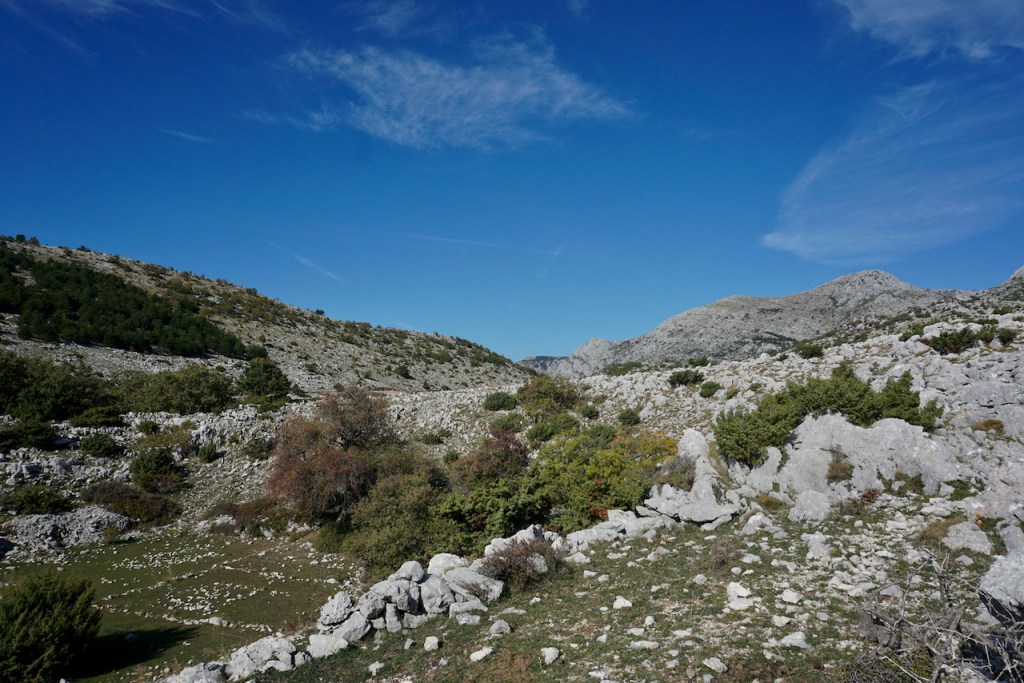
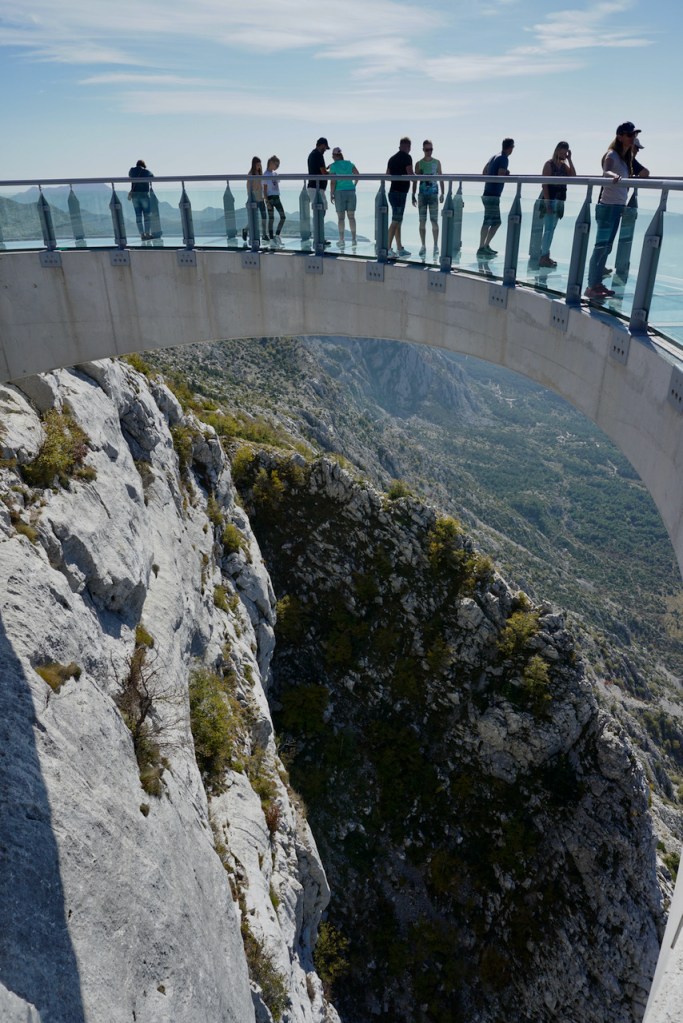
The drive was indeed stunning, but we also decided to stop and explore. Our first stop was Biokovo Nature Park, essentially a nature preserve comprising of the mountains along the coast. I’d read that the best way to see the park is to drive up the road (be ready for serpentines and some negotiation with other drivers), ride an e-bike, or take a guided walk. Now having been there, I’m not sure where a guided walk would have gone as we didn’t see any paths. Rather, we pulled off the road at a point wide enough for a couple of cars and my mum and I spent some minutes scrambling up rocks.
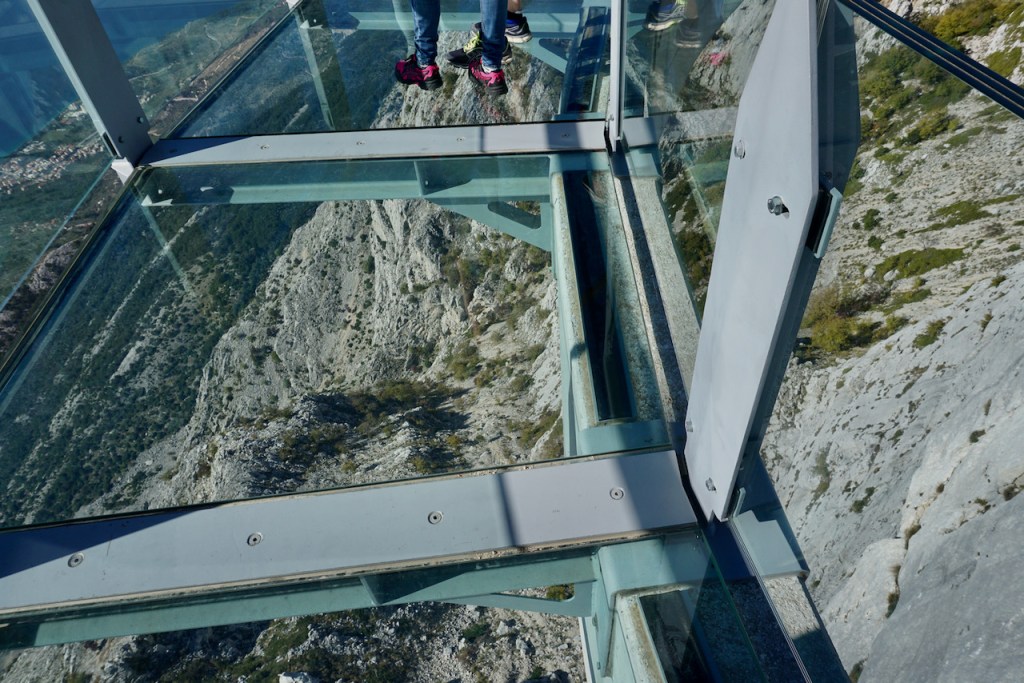
Back in the car, we followed the road to the Skywalk, which seemed to be the primary attraction. The Skywalk is exactly what it sounds like – a glass bridge where you can walk above the cliffs and stand at the edge of the world.
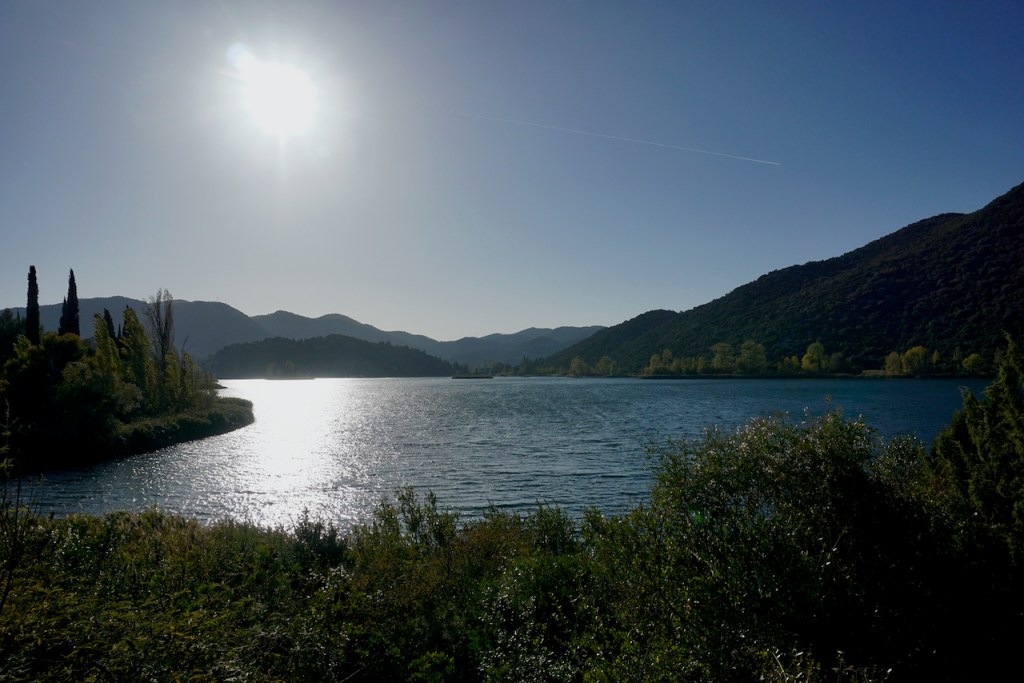
After lunch at the only restaurant, which was frequented by horses and a mule in addition to the patrons at tables outside, we drove to Baćina Lakes, which is easier said than done. It was only with the aid of several blogs, several maps, and sheer dumb luck that we found a) the lakes and b)somewhere to park. This is the type of adventure that comes from travelling outside of high season when the campgrounds and kayak rentals, from which it would be easy to get directions, are closed. I’d read about beaches and a cycling/walking trail circling the seven lakes, but as Baćina Lakes was off the coastal road, it wasn’t immediately obvious where we were or where we needed to be. In the end, after a brief attempt at visiting the tourist information centre in the nearby city of Ploče, the address of which led us to an abandoned bus depot, we put Peračko Blato Beach into the GPS because I found it listed on a blog and there we were! Another car, a camper, and a few people sunning themselves at a tiny beach heralded our arrival. More importantly, we had reached an are with very well-marked walking trails that clearly went around beautiful lakes.
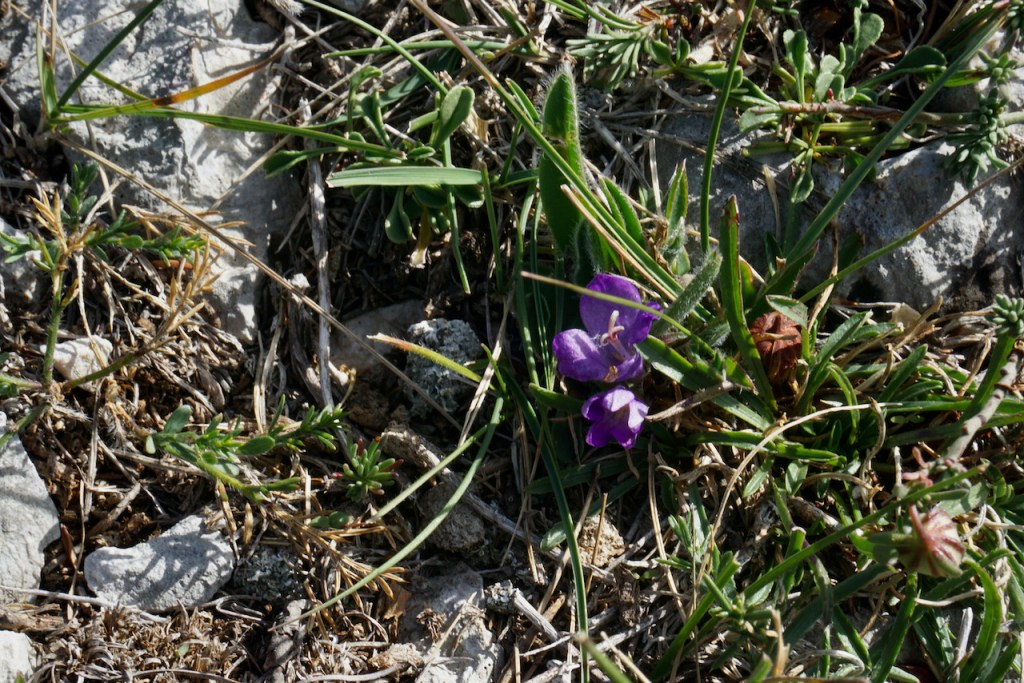
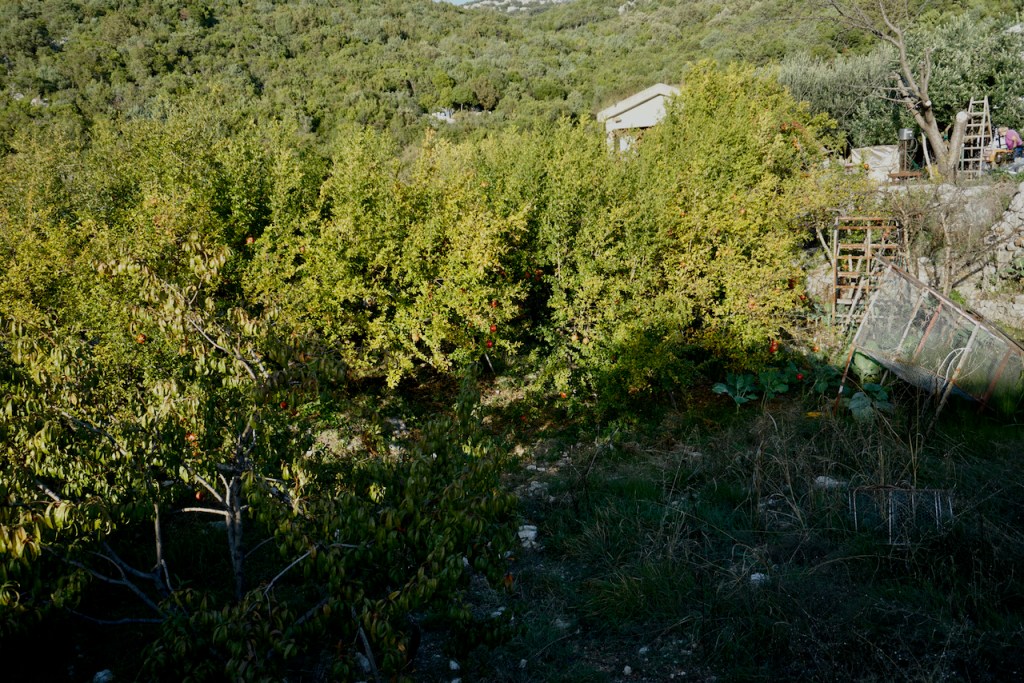
There were signs detailing information about the flora and fauna and the air smelled like spring. We saw pomegranate and olive trees and a wide variety of plants and flowers, as well as a snake and a jaw containing rather a lot of teeth. Considering we were following a black dog with a wagging tail who had come to greet us at the car and proceeded to walk in front of us for the entirety of our time at Baćina Lakes, we gave the skull a wide berth.
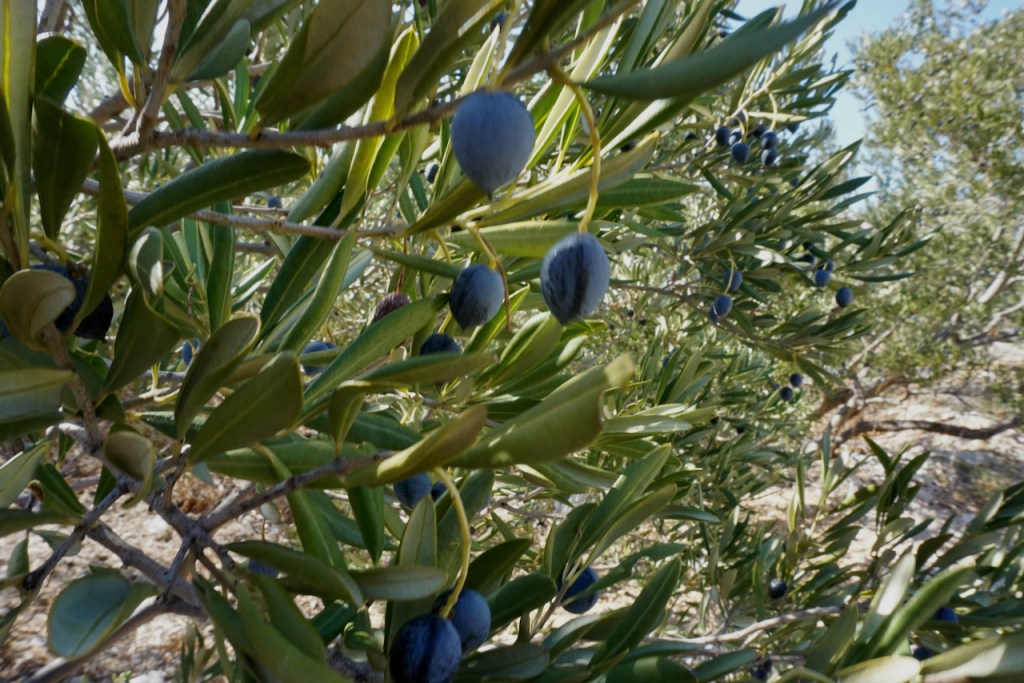
Throughout the day, we’d seen whole families spreading blankets underneath trees on the sides of the road and picking olives. We pulled over to do the same, which is when we learned that olives are not like apples and you cannot simply eat what you pull off a tree. After that, we left the olive trees to the locals, who clearly knew what they were doing.
Our last stop of the day was at a rest area that specialized in wine tastings. We didn’t stay for long, nor did we taste any wine, but remained for long enough to sit silently and stare out at the view.
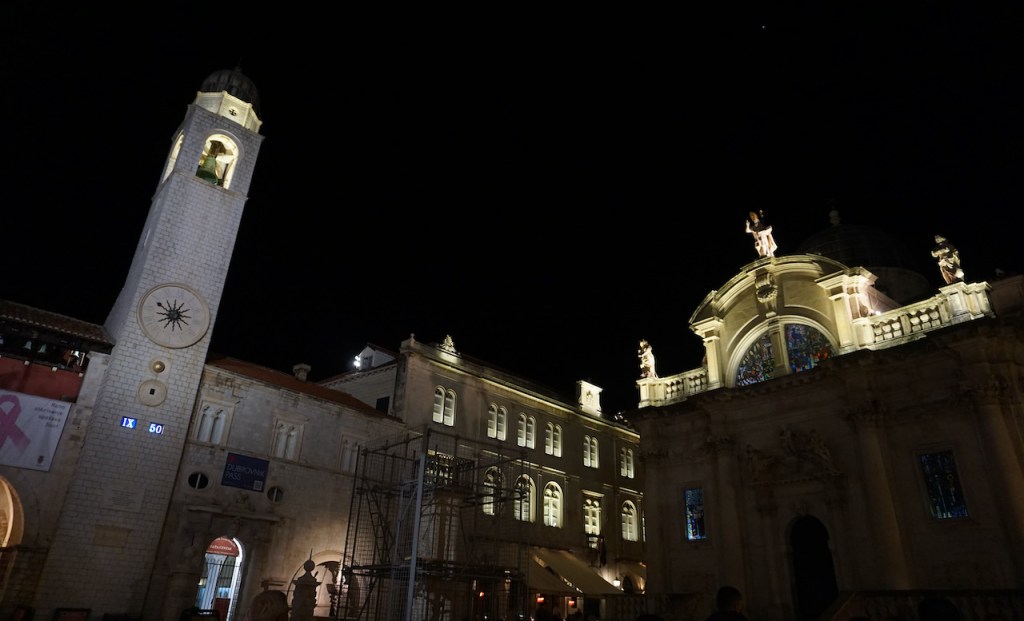
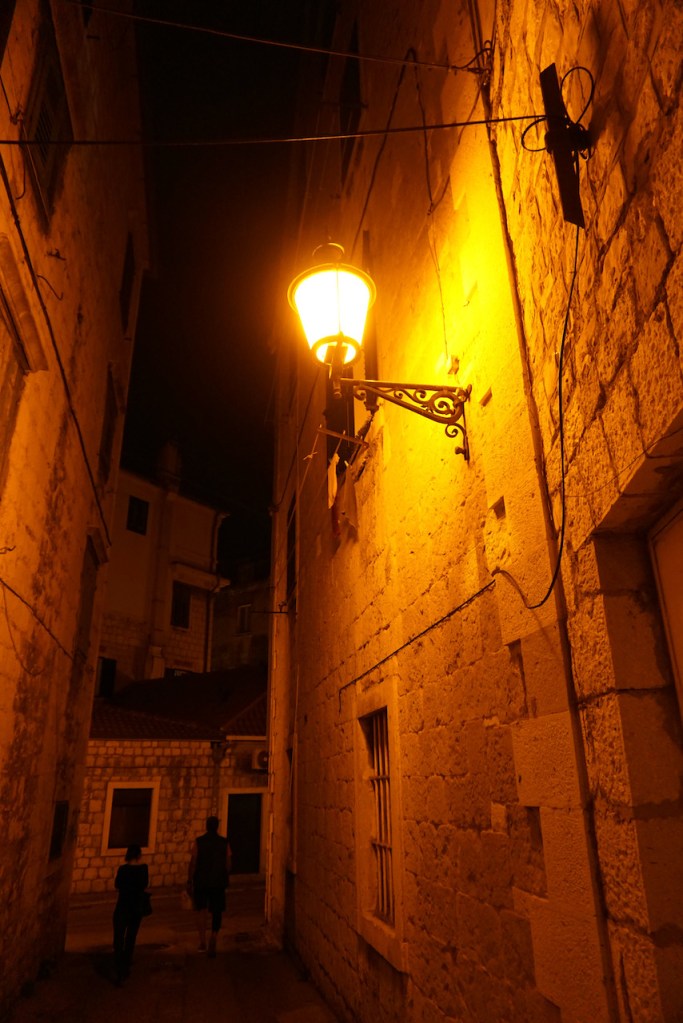
Night comes fast at this time of year and Dubrovnik was quiet when we arrived.
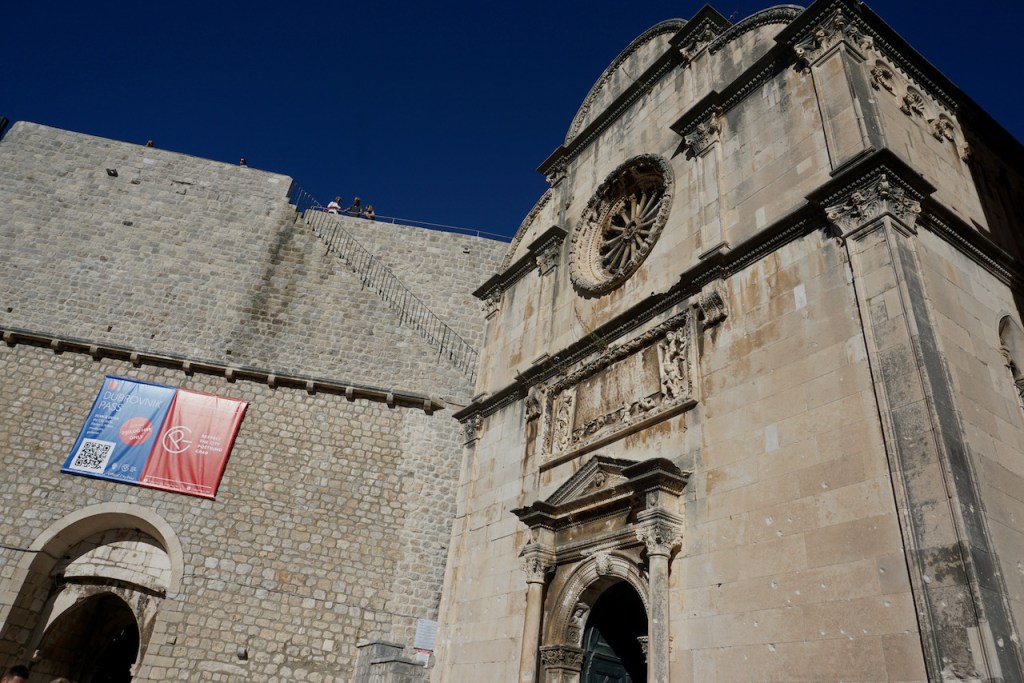
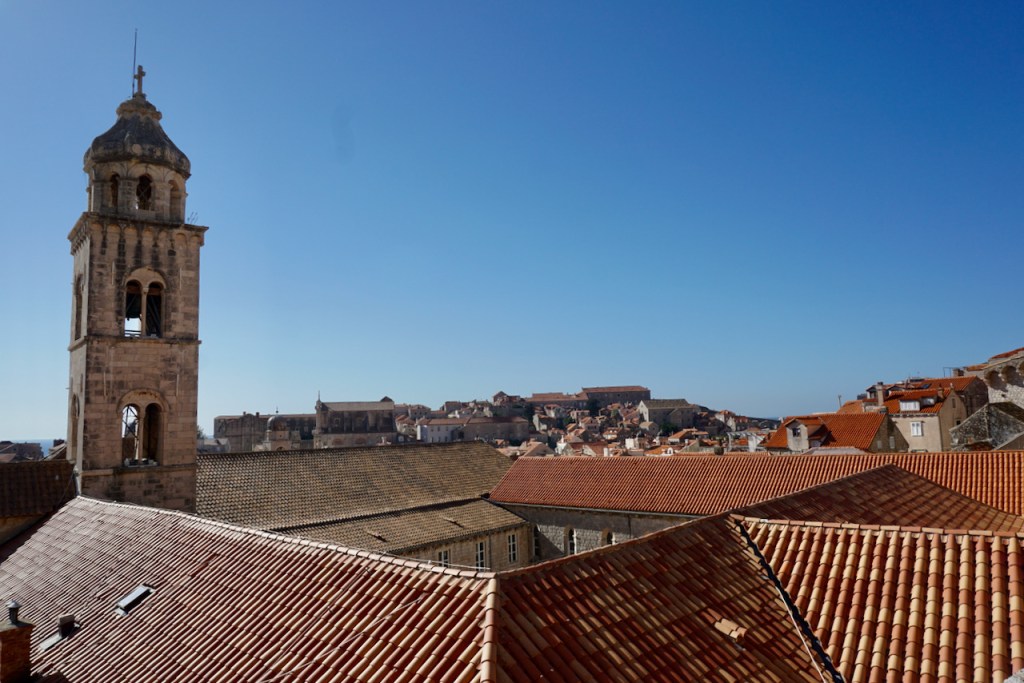
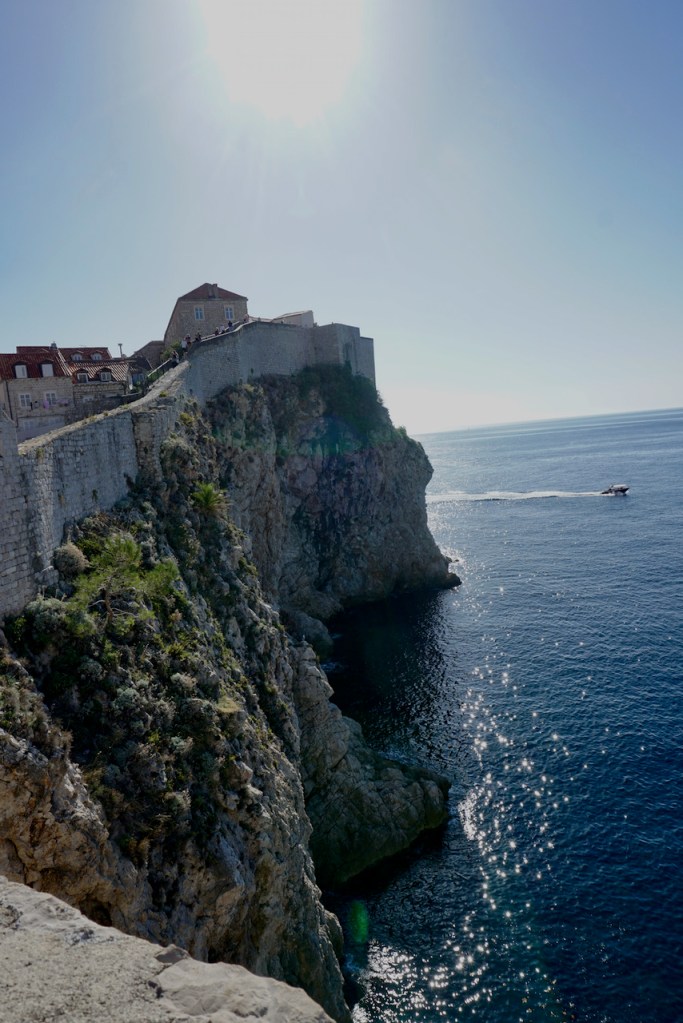
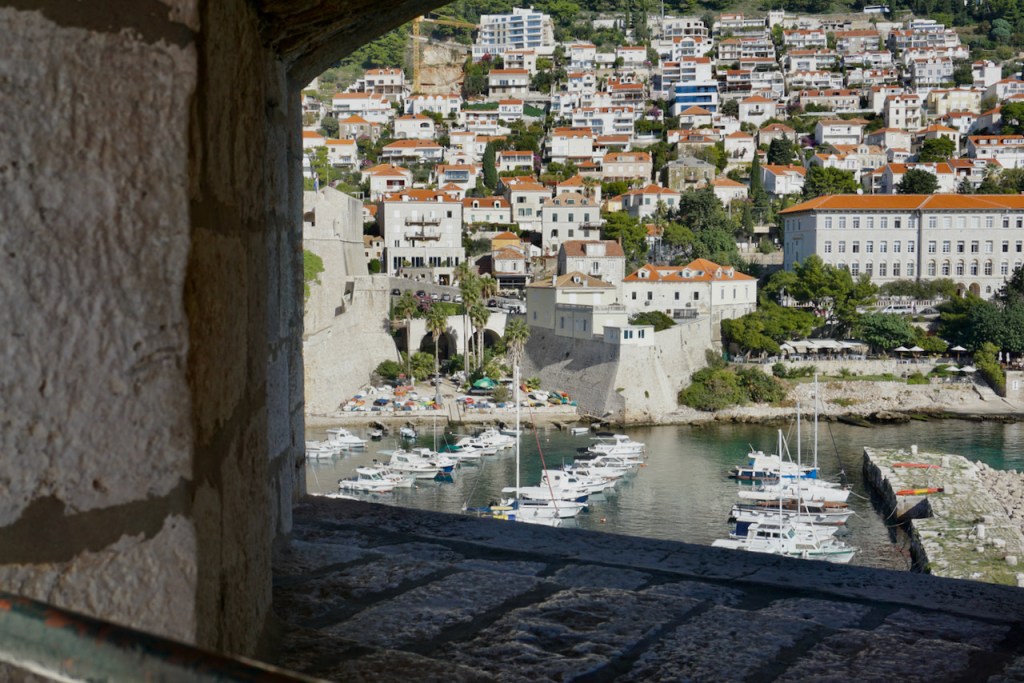
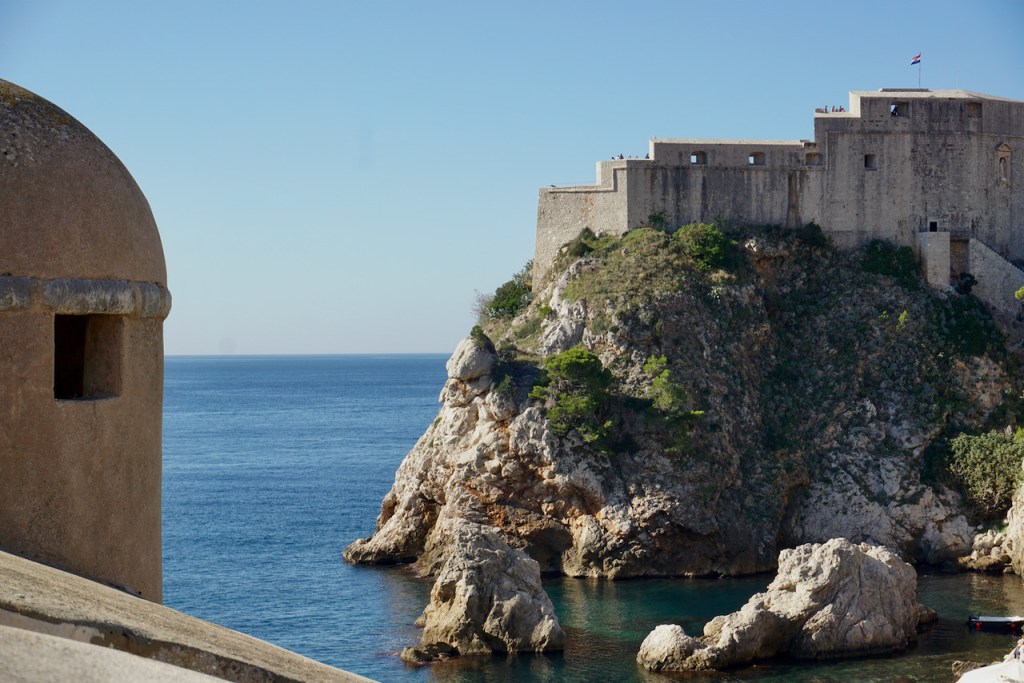
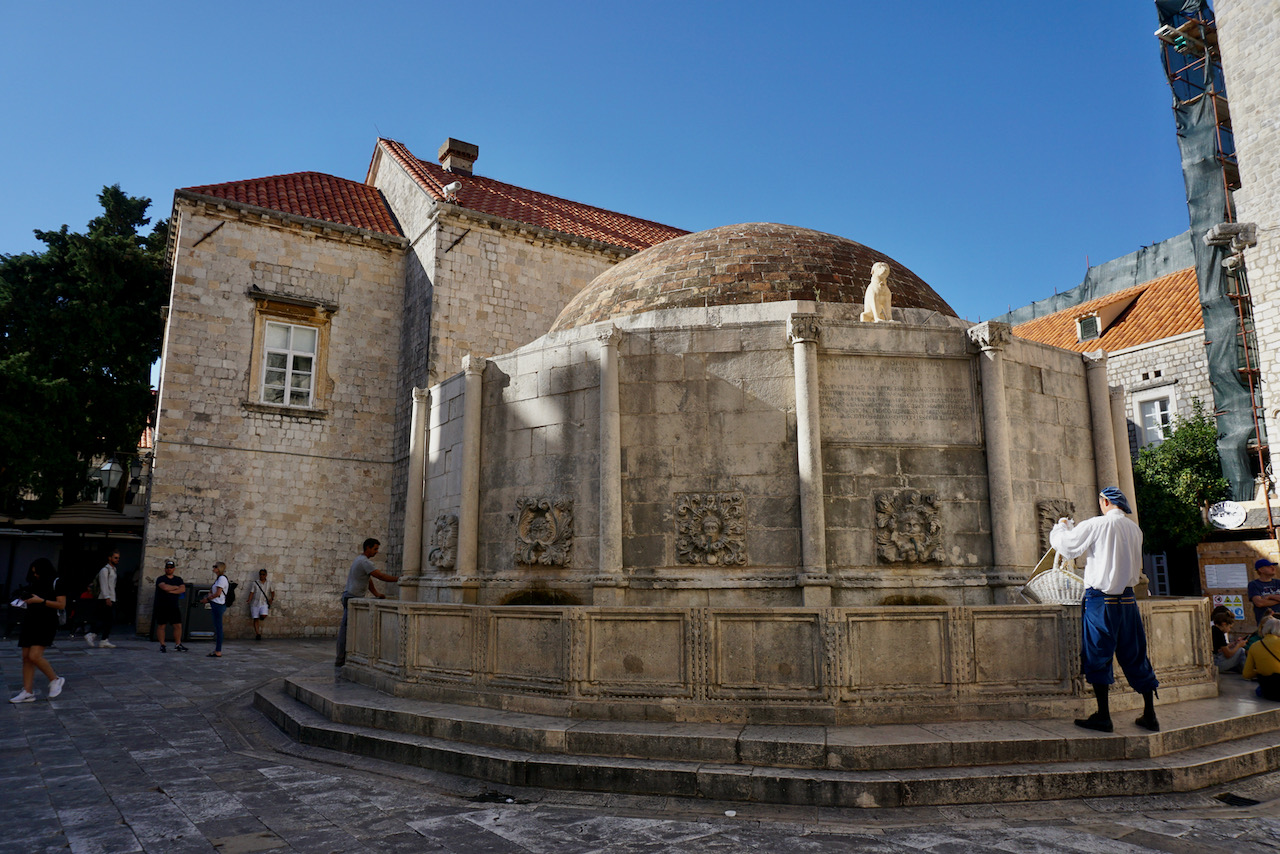
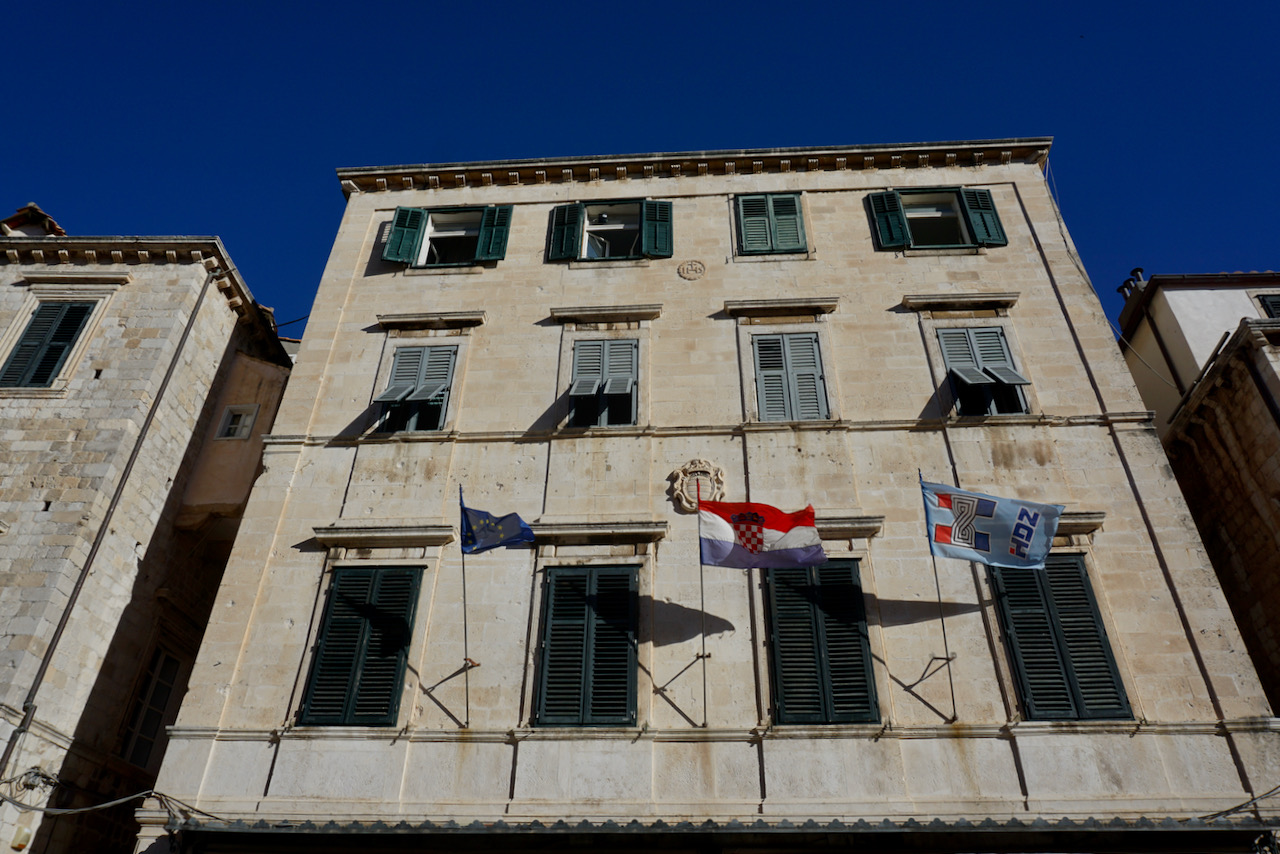
The following day was our only day to explore, and the weather was glorious. Warm bordering on hot with bright blue skies and a breeze that came out from the harbour. I had one intention for Dubrovnik and that was to walk on the city walls, which are a UNESCO World Heritage site. When I paused to think about just how old these walls were, I had to wonder about anything we build today. Will anything last like the walls have lasted? Wherever possible, I like to visit the highest point in a city and look down. It makes me feel tiny, just like standing in a forest and looking up.
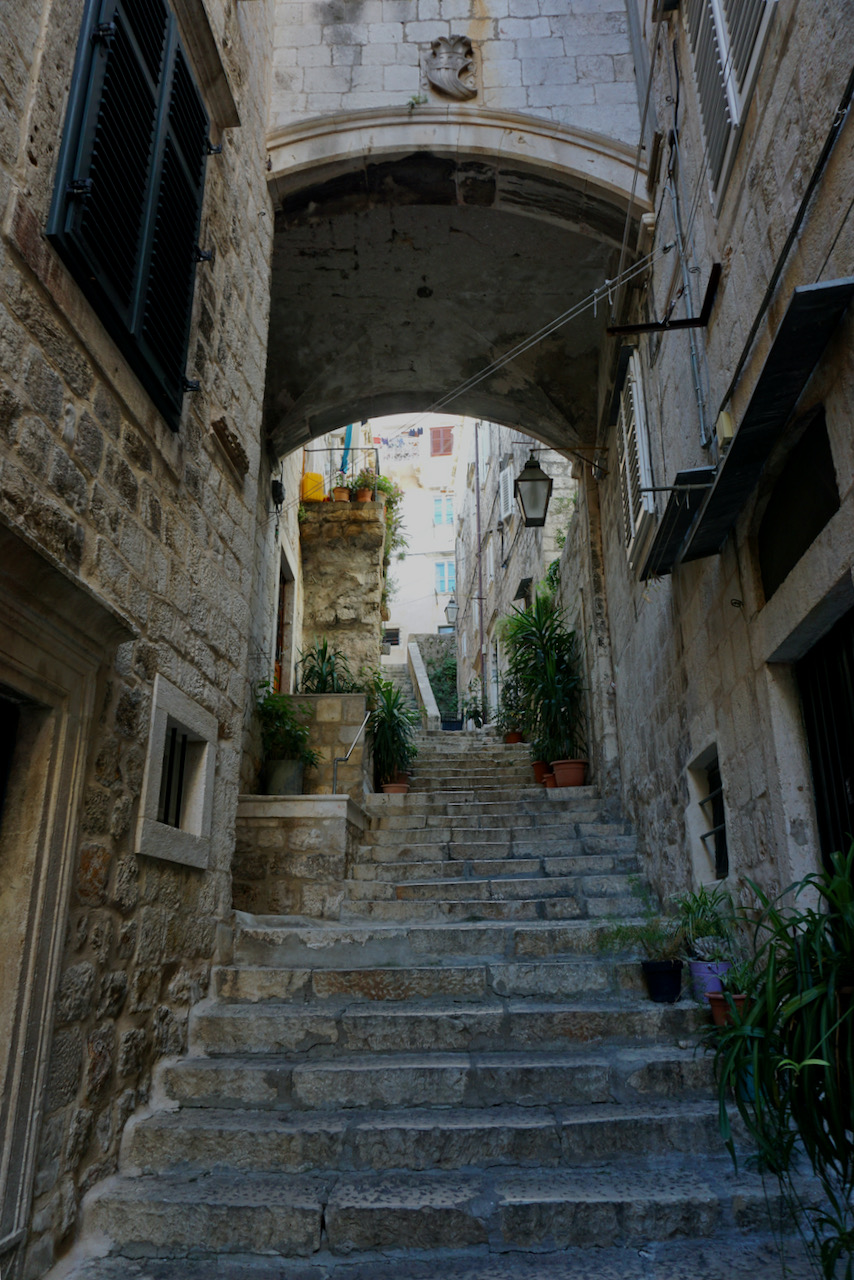
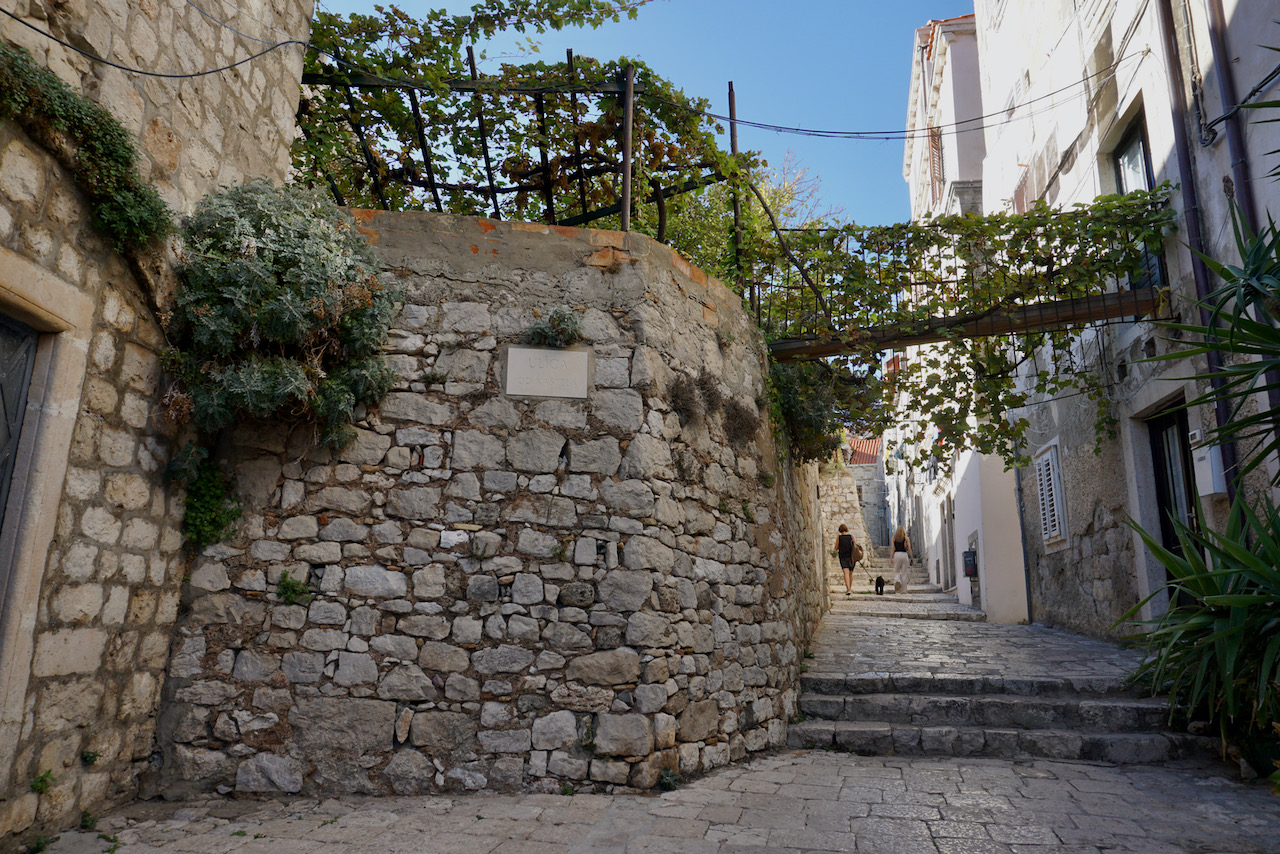
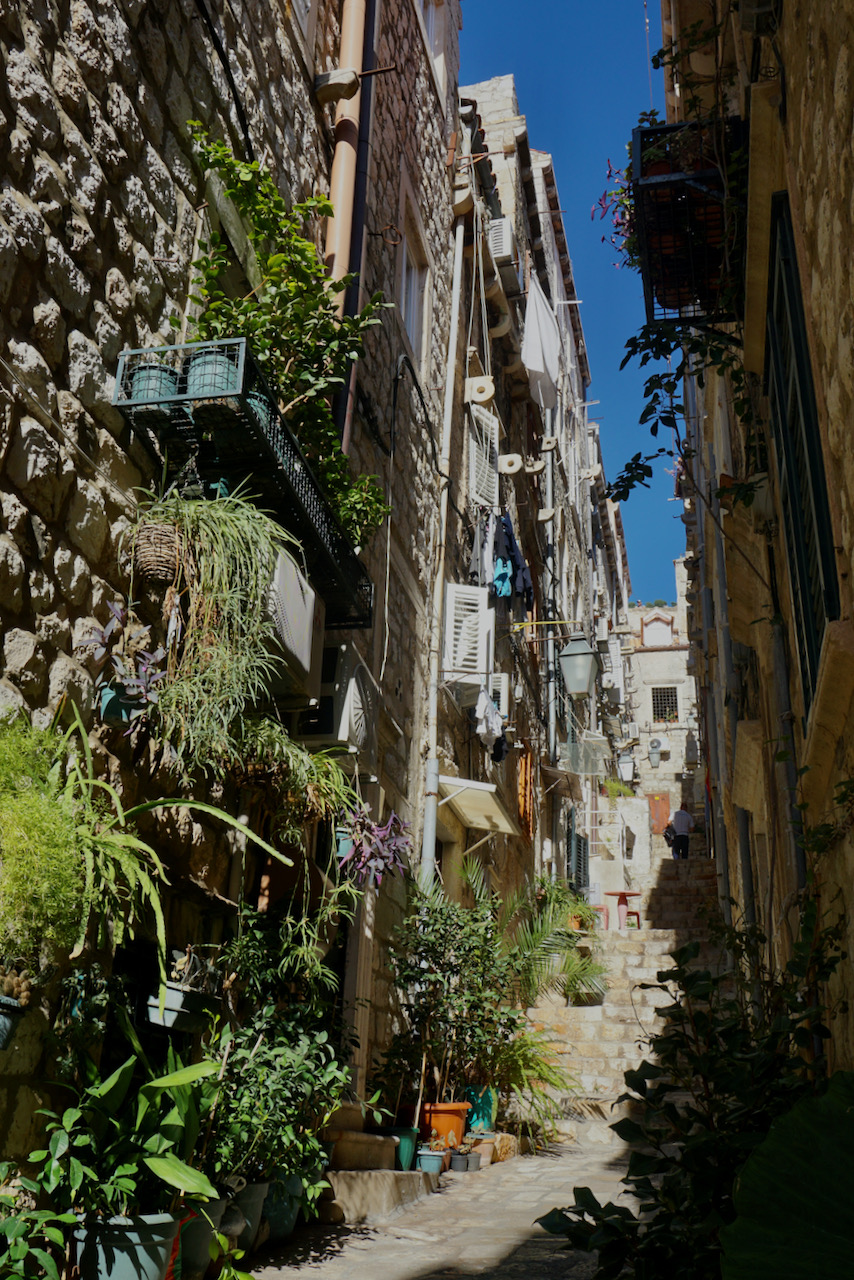
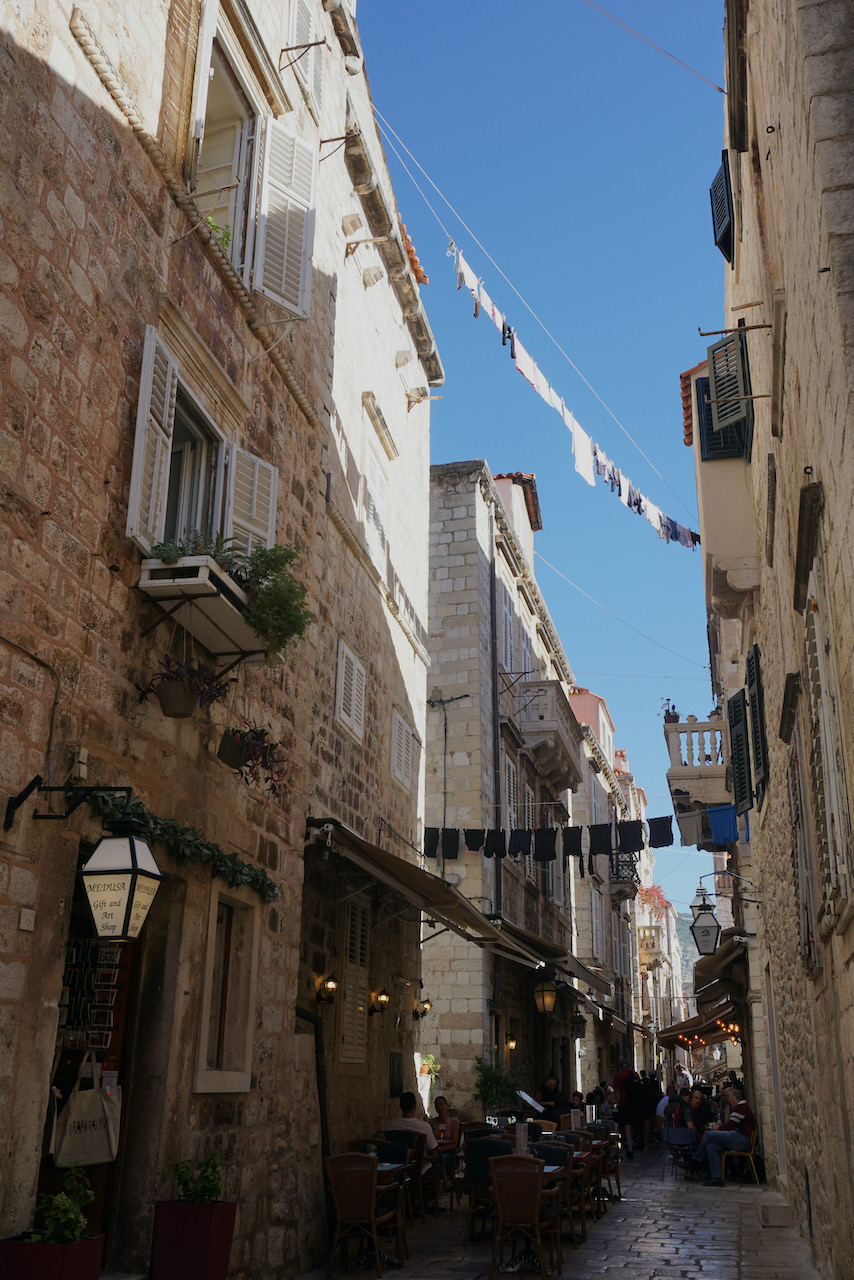
Dubrovnik is beautiful and we spent some time in the afternoon just strolling around. There are tiers of stairs all over the old town and each leads to another street or alley, stone buildings on top of stone staircases. As elsewhere in Croatia, Dubrovnik is also host to many well-behaved stray cats. We passed a small market and I bought some flavoured salt from the town of Ston, which we had passed on our drive.
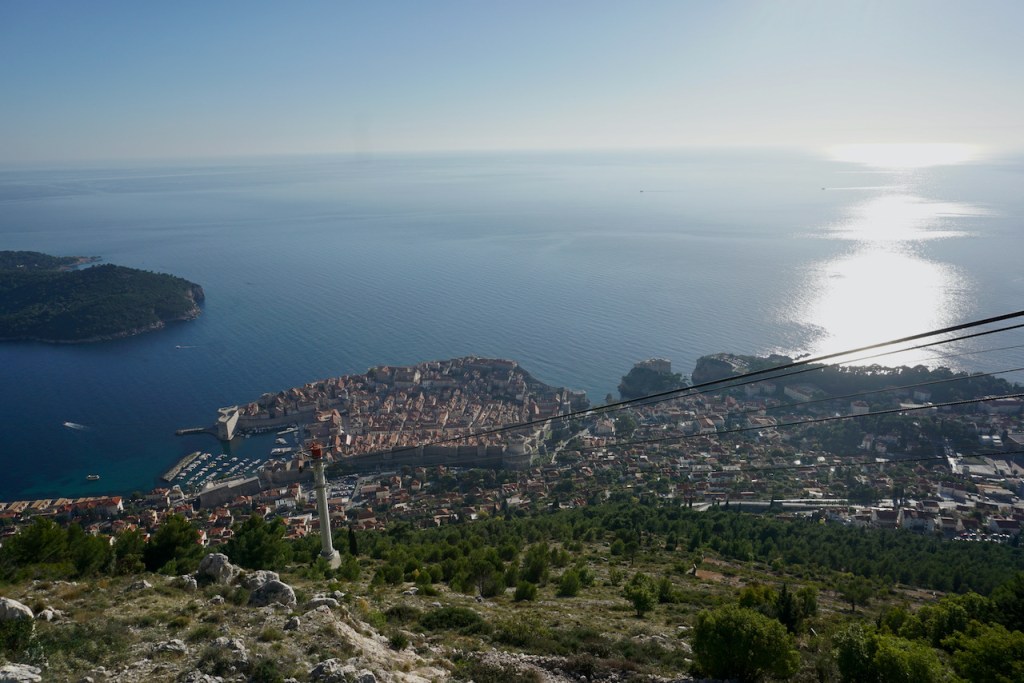
Later in the afternoon, my dad and I took the cable car to the top of Srd Hill, from which you can look out to Dubrovnik, the surrounding mountains, and neighbouring Montenegro.
We spent some time on the walking paths, as well, and were lucky enough to watch a herd of sheep as they dutifully followed their shepherd.
Early the following morning, well before sunrise, we were off to the airport. My only expectations of Croatia came from what I’d heard from my siblings and friends who had visited – that it’s beautiful, that the people are wonderful and helpful, that it’s calm and relaxing and easy to explore. All I can add, I think, is that Croatia exemplifies strength – the strength to create, to survive, and to rebuild. It was a real pleasure to be there.
After two nights in Zagreb and an afternoon in Plitvice Lakes National Park, my parents and I drove through beautiful mountains and the sort of scrubbed bush that seems to come right out of rock. The best word to describe the sky, I wrote in my journal later, was the German word diesig, which can mean both misty and hazy, but has none of the negative connotation of haze. The sun peeked through but to say it was sunny would be misleading. It was a beautiful drive and I was glad to be behind the wheel.
We arrived in Split in the dark and the air tasted like the sea.
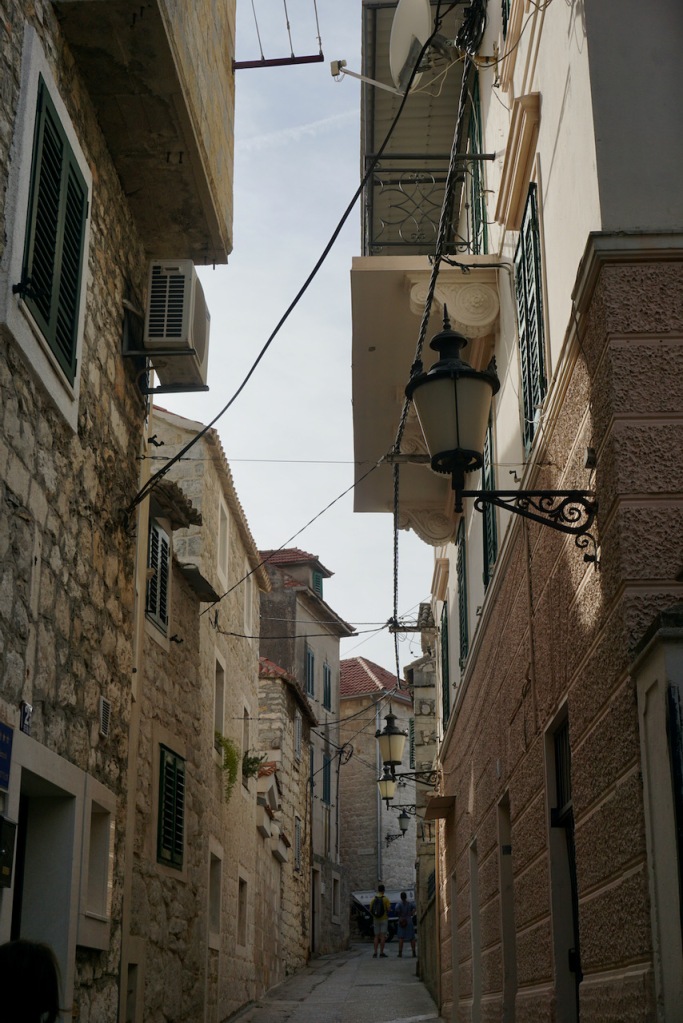
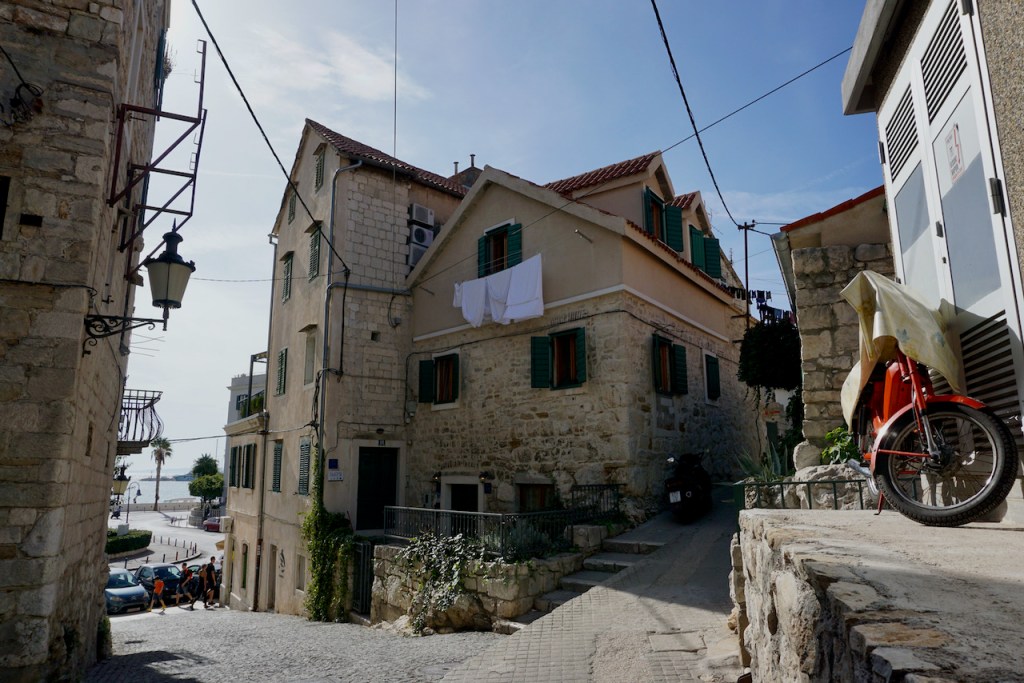
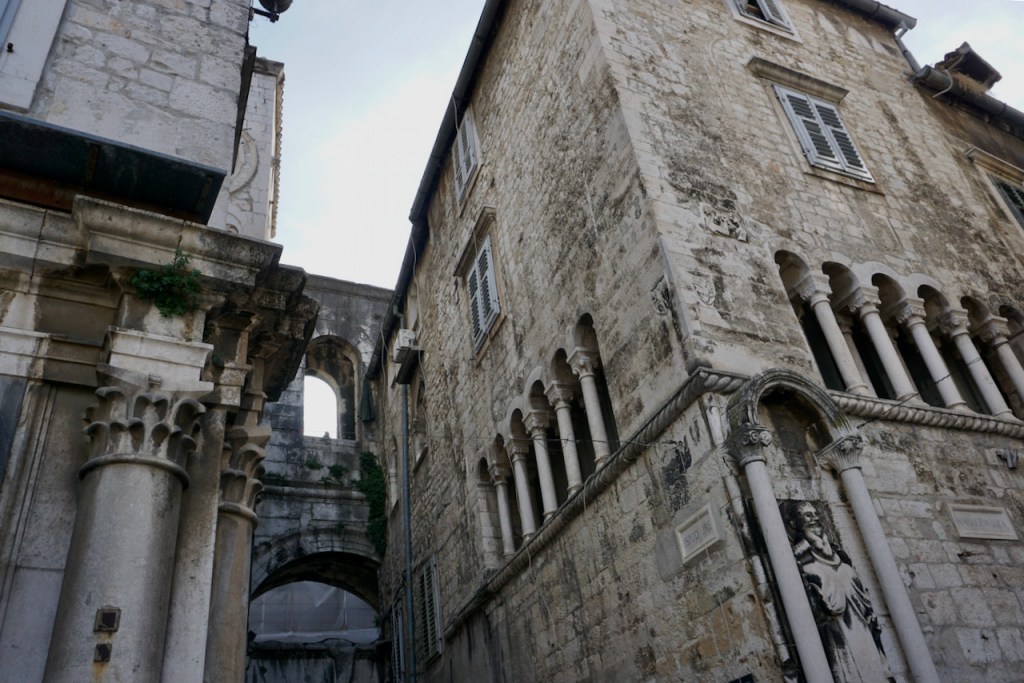
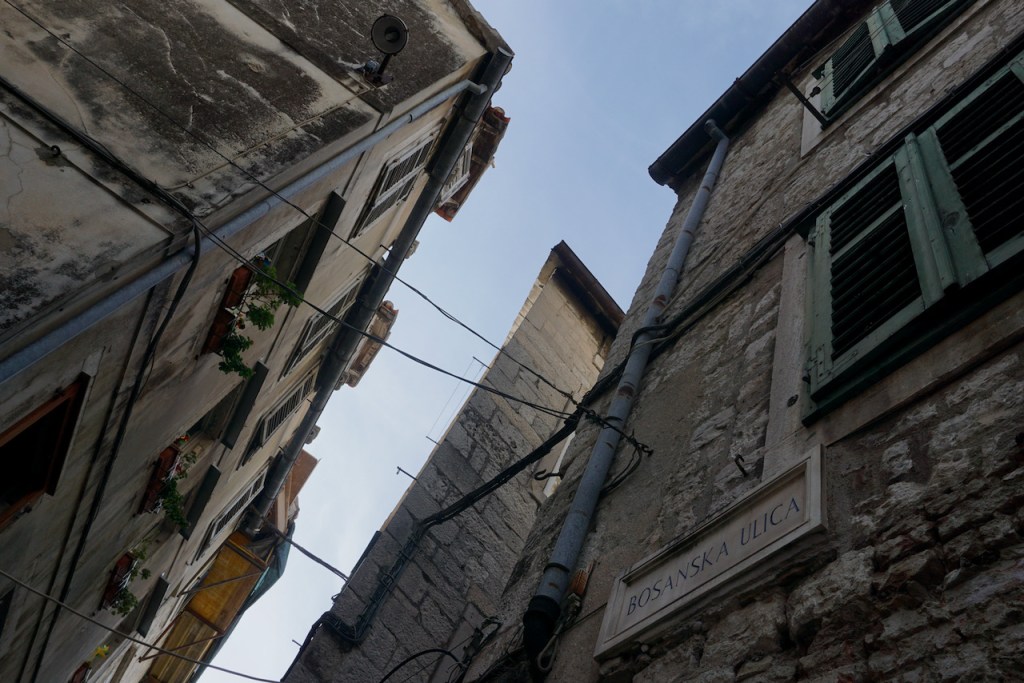
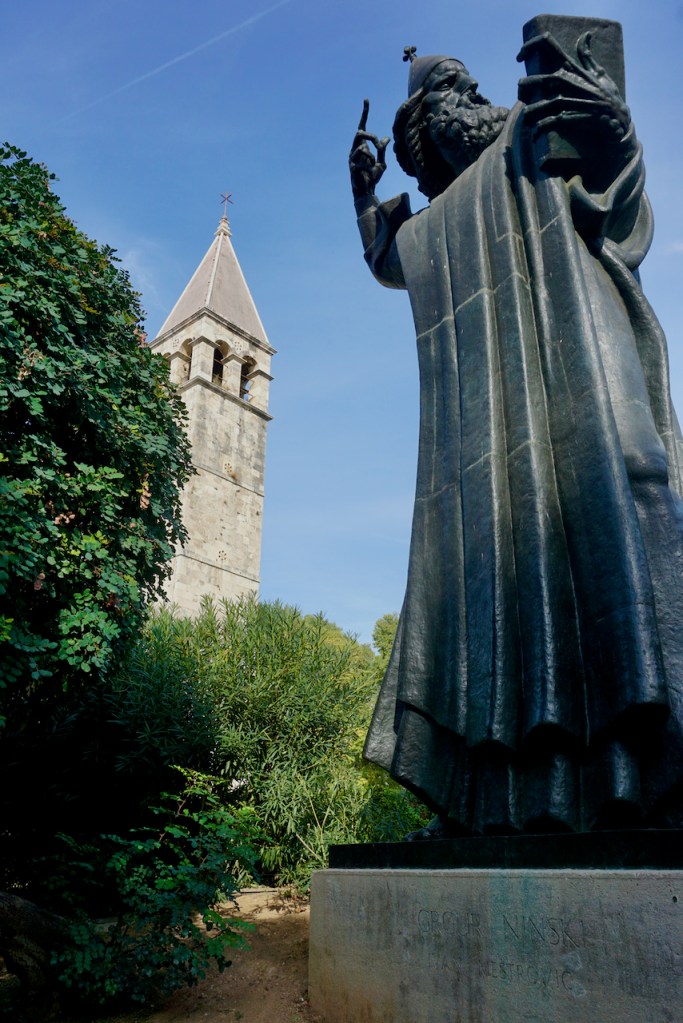
The following morning we took a walking tour that gave us a brief introduction to Split’s old town and taught us a great deal about Split’s history from the time of the Roman Empire. This is where I began to understand the role of the Balkans as a crossroads through Europe. It seemed to me that Croatia has been historically disregarded as the playground of empires, even as empires rely on its strategic location for conquest and safe passage. This was clearly seen in Split, a city that has traded hands time and again throughout the course of history.
I would have thought that the enormity of Diocletian’s palace and the ancient Cardo, the trade corridor still running under Split’s streets, make this city, a UNESCO World Heritage site, one of deep interest for archaeologists and historians. However, as the guide explained, UNESCO is interested in new finds. Split and its heritage might be beautiful, but are not new finds.
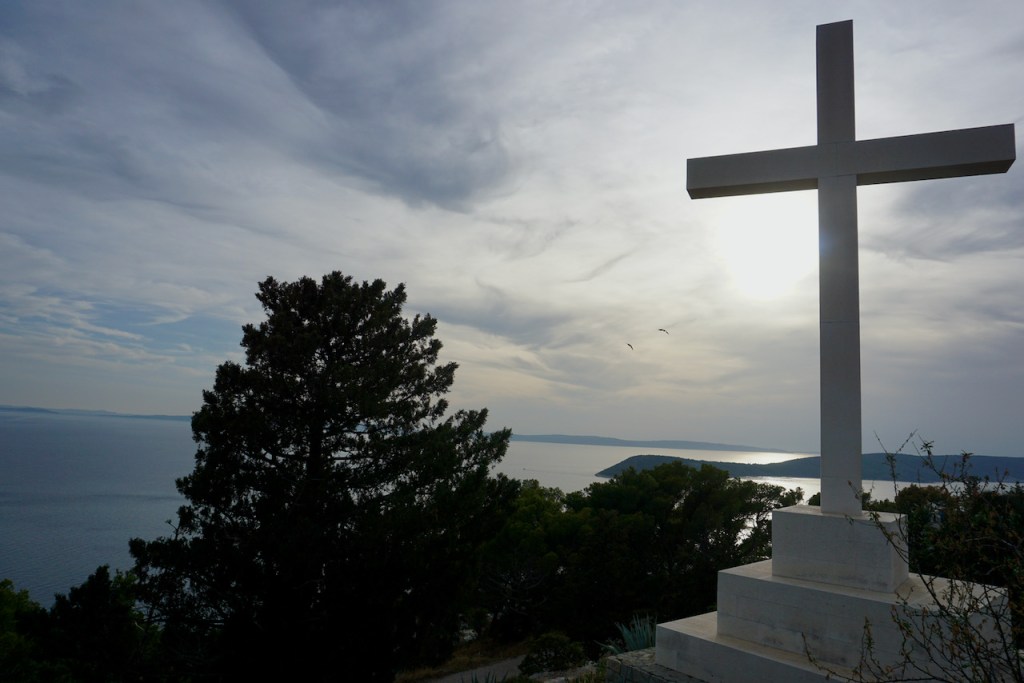
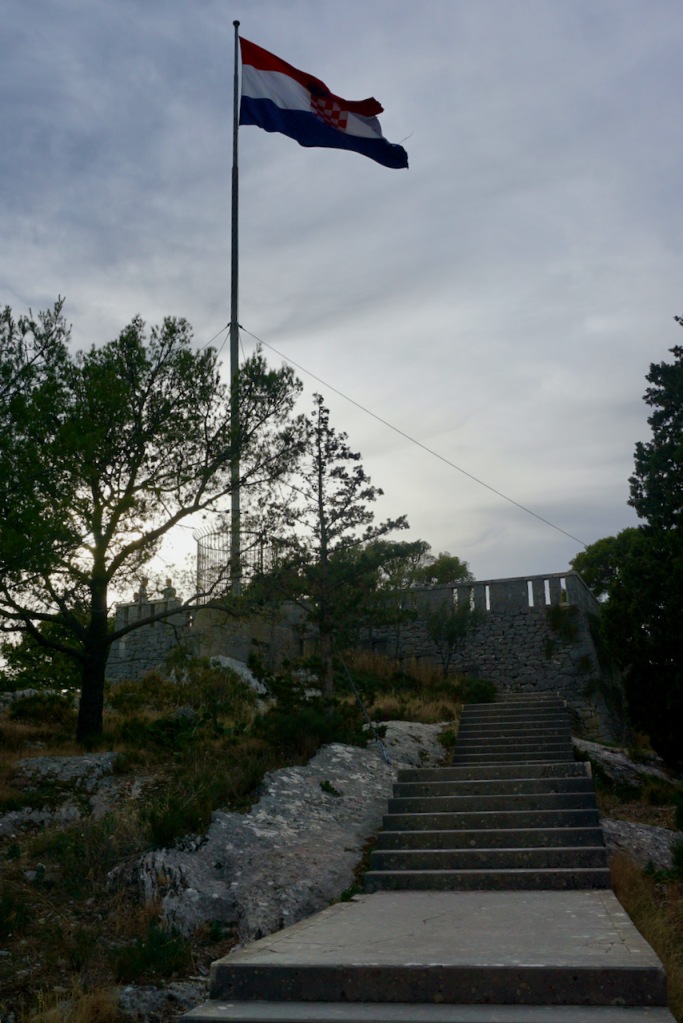
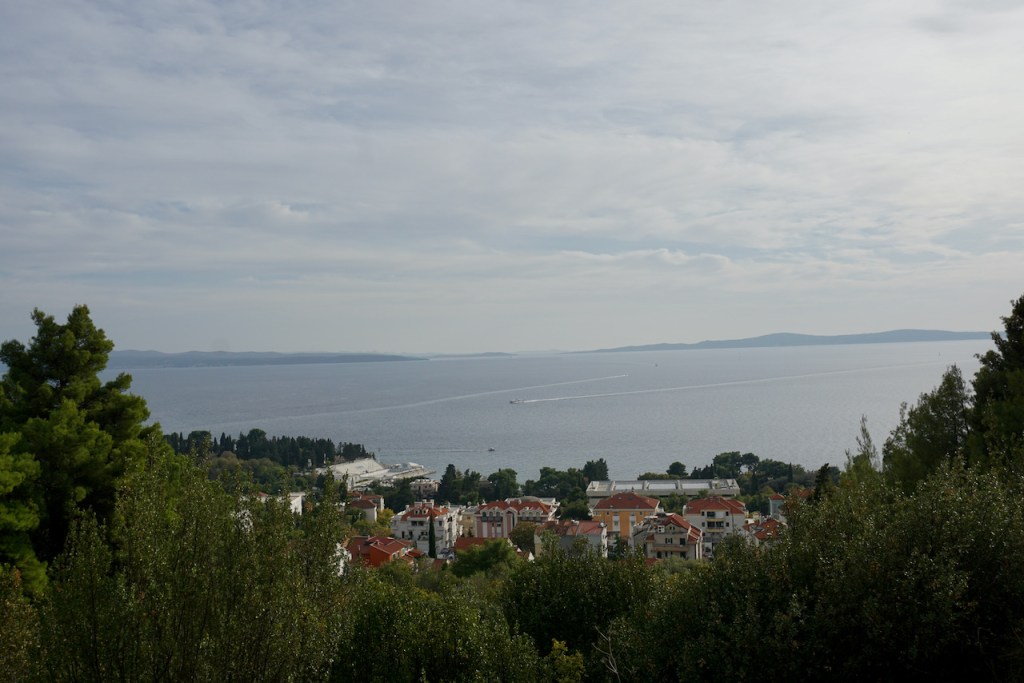
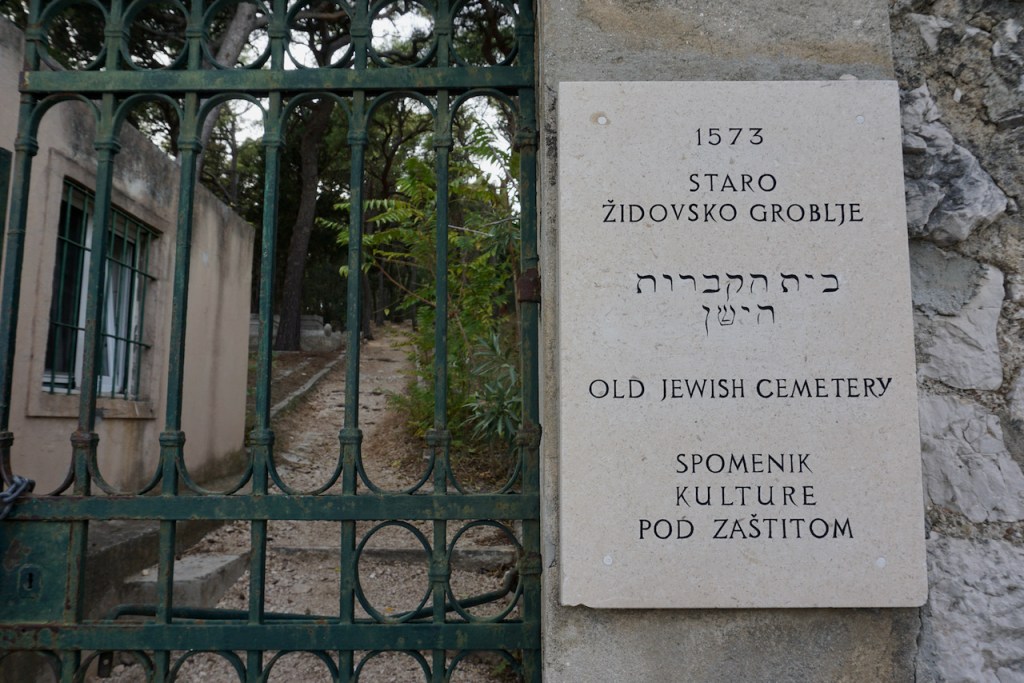
After a walk to get our bearings, we spent the afternoon following the path up Marjan Hill to reach the highest point in Split and look down on the city from below. Interestingly enough, we found an old Jewish cemetery on the way.
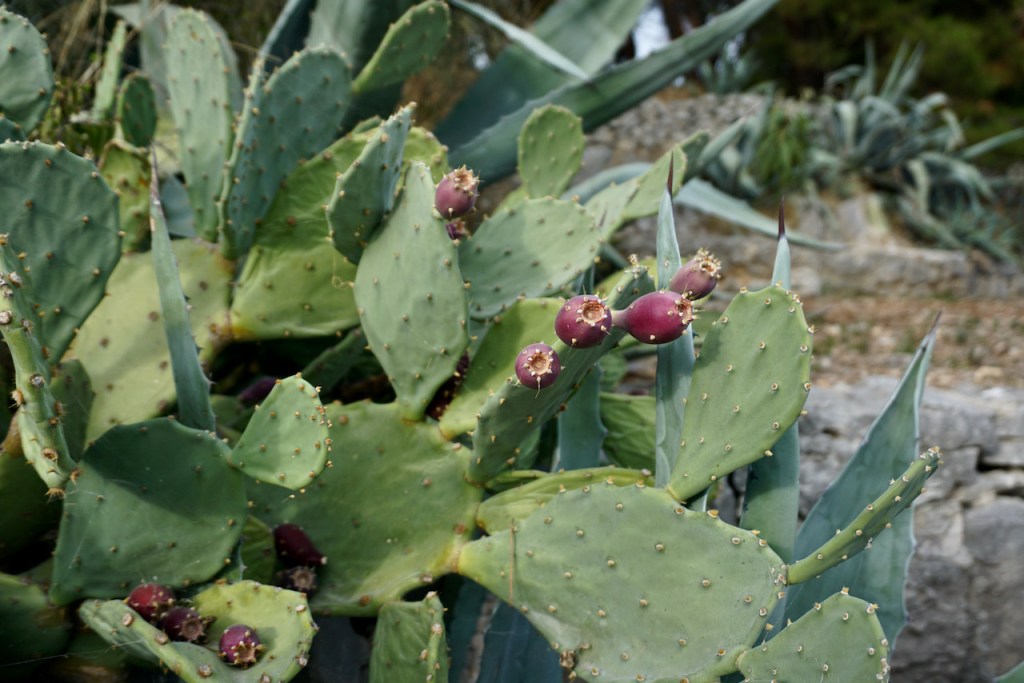
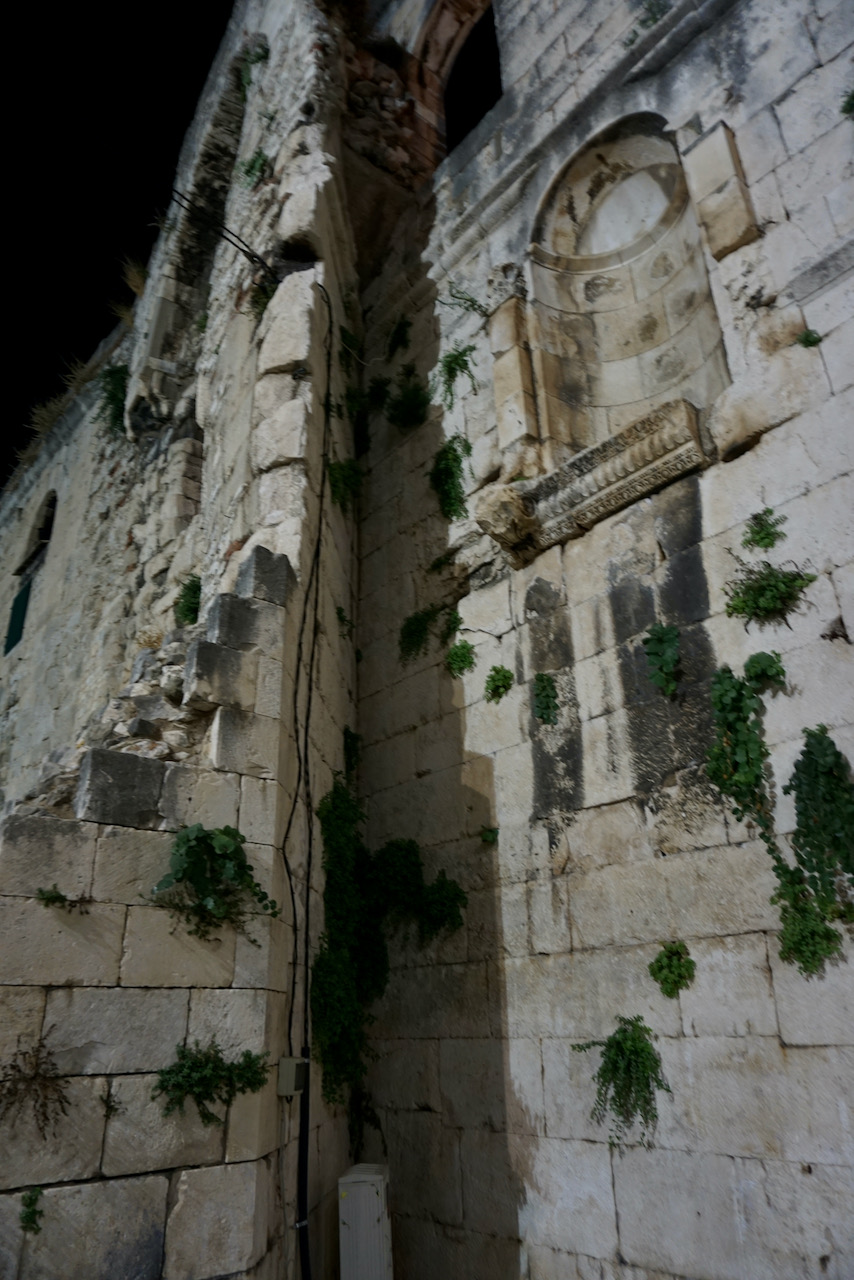
I found that I could not get enough of the landscape. The white stone gave me shivers when I touched it; there were plants, trees, and cacti that I had never seen before; water was visible from everywhere above; mountains visible from every angle. The polished stone of the streets and buildings shone in sunlight and moonlight, and caper bushes were growing on the palace walls. The stories the stone could tell.
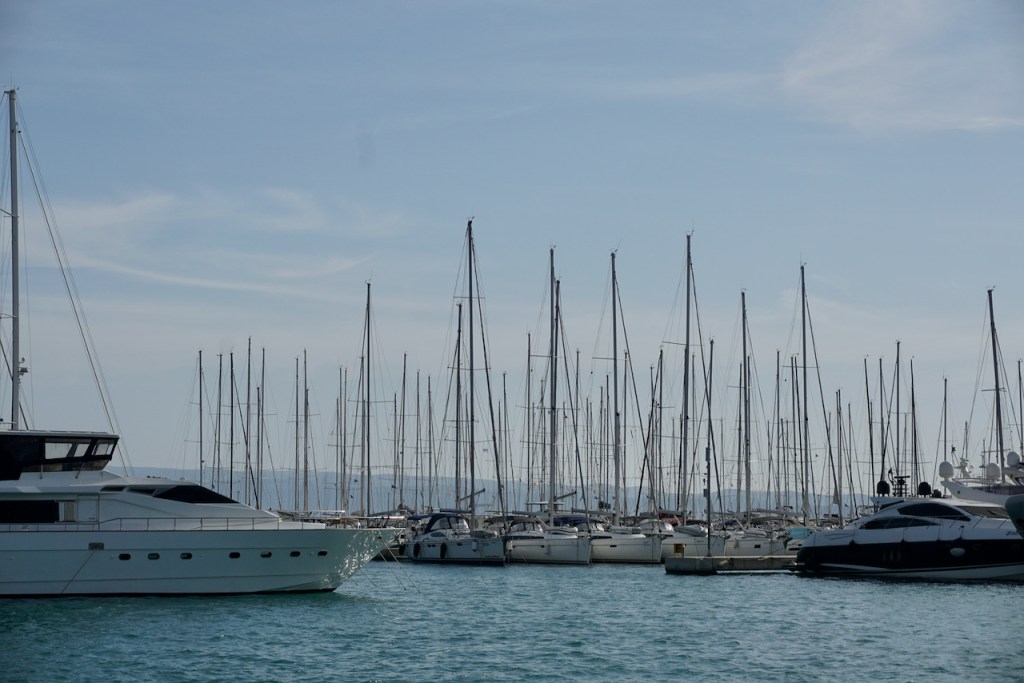
And of course, no ancient city of great trading status would be complete without a port.
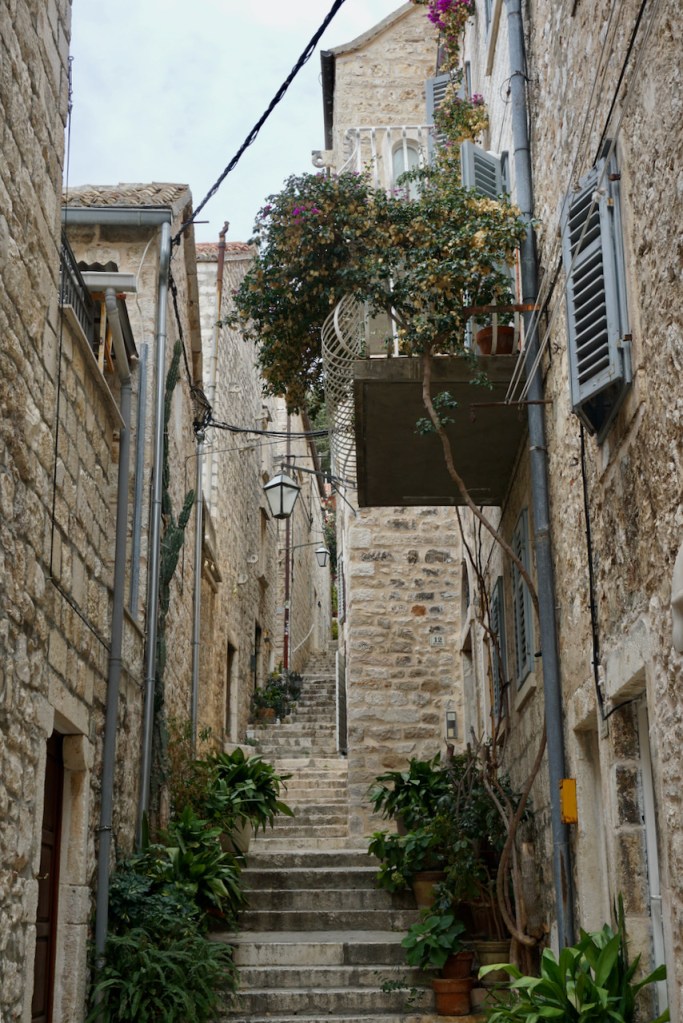
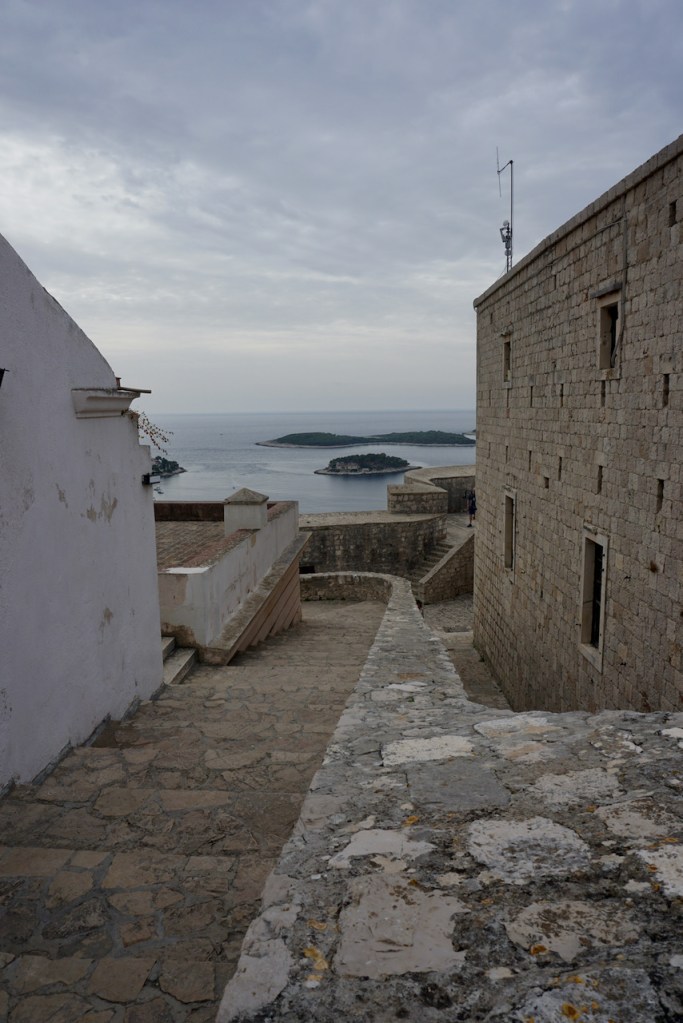
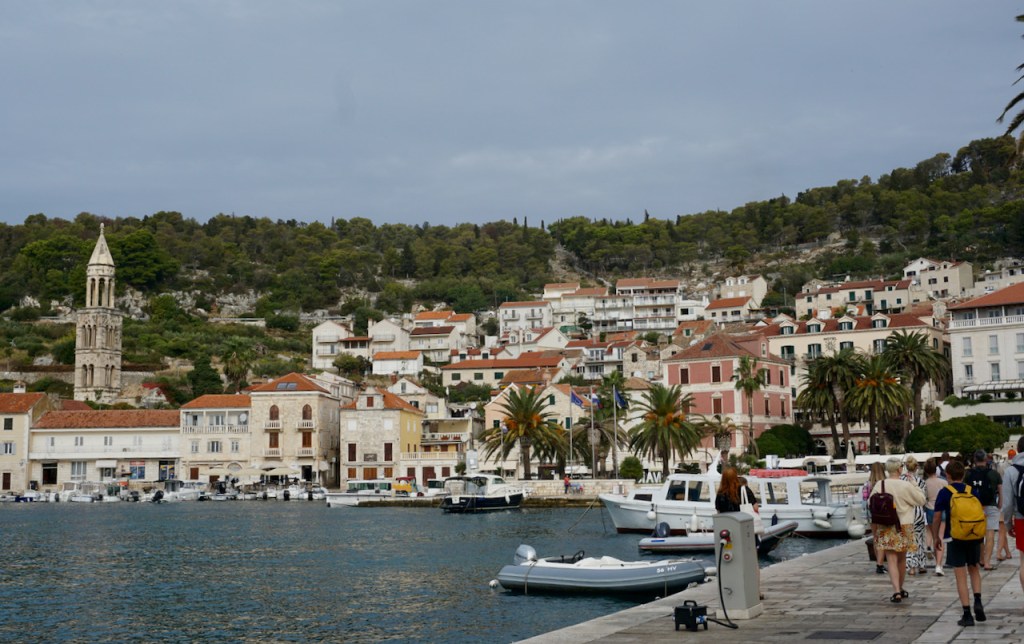
For our last day in Dalmatia, we took a ferry an hour away to the island of Hvar. We walked up to the fortress overlooking the Adriatic and the town below and then along the harbour in the opposite direction, following paths that twisted and turned around trees and white stone.
From what we saw in our short time there, we were in a very peaceful place. Pristine and windy, twisting streets leading to gardens and alleys, paths winding through parks. It was just a really lovely atmosphere, one that I imagine gets very quiet when the tourists are gone for the winter (though that’s not to say the locals mind the break).
Rather than walking back along Split’s waterfront when we returned, we walked in the opposite direction towards the beaches, and I put my feet into the Adriatic for the first time. I love new bodies of water and this one was warmer than expected. We sat and watched the sky until the sun set.
And then from there we would head further south along the coastal road to our last destination – Dubrovnik.
Photos, travels, musings, and ideas on education by someone trying to make the world a better and more peaceful place









































 By Rebecca Michelle