Home Is: A Reprise

Depending on how you look at it, I am a person with many homes or with no home. Perhaps I am a person looking for a home, or perhaps I call “home” what is more accurately “place”. Is home where you are or is home how you feel?


Home is clearly more than house, but there are times when home is indeed also house. And there are times when home has no house. Home can be forest, mountain, water, and here, home is a feeling. Can the feeling also be a place? Can a place be a home?

If I have many homes, it is because home is people, not places. But not every place with people is a home, nor do all homes rely on people. Does bringing people to a place make it a home? Perhaps not, but the community that comes from the people can be a home.

If I have many homes, it is because home is a feeling, not a location. I can feel at home in different literal places when my heart can settle in a figurative place. To say that I feel at home with you means you and not where you happen to be. So I can feel at home with you within, despite, or regardless of the place.

Or do I have no home? I can be homeless without being houseless, a person who has a physical place but no sense of warmth, of love, of affection and affinity. If I have lost my connection to home, that means I have lost connection. And what does that mean for who I am? If connection comes from relating with others and the world around us, does losing home mean losing identity? And without identity, who am I?


Depending on how you look at it, I am a person with many homes or with no home. I am deeply rooted to something I cannot articulate but am never without, a sense of belonging to the trees and sky, mountains and ocean. I do not need to be out in the world to understand that, but I need to be out in the world to feel grounded in my own body. And at the same time, I seek to lose the body to become part of the world.

In this sense, I am at home in the world.

But to be home in the world does not mean being alone in it.

So home is people, not places. I do not need to know a place to feel belonging, but to know people. By this I mean the know that is tied up in care, the know that means I will share my delights and sorrows with you because, if I feel at home with you, I believe you want to know.

But home can also be found in places themselves, because to find a home is to connect with a soul. The soul of a place is a feeling and we feel places. This is how we choose where to wander and where to settle, where to explore and where to retreat. If we are able to see the soul of a place, perhaps we understand it in a way that allows us to call it a home.

In this sense, home merely is. Home exists. Home is there. Sometimes we are there, too, and sometimes home is waiting to be found.


It has been a long time since I’ve been home, and in the interim I’ve occupied many homes. Literal homes, figurative homes, shared homes, solitary homes.

Perhaps my preoccupation with home comes from a constant search for one, or perhaps from always knowing there is inherently more than one. Perhaps it’s less a preoccupation and more a vested interest, one that comes from life circumstances I never could have imagined but that, at the same time, were always lying dormant and waiting. Or maybe it’s a simple awareness of language. I cannot wait to go home, said when I am clearly at home. Welcome home, said when I coming from home.

It took years, I remember her saying, before I stopped referring to this city as home. And then I realized that my life was somewhere else and that that was my home.

This is undoubtedly logical. But if this is the case, how can I say I’m going home? And how can I then be welcomed home to multiple places?

And so I search further. I search from the security of a place that I call home, a place made up of people who hold, care, and love, and who know that it is not the search that is important, but the discoveries that are part of searching.

And I search because I like to ask questions and I like to find answers. I am curious when I am safe, and I am safe when I am home.

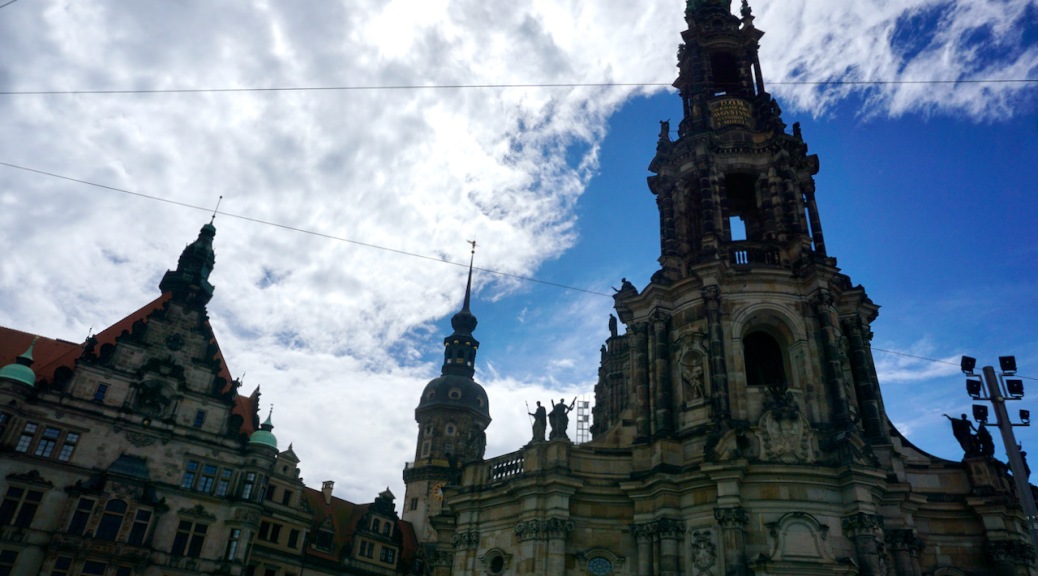
Schalkau, Germany – September 2021

Travel Guide: Dresden

Sometimes I like to escape my usual world for a while, just to feel my feet under me again. A beautiful way to do this is out in nature, literally just outside the door, and I do this often. But sometimes I like to go exploring in a different way, the way that reaffirms my confidence in walking independently through the world. I’m not a city girl, as much as I’ve tried to be (much more of a kopi at the hawker girl, a friend aptly said), but I like spending time in cities. I like watching people, I like getting lost, and I like the anonymity that comes with crowded spaces.

And this is how I ended up in Dresden last weekend.

I arrived in the rain and was delighted when the sun came out and kept the rain at bay for the remainder of my visit. My first impressions were everything that comes out of story books. Stone buildings, castles and churches, graceful bridges.

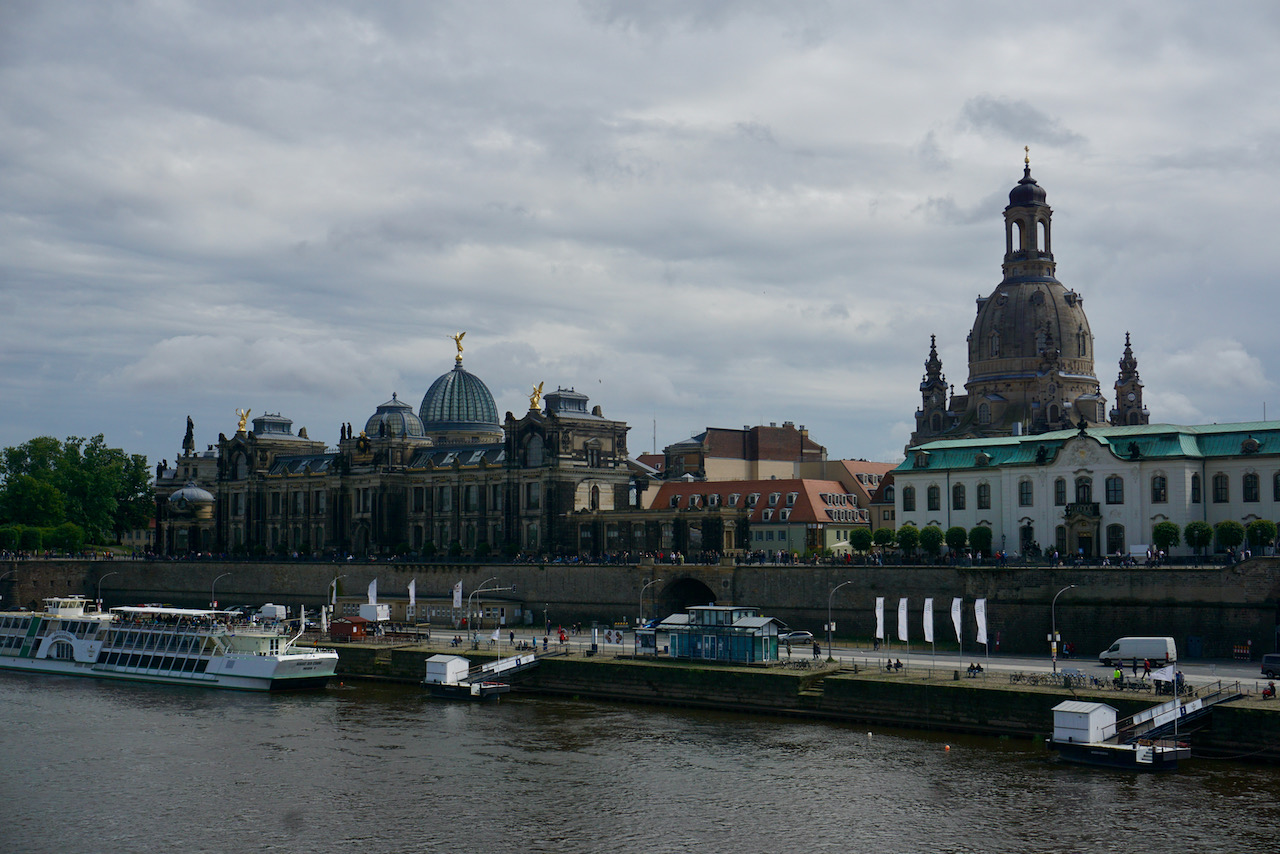
An extraordinary thing about Dresden is that everything has been rebuilt since firebombs destroyed the city in February 1945. This tells us something about what is meaningful to people and, I think, it tells us something about the power of place. These ideas stayed with me as I stopped on Brühlsche Terrasse (Brühl’s Terrace) to look back at the city.

View of Brühlsche Terrasse from across the Elbe

From there I headed for Neustadt, a neighbourhood located across the Elbe from Dresden’s Altstadt, or old town. First, I took a brief walk through Neustädter Markthalle where the vendors sell a variety of local, handmade, and interesting products. Unsurprisingly, the book exchange shelf, a mark of communities everywhere, was my favourite part.

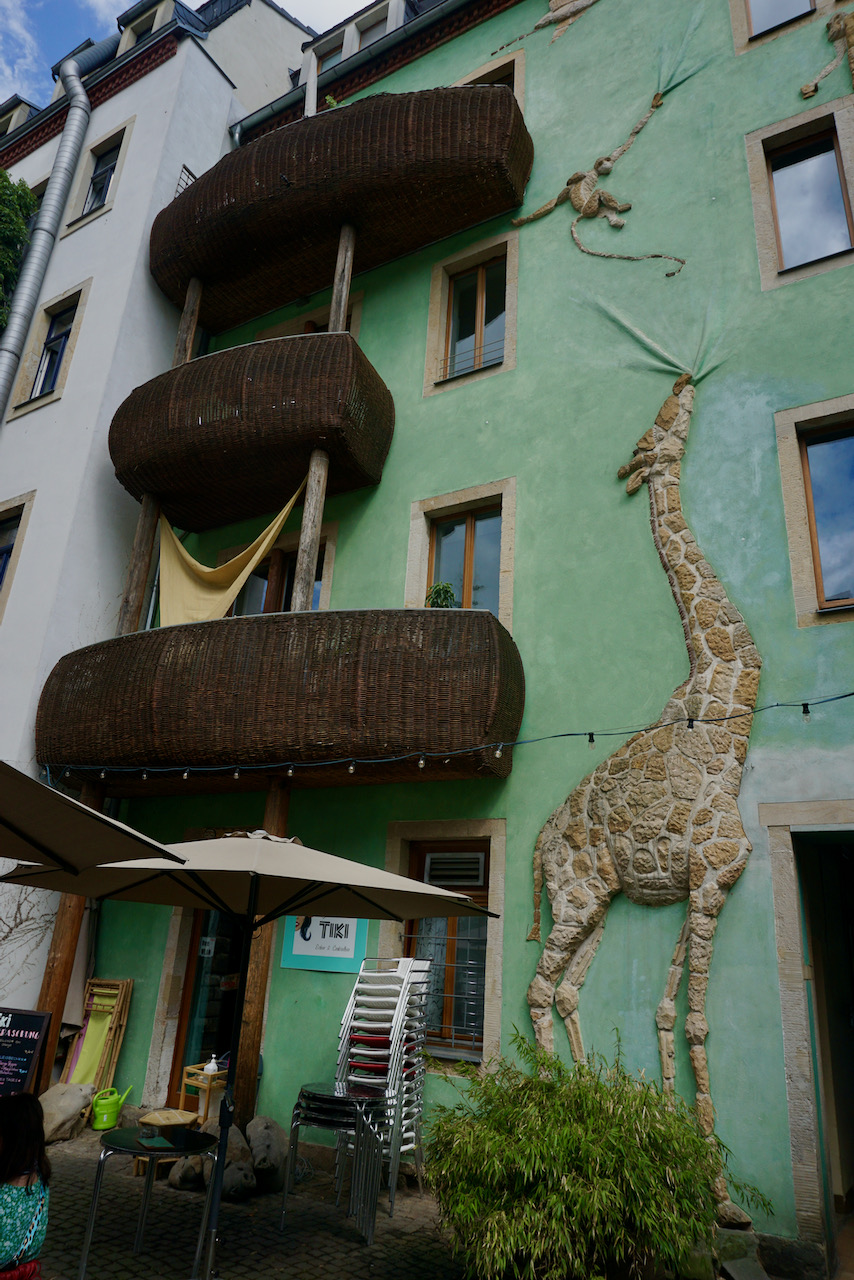
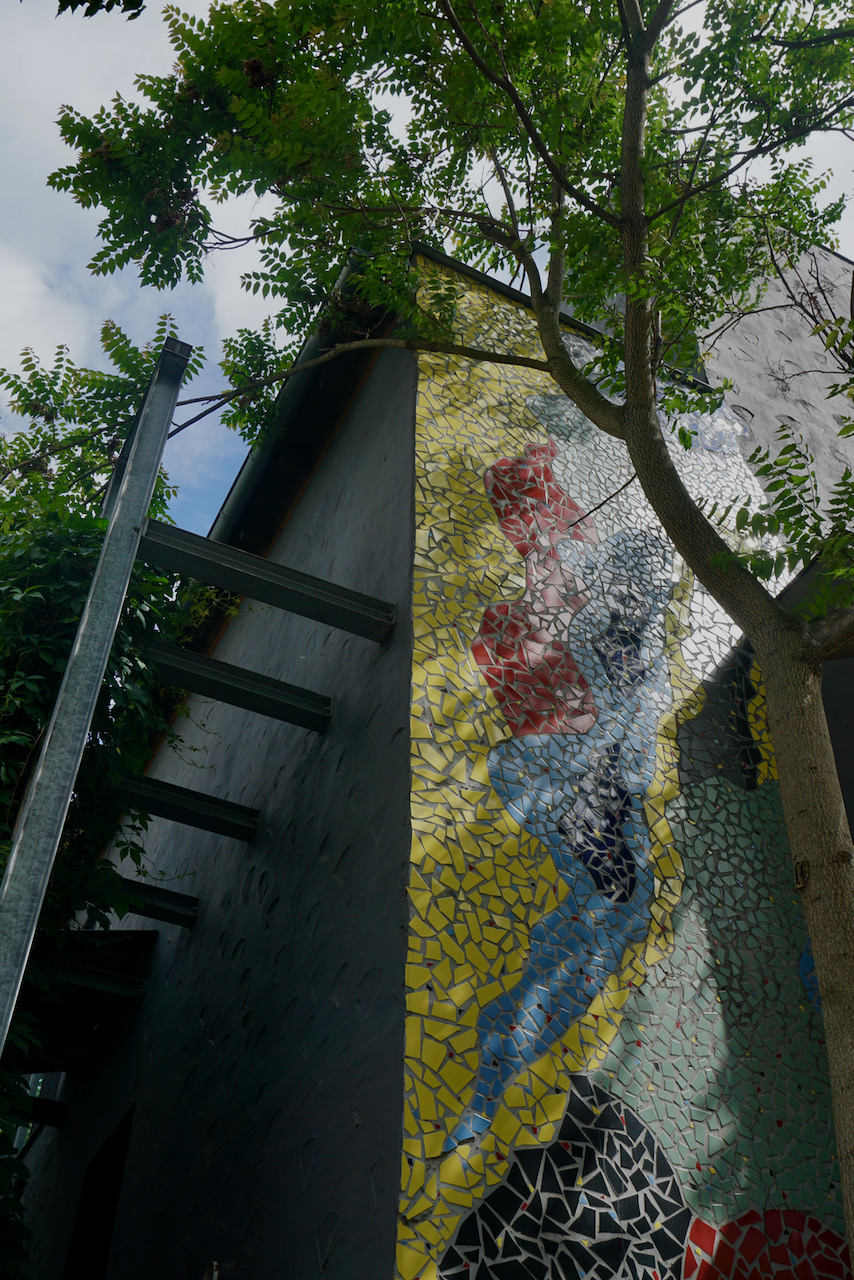
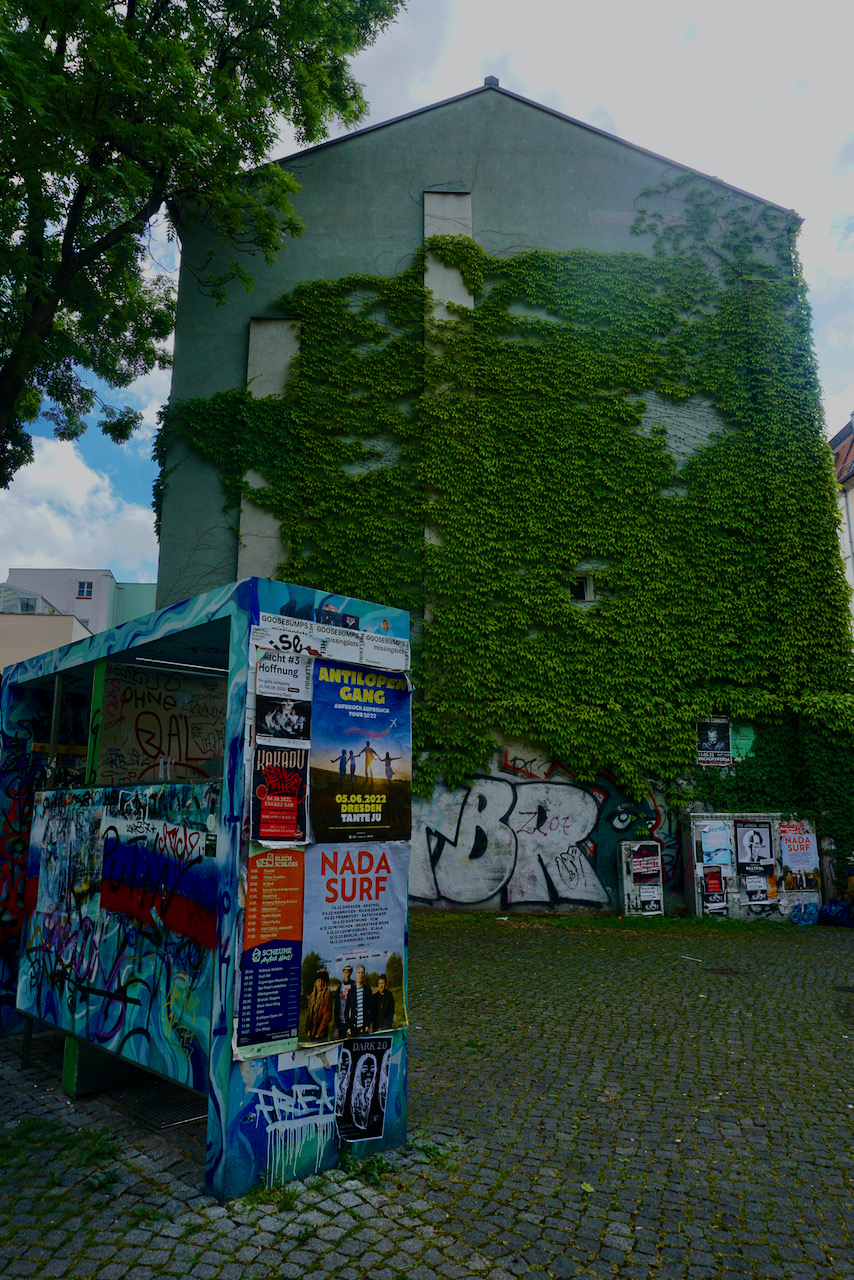
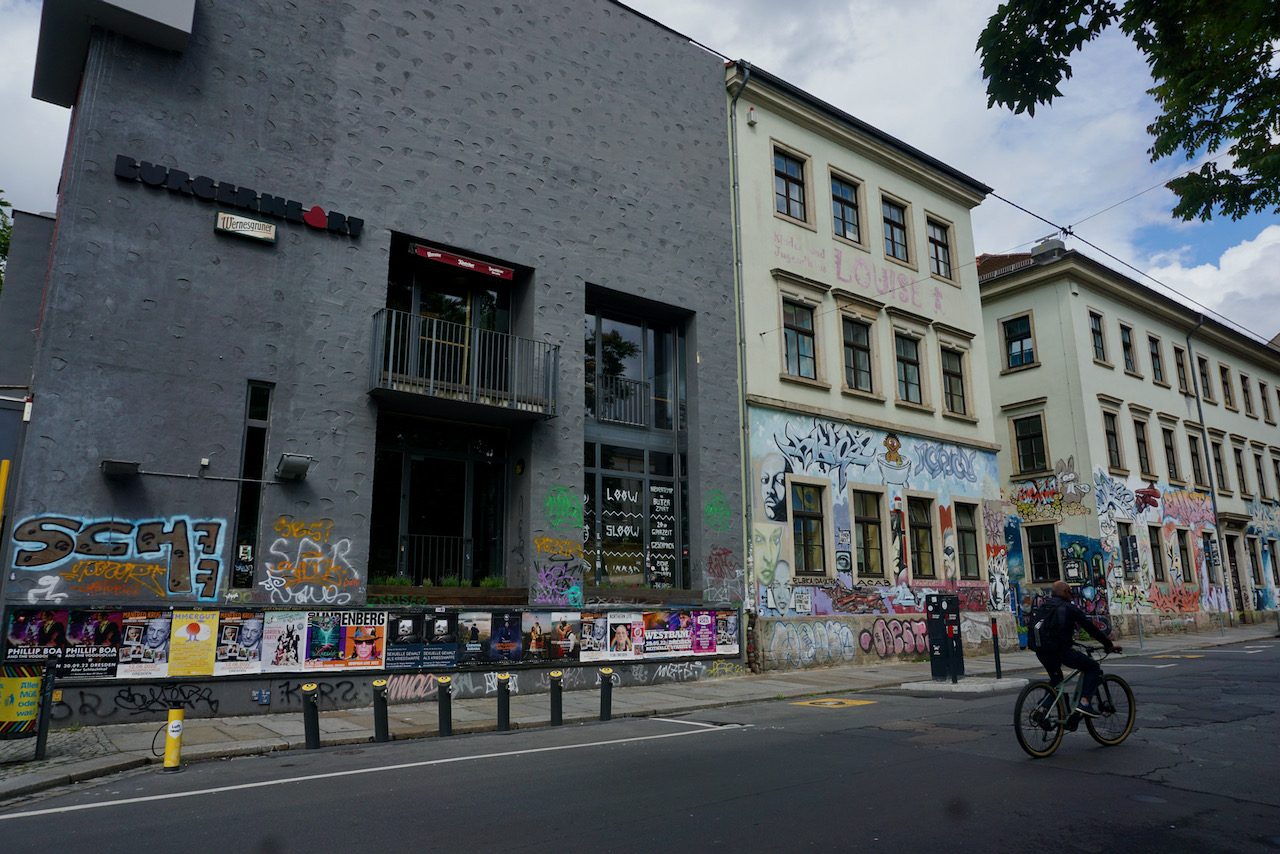
Just around the corner is the Kunsthofpassage, a series of painted courtyards and art galleries dedicated to different themes. I walked into many of the galleries just for a look around and would have loved a seat outside at one of the many cafés, but I was far from the only one with that idea.

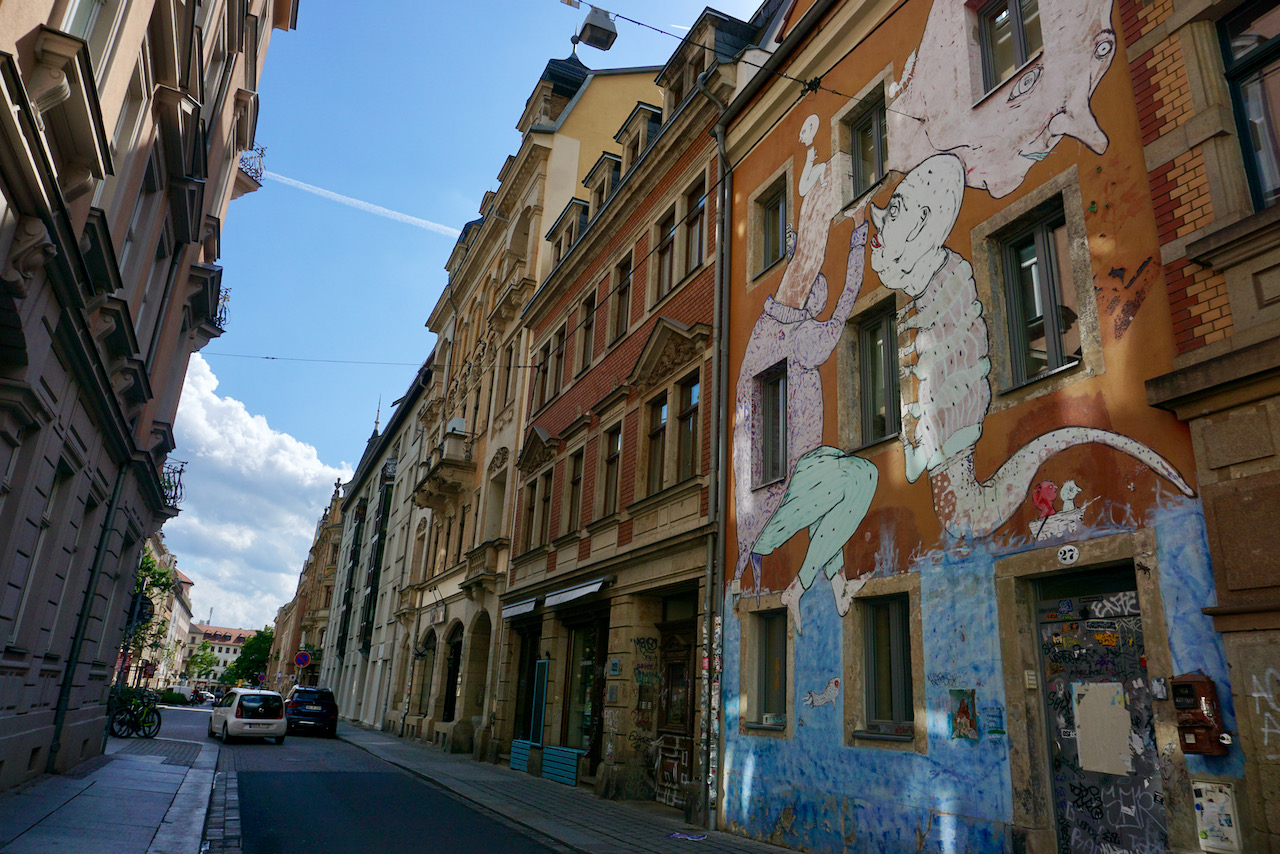
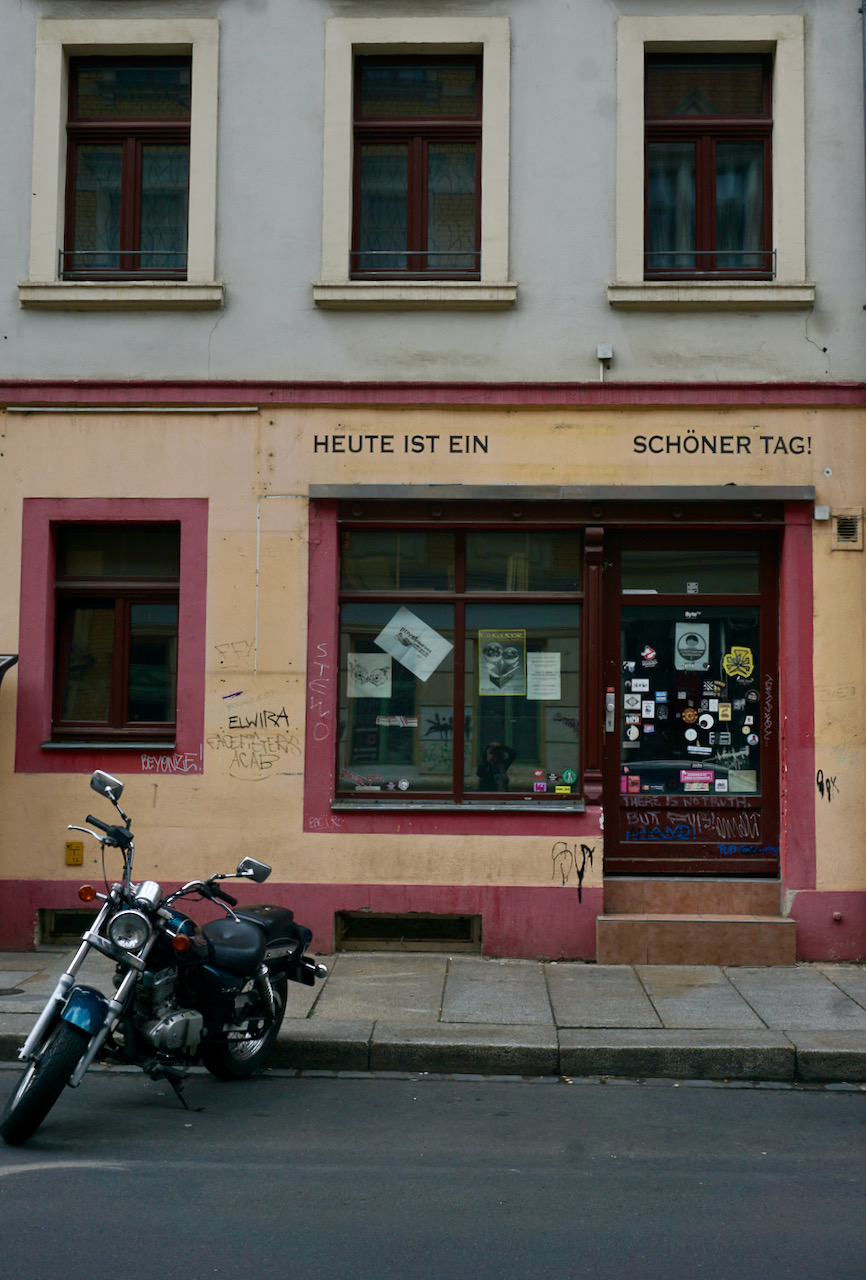
The rest of my afternoon walking through Neustadt was pleasant and the temperature slowly climbed, keeping me wandering down neighborhood streets that grew slowly more lively.

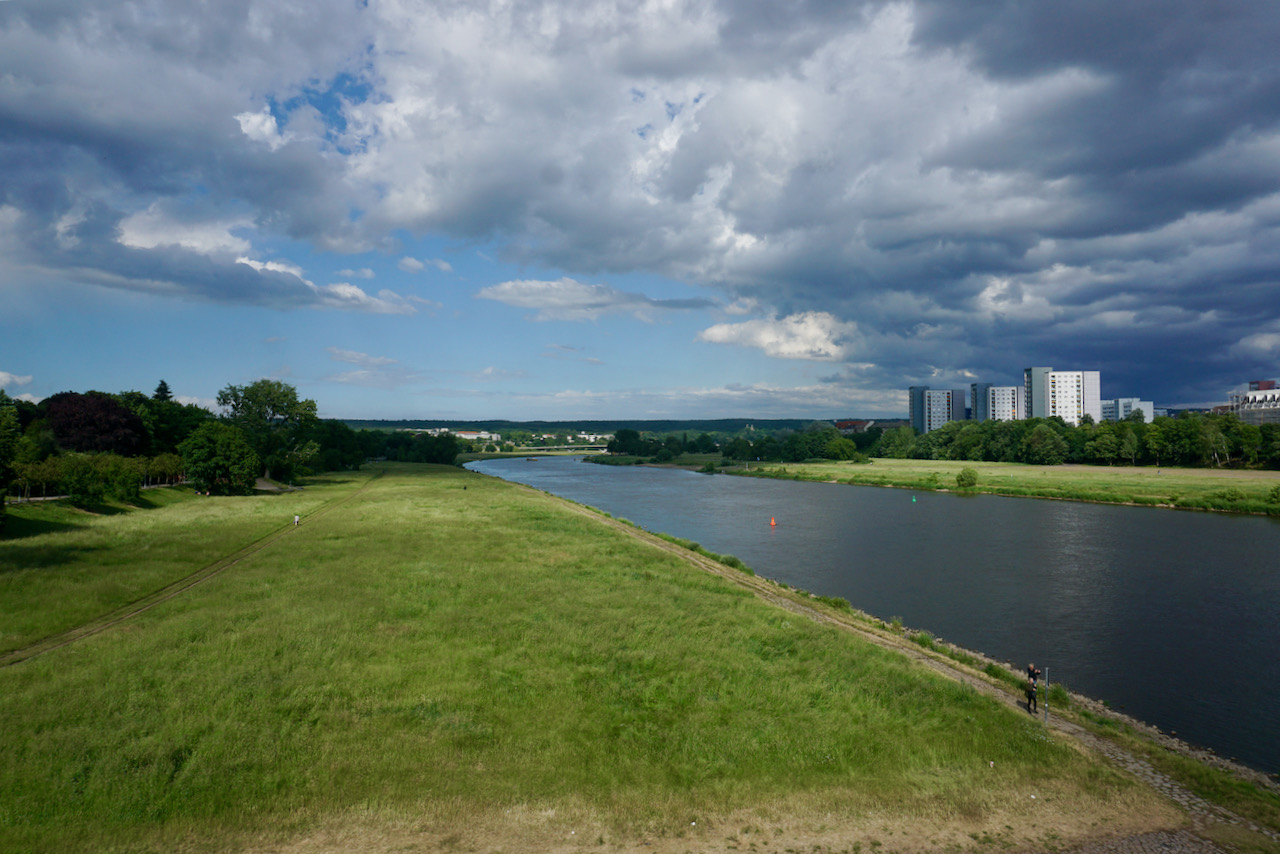
I spent the early evening sitting at a beer garden on the Elbe watching the sun, the water, and people enjoying their time outside. It seemed to me that the river is the soul of Dresden. This is where people play and gather and this, in my eyes, is what makes a place a home.
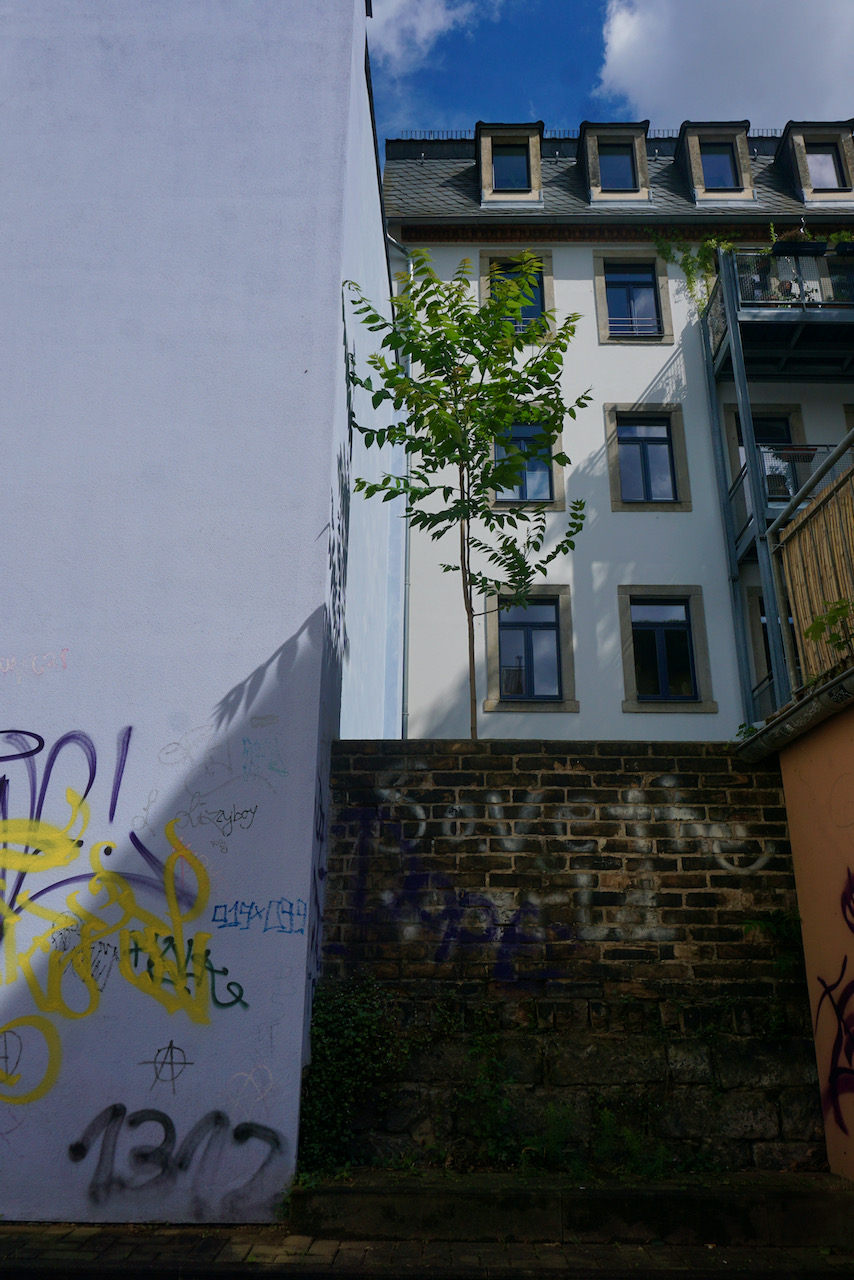
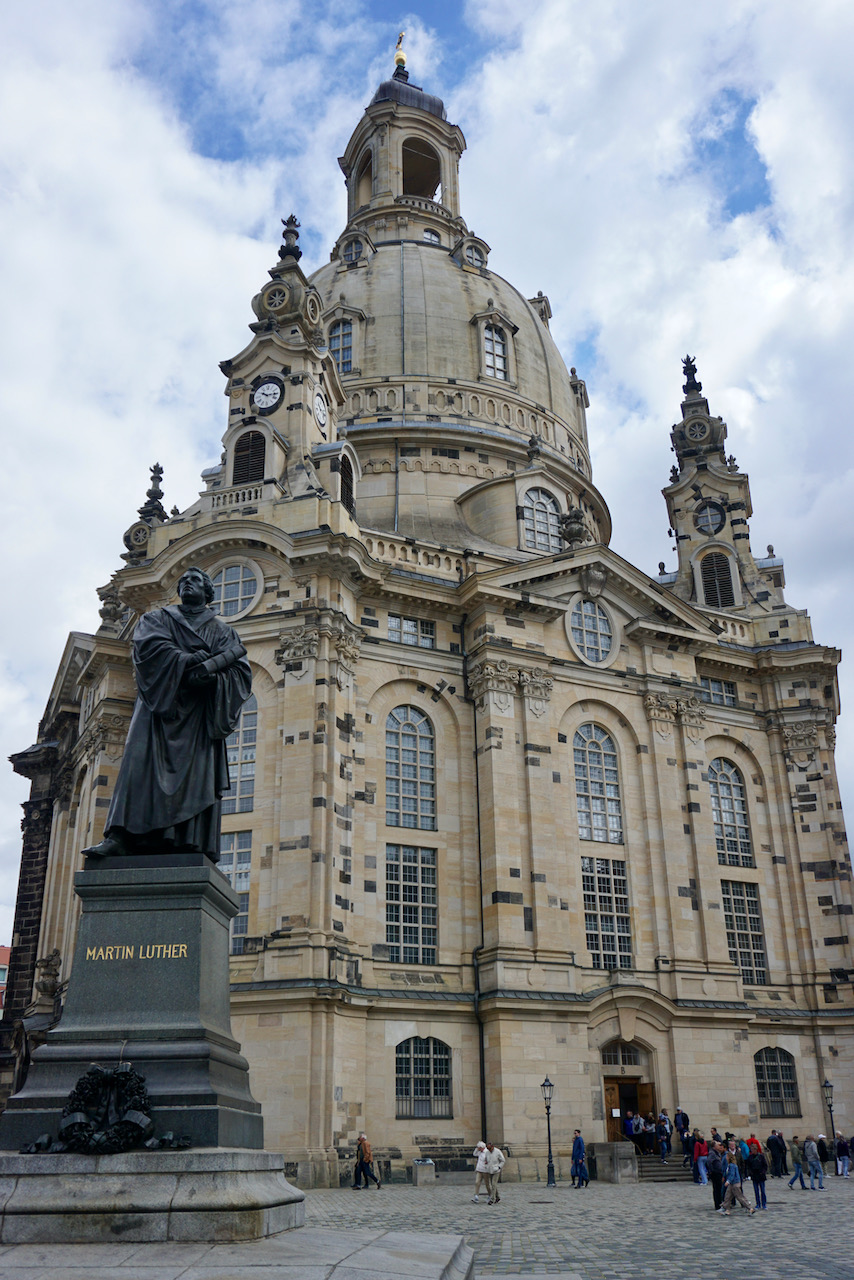
The following morning I stayed on the Altstadt side of the river and joined a walking tour to learn about the history of Dresden. We covered the time period from the Holy Roman Empire through present day, and I was again struck by how old Europe is. I am still tickled by this. Notable stops on the tour included the famous Frauenkirche, which was rebuilt using some of the recovered stone that had been part of a memorial after World War II . . .

. . . and the Fürstenzug, a porcelain tile mural first created in the 1870s that depicts the leaders of Dresden from 1127 until 1904 (the later part was an addition). Interestingly, the tour guide explained, the Fürstenzug survived the war with minimal damage because porcelain is heated to extreme temperatures during its production. As a result, the firebombing that destroyed the city did little damage here. I was intrigued to hear this, as well as to see the rather large club of bearded men (no joke) who were also there for a visit.

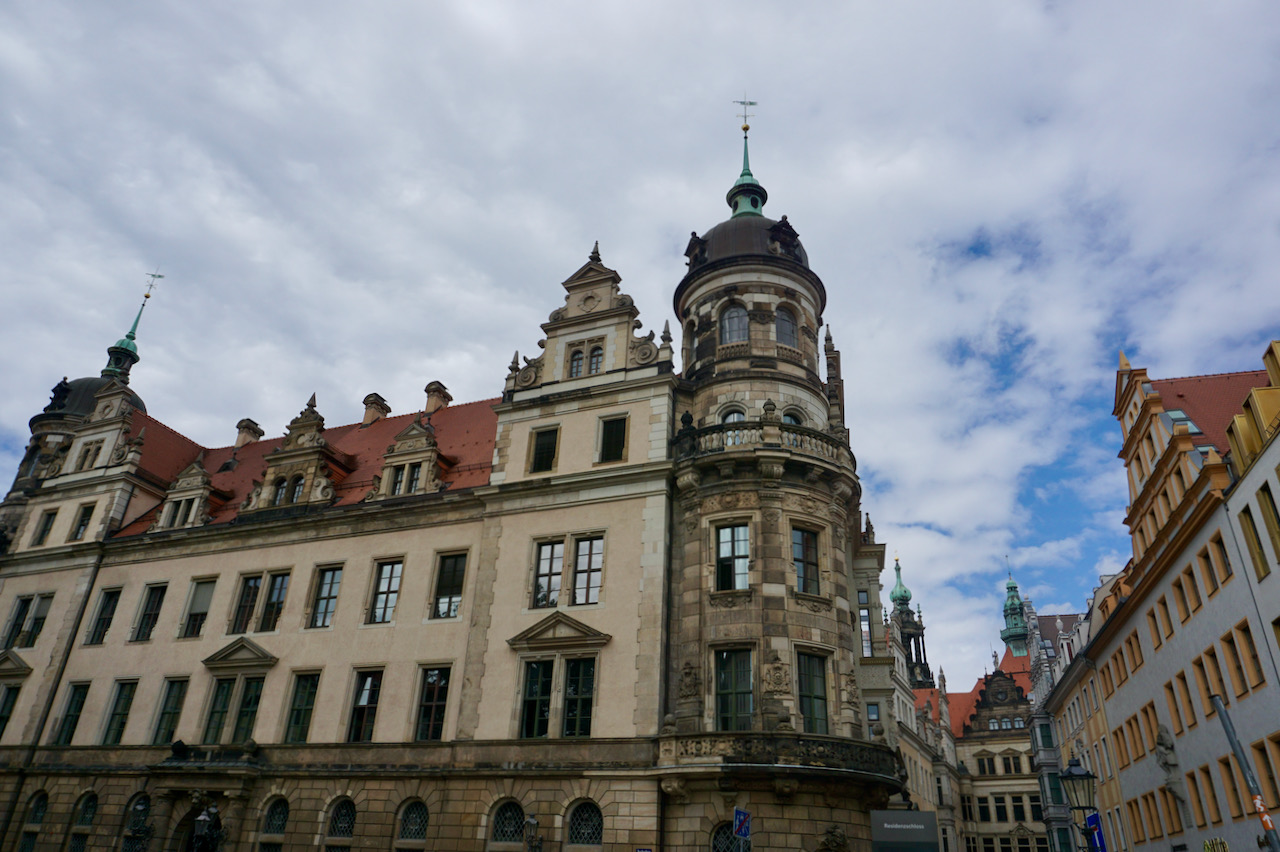
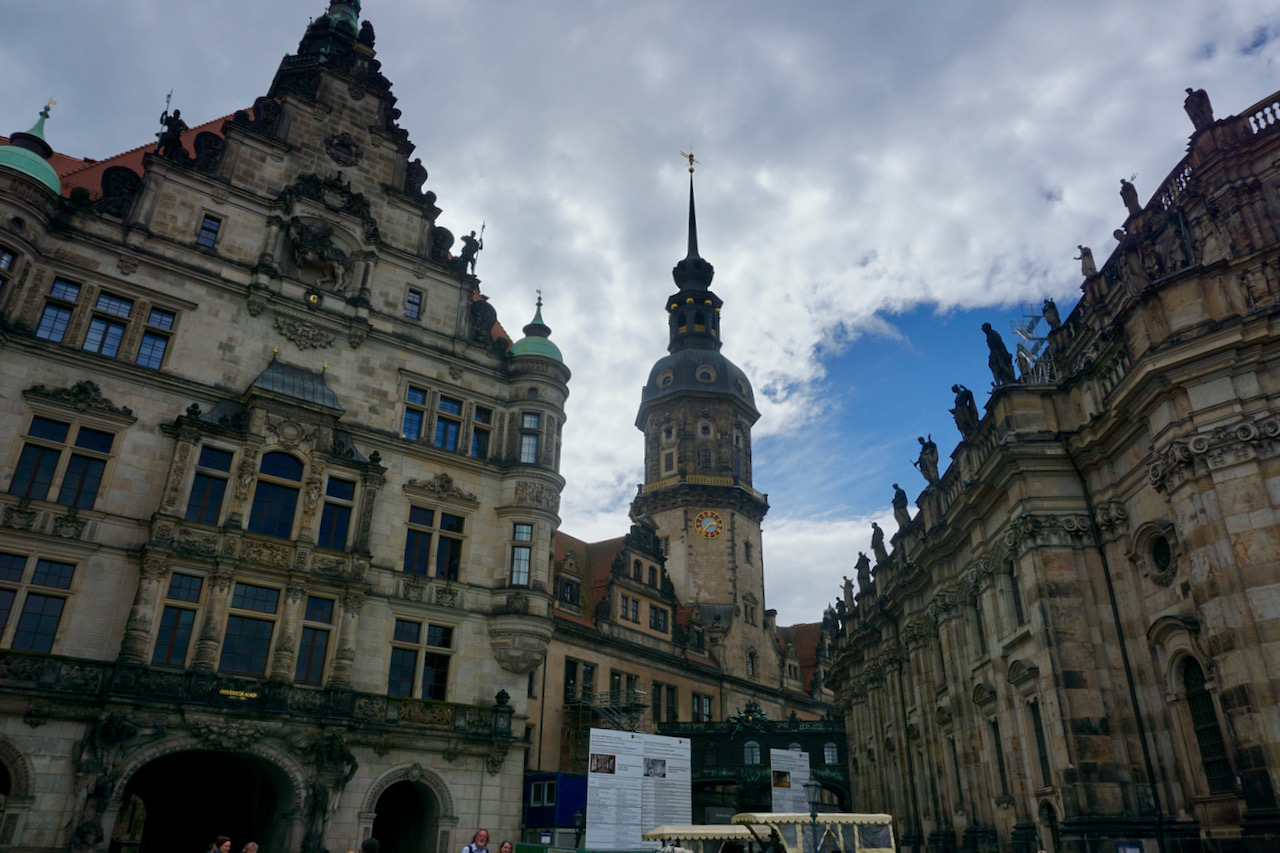
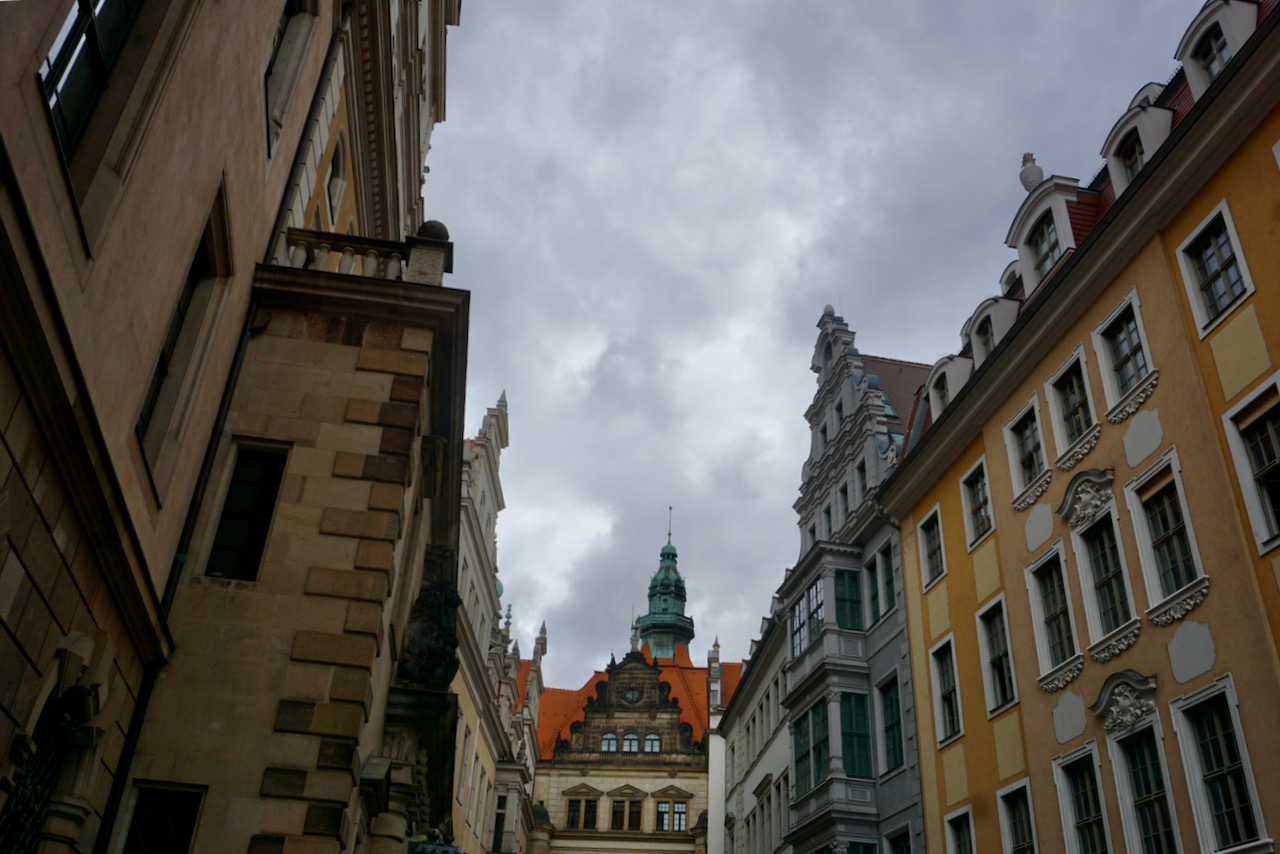
Our guide also took us through the inner courtyard of the Residenzschloss (residence castle) . . .

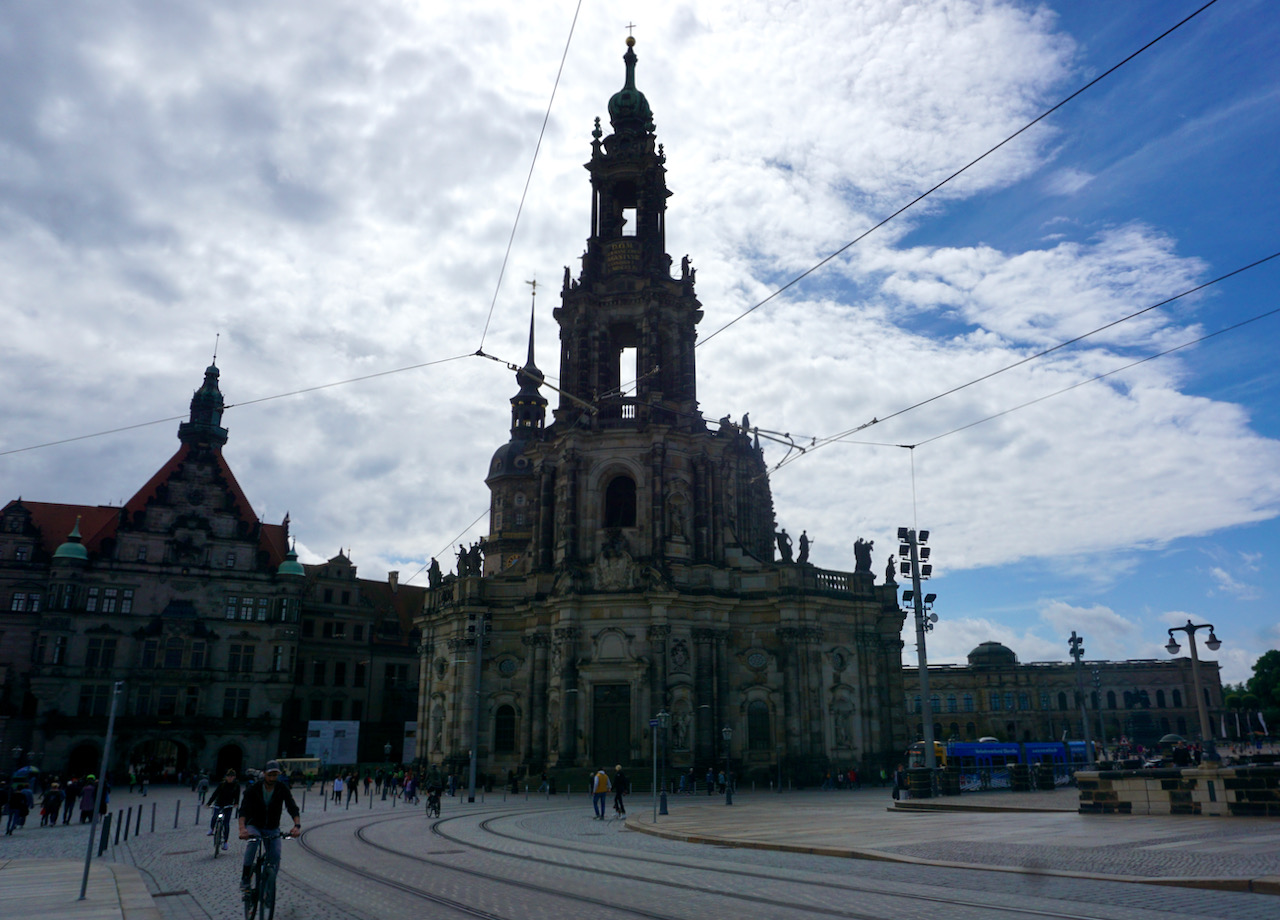
. . . past the Catholic church built by Polish king Augustus the Strong during his role as Elector of Saxony . . .

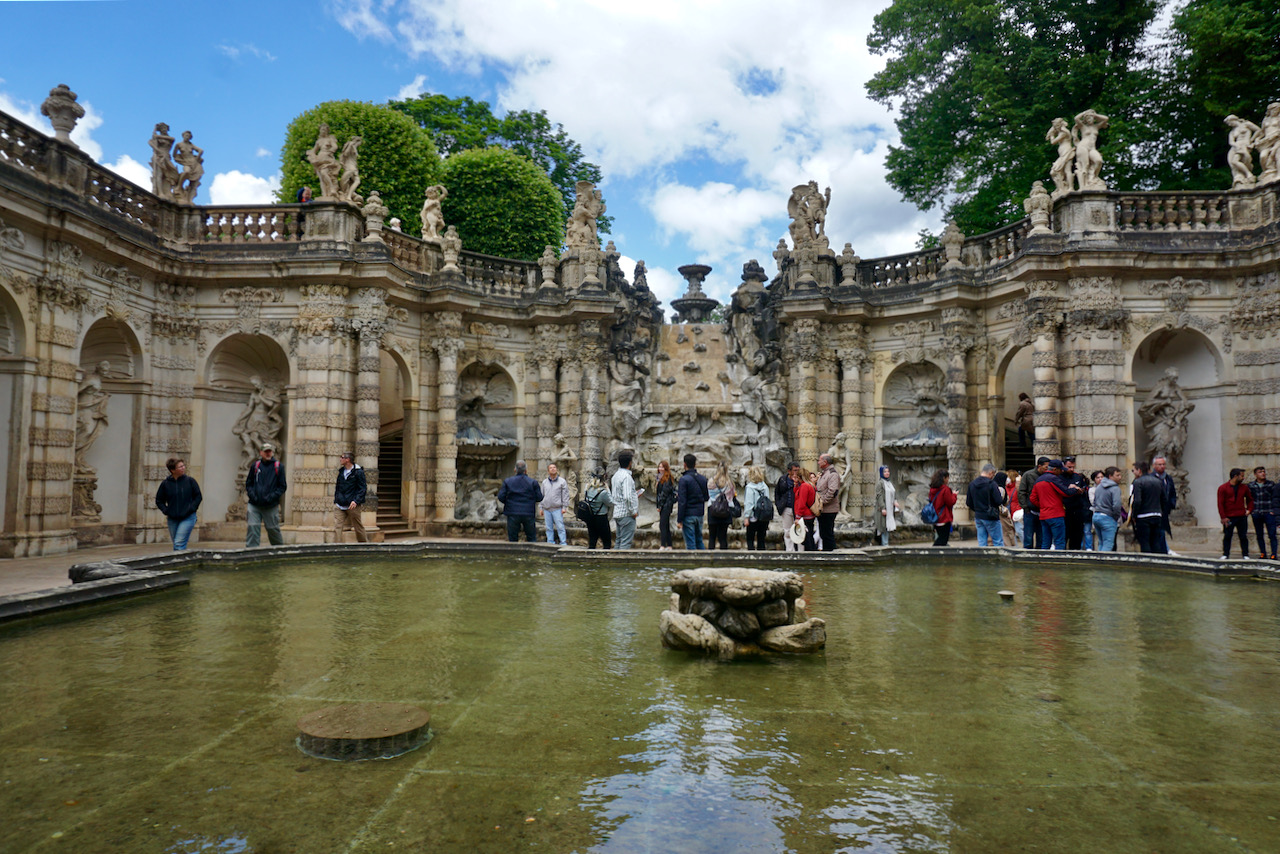
. . . the Zwinger Palace, also built by Augustus the Strong following a visit to Versailles . . .

. . . the Semperoper, Dresden’s opera house . . .

. . . and a mural celebrating life under communism that functioned as a wonderful piece of propaganda during its time.

As usual, there’s a great deal else to find in an old city with architecture that makes me wonder about the people who crafted it. These are stories I would like to hear.

To get out of the high winds that afternoon, I visited the Staatliche Kunstsammlungen Dresden (State Art Collection), which is particularly known for the Grünes Gewölbe, or Green Vault. There is a historic Green Vault and a new Green Vault, which contains stunning treasures housed in a normal museum (which happens to be the Residenzschloss) rather than in a literal historic green vault. I’ve been to many art museums, but never one with such whimsical works from centuries ago. Intricate carvings on everything ranging from a cherry seed to coconut shell, for example, as well as works of porcelain, glass, and ivory. I was also particularly interested in an exhibit on Ottoman military tents, which should give you a sense of the range of treasures this museum has to offer.

The following morning I visited the Stadtmuseum (City Museum), which utilizes a collection of artifacts to told the story of Dresden from its founding through the fall of the Berlin Wall. It was especially interesting to see repurposed military items from the Deutsche Demokratische Republik (German Democratic Republic, or East Germany), such as a bomb casing turned into a stove. The Stadtmuseum also highlighted Dresden’s Jewish history with the open question of how to reckon with history, a question that applies in so many societies in our world today.

By the time I needed to catch a train, I felt content with my solitude and comfortable enough with my surroundings to no longer feel lost. And by the time I returned, remembering my pounding heart as I arrived by train almost a year ago, I was fully glad to be back. It’s nice to go away for a while, and part of going away means coming home.
I Wonder

I wonder how much of what’s on paper is real. I wonder how much of poetry comes from life lived.


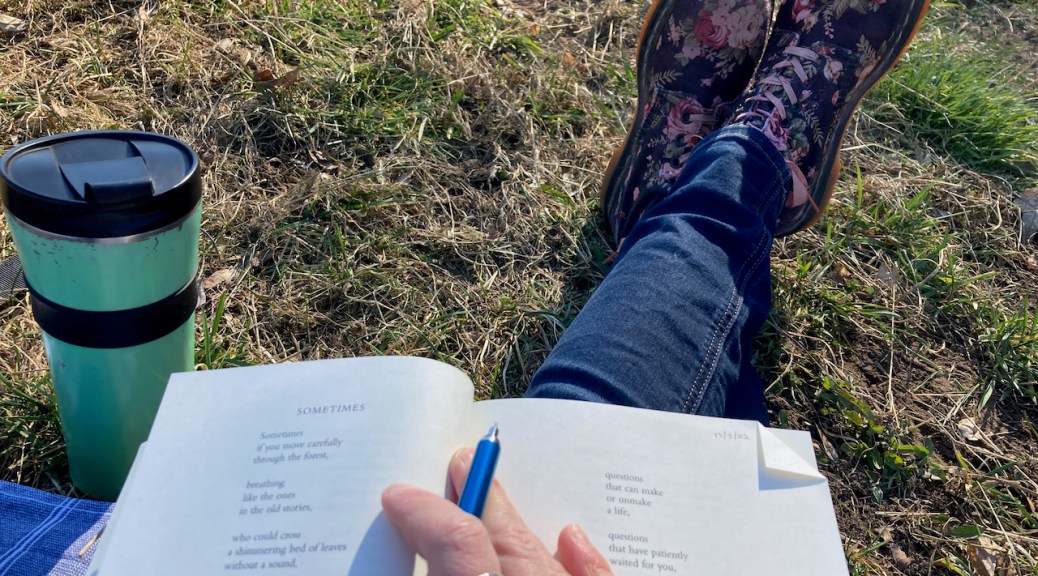
A few months ago, I started reading a book of poetry* aloud. I’ve carried it around town and read under the tree, in the park, by the fountain. I carry a blue pen with me, slight weight, fine black ink, the kind of pen that was made to tell stories rather than sign papers, I like to think. The kind of pen that’s meant to be enjoyed rather than kept in a box on a desk for special occasions, but also the kind of pen I’d be sad to lose, so I left it at home once, and those pages are easy to find in my journal because they don’t look like the other pages. I haven’t left it at home since.

I carry a blue pen with me and I annotate, underline, fold down page corners, record dates. I read aloud and sometimes I reread, sometimes I stop because the words have become the sound of my voice and I need to go back to the words. I read aloud and sometimes there are people around and sometimes I stop just to take it all in.

There’s something about the words that makes me braver than I am, that reminds me that I am all I have, that assures me that when everything falls apart again, there’s a way to rebuild.


I can still see the look in your eyes I can’t read, hear the chorus that told me what I already knew and didn’t want to know.

Sometimes I wonder if you’re as scared as I am.

And I laugh at myself for wondering because you’re not. You never were. I wonder if that’s how I seem, too, and I wonder if that’s why I can’t read that look in your eyes.

How much of poetry comes from life lived?

Weimar, Germany – March 2022

*River Flow by David Whyte


Photos, travels, musings, and ideas on education by someone trying to make the world a better and more peaceful place