Travel Guide: New Zealand Road Trip – North Island

After a weekend in and around Auckland (which was sweet as!) my friend Sharon and I picked up our North Island road trip vehicle, a white Toyota Yaris that I promptly named Sylvia. I can’t help it; cars speak to me.

We headed first for Rotorua where we spent two nights. This was also the part of our trip where it began to rain. It rained quite a bit during our travels but we didn’t let it stop us from seeing what we wanted to see. Our drive took us through farms and rolling hills and mountains that faded in and out of blues and greens. We drove with the windows down, enjoying air that was fresh, clean, and cool. We saw more cows, sheep, and horses than anything else, which was a theme throughout the trip. Even more than the animals, though, I noticed the trees. Part tropical palms, part enormous ferns, and part overgrown forest, the juxtaposition with cleared farmland was striking.

The climate of New Zealand reminded us of California and it wasn’t long before we realized how similar they actually are. Our first stop in Rotorua was the redwood forest that shares trees with California. Our walk through the woods was beautiful in and of itself . . .

. . . and the redwoods took my breath away. I sat for a time and meditated, listening to the wind.

When it got dark, which happens quite late in New Zealand in the summer and only later as you travel further south, we climbed the trees. The Rortorua Treewalk consists of 28 suspension bridges linking to 27 trees. I haven’t spent much time 20 meters up looking down to the forest floor and it was so cool. Oh, and there are giant wooden lanterns lighting the way. It was beautiful and felt like being in a fairytale.

The next day we went to Kuirau Park to check out the bubbling mud pools and hot springs. I expected a dinosaur to wander by at any moment. While sitting in the rain with our feet in the pools we chatted to travellers from Germany, South Africa, Belgium, the US, and elsewhere in New Zealand.

I love how much of New Zealand is just conservation land and public parks. There’s a unique feel to it, a sense that it is both important and expected that people spend time together as well as in nature. That afternoon we took a walk through Rotorua Park, which smelled more strongly of sulfur than Kuirau. It didn’t take us long to figure out why.

For Christmas Eve we’d planned a visit to Mitai Maori Village. I haven’t celebrated very many Christmas Eves but this was a darn good one! In addition to dinner, we were treated to a cultural performance which included entry by water . . .

. . . a walk through the village . . .

. . . and a cultural performance of songs, dances, and, of course, the haka.

Once it got dark, we went on a short walk to see the glowworms, which are famous in Rotorua, and to Rainbow Springs Nature Park to see the kiwi birds! Kiwis, we learned, are very rarely seen in the wild and they’re nocturnal, which doesn’t help make them easy to spot. Our very helpful guides had no trouble, however.

The next day we were back on the road heading to Napier for Christmas Day. On the way we stopped at Wai-O-Tapu, which call itself a thermal wonderland. That was pretty spot on. We were just in time to see the daily eruption of Lady Knox Geyser . . .

. . . and then followed the walking trails. The sun came out as we explored and it was a unique place indeed! While I took pictures, Sharon read aloud from the map about each of the natural wonders that we passed.

We’d heard that Lake Taupo was pretty (note: everything in New Zealand is pretty) so we stopped there for lunch and a walk. I thought we might walk around the lake but that was before I learned that Lake Taupo is New Zealand’s largest lake; we walked along it instead.

When we arrived in Napier, the town was quiet and empty. Napier is designed in an Art Deco style that makes it feel like going back in time. It wasn’t until the next morning that we saw many people at all, and the emptiness and shuttered stores gave it the feel of an old film set.

The point of visiting Napier was to spend the evening on the black stone beach, which is exactly what we did. We watched the sun set and the stars appear; we listened to the wind and smelled the sea.

We shared a bottle of wine and had a beautiful evening.

After a night in Napier, we headed for Wellington, New Zealand’s capital city. Post coming soon!

Travel Guide: Auckland and Waiheke Island

Everything they say about New Zealand is true. It is magical and beautiful and has more sheep than people. It has trees and flowers I’ve never seen, as well as mountains, lakes, and deserts. It is, after all, Middle Earth. And it’s also the land of the dinosaurs, but more about that in a later post. For now, let’s visit New Zealand’s largest city and a neighboring island. (I didn’t know it before I visited, but there are lots of neighboring islands!)

For three weeks I explored New Zealand with Sharon, who was one of my travel partners in Greece earlier this year. We landed in Auckland in the afternoon and headed to Queen Street, a popular shopping area. We got our bearings and took ourselves through Viaduct Harbor. It’s a great place to walk, eat, drink, people watch, and admire boats. I was particularly excited about the last part, but my first beer from New Zealand in New Zealand was great, too.

We spent the evening at the Viaduct and were glad for the sunshine that woke us the next morning after the clouds of the first day. We went out in the opposite direction towards Mount Eden, from which we’d been promised the best views of the city. (We soon learned that New Zealand’s best views only get better.) We explored Symonds Street Cemetery on the way.

The hike up Mount Eden, the first of many hikes that largely characterized our three weeks, was beautiful and a lovely welcome to New Zealand. The sun was shining and we could see so much of Auckland and its environs.

We took a taxi back towards the Viaduct from the Mount Eden neighborhood, intending to take a ferry to one of the beaches. It wasn’t warm enough to swim but it was certainly warm enough to take a walk on the sand. Instead, though, the driver suggested we visit Waiheke Island and go wine tasting. We didn’t need much convincing and I loved everything about it from the start.

The ferry ride was beautiful . . .

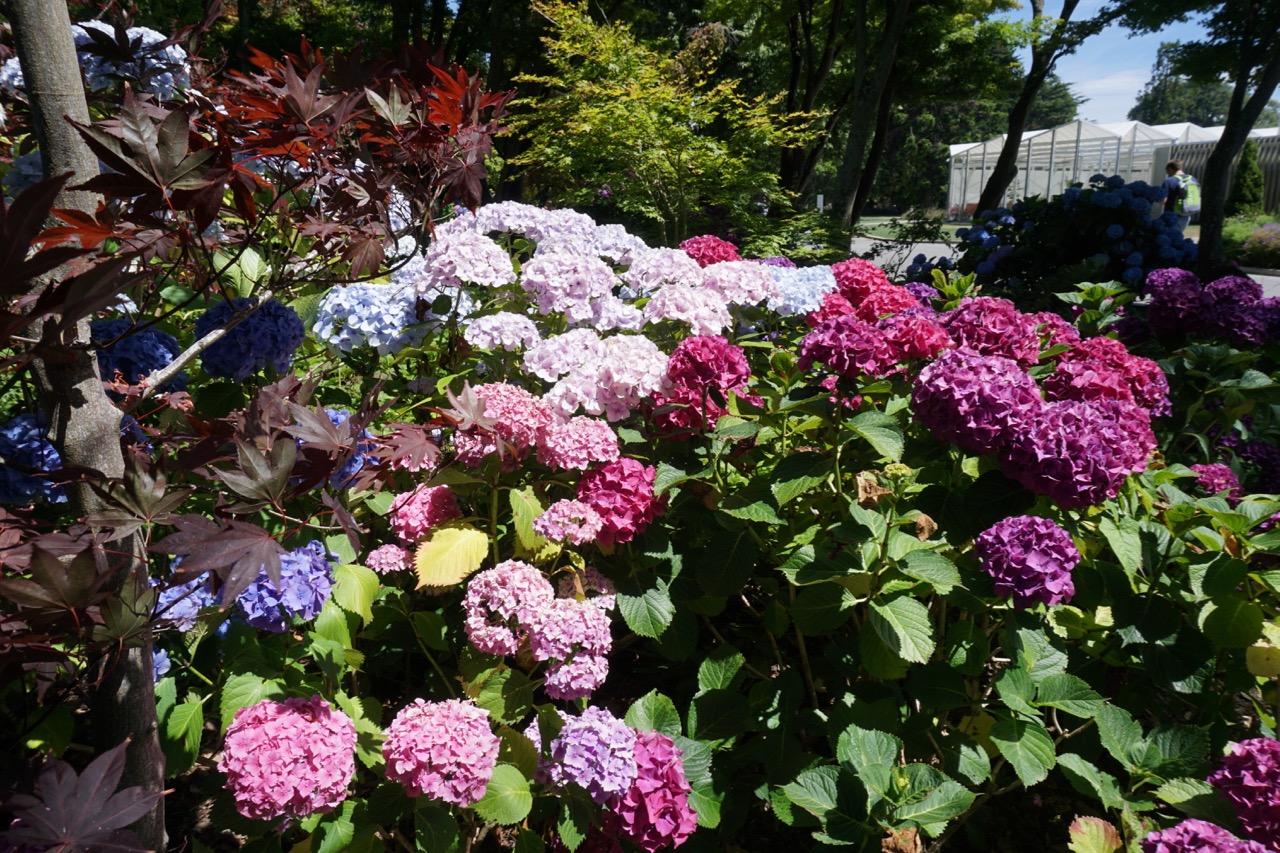
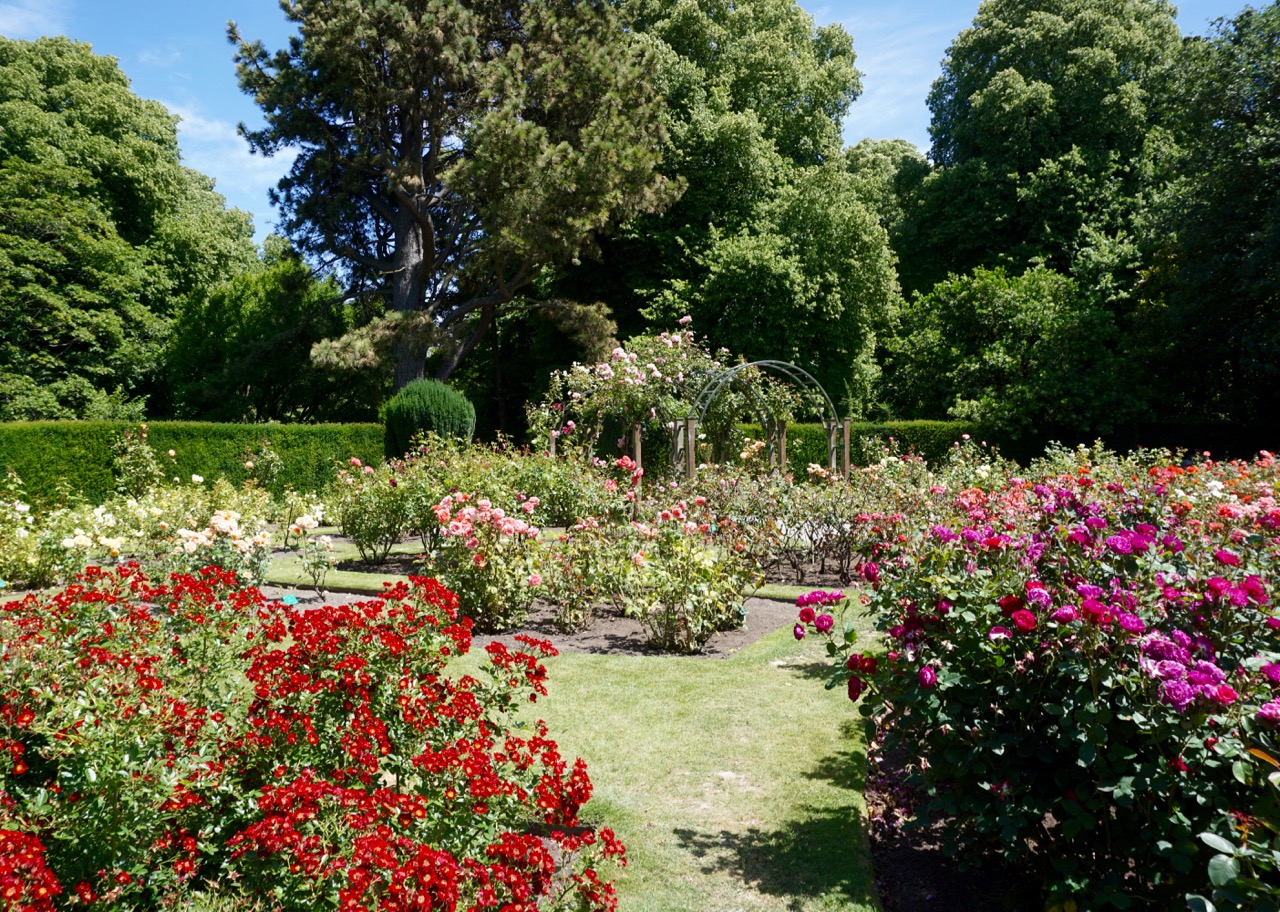
. . . and so were the flowers, vineyards, and walking trails.

We visited Wild Estate, Te Motu, Stonyridge, and Cable Bay and I have only good things to say about all of them. We watched the sunset from Cable Bay, too.

We had a bit of an adventure getting back, for which we can only blame ourselves. The lady at the ticket counter said they ferry departed every half-hour and we neglected to verify that even though we were carrying the timetable. Turns out that as the day grows later, the ferry leaves every 45 minutes . . . and then every 90 minutes . . . and so we were stuck at the Waiheke Island ferry terminal from 9:40pm-11pm. Oops.

The next morning it was time to say goodbye to Auckland pick up our car, a white Toyota Yaris that I named Sylvia, and begin our North Island road trip! Stay tuned!

29 at Twenty-Nine

Happy birthday to me, a blog post for you!

Since this is the last year of my 20s, I thought I’d begin with a list of 29 things that comprise my current self and world understanding, things I’ve learned along the journey so far. These 29 things might not be objectively true (my evidence leans anecdotal) but they’re my present subjective reality. I’d love to hear your thoughts on areas of commonality and disagreement. What have you learned about the world?

Here’s what I know:

  1. The world is a beautiful place. It might not always seem so, but look around and you’ll find it.
  2. Despite being a beautiful place, the world is full of suffering. Look around and you’ll find it. Look inside and you’ll find it.
  3. People are imperfect. They make mistakes. They’ll hurt you, they’ll hurt themselves, and then they’ll do it all over again. And again. And again.
  4. People are afraid. They’re afraid of their own minds, of rejection, of failure, of pain. And then they act in ways that cause rejection, failure, and pain.
  5. As individuals, we have very little autonomy. We have very little choice. We are constrained in almost everything we do unless we purposely set ourselves up to do otherwise.
  6. People want to be recognized. They want to be heard, seen, and listened to.
  7. Young people, students, want to be recognized. They want to be heard, seen, and listened to. They want to be treated like people.
  8. Compassion is a continuous practice towards others and towards ourselves. Practicing compassion helps us to care for individuals as well as for our planet.
  9. We often talk about love as a feeling, but love is also an action. Act in ways that show love.
  10. Dropping expectations expands the possible. Experience what is rather than what you were hoping for.
  11. Inefficiency wastes much of our time. Ask for help so that you can spend that time on things more important to you.
  12. It’s okay to say no. It’s okay to fail. It’s okay to give in or give up.
  13. There are many occasions when done is better than perfect.
  14. Being honest is painful; getting caught in a lie is more painful.
  15. It is possible to learn to control your mind.
  16. Be kind to everyone because who you know matters a lot more than what you know.
  17. Humans are social animals who evolved to connect with others. Technology both facilitates and distracts; use it wisely.
  18. Be aware of what you do versus what you say. If they don’t match and you want them to, look deeply and be better.
  19. Helping others sounds a lot better than it is. Monetary donations need to be carefully considered and calculated to have the greatest possible impact.
  20. Fresh food and clean water are luxuries that should not be taken for granted.
  21. Giving ought not require, anticipate, or expect a response. Giving is one action and receiving is another.
  22. A willingness to experience discomfort or stress provides great opportunities to learn from a wide range of new experiences.
  23. Much that is considered “wrong” should be questioned and examined. People will get upset when you start to do that. Let them.
  24. Don’t ask unless you’re willing to hear the answer.
  25. It’s okay not to know, but it’s not okay to plead ignorance as an excuse.
  26. Moving to a new place is an opportunity to be the most current version of you.
  27. Beauty can be found in people, in places, and in actions. It cannot be taken for granted and must be protected.
  28. Peace cannot just be a dream; it must be lived every single day.
  29. Changing your mind in the face of new evidence and understanding shows wisdom and strength of character.

I’ve considered making similar lists in the past, lists of what I know to be true, but I’ve never felt like I know very much at all. That’s not inaccurate here, except that I’ve learned to articulate what makes sense to me in the present moment and I’m comfortable knowing it will change. I’ve become willing to say it out loud and let others guide me to deepen and sharpen what I think I know. There’s so much freedom to learn once you can set aside being wrong, or making mistakes, or digging in your heels. That’s what I’m looking forward to this year, and what I wish for all of you: Take the opportunity to learn.

Learn and do something good with what you know.

Photos, travels, musings, and ideas on education by someone trying to make the world a better and more peaceful place