There’s you and me, and the quiet and the dark. Whether you know it or not, you burrow deeper under my chin, resting your body over my heart.
I close my eyes and my hand continues moving in slow circles along your tiny back. You’ve been lulled to sleep, or maybe you’ve finally decided that it’s time for bed.
Your breathing is rapid, audible, and the noises that you make are far too loud for someone of your size.
I close my eyes and there’s you and me. There’s contentment and peace and a mere moment between the calm of now and the agitation of minutes ago.
A regular checkup because I’m past my due date. The doctor looks at the CTG, frowns. She scribbles a note, picks up the phone, and sends me next door to the hospital maternity ward.
The midwife explains that I’m being admitted to be monitored. I ask if I should call my partner. She tells me there’s time and sends me downstairs to fill out the admission paperwork.
And then we begin. Every two hours, a pill to begin contractions. Every half hour after the pill, back up to the maternity ward for a CTG. In the meantime, I’m free to roam the grounds. I’m given a roommate and a late lunch. I call my partner to ask him to bring the suitcase. It dawns on me that when I leave the hospital, it will be with a baby.
Much later, I return to my room after the last CTG of the evening. Everything looks fine. “We’ll see what happens overnight,” the midwife says.
One day before
I’m woken early by nurses taking vitals and told to help myself to breakfast in the room across the hall. In the maternity ward, we begin the same procedure as the day before.
My partner arrives after work with extra clothes now that I am clearly staying longer than planned. We walk the grounds in between scans in the maternity ward. While some look fine, the midwives keep me longer than usual with others.
By the time night falls, there are no significant changes. “We’ll see what happens overnight,” the midwife says.
The day of
The day starts much the same way as the day before, but I feel tired. My roommate had her baby late in the night and I woke to his cries. I wonder when mine will decide it’s her time. The sun is shining and the weather is far too warm to be indoors.
I’ve spent enough time looking at the CTG printouts to know that something is different. I lie there a long time. The midwife gives me a tablet and reviews when to be back. I walk the hospital grounds, call my partner, tell my baby it would be a beautiful day to be born.
Early afternoon, the midwife says I should plan to spend the night in the maternity ward for monitoring. “This is what happens when the CTG looks strange,” she says. “And in an emergency, you’ll need a C-section.” I ask if I should call my partner. She tells me there’s time and to tell him not to panic.
I call and am immediately in tears I didn’t know I’d been holding. I can hardly speak but partner understands enough. Minutes later he’s there and we talk with the midwife about the CTG. Same procedure. Tablet and come back.
My partner and I walk the grounds, share two pieces of cake. Early in the evening I begin to feel contractions. According to the next CTG, they’re not enough.
This time, it’s my midwife on duty and she tells me she’s preparing the necessary items for a C-section. My partner watches the CTG, brow furrowed. Something has changed. And according to the midwife, not for the better. The contractions are minimal, the baby’s heartbeat atypical.
The midwife calls a doctor, who explains what I intuitively already know. We can’t tell how the baby is doing. Maybe she’s fine and progressing with a regular birth would be fine. But if she’s not fine, the surest means of a healthy birth is a C-section, not without risks of its own.
Another doctor comes in. Agrees with the assessment of the first doctor and midwife.
There’s nothing to think about and no decision to be made. In all the uncertainty of the previous days, this is the one thing I know for sure.
Arrival
Minutes pass and a wail tears through the air. I have never been more afraid of a question and never more relieved by the answer: “Is she okay?”
Minutes pass and a midwife lays my daughter next to my head. My partner and I are in tears. In that moment, we become a family.
Minutes pass and I am wheeled into the maternity ward to recover. My partner and daughter are already there and the midwife lays the baby on my chest.
That night, my baby and I sleep skin-to-skin, a bonding top wrapping us together. It is the strangest, most beautiful night I have ever known.
I recently started my time in Mutterschutz, the period from six weeks before my due date until eight weeks after the baby’s birth in which I am not supposed to work but receive my full salary, paid partially by health insurance. This time of “mother protection” is there to help avoid physical or mental strain, which increases risks for both mama and baby, and to allow a heavily pregnant woman to step back from certain aspects of daily life in order to prepare for what is to come. As I’ve been writing my to-do list, I’ve kept this time firmly in mind, which is what had me starting on task one, wash all baby clothes, first thing Saturday morning.
After a day of hanging in the living room to dry, everything was ready to be folded. We’ve received some baby clothes as gifts, but mostly been given gently used items from friends, meaning we are entirely lacking an overview of what we have. My partner and I looked at each other helplessly.
“How do you fold something so small?” “I dunno.” “Like this?” “But now we can’t see what it is. Like this?” “What is it?” “This one has feet.” “Oh okay. This one has arms but no feet.” “Oh. Okay so start a new pile.” “Which pile does this go in?” “I dunno. Is that a onesie or does that go over a onesie?” “How should I know? How do we even put this on? It has no snaps.” “Do we need a pile for things without snaps?” “These two things are different but neither has snaps.” “I am not dressing her in anything without snaps.” “Okay, put it here.” “What’s the name of this pile?” “Should we write signs?” “Where does this go?” “I’m serious about the signs.” “This is so tiny.” “There’s only one thing in this pile.” “So combine it with this pile.” “Oh wait, no, these are different. Fold the arms out so we can see that there are arms. Long arms.” “We got this.” “This is so tiny.” “The next round is socks. How do we even dry socks?”
Savour everything now, they say. This time will never come again, they say.
To that end, we bought a new board game and borrowed one from friends. We started going out for dinner once a week and lie in bed weekend mornings until hunger drives us into the day. Alongside the ease with which we are living right now, there’s extensive paperwork to complete (welcome to Germany), a hospital bag to pack, bottles and pump to sanitize, a photo album to start. There’s a life to get ready for.
But there’s also the relationship between the two people who decided to be a family before there was a third member involved. Although no one has said so, maybe one idea behind Mutterschutz is to put relationships, rather than work, at the forefront in order to protect them at a time of great change. I would imagine that the stronger and more centered we are together, the easier the transition into a new phase of our lives.
Time will tell about that. In the meantime, the socks are drying on the radiator.
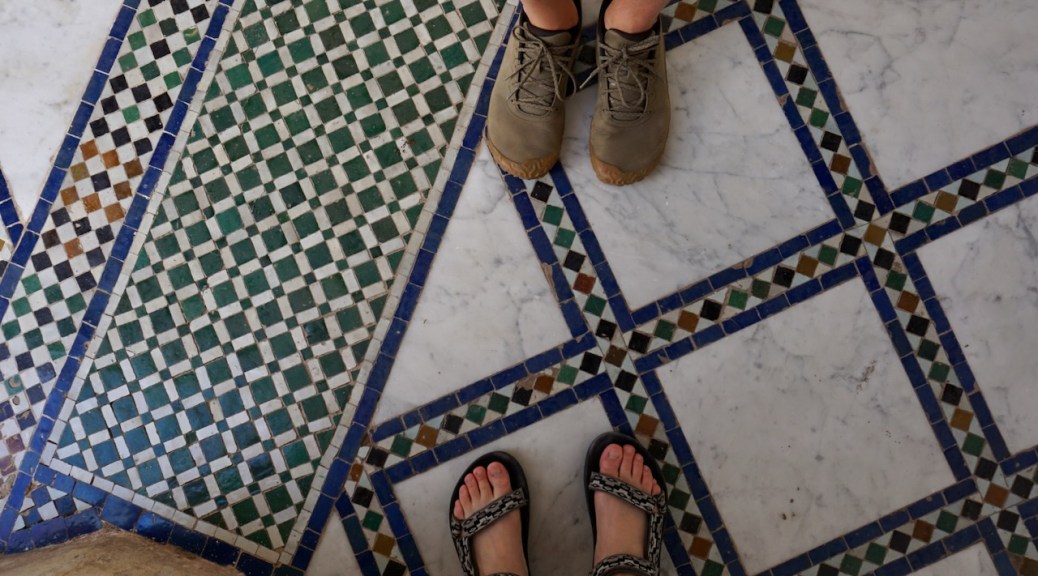
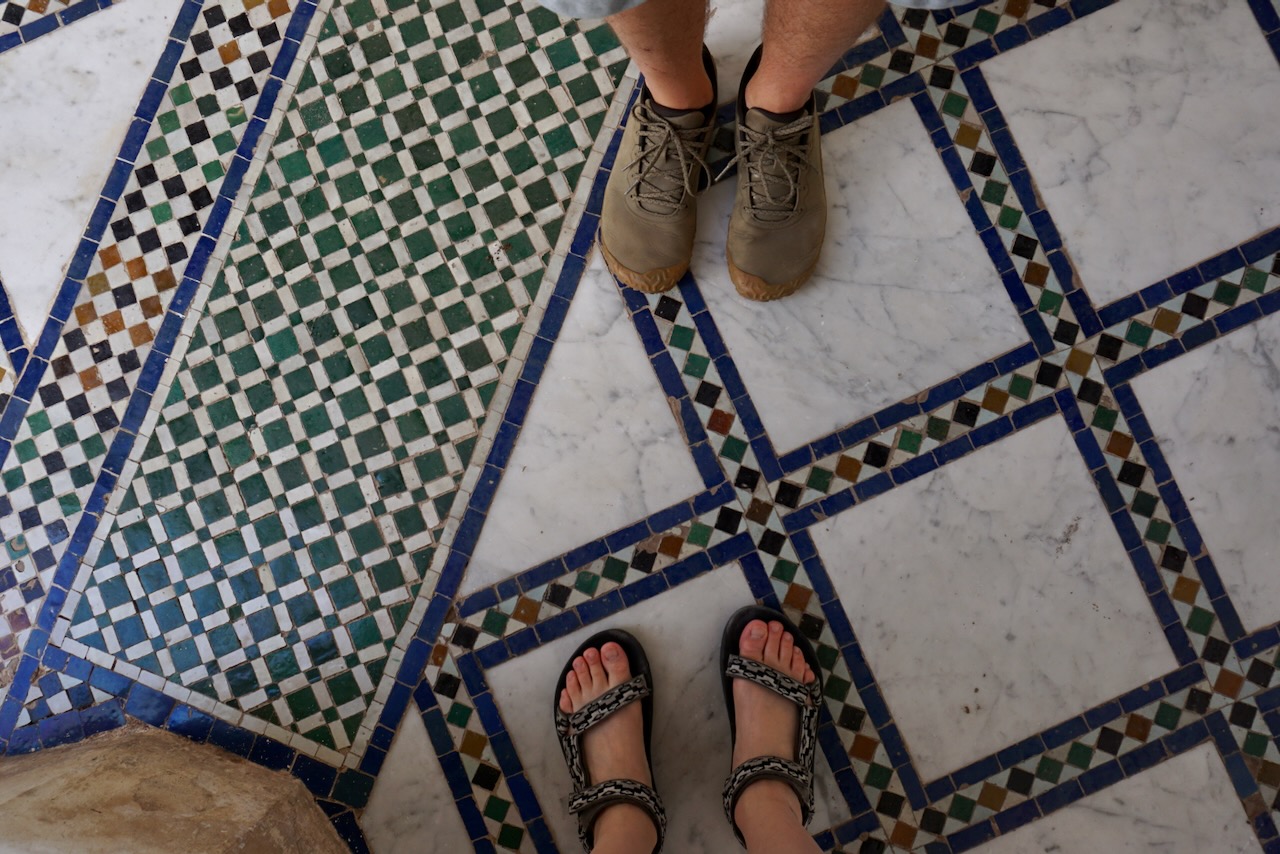
Marrakech, Morocco – October 2025
Photos, travels, musings, and ideas on education by someone trying to make the world a better and more peaceful place



 By Rebecca Michelle