
Tag Archives: Caring

On Resilience

For quite some time now, I’ve been rather taken by a bit of what is either street art or graffiti that I walk by relatively often. I like it because it’s relatable and because it starts a story in the middle, which is really where most stories start.

An admission of what we want to do but can’t do is a necessary step to learning. We are often best at learning when we want to, which is unfortunately not always when we need to. “I wish I could say beautiful words” means that I want to say those words. “But I can’t” reinforces the struggle. And here comes a choice. Such a claim can either remain aspirational, or such a claim can be a call to do something differently, which is what it means to learn.

A friend of mine often says, “There are two choices: Either accept it or change it.” Sometimes acceptance is of the self and sometimes of the situation, but both are a choice. I can either wish for those words, knowing many wishes remain so, or I can recognize that right now I don’t have those words, but I can do the work of finding them.

In fairytales where wishes are expressed and granted, characters are relatively passive until someone comes along with the power to grant the wish. This is the active agent in the story. To grant a wish means to make something happen that was previously impossible. There is indeed a time and a place for this in our world, but the growth and satisfaction that come from doing something for oneself cannot be overstated. I can wish for beautiful words, I can dream about them, I can lament that I don’t have them . . . or I can work for them. And if I do so, I will likely find many other words on the way.

Of course, we do not always get what we work for. Sometimes, gracefully or not, we fail. That hard work leads only to success is a myth in the realm of fairytales and children’s stories, and there is a place for this in our world, too. But there is also the reality of failure. It is true that we can work hard, that we can accept something or change it, that we can dedicate months and years to a pursuit and still fall short. The task is then in standing up after this experience, recognizing how far we’ve come, and understanding that we worked because it mattered. We may have failed, but we tried, and that’s part of being human. To be human means that there are things that matter to us.

I remember when it was cool to behave as though you didn’t care about anything. And I remember how shallow that felt because if no one cared, what was the point of doing anything at all? The world we live in depends on people not only caring, but caring enough to act. This is how the world turns.

(The danger, however, is in what it is that we want and the work we are willing to do to get it. The satisfaction of desire can very quickly grow dark. (Or maybe I’ve been watching too many crime shows.) For now, let’s leave that out. That is a different discussion for a different day.)

Finding what we care about, working towards it, and continuing to work despite failure is resilience. Sometimes we are stuck in one stage (perhaps mourning failure) and sometimes in another (perhaps fixated on trying again and again). The point is that resilience is not an act, but rather a process. Sometimes just getting up and going to work is victory and resilience, even if it looks like failure and defeat from the outside. And it’s okay to stop. It’s okay to start over. It’s okay to decide that we just can’t be the way we want to be and so we’ll try something else instead. The process of wanting, trying, learning, and trying again remains.

“I wish I could say beautiful words but I can’t” might be an admission of defeat, but perhaps that is what is necessary to move forward. After all, we cannot continue doing exactly what we have been doing and expect different results. “I wish I could say beautiful words but I can’t” could also be a feeble attempt at an excuse – I can’t, so I will stop trying. And in this case, it could open a conversation for those brave enough to have it.

We can wear resilience like a badge, fling it as a weapon, or cloak ourselves in it as a shield. That we have cared enough to do so is what matters.

What is it with people?

I moved apartments at the end of July and I now live an easy bike ride away from school. I often ride in the company of a friend who lives in the neighbourhood. As we rode in this morning, my friend asked, “What is it with people? Do they actually not care or do they really not look?”

It’s a good question, one that I ask of myself and of others with some regularity. Let’s explore further.

“What is it with people? Do they actually not care?”

Care is a verb. As I have written similarly about love and about giving, it is very important to understand this. Caring means acting in a way that is responsive to those around us. I actually disagree with the standard dictionary definition here, which suggests that caring is a feeling or an action.

A feeling is not enough. To care is a verb and verbs are actions.

We cannot claim to care if we then proceed to do nothing, though unfortunately I think this is often the case. I suspect that for many people, feeling is enough. A moment of pause in their own lives while they look in the general direction of someone else and then right back to normal. After all, how often do we hear, “I do care but I just can’t do anything about it”?

I think this is wrong.

Again, caring is an action. True caring requires something from us, some sort of participation that goes beyond personal acknowledgement of a situation. We don’t need to donate a kidney to the next person who walks by in pain, but if we claim to care about people, it’s not too much trouble to look them in the eye and genuinely ask, “How are you?”.

Interestingly, however, there is a lot of literature about “self-care” out there and we’re pretty clear what we mean in regards to ourselves. We do what makes us feel good because we want to do it. It only makes sense to apply the same to others, but we don’t stop to think about what others might need. We are too wrapped up in our own minds for that.

Do some people actually not care? Yes, I think that is the case. Care is one of those words we have thrown around and we have neglected what it actually means. We talk about it but we don’t act on it. This is a problem.

“What is it with people? Do they really not look?”

I know a lot of people who use “being busy” as an excuse for their myopia. The problem is that this excuse becomes our way out of interacting with anyone or anything not directly related to our personal wants and needs. We avoid looking because looking would mean that we have to do something. And if we turn away, who are we? We aren’t willing to go here.

Not looking is an active choice to disengage. This choice is indicative of indifference to those around us, and both history and life experience teach that indifference is at least as harmful as outright harm. Sometimes, people really don’t look. Sometimes, people really cannot be bothered. This is a problem.

Likewise, it is common to assume other people will look, perhaps people who better understand a situation or who have been around longer. The argument might go, “Perhaps I’m not the right person to get involved.” Well, why not? Who is? It is also easy to deny responsibility with excuses like, “It’s just not my place to intervene.” Well, what is your place? How would you like to be treated in this situation if roles were reversed? You are now culpable.

We could go down a rabbit hole of hypotheticals here and if we do that, the principle must remain. For instance, if you see a child drowning, do you jump in? Psychology would say that you’re more likely to act if you’re alone than in a crowd of people, but I think this one is pretty easy. Yes, you see the child and you jump in. Are other situations so different?

How do we fix this?

I admit that this post is largely negative and I’m sorry about that. My friend’s question on our ride to work really got to me because I really do try to make the world a better place. I really try to do the right thing and to be involved even when I’d rather not be. This is true in a variety of situations, from answering the phone call or message that will likely lead to a very late night to approaching an administrator when I have concerns about a colleague.

Doing the right thing matters.

How do we make the world a better place when people refuse to acknowledge that there’s anything amiss at all?

Here is what I can suggest:

  1. Decide what matters to you and live according to those principles. Become the person you uphold in your mind as a good person.
  2. Understand that everything you do is a choice and make choices based on your principles.
  3. Hold yourself and others accountable to what has been said and done. Ensure that what is done aligns with what is said.
  4. Treat people well. Think long and hard about what that means and act accordingly.
  5. Do the hard work to do the right thing because these are the things that matter.

For a long time, I’ve collected quotes that I’ve come across in any number of places. I don’t remember where I first read the motto of Jainism, but I think it fits well here. Allow me to close with that.

Parasparopagraho Jivanam – The function of souls is to help one another

On Being Loved

If you have as many true friends as you can count on one hand, that’s a lot.

I can’t remember where I first heard it, but it’s stayed with me for years. It has held me up when I’ve been alone, afraid, and unconvinced that there was such a thing as feeling better. It’s what keeps me holding my friends close and trying to be to others who they are to me.

Since friends are special and since Valentine’s Day is coming up, I wanted to say a few things about friends, about the people who have come to be my people. February 14 is the day we’re supposed to remind our people that we love them, though I try not to let mine forget.

True friends are the people who have stopped what they were doing to be happy or sad with me, who tell me when I’m wrong and cheerfully admit when I’m right, who have welcomed me into their arms and homes and lives all over the world, who have seen me grow, who want for me what I want and don’t mind how often that changes. These are the people who I turn to at any time for any reason because they’re always glad to have me. These are the people who I can (and have) called at odd hours with laughter and with tears. These are the people who witness my life the way that I witness theirs.

Like any relationship, that with friends ebbs and flows. The people who immediately come to mind when I think of counting on one hand (which, admittedly, is a very rare occurrence) have remained largely static for some time, but I always find it interesting to observe how, why, and when that changes. Life changes. People change.

But what doesn’t change is the warmth and love that all of these people make me feel. Being reminded, flooded, with all of that love augments my desire to bring warmth and love to everyone else. I’ve found loving-kindness meditation to be particularly helpful in guiding me to let go of frustrations, irritations, and anger that get in the way of the compassion and caring that I prefer to feel. It’s also a good reminder of everyone who loves me – and I admit that sometimes I do need a reminder.

Valentine’s Day can be difficult for people who don’t feel like they have people. The circle of people in loving-kindness meditation ultimately extends to all humanity, so I can assure you that you’ve got me.

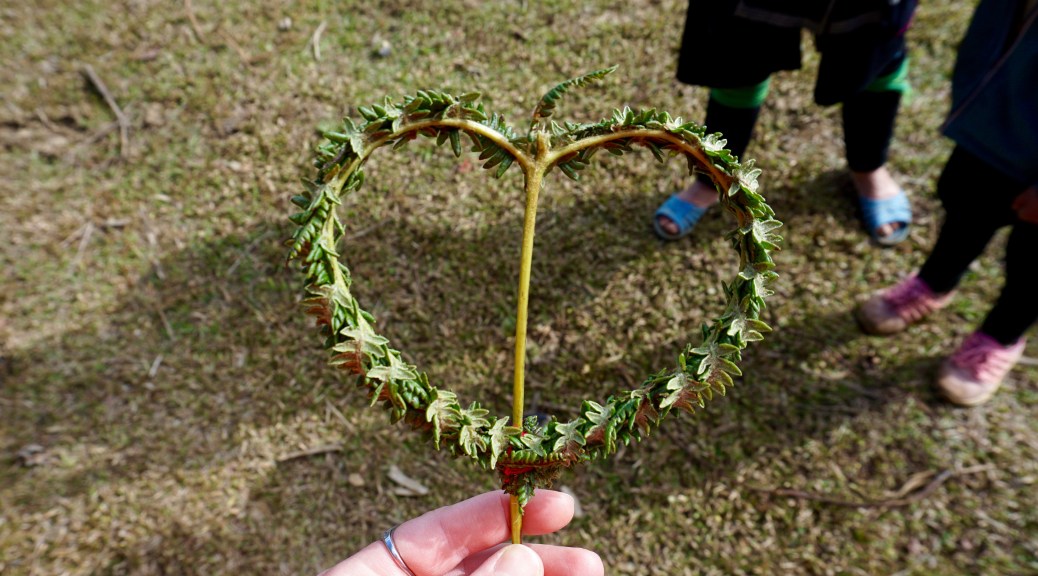
DSC02290 (1)
Made by Hmong women in Sapa, Vietnam

To all of my people, thank you for everything. Love you now, love you always.