
Tag Archives: Choices

What I Didn’t Know

I’m surprised at how much I miss it.

I’m surprised at how often it is on my mind, on the tip of my tongue, a marker of how and where I spend my time.

I’m surprised at my own mentions of it (and a little embarrassed) and surprised by how much of it has shaped me.

I didn’t expect it to be everywhere.

I should have known better.

I don’t know how you can just switch things off, he said.
I shrugged. Survival mechanism.

And it is.

I’ve lived a lot.


If I had to guess, I’d say the letters started when I was in middle school and experiencing the first of what I consider my two most significant life transitions. I don’t know if I came up with the idea on my own or if the social worker suggested it, but I have always thought better on paper.

I have written dozens of letters that I will never send, letters that remain hidden away inside dozens of diaries in a box in my parents’ basement. (I’ve always said that one day I’ll burn everything.)

I’ve been thinking back a lot, back to things I should have done with the letters that I wrote. Back to things I wish I’d never lived, never known, never learned, or not in the ways that I did.

I realize now that I could have been angry, had every right to be angry, and making the choice not to be has made me who I am. The funny thing is that I didn’t know it was a choice. What was it again? Oh yes, survival mechanism.

Although it was rather darker and stormier than that.


So I ran.

I ran to, I ran back, I ran away. But you can only run so far and so fast and sooner or later, well, you’re only human, after all.


I don’t think I’m unique in having a complicated relationship with the word “home”. I’ve written about this at length and can summarize with the conclusion that has sustained me for a long time: Home is people, not places.

In this way, there are many places where I might feel at home because there are many places where I have people. In some senses, I’ve gotten used to missing them, both the people and the places. But being used to something doesn’t mean being comfortable with it; doesn’t mean being at peace with it; doesn’t mean it isn’t jarring or surprising, or soft or gentle.

Missing my homes, my people, is all of these things, and it happens all the time.

Having walked this road before, I should have known better. But even if I had, there was nothing else I would have done.


I don’t miss the weather but I miss parts of it: convenience, predictability, ease.

I miss running to the store just under the road at all hours, windows and balcony door open because I could see my apartment from there and I’d be back in a minute.

I miss bike rides on the beach and stopping, soaked, under the palm trees to drink teh halia that was sickly sweet, but not as sweet as the teh halia at the Indian place where they knew my order, chided me for not eating enough, and were worried when I didn’t turn up for a while.

I miss watching the sunset over the nearest temple (remember when they rebuilt it?) while sitting with a group of friends at plastic tables, bottles of beer and empty plates of hawker food all around us.

I miss seeing the clouds fade from their early morning footprints in the sky, miss the turquoise house on the corner as I ride up the canal on the way to school.

I miss familiar faces in the climbing gym, making jokes in the mirror at dance, running into people who I knew in places where I didn’t expect them to be.

I miss meeting friends on train platforms, wandering through neighbourhoods in search of cafés, taking photos, always stopping for something to eat.

I miss our department office full of choice words and laughter, colleagues who became friends. I miss knowing people well enough to know when someone was having a good day or a bad day or when something was, for whatever reason, just going on.

I miss the rhythm of days that were always too long, with rarely enough time to do what had to be done. I miss the camaraderie that, year after year, we built and maintained because that’s what you do when you’ve been somewhere for a while.

I miss tapping on a door, asking for a minute, spending ten or twenty.

I miss knowing where I was and who I was and how it felt to know this about myself.

I spent a long time looking.


Before the school year ended in June and before I left Singapore in July, I knew I was ready to go. And I knew that I wasn’t ready to leave. I missed the Singapore I had known before the pandemic, and I still miss it. But now I miss everything else, too, and everyone.

I didn’t know how much a part of me that world had become, or the people who were and are part of that world.

I didn’t know how much I learned there, how much I grew into myself, how important those years were for the person writing this right now.

Of course, I couldn’t have known.

Maybe if we did know, life would stagnate and we’d grow complacent, unwilling to make waves because they can hurt. Survival mechanism? Maybe.

Maybe, if we did know, we’d never change anything at all.


Most of my letters over the years have been fueled by frightening, intense emotion, but that’s not the case right now. That’s why this isn’t a letter.

Instead it’s a story, a story of the mess my life was and how I tried to rebuild it. It’s a journey in the way that walking a little slower, listening a little harder, loving a little deeper is a journey. A journey of the body, and also of the mind. And in this journey, in the knowing of people and places, perhaps we can also come to know ourselves.

I didn’t expect to miss this home as fully as I do, but that tells me something about myself that I think is worth knowing. And I am grateful for having learned it.

Becoming

There’s a poster in the bathroom at the climbing gym that says: Ask yourself if what you are doing today is getting you closer to where you want to be tomorrow.

I really like this. I am moved by it every time I see it, and I have seen it many times. It has pushed me to be a better climber: Do the pull-ups, go through the routine on the hangboard, take the lead fall. It has pushed me to stop running, climb more frequently, and dedicate an afternoon a week to core training. When I started climbing a few years ago, I knew I’d found something special, something that I really loved the way I hadn’t loved anything since I moved away from snow and left my skis behind. I want to be good at it and I have been working to make that happen.

The climbing gym has other inspirational posters (Sometimes stillness is harder than movement and Climbing is like dancing on the wall) that never fail to catch my attention but this is the one that speaks to me the most.

Ask yourself if what you are doing today is getting you closer to where you want to be tomorrow. Just last week I wrote this on the board for my grade 12 students. They are currently sitting their mock exams in preparation for their real AP and IBDP exams in May. Most students’ university acceptances depend on these exams and they are learning right now how prepared they are. So, this is a pivotal time. This is an opportunity for students to gain confidence in what they know and make adjustments to habits and patterns in response to what they don’t know. Are you, right now, doing what is required to get you where you want to be? There is force and agency behind this question, as well as the explicit onus of responsibility.

But there is a significance far beyond grades and university acceptances. There is the cold, hard fact that all of our actions have consequences. The choices we make, and we are constantly making choices, set us on certain paths and allow for different possibilities. This not only affirms who we are, whether or not that is who we want to be, but also lays the foundation for who we will become.

I’ve been thinking back lately to the understanding I had of myself and those around me when I was younger. Over time, I have met people who I look up to, admire, and still aspire to be like, years later. But I have also met people who have had quite the opposite affect. The memories of the words and actions of these people still send anger coursing through my body. Years and years later.

Part of our understanding of where we want to be, therefore, should come with an awareness of who we want to be around. We want to be around people who will lift us up rather than tear us down, people who will answer the phone far too late just because we called when it was far too late. We want to be around people who challenge us in constructive rather than destructive ways, people who give us room to grow. If we are lucky, we will also surround ourselves with people whose trust goes unquestioned, people who have already forgiven our trespasses. And when we find people like this, we should hope that we will know better than to let them go.

Where we are thus encompasses who we are, and who we are helps us make choices about where we want to be. I could not be planning yet another move alone to yet another country had I not made the choice to be the person who makes the most sense to me. And this choice has not come easily, which is also how I know it is right. The life I am living is a life I never could have imagined and I would have laughed at anyone who told me three, six, or ten years ago that this would be my world. Thinking back to what I thought I wanted, and thinking ahead to what I dream about, is sometimes a masochistic exercise fuelled by hard liquor and late nights. But this is the driver of change. Ask yourself if what you are doing today is getting you closer to where you want to be tomorrow.

And according to an artist whose work I bought many years ago when it brought me to tears: If you want something you have never had, you must do something you have never done.

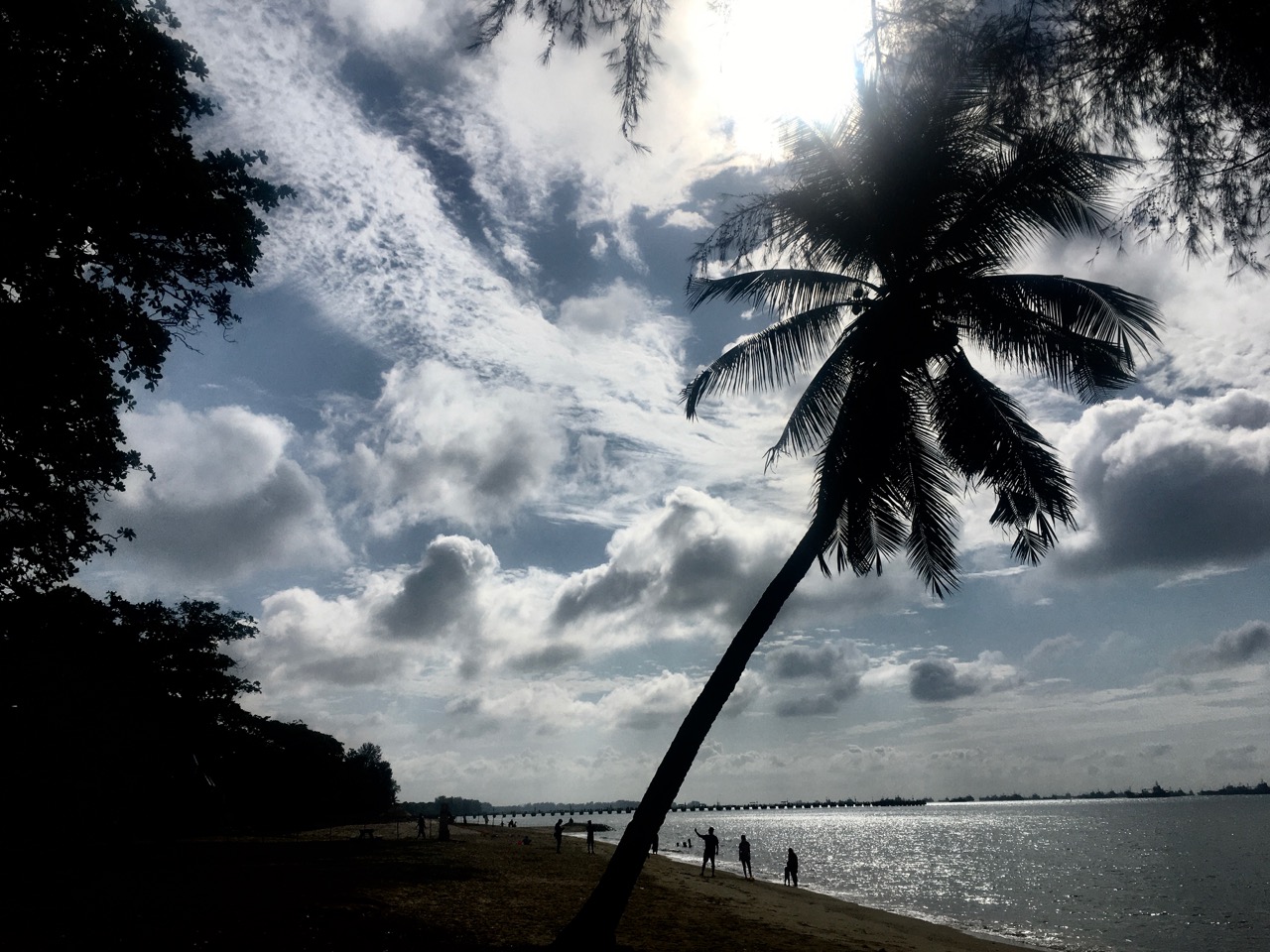
East Coast Park, Singapore – March 2021

How to Solve a Problem: Step One

The first step to solving a problem is identifying the problem. We cannot fix something or change something if we don’t see it.

But what happens if we can’t see it, won’t see it, or refuse to accept it? What happens when we refuse to take responsibility for problems that are brought to our attention, or brush them off as being someone else’s problem?

We can’t solve a problem if, for us, it isn’t there or it isn’t relevant. We can’t solve a problem if we don’t want to.

This might sound really obvious, but a certain attitude about problems is also pervasive in education. In my current context, there’s a deep reticence to addressing even the most visible problems, let alone the problems that lurk below the surface. This is troubling because refusal to see, admit to, and take ownership of problems harms both young people and the adults around them who are trying to do the right thing (because there are always people trying to do the right thing). Much contemporary education claims to be caring or compassionate and, in my experience, it often is not.

So, the first step to solving a problem: Admitting that it exists.

Problems in Schools

Every school I have worked in call itself a community. It’s common to hear, “In our community we believe X. We do Y. We are Z.” This means that we are all responsible for the development and action of X, Y, and Z, which also means that when there is a problem, we need to address it. Unfortunately, addressing the problem is often neglected and I think there are a number of reasons for that. These reasons will be explored below.

For context, my school uses the phrase “see it, own it” as a way of dealing with issues that are (arguably) detrimental to learning. I recently learned that “see it, own it” is an abstraction of The Oz’s Principle‘s “See It, Own It, Solve It, Do It”. Clearly, there are multiple parts here. If you see a problem, you need to do something about it. Claiming only “see it, own it” is an abstraction of this much larger idea, and it seems to have neglected a fundamental part.

My concern with an educational environment in which “see it, own it” is enough is the lack of collective responsibility. If we want a certain community, I say to my students all the time, we have to build it. We can’t just talk about it – we have to do something.

So why don’t we?

Fear: I can’t be wrong.

In evolutionary terms, fear is a primary human motivator. We are afraid of the dark, spiders, and heights because these things can harm us physically and limit our ability to reproduce. We are also afraid of losing face, losing a sense of self, and damaging our self-esteem. We are afraid of being wrong and looking like we don’t know the answers because we think we should. We are afraid of admitting failure because we put ourselves up on pedestals of expertise.

And when it’s very clear that something has gone wrong, we rationalise. We make excuses. We deflect. We remove ourselves from the situation and blame someone or something else. The fundamental attribution error, or FAE, applies here: If something goes well, it’s due to my disposition and I deserve credit, but if something goes poorly, it’s due to the situation and it’s not my fault. (Go figure.) We act like this because it is easier than accepting our part in what has gone wrong and doing something about it. It is easier to excuse than to solve or to do. I can’t be wrong so instead I push the problem away from myself.

As I explore with my students, psychology suggests that much of what we do is meant to protect us from what is mentally uncomfortable or difficult. This often comes in the form of cognitive dissonance. For example, I see myself as a person who cares for the environment and yet I fly many times a year. I recognise the contradiction and this makes me uncomfortable. Instead of giving up flying because that’s hard and frankly, I don’t want to do that (oh gosh, how environmentally conscious am I, really?) I tell myself that other people fly more often, or that the plane might as well be full, or that I don’t use plastic straws so at least I’m helping somehow.

I make excuses instead of solving the problem because I refuse to accept that I am part of the problem. After all, what would that do to my sense of self? What if I’m wrong? I am afraid of what I might find if I start to look. What if I’m not the person I claim to be? And what if everyone else sees that?

I am afraid and I choose to do nothing.

Indifference: This really isn’t my problem.

Another reason that people in schools fail to solve problems is indifference. They really don’t care about the problem because they don’t actually see themselves as part of a community that honours X, Y, or Z. These are the people who say, “I just work here” or “That’s not my job”.

While this might be valid in certain contexts and I accept that this may be the case in organisations, it is not an acceptable attitude when young people and adults are being harmed due to someone else’s indifference. If we do not all agree to be part of the community and build the community, there will never be a community. People who behave indifferently erode what could be and therefore actively harm everyone else and the very concept of community.

We have to recognise that the problem exists and this means caring enough about the environments that we are in to recognise that none of us exists in a vacuum. We have all chosen to be part of something and we have the option to choose differently if we realise we don’t want to be there. But we cannot simply opt out without having an adverse impact on others. Choosing not to participate is as much of an action as any other action.

Claiming that, “This isn’t my problem” is an action. It is an action of doing nothing.

Uncertainty: What am I supposed to do?

I think uncertainty is closely related to fear but I’m going to address it separately for the sake of clarity.

Many would argue that there are those who do care and do want to help but they just don’t know how, or there are obstacles at every turn. I agree that this is often the case. I have heard many, many teachers say, “Well what am I supposed to do? I don’t make the decisions around here.” Alright, yes. There are many decisions that teachers do not make, but there are also many decisions that teachers do make. One that has become increasingly obvious to me is the option to sit down with someone and point out a concern that they have clearly not considered, for whatever reason. There might not be a “fix” but at least there is now deliberate awareness of something that is not right.

Please understand, it is okay to be uncertain. But it is not okay to use uncertainty as an excuse for inaction. There’s a slippery slope from uncertainty to something deeper and I think it’s important to be aware of this. The question of what to do often has a real answer and we need to recognise when we are asking that question genuinely and when we are using it as a way to shield ourselves from having to act.

What are we supposed to do? We’re supposed to recognise that the problem is there, consider our role in the community, and act in accordance with that role. What kind of community do we want to build? Behave in the ways that reflect this community.

Callousness: I just don’t care.

This one is really tricky for me because for a long time, I didn’t believe that callousness actually existed in education. It was a very painful lesson to find that, in fact, some people are involved in education just because that’s how life went and not because they have any sort of interest in young people or in making the world a better place. In nine years as an educator, I have learned that some people really are involved in this field because the holidays are good and because, in many systems, they’re largely left alone to do whatever they want.

I can say a lot about such systems but I will stick with the topic of this post right now. As much as it deeply hurts me to say it, there are people in education who just don’t care. I wish this were not the case. These people should not have a place in any environment where their actions affect others, and particularly young people. Such people are concerned for themselves with utter neglect of anyone or anything else. And they are unlikely to change.

I am disturbed by people who pretend to care because that’s how to get away with doing whatever they want to do, and I have learned not to trust them. It has been a difficult lesson. These people, in and of themselves, are problems that schools need to solve.

Conclusion

The first step to solving a problem is identifying the problem. We must admit that it is there. Members of a community are often very happy to be part of what’s going well and toss their hat into the ring of what’s popular, but they often fail to act the same way when something is not going well and is not popular. No one wants to be the person who says, “This isn’t working. I know we spent a lot of time on it but I dropped the ball here and miscalculated there. I’m sorry. This is how I will move forward and help us all recover.” No one wants to be the person who says, “I wish this weren’t the case but this is what happened and I’m not in a position to fix the system. What can I do right now instead?”

Schools have problems when those difficult conversations are avoided and when band-aids are put on problems so that things look better. In reality, problems are perpetuated because the retrofitted system continues. Schools have problems when there is no sustainability because there were no deliberate systems in the first place. The way to develop sustainability is to stop patching up the problems and actually get your hands dirty and fix them.

No one ever said this was easy. It’s not. But it’s essential if we want to live in a world that is more just than this one. And it’s required if we claim to be part of a community.

Step one: Look the problem in the face.
Step two: Take a deep breath.
Step three: Do something about it.