Tag Archives: Market

Travel Guide: Venice and Burano

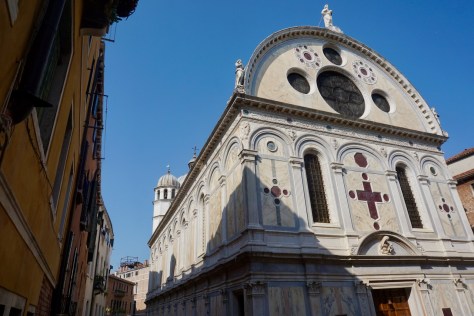
My family travelled to Italy when I was 16, and it was there that I fully formed the fantasy that drove my search for a university, a fantasy that never quite materialized. We spent several days in Venice on that trip and, nearly twenty years later, I was excited to return with my partner for his first visit.

We were rather more strategic with our planning of Venice than with the rest of our summer travels, which was to our benefit. We made as much use of the Venezia Unica city tourist website as possible, thus saving time and money, as well as guaranteeing a parking spot in a very convenient garage. We had a few changes of clothes in backpacks and easily managed to pick up gelato for the walk from the car to our blissfully air-conditioned hotel.

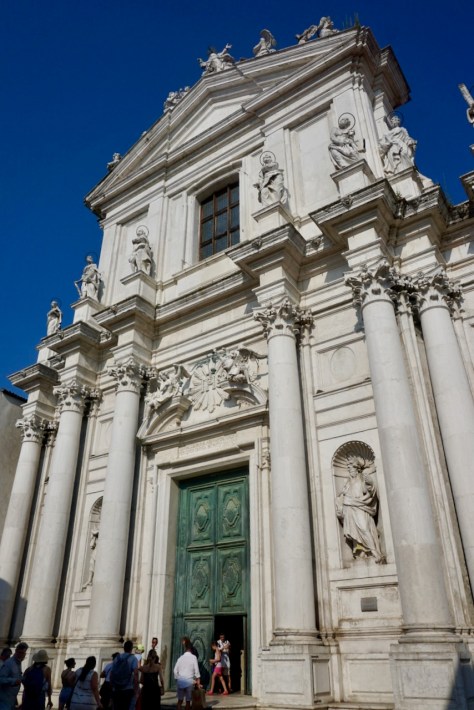
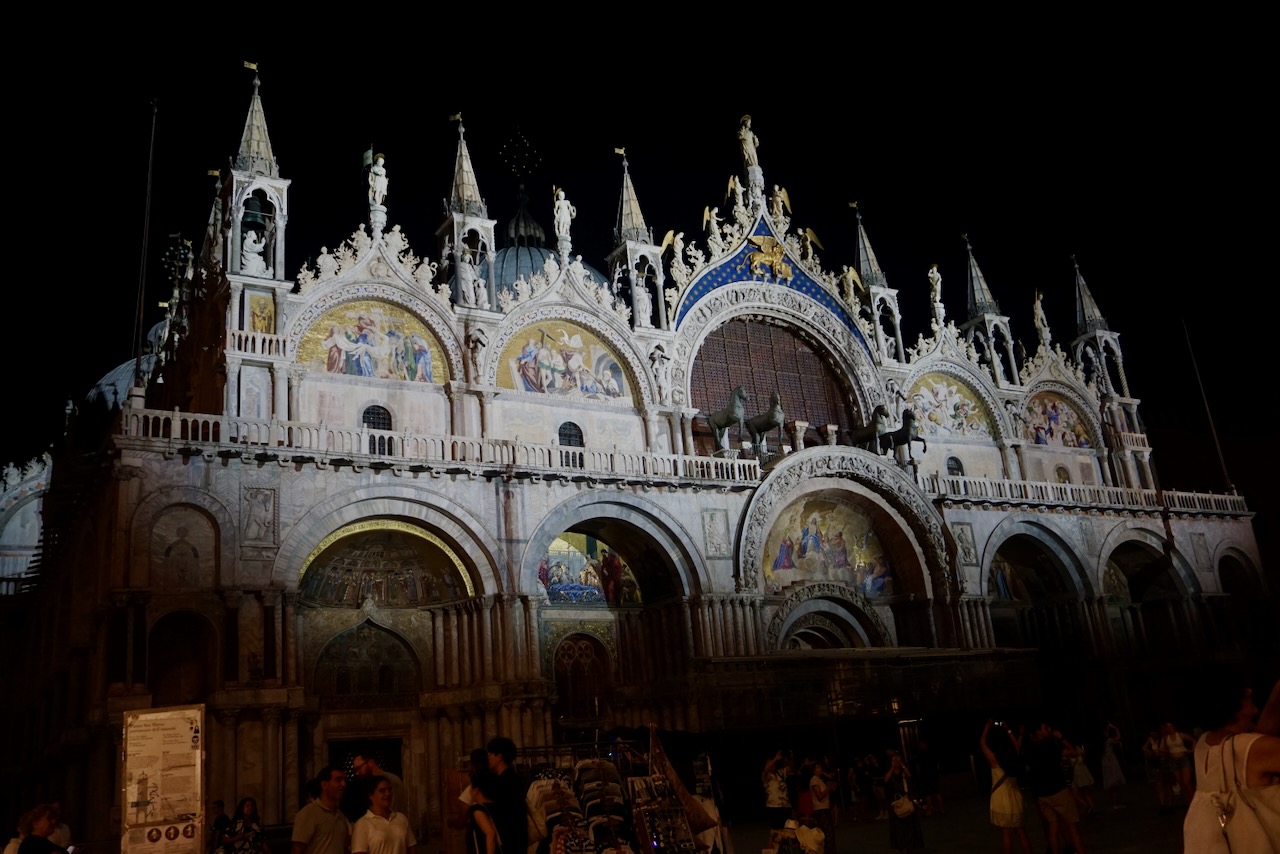
After a shower and changing into appropriate clothing, we walked the four minutes through twisting alleyways to reach Basilica San Marco, where we had timed tickets and could skip the line. I was pleased to see that everyone had followed the dress code, which isn’t always the case in places with posted dress codes. I hadn’t been inside on my first trip to Venice; according to a story my dad tells, the family voted in favour of gelato instead. I don’t remember that, but it sounds right.

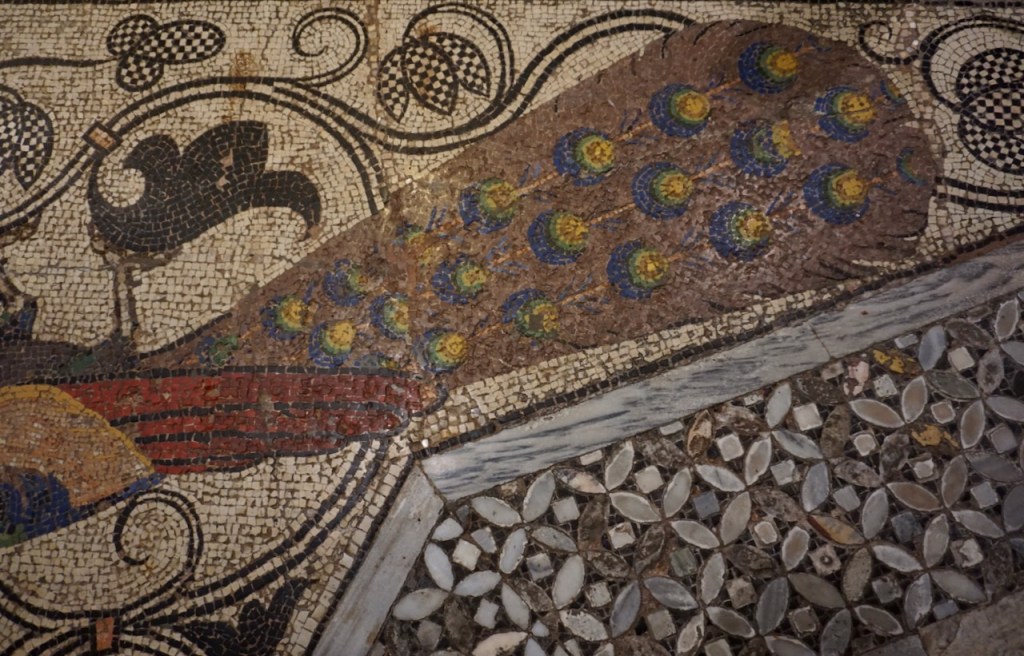
This time, my partner and I made multiple rounds of the Basilica interior, stunned by the plethora of gold, the intricate mosaic covering every surface of the floor, the saints celebrated on the walls. We tried to match the Latin names to what we knew in German and English, often coming up rather short. I have always been fascinated with the lengths to which people go to honour that which they wish to honour.

After changing clothes again (Venice, much like living in Singapore, required breaks in air conditioning and yet another shower before pursuing the next activity), we headed to the meeting point for our walking tour, always my favourite way to see a city. The tour took us through all six of Venice’s districts with a focus on the northern part where the locals live. As the tour guide explained, her job was to take us to places we wouldn’t find on our own. She told us about the history of Venice and about Venetian culture today, which we really enjoyed. I had taken a course on the history of Venice in university and I was surprised at both what I remembered and what I had forgotten.
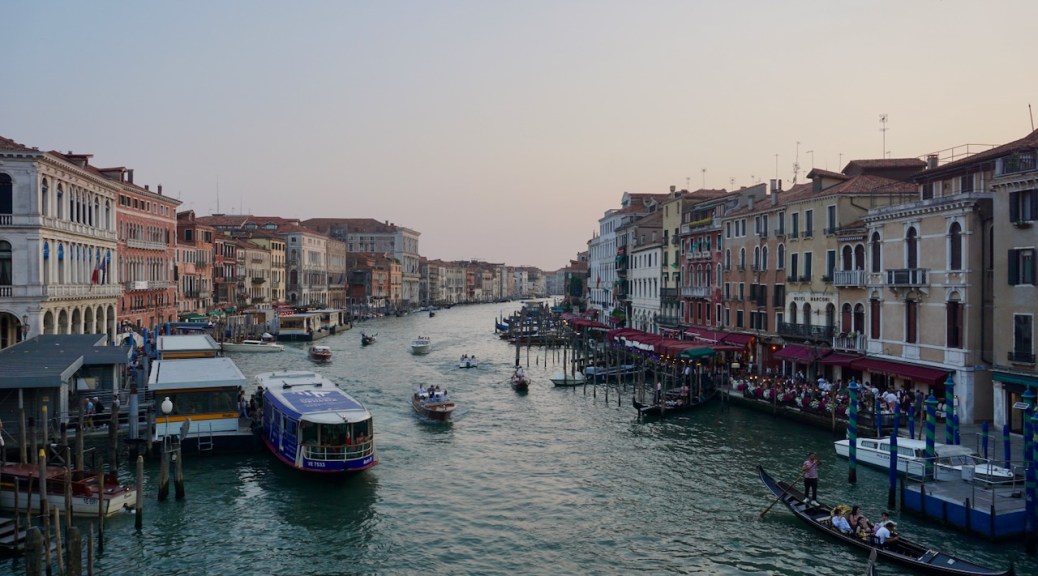
We walked over to the Rialto Bridge that evening and took in the view of the Grand Canal . . .

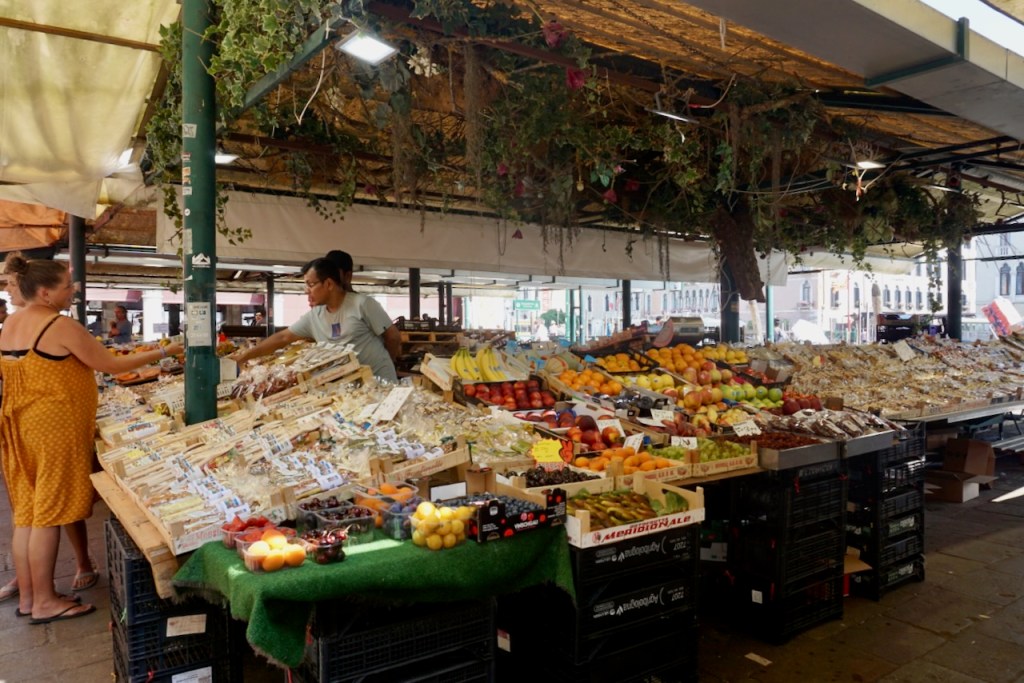
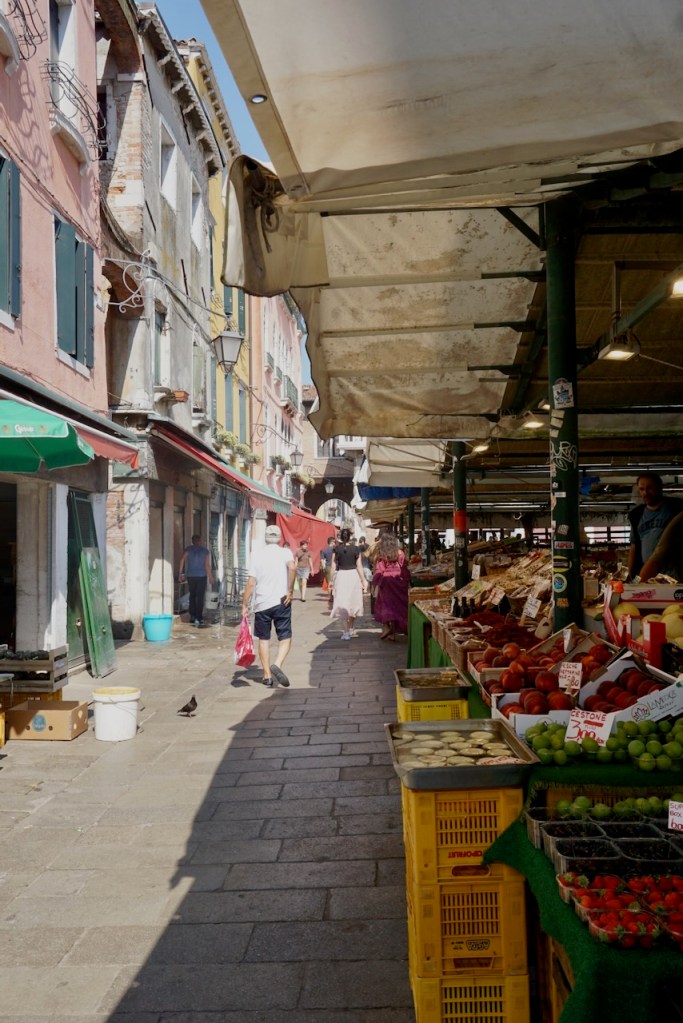
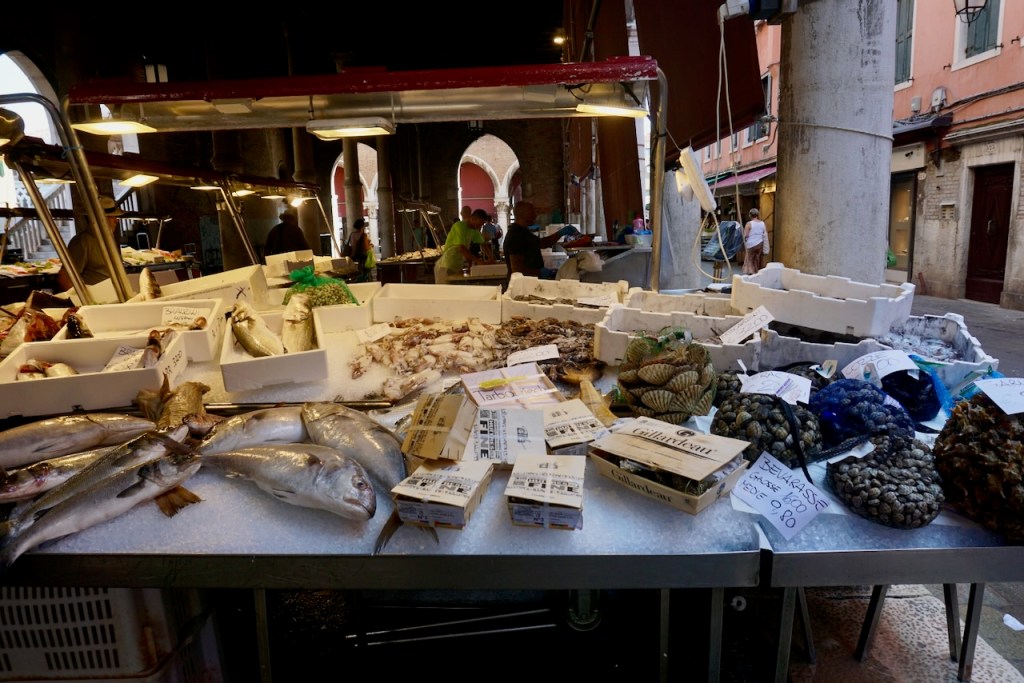
. . . and returned in the morning to visit the Rialto Market, a favourite activity whenever possible. Tourist kitsch aside, the primary ware was seafood, which should come as no surprise.

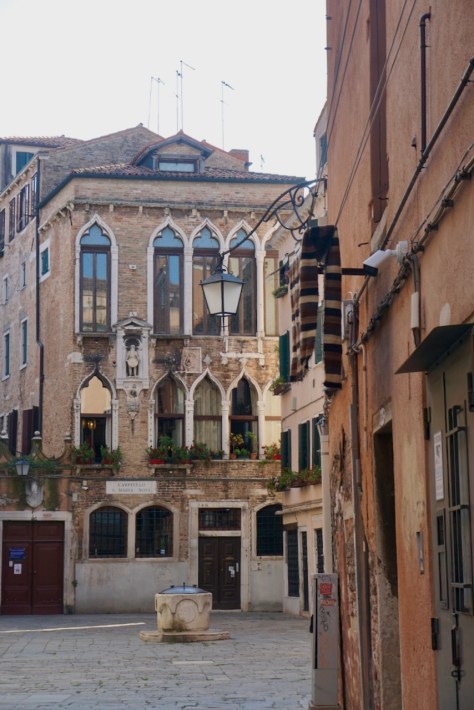
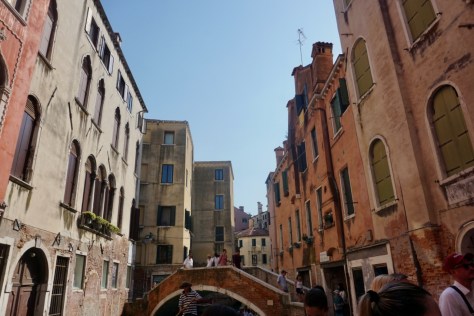
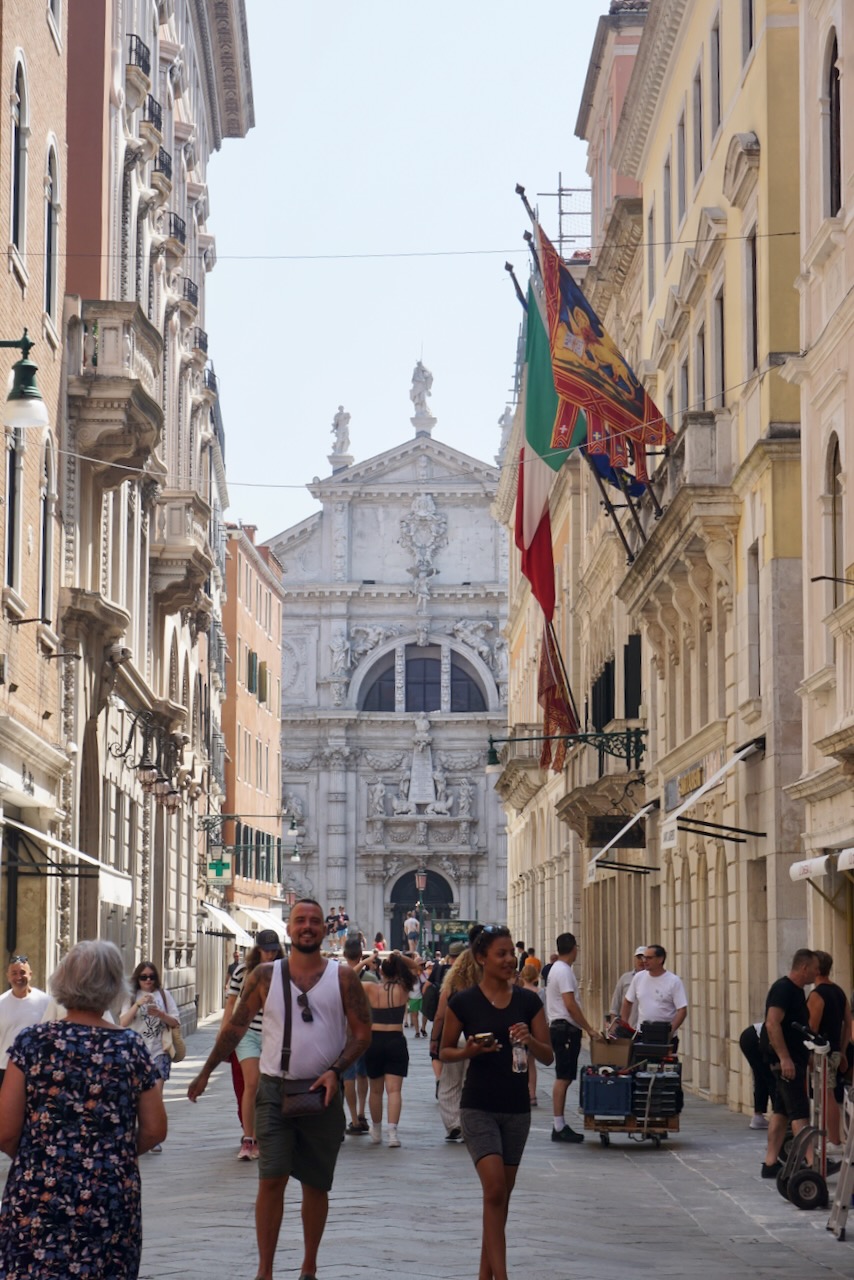
From there, we made our way leisurely through little alleys and side streets until we reached Piazza San Marco.

We walked along the water to confirm vaporetto (water bus) times for the transport passes we had purchased in advance . . .

. . . before returning to Piazza San Marco for our timed entry to the Doge’s Palace, again avoiding the long line.
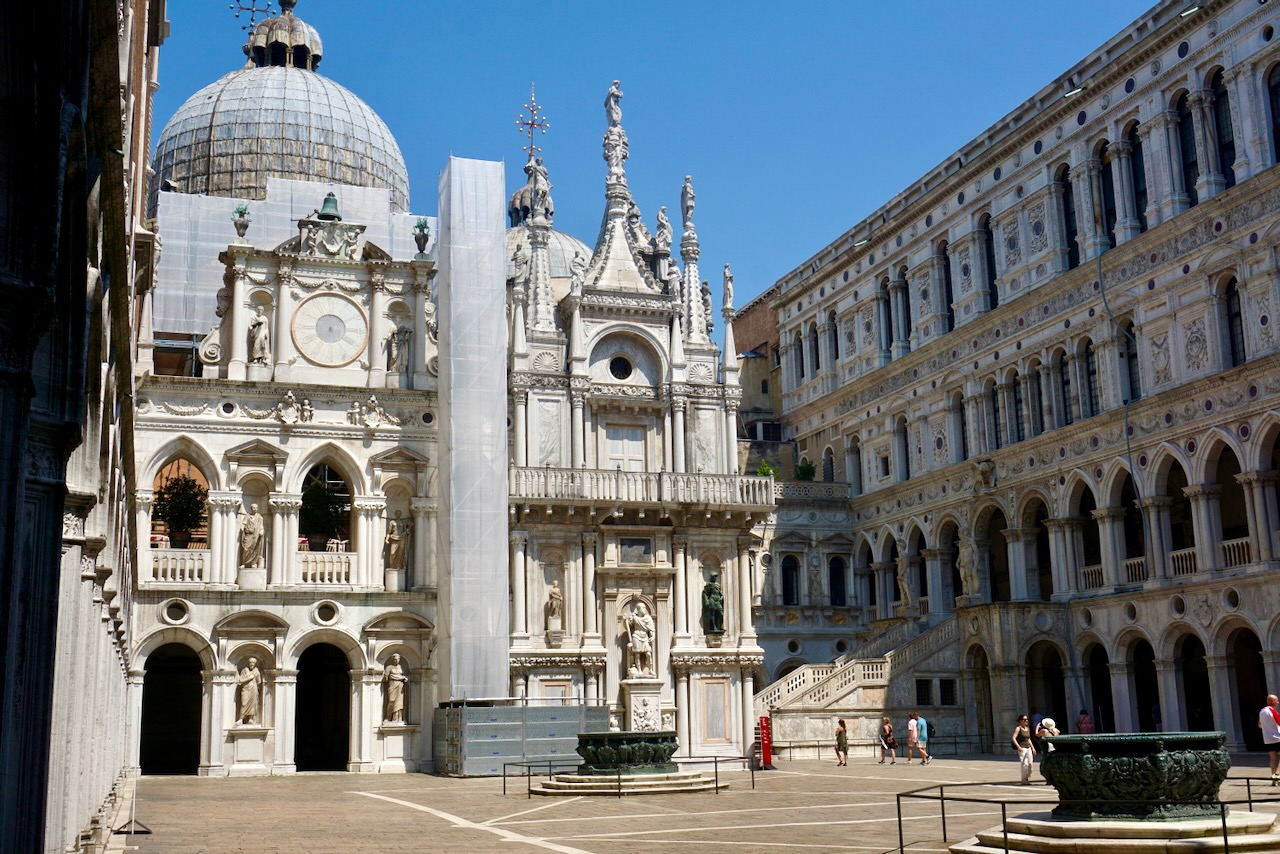
Much like Basilica San Marco, the Doge’s Palace is grand. The wealth that the former Republic of Venice had enjoyed, and the power that came with it, was awesome in the original sense of the word. The gold, the art, and the sheer size spoke volumes.

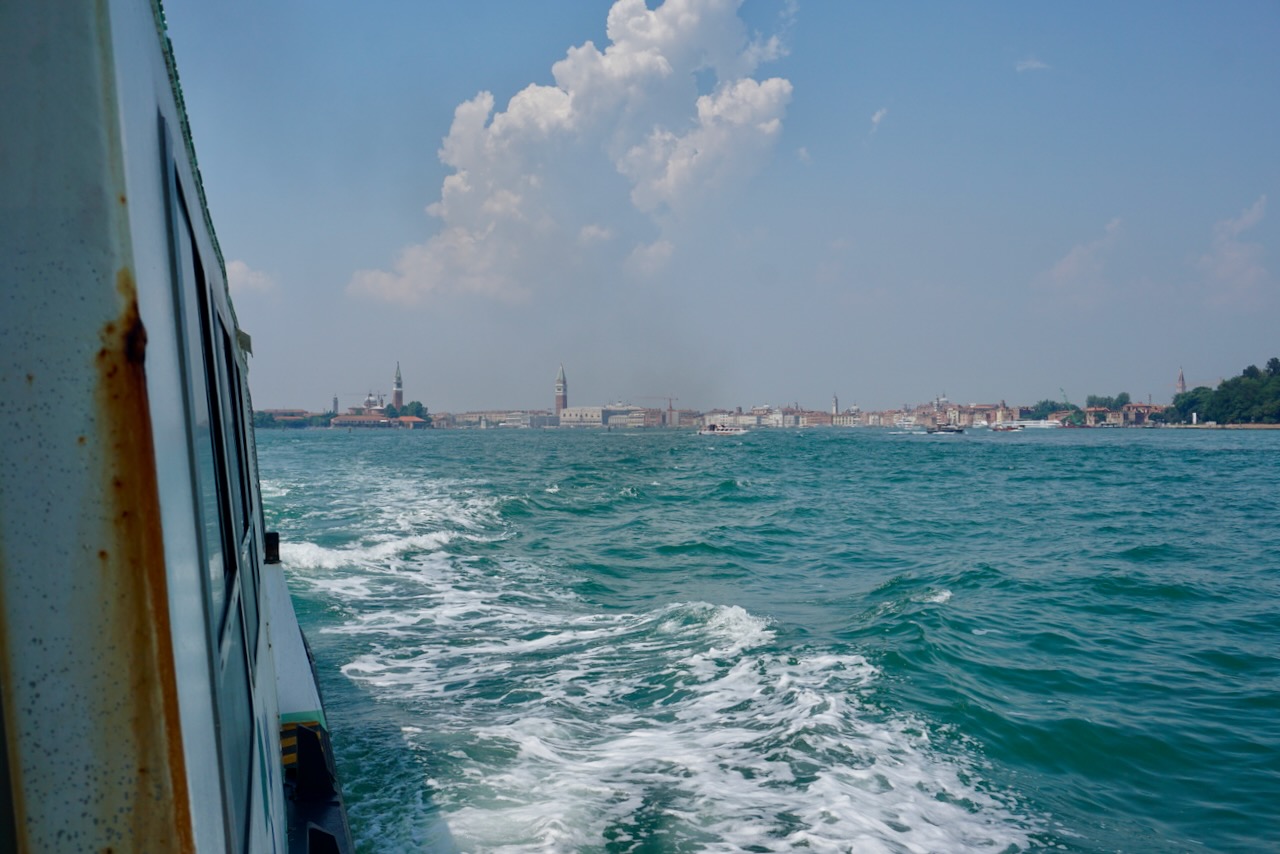
Afterwards, ready to escape the crowds for a while, we took a vaporetto for the 45-minute trip over to Burano, one of the neighbouring islands. Being on the water gave us some relief from the heat, but I would not recommend July as the time to visit Venice.
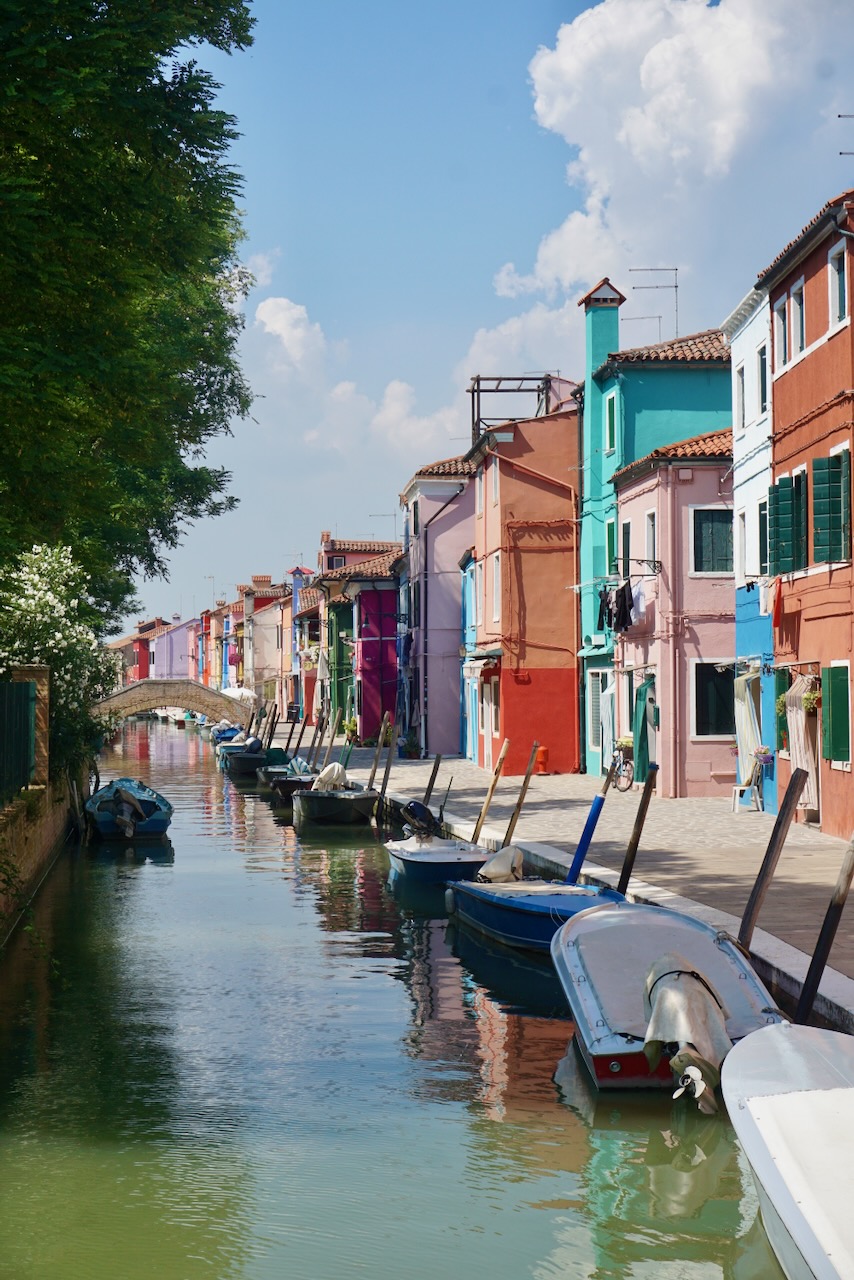
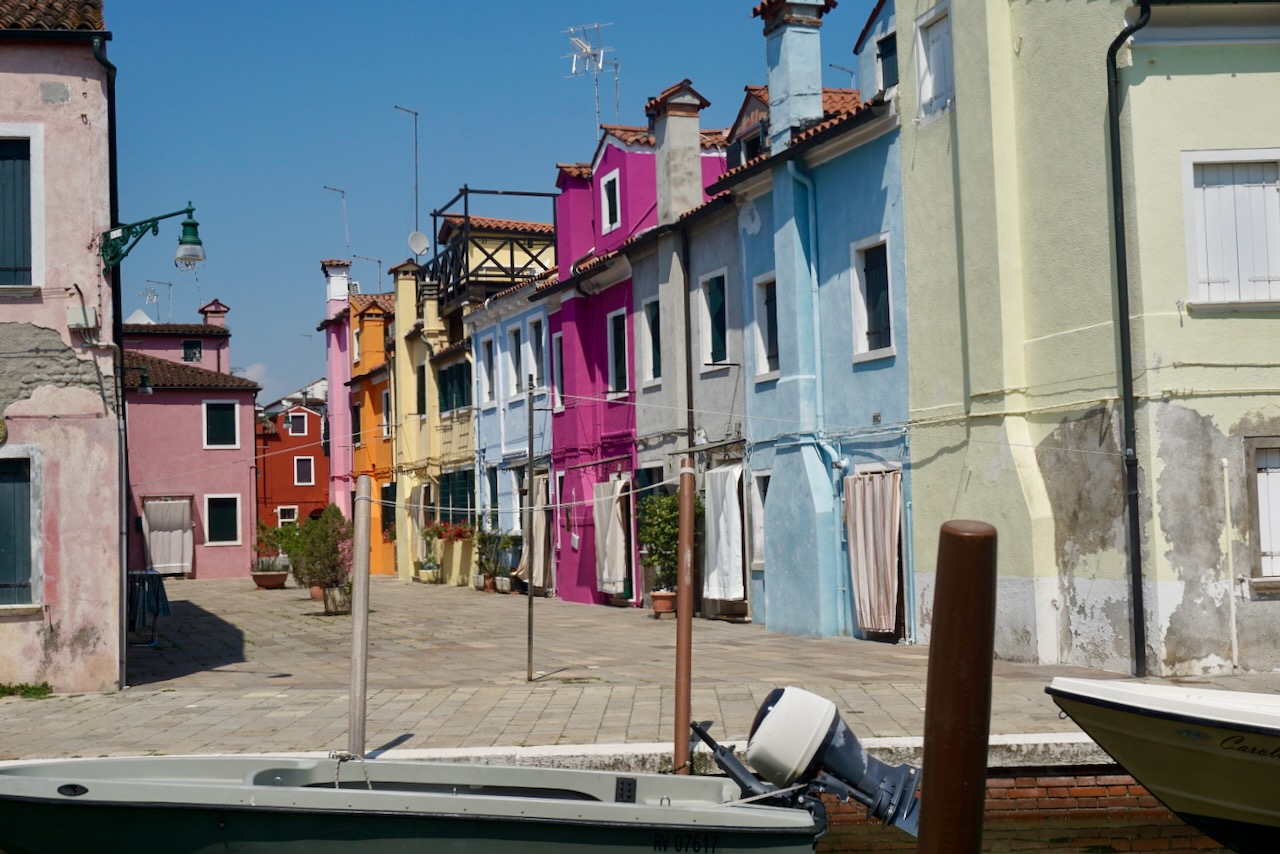
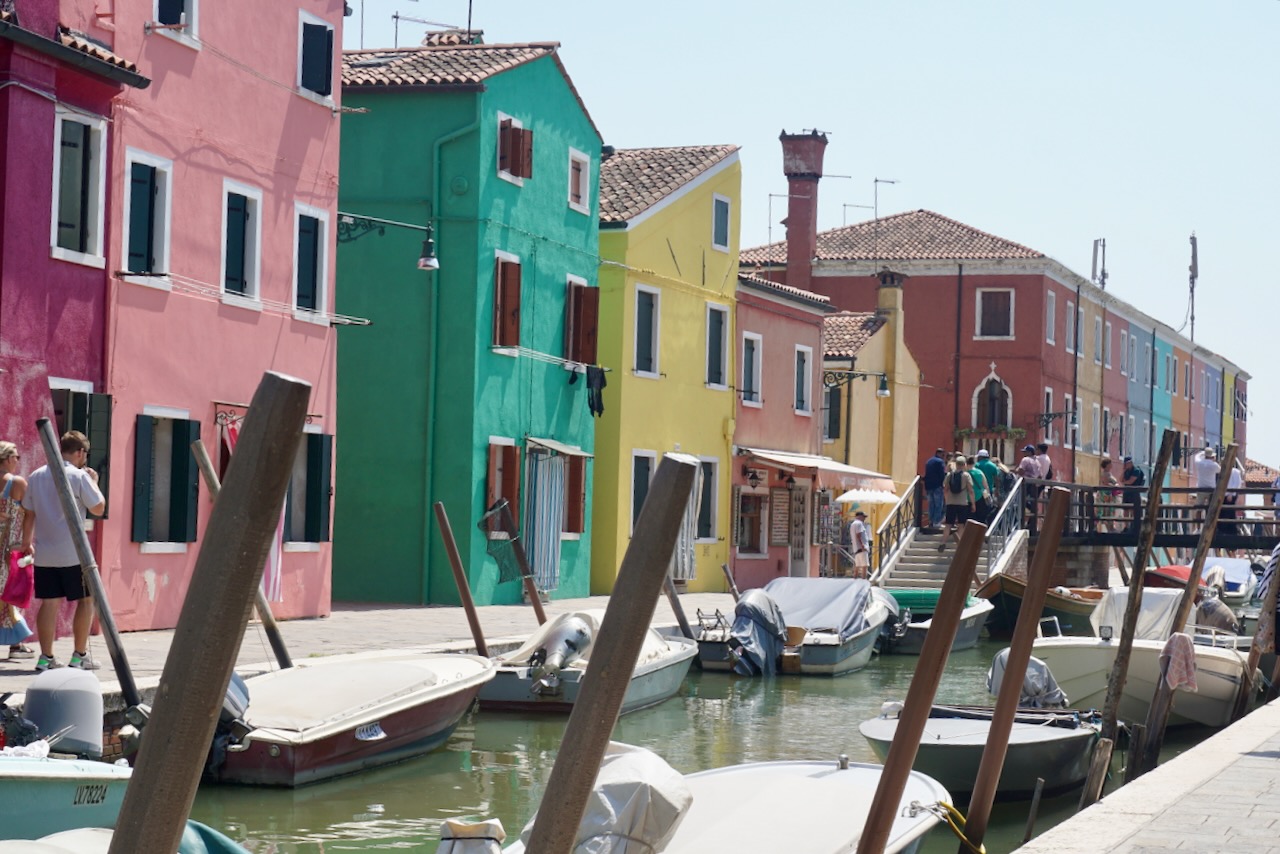
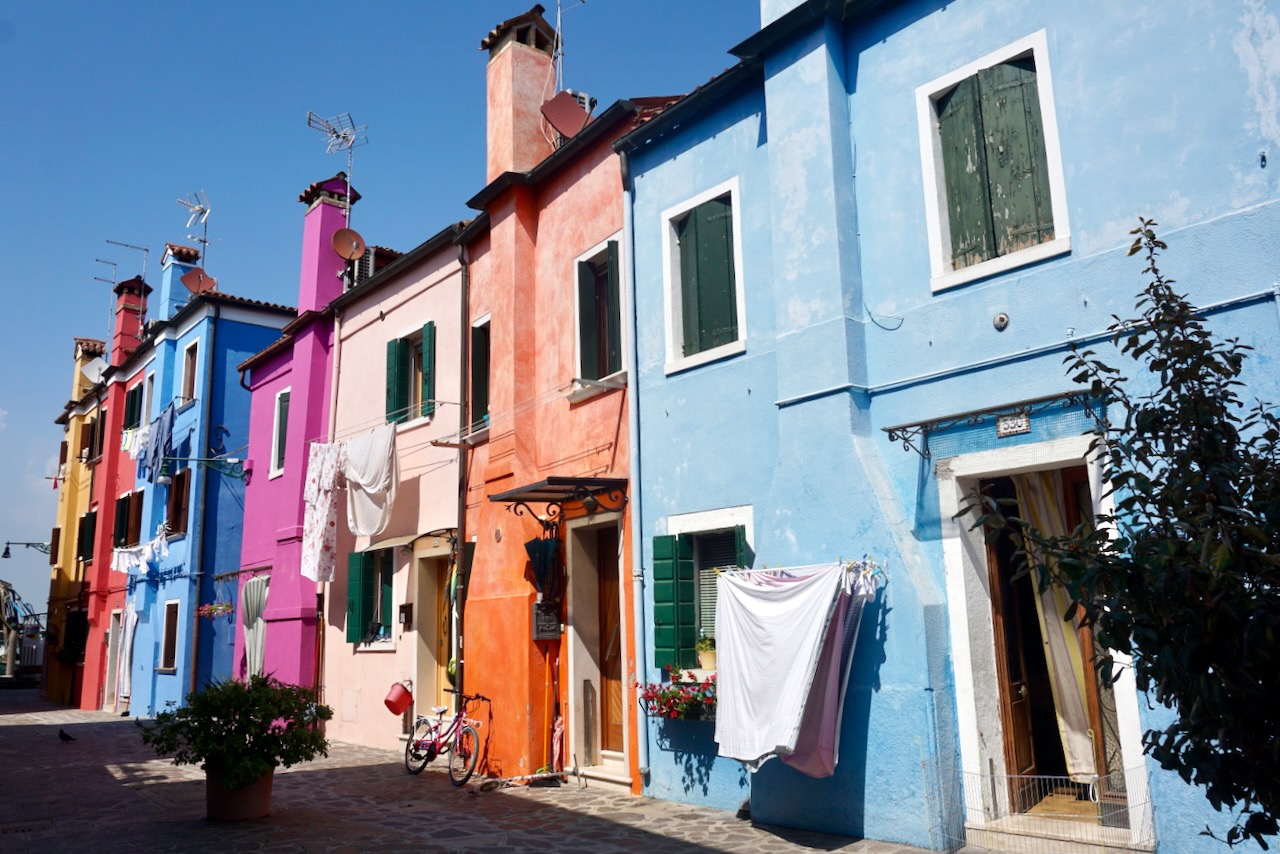
Burano is tiny, whimsical, and famous for lace-making, evidence of which could be seen in nearly all shops. What we were there to see, however, were the brightly-coloured houses that practically glowed against the blue of the sea and sky. We walked around, patronized a local café, and took photo after photo of this storybook come to life.
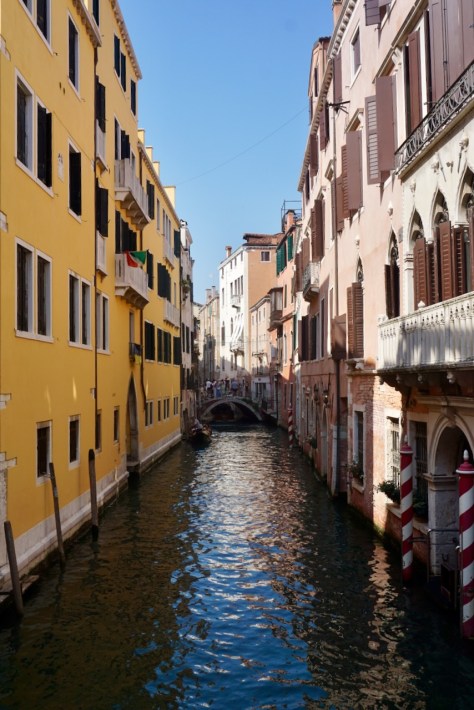
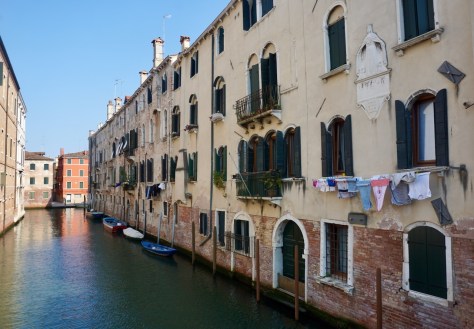
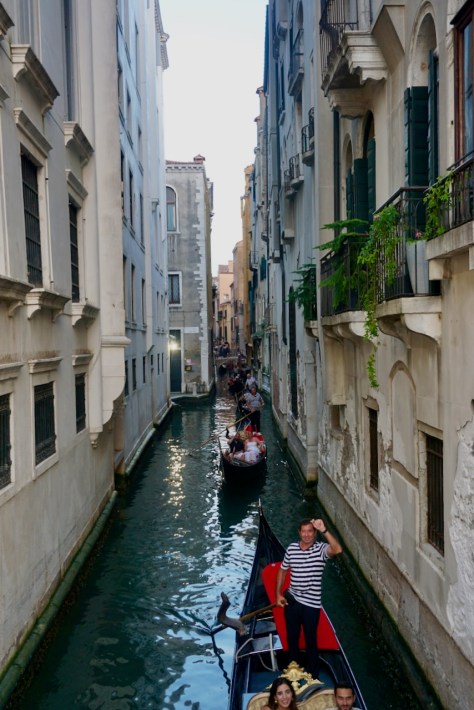
Upon returning to Venice and after some much-needed time to cool off, we braved the heat and humidity one last time to enjoy our final evening. Since Venice was designed to be seen from the water, our tour guide had said, many of the oldest building façades seen from the street side were actually the back. A gondola ride gave us a perspective of the city as it was meant to be seen. The sun was beginning to set and the city glowed.

As we rode, we asked the gondolier questions about how one gets into the business (sons are taught by fathers), how a route is chosen (the routes are what they are and do not change), and who owns the gondola (the family). The gondoliers called to each other in Venetian, the language of Venice that our Italian tour guide told us she had learned to understand since moving to Venice years ago but could not speak. Venice is Italy, but mostly, Venice is Venice.

A friend wrote to us that we were in the city of love, though we were pretty sure that designation belonged to Paris. At any rate, we held hands as we watched the sun set over the bridges.

Since we had day passes for the vaporetto, we hopped on board once again to ride nearly the whole length of the Grand Canal, a cruise for the price of a bus ride. It was dark when we disembarked this time.

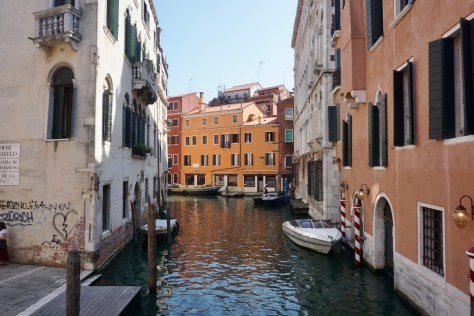
There is definitely something magical about Venice, something that lends itself well to the mysteries in novels and stories I loved as a kid. The cemetery is an island of its own; the city glows when it grows dark with the lights reflecting on the water; the language is half a secret; mailing addresses function differently here in order to function at all; there are so many twists and turns that we followed a map every time we tried to get anywhere, consistently unable to orient ourselves.

The following morning, we made our way slowly back to the car, managing to cross yet another piazza where we hadn’t been before. We loved our time in Venice but were ready to get away from throngs of people and back into nature. Next stop: Slovenia.

Travel Guide: Zagreb and Plitvice Lakes National Park

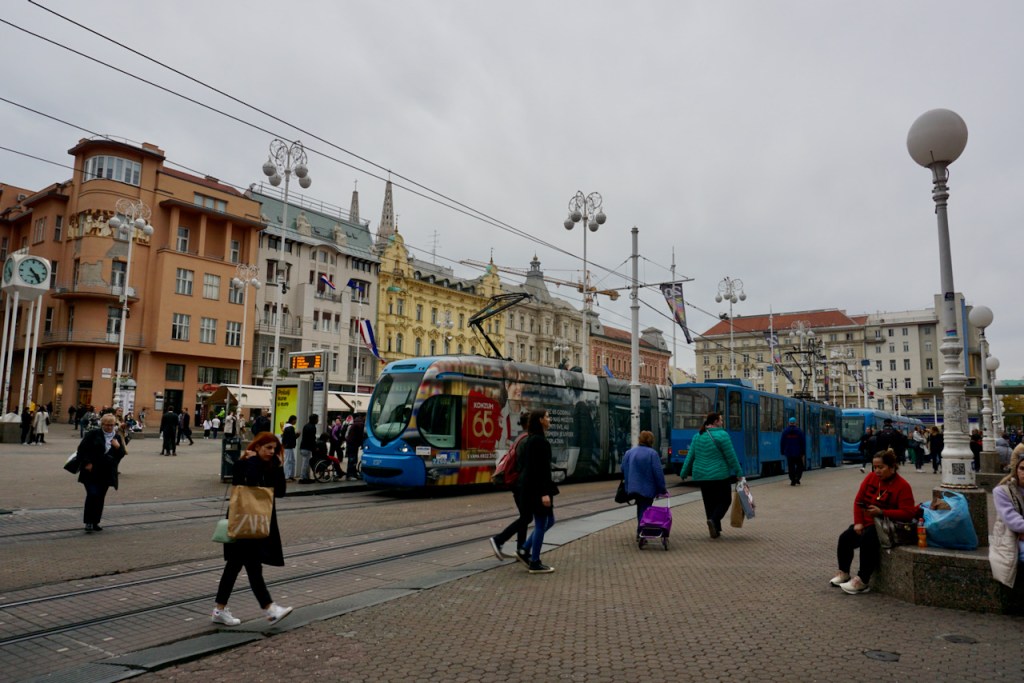
I was really lucky to have my parents come visit for our fall break this year, lucky that they were able to make the trip to Germany and lucky that we were able to travel together. We spent a week in Germany before flying to Croatia to explore a country about which both of my siblings (and everyone else I talked to) have only good things to say. I cannot emphasize enough how friendly, kind, and helpful the Croatian people were, and this made for a wonderful experience.

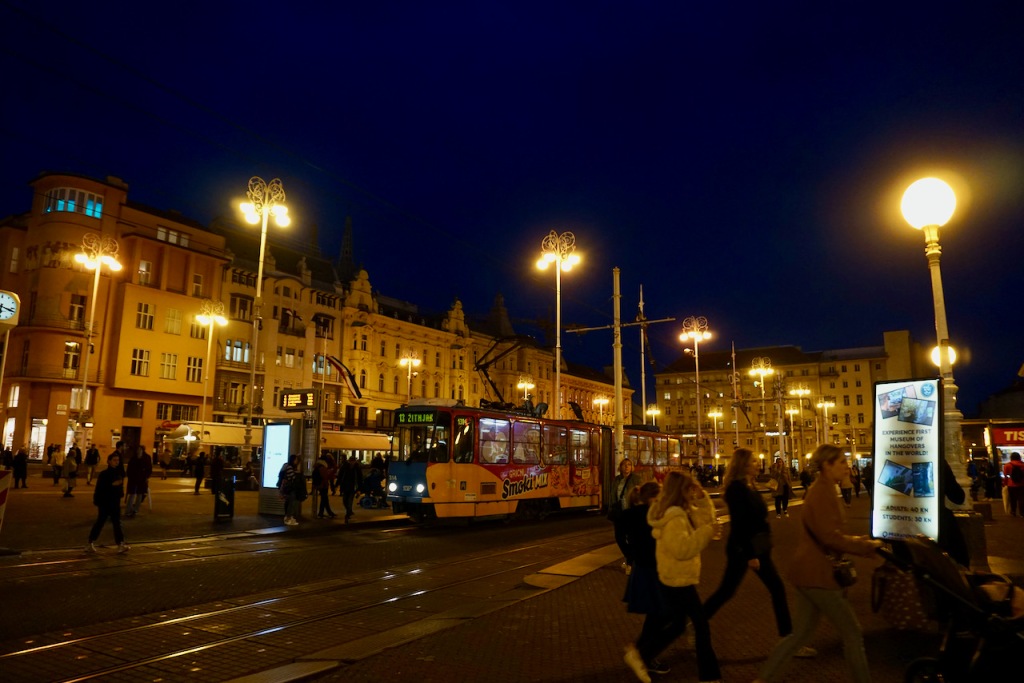
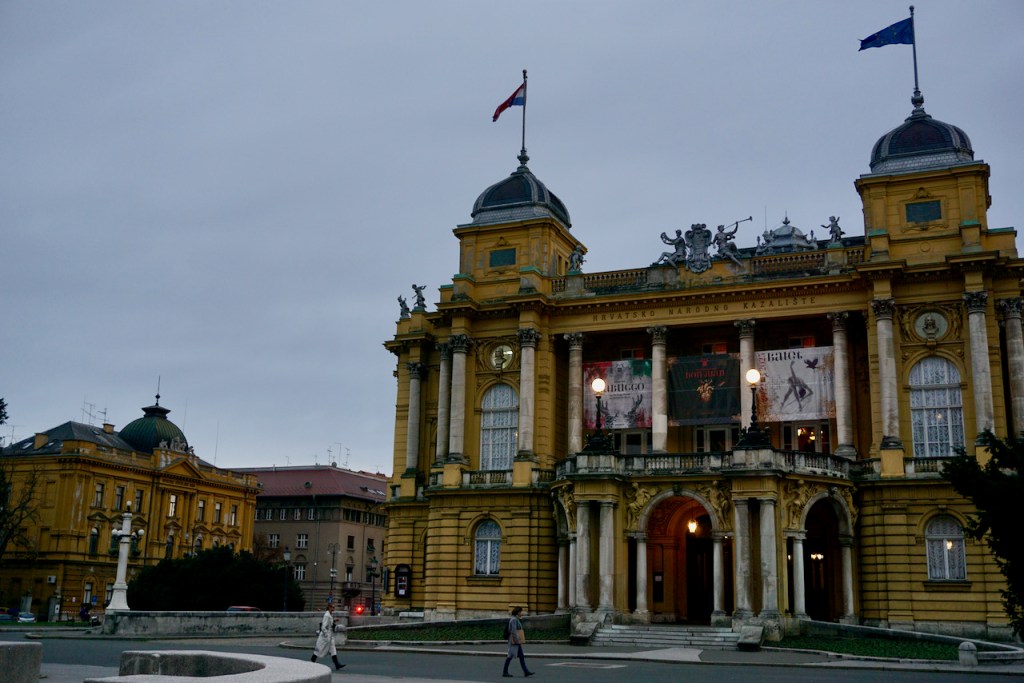
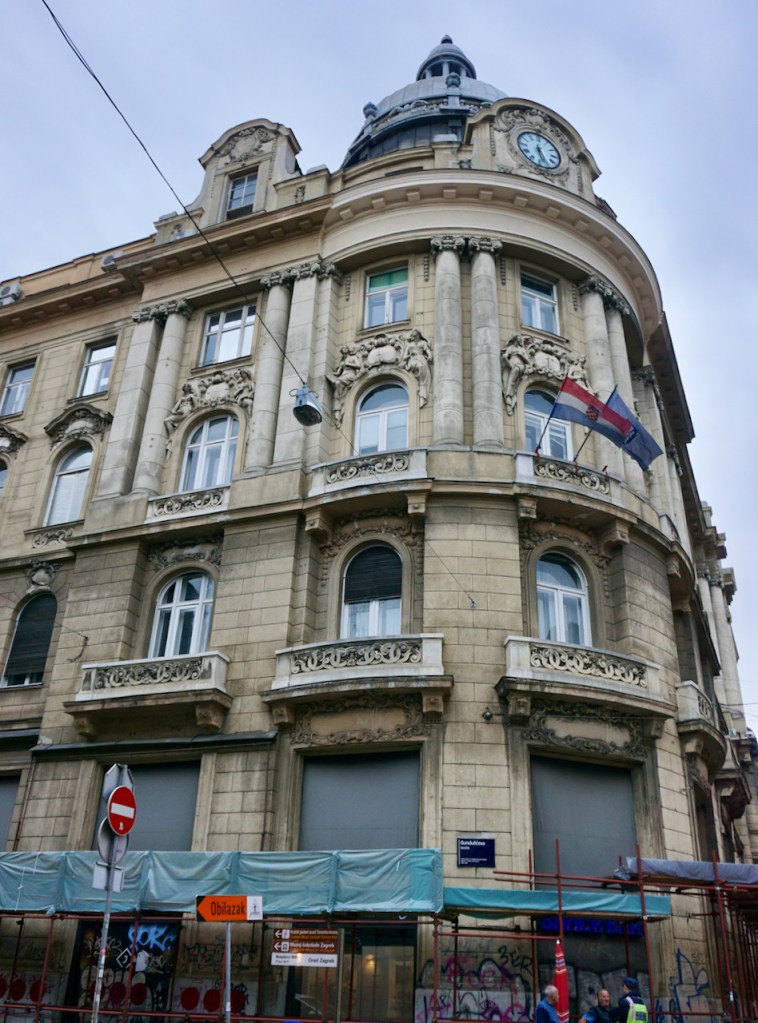
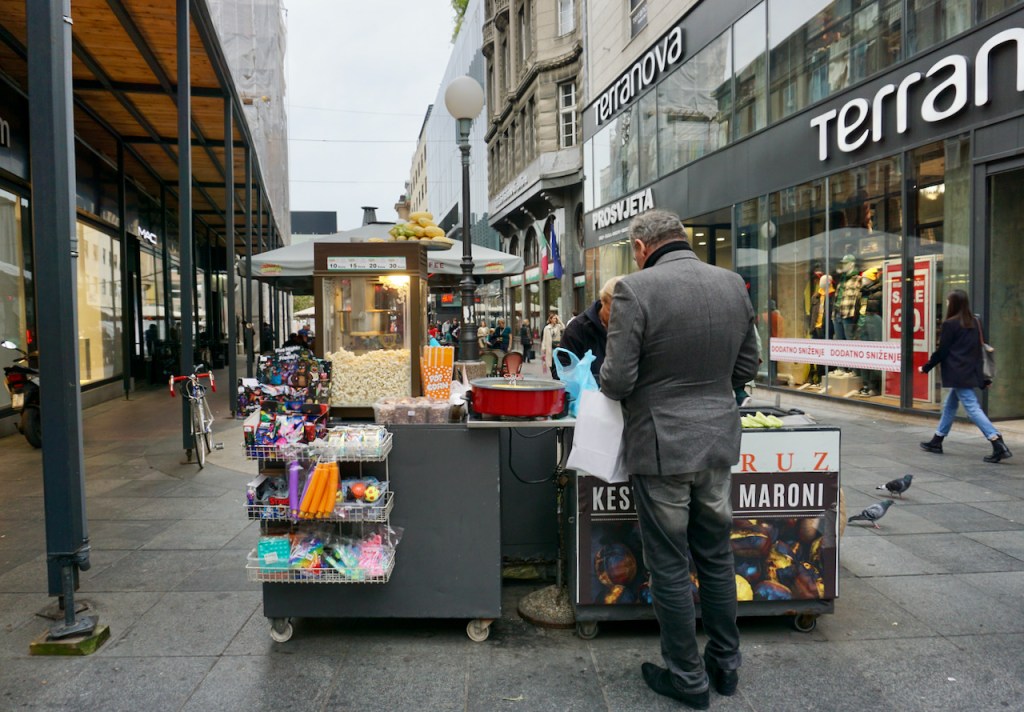
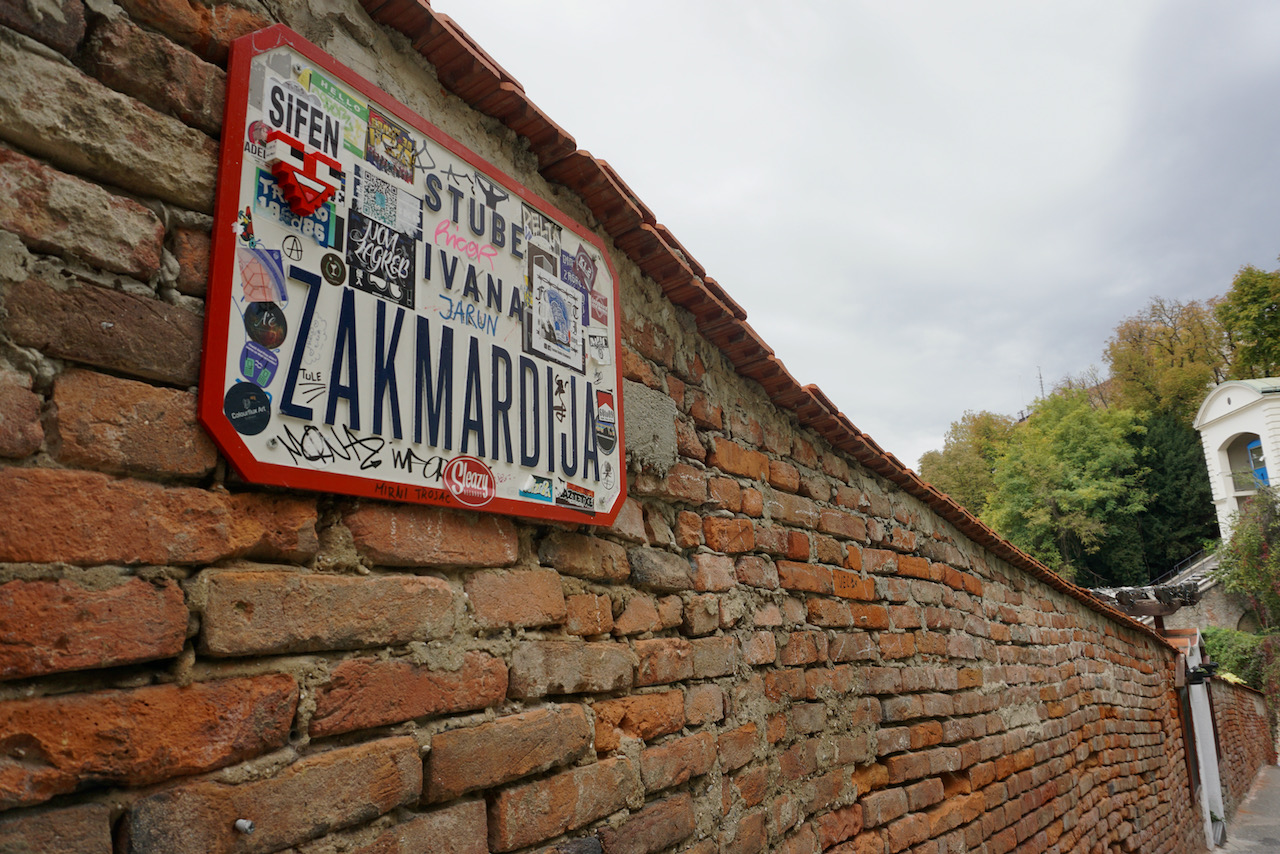
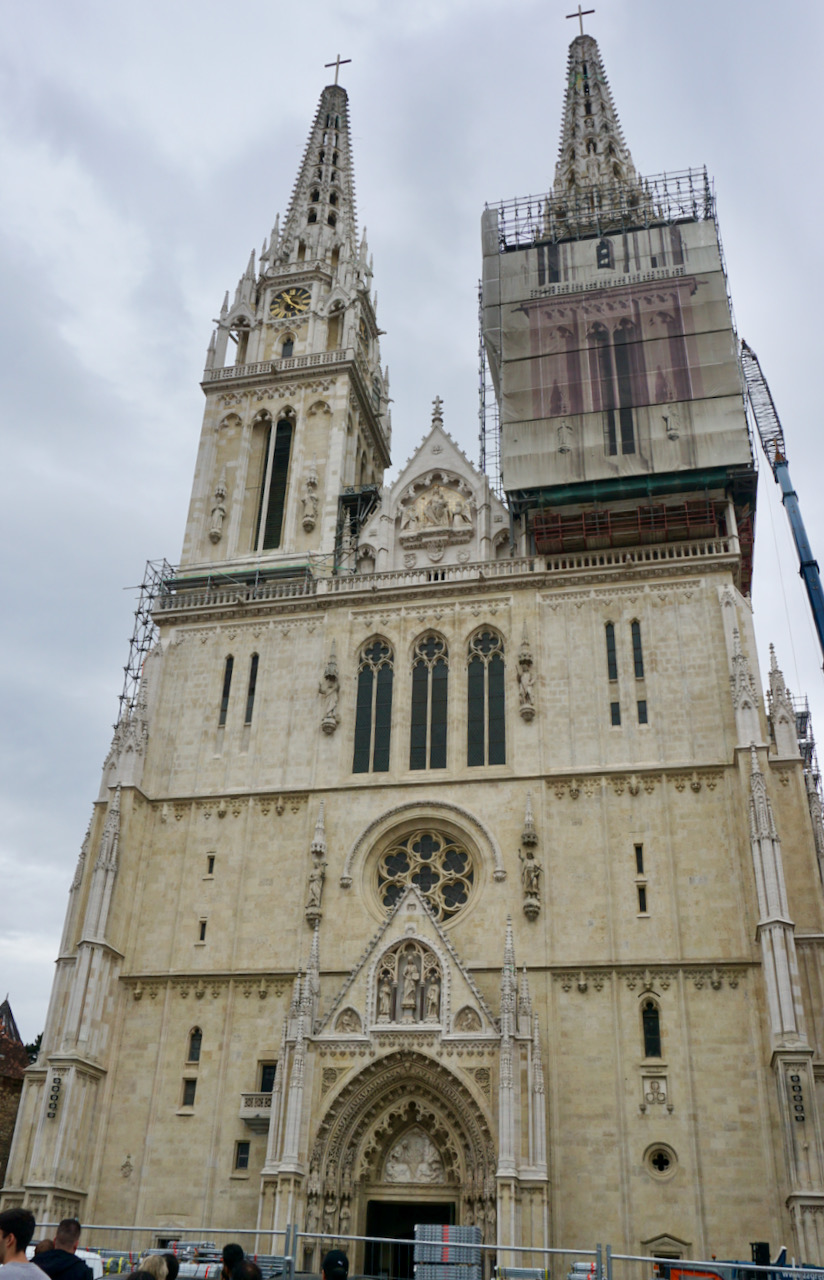
We started our trip in the Croatian capital of Zagreb. We arrived late in the afternoon and managed some walking around before it got dark. The high fashion and style of the locals got my attention, as did the prevalence of street vendors, the ornate architecture, and the general opulence of buildings that show signs of having seen a lot in their time.

And Croatia has seen a lot, a theme that was central to the walking tour we went on the following day. Centuries of wars, including in recent decades, have shaped a land often caught between warring empires, a land that calls itself by a different name, Republika Hrvatska, than that imposed by conquerors. This is a land proud of its people, its history, and its work to move forward into a different era.

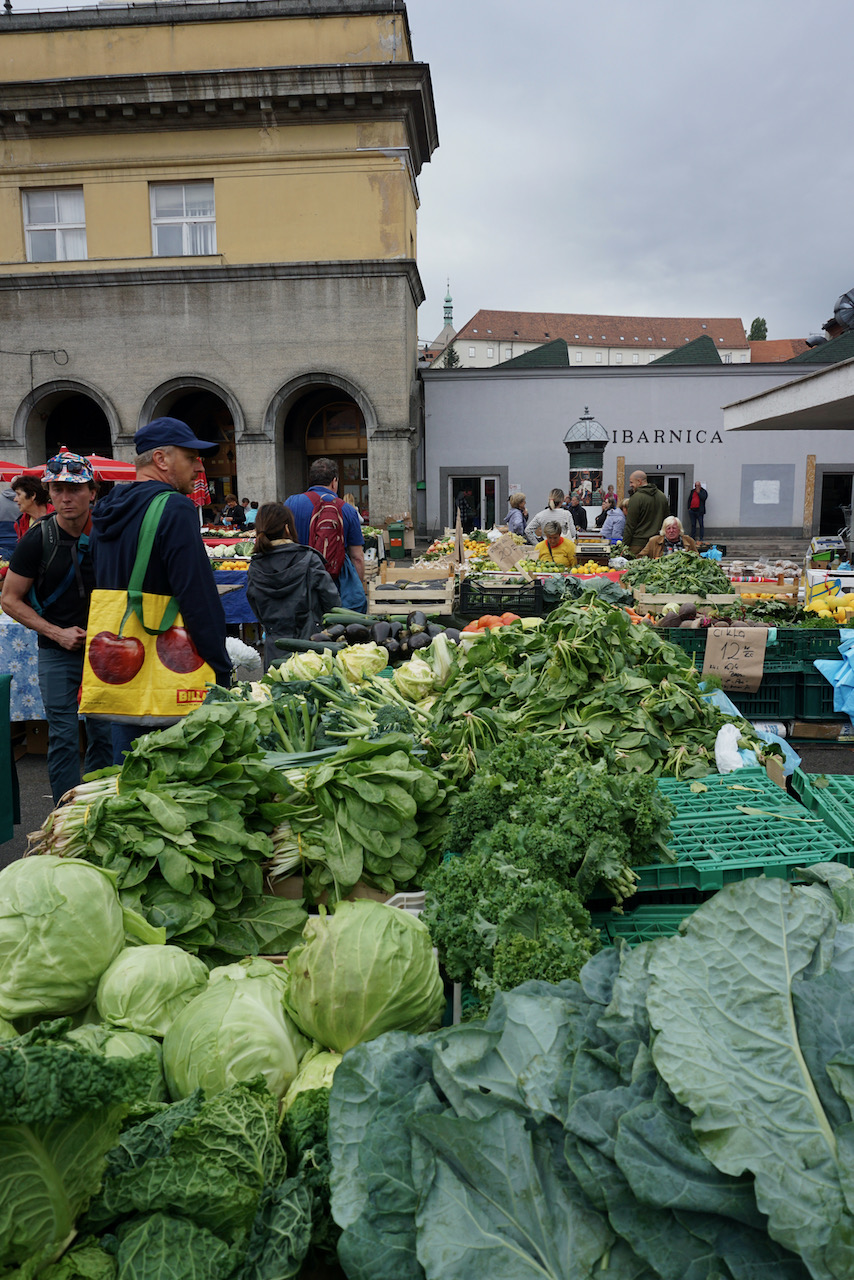
After our tour we headed to my favourite type of urban space – the local market. I have written a lot about markets, which I’ve sought out everywhere I’ve lived and visit whenever possible when travelling. Right in the centre of Zagreb’s old town is Dolac Market, open seven days a week right near Ban Jelačić Square, the main square (of many) in the city. This is where the locals do their shopping, which was evident from the people and activity we observed while strolling through the stalls selling nearly everything one could want. In preparation for a road trip and hike the next day, we bought nuts, fruit, bread, cheese, and burek, all of which we thoroughly enjoyed.

The southern side of Zagreb’s old town is lined with eight parks in a horseshoe and we walked there as long as we could before it started to rain. The amount of green space in the city was really lovely and made for an atmosphere in which, like at markets, people come together. Zagreb and its environs include about a million people, which is nearly a quarter of Croatia’s population. Nevertheless, the city’s squares, markets, and parks made it feel very liveable and like a much smaller town.

After determining that the rain had no intention of stopping, we headed to the Museum of Broken Relationships, which I had read about and about which I remained skeptical until we visited. I will only say that it was charming, thought-provoking, sad, and funny all at once. And highly relatable, for many reasons.

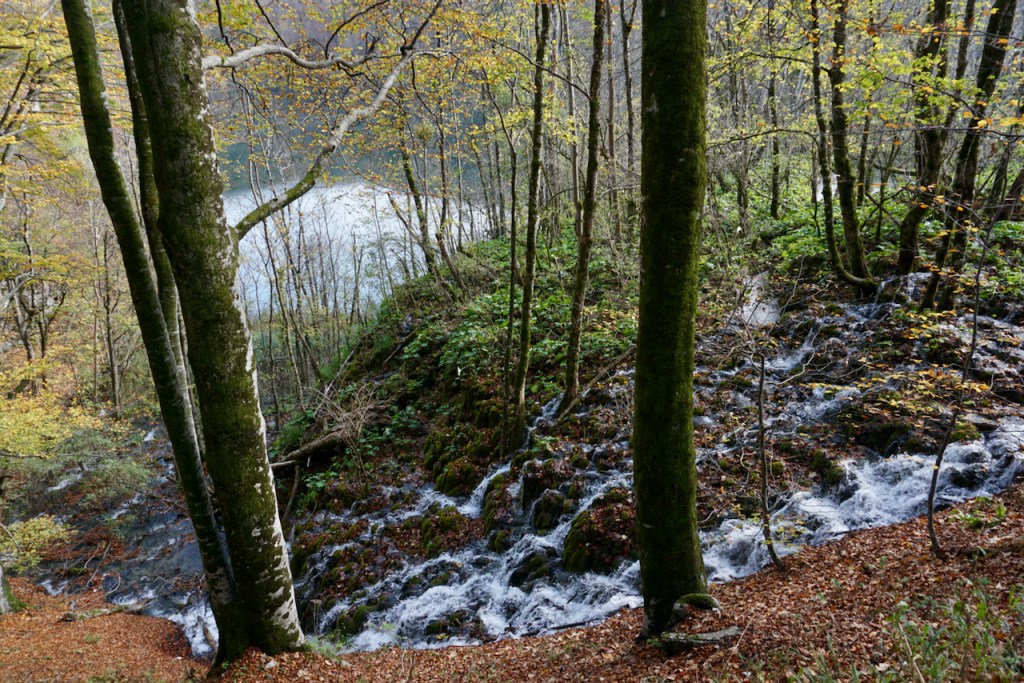
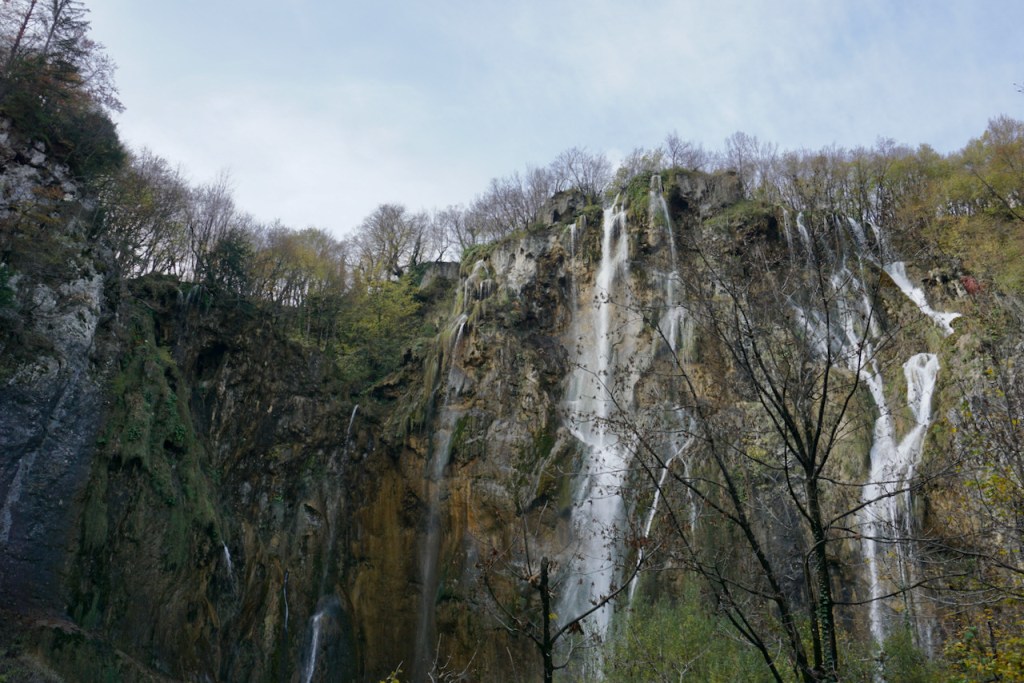
The following morning we picked up our rental car and drove for two hours through scrubby bushes on looming rock to Plitvice Lakes National Park, the oldest and largest of Croatia’s national parks and a UNESCO World Heritage site. (There is a fee to enter the park and during high tourist season, it is recommended to book tickets in advance.) The park is well-signed with trails of different lengths, some of which require a boat ride to continue to the second part of the path. We walked through pine forests, along boardwalks around lakes, up steps, and along winding paths that wrapped around so many waterfalls.

Somehow I wasn’t expecting what Plitvice Lakes National Park had to offer, or perhaps what it felt like to be there. It felt like entering a different world, an oasis separated from other worries and cares. And we were more relaxed getting back into the car after a few hours in nature than we were at the beginning of the day.

The second part of our drive brought us to Split, where we (very excitedly) saw a Dalmatian in Dalmatia and had the opportunity to learn about the history of Croatia in terms of shaping the world’s empires.

Travel Guide: Dresden

Sometimes I like to escape my usual world for a while, just to feel my feet under me again. A beautiful way to do this is out in nature, literally just outside the door, and I do this often. But sometimes I like to go exploring in a different way, the way that reaffirms my confidence in walking independently through the world. I’m not a city girl, as much as I’ve tried to be (much more of a kopi at the hawker girl, a friend aptly said), but I like spending time in cities. I like watching people, I like getting lost, and I like the anonymity that comes with crowded spaces.

And this is how I ended up in Dresden last weekend.

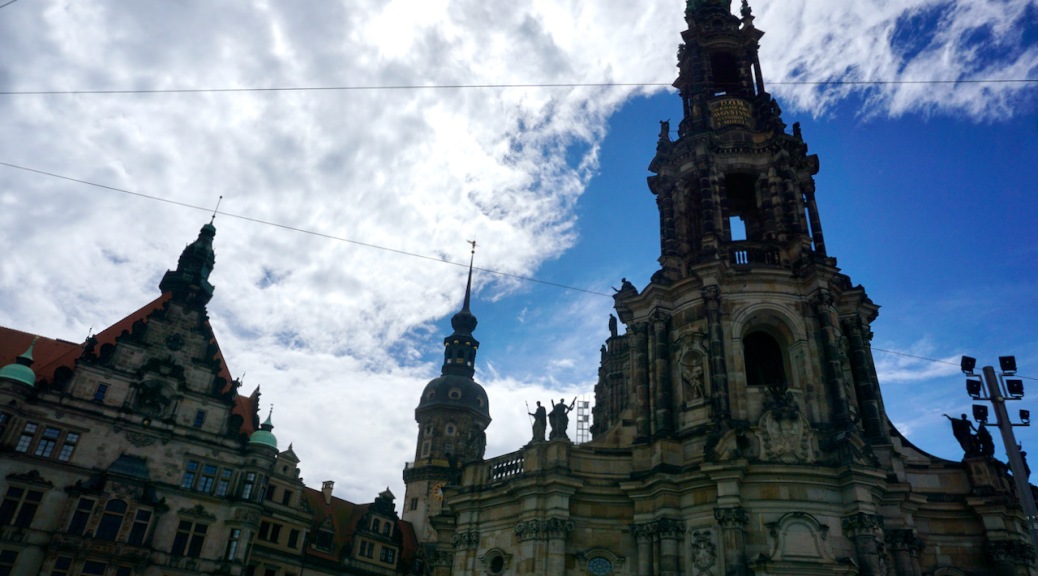
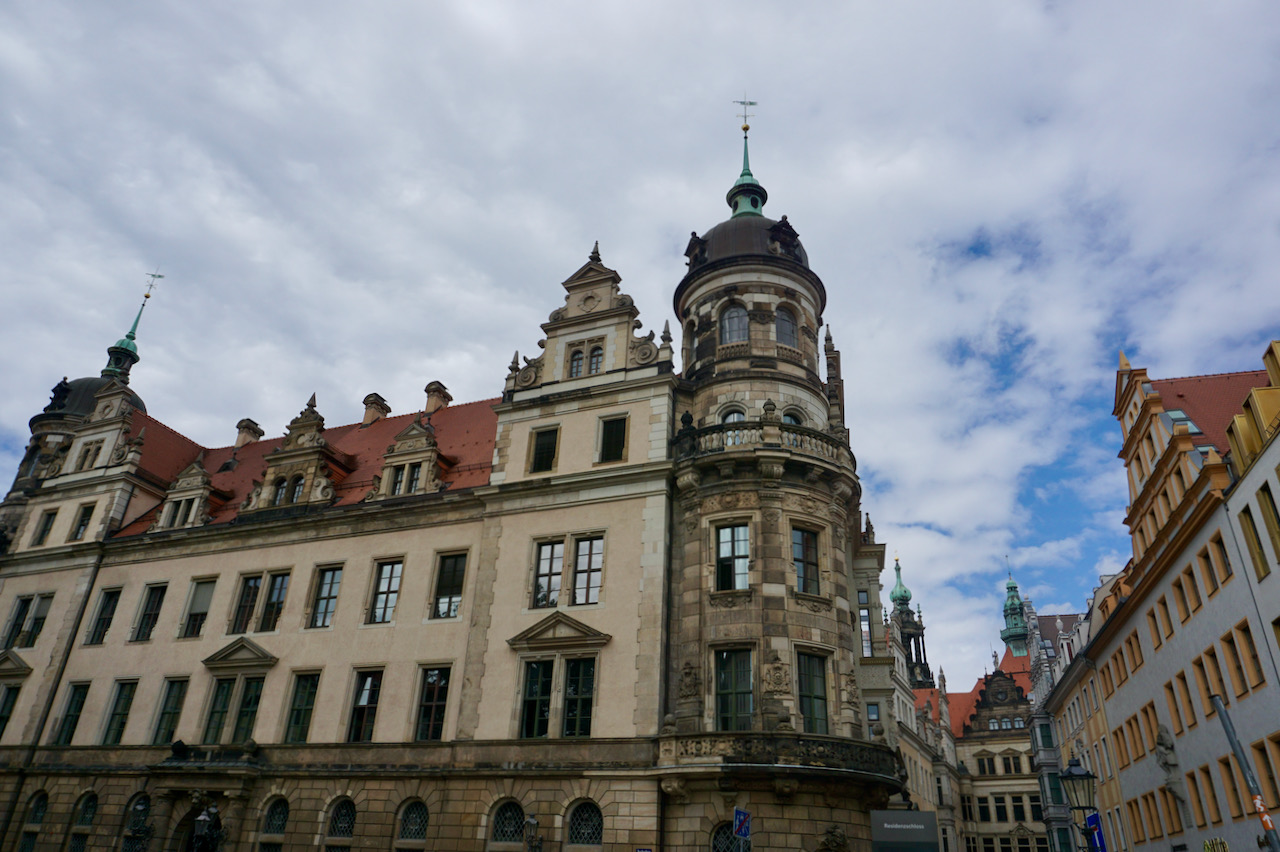
I arrived in the rain and was delighted when the sun came out and kept the rain at bay for the remainder of my visit. My first impressions were everything that comes out of story books. Stone buildings, castles and churches, graceful bridges.

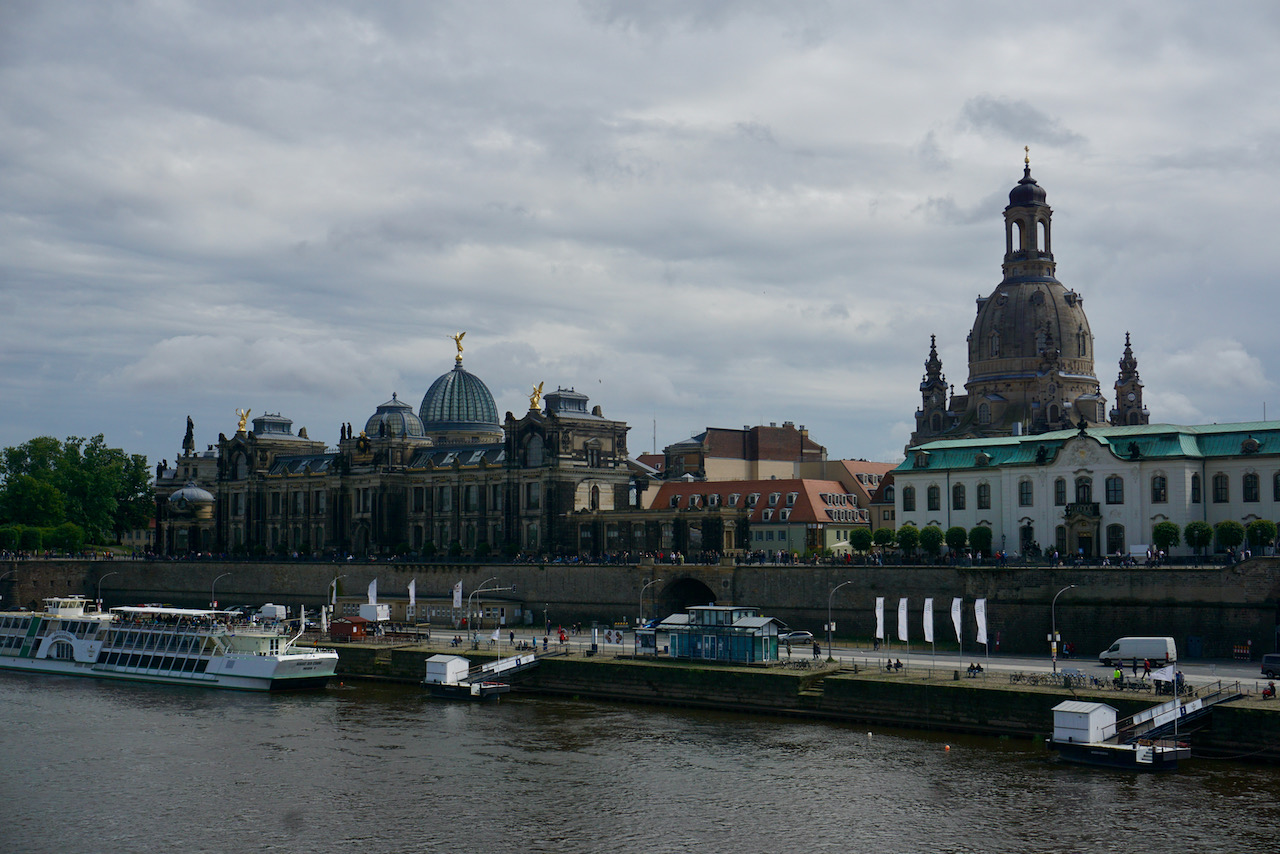
An extraordinary thing about Dresden is that everything has been rebuilt since firebombs destroyed the city in February 1945. This tells us something about what is meaningful to people and, I think, it tells us something about the power of place. These ideas stayed with me as I stopped on Brühlsche Terrasse (Brühl’s Terrace) to look back at the city.

View of Brühlsche Terrasse from across the Elbe

From there I headed for Neustadt, a neighbourhood located across the Elbe from Dresden’s Altstadt, or old town. First, I took a brief walk through Neustädter Markthalle where the vendors sell a variety of local, handmade, and interesting products. Unsurprisingly, the book exchange shelf, a mark of communities everywhere, was my favourite part.

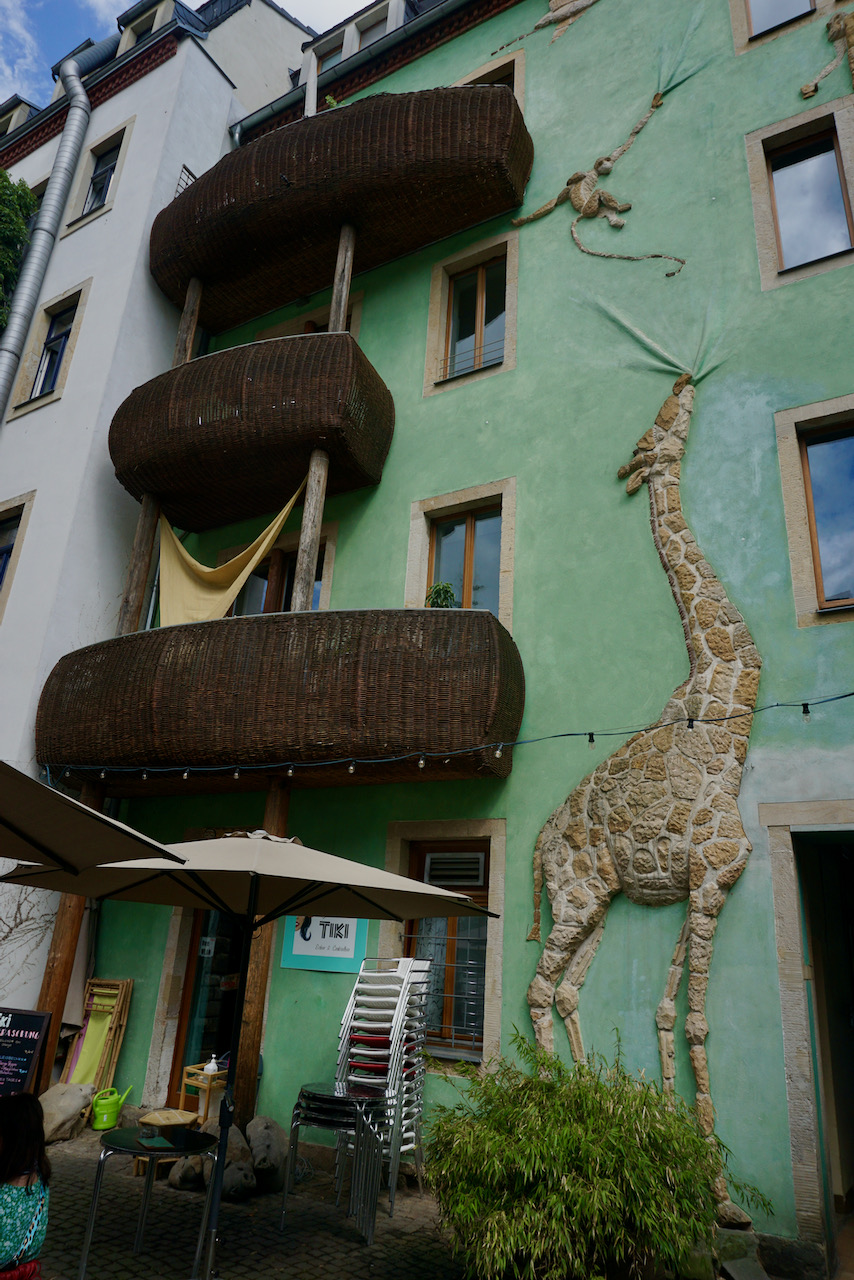
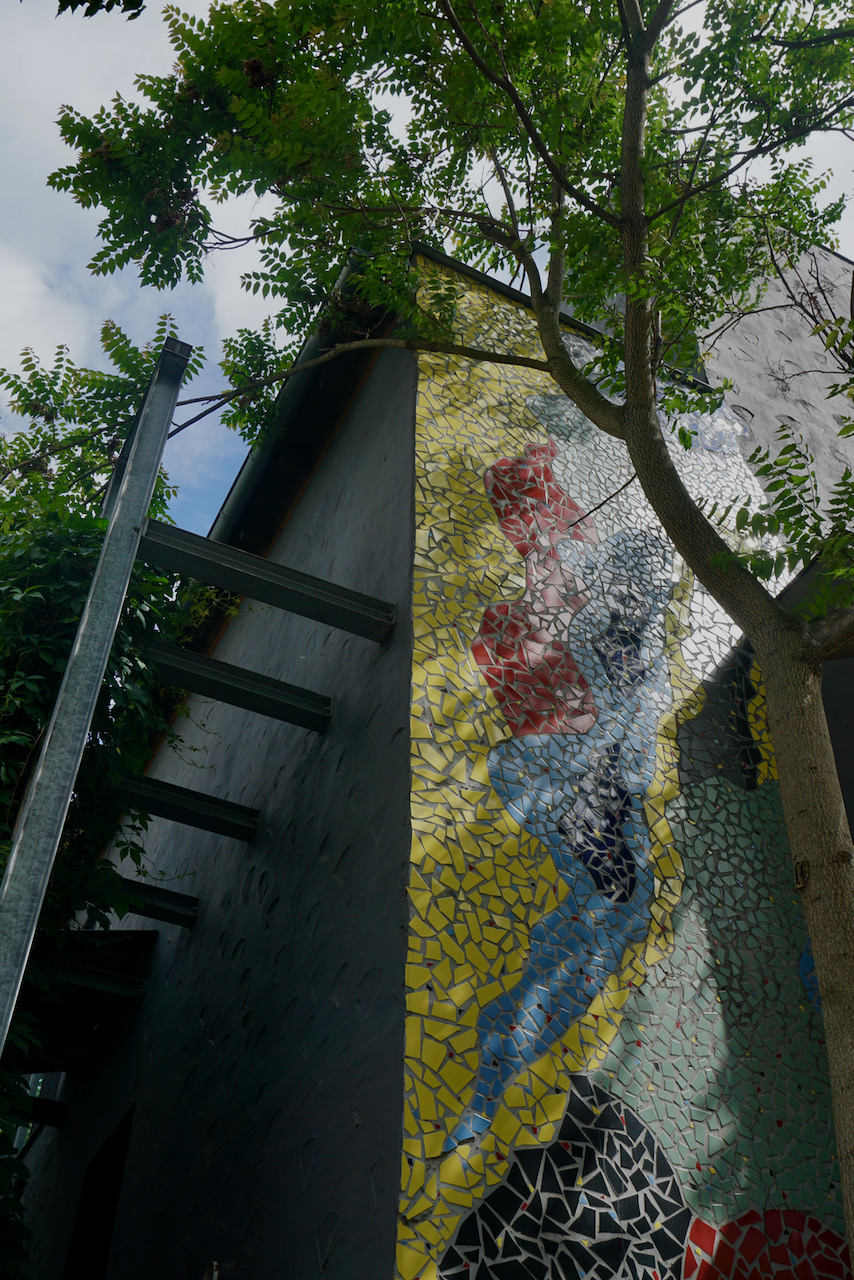
Just around the corner is the Kunsthofpassage, a series of painted courtyards and art galleries dedicated to different themes. I walked into many of the galleries just for a look around and would have loved a seat outside at one of the many cafés, but I was far from the only one with that idea.
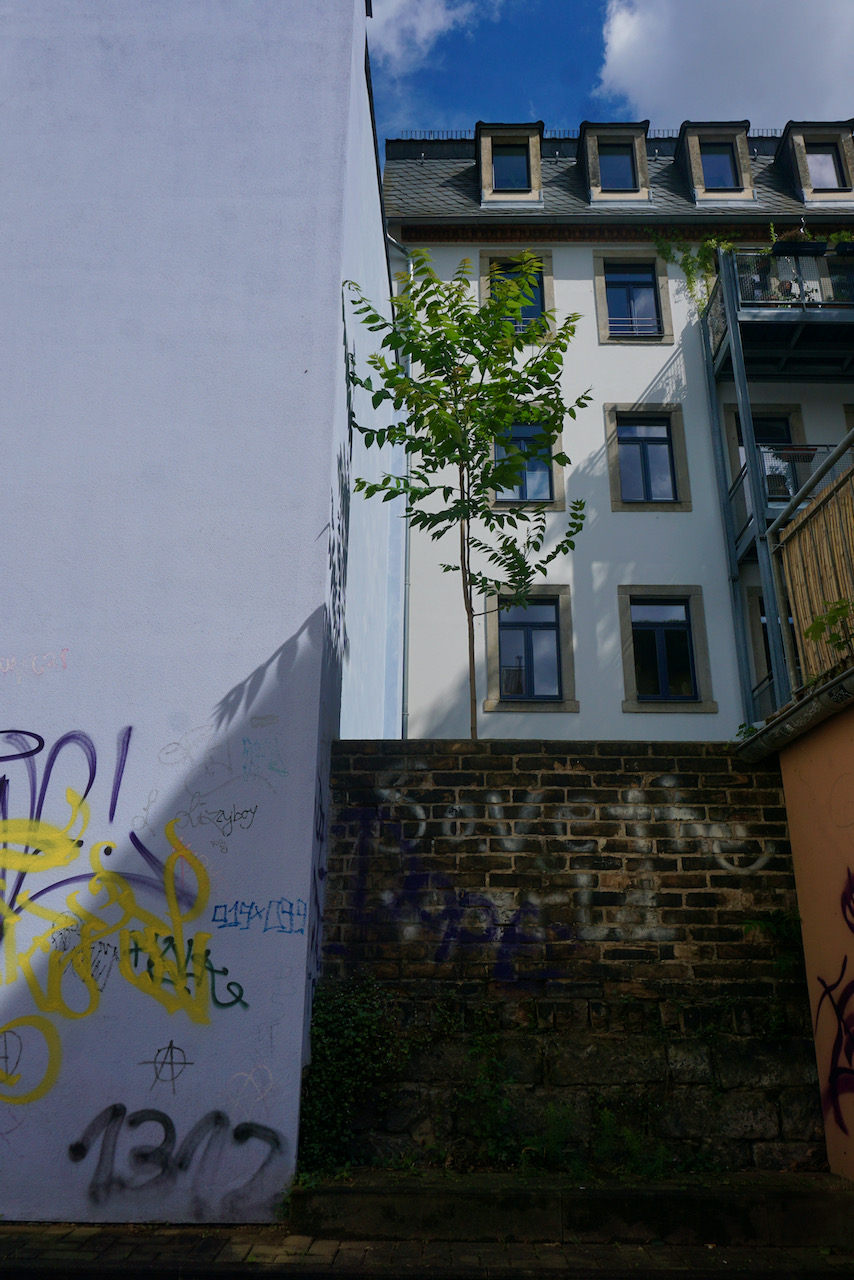
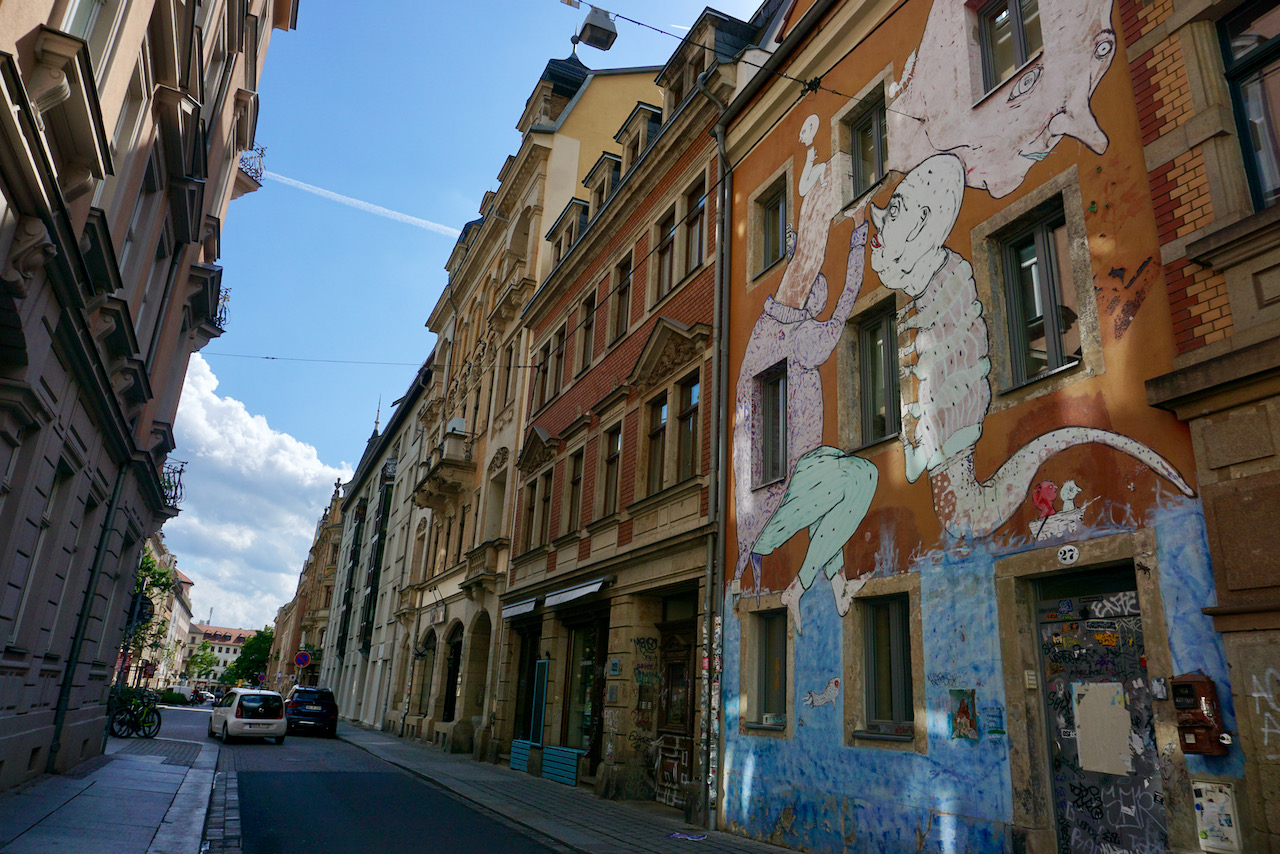
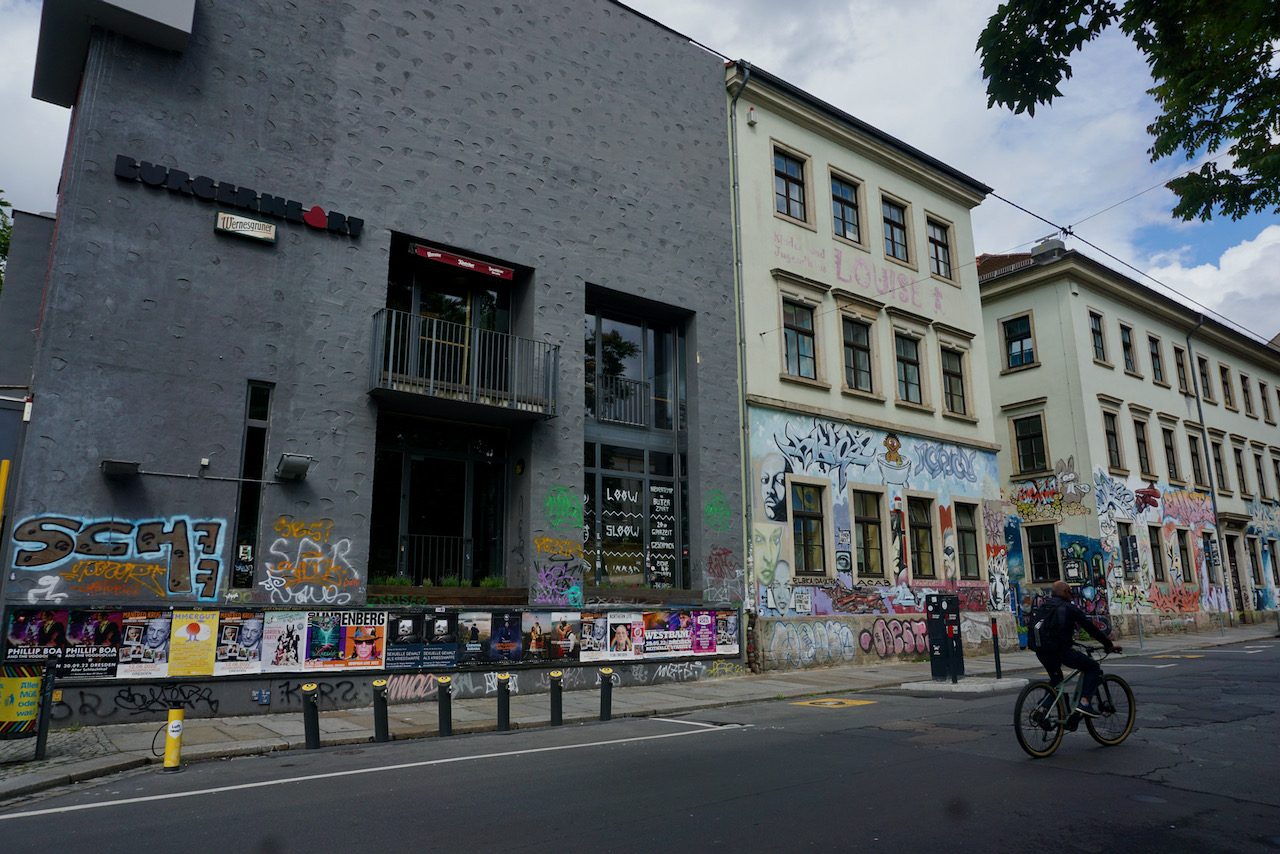
The rest of my afternoon walking through Neustadt was pleasant and the temperature slowly climbed, keeping me wandering down neighborhood streets that grew slowly more lively.
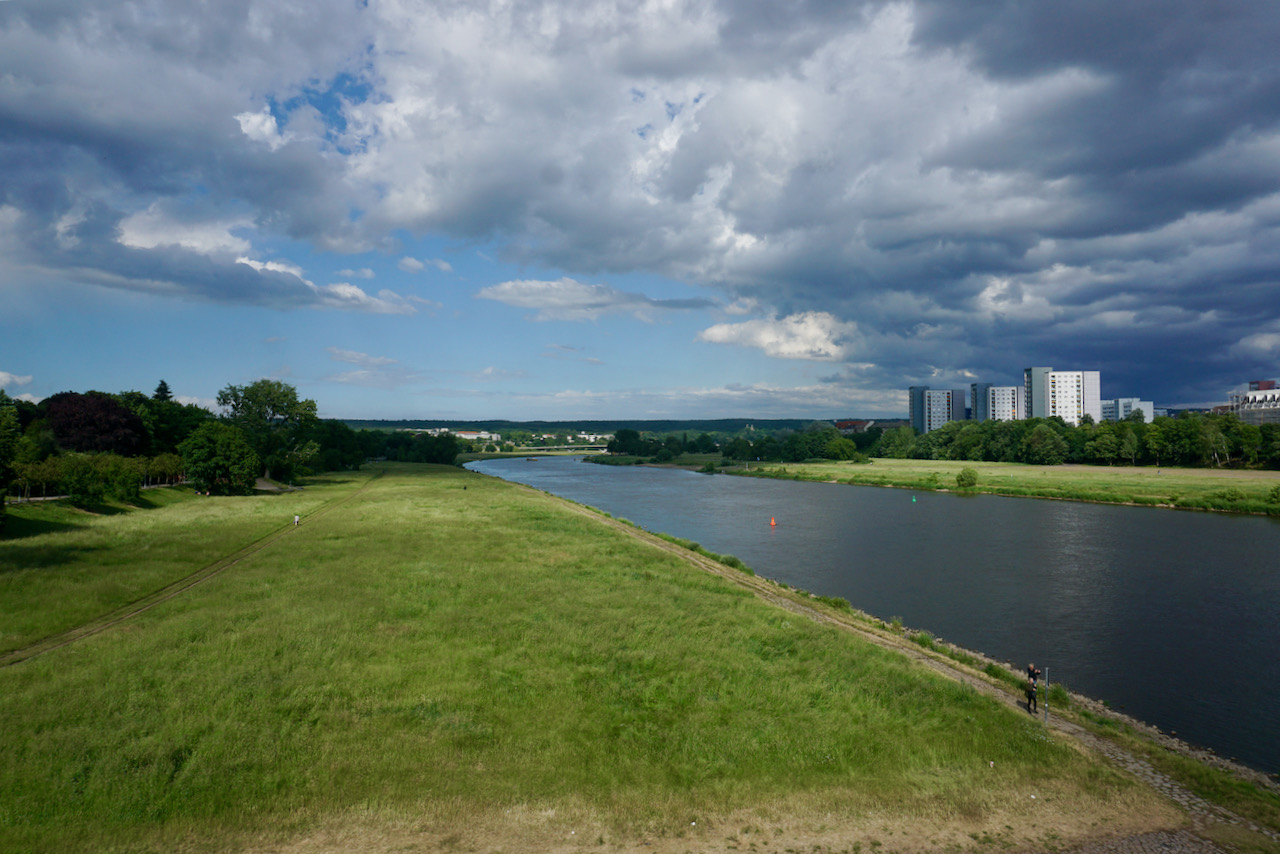
I spent the early evening sitting at a beer garden on the Elbe watching the sun, the water, and people enjoying their time outside. It seemed to me that the river is the soul of Dresden. This is where people play and gather and this, in my eyes, is what makes a place a home.

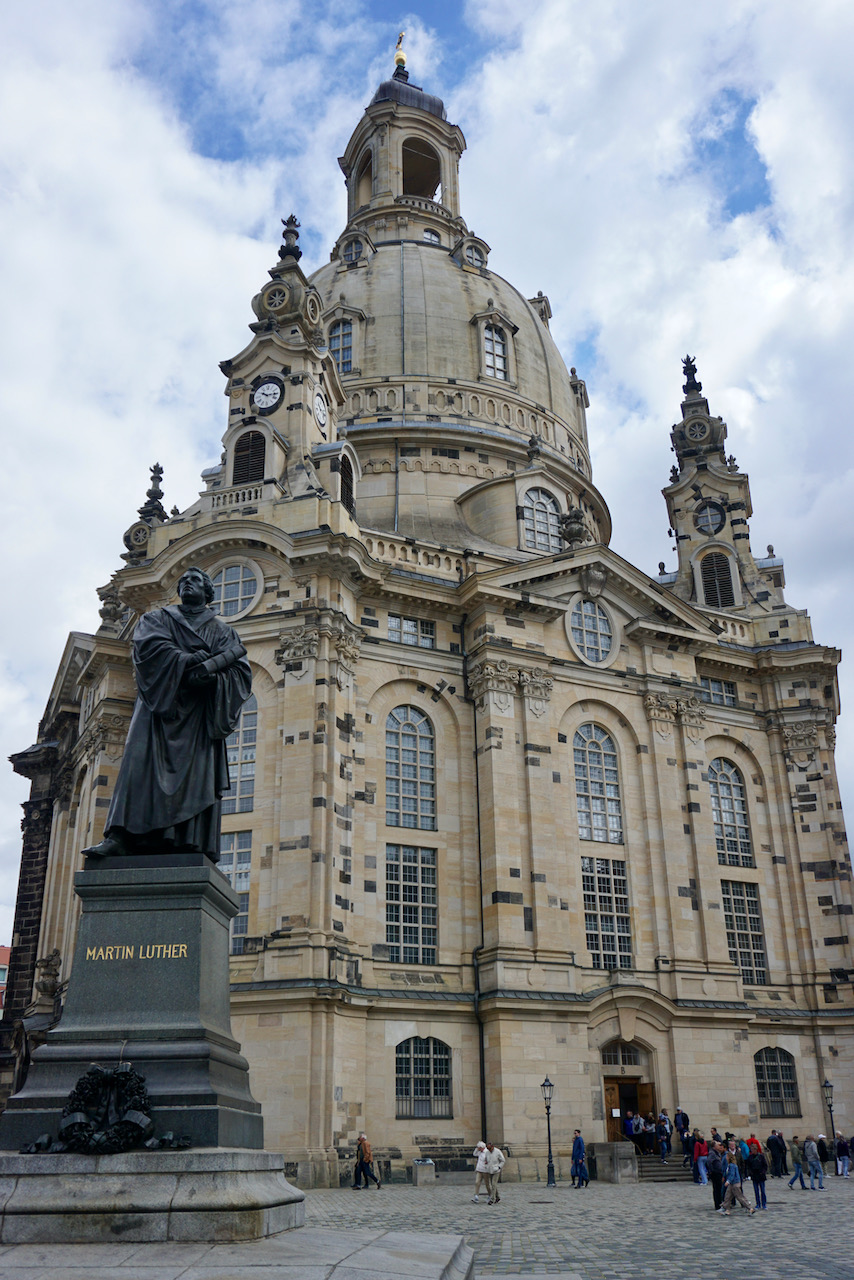
The following morning I stayed on the Altstadt side of the river and joined a walking tour to learn about the history of Dresden. We covered the time period from the Holy Roman Empire through present day, and I was again struck by how old Europe is. I am still tickled by this. Notable stops on the tour included the famous Frauenkirche, which was rebuilt using some of the recovered stone that had been part of a memorial after World War II . . .

. . . and the Fürstenzug, a porcelain tile mural first created in the 1870s that depicts the leaders of Dresden from 1127 until 1904 (the later part was an addition). Interestingly, the tour guide explained, the Fürstenzug survived the war with minimal damage because porcelain is heated to extreme temperatures during its production. As a result, the firebombing that destroyed the city did little damage here. I was intrigued to hear this, as well as to see the rather large club of bearded men (no joke) who were also there for a visit.

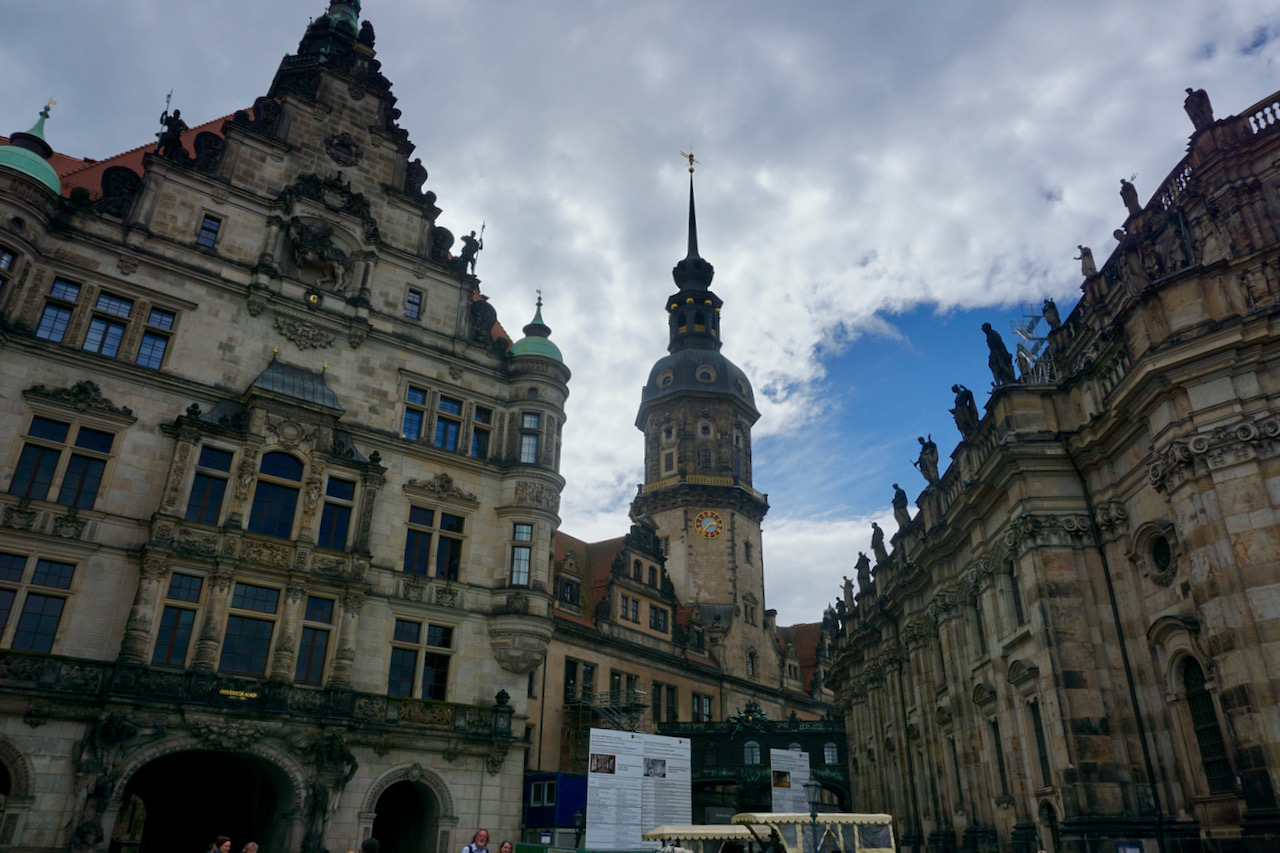
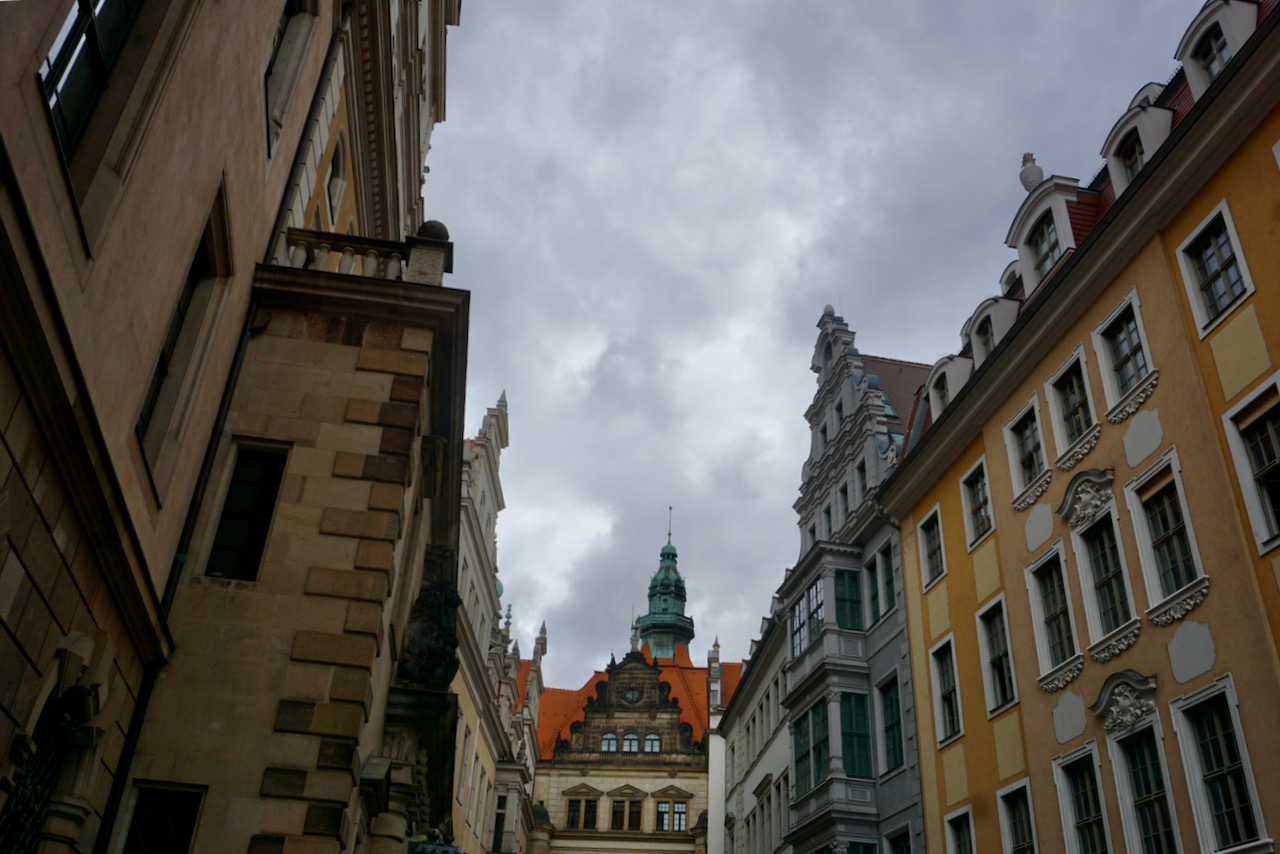
Our guide also took us through the inner courtyard of the Residenzschloss (residence castle) . . .

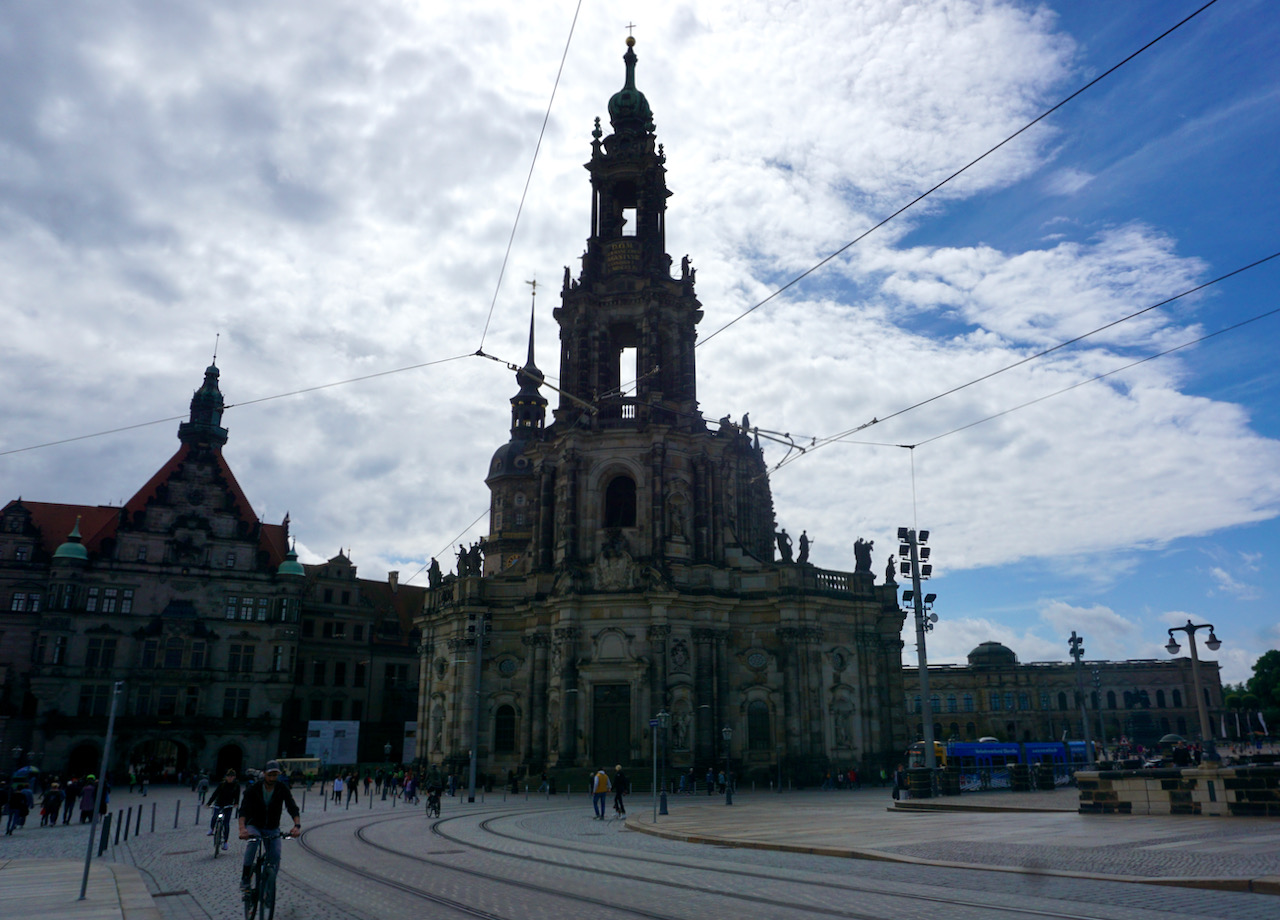
. . . past the Catholic church built by Polish king Augustus the Strong during his role as Elector of Saxony . . .

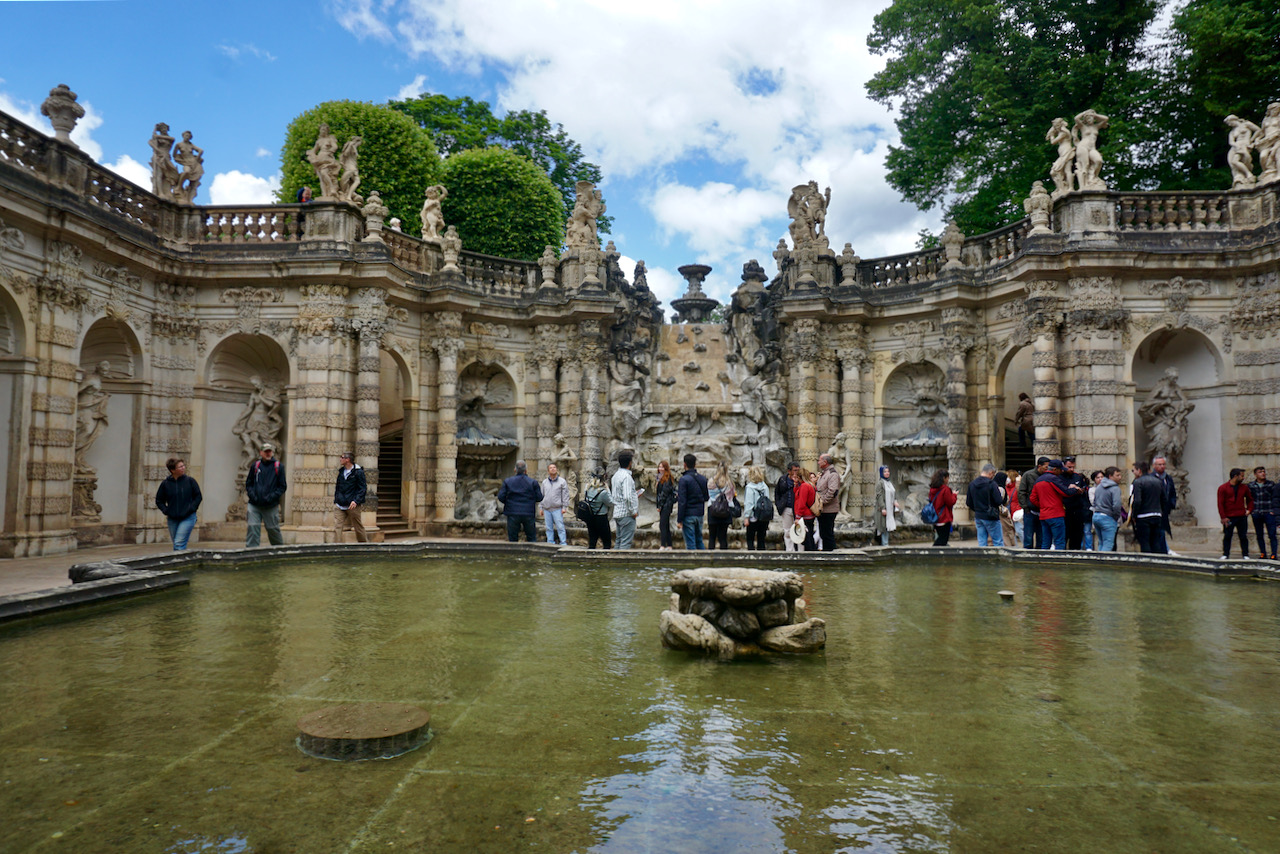
. . . the Zwinger Palace, also built by Augustus the Strong following a visit to Versailles . . .

. . . the Semperoper, Dresden’s opera house . . .

. . . and a mural celebrating life under communism that functioned as a wonderful piece of propaganda during its time.

As usual, there’s a great deal else to find in an old city with architecture that makes me wonder about the people who crafted it. These are stories I would like to hear.

To get out of the high winds that afternoon, I visited the Staatliche Kunstsammlungen Dresden (State Art Collection), which is particularly known for the Grünes Gewölbe, or Green Vault. There is a historic Green Vault and a new Green Vault, which contains stunning treasures housed in a normal museum (which happens to be the Residenzschloss) rather than in a literal historic green vault. I’ve been to many art museums, but never one with such whimsical works from centuries ago. Intricate carvings on everything ranging from a cherry seed to coconut shell, for example, as well as works of porcelain, glass, and ivory. I was also particularly interested in an exhibit on Ottoman military tents, which should give you a sense of the range of treasures this museum has to offer.

The following morning I visited the Stadtmuseum (City Museum), which utilizes a collection of artifacts to told the story of Dresden from its founding through the fall of the Berlin Wall. It was especially interesting to see repurposed military items from the Deutsche Demokratische Republik (German Democratic Republic, or East Germany), such as a bomb casing turned into a stove. The Stadtmuseum also highlighted Dresden’s Jewish history with the open question of how to reckon with history, a question that applies in so many societies in our world today.

By the time I needed to catch a train, I felt content with my solitude and comfortable enough with my surroundings to no longer feel lost. And by the time I returned, remembering my pounding heart as I arrived by train almost a year ago, I was fully glad to be back. It’s nice to go away for a while, and part of going away means coming home.