Tag Archives: Nature

Travel Guide: Surabaya

I turned 25 at the beginning of January and Mitch took me to Surabaya, on the Indonesian island Java, this weekend for my present! This was a very short trip for me. I landed at 8:45pm Friday night and flew out at 12:10pm Sunday afternoon. My flight was originally scheduled to leave at 5pm so I was supposed to have all of Sunday in Surabaya, but AirAsia cancelled my flight and moved me to the earlier one. Ah well, such is life and such is travelling on discount airlines. Nevertheless, we had a wonderful day on Saturday!

Indonesia is laughably cheap, which should also tell you how poor of a country it is. As a result, though, we stayed in a gorgeous hotel with a stunning pool, ate decadent food, and hired a driver to take us up to Mount Bromo, an extinct volcano. Seeing the volcano was the reason Mitch chose Surabaya as the place to visit.

Shots of our beautiful hotel in which we had a king-size bed, delicious cocktails, and ordered room service as a snack:

Hotel lobby Hotel exterior while they were filling the pool Rooms

Unfortunately, I saw basically nothing of Surabaya itself. From sitting in traffic, I can tell you that it’s very dense and not walkable, at least not where we were. The driver on Saturday told us that West Surabaya is the expat area with the international school, so maybe it would have been different over there. We did see lots of cool graffiti, though! This is the only example of which I managed to snap a decent picture from the car:
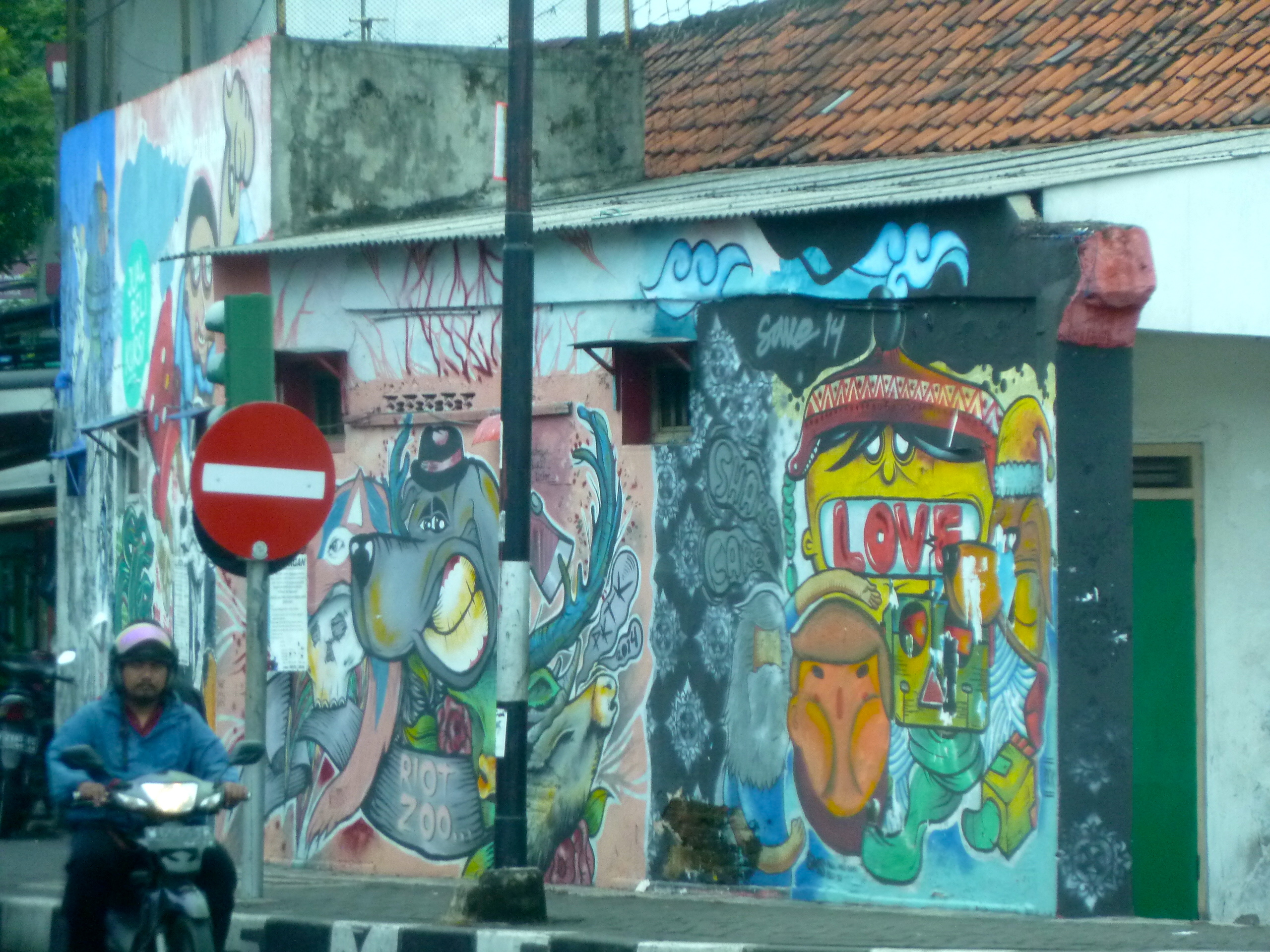
Graffiti

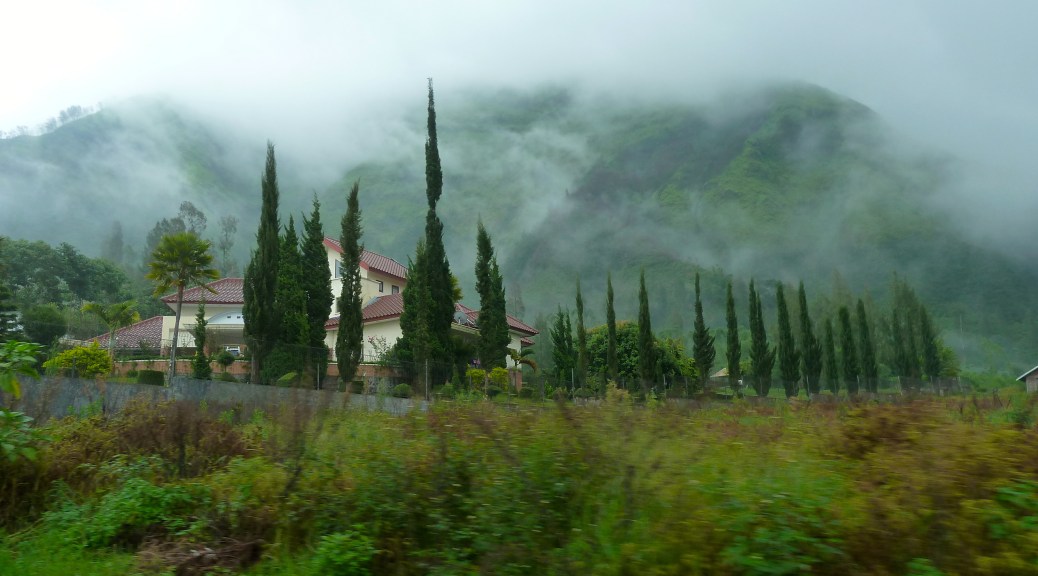
Saturday was a dreary day, as all of the photos suggest, but the rain didn’t start until about 3 hours into the 3.5-hour journey up to see Mount Bromo, located on the Tengger Caldera. We had been warned that it was not a good day to try to see Bromo, but that’s what we get for traveling during the rainy season. The best time of day is supposed to be sunrise and even there there’s a 50% chance of clouds and rain. We figured we’d make do with what we had to work with and I’m really glad we did! Even though the drive was very long, we got to see a lot of Java that we wouldn’t have seen otherwise. The diver was very knowledgable and friendly, making for a pleasant and educational journey. He drove past the zoo so we could see the iconic statue of an intertwined shark (sura) and crocodile (baya). Who knew?! All of these photos were taken from a moving car, so they’re not the best. Sorry!

Mosque
One of the MANY mosques we passed on the way

P1040984

Motorcycles
Surabaya has even more motorcycles than anywhere we’ve been in Malaysia, which is saying a lot. Except for the guy in the front of this photo, all other adults we saw were actually wearing helmets! We even saw a couple kids in helmets, which was rather surprising.

Along the way, the driver pointed out a community that had been utterly destroyed by mudslides. No one has been able to figure out how to stop the mud, so now it goes through pipes into a river that leads to the ocean. We saw flattened stone houses, a ruined mosque, and a new road as a result.

Mud flowing into the river Muddy river Canoe

We drove through little villages and towns that became increasingly sparse and increasingly agricultural as we got further from Surabaya. The terrain reminded me a lot of our trip to Cameron Highlands. Different trees, though.

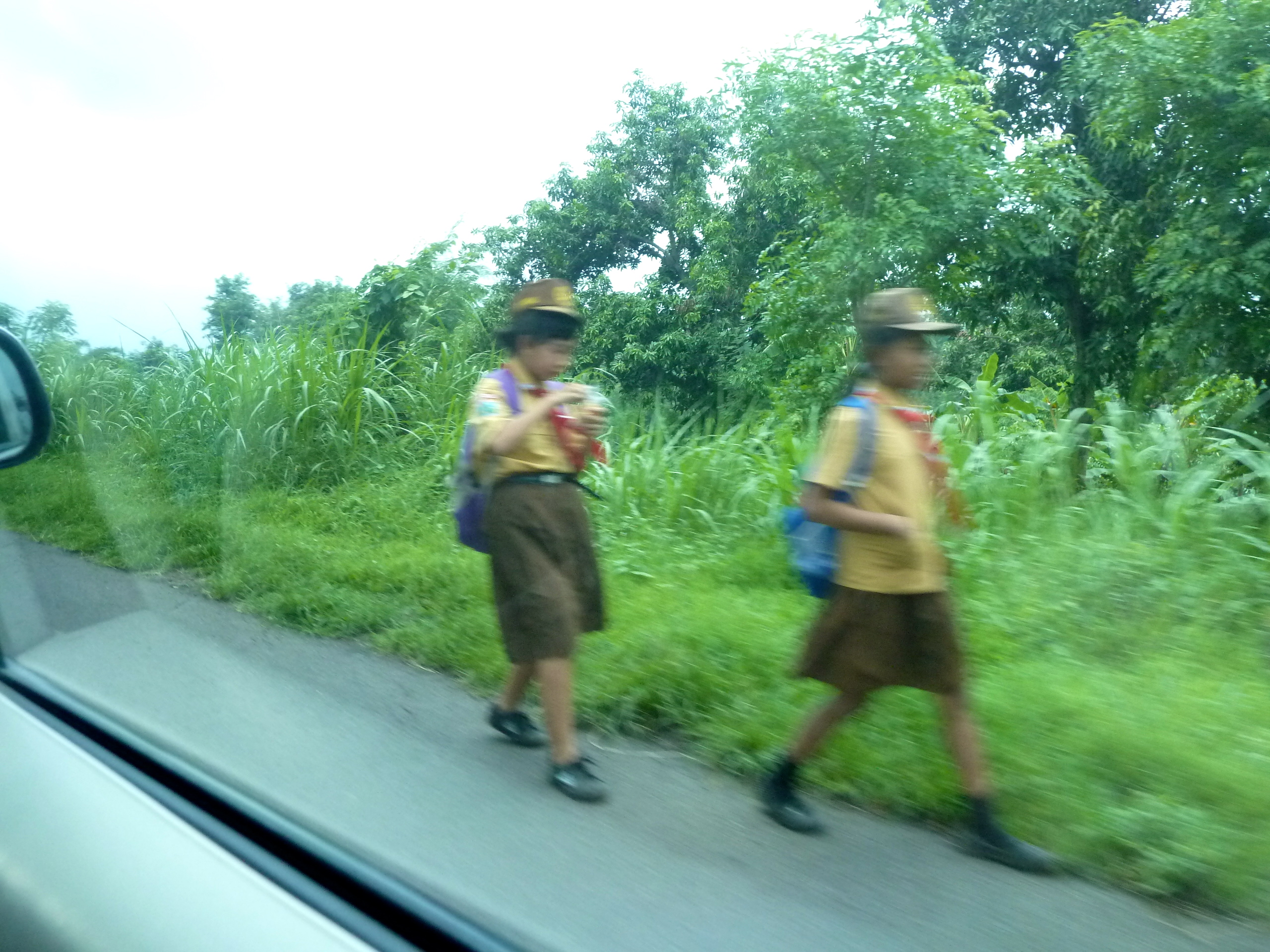
The kids walking home from school in their uniforms made me smile. Kids in uniforms are just so adorable.P1050006
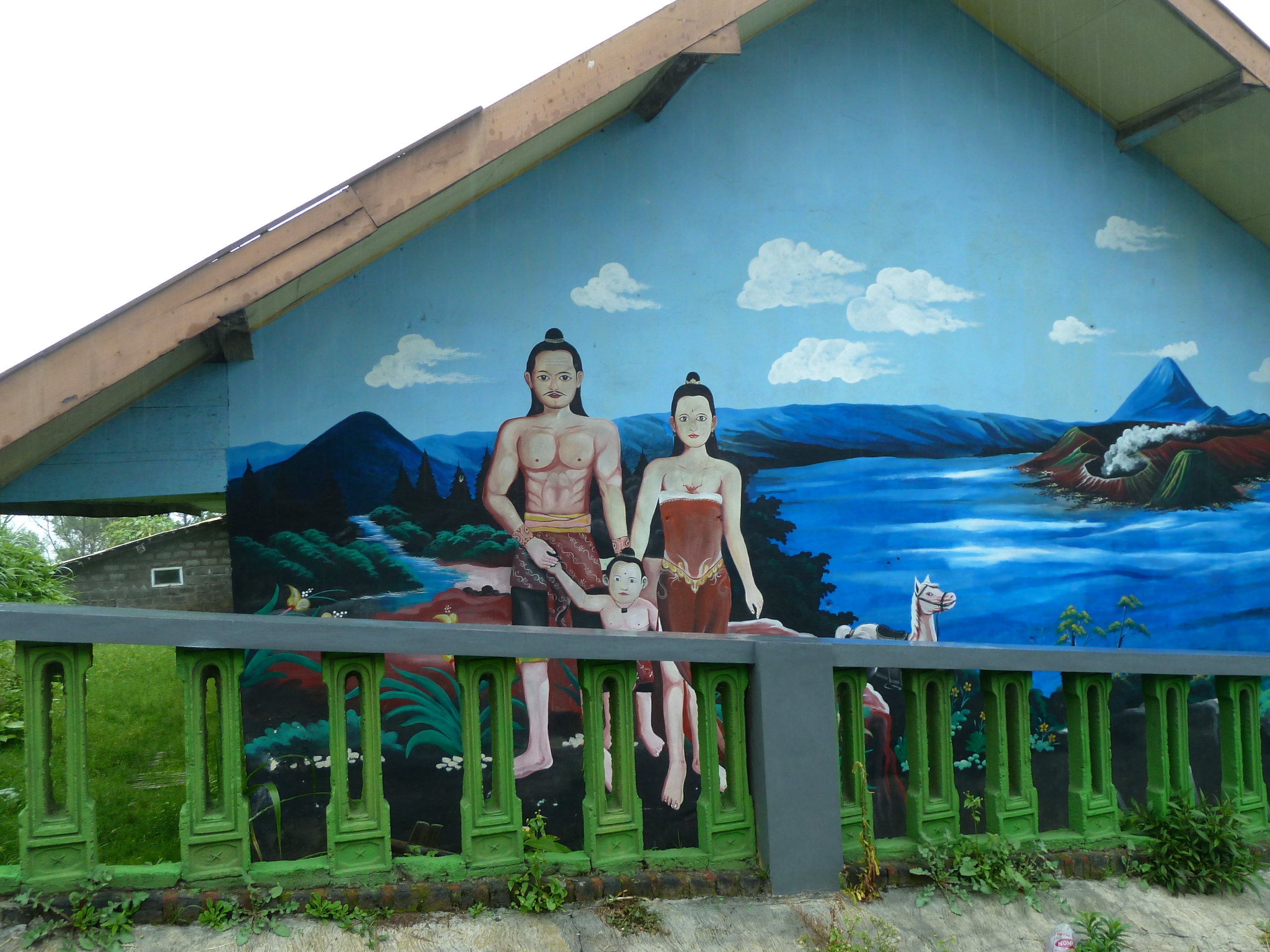
Painted building that we passed:

Traditional Indonesia

Mount Bromo is easily recognizable because it has no top. We were able to see it from one of the two lookout points on the caldera. Had the weather cooperated, we would have taken a Jeep closer to the mountain and gone exploring around and up it, but we had to be contact with gazing through the clouds and rain. Despite those conditions, it was an impressive sight:

Mount Bromo Mount Bromo Again And . . . Mount Bromo!

Nature is really amazing and rather terrifying if you think about it. My favorite photo from the whole adventure was this one because I think it really captures the awesomeness (and I mean that in the literal sense of the word) of Mother Nature and whoever helps her:

P1050014

In addition to our volcanic expedition on Saturday, Mitch found an incredible Japanese restaurant inside the Shangri-La Hotel, which is probably the fanciest hotel I’ve ever been in. Our sushi, vegetable, and fish selections were excellent. There were French and Italian restaurants inside, too, and our dessert at the Italian place consisted of red wine and crème brûlée over which the server poured flaming rum. Wow!

Every so often I re-realize how wonderful it is that Mitch and I are traveling and going to new places and trying new things. We really are lucky. Thanks for such a unique birthday gift, Mitch!

Update: Mitch read this post after I published it and made a couple embarrassing corrections. Firstly, Mount Bromo is an active volcano. Secondly, the volcano in the foreground of my photos is not actually Mount Bromo; Mount Bromo is the one to the left with the white cloud-like smoke floating above it. I think I honestly cut it out of most of my photos while I was taking them, but I swear I saw it! I just didn’t know what I was seeing, apparently. Oops . . .
Travel Guide: Ipoh and Cameron Highlands

With the aid of the trusty Lonely Planet guidebook that a friend left me when she fled to Australia and the sheer willpower of our dependable Kancil, known as Daisy, Mitch and I embarked on a road trip north to Ipoh and east to Cameron highlands.

Yes, we took this baby on a road trip up mountains. No, she did not survive the journey unscathed. More on that later.

For the geographically challenged, here’s a map of where we went:

It did not take 4 hours and 37 minutes. That is a lie.
It did not take 4 hours and 37 minutes. That is a lie. It took much, much longer.

If you’ve never travelled overland in Malaysia before, expect loads of traffic all the time for no apparent reason; lane closures that are unmarked until the moment the lane closes, leading to more traffic, speed limits of 110km/h that really mean cars are driving anywhere from 70-130km/h, and lots of trucks. As Mitch and I learned, stopping at a rest area is a bad idea. They are very crowded and there’s not nearly enough parking. I’m not sure if that’s because we were travelling over a holiday week/weekend, but that’s the experience we had. It honestly would have been faster to drive into a town to use the washroom and buy coffee, but we didn’t know that. So that slowed us down a little, too. Finally, if you’re driving in Malaysia, be aware of the demands you will put on your vehicle. Our Kancil has a 660 cc engine, which means it cannot go very fast. 90 is pushing it. 110 is nearly impossible. It also doesn’t accelerate, which is really scary when there are larger vehicles and motorcycles whizzing past in all directions at unthinkable speeds.. All that said, we got there and back in one piece. Well, Mitch and I did. Daisy needed a new battery after we left the lights on overnight. Oops.

Our trip started Saturday late morning and we planned to stop in Ipoh to wander around Old Town and grab some food. It took us a lot longer to get to Ipoh than we’d hoped or anticipated, but we did stop to wander, eat, and stretch our legs. Ipoh’s Old Town is a cluster of streets full of buildings with colonial-style architecture. There’s also a wonderful little hipster plaza where we saw three couples taking wedding pictures!

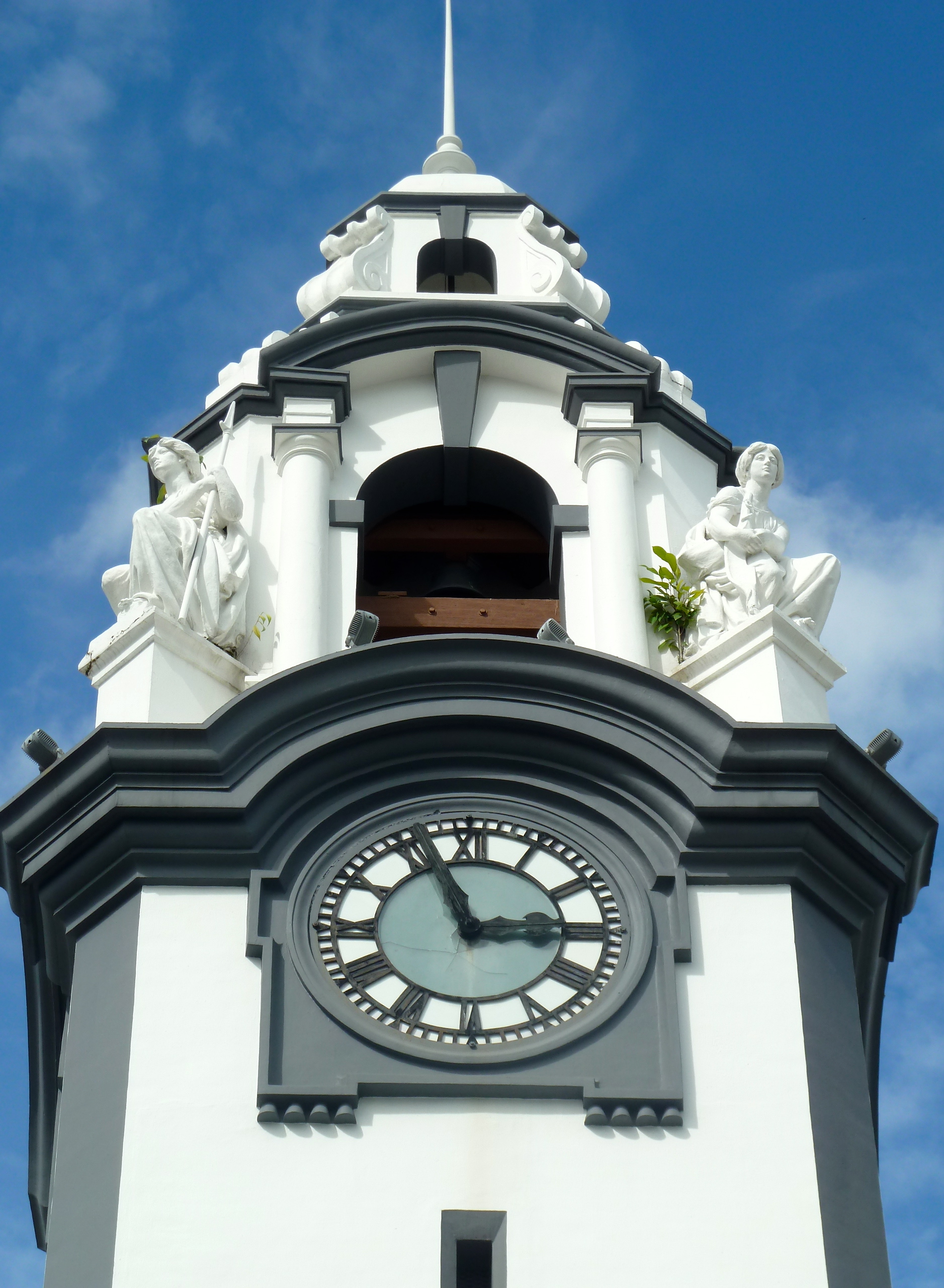
This is Ipoh’s Birch Memorial Clock Tower, dedicated to James WW Birch, its first British resident. There are figures painted on all four sides and we’re quite curious about who was rubbed out:

Missing People P1040552 P1040553

I really enjoyed wandering around the hipster corner, and not only because I got a real salad at a great restaurant! The shops were adorable and a few had Christmas displays and Christmas crafts for sale. The whole place was basically restored buildings built in, around, and incorporating trees. There was a public toilet behind the wall of books, which is a strange place for a toilet. We also got a kick out of the rather ancient Chubb safe.

Ipoh, like Penang, is filled with street art. At least one artist who colored George Town in Penang also had a hand in painting Ipoh. We didn’t see nearly as many murals as we did in Penang because we didn’t spend as much time there, but the ones we saw were charming and the art itself was really impressive.

We left Ipoh in the late afternoon and began the ascent to Cameron Highlands, which is about 5000m above sea level. Everyone told us to avoid the back route and avoid travelling in the dark. So what did we do? We took the back route and we arrived in the dark. It was honestly an accident. We were perhaps too reliant on our GPS and didn’t check the route map before following blindly. I was terrified and not driving; Mitch was very calm and driving, so that worked out. He got loads of practice shifting, too!

As we learned in the morning when we could see, Tanah Rata is an adorable little town full of steamboat restaurants (the local preference) and Indian restaurants (my preference). There were also a number of restaurants catering to Western tourists and even a well-hidden Starbucks which, I am proud to say, we only visited once.

Tanah Rata
Tanah Rata

We were surprised to see a convent on a hill overlooking the town, but it was actually a comforting sight. Three years at OLM has had quite the influence on my feelings towards religious houses!

Convent in Tanah Rata

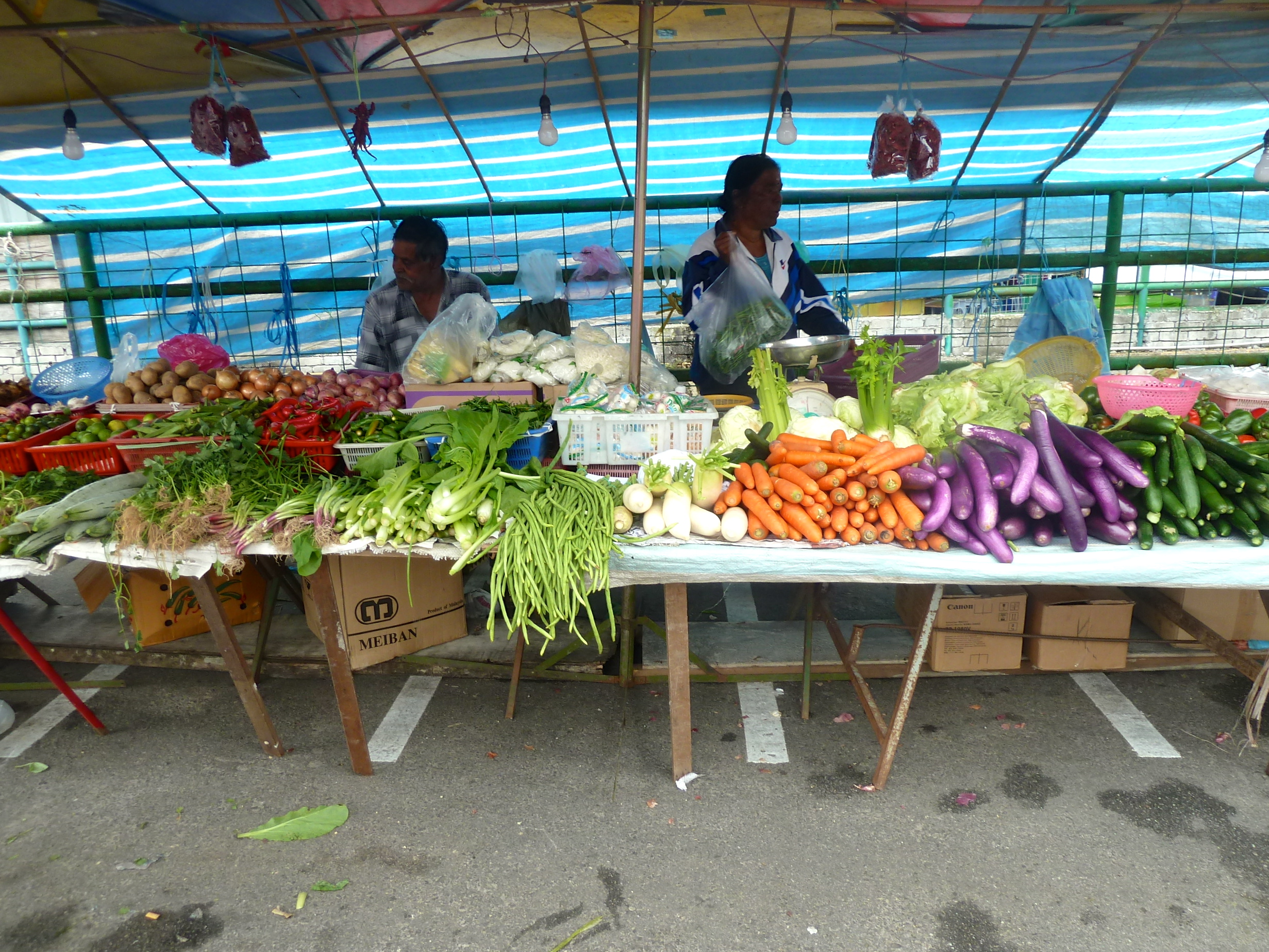
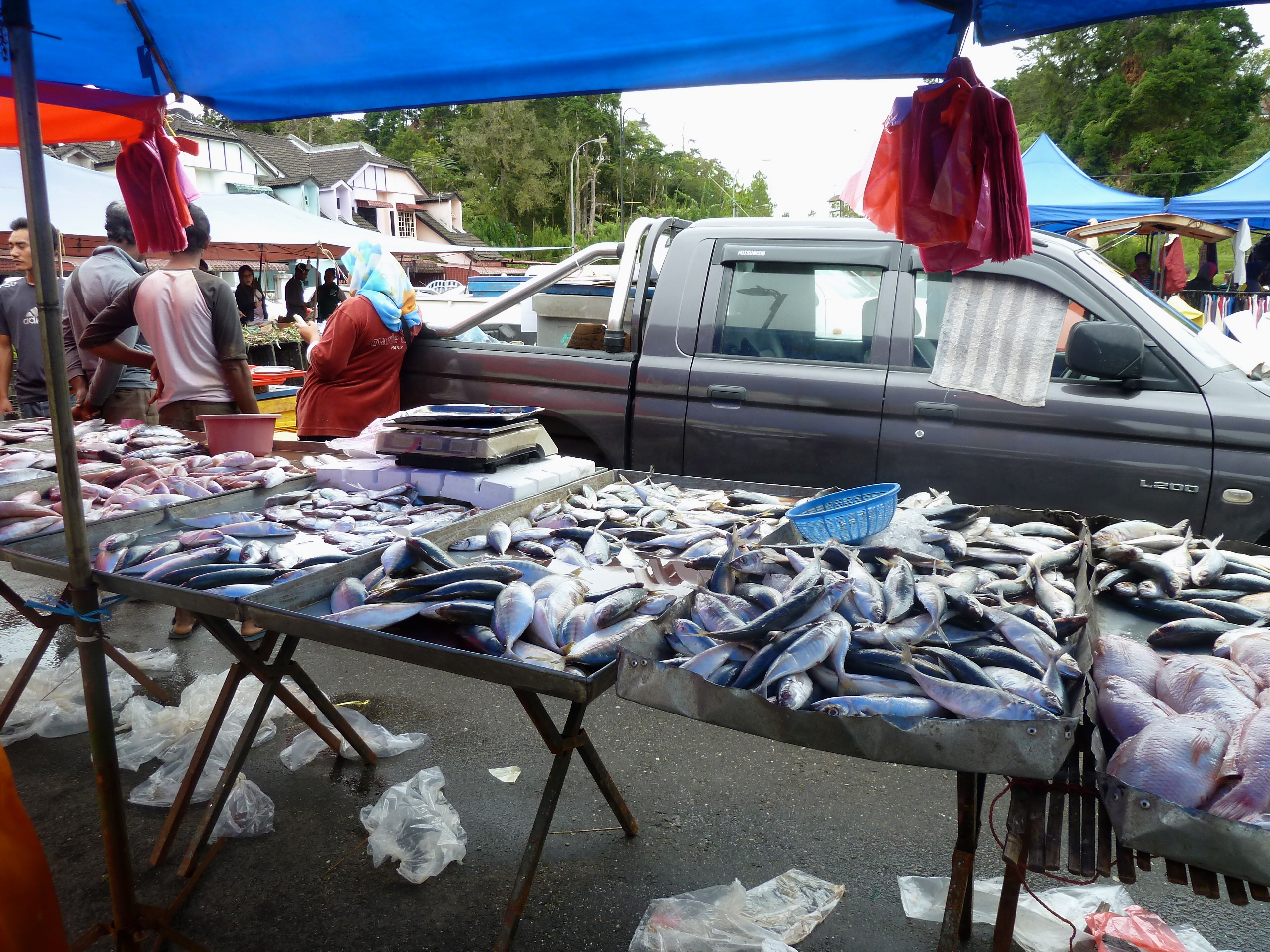
There are dozens of little markets all over the place in the three main Cameron Highlands villages – Brinchang, Tanah Rata, and Ringlet – and along the roads connecting the villages.

Beautiful vegetables!
Fish
I’m not sure where this fish comes from because there’s no ocean nearby, but it smelled VERY fresh

A note on the food for this trip: Indian food is my favorite food here in Malaysia because Indians understand what it means to be a vegetarian. Most of the tea in Malaysia comes from Cameron Highlands and most tea pickers are Indian, so Indian food was everywhere. We breakfasted each morning (and snacked once or twice) on some of our favorites: Masala tea, egg-cheese-onion roti with curry, and potato-vegetable thosai with dahl and curry. Delicious! I had vegetable curry twice for dinner because it’s just that good and we had amazing tom yam steamboat one night, too. The proprietor of this busy family restaurant clearly understood my dietary restrictions and assured me that there was no shrimp in the tom yam, but I’m still a bit skeptical. There’s shrimp paste in sambal, which is in just about everything spicy, so I’m willing to bet there’s at least a little in the tom yam. But darn was it good.

This sign was in front of the steamboat place where we had amazing food. The vegetables were kind of fresh, I guess . . .

The first morning that we spent walking around Tanah Rata was literally the only time it wasn’t pouring. November and December are the rainiest months in the Cameron Highlands, which also makes them the coldest. We were not at all prepared for temperatures in the 60s Fahrenheit, but we joked that it’s good practice for our upcoming trip to Spain. Nevertheless, we had come all that way to explore and that’s exactly what we did.

Strawberry farm
Strawberry farm
Strawberry
It was weird to see strawberries grown so “unnaturally” – where I come from, they grow on bushes in gardens and are often eats by birds. There’s also much smaller at home and that’s how you know they’re going to be tasty!

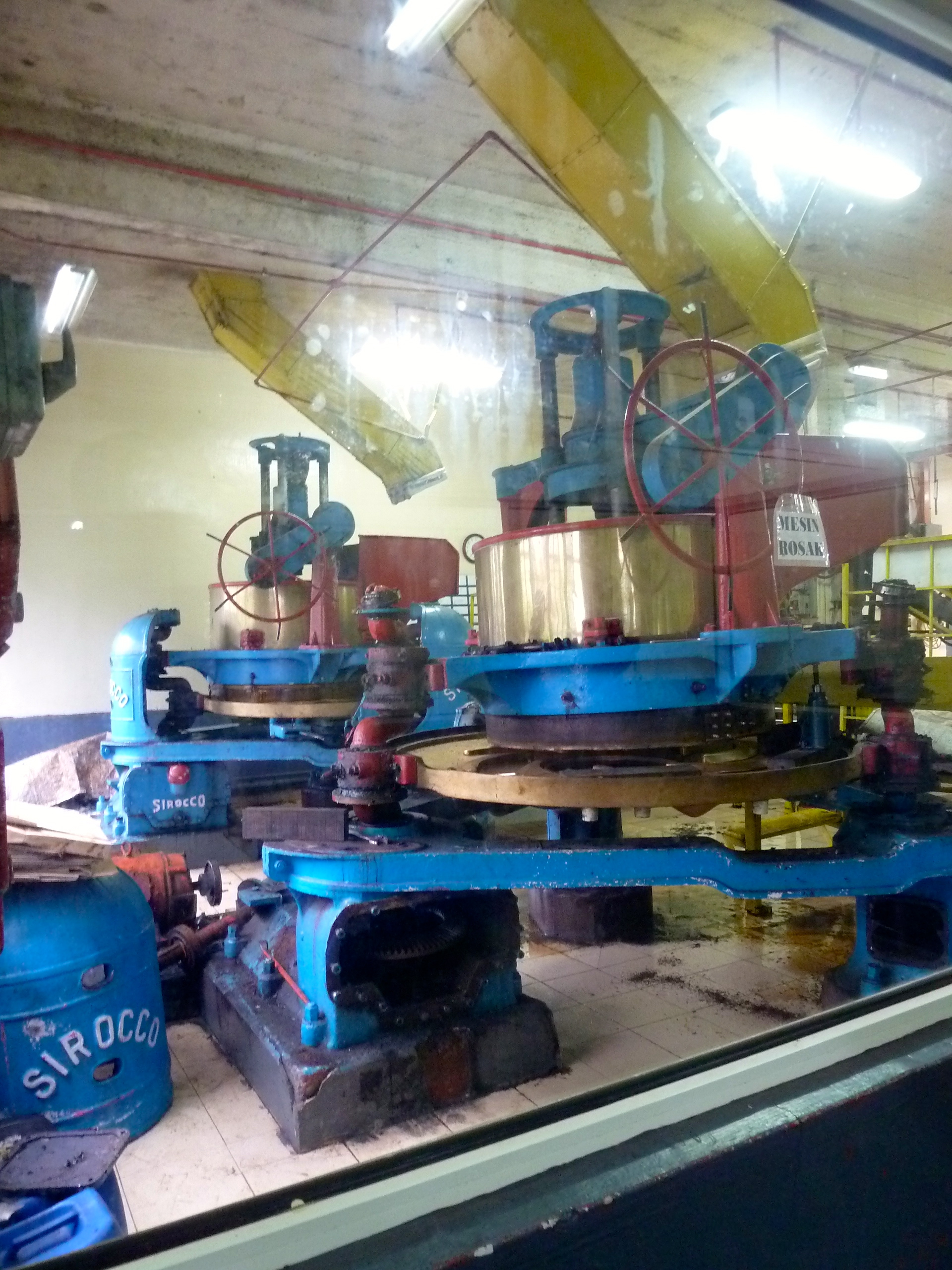
I think our best adventure was to the Boh Sungei Palas Tea Centre. Boh tea is really popular here (think: Lipton or Twinings) and Mitch and I learned that we didn’t know anything about tea production. And now we do thanks to a factory tour! For example, all tea comes from the same plant that is picked every three weeks. The type of tea (green, black, white, yellow, etc) produced depends on the fermentation and oxidation time and temperature. (Who even knew tea had to be fermented and oxidized?!)

Roller from 1935 used to crush tea leaves that is still in use at the Boh factory

If teas are flavored or herbal, that’s because of added or substituted natural products, like chamomile flowers or ginger.

P1040602

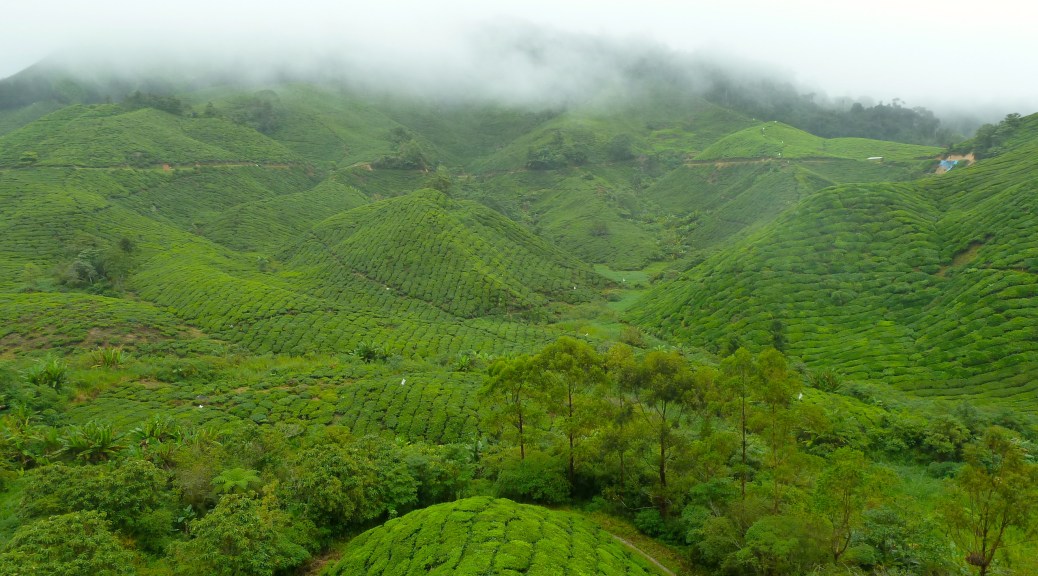
The Boh plantation was astonishingly beautiful. Sadly, the pictures don’t even come close to capturing it.

We also made a very brief stop at a honey bee farm, mostly to sample honey sticks!

P1040613 P1040614

Like everywhere in Malaysia, religion is important. It is telling that we didn’t see a mosque in Tanah Rata. Instead, we visited Hindu and Buddhist temples.

We couldn’t go inside Sri Tehndayuthapany Swamy but we enjoyed the gorgeous outside.

We did venture into Sam Poh Temple, quite a popular and even busy sight.

As if one tea plantation weren’t enough, we had to visit the other one, too. Cameron Valley Tea Estates didn’t seem as large as Boh, but it was equally incredible.

The other popular thing to do in Cameron Highlands is hike, but we had no real rain gear and it didn’t stop raining. I’m willing to bet that a hike in these mountains is a beautiful and unforgettable experience. Personally, I’m really glad we made this trip because this is the most beautiful land I’ve seen in Malaysia and we learned a lot about tea. If you go, go when it’s a little warmer and a little drier!

Travel Guide: Kuching and Sarawak

Reader be warned: As in Penang, I took a lot of pictures.

The third and final weekend of our (currently) planned trips out of Seremban brought us to Kuching, the capital of the East Malaysia state of Sarawak. Sarawak is located on the island of Borneo along with another Malaysian state, Sabah, the country of Brunei, and part of Indonesia.

For clarity and your viewing pleasure, here is a map

Kuching means “cat” and there are statues of cats around the city, a cat museum, and, of course, many feral cats.

Cat statue in the center of Kuching

We arrived on Wednesday because of a school holiday for Deepavali/Divali/Diwali so this was a longer trip than any trip we’ve taken so far. We spent Wednesday getting our bearings and wandering around. Kuching is not a big city and there are sidewalks and a boardwalk along the river. What we found really interesting was that it felt old. Not old in a historic, cultural sense but old as in neglected and rundown. It didn’t bother us, but we noticed. Sarawak and its neighboring state, Sabah, are the primary oil producers in Malaysia but they don’t get the same government aid and funding as the peninsula. Yes, it shows. Regardless, we loved Kuching and the areas that we explored around it. These pictures are from our walk around the city on our first day:

We took a little motorboat to cross the river (finally, this blog lives up to its name) to visit Fort Margherita, a relic of Sarawak’s early history. The British arrived in Sarawak in the 1840s and Charles Brooke, the second of the White Rajahs (the first was his uncle) gets the credit for its construction.

The interior of the motorboat that we took from one side of the river to the other
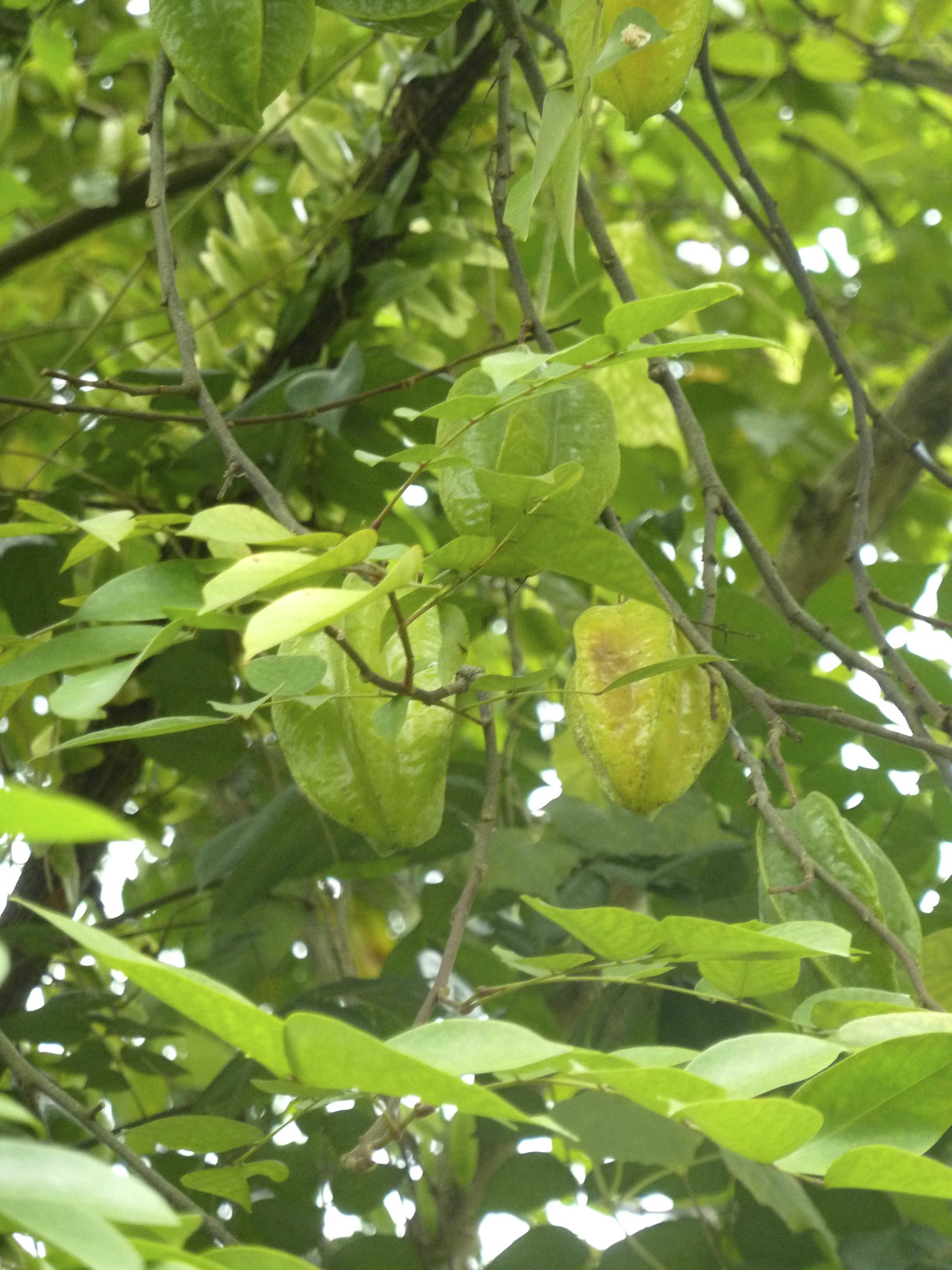
We walked through a neighborhood and found starfruit growing on trees . . .
. . . and finally arrived at the fort and then promptly left because it was closed

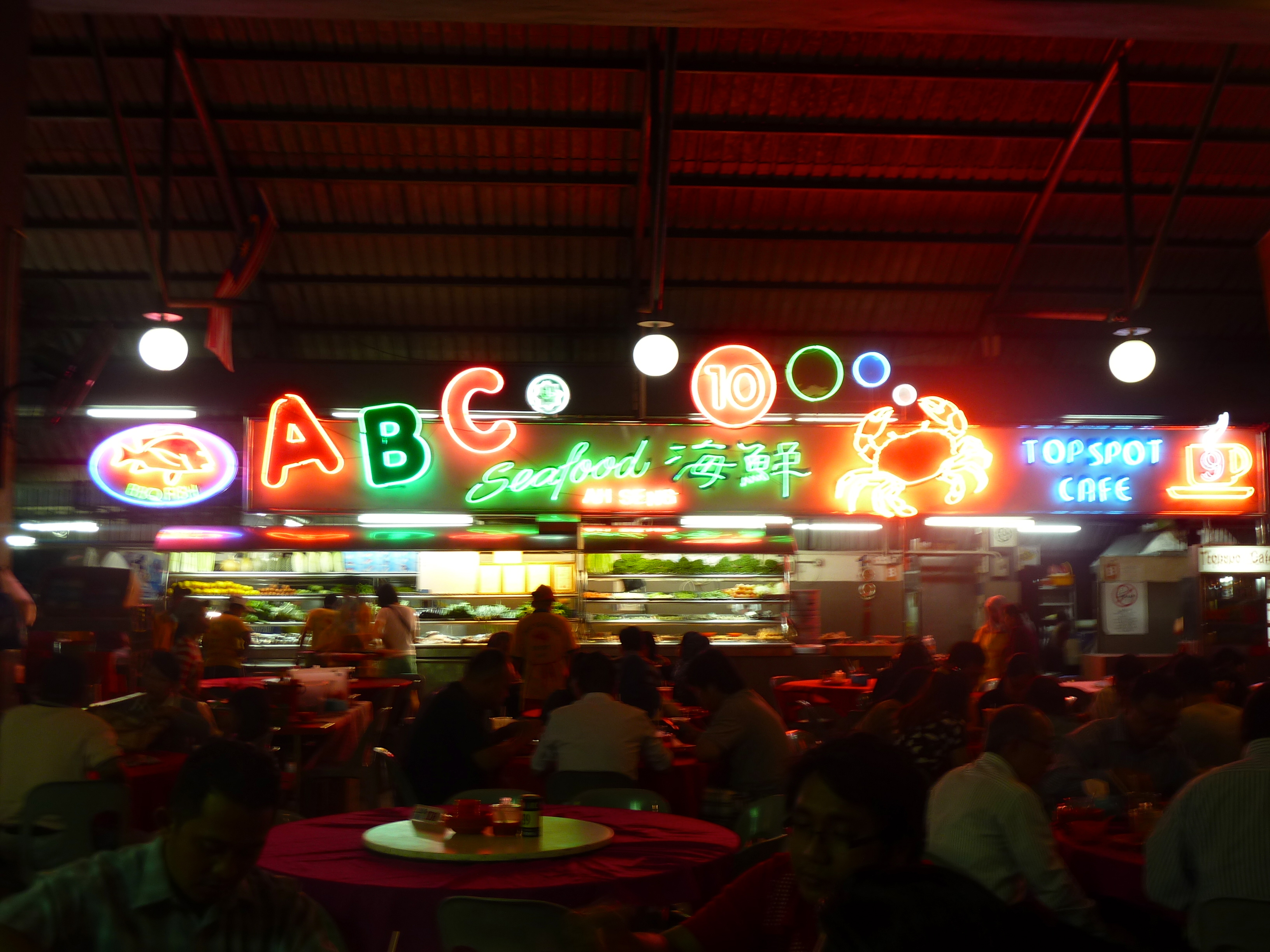
For dinner the first night we took a colleague’s recommendation to go to Top Spot, a food court on top of a multi-story parking garage.

This place is amazing. Go

The picture isn’t the best, but the food was. You literally pick your fish or other seafood from ice, put all the vegetables that you want on a plate, tell the staff how you want it cooked (they have different lists of cooking styles depending on what you’re eating), and enjoy your beautiful food when it arrives. We were in heaven the entire time. Our sea bass was steamed with ginger, pepper, garlic, and some other magical ingredients and it was quite possibly the best fish I’ve ever had.

We woke up early the next morning to catch the first bus to Semenggoh Nature Reserve, located about 45 minutes outside Kuching. Basically everything a tourist is supposed to do while staying in Kuching is 45 minutes out of Kuching. Public transit is cheap and shuttles are readily available, so there’s no need for a car. Semenggoh is a huge land preservation area with different types of botanical gardens, but it is best known for its orangutan project.

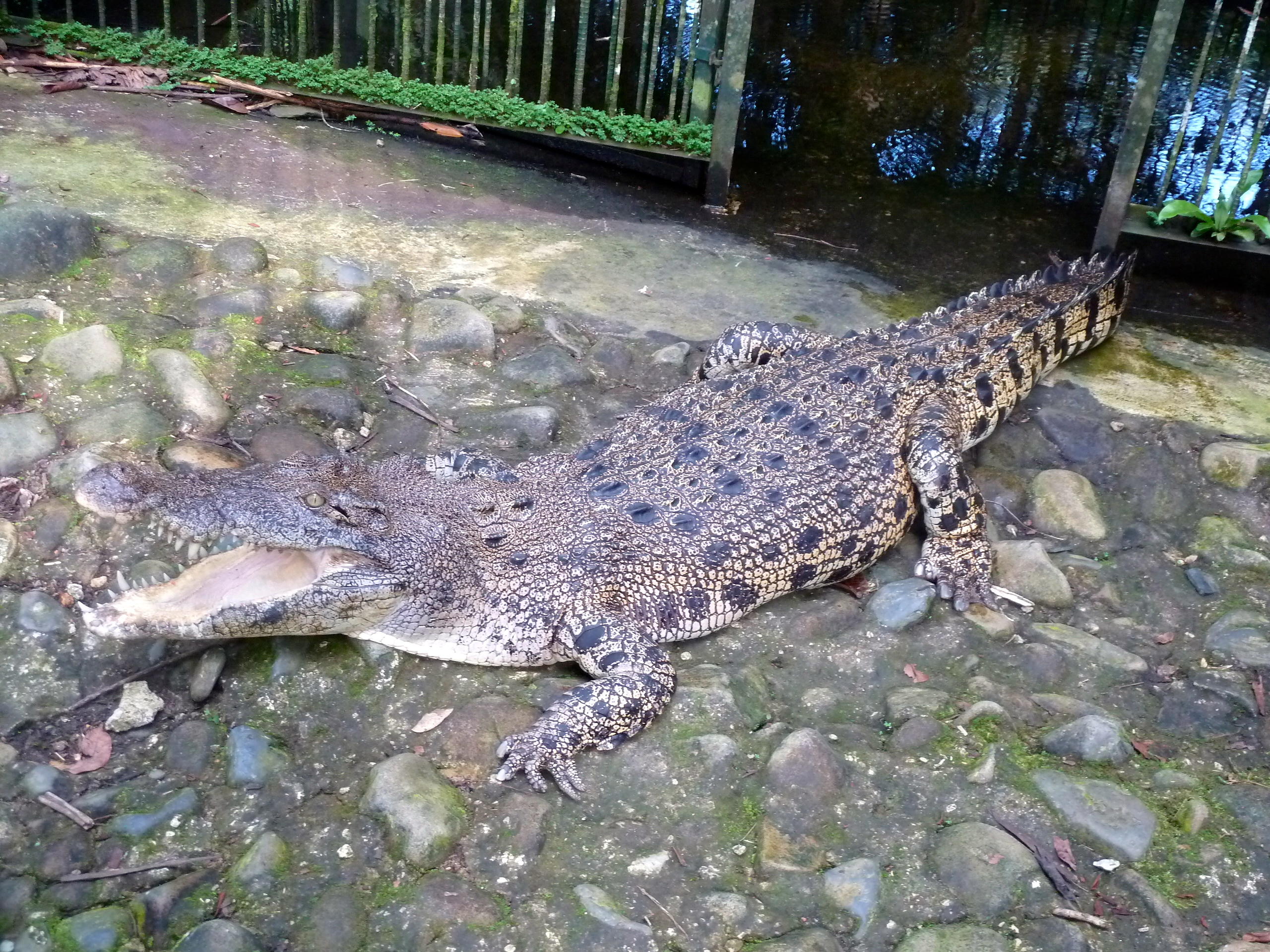
Semenggoh also had a few crocodiles, but no one paid much attention to them

The orangutans are fed twice a day at the center, though the goal is for them to find food in the while on their own. It’s the end of fruit season now, so they were beginning to return to the center at the designated feeding times.

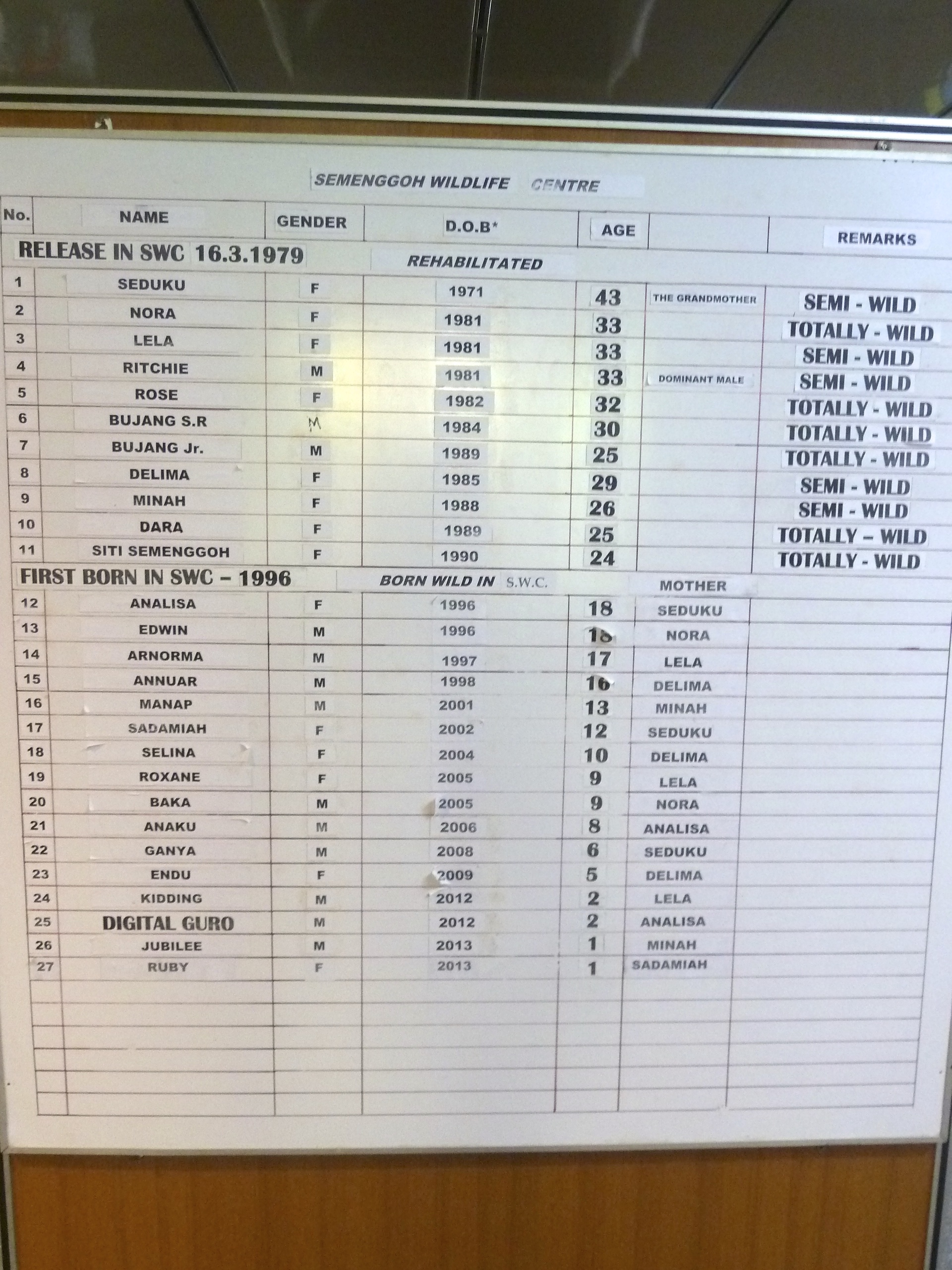
Handy chart helping visitors understand the family structure of these orangutans, when they arrived at the center, and how old they are

We ended up seeing both feedings because of a trip that we took in the middle of the day, so these pictures are a combination of the feedings. The first time, two mothers and their babies came to eat and the second time we met two young males and an older male (though not the alpha, who was reportedly lurking in the forest nearby). One of the mothers returned with her baby, too.

Watching the orangutans was one of the most amazing experiences I’ve ever had. They are so agile and flexible and so human-like. (Or, I suppose, humans are very orangutan-like.) They have distinct personalities, facial expressions, and relationships with each other and it was just a very humbling experience. I felt almost as though I were watching evolution as it happened; it is so easy to see how orangutans and humans are related. If you’re not convinced, consider that “orang utan” in Malaya means “people of the forest.” Wow.

After the first orangutan feeding, we joined an older Belgian couple with whom we had been talking to visit the Annah Rais Longhouse located 45 minutes away. They say that no trip to Sarawak is complete without visiting one of the many indigenous groups of the area and this Bidayuh longhouse is happy to have visitors.

Beautiful scenery we passed along the way. There are churches all over Sarawak and there were crosses on most of the doorways at Annah Rais

I felt a little strange walking through people’s homes and basically dancing on their heads, but if my RM5 entry fee helps alleviate their poverty (or supports their choice to live in traditional longhouses), so be it.

While visiting the Annah Rais Longhouse, Mitch bought a bottle of rice wine sweetened with sugar. We had it as a welcome drink on the way into the longhouse and had tried an unsweetened version the night before. We liked the first and loved the second. We also loved that it was RM5 and came in a Carlsberg bottle – definitely homemade and definitely authentic. After a delicious dinner at a local, cheap restaurant we took our Carlsberg bottle down to the river and shared it while looking out over the water. We really did love Kuching.

Our trip the next day, Friday, to the Sarawak Cultural Village 45 minutes from Kuching helped put the Bidayuh lifestyle into context. The Cultural Village contained examples of dwellings of many of Malaysia’s indigenous peoples and it was really interesting to see the differences and similarities between them, as well as learn about where they’re located on Borneo. Considering I knew next to nothing before going, I’m glad we went. However, the lack of pictures should tell you my overall impression of Sarawak Cultural Village. I found it stale, dry, lacking in detail, and hellbent on an agenda to teach its visitors that the modern Malay people are superior to everyone else. In short, I found it distasteful and insulting. I didn’t think any of the people who worked there (there were no interpreters, which is a crime in itself) took the place seriously and concrete and nails do not give much of a representation of authentic building methods. If nothing else, we started to ask questions that we didn’t know we needed to ask.

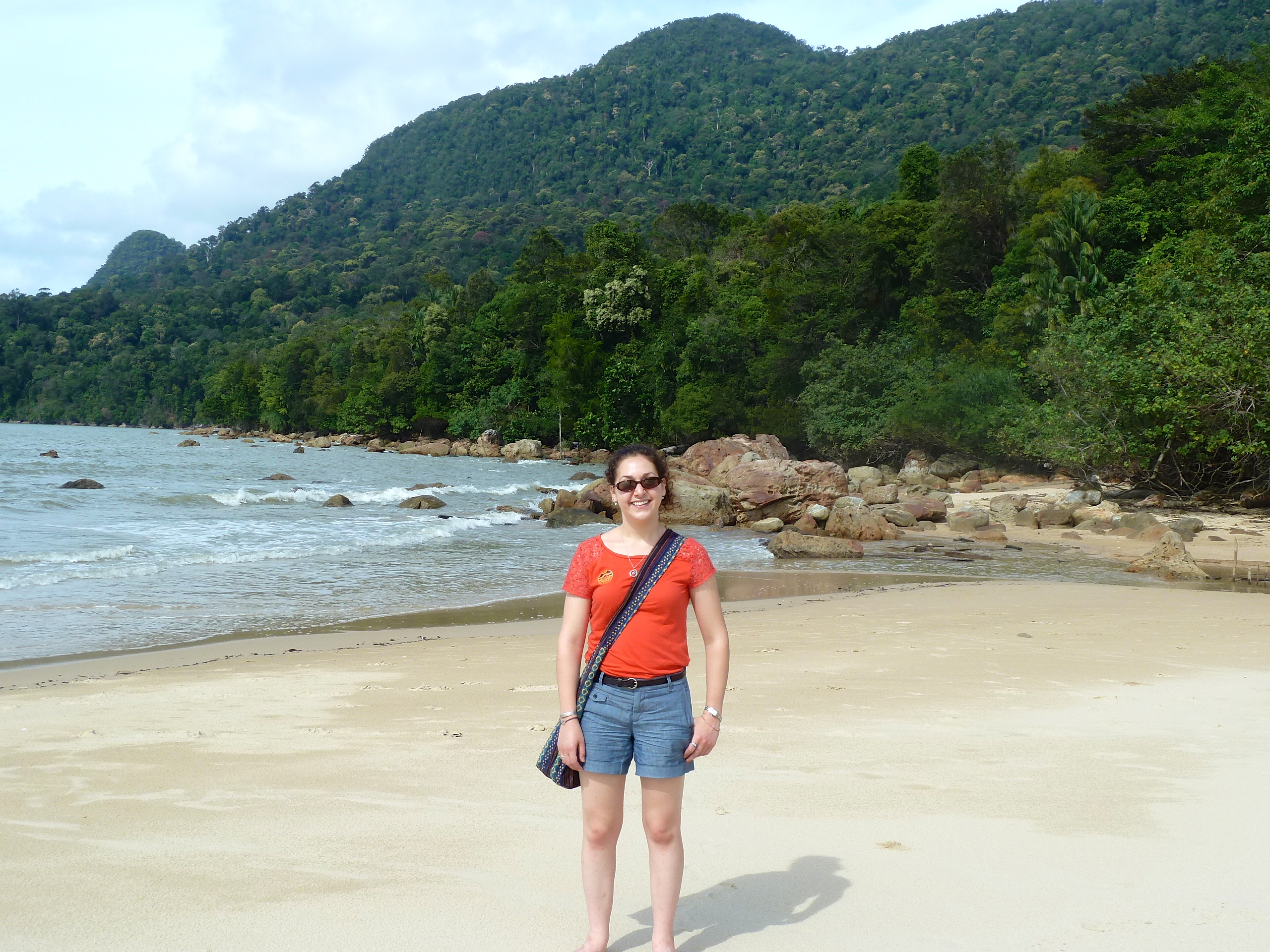
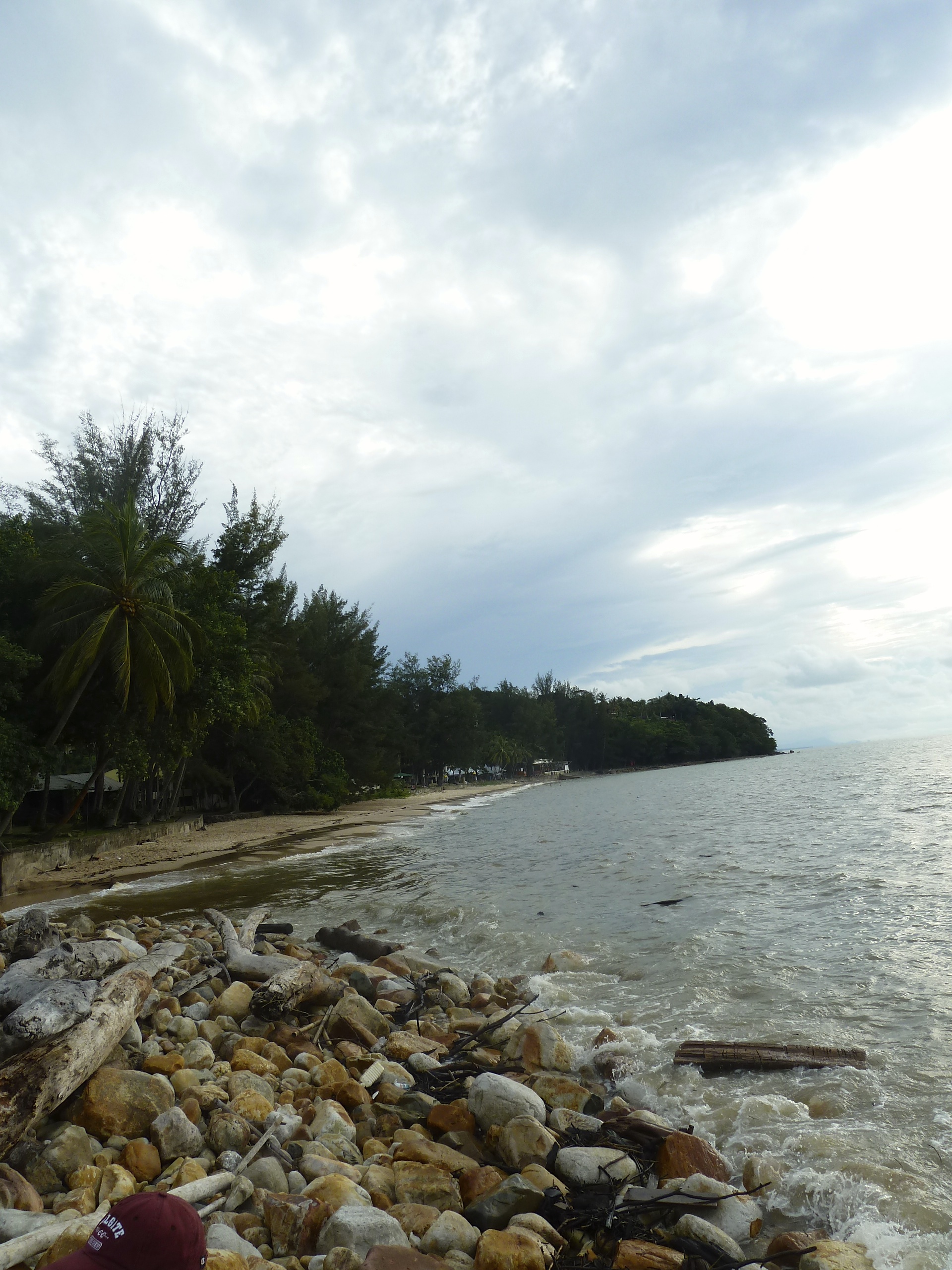
Our walk along the beach later in the afternoon proved less educational, but also more enjoyable. The South China Sea and the rain forests along the coast are really beautiful.

Mitch by the water
Mitch by the water
Look, I'm in a picture!
Look, I’m in a picture!
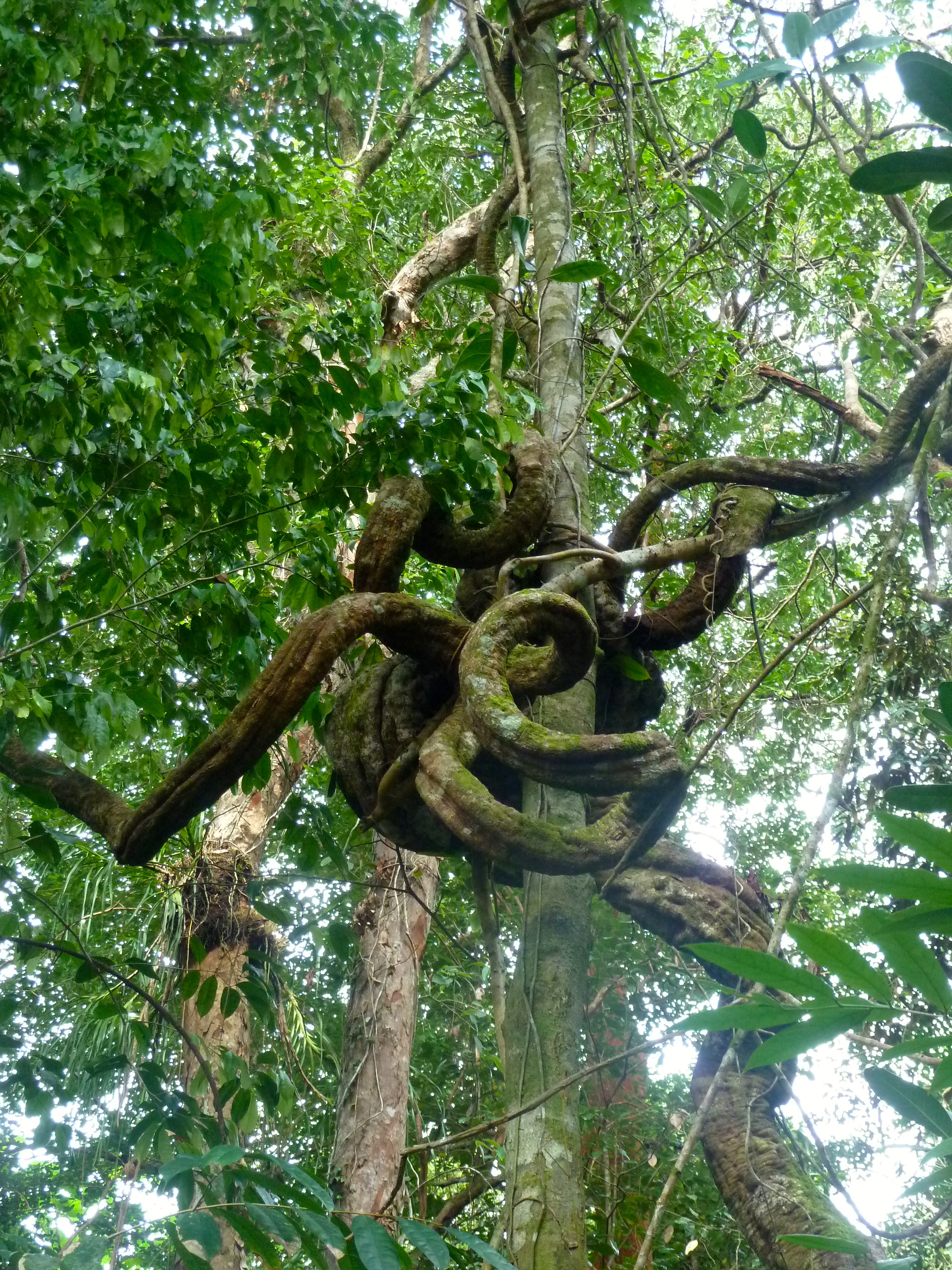
Really cool vine
Really cool vine
Beautiful Borneo
Beautiful Borneo

Dinner Friday night found us at the Drunk Monkey, another place recommended by my coworker. Ray learned that we were going to Kuching and sent me a lengthy email with suggestions of not only where to go, but which sites and trips to combine. We followed his advice almost to the letter. Anyway, the Drunk Monkey is a Western-style bar that had a handful of takeout menus from cafes across the street sitting at the counter. We ordered our food at the bar, a bartender brought the order across the street, and cafe staff brought us our meals. Great system!

Look at all the choices!
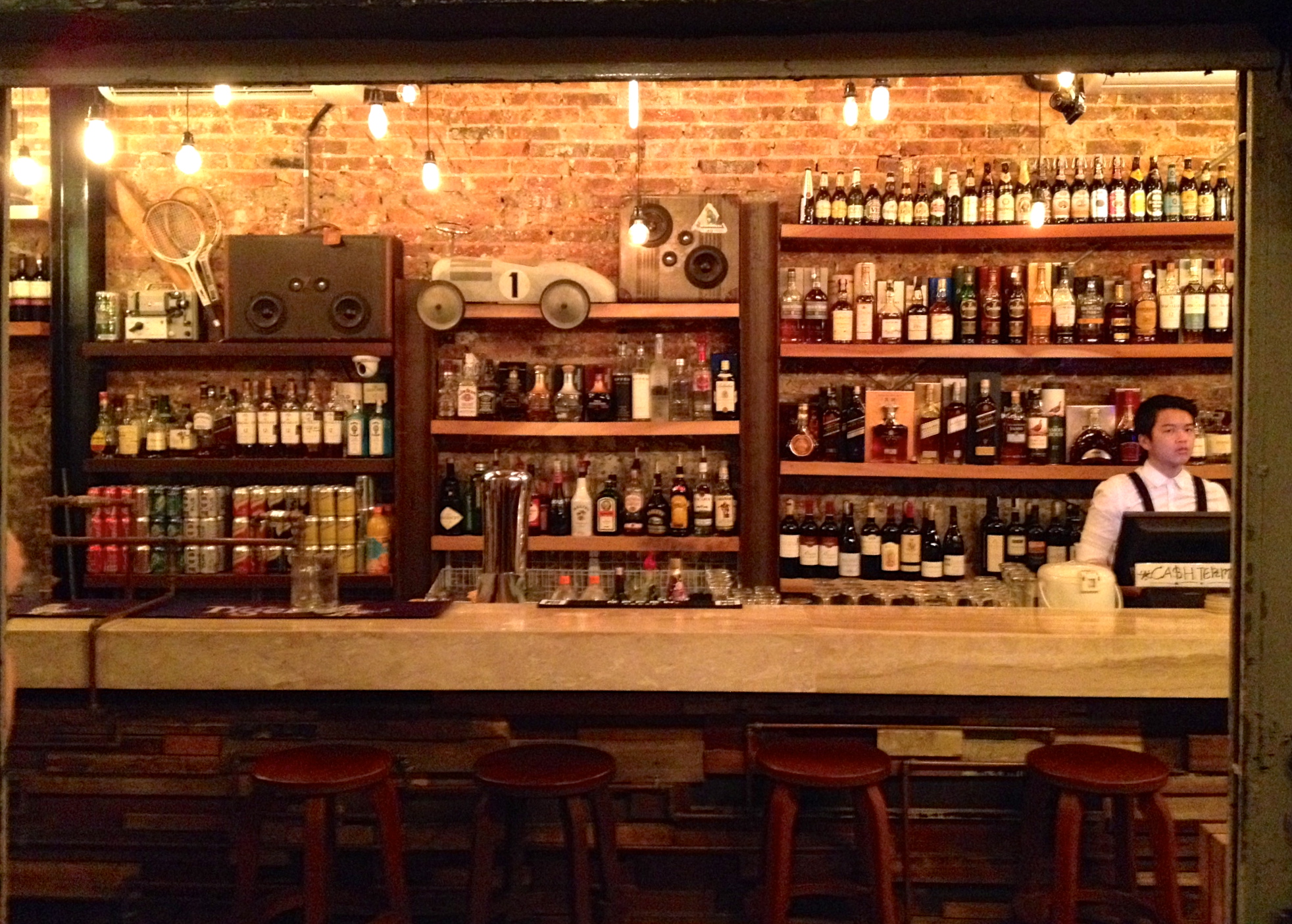
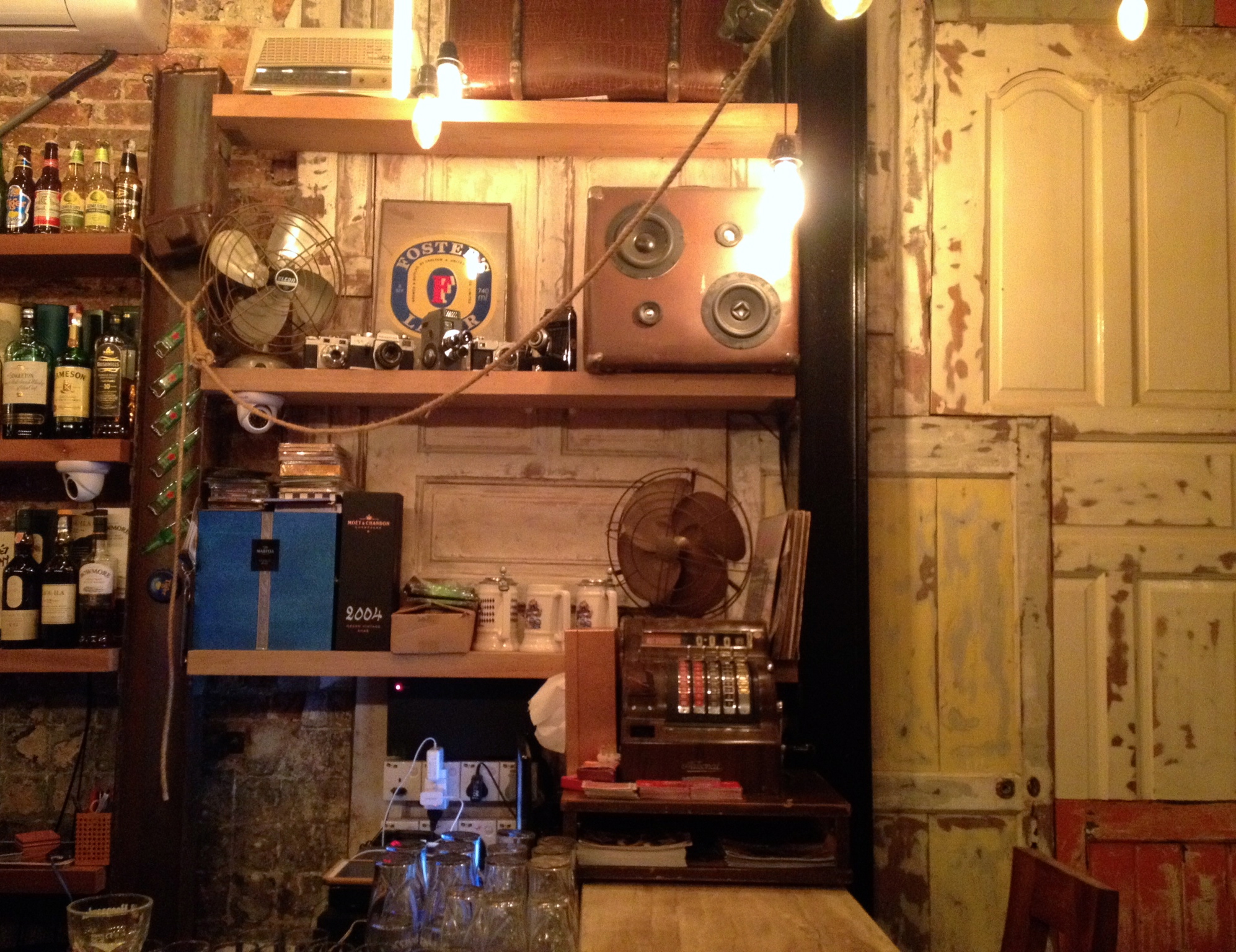
There was a cool atmosphere in the bar with old posters for Coca-Cola and various vintage objects
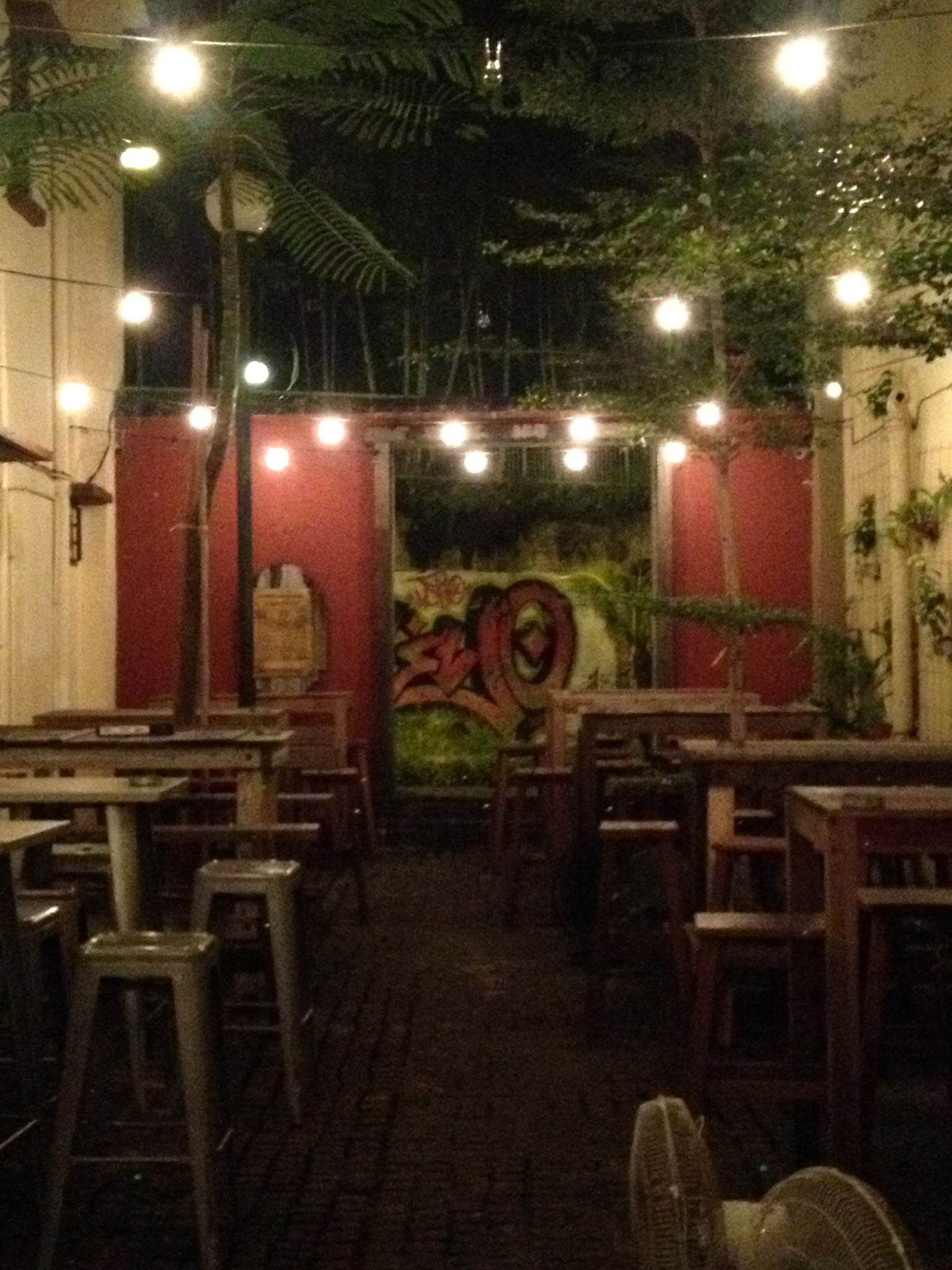
Drunk Monkey's exterior was a alleyway in between the bar and a restaurant next door
Drunk Monkey’s exterior was a alleyway in between the bar and a restaurant next door

(And then we bought a bottle of rice wine at a corner store that came in a Tiger bottle and was missing the sugar from the Annah Rais bottle. We didn’t finish it, unfortunately. As Mitch said, it was like drinking real pirate liquor.)

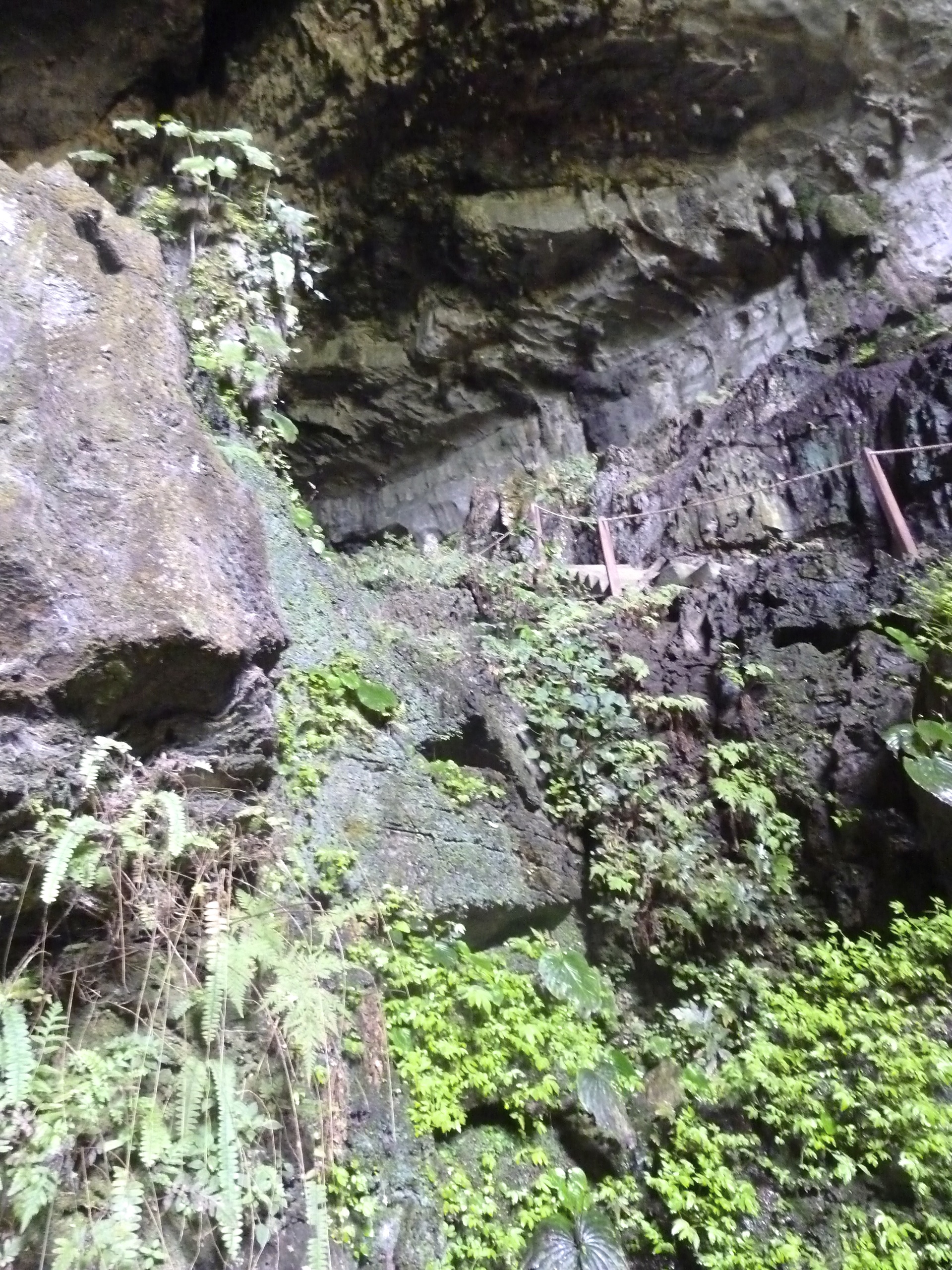
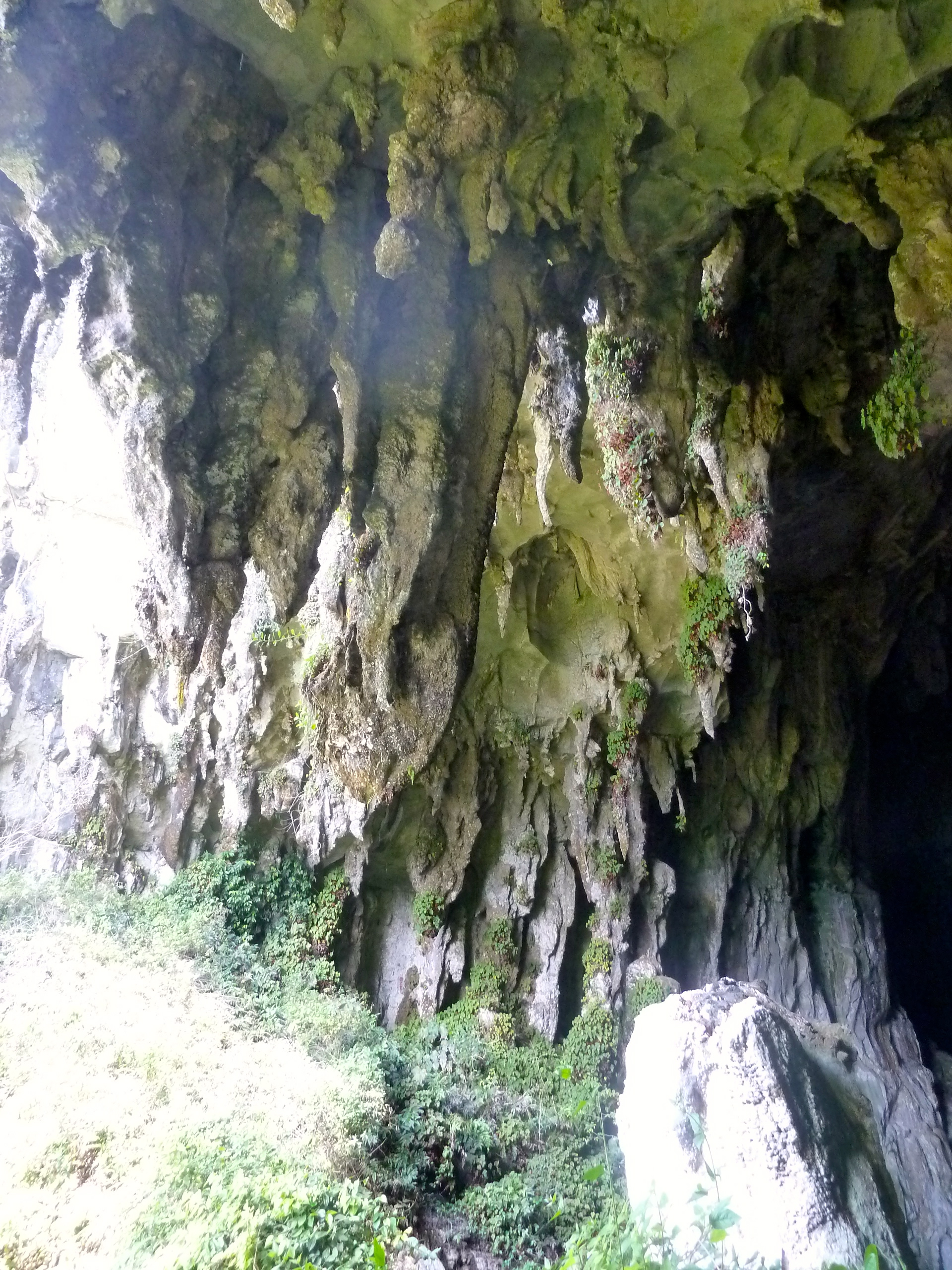
On Saturday we met up with a friend who was also in Kuching for the weekend. We rented a car and drove about – you guessed it! – 45 minutes to Bao to see the Fairy Cave, a cave so named because of the fairy statue inside. It was a dark, scary walk both up into the cave and down the slick flights of stairs back to Earth, but definitely worth it. The pictures don’t do it justice, but imagine grass and foliage growing in a bat cave. Imagine that all you can hear are the bats and that the only light comes from a gaping opening hundreds of feet off the ground.

P1040384
P1040394

P1040389

From there we drove for another 45 minutes or so to the coast to put our feet in a very, very hot bit of the South China Sea. The beach we found was at the edge of a tiny fishing village and completely empty. It was also flat, which provided some fantastic scenery and a real appreciation for the vastness of nature.

We drove around the coastal countryside for a bit longer, found a restaurant with some delicious fish that had definitely been caught that day, and finally made our way to the airport. It was a very nice way to end a wonderful trip.

Long story short: We loved Kuching and want to go back. The more time one has in Sarawak, so I’m told, the farther from Kuching one ought to go. We’d love to spend a few nights in Bako National Park, for example, or stay at a longhouse further out in the jungle. Maybe next time!