
Tag Archives: Relationships

A little ray of…

Hope

is the possibility for something different, something new, something untried, unseen, unfelt. Hope is the catharsis of tropical rain.

Yesterday I had a conversation with an old friend, probably the most adaptable person I know. “I could be angry,” she said, “but that’s just not how I want to be and it doesn’t solve my problem.” A few hours later, I had a conversation with a student who is really struggling with some personal issues. We talked about life and the universe, about meaning and goals, and about what’s left in the world after a goal is accomplished. Just before the end of the day, I had a conversation with another student about the future, a young man who has confidently and quietly made choices and is looking forward to the adventure to come. In the evening I talked with another friend who is considering, as I am, choices that could go anywhere and nowhere.

There are two common threads here and both have struck a chord with me. The first is that sharing and conversing with others, and especially young people, give my life so much meaning. I may not have solved any problems today but there are doors open wide, an invitation to listen, a shoulder to cry on. These connections with other human beings are vital to my sense of personhood, which is to be part of a wider world and walk hand in hand with those I encounter.

The second thread is that all of these conversations, though vastly different in content and tone, were sparked by the hope that there is something else if we’re willing to look for it. There are possibilities if we are willing to do the hard work of asking questions, making changes, beginning again, or beginning differently. And there is the excitement of a world yet to be lived and explored. If there were not hope, none of us would be talking in the first place.

Sunshine

is the golden bubbles that arise out of nowhere and feel like childhood. Sunshine is a periwinkle sky in the evening and the delight of an unsigned thank you note.

When I was little my mum told us how, growing up, she used to wash her long, wavy hair outside in the rain. I went out with a shampoo bottle once but I don’t remember it working very well. Not too long ago I changed into my bathing suit and joined a friend outside in a downpour, one of those rainstorms that quite literally takes your breath away. During a recent and memorable bike ride, it was all we could do to keep our eyes open as we, and everyone else caught in the sudden deluge, giggled and called out to one another, strangers, recognising the shared joy that filled the air.

Last night I decorated Christmas cookies and a gingerbread house with friends and I learned that icing melts quickly in the tropics and that one should put a base layer of icing on the tree-shaped cookie before adding candy ornaments.

Moments that allow us to laugh and play with abandon, to forget our adult decorum and our worries and responsibilities, are moments of sunshine.

Magic

is elusive if you’re looking because it can’t be seen. But magic is omnipresent if you believe it’s real.

Sometimes we say the same thing at the same time. We pick up the phone just as it rings. We send the same story or recommend the same book. Once we learn a new word, we suddenly see it everywhere. If we did it on purpose it wouldn’t happen this way, but it happens all the time when we’re just willing to be.

But sometimes I think we’re afraid of magic. We’re afraid to admit that we don’t have as much control as we wanted, or that there are forces in the universe we can’t explain. And this keeps us from the opportunities to get to know ourselves and others in such a way that allows magic to happen.

And so I ask: What could the world hold if we dared let it?
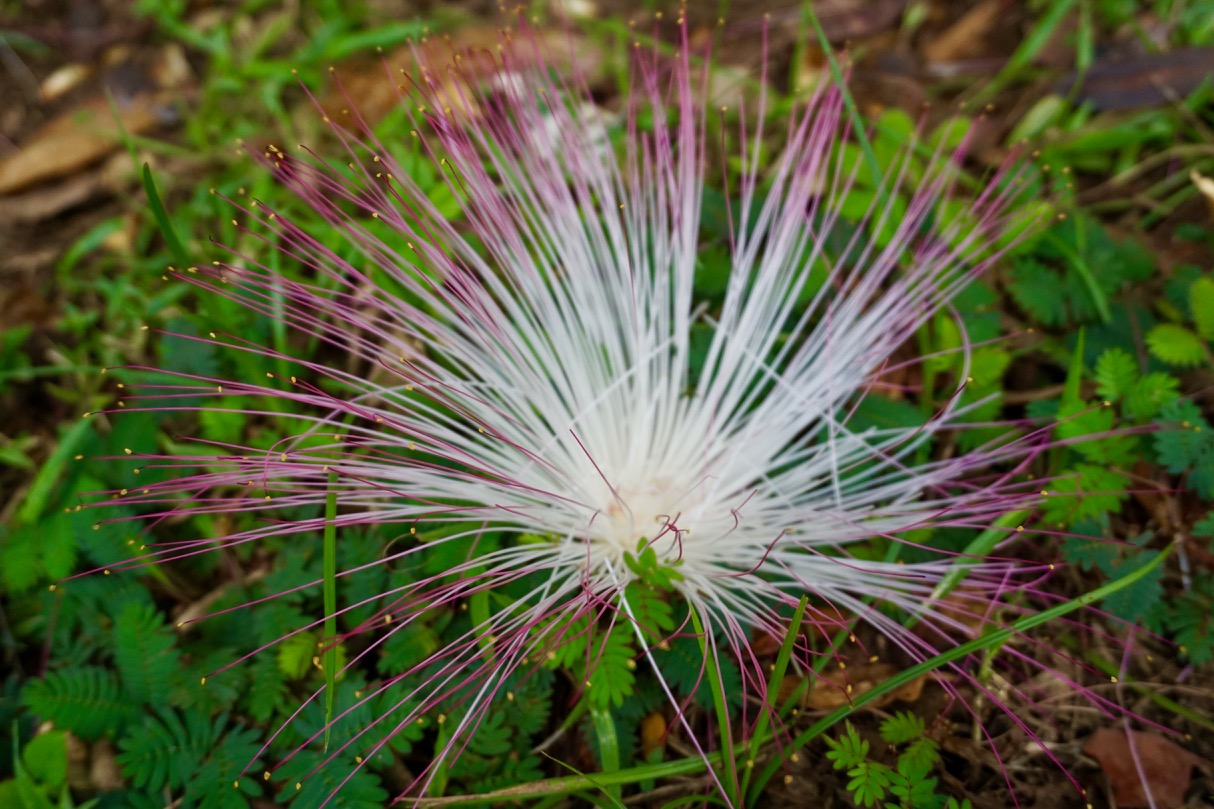
St. John’s Island, Singapore – July 2020

How to Have a Conversation

Recently I talked with a student who has a bit of a reputation. I’m teaching this student, we’ll call him Jay, for the second year now and I teach him in two courses, IBDP Psychology and Theory of Knowledge. Like many individuals, young and old alike, Jay behaves differently in different contexts and around different people. When I met his mother for the first time she introduced herself as the mother of this “infamous” (her word) young man and told me to reach out if I had any problems.

I’ve taught more than a few of “those kids” over the years and I really like them. I really just like young people, actually, and that’s among the reasons I have chosen to work with them. My conversation with Jay highlighted the importance of having conversations, real ones about real things, with the young people we are raising and with anyone willing to take part.

Conversation

Oral exchange of sentiments, observations, opinions, or ideas

https://www.merriam-webster.com/dictionary/conversation

It started because Jay asked, while reviewing his psychology notes, whether it’s true that being in an MRI with a nipple piercing can kill you. I answered the question the way I try to answer all questions from all people, which is in the spirit that they are meant. This was a real question for this student and it was important to address it as such.

After MRIs, we talked about tattoos, parents, and schoolwork. This led us to talk of what he actually enjoys and we talked about his experiences in the working world. We talked about what it means to be a good person and what it means to do the right thing, and about global politics and the current state of his country of origin. And through it, I learned a lot about who Jay is and how he sees the world.

Upon leaving the room, I wondered two things. First, would this conversation have happened had I not responded openly and respectfully to the question about piercings and MRIs? And furthermore, how many opportunities like this do we miss?

I have written about this before, particularly in a very old blog post that you can read here. (This is an example of a piece of writing on which I have not wavered, which is not true for everything I’ve written.) It is worth revisiting because conversation is important and conversation with young people is critical to who they become and the world that they know. If we want young people to engage with the world around them and improve it, we as adults need to walk through this world with them. We need to guide, support, facilitate. We need to respect, listen, hear, and respond. We need to do this with young people but also with one another. Without conversation, without connecting with others, we will be unable to make the world a better, more peaceful place.

I worry that authentic conversation is not a priority, however, and perhaps there are good reasons for this. There are indeed times when something else should come first. But do we lay ourselves bare in conversation as often as we could? Do we accept that this is a time for being vulnerable and for welcoming vulnerability in others?

Or are there conversations that we prefer not to have, leading us to shy away from any conversation at all? “I don’t like confrontation,” an old friend used to say. We are no longer in touch and I don’t know why, but I suspect it has to do with a conversation we never had.

Confrontation
A face-to-face meeting; the clashing of forces or ideas

https://www.merriam-webster.com/dictionary/confrontation

This is an important point: Conversation is not confrontation. There are plenty of ways to have what I have learned to call courageous conversations that are not confrontational, are not arguments. There is a resolution in the end but not a winner. The frame of conversation is critical to engagement. I will respond much more openly to an invitation to talk openly with you if I know neither of us are looking to win in a zero-sum argument.

Lately I have become interested in SCARF, a model by David Rock that addresses five domains of human social experience that have profound affects on brain function and therefore our responses to other people. The five domains are: status, certainty, autonomy, relatedness, and fairness. These domains activate either threat or reward networks in the brain, much in the same way as snarling dogs and money. Neuroscience has demonstrated that we are less capable of solving problems and thinking clearly or creatively when we feel threatened. It is no wonder that confrontations and arguments are unpleasant, inconclusive, and often lead to unwelcome changes in relationships between individuals. Along these lines, it is not a surprise that we grow defensive when our status, sense of certainty, personal autonomy, feelings of relatedness, and sense of fairness are threatened. We throw up walls and we become untouchable in order to protect ourselves, and our minds do not work clearly.

This is not the case in conversation. A conversation can be, and important ones often are, confronting to the self without being confrontational towards another person. We can disagree but not argue. Instead of trying to be right or convince someone else that they’re wrong, we can talk with the aim of understanding where, why, and how we’re different. Minds may or may not change but we will all come out wiser, wiser about who we are and about how to understand and interact with the people around us.

There is much we can learn when we are brave enough, strong enough, open enough, to try. Willingness to be vulnerable is essential; it is the way to know ourselves and to show ourselves to others. This is how we must be if we want a world, and I do, in which we hold one another in the palms of our hands. Within such vulnerability is a great strength that allows us to take each other by the hand and forge a path together.

A place to begin is by hearing others and responding in ways that show we are listening. A place to begin is to hear Jay ask about piercings and enter into a conversation about life and the universe.

Dancing in the Kitchen

This year, for the first time ever, I am not spending the summer with my family. In the past, much of this summertime has seen me with my mum playing together in the kitchen, but, unfortunately this cannot be. So for the moment, I’ve been sharing meals with friends and reflecting on times past.

I’ve written many times that if love is a verb, love requires action. This means behaving in ways that give love. We can show love in many ways, such as holding those who need holding, listening to those who are speaking, helping when help is needed, and giving of our time. Another way to show love, I deeply believe, is through cooking. A few years ago, my mum sewed me an apron embroidered with the words, “Love people. Cook them tasty food.” I think that sums it up.

In terms of cooking, there are two ways to show love: preparing food for others and preparing food with others.

In preparing food for others, the acts of chopping, slicing, dicing, washing, peeling, and whisking (to highlight just the tip of the iceberg) are not accidental – all are intentional. These acts require us to consider others and are the visible evidence of a desire to nourish, which is an act of care. Care in this context is a way to love.

Cooking for others may not involve the seeking of reciprocity. We prepare food that we think others will enjoy, and not with the purpose of raising ourselves in their eyes. So, when we sometimes cook for others in order to impress them, that is not an act of love. Preparing a meal for those in need, however, whether due to the demands that a joyous arrival of a newborn baby or the sorrow of a loss may bring, is something we do for those we care about – for those we love.

In such circumstances, when I cook for others out of love, my favorite meal to prepare is a hearty soup. (Admittedly, this is challenging in the tropics and I have modified my approach.) Soup is a meal that warms from the inside out and is filling, healthy, and tasty. It is simple to enjoy with no more than pepper and bread, and unpretentious with ingredients that are easy to find. There is love stirred into the soup pot.

In addition to showing love in the preparation of food for others, there is also cooking with others. When done with love, this can be analogous to an indoor version of running through the sprinkler on a hot day. It can be glorious or it can be a complete disaster (think thunderstorms and mud flung into eyes) but either way, if it is done with love, it ends in smiles and laughter.

Cooking with others is joyful and spirited. It is the creative interplay of working together, a fluid dynamic that involves trust and tolerance of another person. As my mum has said, “We dance the kitchen dance really well.” And yet, sometimes we get in each other’s way. This is when we take a step back and respect each other’s space, and this requires a significant degree of humility on our part, a willingness to simply let the other person be. We welcome their playfulness, their mistakes, and their laughter – because we do the same.

The kitchen dance, as I know it, is what I think walking hand in hand through the world might look like. It is beautiful and intricate in parts, yet it also requires the discipline to take on the responsibility that it brings. It is not simply preparing food but also caring for all parts of the journey; the sharpening and honing of knives, the clearing of counters, the washing of dishes, and the scrubbing of pots and pans, and finally, the clearing of the table. Together. Us. Rejoicing, frolicking.

A word of warning, however. It is important to recognise that there is a difference between two people working in a kitchen and combining food, and two people dancing in the kitchen and creating food. There is a synthesis of senses in the latter that may not exist in the former. There is a give-and-take between us as texture, taste, scent, and sight of the elements are explored. What I do now will influence the choices you make later. We bounce off and augment each other while incorporating individual creativity. Your taste and my taste guide the next element, the next move. We share as we explore, and in doing so laugh and love.

Playing in this way has led me to compose food that one would never find in recipe books. And in doing so I have found that not all of them merit repeating. But that isn’t what is important. What is meaningful, is that I have played with others in the kitchen and shared in the love that this brings. I will continue to cultivate and cherish those times and urge you and your loved ones to do the same.

Jean Talon Market – Montreal, Quebec