
Tag Archives: School

Looping

Looping is the practice by which a teacher follows his or her class into the next school year. As this is more common in elementary schools, I was quite a few years into teaching by the time I experienced it for myself. The IB Diploma Programme is a two-year course for grades 11 and 12, meaning I taught my grade 11 psychology and Theory of Knowledge students, as a cohort, again in grade 12.

This is quite different from the secondary school practices I encountered in the US. In that context, for example, if I teach grades 9 and 11, I might indeed teach a student for the second time in grade 11, but the entire cohort hasn’t moved up together. Teaching a student multiple times is a coincidence of scheduling, rather than a design. That being said, there are a number of pastoral care models in which a homeroom remains together with the same homeroom teacher over a period of years.

When I first heard about looping as part of an elementary school model, I could imagine the positives and negatives. Knowing the students, having ways of working together, and having spent a year establishing routines and expected behaviours makes for a smoother second year together. However, if relationships are rocky, classroom structures haven’t gone as planned, and certain individuals (adults or students!) just don’t click, that could make for a challenging round two.

Moving to Germany, I was introduced to a very different model of education. Student cohorts stay together for all of primary school (grades 1-4), and then again for all of secondary school (grades 5-9/10), after having been mixed up due to significant choice, including finishing level, in their type of secondary school. At my school, groups are mixed up when needed for social reasons, or to balance out the number of students in each cohort. Scheduling in the upper school, where we all teach multiple grade levels, is deliberately planned so that we loop with our students, either as homeroom or subject teachers. I have always followed my grade 9 students into grade 10, and will teach the ones who choose psychology in both grades 11 and 12. Considering I also teach grade 7 and used to teach grade 8, some students and I are beginning our fifth year together.

Obviously, we know each other very well, and that is precisely the point. My students understand my classroom structures and expectations, and they know how to meet them. And because I have seen the students grow up and change, experience good and bad days, and try out new friend groups, I have learned how to work with them however they present. They have had a lot of opportunities to make an impression, and I have years of evidence for what works and what doesn’t, who might need extra support and who needs a challenge, which friends work well together and which need to be separated. And as things change, we change together.

Another aspect of looping that I really enjoy is the relationship it has allowed me to build with the families. We have parent-teacher conferences twice a year, and there are some families who come at every opportunity. Knowing what to expect with these meetings allows me to approach them in a way in which the family will respond, and this helps us create better partnerships.

Naturally, there are also downsides. The students who pushed my buttons in grade 9 kept right on doing so in grade 10, and the families who have an antagonistic relationship with the school have minimal incentive to turn over a new leaf. Sometimes, it can be a real drag knowing that we are in it for two years rather than just one.

Overwhelmingly, though, I have found that this system of looping works. We celebrated our 25th anniversary at school on Friday, and the day culminated in a summer fair in which all members of the community took part. My partner attended, too, and could not stop commenting on the feeling of positivity and joy, the sense of belonging, the ways that the students presented themselves, and the ways that they interacted with me and with each other. The atmosphere was a particularly special one, given the face painting, raffle, and international food offerings, but in no way unusual. This is a school built on relationships, and we really are all in it together.
No Straight Lines

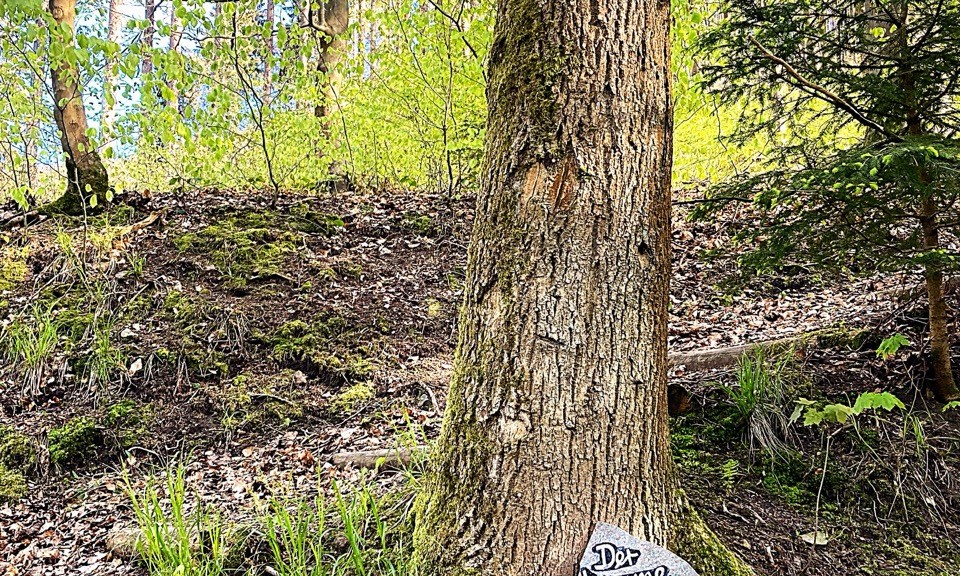
Beginning at the parking lot and continuing along the walking trail leading to my favourite climbing spot are whimsical painted stones giving life advice. One that I particularly like reads, in translation, “The crooked tree enjoys life. The straight tree becomes a board.”

I have to smile every time I see this modified teaching from Daoist philosopher Lao Tzu. Indeed.

Consider an individual who carves their own path versus one who unquestioningly follows a straight line. Think of creatives, often revered for their skills, who report having had difficulty fitting in. There are whole communities of “alternatives” who are so similar to one another as to not be “alternative” at all. As an educator, I find this important to keep the spectrum of difference in mind in working with students. To some extent, I need them to “play the game” of school because of the way society is structured, but there is wiggle room between adherence to instructions and stamping out individuality.

I can see my life path reflected in the saying, too. I spent my childhood, adolescence, and young adulthood occupied with, out of a combination of intrinsic and extrinsic factors, what I was “supposed to” be doing. I had a plan and followed it, pretty predictably, until I didn’t. When I stopped the relentless, goal-oriented drive towards some imagined end, I realized that I didn’t actually want what the end had come to symbolize. I’d foregone the opportunity to “take chances, make mistakes, and get messy” in the words of Ms. Frizzle, everyone’s favourite science teacher, and came a little late to self-discovery.

But I got there, which is what had me in the forest climbing rocks in the first place.

This particular sign is placed so that you catch a glimpse of it on your way into the forest and see it full on when leaving. A little something to think about on the drive back home. I walked that way once with a friend whose oldest son is a good example of the crooked tree. He does not fit into any model called typical and things are hard for him that are not hard for everyone. But he can carry on a conversation like an adult, has genuine interests, and is afraid of nothing. My friend and I stopped together at the tree. Neither of us needed to say any more.

Thüringer Wald, Bad Tabarz, Germany – April 2024

Fourteen

My fourteenth year of teaching began this week and it caught me by surprise. I ran through the numbers:

  • Three years at my first school
  • Three years in three different schools
  • Four years in one school
  • Beginning my fourth year at my current school

Somehow, I don’t feel quite old or experienced enough for all of that. But somewhere along the way, that’s indeed what happened.

I remember being a new teacher, staying late at school every night, settling myself into cafés to work on the weekends, balancing lesson planning with coursework for my Master’s. I remember a former colleague-turned-friend, the woman who hired me, asking me how she could help. I remember another colleague reminding me, when I mentioned nervousness and uncertainty, that the students didn’t know what I was feeling. I remember yet another colleague sitting down with me to go over lessons, make suggestions, and encourage me to try different things. I was mentored and supported and could not have been luckier for it.

By the time I began my third year of teaching, I could see the differences in myself and the first-year teacher who had started in my department. With a couple years of experience and my Master’s complete, I had time outside of school now, no longer staying much later than anyone else. I was excited rather than terrified at the prospect of preparing a new course, something I didn’t even realize until the new teacher pointed it out.

Now, I’ve designed new courses so many times that I don’t know what a school year looks like without it. It keeps things interesting, keeps me on my toes and trying different things. And now that the workload is normal rather than overwhelming, it’s also a lot of fun.

That’s how I know I’ve been doing this for a while. That’s how I can tell that I do know a thing or two, that my experience counts for rather a lot, and that my students and I really do learn from each other.

Here’s to year fourteen, to the newest course to develop, and to the young people I’ll be working with along the way. There’s no teaching without you.

Education should not be intended to make people comfortable; it is meant to make them think. – Hanna Holborn Gray